Jim DiEugenio’s review of Inside The ARRB originally appeared in four installments. These have been combined into a single article here for convenience.
Volume One
Douglas Horne’s five volume set is formally titled Inside the Assassination Records Review Board: The U.S. Government’s Final Attempt to Reconcile the Conflicting Medical Evidence in the Assassination of JFK. In almost record time it has become an object of heated and almost embattled controversy. There was at first a barrage of advance, and pretty much unqualified, praise from certain quarters of the research community. The book was then attacked by both Krazy Kid Oswald advocates and certain Warren Commission critics. In reading Horne’s series two things strike me about the book’s reception. First, the reaction seems to me to be predictable since Horne is postulating a rather radical interpretation of the medical evidence and the Zapruder film. Second, although Volume Four was released first, and has generated the most controversy, it seems rather shortsighted to concentrate on that particular book in explaining this work. To understand Horne, and where his book is coming from, one has to read Volume I first. I read it twice and consider it crucial in any evaluation of this rather large outpouring of writing and research.
 |
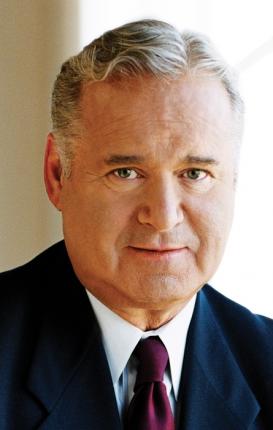
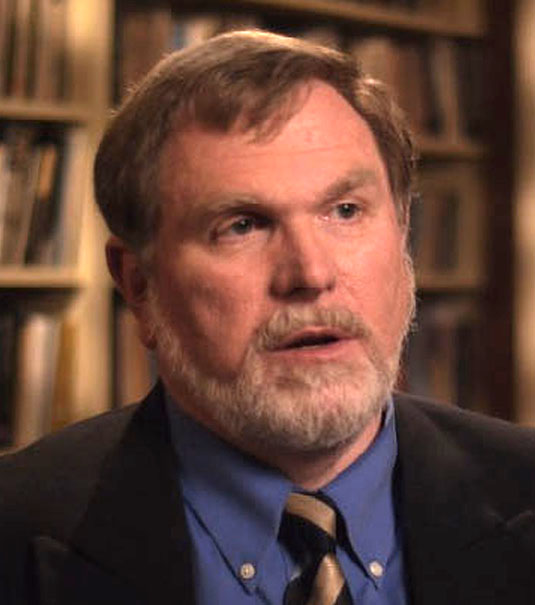
| Doug Horne (CTKA file photo) |
The first time I ever heard of Horne was through the estimable and respected lawyer-researcher Carol Hewitt. It was around the summer of 1996, and through her output in Probe, Carol had developed a reputation as an important writer and careful researcher. Since I edited her essays, I had developed a professional relationship with her. So around this time, or a bit later, I had a phone conversation with her at her home in Florida. She asked, “Jim, have you heard of this ARRB guy named Doug Horne?” I said no I had not. She said words to the effect that Horne had become friends with David Lifton when the latter was speaking in Hawaii. He then secured a position on the ARRB and he was now trying to bolster Lifton’s theories and discredit those Lifton disagreed with, e.g., John Armstrong and his Oswald doppelganger concept. It’s clear that Carol was correct. All one has to do is read the rather long Preface to the first volume to understand that. For there Horne discusses Lifton’s Hawaii speech and their following friendship. (p. lxix) Further, in the photo section of the volume you will see two pictures of Lifton. One is with Horne outside the National Archives. The important point about the photo is that it was taken in 1999, after the ARRB closed shop. Horne’s friendship with Lifton began before he took his position and continued after his ARRB function was completed.
This is important in any analysis and/or evaluation of Inside the ARRB. And in fact, Horne clearly explains why in his Preface. He says that he has read Best Evidence four times. (For comparison purposes, I have not read any assassination book from cover to cover more than twice.) And the praise he lavishes on that book is, to say the least, lush. He is so intent on enshrining it in the pantheon that he indulges in a technique that, heretofore, only Gus Russo and David Heymann had used. He says Best Evidence was a nominee for the Pulitzer Prize. (Horne, p. 4) This startled me since I had never even heard Lifton say this. I also found it hard to believe that a committee as mainstream as that body would so honor a book that postulates a conspiracy in the JFK case – and a rather extreme one at that. So I went to the Pulitzer site. As with Russo and Heymann, I discovered that Best Evidence was not a finalist that year. It may have been submitted for consideration. But as Lisa Pease noted in her review of Heymann’s trashy book Bobby and Jackie, scores of people do that.
In measuring the importance of Best Evidence, Horne writes that Lifton reminded us that gunshot wound evidence is a road map to any shooting, and it is evidence that trumps all eyewitness testimony and human recollection. (p. lxi) After this, he calls Best Evidence a “paradigm-buster”. (ibid) He continues his medical evidence primacy argument by saying that such evidence was used to counteract the impact of the Zapruder film when it was shown in 1975. He then adds, “…the medico-legal evidence from an autopsy will always outweigh eyewitness testimony. [Therefore] the debate had grown tiresome and inconclusive …” before Lifton published his volume. (p. lxiii) In discussing the House Select Committee on Assassinations, he talks about the differing recollections of medical observers of Kennedy’s body, those in Dallas, and those at Bethesda. Although the HSCA sided with the latter’s observations, Horne writes: “What if both groups of medical witnesses – all medical professionals – had told the truth and provided an accurate description of the President’s wounds at the time they saw them.” (p. lxiv) And with this, the author now introduces the critical concept of “old paradigm” research versus “new paradigm” research. For anyone familiar with these rubrics and line of argument, it follows naturally that, to Horne, Best Evidence represents the new paradigm and Josiah Thompson’s Six Seconds in Dallas represents the old paradigm.
The reason I use the phrase “follows naturally” is that this demarcation of “old and new” is familiar to anyone who has read Best Evidence, which was published back in 1980. In fact, Lifton begins the book with a recital of the major points the critical community had achieved until that time. He also discusses the methods of research such as reading documents and considering redactions, and minutely examining photographs from Dealey Plaza. After many rather condescending pages of this review of the state of the evidence at the time, the author then launched into the chronicle of his “search for new evidence” in the JFK case. This is why he calls Part 2 of the book, “A New Hypothesis”. As Roger Feinman pointed out in his essay Between the Signal and the Noise, there is in Best Evidence a not so subtle disdain for what the critical community had accomplished up to that time. And as Feinman also noted, in an odd way, Lifton seemed to actually defend the Warren Commission against the polemics of Sylvia Meagher, Mark Lane and Thompson. For instance, Lifton wrote that some critics did not understand the “best evidence” concept and how the Commission had relied on the autopsy as a talisman for all that came afterwards. Lifton continued in this vein by writing that the critics “actually believed the Commission first decided Oswald was the lone assassin” and then colluded with the pathologists, namely James Humes, to concoct a lone assassin autopsy report. (Lifton p. 144. All references to Best Evidence are to the trade paperback, 1988 edition.) Right after his long prelude, Lifton began to concentrate on pathologist James Humes as a “central figure” in his book. From there, Lifton proceeded to put together his rather dramatic reconstruction of what really happened in both Dealey Plaza and at Bethesda. To say that it was a radical scenario is putting it mildly.
But to return to the point, it is really Lifton who started this whole “old paradigm” versus “new paradigm” mode of thinking about assassination literature. For Horne to adapt it shows the clear and deep influence of Best Evidence on his thinking. In retrospect, it is hard not to detect a bit of self-promotion at the expense of those who came before him in Lifton’s gambit. And I don’t believe it’s merited. Why? Because as Pat Speer has pointed out on his web site, the first real milestone in the medical evidence did not come from the HSCA or Best Evidence. The first real giveaway movement was from the proponents of the official story itself. In 1968, Attorney General Ramsey Clark tasked Dr. Russell Fisher with reviewing the work of the autopsy surgeons: Humes, Thornton Boswell, and Pierre Finck. Fisher and Clark did three things that do not happen in normal medical practice. They moved the head wound up 4 inches, they noted particles in the neck, and they saw something that the pathologists had not seen: a 6.5 mm fragment in the cowlick area at the rear of the skull. As Speer notes, the Fisher panel was put together to specifically negate the work that Thompson had done on the ballistics and the autopsy. So in other words, Thompson, the “old paradigm” guy had actually been the first to rock the official story of the medical evidence in the JFK case. In my view, these movements of wound location, and the appearance and notation of fragments in the neck and high in the head – largely endorsed by the HSCA – have caused defenders of the official story many more problems than the more dramatic parts of Best Evidence. Again, this was caused by the author that both Horne and Lifton consider “old school”, i.e., Josiah Thompson. (For the exact way Thompson caused it, see my review of Reclaiming History, Part 4, Section IV)
The next big crack in the medical evidence occurred in 1969. And it was caused by the inquiry of another man who Lifton showed clear disdain for: Jim Garrison. Lifton actually called the Garrison investigation “a farce”. (Lifton, p. 717) At the trial of Clay Shaw, under sharp cross-examination by Garrison’s assistant DA Alvin Oser, Pierre Finck finally raised the curtain on the autopsy. He admitted that it was largely controlled by the military officers in attendance. He also admitted that he did not examine the president’s clothes, and he did not see the autopsy photos until 1967. (James DiEugenio, Destiny Betrayed, pp. 290-309) The impact of Finck’s testimony was greatly underplayed by the media. But to serious students of the Kennedy case it went a long way in explaining just why the autopsy was so deficient in every aspect.
Lifton’s book was published a year after the HSCA released its Final Report. The HSCA acknowledged that a serious difference existed with the observations of the back of Kennedy’s head between the Dallas doctors and the personnel at Bethesda. Many of the former witnesses said they saw a rather large hole in the rear of Kennedy’s skull. Yet the famous back of the head photographs, which are in Horne’s book and labeled Figures 64 and 65, depict no such wound. In fact, the head seems intact and untouched. Therefore the HSCA said the Dallas doctors were wrong about this. They added that the observations of the Bethesda doctors differed from the Dallas doctors on this issue. And since the Bethesda doctors had the body in front of them for hours instead of minutes, they were correct. Since Lifton’s book was published many years before the ARRB declassified the HSCA files, Best Evidence made much of this discrepancy. In fact it was one of the main underpinnings of Lifton’s theory of body hijacking and alteration. (Which we will discuss later.)
But when the ARRB did declassify the HSCA medical files on this subject, it turned out that this was all a subterfuge. The medical personnel at Bethesda largely agreed with the Dallas observers about a gaping hole in the back of Kennedy’s skull. The witness statements were all there in the newly declassified files which Robert Blakey and Michael Baden had chosen to keep hidden from the public. Gary Aguilar did a magnificent job in collecting and collating these newly declassified witness affidavits. He put them on a chart and showed that, except for a small minority, most of the witnesses from both locations agreed that there was a gaping hole in the rear of the skull and where it was located. (See Aguilar’s essay in Murder in Dealey Plaza, especially pages 188, 199. In my view, this is one of the three or four best long pieces written on the medical evidence since the ARRB closed shop in 1998.) What had happened was that the HSCA realized that if these statements were published then the Dallas vs. Bethesda dichotomy would be largely minimized. And you would have a near unanimous verdict that this hole in the rear skull existed. This would create serious problems for the official story in two ways. First, the avulsive nature of the wound strongly suggested a front to back trajectory through the skull. Second, these observations would bring into doubt the autopsy photos mentioned above which reveal no trace of such a violent wound in the rear skull area.
As noted above, Aguilar’s work on this issue posed a problem for Lifton’s theory. Because now the split between the Dallas observations and the Bethesda observations were at least slightly ameliorated. Milicent Cranor’s essay on Malcolm Perry, “Ricochet of a Lie,” posited another problem for Best Evidence. Her work poses a question about the differing size of the tracheotomy. As Robert McClelland stated at the Lancer Conference in 2009, a wide tracheotomy was not unusual practice for Parkland. And for Malcolm Perry to have seen the organs in the throat that he reported on, he almost had to have cut a wider tracheotomy than he let on about.
This brings us to the main thesis of Best Evidence. Lifton was making the following proposals:
- All the shots in Dealey Plaza came from the front
- The Parkland Hospital doctors saw this evidence
- The body was then hijacked as it left Air Force One
- The body was then altered to show shots from the rear
- The conspirators dug out the bullets from the body
- The Commission was fooled by this alteration
There were always very serious problems with these proposals. For instance, the nature of John Connally’s wounds and the testimony of Dr. Robert Shaw make number one nearly impossible to believe. Concerning number two, since Kennedy’s body was not flipped over, the Parkland personnel could not see Kennedy’s back wound. (Lifton postulated that this was later “punched in”. See p. 376)) There isn’t any credible evidence for the casket being secretly diverted to another hospital. (The author suggests Walter Reed. See p. 681) Further, Lifton could come up with no credible witnesses to his pre-autopsy extensive surgery. Finally, as the declassified records of the Warren Commission show, at the very first meeting of December 5th, the fix was in against Oswald. This was before there was any discussion of the autopsy report. So the idea that the Commission based their guilty verdict of Oswald on Humes was not valid.
Consequently, Best Evidence has not worn well. Today, there are very few medical experts inside the research community who back the book. On the other hand, the book has plenty of critics, e.g., Feinman, Milicent Cranor, Cyril Wecht. As for myself, although I found Best Evidence entertaining to read, and thought the book contained some interesting information and anecdotes, two things troubled me. First, Lifton’s concentration on the medical evidence implicitly discounted other physical evidence that I felt was more solid and probative than what he was relying upon. Second, the author had a troubling tendency to take a piece of evidence that was not really well-grounded and then use it as a springboard to launch into all kinds of hyper-dramatic criminal scenarios. As Gary Aguilar once said to Lifton: Extravagant claims demand extravagant evidence. One example of this would be the sentence in the FBI’s Sibert-O’Neill report on the autopsy, which states that Humes noticed surgery of the head area when he looked at Kennedy’s body for the first time. What Lifton did with this piece of hearsay was rather remarkable. Just consider how he begins Chapter 8 shortly after he surfaces it: “I arose on Sunday morning convinced I had discovered the darkest secret of the crime of the century.” (Lifton, p. 181) This is before he even talked to Humes. For when he did, Humes denied any such pre-autopsy surgery. (ibid p. 256) But that didn’t matter to the author. He deduced that Humes was just covering up.
Speaking of this specific accusation, Best Evidence severely dissipated for me on April 3, 1993. That is when I heard Lifton speak during a famous debate on the medical evidence in Chicago. This was part of a conference sponsored by Doug Carlson and called the Midwest Symposium. Lifton’s presentation consisted of two main parts. The first consisted of him rattling off about 20 almost violently accusatory charges he would ask Humes about if he ever got him on the witness stand. From this artillery barrage against the doctor, one would have guessed that people like Arlen Specter, J. Edgar Hoover, James Angleton, and Allen Dulles were all guiltless in the cover-up of the Kennedy murder. Humes was the real linchpin of the plot. And it was his work that gulled these four fine men. (I have little doubt that Lifton supplied similar questions to Horne in preparation for Humes’ ARRB deposition. And it was these “When’s the last time you beat your wife?” type queries that Jeremy Gunn bawled Horne out about behind closed doors. See Horne, p. 85)
Lifton concluded in Chicago by playing a tape recording of a phone conversation he had with Humes concerning this subject, i.e., pre-autopsy surgery. In his book, due to Lifton’s description of phrasing and pauses, plus the author’s seemingly telepathic attribution of hidden knowledge to the pathologist, Humes’ words carried a certain sinister weight to them – almost like the pathologist was hiding something in this regard. But when the tape was played, this all but evaporated. It was clear to me – and many, many others – that Lifton had left out the tone and inflection of the doctor’s voice and words. And these betrayed that Humes was actually playing with Lifton: a playfulness grounded in his being taken aback by the insinuation, so much so that he didn’t take it seriously. I found it hard to believe that Lifton could not detect this when most of the spectators I talked to could. This indicated to me that the author had lost critical distance from his subject.
II
In spite of all the above, Horne still genuflects to Best Evidence. To the point that he essentially admits that the main reason he joined the ARRB was to prove or disprove Lifton’s thesis. (p. lxviii) Sealing and qualifying this emotional bond is the following statement: “David Lifton’s work has been a great inspiration to me over the years, and he and I eventually became very close personal friends, as well as fellow travelers on the same intellectual journey.” (p. lxix) In light of the warm feelings betrayed in that statement, it is hard to believe that Horne expended a lot of time on disproving Lifton’s thesis. In fact, I feel comfortable in writing that if Horne had never read Best Evidence, he would never have written his series or joined the ARRB.
All the above introductory material is necessary to understand my decidedly mixed feelings about Inside the ARRB. There seem to me a lot of good things in Horne’s very long work. And I will discuss them both here and later. But where the author gets into trouble is when he tries to fit the interesting facts and testimony he discusses into an overarching theory. Because as we will see, although Horne has revised Best Evidence, he still sticks to the concept of pre-autopsy surgery, and extensive criminal conduct by the pathologists. And as Lifton clearly suggested in his book, Horne will also argue that the Zapruder film was both edited and optically printed. (Lifton pp. 555-557)
For me, the most interesting chapter in Volume I is also a disappointing one. And it has little, if anything, to do with Horne’s attempt to revive and revise Best Evidence. Horne entitles it “Prologue: The Culture of the ARRB”. Here he offers his insights into the personalities and stances of the people he worked with and for at the Board. Specifically the other staffers, the Executive Director, and the ARRB members. I thought this chapter was both valuable and unique for the simple reason it had not been done before from anyone who was actually there at the time. One of the most startling revelations is that Executive Director David Marwell regularly talked to and lunched with the likes of Max Holland, Gus Russo, and the anti-Christ himself Gerald Posner. (p. 13) In fact, when Marwell was hired he told a newspaper interviewer that he found much of value in Case Closed. Although this was startling, it only set the stage for what the book reveals about that body as a whole: information the research community did not know at the time and which now sets off retroactive light.
For beginners, not one Board member – historians Anna Nelson and Henry Graff, Dean Kermit Hall, archivist William Joyce, or Judge Jack Tunheim – believed Kennedy was killed by a conspiracy. (p. 10) Further, Horne estimates that well over half of the staff members believed Oswald did it. To the point that many exhibited a prejudice bordering on condescension toward those who did not believe the Warren Commission fairy tale. (p. 11) Chief Counsel Jeremy Gunn actually told Horne not to talk to the Board members about conspiracy angles, no matter how well founded they were. (p. 12) Why? Because the Board members were so mainstream oriented they would probably doubt his suitability for the ARRB.
Horne believes this was done by design. It originated with the Board members in their choice of Marwell. It was then transmitted from Marwell to his hiring of staffers. Horne observes that Marwell’s orientation resulted in the following: 1.) Few staffers were concerned with the conflicts in the evidence 2.) Most were not well versed in the nuances of the case, and 3.) Most did not even have a natural interest in the Kennedy assassination. This fulfilled Marwell’s mandate of having an ARRB staff that was “neutral”. But it also resulted in a staff that was way behind the curve when it came to fulfilling their mandate of looking for records, interviewing witnesses who knew where the records were and/or could resolve conflicts in the evidence. I can certify this as true. When the ARRB started up, Anne Buttimer, their first chief investigator, called me and discussed the New Orleans aspect of the case for about an hour. From her questions I could tell she did not know a lot about that famous milieu. Anne eventually quit. (Horne does not mention Buttimer or why she left.)
The Board members never got any briefing in any controversial evidentiary aspect of the case. When Marwell gave Jeremy Gunn permission to interview some medical witnesses, Gunn’s first chosen assistant dragged his feet in preparation for the depositions. He then secretly lobbied Marwell to halt the medical deposition process completely. (p. 15) While this interview process was ongoing, not one Board member read a single deposition Gunn had done. (p. 17) It wasn’t until the end of the ARRB, when the medical investigation gained some publicity, that three of the Board members asked to read these now “hot” items. (ibid)
How obsessed was Marwell and the Board with the image of “neutrality”? There were no wall photos or portraits of President Kennedy in the waiting room or foyer of the ARRB offices.
Did the ARRB do a good job? That is open to question today, especially with the new discoveries about the documents they missed. The most famous example being the George Johannides documents which were originally kept from the HSCA. But consider this about the HSCA’s Lopez Report on Mexico City: the Board never found out what happened to the annex of that report entitled “Was Oswald an Agent of the CIA”. It is not attached to the report today. Further, the Board never surfaced the working notes Ed Lopez and Dan Hardway made while assembling that report. Even though Lopez strongly recommend they do so since he filed the notes every day in the safe the CIA had built at HSCA headquarters. Finally, the Board never even seriously contemplated interviewing Ruth and Michael Paine. Even though much interesting material had been declassified about them, which authors like Carol Hewitt and Steve Jones utilized to the couple’s detriment.
Up to now, these failings were generally written off due to lack of time and money. But with what Horne reveals here, there may have been more to it than that. The ARRB’s effort to appear “neutral” may have meant sacrificing some important opportunities and not following up on others. While in operation, this failing was generally kept from the public because the Board had two good front people who managed to shield the inner dynamic. They were Tunheim and public relations director Tom Samoluk. But this new information sheds light on the Board members’ desire to proclaim that they declassified no “smoking guns”. But since the Board members were already convinced the Warren Commission was correct, those proclamations are hollow since they were predictable. With what Horne writes about here, it appears the Board members saw their mission as declassifying as much as possible, looking as neutral as possible in the process, and then proclaiming that the two million new pages didn’t make any difference anyway. The Warren Commission got it right back in 1964.
I wish Horne had spent more time and length on this chapter. It only fills 14 pages. If I had been advising him, it would have easily been two or three times as long. And his contribution would have been comparable to Edward Epstein’s Inquest or Gaeton Fonzi’s The Last Investigation. In other words an explanation of not just what happened, but why and how it went down that way.
III
After this, and throughout the rest of this volume, Horne concentrates on the investigation of the medical evidence by the ARRB, as headed by Jeremy Gunn. Before approaching that inquiry and evaluating it, let me add some qualifications to this ARRB endeavor. As others, like medical investigator Pat Speer, have written, one has to qualify some of this testimony simply because it came so late in the game. From the chart Horne produces on pages 59-64, the ARRB medical interviews started in early 1996 and extended to October of 1997. So the witnesses were addressing the issue anywhere from 33-34 years after the fact. Further, many of the witnesses were quite old at the time. And although I am not that old, I can attest to the fact that memories do not get better as one gets older, they usually get worse. Third, because of all the controversy on this issue, plus the fact that it is politically charged, testimony tends to get altered or fudged. And Horne describes two witnesses who changed their stories on an important issue: John Stringer and Floyd Riebe. In 1972, autopsy photographer Stringer – who, incredibly, was not contacted by the Warren Commission – said that the damage to Kennedy’s skull was in the rear. He then changed his story for the HSCA and ARRB. He now said it was on the right side above the right ear – which coincides with the autopsy report. (p. 183) Riebe, Stringer’s assistant, earlier told researchers about this gaping hole in the back of Kennedy’s head. When Gunn showed him the alleged autopsy photos which show an intact rear skull, he now agreed that this is what he saw that night. (p. 229) Further, Stringer says that Riebe took no photographs. (p. 166) Riebe has always said he did. Although the number and type have slightly varied through the years. (See chart on page 226) Further, Robert Knudsen, a White House photographer who insisted that he, at the very least, developed photographs from the autopsy is not even known by Stringer! (p. 177) I found this remarkable. Gunn asks Stringer about Knudsen in more than one way. Yet Knudsen’s name is so foreign to Stringer that he actually asks Gunn if Knudsen was a doctor. (The Knudsen mystery is an interesting episode which I will return to later.)
Having established these serious qualifications, let me state why I think they exist. It is not the fault of Doug Horne, or Jeremy Gunn, or the ARRB. In my view, and disagreeing with David Lifton, this much varied and at times, unfathomable and irreconcilable medical record is owed to one man above all: Arlen Specter. It is not possible today to read Specter’s 3/16/64 examination of the three pathologists and not be disgusted. Specter understood that something was seriously remiss with the medical evidence in the JFK case. So he decided to cover up the many discrepancies in the record. He did things like deep-sixing the testimony of Jim Sibert and Frank O’Neill since it would wreck the single bullet theory and raise questions about the trajectory of the fatal head shot. The Commission did not print the death certificate signed by Kennedy’s personal physician George Burkley because Specter understood that it would show that the wound in the back entered too low to exit the throat. Specter then cooperated in a scheme to misrepresent the Kennedy wounds before the Commission. After rehearsing both men over a period of weeks, he had Humes and Boswell testify to false drawings prepared by student illustrator Harold Rydberg. In these drawings the back wound was raised into the neck area, and Kennedy’s head position was magically anteflexed to allow for the shot in the lower skull to exit above the right ear. (See my review of Reclaiming History, Part 4, Section III.) Specter understood that if he did otherwise, this would open up a Pandora’s Box of questions that would unravel the official story forever. So he did what his masters on the Commission wanted: He deliberately concealed the truth. And this robbed us all of a true cross-examination of the medical witnesses at the time when they were not old and infirm and when their memories were fresh.
The fact that Specter did what he did guaranteed that pieces of the story would dribble out piecemeal over the years. And this made the purveyors of the official deception alter the official story, e.g., as did the Fisher Panel. So today, the JFK medical record is scattered all over the place. So much so that one can marshall evidence for both versions of the official story: the Warren Commission’s with low skull wound entry and a neck-throat wound; or the HSCA’s with high skull wound entry and upper back wound. Third, one can argue that the evidence is authentic and still argue conspiracy, e.g., Pat Speer, Dr. Randy Robertson and Roger Feinman. Fourth, one can make a case for what can be termed moderate alterations, that is the x-rays and photos have been tampered with, e.g., Robert Groden, Harrison Livingstone, Gary Aguilar, Cyril Wecht, Doug DeSalles and many others. Fifth, one can argue for a radical alterationist view. That is the body was hijacked, wounds were physically altered, and the x-rays were also, e.g., Lifton and Horne. But the very fact that one can make all five arguments should tell almost everyone that something is wrong someplace. Because this does not happen in real life.
As I pointed out, Horne is in the last school. He therefore – and somewhat understandably – picks and chooses things to bolster his view. This mars the book, and I will explain why later. But I want to make the point that when Horne does not adhere to this practice he reveals a lot of valuable and interesting information. And although one can say that much of it is in other books, I know of no other volume that has as much of it between two covers. (Or in this case, ten covers.)
Some of the remarkable testimony includes autopsy photographer John Stringer saying that he shot no basilar views of Kennedy’s brain. (p. 41) Yet there are basilar – that is, shot from below – views in the autopsy collection. If Stringer says only he shot all the autopsy photos, then who took these shots? Stringer also says that he recalled the cerebellum being damaged. (p. 43) This is the part of the brain almost at the stem, low in the rear of the skull. This damage is not depicted in the extant photography. As Horne appropriately notes, both of these observations by Stringer lead one to question the condition of the brain as depicted in the present pictures. Stringer was the official photographer and he’s raising questions about the authenticity of his photos. These two particular questions lead one to doubt the rendering of what the HSCA artist Ida Dox depicted as an almost intact brain. Especially when one factors in how many witnesses said that Kennedy’s brain was not just blasted, but that much of it was gone. (For example FBI agent Frank O’Neill said half of it was gone. See p. 45) One does not have to agree with Horne – that there were actually two viewings of the brain and that Pierre Finck was snookered by the dastardly duo of Humes and Boswell – to understand that something is wrong here. Especially when there is no official weight given to the brain at the autopsy, but later it weighed in at 1500 grams – which is actually at the top end for an intact brain. This is very hard to believe. Especially considering the fact that so many witnesses saw a brain that was nowhere near intact.
IV
Jeremy Gunn’s questioning of the pathologists was interesting in multiple aspects. The highlight for me is when he got Jim Humes to admit that not only did he burn the notes from his autopsy, but that he also burned the first draft of that report. (p. 95) In his discussion of this issue in the End Notes to Reclaiming History, Vincent Bugliosi tries to say that Humes became confused on this point. (Bugliosi EN pp. 276-280) The problem with Bugliosi trying to say that is that Humes testified to it three times. And Horne prints them all. (p. 95) When Gunn asked him why he burned the draft, Humes replied, “I don’t recall. I don’t know … You’re splitting hairs here and I’ll tell you it’s getting to me a little bit, as you may be able to detect.” (ibid) Clearly, Humes did something he should not have done. He does not want to reveal why he did it. And he is angered that he is finally being exposed on this point.
Another fascinating point Gunn uncovered is that Humes never saw the Burkley death certificate that I mentioned earlier. (p. 97) Which depicts the back wound much lower than where the Warren Commission said it was. One has to wonder if Specter deliberately kept it from him, since it would have blown to smithereens the phony Rydberg drawings. Humes is kind of pathetic when asked his reason for not dissecting the neck wound the night of the autopsy: “But it wouldn’t make a great deal of sense to go slashing open the neck. What would we learn? Nothing you know. So I didn’t – I don’t know if anybody said don’t do this or don’t do that. I wouldn’t have done it no matter what anybody said. That was not important.” (p. 99) I love the use of the word “slashing”. I mean what else do you do when you dissect a wound track? And the rhetorical question of “What would we learn?” is almost priceless. Well Jim, how about if the back wound exited the throat? And then him not knowing if anyone said not to do so, this is obviously in reference to Pierre Finck’s testimony at the Clay Shaw trial where he said Humes was told not to dissect the track of the back wound. Humes was clearly in denial on this whole dissection issue. Again, he knows he did something seriously wrong and can’t admit it.
Thornton Boswell stated that he suspected that Malcolm Perry’s tracheotomy was cut over a bullet wound. (pp. 109-110) Which is quite interesting since the official story has always been that Humes did not realize this until the next morning when he called Dallas. But Gunn never asked the obvious follow up question: If you did, did you tell Humes that at the time? (If Gunn did pose this query, Horne did not include it here.) Boswell differed with Humes as to when the composing of the autopsy report began. Boswell said it started on Saturday during the day. (pp. 116-17) Humes said he did not start it until Saturday night and completed in the wee hours of the morning on Sunday. Finally, Boswell saw a probe go in the back. (p. 120) But it only went in three inches.
Pierre Finck also agreed that the probe did not go through the body. (p. 122) But as Horne notes, the significant thing about Finck was how many times he said, “I can’t remember” or “I can’t answer that.”(ibid) For instance, when asked who told him that he could not see the president’s clothing after he asked for it, Finck said he couldn’t recall who. (p. 124) And further, many times he would ask for a document and then read his answer from that record.(p. 123) Finck was intent on being evasive and giving away as little as possible. This was probably a reaction to his all too revealing testimony at the Shaw trial.
Robert Karnei was the fourth pathologist on hand that night, although he did not participate in the autopsy. Karnei saw the actual probe that Finck inserted in Kennedy’s back. He also says it did not go through the body. But beyond that, he insisted that there were photographs taken of this. He was clearly agitated when he was told those photographs do not exist today. (p. 127) According to Karnei, no exit for the wound in the back was ever found. He recalled the pathologists searching for one until almost midnight. (p. 128) So clearly, in opposition to Humes, the failure to dissect the back wound created a real problem. Finally, Karnei said that he did hear from someone that Humes had called Dallas that night to learn about Perry’s tracheotomy. (p. 128) I should add here, John Stringer also stated that Humes called Dallas that night. (p. 165) By the end of the night, did Humes know about the throat wound? If he did, could he not admit that because the many probe attempts could not connect the back wound with the throat wound?
From here, Horne goes into a thorough chronicling of the photographs taken the night of the autopsy. Near the beginning of this section, Horne adduces more evidence that Arlen Specter and the Warren Commission lied about their access to the autopsy photographs. One of the excuses the Commission always gave for doing such a poor job was that they did not have access to the autopsy photographs and x-rays. People like Specter and John McCloy usually blamed this on the Kennedy family. But as time has gone on, more and more evidence has accrued that reveals this to be a deception. For the Commission did view the autopsy photographic record. And Horne adds to that growing accumulation here. Secret Service officer Robert Bouck told the HSCA that he recalled that a representative of the Warren Commission looked at the autopsy photographs. Horne feels this had to be either J. Lee Rankin or Specter. Further, there is a Treasury Department memorandum noting that the Warren Commission was briefed on the autopsy procedures by using the actual x-rays to do so. (p. 135)
Another curious point that Horne develops is that at least some of the photos were not developed at either Bethesda or the Secret Service lab. Some of them were developed at the Navy Processing Center at Anacostia where color prints were made from positive transparencies. (p. 135) Why some of the films were taken there is not clearly known. When Gunn asked Stringer about this, the photographer said that the Anacostia lab was larger and more secret. (p. 208)
But as early as 1966, for a Justice Department review, Humes, Boswell and Stringer all stated that some pictures were missing. Stringer specified three of them to be gone, including a full body shot taken from overhead. (p. 146) But this fact could not be admitted to the public at the time. Especially since the first books critical of the Commission were now entering the market. So Justice Department official Carl Belcher arranged for another lie to be formalized. Belcher requested that some of the Bethesda witnesses sign a false inventory saying that at this 1966 review all the autopsy photos taken in 1963 were accounted for. Yet to get himself off the hook, Belcher had his name removed from the final draft of the false document. Horne discovered this by uncovering the fact that the preliminary draft did contain his name. (pp. 146-47) Stringer admitted to Gunn that he knew the inventory list was false before he signed it. He said he was told to sign it anyway. (p. 206) As to why Stringer knowingly signed a false document, I wish to relate one of the most memorable exchanges in all the ARRB depositions. After Gunn noted to Stringer that certain protocol was not followed in the taking of photographs, he asked him why he did not object. Stringer replied, “You don’t object to things.” Gunn replied with, “Some people do.” Stringer shot back with the following rather pithy remark, ” Yeah, they do. But they don’t last long.” (p. 213) Those eight words tell us all we need to know about how the lid was kept on the autopsy cover up for so long.
After his ARRB testimony, Gunn and Horne came to believe that by the time of the HSCA, a total of five views taken by Stringer had disappeared. (pp.182-83) Reinforcing this was one of the real finds of the ARRB: an interview done with photographer Karl McDonald. After taking the formal picture of the Board members, Marwell found out that McDonald had been the medical photographer at Bethesda for eight years. Further, that he had been tutored by, and worked with, Stringer. (p. 152) And he had ended up by being that institute’s senior instructor in medical photography. In his ARRB interview he shed a lot of light on just how bad the extant pictorial record of Kennedy’s autopsy is.
He first said that he always developed his own pictures. He never sent anything to Anacostia. He also said that he was always sure to take a battery of full body shots – of which none exist in the Kennedy case. He testified that there was always an autopsy card included with each and every photo. The card included an autopsy number and the year. Again, none exist in the Kennedy case. He said for trauma shots – places on the body where bullets impacted – he always took three views: wide-angle, medium shot, close-up. In light of the above strictures, Gunn asked him to give an overall grade to what purports to be Stringer’s work today. McDonald replied that he would grade the collection with very low marks. This was the guy who was taught photography procedure by Stringer. Did Stringer forget the very lessons he once gave? Not likely.
V
I will conclude this review of Volume I by discussing what can only be called the enigma of Robert Knudsen. Knudsen has been discussed before by other writers, like David Mantik. But in light of the fact that Horne spends seven pages on him (pp.247-254), and he implies that he may have actually taken at least some of the autopsy photographs in existence today, I think it’s necessary to write a bit about the unplumbed mystery of the man. Because, to me, he has been ignored for too long.
One way to begin to point out the strangeness of Robert Knudsen is with this fact: Although Stringer denied knowing who Knudsen was, Knudsen had Stringer’s name and phone number in his appointments book. (p. 252) Which strongly implies that Knudsen did know Stringer. The question obviously becomes: How could Knudsen know Stringer if Stringer didn’t know Knudsen? And in fact, if Stringer did know him, is he feigning that he did not? If so, why? Because as we will see, under the circumstances we will describe, it is hard to believe that Stringer completely forgot about the man.
Knudsen was one of two White House photographers in 1963. The other was Cecil Stoughton. (p. 249) As he revealed in his HSCA interview, Knudsen began his career as a Navy photographer who was then detailed to the White House in 1958. (8/11/78 HSCA transcript, p. 4) Generally speaking, Knudsen covered President Kennedy on state trips, and Stoughton covered the First Lady. (p. 250) In fact, Knudsen was scheduled to cover the Dallas trip. But he injured himself the week before. Therefore he did not accompany President Kennedy to Texas, Stoughton did. (ibid) At around 3:00 PM on the afternoon of the murder, Knudsen received a phone call. He was ordered to go to Andrews Air Force Base to meet Air Force One and to accompany the body of President Kennedy to Bethesda. And thus begins a fascinating puzzle. For, as Horne writes, there is no documented evidence that Knudsen was ever interviewed by the Warren Commission. (If this is true, the fact that the Commission never talked to either Knudsen or Stringer tells us plenty about Specter’s investigation of the autopsy.) The first, and only, on the record interview with Knudsen about this subject came with Andy Purdy of the HSCA. And that transcript was classified by Robert Blakey and Michael Baden. The ARRB declassified it in 1993. And on the version of the audiotape at the History Matters site, Knudsen’s voice is not audible on the actual recording. It sounds like a woman who is phrasing the transcript for copying purposes is repeating his words. (See for yourself.)
How did the HSCA find out about Knudsen and the autopsy? In 1977, Knudsen gave an interview to a trade magazine in which he said that he was the only photographer to record Kennedy’s autopsy. (Horne, p. 250) What makes this odd is not just that Knudsen was not on the Bethesda staff, but that Stringer and his assistant Floyd Riebe have always maintained that they were the only photographers in the morgue that night. There were no civilian photographers taking pictures. Obviously, Knudsen did not have to say what he did to a magazine. But since the HSCA had been convened in 1976, after the electrifying viewing of the Zapruder film on ABC in 1975, Knudsen may have felt compelled to reveal what he knew.
Unfortunately for Gunn and Horne, Knudsen had passed away before the ARRB was formed. But the Board got in contact with the survivors of his family, his widow and two children. What they told the ARRB about the aftermath of Knudsen at Bethesda makes the story even more tantalizing. They told the Board that Knudsen disappeared for three days after he was called to report the day of the murder. (ibid) He didn’t return home until after Kennedy’s funeral on the 25th. Knudsen told his son Robert that he had been present at the beginning of the autopsy. (ibid) Further, he told his family that he had photographed probes going into he back of President Kennedy. Which, as noted before, do not exist today. In a statement that is hard to reconcile with the record, Knudsen told them that he was the only one with a camera in the morgue. (Horne, p. 251) He also told his son that he did not recognize 4 or 5 of the photos shown to him by the HSCA. And at least one had been altered. Hair had been drawn in on it to conceal the missing portion of the top-back of Kennedy’s head. (ibid) In keeping with many other witnesses, Knudsen told his wife that much of Kennedy’s brain was blown away. (ibid) When Knudsen tried to get a copy of his HSCA transcript, he was told that “there was no record of him or his testimony.” (ibid)
I have saved for last what is probably the most fascinating piece of information that the ARRB garnered from Knudsen’s survivors. All three of them said “Knudsen appeared before an official government body again some time in 1988, about six months before he died in January of 1989.” They all agreed “Knudsen came away from this experience very disturbed, saying that four photographs were missing, and that one was badly altered.” Gloria Knudsen continued by saying that Knudsen felt “that the wounds he saw in the photos shown to him in 1988 did not represent what he saw or took.” (p. 252) One reason he was disturbed by the experience was that “as soon as he would answer a question consistent with what he remembered, he would immediately be challenged and contradicted by people whom he felt already had their minds made up.” (ibid) Knudsen told his wife that he knew who had possession of the autopsy photographs he took. That based on that, he could then find out who had made some of them disappear and who had altered the back of the head picture. But he was not going to stick his neck out on something this huge because he had a family to protect. (p. 253)
Andy Purdy’s HSCA interview with Knudsen is a disappointment. As Horne notes, Purdy concentrates almost completely on the photo negatives that were sent to the Navy Photographic Center at Anacostia. Knudsen notes that this was done because of the color facilities there. And Navy officer Saundra Spencer handled the color operation there. (HSCA transcript, p. 47) Secret Service photographer Jim Fox accompanied Knudsen there. According to Knudsen they were ordered to do this by George Burkley on the morning after the autopsy. (ibid, p. 5) Knudsen told Purdy that afterwards, Burkley ordered seven prints made. (ibid, p. 8) Which, as Purdy later noted, was an unusually high number that no one else recalled. Knudsen noted that after he turned in the work product to the White House, he never saw the photos again until Purdy showed them to him that day. (ibid, p. 16) When asked, he distinctly recalled photos of a large cavity in the back of Kennedy’s head and a side view with probes going through the body. (ibid, p.22) Unlike others, the views he saw showed the probes extending all the way through the body. Again, Purdy reminded him that no one else recalled such a photo. There was another photo of the chest cavity which Knudsen recalled that today is not in existence. (ibid, p. 39)
Now, Knudsen said that it took about two hours for him to develop the color photos at Anacostia. But yet he told Purdy that the four-day period of the assassination and its aftermath were like a fog to him. He recalled working continuously through it. (ibid, pp. 9-12) This period roughly coincides with how long his family said he was gone from home. Incredibly, Purdy never asked the obvious question: “Mr. Knudsen, if the processing took two hours, but you worked for 3-4 days, what did you do the rest of the time?” And as Horne notes, even though Knudsen told the trade magazine the previous year that he actually took photos of the autopsy, Purdy never asked him any direct questions on this point. Like, how many pictures did he take, what kind of camera did he use, when did he take the shots, and did he give his photos to Stringer or Riebe?
Now, as is his usual tendency, Horne makes an extreme assumption: There were actually two sets of photographs made and Knudsen shot pictures of the intact back of the head. And he did it at the request of Humes, Boswell and Finck. (Horne, p. 247) Or as he puts it, it was an “intentional creation by higher authority of a fraudulent photographic record designed to replace the real photos taken by Stringer and Riebe of a huge occipital defect in the head …”(ibid) Which ignores the fact that, as I noted, Knudsen saw just such a photo. Horne even uses the testimony of a friend of Knudsen’s, USIA photographer Joe O’Donnell to make his case. Yet this is a man who, as his own family has noted, was likely suffering from dementia brought on by his failing health at the time the ARRB interviewed him. After all, he had two rods in his back, suffered three strokes, had two heart attacks, incurred skin cancer and had part of his colon taken out. Not the best witness. (NY Times, 9/15/2007) Further, O’Donnell had been known to testify falsely about photographic records before. (ibid)
To me, the incomplete evidentiary record does not conclusively lead to Horne’s bold conspiratorial denouement. The case of Robert Knudsen, as I said before, is and remains a mystery. What it actually reveals about the JFK case is that there has never been anywhere near a first-class criminal inquiry into what really happened. In any professional inquiry, with say someone like Patrick Fitzgerald in charge, Knudsen would have been called in under oath with an attorney. He would have been warned in advance that he was expected to answer all questions under penalty of perjury. If he refused to answer he would be charged with contempt. He would have been asked to bring in any corroborative witnesses and exhibits. He would have been asked specifically, “Did you take any autopsy pictures at any time in 1963?” If he said yes, he would have been asked specific questions about when and where he took them and with whom. He would have been specifically asked if he worked with anyone else in making them. Stringer would have been asked the question, “Do you recall anyone else taking pictures at the autopsy?”, and also, “If you did not know Knudsen then how did he get your name and phone number?” And this inquiry would have been followed to its ultimate destination: to find out if Knudsen took or did not take any photos. To me that is where the status is of the evidence concerning Knudsen. I believe Horne goes too far in making his assumptions about the man.
But to give Horne his due, at least he brings these matters to the attention of the reader. That is to his credit, since very few others have done it. And no one else has done so in such a complete way.
Volume Two
The second volume of Doug Horne’s Inside the ARRB ostensibly deals with the following topics: a second section on autopsy photography, a very long section on the x-rays (about 200 pages), interviews with the morticians from Joseph Gawler’s Sons, and Horne’s report on the ARRB interviews with Parkland Hospital staff. But as we shall see, it actually deals with a lot more than that. For it is here where Horne begins to reveal his revisions to David Lifton’s Best Evidence concerning the skullduggery he believes happened at Bethesda before the autopsy.
I
Volume II picks up with a continuation of Horne’s discussion of what he perceives as Robert Knudsen’s role in autopsy photography. As I noted at the end of my review of Volume I, Horne and I have a disagreement about just what that role was. Horne believes Knudsen took a second set of pictures. I believe that whatever Knudsen’s role was, it is mysterious and unproven. But Horne does good work in reviewing just how many different photographic views were actually taken of Kennedy’s body and what is missing from the collection today.
He also sticks with Knudsen’s friend and professional colleague Joe O’Donnell as a witness for Knudsen taking a second set of autopsy photos. (See, for example, pp. 285-86) As I noted in my previous installment, the deceased O’Donnell has some real credibility problems. But in spite of that, in this volume, Horne uses and then extends him. He is now a witness to Zapruder film alteration. This deserves some elaboration.
O’Donnell stated that he showed Jackie Kennedy the Zapruder film a few weeks after the assassination. (Horne, p. 287) The two were in the projection room alone. Jackie was unsettled by the sight of the head shot. She told him she never wanted to see it again. O’Donnell took this to mean she wanted it excised from the film. He then said he cut out about ten feet from the film. (ibid)
This tale poses further problems for O’Donnell as a witness. First, as we shall later see – according to Horne – he is altering the film a second time. Because in his discussion in Volume 4, Horne believes the film was altered shortly after the assassination at a CIA photographic center. Yet O’Donnell here is talking about a few weeks afterwards in Washington. Secondly, O’Donnell says that he showed the widow an original version, not a copy. (ibid) But he says this film was in 16 mm format. The Zapruder film was shot in regular 8 mm. So how could this be an original? Third, if O’Donnell actually cut about ten feet out of this film, then you have some real statistical problems. Thirty seconds of 16 mm film is about 18 feet long. Considering the fact that the Zapruder film is less than thirty seconds long, the man chopped off more than half the film. How could any editor, no matter how gifted, put together a film with any continuity after eliminating over half the sequence?
But when one analyzes it, this story is even more untenable. O’Donnell says that Jackie told him she did not want to see the head shot again. The actual head explosion takes only a matter of several frames. So why did O’Donnell cut out over half the film? Further, has anyone ever reported seeing a 16 mm version of the Zapruder film without the head explosion? This all seems not just untenable, but rather wild. Yet Horne actually takes the time to consider O’Donnell seriously. In fact, he composes a topic heading (not included in his Table of Contents) entitled “Analysis of the O’Donnell Interviews” (See p. 287). For all the reasons I have noted here and in Part One of my review, I would have just discarded the man as a witness. Horne does not. This may owe to Horne’s desire to give Knudsen his previously mentioned secret photographic assignment. Therefore he uses O’Donnell, even with all his credibility problems.
There is another indication of Horne’s strong desire to keep Knudsen’s “second set of photos” secret assignment. Toward the end of Volume I Horne made his first notable mentions of Knudsen and O’Donnell. (See pp. 252-254.) But there, he also mentions Dr. Randy Robertson. He states that it was Robertson who first brought O’Donnell to the Board’s attention. Robertson, a board certified radiologist, has done some interesting work on the Kennedy autopsy. So when he heard that O’Donnell was in his vicinity, he talked to him. After listening to his unusual statements about Knudsen’s photographs of the autopsy, Robertson then called Knudsen’s widow, Gloria. After this, he relayed some of this information to the Board so they would follow up on it. In Volume I, Horne described his own conversations with the widowed Gloria Knudsen. Through information garnered from her, Horne wrote that 1.) Randy told her that he was the only person with access to the JFK medical materials 2.) Randy found Gloria through the ARRB 3.) Robertson challenged the woman on whether or not her husband had actually taken autopsy photographs.
I have the good fortune of knowing Randy Robertson. As do several people in the JFK research community. When I read the above, I decided to get in contact with him. Why? Because it just does not sound like him. To the people who know him, Randy is the epitome of the well-mannered southern gentleman.
In my conversation with him he said he had just one phone call with Gloria. Since he had been at the National Archives, he sent her some autopsy materials. He discussed nothing of substance with her at all. And he represented himself as no one except who he was, i.e., a board certified radiologist who had seen the autopsy materials. He found out about her through O’Donnell and the ARRB declassified documents. In their brief call, he did not challenge any specific claims of her husband. In fact, at the time, he did not even know that Knudsen claimed to have taken any autopsy photographs. (Communication with Robertson, 5/31/10)
But further, Randy told me that Horne did not interview him for his book. Which is odd. To most people, what Knudsen’s widow said about Robertson would be perceived as rather derogatory. After all, the first two statements are lies, and the third is a direct challenge to her dead husband’s credibility. As I noted, it would also seem to be out of character to anyone who knows the man. Consequently, as a matter of fairness, one would extend Randy the courtesy of a conversation. And then one would at least state his denials in a footnote at the bottom of the page. According to Randy, Horne didn’t do the former, so he couldn’t do the latter.
But there is also an evidentiary issue here. For if Randy is accurate about his version of the call, then it touches on the credibility of Knudsen’s widow. Which, apparently, is an issue that Horne does not want to surface.
In the first part of this review, I noted Horne’s strong allegiance to Best Evidence. That characteristic is manifest through Volume II. For me, one of the most difficult things to accept about Lifton’s book is his explanation for the apparent intactness of the rear skull in the back of the head photos. In fact, I recall having an argument with another fan of Best Evidence in Dallas at the ASK Symposium in 1993. The argument consisted of whether or not Lifton said that these dubious photos were achieved through posing and altering of the skull in order to conceal the gaping hole beneath, or whether they were done by photographic alteration. The fan said that Lifton was not certain on this issue. I said that I recalled he was pretty close to being that. It turned out I was right. In a conversation Lifton had with HSCA investigator Andy Purdy, Lifton agrees that he believed that “somebody rebuilt the back of the head” before photography. (Best Evidence, p. 560) Later on, in discussing the findings of the HSCA, Lifton concurs with their verdict, i.e., that the x-rays and photos of Kennedy were not altered and that they represented JFK. (ibid, p. 659)
The work of others in the interim makes this statement dubious today. By others, I mean Robert Groden, Gary Aguilar, David Mantik and Milicent Cranor. (Cranor knows more about the medical evidence – and in finer detail – than anyone I have ever encountered.) We will see why later, when Horne discusses the work of David Mantik on the skull x-rays. But to be brief, it seems to me hard to believe that neither set of images were altered. Yet Horne comes down on the Best Evidence side with the photographs. He says they were not altered. (Horne, p. 290) To be exact, he writes that “I believe the autopsy photographs showing the back-of-the-head to be intact are not photographic alterations, but instead represent fraudulent (but authentic) images showing the result of major manipulation and relocation of scalp by the pathologists after the autopsy … .” (ibid) When one looks at these pictures, this is a difficult hypothesis to maintain. For, as Cyril Wecht has said, it would take more than one expert surgeon hours to perform such faultless reconstructive surgery. And where were they that night? Who was such a highly skilled reconstructive surgeon at Bethesda? No one that I can see. Horne’s thesis seems to be that the autopsy pathologists somehow arranged what was left of Kennedy’s multi-fractured – even fragmented – skull, and then seamlessly fit the torn scalp over that rebuilt mess. Then Knudsen shot the pictures. To me, and many others, the easier and more sensible process would have been to insert a matched matte over certain parts of the skull. This is what Robert Groden has argued for in such books as High Treason.
But further, in this volume, Horne now says that Knudsen was picked for this job by Robert Kennedy! What is the evidence the author lists for this? As far as I could discern it’s this: Knudsen’s son told the ARRB staffers that his father was close to both RFK and JFK. (Horne, p. 297) And because of that, Horne now says that somehow RFK was in on the cover-up of his own brother’s murder. The author is using the hearsay testimony of both O’Donnell and Knudsen’s surviving family for a lot of mileage.
II
One of the sub-sections in the first chapter of this volume is entitled “Vincent Madonia and Autopsy Photography” (p. 292) Madonia was involved in the transfer of photographs from the Secret Service to Evelyn Lincoln at the White House. He was also mentioned by Knudsen in his HSCA testimony as one of those he encountered in the processing of pictures at Anacostia. (ibid)
Madonia told the ARRB that there was a Secret Service/White House processing facility at Anacostia. Outside of that, I thought his testimony was rather weak and indefinite. He could not be specific about what autopsy photographs he developed, since he said he developed hundreds of pictures of all kinds that weekend. (p. 296) All he could recall was that President Kennedy looked “pretty beat up”. (p. 294) In fact, he made a point about not being too curious about the pictures, because he felt that “the less I know about it, the better.” (ibid) Madonia was not even positive about Knudsen being there, or if he was, when he saw him. (p. 293) All in all, I just didn’t think there was a heck of a lot of value in what he said.
Imagine my surprise when, about forty pages later, Madonia now constitutes evidence “that a compartmented operation was taking place” concerning the autopsy pictures. Horne now postulates that Madonia was unwittingly part of a “culling” operation. The aim of which was to delete the pictures taken early and include the ones taken later, that is, the reconstructed ones shot by Knudsen. (p. 331)
When I read this, my eyebrows arched. For two reasons. First, as I wrote above, Madonia’s statements are rather anodyne, nebulous, and non-distinctive. Second, Horne did not mention anything about such a “culling” operation when he first discussed Madonia. So, using my notes, I went back and reread this section to see how I had missed all of this rather important material.
As far as I can deduce, this is what Horne uses to say that Madonia is part of a “compartmented culling operation”: Madonia told the ARRB that ‘agents did come back for some photos which “may have been about the autopsy” during subsequent weeks, during a couple of subsequent visits. Other than the subsequent visits having taken place, he could not remember any specific details about the work done.’ (p. 294. Italics added.) To be brief but direct: I find this testimony rather unconvincing for the uses that the author makes of it.
But it brings up an important criticism of Inside the ARRB. As John Costella has pointed out, the organizational guides to the book make it difficult to go back and locate details like the above. The entire set of books is 1,807 pages long. Yet no individual Table of Contents is over a half page in length. This particular volume is over 400 pages long. Horne lists four chapters in his Table of Contents. This averages out to one heading per hundred pages. Yet, as I noted above, Horne does divide his chapters into sub-chapters. Why did he not list these in his Table of Contents? I don’t understand why this was not done, simply as an organizational guide for the reader.
The lack of an upfront descriptive guide for a very long work would be ameliorated if there were an overall or individual volume index. There are neither. As Costella noted, this is also hard to comprehend. Maybe Horne didn’t have the money to pay an indexer. But the software exists today with which you can arrange your own index. In fact, John Armstrong did just that with his important work Harvey and Lee. That book has 983 pages of text. With such skimpy Contents pages, and with no indexing of any kind, it is quite hard to locate specific points. Especially when they are strung across five volumes.
This is unfortunate. Because whatever one thinks of Inside the ARRB, Horne uses a lot of valuable and interesting primary source material of many types. Therefore, the book could have been quite useful as a reference work. But how can one use it as such if it is so hard to locate the data inside? But secondly, Horne sometimes refers to matters he previously noted. But in so doing he often fails to use page references – which was the case in this Madonia instance. I found the questionable Madonia reference because I take copious and paginated notes. I do that for these reviews. But who else does? No one that I know. Again, Horne was not served well by whoever was advising him in this very long travail.
Saundra Spencer is a more interesting witness than Madonia. She also worked at Anacostia. She recalled seeing a photo of a hole in the rear of Kennedy’s skull. Which, of course, is not there today. (p. 302) She also said she saw a full-length picture of the body, which is also absent. (p. 314) And, as we saw in Volume I, was standard practice. But Spencer also presents some problems as a witness. Her description of the anterior neck wound is unlike what anyone recalls, a clean pristine wound like a thumb puncture. (p. 316) Horne is honest enough to note that the famous paper discrepancy that she noted may not be as clear-cut as some have stated. (Horne, p. 330) Spencer brought some paper with her that she had used on the job to compare with the autopsy photos in existence. She said the paper used in the extant photos was different. When Horne took both samples to Kodak, they said the Kodak logos and watermark on the Spencer paper, though a bit darker, were actually the same size. And the experts there had no reason to believe that these autopsy photos were not developed at Anacostia. (ibid)
In this volume, Horne reviews the testimony of the pathologists and tries to get specific about what autopsy photographs are not in existence today: the photo of the bruise of the chest cavity, a photo of the inside of the skull, and one of the interior of the thorax. (pp.335-340, 373-74) These are all crucial photos because they depict places where one can see bullet impacts. And as the ARRB was told, Stringer taught his students to do three exposures of these areas. Today we have none.
From here, Horne goes into a discussion of what the panel appointed by Attorney General Ramsey Clark did in its review of the medical evidence in February of 1968. This panel met for only a short period of time, less than a week. (p. 344) Yet, its findings were held back from the public until January 16th, 1969! Yep, for about ten months. Ramsey Clark and the Justice Department decided to announce the findings right on the eve of the Clay Shaw trial. This was part of the huge effort waged by Washington and aimed at 1.) Burying the Garrison investigation in a tidal wave of propaganda, and 2.) Capsizing his inquiry by subversion.
As most observers know, the Clark Panel was headed by pathologist Russell Fisher, and is sometimes called the Fisher Panel. Fisher moved the entrance wound in the rear skull up four inches into the cowlick area from its original location at the external occipital protuberance (EOP). Horne tells of a related problem encountered by the ARRB. That body hired three experts to look at the x-rays. None of them could find an entrance wound at that point. (p. 346)
Horne also notes that Humes slightly altered his own location for the EOP entrance for the HSCA. For the HSCA he moved his entrance wound from the right and slightly above the EOP to below it. (p.347) But, of course, this was only a prelude to what the HSCA did to Humes. They eventually made him move the wound from the EOP to where the HSCA Panel wanted it, up into Fisher’s cowlick area. Horne notes that Dr. Charles Petty of the HSCA Panel later revealed that Humes was coerced into doing this. (p. 355) This kind of dancing around of wound locations over decades does not happen in real life. And it is all very interesting material to go over, for it poses what is today one of the weakest parts of the official story. Namely, how and why did this shift occur? But again, in my view, Horne overplays his cards. Under the influence of Best Evidence, this is how far he pushes the issue in posing a hypothetical question for pathologist Jim Humes: “Dr. Humes, did you participate in a cover up of the medical evidence by manipulating loose scalp to cover an exit defect in the posterior skull, and by simulating a higher entry wound (more consistent with being shot from the Book Depository) by puncturing the scalp in the cowlick area.” (p. 364) To which I am sure Humes would have readily broken down, started weeping, and admitted to such culpability.
Horne closes his section on the autopsy photographs with something which, for me, is even wilder. So much so that I actually find it hard to write about it. So I will deal with it briefly just to get it out of the way. By using the mention of the word incision by a pathologist, the questionable testimony of Dennis David about the late Bruce Pitzer, and the equally questionable testimony of Joe O’Donnell about Robert Knudsen, Horne stitches together something about an “incised wound” being present on the autopsy photos. This is how much he wants to revive Best Evidence. (pp. 382-84) He then says that Robert Kennedy ordered Knudsen to take these shots and that somehow those photos got to Pitzer. He couches this all with Lamar Waldron type qualifiers like “it is just possible” and “then it would be theoretically have been possible” etc. Why he included it at all mystifies me.
Did Horne have an editor? Someone who knew him well and who he trusted would get tough with him when necessary? Unfortunately, it does not appear that he did.
III
From here, Volume II proceeds to a long discussion of the autopsy x-rays. Horne begins by saying that there were officially 14 x-rays taken of President Kennedy. (p. 389) He then brings up an interesting point. The official story maintains that the x-rays were taken the evening of the 22nd at Bethesda. Yet the Harper fragment – a rather large piece of what most observers believe to be occipital bone – did not arrive in Washington for a couple of days after that. (pp. 393-94) So can these x-rays be genuine as they appear to show an intact back of the skull? (According to a man Horne holds in high esteem, this may be possible since David Mantik says the depictions are not fully intact. See Murder in Dealey Plaza, edited by James Fetzer, pp. 227, 281) The absence of the Harper fragment also touches on the question of the photographs, which show a perfectly intact posterior skull also. (Horne, p. 394)
From here, Horne proceeds to discuss at extreme length the ARRB depositions of Ed Reed, Jerrol Custer, and the HSCA testimony of John Ebersole. Custer was the assistant to Ebersole, who maintained he was Acting Chief of radiology at Bethesda. Reed was a student of Custer at the time.
Horne begins by quoting Ebersole saying that someone from Dallas had called and said that there had been an exit wound of the neck that had been stitched up. Further, that he had seen such a sutured wound when Kennedy’s body was placed on the table. (p. 399) This is obviously faulty information that Ebersole gave the HSCA. As far as I know, no one else is on record as saying this, and I can recall no author ever using this information to prove any point. But not only does Horne use it, he goes on for two pages about it. Since it is clearly an outlier, I would not have used this particular testimony for anything. Yet Horne uses it to say that Dallas did communicate with Bethesda. Yet that can be established by other testimony – and Horne admits this. (p. 400)
His second purpose in using it is to say that this was part of the cover up in process at the time to conceal an anterior throat wound. To which I reply: If so, it wasn’t very smart or effective was it? Because no one has ever used this singular information to conceal that since. And, of course, Horne then uses this orphaned story to further the thesis of his friend David Lifton. He writes the following in that regard: “I conclude that David Lifton was correct when he speculated in Best Evidence that conspirators had retrieved the bullet from a frontal shot that impacted the anterior neck just below the larynx to the right of the midline, by probing deep inside the tracheostomy incision … with forceps, and that in doing so they had greatly enlarged the wound … Suturing the enlarged tracheostomy may have been an attempt to disguise the amount of damage inflicted by the clandestine probing.” (ibid)
How “clandestine” can clandestine be? No one saw or did the suturing in Dallas, and no one saw it except Ebersole in Bethesda. In further undermining this Liftonesque “clandestine” thesis, the wide throat wound is quite obvious in the extant photos. So the clandestine operation hid nothing. Somehow, like with O’Donnell, Horne just can’t admit that Ebersole was either wrong, or he relayed some misinformation. Anything that supports Best Evidence, no matter how weakly substantiated, is somehow in bounds.
From here, in his next few pages, Horne now proposes something that I think is even wilder than the above (pp. 401-08). What he seems to be saying there is this: What most everyone thought were late arriving bone chips from Dallas that night … well … they weren’t really from Dallas. Horne clearly implies that what was happening was that the Secret Service was stage-managing an illusion worthy of the likes of Genet and Balanchine. In reality, these pieces of skull matter were actually part of the pre-autopsy surgery done somewhere nearby, and the Secret Service was somehow concealing all this and saying the chips came in from Texas.
What is the evidence that such a rather complex, bizarre scenario was occurring? From what I can see it is this: In referring to a rear skull wound before the Warren Commission, Secret Service agent Roy Kellerman used the phrase that this “skull part was removed”. (p. 403) To Horne, Kellerman gave the pre-autopsy plot away with the use of the word “removed” instead of using the word “missing”. The author then combines that one-word confession with the “surgery to the head area” hearsay that is in the Sibert-O’Neill report. And from what I can discern, that is the foundation for a fantastic plot that eluded so many for so long. (Horne goes into this aspect more a bit later in the volume. But it is not at all clear that what he is discussing at that point is the same pre-autopsy surgery instance discussed here.)
At this point, the author goes into his long, detailed summary and analysis of the ARRB depositions of both Reed and Custer. Reed says that he recalled taking two skull x-rays (p. 429). When in fact there are three in existence today. Further, Reed told Lifton that the skull exit was posterior parietal in location. But to the ARRB, he said this wound was anterior parietal. (p. 424) This is a quite significant divergence. But further, Reed went on to say that he did not see any wounds in the back of Kennedy’s head and the scalp was intact. (ibid) He further added that he precisely recalled the time distance between the lateral and anterior-posterior skull x-rays since he had them developed on his own. (p. 432) Custer contested this later.(p. 432) Reed also said there were eight x-rays taken of Kennedy’s extremities. Yet there are four in existence today. (p. 433) At one point, when speaking about a technical matter concerning x-ray film exposures, Horne says that Reed went “on and on here, making no sense whatsoever.” (p. 428) Reed also said that, unlike anyone else, he saw the famous and mysterious 6.5 mm fragment on the skull x-ray that night! (p. 446) This is the disk shaped bright object at the rear of the skull table that, today, anyone can notice. Yet, the doctors, FBI agents, and other radiologists did not note that evening. Yet somehow Reed did. And somehow he did not alert anyone to this enormously important observation.
But beyond the above, there are things in Reed’s deposition that Horne does not mention. Reed told Jeremy Gunn that he recalled being ordered to set up a catheter room for President Johnson since he had had a heart attack. (ARRB deposition, p. 17) He was not sure about when the autopsy ended. It may have been at 1:00 AM, or it may have been at 10:00 PM. (ibid p. 39) And Reed was even worse at when the body was first placed on the table. He says it was between 4-4:30 PM. This is way too early for even the earliest estimates. (ibid p. 76) And what makes all the above a bit worse is the fact that when Gunn asked Reed to characterize his memory of the autopsy events, he rated it at “about 95% correct.” (Horne, p. 423)
Now, even leaving some of the above items out, Horne still states in several ways that Reed left something to be desired as a witness. For instance, Reed said he had briefly read Ebersole’s deposition when it was first written. Horne writes that when he heard this he “began to get a sinking feeling.” (Horne, p. 423) Why? It was highly improbable since Ebersole’s HSCA deposition was classified and not declassified until 1993. (ibid) Horne further adds that Reed was “not the kind of witness you want to have before you at a neutral, fact-finding deposition …” (ibid)
In the face of the above, the reader may be surprised to learn that the author then uses Reed as his prime witness to Jim Humes eliminating the evidence of a frontal shot to Kennedy’s head. (p. 437) During his ARRB testimony, Reed described Humes as taking out a mechanical saw and applying it to Kennedy’s forehead. He mentioned it only in passing and Jeremy Gunn made nothing of it. But Horne combines this with the testimony of mortician Tom Robinson and Dr. Boswell’s ARRB drawing to postulate this other part of his Best Evidence revision. Let me describe how he uses Robinson and Boswell.
At the beginning of Volume I, Horne goes through what he considers are his personal highlights of the Gunn/Horne medical review for the ARRB. One of these is a diagram by Dr. Boswell of how he remembered Kennedy’s head wound. This was a very large wound that extended from the back of the skull far forward to near the forehead. As per Tom Robinson of Gawler’s mortuary, Horne quotes him as saying he saw some sawing also. (p. 613) Robinson also told the ARRB that he thought the damage to the top of the skull was caused by the pathologists. (p. 630) From this, Horne stitches together his revival and revision of Lifton’s original “pre-autopsy surgery to the head” theory.
He then goes on to explain why this was necessary. He gives three reasons, all of them reminiscent of Best Evidence. First, to remove bullet fragments from the brain that would reveal the existence of a crossfire in Dealey Plaza. Second, to change the appearance of an exit wound in the rear of the skull to more of a blowout wound toward the front of the head indicating a shot from the rear. Third, to remove brain tissue containing a track from front to back. (p. 630)
In my review of Volume I, I mentioned that one of my problems with Best Evidence was the fact that Lifton would take a piece of rather inconclusive evidence and use it to launch into a rather hyper-dramatic conspiratorial scenario that eliminated other alternatives. In my view, Horne does the same thing. For instance, as Custer and others have stated, the condition of Kennedy’s skull when it arrived at Bethesda was that parts of it were so multi-fractured that it was fragmented. Custer once used the word “egg-shells” to describe how fragile and brittle the condition was. (Horne, pp. 456, 602-13) If this were so, then as the body arrived and as the pathologists handled the skull, would it not then fall apart as they progressed? And therefore, is it not possible that what Boswell drew – which is another outlier that Horne likes to use – was his memory of this wound later on?
Second, if this sawing was part of a covert operation that the military honchos told Humes to perform, why on earth would they let people like Reed and Robinson see it? And why would they then let Humes talk about it to the Warren Commission, which he did? Third, if the objective was to eliminate the wound to the temple, then why did Robinson still see this wound later? (p. 599)
Further, like Lifton, Horne gets so involved building these Seven Days in May type plots, that he doesn’t seem to notice when they don’t jibe with the results of what actually happened. For instance, why would it be necessary to remove the evidence of a crossfire from Kennedy’s brain when Horne writes as fact that the brain in evidence is not Kennedy’s?
As per altering the existence of an exit wound to the rear, the problem here is that too many witnesses saw such a wound in Dallas. The drawing in Josiah Thompson’s Six Seconds In Dallas by Dr. Robert McClelland was something that would forever haunt the official story. (See Thompson, p. 107) Thompson describes McClelland’s memory of this wound as such: “McClelland is quite clearly describing an impact on the right side of the head that blasted backward, springing open the parietal and occipital bones and driving out a mass of brain tissue.” (ibid) Thompson then linked McClelland’s testimony to that of others in Dallas to show that this was clearly what most of the Parkland Hospital witnesses recalled: an avulsive, exit wound to the rear of the skull. Also, if the objective of the military brass in attendance was to alter this exit appearance, why did so many of those witnesses say they saw something pretty much the same as was seen in Dallas? As I noted in my review of Volume I, Gary Aguilar has proven this was the case. Is it not then more logical and deductive to postulate that the picture of the rear skull is in fact an alteration done by photography?
Clearly, what Horne is describing in this whole pre-autopsy wound alteration scenario is similar, but not the same, as what Lifton described in Best Evidence. But as I noted in Part One of this review, Lifton seemed to say that the pre-autopsy cutting took place at a different location, not at Bethesda. Horne says that it took place at Bethesda. But to show just how wedded to Best Evidence Horne is, please note the following ( I actually had to read this part over twice). If the pre-autopsy surgery was done at Bethesda, then this would seem to bring into serious doubt another very controversial aspect of Lifton’s theory. Namely, the body-snatching from one casket to another. As Roger Feinman has noted in Between the Signal and the Noise, Lifton tried to minimize alternative ways that people could have seen a different casket both upon arrival and inside the morgue. (See here.) For instance, there was a decoy ambulance, the first casket Kennedy was in was damaged, and there was another body ready for burial in the building. But in spite of all this, Horne still wants to insist on this casket-snatching plot. Even though his revision renders it unnecessary! So how does he preserve Lifton in that regard? Let me quote the author: “…the alterations were attempted elsewhere, in a very hurried and inexpert manner – probably in the forward luggage compartment of Air Force One on the ground at Love Field, prior to takeoff…” (Horne, p. 636) This idea – of alterations on Air Force One – has been so discredited by so many different authors that it actually unsettled me when I read it. In his allegiance to Best Evidence, Horne just disregards the serious problems with this concept.
And since I am describing Horne’s reliance on Best Evidence, I should note another parallel: Horne also insists that Kennedy’s corpse arrived at Bethesda in a bodybag. As Feinman has pointed out, no one ever really made a point of this until the testimony of Paul O’Connor for the HSCA. (See Best Evidence p. 595) Lifton then used this to say that the corpse was “intercepted”. Now, as other witnesses noted – and Horne notes elsewhere – the body was wrapped in sheets. But there was a clear plastic liner that the corpse was lying on. (Lifton, ibid) Now what Horne does not note, and neither did Lifton as I recall, was that between the time Kennedy was shot in 1963 and the beginning of the HSCA in 1976, a rather significant historical event happened. Namely the Vietnam War. For a period of about ten years, the American public was inundated, saturated, overwhelmed, by pictures, video, and reports of the so-called Living Room War. One of the most memorable phrases and images was of soldiers being brought home in “bodybags”. The phrase was repeated so many thousands of times that it became epitomic of that war – almost a part of America’s collective unconscious of the time period. But somehow Lifton and Horne leave all this psychological conditioning and how it can influence memory out of their works. Yet to me, it seems of the greatest importance as to how this angle first surfaced when it did.
IV
Horne goes on at almost stultifying length detailing the testimony of Jerrol Custer. How long does he spend on this? I counted: it’s 84 pages.
There are some things of value here. For instance, Custer said that Ebersole tore a page out of the Duty Log book (Horne, pp. 490-91) Custer said he saw a large fragment fall out of Kennedy’s back. (p. 475) According to Custer, Finck relayed an order from the gallery telling Humes and Boswell to stop a certain procedure. (p. 477) Unlike Reed, Custer says he did 5 skull x-rays and he feels some are missing today. (p. 525) Custer also felt that Ebersole was not honest about his actual position at Bethesda, or the number of people in the morgue that night. According to Custer, Ebersole was not an administrator but an on call resident radiologist. (p. 537) Ebersole never carried any cassettes to be x-rayed, since he never left the morgue. As per the number of people in the morgue, Custer says Ebersole greatly underestimated this number to the HSCA. In response to looking at Ebersole’s HSCA testimony on this point, Custer commented: “Oh, come on. It was pure mayhem. The gallery was completely full … there was definitely more than 15 people in the morgue at that time. The commotion was astronomical … .he was questioned by the HSCA panel to the fact, were there any controlling factors in the gallery that controlled the morgue – the morgue procedure at the time? “No, there were not.” Come on. There were two men that constantly stood up, directed which way things would go.” (p. 537-38)
As Horne notes, Custer is not a trained radiologist. But Horne has him commenting on the anterior-posterior skull x-rays at length – for 6 pages. He then has Custer go on about the lateral x-rays for 12 pages. And the other body x-rays for another 6 pages. To me, there is no way that the testimony of Custer merited this almost embarrassing length. Horne could have dealt with all the important matters in his interviews and depositions in at least half the length. That way his book would have been shorter and easier to read. Someone needed to tell the author: at times, less is more.
It is an oddity of this volume that its most valuable contribution is not by either Horne or by the ARRB. It is by another researcher who discovered his evidence pretty much independently of the ARRB. Horne presents a comprehensive review of the work of David Mantik on the skull x-rays. Mantik, a radiation oncologist, has been doing fine work on the Kennedy x-rays for a number of years, actually, for well over a decade. Perhaps no other writer or researcher has made a more compelling case that these x-rays have been altered. And because Mantik’s work is not nearly so reliant on testimony, statements, and depositions done over a period of 40 some years, his work has more intrinsic value than the other things Horne presents here. I was fortunate enough to see Mantik’s first public presentation at the Dallas ASK conference back in 1993. So, of the six sources that Horne lists for his review on the subject, I have firsthand knowledge of five of them. This includes three public presentations in Dallas and Washington, and Mantik’s two long essays in the anthologies edited by James Fetzer, Assassination Science and Murder in Dealey Plaza. (The sixth source appears to be notes Mantik prepared for a co-authored article he did with Cyril Wecht for the anthology edited by Lisa Pease and myself, The Assassinations.)
As the reader can see, Mantik’s work on the Kennedy autopsy x-rays has been out there now for about 17 years. It has become famous in the community because of its originality and its direct challenge to the authenticity of the x-rays. Horne’s contribution is that he collects it all in one place, and he then presents it clearly and understandably. In the early days, Mantik had a slight problem in making his insights and discoveries accessible to the layman. He has improved in that regard. But by going back and collecting his early work, Horne provides a service to the reader that is singular in the literature.
Mantik’s first presentation in Dallas in 1993 dramatically and unforgettably contrasted the x-rays of Kennedy’s skull in vivo, with those done post-mortem. In referring to the former, he said they look like other x-rays. In referring to the latter, Mantik said at the time, “I have never seen x-rays that look like this.” It was easy to see why. The post-mortem x-rays have a jarring chiaroscuro effect – especially in the rear of the skull – that makes it look like someone deliberately whitened that part of the x-ray. Some commentators have tried to account for this high contrast effect by blaming the portable machines in use at the time, and saying that they were over-exposed by Custer. The problem is that even allowing for that, the pattern produced is not the same as is exhibited on these x-rays. That is, the high contrast is evenly distributed throughout the film, not concentrated in a particular area. The fact remains: no one has ever produced x-rays that look like this.
Except David Mantik. At his office in Rancho Mirage, Mantik showed me how this can be achieved very simply. It only took him a few minutes in his darkroom to achieve this effect. Mantik believes that if this was done with the Kennedy x-rays, then it most likely was done in order to conceal a blow-out exit wound in the rear of the skull.
Another discovery by Mantik makes the above conclusion hard to deflect. Mantik was granted permission by the Kennedy family to look at the autopsy materials at the National Archives. And he has done so on several occasions. On one visit he took an instrument which measures optical densitometry. That is, it measures the amount of light that passes through a surface, in this case a developed x-ray film. As Horne notes on a chart, if the film had an OD reading of zero, this would mean that a hundred percent of light could pass through the film. If the OD reading was ‘1’, only ten percent as much light could pass through compared to zero. And that ratio is the same up to a reading of 4. As Horne notes, “the differences between each whole number on the OD scale is one whole order of magnitude, i.e., a factor of ten.” (Horne, p. 543) The instrument that Mantik brought allowed him to take OD readings at intervals of 0.1 mm apart on the film. Mantik’s previous research revealed that on usual x-rays, the normal range of OD measurement is 0.5 for the lightest areas, and 2.0 for the darkest. (ibid) In other words, the lightest areas transmitted about three times more light than the darkest ones. Well, on the JFK x-rays, the lightest areas transmit about 1100 times more light than the dark areas. Mantik concludes that this is almost surely a physical impossibility. (ibid, p. 547) Clearly, these numbers support the idea that the white patch is artificial, i.e., it was superimposed.
Horne does a nice job summarizing Mantik’s OD readings on the mysterious 6.5 mm fragment also. (pp. 549-551) Mantik compared OD readings on the 6.5 mm fragment with those of the 7 x 2 fragment, the one that was removed the night of the autopsy. He also compared his 6.5 mm readings with those of Kennedy’s amalgams. These readings revealed that on the anterior-posterior x-ray, the 6.5 mm fragment is “more dense than all of the dental amalgams combined.” (p. 551) It was also denser than the 7 x 2 fragment. Yet the 7 x 2 fragment was less dense on the anterior-posterior x-ray than the amalgams.
But paradoxically, on the right lateral x-ray, the 6.5 mm object is much less dense than the dental amalgams. (ibid) This would seem to indicate that the 6.5 mm fragment was superimposed on the A-P x-ray only. And that it was imposed over a much smaller fragment. Finally, the OD readings reveal no entrance hole where the HSCA says there is one, that is near the 6.5 mm fragment. (p. 553)
At Cyril Wecht’s superb Duquesne Conference of 2003, Mantik supplied one more compelling piece of evidence that strongly indicates that the x-rays in evidence today are not originals, but copies. On the left lateral view, there is a hand drawn symbol shaped like a capital letter ‘T’ on its side. As Horne describes it, this appears to be scratched out on the “skull x-ray in front of the cervical spine and directly underneath the jaw.” (p. 562) It was made by scraping off some emulsion on one side. Let me quote Horne on what this likely means and why: “However when Mantik closely examined the surfaces of the emulsion on either side of the lucent ‘T”, he found no disruption or damage whatsoever to the emulsion on both sides of the x-ray film. Mantik said … that the emulsion on both sides of the film in this area was as smooth as new ice in a hockey rink.” (Horne, p. 562, italics in original) As Mantik himself commented, this certainly is evidence that this film is a copy, or else the emulsion would not be so smooth.
At the 2003 conference, Mantik stated that this is probably the most important discovery he made in his nine visits to the archives. It is consistent with his OD findings, and his x-ray duplicating experiments with both the white patch and the 6.5 mm fragment. Yet it is independent of them in means of proof.
Horne also discusses Dr. Humes’ observations about the 6.5 mm fragment when confronted with it by Jeremy Gunn. At first, on two occasions, Humes admitted that he himself did not recall seeing the 6.5 mm. fragment at autopsy. (pp. 564, 569). Later on, realizing that this would create a serious problem that he had acknowledged for the first time in over 35 years, he tried to bail himself out by grasping at straws. (As noted in Pt. 1 of this review, Humes has a history of creating improbable cover stories when caught in corners like this.) He now actually tried to say that the 7 x 2 fragment might have been the 6.5 fragment! (p. 570) As Horne properly notes, this is hard to swallow. The first fragment is narrowly oblong in shape and was taken from the front of the skull; the latter is circular in shape and is located at the rear of the skull. Unless all three pathologists were visually impaired and had lost their powers of depth perception for this one instance, this makes for a high improbability. Further, the idea that neither the pathologists nor the FBI agents would have had this recovered as evidence, that doubles the improbability. (p. 570) Horne rightly notes that neither Thornton Boswell nor Pierre Finck recalled the 6.5 mm fragment either. (pp. 573, 580)
Horne also comments on Gunn’s questioning of Humes about the non-existent trail of particles going from the low back of the skull to the top front of the skull, a trail which he wrote about in his autopsy report. Humes was forced to admit an odd thing during his deposition: the trail does not exist on the extant x-rays today. When pressed on this rather baffling issue, Humes replied in his own defense: “I didn’t write it down out of whole cloth. I wrote down what I saw.” (p. 571) He then added that the fact that it is not there today leads him to think that, “Well, there’s aspects of it I don’t understand.” (ibid) When the lead pathologist from the original autopsy feels that way about his own work, I then have to concur.
As stated above, Horne’s summary and review of Mantik’s milestone work on the x-rays is the highlight of this volume. Mantik’s discoveries about the x-rays are largely made up of observable data that is difficult to discount. On the basis of that data – plus the primary source evidence about the disappearing trail of particles, and a 6.5 mm fragment that the pathologists did not see that night – it is difficult not to conclude that someone fiddled with the x-rays. The reasons being to: 1.) Cover a back of the skull blow out exit, and 2.) To raise the trajectory of the entrance wound while making it align with the ammunition from the rifle in evidence. Mantik also adds that a third reason may have been to erase evidence of two bullet trails through the skull. (p. 554)
V
The last two chapters of Volume II deal with the ARRB interviews of the morticians from Joseph Gawler’s Sons, and a review of interviews done in Dallas with certain 1963 staffers from Parkland.
There were three men interviewed by the ARRB from Gawler’s: Joseph Hagan, Tom Robinson and John Van Hoesen. Generally speaking, after the discussion of Mantik’s fine and provocative work, Horne slips back into his Best Evidence revision and revival mode here. He even tries to revive the idea that a helicopter may have been used to transport the casket elsewhere. (p. 591)
I must note here a trait that jarred me and I thought similar to Lifton’s: the tendency to run the length of the football field with one questionable piece of evidence. Hagan was being interviewed by the ARRB over 35 years after the fact. He said that when he arrived the autopsy was nearly finished and he added that photos were being taken. But he qualified this by saying that he could remember no details about this, that is, what views were shot, how many cameramen there were, or what the equipment being used was. (p. 593)
Now, any lawyer or private investigator will tell you that its details that give a witness credibility. Usually, the more details that one recalls the better the memory of the event. And also the more realistic the memory. Hagan recalled next to nothing about the matter. But yet Horne strongly implies that Hagan was “witnessing photography by Robert Knudsen of a charade that both Knudsen and he both thought was “the end of the autopsy.” (ibid) Not only does Hagan’s hazy memory not justify this conclusion, but sometimes Horne gets so involved in what is now post-autopsy intrigue, that it is hard to understand precisely what he is talking about. What does he mean when he says that Knudsen thought he was involved with the “end of the autopsy”? Recall, Knudsen died and therefore was never cross-examined under oath by the ARRB. In his sworn testimony to the HSCA he was never questioned on this point, i.e., on whether or not he took autopsy photos. But not only does Horne think he did, he actually imagines that he was unwittingly being duped by higher-ups in the chain of command.
Like Lifton with Humes, Horne imputes cover up motives to those who disagree with the main tenets of Best Evidence. For instance, Hagan made a notation that Kennedy’s body was removed from a metal shipping casket at Bethesda. But he told the ARRB that he never actually saw any casket that night and that someone else delivered this information to him. He also confirmed that the casket Kennedy arrived in was damaged, a handle had broken off and that it was then picked up months later at his place of work. Horne now asks about this testimony: “these remarks by him made me wonder whether he was really being forthcoming about whether or not he had seen a shipping casket at the Bethesda morgue the night of the autopsy.” (p. 597) It wouldn’t be possible for Hagan to look at the casket later on at work?
Robinson was an interesting witness. He recalled seeing a wound about the size of an orange in the back of the skull between the ears. (p. 599) Robinson was also one of the several witnesses who Horne names who saw a wound in the temple near the hairline that was small enough to be hidden by hair. This latter description also guarantees this was an entry wound. Robinson said this wound “did not have to be hidden by make-up, and was simply plugged by him with some wax during the reconstruction.” Finally, he recalled it being about a quarter inch in diameter. (p. 600) Unlike with Hagan and the post-autopsy pictures, Robinson’s memory of this wound in the temple is vivid enough so that it cannot be easily dismissed.
Finally, there is a point of confirmation and corroboration made by Robinson. He told the ARRB that the gallery was pretty much filled, that there were way too many people there. He then added that the atmosphere was like a “cocktail party”. He later added that it was even like a “circus”. (p. 611) He felt that there were people in attendance “who clearly had no business being there, and that there was continuous and loud discussion from the gallery which he thought was both improper and distracting”. (p. 611) It is one of the continuing mysteries of this case that no one has been able to explain precisely why all these people were there and who invited them and why they were not asked to leave.
The volume concludes with a chapter entitled “A Short trip to Texas”. Gunn and Horne went to Texas in 1997 to interview three Parkland staffers who had not been formally interviewed by the Warren Commission: Dr. Charles Crenshaw, Dr. Robert Grossman, and Nurse Audrey Bell.
Much of what Crenshaw observed has been published in two books of his and discussed by others as a result of his lawsuit against JAMA. But I must note that Horne gets a couple of details of the latter wrong. First, Crenshaw did not win a large settlement against JAMA. In this day and age, a bit over $200,000 cannot be considered large. Second, editor George Lundberg was not fired because of this incident. He was fired because of a later controversy over the Clinton impeachment scandal.
For me, the two most important bits of information to come out of this visit were the following. First, when Bell saw Perry on November 23rd, Saturday morning, she said that he looked like hell. He replied to her that he “had not gotten much sleep because people from Bethesda Naval hospital had been harassing him all night on the telephone, trying to get him to change his mind” about Kennedy being hit by an entrance wound in the neck. (p. 645) Appropriately, Horne now goes into the whole controversy surrounding Secret Service Agent Elmer Moore. This was the man sent to Washington within 24 hours of the murder. He was then detailed to Dallas to ascertain what happened and then to cover up its true circumstances. (pp. 651-654) Horne adds one important piece of evidence to the Secret Service cover up.
Arlen Specter had requested of the Secret Service that they obtain for him videotapes and transcripts of the Perry press conference from Parkland on the 22nd. James Rowley of the Secret Service wrote to Chief Counsel J. Lee Rankin that, “The video tape and transcript … mentioned in your letter has not been located. After a review … no video tape or transcript could be found of a television interview with Dr. Malcolm Perry.” (p. 647)
In light of the above it is rather odd that the ARRB found a transcript of the Perry conference that was time stamped “Received US Secret Service, 1963 Nov 26 AM 11 40, Office of the Chief”. In other words, Chief Rowley was deliberately lying about this transcript. It did exist, and he had it in his possession for months when he lied to Rankin. The problem was that what Perry said contradicted the notion of Oswald as the lone killer. Therefore, he understood that early. This was probably why he was complicit with Elmer Moore’s mission to Dallas to talk Perry out of his story.
Let me conclude with a memorable interview that Gunn and Horne did with Grossman, who is a neurosurgeon. He said he saw a hole near the external occipital protuberance in the back of the skull. And through it he observed what he thought was cerebellum. (P. 655)
He was then shown the famous Ida Dox drawing prepared for the HSCA which depicts an intact rear of the skull. He replied quite simply with “That’s completely incorrect.” Grossman insisted without qualification that “there had been a hole devoid of bone and scalp about 2 centimeters in diameter near the center of the occipital bone.” Unfortunately, this was not tape-recorded. But as Horne notes, “it will always be one of the most vivid memories that I have from all of our interviews and depositions.” (p. 656)
I’ll say.
Volume Three
I
Volume III of Inside the ARRB includes the end of what Doug Horne calls Part 1, and the beginning of Part 2. Horne defines Part 1 as a review of the work of the ARRB, especially the value of the witness depositions. That takes up a little more than a hundred pages of this volume. Then he launches into Part 2 of the book. This is entitled “Fraud in the Evidence”. Part 2 will continue into and take up all of Volume 4, which includes his (quite naturally) very long discussion of the Zapruder film. Then Volume 5 is called “The Political Context of the Assassination”.
As indicated previously, Horne needed a good and tough editor. If he had one, his series could have easily and logically been divided into three neat volumes of Parts 1, 2, and 3. This would have let him thematically divide up the book into a comprehensible structure. The more accessible structure, plus pruning at least a couple of hundred pages, would have made the book easier to read and understand.
In concluding his review of the ARRB medical depositions, Horne will now first review the testimony of FBI agents Jim Sibert and Frank O’Neill. This takes about 75 pages. Then Chapter 9 reviews Jeremy Gunn’s group interview of the Parkland Hospital emergency room doctors. For Horne, this is relatively brief, about 35 pages.
I must comment on a recurring trait of Horne, because, on the second page of this volume, Horne comments on it himself. Although in strictest terms, the book is not an oral history, in many ways and on many pages, it is. Because Horne quotes at length from ARRB depositions. Now, oral history has real value. In fact, one of the better books on the medical evidence in the JFK case is an oral history, i.e., William Law’s In the Eye of History. There is nothing wrong with an author writing an expository introduction to an interview with one of his oral history subjects: Who is this person, why are they important, who else has interviewed them, what is new in this interview etc.
Horne goes way beyond that. Let me use his own words to describe what he does that is rather unusual: “I have taken the liberty of engaging in lengthy, speculative discussions of the probable importance of various entries in these reports … Sibert and O’Neill participated in, and witnessed, key events … It does no good to simply report what they told someone about what they saw … without giving it context and discussing what it means in relation to what others witnessed that evening. Engaging in open, responsible, and detailed speculation now about the meaning of the observations and recollections of James Sibert and Frank O’Neill … will considerably streamline the writing (and reading) of Part II when I lay out my conclusions about what I believe really happened during and after the autopsy on President John F. Kennedy.” (pp. 668-69)
Is Horne serious about the last part? The book is over 1,800 pages long. Where did he “streamline” anything? Part 2, which he says he actually did ‘streamline’, clocks in at 600 pages. What Horne is doing is justifying his frequent interjections into the oral history portions of the book. It is a practice that I have never seen any other author do to the extent he does. And in such a derogatory and, at times, personal way. When Dr. Petty is questioning Jim Humes about when the x-rays were taken, he is “peddling pure bullshit”. Horne actually inserts that phrase into the dialogue, like a stage direction. (p. 933) Frank O’Neill also indulges in “bullshit” (p. 724) And, of course, Horne really let’s them have it when they contradict Best Evidence. If the FBI agents say they never lost sight of the casket, they must be lying and he wants them to “come clean”. But Horne understands why they are lying: it’s because they let the conspirators get away with murder. (p. 726) At one point, O’Neill is accused of saying what he does because he hates David Lifton. (p. 719) Ironically, Horne even accuses O’Neill of being in love with the sound of his own voice. (p. 731) This from a guy who wrote a book that is close to 2,000 pages long.
And since I am mentioning a form of editorializing, let me bring up a point that John Costella did. The accepted academic tradition in adding stress, emphasis, or drawing attention to a passage is the use of italics. Again, Horne goes beyond that tradition. He uses both bold italics and underlining. Often in the same passage. I think I get the point Doug.
Let’s get back to facts. The testimony of Sibert and O’Neill is quite important for several reasons. First, it shows just how thoroughly compromised Arlen Specter was from the start. Specter talked to the agents informally. He never swore them in for a formal deposition. Why? Because he did not want their testimony in the record. In fact, the Sibert-O’Neill report is not in the Warren Commission volumes. The main reason being that they were told by the doctors that the back wound did not penetrate the body and that it came in at an angle of 45 degrees. Those two observations completely destroy the single bullet theory. Which it was Specter’s function to create and uphold. In the memo of his 3/12/64 interview, he writes that Sibert did not take any notes that night, and O’Neill took only a few. Both statements are completely false. (See p. 680) But further, in this memo on the meeting, Specter was careful not to ask the agents about the difference between the “non-transiting” bullet of their report, and the “transiting” bullet in the autopsy report. As Horne notes, “Specter did not want any indication in the official record that he was even aware of any discrepancy between the FBI report … and the autopsy report in evidence, CE 387.” (p. 673) Especially when it undermined the official mythology.
When interviewed by the HSCA, the agents said that they learned that the projectile that caused the back wound ended up on a stretcher at Dallas. They learned this from a phone call that night. (p. 681) They also said that there was no discussion in the morgue that ever considered the throat wound a wound of exit. (ibid)
Both men seriously questioned the back of the head photo. Sibert said he did not recall seeing the skull that intact: “I don’t remember seeing anything that was like this photo.” (p. 691) He then went on to add that “the hair looks like it’s been straightened out and cleaned up more than what it was when we left the autopsy.” (ibid) When Jeremy Gunn asked him if he recalled anything like that photo from the night of the autopsy, Sibert said, “No. I don’t recall anything like this at all during the autopsy.” (p. 692) When O’Neill saw the same picture, his reaction was similar. He said it looked like the photo had been, “…doctored in some way.” (ibid) He also did not recall the hair being so neat and clean. As for the depiction of the wound, he said “there was more of a massive wound”. (p. 693)
I would be remiss if I did not note two areas that, in reading Horne, he is greatly preoccupied by. From way back when the self-published manuscript Murder from Within was issued (1975), its authors – Fred Newcomb and Perry Adams– have posited a theory of the crime that implicates LBJ and the Secret Service as the prime suspects. David Lifton was close to Newcomb at one time. In fact, he actually once said that this book stole his idea of body alteration. And it does posit that theory.
Newcomb and Adams went way beyond the accepted knowledge of the Secret Service failure to protect Kennedy in Dealey Plaza. They seemed to imply that the Secret Service were the actual assassins, and that Roy Kellerman was actually a “stage manager” of the cover-up. In an interview in 1992, Newcomb stated that “In order to cover-up the shooting of JFK by Greer, the wounds had to be altered to make it appear that he was shot from the rear instead of the front. Control of the president’s body was paramount. The Dallas coroner at one point wanted to open the ceremonial coffin to do an autopsy in Dallas. Secret Service agent Roy Kellerman pulled a gun to stop him…” In fact, as one can read from this last linked page, many of Lifton’s concepts were clearly shared with Newcomb. Who came up with them first is probably a matter of conjecture. But it’s fairly clear that the whole Bill Cooper hoax, that is using a very bad copy of the Zapruder film to insinuate that Greer shot Kennedy, most likely originated with that book.
Since Horne is enamored of all things in Best Evidence, Roy Kellerman now becomes a “stage manager” in the cover-up. That is, when certain skullduggery is going on, it’s Kellerman who is somehow involved in making sure certain people are present in the morgue and certain people are not. Which is odd, since most people believe that the military brass was actually controlling things. But Horne actually goes well beyond that point. In one rather outlandish excerpt, Horne seems to say that Kellerman was actually involved in the pre-autopsy surgery. As far as I could see, this was based upon the memory of a co-pilot on Air Force One who said he recalled that Kellerman had blood on the front of his shirt. (Horne, p. 696. There is no date given for when this interview took place.) So based upon this, Kellerman now joins Humes in pre-autopsy surgery. And he’s not even a doctor. Whether or not this memory is accurate, when it was recalled, whether it dovetails with anyone else, these questions are all left suspended. Assumedly, such questions are not to be asked. And the further unspoken corollary is that if this info is accurate, there can be no other way that Kellerman got blood on his shirt.
Hmm. Talk about a hanging judge.
Just let me note one sequence in the book that shows just how “stage-managed” Horne wants us to believe the conspiracy was. Let me describe what he projects as about a 40-45 minute time stretch at Bethesda that night. (p. 735) This is what Horne says happened from about 7:17-8:00:
- An inspection is made to see which wound alterations are necessary to the skull.
- Pictures are taken to record the true nature of the shots, and are later destroyed.
- Pre-autopsy surgery is done to remove the brain and to remove bullet fragments from a frontal shot.
- Further surgery continues as openings are made on the skull above the right ear and on top of the head.
- More surgery is done to camouflage evidence of a frontal shot.
- X-rays are taken after evidence of a frontal shot is surgically excised.
- A special photo shoot is arranged to take pictures of the president, but these do not include the back of the skull.
- The circumstances of this special photo shoot are now disguised and dismantled, and the body is transferred to the Dallas casket to be wrapped in sheets.
Kellerman must have been one heck of a stage director. In fact, I would say he missed his calling. I mean, he managed all this without any rehearsal time. He should have been on Broadway.
And we are also to believe that no one noticed the before and after difference in the corpse’s appearance.
II
The last chapter in Part 1 is Horne’s description of both the attempt to interview the Parkland Hospital doctors and the highlights of this group deposition. For Horne, this is a relatively brief chapter, about 35 pages. But I thought it was interesting because it gave us some insights into the workings of the ARRB and the relationship between Jeremy Gunn and Horne.
The mission of the ARRB was to locate and make public as many hidden records as possible pertaining to the John Kennedy murder case. But there was also a clause written into the legislation which permitted them to explore and clarify certain ambiguities in the evidentiary record. Jeremy Gunn did this in several instances. But, by far, the one instance the Board took the most time and energy to do so was in the medical field. Nothing else was even close. Whether this was a good decision or a bad decision is not really the subject of this book or this review. But it is an unalterable fact.
Now Horne not only wanted to do this, he also wanted it structured in a certain way. He wanted the depositions of the Dallas doctors taken first, and then the autopsy pathologists. (p. 742) Now from what Horne revealed about the temperament of the Board, and the ties that David Marwell had with people like Gus Russo, Max Holland, and Michael Baden, this was not going to be easy to attain. But evidently, at the beginning, Jeremy Gunn had some capital with Marwell and the Board. So Marwell had Gunn’s request to interview the pathologists approved. This seemed to me to be a good idea at the time since the examination of the three pathologists by Arlen Specter was pretty much a joke. Clearly, Specter understood something was weird about the autopsy, so his examination of Humes, Boswell, and Finck actually defines the phrase “dog and pony show”.
Secondly, although the HSCA had written a report and included a lot of their inquiry into the medical evidence in it, Robert Blakey had classified much of it. Therefore, once this was declassified, there would be more information with which to prepare depositions for the three autopsy doctors.
Third, as I noted in my review of Volume II, there were some Dallas personnel who had not been formally deposed by the Warren Commission. So Gunn and Horne interviewed Nurse Bell, and Doctors Grossman and Crenshaw.
But, by 1995, there had been quite an extensive record established of interviews with the rest of the Dallas treating physicians who were in the Parkland emergency room. In addition to the interviews done by the Warren Commission and the HSCA, these men had agreed to be interviewed both by the press and private researchers. And generally speaking, they had done this often. So the question then became: Could a compelling case be made for ‘clarification of the record’ with these subjects? I mean, the ARRB never even seriously considered interviewing Ruth and Michael Paine. Even though neither one had been deposed by the HSCA. And much evidence had surfaced in the interim that would seem to warrant a ‘clarification of the evidentiary record’.
But Horne urged such a process. Further, he wanted the Dallas doctors interviewed before the Bethesda personnel. This, of course, was in keeping with what he perceives as the “Dallas Lens” vs. the “Bethesda Lens”. Which is the way one would probably structure a criminal inquiry, or the presentation of a court case. (Horne, p. 742) But the point to remember is this: The ARRB was not such an inquiry. Not by any means. For Gunn and Marwell to go just as far as they did in this field could have been construed as pushing the envelope.
But something changed that made the Dallas excursion possible. David Marwell stepped down as Executive Director to take another job. (p. 743) Most of the staffers then thought Gunn would be promoted almost automatically. It actually took three weeks. (ibid) Horne notes that this betrays the fact that the Board was never completely comfortable with Gunn as they had been with Marwell. That probably owes to the fact that Marwell was never a critic of the official story. Gunn let it be known at a speech at Stanford University, he was. (See Probe Vol. 5 No. 5) In fact, according to Horne, Gunn had actually applied for the Executive Director’s job originally. But the Board was not interested in hiring him for any position. Once Marwell was installed, it was his idea to hire Gunn. (pp. 743-44) Gunn eventually became General Counsel and in that office he earned the enmity of three Board members. (Horne does not name them. But they most likely are the late Kermit Hall, Henry Graff, and Anna K. Nelson.) But once Marwell left, Gunn did not want to push the issue of deposing the Dallas doctors further with the Board.
So Horne decided to do an end-run around Gunn. He wrote a memorandum to Gunn and PR officer Tom Samoluk, enclosing five blind copies for the Board members. Understandably, Gunn got angry with Horne. (p. 746) Samoluk and another staffer tried to arrange a peace meeting. This did not work, but Gunn stated something interesting and relevant at the time. He said that Anna Nelson had recommended against hiring Horne because he would try to solve the assassination. (ibid) Which Gunn evidently was beginning to think Horne was trying to do. (I would disagree with Gunn on this score. As Horne wrote in Volume I, he was actually trying to prove or disprove Best Evidence.)
Samoluk’s attempt at reconciling the two failed. Horne writes that this was the end of the working relationship with Gunn.
In light of what I already wrote about the prolific public record of the Dallas treating physicians, one really has to wonder why Horne did what he did. Jeremy Gunn went about as far as one could be expected to go in this regard. And if there is a guy I would like to talk to and try to have a candid conversation with on the Board, it is him. I can imagine the book he could write. Horne now has no relationship with the man. (ibid)
Further, shortly after this imbroglio, Gunn decided to quit the ARRB. (p. 748) Horne is not specific about why. He just writes that he heard it was over a matter of principle and he actually tendered his resignation before he had secured another job. To say the least, it would have been interesting to know why Gunn left. As I noted in my review of Volume I, I really wish Horne had filled out this behind the scenes part of the book, because no one else has.
It was decided to go ahead and interview some of the Dallas doctors. But there were three serious problems with the process. First, the – now rudderless – ARRB agreed to do the interview in Dallas, not Washington. Therefore, approval had to be granted to move the autopsy materials to Texas. The approval was denied. Horne points the figure for the failure at Archivist Steve Tilley who told reporter George Lardner, “I was the one who turned off the transportation of those autopsy photos with Burke Marshall.” (p. 741 Marshall is the Kennedy representative on the deed-of-gift who has to approve requests to see the autopsy materials.)
Second, without Gunn at the helm, the ARRB was pretty much adrift at sea the last several months of its existence. There really was no attorney who was familiar enough with the autopsy issues to do the depositions. The new and final executive director, pretty much by default, was Laura Denk. Denk once told Horne that it really didn’t matter to her where the hole in Kennedy’s skull was located. (ibid) Which pretty much fulfills the original Board intent of hiring people who had no interest or aptitude about the subject.
Third, because the Board had essentially run aground, Gunn had to be recalled to do the interviews. But now it was decided that it would be a group interview of five doctors: Robert McClelland, Paul Peters, Ronald C. Jones, Charles Baxter, and Malcolm Perry. Which is pretty much inexplicable. I mean with all the Board had dug up just about Malcolm Perry, you could have spent hours just interviewing him. But further, Gunn seemed to be just going through the motions now. He did not bring with him the bootleg versions of the autopsy photos and he did not ask the doctors to draw on a skull their version of the head wounds. (p. 755)
But even with all those qualifiers, some interesting observations were recorded. Dr. Jones said he saw no damage on the right side of the head above the ear-which does exist on the autopsy photos. (p. 757) More than one witness saw a left temple wound. (ibid) Peters said he saw lacerated cerebellum through a hole in the rear of the skull. (p. 758-59) McClelland agreed with this blasted cerebellum observation. (p. 762) And Jones made a quite interesting comment. He said he did see a very small wound, which he thought was an entrance wound to the head. (p. 765) As I said, Gunn by now was just going through the motions. He didn’t follow up on this important detail in order to pin down the location and appearance.
For me, the most fascinating vignette from this interview was offered up by Jones. Gunn asked the subjects if anyone tried to get them to alter their stories. (p. 769) A question to which Perry should have jumped up at. But it was Jones who gave the interesting answer. He said that during his interview with Arlen Specter, he alluded more than once to the throat wound being a wound of entry. Specter seemed to question his expertise with projectiles. When Jones stepped down, Specter followed him out into the hallway. He then said, “I want to tell you something that I don’t want you to say anything about. We have people who will testify that they saw the President shot from the front. You can always get people to testify about something. But we are pretty convinced he was shot from the back.” Jones said that the message was that although he may have thought the neck wound was an entrance, it wasn’t. And that was that. Jones replied that he was only 31 at the time, so he didn’t say anything about this exchange. But he did think it was unusual. (p. 770)
I agree that it was. But he knew he could get away with it.
III
As Horne notes, the discussion of Gunn’s group interview ends Part 1 of the book, i.e., his review of the ARRB testimony. Part 2 is where Horne applies the work of the ARRB to describe as he calls it, “Fraud in the Evidence – A Pattern of Deception”. There are three chapters that deal with this in the volume: Chapters 10-12. The first is by far the best. In fact, it may be the highlight of the entire five volumes.
In the summer of 1998, Horne completed a long memorandum at the behest of Jeremy Gunn. In examining the history (and mystery) of the fate of President Kennedy’s brain, Horne had come to some rather surprising and startling conclusions. This memo was released to the press and it created a small buzz. What Horne was postulating was two things. First, that there were actually two examinations of the brain, one of Kennedy’s actual brain and one with a substitute brain. Second, that the photos of Kennedy’s brain in the National Archives today depict this substitute brain, not Kennedy’s actual brain after the shooting.
This memorandum gave Vincent Bugliosi an epileptic fit. As I noted in the first part of my review of Reclaiming History, since Bugliosi could come up with almost no new evidence to support the Warren Commission, he resorted to an extraordinary barrage of invective and insults in order to demonize and dehumanize the critics. Nowhere was that litany of belittlement more pronounced than in his discussion of Horne’s memo. He called it “obscenely irresponsible” and as Horne notes, that was actually the soft-edged part of the broadside. (Horne, p. 822) The problem with Bugliosi’s polemic in this regard is the problem with his entire book: He is wrong. Which is not to say that I agree with the entire Horne memorandum. I don’t. But when all is said and done, the weight of the evidence says that the pictures in the National Archives are not what they say they are. And that creates a huge problem for the purveyors of the official story. It’s a problem that, combined with David Mantik’s work on the x-rays, is fundamentally insurmountable.
First, let me assess what I believe to be the strengths of Horne’s work on the subject. Let us begin with something simple to understand. As I just mentioned in my review of the Dallas doctors group interview with Gunn, physicians Jones and McClelland both said the cerebellum was lacerated. FBI agent Frank O’Neill said half the brain was gone. And that a significant portion of the brain was missing from the rear. (Horne, p. 797) Mortician Tom Robinson said that a large percentage of the brain was gone “in the back” and “that the portion of the brain that was missing was about the size of a closed fist. ” (Horne, p.. 814) Dr, Boswell, during his ARRB interview, said that about a third of the brain was missing. (David Mantik, “The Medical Evidence Decoded” in Murder In Dealey Plaza, edited by James Fetzer, p. 284) In an interview he gave in 1992 to the Journal of the American Medical Association, Jim Humes said that 2/3 of the right cerebrum was gone. (ibid) Floyd Reibe recalled for the ARRB that he saw the brain removed but there was only about half of it left. (op cit, Fetzer, p. 212, in Gary Aguilar “The Converging Medical Case for Conspiracy”) James Sibert commented that “you look at a picture, an anatomical picture of a brain and it’s all – there was nothing like that.” (William Law, In the Eye of History, p. 257) James Jenkins said the brain was so damaged on the underside that it was hard to introduce needles for perfusion with formalin. (Harrison Livingstone, High Treason II, p. 226))
At Dallas’ Parkland Hospital Dr. Robert McClelland said that “probably a third or so, at least, of the brain tissue, posterior cerebral tissue and some of the cerebellar tissue had been blasted out.” (Robert Groden and Harrison Livingstone, High Treason, p. 42) Dr. Ronald Jones said that “as the president lay on the cart with what appeared to be some brain hanging out this wound with multiple pieces of skull next with the brain and with a tremendous amount of clot and blood.” (ibid) Dr. Perry described a gaping wound at the rear of the skull “exposing lacerated brain”. Further in his testimony before the Commission he states “there was severe laceration of underlying brain tissue.” (ibid, p. 47) Dr. Charles Carrico described an avulsive rear skull wound in which the brain had both cerebral and cerebellar shredded and macerated tissue. And this was exhibited both in the wounds and on the hanging skull fragments. (ibid p. 50) Before the body left, Nurse Diana Bowron packed the head wound with gauze squares at Parkland. She later recalled that much of the brain, about a half total from both sides, was gone. (Harrison Livingstone, Killing the Truth, p. 195)
All the above is consistent with what we see on the Zapruder film: a terrific head explosion with matter ejecting high into the air. It is also consistent with the very first witnesses in and around the car. As we all know, Jackie Kennedy turned over pieces of her husband’s skull and brain to a doctor at Parkland Hospital. Motorcycle cops Martin and Hargis recall being splattered with blood and brain. (op cit, Groden and Livingstone, p. 231) As Horne will reveal in Volume 4, a Secret Service agent later recovered a piece of the brain from the car.
Keeping all the above in mind about the extensive damage done, when one looks at the HSCA artist’s rendition of the existing brain, it is surprising to view a pretty much intact brain. (See Fetzer, p. 232) Even Earl Rose of the HSCA noted that the underside of this brain does not match the description of the head wound described by the pathologists (ibid. As we will see, there is a real question as to who shot the basilar, i.e., underneath, views of this brain) As David Mantik has written, there is minimal impact seen in the extant brain. There is some, but only some, impact seen in the right front. And even Dr. Humes was puzzled by this fact. Before the ARRB, he said, “…the structure which is on the right side of the brain appears to be intact – the cerebrum intact – and that’s not right, because it was not.” (ibid p. 264) And recall, that is the part of the extant brain that betrays impact. The rest is pretty much intact. So here you have a brain in the record whose appearance simply does not jibe with the evidence listed above, i.e., the witness testimony and the Zapruder film.
Neither does its weight. Which is 1500 grams. This is startling. Because the average weight of a brain for a 40-49 year old male is 1350 grams. If one even allows for a period of formalin fixing afterwards, Kennedy’s brain actually has more volume to it than a normal brain. Even though it had been blasted away, went flying through the air, and landed on other people in Dealey Plaza. Now, what makes this mystery even more intriguing is that the brain was not weighed the night of the autopsy in Bethesda. (David Mantik and Cyril Wecht, “Paradoxes of the JFK Assassination: The Brian Enigma” in The Assassinations edited by James DiEugenio and Lisa Pease, p. 253) As Mantik and Wecht write, this is inexplicable. And in fact, according to Boswell’s ARRB testimony, he recalled that it actually was weighed. (ibid) It is hard to gauge which is worse: if it was done and the results eliminated, or if it was not done at all. One wonders if this was part of the annotated record that was later destroyed.
The first date in the record for an actual weight is recorded by Pierre Finck. In a report he wrote for his military superiors in 1965, he wrote that the brain was weighed at 1500 grams on 11/29. (ibid, p. 255) And here another problem surfaces. For Humes said that Admiral George Burkley came out to Bethesda to get all the autopsy materials: “He told me the family wanted to inter the brain with the President ‘s body …” (ibid) So what was Finck looking at on 11/29? Humes realized this presented a problem so he changed his story later and said he gave the brain to Burkley within about ten days. (Horne, p. 829)
Further, Humes never tendered any receipts for this transfer to either the Commission or the HSCA. (ibid) And as we all know, Burkley later deposited the brain with White House secretary Evelyn Lincoln, who turned it over to Angie Novello, Robert Kennedy’s secretary. So Humes’ story about turning over the brain to Burkley sometime before the funeral on 11/25 appears to be problematic. And he seemed to realize this himself. What makes the intrigue deeper is that Burkley wrote in 1978 that he wanted to do further examination of the brain. (ibid, p. 256) Also, if Burkley had retrieved the brain for interment, then how long could the brain have been fixed in formalin? At most, a bit over two days.
Which leads to another problem: the purpose of formalin fixing is to section a brain to trace gunshot trajectories. According to Humes and Boswell this was not done. (Horne, p. 792) Which, again, is incredible in a gunshot to the head case. This may be why Humes first tried to say that Burkley called for the autopsy materials early. He may have thought this could be his excuse for the lack of sectioning, not realizing it created other problems for him.
The other problem is that photographer John Stringer said the brain was sectioned. (ibid) He said he recalled this since he photographed it. The problem is that under examination by the ARRB Stringer just about wrecked the thesis that it was he who took any archival pictures of the brain. First, as mentioned in Part 1, Stringer said he took no basilar views of the brain – but there are such underneath shots in the archives. He also said there were identification tags used in such shots. There are none in these photographs. (Horne, p. 806) Jeremy Gunn then asked him if based on those facts would he be able to identify the photographs before him as photographs of the brain of President Kennedy? Stringer said, “No, I couldn’t say that they were President Kennedy’s … All I know is, I gave everything to Jim Humes, and he gave them to Admiral Burkley.” (ibid.)
It then got worse. Stringer had identified to Gunn the types of film he used for both black and white and color pictures. The type of film used in the brain photos is Ansco. Stringer was genuinely puzzled when he discovered this because not only was it the wrong film, but it was used in a photographic technique called a press pack, which he did not use. This was betrayed by a series number in the pictures, something which Stringer was almost stunned to see. (Horne, pp. 807-08) Stringer also did not recognize the film used in the color shots of the brain either. (ibid, p. 809) And, of course, there were no photos of the brain as being sectioned. What is most puzzling about this last is that Stringer remembered photographing the sections using a light box. (p. 810)
To put it mildly, something is rotten in Denmark. When the pictures of an intact brain do not correspond to what the nurse who packed the skull in gauze packages recalled – along with about ten other witnesses – something is up. When Humes’ story about when he surrendered the brain to Burkley keeps on changing, something is up. When Humes and Boswell say the brain was not sectioned, but the guy who shot the sections says it was, something is up. And when that photographer who says he shot the photos, denies the photos in the Archives are his, then you have a real problem.
As I said, I don’t agree with everything that Horne wrote in this chapter. But I agree with enough of it to grant him his major point: The pictures of the brain in the National Archives are not of President Kennedy’s brain. And they therefore do not depict that actual damage done to his skull during the assassination. I believe the evidence for this is so powerful that it could be used in a court of law. And it is a strong indication of a national security cover-up.
IV
The next chapter in his Fraud in the Evidence section is entitled “The Autopsy Report – A Botched Cover Up”. In this chapter Horne essentially tries to show something that many people have suspected and even written about. In fact, I wrote about it in Part IV of my Reclaiming History review. Namely that the autopsy report was an evolving document that was not actually supposed to register the findings made at Bethesda that night. It was actually meant to disguise what the actual observations were.
Horne begins by enumerating all the serious problems with the actual autopsy procedure, e.g., the hair was not shaved, no proper labeling of pictures, clothing not checked by doctors etc. Even Michael Baden has noted just how bad it was. (pp. 845-46) Then after noting all this, he writes that the autopsy report in evidence, CE 387, is not the first version of the report. Which, of course, we know through Jeremy Gunn’s examination of Humes. For Humes admitted that he burned not just his notes, but also the first draft of the report.
Horne is going to count the Sibert-O’Neill report as his first draft of the autopsy protocol. I guess this will suffice, but there are some problems with doing so. First, the two FBI agents left that evening. So they had no consultation with the doctors afterwards and no consultation with their paperwork. They were also not privy to any of the work done afterwards on the body, like the supplemental report.
But even though it lacks detail and depth and technical expertise, we can grant Horne this step. Simply because whatever the failings of these two FBI agents, they are much more honest men than the pathologists. And we can see from above that they do not go along with either the Single Bullet Theory, or the intact back of the skull photos. At this point in the evolution of the autopsy, the back wound bullet had fallen out through cardiac massage.
This idea, that the back wound was a non-transiting wound was short lived. Horne says it didn’t last long because “after the FBI agents left the Bethesda Morgue, the pathologists established communication with Dr. Perry about the bullet wound he observed in the anterior neck…” (p. 851) Horne says that Humes always stated that this did not happen until Saturday, but this is not credible today. I agree. There is just too much testimony today to indicate that this was a cover story. And Horne points it all out. (pp. 851-854)
Horne makes a kind of odd choice for his second draft of the report. He wants to use the HSCA testimony of Richard Lipsey, aide to General Wehle, as an interim report. This is problematic since Lipsey’s testimony is oral testimony many years after the fact. Horne wants to use him because he told the HSCA that Kennedy was shot three times from behind. The FBI report says Kennedy was shot twice. (p. 857) According to Lipsey, the anterior neck wound was never a tracheotomy but known as a bullet wound of exit.
What is interesting about Lipsey’s testimony is that he allows for two entrance wounds on the neck. One up high, near the hairline, which exited the throat. A second one very low, or in the upper back. The first trajectory is one which people like Milicent Cranor and Pat Speer have written about as being possible. (See Cranor’s article in The Kennedy Assassination Chronicles, Summer 1999 issue, entitled “The Third Wound”.)
 Image courtesy Pat Speer
Lipsey’s version was then revised. Why? Horne says that it was because of the news of the hit to James Tague – which would have then given us four bullets. (p. 863) There was no footnote to this. And I found both the mention and the lack of footnoting puzzling. Because the time period the author is talking about is early morning on the 23rd. This is how Horne informs us: by the time the autopsy report was reviewed on the 23rd, “the entire nation, and indeed the world, had become aware one shot had missed, and had wounded bystander James Tague in the cheek, after striking a curb on Main Street In Dealey Plaza.” (p. 863 Let me add, that the lack of footnotes in parts of the book where Horne is making a presentation, rather than in quoting ARRB testimony, is a bit of a problem for his book. Just as the book has no index, it has no End Note section either. Horne lists the few he does use on the page, but there are many things that go unnoted and also, at times, he gives us very general references, like to a whole book.)
Now, one of the best pieces of reporting in the critical literature on the Tague hit is Gerald McKnight’s sterling volume Breach of Trust. If you read the two parts of that book which deal with the issue, you will see that what Horne is talking about seems highly improbable, if not impossible. (McKnight, pp.97-98, 228-33) The simple fact being that the Tague bullet strike was kept under wraps by the FBI. In fact, it was not even mentioned in the FBI report of December 9th. As far as media exposure goes, there was one story about it in the Dallas papers over the weekend. So what Horne is describing, “the entire nation and indeed the world” knowing about Tague, this is just plain wrong. Which brings into question his whole line of argument here. Was Lipsey’s testimony ever really an autopsy report version? If so, then what is the real reason it was altered? Horne’s thesis about Lipsey may or may not be true. Yet Lipsey’s bullet above the hairline, at a slightly different place than where the doctors placed it, seems to be an accurate observation. But if this is so, it may be that the location of this wound changed simply to make the head exit wound more viable. As I explained in Part 4 of my review of Reclaiming History, the location of this wound has always been a problem for an exit high on the right side of the head above the ear. This actual location, since it is slightly lower, makes it even more of one. And it may be that the pathologists juggled this location later in order to ameliorate that problem. Because the other two locations for an entrance wound are problematic, since it is difficult to discern an entrance with the naked eye looking at normal sized photos.
Horne then says that the pathologists first tried to explain the throat wound as a fragment from the head shot. (pp. 864-65) He bases this on a transcript from an executive session hearing of the Commission. This is the quote by J. Lee Rankin, “We have an explanation there in the autopsy that probably a fragment came out the front of the neck …” This is from a January 27, 1964 meeting, way after all parts of the autopsy protocol had been submitted. And Rankin is talking about other problems in the medical evidence here, like the back wound not lining up with the throat wound. Horne goes on to say that this excerpt of a sentence reveals Rankin’s apparent knowledge of “two separate and conflicting autopsy report explanations for the bullet wound in the throat.” Again, to me, this is an overstatement. We don’t know where Rankin got his “fragment theory” from. Is Horne actually saying that Humes forwarded to the Commission two autopsy protocols and said, “Pick the one you want. And then read parts of the one you discard into the record.” Highly unlikely. Rankin’s quote is an interesting one. In fact, some people, like Josiah Thompson used this idea. But to say it reveals what Horne says it does is, for me, a stretch.
Horne then slips back onto more solid ground. In his discussion of Humes’ testimony before the HSCA about the initial writing of his report and his destruction of it, Horne makes a good case that Humes lied, and the HSCA let him get away with it in public. First, as established by two witnesses, Humes had a report during the day on Saturday, so he could not have composed it on Saturday night as he told the Committee. (Horne, p. 867) Secondly, he told the HSCA that he incinerated only his notes. But he actually burned both the notes and a first draft. (ibid, p. 868)
The timing of this burning appears to be Sunday morning. (See Horne, Volume I, pp.94-96) Which is interesting. Because the reason for the destruction of the notes and the report may be the killing of Oswald by Ruby. More than one author, including Horne, has made a case for this. Realizing that no sharp defense lawyer was going to check his report against his notes, Humes may have felt free enough to discard both of them. And then to rewrite a document that was not bound by either. Humes also lied here about the reason for the burning. He told the HSCA that he did not want the bloodstained notes to end up in the hands of a meretricious souvenir hunter. The problem is the first draft had no blood on it since he wrote it at his home. (ibid, p. 96) Clearly, Humes was being dodgy about this entire issue. Which usually indicates the witness is concealing something.
For some reason, Horne does not follow the chronology of this revised draft. According to Gerald McKnight, parts of this were rewritten in the office of Admiral Galloway. (McKnight, p. 163) According to the HSCA testimony of Pierre Finck, all three pathologists were in Galloway’s office on this occasion. And they all ended up signing the end result. (ibid, p. 410) McKnight notes that the changes made in this version in Galloway’s office all align with the official story. For instance, “Three shots were heard and the President fell forward.” When we know the Zapruder film depicts Kennedy rocketing backward. But further, the ARRB let Humes get away with the statement that the autopsy report in the record today is based upon the notes also in the record. This cannot be true. As McKnight notes, 70% of the “facts and statements in the final autopsy draft do not appear in any published government records.” (ibid, p. 166) Now the autopsy in evidence was checked in at around 6 PM on the 24th. (ibid, p. 162) On November 26th Admiral Burkley sent it to the Secret Service. The question then becomes: What were these facts based upon if they are not in the extant notes? I was sorry to see that Horne did not address this important point. Because Humes said something interesting in this regard to Jeremy Gunn. When caught in his web of deceit about the burning, he said, “I don’t know what was the matter with it, or whether I even ever did that.” (ibid, p. 165) Did Humes preserve the notes and burn the draft instead? Realizing that later revisions would need to be based upon them? If so, someone else deep-sixed the notes.
What Horne does with the rest of this is, to me, questionable. In a rather weird argument, he goes back to the Rankin quote and then says that the “head fragment theory” was abandoned because of the Zapruder film. He bases this on Kennedy’s hands going to his neck before the head shot. (p. 873) I didn’t quite comprehend this argument. First, what was the evidence that the pathologists or Galloway saw the film before the 24th? If such evidence exists, Horne should have produced it. Second, can anyone see the neck wound on Kennedy at this instant in the film? If not, then this probably is not the reason it was abandoned, if it was ever really entertained.
Finally, Horne tries to advance one last argument for saying that two versions of an autopsy report were submitted to the Commission. He says that in addition to the autopsy materials submitted to the National Archives by the Secret Service, there was a memorandum noting another report in the 1966 Kennedy deed of gift. (Horne, p. 875) But this was one of the items not available when the transfer was made. The problem with Horne spending so much time on this is that there is no credible evidence that this was a different version than what the Secret Service had and turned over to the Archives. Admiral Burkley handled the autopsy materials that went to the Secret Service and the Kennedys. Are we to believe that he handed the former group one autopsy report, and then gave the Kennedys a different one? And that before making such a huge faux pas, that he never bothered to check if they were the same?
I agree with Horne that the autopsy protocol was an evolving document that would be very hard to defend in court. In fact, it would be quite vulnerable to attack on the grounds that it changed under special circumstances. I just don’t agree with some of the circumstances he adduces.
V
The last chapter of this volume is Chapter 12. It is entitled “The Autopsy Photographs and X-rays Explained”. In this, and the beginning chapter of Volume IV, Horne is going to try and explain what happened at the morgue, and in Dealey Plaza. Whenever someone tries to do this in the detail Horne does, it always puts me off. Simply because, lacking a detailed confession, one has to assume and speculate about certain things; Horne calls it “intelligent speculation”. (p. 909) In this day and age, I would prefer an author stick only with things about which he can be either sure, or fairly sure about. But allowing for that, there are three items of value in these last 100 pages.
The first is a topic that has been reviewed by two other writers in the field, namely Pat Speer and David Mantik. In my review of Speer’s video, I discussed his pungent comments on a highly controversial photo in the autopsy collection. (Click here.) That photo is sometimes called F8, or the Mystery Photo. Horne here calls it the Open Cranium photo. The reason it’s called the Mystery Photo is that it is one of the worst autopsy pictures ever composed or shot. It is shot from such a bad angle and distance that it is hard to figure what one is looking at. But the clear consensus in the critical community today is that the photo depicts the back of Kennedy’s skull with the scalp refracted. As Speer well illustrated, Michael Baden of the HSCA lectured the public about this photo by saying it depicted a beveled wound of exit. The problem is that both the original pathologists and the panel appointed by Ramsey Clark both said that there was no wound at the point Baden was talking about. In fact, Baden was so lost in orienting the picture that he placed it upside down on the easel during his lecture.
Horne notes the HSCA’s insistence at orienting this photo as frontal bone. Even when autopsy photographer John Stringer told them that Baden had oriented it incorrectly. (Horne, p. 900) Why all this Keystone Kops fumbling about? Because if the picture is oriented properly, that is as the rear of the skull, there goes the official story. Since it depicts external beveling, then the wound was made by a bullet from the front. What makes it even worse for the likes of Baden is that, back in 1966, when pathologists Humes and Boswell were classifying the photos for something called a Military Review, they labeled it as depicting the posterior of Kennedy’s skull! So in other words, the photographer and the original pathologists both say it is taken from the rear. But since it clashes with the Krazy Kid Oswald fantasy, this cannot stand.
In Speer’s video, he notes about four pieces of photographic evidence that strongly indicates the picture is taken from behind. In Jim Fetzer’s Murder in Dealey Plaza, David Mantik uses the Harper fragment, the x-rays, and an anatomic landmark in the color photos, to show the same, i.e., the photo is taken from the rear. (Horne, pp. 917-18) In addition, Admiral Burkley told author Michael Kurtz that the posterior skull wound had all the appearances of an exit. (Horne, p. 927) Today, it seems to me quite difficult to argue Baden’s point of view. Baden’s insistence shows just how much he had discarded logic and evidence once Bob Tanenbaum had left the HSCA and the Blakey-Cornwell regime was installed.
Horne includes an exchange between Allen Dulles and James Humes to illustrate the paradoxes that this photo holds. Dulles essentially asked Humes if the exit wound in the skull must have originated from the rear, that it could not have come from the front or side. (Horne, p. 922) Humes replied with one of the most bewildering and enigmatic answers in the volumes. He said, “Scientifically, sir, it is impossible for it to have been fired from other than behind. Or to have exited from other than behind.”
What on earth does this mean? If taken literally, Humes seems to be saying that the shot came in and exited at the same point. Which is not possible. Does he mean, as many critics suspect, that the exiting point for a frontal shot became an entrance point for a rear shot? If so, that might be an obtuse way of explaining this photo.
A second point developed in this chapter that is worth noting takes us back to Best Evidence country. As the reader will note, in his book, David Lifton postulated that all the shots came from the front. This gave the author a problem, in the sense that he now had to explain the physical evidence for shots from the rear. Lifton came up with the “puncture thesis”. That is, holes were battered into the body, including the back wound. In addition to the problem I mentioned in Part One, with the testimony of Dr. Robert Shaw about John Connally’s wounds, there is also the inconvenient eyewitness testimony about a back wound. This would include people like Secret Service agent Glen Bennett and Nurse Diana Bowron. In spite of this testimony, Horne stays true to his friend David Lifton. Horne writes that the back wound visible in the photos “could be a man-made puncture, inflicted upon the body after the conclusion of the autopsy to fool the camera.” (p. 985)
But this is only the beginning of Horne’s puncture trail. The ARRB had the autopsy photos enhanced and digitalized. In gazing at these new reproductions, Horne came to the conclusion that the famous “white spot” at the bottom of the photo, well Horne saw a puncture there also. This is how he explains it: “I believe this puncture was man-made – a deliberate, cynical act of forgery on the body of the President instituted after the formal end of the autopsy…” (p. 911)
And so is the “red spot”. This is the place in the upper part of the skull where most people see what they think is a spot of dried blood. The HSCA used this as their new entrance wound, replacing the one at the bottom of the skull that the pathologists designated. Well, Horne sees a puncture up there too: “I think the “Red Spot” in the cowlick is also a man-made puncture … because the conspirators managing the cover up were trying to solve several problems with one set of photos created after midnight.” (ibid. Need I add, Horne also believes Kennedy’s had was also battered pre-autopsy.)
Horne believes the actual entrance wound is 2.5 centimeters to the right and only slightly above the external occipital protuberance. According to the author, the punctures were all the result of confusion in the conspiracy. (p. 912) No comment.
I’ve saved what I think is something of real and lasting value for last. It does not originate with Horne but he wisely chose to include it in this volume. Although I think he erred by not including it in the previous chapter about the evolution of the autopsy report. Author Michael Kurtz interviewed Dr. Robert Canada, the commanding officer at Bethesda, in 1968. Canada told him that he observed a gaping wound in the lower right portion of Kennedy’s skull at autopsy. He said it was clearly an exit wound because the bone had exploded outward. Kurtz replied that this was at odds with the official autopsy report, which mentioned only a small entrance wound in the rear of the skull. Dr. Canada told Kurtz that “the document had to be rewritten to conform to the lone assassin thesis … Dr. Canada insisted that the contents of this interview be kept secret until at least a quarter century after his death.” (Horne pp. 927-28) In keeping with Canada’s wishes, Kurtz did not write about it until 2006 in his book The JFK Assassination Debates.
Needless to say, if Canada was telling the truth – which his 25 year embargo strongly indicates was the case – this bombshell revelation tells us just about all we need to know about the autopsy report in our hands today. It is a piece of fiction. And the pictures accompanying it were either altered or posed. And the men involved were intimidated into going along with a cover-up over the death of their Commander-in-Chief.
Canada was loyal to the end, and 25 years beyond that.
Volumes Four and Five
I almost don’t want to review the last two volumes of Doug Horne’s series entitled Inside the ARRB. For more than one reason. First of all, although this series is supposed to be about the medical evidence and testimony adduced by the Assassination Records Review Board, these last two volumes don’t really come under that rubric.
Volume IV has two chapters in it. Chapter 13 is entitled “What Really Happened at the Bethesda Morgue (And in Dealey Plaza)?” This is where Horne tries to theorize as to what actually happened during the autopsy and from there, what was the real firing sequence and angles in the Dealey Plaza. Chapter 14 is entitled, “The Zapruder Film Mystery,” and this relates only tangentially to the new medical testimony and declassified files of the ARRB. Volume V deals with what Horne calls “The Political Context of the Assassination”. And this really has absolutely nothing to do with the medical inquiry conducted for the ARRB by Horne and Jeremy Gunn. So in these two volumes, I think Horne has gone astray from what his subject matter is supposed to be about, and what is of real value in the book.
As noted in my previous three reviews, the book does have real value. But its value is in what Horne and Gunn discovered in their probe of the medical evidence. Here the author is largely stepping outside that boundary. The purpose of that is questionable. And in my view, in addition to losing its raison d’être, the series loses a lot of its steam.
I
As I mentioned above, much of Chapter 13 is given to a reconstruction of what Horne thinks happened both in Dealey Plaza and at the morgue. I could find very little of any new importance here. But there is one exception. That was an interview that Horne did with Secret Service agent Floyd Boring.
Boring began the interview with a rather bracing general declaration: “I didn’t have anything to do with it, and I don’t know anything.” (p. 1096) Horne describes this as an “attention-getter,” which it was. It was Boring who was supposed to have turned over the fragments found in the front area of the car to the FBI. Yet oddly, he at first denied inspecting the Presidential limousine. He then said he did, but did not recall when he did it: if it happened the evening of the 22nd or the next day. But further, he had no recollection of finding any bullet fragments in the car. (p. 1097) Horne handed him SA Frazier’s testimony describing this episode, but Boring’s memory was not refreshed. Horne speculates as to why Boring said this. It may be that he thought the ARRB was conducting an investigation into whether or not the fragments had been planted, and he wanted to avoid being a target of inquiry. (p. 1098)
But Boring really got interesting when he discussed his search of the follow-up car, sometimes called the “Queen Mary”. Completely unprompted by Horne, the witness told him that “he had discovered a piece of bone skull with brain attached in the footwell just in front of the back seat bench….” (p. 1097) He estimated it about 1 x 2 inches in size. He did not write this up and did not know the final disposition of this material. When Horne tried to correct him about where he found it, Boring insisted it was in the follow-up car. Which would be just about proof positive that Kennedy was hit from the front.
And someone must have told Boring that after the interview. For as Horne further notes, something weird happened after the Boring interview. Something that Horne says never happened to him during his tenure at the ARRB. Boring called him back the next day. He now said he could not have found the skull debris in the ‘Queen Mary,’ it had to have been in the presidential limo. (p. 1099) This retraction convinced Horne that someone had debriefed Boring after the ARRB interview.
A similar reversal happened with the heir to Admiral George Burkley. But this episode I had heard about before. Jeremy Gunn wanted to get Nancy Denlea, Burkley’s daughter and the executor of his estate, to sign a waiver to let the ARRB peruse the deceased admiral’s files at his attorney’s office for evidence. She agreed to this at first. So the ARRB sent her the written waiver. But she later called back and told counsel Jeremy Gunn she had changed her mind and would not sign. Again, Horne wonders if someone got to her. (p. 1054)
As most readers of The Assassinations (by Lisa Pease and myself) know, Robert Kennedy ultimately OK’d the dispersal of the Dallas casket into the ocean, a military dump off the Delaware-Maryland coast. (DiEugenio and Pease, p. 268) Well, skipping back into his Best Evidence mode, the author now tries to insinuate that somehow this was a deliberate and willful act done by RFK to somehow conceal the true facts of his brother’s murder. (pp. 1057-1062) Yep. that’s what he does. He actually says the casket was destroyed by RFK. Yet, in the documents Jim Lesar has collected at the AARC, this does not appear to be the case.
The movement to dump the casket was begun by the fact that Nicolas Katzenbach and Lawson Knott of General Services Administration were getting pressure from an associate of William Manchester and also from former Dallas mayor Earle Cabell. Cabell claimed to be outraged by the morbid curiosity attached to the object. (Letter from Cabell to Katzenbach, 9/13/65) Since he was now in congress, Cabell was probably sensitive to the fact that the casket drew attention to his city. Manchester was threatening to write about in 1968 – a threat which Kennedy did not appreciate. (Call between Knott and RFK 2/3/66) No one involved believed it had any value as evidence. So upon the recommendations of Katzenbach and Knott, Kennedy agreed to have the casket disposed of. Period.
Horne equates all this to RFK somehow being the prime engineer behind the casket’s disposal. Why would RFK be a participant in this diabolical effort? Not because of the pressure described above. No. According to Horne, it is because the casket had the potential to explode the medical cover up! (p. 1057) To me, this leap – and that is what it is – is completely unwarranted, perhaps a wee bit goofy. I mean, in 1966, Lifton had not published Best Evidence. He was still in his Ramparts days, that is, doing essays that resembled the work of Josiah Thompson. Without that impetus, how RFK could then divine such a thing as the casket’s importance in Lifton’s future book is completely illogical – since no one had written about it at the time. But how Horne can somehow fathom that Kennedy understood all that anyway – despite the fact that there is no reference to such a thing in the literature at the time – well, that is a mystery for the ages.
But Horne goes even farther. He holds out the possibility that the missing autopsy materials – the brain, tissue slides, etc. – may have been deep-sixed inside the original casket. (p. 1061) He even says that if there is no record of these materials being dumped with the casket – and there is not – then perhaps RFK relayed a message to the Chief of Naval Operations not to include it in the inventory. (ibid)
This is what I mean about Horne needing an editor. First of all, although there is circumstantial evidence, there is no proof that it was indeed RFK who seized these materials. We simply do not know that with any real certainty. But second of all, if he did, it may not be that his intent was to cover anything up. It may have been just the opposite. One of the most interesting parts of David Talbot’s book Brothers, is that he reveals that RFK never believed the Krazy Kid Oswald story. Not for one instant. And from the beginning, he was sending out feelers to try and comprehend what really happened in Dallas. One of the things he was interested in was the physical evidence that “he thought might be vital in a credible investigation in the future – that is, one under his control.” (Talbot, p. 16)
Roger Feinman also believes this may be the case. Let me quote him at length in this regard:
Two different sets of photos of JFK’s mortal remains were prepared on the night of November 22-23, 1963. They were taken by different photographers and developed at different times. One set was developed on Saturday, November 23, the other not until Wednesday, November 27, after Oswald and Kennedy had been buried. The set that was developed first anticipated public disclosure in the event of a trial of the accused assassin. The set that was developed second was never supposed to see the light of day. Yet a third set, of an isolated formalin-fixed brain that carried no identifying information, was taken and developed later in conjunction with the purported supplemental procedure. The collection of photos that was ultimately deposited in the National Archives pursuant to a “deed of gift” from Robert and Jacqueline Kennedy, dated October 31, 1966, was culled from the totality of this source material, albeit who did the culling and for what purpose remain a mystery.
The available historical record implies that Robert Kennedy authorized an independent medical evaluation of whatever materials actually wound up in his possession, custody or control. But because the ARRB, guided by Douglas Horne in consultation with author David Lifton and a handful of other conspiracy advocates, were preoccupied by theories of body alteration and photo fakery, intimates of the Kennedy family and its closest allies were never pressed by the Review Board to clarify exactly how the materials were handled, and by whom, so that a complete documentary trail could be established and responsibility for any suppression justly assigned. Therefore, Mr. Horne’s speculations notwithstanding, any imputation of a cover-up to the Kennedys is not yet warranted. Their silence should not be taken as acquiescence in the official autopsy results; it may just as plausibly reflect unease and uncertainty.
The ARRB’s so-called “investigation” of the medical evidence was slipshod and fueled by a fervor for theories rather than a dispassionate and objective unraveling of the facts. I ascribe most of this failure to staff lawyers Jeremy Gunn and his predecessor as executive director, David Marwell, who should have known better than to give rein to a group of amateur detectives. I am particularly appalled by Mr. Gunn’s utter waste of the ARRB’s limited resources in the pointless persecution of Robert Groden, which yielded nothing of any tangible value either to the Board or to the historical record. They would have done far better to compile the areas of interest for formal investigation beyond the scope of the ARRB’s mandate, competence, and budget, and to present a compelling brief for further congressional oversight and follow-up that could not have been ignored without invoking a public outcry.
This leads to another issue. One that I was quite curious about. As previously mentioned, this was not the first time that Horne had floated this idea that Bobby Kennedy had a role in the cover up. Which is an idea that has been surfaced by the likes of Gus Russo before, but has never been able to attain any credibility, since there has never been any evidence for it. I mean, try and find any way that Bobby Kennedy had a hand in the Warren Commission proceedings. Well, I kept reading and reading in order to find some kind of key to why Horne had joined in the “RFK as part of the cover-up” ranks. I finally found it in Volume 5. Not surprisingly, it’s David Lifton.
Horne has gotten a look at one of the working drafts of Lifton’s long awaited biography of Oswald. He praises the book as presenting a persuasive case that the plot not only took out Kennedy, but the cover story about Oswald built in a fail-safe point against RFK. Namely that by making Oswald into a Castro sympathizer, Kennedy’s murder could be perceived as retaliation for the CIA plots to kill Castro. In which Horne thinks RFK was involved; in spite of the CIA Inspector General Report on this matter which exonerates both brothers. (pp. 1666-67) From other sources, I understand that Lifton was influenced by Joan Mellen’s thesis about RFK in A Farewell to Justice. How and why he should be so influenced is a mystery to me. (Click here for my review.) But apparently Horne then accepts this hoary, specious idea.
II
As I alluded to above, I take reconstructions of what happened in Dealey Plaza with a grain of salt. I feel that one researcher’s version is as good – or bad – as the next. I only even blink when something wild is written. Well, with Horne I blinked. More than once. First, he postulates five shots to the head, three from the front. (pp. 1150, 1153-54) This, to me, is incredible. In fact, I have never read of such a thing. And in keeping with his Murder from Within thesis, he writes that “The very unpleasant and tentative possibility exists that limousine driver William Greer fired a fourth head shot into the President’s left temple with his revolver.”
I don’t understand this. There is no evidence for this in the Zapruder film. There is no evidence for this in any picture I have ever seen. The single bit of testimony used most often to bolster it is the 11/22/63 affidavit of Hugh Betzner. In this affidavit, Betzner states he was shooting pictures when he “heard a loud noise” he thought was a firecracker. He then heard another loud noise. He then saw a “flash of pink” standing up and then sitting back down. (This is obviously Jackie Kennedy reaching out to the trunk of the car, after frame 313 and the head explosion.) He then writes that he saw, in either the limousine or the following car, someone with a rifle and someone in the limousine, or around the limo, with a handgun. He then said that the car disappeared beneath the underpass. And this is the best Horne can do in this regard. (He tries Jean Hill, but her affidavit is even less definite as to location than Betzner’s.)
To me, and to most, it’s not nearly enough. Besides the fact that the time frame by Betzner is ambiguous as to when he saw this happen, to have any credibility at all, it would seem to have to occur within the firing sequence of around Z frames 190-325. Not only does the affidavit seem to say it took place after that, but if it did take place at those frames, why on earth did no one else see it? Especially when the car was so close to so many witnesses on the grassy knoll? To me, to say they did not see it is sort of like all those witnesses in the pantry of the Ambassador Hotel who did not see Sirhan get his handgun to the back of Robert Kennedy’s skull. But in this case they missed a guy with a rifle also.
Furthermore, there is the matter of how this murderous scenario could have been presented to Greer. He had to have known that he was going to be driving a motorcade in the midst of crowds on both sides of him. Consequently, there would be at least scores of witnesses to him turning around and shooting Kennedy. In addition, he had to understand that many of these people would have Kodaks and also movie cameras to capture the moment. So therefore, it would not just be eyewitness testimony – there could be photos and films to prove his treachery. Further, he also knew there would be some law enforcement agents along the path that probably were not involved in the plot. If one of them saw him, and arrested him, and later a photo or film was adduced, Greer would be lost. And for what? Dealey Plaza provided an ideal ambush location for what snipers call an L shaped trap. So how could either the plotters or Greer possibly be convinced to go along with a scenario that was so high-risk for both of them? When it was so unnecessary. This is what I mean about Horne needing an editor. He apparently never thought of any of this.
There is one other thing that I wish to note about Chapter 13. And I think this will provide some insight into where Horne is coming from. The author devotes several pages to a statement by Josiah Thompson from 1988 and a speech Thompson made in 1993. (pp. 1132-1138) I was aware of both of these. And unlike Horne, I saw the speech in person in 1993, rather than watching it on DVD. In 1988, for a PBS Nova program, Thompson made the following comments: “In a homicide case, you get a convergence of the evidence after a while. There may be discrepancies in detail; but on the whole, things come together. With this case – it’s now 25 years – things haven’t gotten any simpler. They haven’t come together. If anything, they’ve become more problematical, more and more mysterious. That just isn’t the way a homicide case develops.” (Horne, p. 1133)
In 1993 at a conference in Chicago, Thompson repeated and amplified on these remarks. He said that it is easy to wreck the Magic Bullet fantasy. But it is much harder to say what actually happened in those six seconds in Dealey Plaza. Further, he said that in most cases – Thompson is now a private investigator – the actual circumstances of the crime are never in doubt. Not like this one. Horne then writes that this speech “really lit a fire under my ass.” (p. 1135) He then writes that this was one of the major reasons he joined up with the ARRB. In order to clear up some of the ambiguities in the record so these uncertainties would be removed. He also says that the reason he felt much of this murkiness existed was because of tainted evidence, and fraud in the record. (ibid)
As I said, I was actually in the audience when Thompson made this speech in Chicago. I had a quite different reaction than Horne’s. It did not light any fire underneath my behind. Quite the contrary. I was disappointed in both the content and tenor of Thompson’s remarks. And so were many others. Thompson was essentially saying that we were no closer to resolving this case than we were in 1967, when his book came out. In fact, we might be further away. (Horne, p. 1134) I strongly disagreed with this evaluation. And I don’t understand why Thompson said it. It is something that might have been scripted by the likes of Paul Hoch or Robert Blakey. And I don’t associate Thompson with either of those men. If you compare the state of the knowledge database in 1993 with 1967, to say there was not a ton of progress made is just plain wrong. It is to deny the contributions of writers like Henry Hurt, George Michael Evica, Howard Roffman, and Tony Summers (among others). It is to say that the investigation of Jim Garrison produced nothing of any evidentiary value. Which is ridiculous. To name just two things of the utmost importance: that inquest revealed the Clinton-Jackson incident, and it uncovered why Oswald was at 544 Camp Street. Even though, at the time, the roles and characters of people like the Paines, David Phillips, and J. Edgar Hoover had not been completely filled in, we clearly had enough information to understand approximately who they were. And through the 1969 testimony of Pierre Finck in New Orleans, we had gained valuable insight into why the autopsy on JFK was so poor. I could go on and on, but I did not accept Thompson’s thesis to any real degree.
I also did not agree with Horne’s major reason why he agreed with this flawed thesis, i.e., fraud in the evidence. Let me say first, there is no doubt that this occurred. And elsewhere, I have noted it. And Horne has pointed some of it out. But to me, this was not the real reason why the case was so unresolved (if one really believed that). To me, the real reason was the cover-up that took place almost immediately by those in charge of the inquiry. This would be, in order: the Dallas Police, the FBI, and the Warren Commission. If this would not have happened, the case would not be so murky. Just to take one example, if Oswald had lived to stand trial, who knows what would have happened? If someone other than Hoover had been in charge at the FBI, he may have cracked open the case. If Earl Warren had been allowed to chose Warren Olney as his Chief Counsel, again, things may have been different.
One thing that has become obvious since the releases of the ARRB, is that no real investigation was going to happen. (And the Powers That Be were not going to let Jim Garrison proceed unimpeded either.) One reason being that the cover up was built into the conspiracy. And unlike Horne, Lifton, and Joan Mellen – who somehow blame RFK for this – I believe the three telltale signs of this plan were all exhibited on that very day: 1.) The murder of Tippit; 2.) The Mexico City charade about Oswald, the Cubans, and Russians; and 3.) The unbelievable control exhibited by the military at the autopsy.
The first made sure the DPD would do all they could to railroad that “cop-killer” Oswald. The second ensured that the national security state would go into CYA mode about Oswald’s alleged dealings with the Russians and Cubans on the eve of the assassination. The third took away any possibility that the true circumstances of how Kennedy was actually killed would ever be revealed.
So to say we were no closer to what happened in 1993 than in 1967, I believe was just wrong. Although I like Tink Thompson and think his book is still a good one, I didn’t agree with what he said at all. To his credit, I think he has changed his tune today.
III
Chapter 14 is Horne’s very long essay on the Zapruder film. How long is it? Try almost 300 pages – 292 to be exact.
Before I get started, let me indicate where I am on this bitterly contested issue. I am an agnostic on this point. For three reasons. First, although there is some interesting stuff out there, I have not seen any overwhelming evidence that convinces me the film has been altered. Second, to me this dispute has the elements of an unnecessary sideshow. Because the film itself contains a variety of evidence revealing a conspiracy. To deny this is to deny reality. The two times the film was shown to a mass audience (i.e., in 1975 on ABC television network, and in 1991 via Oliver Stone’s film JFK), its effect was overpowering. Third, to argue that the film has been altered necessitates a whole other level of proof. Because now you have to, in turn, prove that other films and photos have also been altered. It’s something that I am not interested in spending years doing.
How did Horne and the ARRB get onto the Zapruder alteration business? It appears to be at Horne’s instigation. (p. 1186) Horne suggested an authenticity report be done through Kodak. According to Horne, he did not read the report until after the ARRB dissolved. (ibid) We will get to the results of that report later.
First, like many others in his camp, Horne tries to discount the impact of the film and its indications of conspiracy. (p. 1190) As noted above, I disagree with this. But I do agree that it is not possible to get a precise shot sequence from Zapruder. But I believe the main reason for that is the lack of a soundtrack. Horne then goes to a chronicling of the handling of the film and its first copies in the days right after the shooting. (pp. 1197ff) And here I must note something counter-productive to his argument. If you count up the times Horne describes screenings of the film in the first 24 hours, you will note something puzzling. Abraham Zapruder saw his film four times in 24 hours. His partner Erwin Schwartz saw it three times. Harry McCormack of the Dallas Morning News saw it twice. So did staff members at Kodak.
Which outlines a problem. If all these people saw the film more than once that soon, they had to have seen the original film. To me, that would have been a memorable experience. If the film was altered in any significant way, why did no one ever say it was altered from what they saw on the first day? I sure would have. And the wait was not until 1975. Because during the legal proceedings against Clay Shaw, Jim Garrison ran off many copies of the film for researchers like Penn Jones living in the Dallas area. Further, at the trial of Shaw, Zapruder was a witness. He was asked more than once if the film shown in court was the original. He replied in the affirmative each time. (Trial transcript of 2/13/69)
Horne realizes this is a problem for him. So he does something that I personally had not seen before. He says that when Life went ahead and raised its offer to Zapruder by an additional hundred thousand dollars, this was not just to purchase motion picture rights in addition to still picture rights. This was really to pay out hush money to Zapruder for him to shut up about the movie being altered. (p. 1242) I don’t quite understand this. First, did Dick Stolley – the Time-Life rep with Zapruder – know the film was going to be altered? And did he transmit these oral instructions to Zapruder? If so, what is the evidence for that? Second, once the agreement was signed, Zapruder was going to get his money as long as he did not sell any picture or movie rights on his own. Which he did not. Was there a clause in the contract that forbade him from even speaking about the film? If there was, Horne does not print it. Third, the true monetary value of Zapruder’s film was in the motion picture rights, which the family made tons of money off of, not the still picture rights. So the large increase in the offer seems quite logical – since Zapruder could have made real money by leasing out those rights.
Now, what Time-Life did with the film is reprehensible. Once they had the motion picture rights, they kept the film almost completely hidden for 11 years. (The exception being Garrison’s subpoena for the Shaw trial.) But that does not necessarily denote Horne’s alteration thesis. Most people know that men like Henry Luce and C.D. Jackson of Time-Life were staunch Cold Warrior types who dreamed of an American Century. And like John McCloy, they did not want to give away evidence that turned the USA into a version of a Banana Republic, and the Warren Commission into a kangaroo court. Especially after Life had been used to incriminate Oswald by putting one of the specious backyard photos on its cover, thereby greasing the skids for the Commission. So any dramatic evidence of conspiracy, which the Z film was and is, was going to stay under wraps with these guys.
Let’s get to what Horne considers his best evidence for Zapruder film alteration. I see this as three main issues:
- The “briefing board” matters at NPIC;
- David Lifton’s “full flush left” argument; and
- The “Hollywood Group” and the painted on black patch and head burst.
This first is an issue that Horne has written about previously. (See Murder in Dealey Plaza, (pp. 311-324) What Horne is saying is that what he thinks was the original was first sent to a CIA photographic plant in Rochester called Hawkeye Works, and then forwarded to the National Photographic Interpretation Center (NPIC) in the Washington area. (Horne, p. 1220) The basis for this are 1997 interviews done by the ARRB with two men named Homer McMahon and Ben Hunter – and later interviews with Dino Brugioni. All three men worked at NPIC in 1963. Hunter worked for and with McMahon. McMahon said that a mysterious man named Bill Smith (not his real name) brought the Zapruder film to NPIC. Smith was supposed to be a Secret Service agent and they wanted the CIA to do an analysis of the film. Smith told McMahon that the original film had been flown from Dallas to a Kodak facility in Rochester, New York. It was developed there and he was delivering copies for analysis. (Horne, p. 1223-24) Briefing boards were made of certain enlarged frames.
Again, let us note that the two men were recalling something that happened 34 years previous – which is always tricky business in measuring credibility. Horne buys it all and says he believes that Bill Smith told the truth about the film he carried to NPIC and it being developed in Rochester. Yet, no one knows who Smith really is, and the ARRB never talked to him. But based on this decades-old testimony, Horne now says that “the extant film in the Archives is not a camera original film, but a simulated “original” created with an optical printer at the CIA’s secret film lab in Rochester.” (p. 1226)
Horne now goes to Brugioni and tries to get some tie-in between what Hunter and McMahon described and what Brugioni recalls. (p. 1231) Now recall, the above testimony is well over 30 years past the event. But Brugioni’s case is even worse. He was not interviewed until 2009! Which is almost half a century after the event. Yet Horne shows no trepidation about using the nearly five-decade-old memories of a man who was 87 years old at the time of the recall.
Brugioni first thought his work on Zapruder began on the night of the assassination. He then changed this to the next day. But he had previously told author David Wrone that he began his work on Sunday, the 24th. (p. 1231) He eventually decided that the start date was Saturday. The actual date of his briefing of Director John McCone would help here, but I could not find any written evidence for this exact date.
What is Horne getting at here? He is saying that these are two distinct events and the end product was two different films. Horne says that the Brugioni film was unaltered and the other McMahon-Hunter film was altered. Altered to what, he doesn’t say. But again, this scenario seems to present a problem. To go through everything the analysts did with the film would mean you would have had to study it. If the Brugioni film was unaltered, then why does no one recall any differences between what they saw at NPIC and what was later revealed in the film we have today? I don’t recall this question being addressed by Horne. Secondly, why on earth would the conspirators on this Zapruder film assignment bring both an altered and unaltered version of the film to the same place at the same time where both versions could be plainly seen and analyzed? Again, I did not see this question addressed by the author.
Why is it not posed? Probably because Horne needs this to be another “compartmentalized” operation. If the film Brugioni worked on for McCone is the same one that McMahon and Hunter got from Smith, then his thesis is pretty much gone. The problem is this: Because of the decades-old recall and the indefiniteness of the start and end dates for all three men, that possibility is a distinct one.
Let us now go to the Horne-Lifton “full flush left” (ffl) argument. What this means is that images on the Zapruder film bleed over into the sprocket area and even over it. Lifton believed this to be proof that the film we have is not the original but a copy, which was printed on an optical printer. Since, as he insisted, the Zapruder camera should not be able to produce this effect. Lifton also said that Kodak expert Roland Zavada had not been able to duplicate this effect in his authentication experiments for the ARRB. In fact, in a talk on You Tube for a conference by Jim Fetzer, Lifton actually said that he would take this ffl evidence “to the bank.”
Well, I hope not too many people took that advice. The check would have been returned for “insufficient funds”. First of all, according to Robert Groden, with an optical printer working one frame at a time with a shuttle mechanism, the image would not be allowed to stray outside the sprocket area. (Communication with Groden, 7/21/10) Further, as Tink Thompson pointed out in a post at the Spartacus Educational site in December of 2009, Zavada did produce frames where this effect was exhibited. But Horne and Lifton only consulted a low resolution B & W version of Zavada’s work, which made it difficult to discern. Thompson added in another post on 1/12/10 that the effect is seen clearly in high-resolution color versions.
Horne and Lifton then said that the experiment would have to produce continuous ffl to have accuracy. The problem here is that, for a second time, the pair seem to have ignored evidence to keep their thesis alive. Horne writes that three or four years ago he received a DVD of a film shot by Rick Janowitz. It was shot in Dealey Plaza on a same type camera as Zapruder’s Bell and Howell. (p. 1290) Horne admits that the film does “appear” to show consistent ffl. Yet he then writes that he has no way of authenticating this film. This is an odd argument to make. Janowitz is a research associate of Dave Healey and Scott Myers, whom Horne and Lifton know of. It would have been easy to call one of them, and in turn to be put in contact with Rick. He would have then testified to the terms of the experiment.
Craig Lamson also got hold of the Janowitz test film. He posted the results on the Spartacus site on January 22, 2010. The experiment shows that you can attain consistent ffl with a camera just like Zapruder’s. And the effect is in agreement with what is on the film.
Horne’s third major argument is that a “black patch” was inserted in the back of Kennedy’s head to conceal an exit wound there, and the front head wound is “painted in”. (ppg. 1358-61) The evidence for this is a group of Hollywood editors and restoration professionals who have made very high resolution scans of the film. Horne includes their comments on these scans: “Oh, that’s horrible, that’s just terrible! That’s such a bad fake.” Another is, “”We’re not looking at opticals; we are looking at artwork.”
Again, there are some problems with this. First, as Robert Groden has stated, you can see a hole in the back of Kennedy’s head in the Zapruder film. So whoever put the “black patch” on, did not do a very good job. Second, Kodachrome II, the film used by Zapruder is, for that time, and that gauge, very high quality film. So when one makes enlarged slides or still pictures from it, much of the information is preserved. If this painted on effect is not visible in 35 mm enlargements or 4 x 5 Ektachrome enlargements, then how could it be so obvious on a digitalized scan? With apprehension and curiosity, I await to see the results. It should be interesting.
Much of the rest of this chapter is Horne’s unrestrained and bitter attack on Roland Zavada. Zavada was the Kodak chemist who the company brought out of retirement to conduct the authenticity study of the film. His report concluded the film was genuine. Horne, the man who instigated the test, didn’t like that. So he wades into Zavada, fists flying. I won’t enumerate all the technical points, since to me they are arcane and somewhat boring. And as I say, I don’t have a dog in this fight. But I was put off by the personal insults Horne hurled at Zavada. On page 1283, he is referred to as “pathological.” On page 1292 he is termed an “intentional saboteur.” On page 1293 Horne scores a two-fer, Zavada is said to be “acting as a CIA agent” and also “to ignore or rewrite history.” He then says the man has destroyed his own credibility and should retire from any further involvement in the debate over the film. (p. 1281) This, from a guy who pushed the full flush left argument when, for years, he had evidence that undermined it.
Maybe the film has been altered. Maybe it hasn’t. As I said, I don’t have a dog in this fight. But the highly inflammatory language Horne uses here does not seem to do justice to this debate. (Click here for Zavada’s reply to Horne.)
IV
The last volume of the series has two chapters to it. Chapter 15 is entitled “The Setup – Planning the Texas Trip and the Dallas Motorcade;” chapter 16 is called simply “Inconvenient Truths.” The first deals with the origination and planning of the trip to Texas by the White House; the second with what Horne perceives to be the motivating factors behind the murder of President Kennedy.
This volume is 425 pages long. I took by far the least amount of notes on it than I did for any volume. If you know this material and have studied Kennedy’s presidency, there is very little that is new or enlightening in it. I feel safe in predicting that no one in the near future is going to do better than Jim Douglass at explaining the political circumstances of President Kennedy’s death. And, to his credit, Horne praises JFK and the Unspeakable. But I found very little original in this volume. And I didn’t think Horne brought any new insights into the material that he profusely borrowed. Further, as we shall see, he made two or three questionable choices in the sources he did use.
The first chapter in the last volume is again partly owed to David Lifton. Lifton believes Lyndon Johnson was an integral part of the plot, and that Jerry Bruno’s advance man work on the motorcade route is important to the workings of the conspiracy.
Like John Hankey, Horne feels that somehow John Connally was an agent of the plot. And that he and LBJ somehow lured Kennedy to Texas in the fall of 1963. How President Kennedy could be lured into doing something he did not want to do as major as this, escapes me. But this seems to be the premise of this chapter. Arthur Schlesinger, for one, did not see it that way. He wrote that, as the election approached, Kennedy looked to Johnson for help in Texas. He specifically wanted him to use his influence to help stop the warring factions of the Texas Democratic party. This meant the liberal and conservative wings as represented respectively by Sen. Ralph Yarborough and Governor Connally. (A Thousand Days, p. 1019) Ted Sorenson says much the same thing about the genesis of the Texas excursion: “His trip to Texas…was a journey of reconciliation – to harmonize the warring factions of Texas Democrats, to dispel the myths of the right-wing in one of its strongest citadels, and to broaden the base for his own re-election in 1964.” (Kennedy, p. 843) From these two men, who were both quite close to Kennedy, and worked with him at the White House, JFK wanted to go to Texas for quite practical political reasons.
But Horne sees it as otherwise. And he uses John Connally’s article in Life magazine of 11/24/67 to indict the governor. He goes after Connally for saying that he was not all that eager for Kennedy to go to Texas. (p. 1386) Which considering the fact he was much more moderate than Kennedy, and the ugly incident that had just occurred with Adlai Stevenson being spat upon, is kind of understandable. Horne counters this with a quote from Evelyn Lincoln’s book, Kennedy and Johnson, in which she writes that Kennedy told her that Connally seemed anxious for JFK to go. (ibid) But Horne does not supply the timeline for this quote. The reality as pointed out in our Hankey exposé is that Connally (who had become the point man with the White House on the excursion). (ibid, p. 1387) was reluctant at first, but once persuaded, was eager to get it over and done with as quickly as possible (Jim Reston, The Lone Star: The Life of John Connally pp. 240-260)
Connally and LBJ are not enough for Horne. He entitles one sub-chapter, “The Crucial role of Congressman Al Thomas in Luring JFK to Texas and Why It Matters.” Let’s be upfront about this: In Best Evidence, Lifton shows pictures of Thomas looking at Johnson after he was sworn in on Air Force One. Thomas appears to wink at LBJ after he has taken the oath. Consequently, this means he is part of the plot. Question: What if he had just shook hands with Johnson? What would that have meant to Horne and Lifton? More or less?
In talks with Jim Marrs, he has told me that it is not necessarily true that the choice of the Trade Mart necessitated the dogleg turns in Dealey Plaza. He has told me that all that was necessary was to place a relatively short wood platform on the road and the motorcade could have accessed the freeway from Main Street. (Horne, p. 1397) Connally opposed a parade route. The parade route was specifically organised by Secret Service men Winston Lawson and Forrest Sorrels, who overrode the Dallas authorities they were supposed to plan it with. Horne also makes much of the insistence by Connally of having the luncheon at the Trade Mart instead of the Women’s Center. Yes, the latter could accommodate more people, but Connally’s image as a business-oriented Democrat could be said it was more in keeping with the Trade Mart, Connally loudly voiced security concerns about the final venue’s size, referring to the Trade Mart’s balcony and 53 entrances. He was also uninformed of the actual parade route (WCR pp.27-30; Vince Palamara: Survivors Guilt pp.2-9)
To his credit, Horne uses much of Vince Palamara’s good work on the Secret Service and their incredible negligence in making the assassination possible. For instance, the number of motorcycles was reduced and, weirdly, they were placed to the rear. (p. 1401) And that this decision was later falsely placed on the president. He also mentions the quite curious behavior of Secret Service agent Emory Roberts in ordering Henry Rybka off the fender of the presidential limousine at Love Field. (p. 1410)
But after relaying this good information, Horne does something puzzling. He feels he has to justify why the Secret Service did what it did. So he then includes a weird section in which he uses the work of Sy Hersh and his thoroughly discredited hatchet job of a book, The Dark Side of Camelot. He tries to say that the agents resented covering up for Kennedy’s affairs and this caused “deep-seated feelings of disapproval and disloyalty” among the White House detail. (p. 1421) But not only does Horne use the Hersh book, he also uses the pitiful ABC documentary derived from it, Dangerous World. But even worse, he actually takes both of these seriously. All the way down the line.
Yet, right around when this show was broadcast, Probe did a two part series on this general subject. (Probe, Vol. 4 No. 6, Vol. 5 No. 1) It was entitled “The Posthumous Assassination of John F. Kennedy”. It was one of the most popular and influential essays we ever published. It went directly after both ABC and Hersh. And we exposed Hersh as being the long-term CIA asset he has always been. And we showed the serious flaws in Hersh’s book. But after all that, Horne wades into this dangerous morass and uses the most ridiculous parts of Hersh, e.g., that Kennedy had nude skinny-dipping swim parties at the White House when Jackie was away. It should be noted that some of the show’s charges were so outrageous, that the ARRB investigated them. They found out two interesting things: that one of Hersh’s sources would not testify under oath, and secondly, that he seemed to have been recruited for Hersh by another CIA friendly writer, namely Gus Russo.
Horne’s indiscriminate use of material is capped by his acceptance of one of the most dubious tales in the literature: the assassination eve gathering at the Murchison ranch. Not only does Horne buy it, but he uses the most updated version of it, that is with J. Edgar Hoover and John McCloy in attendance. (p. 1429) As Seamus Coogan noted in his essay on Alex Jones, this is hard to believe since both men were in Washington the next morning. Horne borrows heavily for this from what I think is Harry Livingstone’s worst book, Killing the Truth. For many of the ‘revelations’ in that book, Livingstone used a nameless man whom he simply called ‘the source.’ Uh-huh.
But Horne also uses two other questionable source books in the Texas aspect of his overall conspiracy. They are at about the level of the Livingstone book, maybe worse: Craig Zirbel’s The Texas Connection and Barr McClellan’s Blood, Money, and Power. (The latter is part of Alex Jones’ scripture on the JFK case.) To go through all the problems in using these two books would take an essay about half as long as this one. But to be brief, Horne wants to use Zirbel, because he describes an argument between Kennedy and Johnson about who is going to ride where in the motorcade. Allegedly, Johnson wanted to move Ralph Yarborough into the presidential limousine and have Connally ride with him. This would make no sense according to Schlesinger’s view of the whole enterprise, since the objective was to mend over the moderate vs. liberal split. According to Zirbel this happened on Thursday evening when LBJ entered Kennedy’s suite and has a knock-down, drag-out argument with him. One that was so loud that “the First Lady heard the shouting in the next room.” (Zirbel, pp. 190-91)
There are three problems with this as I see it. First, it must have been really late at night since the entourage did not arrive at the Fort Worth hotel from Houston until after 11: 15 PM. (See William Manchester, Death of a President, pp. 88-89) How would this allow for Johnson to get to the Murchison gathering at any kind of decent hour? And if it was that kind of scene, would not people notice him going out the front or back door afterwards? Or did he really go back upstairs to his room, and then sneak out even later?
Second, if this was the reason for the meeting, why would LBJ confront JFK with it directly? Wouldn’t it be more clever and less risky to just pull a last minute switch the next day? After all, according to Horne, the Secret Service is part of the plot. If Kennedy would object the next morning, at least it could be chalked up to a Secret Service error and not to LBJ.
Third, this whole nasty argument takes about a page in Zirbel’s book. Not one sentence is footnoted. But what Zirbel seems to have done is switched a meeting Manchester wrote about on the night before, that is on the 20th, to the 21st. (Manchester, p. 82) I think he failed to footnote it so you would not notice that he had lifted it and switched it from Manchester. Obviously if you switch it to Thursday night, you make it more sinister and it helps explain a conspiratorial problem for the Texas angle. Namely, if Connally and LBJ were part of the plot, why on earth would they allow Connally to be in the direct line of fire, from both the front and back? So by moving it to the night before, Zirbel makes it look like LBJ was trying to prevent that dilemma for his partner, Connally.
Horne hints at what Zirbel did, but he does not spell it out. (Horne, p. 1428) He also says that Manchester was not forthcoming about the details of this confrontation from the night before. But if you compare the two renditions of the two episodes, it is clear that Zirbel has borrowed much of what he writes from Manchester. Manchester wrote that the discussion was about Kennedy’s concern for Yarborough not being slighted. Zirbel expanded this into the seating arrangement argument. But since he does not footnote his version, we don’t know what his basis was for doing that. But most of the other details seem derived from Manchester.
Why Horne would source Barr McClellan’s book Blood, Money and Power is a complete puzzle to me. Seamus Coogan was criticized by George Bailey who runs the “Oswald’s Mother” site about his reference to the McClellan book as the worst in the last 15 years. Bailey said that no, Case Closed was the worst. Since the Posner book was published more than 15 years ago, Bailey was off base. Perhaps Reclaiming History could then qualify. But then, how many people have read that whole book? The McClellan book did get some publicity. This is unfortunate since it really is a very bad book. (One must differentiate between the book and the annex by the late Nathan Darby on the fingerprint evidence.)
One of the problems with it is that there is very little annotation to all of the most sensational charges. For instance, the author states that LBJ went into psychotherapy toward the end of his life and confessed to his doctor that he was behind the murder of President Kennedy. (McClellan, p. 3) What is his source for this? Not the doctor himself, nor any written report. It’s a conversation he said he had with a partner in Johnson’s law firm, Don Thomas. The obvious questions are twofold 1.) Why would the partner reveal this to McClellan? And 2.) Why would LBJ tell the partner? If you can believe it, the author says that Johnson wanted to somehow elevate his reputation out of the Vietnam gutter, and this is why he claimed credit for Kennedy’s murder. (ibid, pp. 283-84)
The entire text of the book is like this. One gets these sensational disclosures, and then one searches in vain for the backing in the End Notes. We are to believe that LBJ learned about the art of assassination from the attempt on FDR. (ibid p. 39) Thomas told McClellan that he was involved in the famous stealing of the 1948 senatorial election by LBJ from Coke Stevenson. Then you go to the sourcing. This is what it says: “The information came in many ways. Over drinks after work, during the firm parties, at early Saturday morning coffee, and just the daily office talk.” (ibid,p. 350) Sorry, not good enough.
McClellan later says that his boss, attorney Ed Clark, brokered a deal with Joe Kennedy to put LBJ on the 1960 ticket. When one looks for the sourcing on this, you will find: “The deal was advertised to clients on several occasions…” (ibid, p. 356)
But this is nothing compared to how McClellan deals with the actual facts of the assassination. He says that Clark started the plot going in 1962 by looking for a second sniper – the first of course being Mac Wallace. And he called Leon Jaworksi for help. When one goes to the footnote for this, you will find: “”Despite several solid leads and close ties to Clark, the better course for the present is to withhold judgment pending further research and strong corroborating evidence. At this time our leads are through Jaworksi and Cofield, and our key suspects fit into the Clark modus operandi. The accomplices may never be identified with certainty.” (ibid, p. 358) In other words, he has nothing to back up this assumption.
Later on McClellan writes that he doesn’t know how Wallace met Oswald, but they did meet, “and that they were together on the sixth floor of the Texas School Book Depository when Kennedy was shot.” (ibid, p. 179) There is next to no evidence that Oswald was on the sixth floor that day. But further, the author then makes up a scenario for Wallace meeting Oswald. The problem is that it takes place at a print shop in Dallas in late 1962. Yet, Oswald did not print any flyers at that time! So how could it happen? (ibid, p. 267)
Further, in defiance of the ballistics evidence, the author has Oswald firing at Edwin Walker and killing Tippit. (ibid, pp. 211, 267) And in further defiance of the puzzling postal records, the author says Oswald ordered the murder weapons. (ibid, p. 267)
Backing up the whole Penn Jones/Madeleine Brown scenario, McClellan goes with the Murchison murder gathering on the eve of the assassination. (ibid, p. 271) During which the infamous ads that ran in the papers were on poster on the walls. And Mr. Clark predicted that very soon LBJ would be the new president. Cheers broke out among the partygoers. So now, even more details have been added to this ever-evolving story about the gathering.
McClellan says he has found out how Clark was paid for the operation. (p. 234) To say his evidence is unconvincing is to give it too much credit. He then says that although Mac Wallace died in a car accident, he was actually killed by people associated with Clark. (p. 242) This is his evidence: “The medical report shows extensive physical injuries that are not consistent with the damages to the auto.” (ibid, p. 362) This is weird because McClellan says that Wallace was in a weakened state by attempted carbon monoxide poisoning, and this is what caused the accident. How could that attempted poisoning cause “extensive physical injuries”.
Maybe someday someone will write a convincing and scholarly book on Johnson’s involvement in the JFK murder. But these two fall far short of that mark. And Horne should not have used them, since by doing so he implicitly recommends them. They are not worth recommending. Not by a longshot. In fact, once analyzed, they are the kinds of books that can be used to caricature researchers.
V
The last chapter in the book is titled “Inconvenient Truths.” In it, Horne tries to…well…it is hard to say what he is trying to do. I think he is trying to explain why the parts of the government turned on Kennedy. Specifically, the Pentagon, J. Edgar Hoover, and parts of the CIA – he specifically names James Angleton, David Phillip, Dave Morales, and Ed Lansdale as being in on the plot. (pp. 1628-47) And he tries to make it clear that his version is not just a Texas based one. For him, LBJ and Hoover are enablers. (p. 1800)
In this last chapter, I think Horne was trying to pull off what Jim Douglass did so memorably in his fine book, JFK and The Unspeakable. That is, he tries to define what made Kennedy a marked man in the eyes of some. Considering this section is almost 300 pages long and JFK and the Unspeakable is 393 pages of text, Horne sure had the space to do it in. In my opinion, he doesn’t even come close. As compared to Douglass’ original, smooth, and pungent approach, I thought much of Horne’s analysis was rather trite, dull, and in some places, coarse. For example, apparently still under the influence of Hersh’s trashy book, he writes that Hoover was a closeted homosexual who prosecuted gays yet engaged in “bizarre sex with other men in private that would have destroyed his career immediately if it had become publicly known. He despised John F. Kennedy first of all simply because Jack Kennedy was somewhat of a satyr, and loved being with women.” (p. 1496) Like many things in the book, this is not footnoted. Having read most of the important bios of Hoover, I don’t recall reading this in any of the four standards (by Powers, Theoharis, Gentry and Summers). I don’t even recall it in Tony Summers’ book, which actually concentrates on Hoover’s sex life. Now Horne inserts this questionable data in his text, yet I could not find any place where he mentions Oswald’s likely status as an FBI informant as a real reason for Hoover’s willingness to cooperate in the cover-up.
In this long last inchoate section, Horne relies almost completely on John Newman for his Vietnam material, even though we now have a small shelf of books on this issue, including books by David Kaiser and Howard Jones. He spends an inordinate amount of space on the Missile Crisis, and in my view, he slights the Bay of Pigs episode. At one point he actually says that JFK seemed “indecisive and unresponsive” during the Bay of Pigs. (p. 1534) I believe this is wrong in and of itself, but beyond that, it does not incorporate the fact that Kennedy did not fully understand what the CIA was doing to him until after the fact. Further, I actually believe that he never really understood that, in fact, if the invasion had succeeded, the Agency was not going to let the Kennedy Cubans take power in a new Cuba. In his discussion of the famous Harry Truman anti-CIA editorial of December 1963, Horne was unaware of the new bombshell revelations about Allen Dulles’ visit to Truman while he was on the Warren Commission. The CIA Director actually tried to get him to retract the essay.
Some of the elements that Horne throws in here as motivations for the conspiracy are just, well, kind of weird. I mean the Edward Teller-Robert Oppenheimer dispute over atomic energy? Never heard of that one in any JFK book. But somehow, Horne puts it in here. (p. 1680) Kennedy’s directive to seek out cooperation with the Russians on a voyage to the moon? Horne throws that in the mixer also. (p. 1681) And some of the political commentators he uses on the case are just as unusual. Whoever thought that we would see Noam Chomsky quoted in a pro-conspiracy book? Does Gary Hart strike one as being a profound thinker on the gestalt of the JFK case? Well, Horne seems to think so. (pp. 1672-74)
Then there are the rather jarring and simplistic errors, which betray the author’s need for both a proofreader and an editor. He calls Gaeton Fonzi’s wonderful and invaluable book about the HSCA, The Final Investigation. The author of the quasi-official history of the Bay of Pigs operation is called Dryden, when his last name is Wyden. The legendary CBS journalist – who George Clooney made a whole movie about – becomes William Morrow. And he ends, rather predictably, with an unwarranted slam at the Kennedy family. (p. 1767) The evidence of this last hodge-podge chapter shows that Horne’s reach exceeded his grasp.
I have been at pains to show what was valuable in this book. And there is much of value, if you are willing to spend a lot of time sifting through five volumes. How many people are willing to do so? After reading this and Reclaiming History, I think there is a message in the nearly 4,500 total pages. No one should ever write another book on this case as long as these. The length of the Bugliosi book was meant to be intimidating. I mean how could a book that long not be valuable? With Horne, I think he desired to spill out almost everything he felt and knew about the JFK case into one book. Unfortunately, that resulted in a rather unorganized and undisciplined approach – an approach that left out the most important person: the reader.
At the Actor’s Studio in New York there is a famous adage: “Bring it down,” meaning that, the less work expended conveying a thought or emotion, the better. Because, many times, more is not better. It’s just more.
If Inside the ARRB had been half as long, it might have been twice as good.