Tag: ARLEN SPECTER
-
Notes on Lunch with Arlen Specter on January 4, 2012
Truly, to tell lies is not honorable; but where truth entails tremendous ruin, to speak dishonorably is pardonable.
Sophocles
On January 4, 2012 at 11:25 a.m. I arrived at the Oyster House restaurant in Philadelphia for a meeting with former U.S. Senator Arlen Specter. He had called me a week or so earlier and suggested we have lunch.
We met, shook hands, and seated ourselves at a table. I thanked him for suggesting having lunch with me.
I told him that I viewed his work on the Kennedy assassination as very likely having saved my life. I also wanted him to know that if I had been given his Warren Commission assignment, and if I knew then what I know now about power and politics in our society, I would have done what he did. Of course, as a pacifist peace activist with socialist leanings, such as I was and am, I would never have been selected for Specter’s job with the Warren Commission. Arlen Specter was neither a pacifist nor a peace activist. He was a lawyer. I believe that Specter did not know that after the assassination of President Kennedy he was no longer a citizen of a republic but rather was a subject of the globally most powerful banana republic.
But if I had been chosen for his assignment, i.e. to frame Lee Harvey Oswald as Kennedy’s killer, I would have done what Specter did. As a lawyer I would have been obligated to serve the best interests of my client, the U.S. government. My assignment would have been to cover up the state crime, the coup. I said that not to do that work and not to steer the society away from the ostensible plot to kill President Kennedy, which plot had as its central theme a pro-Castro and pro-Soviet origin, would have resulted in terrible political consequences.
…if I had been chosen for his assignment, i.e. to frame Lee Harvey Oswald as Kennedy’s killer, I would have done what Specter did. As a lawyer I would have been obligated to serve the best interests of my client, the U.S. government.
~ Vincent Salandria
Vincent Salandria I told Specter that the American people could never have accepted my view of the assassination as a covert military-intelligence activity supported by the U.S. establishment – not then, and not now. They would have readily accepted as truth the leftist-plot script that the assassins employed. Even now, most Kennedy assassination critics will not accept my view of a U.S. national security state military-industrial killing. I explained that my very bright and rational wife could and would not completely accept my version of the meaning of the Kennedy assassination.
The U.S. national security state’s killing of Kennedy was cloaked in the Oswald myth. That myth included a supposed U.S. defector to the Soviet Union who headed up a Fair Play for Cuba Committee, and who before the assassination allegedly sought a Cuban passport. Therefore, the myth pointed an accusing finger at Fidel Castro and the Soviets.
If the U.S. public had been convinced that Castro and the Soviets were behind the killing of Kennedy, then the military would have considered the killing an act of war, and a military dictatorship in the U.S. would have probably resulted.
Oswald, a U.S. intelligence agent whose past had been molded by the C.I.A., could have been cast into whatever his intelligence masters chose. If the Oswald myth had completely unraveled and had exposed the joint chiefs to the U.S. public as the criminals behind the coup, they, the joint chiefs, would never have quietly surrendered their newly acquired power. I believe that instead, they would have sought to preserve and exploit their newly acquired status of possessing ultimate power over the U.S. arms budget and foreign policy. I believe that they would have proclaimed a national security emergency and imposed martial law. They would have declared a state of emergency, to a state of war, and would have designated the replacement for President Kennedy as a unitary president. We now have been made to understand that the unitary president is unhampered by constitutional separation of powers and the restraints of the bill of rights. In short, the unitary president is a euphemism for the correct political designation of a dictator.
Specter asked me what I thought was the reason for the assassination. In reply I asked whether he had read the correspondence between President Kennedy and Nikita Khrushchev. He had not. I explained that my reading of the correspondence convinced me that Kennedy and Khrushchev had grown very fond of one another. I saw them as seeking to end the Cold War in the area of military confrontation. They were in my judgment seeking to change the Cold War into a peaceful competition on an economic rather than military basis, testing the relative merits of a free market and command economy. I saw the U.S. military intelligence and its civilian allies as being opposed to ending the Cold War.
I told him that I concluded that there was also a conflict between Kennedy and our military on the issue of escalation in Vietnam. In order to deter the efforts of Kennedy and Khrushchev to accomplish a winding down of the Cold War, the C.I.A, with the approval of the U.S. military, killed Kennedy.
I said that I believed the assassination was committed at the behest of the highest levels of U.S. power. I said that I did not use sophisticated thinking to arrive at my very early conclusion of a U.S. national-security state assassination. I told him that I think like the Italian peasant stock from which I came. We use intuition.
… if Oswald was the killer, and if the U.S. government were innocent of any complicity in the assassination, Oswald would live through the weekend. But if he was killed, then we would know that the assassination was a consequence of a high level U.S. government plot.
Vincent Salandria
I explained that the day after the Kennedy assassination I met with my then brother-in-law, Harold Feldman. We decided that if Oswald was the killer, and if the U.S. government were innocent of any complicity in the assassination, Oswald would live through the weekend. But if he was killed, then we would know that the assassination was a consequence of a high level U.S. government plot.
Harold Feldman and I also concluded that if Oswald was killed by a Jew, it would indicate a high level WASP plot. We further decided that the killing of Oswald would signal that no government investigation could upturn the truth. In that event we as private citizens would have to investigate the assassination to arrive at the historical truth.
Specter uniformly maintained a courteous, serious and respectful demeanor, as did I. He asked me whether I had talked to Mark Lane frequently. I told him that I had spoken to him, and that I had spoken to essentially every assassination critic then active. I described meeting Mark Lane at a dinner in Philadelphia at a lawyer’s home. The dinner was in 1964. I could not recall the name of the lawyer host. I related that Spencer Coxe, the Executive leader of the Philadelphia branch of the American Civil Liberties Union, was also present.
At that dinner I informed Lane that I was interested in Oswald as a likely U.S. intelligence agent provocateur. Lane was not interested in the concept of Oswald as a possible U.S. intelligence asset. Specter asked me what Lane believed regarding the assassination. I said that at that time he believed there was a plot, but he did not name who the plotters were and did not discuss what he thought the reason was for the killing. I did say that later, Lane got a jury to decide for Lane’s client who had said that E. Howard Hunt was in Dallas on the date of the Kennedy assassination. Lane’s client had been sued for libel. He described the case in his 1991 book Plausible Denial.
In 1964, after his work with the Warren Commission was completed, Specter had been honored for this association at a meeting of the Philadelphia Bar Association. He asked me what I remembered about that event. I told him that I attended with my copy of the Warren Report and directed some questions at him regarding the shots, trajectories and wounds in the Kennedy assassination. After the meeting some of my colleagues at the bar asked me to write an article. That night I did so. I sent the article to Theodore Vorhees, the Chancellor of the Philadelphia Bar Association, and asked him to have it published. He sent it back and asked me to tone it down. I did so. He got it published in The Legal Intelligencer.
Specter recalled that in our confrontation I had accused him of corruption. He said that he had asked me at that time whether I would change the charge to incompetency. I had refused. I told him that I could not change it to incompetency because I knew then from his public record, as I know now, that he was not incompetent. My charge was reiterated in the Legal Intelligencer article, which described the Warren Commission’s work as speculation conforming to none of the evidence. I said the Warren Report did not have the slightest credibility, committing errors of logic and being contrary to the laws of physics and geometry.
Specter, during our 2012 lunch, asked me whether I thought that the Warren Commission was a set up. I answered that probably not all of the Commissioners knew it was a set up, but that Dulles and Warren knew. I also told him that I thought that McGeorge Bundy was privy to the plot. Specter did not respond to this.
I explained that I did not discuss with friends my view of the assassination and my conception of how controlled our society is. I said that I did not discuss with my friends matters such as we were discussing because people are just not ready to accept my view of the assassination and the tight control over our society. I said that I had nothing to offer to people in terms of solutions to the mess we are in. I related how last year, when I had a blood condition and thought I was going to die, my big regret was the mess of a society we were bequeathing to our children.
Specter commented: “Washington is in chaos.” I told him that I was deeply concerned about whether we are going to bomb Iran. Specter said, “We are not going to bomb Iran.”
I offered an example of how out of control the society is. I pointed out that he had been against escalation in Afghanistan. While Obama was supposed to be meditating over whether or not to escalate the U.S. forces there, Generals McChrystal and Petraeus were speaking to the press telling the world that we were going to escalate. These statements by the generals were made while Vice President Biden was speaking publicly against escalation. I said that I thought McChrystal and Petraeus should have been court martialed for violating the chain of command. I then said that I don’t think Obama any longer has power over the military, despite the ostensible constitutional chain of command.
I told Specter that I knew there was a conspiracy to kill Kennedy notwithstanding his single-bullet theory because the holes in the custom-made shirt and suit jacket of Kennedy could not have ridden up in such a fashion to explain how a shot from the southeast corner of the sixth floor of the Texas Book Depository Building, hitting Kennedy at a downward angle of roughly 17 degrees, and hitting no bone, could have exited from his necktie knot. I told him that Commission Exhibit 399 was a plant.

CE 399
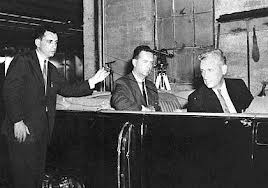
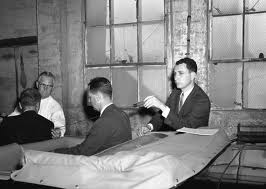
Specter creating the “Single Bullet Theory” for the Warren CommissionI admitted that I had coached Gaeton Fonzi before his interview with him on the questions that he should ask Specter. Specter asked me where Fonzi is. I told him that he lives in Florida, and that he is sick with Hodgkin’s disease. Specter said he was a good reporter. I told Specter that Fonzi was a great investigative reporter.
I told Specter that my very smart wife does not accept my political thinking regarding the nature of the power in control of the country and the world. Specter asked me about my wife. I told him that she is Jewish. She is a graduate of Swarthmore College. She studied at the University of Chicago and accomplished all but the dissertation in Russian Literature there. She owns and manages 41 apartments around Rittenhouse Square. Her father was a fellow traveler. He was subpoenaed before the House Un-American Activities Committee. He retained Abe Fortas as his lawyer. The hearing was cancelled. He was a philanthropist who financed the Youth Ruth Wing of the Jerusalem Museum and a college and high school in Israel.
I suggested to Specter that he was selected to perform the hardest assignment of the Warren Commission because he was a Jew. The government could have selected a right WASP lawyer for the job. I said that I had received less criticism for my work on the assassination than he had received for his work on the Commission and as senator. He related how in Bucks County in a speaking engagement a man had risen and shouted at him that he should resign because he was too Jewish. I told him that I thought that he was a good senator. He replied that being a senator was a good and interesting job.
So how is it that Arlen Specter’s work on the Warren Commission saved my life? If I had been successful in arousing public opposition to the National Security State, whom I viewed at the President’s true killers, then the National Security State, possessing supreme power after its successful coup, would have liquidated any effective dissent. In 1966, after a public forum on the Warren Commission’s evidence, I was advised by Brandeis Professor Jacob Cohen that I would have to be killed. I viewed Professor Cohen as speaking for the assassins.
The Warren Report quieted the public. And as it developed, I was completely ineffective. There was no need to dispose of me. So, I consider my life was saved by the effectiveness of Arlen Specter’s work and the ineffectiveness of my own.
As we were leaving the Oyster House I gave Specter a copy of James W. Douglass’s book, JFK and the Unspeakable. I said it was the best book on the assassination, and that it was dedicated to a friend of mine and me.
Specter was smiling broadly as we left. I told him that he had a great smile, but that he did not sport it often in public. I asked him whether he was in good health. He said he was, and seemed optimistic about his well-being. I don’t know whether he was then aware of his illness. In dealing with his protracted struggle against very serious afflictions he displayed remarkable fight and courage.
Knowing what I know now, and being then, as now, committed to historical truth, I would have not changed my earliest statement that the Kennedy assassination was a crime of the U.S. warfare state. But I would not have endeavored to rally people to confront, as I did, the assassins. I know now that the U.S. public never did want to accept the U.S. warfare state as the criminal institutional structure that it is. I know now, that even if the U.S. public ever was ready to accept the true historical meaning of the Kennedy assassination, that there are and have been no institutional structures open to them with which they could hope to countervail successfully the Kennedy killers, the enormous power of the U.S. empire and its warfare state.
I know that my efforts to convince people to oppose Kennedy’s assassins were feckless. But was that same effort of a small community of people to establish the historical truth of the Kennedy assassination valueless? I think not. I feel that historical truth is the polestar which guides humankind when we grope for an accurate diagnosis of a crisis. Without historical truth, an accurate diagnosis of the nature and cause of crisis, we would have no direction on how to move to solve societal disease.
Knowing what I know now, would I change my harsh criticisms of Arlen Specter? Yes, I would. Specter was a superior lawyer who enlisted his services to the U.S. government. The Warren Commission Report, through its lies, served to calm the U.S. public in a period of great crisis. If any serious domestic or foreign effort had been made to counter the coup, the weaponry commanded by the state criminals would have resulted in catastrophic loss of life. Therefore, in my judgment of Arlen Specter I defer to the wisdom of Sophocles, who said: “Truly, to tell lies is not honorable; but where truth entails tremendous ruin, to speak dishonorably is pardonable.”
1. JFK and the Unspeakable: Why He Died and Why It Matters
-

Arlen Specter: The Death of Mr. Magic Bullet
It finally happened. One of the most blatant political opportunists in contemporary American history tried to pull one too many tricks. Except this time, someone was there to call him on it. On May 18th, Arlen Specter’s inglorious 30 year reign as a Pennsylvania senator finally came to an overdue end. Except, unlike what he was promised by his odd Democratic partners, he met his Waterloo in the primary election. It wasn’t supposed to be that way for the maestro of the Single Bullshit Theory.
Courtesy Richard Bartholomew
Copyright 2010 Bartholoviews CartoonsAs we reported in April and May, some of the heavy hitters in the Democratic Party had promised Arlen Specter a clear field in the primary if he switched parties and ran as a Democrat. As we noted then, this was a dumb decision made by myopic men – Gov. Ed Rendell, President Obama, Vice-President Joe Biden, and Senator Harry Reid. They were so short-sighted that they could not see the forest for the trees. The reason Specter opted out of the GOP was simple: he knew he could not win the Republican primary against Pat Toomey. So the question then became: if he could not beat Toomey in the primary, was he a good bet to beat him in the general election? Probably not, since most Democrats would be lukewarm about the turncoat, and he would have little GOP support after defecting. So from the Democrats’ point of view, would it not be better to back a true Democrat who would not have those problems and therefore stood a better shot at beating the well-funded right-wing Republican?
The inside-the-Beltway crowd didn’t see it that way. To them, it’s all a club card game anyway. If Arlen was willing to bend, why not take him? After all, he’s one of the guys. He’s been in Washington for 30 years. So the Powers That Be decided to arrange a strange deal with the author of the Warren Commission’s Single Bullet Fantasy. This was especially disturbing to many at CTKA. Why? Because it was the endorsement of then Senator Obama at American University by the late Ted Kennedy and Caroline Kennedy which gave him a rocket boost against Hillary Clinton in his race for the Democratic nomination. The other point that was bothersome was that, as noted above, it was unnecessary. The Democrats could have won the seat without Specter.
Evidently, Representative Joe Sestak wasn’t in on the deal. Very shortly after the nauseating announcement was made in Washington, Sestak put out the word that he was seriously thinking of challenging Mr. Magic Bullet. According to Jerry Policoff, CTKA’s man on the ground in Pennsylvania, the White House and the Democratic Establishment did all they could to discourage Sestak from running, and ruining their shameful bargain. According to Policoff, they gave Sestak the carrot and stick treatment: they offered him the Secretary of Navy job and when he said no they threatened to wreck his political career. Which sounds pretty much like the kind of politics played by Governor Rendell, who is a Richard Daley type. When Sestak refused to back off, the state media – largely played by Rendell – tried to picture him as Don Quixote: a deluded man tilting at windmills. You know, he didn’t know he was DOA. As he likes to do, Specter basked in the temporary national limelight. Obama praised him for an act of “courage” in switching parties, helped him raise money, and even said to a crowd at a rally, “I love Arlen Specter.” (The Daily Beast, 5/19/10)
It was all an illusion staged by Rendell and his ill-informed Washington cohorts. Part of the illusion was this: the Democratic electorate in Pennsylvania is much more progressive than its leadership i.e. Rendell. The other part is that Sestak is a good campaigner who could raise considerable amounts of money. This helped raise his local profile statewide rather quickly. The third part is that Specter is an old man whose two bouts with cancer have left him both looking his age, and not as mentally sharp as he was. Therefore, the more people saw of the two, the better Sestak started to look to them. Another advantage was that Specter had had a difficult time beating Toomey in the 2004 GOP primary. Being the stronger campaigner, Sestak looked like he had a better chance at winning in the fall.
So, according to Policoff, Rendell’s illusion began to slowly dissipate. And when Sestak began to close the huge gap between he and Specter – which once was as much as 40 points – more and more Democratic Clubs and local committees began to break from Rendell’s machine and endorse Sestak. In fact, Policoff’s own Lancaster country committee did just that.
Sestak hoarded a lot of his money until he had cut Specter’s lead down to the 15-20 point range. He then unleashed a flurry of TV ads that were well-chosen. One was a highly effective two-parter which showed just how duplicitous Specter was. It first depicted Specter shaking hands with George Bush Jr; during which Bush calls Specter a team player he can count on. The trailing ad was Obama shouting out his love for Specter and saying, “You know he’s going to fight for you!” Another ad showed Specter essentially saying that he had switched parties in order to get re-elected. Sestak then came in to say that Specter’s conversion was merely political and done to save one person’s job – his own. This whole series of ads was powerful in its effect. Especially since Specter had little defense against it. What epitomized the opportunism was when Obama nominated Elena Kagan to the Supreme Court. Why? Because Specter had voted against her as Solicitor General. But since he was now a Democrat, he said he was open to voting for her. Unlike with his lies and deceptions on the Warren Commission, Specter was out in the open, left unprotected by the political establishment and the media.
Towards the end, Specter tried to ask for help from the White House. But sensing the political winds, they offered none. They understood they had erred. And they were not going to double down just because they had given their word to him. In the last week, Specter tried to explain his switch by saying that the GOP had moved to the right, and he had always actually been a Democrat at heart. He even tried to invoke the memory of JFK when he said, “I have been a John F. Kennedy Democrat. I have returned to the party of my roots. What’s wrong with that.” (NY Times, 5/11/10) To anyone who has studied the arc of his career, for Specter to make such a comment is nauseating. If Specter had really been a JFK Democrat, he would never have agreed to mastermind the Commission’s medical and ballistics cover up about his death. Secondly, it was after he won the Philadelphia DA job in 1965, as a registered Democrat on the Republican ticket, that he then switched to the GOP. He figured it would be easier to hold it that way.
So Arlen Specter got his ultimate comeuppance. Much too late of course. He had already done a lot of damage. The startling thing is that he still wanted to be in the arena at all. The man has been through a debilitating struggle with cancer. He has been re-elected four times. He is 80 years old. But evidently, Specter had grown used to being in the spotlight and enjoyed having an easy job with perks that paid well.
Of course, what this says about today’s Democratic Party is quite disturbing. Why the White House would want to be associated with the likes of Specter and Blanche Lincoln is baffling. That they would cooperate in a shabby deal with the likes of Specter tells us a lot about what the Democratic Party has become since 1968. As I wrote in the Afterword to The Assassinations, after the death of Robert Kennedy, the Democratic Party split in half between its liberal and moderate wings. Richard Nixon knew how to capitalize on the split, hence his infamous Southern Strategy. The Democrats – now toothless because of the deaths of JFK, MLK, Malcolm X, and RFK – lost its bearings. It, and the country, now drifted to the center – and then to the right. Therefore the only two Democratic presidents between 1968 and 2008 were the southerners, Jimmy Carter and the Democratic Leadership Council’s own Bill Clinton.
Obama and his advisers don’t read a lot of history. For him to back both Specter and Arkansas senator Blanche Lincoln shows a White House and president out of tune with the times and its own electorate. That is proven by what Sestak and Lt. Governor Bill Halter have done in spite of the aid to their opponents by the White House and the Democratic Senatorial Campaign Committee. If the White House and the DSCC had either remained neutral – which they should in a primary – or backed the insurgents, Sestak would have won even bigger, and there would likely be no run-off between Halter and Lincoln. He would have won the primary outright.
But as I wrote, the Democratic Party has never really recovered from the assassinations of the sixties. And Obama is not the transformational candidate many hoped he would be. In fact, he is a cautious and pragmatic man. The new president had a truly golden opportunity when he got elected. With the country facing the biggest economic blowout since 1929, with all three pillars of the economy on their back – housing, autos, and the stock market – he had the opportunity to be another Franklin Roosevelt. He could have launched a Second New Deal to get America back to work. He could have revived the economy and eliminated forever the nation’s reliance on fossil fuels. In fact, as revealed by GOP operative James Pinkerton, this is what the Republican establishment truly feared. For how could they vote against giving laid off Americans real jobs in a new energy market? And if it worked, and they had voted against it, they would be discredited in a way they could not easily recover from.
Much to the relief of the Republicans, the White House did not make that choice. Which makes the backroom deal with Specter kind of predictable. Though still reprehensible. Which indicates that the Democratic Party is still sleepwalking through its nightmare. So entranced that they were not even aware they were dancing with a man who helped cause it.
Well, at least the man who created the see-through cover story about President Kennedy‘s death is finally gone. Unfortunately, on the evidence of their ill-advised tango with him, the Democratic Party is not even close to being resuscitated. Specter and the Warren Commission did that good of a job in beginning the funeral.
-
Specter’s Switch: an update
As recently as March 18th Arlen Specter’s office released a statement stating almost unequivocally that he was going to run for re-election as a Republican. Five weeks later he changed his mind, and it is pretty clear why. It is being reported that Specter’s own internal polling showed him going down to a crushing defeat in the Republican Primary, even in a three-way race with Pat Toomey and Peg Luksik (an anti-choice activist who could be expected to split the conservative vote — in theory an advantage for Specter). Ironically, an F&M poll that was about to be released, but was recalled after the Specter announcement and then was released to political bloggers, had Specter eking out a 3-point primary win against Toomey and Luksik, but even that poll showed a dramatic Specter decline from March when F&M had him ahead by 15-points.
So just when all seemed bleak for Arlen Specter, along came Ed Rendell, Joe Biden, Harry Reid, et al and threw him a lifeline he would have been insane to refuse. If he switched his party registration and agreed to run for re-election as a Democrat they would clear the Primary field for him; raise tons of money for his campaign; preserve his Senate seniority; and award him a major committee chairmanship upon his return to the Senate as a Democrat. In return the Democrats reportedly asked only that he support the Obama agenda, at least when it came to cloture votes to cut off filibusters, and that he support the Obama healthcare reform agenda. That’s a pretty sweet deal for someone facing political extinction as his only alternative.
In the six days after announcing his “conversion” (and if you were listening you would have noticed that he had lots of bad things to say about the Republicans, but virtually nothing positive to say about the Democrats), Specter has done the following:
- Announced that the Democrats cannot count on him to be a 60th vote against cloture (the process for cutting off a filibuster which requires a 60-vote super-majority).
- Announced that he would continue to oppose Employee Fair Trade Act (when that Act was introduced in the last session Specter was a co-sponsor, and he only changed his mind after Toomey announced his Primary challenge necessitating a Specter shift to the Right. One would think that now that he is a Democrat another flip-flop might be in order, but that apparently would conflict with Specter’s principles)
- Announced that he would continue to oppose Obama’s nominee to be Head of the Office of Legal Council, Dawn Johnsen (the Right opposes her nomination largely on the grounds that she is in favor of investigating torture allegations during the Bush Administration and is strongly pro-choice). It is hard to fathom what someone who voted to install Alberto Gonzales in that job could find objectionable about Ms. Johnsen.
- Voted against Barack Obama’s budget along with all the Senate Republicans.
- Voted against the “Helping Families Save Their Homes” Act, again joining all the Senate Republicans.
On the May 3rd edition of Meet the Press, Specter told David Gregory that he was misquoted when the media reported that he had told President Obama that he would be a “loyal Democrat” and would support the Obama agenda. He also stated unequivocally that he would not support the Obama healthcare reform plan because it included a “public plan,” and was going to be introduced via a process that would prevent the Republicans from filibustering it.
It now appears that Congressman Joe Sestak (Pa – 7) is considering defying the Party Leadership’s effort to clear the field for Specter by announcing his own run for the Democratic Senate nomination. Sestak is not as progressive as I would like for him to be, and he is unlikely to support the kind of health care reform I seek (and like Specter I am opposed to the public plan, but for very different reasons), but at least he is a Democrat, and he is apparently not a Party insider. He also has a campaign war chest of over $ 3 million which makes him a viable contender.
I cannot support Arlen Specter for the Democrat nomination to be our Senator. For now, I will be taking a close look at Joe Sestak. I hope the rest of you will do the same. We need to find a viable candidate to run against Arlen Specter in next year’s Democratic Primary. So far Sestak seems to be the only one who is both viable and possibly willing. It is time to launch a Stop Specter movement before it is too late. Let’s prove that our Primary means something, and that it is still the Democratic voters who decide who their candidates will be rather than Party Leaders in Washington and Harrisburg.
– Jerry Policoff
-

Arlen Specter: Opportunist to the End
The announcement came down on April 28th. Former Warren Commission counsel and longtime Senator Arlen Specter decided to switch parties. He will run for re-election next year as a Democrat, not as a Republican. This surprised many. But it shouldn’t’ t have. Especially if you know Specter and have contacts on the ground in Pennsylvania. And as my review of Legacy of Secrecy showed, CTKA does.
Specter and Obama Specter had a difficult time getting through his GOP primary in 2004. In fact, he barely beat former Representative Pat Toomey, besting him by just 17,000 votes. In a state as large as Pennsylvania, that is a narrow victory. The so-called Club for Growth had backed Toomey. This is a very conservative and very wealthy group of businessmen who are fanatical free marketers of the Milton Friedman stripe. For them Social Security is socialism. Their ultimate goal is to repeal every aspect of the New Deal. Which is not very economically or politically practical. But if you have that kind of money, practicality doesn’t matter. Someone will take up your marker. As Toomey did in 2004.
But here’s where it gets interesting. According to our sources, Toomey had sworn off running this time around. But when Specter was one of the three Republican senators to back President Obama’s stimulus package, the Club for Growth took notice and didn’t like it. At all. To keep the Republican Party in check, they gave Toomey the OK to announce another run against Specter.
This put Specter in a difficult situation. In 2004, he had a tough time of it against Toomey. But now it would be even worse. Why? Because the Democratic primary for president in Pennsylvania last year lasted almost seven weeks. Hillary Clinton and Barack Obama went at it mano a mano in every town, village and city across the state. In the process, they switched over 150,000 voters from the GOP ranks to the Democratic Party. This trend was evident even in traditionally conservative enclaves like Lancaster. Obviously, the great majority of those switching had to be moderates and not bedrock Rush Limbaugh type conservatives. Consequently, the defections hurt Specter and helped Toomey. What makes it worse is that Pennsylvania primaries are closed: Only Republicans can vote in the GOP primary. Specter saw the handwriting on the wall. He was going to have to face a very well funded challenger in a very hard fought primary. And now the make up of the electorate had drastically changed. An early Rasmussen poll had Toomey with a substantial lead.
Putting his finger in the wind, he nevertheless found a way to draw the defection as a matter of principle. (He always does.) Specter said, “I have found myself increasingly at odds with the Republican philosophy and more in line with the philosophy of the Democratic Party.” Being a bit more candid, he added “I am not prepared to have my 29 year record in the United States Senate decided by the Pennsylvania Republican primary electorate.”
If you know anything about Specter’s career, this is not really surprising. Here is a guy who really didn’t care much about the death of President Kennedy. He saw very early what the heavy hitters on the Warren Commission wanted. He went ahead and gave it to them. And they sensed he was so eager to do their bidding that they gave him free rein over the medical and ballistics evidence. And after several meetings, Specter got the Kennedy pathologists to go along with the unbelievable and nonsensical Single Bullet Theory. Which he has stood by since, knowing the MSM will back him up on it. After that disgraceful performance, when he couldn’t win the Philadelphia DA’s office as a Democrat, he switched to the Republican Party. And he stayed on that side for forty years. As long as he stood a good chance of winning. But now he doesn’t. So he tries to paper that over by saying its really about philosophical differences.
What is surprising to me though is that the Democrats seem eager to accept this guy. In addition to being a cover up artist in the Crime of the Century, here is a man who backed the shameful Vietnam War. Who voted for the disastrous war in Iraq. Who was the appointed attack dog in the absolutely nauseating Clarence Thomas/Anita Hill hearings. Who was part of the GOP lynch mop in the goofy impeachment hearings against President Clinton. And in fact, just a little over a month ago, he told the Washington political newsletter The Hill that he would consider running for re-election as an independent, but not as a Democrat. Since if any GOP senator would switch, the Democrats would have control of all Congress, and he didn’t find that an appealing prospect.
Yet Governor Ed Rendell, Senate Majority Leader Harry Reid, and President Obama are eager to get him on board. For instance, Reid said, “I welcome Senator Specter and his moderate voice to our diverse caucus.” (AP story, 4/28) And Rendell-a Democrat– suggested a meeting in Washington this week so the party leadership could endorse Specter’s candidacy. (ibid) What is incredible about this last statement is that it came from Specter. So Rendell and he have been talking about this at length. Which of course, tells you something about Specter. Here is a guy who will be 80 years old next year. Yet five terms in the Senate is not enough for him. He feels entitled to the seat for life.
My question to Obama, Reid, and Rendell is simple: Why? The ostensible reason seems to be that the Democrats are salivating at the chance to get a sixty-vote majority in the Senate. And when Al Franken is finally sworn in to the senate seat from Minnesota, with Specter, they will have the sixty votes. But at what cost? As one can see from the record above, Specter is not a Progressive dream of a Democrat. He is very damaged goods. Further, the Democrats will almost certainly win that Pennsylvania Senate seat next year, against either Toomey or Specter. So in actuality, Specter needs the Democratic Party more than they need him. Bottom line: Do the Democrats really want or need another Joe Lieberman in their party?
The answer apparently is: Yes. They would rather back someone like Specter than have an open Democratic primary. That would risk the prospect of having a progressive, e.g. Joe Hoeffel, Barb Hafer, or Chuck Penacchio win the race and beat Toomey. Rendell is an old style party boss in Pennsylvania-think Richard Daley. He backed Clinton in the primary last year and forced the major city mayors to jump on board, or he would cut them off from party funds. In 2006, he forced Hoeffel and Hafer off the senate ballot to clear the way for the moderate Robert Casey. And the early reports off of MSNBC, say he cut the same deal for Specter. Which is probably why Specter now finds running as a Democrat “an appealing prospect” when he didn’t just a month ago. Imagine promising a free ride in the Democratic primary to a Republican with a track record like Specter’s. So from the early indications, it appears that Rendell and Clinton probably worked behind the scenes to invite the Warren Commission mastermind inside the party he helped kill. And of which he was a member at the time.
This is the man the Democrats plan to back next year. In a race they could win easily on their own with a real Democrat. First, Kirsten Gillibrand and the NRA in New York. Now Arlen Specter and the Warren Commission in Pennsylvania.
The Democrats may have won the election. But thanks to the likes of Rendell, Reid, Markos Moulitsas, Jane Hamsher, and Thom Hartmann, they are still in search of their souls.
– Jim DiEugenio