Tag: ALLEN DULLES

  • The Vietnam War and the Destruction of JFK’s Foreign Policy (Part 1)


    Part 1: 1945-1963


    OHH:

    We’ve got James DiEugenio here. He’s the publisher and editor of kennedysandking.com. It’s a great website with tons of information on a lot of Cold War history, the assassinations of the ’60s and a lot of interesting book reviews and things like that. He’s here today and we’re going to talk about the United States’ involvement in Vietnam and a lot about Kennedy’s involvement in that war as well. Thank you, Jim, for speaking today.

    James DiEugenio:

    Sure and I guess I should add that one of the reasons that I’m doing this, and one of the reasons that I wrote the four-part essay is because I was so disappointed in the Ken Burns-Lynn Novick colossal 18-hour, 10-part documentary series that was on PBS. I felt like it was a squandered opportunity. Our site became one of the big critical focuses of that disappointing series. I’m going to take that further with you in this interview.

    OHH:

    Great. Let’s just start from the beginning. What’s the history of the United States’ involvement in Vietnam?

    James DiEugenio:

    To understand how the United States got bogged down in this horrible disaster that ended up in an epic tragedy for both the people of Vietnam and a large part of the American population? It goes back to what historians – and I always like to take a historical viewpoint of things because I think that’s the most accurate way to understand something like this – call the second age of imperialism. Historians say the first age of imperialism, or colonialism took place in the late 1400s, early 1500s, when some of the great powers of Europe, the Dutch, the French, the British, the Portuguese and the Spanish started to carve up the Western Hemisphere.

    Now, what we call the second age of imperialism took place from about the 1800s, in the early 1800s to the later part of the 1800s when the French and the British, to a lesser part the Germans and the Belgians, began to occupy areas of Africa and Asia.

    Now, the French involvement in Vietnam began as a kind of religious missionary movement to convert the people of Indochina to Catholicism. And as that picked up steam, it became a kind of commercial relationship. The French built a factory there and they began to have trade agreements. By about the late 1850s, the French had a military attaché there and they began to attack the province of Da Nang and they created a colonial region in the southern part of Vietnam called Cochinchina. That spread gradually over the next few years into the central region and then finally the northern region which they called Aman. And then they began to spread it out even further westward into Cambodia and Laos.

    This is how the French empire, which we called Indochina, that’s how it started and it lasted there of course until the fall of the French government to the Germans in the early part of World War II.

    When Paris fell, the Japanese went in, filled the vacuum, and then at the end of World War II, President Franklin Roosevelt had made it clear before he died that he did not want the French to go back into Indochina after the war. He even asked the Chinese nationalist government if they would rather go in instead to prevent the French from going back in, they said, “No.”

    He made it clear that he didn’t want any more colonial powers going back in and taking up the places they had before the war. Unfortunately, Roosevelt passed away shortly after that and as the Japanese left, the British came in and they allowed the French to come in behind them and reestablish their government in Vietnam. Except now there was an organized rebellion against this led by this guy named Ho Chi Minh. Ho Chi Minh tried to negotiate with the French. When that didn’t work, he decided to organize opposition forces to the French as they began to try and reoccupy Cochinchina.

    Now, there was a fellow – and by the way, this was extraordinary to me that the Burns-Novick series left the figure of Bao Dai completely out of the picture. I don’t even think they mentioned him once. But Bao Dai had been the French figurehead in Vietnam. What really escalated the conflict between Ho Chi Minh and the French was the fact that the French now wanted to bring back Bao Dai.

    Ho Chi Minh got really furious at this because he figured, look, if that’s what they’re designing to do, then what they’re going to do is to create another colonial empire because he knew that Bao Dai was nothing but a figurehead. He was not going to give democracy or self-government to the Vietnamese people at all.

    That began what’s usually referred to as the first Indochina war.

    What happened here of course is that once the Chinese and the Russians decided to stand by Ho Chi Minh when he declared his opposition to Bao Dai, Dean Acheson, Truman’s secretary of state, saw that as a movement towards communism. And this really shows you how crazy the times were and this was a huge problem back then in those days, that this whole idea that the Dulles Brothers put out and advocated for and Acheson preceded the Dulles Brothers but he had a lot of their trademarks in diplomacy.

    The idea was this: you had to be on our side, and if you weren’t on our side, you were against us. This simply meant that there was going to be no neutrality. We’re not going to go ahead and allow third world nations to pick their own path. And as we’ll see, this will be a serious point of contention when Kennedy comes to power because he disagreed with that policy. When the French now picked up these hints that the United States would support them, they begin to escalate the war and Acheson and Truman now began to finance a large part of the French military effort to retake Vietnam and Indochina.

    This went on for a couple of years. But in the election of 1952, when Eisenhower takes over and the Dulles brothers come to power – Foster Dulles of the State Department and Allen Dulles as director of the CIA – the aid to the French gets astronomical. It goes up by a factor of about 10, until by the last year of the war in 1954, the United States is literally dumping hundreds of millions of dollars and military aid, supplies, et cetera, into the French effort to maintain control of Indochina.

    Now, John Foster Dulles brought Acheson’s ideas in the Third World to a point that I don’t even think Acheson would agree with. John Foster Dulles was extremely ideological about this whole issue. He simply would not tolerate any kind of neutrality by any new leader in the Third World. And this is why he and his brother then began to back the French attempt to a really incredible degree. By the last year of the war late 1953, early 1954, the United States was more or less financing about 80% of the French war effort. On top of that, because they were footing the bill, they would not even allow the French to negotiate a way out, because the French actually wanted to do that in 1952 or 1953. The French were going to negotiate a way out of this dilemma but Dulles would not tolerate it.

    And so the war went on until the French made a last desperate strategic gamble to win the war in 1954 and that of course was the Battle of Dien Bien Phu.

    OHH:

    Can I interrupt you before we go onto Dien Bien Phu?

    James DiEugenio:

    Go ahead.

    OHH:

    Why were the Dulles brothers, was this purely an ideological thing they were pushing or did the United States, did we already have business there? Was it an economic thing too? What was the push for getting so deeply involved with the French?

    James DiEugenio:

    That’s correct. It was not just ideological because the Dulles Brothers, prior to becoming parts of the government, had pretty high positions in one of the giant, probably the predominant corporate law firm in the United States called Sullivan & Cromwell. In fact, John Foster Dulles was actually the managing partner there and he brought his younger brother Allen in as a senior partner. It’s not completely correct to say that this was all ideological because it wasn’t.

    A large part of this was for commercial reasons in the sense that a lot of the clients that the Sullivan & Cromwell law firm represented had these large business interests in all different parts of the globe and sometimes this included Third World countries.

    That’s another reason of course the Dulles Brothers were so intent upon putting down this rebellion against the French attempt to recolonize the area. Because to them, it was an example of an industrial or already commercialized western power going ahead and exploiting cheap labor and cheap materials in the Third World. In large part, that’s what that law firm represented. So that’s absolutely correct. It was not just ideological. It was also a commercial view of the world and what the Dulles Brothers stood for in relation to the use of the natural resources in the Third World.

    Now, what happened at Dien Bien Phu, and I don’t think the Burns-Novick film really explained this as well as it should have, is that the French under Henri Navarre decided that they were losing the guerrilla war. So they decided to try and pull out the North Vietnamese forces, led by General Giap, into a more open air kind of a battle ground. They took over this low-lying valley in the northern part of Vietnam, not very far from the western border. The strategic idea was to get involved in a large scale battle where they would be able to use their air power and overpowering artillery to smash Giap’s forces.

    Well, it didn’t work out that way for a number of reasons. But one of them was that the Russians went ahead and transported these huge siege cannons to Giap, and Giap used literally tens of thousands of civilian supporters to transport these huge siege guns up this incline overlooking Dien Bien Phu. They began to bombard the airfield there, which negated a lot of the military advantage that the French thought they were going to be able to use. When that started happening, John Foster Dulles began to arrange direct American aid. And I’m talking about military aid.

    He actually began to go ahead and give them fighter planes, which he had repainted and drawn with French insignia run by CIA pilots. I think there were about 24 of them that he let them use. Then when that didn’t work, then he went ahead and started giving them large imports of other weapons to try and see if they could hold off the siege that was going to come. Finally, when that didn’t work, he arranged for Operation Vulture. Operation Vulture was the arrangement of a giant air armada. It was originally planned as something like, if I recall correctly: 60 small bombers, 150 jet fighters in case the Chinese intervened and also, three, I think there were B-36 Convair planes to carry three atomic bombs.

    Dulles could not get this through Eisenhower. Eisenhower refused to agree to it because the British had turned him down. He didn’t want to do this by himself. Even though Dulles tried to convince the British to help, they turned them down twice.

    Then Dulles, in a very strange move, he actually offered the atomic bombs to the French Foreign Secretary Bidault, Georges Bidault, in a separate private exchange which is a really remarkable thing to do because I’ve never been able to find any evidence that Eisenhower knew about that.

    That’s how desperate he was not to see Dien Bien Phu fall. But the French refused, the guy said straight to Foster Dulles, “If I use those, I’m going to kill as many of my troops as I will General Giap’s.” Dien Bien Phu fell, and at this point, two things happened that will more or less ensure American involvement in Vietnam.

    At the subsequent peace conference in Geneva, Switzerland, it’s very clear that the United States is calling the shots. Secondly, when the Chinese and Russians see that, they advised Ho Chi Minh to go along with whatever the western powers leaned towards. If not, they feared that the Americans would intervene immediately. In fact, Richard Nixon in a private talk with American newspaper editors, actually floated the idea of using American ground troops to intervene at Dien Bien Phu.

    What happens now is that, John Forster Dulles goes ahead and orally agrees that there will be general elections held in two years in 1956, and whoever wins, will then unify Vietnam. He didn’t sign it because the lawyer that he was understood that that would expose him later, but he did advise his representative at the conference to go ahead and say they will abide by that decision.

    This begins, for all intents and purposes, the American intervention in Vietnam and it begins – and this is really incredible to me that the Burns-Novick series never mentioned – Ed Lansdale, and how you can make a series, an 18-hour series about Vietnam and American involvement there and not mention Lansdale is mind-boggling.

    They did show his picture but they didn’t say his name. The reason it’s so mind-boggling is that Allan Dulles now made Lansdale more or less the action officer for the whole Vietnam enterprise. In other words, the objective was, number one to create an American state in South Vietnam, and number two, to prop up an American chosen leader to be the American president of this new state.

    Lansdale did it and I’ll tell you, it’s an incredible achievement what he did. Because he set up this giant psychological propaganda campaign, that scared the heck out of all the Catholics because the French had occupied the country.

    OHH:

    The whole country, we’re talking. This is the French were fighting over North Vietnam, South Vietnam. This was not splitting the two countries until this point, right?

    James DiEugenio:

    Right. They had converted a lot of the people there to the Catholic religion. What happens is that now, Lansdale has this great psychological propaganda war saying that Ho Chi Minh is now going to slaughter all the Catholic residents in North Vietnam. And so literally, hundreds of thousands of these converted Vietnamese now begin to come to the South and the CIA helps them by both land and by sea. They begin to transport them to the South because of the agreement was that all the Vietnamese would have I think a 36-month window to move in either direction.

    This was a great, great propaganda victory for the Dulles Brothers because they said, “Look, all these people are fleeing the North. Why? Because we represent democracy and the North represents communist slavery”. That wasn’t the reason at all of course, but that’s how they used it. Then, they found this Ngo Dinh Diem guy…

    OHH:

    Well, before we go ahead, can we talk a little bit about Lansdale? Whose auspices… was he running under the CIA, was he part of the military?

    James DiEugenio:

    The reason I don’t think Burns and Novick wanted to introduce Lansdale is because there isn’t any way in the world that you can talk about what Lansdale did in South Vietnam and not bring in the CIA. Because although Lansdale had a cover as a brigadier general in the Air Force, he really wasn’t an air force officer. He himself admitted this.

    We found some letters, John Newman and myself, up at Hoover Institute near Stanford in which he essentially admitted that he was really working for the CIA the whole time. He had done a lot of covert operations, most famously in the Philippines before he was chosen by Allen Dulles to lead this giant – which I’m pretty sure at that time – was the biggest CIA operation in their history. What he was doing here with this pure psychological warfare to get all these people to come south.

    And if you expose who Lansdale is, there isn’t any way that you can say that this was not a CIA-run operation. This whole idea is to thwart the whole Geneva agreement, and number two to thwart the will of the people of Vietnam. Because the reason this was done of course, and Eisenhower admitted this later, was that there was no way in the world that the CIA could find any kind of a candidate that was going to beat Ho Chi Minh in a national election.

    The CIA did these polls and they found out that Ho Chi Minh would win with probably 75 to 80% of the vote if there was an honest, real election. That’s why the CIA under Lansdale decided first to get all these new people into the south and then prop up this new government in the south to separate it from what they then called Ho Chi Minh’s area in the north.

    Now, understand: that didn’t exist before. France had colonized the whole country. So now you had the beginning of this entirely new country created by the CIA. There’s no other way around that statement and I really think that the Burns-Novick film to be mild, really underplayed that. There would have been no South Vietnam if it had not been for Lansdale.

    He’s the guy who created the whole country. Now, they picked a leader, a guy named Ngo Dinh Diem who was going to be their opposition to Ho Chi Minh. Well, the problem with picking Ngo Dinh Diem was number one, he spoke perfect fluent English; number two, he dressed like a westerner that is, he wore sport coats and suits and white shirts and ties and number three, he even had his hair cut like an American. His family was the same thing: his brother Nhu and Nhu’s wife Madame Nhu.

    How on earth anybody could think that somehow Diem and his family was going to win the allegiance of all the people in Vietnam and win elections… well, that wasn’t going to happen. What Lansdale did is and … You got to admire the way these guys think even if you don’t like the goals they achieve, the way they do it is very clever. Lansdale, number one, wanted to get rid of Bao Dai because he did not want to have anymore – him and John Foster Dulles had agreed – they had to get rid of the stigma of French colonialism.

    They sponsored a phony plebiscite, an up or down plebiscite on bringing Bao Dai back in 1955. Now, anybody who analyzes that election in 1955 will be able to tell you very clearly that it was rigged. To give you one example, Bao Dai was not allowed to campaign. It was pretty easy to beat somebody if the other guy cannot campaign, and Lansdale, for all practical purposes, there’s no other way to say this, he was Diem’s campaign manager. It was CIA money going in and running his campaign and there’s a famous conversation where Lansdale, because he has all this money and because they’ve already built up a police force in South Vietnam, he essentially tells Diem that, “I don’t think that we should make this very blatant. I don’t think you should win with over 65% of the vote.”

    Well, Lansdale decided he should be out of the country during the actual election so it wouldn’t look too obvious. So Diem then went ahead and decided he wanted to win with over 90% of the vote and that’s what it was rigged for. And as everybody who analyzed that election knows it was so bad that you actually had more people voting for Diem in certain provinces than actually lived there. That’s how bad the ballots were rigged. But it did what they wanted to do. It got rid of Bao Dai, so now in a famous quote by John Foster Dulles, he said words to the effect that: Good, we have a clean face there now. Without any kind of hint of colonialism.

    Now, you can believe he said that, it’s actually true. And it shows you the disconnect between the Dulles Brothers and Eisenhower with the reality that’s on the ground there because Diem is going to be nothing but a losing cause. Now that Diem is in power, Lansdale then goes ahead and advises him to negate the 1956 election and that’s what happens. The agreements that were made in Geneva were now cancelled, and this is the beginning of two separate countries. You get the north part of Vietnam led by Ho Chi Minh and with its capital at Hanoi and you get South Vietnam which is a complete American creation with its capital at Saigon led by Diem.

    By the end of 1957, and this is another problem I had with the Burns-Novick series – they try and say and imply that the war began under Kennedy. Simply not true.

    And by the way, this is something that Richard Nixon liked to say. He liked to say that, “Well, when I became President I was given this problem by my two predecessors.” No no, not at all.

    In the latter part of 1957, I think in either November or December, the leadership in the North, that is Ho Chi Minh and Le Duan and General Giap, they had decided they were now going to have to go to war with the United States. They began to make war plans at that early date and those war plans were then approved by the Russian Politburo. And both Russia and China, because in some ways it had been their fault that this happened by advising Ho Chi Minh to be meek and mild at the Geneva conference; they agreed to go ahead and supply Ho Chi Minh with weaponry, supplies and money.

    The war now begins. In the first Indochina War, France against the Vietnamese, the rebels in the south were called the Viet Minh. While now the Viet Minh are converted into the Viet Cong. This rebel force in the south now begins to materialize again except their enemy is Diem. Now begins the construction of the Ho Chi Minh Trail which crosses down through Laos and Cambodia and this is going to be a supply route to supply these rebels in the south and actually infiltrate troops into the south.

    The other way they’re going to do it is through a place called Sihanoukville in Southern Cambodia, there they’re going to bring in supplies by sea. Now, for all intents and purposes, the war now begins in around 1958.

    There begins to be hit and run raids against the Diem regime in the south. The United States now begins to really build up, not just a police force, which they had done before, but they now begin to build up a military attaché in the south. By the end of the Eisenhower regime, there’s something like about, if I recall, about 650 military advisers there with the police force that is trained at Michigan State University under a secret program.

    The battle in the countryside now begins in earnest: 1958, 1959, 1960. Diem, as he begins to be attacked, now gets more and more tyrannical. He begins to imprison tens of thousands of suspects in his famous tiger cages. These bamboo like 2′ by 4′ cages which people are rolled up like cinnamon rolls and kept prisoner, there were literally tens of thousand of those kinds of prisoners by 1960. He actually began to guillotine suspects in the countryside.

    As more and more of this militarized situation takes place, it begins to show that the idea that the United States is supporting a democracy is a farcical idea: because it’s not a democracy in the South because the police force is run by his brother Nhu and Diem is very much pro-Catholic and anti-Buddhist and unfortunately, for the United States, about 70% of the population in South Vietnam was Buddhist, even with the hundreds of thousands of people who fled south.

    The situation, and by the way, Lansdale was still there. He’s still supervising Diem, trying to hold on to this thing because he had so much invested there. As time goes on and the situation becomes more militarized, there actually comes to be a coup attempt against Diem in 1960, and the American ambassador in Saigon, I think his name was Elbridge Durbrow, he even lectures Diem that you’ve got to democratize this country, or else you’re going to be the symbol of this whole militaristic situation and you’re going to be under a state of siege, and this won’t work. That’s the situation that occurs during the election of 1960 with Kennedy versus Nixon. That’s the situation that whoever wins that election is going to be presented with.

    OHH:

    There’s an actual line here from Lansdale I guess, they acknowledge that this is a fascist state they set up.

    James DiEugenio:

    Lansdale actually said that. It’s a famous quote he said when things began to spin out of control when things began to be an overt militarized struggle by ’64, ’65 – where he said words of the effect: I don’t understand these people who complain about democratic rights and human rights, when I was never instructed to build that kind of state. I was instructed to build a fascist state and that’s what I did. Talk about from the horse’s mouth. That’s not an exact quote but it’s pretty much what he said.

    What happened is that the CIA sent in completely trained police officers that were meant to monitor and surveil any kind of, what they perceived as being subversive opposition to Diem. The CIA plan was that: we probably can’t control the countryside because it’s too big and it’s too expensive. But we have to maintain control in the big cities. So they began to issue ID cards, which identified the great majority of the population so they could begin to keep track of it and then they began to train the police forces to go ahead and root out anybody they thought was subversive.

    You’re never going to get an exact number of how many people Diem put in prison. But one of the most credible numbers I’ve seen is about 30,000. That’s how big the prison population was. Anybody who dissented against the Diem regime. What made it worse, what made it really almost fatal, was the fact that his brother Nhu did not want to tolerate religious freedom for the Buddhists. You had this crushing of political dissent and then you had this perceived persecution on religious grounds.

    It began to be a kind of endless downward spiral where the Diem regime needed more and more American aid to stay in power because it could not win, in the famous Lyndon Johnson phrase, “the hearts and minds of the people”. More and more aid began to be funneled into South Vietnam.

    It was like an inverse equation, the more the political system failed, the more the military system had to be escalated if we’re going to hang on to South Vietnam. That is the terrible situation that Kennedy is confronted with when he becomes president, when he’s inaugurated in January of 1961.

    OHH:

    Let’s talk about what Kennedy’s initial moves were? I mean, he had a lot facing him. Obviously, Cuba was probably more in the news as was things happening in Berlin, but how did Kennedy try to deal with Vietnam at the beginning of his administration?

    James DiEugenio:

    Well, that’s exactly right because Vietnam did not figure very strongly in the 1960 campaign. It was about the islands off the coast of China, Quemoy and Matsu, and about Cuba. Kennedy tried to get some things in there about Africa during the campaign but there really wasn’t a heck of a lot about Vietnam in the 1960 campaign. In fact, as we know now, the Eisenhower administration was actually secretly planning for the Bay of Pigs operation with Nixon and Howard Hunt.

    When Kennedy becomes president, he’s immediately confronted with these conditions in South Vietnam. And Edward Lansdale, I think it was a few days after the inauguration, hands him a report about how dire the situation is in Saigon, and he predicts that if the United States does not assert itself – meaning sending in American ground troops – that the Diem regime is in danger of falling.

    That was really the first time that Kennedy had ever heard such a thing. Because when he and Eisenhower had talked – they had a two-day conference to go ahead and facilitate the transition – Kennedy said that the country in Indochina that Eisenhower warned him about was not Vietnam, it was Laos. That’s why Kennedy first tried to solve the Laotian situation, in which he chose to put together a neutralist solution to the problem in 1961.

    Confronted with Vietnam, after Lansdale’s report, this created a landslide. Person after person, Walt Rostow, Maxell Taylor… by November of 1961, there are about eight reports on his desk, all encouraging the United States to send ground troops into South Vietnam. Even McGeorge Bundy, his national security adviser, recommended 25,000 ground troops, American combat troops, to go ahead and enter into South Vietnam to save the country.

    At this point, I think it’s necessary to correct another terrible mischaracterization in the Burns-Novick series. If you don’t understand who Kennedy was by 1961, then you cannot in any way present what Kennedy did in an honest way from 1961 to 1963. Kennedy was in Vietnam in 1951 as he was getting ready to run for senator. He took a trip into Asia. He landed at the Saigon airport and he deliberately avoided being briefed by the French emissaries or representatives of the French administration or the French press there. He had a list of people that he wanted to talk to. One of them was Edmund Gullion – who the film never mentions. They mentioned a New York Times reporter, I think his name was Seymour Topping.

    It was the Gullion meeting that really impressed Kennedy because Gullion simply stated, when Kennedy asked him, “Does France have a chance of winning this war?” Gullion said, “No. France doesn’t have any chance of winning. There’s no way in the world we’ are going to win this thing.” JFK said, “Well, how come?” Gullion said, “Look, Ho Chi Minh has fired up the Vietnamese population, especially the younger generation, to a point that they would rather die than go back to French colonialism. With that kind of enthusiasm, that kind of zealotry, there’s no way in the world that the French are going to kill off a guerrilla movement because it’s going to devolve into a war of attrition. You will never get the French population in Paris to support that kind of a war.” That’s why Gullion predicted France and America would lose, way back in 1951.

    That talk had a tremendous effect on Kennedy’s whole view of the Cold War. Up until that point, Kennedy was more or less a moderate in a Democratic Party on that issue. That meeting radicalized Kennedy on the whole issue of the Third World, because he now began to see it as being not really about democracy versus communism. It’s really about independence versus imperialism, and the United States had to stand for something more than anti-communism in the third world in a practical sense, or else, we were going to lose these colonial wars.

    Kennedy now began to map out this whole new foreign policy that, I’m not exaggerating very much when I say that no other politician in Congress had at that time. I don’t know of any other politician, senator or congressman, that this early, 1951, 1952, began to pronounce these statements that Kennedy is going to go on with for six years. Namely that it’s not the Democrats that are wrong, it’s not the Republicans that are wrong: both parties are wrong on this. We have to understand that in the Third World, we have to be on the side of independence. Nationalism is a kind of emotion, a kind of psyche that’s not going to be defeated there. We have to understand that.

    So when Dien Bien Phu fell in 1954, Kennedy was on the Senate floor saying that: it doesn’t matter how much men, how much material we put in, this is not going to work; direct American intervention is not going to work. Operation Vulture is not going to work. That continued until his great speech in 1957 on the floor of the Senate about the French colonial war in Algeria. And I advise anybody, if you want to see who JFK really was, read that speech. It’s in that book, The Strategy of Peace, the entire speech.

    In that one, he essentially says: Look, we saw this happening three years ago in Indochina, and now it’s repeating itself on the north coast of Africa. How many times do we have to go through this to understand what the heck is happening here? If we were the real friends of France, we would not be sending them weapons to fight this colonial war with. What we’d be doing instead is we’d be convincing them to go to the negotiating table and exit, find a gentlemanly way to get out of this thing so that not only can they spare the bloodshed, but they can save a civil war in their own country over this.

    That speech in the summer of 1957, that speech was so radical, it was so revolutionary that, if I remember correctly, there were 165 editorial comments about it throughout half the newspapers in the United States, half of the major newspapers in United Stated commented on it. Two thirds of them were negative. That’s how far ahead of the curve JFK was. We know two-thirds of them were negative because his office clipped all the newspapers; he had a clipping service.

    Kennedy was really stunned by this, “Did I make a mistake here?” He wrote his father saying: You know dad I might have miscalculated on this thing. I’m getting hammered in the press. His father wrote back to him and said: You don’t know how lucky you are, because two years from now when this thing gets even worse and everything you predicted turns out to be true, you’re going to be the darling of the Democratic Party.

    And that’s what happened. When Kennedy comes in to the White House – and this is where I have a disagreement with a lot of people in the critical community including people like John Newman, even Jim Douglass – my view of it is that in 1961 he already has the gestalt idea of what his foreign policy is going to be. And a big part of that is: I’m going to do everything I can not to intervene with American military power in the Third World, whether it be Cuba, whether it be Vietnam.

    When the debates come in the fall of 1961, when everybody in the room is telling him: You’ve got to send ground troops into South Vietnam or the country is going to fall. McNamara, if you can believe it, Defense Secretary McNamara was even worse than McGeorge Bundy. He wanted 200,000 men to be sent in the South Vietnam. Kennedy, as he is described in many books – a good one is James Blight’s book Virtual JFK, he spends 40 pages discussing those debates – Kennedy is virtually the only guy in the room, who was resisting all of it. This was a difference between Kennedy and Johnson.

    Kennedy was not a domineering kind of a personality. He would encourage his advisors to say what they thought, whereas Johnson would use every rhetorical trick in the book to steer everything to go his way. He’d use ridicule, sarcasm, et cetera.

    Kennedy wasn’t like that, and so he let this debate go on. Finally, after about two weeks, he said: No, we’re not going to go ahead and commit ground troops in the Vietnam for a number of reasons. Number one, we are not going to be able to get anybody to ally ourselves with. We’re going to have to go to this alone. Secondly, it’s a very, very hard thing to understand. It’s not like the Korea situation where you have the North Korean invasion come across the border. This is much more of a civil war. The mass of congressmen, let alone the public, is not going to be able to understand it. Third, how do you send in infantry divisions and artillery divisions to fight a war in the jungles of Indochina? Of course, those all ended up being accurate. He did go ahead and increased the number of advisors; he sent in 15,000 advisors.

    Right after this, and this is something that people like David Halberstam in his incredibly bad book, The Best and the Brightest, they shrug this off in a sentence. Right after this, JFK tells John Kenneth Galbraith, his ambassador to India: I want you to go ahead to Saigon and I want you to write me a report on what you think is going on there and if you think the United States should go in there with combat troops and the whole armada – knowing, of course, that Galbraith thinks it’s a stupid idea.

    That was meant to counteract the report that Walt Rostow and Gen. Max Taylor had brought back to him in which he had gone over in the debate. He gets his Galbraith report, and sits on it for a while. When Galbraith comes to town in April 1962, he tells him: Take your report on Vietnam, bring it to McNamara, and tell him it’s from me.

    That’s what Galbraith did, and he wrote back to Kennedy saying: All right, I did what you asked me to do, and McNamara’s on board. This is how, number one, Kennedy finally got an ally in his own cabinet to share his view of Vietnam, and McNamara now becomes the spearhead for what’s going to be Kennedy’s withdrawal plan. That’s the beginning of Kennedy’s plan to withdraw from South Vietnam.

    OHH:

    Now, just to go into some of it, Kennedy wasn’t doing nothing in Vietnam. Did he setup the things like the strategic hamlets? He carried on the war to some degree, right? But not with American troops.

    James DiEugenio:

    Correct. What I think Kennedy was trying to do, he was essentially running a kind of two-track program. He wanted to see if this more expansive advisory aid would do any good. Is the problem that we’re not giving Saigon enough aid to counter the Russian and Chinese aid being given to Hanoi? Is that the problem?

    What he decided to do was, number one, to try and expand the aid to Saigon and, at the same time, if that doesn’t work he’s also planning a withdrawal from Saigon. Kennedy’s idea was this: We can go ahead and help the people we are allied with. We give them money, we can give them supplies, we can give them weapons, we can send in trainers but we can’t fight the war for them. We can’t do that.

    He quite literally said that to Schlesinger. He said: If we fight the war for them, then we’re going to end up like the French; and I saw that. We can’t make it into a white man’s war. He quite literally said, “We can’t make it into a white man’s war” or it will be recognized as that by the native population.

    On the one hand, he’s trying to give them extended help and on the other hand he’s planning withdrawal in case that doesn’t work.

    There’s one other element here – there’s the 1964 election. See, as John Newman said in his groundbreaking book, JFK and Vietnam, the best way to explain the two men in relation to Vietnam was that Kennedy was planning his withdrawal plan around the 1964 election, Johnson was planning his escalation plan around the 1964 election.

    Remember, John Newman wrote his book, I think it was published in 1992 which is 25 years ago, and everything that has come out of the archives since then has supported that he is absolutely right about that whole issue. Kennedy actually said such to Kenny O’Donnell and Dave Powers: I’m going to be damned as an appeaser when we leave by everybody on the right after the election, but we better win the election because that’s what I’m going to do.

    It was those three things, it was the trying to help and train the people we’re allied with as much as we could. Number two, planning for withdrawing in case that doesn’t work, and then timing it around that 1964 election. I think those are three things we have to understand about the Kennedy administration, in his approach to the war.

    OHH:

    Can you walk us through the assassination of Diem? Why would Kennedy want to make such a drastic change at that point?

    James DiEugenio:

    I’m glad you asked me that question because there’s some new information on that which, of course, everybody has ignored. I haven’t seen any mention of this in any media outlet, whether it’d be the mainstream press or the so-called alternative press. [Editor’s Note: This interview was on 6/20/75 by the Church Committee and was declassified on July 24, 2017]

    What I’m talking about is the top-secret Church Committee interview with Bill Colby, which was in 1975. Colby was, first of all, he was stationed in Vietnam up until I think the summer of 1962 and then he became the CIA’s Chief of the Far East, which made him the top officer in that area.

    Let me go ahead and sketch in the background. There’s two things we should understand about what happened with the coup attempt against Diem and his brother, which culminated in early November of 1963.

    First of all, as time goes on, Diem and especially his brother Nhu, began to be more and more tyrannical about any dissent in South Vietnam. As time goes on, and the success of the Viet Cong gets more and more strong, is that the dissent now begins to pour into the cities, and it comes in a way through the Buddhist demonstrations which began to be, by late 1962, early 1963, pretty massive. Nhu, who was in charge of the secret police in Saigon, now decides to crack down on these demonstrations. That’s one element.

    The second element is that as the war begins to be more obviously a losing proposition by about late 1962, it becomes clear to a lot of people, I think including Kennedy and certain elements in the State Department, that is Averill Harriman, Mike Forrestal, and Roger Hilsman, that this new support that Kennedy is giving isn’t doing very much good. We’re not getting very much results compared to the amount of money and supplies and advisors we have there. What happens is, the press, and I’m talking about David Halberstam and Neil Sheehan, they got together with one of the advisors that’s stationed there, John Paul Vann, and they begin to write stories about how Kennedy is not doing enough, we’re not doing enough to win this war.

    What happens, the key event, is the battle of Ap Bac. This began in early January, 1963. There a heavily supported force consisting of two South Vietnamese battalions, parts of a regiment, and three companies, supported by armed personnel carriers, artillery and at least ten helicopter gunships, lost to a force less than half that size, consisting of Viet Cong supplemented by North Vietnamese regulars.

    Roger Hilsman was in country at that time and he read up on this thing. He begins, and the only term you can call this is a cabal within the State Department that begins to plot to get rid of Diem’s government. They’re convinced by now that Diem cannot win this war. They essentially said: We picked the wrong guy. So they hatched a plot that when everybody is out of Washington, there was a weekend, the third weekend of August, when Kennedy has decided to change ambassadors. He wanted to bring Gullion into Saigon. Secretary of State Dean Rusk rejected that, and Rusk picked Henry Cabot Lodge.

    While that was going on, Hilsman and his circle run a con job on Kennedy on a weekend knowing that everybody’s out of town. They tell him that all of his advisors, including John McCone, the new CIA director, have agreed to send an ultimatum to Diem: You have to get rid of your brother, you have to grant more democratic rights or we’re going to side with the military against you. They read this to Kennedy who’s up in Hyannis Port, and Kennedy said, “McCone’s on board with this?”, and they say, “Yeah.” [See John Newman, JFK and Vietnam, Chapter 18]

    Well, they didn’t show it to McCone. That’s why Kennedy had a hard time because he knew that McCone was a big Diem backer. They deceived him. That’s the first part. The second part was that Lodge did not go to Diem and counsel him first as to what the plan was. He went directly to the generals who wanted to overthrow Diem with the telex – this is called a cable.

    When Kennedy comes back to Washington and he discovers what’s happened, he’s furious. He starts slamming the desk: “This shit has got to stop!” Forrestal, who had been part of the plot, offered his resignation and Kennedy says very coldly, “You’re not worth firing. You owe me something now.” Kennedy cancels the order. Cabot Lodge, on that 1983 PBS special, which is much better than the Burns-Novick one, he admits getting that cancellation order.

    The new evidence we have now is that Bill Colby told the Senate in a private session, he said that the generals backed away from the overthrow attempt for a couple of months. He then added that it’s when the Commodity Import Program cancelled Diem’s credits, which was a month after that, that they decided to go ahead because to them that told them that Diem didn’t have any more support from the business community at all. (See aforementioned Colby deposition, po. 37, 74)

    If you want to see how important that is, if you go to Jim Douglass’ book, he talks about that meeting in which the CIA representative at the meeting, they were having a meeting about Vietnam, and he suddenly … Kennedy is talking about the financial support we’re giving Diem and the CIA guy at the meeting says, words to the effect: “Sir that’s been cancelled.” And Kennedy says he didn’t cancel it. And the reply is: I know you didn’t cancel it. He says: It’s automatically cancelled at a certain dispute level. [Refer to Douglass, JFK and the Unspeakable, p. 192]

    Kennedy gets angry and he says, “My God, do you know what you’ve done?” The guy doesn’t say anything because Kennedy knew what’s going to happen. That’s the event that Colby says that recharged the plot to overthrow Diem. When Kennedy found out about this, he tried to send a private emissary to Diem to relieve his brother Nhu and take refuge in the American Embassy. He didn’t listen to him. Instead, Diem made a terrible mistake. He decided to work with Lodge when they started laying siege at the Presidential Palace.

    I can’t recommend … there’s no better chronicle of this than what’s in Jim Douglas’ book, JFK and the Unspeakable. I think between that, the chapter in Newman’s book and what Colby said in his private session with the Church Committee, I think it’s pretty clear. I don’t think you can prove this beyond a reasonable doubt, but I think you can prove it beyond what they call a preponderance of the evidence. I think it’s pretty clear that Lodge and the de facto head of the CIA station, Lucien Conein (because Lodge had gotten rid of the actual CIA station chief because he figured he favored Diem too much). Lodge and Conein, because Diem was calling Lodge thinking that he was going to help him get out of Saigon, really Lodge was relaying those messages to Conein who was in communication with the generals.

    So when Diem comes out of that church thinking he is going to have a limousine to the airport, it is really the generals who greeted him and they assassinated him in the back of the truck. [See Douglass, pgs. 192-210]

    Kennedy was furious about this when he heard about it. He walked out of the meeting with Taylor pounding his teeth. He told Forrestal that he was going to recall Lodge for the purposes of firing him and then they were going to have a huge meeting, and then we’re going to go ahead and educate everybody about how the hell we got into this mess because he was going to try and educate them to his point of view.

    What happened, of course, is that Kennedy is assassinated in Dallas. Johnson becomes president and doesn’t fire Lodge. He keeps Lodge there. Instead of educating them to Kennedy’s point of view, at the very first meeting, it’s very clear that Johnson is going to, instead of getting out of the war, he is determined not to lose the war. Then of course, everything changes in a period of just a matter of months.

    As many authors have noted, Johnson’s point of view about this whole thing was diametrically opposed to Kennedy and it went all the way back to 1961 where he was sent to Saigon on a goodwill tour and he actually told Diem to ask Kennedy for military troops at that time in 1961. Everything changes very quickly once Kennedy is assassinated and once Johnson takes over.

    OHH:

    Can you just give us some of the numbers? How many soldiers died in Vietnam by the time Kennedy was assassinated? How many advisors were there? The war didn’t really get started until pretty far into Johnson’s administration. Is that right?

    James DiEugenio:

    The war doesn’t begin in a real sense until Johnson wins the election in 1964. Once he does that, then about three months later there begins to be a big Air Force buildup, a bombing buildup; and then ground troops begin to arrive in 1965 at Da Nang to compliment the big air buildup that’s going to take place.

    When Kennedy is killed, there’s something like 15,000 American advisors. No combat troops in Vietnam. I think, at that time, there had been, all the way through from Eisenhower to Kennedy, I think there are about 135 American fatalities in Vietnam. It’s minuscule; when it’s all over, of course you’re going to have 58,000 dead American troops, about 300,000 casualties, and on top of that you’re going to have the greatest air bombing campaign in the history of mankind. Rolling Thunder under Johnson, and then a continuance of that especially over Laos and Cambodia by Nixon. There’s going to be more bombs dropped over Indochina than the allies dropped during all of World War II.

    OHH:

    What do you think next? You could go into the NSAM itself, if you are interested in that, or we could go on to the Johnson’s part of the war?

    James DiEugenio:

    One of the things … the big problems I had with the Burns-Novick program was that the stretch of time between Kennedy’s assassination, which was of course in November of ’63 until the Gulf of Tonkin incident, was very much underplayed.

    First of all, there was no mention of NSAM 263 which is unbelievable. Really kind of shocking because NSAM 263, of course, was Kennedy’s order that officially began his withdrawal program. That withdrawal program actually began in May of 1963. The implementation part began in May of 1963 when McNamara met was all of the CIA, State Department, Pentagon advisors from Vietnam at a meeting in Honolulu called the SecDef conference. At that meeting, he demanded that everybody bring with them their schedules for getting out of Vietnam.

    When he was presented with those schedules he said, “This is too slow. We have to speed this up,” which is a very curious comment which no one has really been saying anything about. I think the reason that McNamara said that … One of the most important declassified documents that came out since the closure of the AARB, and Malcolm Blunt, a wonderful British researcher found this and he sent it to me, is that Kennedy ordered an evacuation plan for South Vietnam which had just been returned to him the first week of November.

    John Newman, in my talks with him, has said that McNamara and Kennedy were worried that Saigon would fall before the withdrawal was completed. In other words, Kennedy had mapped out his withdrawal program from late 1963 to the middle of 1965. It would be completed by that time, approximately 1,000 troops a month but they worried that Saigon would not be able to hold out. I think that’s why Kennedy ordered that evacuation plan. Once that’s in place, once McNamara has made it clear to the people in Saigon that the United States is getting out, then Kennedy goes ahead and gathers his advisors in October of 1963 and he pre-writes the McNamara-Taylor report. That report was not written by McNamara-Taylor. It was written by Victor Krulak and Fletcher Prouty under the direction of Bobby Kennedy under the orders of Jack Kennedy. The Novick-Burns series didn’t mention any of this about NSAM 263 or about the writing by the Kennedy brothers of the Taylor-McNamara report.

    Vietnam War and the USA

    Generally, historians have determined a number of causes of the Vietnam War including European imperialism in Vietnam, American containment, and the expansion of communism during the Cold War.

    The aftermath of the Vietnam War

    Thousands of members of the US armed forces were either killed or went missing. While Vietnam emerged as a potent military power, its industry, business, and agriculture were disrupted, and its cities were severely damaged. In the US, the military was demoralized, and the country was divided.


    Part 2


    This interview was edited for grammar, flow and factual accuracy.

  • Ken Burns & Lynn Novick, The Vietnam War: Part Four (The Nixon Years)

    Ken Burns & Lynn Novick, The Vietnam War: Part Four (The Nixon Years)


    For all practical purposes it is not possible to separate out the last months of President Johnson’s stewardship of the Vietnam War from Richard Nixon’s. For they are intertwined around two crucial points.

    First, after the Tet offensive and during the siege of Khe Sanh, Johnson called a meeting of the so-called Wise Men of American foreign policy, retired eminences like Dean Acheson and Robert Lovett. Johnson brought in the military to try and explain how America had actually won the Tet offensive. Acheson walked out. When Johnson called him later to ask why he left, Acheson said he would not listen to any more canned Pentagon presentations. He wanted the raw data of the intelligence reports. LBJ complied and Acheson got the real picture of what was happening in the field. (Walter Isaacson and Evan Thomas, The Wise Men, p. 687)

    A couple of weeks later, Johnson told Secretary of Defense Clark Clifford to begin an in depth review of the war based on the real figures. After about two weeks of discussion, with Clifford asking the generals many probing questions, the new secretary came to the conclusion it was a hopeless military situation. (Isaacson and Thomas, pp. 683-89) As Clifford later said, “The Tet offensive’s size and scope made a mockery of what the American military had told the public about the war, and devastated American credibility.” (Carl Oglesby, Ravens in the Storm, p. 156) As a result of these two developments, Johnson decided there would be no further granting of General Westmoreland’s requests for combat troops. Shortly after, he removed Westmoreland and replaced him with Creighton Abrams.

    Nixon had heard about the Wise Men meeting and understood what it meant. In March of 1968, before the presidential campaign began, he told three of his speechwriters: “I’ve come to the conclusion that there’s no way to win the war. But we can’t say that, of course. In fact, we have to seem to say the opposite, just to keep some degree of bargaining leverage.” (Jeffrey Kimball, Nixon’s Vietnam War, p. 52)

    What makes that statement startling is the following episode. Realizing it was the end of the line, Johnson decided not to run again in 1968. When he announced this at the end of March, he said he would spend the rest of his administration, about ten months, trying to get a peace settlement. When the presidential race heated up in the summer of 1968, Nixon began to perceive this tactic as a way of aiding the Democratic candidate, Hubert Humphrey, LBJ’s Vice-President. Nixon decided to hatch a plot in order to stop Johnson’s negotiations from getting off the ground. With newly discovered files, writers like Bob Parry and Ken Hughes have filled in the outlines of this previously hazy conspiracy. The idea was to use sympathetic agents like GOP lobbyist Anna Chennault and Vietnamese ambassador to the USA Bui Diem to tell President Thieu in Saigon not to enter the negotiations. If he did not, he would get a better deal from President Nixon. The plot was successful. Thieu boycotted the negotiations, stymying Johnson’s efforts, thus backstopping Nixon’s narrow victory. (For a good article on the subject, see Robert Parry, “LBJ’s X File on Nixon’s Treason,” Consortium News, March 3, 2012; for a book-length treatment see Ken Hughes’, Chasing Shadows.)
    Nixon managed to win the presidency, but unawares to him at the time, he was sowing the seeds of his downfall. For, as both Parry and Hughes have noted, the real provocation for Watergate was not the publication of the Pentagon Papers. It was Nixon’s knowledge that Johnson knew that he—a private citizen—had illegally subverted LBJ’s foreign policy. This was a violation of the Logan Act. For Johnson perceived something was wrong with Thieu’s reaction. He decided to have the CIA and the FBI place surveillance on Nixon’s campaign, Anna Chennault, and the Vietnamese embassy in Washington. The result of this was that Nixon’s covert campaign was discovered. But Johnson decided not to go public with the information. When Nixon took office, J. Edgar Hoover tipped him off as to what Johnson had done. Nixon commissioned a study of where Johnson had stored the file on the matter. A young aide concluded (wrongly) that it was at the Brookings Institute. On one of the declassified Watergate tapes one can hear Nixon talking about firebombing Brookings, and sending a team in under the confusion to ransack the place to find the file. This caused the creation of the so-called Plumbers Unit in the White House. It was that unit which would break into the Watergate Hotel in the summer of 1972. Nixon resigned facing impeachment charges two years later because of that event. (“Fleshing Out Nixon’s Vietnam Treason”)

    The Burns/Novick documentary does a decent enough job on the above. It touches on these major points (except for Johnson’s Wise Man meeting). But it does not note two important subsidiary issues. Although Nixon acknowledged the war was lost before he entered office, he greatly increased air operations over both Laos and Cambodia. During 1969, Nixon increased bomb tonnage over Laos by 60%. (Jeffrey Kimball, The Vietnam War Files, p. 21) In Cambodia, the increase was even more radical. As William Shawcross noted in his bestselling book Sideshow, the leader of Cambodia in 1969, Prince Sihanouk, had allowed the Johnson administration to do small scale cross-border raids. This was to hinder North Vietnam’s supply route to South Vietnam, the Ho Chi Minh Trail, which crossed through Cambodia and Laos. But he never gave them permission to extend the war into his country, or to use sustained B-52 bombing. (Shawcross, pp. 70-71)

    This all changed under Nixon and his National Security Advisor Henry Kissinger. And Burns and Novick drastically underplay the change. In fact, they attempt to blur the difference between the two administrations. As Shawcross writes, by the end of 1968 there were about 4,000 of Pol Pot’s Khmer Rouge rebels in Cambodia. (p. 73) Sihanouk had done all he could to walk a tightrope between Hanoi and Washington in order to protect his people and their social structure from the war, thus keeping Pol Pot at bay.

    This was not good enough for Nixon. During the first week of his administration he made Cambodia and Sihanouk targets of his war plans. (Shawcross, p. 91) In March of 1969, Nixon began secret sustained B-52 bombing attacks over Cambodia. As he said, “We’ll bomb the bastards off the earth.” (Anthony Summers, The Arrogance of Power, p. 333 ) And he tried. In the next 14 months there were 3,630 B-52 sorties flown over Cambodia. That bombing campaign drove the North Vietnamese from the border areas of Cambodia inward; but the bombing raids followed them. (William Blum, The CIA: A Forgotten History, p. 151) And this began to destabilize Sihanouk’s government. (Shawcross, p. 113) To protect his right flank, Sihanouk appointed General Lon Nol as his prime minister. The general staged a coup against Sihanouk. Lon Nol allowed Nixon and Kissinger to supplement their air war with an invasion of Cambodia in the spring of 1970. From here the Khmer Rouge exponentially gained in strength until Lon Nol’s government was under siege by Pol Pot. Nothing like that existed under Johnson, let alone Kennedy. Therefore, it is quite a stretch to blur the dividing lines.

    How much of an escalation in the air war was there under Nixon? Realizing in 1968 the war was lost, and later announcing a program of troop withdrawals in August of 1969, Nixon proceeded to drop more bomb tonnage over Indochina than Johnson had. And it was by a significant factor—over a million tons. (Kimball, The Vietnam War Files, p. 21)

    A good question could have been posed at this time in the Burns/Novick narrative. Knowing the war was lost, why was Nixon now spreading it further beyond the borders of Vietnam? The only way to answer that question would be to trace Nixon’s involvement with Ngo Dinh Diem and President Eisenhower back to 1954-56. (Actually before that, since Nixon appealed to President Truman to support the French cause in the first Indochina War; see David F. Schmitz, Richard Nixon and the Vietnam War, p. 1). Contrary to what Nixon liked to tell interviewers like David Frost, he did not inherit the South Vietnam problem. He helped create it—through illicit means. He did so, at the foot of his master Secretary of State John Foster Dulles, by breaking the Geneva Accords and not allowing unification elections. America then handpicked a homegrown, Catholic, English speaking leader, Ngo Dinh Diem. (Blum, pp. 138-139) CIA Director Allen Dulles then had veteran black operator Ed Lansdale rig the plebiscite that got rid of the French administration and installed Diem as dictator. (p. 139) The Agency furnished Diem a police force by training his security officers at Michigan State. As former Green Beret Donald Duncan wrote, some of these security measures comprised torture techniques against dissidents like lowering the prisoner’s testicles into a vise, and also waterboarding. (pp. 141-42. It should be noted, Burns and Novick imply that Americans did not do these things. A false presumption we will return to.)

    In other words, whether Nixon wanted to deny it or not, he was up to his neck in the creation of the state of South Vietnam. It would not have existed without the Eisenhower/Nixon administration. Foster Dulles, Nixon’s mentor, said in a rather famous comment, which the film ignores: “We have a clean slate there now, without a taint of colonialism. Dien Bien Phu was a blessing in disguise.” (Blum, p. 139)

    Yet, in spite of all this, one of the worst things about this series is that it tries to imply that three presidents fought the war: Kennedy, Johnson and Nixon. Utter balderdash. The fact is that when Kennedy won the presidency he was presented with this fabricated country, run by a Lansdale-chosen leader, who could hardly be less wrong for the population he was representing. And Diem was backed up by Pentagon advisors, and a CIA-run police state—replete with the infamous tiger cages—and tens of millions of dollars in aid each year. In introducing Nixon, the film ignores all of this. And, as I noted in Part 1, concerning the first Indochina War and the creation of both South Vietnam and Diem: Burns and Novick deliberately cut most of this out, including the mention of Lansdale’s name. They also excised the fact that Vice President Nixon was the first high level politician who proposed sending American combat troops to Vietnam, in order to bail out the French at Dien Bien Phu.

    In my opinion, this censorship is historically untenable. One has to fully grasp Nixon’s initial involvement in the conflict in order to understand his irrational actions upon becoming president. Partly because of his schooling at the foot of Foster Dulles, Nixon was an inveterate Cold Warrior, and would die as one. About the famous and serious Sino/Soviet border dispute he once said, “They are simply arguing about what kind of shovel they should use to dig the grave of the United States.” (Richard Nixon and the Vietnam War, by David Schmitz, p. 10) While campaigning for GOP Senator Barry Goldwater in the 1964 presidential election, Nixon said the war was part of Chinese expansionism into Southeast Asia, and if they won they would spread into Australia and New Zealand. (Schmitz, p. 12) In that campaign he also said LBJ was not aggressive enough and he should take the war into the north. (p. 12) In an article for Reader’s Digest, Nixon wrote that America losing in Vietnam would be like Neville Chamberlain appeasing Adolf Hitler at Munich. For, he added, the fate of all Asia relied on the outcome. (p. 13) In December of 1964, after Johnson won the election, Nixon now urged the expansion of the war into Laos and North Vietnam. For if we lost in Vietnam, it would risk a major war with Russia or China; we should therefore fight now and not later. (p. 14) Once Johnson did commit combat troops in 1965, Nixon said we needed more until the communists left. (p. 16) To say this all turned out to be wrong is not the point. It all turned out to be complete malarkey. This from a man who the MSM once framed as some kind of foreign policy guru.

    On top of that, there were his multiple trips to South Vietnam, four of them in five years. All while he was out of office. (Schmitz, p. 19) The one he took in 1964 is inexplicable. (Jim Hougan tries to explain it here.) In 1967, he met in country with Ed Lansdale and tried to encourage Johnson to mine Haiphong harbor. (p. 16)

    Then there was the Madman Theory. Foster Dulles called it the “uncertainty principle”. What it meant was this: you had to convince your foe that you were willing to go to previously unimagined lengths in order to persuade him you were irrational. (Jeffry Kimball, The Vietnam War Files, p. 55) He would as a result either capitulate or agree to unfavorable terms. The problem is that none of this worked in Vietnam; not the bombing of Cambodia, not the invasion of Cambodia, not the increased bombing over Laos, not the invasion of Laos, not the mining of Haiphong harbor, and so on. Yet even when the military saw that the torture and assassination program, Operation Phoenix, was not working and wanted to cut it back, Nixon insisted it be renewed. (Summers, p. 334)

    The fact was that the Cold War construct that Eisenhower, Johnson and Nixon bought into was faulty. The idea that there was a colossal communist conspiracy emanating from Moscow or Bejing (or both), that Vietnam was part of this plot, and if we did not stop them there then the dominoes would fall all the way to Hawaii: this turned out to be moonshine. And by 1957, State Department officer George Kennan—the man who made up the concept of containment back in 1946—deplored the contortions that his original ideas had undergone at the hands of the Pentagon, the CIA and hardline political hacks. But he specifically excluded President Kennedy from this pack. In fact, he liked working with JFK, and after he was killed, he had a “dismal foreboding for the future of this country”. (Click here) One of the most serious failings in this 18 hour behemoth is that the underpinnings of these horribly flawed ideas are never exposed. On the contrary, at times, they are even supported.

    Nixon and his National Security Advisor Henry Kissinger set up a series of secret negotiations in Paris in 1969. For a long time they did not go anywhere. The main negotiators were Kissinger and Hanoi’s Le Duc Tho. The latter saw through all the bluster that Nixon and Kissinger tried to throw at him. He told Kissinger in 1970 that Nixon’s Vietnamization program—the attempt to gradually turn over the war to South Vietnam as American troops left—was not working and would not work. He specifically mentioned the failure in Laos, and the previous failure of Johnson’s bombing campaign, Rolling Thunder. He then was quite frank: he told Kissinger that America had failed in Vietnam. (Jeffrey Kimball, The Vietnam War Files, p. 127) Hanoi’s representative made the following cogent observation: “Before, there were over a million US and puppet troops, and you failed. How can you succeed when you let the puppet troops do the fighting? Now, with only US support, how can you win?” (p. 127)

    Nixon was caught between the devil and the deep blue sea. For his own political survival, he knew he could not keep American troops in Vietnam. He had to maintain his withdrawal schedule. It was the only way to at least partly neutralize the anti-war movement, which—contrary to what the film states—had a strong influence on what Nixon was doing. Jeffrey Kimball, the foremost authority on Nixon’s Vietnam policies, has clearly noted this. Prior to the giant October and November 1969 anti-war demonstrations—which took place not just throughout America but also around the world—Nixon had mapped out a multi-pronged offensive against Hanoi. It was a land-air-sea plan. It included, but was not limited to: infantry operations across the DMZ, air strikes at bridges near the Chinese border, and the mining of three seaports. It was codenamed Operation Duck Hook. It was so secret that not even Defense Secretary Melvin Laird knew about it. (Kimball, p. 101) Nixon had drafted a speech to announce this surprise offensive. But after seeing the size, scope and intensity of the protest movements, he called off the operation. He then changed his planned address to his Silent Majority speech. (p. 105) It was startling to me that Burns and Novick did not mention this strophe at all. Perhaps it was excised because one of the goals of the film was to belittle the anti-war movement, a point I will return to later.

    Richard Nixon fought to the end of his life to prevent any of his records from being released through the National Archives. There was real progress made on this only after he passed away in 1994. Today, it is apparent that one reason he fought so desperately against it was due to the nature of his many discussions with Kissinger on Vietnam. The tapes would have exposed his book on the subject, No More Vietnams, as a knowing deception. For instance, Nixon wrote that he never considered bombing the dikes in North Vietnam or using atomic weapons. As Kimball discovered, during Hanoi’s Easter Offensive, in spring 1972, Nixon considered doing both. (Kimball, pp. 214-19) Although their film discusses the Easter Offensive, Burns and Novick do not play this tape.

    But there was actually something else in those tapes and papers that was just as bad. Realizing the war was lost and that Hanoi would drive a hard bargain in Paris, Nixon and Kissinger decided to prolong the conflict for purely political purposes. Kissinger called this the “decent interval” strategy. (Kimball, p. 187) What it meant was that South Vietnam could fall, but only after America had left the country, the resulting perception being that America and Nixon had not lost the war, but that South Vietnam and President Thieu had. There were two motivating forces behind this construct. First, as Kissinger and Nixon both noted, Saigon had to fall after the 1972 election. If not, their political opponents and media critics would assail them with the question as to why they had stayed in the war for four more years. (pp. 138-39) Not only would this endanger them politically, but it would also give ballast to their dreaded enemies: the leftist media and intellectuals. As Kimball notes, Kissinger knew how to drive Nixon into a frenzy over this theme. At times Kimball describes a scene that almost resembles a folie à deux: Nixon would end up screaming and pounding the table over Vietnam. (p. 172) With so much time and emotion invested in a lost cause, Nixon was willing to prolong the hostilities in order to secure a second term.

    Related to this was what Nixon told his Chief of Staff Bob Haldeman: He was not going to be the first president to lose a war. (Summers, p. 337) Burns and Novick note the first factor, they ignore the second.

    And they understate how badly Nixon and Kissinger manipulated and then sold out President Thieu. When Thieu agreed to go along with Nixon’s 1968 plot to short-circuit Johnson’s bid for peace talks, Thieu went beyond the call. On November 1st, on the eve of the election, he made a speech in Saigon that was broadcast by all three American networks. It was a 27 minute address in which he declared he could not participate in the Paris talks, the implication being that they were politically motivated and would be bad for Saigon. Historian Teddy White wrote in his book about the 1968 election that if not for Thieu, “Hubert Humphrey would probably have won the election.” (See Nguyen Tien Hung and Jerrold Schecter, The Palace File, p. 28) Nixon speechwriter and conservative columnist Bill Safire agreed with that judgment. He wrote that because of Thieu’s assent to the scheme, Nixon probably owed his presidency to him. Safire then added, “Nixon remembered.” (Kimball, Nixon’s Vietnam War, p. 60)

    But he remembered only to a point. The most obvious indication of this was the fact that Nixon excluded South Vietnam from the secret Paris peace talks. Thieu was not told about them in advance and was not consulted on them. He was only given 1-2 page summaries after the fact. (Larry Berman, No Peace, No Honor, pp. 43-44, 69) This despite the fact that Nixon had told southern delegates to the 1968 Republican convention that America could not withdraw from Vietnam because it would be sacrificing an ally. Yet this is now what he was doing. (p. 47) In less than two years, Nixon had reversed his position. But it was worse than that. At a conference on Midway Island in 1969, Nixon had promised Thieu eight more years of support: four of them would be military and four would be economic in nature. (Schecter, p. 34)

    After two years of negotiations, and before his journey to China, Nixon made the secret talks public on January 25, 1972. It was at this time that Thieu was allowed to read the record of the twelve secret meetings that Kissinger had with Le Duc Tho extending back to 1969 (Schecter, pp. 47-48) What Burns and Novick do with this episode is odd. They imply that Hanoi thought Nixon—with an upcoming trip to Moscow also scheduled—was getting too close to their allies, trying to undermine their support. And this is why the Easter Offensive was launched at the end of March. This does not jibe with the record. It is true that Nixon was using these visits as a way to negotiate the war, but the record states that he was weakening his position. For instance, during his February 1972 China visit, he abandoned his demand of mutual withdrawal. America would complete its withdrawal unilaterally. (Schecter, pp. 50-51) In late March, Hanoi launched its Easter Offensive. In preparations for the May Moscow meeting, Kissinger told Soviet premier Brezhnev that Nixon would now accept a cease-fire in place, meaning troops from the north could stay in the south after the truce. (p. 58) This was a crucial concession, because Hanoi was determined not to repeat the mistake they made in 1954, which was surrendering their military position for empty agreements. Again, Thieu was not told about this key concession until afterwards.

    In spite of this, Nixon still wrote a letter to Thieu in October that said, “… we both seek the preservation of a non-communist structure in South Vietnam …” (Schecter, p. 73) Yet when Kissinger presented the draft agreement to Thieu, it only talked about Indochina as three nations: Laos, Cambodia and Vietnam. (pp. 88, 108) Justifiably, he got extremely upset. And it did not help when Kissinger tried to explain this as an error in stenography. Thieu made a string of specific objections he wanted Kissinger to address with Hanoi, or he threatened not to sign the agreements.

    Here, the film had a good opportunity to elucidate the true circumstances behind the infamous 1972 Christmas bombing of the north.  Although Nixon threatened to enact the peace proposal without Thieu’s signature, he really wanted Saigon to sign. Without that, his recurrent rubric of Peace with Honor would ring hollow. For instance, Nixon once said in a speech in 1972, that his goal was “… peace with honor, and not peace with surrender in Vietnam.” (Schecter, pp. 116-17) This was false, and both he and Kissinger knew it was false when Nixon said it. They did not give a hoot about either peace or honor. What they wanted was political cover for the 1972 election. For in a taped conversation in August of 1972, Kissinger said to Nixon that all they needed was a way to keep the country together for a year or two beyond the agreement, after which “Mr. President, Vietnam will be a backwater, no one will give a damn.” (Ken Hughes, Fatal Politics, pp. 84-85) In fact, from the Chinese, Le Duc Tho understood what Nixon and Kissinger were angling for, since Kissinger had made the “decent interval” concept clear to Zhou en Lai. (Hughes, p. 86; also Kimball, The Vietnam War Files, p. 187)

    When Thieu expressed his reservations at signing, Kissinger went back to Paris with his demands. There were many, and Le Duc Tho said he had to take some of them back to Hanoi for discussion. Kissinger told Nixon that Hanoi was being obstinate. So Nixon used this as an excuse for the Christmas bombing. But the latter was really designed to convince Thieu to sign. It was Nixon’s way of previewing to him that, as he promised, should Hanoi break the agreement, he would bring swift retaliation. (Kimball, p. 275) The bombing dropped Nixon’s approval ratings eleven points in two weeks. And contrary to conventional wisdom, it did not bring Hanoi back to the table. Nixon had to ask Le Duc Tho to return. (pp. 279-80) Even then, he was reluctant to do so. He had to be convinced by the Chinese to go back. They told him that Nixon was now on the ropes; plus his political problems—the Watergate scandal—would considerably alter the situation within a year. This is what convinced Hanoi to return. (Berman, p. 221) The agreement was then signed on January 23, 1973. Nixon could now conduct his second administration without the Vietnam albatross around his neck.

    Needless to say, little of the above is elucidated in the film. And without that, one cannot really fathom the level and scope of Nixon and Kissinger’s deceit and duplicity. In their books—No More Vietnams, and The White House Years—both men denied there was any such “decent interval”. Knowing there was, Nixon deliberately polarized the country: left versus right, young vs. old, all before his phantasm of Peace with Honor, and aware the entire time it was all malarkey. Malarkey designed to guarantee his election in 1972 over George McGovern, and also to avoid saddling him with the stigma of being the first president to lose a war. This is why he so bitterly fought not to have his tapes and papers declassified.

    Did Burns and Novick soften their treatment of Nixon because, in one sense they employed his tactics? As anti-war activist Christopher Koch has noted, their film seems intent on doing what it can to belittle the anti-war movement, both its character and its impact. As Koch notes, at one point, the film intercuts young people dancing at Woodstock with soldiers in combat in the jungle. The film even gets one former protester to apologize for what she did back then on the (unpictured) charge that she called a returning vet a “baby killer”. The film does the same thing to Jane Fonda. They picture her topless in the film Barbarella, and then extract an unwise thing she said in North Vietnam. This is supposed to discredit the Oscar winning actress and discount the sacrifices she made to educate the public to stop the war.

    This is both unfair and untrue. As Koch notes, the vast majority of the anti-war movement respected and tried to help veterans. Mark Lane, for example, did much to organize GI coffee houses where lawyers would counsel returning veterans, or soldiers who had serious objections to being sent to Vietnam. (See Citizen Lane, pp. 232-49) Jane Fonda toured the country with former veterans and visited local colleges, addressing standing-room-only crowds. One of the things she did was have the former soldiers demonstrate the anti-personnel, three stage cluster bombs that the army was using in Indochina. I know this, since I was at one of her talks in my hometown of Erie, Pennsylvania. Cluster bombs are loaded with smaller bomblets that explode and scatter over an area as large as three football fields. (What is a “cluster bomb”?) Although the film shows many scenes of combat, these weapons are not demonstrated.

    Which relates to the film’s treatment of John Kerry. At first, Kerry is depicted as a courageous and eloquent young man uttering his famous phrase, “Who wants to be the last man to die for a mistake?” But then, when Kerry mentions some of the atrocities American soldiers had committed, Burns and Novick do something cheap but predictable. They cut to other veterans disagreeing with those descriptions. Of course, because the war was so polarizing, it is easy to find someone who would reflexively object to this testimony. Yet the evidence that such things happened is overwhelming. And the film ignores it all. For example, there is no mention of the Winter Soldier Investigation held in Detroit, Michigan in early 1972. There, approximately one hundred veterans testified by live broadcast into Canada about the many, many atrocities that they had seen or, in some cases, participated in. Were they all lying? Apparently Charles Colson of the Nixon White House did not think so. He composed a memo on methods to discredit these individuals because their testimony was so potent. (Lane, p. 218) He used the same tactic that, as I mentioned in part 2, Neil Sheehan used to discredit Lane’s book, Conversations with Americans. He got in contact with the Pentagon and they said some of these vets had never served in Vietnam. This was exposed as a lie. (p. 223. For a summary of those powerful, unforgettable hearings click here) Like the attack on Jane Fonda, the questions about Kerry are uncalled for and unwarranted.

    Further, in addition to stopping Nixon from launching Operation Duck Hook, there can be no doubt that the protests caused Congress to begin to cut off Nixon’s ability to prosecute the war at all. Within one year of the shootings at Kent State and Jackson State—where a total of six students were killed protesting the invasion of Cambodia—Congress had repealed the Gulf of Tonkin resolution. (McGeorge Bundy, “Vietnam and Presidential Powers” Foreign Affairs, Winter 1979-80) Contrary to what Nixon and Kissinger later said—and what the film parrots—that repeal had nothing to do with Watergate, since Watergate had not happened yet. Forced to come up with a new rationale for maintaining the war, Nixon now said he had to “wind up” what was already in process. As McGeorge Bundy explained, the reaction to Cambodia now forced the White House to explain the ongoing carnage. The “wind up” excuse was so feeble and inhuman, so condescending to Congress, that it was the beginning of the congressional movement to cut off all funding for the war. Bundy clearly elucidated that 37 years ago. If you can believe it, somehow the Burns and Novick research team missed it.

    Did they also miss the Golden Triangle? How could anyone researching the Vietnam War ignore Alfred McCoy’s milestone book, The Politics of Heroin in Southeast Asia. That book demonstrated that the CIA cooperated with Southeast Asian drug lords in shipping heroin to France, with some of it eventually arriving in America. And it showed that the leaders of South Vietnam, like Nixon’s forlorn friend Mr. Thieu, knew about it. Which makes sense since Thieu’s Vice President, Nguyen Cao Ky, actually participated in the drug trade. (Henrik Kruger, The Great Heroin Coup, pp. 134-35)

    The film’s last episode ends with the collapse of South Vietnam in 1975. Burns and Novick spend a great deal of time on this, but in this viewer’s opinion, it was done better in the 2014 film, Last Days in Vietnam. Better in every way: cinematically, dramatically, in conveying of crucial information, and in extracting the heroism involved. (Click here)

    At the very end, Burns and Novick reprise in a montage close to all of their witnesses. In an oft-used device, captions then tell us what they do today. One of them, Tim O’Brien, reads part of a book he wrote on the war. We then hear the classic Beatles ballad Let it Be. I am still trying to understand what this all meant. We know that these people survived and went on after, or they would not be in the film. Short of all-out nuclear warfare, that was going to happen; and happens in any war. Survivors often write books about their wartime experiences. The use of the Beatles song was quite puzzling: did this signify “Hey, look at these fine people who survived. It couldn’t have been all bad?” If that was the point, it did not work since many of the individual stories were not very memorable or exceptional. I could not figure out, for example, why Denton Crocker, who died early in the war, was even included. If this combination of music and montage was meant to be a tragic ending, it did not even come close. Yet that is what the Vietnam War was, an epic tragedy, especially for Vietnam.

    What I really think Burns and Novick were trying to do was perform an act of commemoration. Which might be why they do not go into the concurrent fall of Cambodia to Pol Pot in 1975. It’s well-nigh impossible to commemorate what Nixon and Kissinger caused there, which was one of the greatest genocides of the 20th century. And this is what makes the preface to the programs by Bank of America so offensive. Before each episode we hear and see the words that Bank of America is a sponsor of the show because “with perspective comes understanding.” This is a ridiculous statement, one that is simply not applicable to the study of history. Any true historian will tell you that perspective has little to do with understanding the past. And, at worst, perspective can seriously distort history. What helps us understand history is not perspective, it is the accumulation of important facts. As a famous Ivy League professor once said, facts are like sunshine, they illuminate events. Here are some facts Burns and Novick could have shown us that would have had the effect of klieg lights. In 1986, about ten years after the fall of Saigon, Vietnam opened its doors to American investment. About ten years after that, in 1995, Vietnam normalized relations with America. In 2000, Washington and Hanoi signed broad trade agreements. (Oglesby, p. 313) Which means that if Eisenhower, Nixon and the Dulles brothers had not violated the Geneva Accords back in 1954, Vietnam and America would have normalized relations by 1975. Probably sooner, since the awful residue of the war would not have existed.

    You cannot understand Vietnam if you spend about six minutes out of 18 hours on the Phoenix Program. And in those few moments you do not show the viewer the segment on that subject from Peter Davis’ classic 1974 film Hearts and Minds. In that unforgettable episode, Davis interviewed a military officer who knew about the program. He described a technique they employed to get information about the Viet Cong. The agents would take a group of communist sympathizers up in a helicopter. They would ask them to reveal information. If they hesitated, they would run the suspect up to an open door. If he still did not talk, they would run him up again. If that did not work, the third time they would throw him out. The officer ended with the words that, inevitably the next suspect would talk. For me, that 1-2 minute segment revealed more about the failure of American actions in Vietnam than this entire ten-part documentary did. In miniature, that interview showed why we could not win over the populace, because we had brutalized ourselves into barbarism.

    At the end of Hearts and Minds, Davis asked a returning veteran if we had learned anything from this horrendous experience. The veteran said he thought we were trying not to. Which turned out to be accurate. Because so few people knew and understood just how bad Vietnam was, George W. Bush was allowed to repeat the whole nightmare with his unprovoked war in Iraq. He made up his own phony Gulf of Tonkin pretext: the non-existent weapons of mass destruction (WMD). That war destabilized the Middle East, just as Nixon and Kissinger destabilized Cambodia and Laos. Except this time, the White House and the Pentagon did learn something. They learned not to conduct a Living Room War. They learned the secret of the “embedded correspondent,” like Judith Miller of the New York Times, who the military trusted so much, they had her still looking for WMD when they knew there were none to be found.

    The other lesson learned was by the media. They learned how to cooperate with power. The Vietnam War caused a rightward drift in America. After Nixon resigned, Gerald Ford took office. The Warren Commission cover-up veteran brought with him two young conservative firebrands: Dick Cheney and Donald Rumsfeld. Those two did not care for Kissinger’s foreign policy. They actually considered him too moderate. Thus began the neoconservative movement. Which eventually took over Washington, including the Public Broadcasting System. The best evidence of that triumph is to compare the 1983 PBS series Vietnam: A Television History with the Burns/Novick version. The former is more honest, more hard-hitting, and more complete on the facts of the war. Much more rewarding than this newer version. And in a very real way, that comparison tells us how the Nixon/Kissinger view of Vietnam and the world eventually eclipsed John F. Kennedy’s.


    Part 1

    Part 2

    Part 3

  • Ken Burns & Lynn Novick, The Vietnam War: Part One

    Ken Burns & Lynn Novick, The Vietnam War: Part One


    After a huge publicity build-up the PBS ten-part series The Vietnam War is upon us. Like previous efforts—The War, Prohibition, Baseball—it was written by Geoffrey Ward and produced and directed by Ken Burns and Lynn Novick. I predict that like those other documentaries, it will win many Emmy Awards. But not because of any intrinsic qualitative value. But because Burns has become a cultural darling. He, Novick and Ward understand how to attain funding and how to get approval through media gatekeepers. Which is not the same as writing or filming honest, valuable history. As we will see, whatever historical value this much-ballyhooed production has is quite dubious.

    It begins with the 1858 attack on DaNang as the French begin to take over all of Indochina for colonial purposes. After France fell to Germany in World War II, the Japanese occupied Vietnam. Before he passed away President Franklin Roosevelt had made a statement that after the war, former colonies should be allowed freedom to choose their form of government in the future. The film mentions Roosevelt’s dictum but says President Truman turned this around due to the Russians exploding atomic bombs, China being taken over by Mao and the eruption of the Korean War. This sounds a lot like it was cribbed from David Halberstam’s bad book, The Best and The Brightest. And like much of that bloated mediocrity, it is not really accurate. And since one of the main talking heads in The Vietnam War is Leslie Gelb, the editor of the Pentagon Papers, Gelb could have corrected this.

    After the British let the French back into Vietnam in 1946, there were still those in the State Department who followed the on-and-off vacillations of France’s policy toward Bao Dai. Bao Dai had been the titular leader of Vietnam since 1926. The French gave him little leeway to accomplish anything of significance. The Japanese allowed him to stay as a figurehead leader during World War II. Some in the State Department told the French to alter the successive “agreements” they contracted with Bao Dai into an effective nationalist alternative to revolutionary leader Ho Chi Minh and his followers the Viet Minh. This proved unsuccessful. And the US sensed that French unwillingness to concede political power to the Vietnamese “heightened the possibility of the Franco-Viet Minh conflict being transformed into a struggle with Soviet imperialism.” (Pentagon Papers, Volume I, p. A-5)

    Therefore, American diplomats were told to “apply such persuasion and/or pressure as is best calculated to produce desired result of France’s unequivocally and promptly approving the principle of Viet independence.” And Paris was put on notice that the US “was willing to extend financial aid to a Vietnamese government, not a French puppet, but could not give consideration of altering its present policy in this regard unless real progress is made in reaching non-communist solution in Indochina based on cooperation of true nationalists of that country.” (Ibid)

    This same study found that there was no strong evidence of Soviet influence with Ho Chi Minh in 1948, even though the French colonialist war had been going on for two years at that time. (Volume 1, p. A-6)

    In early 1950, the French “took the first concrete steps toward transferring public administration to Bao Dai’s State of Vietnam.” This fateful move enraged Ho Chi Minh who denied the legitimacy of Bao Dai as anything more than a puppet of Paris. At this point Ho’s Democratic Republic of Vietnam (DRV) was formally recognized by China and the USSR (ibid, p. A-7) When this occurred, Secretary of State Dean Acheson now reversed the policy of neutrality that had been announced in 1948. On February 1, 1950 he made the following public statement: “The recognition by the Kremlin of Ho Chi Minh’s communist movement in Indochina comes as a surprise. The Soviet acknowledgement of this movement should remove any illusion as to the ”nationalist” nature of Ho Chi Minh’s aims and reveals Ho in his true colors as the mortal enemy of native independence in Indochina.” (ibid, p. A-7)

    Acheson then tried to disguise the aim of France bestowing administrative powers on Bao Dai by saying this would actually lead “toward stable governments representing the true nationalist sentiments of more than 20 million peoples of Indochina.” (ibid) Apparently keeping tongue in cheek, he went further and said this move was backed by the countries of the world “whose policies support the development of genuine national independence in former colonial areas … .”

    On the day France recognized Bao Dai, President Truman also recognized him as the leader of Vietnam. A few weeks later, France began to request financial aid for their mandarin. On May 8, 1950, Acheson acceded to that request with these words:

    The United States Government, convinced that neither national independence nor democratic evolution exist in any area dominated by Soviet imperialism, considers the situation to be such as to warrant its according economic aid and military equipment to the Associated States of Indochina and to France in order to assist them in restoring stability and permitting these states to pursue their peaceful and democratic development.

    As the Pentagon Papers notes, “The US thereafter was deeply involved in the developing war.” (ibid, p. A-8) Later that year, the United Sates stationed a Military Assistance Advisory Group in Saigon to help the French.

    I would have gladly forfeited all the incessant Burns-Novick use of colored maps with red endangering the Far East (I counted this six times just in Part One); all of narrator Peter Coyote’s—who I used to think was a pretty decent guy—intoning the David Halberstamish warnings about Russia detonating an atomic bomb, or China going communist; I would have exchanged all of those warmed-over 1970’s clichés for just three minutes of the above passages from the Pentagon Papers. Since this was the real reason America got involved in Vietnam: our failure to stand up to the French desire to recolonize Indochina. In other words, Secretary of State Acheson valued the alliance with France more than he did Roosevelt’s pledge of colonial independence. And his failure to admit Bao Dai was a French puppet is what pushed Ho Chi Minh closer to Moscow.

    Two questions so far: how can you elucidate anything as fundamental and documented as this if:

    1. You never mention the name of Dean Acheson, and
    2. You never mention the name of Bao Dai?

    Incredible as that sounds, it is true. And it was at this (rather early) point that I began to question the film-makers’ honesty. It is fine and dandy to let people directly engaged in the conflict, that is, soldiers and civilians, have their say. It gives the series grounding in the day-to-day ugliness and drama of that prolonged horrific struggle. But do Tom Vallely, Duoun Von Mai and John Musgrave make up in importance for the lack of Acheson and Bao Dai? Anyone who saw the film Platoon—as millions did—knows how scary night patrol must have been in Vietnam. But one function of the historian is to explain how John Musgrave got into that precarious position. The declassified record shows it was Acheson’s decision that got America “deeply involved in the developing war.” (My citations are from the completely declassified Pentagon Papers, not the Daniel Ellsberg or Mike Gravel versions which were incomplete.)

    But that is just the beginning of the crucial excisions made by Burns and Novick. How in heaven’s name can one tell the story of American involvement in Vietnam without mentioning the personages of Secretary of State John Foster Dulles, CIA Director Allen Dulles, or General Edward Lansdale? With a full 18 hours at one’s disposal, I would have thought such a thing would be impossible. Yet with Burns and Novick, the impossible becomes the possible. And by doing so, the film-makers all but erase the next major step of American involvement in Vietnam, and how Musgrave got stuck on that nighttime patrol in the jungle.

    John Foster Dulles was even more extreme than Dean Acheson. His anti-communism contained an almost religious-metaphysical amplification. But he was not just anti-communist. Like his brother Allen, he would not even tolerate neutrality, or non-alignment within the boundaries of the Cold War. (See Kennedy, Johnson, and the Nonaligned World, by Robert Rakove, pp. 5-8) Therefore, the aid to France in its imperial war was greatly increased once Eisenhower became president and Foster Dulles his Secretary of State. Today, it is common knowledge that by 1954, America was footing close to 80% of the cost of the war. In the last year of the war, America had supplied France with over a billion dollars in supplies and weapons. By 1953 this meant 12 shiploads per month, which had accumulated at that point to 777 armored fighting vehicles, 13,000 transport vehicles, and 253 naval vessels (See John Prados, Operation Vulture, Chapter 1 of the e book format.)

    Burns and Novick briefly discuss the 1954 battle at Dien Bien Phu, which ended the French attempt to retake their Indochina empire. Dien Bien Phu was a scheme created by General Henri Navarre to lure General Giap, Ho Chi Minh’s military commander, into the northwest corner of the country. The idea was to engage Giap in an open battle and crush his forces via artillery and aerial bombardment. That strategy backfired. And about a month into the 55-day siege, it became apparent that France had gambled and lost.

    But the Dulles brothers were not going to accept the fact that they had bet on the wrong horse. They now began to arrange one of the most frightening and outrageous episodes in the entire 30-year history of the war. It was called Operation Vulture. As John Prados, Fletcher Prouty and others have noted, this was the assemblage of a giant air armada. It was made up of over 200 planes. It consisted of fighters, bombers and three special Convairs to carry three atomic bombs to bail out the French. As Prados describes in his book Operation Vulture: America’s Dien Bien Phu, this was a Dulles brothers project, done with the knowledge and connivance of Vice President Richard Nixon. Nixon had previously convinced Eisenhower to allow the French to use American support planes, which were flown by CIA pilots. And some of these planes and pilots flew into Dien Bien Phu in March of 1954. They were disguised with French insignias. (Prados, Chapter 3)

    Eisenhower would only approve Vulture under certain restrictions. Two of them were congressional consultation, and also that our main ally England would join the effort. Nixon lobbied Congress, while Foster Dulles had his ambassador to England approach foreign minister Anthony Eden for approval. Dulles then went to London himself. Eden refused to go along and (correctly) labeled the effort a lost cause. (Prados, Chapters 6 and 8)

    Nixon and Dulles did not agree. And Dulles and Chairman of the Joint Chiefs Arthur Radford did not give up. They had meetings with congressional leaders like Senators Lyndon Johnson and William Knowland, and encouraged the Pentagon brass to support Vulture. (ibid, Chapter 6. Although David Halberstam, in his book The Best and the Brightest, wrote that LBJ did not support direct American intervention in 1954, Prados dug up written evidence that he actually had.)

    This lobbying effort included a speech in April of 1954, where Nixon proposed the insertion of American combat troops to save Dien Bien Phu. Which is perhaps the first public statement of that kind by a high ranking American politician. (Prados, Chapter 9) Foster Dulles made no attempt to reprimand Nixon for that statement. In fact, the two men were sharing working lunches on the attempt to save France. Foster Dulles now began to encourage Eisenhower to act unilaterally. At the same time Radford had sent a bombing specialist to fly over Dien Bien Phu to inspect the proper paths and altitudes for Vulture. (Ibid, Chapter 10)

    When Eisenhower would not act alone, Foster Dulles played his last card. He offered the French foreign minister the use of two atomic bombs to lift the siege. Georges Bidault said his reply did not require a lot of thought. He pointed out to Dulles, “If those bombs are dropped near Dien Bien Phu, our side will suffer as much as the enemy.” (David Talbot, The Devil’s Chessboard, p. 245) What makes this so stunning is that Dulles was acting without presidential approval in making that proposal.

    In watching the opening episode of this series, which deals with the French defeat in Vietnam, I did not detect one mention of Operation Vulture.

    After pondering that historical black hole about the Dulles brothers, I began to think back to one of the opening statements made by poor Peter Coyote. He says that the Vietnam War “was begun in good faith by decent people out of fateful misunderstandings.” Decent people? Misunderstandings? Bidault certainly did not misunderstand the effect of thermonuclear war over Dien Bien Phu. And in this day and age, with all we know about them, how can anyone call the Dulles brothers “decent people”? One wonders if that common knowledge today is the reason that their names are left out of this installment.

    From the fall of Dien Bien Phu, the episode now shifts to the peace conference at Geneva, Switzerland. As everyone who has studied that conference knows, it was essentially stage-managed by the United States, with Foster Dulles as the ringmaster. Although Ho Chi Minh and Giap had soundly defeated the French, China and Russia understood that the Dulles brothers’ unending support for the French colonial cause signaled ominous warnings for the future. Namely, as Nixon had alluded to, direct American intervention. Their allies therefore encouraged Ho and Giap to take a smaller cut of the pie than they had earned. Foster Dulles and Eisenhower had two immediate goals. The first involved the immediate future of Vietnam. They wanted a partitioning of the country between north and south at the 17th parallel with a Demilitarized Zone there. At the end of a two-year period, national elections would be held and the country would be unified under independent, democratically elected national leadership. Since the Dulles brothers were lawyers, they pulled a neat legal trick over this agreement. The United States did not actually sign the agreement. But Foster Dulles had his representative read a statement saying that America would honor the agreement. (See Vietnam Documents, edited by George Katiaficas, pp. 25, 42, 78) The other aim the administration had was to set up an anti-communist alliance called the Southeast Asia Treaty Organization. Which, of course, made the specter of American intervention more palpable.

    Within weeks of the conference, Allen Dulles had given veteran black operator Edward Lansdale the assignment of creating a country called South Vietnam—which had never existed before—and propping up a new leader there named Ngo Dinh Diem. The Agency gave Lansdale a blank check, and the ambitious and imaginative CIA officer came through in spades. Knowing Diem was a Catholic, Lansdale created one of the largest psychological operations in the history of the CIA. As Ralph McGehee described in his book Deadly Deceits, Lansdale infiltrated teams into the north to disseminate propaganda about upcoming pogroms by the Chinese Communists against the North Vietnamese, and perhaps American atomic weapons used over Hanoi. As a result, in the 300 day grace period for north-south migration, about a million people fled the north, about half of them Catholics. The CIA allowed free transportation on US Navy ships and also air flights through their proprietary Civil Air Transport. Not only did this boost Diem’s constituency, it fooled many Americans into thinking that somehow Hanoi embodied evil and Saigon—the new capitol of the new country—was a democratic oasis.

    Lansdale then helped further this illusion. He helped Diem rig a plebiscite that placed him officially in power with a mind-boggling 98% of the vote. Diem’s opponent, Bao Dai, was not allowed to campaign. And as Seth Jacobs wrote in Cold War Mandarin, in several districts, the vote tally for Diem exceeded the number of registered voters. What made this even harder to swallow was that voter turnout was nowhere near 100 percent. (Jacobs, p. 95) Lansdale had told Diem 60% would be plenty, but Diem insisted on the 98 number. (The CIA: A Forgotten History, by William Blum, p. 139) Lansdale had done all his masters wished, and more. In fact, as John Pilger noted in his book Heroes, Lansdale later complained, “I cannot truly sympathize with Americans who help promote a fascistic state and then get angry when it doesn’t act like a democracy.”

    Although you can see his photograph twice, you will not hear Lansdale’s name mentioned in Part One. And by doing that, the CIA’s role in the rigged plebiscite and the forced migration is not revealed. Why this silence over the man who, in reality, created South Vietnam and Ngo Dinh Diem? Maybe because he wasn’t one of the “decent people”?

    The effect of Lansdale’s work was to first, to stop the promised 1956 elections from making Ho Chi Minh president of a united Vietnam, and second, to spell the end of any leftover French rule in the south. With the plebiscite, Bao Dai was now gone. In fact, Diem formally banned him from visiting the country. After all this skullduggery and treachery, Foster Dulles would make the following astonishing statement: “We have a clean base there now, without a taint of colonialism. Dien Bien Phu was a blessing in disguise.” In the judgment of history, could any statement have been more wrong?

    In May of 1956, Washington further violated the Geneva Agreements by sending in 350 military advisors. (ibid, Blum p. 139.) Burns and Novick try to place this violation on President Kennedy. But JFK just sent in more military advisors, they were not the first. And as far as violating the Geneva Accords, the Dulles brothers had broken that agreement to pieces already. But the importation of advisors was made necessary since the vote for Diem was so ersatz. He had no real broad-based constituency.

    Since Diem could not command the allegiance of the people, the resistance against him began in the countryside. To counteract this rebellion, the CIA created a training program for Saigon security forces at Michigan State University. It was these trainees who manned Diem’s brother Nhu’s police force. A law was passed in 1957 that every Vietnamese 15 years and older was required to register with the government and carry a proper ID. Anyone without a card was considered a part of the National Liberation Front, the political arm of Ho Chi Minh’s sympathizers in the south. The military arm would be called the Viet Cong. Thus, using Lansdale’s ingenuity and the CIA’s money, the Dulles brothers created a “fascistic” police state which ended up imprisoning, torturing and executing tens of thousands of people.

    But as Lansdale said, who can get angry when a fascistic state doesn’t act like a democracy?

    These are the “decent men” that Burns and Novick could not bring themselves to mention.


    Part 2

    Part 3

    Part 4

  • Jim DiEugenio at the VMI Seminar

    Jim DiEugenio at the VMI Seminar


    Alan Dale:

    He’s one of the most knowledgeable and tenacious researchers and writers on the political assassinations of the 1960s. He’s the author of 1992’s Destiny Betrayed, which details the New Orleans district attorney, Jim Garrison’s, investigation in the trial of Clay Shaw, which was greatly expanded for a revised edition issued in 2012. Also, Reclaiming Parkland, published in 2013, but reissued and expanded in 2016. He’s also the co-author and editor of The Assassinations: Probe magazine on JFK, MLK, RFK, and Malcolm X. He co-edited the acclaimed Probe Magazine from 1993 until 2000, and was a guest commentator on the anniversary issue of the film JFK, re-released by Warner Brothers in 2013. His website, kennedysandking.com, is one of the best and most reliable online resources for students and scholars of American political assassinations of the 60s. Please welcome Jim DiEugenio.

    Jim DiEugenio:

    First of all, I’d like to thank Lee Shepherd for doing this. These things are never easy to put together. And I’d like to be gracious about sharing the program with two great guys like Bill Davy and John Newman, who I’ve both known for about 25 years. I’ve worked with them for about that long also, and their books, in my opinion, would rank in any top 15 listing of the best of the JFK Library. Considering there’s 1,000 books in that library, that’s saying something.

    I want to introduce what I’m going to talk about tonight by stating that my last book, Reclaiming Parkland, largely about the state of the evidence, as it was in 2013 in the JFK case, is what we call in the trade, something called a micro-study. As one reviewer said, it was really a kind of an updating of Sylvia Meagher’s classic book, Accessories After the Fact, which I thought was a very kind complement indeed.

    After publishing that book, I came to the conclusion, after months on end of study of all the detailed evidence, like the bullet shells, CE399, the medical evidence, etc., that there really was no case against Oswald today, that Oswald was not the victim of a miscarriage of justice. The simple problem was that there was no justice at all. You had a rogue prosecution, led by the FBI, and the Warren Commission acted essentially as a kangaroo court. But once that evidence presented was minutely examined, the case against Oswald simply did not exist. They were allowed to get away with this because, of course, Oswald had no legal defense and there were no legal restrictions to protect his rights. After going through all this, I have no problem today saying that, to say Oswald was guilty is the legal and moral equivalent of being a Holocaust denier.

    So after I disposed of that, I began to concentrate more on why was Kennedy assassinated. And I began to look more and more at Kennedy’s foreign policy. And the more I looked, the more I began to search outside of the JFK Library of books, simply because if you stay aligned with that particular lexicon, you’re probably going get like 90% Cuba/Vietnam, as if this was all Kennedy did for three years. And I found out that really was not the case, not by a long shot.

    And I also discovered something else. As much as I liked Jim Douglass’ book, JFK and the Unspeakable—and I would recommend that book to anybody who hasn’t read it—I disagree with the sales slogan that was used to sell the book. This was something like “A Cold Warrior Turns”, meaning that after 1962 and the missile crisis, that JFK stopped being a cold warrior and tried to work with Khrushchev and Castro for detente.

    The way I looked at this, and the discoveries I was making, is that Kennedy’s foreign policy was pretty much set once he entered the White House. There’s three key events that we have to question in order to understand who Kennedy was, once he entered the White House. These are number 1) Why did Kennedy not send in the Navy to bail out the Bay of Pigs invasion? That would’ve been easy enough. Arleigh Burke, the admiral, was there trying to get him to do that the first night of the invasion.

    2.) Why, in the fall of 1961, did Kennedy not send combat troops into South Vietnam? And, by the way, I have to say, in reading Gordon Goldstein’s book, Lessons in Disaster, which is a biography of McGeorge Bundy, that culminating debate in November of 1961 was preceded by eight previous requests for JFK to send troops into Vietnam. So this is nine times in that one year that Kennedy was determined to turn down sending the military into Vietnam.

    And the third question is: Why did Kennedy not bomb the missile silos during the Cuban missile crisis in 1962? Again, almost everybody in the room was asking him to take some kind of military action. And by the end of the 13 days, even McNamara, who had proposed the blockade in the first place, was leaning in that direction. But Kennedy didn’t do it. He stuck with his back channel between RFK and the Russian ambassador in Washington.

    So my question is, all these books mention them, but nobody tries to explain why he did not do those things. And if Kennedy was really a Cold Warrior, he would have done all three of those things, or at least two out of the three. For instance, we know that LBJ wanted to send troops into Vietnam in 1961. In fact, we have him on tape in 1964, telling McNamara how frustrated he was, watching McNamara and Kennedy arrange this withdrawal plan. We know that Nixon would have sent in the Navy at the Bay of Pigs, because that’s what he told Kennedy to do. When Kennedy called him, either the second or third night of the crisis, he asked him “What should I do?” Nixon said “declare a beachhead and send in the Navy”, but he didn’t do that. He was willing to accept defeat in April of 1961, at the Bay of Pigs, and he was willing to withdraw, leading to an inevitable defeat, in Vietnam. So the question is: Why?

    And so, I began to study this phenomenon and I began to consult books outside the Kennedy assassination lexicon and I discovered that the key to understanding this is a man who’s name was in no book up until Jim Douglass’ book. His name’s not mentioned anywhere that I could find, and his name is Edmund Gullion. Gullion worked in the State Department when Kennedy was a congressman and that’s when they first met. Kennedy needed some advice on a speech, so he went over to the State Department and Gullion gave him a consultation. In 1951, Gullion, because he spoke fluent French, had been transferred to South Vietnam.

    In that same year, Kennedy was preparing to run against Henry Cabot Lodge for the senatorial seat from his home state of Massachusetts. So he flies into Saigon, because he wants to become more well versed in foreign policy, which is what senators spent a lot of their time on. He decides to ditch the French emissaries that had been sent to meet him at the airport, and he starts knocking on doors of people who have good reputations in the media, there were a couple back then, and in the State Department. One of the guys he meets with is Edmund Gullion.

    So they have dinner at a roof top restaurant in Saigon, and Kennedy asks him flat out: We’re allied with the French in this thing, we’re actually bankrolling this effort, are the French going to win? Gullion says something like: There is no way in Hades that France is going win this war. Kennedy, of course, asks him: Well, how come? And he says: It’s rather simple. Ho Chi Minh has fired up the general population, to a point that you’ve got tens of thousands of these young Viet Minh who’d rather die than go back under the yoke of colonialism. France will never win a long, drawn out, prolonged, bloody war of attrition, because the home front simply will not accept it. And that’s how it’s going to end.

    To say that conversation had a rather deep impact on JFK is a large understatement. When he got back to Massachusetts, he began writing letters, making speeches and doing radio addresses; criticizing both the Republican foreign policy establishment and the Democratic foreign policy establishment and, most of all, the State Department for not understanding the real plight of colonized people in the Third World. In his new way of thinking, this was not a battle between Communism and Capitalism, but it was one between independence and colonialism. And colonialism, according to Kennedy, was going to lose.

    Allen & John Foster Dulles

    This manifests itself, on a national level, in 1954 during Operation Vulture. Vulture was John Foster Dulles—the Secretary of State at that time—it was his plan to bail out the doomed French effort in Vietnam. This was a huge air armada of about 210 planes, 3 of them were carrying atomic bombs, and this was going to bail out the French effort at the battle of Dien Bien Phu. Well, Nixon, who is the Vice President at that time, is the liaison between Congress and the White House on this whole issue. Kennedy gets wind of this, of what’s going to happen, and he begins to rail against Dulles and Eisenhower. He wants them to come down here and explain to us how nuclear weapons are going win a guerrilla war. And he then added, no amount of weaponry could defeat an enemy which was everywhere and nowhere, and had the support of the people.

    And by the way, that’s a very important passage there, because one of the things historians are supposed to do is to find origins and patterns in a man’s foreign policy. And that phrase that he said, about being everywhere and nowhere and having the people’s support, that’s the argument he’s going to use in 1961; when everybody wanted to commit troops to Vietnam. Nobody had an answer to it then. I call that Kennedy’s first defining moment; his first face off against the Dulles brothers, Nixon and Eisenhower.

    Three years later, there’s another one, except it’s much more public. The second one is in 1957, when Kennedy takes the floor of the Senate and he begins to attack, very specifically, Dulles, Nixon and Eisenhower again. This time it’s over their continued alliance with French colonialism, except this time it’s off the north coast of Africa, in Algeria, where France is now involved in another civil war to maintain the French colony of Algeria. Five hundred thousand troops devolved into a war of horrible atrocities. Kennedy attacked the White House again for allying itself with the hopeless struggle of a European country to maintain an overseas empire in the Third World. And he predicted that this would turn out just like what happened three years previous in Vietnam, with another French defeat. What we needed to do, he said, was to convince Paris to negotiate, in order not to destroy the country of France in a futile war against brother and sister over this horrible dispute in Algeria. But, as important, if not more important, we had to begin to free the colonized nations of Africa.

    That was his second defining moment. And what was surprising about this speech, and by the way, I would say that speech is very much worth reading, even today. It’s an incredible speech for a young man to be making on the floor of the Senate, considering the makeup of the Senate and the White House at that time.

    This time, Kennedy was attacked, not just by Nixon and John Foster Dulles. But by people in his own party, like Dean Acheson and Adlai Stevenson. It was a very controversial speech. It made headlines in a lot of newspapers. There were 163 editorial comments. Over two thirds of them were negative. Kennedy really thought that he made a mistake and he called up his father and asked him what he thought. His father said he hadn’t made a mistake: You watch what’s going to happen. This situation in Algeria is going to get even worse. In two years, everybody will realize that you were right. And by the way, that’s exactly what happened. Eric Sevareid made an editorial comment on CBS TV in 1959, saying: Well, John Kennedy looks like a prophet these days, doesn’t he?

    Dag Hammarskjöld

    But that Algeria speech actually did something else. It made him a hero to the colonized people of Africa. He now became a kind of unofficial ambassador to visiting African dignitaries. And that appeal began to spread to other Third World areas. So Kennedy now became a great admirer of the Chairman of the UN, Dag Hammarskjöld, who wanted the United Nations to be a kind of international forum that would give voice to the powerless nations coming out of colonialism and provide a lectern to express themselves. They began to make a secret alliance over the areas of Indonesia and Africa.

    By 1960, Kennedy is very conscious that he’s on the edge with his foreign policy. So, on the eve of the 1960 convention, he told one of his advisors, Harris Wofford: We have to win this thing. Because if Johnson wins or Symington wins, its just going to be more of John Foster Dulles all over again. And, by the way, I have to say that, with what LBJ did once Kennedy took over, from ’64 to ’68, I think Kennedy was actually right about that.

    Kennedy addresses
    the U.N. General Assembly

    Once Kennedy is in office, he immediately begins to alter the Dulles brothers’ policies. For example, in the Congo, where he supported Hammarskjöld’s policy to stop the country from being partitioned or recolonized by Belgium. And he began to work with Hammarskjöld, reversing American policy in Indonesia. The Dulles brothers had tried to overthrow Sukarno the Nationalist leader of Indonesia in 1958 and 59. Kennedy decided that that was going to be reversed. That he was going to support Sukarno, both politically and economically.

    Kennedy & Sukarno

    Now what’s really remarkable about just those two instances, those alterations of the Dulles brothers’ foreign policy is this: That Kennedy continued those two policies after Hammarskjöld was murdered in the fall of 1961. And, by the way, I have no problem using the word “murdered”. Because all you have to do is read Susan Williams’ book, “Who Killed Dag Hammarskjöld?” You will see that that was not an accident, that airplane crash was not an accident. In other words, with Hammarskjöld dead, Kennedy was carrying this burden by himself. And, in fact, he had to go to New York to convince the United Nations, after Hammarskjöld’s death, not to give up their mission in Congo. He actually did that twice. And then he planned a State visit to Indonesia in the summer of 1964, which Sukarno was very much looking forward to.

    Now I can mention other places where this occurs, that is when Kennedy comes in, he reverses the Dulles/Eisenhower foreign policy. For example, he wanted a negotiated settlement in Laos. Very important and, again, very overlooked, is that in the Middle East, the Dulles brothers had isolated Nasser and were beginning to favor Saudi Arabia.

    Lee Shepherd:

    Nasser, the head of Egypt.

    Jim DiEugenio:

    Gamal Abdel Nasser

    Yes, Nasser was the president of Egypt. And Kennedy reversed that, also. He began to favor Nasser and isolating Saudi Arabia. Now the reason he did that was because he thought, because Nasser was a Socialist and a secularist, that he could begin to mold the foreign policy in the Middle East away from the fundamentalism and the monarchy of places like Saudi Arabia and Iran.

    And, by the way, he even mentioned that issue in 1957. Because there was a big Moslem population in Algeria. He refused to meet with David Rockefeller because he did not want to initiate a coup in Brazil, which is what Rockefeller wanted to meet him about, and he moved to isolate the military regime that had deposed the Dominican Republic’s President Juan Bosch.

    Now every one of those policies, without exception, began to change at a slow rate and then at a rapid rate, under the pressure of Johnson and the CIA, in a period of about 18 months after Kennedy is assassinated. In each case, the end result was a calamity for the people living in those areas. A very good example being the CIA sponsored coup in Indonesia that took place in 1965 and which killed well over 500,000 citizens; and led to the looting of the nation by Suharto and his corporate cronies. What Kennedy wanted to do there, he was actually arranging deals for Sukarno to nationalize the industries on a very good split, the majority of the profits going to Indonesia. And Sukarno was going to use that money to start doing things like building hospitals and an infrastructure and schools, etc. He wanted those benefits of those natural resources to go to the people.

    Now let me conclude with, what I think, is a very important aspect of this whole Dulles vs. Kennedy foreign policy dispute. As most people understand today, Kennedy was never going to commit the military into Vietnam. In fact, he was withdrawing the advisory force from that area at the time of his assassination. The Assassinations Records Review Board released some really important documents on this in 1997 and that, in addition to several books, including John’s book, JFK and Vietnam, for me sealed the deal on that issue.

    Truman reacts to the assassination

    Within a month of Kennedy’s assassination, I think on December 20th, 1963, former president Harry Truman published a column in the Washington Post, in which he assailed how the CIA had strayed so far from the mission he had envisioned for them when he was putting that agency together. To the point where he really kind of didn’t recognize what it had become. From his notes, it’s clear that Truman began writing that column eight days after Kennedy’s death.

    “Harry Truman Writes”

    In the spring of 1964, while he was sitting on the Warren Commission, Allen Dulles visited Truman at his home in Missouri. This was not a social visit. He was there for one reason. He wanted Truman to retract the column. That attempt by Dulles failed. Truman never did retract what he wrote and, in fact, about a year later, in Look magazine, he repeated those same thoughts.

    But a very curious exchange occurred as Dulles was leaving. As he got to the door to join his waiting escorts, he turned to Truman and said words to the effect: You know, Kennedy denied those stories about how the CIA was clashing with him in Vietnam. Which is a really startling thing to say. Because Dulles’ visit was supposed to be about Truman’s article. And Truman never mentioned Kennedy or Vietnam in the article.

    Further, the two newspaper pieces Dulles referred to are likely one by Arthur Krock and one by Richard Starnes, both published in October of 1963. They both discussed the CIA’s growing influence over foreign policy and they both conclude that, if there was ever an overthrow of the US government, unlike Seven Days in May, the novel that had been made into a film around that time, it would be sponsored by the Agency and not the Pentagon. Again, Truman never went that far in his article. This whole angle was imputed to him and initiated by Allen Dulles. I think it’s pretty clear, from that conversation, that Dulles made the visit because he thought Truman wrote the column because the former president believed the CIA had a role in killing Kennedy over the Vietnam issue.

    What makes this even more remarkable are these two aspects. Number one, at that time, in the spring of 1964, nobody had connected those dots: That is, the CIA, Kennedy, Vietnam and Kennedy’s assassination. No one. The first time it’s going be done is four years later by Jim Garrison.

    Number two, Truman had already said to the press in 1961 that Hammarskjöld had been murdered over his Congo policy. And Dulles was aware of that. In my opinion, he saw what had happened with Hammarskjöld, and he did not want Truman to get more explicit in the Kennedy case. So in the language of prosecutors, specifically the late Vincent Bugliosi, he would have said something like this—if he had been on our side: What Dulles was doing here was showing something called consciousness of guilt, while he was sitting on the Warren Commission. Which is one more reason that the commission is really a joke.

    After four years of study, 2013 to 2017, I’ve concluded that the cover up about Kennedy’s foreign policy, and how reformist it was, has been more deliberate, more strenuous, more systematic, than the cover up about the circumstances of his death. The reason being that it gives a clear and understandable motive for the Power Elite to hatch a plot against him. There were literally tens of billions of dollars on the table in the Third World, especially Indonesia. And that’s the kind of money that these people commit very serious crimes about.

    This is why, at the time of his death, people like Nasser in Egypt fell into a month long depression. And he ordered Kennedy’s funeral to be shown four times on national television. It’s why Sukarno openly wept and asked “Why did they kill Kennedy?” It’s why Kwame Nkrumah of Ghana, when the American Ambassador gave him a copy of the Warren report, he returned it to him. He pointed out the name of Allen Dulles on the title page and said one word: “Whitewash.” The people about to be victimized understood what had happened. Because of our lousy media in the United States, it’s taken the American public quite a bit longer to understand.

    Okay, thank you, I’ll conclude with that.

    Lee Shepherd:

    James, can I ask you one question.

    Jim DiEugenio:

    Sure.

    Lee Shepherd:

    You’re mentioning Dulles quite a bit.

    Jim DiEugenio:

    Right.

    Lee Shepherd:

    Who do you think is behind this whole thing?

    Jim DiEugenio:

    Well, I gave David Talbot’s book a very good review: The Devil’s Chessboard. And I think he makes a pretty good case, that Dulles, if I had to categorize it, I think Dulles was the outside guy and I think James Angleton was the inside guy.

    Lee Shepherd:

    So the assignment was given to Angleton?

    Jim DiEugenio:

    I think Angleton was the inside guy.

    Lee Shepherd:

    Okay.

    Jim DiEugenio:

    He was the guy working in the, what we would call, the infrastructure. And I think Dulles was the outside guy, arranging it with the people he knew had to back him.

    Lee Shepherd:

    But Dulles was fired.

    Jim DiEugenio:

    Dulles was what?

    Lee Shepherd:

    Dulles was fired by that stage, by John Kennedy.

    Jim DiEugenio:

    Yeah, he was fired. But if you read Talbot’s book, he was only fired symbolically. Because he kept on having meetings over at his townhouse in Georgetown. And he actually wrote about those meetings in his diary and anybody could read who he was meeting with, people like Angleton, people like Des FitzGerald, etc. And then on the day of the assassination, he ends up at the Farm,—

    Lee Shepherd:

    Yes.

    Jim DiEugenio:

    —which is the CIA headquarters.

    Lee Shepherd:

    Is that Camp Parry? Camp Parry, Virginia?

    Jim DiEugenio:

    Yes.

    Lee Shepherd:

    Secondary command post of the CIA?

    Jim DiEugenio:

    Right.

    Lee Shepherd:

    Okay, good, thank you.

    Jim DiEugenio:

    So he was figuratively separated from the CIA. But as Talbot says in his book, he was really more like leading a kind of like in-country junta against Kennedy.

    Lee Shepherd:

    Okay, James. Thank you so much.


    This transcript was edited for grammar and flow.

  • The 2016 Election, Historical Amnesia and Deep Politics


    By now, I think it is safe to say that everyone is kind of sick of discussing the 2016 election season. However nauseating it may have been, it proved to be unprecedented and monumental in various ways. Unprecedented, for example, in the fact that the two major party candidates were the most disliked in modern political history. The Republican candidate, now President-elect, who touts himself as a good businessman yet probably couldn’t tell you the difference between Keynes and Marx, has run perhaps the most hate-filled, deplorable campaign in recent memory. He often speaks of running the country like a business and harps on immigration as one of the major problems facing this country. Yet he never discusses substantive issues in detail (for example, the tens of millions of poverty- and hunger-stricken children living in the United States alone), and frequently demonstrates a poor grasp of them (such as the nuclear triad). In fact, he compulsively prevaricates and can’t seem to string two cohesive sentences together. Therefore it is hard in many cases to see where he actually stands. (For a revealing example of this, watch this clip.)

    The former Democratic candidate, on the other hand, bears a resemblance to an Eisenhower Republican. She is an intelligent and experienced politician full of contradictions. She was certainly preferable to Trump on domestic issues, e.g., women’s rights, race, and overall economic policy—not to mention global scientific matters like climate change. Nevertheless, there are serious problems with Hillary Clinton’s record. While Trump compulsively exaggerates and prevaricates, Hillary Clinton is not the epitome of honesty or integrity either. Up until 2013, she didn’t support same-sex marriage, yet got defensive and lied about the strength of her record on this issue. 1 Despite the fact that FBI Director James Comey publicly stated that classified material was indeed sent over Clinton’s unsecure server, she continued to dance around that subject as if she still didn’t know the public was privy to Comey’s statements.

    I could expand on the former Secretary of State’s flip-flopping and dishonesty over the years when it comes to problems like email security. And the disturbing fact that five people in her employ took the Fifth Amendment rather than testify before Congress in open session on the subject. However, in spite of their receiving a great deal of media attention, failings such as these are far from being her main flaw, and are, in this author’s opinion, a distraction from much deeper issues. As previously alluded to, Clinton’s foreign policy bears much more of a resemblance to the Eisenhower/Dulles brothers’ record than it does to what one might expect from someone who describes herself as taking a back seat to no-one when it comes to progressive values.

    Allen & John Foster Dulles
    Mossadegh & Shah Pahlavi

    For those who might not be aware, Allen Dulles (former Director of the CIA) and his brother John Foster Dulles (former Secretary of State) essentially orchestrated foreign policy under the Eisenhower administration. They were former partners at Sullivan and Cromwell, which was the preeminent law firm for Wall Street in the fifties. Allen and Foster married global corporate interests and covert military action into a well-oiled machine that promoted coups, assassinations and the blood-soaked destruction of democracies around the world. After Iran’s democratically elected leader Mohammed Mossadegh vowed to nationalize his country’s oil and petroleum resources, the Dulles brothers—who represented Rockefeller interests like Standard Oil— designed a phony indigenous overthrow that installed the corporately complicit Reza Shah Pahlavi into power in 1953. His brutal and repressive reign lasted until 1979, and his downfall provoked a fundamentalist Islamic revolution in Iran.

    Arbenz centennial (2013)
    Castillo Armas (with Nixon)

    In 1954, the Dulles brothers were at it again in Guatemala with operation PBSUCCESS. Jacobo Arbenz, the labor-friendly and democratically elected leader of the country, was going toe to toe with other corporate interests such as the Rockefeller/Sullivan & Cromwell associated company United Fruit. Arbenz was pushing for reform that sought to curtail the neo-colonial power of United Fruit by providing more in resources for the people of Guatemala. To the Dulles brothers and other Wall Street types with vested interests, this was unacceptable and was to be depicted as nothing short of communism. Arbenz was ousted from the country in what was largely a psychological warfare operation. He was replaced with a ruthless dictator by the name of Castillo Armas. The CIA provided the Armas regime with “death lists” of all Arbenz government members and sympathizers, and through the decades that followed, tens of thousands of people either were brutally killed or went missing at the hands of the dictatorship. 2 This constant state of upheaval, terror and violence did not subside until a United Nations resolution took hold in 1996.

    II

    Hillary Clinton, whether she knows it or not—and it’s a big stretch to say that she doesn’t—has advocated for the same interventionist foreign policy machine created by the likes of the Dulles brothers. There are at least three major areas of foreign affairs in which she resembles the Dulles brothers more than Trump does: 1.) The Iraq War 2.) American /Russian relations 3.) American actions against Syria. In fact, she actually made Trump look Kennedyesque in this regard, no mean feat.

    Clinton & Kissinger

    Nowadays, Clinton refers to her vote for the Iraq War as a “mistake”, but it certainly doesn’t seem like one considering the context of her other decisions as Secretary of State. Secretary Clinton’s friendships and consultations with Henry Kissinger and Madeleine Albright raised eyebrows in progressive circles. (Click here for the Clinton/Kissinger relationship.) Kissinger’s record as Secretary of State/National Security Adviser was most certainly one of the worst in U.S. history when it came to bloody, sociopathic, interventionist policy around the globe. During the disastrous and unnecessary crisis in Vietnam, Kissinger would nonchalantly give President Nixon death tallies in the thousands regarding Vietnamese citizens as if they were some Stalinesque statistic. Kissinger then agreed to expand that war in an unprecedented way into Cambodia and Laos—and then attempted to conceal these colossal air war actions. Of course, this was a further reversal and expansion of that war, which went even beyond what Lyndon Johnson had done in the wake of JFK’s death. President Kennedy’s stated policy was to withdraw from Indochina by 1965.

    Salvador Allende
    Augusto Pinochet

    Kissinger was also an instrumental force for the CIA coup in Chile, which ended in the death of Salvador Allende. About Allende, he allegedly stated he did not understand why the USA should stand by and let Chile go communist just because the citizenry were irresponsible enough to vote for it. (A Death in Washington, by Don Freed and Fred Landis, p. 8) The CIA overthrow of Allende led to years of brutal fascism under military dictator Augusto Pinochet.


    Clinton & Albright

    Madeleine Albright demonstrated similar hawkishness. (Click here for more on the Clinton/Albright relationship.) When asked about the refusal of the United States to lift UN Sanctions against Iraq and the resulting deaths of 500,000 Iraqi children, Albright stated that the deaths had been “worth it.”3 Predictably, Albright’s statement was met with stunned surprise. In May of 1998, Albright said something just as surprising. At that time, riots and demonstrations against the brutal Indonesian dictator Suharto were raging all over the archipelago; there were mock funerals being conducted, and his figure was being burned in effigy. Here was a prime opportunity for Albright and the Clinton administration to step forward and cut off relations with a despot who had looted his nation to the tune of billions of dollars. Or at the very least, join the chorus of newspapers and journals requesting he step down. What did Albright do? She asked for “more dialogue”. Even in the last two days of Suharto’s reign, when major cities were in flames, when Senators John Kerry and the late Paul Wellstone were asking the State Department to get on the right side of history, Albright chose to sit on the sidelines. (Probe Magazine, Vol. 5 No. 5, pp. 3-5)

    Hajji Muhammad Suharto with Nixon, Ford & Kissinger, Reagan, Bush Sr. & Bill Clinton

    In this regard, let us recall that Suharto came to power as a result of a reversal of President Kennedy’s foreign policy. Achmed Sukarno had been backed by President Kennedy throughout his first term, all the way up to his assassination. And JFK was scheduled to visit Jakarta in 1964, before the election. As opposed to the silence of Albright and Bill Clinton, after Suharto resigned, the Robert F. Kennedy Memorial Center wrote a letter to his successor asking for an investigation of the role of the military in suppressing the demonstrations that led to his fall. (ibid)

    During her time as Secretary of State, Hillary Clinton displayed an American imperiousness akin to the previous examples. Whether the former Secretary’s intentions in Libya truly aimed at ending what she called a “genocidal” regime under Gaddafi doesn’t really matter. She personally pushed for a NATO sanctioning of bombings in Libya. (This NATO assault in Africa followed the standard set by Albright in Kosovo in 1999, which was the first offensive attack NATO had ever performed.) The assault on Libya eventually led to the murder of Muammar Gaddafi. And that paved the way for a dangerous political power vacuum in which various elements, including Islamic extremists, are vying for power. It is safe to say that she left Libya in such a shambles that the USA had to reenter the civil war.

    Clinton’s decision to arm Syrian “rebels” against Bashar al Assad has also helped create bloody conflict with no end in sight. (Click here for why this may be a strategic mistake.) Bombings occur on a daily basis, especially in areas like Aleppo, leaving tens of thousands of innocents dead. As a candidate, she wanted to establish a “no-fly zone” over Syria—much as she did in Libya. This was a euphemism for controlling the air so that American proxies could control the ground. And as many suspect, and as alluded to in the above-linked story, that likely would have led to fundamentalist dominance in Syria, resembling the endgames in Iraq and Libya. But beyond that, this would probably have ended up provoking Russia, since Russia backs Assad. (Ibid, n. 3)

    “Pacific Rubiales:
    How to get rich in a
    country without regulations”

    Secretary Clinton’s policy regarding Latin America, another topic avoided by the media during the last election cycle, also demonstrates knowing or unknowing complicity with colonial/imperial interests. In Colombia, for instance, a petroleum company by the name of Pacific Rubiales, which has ties to the Clinton Foundation, has been at the center of a humanitarian controversy. The fact that Pacific Rubiales is connected with the Clinton Foundation isn’t the main issue, however. The real problem is the manner in which positions were changed on Clinton’s part in exchange for contributions. During the 2008 election season, then-Senator Clinton opposed the trade deal that allowed companies like Pacific Rubiales to violate labor laws in Colombia. After becoming Secretary of State, Clinton did an about-face. As summed up by David Sirota, Andrew Perez and Matthew Cunningham-Cook:

    At the same time that Clinton’s State Department was lauding Colombia’s human rights record (despite having evidence to the contrary), her family was forging a financial relationship with Pacific Rubiales, the sprawling Canadian petroleum company at the center of Colombia’s labor strife. The Clintons were also developing commercial ties with the oil giant’s founder, Canadian financier Frank Giustra, who now occupies a seat on the board of the Clinton Foundation, the family’s global philanthropic empire. The details of these financial dealings remain murky, but this much is clear: After millions of dollars were pledged by the oil company to the Clinton Foundation—supplemented by millions more from Giustra himself—Secretary Clinton abruptly changed her position on the controversial U.S.-Colombia trade pact.” 4

    Clinton & Zelaya (2009)

    Despite recent denials, the former Secretary also played a role in the 2009 coup that ousted the democratically elected and progressive human rights administration of Manuel Zelaya in Honduras. Recent editions of Clinton’s autobiography Hard Choices have been redacted to conceal the full extent of her role in the overthrow. Since the coup, and in opposition to the supposed goals of the overthrow itself, government-sponsored death squads have returned to the country, killing hundreds of citizens, including progressive activists like Berta Cáceres. Before her assassination, Cáceres berated Secretary Clinton for the role she played in overthrowing Zelaya, stating that it demonstrated the role of the United States in “meddling with our country,” and that “we warned it would be very dangerous and permit a barbarity.” 5

    In addition, the U.S.-backed coup in Honduras demonstrates the ongoing trend of outsourcing when it comes to intelligence work. A private group called Creative Associates International (CAI) was involved in “determining the social networks responsible for violence in the country’s largest city,” and subcontracted work to another private entity called Caerus. A man by the name of David Kilcullen, the head of Caerus, was previously involved in a $15 million US AID program that helped determine stability in Afghanistan. Kilcullen’s associate, William Upshur, also contributed to the Honduras plans. Upshur is now working for Booz Allen Hamilton, another private company involved in U.S. intelligence funding. (Ibid, n. 5)

    In his 2007 book, Tim Shorrock explained how substantial this kind of funding is. Shorrock stated that approximately 70 percent of the government’s 60-billion-dollar budget for intelligence is now subcontracted to private entities such as Booz Allen Hamilton or Science Applications International Corporation. 6

    Puerto Rico, a country in the midst of a serious debt crisis, is another key topic when it comes to Clinton’s questionable foreign policy decisions. Hedge funds own much of Puerto Rico’s massive debt, and a piece of legislation, which was put forward to deal with the issue, has rightly been labeled by Bernie Sanders as a form of colonialism. The bill in question would hand over control of financial dealings to a U.S. Government Board of Regulators, which would likely strip vital social spending in Puerto Rico. The bill already imposes a $4.25 minimum wage clause for citizens under 25. While Sanders opposed this bill, Clinton supported it. 7 This may serve as no surprise, being that the former Secretary of State receives hefty sums from Wall Street institutions like Goldman Sachs, who benefit from this form of vulture capitalism. I am not asserting that Hillary Clinton is solely responsible for these foreign policy decisions, but that she has been complicit with the American Deep State that commits or is heavily involved in these operations. (An explanation of the term “Deep State” will follow.) If the results of this 2016 election, and the success of both Trump and Sanders in the primaries, teach us something, it is that we have to move away as quickly as possible from policy compromised by corporate influence if we truly want to move forward. The American public has clearly had enough with establishment politics.

    III

    With the election of Donald Trump, the viability of establishment politics has been seriously breached, effectively ending the age of lesser-evil voting by the proletariat. Although Hillary Clinton was the preferred candidate regarding things like domestic social issues and scientific issues, it wasn’t enough to tame the massive insurgency of citizens who were so fed up with the status quo that they would rather see the country possibly go up in flames than vote for more of the same. Nor did it inspire an overlooked independent voter base to come out and make a substantial difference in the Democratic vote. In the aftermath of this potential disaster of an election, it is our duty, as a collective, to look deeply into some troubling fundamental issues. One of these has to do with the fact that racism, xenophobia and sexism are still very much alive in this country.

    I will not go so far as to label all Trump supporters as racist, homophobic or sexist. And throughout the primary/general election season, I have tried to remain receptive to their frustrations. However, I can most certainly tell you that, based on my experiences of this election season alone, these sentiments do indeed exist. During a delegate selection process for the Bernie Sanders campaign, I met and ended up having discussions with some Trump supporters. I asked them questions about why they thought Trump would make a good president, all the while disagreeing with them, but listening nonetheless. Two of the men I was speaking with were very civil, but one in particular seemed to be bursting at the seams with frustration over what he thought were the main problems with the country. While ignoring the facts I was presenting him regarding corporate welfare, this man went into relentless diatribes about why “Tacos”, his label for Hispanic people, were wreaking havoc. He exhibited no shame in expressing his distaste for other ethnicities either. During this dismaying exchange, I brought up the continued mistreatment of Native American peoples. In response, this man tried to question the severity of the atrocities committed against them and even went so far as to imply that my use of the term genocide in describing their plight was incorrect.

    Steve Mnuchin

    This may well serve to exemplify the hateful attitudes of mistrust and resentment that have been put under a black light during the course of this election. They’ve lingered dormant under the surface and have reached a boiling point thanks to Donald Trump. To paraphrase Bernie Sanders, Trump was able to channel the frustration of a destitute middle class and convert it into unconstructive anger. While Trump made references to how the “establishment” was a major problem, like many of his policy points, he didn’t ever describe in detail what was to be done to correct it. Instead, with his references to a wall with Mexico and to mass deportations, he encouraged the belief in his supporters that minorities were ruining the country. Yet in spite of his campaign promise to “drain the swamp”, many of the Trump cabinet appointees are among the most Establishment type figures one could imagine. For example, Steve Mnuchin, the former Goldman Sachs executive famous for foreclosures and hedge fund deals, has been appointed Secretary of Treasury.

    The election of a man like Donald Trump, who can’t seem to expound any of his policies in any sort of detail and is openly demeaning towards women, people of other races, and the disabled, makes clear that we have a cancerous political system which has metastasized in large part thanks to establishment politicians beholden to corporate interests. And these politicians are wildly out of touch with the needs of the average American. This created a very wide alley that the new Trump managed to rumble through. (I say “new” because in one of the many failings of the MSM, no one bothered to explain why Trump had reversed so many of the proposals he made back in 2000, when he was going to run on the Reform Party ticket.) Some commentators have claimed there can be little doubt that there was a liberal disillusionment following President Obama’s election. Hillary Clinton could not convince enough people that she was even the “change candidate” that Obama was. Therefore, in the search for answers for why their lives weren’t improving, many citizens had to find alternate sources of information outside of corporate influenced organizations (i.e. The Republican Party, Democratic Party and the Mainstream Media), given those groups won’t admit to the public that they are subservient to the same big money interests. This explains the rise of figures like Rush Limbaugh, Glenn Beck, and even rightwing populist/conspiracy demagogue Alex Jones. Their collective answer is to paint minorities and welfare recipients as the principal ills of American society, all the while failing to recognize the deep connection between government policy and corporate influence. In short, this election warns us that when the real reasons behind government dysfunction are ignored and go unchallenged, one risks the upsurge of fascist sentiments. 8

    In addition to reminding us of Hillary’s relationship with Kissinger, Bernie Sanders reminded a large portion of the U.S. populace about the other fundamental issue lying beneath the surface: corporate power. And Sanders could have neutralized Trump’s appeal among the shrinking working and middle classes, which the latter earned by invoking the need for tariffs and the threat of trade wars. This certainly was another reason for Trump’s popularity in the Mideast states like Wisconsin, Iowa, Michigan and Ohio, where he broke through the supposed Democratic firewall. (As to why, listen to this this segment by Michael Moore.) With Secretary of State Clinton’s and President Bill Clinton’s views on NAFTA and the Columbia Free Trade Agreement, and Hillary’s original stance on the Trans Pacific Partnership (TPP), she could not mount a genuine counter-offensive to Trump’s tactics in those states, for the simple reason that the Clintons were perceived as being free-traders rather than fair-traders. Thanks to their record, a Democratic presidential candidate appeared to favor a globalization policy that began decades ago with David Rockefeller—a policy that was resisted by President Kennedy. (See Donald Gibson, Battling Wall Street, p. 59)

    Awareness of any problem is the first step toward fixing it. But I think we must go beyond simple awareness when it comes to confronting our nation’s collective “shadow”, as Carl Jung would have called it — meaning all the darker, repressed aspects of the unconscious that, when ignored, can result in psychological backlash. How do we get beneath the surface appearances of corporate greed (for instance, the increasing wealth inequality amongst classes, or the amount of tax money allocated to corporate subsidies)? I suggest that an exploration of our past guided by a concept that Peter Dale Scott labels “Deep Politics” can help us come to terms, in a more profound way, with the problems facing us.

    This concept embraces all of the machinations occurring beneath the surface of government activity and which go unnoticed in common analysis, such as in news reports or textbooks. Or, as Scott states in his 2015 book The American Deep State, it “…involves all those political practices and arrangements, deliberate or not, which are usually repressed rather than acknowledged.”9 A “Deep Political” explanation of major world events goes beyond the ostensible or normally accepted models of cause and effect. One example of a “Deep Event” is the 1965 Gulf of Tonkin Incident, which provided a motive, or casus belli, to escalate the Vietnam War into a full-scale invasion by American ground forces. Given that President Johnson had already, in stark contrast to President Kennedy’s policy, approved the build-up of combat troops in Vietnam in 1964, all that was needed was some sort of impetus in order for United States involvement to move to the next stage. As the author describes, many of the intelligence reports received by the Johnson administration regarding this supposed incident did not signal any sort of instigation on North Vietnam’s behalf. However, those same reports were ignored in order to claim that North Vietnam had engaged in an act of war against the United States. 10

    Other examples of Deep Events include the previously mentioned instances of CIA, corporate and State Department interference in the economic and governmental affairs of foreign nations. It is evident that these coups did not occur for the sake of saving other countries from the grip of communism or the reign of dictators; such would only be at best a surface explanation. The deeper explanation is that a nexus of corporate, military, paramilitary, government and, on occasion, underworld elements (viz, the workings of the Deep State) had a vested interest in the outcome. The Bush administration’s lies regarding Saddam Hussein’s alleged arsenal of “weapons of mass destruction”, presented to the American people and Congress as a reason to invade Iraq, could most certainly be classified as a Deep Event. No entities benefitted more from America’s long-term occupation of Iraq than companies like Dick Cheney’s Halliburton. KBR Inc., a Halliburton subsidiary, “was given $39.5 billion (emphasis added) in Iraq-related contracts over the past decade, with many of the deals given without any bidding from competing firms, such as a $568-million contract renewal in 2010 to provide housing, meals, water and bathroom services to soldiers, a deal that led to a Justice Department lawsuit over alleged kickbacks, as reported by Bloomberg.” 11

    Included under the umbrella of Deep Politics are the major assassinations of the 1960s — those of John Kennedy, Robert Kennedy, Martin Luther King Jr. and Malcolm X. Poll after poll has indicated that most Americans believe there was a conspiracy to kill President Kennedy, but even today many apparently have not reasoned beyond the fact that there is something fishy about the “official” version in order to understand this murder in its fullest context. It behooves us to inquire more deeply into this historically critical event. Before I go any further, however, let me assert here—and I do so quite confidently—that anyone who still buys into the government version of events regarding, for example, the assassinations of John and Robert Kennedy, is either not looking carefully enough, or is not really familiar with the case.

    IV

    A suggestive point of departure for such an inquiry are the parallels between the 2016 election and that of 1968. In the wake of the assassination of Martin Luther King in April of 1968, racial tensions were high and a presidential primary season was in full swing. Opposition towards the Vietnam War was strong and one candidate in particular represented the last best hope for minorities, anti-war voters, and the middle, as well as lower classes. That candidate was Robert Kennedy, and by the early morning of June 5th, it was becoming clear that he would likely be the Democratic candidate to run against Richard Nixon in the general election. Within a matter of moments of making his victory speech for the California primary, Robert Kennedy was assassinated when he walked into the kitchen pantry of the Ambassador Hotel in Los Angeles. In those moments, the Sixties ended—and so did the populist hopes and dreams for a new era.

    Chicago DNC 1968
    Philedelphia DNC 2016

    The 1968 Democratic National Convention in Chicago was attended by the protests of disillusioned voters who felt cheated out of a more liberal, populist candidate. They ended up rioting in the streets. Hubert Humphrey, who was receiving flack for not taking a strong enough stance on the situation in Vietnam, was selected as the nominee. Similarly, there were many dissatisfied delegates and voters at the 2016 Philadelphia Democratic convention. But in a tightly controlled operation, their actions were kept hidden off screen. And the threat of stripping them of their credentials was often used to suppress any protest on the convention floor. In 2016, Hillary Clinton was nominated and her candidacy helped give us Donald Trump. In 1968, the immediate result was Richard Nixon as president. But the subsequent results included the massive increase in loss of life not just in Vietnam, but also in Cambodia, and the continuing trend away from the New Deal, anti-globalist policies of John Kennedy and Franklin Roosevelt.

    Alger Hiss, America’s Dreyfus
    Rep. Voorhis, defeated by
    Nixon’s smear campaign

    In fact, Nixon had been a part of the effort to purge New Deal elements from the government during the McCarthy era. Whether it was conducting hearings on men like Alger Hiss and making accusations of Soviet spycraft, or using his California Senate campaign to falsely accuse incumbent Congressman Jerry Voorhis of being a communist, Nixon contributed to the growing, exaggerated fear of communism in the United States. This fear allowed men like Allen Dulles to be seen as pragmatists in the face of supposed communist danger. Dulles’ and the CIA’s dirty deeds on behalf of corporate power were carried out under the guise of protecting the world from communism. As described in the Allen Dulles biography by David Talbot, The Devil’s Chessboard, sociologist C. Wright Mills called this mentality “crackpot realism.”12 It is ironic that Nixon ended up distrusting the CIA, the institution so closely associated with Allen Dulles, a man who had championed Nixon’s rise to power as both a congressman and senator.

    Flash forward to 2016 and, once again, we witness the results of a Democratic Party choosing to ignore the populist outcry for reform, and of a government compromised by corporate coercion, one subject to the hidden workings of the Deep State. Bernie Sanders represented the New Deal aspirations of a working class tired of corporate-run politics. As revealed by Wikileaks, the upper echelons of the Democratic Party chose not to heed their voices, thereby indirectly aiding the election of Donald Trump, who offered a different and unconstructive form of populism.

    Pence & Reagan
    Rex Tillerson

    Being that the political spectrum has shifted far to the right as compared to 1968, this year’s election results are more extreme. Donald Trump’s cabinet appointments reflect this extremist mentality; especially in his Vice Presidential pick Mike Pence — a man so out of touch with reality that he has tried to argue that women shouldn’t be working. In 1997, Pence stated that women should stay home because otherwise their kids would “get the short end of the emotional stick.” The soon to be Vice President Pence also sees LGBT rights as a sign of “societal collapse.”13 And as for Trump’s promise to “drain the swamp”, when it comes to establishment figures, it only gets worse, considering his appointment of Rex Tillerson, former CEO of ExxonMobil, as Secretary of State. Despite the fact that Trump appears to be “off the grid”, so to speak, when it comes to the political or Deep Political apparatus, his recent choices for cabinet positions are some of the worst imaginable for the populist of any ilk. In some cases he has actually leapt into the arms of the very establishment he warned his supporters against.

    In the face of all this, Sanders continues to inspire his followers to remain politically active. We all need to be involved more than ever, and the Democratic/socialist senator from Vermont has always urged that true change lies in us having the courage to do things ourselves when it comes to reforming government. The more we stay involved, the less likely it will be that the momentum created by political movements will be squandered in the wake of a setback. The major setbacks of the 1960s came in the form of assassinations of inspiring political leaders. Yet even in the wake of such tragedies it is possible, indeed imperative, to find a glimmer of hope. To do so, however, requires, as this essay has been arguing, the insight afforded by a critical analysis of the past, and its continuities with the present. The touchstone for this historical understanding, I believe, lies precisely in the way the policies of President Kennedy have been consistently overturned by subsequent administrations.

    V

    As mentioned above, John Kennedy was not in favor of the neo-colonialist policies of the Dulles/Eisenhower era. Instead of wanting to occupy foreign nations for the sake of corporate profit, Kennedy believed strongly that the resources of such nations rightly belonged to their people, and that the right to self-determination was critical, as evident in his 1957 speech on French colonialism in Algeria.

    Soviet stamp
    commemorating Lumumba
    MobutuNixon
    Nixon and Mobutu at the White House

    In the aftermath of a CIA-assisted coup to assassinate Patrice Lumumba, the nationalist leader of the Congo, President Kennedy fought alongside the U.N. to ensure that a nationwide coalition government was formed. Civil war was imminent as militant and corporately complicit leaders like Colonel Mobutu vied for power and promoted the secession of Katanga, the region of Congo that held vast amounts of mineral resources. JFK supported the more centrist elements of the potential coalition government and felt that the resources of Katanga didn’t belong to Belgian, U.S. or British mining interests. The President’s death ended hope for the pursuit of any stable government in Congo, along with the hope of halting widespread violence. 14 It should be noted that Nixon actually welcomed Mobutu to the White House after he took control of Congo.

    Sukarno at the White House

    As noted previously, President Kennedy also worked towards re-establishing a relationship with Indonesia and its leader Achmed Sukarno. This was after the Dulles brothers had been involved in attempts to overthrow the Indonesian leader. Decades earlier, it had been discovered by corporate backed explorers that certain areas in Indonesia contained extremely dense concentrations of minerals such as gold and copper. After Kennedy was killed, Sukarno was overthrown with help of the CIA in one of the bloodiest coup d’états ever recorded. Hundreds of thousands of Indonesians perished during both the overthrow, and the subsequent reign of the new leader Suharto. (James DiEugenio, Destiny Betrayed, Second Edition pp. 374-75) Need we add that Nixon also met with Suharto in Washington. In December of 1975, President Ford and Secretary of State Kissinger journeyed to Jakarta and gave Suharto an implicit OK to invade East Timor. This is the tradition that Hillary Clinton and her husband were involved with. For when almost every democratically elected western nation was shunning Suharto in the late nineties, Bill Clinton was still meeting with him. (Op. cit. Probe Magazine.)

    President Kennedy’s policies regarding Central and South America were also a threat to corporate interests. David Rockefeller took it upon himself to publicly criticize Kennedy’s Alliance for Progress, which had been established to aid less developed nations, like those south of the United States, to become economically self-reliant. Men like Rockefeller, along with the Wall-Street-connected media (e.g.,Wall Street Journal and Time/Life) also berated the President for “undermining a strong and free economy,” and inhibiting “basic American liberties.” (14, p. 57) The Wall Street Journal flat out criticized Kennedy for being a “self-appointed enforcer of progress” (Ibid p. 66). JFK’s 1962 clash with U.S. Steel, a J.P. Morgan/Rockefeller company, provoked similar remarks.

    After President Kennedy had facilitated an agreement between steel workers and their corporate executives, the latter welshed on the deal. It was assumed that the workers would agree to not have their wages increased in exchange for the price of steel also remaining static. After the agreement was reached, U.S. Steel defied the President’s wishes and undermined the hard work to reach that compromise by announcing a price increase. The corporate elite wanted Kennedy to buckle, but instead, he threatened to investigate them for price-fixing and to have his brother Bobby examine their tax returns. Begrudgingly, U.S. Steel backed off and accepted the original terms. Kennedy’s policies, both domestic and foreign, were aimed at enhancing social and economic progress. Like Alexander Hamilton, and Albert Gallatin, JFK sought to use government powers to protect the masses from corporate domination. His tax policy was aimed at channeling investment into the expansion of productive means or capital. The investment tax credit, for instance, provided incentives for business entities that enhanced their productive abilities through investment in the upkeep or updating of equipment inside the United States. (Gibson pp. 21-22) While Kennedy’s policies were focused on strengthening production and labor power, his opponents in the Morgan/Rockefeller world were focused on sheer profit.

    David Rockefeller & Henry Luce  in 1962

    It should serve as no surprise that the media outlets responsible for condemning the president were tied into the very corporate and political establishment entities being threatened. As described by sociologist Donald Gibson in his fine book Battling Wall Street: The Kennedy Presidency, the elite of Wall Street, media executives and certain powerful political persons or groups were so interconnected as to be inbred. Allen Dulles himself was very much involved in these circles, and had close relationships with men like Henry Luce of the Time, Life and Fortune magazine empire, along with executives or journalists at the New York Times, and the Washington Post. Operation Mockingbird, a CIA project designed to use various media outlets for propaganda, was exposed during the Church Committee hearings, revealing the collaboration of hundreds of journalists and executives at various media organizations including CBS, NBC, The New York Times, the Associated Press, Newsweek and other institutions.15)

    John Kennedy wasn’t only trying to curtail corporate power with his Hamilton/Gallatin, New Deal-like economic policies. His decisions concerning military engagement abroad were greatly at odds with the hard-line Cold Warriors of his administration and the Central Intelligence Agency. Time after time, Kennedy refused to commit U.S. combat troops abroad despite the nagging insistence of his advisors. Although the President publicly accepted responsibility for the fiasco at the Bay of Pigs, privately he was livid at the CIA for deceiving him. Through materials such as inspector general Lyman Kirkpatrick’s report on the Bay of Pigs, and other declassified CIA documents, it is now evident that a major deception had occurred. The Agency had assured Kennedy that their group of anti-Castro Cuban invaders would be the spark that would set off a revolt against Fidel Castro just waiting to happen. This was not the case, and the CIA-backed Cubans were outnumbered by Castro’s forces 10 to 1. Even worse, as noted in the Kirkpatrick report, was the fact that the CIA had stocked the invading force with C-Level operatives. (2, p. 396) It was almost as if the surface level plan presented to the President was designed to fail in order to force his hand and commit the military into invading Cuba. A declassified CIA memo acknowledges the fact that securing the desired beach area in Cuba was not possible without military intervention. 16

    When Kennedy refused to commit U.S. troops as the operation crumbled, he became public enemy number one in the CIA’s eyes. This sentiment that Kennedy was soft on communism, or even a communist sympathizer, augmented as he continued to back away from military intervention in other situations. The President reached an agreement with the Soviet Union to keep Laos neutral, and despite his willingness to send advisors to Vietnam, he ultimately worked to enact a policy resulting in the withdrawal of all U.S. personnel from the country. Kennedy’s assassination ended this movement toward disengagement from Saigon.

    What was likely even worse to the Cold Warriors and CIA patriots during this time was the President’s attempts at détente with Nikita Khrushchev of the Soviet Union and Cuba’s Fidel Castro. During, and in the period following, the Cuban Missile Crisis, Kennedy and Khrushchev were involved in back channel dialogue with one another. Discussion moved toward talks about détente; despite the fact that the two men’s respective countries had differing views, they agreed it was imperative, for the sake of the planet, to come to an understanding. This, along with JFK’s unwillingness to bomb Cuba during the Missile Crisis, were nothing short of traitorous to the covert and overt military power structure of the United States. In the final months of his life, the President also extended a secret olive branch toward Fidel Castro in hopes of opening a dialogue. Excited by the prospect, Castro was painfully upset when he got word of Kennedy’s assassination. Kennedy most certainly had his enemies, and was making decisions that drove a stake into the very heart of corporate, military and intelligence collusion. If he had been elected President, Bobby Kennedy was most certainly going to continue, and most likely even expand, the policies of his late brother. (ibid, pp. 25-33) Like Jack and Bobby, Martin Luther King and Malcolm X expressed opposition toward the continuation of the Vietnam War.

    VI

    The concept of Deep Politics may provide a helpful alternative to the term “conspiracy theory”, which has become so stigmatized and so overused as to be meaningless. Abandoning the idea of conspiracy altogether, however, risks throwing the baby out with the bath water, for it raises legitimate questions about what lurks beneath the surface of the affairs of state. The enemies that John and Robert Kennedy were facing were not some fictional or hypothetical “illuminati” group or groups. They were very real, dangerous and powerful interests, and those forces are still with us in 2016. Deep Politics does not imply that there is some singular group or set of groups that meet in secret to plot colossal calamities that affect the entire world, but rather that the events themselves arise from the milieu(s) created by a congruence of unaccountable, supra-constitutional, covert, corporate and illegal interests, sometimes operating in a dialectical manner. A more recent example would be the networking of several of these interests to orchestrate the colossal Iran/Contra project.

    Other writers have also described these subterranean forces using other terms. The late Fletcher Prouty called it the Secret Team. Investigative journalist Jim Hougan calls it a Shadow Government. Florida State professor Lance DeHaven Smith, with respect to its activities, coined the term “State Crime Against Democracy”, or SCAD. (Click here for his definition.) Smith wrote one of the best books about how, with the help of the MSM, these forces stole the 2000 election in Florida from Al Gore. He then wrote a book explaining how the term “conspiracy theorist” became a commonly used smear to disarm the critics of the Warren Commission. It was, in fact, the CIA which started this trend with its famous 1967 dispatch entitled “Countering Criticism of the Warren Report”. (See this review for the sordid details.)

    Whether it be extralegal assassinations, unwarranted domestic surveillance, interventionist wars at the behest of corporate interests, torture or other activities of that stripe, these all in essence have their roots in the Dulles era in which covert, corporate power developed into a well-oiled and unaccountable machine running roughshod. These forces have continued to operate regardless of who is elected president, whether Democrat or Republican. (See Jim Hougan’s Secret Agenda for a trenchant analysis of the operation against Richard Nixon that came to be called Watergate.)

    It is my opinion that we must come to terms with these dark or, to use James W. Douglass’ term, “unspeakable” realities. And we must do so in a holistic way if we are to take more fundamental steps toward progress as a nation. George Orwell coined the term Crime Stop to describe the psychological mechanism by which humans ignore uncomfortable or dangerous thoughts. Through discussions with people young and old, it has become evident to me that this Crime Stop mechanism is at work in the subconscious of many Americans. We need to be willing to face the darker aspects of our recent past that have been at work below the surface and percolating up into view for many years.

    In a very tangible way, the refusal to face these dark forces has caused the Democratic Party to lose its way. And this diluted and uninspiring party has now given way to Donald Trump. As alluded to throughout this essay, this party has abandoned the aims and goals of the Kennedys, King and Malcolm X to the point that it now resembles the GOP more than it does the sum total of those four men. To understand what this means in stark political terms, consider the following. Today, among all fifty states, there are only 15 Democratic governors. In the last ten years, the Democrats have lost 900 state legislative seats. When Trump enters office, he will be in control of not just the White House, but also the Senate and the House of Representatives. Once he nominates his Supreme Court candidate to replace Antonin Scalia, he will also be in control of that institution.

    Bernie Sanders was the only candidate whose policies recalled the idea of the Democratic party of the Sixties. And according to a poll of 1,600 people run by Gravis Marketing, he would have soundly defeated Trump by 12 points. The Democrats have to get the message, or they run the risk of becoming a permanent minority party. They sorely need to look at themselves, and ask, What happened? As a starting point, they can take some of the advice contained in this essay.


    Notes

    1. “Hillary Clinton Snaps At NPR Host After Defensive Gay Marriage Interview.” YouTube. WFPL News, 12 June 2014 <https://www.youtube.com/watch?v=vgIe2GKudYY>.

    2. David Talbot, The Devil’s Chessboard: Allen Dulles, the CIA, and the Rise of America’s Secret Government. New York, NY: Harper, 2015.

    3. Gary Leupp, “Hillary Clinton’s Foreign Policy Resumé: What the Record Shows.” , 03 May 2016.

    4. Greg Grandin, “A Voter’s Guide to Hillary Clinton’s Policies in Latin America.” The Nation, 18 April 2016.

    5. Tim Shorrock, “How Hillary Clinton Militarized US Policy in Honduras.” The Nation, 06 April 2016.

    6. Peter Dale Scott, “The Deep State and the Bias of Official History.” Who What Why, 20 January 2015.

    7. Ben Norton, “Sanders Condemns Pro-austerity ‘Colonial Takeover’ of Puerto Rico; Clinton Supports It.” Salon, 27 May 2016.

    8. “Chomsky on Liberal Disillusionment with Obama.” YouTube, 03 April 2010 <https://www.youtube.com/watch?v=A6Jbnq5V_1s>.

    9. Peter Dale Scott, The American Deep State: Wall Street, Big Oil, and The Attack On U.S. Democracy. Lanham: Rowman & Littlefield, 2015: Chapter 2, p. 12.

    10. “Project Censored 3.1 – JFK 50 – Peter Dale Scott – Deep Politics.” YouTube, Project Sensored, 19 December 2013 <https://www.youtube.com/watch?v=L0CFpMej3mA>.

    11. Angelo Young, “And The Winner For The Most Iraq War Contracts Is . . . KBR, With $39.5 Billion In A Decade.” International Business Times, 19 March 2013.

    12. Zawn Villines, “The Four Worst Things Mike Pence Has Said About Women.” Daily Kos, 21 July 2016.

    13. Richard D. Mahoney, JFK: Ordeal in Africa. New York: Oxford UP, 1983.

    14. Donald Gibson, Battling Wall Street: The Kennedy Presidency. New York: Sheridan Square, 1994.
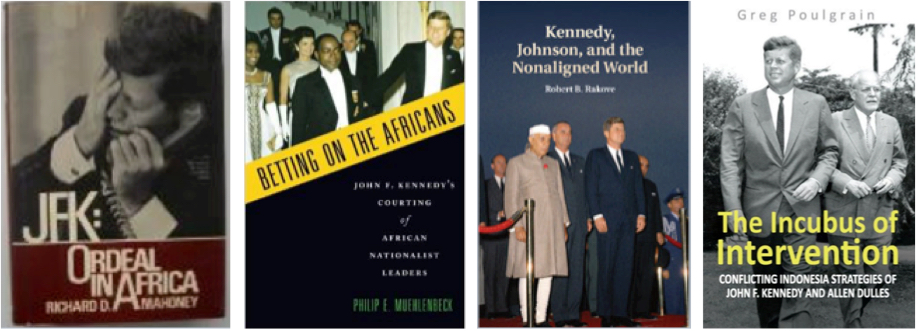
    15. Carl Bernstein, “The CIA and the Media.” Rolling Stone, 20 October 1977 <http://www.carlbernstein.com/magazine_cia_and_media.php>.

    16. David Talbot, Brothers, p. 47.

  • The 2016 Election, Historical Amnesia and Deep Politics


    By now, I think it is safe to say that everyone is kind of sick of discussing the 2016 election season. However nauseating it may have been, it proved to be unprecedented and monumental in various ways. Unprecedented, for example, in the fact that the two major party candidates were the most disliked in modern political history. The Republican candidate, now President-elect, who touts himself as a good businessman yet probably couldn’t tell you the difference between Keynes and Marx, has run perhaps the most hate-filled, deplorable campaign in recent memory. He often speaks of running the country like a business and harps on immigration as one of the major problems facing this country. Yet he never discusses substantive issues in detail (for example, the tens of millions of poverty- and hunger-stricken children living in the United States alone), and frequently demonstrates a poor grasp of them (such as the nuclear triad). In fact, he compulsively prevaricates and can’t seem to string two cohesive sentences together. Therefore it is hard in many cases to see where he actually stands. (For a revealing example of this, watch this clip.)
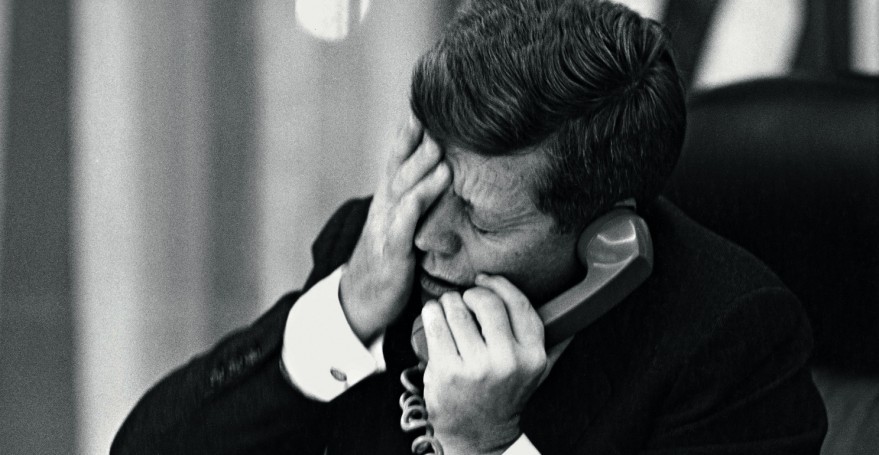
    The former Democratic candidate, on the other hand, bears a resemblance to an Eisenhower Republican. She is an intelligent and experienced politician full of contradictions. She was certainly preferable to Trump on domestic issues, e.g., women’s rights, race, and overall economic policy—not to mention global scientific matters like climate change. Nevertheless, there are serious problems with Hillary Clinton’s record. While Trump compulsively exaggerates and prevaricates, Hillary Clinton is not the epitome of honesty or integrity either. Up until 2013, she didn’t support same-sex marriage, yet got defensive and lied about the strength of her record on this issue. 1 Despite the fact that FBI Director James Comey publicly stated that classified material was indeed sent over Clinton’s unsecure server, she continued to dance around that subject as if she still didn’t know the public was privy to Comey’s statements.

    I could expand on the former Secretary of State’s flip-flopping and dishonesty over the years when it comes to problems like email security. And the disturbing fact that five people in her employ took the Fifth Amendment rather than testify before Congress in open session on the subject. However, in spite of their receiving a great deal of media attention, failings such as these are far from being her main flaw, and are, in this author’s opinion, a distraction from much deeper issues. As previously alluded to, Clinton’s foreign policy bears much more of a resemblance to the Eisenhower/Dulles brothers’ record than it does to what one might expect from someone who describes herself as taking a back seat to no-one when it comes to progressive values.

    Allen & John Foster Dulles
    Mossadegh & Shah Pahlavi

    For those who might not be aware, Allen Dulles (former Director of the CIA) and his brother John Foster Dulles (former Secretary of State) essentially orchestrated foreign policy under the Eisenhower administration. They were former partners at Sullivan and Cromwell, which was the preeminent law firm for Wall Street in the fifties. Allen and Foster married global corporate interests and covert military action into a well-oiled machine that promoted coups, assassinations and the blood-soaked destruction of democracies around the world. After Iran’s democratically elected leader Mohammed Mossadegh vowed to nationalize his country’s oil and petroleum resources, the Dulles brothers—who represented Rockefeller interests like Standard Oil— designed a phony indigenous overthrow that installed the corporately complicit Reza Shah Pahlavi into power in 1953. His brutal and repressive reign lasted until 1979, and his downfall provoked a fundamentalist Islamic revolution in Iran.

    Arbenz centennial (2013)
    Castillo Armas (with Nixon)

    In 1954, the Dulles brothers were at it again in Guatemala with operation PBSUCCESS. Jacobo Arbenz, the labor-friendly and democratically elected leader of the country, was going toe to toe with other corporate interests such as the Rockefeller/Sullivan & Cromwell associated company United Fruit. Arbenz was pushing for reform that sought to curtail the neo-colonial power of United Fruit by providing more in resources for the people of Guatemala. To the Dulles brothers and other Wall Street types with vested interests, this was unacceptable and was to be depicted as nothing short of communism. Arbenz was ousted from the country in what was largely a psychological warfare operation. He was replaced with a ruthless dictator by the name of Castillo Armas. The CIA provided the Armas regime with “death lists” of all Arbenz government members and sympathizers, and through the decades that followed, tens of thousands of people either were brutally killed or went missing at the hands of the dictatorship. 2 This constant state of upheaval, terror and violence did not subside until a United Nations resolution took hold in 1996.

    II

    Hillary Clinton, whether she knows it or not—and it’s a big stretch to say that she doesn’t—has advocated for the same interventionist foreign policy machine created by the likes of the Dulles brothers. There are at least three major areas of foreign affairs in which she resembles the Dulles brothers more than Trump does: 1.) The Iraq War 2.) American /Russian relations 3.) American actions against Syria. In fact, she actually made Trump look Kennedyesque in this regard, no mean feat.

    Clinton & Kissinger

    Nowadays, Clinton refers to her vote for the Iraq War as a “mistake”, but it certainly doesn’t seem like one considering the context of her other decisions as Secretary of State. Secretary Clinton’s friendships and consultations with Henry Kissinger and Madeleine Albright raised eyebrows in progressive circles. (Click here for the Clinton/Kissinger relationship.) Kissinger’s record as Secretary of State/National Security Adviser was most certainly one of the worst in U.S. history when it came to bloody, sociopathic, interventionist policy around the globe. During the disastrous and unnecessary crisis in Vietnam, Kissinger would nonchalantly give President Nixon death tallies in the thousands regarding Vietnamese citizens as if they were some Stalinesque statistic. Kissinger then agreed to expand that war in an unprecedented way into Cambodia and Laos—and then attempted to conceal these colossal air war actions. Of course, this was a further reversal and expansion of that war, which went even beyond what Lyndon Johnson had done in the wake of JFK’s death. President Kennedy’s stated policy was to withdraw from Indochina by 1965.

    Salvador Allende
    Augusto Pinochet

    Kissinger was also an instrumental force for the CIA coup in Chile, which ended in the death of Salvador Allende. About Allende, he allegedly stated he did not understand why the USA should stand by and let Chile go communist just because the citizenry were irresponsible enough to vote for it. (A Death in Washington, by Don Freed and Fred Landis, p. 8) The CIA overthrow of Allende led to years of brutal fascism under military dictator Augusto Pinochet.


    Clinton & Albright

    Madeleine Albright demonstrated similar hawkishness. (Click here for more on the Clinton/Albright relationship.) When asked about the refusal of the United States to lift UN Sanctions against Iraq and the resulting deaths of 500,000 Iraqi children, Albright stated that the deaths had been “worth it.”3 Predictably, Albright’s statement was met with stunned surprise. In May of 1998, Albright said something just as surprising. At that time, riots and demonstrations against the brutal Indonesian dictator Suharto were raging all over the archipelago; there were mock funerals being conducted, and his figure was being burned in effigy. Here was a prime opportunity for Albright and the Clinton administration to step forward and cut off relations with a despot who had looted his nation to the tune of billions of dollars. Or at the very least, join the chorus of newspapers and journals requesting he step down. What did Albright do? She asked for “more dialogue”. Even in the last two days of Suharto’s reign, when major cities were in flames, when Senators John Kerry and the late Paul Wellstone were asking the State Department to get on the right side of history, Albright chose to sit on the sidelines. (Probe Magazine, Vol. 5 No. 5, pp. 3-5)

    Hajji Muhammad Suharto with Nixon, Ford & Kissinger, Reagan, Bush Sr. & Bill Clinton

    In this regard, let us recall that Suharto came to power as a result of a reversal of President Kennedy’s foreign policy. Achmed Sukarno had been backed by President Kennedy throughout his first term, all the way up to his assassination. And JFK was scheduled to visit Jakarta in 1964, before the election. As opposed to the silence of Albright and Bill Clinton, after Suharto resigned, the Robert F. Kennedy Memorial Center wrote a letter to his successor asking for an investigation of the role of the military in suppressing the demonstrations that led to his fall. (ibid)

    During her time as Secretary of State, Hillary Clinton displayed an American imperiousness akin to the previous examples. Whether the former Secretary’s intentions in Libya truly aimed at ending what she called a “genocidal” regime under Gaddafi doesn’t really matter. She personally pushed for a NATO sanctioning of bombings in Libya. (This NATO assault in Africa followed the standard set by Albright in Kosovo in 1999, which was the first offensive attack NATO had ever performed.) The assault on Libya eventually led to the murder of Muammar Gaddafi. And that paved the way for a dangerous political power vacuum in which various elements, including Islamic extremists, are vying for power. It is safe to say that she left Libya in such a shambles that the USA had to reenter the civil war.

    Clinton’s decision to arm Syrian “rebels” against Bashar al Assad has also helped create bloody conflict with no end in sight. (Click here for why this may be a strategic mistake.) Bombings occur on a daily basis, especially in areas like Aleppo, leaving tens of thousands of innocents dead. As a candidate, she wanted to establish a “no-fly zone” over Syria—much as she did in Libya. This was a euphemism for controlling the air so that American proxies could control the ground. And as many suspect, and as alluded to in the above-linked story, that likely would have led to fundamentalist dominance in Syria, resembling the endgames in Iraq and Libya. But beyond that, this would probably have ended up provoking Russia, since Russia backs Assad. (Ibid, n. 3)

    “Pacific Rubiales:
    How to get rich in a
    country without regulations”

    Secretary Clinton’s policy regarding Latin America, another topic avoided by the media during the last election cycle, also demonstrates knowing or unknowing complicity with colonial/imperial interests. In Colombia, for instance, a petroleum company by the name of Pacific Rubiales, which has ties to the Clinton Foundation, has been at the center of a humanitarian controversy. The fact that Pacific Rubiales is connected with the Clinton Foundation isn’t the main issue, however. The real problem is the manner in which positions were changed on Clinton’s part in exchange for contributions. During the 2008 election season, then-Senator Clinton opposed the trade deal that allowed companies like Pacific Rubiales to violate labor laws in Colombia. After becoming Secretary of State, Clinton did an about-face. As summed up by David Sirota, Andrew Perez and Matthew Cunningham-Cook:

    At the same time that Clinton’s State Department was lauding Colombia’s human rights record (despite having evidence to the contrary), her family was forging a financial relationship with Pacific Rubiales, the sprawling Canadian petroleum company at the center of Colombia’s labor strife. The Clintons were also developing commercial ties with the oil giant’s founder, Canadian financier Frank Giustra, who now occupies a seat on the board of the Clinton Foundation, the family’s global philanthropic empire. The details of these financial dealings remain murky, but this much is clear: After millions of dollars were pledged by the oil company to the Clinton Foundation—supplemented by millions more from Giustra himself—Secretary Clinton abruptly changed her position on the controversial U.S.-Colombia trade pact.” 4

    Clinton & Zelaya (2009)

    Despite recent denials, the former Secretary also played a role in the 2009 coup that ousted the democratically elected and progressive human rights administration of Manuel Zelaya in Honduras. Recent editions of Clinton’s autobiography Hard Choices have been redacted to conceal the full extent of her role in the overthrow. Since the coup, and in opposition to the supposed goals of the overthrow itself, government-sponsored death squads have returned to the country, killing hundreds of citizens, including progressive activists like Berta Cáceres. Before her assassination, Cáceres berated Secretary Clinton for the role she played in overthrowing Zelaya, stating that it demonstrated the role of the United States in “meddling with our country,” and that “we warned it would be very dangerous and permit a barbarity.” 5

    In addition, the U.S.-backed coup in Honduras demonstrates the ongoing trend of outsourcing when it comes to intelligence work. A private group called Creative Associates International (CAI) was involved in “determining the social networks responsible for violence in the country’s largest city,” and subcontracted work to another private entity called Caerus. A man by the name of David Kilcullen, the head of Caerus, was previously involved in a $15 million US AID program that helped determine stability in Afghanistan. Kilcullen’s associate, William Upshur, also contributed to the Honduras plans. Upshur is now working for Booz Allen Hamilton, another private company involved in U.S. intelligence funding. (Ibid, n. 5)

    In his 2007 book, Tim Shorrock explained how substantial this kind of funding is. Shorrock stated that approximately 70 percent of the government’s 60-billion-dollar budget for intelligence is now subcontracted to private entities such as Booz Allen Hamilton or Science Applications International Corporation. 6

    Puerto Rico, a country in the midst of a serious debt crisis, is another key topic when it comes to Clinton’s questionable foreign policy decisions. Hedge funds own much of Puerto Rico’s massive debt, and a piece of legislation, which was put forward to deal with the issue, has rightly been labeled by Bernie Sanders as a form of colonialism. The bill in question would hand over control of financial dealings to a U.S. Government Board of Regulators, which would likely strip vital social spending in Puerto Rico. The bill already imposes a $4.25 minimum wage clause for citizens under 25. While Sanders opposed this bill, Clinton supported it. 7 This may serve as no surprise, being that the former Secretary of State receives hefty sums from Wall Street institutions like Goldman Sachs, who benefit from this form of vulture capitalism. I am not asserting that Hillary Clinton is solely responsible for these foreign policy decisions, but that she has been complicit with the American Deep State that commits or is heavily involved in these operations. (An explanation of the term “Deep State” will follow.) If the results of this 2016 election, and the success of both Trump and Sanders in the primaries, teach us something, it is that we have to move away as quickly as possible from policy compromised by corporate influence if we truly want to move forward. The American public has clearly had enough with establishment politics.

    III

    With the election of Donald Trump, the viability of establishment politics has been seriously breached, effectively ending the age of lesser-evil voting by the proletariat. Although Hillary Clinton was the preferred candidate regarding things like domestic social issues and scientific issues, it wasn’t enough to tame the massive insurgency of citizens who were so fed up with the status quo that they would rather see the country possibly go up in flames than vote for more of the same. Nor did it inspire an overlooked independent voter base to come out and make a substantial difference in the Democratic vote. In the aftermath of this potential disaster of an election, it is our duty, as a collective, to look deeply into some troubling fundamental issues. One of these has to do with the fact that racism, xenophobia and sexism are still very much alive in this country.

    I will not go so far as to label all Trump supporters as racist, homophobic or sexist. And throughout the primary/general election season, I have tried to remain receptive to their frustrations. However, I can most certainly tell you that, based on my experiences of this election season alone, these sentiments do indeed exist. During a delegate selection process for the Bernie Sanders campaign, I met and ended up having discussions with some Trump supporters. I asked them questions about why they thought Trump would make a good president, all the while disagreeing with them, but listening nonetheless. Two of the men I was speaking with were very civil, but one in particular seemed to be bursting at the seams with frustration over what he thought were the main problems with the country. While ignoring the facts I was presenting him regarding corporate welfare, this man went into relentless diatribes about why “Tacos”, his label for Hispanic people, were wreaking havoc. He exhibited no shame in expressing his distaste for other ethnicities either. During this dismaying exchange, I brought up the continued mistreatment of Native American peoples. In response, this man tried to question the severity of the atrocities committed against them and even went so far as to imply that my use of the term genocide in describing their plight was incorrect.

    Steve Mnuchin

    This may well serve to exemplify the hateful attitudes of mistrust and resentment that have been put under a black light during the course of this election. They’ve lingered dormant under the surface and have reached a boiling point thanks to Donald Trump. To paraphrase Bernie Sanders, Trump was able to channel the frustration of a destitute middle class and convert it into unconstructive anger. While Trump made references to how the “establishment” was a major problem, like many of his policy points, he didn’t ever describe in detail what was to be done to correct it. Instead, with his references to a wall with Mexico and to mass deportations, he encouraged the belief in his supporters that minorities were ruining the country. Yet in spite of his campaign promise to “drain the swamp”, many of the Trump cabinet appointees are among the most Establishment type figures one could imagine. For example, Steve Mnuchin, the former Goldman Sachs executive famous for foreclosures and hedge fund deals, has been appointed Secretary of Treasury.

    The election of a man like Donald Trump, who can’t seem to expound any of his policies in any sort of detail and is openly demeaning towards women, people of other races, and the disabled, makes clear that we have a cancerous political system which has metastasized in large part thanks to establishment politicians beholden to corporate interests. And these politicians are wildly out of touch with the needs of the average American. This created a very wide alley that the new Trump managed to rumble through. (I say “new” because in one of the many failings of the MSM, no one bothered to explain why Trump had reversed so many of the proposals he made back in 2000, when he was going to run on the Reform Party ticket.) Some commentators have claimed there can be little doubt that there was a liberal disillusionment following President Obama’s election. Hillary Clinton could not convince enough people that she was even the “change candidate” that Obama was. Therefore, in the search for answers for why their lives weren’t improving, many citizens had to find alternate sources of information outside of corporate influenced organizations (i.e. The Republican Party, Democratic Party and the Mainstream Media), given those groups won’t admit to the public that they are subservient to the same big money interests. This explains the rise of figures like Rush Limbaugh, Glenn Beck, and even rightwing populist/conspiracy demagogue Alex Jones. Their collective answer is to paint minorities and welfare recipients as the principal ills of American society, all the while failing to recognize the deep connection between government policy and corporate influence. In short, this election warns us that when the real reasons behind government dysfunction are ignored and go unchallenged, one risks the upsurge of fascist sentiments. 8

    In addition to reminding us of Hillary’s relationship with Kissinger, Bernie Sanders reminded a large portion of the U.S. populace about the other fundamental issue lying beneath the surface: corporate power. And Sanders could have neutralized Trump’s appeal among the shrinking working and middle classes, which the latter earned by invoking the need for tariffs and the threat of trade wars. This certainly was another reason for Trump’s popularity in the Mideast states like Wisconsin, Iowa, Michigan and Ohio, where he broke through the supposed Democratic firewall. (As to why, listen to this this segment by Michael Moore.) With Secretary of State Clinton’s and President Bill Clinton’s views on NAFTA and the Columbia Free Trade Agreement, and Hillary’s original stance on the Trans Pacific Partnership (TPP), she could not mount a genuine counter-offensive to Trump’s tactics in those states, for the simple reason that the Clintons were perceived as being free-traders rather than fair-traders. Thanks to their record, a Democratic presidential candidate appeared to favor a globalization policy that began decades ago with David Rockefeller—a policy that was resisted by President Kennedy. (See Donald Gibson, Battling Wall Street, p. 59)

    Awareness of any problem is the first step toward fixing it. But I think we must go beyond simple awareness when it comes to confronting our nation’s collective “shadow”, as Carl Jung would have called it — meaning all the darker, repressed aspects of the unconscious that, when ignored, can result in psychological backlash. How do we get beneath the surface appearances of corporate greed (for instance, the increasing wealth inequality amongst classes, or the amount of tax money allocated to corporate subsidies)? I suggest that an exploration of our past guided by a concept that Peter Dale Scott labels “Deep Politics” can help us come to terms, in a more profound way, with the problems facing us.

    This concept embraces all of the machinations occurring beneath the surface of government activity and which go unnoticed in common analysis, such as in news reports or textbooks. Or, as Scott states in his 2015 book The American Deep State, it “…involves all those political practices and arrangements, deliberate or not, which are usually repressed rather than acknowledged.”9 A “Deep Political” explanation of major world events goes beyond the ostensible or normally accepted models of cause and effect. One example of a “Deep Event” is the 1965 Gulf of Tonkin Incident, which provided a motive, or casus belli, to escalate the Vietnam War into a full-scale invasion by American ground forces. Given that President Johnson had already, in stark contrast to President Kennedy’s policy, approved the build-up of combat troops in Vietnam in 1964, all that was needed was some sort of impetus in order for United States involvement to move to the next stage. As the author describes, many of the intelligence reports received by the Johnson administration regarding this supposed incident did not signal any sort of instigation on North Vietnam’s behalf. However, those same reports were ignored in order to claim that North Vietnam had engaged in an act of war against the United States. 10

    Other examples of Deep Events include the previously mentioned instances of CIA, corporate and State Department interference in the economic and governmental affairs of foreign nations. It is evident that these coups did not occur for the sake of saving other countries from the grip of communism or the reign of dictators; such would only be at best a surface explanation. The deeper explanation is that a nexus of corporate, military, paramilitary, government and, on occasion, underworld elements (viz, the workings of the Deep State) had a vested interest in the outcome. The Bush administration’s lies regarding Saddam Hussein’s alleged arsenal of “weapons of mass destruction”, presented to the American people and Congress as a reason to invade Iraq, could most certainly be classified as a Deep Event. No entities benefitted more from America’s long-term occupation of Iraq than companies like Dick Cheney’s Halliburton. KBR Inc., a Halliburton subsidiary, “was given $39.5 billion (emphasis added) in Iraq-related contracts over the past decade, with many of the deals given without any bidding from competing firms, such as a $568-million contract renewal in 2010 to provide housing, meals, water and bathroom services to soldiers, a deal that led to a Justice Department lawsuit over alleged kickbacks, as reported by Bloomberg.” 11

    Included under the umbrella of Deep Politics are the major assassinations of the 1960s — those of John Kennedy, Robert Kennedy, Martin Luther King Jr. and Malcolm X. Poll after poll has indicated that most Americans believe there was a conspiracy to kill President Kennedy, but even today many apparently have not reasoned beyond the fact that there is something fishy about the “official” version in order to understand this murder in its fullest context. It behooves us to inquire more deeply into this historically critical event. Before I go any further, however, let me assert here—and I do so quite confidently—that anyone who still buys into the government version of events regarding, for example, the assassinations of John and Robert Kennedy, is either not looking carefully enough, or is not really familiar with the case.

    IV

    A suggestive point of departure for such an inquiry are the parallels between the 2016 election and that of 1968. In the wake of the assassination of Martin Luther King in April of 1968, racial tensions were high and a presidential primary season was in full swing. Opposition towards the Vietnam War was strong and one candidate in particular represented the last best hope for minorities, anti-war voters, and the middle, as well as lower classes. That candidate was Robert Kennedy, and by the early morning of June 5th, it was becoming clear that he would likely be the Democratic candidate to run against Richard Nixon in the general election. Within a matter of moments of making his victory speech for the California primary, Robert Kennedy was assassinated when he walked into the kitchen pantry of the Ambassador Hotel in Los Angeles. In those moments, the Sixties ended—and so did the populist hopes and dreams for a new era.

    Chicago DNC 1968
    Philedelphia DNC 2016

    The 1968 Democratic National Convention in Chicago was attended by the protests of disillusioned voters who felt cheated out of a more liberal, populist candidate. They ended up rioting in the streets. Hubert Humphrey, who was receiving flack for not taking a strong enough stance on the situation in Vietnam, was selected as the nominee. Similarly, there were many dissatisfied delegates and voters at the 2016 Philadelphia Democratic convention. But in a tightly controlled operation, their actions were kept hidden off screen. And the threat of stripping them of their credentials was often used to suppress any protest on the convention floor. In 2016, Hillary Clinton was nominated and her candidacy helped give us Donald Trump. In 1968, the immediate result was Richard Nixon as president. But the subsequent results included the massive increase in loss of life not just in Vietnam, but also in Cambodia, and the continuing trend away from the New Deal, anti-globalist policies of John Kennedy and Franklin Roosevelt.

    Alger Hiss, America’s Dreyfus
    Rep. Voorhis, defeated by
    Nixon’s smear campaign

    In fact, Nixon had been a part of the effort to purge New Deal elements from the government during the McCarthy era. Whether it was conducting hearings on men like Alger Hiss and making accusations of Soviet spycraft, or using his California Senate campaign to falsely accuse incumbent Congressman Jerry Voorhis of being a communist, Nixon contributed to the growing, exaggerated fear of communism in the United States. This fear allowed men like Allen Dulles to be seen as pragmatists in the face of supposed communist danger. Dulles’ and the CIA’s dirty deeds on behalf of corporate power were carried out under the guise of protecting the world from communism. As described in the Allen Dulles biography by David Talbot, The Devil’s Chessboard, sociologist C. Wright Mills called this mentality “crackpot realism.”12 It is ironic that Nixon ended up distrusting the CIA, the institution so closely associated with Allen Dulles, a man who had championed Nixon’s rise to power as both a congressman and senator.

    Flash forward to 2016 and, once again, we witness the results of a Democratic Party choosing to ignore the populist outcry for reform, and of a government compromised by corporate coercion, one subject to the hidden workings of the Deep State. Bernie Sanders represented the New Deal aspirations of a working class tired of corporate-run politics. As revealed by Wikileaks, the upper echelons of the Democratic Party chose not to heed their voices, thereby indirectly aiding the election of Donald Trump, who offered a different and unconstructive form of populism.

    Pence & Reagan
    Rex Tillerson

    Being that the political spectrum has shifted far to the right as compared to 1968, this year’s election results are more extreme. Donald Trump’s cabinet appointments reflect this extremist mentality; especially in his Vice Presidential pick Mike Pence — a man so out of touch with reality that he has tried to argue that women shouldn’t be working. In 1997, Pence stated that women should stay home because otherwise their kids would “get the short end of the emotional stick.” The soon to be Vice President Pence also sees LGBT rights as a sign of “societal collapse.”13 And as for Trump’s promise to “drain the swamp”, when it comes to establishment figures, it only gets worse, considering his appointment of Rex Tillerson, former CEO of ExxonMobil, as Secretary of State. Despite the fact that Trump appears to be “off the grid”, so to speak, when it comes to the political or Deep Political apparatus, his recent choices for cabinet positions are some of the worst imaginable for the populist of any ilk. In some cases he has actually leapt into the arms of the very establishment he warned his supporters against.

    In the face of all this, Sanders continues to inspire his followers to remain politically active. We all need to be involved more than ever, and the Democratic/socialist senator from Vermont has always urged that true change lies in us having the courage to do things ourselves when it comes to reforming government. The more we stay involved, the less likely it will be that the momentum created by political movements will be squandered in the wake of a setback. The major setbacks of the 1960s came in the form of assassinations of inspiring political leaders. Yet even in the wake of such tragedies it is possible, indeed imperative, to find a glimmer of hope. To do so, however, requires, as this essay has been arguing, the insight afforded by a critical analysis of the past, and its continuities with the present. The touchstone for this historical understanding, I believe, lies precisely in the way the policies of President Kennedy have been consistently overturned by subsequent administrations.

    V

    As mentioned above, John Kennedy was not in favor of the neo-colonialist policies of the Dulles/Eisenhower era. Instead of wanting to occupy foreign nations for the sake of corporate profit, Kennedy believed strongly that the resources of such nations rightly belonged to their people, and that the right to self-determination was critical, as evident in his 1957 speech on French colonialism in Algeria.

    Soviet stamp
    commemorating Lumumba
    MobutuNixon
    Nixon and Mobutu at the White House

    In the aftermath of a CIA-assisted coup to assassinate Patrice Lumumba, the nationalist leader of the Congo, President Kennedy fought alongside the U.N. to ensure that a nationwide coalition government was formed. Civil war was imminent as militant and corporately complicit leaders like Colonel Mobutu vied for power and promoted the secession of Katanga, the region of Congo that held vast amounts of mineral resources. JFK supported the more centrist elements of the potential coalition government and felt that the resources of Katanga didn’t belong to Belgian, U.S. or British mining interests. The President’s death ended hope for the pursuit of any stable government in Congo, along with the hope of halting widespread violence. 14 It should be noted that Nixon actually welcomed Mobutu to the White House after he took control of Congo.

    Sukarno at the White House

    As noted previously, President Kennedy also worked towards re-establishing a relationship with Indonesia and its leader Achmed Sukarno. This was after the Dulles brothers had been involved in attempts to overthrow the Indonesian leader. Decades earlier, it had been discovered by corporate backed explorers that certain areas in Indonesia contained extremely dense concentrations of minerals such as gold and copper. After Kennedy was killed, Sukarno was overthrown with help of the CIA in one of the bloodiest coup d’états ever recorded. Hundreds of thousands of Indonesians perished during both the overthrow, and the subsequent reign of the new leader Suharto. (James DiEugenio, Destiny Betrayed, Second Edition pp. 374-75) Need we add that Nixon also met with Suharto in Washington. In December of 1975, President Ford and Secretary of State Kissinger journeyed to Jakarta and gave Suharto an implicit OK to invade East Timor. This is the tradition that Hillary Clinton and her husband were involved with. For when almost every democratically elected western nation was shunning Suharto in the late nineties, Bill Clinton was still meeting with him. (Op. cit. Probe Magazine.)

    President Kennedy’s policies regarding Central and South America were also a threat to corporate interests. David Rockefeller took it upon himself to publicly criticize Kennedy’s Alliance for Progress, which had been established to aid less developed nations, like those south of the United States, to become economically self-reliant. Men like Rockefeller, along with the Wall-Street-connected media (e.g.,Wall Street Journal and Time/Life) also berated the President for “undermining a strong and free economy,” and inhibiting “basic American liberties.” (14, p. 57) The Wall Street Journal flat out criticized Kennedy for being a “self-appointed enforcer of progress” (Ibid p. 66). JFK’s 1962 clash with U.S. Steel, a J.P. Morgan/Rockefeller company, provoked similar remarks.

    After President Kennedy had facilitated an agreement between steel workers and their corporate executives, the latter welshed on the deal. It was assumed that the workers would agree to not have their wages increased in exchange for the price of steel also remaining static. After the agreement was reached, U.S. Steel defied the President’s wishes and undermined the hard work to reach that compromise by announcing a price increase. The corporate elite wanted Kennedy to buckle, but instead, he threatened to investigate them for price-fixing and to have his brother Bobby examine their tax returns. Begrudgingly, U.S. Steel backed off and accepted the original terms. Kennedy’s policies, both domestic and foreign, were aimed at enhancing social and economic progress. Like Alexander Hamilton, and Albert Gallatin, JFK sought to use government powers to protect the masses from corporate domination. His tax policy was aimed at channeling investment into the expansion of productive means or capital. The investment tax credit, for instance, provided incentives for business entities that enhanced their productive abilities through investment in the upkeep or updating of equipment inside the United States. (Gibson pp. 21-22) While Kennedy’s policies were focused on strengthening production and labor power, his opponents in the Morgan/Rockefeller world were focused on sheer profit.

    David Rockefeller & Henry Luce  in 1962

    It should serve as no surprise that the media outlets responsible for condemning the president were tied into the very corporate and political establishment entities being threatened. As described by sociologist Donald Gibson in his fine book Battling Wall Street: The Kennedy Presidency, the elite of Wall Street, media executives and certain powerful political persons or groups were so interconnected as to be inbred. Allen Dulles himself was very much involved in these circles, and had close relationships with men like Henry Luce of the Time, Life and Fortune magazine empire, along with executives or journalists at the New York Times, and the Washington Post. Operation Mockingbird, a CIA project designed to use various media outlets for propaganda, was exposed during the Church Committee hearings, revealing the collaboration of hundreds of journalists and executives at various media organizations including CBS, NBC, The New York Times, the Associated Press, Newsweek and other institutions.15)

    John Kennedy wasn’t only trying to curtail corporate power with his Hamilton/Gallatin, New Deal-like economic policies. His decisions concerning military engagement abroad were greatly at odds with the hard-line Cold Warriors of his administration and the Central Intelligence Agency. Time after time, Kennedy refused to commit U.S. combat troops abroad despite the nagging insistence of his advisors. Although the President publicly accepted responsibility for the fiasco at the Bay of Pigs, privately he was livid at the CIA for deceiving him. Through materials such as inspector general Lyman Kirkpatrick’s report on the Bay of Pigs, and other declassified CIA documents, it is now evident that a major deception had occurred. The Agency had assured Kennedy that their group of anti-Castro Cuban invaders would be the spark that would set off a revolt against Fidel Castro just waiting to happen. This was not the case, and the CIA-backed Cubans were outnumbered by Castro’s forces 10 to 1. Even worse, as noted in the Kirkpatrick report, was the fact that the CIA had stocked the invading force with C-Level operatives. (2, p. 396) It was almost as if the surface level plan presented to the President was designed to fail in order to force his hand and commit the military into invading Cuba. A declassified CIA memo acknowledges the fact that securing the desired beach area in Cuba was not possible without military intervention. 16

    When Kennedy refused to commit U.S. troops as the operation crumbled, he became public enemy number one in the CIA’s eyes. This sentiment that Kennedy was soft on communism, or even a communist sympathizer, augmented as he continued to back away from military intervention in other situations. The President reached an agreement with the Soviet Union to keep Laos neutral, and despite his willingness to send advisors to Vietnam, he ultimately worked to enact a policy resulting in the withdrawal of all U.S. personnel from the country. Kennedy’s assassination ended this movement toward disengagement from Saigon.

    What was likely even worse to the Cold Warriors and CIA patriots during this time was the President’s attempts at détente with Nikita Khrushchev of the Soviet Union and Cuba’s Fidel Castro. During, and in the period following, the Cuban Missile Crisis, Kennedy and Khrushchev were involved in back channel dialogue with one another. Discussion moved toward talks about détente; despite the fact that the two men’s respective countries had differing views, they agreed it was imperative, for the sake of the planet, to come to an understanding. This, along with JFK’s unwillingness to bomb Cuba during the Missile Crisis, were nothing short of traitorous to the covert and overt military power structure of the United States. In the final months of his life, the President also extended a secret olive branch toward Fidel Castro in hopes of opening a dialogue. Excited by the prospect, Castro was painfully upset when he got word of Kennedy’s assassination. Kennedy most certainly had his enemies, and was making decisions that drove a stake into the very heart of corporate, military and intelligence collusion. If he had been elected President, Bobby Kennedy was most certainly going to continue, and most likely even expand, the policies of his late brother. (ibid, pp. 25-33) Like Jack and Bobby, Martin Luther King and Malcolm X expressed opposition toward the continuation of the Vietnam War.

    VI

    The concept of Deep Politics may provide a helpful alternative to the term “conspiracy theory”, which has become so stigmatized and so overused as to be meaningless. Abandoning the idea of conspiracy altogether, however, risks throwing the baby out with the bath water, for it raises legitimate questions about what lurks beneath the surface of the affairs of state. The enemies that John and Robert Kennedy were facing were not some fictional or hypothetical “illuminati” group or groups. They were very real, dangerous and powerful interests, and those forces are still with us in 2016. Deep Politics does not imply that there is some singular group or set of groups that meet in secret to plot colossal calamities that affect the entire world, but rather that the events themselves arise from the milieu(s) created by a congruence of unaccountable, supra-constitutional, covert, corporate and illegal interests, sometimes operating in a dialectical manner. A more recent example would be the networking of several of these interests to orchestrate the colossal Iran/Contra project.

    Other writers have also described these subterranean forces using other terms. The late Fletcher Prouty called it the Secret Team. Investigative journalist Jim Hougan calls it a Shadow Government. Florida State professor Lance DeHaven Smith, with respect to its activities, coined the term “State Crime Against Democracy”, or SCAD. (Click here for his definition.) Smith wrote one of the best books about how, with the help of the MSM, these forces stole the 2000 election in Florida from Al Gore. He then wrote a book explaining how the term “conspiracy theorist” became a commonly used smear to disarm the critics of the Warren Commission. It was, in fact, the CIA which started this trend with its famous 1967 dispatch entitled “Countering Criticism of the Warren Report”. (See this review for the sordid details.)

    Whether it be extralegal assassinations, unwarranted domestic surveillance, interventionist wars at the behest of corporate interests, torture or other activities of that stripe, these all in essence have their roots in the Dulles era in which covert, corporate power developed into a well-oiled and unaccountable machine running roughshod. These forces have continued to operate regardless of who is elected president, whether Democrat or Republican. (See Jim Hougan’s Secret Agenda for a trenchant analysis of the operation against Richard Nixon that came to be called Watergate.)

    It is my opinion that we must come to terms with these dark or, to use James W. Douglass’ term, “unspeakable” realities. And we must do so in a holistic way if we are to take more fundamental steps toward progress as a nation. George Orwell coined the term Crime Stop to describe the psychological mechanism by which humans ignore uncomfortable or dangerous thoughts. Through discussions with people young and old, it has become evident to me that this Crime Stop mechanism is at work in the subconscious of many Americans. We need to be willing to face the darker aspects of our recent past that have been at work below the surface and percolating up into view for many years.

    In a very tangible way, the refusal to face these dark forces has caused the Democratic Party to lose its way. And this diluted and uninspiring party has now given way to Donald Trump. As alluded to throughout this essay, this party has abandoned the aims and goals of the Kennedys, King and Malcolm X to the point that it now resembles the GOP more than it does the sum total of those four men. To understand what this means in stark political terms, consider the following. Today, among all fifty states, there are only 15 Democratic governors. In the last ten years, the Democrats have lost 900 state legislative seats. When Trump enters office, he will be in control of not just the White House, but also the Senate and the House of Representatives. Once he nominates his Supreme Court candidate to replace Antonin Scalia, he will also be in control of that institution.

    Bernie Sanders was the only candidate whose policies recalled the idea of the Democratic party of the Sixties. And according to a poll of 1,600 people run by Gravis Marketing, he would have soundly defeated Trump by 12 points. The Democrats have to get the message, or they run the risk of becoming a permanent minority party. They sorely need to look at themselves, and ask, What happened? As a starting point, they can take some of the advice contained in this essay.


    Notes

    1. “Hillary Clinton Snaps At NPR Host After Defensive Gay Marriage Interview.” YouTube. WFPL News, 12 June 2014 <https://www.youtube.com/watch?v=vgIe2GKudYY>.

    2. David Talbot, The Devil’s Chessboard: Allen Dulles, the CIA, and the Rise of America’s Secret Government. New York, NY: Harper, 2015.

    3. Gary Leupp, “Hillary Clinton’s Foreign Policy Resumé: What the Record Shows.” , 03 May 2016.

    4. Greg Grandin, “A Voter’s Guide to Hillary Clinton’s Policies in Latin America.” The Nation, 18 April 2016.

    5. Tim Shorrock, “How Hillary Clinton Militarized US Policy in Honduras.” The Nation, 06 April 2016.

    6. Peter Dale Scott, “The Deep State and the Bias of Official History.” Who What Why, 20 January 2015.

    7. Ben Norton, “Sanders Condemns Pro-austerity ‘Colonial Takeover’ of Puerto Rico; Clinton Supports It.” Salon, 27 May 2016.

    8. “Chomsky on Liberal Disillusionment with Obama.” YouTube, 03 April 2010 <https://www.youtube.com/watch?v=A6Jbnq5V_1s>.

    9. Peter Dale Scott, The American Deep State: Wall Street, Big Oil, and The Attack On U.S. Democracy. Lanham: Rowman & Littlefield, 2015: Chapter 2, p. 12.

    10. “Project Censored 3.1 – JFK 50 – Peter Dale Scott – Deep Politics.” YouTube, Project Sensored, 19 December 2013 <https://www.youtube.com/watch?v=L0CFpMej3mA>.

    11. Angelo Young, “And The Winner For The Most Iraq War Contracts Is . . . KBR, With $39.5 Billion In A Decade.” International Business Times, 19 March 2013.

    12. Zawn Villines, “The Four Worst Things Mike Pence Has Said About Women.” Daily Kos, 21 July 2016.

    13. Richard D. Mahoney, JFK: Ordeal in Africa. New York: Oxford UP, 1983.

    14. Donald Gibson, Battling Wall Street: The Kennedy Presidency. New York: Sheridan Square, 1994.

    15. Carl Bernstein, “The CIA and the Media.” Rolling Stone, 20 October 1977 <http://www.carlbernstein.com/magazine_cia_and_media.php>.

    16. David Talbot, Brothers, p. 47.

  • An Introduction to the Book Excerpt: The Incubus of Intervention

    An Introduction to the Book Excerpt: The Incubus of Intervention


    CTKA is proud to excerpt a chapter from Greg Poulgrain’s new book about the Indonesia coup of 1965.  The full title of the volume is The Incubus of Intervention: Conflicting Indonesia Strategies of John F. Kennedy and Allen Dulles.  Poulgrain is a professor of History at University of the Sunshine Coast in Australia. In 1998, Poulgrain wrote The Genesis of Konfrontasi.  That book was about the conflict between President Achmed Sukarno of Indonesia and the proposed union of Malaysia in 1963. There, Poulgrain unfolded a new thesis about that conflict: namely, that it was not motivated by Sukarno’s desire to dominate the Southeast Asian archipelago area. Rather, it was a conscious provocation, created largely by the British to both strengthen their brainchild of Malaysia, and weaken Sukarno. By doing so, they expected to benefit financially.  They succeeded spectacularly in both aims.

    Poulgrain has now published an even more important book. It deals directly with the epochal, yet underreported, Indonesia coup of 1965. That overthrow is commonly referred to as the bloodiest CIA coup in history. To this day, no one knows how many people perished as a result of it. Various estimates range from 350,000 to 500,000.  It was not until 1996 when Lisa Pease wrote her milestone articles about Freeport Sulphur (today called Freeport McMoRan) that anyone focused attention on how the murder of President Kennedy paved the way for this horrendous operation. (Click here for that memorable essay: http://www.thesecrettruth.com/freeport-indonesia.htm)

    What Lisa did was to examine American foreign policy towards Indonesia and its leader Sukarno through three presidents: Dwight Eisenhower, John Kennedy, and Lyndon Johnson.  Through that examination, it was obvious that a familiar pattern manifested itself:  the Dulles brothers and Eisenhower were hostile to Sukarno (actually attempting to overthrow him in 1958); Kennedy tried to establish better relations and had planned a state visit in 1964; Johnson then halted Kennedy’s policy and decided to revert back to 1958 and the coup attempt.  Except, this time, it was successful.

    Since that excellent essay was published in Probe magazine, others have built on it.  This includes Denise Leith’s book The Politics of Power: Freeport in Suharto’s Indonesia. Jim Douglass treated the subject in his fine JFK and the Unspeakable, and I discussed the issue in the second edition of Destiny Betrayed.

    But Poulgrain’s new book goes further than anyone has before.  In fact, it appears to be a milestone on the subject. Through extensive research into books and documents, plus new in-depth interviews, this book seems to have rearranged the calculus on what happened in Jakarta in 1965. And, rather appropriately, Poulgrain sees that massive slaughter through the prism of two personal profiles: CIA director Allen Dulles and the fallen president John F. Kennedy.

    To show just how rich this book is, and how new and unique its perspective is, I beg the reader to take note of just three highlights in this one chapter.

    First, Poulgrain reveals that Kennedy was working with United Nations Secretary–General, Dag Hammarskjold.  Not just on the Congo crisis, but on a solution to the Indonesia problem.  This was new and I consider myself pretty well informed on Kennedy’s foreign policy. This is arresting in two ways.  First, Hammarskjold must have appeared to be an even greater threat to the power elite in this light. Second, we all know how reluctant contemporary American presidents are to work with the UN, especially GOP ones.  But here you have JFK working with Hammarskjold on two key fronts in the third world.  

    Second, he reveals that, as with the Kennedy assassination, Harry Truman clearly suggested that he did not buy the airplane accident story about Hammarskjold’s death. In fact, he even went further in the Hammarskjold case than he did with Kennedy.  He actually said he had been murdered. In other words, Truman knew what happened to Dag, and he likely knew what happened to Kennedy.  In the case of Kennedy, he wrote a timely and suggestive editorial about the CIA which Allen Dulles tried to get him to retract—but he did not. In the Hammarskjold case, when asked to elaborate, he said in effect, I will let you guys figure that all out.  In other words, he was not going to go further, hoping they would.  

    Third, through information in Susan Williams’ book, Who Killed Hammarskjold? it appears that Dulles’s name was on some documents secured by Desmond Tutu through the Truth and Reconciliation Commission in South Africa. These indicate that he would be willing to cooperate in a plot against the UN leader. He was even offering information about the type of plane the UN chief would be flying and the date Hammarskjold would arrive. If Dulles was willing to cooperate in a plot against Hammarskjold in 1961 over Congo, why would he not do the same in 1963 over both Congo and Indonesia?  Since as we know, Kennedy continued the struggle for a free Congo after both Patrice Lumumba and Hammarskjold were murdered.

    Poulgrain’s work is part of a new path in Kennedy studies.  This began with Richard Mahoney’s landmark volume JFK: Ordeal in Africa.  It continued with Philip Muehlenbeck’s Betting on the Africans, and Robert Rakove’s Kennedy, Johnson and the Nonaligned World. Now, Poulgrain extends that horizon line even further, one which finally shines light on who Kennedy really was and why he was killed.


    Chapter 2: The Incubus of Intervention | Buy The Incubus of Intervention on Amazon

  • Hammarskjold and Kennedy vs. The Power Elite

    Hammarskjold and Kennedy vs. The Power Elite


    indonesia header


    As many CTKA readers and observers of JFK symposiums will know, since the 2013 Cyril Wecht conference in Pittsburgh, one of the topics I have been researching and talking about is John F. Kennedy’s reformist foreign policy. To some people this seemed kind of pointless. After all, in virtually every JFK assassination book Kennedy’s foreign policy boiled down to Vietnam and Cuba. What else was there?

    Quite a lot. What was new in my speech mostly came from Philip Muehlenbeck’s volume, Betting on the Africans, which had been published the year before. (Click here for a review) Later, I discovered Robert Rakove’s book, Kennedy, Johnson and the Nonaligned World. That book serves as a fine compliment to Muehlenbeck. (Click here for the CTKA review) I used much of the Rakove material to present my altered versions of the 2013 presentation at both the JFK Lancer in 2013 and 2014 and the AARC Conference in 2014.

    These two books form a thematic line that extends back to Richard Mahoney’s landmark volume JFK: Ordeal in Africa. That book was a trailblazing effort in the field of excavating what Kennedy’s foreign policy really was, and where its intellectual provenance came from. It was published in 1983. Even though it bore the Oxford University Press imprimatur, it had little influence. It virtually had little or no impact in the categories of Kennedy biography, studies of the Kennedy presidency, or the JFK assassination field. Which, in retrospect, is stunning. Because what Mahoney did in that book was revolutionary. In a systematic way, he traced the beginnings of President Kennedy’s foreign policy ideas. He did this with a wealth of data he garnered from weeks spent at the JFK Library. He used this ignored information to show how Kennedy’s ideas on the east/west struggles in the Third World originated, why they were different than President Eisenhower’s, and how they manifested themselves once he became president. No other book I had read elucidated this progress in such a detailed and rigorous way. In fact, when I was done with the book I actually felt like I had been snookered by relying on historians like Herbert Parmet, William Manchester, and Richard Reeves for my information on Kennedy’s presidency and foreign policy. Mahoney made them look like hacks.

    It became clear to me that there was, quite literally, a war going on. And as unsatisfactory as the Parmet, Reeves, and Manchester books were (with Manchester I am referring to his presidential profile book Portrait of a President) these would be superseded by even worse JFK books later: biographies by John H. Davis, Robert Dallek, Thomas Reeves, and worst of all—perhaps the worst imaginable—Sy Hersh’s pile of rubbish The Dark Side of Camelot.

    In 2008 Jim Douglass made a clean break with all the calculated trash. His fine volume, JFK and the Unspeakable, has become something of a classic. It has actually crossed over and is sourced in books outside strictly the JFK assassination or JFK presidency fields. I wrote a very approving essay about Jim’s book. (Click here)

    Douglass did an exceedingly good job in elucidating Kennedy’s Vietnam and Cuba policies between the covers of one book. But with the new scholarship by Rakove and Muehlenbeck, the Douglass book seems rather narrowly focused today. And with the even newer book by Greg Poulgrain, The Incubus of Intervention (see my recent review), we can now add Indonesia to Africa and the Middle East as objects of Kennedy’s reformist foreign policy. In fact, Douglass is on to this. He actually pointed out that I should read and review the Poulgrain book.

    Four trailblazing books on Kennedy’s foreign policy

    But the Kennedy Enlightment really began with Mahoney. And although his book dealt with three African trouble spots, the majority of the book was focused on the colossal Congo crisis. Which, like other problems, Kennedy inherited from President Eisenhower. As we learn more about the Congo conflagration, we begin to see how large and complex that struggle was. Large in the sense that, in addition to the UN, several nations were directly involved. Complex in the sense that there were subterranean agendas at work. For instance, although England and France ostensibly and officially supported the United Nations effort there, they were actually subverting it on the ground through third party agents. In fact, when one studies the seething cauldron that was the Congo crisis, there are quite a few villains involved. There are only three heroes I can name: Patrice Lumumba, Dag Hammarskjold and John F. Kennedy. All three were murdered while the struggle was in process. Their deaths allowed the democratic experiment in Congo to fail spectacularly. Ultimately, it allowed one form of blatant exploitation, colonialism, to be replaced by another, imperialism.

    II

    To sketch in the background: In 1960, Belgium was going to leave Congo after brutally colonizing the country for generations. But their plan was to leave so abruptly that the nation would collapse inwardly for lack of leadership. Belgium would then return in order to protect the Belgian assets still there. As we shall see, the CIA was in agreement on this. Especially when Patrice Lumumba was democratically elected as Prime Minister. As Jonathan Kwitny noted, Lumumba was the first democratically elected leader of an African nation emerging from the long era of European colonialism. Ideally, Lumumba could have set a precedent. That did not happen. And the reason it did not happen was largely because of outside interference.

    Within days of June 30th, Congo independence, the Belgian plan began to work. Rioting took place and Belgian soldiers began to fire into crowds. On July 11th, the regional governor of the immensely wealthy Katanga province, Moise Tshombe, declared his state was seceding from Congo. Tshombe was egged on by the Belgians and British who wanted mineral rights. In exchange, they promised him military aid and mercenaries if Lumumba attacked Katanga. (Kwitny, p. 55)

    As Kwitny notes in Endless Enemies, the CIA and the National Security Council did not like Lumumba. After all, he had the gumption to ask for aid in kicking out the Belgians, who were now parachuting troops back in. Lumumba asked for aid from the USA, the USSR and the United Nations. The first declined, the second seemed amenable to sending arms, and Secretary General Dag Hammarskjold decided to send in a UN expeditionary force. The fact that Lumumba went to the USSR was enough for CIA station chief Larry Devlin to portray him as a communist. On August 18th he wired DCI Allen Dulles that Congo was experiencing a classic communist takeover. He then added that anti-West forces were rapidly gaining power and Congo was on the verge of becoming another Cuba. (ibid, p. 59)

    This was preposterous. There was no “anti-West force” build-up in Congo. In fact, England and Belgium were sending in troops and mercenaries. These were later joined by the French, who also wanted a stake in Katanga. But Devlin concluded by saying that Lumumba should be “replaced” by a pro-Western group. (ibid) This is just days after Lumumba visited the USA asking for help to expel the Belgians. Ambassador Clare Timberlake contributed the same kind of utter distortion. He told Washington that Lumumba wanted troops in order to expel the Belgians and then nationalize all industry and property. Lumumba would then invite communist bloc experts in to run the economy. (ibid, pp. 59-60)

    The Devlin/Timberlake cables had their intended impact. Within 48 hours DCI Allen Dulles and President Eisenhower agreed that Lumumba had to be neutralized. (ibid, p. 62) The CIA took two tracks to achieve this aim. First, Timberlake and his deputy Frank Carlucci tried to get President Kasavubu to stage a coup. He said no. So Devlin went to military colonel Josef Mobutu and asked him to eliminate Lumumba. In September, Kasavubu finally relented and dismissed Lumumba. Lumumba then said he was dismissing Kasavubu. With a Mexican standoff holding, Devlin then went to Mobutu and asked him to arrest Lumumba. But the UN emissary there, Rajeshwar Dayal, prevented the action. And Lumumba now became somewhat of a prisoner in his own home. Kasavubu then dissolved parliament, which had backed Lumumba. (p. 66) The second track of the CIA’s program now kicked in: assassination plots to kill Lumumba. (ibid, p. 67)

    As the reader can see, in the space of two months, the Americans and Europeans had pretty much destroyed whatever hope there was for the first democratic nation to emerge and survive in post-colonial Africa. In fact, one could fairly say that they strangled African democracy in the cradle. From here, it got worse. Devlin now wanted Mobutu to eliminate not just Lumumba, but his deputy Antoine Gizenga. (ibid) But Dayal and Hammarskjold kept him protected also.

    When Mobutu’s troops began to battle with the UN mission, Lumumba made an impulsive, perhaps reckless, decision. He escaped from Dayal’s protection and tried to flee to Stanleyville, his political base. With Devlin’s help, Mobutu captured him. And after severely beating him, returned him to the capital of Leopoldville.

    Three things then happened that sealed Lumumba’s fate. First, Russian planes carrying supplies and arms started arriving in Stanleyville. Second, two CIA assassins also arrived on the scene. And third, John F. Kennedy was about to be inaugurated. Because of these factors, , instead of having Lumumba killed by the CIA agents, or risk a more sympathetic policy under Kennedy, on January 13, 1961, Mobutu had Lumumba shipped to Moise Tshombe in Katanga. As Devlin must have known, this meant he would be killed soon. Four days later, he was. (ibid, p. 69)

    The information about his death was kept from President Kennedy for almost a month. He did not learn about Lumumba’s murder until February 13th. He learned of it on a phone call with UN Ambassador Adlai Stevenson. White House photographer Jacques Lowe captured the moment in a crystalline photograph:

    Kennedy hears of Lumumba’s murder from Adlai Stevenson
    (photo by Jacques Lowe)

    Perhaps no photo from the Kennedy presidency summarizes who Kennedy was, and how he differed from what preceded him and what came after him, than this picture.

    III

    In the wake of Lumumba’s murder, Dag Hammarskjold was not about to give up. Secretary General Hammarskjold was from Sweden and his family had a long history in public service. His father had been a regional governor and then Sweden’s prime minister. Two of his older brothers had also spent time in government service, one as a governor and the other working with the League of Nations. As an economist, Dag worked for the Finance Ministry and coined the term “planned economy”. He and his brother Bo helped launch the Swedish welfare state.

    Dag Hammarskjold
    August 27, 1960

    Hammarskjold first worked with the Swedish delegation at the United Nations. He then, rather unexpectedly, was voted its second Secretary General in 1953. As writer Susan Williams notes, his ascendancy coincided with the beginning of the de-colonization process in Africa and Asia. By 1960, 47 of the 100 UN members came from this Afro/Asia bloc. (Williams, Who Killed Hammarskjold? p. 23) In 1960 alone, 16 African nations had joined the UN. Hammarskjold decided to tour the continent in late 1959. He had harsh words for the apartheid regime of the Union of South Africa. Therefore, he became an enemy of white supremacists on that continent. And with those nations who still held colonies there, or were trying to unduly influence their former colonies e.g. France, England, Portugal and Belgium. (ibid, p. 24)

    Because of his Swedish background and his work in civil service and planned economies, Hammarskjold had a special sensitivity to these new and awakening nations. He understood that, individually, these states felt weak and isolated. But as members of the UN, they felt part of a world community that could elevate their stature. Or, as he put it, the function of the UN was to protect the weak against the strong. (ibid)

    Hammarskjold suspected what the Belgian secret agenda was before they pulled out of Congo. Therefore he sent Ralph Bunche, part of the American delegation, there as independence was enacted. King Baudouin of Belgium was there for the official proceeding. He actually praised what Belgium had done for Congo and specifically singled out Leopold II for praise. Which would be like giving credit to John Calhoun in the struggle for civil rights for Black Americans. Lumumba felt he had to respond. He said, words to the effect, “we are your monkeys no more”. (Williams, p. 31)

    There can be little doubt that tensions began to build because of this exchange. Also because, in the ranks of the army, Belgians still remained in command centers. When violence broke out, Lumumba blamed it on the Belgians in the military and accused the former mother country of trying to recolonize Congo—which was accurate. As civilian Belgians tried to leave the country, Baudouin sent in troops to protect them. A week later, Tshombe announced the Katanga secession. Katanga contained about 60% of Congo’s mineral wealth. Tshombe was clearly in alliance with the giant mining conglomerate Union Miniere, a Belgian/British transnational. For immediately after this announcement, the company said it would not pay its corporate taxes to the Congo capital of Leopoldville anymore. It would now pay them to Elisabethville, the capital of Katanga. (ibid, p. 33) The company also extended Tshombe a large loan. Further, Belgian advisors began to flock to Katanga as well as British mercenaries from nearby Rhodesia. Congo was going to be stillborn.

    Lumumba now turned to Hammarskjold for help. The Secretary General immediately passed UN Resolution 143. This demanded that the Belgians leave Congo and promised assistance to Lumumba until the nation was able to defend itself. Within 48 hours, there were 3,500 UN troops on the ground in Congo. Although he was now being accused of acting too late by the USSR, Hammarskjold proclaimed he would not recognize either Mobutu or Kasavubu as the leader of Congo. (Williams, p. 39) But when Lumumba was murdered, the Russians again criticized the Secretary General for doing too little, too late.

    Hammarskjold replied by passing resolution 161. There were now 15,000 UN troops in Congo, they were now allowed to use military force. The mission was to expel all foreign troops, and Parliament would be reconvened under UN protection. The Secretary General clearly saw Congo as a defining moment for both the UN and his leadership. (ibid, p. 41)

    The UN commander on the ground, Conor Cruise O’Brien, demanded Tshombe step down and Katanga rejoin Congo. To strengthen himself, Tshombe now recruited French veterans of the OAS, the terrorist group of army veterans who had split off from French president Charles DeGaulle over Algerian independence.

    Moise Tshombe
    December 22, 1961

    In the face of this, O’Brien launched two offensives into Katanga. The first was called Operation Rumpunch, and the second was named Operation Morthor. The first operation was quite successful, the second was not. About half of Elisabethville was still under Tshombe’s control. (ibid, p. 49) By this time, the British premier of the African Federation—Roy Welensky— was clearly favoring Katanga, as was the Union of South Africa. Welensky, working with his colleague on African Affairs, Baron Cuthbert Alport, was also secretly supplying mercenaries from Rhodesia to Tshombe. (ibid, p. 51)

    As a result of this secret policy, Welensky now shifted troops into Ndola, the main airport for Rhodesia, which was just a few miles from the border with Congo. Welensky shipped in food, supplies and arms from as far away as Australia. (ibid, p. 53) Rhetorically, Welensky went as far as to compare the UN troops in Congo to the Nazis.

    This information is important. Since we are about to discuss the second high profile murder over the Congo Crisis: that of Dag Hammarskjold. Today I, and many others, call it a murder, not a suspicious death. The state of the evidence seems to me to clearly denote that this was a planned assassination. After considering some of the work of Susan Williams and others, the reader will likely agree.

    IV

    Hammarskjold flew into Congo on September 13, 1961. He was surprised to hear about Operation Morthor, since he maintained he had not authorized it. While there, the Battle of Jadotville began. This was fought between a company of Irish UN troops and mercenaries employed by Tshombe. During the battle, Tshombe requested a meeting with Hammarskjold.

    This was to occur on September 17th, in Ndola, a city in British controlled Rhodesia. Tshombe requested no reporters be alerted. But, Baron Alport was there. He stationed himself in the airport manager’s office, right below the control tower. As previously stated, also on hand was a temporary arm of the Rhodesian Ministry of Defense set up by Welensky. Hammarskjold was to arrive aboard a DC6 piloted by a Swede. Below him, on the runway, were 18 Rhodesian planes and two American DC3’s. (ibid, p. 68) In referring to the last, a Rhodesian air squadron leader told the UN Commission that there were “underhand things going on” at the airport, “with strange aircraft coming in, planes without flight plans and so on. There were American planes sitting on the airfield with engines running, likely transmitting messages.” (Lisa Pease, “Midnight in the Congo”, Probe, Vol. 6 No. 3 p. 20) Further, another witness said the American planes were full of sophisticated communications equipment. (Williams, p. 188)

    Hammarskjold’s flight never landed at Ndola. And there is no tape recording of the approach of the plane. But there were notes kept. According to the written record, the last message from the plane was that the pilot was descending from 16,000 to 6,000 feet. (Williams, p. 70) At this point, Ndola lost contact with the plane. Because it was around midnight, no search party was sent out. Alport made a comment that the plane must have landed elsewhere. He then suggested the control room staff retire at around 3:00 AM. Yet, there were reports being filed around this time that several witnesses had independently seen a large ball of fire go off in the sky in the nearby vicinity. (ibid, p. 72) At 7 AM, a UN plane flew into Ndola to begin a search for Hammarskjold and the 15 other lost passengers of the Albertina. The pilot was arrested upon touching down. (ibid, p. 73)

    The airport manager did not return until 9 AM, three hours after dawn. The search did not start until an hour later. The wreckage of the plane was found at about 3 PM, eight miles from the airport. There was one survivor, Harold Julien. He would pass away six days later. But not before he said the plane was in flames before it hit the ground. Further, the plane was determined to be under power, and the landing gear was lowered. Although all the passengers were severely burned, Hammarskjold was not—at all. Further, in something that simply cannot be explained, there was a playing card stuffed into his ruffled tie. Although it is not possible to determine what the card is from the photos, a witness at the scene said it was the ace of spades. (Williams, p. 7) Another oddity, Alport ended up with Hammarskjold’s briefcase. (ibid, p. 85) These anomalies suggest someone was at the crash scene before the official first responders arrived. As we shall see, the evidence for this is more than circumstantial.

    Two of the security guards on the plane had bullets in their bodies. This was officially explained by saying that the heat of the crash had caused ammunition to explode. But a Swedish expert who had done experiments on this topic said that, even if this were so, the projectiles would not have enough force to penetrate the bodies. (See Pease, and Williams, p. 6) What makes this even more fascinating is the testimony of Major General Bjorn Egge. Egge had been the head of the UN military information mission in Congo. He had flown to the Ndola hospital, where the victims had been transported. When he saw Hammarskjold’s body he noticed what appeared to be a bullet hole in his forehead. (Williams, p. 5) That hole is not apparent in the autopsy photos Williams saw. But when the photos were shown to forensic experts, two of them said it appeared the photo had been retouched at the forehead. (ibid, p. 9)

    Let us now consider sole survivor Julien’s crucial testimony: that the plane was in flames before it hit the ground. (Williams, p. 94) There is much evidence to corroborate this key point. Charles Southall was a Navy intelligence analyst in 1961. At the time, he was attached to the NSA base on the island of Cyprus. On the night of the crash, he was at home. His commanding officer called him and said he should come out and listen to a recorded communication intercept he had captured. This was the only time such a thing happened while he was in Cyprus, so Southall did so. He said that, on the recording, he heard a pilot say he was descending on the DC6. He then heard what he thought was the sound of a cannon firing. Then, the pilot said, “I’ve hit it…It’s going down.” (Williams, p. 143) Someone in the office recognized the pilot’s voice, and the NSA had a dossier on him. When the Swedish government reopened the case in 1992, Southall tried to communicate with them through the American State Department. But the Swedes found out about him through an independent source and he was interviewed more than once. (ibid, p. 147)

    Southall’s testimony is echoed by the words of Swedish flying instructor Tore Meijer. He was stationed as a flight teacher to the Ethiopian Air Force in 1961. On the night of the crash, he was listening to a short wave radio he had just bought. Therefore, he was testing various frequencies. (ibid, p. 152) He picked up a conversation that included mention of the Ndola airport. In his own words, he then described the following: “The voice says, he’s approaching the airport, he’s turning—he’s leveling—where the pilot is approaching the actual landing strip. Then I hear the same voice saying, “another plane is approaching from behind, what is that?” The voice then said, “He breaks off the plan…he continues.” Meijer said he lost the contact at this point.

    The idea that another plane intercepted Hammarskjold’s is corroborated by at least seven witnesses on the ground. (Pease, p. 20) For example, Dickson Buleni said he saw a smaller plane above the larger plane dropping something that looked like fire on it. (Williams, p. 117) This testimony is similar to that of Timothy Kankasa and his wife. (ibid, pp. 93, 122) But the Kankasas revealed something that may be even more interesting. They said that the crash was not initially discovered at around 3 PM on the 18th. Timothy and a few other residents of Twapia Township discovered it about six hours earlier. Further, the couple stated that this information was reported to local officials. Timothy also said he had reported it to the first investigating body from Rhodesia, but it had been edited out of his testimony. (ibid)

    Again, there is independent corroboration for this earlier successful search, which punctures the 15-hour official lag time between the crash and the discovery of the plane wreckage. Colonel Charles Gaylor had been instructed by the USAF to fly to Ndola to help escort Hammarskjold to any other destination he wished to fly to as a result of his work there. Therefore, he was awaiting the landing of the Albertina that night. When Hammarskjold’s plane did not land, Gaylor retired so he could wake up and begin searching for the lost plane. He found it the next morning and relayed the information to the Ndola airport. Gaylor said that the Rhodesian planes did not show up until four hours later. (ibid, p. 188)

    Another witness, who also saw a second plane in the sky, built on this disturbing indication of a deliberate and immediately enacted cover up as to the discovery of the wreckage. He saw two Land Rover type vehicles rushing at high speed toward the scene within an hour of the crash. (See Pease, “Midnight in the Congo”, p. 20) He and another witness then saw the vehicles return after they saw and heard a large fireball explosion. (Williams, p. 105)

    One should note in regards to this testimony: when studying the photos of the wreckage of the Albertina, it certainly does not look like the plane simply crashed. Because the damage is just too extensive. It does appear that there was at least one explosion. But further, there do not seem to be any photos taken of Hammarskjold in situ. (Williams, pp. 13, 111) Because of this lack, because of the delay in the “discovery”, because of the testimony of Bjorn Egge about a bullet hole in Dag’s forehead, because of the experts who detected signs of tampering with the photos, because of the lack of any burns, because of all this, some have suggested that Hammarskjold may have survived the crash. And I should add one more point on this issue. Williams could not find any official autopsy reports. There are only summaries and conclusions. (p. 8)

    From just this brief précis of the evidence, the reader can see that the original story, which said the crash was due to pilot error, is simply not credible today. The evidence indicates that Hammarskjold’s plane was sabotaged. A cover up, which seems preplanned, then ensued. The motive—as with Lumumba’s murder— was to make sure that Congo would not be an independent country. One in which the citizenry would be able to enjoy the fruits of its own prodigal resources. Which is what Lumumba had promised his followers during his campaign. With both Lumumba and Hammarskjold done away with, that aim now seemed unattainable.

    V

    As Susan Williams writes in her book, John Kennedy was an unflinching admirer of Hammarskjold. After his death, Kennedy summoned one of his assistants into the oval office. The president told Sture Linner that, compared to Hammarskjold, he was a small man. Because, in his view, Dag Hammarskjold was the greatest statesman of the 20th century. (p. 239)

    When Kennedy came into office, one of the reversals he made of President Eisenhower’s foreign policy was in Congo. He had tried to make the issue of the rising tide of African nationalism part of the 1960 campaign. For he attempted to differentiate himself from his opponent Richard Nixon on the point. (See Philip Muehlenbeck, Betting on the Africans, pp. 37-41) This was a legitimate point of difference. At a National Security Council meeting, the vice-president once claimed that “some of the people of Africa have been out of the trees for only about fifty years.” Budget Director Maurice Stans replied that he “had the impression that many Africans still belonged in trees.” (ibid, p. 6) Kennedy did not at all share in this view. From at least 1957, with his powerful Senate speech on the French/Algerian crisis, Kennedy had become a staunch advocate of favoring African nationalism and liberation over the concerns of our European colonialist allies. (ibid, p. 36) For in that speech he actually stated that a true ally of France would not have done what Eisenhower and Nixon had with Algeria. Which was to either remain silent on the conflict, or even supply France with weapons. A true friend would have pointed out the folly of the colonial struggle. And then escorted France to the bargaining table to foster her exit from a hopeless and expensive civil war. (The full text of this visionary speech is in the book The Strategy of Peace, edited by Allan Nevins, pp. 66-80)

    When Kennedy was inaugurated, he immediately enacted policies to carry out these differing views on Africa. As Muehlenbeck demonstrates, he did so on a number of different fronts. But the policy reversal that was done fastest was in Congo. Which he requested his first week in office. And which he approved on February 2nd. (See “Dodd and Dulles vs. Kennedy in Africa,” by James DiEugenio, Probe, Vol. 6 No. 2, p. 21) Upon hearing of this, Ambassador Timberlake sent word to Allen Dulles that Kennedy was breaking with Eisenhower, and his new program was more or less a sell-out to the Russians. When Hammarskjold got wind of the reversal, he told Dayal that they could soon expect an organized backlash to Kennedy’s reformist policy. Which, in large part, backed Lumumba—not realizing he was dead—and was open to negotiations with Russia over a militarily neutralized Congo. Kennedy also opposed the secession of Katanga and was willing to cooperate with the UN in an attempt to keep Congo free and independent.

    In other words, for all intents and purposes, Kennedy agreed with the outlines of what Hammarskjold was doing. To make the distinction clear, he recalled Timberlake. (ibid, p. 22) Then, in September, Hammarskjold was killed.

    At this point two remarkable things occurred in the immense Congo struggle. First, former President Harry Truman made a stunning comment. He said, “Dag Hammarskjold was on the point of getting something done when they killed him. Notice that I said, ‘When they killed him.’ ” (Williams, p. 232) Author Greg Poulgrain later shed some light on the origins of this surprising comment. He interviewed Hammarskjold’s close friend and colleague at the UN, George Ivan Smith. It turns out that Hammarskjold and Kennedy were cooperating, not just on Congo, but on the problem of the Dutch occupation of West Irian, which Indonesian leader Achmed Sukarno felt should be part of Indonesia. (Poulgrain, The Incubus of Intervention, pp. 77-78) Smith also added that Kennedy had let Harry Truman know about these discussions. Which seems logical, since Truman was the only previous Democratic president still alive.

    The second remarkable development was that Kennedy decided to shoulder on with what Hammarskjold had begun in the Congo. In other words, by himself, he was going to oppose the imperialist forces of England, France, and Belgium. Which all desired to split Katanga away from Congo. And then make both states pawns for European multinational corporations. There can be very little doubt that this was Kennedy’s aim. Why? Because, after Hammarskjold’s demise, he went to the UN to pay tribute to his legacy. He then appointed Edmund Gullion as his ambassador to Congo.

    Anyone who knows anything about Kennedy will realize, it was Gullion who first altered JFK’s consciousness on the subject of the appeal of communism in the Third World. This occurred on Senator Kennedy’s visit to Saigon in 1951. JFK never forgot the prediction that Gullion made at that time. Namely that France would not win the war in Indochina. When Kennedy gained the White House, he brought Gullion in as an advisor on colonial matters. And now he sent him to Leopoldville to attempt to compensate for the loss of Hammarskjold. As Richard Mahoney wrote, this indicated just how important Kennedy thought the Congo was. Because no ambassador in the entire administration had more secure access to the oval office than Gullion. (Mahoney, JFK: Ordeal in Africa, p. 108) Kennedy then went further. He made George Ball his special advisor on Congo inside the White House. Ball later became famous as the one man willing to argue against President Johnson during his disastrous escalation of the Vietnam War. But even in 1961 Ball had a reputation as something of a maverick on foreign policy.

    Kennedy addresses U.N. General Assembly
    September 25, 1961

    Addressing the General Assembly at the memorial for Hammarskjold, Kennedy said, “Let us here resolve that Dag Hammarskjold did not live or die in vain.” He backed this up by having his UN delegation vote for a use of force resolution to deport the mercenaries and advisory personnel out of Katanga. (DiEugenio, p. 23) In doing so, Kennedy was militarily moving against his formal allies, the British, French and Belgians. For those nations were all paying lip service to the UN forces. But not so clandestinely, they were undermining the mission. Therefore, Kennedy was not just honoring Hammarskjold rhetorically. He was continuing his policies—and pushing the UN into following him. In fact, when hostilities broke out in Katanga with Tshombe trying to block highways used by UN troops, Kennedy told the new UN leader U Thant, who was wavering on the commitment, not to worry at all about European reaction. He would take care of that. He then said in public, these leaders should spend less time criticizing the UN and more time convincing Tshombe to negotiate a truce with the new leader of Congo, Cyrille Adoula. (Mahoney, p. 117)

    Kennedy also had to deal with the big guns of the MSM who seemed to favor Tshombe. That is: Time magazine, who put him on their cover; William F. Buckley, who (incredibly) compared Katanga’s secession to the Hungarian uprising of 1956; and Sen. Thomas Dodd, who actually visited Tshombe in Katanga to show his support. In the face of this, Kennedy decided to use economic warfare. He told the representatives of the giant Union Miniere mining corporation that unless they significantly cut their monthly stipend to Tshombe, he would unleash a terrific attack on Katanga, and then turn over the company’s assets to Adoula. This achieved its aim. The stipend was significantly reduced. (DiEugenio, p. 24)

    Kennedy and Cyrille Adoula at the White House

    Kennedy then brought Adoula to New York. In his address to the United Nations, the African leader criticized Belgium and praised Congo’s national hero, Patrice Lumumba. (Mahoney, p. 134) In reaction, Tshombe’s supporters then wanted to bring him to the USA to counter this appearance. Gullion argued against it. He suggested denying Tshombe a visa on the basis that he was not a real representative of Congo. Kennedy listened to arguments for and against the denial. He then sided with Gullion and denied the visa. (DiEugenio, p. 24)

    On the day before Christmas of 1962, Katangese troops fired on a UN helicopter and outpost. Kennedy had previously forced the issue on his White House staff by demanding a unanimous vote to back the military invasion of Katanga. George Ball, who was holding out for more negotiations, came over to the Kennedy/Gullion side. So now the USA fully backed Operation Grand Slam, the UN attempt to finally take Elisabethville, capital of Katanga. By January 22, 1963 Grand Slam had succeeded on all fronts. Tshombe, predictably, fled to Rhodesia. As Adlai Stevenson, Kennedy’s representative to the United Nations wrote, it was that body’s finest hour.

    VI

    Kennedy addresses U.N. General Assembly
    September 20, 1963

    The UN had never before done what Hammarskjold had committed it to in Congo. That is, send a large military force into an independent nation to put down an internal civil war. But Hammarskjold had done so at Lumumba’s request. Both men had been murdered over that struggle. With Hammarskjold gone, the United Nations did not want to stay after Grand Slam was completed. In fact, it’s an open question if Grand Slam would have been launched without Kennedy’s visit to the UN the year before. But because of the expense, controversy, and length of the expedition, the UN leadership wanted to leave Congo in 1963. Even with Adoula’s position precarious and the Congolese army a rather unreliable force. Again, Kennedy took it upon himself to go to New York. On September 20, 1963 Kennedy addressed the UN General Assembly on this very subject. He said he understood how a project like this would lose its attraction after its initial goals were met. Because then the bills would come due. But he urged the UN to do what it could to preserve the gains they had made. He also asked that they do all in their power to maintain Congo as an independent nation in its fragile state. He concluded the UN should complete what Hammarskjold had begun.

    Kennedy’s speech turned around the consensus opinion to depart. The UN voted to keep the peacekeeping mission there. But later in 1963, things began to unravel. Kasavubu decided to disband Parliament. This ignited a leftist rebellion from Stanleyville. There was an assassination attempt on Mobutu. With this, Mobutu, already a darling of the CIA, now became the Pentagon’s poster boy at Fort Benning.

    Mobutu Sese Seko
    with Prince Bernhard of the Netherlands
    (1973)

    After Kennedy’s murder, President Johnson sided with the CIA and the Fort Benning crowd. As the Stanleyville rebellion picked up steam, the CIA now descended on the American embassy and took it over. It became the base for an air operation run by Cuban exile pilots. Incredibly, Belgium now became an ally of the USA. Tshombe was asked back to Congo by Mobutu. Tshombe immediately found a treasure trove of Chinese documents and a defector who now said China was behind the leftist rebellion. (Kwitny, p. 79) Needless to say, within 18 months, Johnson and the CIA had reversed the Kennedy/Hammarskjold program. Adoula and Kasavubu were dismissed or forced out; Gullion left. In 1966 Mobutu installed himself as military dictator. The riches of the Congo were now mined by the European forces Lumumba asked Hammarskjold to remove. Like Suharto in Indonesia, Mobutu became one of the richest men in the world. His holdings in Belgian real estate alone topped 100 million dollars. (Kwitny, p. 87) Like Suharto, he reigned for three decades. And like the Indonesia dictator, when he fell, he left his country in a destabilized, anarchic state with poverty predominating. In other words, where they were at the beginning.

    One of the most fascinating revelations in Greg Poulgrain’s The Incubus of Intervention was this: In addition to JFK working with the Secretary General Hammarskjold on Congo, the two were also working on a design for Indonesia. (Poulgrain, p.77) They were planning on a solution to the West Irian problem. Which was part of the former Dutch Empire that Netherlands did not want to let go. Probably because of the great mineral wealth there, which likely even surpassed that of Katanga. Further, the two men were also working on a plan to aid countries coming out of colonialism. This was called OPEX. This was a UN group that would send professionals of all kinds into these areas to aid their development. Not as advisors, but as servants of the new country. This is the plan Hammarskjold had in mind for West Irian. In their original concept, Hammarskjold would play the lead role in both Congo and Indonesia, with Kennedy supporting him. With the Secretary General’s 1961 murder, Kennedy had to soldier through both situations himself. He was doing a fairly good job, until he too was assassinated. In fact, he had planned on a state visit to Jakarta in 1964, a first for an American president.

    As one can see from this discussion, and also Poulgrain’s book, Kennedy’s policies were reversed in both countries shortly after his murder. (See again the above-cited review; also, this interview with the author) The results were horrendous for the citizens of both countries. For when Mobutu and Suharto took over, any idea of having the prodigal natural resources of both states aid in fostering its citizenry was lost. Because of the two overthrows, Lumumba and Sukarno did not funnel the money into improvements for the daily lives of their citizens, through building infrastructure, energy sources, hospitals, primary and secondary schools etc. Instead it went to the shareholders of the exploiting companies and into the pockets of Mobutu and Suharto.

    As Jonathan Kwitny has noted, Congo could have been a sterling example of a nation crippled by colonialism, now being set free. And aided by the USA, allowed to grow and nurture, and thereby be a model—for not just Africa—but the rest of the world. That is what Hammarskjold and Kennedy had hoped for. Just as they had imagined for Sukarno and Indonesia. Instead, something contrary to that occurred. Or as Kwitny wrote:

    The democratic experiment had no example in Africa, and badly needed one. So perhaps the sorriest, and the most unnecessary, blight on the record of this new era, is that the precedent for it all, the very first coup in post-colonial African history, the very first political assassination, and the very first junking of a legally constituted democratic system, all took place in a major country, and were all instigated by the United States of America. (Kwitny, p. 75)

    Kennedy and Hammarskjold understood this moral and practical quandary. It was not until recently that the importance of the Hammarskjold/Kennedy relationship has been highlighted. I and others have also tried to show that Kennedy’s foreign policy should be seen not just as a series of individual instances, but in the gestalt. That is, as part of an overall pattern. Largely because of his sensitivity to these Third World issues—which was not at all the case with Eisenhower, Johnson and Nixon. But this gestalt concept has been very late in arriving. Because the cover up about the facts of Kennedy’s real foreign policy has been more stringent and assiduous than the cover up about the facts of his assassination.

    Too often we think of that foreign policy in terms of just Cuba and Vietnam. As seen above, that view foreshortens history. It’s the way the other side wants us to see Kennedy—a view without Hammarskjold. Constricted by this deliberate obstruction, we fail to see who Kennedy really was. Not only does that foreshortened view cheat history, it cheats Kennedy—and helps conceal the secrets of his assassination.

    from “JFK’s Foreign Policy: A Motive for Murder”
    JFK Lancer conference, November 2014

    Addendum

    See now U.N. to Probe Whether Iconic Secretary-General Was Assassinated for the discovery of the original SAIMR documents.

  • Greg Poulgrain, The Incubus of Intervention

    Greg Poulgrain, The Incubus of Intervention


    The sub-title of Professor Poulgrain’s book is “Conflicting Indonesia Strategies of John F. Kennedy and Allen Dulles.” In this author’s opinion it is a valuable book because, although it does not deal directly with the 1965 CIA-inspired coup against Achmed Sukarno of Indonesia, it traces the major events and crises that caused that epic slaughter, which is usually labeled the bloodiest CIA coup in history.

    To this day, no one can say for certain how many people perished in the overthrow of Sukarno. The estimates range from 350,000 to a million. But almost everyone who has written about that event agrees that it was the most cleverly disguised coup d’état the Agency ever executed in a foreign country.  It literally took years to even begin to really understand what had happened. Over fifty years later, there is still much to be uncovered about what happened, and why, on September 30, 1965, and how this caused the mass murders that were then enacted all the way into the summer of the next year.

    As former CIA officer Ralph McGehee once said, the Agency very much guarded how it achieved the overthrow of Sukarno. They considered it such a near masterpiece of covert action that they used it as a model to teach certain tactics and strategies. (The Nation, April 11, 1981) In fact, the Agency has so clouded its own role in the twisted affair that to this day there is no single book that comes close to constituting a definitive study of the coup, which is not the case with say, the overthrow of Arbenz in Guatemala or Mossadegh in Iran.

    In fact, one of the first hints of what really happened in Indonesia in late September of 1965 was almost inadvertently delivered by James Reston in the New York Times.  On June 19, 1966, Reston was trying to defend Lyndon Johnson’s escalation of the Vietnam War and the failure of that escalation to achieve its goals.  Therefore, he wrote that this should be balanced by more “hopeful political developments elsewhere in Asia.”  Reston then pointed to the “transformation of Indonesia from a pro-Chinese policy under Sukarno to a defiantly anti-Communist policy under General Suharto.”  Reston, of course, was lying about Sukarno being a pro-Chinese communist; he was nothing of the sort. But, as with Patrice Lumumba in Congo, this is what the CIA used to justify the overthrow of his government.  Reston then hinted that such was the case when he wrote, “Washington is careful not to claim any credit for this change…but this does not mean that Washington had nothing to do with it.”  If the reader can comprehend it, Reston’s column was entitled “A Gleam of Light in Asia.”  No comment can underscore the sick inappropriateness of that rubric.

    In his introduction to the book The Silent Slaughter, Bertrand Russell wrote that according to two witnesses he knew, the 7th Fleet was in the waters off the coast of Java at the time, and General Nasution, who led the communist crackdown along with his colleague General Suharto, had a mission in Washington; therefore, the US “was directly involved in the day to day events.”

    On February 12, 1965, the New York Times, almost eight months before the cataclysm, partly explained why the USA was determined to overthrow Sukarno. They wrote that when “Sukarno threatened the Federation of Malaysia, he placed himself in the path of U.S. and British interests to contain communist China. Washington has left active defense of Malaysia to the British Commonwealth…” but seeks to influence Indonesia by aiding her army “against the expected Communist bid for power.” Again, this is another deception. There was no bid for power by the communist party on the archipelago called the PKI.  But the CIA used this specter–first conjured up by CIA Director Allen Dulles and his brother Secretary of State John Foster Dulles–to begin the planning for the coup. 

    And, in fact, that planning may have begun the year before.  Peter Scott in an article for Lobster, (Fall 1990), quoted a letter from a former researcher who had seen a certain letter from a former ambassador who had a conversation with a Dutch intelligence officer assigned to NATO. According to the researcher’s notes, the ambassador’s letter was dated from December of 1964.  It said that Indonesia would soon fall to the west like a rotten apple. Western intelligence agencies would organize a “premature communist coup [which would be] foredoomed to fail, providing a legitimate and welcome opportunity to the army to crush the communists and make Sukarno a prisoner of the army’s goodwill.”

    According to several writers, in the early spring of 1965, the Agency sent in the so-called first team.  And according to at least one author–Donald Freed–David Phillips was part of this advance team.  One of the things they did was to organize an informal alliance of conservative generals–led by Nasution and Suharto among others. It eventually numbered over two dozen. As the months went by, it was formally called the Council of Generals. It was this body that reportedly plotted against Sukarno. Part of the point of this subterfuge was to try and provoke a response by the PKI.  In anticipation of that response, Bradley Simpson has written, “the CIA organized covert operations and propaganda efforts for the better part of a year.” As he also notes, the CIA had a role in encouraging and aiding the mass killings of PKI supporters through Moslem groups, youth gangs, and other anti communist forces. (For a gripping recreation of how this was done locally, see the acclaimed documentary film The Act of Killing)

    But Washington’s covert aid was consciously kept as secret as possible, since it would have provided a great propaganda boon to Sukarno in reining in the bloody chaos that was consuming his country. In the face of the massacres, National Security Advisor Walt Rostow recommended a policy of silence by the White House. But secretly the CIA was sending cash, small arms and communications equipment to aid the slaughter, since Nasution and Suharto had requested them. If that wasn’t enough, the American Embassy was furnishing the army with lists of PKI members. (See Monthly Review, December 2015)

    After placing Sukarno under house arrest, the Council of Generals eventually took complete power in 1966. Once the PKI was liquidated, the Council sold off their fabulously rich country to American and European imperialists. Suharto, for one example, became a billionaire; while the great mass of Indonesians lived in brutal, grinding poverty.

    As I said, I am not going to attempt to elucidate in any serious detail the chilling events that occurred in September and October of 1965 in Indonesia.  Authors who have studied it for years still have yet to convincingly explicate all of its complications. And that is not Poulgrain’s aim either.  What his book does is explain the long back-story as to why the horror of 1965 happened.  And it does so mainly through the figure of Allen Dulles.

     II

    In narrating this discouraging, sometimes depressing, tragic epic, it is imperative to understand that it was Sukarno who convened the first conference of non-aligned nations in Indonesia in 1955, which was actually arranged by his foreign minister and held in Bandung. For Sukarno, the term “non-aligned” meant just that.  These were nations that did not want to commit themselves one way or the other to the Cold War competition between the U.S. and Russia. They wanted to be neutral and to stay neutral.  They also wanted to be free to accept aid from both superpowers without the acceptance showing a commitment to Moscow or Washington. 

    This was not satisfactory with the Eisenhower administration, especially with Secretary of State John Foster Dulles and his brother, CIA Director Allen Dulles.  Yet the irony is that Sukarno and many of his allies like Nasser of Egypt staged the conference for the specific reason that they did not trust the Dulles brothers.  (Robert Rakove, Kennedy, Johnson and the Non-Aligned World, p. 3)  One could understand that readily after watching what happened in Iran and Guatemala in 1953 and 1954. Foster Dulles’s State Department issued a paper calling Sukarno’s conference and the growing non-aligned movement, “one of the most dangerous political trends of the fifties.” (ibid, p. 6) The Secretary seriously contemplated staging a shadow Bandung conference with conservative, sympathetic American allied nations. (ibid, p. 9)  In a speech Foster Dulles gave in Iowa in 1956, he called neutrality in the Cold War a false pretense and he said he had constructed his string of alliances across the world, such as SEATO, the Baghdad Pact, to eliminate neutrals. Because of this, Allen Dulles began secretly funding the Masjumi Muslim party to the tune of a million dollars in one year. In fact, the Church Committee did find some evidence that the CIA may have been behind the assassination attempt of Sukarno in 1957. (op. cit. Scott)

    This was one point of contention between Sukarno and the Eisenhower administration. Another one was the dispute between the Netherlands and Sukarno over the territory of West Irian (also called Irian Java, West Papua and West New Guinea). This was part of an island territory that the Dutch maintained control of after Indonesia won its independence a few years after World War II. As Rakove notes, although Foster Dulles was neutral about this dispute in public, privately he did not want to give the territory over to Sukarno. (p. 15)

    Kennedy and Sukarno meet at the White House

    The first researcher to fully integrate this dispute over West Irian into a comprehensive essay on the Indonesia overthrow of 1965 was Lisa Pease.  She did this in her landmark essay entitled “JFK, Indonesia, CIA and Freeport Sulphur.”  That scintillating essay was first published in the May/June 1996 issue of Probe magazineIt was Part Two of her series on the huge mining company Freeport Sulphur, today called Freeport McMoran. And although some have said that her essays are in the book The Assassinations, they are not. One has to purchase the Probe CD to read that excellent series. (Oddly, Poulgrain does not source Lisa’s work in his notes or bibliography.)

    In her essay, Lisa was one of the first to point out the importance of the Ertsberg lode and how it figured into the dispute between the Dutch and Sukarno. And further, how it later figured into the overthrow of Sukarno’s government, which he called a “guided democracy.” 

    In 1936 a Dutch geologist named J. J. Dozy discovered two enormous mineral deposits in West Irian.  One was called the Ertsberg and the other, only two kilometers away, was called the Grasberg.  The former was a mountain, the latter an elevated meadow.  (Poulgrain, p. 6) The political ramifications of this find have extended over the decades to this very day because the Dozy report was both kept hidden and also deliberately distorted.  One of the reasons for this is that Dozy discovered that the concentration of gold ore at Ertsberg was twice as rich as the wealthiest gold mine in the world at that time, which was located in South Africa. But further, the same gold ore at the Grasberg appeared to be even richer than the Ertsberg. (Ibid, pgs. 6,7)

    Needless to say, this discovery significantly altered the geopolitical importance of Indonesia—especially for the so-called Power Elite. A central reason for this was that one of the main architects of the Dozy expedition was Allen Dulles through his law firm Sullivan and Cromwell. (Poulgrain, p. 7)  Dozy was instructed not to formally announce the results of his findings for the simple reason that the Dutch control of West Irian was weak.  But further, the consortium of companies that arranged and financed the three-man expedition was a dual Dutch/American operation. On the American side, the two partners were two divisions of the Rockefeller-controlled petroleum colossus, Standard Oil. Since Sullivan and Cromwell organized the expedition, it was Standard that had a 60% controlling interest in the enterprise. (ibid, p. 17)

    As the author notes, in its decades long struggle to hang on to West Irian, the Dutch never made public the true facts of what Dozy’s expedition had discovered. But also, the American side of the consortium never accepted the Dutch offer to begin to actually break ground and exploit the mining potential of both areas. As Poulgrain postulates, the Ertsberg and Grasberg were at high elevations (about 14,000 feet) and in difficult locations for mining operations.  The Dutch did not have the wherewithal at the time to pull off such an engineering feat. In fact, as Lisa Pease points out, when Freeport Sulphur finally did break ground, they had to go to Bechtel Corporation to construct the engineering aspects of the mining.

    The Dulles brothers

    In a subsequent report about the expedition that was technical in nature, the gold potential of the Ertsberg was greatly discounted, while its copper content and remoteness was played up. (ibid, p. 24)  With this camouflage in place, the next objective for Sullivan and Cromwell was to force the Dutch out of the deal.  By refusing to cooperate with them on the mining engineering, Standard was attempting to do just that.

    In 1962, a second expedition ascended the Ertsberg. This was on the occasion of Sukarno and Indonesia taking control of the area.  This second mission actually discovered a notebook deliberately left behind by Dozy but again, the content of this notebook was kept shrouded in secrecy. In fact, Dozy lied to Poulgrain about it being returned to him. (p. 31)  Even at this late date, both Dozy and Freeport Sulphur’s geologist Forbes Wilson continued to discount the gold and silver deposits there and to exalt the copper deposits. Dozy’s secret report said that the gold at Ertsberg amounted to 15 grains per ton. In reality it was 15 grams per ton, which makes for a large difference. (ibid, p. 37)

    Around this time, something else was afoot. In interviews Poulgrain did with two Indonesian officials, they both revealed that secret money began to be siphoned to the Indonesian government. It was earmarked for the struggle with the Dutch over West Irian.  The funds were from American sources. (p. 33)  As Standard did not want to help the Dutch mine the area, the Americans did not want the Dutch to take permanent control of West Irian. Standard Oil could find its own partners and the mining company Freeport Sulphur was another Rockefeller-controlled company.

    III

    One of the most interesting parts of the book is the chapter concerning John Kennedy’s relationship with United Nations Secretary General Dag Hammarskjold. Until reading Poulgrain, much of what most observers knew about this relationship was based upon the pair’s interplay in the monumental Congo crisis. Author Richard Mahoney had made that conflict the basis for his milestone book on Kennedy, JFK: Ordeal in Africa.  Kennedy had developed a strong interest in the issues of colonialism and Africa while he was in the Senate. His stance on the two was quite different than the Eisenhower administration’s, for he did not see the emerging countries of the Third World through the “with us or against us” lens that the administration did. For instance, he understood why Nasser did not join the Baghdad Pact.  And Kennedy looked at Foster Dulles’ reaction to this–his attempt to isolate Nasser, favoring Saudi Arabia, and pulling out of the Aswan Dam project–with disdain, since, for one thing, it threw Nasser into the arms of the Russians to get funding for the dam. But Kennedy also thought that America should actually favor someone like Nasser who was more of a socialist/secularist rather than the Saudis who were more Moslem fundamentalists. (See Philip Muehlenbeck’s Betting on the Africans, p. 10ff)

    Dag Hammarskjold was a Swedish economist who worked on the Marshall Plan for Europe. He later became chair of the Swedish delegation to the UN General Assembly.  In 1953 he was elected Secretary General of that body.  Kennedy had nothing but respect and admiration for Hammarskjold.  Upon his death in 1961, he called him the greatest statesman of the 20th century.  As Mahoney pointed out at length and in depth, the two men had much in common during the Congo crisis, and Hammarskjold’s death in a suspicious plane crash in 1961 seemed to galvanize Kennedy on that front.  He was determined to back the followers of Patrice Lumumba and to prevent the mineral rich province of Katanga from splitting off from the country.  He backed a UN military action to prevent the latter. Kennedy’s Congo policy was drastically altered after his death.

    What Poulgrain adds to this equation is that Kennedy and Hammarskjold were also working on a plan for Indonesia. (p. 77)  In interviews the author did with Hammarskjold’s friend and colleague at the UN, the late George Ivan Smith, Smith told Poulgrain that JFK and Hammarskjold were discussing a solution to the West Irian crisis; the Netherlands wanted to hang onto the territory, while Sukarno thought it should be part of Indonesia. Considering the contents of the Dozy report, one can understand the motivation of the Dutch.  

    But further, Smith revealed that those discussions included a back channel by Kennedy to former president Harry Truman. (ibid)  In fact, Truman was well informed enough about the progress that upon hearing of Hammarskjold’s plane crash, he commented: “Dag Hammarskjold was on the point of getting something done when they killed him.  Notice that I said, ‘When they killed him.’”  When asked to develop that point, Truman replied with, “That’s all I’ve got to say on the matter. Draw your own conclusions.” (ibid, p. 78)  In itself, this is remarkable, but it is even more so when coupled with Truman’s famous editorial in the Washington Post a month after Kennedy’s assassination. That column was about how the CIA had strayed too far from what Truman imagined its original mission was. (James DiEugenio, Destiny Betrayed,  pgs. 378-79) With this new revelation about Indonesia, it now becomes apparent that Truman knew something–and if the Warren Commission had been a true fact finding body, which it was not, he would have been a witness before  it.

    As readers of the second edition of Destiny Betrayed know, Allen Dulles visited Truman in April of 1964.  Although Dulles was sitting on the Commission at the time, the visit was not formally related to that body. Dulles was there to try and get Truman to retract his editorial about the CIA becoming a rogue agency.  By the end of the conversation, it had become apparent that the former CIA director suspected that Truman had written the column because he felt the Agency was involved in the JFK murder. (ibid, pgs. 379-81)

    Poulgrain, using Susan Williams’s book Who Killed Hammarskjold?, adduces evidence that Dulles was involved with the murder of Hammarskjold. During the proceedings of the Truth and Reconciliation Commission in South Africa, Desmond Tutu discovered documents concerning a covert project called Operation Celeste. This appears to be a plan to murder the UN Secretary General and there were records of communications from Dulles in the file. The proposed plot machinations included planting a small bomb to disable the outside steering mechanism.  One of the communications stated that the UN had become troublesome and it is felt that Hammarskjold should be removed. Dulles agreed and “has promised full cooperation from his people…” (Poulgrain, p. 74)  And as Williams pointed out, there were two CIA planes on the same runway Hammarskjold was supposed to land on that night. Congruent with this, Dulles had also forwarded information describing the plane the Secretary General would be traveling on and the date of his arrival.  Smith, needless to day, told Poulgrain that he thought Hammarskjold was murdered.

    There was one other project Kennedy was working on with Hammarskjold.  This was something called OPEX.  Hammarskjold was determined to help colonized peoples free themselves, but as an economist, he was also going to try and aid their development once they were free of colonialism. OPEX was a UN group that would send professionals into newly freed states to aid their development–not as advisors, but as adjuncts to the new governments. (ibid, p. 80) Poulgrain writes that this was the concept Dag had in mind for West Irian.  He was planning on turning over the territory to the natives on the island called Papuans. After Dag’s death, Kennedy had to soldier both the Congo and Indonesia crises more or less alone.

    In this author’s opinion, the Hammarskjold assassination (I will not call it a plane crash anymore) has been gravely overlooked by JFK researchers and with the work of Williams, Poulgrain, and Lisa Pease, it should not be. (https://consortiumnews.com/2013/09/16/the-mysterious-death-of-a-un-hero/)  Dag’s assassination, and the Congo crisis, are of key importance in the saga of John F. Kennedy’s career and his murder.

    IV

    Allen Dulles had been working the Indonesia terrain with covert operations for six years when Kennedy became president. It is strongly suspected that the Agency was behind the use of the Moslem extremists Darul Islam in an attempt to assassinate Sukarno in 1957. As Poulgrain notes, it is important to understand that Darul Islam later morphed into Jemmah Islamiah, the terrorist group linked to the Bali bombing of 2002. (p. 86) In other words, the work of the Dulles brothers in backing Saudi Arabia against Nasser, and Darul Islam against Sukarno, had sinister and pernicious future consequences.

    In his work on the background of Allen Dulles, Poulgrain found that in working for the State Department in 1920, one of his functions was to monitor the progress of the Russian Civil War. One reason for this was American interest (read Standard Oil) in the great oil fields at Baku. (ibid, p. 97)  It was here that Dulles met Sergius Alexander Von Mohrenschildt. Sergius was a director of the Nobel family oil fields in Baku, and he was also modernizing the Russian army. Sergius was the father of George DeMohrenschildt.  At the time, George and his mother were living in Baku at the domicile of Sergius. George’s brother Dimitri was in the Russian navy and would soon emigrate (actually escape) to the United States.

    Since Sergius was a White Russian, he was arrested by the Reds but he escaped to Poland with his wife and George.  They lived on a large estate in Poland, but George’s mother died soon after the move. George served in the Polish cavalry for a period of 18 months.  He then went to Belgium for university studies. (p 98)  In 1938, like his brother, George also emigrated to the U.S. He changed his name by dropping the Von and changing it to “de.”

    Standard Oil had targeted the petroleum in the Dutch East Indies since the twenties. They even established a phony Dutch front company to do so. But it was not until 1928 when Standard got concessions for exploration from the Netherlands. Allen Dulles worked on this by telling the Dutch they might lose everything to an outside force, like Japan, because their hold of the archipelago was tenuous.

    During World War II, Dulles arranged for Standard Oil to sell petroleum to Vichy France, effectively selling it to the Germans and that case involved George DeMohrenschildt. (p. 110)  In 1938, George lived with Dimitri on Park Avenue in New York.  It is there that he met Mrs. Bouvier, the mother of Jackie Kennedy.

    The International Cooperation Administration (ICA) was frequently used for CIA cover duties. It was established by Allen and his brother in 1955.  DeMohrenschildt worked for this unit when he went to Yugoslavia as an oil and gas specialist. His job was to recruit workers for a job in Egypt using American equipment.

    Poulgrain makes the case that because of some of his controversial work for Standard Oil  (like with Vichy France), Dulles got DeMohrenschildt out of the country and working for another Rockefeller oil subsidiary called Humble Oil.  He makes a circumstantial case that George was transferred to West Irian in the Dutch East Indies to work on Standard’s oil drilling there. It turned out that in addition to the Ertsberg and Grasberg, West Irian was the home of what turned out to be the largest oil deposit in all of New Guinea. (p. 121)  It was called the Vogelkop, and again, the Dutch tried to keep this hidden. Humble Oil did some preliminary drilling and thought the prospects were promising.  But as Poulgrain shows, this was kept a secret among the Power Elite.  Like the Ertsberg and Grasberg, the idea was to not let Sukarno know about these deposits. In fact, the author makes the case that not even Kennedy knew about them; it puzzled him that the Dutch would want to hang on to what he thought was such a desolate area as West Irian.

    V

    Poulgrain has written a book about the CIA-aided rebellion of the Outer Islands military forces against Sukarno and the central government located at Jakarta.  I have not read the book yet, but he incorporates some of that work into his chapter on the rebellion. The ostensible cause of the uprising was the fact that, for example the island of Sumatra was responsible for about 70% of GDP, but only got about 30% of it back in revenues. In fact Mohammad Hatta, who was Sukarno’s second in command when Indonesia was set free in 1949, resigned from the government in late 1956 over this issue.

    Another perceived problem for the military was the growing influence of the PKI.  Which by 1955 was the fourth largest party in Indonesia. (p. 142)  Sukarno did not really perceive the party as being communists and thought they were more nationalists; this is what he told President Kennedy later. But what accented this for Allen Dulles was Sukarno’s turn toward what he called Guided Democracy. This amounted to taking advice from certain groups in society like veterans and laborers. (p. 148) which to Dulles, looked like a class-oriented government, and not, as he preferred, from the Power Elite down.

    Guy Pauker, a professor at Berkeley and an expert of Southeast Asia, was a consultant for Dulles on Indonesia.  He recommended using the Outer Island dispute to play up the threat of the PKI. (p. 152)  The problem for Allen Dulles was John Allison who was the American ambassador in Jakarta.  He did not see the PKI as a real threat to take over and he did not see Sukarno as a communist or even a pinko. The problem was that many of his reports never got through to John Foster Dulles. In fact, Allen Dulles had installed his man at a new position called the Bureau of Research and Intelligence at State. This is where the directives inside the department came to support the rebellion (p. 153) and there was a working group set up inside this agency that included navy admiral Arleigh Burke that was in direct communication with Sullivan and Cromwell. (p. 155)  Finally Allen Dulles sent a friend and colleague in the Agency named Al Ulmer to visit Jakarta.  He came back and told Foster Dulles that Allison was soft on communism. Allison was now removed as ambassador and sent to Czechoslovakia.  (p. 159)

    Allison was removed in January of 1958. The rebellion began in February.  The story of the rebellion, and its failure, was well told in the book Subversion as Foreign Policy back in 1995.  Poulgrain has clearly read that book, as he refers to it often. But his thesis is different and revisionist.  He argues that Allen Dulles never really wanted the rebellion to succeed for the simple reason that the Dutch still controlled West Irian.  His plan was to have Indonesia take control of West Irian first, and then dislodge Sukarno and decimate the PKI. For that to happen, the main tool would be the army. Dulles felt the army was not a unified force at this time, as exemplified by the dissidents on the outer islands.  Therefore, he would use the rebellion to centralize the army in Jakarta. Once that was done, the possibility of dislodging the charismatic Sukarno was much stronger but only after West Irian was part of Indonesia.

    Poulgrain argues this thesis vigorously with some interesting points that have either been ignored or which he dug up on his own. For instance, Dulles helped General Nasution (who led the counter attack for Sukarno) recover a huge weapons drop originally meant for the rebels. (p. 148)  Also, there was never any serious discussion about rescuing American personnel. Third, a CIA officer named Sterling Cottrell called Nasution four times in one night.  The reason? To be sure he was aware that there was an arms drop for him at Pekanbaru airfield on Sumatra. (p. 204)  Dulles then camouflaged this to the National Security Council by saying the arms were delivered by an unknown third country.

    But further, after the rebellion was defeated, Dulles kept supplying it at a low level even though it had no chance of success. Poulgrain argues that the aim of this was to 1) Maintain martial law, which Sukarno had declared at the outbreak; and 2) Stop any elections from being held so the PKI could not increase its power in the government.

    VI

    Joseph Luns

    In January of 1961, Nasution was in Moscow reviewing a large arms purchase from the Russians. The purchase included bombers, fighters, torpedo boats, submarines, warships and cruisers. (p. 213)  These were to be used in an amphibious assault against the Dutch on West Irian. At the same time, Nasution was talking to Australia who owned the eastern part of New Guinea. He and Sukarno wanted Australia to stay neutral in the coming conflict which they agreed to do. And finally to round off the triangular arrangements, Nasution wires Washington that there is nothing more to his visit to Moscow than an arms deal and he has no sympathies towards the Soviets. (p. 215)

    Dutch foreign minister Joseph Luns visited Washington in April of 1961. He told President Kennedy that Foster Dulles had told him that the U.S. would support the Netherlands if it came to a military confrontation. Kennedy clearly was not sympathetic to this at all.  As stated previously, he could not understand why the Dutch were so determined to maintain such a faraway and desolate island. Luns, of course, was not going to tell him about the Dozy mission and what they found there. (p. 219)

    Luns later proposed a trusteeship that would be administered by the Netherlands. Kennedy and Hammarskjold had discussed a genuine trusteeship, one that would be administered by a neutral third party. They would then allow the Papuans to vote on what they wanted in a referendum. (p. 220)  In fact, Kennedy wanted Hammarskjold to handle the issue. But when the Secretary was killed in September of 1961, the issue fell to him.

    In November of 1961, an event occurred which worked against the trusteeship/referendum concept. Nelson Rockefeller’s son Michael disappeared off the coast of New Guinea. His body was never found after his boat overturned. Although he was collecting primitive art artifacts, Michael was in direct contact with a Standard Oil exploration team. They started a rumor that Papuan cannibals had eaten him. (p. 223)  Since the story was front-page news, it seriously damaged the image of the Papuans.

    Kennedy now wrote Sukarno and told him to hold off on any military attack but Sukarno did call for a general mobilization and launched a small torpedo boat attack, which was met by two Dutch destroyers.  How did they know this was coming?  In a preview of his role in the future, General Suharto relayed the information to Clark Air Base in the Philippines. The military wanted their NATO ally, the Dutch, to be prepared.  (p. 232)

    Kennedy now arranged a conference in New York in which the U.S. would moderate between the two sides. The two representatives for the U.S. were veteran diplomat Ellsworth Bunker and Attorney General Robert Kennedy.  Luns later reported on how vociferous the U.S. was in favor of Sukarno, especially Robert Kennedy.

    Click image to see larger version

    Two notes should be added about the New York Agreement. First, President Kennedy insisted on a clause maintaining a plebiscite for the Papuans in 1969. At that time, they would choose to be independent or stay a part of Indonesia.  Since Suharto had taken control of Indonesia by then and signed a deal with Freeport Sulphur in 1967, this vote turned out to be a military-controlled sham. Second, although Indonesia was not supposed to take over the territory until 1964, they actually took control in May of 1963. This may have been to ensure that the official lease on the Ertsberg expired when it was outside of Dutch control. This was probably urged on by the numerous American allies and CIA agents inside Sukarno’s entourage, like Suharto and diplomat and economist Adam Malik, a highly paid CIA agent.

    After the New York Agreement was signed, Kennedy sent out memos to every relevant agency of  government. He wanted a full-court press in sending as much developmental aid as possible to Sukarno. (p. 236)  He wanted the economy stabilized and growing in order to keep Sukarno friendly with the west.

    A painting of Suharto

    But these good relations were short-circuited by Sukarno’s enemies in government, in Congress, and in the UK. Specifically, these included Dulles’ friend General Lucius Clay and Representative Gerald Ford.  They used Sukarno’s confrontation with the British over the creation of the state of Malaysia to begin to criticize Sukarno over his belligerence with our British friends. Sukarno now began to expel and expropriate foreign businesses, including Standard Oil’s Caltex and Stanvac. Kennedy insisted that they stay, but they negotiate profit sharing deals with Sukarno on a 60/40 basis favoring Indonesia.  Kennedy sent two trade representatives to successfully negotiate the deal. (p. 242)  In comparison, after Suharto, the split Freeport McMoran has with Indonesia today is reportedly 90/10 in Freeport’s favor. The reader can only imagine what Sukarno could have done for the people of Indonesia with the tens of billions he would have gotten in a 60/40 split over the Ertsberg and Grasberg mines.

    The Malaysian confrontation started riots in Jakarta at the British embassy. Kennedy insisted that this should not influence congressional approval over how much aid should go to Sukarno. (p. 244)  But it did and the aid package started to be pecked apart. Sukarno now told the American ambassador in Jakarta, Howard Jones, that he thought the CIA was out to topple his regime. To try and save the situation, Kennedy and Sukarno arranged a state visit for the president to Jakarta in 1964.  One of Kennedy’s goals was to wind down the tensions between Malaysia and Indonesia. In fact, he stated, why stop aid to Indonesia ”because of its attitude toward Malaysia, when three months from now it may or may not be the same as it is today?” (p. 247)

    Kennedy, of course, never got to visit Indonesia or halt the Malaysian crisis. Without Kennedy’s help, Sukarno’s prediction to Jones about the CIA toppling him came true. Sukarno said about JFK’s murder: “Kennedy was killed precisely to prevent him from visiting Indonesia.”

    Greg Poulgrain has written a provocative revisionist history of why the epochal coup in Indonesia happened as it did in 1965.  Along the way he has enlightened us on the crucial figures of Allen Dulles, Sukarno, Dag Hammarskjold and John Kennedy and how they played with and against each other and how this nexus led to a horrible tragedy.