Blog

  • Mort Sahl 1970 Interview

    Mort Sahl 1970 Interview

    David Giglio is a contributor to CTKA. He publishes regularly at Our Hidden History.


    From the period of about 1960-66,  Mort Sahl was one of the highest profile, in demand, and highest compensated comedians in America. In fact, in its issue of August 15, 1960, Time Magazine placed him on its cover.  He was a regular on such programs as the “Ed Sullivan Show” and “The Tonight Show”.  Sahl, more or less, redefined what stand up comedy would be from then on.  And men like George Carlin essentially followed in his footsteps.  Sahl’s brand of humor was both socially and politically conscious.  Although he would come on stage with a college sweater and the daily newspaper, he was far from the average man.  He was quite well informed and acute, and his satire came from a deep affection for America and what it was supposed to be about.

    Sahl was one of the very few Americans who actually knew and communicated with John and Robert Kennedy.  Kennedy appreciated Sahl’s humorous deprecations of him as a spoiled rich kid.  Although JFK once had the following conversation with Sahl on the subject: “OK, so how much do you think my father is worth Mort?”  Sahl replied, “I don’t know, maybe 300 million?”  Kennedy replied, “Alright.  Now how much do you think the Rockefellers are worth?” Sahl said he had no idea.  Kennedy responded with, “Try four billion Mort.” Kennedy paused to let the number sink in. He then jabbed his finger at the comedian and added: “Now, that’s money Mort.”

    Sahl was quite interested in Kennedy’s assassination.  Something did not sit right with him about the Warren Report.  He actually read long parts of it and the volumes of evidence that accompanied it.  He thought much of it was ludicrous. He actually used to quote from it in his stand up performances.  He would read parts of its most pointless and stupid depositions in a dead pan comic style, letting the ridiculousness hit home. He would then say, “And that’s how they found out who killed John Kennedy.”

    When the Jim Garrison investigation broke into the newspapers in 1967, Sahl had a talk show on the radio in Los Angeles.  Naturally, he was quite interested in what the New Orleans DA was discovering.  He actually journeyed to the Crescent City to talk to Garrison.  He was impressed with the man and wanted to have him on his show.  But station management insisted that if he did that, he would have to perform an attack journalism/hatchet job on the DA.  Sahl said he could not do that since he thought Garrison was pretty much right on about Kennedy’s murder.  He was then taken off  the air. He went back down to New Orleans and Garrison swore him in as a deputy.  Sahl wrote about some of his experiences working for Garrison in his book Heartland.  Especially bracing is a scene he describes with Clay Shaw’s lawyers trying to introduce the Warren Commission volumes into evidence at a hearing.  The judge was absolutely beside himself with indignation that any self respecting lawyer could take such a document seriously as evidence.

    With his connections in the entertainment world, Sahl did what he could to get some positive exposure for the DA.  The high point of this effort was the interview conducted for Playboy by Eric Norden in October of 1967.  (Click here to read http://www.jfklancer.com/Garrison2.html) The low point was when Mort Sahl appeared on The Tonight Show and suggested that Johnny Carson interview Garrison on his show.  The audience response was so positive that Carson had to agree to do so on the air.  But clearly, Carson’s bosses at NBC did not want to have any kind of fair and serious debate about the issues.  What Carson did was what Sahl would not do on his show: a premeditated attack to prevent any elucidation and education of the public on the issues surrounding Kennedy’s death.  Carson had been thoroughly briefed, and NBC lawyers had interviewed Garrison in advance. The lawyers furnished Carson with cue cards as to how to question Garrison.  But still, Garrison did fairly well and Carson came off like the hatchet man he was prepped to be.  The host was very angry with Sahl for getting him into this sticky situation. Afterwards, he yelled at him: “You will never be on my show again.” (Click here for that appearance https://www.youtube.com/watch?v=EZN2FGHKzQI)

    Carson kept his word. Sahl paid a stiff price for backing Jim Garrison.  His career went into a steep decline.  He was quite literally blackballed for several years.  It was not until the Watergate scandal, which was made to order for Sahl, that he came back.  And after Carson retired, Jay Leno had Mort Sahl on his version of The Tonight Show.  So, in the long run, Sahl had come full circle.

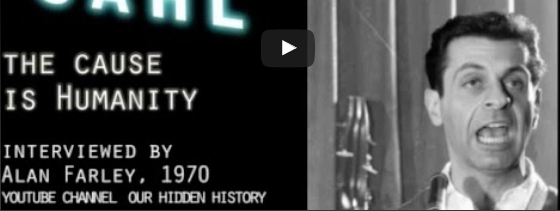
    We present here a rare interview with Sahl about his experiences in New Orleans and his present thoughts on the JFK case.

    ~Jim DiEugenio


    Transcript

    (Click here if your browser is having trouble loading the above.)

    [iframe width=”560″ height=”315″ src=”https://www.youtube.com/embed/bimrN5NCdJk” frameborder=”0″ allowfullscreen ]
  • John McAdams and Marquette Go to Court

    John McAdams and Marquette Go to Court


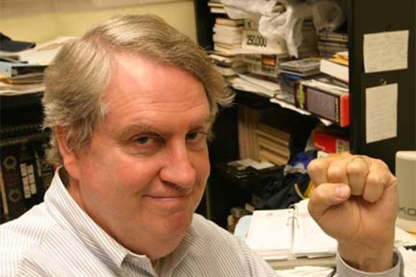
    John McAdams strikes a pose during his glory days at Marquette University

    Readers of this web site will recall that the last time we addressed the case of John McAdams vs. Cheryl Abbate and Marquette, it was early last year.  At that time, CTKA attached a link to the decision letter that the dean had made in that case.  That 17-page letter was written by Richard Holz, dean of the college of Arts and Sciences at Marquette University, McAdams’ former employer.  Dean Holz indicated two violations of the Faculty Statutes that the professor had violated as part of the explanation as to why he had made this decision.  (Click here for the letter http://d28htnjz2elwuj.cloudfront.net/wp-content/uploads/2015/02/2015-01-30-Holz-to-McAdams.pdf)

    That letter began with the statement that the university was commencing the process of revoking Professor McAdams’ tenure in order to dismiss him from the faculty.   At the end of the letter, Holz added that if the professor filed a timely objection, he would be provided with more due process, which included a faculty hearing of his peers. McAdams filed the timely objection, and he was given a faculty hearing.

    One year later, in January of 2016, that committee filed a long, over 100-page report to Michael Lovell, the president of the college. They decided to revise Dean Holz’s decision.  They felt that McAdams should not be terminated but rather suspended without pay for a period of nine months, from April to December of this year.  He would then be allowed to file for reinstatement.  Lovell called the report one of the most thorough and well written faculty committee reports he had ever read.  The main reason they gave for not moving for dismissal was that McAdams had not been formally reprimanded for his perceived offenses prior to this one.

    In a letter to McAdams dated March 24, 2016, Lovell alerted the former instructor that he was going to abide by the report’s recommendations.  Which included the judgment that McAdams be allowed to return after his suspension was served in January of 2017.  This was contingent upon three conditions.  First, that he accept the unanimous decision of the faulty committee.  That he pledges his future behavior will abide by the faculty handbook and mission statement.  And third, his expression of regret for the harm suffered by the former graduate instructor Cheryl Abbate.  Upon those conditions, and after serving out the suspension, McAdams would be allowed to resume his position. Lovell ended his letter with the clear warning that if anything like this happened again, he would move to dismiss the instructor. Because this was also the recommendation of the faculty report.

    Before getting to the reaction of McAdams and his legal representative, let us remind our readership of what happened that caused this, and who Cheryl Abbate was.  On November 9, 2014 McAdams posted on his blog Marquette Warrior information about a conversation that Abbate had with a student in her philosophy class.  According to McAdams, Abbate had limited the right to open debate in her class over the issue of homosexual marriage.  The student then left the class and said he was going to file a complaint.  Which he did. 

    There were three important issues that were distorted, ignored, or discounted by McAdams:  1.) the student lied to Abbate about taping their conversation 2.) McAdams himself was the student’s faculty advisor, and perhaps most importantly, 3.) the student was failing the class. 

    I must add one more key point that the faculty committee discovered, and to my knowledge has not been written about previously.  In their report, at the bottom of page 43, they reveal that the student “had a leadership role in the student chapter of a national organization that encourages…confronting professors in the classroom to expose liberal bias.”  The report states they did not discover this fact until after their four day hearing was concluded, and they decided not to reopen the proceedings, because there was no indication McAdams was aware of this.  The report gives no evidence as to how they made that conclusion. But I should add, the report does state that the student switched to McAdams as his advisor prior to the semester in question.  Which, to me, suggests the issue merited further inquiry. Because, in conjunction with this, McAdams told the committee that he was not aware that the student was failing the class.  Yet, he was the young man’s faculty advisor!  And further, the student told the committee that he never told McAdams that he was dropping the class for any other reason than his failing grade.  (See report p. 84)

    Marquette University dean Richard Holz

    There are two other points in this voluminous report which are made much more clear than they had been.  First, the record of McAdams’ prior attacks on students and teachers from his blog is detailed at length.  The report lists at least 12 prior incidents McAdams was involved in where he attempted to intimidate both students and teachers.  And he did so by naming names and reporting e-mail addresses.  He even went after administrators, like deans and provosts.  He actually told them that if he was reprimanded, he would do the same to them in his blog—that is name them and expose a contact email. (See report, p. 91)   And during Dean Holz’ inquiry, McAdams told Holz that he had a law firm lined up and ready to sue Marquette if they disciplined him.

    Note here, that no action had been taken against McAdams at this point in time. Yet he already had a legal firm set to defend him.  And, as the report shows, McAdams had used this tactic against others for a number of years, one that can only be described as intimidation by threat of retaliation.  This may explain why he had not been disciplined previously. If that is true, then this reveals a failing of the hierarchy at Marquette.  This author was involved in the education system for well over thirty years. After reading the record, I was surprised that McAdams had not been suspended or reprimanded previously.  This shows a real weakness on Marquette’s part.  The report mentions this, but does not fully explore the issue.  (See report, p. 100)

    A second issue that the report elucidates pertains to the defense utilized by McAdams in his appearances on television, and also by his media allies, most notably Conor Friedersdorf in the Atlantic Monthly.  That defense is most notably demonstrated by the title of Friedersdorf’s essay of February 9, 2015.  It was called “Stripping a Professor of Tenure Over a Blog Post.”

    First let us establish that, as the report shows, McAdams’ blog report of November 9, 2014 was unfair and one-sided.  But yet it included graduate student Abbate’s name, a link to her web site, and her contact information. Holding her up for ridicule and providing people direct access to her was not enough for McAdams.  For contrary to what McAdams and Friedersdorf said and wrote, McAdams then actively promoted his rendition of the story.  He distributed copies of the audio recording to bloggers and selected journalists; the recording  the student had lied about making—but had given to him.  (Which is another indication of collusion between student and advisor.) McAdams then posted several follow up stories to the original one on his blog.  He also arranged personal appearances on radio and television to promote the story to a national level.   (See p. 56 of the report.)

    What is even more fascinating about this part of the story is that two of the three journalists that McAdams provided copies of the recording to were from Fox News.  One was to Todd Starnes of the Fox national network, and the other was Krystle Kacner on the local Fox affiliate TV station. (ibid)  He also now began to e-mail out links to his original November 9th story to other bloggers and commentators.  He even relayed requests for interviews to the student!

    So, far from being a debate over academic freedom for the student, McAdams saw this as a way to make a name for himself on the national airwaves over the longstanding conservative flashpoint of “political correctness”. Like Dinesh D’Souza before him, McAdams was out to create a nationwide conflagration that went beyond the boundaries of Abbate’s classroom, or Marquette’s campus, or the readership of his blog.  And it was at this point that he began to put the mental and physical health of Abbate into jeopardy.  For now, because of the exposure of her identity and her contact information, Abbate began to get not just insulting messages, but also physical threats (click here to read them) to the point that Marquette had to provide her a security guard.   She eventually succumbed to the ordeal and transferred to the University of Colorado.  This carried a dual price.  For she now had to change her dissertation project, and she had to repeat three semesters of earned credits.

    Because of this, Dean Holz decided to suspend McAdams– with pay and benefits–as he investigated the matter. And he later offered McAdams an office on campus and library privileges. (See report, p. 64)  The authors criticized Holz for this since there was no faculty involvement with this decision.  Holz made it unilaterally.  Although the authors admit that, according to the Marquette by laws, Holz was within his rights to do so.

    As the report notes, at no time has McAdams ever expressed any remorse or regret over what happened to Abbate.  In fact, he actually explicitly told the local Fox affiliate in February just that.

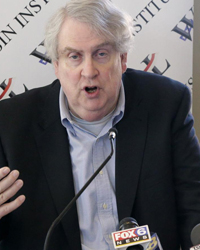
    McAdams at a press conference announcing his lawsuit against Marquette University

    And it is this aspect of the whole sorry episode that the faculty committee deemed most heinous and culpable.  They found that McAdams had used  “improperly obtained information in a way that he should have known could lead to harm, harm that could easily have been avoided.” (See report, p. 74)  As the authors continue,  “his use of a surreptitious recording, along with Ms. Abbate’s name and contact information, to hold Ms. Abbate up for public contempt on his blog, recklessly exposed her to the foreseeable harm that she suffered …”  (ibid, p. 75) This behavior is governed by an instructor’s code of conduct which states that comments should be avoided that would cause “grave doubts concerning the teacher’s fitness for his or her position”. (ibid)  As a further part of that code, instructors are to “respect the dignity of others” and “to acknowledge their right to express differing opinions.”  (ibid, p. 76)  This means that colleagues should not expect others to “search for unguarded moments with which to humiliate them.” (ibid)  The committee also concluded that the damage done to Abbate “was substantial, foreseeable easily avoidable, and not justifiable.” (ibid, p. 82)

    And the report shows that the intensity and the frequency of the attacks escalated as McAdams spread his report to other outlets especially Fox. (See report, p. 88)  The amount of emails forced Abbate to close down her email account and she requested the Philosophy Department close down her email address from the Grad Student web page.  In addition, the attack caused her rating on the site RateMyProfessors to be sabotaged. (ibid)  This caused Abbate acute mental distress, which the report notes in detail.   And, fearful for her health, she left her position at Marquette.  The report notes that not only has McAdams not shown any regret, he has actually stated that Abbate benefited by becoming a martyr. (Ibid p. 58)  The results of McAdams’ jihad are that other professors on campus are fearful they may be next.

    The report concludes that McAdams must have known what the consequences of his campaign against Abbate were, since he had done this in the past so often. He had been quick to use his Marquette Warrior blog as a bludgeon.  For instance, a student complained about McAdams’s treatment of her for promoting a production of The Vagina Monologues on campus.  She went to an administrator to formally protest this.  McAdams actually told the administrator that if she continued in her action, he would blog about her even more.  She did, and he did.  (ibid. p. 92)

    The report also notes that McAdams has stated that it was necessary to name Abbate “because the norms of journalism require such identification.”  (ibid, p. 94)  The problem with this is that it would be a good argument if McAdams were employed by Marquette as a journalist. He is not.  He is an instructor. Therefore, between the two, it’s his responsibilities as an instructor that must take precedence. (ibid)  And further, even at that, the report notes his journalistic practices are highly selective.

    The report ends with what I believe to be the so-called “elephant in the room” factor.  It states that McAdams does not seem to be bound by norms of behavior at a university, or of academia, or any other applicable body of behavioral code.    It then states, “He has instead assembled his own moral code cobbled together from various sources, to be applied as he sees fit.”  (ibid, p. 104)  It is this basic conflict that seems to make McAdams’ case incorrigible.   McAdams and his allies try to say his case was about a single blog post. Not so.  It was about a nearly 20-year pattern of behavior and a seemingly politically motivated media campaign of calumny.  (The entire report can be read here http://marquette.edu/leadership/documents/20160118-MUFHC-Final-Report-Contested-Dismissal-Dr-John-C-McAdams.pdf)

    McAdams and his legal team have refused to cooperate with the faculty committee.  Or with President Lovell.  He will make no written expression of either respecting the committee report, pledge to respect the faculty rulebook in the future, or any regrets about his behavior toward Abbate.  Instead he has decided to file a lawsuit against Marquette.  This was announced on May 2 of this year.  In other words, McAdams would rather lose his job than make any kind of expression of regret over forcing Abbate to flee the campus or placing her well being in danger.

    McAdams is being represented by a law firm called the Wisconsin Institute for Law and Liberty.  General counsel Rick Eisenberg stated that McAdams is being suspended for blogging and standing up for an undergraduate student.  And that, like in a Moscow show trial he must repent to return to his position.  (Milwaukee Journal Sentinel, May 2, 2016) 

    No surprise, this firm is backed by a million dollar grant from the Bradley Foundation.  And it is part of the State Policy Network. An attempt by the New Right to create a large, serpentine network of state and local mini- Heritage Foundations. As of 2011, there was 83 million dollars behind the effort.  It has close ties to the Koch brothers. (http://www.sourcewatch.org/index.php/State_Policy_Network)

    This, of course fits in with McAdams wider profile which the authors of the report, quite naturally, did not go into.  But others, like myself have in the past.  (“John McAdams and the Siege of Chicago, Part 2”)  Hopefully, if there is a trial, this odd and peculiar background will emerge to place McAdams in a much more complete context which will more fully explain why he did what he did in this case.  And also why he favored Fox News, and why he has this Bradley Foundation/Koch Brothers law firm at his disposal.

    ~ Jim DiEugenio


  • RFK’s Former Speechwriter Damns the Democrats for Abandoning Kennedy Legacy

    RFK’s Former Speechwriter Damns the Democrats for Abandoning Kennedy Legacy

    Photograph: AP

    The Democratic Party has become something both JFK and RFK would deplore—the party of war.

    By Adam Walinsky, At: Politico

  • Dallas continues harassment of Robert Groden

    Dallas Has Now Lost 82 Cases Against Robert Groden. Someone Call Guinness.

    By Jim Schutze, At: Dallas Observer

  • Caroline Kennedy: JFK wouldn’t have escalated US in Vietnam

    , At: CNN Politics

  • Warren Hinckle and the Glory that was Ramparts

    Warren Hinckle and the Glory that was Ramparts


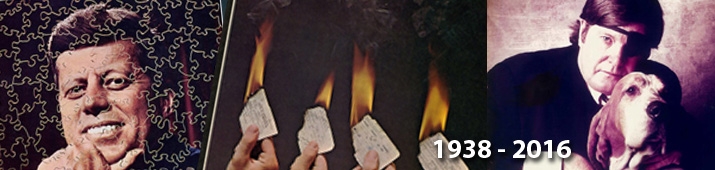
    Warren Hinckle passed away on August 25th,  at age 77. Hundreds at the Saints Peter and Paul Church in North Beach, San Francisco, attended his funeral service. He was buried on Tuesday the 30th. Some of the luminaries who attended his funeral were historian Kevin Starr, the founder of Salon David Talbot, and former San Francisco Mayor Willie Brown.

    CTKA carried a notice upon his passing, one from the online version of the Chronicle, the paper he used to write for. Among several others, there were notices in the New York Times, The Nation, and the online magazine Politico. This author read most of them. Not one even came close to recalling or measuring the journalistic brilliance of the man, or the eternal glory of his most significant creation, the last great American magazine, Ramparts.  Considering the standard set by that glossy monthly periodical, I understand the reluctance to remind us of Hinckle’s achievement.

    For those too young to recall it, Ramparts is hard to describe.  For the simple reason that there is nothing today that even resembles it. Which says a lot. Because today we live in the era of online publication; which means journals are much cheaper to produce and maintain, and therefore there is much more freedom  to create. The fact that, to this day, no one has equaled Hinckle’s 1964-69 editorial achievement at Ramparts is what makes what he did the stuff of legend.  After all, it was nearly half a century ago.

    Edward Keating

    Before trying to detail the pure excitement that Ramparts represented,  it is necessary to tell the reader a bit about Hinckle’s background. He was born in San Francisco in 1938.  His father was a shipyard worker.  He attended parochial schools before studying philosophy at the University of San Francisco. There he edited the student newspaper, The Foghorn. Under his editorship it became quite an unusual student newspaper. For instance, it was one of only 14 college newspapers classified as a daily. As editor of a daily, Hinckle went to Squaw Valley in Lake Tahoe for two weeks to cover the 1960 Winter Olympics.  From Tahoe, he ran The Foghorn via telephone and telegraph. As he later noted, its readers read little about their college in the college newspaper. For Hinckle featured Herblock cartoons, and headlines like “Dorothy Day Asks: Who Baptized Capitalism?”  (USF was a Jesuit college) He once stole the entire press run of the rival San Francisco State newspaper.  Needless to say, because of disputes with the college administration, he left USF without graduating.

    From there he took a job at the San Francisco Chronicle.  His first outpost was in Oakland, which Hinckle called the Siberia of the Chronicle stations.  Working the police beat, he discovered an unwritten rule about the paper’s Oakland coverage.  The coverage of a homicide  largely depended upon where the victim lived.  To quote from his memoir: “Ghetto murders, being regarded as natural black events, were rarely considered newsworthy.  White trash murders stood a poor to even chance of getting in the paper…..”   There was also a rule of thumb similar to this in the area of fatal car accidents: “No niggers after 11 PM on weekdays, 9 PM on Saturdays (as the Sunday paper went to press early).”  To this rule there was one exception, in the area of quantity: “If two black persons died in a late evening auto crash, that event had a fair chance of making the news columns.” (Hinckle,, If You Have a Lemon, Make Lemonade,  pgs. 31-. 32)

    Eventually, he made it back to San Francisco, where he was given a bit of leeway.  One of his favorite stories was about a former slave from Alabama who emigrated to California.  He got rich in the pinball machine business and  legally adopted the children of his former master.  Then, in the fall of 1961, Hinckle took a temporary leave of absence to help invigorate an ambitious and intellectual Catholic quarterly.

    Hinckle had been moonlighting in the public relations business.  A friend of his, Harry Stiehl, decided to introduce him to a man named Ed Keating.  Keating was a converted Catholic who wanted to start a quarterly periodical that was meant to begin a dialogue between laity and the clergy of the Catholic Church.  He also wanted to begin to spawn a new generation of Catholic intellectuals who had a gift for writing and communicating.  With his PR connections, Stiehl thought Hinckle could help promote Keating’s new journal. It was called Ramparts.

    Howard Gossage

    Keating had a wealthy wife and some famous contributors, like the Trappist monk Thomas Merton and John Griffin, who wrote the bestseller Black Like Me.  In 1964, Keating tried to raise his journal’s profile by defending the highly controversial play The Deputy which had just opened on Broadway. Hinckle arranged a huge press conference in Keating’s suite at the Waldorf Astoria hotel.  Keating and his magazine got exposure;  the play opened successfully and ran for a year.  As Hinckle wrote in his book, this episode became the model for what he later termed activist journalism.

    It also increased the circulation of the magazine.  Keating liked that and he appreciated what Hinckle had done.  So Hinckle did it again. But this time he channeled all the PR into an issue that very much interested him—the murders of three civil rights workers in  Neshoba County, Mississippi in June of 1964. Hinckle promoted a man named Louis Lomax as the Ramparts author of this sensational article.  Lomax did not come through. But like the British at Dunkirk,  Hinckle turned an expected disaster into a triumph by promising the details of the Lomax piece in a future issue.  (Although Hinckle does not deal with this episode in his book, Peter Richardson does in his chronicle of the magazine, A Bomb in Every Issue.)

    There were two factors that allowed Hinckle to gain control of the magazine from Keating.  First, because of the success Hinckle had in promoting Ramparts, Keating made him executive editor.  Second, Keating was becoming financially overextended.  Or as he told Hinckle, “I do have one shopping center left.”  (Hinckle, p. 95)  Therefore Hinckle now had to find alternative sources of funding himself.  Which he did.  Thus began Hinckle’s five year reign.  He was greatly aided by the PR skills and connections of one Howard Gossage.  Gossage was an advertising executive in the Bay Area who was generally described as an innovator and iconoclast in the field.  At age 36, he founded his own agency called Wiener and Gossage.   He would often have salons at his office headquarters, inviting many of the cutting edge thinkers in the San Francisco area, including Hinckle.  (Click here for more on Gossage http://www.howardluckgossage.com/)  

    To describe in detail the contents of what Hinckle produced in those five years would take a medium sized book. And I don’t mean the machinations that went on at the magazine headquarters, or just naming some of the big stories Ramparts produced.  But to detail the contents of what the magazine exposed about America, who Hinckle decided to take on, the methods he employed and the price he was willing to pay, all these—and more—were, to my knowledge, unprecedented before him, and unmatched afterwards. Ramparts was so effective and influential that it became a regular target of the MSM, especially Time magazine and the New York Times, which obviously did not like being exposed as the poseurs they were. Beyond that, the CIA launched operations against Ramparts.  These were commissioned by Desmond Fitzgerald, supervised by Richard Ober, and executed by Edgar Applewhite. As detailed in his book Secrets, the late Angus McKenzie showed how this program grew into MHCHAOS, the massive CIA spying on and infiltration of leftist protest groups in that decade.

    Madame Nhu as depicted on cover of Ramparts

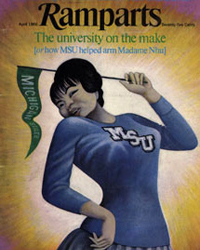
    What got the CIA so angry?  For starters, Ramparts exposed a program the Agency was running out of Michigan State University. (Click here http://la.utexas.edu/users/hcleaver/357L/357LMSUinVietnam.pdf) It taught CIA interns how to train interrogators in South Vietnam to torture dissidents in Saigon. This created an uproar. Not just for the story, but also because of the hilariously outrageous Ramparts cover, which featured the immortal image of Madame Nhu in an MSU  cheerleaders’ outfit waving an MSU flag.  The image suggesting the Vietnam War was now controlling the agenda of American colleges. (Click here for a time capsule reaction http://msupaper.org/issues/The_Paper_1966-04-21.pdf)

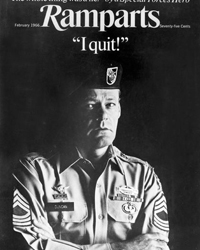
    Then there was Donald Duncan.  Duncan was a Special Forces Sergeant who served in Vietnam and taught at Fort Bragg, North Carolina.  He resigned his commission and returned to Berkeley, California. There, in February of 1966, Duncan graced another memorable Ramparts cover. He was pictured in a long sleeved uniform, topped with a Green Beret cap. Above him were the words, “I quit”. Above that was the quote: “The whole thing was a lie.”  In this emblematic story, Duncan described his ten years in the military, capped by a nearly two year tour in Vietnam.  He said he went to Vietnam to fight communism.  But what he learned there about the American effort forced him to retire from the service forever.  Duncan first focused on the fact that there really was no government of South Vietnam—it was simply constructed and propped up by the USA.  And it was in no way a democracy. Secondly, he wrote that the Ho Chi Minh Trail was wildly overrated as a source of supplies for the Viet Cong. Most of the material came over the border or from the sea. Thirdly, he said that the US military was involved in atrocities that violated the rules of warfare, and this extended to the civilian population.  Duncan was really the first former GI to open up the path for Mark Lane’s book Conversations with Americans, the Winter Soldier Hearings, and the exposure of the My Lai Massacre.  (http://vietnamfulldisclosure.org/wp-content/uploads/2015/04/1966-02-Donald-W.-Duncan-The-Whole-Thing-Was-A-Lie-Ramparts.pdf)

    In the March 1967 issue Hinckle exposed another instance of the CIA operating domestically. Ramparts now revealed that the Agency was secretly funding the National Students Association.  (http://www.unz.org/Pub/Ramparts-1967mar-00029) In other words the largest college student association in America–featuring a large annual convention picturing a celebration of youthful democracy–was secretly funded, infiltrated and channeled by the Agency. Many of the top officers knew about it and were briefed on that association.  Further, several of them had case officers, code names, and reporting requirements.  Incredibly, some of their overseas representatives were actually career CIA agents from Langley.  The aim of the program was multi-leveled.  First, the Agency would moderate any radical or leftist tendencies in the largest student organization in the world. Second, they would use the overseas voyages of the students to collect information and try and moderate any radical leaders abroad. And third, the propaganda  goal was to portray  our young representatives as independent citizens, while many of the people they met abroad were communist stooges programmed from Moscow. (Hinckle, p. 185)

    Eldridge Cleaver

    NSA officer Michael Wood had a pang of conscience about it and was talking to Hinckle. Unlike other top officers, Wood had not signed a non-disclosure agreement.  Further, Wood had records, not just about the NSA, but other related fronts that the CIA had established.  For example, Stephen Spender’s Anglo-American journal Encounter. Wood also showed how the CIA very often used large legal firms in big cities to channel their clandestine funding.  Usually these firms had a former OSS officer as a founding member.  (One is reminded here of the firm Monroe and Leeman in New Orleans, which helped fund Walter Sheridan’s hit piece on Jim Garrison.  See Destiny Betrayed, Second Edition by James DiEugenio, p. 238)

    MHCHAOS operations officer Richard Ober heard about Wood’s talks with Hinckle.  He tried to find a way to stop publication.  But he couldn’t find a legal pretext.  So he then arranged a press conference in New York.  At this conference the officers would pretend that this was all a thing of the past, and they were now reformed. Therefore, the Ramparts story was old hat.  Hinkle got wind of this plan.  He memorably said, “ I was damned if I was going to let the CIA scoop me.”  (Hinckle, p.  190) Ramparts then bought two full page ads in the New York Times and Washington Post to expose the illegal association (the CIA is forbidden by its charter to operate domestically) and what the Agency had done to cover it up.  When word of the ads leaked, Ober’s press conference collapsed. 

    The New York Times now started a couple of weeks of reporting on other CIA fronts here and abroad that was influencing cultural affairs. This was one of the many triumphs of Ramparts. In many ways, at many times, it  actually led the news cycle.  By repeatedly scooping the MSM, it became a model of what they were not doing. At the same time that—out of pure humiliation—the magazine became an object of attack. Ramparts did what the MSM was supposed to be doing but did not—actual investigative reporting.  It was showing what the real world around the reader was composed of and what it was all about. But the fact that it was camouflaged made it hard for the average person to detect. So Ramparts did it for them.  Which is why as Jeff Cohen, a student at Michigan, told Peter Richardson, Ramparts was passed around the dorm there to the point it was wrinkled and dog eared by the time he got it. “It really was a radicalizing tool of its own.  It ripped your head off. “ He added that it had turned his cousin’s fraternity into an SDS chapter.

    Ramparts cover November 1966

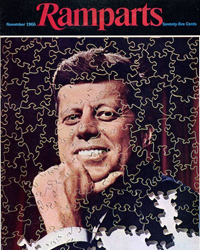
    At its pinnacle, Ramparts had a circulation of about 250,000.  One can imagine how the CIA felt when Hinckle started featuring stories about the conspiracy to murder John F. Kennedy, and then putting such things on the cover. For this topic, there was another cover for the ages.  The November 1966 issue featured the face of JFK made up like a jigsaw puzzle, with several pieces missing.  That was followed  two months later by “The Case for Three Assassins” written by David Welsh and David Lifton. (Click here to view).

    The Welsh/Lifton article began with the following words: “No less than three gunmen fired on the Presidential motorcade in Dallas on November 22, 1963…” It was a long, illustrated, annotated examination of the ballistics, medical, and eyewitness testimony. It all indicated a triangulation of gunfire in Dealey Plaza.  To my knowledge, it was the first time such an intricate discussion reached a mass audience. That issue was then followed by two long pieces on the Jim Garrison investigation in New Orleans. (Click here for the first one).

    These were  both penned by former FBI agent William Turner, who was actually working with Garrison. Therefore, Turner had access to the DA and some of his files.  Ramparts  was one of the very few media outlets that actually treated Garrison and his evidence with respect. Until Jim Garrison published On the Trail of the Assassins, Turner’s articles were–along with Paris Flammonde’s book, The Kennedy Conspiracy—prime reference works for anyone interested in the non-MSM view of Garrison.

    Hinckle met resistance inside his office on this issue.  Reporters like Bob Scheer did not want to cover the assassinations of the sixties at all.  As he once told Turner, such writing amounted to “mental masturbation”.  Hinckle disagreed.  For the simple reason that he had read the official report and most of the accompanying volumes of evidence.  He concluded the Warren Report was impossible to believe:  “Anyone who has read those 26 volumes…knows that the function of the Warren Commission was not to ferret out the truth, but to put the citizens at ease that there was no conspiracy.” (Hinckle, p. 217)  About Jim Garrison, Hinckle wrote, “… no man I have known had more legitimate reasons to become paranoid than Garrison; there actually were people constantly plotting against him.”  (Hinckle, p, 209) With the declassified files of the Assassination Records Review Board, we know that to be, not just true, but an understatement.  (See Destiny Betrayed, Second Edition, Chapters 11 and 12)

    The Ramparts “I Quit” cover

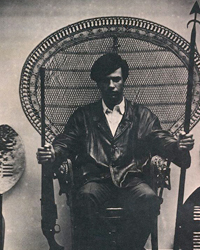
    To chronicle the endless triumphs of Hinckle’s editorship could go on and on, taking scores of pages. But to mention just two other exceptional aspects of Hinckle’s stewardship: Ramparts was the first and only widely read publication to champion the Black Panthers.  And again, there was an iconic cover design by art director Durgald Stermer to signify it:  Huey Newton in a wicker chair with a spear in one hand and a loaded carbine in the other.  Eldridge Cleaver actually became a contributing editor, and Ramparts released his book Soul on Ice through its publishing imprint.

    There was also a photo essay “The Children of Vietnam” put together by William Pepper.  (http://www.unz.org/Pub/Ramparts-1967jan-00045) That 1967 visual article showed just how extensive, indiscriminate and destructive the massive  American firepower unleashed in Indochina was. It was laying waste to the civilian population, including tens of thousands of women and children. Martin Luther King picked that issue up off a newsstand before taking a working vacation in Jamaica.  When he returned he began making his first speeches against President Johnson and his conduct of the war.  Again, Ramparts was leading the news cycle.

    The power and the glory all came to an end in early 1969.  For three reasons.  First, if Ramparts had one failing it was Hinckle’s lack of interest in the arts and the so called counter culture in San Francisco. For instance, there was no Dwight MacDonald or Robert Christgau at Ramparts to review movies or music. And many people wanted to read both.  Therefore, young Jann Wenner left Ramparts to start up something called Rolling Stone.  Which then became a competitor.  There was also an internal coup against Hinckle by new staff members who were tired of his profligate spending.  For instance, he had sent a team of 15 correspondents to cover the Chicago Democratic Convention in 1968.  And he had put up ten of them at the four star Ambassador Hotel.  Finally, when Hinckle found someone who was interested in bailing him out, Scheer got into a stupid and senseless argument with the man and his entourage.  (Hinckle, pgs. 371-78)  Hinckle was now out. The magazine declared bankruptcy and reorganized around new leadership.

    The new principals were Robert Scheer and David Horowitz.  This, of course, meant that Hinckle’s daring, “nothing sacred” approach would be abandoned.  Because those two men represented a much more doctrinaire, New Left approach. Therefore instead of writers like William Turner and Bill Pepper, we now got people who really were not all that unusual  or new e.g. Alexander Cockburn, Noam Chomsky, Sy Hersh, Jonathan Kozol. The subjects now also became those of the doctrinaire left: Earth Day and the environment, food safety, oil spills in Santa Barbara, and the plight of Native Americans. Without Hinckle, Ramparts had lost its singular, contemporary jazz riff.

    Huey Newton as he appeared in Ramparts

    Later, Scheer was moved out by Horowitz and replaced by a new second in command: Peter Collier.  The irony being that it was Scheer who brought both men to Ramparts in the first place.  But, predictably, the magazine now began to lose its  large circulation.  Seeing the writing on the wall, Horowitz and Collier decided to transition their way out.  In 1973 they met with Abby and Marion Rockefeller, part of the Rockefeller clan who were outsiders because of their contrary political beliefs—which is why they backed Ramparts.  The two men now contracted to do a history of the clan.  They got a sizeable advance, and then signed on a new management team for Ramparts.  Their book, The Rockefellers: An American Dynasty,  sold quite well.  It was published in 1976, the year after Ramparts went under for good.

    Ramparts was so unusual, so blindingly meteoric, so politically potent, that, when it fell, it actually dropped the seeds of its own reaction.  By 1975, the Sixties were pretty much killed off.  And Ramparts, in its new form, did not do a lot to preserve it.  Richard Nixon was now president, with the likes of Spiro Agnew as his VP.

    Men like Pat Buchanan and William Safire were writing his speeches.  And from 1969-75, Henry Kissinger was doing the final reversals of whatever was left of John Kennedy’s reformist foreign policy, specifically in Africa, the Middle East and the continuation and expansion of the Indochina war.

    It was within this new political milieu that men like Horowitz, Collier, Sol Stern and Martin Peretz began their  migration to what would become the New Right, neoconservative movement.  Financial backer Peretz did not like the evenhanded approach Scheer wanted to take in the Middle East.  So he pulled out of Ramparts.  He now purchased the liberal New Republic from Gilbert Harrison.  In a remarkably short time period, Peretz pretty much reversed the trajectory of that journal’s foreign policy pages. By about the mid-eighties, many were calling the New Republic a neoconservative bastion.  Which, for all intents and purposes, it was; most notably on the Middle East and Central America.

    Sol Stern, who actually wrote the Ramparts article on the NSA scandal, eventually found a home at the Manhattan Institute.  This is a New Right think tank that was actually co-founded by the deceased CIA chief Bill Casey. Manhattan Institute has sponsored books by Charles Murray, who was actually a fellow there when he wrote his anti-welfare polemic  Losing Ground.  Stern’s specialty today is to promote voucher system education, which would almost surely undermine the public school system.

    Peter Collier

    After their tome on the Rockefellers, Horowitz and Collier then wrote books on other wealthy families:  the Kennedys, the Fords, and the Roosevelts.  Their book on the Kennedys is so bad that this author included it in his review of the anti-Kennedy literature in the essay “The Posthumous Assassination of JFK.” Predictably, that book provided the occasion for the pair to proclaim their conversion to Reagan Republicanism.  This was announced in the Washington Post under the banner “Lefties for Reagan”.  (The Assassinations, edited by James DiEugenio and Lisa Pease, p. 357).  They then went on and became beneficiaries of the largesse of the wealthy conservative class.  They founded organizations like Encounter Books, FrontPageMagazine.com, the David Horowitz Freedom center, and Discover the Networks. All of these are meant to undermine the things that Ramparts represented: the liberal ideals of an open and more egalitarian society.  And with the collapse of the Sixties, and the killing off of its leaders—JFK, Malcolm X, RFK and King, plus the FBI sponsored extermination of the Panthers—that was not really difficult to do.

    Hinckle never did anything of the kind.  He tried to start up another monthly magazine called Scanlan’s Monthly.  But I have it on two sources that the Nixon administration used the IRS and the USPS to obstruct its  distribution and circulation. Consequently it closed down in less than a year.  He next edited Francis Coppola’s City magazine, which lasted until 1976.  He then did something that no one thought possible: he revived The Argonaut, which had closed down in 1956.  He did this in 1991, and that publication is still around in both print and online versions.

    Besides that, he ran unsuccessfully for mayor of San Francisco in 1987.  He also wrote about ten non-fiction books.  There are two that are mandatory reading for anyone interested in the Sixties and the assassinations. In 1974, on the eve of the final dissolution of Ramparts, Hinckle wrote a memoir about his editorship of that magazine.  It was called If You Have a Lemon, Make Lemonade.  To me, there is nothing at all like it in the literature.  It is, at once, funny, pungent, candid, and nostalgic without being sentimental. A definite must read. Then, in 1981, he co-wrote, with Bill Turner, The Fish is Red.  That book was later reissued as Deadly Secrets in 1992.  Up until that time, and until this day, it is one of the best JFK assassination books written from the point of view of the Cuban exiles’ association with the CIA.

    In the late nineties, this author considered reviving Ramparts. I won’t go extensively into why I decided against it. But one of the reasons I didn’t was because I thought that, with the surge of online journalism, surely someone, maybe more than one, would now use the opportunity to emulate Ramparts, or Art Kunkin’s LA Free Press.  The latter was an extraordinary newsweekly that complemented Ramparts. Together, they formed the last pinnacle of American journalism.  To say the least, those online expectations were not fulfilled by the likes of Jane Hamsher, Markos Moulitsas, and Josh Marshall.  In fact, this so called internet revolution was so stillborn that it made Ramparts and the LA Free Press look like even greater achievements.  (See here for my particular disputes)  In fact, that online result recalls Hinckle’s answer as to why Ramparts was so exceptional, he replied, “Because the rest of the media was so shitty.”  I would add: But it took Ramparts to show us how shitty they were.

    Today, to do anything like what Ramparts did, a single publishing journal would have to been the first to:

    1. Shown in detail how George W. Bush stole the 2000 and 2004 elections in Florida and Ohio
    2. Demonstrated how the FBI and CIA left us unprotected on 9-11
    3. Revealed the secrets of NSA illegal spying
    4. Exposed Colin Powell’s phony UN speech justifying the war with Iraq
    5. Visited Iraq with a camera crew to show us the terrible civilian toll Bush’s phony war took on the populace.

    And they  would have to have achieved the above in just five years, from about 2001-2005 I think the reader will agree that any such comparison suggests science fiction today.  But Hinckle did it.

    Therefore, Ramparts stands alone in the history of contemporary American journalism; much as Citizen Kane towers in the history of  the American sound film.  It is often written that, in that picture, Orson Welles took the art of  film direction to a point that no other American has since matched or surpassed. With the death of Warren Hinckle we can say  that no other American has produced or edited a magazine, or online journal, that has matched or surpassed what he did at Ramparts.  And, from my point of view, it looks like no one else will do so for a long time.  For that, among other things, he deserves to be properly saluted upon his passing.  He set a standard for us all by reminding us what real journalism can and should be.

    ~ Jim DiEugenio
  • An Introduction to the Book Excerpt: The Incubus of Intervention

    An Introduction to the Book Excerpt: The Incubus of Intervention


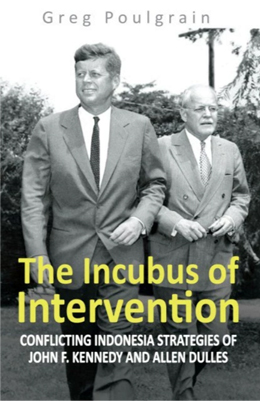
    CTKA is proud to excerpt a chapter from Greg Poulgrain’s new book about the Indonesia coup of 1965.  The full title of the volume is The Incubus of Intervention: Conflicting Indonesia Strategies of John F. Kennedy and Allen Dulles.  Poulgrain is a professor of History at University of the Sunshine Coast in Australia. In 1998, Poulgrain wrote The Genesis of Konfrontasi.  That book was about the conflict between President Achmed Sukarno of Indonesia and the proposed union of Malaysia in 1963. There, Poulgrain unfolded a new thesis about that conflict: namely, that it was not motivated by Sukarno’s desire to dominate the Southeast Asian archipelago area. Rather, it was a conscious provocation, created largely by the British to both strengthen their brainchild of Malaysia, and weaken Sukarno. By doing so, they expected to benefit financially.  They succeeded spectacularly in both aims.

    Poulgrain has now published an even more important book. It deals directly with the epochal, yet underreported, Indonesia coup of 1965. That overthrow is commonly referred to as the bloodiest CIA coup in history. To this day, no one knows how many people perished as a result of it. Various estimates range from 350,000 to 500,000.  It was not until 1996 when Lisa Pease wrote her milestone articles about Freeport Sulphur (today called Freeport McMoRan) that anyone focused attention on how the murder of President Kennedy paved the way for this horrendous operation. (Click here for that memorable essay: http://www.thesecrettruth.com/freeport-indonesia.htm)

    What Lisa did was to examine American foreign policy towards Indonesia and its leader Sukarno through three presidents: Dwight Eisenhower, John Kennedy, and Lyndon Johnson.  Through that examination, it was obvious that a familiar pattern manifested itself:  the Dulles brothers and Eisenhower were hostile to Sukarno (actually attempting to overthrow him in 1958); Kennedy tried to establish better relations and had planned a state visit in 1964; Johnson then halted Kennedy’s policy and decided to revert back to 1958 and the coup attempt.  Except, this time, it was successful.

    Since that excellent essay was published in Probe magazine, others have built on it.  This includes Denise Leith’s book The Politics of Power: Freeport in Suharto’s Indonesia. Jim Douglass treated the subject in his fine JFK and the Unspeakable, and I discussed the issue in the second edition of Destiny Betrayed.

    But Poulgrain’s new book goes further than anyone has before.  In fact, it appears to be a milestone on the subject. Through extensive research into books and documents, plus new in-depth interviews, this book seems to have rearranged the calculus on what happened in Jakarta in 1965. And, rather appropriately, Poulgrain sees that massive slaughter through the prism of two personal profiles: CIA director Allen Dulles and the fallen president John F. Kennedy.

    To show just how rich this book is, and how new and unique its perspective is, I beg the reader to take note of just three highlights in this one chapter.

    First, Poulgrain reveals that Kennedy was working with United Nations Secretary–General, Dag Hammarskjold.  Not just on the Congo crisis, but on a solution to the Indonesia problem.  This was new and I consider myself pretty well informed on Kennedy’s foreign policy. This is arresting in two ways.  First, Hammarskjold must have appeared to be an even greater threat to the power elite in this light. Second, we all know how reluctant contemporary American presidents are to work with the UN, especially GOP ones.  But here you have JFK working with Hammarskjold on two key fronts in the third world.  

    Second, he reveals that, as with the Kennedy assassination, Harry Truman clearly suggested that he did not buy the airplane accident story about Hammarskjold’s death. In fact, he even went further in the Hammarskjold case than he did with Kennedy.  He actually said he had been murdered. In other words, Truman knew what happened to Dag, and he likely knew what happened to Kennedy.  In the case of Kennedy, he wrote a timely and suggestive editorial about the CIA which Allen Dulles tried to get him to retract—but he did not. In the Hammarskjold case, when asked to elaborate, he said in effect, I will let you guys figure that all out.  In other words, he was not going to go further, hoping they would.  

    Third, through information in Susan Williams’ book, Who Killed Hammarskjold? it appears that Dulles’s name was on some documents secured by Desmond Tutu through the Truth and Reconciliation Commission in South Africa. These indicate that he would be willing to cooperate in a plot against the UN leader. He was even offering information about the type of plane the UN chief would be flying and the date Hammarskjold would arrive. If Dulles was willing to cooperate in a plot against Hammarskjold in 1961 over Congo, why would he not do the same in 1963 over both Congo and Indonesia?  Since as we know, Kennedy continued the struggle for a free Congo after both Patrice Lumumba and Hammarskjold were murdered.

    Poulgrain’s work is part of a new path in Kennedy studies.  This began with Richard Mahoney’s landmark volume JFK: Ordeal in Africa.  It continued with Philip Muehlenbeck’s Betting on the Africans, and Robert Rakove’s Kennedy, Johnson and the Nonaligned World. Now, Poulgrain extends that horizon line even further, one which finally shines light on who Kennedy really was and why he was killed.


    Chapter 2: The Incubus of Intervention | Buy The Incubus of Intervention on Amazon