Blog
-
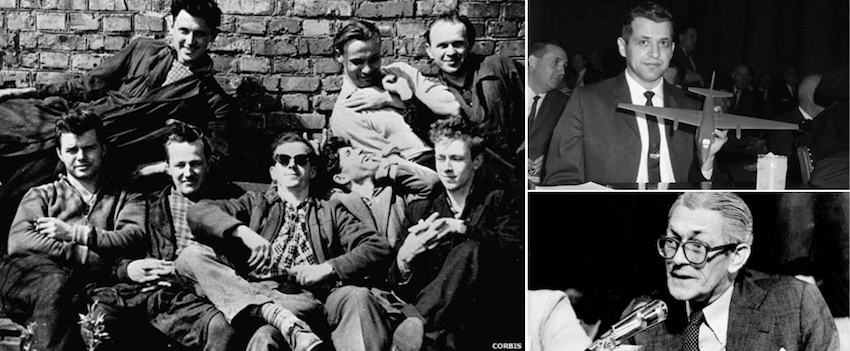
Creating the Oswald Legend – Part 1

I. An Unusual Defector
Lee Harvey Oswald defected to the Soviet Union in the fall of 1959, on October 16. On the Saturday morning of 31 October 1959 he visited the U.S. Embassy in Moscow and threw his passport to the receptionist while announcing that he was willing to renounce his American citizenship. The surprised receptionist advised Oswald to discuss his matter with the American Consul, Richard Snyder. Oswald handed over to the consul a hand-written letter declaring his allegiance to the “Union of the Soviet Republics”. The second Consul, John McVickar, later testified to the Warren Commission that Oswald followed a pattern of behavior indicating that someone or some unknown parties had coached him.1
The receptionist, Joan Hallet, later recalled that a security officer took Oswald to the secure area upstairs and that “a visitor would never ever get up there unless he was on official business. 2
Oswald revealed to Snyder that on the 16th of October he had applied for Soviet citizenship. Snyder gave him a form and asked him to fill in his U.S. address plus the address of his closest relative. Oswald became upset because he did not want to involve his mother in this, but eventually he had to report her address in Fort Worth, Texas.
When asked: Why did he wish to defect to the Soviet Union? he replied that he was a Marxist. Snyder then asked him if he was willing to serve the Soviet state, to which he replied that he was a radar operator in the Marines and he had willingly declared to the Soviets that if he was to become a Soviet citizen he would then reveal information regarding his time in the Marines, and his duties. He insinuated to them that he knew something of special interest.3
Snyder assumed that his words “of special interest” were a reference to the ultra secretive project involving the spy plane known as U-2, which flew missions from U.S. military bases around the world. Oswald was familiar with the U-2 since the plane was also flying out of Atsugi Japan where he had been stationed as a Marine during 1957-1958. This revelation to Snyder was quite odd, because it could have led to his arrest. Snyder believed that Oswald did it on purpose since Oswald had probably assumed that the Soviets had bugged the U.S. Embassy, and he was speaking for Russian ears in his office. This is also another odd and peculiar thing to do in order to get the Soviets’ attention. If he really wanted to give up military secrets he could have gone straight to the Soviet authorities in secret so the American Intelligence services would have never learned of his treason. Bill Simpich4 believes that if Snyder’s assumption was right, Oswald may have been wittingly or unwittingly prepped by someone from CIA officer William Harvey’s Staff D, since they were responsible for signal intelligence. Bill Harvey was stationed in Berlin during Oswald’s visit to the U.S. Embassy in Moscow, so we cannot conclude with certainty that he had anything to do with Oswald and Staff D at that time.
Snyder informed Oswald that there was no time left to fill in the necessary documents because it was Saturday noon and they had to close the consulate. He advised him to come back on Monday morning to complete the process of renouncing his citizenship. He also asked Oswald to hand him his passport. Oswald got very irritated and upset and he stormed out of the Embassy and never returned to pick up the documents he so desperately needed. However, he did oblige Snyder’s request and gave him his passport. By doing so he wittingly or unwittingly made sure that his passport would not be detained by the Soviets. He had therefore kept the door open for his return to the States.5
Before Oswald, two American citizens had tried to renounce their citizenship during the same September month. They were Nicholas Petrulli, on the first week of September, and Robert Webster on Saturday, September 17. Strangely enough, both of these defectors, like Oswald, had visited the Embassy on a Saturday, which made it difficult to finalize the process for renouncing their citizenship. Petrulli did manage to achieve it, but he then changed his mind and asked to return to the U.S. Webster is a person of interest who we will examine further at a later stage. It was Petrulli’s change of heart that prompted Snyder to give Oswald a chance to think it over in case he also changed his mind during the weekend.6
After Oswald’s departure, Snyder prepared his report regarding Oswald’s visit and he sent a cable to the State Department. Cable 1304 warned that Oswald offered information to the Soviets that he had acquired as a military radar operator. For whatever reason there was not any mention of the possibility that he might have revealed the U2 spying activities.
On Tuesday morning, November 3, the FBI and CIA had begun to look for information about Oswald after hearing the news about Oswald from the press in Moscow. Snyder had not sent his cable yet to State, so nobody knew of its existence back in the America. Around noon, the Navy received a cable from the Navy attaché in the Moscow embassy that the following diplomatic pouches –– 224/26 October and 234/2 November –– were on their way from Moscow. The content of the two cables included information about two ex Navy persons, Lee Harvey Oswald and Robert Webster.7
Pouch 234 with the Oswald information arrived at the State Department on Thursday, November 5, and the Navy attaché alerted the Navy to ask for it after its arrival. On the same afternoon the FBI and CIA received pouch 234, and also Snyder’s cable but, to this day, the CIA has not been able to confirm which officer was the recipient.8
As former intelligence officer John Newman has noted, from the beginning, Oswald’s file had fallen into a black hole. The Navy sent its attaché cable to the CIA, which described how Oswald threatened to reveal top secrets about radar to the Soviets. This cable had also fallen inside a black hole, because no one ever saw it until after JFK’s murder. So when Sam Papich, FBI’s liaison to the CIA’s Counterintelligence division (CI), asked for information relating to Oswald’s defection, the CIA responded that they had none.9 The FBI still put Oswald’s name on their watch list to stop his entering the country under any name.
At CIA, the Navy cable eventually landed in James Angleton’s Counterintelligence Special Investigation Group (CI/SIG) on December 6 –– but we have no knowledge of its whereabouts the previous 31 days. In addition it was not sent to the right department, which was the Soviet Russia Division (SR).10
Meanwhile, while waiting on the Soviet decision to allow him to stay in the USSR, Oswald stayed in his hotel room in Moscow writing letters to his family explaining why he wanted to defect. He also gave interviews to two American journalists, one of them was Priscilla Johnson.8 Priscilla testified to the HSCA in 1978 that it was McVickar who pressed her to take an interview from Oswald with the excuse that, because she was a woman, it would have been easier for Oswald to talk to her. Snyder had asked McVickar to talk to Oswald and try to change his mind about defecting, but he had not told him to ask Priscilla to do it. As a result Snyder was very upset with McVickar.11
McVickar said to Priscilla that there was a fine line between her duty as a journalist and as an American. She later testified that McVickar told her before leaving to remember that she was an American.12 On November 16, Priscilla interviewed Oswald for 5 hours. Oswald revealed to her that the Soviets would allow him to stay in the USSR and would examine the possibility for him to study at a Soviet institution.13 According to Priscilla, Oswald hoped to be useful to the Soviets since he was a radar operator and he could offer them something to harm his country. Oswald was staying in room 233 of the Metropole Hotel, where the KGB had secretly installed infrared cameras to spy on tourists, and the CIA knew that.14
The next day, November 17, John McVickar invited Priscilla to dinner to discuss her interview with Oswald. After dinner McVickar wrote a memo where he stated that Priscilla had told him that Oswald would be trained in electronics but Priscilla later denied that she did.15
Oswald was later sent by the Soviets to Minsk to work in an electronics factory, information that Snyder did not know, so one has to question how McVickar was privy to it at that time. McVickar also falsely wrote that it was Priscilla that asked him to meet with Oswald.16 It seems that McVickar had taken a personal interest in Oswald, and one has to wonder if he was privy to information about Oswald that Snyder never had a chance to get.
Priscilla wrote an article based on her Oswald interview that was published in the Washington Evening Star, 26 November 1959, describing Oswald as a handsome and serious young man, six feet tall, from the South, with a slight accent and different ideas, but did not report any of his intentions to reveal military secrets to the Soviets.17 So who was Priscilla Johnson?
Priscilla Johnson, as a college student majoring in the Russian language, was a member of “United World Federalists”, an organization that tried to spread the idea that a World Government was necessary and that the U.N. should be given more powers. One of the founders of this organization was Cord Meyer of the CIA’s International Organizations Division.18 After her graduation in 1952 she tried to enlist in the CIA but she was rejected. In 1953 she briefly worked for the office of Senator John F. Kennedy.
In 1955 she moved to Moscow, where she worked in the U.S. Embassy as a translator. In 1958 the CIA’s office of Counterintelligence/OperationalApproval (CI/OA) asked for permission to utilize Priscilla in its operations. To this day, this operation that involved Priscilla is still classified.
She returned to the States where she was hired as a reporter for the North American Newspaper Alliance (NANA). On November 13, 1959, she went back to Moscow and happened to interview Lee Harvey Oswald, the ex-Marine who wanted to defect to the USSR.19
What kind of news organization was NANA? NANA was a news agency competing with the likes of Associated Press and United Press International. Sometime in the 50’s it was bought by Ivory Bryce, a former officer of British Intelligence, and his American partner Ernest Cuneo. Both men were good friends with Ian Fleming, the James Bond author and ex-intelligence officer of the British Navy.20
Some of NANA’s members were novelist Ernest Hemingway, Inga Arvad, suspected of being a Nazi spy, and Virginia Prewet who worked for David Phillips. It would seem that NANA was an intelligence network closely connected to Operation Mockingbird.21 According to Deborah Davis, the author of Katharine the Great: Katharine Graham and her Washington Post Empire, Meyer was Mockingbird’s “principal operative”.
When Josef Stalin died, his daughter Svetlana defected to the States and stayed with Priscilla’s father, Stewart Johnson. Priscilla helped Svetlana write her memoirs.21
Following JFK’s assassination, Priscilla was privileged enough to spend time with Marina Oswald in the summer and fall of 1964. As an important witness to testify for the Warren Commission, Marina was not allowed to come in contact with anyone, living under Secret Service protection. How Priscilla managed to stay with her when nobody else could approach her is a question that has not been answered. Priscilla had one more privilege: to write Marina’s biography.
Senator Richard Russell, a member of the Warren Commission, was not convinced that Oswald was guilty or that he had travelled to Mexico, but an unexpected incident helped change his mind. Marina testified that she found a ticket to Mexico inside a magazine while writing her biography with Priscilla. In other words, after numerous searches, the FBI and the Dallas Police could not find it, but Priscilla and Marina did.22
In 1977 Priscilla published her book titled Marina and Lee. Marina revealed that she did not contribute much to the book; it was Priscilla who had to discover most of the facts and put them in order. Priscilla never stopped trying to convince the public that Oswald was guilty. On April 20, 1978 she appeared before the HSCA, along with her attorney and a written affidavit. The Committee found this odd, since she was not being accused of anything so the affidavit and the lawyer were not necessary.23
Researcher Peter Whitmey revealed Priscilla Johnson’s relations with the CIA after a large number of CIA documents were made available to the National Archives. A document dated 11 December 1962, written by Donald Jameson of CIA, revealed that the CIA believed Miss Johnson could be encouraged to write articles that they wished.24 Other documents reveal that she met with CIA officers for seven hours in 1964, while in 1965 there was another meeting at her request. The CIA’s office of Security granted her clearance to secret information in 1956. It is difficult to give credence to Priscilla’s words when we now know that she was trying for years to conceal her relationship to the CIA, at the same time she was perpetuating a false mythology about Oswald as Kennedy’s killer. 25
II. Minsk and the U-2 Incident
The Soviets did not grant Oswald the Soviet passport and citizenship that he wanted. Eventually he was given a residence document, without citizenship, which allowed him to stay in the Soviet Union. In January 1960, he was sent to Minsk, the capital of Belorussia, a city that was a center of science and technology. Oswald was given a position in the experimental division of a radio factory of 5000 employees that had been producing electronic systems. The job proved to be a disappointment because he ended up manufacturing metal parts with a lathe machine. The Soviet state provided for him an apartment with a view of the river at a very cheap rent of only 60 rubles. His monthly salary was 700 rubles, and together with the economic aid given to him by the Russian Red Cross, he ended up earning 1400 rubles, which equaled the salary that the factory’s director was receiving.26
According to KGB files, Oswald was under constant surveillance. His apartment was bugged, his mail was opened and some of his neighbors and coworkers were informing the authorities about his activities.
His employment in an electronics factory fulfilled McVickar’s uncanny prediction that Oswald would be trained in electronics, but is also in line with a discovery announced in a 1991 Nightline broadcast that examined recently released KGB files. It was discovered that the KGB had issued this order: “Find employment using his electrical skills”.27 We know the Soviets were suspicious that Oswald might have been a U.S. intelligence dangle, since they knew that the Americans were trying hard to get any information about the Soviet electronics industry. So why would the Soviets send a possible fake defector and dangle, who could have been a CIA spy, to work in an electronics factory? It would have made more sense to send him to work in a milk plant or a vodka distillery that had no connection to defense or the military. This would make sense, however, if the Soviets wanted to pretend playing along and thereby feed back to U.S. intelligence false information about their electronics industry.
Oswald’s “Historic Diary” offered a detailed description of the Minsk factory size and number of employees, manufacturing 87,000 large powerful radios and 60,000 television sets.28 Oswald’s supervisor and the chief engineer was Alexander Romanovich Ziger, a Polish Jew who had immigrated to Argentina in 1938 and then returned to Belorussia in 1956. He could speak English with an American accent and had worked with an American company in Argentina. Oswald and Ziger became friends: Oswald would spend recreational time at Ziger’s home socializing with Ziger’s daughters.29
On May 1, 1960, the very day that the Soviets shot down the U-2 spy plane, Oswald was at Ziger’s house attending a party. That night Ziger advised Oswald to return to America and Oswald wrote in his diary: “Ziger advises me to go back to U.S.A., it’s the first voice of dissention [sic] I have heard. I respect Ziger, he has seen the world. He says many things and relates many things I do not know about the U.S.S.R. I begin to feel uneasy inside, it’s true!!”30
That same day the Soviets were parading their military personnel and armor in front of the Kremlin. Gary Powers, the U-2’s pilot, survived the wreckage and was arrested by the Soviets. The U-2 was the pride of American intelligence and was a testament to America’s technological superiority.31 The New York Times labeled the U-2 flights as the most successful project in the history of intelligence. Allen Dulles, the CIA’s Director, stated that the U-2 could collect information with more speed and accuracy than any spy on the ground.32 For the first time they would have a view of all Soviet military bases, factories, train rails, radars, missiles, even submarines. Considering all the above, the downing of the U-2 would be disastrous for U.S. intelligence. Was it really such a disaster, or, in a disguised way, a surprising success?
One thing we can say about it is this: it was disastrous for the peace summit in Paris that was soon to take place. Eisenhower and Khrushchev were scheduled to meet, along with other leaders from Western Europe. If successful, the two Presidents were supposed to talk further in Moscow. The U-2 shootdown made sure that the peace talks would be shot down just as the spy plane was. The Peace Summit was disbanded quite quickly, and it was replaced by a show trial that convicted Powers. He was sent to prison, and this humiliated Eisenhower and weakened his foreign policy. The U-2 incident proved to be a disaster for U.S. diplomacy.33 In fact, there are some who even believe that it was the cause of Eisenhower’s famous Farewell Address, in which he warned Americans to beware the rise of the Military-Industrial Complex.
What exactly happened to the U-2 plane that fateful May day remains a mystery. President Eisenhower had forbidden the flights over the Soviet Union because he did not wish to provoke the Soviets just before the summit. The CIA had used the “missile gap” as leverage to continue the U-2 flights, since they believed the Soviets were far ahead in the matter of Intercontinental Ballistic Missiles (ICBMs) that could attack the U.S. at any time soon.34
Eisenhower was willing to reconsider as long as the U-2 did not fly inside Soviet air space. So he authorized operation HOT SHOP on the 9th and 18th of June 1959 above the Iran-USSR border that managed to record for the first time an ICBM eighty seconds after launch.35 Eisenhower did not want to authorize any more flights, but the CIA and the Secretary of State convinced him to continue. They felt the information they could get about the Soviet ICBMs was more important than the danger of being caught.
On July 9, 1959, a U-2 flew above the Ural mountains and photographed a whole range of ICBMs. Despite the mission’s success, Eisenhower did not authorize another flight because he was expecting Khrushchev to visit Washington on 15-27 September, 1959. On September 12, 1959, the Soviets sent Luna 2 orbiting the moon, and Khrushchev was bragging about their success when they met. He also bragged about the powerful range of their ICBMs, which he thought could wipe out whoever dared to threaten his country. The American Government listened carefully and took36 with great seriousness his allegations. Eisenhower was then persuaded to allow another flight on April 9, 1960. The flight was successful and the Soviets did not complain about it, so there was a chance that they did not detect that U-2 flight. Eisenhower was asked to allow one more flight and he reluctantly agreed only if the flight would not occur after May 1, 1960, since the summit talks were about to begin37. The CIA assured the President that, even in the unlikely event of the Soviets shooting down the U-2, the plane was equipped with self-destruction mechanisms and that the pilots had been ordered to commit suicide rather than be captured alive. After the shootdown, and believing the abovementioned claims, a confident U.S. government tried to cover it all up by saying that it was a meteorology airplane that had accidentally entered Soviet airspace.
Moscow had waited 48 hours to announce to the world that their missiles had shot down the U-2 from its flight height of 70,000 feet; an altitude that the Americans believed made it impossible for the Soviets to track it and shoot it down. Data collected from the NSA showed that the automatic pilot malfunctioned and forced the plane to tumble to 30,000 feet. Allen Dulles was the official who announced the NSA information, but inexplicably the U.S. Government changed its story and went along with the Soviet claim that they had shot it down.38 Before, Khrushchev had called Eisenhower an honest person that he could sit down and talk with. He changed his rhetoric at the summit in order to humiliate and embarrass the U.S. President.
On May 16, 1960, Khrushchev demanded to be the first to speak at the summit. He strongly complained about the U-2 spying over his country and asked Eisenhower to publicly apologize. Eisenhower replied that the flights had been cancelled but refused to apologize in public. Khrushchev became irritated and left the summit and simultaneously cancelled Eisenhower’s visit to Moscow.39
The big question is: How did the Soviets manage to shoot down the U-2? The official version is that the aircraft was hit when it entered the engagement zone of a SAM battalion above the town of Sverdlovsk. The U-2 was flying at 70,500 feet when a SAM-2 surface-to-air missile detonated close behind the aircraft. A retired Soviet Colonel, Alexander Orlov, revealed in 1998 that a SAM 2 missile had missed but exploded behind the U-2 and its fragments pierced the tail and wings without touching the cockpit.40
At first, no one on the ground in Sverdlovsk and Moscow realized that the intruding U-2 had been downed. A target blip reappeared on radar and was immediately hit by a missile from another SAM battalion. But this target turned out to be a Soviet fighter jet that had been scrambled to intercept the U-2. The monitor screens then cleared up, and it became clear that the U-2 had been shot down.41
Others, like the late USAF Colonel and liaison with the CIA, Fletcher Prouty, disagreed and did not believe the official version. The aircraft was flying at a very high altitude where the air was thinner, so it needed the addition of pure oxygen, sprayed in small doses into the fuel to boost ignition. If the oxygen ran out or stopped spraying, then the engine could stop working and the plane would have to descend to a lower altitude to get the engine running again. Prouty claimed that an unknown inside party sabotaged the oxygen bottle –– which looked like a fire extinguisher –– and as a result the U-2 lost height and dropped to a lower altitude. At this height, the MIG fighters escorted the aircraft and forced Powers to land on its belly. To support his claim, he revealed that some time before, a U-2 had landed on its belly at Atsugi base in Japan where Oswald was based. That particular aircraft was sent to Lockheed for repair and then to the Peshawar airbase in Pakistan, the same base from which Gary Powers took off on May 1, 1960.42 Prouty believed that the above incident was a trial, to test-land a U-2 on its belly in the Soviet Union without completely destroying it.
Gary Powers was certain that the Soviets knew about his mission long before he learned of it. The order was transmitted from Germany to Turkey and from there to Pakistan. The previous night the man responsible for communications at the airbase in Germany had left his post for a few hours to rest. During that time a black out in communications occurred. As a result, his assistant who was filling the post decided to call the airbase in Turkey by phone, which was forbidden because the line was not secure. Why had the black-out occurred? Was it just an innocent mistake or was it deliberate? 43
Allowing either of these two explanations about the U-2 incident, we have to wonder as to who was responsible for its demise. If the official version is true, the Soviets were able track it down and hit it. This poses a problem, because the aircraft would have blown to pieces. If Prouty’s version is true, then we would have to look elsewhere to identify those that were responsible. In the former case we have to consider the following two possibilities. Either Oswald had offered the necessary information to the Soviets, or a mole inside the U.S. intelligence had compromised it. In the latter case, we have to consider it an inside job, as Prouty implies. We then need to ask why U.S. officials would have committed such an act. And further, one has to wonder what could have been Oswald’s role in this sinister scenario, if any.
When Oswald showed up at the U.S. Embassy in Moscow, he threatened to offer information to the Soviets, “something of special interest”. Could this “special interest” refer to the U-2 program? Oswald’s Captain at El Toro base in California said after the JFK assassination that “he did not know whether Oswald actually turned over secrets to the Russians. But for security sake it had to be assumed that he did.”44
Lt. John Donovan also testified to the Warren Commission that Oswald had access to the location of all bases on the West Coast, to all radio frequencies, squadron strength, number and type of aircrafts in a squadron, and the authentication code for entering and exiting the Air Force Defense Identification Zone (ADIZ). Oswald also knew the range of all U.S. radar and radios and was schooled in the MPS 16 height finder radar and TPX-1, a piece of machinery that would deflect the radio and radar signals several miles away from their actual source so the Soviet missiles would aim at a false target. To mislead the Soviet radar, the U-2 was equipped with TPX-1 that would cause the SAM-2 missiles to deviate from their target.45
Gary Powers believed that Oswald betrayed to the Soviets the height at which the U-2 flew, a knowledge that he had acquired while working with the new MPS 16 height-finding radar.46 Kelly Johnson, Lockheed’s chief engineer, the man responsible for designing the U-2, believed that the Soviets were able to shoot down the aircraft because they had managed to isolate its scramble signals or to measure exactly its radar signals.47 Donovan told the Warren Commission that they wasted a lot of working hours changing all the tactical frequencies and destroying the old codes after Oswald defected to the USSR. Donovan could not believe that the Warren Commission never bothered to ask him about the U-2.48
Oswald’s unit, MACS-1 in Japan, seemed to follow the movements of a U-2 operation called “Detachment C”, a CIA operation producing vital information of U.S. strategic importance. Operation “Detachment C” began on April 8, 1957, and it was moving all around the Far East.49 Oswald was at Atsugi Japan from September until November 1957, a period of time that coincided with the launch of the Sputnik satellite and the beginning of the Soviet ICBM program. From November 1957 until March 1958, Oswald’s unit MACS-1 was moving over to the Philippines as part of operation STRONGBACK; its purpose was an invasion of Indochina, which was aborted. While in Cubi Point, Philippines, Oswald was tracking the U-2 flights over China that would have collected useful information about China’s military strength and the alleged crisis between China and the Soviet Union. Oswald was in Taiwan at the same time that a crisis had emerged there. The knowledge of all the above mentioned information that Oswald possessed would have been very valuable to the Russian intelligence agencies, the KGB and GRU.50
It is bizarre that the Warren Commission did not examine the possibility that Oswald had given information to the Soviets that helped them to shoot down the U-2. It is even more bizarre that the CIA did not arrest and charge Oswald with treason after he returned to the U.S. If Oswald had nothing to do with the U-2 shoot down then one should wonder why the CIA closed down all U-2 missions from Atsugi. Powers did not fly from Atsugi, but from Pakistan. The only connection between Atsugi and the U-2 incident was Oswald.51
It is illuminating to hear Allen Dulles’ own thoughts regarding the U-2 shoot down as recorded by a statement he made to the “Senate Foreign Relations Committee” on 31 May 196052:
“They [the Soviets] have gone through four years of frustrations in having the knowledge that since 1956 they could be over flown with impunity, that their vaunted fighters were useless against such flights, and that their ground-to-air capability was inadequate. It was only after he [Khrushchev] boasted, and we believed falsely, that he had been able to bring down the U-2 on May first by a ground-to-air missile, while the plane was flying at altitude, that he has allowed his people to have even an inkling of the capability which we have possessed.”
Dulles went even further to state that “Our best judgment is that it did not happen as claimed by the Soviets; that is, we believe that it was not shot down at its operating altitude of around 70,000 feet by the Russians. We believe that it was initially forced down to a much lower altitude by some as yet undetermined mechanical malfunction.”
If we were to believe Allen Dulles, the possibility that the U-2 was hit by Russian missiles becomes distant. Gary Powers maintained all his life that the U-2 had not drifted down to a lower altitude due to malfunction. However, shortly before the helicopter crash that cost his life, he said during a radio interview that his plane had been sabotaged on the ground before takeoff and since the security was extremely tight, it had to be an inside job, probably CIA’s Office of Security.53
So if Oswald or a mole was not responsible for the U-2 shoot down, who was responsible and why?
III. OXCART and CORONA
When the U-2 began operating in the summer of 1956, it was expected to have a relatively short operational life in overflying the Soviet Union –– perhaps no more than a year or two. The estimates did not predict that the Soviets would be able to develop missiles capable of shooting down the U-2; rather that they could develop radar capable of tracking the U-2 aircraft.54 If they could achieve that then they would have undeniable proof to support diplomatic protests that would gain the world’s sympathy and support.
The Soviets were able to track down the U-2 during its first over flight above the USSR. The need for a new, better and invincible aircraft had arisen, and this give birth to operation OXCART.
In 1956, the CIA decided to build a more advanced aircraft that could fly at much higher speed and altitudes than the U-2, and with more powerful cameras, radar and deflection systems. Thus, in the fall of 1957, operation GUSTO was born and Richard Bissell established a committee to oversee the selection procedures. The committee’s chairman was Polaroid’s chief executive Edwin Land, along with officials from the Air Force, the Navy and defense manufacturers. Two companies were the most prominent: Lockheed, which had built the U-2, and Convair, which had built the B-58 Hustler supersonic bomber for the Air Force.55
Lockheed’s Clarence “Kelly” Johnson, said that “It makes no sense to just take this one or two steps ahead, because we’d be buying only a couple of years before the Russians would be able to nail us again …. I want us to come up with an airplane that can rule the skies for a decade or more.”56
Convair’s proposal was known as KINGFISH while Lockheed’s proposal was the A-12 that could reach MACH 3.2 and fly up to 97,000 feet, at a range of 4,600 miles.57
The two competing firms presented their final designs to the selection committee on 20 August 1959. On 29 August the committee selected Lockheed’s A-12 to replace the U-2. On 3 September, Project GUSTO was concluded and Project OXCART, designed to build the A-12, was begun. However, the committee asked Lockheed to reduce the radar cross-section (which eventually resulted in a weight reduction of 1,000 pounds), to increase its fuel load by 2,000 pounds, and to lower maximum altitude to 91,000 feet instead of the original 97,000 feet.58
On 11 February 1960, the CIA signed a contract to order 12 A-12s, three months before the fateful flight of the U-2.59 The A-12 was, however, never used for its intended purpose of overflying the USSR. Instead, it was used in conventional warfare. Even then, it was decided that the A-12 would be replaced by the Air Force’s variant, the SR-71. The most advanced plane was decommissioned a year after it began operating because of fiscal pressures and competition between the CIA and the Air Force. After Kennedy took over from Eisenhower, he stated publicly that he would not allow any overflights of the Soviet Union.60 The most decisive factor in this decision was the technological advancements in satellite technology that made it feasible to safely collect information about the Soviet military.61 The CIA, however, did not lose out on this situation since the Agency was part of the CORONA satellite project which was destined to rule the skies.
The idea for this project was first conceptualized in late 1957 with the purpose of providing high quality images of missile launch sites and production facilities. President Eisenhower gave the go-ahead in February 1958. The project was a joint effort of the CIA, the private defense industry and the Air Force. The CIA once again had nominated Richard Bissell to be its representative. The most prominent defense companies involved were Lockheed, Itek Corporation and General Electric. The reconnaissance satellites were produced and operated by the CIA’s Directorate of Science and Technology. During its time, it collected valuable information about Soviet and Chinese military sites. On their first mission, the CORONA satellites were able to collect more information than all the U-2 flights over the USSR.62
Maybe the A-12 did not fulfill the purpose that CIA had envisioned, but even then they knew that it would last for a brief period of time. In his project log in 1967, Johnson wrote63:
“I think back to 1959, before we started this airplane, to discussions with Dick Bissell where we seriously considered the problem of whether there would be one more round of aircraft before the satellites took over. We jointly agreed there would be just one round, and not two. That seems to have been a very accurate evaluation.”
IV. Cold War Business
Therefore, in practical terms, one could conclude that the downing of the U-2 was not such a disaster after all, since better and more advanced alternatives were already on the sidelines waiting to usurp the skies instead. We cannot claim that the A-12 and the CORONA satellites were produced as a result of the U-2 incident, but surely it helped in accelerating the urgency of replacing the U-2 in intelligence reconnaissance. In other word, these two projects would have materialized regardless of the U-2 shoot down. As we saw earlier on, the U-2 incident achieved one major Cold War gambit, and that was to sabotage the Peace Summit in Paris, thus eliminating any hope for an Eisenhower attempt at detente. For the CIA, the Air Force and the defense industry contractors, this would be justification to vigorously pursue the development of more projects like A-12 and CORONA, which ensured more business with millions of dollars to be earned. As Dick Russell wrote in his The Man whoKnew too Much, “Interestingly, after the U-2 went down, the price of shares of arms manufacturing companies rose sharply on the New York Stock Exchange, and government military-contract awards increased substantially.”64 Cleverly enough, they hit two birds with a stone: successfully prolonging the Cold War and increasing their profits –– business as usual. The sacrifice of the U-2 was a small price to pay since they knew from its inception that operationally it would only last for a few years.
We cannot only blame the U.S. side for unilaterally achieving this result. There were in the Soviet Union powerful people who were to benefit as much from the continuation of the Cold War. Khrushchev had concluded that the Cold War could bankrupt the Soviet Union, and he was looking forward to easing the economic burden by agreeing with Eisenhower to some sort of slowing of the relentless pursuit of the arms race.65 Some of the KGB members and some powerful politicians did not see it that way, as they believed that something like that would threaten their power and their benefits. So the sabotaging of the Paris Summit could have been a collaboration of American and Soviet hard liners, what George M. Evica described as “a treasonous cabal of hard line U.S. and Soviet Intelligence agents, who saw their mutual meal tickets in jeopardy.”66

USSR Minister of Culture
Yekaterina FurtsevaThe Soviet members of this cabal may have been Yekaterina Furtseva, Leonid Brezhnev, and Yuri Andropov, who wanted to wrestle power away from Nikita Khrushchev.67 Yekaterina Furtseva was an interesting character that some believe was the most powerful woman in the Soviet Union and Khrushchev’s lover. She even had authority over KGB’s head, Vladimir Y. Semichastny, threatening to replace him with his deputy whenever he displeased her. She loved everything American and she was primarily concerned about her family’s well being.68
In 1993, it was revealed that Oswald had a champion in the Politburo, and it was none other than Furtseva. In The Man who Knew too Much Russell reported that “Furtseva urged that the young ex-Marine be allowed to stay on … and sought to keep KGB chief Semichastny from recruiting Oswald.” Later Semichastny concluded that Furtseva was running her own shop.69
The big question that we considered earlier was if Oswald had any role in the U-2 incident and if the information that he might have provided helped the Soviets to bring down the aircraft. We have argued here that the Soviets may not have shot down the U-2, that it was probably an inside job and that Oswald had nothing to do with it. So why was he sent to the Soviet Union? Research by Peter Dale Scott70, Bill Simpich71 and John Newman72 tend to support the theory that Oswald was sent to the Soviet Union by Angleton’s counterintelligence division on a mole hunt. It all started in 1953, when the CIA succeeded in recruiting Pyotor Popov, a Soviet Military officer who in turn passed secrets to the CIA. In 1958, Popov informed his CIA handler, that a Soviet mole was planted in the CIA and had betrayed technical details about the U-2. All three researchers argue that Oswald was a dangle, designed by Angleton to surface this mole. Some researchers would argue that Popov himself was eventually betrayed by this mole. The latter assertion is erroneous, however, since Popov was not betrayed by any mole. As Angleton biographer Tom Mangold revealed, Popov was found out when an American Embassy officer left a letter for Popov in a mail box, unaware that he was followed by the Soviets, who then found the letter.
If there was a mole inside the CIA, he might have betrayed information about the U-2, but not Popov’s double role. To analyze in detail this mole hunt is not the purpose of this essay. It is also alleged that Angleton used Oswald to catch a mole, this time in Mexico, in the fall of 1963. However, in both cases a mole was not found. But in the first case, the Paris Summit was sabotaged, and in the second case the mole hunt helped to accommodate the assassination of President Kennedy. If we apply Occam’s razor, then the simpler explanation is the right one. I tend to conclude that the mole hunt in both instances was not a benign one, but was used by Angleton as a cover, to conduct his own dark operations which provided him with a potential alibi in the subsequent investigations. If anyone would question how the U-2 was shot down, for instance, they could claim that a mole betrayed it and the CIA had tried to find out who he was (by using the Oswald dangle), but that unfortunately the mission had failed to reveal him.
We have discussed the U-2 incident, operations OXCART and CORONA, and the sabotage of the Peace Summit. We noted that the final proposals for the aircraft that would have replaced the U-2 were presented to the evaluation committee on August 20, 1959, and the final choice was made on August 29. Is it a coincidence, as Mark Prior pointed out73, that three days earlier, on August 17, Oswald had filed for his discharge from the Marines? It is possible that the CIA, along with the Air Force and parts of the defense industry, had decided to throw Oswald into their Cold war games. Before travelling to the Soviet Union, Oswald had applied to attend the fall semester of an obscure European institution, the Albert Schweitzer College. Little did he know that by doing so, he would unwittingly cross paths with an influential Unitarian74 who was President of the American Friends of Albert Schweitzer College, had been a Director of the Bureau of Budget, and was involved in the U-2 and the CORONA project, through the Pentagon and the CIA.
Go to Part 2
Go to Part 3
Go to Part 4
Go to Part 5
Go to Part 6
Go to Conclusion
Go to Appendix
NOTES
1 Dick Russell, The Man Who Knew too Much, Carroll & Graf 2003, p. 116.
2 ibid, p. 116.
3 John Newman, Oswald and the CIA, Skyhorse Publishing Inc. 2008 [1995], pp. 2-5.
4 Bill Simpich, State Secret, ch. 1, “The Double Dangle.”
5 Newman, op. cit., p. 6.
6 Bill Simpich, The Twelve who built the Oswald legend, part 2.
7 Newman, op. cit., p. 22.
8 ibid, pp. 23-24.
9 ibid, p. 25.
10 ibid, p. 27.
11 ibid, p. 77.
12 ibid, p. 72.
13 ibid, p. 73.
14 CIA memo, document 861-374, 4 June, 1964.
15 Newman, op. cit., p. 84.
16 Newman, op. cit., p. 81.
17 Simpich, The Twelve who built the Oswald legend, part 2.
18 The Twelve who built the Oswald legend, part 1.
19 http://spartacus-educational.
com/JFKjohnsonPR.htm 20 Bill Kelly & John Judge, “Was Oswald Bottle-fed by NANA?”
21 ibid.
22 James DiEugenio, “Priscilla Johnson McMillan: She can be encouraged to write what the CIA wants”.
23 ibid.
24 Peter Whitmey, “Priscilla Johnson McMillan and the CIA”.
25 DiEugenio, “Priscilla Johnson McMillan”.
26 J.A. Weberman, Coup d’etat in America, Nodule 7, p. 7.
27 Russell, op. cit., p. 117.
28 ibid, p. 124.
29 Newman, op. cit., p. 147.
30 Weberman, op. cit., p. 10.
31 Gary Francis Powers, Operation Overflight, Holt, Reinhart & Winston 1970, p. 58.
32 Allen W. Dulles, The Craft of Intelligence, The Lyon Press 2006, p. 61.
33 Russell, op. cit., p. 119.
34 Gregory W. Pedlow & Donald E. Welzenbach, The CIA and the U-2 program, 1992, https://www.cia.gov/library/
center-for-the-study-of- intelligence/csi-publications/ books-and-monographs/the-cia- and-the-u-2-program-1954-1974/ u2.pdf, pp. 159-160. 35 ibid, p. 162.
36 ibid, pp. 163-164.
37 ibid, p. 170-172.
38 Russell, op. cit., pp. 119-120.
39 Pedlow & Welzenbach, op. cit., pp. 180-181.
40 https://www.cia.gov/library/center-for-the-study-of-intelligence/csi-publications/csi-studies/studies/winter98_99/art02.html
41 Alexander Orlov, The U-2 program: A Russian Officer Remembers, https://www.cia.gov/library/
center-for-the-study-of- intelligence/csi-publications/ csi-studies/studies/winter98_ 99/art02.html, p. 11. 42 http://www.prouty.org/sabotage.html
43 Powers, op. cit., p. 356.
44 Newman, op. cit., p. 39.
45 ibid, p. 44.
46 Russell, op. cit., p. 120.
47 Powers, op. cit., p. 338.
48 Newman, op. cit., p. 46.
49 ibid, p. 30.
50 ibid, pp. 42-43.
51 ibid, p. 46.
52 https://www.cia.gov/library/readingroom/collection/francis-gary-powers-u-2-spy-pilot-shot-down-soviets
53 Russell, op. cit., p. 120.
54 https://www.cia.gov/library/center-for-the-study-of-intelligence/csi-publications/books-and-monographs/a-12/from-the-drawing-board-to-factory-floor.html
55 ibid.
56 ibid.
57 https://en.wikipedia.org/wiki/Lockheed_A-12
58 https://www.cia.gov/library/center-for-the-study-of-intelligence/csi-publications/books-and-monographs/a-12/from-the-drawing-board-to-factory-floor.html
59 ibid.
60 https://www.cia.gov/library/center-for-the-study-of-intelligence/csi-publications/books-and-monographs/a-12/a-futile-fight-for-survival.html
61 ibid.
62 https://www.cia.gov/news-information/featured-story-archive/2010-featured-story-archive/corona-the-nation2019s-first-photoreconnaissance-satellite.html
63 https://www.cia.gov/library/center-for-the-study-of-intelligence/csi-publications/books-and-monographs/a-12/a-futile-fight-for-survival.html
64 Russell, op. cit., p. 119.
65 Joseph Trento, The Secret History of the CIA, Basic Books 2001, p. 255.
66 George Michael Evica, A Certain Arrogance, Trine Day 2011, pp. 193-194.
67 Trento, op. cit., p. 256.
68 ibid, p. 256.
69 Russell, op. cit., p. 118.
70 Peter Dale Scott, Dallas ‘63, The First Deep State Revolt against the White House, kindle version, ch. 3, “Hunt for Popov’s Mole.”
71 Simpich, State Secret, ch. 1, “The Double Dangle.”
72 John Newman, Countdown to Darkness, kindle version, ch. 1, “Oswald and the Angleton Mole Hunt.”
73 Mark Prior, “Oswald and the U-2 program”, www.KennedysandKing.com
74 Evica, op. cit.
-

Was Oswald a Serial Wife Batterer?
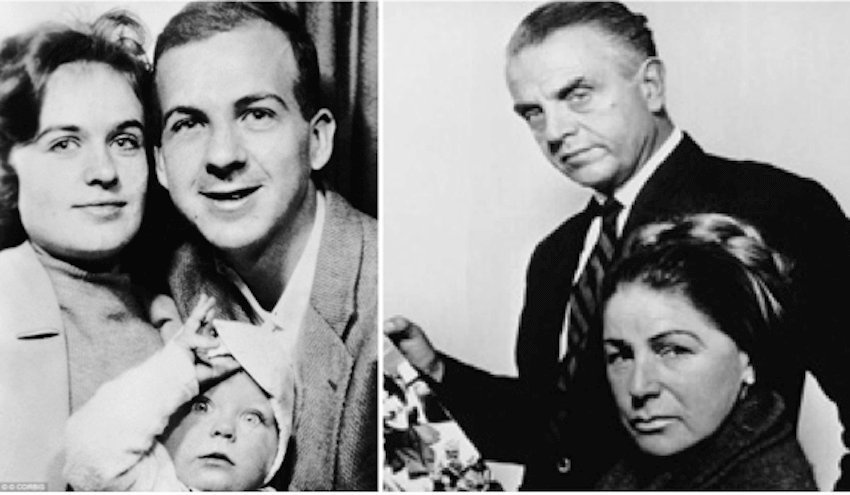 One of the main difficulties that the Warren Commission had in portraying Lee Harvey Oswald as the dual killer of President Kennedy and police officer J. D. Tippit was that, up until then, Oswald did not show any record of past violent acts. Therefore the Commission set to work to fill that lacuna. One obvious way they did so was by accusing him in the unsolved case of the April 10, 1963 shooting of General Edwin Walker. That was a case in which, during a time period of over seven months, Oswald had never even been considered a suspect. Author Gerald McKnight, in his fine book Breach of Trust, demonstrates that the indictment made against Oswald by the Warren Commission was genuinely dubious. (See pp. 48-59) Which explains why he was not a suspect in the shooting prior to November 22, 1963. The accusation rests largely on the questionable testimony of Marina Oswald.
Another way in which this was done was through the accusation that Oswald was a chronic wife beater. This was achieved almost exclusively through the testimony of the members of the White Russian community in the Dallas-Fort Worth area. Upon their return from the Soviet Union, the Oswalds were introduced into this enclave by Russian translator Peter Gregory and the enigmatic George DeMohrenschildt. DeMohrenschildt and his family came from Russia and he was an active member of this community. He had also been in contact with the local Dallas CIA chief J. Walton Moore since at least 1957. The closeness of his relationship with DeMohrenschildt was a fact that Moore tried to cover up. (James DiEugenio, Destiny Betrayed, Second Edition, p. 153) As the late Philip Melanson has written, many of the White Russians had been aided in their entry into the USA by the Tolstoy Foundation, an anti-communist lobby that received yearly stipends from the CIA. The Oswald biographer then added, “The Russian Orthodox Church, a centerpiece of the very conservative and religious White Russian community, also received Agency philanthropy.” (Spy Saga, p. 79) One of the enduring contradictions about the allegedly communist Oswald is that upon his return from Russia in June of 1962 he associated so strongly with two distinctly anti-Communist groups: the anti-Castro Cubans in New Orleans and the White Russians in Dallas. The former wished to overthrow Fidel Castro and the latter wanted to overthrow the Communist dictatorship in the USSR.
As noted, it was through the latter that the Warren Commission depicted the Oswald who showed violent tendencies toward his wife Marina. (Warren Report, p. 417) And many Warren Commission supporters have used this characterization to convict Oswald as a serial spouse abuser. And also to portray this White Russian community as a collection of avuncular guardians who tried to protect and shelter Marina from her brutal husband.
Robert Charles-Dunne was a longtime poster at John Simkin’s Spartacus Educational web site, which has a JFK Assassination Debate forum. In May of 2013 he decided to go ahead and do a systematic analysis of this issue. He examined the testimony of 19 witnesses on the subject. With his usual acuteness, he managed to perform a tour de force of separating the wheat from the chaff on the issue. When the subject came up again recently, Tom Scully salvaged his post on the Wayback Machine. We present it here for the edification of our readers.
~ Jim DiEugenio
First, let’s clear the decks of the obvious padding.
Mahlon Tobias and his wife have already been dispatched to the remainder bin, as they both testified they personally neither saw nor heard anything except complaints from other tenants of their building. That leaves 18.
Ilya Mamantov (IX: 107)
Mr. Jenner.
Have you ever seen Marina Oswald in your life prior to that moment (in the DPD HQ on November 22)? Knowingly?
Mr. Mamantov.
No; sir.
Mr. Jenner.
Had you ever met her prior to that time?
Mr. Mamantov.
No, sir; I met her after that, accidentally.
Mr. Jenner.
No; this is prior–up to that moment, you had had no contact, no acquaintance whatsoever with her?
Mr. Mamantov.
That’s correct.
Needless to say, people who had never met either of the Oswalds are hardly in a position to testify to anything about them, no matter how many times Paul Trejo pads his list with their names. Now we’re down to 17.
Igor Vladimir Voshinin (VIII: 466)
Mr. Jenner.
Did you ever meet either Lee or Marina Oswald?
Mr. Voshinin.
No, sir; thank God!
Thank you, Igor. We are down to 16.
John Ray Hall (VIII: 412)
Mr. Liebeler.
During that period of time that you knew Oswald, did you become aware of the fact that he and Marina were having difficulties with their marriage?
Mr. Hall.
We heard that she was living with someone else at one time, I don’t know who. My wife can probably tell you. And we also heard that he beat her up one time.
Mr. Liebeler.
Did you ever see any indication that be had beaten her up?
Mr. Hall.
I didn’t; no.
Mr. Liebeler.
Was it your impression that the Oswalds were having marital difficulties at the time Marina lived in your house or in Mrs. Hall’s house in Fort Worth?
Mr. Hall.
No.
Mr. Liebeler.
The only reason that Marina lived there at that time was because Oswald didn’t have an apartment in Dallas, is that correct?
Mr. Hall.
To give him a chance to get settled; yes.
One notes Hall’s observation: “And we also heard that he beat her up one time.” We’ll stipulate that John Hall was a lesser witness, as he had less interaction with the Oswalds. Nonetheless, we are now down to 15.
Mrs. Igor Vladimir Voshinin (VIII: 444)
Mr. Jenner.
Now, if you can remember any more, I wish you would tell us about De Mohrenschildt’s comments with respect to the Oswalds and the impressions that you gained of the Oswalds—as to how they got along whether he treated her well or poorly?
Mrs. Voshinin.
Oswalds—his wife?
Mr. Jenner.
Yes.
Mrs. Voshinin.
Treated very poorly. Because De Mohrenschildt told us that he was beating her. Then, she ran away from him and De Mohrenschildt tried to help her, you know, to settle down and to separate somehow, but then, they reconciliated (sic). And after the reconciliation, Jeanne mentioned twice that Marina had blue eyes–was beaten again, you know.
Mr. Jenner.
Black and blue eyes?
Mrs. Voshinin.
Yes.
No doubt Mrs. Voshinin repeated accurately what she had been told. But she saw nothing with her own two eyes and could offer only hearsay testimony. Now we’re down to 14.
Max E. Clark Vol. (VIII: 345-46)
Mr. Liebeler.
Did your wife have the impression that there had been marital difficulties between the Oswalds at that time?
Mr. Clark.
Yes.
Mr. Liebeler.
Can you tell us any specific reasons why your wife thought that?
Mr. Clark.
None other than the conversations and the fact that Marina, seemed quite happy with him gone, more than the fact that she did not seem to miss him and the fact that he wasn’t there.
Mr. Clark saw nothing, nor could he cite his wife having seen anything, regarding battery of Marina Oswald. His testimony contained the fact that he had heard about such an incident, but knew nothing of it first-hand, or even second hand from his wife. Mr. Clark is now excused, and we’re down to 13.
Gary E. Taylor (IX: 82-86)
Mr. Jenner.
It was, therefore, your impression, I take it, that your invitation was not tendered because of any difficulties between Marina and Lee, but rather to afford her a place to live temporarily until Lee became established elsewhere?
Mr. Taylor.
That’s right. In Dallas.
Mr. Jenner.
I mean, my statement is a fair statement of the then atmosphere?
Mr. Taylor.
Yes; I, at that time, was not aware that there was any marital disharmony.
……………………….
Mr. Jenner.
All right. Tell us about that.
Mr. Taylor.
As I remember it, shortly after they moved, Mrs. De Mohrenschildt—-
Mr. Jenner.
They moved where? Into your home or from your home?
Mr. Taylor.
Moved into their apartment here in Dallas–the first apartment they had, on Elsbeth.
Mrs. De Mohrenschildt came by and told us that she had seen Marina and that she had a black eye, I believe, and was crying and said that she and Lee had had a fight over the lessons and they had been taken from her, and—-
Mr. Jenner.
Lee had struck her?
Mr. Taylor.
Yes; that Lee had struck her.
Mr. Jenner.
She said that to you?
Mr. Taylor.
Yes; this is Mrs. De Mohrenschildt now. This is not Marina that said that.
Again, Mr. Taylor was unaware of “any marital disharmony” when Marina lived in his home, but later heard about Lee abusing Marina from his stepmother-in-law. Second-hand hearsay testimony is inadmissable. We’re now down to an even dozen.
Mrs. Helen Leslie (IX: 163)
Mr. Jenner.
How did these people, Lee Oswald and Marina Oswald act toward each other on the occasion when you saw them?
Mrs. Leslie.
I will tell you something–I don’t know if Bouhe told you or others too. When she was out at a place–she had a black eye and she has her tooth out, one tooth was out, so a second, man it was raised a question how she had this black eye and so on, and she said, “Oh, I hit the kitchen door. The baby was crying and I didn’t want to make a light, the door was open and I hit it–the kitchen door.”
And then, later, I heard from Mrs. Meller that he beat her, he was beating her, that he was always beating her and everybody was sympathetic with her. Frankly now, it is understandable. She was Russian, you know, it is some kind of a feeling of a Russian toward a Russian and they were mad at him and how he could beat his wife this is not proper–to beat his wife.
Mr. Jenner.
Well, now, we don’t approve of that in America.
Mrs. Leslie.
No. All I say now is what other people like Mellers and like Fords told me that once he beat her so hard and threw her out in the street, so she took her baby as a result in just a little blanket–she didn’t know where to go and she came to Mellers and she said, “I don’t know where to go,” that she wasn’t talking good English and he wanted to talk Russian at home, so she didn’t know what to do and the Mellers are very nice people, so they took her in their house and she stayed there a few days until they found a place for her. I don’t remember, but they said “Oh, the awful things,” and they took her–I think, you know, that she was staying with them.
I didn’t know she was staying with Fords. I didn’t know when, because I lost trace of her and so that’s all I know about Oswalds. Actually, I didn’t see her until when she was on television.
“…she had a black eye and she has her tooth out.” Marina seems to have given an explanation for her black eye—whether true or not—but it is troubling when a man beats a woman so hard she loses a tooth.
Only, the missing tooth wasn’t the result of marital discord, but provides a sterling example of how groundless gossip gets amplified with each re-telling and morphs into something else entirely Here is what happened to that tooth, courtesy of the former Mrs. Gary Taylor, with whom Marina briefly stayed:
Mrs. Donald Gibson (XI: 126-131)
Mr. Jenner.
You said that Marina was to receive some dental care?
Mrs. Gibson.
That is right.
Mr. Jenner.
Did she remain in the apartment all day after she arrived?
Mrs. Gibson.
After she came back from the dentist, she stayed there, I think she had a tooth, one or two pulled, and she stayed there that afternoon, after she came back from the dentist.
Mrs. Leslie saw nothing with her own eyes and repeated gossip heard from the Fords and Mrs. Meller, part of which was demonstrably untrue. It will prove interesting when we get to their own testimony. In the meantime, Mrs. Leslie is excused and we’re down to eleven remaining witnesses. Let’s get right to Mr. Ford:
Declan P. Ford (II: 325)
Mr. Liebeler.
Did Mrs. Oswald have any bruises on her at that time?
Mr. Ford.
Yes, she did. On her face.
Mr. Liebeler.
On her face. Was there any conversation about that?
Mr. Ford.
Not directly with me. My wife told me that Mrs. Oswald told her it was due to some accident of running into a door at nighttime while she was getting up to see what–the baby crying, something like that.
Thank you, Declan. You’ve reduced the number of witnesses to 10. Let’s hear from your wife, Mrs. Ford:
Katya Ford (II: 299-300)
Mr. Liebeler.
Tell us what Marina told you while she was staying there about her relations with Lee Oswald and particularly as to why she separated from him and what the difficulties were in their marriage?
Mrs. Ford.
I think mostly it was a mistreatment by him that she couldn’t stand any longer, she was saying.
Mr. Liebeler.
Mistreatment by him?
Mrs. Ford.
Mistreatment by him; yes. That is what she was saying.
Mr. Liebeler.
Did she tell you any more specifically than that what the problem was?
Mrs. Ford.
No; she didn’t really. She did not elaborate. She did not go into explanations of their living together.
Mr. Liebeler.
Did she mention that Lee Oswald was jealous of the Russian friends that Marina had?
Mrs. Ford.
Yes; she did. She told me that, that he was.
Mr. Liebeler.
Did they argue about that?
Mrs. Ford.
Well, I didn’t know if they were arguing about that. I know she said that he was very jealous of them helping Marina and jealous for the reason that he wasn’t able to provide her at the time with any of the things that they were giving Marina, clothes, and baby clothes, and I think that he was–it was making him rather mad because he said he was unable to buy the things for her at the time, and I know that he was not accepting things people were giving him. He was telling her not to take them but she was taking them because she needed them. I suppose they were arguing about that but I don’t remember the particulars.
Mr. Liebeler.
Did you form an impression at the time that Marina lived with you for that week as to what the cause of their difficulties might be?
Mrs. Ford.
She mentioned one time that soon after marriage he told her he didn’t love her any more in any way. So I don’t know what is the difficulty, I don’t know if that is what she mentioned. She did not explain and didn’t go into explanations of this.
Mr. Libeler.
Do you think, did you form an opinion as to whether this separation and the difficulties they were having was primarily the result of Oswald’s behavior or did you think Marina might have been partially responsible for it, what did you think?
Mrs. Ford.
My own opinion was that Marina was responsible for it. I think Marina was and I think now she is a rather immature girl.
The Chairman.
She is what?
Mrs. Ford.
I think she is rather immature in thinking.
The Chairman.
Oh, yes.
Mrs. Ford.
And a lot of times she agreed herself about provoking him in a way by arguing about his mother or things of some sort.
Mrs. Ford could not elaborate on the problems in the Oswald’s marriage, despite Marina living with her, and despite the fact that others claimed Mrs. Ford had told them about Marina being beaten. Since that seems to have come from gossip, rather than her own first-hand experience, or even what she might have been told by Marina, we are once again dealing with hearsay. We have nine witnesses remaining, and Mrs. Meller should go next, given that she was also among those who told Mrs. Leslie and others about the beatings:
Anna Meller (VIII: 390-91)
Mr. Liebeler.
Did you ever form an opinion as to who was responsible for these marital difficulties the Oswalds were having? Did you think it was mostly Lee Harvey’s fault or did you think it was partly her fault, or what?
Mrs. Meller.
It was not easy to judge but I think since we do not know them very close and very long, let’s say this way but it seems to me again that Lee Oswald was not normal because later I heard from somebody that he beat Marina and he did one time, I think even Marina told to me that when they moved in apartment the bulb is burned through and she has to put new lamp in it. He demanded when the master is home the bathtub supposed to be full with water so he can take bath before he sit down to eat and one time he come home and it was dark and she has to put lamp in the room, she did not have time to put water in the tub and he find tub was without water and he beat her.
Mr. Liebeler.
Marina told you that?
Mrs. Meller.
I think she told me that or somebody from our group; I do not recall who, but I remember that and I was shocked. I thought that something must be wrong with man if he is every time running to beat her.
Yes, there is something wrong with a man who beats his wife all the time. There’s also something wrong with a witness who contends such a thing without having seen it, or even being able to remember who told her, second or third hand. Please re-read Mrs. Meller’s shocking testimony and see if you can definitively identify where she learned this. We’re down to eight witnesses. Hopefully, we’ll soon encounter somebody who actually saw something.
Valentina Ray (VIII: 417)
Mr. Liebeler.
Did you talk to Mrs. Ford about the reasons for the Oswalds marital difficulties?
Mrs. Ray.
I asked her what was matter and she said he was mean to her; he beat her up and she left him because of that. I felt terrible sorry for her because Mrs. Ford described to me she could not speak English and didn’t know anybody there. That’s the only reason given to me that he struck her or beat her up.
Mr. Liebeler.
Mrs. Ford didn’t go into any greater detail as to what reason for beating her up?
Mrs. Ray.
No, no; when Marina came to my house I hated to butt in since she was only with me 1 day and 2 days and didn’t spend night. I don’t like to question somebody right away what is trouble, why did you leave–I am not that nosey.
Interesting. In her own testimony, Mrs. Ford claimed that Marina hadn’t disclosed the nature of the difficulties between her and her husband, but here’s Mrs. Ray—among others listed and yet to come—who claim that Mrs. Ford was the source of gossip about her being beaten. Mrs. Ray chose not to make inquiries when Marina stayed with her, so didn’t even have second-hand information. Thank you, Valentina, you may now step down so we can hear from the remaining seven witnesses.
Elena Hall (VIII: 395-396)
Mr. Liebeler.
About the time that Marina lived in your house, did you understand that the Oswalds were having any marital difficulties?
Mrs. Hall.
Well, I think she was stubborn, and he was just cruel to her, and they would argue for nothing, just nothing. And he would beat her all the time.
Mr. Liebeler.
Beat her?
Mrs. Hall.
Oh, yes. In fact, first time when she came to my house with George Bouhe, she had black and blue over half of her face and I didn’t ask at that time, but after she moved in my house, I said, Marina, what was on your face? And she told me that he beat her.
Mr. Liebeler.
The first time that Marina came to your house, can you remember exactly when that was?
Mrs. Hall.
In July. Sometime in July.
Mr. Liebeler.
And you noticed even in July that she had been bruised, is that correct?
Mrs. Hall.
Yes.
Mr. Liebeler.
But it wasn’t until October or November—-
Mrs. Hall.
October when she moved.
Mr. Liebeler.
That you learned that she had gotten those bruises as a result of her husband beating her, is that right?
Mrs. Hall.
Yes.
Mr. Liebeler.
At the time in October that Marina lived in your house, did she discuss with you her marital relations with Oswald?
Mrs. Hall.
Yes. Well, she is, I think she is very nice girl. And I told her, “Marina, you are in such a difficult financial situation, you’d better not have children for quite a while, and when you have a better financial situation, you can have them.” And she said, “Well, I don’t know.”
And I told her, “If you want to, I have a lady doctor, Dr. Taylor. If you want me, I will take you there. She will give you some things.” And she said, “No; I don’t think so.”
She said, “Our married life is so strange that I don’t think I ever will have any children any more,” because he was very cold to her.
Mr. Liebeler.
Did Marina indicate at that time that she and Oswald did not have normal sexual relations.
Mrs. Hall.
Very seldom. The thing that she told me, “Very seldom.”
Mr. Liebeler.
Tell me everything that you can remember about that subject that Marina told you.
Mrs. Hall.
That was the only thing that was worrying me, her to not have children, because they are in such bad shape, and that is the only thing she told me.
And I said, “If you think you want any more.” So it is none of my business, you know.
Mr. Liebeler.
Is that all that Marina said about that subject?
Mrs. Hall.
We didn’t talk any more, because it was my suggestion to her to not have children, and she told me that, and that was all.
Mr. Liebeler.
Did she ever tell you that Oswald would–was not very much of a man in that sense?
Mrs. Hall.
Yes. That is what she told me.
Mr. Liebeler.
They very seldom had sexual relations?
Mrs. Hall.
Yes, sir.
Mr. Liebeler.
Did you ever discuss that question with her any other time?
Mrs. Hall.
No.
Mr. Liebeler.
Did you form an impression as to how Lee and Marina were getting along with each other at the time that Marina lived in your house, other than what we have already talked about?
Mrs. Hall.
No. Couple of times I told her, “Why do you argue with him about little things,” and she said, “Oh, because he is not a man.” That is what she told me. For instance, I like hot peppers and he didn’t like it. Well, is nothing wrong with a man who doesn’t like peppers. John doesn’t like it at all. And at the table they were eating, and I ate the peppers, and he wouldn’t touch, and she said, “He is afraid of everything, hot peppers.”
And he said, he don’t like it, and they had argument about that. And after he left I said, Marina, you shouldn’t do that because, well, some people like them and some don’t.”
Well, things like that, she would start with him and they had an argument. Probably if I wouldn’t be there, they would have a fight or something.
Mr. Liebeler.
Did you ever have the feeling that Marina was a good wife to Oswald, or did you have the feeling that she was not particularly a good wife?
Mrs. Hall.
Well, she is a little bit lazy one, and she can sleep 48 hours a day. That is the only thing. And maybe they had trouble because of this and little things, like I said about the peppers and so on.
Mr. Liebeler.
Did you ever see or hear of Marina making fun of Oswald in front of other people?
Mrs. Hall.
Who?
Mr. Liebeler.
Marina making fun of Lee?
Mrs. Hall.
Oh, yes; she would do it.
Mr. Liebeler.
Can you think of any specific examples?
Mrs. Hall.
She always was complaining about him. He was not a man. He is afraid. I don’t know, not complete, I guess, or something like that. Not complete man.
Mr. Liebeler.
This may not seem to be too important, but we are not just curious, it might have a bearing on the Commission’s determination of what kind of man Oswald was and what kind of person he was.
Did Marina make fun of Oswald’s sexual inability in front of other people, or was it a more general thing?
Mrs. Hall.
Generally. I never heard sexual nothing; no. Only when I asked her about this, she told me. And that was, we don’t talk any more about this. I didn’t hear it. Maybe somebody else did. I didn’t.
Mr. Liebeler.
You had the feeling, I gather from what you said, that if there were difficulties in the Oswald marriage, they were not entirely Lee Oswald’s fault? It also would be some of the fault of Marina?
Mrs. Hall.
Yes.
Mr. Liebeler.
What is your opinion?
Mrs. Hall.
I think that she is stubborn, real stubborn, and she would pick up something little and go on and have an argument for nothing.
So, Mrs. Hall noticed half of Marina’s face was bruised, but didn’t initially ask why, when Marina first visited with George Bouhe. Perhaps it’s because an explanation had already been proffered. George Bouhe, one of the remaining six witnesses, may provide us assistance:
George A. Bouhe (VIII: 364-365)
Mr. Liebeler.
During the period in October and November of 1962, when, as I recall it, Marina and Lee Oswald were having a certain amount of marital trouble or difficulties, did you say that you gained Marina’s confidence about those matters?
Mr. Bouhe.
Not I.
Mr. Liebeler.
She didn’t tell you about her marital difficulties with Oswald?
Mr. Bouhe.
No; she talked to other people who told me.
Mr. Liebeler.
Who were these other women?
Mr. Bouhe.
Well, certainly to Anna Meller.
Mr. Liebeler.
Mrs. Ford?
Mr. Bouhe.
Mrs. Ford, undoubtedly.
Mr. Liebeler.
Do you think she confided in Anna Ray to any extent?
Mr. Bouhe.
Could have, although I was not present, but they had long sessions together, just girls.
Mr. Liebeler.
You spoke about these parties with Mrs. Ford and Anna Meller and Anna Ray.
Mr. Bouhe.
Well, the only time I have been bringing that up is when I saw or heard that she had a black eye.
Mr. Liebeler.
When did you see that?
Mr. Bouhe.
I would say within the first 2 weeks of September. One Saturday several of us arrived at their house.
Mr. Liebeler.
At Oswald’s house?
Mr. Bouhe.
Yes.
Mr. Liebeler.
Where was that house located at that time?
Mr. Bouhe.
On Mercedes Street.
Mr. Liebeler.
In Fort Worth?
Mr. Bouhe.
Yes; and she had a black eye. And not thinking about anything unfortunate, I said: “Well, did you run into a bathroom door?” Marina said, “Oh, no, he hit me.”
Mr. Liebeler.
Was Oswald there at that time?
Mr. Bouhe.
No.
Perhaps sensing that he was peddling gossip, about which he only knew what he’d been told by “Mrs. Ford and Anna Meller and Anna Ray,” he stated “the only time I have been bringing that up is when I saw or heard that she had a black eye.”
Which was it? Did he see it? Hear about it? Both? Neither? Same instance or different ones?
The allusion to “running into the bathroom door” in Bouhe’s testimony closely parallels Marina’s own explanation “Oh, I hit the kitchen door,” given to Leslie and others. Are several instances being telescoped into a single one, or is a single instance being extrapolated into more?
In any event, neither Hall nor Bouhe seemed overly disturbed in their testimony; Hall so little that she didn’t inquire what had happened to Marina, and in Bouhe’s account so little that he treated it as a joke and did not think it “anything unfortunate.” Certainly nobody called the police. Or suggested that Marina should do so.
Neither having witnessed anything first-hand, we are down to our final five witnesses. Before we get to two of them, here is what Igor Vladimir Voshinin—previously cited, who had met neither Oswald—says about them:
(Igor Vladimir Voshinin)
Mr. Jenner.
You had the impression, did you not–or did you–that the De Mohrenschildts saw the Oswalds frequently and were attempting to assist them?
Mr. Voshinin.
Yes; he was–only one time he was very bitter about Oswald when he beat up his wife.
Mr. Jenner.
Tell us about that.
Mr. Voshinin.
Well, once we saw De Mohrenschildt and his wife and he said, “Well, he doesn’t behave like he should. What does he think he is, beating his wife?” But Mrs. De Mohrenschildt said, “Well, don’t just judge people without knowing what’s behind them.” She said, “You always, George, you jump to conclusions. We don’t know what happened.”
I understand that she liked Lee much more than he did.
Mr. Jenner.
That Mrs. De Mohrenschildt liked Lee much more than George did?
Mr. Voshinin.
Yes.
Two counter-intuitive things shine through: Mrs. DeMohrenschildt told her husband he didn’t know what had actually happened, and that she was thought to favor Lee over Marina. Do either of these seem congruent with how a woman regards a known wife-beater? Hereafter, the relevant parts of the testimony:
George S. De Mohrenschildt (IX: 231ff.)
Mr. DE MOHRENSCHILDT.
Well, George Bouhe, started telling me that “George, Lee is beating Marina. I saw her with a black eye and she was crying, and she tried to run away from the house. It is outrageous.”
And he was really appalled by the fact that it actually happened. And Jeanne and I said, let’s go and see what is going on George Bouhe gave me their address, as far as I remember, there in Oak Cliff, because, I didn’t move them—it was my daughter who moved them, I think.
So we drove up there to that apartment, which was on the ground floor, and indeed Marina had a black eye. And so either my wife or I told Lee, “Listen, you cannot do things like this.”
Mr. Jenner.
Was he home at this time?
Mr. DE MOHRENSCHILDT.
I think he was. Or maybe he wasn’t. I just am not so sure. Maybe he was, maybe he wasn’t. But anyway, he appeared a little later.
Mr. Jenner.
While you were still there, he appeared?
Mr. DE MOHRENSCHILDT.
Yes.
Mr. Jenner.
And when you entered that apartment on the first floor, you observed that she had a black eye?
Mr. DE MOHRENSCHILDT.
A black eye, and scratched face, and so on and so forth.
Mr. Jenner.
Did you inquire about it?
Mr. DE MOHRENSCHILDT.
Yes.
Mr. Jenner.
What did she say?
Mr. DE MOHRENSCHILDT.
She said, “He has been beating me.” As if it was normal–not particularly appalled by this fact, but “He has been beating me”, but she said “I fight him back also.”
So I said, “You cannot stand for that. You shouldn’t let him beat you.”
And she said, “Well, I guess I should get away from him.”
Now, I do not recall what actually made me take her away from Lee.
Mr. Jenner.
Now, Mr. De Mohrenschildt. there has to be something.
Mr. DE MOHRENSCHILDT.
Yes, I know.
I do not recall whether she called us in and asked us to take her away from him or George Bouhe suggested it. I just don’t recall how it happened. But it was because of his brutality to her. Possibly we had then in the house and discussed it, and I told him he should not do things like that, and he said, “It is my business”–that is one of the few times that he was a little bit uppity with me.
And then again George Bouhe told me that he had beaten her again. This is a little bit vague in my memory, what exactly prompted me to do that. My wife probably maybe has a better recollection.
Mr. DeMohrenschildt seems to recall very little with absolute certainty—down to conversations with Oswald that might not have happened because he might not have been there. He remembered taking Marina “away from Lee,” but not the reason why. Again, he had seen nothing with his own eyes, and knew only what he’d been told by George Bouhe, and even about that he was less than certain. He defers to his wife, one of four remaining names.
Jeanne De Mohrenschildt (IX: 309)
Mrs. DE MOHRENSCHILDT.
Well, you see, he mistreated his wife physically. We saw her with a black eye once.
Mr. Jenner.
And did you talk to him and to her about it?
Mrs. DE MOHRENSCHILDT.
Yes; we did. I called him just like our own kids, and set them down, and I said, “Listen, you have to grow up, you cannot live like that. This is not a country that permits such things to happen. If you love each other, behave. If you cannot live with each other peacefully, without all this awful behavior, you should separate, and see, maybe you really don’t love each other.”
Marina was, of course, afraid she will be left all alone, if she separate from Oswald–what is she going to do? She doesn’t know the language, she had nobody to turn to. I understand they didn’t get along with Oswald’s family.
Mr. Jenner.
Now, this is what you learned in talking with them?
Mrs. DE MOHRENSCHILDT.
Yes, yes; through them actually, by facing them.
Mr. Jenner.
I want you to identify your sources of information.
Mrs. DE MOHRENSCHILDT.
Yes, yes.
Mr. Jenner.
You learned through Marina and Oswald, also, that they didn’t get along well with their—-
Mrs. DE MOHRENSCHILDT.
I cannot say through them, because maybe people talked about it, you know. She couldn’t live in her sister-in-law’s home, they didn’t get along. And I understand that later on somebody mentioned that the reason was that she was just too lazy. She slept in the morning.
Mrs. DeMohrenschildt speaks of what seems to be a single occasion, and it was the cause for her and her husband to separate Marina and Lee. An occasion on which Marina said either that it was a nighttime accident, or that she’d been beaten, depending on which version one credits as correct.
The DeMohrenschildts each seemed eager to see Lee and Marina separate, first arranging for Marina to stay with a daughter, then various other friends in the White Russian community. It was through George DeMohrenschildt that the Oswalds met Ruth Paine, who would aid the continued separation of Oswald and wife.
The DeMohrenschildts played upon the sympathies and generosity of the White Russian community in Dallas in Marina’s name and to her benefit. In the period that she guestroom-surfed in various homes, she was given small sums of money, two cribs, various household items and something approximating 100 dresses, according to sworn testimony. As the DeMohrenschildts played up Oswald’s purported abuse, the sympathy increased to Marina’s benefit. The testimony on this is clear, if one but bothers to read it. Visiting any of the pages of testimony I have cited above contributes to a keener sense of what was at play.
It is also clear that several of the benefactors who took in Marina and her child, or provided money and material goods to her, later felt they’d had their generosity abused. Perhaps it was because she was just a lousy house-guest. Or perhaps they had come to realize their sympathies had been over-played upon by DeMohrenschildt for the specific purpose of keeping Marina and Oswald apart.
Despite their hearsay testimony, neither DeMohrenscildt witnessed an actual instance of abuse of Marina by Lee. Now down to three witnesses, we come to the daughter with whom Marina initially stayed—also the former Mrs. Gary Taylor and by the time of her testimony she was Mrs. Donald Gibson. Perhaps she can offer some insight:
Mrs. Donald Gibson (XI: 126-131)
Mr. Jenner.
Would you tell us about this lack of rapport between Marina and Lee Harvey Oswald?
Mrs. Gibson.
Well, they fought quite a bit. They fought in Russian, always verbally when I saw them, but when she was living with Mrs. Hall in Fort Worth, I was told that he beat her up on numerous occasions, physically assaulted her, and that Mrs. Hall and her, oh, I don’t know what you would call him, her fiancee, Alex–
Mr. Jenner.
Is that Alex, Alexander Kleinlerer?
Mrs. Gibson.
I guess so. I don’t know his name.
Mr. Jenner.
Describe him to us.
Mrs. Gibson.
Describe him?
Mr. Jenner.
Physically.
Mrs. Gibson.
He was short, very dark, moustache, black moustache, European dresser, an accent, very much the gangster type in his looks, very oily looking, very oily in personality, actually a rather creepy customer. He spoke Russian fluently. I think he spoke quite a few languages fluently. He, I believe, was born or originated in Paris. I have no idea what his occupation was. But he did not get along with Lee at all. He had numerous arguments with him over Marina and how he beat her.
Mr. Jenner.
Did any of this occur in your presence?
Mrs. Gibson.
One afternoon he was telling Lee off very, very–
Mr. Jenner.
Tell us where this occurred?
Mrs. Gibson.
This occurred in Mrs. Hall’s home in Fort Worth.
Mr. Jenner.
You were present?
Mrs. Gibson.
And my husband; we were both present.
Mr. Jenner.
And who else please?
Mrs. Gibson.
Mrs. Hall and Marina were in the other room. Lee and Alex, and he was telling Lee off in no uncertain terms about how he beat up Marina, and about his whole outlook on life. He was really giving him a tongue lashing.
Mr. Jenner.
And what response did he obtain from Lee?
Mrs. Gibson.
Very sullen, very sharp answers. In fact I thought there was going to be a fight there for a minute.
Mr. Jenner.
Did Lee deny at that time in your presence, these accusations being uttered by Alexander Kleinlerer?
Mrs. Gibson.
He said it was none of his business.
Mr. Jenner.
But he didn’t deny that he had done this?
Mrs. Gibson.
No.
Mr. Jenner.
He just said it was none of Kleinlerer’s business?
Mrs. Gibson.
That is right.
Mr. Jenner.
Had either you or your husband ever–did either you or your husband ever talk to Lee Oswald about his treatment of Marina?
Mrs. Gibson.
No; we never talked to him about beating his wife.
And so it is that we finally come to the second last witness, the redoubtable Alexander Kleinlerer.
It is to his credit that he forcefully came to Marina’s aid, thinking she’d been repeatedly beaten. And he is unique among all the witnesses, for he swore he had witnessed an instance wherein Oswald slapped his wife, the only one to do so. In the final affidavit used by the Warren Commission, the tale had expanded in key respects when compared to his original statement. But in both versions of his tale, he was the only one who witnessed an episode of violence by Lee toward Marina.
He is also unique for another reason. The Commission deposed and took testimony—much of it hearsay—from each of the 19 “witnesses” with one exception: Kleinlerer. The Commission could not, for whatever reasons, manage to depose Kleinlerer in person. Perhaps there was a perfectly valid reason for their inability to obtain an audience with Kleinerer, but in the absence of such an explanation, one is left to assume that the single-most valuable witness to Oswald’s temper was not thought important enough to interview in person. This is doubly odd, for his affidavit was taken and sworn in Texas, while Commission counsel was in-state, thus making his inability to testify for said counsel more than a little mysterious.
But there may be a reason for the Commission’s reticence. Kleinlerer’s affidavit contained something—a passing comment—that could have demolished the carefully constructed and nurtured depiction of the Oswalds’ tawdry relationship, had he inadvertently mentioned it during testimony as he did in his affidavit.
It is in his affidavit—Vol. XI, p. 122—and clearly states a suspicion anathema to the Commission’s attempt to blacken Lee Oswald’s name, and certainly at polar extremes from Paul Trejo’s conjectures:
“25. I expressed to Mrs. Hall and to my friend George Bouhe, and to others that I thought that they were only worsening things because the Oswalds did not appear appreciative of what was being done for them. He acted as though the world owed him a living. I had the impression from time to time that Marina was pretending and acting.”
Consequently, even the one person who presumably—but not demonstrably—witnessed Oswald slap his wife “had the impression from time to time that Marina was pretending and acting.” And why shouldn’t she embellish her tale of woe? Every time she alleged she’d been abused, she was showered with more of the things she desired.
Despite this fact, Kleinlerer thought both spouses were undeserving of the White Russians’ largesse due to a lack of appreciation for what had been provided to her: “because both Oswalds did not appear appreciative of what was being done for them.”
We are now down to our final witness on the list of nineteen: Marina Oswald.
I will be uncharacteristically brief and suggest only that one takes seriously what this witness has to say at one’s own peril. For in key respects, of all the Commission’s witnesses, nobody’s narrative has been more flexible, elastic, malleable, changeable, than Marina’s.
Physical abuse of spouses is no laughing matter, irrespective of gender, class, religion, et al. It should be condemned at every turn.
It is remarkable that so few of the above nineteen witnesses bothered themselves to do so.
Equally remarkable is that not one of them, including the victim, thought to notify the police.
It is conceivable that the entire group of them didn’t care enough, but that is belied by their generosity to and solicitude toward Marina.
The alternative, needless to say, is that the issue was blown out of all proportion—for a specific purpose—when Oswald was alive, and magnified even further by the Commission for its own purpose after his death, in taking testimony of those who could only offer hearsay conjecture, while inexplicably giving the cold shoulder to the only puported witness to Oswald slapping his wife.
That this fraud continues to be cited as probative today only illustrates the intellectual and moral bankruptcy of those who traffick in this fiction.
Originally posted on the Education Forum, 12 May 2013, 07:13 PM
[Reprinted here with slight corrections and reformatted for legibility.]
-

Robert Kennedy, Jr., Framed: Why Michael Skakel Spent over a Decade in Prison for a Murder He didn’t Commit

Was Michael Skakel Framed?
When the trial of Michael Skakel for the murder of Martha Moxley took place in the summer of 2002, I deliberately tuned out. I noticed a few of the rather unusual circumstances going on around the proceedings, and I decided that something really weird was going on. For instance, the prosecutor used a one-man grand jury, he pushed to try Skakel as an adult when he said that the defendant had committed the crime as a juvenile, the state rewrote its statute of limitations rules since Skakel had been indicted 23 years after the crime. I concluded that there were sinister subterranean forces at work that I, back then, did not have the time or energy to explore.
Then, about a year or so after Skakel was convicted, I picked up a magazine at a local convenience store and read a reply by Dominick Dunne to a long essay on the case that Robert Kennedy Jr. had written for The Atlantic. I found Dunne’s reply rather weak and strained. Especially since Dunne was supposed to be the media’s authority on that case, and had been given free reign at Vanity Fair to write about it. After reading Dunne’s tepid reply, I thought, “If this is all he can come up with, maybe I should read that essay by Kennedy.”
Entitled, “A Miscarriage of Justice”, the Atlantic piece was a long, compelling critique of both the events and the legal techniques used to convict Michael Skakel. Kennedy was angry with not just Dunne, who had a prime role in the affair, but also the MSM. He felt that they had sat on the sidelines through the whole decade-long effort by Dunne and Mark Fuhrman to indict and convict his cousin Mike Skakel. Kennedy brought out many things that had been blurred and/or buried by the rather uninspired, lackadaisical, lemming-like reporting on the subject. Dunne was outraged by that essay, thus began a feud between the two men.
Kennedy has now decided to expand his essay into a book. It is titled Framed: Why Michael Skakel Spent over a Decade in Prison for a Murder He didn’t Commit. The book seems to me as good or better than his award-winning essay. And the volume shows just how much of the story about the Skakel case went unreported. And consequently, how misinformed the public was about it.
Some readers of kennedysandking.com may ask: How is the Skakel case related to what this web site is supposed to be about? Which is the assassinations of four great leaders of the Sixties. That is a fair question. Let me explain. Way back in late 1997, this reviewer wrote a two-part essay entitled, “The Posthumous Assassination of John F. Kennedy.” It appeared in the September/October and November/December issues of Probe Magazine. It is available in that format on the Probe CD, but it was also included in the anthology of Probe, entitled The Assassinations; it is also available on this site. It became one of the most famous articles Probe ever published—which is saying something. In it I attempted to lay bare the mythology that had arisen from the posthumous character assassination of President Kennedy. The essay was occasioned by the release of Sy Hersh’s hatchet job of a book The Dark Side of Camelot. In leading up to that book’s release, it was revealed that Hersh had fallen for some of the legerdemain that had been created to fulfill that circus sideshow business. In his case it was the Lex Cusack hoax about Kennedy and Marilyn Monroe. In my article I went through literally thousands of pages of this material. It was a major ordeal. But I came to two conclusions. First, most of it was pernicious junk, politically motivated. Second, I also concluded that there was no end in sight to the phenomenon, since it now appeared to be a (well-paying) part of our culture. The tabloids had led the way, and then the MSM, due to pressures from cable TV and the web, jumped into the mud-wrestling pit that has become modern media.
At the end of my article I warned that this tabloidization of the media about the Kennedys posed a real threat to our history, because it reflected a genuine danger to journalistic standards. This danger was typified by the late David Heymann, who has now been exposed as a serial confabulator on the Kennedys.
Yet even in my darkest hour writing that essay, I never thought that what I was describing could lead to putting an innocent man in jail. But it did.
II
Martha Moxley was a 15-year-old high school student who was killed in 1975 in the small, exclusive town of Greenwich, Connecticut. Due to some serious mishandling of key evidence —some of which was actually lost—and a small police force that was not equipped to handle a homicide case, no charges were filed as a result of the initial investigation. Moxley was killed at around 10:00 PM on Halloween eve, which is sometimes called Mischief Night or Hell Night in Greenwich. (Kennedy, p. 7) Many children and adolescents go out on the streets to party and drink and, at times, smoke pot. Therefore, there is an influx of young men and women roaming around the streets and alleyways and backyards. Martha’s body was not discovered until late the next morning. It was under a pine tree in the wooded area of the Moxley estate. She had been clubbed with a six iron golf club with such force that the club head broke off. She was then stabbed with the handle, which was protruding from her neck. (p. 12) Her body had then been dragged about 80 feet in a zigzag manner. Forensic pathologist Henry Lee said the torque of the blows projected the club head over 70 feet in the air. The zigzag pattern seemed to indicate that the person(s) who committed the crime did not know their way around the property.
Right here, there is a serious problem in the case against Skakel. At the time, Michael was about 5’ 5” and 120 lbs. And the author enters pictures into his book that certify this. He had not entered puberty at the time, and actually looks effeminate. The idea that a boy of that size could drag the body that far by himself is hard to believe. But the idea that he could strike such terrific blows that he could break the shaft of the club, sending it flying over 70 feet in the air—that is even harder to buy into. As criminal attorney Linda Kenney Baden noted, this phenomenon is just about unheard of, even with professional killers. The Mob advises its hit men to use golf clubs rather than baseball bats because golf clubs don’t break, while baseball bats do. In one case, the victim’s head was literally broken open with the club, and the cement underneath the body was cracked—but the club stayed intact. (Kennedy, pp. 216-17) She advised the defense to do stress tests on a duplicate club. These were not done. Yet, as we shall see, Baden quickly left the defense team. This ended up being a grave error. And the prosecution got around the strength problem by presenting to the jury a photo of Michael that was taken four years later, into puberty, and after hard physical training at a boot-camp type boarding school. (ibid, p. 217) As we shall see, this is one of the many instances of professional misbehavior that the defense attorney, Mickey Sherman, allowed the prosecutor to get away with.
What makes this even worse, the handle disappeared. This allowed the prosecutor to say that Skakel took it with him as a trophy. But, as Kennedy writes, three witnesses saw it: two policemen and a doctor. (p. 12)
At the time of the Moxley killing, 15-year-old Michael Skakel was at a cousin’s house watching TV. This was certified by more than one witness, and also by a police report summary. In other words, he had an alibi. (ibid, pp. 25, 122) How did the prosecutor get around this? He said that Michael’s family conveniently supplied the alibi, and then he kept the police report conclusion from the defense. Further, there was still another witness who was at the cousin’s home watching TV with Michael at the time. He was not a member of the Skakel family. His name was Dennis Osorio and he even talked to Skakel while watching TV. Unfortunately, he was not produced at the Moxley murder trial. (pp. 230-31)
In sum, there was no hard evidence in the case to convict Skakel, or anyone else. There were no matching blood samples, no DNA, no fingerprints, no eyewitnesses, no shoeprints. This, plus the mishandling of the evidence, and the failure of the local police to turn the case over to higher authorities, made it a case that was eventually going to go cold. The previous prosecutor, Donald Browne, never filed any charges. But he did allow his investigators to build investigatory cases. Their two main suspects were Ken Littleton (the Skakel family tutor), and Michael’s older brother Tom Skakel. The latter was the last person to see Martha alive and was having a sexual affair with her. (ibid, p. 19) But in Browne’s eyes, there simply was not enough of a factual case against either of them with which to file a murder charge. In other words, as Kennedy describes it, Browne was exercising prosecutorial discretion. The job of the prosecutor is not to go after someone in a high profile case because it is expedient. This typifies the win-at-any-cost standard that was exposed, for example, in Tarrant County under the supervision of DA Henry Wade and homicide chief Will Fritz.
As Kennedy described it, the win-at-all-costs mentality eventually became so dominant that the new prosecutor, Jonathan Benedict, did a cut-and-paste job on audiotapes that Michael had made when he was thinking of writing a book about his ordeal. The Benedict tape mixed words from those writing efforts and cut them out of context to make it appear Skakel was confessing to the murder. Benedict then paid a computer company $67,000 to prepare a skillful PowerPoint presentation built around the cut-and-paste. In court, he played the tapes, and put words on the screen, enlarging the most potent phrases and coloring them in red. If you can believe it, even though Michael implored his attorney to object by saying, “This is bullshit!”, he did not. (ibid, p. 33)
How did such a curious event happen? What could have caused such a failure of the legal system? How did all the checks and balances go awry? It was largely due to actors involving themselves from outside the system. How and why this occurred tells us a lot about the tabloidization of our present culture, and how that tabloidization has become weaponized.
III
Dominick Dunne began his career as a stage manager for television. He then became a TV producer. He later moved to Hollywood and became a movie producer. The films he produced are considered today to be fairly nondescript: Ash Wednesday with Liz Taylor, Play It as it Lays with Tuesday Weld, The Panic In Needle Park with Al Pacino, and William Friedkin’s The Boys in the Band. His marriage failed and he became a narcotics abuser. He moved to Oregon to live a quiet life and rehabilitate. Two things happened that made him a nationally known celebrity reporter. First, in 1983, Tina Brown was asked to take over the editorship of Vanity Fair magazine. One of the first things she did was to get in contact with Dominick Dunne. She was going to change the tone and attitude of the magazine. To do that, she wanted him to write about the upcoming trial of the murder of his actress daughter, Dominique.
Dominique’s estranged boyfriend, John Sweeney, had strangled the young actress. She went into a coma, and five days later was taken off life support. At the trial, due to a couple of controversial rulings by judge Burton Katz, Sweeney was not convicted of murder, but of manslaughter. He ended up serving only three and a half years in prison. Quite understandably, Dunne was outraged. This all made suitable material for what Brown was doing with Vanity Fair: she was going Hollywood celebrity. This story featured a former Hollywood producer, the father of a murdered young Hollywood actress, and a verdict that was simply unjust. Brown hired Dunne as a regular contributor for her magazine. And he now specialized in crimes among the rich and famous.
The problem with Dunne’s writing on the subject was that he was much better in describing the hauteur and accoutrements of the milieu than he was as a crime detective. In his book, Kennedy describes a couple of the more notable faux pas Dunne committed: in the Edmond Safra case, and in the Chandra Levy case. In the latter, Dunne reduced himself to a court jester in public. He said that congressman Gary Condit had killed Levy. And he had done it in one of two ways: either via assassins from Dubai, or a redneck motorcycle gang. (ibid, p. 157) He actually said this on Laura Ingraham’s radio show. Condit promptly filed an eleven million dollar libel action. During the proceedings it was discovered that Dunne had based his charges on the words of a proven con artist. He was forced to settle with Condit in 2005, and this more or less ruined his reputation. But, as the author notes, this all came too late for Michael Skakel.
As his appearance on the Ingraham show demonstrates, Dunne became an insider with the conservative broadcast network. After he met Dorthy Moxley he decided to take a look at her daughter’s case. He was then allowed to write more than one article in Vanity Fair about it. In 1991, when Dunne covered the William Kennedy Smith rape trial in Florida, he dropped a note that Smith had been in Greenwich the night Martha was killed and prosecutor Browne wanted some forensic tests done on him. (ibid, p. 159) This was utterly and completely false. And it is hard to believe that Dunne did not understand that when he wrote it. But it indicated three things: 1.) Dunne had designs to enter the Moxley case; 2.) once he did, fitting with his rich and famous bailiwick, he was going to after a Kennedy relative; and 3.) he was catering in this endeavor to his newfound friends on the right.
Dunne decided to center his appeal on this point: if the Moxley case was not solved, it was because either the police were incompetent or they were knuckling under to power and influence. Either way, it made the Greenwich authorities look pretty bad. In 1993, Dunne published a thinly disguised novel called A Season In Purgatory. Based on the Moxley case, it depicted a cover-up by the police due to a powerful family’s influence. In that book, if one can believe it, the murderer is a camouflaged John F. Kennedy, Jr. This is how much Dunne was catering to the Ingraham crowd. But because he was a high-profile reporter, he actually got a book tour to push the novel. In the TV and radio interviews he did at this time, he said he really thought the perpetrator was Tommy Skakel. (ibid) The novel was then made into a 1996 mini-series for TV. This got Dunne and the Moxley case even more exposure. But the mini-series had a catapulting effect, because it was that show, plus an unseen event by Dunne, that brought him into contact with a young man named Jamie Bryan. And there lies a huge turning point in the Moxley case. It was a calamity for Michael Skakel. One brought on by his father’s attorney.
IV
Michael’s father, Rushton “Rucky” Skakel, was an odd person. He was a very conservative Republican who did not at all care for the Kennedys or their philosophy. He supported Richard Nixon in 1960. (ibid, p. 43) In 1964, he gave money to Republican Kenneth Keating, Bobby Kennedy’s Senate opponent in New York. (ibid) In fact, as the author shows pictorially, Rucky received a crude portrait caricature of Bobby Kennedy from Ronald Reagan at a meeting held at the Bohemian Grove. Both men were smiling during the transaction. (ibid, p. 44) At one point, he forbade the name Kennedy to be uttered in his home. Ethel Skakel, Bobby’s wife, was made the black sheep of the family.
A constant theme of Dunne’s was to depict the Skakel family as enormously wealthy, even more wealthy than the Kennedys. This was not really true at the time of Martha’s murder and beyond. George Skakel, the founder of the family business Great Lakes Carbon, had died in a plane crash in 1955. His son George Jr. then ran the business. But he died in another plane crash in 1966. Rushton then guided the company, but he did not have the talent or aptitude to keep it at its previous stature. In 1972, when his wife passed away at age 42, Rushton turned to alcohol and drugs to ease the pain. The company suffered progressively and was sold in the early nineties for pennies on the dollar. (Stamford Advocate, 1/4/2003) By this time, the family fortune had declined so much that Rucky had to sell his house and ski lodge to pay for Michael’s defense. (Kennedy, p. 149)
After Moxley’s body was discovered across the street from his home, he did something that, again, contradicts the Dunne meme of influencing the police investigation. He gave them the run of his house for about two months. Quite literally. He gave them the keys. To attain a search warrant the police usually have to go before a judge and plead their case for the search. Rushton saved the police that trouble. He signed a document giving them entry to his house. He then went beyond that and signed another document giving them access to his ski lodge. He gave them the keys for that place also. (Kennedy, p. 87) When the police interrogated Tommy Skakel at the station for hours, not only was there no lawyer there; there was no adult there. (ibid)
In 1991, Rushton’s corporate attorney Tom Sheridan offered up a truly horrendous idea to his client. (ibid, p. 96) He proposed that Rushton pay for a private detective company to run deep and lengthy inquiries on his family to see if any of them had anything to do with the Moxley murder. (As we shall see, Sheridan turned out to be a wolf in sheep’s clothing.) Sheridan hired a couple of friends of his, and from the start in 1993, he personally ran the investigation out of his Manhattan office. He rented the third floor of his brownstone to the investigating company, Sutton Associates. This made no sense, since Sutton was located in Long Island, and most of the investigative work was done in Connecticut or Massachusetts. Sheridan was making money off of doing no legwork, but he was also the keeper of the files. (p. 144) Michael Skakel had never been a suspect before this time. But, through Sheridan, he now became one. As Kennedy demonstrates, it is clear that Sheridan’s editing put spin on the Sutton reports to impute suspicion onto Michael. (ibid pp. 145-46) And again, contrary to what Dunne wrote, Rucky had agreed in advance that if anyone turned out to be undeniably guilty, the information would be forwarded to Dorthy Moxley. (p. 97)
To understand why Sheridan made this bizarre proposal, we must go back to another horrendous decision by Sheridan. In 1978, Michael was arrested for a DUI and driving without a license. He ended up crashing his car into a telephone pole. Sheridan used this incident to recommend to Rushton and the authorities that Michael be admitted to a kind of private reform school in Maine called Élan. As it turned out, Élan was really an unregulated boot camp in which the worst of the worst students ran amok and terrorized others. Michael was beaten up many times and psychologically terrorized. (For a shocking chronicle of what went on at Élan, see pp. 138-143) Michael tried to escape from that house of horrors three times. He was caught and returned each time. And each time he was physically bludgeoned. A psychologist stated that he suffers from PTSD because of this experience. On top of this, Sheridan charged Rushton $60,000 as his fee for getting Michael into this place. As Kennedy points out, it would have only cost two thousand dollars to pay the ticket. (ibid, p. 137) Élan was such an atrocity that finally, in 2011, students who had survived the ordeal got together and closed it down. (ibid, p. 138)
If the reader can believe it, the prosecution tried to say that Michael was sent there to keep him away from Connecticut authorities for suspicion in the Moxley case. In point of fact, Michael was never under suspicion at that time, or even years later. Second, the local police knew where he was and wrote reports on what was happening to him there. (ibid, p. 137)
But as far as the Moxley case goes, the important thing was that Élan was now in the Sutton investigative files. And Sheridan had instructed the company to outline worst-case scenarios—he called them “purposefully prejudicial”— for both Tommy and Michael, and two other suspects, one of them being Littleton. If those files were somehow to land in the hands of someone like Dunne, or an ambitious state investigator, it could prove a huge liability for the Skakel family.
That is what happened.
V
In early 1995, on the advice of Tommy’s attorney Manny Margolis, Rushton aborted Sheridan’s Sutton investigation. No one knows what the Sutton inquiry cost for sure, but Kennedy quotes a price of a million dollars. This, at a time when the Skakel fortune was declining precipitously. A few months later, local author Len Levitt got the Sutton Associates reports on Tommy and Michael Skakel from an unnamed source. The author makes a good circumstantial case that the source was Sheridan. (See Chapter 11.) What made this even worse was that Tom and Michael added things in this new inquiry that were not in police files. Since they were very young back then and their father was puritanical, the information in both cases had to do with sex. Tom said that, after he said goodnight to Martha, the couple retreated to a quiet spot and then made out. (ibid, p. 98) This brought him to being with Martha very close to the time when the forensic pathologists pegged Martha’s time of death.
In Michael’s case, he told the Sutton team about a conversation he had in 1991 with an old friend of his named Andrew Pugh. He said that after he returned that night from watching TV at his cousin’s house, he could not sleep. He then went outside and walked over to a home where he had previously seen a woman undressing through a window. She was fully clothed this night, consequently there was no opportunity to be a Peeping Tom. So he went over to the Moxley home, threw some pebbles up to a window, then climbed a tree and started calling for Martha—not realizing she was dead. Or that he had the wrong window. He then started, in his words, “spanking the monkey” or masturbating. He stopped before ejaculating, went home and crawled into bed at about 12:30. (Kennedy, p. 10)
This tree is nowhere near the tree where Martha’s body ended up. In fact, it is almost 300 feet away. And unlike what Nancy Grace insinuated, there was no DNA trace from Skakel found at the crime scene. Skakel filed suit for this false claim and won a monetary settlement and an apology from the TV hostess. (Kennedy, p. 11)
This new information surfaced when the Sutton investigative files got out. As noted above, Levitt most likely got them from Sheridan. Dominick Dunne got them from a young man named Jamie Bryan. Bryan was brought in as a final editor in the process and paid $75.00 per hour. Once the project was aborted on orders of Margolis, Bryan was gravely disappointed. In a staggering misjudgment, Bryan was never asked to sign a non-disclosure agreement before he took the job. Apparently thinking he was going to get a gig writing an article for Vanity Fair, he gave them to Dunne. Dunne then wrote the article himself . He then gave them to investigator Frank Garr. When Dunne felt he was not utilizing them enough, he turned the Sutton files over to Mark Fuhrman. (ibid, pp. 148-49)
We now enter a stage of the story where the irony warps into a dimension that is worthy of Henry James. Dunne had covered the O. J. Simpson trial in 1995. Like most observers, he was very disappointed in the result. In 1997, he wrote a novel about that case. For some reason, he became almost obsessed with the plight of Fuhrman. He decided to help the former LA detective rehabilitate himself. He and rightwing literary agent Lucianne Goldberg decided to have Fuhrman write another book on the Moxley case. Except this one would not be a novel, but allegedly a non-fiction detective story. Thus the man perceived as helping blow the Simpson case would now revive himself by solving the Moxley case. And armed with the contraband of the Sutton files, he would now go after Michael Skakel. In sum, Michael’s father paid for the investigative files Fuhrman would use in his book. How much more Jamesian can one get?
Fuhrman visited Élan and talked to several people there. This was the beginning of the so-called Skakel “confessions”. During the preliminary hearing and at the trial, two of the very worst denizens of the Élan horror show testified that Michael had told them he had killed Martha and he would get away with it since he was a Kennedy. The two who actually testified at the trial were Greg Coleman and John Higgins. To explain why neither man should have ever been called to testify in the first place, and then to explain why they had no credibility, would take about ten pages of text. Kennedy does a nice job destroying them in about 13. (pp. 188-200) The cofounder of the place, Frank Ricci, said this about the matter: “The notion of Michael’s confession is just preposterous. I was there and I would know.” He continued by saying that everyone on the faculty would have talked about it. He then would have called the lawyers and asked them for advice on how to proceed. Neither of those things happened. (ibid, p. 193) Coleman named a student, Cliff Grubin, as a corroborating witness. He was not interviewed by the defense until 2005, after the conviction. When he heard Coleman’s testimony, he said the whole thing was invented. Grubin was never in the position Coleman put him in to hear that “confession”. He labeled both Coleman and Higgins as liars. (Ibid, pp. 199-200)
As bad as these two were, there was another so-called “confession” witness who was probably even worse. But the prosecution didn’t care since their agenda with her was diabolical. Geranne Ridge was a gossipy sometime-model who told a friend that Michael Skakel had been at her home once. She claimed that he supposedly said, “Ask me why I killed my neighbor.” (ibid, p. 181) The idea that he would say this to a perfect stranger at their one and only meeting defies logic and reason. But Geranne told a friend, who told the authorities. Garr now hounded her to testify, which she did not want to do. She tried to back out of it by saying that it was likely all in jest, or that she was in and out of the conversation. She then said she was not in the room when the exchange occurred. And then she told Garr she really didn’t hear anything about the murder. (ibid, p. 183) The woman alternatively subtracted and added to her story. On the stand, she said, “I did make stuff up, trying to appear to be knowledgeable, from things I heard from [her friend] Marissa and from magazines.” (p. 185)
In reality, Skakel was never at her home. At the time she says he was, Michael was actually out of the country. (ibid) Neither the prosecutor nor Ridge could produce one corroborating witness, even though she claimed eight people were there. It became clear that the story was simply not credible. But as the examination went on, it turned out that was not the point.
I had to read what I am about to summarize twice. And even now I have a hard time comprehending how it happened in an American court of law. I also do not fully understand it in all of its bizarre nuances. But I will try and convey it as succinctly as I can. In court, the prosecutor Benedict had played a tape in which Ridge had talked about the fictional confession. On the tape, she said she revealed that she picked up a lot of her info from magazines, some of them supermarket tabloids—scandal sheets like Star, Globe and National Enquirer. These had printed every piece of wild theorizing that Dunne, Fuhrman and the prosecutor’s office had peddled. When Michael’s attorney mentioned these by name in his cross-examination, he walked into a trap set by Benedict. Because his staff had brought a copy of each to the court that day. He then asked that they be admitted into evidence, since his witness said she had read them! (ibid, p. 186) But it was even worse than that. Because the stories that Benedict wanted to enter were not directly related to what was being discussed. They were simply compendia of other Kennedy family travails, e.g., Chappaquiddick.
Surprisingly, the judge did not immediately overrule the motion. As the author writes, the Simpson case has intimidated judges in high profile cases from unilaterally ruling on admissible evidence. Instead, he asked the defense lawyer if he objected. Mickey Sherman did not jump to his feet with a specific objection and shout out, “Hearsay!” or “Potential for prejudice outweighs probative value!” He just said he objected but could not think of any grounds. It simply bothered him that such stuff would go into evidence. He sat down and the judge overruled him.
When I read this episode I realized that all the things I wrote about 20 years ago had come to fruition: namely, the tabloidization of our culture, the maniacal drive to fill the public’s collective consciousness with the worst anti-Kennedy drivel possible, and the deliberate lowering of any kind of standard of judgment in order to do so. Except now, the hidden agenda was not political. Courtesy of Dunne and Fuhrman, these forces had now been assembled into a judicial setting to enact a kind of black magic ritual for the purposes of sending a man to prison. It sent a shudder through my spine.
VI
As I have clearly denoted throughout this review, the prosecution—both Garr and Benedict—were allowed to get away with several highly unethical and dubious practices because of the failures of Skakel’s attorney. For example, one of the ways the prosecution attacked Michael’s alibi was through Andrea Shakespeare. She was a family friend who said she was unsure whether Michael actually went to his cousin’s house the night of the murders to watch television. When she was first interviewed back in 1991, she just said she was not sure about this and Michael may not have been in the car that drove up there. (Kennedy, p. 207) Over time, after the work of Dunne began to circulate, Garr began to drill Shakespeare on this point, until her impression became a certainty: Michael Skakel had not left to watch TV. This, of course, was ridiculous, since there were several witnesses who all recalled he had. And Dennis Osorio actually watched TV with him, eleven miles from the scene of the crime.
Kennedy uses this episode for two purposes. First, to show how the prosecution seemed intent on planting the seeds of a false memory, which, as Kennedy describes, was done by Garr and by the witness reading Fuhrman’s book. Because by the time of the trial, her impression back in 1991 that Michael might not have gone to his cousin’s had now turned into a certainty. She said there was no doubt in her mind that Michael had not gone and that she had been certain about this since the night of the murder back in 1991. This, as the author shows, is simply not accurate. (Kennedy, p. 209)
The second reason is to show the procedural failures of the defense. The testimony was allowed to stand because the defense did not call Osorio to contradict it, or Elizabeth Loftus, the resident authority on the imputation of false memories. Michael’s lawyer Mickey Sherman later said he had reached out to Loftus about this issue, but eventually decided against it. This contradicts records kept by Loftus. She told Kennedy that her callbook does include a communication by Sherman, but it was way past the Skakel trial and about another case. (Kennedy, p. 210) As we have seen, Sherman did not find Osorio. He was found much later during the appeals process under a different lawyer.
Which brings us to one of the most withering chapters in the book: the author’s critique of Sherman’s defense. To understand how bad it was, we must first note that it ended up costing well over 2.5 million dollars. (ibid, p. 215) This was necessary because the combined efforts of Dunne and Fuhrman ended up infesting the prosecutor’s office. As we have noted, the previous prosecutor Donald Browne refused to file any charges in the Moxley case. In other words, he withstood Dunne’s multi-platform assault for seven years. But two months after Fuhrman published his book, Browne resigned his post. Benedict and Garr then took over the case. A month later, Benedict called for the rarely used one-man grand jury to begin hearing evidence against Fuhrman’s target, Michael Skakel. Skakel was therefore fighting a powerful array of both public and private forces.
To say the least, Sherman was not up to the job. Manny Margolis had recommended Sherman to the Skakels. He later wrote to Michael in prison, sadly admitting that the Sherman recommendation was the biggest mistake of his life. (p. 222) When Sherman was first appointed, he held a press conference at his office that announced a veritable all-star roster of distinguished east-coast defense attorneys, including Linda Kenny Baden. In just a few weeks, that roster had been depleted of all except the lower level ingénus just out of law school. According to Kennedy, Sherman saw this case as his ticket to stardom. He wanted to run the show and he wanted the primetime exposure. For those media appearances, he charged Rushton Skakel $200,000. (ibid)
Sherman did not even hire a jury selection expert. This has become of late a very important part of the process, and a good advisor in this phase is worth the cost. As a result, Sherman allowed, of all people, a local policeman to sit on the jury. But further, the policeman had been assaulted by a Sherman client! Beyond that, he was a friend of one of the original investigators of the Moxley case. (ibid, p. 218)
The litany of incompetence and sloth that Kennedy catalogues against Sherman goes on for over 20 pages. It is simply devastating. In the interest of length, I will describe just two instances.
First, Sherman did not prepare his witnesses. In a case like this, the defense calls in all witnesses and shows them the previous statements they have made to authorities. You don’t want any witness to be blindsided. And, in a case that extends over decades, you want to refresh their memories, since testimony given closer to the time of the incident is usually more reliable. If there are any discrepancies, you hash them out in the office, before the witness takes the stand. That fundamental process did not happen here. (Ibid, p. 229) Several witnesses for the defense said that Sherman never called them in to review the past record. This is startling, because it is one of the easiest things there is to do. And, as Kennedy points out, the prosecution took advantage of this failing.
Let me close with what I perceive as probably the worst failure of the defense. In doing so, I relate another episode that I can hardly believe happened in an American court of law. Again, I had to read this twice in order to fully comprehend it. Prosecutor Benedict knew that he had a problem with the time of death in this case. If Martha was dead by 10:00 PM, and Michael was watching television eleven miles away, then how could a jury convict him? Furthermore, the authorities had brought in an outside consultant, one of the most illustrious forensic pathologists in America, Joseph Jachimczyk of Houston, to certify that time. And he said this was the far end of the time frame, which began at 9:30. (ibid, p. 27) In addition, there were other pieces of evidence that corroborated this time frame. (ibid, p. 28)
To counteract all this, Benedict did something that I have never heard of before. He called the autopsist in this case, Elliot Gross; but he did not put him on the stand. The fact that he did not take the stand indicates that he would not give Benedict the information he wanted to hear. Instead, he put Wayne Carver on the stand, the current medical examiner. Carver said that, looking over the notes, the time of death could be as late as 1:30 AM. The problem was that Carver had never worked on the case. This juggling would seem to present a made-to-order opportunity for a real takedown of Benedict. One could imagine a pointed, detailed, rigorous cross-examination that would expose this as nothing but a ploy. Sherman asked one question in rebuttal: “Could the murder have occurred at 9:30 PM?” Carver replied yes. Sherman sat down. Which should have been the last thing he did. As Kennedy then writes, the obvious next question should have been: “How can you say that the time of death could happen at both 9:30 PM and 1:30 AM?” And that should have been just the beginning. (ibid, p. 28)
Michael Skakel’s lawyers appealed his case on just this basis— that Sherman had robbed his client of a proper defense. And the failings of that defense caused the resultant verdict. A very courageous judge agreed with that appeal. And he set aside the verdict. But the authorities decided to contest that decision; they did not want to give Michael a new trial, probably because with proper lawyers and the previous shenanigans out in the open, they knew they had no chance of winning. In late December, the Connecticut Supreme Court voted 4-3 to reinstate the conviction. In these post-Simpson days, it is amazing that the vote was that close. Michael’s lawyers intend to submit a motion to reconsider. But since the judge who wrote the decision has since resigned, they will only do so with a full bench intact.
In my opinion, this book had something to do with the closeness of that vote. Robert Kennedy, Jr. tried to get more than one journalist to either write an article or a book on this case. In the end, he ended up having to do both. That tells us a lot about the state of the media in this country. But this book tells us more. The vast majority of readers who read this review will likely be surprised at the facts and events described herein. That is because the MSM, led lemming like by Dunne and Fuhrman and their multitude of cable TV appearances, dominated the airwaves and polluted the information pool. This book does much to correct that imbalance. Near the end, Kennedy even offers up his view of what really did happen. And it had nothing to do with Michael Skakel. Both Sherman and Benedict ignored it. But he explored this avenue and puts it together as well as a private citizen can.
In the end, this is a troubling, disturbing, but enlightening book. It tells us much about the shallow tinsel of the culture we live in today, and how destructive to the individual that tinsel can be.
-
Alexandra Zapruder, Twenty-Six Seconds: A Personal History of the Zapruder Film (Part 1)

With a new book, Twenty-Six Seconds: A Personal History of the Zapruder Film, author Alexandra Zapruder offers her unique perspective to discuss issues surrounding and contained within the brief filmstrip which is the best visual record of the John Kennedy assassination. As the granddaughter of Abraham Zapruder, the man responsible for the film, the author can balance historic and technical details with a personal family story. Her status also allows for privileged access to archives and persons associated with the film, and reveals some new – albeit not earth-shattering – information. However, the book is imbued with a certain partisanship, not limited to family interests, which dulls the author’s critical thinking in some key areas. The shortcomings will seem acute to those in the critical research community, less so to those who come to the book as the personal memoir of unassuming folks who become accidentally fused with an historic event.
A self-described “conventional thinker”, Zapruder is comfortable and reasonably adept dealing with conventional narrative themes in her extraordinary tale – public and personal tragedy combine; family legacy and memory; legal and ethical questions encountered and choices made – but her annoyance with the spoiler element in this story is perceptible each time she types “conspiracy theorist”, which she does a lot.1 Current respectable mainstream opinion, it appears, continues to resist the critical literature developed since the JFK Records Act. Such denial was exemplified by Joyce Carol Oates in a review of Twenty-Six Seconds at the Washington Post, in which she categorized criticism of the Warren Commission as a “farce” which undermined “trust in the U.S. government and in authority in general that continues to this day.”2
The Zapruder Film and LIFE Magazine
Print rights for the film were purchased for LIFE Magazine by the Time Inc. media conglomerate Saturday morning November 23, less than twenty-four hours after the event. Rights for the film as a motion sequence were purchased the following day, although these latter rights would never be utilized. In total, LIFE paid $150,000 for the film. The author is somewhat defensive about this transaction, although it could be reasonably contended that after the authorities decided not to seize the film, Abraham Zapruder was simply a good businessman who negotiated a price the interested party was willing to pay. He also expressed to his family a sensitivity over the graphic presentation and felt that LIFE could be trusted to restrain any urge to exploit the images.
Zapruder appeared on WFAA-TV
a few hours after the shootingIn the LIFE archives, the author would years later find evidence of internal debates over how to handle the more graphic frames. Leading up to the special JFK memorial issue of LIFE, published two weeks after his death, art director Bernard Quint cautioned that “momentary opportunism displayed in the use of these details in colour will be to our everlasting discredit”, and promised to publicly resign if they were printed. Zapruder recites LIFE’s own understanding of this memorial issue: a responsible public service, sold at lower cover cost, with any profit donated to the Kennedy Library. Previously, Abe Zapruder had donated a portion of his proceeds to the family of slain police officer J.D. Tippitt. Many sides to these complexities find reflection, as author Zapruder has skills in retelling personal experiences and thought processes, and in clear description of various facets of controversies with the film. Just not all the facets.
LIFE’s JFK Memorial issue, and also the December 6 regular edition, featured a one-page article attributed to associate editor Paul Mandel titled “End To Nagging Rumors: The Six Critical Seconds”. Acknowledging there were growing rumors and doubts pertaining to the official explanation of the assassination as the work of a single lone-nut shooter, the article purported to “answer some of the hard questions” and reassure the American people that Oswald was the guilty man based on the available evidence, including the Zapruder film. Briefly discussing Mandel’s article, author Zapruder concedes that “some of his facts are mistaken” but leaves it at that without further clarifying that one of these mistaken facts is directly related to a gross misreading of the film.
Abraham Zapruder can be seen filming
in this frame from the Nix filmOne of the featured “nagging rumors” concerned how the President could have a wound of entry in his throat, as reported to the public by Dallas Parkland Hospital doctors, when the alleged shooter was positioned directly behind during the shooting sequence. Mandel, referencing his employer’s exclusive possession, writes: “the 8mm film shows the President turning his body far around to the right as he waves to someone in the crowd. His throat is exposed – towards the sniper’s nest – just before he clutches it.” In fact, at no time during the entire filmed sequence was Kennedy ever facing back towards the alleged sniper’s nest. So how could Mandel have been so wrong? He possibly had not seen the film himself and repeated a description from another source, or there had been a conscious editorial decision to assist the government in shutting down rumors which challenged the lone-nut verdict regardless of the veracity of the published information.3 The full measure of this incident – a wholly incorrect description of what is seen in the film used to help deflect concerned inquiry as to what may have happened to JFK (and American democracy) – does not support confidence in LIFE’s responsible handling of the Zapruder film.
What could explain this? Shortly after news of the assassination broke, LIFE’s Los Angeles bureau chief Richard Stolley was assigned to Dallas where, shortly after establishing a base of operations, he received word that the assassination had been captured on 8mm film. Stolley’s persistence enabled access to Abe Zapruder that evening, and by Saturday morning a contract had been signed for the print rights to images from the film. This contract specifically excluded rights to the film as a motion sequence, although a one-week window was stipulated before Zapruder could shop those rights to others. The following day, word came from corporate headquarters, specifically from LIFE publisher C.D. Jackson, to proceed in purchasing these motion rights, which was done for an additional $100,000. That huge sum, doubling the print rights, was paid for rights not apparently as useful to Time-Life, which specialized in print-based media. In fact, Time-Life never exploited the film as a motion sequence during the whole time the film was in its possession. Nevertheless, as an internal LIFE memo cited by Zapruder states: “C.D. Jackson bought the copyright to Zapruder’s film to keep it from being shown in motion.” 4
C. D. Jackson In 1977, Rolling Stone published a landmark story by renowned journalist Carl Bernstein titled “The CIA and the Media.” Using information uncovered by the Church Committee and interviews with CIA officials, Bernstein revealed to the general public a longstanding and friendly relationship whereby journalists and management from America’s established mainstream media secretly “carried out assignments for the Central Intelligence Agency.” Time Inc., parent company of LIFE, was named, along with CBS and the New York Times, as the “most valuable” organizations to the CIA. Henry Luce, the founder of Time and LIFE, was a longtime close friend to CIA Director Allen Dulles. Bernstein adds: “For many years, Luce’s personal emissary to the CIA was C.D. Jackson, a Time Inc., vice‐president who was publisher of Life magazine from 1960 until his death in 1964. While a Time executive, Jackson coauthored a CIA‐sponsored study recommending the reorganization of the American intelligence services in the early 1950s.”5
A Princeton graduate, C.D. Jackson began working for Time Magazine in 1931, he would soon be described as founder Henry Luce’s right hand man. In 1940 Jackson organized an “anti- isolationist propaganda group” called the Council For Democracy, funded by Luce and designed to counter America First movements and promote intervention in Europe; the members included Allen Dulles, Joseph Alsop, and Dean Acheson.6 Jackson served in the OSS in 1943 with Frank Wisner, later organizer of the CIA’s Operation Mockingbird.7 In 1944, Jackson was appointed Deputy Chief of the Psychological Warfare Division at Allied Supreme Headquarters. After the war he became Manager-Director at Time-Life International, while a long association with the CIA began in 1948. Jackson served the executive branch during the Eisenhower administration, advising on psychological warfare tactics. Peter Dale Scott noted that Jackson guided LIFE’s involvement in other aspects of the Kennedy assassination: “In an arrangement covered up by Warren Commission testimony, Jackson and Life arranged, at the urging of Dulles, to have Marina’s story ghost-written for Life by Isaac Don Levine, a veteran CIA publicist.”8 Author Zapruder does not bring up Jackson’s fascinating background, and claims he was motivated to purchase the motion rights after he “was personally upset by the film” and felt “the public should not see the images” because of their graphic content.9
 LIFE Magazine would also publish an Oswald backyard photo on its cover in February 1964, after an unauthorized leak from a contact within the Dallas Police Department, exposing millions at supermarkets and newsstands to a rather prejudicial image. This was accompanied by a long biographical article, which portrayed alleged assassin Oswald as a sociopathic loser, the position later adopted by the Warren Commission. In concert with the release of the Warren Report, LIFE’s October 2, 1964 issue featured Zapruder frames on its cover and an approving review of the Report, including an article penned by Warren Commission member Gerald Ford. Author Zapruder refers to the issue as an “examination” of the Warren Report, although the Report itself had not yet been released as the issue went to the printers.10 The issue in fact went to the printers several times, as captions below reproduced Zapruder frames were revised. In retrospect, LIFE’s coverage of the assassination, in the year immediately following, featured dodgy reporting and an eagerness to support the emerging official story, an eagerness which went beyond that of a supposedly objective “trusted” news source.
By 1966, the critics – who had actually read the Warren Report – earned a great deal of public attention publicizing many serious flaws in the assembled evidence. LIFE, as with other mainstream outlets such as CBS, decided to keep pace with public opinion and called editorially for a re-examination of the evidence. They then assembled a team to do just that for LIFE itself.11 An assistant philosophy professor named Josiah Thompson, who had developed a serious interest in the assassination, was hired as a consultant. Thompson, who had seen a second generation copy of the Zapruder film at the National Archives, now had access to the original film (“… the colors were there, the clarity was there. It was really something, really, really something”). Author Zapruder does a good job describing how competing interests suddenly came to coalesce around the film: Warren Commission critic Thompson and CBS News, which wished to broadcast the film as part of a news special, advocated public release – while LIFE’s editors resisted, insisting that their ownership of the film rights gave them the final word.
Thompson surreptitiously made his own copy of the film from LIFE’s own frame-by-frame transparencies. In 1967 he published Six Seconds In Dallas, a powerful critique of the Warren Commission’s methodologies. When LIFE refused to allow him to use frame reproductions from the Zapruder film for the book, Thompson had drawings made depicting selected frames and published those.12 LIFE sued over breach of copyright. In discussing this, author Zapruder sides with LIFE, describing Thompson’s unauthorized use of the film images as copyright infringement. Working from internal documentation, and accepting at face value the good faith of the LIFE management as they wrestled with what to do, she lays out the legal and moral supporting arguments for LIFE’s position, and asks: “so what made this circumstance different?”13
As Thompson’s case headed to court, Walter Cronkite at CBS publicly scolded LIFE for holding the film back from the public.14 Thompson and his publisher would eventually beat back the LIFE lawsuit when the judge ruled that their presentation of portions of the film fit the doctrine of “fair use”. That the Zapruder film was important and salient to the controversies surrounding the assassination was now understood by growing numbers of an increasingly skeptical public (or “small army of committed conspiracy theorists” as author Zapruder puts it). It was also becoming understood that the film contained “confusing visual information” (also Zapruder’s term) as the President is hit by the fatal shot.
Garrison Subpoenas the Zapruder Film for the Shaw Trial
The “confusing visual information” led to New Orleans prosecutor Jim Garrison’s subpoena of the film, so it could be screened as part of the trial of Clay Shaw. As later described in the movie JFK, the “back and to the left” movement of the President’s body immediately after receiving a shot at Zapruder frame 312, was thought by Garrison to be compelling proof of a conspiracy. Author Zapruder is skeptical. She offers a then contemporary analysis by physicist Luis Alvarez, known as the “jet effect”, as an “an important example of how scientific analysis, and not political bluster, could be applied to the question” of the assassination.
Discussing the Clay Shaw trial, Zapruder does her readers a great disservice by relying heavily on an obviously biased and subjective source, namely the 1970 book American Grotesque by James Kirkwood.15 Certainly, a fair-minded author would have noted the overt one-sided character of the book and at least seek out a second source for balance. Zapruder apparently did not. In fact, she allows Kirkwood’s at times harsh and demeaning descriptions to color her discussion of this event. Therefore, using Kirkwood’s take of the courtroom during the screening of the Zapruder film – “the anxious, ill-tempered and, if not bloodthirsty, most definitely morbid craning mob of voyeurs who were glued to the screen” – serves to deflect attention from the actual effect of the screening itself, and the centrality of the film to the prosecution’s analysis of the Dealey Plaza event. If unable to fit Shaw into the plot, the jurors were, in fact, convinced by the presentation that there was indeed some form of conspiracy involved in Dallas. The acknowledgment of this is muted, because the focus is instead drawn to Kirkwood’s descriptions of the courtroom viewing as representing a bloodthirsty mob: “a hungry look of salivating eagerness seemed to draw their faces to a point…”16
The genie, however, was out of the bottle, as the Zapruder film became bootlegged from a variety of sources, and public screenings were arranged at college campuses and other venues.
The Zapruder Film Goes Public

1975 – Robert Groden & Dick Gregory screen
a bootlegged copy of the Zapruder film
on national televisionAuthor Zapruder dismisses “the familiar tropes of conspiracy arguments that came from viewing the film”, without really addressing such tropes. Instead, she laments the trampling of LIFE’s property rights and engages in metaphysical reflection on possible neurological deficiencies to explain the “conspiracists.” In fact, the effect of the film on audiences in the 1970s can be seen for oneself. For the public reaction to the first televised showing is readily available in a clip from the 1975 ABC program Good Night America. On that March 6th program, Geraldo Rivera hosted Robert Groden and Dick Gregory. They then presented the film to a studio and national television audience. The gasp of the audience as the President is hit in the head is audible, a response partly to the gruesome imagery, but also to the unmistakable impression the man had been shot from the front, even as established wisdom placed the assassin directly behind. Warren Commission staff lawyer David Belin conceded during the Rockefeller Commission – one of several official inquiries of the era into the assassinations of the 1960s and the activity of intelligence agencies – that “a major portion of the public controversy concerns the Zapruder film.”17 Author Zapruder complains that the bootleg screenings in the 1970s lacked a presence “to offer a dissenting interpretation of what the film showed.” She again refers to Alvarez and his “jet effect” theory as a plausible and scientific interpretation. She is apparently unaware that Alvarez’ methods (always controversial) explaining and reproducing this effect have recently come under a rather damaging analysis.18
Much of the remainder of Twenty-Six Seconds follows the relinquishing of the original Zapruder film from Time Inc. back to the Zapruder family, its storage at the National Archives, and the legal wrangling over the film in the 1990s leading to a large payment to the family. Author Zapruder handles this aspect of the story solidly, again moving fluidly from the documentary record to personal experience as her father assumes responsibility for the family’s interests (Abraham Zapruder passed away in 1970). If not for the historic controversy which is embedded directly within the frames of this film, Alexandra Zapruder would be responsible for a decent non-fiction account of ordinary people accidentally conjoined with sudden historic events, which is certainly the story she wants to tell here. So what seems to have happened here is understandable, as the controversy is complex and multi-faceted but the author has presumably neither the time or patience to delve deeply into it, and her conventional thinking has her leery of those she identifies as “conspiracists.” The author acknowledges that she received guidance in the issues of controversy from certain advisors.
A key advisor on the subject of the assassination controversies for this book appears to be author Max Holland, a longtime reliable defender of the Warren Commission, who has been writing on the topic for major newspapers and publications such as The Nation since the 1990s, as well as appearing in mainstream cable documentaries. Holland has written five books on national security topics and has been awarded numerous Fellowships, including a Studies In Intelligence Award from the CIA in 2001.19 Holland is best known recently for his fairly well publicized contention that the first shot in the JFK assassination sequence occurred much sooner than previously believed, and at a time not captured in the Zapruder film (author Zapruder finds this theory “compelling” and backed by “extensive additional evidence.”) Zapruder says the two met in 2015, late in the writing process for Twenty-Six Seconds, and in the book’s acknowledgements Holland is praised as “one of the most thorough, careful, and thoughtful thinkers I’ve ever met … He clarified my thinking on many important issues, gently challenging me on my assumptions …” (For a differing view of Holland, see “The Lost Bullet: Max Holland Gets Lost In Space“.)
In December 2016, Zapruder provided an opinion piece to the New York Times titled “There Are No Child Sex Slaves At My Local Pizza Parlor”, which dissected a brief hysteria surrounding an armed man who thought to disrupt a purported kiddie ring fronted by a Washington D.C. area pizzeria. Although her points are well-taken as far as they go with the immediate story, she claims additional authority to speak of the phenomenon from encounters with “conspiracy theorists” who directed certain speculations at her grandfather.20 Fair enough, but Zapruder then analyzes: “If one outcome of Kennedy’s assassination was a loss of trust in government and the news media, we have now entered an era in which such suspicions have mushroomed into something far more dangerous — a rupture in the very idea of shared truth.” Which sounds alarming, and is alarming in the sense that a shared consensus reality is vital to bind our material lives within a peaceful society, but do the actions of one confused young man really portend the fracturing of reality?21 What is she talking about? In part she is talking about the Kennedy assassination and its aftermath, but in doing so Zapruder is unable to acknowledge that the loss of trust accorded the government and news media has been well earned. And that the mainstream “shared truth” of the Kennedy assassination is factually incorrect, despite what her advisors may have told her.
It may well be that the ultimate readership for Twenty-Six Seconds has little interest in formulating an opinion on the JFK assassination controversy, and would have a mild curiosity at best regarding the state of the case. Still, since the book’s accumulation of questionable activity falls heavily on the side of the “conspiracy theorists”, while investigating authorities and representatives of the mainstream media are frequently portrayed as responsible and even-handed, a rather misleading notion is presented of what the Kennedy assassination has revealed about the “trusted” stewards of the nation. It also trips up an author’s attempts at finding a poetic, or metaphoric, truth in her grandfather’s film. Utilizing Holland’s 2014 Newsweek article “The Truth Behind JFK’s Assassination”, Zapruder repeats his contention that the “film displaced Oswald’s view from the sixth-floor window”, that its necessarily partial visual record now “had to stand in for seeing the assassination through Oswald’s eyes and hearing it described in his words.” Though one might be tempted to reach for a cappuccino and ponder varieties of historical irony, what is being advanced is a purely sophist construction, as the overwhelming weight of the evidence shows that Oswald was not on the sixth floor of the TSBD at the time of the shooting and did not fire a rifle that day.22 That the author does not seem to know this will harm the book’s reputation in the future, although its more valid, and better presented, insights will likely retain some interest.
NOTES
1 Critics of the official Warren Commission findings are, as a rule in this volume, referred to as “conspiracy theorists”. Late in the proceedings, reference is briefly made to “assassination researchers”.
2 Joyce Carol Oates, “Twenty-Six Seconds of the Kennedy Assassination – and a Lifetime of Family Anguish.” Washington Post, November 17, 2016.
3 Other information in the article, such as determining the film ran at 18fps or determining frame counts between presumed shots, likely was not generated by LIFE and came to it from government sources, as discussed in Part Two of this review. Although author Zapruder is fuzzy about it, the official FBI findings were still a week away from publication as the memorial issue and Dec 6 edition were put to press, suggesting an official source contributed to handling the “nagging rumors”, as an official source assisted LIFE’s later Warren Report coverage.
4 The memo is quoted on page 194 of Twenty-Six Seconds.
5 Carl Bernstein, “The CIA and the Media.” Rolling Stone Magazine, October 20, 1977. The article is also available on Bernstein’s website. Bernstein writes: “the Agency has cut back sharply on the use of reporters since 1973 primarily as a result of pressure from the media.” As the main source of information for the article was interviews with unnamed CIA officials, the cooperation may have served as a limited hang-out after Bernstein had uncovered the story from Church Committee sources. Certainly these CIA officials go out of their way at times to identify media outlets and journalists as CIA friendly despite firm denials from the outed parties. However, the historic information – including Luce and C.D. Jackson – has never been refuted, and since publication largely confirmed through document releases.
6 In other words, Jackson was involved within an internationalist (“globalist”) Eastern Establishment milieu which lobbied for US participation in a European war, and then helped staff the OSS, create the CIA and construct the foundations of the Cold War National Security State. In the Eisenhower years, this milieu developed a foreign policy which relied on covert manipulation and regime change around the globe. John Kennedy’s nascent challenge to this world view has been focus of much recent scholarship. C.D. Jackson died in 1964.
7 Operation Mockingbird was the CIA’s program to influence the American media, and was disclosed in the 1977 Bernstein article.
8 The Marina Oswald story was not ultimately published, but she was well-paid for the rights. Peter Dale Scott, Deep Politics, p 53. See also Warren Hinckle and William Turner, Deadly Secrets: The CIA-Mafia War Against Castro and the Assassination of JFK (1981).
9 Twenty-Six Seconds, p. 97.
10 LIFE joined the New York Times and CBS News in providing instantaneous reviews, or “examinations”, of the Warren Report, all three trusted news sources referring to it appreciatively as a thorough and complete explanation of the President’s assassination, even though there had not yet been the opportunity to actually read it.
11 Both LIFE and CBS soon afterwards abandoned critical inquiry and dissolved their investigating teams. CBS would continue to create television documentaries supporting the Warren Commission, such as the 1967 multi-episode CBS News Inquiry: The Warren Report. (For an analysis of the genesis of the 1967 special, see now James DiEugenio, “Why CBS Covered Up the JFK Assassination“.)
12 Due care was taken to ensure the accuracy of the drawings, unlike certain exhibits created for the Warren Commission.
13 What made it different is the overwhelming sense that justice had not been served in the aftermath of the assassination, that it was still an open case, and that an apparent establishment cover-up of the true reasons for Kennedy’s death presented serious challenges to the American democratic system and the understanding of contemporary events. However, if one believes, as author Zapruder appears to, that the Warren Commission essentially got it right and “conspiracy theorists” have been not just historically wrong but prone to psychological malady which influences their fuzzy thinking, then accepting LIFE’s decision to effectively sequester the film becomes a lot simpler.
14 “LIFE’s decision means you cannot see the Zapruder film in its proper form, as motion picture film. We believe that the Zapruder film is an invaluable asset, not of Time Inc., but of the people of the United States.” CBS News Inquiry: The Warren Report, 1967. The program supported the basic conclusions of the Warren Commission. It is possible that CBS sought to acquire the film so that it could be “explained” to the public in a manner favorable to the official conclusions, while maintaining a plausible facade of the fearless Fourth Estate.
15 American Grotesque is notable as the source for the oft-repeated claim that Garrison’s primary motivation for prosecuting Clay Shaw was rampant homophobia.The premise for the book had been first suggested by defendant Shaw himself ahead of the trial, pitching the concept to others before Kirkwood agreed to take it on. Kirkwood and Shaw had been friends for two years ahead of this. During the trial Kirkwood was close to the extremely compromised reporters James Phelan and Hugh Aynesworth, both engaged in sabotaging the trial to the extent possible.
16 Zapruder lists the Kirkwood book, courtroom transcripts, and contemporaneous newspaper accounts as her source material for the Shaw trial, her discussion of which concludes: “The Garrison trial went down in history as a gross abuse of power … Garrison’s actions deeply discredited the conspiracy movement and drove it back underground for many years.” This opinion, not gleaned from the transcripts or newspaper accounts or Kirkwood’s book, and obviously not Zapruder’s own, is likely that of an advisor discussed below, and is challenged by more recent work from Joan Mellen and Jim DiEugenio.
17 Memorandum, David Belin to James B. Weidner. April 21, 1975.
18 Alvarez claimed, in the American Journal of Physics, September 1976, that his shooting mock-up in 1969 “showed retrograde recoil in the first test … If we had used the ’Edison Test,’ and shot at a large collection of objects, and finally found one which gave retrograde recoil, then our firing experiments could reasonably be criticized.” But Josiah Thompson, who is also a figure in Zapruder’s book, gained access to Alvarez’ experimental resources and discovered that, contrary to Alvarez’ statement, a large collection of objects were fired upon until one was found which gave retrograde recoil. Thompson’s access to the materials was provided by Paul Hoch, who is listed as an advisor for this book specifically on the jet effect. Thompson presented this new information on Alvarez and his jet effect experiments at the Passing The Torch Conference in Pittsburgh, October 2013.
19 Holland reviewed Peter Dale Scott’s Deep Politics in 1994, writing of the controversy: “The field already brims with books that conjure up fantastic conspiracies through innuendo, presumption, and pseudo-scholarship while ignoring provable but inconvenient facts …Yet there remains something truly remarkable and disturbing about Deep Politics, and it’s not that a tenured English professor wrote its opaque prose. Rather it’s that Deep Politics is a University of California Press book … this means an editorial committee consisting of 20 UC professors, including four senior historians, approved Deep Politics for publication. This peer approval by a major university press illustrates the boundless and utter disbelief in the Warren Report … and it also reveals the gross inattention given to the subject by serious historians.” One man’s “serious historian” is of course another’s “pseudo-scholar”, and Holland demonstrates through this review/article that there are few elements of the official story to which he does not subscribe, despite the obvious challenges to credulity the Warren Report invokes. Lamenting a lack of “serious historians” on this subject while casually accepting that Oswald attempted to assassinate General Walker or that Oswald’s FPCC activity in New Orleans should be taken at face value, necessarily leads to a position which praises generally poor books by Patricia Lambert or Jean Davison or Gerald Posner while positioning Scott as suffering from a “fevered imagination.” That is, Marina Oswald’s wild and ever-changing stories from 1964 regarding her husband’s alleged stalking of Walker, which is just about the only evidence that such a thing ever happened, is legitimate fact, while Scott’s carefully annotated scholarship is not. Apparently, developing pseudo-psychoanalytic theories regarding Oswald’s state of mind is a hallmark of “serious history”, while recognizing the official record can’t even place Oswald in the so-called sniper’s nest is the domain of fantasizing conspiracists.
20 Abraham Zapruder’s name has, over the years, suffered speculation of sinister relationships or agency in the assassination. As well, the Zapruder film has suffered numerous incorrect interpretations, often from viewing poor multi-generational copies. The most well-known incorrect assumption is that Secret Service driver Greer turned and shot JFK with a pistol. The fallacy of this interpretation should not disguise that Greer slowed the limousine to a crawl and turned twice to view the chaos in the seats behind him, including a direct view of the fatal shot before turning back and accelerating.
21 After all, it wasn’t so long ago a cudgel of fake facts, many promoted by the New York Times, was used to bludgeon the body politic into supporting a US Air Force-led “shock and awe” campaign in Iraq, followed by an invasion and brutally careless occupation, ending or ruining the lives of several million people, and destabilizing an entire region. For that matter, even a cursory reading of Establishment reporting on the Kennedy assassination reveals an array of poor and misleading information. Or, consider C.D. Jackson’s work in psychological warfare during the Eisenhower administration, which would include portraying a vicious right wing coup against Guatemala’s democratic government as a populist uprising.
22 We know this because at the exact time Oswald was said to have dashed down the Texas School Book Depository’s rear wooden staircase moments after the shooting, two witnesses were descending the same staircase and they saw and heard nothing at all. The bad faith by which the Warren Commission discredited the witnesses and created a wholly different timeline has been described by author Barry Ernest in his book The Girl On The Stairs. While researching this topic, Ernest discovered a Commission memo from June 1964 which confirmed the timing as stated by the witnesses, and which was subsequently buried as the Warren Commission proceeded to publish their false account. Not a single piece of hard evidence places Oswald on the sixth floor with a gun in his hand, as Dallas Police Chief Curry conceded in his own book written in 1969. Paraffin tests of Oswald’s cheek conducted by the Dallas Police on the night of the assassination did not show traces of nitrate as should be expected, and therefore show with a high degree of certainty that he did not fire a rifle.
-

Remembering Malcolm X: February 21, 2017
Author Joseph Green begins our special feature with a second look at the work of Manning Marable, whose biography of Malcolm X he had previously reviewed for us (see the link below). Green asks hard questions of those progressive historians who wish to fit Malcolm into a predefined pattern, emphasizing how resistant to categorization he was (one could, though certainly to a lesser degree, claim something similar for all the figures to whom this site is devoted). At the same time, Green lauds Marable’s serious interrogation of Malcolm’s assassination as rather unique within the academic mainstream.
 We also reprint here, for the first time since its original appearance fifteen years ago, James W. Douglass’s masterful study of the last year of Malcolm’s life, how it sealed his fate, and how law enforcement and intelligence agencies conspired to bring about his murder. Included are the two affidavits of Talmadge Hayer, the only assassin in the Malcolm X case to be apprehended.
For Joe’s review of Manning Marable’s biography, which we first published on the CTKA site, see:
Manning Marable, A Life of Reinvention
For the long essay by James W. Douglass on Malcolm X, which first appeared in The Assassinations (ed. DiEugenio & Pease, 2003), see:
The Murder and Martyrdom of Malcolm X
Finally, Talmadge Hayer’s affidavits, also included in The Assassinations, are reproduced here:
The Confessions of Talmadge Hayer
It should be noted, however, that the statements made by Hayer with respect to Norman Butler may be questionable. Film footage which came to light subsequent to this article has revealed his presence (along with that of William Bradley) outside the Audubon Ballroom in the immediate aftermath of the assassination. See:
The “Zapruder Film” of the Malcolm X Case

Manning Marable’s Malcolm X: An Introduction
by Joseph E. Green
I haven’t changed. I just see things on a broader scale. We nationalists used to think we were militant. We were just dogmatic. It didn’t bring us anything.1
~Malcolm X, February 25, 1964
Manning Marable’s final book, Malcolm X: A Life of Reinvention, which went to press the same week he died, has left a complicated legacy. Part of the problem is that Malcolm X resists all categorization, a hurdle for academics whose primary method of understanding all history is categorization. He wasn’t a modern liberal the way we would typically understand a liberal; for most of his ideological life, he was a hardline separatist who attacked his enemies on the Right but maintained contempt for the Left. Malcolm never wanted to assimilate and he doesn’t, even in death. As one FBI document recorded:
The subject warned at this meeting, according to the newspaper article, that Negroes can expect little better treatment from President Kennedy than they get from Alabama Governor George C. Wallace. He characterized the two men as a wolf and a fox. “Neither one loves you,” he said. “The only difference is that the fox will eat you with a smile instead of a scowl.”2
(And yet all three men – Wallace, Kennedy, and Malcolm – would be shot, two fatally.)
For Marable, who founded the Institute of African-American Studies at Columbia University, there was an understandable onus to place Malcolm in a line of progressive American history leading up to the election of Barack Obama. However, this approach tames Malcolm and gives too much credit to Obama. It also drew intense criticism that resulted in one collection of rebuttal essays, A Lie of Reinvention, edited by Professor Jared Ball. But Marable was not the only person to view Obama through this lens. No less than Black Panthers co-founder Bobby Seale told me that he loved Obama because of his background as a community organizer.3 In his own way, Seale views him as a part of the Civil Rights history that both he and Malcolm X are important figures in.
 However, the question remains: Would Malcolm X really have approved of Barack Obama? The idea seems dubious at best, a betrayal at worst. The big problem, of course, is that Malcolm X’s trajectory was interrupted by assassination. If Act One of his life was his experiences as Detroit Red, and Act Two his conversion in prison and later fame as Elijah Muhammad’s understudy, then Act Three would have been the fallout from his experience at Mecca. We know that he had undergone a powerful transformation, and had started to see and conduct himself as a citizen of the world. Alas, he was dead less than a year later; what would he have done given another twenty or thirty years? We’ll never know. But it’s safe to say, I think, that he would have never endorsed the assassination of Gadaffi or the murder of Libyans by drone. He would not have endorsed the neoliberal corporatization of our political parties. As he said, “If violence is wrong in America, violence is wrong abroad. If it is wrong to be violent defending black women and black children and black babies and black men, then it is wrong for America to draft us, and make us violent abroad in defense of her.”4
There is no doubt Marable took great liberties with Malcolm’s life. And although the man himself curated his own story, with the assistance of Alex Haley, it was his story to curate. Marable’s attempt to reinvent Malcolm in the progressive liberal image was doomed by dubious (or occasionally absent) sourcing, but also because it is an impossible task. For example, the writer Glen Ford argues:
Malcolm never did accept the notion of revolution as bloodless, nor did he recognize the fight against segregated public accommodations as revolutionary. But Marable tries to convince us that Malcolm must have contemplated a reformist political path in his mind, if not in practice. This is William Styron-style biography… [italics in the original]5
I agree with Ford that Marable is on shaky ground here. And yet there is value in Marable’s book, in my view, because it does something that academic books generally don’t do. It takes seriously the idea that Malcolm’s murder came about as a result of a conspiracy, and that the conspiracy was perpetrated by forces in our own government, and it goes further to name names, and explain why this was done.
Scholars of Manning Marable’s stature don’t do that. The fact that he did do it, and did it well, although not with the depth and intensity of Karl Evanzz in The Judas Factor, or Baba Zak Kondo in Conspiracys, has value in my opinion. It becomes part of the literary and historical record in a way that other works do not.
Now this does not sway everyone. I asked Professor Ball whether he thought that aspect of the book might have real benefits at a COPA conference, and he responded in the negative. If the book has such serious flaws in presentation and interpretation, in his view, then whatever good it might contain is invalidated. Professor Ball also criticizes what he sees as a weakness in Marable laying too much blame on the Nation of Islam:
…I think it’s the United States, it’s Western imperialism that were the greatest beneficiaries to Malcolm’s assassination, and as Malcolm said himself before he was killed, it was not the Nation of Islam that blocked him from going to France. It was not the Nation of Islam that could have the resources to follow him all around the world and tap all of his phones. So the state was highly involved and was the greatest beneficiary and that needs to be addressed because that apparatus is still intact and is still doing all of the things that Malcolm was trying to get us to eradicate…6
He is certainly right about the state. Malcolm X was murdered by forces within the United States government, and it falls within a pattern of other murders that is as identifiable as a serial killer’s motif. Professor Ball says Marable’s book soft-pedals this idea. I felt just the opposite, especially as he brings out the way one of Malcolm’s killers was able to escape justice for that and other crimes throughout his life, but that might be chalked up to differing expectations for such a book.
What I would say about Malcolm X – A Life of Reinvention, six years later, is that it should be read as part of a continuum of books and government documents necessary to help understand the complex figure of Malcolm X. The author may have been attempting to replace the Autobiography – although I don’t necessarily agree and find the notion problematic since Marable wasn’t around to be questioned about it – but in any case, the book clearly doesn’t do that. It is instead a flawed but significant chapter in the never-ending conversation about the Civil Rights era in its relation to the present. Indeed, far from being out of date, Malcolm’s words seem remarkably prescient and insightful regarding how to contend with, and combat, the forces of white supremacy that have given us our 45th President.
Notes
1. Breitman, George, ed. Malcolm X Speaks. New York: Grove Press, 1965 (213).
2. Carson, Clayborne. Malcolm X: The FBI File. New York: Ballatine Books, 1995 (227).
3. Green, Joseph. Dissenting Views II. San Antonio. Texas: Createspace, 2014 (206).
4. Speech by Malcolm X, November 1963, NYC.
5. Ford, Glen. “Dragging Malcolm X to Obamaland.” April 27, 2011. Accessed January 23, 2017. http://blackagendareport.com/content/dragging-malcolm-x-obamaland
6. Armah, Bomani. “Jared Ball Discussing His Book ‘A Lie of Reinvention: Correcting Manning Marable’s Malcolm X.’” May 7, 2013. Accessed January 23, 2017. https://notarapper.com/2013/05/06/jared-ball-discussing-his-book-a-lie-of-reinvention-correcting-manning-marables-malcolm-x/amp/?client=safari
-
Remembering Malcolm X: February 21, 2017
Author Joseph Green begins our special feature with a second look at the work of Manning Marable, whose biography of Malcolm X he had previously reviewed for us (see the link below). Green asks hard questions of those progressive historians who wish to fit Malcolm into a predefined pattern, emphasizing how resistant to categorization he was (one could, though certainly to a lesser degree, claim something similar for all the figures to whom this site is devoted). At the same time, Green lauds Marable’s serious interrogation of Malcolm’s assassination as rather unique within the academic mainstream.
We also reprint here, for the first time since its original appearance fifteen years ago, James W. Douglass’s masterful study of the last year of Malcolm’s life, how it sealed his fate, and how law enforcement and intelligence agencies conspired to bring about his murder. Included are the two affidavits of Talmadge Hayer, the only assassin in the Malcolm X case to be apprehended.For Joe’s review of Manning Marable’s biography, which we first published on the CTKA site, see:
Manning Marable, A Life of Reinvention
For the long essay by James W. Douglass on Malcolm X, which first appeared in The Assassinations (ed. DiEugenio & Pease, 2003), see:
The Murder and Martyrdom of Malcolm X
Finally, Talmadge Hayer’s affidavits, also included in The Assassinations, are reproduced here:
The Confessions of Talmadge Hayer
It should be noted, however, that the statements made by Hayer with respect to Norman Butler may be questionable. Film footage which came to light subsequent to this article has revealed his presence (along with that of William Bradley) outside the Audubon Ballroom in the immediate aftermath of the assassination. See:
The “Zapruder Film” of the Malcolm X Case
Manning Marable’s Malcolm X: An Introduction
by Joseph E. Green
I haven’t changed. I just see things on a broader scale. We nationalists used to think we were militant. We were just dogmatic. It didn’t bring us anything.1
~Malcolm X, February 25, 1964
Manning Marable’s final book, Malcolm X: A Life of Reinvention, which went to press the same week he died, has left a complicated legacy. Part of the problem is that Malcolm X resists all categorization, a hurdle for academics whose primary method of understanding all history is categorization. He wasn’t a modern liberal the way we would typically understand a liberal; for most of his ideological life, he was a hardline separatist who attacked his enemies on the Right but maintained contempt for the Left. Malcolm never wanted to assimilate and he doesn’t, even in death. As one FBI document recorded:
The subject warned at this meeting, according to the newspaper article, that Negroes can expect little better treatment from President Kennedy than they get from Alabama Governor George C. Wallace. He characterized the two men as a wolf and a fox. “Neither one loves you,” he said. “The only difference is that the fox will eat you with a smile instead of a scowl.”2
(And yet all three men – Wallace, Kennedy, and Malcolm – would be shot, two fatally.)
For Marable, who founded the Institute of African-American Studies at Columbia University, there was an understandable onus to place Malcolm in a line of progressive American history leading up to the election of Barack Obama. However, this approach tames Malcolm and gives too much credit to Obama. It also drew intense criticism that resulted in one collection of rebuttal essays, A Lie of Reinvention, edited by Professor Jared Ball. But Marable was not the only person to view Obama through this lens. No less than Black Panthers co-founder Bobby Seale told me that he loved Obama because of his background as a community organizer.3 In his own way, Seale views him as a part of the Civil Rights history that both he and Malcolm X are important figures in.
However, the question remains: Would Malcolm X really have approved of Barack Obama? The idea seems dubious at best, a betrayal at worst. The big problem, of course, is that Malcolm X’s trajectory was interrupted by assassination. If Act One of his life was his experiences as Detroit Red, and Act Two his conversion in prison and later fame as Elijah Muhammad’s understudy, then Act Three would have been the fallout from his experience at Mecca. We know that he had undergone a powerful transformation, and had started to see and conduct himself as a citizen of the world. Alas, he was dead less than a year later; what would he have done given another twenty or thirty years? We’ll never know. But it’s safe to say, I think, that he would have never endorsed the assassination of Gadaffi or the murder of Libyans by drone. He would not have endorsed the neoliberal corporatization of our political parties. As he said, “If violence is wrong in America, violence is wrong abroad. If it is wrong to be violent defending black women and black children and black babies and black men, then it is wrong for America to draft us, and make us violent abroad in defense of her.”4There is no doubt Marable took great liberties with Malcolm’s life. And although the man himself curated his own story, with the assistance of Alex Haley, it was his story to curate. Marable’s attempt to reinvent Malcolm in the progressive liberal image was doomed by dubious (or occasionally absent) sourcing, but also because it is an impossible task. For example, the writer Glen Ford argues:
Malcolm never did accept the notion of revolution as bloodless, nor did he recognize the fight against segregated public accommodations as revolutionary. But Marable tries to convince us that Malcolm must have contemplated a reformist political path in his mind, if not in practice. This is William Styron-style biography… [italics in the original]5
I agree with Ford that Marable is on shaky ground here. And yet there is value in Marable’s book, in my view, because it does something that academic books generally don’t do. It takes seriously the idea that Malcolm’s murder came about as a result of a conspiracy, and that the conspiracy was perpetrated by forces in our own government, and it goes further to name names, and explain why this was done.
Scholars of Manning Marable’s stature don’t do that. The fact that he did do it, and did it well, although not with the depth and intensity of Karl Evanzz in The Judas Factor, or Baba Zak Kondo in Conspiracys, has value in my opinion. It becomes part of the literary and historical record in a way that other works do not.
Now this does not sway everyone. I asked Professor Ball whether he thought that aspect of the book might have real benefits at a COPA conference, and he responded in the negative. If the book has such serious flaws in presentation and interpretation, in his view, then whatever good it might contain is invalidated. Professor Ball also criticizes what he sees as a weakness in Marable laying too much blame on the Nation of Islam:
…I think it’s the United States, it’s Western imperialism that were the greatest beneficiaries to Malcolm’s assassination, and as Malcolm said himself before he was killed, it was not the Nation of Islam that blocked him from going to France. It was not the Nation of Islam that could have the resources to follow him all around the world and tap all of his phones. So the state was highly involved and was the greatest beneficiary and that needs to be addressed because that apparatus is still intact and is still doing all of the things that Malcolm was trying to get us to eradicate…6
He is certainly right about the state. Malcolm X was murdered by forces within the United States government, and it falls within a pattern of other murders that is as identifiable as a serial killer’s motif. Professor Ball says Marable’s book soft-pedals this idea. I felt just the opposite, especially as he brings out the way one of Malcolm’s killers was able to escape justice for that and other crimes throughout his life, but that might be chalked up to differing expectations for such a book.
What I would say about Malcolm X – A Life of Reinvention, six years later, is that it should be read as part of a continuum of books and government documents necessary to help understand the complex figure of Malcolm X. The author may have been attempting to replace the Autobiography – although I don’t necessarily agree and find the notion problematic since Marable wasn’t around to be questioned about it – but in any case, the book clearly doesn’t do that. It is instead a flawed but significant chapter in the never-ending conversation about the Civil Rights era in its relation to the present. Indeed, far from being out of date, Malcolm’s words seem remarkably prescient and insightful regarding how to contend with, and combat, the forces of white supremacy that have given us our 45th President.
Notes
1. Breitman, George, ed. Malcolm X Speaks. New York: Grove Press, 1965 (213).
2. Carson, Clayborne. Malcolm X: The FBI File. New York: Ballatine Books, 1995 (227).
3. Green, Joseph. Dissenting Views II. San Antonio. Texas: Createspace, 2014 (206).
4. Speech by Malcolm X, November 1963, NYC.
5. Ford, Glen. “Dragging Malcolm X to Obamaland.” April 27, 2011. Accessed January 23, 2017. http://blackagendareport.com/content/dragging-malcolm-x-obamaland
6. Armah, Bomani. “Jared Ball Discussing His Book ‘A Lie of Reinvention: Correcting Manning Marable’s Malcolm X.’” May 7, 2013. Accessed January 23, 2017. https://notarapper.com/2013/05/06/jared-ball-discussing-his-book-a-lie-of-reinvention-correcting-manning-marables-malcolm-x/amp/?client=safari