Blog

  • Vincent Salandria: In Memorial

    Vincent Salandria: In Memorial


    In October of 1964, Arlen Specter was invited to speak at the Philadelphia Bar Association about his work on the Warren Commission. Since Specter was assigned by the Commission to work on the medical and ballistics evidence, that is what they wanted him to speak about. There were about 150 spectators in a City Hall courtroom.

    After Specter was done with his address, a high school history teacher stood up and said he had some questions, except they were not really questions. The teacher essentially declared that every point Specter made that night was wrong. He especially reserved his ire for the Commission’s sine qua non, the Single Bullet Theory. He said it was a forensic fraud. He also added that if such a thing did occur then the Commission should have done a live demonstration with Oswald’s alleged rifle on moving targets, which they had not done. (Philadelphia Magazine, 2/27/14, article by Robert Huber)

    That high school teacher was Vincent Salandria. Salandria was also an attorney who had graduated from the University of Pennsylvania law school, an Ivy League member. Unlike every other person in the audience, he had read the entire Warren Report in about two weeks. But prior to that, he had visited Dallas that summer to do his own inquiry. So he was ready for Specter.

    After the event ended some people approached him and said he should write up his critique into an essay. Salandria did so. That first article was published in Philadelphia’s Legal Intelligencer about two weeks later. It appeared in their November 2, 1964 issue. (Almost of all Salandria’s work is available online here)

    From there, he went on to compose two landmark pieces. These appeared in the magazine Liberation, in January and March of 1965. They were entitled, “A Philadelphia Lawyer Analyzes the Shots, Trajectories and Wounds.” The difference between this and his first article was that the Commission volumes had been published in the interim. Therefore, Salandria had more material to analyze and impugn the Commissions’ record with.

    There had been critiques of the Commission before this one. For example, Mark Lane in The Guardian in December of 1963 and “Seeds of Doubt” by Staughton Lynd and Jack Miniss on December 21, 1963 in The New Republic. In early 1964, Salandria’s brother in law, Harold Feldman, had done a piece in The Nation on Oswald’s possible relationship with the FBI. But Salandria’s effort was singular in the sense that it took on what was supposed to be the strength of the Warren Report, that is, the forensic case in medical and ballistic terms against Oswald as the killer. In rather stark terms, Salandria was saying that the Warren Report was a charade. The only essay that even came close to it at that time was Leo Sauvage’s “The Oswald Affair” in Commentary in March of 1964.

    I still recall reading the Liberation articles today. At the time, I was writing my first book, the first edition of Destiny Betrayed. (Please don’t buy it, as the second edition is much better.) Salandria’s work was not easy to find. I had to drive over to UCLA from my San Fernando Valley apartment at night. And even at that, they had the magazines archived. I had to wait about 20 minutes for their retrieval from a storage area. It was worth it. Even in 1992, the articles had an impact. They were well-written and cut to the quick of the Commission’s case against the lone assassin. What made them even more remarkable was that they were almost completely composed from the Commission’s own evidence. In other words, Salandria had sliced and diced the Warren Report using its own evidence. At that time, no one had rendered the alarming illogic of the Single Bullet Theory—to the point of rendering it a comedy—as Salandria had done.

    He went on to repeat that performance for Minority of One in March and April of 1966. This time he used frames from the Zapruder film to illustrate the Commission’s violation of Newton’s Laws of Motion. He also pointed out that it was hard to accept that the bullet that proceeded through Connally’s chest then hit his wrist on the dorsal side and proceeded through to his palm side. He concluded with the absurdity that Commission Exhibit 399 could have done all the damage it did—slicing through two people, smashing two bones, and bursting seven layers of skin—and emerged with almost none of its mass missing and in almost perfect condition. In the second part of the essay, he persuasively argued that Governor John Connally must have been hit by a second bullet. In other words, there was no Magic Bullet. It was a myth created by the Commission for political expediency.

    Again, one must note that virtually all of his information came from the Commission itself. Yet Salandria wrote that, not only did the Warren Commission ignore its own evidence, they frequently misrepresented their own evidence—by writing that it agreed with their conclusions, when it patently did not.

    Another Philadelphian, Gaeton Fonzi, had noticed Salandria’s work. After reading it, he wanted to interview Specter. Before he did that, he talked to Salandria. (Click here for details) In this discussion, Salandria was either the first, or one of the first, to note that Life magazine broke its presses twice in order to conceal the true impact of Z 313, the violent back and to the left movement of Kennedy’s body. (Click here for details) As the reader can see, after viewing the Zapruder film at NARA, Salandria became adamant on this point. He was sure that Specter and the Commission were aware of what the Zapruder film showed, as was Life, and everyone involved deliberately chose to ignore it. As the reader can also see, he is sure there was an assassin on the Grassy Knoll and he uses Feldman’s other essay, “51 Witnesses: The Grassy Knoll”, to support his case. (Click here for details) He also uses the Moorman film to locate where an assassin could have been. It was this discussion with Salandria that Fonzi used to disarm Specter in his meetings with him in 1966. (Gaeton Fonzi, The Last Investigation, pp. 18-27; or click here for the Specter-Fonzi tapes themselves)

    At this time, 1966, Edward Epstein’s book Inquest had been published, so Salandria understood there was a difference between what the FBI thought about the case and the Warren Commission version of the bullet strikes. The Bureau did not buy the Single Bullet Theory. By visiting Dallas for two summers in a row now, he also understood how the James Tague bullet strike created all kinds of problems for both the FBI and the Warren Commission. It also appears that, through Marguerite Oswald, he discovered Acquilla Clemmons, a crucial witness to the murder of Dallas policeman J. D. Tippit. Vince also tried to talk to Helen Markham, the Commission’s key witness on the Tippit case, except that after speaking to the FBI, the Secret Service, and Dallas Police, she would not be interviewed. When Vince tried to go back to her home, it was cordoned off by a fleet of Dallas Police cars. He said elsewhere that he felt he had to visit Dallas, since the Commission’s hearings were closed in 1964.

    Salandria also revealed his knowledge of history during this conversation with Fonzi. He compared the assassination of JFK with the murder of Italian socialist Giacomo Matteotti back in 1924. He added that Mussolini did everything but admit his complicity in the murder and then defied the authorities to prosecute him. When they did not, he went on to declare himself dictator.

    Salandria was involved with the JFK inquiry by New Orleans DA Jim Garrison. He had two major achievements as Garrison’s consultant. He had heard Bill Boxley—the alias of William Wood—speak to the staff. He immediately asked to see his work product. After reviewing it, he asked for a meeting with Garrison in his office. He told him to read a section of a small book he had brought on the issue of double agents against Lenin and Trotsky during the Russian civil war. Garrison did so. Salandria then gave him several examples from Boxley’s work. Vince chose these to point out that, in each example, Boxley would conclude that the assassination came from a different direction: the Minutemen, Naval Intelligence, the Texas oil barons. In other words, Boxley was serving up his version of the disinformation tract, the Torbitt Document, before it was actually written. As I wrote in the second edition of Destiny Betrayed, Salandria was correct on this. Boxley did not show up when Garrison called him that night. He then, apparently, left town. When Garrison visited his alleged apartment, it was empty except for one shirt hanging in the closet. (pp. 283-84)

    Vince had some practice on the issue of infiltrators. In my first discussion with him, back in February of 1992, he told me about a woman named Rita Rollins. In late 1966, she had approached him and told him she was a nurse for a wealthy family in Texas and New Orleans. She said that on their ranch in Texas, they had practiced “dry runs” of the Kennedy assassination. She had read his work and she wanted him to accompany her to Canada, where she would produce witnesses to what she saw. Vince called in another prominent critic, Sylvia Meagher. They both questioned her about her experience and the JFK case. She had answers for all their questions. As she was getting ready to leave, Sylvia said that they should ask her questions about her alleged occupation, nursing. They did and she was stymied. Her cover was blown.

    Six months later, Vince discovered her real name was Lulu Belle Holmes. She was an FBI agent who had infiltrated the peace movement. Vince told me that the story she was trying to sell him and Sylvia was that Lyndon Johnson and J. Edgar Hoover had arranged for the assassination through their Texas friends. After Salandria visited Canada, the idea was that the “witnesses” would then recant leaving the critics looking like suckers.

    There was another achievement Salandria had with Garrison in New Orleans. He was the principal advisor at the Clay Shaw trial to Alvin Oser. At the trial, Assistant DA Oser had responsibility for the examination of Kennedy pathologist Pierre Finck. Finck was a witness for the defense. He had been called by Shaw’s lawyers because Dr. John Nichols, a pathologist at the University of Kansas, had been such an effective witness for the prosecution as to the existence of an ambush in Dealey Plaza. The defense thought they could counter Nichols with Finck. But Salandria had worked with Oser, coaching him on the key points he should ask the doctor about. Therefore, the cross examination of Finck turned out to be a debacle for not just the defense, but for the Warren Commission and the Department of Justice, which was monitoring the trial in real time through their local attorney Harry Connick.

    It is almost impossible to underestimate the legal and forensic importance of Finck’s two days on the stand. In its simplest terms, it showed just what an illicit cover up Arlen Specter had achieved with the Warren Commission. He had avoided all the relevant issues that Oser and Salandria had brought up in court. It also showed how much Specter had coopted the pathologists. For the first time, Finck admitted that the autopsy was not controlled by chief pathologist James Humes. It was being controlled by the military brass in attendance. To the point that Humes had to ask, “Who’s in charge here?” He also admitted that the doctors had been stopped from dissecting Kennedy’s back wound. Finck’s testimony turned out to be such a disaster that the Justice Department sent fellow pathologist Thornton Boswell to New Orleans to try and discredit him, but at the last minute they decided he should not. (For a complete chronicle of this crucial episode see Destiny Betrayed, second edition, pp. 299-306)

    During one of their first meetings, Salandria had told Garrison that he did not think he would achieve what he was attempting to do. That is, the flushing out of the lower level of the conspiracy and then building a pyramid of trials leading to the top level of the plot. He thought that the significance of his effort would lie in the efforts of certain groups to obstruct and to halt his efforts, which, of course, is what happened.

    It was during this futile effort that Salandria now began to turn his endeavor into elucidating the Big Picture of Kennedy’s murder. One of this first efforts at this was a speech he gave in Central Park on June 9, 1968. He did this on the occasion of Bobby Kennedy’s death and the mad escalation of the Vietnam War. During this speech, he pointed out some of the foreign policy reversals that occurred after Kennedy’s murder. In fact, he said that the Pentagon had fired President Kennedy. Therefore, it was not at all surprising that the enemies of JFK likely killed RFK. In private, he once told me that he suspected that if Bobby won the California primary he would be assassinated.

    After the Shaw trial, Salandria did not do much more of the micro analysis that had made him a pioneer. In fact, he actually ridiculed researchers, like Harold Weisberg, who did. During one of my meetings with him at his home in Philadelphia, he took out a copy of Josiah Thompson’s Six Seconds in Dallas. By rote, he immediately turned to page 246. He then pointed to the underlined passage there which said that what the previous pages had done was not prove there was a conspiracy. Vince said words to the effect that this was preposterous. Yes, they had. He had known Thompson since he had him released from jail one night after the then Haverford professor had been part of a demonstration against the Vietnam War. The ACLU had contacted him and he had Thompson and some cohorts discharged. The two struck up a friendship. In fact, in the introduction and acknowledgements to Six Seconds in Dallas, Thompson profusely thanks Salandria for his groundbreaking work. Therefore, that page 246 quotation stung Vince, as it did Ray Marcus. Having spoken with both men, they considered it the equivalent of a Sandy Koufax curveball, except it was thrown at Sandy’s teammates. In fact, in 1977 Vince wrote an essay entitled “The Design of the Warren Report: To Fall to Pieces.”

    As I said, Salandria centered on the Big Picture for the rest of his life. As Fonzi notes in his fine book, Salandria was not encouraged by Gaeton’s decision to work for the Church Committee in 1975. He thought he would just be spinning his wheels. (The Last Investigation, pp. 28-29) This attitude was epitomized by his speech at the COPA Conference in 1998, which began with the USA acquiring an empire after the Spanish American War. Vince was so wound up in this view, that he had a tendency to look askance at new work e.g. John Newman’s Oswald and the CIA. Many years later though he wrote a letter to John in which he said he was wrong to write what he did about him. That endeared me to him even more.

    Perhaps his last significant achievement was his cooperation with John Kelin on that fine book Praise from a Future Generation. Kelin’s book began when Vince gave him a couple of boxes of letters between the early Commission critics (e.g. Sylvia Meagher, Shirley Martin, Ray Marcus, Marjorie Field, and Vince, among others). Kelin supplemented that source material and then fashioned it into an utterly fascinating and memorable volume. That book was published in 2007 and, if the reader has not read it, then he or she should at least look at this You Tube series on it.

    As I wrote about John’s book, it showed in detail a David and Goliath confrontation. It described how a small circle of friends and colleagues, with almost no power or assets, toppled a terrific fraud constructed by the CIA, the FBI, and a select group of lawyers and then promoted by the media and Washington D.C.

    And that is, perhaps, a fitting way to give a final salute to Vince Salandria. In one of his later essays, he compared himself to Mark Lane. He thought Lane was standing up for civil liberties and the rule of law, whereas he was trying to expose the overthrow of the government. Lane was more popular than he was back in the 1963–66 period, since Vince did not think that the public was ready to digest his underlying message. He told me that it was only after the end of the Cold War that Americans would be ready to see that Kennedy’s murder was not really an assassination but a coup d’état. In that judgment, like many things in this case, he was correct and prophetic.

    Note: Almost all of Salandria’s work can be accessed at Dave Ratcliffe’s web site, just click here.

  • Murder on the Towpath: Soledad O’Brien’s Mess of a Podcast

    Murder on the Towpath: Soledad O’Brien’s Mess of a Podcast


    I listened to all 8 parts of Murder on the Towpath. This was Soledad O’Brien’s four hour podcast about the death of Mary Meyer. It was a difficult experience for someone familiar with that case and does not have blinders on about what happened.

    O’Brien did something that no independent journalist should do, but which I knew she would do when I read the interviews she was giving to drum up publicity for her project. She decided to turn Mary Meyer into something she was not, that is, an advocate for world peace along with her former husband Cord Meyer during his days as a world federalist movement advocate. To be specific, Cord was president of United World Federalists. In his book, Facing Reality, there is no evidence that Mary shared his interests on the subject. (Cord Meyer, Facing Reality, p. 39) As I noted previously, in that book Cord wrote that his position in the group actually created a distance between him and his family, so he resigned and went to Harvard on a fellowship. (ibid, pp. 56-57) While he was there, Mary did take classes, but in Design rather than in Political Science. This is where she discovered her aptitude for painting. Further, in 1951, when Cord was about to join the CIA, she did not object to this. She encouraged him to do so. (ibid, p. 65) Their divorce was not over the nature of his work, but the fact that he spent too much time on it. (ibid, p. 142)

    In the first part of this podcast, none of this is presented. In fact, O’Brien actually tells us the contrary was the case:  Mary and Cord came together over the subject of world federalism. The problem is that this deduction is made, not from the evidentiary record, but in spite of it. Not only is there no evidence of Mary’s interest in the subject while she was married, there is no evidence of it before or after. After Harvard and their divorce, Mary got custody of the children. She had an affair with art instructor Ken Noland. She was interested in painting. Before she was married, she did some freelance writing for UPI and Mademoiselle. She wrote on things like sex education and venereal disease. (New Times, July 9, 1976) So where is the evidence for her powerful belief in a world governmental organization, a supranational one, one more powerful than the United Nations? In the more than half century since her death, nothing of any substance or credibility has surfaced to fill in this lacuna. So, the idea of Mary Meyer being some kind of a non-conformist, in either her informed political ideas or some kind of women’s liberation model like Betty Friedan, this simply lacks foundation. Yet, in that first segment, O’Brien does mention Friedan in relation to Mary. To me, this whole opening segment which attempted to aggrandize Mary Meyer was mostly bombast. It served as a warning about what was to come.

    In the second segment, the warning lights began flashing red. Here, O’Brien introduced her co-heroine, Dovey Roundtree. Roundtree was the African-American female attorney who chose to defend Ray Crump. Crump was the African-American day laborer who was accused of shooting Mary Meyer on October 14, 1964. As with Mary and Betty Friedan, O’Brien now attempts to aggrandize the Crump case: she mentions it in regards to the murder of 14-year-old Emmett Till.

    O’Brien actually said this and tried to place the Meyer case in the same context, on the rather simplistic grounds that Crump was African-American and he was accused of killing a Caucasian woman, while Till had allegedly been flirting with a Caucasian woman.

    Emmett Till was killed in 1955 on a visit to relatives in Mississippi. He was beaten to the point that his face could not be recognized by his mother, who made the identification by a ring on the corpse’s finger. Even though everyone knew who the two kidnappers and killers were, they were acquitted by an all-white jury in one hour. Till’s mother demanded an open casket funeral at their home in Chicago. In five days over 100,000 people paid their respects. Pictures of the funeral and the corpse were picked up by the magazine Jet. This, plus the fact that the two killers confessed in Look magazine for money, turned the case into a national scandal and a milestone in the civil rights movement. (Click here for more details)

    Anyone can see the difference in these two cases. There is and was no question as to who killed Till. They were identified as the kidnappers and they later confessed. There was also no question about the motive: it was simply white supremacy. There was no question about why the killers got away with the crime: it was 1955, Mississippi, and an all-white jury. The Meyer case was ten eventful years later; after the passage of John Kennedy’s epochal civil rights bill in congress, during the era of Martin Luther King and Malcolm X. In the Crump case, the murder scene was not deep south Mississippi, but cosmopolitan, upscale Georgetown. Because of all this, the jury in the Crump case was not all white, it was mixed. (New York Times, May 21, 2018, obituary for Roundtree by Margalit Fox)

    As the reader can see, by relating Mary Meyer to both idealistic world peace and government advocates, and as an equivalent to Betty Friedan, and doing the same to the case of Ray Crump and the milestone murder of Till, O’Brien is inflating her subject beyond any legitimate boundaries. To me, someone who is familiar with the Meyer case, that inflation is so overdrawn that it amounts to sensationalism.

    II

    In part 2 of the series, O’Brien got to Roundtree and her advocacy for Crump. On the day of the Meyer murder, the case had been called in by witness Henry Wiggins. The official exits to the crime scene, the C&O towpath and park area, were sealed off within five minutes. Crump was found dripping wet, without his shirt and cap, hiding in the spillway near the canal and the Potomac. He was also covered with grass and twigs. When he pulled out his wallet for identification, that was dripping water also. (op. cit. New Times)

    Crump said that he was there because he was fishing. He had fallen asleep on the river bank and woke up when he slid down the bank and into the river. At the scene, while Crump was showing the arresting officer where he was fishing, Wiggins shouted at the officer, “That’s him!” And he pointed at Crump. (ibid)

    When the suspect was brought to Detective Crooke, the supervising officer on the scene, he asked him why his fly was open. Crump accused the police of unzipping it. This was enough for Crump to be brought back to the station for questioning. While there, an officer brought in a windbreaker jacket found at the park. It fit Crump perfectly. A witness had seen Crump leave his house that day with no fishing pole, but with a cap and windbreaker. As Lisa Pease has noted, the description of these articles of clothing was similar to what Wiggins said he saw the assailant wearing. And Crump’s fishing bait and pole were later found at his home. (Click here for details) Yet Crump had told his arresting officer that he had not been wearing these articles of clothing. (Nina Burleigh, A Very Private Woman, p. 234)

    O’Brien understands the import of the above, so she skips over some of it and then brings up the subject of “Vivian.” I have dealt with this angle in a previous installment posted last month. Vivian was supposed to be the person who was with Crump at the time of the shooting of Mary Meyer. (Click here for details) I was not surprised that O’Brien brought this whole issue up, simply because of the enormous spin she was putting on the whole story. In its simplest terms, it gives Crump an alibi. But even with a small amount of research, O’Brien’s fact checker could have discovered that the whole Vivian story makes Roundtree look worse, not better. It shows she had overcommitted herself—as lawyers often do—to her client. If one reads the above brief link, the phantasm of Vivian contains so many holes, so many inconsistencies—not just by Crump, but by Roundtree—that it smacks of being a fabrication (e.g. Roundtree couldn’t keep her story straight about if she knew where Vivian lived). Further, as one reads that linked synopsis, there are indications that Roundtree cooperated in the creation of “Vivian”.

    In sum, there was no fishing pole or tackle, and in all likelihood, there was no alibi. With the disintegration of the fishing pretext, it made it harder for Crump to explain his bloody hand, which he said he had cut on a fishhook. (Burleigh p. 265) In other words, there was plentiful probable cause to arrest Crump for the crime. The questions become: What was Crump doing there? And why was he lying about it? In fact, when the clothing was produced, Crump started weeping and muttered, “Looks like you got a stacked deck.” (Burleigh, p. 234) O’Brien does not really have to explain much of this because of “Vivian.”

    III

    In court, Dovey Roundtree did not present an affirmative defense. There was no opening statement and she called only three witnesses in the eight-day trial. She got an acquittal for her client due to three major issues in the case. As Roundtree stressed in her summation, even though there was an extensive search, which included draining the canal, the .38 handgun used in the shooting was never recovered. She asked the jury, “Where is the gun?” (Washington Daily News, July 29, 1965, story by J. T. Maxwell) Secondly, the prosecution presented huge photographs of the park to stress that the killer could not have escaped due to the quick closing off of all the entries and exits. But Roundtree stated that in visiting the park she had found other ways out of the area. Also, when measured by the police, Crump was 5’ 5 ½”. Wiggins said the man he saw attacking Meyer was 5’ 8”.

    The prosecutor, Alfred Hantman, tried to counter the last two points in his summation. Concerning the former, he said that in order to escape, the assailant would have had to swim across a sixty foot canal and then scale an eight foot embankment. To counter the second, Hantman produced the shoes Crump was wearing the day of the shooting. They were elevated, meaning they added as much as two inches to his height. He implored the jury during his rebuttal, “Do we quibble over a half inch?” (ibid)

    Roundtree had raised a reasonable doubt with the jury. After several hours, they told the judge they were deadlocked. He insisted that they continue to deliberate. After a total of eleven hours, they came in with a verdict of not guilty. (New Times)

    O’Brien uses this verdict to go into the whole reputed relationship between Mary Meyer and President John F. Kennedy. Here she grabs onto just about every piece of flotsam and jetsam that has ever been floated in the Meyer case. She even brings up Kennedy’s alleged “affair” with Marilyn Monroe. A notion that Don McGovern has virtually demolished. (Click here for details) And like the ludicrous notion that Monroe was part of some key decisions in JFK’s administration—when McGovern shows she was never at the White House—O’Brien says in segment five that Meyer was a part of the Oval Office furniture.

    This is utterly farcical. No cabinet officer or advisor has ever said any such thing in any kind of memoir or essay that I have ever encountered. Why would Kennedy be so stupid as to do such a thing? What would she be there for anyway? Was she doing a portrait? O’Brien actually says that Kennedy wanted her there intellectually. As I have explained previously, there is no way in the world that Kennedy ever needed Mary Meyer to make any kind of serious political decision, especially in the foreign policy area. This is as silly as O’Brien saying that she came across a mash letter that Kennedy sent Meyer. And it was written on White House stationery! I guess JFK just couldn’t help himself. The chain of possession on this note is non-existent. But someone was stupid enough to pay five figures for this at an auction and so O’Brien reads it during the podcast. I guess no one ever told our unsuspecting host about the Lex Cusack forgeries. (Click here for details)

    In part five, our hostess continues with her incurable inflation. This time it is about Mary’s paintings. Meyer now becomes a very accomplished painter. What does our hostess base this upon? Largely on Mary’s painting entitled “Half Light”. (Click here for details)  To me, this painting is, at best, clever. It’s something that a college junior could think up and then execute. To my knowledge, Meyer only had one showing of her work. Yet, towards the end, in part 8, O’Brien talks about Mary’s “artistic legacy”. Jackson Pollock had an artistic legacy. Edward Hopper had an artistic legacy. Has anyone ever read a book about modern American painting in which the author described Mary Meyer’s artistic legacy? If so, I would like to read it.

    IV

    Given the above approach to the Meyer case, I waited for O’Brien to bring up the accusations of Timothy Leary and James Truitt. In episode five, she did. As I have previously noted, in his book Flashbacks, Tim Leary wrote that he had supplied Mary Meyer with tabs of LSD. Although Leary never named Kennedy as someone she passed on the acid to, it was pretty obvious that this is what the author was implying. If one can believe it, this allegation was actually accepted and then repeated in some Kennedy biographies. It was also accepted by Paul Hoch and printed in his journal, Echoes of Conspiracy. (No surprise there, since Hoch actually took Tony Summers’ diaphanous book about Marilyn Monroe seriously.)

    Flashbacks was published in 1983. The scene that Leary drew in that book between himself and Meyer was both mysterious and indelible. Meyer appears to him and says she and a small circle of friends in Georgetown were turning on. She consulted him about how to conduct such sessions and also how to obtain LSD. She mentioned one other “important person” she wanted to turn on. After Kennedy’s assassination, she appeared to Leary again. She tells Leary that “They couldn’t control him anymore. He was changing too fast. He was learning too much.” Leary said that after he learned about Meyer’s death he put the story together. (The Assassinations, edited by James DiEugenio and Lisa Pease, p. 341)

    I have to confess that I actually accepted this story myself, when I first heard about it. Someone sent me the section of Flashbacks dealing with Mary Meyer when it was issued as a magazine reprint. To my present embarrassment, I actually talked about it at a gathering in San Francisco. But the more I learned about Leary—especially from the book Acid Dreams—the more suspicious I became about him. So one day in a large college library, I collected almost all the books Leary had written from 1964 to 1982, which was not easy. Somehow, Leary published about forty books in his life, about 25 of them before Flashbacks. In none of those 25 books—which I eventually all found—was there any mention of Mary Meyer. In other words, from the time of her death in 1964 until 1983—a period of 20 years—Leary passed up over a score of opportunities to mention this episode, which, if it were true, clearly had to be the high point of his drug distribution career. And some of those books, like High Priest, were almost day-to-day diaries.

    But, as I have proven elsewhere, the idea that somehow Kennedy was altering his foreign policy views in a basic way in 1962 is simply not accurate. As I have noted elsewhere, JFK’s overall foreign policy was formed by the time he was inaugurated. The only serous alteration in 1962 was through the Missile Crisis. (See Chapters 2 and 3 of Destiny Betrayed, second edition by James DiEugenio.)

    What makes the story even more improbable is that Flashbacks was published at the 20th anniversary of Kennedy’s death. Was that a coincidence? I don’t think so. Further, in that book, Leary also said he slept with Marilyn Monroe. In all probability, Leary was using Meyer, Kennedy, and Monroe in an effort at salesmanship. This is the conclusion that biographer Robert Greenfield also came to in his book about Leary. Mark O’Blazney, who we will encounter later, knew both Leary and his colleague Richard Alpert, who worked with the drug guru at Harvard. When Mark asked Alpert if he had ever seen Mary either with Leary or on the grounds, he said no. He then added that Tim had a penchant for pitching malarkey about himself. (O’Blazney interview with author, 8/17/20)

    James Truitt was the first person to ever say anything for broad publication about the relationship between Meyer and Kennedy. He did this in 1976 for the National Enquirer He said that in 1962–63 Mary and Kennedy were having an affair. He also added that they smoked weed together in the White House. In fact, Truitt said he rolled the joints they smoked! Further, Kennedy said that she should try cocaine.

    As I noted in my review of Peter Janney’s Mary’s Mosaic, when the Enquirer published this story they gave very little background on Truitt. After all, a logical question would be: Why did Truitt wait over ten years to reveal this story? There was a personal reason behind the timing. And the Enquirer was wise not to reveal it.

    Ben Bradlee’s second wife, Toni, was Mary Meyer’s sister. Toni was his wife while Kennedy was in the White House. Bradlee was one of the closest contacts JFK had in the media. In addition to that, he was also a personal friend. So, when the Bradlees were invited to the White House for certain social or political functions—which was not infrequent—Mary would come along.

    In 1968, Ben Bradlee was promoted to executive editor of the Washington Post. A year later, he fired Truitt. According to author Nina Burleigh, Truitt had a serious alcohol problem at the time. Further, he was showing signs of mental instability and perhaps even a nervous breakdown. (Burleigh, p. 284; Washington Post 2/23/76) Bradlee forced Truitt out with a settlement of $35,000. (Burleigh, p. 299) Truitt’s problems now grew worse. It got so bad that that his wife, Anne Truitt, tried to get a legal conservatorship assigned to him. This was based on a doctor’s declaration that Jim Truitt was suffering from a mental affliction (Burleigh, p. 284) The doctor wrote that Truitt had become incapacitated to a point “such as to impair his judgment and cause him to be irresponsible.” (ibid, italics added.) As a result, in 1971, his wife divorced him. In 1972, the conservator assigned to him also left.

    This left Truitt in a forlorn state. He now wrote to Cord Meyer and requested he secure him a position at the CIA. When that did not occur, he moved to Mexico. He remarried and lived with a group of former Americans, many of whom were former CIA agents. And he now began to experiment with psychotropic drugs. (Burleigh, p. 284) If all this was not bad enough, the motive behind the article was for Truitt to revenge himself on Bradlee for firing him. Specifically to show that the reputation that Bradlee had garnered for himself during the Watergate affair was not really warranted. Somehow, Bradlee knew all about these goings on in the White House and not revealed it.

    What kind of witnesses are these? I mean a guy doing psychotropic drugs in Mexico in the midst of a bunch of CIA agents? And who is now trying to extract revenge on the guy who fired him almost ten years earlier? Another witness who had two decades and 25 opportunities to tell us he was supplying LSD to Mary Meyer, but never breathed a word of it? But he does on the 20th anniversary of Kennedy’s death? And whose colleague calls him a BS peddler? As the reader can predict, O’Brien did not say anything to her listeners about the problems with Leary and Truitt. Not a word.

    V

    The worst part of Murder on the Towpath was episode seven. This constituted O’Brien’s attempt to get in all the stuff that Leo Damore and Peter Janney had worked on for years. Damore was the published author researching the Meyer case. When he died by his own hand in 1995, his acquaintance Peter Janney now picked up the work he had done. O’Brien wants to use this, as we shall see, dubious material. But she does not want to be labeled a conspiracy theorist. So what does she do? She places a lot of it in this, her longest episode. But she frames it with an interview with a social scientist who tries to explain why, psychologically, certain people need to believe in conspiracy theories. She also does not actually interview Janney; she plays a brief tape of him speaking. Talk about playing both ends against the middle.

    To repeat and update all the problems with the work of Damore and Janney would take a long and coruscating essay in and of itself. I have already referenced Lisa Pease’s review of Janney’s Mary’s Mosaic. If the reader needs more evidence of how seriously flawed that book is, please look at my review also. (Click here for details)

    Before turning to what O’Brien actually says in this segment, let me comment on her practice of playing both ends against the middle. There are certain homicide cases of high-profile persons that are provable conspiracies. And this site is dedicated to showing the public that such was the case. We don’t need some kind of counseling by an academic to explain why we think what we do about, for example, the assassination of Robert Kennedy. We can prove, rather easily, why his murder could not have been performed by one man. In the Mary Meyer case, the circumstances do not come close to approaching that level of clarity. For example, there was not an institutional cover up afterwards, the defendant did not have incompetent counsel, there was not another suspect at the scene of the crime, and it was not a case of the suspect not having a sociopathic personality.

    To take just the last, Nina Burleigh did an unprecedented inquiry into the life of Ray Crump. After being emotionally appealed to by Crump’s mother, Roundtree tried to present him in court as being a rather innocent waif caught up in a miscarriage of justice. (Justice Older than the Law by Roundtree with Katie McCabe, pp. 190-94) But smartly, she never put Crump on the stand. As Burleigh found out, Crump had an alcohol problem prior to his arrest in the Meyer case. He suffered from severe headaches and even blackouts. His first wife detested his drinking, because, when intoxicated, he would become violent toward the women around him. (Burleigh, p. 243) And there was evidence, by Crump himself, that he had been drinking that day. After his acquittal, this tendency magnified itself exponentially. Crump became a chronic criminal. He was arrested 22 times. The most recurrent charges were arson and assault with a deadly weapon. (ibid, p. 278) His first wife left him during the trial and she fled the Washington area. Meyer biographer Burleigh could not find her in 1998.

    Crump remarried. In 1974, he doused his home with gasoline, with his family inside. He then set the dwelling afire. From 1972–79, Crump was charged with assault, grand larceny, and arson. His second wife left him. In 1978, he set fire to an apartment building where his new girlfriend was living. He had previously threatened to kill her. He later raped a 17-year-old girl. He spent four years in prison on the arson charge. (Burleigh, p. 280)

    When Crump was released in 1983, he set fire to a neighbor’s car. He was jailed again. When he got out in 1989, he lived in North Carolina. In a dispute with an auto mechanic, he tossed a gasoline bomb into the man’s house. He went back to prison. (Burleigh, p. 280) This long and violent record is probably the reason that, when Burleigh tracked him down, Crump would not agree to an interview. To my knowledge, he never talked to any writer on the Meyer case. Burleigh today is convinced to a 90% certainty that Crump killed Meyer.

    As with the curtailment of Burleigh, the many problems with Leo Damore’s credibility are never addressed, even though O’Brien extensively uses Damore as a source in segment seven. Damore said that somehow he found the address of the actual killer of Mary Meyer. He wrote to him. And the killer replied to Damore’s letter! But even more bizarre, Damore said that he met with him. (Janney, pp. 378, 404) Damore said he talked to him extensively on the phone and taped the phone calls. This man confessed to being a CIA hit man and that Meyer’s death was a black operation. This is all very hard to buy into. Damore discovers his Holy Grail; the key to the book he was working on. That guy talks to him for hours on end, on the phone and in person. Yet there is no tape of the call that exists. And none has surfaced in the intervening decades after Damore’s death. As I previously wrote, this smells to high heaven. Any experienced writer would have taped the calls, had them transcribed, and then placed the originals in a safe deposit box. There is no evidence that any of that was done, even though Damore was an experienced writer who had written five books. And according to Damore, he had a time frame of two years to do this in.

    Damore also said that Fletcher Prouty revealed to him the name of the assassin. Len Osanic, the keeper of the Prouty files, said Fletcher almost never did this kind of thing (i.e. expose someone’s cover). The only exceptions were when the person under suspicion had a high-level profile (e. g. Alexander Butterfield). But further, Prouty was out of the service at the time of Meyer’s death, so how he could he know about that case?

    The most bizarre claim that Damore ever made is actually repeated by O’Brien, namely that Damore found a “diary” that Mary had kept. But what O’Brien does not reveal is this: Damore said he found the diary three times! (Janney, pp. 325, 328, 349) Damore even claimed that the alleged confessed assassin he interviewed had a version of it. But again, somehow, some way, Damore never thought of copying it.

    No objective journalist, attorney, or author could or should accept these claims. In the field of non-fiction authorship, there is a famous dictum: Extraordinary claims necessitate extraordinary evidence. What is there to back any of the above up? There is nothing that I can detect except hearsay from Damore, who, on the adduced record, is not the most credible witness. As they say in the trade, the references here are circular: they begin with him and end with him. And there is more she left out.

    One of the most surprising things about O’Brien’s podcast is that she never talked to Mark O’Blazney. This is weird, because Mark worked for Damore during the three years up to his death. He was introduced to him by Leary, who told him Damore was writing a book about the Mary Meyer case. At the start of the assignment, Damore promised to pay Mark for his work, and he did.

    But as time went on, this changed. Two things happened to upset the relationship and the prospective book that Damore was writing on the Meyer case. Damore and his research assistant visited the National Archives extensively, in order to find something new on the case besides the trial transcript. They came up empty. That was a large disappointment. Secondly, Damore’s wife left him.

    According to Mark, Damore never had a book, at least one that was even close to being completed. At one time, he even wailed, “I’m not finishing the book. I don’t have it.” (Question: if he talked to the admitted killer for hours, how could he not have a book?) Though he admittedly had no book, Damore would get angry at Mark for talking to other interested parties, like Deborah Davis, author of Katherine the Great. Damore was also consulting with the likes of the late professional prevaricator David Heymann. (Click here for details)

    Towards the end, Damore stopped paying Mark. At the time of his death, he owed his researcher about twelve thousand dollars. He could not afford to pay him, since Damore now had substantial debts of his own. At this time, Damore would phone Mark in a troubled, barely coherent state and ask him for small amounts of money. As Lisa Pease noted, it turned out that Damore had a tumor in his brain.

    Several years after Damore’s death, Peter Janney got in contact with Mark. He visited him personally. Janney spent about 3 hours interviewing Mark and paid him five thousand dollars for that and his research materials. What puzzled Mark was that toward the end of their talk, Janney started going on about space aliens. As if this had something to do with the Mary Meyer case. (Author interview with O’Blazney, 8/17/20)

    VI

    This background on Damore—all left out by O’Brien—brings us to William L. Mitchell. One of Damore’s claims was that the man who replied to his letter to the safehouse, and who he talked to for hours on the phone and then in person, and who also saw the Meyer “diary” was Mitchell. (Janney, p. 407) Mitchell happened to be a witness at Crump’s trial. Mitchell said he was jogging on the towpath the day Mary was killed and saw an African American male in the area. His description was similar to the other witness, Mr. Wiggins.

    Janney picked up this lead. In his book, he tried to say that he could not find Mitchell. Even though Damore had talked to him on the phone and in person. Janney then questioned if Mitchell really was, as he stated to the police, a mathematics professor. The impression Janney left was that somehow Mitchell had fallen off the face of the earth a short time after the trial. The implication being he was a black operator who stayed in a safehouse and was now being protected by the CIA. But then something occurred that rocked that scenario. Researcher Tom Scully did find Mitchell. He traced him through several different sources, including academic papers he published. Tom discovered his whole collegiate history, which was pretty distinguished, ending with a Ph.D. in mathematics. This information included the fact that in his registration for certain mathematical societies, he listed his so called “safehouse” address: 1500 Arlington Blvd. Apt. 1022 in Washington DC.

    When Tom Scully discovered this allegedly missing information, Janney now said that Mitchell had gone into deep cover and eluded everyone by “changing” his name to Bill Mitchell. Does this mean that if I use the name Jim DiEugenio, instead of James DiEugenio, that I am using an alias and have gone into seclusion? Of course not. But Janney was trying to save face because Scully had found that one of the tenets of the first edition of his book was rather unsound. If you can believe it—and by now you can—O’Brien parrots this silliness about “aliases,” which is further disproven by the fact that, as Scully noted, at times Mitchell did use the proper first name of William. (The Berkeley Engineering Alumni Directors of 1987, p. 225)

    But it’s worse than that, because Damore said that, when he met Mitchell back in 1993, the man was 74 years old, which would mean that William Mitchell today would have to be 101. Well, when Scully found Mitchell and Janney attempted to call upon him in early 2013, it turned out he was living in Northern California and was born in 1939. In other words, the man that Damore said he talked to was not the William L. Mitchell that Scully had found for Janney. Yet, Janney admitted that the man Scully found for him was the witness at Crump’s trial. (Click here for details)

    All the matters dug up by Scully and revealed by Mark O’Blazney bring up the gravest questions about what on earth Damore was doing towards the end of his life. Just what was the factual basis of his research into the Meyer case? CIA hit men do not return letters to them. They also do not print the address of the “safehouse” they have been assigned to in academic journals. And they surely do not meet with authors and confess about their black operations. If they did so they would not live long. Yet, Damore said these things occurred.

    And, apparently, O’Brien believes him, because in segment 7, she even quotes Damore as saying that he talked to Ken O’Donnell. According to the deceased author, O’Donnell said that JFK was losing interest in politics because of his affair with Mary. (Janney p. 230) This is ridiculous. Kennedy was planning his campaign for 1964 in 1963. And he was also mapping out future policies, like a withdrawal from Vietnam, and the passage of his civil rights bill. How does that indicate he was losing interest? But, as Lisa Pease noted, that is not the worst of it. O’Donnell also said that Kennedy was going to leave office, divorce Jackie Kennedy and move in with Mary Meyer! What was the source for this rather shattering information? It was Janney’s interview with Damore. According to O’Blazney, about one third of the interviews that Damore did were with Janney. (Op. Cit, O’Blazney interview)

    Need I add: O’Brien does not include any of this important qualifying information about Damore.

    VII

    O’Brien includes in her segment seven a long section on the so-called diary that Truitt alluded to back in the seventies. To me, this whole issue is almost as much a cul-de-sac as the Marilyn Monroe “diary”. (See Section 6 here for details)

    In my essay on the Meyer case, which I originally wrote for Probe Magazine, I examined every version of this diary story that was then existent. I concluded that it was quite odd that none of the participants who searched for it—Ben Bradlee, Toni Bradlee, Anne Truitt, Jim Truitt, Jim Angleton, Cicely Angleton—told a cohesive, consistent story. At times, they actually seemed at odds with each other. (Probe, September/October 1997, pp. 29-34) I concluded that what was found was probably a sketch book with some traces of Mary’s relationship with Kennedy, where he was not mentioned by name. Janney then made this angle all the worse. He wrote that Damore actually found the diary not once, but three times. (Janney, pgs. 325, 328. 349) And even Mitchell had the diary. (How a witness at the trial who did not know Mary Meyer could end up with a copy of her diary was left unexplained by both Damore and Janney.) As I said, this whole diary issue has become so evanescent that it is now a non sequitur. I concluded in 1997 that if it had all the information Truitt said it had—details about the affair and the pot smoking etc.—Angleton, who had some access to it, would have found a way to get it into the press. He never did.

    Yet O’Brien is not done stooping. She actually includes the information about Wistar Janney’s phone call to Ben Bradlee. After Wiggins phoned the police, the story of Meyer’s death got out into the local radio. Cicely Angleton heard about it that way and called her husband Jim. (New Times) Lance Morrow, a local reporter, was at the police station when the call came in. He called his newspaper and told them about it. (Smithsonian Magazine, December 2008) Wistar Janney, who was a CIA officer at the time, called Ben Bradlee and told him of the report he had just heard. (Bradlee, A Good Life, p. 266) From the description, Wistar thought it might be Mary. As Peter Janney made clear in his book, the two families knew each other well. Wistar Janney also called Cord Meyer when he heard the report. (Meyer, Facing Reality, p. 143)

    O’Brien puts this call together with something that is, again, completely unsubstantiated: Mary was putting together pieces of the JFK assassination puzzle. The implication, borrowed from Janney, is that this is why she was killed. Wistar Janney knew both Cord Meyer and Bradlee, who was married to Mary’s sister. Who better to call than Toni’s husband and Mary’s former husband? If the news was already out, then what was conspiratorial about the call? But secondly, as I noted in my review of Janney’s book, there is nothing in the record that indicates Mary Meyer was investigating the JFK case. How could she if the Warren Report had just been published two weeks earlier? It was 888 pages long with 6,000 footnotes. The testimony and evidence to those footnotes had not been issued at the time of her death, so how could she cross-reference them?  O’Brien is so hard up to give some kind of reason d’etre for her debacle of a podcast that she will reach for just about anything. Leaving the information that neuters it unsaid.

    In fact, Nina Burleigh, Ron Rosenbaum, Lance Morrow, and lawyer Bob Bennett all think that Crump was guilty. Only Rosenbaum gets to voice that on the podcast. Yet, if one adds up all the time the four are on the air, it’s about a third of the show. Also, if O’Brien would have admitted the mythology about “Vivian” and Mitchell, it would have left her with a real problem: Crump has no alibi and there is no other suspect. But the problem is, that leaves the public with “witnesses” like Jim Truitt, Tim Leary, and Damore, about which she conceals all the serious liabilities they have, while turning Meyer and Roundtree into artistic and legal icons.

    In 2008, when O’Brien did her special on the death of Martin Luther King, she took the opposite approach. Like Gerald Posner, she was out to discredit the idea that there was a conspiracy to kill King. (Click here for details) She concluded that people just need to think that a small time burglar like James Earl Ray could kill someone as important as King. Now, she takes the other approach: no matter how dubious the evidence, there likely was some kind of a plot to kill Mary Meyer. In both cases, she chose the expedient path. She was so eager to do so in the latter case she was unaware that she hit a new low in journalism.

  • Creating the Oswald Legend – Part 4

    Creating the Oswald Legend – Part 4


    I. ANGLETON & ROUTING OSWALD’S FILE

    In part 3, we discussed how Angleton controlled and manipulated Oswald’s incoming cables from Mexico in such a way to ensure that no one would understand their meaning until after the President’s assassination. We also presented the possibility that Angleton was using the mole hunt as a cover to hide his involvement in the assassination. In this section, we will show how Angleton was holding, close to his vest, the Oswald files from the very beginning. He did it via a very unusual mail routing system to ensure absolute control.

    We must first return to four years earlier, when Oswald defected to the Soviet Union and tried to renounce his citizenship. On October 31, 1959, Richard Snyder sent a Confidential cable from the U.S. Embassy in Moscow to the State Department. Cable 1304 described Oswald’s willingness to defect to the Soviet Union and his intention to give up military secrets to the Russians. The cable reads:

    Lee Harvey Oswald, unmarried age 20 PP 1733242 issued Sept 10, 1959 appeared at Emb. today to renounce American citizenship, stated applied in Moscow for Soviet citizenship following entry USSR from Helsinki Oct. 15. Mother’s address and his last address US 4936 Collinwood St., Fort worth, Texas. Says action contemplated last two years. Main reason “I am a Marxist”. Attitude arrogant aggressive. Recently discharged Marine Corps. [That was encircled] Says has offered Soviets any information he has acquired as enlisted radar operator.[1]

    On November 3, 1959, the State Department received a cable from the US naval attaché in Moscow, Captain John Jarret Munsen containing the following information: “OSWALD STATED HE WAS [A] RADAR OPERATOR IN MARCORPS AND HAS OFFERED TO FURNISH SOVIETS INFO HE POSSESSES ON US RADAR.”[2]

    The CIA received both the Snyder and Munsen cables, but claimed that they had no idea about the exact date of receipt.[3]

    On November 4, 1959, the Chief of Naval Operations (CNO) sent a cable to the Embassy in Moscow requesting to learn more about Oswald. This cable was also sent to army and air force intelligence, the FBI, and the CIA. It is known that Angleton’s CI/SIG received this CNO cable on December 6, 1959, but nobody could explain who possessed this cable from November 4 to December 6, a period of thirty-one days. It had simply disappeared somewhere inside the Agency and it turned out they had been withheld in the Office of Security (OS), which was part of the Directorate of Support. Along with these cables, there were newspaper clippings about Oswald and a cable from Tokyo regarding Oswald’s brother, John Pic.[4]

    The exact date that these cables and clippings were received by the OS is not known and author John Newman believes that they were first located in Angleton’s CI/SIG and then were sent to the OS.

    A November 9, 1959 document says Oswald was placed by the CIA on the Watch List, a select group of 300 people whose mail would be illegally opened by the highly secretive and illegal program HT/LINGUAL. [5] This program was used to detect Soviet Illegals, as was shown in part 2, and also for Angleton’s infamous Mole Hunt.

    The HT/LINGUAL project was responsible for opening incoming and outcoming mail from the Soviet Union, China, Pakistan, and South America. The OS played an important role in this HT/LINGUAL program, since it was responsible for monitoring and opening the mail in coordination with the Post Office, while Counter Intelligence would translate and analyze the material.[6]

    A CIA file, 104-10335-10014, released by NARA on April 26, 2018 contains the following information describing the Oswald files that the OS had prior to the assassination:

    At the time of the assassination, the Office of Security (OS) held two files which contained information on Lee Harvey Oswald. One file, entitled “Defectors File” (#0341008), contained a reference to Lee Harvey Oswald and the second file was Office of Security subject file on Lee Harvey Oswald (#0351164). This information was reflected in the automated security database known as the Management Data Program/Personnel Security (MDP/PS)…Both the Defectors File (#0341008) and the file of Lee Harvey Oswald (#0351164) were handled by Marguerite D. Stevens of the OS/Security Research Staff during the pre-assassination time frame. Of the documents listed above, a majority of them contain a notation or the initials of Marguerite D. Stevens, leading one to believe she was the officer responsible for the collection, analysis, and filing of this information…The Security Research Staff (SRS) was the component responsible for collecting, developing, and evaluating information of a counterintelligence nature to detect and/or prevent penetration of the Agency’s organization, employees, and activities by foreign or domestic organizations or individuals. SRS conducted research in connection with employee loyalty cases and maintained records identifying personalities, environments, and personal traits of individuals who had been of counterintelligence interest over the years. SRS maintained liaison with various government agencies in connection with counterintelligence activities and coordinated the counterintelligence effort throughout OS. Using organizational charts of this time period, SRS reported directly to the office of the Director of Security.

    It was extremely bizarre that the cables about Oswald went to the OS and not to the Soviet Russia Division (SR), as one would have expected, particularly because it would seem that Oswald’s defection to Russia would have been a matter of interest to the latter and not to the former. But it seems that this oddity was the main reason Oswald’s 201 file was not opened in late 1959, which is when it should have happened. Instead, it was opened over a year later on December 8, 1960.[7]

    It is interesting to compare the Oswald files destination with files of another defector, Robert Webster. His files went to the Soviet Russia Division (SR), as was supposed to happen, and they were copied to the Counter Intelligence (CI) and the Office of Security/Security Research Staff (OS/SRS). The men in charge of the OS/SRS were General Paul Gaynor and Bruce Solie. They cooperated very closely with Jim Angleton and his CI/SIG group, since the OS/SRS’s main function was counterintelligence. The truth is that “the SRS was a component started up in 1954 when Angleton wanted, in his words, to build a bridge to the Security Office; and it was almost co-joined with Angleton’s CI/SIG.”[8]

    II. MALCOLM BLUNT UNVEILS A HEROINE

    There are a few people who have gained national notoriety for their involvement in the JFK case. Some examples would be Mark Lane, Jim Garrison, Oliver Stone, and Josiah Thompson. To a lesser extent, there are people like Sylvia Meagher, Harold Weisberg, Gaeton Fonzi, and John Newman. There are also those who did estimable work, but due to classification restrictions were only belatedly recognized (e.g. Bob Tanenbaum, Dan Hardway, L. J. Delsa, and Eddie Lopez). Due to the film JFK and the releases of the Assassination Records Review Board (ARRB), their contributions have now been recognized in books and within the critical community.

    But there are researchers who toil mostly alone and work in the archives. They give their work to only a few trusted people. One man who fit that description early on was Peter Vea. It was his work which greatly helped authors like Bill Davy, Joan Mellen, and Jim DiEugenio write their books on New Orleans and the Garrison inquiry. This caused a new evaluation of that aspect of the Kennedy assassination history.

    Another person who fits the Peter Vea profile is Malcolm Blunt. What makes his case even more unusual is the fact that he lives in the United Kingdom. But he travels to Washington and does valuable work sorting through the Kennedy archives at NARA. It is through his work, and his work only, that we discovered a key figure who would have otherwise remained anonymous. Her name is Betsy Wolf.

    Betsy Wolf was one of the researchers for the House Select Committee on Assassinations. She interacted with attorneys Michael Goldsmith and Dan Hardway on matters related to the CIA. On page 514 of the HSCA report, she is listed as a researcher under the name Elizabeth Wolf, but she signed all of her work with the first name of Betsy.

    To say that Wolf was a dedicated, deliberate, and detailed researcher/investigator does not begin to describe the kind of analyst she was. That virtually no one knows anything about her work is due to the fact that, while the ARRB was in session, from 1994-98, only some of her work product was declassified. Much of her material was placed on a time-delayed release pattern when the ARRB formally disbanded. What this meant was that many of her materials were deemed so sensitive that they were given a release date after 1998. In fact, some of her notes were not declassified until 2010. And even then, a few of them have redactions. Even more maddening, the vast majority of Wolf’s output is in the form of handwritten notes. For whatever reason, the HSCA chose not to transcribe much of her output into formal memoranda. So, at times, her notes are difficult to read, and also to date.

    Why was her work not transcribed? Why did it take so long to get it declassified? It appears to be because one of her major areas of inquiry was exploring the mystery surrounding the Oswald file at CIA. One of the key points she addressed was this: Why was there no opening of a 201 file on Oswald once it was known he had defected to the USSR in late October of 1959? When Oswald arrived in Moscow, he talked to former CIA employee Richard Snyder at the American Embassy. (Snyder’s formal Agency employ was discovered by Wolf and is in her notes.) What made the late opening even more perplexing was the fact that the State Department knew that Oswald had threatened to give away top secrets to the Soviets. That threat was magnified because the former Marine Oswald had been a radar operator and his military service associated him with the U-2 spy plane. (See John Newman, Oswald and the CIA, pp. 29-46) The fact that the Agency did not open a 201 file—one of its most common files—upon learning this information greatly puzzled Wolf. Oswald’s 201 file was not opened until thirteen months after his defection, in spite of the fact that the U-2 was a CIA project.

    Wolf approached her assignment as if no one had ever done any research on the subject before. Considering how little the Warren Commission delved into the area, this was largely true. She investigated and asked for the charters of different directorates and divisions within the CIA (e.g. Soviet Russia, Office of Security, CI/SIG). A paradox that stymied her was the following: a rule that had been followed informally was that a 201 file should be opened whenever a subject accumulates at least five documents. (Michael Goldsmith interview with CIA officer William Larson, 6/27/78). This made an impression on Wolf because Larson was the Chief of the Information Management Staff. Larson also said that the Office of Security did not open 201 files. (ibid) Yet, this is where the early documents on Oswald went.

    Why was this important information? Because prior to the 201 file on Oswald being opened, there were twelve items in the Oswald file. (Blind Memo of HSCA Team Five) Wolf found this so odd that she wrote it down three times in her notes and also listed the items. Four of the documents—from the Navy and State Department— had been sent to CIA within a week or so of the defection. Both Navy and State knew about Oswald’s threat to give secrets to the Soviets. And this information was in the cables. (ibid) According to three witnesses that Wolf interviewed, Larson, CI/SIG chief Birch O’Neil (sometimes spelled O’Neal), and CIA Director Dick Helms, that information should have caused the opening of a 201 file. (Wolf notes of 7/20/78 and 9/9/78) In other words, there were two reasons to open the 201 file on Oswald over a year prior to when it happened. Neither one triggered the opening. Further, when Wolf looked at the 201 file, it only contained copies and the two Naval dispatches were gone. (Op. cit, Blind Memo) She later discovered that the Office of Security (OS) had the originals and these were not dated as to when they arrived or who handled them. (ibid)

    In addition to Larson saying that OS did not open 201 files, he said something else that was rather mystifying, that OS worked closely with the Counter-Intelligence division (CI). And CI could cause the opening of a 201 file. (Op. Cit. Larson interview) What could be a more compelling reason for the counter-intelligence office opening a file on Oswald than his threatening to give secrets of the U-2 to the Soviets? (ibid, pp. 45, 48) But again, it did not occur. Larson also said that if he had been in his position in 1959, he would have sent Oswald’s files to the Soviet Russia (SR) division. (ibid, p. 56) Larson said that for such a lacuna to happen, SR must not have been aware of the State Department memo. (ibid, p. 74) Larson also stated that project files are held separately from the 201 file. But if the subject is part of an operation, that operation number should be on the 201 file. As we shall see, there was no such number on the first document once the Oswald file was opened.

    Larson’s interview was apparently too revealing. Malcolm Blunt first discovered it in 2006. But in his visits to NARA in 2010 and 2017, he couldn’t find it.

    Why was Oswald’s 201 file opened when it was? Ann Egerter, worked at Counter Intelligence Special Investigations Group (CI/SIG). According to the information Wolf dug up, CI/SIG was formed in order to locate and stop security leaks, either in the field or at HQ. It was close to OS, but it was more concerned with operational security than Agency security. (Wolf notes of 12/8/78) Egerter said she opened the 201, because of a request from the State Department saying they needed information about a list of defectors who recently went over to the USSR. (Op. Cit. Blind Memo, p. 16) She continued by saying that they got the request on 10/25/60, and she and O’Neil cooperated in replying to it. In an interview she did with Wolf, Egerter stated that she worked closely with O’Neil, who headed CI/SIG, and his deputy was Scotty Miler. (March 31, 1978 interview) She then added that both were very close to James Angleton, chief of counter-intelligence. Egerter now went about setting up a 201 file on Oswald, except the cover sheet was rather odd.

    The opening document of Oswald’s 201 file

    Note the middle name of Henry, not Harvey, and the slot that is labeled Source Document is filled in with the acronym CI/SIG, which is not a document. Finally, in the notes below Dottie Lynch is still waiting for the file. She works in the SR division where the file should have been placed originally.

    Wolf had not yet figured out why Oswald’s files went to OS in the first place. There were two key inquiries she did in order to understand this aspect, which in CIA parlance is called dissemination of files. One was with H. C. Eisenbeiss, Director of Central Reference. He said that dissemination had been founded on written dissemination requirements from customer offices.  (Wolf notes of September 18, 1978) This would seem to indicate that someone in OS requested Oswald’s files be directed to that office.  Wolf’s interview with Robert Gambino went further.

    As Malcolm Blunt explained to the author, OS Chief Robert Gambino described incoming mail dissemination. This was in an HSCA interview that cannot be found anywhere except in Betsy Wolf’s surviving notes. (Wolf interviewed Gambino on 7/26/78) Gambino revealed to her that it was CIA Mail Logistics, a component of the Office of Central Reference (OCR)—part of the Deputy Director of Intelligence (DDI)—that was responsible for disseminating all incoming documents. In the case of Oswald, his files bypassed the General Filing System and went straight into the Office of Security and its SRS component. (This is illustrated in the file routing graph below; note the detour at the second step from the top.)

    If someone wanted to get a file from Mail Logistics, they would have to request it ahead of time.  So, the SR Division would have to ask Mail Logistics for Oswald’s incoming documents. But, in this case, Mail Logistics closed off the SR Division. A possible explanation for doing that was in order to surface a mole who Angleton believed was in the SR Division after the arrest of CIA spy Pyotr Popov by the KGB. Since the file was restricted, the mole would have had to sign for it, thereby exposing himself. However, this author still maintains that the search for Popov’s mole was only an excuse for Angleton to cover the shooting of the U-2 and the Paris peace talk cancellation. A third possibility would be that Oswald was a special project for Angleton, one he wanted no one else to know about. A fourth alternative would be that there was a dual filing system on Oswald. An idea that Wolf seriously entertained.

    One copy of Oswald’s file would have gone to RID (Records Integrating Division). But this is a passive location, where CIA staff would trace a name of a person of interest that could come up.[9]

    Let us close out this section with other compelling discoveries made by Wolf. She discovered that, in preparation for the Warren Commission looking at CIA documents on Oswald, there were 37 of them missing. A key attachment to this document was gone and there was no index as to which documents were missing. Neither was there any indication as to where they were or when they would be replaced. (Wolf notes of 4/5/78) From November of 1959 to February of 1964, Oswald’s file contained a grand total of 771 documents, 167 originated with CIA. (ibid) By 1978, the Oswald file contained 150 folders and envelopes.

    The first fact exposes the lie David Belin of the Warren Commission once said on Nightline, namely that he had seen every CIA file on Oswald. The second one belies the claim that CIA Director Robert Gates once said, namely that there was little interest in Oswald by the CIA.

    Somehow, some way, Wolf had access to a chronology set up by Ray Rocca. Rocca was Angleton’s right hand man at CI. In that chronology are two fascinating insights into Angleton and Mexico City. The first is that Rocca had cabled Luis Echeverria on November 23rd concerning the relationship between Oswald and Sylvia Duran, the receptionist at the Cuban consulate. This is important because, as David Josephs has revealed, Secretary of Interior Echeverria would eventually take over the investigation of Oswald in Mexico City; leaving the FBI and Warren Commission out in the cold. What makes this important is that this was before Helms had assigned Angleton his liaison duties with the Commission. Secondly, the day after the assassination, a CIA agent escorted Elena Garro de Paz to the Vermont Hotel. In other words, within 24 hours, Angleton and Rocca are controlling Duran, a prime witness to Oswald not being in Mexico City, and Elena Garro, a witness who would eventually say that Oswald was having an affair with Duran.

    This neatly leads us to our next topic.

    III. BLAME IT ON CUBA & RUSSIA

    Rita Hayworth had sung “put the blame on Mame,” but there were some elements worldwide that started singing after the assassination a different version of the song, “put the blame on Cuba and Russia”.

    In part 3, it was shown that on November 22, 1963, after Oswald’s arrest, Colonel Robert E. Jones of the 112th MIG provided information to the FBI that linked Oswald to Hidell and FPCC and by extension to the rifle that was used to assassinate the President. The 112th MIG also transmitted crucial information to the U.S. Strike Command (USSTRICOM) at McDill Air Force Base in Florida. This was given to them by Assistant Chief Don Stringfellow, Intelligence Section, Dallas Police Department: Oswald had defected to Cuba in 1959 and was a was a card-carrying member of Communist Party.[10]

    USSTRICOM had been given the mission to swiftly and surprisingly attack Cuba, if necessary. FBI agent Jim Hosty later wrote that he had learned from independent sources that fully armed fighter airplanes were sent to attack Cuba, but their mission was aborted just before entering Cuban air space.[11]

    On November 22, 1963, Dallas Police Lieutenant Jack Revill sent a memo to Captain W.P Gannaway of the DPD Special Service Bureau that agent Hosty had informed him that Oswald was a member of the Communist Party.[12] It seems that early on there were some forces within the U.S. trying to spread the notion that Oswald was a Communist and to blame Cuba for the crime.

    The new agencies repeated the same theme and UPI dispatched cables about the assassination, as Fabian Escalante presented them in his book “JFK, The Cuba Files.”[13]

    —–“Dallas, November 22. The Police today detained Lee Harvey Oswald, identified as a member of the Fair Play for Cuba Committee and the main suspect in the Kennedy assassination.”

    —–“Dallas, November 22. The assassin of President Kennedy is a confessed Marxist who spent three years in Russia trying to renounce his U.S. citizenship…an ex-marine and president of the Fair Play for Cuba Committee.”

    Similar UPI cables referred to Oswald as a pro-Castro American and a Marxist partisan of Prime Minister Fidel Castro. Another dispatch the following day November 23, reported that Oswald had admitted to the Dallas Police that he was a Communist and member of the Communist Party.

    US News & World Report joined the bandwagon and, on December 2, 1963, published an article titled “Lee Harvey Oswald, Castro defender and Marxist, who was charged with the assassination of Kennedy.” Some days later, it was reported that the assassination was carefully planned, Oswald was an active Communist, and Castro was terrorizing the Americas and creating problems.

    As discussed in Part 3, Oswald had come into contact with Carlos Bringuier and the DRE in New Orleans. On November 23, 1963, the DRE published a special report of its monthly magazine, Trinchera, and linked Oswald to Fidel Castro. Under the title “The Presumed Assassins,” there was a photo of Oswald next to a photo of Fidel Castro.[14]

    On November 26, the CIA and Mafia-affiliated Frank Sturgis said to the Sun-Sentinel newspaper that Oswald had connections to the Cuban Government and that he had made a call to the Cuban Intelligence. The same day John Martino, another CIA and Santo Trafficante Jr. ally, stated in an interview that he had contacted Cuban G-2 in Mexico City and had distributed FPCC leaflets in Miami.[15] Martino also revealed that Castro killed Kennedy to retaliate for a plot devised by Kennedy and Nikita Khrushchev to replace Castro with Huber Matos, who was in a Cuban jail.

    Robert Slusser, an expert in Soviet affairs, maintained that Kennedy was killed by the Soviet secret police.[16] There were more rightwing pressures on CIA when Senator Dodd of the American Security Council, the same Senator that we discussed in part 3, disseminated Julien Sourwine’s Senate Internal Security Subcommittee report, the false information that Oswald had been trained at a KGB assassination school in Minsk.[17]

    Before Oswald was charged with murder, CBS aired Oswald’s interview from last August in New Orleans against Stuckey and Butler. Then Senator Dodd called Ed Butler to testify before his Senate Sub-Committee. According to Butler, Oswald was a Communist with a hatred of his country and not just a crackpot.[18]

    Oswald’s friend Peter Gregory helped the Secret Service with translating Marina Oswald’s testimony. Earlier, another White Russian, Ilya Mamantov, who was one of Gregory’s friends, had told the false story that the alleged murder weapon was a dark and scopeless rifle that Oswald had owned since his days in the Soviet Union. Gregory had intentionally distorted Marina’s testimony to support the above claim.[19]

    Back in Mexico, a young man from Nicaragua, Gilberto Alvarado Ugarte, visited the American Ambassador Thomas Mann on November 25, 1963, and claimed that he had visited the Cuban Embassy, where he had seen Oswald talking to a tall thin red- haired Negro. Alvarado said that Oswald had offered to kill Kennedy and he saw the red-haired Negro giving Oswald $6,500 to carry out his threat.[20] Alvarado also claimed that Oswald met a girl there—meaning receptionist Sylvia Duran. She gave him an embrace and invited him to her house, implying that Oswald and Duran had an affair. Elena Garro De Paz, a Mexican writer, collaborated Alvarado’s story a few years later. She also claimed that Duran was Oswald’s mistress and that both were at a dance party that Duran’s husband had organized. She also claimed that the red-haired Negro was also in the company of Oswald.[21]

    Alvarado claimed that he was a leftist trying to go to Cuba. Win Scott, the CIA Station Chief in Mexico, cabled Langley to find out about him. The response was that Alvarado was a known informant for the Nicaraguan Intelligence Service. Scott asked David Phillips to interrogate him and Alvarado told him that the incident happened on September 18. Phillips said that Alvarado had knowledge of the Cuban Embassy personnel and that he was “completely cooperative” showing some signs of fearing for his safety. The FBI interviewed Oswald’s landlady in New Orleans and testified that Oswald was in New Orleans on September 18.[22] The problem was solved when Alvarado changed the date to September 28, the day that Oswald was supposed to be in the Cuban Embassy. It was Phillips who had sent the initial cable under the alias Michael C. Choaden that Alvarado “claims he [is] awaiting false Mexican documentation prior [to] receiving sabotage training in Cuba.” In a second cable, L. F. Barker, an alias for Phillip’s colleague Robert Shaw, reported that Alvarado had admitted he was a member of Nicaraguan Intelligence, but that was no reason to doubt his story. Barker described him as “a young, quiet, very serious person, who speaks with conviction.”[23]

    Eventually, Alvarado was handed over to the Mexican government for interrogation. They reported back to Win Scott that Alvarado had recanted and signed a statement admitting that his story was “completely false.” A few days later Alvarado repeated his original story. He now said he changed when he was threatened by his questioners and told they would hang him by his testicles.[24] A technician from Washington performed a polygraph test on him. He failed.[25]

    Phillips later wrote that he had the theory that Somoza, the Nicaraguan leader, had dispatched Alvarado to plant the false story in order to force the U.S. Government to move against Cuba. As Phillips said, “it was a nice try, but a transparent operation.”[26]

    Nicaraguan intel had a close cooperation with the CIA and Phillips knew all along that Alvarado was a CIA informant, and the FBI believed that he was under CIA control. Three CIA reports admitted that Alvarado was a CIA informant.[27]

    Hoover, according to document CD 1359, said to Earl Warren that Castro had told an FBI informant with the codename “Solo” that Oswald had threatened to kill Kennedy inside the Cuban Embassy. This was never published.[28] In 1995, the identity of “Solo” became known. He was Jack Childs, an FBI informant inside the Communist Party USA. Childs said that he had told the FBI in 1964 that Castro confided to him that Oswald was so upset when the Cubans did not issue him a visa that he yelled “I am going to kill Kennedy for this.”[29]

    Years later, Castro denied that he ever uttered that statement. Clarence Kelly, who replaced Hoover as FBI Director, wrote in his autobiography that Oswald had offered to kill Kennedy inside the Cuban Consulate.[30] Kelley claimed that Oswald offered to reveal information to the Cubans and Soviets on a CIA plot to kill Castro in exchange for Cuban and Soviet visas. Kelly was certain that Oswald offered to kill Kennedy inside the Soviet Embassy and this was revealed by informants inside the Soviet Embassy.[31]

    To this day, there is no tangible evidence to support the idea that Oswald made such a threat, which leaves two possibilities. Either this was manufactured after the fact to support the Alvarado story; or Oswald did say this inside the Cuban Consulate as part of his role in the SAS operation to discredit the FPCC in foreign countries.  But yet, as Arnaldo Fernandez points out, no eyewitness in either location heard Oswald say this. And there is no tape of it either. (Click here for a review)

    There were more dubious efforts to incriminate Cuba as the driving force behind Oswald’s decision to kill President Kennedy. Fabian Escalante, head of Cuban Counterintelligence at that time, presented five letters whose purpose was to incriminate Cuba in the assassination. Two of them were dated before November 22, 1963, while the other three after the assassination.[32]

    The first letter was signed by a Pedro Charles. Dated Havana, November 10, 1963, it read:

    My friend Lee…I recommend great prudence and that you don’t do anything crazy with the money I gave you…After the business I will highly recommend you to the Chief, who will be very interested and pleased to meet you because they need men like you. I told him that you could blow out a candle at 50 meters and he does not believe me, but I made him believe me because I saw it with my own eyes. The chief was amazed. Well Lee, practice your Spanish well for when you come to Havana…after the business I will send you your money…[33]

    That letter was postmarked Havana, November 23, 1963. It reached the U.S. and Marina Oswald 12 days later, which was impossible according the mail system in those days.

    Another letter addressed to Oswald was signed by a “Jorge”, dated Havana, November 14, 1963. It was accidentally found in the Cuban postal system when a fire broke out on November 23, 1963. Jorge was writing about the time they had met in Mexico and Oswald had talked to him about a “perfect plan” that would weaken the politics of that braggart Kennedy.[34] Braggart would be a word used by the Cuban exiles about JFK, not a G2 agent.

    Upon examining these two letters, the Cubans concluded that they were both written first in English and then translated into Spanish. But without great success. They also concluded they were written by the same person and this person was privy to the assassination plot.[35]

    Another letter was dated November 27, 1963. It was received by the New York Daily on December 8, 1963, and signed by Miguel Galvan Lopez, an ex-Captain of the Rebel Army and Cuban Exile. It confirmed that:

    Oswald was paid for by Mr. Pedro, an agent of Fidel Castro in Mexico. This man befriended the ex-marine and sharpshooter Lee Harvey Oswald…Mr. Pedro Charles had given Oswald $7,000 as an advance…Later he handed over $10,000 to complete the job…the crime was agreed at $17,000. Mr. Pedro Charles who uses other fictitious names…is currently at the residence of the Cuban Ambassador to Mexico…I would like you to know before anyone the truth concerning the assassination of President Kennedy in Dallas.[36]

    A similar letter was sent to Robert Kennedy claiming that Pedro Charles had paid Oswald $7,000 to assassinate his brother.[37]

    The Cubans concluded that all five letters were written by the same person. The sole purpose being to incriminate Castro and Cuba for the assassination of President Kennedy. They were scheduled to arrive in the U.S. after the assassination, to provoke an American invasion of Cuba as revenge for the crime. The FBI examined the letters and concluded that they were faked: postmarked at the same place and two were typed on the same typewriter, yet they were supposed to be written by different people. The FBI concluded that Cuba had not sponsored the assassination and these letters were provocations. Things were about to drastically change and take a spectacular U-turn.

    IV. THE LONE NUT

    Dallas District Attorney, Henry Wade, stated on November 23, 1963, that “Preliminary reports indicated more than one person was involved in the shooting…the electric chair is too good for the killers.” Little did he know that a day earlier, November 22, 1963, someone from the White House situation room had announced to everyone aboard Air Force One on their way back to Washington that Oswald was the lone assassin and there was no conspiracy.[38]

    Something would later be apparent to those who wanted to blame the crime on Cuba. It was simply that there were opposing forces within the country that promoted the story that Oswald was the lone assassin acting alone. There was no foreign or domestic conspiracy.

    On November 23, 1963, James Reston of the NY Times, wrote an article entitled “Why America Weeps” followed by the sub-heading “Kennedy Victim of Violent Streak He Sought to Curb in the Nation.” Reston concluded that “an assassin” had shot the President due to “some strain of madness and violence.”[39] Associated Press reporter Jack Bell, who was in Dallas, wrote a story in The Times that “the assassin took his stand” and that “His three well aimed shots plunged America and the world into grief.”[40] Not only had Bell come to similar conclusions as Reston, but he had asserted a day after the assassination that only three shots were fired, when the investigation was still in progress.

    On November 25, 1963, The Times published a story by reporter Foster Hailey, entitled “Lone Assassin the Rule in the U.S.; Plotting more Prevalent Abroad.” Hailey stated that in other countries like Russia and Japan assassinations were politically or nationalistically motivated and the result of organized plan by Government figures. But in the U.S. the assassinations were done by a single person without advance planning. Hailey then concluded that “seems to have been the case of Lee H. Oswald, the killer of President Kennedy who was himself slain yesterday.”[41]

    There were rumors in Dallas about a conspiracy. The investigation was still ongoing. The alleged assassin was killed while literally in the arms of the Dallas Police. But instead of raising questions, Hailey had decided to close the book on Kennedy’s assassination, at a time when much of the public was wondering if Jack Ruby had been on a mission to silence Oswald. And on a historical note, the assassination of Abraham Lincoln was clearly a broad-based conspiracy, which had three targets: Lincoln, Vice-President Andrew Johnson and Secretary of State William Seward. Eight people were put on trial and one of them, Lewis Powell who had almost stabbed Seward to death, famously said that they only apprehended half of the plotters.

    In spite of that fact, the NY Times was not alone. Similar conclusions were presented by the New York Herald Tribune in an article entitled, “Shame of a Nation—History of Assassinations.” The article stated that assassination was used around the world for power struggle, but not in the U.S.  It also included an excerpt from a book The Assassins by Robert J. Donovan, which was about American presidential assassinations:

    They involved neither organized attempts to shift political power from one group to another, nor to perpetuate a particular man or party in office, nor to alter the policy of the Government, nor to resolve ideological conflicts. With one exception (Truman), no terroristic or secret society planned these assaults on our Presidents or was in any way involved.”[42]

    Coincidentally, it was the Donovan book that Allen Dulles passed around at the first executive session meeting of the Warren Commission. Mayor Earle Cabell, the brother of former CIA Deputy Director Charles Cabell, stated on November 23, 1963, in the Dallas Morning News that Oswald was a maniac and the assassination was “the irrational act of a single man” and that it “could only be the act of a deranged mind.” It was only recently revealed that Mayor Earle Cabell had been a CIA asset since 1956. (Click here for details)

    Newsweek, Time, and The Wall Street Journal, all followed with similar articles blaming the assassination on one single assassin, Lee H. Oswald. U.S. News and World Report was a vocal proponent of the “Cuba did it” story, but on December 16, 1963, took a U-turn and argued that:

    President Kennedy was assassinated by a lone gunman, Lee Harvey Oswald; Oswald had no accomplices at any level. He alone planned the attack and fired the fatal bullets; No conspiracy, on the part of groups in the United States or abroad, aided the death of the President or his assassin.[43]

    In other words, these reports paved the way for the Warren Commission to come to its lone nut conclusion. That theory was actively promoted by Alan Belmont, the number three man in the FBI chain of command. Hoover would later fall in line to participate in the official cover-up. But it was Belmont who was certainly a prime force behind the cover-up, since he was running the day-to-day operations of the FBI inquiry. Hoover had discussed with the Chief of Secret Service, James J. Rowley, on November 22, 1963, possible conspirators like Cubans or the Ku Klux Klan. Later that day, Hoover informed Robert Kennedy about Oswald’s FPCC membership, his defection to the Soviet Union, and that he had visited Cuba several times “but would not tell us what he went to Cuba for.”[44]

    Hoover called LBJ on November 23, 1963, at 10.01 a.m. and told him that the evidence against Oswald “at the present time is not very, very strong” and that “the case as it stands now isn’t strong enough to be able to get a conviction.”[45]

    Belmont had a different agenda. On November 24, 1963, a few hours after Oswald’s death, he sent a memo to Clyde Tolson promoting Oswald as the lone assassin. Although he informed Tolson about Oswald being a Marxist, the FPCC, and his Soviet Union defection, he concluded that “we will set forth the items which make it clear that Oswald is the man who killed the President.”[46] As Donald Gibson noted, Oswald’s leftist connection and the fact that the FBI had been warned that Oswald would be murdered were of no interest to Belmont.

    On November 25, 1963, Belmont sent a memo to William Sullivan stating that: “In other words, this report is to settle the dust in so far as Oswald and his activities are concerned, both from the standpoint that he is the man who assassinated the President, and relative to Oswald himself and his activities and background et cetera.”[47] Later, John J. McCloy used the same expression when there were concerns regarding conflicting evidence about the assassination: “This Commission is set up to lay the dust, dust not only in the United States but all over the World.”[48]

    Belmont had done everything he could in directing the FBI investigation to the desired conclusion that Oswald was the lone assassin. At the same time, more powerful individuals were trying to convince LBJ that he should create a Presidential Commission to investigate the assassination. This commission would later become the Warren Commission and would cement the conclusion that Oswald was a lone nut who, alone and without assistance, killed JFK.

    Most people are under the impression that it was LBJ or Assistant Attorney General Nicholas Katzenbach who came up with the idea of a Presidential Commission. However, as Donald Gibson revealed in his book The Kennedy Assassination Cover-Up, Katzenbach was not the originator of the Warren Commission.

    The source of this misunderstanding was Katzenbach’s memo to Bill Moyers, Assistant to LBJ on November 24, 1963 that warned:

    The public must be satisfied that Oswald was the assassin; that he did not have confederates who are still at large; and that the evidence was such that he would have been convicted at trial.

    Speculation about Oswald’s motivation ought to be cut off and we should have some basis for rebutting thought that this was a Communist conspiracy or (as the Iron Curtain press is saying) a right-wing conspiracy to blame it on the Communists. Unfortunately, the facts on Oswald seem about too pat—too obvious (Marxist, Cuba, Russian wife, etc.). The Dallas police have put out statements on the Communist conspiracy theory and it was they who were in charge when he was shot and thus silenced.[49]

    There were two investigations going on, so there was a question as to why a Presidential Commission was necessary. One was being conducted by the FBI and the results would have been presented to President Johnson. The second was being done by the Attorney General Waggoner Carr of Texas.

    Eugene Rostow, Dean of the Yale Law School, called Bill Moyers at the White House on November 24, 1963, to suggest the possibility of a Presidential Commission which would include distinguished citizens. It should be noted that Rostow told Moyers there was someone else in the room when he called, but he did not say who it was. Rostow told Moyers that he had already spoken to Katzenbach about three times, but he was speaking directly to Moyers because Katzenbach “sounded too groggy so I thought I’d pass this thought along to you.”[50] According to Gibson, Katzenbach wrote his memo as a result of his conversations with Rostow.

    On November 25, 1963, LBJ received a call from esteemed and influential journalist Joseph Alsop of the New York Herald Tribune. Alsop was considered a VIP member of the Ivy League and Eastern Establishment with connections to intelligence services. Interestingly, during this call, Alsop said he too had talked to Moyers. Alsop suggested to LBJ the need for a presidential commission, but the President argued that it would ruin the Texas and FBI investigations. Alsop tried to convince Johnson otherwise and offered the information that Dean Acheson, the former Secretary of State, was also in favor. Alsop was indirectly admitting that he was acting in collusion with Acheson.

    The other early supporters of a Presidential Commission were Secretary of State Dean Rusk and, from the Washington Post, Katherine Graham, Alfred Friendly, and Russell Wiggins.[51]

    Even though LBJ was the legal creator of the Warren Commission, the real instigators behind its creation were elite and important members of the Eastern Establishment. On December 4, 1963, Dean Acheson praised LBJ for appointing the Warren Commission and LBJ replied that “we did the best we could and I think we’ve got Hoover pretty well in line.”[52]

    By creating the Warren Commission and having it appear to be of Johnson’s origination, the most important and crucial aspect of the cover up had succeeded. However, there were still loose ends to tighten up and tuck in. The first was Ambassador Thomas C. Mann in Mexico. He was aggressively promoting the Cuba did it story based on Alvarado’s testimony. Hoover was not very impressed with Mann and mocked him for “trying to play Sherlock Holmes.”[53] So Hoover sent Agent Larry Keenan down to Mexico, where he met with Win Scott, Ambassador Mann, David Phillips, and the FBI Legat Clark Anderson. Mann predicted that “the missiles are going to fly,” but Anderson and Scott disagreed, believing that the Soviets were too professional to be involved in this charade. Keenan intervened and informed Mann that Hoover had concluded that Oswald was a Communist who had acted alone. To back up his claim, he told Mann that LBJ and Robert Kennedy shared the same opinion. Later, Mann said that this “was the strangest experience of his life” and added “I don’t think the U.S. was very forthcoming about Oswald.”[54]

    A second loose end were the recorded tapes of Oswald’s talks with the receptionist Duran and Russian diplomat Valery Kostikov in Mexico. On November 23, 1963, at 10.01 a.m. Hoover called LBJ and informed him: “That picture and the tape do not correspond to this man’s voice, nor to his appearance. In other words, it appears that there is a second person who was at the Soviet embassy down there.”[55]

    The same day a memo from Belmont to Hoover and a memo from Hoover to Secret Service Chief Rowley confirmed that FBI agents from Dallas who knew Oswald had seen the photos and listened to his voice and they were of the opinion that the individual in question was not Lee Harvey Oswald.[56] In order for LBJ to play his WWIII trump card and intimidate Senator Richard Russell and Chief Justice Earl Warren into accepting their Warren Commission appointments, the tapes had to disappear. The tapes had left Mexico on a plane and arrived in Dallas on November 23, 1963, where the FBI agents listened to the tapes. Later the CIA advised that all tapes had been routinely erased.

    Back at CIAHQ, John Whitten, responsible for the investigation, had learned about the FBI agents listening to the tapes and that even some tapes were erased. There was one tape discovered after the assassination. The lone gunman theory had no place for Whitten’s involvement, therefore Richard Helms—who was running the CIA’s interactions with the Commission—replaced him with Angleton. A cable from Win Scott to CIAHQ linking Kostikov to Rolando Cubela was the pretext that Angleton needed to hijack the investigation. Cubela was AM/LASH, a CIA agent, and Cuban national designated to assassinate Castro. This cable would create a triangulation between Kostikov, Oswald, and Cubela and the implication would have been severe for the CIA, even if there was no proof that this ever happened.

    Everything was now constructed: the media was indoctrinating the public, a blue-ribbon panel was established, the threat of atomic annihilation was in the air, Belmont was helming the inquiry, and Angleton was running the cover up about Oswald. With all these in place, the path had now been cleared and was about to be paved, or as Belmont said, the dust would now be settled. The lone nut and lone gunman would become the official version, the one that would perpetuate the cover up to this day.


    NOTE: Section II written largely by James DiEugenio using documents supplied by Malcolm Blunt.

    Go to Part 1

    Go to Part 2

    Go to Part 3

    Go to Part 5

    Go to Part 6

    Go to Conclusion

    Go to Appendix


    [1] Joe Backes, ARRB Summaries: Page 16.

    [2] Newman John, Oswald and the CIA, Skyhorse Publishing Inc. 1995, pp. 22-23.

    [3] Newman John, Oswald and the CIA, Skyhorse Publishing Inc. 1995, p. 23.

    [4] Newman John, Oswald and the CIA, Skyhorse Publishing Inc. 1995, p. 27.

    [5] Newman John, Oswald and the CIA, Skyhorse Publishing Inc. 1995, p. 54.

    [6] Newman John, Oswald and the CIA, Skyhorse Publishing Inc. 1995, p. 56.

    [7] Newman John, Oswald and the CIA, Skyhorse Publishing Inc. 1995, p. 48.

    [8] Blunt Malcolm in private correspondence with this author.

    [9] Blunt Malcolm in private correspondence with this author.

    [10] Scott, Peter Dale, Deep Politics, University of California Press 1993, p. 275.

    [11] Hosty James, Assignment Oswald, New York, Arcade publishing, 1996, p. 219.

    [12] Scott, Peter Dale, Deep Politics II, Mary Ferrell Foundation Press 2003, p. 78.

    [13] Escalante, Fabian, JFK: The Cuba Files, Ocean Press, 2006, pp. 152–153.

    [14] https://jfkfacts.org/nov-23-1963-the-first-jfk-conspiracy-theory-paid-for-by-the-cia/#more-9594

    [15] Escalante, Fabian, JFK: The Cuba Files, Ocean Press, 2006, p. 154.

    [16] Scott, Peter Dale, Deep Politics II, Mary Ferrell Foundation Press 2003, p. 33.

    [17] Scott, Peter Dale, Deep Politics, University of California Press 1993, p. 215.

    [18] Ed Butler: Expert in propaganda and psychological warfare.

    [19] Scott, Peter Dale, Deep Politics, University of California Press 1993, pp. 267-269.

    [20] Fonzi Gaeton, The Last Investigation, Marry Ferrell Press, 1993, 2008, p. 279.

    [21] Scott, Peter Dale, Dallas ‘63, Open Road Media, 2015, kindle version.

    [22] Morley Jefferson, Our Man in Mexico, University Press of Kansas, 2008, pp. 222–223.

    [23] Scott, Peter Dale, Dallas ‘63, Open Road Media, 2015, kindle version

    [24] Morley Jefferson, Our Man in Mexico, University Press of Kansas, 2008, pp. 229–230.

    [25] Scott, Peter Dale, Dallas ‘63, Open Road Media, 2015, kindle version.

    [26] Morley Jefferson, Our Man in Mexico, University Press of Kansas, 2008, p. 230.

    [27] Morley Jefferson, Our Man in Mexico, University Press of Kansas, 2008, p. 230.

    [28] Newman John, Oswald and the CIA, Skyhorse Publishing Inc. 1995, p. 428.

    [29] Scott, Peter Dale, Deep Politics II, Mary Ferrell Foundation Press 2003, p. 90.

    [30] Newman John, Oswald and the CIA, Skyhorse Publishing Inc. 1995, p. 429.

    [31] Scott, Peter Dale, Deep Politics II, Mary Ferrell Foundation Press 2003, p. 101.

    [32] Russell Dick, The Man Who Knew too Much, Carroll & Graf 1992, p. 461.

    [33] Escalante, Fabian, JFK: The Cuba Files, Ocean Press, 2006, p. 135.

    [34] Escalante, Fabian, JFK: The Cuba Files, Ocean Press, 2006, p. 138.

    [35] Escalante, Fabian, JFK: The Cuba Files, Ocean Press, 2006, p. 143.

    [36] Escalante, Fabian, JFK: The Cuba Files, Ocean Press, 2006, p. 136.

    [37] Escalante, Fabian, JFK: The Cuba Files, Ocean Press, 2006, p. 137.

    [38] Tale of the Tapes – By Vincent Salandria.

    [39] Gibson Donald, The Kennedy Assassination Cover-Up, Krosha Books, NY, 2000, pp. 27–28.

    [40] Gibson Donald, The Kennedy Assassination Cover-Up, Krosha Books, NY, 2000, p. 28.

    [41] Gibson Donald, The Kennedy Assassination Cover-Up, Krosha Books, NY, 2000, pp. 29–30.

    [42] Gibson Donald, The Kennedy Assassination Cover-Up, Krosha Books, NY, 2000, p. 30.

    [43] Escalante, Fabian, JFK: The Cuba Files, Ocean Press, 2006, p. 157.

    [44] FBI Memo from Hoover to his staff, November 22, 1963, 4.01 pm.

    [45] Gibson Donald, The Kennedy Assassination Cover-Up, Krosha Books, NY, 2000, p. 40.

    [46] Gibson Donald, The Kennedy Assassination Cover-Up, Krosha Books, NY, 2000, p. 42.

    [47] HSCA Report, Vol. III, p. 668.

    [48] Gibson Donald, The Kennedy Assassination Cover-Up, Krosha Books, NY, 2000, p. 98.

    [49] Katzenbach: Memo to Moyers.

    [50] Gibson Donald, The Kennedy Assassination Cover-Up, Krosha Books, NY, 2000, pp. 54–55.

    [51] Gibson Donald, The Kennedy Assassination Cover-Up, Krosha Books, NY, 2000, p. 85.

    [52] Gibson Donald, The Kennedy Assassination Cover-Up, Krosha Books, NY, 2000, p. 85.

    [53] Morley Jefferson, Our Man in Mexico, University Press of Kansas, 2008, p. 224.

    [54] Morley Jefferson, Our Man in Mexico, University Press of Kansas, 2008, pp. 225–226.

    [55] The Fourteen Minute Gap.

    [56] The Fourteen Minute Gap.
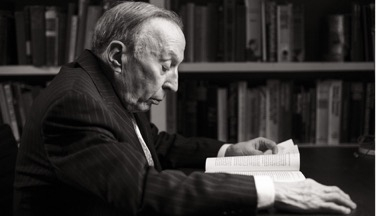
  • Oliver Stone’s Chasing the Light

    Oliver Stone’s Chasing the Light


    As I am writing this review of Oliver Stone’s fascinating new memoir, Chasing the Light, news agencies around the world report that director Alan Parker is dead. A terrific visual stylist, Parker made some fine films, Angel Heart being a particular favorite. And some films which took substantial liberties with true events e.g. Mississippi Burning, Evita, and were less artistically successful. He plays a role in Stone’s book because Parker directed Midnight Express, which is the script that broke Stone into the business as a young man and garnered him his Academy Award. And although they did not know it at the time, that script—based on the experiences of Billy Hayes—turned out to have been based on a fabrication. Hayes, as Stone explains in the book, was not forthcoming about certain details that change the nature of his experience. For instance, the protagonist Billy Hayes—played by the late Brad Davis—had made several trips to Turkey for purposes of smuggling hashish. His lawyer advised him not to reveal this to the authorities. (See the documentary Midnight Return for more of the details.)

    It is an ironic note for two reasons. The first is that no writer/director of Oliver Stone’s caliber has ever been attacked so widely and with such ferocity by the major media due to the controversial theses of his films. And for another, because Stone entered the project of adapting the story for screen with the same dedication to truth that he has revealed in all his work. Is that truth subjective to some extent? Of course. Such is the nature of experience.

    But before getting to the films—and this volume ends with the triumph of Platoon, leaving the rocky waters of JFK and Nixon hopefully for a future installment—Chasing the Light begins with Oliver Stone’s formative experiences. It begins with Stone being born in 1946, a little more than a year after V-J Day, in New York to his non-practicing Jewish father, Louis Stone, and his French mother, Jacqueline Pauline Cezarine Goddet. They were not well-matched, alas, but Stone writes eloquently about his relationship to both. Regarding his “sexy” mother, he meets Freud head on, musing that if he grew too attached to his mother, it at least did not give him a “distrustful” impression of women. (Stone, p.24)

    The first hundred pages or so of the book revolve around his impressions of his family life, his schooling, his attendance at Yale flunking out of Yale, and then his enlistment and experiences in Vietnam. The prose is lively, with bursts of observation and humor throughout, like a heady mix of Scott Fitzgerald and Bernard Fall. For example, Stone captures his feelings about his mother as he grew into a young man:

    She wasn’t really interested in history, art, literature, the things I was wrestling with; she was into people, friendship, the guts of real life. The interaction was what excited her to no end, and because of that she was a firecracker and lit many a spark in other people’s lives. As well as mine. But to be the son of such a person is not simple, and I could never satisfy her as a son or as the engine in her life. (52)

    And his father:

    My father had wanted to write plays when he got out of college, like Arthur Miller. They were now stacked in a drawer in his desk—never produced. His heart, part of it, resided in that drawer. (p. 53)

    What Stone struggles within this first section of the book is finding the through-line, in effect, of his life. He grew up with substantial advantages as a result of his birth and his parents, and it is quite possible to imagine another Oliver Stone in some other universe who does not become a film director and instead becomes a Wall Street broker or, worse, a lawyer. He threw away a Yale education, instead enrolling as a private in Vietnam. He was attuned to the times, failing to fit in, and mentions wanting to go into “the muck” as it had been described in the John Dos Passos novels. (p. 36) I find that reasoning entirely plausible and relatable; at the age of twenty, were I ever to join a war, it would not be for patriotic reasons but for experiential reasons. And although Stone does not cite him directly, the kind of crisis he describes is perfectly paralleled in John Barth’s classic 1967 short story “Lost in the Funhouse,” in which a young author first realizes that in some sense being an artist means looking at your own life from a certain distance, so that each decision has an overarching intent beyond the immediate. Barth describes it like this:

    He wishes he had never entered the funhouse. But he has. Then he wishes he were dead. But he’s not. Therefore, he will construct funhouses for others and be their secret operator—though he would rather be among the lovers for whom funhouses are designed.[1]

    Stone eventually gets over his malaise, growing to have contempt for the New York society people whose experience of Vietnam is at a vast remove from his own. Stone describes, with some detail, the astonishing bloodshed involved in his experiences, and contrasts it with his mother’s friends who ask him inane questions and then move on to more palatable topics.

    THE WORLD IS YOURS

    Following his success with the script for Midnight Express and his ensuing Oscar, Stone learns a brutal lesson that almost all Hollywood writers learn. Hollywood doesn’t give a shit about writers. Even Oscar-winning ones get hot for five minutes and then it’s on to the next one down. People always seem surprised when I tell them this; as one would naturally think the person who had to write everything down and come up with the story in the first place would be admired. Nope. Part of this comes with the ascension of the auteur theory in the sixties: the director as the creative kingpin, at least for the critics. But the truth is it was always more or less this way. And while it’s true that some great directors had a knack for inventing scenes on the spot, even experts like Howard Hawks would much rather put the work in first, as he did with Ben Hecht and Charles MacArthur for Twentieth Century, for example.[2]

    In any case, Stone decided he had to become a director. So after winning the Oscar for Midnight Express, he directed the psychological horror film The Hand, with Michael Caine. It didn’t go well (although it scared the pants off me when I was a kid). After that lack of success, he nevertheless co-wrote the scripts for Conan the Barbarian, directed by the nutty but talented John Milius, and Year of the Dragon, directed by Michael Cimino, and starring Mickey Rourke during his golden period. Both films have fascinating aspects to them and the stories are equally so, especially if you are interested in the Hollywood process. Ultimately, however, after a complicated sequence of events, detailed in the book, he ended up writing the screenplay for the film Scarface.

    In a recent interview with GQ (for video), Pacino discussed his reasons for wanting the role as simply being inspired by seeing the Howard Hawks original with Paul Muni. Pacino, devoted to theater, also recalled that Muni and gangster pictures in general were a favorite of Bertolt Brecht. Scarface was written by the screenwriter Ben Hecht and made before the moral self-censorship of the Hays code had been fully installed. The film was so potent that it nonetheless underwent some censorship to change the ending. Stone does not describe his experience with director Brain De Palma on their remake of the Muni film as a happy one, and for understandable reasons. Stone notes that the director was focused on “the big picture,” that is, large set pieces of action, rather than the intimate details. Indeed, Stone’s experience with Parker, a similarly distant director focused on artistic composition more than the nuances of performance or script detail, was duplicated on Scarface. (pp. 176-177) Stone was eventually thrown off the set.

    For his part, the director Brian De Palma gave a similar account in the recent film De Palma. He remembers that Stone was in the ears of the actors and he could not brook such negativity on his set. And indeed, it’s easy to see the obvious difficulties the two men would have coexisting on a film set. De Palma acknowledges that he is the main (and perhaps only) director to pursue the cinematic grammar established by Alfred Hitchcock. Stone’s grammar is derived from other sources, particularly the rapid cutting style of the Russian director Sergei Eisenstein. In any case, for Scarface the marriage—however difficult—worked, albeit in terms of pop iconography. The more serious elements of the script, including the amazing scene in which Alejandro Sosa (played by the late Paul Shenar) introduces Tony Montana (Pacino) to public officials as they watch a reporter discuss some of the truths of drug industry—tend to be lost.

    And at this point, Stone decides he is going to make his independent films happen, and direct them, and get them distributed. And, considering the projects he wanted to undertake and the Reagan era politics of the time, it is astonishing he ever got those projects made.

    SALVADOR and PLATOON

    The final section of the book presents an amazing chronicle of trying to carve a life inside the Hollywood system while retaining an independent determination to put reality on film. As a result, Stone winds up allied with some colorful and bizarre characters. The most decadent of these figures is probably Richard Boyle, a journalist in the Hunter S. Thompson mode, whose story became the inspiration for Stone’s film Salvador. Boyle ends up living with Stone for a while and contributing to the dissolution of his marriage. Stone’s wife did not enjoy waking up to Boyle asleep on the kitchen table having drunk all the booze and baby formula from the fridge. It is easy to imagine the husband/wife conversations that followed: Why are you making a film about this lunatic? And indeed, it’s a fair question.

    At first, the plan was to let Boyle play himself, but this idea went by the wayside. James Woods and Jim Belushi were brought in to star, with Belushi as Dr. Rock. Upon meeting Dr. Rock, Belushi remarked to Stone, “You don’t really want me to play that thoroughly fucked-up asshole, do you?” (p. 236) Note: Jim Belushi said this. In his generally positive review of the film, Leonard Maltin remarked that it was hard to get into Salvador at first because “the characters played by Woods and Belushi” are “such incredible sleazeballs.” Also not an unreasonable assessment.

    Having said that, my impression as an adolescent seeing the film is that it feels very real and visceral and suitably hopeless in its treatment of that period. As a young man I traveled extensively into southern Mexico, primarily in the Michoacan region, while a peasant revolt was taking place. Our eventual destination—Lazaro Cardenas—was roughly a 25-hour drive from our starting point, Laredo, in the back of a pickup truck. At the gas stations where we filled up, it was not uncommon to see men with machine guns guarding the fuel and asking questions. We had many encounters with various officials, and that feeling of imminent danger—the question of whether we were in real trouble or not at any given moment—is replicated better in Salvador than any other film I have seen. It has a documentary feel to it that more conventional Hollywood dramas lacked, e.g. Roger Spottiswoode’s Under Fire, mentioned by Stone as a film made with a similar theme. However, Under Fire, while being a solid picture with fine performances, plays more like a 1980s remake of Casablanca. Salvador owes more to films like Costa Gavras’s Z and documentaries like The Battle of Algiers.

    Salvador performed decently at the box office. This was good because it turned out that doors were opening for its director/writer to take a long-neglected script which had been shelved for a decade and get it made: (The) Platoon.

    It is in the creation and eventual success of Platoon, that Stone builds his book’s climax; a validation that the Yale dropout made good. Even here, however, the author does not hold back a critical eye from himself. In addition to the varying drug use, Stone describes how his zeal in the making of Platoon caused him to make nearly disastrous decisions. Besides literally kicking people around during the shooting, he also pushed them beyond their limits, which nearly caused a horrendous helicopter accident that would have killed himself and several people aboard. This causes him some reflection, although he admits that he “would have done the exact same thing over again, and gone up into those canyon walls.” (p. 284) He would have done this because he needed the shot—chasing the light—and contrasts his risk taking with the risk taking that went on in the Chuck Norris actioner Missing in Action 3. Does the aesthetic result justify the risk? Perhaps for oneself. But for others?

    It is easy to recall and contrast another helicopter accident, one that claimed actor Vic Morrow’s life along with two children. The director was John Landis, and the film was Twilight Zone: the Movie, and in that case Landis could be heard shouting “Get lower!” to the helicopter pilot before the incident occurred. Was that worth it? When I was at the Dallas International Film Festival in 2015, John Landis was in town doing Q&A for a celebration of The Blues Brothers in conjunction with a firing up of a new 35mm striking of that film which was shown at The Texas Theater. (At the same time, a film I co-wrote and co-produced which featured Oliver Stone among others, was closing the festival.) I went to Landis’s Q&A, which was in a small room with perhaps fifty people present, and it was hard not to think about Vic Morrow and those two child actors whose lives were ended. (For a good book on that horrible incident, read Outrageous Conduct by Marc Green and Stephen Farber.)

    Based on Stone’s reportage, something like this could have happened on his set. Stone admits he was reckless in his hellbent pursuit of the picture. Almost as though his filmmaking career has been an extension of that youthful decision to go Vietnam rather than go to Yale. Was it all macho posturing? Stone notes that Pauline Kael thought so, dismissing Platoon in her typically reactionary way. Others have thought so, and indeed this memoir will provide some fuel for that particular fire. On the other hand, it was precisely that warrior mentality and specificity of purpose that makes Oliver Stone’s films as vital as they are.

    Chasing the Light provides an insight into the creative process of one of the brilliant, if polarizing, minds at work in cinema. It is a hard book to categorize in some ways. Many showbiz memoirs tend to be a succession of, as Frank Langella titled his own such book, Dropped Names. Others are built on a formula built from The Man Who Shot Liberty Valance; that is, they print the legend. Instead, this memoir reflects his films: intelligent, uncomfortable at times, substantive, rough around the edges and straining for truth. And it is, in a very classical sense, a literary memoir. In that it contains references to Celine and scores of other authors which have clearly made an impression on Stone. Most of all, it reveals a man who is passionately engaged with the world; while one could argue about one decision or another, it is rare that an artist of this caliber allows such a detailed look into his process.

    And this is just part one. We haven’t even gotten to JFK and Nixon yet.


    [1] Barth, John, Lost in the Funhouse (Anchor Books: New York, New York 1968), 97.

    [2] McBride, Joseph, Hawks on Hawks (University of Kentucky Press 2013), 77.


  • 25th Anniversary of Probe/CTKA/KennedysAndKing

    25th Anniversary of Probe/CTKA/KennedysAndKing


    This is now 25 years that Jim DiEugenio has been the editor/publisher of first, Probe Magazine, and then the web sites Citizens for Truth about the Kennedy Assassination (CTKA), and now Kennedys and King.com.

    You can help us stay alive, expand our reach and influence, and do more investigative in-depth stories by donating to our cause. We very rarely—if ever—directly ask for contributions. But a silver anniversary is certainly a good time to do so.

    You can help by contributing through our simple PayPal donation counter. Even better, become a regular contributor by donating a small amount each month. There is no other web site like this one. No one else brings you this quality stream of stories and news on these important subjects. Show your appreciation. Help keep us going.


    KennedysAndKing: Take us back to the beginning Jim? How did Probe Magazine start?

    Jim DiEugenio: That was due to the furor over the release of Oliver Stone’s movie JFK. A few of us who were interested in the JFK case met several times and we decided to try and accomplish something. The idea was to create an organization that would do a bimonthly journal and some speaking engagements in the local area. And that is how it started back in 1993.

    KaK: Why are you celebrating a silver anniversary this year then?

    JD: Because it was at the end of July 1995 that Lisa Pease and myself took over the editing and publishing of that journal. I was the publisher and editor. Lisa was co-editor and did the technical print layout of the magazine, at which she was quite good.

    KaK: Was there a point at which you thought you had really reached a level of achievement?

    JD: Yes, it was the issue that we timed for the release of the film Nixon at the end of 1995. We designed that issue around, not just the Stone film, but around Watergate and Nixon’s life. And we devoted a two page spread to the character inks between the Watergate scandal and how some of those same people were involved in the JFK case (e.g. James McCord, Howard Hunt and Dick Helms). Plus we did not take the conventional view of Watergate as put out by Bob Woodward and Carl Bernstein in All the President’s Men. Our view was that of Jim Hougan and his book Secret Agenda. I was surprised at how that viewpoint blindsided a lot of our readers. They simply were not aware that there was a different take on the crime.

    KaK: How did Probe Magazine morph into the web site Citizens for Truth about the Kennedy Assassination?

    JD: After we had ceased the print run of Probe, Peter Jennings did his special on the JFK assassination, which he called Beyond Conspiracy. I heard from a reliable source that his lead consultant was Gus Russo. Therefore, I knew what it was going to be like from what Russo had done in 1993 for PBS. It was even worse in some aspects. I mean there was Dale Meyers saying the Warren Commission’s major thesis was now, through his computer, the Single Bullet Fact, not theory. So John Kelin, a skilled web master, put together the original web site, which we called CTKA for short. And as with Probe, after the debut, we gained some quite distinguished contributors. Lisa and I did not have to write half the stories. We got people like Milicent Cranor, Gary Aguilar, David Mantik, Seamus Coogan, Joe Green, Martin Hay, David Josephs, and Vasilios Vazakas to write for us. That lasted more than twice as long as Probe Magazine. But it had a similar approach: we would cover news, research articles, and reviews of films and books. And we did that for all four of the assassinations: JFK, Malcom X, MLK and RFK. That was important, I thought, since I had come to the conclusion while doing Probe that they were all related in some way to each other. And I wrote about that idea in the anthology Lisa and myself published through Feral House called The Assassinations, which was kind of a best of Probe collection. I should also add that I became a semi regular guest on Black Op Radio at this time, so I now had a listening as well as a reading audience.

    KaK: And then how did CTKA change into Kennedysandking.com?

    JD: This was through the surprise efforts of my friend Al Rossi. I met Al through online correspondence, not knowing at that time he was another Lisa Pease, very well versed in the language of computer technology. In fact, that is what he does for a living. So he, at first secretly, began building a whole new layout for the web site. About a third of the way through, he told me about what he was doing: redesigning the layout and transferring all the files to another ISP. I don’t have to tell you how much that would have cost to do if I had hired a professional designer. I could never have afforded something like that. Contrary to popular belief, and the late Vince Bugliosi, there is not any money in this. We manage to scrape by. But he did it gratis on his free time.

    KaK: What about the status of the site today as Kennedysandking.com?

    JD: Al had to step down for medical reasons and, thank God, Dave Nesbitt took over as web master. I have to say, I have been lucky in that regard. In addition to John Kelin, I had Debra Conway and Gokay Hasan Yusuf as temporary web masters for the long run of CTKA. And personally, I think today, in both the format and quality of the content, we are as good as we have ever been. In some ways better, because Al was able to collect so many of our best articles into an archives at the new site. Also, because we have visual and audio files available, like my 26 part interview with Dave Emory. That interview is still one of our highest rated pieces even though it has been up for well over a year.

    KaK: What would you like to do if your fund drive is successful?

    JD: One of the things I would like to do it so increase the reach of the site through what is called an SEO company. That acronym means search engine optimizer. See, there are some very bad sites out there, that have large footprints on the web. For instance, John McAdams web site is awful. But due to Wikipedia, which has become the NY Times internet version on the JFK case, McAdams’ site gets a lot of visits. Our site, which has much better information and analysis, does not have Wikipedia as a booster. In fact, I have seen the Wiki back pages dialogue on some of their JFK articles. When someone brings up our work, inevitably someone attacks us. (See this article on that subject)

    Our articles are much better researched with much newer and more factual information than McAdams. So that is one of the things I would like to do, if we have the funds to do it. I would also like to do what is called special placement of certain pieces we run to get them more prominently placed on social networks like Facebook. I think the interest is out there, especially for high level work like ours. So, with the help of our readers, I would like to try to extend our reach. What would be great is if we could get some contributors to make a monthly pact with PayPal. We have a couple of readers who do that now. But if we could get a significant number, who would contribute say $20 or $30 or $50 dollars a month, then we could attain what is called a capital budget to achieve our goals, knowing that each month we could cover the costs. That could raise our profile. I think the quality of our content deserves it. Unlike say a rightwing/libertarian site like Quillette, we don’t have a Roger Thiel type billionaire who is sympathetic to us. We have to go about it with the help of many people contributing much smaller amounts. Unlike Quillette, we are not out to destroy; we are trying to build something.

  • Bugliosi on the Kennedy Autopsy:  Twenty shades of pride and prejudice

    Bugliosi on the Kennedy Autopsy: Twenty shades of pride and prejudice


    Introduction

    Vincent Bugliosi was an eclectic man, a successful lawyer and a New York Times best-selling author. His 1612-page book, Reclaiming History: The Assassination of President John F. Kennedy, which he personally defined as his “magnum opus,” won the 2008 Edgar Award for Best Fact Crime book and became a benchmark for supporters of the government’s official theory of the lone assassin. When one added in the extra pages of the attached CD, the page count was upped by over a thousand.

    However, despite its meticulousness and the extensive amount of material on which it is based, on close examination Bugliosi’s historical and legal reconstruction shows several limitations, the most serious being a prejudiced view of facts pervaded by a sense of superiority towards his readers and other authors.

    The chapter examined here,[1] dealing with the key topic of the autopsy on President Kennedy, shows five types of limitations:

    1. Underestimated violations of the law
    2. Ideological attacks on the doctors at Parkland Hospital
    3. Overreaching defense of the pathologists at Bethesda
    4. Uncritical defense of the Warren Commission
    5. Medical superficiality

    A – Underestimated violations of the law

    A.1 – Legal value of family opinion

    Citing the accusation of the House of Representatives Select Committee on Assassinations (HSCA), directed at the autopsy pathologists who, “Failed to properly examine and section the brain, which would have irrefutably established the path of the bullet,” Bugliosi specifies that, “This was not done out of deference to the president’s family, who wanted to bury the brain with the body.” However, the opinion of the family has exclusively human but no legal value and certainly must not influence the quality of the autopsy, which was so decisive in establishing the direction of the shots.

    A.2 – Site of autopsy

    Bugliosi writes that one of the key allegations of Warren Commission critics was that, “Kennedy’s body was unlawfully spirited away from the Dallas authorities at Parkland Hospital to be taken to Bethesda for the autopsy,” flippantly remarking that, “The only serious problem with this is that, ironically and very unfortunately for the conspiracy theorists, they don’t even have support for their argument from the very person whom they wanted to conduct the autopsy – Dr. Earl Rose” (the Dallas medical examiner). The author explains that Rose was appointed by the HSCA as, “One of the nine forensic pathologists to review the autopsy findings,” revealing that there was, “No question their (the autopsy surgeons’) conclusions were correct,” disagreeing only with the entrance wound originally reported to be low at the back of the head instead of, “in the cowlick area.” Rose also maintained that while the three autopsy surgeons were not inept, “More experienced forensic pathologists should have been chosen to conduct the autopsy,” asserting that, “You can’t blame the autopsy surgeons for the fact that the autopsy should have been more complete.”

    The Texas legislature provided that since the crime occurred in Dallas, the autopsy should be performed in Dallas County, protecting the integrity of the body from harm by relocation. More impartially, Bugliosi ought simply to admit it was a serious violation of the law, potentially diminishing the validity of the autopsy. The regulatory rationale is in fact legal and health-related. Contact between the Parkland Hospital doctors who assisted the president and those performing the autopsy would have ensured an indispensable exchange of information. Moreover, the caseload experience of Dallas County would have guaranteed more highly qualified pathologists than were present at Bethesda. Finally, Dr. Rose was commenting on the extant medical exhibits from NARA. That is qualitatively and forensically different than actually doing an autopsy on a just deceased body.

    A.3 – Date of the autopsy

    Bugliosi shows indifference to the absence of a date on the autopsy report. This is not a minor flaw. Basically, a certificate without a date is an invalid certificate. It seems impossible that this could happen in wealthy North America and that this should be missing from one of the most important certificates ever written. This flaw cannot be justified tout-court. Forgetfulness cannot be the first or only plausible justification to consider. It leads one to suspect that either parts of the autopsy were performed on different dates or that the report was prepared and then revised on different dates, with all the legal problems and consequences that this entails. Equally serious is the fact that the additional autopsy examination of the brain was also issued without a typed date. There is only a handwritten notation of December 6th on the document. At the very least, this is negligence on the part of the forensic pathologists, calling into question their professionalism.

    B – Ideological attacks on the doctors at Parkland Hospital

    Bugliosi’s autopsy chapter also includes widespread attacks on the doctors at Parkland Hospital who attempted to save President Kennedy and who, to some extent, contradict the pathologists at Bethesda and also the Warren Commission. Bugliosi refers to the Parkland Hospital doctors as, “A group of mostly young interns and residents who were not pathologists” and whose observations were “unfocused and unconcentrated.” He acknowledges only the testimonies that differ from those of the majority of Parkland Hospital doctors. Bugliosi states that the Parkland Hospital doctors were not interested in the direction of the shots. “The direction of fire wasn’t yet an issue to anyone, much less to the people in Trauma Room No. 1.” But can he know that? The doctors at Parkland Hospital would probably have been interested in the direction of the shots, not least because of the legal and medical implications. As we shall see, it is highly improbable that it was not cause for consideration and concern on the part of at least some of the doctors.

    B.1 – Professionalism of the Parkland Hospital Neurosurgery Director

    Bugliosi derisively calls into question the doctors who claimed to have seen part of the cerebellum exit the president’s skull, supporting the hypothesis of a low posterior skull wound. Among them, however, was Dr. William Kemp Clark, Director of Neurosurgery who, given his job profile, was most likely—unless proven otherwise—able to recognize brain tissue better than any other doctor in Trauma Room No. 1 at Parkland Hospital, or in the autopsy room at Bethesda. Bugliosi is unable to provide the contrary evidence.

    B.2 – Dr. Charles Crenshaw

    Bugliosi dislikes Dr. Charles Crenshaw, one of the Parkland Hospital doctors, who claimed that the back of Kennedy’s head had been blown out and that the small wound in Kennedy’s throat was an entrance wound. He simply refers to his remarks as “unbelievable” and doubts that he saw the hole in the throat, given the limited time. But any doctor can instantly recognize a hole in the human body and is knowledgeable of such medical forensic aspects. Bugliosi instead gives credibility to Dr. Perry, who claimed Crenshaw was not present in Trauma Room No. 1, a fact denied by an overwhelming number of witnesses. Moreover, Bugliosi does not speak a word of blame regarding the lie. He takes questionable positions. In 1992, George Lundberg, editor of the Journal of American Medicine Association (JAMA), informed the press that, “The recent Crenshaw book is a sad fabrication based upon unsubstantiated allegations.” Among the slanders that JAMA promulgated was that Crenshaw was not even in the emergency room when Kennedy’s body was there.

    Yet, Dr Lawrence K. Altman in the NY Times (5/20/92) wrote that Crenshaw’s presence in the room was affirmed by doctors who JAMA itself had interviewed and this information was in the Warren Commission volumes. Dr. Crenshaw filed suit against JAMA and during the deposition process it was revealed that the writer of the JAMA articles, Don Breo, never interviewed Crenshaw. And further, Breo never inspected the 26 volumes of evidence that the Warren Commission published before the first article was published. Therefore, he could not have seen those references. (Trauma Room One, by Charles Crenshaw, p. 163) During that deposition process Lundberg acknowledged that 1.) He had done no research for the articles, and 2.) He knew that Breo was not going to talk to Crenshaw before publication. (Ibid, p. 165)

    In 1994, JAMA paid Crenshaw compensation to the tune of $213,000, in addition to publishing a rebuttal article in JAMA by Crenshaw and Gary Shaw, co-author of the book.  Bugliosi’s hypothesis was that, even though it was in the right, JAMA paid the fine solely for reasons of convenience. This appears prejudicial and hard to sustain, in view also of the size of the penalty (equivalent of $ 370,500 today).

    B.3 – Witness selection

    In reference to the throat wound, which Dr. Perry calculated to be 3–5 mm, Bugliosi quoted only Dr. Carrico, who had indicated a diameter of 6–8 mm. He fails to mention the other doctors, who had all given smaller measurements. In discussing the entrance wound in the President’s head, Bugliosi quotes a Parkland Hospital doctor who reported a measurement of 6×15 mm. Again, his quotes are limited to the only doctor whose testimony supported his thesis, omitting the witness statements of all other doctors, who provided different information. For instance, as Gary Aguilar has pointed out, in pathologist Dr. Thornton Boswell’s diagram, he indicated this wound was much larger, 10 cm by 17 cm.

    C – Overreaching defense of the pathologists of Bethesda (with ad hoc exceptions)

    Throughout the chapter, Bugliosi strives to justify the errors committed by the pathologists of Bethesda and support their forensic professionalism. Try as he might, the inconsistency of the few available elements means he can only fail. He also carefully selects the testimonies and forgets to quote James Curtis Jenkins, who was an assistant and was in close proximity to the President’s head, but whose reconstruction of the facts did not agree with theirs.[2],[3]

    C.1 – Professionalism of Dr. Humes

    In support of Dr. Humes’ professionalism, Bugliosi notes that, “One of the best indicators that Humes was not out of his depth during the autopsy is a reading of his testimony…before the HSCA forensic pathology panel, when he spoke knowledgeably and confidently about all aspects of the autopsy.”

    When? On September 16, 1977. Fourteen years after the most important autopsy in history and without the associated burden of responsibility, not only the forensic pathologists who performed the examination would be well informed, but so would many other doctors. Then Bugliosi points out that, besides Rose, Dr. Charles Petty also felt the autopsy surgeons had done “an elegant job” and that, “The autopsy, overall and considering all the circumstances, was well done and well reported.” He does not mention, however, that these were the only two of the nine experts on the HSCA panel to approve the work of the pathologists at Bethesda. Their opinion was expressed long after their work on the panel and one of them, Petty, had a conflict of interest in that he had worked with Bugliosi at a televised mock trial in London. Bugliosi does not mention that their new opinion was influenced by a number of mitigating circumstances, which, while humanly understandable, are not in the least either legal or professional. Accordingly, the true position of the HSCA panel, which officially expressed an extremely negative opinion of the work of the pathologists of Bethesda, does not clearly emerge. In support of Humes’ experience, Bugliosi recalls an article in JAMA dated 1992, yet this letter confirms the inexperience of the pathologist. Indeed, Humes recalled a total of only two autopsies performed on gunshot deaths at the Tripler Army Hospital, Hawaii. He had no recollection of any others. Moreover, it transpires that he did not consider himself an expert which is why he called Dr. Pierre Finck, chief of the Wound Ballistics Pathology Branch of The Armed Forces Institute of Pathology, to reinforce the team of pathologists. Bugliosi supports the professional skills of Finck, who incidentally, only received his board certification in 1961. He had a fair amount of experience, but it was not comparable with that of the forensic pathologists in Dallas, who should have performed the autopsy.

    C.2 – Influence of the Military

    At the conspiracy trial of businessman Clay Shaw for Kennedy’s murder in New Orleans in 1969, Finck testified that during the autopsy an army general informed Humes that he was in charge. Bugliosi seeks to lighten this testimony recalling that Finck later clarified, “It doesn’t mean the army general was in charge of the autopsy…” rather he was responsible for “overall supervision.” First, however, the presence of an army general at an autopsy constitutes an unacceptable working condition. Second, several military interventions during the autopsy were reported by various other sources. For example, after conferring with the military, the pathologists, particularly Humes, were reported to have become tense and to have changed attitude. Ultimately, overall supervision did somehow extend to the autopsy. Because, as Finck testified at the Shaw trial, the reason the pathologists did not dissect the back wound was because they were told not to do so. (James DiEugenio, Destiny Betrayed, second edition, p. 302) Since Finck’s statement could constitute an undue intrusion into the proper conduct of the autopsy, not noting the irony, Bugliosi responds to the “conspiracy” authors of the book, Trauma Room One, with a further quote by Finck at the Shaw trial, “There were admirals, and when you are a lieutenant colonel in the Army, you just follow orders.”[4] Immediately afterwards Finck added, “At the end of the autopsy we were specifically told not to discuss the case,” referring not only to the confidentiality to be kept, but also to how the autopsy was conducted. But on no account was it incumbent on Admiral Kenney, Surgeon General of the Navy, to dictate these kinds of rules.

    C.3 – Duration of the autopsy

    Bugliosi states that the autopsy lasted three hours and was not therefore conducted quickly and superficially. However, Dr. M. Baden, chairman of the forensic pathology panel of the HSCA, told Bugliosi that a forensic autopsy of this type would normally “take four to five hours,” whereas “an autopsy of the president could be expected to take all day, eight hours.” Bugliosi does not comment on this, nor does he acknowledge that the autopsy was performed incorrectly.

    C.4 – Location of the wounds

    Bugliosi quotes Rose, one of the pathologists on the HSCA panel, who confided to him that the only mistake they made at Bethesda was to have “reported the entrance wound to the back of the head to be too low. It was in the cowlick area.” The only mistake? Yet we are talking about the bullet hole that was fatal to the President of the United States. Were it a mistake, it would be inconceivable. We are talking about a nine to ten-centimeter difference, from the bottom to the top of the skull. The attitude of absolute indifference assumed by Bugliosi does not aid comprehension of a key step in Kennedy’s assassination. The pathologists at Bethesda reported the location of the occipital hole, but Bugliosi considers this a mistake: had the hole really been where they indicated, “There would have been damage to the cerebellum.” But Kemp Clark and several doctors at Parkland Hospital claimed to have seen damaged, exposed cerebellum tissue. As mentioned above, Clark in particular, who Bugliosi treats as a novice, had specific expertise in this field, being Director of Neurosurgery. It is very strange and cause for concern that a dark spot like this should be simply bypassed.

    C.5 – Examination of the clothing

    “Finck asked to examine the president’s clothing to match it with the wounds and found it most unfortunate that the clothing was not available.” This is a serious loophole, caused by the transfer of the autopsy from Dallas to Bethesda. Bugliosi’s defense is superficial. He used a statement made by pathologist Dr. Boswell in 1996. In response to the question, “Would it be standard practice to have the clothing available for inspection?” Boswell replied, “Well, under normal circumstances, but these were not normal circumstances.” This explanation is unacceptable. Finck’s examination of the clothes a long time later (Bugliosi does not even mention the date) cannot have the same meaning as a contextual examination.

    C.6 – Significance of the X-rays

    With reference to the X-rays, Humes informed Arlen Specter of the Warren Commission, “I do not believe, sir, that the availability of the X-rays would assist in further specifying the nature of the wounds.” This scientifically baseless statement fails to elicit any reaction from Bugliosi.

    C.7 – Autopsy inaccuracy

    Commenting on the errors in the autopsy detected by the pathologists and lawyers of the HSCA, Bugliosi argues that few, if any, of the procedures neglected by the autopsy surgeons would have been overlooked in a standard medical legal autopsy. Yet, as we have seen, the circumstances surrounding this autopsy were anything but standard or typical. This defense has no legal significance and does nothing but accuse itself of the inaccuracies made.

    C.8 – Landmark points

    Bugliosi attacks the statement by the panel of HSCA pathologists that the autopsy report was incomplete and inaccurate since, “The location of the entrance wound in the upper back and the exit wound in the throat were not referenced to fixed body landmarks to permit a precise trajectory reconstruction.” Quoting parts of the autopsy report that contain measurements and reference points, he mocks the HSCA panel. Yet the findings he mentions, namely the mastoid process, the acromion and the trachea, are simply not fixed anatomical landmarks. Movements of the head or shoulder can considerably alter such measurements, even by many centimeters (i.e. to a sufficient degree to trace different trajectories). To make a simple parallelism, it is interesting to see how the landmark points of Governor Connally’s wounds are instead indicated. Dr. Robert Shaw’s description of John Connally’s wounds at the entrance and exit points of the governor, these used fixed, recognized anatomical landmarks (midline, first thoracic vertebra, nipple). Bugliosi showed no understanding of how these differed from the kinds of equivocal measurements used in Kennedy’s autopsy.

    C.9 – Gerald Ford’s forgery

    Bugliosi calmly maintains that Humes changed the location of the entrance wound and that Gerald Ford, a member of the Warren Commission and future President of the United States, altered the autopsy findings in the final report, replacing the words, “back at a point slightly above the shoulder,” with “the back of his neck.” This is almost incredible.

    D – Uncritical defense of the Warren Commission

    D.1 – Failure to examine the X-rays and photographs

    Regarding the authenticity of the autopsy photographs and X-rays housed at the National Archives, Bugliosi recalls that, “The 1964 Warren Commission never had to deal with this issue because the autopsy photographs and X-rays were never part of its published record.” Bugliosi fails to comment on this; it is also absurd that the Warren Commission preferred to ignore what might have been objective elements, perhaps the most objective of all.

    It was bizarre for the House Select Committee to publish the “sketches produced by Ida Dox” instead of the photographs of the President’s wounds, on the grounds that the photographs were far too “gruesome.” This choice is incomprehensible, but Bugliosi welcomes it as though it were instead logical.

    “The Commission’s Assistant Counsel, Arlen Specter, urged the Warren Commission to obtain the photographs and X-rays, saying it was indispensable that the staff examine them. However, Specter’s request was not met.” Bugliosi remains indifferent to these dynamics. J. Lee Rankin, General Counsel to the Warren Commission, explained that otherwise, “They would have to be published.” Why? A lot of files on the Kennedy assassination were not made public. Bugliosi concludes instead that it was not important to see the photos and X-rays as they matched the location indicated by the HSCA review panel. But a posteriori, these explanations are far from satisfactory.  For the simple reasons that

    1. The pictures do not match Gerald Ford’s location of the back wound.
    2. The HSCA placed the back wound lower than the Warren Commission.
    3. The HSCA moved up the location of the rear skull wound.
    4. The HSCA mentioned a 6.5 mm fragment on the skull x rays that the Warren Commission did not address and Humes did not write about in his autopsy report.
    5. The declassified Commission executive session meetings indicate that the Commissioners did have the autopsy exhibits but did not let the staff members know this. (Gerald McKnight, Breach of Trust, p. 171)

    D.2 – Earl Warren’s sensitivity

    Bugliosi reports that Earl Warren, Chief Justice of the United States, wrote, “I saw the pictures when they came from Bethesda Naval Hospital, and they were so horrible that I could not sleep well for nights… I suggested that they could not be used by the Commission.” Bugliosi accepts this as an explanation. Moreover, Earl Warren, venerable master of the Dakland Masonic Lodge, was anything but faint hearted. For example, during World War II he advocated placing 100,000 Japanese Americans in internment camps. It is inconceivable that he went soft on the photograph of a dead man.

    E – Medical Superficiality

    E.1 – Forensic ballistic principles

    Taking a scientific stance, Bugliosi states with certainty that, “In an entrance wound, the diameter of the wound is larger on the inside of the skull than on the outside where the bullet first hits. This physical reality has been known for centuries and has been the main basis for determining whether a wound is an entrance or exit wound.” First of all, these general considerations should be reported also with regard to the principle that entrance holes are much smaller than exit holes. But of course, general principles were not invoked with reference to the wound under John Kennedy’s Adam’s apple. In any case, the scientific literature reports exceptions to the natural law invoked by Bugliosi as well as exceptions to the general rule of entry holes being smaller than exit holes.

    E.2 – Interpretation of the missile defect

    The HSCA panel of forensic pathologists refer to a “semi-circular missile defect near the center of the lower margin of the tracheotomy incision. The committee said it was an exit defect.” They do not explain in any way how they can tell whether it was an exit or an entrance defect. But this does not seem to interest Bugliosi.

    E.3 – President Kennedy’s brain

    Addressing the enigma of the autopsy, Bugliosi asserts that, “What happened to President Kennedy’s brain has only academic value.” On the contrary, it is of paramount importance because the examination of the brain revealed the direction of the shot. In addition, there are some really robust testimonies, like the one by James Curtis Jenkins, who noticed substantial differences between the brain he saw during the autopsy and the brain described in the autopsy report. Moreover, this is also linked to the time of performance of the autopsy examination of the brain and the persons actually present. Former FBI agent, Francis O’Neill, said that the photographs he was shown by the ARRB counsel did not look like the brain he saw at the autopsy on November 22, 1963. “More than half the brain was missing,” and in the photo, “it appears to be too much.” Bugliosi mockingly suggests that, “He probably looked over someone’s shoulder in the crowded autopsy room to get a quick glimpse…” But what does Bugliosi know about what Officer O’Neill saw? Why dare him?

    Conclusions

    Despite his capacity for analysis and the propaganda surrounding his voluminous book on the assassination of President Kennedy, Bugliosi is not convincing. This article considers the key chapter on the autopsy. All elements, even the most objective, which depart from the official consideration of the Warren Commission, are given prejudicial consideration. And, above all, the dark spots—like the mystery surrounding Kennedy’s brain—remain dark.


    [1] Bugliosi, Vincent Reclaiming History. Chapter: “President Kennedy’s Autopsy and the Gunshot Wounds to Kennedy and Governor Connally” New York: W.W. Norton & Company, Inc., 2007, pp. 382-449.

    [2] Jenkins, James C. with Law, William Matson At the Cold Shoulder of History. Chicago: Trine Day LLC, 2018.

    [3] Jenkins, James C. Personal communication to the Author. Dallas, The Lancer Conference, November 18, 2018.

    [4] Crenshaw, Charles A. with Shaw, J. Gary et Al. Trauma Room One. New York: Paraview Press, 2001.

  • Henry Wallace, JFK, and The Nation

    Henry Wallace, JFK, and The Nation


    Books Reviewed:

    Nichols, John. The Fight For The Soul of the Democratic Party.

    Verso Books. 2020.

    Gibson, Donald. Battling Wall Street: The Kennedy Presidency.

    1994 Sheridan Square Press. reprinted 2014 Progressive Press.

    1

    Longtime liberal/progressive journalist John Nichols, associated with The Nation and The Capital Times, has authored a new book examining Democratic Party politics through the lens of Henry Wallace, who served as FDR’s vice-president from 1941-44. He was poised for a second-term as such before the Establishment wing of the Party intervened against him at the 1944 Democratic National Convention. While Wallace was personally liked and his New Deal policies enjoyed widespread support across the Party, his internal opponents controlled the mechanisms of procedure at the Convention. They were able to see Senator Harry Truman through to the vice-presidential slot.

    The story of Wallace and the 1944 Democratic Party infighting was portrayed in Oliver Stone and Peter Kuznick’s book/documentary series The Untold History of the United States. It was portrayed as a critical event leading to the advent of the Cold War and the domestic political repressions of the late 1940s and 1950s. Nichols also designates the events at the 1944 Convention as crucial, but tones down the Cold War hyperbole to focus on the consequences to the internal politics of the Democratic Party in the years and decades following. This approach has resonance with contemporary Democratic Party politics which post-date the 2012 release of the Stone/Kuznick series. The echo of 1944 was readily apparent in the Party’s abrupt treatment of maverick progressive Bernie Sanders in 2016 and again in 2020. Nichols identifies a progressive New Deal platform, as espoused by Wallace and later figures such as George McGovern and Sanders, as representing the true “soul” of the Democratic Party, otherwise understood as a spectral effusion often shackled by blinkered Party centrists and compromisers.

    In 1944, ahead of the Democratic National Convention which would confirm a vice-presidential candidate for the national election in the Fall, Wallace had the advantage of incumbency as well as overwhelming support amongst the rank-and-file party members. He did not have the support of the Democratic Party establishment and its related vested interests, who were determined to install their own candidate in Wallace’s place. A popular attempt at upending the Party bosses by forcing a vote for the vice-presidential candidate in the immediate aftermath of FDR’s own confirmation as presidential candidate was finally stymied by a desperate motion to adjourn, accepted without a proper voice vote. The installation of Truman as the vice-presidential candidate was then sealed in the backrooms ahead of a more controlled vote the next evening.

    Moving ahead seven decades, self-described “democratic socialist” Bernie Sanders, although not as dynamic a figure as Wallace, was also to enjoy a widespread coalition of supporters, visible as the most enthusiastic and numerous at campaign rallies in 2016 and 2020. While the Democratic Party’s establishment was mostly confident during the 2016 contest that the combination of DNC control of campaign events plus the super delegate votes at the convention would see Hillary Clinton through to the presidential nomination, the 2020 campaign would require a sudden decisive intervention to blunt Sanders’ popular momentum. It’s reasonable to speculate internal Democratic Party polling ahead of the March 3 Super Tuesday round of state primaries revealed that Sanders was on the verge of a significant victory which could create problems with plans to upend him at the national convention. Something like that almost certainly motivated the senior leadership of the party to contact the campaigns of Pete Buttigieg and Amy Klobuchar—the two candidates who at the time were promoted as the best “moderate” alternatives to Sanders—in the interest of abruptly closing their shops and shifting their full support to the, then, rather lackluster campaign of former Vice President Joe Biden.[1]

    That Sanders had already been sidelined before the publication of The Soul of the Democratic Party (released May 10, 2020) removed much of the urgency and relevance that may have animated the book’s later chapters, where the prospects of realizing a renewed commitment to a New Deal progressivism within the Democratic Party are considered.[2] The history therefore verges on the futile, as the Democratic Party establishment is understood as posting a decisive track record in disrupting popular candidacies espousing progressive/New Deal policies. Further, the George McGovern presidential run in 1972, which Nicholls highlights as exemplifying a true progressive platform, ended in a total rout aided by the defection of establishment Democrats who would for years afterwards use the loss to discredit the Party’s “left” in favor of often unappealing centrists.[3] Despite this legacy, the book retains purpose and relevancy through its focused contextual examination of the uneasy relationship between the Party and its progressive wing. Beyond McGovern, disparate persons such as Michael Harrington, Tom Hayden, and Jesse Jackson are discussed not as quixotic figures, but rational actors who understood the real structural limitations of third parties in modern U.S. politics, but who could not overcome a Democratic Party establishment which had “made itself a managerial movement that softly promised it would never be quite so bad as the Republicans.”

    2

    There is a rather notable shortcoming with The Soul of the Democratic Party and that rests with the extent to which the administration of Democrat John F. Kennedy does not at all factor in Nichols’ narrative. To readers familiar with Professor Donald Gibson’s unique and valuable 1994 book Battling Wall Street: The Kennedy Presidency, this omission should appear baffling, because Gibson is able to chart, in some detail, policy initiatives which derive from or are in the spirit of progressive/New Deal concepts. “As president, and before,” Gibson writes, “[Kennedy] had a very definite and coherent set of goals and a consistent overall strategy to achieve them.”[4]

    Kennedy assumed the presidency…with a program which had as its central purpose the advancement of the productive powers of the nation. This progress was to be achieved through an intense effort to expand and improve both the human and the technological capabilities of the country…Kennedy attempted to use the power of his office and of the federal government to achieve this goal through tax measures, government programs, government spending, and monetary and credit policy.[5]

    Gibson notes that, in response to Kennedy’s initiatives in both domestic and foreign policies, “the Establishment’s rejection of Kennedy became increasingly intense during his time in office.”

    Working through both volumes—Nichols and Gibson—it becomes readily apparent that the opposition to Wallace and, later, Kennedy came from the same interests and for much the same reasons. The opposition rejected, as Gibson puts it, an ideology “based on the idea that economic and social progress were the goals and that the power and policies of government were important parts of the means to achieve those goals.”[6]

    Further, this rejection extended to the means employed by Kennedy (i.e. government actions to shape economic decisions). It extended even to the goal itself (i.e. economic progress—global and national).”[7]

    Gibson claims, with considerable documentation: “Kennedy’s economic program could be compared to Roosevelt’s Economic Bill of Rights, but Kennedy’s program went beyond Roosevelt’s statement of goals to an actual program to achieve those goals…In the process of elaborating on and adding to Roosevelt’s Economic Bill of Rights, the 1960 party platform included many of the initiatives later taken by Kennedy…Kennedy went beyond the platform.”[8]

    In contrast, while noting that a bloc of “young liberals” had been elected to Congress in 1958—and so were in position to contribute to the 1960 Party platform—Nichols sees their agency emerge only in 1965, with Johnson’s Great Society programs. While observing that Wallace in the 1940s had the “necessary vision to combine a commitment to social progress at home with a commitment to peace,” and that “it was impossible to delink the two,” Nichols goes on to assert that “Democrats did not get the connection in the 1950s and early 1960s and only rarely have they done so in the years since then.”[9] The thesis of the Gibson book is that some Democrats did in fact get the connection and were seeing movement on these fronts under the capable leadership of John Kennedy. Gibson is able to transform the analysis of progressive platforms and policies vis-a-vis the Democratic Party from a lament over lost opportunities and betrayals, towards concrete examples of what an “actual program” to achieve what otherwise was limited to a statement of goals would look like.[10]

    An example of a practical program was the administration’s tax reforms—“a part of the overall strategy of using government to further economic progress…Tax reform was intended to increase investment in plant and equipment and to stimulate economic growth. This amounted to an aggressive effort to channel the flow of money and credit away from short-term, speculative, and nonproductive investments.” Additional measures, directed at closing favorable tax loopholes for dividends and charitable contributions, eliminating special tax preferences, and introducing a specific anti-speculation tax, never made it out of Congress (but might have during a prospective second term).

    In his tax reform proposals Kennedy was willing to give breaks to businesses if they were making productive investments…His tax policy was not anti-business; it was pro- production, equitable, and nationally oriented. Changes were intended to benefit the United States as a whole, as well as small business, underdeveloped countries, and the poor. The special rights and privileges of large corporations, investors, and others were to be curtailed.[11]

    Further practical measures included federal programs to ensure affordable energy across the economic spectrum.[12] Education policy would recommend a significant increase in high-level degrees, complemented by programs of grants, fellowships, student loans, and financial assistance, as well as proposed assistance towards a national system of public community junior colleges.[13] These would all contribute to an over-arching plan:

    … each specific policy would reinforce and intensify the other initiatives. The tax credit for investment and the numerous changes designed to shift capital from non-productive to productive investments would contribute to and be reinforced by the programs to develop and expand various forms of energy production. The educational policy would generate the creators and operators of a growing and more productive economy…Maintaining an adequate growth in money and credit and keeping interest rates down would allow for improvements in and expansion of the productive base of the economy. Budget and monetary policy would enhance the effects of the tax policy and other initiatives.[14]

    In foreign policies, Gibson notes that Kennedy, in a 1959 speech, had articulated an “enduring long-term interest in the productive economic growth of less developed nations.” As president, Kennedy “set out to expand economic aid to poorer nations and to shift the purpose of such aid from military support to economic development.”[15] He observes that Kennedy “opposed neo-colonialism and wanted to offer an economic development program that would give progressive forces in the Third World an alternative to communism.”[16] While Kennedy was never passive in response to the Soviet Union—as seen in Berlin and during the Cuban Missile Crisis—he was comfortable with the non-aligned movement, in contrast to prevailing orthodoxies.

    3

    A point of comparison between Wallace and Kennedy was the public face of their critics, such as the Luce media empire; in particular the business magazine known as Fortune, which purported to represent a consensus viewpoint, but actually spoke for the interests of the international financial community.[17] Both Wallace and Kennedy were subject to stern editorials espousing concepts for the proper role of government which assumed, disingenuously, that no countervailing concentration of private power existed to extend influence, let alone control of policy.

    Ahead of Kennedy’s inauguration, the Wall Street Journal editorialized against any inclination by his administration to create a “planned economy.”[18] Later, Fortune Magazine would accuse Kennedy of exhibiting “little understanding of the American political economic system” due to the pursuit of policies deemed to “undermine a strong and free economy,” and of attempting to implement controls, for instance through his tax initiatives, which would “erode away basic American liberties.”[19] Further, “Kennedy’s intention to use government-to-government coordination for development purposes and his determination to avoid using military force to subdue nationalist forces in the Third World caused the Establishment to view him as the major problem in world affairs.”[20] This after two concurrent administrations—Truman followed by Eisenhower, spanning 1945 through 1960—in which an establishment consensus had managed the postwar order according to private interests, initiated by the actions to neutralize Henry Wallace in 1944.

    Whereas Kennedy had kept the ideological challenges and differences low-key,[21] Wallace, in the wake of the Second World War and looming postwar reset, faced an entirely different context. In 1944, the ideological challenge was starker and the direction the postwar world would take was still up for grabs. Wallace articulated policies which explicitly rejected colonialism abroad and championed economic development and opportunity for all, while directly warning that entrenched private interests harbored proto-fascist tendencies. This led to a run of editorials in outlets such as the Wall Street Journal and New York Times denouncing his rhetoric. Wallace, for his part, took to endorsing within the FDR cabinet a pushback against what he referred to generally as “the Time-Life-Fortune crowd.”[22]

    The competing world-views at the time were encapsulated first by a widely read essay, followed by a heralded speech. The former was written by media baron Henry Luce and published in 1941 with the title “The American Century”. The response, delivered by Henry Wallace to the Free World Association in New York a year later, was titled “The Price of Free World Victory”. Luce articulated a vision of an American Century which would see the United States assuming “the leadership of the world” based on being “the dynamic center of ever-widening spheres of enterprise” by which to “exert upon the world the full impact of our influence.” In contrast, Wallace posited what he termed the “Century of the Common Man”. This was based on “the greater interest of the general welfare” and, as he would later say, “prioritizing human rights above money rights.”[23] It is this clash of viewpoints which informed the events which sidelined Wallace at the Democratic National Convention in 1944.

    A similar dichotomy, although occurring again within an altogether different context, appears during the Kennedy administration. In generalized terms, Kennedy’s advocation of human development, progress and cooperation contrasted sharply with what one could describe as an Allen Dulles worldview based on elite control and resource extraction.[24] It is notable that while Kennedy was a reformist capitalist who was not a threat to the free enterprise system, his policies, which sought to improve indices which would later inform the United Nation’s Human Development Index, were treated as such. The blunt refusal to accept a fair distribution of wealth within a win-win growth-oriented social polity is a hallmark of both the American financial aristocracy and the regional proxies they have cultivated since the end of the Second World War. Dulles, through his work with the corporate law firm Sullivan and Cromwell, his long association with the Council on Foreign Relations, and his personal friendship with David Rockefeller, represented and epitomized that aristocracy. As David Talbot chronicled in his book The Devil’s Chessboard, President Dwight Eisenhower abided by the CIA Director for seven years. It took very little time for President Kennedy to have serious problems with Dulles and his world view. Dulles was gone within ten months.

    The Democratic Party itself, in fact, would eventually come to fully support a worldview based on neo-colonialism and resource extraction, known in the contemporary lexicon as “neoliberalism”, while continuing to espouse vague New Deal progressive platitudes to its ever-hopeful base. In large measure, this sleight-of-hand depends on a “lesser evil” argument which underpins the current two-party system. President Obama, for example, widely understood by Americans as a “progressive” leader, oversaw a determined multi-faceted rollback strategy directed at left-leaning development-oriented governments in Latin America, in favor of “market-oriented” center-right regimes. Rhetoric explicitly celebrating and rationalizing such policies were reserved for foreign visits, and rarely articulated domestically.[25]

    Despite being once poised to control a significant number of delegates going into the 2020 Democratic National Convention, Bernie Sanders—for a second time—accepted a token personal role and limited representation in the platform and presidential campaign.[26] Henry Wallace responded to his sleight by running on a radical third-party ticket for President in 1948, only to be criticized for attempting to split the vote. But his proposed policies in that campaign would poll very well today.


    [1] The abrupt turnaround apparently came after phone calls from former president Barack Obama and former Senate Majority Leader Harry Reid. https://www.nbcnews.com/politics/2020-election/looking-obama-s-hidden-hand-candidate-coalescing-around-biden-n1147471. Certainly Biden had little momentum other than a single victory in a largely Republican state, an effort greatly assisted by the local Democratic machine and resulting in a relative handful of delegates. No clear momentum-swinging event occurred – other than the phone calls – which could be identified as motivating the sudden switch to Biden by the two candidates, particularly as they were receiving far more favourable media coverage at the time. It is also noteworthy that exit polling for the Super Tuesday primaries favoured Sanders in states he would lose, commonly by about 8 percentage points https://tdmsresearch.com. Biden may have been considered an acceptable placeholder, behind whom the “moderate” Democrats could agree to coalesce in the immediate interest of preventing Sanders from achieving decisive momentum which might be difficult to overcome at the later Convention.

    [2] Sanders perhaps could have challenged the Super Tuesday results based on the exit polls, but he responded as if an effective checkmate had already been played. This may have been the case, as a vote-rigging scandal facilitated by the Democratic Party would have presumably led to consequences affecting the campaign to defeat the detested president Trump. More apparent in retrospect, US Senators, such as Sanders, had already been briefed on the impending coronavirus public health disaster, and the prospect of a divisive and possibly bitter political feud within the Democratic Party would not have been considered appropriate during the pandemic.

    [3] Nicholls is able to argue effectively that McGovern’s platform was, if anything, ahead of its time, and that the platform’s policies consistently find favour in contemporary polling.

    [4] Gibson, Donald. Battling Wall Street: The Kennedy Presidency, p. 1.

    [5] ibid, p. 19.

    [6] ibid, p. 24.

    [7] ibid, p. 51. (emphasis in original)

    [8] ibid, pp. 31–32

    [9] Nichols, John. The Fight for the Soul of the Democratic Party, p. 151.

    [10] There has long been an inclination towards dismissal of the Kennedy administration in American left/liberal/progressive dialogue. Much of this seems related to attitudes and positioning over Kennedy’s assassination, motivated by both a rejection of “conspiracy theories” derived from the event and also a rejection of so-called conspiracy theorists. These rejections have generally coalesced around a conclusion which determines the theorists as incapable of accepting JFK was killed by a nobody loner, and therefore projections of a vast deep state conspiracy represent some form of cult which necessarily features an over-estimation of Kennedy’s values and accomplishments which, it is argued, in reality amount to mediocre centrist domestic policies and murderous Cold War repressions directed at the colonized world. This position found its fullest expression during the controversies over Oliver Stone’s JFK film, and notably has not yet been re-examined in the almost thirty years since, despite the enormous amount of information available as result of the ARRB.

    [11] Gibson, p. 23. Kennedy as well went beyond the 1960 Democratic platform with the following: “tax proposals to redirect the foreign investments of U.S. companies; distinctions in tax reform between productive and non-productive investment; eliminating tax privileges of U.S.-based global investment companies; cracking down on foreign tax havens and other proposals to eliminate tax privileges enjoyed by the wealthy; his tax proposals concerning large oil and mineral companies; his version of the investment tax credit; and expanding the powers of the president to deal with recession.” Gibson, p 32-33

    [12] ibid, p. 24. In a 1962 speech on conservation issues Kennedy stated: “The goal of this administration is to ensure an abundance of low-cost power for all consumers—urban and rural, industrial and domestic.”

    [13] ibid, p. 26. In 1963, the president’s Science Advisory Council noted: “it is clearly contrary to the national interests to have the number of graduate students limited by the financial ability of those able and interested in pursuing advanced degrees.”

    [14] ibid, p. 31. In comparison, it is fairly obvious that today’s environment features tax and monetary policies favouring speculative and financialized interests; higher education often leads to punitive student loan burdens while enrolments in STEM programs whither; and domestic energy and other basic utilities favour profit extracting private interests.

    [15] ibid, p 38. While this shift would face Congressional opposition, aid for economic development would be larger than military aid during the run of the administration.

    [16] ibid, p 38. Colonialism is defined by Gibson as “ the direct and formal control of other territories for the purpose of extracting wealth. The policy of colonialism was also one of suppressing economic development in the captured territories in order to keep them weak and dependent on the production and export of agricultural products and raw materials. Neo-colonialism, or imperialism, refers to the same policy of suppressing economic development and extracting wealth, but the process is carried out without direct and formal control of other societies.”

    [17] ibid, p 62. “The criticism of Kennedy’s international economic policy was aimed at the purposes of aid and loans, the manner in which the policy was carried out, and the roles to be played by nations and private interests, particularly banks…Kennedy’s initiatives were significantly at odds with the preferences of the international banking community.”

    [18] ibid, p. 64. “It noted his comments about pursuing the spirit of the Employment Act of 1946, and advised him that the purposes of the Act were purely a response to the depression and were not relevant to the 1960s.”

    [19] ibid, p. 57.

    [20] ibid, p. 84.

    [21] A low-key rather than direct or explicit approach may explain why the Kennedy administration’s progressive/New Deal orientation remains a black hole in consensus reflection. Kennedy had already served in Washington for fourteen years before becoming President—six years in the House and eight years in the Senate. He was familiar with the power structure. At the time of his assassination, Kennedy was genuinely popular and a second term by which to continue to pursue his development oriented policies seemed well in hand.

    [22] Nichols, p. 43.

    [23] ibid, pp. 36–55.

    [24] Dulles, as head of the CIA, was a carry-over from the Eisenhower administration, during which the U.S. covert apparatus pursued dirty tricks and regime-change across the globe in the interests of private enterprise. Dulles would assume an outsized role in the Warren Commission, which did much to establish the official cover-up of the true circumstances of Kennedy’s death.

    [25] This was exemplified by Obama’s trip to Argentina in 2016, to bolster a newly elected government headed by Mauricio Macri, who pledged to restore the same neoliberal policies—described by Obama as “the universal values and interests that we share” —which led the country to the edge of ruin fifteen years earlier. https://www.nytimes.com/2016/03/24/world/americas/obama-argentina-president-mauricio-macri-brussels-attacks.html Macri was decisively voted out of office four years later after turning to the hated IMF to prop up a faltering federal budget, weakened in part by a decision to pay off a large public debt purchased on the cheap by vulture fund Wall Street speculator Paul Singer (rationalized by Obama in the NY Times article).

    [26] Sanders, for his part, had the opportunity after withdrawing to name members to what would become the Biden-Sanders Task Force, responsible for a detailed list of recommendations meant to shape potential Democrat domestic policies ahead of the 2020 presidential campaign. https://joebiden.com/wp-content/uploads/2020/07/UNITY-TASK-FORCE-RECOMMENDATIONS.pdf. As an aspirational document, pretty much every possible progressive social policy – from health to education to employment equity to housing to racial politics to the environment—is highlighted with attendant promises of large federal investments for each sector. Many of the proposed policies are direct reversals of initiatives undertaken by the last two Democratic presidents. Furthermore, the document makes no referral to foreign policies—where Democrats are already committed to massive investments pursuing a renewed “great-power” rivalry directed at both China and Russia, as well as a trillion-dollar program to facilitate a new generation of nuclear weapons (an Obama administration initiative). Exactly how both programs—domestic and foreign—are expected to be realized is left unstated by their advocates, and in fact are discussed as if the other did not in fact exist. By past precedent, most of the Unity Task Force recommendations will not proceed much beyond the recommendation phase.