Blog

  • A Closer Look at Bob Dylan’s JFK Song

    A Closer Look at Bob Dylan’s JFK Song

    Bob Dylan was a well-established artist before the 2020 release of “Murder Most Foul.” Click here to listen. The 17-minute song would be Dylan’s longest and boldest work yet. The song reiterates what we’ve been trying to say: President John F. Kennedy was the target of a wide-scale conspiracy—a possible coup d’état.

    It’s high time we took another look at this song to decipher its already clear meaning.

    A Shakespearian Tragedy

    If the title of this song sounds familiar, it’s because it was first introduced by the man who had the ultimate way with words: Shakespeare. The words “murder most foul” were first used in Hamlet, particularly by the dead king’s ghost, when telling Hamlet, his son and heir, about his killer.

    The original phrase alludes to a conspiracy that had gone largely ignored and unquestioned, as pointed out by the ghost. This explains why Dylan used it to allude to a different, more contemporary conspiracy: the assassination of John F. Kennedy, which has also been disregarded and forgotten with every passing generation.

    The Use of “Boys”

    Read the lyrics that come before and after, “Say wait a minute, boys, do you know who I am?” and you’ll realize that Dylan was criticizing the Warren Commission’s “magic bullet” theory about a single bullet hitting more than one occupant in the vehicle, the President and the Governor of Texas.

    Such a feat is nearly impossible for a single killer, and Dylan seems to agree. If he weren’t, he would use “boy” instead of “boys” when describing President Kennedy confronting his killers.

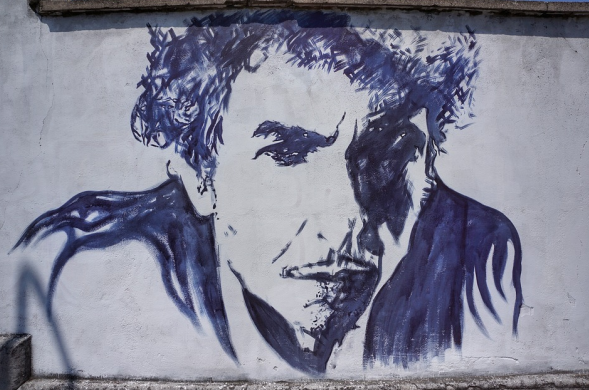
    Bob Dylan mural

    “The Timing Was Right” Indeed

    Right after the above lyric comes another lyric that shouldn’t come as a surprise to anyone who has followed our updates since we were CTKA (Citizens for Truth about the Kennedy Assassination). It says, “Was a matter of timing and the timing was right.”

    The timing here refers to the events that happened right before Kennedy was brutally taken down. After his death, word spread that the assassination might have been an inside job. The President wasn’t on the best terms with the CIA after they butted heads on the Bay of Pigs invasion, and it was rumored that he fully intended to pull US troops from Vietnam.

    These speculations go beyond conspiracy theories because there’s plenty of evidence backing them up. Find it on the Kennedys and King website to learn the truth behind the JFK assassination. Don’t forget to check out this review on the outrageous New York Times interview following Dylan’s song, a work of art that, in our opinion, beautifully summarizes the most infamous political assassination from the 1960s.

    Extend your search to other political murders around the same time, especially the malcolm x assassination, Martin Luther King, and Robert F. Kennedy. The latter was also killed by a so-called “lone assassin” five years later.

    Feel free to contact us to share your thoughts and concerns.

  • 3 Shocking Facts About the JFK Assassination

    3 Shocking Facts About the JFK Assassination

    Nearly 60 years ago, just after noon, the US lost a critical figurehead in the Cold War against the Soviet Union. Condolences came pouring in from all parts of the world as soon as the news got out that US President John F. Kennedy had been assassinated. Click here for a snippet.

    With every public disclosure, we have seen shocking revelation after shocking revelation following the events of that day.

    1. No Dismissals

    The assassination of John F. Kennedy, the Commander-in-Chief of one of the most powerful countries in the world, was by all appearances a major intelligence failure. However, not one person from the FBI, CIA, President Kennedy’s security detail, or the Secret Service lost their job.

    James Rowley, the Director of the Secret Service, retained his position until his retirement in 1973. Moreover, no one from the security detail escorting Kennedy on that last day was relieved of their duties. According to Rowley, everyone was fit for the job, but none came through when the President needed their protection.

    2. Missed Barrel Swabs

    When President Kennedy was assassinated, conducting barrel swabs was a standard procedure. However, the crime labs that received the alleged murder weapon failed to run this test and ignored many other scientific procedures that would’ve proven, beyond a reasonable doubt, whether or not the Mannlicher-Carcano rifle was used in the attack.

    The FBI crime lab technician Robert A. Frazier, testifying in front of the Warren Committee, said they didn’t examine the weapon for metal fouling. The same was the curious case with the Dallas law enforcement crime lab. Most routine ballistics and biological tests were never conducted after this assassination, even though the alleged murder weapon was recovered almost immediately.

    Kennedy with his head down

    3. No Grand Jury

    We will never stop finding it strange that a US President was murdered in the middle of a packed street, and no grand jury was gathered to investigate it. Grand juries are empaneled when there is an open homicide case at hand.

    Not doing so and forming the highly dubious warren commission results sent a clear message: the government and intelligence don’t consider the JFK assassination an unsolved murder worthy of further investigation but an already solved murder with undefined motives. They were on a fact-finding mission and did not intend to find the real killer(s) and bring them to justice.

    Find More Shocking Revelations on Kennedys and King

    Visit Kennedys and King if you’re on board with us when we say that the JFK assassination was entitled to a proper trial with state prosecutors, public defenders, a grand jury, and a judge. It was robbed of that the day the controversial findings of the Warren Commission were released.

    Read about the events surrounding his death and possible evidence-based motives behind the assassination of John F. Kennedy and other political assassinations of the 1960s.

    Get in touch to share your thoughts and feedback.

  • Suppressing The Truth in Dallas, by Charles Brandt

    Suppressing The Truth in Dallas, by Charles Brandt


    In the fall of 1977, former New Orleans District Attorney Jim Garrison wrote a letter to Jonathan Blackmer of the House Select Committee on Assassinations. They had just met in New Orleans and were developing an informational relationship, one in which Garrison would offer any files he could dig up on a subject and often advise on its value. Blackmer had been originally appointed by Robert Tanenbaum.  Tanenbaum was the New York City Chief of Homicide who had been the original Deputy Counsel for the Kennedy side of the HSCA. In this letter Garrison warned Blackmer about the perils of investigating the Kennedy case by using the usual tools of a police investigation.  Garrison wrote that these methods would not be adequate in the JFK case. The main reason being that, in reality, Kennedy’s assassination was a covert operation. Which had layers of disguise around it.

    That letter is still worth reading today.  And I wish Charles Brandt had read it. Because his new book on the JFK case is a prime example of how a former criminal investigator can go off the rails by relying on the lessons he learned in prosecuting felonies back—in Brandt’s case—the state of Delaware. Brandt is the author of several books, both fiction and non-fiction, in the crime genre.  He was a homicide investigator, prosecutor and finally Deputy Attorney General for Delaware.  In his book on the JFK case, Suppressing the Truth in Dallas, he lets us know about his past career quite frequently. And this is a serious problem with the work.

    For instance, fairly early in the book, Brandt states that Lee Oswald killed President Kennedy, wounded Governor John Connally and killed Officer J. D. Tippit. (Brandt, pp. 21-22) Brandt actually embarrasses himself with the following, “… the evidence is overwhelming that Lee Harvey Oswald fired the shots that killed President Kennedy and wounded Governor Connally.” (p. 21) Which would mean that he buys the efficacy of CE 399. Very wisely, he does not actually say that. Because in explaining the Magic Bullet, the evidence would be shown to be rather underwhelming.

    I will give the reader one example of what Brandt does say to justify all this. He says that Oswald fired only three shots, and these were heard by the workers on the fifth floor, below the sixth floor crime scene. (Brandt, p. 22)

    I was quite disappointed when I read this. First, it ignores the evidence of Tom Alyea.  Alyea was the Dallas photographer who was the first civilian on the sixth floor on November 22, 1963. He told Alan Eaglesham that when the police first found the shells, they were within a hand towel of each other. Which means they could not have been ejected by the rifle found on that floor.  But Tom also said that they were then lifted up and dropped on the floor and this was the arrangement that was then photographed by the police. (James DiEugenio, The JFK Assassination: The Evidence Today, p. 94)

    As per the noise of the dropping of the shells above the workers on the fifth floor, again, this is dubious. One of those witnesses, Harold Norman, presents a problem for prosecutor Brandt. Because it appears Mr. Norman changed his story. On November 26th, in his first statement to the FBI, there is no mention at all about those three sounds he heard from above. And there is nothing in the record about Norman saying anything like that prior to that report. What makes this even more suspicious is that Norman’s new story did not appear until his Secret Service interview of December 2nd.  (ibid, p. 55)

    Why? Because one of the Secret Service agents who Norman changed his story for was the infamous Elmer Moore. The man who worked on Dr. Malcolm Perry to change his story and the man who pulled a gun on Church Committee witness James Gochenaur. Moore also confessed that Secret Service Chief James Rowley and Inspector General James Kelly helped to frame agent Abe Bolden for his attempt to expose the plot to kill Kennedy in Chicago. (See Oliver Stone’s film, JFK: Destiny Betrayed)

    Right here, Brandt’s case would be in a world of trouble in any kind of legitimate legal proceeding. Two of his underlying evidentiary theses for Oswald’s guilt are quite questionable. But that is just the beginning of the problematic side of this book.  Brandt accepts the Warren Commission tenet of Lee Oswald being a communist.  He can do this since he proffers none of the new evidence from people like author John Newman, HSCA investigator Betsy Wolf, British researcher Malcolm Blunt, or journalist Jeff Morley. That sum total would indicate that Oswald was not a communist.  He was, in all probability, a CIA agent provocateur and FBI informant. The evidence adduced by Morley and Newman in Stone’s film JFK Revisited would be enough to show the problems with Brandt’s ideas about Oswald.

    Needless to say, Brandt also thinks that Oswald himself went to Mexico City in late September and early October of 1963.  Again, there are serious problems with that belief.  Many of them are put forth in the quite important, 410-page Lopez Report declassified by the Assassination Records Review Board in 1995. For instance, the lack of a picture of Oswald entering either the Cuban or Russian consulate, and the fact that Oswald himself spoke fluent Russian and the voice on the CIA tapes portray someone who spoke poor Russian. (DiEugenio, op. cit. pp. 287-300). In fact, it was the Commission treatment of Oswald in Mexico City which Jim Garrison once referred to as being perhaps the key to the plot. Since he was one of the first to suspect Oswald had been impersonated there. (Memo from Garrison to Lou Ivon, 1/19/68)

    II

    As part of his case against Oswald, Brandt states that Oswald fled the scene of the crime, namely the Texas School Book Depository. He accepts the Warren Report story about Oswald descending the sixth-floor stairs, and later being found in the second-floor lunch room by supervisor Roy Truly and policeman Marrion Baker; then leaving the building and going back to his rooming house. This is what he says: “…flight is powerful evidence of guilt…” (Brandt, p.22)

    We have already shown that the idea that the sixth floor was a crime scene has some questions around it.  But something that shocked me about the book is that I could find no mention of the three secretaries on the fourth floor: Sandy Styles, Victoria Adams, and Dorothy Garner.  This is really strange in the face of the success of Barry Ernest’s book, The Girl on the Stairs and Rich Negrete’s follow up film, The Killing Floor. Those two works help express strong reservations that Oswald was on the sixth floor at the time of the shooting. And if he was not there, then how can this be powerful evidence of guilt? Also, we should not forget that people like Bart Kamp have presented evidence that the second-floor lunch encounter was an event created after the fact. It may not have happened as depicted in the Warren Report. (For more detail, click here.)

    But to go further than that, if Oswald was fleeing the scene of the crime, why did he then take a bus back toward the scene of the crime? (Mark Lane, Rush to Judgment, p. 159) Because, if one accepts the Warren Report, that is what he did.  But then he got off that bus, walked several blocks, and hitched a ride in a taxi. But before he did that, he was about to get out of the cab and offer it to an elderly lady who asked that same driver to hail a taxi for her. (Lane, p. 165) The question is: Does a man who killed the president and wounded the governor of that state use public transportation to escape the scene of the crime? Does he then get off a bus, and then offer to give up his cab to someone he does not even know?  Where is the urgency in this?  How does it portray consciousness of guilt? I won’t even bring in the questions some writers have had about whether Oswald was really on that bus—the driver did not think it was him—or whether or not he was in that cab. Some believe that Oswald—or a double– was actually taken out of Dealey Plaza by a dark complected Cuban in a Rambler station wagon, as testified to by Deputy Sherriff Roger Craig. (Lane, pp. 173-74)

    But one of the most arresting characteristics about Brandt is his single-mindedness.  He portrays little if any doubt about what he is writing. But yet, that attitude is undermined by several mistakes he makes about the factual record.  For instance, in discussing the murder of J. D. Tippit, he says “A few brave eyewitnesses followed Oswald to a movie theater and watched him sneak in.” (Brandt, p. 23) I am not aware of any witnesses who followed Oswald from 10th and Patton, the scene of the Tippit shooting, to the Texas Theater, let alone “a few”. Most people who write books about the case should know that the two witnesses who complained about Oswald sneaking into the Texas Theater were Johnny Brewer and Julia Postal. The former worked at a shoe store down the street from the theater, and Postal was the ticket taker.

    To show the reader how determined Brandt is to turn Oswald into the assassin, he actually writes that Oswald tried to kill Officer McDonald inside the theater as he was being apprehended. (Brandt, p. 23) This has been pretty much demolished by Hasan Yusuf. As per the Tippit shooting, Brandt follows the Warren Report on that one also: Oswald shot Tippit.  Except in this instance, he uses the testimony of the HSCA’s Jack Tatum as his signal witness. Apparently, he missed Jack Myer’s essay exposing Tatum as rather problematic.

    As the reader can guess by now, Brandt also fingers Oswald in the attempted murder of General Edwin Walker. He does not explain how the projectile in that case went from a 30.06 to a 6.5 mm bullet–and also changed color, during the transfer from the Dallas Police to the FBI. Or how Oswald was never a suspect in the seven months that the police handled the case; but he quickly became the perpetrator shortly after the Commission and Bureau took over the Walker shooting. (DiEugenio, The JFK Assassination: The Evidence Today, pp. 100-01)

    Robert Tanenbaum once said about his experience as a homicide attorney, he always ended up with more questions than answers in handling a murder case. Well, Brandt seems to have nothing but answers in the JFK case. But as we have seen so far, he has not asked himself the right questions.

    III

    Having shown some of Brandt’s liabilities, what is his actual take on the crime?  Well, in addition to saying that Oswald did what the Commission said he did, he then chalks it all up to the Mob. (Brandt references Robert Blakey several times in his book.) As I noted above, by ignoring all the latest work on Oswald, he can simply make minimal observations about the man, and then label him a tool of organized crime.  Even though one of the pieces of evidence he uses–the whole connection with his uncle Dutz Murret as part of the New Orleans criminal element–was shown by the declassified record to be incorrect. Dutz Murret’s wife Lillian was examined by the House Select Committee on this point. She said that Dutz was not working for any mob connected bookie outfit in 1963.  His son Eugene said the same thing to the HSCA.  In fact Eugene said his father had disconnected with the Mob prior to 1959. (Interviews by HSCA with Lillian and Eugene, 11/6 and 11/7/78) So if there is any other significant evidence that Oswald was Mob associated, Brandt does not adduce it. (He does bring up an association much later, but we will deal with the problems with it in due time.)

    The structural framework for Brandt’s book is one of the oddest I have ever read.  In fact, in that regard it is up there with the likes of Mark Shaw and Lamar Waldron.  He begins by making Earl Warren out to be a villain–not just in the JFK case, but in what he did with criminal law in general. Which is kind of odd, since many prosecutors think that what Warren did in this area was a long time coming and had prior precedents to back it e.g. the exclusionary rule was introduced in the Weeks vs United States case in 1914. Other aspects of what Warren did, ordering defendants to have attorneys in the Gideon case, and reading a suspect his rights in the Miranda case, have usually been praised as ameliorating abuses by police and prosecutors.

    But incredibly, Brandt wants to put forth the idea that Warren was covering up for the Mob.  (Brandt, pp. 10-11). The way Brandt does this is rather odd.  Throughout the book, the author uses a phone call from Lyndon Johnson in which the president alluded to international complications in the JFK case. (Brandt, p. 41) Brandt treats this as a kind of nebulous pretext that LBJ was using.  Yet, to anyone who has read say, James Douglass’ JFK and the Unspeakable, it’s clear what Johnson was referring to.  It was to the alleged appearance of Oswald at the Cuban and Russian embassy in Mexico City. (Douglass, p. 83, p. 335). Johnson attempted to intimidate Warren with the threat of atomic warfare due to Oswald’s activities at the two embassies, with the implication that Oswald killed Kennedy for the communists. And by all accounts, LBJ succeeded.  For instance, after LBJ put the fear of God in him, Warren did not want the Commission to call any witnesses or have subpoena power. (DiEugenio, The JFK Assassination: The Evidence Today, pp. 311-12) How Brandt did not know about this, or failed to understand it, is really incomprehensible. But it was this nuclear intimidation that made Warren into a paper tiger on the Commission.

    From this faulty premise, Brandt goes on to postulate another faulty premise. Namely that Warren dominated the Commission members and the legal staff. (Brandt, p. 50) This is undermined by another event the author fails to mention. Warren could not even push through the chief counsel he wanted—namely Warren Olney. By all accounts Olney was too much of a maverick for FBI chief J. Edgar Hoover, and commissioners Gerald Ford, John McCloy and Allen Dulles. (DiEugenio pp. 314-15) So, quite early, Warren had been cowed twice. Unlike what Brandt writes, the real power within the Commission was what I refer to as The Troika: Gerald Ford, John McCloy and Allen Dulles. With their handpicked chief counsel, J. Lee Rankin, they essentially ran the show. (DiEugenio, pp. 315-17)

    IV

    Brandt’s attempts at creating historical context for his structure is so unfounded and illogical that it becomes kind of an exercise in the theater of the absurd. For instance, his discussion of the Bay of Pigs invasion is one of the worst I have seen. Consider this for starters: he writes that Robert Maheu testified to the Church Committee about his actions in the Bay of Pigs. (Brandt, p. 73). I asked: What actions?  As far as I can see, Maheu had nothing to do with the Bay of Pigs.  The best volume I know of on the subject, Bay of Pigs Declassified, by Peter Kornbluh, never mentions Maheu.

    Brandt follows this with something just as inexplicable. He writes that the Bay of Pigs led directly to Kennedy’s death. The problem with writing this is that he never comes close to proving it.  If that is not bad enough, his characterization of the operation is a bit ridiculous. Consider how he regards Allen Dulles telling JFK he would have a disposal problem with the Cubans.  Brandt interprets this as the Cubans badmouthing Kennedy if the operation failed. (p. 81). This is not what Dulles meant. What the CIA Director was indicating was that if Kennedy did not go through with the operation, there would be a problem in resettling the thousands of Cuban exiles the CIA had assembled. 

    One of the most bizarre statements the author makes is that the Bay of Pigs constituted felony murder; an invasion of Cuba by the USA. I guess Brandt never heard of the Truman Doctrine, which dates from 1947. Or how it was used—to name just one instance– in the CIA’s prior disaster in Indonesia in 1958, when Eisenhower tried to overthrow Sukarno.

    Then we get to Brandt and Director of Plans Dick Bissell, the CIA’s chief architect and manger of the invasion.  Brandt quotes Bissell as saying there would be an “air umbrella” accompanying the invasion. (Brandt, pp. 83-84) As many writers on this subject, like Larry Hancock and David Talbot have concluded, Bissell was a rather unreliable source about the operation. Kennedy had insisted that any further air operations after the preliminary raids—which Brandt all but ignores—were to be conducted from an air strip on the island. (Kornbluh, pp. 125-27). Since no beachhead was ever established, these launches could not be made. Two reasons that the beachheads were not secured are due to lies the CIA had told Kennedy: 1.) There was no element of surprise, and 2.) There were no defections.

    Another fact that Brandt never mentions is crucial. Bissell and Director Allen Dulles both later confessed that they knew the invasion would fail.  But they were banking on Kennedy intervening with direct American forces to bail out the operation rather than have it collapse. (Peter Grose, Gentleman Spy, pp. 521-22) When Kennedy learned about this duplicity, he decided to fire the top level of the Agency: Dulles, Bissell, and Deputy Director Charles Cabell. I could find no trace of any of this in Brandt.

    Brandt continues in his vein as a very poor historian.  He says that the Bay of Pigs invasion included a top-secret plan to murder Castro. (Brandt, p. 85) This is false. There was no such plot included in the designs of the plan.  That whole affair was a completely separate operation secretly initiated and managed by the CIA.  Brandt makes this all the worse by writing that this plot was hatched by President Eisenhower, CIA director Dulles and Director of Plans Bissell and was then executed by President Kennedy and Attorney General Robert Kennedy.

    To say this is horse manure is an insult to horses. Any real historian would know that the CIA Inspector General Report on the plots to kill Castro was declassified back in the nineties. In two places in that report it specifically states that the CIA had no presidential approval for these plots. (For instance, see pp. 132-33) But Brandt then doubles down on this and says Operation Mongoose also included assassination plots. Again, this is not true.

    But we later see why Brandt does this.  He wants to argue that these plots gave the Mob blackmail power over John Kennedy.  If Kennedy never knew of them and never authorized them, then such is not the case. And it creates another large fault line in his narrative. He adds to this later by saying that Bobby Kennedy concluded that the Mob killed President Kennedy. The best book on Robert Kennedy’s inquiry into his brother’s death is probably David Talbot’s Brothers. In that book, RFK considered three main culprits: the CIA, the Mob and the Cuban exiles.  He never came to a definite conclusion. According to Talbot that was going to happen when he won the presidency.

    V

    Brandt continues his cartoon history by saying that Joseph Kennedy was a bootlegger, and he used criminal influence to win the West Virginia primary for his son in 1960. (See Chapter 14, especially p. 59)

    Both of these premises are false. And I have expounded on this before at length. The book that this rubbish is owed to is Double Cross, by Sam and Chuck Giancana–which is a wild fantasy. As Daniel Okrent proved in his book Last Call, there is no evidence at all in any FBI files of anyone accusing Joe Kennedy of being involved with the Mob in these kinds of ventures. And since the man was investigated six times for high offices, that includes well over 800 pages of documents spanning over two decades. (Click here for more.) Biographer David Nasaw showed how Joe Kennedy was making literally tens of millions at that time through real estate, stock trading, and most of all, distributing movies and managing film companies. Why would the multi-millionaire—with a Rolls Royce and chauffeur–want to get into something illegal when, for instance, at that time insider trading was legal?

    Keeping to the fantasies of Double Cross, Brandt says that the Mob helped Joe Kennedy win the 1960 general election i.e. in Chicago.  Again, this is more rubbish.  John Binder did a careful study of the election results in Chicago in that year.  To put it mildly, they disprove this fiction.  The tallies were actually below average for that kind of election. And in talking to one of the ward bosses it was discovered that the actual instructions were to oppose the Kennedy candidacy. (See Binder’s essay, “Organized Crime and the 1960 Presidential Election. This would be a good place to add that the book is very sparsely annotated and has no index.)

    Toward the end, Brandt brings in David Ferrie through two witnesses in New Orleans. (See Chapter 39) He writes about Ferrie being questioned by the Secret Service and let go.  To my knowledge Ferrie was questioned by Jim Garrison and then the FBI. He then says that at the Camp Street building Ferrie frequented, he was prepping for the trial of Carlos Marcello. Reportedly, Ferrie was doing that at Marcello’s lawyer’s offices.  Brandt concludes that Dallas Police Captain Will Fritz would have found out about Ferrie, and had both of them in his office, Oswald and Ferrie, one in one room and one in another. (Brandt, p. 221). I wish I was kidding when I wrote that. Apparently, Brandt is unaware that Will Fritz was the man who turned down an interview with Rose Cheramie. (The Assassinations, edited by James DiEugenio and Lisa Pease, p. 228)

    To give Brandt some credit, his discussion of the testimony of Jack Ruby is acute as to its lack of credibility, and the author proves a few of Jack’s outright lies. (See Chapters 33-36). And he latches on to how important the testimony of Oswald’s landlady, Earlene Roberts, was and how important it should have been to find out who the two policemen were in that car beeping outside Oswald’s boarding house. The problem is that this is a rather slim portion of the book, and most of what he writes one can find elsewhere.

    I was not expecting much from Brandt since I did not find his previous work on the Hoffa case, I Heard You Paint Houses, very distinguished. But in all honesty, I have to conclude that his current book is even worse than I thought it would be.
  • Revisiting Martin Luther King’s Idea of Universal Basic Income

    Revisiting Martin Luther King’s Idea of Universal Basic Income

    During the last decade of his life, Martin Luther King’s civil rights activism took on a universal spin. He started advocating for equal civil rights for the poverty-struck community, not just the African American diaspora.

    Universal basic income was a part of this economic dream. Let’s discuss this ideal that was so callously interrupted by the assassination of Martin Luther King.

    What is Universal Basic Income?

    Universal basic income would’ve guaranteed that every American got a mandatory middle-class income to make ends meet. Also known as guaranteed income, this would have ensured every citizen a set share of living expenses yearly instead of the minimum wage, which is neither realistic nor sufficient for a college student to pay off their loans.

    modernized version of this welfare recipient program proposed by Charles Murray, a conservative scholar, would see every legal adult get a set sum of $10,000 annually.

    King’s Universal Basic Income

    King’s idea of a universal basic income went beyond anything proposed today. If anything, we should be taking notes from the ideas perpetuated during the ’60s because they were just that ahead of their times.

    King’s vision has gone into great detail about the universal basic income in Where Do We Go From Here: Chaos or Community? A book that would go on to be his last. While acknowledging the government’s overtures to address poverty through education and housing, King also said they weren’t nearly enough to eradicate poverty.

    In his opinion, the government needed a direct approach to ending poverty. In other words, this meant addressing more of the “what” and less of the “why”; the latter wasn’t doing anything to improve their lives.

    march for jobs banner

    Create a Universal Basic Income to Create Jobs

    It should be noted that King wasn’t trying to make a case for an income whether or not you were employed. When he said the US wasn’t doing nearly enough for the poor despite growing economically rich every day, he meant that the government—the system—was disregarding the poor because it saw them as inferior.

    If a decent income is what it takes for the system to see these people as equals and provide them with equal job opportunities, a decent, guaranteed income is what they should get. He wanted everyone to work and the government to guarantee a middle-class income by creating job opportunities for conventional and unconventional skill sets.

    The Final Setback

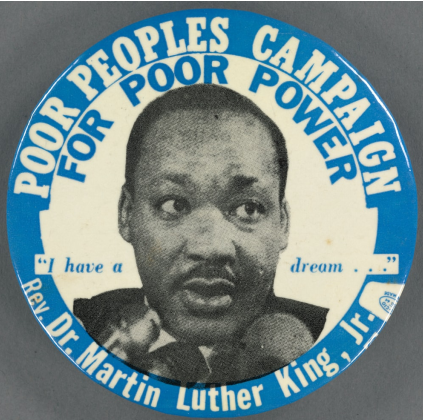
    Universal basic income was an important aspect of King’s Poor People’s Campaign. It had already experienced a setback because of King’s ongoing criticism of the US involvement in the aftermath of vietnam war.

    Its final setback came in the form of the MLK assassination. Visit Kennedys and King to learn more about the events surrounding his assassination, particularly the threat he presented as an important pillar of the Civil Rights Movement.

    Reach out for inquiries and updates.

  • How to Make Every Day Martin Luther King Day

    How to Make Every Day Martin Luther King Day

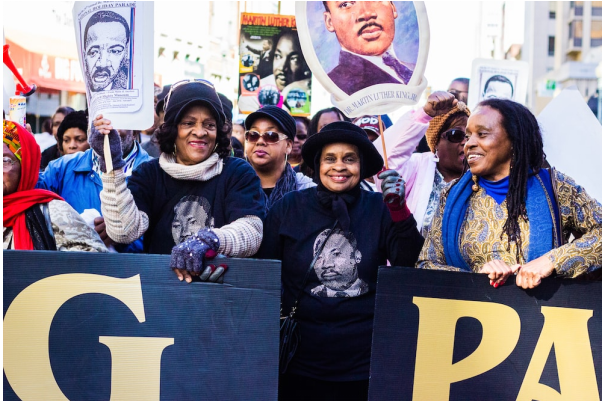
    Martin Luther King Day is celebrated on the third Monday of every year, a day before the civil rights leader was officially born. Click here to see how we did it in 2017. It’s a day to not only celebrate the life and legacy of a great leader but also to teach his ideas of freedom and racial equality to a whole new generation.

    Check out the following ideas to make every third Monday an MLK Day.

    Prepare an Interactive Presentation

    Keep this unofficial MLK Monday simple by informing young kids about King, but make it interactive through a colorful presentation and lots of opportunities for input.

    Treat the quiz part of your presentation as a pop-up book. For instance, blank out the “dream” in “I have a dream” and follow it with a slide depicting the blanked word. Sprinkle these small quizzes throughout the presentation to retain their attention from start to end.

    Encourage Mixed Interaction

    MLK’s “I Have a Dream” speech defined his entire struggle. It spoke of a world where people of all races would unite and create a just and equal world. Unfortunately, a large part of his dream remains unrealized due to a racist system that promotes modern-day segregation.

    If you know what we’re talking about, you know what we mean by encouraging mixed interactions. Don’t let the different experiences of these kids stop them from mingling. You can get your students to sit with someone else for a change if you’re a teacher. You can do this during lunch, homeroom, or class. Do this every month for long enough, and you’ll see a level of comfort between students.

    students in a library

    Speak on Equal Civil Rights

    Take this chance to mold your kids into future leaders. King is best known for “I Have a Dream,” a speech he gave during the March on Washington. Make your children read the transcript of that speech, and sit with them to write an equally riveting piece of text about equal civil rights.

    Encourage your children to write exactly how they want to see the US one day. You can create a bullet point sheet of their ideal future and then ask them to use these points and turn them into a speech, emulating MLK’s style.

    Assign a Reading Task

    You don’t have to be a teacher to assign your kids a reading task, not with Kennedys and King at your disposal. Suppose you want your children to learn nothing but the truth behind the Assassination of Martin Luther King. In that case, we suggest taking excerpts from our archives, preparing multiple-choice and fill-in-the-blank questions, and assigning them as an individual, pair-or group-based reading comprehension activity.

    Follow suit with the other political figures covered by our platform. Browse our website to take a closer look at the assassinations of John F. Kennedy, Bobby Kennedy, Martin Luther King, and Malcolm X.

    Get in touch to share feedback and concerns regarding our content.

  • How the JFK Assassination Changed American Politics

    How the JFK Assassination Changed American Politics

    The assassination of John F. Kennedy wasn’t the first attempt of its kind. Like its predecessors, this unsolved political murder made the people stop and mourn the loss of a great leader. It also led to many changes in the following years. Click here for JFK assassination archives.

    Below is an overview of how the assassination revolutionized American politics.

    The Civil Rights Act Was Passed Earlier

    After President Lyndon B. Johnson took office in 1964, he and his allies got the Civil Rights Act—one of his predecessor’s agendas and his campaign pledge—passed. While Kennedy prevented segregation bills from being passed, he faced strong opposition and resistance regarding American civil rights in Congress.

    However, despite all the pressure and resistance, he was determined to propose his bill in 1964. After his death, the baton passed to his brother Bobby Kennedy, who was equally determined to see it through. While the bill was always meant to be tabled in 1964, his assassination certainly escalated its passing.

    The Cold War Got a New Life

    Kennedy gained public favor after the way he resolved the Cuban Missile Crisis by having back-door discussions with Nikita Khrushchev through trusted third parties. Just when the US and Russia were on the verge of a full-scale war, Kennedy extended a well-received deal to the then-Russian premiere.

    Unfortunately, Kennedy’s assassination happened at the height of the Cold War. Russia restored its aggressive, hardline stance against the US after Presidents Lyndon, Nixon, Ford, and Carter took office, and the Cold War continued to rage on until the fall of the Berlin Wall. Thus, the JFK assassination lengthened the Cold War.

    Cold War

    More Lives Lost in the Vietnam War

    Kennedy wanted to send advisors instead of troops to Vietnam, as evidenced by the disclosed planning documents dated two days before his death. His previous resolution patterns during the Cuban Missile Crisis and Bay of Pigs Invasion made it clear that he preferred diplomatic solutions to military interventions. Koji Masutani’s2009 movie, Vietnam If Kennedy Had Livedsupports this idea.

    When Johnson took office, he manipulated Congress to approve a disastrous resolution that allowed him to infiltrate Vietnam by sending thousands of troops. In the end, the Johnson and Nixon administrations supported a war that lasted tenodd years and killed 58,220 American troops and more than a million Vietnamese people.

    The Civil Rights Act wasn’t the only good thing to come out of the assassination of John F. Kennedy, nor were the Vietnam and Cold Wars the only consequences of his death. Learn more about the years following his death at Kennedys and King. Please support our cause, help us learn the truth behind the political assassinations of the 1960s, and be the first to discover newly disclosed documents related to the JFK assassination.

    Contact us to share your insights and thoughts.

  • Who Else Fell Victim to the JFK Assassination?

    Who Else Fell Victim to the JFK Assassination?

    President John F. Kennedy was assassinated on November 22, 1963, while passing through Dealey Plaza inside an open motorcade with his wife, Jacqueline Kennedy, John Connally, the then-Governor of Texas, and his wife, Idanell Connally. Click here for more details.

    Kennedy wasn’t the only person to lose his life in the attack, nor was he the only victim, surviving or otherwise.

    John Connally

    The Texas Governor met Kennedy the day before the assassination. He had been the governor for tenmonths and had already accompanied the President in San Antonio and Houston. After a quick stop at Forth Worth, they flew to Kennedy’s final destination, Dallas. 

    When the first shots rang out a little after noon, Connally clearly remembers feeling like someone had punched him twice in the back. He was soon covered in blood and viscera that he, at the time, thought was his own before passing out.

    Connally ultimately survived the attack, but not before undergoing surgery for several injuries encompassing his thigh, wrist, chest, and back. While he generally agreed with the controversial findings of the Warren Commission, he disagreed with the single-bullet theory.

    J.D. Tippit

    J.D. Tippit has been a law enforcement officer for the Dallas Police Department for 11 years at the time of the assassination. He was no stranger to violence, having served in World War II and sustaining multiple injuries as a cop.

    The day of the assassination started just as any other day for Tippit. Official accounts place him on duty patrolling nearby Oak Cliff, and his alleged time of death was roughly 45 minutes after the attack on Kennedy. The official accounts place him talking to the alleged assassin and getting shot to death soon after, but we know to take such testimonies with a grain of salt.

    motorcade

    James Tague

    James Tague isn’t your average JFK assassination victim. However, before making a career out of the incident, he was a regular car salesman. On the day of the murder, he was stuck in traffic on his way to meet his fiancée for lunch.

    As he got out of the vehicle, a misfired bullet reportedly hit the curb next to him and sent debris flying everywhere, including his right cheek. His injury was minor, but it became a turning point in his life. Although he initially agreed with the findings of the Warren Commission, he later recanted his statements and has even published two books presenting alternate solutions to the Warren Commission.

    At Kennedys and King, we seek to denounce conspiracy theorists and seek the truth behind JFK assassination. Please contribute to our cause to advocate for full public disclosure ofthe political assassinations of the 1960s, including those of Martin Luther King, Robert F. Kennedy, John F. Kennedy, and Malcolm X.

    Reach out to share your thoughts and comments.

  • How the World Reacted to the JFK Assassination

    How the World Reacted to the JFK Assassination

    We all know how John F. Kennedy was assassinated. What we don’t know is who had him murdered. See how far we have come in solving this mystery here.

    While the search for his killer(s) continues, let’s examine how the world reacted to the John F. Kennedy assassination.

    Disbelief in Taiwan

    Taiwan has been one of the most long-lasting strategic allies of the US. The assassination of John F. Kennedy left the country nonplussed and aggrieved.

    If Generalissimo Chiang Kai‐shek’s words are to be believed, their genuine shock had to do with a perception of the bulletproof security detail provided to chiefs of state. Before President Kennedy’s murder, the assassination of a president was unheard of in Taiwan.

    Empathy in Hong Kong

    Hong Kong termed President Kennedy’s death a not quite “purely American loss.” Kennedy’s stands in the Cuban missile crisis and South Vietnam made him quite popular in Southeast Asia.

    At the time of his death, the US was also winning against rival communist countries in Asia. Many in Hong Kong believed the assassination would significantly weaken America’s position.

    Kennedy with German chancellor

    Morbid Curiosity in Israel

    Save some Orthodox Jews who eschewed tuning into the shocking news for Sabbath, Israelis were drawn to their radios following the news of the JFK assassination. While the president had passed away on his way to the nearest hospital, news spread much slower in those days.

    However, it still spread much faster than any other news. The US Ambassador to Israel at the time, Walworth Barbour, also made a radio appearance, thanking the Israeli people and founder and first prime minister of the State of Israel, David Ben‐Gurion for expressing their condolences.

    Condolences from Greece

    An outpouring of support and condolences emerged from Greece following the President’s assassination. Among the JFK tributes was a book of condolences signed by 2,000 Greeks at the US embassy in Athens.

    The country’s then-Prime Minister expressed his condolences and credited President Kennedy for extending mutual peace between the countries. He also welcomed continued cooperation with the new President, Lyndon B. Johnson.

    Join the Online Quest for Truth Behind the JFK Assassination

    Join Kennedys and King in its quest for the truth behind the political assassinations of the 1960s. Review our findings and analysis on the John F. Kennedy assassination and delve deeper into the unsolved political murders of Malcolm X, Robert F. Kennedy, and Martin Luther King.

    You can also contribute to our cause through donations, articles, phone trees, podcasts, and other multimedia through which you can demand the disclosure of documents and investigation findings.

    Reach out to ask questions and help us find answers to some of our own.

  • JFK Assassination Records Lawsuit

    JFK Assassination Records Lawsuit


    The documents should have been released by now, but the current and previous administrations keep delaying. The new lawsuit seeks to bring them to light as soon as possible.

    Here’s how CBS portrayed it.

  • The Civil Rights Movement vs. The BLM Protests: A Comparative Analysis

    The Civil Rights Movement vs. The BLM Protests: A Comparative Analysis

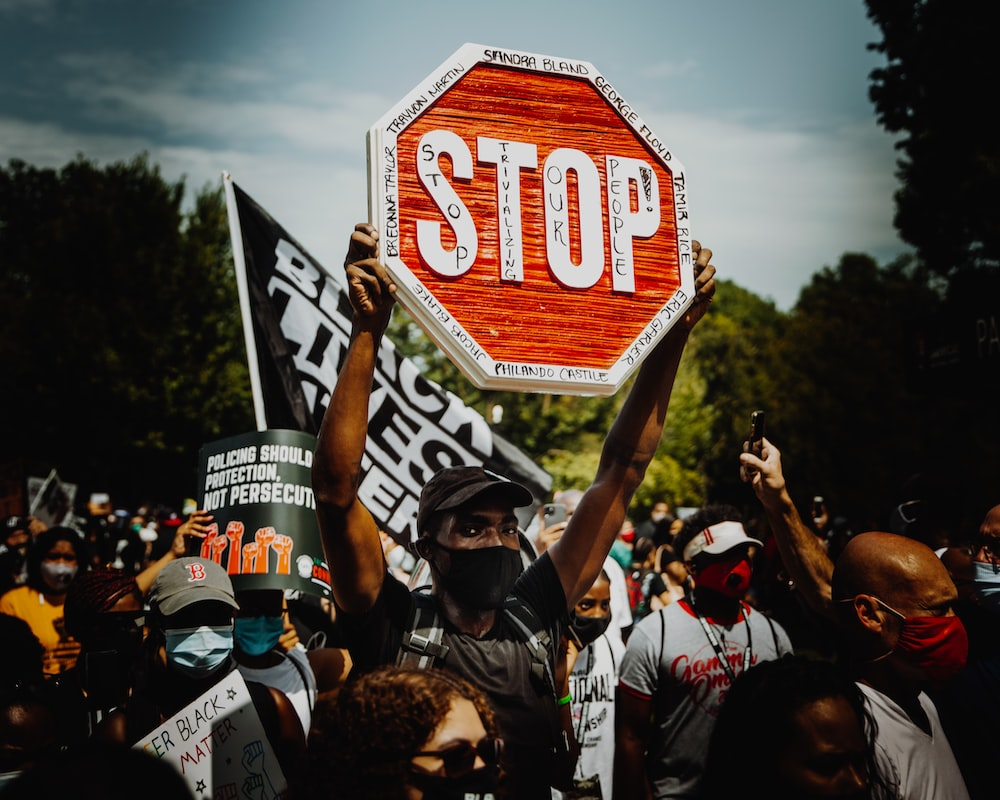
    The Civil Rights Movement was marred by the Malcolm X and Martin Luther King assassinations. More on that here. On the other hand, the Black Lives Matter protests were incited by the extrajudicial killings of George Floyd and Breonna Taylor. They happened amid an economic recession, nationwide lockdown, and climate change concerns.

    Let’s see how close a resemblance the BLM protests bear to the CRM.

    The Purpose

    CRM was a social movement against systemic racism and segregation between the mid-1950s and late-1960s.

    While CRM happened within the US, BLM was more of an international movement that started within the US but quickly spread to neighboring Canada and across the pond. Its main goal was to end racially motivated police violence against the black community.

    The Dissemination of News

    There was no Twitter or Facebook—no internet—during the ’50s and ’60s. During this time, the CRM found an unlikely ally in the press. Previously overshadowed by news about white people and reportage of black criminal activity, the white press soon found competition in the black press. The African American media became an avenue of protest and a way to spread the word for civil rights activists.

    Conversely, it was much easier to disseminate news during the BLM protests. The movement began using the hashtag #BlackLivesMatter to keep people updated, pressurize the criminal justice system and Congress to do right by the victims, and pass police reform bills.

    Civil Rights Act signing

    The Power of Boycotts

    Both movements are non-violent. They were carried forward through peaceful protests, fliers, news media, and boycotts. The latter was an incredibly powerful force for positive change during the CRM.

    Take the Montgomery Bus Boycott, for instance. Announced by the Montgomery Improvement Association after Rosa Parks was arrested for violating segregating laws, this 381-day boycott brought the operating bus company to its knees.

    Conversely, BLM protestors carried out a Black Friday boycott in Ferguson when a grand jury decided not to indict the killer of a black teen, resulting in an 11% reduction in sales in 2014.

    More Comparative Analysis to Come on Kennedys and King

    Share your comparative analysis with Kennedys and King, a platform dedicated to uncovering the truth behind the political assassinations of the 1960s, including the murders of Civil Rights leaders like Martin Luther King and Malcolm X. Contribute by spreading the word and sharing relevant multimedia and donations.

    Do you think there’s another way to extend our message to the masses? Feel free to share!