Blog

  • Mel Ayton’s Blatant Distortion of Facts About the RFK Assassination in The Kennedy Assassinations

    Mel Ayton’s Blatant Distortion of Facts About the RFK Assassination in The Kennedy Assassinations

    Mel Ayton has made it his life’s purpose to discredit any opinion that’s not his by writing it off as a conspiracy theory. At least, that’s what appears to be the case in his latest hardcover—a total waste of trees, if you ask us—book, The Kennedy Assassinations:JFK and Bobby Kennedy.

    Find our complete review of the book here and some highlights from the article below.

    100 Pages of Nothing

    James DiEugenio criticizes the 100 pages dedicated to the assassination of Robert F. Kennedy case for omitting Dr. Thomas Noguchi, mentioning DeWayne Wolfer while quoting someone else, and not expanding upon the findings of Judge Robert Wenke’s Panel.

    The Kennedys and King writer and founder criticizes Ayton for referring to the works of controversial authors, like Godfrey Hansen and Robert Blair Kaiser, who admittedly fall prey to conspiracy theories in trying to prove the point that anything that attests to Sirhan’s innocence is a conspiracy theory. Ayton goes as far as misrepresenting the shooting to achieve this feat while ignoring the other side of the argument entirely.

    the Kennedy brothers

    Michael McCowan: A Member of Sirhan’s Defense Team

    Ayton refers to the word of Michael McCowan as gospel, forgetting or willfully omitting the details of his sketchy background. McCowan was a member of Sirhan’s defense team who never believed in his client’s innocence.

    McCowan was a suspected criminal, but his crimes against Sirhan knew no bounds. If working without compensation isn’t suspicious enough, how about the fact that he once tried to portray Sirhan as a communist? Or that he coerced Sirhan into following his defense team’s strategy come what may?

    McCowan wasn’t just an incompetent team player. He knew exactly what he was doing when he stopped Sandra Serrano-Sewell from taking the stand. This is the kind of person that Ayton uses to prove his propaganda.

    The Refusal to See McCowan as an LAPD Plant

    Ayton refuses to consider the possibility that McCowan might have been an insider. He wants his readers to have the same perspective by conveniently leaving out anything about his sketchy dealings leading up to the case in The Kennedy Assassinations.

    He doesn’t even portray the man as incompetent because he agrees with the overall narrative and wants his contemporaries to buy into it.

    That this narrative and Sirhan’s alleged confession don’t match the autopsy report drawn up by Dr. Noguchi doesn’t matter. Dr. Noguchi’s autopsy report clearly states that Senator Kennedy was shot at close range “from behind and at extreme upward angles.” That doesn’t match Sirhan’s alleged confession of firing the shots as he stood facing him.

    Be sure to check out the full review of The Kennedy Assassinations and other pieces discredited and deemed credible by James DiEugenio and the other contributors at Kennedys and King, a platform committed to uncovering the truth behind the political assassinations of the 1960s.

    Know how you can contribute, and contact us for queries and feedback.

  • The Most Noteworthy Televised Moments of the 1960s

    The Most Noteworthy Televised Moments of the 1960s

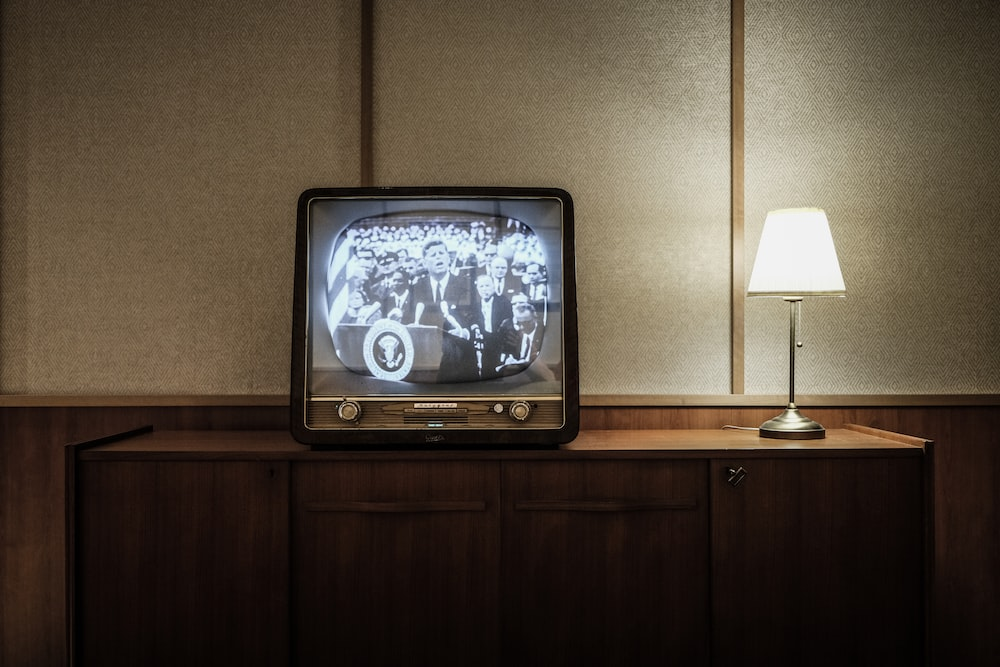
    It’s been half a century since the 1960s, a long enough time to see the events of that decade from a wider perspective. You may find most perspectives through our contributions over the years, but we’re still missing a televised perspective.

    In today’s blog, we look back at the most sensational televised moments of the 1960s.

    “I Have a Dream”

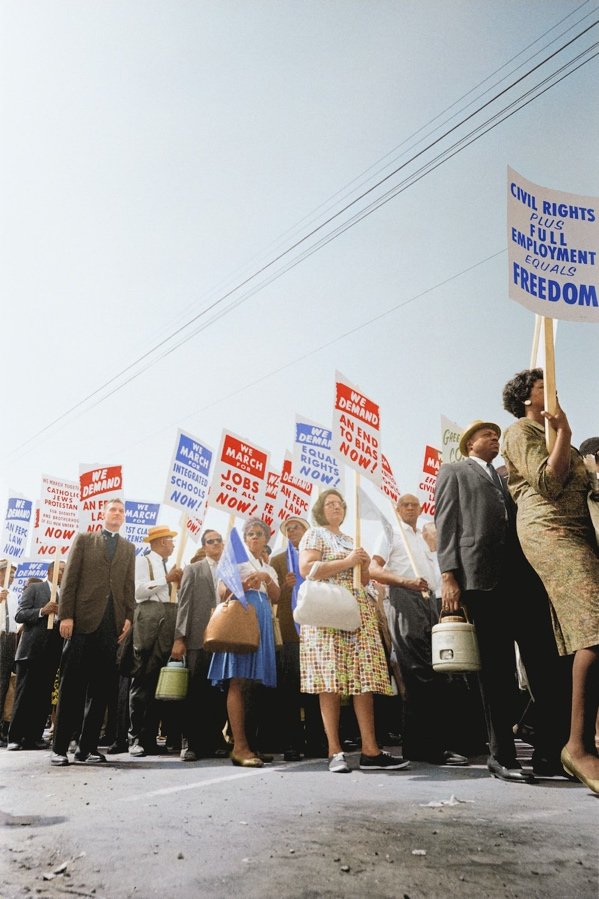
    News media played an important role in the Civil Rights Movement. It helped civil rights activists spread their message through digital media instead of disseminating them through leaflets, mail, and whatnot.

    The 1963 Freedom March and the “I Have a Dream” speech that Martin Luther King Jr. made during that march would perhaps not have been as impactful as it was then or as memorable as it is today if it weren’t televised and recorded. Human memory is fleeting, but the camera remembers every detail of that speech.

    The Aftermath of the JFK Assassination

    The reportage following the assassination of John F. Kennedy was some of the most extensive in the history of national television.

    News reporters swarmed Dallas to immortalize the hasty oath-taking ceremony of Vice President Lyndon B. Johnson. They could record the former First Lady in the same blood-stained clothes she wore during the deadly motorcade.

    That said, we’re sure the news media didn’t expect to capture another assassination and that too so soon after the death of a US President.

    oath taking ceremony

    “Report from Vietnam”

    Everyone knows the Tet Offensive was the event that reinforced the US withdrawal from the Vietnam War, but they may not know about the report that took the wind out of their sails.

    Report from Vietnam” was a report by Walter Cronkite, the anchor of CBS Evening News, documenting a two-week trip to Vietnam after the Tet Offensive. The situation on the ground this soon after the devastating attacks may have cemented President Johnson’s announcement not to run for reelection.

    Lee Harvey Oswald is Assassinated

    The Guinness World Record for the “First Murder on Television” goes to Lee Harvey Oswald. Two days after the assassination of John F. Kennedy, reporters clamored to get a glimpse of the alleged shooter.

    They should’ve been careful what they wished for because they traumatized more than half the households across the US by capturing one of the violent televised moments of the 1960s. They ended up showing Jack Ruby killing Lee Harvey Oswald as the police were escorting him.

    Visit Kennedys and King for Videos and Interviews

    Find the videos and interviews of some of the above televised moments on Kennedys and King. You can also check out other media, such as articles, reviews, and resources we have collected over the years, to bring the truth behind the political assassinations of the 1960s to light.

    Contact us for inquiries and to lend your support to our cause.

  • Never Forget: The 4 Most Notable Ways 1968 Made History

    Never Forget: The 4 Most Notable Ways 1968 Made History

    The ’60s were a turbulent decade. Every year was marked by a few triumphs in space technology and too many tragedies here on Earth. Of the ten years that marked the difficult decade, 1968 was the most eventful. Click here to get our hot take on these events more than 50 years later.

    Keep reading for a quick rundown of some of the unforgettable historical events of 1968.

    1. The Tet Offensive

    Late January was the “Tet”, or Lunar New Year for much of Southeast Asia. Around this time in 1968, North Vietnam launched its violent Tet Offensive against the US and South Vietnam; it may have also marked the beginning of the end of the US involvement in the Vietnam War.

    The two sides normally didn’t engage in battle on “Tet”. The day was an unspoken truce between the North and South. That day, the North launched an attack on 36 major cities and towns with an army of 85,000 Viet Cong.

    While the invasion failed to make its intended impact, it led to widespread discussion against US involvement and kickstarted its eventual retreat from the Vietnam War.

    Vietnam War scenes


    2. RFK Announces Candidacy

    On March 16, 1968, Senator Robert F. Kennedy announced that he would be running for the role of the President of the United States, a rather late but welcome announcement for his supporters and the Democratic Party.

    RFK’s main competitor in the race was the then Vice President Hubert Humphrey, but that seems a minor detail in the face of the fact that the campaign lasted only 82 days, ending in the Senator’s assassination.

    3. The MLK Assassination

    The Assassination of Martin Luther King was a historical event that shook America. It occurred on the evening of April 4, 1968, and sparked riots across the country that resulted in 40 deaths and caused property damage in more than 100 cities.

    While an arrest was eventually made in the case, later investigations prove any charges and convictions to be nothing more than a coverup operation to hide the real killers.

    4. The RFK Assassination

    Senator Robert F. Kennedy was assassinated on June 6, 1968. His demise, like his forebearers’, would become an unsolved case. It would contain conflicting reports on how many gunshots were fired, its conclusions deviating from the proposed angles of the attack (at close range, from behind and from extreme top angles).

    You can find more about these inaccuracies in Mel Ayton’s The Kennedy Assassinations: A Review. This well-written article will make you think twice about every detail of the RFK and JFK assassinations. Support our organization, so we can keep using our words to advocate for the truth behind the political assassinations of the 1960s.

    Reach out for questions and concerns.

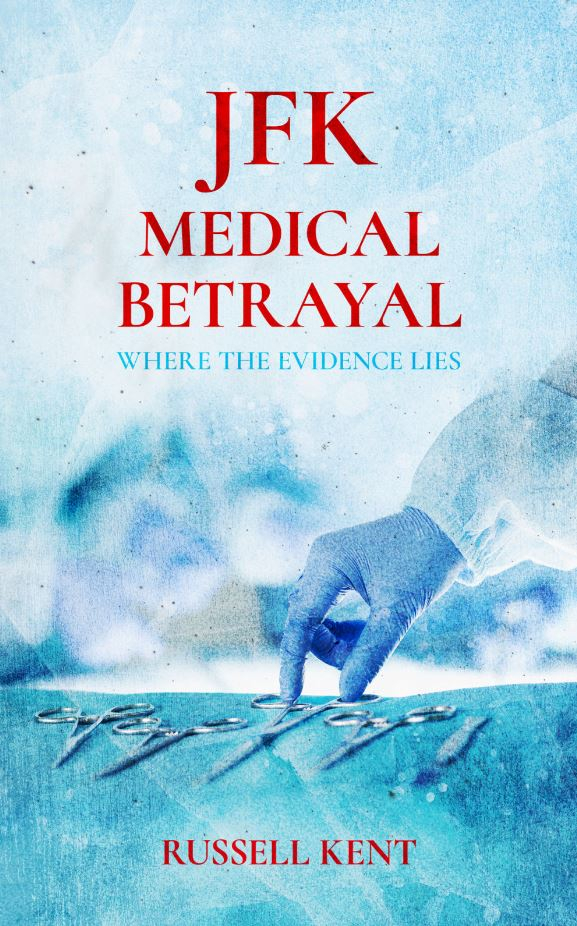
  • JFK Medical Betrayal: Where The Evidence Lies by Russell Kent

    JFK Medical Betrayal: Where The Evidence Lies by Russell Kent


    Russell Kent graduated from the University of London with a degree in physiology, which means he studied how anatomy and systems of the body function. He then went to work at a hospital laboratory started publishing. He has now written a book on the medical evidence in the assassination of President John F. Kennedy. It is called JFK Medical Betrayal. It approaches the subject in an unusual manner, one that ends up garnering some valuable insights into the case.

    I

    Kent begins his book by writing that the Warren Commission essentially discounted the Parkland doctors’ observations in lieu of the pathologists at Bethesda morgue, where Kennedy’s body ended up the night he was killed. There were two serious problems in doing this. First, the pathologists at Bethesda—Jim Humes, Thornton Boswell, and Pierre Finck—were not really qualified to be practicing forensic pathologists. And second, for whatever reason, they did not do a complete autopsy. If the law had not been broken, the autopsy would have been done in Dallas, by a respected medical examiner, Earl Rose. But as a result of these shortcomings—amazingly—no one really knows the specifics of how Kennedy was killed.

    From here, Kent focuses on what happened at Parkland after Kennedy’s body arrived. Dr. Charles Carrico directed the gurney be sent to Trauma Room One. (Kent, p. 19) There, Carrico discovered a very small wound in the anterior neck. He also observed a right posterior wound of the head, down low, “about 50-70 mm in diameter and with the skull sprung outwards.” Carrico saw both cerebrum and cerebellum. (p. 19) Malcolm Perry called for a tracheotomy tube. But by 1:00 PM, Dr. Kemp Clark, the team leader, pronounced Kennedy dead. (p. 20) Nurses Diana Bowron and Margaret Henchliffe undressed Kennedy and washed the body. Clark and Perry went on to write about this large, avulsive wound in the rear of Kennedy’s skull. (p. 21) In addition to Perry, Carrico also believed the anterior neck wound was one of entrance, as did Henchliffe. (p. 22)

    According to the author, since LBJ feared further attacks, the new president ordered everyone back to Washington. (pp. 24-25) This led to some rather poorly qualified doctors performing this very important autopsy. Jim Humes had taken a one week course in forensic pathology 10 years prior. (p. 26) But since 1960, Humes was essentially an administrative desk jockey. And he stayed one until his retirement. (pp. 26-27)

    Another indication of these doctors’ lack of experience is that on the autopsy face sheet, Thornton Boswell did not affix his name, or that of Kennedy as a patient. (pp. 27-28) Boswell described the back wound as measuring 7 x 4mm, but he located it in relation to two movable parts of the anatomy, the mastoid process and the right acromion. The proper manner is to measure down from the top of head and then left or right of the spine. (p. 29)

    Pierre Finck was also an administrative desk jockey who may never have performed a gunshot wound autopsy. He was not certified in forensic pathology until 1961, at which time he was not performing post-mortem examinations. The most logical time for Finck to have done a gunshot wound autopsy was when he was stationed in Frankfurt, Germany. But, at that time, he was not board certified. So its logical that he likely assisted in such exams. (p. 30) Finally, Finck got there well after the autopsy had begun.

    As many have noted, a lot of the facts in the autopsy report are not backed up by written data. Humes burned his notes and the first draft of his report. This happened around the time he heard Oswald had been killed. (p. 31). Further, the pathologists did not consult the photos in preparation of their report. According to the author, Humes did talk to Perry that night and learned of the anterior neck wound. (p. 32). And this was the basis for the idea that the back wound exited the neck wound.

    The author poses a cogent question at this time. Namely, why did Dr. George Burkley—who was Kennedy’s personal physician—not inform the pathologists about all that had happened at Parkland? After all, he was the only physician at both locations. (p. 33)

    II

    From here, Kent delves into the creation of the Single Bullet Theory. The FBI concluded that there were 3 shots, and 3 hits: one to Kennedy’s back, one to his head and one to Governor Connally’s back. They discounted the bullet strike to James Tague on Commerce Street and Kennedy’s anterior neck wound.(p. 39) J. Edgar Hoover never bought the Single Bullet Theory.

    The Warren Commission did not agree. With them, the hole in the front of Kennedy’s neck—which was smaller than the back wound—now became an exit wound. These Commissioners were supported by a team of alleged experts at Edgewood Arsenal testing grounds: including doctors Joseph Dolce, Alfred Olivier, Arthur Dziemian and Frederick Light. The Commission eventually concluded that the back wound, which was 7 x 4mm, was the entrance wound and its exit was the anterior throat wound which was about 3-5 mm wide. In other words, the exit was smaller than the entrance. (p. 45)

    As the author notes, there is no evidence that any tests were done on trajectory analysis of the bullet though the back, i.e. whether or not it would hit bones in the spinal cord. Even worse, Olivier stated that their experiments, “…disclosed that the type of head wounds that the president received could be done by this type of bullet.” (p. 51) As Kent notes, this is not accurate. Because their experiments showed that this type of skull wound would result in a blow out of the right side of the face. That is not what happened to Kennedy. Another point about these experiments: in wrist simulations, the entrance was always smaller than the exit. Yet the reverse was true about Connally’s wound. (p. 53)

    According to Kent, there was disagreement about the Magic Bullet concept. Some of it based on the fact that experimentation showed that such a projectile would not emerge so intact. But it was Arlen Specter who decided to ride out the storm. Beyond that, Light and Dolce thought Connally was hit by two bullets. (p. 55). Dr. Robert Shaw, who worked on Connally at Parkland, testified twice. He could not buy one bullet in Connally, he also was reluctant to accept CE 399, the Magic Bullet.(p. 57) Kent notes that Dolce did not testify before the Commission. One wonders if this was one of Specter’s censoring assignments, like Burkley and his death certificate and the two FBI agents at the autopsy.

    III

    By 1967, a strong undercurrent had developed opposing the Warren Commission. Several critical books and essays had gained popularity, and DA Jim Garrison had opened an inquiry in New Orleans. Therefore, the Department of Justice decided to begin a counter attack based on the medical evidence. (p. 68). They first gathered Humes, Boswell, autopsy photographer John Stringer, and radiologist John Ebersole in Washington to review the pictures and x-rays. They signed a false statement about the collection being intact, with nothing missing. (p. 69). A second review then took place by the three pathologists. They said the materials agreed with their original report. (p. 69)

    But this was just the beginning of the DOJ maneuver. Deputy Attorney General Carl Eardley now asked Thornton Boswell to write a letter sanctioning an independent panel. Eardley tried to create an illusion that this was Boswell’s idea, but the evidence indicates the letter was written by the DOJ and sent to Boswell to sign. (p. 70). This was the beginning of the creation of the Clark Panel: a panel of four men allegedly independently appointed from academia to review the autopsy at Bethesda. But as with the letter, Kent advances a case that this was not really accurate. That it was really Attorney General Ramsey Clark who appointed this panel.

    The four men chosen, likely by Ramsey Clark, were: Doctors William Carnes (pathologist), Russell Morgan (radiologist), Alan Moritz and, most importantly, Russell Fisher (the last two qualified as forensic pathologists). A high point of the book is Kent’s analysis of the backgrounds of these four men, indicating that Clark did not want an honest review, which is why he chose them. (pp. 72-76) This section seemed to me to be original and well-reasoned. For instance, Moritz taught Fisher at Harvard, Fisher was very reliant on government funding, and Fisher knew both Humes and Boswell. Also, Fisher had written a text book that was used by pathologists around the world. (To cavil on this section, I think it would have been helpful if Kent had mentioned Fisher’s role in the investigation of the alleged suicide of CIA officer John Paisley. Click here for that)

    The Clark Panel met for two days and the second day was not a whole day. (p. 77) Boswell and Humes appeared before the panel. Kent gives us a good summary of the materials they reviewed. He then mentions that the panel raised the rear skull wound upward by four inches and he supplies reasons for why they did so. Kent also adds that their report on damage to JFK’s brain differs from what the original autopsy report depicts. First, the panel reported significant damage on the left side of the brain which the original report did not, and second was that the corpus callosum was widely torn down the midline. (p. 83) As the author notes, were the pictures the Panel looking at not of Kennedy’s brain? In fact, eventually Fisher admitted that Kennedy’s brain was not sectioned, which he characterized was really a crucial step. (p. 84)

    In their description of the now infamous 6.5 mm fragment on the x-rays of the skull, there is no mention that this measurement matches the caliber of the alleged bullet fired at Kennedy. Neither do they say that the dust like particles in the front of Kennedy’s skull are above the posterior entrance wound. This would suggest an entrance wound. Further, the fact that the larger particles are located near the back of the skull would also suggest this origin, as Dr. Vincent DiMaio wrote. (p. 91)

    Another deception was that the report described “a track between two cutaneous wounds”, presumably between JFK’s back and neck. But as Kent notes this was an imputation: there was no proven track. (p. 92) The main reason being that this wound—as well as the skull wound—was not dissected.

    All four doctors signed by April 9, 1968. Yet, it was not released to the public until January 16, 1969. This was just before jury selection began in the trial of Clay Shaw. Kent’s discussion of the Clark Panel is one of the best—if not the best—I have seen in the literature.

    IV

    The next inquiry into the JFK autopsy was in 1975 under the Rockefeller Commission, headed by President Gerald Ford’s Vice-President, Nelson Rockefeller. Incredibly, Warren Commission lawyer David Belin was appointed the chief counsel to this body. He tried to neutralize the issue of bias by having Robert B. Olson run the JFK inquiry. But as Kent writes, Belin showed up during the medical review and took the testimony of two doctors.

    A large amount of evidence was made available to the doctors. It would take weeks to absorb the material. They were left alone with it for one day and then sent out to produce reports which Belin wanted in about 7-10 days. (p. 104) But Belin and Olsen also asked questions about the case that were clearly suggestive. Things like, “How many bullets struck the president?” And “From which direction did each bullet come?” Kent goes through these questions and gives us examples of what the replies were.

    For me the most revealing exchange was to a question that asked, if the sectioning of Kennedy’s brain was necessary to arrive at reliable information concerning the number of shots or angles that hit Kennedy? Anyone familiar with the process would have to reply in the affirmative. How else could one conclude how many bullets hit JFK’s head and what path they followed? Well, consider this answer:

    Although as a routine matter dissection of the brain in gunshot wounds of the head is desirable, it is not an essential element in this case. I do not believe that further examination of the brain would contribute significant additional information relating the angles from which the shots were fired. (p. 111)

    But yet Belin loaded up even more by adding questions about whether the skin tissue slides were necessary as were pictures of the chest. Of course, both were missing in the JFK case. But again, the good doctors tell us that, like the brain, they really were not necessary for additional information. Can one imagine a cross examination of that reply under oath in a courtroom? I certainly can.

    Making it worse was that one of the doctors, Richard Lindenberg, worked with Finck at the Armed Forces Institute of Pathology. He was also an odd choice in that most of his papers dealt with aviation accidents. Perhaps this was because he was in the medical corps for the Luftwaffe and came to the USA as part of Operation Paperclip. (p. 114) Needless to say, he later wrote a paper with Fisher. Werner Spitz was also on the panel, and he worked with Fisher for a number of years from the late fifties and during the sixties.(p. 123). Another dubious choice on the panel was Alfred G. Olivier, since he worked for the Warren Commission. As the author notes, all the doctors were from the DC/Baltimore area except for Spitz, who moved to Michigan after living in Baltimore for 13 years. (pp. 134-35)

    The Rockefeller Commission continued with the raised rear skull wound, 10 cm about the external occipital protuberance. But as Kent ably points out with photos, although one can make a (weak) case for a wound near that spot in the color photo, that case all but evaporates in the black and white shots. (pp. 120-21)

    Finally, the Rockefeller Commission misrepresented Dr. Cyril Wecht’s testimony. He was asked to testify and he did so for five hours in May of 1975. He was critical of the autopsy and the Magic Bullet. His testimony was reduced to three paragraphs in the report and one would never know how critical he was. Misrepresenting his testimony, it looked like Wecht supported the Rockefeller conclusions. This dispute reached the pages of the New York Times. Wecht asked to see his transcript. He was denied. (p. 135)

    V

    From the Rockefeller Commission, Kent quite naturally leads into the House Select Committee on Assassinations (HSCA). As the author notes, during the first phase of the HSCA, Deputy Chief Counsel Robert Tanenbaum only wanted two forensic pathologists: Cyril Wecht of Pittsburgh and Michael Baden of New York City. Attorney Tanenbaum had worked with the latter often since he was in the Manhattan DA’s office and was in charge of the Homicide division for about seven years.

    This approach was drastically altered under the second Chief Counsel, Robert Blakey. Blakey added seven doctors, and this now made for a nine person panel. Baden had just finished a book he co-wrote with Fisher and Charles Petty, who would be on the panel and was the new medical examiner in Dallas. In fact, Baden wanted Fisher on his panel, but he wisely declined the invitation. Petty had trained in Fisher’s facilities and said that Fisher was the best forensic pathologist he knew. (p. 153) Baden also chose Werner Spitz who had been on the Rockefeller Commission Panel and was a friend of Humes, and had been Fisher’s deputy in Baltimore.

    Kent, after describing briefly the other panelists—Davis, Coe, Weston, Loquvam and Rose—concludes that Wecht was the lone independent doctor. He had not published with any of the others and had no personal relationship with Fisher. Plus, he was familiar with other aspects of the JFK case.

    There was an overwhelming amount of material to learn and absorb, and again this could not be done in just the four days the panel met together. But yet, miraculously, at the end of the fourth day, “it became apparent that the members were in substantial agreement with respect to the interpretation of the evidence.” But further, for whatever reason, Wecht was in a sub group and therefore was not allowed to question two of the original autopsy doctors: Boswell and Finck. (pp. 156-57)

    Andy Purdy was the HSCA writer/researcher for the medical panel. He wrote that one of the panel’s functions was to override the idea that the original autopsy doctors’ views should be given greater weight.(p. 163) But Humes would not give in easily to the panel’s desire to raise the rear skull wound upward. In fact, this part of the HSCA discussion provoked Loquvam to say there should have been no recording made of it. The original radiologist, Ebersole, now admitted there were x-rays missing. (p. 165)

    The HSCA panel ended up supporting the Clark Panel on the elevated rear skull wound. Why? The author thinks this was for two reasons. First, in reverence to Fisher. The second was to escape any possibility of extensive damage to the cerebellum, which about seven witnesses saw at Parkland. (pp. 189-90) And Kent comments that the panel largely ignored the Parkland witnesses and their observations.

    In fact, Kent concludes that Baden misrepresented Dr. Robert Shaw’s reasons for doubting the Magic Bullet. Baden said it was because of John Connally’s testimony. But Shaw did not buy it because “he did not think the bullet was tumbling or had struck anything before hitting the governor.” (p. 191) He therefore doubted any bullet could have emerged like CE 399.

    Wecht ended up being the sole dissenter. He criticized the panel for seeming to accept the work of urologist Dr. John Lattimer and ignoring the pioneering work of pathologist Dr. John Nichols, who had testified at the Clay Shaw trial. When Wecht testified before the committee he raised some very cogent and consequential objections to the Single Bullet Theory. These were ignored by the medical panel. The committee then questioned Wecht in a hostile manner.

    The Single Bullet Theory was going to be honored again. But it would not live long as the Assassination Records Review Board (ARRB) did their own inquiry. Partly at the request of the final chairman of the HSCA, Louis Stokes. As Doug Horne related to this reviewer, Stokes told the ARRB that no one was satisfied with what the HSCA did with the medical evidence.

    In his chapter on the ARRB, Kent focuses on what their outside experts wrote after they were brought in to view the evidence. That is people like forensic radiologist John Fitzpatrick. He was an acquaintance of Executive Director David Marwell. But he specialized in broken bones in children, not bullet wounds. (p. 236). Forensic pathologist Robert Kirschner said the raised entrance in the skull was likely the proper head wound, but he could not match it to the x-rays. He asked to see CE 399 but was skeptical of it. He thought there should have been a large wound track and a gaping exit wound in JFK’s throat. Such was not the case. (p. 241)

    Kent concludes that a completely independent forensic pathology team should have been called in. One that was free of any establishment American influence. (p. 247) In fact he suggests a team from the United Kingdom’s Guy’s Hospital Medical School. He specifically names three men: Francis Camps, Donald Teure, and Keith Simpson. Together, they investigated many unlawful deaths in the London area. For instance, all three were involved in solving the Rillington Place murders. These men could and should have been brought in, for example, to the HSCA panel, but they were not. Whatever they would have concluded they would not have been accused—quite rightfully as was the case—of bias.

    This is an unusual book in its approach. To my knowledge, the medical evidence has never been studied in the new manner that Kent utilizes. It’s almost like a C. Wright Mills approach to the case. For just that he should be appreciated. But beyond that, he studied several medical archives to actually garner the connections between the men who were tasked with examining the forensic facts of Kennedy’s death. With a surfeit of evidence, he proves they were the wrong choices. Which is why their work has not stood the test of time.

  • ACTION ALERT: PLEASE ACT ON THIS TODAY!

    ACTION ALERT: PLEASE ACT ON THIS TODAY!


    As you know Sirhan Sirhan has been (falsely) imprisoned for the murder of Senator Robert Kennedy for over fifty years. His next parole hearing is for March 12th. His current attorney, Angela Berry is asking people to please write the Parole Board. But do not focus on his innocence, write about his age, 78, the fact that he has been a model prisoner, our prisons are overcrowded, and he is not a threat to anyone.

    Mail the letter to this address:

    State of California
    Department of Rehabilitation and Correction
    Board of Parole
    P. O. Box 4036
    Sacramento CA 95812-4936

    And mail Angela a copy also at her office address:

    Angela Berry
    75-5660 Kopiko Street, Suite C-7, #399
    Kailua-Kona, HI 96740

    If you would rather email your letter, please send to BPH.CorrespondenceUnit@cdcr.ca.gov for the Prison Corrections office and please include a copy for Angela Berry at angela@guardingyourrights.com

    Begin with “Dear Parole Board” and ask them to please parole Sirhan since he has served much longer than most prisoners charged with similar crimes. Plus he has been a very good prisoner while incarcerated.

    There is also a new law that says people under 26 at the time of their crime (Sirhan was 24) should have their youth weighed higher in the parole decision.

    A key factor in gaining parole is public interest; this is why we request you to write the letter. They are important in influencing opinion. Thank you and please act on this ASAP.

  • A Narrative is Debunked

    A Narrative is Debunked


    I was browsing the internet on the subject of Mexico City and the JFK assassination last year, when I stumbled upon an online article on The Conversation webpage. (Incidentally, this article has replicated on other online “news” sites faster than the spread of the Corona Virus, it seems).

    Above the heading JFK Conspiracy Theory is Debunked in Mexico City 57 Years After Kennedy Assassination, were two photos of the infamous Mystery Man: originally purported to be Lee Harvey Oswald visiting the Soviet Embassy. This spurred my curiosity to keep on reading to see if this Mystery Man photo was finally solved. To my chagrin, the article started off with an unfounded general statement that “most conspiracy theories surrounding President John F. Kennedy’s assassination have been disproven”; citing two examples, one absurd and the other of lesser significance, or a case of misidentification if not coincidence. To illustrate my point, it should be noted that six out of seven mock trials on this case resulted in either a hung jury or acquittal for the accused. Meaning that, under scrutiny, the lone assassin scenario is seriously called into question, or that reasonable doubt in favor of Lee Harvey Oswald exists. And let’s not forget about the many scholarly works by serious researchers, particularly from the file releases since the creation of the ARRB in 1994, who have cast even further doubt on that scenario. Finally, it should be noted that most Americans believe in an assassination conspiracy.

    In spite of that unjustified statement, I forged on in the face of this initial tone set by author Gonzalo Soltero, Professor of Narrative Analysis, at the Universidad Nacional Autonoma de Mexico (UNAM), and author of the book Conspiracy Narratives South of the Border: Bad Hombres Do the Twist. The online article, albeit brief, is based on Chapter 3 of his book titled, “Oswald Does the Twist”. The purpose of this paper is to critique his online article, particularly the main premise: that the late journalist Oscar Contreras Lartigue could not have met Lee Harvey Oswald in Mexico City, as Contreras claimed. If the reader will recall, some witnesses in and around the Cuban consulate said that the man the CIA said was Oswald, was not actually him. As we will see, the man these witnesses saw or met was short, about 5’ 6”, and blonde. Neither of which depicts Oswald. And one of these witnesses was Contreras. (See, for example, James DiEugenio, The JFK Assassination: The Evidence Today, p. 293)

    While researching his book on conspiracy narratives in Mexico, the author discovered what he described as “a hole in the story of the very man who started a “tenacious conspiracy theory about Oswald’s Mexico trip”. He goes on further to describe it as a “main conspiracy about Oswald’s undocumented time in Mexico City (that) puts him in contact with dangerous Mexicans on the left side of the Cold War”. This conspiracy theory began well after the Warren Commission: “This story originated in March 1967 when the American Consul in the Mexican coastal city of Tampico, Benjamin Ruyle, was buying drinks for local journalists”. (I can think of bigger conspiracy theories, also mentioned in Soltero’s book, but more on that later). That man is Oscar Contreras Lartigue, who was a law student at the UNAM and budding journalist for El Sol de Tampico newspaper, who wrote for its gossip column, Crisol. Oscar Contreras told Ruyle he met Oswald in 1963 on campus when he belonged to a pro-Castro campus group and that Oswald sought help in getting a Cuban visa. Contreras said Oswald spent two days with these students and met up later with them at the Cuban Embassy. Contreras said he was involved in some nefarious political activities (including blowing up a statue of a former Mexican president) and was afraid to talk much more. He also mentioned that he told his editor too about his encounter with Lee Harvey Oswald. Three months later, Contreras was visited by a CIA official from Mexico City, but he still refused to go into details, except to say that Oswald never mentioned assassination, only a need to get to Cuba. In 1978, the HSCA’s Dan Hardway went to Mexico. According to Soltero, Hardway was unable to interview Contreras despite several attempts, but reported that his account should not be dismissed. (According to Hardway, the CIA prevented the HSCA from interviewing Oscar Contreras. See the article A Cruel and Shocking Misinterpretation by Dan Hardway, 2015).

    Later on, N.Y. Times reporter Phillip Shenon successfully interviewed Contreras for his 2013 book on the assassination and found him to be credible. Contreras was more forthcoming and told him about “far more extensive contacts between Oswald and Cuban agents in Mexico”. Oscar Contreras died in 2016 so Professor Soltero could not interview him, but he remembered a minor detail of Contreras’ account.

    That minor detail was Contreras telling his editor, while a law student, about his encounter with Oswald. Soltero questioned this reference to an editor in Contreras’ story, so he did some investigating. He then found out about Contreras’ job with El Sol de Tampico, and two of his gossip columns, one dated September 22nd and the other on October 6th, 1963. Oswald purportedly arrived in Mexico City by bus Friday morning, Sept. 27, 1963 and left very early on Wednesday, October 2nd. After examining those two gossip columns, Soltero concluded that Oscar Contreras Lartigue could not have been in Mexico City during the time Oswald was there, as he would have been in Tampico, some 300 miles away, covering and writing those stories. He therefore concludes that his account about meeting Oswald was a fabrication and that any conspiracy theory arising therefrom, associating Oswald with pro-Castro Mexicans or Cuban agents, is debunked. But if those gossip columns were dated one week before and after the weekend of Oswald’s visit to Mexico City, how can Soltero make such a conclusion? No specific details from those articles were articulated or given in his article or Chapter 3 of his book. So, I did some digging of my own.

    The gossip columns published in The Conversation article were not clear enough for me to use a translation app, so I needed to consult with a Spanish translator.   Fortunately for me, I met a gentleman who runs a translation service in Mexico, who also has an interest in this historical subject. And what he found was that Contreras does not admit to personally attending, or even imply his attendance, to any events mentioned in those gossip columns, but only describes what those events are: some of which occured in the past and some which will occur in the future. But no events take place on Friday September 27th or during the weekend, or Monday September 30th or Tuesday October 1st, when Oswald was supposedly in Mexico City (Oswald left early Wednesday morning).

    Specific events cited are:

    1. A wedding engagement in Monterrey, N.L between Leticia Lozano & Raul Segovia on the 26th of this month
    2. A reunion at the Club Blanco y Negro in Tampico next Tuesday (the 24th),
    3. A wedding scheduled to take place on October 5th between Lupita Aguilar Adame & Carlos Sanchez Schutz,
    4. A yacht excursion organized by Janet Abisad (on Sept. 16th),
    5. Lupita Rivera Casanova & friends organized a yacht trip (for the 18th).

    So, the absence of a social event in Tampico, during the time that Oswald supposedly visited Mexico City (Sep. 27th to Oct. 2nd, 1963), could not prevent Oscar Contreras from being in Mexico City. Furthermore, even if there was an event during that crucial period, why could not Contreras arrange for a proxy to cover a story? It appears that the basis for Mr. Soltero’s repudiation of Oscar Contreras’ account is unfounded. Not to mention that it’s convenient for Soltero to discredit him, since Contreras is not around to defend himself. However, as specifically pointed out above, the Sol de Tampico archives do not discredit Contreras’ account.

    Professor Soltero also refers to the account of Contreras as a “main conspiracy about Oswald’s undocumented time in Mexico City”. Is it really? If it is a “main conspiracy”, this writer can think of other more important conspiracy theories related to Mexico City, namely: that Oswald met with a Soviet diplomat named Valeriy Kostikov at the Soviet Embassy, who the CIA suspected of being attached to the KGB’s Department 13 in charge of Assassinations, Terrorism & Sabotage. The purported reason being to apply for a visa to get to the Soviet Union via Cuba (the insinuation being to seek asylum after the assassination after conferring with the enemy). Or what about the one saying that Oswald was offered a large sum of money by pro-Castro Cubans at the Cuban Consulate for the assassination? How is this one: that Lee Harvey Oswald was impersonated in Mexico City to attract attention to himself with his public behaviour, in order to incriminate him by his contact with Cubans and Soviets there, ostensibly to use that offensive association during the Cold War, to effect a possible retaliatory response by the U.S. against Cuba or the Soviets? (A related conspiracy to the latter is that someone or persons in U.S. intelligence was/were manipulating Oswald with their knowledge of the CIA’s surveillance of the Cuban Consulate and Soviet Embassy).

    Professor Soltero does mention in his article, an argument between Oswald and the Cuban consul, Eusebio Azcue, when he visited the Cuban Embassy seeking a visa to the Soviet Union. However, the HSCA shed more light on that incident with Azcue. On page 250 of their Findings, they state that “Eusebio Azcue testified that the man who applied for an in-transit visa to the Soviet Union was not (emphasis added) the one who was identified as Lee Harvey Oswald, the (alleged) assassin of President Kennedy on November 22, 1963”. Both Azcue and Silvia Duran described the man in question as dark blond or blond hair and short. (The Lee Harvey Oswald Files, Flip De Mey, p. 292). Interestingly enough, Oscar Contreras even described a person who introduced himself as Oswald, as blond and short (Flip De Mey, p. 419, note 838)! Anthony Summers spoke to Oscar Contreras, who said he met a blond American calling himself Oswald in Mexico City in the fall of 1963 (Gaeton Fonzi, The Last Investigation, p. 447, Skyhorse. Kindle Edition). “Contreras told Summers that he now doubts that the man really was Oswald. He, too, said the man he met was over thirty, light-haired and fairly short. Contreras, not very tall himself, remembers looking down on ‘Oswald The Rabbit’” (Fonzi, The Last Investigation, p. 448). [Note: The reference to “Rabbit” was from a Mexican cartoon about rabbits that included two characters named Harvey & Oswald, that Contreras and fellow students joked about when they met Oswald at a university cafeteria, which is why it stuck in his mind (See Anthony Summers, Not In Your Lifetime, p. 323, Kindle Edition)]

    With respect to that alleged meeting with Valeriy Kostikov, a CIA cable on October 9, 1963 sent by its Mexico City Station to CIA headquarters, described an October 1st phone call to the Soviet consulate which it wiretapped, about an American male who spoke broken Russian and who “said his name Lee Oswald”, and that he had been at the Soviet Embassy on September 28th when he spoke with a consul believed to be Valeriy Kostikov. One problem with that call is that the real Oswald was fluent in Russian. Furthermore, the cable’s description of the man entering and leaving the Soviet Embassy from surveillance photos (35, athletic build, 6 feet, receding hairline and balding top) did not match Lee Harvey Oswald’s description, since he was shorter and slimmer. “What one is confronted with in the October 9th cable is an apparently damning connection between Oswald and a KGB assassination expert, but a connection made by a man impersonating Oswald”. [Jim Douglass, JFK and The Unspeakable, p. 76].

    The Soviet Embassy and Cuban Consulate in Mexico City were thoroughly monitored by the CIA, which possessed tape recordings, photographs, and transcripts supposedly of Oswald, as he went in and out of those buildings, and from his telephone calls to them. The CIA station sent this information to the FBI in Dallas on the morning of November 23, 1963. Astonishingly, the FBI Agents in Dallas discovered that neither the voice on the recording nor the man in the photographs matched Lee Harvey Oswald, the man in custody. J. Edgar Hoover gave this news to LBJ that morning of the mismatch (a “second person”), and then later to head of the Secret Service about an impostor (“individual was not Lee Harvey Oswald”). The implications of an imposter are quite significant since it could mean a conspirator, not Oswald, was attempting to lay blame to the Cubans and/or Soviets to incite a retaliatory, military response; if not to consciously induce a cover-up of an assassination conspiracy with a lone assassin scenario, by planting a false trail to the KGB (Deep Politics and the Death of JFK, pp. 38-41, by Peter Scott). We now know that this succeeded with LBJ, who intimidated Chief Justice Warren to participate in the Warren Commission, and the infamous Katzenbach memo urging that “The public must be satisfied that Oswald was the assassin; that he did not have confederates who are still at large; and that the evidence was such that he would have been convicted at trial” (Flip De Mey, pp. 294).

    The CIA and FBI belatedly tried to explain away the photos and tapes, but other sources and rationalizations refute such back-pedalling (As an example, how does one confuse a tape-recording or listening to one, for a transcript? Several other reasons are enumerated in the book, The Lee Harvey Oswald Files, by Flip De Mey, pp. 289 – 291). Moreover, neither LBJ nor Hoover repudiated their initial, recorded communications about an impostor. In fact, Hoover seven weeks after the assassination, scribbled at the bottom of an FBI memo “O.K., but I hope you are not being taken in. I can’t forget the CIA withholding the French espionage activities in the USA nor the false story re Oswald’s trip to Mexico, only to mention two instances of their double-dealing.” (Douglass, p. 81).

    To reinforce the aforementioned cases of double Oswalds, there were other instances of possible Oswald impostors around Dallas, in particular, the encounter by Silvia Odio on September 25th if not the 26th, which is suspicious since Oswald cashed a check in New Orleans on the day that he supposedly was in Dallas and/or was on his way to Mexico City through Houston then Laredo. And in another case, much earlier in Russia, from a 1960 memo by J. Edgar Hoover to the State Department, warning “there is a possibility that an impostor is using Oswald’s birth certificate.” [Jim Marrs, Crossfire, p. 209, Basic Books,Kindle Edition]. But it doesn’t end there, as there was a December 2nd, 1963 report by SSA Floyd Boring that a credible witness encountered an Oswald look-a-like in Washington, D.C. on September 27th, 1963, when the Warren Commission was adamant that “Oswald” was in Mexico City on that date! (Honest Answers by Vince Palamara, pp. 201- 202, Kindle Edition)

    The other main conspiracy theory in Mexico City involves a young, Nicaraguan named Gilberto Alvarado Ugarte, who was revealed to be a “penetration agent of the right-wing Somoza government of Nicaragua” (Oswald, Mexico & Deep Politics, Peter Scott, p. 36, Kindle Edition) and a CIA informant (Our Man In Mexico: Winston Scott & the Hidden History of the CIA, Jefferson Morley, Location 4512, Kindle Edition). The basic story is that Alvarado says that on September 18, 1963, he witnessed a Cuban give Oswald a total of $6,500, presumably to hire him to kill the President. He claims to have heard Oswald say to the Cuban (a red-haired black man) “You’re not man enough – I can do it”. The problem with that story was that Oswald was not in Mexico on that date and Alvarado later failed a polygraph test. Yet in its early stages, it was promoted by the CIA Mexico City Station via Win Scott and David Phillips and Ambassador Thomas Mann.

    Alvarado’s claim was flashed to Washington for the attention of the FBI and the State Department—and the White House, where it became one of the first pieces of “evidence” to sow the idea of a Castro conspiracy in the new President’s mind. Twenty-four hours later, the CIA reported information “from a sensitive and reliable source” that tended to confirm Alvarado’s story.” (Anthony Summers, Not in Your Lifetime p. 388 Open Road Media. Kindle Edition).

    Yet, “In spite of the holes in Alvarado’s claim about Oswald, his allegation was brought to President Johnson’s attention on at least three occasions and for some time remained a live issue.” (Summers, ibid, p. 391).

    The historical significance of the latter conspiracy theory (together with the Kostikov story) clearly outweighs the one promoted by Professor Soltero involving Oscar Contreras. Because on the basis of the foregoing story, LBJ persuaded Chief Justice Earl Warren that 39 million American lives were at stake if war broke out with the Soviets via Cuba, something that was not going to happen under the Johnson administration, along with any mention of any international Communist conspiracy. Thus, the lone assassin scenario was adopted with the creation of the Warren Commission on November 30th, 1963, which pre-empted any independent Congressional investigation.

    Professor Gonzalo Soltero began his online article with a blanket statement that ‘most conspiracy theories surrounding President John F. Kennedy’s assassination have been disproven’, using two outlandish theories as examples, while ignoring all the additional file releases by the ARRB and cumulative work of researchers since the 1990s that point to a conspiracy. This establishes the bias for the ensuing narrative, despite acknowledging the existence of conspiracies in his book Conspiracy Narratives: South of the Border which contains some statements at odds with the rather blanket denial: “conspiracies are planned and executed, and evil squadrons do exist” (p. 19), “the DFS were bad hombres”, “DFS agents were the local muscle for the CIA”, and “the agency (CIA) ran assassination and sabotage missions against other countries” (p. 93 –Kindle Edition).

    He claims that the account of Oscar Contreras, a pro-Castro law student and gossip column journalist, who says he met someone that identified himself as Lee Harvey Oswald asking for assistance to procure a travel visa to Cuba, was a fabrication. Why? Because he could not be in Mexico City while covering social events in Tampico, and therefore that a “main conspiracy theory” about Oswald being “in contact with dangerous Mexicans on the left side of the Cold War” is debunked. Yet the basis for his claim is actually not substantiated by the dates and details of newspaper columns during the time that Oswald visited Mexico City in late September/early October 1963. (And it seems superfluous to add, other witnesses also encountered the short, blonde Oswald.)

    The relevance of this is that it leaves open the possibility that Contreras met Lee Harvey Oswald, or more importantly, an impostor based on his description and the descriptions by others; not to mention other reported cases of someone impersonating Oswald in Mexico City and beyond. This also resuscitates the belief by Phillip Shenon and Dan Hardway that Oscar Contreras was a credible witness. However, unlike Shenon, Hardway thinks the evidence of Cuban assistance to Oswald is very weak at best, which is also contrary to Soltero’s statement that Hardway “reiterated in 2015 that Lee Harvey Oswald might have been part of a wider Cuban intelligence web”. In fact, Contreras was warned by Cuban Consular staff and an intelligence officer to avoid Oswald as they suspected he was trying to infiltrate pro Castro groups (Hardway, 2015). This parallels the time that Oswald was used to identify and contact pro-Castro students at Tulane University in New Orleans (Ibid). Soltero does not mention the issue of an Oswald impersonator in his online article, but does allude to it in his book. But he dismisses the issue of impersonators in Mexico City as “an espionage operation (counterintelligence impersonation – CIA assets pretending to be Oswald and Silvia Duran) getting caught in another espionage operation (telephone and photographic surveillance). And then the CIA had to cover its tracks to protect their own sources and operations, some of which were covert and perhaps illegal.” (Gonzalo, p.99, Kindle Edition).

    How can this be an innocent explanation without considering the possibility that Oswald was being used in an intelligence operation as an “intelligence dangle” or “an attempt to discredit the FPCC, or both?” (Hardway, 2015) Moreover, Hardway says this suggests that Oswald’s trip to Mexico was either designed in advance, or spun in the aftermath, to give the appearance of Cuban and Soviet collusion in the Kennedy Assassination” (Ibid). And, let’s not forget: the conditions ripe to set up a scapegoat, the patsy in Dallas. A patsy who was an opponent of Castro to Silvia Odio in Dallas, but pro-Castro in Mexico City.

    This is an inconsistency that should raise red flags, but not to Soltero, who concludes that Oswald was a “disorganized loner who couldn’t handle travel logistics.” Notwithstanding that Oswald successfully managed a trip to the Soviet Union, purportedly as a defector during the Cold War, and returned to the U.S. with hardly a hassle.   Professor Soltero concludes that the JFK Assassination is a cold case and that only exhausted leads remain in Mexico. I agree with the former but not the latter: especially since the CIA resisted the HSCA’s inquiry into that area of their investigation (Ibid). Not to mention the delay on the release of classified files relating to the JFK assassination, which continues to this very day.

    And lastly, critics of the Warren Commission or researchers involved in this case, are not concerned with narrativity, or telling a good story, but to ascertain the facts and follow them to reach definitive, evidentiary-based conclusions, if not just to establish reasonable doubt. This is not paranoia, but a quest for justice and the truth.

    [Note: This author thanks Robert Rafael Esquivel Diaz for his translation service and insight.]

  • Gus Russo: There is Nothing in those Damn Files!

    Gus Russo: There is Nothing in those Damn Files!


    Last year and this year, Gus Russo did columns on the John Kennedy assassination for Spy Talk. I would hope these two nothingburger pieces would get him eliminated for the 60th anniversary next year. But, realistically, they look like auditions to the MSM for that target date. The overall theme of his 2021 piece was that there was nothing in–not just the newly declassified documents President Biden had released–but really, there was nothing in any of the JFK material ever released. Not just by the Assassination Records Review Board (ARRB). Even though Russo admitted he only had time to scan the declassified pages Biden released in 2021, he assured us that there was nothing in them of any merit or value. Therefore, the media was making Much Ado about Nothing.

    Gus then leaned back in his chair and looked up at his bookshelf. He now added his punch line. Look you dummies, back in 1964, the Warren Commission issued 26 volumes of evidence and testimony, added to their 888 page report. In 1966 President Johnson released thousands of pages of material from the National Archives. In 1979, the House Select Committee on Assassinations issued 12 volumes of testimony, interviews and evidence. In 1998 Gus says the Assassination Records Review Board (ARRB) declassified 5 million pages. His (unsubtle) implication was that the whole expanse of those documents contains simply more of “Oswald did it”.

    The last statement about the ARRB is in error. The Board declassified 2 million pages, and they did not do it all at once. They did it over four years. It is this material that Russo has avoided when serving as reporter for the late Mike Sullivan at PBS in 1993, for the late Peter Jennings at ABC in 2003, and for Tom Brokaw at NBC in 2013. If anyone can show me where Russo interviewed anyone on the ARRB for any of those programs, please do. I (painfully) watched all three of them; I do not recall him doing such an interview, or even mentioning the Board. In fact, the first two programs were so loaded up with compromised sources that the roster guaranteed nothing from the Board could be mentioned, let alone discussed. Consider some of the following talking heads:

    • Carlos Bringuier
    • Ed Butler
    • Edward Epstein
    • Richard Helms
    • Priscilla Johnson
    • Ruth Paine
    • Gerald Posner
    • David Slawson
    • Larry Sturdivan
    • Sal Panzeca
    • Nicholas Katzenbach
    • Hugh Aynseworth
    • Jack Valenti
    • Robert Oswald
    • Michael Paine
    • Sam Halpern
    • Milton Brener
    • Rosemary James
    • John Lattimer
    • Robert Dallek

    I would argue that some of the more interesting disclosures of the Board concern some of these very persons e.g. Bringuier, Butler, Johnson, Halpern, to name just four. So how could Russo go that route? He would be impeaching his own program.

    Nothing in those ARRB files: really Gus? Let us turn back the clock to the time frame of 1994-98, plus some years beyond, since the Board placed a timed release stamp on some of their documents. Now let us list some of the things that the ARRB managed to both declassify and discover through both their inquiries and through the acquisition of files from both federal sources, and other personages, like J. Lee Rankin Jr. and Jim Garrison.

    • In Volume 7 p. 37, the HSCA wrote that witnesses at Bethesda morgue disagreed with those at Parkland Hospital since they did not see a baseball sized hole in the rear of JFK’s skull. False, The ARRB proved they did see it. (James DiEugenio, JFK Revisited, pp. 127-28)
    • Warren Commissioner Gerry Ford altered the draft of the Warren Report by moving Kennedy’s back wound into his neck, thereby making the Single Bullet Theory more palatable. (NY Times, 7/3/1997)
    • John Stringer, the official autopsy photographer, told the ARRB that he did not use the kind of film or photographic process used in the photos of Kennedy’s brain, so he could not say under oath he took them. (Doug Horne, Inside the ARRB, pp. 806-07)
    • White House photographer Robert Knudsen told the HSCA that he also took autopsy photos, and his pictures—including one with a cavity in the rear of the skull– had now disappeared. (Horne, pp.266-67)
    • Sandy Spencer was a photo technician who also saw autopsy photos of JFK that weekend which differed from the extant ones. His body was cleaned up but there was a neat hole in the back of his skull. Again, that hole is not present in the extant photos.(Horne, pp. 314-15)
    • Due to work by Doug Horne of the ARRB, one can now make the case—through three lines of evidence– that the brain photos at NARA can’t be Kennedy’s. (DiEugenio, The JFK Assassination: The Evidence Today, pp. 160-65; Oliver Stone’s film JFK: Destiny Betrayed)
    • FBI agents at the autopsy both said the wound to JFK was in his back, not his neck, and it did not perforate the body. They swore that Commission lawyer Arlen Specter lied about their testimony.(Horne, pp. 699-705)
    • ARRB declassified documents of 1997 prove that Kennedy was getting out of Vietnam at the time of his death. (Records of the May 1963 Sec Def Conference; DiEugenio, JFK Revisited, p. 78)
    • The ARRB declassified the CIA’s IG Report in which they themselves say they never had any presidential approval for the plots to kill Castro. (DiEugenio, JFK Revisited, p. 75)
    • In 1962, Kennedy turned down a Joint Chiefs plan to create a false flag operation, called Northwoods, in order to invade Cuba. (DiEugenio, JFK Revisited, pp. 180-81)
    • HSCA researcher Betsy Wolf discovered that the CIA had rigged entry and distribution of Lee Oswald’s file in 1959; when CIA officer Peter Bagley saw this altered routing system, he said Oswald was a witting defector. (See “Creating the Oswald Legend Pt.4” by Vasilios Vazakas)
    • The FBI had several sources who informed them that Clay Shaw was Clay Bertrand. And they were given his name as part of their JFK inquiry back in 1963. (William Davy, Let Justice be Done, pp. 192-93)
    • Under oath for the HSCA in 1978, Sheriff John Manchester identified Clay Shaw as the driver of a car in the Clinton/Jackson area in late summer of 1963. His passengers were Oswald and David Ferrie. (Davy, pp. 105-6)
    • Hugh Aynseworth offered a bribe to Manchester to leave the state so he could not testify for Jim Garrison. Manchester replied with this comment: “I advise you to leave the area. Otherwise Ill cut you a new asshole.” (Joan Mellen, A Farewell to Justice, p. 235)
    • In September 1967. the CIA assembled a Garrison Group to obstruct the DA’s inquiry. They thought if they didn’t Shaw would be convicted. This activity went on before, during and after Shaw’s trial. (DiEugenio, Destiny Betrayed, 2nd edition pp. 270-71)
    • CIA lied to HSCA Chief Counsel Robert Blakey about George Joannides, who had funded and supervised the Cuban exiles Oswald interacted with in the summer of 1963. With that hidden, Joannides served as a liaison to the HSCA.. (DiEugenio, JFK Revisited, pp. 233-35)
    • Priscilla Johnson, had tried to join the CIA in 1949 and was later classified as a witting collaborator. She then tied up Marina Oswald with a book contract for over a decade. That book was issued during the HSCA. (See Max Good’s film The Assassination and Mrs. Paine.)
    • If Oswald had spoken with KGB agent Valery Kostikov in Mexico City, why did it take seven days for that cable to get to CIA headquarters? This was so suspicious that David Phillips lied about it. (DiEugenio, The JFK Assassination: The Evidence Today, p. 290)
    • The FBI had a flash warning on the Oswald file since 1959. Why did they remove it on October 9, 1963 right after Oswald allegedly got back from Mexico City. That removal enabled Oswald to be on the motorcade route on 11/22/63. (DiEugenio, ibid, p. 301)
    • In 1963, Earle Cabell was mayor of Dallas. He was the brother of Deputy Director of CIA Charles Cabell, fired by Kennedy over the Bay of Pigs. It turns out Earle was a CIA asset. (Click here)

    I could easily add another 20 items of either equal or similar importance. But the point about Russo’s implication is made. Because these disclosures, in and of themselves, alter the contours of the JFK case. And, as one can see, they do so on different planes: in forensic evidence, with Kennedy’s foreign policy, with Oswald’s associations, and his connections to the intelligence community. In that regard the information by Betsy Wolf and Pete Bagley is of the greatest interest. Unless, of course, you are part of the MSM.

    Gus Russo had three opportunities to disclose at least some of this material. As far as I can see, he never did. But someone will say, in 1993, during the making of the PBS program, the ARRB was not appointed yet. My reply is that there were still files being disclosed, at least in part, at the time. Some of them en toto. I know since I had two friends who were there looking through them.

    Bur Russo was not just implying nothing important existed, he was finding ways around their import.

    A good example of this avoidance is that, although the 1993 PBS program dealt with Mexico City, the authors of the legendary Lopez Report, Dan Hardway and Ed Lopez, were absent. What did the show give us instead? For starters, how about Robert Blakey and Dick Helms. After mentioning that there was no picture available of Oswald entering either the Russian or Cuban consulate, Blakey assured us that Oswald was in Mexico City since he was photographed for and filled out a visa application.

    PBS and Mike Sullivan left out something about that application and the picture. And it’s important. The FBI did a door to door search for any photographic studio in the area Oswald was abiding at. There were none. When they searched for such studios around the Cuban and Soviet embassies the results were that no one had any evidence that Oswald had his picture taken there. (John Armstrong, Harvey and Lee, p. 638). And although Blakey said the signature was Oswald’s, David Josephs found the two copies. Not only do the documents not match, the signatures don’t either. (Click here) This might have been the reason that, as Josephs wrote, the Commission did not show receptionist Silvia Duran the application.

    The PBS show also relied on two Australian girls allegedly on the bus with Oswald headed down to Mexico City: Patricia Winston and Pamela Mumford. But as has been delineated by John Armstrong and Josephs, the two girls don’t appear to have been on the same bus line as Oswald. And further “they said the Russian passport he showed them was stamped; but Oswald had applied for a new one in 1963 and it was not stamped.” (James DiEugenio, The JFK Assassination: The Evidence Today, p. 282)

    Throughout the appearance of Cuban consulate receptionist Silvia Duran, there is no mention of her discrepancy in identifying Oswald or her arrest and alleged torture at the hands of the Mexican authorities. (Mark Lane, Plausible Denial, p. 59; Armstrong pp. 673-74) But the following is key. She told Anthony Summers that she originally identified Oswald by reading his name in the papers and assuming he was the same person she met. But when Summers sent her a film of Oswald from New Orleans leafleting, she said she now doubted it was him. And in her notes she wrote down that the man she saw in Mexico was short, no more than 5’6”, and blonde. Oswald was neither. (Anthony Summers, Conspiracy, p. 350-51) She then repeated this identification to the HSCA, as did diplomat Eusebio Azcue. In 1967, student Oscar Contreras related a similar description about a man named Oswald to an American diplomat. (DiEugenio, The JFK Assassination: The Evidence Today, p. 293) You will not see any of this in the Sullivan/Russo PBS Frontline Special. So the whole assumption made in Frontline, that Oswald was really there is only possible by neutralizing such key facts.

    The PBS show also says that there actually might have been pictures of Oswald entering the Cuban consulate. In the declassified files, we now have the inventory report from the photography station, which reads negative for Oswald. We also have CIA reports from the Agency plants in the Cuban consulate. They were interviewed twice, and both times, they said Oswald was not there. (DiEugenio, ibid, p. 294)

    The PBS program relied heavily on three KGB agents under diplomatic cover at the Russian consulate. PBS did so without ever asking them some key questions. Like, why is there no picture of the guy you say Is Oswald either entering or leaving your building? There should be four of those shots. (DiEugenio, ibid, pp. 287-88) They also never posed the question of why did the man the CIA said was Oswald spoke terrible Russian on calls to that consulate. (DiEugenio, p. 288) When in fact, four witnesses who conversed with Oswald said he spoke Russian proficiently: Marina Oswald, George DeMohrenschildt, Ernst Titovets and Rosaleen Quinn.

    I could go on about this, but the reader can see my point: PBS and Sullivan constructed a slick edifice that seemed to explore the mysteries of Mexico City, but really did not.

    And yet, this was not the worst part of what Sullivan and Russo did. In retrospect the worst part was the game they played with the “Rusty Livingston prints”. I will not go into all this at length since it kind of nauseates me. But specifically, what PBS did with FBI fingerprint expert Sebastian Latona was inexcusable. PBS was determined to have the viewer think that what they produced for them was a new set of fingerprints which incriminated Oswald. For instance, in their 2003 rerun, the PBS narrator said, “The FBI says it never looked at the Dallas police photograph of the fingerprints…”

    Yet, in his Warren Commission testimony, Latona said the contrary. He stated that he did examine photos of the trigger guard area sent by the DPD. (WCH, Vol. IV, p. 21) And it was this print that PBS concentrated on as being some kind of revolutionary discovery. But not only was it not new, it is dubious that this was a separate set. For as Pat Speer has written, when one separates the blow ups from the originals it is likely that the number of Livingston photos was really two. And according to Speer, PBS was wrong not only about Latona, but these prints had been examined by both the FBI and HSCA. In each case they were categorized as lacking forensic value. I really do not want to go any further with this because of what it says about two men who have passed on, Sullivan and his print “analyst” Vincent Scalice. I will just advise the reader to click here and scroll down to “The Prints that Got Away” and please read it all the way through.

    In his most recent Spy Talk essay, Russo has come out in full-fledged support of Paul Gregory’s new book The Oswalds. But before getting to that, Russo takes a blast at the CAPA Conference in Dallas this last November. What is so odd about this is that he describes it as if he was there. For instance, he states that panels denounced all of the government’s evidence as fake news. He then writes, with pugilistic vehemence, that there was a reverence for New Orleans DA Jim Garrison.

    I would like to inform Mr. Russo that there was only one panel during this conference. It did not analyze any evidence. It discussed how the JFK case was treated in schools and colleges. Jim Garrison was not the focus of any panel. Former investigator Steve Jaffe discussed what he did as part of that inquiry for the DA, and he did that via Zoom. In other words, of the 18 speakers, only one talked about Garrison. Which leads one to ask: Was Russo even at the conference? According to the secretary of CAPA he did not register, and if he was there as a walk in, I did not see him. I consulted with two other attendees and they did not see him either. As for his other complaint, again, according to the secretary, Mr. Paul Gregory did not ask to address the conference about his book, The Oswalds.

    Russo has fulsome praise for Gregory’s book, The Oswalds. Why does Russo think this rather incomplete book is so worthy? Well, let us take a look at his Spy Talk discussion, in which he previews the book with the following:

    1. Oswald fired a shot at General Edwin Walker
    2. Oswald was going to do away with Vice President Nixon
    3. Oswald killed patrolman J. D. Tippit
    4. Oswald tried to kill Officer McDonald in the Texas Theater

    When a writer goes beyond what the Warren Commission accused Oswald of, that should be a huge warning sign. For not even the Commission bought Marina Oswald’s story about having to lock Oswald in the bathroom to stop him from killing Nixon. According to them, the bath locked from the inside, and Nixon was nowhere near Dallas or even announced to be there in the near future. (Jim Marrs, Crossfire, 1st edition, p. 272; Sylvia Meagher, Accessories After the Fact, pp. 240-41).

    As Sylvia Meagher noted, this should have shed doubt on Marina’s other claim: about Oswald shooting at Walker. Because the bullet found at the Walker home was not the type of projectile fired from Oswald’s alleged rifle. It was different in caliber and hue. (DiEugenio, The JFK Assassination: The Evidence Today, p. 101) Further, the best witness, Kirk Coleman, said he saw two men leaving the scene, and neither was Oswald. And they drove separate cars; Oswald supposedly did not have a car, and had no driver’s license. Oswald was never considered a suspect in the Walker shooting while the DPD was inspecting the case. Only when the FBI took over and Robert Frazier now said the projectile fired was a 6.5 mm copper jacketed bullet, only now, seven months later, did Oswald become the chief suspect. (Gerald McKnight, Breach of Trust, p. 49)

    As per officer Nick McDonald’s story about Oswald attempting to kill him, I could do no better than refer the reader to Hasan Yusuf’s article, which I believe to be the best exposure of Nick and that issue.

    As per the Tippit case, that was dubious since 1967, when writers like Mark Lane and Sylvia Meagher began to poke holes in it. In 2013, Joe McBride published a book length study, Into the Nightmare, that redefined the outlines of that case–I believe forever. Far from Oswald accosting TIppit, the Dallas Police were looking for Oswald. (Please refer especially to Chapters 11-13)

    As the reader can see, Russo’s attempts to turn Oswald into something like a cold blooded serial killer–thus establishing his guilt in the Kennedy case—betrays an almost rabid, convict at any cost mentality. And it does not matter to Gus, that he leads with his chin. It is this bombastic bias that allows him to embrace Gregory’s book with both arms, all the while patting Paul on the head.

    Gregory does not write about any battering of Marina Oswald by Lee that he himself witnessed. The author relies on reports from the White Russian community. As both James Norwood and Robert Charles Dunne have shown, these are dubious since many of these witnesses were reciting hearsay evidence.(Click here and also here for Dunne’s excellent work)

    One thing that Russo does not mention that is relevant to the case perhaps more than anything else is this: Oswald liked Kennedy. (HSCA Vol. 2, pp. 209-10, p. 217. P. 279) In fact, when and if David Lifton’s Oswald biography is posthumously published, we will learn that Oswald actually had a picture of JFK in his Dallas apartment. Everything else Russo writes in order to demean Oswald would be strongly challenged in court if Oswald would have had an attorney. This point would not have.

    For reasons explained above, Gus Russo lost his way back in 1993 over seeing something that Sebastian Latona did not. I leave it to the reader to decide who was correct on that score.

    Coda:

    To see just how bad Russo has become, we need to make a reference to the book he co-wrote with Harry Moses for the Tom Brokaw special in 2013. In his interview with journalist Richard Reeves, Reeves said that it was Kennedy who got the US into Vietnam, not Johnson, and not Nixon. (Where Were You? American Remembers the JFK Assassination, E book version, p. 174)

    This is patent nonsense. On the day Kennedy was inaugurated there was not one combat troop in theater. On the day he was killed there still was not one combat troop in theater. That all changed under President Johnson. Within a year of Johnson’s election there were 170,000 combat troops in Vietnam. And the figure went up from there. Peaking under Nixon at 540,000 troops. And Nixon dropped more bomb tonnage in Indochina that Johnson. As many historians have uncovered, for example David Kaiser, Kennedy was getting out at the time of his death, and LBJ reversed that process. (See Kaiser’s book American Tragedy, Chapters 10-14)

    Gene Kelly alerted me to an article Gus wrote for the MobMusem.com blog in November of 2021. In this piece of nonsense, Russo goes whole hog for the Cuban/Russian angle manipulating both Lee Oswald in Mexico City and also the critical community e.g. Mark Lane.

    He then goes after Oliver Stone, saying that he initially consulted for Stone’s film JFK, but withdrew after he read the script. This clashes with what he told me in Dallas in 1992. In a conversation with witness Al Maddox, Russo said he was a consultant on the film. And Jane Rusconi told me that Russo also helped with the Book of the Film. (Click here)

    Let us leave Russo with the following sentence he wrote: Oswald was “a serial murderer wannabe and a violent sociopath….that’s what he was.” A serial murderer about whom Bob Tanenbaum, a proficient trial prosecutor, said in JFK Revisited that no jury in the country could convict. I would like to ask Gus: How many homicide cases have you tried to verdict? But I know the answer: Zero.

    UPDATE:

    One of the listeners to Black Op Radio surfaced a video copy of the 2013 NBC special hosted by Tom Brokaw called Where were You? The Day JFK Died.

    It was very difficult to locate as I could not find a copy in any library in America, or for sale on Amazon or Ebay. It is almost like NBC wanted it to disappear.

    The reason I wanted to see it again was simple. I had a distinct memory about one of the interview subjects, the late journalist Richard Reeves. Reeves wrote a book about John Kennedy called President Kennedy: Profile of Power. The book had a major publisher, Simon and Schuster, and it was published in 1993. I could not finish the book since, as Donald Gibson said to me, “It is a piece of junk.” And there is no doubt it was and is. With what Reeves left out, one could have written another, and much better, book.

    Now, why did Brokaw and his reporter Gus Russo want to interview Reeves, and not say, Arthur Schlesinger or Ted Sorenson or Pierre Salinger. These men all knew Kennedy and wrote much better books about the man. This is the likely reason. John Newman’s milestone book, JFK and Vietnam had been integrated into Oliver Stone’s film JFK. And this aspect, Kennedy’s withdrawal plan from Indochina, had a huge impact on a national scale. The message being: If Kennedy had not been killed, there would have been no Vietnam War.

    Well, Reeves was there to say the opposite. As the reader can see in the main article above Reeves said that Kennedy got America into Vietnam. How he kept a straight face saying this is remarkable. But on the show he added something to this. Apparently wishing to counteract the import of the October 1963 NSAM 263, in which Kennedy ordered the withdrawal of a thousand troops, Reeves said something that is truly shocking. He said that this order only referred to support staff like cooks etc. This is why I wanted to see the program again. Because I needed to know if I recalled correctly. I did. The quote is utterly false on its face.

    For example when Kennedy first instructed Secretary of Defense Robert McNamara to brief the press on the order, he told him to tell them it would include helicopter pilots also. (John Newman, JFK and Vietnam, p. 415) If that is not enough, here is a link to NSAM 263. Does military personnel mean cooks to anyone? Finally, one can read the entire McNamara-Taylor report and not find anything close to what Reeves said on the program.

    This was really one of the all-time lows ever for the MSM and the JFK case. Which is saying something. But what does one expect from a combination of Russo and Reeves and Brokaw. John Barbour tried to talk to Brokaw when he heard he was producing the program. He told Tom that he had hours of interviews with the late Jim Garrison to show him. Brokaw simply replied, “No Garrison John.”

    No Garrison. Instead cooks being withdrawn with NSAM 263 right Tom?
  • David Lifton Has Passed On 2

    David Lifton Has Passed On 2


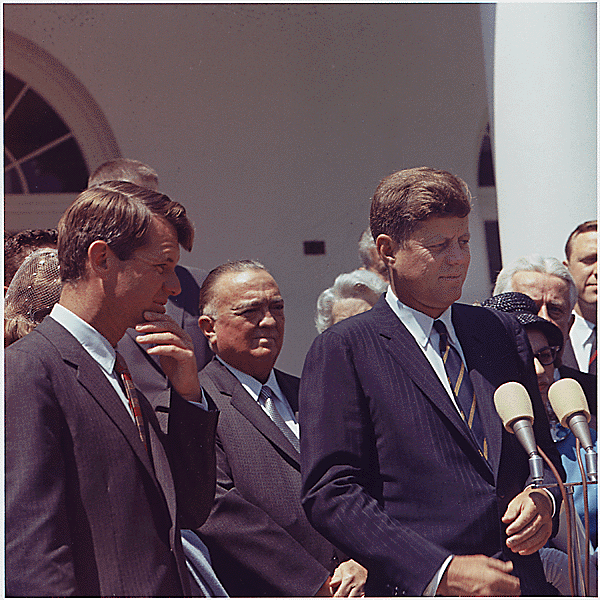
    David Lifton passed away in Las Vegas at a hospice center on December 6, 2022. There was no official notice until a sister of his penned an obituary for the New York Times. He was 83.

    Lifton was born in New York and attended college at Cornell. At the time of JFK’s death, he was in a graduate program at UCLA. His major was engineering physics. He is known in the John Kennedy critical community for a long early essay on the JFK assassination, two books on the subject, and his belief that the Zapruder film had been altered.

    The long essay was printed in Ramparts magazine in June of 1966 and was called “The Case for Three Assassins”. Co-authored with David Welsh, it was a lengthy—22 pages of text—and profusely annotated essay on the medical and ballistics evidence in the assassination that indicated a hit team had taken Kennedy’s life in Dealey Plaza. (Ramparts article)

    The first book, published in 1968, was Document Addendum to the Warren Report. That volume is a compendium of important documents that were not printed by the Warren Commission. It contains the famous Liebeler Memorandum. This was named after Warren Commission lawyer Wesley Liebeler and it contains his Devil’s Advocate criticisms of an early draft of the Warren Report. This volume was limited in audience appeal since it was aimed at the critical community, but it was a valuable work.

    The above two contributions were made when Lifton was—more or less-considered as one of the first generation critics of the Kennedy case. In his book Best Evidence he owes his initial interest in the assassination to a trio of first generation critics, namely Mark Lane , Vince Salandria and Ray Marcus. (pp. 3-11).

    One can say the same about his approach during his confrontation with former CIA Director Allen Dulles. This meeting occurred in late 1965 on the UCLA campus. Dulles had been retired by President Kennedy from the Agency and was now taking a guest lecture spot at the college. LIfton termed it as being a Regents Scholar. As he explained, “He was paid a princely sum for giving a few speeches and meeting students, informally, in a coffee-klatch atmosphere.” (Best Evidence, p. 33) As Lifton noted, Dulles’ appointment to the Warren Commission by Lyndon Johnson was his first return to any kind of public service.

    Lifton first asked for a personal audience with the veteran spymaster. Dulles turned this request down but said he would be glad to answer his questions in front of a small audience. So Lifton joined a gathering of about 50 people in the Sierra Lounge of Hedrick Hall, a UCLA dormitory. LIfton brought a couple of volumes of the Warren Commission with him. This debate is described in Best Evidence on pages 34-37. But since John Kelin sent the author a copy of Lifton’s memorandum on the meeting, we will use that as a reference for this rather memorable confrontation.

    Lifton started off by challenging Dulles on the direction of the shots, with still frames he had enlarged from the Commission volumes of the Zapruder film. Dulles imply denied this evidence. When Lifton said there was smoke atop the Grassy Knoll, Dules said, “Now what are you saying, that someone was smoking up there?” Lifton then quoted Harold Feldman who listed many witnesses hearing shots from two directions. When Dulles asked about Feldman LIfton said he wrote for The Nation. Dulles had a huge belly laugh and said, “The Nation, The Nation.” Dulles also shrugged off the testimony of Governor John Connally, by saying, ”Its utterly ridiculous! A man can’t tell in a situation like that which bullet hit him.” Dulles then said there was not an iota of evidence of a frontal shot. Lifton then argued that eye and ear witness testimony coupled with the Zapruder film indicated there was. Dulles insisted he could not see a thing in the blow up presentation. After Dulles left, many students huddled around Lifton to look at the pictures. This went on for two hours. The graduate student felt he had won the debate.

    But about this time, 1965-67, Lifton began to change his approach to the JFK case. In Best Evidence, he denotes the cause of this as being a phrase in the FBI report on the autopsy; a report made by agents Jim Sibert and Frank ONeill:. The phrase went like this: “…it was also apparent that a tracheotomy had been performed as well as surgery of the head area, namely in the top of the skull.” (Best Evidence, p. 172)

    In his book LIfton describes this phrase as being a defining moment in his research on the case. He says, “I was exhilarated, terrified. I wanted to vomit.” He then described himself as follows, “I arose on Sunday morning convinced I had discovered the darkest secret of the crime of the century.” (Best Evidence, p. 181) It was this feeling that now moved him out of the camp of Commission critics and into what he would later call a radical reconstruction of the Kennedy case. He came to call this “pre-autopsy surgery” He phrased it like this in Best Evidence,

    If someone had altered the head, the configuration of the wounds at Dallas was not the same as at Bethesda. The head was thrust backward by the impact of a bullet from the front, yet the autopsy performed at Bethesda showed an impact from behind. Someone had altered the head! (ibid, p. 172)

    He then concluded that, “Somewhere between Dallas and Bethesda the President’s body had been altered.” Lifton also used this to explain why there were no bullets in the body. (Best Evidence, p. 175) In his arguments with Commission lawyer Wesley Liebeler—a professor at UCLA at the time—he would ask Lifton: if there were other assassins, where are the other bullets? This would portend to be a reply to that query.

    From here, Lifton went on to assemble his whole complex theorem of the crime, based upon an alteration of Kennedy’s body somewhere between Dallas and the Bethesda morgue. And he now used this to explain in his view, “…how many different officials and investigative agencies…could be foiled.” In his concept,

    The secret removal of bullets before the body reached the autopsy room would have severed the ballistic connection between the shooting and the gun of other assassins—before the investigation began. The entire investigative apparatus of the U. S. government could have been misled. (ibid)

    As noted above, Best Evidence was backed by a large publishing house and was guided by a front rank agent, Peter Shepherd. It became a Book of the Month Club selection, and a national best seller. But it also created a rather large controversy both in the MSM—Dan Rather obviously did not buy it—but people like Sylvia Meagher and Harold Weisberg also disapproved. This is not the place to outline this rather rigorous debate, but just to note it.

    The book was quite long, and it went through more than one reprint by different publishers. Lifton also issued a video production based on his research for that book–Best Evidence: The Research Video–and that also sold well. (“Click here for that presentation.


    In his research for Best Evidence, Lifton stumbled across another nebulous and controversial area. This was the provenance and possible alteration of the Zapruder film. On page 555 of the Carroll and Graf version of Best Evidence, Lifton begins a very long on-page footnote in which he describes how he became interested in the subject. That note goes on for three pages. In brief he states that when he saw a very good copy of the film, he noted that he did not see a posterior skull cavity as was described by the Dallas doctors in the Parkland ER. He also discovered evidence that the film had been in the custody of the CIA. Finally, he notes that the doctors in Dallas did not see an exit wound in the upper right side of JFK’s head above and to the right of his ear. Yet, this was supposed to be the exit for the rear shot as depicted in the film.

    At the time of his death, Lifton had been working for a very long time—decades actually– on a biography of Lee Harvey Oswald. That book was entitled Final Charade. This was to be part of a trilogy of Best EvIdence, Final Charade and a volume on the Zapruder film. In the anthology The Great Zapruder Film Hoax, Lifton submitted an essay called “Pig on a Leash” about his theories of Z film alteration.

    We should all hope that the manuscript of Final Charade will eventually be published. LIfton spent so many years on it, so much money, and so much effort, that it needs to be printed. Only then can it be judged as part of the LIfton canon.


  • David Lifton Has Passed On

    David Lifton Has Passed On

    David Lifton passed away in Las Vegas at a hospice center on December 6, 2022. There was no official notice until a sister of his penned an obituary for the New York Times. He was 83.

    Lifton was born in New York and attended college at Cornell. At the time of JFK’s death, he was in a graduate program at UCLA. His major was engineering physics. He is known in the John Kennedy critical community for a long early essay on the JFK assassination, two books on the subject, and his belief that the Zapruder film had been altered.

    The long essay was printed in Ramparts magazine in June of 1966 and was called “The Case for Three Assassins”. Co-authored with David Welsh, it was a lengthy—22 pages of text—and profusely annotated essay on the medical and ballistics evidence in the assassination that indicated a hit team had taken Kennedy’s life in Dealey Plaza.

    The first book, published in 1968, was Document Addendum to the Warren Report. That volume is a compendium of important documents that were not printed by the Warren Commission. It contains the famous Liebeler Memorandum. This was named after Warren Commission lawyer Wesley Liebeler and it contains his Devil’s Advocate criticisms of an early draft of the Warren Report. This volume was limited in audience appeal since it was aimed at the critical community, but it was a valuable work.

    The above two contributions were made when Lifton was—more or less-considered as one of the first generation critics of the Kennedy case. In his book Best Evidence he owes his initial interest in the assassination to a trio of first generation critics, namely Mark Lane , Vince Salandria and Ray Marcus. (pp. 3-11).

    One can say the same about his approach during his confrontation with former CIA Director Allen Dulles. This meeting occurred in late 1965 on the UCLA campus. Dulles had been retired by President Kennedy from the Agency and was now taking a guest lecture spot at the college. Lifton termed it as being a Regents Scholar. As he explained, “He was paid a princely sum for giving a few speeches and meeting students, informally, in a coffee-klatch atmosphere.” (Best Evidence, p. 33) As Lifton noted, Dulles’ appointment to the Warren Commission by Lyndon Johnson was his first return to any kind of public service.

    Lifton first asked for a personal audience with the veteran spymaster. Dulles turned this request down but said he would be glad to answer his questions in front of a small audience. So Lifton joined a gathering of about 50 people in the Sierra Lounge of Hedrick Hall, a UCLA dormitory. Lifton brought a couple of volumes of the Warren Commission with him. This debate is described in Best Evidence on pages 34-37. But since John Kelin sent the author a copy of Lifton’s memorandum on the meeting, we will use that as a reference for this rather memorable confrontation.

    Lifton started off by challenging Dulles on the direction of the shots, with still frames he had enlarged from the Commission volumes of the Zapruder film. Dulles simply denied this evidence. When Lifton said there was smoke atop the Grassy Knoll, Dulles said, “Now what are you saying, that someone was smoking up there?” Lifton then quoted Harold Feldman who listed many witnesses hearing shots from two directions. When Dulles asked about Feldman Lifton said he wrote for The Nation. Dulles had a huge belly laugh and said, “The Nation, The Nation.” Dulles also shrugged off the testimony of Governor John Connally, by saying, ”Its utterly ridiculous! A man can’t tell in a situation like that which bullet hit him.” Dulles then said there was not an iota of evidence of a frontal shot. Lifton then argued that eye and ear witness testimony coupled with the Zapruder film indicated there was. Dulles insisted he could not see a thing in the blow up presentation. After Dulles left, many students huddled around Lifton to look at the pictures. This went on for two hours. The graduate student felt he had won the debate.

    But about this time, 1965-67, Lifton began to change his approach to the JFK case. In Best Evidence, he denotes the cause of this as being a phrase in the FBI report on the autopsy; a report made by agents Jim Sibert and Frank ONeill:. The phrase went like this: “…it was also apparent that a tracheotomy had been performed as well as surgery of the head area, namely in the top of the skull.” (Best Evidence, p. 172)

    In his book Lifton describes this phrase as being a defining moment in his research on the case. He says, “I was exhilarated, terrified. I wanted to vomit.” He then described himself as follows, “I arose on Sunday morning convinced I had discovered the darkest secret of the crime of the century.” (Best Evidence, p. 181) It was this feeling that now moved him out of the camp of Commission critics and into what he would later call a radical reconstruction of the Kennedy case. He came to call this “pre-autopsy surgery” He phrased it like this in Best Evidence:

    If someone had altered the head, the configuration of the wounds at Dallas was not the same as at Bethesda. The head was thrust backward by the impact of a bullet from the front, yet the autopsy performed at Bethesda showed an impact from behind. Someone had altered the head! (ibid, p. 172)

    He then concluded that, “Somewhere between Dallas and Bethesda the President’s body had been altered.” Lifton also used this to explain why there were no bullets in the body. (Best Evidence, p. 175) In his arguments with Commission lawyer Wesley Liebeler—a professor at UCLA at the time—he would ask Lifton: if there were other assassins, where are the other bullets? This would portend to be a reply to that query.

    From here, Lifton went on to assemble his whole complex theorem of the crime, based upon an alteration of Kennedy’s body somewhere between Dallas and the Bethesda morgue. And he now used this to explain in his view, “…how many different officials and investigative agencies…could be foiled.” In his concept,

    The secret removal of bullets before the body reached the autopsy room would have severed the ballistic connection between the shooting and the gun of other assassins—before the investigation began. The entire investigative apparatus of the U. S. government could have been misled. (ibid)

    As noted above, Best Evidence was backed by a large publishing house and was guided by a front rank agent, Peter Shepherd. It became a Book of the Month Club selection, and a national best seller. But it also created a rather large controversy both in the MSM—Dan Rather obviously did not buy it—but people like Sylvia Meagher and Harold Weisberg also disapproved. This is not the place to outline this rather rigorous debate, but just to note it.

    The book was quite long, and it went through more than one reprint by different publishers. Lifton also issued a video production based on his research for that book–Best Evidence: The Research Video–and that also sold well.

    In his research for Best Evidence, Lifton stumbled across another nebulous and controversial area. This was the provenance and possible alteration of the Zapruder film. On page 555 of the Carroll and Graf version of Best Evidence, Lifton begins a very long on-page footnote in which he describes how he became interested in the subject. That note goes on for three pages. In brief he states that when he saw a very good copy of the film, he noted that he did not see a posterior skull cavity as was described by the Dallas doctors in the Parkland ER. He also discovered evidence that the film had been in the custody of the CIA. Finally, he notes that the doctors in Dallas did not see an exit wound in the upper right side of JFK’s head above and to the right of his ear. Yet, this was supposed to be the exit for the rear shot as depicted in the film.

    At the time of his death, Lifton had been working for a very long time—decades actually– on a biography of Lee Harvey Oswald. That book was entitled Final Charade. This was to be part of a trilogy of Best Evidence, Final Charade and a volume on the Zapruder film. In the anthology The Great Zapruder Film Hoax, Lifton submitted an essay called “Pig on a Leash” about his theories of Z film alteration.

    We should all hope that the manuscript of Final Charade will eventually be published. Lifton spent so many years on it, so much money, and so much effort, that it needs to be printed. Only then can it be judged as part of the Lifton canon.