Blog
-
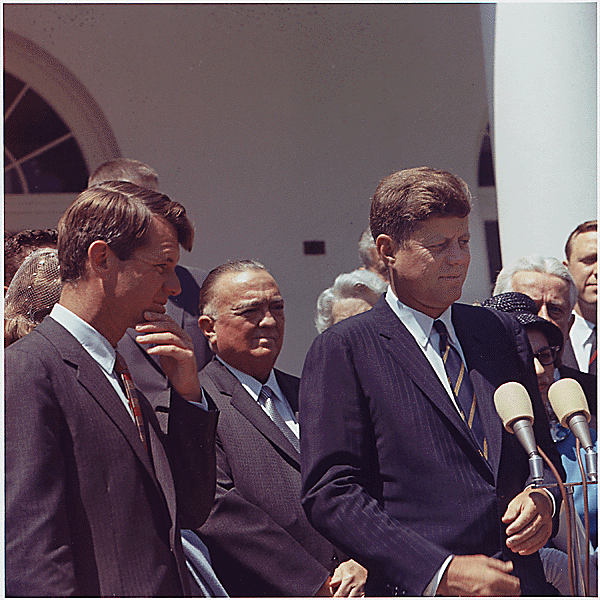
The Life and Death of Mobster Sam Giancana
James DiEugenio recently revisited the life, death, and circumstances surrounding the demise of American mobster Sam Giancana, who ruled the Chicago outfit in the 1950s and 1960s. Tap here to check out Part 1 of DiEugenio’s article.
Keep reading for a preview of the man the Warren Commission couldn’t directly implicate in the assassination of John F. Kennedy.
The Early Life of Sam Giancana
Sam Giancana, originally Salvatore Giangana, hailed from a Sicilian family that settled in Chicago’s Italian neighborhood. While growing up under an abusive father, Sam’s troubled youth led him to join a gang called The 42s, where he learned criminal skills and how to manipulate the system.
His involvement in bootlegging during Prohibition brought him to the attention of the Chicago mob. He eventually became a driver for Al Capone’s gang. Following Capone’s imprisonment, Giancana continued his criminal activities.
In prison, he formed connections with Eddie Jones, a leader in the African American lottery racket. It was then Giancana realized the huge profit margin in the racket surpassed other criminal enterprises.
Sam Giancana Joins the Chicago Mob
When Sam Giancana kidnapped Jones and forced him to hand over the racket in exchange for a cut of the profits and a lump sum payment, he piqued the interest of Chicago mob leaders. They elevated Giancana’s status within the organization.
Giancana’s reign faced challenges, including the Kefauver hearings on organized crime and the exposure of the Apalachin meeting. The formation of the McClellan Committee further intensified scrutiny of organized crime, with Robert F. Kennedy leading investigations. Giancana’s encounter with the committee showcased his criminal reputation.
Meanwhile, the FBI began surveilling Giancana and The Outfit with approved wiretaps on their meeting places. Surprisingly, the CIA recruited Giancana to participate in a plot to assassinate Fidel Castro.

Did Giancana Help John F. Kennedy?
The idea that Giancana helped Kennedy win in Illinois is debunked by author John Binder, who found no evidence of such influence. The claims of mob involvement in the West Virginia primary are also questionable, as no credible sources support them.
These conspiracy theories serve as revenge by criminals against the Kennedy family, but they lack credibility and reflect the shallow culture of sensational tabloid narratives.
DiEugenio’s Closing Statements
The 2011 documentary, Momo: The Sam Giancana Story explores the events surrounding President Kennedy’s assassination and Giancana’s murder in Chicago. While the film features the involvement of Blasi and Accardo, it contradicts Chuck Giancana’s version regarding the assassins and the roles played by Tippit and White. There are conflicting accounts regarding Giancana’s whereabouts during that day.
FBI agent William Roemer, who conducted surveillance on Giancana, discovered no evidence or discussions suggesting an attempt on JFKs life. The differing narratives provided by Giancana’s brothers add further complexity to the narrative.
The limited scope of today’s blog cannot entirely encompass the life of mobster Sam Giancana. Check out DiEugenio’s two-part article based on Momo: The Sam Giancana Story, and share your thoughts about the claim that he might have had something to do with the John F. Kennedy assassination.
Contact us to share your feedback and alternative theories.
-
From Bad to Worse: Debunking Gerald Posner’s JFK Evidence
In his five-part dressing-down of Gerald Posner’s Case Closed, Martin Hay deems the chapters dealing with the assassination of President John F. Kennedy to be even worse than those on Lee Harvey Oswald. Click here for a systematic analysis of all the ‘JFK evidence’ featured in the 1993 book.
Below is a snippet of this evidence and what’s wrong with it.
Gerald Posner’s JFK Evidence: The Overarching Theme
Hay begins Part 3 of his five-part review by providing an overview of the JFK evidence shared in Posner’s book. The British researcher concludes that Posner behaves no better than a lawyer with loose morals when portraying the evidence related to the JFK assassination.
Instead of providing all the evidence, Posner includes what suits his skewed perspective on the assassination. He betrays his true objectives by actively hiding the controversial nature of certain evidence.
Take the heavily-contested single bullet theory. Posner loses all credibility when he relies on the Warren Commission’s scientifically improbable theory to make his case.
Twisting the Words of Linnie Mae Randle
Linnie Mae Randle was the sister of Oswald’s co-worker Buell Frazier. She saw the former approaching their house on the morning of the assassination.
Posner’s Perspective: Randle describes the alleged assassin holding a ‘long package’ along his side. Wrapped in brown paper, Oswald held one end under his armpit while the other swung in the air. Posner also claims that Oswald handled the package as if it were heavy.
The Truth: Turn to page 248 of Volume 2 of the Warren Commission, and you’ll see that Randle never described Oswald this way. She said that he carried the package by his side while laying a hand over the top, and it was close to the ground as he walked.
To an unsuspecting reader, this detail might seem ordinary. However, it makes more sense when put in the perspective of the alleged weapon used in the assassination. You see, the Mannlicher Carcano was 34.8 inches long. The bag that held it wasn’t nearly long enough to hold the rifle. As for the package seeming too heavy, Randle said the wrapping paper holding the object, not the object itself, seemed to be a heavy type.

Finding Patterns Where There Are None
Posner claims that Oswald showing up at Frazier’s house was unusual because Frazier usually picked him up for a drive to his place.
There is nothing unusual about Oswald walking to Frazier’s house, as the latter told the Warren Commission that he usually picked Oswald up ‘around the corner.’ Other times, he would pick him up at the house. Sometimes, Oswald would walk down the sidewalk as Frazier prepared to pick him up. On that day, Frazier was running particularly late, so Oswald showing up on his own wasn’t as unusual as Posner makes it out to be in his book.
Check Out the Review for More on the Posner’s JFK Evidence
There is more to Posner’s JFK evidence than meets the eye. Check out Hay’s book review, which is more organized than the haphazardly put-together narrative the book attempts to sell.
Keep supporting Kennedys and King as it draws closer to the truth behind the JFK assassination. Share your material and contributions regarding the political assassinations of the 1960s.
Get in touch for further assistance.
-
Ellsberg, McNamara and JFK: The Pentagon Papers
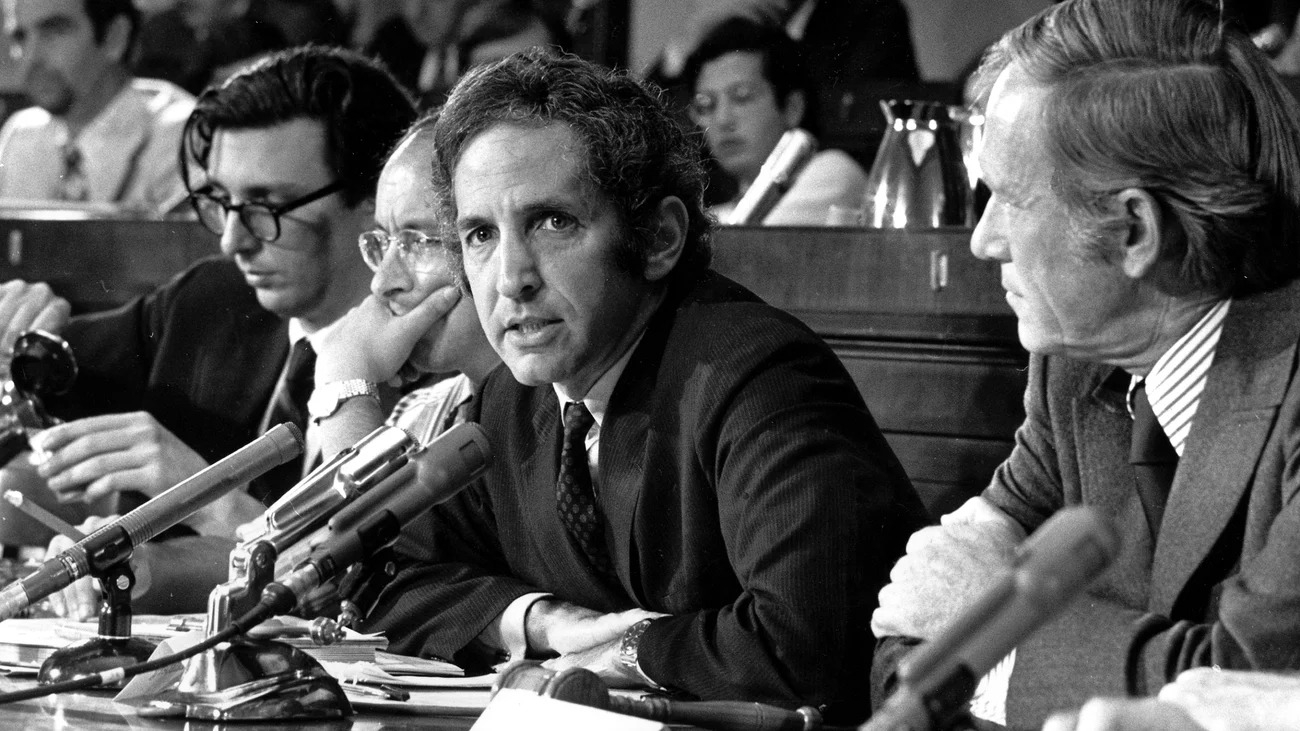
Daniel Ellsberg passed away on June 16. He had been diagnosed with inoperable pancreatic cancer in February and died at his home in Kensington, California.
Ellsberg was a distinguished academic, but he will always be remembered first and foremost for his purloining of the Pentagon Papers from Rand Corporation, with help from his friend and colleague Anthony Russo. The Pentagon Papers are a multi-volume, in-depth and invaluable historical study of the Vietnam war: from the very beginning to late 1968. It was commissioned by Secretary of Defense Robert McNamara. The initial supervisor was his assistant John McNaughton. (McNamara, In Retrospect, p. 280) About a month into the project, McNaughton passed away. His assistant Morton Halperin and Defense Department official Leslie Gelb took the helm. (ibid)
One must note a couple of preliminary matters about this famous project. First, McNamara sidestepped official channels to keep it secret. He did not use Defense Department historians. McNaughton and Gelb ultimately picked 36 researchers on a more or less ad hoc basis. (ibid) McNamara also instructed that the research not be confined to the Defense Department but also include the State Department, CIA and the White House. But when it all started in 1967, he took the precaution of not telling President Johnson or Secretary of Defense Dean Rusk.
About the motive for the project, McNamara wrote:
By now it was clear to me that our policies and programs in Indochina had evolved in ways we had neither anticipated nor intended, and that the costs—human, political, social and economic—had grown far greater than anyone had imagined. We had failed. Why this failure? Could it have been prevented? What lessons could be drawn from our experiences that would enable others to avoid similar failures. (McNamara, p. 280)
This is a fascinating quote and we will return to examine it later. But it should be noted that McNamara took a hands off approach in this endeavor; he was not personally involved. He let the researchers and Gelb hold sway over what made it into the volumes. It all began on June 17, 1967. The research extended back in time for over 20 years and used a wide variety of materials. Whenever Gelb had trouble attaining a document, he would invoke McNamara’s name. That would solve the problem. (Sanford Ungar, The Papers and the Papers, pp. 20-21)
Daniel Ellsberg was a summa cum laude Harvard graduate. In 1946 he endured a family tragedy when his mother and younger sister were killed when his father fell asleep at the wheel. Daniel survived and recovered. (See, The Guardian, 6/17/23, story by Michael Carlson). In his book, Secrets, Ellsberg describes himself in his youth as part of the Harry Truman Democratic Cold Warrior ethos: liberal on domestic issues but hardnosed and realistic on foreign policy. (Ellsberg, pp. 24-25)
In 1954 he applied and was accepted for officer training school in the Marines. When he got out he went back to Harvard on a fellowship. Ellsberg was trained in economics, but he also wrote about decision theory. Or as he explained it, “The way people make choices when they are uncertain of the consequences of their actions.” (Ellsberg, p. 30) This had an obvious connection to military situations and this is one reason Ellsberg ended up at the Rand Corporation think tank in Santa Monica. Rand did a lot of work for the Defense Department. One of the things he worked on was the whole concept of nuclear deterrence. (He later wrote a book about the topic called The Doomsday Machine.)
Because of this close professional association, Ellsberg was granted permission to do research at the Pentagon. This is how he met John McNaughton. And in 1964, realizing a huge escalation was on the horizon, McNaughton introduced Ellsberg to the subject of Vietnam—to the point that he convinced Ellsberg to work under him on the subject. (Most Dangerous, by Steve Sheinkin, pp. 10,11). On Ellsberg’s first day working for McNaughton the Tonkin Gulf incident erupted. President Lyndon Johnson used what he called this “unprovoked” attack to pass a war resolution that had been composed at least two months before. In fact, prior to the incident, the administration had set up a whole schedule of events for the USA to directly enter the war. (Edwin Moise, Tonkin Gulf and the Escalation of the Vietnam War, pp. 26-27).
But through his position in the Pentagon, Ellsberg understood that the congressional hearings to pass the Tonkin Gulf Resolution had been rigged. Unlike what the administration maintained, the Navy missions along the coast of North Vietnam had been provocations, not routine patrols; they had sometimes violated territorial waters; and the evidence for North Vietnamese attacks on the missions had not been “unequivocal”. (Sheinkin, p. 31; Ellsberg, p. 12) But in spite of his reservations, in 1964 Ellsberg looked at himself both as a keeper of secrets, and a participant in the Cold War. What Ellsberg could not have known at the time was that the Tonkin Gulf casus belli—or dramatic event—had been mentioned as part of the plans for the war resolution against Vietnam and subsequent escalation. (Moise, p. 30).
The Johnson plan for direct American intervention in the war was keyed around his election in November of 1964 and his inauguration in January of 1965. (Moise, p. 245). The first phase of massive Vietnam escalation was called Rolling Thunder, a colossal aerial bombardment of the country. This plan was approved in late February of 1965, within weeks of Johnson’s inauguration. But to protect the air bases for this giant air war, combat troops were necessary. The first ones arrived at DaNang in March of 1965. Rolling Thunder eventually surpassed the bombing tonnage the Allies dropped during World War II. The initial deployment of two battalions of Marines at DaNang morphed into a 540,000 man army by 1968.
But it is important to note that, unlike what David Halberstam insinuated in his (very bad) book The Best and the Brightest, it was not really McNamara’s war. As Frederick Logevall has written, McNamara’s militaristic approach in 1964 and into 1965 owed to his “almost slavish loyalty to his president. Lyndon Johnson made clear he would not countenance defeat in Vietnam….” (Choosing War, p. 127)
As the war escalated even further it began to polarize America to an extent not seen since the Civil War. McNamara’s own son turned against him, going as far as putting up a Hanoi flag in his bedroom. (LA Times, July 17, 2022, article by Jessica Garrison; see also Craig McNamara’s book, Because our Fathers Lied) In November of 1966 McNamara caused a near riot by visiting, of all places, Harvard. He had to be rescued from a mob and escaped through an underground tunnel system. (McNamara, pp.254-56). After dinner at Jackie Kennedy’s Manhattan apartment, she started pounding on his chest telling him he had to stop the slaughter. (McNamara, p. 258)
There can be little doubt that this all took an emotional and psychological toll on Robert McNamara. In Richard Parker’s biography of John Kenneth Galbraith, Galbraith spoke about a meeting he and other colleagues from the Kennedy administration had with McNamara in 1966. McNamara seemed to be in deep distress because he had told Johnson that Rolling Thunder was not working, but the president insisted on continuing the bombing. McNamara’s office secretary later said that, on certain days, he would come to work and just rage against Rolling Thunder’s futility. The rage would subside and he would then stare out the window of his office, start weeping and wipe his tears with the curtains. (Tom Wells, The War Within, p. 198)
In my view, this emotional turmoil was what caused McNamara to commission the Pentagon Papers. But there was something else at work. As we note from McNamara’s quote above, he states that “our policies and programs in Indochina had evolved in ways we had neither anticipated nor intended, and that the costs—human, political, social and economic—had grown far greater than anyone had imagined.” John Newman got to know McNamara before the former Defense Secretary decided to write his book. Newman got permission to listen to McNamara’s exit briefs from the Pentagon. As he states in the film JFK: Destiny Betrayed, in those tapes and transcripts, McNamara stated that he and President Kennedy both agreed that they could train Saigon’s army, give them equipment and send advisors. But they could not fight the war for them. When the training period was over, they would leave. And it did not matter if South Vietnam was winning or losing. (James DiEugenio, JFK Revisited, p. 187). In other words, by 1967, the war had become unimaginable compared to what he and Kennedy had decided upon.
So how did the young Cold Warrior Ellsberg figure in all this originally? He decided to go to Vietnam under special status as more or less an observer for the State Department. (Ellsberg, pp. 109-125) Not only did he see a failing war effort, but he now saw the whole thing as a fraud i.e. what the media and the government were reporting was false. It was a terribly bloody war with tremendous civilian casualties and no effective tactics for victory.
When he returned stateside in 1967 he was asked to work on McNamara’s secret project. And now he learned that in addition to the war being presented falsely in 1967, it had been presented falsely just about from the very start, including the Tonkin Gulf incident. As the escalation continued, the Pentagon Papers revealed that the war’s major goals were not to gain freedom and democracy for South Vietnam. The goals had become to avoid an embarrassing defeat and to keep Chinese influence out of South Vietnam. (Click here) McNamara himself said about the collection, “You know, they could hang people for what’s in there.” (Sheinkin, p. 125). Startled by the scale of the fraud within, Ellsberg decided to copy the papers. He had his friend Anthony Russo and Russo’s girlfriend aid him in that process. He then tried to expose the documents in public, first going to politicians like Senator George McGovern and Congressman Pete McCloskey, who both declined to read them on Capitol Hill.
Finally, reporter Neil Sheehan got a copy to the New York Times. After a debate at the highest levels of the newspaper, they decided to start publishing the Pentagon Papers on June 13, 1971. They were stopped by Nixon’s Attorney General John Mitchell who went to court for a Temporary Restraining Order. Ellsberg then passed them to the Washington Post and other papers. In all, Nixon and Mitchell sued four papers, in addition to the Times and Post, there was the St. Louis Post Dispatch and Boston Globe. The attempt at prior restraint by the White House failed, as the Supreme Court backed the newspapers right to publish. The issue was rendered moot when, almost simultaneously with the court decision, Senator Mike Gravel read the classified papers on the floor of the senate and then moved to enter the whole collection into the record.
But Nixon, Mitchell and National Security Advisor Henry Kissinger decided they would still punish Ellsberg and Russo. They first tried to stop publication of the Gravel version of the papers—which was longer and more detailed than the Times set. This was being done by a small house in Massachusetts called Beacon Press. But since Gravel had been covered by the congressional debate privilege in speaking from the floor, this did not work. They then moved against Ellsberg and Russo in California, where the copying originally took place. The two men stood trial in 1973 on counts of espionage and theft—Ellsberg was charged 11 times, Russo 3 times—and that would have placed them in prison for a combined 150 years. Ultimately, the trial was stopped and the charges thrown out due to federal interference: illegal electronic surveillance on Ellsberg, the burglary of his psychiatrist’s office, and Nixon’s attempt to influence the judge by offering him the directorship of the FBI. (Ellsberg, pp, 444-49)
But before the trial was suspended, Kennedy’s White House assistant Arthur Schlesinger was allowed to testify that if President Kennedy had lived, the war would not have been escalated. (Washington Post, 3/14/73, story by Sanford Ungar). In the Gravel Edition of the collection, there is an over 40 page chapter entitled “Phased Withdrawal of US Forces 1962-64”. (Volume 2, Chapter 3) Curiously, that section does not exist in the New York Times version of the documents. Whether the version Sheehan took from Ellsberg did not include it or the Times chose not to publish it is not known. But that section is important since it was the first time the subject had been approached in a formal, sustained way by a government source.
Partly because of that section, and the entire four volume series, Peter Scott formulated one of the earliest essays—it may be the earliest—positing that if Kennedy had lived, the evidence indicated he would not have escalated in Vietnam. And that this policy was reversed under President Johnson. Or as Scott wrote:
McNamara had predicted that the…United States military task in Vietnam would be completed by the end of 1965, and that as a first step 1,000 United States troops…would be withdrawn by the end of 1963. It seems likely, furthermore, that the sudden reversal of subsequent plans to withdraw the 1,000 troops was only the outward symbol of a much more far-reaching policy change, of a new or renewed commitment ultimately leading America from an “advisory” to an unambiguously direct combat role. (Government by Gunplay, edited by Sid Blumenthal and Harvey Yazijian,p. 153)
This essay, which was in the Gravel edition, was later adapted by Scott when it appeared in at least three other venues, including in Ramparts magazine. But according to Aaron Good, its inclusion was mightily resisted at first by the editors of the Gravel edition, namely Howard Zinn and Noam Chomsky. In an interview with this writer, Aaron said that they didn’t want to include it since it would look like a president could make a difference. But Chomsky eventually relented on freedom of speech grounds.
“It would look like a president can make a difference” and therefore not include it? Thanks to Ellsberg we had the actual section in the Pentagon Papers, and other traces of Kennedy’s reversed policy which Scott excavated. In 1968, Ellsberg developed a friendship with Bobby Kennedy, who wanted him to be his advisor on Vietnam when and if he was elected president. (Ellsberg, pp. 193-97) Bobby told him that John Kennedy never intended to send in combat troops and would have tried for a neutralist solution.
Among several aspects in a distinguished career, this is one of the things Ellsberg should be remembered for: Risking a long jail sentence to get out the whole truth about Vietnam. That they resisted this truth so mightily is one more albatross around the reputations of Nixon and Kissinger.
-
A Glimpse at What’s Wrong with Gerald Posner’s Case Closed
Gerald Posner’s Case Closed came out in 1993, and we must say it has aged like milk. Martin Hay deserves a medal for putting himself through the wringer for something as inane as this book, considering what we now know about the assassination of President John F. Kennedy.
Today’s blog will recap Hay’s five-part review of Posner’s poor attempt at deciphering the most notorious assassination of our time.
Skewed Priorities
At 640 pages, it’s safe to say that Case Closed is a chunky book, and Posner spends around 215 pages on Lee Harvey Oswald. Do we take issue with that? No, but we do take issue with spending more than 30% of the book on non-existent rhetoric.
Indeed, Posner spends those 215 pages painting Oswald as this violent maniac with the makings of an assassin. And not just one of the assassins, but the only person in Dealey Plaza on that fateful afternoon.
A reader who has gone through the forensic evidence that contradicts the lone gunman scenario will have a hard time buying what Posner is selling in this book, not then and certainly not in light of all we know now.
Cherry-picking the Truth
Once Posner established Oswald as assassin material, the next step was to prove that his shooting skills were decent enough to take out a slow-moving target. He went for the low-hanging fruit: Oswald’s time in the Marine Corps.
First, Posner tries to explain why an alleged communist joined the Marines. He quotes Oswald on this, saying he did it to follow in his brother Robert’s footsteps. Posner also mentions Oswald’s brother John’s testimony, citing their mother’s oppression as the reason for enlisting. Although this quote is authentic, it doesn’t hold in the face of Robert’s claim that Lee could handle their mother better than he and John.

Next, Posner tries to prove that Oswald couldn’t take well to the Corps because other Marines mercilessly bullied him. However, Sherman Cooley, a fellow Marine in the same platoon as Oswald, said other Marines teased him for being a bad shot.
In Henry Hurt’s Reasonable Doubt, Cooley says that Oswald was so bad with a rifle that he would have picked him as his shooter. He also said his coordination with a rifle makes him an unlikely candidate for killing JFK. Cooley isn’t the only one with this opinion. Hurt interviewed over 50 fellow Marines. They agreed on Oswald’s inability to hit the target.
Marina Oswald’s Contradictory Statement
Marina’s testimony seems contradictory to anyone who has studied her statements, as much as Martin Hay. They don’t flip-flop so much as change from depicting Oswald as a loving husband and father to an abusive husband who used physical force to inflict pain in every possible way. Predictably enough, Posner ignores her initial rhetoric and talks at length about Oswald, the abuser.
There’s much more to Hay’s review of Posner’s 600+ page attempt at portraying Lee Harvey Oswald as the only culprit behind the John F. Kennedy assassination. Once you have read the first part, read the next four only at Kennedys and King. Keep supporting our cause to bring the true killers of political figures like Malcolm X, Martin Luther King, and the Kennedy brothers to justice.
Get in touch for further assistance and inquiries.
-

Robert Kennedy Jr. has the Establishment Worried
On April 19th, Robert Kennedy Jr. announced his candidacy for the presidency. At that time, not very many people took him to be a serious threat. In fact, some reporters claimed this was really a stunt set up by, of all people, Steve Bannon. (Mediaite story by Jennifer Bahney, 4/5/23) Or perhaps by another notorious GOP operative Roger Stone. Kennedy had to go on Twitter to deny these spurious accusations.
The MSM, as noted above, did everything to try and snuff out Kennedy’s candidacy out of the gate, before it could get started. There was no round of interviews on the MSM. According to the Democratic National Committee, there will be no debates between President Biden, Kennedy and Marianne Williamson.
As an example of the MSM coverage, on the day he announced, CNN printed a story that said how members of his family had forcefully denounced his vaccine views in an online magazine. (Story by Jeff Zeleny and Eric Bradner) It also mentioned that he had been banned from Instagram “for repeatedly sharing debunked claims about the coronavirus or vaccines.”
Yet—even though it was in dispute and resisted mightily by the MSM—a claim Kennedy made about the origins of the virus has now turned out to be true. If one recalls, Anthony Fauci and the like have always insisted that CV 19 did not originate at the infamous Wuhan Lab in China or as a result of ‘gain of function’ research. It supposedly started as a species jumping virus that went from a bat to a human at the Huanan Seafood Wholesale Market in Wuhan. In sworn testimony before congress, Fauci mightily resisted the lab leak story under questioning by Rand Paul. And the entire MSM backed him, ridiculing the Wuhan leak as a conspiracy theory.
Today, we can say that Paul was pretty much correct and Fauci was either mistaken or part of a deception. It turns out that patient zero in the pandemic was scientist Ben Hu, who was in charge of ‘gain of function’ research at Wuhan Institute of Virology. This story was posted by Matt Taibbi at Scheer Post on June 16th. As Taibbi notes: why was the American investigation so incredibly slow? As the reporter says “numerous federal agencies appear to have designed their probes of Covid-19’s origins to discount the possibility of lab origin in advance.” Robert Kennedy’s upcoming book, entitled The Wuhan Cover-up, will explore this discovery—which he suspected a long time ago—and its implications. (For more about Fauci’s monumental errors, click here)
Robert Kennedy has another serious ingrained problem—he is a sworn enemy of what he calls Big Pharma. That is corporate giants like Merck and Pfizer. As he has noted on many programs, he is strongly against what he calls ‘agency capture”. That is the process by which there is a revolving door between those companies and government agencies which are supposed to guard our health e.g. the Center for Disease Control and World Health Organization. This is, to say the least, incestuous, since those companies approve of and then distribute Merck’s products. He has promised to clean that operation up from top to bottom.
Well, this entails a big problem for the candidate. Because as many have noted, Big Pharma is a major player in TV advertising. From 2018 to 2022, they spent a combined 6.5 billion buying television ads. As part of the corporate ad structure, they cranked in at number four, after retail, finance and real estate, and tech. This may help explain why Jake Tapper of CNN wanted no part of a debate with Kennedy on the subject of CV-19. Tapper is also the guy who once said on Twitter that Al Gore was never ahead in the Florida recount in 2000. What he left out was that Gore was gaining votes by the hour when Justice Antonin Scalia issued a stay for irreparable damages on George W. Bush’s behalf. That Tapper said this is even more shocking since, while at Salon, he wrote a book about the whole Florida heist: Down and Dirty in 2001.
It is telling that Bobby Kennedy has appointed Dennis Kucinich as his campaign manager. As Howard Dean once said about himself, “I am from the Democratic wing of the Democratic party.” So is Dennis. Kucinich began his career in Ohio as a member of the city’s council and then mayor. He rose to national prominence as a congressman from 1997-2013. On Capitol Hill, he was a strong opponent of the Iraq War—in fact he moved to have George W. Bush impeached over the invasion. He was a strong proponent of single payer health care, and he was also for the impeachment of Vice President Dick Cheney, and against the NATO bombing of Libya. He ran for president in 2004 and 2008. He was voted out of office when his district was redrawn after the 2010 census. You don’t get much more populist or progressive than Kucinich. The Mafia actually plotted to kill him. If you go to Robert Kennedy’s website and click through the topics—the environment, ending perpetual wars, freedom of speech—you will see why someone like Kucinich would be in step with Kennedy.
Either due to his campaign, his name background or the weakness of the incumbent. Bobby Kennedy is doing pretty well in this early stage. For example, 68% of the public feels that President Biden is too old for another term as president. (ABC News, May 6, 2023 story by Gary Langer) In a more recent poll, it is revealed that Kennedy, at 49 percent, ranks higher in favorability ratings than Biden and Marianne Williamson; and unfavorably by only 30 per cent. His net favorability rating of 19 was the highest among all candidates. (The Hill, story by Jared Gans, 6/14/23)
Because the MSM would rather belittle him than talk to him in an open setting, Bobby Kennedy has decided to go around the MSM. Some of his recent appearances have been at a town hall setting with Michael Scermonish on June 5th. (Click here) But the two recent appearances that have really driven the MSM daffy were with Elon Musk and Joe Rogan. Let us speculate as to why.
On June 5th, Kennedy gave a 2.5 hour long interview to Elon Musk on Twitter Spaces. Yet, stories about the interview were written on the same day it was broadcast.(For example, see the New York Times article) Reminds this writer of CBS reading the 888 page Warren Report and broadcasting about it the next day. That interview got close to 3 million views in about 72 hours. More than the candidate could get on any cable TV outlet or any major newspaper. One of the reasons that the candidate wanted to do this with Musk was because, as the new owner of Twitter, he had exposed their cooperation with the FBI and CIA in censoring certain views and opinions. And the candidate, also a victim of censorship, complemented him for that. This got turned into Kennedy taking up rightwing positions.
On June 15th, Joe Rogan posted his Kennedy interview on Spotify’s The Joe Rogan Experience. Oliver Stone’s appearance for JFK Revisited on that program now has about 4 million views. Rogan has been known to get as many as 11 million. So by successfully going around the MSM, this has in turn enraged the MSM. A really good example of this was in Rolling Stone.
On the same day the 3 hour Rogan interview was posted, a reporter for that publication named Nikki McCann Ramirez wrote an essay about it. The headline was “RFK Jr. Tells Joe Rogan He’s Aware of possibility CIA Could Assassinate him.” Since Rogan has a strong interest in the assassinations of the sixties, that subject would inevitably have come up. Ramirez wrote that the candidate believed that his uncle John Kennedy was assassinated by the CIA. This is not news of course. And it is a belief that is held by many other people in the limelight like Tucker Carlson and Ron Paul. According to testimony before the Church Committee, Marvin Watson told the FBI that Lyndon Johnson thought pretty much the same thing. (Washington Post, 12/13/77)
Its amazing what is left out of the article. Namely that Bobby Kennedy used to write for Rolling Stone! In the June 15, 2006 issue, he wrote about the possibility that the 2004 presidential election may have been stolen by George W Bush. For another example, in 2013 he wrote about JFK’s peace speech. (Click here for that) That 2013 article was aided by the estimable Jim Douglass. Douglass’ book JFK and The Unspeakable was the volume that convinced Kennedy of a CIA plot. (August 2021 interview with the author)
But then, the universe was altered. From 2017-19, Rolling Stone was the subject of a takeover by Penske Media Corporation. From upholding the idea of a JFK conspiracy as far back as the seventies and the House Select Committee on Assassinations, they suddenly did a turnaround. Here comes Tim Weiner from the NY Times, and any intimation of such a plot was now considered KGB disinfo. (Click here)
What is clearly disinformation is that:
- Kennedy was not killed by a conspiracy, and
- Somehow the CIA was not involved
The turning of the screw at Rolling Stone was the appointment of Noah Shactman. Shactman was executive editor at Daily Beast when they printed Max Holland’s utterly spurious story about how Jim Garrison was fooled by the KGB into arresting Clay Shaw on CIA grounds. As I pointed out, since Garrison had arrested Shaw before the story appeared, this created a serious problem for Holland and Daily Beast. That did not matter to Noah. Who had begun his career by founding Defensetech.org which was bought by Military.com in 2004. In 2013, he left Wired and went to Foreign Policy. He joined Daily Beast in 2014. In July 2021 he was named editor in chief of the Rolling Stone.
Gone were the days of Jann Wenner and Carl Bernstein’s “The CIA and the Media”. Hello to Tim Weiner and Max Holland. (Click here for Bernstein’s milestone article)
But Bobby Kennedy has learned, like Oliver Stone, to circle around the MSM and hit them from behind. It seems to be working. And we should also add in something else that is at work. There is a Jungian collective remembrance of what his uncle and father meant to this country. The candidate talked about this in his book American Values. That book remains the only volume ever published by a son or daughter of the two slain Kennedys to address their assassinations. The candidate also did a series of interviews for the Washington Post with Tom Jackman as to why he did not think Sirhan Sirhan killed his father. (Washington Post, June 5, 2018) Disgracefully, he is the only candidate who has said he will release the last of the still classified JFK assassination files. Which should have been released in 2017. But both President Trump and President Biden have refused to obey the law on this. In fact they were in defiance of both the spirit of the law and the letter of the law on this issue. (See this essay) All of these are further reasons for the MSM to take up the cudgel against the candidate. As these issues will open up a Pandora’s Box of past evils that have remained closed for far too long and plague the social fabric of this country. And if and when that happens the question will be: Where was the MSM in the midst of all this? Were they in on the cover-up? (Click here)
Make no mistake, Bobby Kennedy understands this. During his interview with Oliver Stone for the film JFK Revisited, he addressed it. Stone asked him, do you think there is any connection between the assassinations of your uncle and father. He said that there were many holes in the story about his father’s death since there had never been a real formal inquiry into that case. And that there might be leads that do form a crossover to some of the people involved in the JFK case.
What other presidential candidate could address that enormous issue that draws such a psychic chasm over this country?
Addendum
Highlights from the Joe Rogan/RFK Jr. interview of June 14th. Rely on the actual broadcast and not the spin.
-
Daniel Ellsberg, Pentagon Papers whistleblower, dies aged 92
Daniel Ellsberg, a US government analyst who became one of the most famous whistleblowers in world politics when he leaked the Pentagon Papers, exposing US government knowledge of the futility of the Vietnam war, has died. He was 92. His death was confirmed by his family on Friday.
Read the rest of the article here. (The Guardian)
-
13 June, 2023 — JFK Assassination Records – 290 Additional Documents Release
Click here. (Assassination Archives and Research Center)
-
Imperial Blowback and the CIA’s ‘Tainted Source’
Among the most recent redactions lifted on documents related to the assassination of President John F. Kennedy housed at the National Archives are two lines in a fifteen-page memorandum from presidential aide Arthur Schlesinger, Jr.—“SUBJECT: CIA Reorganization”—written in June 1961 at Kennedy’s request. In the memo, Schlesinger proposes “a fairly drastic rearrangement of our current intelligence set-up.” Although almost a page-and-a-half remains redacted, recently disclosed text includes the title sentence of the blocked-out section: “3. The Controlled American Source (CAS) represents a particular aspect of CIA’s encroachment on policy-making functions.”
Read the rest of the article here. (The American Conservative)
-
How JFK Would Pursue Peace in Ukraine
President John F. Kennedy was one of the world’s great peacemakers. He led a peaceful solution to the Cuban Missile Crisis and then successfully negotiated the Partial Nuclear Test Ban Treaty with the Soviet Union at the very height of the Cold War. At the time of his assassination, he was taking steps to end US involvement in Vietnam.
Read the rest of the article here. (Common Dreams)