Blog

  • Allen Dulles’ Weekend at The Farm

    Allen Dulles’ Weekend at The Farm


    Robert Morrow, a dedicated JFK researcher, has just relocated an important find at the Princeton Library in the Dulles Archives. It was first written about at length in book form by David Talbot in his biography of Alen Dulles, The Devil’s Chessboard. (See pp. 546-47) Lisa Pease first located it many years ago in their online collection. But it was then lost due to a reorganization of the Dulles files. That reorganization threw off the reference pages for location purposes. But Morrow requested the archivists find it, and they did in what was, according to Robert, ‘a big, complicated digital file.’

    Since it had been lost, it weakened the claim that this invaluable day-by-day calendar datebook clearly makes. According to Talbot, Dulles was in Washington that day but he did not spend the late afternoon or evening at his home in Georgetown. He was at the top secret CIA facility known officially as Camp Peary. It was unofficially known as The Farm. And according to the date book, Dulles was there from at least late Friday afternoon, through Saturday and Sunday of that dramatic weekend. In other words during the Kennedy autopsy, while Lee Oswald was in detention and after Jack Ruby shot the alleged assassin.

    This is odd since, at the time of the assassination of President Kennedy, Allen Dulles had no formal role in the government of the United States. He was what was called a “gray eminence” a figure from a storied past collecting his civil service pension and giving speeches promoting the Cold War. But The Farm, located in southeast Virginia’s, York County, was not a club for Agency veterans to swig bourbon and talk about the overthrow of Mossadegh. It was a busy, coordinated center for testing and experimenting clandestine activities. This huge, sprawling base—over 9000 acres—is partly used to train CIA employees in the Directorate of Operations, as well as their equivalent in the, at that time, new Defense Intelligence Agency (DIA). (An example would be the opening scene in David Mamet’s spy thriller Spartan.) Interestingly, according to Wikipedia, it is also available for off-site conferences and working groups. According to a CIA officer who visited there for three weeks, one thing they did was to stage mock executions. It was heavily guarded, but with a living legend like Dulles that stricture probably did not apply.

    As Talbot writes, prior to Dulles renovating it, Camp Peary was used by the Navy Seabees and then as a prisoner of war camp for captured German sailors. According to former CIA officers Phil Agee and Victor Marchetti, “among the well-trained professionals turned out by The Farm were skilled assassins.” (Talbot, p. 546). Dulles had built for himself a sort of second home at Camp Peary, one with a well-stocked library, including current CIA reports and intel estimates. Quoting Dan Hardway, former House Select Committee on Assassinations investigator, “The Farm was basically an alternative CIA headquarters, from where Dulles could direct ops.”

    And let us not forget another important point that Talbot elucidates in his book. Not only did Dulles continually meet with high CIA officials after he was fired by President Kennedy over the Bay of Pigs. He was also meeting with a mysterious but prominent Cuban exile leader named Paulino Sierra Martinez. (Talbot, p. 458). In fact, in the spring of 1963, Sierra met with both Dulles and General Lucius D. Clay. Both men had made a name by crosssing Kennedy. Dulles over, to name just one example, Cuba and the Bay of Pigs; Clay during the Berlin Crisis. Clay later said that Kennedy has lost his nerve during the Berlin confrontation; Dulles later exclaimed about JFK that: “He thought he was a God.” Sierra was largely based out of Chicago, the location of the famous Chicago Plot to kill JFK in early November, and the place where Homer Echeverria said his group would come into a lot of money as soon as they took care of Kennedy. Secret Service sources said that Echeverria’s weapon purchases were being financed by Sierra with mob money. (Talbot, p. 461)

    Thanks much to Morrow for retrieving this very revealing piece of evidence. One more strike against the travesty that was the Warren Commission.

    * * *

    Update: Attorney Dan Alcorn sent me what he feels to be contradictory evidence to the calendar notations about Dulles at the Farm. Lisa Pease replied to this evidence on the linked podcast below.

  • The Biden/CIA Attempt to Usurp Congress’ Authority Over JFK Records

    The Biden/CIA Attempt to Usurp Congress’ Authority Over JFK Records


    The Friday Night News Dump

    In the waning hours of the evening of Friday, June 30, 2023, long after the filing deadlines of the media elite in Washington D.C. and even longer after the most dedicated talking head had left to celebrate their July 4th independence from tyranny in the Hamptons, the Biden Administration issued an Executive Memorandum that is a flagrant and illegitimate attempt to terminate an Act of Congress and usurp congressional authority over its own processes and records. A copy of President Biden’s Executive Memorandum is here.

    It is unclear what truly prompted President Biden to take a flamethrower to an Act of Congress that he himself voted for in 1992 as a member of the Senate, due to bipartisan public pressure to release records related to the 1963 assassination of President John F. Kennedy. It is further perplexing that Biden has chosen to continue to deny the American public transparency into the death of a much admired predecessor since he has chosen to surround himself in the White House with artwork memorializing the Kennedys e.g. the bust of Robert F. Kennedy in the Oval Office and the famous portrait of JFK by Jamie Wyeth that President Biden specifically requested to be borrowed from the Museum of Fine Arts in Boston to hang in his private White House study.
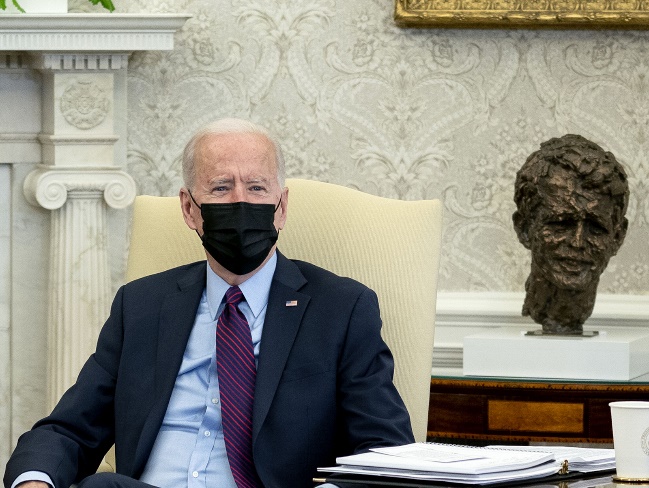
    biden rfk(Stefani Reynolds for The New York Times)
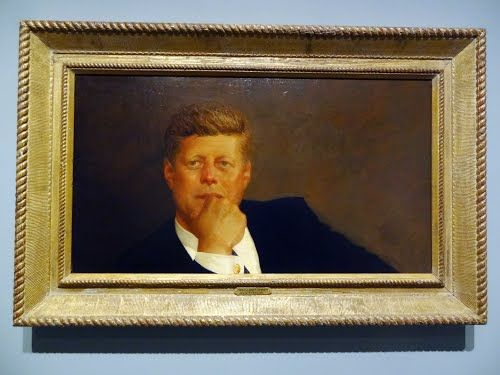
    jfk portrait(Museum of Fine Arts, Boston)

    JFK Records Act Backgrounder

    What exactly is in Biden’s Executive Memorandum that is so egregious? Well, it would help to briefly go back to the 1990s, when Joe Biden was a U.S. Senator from Delaware and the Chair of the Senate Judiciary Committee.

    As a result of decades of significant controversy caused by the government withholding millions of pages of records related to the 1963 assassination of President Kennedy from the American public, Congress enacted the John F. Kennedy Assassination Records Collection Act of 1992 (JFK Records Act”). Congress was put under substantial public pressure to do something about the continuing secrecy around records related to Kennedy’s assassination, because 30 years after his murder, executive agencies were holding hundreds of thousands of assassination related files secret, based on unsubstantiated claims of “national security”. Freedom of Information Act requests were ineffective at penetrating a completely unaccountable lock that the U.S. security state had on these then 30-year-old records. Public outcry after Oliver Stone’s Oscar winning film JFK tipped the balance. So Congress passed the JFK Records Act in a rare, unanimous bi-partisan vote. The act was signed into law by the then President George H.W. Bush, and after numerous delays finally went into effect in 1994.

    The full John F. Kennedy Assassination Records Collection Act of 1992 can be found here. It is worth reading.

    The law mandates, among other things, that by no later than October 26, 2017, all records related to the 1963 assassination of President John F. Kennedy had to be publicly disclosed in full, unless for each record, the President certified that extremely stringent criteria for postponement were met. If such postponement criteria were satisfied based on the legal standard of clear and convincing evidence, the President’s unclassified reasons for postponing each individual record had to be published in the Federal Register. This way the public could at least understand exactly which specific records were being postponed and what the legal basis was for the postponement of each individual assassination record.

    It needs to be noted that in accordance with the provisions of both the JFK Records Act (particularly section 9(d)(1)) and the Constitution’s separation of powers, that the President’s authority to postpone the public disclosure of assassination records only applies to Executive Branch records (which are records created by agencies and offices controlled by the President e.g. CIA, FBI, Secret Service, DEA, NSA, DOD, etc…). The President does not have legal authority over “non-executive branch records”, which include records created by Congress and other sources not controlled by the executive branch. Congress was very careful when drafting the JFK Records Act to ensure that they did not grant the President authority to control their legislative branch records.

    Congress also required that for each assassination record, that all “Government Offices” (the JFK Records Act specifically includes the Executive Office of the President in the definition of “Government Office”) had to issue what is called an “Identification Aid” when any action was taken or decision made in respect to any record. These Identification Aids were tracking forms that attached to all assassination records and recorded a brief description of the record, including the date of the document, the originating agency or entity, the disposition of the record and any action taken with respect to the record, such as the particular section 6 criteria for postponement that provided the legal justification for continuing to hold the assassination record in secret from the public. 

    Further, Congress specifically mandated the Archivist of the United States to ensure that all Identification Aids for every postponed record form part of the Assassination Records Collection. Also, that a publicly accessible Directory of Identification Aids be created and maintained, so that there was full transparency for the public to understand exactly which assassination records were continuing to be held in secret in the Protected Collection and what the legal basis for postponement was under section 6 of the JFK Records Act for each record.

    Most importantly, Congress made it clear in the JFK Records Act that there was a “presumption of disclosure” and the legal burden was on an agency to prove that a specific assassination record met the legal standard for postponement required by the Act and that clear and convincing demonstrable evidence was required in order to deprive the public access to a record.

    In order to ensure that government agencies and offices complied with the JFK Records Act, Congress created the Assassination Records Review Board (“ARRB”). This 5 person citizens’ panel was tasked with collecting, cataloging and reviewing all assassination records, with the mandate to release all assassination records, unless a record met the exacting criteria set out in section 6 of the Act.

    The ARRB’s limited tenure ran fromOctober 1, 1994 to September 30, 1998.During the ARRB’s time in operation, the Board and staff reviewed and made “final determinations” about every single assassination record that was identified and submitted by government agencies and offices. In the mid-1990s when the ARRB was doing its work, the JFK Records Act mandated that only in the most rare and exceptional circumstances were assassination records to be postponed from public disclosure.

    The law also legally mandated that, based on “final determinations” and recommendations for release made by the ARRB, all postponed records had to be periodically reviewed under the same stringent and exacting standards of section 6 of the Act. The purpose of the Periodic Review process was to “downgrade and declassify” all of the records held secret in the Protected Collection. By legally mandating this downgrading and declassification periodic review process, the JFK Records Act makes it clear that as time passes it should become more difficult, not easier for executive agencies to keep assassination records secret and to deny the American people access all the facts about the circumstances surrounding President Kennedy’s murder.

    ARRB “Final Determinations” and the Periodic Review Process

    Every assassination record currently held in the secret Protected Collection is held as a result of an ARRB “final determination”.As the ARRB went about its business between October 1994 and September 1998, it created a form called the “ARRB Final Determination Form”. These forms are not widely published and not a lot of attention has been placed on them by anyone in the research community.

    In every case where the ARRB made a Final Determination to postpone the release of an assassination record, they filled out one of these Final Determination Forms. These included the specific section 6 criteria which formed the legal basis on which a record was legally permitted to continue to be held in secret. The Final Determination Form also provided unclassified written reasons for each postponed record, along with the ARRB’s recommendation for releasing the record (i.e. a covert agent’s death, or a source or method no longer requiring protection).

    “Final Determination Forms” are critically important.

    Judge John Tunheim, the Chair of the ARRB has confirmed that all postponement decisions made by the ARRB are “Final Determinations” under the Act.

    The work with respect to all of the records currently held in the Protected Collection at NARA has been completed for over 25 years. The ARRB did its job. The result is a catalog of Final Determination Forms that state the section 6 criteria for postponement and the ARRB’s recommended release date for each assassination record, based on the section 6 criteria.

    A serious problem that occurred from September 1998 until October 26, 2017, is that virtually no Periodic Review took place in accordance with sections 5 and 9 of the JFK Records Act. The Periodic Review was supposed to happen based on the information and recommendations that the ARRB recorded on their ARRB Final Determination Forms for each postponed record.

    The mandated purposes of Periodic Review were to provide a rolling review of the postponed assassination records in accordance with the criteria and recommendations issued by the ARRB in their ARRB Final Determination Forms. If this had occurred as Congress mandated in the JFK Act, by October 26, 2017, there should have been only a very small number of records still held in the Protected Collection when the October 26, 2017 deadline came up.

    Again, according to the Law, it’s legislative history, and legal commentary, by the time the October 26, 2017 statutory deadline rolled around, based on the statute’s mandated program of Periodic Review, there should have been virtually no records left in the “Protected Collection” held at the National Archives. Because the clear purposes of the Act were to create an accountable, transparent and enforceable process to downgrade, declassify and ultimately fully disclose every single assassination record to the public, so that the public itself could decide for itself what the facts were about what happened in Dallas on November 22, 1963. 

    In reality, despite the law’s clear mandate, when October 26, 2017 did come and go, there were still an undetermined number of assassination records being either fully or partially withheld. By some estimates, the number of withheld records totalled was quite voluminous. But an accurate number was impossible to calculate because of the broken down and functionally inoperable Identification Aid Program that NARA and the agencies have failed to adequately maintain pursuant to their legal mandate.

    President Biden’s Friday Night Memorandum

    Now back to President Biden’s June 30, 2023 Executive Memorandum that postponed an undetermined number of unidentified assassination records. Let that sink in for a moment…

    “Maximum Transparency”

    Despite the clear mandates imposed by the JFK Records Act to establish an “accountable” and “enforceable” process for the full disclosure of all assassination records; and the explicit requirement that each record be accounted for with an identification aid, the President’s June 30, 2023 Memorandum does not identify or account for a single assassination record. 

    President Biden stated in the opening paragraph of his memorandum that, “As I have reiterated throughout my Presidency, I fully support the Act’s aim to maximize transparency by disclosing all information in records concerning the assassination, except when the strongest possible reasons counsel otherwise.” There is an unavoidable divergence from reality in the President’s statement, that is Orwellian in magnitude. For the simple reason that without being able to track which assassination records were postponed from disclosure through the mandated identification aid program, and without providing the legally required reasons for each postponement, on a record-by-record basis (“as required by the Act”), where is the “transparency” and “accountability”?

    When the ARRB issued final determinations on a record-by-record basis in the mid-1990s, only the President could override such final determinations pursuant to his authority under section 9(d)(1) of the Act. In respect to any Presidential determination to postpone or release a record under his 9(d)(1) authority, the President was mandated by law to:

    1. apply the standard of proof and postponement criteria required by section 6 of the Act;
    2. Provide unclassified reasons for the postponement based on the section 6 standard of proof and postponement criteria;
    3. Have the reasons for the postponement published in the Federal Register; and 
    4. Issue an identification aid for each postponed assassination record.

    The above duties, mandated to the President are what are called statutory or “ministerial duties”. The President does not have any wiggle room or discretion with respect to these mandated ministerial duties. If a President does not comply with ministerial duties, the resulting decisions may be reviewed by the courts on an application for judicial review or mandamus. While suing the President is not made easy, there are very narrow pathways that can be found to ensure that a President complies with the law. In the case of the JFK Records Act, these pathways require a refined parsing of the language of the Act to determine what specifically Congress required for a President or other specifically named officials to do.

    Neither President Trump nor President Biden complied with any of the above ministerial duties imposed on them by section 9(d)(1) of the JFK Records Act. They did not apply the standard of proof in section 6 to any postponement. They did not apply the postponement criteria; they did not provide any unclassified reasons for postponement for each record, so that the public could understand the rationale for any of the postponements. They did not issue any identification aids for each postponed record. And there is no way for the public to understand which records the postponements apply to, because there was not even a list of the postponed records published in the Federal Register as is required under the Act.

    All of these violations of the JFK Records Act, make it difficult or impossible for the public to seek any accountability or transparency in respect to the President’s decision-making. Further any attempt to seek judicial review of any specific postponed record will be extremely difficult, because no reasons were given for the postponement of any particular record. One of the requisite elements of any final decision or order under the principles of administrative law is that adequate or sufficient reasons be provided to justify a decision, so that any impacted party would understand the basis for the decision, and so that aggrieved parties would be able to fairly appeal such decisions. These basic legal principles form part of the foundations of our system of law and prevent “Star Chamber” justice and abuses of authority.

    The Clear and Convincing Standard of Proof

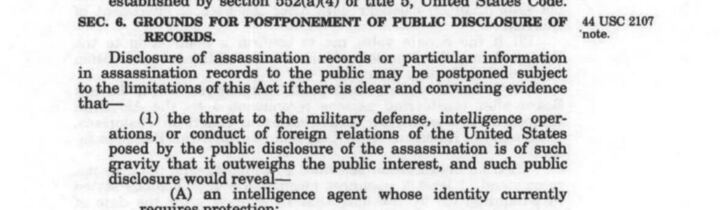
    Another serious legal problem arising from President Biden’s opening platitudes is his attempt to modify by edict the legal standards for postponement that are the basis of the JFK Records Act. Nowhere in the JFK Records Act do the words “except when the strongest possible reasons counsel otherwise.”

    The standards and criteria for postponement are only found in section 6 of the JFK Act.
    jfk records act1

    In legal processes there are several different standards of proof. In most criminal proceedings, the standard of proof is the well-known “beyond a reasonable doubt”. Civil standards of proof may vary depending on the seriousness of the process and the range of potential consequences of a ruling. Common civil standards of proof include “balance of probabilities”, “preponderance of evidence”, and “clear and convincing evidence”. When a statute imposes a standard of proof, that is the standard that parties must meet in order to successfully make their case. 

    Parties cannot simply ignore or change a statutory standard of proof in order to better suit their case.

    Congress decided when they enacted the JFK Records Act that the law would impose the relatively high civil standard of proof of “clear and convincing evidence”. There is no other standard of proof when it comes to assessing the grounds for postponing assassination records. All government offices, agencies and the President of the United States must follow the law and comply with the clear and convincing standard of proof mandated by sections 6 and 9(d)(1) of the JFK Records Act.

    To be certain, “Except when the strongest possible reasons counsel otherwise.” is not the standard of proof imposed by the JFK Records Act. In fact…“Except when the strongest possible reasons counsel otherwise.” is not a standard of proof anywhere in the world.

    Final Certification???

    The opening paragraph of President Biden’s Memorandum presents another perplexing statement and completely non-compliant decision by the President. “With my final certification made in this memorandum -– the last required under the Act -– and definitive plans for future disclosures, my Administration is fulfilling the promise of transparency to the American people.” [Emphasis added.] From this statement, one can be left with no other understanding: that with his June 30, 2023 Executive Memorandum, the government and the President’s legal obligations under the JFK Records Act have been fulfilled and that the June 30, 2023 Memorandum will be the final and last word on the undetermined number of unidentified assassination records being held in secret by the government.

    The problem with this statement is that it runs smack into section 12(b) of the Act. That section of the JFK Act is titled, “Termination of Effect of Act”. Part (a) of the section deals with the termination of sections of the Act pertaining to appointments to the ARRB and the operation of the Board. Pursuant to section 12(a), all of the sections of the Act that cover matters dealing with appointments to and operations of the ARRB shall terminate when the ARRB’s mandate ended on September 30, 1998.

    In respect to the sections of the Act that do not deal with appointments to or the operations of the ARRB, all those sections remain in full force and effect until every last assassination record is fully publicly disclosed to the public and the National Archivist certifies that all assassination records are publicly available. Section 12(b) is set out immediately below.

    jfk records act2

    Section 6 of the Act does not pertain to appointments to the ARRB and it does not deal with any ARRB operations. In fact, section 6 of the Act does not even mention the ARRB at all. Section 6 is a part of the Act that is mandated to form the basis of any and all decisions to postpone the disclosure of an assassination record by any and all government offices (including the Executive Office of the President of the United States). Section 12(b) legally mandates that section 6 remains in full force and effect as operational law and is applicable to the President’s authority to postpone disclosure of records, “as required by this Act” pursuant to sections 5(g)(2)(D) and 9(d)(1).

    The JFK Records Act makes no mention or suggestion that the President’s legal duties under the Act come to an end prior to the full public release of every single assassination record. To the contrary, both sections 12(b) and 9(d) make it clear that the President’s duties continue until there are no more secret assassination records held in the Protected Collection at NARA.

    Further, pursuant to sections 5 and 9 of the Act, the President has an ongoing statutory role in the periodic review process. Section 5(g)(2)(D) of the Act, is the provision that contains the purported authority pursuant to which both Presidents Trump and Biden have postponed the release of the remaining secret assassination records. It cannot be ignored that the title of section 5(g) of the Act is, “PERIODIC REVIEW OF POSTPONED ASSASSINATION RECORDS”. 

    Section 9(d)(1) of the Act also specifically weighs in on the President’s ongoing ministerial duties with respect to postponement of assassination records. That section mandates that, after the ARRB has made a “final determination”, regarding the release or postponement of an assassination record, only the President has the sole and non-delegable authority to release or postpone the release of assassination records under the standards of section 6 of the Act. There will be more about section 9(d)(1) later in this article.

    It is therefore unclear what the legal basis is for President Biden’s dismissive assertion that the June 30, 2023 Memorandum is the “final certification” required by the Act. This makes no sense given the clear duties imposed by sections 5, 6, 9 and 12, as discussed above.

    “Each Assassination Record…As Required By This Act”

    In section 2 of the June 30, 2023 Executive Memorandum, President Biden states that, “The Act permits the continued postponement of public disclosure of information in records concerning President Kennedy’s assassination only when postponement remains necessary to protect against an identifiable harm to the military defense, intelligence operations, law enforcement, or the conduct of foreign relations that is of such gravity that it outweighs the public interest in disclosure.”

    It would appear that the process suggested above in the President’s Memorandum directly conflicts with the President’s claims that he supports the transparency and accountability provisions of the Act. Does the JFK Records Act actually authorize the President to certify the postponement of thousands of unidentified assassination records en masse and without providing any reasons for each record that he certifies for postponement?

    The President’s Memorandum seems to cherry-pick words and phrases out of section 5(g)(2)(D), and omits some critically important language from the section. The omissions drastically change the meaning and purposes of this section as purported by the President in his Memorandum. Let’s look at exactly what section 5(g)(2)(D) states.

    5(g)(2)(D) Each assassination record shall be publicly disclosed in full, and available in the Collection no later than the date that is 25 years after the date of enactment of this Act, unless the President certifies, as required by this Act, that—

    1. continued postponement is made necessary by an identifiable harm to the military defense, intelligence operations, law enforcement, or conduct of foreign relations; and
    2. the identifiable harm is of such gravity that it outweighs the public interest in disclosure.

    The words “Each” and “as required by this Act”, seem to be omitted from any reference to section 5(g)(2)(D) of the JFK Records Act made by the government. Including in all of the Presidential Memoranda of both President’s Trump and Biden. It seems that the government is afraid to fully quote section 5(g)(2)(D) in its complete entirety. And the government is particularly frightened by the words “eachand “as required by this Act”, 

    The rules of statutory interpretation impress on lawyers and judges that words printed into laws must be given meaning; and that legislators do not insert meaningless or superfluous words into statutes.

    So what do the words “each” and “as required by this Act” mean in relation to the President’s authority to postpone the public disclosure of assassination records? The answer to this question could consume the better part of a chapter in a book or an entire lawsuit. I will try to provide a brief explanation of the proper interpretation of these words in the context of section 5(g)(2)(D) and in relation to the JFK Records Act as a whole.

    When the word “each” is used at the beginning of section 5(g)(2)(D), the rules of statutory interpretation would strongly imply that the word modifies the following parts of the whole section. It follows that a proper reading of this section would reasonably determine that the word “each” acts to modify both the requirement for public disclosure of each assassination record by no later than the statutory deadline of October 26, 2017; and “each” modifies the alternative requirement for the certification for postponement of each assassination record, as required by this Act. This interpretation would militate against a holus bolus en masse certification of an undetermined number of unidentified assassination records. This interpretation is further supported by the purposes of the Act, as well as all of the other sections dealing with periodic review and Presidential authority to postpone records. It would create an absurdity of law to interpret section 5(g)(2)(D) to mean that prior to October 26, 2017, there were more stringent postponement criteria and public transparency requirements under the Act than after October 26, 2017.

    The words “as required by this Act” must also be given meaning in the context of the President’s authority to certify the postponement of assassination records. If Congress intended that section 5(g)(2)(D) be an isolated, stand-alone provision and the only provision dealing with Presidential postponements, Congress would not have included the additional words, “as required by this Act” in Section 5(g)(2)(D). The inclusion of the words “as required by this Act” must therefore be read consistently and in line with the other sections of the JFK Records Act that pertain to the postponement of assassination records. Namely section 6 (which mandates the standard of proof and the exclusive postponement criteria) and with section 9(d)(1). That is the authorizing provision that grants the President his sole and non-delegable authority under the law to postpone the release of Executive Branch assassination records after the ARRB has rendered a final determination about an assassination record. 

    Instead of addressing the words “each” and “as required by this Act”, President Biden’s Memorandum summarily omits these words and ignores the statutory/ministerial duties that the words legally impose on the President in respect to decisions to continue the postponement of public disclosure of the secret assassination records held in the Protected Collection.

    “Transparency Plans”

    Let’s be blunt. The President’s “Transparency Plans”—originated by the CIA– are the opposite of transparent. They might as well be called “Opacity Plans” if the truth is being told. The JFK Records Act is one big statutory transparency plan that mandates tracking forms (identification aids) and a directory of these aids to provide transparency for each and every document in the Records Collection, including those documents that are continuing to be held in the secret Protected Collection. President Biden’s Transparency Plan seeks to do away with the Identification Aid Program and the publicly accessible Directory of Identification Aids.

    Section 6 of the Act mandates that all government offices apply the clear and convincing standard of proof and the five exclusive criteria pursuant to which postponements are permitted by law. Section 12(b) states that section 6 of the Act remains in full force and effect until the Archivist certifies that every single last assassination record is fully publicly disclosed. The President’s Memorandum seeks to do away with all of these truly transparency driven standards, and replace them by edict with new, less onerous, less stringent, less accountable, and totally unenforceable standards. 

    What happened to the mandate to downgrade and declassify all of the records? How and why did it suddenly become easier for the government to keep these assassination records secret…. not more difficult?

    President Biden’s Attempt to Seize Authority Over Congressional Records

    One aspect of both President Trump and President Biden’s multiple memoranda that ought to have received far more resistance from both the public and Congress, is the Presidents’ assertions of authority over what are termed “non-executive branch records”. These records include House and Senate records, largely originating from the House Select Committee on Assassinations and the senate’s Church Committee. As briefly discussed above, Congress was very careful in drafting the JFK Records Act not to cede any authority over non-executive branch records to the President. Section 9(d)(1) takes particular aim at this issue by explicitly limiting the President’s authority over only executive branch records.

    What impact does this have on the current state of the records held secret in the Protected Collection? It means that any Presidential postponement of a non-executive branch record is unlawful and that by law, every single record that originated from the HSCA and the Church Committee should have been fully publicly disclosed on October 26, 2017. This did not happen because both President Trump and President Biden broke the law when they authorized those records to remain held in secret. Congress should have stepped in to protect their authority over their own records and processes, but to date, Congress has failed to schedule any oversight hearing or call any official to account for the undeniable non-compliance under the Act by NARA, the agencies and the Executive Office of the President. It seems that no branch of the government is interested in complying with the JFK Records Act on any level, in any meaningful way. Senate Majority Leader Chuck Schumer did however mention the JFK Assassination Records Act last week when he suggested that Congress ought to use the that act as a model for new legislation to provide public transparency on the urgent and pressing issue of UFO sightings!! Is our government trolling us?

    As this article goes to print, Judge Seeborg has just issued a decision in the case brought by the Mary Ferrell Organization in San Francisco court. An update on this important decision will be forthcoming next week.

  • Biden’s ‘Final’ Order on Kennedy Files Leaves Some Still Wanting More


    On June 22, 1962, an intelligence official drafted a memo summarizing a letter intercepted between Lee Harvey Oswald and his mother. The memo was made public long ago. But for 60 years, the name of the letter opener was kept secret.

    Now it can finally be told: According to an unredacted copy of the memo released recently by the government, the official who intercepted Oswald’s mail for the CIA in the months before President John F. Kennedy was assassinated was named Reuben Efron.

    Read the rest of the article here. (Yahoo! News)

  • Attacks on RFK Jr. as a “Conspiracy Theorist” Show All the Hallmarks of CIA Disinformation


    In January 1967, the CIA sent a memo (marked “SECRET,” “RESTRICTED,” and “DESTROY WHEN NO LONGER NEEDED”) to its army of media “assets” secretly embedded in virtually every area of U.S. communications. This army of covert operatives (exposed as “Operation Mockingbird” in a historic 1977 Rolling Stone article by Carl Bernstein) extended all the way up to world famous columnists, bureau chiefs, managing editors, newspaper publishers and CEOs of major radio and television broadcasting networks.

    What did the CIA’s secret memo instruct its media assets to do? Entitled “Countering Criticism of the Warren Report,” the memo provided guidance for countering “conspiracy theorists” who challenged the Warren Report’s false conclusion that Lee Harvey Oswald was the lone assassin of John F. Kennedy. It recommended the strategy of smearing critics of the Warren Report by describing them as being financially motivated; or having “anti-American, far-left or communist sympathies,” or being hasty, inaccurate or ego-driven in their research.

    Sound familiar? Although five decades old, the tactics recommended by the memo seem chillingly current, a virtual operating manual for how the present-day CIA tries to smear and discredit anyone who dares to question official government propaganda.

    Read the rest of the article here. (CovertAction Magazine)

  • Fact-Checking the Sixth Floor Museum

    Fact-Checking the Sixth Floor Museum


    To my surprise, I don’t think this has ever been done before. But it is imperative that it must be done, for millions of people visit the museum every year. It’s at the epicenter of the crime.

    In Episode 1 of Oliver Stone’s 4-part series JFK: Destiny Betrayed, the narrator says: “The Sixth Floor Museum, to this day, insists that Oswald shot Kennedy from that sixth floor window, and virtually everything in the museum is dedicated to that proposition.”

    I decided to, without bias, see if this was in fact true. In August 2021 I photographed every single exhibit and every single museum label in the museum to fact-check. The following are the results…

    * * *

    The museum correctly says “witnesses…believed gunfire had come from the grassy knoll…Dozens of people ran up the grassy knoll…Some witnesses said they saw a puff of smoke in the trees there, and one witness [Lee Bowers] observed unfamiliar automobiles in the rail yards and two men standing behind the fence just before the shooting.” However, they did a disservice by next writing: “Officials searched the area, but found only cigarette butts and footprints behind the fence.” What they failed to mention was the fact that those cigarette butts and footprints were FRESH and were found in the exact spot where that puff of smoke was seen. A flash of light was also seen there by Bowers, and an anomalous shape appears there in the Moorman photo that’s not there in later photos. So that was a person.

    Sliding along, the museum says “at least five witnesses said they had seen a rifle protruding from an upper window”—but only four did.

    We are told that “the easternmost window on the south wall was half open”—but as anyone can plainly see from the photos, the window was only a quarter open! “In the far east corner was a paper bag, later determined to have been used to bring the rifle into the building”—but the bag is not present in any of the crime scene photos! Moreover, any lucid person who reads the Warren Report subchapter “The Long and Bulky Package” (pp. 131-134) will come away convinced that a rifle couldn’t have been in Oswald’s bag.

    Next, the museum says “Oswald’s finger prints and palm prints were found on several of the cartons and on the paper bag.” This is so easy to debunk. This is one of those things where you can just go right to the Warren Report and it debunks itself. The Commission admitted that the key box at the window used as the gun rest, as well as the box below it, “contained no prints which could be identified as being those of Lee Harvey Oswald.” (WR 140) This is significant. One box and another nearby had Oswald’s prints. (R 138) Well, Oswald DID work in the building. In their own words: “…the Commission considered the possibility that Oswald handled these cartons as part of his normal duties.” (WR 141) And only one of these prints “was less than 3 days old.” (ibid) The Commission admitted the print “could have been placed on the carton at any time within this period.” (ibid.) And they ultimately said: “The prints do not establish the exact time he [Oswald] was there.” (ibid.) As for the paper bag, when FBI expert Sebastian Latona initially examined it on 11/23, he could find no latent prints on it. (WC Vol. 4, p. 3)

    Moving along to the Tippit murder, the museum label says “Tippit died before he reached the hospital”—but as anyone knows, Officer Tippit was killed instantly with a shot through the head and others through the chest.. The museum next said something absolutely astounding under a photo of Oswald’s revolver: “The bullets that killed Tippit came from this gun.” This is ABOMINABLY INCORRECT!

    Representative BOGGS: You cannot establish the fact that the bullets were fired in that gun?
    Mr. CUNNINGHAM: That is correct. (WC Vol. 3 p. 476)
    Mr. CUNNINGHAM: I could not identify those bullets as having been fired from that gun. (Ibid p.482)

    The museum tells the common mainstream talking point that “In a roll call of employees…he [Oswald] was discovered missing.” This implies Oswald was the only employee missing, but a check of all the FBI statements reveals that 17 were never in the building after 12:30. (WC Vol. 22, pgs. 632–686)

    Museum tourists are told that “Investigators learned that Oswald was a loner with strong leftist leanings.” They might have gotten away with this statement when the museum opened way back in 1989, but not today. We have learned so much since, e. g. that Oswald was almost certainly a double-agent. His former roommate James Botelho even spoke up: “I knew Oswald was not a communist and was, in fact, anti-Soviet…I knew then what I know now: Oswald was on an assignment in Russia for American intelligence.” (JFK and the Unspeakable, by James Douglass, p. 40) For this important point, see also John Newman’s updated version of Oswald and the CIA, James DiEugenio’s Destiny Betrayed, second edition (Chapters 6 and 7, and the extremely important declassified files of HSCA investigator Betsy Wolf) (Click here)

    The museum says Oswald “was rated a sharpshooter.” But this is a common cherry-pick, for that was an early test, and Oswald was officially designated as barely a marksman (the lowest of the low). The Warren Report itself said he was a “rather poor shot.” (WR, p. 191) The museum says “Oswald’s wife later testified that he admitted to her that he had tried to kill Maj. General Walker”—however, she might have been manipulated to make this claim. Plus, she is the most unreliable witness, for her stories constantly changed (see this) What the museum conspicuously omitted was that the alleged bullet recovered from Walker’s house could not be linked with Oswald’s rifle (WC Vol. 3 p. 439); and the two main witnesses said the perpetrator was not Oswald. ( WC. Vol.5 pp.446-447; WC Vol. 26 p. 438) They brought up the claim that “Oswald left a note in Russian for his wife with instructions if he did not return that night”—but Marina said she never saw the note! (WC Vol. 23, p. 393) And of course, as everyone knows, the note is undated and makes no reference to Walker. Researchers have concluded that, most likely, Oswald wrote this note in relation to a project other than an attack on General Walker.

    We are next told Oswald’s “latent palm print [was found] beneath the wooden stock of the gun.” However, this palm print didn’t appear for a week (4 H 23), and the only person to see this alleged print said it was an OLD print. (Gary Savage, First Day Evidence, p. 108) Beyond that, when the FBI got the rifle the night of the assassination, they could find no trace prints of value on it. (James DiEugenio, The JFK Assassination: The Evidence Today, p. 214) We are correctly informed that “During Oswald’s detention no witnesses were able to identify him as the gunman seen firing from the Depository window.”

    Continuing on, the museum claims “over two dozen people recorded” the assassination. This is not correct. There were actually 7 who were filming while the shooting was taking place. The museum correctly stated witnesses heard shots “coming from various locations in Dealey Plaza.” They next did a partial good job at listing 6 of the 58 grassy knoll earwitnesses. But they then listed 10 of the only 46 Depository earwitnesses. In other words, they made it seem like there were less knoll ear witnesses! They mentioned James Tague, but omitted that he believed the shots came from the knoll.

    Only towards the end of the museum tour do we get to the forensic and ballistics evidence. They incorrectly claim the Warren Report “agreed that Connally showed a reaction by [Zapruder] frame 224.” This wasn’t put forward until the 1970s. Connally said he was hit about ten frames later than this to Josiah Thompson. (Six Seconds in Dallas, pp. 69-70) The museum oddly says the autopsy doctors’ “probe of the back wound revealed no exit point; the tracheotomy had obscured it.” This is frighteningly inaccurate. How can an incision in the front of the NECK obscure an alleged bullet path in the BODY?! The simple fact is that the back wound was probed and found to not go anywhere. (CD 7, p. 284) The bullet lodged in the back and most likely fell out. It also would’ve smashed the first rib had it traversed where the measurements place it. The museum brings up how “The House Committee…concurred that one bullet could have wounded both Kennedy and Connally.” But in order for it to work, they said, JFK would have to be leaning WAY forward (Vol. 7 HSCA p. 100)—which he WAS NOT! (WC Vol. 18, p. 26) Everything else said on the topic of forensic and ballistics evidence lacks serious context and doesn’t tell the full story. More shockingly, the museum never informs its tourists the basic fact that JFK had a massive blowout in the right rear of his head—of course, all indicative of a shot from the front.

    The museum’s section on the acoustics evidence is bland and very outdated.

    Almost at the end of the tour, we are told that “Depository employee Charles Givens had seen Oswald at about 11:55…on the sixth floor”—but in his Dallas Police statement he made no mention of Oswald. (WC Vol. 24 p. 210) We are next told that “Tests for the Warren Commission showed that Oswald could have run down this staircase to the second floor lunchroom in less than two minutes.” This too is outdated. See here for everything you need to know about this subject.

    Finally, at the very end of the tour we come across a wall of big paragraph webs listing all the different theories of who could’ve done it. If anything, this leaves tourists to walk away with the “it will remain a mystery” view rather than “this is a conspiracy”.

    My conclusion is that the Sixth Floor Museum simply gave basic official story facts while omitting tons and tons of context. They, as someone once said, “did not take into account all of the available relevant evidence in the case of the assassination, and therefore violated a fundamental requirement of scientific reasoning, which is known as the Principle of Total Evidence.”

    While doing a final comb though of all the photographs I had taken, I did manage to find one tiny little museum label that read: “Arguments that Oswald was a patsy…and that gunmen shooting from other locations…have remained popular but unproven.” But those are the two main beliefs of the critics! If the museum is saying they are “unproven”, then they are, in effect, saying the official story is true.

    They haven’t shied completely away from conspiracy, though. Notable critics Dr. Cyril Wecht and Josiah Thompson have given presentations there in recent years. Thompson, at one point, even narrated the museum’s audio tour guide. Today, it is narrated by witness Pierce Allman, who was a staunch lone nutter.

    One thing people DO get wrong about the museum is the books it has. Robert Groden wrote that: “The Sixth Floor Museum book store is barred from carrying any book that honestly deals with the subject of the Kennedy conspiracy.” (JFK: Absolute Proof, p. 329) This is a not accurate. The museum bookstore does contain some conspiracy books. And their Reading Room contains EVERY SINGLE conspiracy book on the assassination, in addition to every book on the subject. The Reading Room also has thousands of vital Oral Histories with eyewitnesses and researchers, coupled with every newspaper and magazine story on the case. My advice would be to skip the $18 tour and just go straight to the Reading Room. As someone once said, “Study the evidence yourself and make up your own mind.”

    In the end, one thing does ring true more than anything. Outside on the Sixth Floor Museum’s historical plaque, it reads:

    “ON NOVEMBER 22,1963, THE BUILDING GAINED NATIONAL NOTORIETY WHEN LEE HARVEY OSWALD ALLEGEDLY SHOT AND KILLED PRESIDENT JOHN F. KENNEDY FROM A SIXTH FLOOR WINDOW AS THE PRESIDENTIAL MOTORCADE PASSED THE SITE.”

    That is something we can all agree on.

  • RFK Jr.: ‘It’s Very Disturbing’ That Biden Refused to Release More JFK Assasination Docs


    President Joe Biden is keeping thousands of JFK assassination secret as part of a “Transparency Plan,” drawing fire from historians, researchers as well as his Democratic primary opponent—a nephew of the president murdered nearly 60 years ago today.

    “It’s very disturbing,” Robert Francis Kennedy Jr., told The Messenger in an interview. “They’re pouring the concrete on 60-year-old secrets so that they’re permanently interred. Why?”

    Read the rest of the article here. (The Messenger News)

  • ACTION ALERT: Biden and the CIA Turn the Lights Out

    ACTION ALERT: Biden and the CIA Turn the Lights Out


    On Friday night, President Joe Biden released an executive order that more or less said that the JFK Records Collection Act is no longer in effect.

    Usually the White House delays such an announcement to a Friday night in order to avoid maximum publicity such a decree would get on a Monday morning news cycle. Since there was little publicity about the order, it appears that the administration succeeded in its attempt to keep the fallout about the order minimal.

    What this announcement does is essentially stymie the original JFK Records Collection Act. That 1992 law said that after October 2017, every last document concerning the JFK case would be released without redactions. The only person who could prevent that from happening was the president. Yet after that termination date, first President Trump and then President Biden, delayed the process a total of at least four times. And now, with this June 30th order, Biden has pretty much stopped the declassification process before it is completed—and in two ways. First, there are still thousands of documents yet to be released in unredacted form. Secondly, according to our reporter on the subject, Gary Majewski, the last two releases contained no new documents.

    Apparently, Biden has succumbed to the demands of the executive intelligence agencies, particularly the CIA and its so called Transparency Plan. (Chad Nagle explains that here) Biden’s order also turns over ultimate disposition of the remaining JFK files to the National Declassification Center, by following the Transparency Plan:

    The Transparency Plans will ensure that the public will have access to the maximum amount of information while continuing to protect against identifiable harms to the military defense, intelligence operations, law enforcement, and the conduct of foreign relations under the standards of the Act.

    It is hard to comprehend how someone as experienced as Joe Biden could agree to these excuses that the CIA, and FBI always use in order to keep relevant information hidden. President Kennedy was killed almost 60 years ago under the most suspect circumstances. What secret operations from more than a half century ago could outweigh the need for total disclosure of that murder?

    We urge our readers to protest this attempt to place a muzzle on the JFK Records Collection Act. Please contact either the House Oversight Committee or The White House to make your objection known.

    House Oversight Committee
    2157 Rayburn House Office Bldg.
    Washington. DC 20515
    Phone: 202-225-5074; Fax: 202-225-3974

    Chair: James Comer; Ranking Member: Jamie Raskin
    The White House
    1600 Pennsylvania Avenue, N. W.
    Washington DC 20500
    Phone: 202-456-1111; Email : president@whitehouse.gov

    (This is a breaking story, and we will have more about it from attorney Mark Adamczyk and Andrew Iler.)

  • President Biden Delays the Release of the Remaining JFK Assassination Records


    Biden and his DOJ have put an axe through sections 6 and section 9(1)(d) of the Act, which will effectively kill the JFK Assassination Records Act of 1992 and all of the work accomplished by Oliver Stone to get the Act passed in the first place.

    Here is a news story on this topic.

    Download the memorandum issued by the White House here. (PDF)

  • Chris Hedges and Aaron Mate: Please Sit Down

    Chris Hedges and Aaron Mate: Please Sit Down


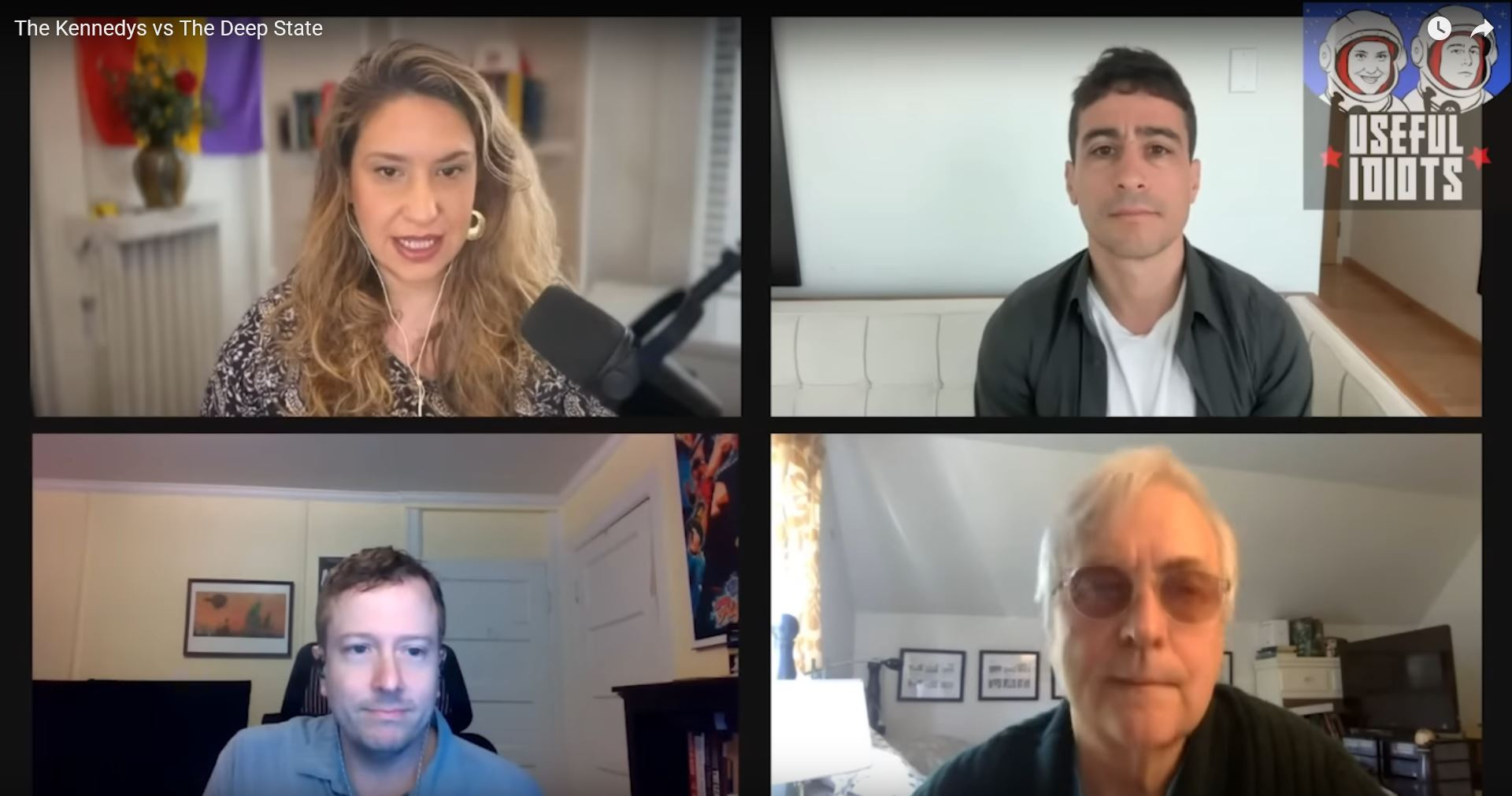
    On the podcast of Useful Idiots for June 23rd, Katie Helper and Aaron Mate guested founder of Salon and bestselling author David Talbot. A second guest was Aaron Good, who hosts the podcast American Exception and is author of the book of the same name. Because of the interest of those two authors in the JFK assassination, plus the presidential candidacy of Robert Kennedy Jr. the subject of the assassination of President John F. Kennedy arose. Helper asked a general question about his assassination: as to why he thought it occurred. Talbot replied that it was likely because of Kennedy’s attempts to end the Cold War. He then named a few examples, like the Partial Nuclear Test Ban, his attempts at détente with Cuba and Russia, and his withdrawal of advisors from Vietnam.

    Aaron Mate then joined in. Mate is a journalist I would like to like. He has done some good work in battling the MSM, for example on the issue of Russia Gate. I was just about bowled over when he said that he had only read the works of Seymour Hersh and Noam Chomsky on the subject of the John F. Kennedy presidency. Which would be the equivalent of him saying that he has only read Gerald Posner and Vincent Bugliosi on his assassination. A respectable reporter could hardly choose two worse sources than those two men. (Click here for Hersh and here for Chomsky)

    Mate started in with, well yes, John Kennedy did make the famous American University Peace Speech. But he also then made his “Ich bin ein Berliner” speech later that same June month in 1963. As this linked article shows Kennedy made the Berlin speech since he wanted to fortify the Atlantic Alliance over the doubts sown about its solidarity by French leader Charles DeGaulle.

    As anyone who studies the Kennedy presidency understands, the city of Berlin, because it was located inside East Germany, was of prime importance to Kennedy, as was the Atlantic Alliance. Unlike Vietnam, he felt this was an area and an alliance that impacted America’s national security. For example, during the Cuban Missile Crisis, Kennedy thought that Nikita Khrushchev was going to use his newly installed missiles in Cuba as a way to either barter or to move on Berlin. (The Kennedy Tapes by Ernest May and Philip Zelikow, pp. 176-77). But this did not affect his continued efforts at rapprochement with Moscow and Havana. Those were ongoing up until his assassination.

    Mate then went on to say that raids against Cuba persisted after Operation Mongoose was discontinued. (He actually said after the Bay of Pigs invasion, but this was a clear chronological error on his part.) Talbot replied that this was merely boom and bang that did not result in anything of substance. Which is correct. In fact, upon Kennedy’s death Des Fitzgerald, CIA’s chief of Cuban operations at the time, suggested they be stopped. There were only five in the second half of 1963 and they were of little consequence, individually or as a whole. In two letters Fitzgerald wrote to the White House he clearly implied this effort was so meager that it was counterproductive. (James DiEugenio, Destiny Betrayed, second edition, p. 70) But the important aspect to note is that, as author Peter Kornbluh has observed, the back channel efforts with Fidel Castro ended upon JFK’s assassination. Much to the chagrin of Castro. (Click here)

    But the worst comments that Mate made were on Vietnam. In reference to National Security Action Memorandum 263, he used the old Chomsky mythology that this thousand man withdrawal was conditional on the war being favorable to Saigon. The implication being that somehow Kennedy would reverse policy if it weren’t. Anyone can read NSAM 263, for example, in John Newman’s revised version of his book JFK and Vietnam. (p. 417). There is nothing conditional about it. The first thousand advisors were being withdrawn by the end of 1963.

    But further, Kennedy told his aides Ken O’Donnell and Dave Powers that he had been convinced by Senator Mike Mansfield. Mansfield had told JFK twice that the American effort in Vietnam was not effective. That the proper policy was to send no more reinforcements and to begin a withdrawal from the area. After the second discussion of Mansfield’s plan Kennedy said that in 1965 he would become an unpopular president. He would be branded a communist appeaser and another McCarthy Red Scare would ensue. But he was satisfied with that. As long as it happened after he was reelected, and everyone was out: “So we had better make damned sure that I am reelected.” (Johnny, We Hardly Knew Ye , by O’Donnell and Powers, pp. 16-17).

    Would Kennedy say he was going to be branded a commie appeaser if he thought the withdrawal would result in victory?

    Secondly, Mate is quoting Chomsky from a book the latter published before the declassification process of the Assassination Records Review Board (ARRB) began. In December of 1997, the ARRB declassified hundreds of pages of records on Vietnam. This included the Sec/Def meeting from May of 1963, where all US representatives—Pentagon, CIA, State Department—would meet to review the situation in Indochina. At this particular meeting Secretary of Defense Robert McNamara collected the withdrawal plans from the Pentagon that he had requested earlier. Everyone in the room understood that the withdrawal would be completed by 1965. There is no mention by anyone of escalation if the war turned south. In fact, General Earle Wheeler noted that proposals for any such action would elicit “a negative Presidential decision.” (Probe Magazine, Vol. 5 No. 3, p. 19)

    Third, as Newman discussed in Oliver Stone’s film JFK: Destiny Betrayed, he was given permission by McNamara to listen to and read the transcripts of his Pentagon debriefs. In that record, McNamara said that he and Kennedy had concluded that they could give equipment, training and advisors to Saigon. But they could not fight the war for them. Once the training mission was completed America was leaving, and it did not matter what the military situation was on the ground.

    Former New York Times journalist Chris Hedges might be even worse on the subject of Kennedy history. I had the misfortune of watching his interview on the Bad Faith podcast with Briahna Joy Gray. Just what we need, another professional Chomskyite leftist who relies on Sy Hersh’s hatchet job of a book on JFK. Anyone who admits that in public—as these two men did—should be pilloried and castigated for being an unreliable sucker.

    First, unlike what Hedges conveys, according to Jules Witcover’s authoritative book 85 Days, prior to the 1968 New Hampshire primary, Bobby Kennedy had decided to enter the Democratic race for president. He stayed out of that primary in deference to Gene McCarthy’s candidacy. Bobby entered the race because he did not think that McCarthy was strong enough on domestic issues.

    Second, I just about fell out of my chair when Hedges said that RFK was somehow obsessed with the death of Fidel Castro. This is simply false. The CIA/Mafia plots to assassinate Castro went back to 1960. And anyone who reads the Inspector General report on them would know that Bobby Kennedy did not know about them until May of 1962. And he found out about them through an accident. Sam Giancana wanted a hotel room in Vegas wiretapped since he thought his girlfriend, Phyllis McGuire, was carrying on with comedian Dan Rowan. This illegal surveillance, commissioned by the CIA Castro plotter Robert Maheu, was discovered by the local authorities. It was kicked up to the FBI. When RFK learned of it he requested a briefing as to why Maheu was trying to comply with Giancana’s request. That is how he found out about the plots. When the CIA briefed him, they told him that the plots had been discontinued. This was a lie and the CIA knew it was false when they told him. (CIA IG Report, pp. 57-66)

    But further, the CIA’s internal report proved that at no time did any president give any approval or authorization to the plots to kill Castro. (IG Report, pp. 132-33). Yet the CIA authorized, through Director of Plans Richard Helms, the use of RFK’s name in a further extension of the plots through a Cuban national named Rolando Cubela. (IG Report, pp. 89-93).

    This is how wrong Hedges is about this whole sorry episode. I mean a function of a journalist—especially an alternative reporter—is to consult the primary sources on a subject like this. If not, you run the risk of misinforming the public. The CIA Inspector General report is online. There is no excuse for not reading it. (Here it is)

    Neither, as Hedges maintains, did JFK buy into the whole Cold War ethos, especially in the Third World. Did Hedges miss Kennedy’s famous speech in 1957, where he bucked the entire media/political establishment on this issue in the French colonial conflict in Algeria? All one has to do is read Richard Mahoney’s JFK: Ordeal in Africa about President Kennedy and the Congo to understand that. Kennedy was backing Congo’s Patrice Lumumba against the European power Belgium in that epic struggle. The CIA helped to get rid of Lumumba about three days before Kennedy was inaugurated.(Mahoney, pp. 69-74)

    Question to Hedges: Was that just a coincidence? Or did they not like the fact that they knew JFK was going to back Lumumba? In fact, Kennedy directly caused the UN to back Lumumba’s successor, labor leader Cyrille Adoula, against the secession of the rich European backed Katanga province. And Kennedy gave the go ahead to use the United Nation’s military force, Operation Grand Slam, to do so. (Mahoney, pp. 154-56).

    I almost threw up when Hedges said that the Kennedys were late to support civil rights. This is just utter nonsense. I proved in a 60 page documented essay that no president since Lincoln did more for civil rights than JFK. And no Attorney General did more on the issue than Bobby Kennedy. And it started within about two months after Kennedy was inaugurated. To name just one achievement: JFK signed the first executive order about affirmative action. To name another: RFK prosecuted the Secretary of Education in Louisiana for not obeying a judicial decree on school integration. (Click here)

    This almost MSM goofiness is topped when Hedges says that RFK hated Martin Luther King. On that one I went from puking to cardiac arrest. Bobby Kennedy supervised the famous March on Washington in 1963. He was determined that this event would come off like clockwork so the civil rights movement would be hailed as a non-violent triumph. It did and it was. (Irving Bernstein, Promises Kept, p. 114). As most people in the know understand—except maybe Hedges—it was Bobby Kennedy who gave King the idea for a Poor People’s March. (Arthur Schlesinger, Robert Kennedy and His Times, pp. 911-12) It was Robert Kennedy who rescued the Freedom Riders and King in Montgomery by sending in 500 federal marshals under the direction of Byron White. (Bernstein, p. 66) It was JFK who called Coretta Scott King when her husband was imprisoned during the presidential race in 1960. It was Bobby who then intervened and had King released.(Bernstein, pp. 35-36) It was Bobby Kennedy who gave the address in Indianapolis the night King was killed to a predominantly Afro-American crowd. That was the only major city that did not go up in flames over King’s murder. Anyone who can listen to this speech and say RFK hated King is not to be trusted on the subject.

    The excuse Hedges gives for cancelling all of this out and saying that Bobby hated King was the approval the Attorney General gave to a wiretap on King’s phone. What he leaves out is that Bobby was under relentless pressure by J. Edgar Hoover to do so. As FBI official William Sullivan wrote, RFK resisted, resisted and resisted any such action. But Hoover’s clearly implied threat was that the FBI would release evidence that King was secretly a communist sympathizer who had people who were pink in his employ. Finally, the AG agreed to a 30 day trial on the grounds that if nothing was found, that would be it for the accusations and the surveillance. The problem was that President Kennedy was killed around the time it lapsed and that was it for RFK’s control over Hoover. To put it mildly, Hoover’s good friend Lyndon Johnson had no such qualms about the FBI’s battles against King. And beyond that, the evidence indicates that Hoover already had King wired, and was trying to cover himself with his threats about exposure. (Harris Wofford, Of Kennedys and Kings, pp. 211-17)

    It is crucial to note that King did not endorse Eugene McCarthy in 1968. He was waiting for RFK to make up his mind. When Bobby announced he said, “We’ve got to get behind Bobby now that he’s in.”(Schlesinger, p. 912) Let me also add, back in 2015, the late Paul Schrade told me that it was Cesar Chavez’ idea to get RFK to Delano, California for the hearings on suppression against the farm workers. To put it mildly, Bobby came through for them. (Click here to see)

    If King and Chavez are not enough, we know that after JFK passed, Gamal Abdel Nasser of Egypt, Achmed Sukarno of Indonesia, and Juan Bosch of the Dominican Republic were all mired in pain, to the point of tears. They all knew the road ahead. They were correct. We know what happened after—except for maybe Chris Hedges and Aaron Mate.

    All of this is not a matter of politics. It is a matter of defiled history.