Blog

  • The Possibility of an Oswald Impersonator

    The Possibility of an Oswald Impersonator

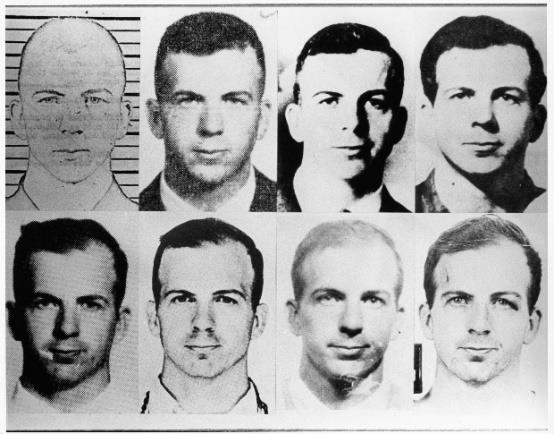
    A mysterious figure emerged in the lead-up to the John F. Kennedy assassination on November 22, 1963. He bore an uncanny resemblance to Lee Harvey Oswald, but was it really the alleged killer of a president or someone who looked like him? The accounts of this Oswald impersonator have fueled numerous theories and speculations.

    Today, we discuss some of these puzzling sightings, as listed in this article.

    The Birth Certificate Riddle: June 3, 1960

    FBI Director J. Edgar Hoover raised eyebrows when he penned a memo suggesting that someone within the States might have used Oswald’s birth certificate to impersonate him while he was in the Soviet Union. The early notion of an Oswald impersonator hinted at a deeper mystery.

    A Strange Encounter in New Orleans: January 20, 1961

    In New Orleans, an odd incident unfolded when two men visited a Ford dealership. One of them, Joseph Moore, expressed an intent to purchase ten Ford Econoline trucks for the Friends of Democratic Cuba.

    The other man, claiming to be Lee Oswald, offered to handle the payment. Here’s what’s strange about this: The real Oswald was in Minsk when this occurred.

    The unusual episode hinted at the exploitation of Oswald’s identity for covert purposes.

    The Sportdrome Gun Range Incident: November 16, 1963

    Another bizarre sighting occurred at the Sportdrome Gun Range in Oak Cliff. The Oswald doppelgänger at this sighting bragged about his Italian-made carbine and fired shots at targets, causing a scene. Such provocative behavior added to the intrigue surrounding the real Lee Harvey Oswald.

    A Disturbance at the Dobbs House Restaurant: November 20, 1963

    At the Dobbs House Restaurant, a man claiming to be Lee Harvey Oswald caused a commotion just two days before the JFK assassination.

    He berated the waitress and loudly complained about his runny eggs. This aggressive behavior contrasted sharply with the real Oswald’s demeanor. Even if he’d been acting out of character, he should’ve been working at the Texas Book Depository when the ruckus occurred.

     Oswald mugshot

    Puzzling Purchases on Assassination Day: November 22, 1963

    On the morning of the JFK assassination, a young man using Oswald’s name bought two bottles of beer at a store near Dealey Plaza. He presented a Texas driver’s license with Oswald’s name and birthdate. These purchases happened after Oswald reported to work at the book depository.

    The probable Oswald impersonator later returned to purchase peanut-coconut brittle, an unusual choice for breakfast. These seemingly ordinary transactions took place just before the world-changing events of that fateful day.

    Read More About the Curious Case of Two Oswalds Online

    Check out the article mentioned above for a deeper exploration of the possibility of an Oswald impersonator. Discover the wider conspiracy surrounding the assassination of President John F. Kennedy and the other political assassinations of the 1960s on a platform that advocates for the truth even when it is not a popular opinion.

    Get in touch for comments and feedback.

  • The Assassination of Officer Tippit: Revisiting the Witnesses

    The Assassination of Officer Tippit: Revisiting the Witnesses

    The Warren Committee and House Select Committee on Assassinations findings concluded that Lee Harvey Oswald was the person behind the killing of 1963 Officer J.D. Tippit on the same day as the assassination of President John F. Kennedy. Their conclusions are mostly based on eyewitness accounts. Read our article to see why these testimonies are dubious.

    Let’s take a closer look at some of these eyewitnesses.

    Domingo Benavides

    Domingo Benavides was the closest witness to the assassination of Officer Tippit. He was driving on E. 10th Street when he heard three gunshots nearby. He didn’t witness the shooting itself but saw the shooter walking away.

    It’s worth noting that Benavides couldn’t identify the shooter because he only caught his back as he ran away. He checked on Tippit, who was deceased by that time, and retrieved two shell casings left by the fleeing gunman.

    Lastly, he noted the suspect’s squared-off haircut, which didn’t match Lee Harvey Oswald’s tapered haircut. The only thing that matched was the “Eisenhower” jacket, but that’s circumstantial at best.

    Helen Markham

    Helen Markham was a key witness in the Tippit case. She claimed to have seen the shooting, but contradictions marred her testimony. While Markham described an encounter where a man shot Officer Tippit, her version conflicted with other witnesses.

    Below are some of these contradictions:

    • She was the only one to see the killer walking east, while others saw the killer walking west along 10th Street.
    • Markham claimed the killer leaned into Tippit’s open passenger window, but only the vent window was cracked open.
    • She also stated that she spent 20 minutes alone with the dying officer, which contradicted Benavides’ testimony suggesting Tippit died quickly.

    Assistant Warren Counsel Wesley Libeler called Markham’s testimony “contradictory and worthless,” and others doubted her identification of Oswald. Top of Form

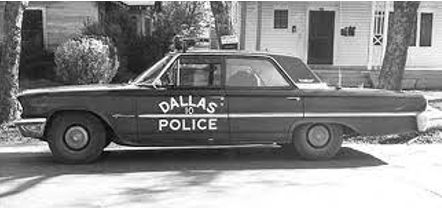
    Tippit and witnesses

    William Scoggins

    Cab driver William Scoggins witnessed the assassination of Officer Tippit from his parked vehicle at 10th & Patton. While eating his lunch, he saw Tippit’s patrol car stop, and a young pedestrian approached it. However, Scoggins’ view of the killer was blocked due to hedges.

    When gunshots rang out, he saw a young man with a gun walk past his cab, and Scoggins took cover behind it.

    At a police lineup, Scoggins identified Lee Harvey Oswald as the man he saw crossing the lawn.

    By November 23rd, most Dallas residents were aware of Oswald’s alleged involvement. During the lineup, Oswald was the only one who provided his correct name and stated he worked at the Texas School Book Depository.

    To make matters worse, Scoggins later admitted he couldn’t identify Oswald in a separate photo lineup, saying he was told he picked the wrong man.

    Discover More Contradictory Testimonies at Kennedys and King

    There are enough contradictory testimonies in this event and the one preceding it, i.e., the assassination of John F. Kennedy. Explore our website for a thorough analysis of dubious accounts and evidence that leaves enough room to believe Lee Harvey Oswald was but a scapegoat, a patsy in the JFK assassination.

    Write us to share your thoughts and feedback about our work.

    Bottom of Fo

  • Douglas Horne’s Account of the Culture at the Assassination Records Review Board

    Douglas Horne’s Account of the Culture at the Assassination Records Review Board

    The Assassination Records Review Board (ARRB) lasted four years, and Douglas Horne was a part of it for three of those years. We have discussed his time inside the ARRB in one of our most recent articles. The now-author had quite the tenure. He started as a Senior Analyst but was soon promoted to the position of Chief Analyst on the Military Records Team.

    Below is a summary of Horne’s perspective of the ARRB culture.

    The ARRB’s Limited Familiarity

    Douglas Horne described a sense of “future shock” when he started his service in Washington. Except for Jack Tunheim, the board members displayed limited familiarity with the intricate details of the assassination of John F. Kennedy case.

    Horne’s Attempts to Educate the Board

    After recognizing this knowledge gap, Horne suggested a series of briefings to educate the ARRB members about the complexities of the JFK assassination. However, Chief Counsel Jeremy Gunn dissuaded such an initiative.

    Gunn said that the board had little interest in the conflicting evidence surrounding the case. He also said that the ARRB did not subscribe to the notion that a conspiracy had been orchestrated to assassinate President John F. Kennedy.

    The ARRB vs. The Public Opinion

    In his book Inside the Assassination Records Review Board findingsAssassination Records Review Board findings, Horne estimated that up to two-thirds of the ARRB staff adhered to the conclusions of the Warren Commission. This was particularly surprising since the ARRB was established in the aftermath of the widespread public commotion spurred by Oliver Stone’s film that strongly suggested a conspiracy.

    During that period, public opinion polls indicated that over 75% of the population believed in a conspiracy. The ARRB did not reflect the public opinion.

     Kennedy and Khrushchev

    Strong Bias and Resistance to Dissent

    Within the ARRB staff and among independent researchers who questioned the findings of warren commission, a strong bias prevailed. Anyone who expressed skepticism about its verdict encountered resistance.

    The bias even extended to David Marwell, the staff director. Marwell’s appointment may have been influenced by his alignment with the prevailing views of the board.

    The ARRB’s Final Report

    To cap it all, the ARRB’s Final Report included a phrase asserting that Oliver Stone’s JFK was “largely fictional.” This particular statement has raised eyebrows among those who closely scrutinized the evidence.

    In numerous instances, a detailed examination of the film compared to the documents opened by the Review Board revealed that Stone’s portrayal often corroborated the available evidence.

    The comment in the report is either the result of a lack of objectivity or influenced by a preexisting bias. It serves as a parting shot directed at the creators of the film and those who continue to question the official narrative.

    Kennedys and King is one of those whose dissenting voices the ARRB would have shot down had it existed today. Every claim on our platform is supported by concrete evidence, something you’ll see as soon as you open our first article. Support our cause to bring the truth behind JFK assassination to light.

    Contact us to learn how you can be a part of our authors’ panel.

  • An Update on John F. Kennedy’s Medical Evidence

    An Update on John F. Kennedy’s Medical Evidence

    There are countless theories centering around the controversial medical evidence related to President John F. Kennedy’s mysterious death. Recently, two new pieces of testimony have emerged, shedding further light on the mystery surrounding Kennedy’s brain and adding to the intrigue surrounding this historic event. Check them out in our latest article.

    Alternatively, keep reading for the gist of these testimonies and their implications.

    The Mastrovito Interview

    The first testimony regarding JFK’s medical evidence comes from James M. Mastrovito, a 20-year veteran of the Secret Service who served from 1959 to 1979.

    The Relevance of James M. Mastrovito

    Mastrovito’s career included a stint on the White House detail from 1960 to 1962, and he eventually rose to become the Director of the Intelligence Division within the Secret Service. What makes Mastrovito’s account particularly intriguing is his involvement with the Kennedy file, which contained a substantial amount of material related to the president.

    The Testimony

    The most astonishing revelation from Mastrovito’s interview with the Assassination Records Review Board (ARRB) was his claim that he had received a piece of President Kennedy’s brain. He described the brain matter as being contained in a vial with an identifying label.

    Notably, the vial was from the Armed Forces Institute of Pathology (AFIP). When asked who had handed him the vial, Mastrovito stated that it was Walter Young, the first chief of the Intelligence Division, who had given it to him.

    Unfortunately, Young had passed away a year before Mastrovito’s interview. Shockingly, Mastrovito disclosed that he had disposed of the contents of the vial in a machine designed to destroy food.

     Texas Book Depository

    The Vrtacnik Interview

    Ken Vrtacnik worked at the Armed Forces Institute of Pathology (AFIP) from 1964 to 1965. He was interviewed by Dave Montague and Doug Horne, who were part of the ARRB medical inquiry.

    In his interview, Vrtacnik confirmed and supported the testimony given by Mastrovito. He disclosed that he saw President Kennedy’s brain during his tenure at AFIP. According to Vrtacnik, the brain specimen was stored securely in a locked room as part of the AFIP complex.

    Like Mastrovito, Vrtacnik was certain that it was Kennedy’s brain because it was clearly labeled as such. He also emphasized that the brain specimen was subject to strict control and security measures.

    The Plot Thickens

    The revelations by Mastrovito and Vrtacnik add a new layer of mystery and controversy to JFK’s medical evidence.

    In his documentaries JFK Revisited and JFK: Destiny Betrayed, Oliver Stone had previously raised questions about the weight and condition of Kennedy’s brain based on available evidence. Stone argued that the official weight of Kennedy’s brain, reported as 1500 grams, appeared inconsistent with the extensive damage caused by a gunshot to the head, as seen in the Zapruder film and reported by medical personnel at both Parkland and Bethesda.

    Additionally, the condition of the brain, as described by witnesses, was severely damaged, with some reporting that a third of the brain was missing. However, the photographic evidence from the autopsy contradicted these accounts, showing a relatively intact brain with minimal disruption.

    If the autopsy was conducted at Bethesda Naval Hospital and President Kennedy’s brain was handed over to Admiral George Burkley for internment, how did a part of Kennedy’s brain end up at the AFIP?

    More importantly, why are we only hearing about this now? Read our articles to follow this line of inquiry into the assassination of John F. Kennedy. You can also support our decades-old cause through the contribution methods mentioned on our website.

    Reach out for feedback and support.

  • J. Edgar Hoover’s Obsession with Martin Luther King: A Revisit

    J. Edgar Hoover’s Obsession with Martin Luther King: A Revisit

    The civil rights movement was led by remarkable individuals like Martin Luther King, Rosa Parks, Malcolm X, and more. Most of these leaders, including King, were “dispatched” because they tried to change the status quo.

    Behind the scenes, the King faced a formidable adversary in the form of J. Edgar Hoover, the controversial FBI director. Hoover’s obsession with King is a dark chapter in American history, highlighting the extent to which government agencies can misuse their authority. Click here for more on this.

    Let’s reexamine the complex relationship between J. Edgar Hoover and MLK.

    Guilt by Association

    Hoover’s obsession with King began with a disturbing strategy: Guilt by association. Despite the absence of evidence linking King to the Communist Party, Hoover sought to tarnish King’s reputation by connecting him to leftist and communist organizations. This tactic aimed to undermine King’s credibility and harm the civil rights movement.

    For example, after King was stabbed during a 1958 book signing in New York City, the FBI noted that one of his blood donors, Benjamin Davis, was a Communist Party member. The Bureau also highlighted King’s name on a petition for clemency for a man imprisoned for not wanting to testify before the House Un-American Activities Committee (HUAC). This guilt-by-association strategy aimed to smear King’s name.

    Surveillance and Intrusion

    J. Edgar Hoover, in true FBI fashion, ordered the surveillance of King’s activities. The FBI had been tapping King’s phone in Atlanta since the late 1950s, long before any concrete evidence of wrongdoing emerged. The intrusion into King’s privacy violated his civil liberties and raised concerns about government overreach.

    As if that wasn’t enough, the FBI “investigated” the Southern Christian Leadership Conference (SCLC) offices to gather information on King. This pattern of surveillance and intrusion intensified as Hoover’s fixation grew.

    MLK during a march

    Direct Conflict and Smear Campaigns

    The conflict between J. Edgar Hoover and MLK escalated when the latter wrote an article for The Nation, advocating for greater FBI involvement in combating civil rights violations in the South. King also pointed out the lack of agents of color within the FBI, suggesting that this might hinder their commitment to civil rights causes. Hoover responded by questioning why King had not been investigated by the FBI and underlined this in a memo.

    Hoover’s main charges against King were rooted in accusations that two of King’s supporters, Stanley Levison and Jack O’Dell, had communist affiliations. Despite the lack of concrete evidence, Hoover spread these rumors to politicians on Capitol Hill, creating a cloud of suspicion around King’s associates.

    Where Does the US Stand Today?

    We live in a capitalist society. If anything, the elites that remained untouchable back then have only brought more social classes into their fold.

    The purpose of revisiting this dark period in history underscores the importance of safeguarding civil liberties and ensuring transparency and accountability without exception. It reminds us of the need to protect individuals who champion social justice, even in the face of powerful opposition.

    An alleged target of that opposition, Martin Luther King, is the victim of one of the most mysterious political assassinations of the 1960s. Dissect these mysteries by checking out the MLK assassination tab.

    Get in touch for comments and feedback about our most recent article.

  • The JFK Files: Pieces of the Assassination Puzzle

    The JFK Files: Pieces of the Assassination Puzzle


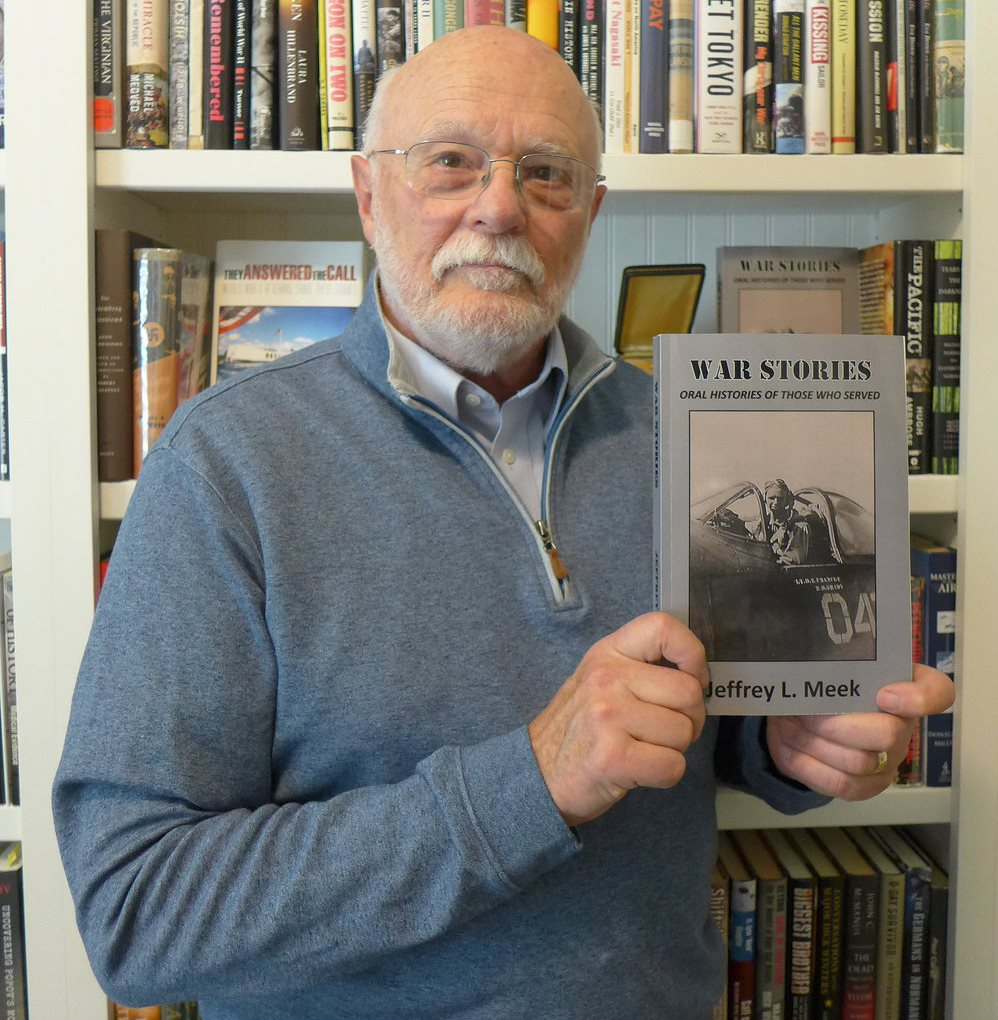
    Jeff Meek is an anomaly of the first order. He is the only reporter in the country who is allowed to devote a monthly column to the JFK case. It is for the Hot Springs Village Voice and it apparently gets a lot of good feedback since it has been appearing there for three years, since September 15, 2020 to be exact.

    At the beginning of the book, the author relates how he got interested in the JFK assassination. Like many, it was from viewing the famous Geraldo Rivera, Goodnight America program in 1975. The was the evening that electrified the country about the assassination like it had not been since the day Kennedy was killed. Rivera had Robert Groden and Dick Gregory on the program and he screened the Zapruder film, for the first time, on national TV.

    This inspired Jeff to talk to Dallas Chief of Police Jesse Curry. (p. 5) Curry told him that only 35 policemen knew Jack Ruby. Which, as Sylvia Meagher had already pointed out, is a flat out deception. Ruby’s friend, Reagan Turman, told the FBI that “Ruby was acquainted with at least 75 percent, and probably 80 percent, of the police officers on the Dallas Police Department.” Which means he knew several hundred of them. (Accessories After the Fact, p. 423). But Curry did tell Meek that they probably should have investigated Lee Oswald’s friend George DeMohrenschildt more. (p.9).

    This makes a good segue to the House Select Committee on Assassinations (HSCA) and the reporter’s scintillating interview with Dan Hardway. (pp. 13-19) Hardway was recruited from Cornell Law School by Professor Robert Blakey, who became the second, and final, chief counsel to that committee. Dan was teamed with another Cornell law student Eddie Lopez. A couple of their areas of inquiry were the CIA and Lee Harvey Oswald, and Oswald in Mexico City. Dan says that they often requested the identity of the case officer who the CIA appointed for the Cuban exile group, the Directorio Revolucionario Estudiantil, or DRE, in 1963. The CIA would not say who that officer was. We know today that it was George Joannides. And this is the man the CIA sent to perform liaison duties between the HSCA and the Agency. To put it mildly, he was not very forthcoming in that function.

    Dan told Jeff, “I don’t think there is any doubt that they [the Agency] had operational interest in Oswald.” (p. 16) Hardway also said that he was very interested in CIA officer William Harvey. Because Harvey and mobster John Rosselli were running Cuban exile hit teams onto the island. But he and Eddie were not allowed the security file on Harvey.

    Something that I have never heard Dan admit to before, he does say here. That he was actually pitched for recruitment into the Agency by another CIA liaison to the HSCA, Regis Blahut. He reported this in an outside contact report which he thinks has now been lost. (p. 19). But one of the most historically important things that Dan says is that today he does not think the HSCA conclusions stand up. And, in fact, he adds that even Blakey no longer has a lot of faith in them. One major reason being that the HSCA was misled by Agency disinformation.

    This interview is followed up by one with another HSCA staffer. Except this person has not talked nearly as much as Dan. Her names is Leslie Wizelman. (p. 21) She was the third law student Blakey recruited to work on the HSCA. She did not buy the Warren Commission’s official story. But this is what she told Jeff: “Wizelman felt she had given up law school time only to discover that Blakey, initially, had a preconception that Lee Harvey Oswald killed JFK.”

    In fact, she felt the committee was simply got going anywhere. To the point that she wanted to resign and return to her education. But she was discouraged from doing so by Blakey, who told her she was acting immaturely. Once this happened, she was assigned to listen to FBI tapes of the Mafia. She did not think there was much of value there. She also had doubts about Ruby being sent into Dallas at the request of the Chicago Outfit. In fact, the more she looked into this, she though it was wrong. In her opinion, the Mob connection to Jack Ruby was that they knew who he was and knew he was easily influenced. (p. 23)

    Summing up, she feels that congress is not the place to do a homicide inquiry. One reason being the CIA and Defense Intelligence Agency are very obstinate, since they know they can wait you out. When Jeff asked her if they got close to anything, she replied in the negative. She says they were not given enough information and they were constrained by the politics of the committee. She also adds a fascinating observation. She lived with Dan and Ed and thought they were under surveillance. The man next door worked for the phone company.

    Another interesting interview and chapter is the one on Dallas County Detective Buddy Walthers. Walthers found out that Oswald had been at the Alpha 66 meeting house at Harlandale through his mother-in-law. She also said the Cubans had moved out of this house about a week before the assassination. (p. 165) She knew since she lived on the same street, just a couple of doors down. Jeff suspected the woman’s name was Lillian Robinson, which Walthers’ biographer Eric Tagg confirmed was the case. Robinson recognized Oswald’s face on TV the night of the assassination. Look magazine editor T. George Harris had also discovered complementary information about Oswald at the address.

    The man who allegedly rented out the house was Manuel Rodriguez Orcaberro, an official of Alpha 66. As Jeff mentions, although some have said Orcaberro resembled Oswald, after looking at photos of the two, such is not the case. Interestingly, the reporter notes that Walthers learned that members of the DRE also attended some of the meetings. The Secret Service knew about Orcabero, but never connected him to the house. The FBI noted that he was violently anti-Kennedy and was probably the highest official in Dallas for Alpha 66. And the FBI did connect him to the Harlandale home through his own words. (p. 167) The reporter wraps this altogether by locating an interviewing Walther’s daughter, Cheryl Cleavenger.

    There are also interviews with people who were on the White House staff for Kennedy, like Sue Vogelsinger and Nancy Dutton; also columns about incidents during the Kennedy presidency like the Missiles of October and the Berlin Crisis. Meek also interviewed some of the personages Oliver Stone talked to for his film, JFK Revisited, like Jeff Morley, Barry Ernest and Jim Gochenaur. In the last, Jeff got something out of the Church Committee witness that he did not reveal to Stone. That was this: in Secret Service agent Elmer Moore’s portfolio of pictures, there was one of the infamous backyard photos. Jim said, “he could clearly see a line across the photo through Oswald’s chin area.” (p. 139) It would have been nice if Jim could have stolen that photo.

    There some interviews I have reservations about. For example, with Ruth Paine and Secret Service agent Mike Howard. I wish Jeff had talked to Greg Parker and Carol Hewett before doing the first, and Vince Palamara before doing the second. But overall, Meek’s batting average is pretty high. He scores many more hits than pop flies. Especially considering the fact that there are over 40 chapters in the book.

    We should all feel appreciative that there is someone doing this kind of work on a regular basis in journalism today.

  • The Problem with Joe Carter’s Response to RFK Jr.’s Statement

    The Problem with Joe Carter’s Response to RFK Jr.’s Statement

    Joe Carter is a former reporter for United Press International. He was on the scene during that tragic day when President John F. Kennedy was assassinated in Dealey Plaza, Dallas, Texas.

    While he was someone who was there from the beginning to the unfortunate end, his support for the findings of Warren Commission and dismissal of Robert F. Kennedy Jr. cast his testimony regarding the JFK assassination in doubt.

    Tap here to know the main narrative regarding RFK Jr. that Joe Carter recently supported.

    Keep reading to know what the presidential nominee said about his uncle’s assassination and Carter’s problematic response.

    RFK Jr. Triggers All the Wrong Memories for Joe Carter

    On 25th July 2023, in a heavily criticized interview with Fox News, Bobby Kennedy said there had been a concealment of facts spanning six decades regarding the JFK assassination.

    He pointed out the Warren Commission’s connection to Allen Dulles, who had held the position of the CIA head and was dismissed by his uncle at the time of the latter’s assassination.

    Robert Kennedy Jr. also said he believed President Kennedy’s death was the result of a deliberate scheme and a conspiracy involving multiple individuals.

    Joe Carter’s Response to the Assertions

    A week later, Carter responded to Kennedy’s claims, saying they had triggered nightmares from that fateful day. His denouncement was reported in an extremely biased news report by The Norman Transcript, an outlet few are familiar with, for all the right reasons.

    We at Kennedys and King wholeheartedly extend our well-wishes to the former reporter and hope that he feels better in the months following Kennedy’s statement. What we can’t support is his often-unreasonable support for the main narrative.

    JFK in 1962

    The Problem with Joe Carter’s JFK Assassination Narrative

    In the same report, Carter mentions that he doesn’t buy the idea that the intelligence community was somehow involved in the assassination of John F. Kennedy because, wait for it, “It always came back to Lee Harvey Oswald.”

    The former journalist said that Oswald worked a job where he was in shooting range of the President’s motorcade, and he took it. He didn’t mention the finger and palm prints that were provided as evidence of Oswald’s alleged crime, and for good reason.

    You see, there is no proof tying Oswald to the JFK assassination because the Warren Commission has itself debunked Oswald’s presence on the easternmost window from where the shots were said to have been fired.

    It acknowledged that the key box and a nearby box at the window where the shots were fired did not bear Oswald’s identifiable prints. Moreover, the prints found on one box were not conclusive evidence of when Oswald had touched it. Additionally, FBI expert Sebastian Latona found no latent prints on the paper bag during his initial examination on 23rd November 1963.

    Help Us Get to the Truth Behind the JFK Assassination

    If there is evidence tying Oswald to the JFK assassination, there is also enough reasonable doubt and contradictory evidence for the issue not to be “black and white,” as Joe Carter puts it.

    Read our articles to support our efforts to denounce the main narrative and call out attempts to hide the truth behind JFK assassination. You could also contribute to our ongoing endeavors via multimedia or by raising your voice.

    Get in touch for inquiries and comments.

  • Mark Shaw Insults Allen, Texas: Part 2

    Mark Shaw Insults Allen, Texas: Part 2


    Two years ago, in a slightly agitated aftermath of reading Mark Shaw’s then new publication, Collateral Damage, I wrote a lengthy and critical review of his literary effort. I published that review on my website Marilyn From The 22nd Row; and Jim DiEugenio kindly published the review on his fine website, Kennedys and King. Recently, a video presentation that Shaw delivered at the Allen Public Library in Allen, Texas, appeared on my YouTube feed. Reluctantly, I watched and created a transcription of his presentation, primarily a commercial for his book. I was not quite as agitated by his Texas presentation as I was by his book; but that fact notwithstanding, in the name of historical and factual accuracy, I am compelled to offer a few comments.

    The first half of Shaw’s presentation focused on Dorothy Kilgallen. Shaw’s fanboy fascination with the star of What’s My Line crossed, at some point in time, into a goofy type of worship that approximates a goofy form of idolatry leading Shaw to engage in hyperbole. According to Shaw, Dorothy was quite possibly thegreatest journalist who ever lived […] Walter Cronkite and David Brinkley rolled into one.Shaw realized that Dorothy had, in fact, achieved the big time because the producers of The Flintstones featured her in an episode broadcast in 1961.And you know you’ve made it, Shaw opined, when you’re on a Flintstones episode. According to Shaw, Dorothy appeared in “The Little White Lie,” the title of the episode, as Dorothy Kilgranite. Not so. She appeared as Daisy Kilgranite, just one of several errors Shaw made regarding the Flintstone episode. Admittedly, it is possible that I am making a mountain out of a cartoon mole hill; but considering the errors Shaw made regarding a twenty-six minute cartoon, readily available for his review, is there any wonder that he made more than a few egregious errors regarding the complicated life of a person as complex as Marilyn Monroe?

    In my lengthy criticism of Collateral Damage, I identified most of Mark Shaw’s errors, but not all of them. I could list them here; but I think the better approach is simply to provide links to my original evaluation of Shaw’s publication: Marilyn From The 22nd Row; link to Kennedys and King.

    Still, there are a couple of assertions made by Shaw during his video presentation that I need to discuss directly: 1) the big clue that Shaw allegedly discovered; and 2) Shaw’s assertion that Collateral Damage does not contain any ofhis opinions or speculations.

    The Big Clue. What follows is what Shaw asserted:

    […] this is the big clue. What did I do here? Well, I was in trouble because I wanted to show that Bobby could have been involved in Marilyn’s death but he wasn’t in Los Angeles at the time. He had an alibi. He was in the San Francisco area, OK. But I just couldn’t believe that he was and so I started looking into things and I found this ledger [security log]at 20th Century-Fox. […] what does it say? That at 11 o’clock on August 4th, 1962, the same day that Marilyn died, Bobby Kennedy and Peter Lawford arrive in a helicopter there. Alright. So he’s in Los Angeles […].

    With the preceding, Mark Shaw clearly took credit; claimed that he and only he uncovered a document, an August the 4th Fox security ledger or log, which proved that Robert Kennedy and Peter Lawford landed at the studio in a helicopter at 11 AM; proved that the Attorney General was in Los Angeles; and by extension, this ledger proved that Robert Kennedy visited Marilyn on August the 4th and that he was, therefore, involved in her murder. But, and there always is, how did Collateral Damage report the explosive big clue?

    In his book, Shaw reported that Bobby had what appeared to be an airtight alibi, one which placed him in the San Francisco Bay Area at the time Marilyn died. Shaw even referenced an Associated Press story confirming that Robert, Ethel, his wife, and four of their children arrived in San Francisco on Friday afternoon, August the 3rd. He even admitted that the Kennedys traveled to the Bates Ranch. Even so, as he also admitted, Shaw did not believe any of the eye-witness, first hand testimony provided by the Bates family and others present that weekend. Shaw did not believe that the ten photographs taken throughout the day, published by Susan Bernard in 2011, proved anything about Robert Kennedy’s location on August the 4th. Shaw did not believe the AP story or a 1985 NYT interview with the senior John Bates, referenced by Shaw, which confirmed that the attorney general never left the Bates ranch. Instead, Shaw accepted the mysterious security log and the testimony of one Frank Neill.

    According to Shaw, the actual security log read as follows:

    Before 11 a.m. on August 4, 1962, a helicopter landed at the Twentieth Century Fox studio’s helipad near Stage 14. Studio publicist Frank Neill, working that Saturday morning, said he saw Robert Kennedy jump out of the helicopter and rush to a dark gray limousine waiting nearby. Neill said he got a glimpse of movie star Peter Lawford, brother-in-law to the Kennedys, sitting inside.

    To begin with, in his Texas presentation, Mark Shaw asserted that both Robert Kennedy and Peter Lawford arrived at Fox’s lots in a helicopter on August the 4th. The alleged security log, on the other hand, indicated that the attorney general arrived in a helicopter while his brother-in-law, Peter Lawford, waited in a nearby limo, a clear contradiction. Which account should we accept as factual?

    Additionally and obviously, the form and wording of the security log strikes the reader as a bit odd. Clearly, a person other than Frank Neill recorded what the studio publicist allegedly said; therefore, who actually wrote down what Neill said? Shaw’s big clue was actually hearsay.

    Why was it necessary to include that Neill was a studio employee; and, by the way, who and what was Frank Neill?

    While I was a practicing architect, I encountered many security offices and security logs at corporate offices, large building material manufacturers and security trailers at fenced, and sometimes guarded, construction sites. Usually, the exact time of one’s arrival had to be recorded. The indefinite arrival time stipulated in the text of the alleged security log confused me. Before 11 AM? Also, usually a precise purpose for one’s visit had to be declared on a security log, something omitted from the Fox log. Moreover, completing a security log is usually only required when a person actually enters secured areas. But evidently, Robert Kennedy never entered the actual Fox lot; at least, that is, Shaw’s log was rather vague on that particular point. The Attorney General entered an awaiting limo which then quickly drove away. Would this necessitate an entry in a security log? And when companies require security clearances, they issue a security badge to visitors and they require the visitor to return to the Security Office, to log out–to enter a precise departure time and to return the security badge. Shaw’s mysterious security log did not include a log out time.

    Finally, the wording of this security log surprised me. Security logs that I’ve encountered required brevity; but the text of Shaw’s security log read more like an excerpt or a description that was lifted, borrowed from a larger narrative.

    Why?

    Hoping to resolve at least some of the preceding issues, and answer some of my questions, while also identifying Frank Neill and clarifying his association with Marilyn Monroe, I spent several days reviewing more than a few pertinent publications. Within the text of Collateral Damage, Shaw was particularly laudatory about one biography, Marilyn: The Tragic Venus, written by Edwin P. Hoyt. Shaw wrote:

    Published in 1965, Hoyt’s biography of Marilyn was released at a time when facts about her life and times and death were not polluted with phony sensationalism, as would be the case with many articles and books in the future. His account certainly appears credible due to the large number of primary sources […] (85).

    I began my review of books about Marilyn with Edwin Hoyt’s biography: Frank Neill did not appear therein. In fact, two decades would elapse before Anthony Summers, in his Marilyn pathography Goddess, would finally mention Frank Neill. According to Summers’ 1985 source notes, Marilyn’s Irish pathographer actually interviewed Frank Neill. From the source notes:Landing at Fox: int. Frank Neill, 1983, and former policeman on pension, who requires anonymity. According to Summers:

    Two fragmentary reports, one from a police source, one from a former member of the Twentieth Century-Fox staff, Frank Neill, suggest Kennedy arrived in the city by helicopter, putting down near the studio’s Stage 18, in an open space then used by helicopters serving the area near the Beverly Hilton. According to these sources, the President’s brother arrived in the early afternoon (350).

    Summers’ 2012 update of Goddess repeats the preceding account verbatim; and nowhere in either version of Goddess did Summers even mention a security log! Also, Summers did not provide any biographical information regarding Fox’s former staff member, Frank Neill; and once again, we have encountered a few contradictions.

    According to Summers’ account of his interview with Frank Neill, the President’s brother did not arrive during the morning: he arrived in the early afternoon. Shaw’s alleged security log stated that Robert Kennedy’s whirlybird landed on a helipad near Stage 14 while Summers reported that the helicopter put down near Stage 18 in an open space […] near the Beverly Hilton. Why the contradictions? Besides, if Frank Neill was involved in the preparation of a security log in 1962, why oh why did he fail to mention that to Anthony Summers during their interview in 1983?

    In 1991, James Spada published The Man Who Kept the Secrets. This was a Peter Lawford biography, sprinkled liberally with the spice of Marilyn and the Kennedys along with many yarns pronounced by the pathological fantasists, Robert Slatzer and Jeanne Carmen. Spada’s literary effort reported the following account:

    Frank Neill, a former employee of Twentieth Century-Fox, later stated that Bobby arrived by helicopter at a landing pad near the studio’s stage eighteen, which was often used by the Beverly Hilton Hotel for that purpose. A confidential police source supports this story(353).

    Not quite identical to Summer’s account but eerily similar. Perhaps the similarity can be explained by Spada’s following admission in his source notes: I drew many of the details of Marilyn Monroe’s last few months from Anthony Summers’s superb investigatory biography of Monroe, Goddess (533). In short, James Spada simply rephrased Summers’ account.

    With the passing of two years, in 1993, Peter Brown and Patte Barham published Marilyn: The Last Take. The first mention of a security log appeared therein. The authors reported:

    On Saturday afternoon, August 4, a Fox security guard squinted through the morning fog to catch a glimpse of the huge government helicopter that hung in the sky above the studio. Waving a fluorescent orange flashlight, the guard directed the chopper toward some hastily drawn landing marks. […] The chopper had been approved to land at just after 11 A.M., as duly noted in the studio’s security log. A dark grey limousine was parked to the side, its driver standing at attention. Studio publicist, Frank Neill, whose office was near the landing pad, wasn’t surprised to see the familiar figure of Bobby Kennedy leap from the helicopter and dash to the limousine. […] Through the open door, Neill caught a glimpse of the carefully tanned face of Peter Lawford(349-350).

    In Brown and Barham’s account, their huge government helicopter landed just after 11 o’clock in the morning; and it landed on what was evidently a makeshift, hand drawn landing target, not a helipad. However, the authors must have been confused regarding the landing time: if the chopper landed just after eleven in a morning fog, how does “Saturday afternoon” fit in? Be that as it may, the authors’ source notes contained the following curiosity: The helicopter landing on the Fox lot was discussed by Robert Slatzer and Lee Hanna, who heard of it from Frank Neill (465). Evidently, Brown and Barham did not actually interview Frank Neill. The authors received their information from either the ubiquitous Robert Slatzer or Lee Hanna, a person with whom I am unfamiliar. If Brown and Barham did not interview Frank Neill, how did they know he was not surprised by the presence of Bobby Kennedy? Well, they could not have known.

    But here is what I find truly odd. If Slatzer knew that Robert Kennedy had landed on Fox’s lot in a helicopter, why did he withhold that information from Anthony Summers during all the interviews the author allegedly conducted with one of his primary sources? I reviewed Slatzer’s 1974 publication, The Life and Curious Death of Marilyn Monroe. There, Slatzer did not mention Kennedy’s arrival by helicopter. Slatzer mentioned Frank Neill with regard to topics unrelated to the topic of this article and asserted that he had met Neill in 1952 on the sets of Niagara. In Slatzer’s The Marilyn Files, published in 1993, Frank Neill likewise appeared with regard to topics unrelated to the topic of this article. Also, Slatzer thanked Neill, and many others, for their invaluable contribution over the years (n9). Slatzer left their contribution unspecified. I can only conclude that their invaluable contribution was their assistance with Slatzer’s masquerade as Marilyn Monroe’s faux second husband.

    Several additional publications that I reviewed did not invoke the name of Frank Neill, and several did. Donald Wolfe’s The Assassination of Marilyn Monroe, published in 1998, and his 2012 update, The Last Days of Marilyn Monroe, presented the following account:

    Early Saturday afternoon, the roar of a helicopter echoed off the sound-stage walls at the Fox studios. A Fox security guard squinted into the bright blue sky as it began its descent into the heliport near Stage 14 […]. As noted in the studio’s security log, the helicopter had received approval to land shortly after 11 a.m. A dark gray limousine waited in the shade as the helicopter touched down in a whirl of dust. Studio publicist Frank Neill, who was working on the lot that Saturday, […] was surprised to see Bobby Kennedy leap from the helicopter and dash to the limousine. As the limousine door opened and Bobby jumped in, Neill caught a glimpse of Peter Lawford (564).

    Wolfe magically transformed the chopper’s landing spot from an open space with some hastily drawn marks, not into just a helipad, but a full scale heliport. The landing transpired in different weather conditions than those mentioned by Brown and Barham. Obviously, Wolfe preferred to have the chopper land under a blue sky in bright sunlight, not a morning fog. And while in the Brown and Barham account, Neill was not surprised to see Bobby Kennedy, in Wolfe’s account the appearance of Bobby did surprise Neill. How did Wolfe know about Neill’s surprise? It is clear that Wolfe did not actually interview Frank Neill. According to his source notes pertaining to page 564: Roar of a helicopter: Summers, p. 350; Brown, p. 303. It is also clear that Wolfe combined the accounts in Goddess and Marilyn: The Last Take to create a hybrid that included a security log which Anthony Summers, who actually interviewed Frank Neill, did not mention.

    Finally, fifty years after Marilyn’s tragic death, Darwin Porter published Marilyn at Rainbow’s End. In Porter’s seamy literary effort, the author transfigured Frank Neill into an implied authority on Fox’s security:Frank Neill, a security guard at Fox,Porter declared, said he saw Bobby arriving by chopper at the helipad on the studio’s lot, which was often used by the Beverly Hilton Hotel for their VIPs (457). But Porter did not mention a security log.

    Returning to the questions that I posed earlier in this article, who and what was Frank Neill and what was his actual association with the world’s most famous blonde actress? Well, Neill was either a former newspaperman, a former police reporter, a garden variety Fox publicist or a unit publicity man for the film Niagara. Not one publication that I reviewed clarified who or what the man actually was, and not one of those publications clarified his association or relationship with Marilyn Monroe. Unfortunately, my efforts to determine the who, what and why of Frank Neill proved to be futile. I could not even locate an obituary.

    So, this question remains: did Mark Shaw uncover–did he and only he discover a mysterious security log or ledger which proved that Robert Kennedy was in Los Angeles on Saturday, August the 4th in 1962? Most certainly he did not. Many other writers have mentioned that mysterious security log; and Shaw did not offer any real proof that the log actually existed. He, like all the sensationalistic conspiracist writers before him, did not publish the actual log. And he did not display a photograph of it during his Texas presentation. A fact which leads me to conclude that he did not and does not possess the security log; and that fact leads me to the real difficulty with Shaw’s assertion.

    Considering that the log was created in 1962, virtually six decades prior to the publication of Collateral Damage, is it even remotely possible that such a document would have been retained by 20th Century-Fox, retained for fifty-nine years? Would such a document have survived to see the 21st century? Speaking only for me, of course, I think not. Taking into consideration all the contradictory accounts regarding the mysterious log, taking into consideration that the actual log has never been published, never been seen, I cannot stretch my gullibility, my credulity quite that far. Speaking only for me, of course, I do not believe Shaw’s story. In fact, I do not believe that the mysterious security log ever existed. I must repeat once again: Shaw’s ledger, the security log, the alleged document has never been published. What Shaw presented in Allen, Texas, was an amalgamation of the many stories written about Robert Kennedy’s whirlybird arrival at Fox studios, an arrival witnessed by a shadow named Frank Neill. Based on actual facts, based on firsthand testimony of persons who were with Bobby that Saturday and based on documentary evidence, we know that the Attorney General was not in Los Angeles on Saturday, August the 4th.

    And finally, to put a period on this philippic, Shaw’s contention that Collateral Damage did not contain any of his opinions or speculations just might be the most absurd conceit uttered by the self-proclaimed Marilyn historian. The text of Shaw’s publication is filled with opinion and speculation; it is also filled with innuendo. For example, on page 562, Shaw wrote:

    Basically a coward in the ilk of his father, RFK would never have had the guts to poison Marilyn on his own initiative. That meant he had, it would seem, two choices: either enlist operatives to do it or engage through an intermediary, perhaps Greenson of Engelberg to do it for him. […] RFK, either on his own or through intermediaries, could have “squeezed” Greenson […] into becoming an operative in the death of Marilyn.

    In Shaw’s goofy world, the preceding does not qualify as speculation. Truly amazing.

    I could present many more examples of Shaw’s opinionating and speculative prowess. But the most incredible example begins on page 613, Shaw’s contrived scenario of how Marilyn was possibly murdered, a scenario that is gross speculation of what most likely may have happened to Marilyn during the night of August the 4th.

    Accosted by two intruders sent by the attorney general, with the president’s approval, asserted Shaw, and stunned with a chloroform-sealed cloth, Marilyn was either dragged or carried into her bedroom, stripped, deposited nude on her newly carpeted floor and callously murdered by a rectal infusion of drugs using a bulb syringe of some sort. The attorney presented absolutely no evidence to support his contrived scenario; and Shaw excused his lack of evidence as follows:

    Of course, as with any theory like this based on circumstantial evidence after so many years have passed, questions will be asked, with answers unfortunately speculative in nature. […] Such observations about Marilyn’s death provide a stop-and-think, food-for-thought considerations as to how Marilyn met her maker and by whose actions […]. If Robert Kennedy’s complicity in Marilyn’s death, through whatever means, had been exposed, causing him to be charged in a court of law, there would never have been a JFK assassination by RFK’s enemies in 1963(624).

    There was not, and there is not, one shred of actual evidence proving that Robert Kennedy was romantically involved with Marilyn Monroe, or that he was involved in any way with her death. In fact, the available evidence proves that actress and attorney general were not involved romantically. Further, Marilyn’s autopsy proves that she was not killed with some sort of bulb syringe: she ingested the drugs that killed her.

    Mark Shaw’s gross speculation that John Kennedy’s assassination could have been prevented by bringing charges against his brother for killing Marilyn Monroe is absolute nonsense of the most preposterous sort. Perhaps Mark Shaw should have stopped and thought before writing a book like Collateral Damage. Perhaps he should have asked a few more questions, like he admonished his video audience to do, before putting his pen to paper.

    Go to Part 1

  • Mark Shaw Insults Allen, Texas: Part 1

    Mark Shaw Insults Allen, Texas: Part 1


    In 2021, author Mark Shaw visited the library at Allen, Texas. Allen is a town of about 100,000 located 20 miles north of the Dallas/Fort Worth metroplex. This was an opportunity to publicize his book Collateral Damage. Some might say: but that was two years ago. Which is true. But for whatever reason, this talk has garnered millions of views on YouTube. Marilyn Monroe authority Don McGovern went ahead and transcribed it. It might be hard to believe, but in some ways this speech is even worse than the book.

    It is very important—actually it is integral—to understand that Shaw is a lawyer. And, as he has described in his prior books, he was a criminal defense attorney. In other words, Shaw is familiar with the rules of evidence and testimony in court. He therefore has to understand the concept of raising objections to such and how a judge can then rule on whether that evidence and testimony can be admitted to a jury. In fact, very often there are pre-trial evidentiary hearings so a judge can rule on these matters.

    What is shocking about Shaw’s presentation is this: there is barely anything in it that would not be challenged in court. And, as we shall see, most of those objections would likely be sustained. It’s quite a spectacle to see an attorney somehow forget the strictures he was taught in law school in order to present a case so diaphanous that it would likely never get out of the starter’s gate. This at a time when most of the JFK critical community is doing the contrary. That is, trying to present a case that would meet standards of proof.

    Mark Shaw is one of the very few in the critical field that still holds that somehow it was the Mafia that killed President Kennedy. What is so bizarre about this—actually it is almost shocking—is that he does not even seem aware of how the new evidence vitiates that conclusion. For instance, the Assassination Records Review Board (ARRB,) declassified many documents from the House Select Committee on Assassinations. The pertinent HSCA records were from November, 1978 interviews with the family of Dutz Murrett, Oswald’s uncle in New Orleans. These showed that, contrary to what the likes of author John Davis had stated, Mr. Murrett was not working for Carlos Marcello in 1963. (Michael Benson, Who’s Who in the JFK Assassination, p. 305) He had resigned his bookmaking position at least two years earlier. This poked a serious lacunae into that theory—one that tangentially connected Oswald to the Mafia Don in New Orleans.

    Further, the famous Ed Becker anecdote about Marcello, which so many have used—including Shaw in this speech—has now also come into dispute. According to Becker, Marcello allegedly stated that soon “the stone” would be removed from his shoe. This meant Attorney General Bobby Kennedy. But he was going to do it by disposing of President Kennedy. (Benson, p. 34) Len Osanic of Black Op Radio has made contact with a witness who renders that whole conversation questionable. There is now a book in preparation on the subject. Yet, as author Michael Benson notes, the HSCA used both of these aspects to bolster their Mob oriented case. As explicated by the late Carol Oglesby in the Afterword to Jim Garrison’s On the Trail of the Assassins, that case was never very strong to begin with. It has now been severely weakened.

    Mark Shaw’s third overall rail of Mafia involvement on the JFK case was that Joe Kennedy had double crossed his backers in Chicago about how he could get RFK to go easy on the Outfit. In return for that, the 1960 mob—controlled wards in Chicago would throw their support to JFK. This point was also rendered moot when it was broken down by statistician John Binder. Binder did a complete study of the voting ratios in those wards. It was not what it should have been if the basis of the book Double Cross was true. Binder’s work pretty much blows up this old wives tale. (Click here)

    Since the Mob did not go along with Kennedy’s alleged wishes, this would indicate he did not have much pull in Chicago. Which indicates that the myth of Joe Kennedy the bootlegger was just that. A myth that emerged, not when Joe was under six federal investigations for positions in government; but arose after, when the underworld, and Jack Kennedy’s enemies—like Richard Nixon—wanted to spread rumors, thereby tarring JFK’s presidential nomination, and later, his reputation. This is the sensible and evidence backed thesis that author Dan Okrent came to in his fine volume on the subject of Prohibition, Last Call (p. 369)

    But in his 2022 book Fighting for Justice—a misnomer if there ever was one—Shaw stated that the Joe Kennedy bootleg charges were all over the HSCA volumes on organized crime (Shaw, p. 66). I read the HSCA volumes on crime, which were in Books 5 and 9. Shaw was passing gas; it’s not there. It is hard to imagine he did not even look at the volumes in advance. If he did, he would have found out that, contrary to any deal, the Kennedys’ strong pressure was collapsing the Mafia. (Vol. 5, p 455)

    In the talk under discussion, Shaw also brings in the 1960 West Virginia primary as another example of the Mob influencing an election at Joe Kennedy’s request. This one was promoted not just by that fatuous book Double Cross, but also by the late Judith Exner, a woman who told so many tall tales she could not keep them straight. (Michael O’Brien, Washington Monthly, December, 1999). As Dan Fleming wrote in his book on that primary, no subsequent study—by the FBI, by the state Attorney General, by Senator Barry Goldwater—ever produced any evidence that there was skullduggery that influenced that election outcome. (Fleming, Kennedy vs Humphrey, West Virginia 1960, pp. 107-12)

    One might point to another aspect of Shaw’s reliance on rather disreputable sources like Double Cross and Frank Ragano’s book Mob Lawyer. In the former book, the authors stated that the Outfit owned the contract of Marilyn Monroe. Since Monroe is a late arriving subject of Shaw’s one would think he would be aware that this is utterly false. And it would therefore touch on the credibility of his source. Either that or it indicates the fact that he has done very little work on Monroe. For as has been shown in the book Murder Orthodoxies, the two men who had control of Monroe’s early career were producer Joe Schenck and Hollywood agent Johnny Hyde. The Chicago Outfit influence on Monroe was simply more malarkey from a book that was full of it. (McGovern, pp. 394-427)

    What is one to think of a lawyer/author who uses these kinds of sources? And still insists on using them long after they have been discredited.

    In this speech Shaw states that he first discovered the subject of Dorothy Kilgallen while he was writing his book about attorney Melvin Belli. Which is kind of odd. Why? Because that book was published back in 2007. Which is ten years before he published his first book on Kilgallen. But further, in Shaw’s first two books dealing with the JFK case there is next to nothing about the reporter, a bit over two pages. His excuse for bringing in Marilyn Monroe is that he somehow discovered that Kilgallen was friends with Monroe. As Monroe biographer Gary Vitacco Robles has noted, there is no such evidence this was the case.

    In addition to these questionable origins, in Shaw’s speech there is his tendency to aggrandize himself. Early on he calls himself a historian. It’s pretty clear from his book that he has no such credentials in that field. And if there is a worse historian of the Kennedy years, I would like to know who it is. One thing a good historian does is sift through how reliable his sources are. As we have seen, Mark Shaw did not do that. Not even close.

    Right before this there is another instance of self-praise. Shaw says the relevance of Collateral Damage is that it shows that nobody asked questions at the time of these murders. To use just one example: Mark Lane was asking questions about the JFK case within hours of the president’s death. (Mark Lane, Plausible Denial, p. 14) When Jack Ruby shot Oswald, those questions exploded into a tidal wave. Because many assumed that the reason someone would shoot the defendant in public was to silence him. This caused Lane to assemble his legal brief for Oswald, which contained plenty of questions amid its ten thousand words. (Lane, pp. 18-19). The edition of The National Guardian where it first appeared sold 100,000 copies. (Author’s interview with Lane, November of 2013). As per Monroe, the first questions were asked very soon after her death also. By, for instance, the photography/reporter team—Bill Woodfield and Joe Hyams—that took the last nude photos of her, and this is in the Fred Guilles biography of Monroe. As per Kilgallen, at her funeral, her mother accused her husband Dick Kollmar of killing her. Experts inside the medical examiner’s office, like Charles Umbarger and John Broich also suspected foul play. Lee Israel, who wrote a biography of Kilgallen, was also onto this trail. All of these sources are in Sara Jordan’s fine online article “Who Killed Dorothy Kilgallen” at Midwest Today. And when one reads that article, the introduction states that this is how Shaw actually began his book.

    Shaw is an inveterate self—aggrandizer. For instance he likes to say, as he does here, that his work is not speculative. That it is based on solid sources like documents. How is the book Double Cross a document? It was not published until three decades after President Kennedy’s murder. As lawyer Shaw has to know, it is hearsay at best. And it is compromised by the fact that the authors clearly wrote it to take advantage of a timely commercial event: the unprecedented controversy over Oliver Stone’s JFK. As I have shown, factually, every major tenet in the book is dubious.

    But it’s even worse than that. Because, concerning the subject of that book, namely Chicago Don Sam Giancana, there are much more factually based sources. One would be FBI agent William Roemer and his book Man Against the Mob. In that book, Roemer describes the almost total surveillance that Bobby Kennedy and the FBI had on Giancana. As he was a major part of it. Roemer listened to all the surveillance tapes they had on Giancana. There was never any mention of any attempt on JFK or RFK. And after the fact, there was no such indication either. (Roemer, p. 188). In court, that would make Shaw’s case pretty vulnerable.

    But again, it’s really worse than that. Because there are now three different versions of the Giancana mythology. There is the version in the novel Double Cross. There is a newer version by another Giancana relative named Pepe as revealed by producer Ron Celozzi in the documentary film Momo: The Sam Giancana Story. The assassination teams differ significantly in the two works. But there is a third version, one which Celozzi is preparing for a projected upcoming feature film on the subject. Again, the hit team is now different than Celozzi’s earlier version. (Click here for the transformations)

    Again, can one imagine presenting all these alterations in court? Showing first how Double Cross is a fraud to begin with. Then following that up with the revisions to the original story? Then finalizing it all with Roemer? Shaw’s case would be decimated. So much for the “historian” not relying on speculation.

    This is the problem when an author depends on a source about which there is no adduced record. Since for all of Shaw’s boasting about his zealotry for Kilgallen, with Kilgallen as your pillar what do you have?. As Shaw has admitted in his works, no one knows what was in Kilgallen’s JFK file. It was allegedly lost after her death. Shaw assumes that since Kilgallen went to New Orleans before her death, that somehow she was on to Carlos Marcello. How does he know this? Again, there is no evidence for it. It is his opinion based on speculation. And this ignores the fact that Oswald was in New Orleans in the summer of 1963, and this might be the reason she went there—to check out what he was doing. In this speech Shaw even says that since Kilgallen had a book coming out based on some of the homicide cases she had investigated, that this is why Marcello had her killed! As a lawyer, how could Shaw back this up?


    Go to Part 2

  • An Introduction to the Pentagon Papers

    An Introduction to the Pentagon Papers

    Certain events are so impactful that they define the period they occur in and reverberate for years to come. Events like the disclosure of the Pentagon Papers have the power to challenge a society’s ideals, actions, and philosophies. Click here to learn more about the person responsible for bringing them into the public eye.

    Today’s blog will introduce you to the significance of the Pentagon Papers and how they flipped public opinion about the Vietnam War on its head.

    What Were the Pentagon Papers?

    The Pentagon Papers were a study regarding our country’s political and military involvement in the Vietnam War between 1945–1967.

    Commissioned by the US Department of Defense, these top-secret Papers were brought to light in March 1971 by Daniel Ellsberg, a defense analyst who risked his safety and career by making copies of the report and disseminating it to several news publications.

    These classified documents unearthed a trail of decisions, strategies, and motivations that had steered the United States’ involvement in the Vietnam War for decades.

    Did the Papers Meet Their Goals?

    The then-Secretary of Defense, Robert McNamara, commissioned the Pentagon Papers to analyze America’s role in the Saigon conflict. The report was meant to trace back the decisions and policies that led to the divisive public image of the conflict. However, it only ended up unraveling a tale of concealment and manipulation.

    The 7000-page report traced our country’s journey through the war. The internal analysis included incriminating facts about the half-truths and misinformation campaigns that administrations had spun to keep the public on their side.

    From President Truman first dipping his toes in Saigon to President Johnson declaring a complete escalation, the Papers confirmed what the critics were saying: A systemic effort was at play to manipulate public opinion to continue military operations that lost their moral foundation the second they resulted in civilian casualties.

    Nixon and South Vietnamese President


    The Enduring Legacy of the Pentagon Papers

    Defense analyst Daniel Ellsberg’s courage and perseverance led to the publication of the Papers in the New York Times, The Washington Post, and many other newspapers.

    The reveal marked a watershed moment in American history, shaking the public’s faith in their leaders and the institutions they governed. The anti-war sentiments were no more divisive but an eye-opener for those who favored military involvement in Vietnam.

    It’s been over half a century since these Papers were published. Still, its echoes remain in the form of the accountability and transparency we continue to demand from those who we choose to represent our principles and politics.

    Learn More About the Biggest Coverups in US History

    By leaving no stone unturned regarding the Vietnam War, the Pentagon Papers shed light on other scandals, forcing people to second-guess official accounts whether or not they were the truth.

    The assassination of John F. Kennedy is one such scandal whose official account and alleged killer Lee Harvey Oswald has been debunked several times. Follow our platform as we stick to the facts in our struggle to bring the truth behind the JFK assassination to light.

    Support our platform so that we may continue fighting the good fight.