Blog

  • The Odd and Redundant Beliefs of Mark Shaw

    The Odd and Redundant Beliefs of Mark Shaw

    In 2021, Mark Shaw visited the library in Allen, Texas, to promote his book. Although this event took place two years ago, the content of his talk has gained millions of views on YouTube. Unfortunately, Shaw’s presentation raises more questions than it answers regarding the John F. Kennedy assassination, as it is marred by inconsistencies and a lack of rigorous evidence, which is surprising given his legal background.

    Tap here for the long review, or keep reading for a preview of the same.

    The Mafia Conspiracy

    One of the most striking aspects of Shaw’s presentation was his unwavering conviction that the mafia was responsible for President Kennedy’s assassination. What makes this stance peculiar is Shaw’s apparent ignorance of the wealth of new evidence that challenges this theory.

    For example, declassified documents from the Assassination Records Review Board findings revealed that Lee Harvey Oswald’s uncle, ‘Dutz’ Murret, was not working for Carlos Marcello in 1963, thereby dispelling a key link to the mafia. This new information significantly weakens the mafia conspiracy theory, yet Shaw remains undeterred, likely to this day.

    The Ed Becker Anecdote

    Mark Shaw relied on the infamous Ed Becker anecdote, where Marcello allegedly suggested that he would remove the “stone” from his shoe—referring to Robert F. Kennedy—by getting rid of his brother, the President.

    However, recent disputes and questionable witness accounts have cast doubt on the credibility of this story. The House Select Committee on Assassinations (HSCA) used aspects of this anecdote to support the Mob-oriented case. Even so, the foundation of that case was never particularly strong, and it has since been debunked by the FBI and other sources.

    President Kennedy Facing J. Edgar Hoover and Robert F. Kennedy

    The Joe Kennedy Double-Cross

    Shaw also subscribes to the theory that Joe Kennedy double-crossed his Chicago backers regarding his son Robert Kennedy’s stance on organized crime. Supposedly, in return for such a double-cross, the Chicago Mob was expected to support John F. Kennedy in the 1960 election.

    However, statistical analysis has shown that the mob-controlled wards in Chicago did not vote as expected, rendering this theory dubious at best. This theory also fails to account for the fact that Senior Kennedy’s influence in Chicago was less substantial than previously believed.

    Mark Shaw Does Not Stop There

    In his 2021 presentation, Shaw made more insubstantial remarks regarding Joe Kennedy and Dorothy Kilgallen by referencing disreputable and debunked resources. Instead of subjecting yourself to the transcript, you’re better off reading Jim DiEugenio’s dressing down on Kennedys and King.

    Our platform has dedicated three decades to finding the truth behind the political assassinations of the 1960s. You can, too. Check out our articles to see beyond the misinformation and propaganda surrounding the JFK assassination.

    Reach out for inquiries and feedback.

  • 3 Questions Regarding the Alleged Crime of Lee Harvey Oswald

    3 Questions Regarding the Alleged Crime of Lee Harvey Oswald

    The assassination of John F. Kennedy remains one of the most significant and controversial events in American history. While Lee Harvey Oswald was quickly—wrongfully—identified as the lone gunman, a motive, or lack thereof, continues to elude us to this day.

    Johnny Cairns does a decent job of asking all the right questions regarding Oswald’s motive and modus operandi in his article.

    1. What Could Have Driven Lee Harvey Oswald?

    The question of Lee Harvey Oswald’s motive for allegedly assassinating the President has remained a puzzle for over six decades.

    The Warren Commission acknowledged the difficulty in definitively determining Oswald’s motives. They entertained various theories, such as:

    • The notion that Oswald had a deep-seated resentment of authority.
    • An inability to form meaningful relationships.
    • A desire to secure a place in history.

    However, these theories lack substantial evidence to firmly establish a motive.

    1. Why Did Oswald Choose Elm Over Houston for the Assassination?

    Why did Oswald opt to take the shot at President Kennedy on Elm Street, a location with a more challenging and obstructed view, instead of maximizing his chances by targeting the President as he approached the Texas School Book Depository from Houston Street, which offered an unobstructed view?

    The shot from Houston Street appears to be ideal for a lone assassin. This puzzling decision continues to baffle investigators and theorists, adding another layer of complexity to the Kennedy assassination narrative.

    A View from Elm Street Showing a Tree Obstructing the Visual Field

    1. Why Use Only Four Bullets?

    One of the most intriguing aspects of Lee Harvey Oswald’s alleged crime is his ‘choice’ to attempt the assassination with just four bullets. This decision is particularly puzzling when we consider that the Carcano rifle he used had an ammunition clip capable of holding up to six bullets. With one already in the chamber, it could have provided seven shots in total.

    The question that naturally arises is, how did Oswald decide that such a limited amount of ammunition would be sufficient for a successful assassination and his subsequent ‘escape?’ This particular aspect of Oswald’s plan adds another layer of complexity and doubt to the overall narrative of the Kennedy assassination.

    More Where That Came From on Kennedys and King

    Questions surrounding Oswald’s motive remain at the heart of the Kennedy assassination mystery. While some believe Oswald acted alone or at all due to personal or political motivations, the shadow of conspiracy still lingers.

    On the bright side, we’ve never been closer to finding the truth behind JFK assassination and discovering who had a stake in framing Oswald. Support our initiative for the full disclosure of the JFK documents, and check back in for more insights.

    Get in touch for queries and concerns.

  • The Other Side of Oswald: 3 Reactions to His Arrest

    The Other Side of Oswald: 3 Reactions to His Arrest

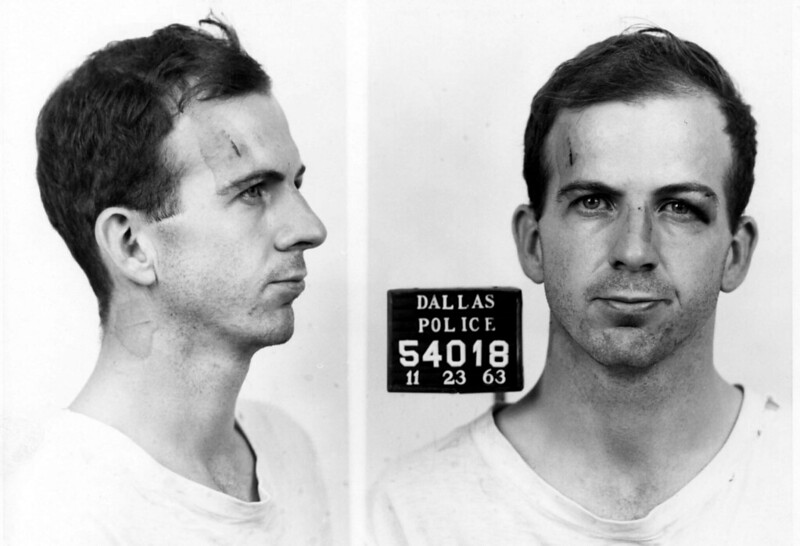
    Before Lee Harvey Oswald became known for all the wrong reasons, he was like every other person. Unlike how he’s portrayed in mainstream media, Oswald was someone his children looked up to, an individual who contributed to society, and, most importantly, someone who admired and supported President John F. Kennedy.

    In our latest article, we discuss the testimonies following Oswald’s arrest; their surprise is yet another indication that Oswald was no more than a scapegoat.

    1. Francis Martello

    Warren Commission staff member Wesley Liebeler asked Francis Martello if he was surprised upon learning that Oswald had been arrested for shooting President John F. Kennedy.

    The records show that then-Lieutenant Martello had interviewed Oswald following a previous arrest in August 1963.

    Martello responded to the question in the affirmative, expressing his surprise and emphasizing that Oswald did not come across as a violent individual during their interview. He described Oswald as passive and non-violent in his demeanor and appearance.

    Martello went as far as to state that he couldn’t have imagined or believed that Oswald would commit the alleged acts attributed to him.

    1. Sam Ballen

    In his Oswald testimony, Sam Ballen said he became acquainted with Lee Harvey Oswald through a mutual friend named George De Mohrenschildt. De Mohrenschildt informed Ballen that he had met an intriguing couple, the Oswalds, who had recently arrived in Dallas and Fort Worth from Russia.

    Oswald was facing financial difficulties and needed employment. At the request of De Mohrenschildt, Ballen agreed to meet with Oswald and help him find a job. Ballen and Oswald had a two-hour meeting in Ballen’s office, after which the latter left for a meeting at the Republic National Bank.

    When asked about the arrest, Ballen said he was surprised to hear it. He explained that he did not believe Oswald was the type of person capable of such an act.

    Ballen said if you were to line up 50 individuals, Lee Harvey Oswald would stand out as the least likely suspect, as he didn’t fit the profile of someone who would commit such a crime. Thus, Ballen’s surprise stemmed from his perception that Oswald did not fit the typical profile of a person capable of such actions.

    A Smiling Lee Harvey Oswald Holding His Young Daughter

    1. Buell Wesley Frazier

    Buell Wesley Frazier was a friend and coworker of Oswald’s.

    He revealed in an interview that Oswald had a strong affection for children. Frazier recounted how he often engaged in conversations about the neighborhood’s children, and how many of them regularly sought out the Paine house, where Oswald and his daughter lived, to partake in play and social interactions with him.

    His statements emphasize Oswald’s more personal and ordinary qualities in contrast to the public image of him as an assassin. They also indicate that he had everything to lose by committing such an act.

    Proving Lee Harvey Oswald can bring us closer to the real killers of President Kennedy. Help us raise our voice by looking beyond conspiracy theories to the cold, hard facts supporting a much more sinister truth.

    Reach out for more details and general inquiries.

  • History Repeats Itself (Almost): The Assassination Attempt on RFK Jr.

    History Repeats Itself (Almost): The Assassination Attempt on RFK Jr.

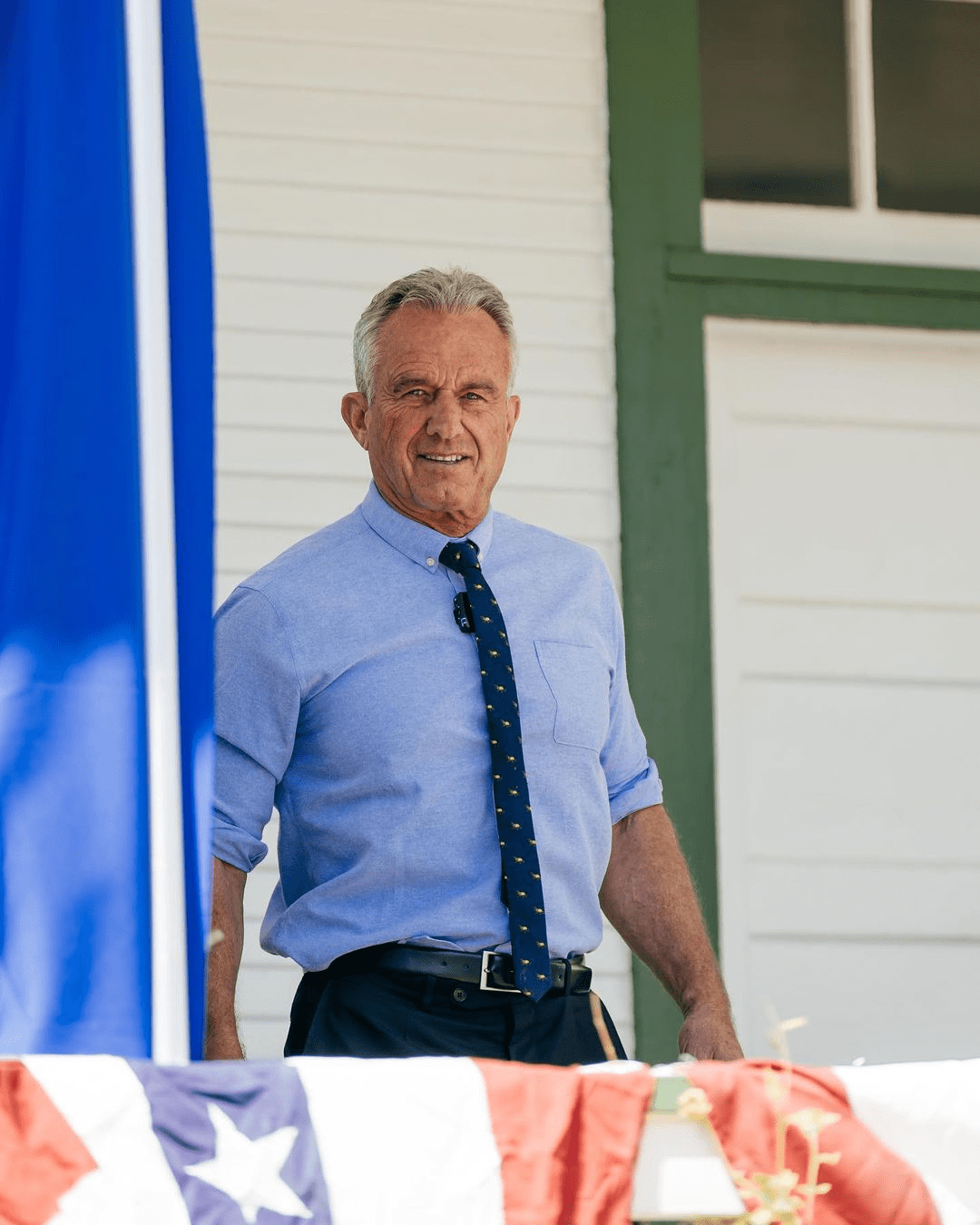
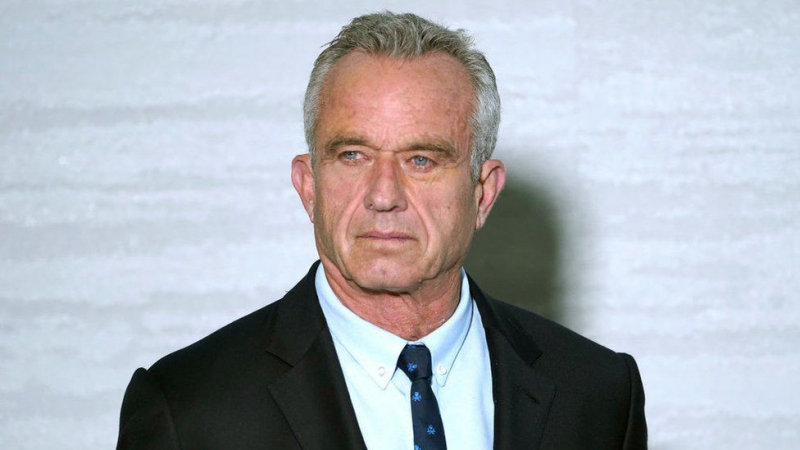
    In a bone-chilling event reminiscent of the not-so-long-ago assassination of Shinzo Abe, an assassination attempt on Democratic presidential hopeful Robert F. Kennedy Jr. unfolded outside a campaign event in a Los Angeles neighborhood. The harrowing incident prompted Kennedy and our platform to request Secret Service protection in a recent Action Alert, but it has failed to drive home the gravity of the threat to RFK Jr.’s life.

    Here are the details of the incident and the subsequent arrest.

    The Assassination Attempt on RFK Jr.

    In mid-September 2023, a man by the name of Adrian Aispuro was arrested outside the Wilshire Ebell Theatre in Los Angeles, where RFK Jr. was delivering a speech as part of National Hispanic Heritage Month celebrations.

    The 44-year-old man found himself in police custody after allegedly impersonating a US Marshal while carrying a loaded firearm and displaying US Marshal identification.

    The arrest took place following a call to the Los Angeles Police Department (LAPD). The caller reported Aispuro’s presence, describing him as armed and in possession of US Marshal identification.

    While the LAPD responded promptly, they skewed the narrative by saying Aispuro did not enter the theater, nor did he brandish his weapon or pose a direct threat to anyone inside.

    Kennedy’s Reaction to the Incident

    Kennedy expressed gratitude to Gavin de Becker for detecting and detaining the armed individual. The incident accentuates the risks faced by political figures, especially those in campaigns. RFK Jr.’s prior requests for Secret Service protection were denied by the Department of Homeland Security.

    The haunting historical context, given the assassinations of Kennedy’s father and uncle, deepens the significance of any threat to his safety.

    A Stamp Saying “Denied” Denoting the Multiple Unsuccessful Requests for Secret Service Made by RFK Jr.

    Protecting Presidential and Vice-Presidential Candidates

    The Secret Service has established guidelines for the protection of presidential and vice-presidential candidates in the lead-up to the 2024 election. These guidelines deem “major presidential and vice-presidential candidates” as eligible for protection.

    However, it is specified that such protection should be granted within one year before the general election. Protection more than a year prior is considered only under exceptional, case-by-case circumstances and in consultation with the committee, based on threat assessments and other factors.

    Does the Assassination Attempt on RFK Jr. Necessitate Secret Service Protection?

    The Kennedy campaign reiterated its concerns and requested Secret Service protection again in August, only to face another refusal. This prompted the campaign to make a third application in late September. At the time of writing this, RFK Jr. remains as protected as he was when Aispuro was arrested.

    Wondering whether the hint of an assassination attempt on RFK Jr. necessitates Secret Service protection is like wondering the same for his father, Senator Robert F. Kennedy, and uncle, President John F. Kennedy. The time to ponder is long past, and it’s high time Kennedy gets the protection he needs.

    Contribute to our efforts to put pressure on the Secret Service before Kennedy is faced with another, more serious threat.

    Contact us for queries and concerns.

  • Former People by James Norwood

    Former People by James Norwood


    James Norwood was a professor at the University of Minnesota for 26 years. Among the classes he taught was a semester course in the John F. Kennedy assassination. He has written for this web site previously. (Click here for one example) He has now published a book which is entitled Former People.

    As Norwood immediately explains, that rubric was used in conjunction with former members of the Russian aristocracy. Many of whom were displaced after the Bolshevik Revolution of 1917. He then uses other examples from Russian history like the Mensheviks who were also retired to what Trotsky called the “dustbin of history.”

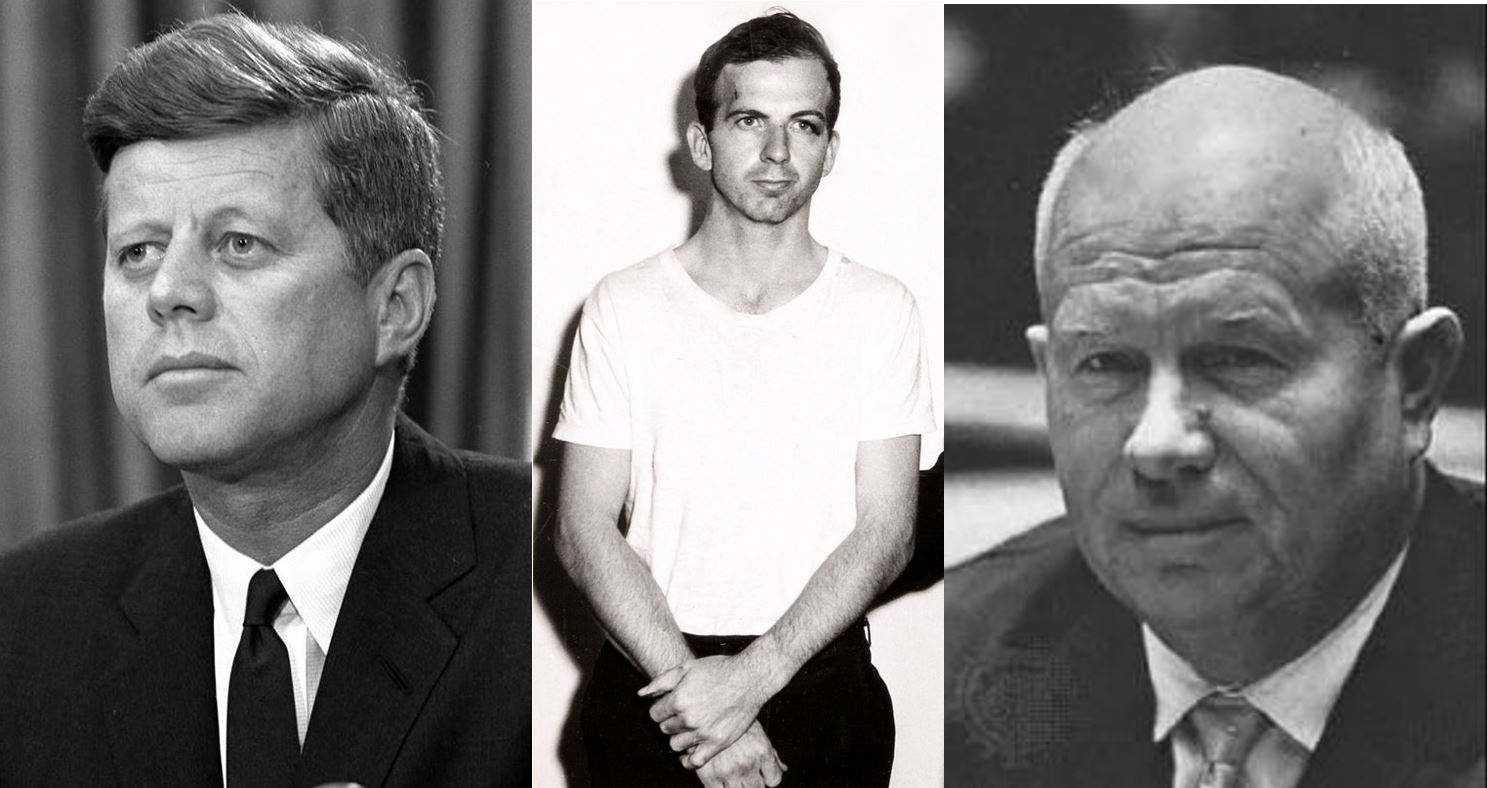
    In relation to his current book, Norwood is going to use that term to describe what happened to Nikita Khrushchev, President Kennedy and Lee Harvey Oswald. It’s a unique concept, at least I cannot think of a predecessor in the field. But to point out one useful strophe: the cemetery where Khrushchev was buried was close for renovation because it had too many people visiting after his burial. (pp. 2-3).

    In his discussion of Khrushchev Norwood makes the case that he ended up opposing what Josef Stalin had done since he had a role in some of those crimes, for example, he was complicit in the Great Purges of the thirties. (p. 7) But as most know Khrushchev fought well in World War II, particularly during the epochal battle at Stalingrad. (Norwood points out that, although he took credit for it, Khrushchev was not part of the planning for the Russian offensive there.)

    Having learned the Machiavellian tactics of Stalin’s court, Khrushchev emerged triumphant during the struggle for succession after the tyrant’s death. Yet, he was quite inexperienced in the art of diplomacy and statecraft on the world stage. As the British prime minister Harold Macmillan wrote in his diary:

    How can this fat, vulgar man, with this pig eyes and his ceaseless flow of talk, really be the head—the aspirant Tsar—of all these millions of people in this cast country? (p. 10)

    Yet he was. Norwood hallmarks the strikingly important secret speech of 1956. This was Khrushchev’s repudiation of the terror and purges of Stalin. (p. 40) This speech was entitled, “On the Cult of Personality and its Consequences.” Khrushchev said, “Stalin had committed criminal violations of the law that would have been punished in any country—except for countries not governed by law at all.” (ibid) He then added that Stalin’s rule was much closer to that of the Russian tsars than the Bolshevik revolutionaries. He also pointed out Stalin’s disastrous leadership at the beginning of the German invasion in World War II. As Khrushchev later wrote, the delegates at the Communist Party Congress were thunderstruck especially since Stalin had taken these actions against both Old Bolsheviks and Young Communists.

    Yet, in that same year, Khrushchev ordered the crushing of Hungarian Spring. Which resulted in tens of thousands of casualties on both sides, and hundreds of thousands of refugees who fled the country. (p. 43) The author makes the case that Khrushchev was probably influenced by the Soviet ambassador to Hungary Yuri Andropov, who would later run the KGB for 15 years and briefly reign as General Secretary. For whatever reason Khrushchev also banned the book Doctor Zhivago, although he later admitted this had been a mistake. It resulted in a great propaganda triumph for the CIA.

    In dealing with Kennedy, Norwood describes his many childhood ailments, his heroism in the Navy during the famous PT-109 incident, and the death of his older brother Joe in an air explosion during World War II. (pp. 10-13) He briefly deals with both his political career–elected three times to the House, and twice to the senate—and his literary vocation, the penning of Why England Slept and Profiles in Courage. He points out for praise Senator Kennedy’s 1954 speech warning about further American support of the French war in Vietnam. But, curiously, he does not mention the famous 1957 Algeria speech which literally rocked the political and journalistic establishment. Alistair Cooke, the British journalist, noted that this anti-colonial speech–and the attention the Republicans had given it–had made Kennedy the frontrunner for the 1960 Democratic presidential nomination. (Richard Mahoney, JFK: Ordeal in Africa, p. 29)

    Norwood builds his early narrative structure around two events: the Missile Crisis and Kennedy’s American University Peace Speech. Norwood considers the Russian leader’s decision to place missiles, bombers and 45,000 men in Cuba a result of his aforementioned lack of diplomatic sophistication and serious misjudgment of Kennedy. Norwood also thinks it was part of Russian vozhdism or one person rule. Khrushchev had put the question to the Kremlin leaders. There were no serious objections at this time, but there were would be many later recriminations. (Norwood, p. 23) As the author notes, it should have been clear to Khrushchev that the U 2 overflights would eventually pick up the installations, especially since the troops on the island had not practiced consistent camouflage and disguise techniques. A fact that enraged the Russian leader when he found out about it. The overflights did discover the installations on October 14th. Kennedy had learned from the Bay of Pigs and now changed the command style. It was not just the Pentagon, CIA and NSC. Kennedy felt that had failed him. So this was expanded into something called the Ex Comm which now included Bobby Kennedy and Ted Sorenson.

    Kennedy had been a great admirer of Tuchman classic The Guns of August. Kennedys was determined that no such book could be written about the Missile Crisis, one depicting a march to folly and destruction out of stupidity and impulsiveness. (p. 32) In fact, journalist Jordan Michael Smith wrote that “quite possibly Kennedy’s careful reading of the book helped prevent a nuclear war.” (p. 32)

    If this is so Kennedy had to pretty much bypass his Joint Chiefs of Staff. Who considered the blockade route much too soft and giving way to much lenience to a provocation like this. To them, it was a time for aggression and attack. Although Norwood has Marine General Shoup tell Kennedy that he was in a pretty bad fix, it was actually Curtis Lemay who said it. (Ernest May and Philip Zelikow, The Kennedy Tapes, p. 182)

    Once the deployment was discovered, and the blockade option was approved by Kennedy, Khrushchev was in a precarious situation. One which invited a terrible escalation by either side which could result in atomic war. The only realistic option the Russians had was to negotiate out a settlement. But the Russian ships stopping at the blockade line was not a victory as Dean Rusk exclaimed it was. Because it was later discovered that all the ICBM’s and tactical weapons—162 missiles in all– had been landed on the island before the blockade was secure. (The Armageddon Letters, by James Blight and Janet Lang, p. 257) So the Russians knew that their tactical weapons would incinerate any invading armada crossing the Caribbean. They also knew that with the armada burning at sea, the combination of ICBMS, bombers and submarines could deliver a formidable first strike. The Russian has achieved his goal of placing a hedgehog on Kennedy’s breakfast plate. (Norwood, p. 27) But General Thomas Power, commander of SAC, took it upon himself to raise the DEFCON alert from level 3 to 2. Which was one step short of war. (Norwood, p. 29). And there were three events which almost caused a shooting war to break out: the downing of a U2 over Cuba by Castro, another U 2 that flew off course and over Soviet air space where MIGS scrambled to intercept, but other planes came to the rescue in time. The last was when American surface ships were hurling grenades and depth charges at a nuclear tipped submarine off the coast of Cuba. With all the explosions, the Russians did not know if a war was going on but luckily the commander directed the sub to surface and find out before firing. (Norwood p. 30)

    Having achieved what was for all intents and purposes a (lucky) standoff, the two sides now began to formulate negotiation positions. Adlai Stevenson reputedly brought up the idea of trading the UN Turkish and Italian missiles for the Russian missiles inside of Cuba. Robert Kennedy was determined to go around the Ex Comm through Soviet contacts with diplomat Georgi Bolskakov, and later with the Russian ambassador Anatoli Dobyrnin. And this is where the promise not to invade Cuba came into play.

    The so-called peaceful outcome was not welcome to the hawks on both sides. The Pentagon concluded that Kennedy had blown a perfect chance to get rid of Castro. The Kremlin felt that Khrushchev had luckily dodged a bullet by enacting a hare-brained scheme. Norwood insinuates that the result of that crisis echoed through the next two years, eventually deposing them both.

    Making this even more unfortunate was the mutual attempt at détente by both men e.g., the limited test ban treaty, the direct hot line. This was capped by Kennedy’s Peace Speech, which—like Columbia professor Jeff Sachs– the author spends some time explicating. (pp. 46-52). As a result, Norwood writes, “For a brief moment in history, between June and November of 1963, there was a genuine opening for rapprochement.” (p. 52)

    Khrushchev wept when he heard the news of Kennedy’s death. He suspected American right-wingers had murdered the president in order to sink their attempt at a US-Soviet détente. (pp. 66-67). In some ways, Kennedy’s murder set the stage for Khrushchev’ own removal, since none of the tangible things the two men were working on were now going to be enacted. Therefore, the conservatives in the Politburo set up a plot to get rid of a leader who was actually contemplating with Kennedy a complete demobilization. (p. 75). Norwood argues, with some justification, that the USSR changed for the worse after this removal. A period of reform had now come to the end, economic stagnation ensued plus the formal imposition of the Brezhnev Doctrine. (p. 64). The true circumstances of Kennedy’s murder were covered up, and his achievements went largely unnoted in history textbooks. As far as Khrushchev went, the new Russian hierarchy began to write him out of history. (p. 66)

    The last part of the book deals with the formal methods used to conceal the true circumstances of Kennedy’s death and a probing of the mystery of Oswald. First, he deals with how the MSM, and people like Walter Cronkite, placed a stamp on the three-bullet scenario right out of the gate. Like many before him, including the recently discussed Bart Kamp, Norwood squarely places the official blame for the JFK cover up on J. Edgar Hoover and the FBI. He spends more than a few pages on how eager Hoover was to close the case with Oswald as the lone gunman. (p. 92ff). But he also exposes how people inside the FBI, like William Sullivan and Laurence Keenan, and Hoover himself, understood just how flawed the FBI inquiry really was. For instance, Hoover once said about the Oswald case, “If I told you what I really know, it would be very dangerous to this country. Our whole political system could be disrupted.” (Norwood, p. 101) But since the Warren Commission was so overwhelmingly reliant on the Bureau it more or less had to go along with Hoover’s very quickly drawn official conclusions.

    Norwood ends with Oswald. He spends several pages on a real enigma about the man: How and where did Oswald learn to speak good Russian. He lists several witnesses who came to this conclusion about his fluency: Natalie Ray, Peter Gregory, George Bouhe, Elena Hall Rosaleen Quinn. The last is quite interesting since she conversed with Oswald in Russian before he left for the Soviet Union. (pp. 121-23). But then in Russia, many people have said that Oswald feigned not being able to speak the language. Norwood concludes this was part of his ruse as a fake defector since if he advertised that he could speak Russian the authorities would realize he was sent there by the Navy or CIA to be a spy. I would beg to disagree with Norwood’s portrayal of Ernst TItovets’ take on Oswald. (pp. 138-39) First, Ernst really was not a Johnny Come Lately to the case, as he was in the 1993 PBS special Who was Lee Harvey Oswald? And when I encountered the man in 2014 at the AARC Conference in Maryland, TItovets told me that when he met Oswald, he spoke good Russian.

    Norwood is an advocate of the John Armstrong theorem of there being two Oswalds from an early age. He chalks up the long incubating experiment in doubles to CIA official Frank Wisner who used many people on the displaced persons list from World War !! as part of covert operations across Europe. And he notes that Robert Kennedy assistant William Vanden Heuvel on December 4, 1963 noted that “files of the IRC (International Rescue Commission) contain information pertaining to Oswald.” (p. 155) In an appendix, the author depicts Oswald’s Certificate of Enlistment for the Marines. He notes that the original name on the card was Harvey Lee Oswald, corrected to Lee Harvey Oswald. (p. 197). Another appendix lists a useful timeline in milestones on the JFK case beginning with Oswald’s defection and concluding with Oliver Stone’s two recent documentaries on the case, JFK Revisited and JFK: Destiny Betrayed.

    In sum, Norwood’s book is unique in concept, mercifully concise, and adroitly argued. All the more impressive since it is his first book on the case.

  • Prayer Man: More Than A Fuzzy Picture by Bart Kamp

    Prayer Man: More Than A Fuzzy Picture by Bart Kamp


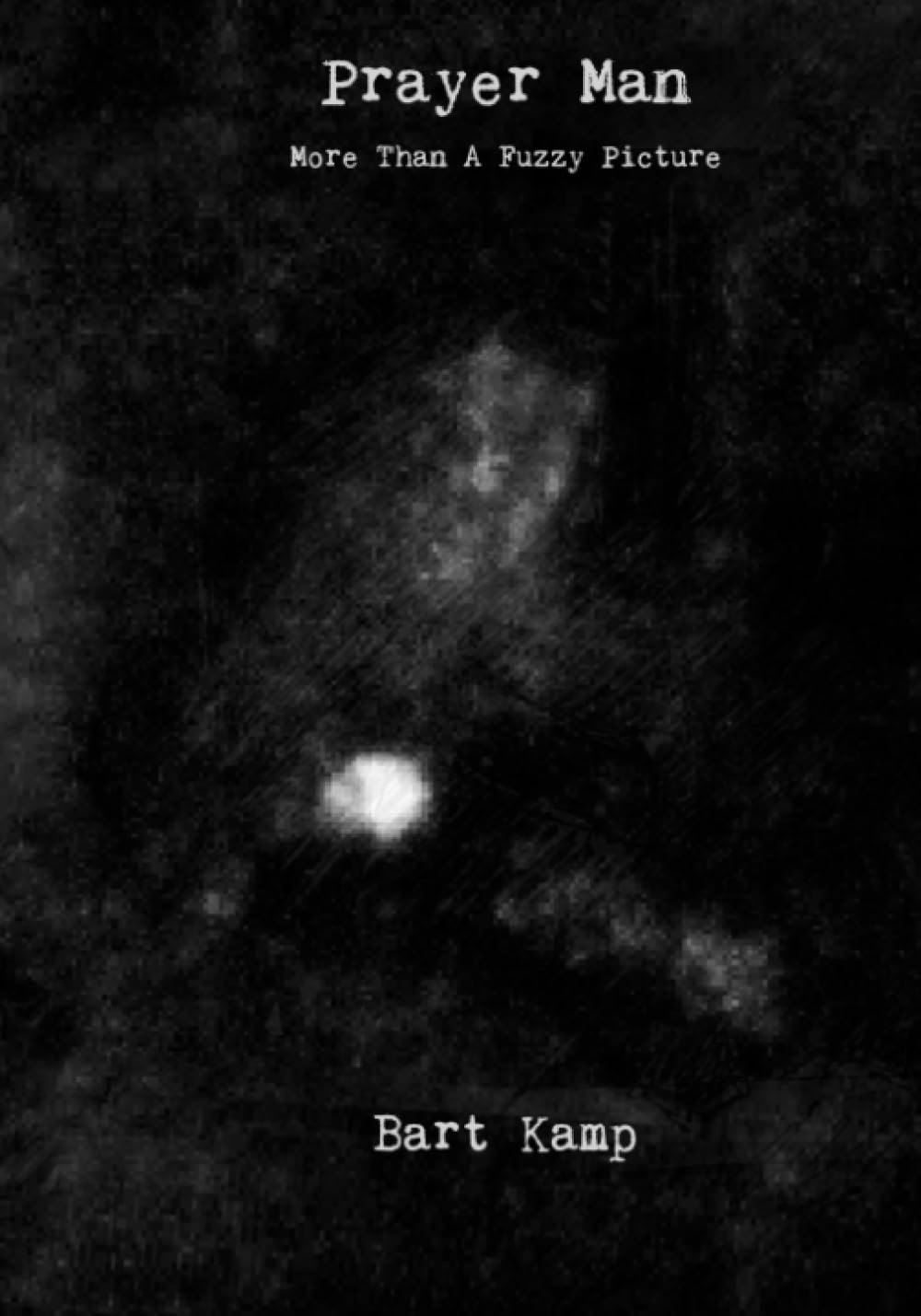
    Bart Kamp’s book is the second to be dedicated to the phenomenon of the Prayer Man figure. The first was by Stan Dane in 2015. Dane’s book was called Prayer Man: Out of the Shadows and Into the Light. It had an introduction by Greg Parker. The three personages thus named are not involved by happenstance. They are all members of the Reopen Kennedy Case forum (ROKC). That group has been one of the strongest associations for advocating that Prayer Man is Oswald.

    Bart Kamp is not just a member in good standing of that forum. He is also a good friend of the man who many consider the foremost archival researcher of this era, Malcolm Blunt of England. Bart has also done fine work in recovering and archiving the materials held by the late Harrison Livingstone, a significant contribution which I do not think anyone else would have done. (Click here for that)

    One of the things that Kamp does in his book is to chronicle the history of the Prayer Man (PM) figure. To summarize, PM is not the same as figure that many thought to be Oswald staring out in the Altgens 6 photograph with his right shoulder partly hidden by the frame of the Texas School Book Depository doorway. That turned out to be Billy Lovelady. The PM person is standing back in that foyer area with his hands close together, which is why he was dubbed Prayer Man.

    As Kamp chronicles, the suspicion about Prayer Man being Oswald was not first noted by researcher Sean Murphy, who is usually given credit for the discovery. As the book points out, there was a circle of Kennedy researchers who were looking into the Altgens 6 figure. This included photographic analyst Richard E. Sprague, writer Harold Weisberg and the young prodigy Howard Roffman. (Kamp, p 24).

    The fourth member of this correspondence circle ended up being most important in this aspect. And yet today he is just about unknown in the literature. His name was Richard Bernabei, a professor at Queen’s University in Ontario. The four needed more angles on the people in the doorway and so Sprague got hold of a copy of the film originally made by Dave Wiegman, an NBC photographer who was in one of the camera cars in the motorcade. Bernabei, a skilled sketch artist, was the first to really discern the PM figure and be able to illustrate his observations with distinction. He called the figure “Man in the Shadow”. Kamp is to be congratulated for giving Bernabei—who died in 1979– the recognition he belatedly deserved.

    For decades Bernabei’s writings and sketches lay like lost gems in a treasure chest at the bottom of the sea. In reality they were at Queen’s University archive. But they were bereft because the subject did not really resurface until the new millennium and the online revolution. Kamp centers this first revival in the years 2005-07 with online commentators and acquaintances Charles Wallace, Sean Murphy and Chris Davidson, the last is an authority on the films and photos. (Kamp, p. 26). The rubric Prayer Man did not get applied until 2010 by Murphy on the JFK Lancer Forum. But most of those postings have been lost since that forum was hacked. But now the Wiegman film was supplemented by film from James Darnell who rode in camera car 3.

    It was at the Education Forum that a long and fascinating debate was sprung open, initially by Bill Kelly. But Murphy then entered it and this began a fascinating public debate over whether or not PM was Oswald. Murphy resigned from the field at the 50th anniversary of the JFK assassination. But the debate he spawned continued with other followers. ROKC has taken the lead in this debate. But as the author notes, WEBS forum and the Forum Notion also have featured many postings on the subject. As Kamp writes, the Dane book was then the first to appear on the subject in 2015.

    No one has been able to analyze the original films taken by Wiegman and Darnell. They are the property of NBC. And for whatever reason, NBC is not cooperating by letting anyone get access to them. (Kamp. P. 29)

    Kamp begins the analysis by questioning whether or not motorcycle policeman Marrion Baker did directly go up the front stairs to the depository as many have postulated. Under analysis, Baker appears to walk past the steps and past supervisor Roy Truly.( p. 36). I will not go into that entire discussion at this point. I will just say it leads to a questioning of whether or not the second floor lunchroom episode actually happened. That, of course is the scene where Baker stuck a gun in Oswald’s stomach as he was (or was not) holding a Coke. Truly then advised Baker that Oswald was an employee, and they let him walk away.

    For those who are not familiar with that controversy, please read about it here. Suffice it to say that Bart Kamp brought up many interesting details that do bring this alleged incident into doubt. Because after reading that link, one has to wonder: Did Baker actually stop another man on the third or fourth floor, as he mentioned in his first day affidavit? And if they did not sight Oswald in the second-floor encounter, then where was Oswald really?

    The last issue leads to two pieces of evidence that Kamp was much responsible for both surfacing and popularizing. These are notes by both FBI agent Jim Hosty and DPD Captain Will Fritz. Hosty, and especially Fritz, were involved in the questioning of Oswald while he was in detention being held by the police. The first notes by Hosty say that Oswald went to lunch at noon. He then went to the second floor to get a Coke. He then returned to the first floor to eat. He then went outside to watch the motorcade. (p. 84) These are quite important, and we owe it to Blunt and Kamp for actually finding these notes. This set of notes had been gifted to the Assassination Records Review Board (ARRB) by Hosty in 1997. The set was not discovered by Kamp until over two decades later.

    A few months after Hosty had donated his revealing notes, another set of notes–this time by Fritz–were anonymously donated to the ARRB. It said about Oswald that he was “Out with Bill Shelley, in front.” As the author adroitly asks: How did Oswald know Shelley was there in the first place?

    If these two pieces of evidence had been in the record at the start, they would have given Oswald an even stronger alibi then he already had. That alibi was originally supplied of course by Victoria Adams, Sandy Styles and Dorothy Garner. Although Adams was the only one who made it into the Warren Report. These were the three secretaries on the fourth floor at the time of the shooting. As the book notes, using the material in Barry Ernest’s book, when combined, they produced powerful evidence that Oswald was not on the 6th floor at the time of the shooting. (See Barry’s book The Girl on the Stairs, and Oliver Stone’s documentary, JFK Revisited)

    On the back of this evidence the author first makes his case for Prayer Man being Oswald. He does this largely by a process of elimination. He goes through the entire building floor by floor naming all the people in the edifice that we know about, and using much of their testimony. He then states that from the best renditions we have of the Darnell and Wiegman films, PM was a white Caucasian. If one throws out all the people who we know were not on that exterior foyer, plus females, African Americans, and males of color, this reduces the possibilities about the Bernabei figure quite drastically. For Kamp, its Oswald. (p. 86)

    There is a second major theorem in the book. As mentioned earlier, this deals with the second floor soda machine encounter. Which cyclist Marrion Baker did not mention in his first day affidavit. This reviewer dealt with this paradox in the book, The JFK Assassination: The Evidence Today. It is stunning to behold since what Baker mentioned was not anything like the incident described by the Commission. (DiEugenio, pp. 217-18) At that time Baker mentioned going up the stairs with Truly and upon reaching the third or fourth floor he saw someone walking away from the stairway. Truly said he worked there, so Baker let him go. There is nothing about seeing Oswald through a window of the lunch room. There is nothing about his holding a Coke. They were not even in a room.

    I won’t go into all the details, but the author fingers people like policeman Marvin Johnson for changing Baker’s first day affidavit and saying that Baker saw Oswald in a line up, which Baker denied. (Kamp pp. 107-08) He also uses Geneva Hine to impeach the testimony of Mrs. Robert Reid about Oswald being on the second floor right after the assassination with a Coke in his hands. Hine did not leave the building and was stationed in close proximity to where Reid said she saw Oswald right after the assassination. Hine never saw Oswald or Reid from 12: 25- 12: 35. In fact, she saw Reid return after the shooting in a group. The fact that Reid was Truly’s secretary may have had an influence on all this. (Kamp, pp. 111-14)

    What the writer is saying is rather radical, but he has evidence to support it. It is this: the second-floor lunch meeting between Baker, Truly and Oswald was invented–probably between FBI agent Nat Pinkston and Truly—in order to deprive Oswald of a sure-fire alibi.

    A large part of the second part of the book deals with a micro analysis of the interrogation sessions of Oswald by the DPD, along with the Secret Service and FBI in attendance. This is probably the most complete, extensive and detailed examination of that process in the literature. In fact, Kamp actually finds mini-interrogations by other persons that are not usually included in usual listings of the sessions.

    But this whole second part of the book is also integrated with evidentiary examination of points, for example the DPD fingerprint and palm print exam and the paraffin test. About the latter Kamp says it was the first time DPD ever did one on the suspect’s cheek, and it was on the orders of Fritz. (p. 295). The results were not what the DPD wanted. When the FBI got the weapon, they found no prints of value on it. And since Sebastian LaTona was the foremost expert in the country, his testing carried much more weight than Lt. Day at the DPD. (Kamp, pp. 289-91) The problem was by sending the weapon back to Dallas and Day miraculously finding a palm print that somehow LaTona, with all his new and better technology and decades of skill, could not find.

    I don’t even want to go into the so-called trigger guard prints which involved PBS, producer Mike Sullivan’s Who Was Lee Harvey Oswald? program and the allegedly long-lost Rusty Livingstone fingerprints. That has turned out to be a first class imbroglio that was deciphered first by Pat Speer and followed up on by Johnny Cairns. For Speer’s long detailed destruction of Sullivan, which may make you a little sick, click here.

    As for the paraffin tests they were advertised as being positive on the hands and cheek, (p. 296) But, as we know, this was not accurate. At least for the cheek. In other words, due to Oswald’s denials, the unreliability of alleged eyewitness Howard Brennan (pgs. 298-303), and the failure of the two chemical tests, what was the DPD case on the night of the assassination?

    What Kamp says turned the case around, and which J. Edgar Hoover took credit for, was the discovery of the Klein’s order for the alleged rifle used in the assassination from Chicago, with a coupon from a man named Hidell in Dallas/ Fort Worth. (p. 405). In fact, up to that time Hoover wrote, if John Abt—Oswald’s requested lawyer from New York had arrived–the case the DPD had would have been rocked back on its heels.

    But here is what I will close the review with to show how layered in irony the book is. Because a fourth theorem of the book is this: The Dallas Police really did not have the Selective Service card with the Hidell alias on it the first day. (See the testimony on pp. 334-339) Obviously this leads to the question: was the Hidell card created after the fact? That is an answer that cannot be firmly replied to yet. But at least Bart Kamp brings up the question.

    All in all, this is a credible effort which forges some new ground and replows some old ground in a new way. The matters Kamp examines go literally to the heart of the basics of the JFK case. If his theorems are true, there is no case to answer.

    NBC could decide that.

  • Indexing the Garrison Folders

    Indexing the Garrison Folders


    I’ll be the first to admit that I only had a passing knowledge of the scope of New Orleans District Attorney Jim Garrison’s investigation into the JFK assassination through its New Orleans aspect. His book On the Trail of the Assassins was the very first book I owned on the subject. The story of that book is also told in Oliver Stone’s 1991 feature film JFK. The book and film depict the only case of a prosecutor placing on trial a suspect for conspiracy to assassinate President Kennedy.

    As my interest grew in the topic, so did my awareness of the controversy that continued to orbit the legacy of Garrison’s investigation. Some of these included the lack of avenues of inquiry into Carlos Marcello / New Orleans mob, perceived targeting of homosexuals in New Orleans, using sodium pentothal in interrogations, infiltrations to sabotage the investigation to name a few. It was thanks to the works of Joan Mellen (A Farewell to Justice) Jim DiEugenio (Destiny Betrayed, second edition), Bill Davy (Let Justice be Done) and Dick Russell (The Man Who Knew Too Much) that I began to scratch the surface of the intrigue in New Orleans – before and after the JFK assassination. These books served as ways to excavate value and separate the wheat from the chaff. Something that had not been done prior in the critical community.

    In February 2022, I emailed Len Osanic in a reply to a conversation he had on his podcast, Black Op Radio with researcher Paul Bleau. Up until that point I was already aware of the fine work Paul had been putting out around the Fair Play for Cuba Committee. Hearing him refer to how much of his source information came from the folders of Jim Garrison, I reached out to Len to ask for access to them as well.

    Receiving the folders, I was taken aback by the diversity of topics that were contained within them. Multiple folders with titles containing ‘Clay Shaw’, ‘David Ferrie’, ‘Guy Banister’, ‘Lee Oswald’. However, the more I delved into the folders, the more duplications and cross-categorising of documents I found within them. A good example is how records on Clay Shaw’s finances are filed within the ‘Miguel Torres’ folder. This is not a criticism of the original curator of the Garrison folders. In fact, the story goes that these folders (the last remaining of his office’s collection) were only just saved from being destroyed by Garrison DA predecessor and detractor, Harry Connick before being anonymously donated to Len Osanic.

    What will surprise people that acquire the Garrison folders is not only their diversity of topics but how much time they span; from 1947 to 1991. The point being that Garrison amassed a massive catalogue during and after his investigation in the 60’s proving that his interest in the JFK assassination never waned right up until his death in 1992. It was out of honor and respect for Garrison’s admirable devotion to seeking the truth behind the JFK assassination, and the sacrifices he made in doing so, that I remained motivated to complete the gargantuan task of creating a simple name index for them.

    Having acquired the Garrison folders, in April 2022, I opened up a spreadsheet in Microsoft Excel and started recording names within the first folder ‘Additional Thornley Material’. And like Forrest Gump, I just kept on going by recording names. I soon reached out to Paul Bleau to let him know I was embarking on this and that I would let him know of anything of interest that I found. I asked him to reach back out to me for any facets of the JFK assassination that I might keep an eye out for as I went through the folders as well. At around the same time, about 1,000 lines deep into the index, I emailed Jim Di Eugenio to ensure that I wasn’t reinventing the wheel with anyone else’s work either.

    He advised that Peter Vea had compiled a rough and very general index only. Onward I stepped in my epic task.

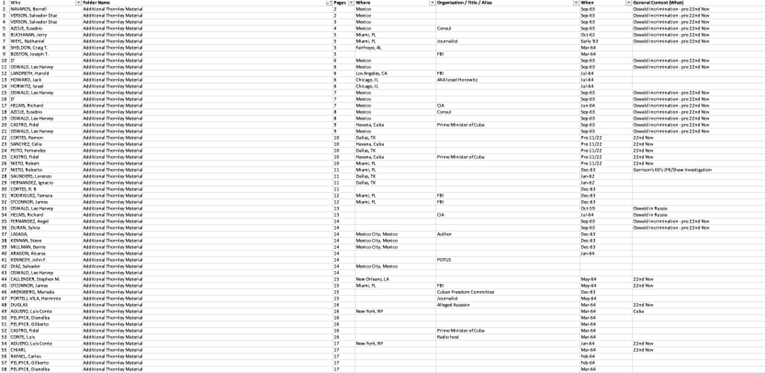
    The Garrison Folders consists of 171 folders that include 12,818 scanned PDF pages taking up 2GB of space. This material contains newspaper clippings, Garrison office memos, affidavits, notes and records of interrogations, letters to and from, FBI, DPD, Secret Service, and Warren Commission testimony transcripts. I must stress that I did not read every page word for word – I simply scanned over them to look for names and context. I deliberately did this to stick to my overarching purpose of the exercise. To collect names and list them.

    And it soon occurred to me that I could potentially farm out some folders to others to help with building the index. But considering the numerous instances of duplicate documents that I had already picked up in the folders, I knew that it was really only something I could complete, as I was already able to recall if I’d indexed a document or not. I am sure that this will be one of the positive outcomes for indexing Garrison’s folders – to organize all duplicates out of them to make the information as clear and easy to access as possible.

    To ensure the quality of the index, I set myself some very clear guidelines to complete it.

    • Its primary purpose should be an index of names and their location within the files. Any additional context that I could glean was bonus and should also be listed.
    • Scanning not reading would enable me to build the index over a realistic period of time to ensure that my memory would be fresh for weeding out duplicate documents.
    • Consistency would be key. Naming convention, capturing broad context and time all needed consistency in formatting and categorizing.
    • The exercise of indexing the Garrison Folders was not about trying to find ‘silver bullets’ or ‘skeletons in the closet’ that would solve the JFK assassination once and for all. It would just be a resource to help those much more knowledgeable on the case help to do just that.

    The last point is perhaps the most important for both completing the index, but for also how I intended it to be used. Most reasonable scholars of the JFK assassination will surely appreciate that there was never likely anything confined to paper that points directly to who set up Lee Oswald, killed President Kennedy, why it all happened as well as how it was covered up. If anything like that existed, the passage of time and an overarching apparatus to control the narrative of the case, for the sake of national security etc …would have seen it destroyed long ago.

    But what is true is that most breakthroughs in the case ever since have come from researchers piecing together and corroborating documents and evidence. Depending on how well versed one is in the case, the materials might seem new, or it might not. That is according to one’s own experience and knowledge, everybody’s level of knowledge on the JFK Assassination is their own. This is why I sought to keep the index simple and easy to use. So anyone from new arrivals to the JFK assassination to its most seasoned and expert of scholars could use it and find and corroborate information.

    So, how do those with the Garrison Folders best use the index? There’s a few ways, as intended, to ensure its ease of use for people of all knowledge and interest levels. It is a simple spreadsheet that can have filters easily applied to each of its columns:

    1. Who
    2. Folder Name
    3. Page Number
    4. Where
    5. Organisation/Title/Alias
    6. When
    7. General Context (What)
    8. Context Additional
    9. Context Additional

    abbott1

    If a user is particularly interested in researching a person, filtering out their name in column A will bring their name up along with reference to every other file and context that they appear in within the files. The same applies for all other columns right through until general context where a user may wish to gather all references across the files in relation to a particular facet from say Oswald’s vaccination records, Ferrie’s Library card, the Bilderberg Group to the RFK and MLK assassinations.

    Users general interest in history will be also sated by the Garrison Folders and this corresponding Index as there are many news article clippings that provide a glimpses into the perspective of both mainstream and alternate media sources and publications during the time. And with the passage of time, it is interesting to note how astute some reporting was but also how prescient it would turn out to be when subsequent world history and current affairs is considered.

    Before I embarked on building the index, I had been the beneficiary of the hard work of many scholars and truth seekers. And with thanks to the recent examples of perseverance by Paul Bleau and his invaluable work on the FPCC and Garrison aspects, Bart Kamp for his digitizing of Malcolm Blunt’s extensive records collection as well as the openness of Len Osanic / Black Op Radio and Jim DiEugenio, I felt compelled to do my bit too.

    My hope for the index is two-fold—that scholars of all levels will use it to either validate their research or, better still, uncover missing pieces that prompts new lines of inquiry. I would also like it to be a source of inspiration for others wishing to contribute to the research community. History should never be immune from distillation. It should be examined without preconceived outcomes or agendas. Let how this index was compiled by one person wishing to their part also be an example of this.

    You can download the index file here. (.xlsx file)

  • Robert F. Kennedy Jr.’s Perspective of the RFK Assassination

    Robert F. Kennedy Jr.’s Perspective of the RFK Assassination

    The assassination of Robert F. Kennedy in 1968 was a moment that forever altered the course of American history. He was a tour de force whose assassination remains a point of contention and controversy.

    One voice that has emerged as a prominent advocate for re-examining the circumstances of RFK’s murder is none other than his son, RFK Jr. Click here for his thoughts on his father and uncle’s assassinations.

    On a recent episode of Club Random with Bill Maher, the now-presidential candidate sat down with Maher and made some compelling points regarding his father’s murder.

    The Autopsy Report

    A critical piece of evidence that RFK Jr. has pointed to is the autopsy report. He highlights the findings of Thomas Noguchi, the coroner who conducted an autopsy on his father’s body.

    Noguchi’s meticulous examination led him to conclude that the shots that killed Senator Robert F. Kennedy came from behind, contradicting the idea that Sirhan Bishara Sirhan, who was in front of him, was the only person to fire a gun that day.

    Eyewitness Accounts

    RFK Jr. has drawn attention to the 77 eyewitnesses present during the assassination. According to these accounts, Sirhan was never in a position to have fired the fatal shots.

    Their testimonies raise questions about the accuracy of the official narrative and point to the possibility of a second gunman.

    Sirhan in a prison jumpsuit

    RFK Jr.’s Revisits the RFK Assassination

    In the podcast, RFK Jr. said that there were eight bullets in Sirhan’s barrel. He fired two of them at his father, one clipping his ear and getting lodged in a door jamb and the other hitting Paul Schrade, who was standing beside him.

    He was then tackled to the ground by six men, one of whom, Rafer Johnson, tried to get the gun out of Sirhan’s hand. He failed to get Sirhan to let go of the weapon, leading the latter to fire the remaining shots but not at the Senator but away from him.

    In conclusion, Sirhan stood facing RFK, whereas the four fatal shots came from the back. If all of Sirhan’s bullets are accounted for, the idea of a second gunman becomes very real.

    Seeking the Truth

    In light of these discrepancies and unanswered questions, Robert F. Kennedy Jr. is not content with accepting the official account of his father’s assassination.

    Instead, he advocates for a thorough re-examination of the case, the evidence, and the individuals involved.

    Advocate for the Truth with Kennedys and King

    Join Kennedys and King in raising your voice for the truth behind the political assassinations of the 1960s.

    In this case, all you have to do is a) Watch the 15-minute podcast and b) Go through Thomas Noguchi’s official autopsy report to know that Sirhan did not fire the shots that mortally wounded Senator Kennedy at the Ambassador Hotel that day. Contribute to our efforts or read our articles for a better understanding of the RFK assassination.

    Reach out for comments and queries.

  • Officer Tippit and the Curious Case of the Light-Gray Jacket

    Officer Tippit and the Curious Case of the Light-Gray Jacket

    The findings of Warren Commission will have you believe that Lee Harvey Oswald killed Officer Tippit while fleeing the chaos that naturally follows the assassination of any political figure, let alone one as important as the President of the United States.

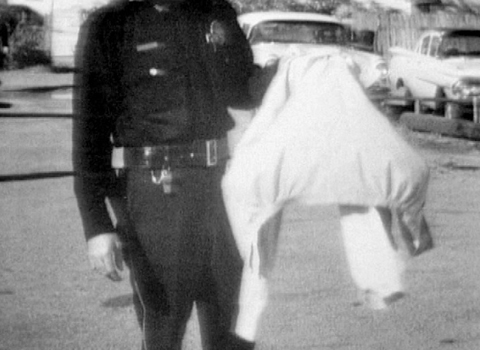
    His connection to the assassination of Officer Tippit is based on flimsy evidence, such as the Eisenhower-style light-gray jacket that was recovered in the direction the killer was said to have escaped after firing his gun at Tippit—more on that in our most recent article.

    Let’s see if the jacket belonged to Oswald or even the killer, shall we?

    Marina Oswald’s Testimony

    Marina Oswald claimed to recognize the jacket as one of two belonging to her husband. However, she stated that both of Oswald’s jackets had come from and were purchased in the Soviet Union.

    The jacket found in a parking lot two blocks from the Tippit crime scene was identified as a brand sold in clothing stores in Los Angeles and Philadelphia, a clear indication that it had not originated in Russia.

    A Weak Link in the Chain

    The Eisenhower jacket stands as the weakest link in the government’s chain of evidence against Oswald in the assassination of Officer Tippit.

    The jacket, officially labeled as Warren Commission exhibit 162, was reportedly found partially hidden underneath a 1954 Oldsmobile in a parking space behind Ballew’s Texaco service station.

    However, the circumstances surrounding its discovery remain shrouded in mystery. No one saw the killer place it there, and the identity of the person who found the jacket is unclear.

    light gray jacket

    Unreliable Witness Testimonies

    Witnesses who observed the gunman fleeing from the scene generally disagreed on whether the found jacket matched the one worn by Officer Tippit’s killer.

    Some either failed to identify the jacket, while others explicitly stated that it did not match the garment worn by the assailant. In the end, even the Warren Commission was forced to conclude that the witness accounts varied with regard to the jacket.

    The Discrepancies

    Authorities attempted to connect the jacket to Oswald by claiming that some fibers found on it matched the brown shirt Oswald had been wearing when he was arrested.

    However, witnesses consistently described the killer as wearing a white shirt, not a brown one, adding further uncertainty to the jacket’s relevance.

    Take a Closer Look at the Assassination of Officer Tippit

    The inconsistencies, lack of concrete links, and conflicting witness testimonies cast significant doubt on the jacket’s relevance to the crime and whether Lee Harvey Oswald committed it.

    Explore this section of the unsolved assassination of John F. Kennedy on our platform. Support our efforts to thwart attempts at abolishing the JFK Records Act and bring the truth to light once and for all.

    Contact us for further assistance.

  • Did Lee Harvey Oswald Buy the .38 Smith & Wesson Pistol?

    Did Lee Harvey Oswald Buy the .38 Smith & Wesson Pistol?

    The official narrative will have you believe that Lee Harvey Oswald murdered Officer J.D. Tippit while fleeing shortly after assassinating President John F. Kennedy. While the latter theory is full of holes that we have identified in the last few decades, we have only just begun to unravel the former.

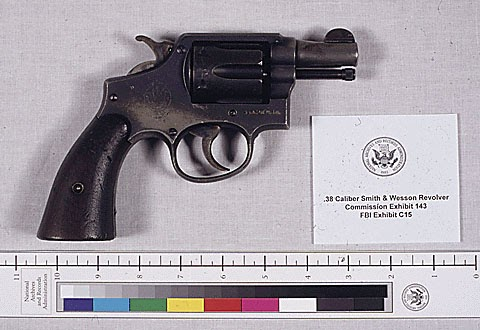
    Click here, or keep reading to know why Oswald couldn’t have owned the .38 Smith & Wesson Pistol, the alleged murder weapon used to kill Tippit.

    The Dubious Purchase

    Oswald’s purported acquisition of the pistol is said to have occurred through an advertisement placed in an April 1963 men’s adventure magazine.

    According to the narrative, Oswald sent an order form and ten dollars in cash or money order to Seaport Traders of Los Angeles, requesting the pistol be shipped via Railway Express Agency (REA) to his post office box in Dallas.

    However, several inconsistencies in this story raise questions about its validity.

    Postal Procedures and Regulations

    The US Post Office did not handle private cargo for private shipping companies like REA. Instead, the gun should have been sent to REA’s facility in downtown Dallas, and a postcard notification would be sent to the buyer’s post office box.

    The process involved specific rules and regulations, including a certificate of good character, proof of identification, and payment of the balance owed to REA.

    There is no record of a certificate of good character, no Form 5024 with proof of ID, and no testimony confirming Oswald or anyone else picking up the .38 Smith & Wesson Pistol.

    Officer Tippit

    Lack of Concrete Evidence

    Crucially, there is no concrete evidence that these rules were followed in Oswald’s case. The Warren Commission provided only a copy of a receipt, not the original, and it was not signed by either Oswald or his supposed alias, A.J. Hidell.

    There is no evidence of REA ever sending a postcard to Oswald’s P.O. Box, and no one witnessed Oswald or anyone else bringing such a postcard into REA.

    In Essence

    In essence, there are no Department of Public Safety, police, or clerk records indicating that Lee Harvey Oswald ever obtained this handgun legally. The absence of transaction witnesses and documented payments cast significant doubt on the notion that he personally ordered and received this Smith & Wesson revolver.

    The evidence does not support the claim that Oswald bought this gun, an accusation he vehemently denied before his death at the hands of Jack Ruby. Nothing is perplexing, mysterious, or unsolved about the fact that he couldn’t have owned the weapon said to have been used to kill Tippit.

    Read more about this case and the other events surrounding the JFK assassination on Kennedys and King, a platform that has worked tirelessly to identify the discrepancies surrounding the political assassinations of the 1960s.

    Get in touch for comments and feedback.