Blog

  • The Missing Calls of Officer Mentzel Pt. 1

    The Missing Calls of Officer Mentzel Pt. 1


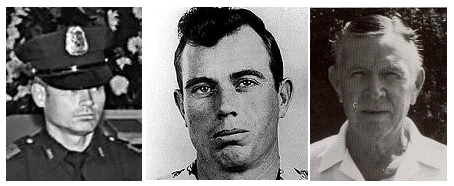
    To recap from my earlier article, and supplement rather than duplicate references there: Officer William Mentzel’s activities need to be seen in the context of what else was happening on 22 November 1963. Several officers of the Dallas Police Department (DPD) were in Oak Cliff, Dallas, shortly after the assassination of President Kennedy at 12:30pm, on Elm Street, Dealey Plaza on 22 November 1963. One of these was Officer J.D. Tippit who was shot at approximately 1:09 pm in Oak Cliff, immediately to the south of the Kennedy assassination scene in Dealey Plaza, over the Trinity River basin.

    Just after 12:30 pm Tippit was ten miles away from his assigned district in the far south of Dallas at Gloco Service Station at the south end of Houston Street viaduct (Into the Nightmare by Joseph McBride, p. 441). That was not disclosed to the Warren Commission in 1964. In trying to account for Tippit’s whereabouts, radio Dispatcher Murray Jackson said he sent Tippit and Officer Ronald Nelson to Oak Cliff by radio call at 12:45pm because it was a likely getaway area for an assassin, and it was depleted of officers. However, from analysis of Dallas Police Department (DPD) calls not transcribed, or mistranscribed, and also Warren Commission testimonies and the statements of Nelson in 2013 to CBS, in reality, Jackson didn’t send anyone nor did he need to. In the first transcript assembled (Secret Service CD-290, 3 December 1963), there was no dispatcher call. Jackson’s call only appeared in the second transcript (CE705, 6 March 1964) and the replies of Tippit and Nelson only appeared in the third (CE1974, 11 August 1964) by which time there were no more hearings. Quoting Sylvia Meagher, McBride added that this order occurred just 15 minutes after the JFK assassination, with everything centred at Dealey Plaza, with communications jammed, but “the dispatcher took the time to call Tippit and Nelson, and give them instructions which make no sense.”

    By 12:45 pm Oak Cliff was already chock full of police officers, including Tippit, under some form of secret command, meaning not accounted for by normal police radio transcripts, nor by the inventory of police officer locations supplied by the DPD to the Warren Commission. That 12:45 pm order can be heard on the police tape, but the evidence points to it being an addition after the event.  It is consistent with Tippit and Nelson and other officers being where they should not have been.

    It took until 2013—50 years later– for Nelson to say in a CBS interview that he had been on the western side of Commerce Street viaduct at 12:30 pm, immediately across the Trinity River basin from Commerce Street in Dealey Plaza– from where he said he heard the assassination shots. He said he went straight afterwards to Dealey Plaza and saw people still cowering on the ground. By the DPD tape, he then left Dealey Plaza and re-entered via Houston Street viaduct (radio calls at 12:47pm and 12:51pm). At 12:40 pm Nelson can be heard on the tape saying “87, clear” immediately before a 12:40 pm time stamp. The dispatcher says “87, clear, twelve forty”. Those are not the movements of a man called to Oak Cliff from far to the south of Dallas at 12:45pm.

    Officer Angell was in Oak Cliff under the same hidden command as Tippit (WC Vol VII page 78), at Lansing and 8th at 12:42pm, exactly where Tippit’s last voice call can be heard at 12:54pm. Angell’s call is not transcribed in any of the three Warren Commission transcripts. Tippit’s call was mistranscribed as Lancaster and 8th. Nelson’s 12:47pm call was mistranscribed as being Officer Bass.

    Officer Parker was supposed to be in his home district of Garland, 15 miles to the northeast. The Warren Commission was told Parker was in Garland setting up roadblocks. However, Parker was actually at “East Jefferson” (an untranscribed radio call at 12:42pm), that is consistent with the south end of the Cadiz viaduct in Oak Cliff. Officer Lewis was miles from his home district near Love Field Airport. He was at 105 Corinth the south end of Corinth Street viaduct, in Oak Cliff (an untranscribed radio call at 12:47pm).

    One or two discrepancies might be explained by accident or error. But the relevance of what was withheld and perjured, is that five officers were out of their assigned districts, and four of those were in places at the end of strategic viaducts. Officer Angell brings that up to five as he then moved from the location at Lansing and 8th (12:42pm) – where twelve minutes later Tippit was at (12:54pm) – to the Corinth viaduct (12:44pm).

    The one patrol officer who should have been in Oak Cliff, Officer Mentzel, the central figure in this article, was inexplicably taking lunch for the half hour after Kennedy was shot.                            

    It is also a fact that some Warren Commission staff suspected DPD Officer Harry Olsen had conspired with Jack Ruby to have Oswald shot in the basement of Dallas Police Headquarters at City Hall on 24 November 1963. Officer Olsen was off duty in Oak Cliff on 22 November 1964, purporting to be guarding the house of a recently deceased person (their legal estate), and that location was in the vicinity of Lansing and 8th. That being the last location spoken by Tippit at 12:54pm. Fifteen minutes before he is shot.

    II

    By Warren Commission Exhibit CE2645 of 15th June 1963 Officer William Duane Mentzel is the only patrol officer overtly in Oak Cliff, Dallas, at 12:30pm, and CE2645 was the only overt record of his being there so far as the Warren Commission was concerned. Exhibit CE2645 was compiled by the FBI and says:-

    “Officer MENTZEL stated at approximately 12 :30 P .M . he stopped for lunch at Luby’s Cafeteria, 430 West Jefferson, Oak Cliff . He advised he tried on several occasions to call the station by telephone, but did not get through to the operator until about 1,00 P .M., at which time he was told the President had just been shot. He stated he left the remainder of his lunch and went into service by car radio, and was immediately dispatched to the 800 block of West Davis on an accident call, Code 7, where he remained about ten minutes handling that call . He advised he then traveled west on Davis to Tyler when he heard the call involving a shooting of a police officer in the 400 block of East 10th Street. He stated he was dispatched to the intersection of Beckley and Jefferson to look for a reported individual running away from that intersection, but was unable to locate the suspect . He stated that he, in company with other officers, entered the library at that intersection, and then was dispatched to the Texas Theatre, where the suspect was reportedly hiding. Officer MENTZEL advised he did not go north on Beckley to Zangs Boulevard at any time on that day and could not recall being within six or eight blocks of that location.”

    Why would Mentzel try to make calls to find out about something he didn’t know about?

    In light of that extraordinary statement it is particularly interesting that every one of Mentzel’s 15 phone call exchanges before 1:10pm (the times in this article are adjusted to reflect real time, not the tampered DPD timestamps) failed to be transcribed for any of the three Warren Commission transcripts. >

    Mentzel’s five calls made from 12:22pm and 12:34pm are missing. His ten calls from 1:03 to 1:10pm are missing. His only calls transcribed are those occurring after Tippit’s shooting has been announced by Temple Bowley at 1:11pm on Tippit’s police car radio, starting with the one at 1:16pm.

    A reason for not transcribing some of those calls could be that with Mentzel calling “91 clear” at 12:33pm – immediately after the 5-minutes radio jam across the assassination event ended – causes the dubious incommunicado story to fall over completely. There are sirens going in the adjacent calls. Seconds later he then called again, “91 clear for Code 5”. Code 5 means taking lunch. Who takes lunch three minutes after the President has been shot and an emergency is on?

    What kind of dispatcher allows someone to take lunch when the assassination of the President has just taken place? The dispatcher was Murray Jackson who had only been assigned to that post that week. The House Select Committee on Assassinations (HSCA) found the taking lunch story odd and reported:

    “Patrolman JACKSON worked sector numbers from 70 on up, which included TIPPIT (#78), NELSON (#87) and MENTZELL (#91) , whose movements on 11/22/77 after the JFK assassination have raised some questions. (HSCA Doc 003090).”

    Their movements would have raised more questions had the tape been analysed properly. It is clear that the dispatcher, who had only been assigned to the job in the days before 22 November was being deceptive with the HSCA. His interview for that says:

    “JACKSON was grateful to TIPPIT [referring to a violent incident when they had worked together] and said, “Thanks, partner, you saved my life”. It was with this sentiment in mind that JACKSON called “78” to figuratively save him again by coming in to cover Oak Cliff. JACKSON first told us that he wanted NELSON to stay out in District 87 which covered “Lancaster west to Thornton, Ledbetter on the north and city limits on the south”, but that NELSON was already headed downtown. The transcript does not accurately reflect this fact.”

    Jackson’s story is clearly dubious on multiple counts. Nelson in 2013 put himself on the Commerce Street viaduct by 12:30 pm, and in Dealey Plaza at 12:32 pm. Jackson’s story holds no water. It’s not surprising therefore that the transcripts are defective if Jackson was involved in producing them. With personnel and deployment being run by Captain Westbrook, then Jackson’s transfer to that position that week might not be just an accident.

    Jackson’s statement provides yet more evidence that the 12:45pm call to Nelson and Tippit was a bumbled fake. If Jackson had wanted Nelson to stay in District 87, why call him to Oak Cliff? But in any case, Nelson was already secretly in Dealey Plaza and left and came back again.

    Jackson could not have been unaware that so many officers were where they should not have been before 12:30 pm and immediately after. The problem for him was that his friend Tippit became something like collateral damage.

    Mentzel next appears on the tape saying “clear” at 1:03 pm, which is consistent with signing out after 30 minutes from his very odd lunch break. The venue of his lunch is noteworthy. Luby’s Cafeteria was in the 400 block of West Jefferson. Oswald was arrested at 1:50 pm on 22 November 1963 in the Texas Theater in the 200 block of West Jefferson. Mentzel therefore happened to be very close to the place that the person blamed for the assassination of Kennedy was arrested. It’s not surprising that anyone on the run from anything may be close to a district policeman wherever they happened to run to. But for that person to be a police officer with such a strange account of that day – with a dispatcher allowing secretive operations – this should shift things away from coincidence to him being a subject of further inquiry. It may suggest that the police knew something was going to occur at the Texas Theater.

    III        

    It is interesting to note that for the Warren Commission Mentzel found out on the phone call to HQ at about 1:00 PM that Kennedy had been shot. But his story changed in 1978 for the House Select Committee on Assassinations (HSCA 180-10103-10354). There he said a server at Luby’s told him at about 12:45 pm that Kennedy had been shot, whilst he was being served.

    This is the entirety of what was published. Underlines are where his story changed materially. By 1978 he had been promoted to Sergeant.

    Sgt. Mentzel was interviewed in Dallas at 2:50P.M. on 10/24/77. He has been with the Dallas Police Department for 20 years. Mentzel was the solo operator of a patrol car in Sector 91 (Central Oak Cliff) on Nov. 22, 1963. We were curious, after listening to the tapes of Channel One with Murray Jackson, as to what Mentzel was doing in the critical period when Officer Tippit was called in by the dispatcher to cover central Oak Cliff.

    Mentzell said that he checked out on a “Signal 5” (meal) and was at Luby’s Restaurant at the time the President was shot. He had his tray, but had not yet eaten when someone behind the counter told him that the President had been shot in downtown Dallas. He left his tray of food untouched and returned to his car. Mentzel told us that he reasoned at the time that if an assassin were fleeing downtown Dallas at the time they just might come his way. The description was not yet broadcast, but he looked for anyone or anything “unusual.” While cruising west 10th and Zangs, the dispatcher told him (91) to handle an accident at Tyler and Davis (See Radio Log Transcript #830) just before 1 PM. Mentzel said he went to 817 West Davis and found that it was a minor “fender-bender” type of an auto accident.

    He clears at about 1:16 PM. At 1:16 PM Tippit (78) is shot and killed at the 400 block of W. 10th (and Patton), but it is not until minutes later that a citizen using the police radio in Tippit’s car alerts the dispatcher and presumably Mentzell who is 17 blocks away. When he arrives at the scene, Tippit’s body has been removed to Methodist Hospital and other police are on the scene. Mentzel never knew that Tippit was in Sector 91 until after he was killed. He did not go to Texas Theatre when Oswald was apprehended. He later went to the funeral home and became part of Tippit’s honor guard.

    Mentzel said that he had worked with Tippit in the past and recalled the same characteristic Murray Jackson told us about Tippit looking down at the ground rather than at a person.

    He said Tippit probably would have said to Oswald “Wait there, I want to talk to you” and then got out of the cruiser. He said Tippit did not like to talk to citizens through the car window.

    About 11 days after the shooting Mentzel was detailed to guard Marina Oswald who was then at the home of Jack Martin at Eastern and Garland Road, Dallas. He remained there on detail until he was used to cover one of the Johnson (LBJ) girls who was attending the Cotton Bowl game in Dallas and was victim of a death threat.”

    Presumably a story of not knowing until 1:00 pm could no longer hold and the revised account also removed the need for an excuse to make phone calls. The time of departure from Luby’s changed materially. If he took lunch at 12:32 pm and left his tray and hadn’t eaten, that suggests he stayed only 5-10 minutes. He also says that the description of the Kennedy assassination suspect hadn’t been yet broadcast. With the description being broadcast from 12:45pm, then Mentzel must have left before 12:45pm.

    However, Mentzel also changed his story to say to the HSCA that he was then cruising in the area of Zang and West 10th Street before 1pm when he took a call on a traffic incident. But by the radio tapes, that call is approximately 1:07 pm (1:11pm by the time tampered tape and transcripts).

    DISPATCH: Signal 7 [accident], 817 West Davis. 1:11 [DPD time]

    Mentzel 91: 817 West Davis?

    To explain the geography here. One block east of Zang – at Beckley/Cumberland – West 10th Street becomes East 10th. East 10th* was then crossed by Storey, Crawford and then Patton the place where Tippit is shot. A distance of ½ mile. (Note, if referring to current maps of the area, part of E 10th, from Beckley to Patton is now built over). That location of Zang/Beckley at 10th is significant. Tippit was driving slowly in reaching 410 E 10th at 1:09pm – having been seen driving slowly along E 10th from west to east by people at that scene. With Tippit coming from the vicinity of Top Ten Records Shop, he would have needed to cross Zang and Beckley to get to E 10th. Driving that last ½ mile fast could be done in a minute. More slowly would be closer to 2 minutes. That places Tippit and Mentzel in the vicinity of 10th and Zang at the same crucial time – approximately 1:07pm – and there is more evidence for that.

    Journalist and author Joe McBride in his book Into the Nightmare, sets out what he was told by Tippit’s father about what was related to Tippit’s widow:

    In telling me what the second officer told Marie Tippit about the accident, Edgar Lee Tippit reported that “he said if he hadn’t been stopped, he was closer to this place [the shooting site on East Tenth Street] than J. D. was, and he’d have been [instead of] J. D. there, and he’d have gotten it.

    McBride deduces that in all likelihood the “second officer” was Mentzel.

    That information indicates that Mentzel did actually know where Tippit was. Else why would he know who was closer? Mentzel can only have known that if either he’d sighted Tippit, met with Tippit, been operating with Tippit or heard something on the radio since taken off the tapes.

    McBride then went on to say:

    Tippit’s father told me he had been informed by Marie Tippit, the officer’s widow, that J. D. and another officer had been assigned by the police to hunt down Oswald in Oak Cliff. According to Edgar Lee, ‘They called J. D. and another policeman and said he [Oswald] was headed in that direction. The other policeman told Marie.

    By that Mentzel knew where Tippit was and what he was doing. However, it’s impossible on any rational account consistent with the Warren Commission’s conclusions for Mentzel and Tippit at 1:00pm to know where Oswald was, let alone know where he would be going to. By the Warren Commission account of a bus, a taxi and a walk, even Oswald didn’t know what he was doing next.

    Mentzel also said to the HSCA that he ”never knew that Tippit was in Sector 91”.

    That doesn’t hold either. If he was cruising after 12:45pm – before being distracted by the accident – then he would have heard Tippit’s 12:54 pm call saying he was at Lansing and 8th.

    Was Mentzel at some point after 12:45 pm with others at Lansing and 8th taking instructions as to what he was to do next? Or was he still in Luby’s making phone calls for a similar purpose? By either of those outcomes Tippit and Nelson were also in proximity before 1:07 pm. But the evidence of Mentzel scrambling for inconsistent alibis prior to 1:00 pm suggests he was in Luby’s. A good reason not to send him to Lansing and 8th would be if he’d done that, he would have come face to face with Tippit, who just might have been in the process of being set-up.

    IV

    At 12:30 Mentzel was at Luby’s, 430 West Jefferson. Tippit was likely at Top Ten Records, 338 West Jefferson, just 150 yards away at 1:00 pm. There is a single unanswered call from the dispatcher to Tippit per the time expired on the tape at just before 1:00 pm “78, location” consistent with him being out of his car at Top Ten. That call was transcribed in the second and third transcripts. It did not appear in CD 260.

    Tippit was reported by the people at Top Ten Records as being there at approximately 1:00 pm having parked his car north facing on the south-east corner of Bishop Avenue/Jefferson and asking people to get out of the way to get to the landline phone.

    That was the post Warren Commission account of shop owner Dub Stark and assistant Louis Cortinas interviewed in 1981 by Earl Golz of the Dallas Morning News:

    Tippit said nothing over the phone, apparently not getting an answer.” Cortinas said “he stood there long enough for it to ring about 7 or 8 times. Tippit hung up the phone and walked off fast, he was worried or upset about something”

    Tippit sped away in his squad car across Jefferson down Bishop to Sunset, where he ran a stop sign and turned right down Sunset. Cortinas could not determine whether he had anyone else in his car.”

    Sunset is one block down from W 10th, and Bishop is two blocks west of Zang. A question arises. Why would Tippit turn onto Sunset from Bishop when the obvious way to reach E 10th from Top Ten Records by a map would be to carry along Bishop to West 10th and cross Zang to its continuation at East 10th?

    A clue is in a further statement of Cortinas at Top Ten.

    Maybe 10, no more than 10 minutes Tippit had left when I heard he had been shot on the radio.” Cortinas said. Cortinas then “Drove off in Dub Stark’s new car down Sunset, across Zang and up Tenth.”

    So Cortinas wanted to go quickly to where Tippit was shot and went the same way Tippit did, via Sunset. Doing the route via Sunset avoids traffic lights. That places the location Tippit needed to get to quickly as the other side of Zang, which is Beckley and 10th.

    Marie Tippit and family visited Top Ten Records in 2017 and were photographed there for the Oak Cliff Advocate. That event would tend to add weight to what Edgar Tippit told Joe McBride, that Tippit was doing things that the Tippit family and elements of the Dallas Police knew were not given to the Warren Commission.

    Taking what was reported by Cortinas at face value, rather than taking second-hand assumptions, may provide an answer. A caller making a call where a caller didn’t speak could mean the line was either: engaged (but that doesn’t fit with the duration), the call was unanswered, or the caller was given orders or information that didn’t require a response. A police officer taking clandestine orders off the public airwaves, on a public telephone then taking an order but not answering would be like a normal radio call, bar not saying 10-4 to affirm it.

    Mentzel’s activities after 12:45 pm were sufficiently suspicious to prevaricate about. A question is whether Mentzel was getting closer to the truth in 1978 or further from it. One bad story had been replaced by another.

    But back to Tippit. A further question needs to be asked. After Tippit had abandoned his position at the Gloco station and had gone to Lansing and 8th was Tippit told whilst there sometime after 12:54pm to go Top Ten Records, to make a call to take further instruction? Then being told on that landline to get to Beckley at E 10th as quickly as possible for a rendezvous with Mentzel? At speed, Tippit could travel to that rendezvous in just over a minute. From North Bishop, Sunset passes over Madison, then reaches Zang. Going over that – where there are no lights – he’d be on Beckley, turn left then right and he’d be at East 10th. Tippit’s erratic actions must have been triggered by something. Despite having driven fast at 1:03 pm and jumping a stop sign, by 1:07 pm Tippit was instead driving slowly to his final destination.

    Did Mentzel rendezvous with Tippit and then tell him to drive slowly to 410 E 10th? A place where, by the Warren Commission testimony of Virginia Davis, he visited so often she thought he lived there. As that was in Mentzel’s normal patrol district he must have known if Tippit was regularly there.

    Taking all of that into account there is approximately 4 minutes of Tippit’s time to account for from his leaving Top Ten at approximately 1:03 pm and setting off at approximately 1:07 pm from Zangs/Beckley to drive slowly to 10th and Patton. From Mentzel’s 1:03 pm “clear” there are also 4 minutes of his movements to account for until the traffic accident call appears at 1:07 pm, when, by the HSCA, he said he was cruising in the area of Zang and 10th.                              

    Mentzel’s story to Marie Tippit may therefore have elements of the truth, but embellished to obscure the full story. But regarding Mentzel’s true movements, how likely is that Mentzel left Luby’s at 12:45 pm and was then cruising for 20 or so minutes in the same area for no purpose (the HSCA account) and would say ‘clear’ at 1:03 pm?

    That ‘clear’ was exactly ½ hour after entering Luby’s – a lunch break. That would suggest his Warren Commission account was closer to the truth, as it would just have needed witnesses to come forwards in 1964 to say he’d been there all along making phone calls. By 1978 he would be freer to prevaricate.

    Mentzel still being at Luby’s at 1:00 pm places him 140 yards from Tippit at Top Ten. So close that under normal circumstances they could have rendezvoused by simply walking toward each other. But by 1:00 pm with Mentzel outside Luby’s he would be able to see when Tippit had arrived at and left Top Ten.

    By that scenario, maybe Tippit wasn’t sent to Top Ten merely because it had a phone; he was sent there because Mentzel could see him. The basic question concerning all of Mentzel’s conflicting accounts is ‘what did he most have to hide?’

    V

    This article posits a new theorem. One that goes even further than McBride about Mentzel. Namely that Mentzel was at Luby’s in readiness for the planned arrest of Oswald at the Texas Theater, two short blocks away.

    As covered later, Mentzel’s testimonies are also inconsistent with the radio tapes as to when he knew that it was Tippit that had been shot. If Tippit was being lured to 410 E 10th to be eliminated by ambush, then he couldn’t arrive before all the ingredients of the ambush were in place. He would need to be on hold somewhere and then released to go, directed by someone he otherwise trusted. If that person was Mentzel then he would need a signal for that to then let Tippit go. What was it that was time critical that made 1:07 pm the time to set Tippit off?

    On that point the provenance of the Commission Exhibit 2645 of 15th June 1964 is relevant. Its purpose was to deal with the bombshell evidence from Earlene Roberts to the FBI on 29th November 1963: –

    Mrs ROBERTS advised after OSWALD returned and entered his room at about 1 pm on November 22, 1963 she looked out the front window and saw Police Car No. 207 with two uniformed policemen in the car which slowed up and stopped in front of the residence at 1026 Beckley, and one of the officers blew the horn on the car and then slowly drove on Beckley toward Zhangs (sic) Boulevard. Mrs ROBERTS said the reason she recalled the number of the car was because she had worked for two policemen who drove Car 170, and she looked to see if these officers were the two officers she knew parked in front of the residence.”

    Earlene Roberts said this to the Warren Commission (Vol VI page 434) concerning Car 207:

    Mr. BALL. Did this police car stop directly in front of your house?

    Mrs. ROBERTS. Yes-it stopped directly in front of my house and it just “tip-tip” and that’s the way Officer Alexander and Charles Burnley would do when they stopped, and I went to the door and looked and saw it wasn’t their number.

    Mr. BALL. Where was Oswald when this happened?

    Mrs. ROBERTS. In his room.

    Mr. BALL. It was after he had come in his room?

    Mrs. ROBERTS. Yes.

    By her account that time was approximately 1:03 pm. It would take less than three minutes for that car to drive to the vicinity of 410 E 10th.

    This article posits that an essential ingredient of the rushed and improvised killing of Tippit was that Oswald had to be set up for that too once the decision was taken to eliminate Tippit. Someone needed to be seen running away from the shooting of Tippit so that crime too could be pinned on Oswald. As most critics, including McBride write, it is very difficult to figure how Oswald could be at the scene of the Tippit shooting if he was last seen by Roberts at about 1:04. Because the scene of the Tippit murder is 9/10 of a mile away and the best estimates are that the shooting happened at about 1:08 PM.

    If Oswald was shot in the theater, possibly by officers Walker, W. R. Westbrook or Jerry Hill (who were there for the actual arrest) the assassination of Kennedy could therefore be run as a narrative of a lone shooter, who made his own way to 1026 N Beckley by bus, and then to the Texas Theater who was then shot. Case closed. Which design FBI Director J. Edgar Hoover set out in his correspondence with new President Johnson.

    What is set out above concerning Tippit and Mentzel is an outline of a holding operation. Tippit being sent to Top Ten Records. Rationalising the timings, Car 207 could be in place by 1:07pm. That sits with the observations of Doris Holan (see prior article) of a police car reversing up the rear drive behind 410 E 10th at about the time Tippit was shot.

    Read Part Two

  • Warren Commission Counsels Burt Griffin and Howard Willens Attempt the Impossible: Shoring up the Tottering Credibility of Earl Warren’s Investigation

    Warren Commission Counsels Burt Griffin and Howard Willens Attempt the Impossible: Shoring up the Tottering Credibility of Earl Warren’s Investigation


    By Gary L. Aguilar, MD and Cyril Wecht, MD, JD

    Last fall former Warren Commission assistant counsel Burt Griffin put out a brief in defense of the government’s original 1964 findings regarding John F. Kennedy’s assassination. He was the third Commission counsel to do so. Former Warren Commission assistant counsel David Belin wrote one in 1988.[i] In 2013 assistant counsel Howard Willens did the same with his book History Will Prove Us Right.[ii]

    Now Griffin has picked up the baton with a book of his own, JFK, Oswald and Ruby.[iii] What’s striking, though not surprising, is how little the last two authors seem to know (or are willing to admit they know) of what we’ve learned in the millions of once-secret files that have been unsealed during the past 60 years, particularly during the past 25. Were it not for these declassifications, we might not know that much of what Griffin and Willens asks us to accept as true simply is either not true, or not the whole truth.

    For example, it isn’t true, as Griffin writes, that “The Warren Commission had not sealed its documents. Our intent was complete openness for the public.” (p. 306) This is an old untruth. It was first disseminated by the New York Times on the day the Warren Report was released. In the simultaneously released, October, 1964, New York Times’ edition of the Warren Report, Timesman Anthony Lewis reported, undoubtedly from a Commission source, that “The Commission made public all the information had bearing on the events in Dallas, whether agreeing with its findings or not. It withheld only a few names of sources, notably sources evidently within Communist embassies in Mexico, and each of these omissions was indicated.”[iv]

    This was debunked decades ago. Despite the government’s having slowly released Commission documents in the years following the 1964 release of the Report, the Assassinations Records Review Board (ARRB) discovered that, “at the time that Congress passed the JFK Act (1992), only 3,000 pages of Warren Commission material remained for the agencies and the Review Board to release.[v] “Only?” Moreover, in 2014 historian Philip Shenon reported that Willens was releasing never-seen Commission documents on the former commissioner’s personal website.[vi]

    Nor is it true, as Griffin claims (p. 294) that Bobby Kennedy accepted the Commission’s conclusions. This untruth, first put forward in the Warren Report,[vii] was similarly debunked decades ago, a fact established beyond any doubt years ago by best-selling author David Talbot,[viii] whom neither counsel mentions. Also by historian Philip Shenon who long ago wrote that RFK “had never stopped suspecting that there had been a conspiracy to kill his brother,”[ix] and that Bobby “insisted in public that he believed the commission’s report and accepted that Oswald acted alone—but said precisely the opposite to the people closest to him.”[x] This information is readily confirmable with a simple google search of independent sources.[xi]

    However, it is true, as Griffin and Willens report, that Lee Harvey Oswald was a marine radar operator at Atsugi Naval Air Base in Japan.[xii] But it’s far from the whole truth, or even the most important part of the truth. Which is that Atsugi was a CIA-run base from which U-2 spy planes flew high-altitude missions over the Soviet Union.[xiii] “Defector” Oswald would have tracked those flights. Given long-held suspicions the “lone nut” had undisclosed intelligence ties, this is scarcely an inconsequential detail. (See below.)

    It’s also true, as they report, that Oswald visited Mexico City six weeks before the assassination. The whole truth, which they withhold, includes the fact that someone impersonated this “unknown,” “unaffiliated” “lone nut” in CIA-taped calls that Oswald made to the Soviet Embassy while he was there. This part of the story was published by AP 13 years ago,[xiv] and has been frequently discussed by critics ever since. (See below.)

    Both books establish one thing that is as true today as it was in 1964: one should not look to the Warren Report, or its attorneys who defend it, for the truth about November 22nd, 1963. It’s not that one encounters falsehoods, although there’s no shortage of those. It’s more that inconvenient evidence is omitted, or tendentiously spun to lead away from the truth. It’s a feature that defines the lawyers’ briefs Griffin and Willens have produced, as it did Earl Warren’s 1964 lawyer’s brief. Fortunately, not all former Commissioners sing along in the chorus with Griffin and Willens and Warren. In recent years some of them have sung a different tune.

    Dissent among the ranks

    Alan Dershowitz reported that one-time Commission attorney, Stanford law professor John Hart Ely, “has acknowledged that the (C)ommission lacked independent investigative resources and thus was compelled to rely on the government’s investigative agencies, namely the FBI, CIA and military intelligence.”[xv] Both Griffin and Willens touch on this, but deemphasize it, despite the fact it was firmly established decades ago by subsequent government investigators. (See below.)

    Anti-conspiracy author Gus Russo reported that Commissioner Hale Boggs “was known to have had strong disagreements with the Commission’s official conclusion,” and that “he wished he’d never signed on to the report.”[xvi]

    Before he began singing in harmony with Willens, even Griffin admitted to doubts. House Select Committee on Assassinations’ (HSCA) Chief Counsel G. Robert Blakey disclosed that, “When (the HSCA) asked (Judge Burt Griffin) if he was satisfied with the (Commission’s) investigation that led to the (no conspiracy) conclusion, he said he was not.”[xvii]And he may not have been for the ¬historically accurate reason Griffin gave Gus Russo, “We spent virtually no time investigating the possibility of conspiracy. I wish we had.”[xviii] Griffin has apparently forgotten that wish, and now croons with the man who put him in on the Commission in 1964, Howard Willens, [xix] singing, ‘Trust us. We took a good look. History Will Prove Us Right.

    The “Investigators”

    Griffin’s revealing admissions to Robert Blakey and Gus Russo, though nowhere evident in his new book, are borne out by the record. The Commissioners were powerful political appointees who had full time jobs apart from their Commission work. They were in no position to do the requisite, painstaking, time-consuming investigative work. That was principally left to counsels such as Griffin and Willens. These recent law school graduates who were pulled from the Justice Department were the full timers. But they weren’t criminal investigators. and weren’t remotely what a murder investigation called for, particularly one of this magnitude.

    Warren critic Dwight McDonald made an insightful comment in 1965. He described the young and inexperienced staff counsels who actually did the Commission’s legwork as, “ambitious young chaps who were not going to step out of the lines drawn by their chiefs.”[xx] And they didn’t. What investigation got done was mainly conducted by FBI agents. Director J. Edgar Hoover, who had announced on the afternoon of the murder that Oswald alone had done it, watched closely over his underlings. Hoover’s verdict stuck. Just how the Bureau chief got his preinvestigation epiphany to stick can be understood by a particularly telling anecdote historian Gerald McKnight recounted.

    While under oath before the Commission Hoover volunteered an answer to critics. They questioned why Oswald hadn’t taken the easier, clearer shot at JFK as his limo rolled along Houston St. toward his location in the Depository, rather than the tougher shot as he drove away down Elm St. McKnight writes, “Hoover’s explanation was as seductively simple as it was monumentally wrong: ‘There were some trees,’ the director noted, ‘between the window [of the sniper’s nest] on the sixth floor and the cars’ as they moved toward the TSBD on Houston Street.”[xxi] There were no such trees. Nor were they depicted in the 480-square foot mock-up of the assassination scene that the FBI prepared at Hoover’s request. None of the commissioners called Hoover out on this “mistake.” Nor did the senior FBI executive officers who edited Hoover’s Commission testimony before publication correct the Director. The FBI wasn’t yet finished.

    Two years later the Bureau took after critic Harold Weisberg, who’d mentioned Hoover’s howler about the trees during a broadcast radio interview. When the top echelons at the Bureau heard Weisberg’s claim, they reportedly took a hard look at the evidence, and corrected the wacky conspiracist. “The Director’s testimony,” they officially reported, “was accurate.” As McKnight put it, “The director was right even if the photographs and the FBI’s own elaborate mock-up of Dealey Plaza proved otherwise.”[xxii] This sort of thing was pretty common. Assistant FBI Director William Sullivan once remarked that “Life in the circus was possible only if one unwritten but iron rule was unfailingly observed: The Director was always right.”[xxiii] This rule was followed by both the FBI and, as we’ve learned, the Warren Commission as well. It’s no wonder therefore that almost since the day it was released doubts have swirled around the Warren Report.

    Commissioner Willens rejects this mistrust, arguing, “What the critics often forget or ignore is that since 1964, several government agencies have also looked at aspects of our work.”[xxiv] As if officials had reviewed and endorsed the Commission’s work. But it is Willens who has forgotten or ignored what critics have not. Namely, that “agencies” did take a look, particularly at those aspects that are essential in a murder investigation. They did not approve. Instead, they issued stinging critiques, principally for the Commission’s having gullibly relied upon, and been rolled by, J. Edgar Hoover, and to a lesser extent by the CIA and the Secret Service. The authors’ unwillingness to acknowledge these official findings, to say nothing of addressing them, is among the more notable weaknesses of their work.

    Government vs. government

    It’s a given that investigators hired by the government normally are inclined to favor prior government investigators. To do otherwise would be an “admission against interest” – the government admitting against its own interest as a credible investigative source that its prior investigation lacked credibility. Staffed with the sort of seasoned, criminal sleuths the Warren Commission never had, the Church Committee and the House Select Committee on Assassinations (HSCA) looked at the Commission’s investigation, and did just that. In one of the more unexpected and unheralded scandals of the Kennedy saga, they blistered it. To their discredit neither Griffin nor Willens acknowledge these dour assessments.

    They maintain that, despite Hoover’s initial opposition to the Commission’s creation, and the problems they had dealing with the prickly, imperious Director, a credible investigation was undertaken, and it reached a credible conclusion. That’s not precisely how experienced government investigators later saw it.

    “It must be said that the FBI generally exhausted its resources in confirming its case against Oswald as the lone assassin,” the HSCA concluded, “a case that Director J. Edgar Hoover, at least, seemed determined to make within 24 hours of the of the assassination.”[xxv] In essence, the HSCA determined that the domineering Director had divined the solution to the crime before starting the inquiry. Knowing what was good for them, his underlings readily confirmed the boss’s epiphany with a “slow walk,” amusingly described by the head of the FBI’s General Investigative Division, Alex Rosen. Historian McKnight quipped that “privately (Rosen) characterized the whole sorry affair as the FBI ‘standing with pockets open waiting for evidence to drop in.’”[xxvi] The intimidated commissioners also knew ‘what was good for them,’ and so respectfully curtsied for reasons neither Griffin nor Willens tell.

    Willens, in fact, sanitized one of the good reasons they had to go along with the FBI capo. He euphemized that Hoover had “ordered investigations of commission staff members.”[xxvii] No falsehood there. But as with Oswald at the CIA spy base in Japan, he omitted the most damning detail: Hoover had deployed one of his dirtier tricks to deal not only with lowly support staffers such as Griffin and Willens, but also with the Presidentially-appointed congressmen, senators, and Chief Justice of the Supreme Court – everyone on the Commission. “[D]erogatory information pertaining to both Commission members and staff (including Griffin and Willens) was brought to Mr. Hoover’s attention,” the Church Committee discovered (author’s emphasis). [xxviii] This evasion is of a piece with another one central to the question of conspiracy – Oswald’s assassin, Jack Ruby.

    Neither author tells that the FBI had known of Jack Ruby’s ties to the mob since at least early 1964. The HSCA “found that Ruby’s links to various organized crime figures were contained in reports received by the FBI in the weeks following the shooting of Oswald.” They never pursued that information; never informed the Commission about those reports. The Commission then officially denied those links because of the FBI’s malfeasance. Appropriately, the HSCA concluded that, “the FBI was seriously delinquent in investigating the Ruby-underworld connections.”[xxix] Given the considerable ink both authors spilt on Ruby, the HSCA, and the HSCA’s “the-mob-did-it” chief counsel, G. Robert Blakey, Griffin and Willens were themselves also ‘seriously delinquent’ in omitting the Ruby-mafia story. Particularly Griffin, for he had “primary responsibility” in 1964 for investigating Ruby, whose name he put in the title of his book. (See back cover of Griffin’s book.) But how the FBI flubbed the mob connection is a fascinating tale in its own right. It’s one that shines a light on how the FBI kept the Commission in the dark.

    The FBI averts its gaze and puts blinders on the eyes of the willing Commissioners

    The Bureau had Jack Ruby’s phone records in 1964. It failed to spot, or pretended not to spot, Ruby’s suspicious, atypical pattern of calls to known Mafiosi in the weeks leading up to the assassination. The Commission’s investigators didn’t know enough, or have the capacity or courage, to look into Ruby’s possible mob connections. Basing its conclusions on FBI-supplied “character references” from, among others, two known-to-the-FBI mob associates (Lenny Patrick and Dave Yaras),[xxx] the Commission ultimately concluded Ruby was not connected to the underworld.[xxxi] And who was the Commission attorney who worked on the investigation of Jack Ruby and was denied this information? Burt Griffin,[xxxii] who nowhere acknowledges this in his book, nor does he admit Ruby’s clear ties to the underworld. (Commission attorney Leon D. Hubert, Jr. may have worked with Griffin on the Ruby detail. See Griffin, p. 68.)

    Then in 1977 the HSCA exposed Lenny Patrick’s and Dave Yaras’s mob ties. And it performed the obvious, rudimentary task of actually analyzing Ruby’s calls.[xxxiii] Making the obvious connection, one that fit other compelling, previously ignored evidence, it established that Ruby was mobbed up.[xxxiv] Among other tell-tail signs, he had run guns to both pro- and anti-Castro elements in Cuba in the late 1950s. This was a time when the Mafia was hedging its bets to protect its gambling casinos by supporting both Batista and his nemesis, Castro.[xxxv] Ruby had also gone to a Cuban jail to visit the mobster who had predicted JFK would be “hit,” Santos Trafficante. Unsurprisingly, neither Griffin nor Willens give these HSCA findings any play which, at least circumstantially, linked the mob to November 22nd, and were a pillar in Robert Blakey’s construct of the mob’s role.[xxxvi]

    The Bureau “missed” the connection in 1964 because its senior mafia expert Courtney Evans was excluded from the probe. Evans told the HSCA: “They sure didn’t come to me. … We had no part in that that I can recall.”[xxxvii] [xxxviii] Instead, the Bureau turned to FBI supervisor Regis Kennedy, who then hilariously claimed Carlos Marcello, the New Orleans capo to whom Ruby had been linked, was a “tomato salesman and real estate investor.”[xxxix]43 It’s likely that the Commissioners also willingly averted their gaze, lest they agitate the sensitive FBI director.

    Hoover lays down the law

    “The evidence indicates that Hoover viewed the Warren Commission more as an adversary than a partner in a search for the facts of the assassination,” the HSCA concluded in 1978.[xl] Speaking in 1977, Commission chief counsel J. Lee Rankin admitted that in 1964 the Commissioners were naïve about Hoover’s honesty, and were afraid to confront him when he wouldn’t properly fetch for them. “Who,” Rankin sheepishly asked, “could protest against what Mr. Hoover did back in those days?”[xli]

    Apparently not the high-profile nominees the President had appointed. And so, “The Commission did not investigate Hoover or the FBI,” the HSCA determined, “and managed to avoid the appearance of doing so.”[xlii] This had repercussions on possibly the most explosive rumor the Warren Commission had ever dealt with – the “dirty rumor” that Oswald had been on “our side” – that he had been an “undercover agent,”[xliii] perhaps, as Houston Post journalist “Lonnie” Hudgins suggested, an FBI informant.[xliv]

    The Commission realized that it had to do the right thing. But it was in a tough spot. “There was general agreement within the Commission,” the HSCA remarked, “that they had to go beyond the FBI’s word on the informant allegation.”[xlv] The way the Commission ‘went beyond the FBI’s word’ was to send General Counsel Rankin over to ask Hoover about it. In his book Willens relates that on the day he was to meet with the Bureau chief, Rankin got a letter from Hoover “brimming with anger.”[xlvi] When he met with Hoover, Rankin said he was “quite cold and uncommunicative.”[xlvii]

    Hoover fretted that investigative reporter Harold Feldman’s “Agent Oswald” story that had appeared in The Nation [xlviii] might push Warren “around the bend,” because in Hoover’s view, ‘The Nation was Warren’s bible.’”[xlix] The FBI’s capo dropped the hammer. He handed the Commission his signed affidavit declaring Oswald was not an informant, and he had 10 FBI agents also send in signed affidavits of denial. The “independent” commissioners promptly folded their tents. Case closed.

    The HSCA reached the obvious conclusion: “The Commission did not investigate Hoover or the FBI, and managed the to avoid the appearance of doing so. It ended up doing what the members had agreed they could not do: Rely mainly on FBI’s denial of the allegations [that Oswald had been an FBI informant].”[l] Griffin keeps a steely silence on this telling charade. And Willens spins it in a transparent attempt to wipe off the egg the HSCA had splattered on the faces of the commissioners.[li] Historian Gerald McKnight unearthed an aspect of this farce that’s illuminating.

    The “dirty rumor” that Oswald had been a government informant was so threatening that on January 24, 1964 Warren and Rankin flew four Texas officials up to Washington to explore it in secret session. No transcript of the meeting was made. McKnight agrees with the view that Oswald was probably not a Bureau informant because Oswald’s alleged FBI “badge” numbers, “S172” and “S179,” were not designations the FBI ever used. However, from FBI files that seeped out about that secret meeting, McKnight also noted that the secret session was much more about Oswald’s possibly having been a CIA informant than an FBI one. And that Oswald “carried Number 110669,” a number that “was consistent with the CIA’s system of identifying its informers and sources.”[lii]

    Other than Willens reporting that Hoover and his agents signed affidavits denying the “dirty rumor”[liii] that the “lone nut” had informed for them, he withheld from readers the “rest of the story” – that the CIA was implicated, and that the Commission had wilted. In the hundreds of pages in both books one finds Griffin and Willens repeating this pattern of selective reportage or outright omission.

    Withholding the rest of the story

    As noted, Griffin tells that Oswald was a radar operator at Japan’s Atsugi naval base (p. 107), but not that it was a CIA spy base.[liv] Willens makes no reference to this at all. Nor do either detail Oswald’s known association with numerous intelligence-connected individuals.[lv] Nor his surreal “defection” to Russia during which this former CIA spy base radar operator promised to reveal state secrets to the Soviets, after which the U.S. State Department paid for his return to the U.S. and didn’t arrest him. These omissions blind readers to some of the enduring reasons skeptics have for suspecting Oswald had closer ties to intelligence than ever officially acknowledged.[lvi]

    The authors similarly spin Oswald’s trip to Mexico City six weeks before Kennedy’s murder. Griffin devotes all of chapter 31 to it. Both mention that the CIA had an extensive photographic and electronic surveillance system monitoring both the Russian and Cuban embassies. Oswald visited both more than once. Yet neither author says a word about some oft-reported and well-known findings: Despite the fact the CIA routinely and clandestinely photographed visitors’ comings and goings to both embassies, the Agency implausibly asserted it didn’t have a single photograph of Oswald entering or exiting either of them. (Robert Blakey suspected that they actually did have such images, but that someone else was in the photo(s) with Oswald. So the images were suppressed to avoid having to answer inconvenient questions.)

    What’s more, as reported widely, including by the Washington Post in 1993, but not by either Griffin or Willens, someone had impersonated Oswald in calls made to the Russian embassy in Mexico City that were picked up and recorded in CIA wiretaps. Repeating CIA lies, some Commission loyalists have countered that no such recorded calls survived because the tapes had been taped over and recycled.[lvii] Inconveniently, Commission counsels Coleman and Slawson visited Mexico City in 1964 and said they listened to the supposedly destroyed tapes of Oswald. Again, nary a word of this from Griffin or Willens.[lviii] This half-truth is not unlike others.

    For example, they admit that the FBI never informed the Commission of Oswald’s threatening note to FBI Agent Hosty, which it destroyed. But they don’t mention that Agent Hosty reported that his own personnel file, and other FBI files, had been falsified.[lix] Nor that assistant FBI director William Sullivan told author Curt Gentry that the Bureau had destroyed other JFK documents.[lx] They also leave out that the Bureau never told the Commission about the mafia threats against both JFK and RFK that had been picked up in FBI wiretaps before the assassination, information that might have inspired the institution of new inquiries.[lxi] Hoover had the Commission checkmated.

    Hoover sets the table

    Neither author acknowledges that J. Edgar determined who the Chief Justice of the United States could have as his chief counsel. He vetoed Warren’s choice, Warren Olney, the man about whom Warren once said “I could bet my life for integrity.” Olney’s support for civil rights and his willingness to stand up against the FBI prompted The Director to run a successful, covert “stop Olney campaign.”[lxii] Rankin’s docility made him Hoover’s preferred choice. Moreover, Hoover had someone secretly spying on them before the Commission opened for business – then Commissioner, ex-President Gerald Ford.[lxiii] As the Washington Post headlined it, “Ford Told FBI of Skeptics on Warren Commission.”[lxiv] In a declassified FBI memo, Agent Cartha DeLoach advised Hoover that, “Ford indicated he would keep me thoroughly advised as to the activities of the Commission…He stated this would have to be done on a confidential basis, however he thought it should be done.” At the bottom of the memo, an appreciative Hoover scrawled, “Well handled.”[lxv] Again, no hint of these machinations from Griffin or Willens.

    Thus, the Director’s intimidating and manipulating the Commission can’t be dismissed as a wacky conspiracy theory. It’s a well-documented, official government finding that the assistant counsels don’t cop to. They do, however, dilate on HSCA’s chief counsel, Notre Dame Law Professor Robert Blakey. A criminal investigator and prosecutor with vastly better credentials than anyone on the Commission, Griffin and Willens never tell readers that Blakey has made this very point himself:

    “What was significant,” Blakey has written, “was the ability of the FBI to intimidate the Commission in light of the Bureau’s predisposition on the questions of Oswald’s guilt and whether there had been a conspiracy. At a January 27 [1964] Commission meeting, there was another dialogue [among the commissioners]:

    “John McCloy: ‘… the time is almost overdue for us to have a better perspective of the FBI investigation than we now have … We are so dependent on them for our facts … .’

    “Commission counsel J. Lee Rankin: ‘Part of our difficulty in regard to it is that they have no problem. They have decided that no one else is involved … .’

    “Senator Richard Russell: ‘They have tried the case and reached a verdict on every aspect.’

    “Senator Hale Boggs: ‘You have put your finger on it.’ (Closed Warren Commission meeting.)”[lxvi]

    Despite admitting their misgivings about Hoover, neither counsel wants readers to know how the Commission repeatedly bowed to the inflexible, imperious Bureau chief rather than investigating independently. A noteworthy example of the legal and prosecutorial timorousness of the attorneys who ran the Commission makes this especially clear.

    Commission lawyers keep their revolvers holstered

    The Congress-enacted Joint Resolution 137 (Public Law 88-202) established the Commission. Among its provisions, it “authorized the Commission to compel testimony from witnesses claiming the privilege against self-incrimination under the fifth amendment to the U.S. Constitution by providing for the grant of immunity to persons testifying under such compulsion.”[lxvii] In other words, the Commission was empowered, if not encouraged, to use one of the rudimentary investigative tools that are often essential to any serious probe: granting witnesses immunity from prosecution to get at the whole truth.

    The Commission was composed primarily of lawyers like Griffin. After Yale Law School, he had worked as a federal prosecutor for two years before Howard Willens invited him onto the Commission.[lxviii] He would normally have jumped at the chance to use such a tool. But neither he nor any of the more senior lawyers ever did. “The Commission,” the HSCA reported, “failed to utilize the instruments of immunity from prosecution and prosecution for perjury with respect to witnesses whose veracity it doubted.”[lxix] Even the Commission itself admitted it: “Immunity under these provisions was not granted to any witness.”[lxx] This was but one of its many deficiencies.

    Government investigators give the Warren Commission a failing grade

    The list of Commission shortcomings is vast. It runs to some 47 pages in the Bantam Books version of the HSCA’s Report (p. 289-336).[lxxi] It required much of HSCA’s volume XI to cover it.[lxxii] Read as a whole, the latter’s 500 pages deliver a crushing blow to the credibility of the Warren Commission’s investigation that produced the no-conspiracy conclusion which Hoover had announced before he had lifted an investigative finger.

    “The evidence indicates that facts which may have been relevant to, and would have substantially affected, the Warren Commission’s investigation were not provided by the agencies (FBI and the CIA),” the HSCA determined.[lxxiii] “Hence, the Warren Commission’s findings may have been formulated without all of the relevant information.”[lxxiv] Lest this scathing assessment be dismissed as the mewlings of some “disgruntled” government officials, this grim assessment was also held by another group of independent, experienced government investigators.

    Two years before the HSCA issued its critique, the Senate Select Committee (aka “Church Committee”) reported on its own evaluation of Earl Warren’s signature achievement. While it didn’t investigate the assassination per se, it did study the manner in which the Warren Commission’s was conducted. Previewing the HSCA’s later findings, it similarly concluded that the problem was that “… the Commission was perceived as an adversary by both Hoover and senior FBI officials.” “Such a relationship,” the Committee dryly observed, “was not conductive to the cooperation necessary for a thorough and exhaustive investigation.”[lxxv]

    Griffin touches on the Church Committee (p. 305), but doesn’t reveal what it thought of the Warren investigation. “The Committee has developed evidence which impeaches the process by which the intelligence agencies arrived at their own conclusions about the assassination, and by which they provided information to the Warren Commission … This evidence indicates that the investigation of the assassination was deficient and that facts which might have substantially affected the course of the investigation were not provided the Warren Commission or those individuals within the FBI and the CIA, as well as other agencies of Government, who were charged with investigating the assassination… Rather than addressing its investigation to all significant circumstances, including all possibilities of conspiracy, the FBI investigation focused narrowly on Lee Harvey Oswald. The Committee has found that even with this narrow focus, the FBI investigation, as well as the CIA inquiry, was deficient on the specific question of the significance of Oswald’s contacts with pro-Castro and anti-Castro groups for the many months before the assassination.” [lxxvi] Even some from the days of Warren Commission later came to understand the significance of these glaringly obvious deficiencies, chief counsel Rankin among them.

    If we’d only known

    “Speaking of the CIA-Mafia assassination conspiracies against Fidel Castro, and other such information withheld from the Commission,” the HSCA reported, “Rankin stated: ‘Certainly if we had had that it would have bulked larger, the conspiracy area, the examination and the investigation and report, and we would have run out all the various leads and probably it is very possible that we could have come down with a good many signs of a lead down here to the underworld.’”[lxxvii] (Griffin acknowledges Rankin’s lament, p. 76.)

    Similarly, “Former Attorney General Nicholas Katzenbach told the (HSCA) that he believed the CIA’s and FBI’s withholding of information regarding the existence of the CIA-Mafia plots from the Warren Commission constituted a serious failure to provide relevant evidence: ‘I think given that information, you would have pursued some lines of inquiry probably harder than you might have otherwise pursued them.”[lxxviii] Ironically, though it’s nowhere in his new book, in the late 1970s Griffin expressed the same opinion.

    “Judge Griffin thought that the information about the CIA plots would have led the Commission to investigate more the Cuban/Mafia/CIA connections,” the HSCA said, “and, consequently, a possible connection between Ruby, organized crime, anti-Castro groups and Oswald.” “If we had further known that the CIA was involved with organized criminal figures in an assassination attempt in the Caribbean,” Griffin testified, “then we would have had a completely different perspective on this thing. But, because we did not have those links at this point, there was nothing to tie the underworld in with Cuba and thus nothing to tie them in with Oswald, nothing to tie them in with the assassination of the President.”[lxxix]

    Backtrack

    Today we do have those links that Griffin said he wished he’d had, links that would have led him to look at the “Cuban/Mafia/CIA connections.” We’ve had them for a long time. Yet they no longer ‘bulk larger.’ He pays them no heed; pays no honor to the “completely different perspective” he said such disclosures would have given him. Unfortunately, the CIA’s denying the Commission information on its collusion with the mafia in Caribbean murder plots was not its only act of bad faith. It continued into the late 1970s by compromising the HSCA’s investigation, as Jeff Morley has proven,[lxxx] and as HSCA Chief Counsel Robert Blakey has angrily confirmed.[lxxxi] And its bad faith continues: it’s withholding evidence to this very day.

    Jeff Morley pointed out something Rep. Howard Griffith of Virginia said that’s relevant to the present discussion: “In civil law, when one party does not disclose evidence in its possession, a jury is allowed to draw an adverse inference that the missing information destroyed or not produced was unfavorable.”[lxxxii] Now, 60+ years after Kennedy was assassinated, it’s more than fair to draw the adverse inference that the missing information destroyed or not produced by the FBI, the CIA, and the Secret Service was unfavorable to the government’s claim Oswald acted alone. In like vein, one can similarly infer that commissioners Griffin and Willens have withheld evidence because it would have been unfavorable to their claim that History Will Prove Us Right.

    Postscript

    On June 6, 2016 Howard Willens and since-deceased Commission staffer Richard Mosk published an article in The American Scholar, the journal of the Phi Beta Kappa Society. In “The Truth About Dallas” they aggressively defended their work and the conclusions of the Warren Commission.[lxxxiii] As previously mentioned, in buttressing their case they wrote, “What the critics often forget, or ignore, is that since 1964, several government agencies have also looked at aspects of our work,” and they specified the Church Committee and HSCA. What they denied the journal’s readers was that, as discussed above, both panels wrote scathingly of the Commission’s investigation.

    To rectify that ‘oversight’ Cyril Wecht and I wrote a letter to the editor, ticking off several of the official critiques published here. The American Scholar published it in the December 5, 2016 issue.[lxxxiv] I then republished our letter on-line under the original Willens/Mosk article in the journal’s comments section. [lxxxv] I also put it in the comments section Willens then hosted on his website devoted to his article. Willens never replied to our letter as it appeared in the journal, or in the on-line comments section. Two days after I put our letter in the comments section of his website, the entire portion of his site devoted to “The Truth About Dallas,” including our letter, vanished.

    Judge Griffin cites the Willens-Mosk piece in footnote #3 on page 361 of his book, but he says nothing of our still available, published riposte.


    ________________________________________

    Footnotes

    [i] David Belin. Final Disclosure: The Full Truth About the Assassination of President Kennedy.

    [ii] Howard P. Willens. History Will Prove Us Right. New York, Overlook Press, 2013.

    [iii] Burt W. Griffin. JFK, Oswald and Ruby. Jefferson, North Carolina, McFarland & Company Inc., 2023.

    [iv] Anthony Lewis. “On the Release of the Warren Commission Report.”

    In: Report of the Warren Commission. T¬¬¬he New York Times Edition. New York. McGRAW-HILL BOOK COMPANY, p. xxxii.

    [v] Assassinations Records Review Board: President’s Commission to Investigate the Assassination of President John F. Kennedy (Warren Commission) https://sgp.fas.org/advisory/arrb98/part03.htm

    [vi] Philip Shenon. Was RFK a Conspiracy Theorist? Politico Magazine.10/12/2014. https://www.politico.com/magazine/story/2014/10/was-bobby-kennedy-a-jfk-conspiracy-theorist-111729/

    [vii] Report of the Warren Commission. T¬¬¬he New York Times Edition. New York. McGRAW-HILL BOOK COMPANY, p.310.

    [viii] David Talbot, Brothers. https://www.nytimes.com/2007/05/20/books/review/Brinkley-t.html

    [ix] Philip Shenon. A Cruel and Shocking Act. New York: Henry Holt and Co., 2013, p. 431.

    [x] Philip Shenon. Was RFK a Conspiracy Theorist? Politico Magazine, 10/12/2014. https://www.politico.com/magazine/story/2014/10/was-bobby-kennedy-a-jfk-conspiracy-theorist-111729/

    [xi] A quick google search brought up, among others, Donald E. Wilkes, Jr. RFK and the JFK Assassination: Bobby Never Bought the Lone Gunman Theory. https://digitalcommons.law.uga.edu/cgi/viewcontent.cgi?article=1065&context=fac_pm

    [xii] Burt W. Griffin. JFK, Oswald and Ruby. Jefferson, North Carolina, McFarland & Company Inc. 2023, p. 107.

    [xiii] Donald E. Wilkes Jr. “The CIA and the JFK Assassination, Pt. 1.” University of Georgia School of Law. https://digitalcommons.law.uga.edu/cgi/viewcontent.cgi?article=1239&context=fac_pm

    [xiv] Deb Riechmann. “Call to Soviet Embassy after JFK assassination not from Oswald.” https://www.southcoasttoday.com/story/news/nation-world/1999/11/22/call-to-soviet-embassy-after/50503041007/

    [xv] Alan M. Dershowitz. Los Angeles Times, 12/25/91.

    [xvi] Gus Russo. Live by the Sword. Baltimore: Bancroft Press, 1998, p. 374.

    [xvii] R. Blakey and R. Billings. Fatal Hour – The Assassination of President Kennedy by Organized Crime. New York, Berkley Books, 1992, p. 94.

    [xviii] Gus Russo. Live by the Sword. Baltimore: Bancroft Press, 1998, p. 374.

    [xix] Burt W. Griffin. JFK, Oswald and Ruby. Jefferson, North Carolina, McFarland & Company Inc. 2023, p. 6.

    [xx] Dwight Macdonald. A Critique of The Warren Report. Esquire Magazine, March, 1965.

    [xxi] Gerald D. McKnight. Breach of Trust – How the Warren Commission Failed the Nation and Why. Lawrence, Kansas: Kansas University Press, 2005, p. 148-149.

    [xxii] Gerald D. McKnight. Breach of Trust – How the Warren Commission Failed the Nation and Why. Lawrence, Kansas: Kansas University Press, 2005, p. 150.

    [xxiii] Gerald D. McKnight. Breach of Trust – How the Warren Commission Failed the Nation and Why. Lawrence, Kansas: Kansas University Press, 2005, p. 150.

    [xxiv] Willens H, Mosk R., The Truth About Dallas. The American Scholar, summer, 2016, p. 59. on-line at: Onhttp://howardwillens.com/hwil/wp-content/uploads/2016/08/052WillensMosk.pdf

    [xxv] The Final Assassinations Report – Report of the Select Committee on Assassinations, U.S. House of Representatives. New York: Bantam Books edition, 1979, p. 150.

    [xxvi] Gerald D. McKnight. Breach of Trust – How the Warren Commission Failed the Nation and Why. Lawrence, Kansas: Kansas University Press, 2005, p. 148.

    [xxvii] Willens HP, Mosk RM. The Truth About Dallas. The American Scholar, 6.6.2016. https://theamericanscholar.org/the-truth-about-dallas/

    [xxviii] In: Final Report of the Select Committee to Study Governmental Operations, Book V, p. 47, on-line at:https://www.maryferrell.org/showDoc.html?docId=1161#relPageId=53&tab=page.

    Also cited by: Curt Gentry. J. Edgar Hoover–The Man and His Secrets. New York: W. W. Norton & Co., 1991, p. 549.

    [xxix] HSCA Final Assassinations Report, p. 243. https://history-matters.com/archive/jfk/hsca/report/pdf/HSCA_Report_1D_Agencies.pdf

    [xxx] Curt Gentry. J. Edgar Hoover – The Man and His Secrets. New York: W. W. Norton & Co., 1991, p. 552.

    [xxxi] HSCA Findings. “With respect to Jack Ruby, 2 the Warren Commission similarly found no significant associations, either between Ruby and Oswald or between Ruby and others who might have been conspirators with him. (8) In particular, it found no connections between Ruby and organized crime, and it reasoned that absent such associations, there was no conspiracy to kill Oswald or the president.” National Archives: https://www.archives.gov/research/jfk/select-committee-report/part-1c.html

    [xxxii] HSCA Vol. XI:72. https://www.historymatters.com/archive/jfk/hsca/reportvols/vol11/pdf/HSCA_Vol11_WC_2_FBI_CIA.pdf

    [xxxiii] “In 1946 the FBI was told that (Lenny) Patrick and Dave Yaras … were “‘torpedoes’ for syndicate.” In: R. Blakey and R. Billings. Fatal Hour–The Assassination of President Kennedy by Organized Crime. New York, Berkley Books, 1992, p. 306.

    [xxxiv] HSCA Final Assassinations Report, p. 173: https://history-matters.com/archive/jfk/hsca/report/html/HSCA_Report_0102a.htm  

    [xxxv] Based on the work of the Church Committee and the House Select Committee, and his own interviews and research, author William Scott Malone explores Ruby’s mafia ties and the errands he ran for the mob in extenso.

    See: William Scott Malone. “The Secret Life of Jack Ruby.” New Times, 1.23.78, p. 46-61. http://jfk.hood.edu/Collection/Weisberg%20Subject%20Index%20Files/R%20Disk/Ruby%20Jack%20As%20Gangster%20Related/Item%2001.pdf

    [xxxvi] R. Blakey and R. Billings. Fatal Hour–The Assassination of President Kennedy by Organized Crime. New York, Berkley Books, 1992, p. 312-323.

    [xxxvii] HSCA Final Assassinations Report, p. 243. https://history-matters.com/archive/jfk/hsca/report/pdf/HSCA_Report_1D_Agencies.pdf

    [xxxviii] See also: “JFK Assassination Records.” National Archives, p. 243. https://www.archives.gov/research/jfk/select-committee-report/part-1d.html

    [xxxix] “[FBI agent Regis Kennedy told the HSCA that] he believed Marcello was not engaged in any organized crime activities or other illegal actions during the period from 1959 until at least 1963. He also stated that he did not believe Marcello was a significant organized crime figure and did not believe that he was currently involved in criminal enterprises. Kennedy further informed the committee that he believed Marcello would ‘stay away’ from any improper activity and in reality did earn his living as a tomato salesman and real estate investor.” In: HSCA, vol. 9:70-71. https://history-matters.com/archive/jfk/hsca/reportvols/vol9/html/HSCA_Vol9_0039b.htm

    See also Curt Gentry. J. Edgar Hoover – The Man and His Secrets. New York: W. W. Norton & Co., 1991, p. 530.

    [xl] HSCA Vol. 9:53. https://history-matters.com/archive/jfk/hsca/reportvols/vol11/html/HSCA_Vol11_0030a.htm

    [xli] HSCA Vol. 11:49. https://history-matters.com/archive/jfk/hsca/reportvols/vol11/html/HSCA_Vol11_0028a.htm

    [xlii] HSCA Vol. XI:41. https://history-matters.com/archive/jfk/hsca/reportvols/vol11/pdf/HSCA_Vol11_WC_2_FBI_CIA.pdf

    [xliii] Gerald D. McKnight. Breach of Trust – How the Warren Commission Failed the Nation and Why. Lawrence, Kansas: Kansas University Press, 2005, p. 164.

    [xliv] See 2/11/64 letter to Warren Commission General Counsel Rankin, from J. Edgar Hoover. http://jfk.hood.edu/Collection/McKnight%20Working%20Folders/Part%204/FBI%20-WC%20And%20Dirty%20Rumor/FBI-WC%20And%20Dirty%20Rumor%2014.pdf

    See also: McKnight 2005, op. cit., chapter 6 for an excellent, detailed discussion.

    [xlv] HSCA Vol. XI:41. https://history-matters.com/archive/jfk/hsca/reportvols/vol11/pdf/HSCA_Vol11_WC_2_FBI_CIA.pdf

    [xlvi] Willlens, H.P. History Will Prove Us Right. New York: The Overlook Press, 2013, p. 54.

    [xlvii] Willlens, H.P. History Will Prove Us Right. New York: The Overlook Press, 2013, p. 55.

    [xlviii] Harold Feldman. Oswald and the FBI. The Nation, 1/27/64, pp. 86-89. https://ratical.org/ratville/JFK/OswaldAndFBI.html

    [xlix] Gerald D. McKnight. Breach of Trust – How the Warren Commission Failed the Nation and Why. Lawrence, Kansas: Kansas University Press, 2005, p.136

    [l] HSCA, vol. XI, p. 41.

    https://history-matters.com/archive/jfk/hsca/reportvols/vol11/pdf/HSCA_Vol11_WC_2_FBI_CIA.pdf

    [li] Willlens, H.P. History Will Prove Us Right. New York: The Overlook Press, 2013, p. 53-4.

    [lii] Gerald D. McKnight. Breach of Trust – How the Warren Commission Failed the Nation and Why. Lawrence, Kansas: Kansas University Press, 2005, p. 136.

    [liii] Willlens, H.P. History Will Prove Us Right. New York: The Overlook Press, 2013, p. 545..

    [liv] Burt W. Griffin. JFK, Oswald and Ruby. Jefferson, North Carolina, McFarland & Company Inc. 2023, p. 107.

    [lv] Donald E. Wilkes Jr. The CIA and the JFK Assassination, Pt. 1. University of Georgia School of Law.

    https://digitalcommons.law.uga.edu/cgi/viewcontent.cgi?article=1239&context=fac_pm

    [lvi] Philip H. Melanson. Spy Saga: Lee Harvey Oswald and U.S. Intelligence Hardcover. Praeger, January1,1990. https://www.amazon.com/Spy-Saga-Harvey-Oswald-Intelligence/dp/027593571X

    [lvii] “The CIA has always insisted that while a transcript exists, the tape was routinely destroyed before the Kennedy assassination. However, two staff lawyers for the Warren Commission say that CIA personnel in Mexico City played tapes for them of more than one conversation in the spring of 1964 and told them it was Oswald who was speaking.” Pinkus, W, Lardner G. FEEDING PERSISTENT SUSPICIONS – DISPUTES ABOUT WHAT PROBE UNCOVERED STARTED MOVEMENT THAT WON’T STOP. Washington Post, 11/16/1993. https://www.washingtonpost.com/archive/politics/1993/11/16/feeding-persistent-suspicions/c2d3f186-19d0-4a6e-bca2-6e65fb5c1057/

    [lviii] Pinkus, W, Lardner G. FEEDING PERSISTENT SUSPICIONS – DISPUTES ABOUT WHAT PROBE UNCOVERED STARTED MOVEMENT THAT WON’T STOP. Washington Post, 11/16/1993. https://www.washingtonpost.com/archive/politics/1993/11/16/feeding-persistent-suspicions/c2d3f186-19d0-4a6e-bca2-6e65fb5c1057/

    [lix] James P. Hosty, Jr. Assignment: Oswald. New York: Arcade Publishing, 1996, pp. 178–180, 184–185, 243–244.

    [lx] Curt Gentry. J. Edgar Hoover–The Man and His Secrets. New York: W. W. Norton & Co., 1991, p. 546, footnote.

    [lxi] In: R. Blakey and R. Billings. Fatal Hour–The Assassination of President Kennedy by Organized Crime. New York, Berkley Books, 1992, p. xii.

    [lxii] Philip Shenon. A Cruel and Shocking Act. New York: Henry Holt & Co., 2013, p. 69.

    [lxiii] 12/12/63 memorandum from C. D. DeLoach to Mr. Mohr. (“Ford advised that he would keep me thoroughly advised as to the activities of the Commission. He stated this would have to be on a confidential basis.”)

    See also: Lardner, G. Documents Show Ford Promised FBI Data – Secretly – About Warren Probe. Washington Post, 1.20,78. https://www.washingtonpost.com/archive/politics/1978/01/20/documents-show-ford-promised-fbi-data-secretly-about-warren-probe/3953d76f-e616-4813-89ea-d11a91ff9016/

    See also: Curt Gentry. J. Edgar Hoover: The Man and His Secrets. New York: W W Norton & Co., 1991, p. 557.

    [lxiv] Joe Stephens. Ford Told FBI of Skeptics on Warren Commission. Washington Post. Friday, August 8, 2008. https://www.washingtonpost.com/wp-dyn/content/article/2008/08/07/AR2008080702757_pf.html

    [lxv] See copy of original note: https://www.maryferrell.org/showDoc.html?docId=61488#relPageId=101

    [lxvi] In: R. Blakey and R. Billings. Fatal Hour–The Assassination of President Kennedy by Organized Crime. New York, Berkley Books, 1992, p. 29.

    This testimony was also published in: Mark North. Act of Treason. New York, 1991, Carroll and Graf, p. 515–516.

    [lxvii] Warren Report, p. x-xi. https://history-matters.com/archive/jfk/wc/wr/pdf/WR_Foreword.pdf

    [lxviii] Willens, Howard. History Will Prove Us Right. New York. The Overlook Press, 2013, p. 104.

    [lxix] In: The Final Assassinations Report–Report of the Select Committee on Assassinations, U.S. House of Representatives. New York: Bantam Books edition, 1979, p. 334. Also in: HSCA Final Assassination Report, p. 259. https://history-matters.com/archive/jfk/hsca/report/pdf/HSCA_Report_1D_Agencies.pdf

    [lxx] “Immunity under these provisions (testifying under compulsion) was not granted to any witness during the Commission’s investigation.” (In: Report of the President’s Commission on the Assassination of President John F. Kennedy. Washington, D.C.: U.S. Government Printing Office, 1964, p. xi.) https://history-matters.com/archive/jfk/wc/wr/pdf/WR_Foreword.pdf

    [lxxi] The Final Assassinations Report. New York. A Bantam Book. July, 1979.

    [lxxii] https://history-matters.com/archive/contents/hsca/contents_hsca_vol11.htm

    [lxxiii] HSCA Vol. XI:59. https://www.history-matters.com/archive/jfk/hsca/reportvols/vol11/pdf/HSCA_Vol11_WC_2_FBI_CIA.pdf

    [lxxiv] HSCA, Vol. XI, p. 59. On-line at: http://www.history-matters.com/archive/jfk/hsca/reportvols/vol11/pdf/HSCA_Vol11_WC_2_FBI_CIA.pdf

    [lxxv] In: Final Report of the Select Committee to Study Governmental Operations (Church Committee) , Book V, p. 47, on-line at: https://www.maryferrell.org/showDoc.html?docId=1161#relPageId=53&tab=page

    [lxxvi] The Investigation of the Assassination of President John F. Kennedy: Performance of the Intelligence Agencies, Book V, Final Report of the Select Committee to Study Governmental Operations with Respect to Intelligence Activities, United States Senate, p. 6. https://www.intelligence.senate.gov/sites/default/files/94755_V.pdf

    [lxxvii] HSCA Vol. XI:70. https://history-matters.com/archive/jfk/hsca/reportvols/vol11/pdf/HSCA_Vol11_WC_2_FBI_CIA.pdf

    [lxxviii] HSCA vol. XI, p. 71-73 https://www.historymatters.com/archive/jfk/hsca/reportvols/vol11/pdf/HSCA_Vol11_WC_2_FBI_CIA.pdf

    [lxxix] HSCA Vol. XI:72-3. https://history-matters.com/archive/jfk/hsca/reportvols/vol11/pdf/HSCA_Vol11_WC_2_FBI_CIA.pdf

    [lxxx] Scott Sayare. How a dogged journalist proved that the CIA lied about Oswald and Cuba — and spent decades covering it up. New York Magazine. Nov. 9, 2023. https://nymag.com/intelligencer/article/jfk-assassination-documents-national-archives.html

    [lxxxi] Interview: G. Robert Blakey, Frontline, November 19, 2013. https://www.pbs.org/wgbh/frontline/article/interview-g-robert-blakey/

    [lxxxii] Jeff Morley. JFK Facts. https://jfkfacts.substack.com/p/a-trail-of-destruction-followed-faucis?utm_source=post-email-title&publication_id=315632&post_id=145391771&utm_campaign=email-post-title&isFreemail=false&r=1e6chw&triedRedirect=true&utm_medium=email

    [lxxxiii] Howard P. Willens, Richard M. Mosk. The Truth About Dallas. The American Scholar. June 6, 2016. https://theamericanscholar.org/the-truth-about-dallas/

    [lxxxiv] https://theamericanscholar.org/responses-to-our-autumn-2016-issue/#.WEcbWfrYjgA

    [lxxxv] https://theamericanscholar.org/the-truth-about-dallas/

  • JFK Records Release: Trump at it Again, Is he For Real This Time?

    JFK Records Release: Trump at it Again, Is he For Real This Time?


    The delayed final release of the JFK Assassination records has been well documented on this website. It has been covered by the media when Presidents Trump and Biden have made historical and controversial decisions to continue delay of the release of the final Protected Collection. To best of our knowledge, over 4,600 assassination records are still withheld from the American public or redacted in part.

    Why? The U.S. Government (through the notorious Warren Commission Report) continues to officially maintain that Lee Harvey Oswald assassinated President Kennedy as a “lone nut”. The Warren Report concluded that Jack Ruby assassinated Oswald on his own in a sudden “act of passion”. The Warren Report concluded that there was no evidence that Oswald and Ruby even knew each other.

    In 1979, the House Select Committee on Associations (HSCA) dug further and concluded that Kennedy was “probably” killed in a conspiracy. The HSCA also cleared various services (that the conspiracy did not involve any group like the USSR, or Fidel Castro, Organized Crime, the FBI, the CIA or Secret Service. See Final Report, pp. 1,2). However, the HSCA also found that it could not exclude the possibility that individual members of the national syndicate of organized crime or anti-Castro Cubans were involved in a probable conspiracy to assassinate President Kennedy.

    That is the context for the obvious question: Based on the conclusions of the Warren Commission and the HSCA, why the need for continued secrecy in 2024? In 2024, 60 years have passed since the assassination, and more than 30 years have passed after Congress unanimously passed the JFK Records Collection Act of 1992 (the JFK Records Act). That is another article, and that question more than deserves an answer from the President, Congress and the National Archives and Records Administration (NARA). This article explains what those offices and agencies are in fact doing (and more importantly not doing), why it is wrong, and why it is a direct violation of the JFK Records Act. We will conclude by explaining what can be done going forward to fix the ultimate problem. That problem is continued secrecy regarding the JFK Assassination records.

    I

    It is important to briefly explain the timeline of events since October 26, 2017. Why that date? That was the date established by Congress in 1992 for the mandatory final release of all government records related to the assassination of President John F. Kennedy.

    Why did Congress approve a 25-year release period in 1992, when the assassination occurred almost thirty (30) years prior in 1963? Congress found that specific reasons could warrant delay of release after 1992. And those reasons are very specific. They are listed in the JFK Records Act. Under the JFK Records Act, the President in 2017 was permitted to authorize further delay if (and only if) a specific record met the legal standard for continued withholding. In summary, the reason for delayed release must connect to a threat to current military or intelligence operations, identities of living persons or agents who could likely be harmed by release of a record, current security or protective procedures (i.e. Secret Service procedures), or the conduct of current foreign relations, the disclosure of which would demonstrably impair national security and outweigh the public interest in immediate disclosure.

    As you can see, the prevailing theme and standard used by Congress was “current”. Meaning in 1992, the reason for delaying the release of an assassination record must then have been a current and specified concern. And that reason must still have been current and a substantial threat to the “national security” of the United States as of October 2017. Otherwise, the President, by October 26, 2017, was required to either release the assassination record(s) in full and without redactions, or certify in writing the specific reason for delay (under the standards of the JFK Act) for each and every record withheld. That presidential certification was to be in an unclassified record and available to the American public. This is what Congress required. There is no reasonable debate on this, regardless of if one still believes the Warren Report or an alternative.

    It is undisputed that President Trump failed to provide a record-by-record certification for delay past October 26, 2017. In reality, Presidents Clinton, Bush (George W.) and Obama also failed to meet that duty under the JFK Records Act. Why? In all likelihood, those presidents did not receive adequate and objective advice from legal counsel on their actual duties under the JFK Act. As explained below, President Trump clearly did not receive objective or timely legal advice on this historical issue. Or the issue was perhaps too controversial for the office of the President when other matters of transparency and “national security” were more pressing in their view. The reason does not matter. The law was clear and the mandate from Congress was clear. The JFK Act was unanimously approved by Congress in 1992. In the JFK Records Act, Congress declared in 1992: “most of the records related to the assassination of John F. Kennedy are almost 30 years old, and only in the rarest of cases is there any legitimate need for continued protection of such records.”

    So what happened on October 26, 2017? We know that Trump intended to authorize the full release of all assassination records that were still withheld at that time. He said so publicly. Instead, at the eleventh hour Trump, by Executive Memorandum, authorized a 6-month delay for agencies to review any remaining withheld records and complete the declassification job. Trump then authorized another 3-year delay, which ultimately transferred responsibility to the Biden administration. Notably, Trump did not attempt to rewrite the law. By all accounts, Trump simply authorized further delay under pressure from government agencies who were determined to keep certain assassination records secret no matter the cost.

    II

    Trump’s Executive Memorandum prompted troubling reactions by Thomas Samoluk and Judge John Tunheim of the Assassination Records Review Board (ARRB). The ARRB was an independent agency established by Congress in the 1992 JFK Records Act, whose sole mission was to ensure declassification under the standards of the JFK Records Act through an accountable and enforceable process.

    Samoluk: “It is really frustrating what has happened. Because the law said that anything that was not released … needed to be released under the law by October 26, 2017. Now there is a clause that says if the president certifies, under certain conditions, that the records would not be released. I don’t think the process under the law was followed. The records have not been released in total, and I don’t think any good reasons have been given.” (James DiEugenio, JFK Revisited, p. 389)

    Judge John Tunheim: “The information (non-declassified documents) was intended to be released in 2017. Only under extreme circumstances was a president in 2017 supposed to continue to protect records. And they didn’t, as near as I can tell, they didn’t provide that certification.” (ibid, pp. 347-48)

    Then, matters got worse. Far worse. In October of 2021, Biden issued an “Executive Memorandum” authorizing another delay until December 15, 2022 for agencies and government offices to make “final decisions” on the release of withheld records. In this Memorandum, Biden empowered agencies to make their own decisions on releasing assassination records generated by their agency. Let that sink in. President Biden told agencies, the very agencies who have maintained secrecy regarding the assassination since 1963, to run the show. To release their records when they felt “comfortable” doing so.

    In June of 2023, President Biden then issued his “Maximum Transparency” Executive Memorandum. Despite the clear mandates imposed by the JFK Records Act to establish an “accountable” and “enforceable” process for full disclosure, and despite the explicit requirement that each withheld assassination record be accounted for with an unclassified identification aid, the President’s June 30, 2023 Memorandum does not identify or account for a single withheld assassination record. Biden’s “Transparency Plans” – originated by the CIA – are the opposite of transparency. It is government secrecy in its most egregious form.

    The illegality of Biden’s orders (not approved by Congress or NARA, that we know of) cannot be understated. It was a presidential attempt (unwittingly or not) to destroy the purposes of the JFK Act – a law that Biden voted in favor of when he was a senator in 1992. Trump’s orders were also in violation of the JFK Act. Biden’s were even worse – telling agencies that they could make their own declassification decisions. If this does not ensure continued secrecy, it is difficult to imagine what could.

    III

    So, here we are in the summer of 2024. To our knowledge, the agencies with this unsubstantiated “power” have done nothing. Congressional oversight committees are undoubtedly aware of this historical declassification issue, or at least they should be. To date, oversight committees have done nothing about the fact that the Office of the President has unilaterally and illegally rewrote the law with a presidential pen. They have done nothing about the fact that the President has seized control over their own Congressional records. It is critical to note that Congressional oversight committees (both House and Senate) have express legal authority under the JFK Records Act to ensure complete declassification under the standards and timeline of the JFK Records Act. In other words, when the ARRB finished its original mandate in 1998, Congressional oversight committees had the authority and duty to take whatever action necessary to ensure that agencies and government offices complied with the JFK Records Act. A historical law that was intended to restore faith in government transparency.

    This author personally attended a meeting of the Public Interest Declassification Board (PIDB) in June 2021. According to NARA’s website, the purpose of the PIDB is to advise the President regarding issues pertaining to national classification and declassification policy. The PIDB’s mandate is to promote “the fullest possible public access to a thorough, accurate, and reliable documentary record of significant U.S. national security decisions and activities.” Further, the PIDB was established by Congress to advise the President and other executive branch officials on the “identification, collection, review for declassification, and release of declassified records and materials of archival value.”

    On the June 2021 meeting agenda (of the PIDB) with respect to JFK assassination records was a) Potential John F. Kennedy Assassination Records Collection records review; b) Increase public awareness; and c) Congressional engagement. Despite an apparent attempt by the PIDB to recognize this problem, Congressional oversight committees have done nothing. President Biden (assuming he was properly advised by the PIDB) made this historical secrecy issue even worse. Rather than recognizing the critical issue, increasing public awareness and imploring Congress to engage on the issue, the Biden administration issued “Transparency Plans” that put the declassification decisions squarely in the hands of the agencies that have held assassination records close to the vest since the Warren Commission was established immediately after JFK’s assassination.

    Donald Trump Returns

    Those who seek the right to see the remaining “Protected Collection” of JFK assassination records recently learned of some seemingly positive news. Former President Trump (running for election again in November 2024) recently made a pledge on the Fox & Friends Weekend program. Trump was asked what he would do to restore the American people’s trust in government institutions. Trump was asked if he would declassify the withheld JFK assassination records. Trump said he would declassify them and that he already “did a lot of it”.

    Trump’s feelings on the matter when leaving office are also clear. Former Fox commentator Judge Andrew Napolitano was a frequent advisor to Trump during his presidency. When discussing “unfinished business” in his presidency, Judge Napolitano reminded Trump about his unfulfilled pledge in 2017 to release the remaining JFK records. Trump said to his friend and advisor Judge Napolitano: “Judge, if they showed you what they showed me, you wouldn’t have released it either.”

    It now appears that Trump was pressured and intimidated in 2017 when he had to make a historical decision on declassification and transparency. If Trump can be intimidated, then what was to stop a lifelong politician and establishment loyalist like Joe Biden? All signs appear to point to Trump’s CIA “advisors” in 2017. Tucker Carlson reported on this, before he was fired by Fox News soon thereafter.

    Is there a Path to Success in Declassification of the JFK Records?

    We have summarized the developments in this matter since 2017, starting with Trump’s first postponement decision. A lawsuit was filed in 2022 by the Mary Ferrell Foundation to enforce the JFK Records Act, but predictably the DOJ’s lawyers have strenuously defended that legal effort.

    So what is a different path to achieving full transparency and declassification on the JFK records? The path is clear and actually quite simple. It does not matter which President takes this path. It could be Trump, Biden or another candidate running in 2024. It would be more difficult for Biden because he would literally have to do a full pivot, reverse his recent Executive orders, come up with plausible reasons for doing so, and then instruct agencies (and his own Executive team) to follow the JFK Act and be accountable for that task. Trump’s path is difficult but less difficult, and I will explain why. Any President, however, can successfully overcome the continued disturbing trend of secrecy regarding the JFK assassination records, and look like a strong and decisive U.S. President while doing so.

    If Trump is elected again, he can explain what he experienced in October 2017. He can explain what he told Judge Andrew Napolitano and why. He can explain why felt that he had no choice under last minute pressure from agencies in October 2017 (and again in 2018), including pressure from the CIA.

    During this upcoming campaign Trump can explain how he received faulty legal advice from the DOJ’s Office of Legal Counsel at the eleventh hour in making his decisions on the JFK Records, which he did. Trump can obtain an objective and clinical legal analysis demonstrating how the JFK Records Act was intended (by Congress) to operate. Trump can declare with confidence, after receiving competent and objective legal counsel, that the JFK Act was NOT intended for the President–30 years after the passage of the JFK Act–to rewrite the law with a presidential pen. Trump would surely attempt to embarrass Biden regarding his more recent orders, but the issue does not change.

    Trump can acknowledge and endorse the recent Tucker Carlson reporting. Trump can pledge to rescind and reverse ALL of Biden’s executive orders on this historical issue. Trump can pledge to issue a new executive order requiring all agencies and NARA to immediately comply with provisions of the JFK Records Act that require an unclassified identification of each assassination record still withheld and why each record should still be withheld today under the standards of the JFK Act. Trump can establish a reasonable deadline for agencies and NARA to complete this ministerial work for the remaining Protected Collection. It could be 6 months, it could be 9 months. But no more arbitrary extensions or delays. Trump could then make a final and independent Presidential decision after receiving this required information from the agencies. And that decision must relate to an identifiable harm as currently posed by a specific record(s).

    What else could Trump do? He could acknowledge Jefferson Morley’s efforts and the serious problem with George Joannides. It is now undisputed that Joannides ran a CIA anti-Castro operation that was connected to Lee Harvey Oswald. It is now clear that Joannides stonewalled the HSCA in a clandestine CIA operation determined to maintain secrecy on the CIA anti-Castro operations, no matter the cost. Trump may not go there, but the history on Joannides is clearly one of the reasons why the CIA is determined to maintain secrecy in the remaining Protected Collection.

    IV

    What about Congress? They also cannot keep hiding on this issue. Imagine the breath of fresh air in the House if instead of pursuing an impeachment that will not happen, Rep. James Comer actually called the National Archives and John Tunheim and Jeff Morley to testify about why the JFK Records are still classified? That committee is controlled by the Democrats in the senate, chairman Gary Peters of Michigan. Peters could call both Trump and independent candidate Robert Kennedy Jr. They could suggest—particularly the latter—that Congress immediately establish a new ARRB to enforce the standing requirements of the JFK Act. As events have unfolded, NARA and the intelligence agencies have proved inadequate or unwilling to do the job. At this date, there needs to be a plan to guarantee accountability and enforcement. The new ARRB would locate all the crucial Final Determination Forms (originated by the first ARRB) for remaining withheld records, make INDEPENDENT final determinations (as of 2024), and provide a report to Trump or Kennedy so they can make reliable and independent decisions on his presidential certifications for complete declassification. Both men can use this during the remaining days of the campaign. What is to stop them What is to stop both men from taking these steps supported by the actual law? Would that not resonate with the public a heck of a lot more than Hunter Biden’s drug addiction? Trump and Kennedy could contrast this plan with Biden’s rewrite of the JFK Act. For once a presidential candidate could promise to do something right about the JFK records.

    If Biden is Re-Elected

    Once placed on the defensive, President Biden can take the same steps that Trump could take. However, that would require him to acknowledge that Trump made rushed decisions with pressure from agencies. It would require Biden to recognize that Trump received faulty DOJ legal advice that was aimed at delay and delay only. That his (Biden’s) team has done more legal research and now recognizes how the JFK Records Act is actually supposed to work. Biden would have to rescind and reverse his executive orders and his “Transparency Plans” and somehow explain that they were issued in good faith but they now need a substantial overhaul. That is a tall task, especially with an opponent like Trump. However, the public should eventually appreciate the transparency and a serious effort to do the job correctly.

    To be clear, this article is not an endorsement of any candidate for the Office of the President. We have done our best to report the actual record and the issues currently at hand. The Independent, Republican or the Democratic nominee can pledge to follow the JFK Records Act and get this done. Lay out an actual plan, and a clear path as suggested above.

    V

    If Robert F. Kennedy, Jr. was elected and took a similar path, he would also be following the law and erasing the history of secrecy regarding the JFK Records. He is on record that he plans to do so. On the 60th anniversary of JFK’s assassination (November 2023), RFK Jr. petitioned President Biden to release all government records concerning the assassination of his uncle. RFK Jr.’s position is squarely in line with the language and intent of the JFK Records Act of 1992. In his petition, RFK Jr. states: “The 1992 Kennedy Records Assassination Act mandated the release of all records related to the JFK assassination by 2017. Trump refused to do it. Biden refused to do it. What is so embarrassing that they’re afraid to show the American public 60 years later?” RFK Jr. simply called upon Biden to obey the JFK Act and release all assassination records to the public. The petition received more than 20,000 signatures.

    President Seizing Control Over Congressional Records

    What Trump and Biden may not know is that they have repeatedly and illegally assumed control over “non-executive branch” assassination records. These records include House and Senate records, largely originating from the House Select Committee on Assassinations (HSCA) and the Senate’s Church Committee. Congress was very careful in drafting the JFK Records Act to not yield any authority (to the President) over non-executive branch records. Section 9(d)(1) of the JFK Records Act explicitly limits presidential authority to classification decisions on executive branch records only.

    What impact does this have on the current state of the JFK assassination records still held secret in the Protected Collection? It means that any Presidential postponement of a non-executive branch record is unlawful and that by law, every single record that originated from the HSCA and the Church Committee in the 1970’s should have been fully publicly disclosed on October 26, 2017. No questions asked. No Presidential discretion.

    When Trump and Biden made their postponement decisions, Congress should have stepped in to protect their authority over their own records and processes. To date, Congress has failed to schedule any oversight hearing or call on any official to account for non-compliance under the JFK Records Act. These officials would include NARA, intelligence agencies and of course the Executive Office of the President. As mentioned before, both ARRB Chair Tunheim and Tom Samoluk, his deputy, are on record as strongly disagreeing with the stonewalling.

    The next President can simply implore Congress to unite on this historical transparency issue and take control of its own records. To follow the language and intent of the law that it passed unanimously in 1992 to ensure proper declassification and transparency. To reconvene and appoint a new independent ARRB to do the exact job it was empowered to do under the JFK Act. A job that it did well during its life span from 1994 to 1998. The ARRB simply did not have enough time, partly because of limited funding, partly due to resistance from agencies determined to maintain secrecy no matter the cost. If there is an issue for the next President on the question of immediately declassifying the JFK Records, after 61 years it is difficult to imagine what it could be.

    Conclusion

    Over4,600 assassination records are still withheld or redacted in the “Protected” JFK Collection. The President can achieve full declassification without harming any current military defense or intelligence operations. The President can do this without posing a current harm or risk to any living person who was involved in or had confidential information regarding JFK’s assassination. The President can do this job without posing a threat to current foreign relations or policies. And if there are somehow identifiable and legitimate legal reasons for postponement that still exist in 2024, the President can simply follow the law and issue record-specific certifications for each record that could still warrant continued postponement under the standards of the JFK Records Act. It’s that simple. Otherwise, the President (whoever that may be) will have to go to Congress and request that it rescind the JFK Records Act of 1992 and pass a new law that supports the recent trend of secrecy and supports Biden’s “Transparency Plans”. In this authors’ view that would be a direct reversal of the historical JFK Records Act that was intended to ensure declassification through an accountable and enforceable process. It would be fascinating to see how that would be received by the American public and the rest of the world.

    Decisive action and leadership from the President as discussed above would be based purely on the law and the result that the JFK Act was supposed to achieve – to “fully inform the American people about the history surrounding the assassination of President F. Kennedy.” That is a direct quote from Congress in the 1992 JFK Records Act.

    Regardless of how the next President acts on this issue, remember that Congressional oversight committees are not off the hook either. Congress can re-establish control of non-executive branch records related to the JFK assassination and appoint a new ARRB if the President fails to do so. That is a point that should not be ignored. The original act was one passed by congress, with Senator Joe Biden voting for it.

    There is a path for the next President to follow the existing law that governs the declassification of JFK Assassination Records. Otherwise, the President and Congress would need to work together to re-write that law and follow the existing pattern of secrecy. The choice should be easy.

  • Review of Eric Tagg’s “Brush With History”

    Review of Eric Tagg’s “Brush With History”


    cover.jpg

    Literally thousands of books on the topic of the John Kennedy assassination have been published, from tomes by major publishing houses down to limited-edition self-published work. Brush With History: A Day in the Life of Deputy E.R. Walthers is an example of the latter, made available in 1998. The author, Eric Tagg – a musician by trade, based in a Dallas suburb, and well-read in JFK assassination literature – consulted primary records and engaged his own research in the Dallas area to compose the book, by which its ostensible subject – Dallas Deputy Sheriff Eddy Raymond “Buddy” Walthers – serves as a pivot for detailed accounts of several otherwise unrelated sub-topics.

    Walthers remains of interest due to his proximity to events on November 22, 1963. Over the course of about three hours, Walthers witnessed the President’s motorcade pass by; heard the shots; searched for evidence and identified witnesses in Dealey Plaza; witnessed Oswald’s arrest at the Texas Theater; and was among the first officers to arrive at (and search) the Paine home in Irving. This activity resulted in Walthers placing into the record a series of observations which would prove uncomfortable for the later emerging official story.

    Consisting of five concise chapters (along with appendixes, notes, and index), spread across a relatively brief 217 pages, Brush With History makes its mark by attention to the details of specific, if tangentially related, events, rather than attempting another broad or over-generalized survey. In this manner it could be described as a book authored by a “buff”, written for fellow “buffs”. [1]

    Walthers himself was killed during the botched arrest of a fugitive at a Dallas-area motel in 1969, the focus of the book’s fifth chapter. Attention to this somewhat sordid event is necessary as it occurred only a month before Walthers was scheduled to testify in New Orleans at Jim Garrison’s trial of Clay Shaw. This coincidence was responsible, in part, for the inclusion of Walthers in versions of the “mysterious deaths” list, referring to the possibly untimely, possibly sinister, demises of various witnesses tied, directly or not, to the JFK assassination. Author Tagg is convinced there was no such connection to Walthers’ sudden unexpected misfortune, and includes the transcript of an interview with Walthers’ policing partner Al Maddox, who was present in the motel room, to make that case.

    The Maddox interview also sheds light on the culture of the Dallas Police Department in the 1960s, a topic addressed in the second chapter of Brush With History , which focusses on Deputy Roger Craig. Tagg, to his credit, does not shy away from acknowledging the Dallas PD of the time was riven with internal resentments and personality conflicts, which includes Craig’s assessment that Walthers was, in his opinion, a “chronic liar” who was never where he claimed to be on the afternoon of November 22, 1963. [2] Other department members are, conversely, quoted expressing poor personal opinions of Craig. Tagg chooses to emphasize the material record, and the pivot point which links Walthers and Craig, for discussion purposes, are photographs from Dealey Plaza, minutes after the shooting, which depict Walthers in the foreground examining possible bullet marks in the grass while Craig, in the background, can be seen making his controversial sighting of a station wagon, with a luggage rack, which may have picked up Oswald as a passenger. When this sighting was brought up to him, after his being placed in custody, Oswald was said to have responded “That station wagon belongs to Mrs Paine…” Later in the afternoon, Walthers could confirm seeing a station wagon, with a luggage rack, at the Paine household.

    walthers_search.jpgHow Walthers came to be in Dealey Plaza after the shooting, and other places across the afternoon, is the subject of the book’s first chapter. Walthers heard the shots from his position on the east side of Houston Street, between the Records building and the Sheriff’s department, where he had watched the passing motorcade along with Mrs Decker, the wife of the Sheriff. From there, Walthers had dashed across Houston Street towards the grassy knoll area where he presumed the shots had originated. After seeing nothing that could be described as of immediate concern, amidst a fair size crowd which had also converged on the area, Walthers joined two other officers in searching the grassy area between Main and Elm for evidence of gunfire, motivated by one of the officers believing to have seen an indent. (Walthers colourfully told the Warren Commission they were checking in case some of the bullets “might have chugged into this turf here.” [3] This search was documented by at least ten photographs, of which some appear to show the discovery of a “gouged-out hole” in the grass and the pocketing of a found object there by an unidentified man. Also at this time Walthers was approached by James Tague – eventually conceded as the third person injured during the shooting sequence. It was Walthers who first noticed a bloody mark on Tague’s cheek, and first identitied a scuff from a bullet on the Main Street curb where Tague had been standing. [4]

     About twenty minutes or so after the shooting, as the Texas School Book Depository building was increasingly becoming a focus of police attention, Walthers had the presence of mind to start “gathering up witnesses, herding them into the Sheriff’s Office where they could be deposed before their stories were contaminated by others or news reports.” [5] While in the office, at about 1:15 PM, word arrived that a Dallas police officer had been shot in Oak Cliff. Being available for the call, Walthers, along with two civil deputies, drove to the neighborhood, during which he heard over the radio the President had died. Seeing that others were already on the scene of the downed officer, Walthers instead followed a dispatch call directing officers to the Texas Theater, where a suspect was believed to have fled. At the theater, Walthers witnessed the arrest of Oswald, and assisted in clearing a path to the squad car waiting to transport the suspect to police headquarters.

    Back at the office, around 2:15, Walthers was assigned by Sheriff Decker to the Dallas suburb of Irving, to check an address associated with a “missing” Texas School Book Depository employee named Oswald, who was already in custody. Arriving at 2515 West Fifth St at about 3 PM, Walthers, along with a handful of other officers called to the scene, was greeted at the front door by Ruth Paine with the words: “Come on in – we’ve been expecting you.” [6] While officer Gus Rose spoke with Paine, the others had a look around. Walthers staked out the garage. There, as he would later attest, he noted a pasteboard barrel filled with Fair Play for Cuba leaflets, and six or seven “metal filing cabinets full of letters, maps, records, and index cards with names of pro-Castro sympathizers.” [7] Eventually, all relevant items were placed in the trunk of Walthers’ car and taken to the Sheriff’s office. [8]

    Tagg sums up this rather full and consequential afternoon’s work:

    “I hope that this study of the assassination case will make more people aware of (Walthers) role in virtually every aspect of the crime investigation and his uncanny ability to be at the right place at the right time that fateful day, discovering the key pieces of evidence both at Dealey Plaza and the Ruth Paine house. His off- the-cuff determinations of the sources of the shots, trajectories, and gathering of evidential artifacts ranks as the best police work done that day. His instincts took him immediately to the picket fence, the manhole cover on Elm, the curb on Main, the Texas School Book Depository and Dal-Tex Building, the Texas Theater, the Paine garage, and the Cuban headquarters on Harlandale…No one man was associated with more elements of first-hand primary involvement in the Kennedy assassination.“ [9]

    house at 3126 Harlandale 2.jpgThe “Cuban headquarters on Harlandale”, mentioned above, refers to discussion in the third chapter of Brush With History regarding a house in the Oak Cliff neighborhood said to be frequented by militant Cuban exiles, well-known local right-wing personalities, and, according to some witnesses / informants, on occasion Oswald. Walthers received a tip on this house on the evening of November 22 (provided by his mother-in-law who also lived on Harlandale). Walthers’ memo on this subject, passed in the next morning, put 3126 Harlandale on the radar of the burgeoning investigation. Tagg takes the opportunity to follow numerous trails involving Cubans associated with this house, along with exile political activity, gun-running, and possibly the assassination itself. This includes a quite detailed account of a burglary on a Schlumberger Corp. munitions bunker in 1961, pulled off by Cuban exiles of interest based in New Orleans, and was an operation apparently ultimately tied to Kennedy administration foreign policies involving France.  

    Again, this ability to enthusiastically veer off into seemingly tangential yet fully contextual directions is one of the distinct charms of this book – a sort of Six Degrees of Buddy Walthers exercise – which will appeal to readers who appreciate the coincidental or associative minutiae of the Kennedy assassination’s expansive web.

    Abundant Life 2.jpg

    Another fascinating detour is motivated by mention of the Abundant Life Temple, also located in Oak Cliff, a possible hideout for the Tippit gunman and therefore a focus of police attention before the diversion to the Texas Theater. This temple was part of a network under the umbrella of the American Council of Christian Churches, whose disparate organizations strangely featured membership of persons of interest in the Kennedy assassination such as Fred Crisman, David Ferrie, and Albert Osborne.

    Tagg includes, in the appendix, a memorandum written by Jim Garrison in 1977 for the HSCA on the subject of Thomas E Beckham. [10] Garrison recounts some of the extremely interesting information uncovered by his investigators back in the late 1960s:

    “We are, in short, dealing with bits and pieces of a clandestine structure and the harlequin roles of most of the key players are quite literally designed to make the traditional law-enforcement approach both time consuming and irrelevant.”[11]

    In the case of Crisman, Garrison acerbically notes that he was an otherwise “intelligent, cool and forceful” Air Force pilot and Boeing employee “who, for no perceivable reason, at a critical stage in the Cold War, mutated into a roving bishop in a non-existent church…” [12] Cutting to the chase, Garrison concludes:

    “I suggest that the most likely rational conclusion is that here, again — except with more particularity — we have a clandestine substructure developed to serve the intelligence community’s concept of national security. A bizarre structure, to be sure, but its very strangeness — its threadbare irrelevance — makes it all the more safe from possible investigators who are looking for spies wearing trenchcoats and carrying, like so many James Bonds, gold cigarette cases. The churches — like all churches — are virtually free from official inquiry by virtue of the Constitution, not to mention American custom. The ‘ministers’ and ‘bishops’ can accumulate money (religious fund-raising) without serious inquiry as to the source.” [13] (emphasis added)

    Such bizarre coincidences such as the confluence of “roving bishops” with national security backgrounds into the fabric of the JFK assassination’s layers and layers of cover and deception is part of what gives this unsolved crime its continuing juice six decades on. Against that, it can be noted the application of traditional police investigative work, as conducted by Walthers on the afternoon of November 22, 1963, remains highly effective in establishing important factual information which could not be dismissed. For this reason, Brush With History remains useful and is worth seeking out.


     End Notes

    [1] Although the term has been utilized as a derogatory aspersion by various Lone Nutters over the years, “buff” is in fact an informal noun referring to “a person who is enthusiastically interested in and very knowledgeable about a particular subject.”

    [2] Eric R. Tagg, Brush With History, Shot In The Light Publishing, 1998 p41, p43

    Craig denied Walthers was ever inside the TSBD or the Texas Theater on November 22, 1963. Craig also described Walthers as “a small man with a very arrogant manner” in his manuscript “When They Kill A President”.

    [3] Testimony of Eddy Raymond Walthers, Warren Commission Hearings Vol. VII. P546

    [4] A photograph captioned “View From Main Street Curb Where Tague Stood” is included with this chapter, and demonstrates definitively how inconceivable it really is that a gunman situated in the TSBD’s sixth floor “sniper’s nest” could be responsible for the Tague shot. Warren Commission member Richard Russell’s dissent – that he didn’t believe a situation where a gunman could “miss the street” – receives visual confirmation with this photo. Tagg remarks: “It remains a mystery how the sniper in the sixth floor window could have missed so badly as to strike the curb way down Main Street. Only a shot from another location begins to make sense…” Tagg, Brush With History, p14

    [5] ibid p15

    [6]  p 25

    [7] ibid p27  This was later a controversial observation as the “index cards with names of pro-Castro sympathizers” was never listed in the record, and may have belonged to Michael Paine. In his Warren Commission testimony, Walthers followed Wesley Liebeler’s leading questions to claim not to know what was inside the filing cabinets, but his November 22, 1963 investigation report specifies: “Also found was a set of metal filing cabinets containing records that appeared to be names and activities of Cuban sympathizers.” )

    [8] This as well was controversial, as the official story would claim that the evidence at the Paine household was not secured by police officers until the following day, when proper warrants had been arranged. But it is not in dispute that these items ended up with the FBI on the Friday night, and were the following day returned to the Dallas police in time for them to be officially and legally “found”. Tagg states that Walthers also discovered backyard photos on Friday, but this item is neither specified in Walthers’ Warren Commission testimony or his November 22 report. However, if the backyard photos were indeed discovered inside “a box of pictures” found in the garage and brought in to headquarters by Walthers, as he says to the Commission, along with the other Oswald possessions, it could explain how at least one backyard photo was seen by several persons, including Michael Paine, at the police station on the Friday night.

    [9] Tagg, Brush With History p141

    [10] Beckham’s reputed presence in Dealey Plaza in the shooting aftermath is discussed by Tagg in Chapter One of Brush With History.

    [11] July 18, 1977 Memorandum to Jonathan Blackmer, HSCA, from Jim Garrison, re: Thomas E. Beckham   see Tagg, Brush With History, p 143

    [12] ibid, p 152

    [13] ibid, p 154

  • James Lawson Dies

    The Rev James Lawson, one of Martin Luther King’s chief advisors on Gandhian tactics, has passed on in Los Angeles. Read more.

  • Help David Talbot

    David Talbot, the author of two important Kennedy assassination books (Brothers and The Devil’s Chessboard), is facing serious health issues and needs our help. A GoFundMe page has been established for him. Kennedys and King encourages readers to donate whatever is within their means.

  • A Tribute to Cyril Wecht, MD, JD

    A Tribute to Cyril Wecht, MD, JD


    In Chicago during April 1-4, 1993, the Second Annual Midwest Symposium on Assassination Politics featured one of the most impressive groups of experts ever assembled. It was my first conference. Here I met Cyril for the first time and watched his impassioned 20-minute speech on the Single Bullet Theory.

    Dr. Cyril Wecht’s impassioned speech at the 1993 Chicago JFK assassination conference remastered (youtube.com)

    grab_1.jpg

    Chicago Assassination Politics Conference Videos: JFK, RFK and MLK (assassinationweb.com)

    Little did I know that 30 years later I would introduce this same (recorded) speech at a dinner honoring Cyril during his final conference:

    The JFK Assassination at 60.

    The Cyril H. Wecht Institute of Forensic Science and Law.

    22nd Annual Symposium, November 15-17, 2023.

    Here is a snapshot from that 2023 Pittsburgh conference. The arrows identify the following individuals: my cinematographer daughter Meredith (just 6 years old in 1993), the back of Mrs. Cyril Wecht, Mike Nurko (board member), and Glenda Devaney (conference coordinator). On the screen in the background, Dr. Wecht gesticulates dramatically during his 1993 Shakespearean oration on the Single Bullet Theory. That night, Gary Aguilar and myself gave speeches honoring Cyril, who was in a wheelchair. He even suggested that this might be his last JFK conference. But even in his weakened condition, he was determined to be part of it. He passed away a few months later on May 13, 2024 at age 93.

    My son, Christopher Mantik, graduated from the University of Pittsburgh Medical School in 2019 and then completed his one-year internship there. Cyril graduated from the same medical school in 1956, while I was still in high school. During my son’s five years in Pittsburgh, I frequently worked as a locum tenens physician for UPMC, so Cyril and I often met for lunch or dinner. After staying with him overnight in the Squirrel Hill area (his longtime residence), he offered parting advice on negotiating the Pittsburgh freeway system. As I successfully arrived at my temporary residence, I turned on my television set. The voice that promptly came booming out was—believe it or not—Cyril Wecht on a live documentary!

    We had lunch on another occasion (I think it was Yesterday’s Bar and Grill) where we discussed the JonBenet Ramsey case. Cyril had been rather vocal about his views. His summary follows here:

    Forensic pathologist Dr. Cyril Wecht believed the blow to the head occurred when she was already dead or dying. “We can scientifically eliminate this theory,” Dr. Wecht said, “that Patsy Ramsey killed her daughter because she lost her mind ind a split second and struck the girl with tremendous force on the top of the head. That is absurd.”

    Dr. Cyril Wecht on JonBenet Ramsey Murder Case (youtube.com)

    What had happened is that because of his notoriety on the John Kennedy case, he had now become the forensic pathologist that the media went to for opinions on other high profile murder cases. For example, he also rendered an opinion and appeared on television to talk about the Epstein case.

    When my son first arrived in Pittsburgh, Cyril took his family and me, with Chris and his wife, to one of his favorite Italian restaurants near the river. No one ordered anything. But we were soon blessed with nearly all the offerings of the restaurant—from beginning to end. I have never quite recovered from that totally unspoken, but perfectly-orchestrated journey through the menu. This was the almost too kind generosity of Cyril Wecht.

    On another occasion, Cyril made a reservation at the Casbah restaurant for just the three of us. Ironically, although Cyril did not know this, Chris and I had previously been there to celebrate Chris’s purchase of a condo in the Shadyside area. Later, with my wife and daughter, and Chris’s wife, we would celebrate his medical school graduation there. But that night it was just the three of us. We were seated 40-50 feet from the front entrance. Cyril was facing the door. I swear that nearly every other party that entered that night promptly acknowledged Cyril’s presence! This was the popularity that the man had. I was flabbergasted.

    Another time Cyril and I had Sunday brunch at a local home-style restaurant. On cue, the waiter promptly brought Cyril his favorite item, while I took time to wander through the menu.

    At another lunch I had the pleasure of sharing with Cyril, several images from a PowerPoint presentation, which is now at my website: The Mantik View – Articles and Research on the JFK Assassination by David W. Mantik M.D., Ph.D. I shall always be grateful for his kind Amazon review of my hardcover book. I shall also treasure his gifts of several of his own books, which included his generous accolades.

    On another occasion, while in my home desert, we had a delightful dinner at the Marriott Desert Springs Resort with my ingenious surgical colleague, Phillip Bretz. Bretz had crossed paths (perhaps I should instead more accurately say “crossed swords”) with another Pittsburgh medical graduate (possibly its most famous)—Bernie Fisher, who pioneered conservative treatments for women with breast cancer, thus leaving radical mastectomies mostly in the dustbin of history. Bretz, too, had been a pioneer, as his research led to the contemporary widespread use of tamoxifen. His trailblazing work was adopted in many subsequent clinical trials on breast cancer, trials that were of course led by Bernie Fisher. Curiously, Cyril advised me that Bernie and he shared the same barber. (What—Cyril needed a barber?) Cyril sometimes left notes for Bernie with their shared barber!

    Cyril’s mother, Fannie Rubenstein, was a Ukrainian-born homemaker. My maternal grandmother, Emily Dobberstein, was also born in Ukraine; she was an illiterate and often barefooted peasant—at least until she arrived in the USA and bought shoes for the frosty northern Wisconsin winters. But she never did learn to read.

    Cyril was a man of many talents. I suspect that he could have rivaled Sir Kenneth Branagh as a Shakespearean actor. And we all know that, as an undergraduate, he was the concertmaster for the University of Pittsburgh orchestra. Of course, he also earned a law degree—despite working essentially full time (while supporting a young family) while doing so. But many do not recall that he had also served as a captain in the medical corps while at the Maxwell Air Force Base in Alabama.

    Most of all, though, he was an authentic gentleman, in keeping with the older meaning of the term. On several occasions, he called me just to connect, including on a recent Thanksgiving Day. For a recent Hanukkah, we received a wonderful gift in the mail from a Pittsburgh pastry shop. He never failed to inquire about my family and their health. Of course, he had met Chris and Meredith; they had had dinner together in Pittsburgh, when Meredith interviewed him for her documentary on the JFK researchers. See the photograph just below—which also appears on the back of my hardcover book. (This very week, as I write, Meredith is working with her former film professor on this JFK project; Cyril will likely be featured.)

    grab_2.JPG

    There will never be another Cyril Wecht—that would be inconceivable. He was the one foresic patholgoist who refused to accept the offiical story on the JFK case, he thought it was too absured to contemplate. And in his speeches, he assailed the entire establishment for accepting the Warren Commission. He will always be remembered, not merely for his many talents, but also for his courage, his audacity, and his spell-binding oratory. It has been one of life’s greatest honors to know him. We offer our best wishes to his wife and family. What a photographic album of memories they all surely have.

    ___

    Jim DiEugenio has also paid tribute to Dr. Wecht at his substack site, which is still free. Here are links to Part One and to Part Two.

  • ACTION ALERT: The Sirhan Parole Hearing

    ACTION ALERT: The Sirhan Parole Hearing


    The Sirhan Parole Hearing

    Sirhan’s next parole hearing is on August 16th. His current lawyer, Angela Berry, is asking people to write the parole board. She suggests that rather than focusing on his innocence, the writer should accent his age, his record as a model prisoner, the fact prisons are overcrowded, he is not a threat to anyone at the age of 80, and the vociferous, emotional pleas of some of the next of kin should not override the law. If he is not a danger to society he should be paroled.

    Letters should be mailed to:

    Board of Parole Hearings

    P. O. Box 4036

    Sacramento CA 95812-4936

    ATTN: Pre hearing correspondence

    Email address is BPH.CorrespondenceUnit@cdcr.ca.gov.

    Open your letter with Dear Parole Board, and ask them to parole Sirhan with, in addition to the above, the fact that he has more than served his time.

    There is also a new law that says people under 26 at the time of their crime (Sirhan was 24) should have their youth weighted higher in their parole decisions. A key factor in someone getting paroled can be public interest, hence the request for our readers to write. You would be surprised how a few letters can change things. So please help

    Also cc Ms. Berry, forward to angela@guardingyourrights.com

  • The Trump/Napolitano/Carlson Connection on JFK

    The Trump/Napolitano/Carlson Connection on JFK


    The Trump/Napolitano/Carlson Connection on JFK

    Tucker Carlson is an American political commentator and writer who hosted the nightly political show Tucker Carlson Tonight on Fox News from 2016 to 2023. Tucker Carlson Tonight was the third-highest-rated cable news show as of March 2018. After the inauguration of Joe Biden, the show remained the most-watched news-related cable show as of mid-2021. On April 24, 2023, Fox News dismissed Carlson and the executive producer of Tucker Carlson Tonight. Fox did not provide a reason for Carlson’s termination. The rest is speculation.

    What we do know is that Carlson appeared on a Fox News Report on December 15, 2022—a bit over 4 months before he was terminated– to discuss the JFK assassination. The timing was no coincidence. On that same day, Biden issued an “Executive Memorandum” which was the worst Presidential decision to date regarding the JFK records. This is the memo in which Biden introduced his “Transparency Plans” permitting agencies to prepare a “plan” for the “eventual release” of information to ensure that information would continue to be disclosed “over time” as the “identified harm associated with release of the information dissipates.”

    Biden ordered the relevant agencies and NARA to jointly review the remaining withheld records and redactions with a view to “maximizing transparceny” and disclosing all information in records concerning the assassination, “except when the strongest possible reasons counsel otherwise.” As discussed in great detail in Chapter 10 of The JFK Assassination Chokeholds, these new “standards” imposed by Biden are not found anywhere in the JFK Records Act of 1992. Biden effectively empowered the agencies (namely the CIA and FBI) to run the show. NARA is nothing more than a custodian of records under the JFK Records Act and does not have the legal authority that Biden suddenly created. Essentially, Biden’s “executive memorandum” was a green light for agencies to authorize declassification of the remaining JFK assassination records at their discretion.

    Back to December 15, 2022. Tucker Carlson on Tucker Carlson Tonight took an opportunity to make powerful statements about the JFK Assassination. After all, the President once again stalled the release of the remaining assassination records without legal authority. Carlson called it as it was and is. He pointed out that the CIA eventually admitted that it withheld critical information (from the Warren Commission) on its relationship with Oswald. Carlson then talked about the CIA’s withholding of critical information from the House Select Committee on Assassinations in the late 1970’s. This pointed to the obvious inference: that the CIA was involved on some level in the assassination and was making every possible effort since late 1963 to hide its involvement.

    Carlson then moved toward 2017 and discussed “intense pressure” applied by CIA Director Mike Pompeo on Trump regarding the final release of all assassination records. It’s well documented that Trump announced his intention to release all of the records before changing course on the eve of the October 26, 2017 deadline. Carlson then went into how Biden did the same thing. So 60 years later, and after the death of virtually every single person who could have been involved in a plot to kill JFK, or the possible existence of some other archaic intelligence operation that still “warranted secrecy”, two presidents were still being paralyzed by the intel community.

    Carlson then went right to the heart of the matter. He said that his team talked to a source who had access to remaining withheld CIA records and who was deeply familiar with what those documents contained. Tucker’s team asked this source: did the CIA have a hand in the assassination of President Kennedy? The reply from the source: “The answer is yes. I believe they were involved. It’s a whole different country from what we thought it was. It’s all fake. Yes, I believe the CIA was involved in the Kennedy assassination.”

    Carlson then turned his focus to Mike Pompeo, who served as CIA Director in the Trump administration from 2017 to 2018. Pompeo then served as Secretary of State under Trump from 2018 to 2021. Carlson’s team asked Pompeo to appear on the show and comment on this information regarding the CIA’s involvement in the assassination. At that time, Pompeo declined to appear or make any comment.

    The next day (after his December 15, 2022 show), Carlson got a call from Mike Pompeo’s lawyer. He discussed this in an April 20, 2024 appearance on the Joe Rogan Experience. Pompeo’s lawyer reminded Carlson that anyone who reveals the contents of classified documents has committed a crime. Carlson felt that this was an absolute threat, directly from Pompeo’s lawyer. It was obvious to Carlson that Mike Pompeo was the one who pressed Trump to keep the remaining JFK assassination records secret, and he said as much on Rogan’s show. As CIA Director in 2017, at the time of Trump’s critical decision under the JFK Records Act, nobody was in a better position to intimidate Trump. And if Trump can be intimidated, then any President can be. And we saw the same pattern, and even worse, from Joe Biden. Trump delayed the release, without question for a period of three and a half years. Biden then essentially re-wrote the JFK Records Act with his Presidential pen, and to date there have been zero consequences or any response to either man from Congress.

    Trump Discussion with Judge Napolitano

    Judge Andrew Napolitano is a former judge from New Jersey and syndicated columnist. Beginning in 1997, he became an analyst for Fox News. He often spoke with and consulted with President Trump. On March 15, 2024, Judge Napolitano appeared on the Judging Freedom podcast with Professor Jeffrey Sachs. Napolitano detailed his last conversation with Trump while he was in office, only a week or two before Biden’s inauguration. Trump wanted Napolitano’s opinion on the list of people he was going to pardon while still in office. The conversation went “big picture” into things left unfinished during the Trump presidency, and Napolitano reminded Trump of his 2017 promise to release the remaining withheld JFK assassination records. As we know, Trump made this promise publicly through Twitter, and also privately to Napolitano in their frequent conversations.

    This is a record of the conversation according to Judge Napolitano: “I told Trump, ‘you promised you would release the records of the JFK assassination.’ He (Trump) said to me ‘If they showed you what they showed me, you wouldn’t have released it either.’ I said ‘Who’s they? What did they show you?’ Trump said “Judge, someday when we’re not on the phone and (raising his voice) there aren’t 15 people listening to the call, I’ll tell you.’”

    Prof. Jeffrey Sachs replied: “It has been said that after the Kennedy assassination, there has been no president. They have only been factotums of the system since then.”

    Professor Sachs sums it up pretty well. Even a brazen president like Trump could be intimidated to stop in his tracks and follow the direction of agencies and more powerful interests.