Blog

  • David Halberstam, The Best and the Brightest, Part 2

    David Halberstam, The Best and the Brightest, Part 2


    David Halberstam and The Second Biggest Lie Ever Told:

    A Look Back at The Best and the Brightest

    Part Two: Halberstam and Johnson
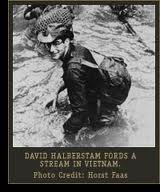

    dh vn
    Halberstam in Vietnam
    L B Johnson Model Khe Sanh
    LBJ with Vietnam model

    As I noted in Part 1 of this retrospective review of The Best and the Brightest, one of the most surprising lacunae in this celebrated book is that David Halberstam never mentions or references National Security Action Memorandum 263. This was President Kennedy’s directive that ordered the beginning of the US military withdrawal from Vietnam. This was to begin in December of 1963 with the removal of a thousand troops, and then continue in a phased way until 1965, when it would be completed i.e. all American troops would be back home. It is quite odd that in a book that spends over 300 pages discussing Kennedy’s policy on Vietnam, Halberstam could not find the space to mention this important directive. Especially in light of the fact that it had been in the works for quite awhile. Halberstam does mention that Kennedy had told John K. Galbraith to give him a report about Vietnam. But he confines this report to the dustbin by saying that Galbraith was mere window dressing and was on the periphery of Kennedy’s administration. (Halberstam, p. 152) When in fact, as mentioned in Part 1, the opposite was true about Galbraith’s report. It was the origin point for Kennedy’s instructions to Bob McNamara to begin a withdrawal plan.

    But there is something equally surprising about what Halberstam leaves out of his discussion of President Johnson’s conduct of the war. Except this lacuna comes at the beginning of his review of LBJ’s policy, not at the end. And because of that, it makes it even more significant. That is this: Halberstam never mentions or references National Security Action Memorandum 273. This is very surprising since as many writers have noted, NSAM 273 altered NSAM 263, at the same time it tried to state that it was not doing so. In his milestone book on the subject, John Newman spends over four pages discussing just how significant a change in policy Johnson’s new directive was. (JFK and Vietnam, pgs. 445-449) To name three of the most significant alterations:

    1. It allowed for direct US Navy involvement in OPLAN 34 patrols off the coast of North Vietnam. This would result in the Tonkin Gulf incident.
    2. It allowed for expanded American operations into Laos and Cambodia.
    3. While saying it would honor the troop reductions in NSAM 263, it did not. They were not carried out and the number of American advisers actually rose in the months after Kennedy’s murder.

    For an author to write nearly 700 pages on Kennedy, Johnson and Vietnam, and to never even mention NSAM’s 263 and 273–let alone discuss them–this is so bizarre as to be inexplicable. Again, it is censorship of such an extreme degree that it distorts history.

    But it is indicative of what Halberstam does to cloud the break in policy that occurred after Kennedy’s death. Take another instance: the first Vietnam meeting after Kennedy’s death. This happened just 48 hours after the assassination, on November 24th. (Newman pgs. 442-45) It is very difficult to locate this meeting in Halberstam’s book. In fact, you will not find it where you would expect to, in Chapter 16, the first one dealing with LBJ’s presidency. Where you will find a mention of it is at the end of Chapter 15, on pages 298-99. Where, ostensibly, Halberstam is wrapping up his view of Kennedy and Vietnam. By placing it there, Halberstam connotes some kind of continuity between the two men. What he does with the meeting constitutes even more censorship and distortion.

    He clearly tries to imply that this meeting was between only Johnson and Saigon ambassador Henry Cabot Lodge. (Halberstam, p. 298) And that Lodge had returned to Washington to give a report on deteriorating conditions in Vietnam. Not so. Kennedy brought Lodge back to Washington for the express purpose of firing him. (James Douglass, JFK and the Unspeakable, pgs. 374-75) Part of the reason for the termination was Lodge’s role in the demise of Ngo Dinh Diem and his brother Nhu. This is a continuation of Halberstam’s misrepresentations about Lodge. For he also says that Kennedy appointed him ambassador so as to involve the GOP in what could end up as a disaster. (Halberstam, p. 260) False. Kennedy didn’t want to appoint Lodge at all. He wanted his old friend Edmund Gullion as Saigon ambassador. This was vetoed by Dean Rusk who wanted Lodge appointed. (Douglass, pgs. 150-52)

    The point is that with Kennedy now dead, Lodge was not fired. He delivered his message to Johnson about how bad things were in Saigon. He then took part in a larger meeting—one that is completely absent from The Best and the Brightest. As John Newman notes, this meeting was attended by Secretary of State Dean Rusk, Defense Secretary Robert McNamara, Under Secretary of State George Ball, National Security Advisor McGeorge Bundy, and CIA Director John McCone. It was led by Johnson. (Newman, p. 442) In other words, the entire national security apparatus was on hand to hear a new tone and attitude on the subject of Vietnam. Phrases that JFK would never have uttered. LBJ said things like, “I am not going to lose in Vietnam”, “I am not going to be the president who saw Southeast Asia go the way that China went” , “Tell those generals in Saigon that Lyndon Johnson intends to stand by our word”. (ibid) The change was so clear that McCone wrote in his notes: “I received in this meeting the first “President Johnson tone” for action as contrasted with the “Kennedy tone”. (ibid, p. 443) Demarcating a break with the past, LBJ also said that he had “never been happy with our operations in Vietnam” (ibid) In his book, In Retrospect, McNamara said that Johnson’s intent was clear at this meeting. Instead of beginning to withdraw, LBJ was going to win the war. (p. 102) This message then filtered downward into each department. Which was a reversal of the message Kennedy had been giving after the May 1963 SecDef meeting in Hawaii. Back then, the generals and everyone else understood that any proposal for overt action would invite a negative Presidential decision. (Probe Vol. 5 No. 3)

    Question: Are we to believe that Halberstam, in his 500 interviews, did not interview any of these men about this meeting?

    Now, Johnson understood that McNamara was the key to securing his desired change in policy. Since McNamara had been the point man behind the scenes and to the media about Kennedy’s intent to withdraw. So in February of 1964, LBJ made sure McNamara would be on board the new train. In a declassified tape that is transcribed in the James Blight book, Virtual JFK, LBJ told McNamara, “I always thought it was foolish for you to make any statements about withdrawing. I thought it was bad psychologically. But you and the president thought otherwise, and I just sat silent.” (Blight, p. 310) For those who have heard this tape, one of the most shocking things about it is McNamara’s near-silent bewilderment as to what is happening. And in another conversation two weeks later, LBJ actually wants McNamara to take back or rephrase what he said in 1963 about the initial thousand man withdrawal. (ibid)

    These conversations completely vitiate another argument that Halberstam likes to make throughout the book. Namely that Johnson was somehow subservient to the advisors left over from Kennedy’s cabinet. In one of the most dubious passages in the book, Halberstam says that LBJ was in awe of these men and judged them by their labels. (Halberstam, p. 303) As he usually does, he then tops this silliness by saying that McNamara was the most forceful figure on Vietnam policy in early 1964. (p. 347) The strong implication being that somehow LBJ bowed to his advisers in making decisions on Vietnam. The evidence adduced above—avoided by Halberstam—completely undermines that thesis. Clearly, by the evidence of this first meeting, and the taped talks with McNamara, Johnson is the one commandeering them. In fact, as we shall see, LBJ often decided to proceed with steps in his escalation plan without their advice at all. And this was one thing that led to the exodus from the White House by McCone, Ball, Bundy and McNamara.

    Virtually all of the above, clearly indicating a break in policy, is notably absent from The Best and the Brightest. In Halberstam’s defense, one can argue that some of these taped conversations had not yet been declassified. But on the other hand, the man said he did 500 interviews. He had to have talked to someone at that November 24th meeting besides Lodge. Did he not even talk to Ken O’Donnell and Dave Powers? They had both been with Kennedy for years, from the beginning of his political career. They were in the White House for these decisions on Vietnam under both Kennedy and Johnson. They could have told Halberstam about NSAM 263, McNamara’s announcement about the thousand-troop withdrawal, and the plans for complete withdrawal by 1965. They also would have told him that Johnson changed all this within days of taking office. How do we know they would have told him so? Because they wrote about all this in their book about Kennedy, Johnny We Hardly Knew Ye. Which was published in 1972, the same year that The Best and the Brightest was published. (O’Donnell and Powers, pgs. 13-18)

    Halberstam covered his tracks well. By not listing the interviews he did, the author prevented anyone from checking on 1.) Whom he actually talked to, and 2.) What they told him.

    II

    As noted above, Halberstam eliminates Kennedy’s NSAM 263, the discussion and announcement about it, and NSAM 273, which LBJ used to partially subvert it. He also, for all intents and purposes, virtually discounts the November 24th first Vietnam meeting held by President Johnson–which also signaled a drastic change in policy. A change that was later noted by McGeorge Bundy: “The President has expressed his deep concern that our effort in Vietnam be stepped up to highest pitch.” (Gordon Goldstein, Lessons in Disaster, p. 105) As Goldstein astutely notes, the changes in tone, attitude, and emphasis were not just rhetorical. Within a little over three months, Kennedy’s withdrawal plan would be more than assigned to oblivion. A whole new plan for waging war would be put in its place.

    Goldstein does a nice job summarizing the steps that Johnson took to get there. He first sent McNamara to Saigon to render a report on the conditions in country. Since McNamara got the message at the 11/24 meeting, and since the intelligence reports had now been altered to reflect true conditions, at Christmas 1963, McNamara brought back a negative report. (ibid, p. 107) One month later, after McNamara relayed this report, the Joint Chiefs sent a proposal to Johnson on how to save the day: bombing of the north and insertion of combat troops. (ibid, p. 108) As Goldstein writes, “Exactly two months after Kennedy’s death, the chiefs were proposing air strikes against Hanoi and the deployment of US troops, not just in an advisory role, but in offensive operations against the North. The Joint Chiefs of Staff were proposing…the initial steps to Americanize the Vietnam War.” (ibid, p. 108) LBJ turned down this proposal. Not for the reasons Kennedy had years before. But because he did not have congress on board as a partner. At least not yet. (ibid, p. 109) But he did order the preparation of NSAM 288.

    First proposed in early March during a discussion between the Joint Chiefs and Johnson, NSAM 288 included both air and naval elements, to directly participate in the targeting of up to 94 military and industrial sites. In addition, it proposed the mining of harbors, imposition of a naval blockade, and in case China intervened, the use of nuclear weapons. (ibid, p. 108) In other words, it was a full order of battle. Thus, LBJ had achieved in a bit over three short months what Kennedy had resisted for three years.

    It takes Goldstein about ten pages to proceed from Kennedy’s assassination to the construction of NSAM 288. It takes Halberstam over fifty pages to do the same. How does he delay this for so long?

    With a very disturbing and recurring characteristic of the book: the insertion of the mini-biography. Often, whether its apropos or not, Halberstam completely stops the narrative flow of the book to insert a biography of someone. Whether or not that person is relevant to the story at that time, or really had any influence over events is not important. Chapter 16 is where the author begins his discussion of Johnson’s presidency. But NSAM 288, even though it was proposed a bit over three months after LBJ took the oath, is not in that chapter. What does Halberstam deem as being more important than LBJ’s plan for American forces to directly attack North Vietnam? Well, for starters, how about a biography of Dean Rusk. This goes on for about fifteen pages. (Halberstam pgs. 307-322) He actually calls Rusk a liberal. (p. 309) He then praises him at Kennedy’s expense. (p. 322) This is a man who JFK was actually going to fire. But then, as he often does, Halberstam tops himself. After this, he segues into a biography of, if you can believe it, Dean Acheson! I yawned and sighed through these biographical pages. To me it was nothing but pointless filler. And it accents a real weakness in Halberstam: He loved hearing himself talk. Whether what he was saying was relevant or not. In reality, what these two mini-biographies do is slow down the impact of Johnson’s fast reversal of policy. Because what LBJ is now planning—direct US attacks on North Vietnam—is something that Kennedy never even contemplated.

    Let me add two points here as to what Halberstam actually does with all this filler and obfuscation. By giving us all this irrelevant biography, he seems to be saying that knowing that Dean Rusk admired George Marshall is somehow more important than describing to the reader NSAM 273. Or showing how this directive impacted NSAM 263. In other words, when writing history, most documents do not matter. Which is the opposite of what most historians think: the documented historical record supersedes an oral recall.

    For two reasons. First, memory can always be faulty. Second, depending on who is doing the remembering, memory can be selective. But by leaving out so many important documents, and by not describing key events, like LBJ’s first meeting on Vietnam, Halberstam can foster absurd tenets. One of the most absurd comes at the very end of Chapter 16, which is supposed to be about LBJ’s early handling of the war. It is not. But the author ends the chapter by saying that 1964 was a lost year, and much of the loss was the fault of Dean Rusk. (p. 346)

    Both of these proclamations—that 1964 was a lost year, and it was attributable to Rusk—are just plain false. Many authors—like Fredrik Logevall– would argue that 1964 was the key year of the war. Johnson was not just stopping Kennedy’s withdrawal, but he was mapping out plans to use American forces in theater. Which amounts to a sea change. Second, Rusk had little to do with this. It was done by Johnson in cooperation with the Pentagon. After LBJ had turned McNamara around.

    As we have seen, and will see, Rusk was not even a major player in what was happening that year. The major player was Johnson. And far from being lost, LBJ was putting his plans together for the Americanization of the Vietnam War.

    III

    Another way that Halberstam camouflages the difference on Vietnam between Kennedy and Johnson is by using another preposterous proclamation. At the beginning of Chapter 16 he writes the following: “The decision in those early months was to hold the line on Vietnam. To hold it down and delay decisions.” (p. 303) Question for Mr. Halberstam: You yourself say that NSAM 288 was constructed in March of 1964. How was that holding the line on Vietnam? It completely broke with Kennedy’s previous policy. How could you not notice that?

    Actually, it is worse than that. NSAM 288 is only half the story. What LBJ did with it afterwards is the other half. This is another part of the story that Halberstam both misrepresents and underplays.

    After NSAM 288 was orally accepted by Johnson from the Chiefs, he then called McGeorge Bundy. (Goldstein pgs. 108-09. In itself that sequence of events tells us something.) Although he had accepted NSAM 288 in principle, he saw two impediments to utilizing it. First, he did not have a congressional resolution on his side. Therefore he had no legislative partner to go to war with. Secondly, he told Bundy, “And for nine months I’m just an inherited—I’m a trustee. I’ve got to win an election. “ (ibid, p. 109) This, of course, is what happened—in that order. Johnson got his resolution. He won his election by campaigning as a moderate peace candidate . After lying to the public about his intentions, he then went to war.

    In reading The Best and the Brightest, these steps all seem haphazard, coincidental, willy-nilly. This impression is achieved because the author never makes clear one of the most important aspects of Johnson’s alterations to NSAM 273. As John Newman points out, when LBJ was presented with the rough draft of the directive, he altered it in more ways than one. Paragraph seven had originally stated that South Vietnam should begin to build a maritime war apparatus . Johnson’s alterations now allowed for the USA to plan and execute its own maritime operations against the North. (Newman, JFK and Vietnam, p. 446) This alteration, specifically requested by Johnson, now paved the way for direct American attacks via a covert action plan called OPLAN 34 A. This was submitted to the White House one month later.. (ibid) This plan included a joint CIA/Pentagon action that allowed for American destroyers to patrol the coast of North Vietnam accompanied by small attack boats piloted by South Vietnamese sailors. The idea was that the smaller boats would fire on the north and the American destroyers would then record the North Vietnamese response to figure out what capabilities the enemy had.

    Clearly, the concept of the idea was a provocation to the North. It was inviting them to attack us in retaliation. As Edwin Moise points out, LBJ approved it because he had already made the decision that NSAM 288 would be carried out in the near future. This was his way of negating any attacks from hawkish GOP presidential contenders like Barry Goldwater or Richard Nixon. (Moise, Tonkin Gulf and the Escalation of the Vietnam War, p. 26) As Moise delineates, LBJ then further refined NSAM 288’s planning to include war campaign time intervals and the passage of a congressional resolution. (Moise, p. 27)

    This was all finalized in May and June of 1964, with the finishing touches placed on it by William Bundy. In June, Johnson began to lobby certain key members of congress for its passage. (Moise, p. 26) It is important to recall, this is almost two months before the Tonkin Gulf incident. In fact, on June 10th, McNamara said, “that in the event of a dramatic event in Southeast Asia we would go promptly for a congressional resolution.” (ibid) But since LBJ had to play the moderate in order to get re-elected, Bill Bundy added that the actual decision to expand the war would not be made until after the election. (Moise p. 44) This, of course, was a lie. With the writing of NSAM 288—something unthinkable under Kennedy–the decision to expand the war was already made. But since it was classified, the lie had wings. The actual campaign to fight the war was delayed only for political reasons. As Newman pointed out, Johnson was concealing his escalation plan so as not to lose his 1964 electoral base in the Democratic Party.

    Just about all of this is either absent from, or seriously discounted by Halberstam. Clearly, these events were not haphazard. They were connected in a straight line: the alterations to NSAM 273 led to OPLAN 34A; the drafting of NSAM 288 led to the lobbying for passage of a congressional resolution. All that was needed now was for the provocation strategy to succeed. That is for the “dramatic event” to take place so the resolution could be pushed through congress.

    This all renders ridiculous Halberstam’s idea that “the decision in those early months” was to hold the line on Vietnam. It also renders superfluous Halberstam’s insistence on giving us biographies of Dean Acheson and John Paton Davies in lieu of what the Johnson administration was really working on in the three months after Kennedy was murdered i.e. planning for America’s entry into the war.

    IV

    As noted previously, with all the above in place, what was needed was a “dramatic event”. Halberstam says that the Gulf of Tonkin incident traces back to January of 1964., when the plans for OPLAN 34A were being worked out. (p. 408) As noted above, this is false. Because those January plans would not have been contemplated under President Kennedy. They actually originated in the alterations Johnson made to the draft of NSAM 273 in November of 1963. Bundy told Newman that these alterations were directed by Johnson since LBJ “held stronger views on the war than Kennedy did.” (Newman, p. 445)

    Halberstam also mischaracterizes the purpose of these covert operations. He writes that they were meant to “make Hanoi pay a little for its pressure on the South, to hit back at the enemy, to raise morale in the South….” (Halberstam p. 408) Again, this is wrong. As Edwin Moise writes, outside of the South Vietnamese sailors on the fast attack speedboats, everything about these so-called DESOTO patrols was American. An important part of the mission was to “show the flag.” (Moise, p. 55) The North Vietnamese knew that the South Vietnamese did not have destroyer ships. Further, the destroyers violated the territorial waters of North Vietnam. Thus, as many authors have written, the design and action of these missions was a provocation. It was a way for the USA to get directly involved in a civil war. (Moise,p. 68) Even people in Johnson’s administration, like John McCone and Jim Forrestal, later admitted they were such. (Goldstein, p. 125)

    Halberstam then completely screws up the tandem nature of the missions. The destroyers and the speedboats worked together. The speedboats made the attacks. The destroyers were then meant to monitor the reactions in order to locate things like radar capability. Halberstam tries to separate the two from each other and he even tries to say the destroyers actually simulated attacks. (Halberstam, p. 411)

    To finish off his poor representation of what happened at Tonkin, he actually tries to insinuate that Johnson wanted to wait for more accurate information about what happened. (Halberstam, p. 412-13) In fact, after taking the August 2nd incident quite lightly, Johnson ordered a second mission the next day, which included violating territorial waters. (Moise, 105) He then marched down to Bundy’s office before he even knew what happened on the second patrol. (Goldstein, p. 126) He told Bundy to take out the draft resolution prepared by his brother William. Bundy told him, “Mr. President, we ought to think about this.” Johnson replied, “I didn’t ask you what you thought, I told you what to do.” (ibid)

    Now, there is another aspect of Tonkin Gulf that demonstrates just how intent Johnson was on protecting his right flank during an election year. Johnson took out the target list from NSAM 288 and picked out what he wanted to hit. It was late at night. But since he wanted to get on national television, he made the announcement on live TV anyway. This announcement alerted North Vietnam to the incoming planes, so they prepared their anti-aircraft batteries. Because of Johnson’s desire to announce the attacks on TV before they took place, two pilots were shot down. (Moise, p. 219) After the air sorties, a jubilant Johnson said, “I didn’t just screw Ho Chi Minh, I cut his pecker off.” (Logevall, p. 205)

    Johnson then lied to Sen. Bill Fulbright of the Senate Foreign Relations Committee. Fulbright was running the hearings on the Gulf of Tonkin Resolution. Johnson told him that OPLAN 34A was a South Vietnam operation. (Moise, p. 227) This did the trick. The resolution sailed through both houses almost without a nay vote. Johnson’s plan to get congress on board as his war partner had worked. LBJ proudly proclaimed about his congressional resolution that it was like grandma’s nightie. It covered everything. (Logevall, p. 205)

    What was the total destruction caused by the North Vietnamese attacks? One bullet through one hull. And the second attack, the one LBJ would not wait to hear about, did not occur. In other words, over one bullet in a hull, Johnson was ready to go to war. This was the man who proclaimed repeatedly that “We seek no wider war.” (Logevall, p. 199)

    How dim is Halberstam on this whole scenario for war? He quotes Walt Rostow as saying that things could not have turned out better if they had been planned that way. (Halberstam, p. 414) The author does not note the irony. They had been planned that way.

    Keeping all this in mind, let us recall what Halberstam wrote in introducing the Johnson administration and their attitude toward Vietnam. He wrote that they decided not to deal with Vietnam in 1964 but to keep their options open. (p. 307)

    He apparently wrote that with a straight face.

    V

    Now, as both Logevall and Goldstein note, Johnson had opportunities to begin negotiations throughout 1964. Goldstein concisely points out that there were other views being expressed at this time about Vietnam. Luminaries like journalist Walter Lippmann, French Premier Charles DeGaulle, and Senator Richard Russell were all pushing for a neutralization plan, something like Kennedy had done in Laos. DeGaulle specifically warned George Ball that the longer the USA stayed in Vietnam, the more painful and humiliating their exit would be. Not only did Johnson ignore their entreaties, as time went on he began to feel personal hostility towards journalists and heads of state who tried to press him on this issue. (Logevall, Choosing War, pgs. 143, 176) He even ostracized people inside the White House who advised him against escalation e.g. Vice President Hubert Humphrey. (ibid, p. 170) All this, even though the North made it clear that it was willing to talk. They actually offered a cease-fire in return for negotiations, which included the NLF—the political arm of the Viet Cong—at the table. (ibid, p. 163) Other countries, like Canada, asked to broker a meeting. Leaders like U Thant at the UN tried to get talks going. Johnson would not seriously entertain these. (Logevall, p. 211)

    As Logevall makes clear in his book, Johnson was so intent on getting America directly involved in Vietnam, he seriously contemplated attacking the North in May of 1964. (ibid, p. 147) But national opinion did not favor such an attack at the time. So Johnson did something that Halberstam either does not know about, or he deliberately ignored. He ordered a propaganda campaign to change attitudes on a US war in Vietnam. Run out of the State Department, it was two pronged. One axis was aimed at domestic opinion, and the other at foreign opinion. It was actually memorialized in NSAM 308. (ibid, p. 152) In other words, the administration was now trying to psychologically indoctrinate the public, and international opinion, into accepting a war climate with Hanoi. In fact, when Halberstam’s liberal, Dean Rusk, visited Williams College in June, he called South Vietnam as important to America and the free world as West Berlin. (Logevall, p. 168) Rusk also tried to pick up international allies for the coming conflict he understood was around the corner. He was remarkably unsuccessful.

    As Logevall makes clear, LBJ and Bill Bundy had already targeted a date for the direct American intervention in Vietnam. It was in January of 1964. (Logevall, p. 217) This, of course, was after the election. Yet, by the summer of 1964, Johnson had reports on his desk telling him just how difficult the war would be. And this is actually something Halberstam does a good job at. There was one report which told him that a bombing campaign would have little effect on the North since there were few industrial centers to hit. ( Halberstam, p. 356) There were two studies concerning the effect of combat troops in country. They both said it would take over 500, 000 men 5-10 years to subdue the enemy. (pgs. 370, 462) In the face of all this, Johnson still refused to contemplate negotiations or withdrawal. And he pressed forward with his propaganda campaign and his plans for war. Being advised in advance, what it would cost and that American air power would not have a deciding impact. And as Logevall acutely notes, Johnson kept all of this from the public so it would not become an election issue. Goldwater became the war candidate and LBJ the peace candidate. In the last days of his campaign Johnson said he wanted to “stay out of a shooting war” and that he was working for a peaceful solution. (Logevall, p. 250) On the campaign trail he also repeated the axiom that he was not going to “send American boys to fight a war Asian boys should fight for themselves.” (ibid, p. 253)

    Of course, the opposite was the case. But Halberstam cannot bring himself to admit that LBJ lied his head off about his true intentions in Vietnam. He makes excuses for him, saying that he misremembered certain details in his book The Vantage Point. Halberstam also says that the changes that took place in 1964 took place “very subtly”. (Halberstam p. 361) There is nothing subtle about lying a country into a war. Logevall manages an honesty that Halberstam cannot match: “If an American president had ever promised anything to the American people, then Lyndon Johnson had promised to keep the United States out of the war in Vietnam.” (Logevall, p. 253)

    The exact opposite happened. In another key event that Halberstam could not find with his 500 interviews, on the day of the election, Johnson’s war planning committee met to begin debating how to implement the plans for an expanded American war in Vietnam. (Logevall, p. 258) This from the candidate who had just said that he was seeking no wider war.

    The truly incredible thing about this is that as late as November of 1964, LBJ could still have gotten out. He had huge Democratic majorities in both houses of congress that would have covered him on this. Many popular and influential senators did not favor American entry e.g. Mike Mansfield, Frank Church, Gaylord Nelson, Bill Fulbright, Richard Russell etc. Lippmann was still advising him from his newspaper column not to attack the North. Knowing LBJ was preparing for war, both England and France advised him not to. Only 24% of the public favored sending in combat troops, while over half favored withdrawal. Most of the major newspapers favored not going to war, including the New York Times and Washington Post. (Logevall, pgs. 277-284) Later on even Bill Bundy admitted that Johnson could have gotten out at this point without taking a huge hit in popularity. (ibid, p. 288) Again, in patching together his phony “inevitable tragedy” scenario, Halberstam ignores all this. The apparent reason being that it does not support his thesis of inevitability.

    What it really tells us is that Vietnam was inevitable because Lyndon Johnson made it so.

    VI

    Halberstam takes every opportunity he can to disguise and obfuscate what was really happening in 1964. In addition to the instances written about above, in a passage describing 1964 as it progressed and ended, he actually begins the paragraph with this: “In the country and in the government, however, there was no clear sense of going to war.” (p. 399) From his 500 interviews, the author still did not understand that yes, most of the country did not understand we were going to war. That’s because President Johnson understood he had to be elected in order to go to war. But Johnson, and his upper echelon, sure as heck knew we were going to war.

    On this same page, Halberstam makes one of the most dubious parallels in this entire book. He says that the planning for Vietnam was derived from the Cuban Missile Crisis. (Halberstam, p. 399. He actually says this more than once.) This makes me wonder if he ever read anything about the Missile Crisis. Because there was no planning for the Missile Crisis. It was an emergency, impromptu thirteen-day crisis situation. And it could have immediately triggered an exchange of nuclear weapons. For as we know today, if Kennedy had decided to invade, the Russians had given Castro tactical atomic weapons. And these were under the control of the Cubans, not the Russians.

    On the other hand, American entry into Vietnam had been talked about by three administrations since 1954 and the Battle of Dien Bien Phu. There was no compelling crisis since Vietnam posed no immediate threat to the USA. For the simple reason that it was so distant and Hanoi had no nuclear weapons. Further, during the Missile Crisis, from the beginning, Kennedy asked for the input of all his advisers about the issue. Realizing that the vast majority of them—most of all the Pentagon—wanted to attack Cuba in some way, he decided on the least provocative action, the naval blockade. He then decided to go around his Cabinet, including Johnson, and arrange a back channel to the Russians to reach a settlement. All in less than two weeks.

    This is almost a negative template of what happened with LBJ and Vietnam. As seen above, from the first meeting, Johnson was not soliciting input. He was dictating what his advisers would do. He then, for thirteen months, exhibited no real desire to negotiate. Instead, he put together a battle plan. And he then tried to indoctrinate the country to it. At the first and slightest provocation, in the Tonkin Gulf, he then used American air power. And in Johnson’s case, the provocation was made by the USA. Kennedy had two opportunities during the Missile Crisis to do this: a U-2 shoot down and a Russian ship firing at an American ship. He did not. Even though the Russians had created the provocation by moving in the missiles. And, of course, there was no American attack, and it all ended peacefully. In fact, many believe it inaugurated a new attempt at détente between Russia, Cuba and the USA.

    Again, Halberstam ignores all these salient points to argue something that seems contrary to the actual facts. I think he does this to imply that somehow there was continuity between Kennedy and Johnson here. In other words, LBJ had not just Kennedy’s advisers, he used his model. Even though he did not.

    Now, as discussed above, the administration had already planned to begin the war in January of 1965. Yet even in January, Sen. Russell made a speech asking for a third country mediator to arrange a settlement. (Logevall, p. 300) At this time, Johnson was actually cabling Ambassador Maxwell Taylor to start getting Americans out of South Vietnam since the war was impending. (ibid) Finally realizing that LBJ was about to begin direct and sustained American offensives, several senators requested open hearings: George McGovern, Mike Mansfield, Richard Russell, Fulbright, Everett Dirksen, Albert Gore, Wayne Morse, Ernest Gruening, Gaylord Nelson etc. (Logevall, p. 305) Johnson sent Rusk to talk to Fulbright in order to stifle any open debate in the Senate. Johnson could not begin his long planned for war with open hearings attracting the attention of the national media. And it was this delay that probably made Johnson miss his January target date by a month.

    Halberstam leaves the above out of his narrative and instead describes the McGeorge Bundy visit to South Vietnam and the famous attack at Pleiku in early February while Bundy was there. (Halberstam, p. 520) This attack by the Viet Cong injured and killed several American advisers, and wounded scores more. (Goldstein, p. 155) Bundy sent back a memo on this incident that recommended air strikes as retaliation. Halberstam makes this Bundy memo into a huge milestone of American involvement in the war. He actually calls it one of the most memorable and important documents on the road to American commitment in Vietnam. In a startling passage, he writes that the paper trail on Vietnam was really not all that important because Johnson liked to use the phone. He essentially discounts use of the Pentagon Papers. (Halberstam, p. 524) But he says the Bundy/Pleiku memo was an exception, and of paramount importance.

    This is simply not true. For two reasons. First, as we have seen, American direct involvement in Vietnam had been decided on months before. Chester Cooper worked on the NSC staff and then under Averill Harriman under both Kennedy and Johnson. He said about this trip, “The problem was Johnson had already made up his mind. For all practical purposes, he had dismissed the option of de-escalating and getting out, but he didn’t want to say that he had, so the rationale for [Bundy’s] trip was this was going to be decisive.” Cooper then adds, but Johnson had “damn well decided already what he was going to do.” (Logevall, p. 319)

    The second problem with Halberstam giving the Pleiku memo so much weight is that Bundy had been a hawk from the beginning. Back in 1961, during Kennedy’s two-week debate over sending in combat troops, Bundy had drafted his “swimming pool memo” to the president. It is called that because Bundy began with this: “But the other day at the swimming pool you asked me what I thought and here it is. We should now agree to send about one division when needed for military action inside Vietnam…I would not put in a division for morale purposes.” (Goldstein, p. 62) Bundy then went on to make an utterly astonishing statement: “Laos was never really ours after 1954. South Vietnam is and wants to be.” (ibid) He then continued by saying that most everyone else, including Johnson, wanted to insert ground troops. Therefore Kennedy’s reluctance puzzled him: “I am troubled by your most natural desire to act on other items now, without taking the troop decision. Whatever the reasons, this has now become a sort of touchstone of our will.” (ibid, p. 63)

    There is little doubt that this memo convinced Kennedy that he had to go around Bundy to accomplish his goal of withdrawing from Vietnam. Which he did. I could not locate this memo in Halberstam’s book. Neither could I find the fact that Bundy had sent a rough draft to Johnson of the February 1964 Pleiku Memo on the second day of his trip. Yet, the attack on Pleiku occurred on the fourth and last day. (Logevall, p. 320) Finally, when Bundy got back to Washington, Johnson had his memo recommending retaliation in his hand. He looked up from his bed at his National Security Advisor and said, ”Well, isn’t that all decided?” (Goldstein, p. 158)

    Goldstein then adds something important that Halberstam completely misses. Johnson recalled all copies of Bundy’s Pleiku report. He in fact told Bundy to lie about its existence. (ibid) Why? Because what Bundy was actually proposing was an air campaign. Johnson did not believe in a war that was based from the sky. As Goldstein writes, Johnson used to say that “Ol’ Ho isn’t gonna give in to any airplanes.” (Goldstein, p. 159) But Saigon Ambassador Maxwell Taylor was opposed to ground troops. (ibid)

    The way Johnson finessed this was to go ahead and begin the bombing campaign in February. He knew two things would follow. First, the air campaign would not be effective. Second, that theater commander Gen. Westmoreland would then request ground troops for air base security. And this is what happened. Therefore, amid great fanfare, the first American ground troops arrived at Da Nang air base in March. Incredibly, as late as February 7th, the day before he approved Flaming Dart, the air retaliation for Pleiku, and a week before he approved the massive air barrage called Rolling Thunder, Johnson said in a speech that he was still not seeking a wider war. (Logevall, p. 346)

    It therefore took just eight months from the Tonkin Gulf incident to begin a full-scale war against North Vietnam. And the only reason it took that long is because Johnson had to lie around the election campaign. How does Halberstam slow this incredible galloping pace into slow motion? His usual technique. The insertion of the biography. Between Tonkin and Flaming Dart come two long biographies. The first is of Lyndon Johnson and takes up almost all of Chapter 20, or nearly thirty pages. The second biography is of Max Taylor and it subsumes almost all of Chapter 21, or nearly 15 pages. (If you can believe it, the biography of Taylor is just about twice as long as Halberstam’s discussion of the key Gulf of Tonkin incident.) With 45 pages of mostly filler, you can sure slow down things. Everything necessary to the narrative about these men could have been told in about five pages.

    After Da Nang the insertion of more combat troops came with amazing speed. Three weeks later Westmoreland requested 20,000 more men. And the mission was altered from base protection to offensive operations. Westmoreland then asked for 82,000 more men. By the end of 1965, less than one year after LBJ’s election, there were 175,000 combat troops in country. Under Kennedy there were none. Incredibly, Halberstam never notes the difference.

    There is another key part of Johnson’s escalation that Halberstam leaves out. It is this: Eisenhower backed him. (Goldstein p. 161) Ike informed Johnson that “he would use any weapons required, adding that if we were to use tactical nuclear weapons, such use would not in itself add to the chance of escalation.” (ibid) As McGeorge Bundy later said, because Johnson was a Cold Warrior and believer in the Domino Theory, he genuinely thought it was crucial to guard South Vietnam for the greater security purposes of Southeast Asia. The two people from whom he gained the most ballast and support from for this mission were Eisenhower and Dean Rusk. (Bundy referred to Rusk as Johnson’s “totally discreet and loyal cultural cousin”. Ibid) But Eisenhower was even more important than Rusk. Johnson felt that with Ike behind him, the dissidents were harmless. And further, Eisenhower stood by Westmoreland’s recommendations from the field. Because Eisenhower was also a believer in the Domino Theory LBJ considered him his most important single political ally. (ibid, p. 162) This is an important part of Johnson’s psychology as he went to war. I think Halberstam leaves it out in order to make it more of a purely Democratic Party affair.

    And there is another key point that Halberstam leaves out. See, 1965 was only the beginning. Because Johnson believed in a land war, he granted the Pentagon each troop request. And as the number began to soar way beyond 175,000 the exodus of former Kennedy staffers began: McCone, Bundy, Ball, and McNamara. This is a phenomenon that Halberstam barely notes. Because it completely undermines one of his theses: That LBJ was in awe of these men and listened to them. (Halberstam, p. 435) This is simply not the case. For instance, even in February of 1964, McNamara questioned a further commitment. (Logevall, p. 127) This is why he had to be talked around by LBJ. As Logevall writes, contrary to what Halberstam postulates, Johnson was not at all intimidated by Bundy, McNamara, and certainly not his pal Rusk. He either overrode them or simply ignored them. For example, Bundy wanted Johnson to be more candid with the public about the true circumstances of the war. Johnson refused. But further, after 1965, when LBJ continued to commit tens of thousands of combat troops, it became clear that Johnson was not listening to his Cabinet. The meetings were pro forma. Because Westmoreland had a secret telegram channel to LBJ. (Goldstein, pgs 214-15) It was through this channel that Westmoreland would make a request, Johnson would grant it, and then he would call a meeting on it. It was all designed to give his advisors the illusion of being heard when they really were not. And this is a main reason why they left one by one.

    VII

    One of the main motifs of The Best and the Brightest is the idea that the collapse of China in 1949 stigmatized the Cold War to such a degree that the USA could not risk losing another Far Eastern country. And the fact that this occurred under President Truman made it a special problem for the Democratic Party. There is little doubt that this is the case for President Johnson. (See Logevall pgs. 76-77) But try and find a quote like this from President Kennedy. Having read several books on the specific subject, that is Kennedy and Vietnam, I cannot recall one by JFK that relates Vietnam to the fall of China. But you can find a slew of quotes that show that Johnson was a dyed in the wool Cold Warrior. For example: “Lyndon Johnson is not going to go down as the president who lost in Vietnam. Don’t you forget that.” (Logevall, p. 77) On February 3, 1964, before Pleiku and Flaming Dart, Johnson told a newspaper reporter that if he chose to withdraw the dominoes would start falling over. “And God Almighty, what they said about us leaving China would just be warming up compared to what they’d say now.” (James Blight, Virtual JFK, p. 211)

    But the great quote on this is what Johnson said in the book Lyndon Johnson and the American Dream. (by Doris Kearns, p. 264) He compared withdrawal in Vietnam to what Neville Chamberlain did at Munich. In other words it would have been appeasement. He then said that, “And I knew that if we let Communist aggression succeed in taking over South Vietnam, there would follow in this country a national debate…that would shatter my presidency, kill my administration, and damage our democracy.” This quite naturally led to a comparison with China and the rise of McCarthyism. And after comparing them LBJ said the loss of Vietnam would have been worse. Kennedy would never have said any such thing. And this is the main reason that Johnson did what he did in Vietnam. But if you discount Kennedy’s early foreign policy views on Algeria, the Congo and Third World nationalism (which I showed Halberstam did in Part 1), and you downplay just what a Cold Warrior LBJ was, then you can further disguise the split in policy.

    In fact, Halberstam glides over an example of this without commenting on it. In 1965, Johnson sent troops to the Dominican Republic to thwart a leftist rebellion against a military junta that had displaced the liberal Juan Bosch. He threatened the rebel leader thusly, “Tell that son of a bitch that unlike the young man who came before me, I am not afraid to use what’s on my hip.” (Halberstam, p. 531) The author makes no comparison comment on this quote. Yet it tells us something about both LBJ and Halberstam. For Kennedy did intercede in the Dominican Republic. It was through diplomatic means and economic sanctions. But it was for Juan Bosch. And it was Kennedy’s actions which, in part, started the rebellion. (Donald Gibson, Battling Wall Street, pgs. 78-79) Johnson sent troops in to back the military junta that Kennedy was against, thereby reversing his policy. Can Halberstam really be ignorant of this? Or does he understand that it undermines his thesis, and this is why he makes no note of it?

    At the end of the book Halberstam tells us that after narrowly beating Gene McCarthy in the New Hampshire primary in 1968, Johnson got the news that he would do even worse in Wisconsin. He then decided to withdraw his candidacy. (Halberstam p. 654) The author then ends the main text of the book by summing up what happened to Max Taylor, Bob McNamara, and McGeorge Bundy. That is, how Vietnam scarred their careers. What he does not say is that none of it would have happened had Kennedy not been assassinated. In fact, that is what all three said later, that Kennedy would not have committed combat troops to Vietnam.

    So as expressed by Mary McCarthy in her January 1973 New York Review of Books critique, the thesis of the book is simply wrong. That is that somehow the Eastern Elitism of the Bundy brothers, combined with the whiz kid can-do mentality of McNamara produced the debacle of Vietnam. The declassified record shows something else. That Kennedy understood that McGeorge Bundy was too hawkish on Vietnam and he decided to go around him. And he had given McNamara the assignment of implementing his withdrawal plan. After he was killed, Johnson then stopped all this and brought in hawks like Walt Rostow and Bill Bundy. By eliminating the primacy of Kennedy and Johnson, what Halberstam is proposing here is sort of like saying that Oliver North ran the Iran/Contra enterprise.

    That was a cover story of course. And what Halberstam does here is essentially a cover story. But it’s a dual cover story. In his book, Halberstam describes a public debate over Vietnam that McGeorge Bundy participated in against LBJ’s wishes. Bundy, the man who Halberstam praises as being so brilliant and perceptive, did not do very well. (Halberstam, p. 620) That is because he really did not understand what was going on in Vietnam. In fact, from the Eisenhower to Nixon administrations, very few men in the whole saga did understand it. There were other people out there who understood what was really happening in Vietnam at a much earlier date. But they were not heard from.

    This fact would have told us something quite telling about the power structure in America and how the Eastern Establishment controlled it. Namely, that many of these men were not nearly as wise, insightful, or perceptive as their sales image said they were. And in fact, they could not be even if they wanted to since this would not advance their careers. In a real way, the Eastern Establishment wanted the Cold War to persist. Even if it produced something as monstrous as Vietnam. And they wanted Vietnam to persist. After all, there were billions to be made.

    President Kennedy, since he had been there as early as 1951, understood what was really happening. Which is why he wanted to get out. Halberstam’s book covers up both these truths: that the cabal entrusted to lead is entirely overrated, and that Kennedy was not one of them. He does so because it’s a truth too radical for someone like Halberstam. Who was never the kind of writer who pushed the envelope. What makes it worse is this: He never tried to amend it. Even after the declassified documents showed that Kennedy was going to withdraw and Johnson stopped it. This, I think, speaks to his intent.

    Michael Morrissey once wrote an essay on this subject which he titled, “The Second Biggest Lie Ever Told”. He explained this as the idea that what Johnson did in Vietnam was a continuation of what Kennedy had done. Morrissey then explained that the biggest lie ever told was that Oswald shot Kennedy. Clearly, the two are inextricably linked.

    The Best and the Brightest played a large role in cementing that second biggest lie. And in my view, as I showed in Part One, the deception was purposeful. Therefore this is not just an obsolete book. It is an intentionally misleading one.


    Back to part One

  • David Halberstam, The Best and the Brightest, Part 1

    David Halberstam, The Best and the Brightest, Part 1


    David Halberstam and The Second Biggest Lie Ever Told:

    A Look Back at The Best and the Brightest

    Part One: Halberstam and Kennedy


    dh ny
    David Halberstam works at his office
    in New York City on May 14, 1993

    David Halberstam died in April of 2007 in Menlo Park, California. He was killed in a three car accident on his way to interview former NFL quarterback Y. A. Tittle for a book he was writing on the famous 1958 NFL Championship game. He was also there to deliver a speech at UC Berkeley about what “it means to turn reporting into a work of history.” (San Francisco Chronicle, 4/23/07)

    Halberstam wrote several books about the sports world, seven to be exact, or about a third of his total output. But he also wrote a number of books that were concerned with contemporary history. For instance, he wrote The Fifties, an examination of that decade, The Children, a chronicle of the Nashville Student Movement of 1959-62, and The Coldest Winter, about America in the Korean War.

    Halberstam won a Pulitzer Prize in 1964 for his reporting on Vietnam. And he wrote two books on that subject: The Making of a Quagmire (1965), and The Best and the Brightest (1972). To read the two books today is a bit schizophrenic. In the first book, the author criticizes the Kennedy administration for, as Bernard Fall wrote, not getting in early enough, fighting smarter, being more aggressive, and therefore making the other side practice self deception. (NY Times, 5/16/65) A major source for that book was Lt. Col. John Paul Vann. Vann had argued very early for the introduction of American combat troops. He had also argued that unless this was done soon, the war was lost since the military was concealing just how bad the Army of South Vietnam (ARVN) really was. For that book, Halberstam was so much in Vann’s camp that he actually seemed to think that the introduction of American forces would actually win the war. (See the Introduction to the 2008 edition by Daniel Singal, p. xi) But in his second book on the subject, he argued the contrary: that America should have never gotten involved in Vietnam, Kennedy should have never sent in advisers, and President Johnson should have never made his huge military commitment.

    The Best and the Brightest clearly made Halberstam’s career. Previewed in two national magazines, between hardcover and paperback sales the book sold nearly 1.8 million copies. When it was first published, with one notable exception, it was met with nearly universal critical acclaim from every quarter. For about two decades, this book served as the standard popular reference work on American involvement in Vietnam. It had such a large impact on the American psyche that it created the way that many Americans saw the war and forged a paradigm through which other authors wrote about it. It would not be much of an exaggeration to say that The Best and the Brightest created a sort of Jungian cyclorama which America stood in front of and visualized the tale of American involvement in Vietnam, which the author wrote was the greatest national tragedy since the Civil War. (Halberstam, p. 667. Unless otherwise noted, all references to the book will be from the original hardcover edition.)

    So how did Halberstam begin writing the book, and how did his perceptions change from 1965 to 1972? In 1967 Halberstam left the New York Times, and went to work at Harper’s. There he wrote a profile of National Security Adviser McGeorge Bundy. In his 2001 preface to the Modern Library edition of this book, the author wrote that it was this article that gave him the idea to do a book about how and why America had gone to war in Vietnam and also about the architects of that involvement. Securing an advance from Random House, he spent the next four years writing the book. In other words, he started his book at the time that Lyndon Johnson’s massive military escalation program was failing in a spectacular way. It was a time when Johnson’s war policies were being criticized by both houses of congress, much of the news media, and by a whole generation of young Americans. The latter were taking to the streets to protest the thousands of young Americans being slaughtered in the rice paddies of Vietnam, before they were even allowed to vote at home.

    Clearly, John Paul Vann’s advice to Halberstam, and those who would listen to him in the Pentagon, was not followed correctly. Obviously, Halberstam took notice, and he altered his viewpoint. Because of that new viewpoint, plus the promotion by Random House, plus the length of the book – well over 600 pages – and its scope, stretching back to the late 1940’s, the book’s publication was a matter of perfect timing. Americans wanted to read about how their country got involved in an epic foreign disaster. And they wanted more than their newspaper’s day-by-day accounts, more than 400 word editorials, more than just grandstanding by ideologues of the left or right.

    Halberstam gave that to them – and more. In its original hardcover printing the book runs to 672 pages of text. It has a six-page bibliography, which is divided up chronologically. But the heart and soul of The Best and the Brightest is the legwork the author did in securing scores of interviews which pepper the book. (The author notes the final tally as 500. Halberstam, p. 669)

    And here emerges one of the first and most serious problems with the volume. The book is not footnoted. Therefore, one does not know where the information one is reading comes from. Does it emerge from a book, magazine article, or an interview? One does not really know. But even worse, Halberstam decided not to even list the names of the people he talked to. Which is really kind of surprising. Especially in light of the fact that so much of the book’s material is based on those sources. This is an important point since Vietnam had become such a controversial subject by the time of the book’s writing. It would have been instructive to know where the author was getting his information, since, in the wake of an epic foreign policy disaster, many people had a lot at stake in covering their tracks.

    Halberstam tried to explain away this curious decision in his Author’s Note at the end of the volume. He first writes that because of the political sensitivity of the subject, a writer’s relation to his source was under challenge. Secondly, he had talked to Daniel Ellsberg, and been subpoenaed by a grand jury in the Pentagon Papers case. What he does not say is that the Pentagon Papers had already been published in book form by the time his work appeared. In other words, the court challenge had failed. Further, from what I can see, there is nothing in his book that came from classified documents. (As we shall see, this is a serious failing of the volume.) Therefore, in any academic discussion of this book, one must weigh Halberstam’s decision to conceal sources against the value of full disclosure. That is, would the reader have benefited from knowing where certain information came from more than the source would have benefited from anonymity. As we shall see, because of the overall thesis of the book, it necessitated full disclosure.

    What is that thesis? As I wrote above, there was one review of the book that was thoroughly and scintillatingly negative.

    This was by Mary McCarthy in the New York Review of Books. (Sons of the Morning, 1/25/73) Let me quote her and then give my refinement to it: “If a clear idea can be imputed to the text, though, it is that an elitist strain in our democracy, represented by the “patrician” Bundy brothers, once implanted in Washington and crossed with the “can-do” mentality represented by McNamara, bred the monster of Vietnam.” As she notes later, what Halberstam was trying to do with his book was to create the image that Vietnam was an inevitable tragedy that America walked into. And by 1966, there was no turning back, since by then the trap had been sprung. LBJ had overcommitted, and he would continue to do so until he had 540,000 combat troops in country. And that huge army would be completely undermined by the shocking effectiveness of the Tet offensive, which some have called the greatest American intelligence failure of the 20th century.

    As we begin to analyze this book, it is important to keep McCarthy’s review in mind. There is no doubt that Halberstam was stung by it. Since he brought it up in his author’s note for the 2001 edition. The key word to remember here is “inevitable.” There can be little doubt that the ultimate effect of the Vietnam War was tragic for both America and Vietnam. But was it inevitable? McCarthy did not think so. Further, she felt that Halberstam had rigged the deck to make it seem that way. She felt that Johnson could have gotten out before he escalated, but that withdrawal for LBJ was never a serious option. She was absolutely right on this point as Fredrick Logevall proved in his fine examination of Johnson’s conduct of the war in 1964-65, Choosing War: The Lost Chance for Peace and the Escalation of War in Vietnam.

    We must note here that McCarthy wrote her withering review in January of 1973. This was after the publication of the Pentagon Papers, but many years before any serious declassification of further documents on the war. That declassification process was accelerated by the release of Oliver Stone’s film JFK. This declassification process has cemented McCarthy’s view of LBJ in regards to Vietnam – he never seriously contemplated withdrawal or a negotiated settlement until 1968. But this declassified record, plus the works built upon that record, shed much light on Halberstam’s discussion of Johnson’s predecessor, President Kennedy, and his conduct of the war. As we shall see, Halberstam’s discussion of Kennedy is as lacking in detail, perspective, and honesty as is his portrayal of Johnson.

    II

    One of the oddest things about The Best and the Brightest is its historical imbalance. The book deals with American involvement in Vietnam from its origins – the aid given to the French in the first Indochina War – up to the Nixon administration, when the book was published. So the book spans a time period of 22 years, from 1950 to 1972. But when one examines its actual contents, the overwhelming majority of pages deal with American involvement under Presidents Kennedy and Johnson. And when I say overwhelming majority, it is literally that. In this entire nearly seven-hundred-page book, the author spends 19 pages on what happened in Vietnam before Kennedy took over; he spends all of three pages on what Nixon did after the election of 1968. (Check for yourself if you don’t believe me: the pages are 79-85, 136-49, 662-65) If you do the arithmetic, this comes to less than three per cent of the book. Yet, as I said, this period amounts to 15 years, twice as long as the Kennedy and Johnson presidencies. And the years before and after contain key parts of the story. It is quite surprising to me that no review of this book that I have seen has ever brought up this important point – not even Mary McCarthy’s. To me, there is really not an excuse for this. The book was published in the middle of 1972. So the author had four years of looking at and reading about what Nixon had done.

    And make no mistake, Nixon had done a lot. The figure of 540,000 combat troops in country came under Nixon, in February of 1969. To aid his Vietnamization program – the turning over of land combat operations to the ARVN – Nixon ordered the expansion of the war with the bombing of Cambodia. He and Henry Kissinger then sent combat troops into that country. This caused the collapse of Prince Sihanouk’s government. And as authors like William Shawcross have shown, it was this overthrow that eventually led to the coming of the Khmer Rouge and the horrible atrocities of Pol Pot. Nixon also sent ARVN ground troops into Laos in 1971. As Jimmy Carter said in his famous Playboy interview, more bombs were dropped on Cambodia and Vietnam under Nixon than under LBJ.

    Further, it was the Nixon administration that did all it could to cover up the fact that the My Lai massacre was part of the huge CIA program of civilian assassination secretly known as Operation Phoenix. This was done by rigging both the military investigation into the atrocity, and by commuting Lt. William Calley’s sentence from life in prison to house arrest. This was done by Nixon himself.

    Finally, as Tony Summers proves in his biography of Nixon, it was Nixon and his backers who deliberately scuttled any kind of peace agreement that Johnson was attempting before he left office. As Jon Weiner notes, this was done for two reasons: 1.) It increased Nixon’s chances of winning a very close election, and 2.) It kept the proxy government alive in South Vietnam, with the contingent promise that they would get a better deal under Nixon. As Professor Weiner notes, this bit of realpolitik treachery probably allowed the war to drag on for years and led to the deaths of around 20,000 Americans and about a million Vietnamese.

    This is some of what Halberstam left out at one end. What about the other end? That is what came before Kennedy and Johnson? This crucial period of early American involvement covers a continuum of eleven years prior to Kennedy’s inauguration. How can one possibly deal with that initial investment in an adequate way in 19 pages? I don’t think any scholar in this field would say that you could. There have been entire books written on just that subject: early American involvement in Vietnam prior to the Kennedy administration. In fact, the entire first volume of the Pentagon Papers, the Gravel Edition, deals with precisely that. It is over 300 pages long.

    The initial American involvement is usually traced from the decision by President Truman and Secretary of State Dean Acheson to recognize the newly propped up French proxy government in Vietnam led by their stand-in Bao Dai. This was done by a letter in February of 1950 which contained both their signatures. (And it also recognized French hegemony in Laos and Cambodia.) As Halberstam points out, this was done in response to the fall of China the year before to Mao Zedong’s communists. With the outbreak in Korea, the commitment was accelerated into a relatively small amount of aid to the French military. As the rebellion against the French, led by Ho Chi Minh and his military chief Vo Nguyen Giap, picked up steam, President Eisenhower and his Secretary of State John Foster Dulles greatly ramped this aid upwards. It is common knowledge today that by 1953, the USA was paying about 75 per cent of the bill to fight the French Indochina War. It was Eisenhower and Dulles who actually gave the French direct aid in air cover in both 1953 and 1954. In fact, at the climactic battle of Dien Bien Phu, 24 CIA pilots flew American planes under French insignia. This mission was a much smaller version of what the French had actually requested from Dulles, and which Vice President Richard Nixon agreed to. As John Prados outlines in his two books The Sky Would Fall, and Operation Vulture, the proposed American plan was to have the Seventh Fleet use 150 fighters to cover the bombing mission of 60 B-29s. The bombing included a contingency plan to use three tactical atomic weapons. How close did it come to happening? Reconnaissance flights were done by the Air Force over the proposed bombing site. President Eisenhower decided he needed approval from London to go ahead with the mission. This was not forthcoming. So, at the last minute, Ike vetoed it.

    From here, it was John Foster Dulles who actually controlled the Geneva Agreements, which ended the First Indochina War in 1954. Dulles coordinated what was essentially a damage control operation. The USA did not sign these agreements, which gave them a fig leaf to violate them. The key point was that the country was to be temporarily divided at the seventeenth parallel and free elections were to be held in 1956 to unify the country under one leader. Dulles knew that the North Vietnamese communist Ho Chi Minh would win these elections in a landslide. So even though Dulles’ representative at the conference read a statement saying that the USA would honor the agreement, and that America would not use force to upset the agreement, this was all a sham. (See Vietnam Documents: American and Vietnamese Views of the War, edited by George Katsiaficas, pgs. 25, 42, 78) Within weeks of the peace conference, Dulles and his CIA Director brother Allen had begun a massive covert operation to guarantee that Ho Chi Minh would not unify the country under communist rule. (ibid, pgs. 26, 73, 132 )They began a colossal propaganda program to scare a million Catholics in the north into fleeing to the south. Why? Because the man the Dulles brothers put in charge of that operation, master black operator Ed Lansdale, decided that the French stand-in, Bao Dai, had to go. Lansdale searched for an American stand-in. He found him at Michigan State. His name was Ngo Dinh Diem and he was a Catholic. He had also been a French sympathizer. Lansdale rigged a plebiscite vote in 1955 to get Diem and his brother Ngo Dinh Nhu into power. As predicted, and instructed, Diem then cancelled the unification election of 1956.

    All of this is absolutely central in understanding what was to come later. For it was these events – Dulles’ play-acting at Geneva, the almost immediate covert operation by Lansdale, the choice of Diem, Lansdale’s fraudulent election that brought him to power – these are what formed the basis of the original direct American commitment. Without them, there very likely would have been no further American involvement in Vietnam. Or if there were, it would have been of a radically different character and degree.

    To say that Halberstam gives these crucial events short shrift is an understatement. And a huge one. If you can believe it, he deals with them in less than two pages. (See pgs. 148-49) Recall, this is a book of almost 700 pages. Yet it grossly discounts what was probably the most important series of events in the growing American commitment to South Vietnam. Why do I say that it was so important? Because Lansdale and Dulles chose a poor long-term candidate for leadership in Diem. Especially when one contrasts him with Ho Chi Minh.

    Many, many writers have described the myriad failures of Diem’s rule: He was a dictator who put thousands of people to death and imprisoned thousands more. He was a blatant nepotist who placed unqualified family members in positions of power. These members then proved to be totally corrupt and enriched themselves at the government trough. As opposed to Ho Chi Minh, he and his family dressed, acted, and worshipped like Westerners. So in addition to the above practices, they could never win over the mass of peasants in the countryside. What antagonized the peasantry even more is that Diem put a halt to the redistribution of land, which had begun after 1954.

    Diem’s unpopularity resulted in two assassination attempts and a coup attempt by 1962. Consequently, with such a leader in place, the American commitment had to mushroom. For the simple reason that Diem inspired very little allegiance to his cause. Mainly since his cause was the perpetuation of his, and his family’s power. This was exhibited by the many cases of election fraud that took place under his aegis.

    By 1960, Diem’s rule posed so many serious problems – for both him and America – that even the American ambassador in Saigon was asking him to make fundamental changes in order to survive. (David Kaiser, American Tragedy: Kennedy, Johnson, and the Origins of the Vietnam War, p.64) For Diem was so unpopular in the countryside that an insurgency was growing against him. The insurgency was called the Viet Cong. In fact, in 1960 the CIA predicted that unless Diem made reforms away from one man rule, secret police forces, and corruption in high places, the Viet Cong insurgency would grow and “almost certainly in time cause the collapse of the Diem regime”, perhaps in as soon as a year or so. (ibid) It got so bad that in October of 1960 Ambassador Durbrow requested permission to speak to Diem about retiring his brother Nhu abroad, and even suggesting that the USA needed new leadership in Saigon. Diem resisted the entreaty and blamed all of his problems on the communists. (ibid, pgs. 64-65) But Durbrow did not relent. He angrily confronted Diem again in December. (ibid, p. 65)

    At this point, the ARVN consisted of about 150, 000 men and the USA had about 700 advisers in country. Yet, even with all that, and as early as October of 1960, the CIA was saying that Diem could not survive much longer. He had to make democratic reforms. Which he resisted.

    Halberstam knew all of this. Because he won his Pulitzer Prize largely based on his early reporting from Saigon, which included much material on how poorly Diem and his family were running the government. In fact, he devoted much of his first book to this subject. But surprisingly, this part of the story – the conditions produced by Diem’s rule in South Vietnam prior to 1961 – is largely absent from The Best and the Brightest. This makes for another instance of imbalance. For one cannot understand the situation the Kennedy administration encountered upon entering office without that information.

    III

    There is a third curious imbalance in The Best and the Brightest. John F. Kennedy served as president for less than three years before he was assassinated in Dallas in 1963. Lyndon Johnson served as president for over five years, from November of 1963 until January of 1969. Further, as everyone who knows anything understands, it was Johnson who oversaw the enormous, almost staggering, military escalations: the rocket and bombing barrages, the buildup of the Republic of South Vietnam Air Force until it was the seventh largest in the world, the digging out of Cam Ranh Bay so it could become a huge Navy and Air Force base, the placement of over 500, 000 combat troops in South Vietnam, and the killing of hundreds of thousands of Vietnamese civilians and soldiers, as well as over thirty thousand American troops. Nothing even resembling this happened while Kennedy was in office, and there is no record of his ever contemplating any of these things. Yet Halberstam’s discussion of Kennedy’s Vietnam policy is 301 pages long. His discussion of Johnson’s policy is 356 pages long. Again, in light of the above, this is inexplicable. Clearly, there was very much more to write about in Vietnam under Johnson, and in every way imaginable. Yet Halberstam chose not to. In fact, after page 588 – after Johnson makes the first big troop commitments – there is very little description of the many further escalations LBJ made. For example, of the bombing campaign that made South Vietnam look like the surface of the moon by 1967. Again, this is a curious editorial decision made by Halberstam.

    In fact, in rereading the book for the second time, I began to take notes on all these rather odd and quirky Halberstam decisions: virtually ignoring the circumstances of the initial commitment, ignoring what Richard Nixon did later, greatly minimizing the deficiencies of the Diem regime, and granting almost equal space to both the Kennedy and Johnson policies. The net effect of all this is to:

    1. Make Vietnam a Democratic Party war, and
    2. To give American involvement under Kennedy almost the same weight as involvement under Johnson.

    The problem with this of course is that it is a complete distortion of history. As detailed above, the original commitment was made under President Eisenhower, and it was engineered by John Foster Dulles. And when President Kennedy was killed, there was not one more combat troop in Vietnam than when he was inaugurated. Johnson reversed that with remarkable speed – in a bit more than one year. And by 1968, LBJ had a half million combat troops in country. Which is something that, as we shall see, Kennedy refused to do at all.

    But this is just the beginning of what Halberstam leaves out in order to make his thesis work, namely that Vietnam was a peculiarly tragic American inevitability. For instance, John Newman begins his masterly book JFK and Vietnam: Deception, Intrigue, and the Struggle for Power, with a memorable scene. Just six days after his inauguration, Assistant National Security Adviser, Walt Rostow hands President Kennedy a pessimistic report on Vietnam. The report was commissioned by the Eisenhower administration but not acted upon by them. It was written by Ed Lansdale, the man who John Foster Dulles sent to Vietnam to prop up Diem. Quite understandably, Lansdale did not see the problems in Vietnam as Elbridge Durbrow did. He saw them as Diem did: it was the Communists fault, and to resist them he needed more American help. (Newman, p. 3) Lansdale agreed with the CIA: If there were not fast and large American intervention, Vietnam would be lost within a year or so. Since he was a total Cold Warrior, Lansdale’s report then added that if Vietnam fell, Southeast Asia “would be easy picking for our enemy.” (ibid, p. 4) So the Ugly American was now invoking the dreaded Domino Theory in order to get Kennedy to act. It is only suitable that it was Rostow who showed the report personally to Kennedy. Because as many commentators have shown, on Vietnam, Rostow and Lansdale were two peas in a pod: They both wanted direct American intervention in Saigon.

    Halberstam also includes this episode in his book. But it appears on page 128. Newman understands its true significance, and since he is interested in demonstrating Kennedy’s true actions on Vietnam, it serves for him as a perfect jumping off point. The young president is confronted with imminent collapse in South Vietnam. The two people pushing this emergency angle on him are trying to get him to eventually commit American forces to the theater. What happens to them? By November of 1961, Kennedy understood what an unmitigated hawk Rostow was and shipped him out of the White House to the Policy Planning Office at State. (Virtual JFK, by James Blight, p. 181) Ed Lansdale, who was covetous of the ambassadorship to South Vietnam, did not get it. (Newman, p. 3) In fact, like Rostow, Kennedy shipped him out of the Vietnam sphere altogether and into running anti-Cuba operations.

    But further, and a point that is almost completely missed by Halberstam, this was the first request in the White House to send combat troops to South Vietnam. In his book Lessons in Disaster: McGeorge Bundy and the Path to War in Vietnam, Gordon Goldstein counts it as the first such request. He then lists seven more such requests for combat troops in the next nine months. Each one was turned down. (Goldstein, pgs. 52-58) This is significant of course for what it tells us about Kennedy. Try and find this information in Halberstam’s book.

    Now, another highlight of Newman’s book is Kennedy’s receiving of the Taylor/Rostow report and the discussion that ensued afterwards. All the 1961 requests for combat troops caused Kennedy to send Rostow and military adviser Max Taylor to Vietnam to report back on the conditions there. As authors Newman and Blight note, this report started a two-week debate in the White House over the issuance of combat troops to save Diem and South Vietnam. Almost everyone in the room wanted to send combat troops. But Kennedy was adamantly opposed to it. So opposed that he recalled copies of the Final Report and then leaked reports to the press that Taylor had not recommended any such thing – even though he had. (Newman, p. 136) Further, Air Force Colonel Howard Burris took notes on this debate. They are contained in the James Blight book. (pgs. 282-83) They are worth summarizing in this discussion of Halberstam.

    Kennedy argued that the Vietnamese situation was not a clear-cut case of aggression as was Korea. He stated that it was “more obscure and less flagrant.” Therefore America would need its Allies since she would be subject to intense criticism from abroad. Kennedy then brought up how the Vietnamese had resisted the French who had spent millions fighting them with no success. He then compared Vietnam with Berlin. Whereas in Berlin you had a well-defined conflict that anyone could understand, Vietnam was a case that was so obscure that even Democrats would be hard to convince on the subject. What made it worse, is that you would be fighting a guerilla force, and “sometimes in phantom-like fashion.” Because of this, the base of operations for US troops would be insecure. Toward the end of the discussion, Kennedy turned the conversation to what would be done next in Vietnam, “rather than whether or not the US would become involved.” And Burris notes that during the debate, Kennedy turned aside attempts by Dean Rusk, Robert McNamara, McGeorge Bundy, and Lyman Lemnitzer to derail his thought process.

    The Burris memo is a pretty strong declaration of Kennedy’s intent not to introduce combat troops into Vietnam. Either Halberstam never interviewed Burris or, if he did, he chose not to include the memo in the book. Whatever the reason, this impressive and defining speech is not in The Best and the Brightest.

    John Newman examined this debate and came to a rather logical and forceful conclusion about it: “Kennedy turned down combat troops, not when the decision was clouded by ambiguities and contradictions…but when the battle was unequivocally desperate, when all concerned agreed that Vietnam’s fate hung in the balance and when his principal advisers told him that vital US interests in the region and the world were at stake.” (Newman, p. 138) As Newman notes, it does not get much more clear than that.

    But Halberstam discounts this certitude. What he tends to concentrate on is the issuance of NSAM 111 on November 22, 1961. Kennedy had turned down the hawks’ request for troops. But he did grant them around 15, 000 more advisers on the ground to see if this would fend off the growing insurgency.

    IV

    At the end of the debate Kennedy did something else that, again, Halberstam completely missed, or chose to ignore. Because it is not in his book. Realizing that his advisers and he were in opposition to each other over Vietnam, he decided to go around them on the issue. He first sent John K. Galbraith to Vietnam to put together a report that he knew would be different than the one that Taylor and Rostow had assembled. (Blight p. 129) He then gave this report to Defense Secretary Robert McNamara in private. The instructions were to begin to put together a plan for American withdrawal from Vietnam. (ibid) The evidence about this is simply undeniable today. In addition to Galbraith, we also have this from Roswell Gilpatric, McNamara’s deputy, who in an oral history, talked about Kennedy telling his boss to put together a plan “to unwind this whole thing.” (ibid, p. 371) In addition to Gilpatric and Galbraith, Roger Hilsman also knew about the plan since another McNamara employee, John McNaughton, told him about it. (NY Times, 1/20/92) It’s clear that McNamara did tell the Pentagon to put together this plan since it was presented to him finally at the May 1963 SecDef conference in Honolulu. (Jim Douglass, JFK and the Unspeakable, pgs. 288-91) He criticized it as being too slow.

    Now, the record of that particular meeting in Hawaii was not declassified until the ARRB did so in 1997. But today it’s there for all to see in black and white. When it was released, even the NY Times and Philadelphia Inquirer had to acknowledge it. So we cannot hold it against Halberstam that he did not have this plan or the records of this meeting. On the other hand, the man says he did 500 interviews. Are we really to believe that he did not talk to Galbraith, Hilsman, or Gilpatric? And that if he did, they all forgot to tell him about this?

    Now, with McNamara finally formulating a withdrawal plan, and the situation in Vietnam getting worse in 1963, Kennedy decided to activate the plan. In late September of 1963, he sent McNamara and Taylor to Saigon in order to make another report to him about the progress of the war. McNamara, of course, understood what Kennedy wanted. In keeping with Kennedy’s wishes, he asked several military advisers if their mission would be substantially reduced by 1965. (Newman p. 402) And as he also knew, Kennedy would have to keep Taylor under guard. And he did. As Newman and Fletcher Prouty (JFK: The CIA, Vietnam, and the Plot to Assassinate John F. Kennedy, pgs. 260-265) have demonstrated, the Taylor-McNamara Report was not really written by them. It was a complete back-channel operation from Washington. And the final arbiter of what went in the report was President Kennedy. One can pretty much say that instead of the two travelers presenting Kennedy with their report, the president presented his report to them. (ibid, p. 401) Consequently, the report delivered a rosy picture of what was going on in Vietnam and stated that because of this, American forces could be withdrawn by the end of 1965. It also said that this withdrawal would begin in December of 1963 with the removal of a thousand American advisers. (Newman p. 402)

    Now, Taylor did not want to include the thousand-man withdrawal in the report. Kennedy insisted on it. (ibid, p. 403) The Bundy brothers objected to completing the withdrawal by the end of 1965. Kennedy, through McNamara, insisted on that also. (ibid, p. 404) In his discussion of this meeting over the report, Newman makes clear that it was Kennedy who applied the pressure to sign on to it to his mostly reluctant cabinet. Predictably, he then sent McNamara to announce the withdrawal plan to the awaiting press. As McNamara proceeded outside to address the media, Kennedy opened his door and yelled at him, “And tell them that means all of the helicopter pilots too!” (Ibid, p. 407) This, of course, became the basis for National Security Action Memorandum 263, Kennedy’s order for the withdrawal to begin.

    What Halberstam does with this crucial information is nothing less than shocking. Here is how he explains McNamara’s escalating role in 1962-63, “He became the principal desk officer on Vietnam in 1962 because he felt that the President needed his help.” (Halberstam p. 214) This is bizarre on its face. But in light of what we know today, it is faintly ludicrous. But Halberstam, as was his characteristic, then doubled down on this unfounded stretch. On the very next page, the author says that McNamara had no different assumptions than the Pentagon did. And further “that he wanted no different sources of information. For all his idealism, he was no better and perhaps in his hubris a little worse than the institution he headed. But to say this in 1963 would have been heresy….” (Halberstam p. 215)

    What McNamara would have said in 1963 was that he was not working for the Pentagon. He was working for President Kennedy and Kennedy had told him to start winding down the war and have us out in 1965. In fact, McNamara did say this to the people mentioned above, he said it to the press in October of 1963 on Kennedy’s orders, and he said it during a meeting with Kennedy and McGeorge Bundy. (Blight, pgs. 100, 124) As noted above, Halberstam missed all of these.

    Or did he? For besides misrepresenting McNamara, the author does something even worse. There is no mention of NSAM 263 to be found in his culminating chapter on the Kennedy administration. Halberstam does mention the debate over the mention of withdrawal in the actual report. (p. 285) But he does not say that the report was the basis for the NSAM ordering withdrawal. And he does not say that the report was supervised by President Kennedy and presented as a fait accompli to Taylor and McNamara. Further, he never mentions that it was Kennedy who got the recalcitrant members of his staff to sign on to the report.

    And Halberstam misses the whole point about the rosy estimate of the American war effort in Vietnam. He tries to write it off as all wishful thinking so Kennedy can put off decisions into the indefinite future. (p. 286) As Newman makes clear in his book, Kennedy understood that the intelligence reports were wrong. But he was using them to hoist the military on its own petard. The military understood this too late, and they tried to change their reports and even backdated them. (Newman, pgs. 425. 441) But there was enough left of them for Kennedy to pull off his bit of subterfuge. In fact, McNamara understood this and asked certain agencies in the State Department to give him more optimistic estimates, which he could use to figure the withdrawal plan around. (Blight, p. 117) Halberstam mentions that the intelligence figures changed in November 1963, but he never makes the connection as to why. (p. 297)

    How does Halberstam sum up Kennedy’s stewardship of Vietnam? He writes that it “was largely one of timidity.” (p. 301) Well, if one eliminates Kennedy’s withdrawal plan and NSAM 263, if one misrepresents what McNamara was doing, if one cuts out the SecDef Conference of May 1963, and the fact that Kennedy stage-managed the Taylor-McNamara Report to announce his withdrawal plan – if one does all that, then I guess you can use the word “timid” to describe Kenendy’s Vietnam policy. But that is also practicing censorship of the worst kind: it is spinning facts in order to arrive at a preconceived conclusion. The one Mary McCarthy characterized as Vietnam being an inevitable American tragedy.

    If it appears that I am being tough on Halberstam here, I’m really not. Because there is no giving him the benefit of the doubt on this one. Halberstam says he read the Pentagon Papers. He writes that, “…they confirmed the direction in which I was going….” (p. 669) Yet in Volume 2, Chapter 3, of the Gravel Edition of the Pentagon Papers, the following sentences appear:

    Noting that “tremendous progress” had been made in South Vietnam and that it might be difficult to retain operations in Vietnam indefinitely, Mr. McNamara directed that a comprehensive long range program be developed for building up SVN military capability and for phasing out the U.S. role. He asked that the planners assume that it would require approximately three years, that is, the end of 1965, for the RVNAD to be trained to the point that it could cope with the VC. On July 26, the JCS formally directed CINPAC to develop a Comprehensive Plan for South Vietnam in accordance with the Secretary’s directive.

    Does it get much more clear than that? These sentences appear right at the beginning of the volume. But they are part of a chapter entitled, “Phased Withdrawal of US Forces, 1962-64.” This chapter goes on for forty pages of the volume, 160-200. The best assumption one can make here is to say Halberstam was just plain lying about reading the Pentagon Papers. On the other hand, if he did read them, he could not have missed this. He had to cut it out precisely for the opposite reason he gives: they did not confirm the direction in which he was going. In fact, they actually contradicted it. Kennedy did have a withdrawal plan going in late 1963, one that Halberstam does not spell out or even seriously mention. And if he had not been assassinated, he may have completed it after his reelection.

    But this would have completely messed up the thesis of the book. And it would have rendered pointless all those boring mini-biographies of the men involved in Vietnam decision-making. (The one on McNamara goes on for 25 pages, 215-240) But this perhaps explains why Halberstam very much soft-peddles – or does not mention at all – Kennedy’s actions in the Congo, where he favored leftist rebel leader Patrice Lumumba; or his speeches going back as far as 1951 assailing the boilerplate Cold War platitudes of both Acheson and John Foster Dulles; or his attacks on French colonialism in both Vietnam and Algeria. If he had not short-changed these, or eliminated them, then Kennedy’s withdrawal plan would make even more sense to the reader.

    But then the epic American tragedy of Vietnam would not have been “inevitable.” And Halberstam would have had to have written another book. One in which he had to give credit to Kennedy for his wisdom and foresight in knowing when to run around his cabinet. In fact, in the taped conversation noted above between Kennedy, McNamara, and Bundy, this point is dramatically illustrated. For when McNamara mentions the withdrawal plan, Bundy reveals that he does not know anything about it. Yet, recall, Halberstam started his book based on a profile of McGeorge Bundy and his influence on the Vietnam War. When, in fact, the truth was that Kennedy understood that Bundy was too hawkish and decided to go around his National Security Advisor. Bundy did not realize what Kennedy had done until he heard the conversation played back to him three decades later. (Blight, p. 125)

    Yet Bundy is the man that Halberstam felt controlled the decisions on Vietnam. This is how flawed The Best and the Brightest was at its inception. The author proceeded anyway. Even when the Pentagon Papers ruined his thesis.


    In Part Two, we will study Halberstam’s treatment of Johnson’s helming of the war.

  • The Real Wikipedia? The Wikipedia Fraud Pt. 3: Wales Covers Up for the Warren Commission

    The Real Wikipedia? The Wikipedia Fraud Pt. 3: Wales Covers Up for the Warren Commission


    Part 1

    Part 2

    Addendum


    As with many aspects of John F. Kennedy’s assassination, when one enters the term “Warren Commission” into Yahoo, the first site that comes up is the citation on Wikipedia. This is unfortunate.

    For as JP Mroz has delineated in detail in two previous articles, Jimmy Wales invention of the so-called “People’s Encyclopedia” has not worked out quite as one would expect. In fact, to those interested in the assassination of President Kennedy, it has pretty much been an echo of the MSM. That is, it has been protective of the Warren Commission, selective in its source material, and as Mroz proved in his first article, it even used false evidence to connect Oswald to the alleged murder weapon.1 When Wikipedia was exposed on this, they then tried to cover their tracks.2

    There are two things quite odd about this stance. First, it does not at all accord with being a “People’s Encyclopedia”. Because the great majority of citizens do not believe the Warren Commission, it does not accurately reflect public opinion.3 Second, it does not accurately reflect the most recently declassified material on the Commission either. For with the work of the Assassination Records Review Board, the criticism of the Commission has become even more heated.4 For instance, Commissioner Gerald Ford arbitrarily moved up the position of the wound in Kennedy’s back5 to align with the Commission’s most controversial invention: the Single Bullet Theory. As recent books have shown, the Commission’s performance in accurately recording witness testimony has been shown to be even more problematic than most thought.6

    Because of all this, Wikipedia has resorted to censorship in order to keep up its show of deference for the Warren Commission and its now thoroughly discredited 888-page report. As Mroz pointed out in his first article, the man in charge of the censorship office at Wikipedia on the JFK case is Robert Fernandez of Tampa, Florida. (Screen name of Gamaliel.) Fernandez is most proud of his (disgraceful) Lee Harvey Oswald page—a page that seems to have been composed with the cooperation of the infamous John McAdams.7 As Mroz further pointed out, the censorship at Wikipedia on this subject is pretty much total. And it is conducted in three ways.

    First, the sources used in the footnoting are severely limited in their scope. The vast majority of the footnotes come from either official sources, or those who support the official story e.g. Vincent Bugliosi’s book “Reclaiming History.”8 This of course severely impacts the contents of the articles.

    Second, the “Back Talk” pages (where people try to comment and edit articles) are patrolled by the staffers who work for Wikipedia. Since the organization is a hierarchy, these staffers ultimately enforce Gamaliel’s line. In his articles on Wiki, Mroz detailed his interaction with one of these staffers, which very much illustrated this point. John McAdams is perhaps the most frequent party involved in these discussions.9 The fact that his site is often used in the final articles contributes to the traffic flow at his (abominable) web page.

    Third, although the actual “References” or “Further Reading” category at the bottom of the article may contain certain books critical of the official story, this is, for all intents and purposes, simply a fig leaf to disguise the actual control of the contents. For, as we shall see here, there is very little relationship between the titles listed in the Reference section and the actual sources in the material, as none of the reference book’s information seems to be utilized on the page, perhaps this section should be labeled “Find-the-Relation-Yourself Reading.” Additionally, there are valuable sources that you will simply never see listed even in the Reference/Further Reading section e.g. John Armstrong’s “Harvey and Lee,” or articles from “Probe Magazine.”10

    As the reader can see, far from being a “People’s Encyclopedia,” regarding the John F. Kennedy assassination, Wikipedia is nothing but a tightly controlled, one-sided, and unrelenting psy-op. Jimmy Wales might as well have turned the editorship of these pages over to say, former Warren Commission counsel Arlen Specter, who must be quite pleased with Wales and Wikipedia, who have done little more than cover up for him.

    I

    All of JP Mroz’ work in this field provides good background for the Wikipedia entry on the Warren Commission. The best thing that one can say about it is that it is relatively short. But in every other aspect it is a typical Wales/Gamaliel production.

    It begins with the actual appointment of the Commission by President Johnson.11 It deals with this very important decision in—get this—one sentence! So in other words, one never understands a key point about Johnson’s decision: He originally did not want to appoint a so-called “blue-ribbon panel.” This decision was imparted on the White House by forces that were not even in the government at this time. As Donald Gibson exposed so magnificently for “Probe Magazine”12 there were two men who were responsible for suggesting the idea on the White House staff: Eugene Rostow and Joe Alsop.13 They began their siege right after Jack Ruby killed Oswald.

    rostow
    Eugene Rostow
    stew joe alsop
    Joseph Alsop, standing
    Stewart Alsop, seated


    What we know as a fact is that Johnson initially planned to resolve the matter of an investigation into the assassination by turning over the FBI report to a Texas Committee of Inquiry. That was one reason that he sent his private attorney to meet with the Texas Attorney General. Johnson floated that idea with Stewart Alsop on the evening of Nov. 25, telling him he had spent most of the day putting together how it was going to work, implying he had met with Texas AG Carr. But after a long and forceful call from Joe Alsop, his allegiance to the Texas inquiry was loosened.14 Alsop’s advice to the President to expand a plan for a Texas “inquiry” to include at least two non-Texas jurists and to leave the Attorney General’s office out of the Texas group all together.

    25 two non Texas jurists


    Alsop also assured LBJ, “I’m not talking about an investigative body, I am talking about a body which will take all evidence the FBI has amassed when they have completed their inquiry and produce a report…” This is ultimately what the Warren Commission accomplished.15

    not talking about an investigative body

    This points out how effective the Wales/Gamaliel policy of limiting sourcing material is. So to imply, as this entry does, that the Warren Commission was Johnson’s original idea is not really accurate. The declassified phone calls by the Assassination Records Review Board show that it was not that simple.16

    As I exposed in my discussion of “Reclaiming History,” this whole issue of Johnson being maneuvered and cajoled into creating something he did not originate is mostly cut out of Bugliosi’s book.17 Although Bugliosi clearly had read Gibson’s article, which was excerpted in the book “The Assassinations,”18 he completely eliminated the call to LBJ by Alsop. Yet, anyone who reads the transcript of that call will understand this was a most important step in changing President Johnson’s mind on the issue. Needless to say, this article uses Bugliosi’s book as an important source.

    This is a crucial point. Why? Because the process had been covered up before. Since the House Select Committee on Assassinations had not declassified the phone calls (that Gibson used in his article), the actual circumstances of the Commission’s creation were shrouded in secrecy for decades—not only the creation, but also the purpose.

    What Wiki is leaving out of its story is that the Warren commissioners later said they didn’t agree with what they handed to the President and the American people, but they were convinced they stopped World War III by going along with the FBI’s investigation. Eventually, even the HSCA agreed with this in their final report, that they were convinced they stopped WW3. As we all know even the HSCA “concluded in their final report that the Commission was reasonably thorough and acted in good faith, but failed to adequately address the possibility of conspiracy.”19

    Therefore, the Commission idea had been credited to other persons previously e.g. Abe Fortas, Nicolas Katzenbach.20 Some even attributed it to Johnson himself, but it was actually instigated by people outside the government who were accurately labeled as members of the Eastern Establishment.

    lyndond johnson and abe fortas
    LBJ with Abe Fortas

    The next Wiki paragraph contains a rather amusing piece of understatement. It says that “some major officials were opposed to forming such a commission, and several commission members took part only with extreme reluctance.” This most likely refers to Chief Justice Earl Warren’s resistance to head the commission that would eventually take his name.21 Again, by leaving out certain important details, Wikipedia disguises a dark but very significant truth.

    Warren was reluctant to chair such a commission because he did not think it appropriate to give it the imprimatur of the Supreme Court. In fact, in an interview Warren gave to the LBJ Library, he specifically cited this as a reason for turning down Katzenbach’s first overture on the subject.22 Warren continued by saying that Johnson then called him in personally. The president said he was greatly disturbed by the rumors going around the world about a conspiracy, perhaps involving Castro or the Russians. And that if these continued to grow, it could catapult the world into a nuclear war. Johnson then told Warren that he had just talked to Secretary of Defense Bob McNamara, and if such a thing occurred, a first strike by the Soviets would cost the USA as many as sixty million lives. Johnson then said that he had all the members of the Commission now set up. But there was one thing missing: “I think this thing is of such great importance that the world is entitled to have the thing presided over by the highest judicial officer of the United States. You’ve worn a uniform; you were in the Army in World War I. This job is more important than anything you ever did in the uniform.”23 According to some sources, Warren left the meeting so emotionally distraught that he had tears in his eyes.24

    In a transcribed conversation that Johnson had with Senator Richard Russell, he went into a bit more detail about the process.25 He said that once Warren was in his office, he refused the offer two more times. Johnson then decided to play his ace card. He said he pulled out a piece of information given to him by FBI chief J. Edgar Hoover. This concerned Oswald in Mexico City. Johnson said, “Now, I don’t want Mr. Khrushchev to be told tomorrow and be testifying before a camera that he killed this fellow…and that Castro killed him.” Johnson then confirmed that Warren did start to weep.26

    Johnson then used the same technique on Russell. He said, “…we’ve got to take this out of the arena where they’re testifying that Khrushchev and Castro did this and did that and check us into a war that can kill 40 million Americans in an hour….”27

    The important point to note here is the material Johnson used to seal the deal with Warren. Clearly, this was the information about Oswald’s visits to the Russian and Cuban consulates in Mexico City and his alleged talk with Valery Kostikov at the Soviet consulate. Kostikov would be revealed to be a secret KGB agent in charge of assassinations in the Western Hemisphere.

    Incredibly, Wikipedia leaves all of the above out. Yet it is of utmost importance in relation to what will happen inside the Commission, because Johnson’s intimidation tactics worked all too well with Warren. At the very first Warren Commission executive session meeting of December 5th, the former District Attorney of Alameda County, California came out as meek as a kitten. In his opening remarks this is what he said:

    1. He did not want the Commission to employ any of their own investigators.
    2. He did not want the Commission to gather evidence. Instead he wished for them to rely on reports made by other agencies like the FBI and Secret Service.
    3. He did not want their hearings to be public. He did not want to employ the power of subpoena.
    4. Incredibly, he did not even want to call any witnesses! He wanted to rely on interviews done by other agencies.
    5. He then made a very curious comment, “Meetings where witnesses would be brought in would retard rather than help our investigation.”28

    What Warren meant by this and why he said it seems to be of the utmost importance in figuring out what he did and what his role was on the Commission.

    But whatever his ultimate meaning, it is clear that Warren had been neutered by Johnson’s warning of impending nuclear doom. Here is the Chief Justice of the United States saying that his fact finding commission on the murder of President Kennedy should not have any of its own investigators, should not hold public hearings, should not have subpoena power, and should not even call any witnesses! Because these things would “retard rather than help our investigation.” Just what kind of murder investigation could one have without these elements?

    Now, it is true that two of these strictures were taken back later. That is, the Commission did eventually have subpoena power and they did call witnesses. But the reason this was done was because the FBI report submitted by Hoover a few days later was incredibly shabby in every way. The Commission members knew it would never fly, even with the MSM. But yet, the FBI report is the kind of thing Warren was willing to tolerate at the start. This is how cowed he was. By leaving out these details, Wikipedia conceals the truth of how bad the Commission was, what its intentions really were, and why.

    But it’s actually even worse than that. Recall what Johnson used to intimidate Warren into his cover up stance of doing no investigation. It was information given to him by Hoover about Oswald’s alleged activities in Mexico City. Again, the ARRB went further in this regard. As John Newman discovered in the released documents, Hoover later realized he had been gulled by the CIA about this subject, that is, Oswald’s activities in Mexico. Seven weeks later, in the margin of a document describing CIA operations in the USA, Hoover wrote “OK, but I hope you are not being taken in. I can’t forget the CIA withholding the French espionage activities in the USA, nor the false story re Oswald’s trip to Mexico only to mention two instances of their double dealing.”29 (italics added) After all, Hoover’s agents discovered that the tapes sent by the CIA to Dallas supposedly recording Oswald’s consulate visits did not contain Oswald’s voice on them.30

    So if properly informed, most readers would understand that Johnson used false information to neutralize Warren. Whether LBJ did this knowingly, or whether like Hoover, he did not understand at the time, that is a secondary question to this discussion. The point is that any reader of Wikipedia would not be aware of any of it. They would only know that some members of the Commission were “extremely reluctant” to take part, without understanding who they were, why they were reluctant, and how they were then coerced into joining up and most of all, how that coercion, the threat of nuclear war, compromised the Commission from the very start. After all, Warren was told that if he probed too deeply, thermonuclear war was in the wings.

    So on the two key points in how the Commission was started—whose idea it was, and how certain members were convinced to join—Wikipedia has told us literally nothing. When, in fact, there is a lot to tell.

    II

    From here, the Wikipedia entry now lists the seven members of the Commission, General Counsel, J. Lee Rankin, the assistant counsels and then the staff positions. They do not differentiate between the senior and junior counsel members. Nor do they indicate that the two sets of counsels worked in tandem with each other in certain areas of inquiry. For instance, Leon Hubert was a senior counsel who worked with junior counsel Burt Griffin on the case of Jack Ruby. The entry also does not define what certain staff members did, like Alfredda Scobey, or who interfaced with the working members and the actual Commission members.

    The next section is rather nebulously entitled “Method.” This could refer to any number of things like how the inner workings of the Commission were structured, or how the staff members prepared to interview a witness. It refers to neither. In a long direct quote from Bugliosi’s “Reclaiming History,” the entry seeks to defend against the closed nature of the proceedings. Bugliosi makes the distinction between “closed” and “secret” hearings. The Warren Commission was the former not the latter. In other words, if a witness wanted to talk about his testimony with others he could, and the transcripts were eventually published.

    Talk about damning with faint praise. President Johnson announced the appointment of the Warren Commission to the public. There was much publicity about this appointment, photo opportunities, personal profiles, etc. It was announced that by law that the Commission would issue a report. Everyone knew they were conducting closed hearings. How on earth could a fact-finding inquiry about President Kennedy’s death then be held in secret? Who would have believed such a proceeding? Especially after Ruby shot Oswald on national TV.

    What would have been much more interesting, honest, and relevant was to reveal here what Howard Roffman did in his fine book, “Presumed Guilty.”31 Roffman discovered that by January 11, 1964 Rankin had put together an outline for investigation that had some rather revealing headings:

    • Lee Harvey Oswald as the Assassin of President Kennedy.
    • Lee Harvey Oswald: Background and Possible Motives
    • Murder of Tippit
    • Evidence Demonstrating Oswald’s Guilt

    In dealing with the charges of conspiracy, which were already floating around, Rankin wrote the following rubric: Refutation of Allegations.32 In reality this outline was all too revealing about the actual methodology behind the Commission. For the simple reason that at this point in time Rankin had just assembled a staff and not a single witness had been heard. Yet, clearly, the Commission had made up its mind as to who the chief—and only—suspect was. In other words, the evidence would now be fit into a scenario of Oswald’s guilt. And no matter how ridiculous that scenario got, Rankin and the Commission would stick with it.

    And it got pretty ridiculous. Oswald getting off three shots from a manual bolt-action rifle in six seconds, no problem. A single bullet going through both Kennedy and Governor John Connally, making seven wounds and shattering two bones yet emerging almost unscathed and discovered on the wrong stretcher at Parkland Hospital. No problem. No employee of the Texas School Book Depository placing Oswald on the 6th floor near the time of the shooting, no problem. We can just get Mr. Givens to change his story and, in all probability, lie to us.33

    I could go on and on. But this was the real methodology of the Warren Commission—to fit a square peg into a round hole. If the evidence did not fit, it did not really matter. The question then becomes: How did such a thing occur? Wikipedia does not have to answer that since they never describe the bizarre evidentiary details. But one thing they could have done under the rubric “method” is to note that the Commission never provided a defense counsel for the dead Oswald. In most fact-finding committees in Washington for example, each side gets a counsel: majority and minority. That did not happen here. In fact, it was explicitly refused. When Marguerite Oswald requested Mark Lane to represent her son’s interests before the Commission, the request was denied.34

    Now, as any attorney or judge will tell you, if there is no adversary procedure, any kind of legal hearing becomes a phony sideshow. Why? Because there is no real check on what the prosecution can do. This is why rules of procedure and evidence have evolved over time—to make sure that a modicum of fairness presides over the proceedings. The method of the Warren Commission from a legal standpoint was so bizarre as to be unrecognizable. Not only were Oswald’s interests not represented by a lawyer, there actually was no judge to control the questioning and decide on the legality and admissibility of exhibits. And since there was no defense, there was no cross examination of so-called expert testimony.

    In sum, as former HSCA photographic analyst Chris Sharrett has said, the Nazis at Nuremburg got more justice than Oswald. And as anyone who surveys the Nuremburg trial proceedings can see, this is certainly true. But in not describing the actual circumstances of the Warren Commission’s method, Wikipedia can avoid that accurate comparison.

    Another point that the entry avoids is in describing the personalities who made up the Commission. There is no mention that Allen Dulles was fired by President Kennedy as CIA Director because Kennedy felt Dulles had deceived him about the Bay of Pigs operation. There is no mention of John McCloy’s national security background or his part in the illegal Japanese internment during World War II. Nor is there mention of how he helped Klaus Barbie escape from Europe to South America. Or how as High Commissioner of Germany, he and Dulles cooperated in placing former Nazi Reinhard Gehlen in charge of West Germany’s intelligence apparatus. And, of course, there is no mention in the entry about Gerald Ford’s role as an FBI informant on the Commission for Cartha De Loach. These are all common knowledge today. Yet somehow, with Wikipedia, they do not exist.

    There is one other point about “method’ that should be noted. As most informed people realize today, the idea that the Warren Commission was a solid bloc, united on each and every question concerning Oswald and the evidence, this is a myth. Sen. Richard Russell was so disappointed by the proceedings that not only did he stop coming to hearings, he started his own private investigation.35 By the end he had the two other southern commissioners, Sen. Cooper and Rep. Boggs, halfway convinced that the whole thing was a dog and pony show. And in fact, Russell refused to sign the Commission report since he did not buy the Single Bullet Theory. Rankin tricked him into signing onto somewhat modified language penned by McCloy on condition that his reservations were recorded. They were not recorded.36

    For Fernandez and Jimmy Wales, that trenchant fact of deception, which tells us so much about the Commission’s ‘method’, is not worth elucidating the reader about.

    I wonder why?

    III

    The entry then goes to a large heading which will contain five subheads. The large heading is titled ‘Aftermath’. The five small headings grouped underneath it are: Secret Service, Commission Records, Criticisms, Witness testimony, and Other Investigations.

    Wikipedia’s first and only sentence dealing with the Secret Service reads as follows: “The specific findings prompted the Secret Service to make numerous modifications to their security procedures.” This is accurate, but again an understatement. The first part of the Warren Report, titled Summary and Conclusions, ends with a list of 12 Commission recommendations. Of the 12, eight are squarely aimed at the Secret Service.37 These are expanded upon at greater length later on in the volume.38 The most obvious and famous one was to make the assassination of a president a federal crime.

    What is interesting about these recommendations is this: The Commission named virtually no specific failures by the Secret Service in its report. For instance, although tacitly admitting that the FBI should have relayed information about Oswald so he would have been on the Secret Service Watch List, the Commission goes out of its way not to assign blame for this thundering failure.39 What Wikipedia does not tell the reader is that Hoover actually did blame someone. He secretly suspended 17 agents for this precise reason: the failure to monitor and relay proper information about Oswald to other authorities. But further, the Commission did not take time to explain the circumstances of several agents drinking liquor at Pat Kirkwood’s bar early on the morning of the 22nd.40 Nor did they say anything about the Secret Service altering the protection in the motorcade by lessening the number of side motorcycles and dropping men from the rear bumper of the Kennedy limo.41 Third, there was no criticism of the very questionable decision by Winston Lawson to maintain the almost insane dogleg through Dealey Plaza, which constituted a virtual assassin’s dream of an ambush. And fourth, the Commission never comes close to mentioning the most serious Secret Service lapse of all: the failure to relay the evidence of a plot to kill Kennedy in Chicago to the advance detail in Dallas. Because of the marked similarities of Chicago to Dallas—riflemen firing from tall buildings after the limo has exited an expressway—this would have made the Secret Service alter the parade route. Additionally, they probably would even have picked up Oswald since his profile was so similar to the patsy in the Chicago plot, Thomas Vallee42.

    We can understand why the Commission never went into any explanation of the above. It’s harder to understand why Wikipedia did not.

    The entry then describes the release of documents that had been previously classified by the Commission. It is true that the Commission published 26 volumes of testimony and exhibits. But it is also true that nowhere to be found in those volumes were any of the internal working papers of the Commission or any transcript of their executive session hearings. Therefore, one could gain no insight into how these men came to their rather strange conclusions. What actually began the declassification process was when author Edward Epstein revealed in his 1966 book Inquest, that the FBI report on Kennedy’s death did not utilize the “Single Bullet Theory,” and did not account for the hit to James Tague. In that same year, the Freedom of Information Act was passed. And since it was aimed at declassifying executive branch documents, the interested public now began to see how the inner workings of the Commission were navigated.

    The next heading is titled “Criticisms.” This is how it begins: “In the years following the release of its report and 26 investigatory evidence volumes in 1964, the Warren Commission has been frequently criticized for some of its methods, omissions, and conclusion.” Well, yep, I guess you could say that. It would be sort of like saying that George W. Bush sustained some criticism for invading Iraq. The criticism has been so overwhelming that every major thesis of the Commission has been rendered dubious. And the Commission’s methodology has been shown to be so unfair and agenda driven as to be an insult to any kind of true fact-finding mission. Since it had no true investigative staff of its own, it was largely reliant on the FBI. And since J. Edgar Hoover had decided upon Oswald’s guilt within 48 hours, there was no way he would reverse field.

    The next heading is ‘Witness Testimony’. Let me quote the entirety of the contents under this: “There were many criticisms about the witnesses and their testimonies. One is that many testimonies were heard by less than half of the commission and that only one of 94 testimonies was heard by everyone on the commission.”

    It’s true that the attendance record for the Commission to be sitting en toto and hearing a witness was sparse. But this is rather a minor failing. Since, for example, commission lawyers interviewing people in say Dallas or New Orleans heard the majority of live testimony. In fact, as Walt Brown has pointed out, the actual Commission itself heard about twenty per cent of the testimony.43

    The far more serious criticisms of the testimony are:

    1.  As Barry Ernest shows in his “The Girl on the Stairs,” a book about Texas School Book Depository employee Victoria Adams, witness testimony was manipulated in more than one way. It was falsely discredited, some of it was altered, and some of it was ‘off the record’.

    2.  The Commission, e.g. Adams’ friend Sandra Styles, never called certain witnesses.

    3.  Key witnesses are never even mentioned in the Warren Report, e.g. O. P. Wright, the man who co-discovered a bullet at Parkland Hospital, which later became CE 399, the Magic Bullet.

    4.  Key witnesses were never interviewed at all, e.g. Guy Banister, the man who employed Oswald in the summer of 1963 from his 544 Camp Street office.

    5. Important witnesses were asked far too few questions e.g. Thornton Boswell, one of the three pathologists who examined President Kennedy’s body for autopsy was asked only 14 questions.[44]

    6.  Important witnesses were never asked crucial questions, e.g. pathologist James Humes was never asked why he did not dissect the track of the back wound in President Kennedy.

    These failures all seem to indicate an investigative body that did not really want to find all the facts, or even the most important ones. Further they reveal a commission that had its mind made up early, and then tapered their inquiry in a dishonest way to shore up that very early decision.

    The last heading is called “Other Investigations.” What happens here is a recurrent ploy by Fernandez/Gamaliel. He tries to imply that somehow the Commission was correct by adding that other investigations of the case “agreed” with the original one. Yet, he cannot bring himself to say that not even the FBI agreed with the Commission since it did not buy the “Single Bullet Theory.” The Ramsey Clark Panel is mentioned, but this was not even an inquiry but was a review of the medical evidence, and it changed the location of the head wound in JFK by raising it up four inches on the skull thereby forming a second “Magic Bullet.” Because according to this panel, the head and tail of this projectile were found in the front of the car and the middle was left in the rear of Kennedy’s skull. The Rockefeller Commission was run by Warren Commission counsel David Belin and investigated only a very few elements of the crime. The House Select Committee on Assassinations was altered in midstream by the fact that its original Chief and Deputy Counsel were replaced when it was clear they were going to run a full and honest inquiry into the case.

    But further, this entry does not even mention the Schweiker-Hart report for the Church Committee. This report reviewed the performance of the FBI and CIA for the Warren Commission and found it clearly lacking to the point that, what the two bodies left out had a negative effect on the performance of the Commission. Also not mentioned by Wikipedia is the investigation of New Orleans DA Jim Garrison, which surely differed in conclusions from the Commission. Finally and inexplicably, Wiki does not mention the Assassination Records Review Board that declassified tens of thousands of documents and conducted its own inquiry into the medical evidence. This inquiry concluded that the original autopsy performance left many unanswered questions about Kennedy’s death, including whether or not the photos taken now in the National Archives actually depict Kennedy’s brain.45 By deliberately leaving out these three bodies, Wikipedia/Gamaliel can falsely imply that each and every official inquiry that followed agreed or backed up the Commission.

    In the hands of Mr. Fernandez, Wikipedia has shown itself to be as bad, if not worse, than the “New York Times” on the subject of President Kennedy’s death. And it does this by using the same shameful techniques of censorship that the “Times” used.

    CTKA will continue to expose Fernandez and Wikipedia as long as they continue to misinform the public and to censor key facts about the murder of President Kennedy. We hope our readership spreads the word far and wide about these troubling practices. If Wiki cannot be trusted with the JFK case, what controversial subject in contemporary history can it be trusted with? And should it be taken seriously at all?

    Notes


    3 Wiki’s own page on the Kennedy assassination links to a 2003 Gallup poll reporting that 75% of Americans do not believe that Lee Harvey Oswald acted alone. http://en.wikipedia.org/wiki/John_F._Kennedy_assassination#cite_note-132

    5 “Gerald Ford’s Terrible Fiction” http://www.jfklancer.com/Ford-Rankin.html

    6 See Barry Ernest’s book, The Girl on the Stairs, CreateSpace, 2011, for the most recent example.

    8 Bugliosi, Vincent. Reclaiming History: The Assassination of President John F. Kennedy. Norton, 2007, 1632 p. ISBN 0393045250.

    10 Armstrong’s Harvey and Lee, or articles from Probe Magazine.

    11 LBJ did ultimately become involved with selecting the members and coerced most of them to join. http://www.maryferrell.org/wiki/index.php/Walkthrough_-_Formation_of_the_Warren_Commission

    12 Gibson, Donald. “The Creation of the Warren Commission,” Probe Vol. 3 No. 4, “The Creation of the Warren Commission”

    13 Vol. 3 No. 4 p. 27).  Rostow actually proposed ‘a commission of seven or nine people … to look into the whole affair of the murder of the President.’ (Ibid)  That fall, in a staff shuffle, he went to the State Department as chairman of the Policy Planning Council at the State Department. In 1964, President Johnson gave him the additional duty of U.S. member of the Inter-American Committee on the Alliance for Progress, with the rank of ambassador.

    “[Joseph and Stewart] were columnists with a huge reach. They were in 200 newspapers with a combined circulation of 25 million, and they wrote consistently for the “Saturday Evening Post,” and the “Washington Post.” So they had an immense reach in a country that had 170 million people, maybe 180 million people.” From a review by Eric Alterman of “I’ve Seen The Best Of It” by Joseph W. Alsop with Adam Platt, in the Columbia Journalism Review, May/June 1992.

    15] The FBI took over the case from the Dallas authorities and conducted a brief investigation; the Warren Commission subsequently relied upon the FBI as its primary investigative arm. http://www.maryferrell.org/wiki/index.php/JFK_Documents_-_FBI

    16 See Mary Ferrell Foundation for audio and transcripts of the calls with LBJ and others. http://www.maryferrell.org/wiki/index.php/Walkthrough_-_Formation_of_the_Warren_Commission

    17 Part 9 of my Bugliosi review, Part 9, now in Reclaiming Parkland.

    18 DiEugenio, James, Lisa Pease and Judge Joe Brown The Assassinations: Probe Magazine on JFK, MLK, RFK, and Malcolm X, 2003, Feral House pp. 3-17.

    19“ The Warren Commission failed to investigate adequately the possibility of a conspiracy to assassinate the President. This deficiency was attributable in part to the failure of the commission to receive all the relevant information that was in the possession of other agencies and departments of the Government.” HSCA Report, p. 256. Read more here: http://michaelgriffith1.tripod.com/failed.htm

    20 Fortas, Washington attorney and LBJ confidant since the 1930s. Mary Ferrell Foundation, Nov 29, 1:15PMPhone call between President Johnson and Abe Fortas http://www.history-matters.com/archive/jfk/lbjlib/phone_calls/Nov_1963/html/LBJ-Nov-1963_0231a.htm
    LBJ and advisor Fortas bandy about several names as possible Commissioners. After mentioning some possibilities include General Norstadt and James Eastland, at the end of the call LBJ selects the seven Commissioners named later that day to serve on the President’s Commission.

    21 Member Cooper initially refused to serve also. See History Matters http://www.history-matters.com/archive/jfk/lbjlib/phone_calls/Nov_1963/html/LBJ-Nov-1963_0309a.htm Cooper’s Wiki page has a limited mention of his serving on the Warren Commission, listing only, “He was a member of the Warren Commission, which investigated the assassination of John F. Kennedy,” and at the very bottom of the page under a hidden link that simply takes the reader back to the Wiki Warren Commission page with a listing of members, etc. http://en.wikipedia.org/wiki/Richard_Russell,_Jr.

    22Transcript, Earl Warren Oral History Interview I, 9/21/71, by Joe B. Frantz, Internet Copy, LBJ Library, pg. 11. http://www.lbjlib.utexas.edu/johnson/archives.hom/oralhistory.hom/Warren-E/Warren-e.PDF

    23 ibid., p. 11

    24 Lane, Mark, Plausible Denial, p. 42.

    25 Transcript of phone call of 11/29/3 between the President and Senator Richard Russell. History Matters http://www.history-matters.com/archive/jfk/lbjlib/phone_calls/Nov_1963/html/LBJ-Nov-1963_0308a.htm

    26 Transcript of phone call of 11/29/63 between President Johnson and Joe Alsop. Mary Ferrell Foundation http://www.maryferrell.org/mffweb/archive/viewer/showDoc.do?docId=838

    27 ibid.

    28 ibid., pp. 1, 2.

    29 The Assassinations, op cit, p. 224.

    30 ibid.

    31 Rothman, Howard, Presumed Guilty: Lee Harvey Oswald in the Assassination of President Kennedy, 1975. http://www.american-buddha.com/presumeguiltyintro.htm

    32 DiEugenio, James, Destiny Betrayed, pp. 96-97

    33 Meagher, Sylvia, Accessories After the Fact, pp. 65-69.

    34 Lane, Mark,Rush to Judgment, p. 9.

    35 Russell, Dick, On the Trail of the JFK Assassins, pp. 126-27

    36 McKnight, Gerald, Breach of Trust, p. 295.

    37 Warren Report, titled Summary and Conclusions pp. 25-26

    38 ibid., pp. 454-69.

    39 ibid., p. 458.

    40 Marrs, Jim, Crossfire, p. 246.

    41 Horne, Doug, Inside the ARRB, Vol. V, pp. 1403-1409.

    42 “The allegation, as outlined by James Douglass in ‘JFK the Unspeakable,’ Thomas Arthur Vallee was being set up and framed as a possible patsy, had JFK been assassinated in Chicago Nov. 1, 1963. The former USMC had a basic covert operational background similar to Oswald, and appears to have been set up in a similar fashion.” Bill Kelly on the Education Forum.

    43 Brown, Walt, The Warren Omission, p. 79.

    44 Ibid, p. 260.

    45 See Washington Post 11/10/98. Also, “Investigations” Mary Ferrell Foundation http://www.maryferrell.org/wiki/index.php/Investigations

  • The Real Wikipedia? Part Two: Please, Mr. Wales, Remain Seated


    Part 1

    Addendum

    Part 3


    Through the Looking Glass

    A nation that is afraid to let its people judge the truth and falsehood in an open market is a nation that is afraid of its people.

    ~John F. Kennedy

    Since the posting of our exposé on Wikipedia, Will the Real Wikipedia Please Stand Up?, to CTKA last July, we’ve been keeping an eye on Wikipedia’s “most proud1 author – the main gatekeeper of its Lee Harvey Oswald entry – Robert “Rob” Fernandez of Tampa, Florida (Wiki-screen-name: Gamaliel). And it seems he’s been hard at work. That is evident from a review of the changes that Gamaliel/Fernandez has made to the LHO entry during the intervening eight months. Given those elapsed months and the changes we’ve witnessed, we thought the time ripe to revisit the situation.

    To see clearly now what exactly has changed, let’s start with what’s most conspicuous. Perhaps the onset of the winter inspired a bit of bulking-up, because the most noticeable difference between Wikipedia’s LHO entry of last July and the current one (March 2011) is the number of footnotes: Whereas last July’s entry weighed in with 158 notes, the current entry shows a total of 195 – a hefty 19 per cent increase. And yet, as a quick perusal of the following table shows, the Table of Contents for the two differing LHO entries reveals very little substantive change between the summer and winter entries:


    Wikipedia LHO Table of Contents – Summer 2010 Wikipedia LHO Table of Contents – Winter 2011
    • 1 Biography
      • 1.1 Childhood
      • 1.2 Marine Corps
      • 1.3 Defection to the Soviet Union
      • 1.4 Dallas
      • 1.5 Attempt on life of General Walker
      • 1.6 New Orleans
      • 1.7 Mexico
      • 1.8 Return to Dallas
      • 1.9 Shootings of JFK and Officer Tippit
      • 1.10 Capture
      • 1.11 Police interrogation
      • 1.12 Death
    • 2 Official Investigations
      • 2.1 Warren Commission
      • 2.2 Ramsey Clark Panel
      • 2.3 House Select Committee
    • 3 Other investigations and dissenting theories
      • 3.1 Fictional trials
    • 4 Backyard photos
    • 5 References
    • 6 Further reading
    • 7 External links
    • 1 Biography
      • 1.1 Childhood
      • 1.2 Marine Corps
      • 1.3 Defection to the Soviet Union
      • 1.4 Dallas
      • 1.5 Attempt on life of General Walker
      • 1.6 New Orleans
      • 1.7 Mexico
      • 1.8 Return to Dallas
      • 1.9 Shootings of Kennedy and Tippit
      • 1.10 Capture
    • 2 Police interrogation
      • 2.1 Death
    • 3 Official investigations
      • 3.1 Warren Commission
      • 3.2 Ramsey Clark Panel
      • 3.3 House Select Committee
    • 4 Other investigations and dissenting theories
      • 4.1 Fictional trials
    • 5 Backyard photos
    • 6 Notes
    • 7 References
    • 8 Further reading
    • 9 External links


    In fact, a quick comparison of the above table reveals that the basic structure of Gamaliel’s/Fernandez’s2 LHO entry shows no substantive change whatsoever. Yes, there are two “new” sections that have been added to the article. But even a cursory review of these “new” sections reveals that they are anything but: Each has been created from former sections. The current section, 2 Police interrogation, is simply the former section, 1.11 Police jnterrogation, now renumbered; and the current section, 6 Notes, is nothing more than a recompilation of 15 source citations that have been taken from the former section, 5 References.

    Same Old “Truthiness

    But what about the 19 per cent increase in the article’s source materials? Might we expect that by increasing the citations of his source material, Fernandez might have tilted the balance of available evidence even slightly toward the light of objectivity? Could there be any possibility that a 19% increase in cited source material might translate to a corresponding increase in the article’s veracity?

    Fat chance.

    Yes. Fernandez is up to his same old tricks. He’s simply shoveling the same old… well… probably the best way to complete that thought is by reiterating a conclusion from last summer’s exposé:

    Wikipedia’s LHO entry is anything but a carefully crafted piece of disinformation.

    In other words, the entry remains the same crude model that it was eight months ago: It merely buttresses the bulk of its lies through a continuing policy of blanket censorship. Rest assured. All remains safe in Wiki-World. There is absolutely no chance that these additional source materials will ever risk “overwhelm[ing] the text” of Fernandez’s LHO entry.

    As we also noted this past July:

    … about 90% [of the LHO entry’s notes] are to the Commission, and the likes of Gerald Posner, The Dallas Morning News, and Vincent Bugliosi. There is not one footnote to the files of Jim Garrison or the depositions of the Assassination Records and Review Board. In fact, the ARRB does not exist for Gamaliel/Fernandez. Which is stunning, since they enlarged the document base on Oswald and the Kennedy case by 100%. But since much of their work discredited the Commission, it gets the back of Fernandez’s hand.

    And the situation remains much the same today. As with last summer’s version, the current Wikipedia LHO article has not a single reference to The Assassination Records Review Board (ARRB). This in itself is both revealing and, at the same time, unbelievably bizarre: Revealing, in that the omission of any mention of the ARRB betrays a rather transparent attempt by Fernandez to avoid any source materials that would impugn his favorite source, i.e., the 1964 Warren Commission; and unbelievably bizarre, in that the very idea that any article on Lee Harvey Oswald written in 2011 might attempt to dodge the ARRB by simply pretending as if it never existed is, well, pushing the idea of what is Orwellian beyond the extreme. Because what this tells us about the degree of contempt that Fernandez and the folks at Wikipedia have for their readership is everything we need to know: Right in line with Allen Dulles‘ famous quote that “The American people don’t read,” the folks at Wikipedia count on an ill-informed readership. For only a readership that is unaware of its own country’s history would be gullible enough to accept Fernandez’s idea of the ARRB as non-existent.

    Predictably, the overwhelming weight of source materials for Fernandez’s LHO entry still comes largely from the Warren Commission Report (WCR) and the House Select Committee on Assassinations (HSCA). These source materials are filled out for the most part by the likes of Gerald Posner, Vincent Bugliosi, Max Holland, PBS Frontline, the Dallas Morning News, and (no surprise) John McAdams’ own site, The Kennedy Assassination Home Page. In other words, Fernandez – and his wiki-compadres – adhere to the same old conventional mainstream media view of the assassination, i.e., Oswald as “lone gunman.”

    So even after an increase of some 19% of cited source material, as well as the seeming addition of two “new” sections, it seems as if nothing of substance has changed. It appears that Fernandez, in line with his self-professed prideful control as a JFK assassination information censor, simply felt the need to “rearrange the furniture.” Why? We can only guess. But without a doubt, some kind of update to the Wikipedia LHO entry was long overdue. As noted in the conclusions from our exposé of this past July:

    The purpose of Wikipedia’s LHO entry[?] … [T]o keep the reader safely within the sanitized walls of the Warren Commission’s 1964 duplicities that still attempt to peg Lee Harvey Oswald as the lone assassin.

    And judging from the changes that Fernandez has made, it would appear that he felt that those retro-fitted-1964-sanitized-walls were beginning to show the wear and tear of age. After all, we certainly had shined a spotlight on the gaping cracks. So perhaps a little spackling touch-up to the walls along with, perhaps, an eye for a fashionable Feng Shui arrangement of the furniture was in order. Yes, as it turns out, surface appearances seem to have been Fernandez’s primary concern. … Or were they?

    Are Fernandez’s recent changes merely cosmetic? Let’s pull back the curtain and take a closer look. Perhaps in doing so we’ll continue to shed light on important details that Fernandez (and those at Wikipedia who continue to support a policy of blanket censorship in regard to the JFK assassination) apparently would like to remain shrouded in darkness – at least, that is, for the uninitiated Wikipedia reader.

    Here Today…

    I think that one of the great strengths of the open collaborative approach is the fast and powerful destruction of untenable conspiracy theories. It is quite easy to watch a pseudo-documentary like “Loose Change” and to find it compelling, until you back up and do some homework with the help of sites like Wikipedia. ~Jimbo Wales,[1]02:48, 7 July 2006 (UTC); from the “9/11 Conspiracy Theories Page” of campaigns.wikia3

    So what exactly has changed within Wikipedia’s LHO entry since last summer?

    In order to answer that question, i.e., for the purpose of comparison, one needs to have access to the version of the LHO entry from last July. And quite fortunately for our readership, we took Daniel Brandt’s prescient warning concerning Fernandez’s reputation to heart. Recall that Brandt went to the trouble of saving an old webpage of Fernandez’s that Fernandez had forgotten to take down. Why? :

    “I moved it to my site as soon as I discovered it, because I knew he would whitewash it.” explains Brandt. (emphasis added)

    But certainly Wikipedia must have the means of preventing any one of its administrators from “whitewashing” its data. Right?

    As it turns out, Fernandez’s reputation for “whitewashing” appears to be the perfect fit for the policies of Wikipedia’s central governing bureaucracy – the Wiki-anti-elitist-elite – which, the reader may recall, number no more than 1.4% of all active registered users.4 Back in the day, when Wikipedia had a “circulation” of no more than 5000 unique daily visitors,5 and so had yet to appear at the top of just about every Google search,6 Jimmy Wales was already thinking ahead to the problems of control over the data of his “people’s encyclopedia.” And dreaming about a “cabal membership” and the special powers it would retain:

    I have this idea that there should be in the software some concept of “old timer” or “karma points”. This would empower some shadowy mysterious elite group of us to do things that might not be possible for newbies. Editing the homepage for example.7 (emphasis added)

    Yes, granting special editing privileges to a small select group of experienced users in order that Wikipedia might then be able to protect itself from, say, malicious cases of vandalism would be hard to argue against. But what if that same privileged group of elect administrators – Jimmy Wales’ own “shadowy mysterious elite group” – were to use their special editing capabilities to, say, permanently delete compromising information that manifestly exposes “the project” as one whose policies support dissemination of disinformation? Or, viewed from another angle, what if the elite members of Wales’ privileged “cabal” were to exercise a form of permanent suppression of information by using their special editing powers to selectively toss anything that they wish to keep from their readers down the Wiki-memory-hole?

    Now that kind of censorship would certainly be an attractive feature to a supposedly “open collaborative approach” that surreptitiously seeks a “fast and powerful destruction of [so-called] untenable conspiracy theories.”

    Undoubtedly, Wikipedia, now too, makes Cass Sunstein “most proud.”

    Going…

    Just how large and empowered would Wales’ proposed “shadowy mysterious elite group” now be? That’s anyone’s guess. As to their numbers, it’s a safe bet that Wales’ exclusive “cabal” is composed of an even more selective group of Wiki-admins than the governing bureaucracy we have called “the Wiki-anti-elitist-elite”8 – in other words, just a small fraction of the less than 1.4% of all active registered users. As to the question of empowerment, one must look to ultimate objectives. For in order for Jimmy Wales to achieve his dreamed-of control over information while at the same time keeping up the surface appearance of egalitarianism, he needs to rely upon a very small select group – his inner circle – to ensure such authoritarian control. It is to such a small select group that Wales undoubtedly entrusts the finality of decisions on all Wikipedia content.

    Would such finality on decision-making include the outright whitewashing of data? You bet. And based upon our own observations of changes to the Wikipedia LHO page – yes, we have witnessed information from that page disappear down the Wiki-memory-hole – it’s also a very safe bet that Fernandez has found his way into Wales’ elite inner-circle where “cabal membership” has its privileges.

    So, given both Wikipedia’s and Fernandez’s reputation for censorship, we were not about to have our diligent efforts in exposing the blatant lies of Wikipedia’s LHO entry “whitewashed” away. In line with the old adage, “Forewarned is forearmed,” we took the precaution of backing up the LHO entry from last July. In fact, our Wikipedia exposé from last July does not reference the current Wikipedia LHO entry, which, over time, is (of course) subject to change. Instead, all references to Wikipedia’s LHO page within the CTKA article of last summer are now a “frozen snapshot in time” of the LHO entry from last July.9

    You see, anticipating Fernandez’s penchant for “whitewashing,” we backed up Wikipedia’s LHO page from last July (–July 5th, to be exact) before we posted our original article. It will soon become clear to the reader just how important that backed-up version of the LHO entry from last July truly is in exposing Fernandez’s (and thus Wikipedia’s) hand.

    Going…

    Of all of the lies that Fernandez expected his LHO entry readers to swallow – whether lies of commission or omission – undoubtedly the most egregious that we had brought to light was his deliberate planting of outright false evidence against Oswald. Last July, as we combed through the Wikipedia LHO entry in order to shed light on its failings, we came across the following inset and accompanying caption buried about half-way through the article and on the far-right side of the page:


    200px CE795

    Fake selective service (draft) card in the name of Alek James Hidell, found on Oswald when arrested. A.Hidell was the name used on both envelope and order slip to buy the murder weapon (see CE 773) [114], and A. J. Hidell was the alternate name on the post office box rented by Oswald, to which the weapon was sent.[115]


    Here, Fernandez asserts that Oswald’s Dallas P. O. box allowed for the delivery of the alleged murder weapons because the alias to which these weapons were sent – A.J. Hidell – was supposedly on Oswald’s application for his Dallas P.O. box as an alternate name. But even Fernandez’s beloved Warren Report could not save him here. And he had to have known it. Because Oswald’s Dallas P.O. box application, which the Warren Report catalogues as “Cadigan Exhibit No. 13,”10 contains no alternate names whatsoever. What this all means is that the weapons shipped to Oswald’s Dallas P.O. box by Klein’s Sporting Goods could not have been retrieved by Oswald because existing U.S. Post Office regulations would not have permitted him to do so.

    So what did Fernandez do? He simply planted false evidence. As seen in the above inset, he tried to pass off Oswald’s application for his New Orleans P. O. box – an application that did have both A.J. Hidell and Marina Oswald listed as alternates – as Oswald’s Dallas P.O. application. This “switcheroo” ostensibly allowed Fernandez to get around the pesky problem of USPS regulations that would have made it impossible for Oswald to have retrieved the alleged murder weapons. And Fernandez’s calculated planning behind such planting of false evidence becomes apparent when one considers that:

    • By placing this outright lie within an inset to the entry, Fernandez was, for all intents and purposes, “hiding it in plain sight.” Why? Given our own empirically reasoned conclusion that Fernandez has by now found his way into the exclusive membership of Jimmy Wales’ “shadowy mysterious elite group,” then it follows that Fernandez must be keenly aware of the demographics of his readership: Most visits to Wikipedia are “bounces,” i.e., one page views only. And each of those single-page-visits – made mostly by “childless people under 35 [years of age]… who browse from school and work”11 – average less than one minute. So on a first (and, probably, only) read-through, it’s a safe bet that most of the above cited demographic will be quickly scanning most Wikipedia articles that they view. They will not be reading for depth. (Not that you’re likely to find any depth in any Wikipedia article.) Unless a sidebar to an article is specifically designed for allure, whether through color, size, or some other eye-catching scheme, then, the readership that constitutes Wikipedia’s demographic is not at all likely to focus much attention on a black-and-white inset and caption.
    • Add to this the fact that the eye reads left-to-right and then quickly back to the left, and the likelihood that Wikipedia readers might take the time to actually read this inset – placed strategically half-way through the article and on the far-right of the page – diminishes even further.
    • Out of the small percentage of Wikipedia readers who might happen to take the time to read the above inset, how many would then be likely to check out Fernandez’s assertion that “A. J. Hidell was the alternate name on the post office box rented by Oswald, to which the weapon was sent[115]” by actually linking to the footnote?
    • And then, given this same demographic, how many of those readers do you suppose would link through to the cited primary source material – what Fernandez claims is CE 697 (i.e., Commission Exhibit 697)?
    • And out of that acutely culled readership, how many who actually link through to what Fernandez claims is CE 697 would be perceptive enough to realize the game that Fernandez is playing here? That is: How many would be discerning enough to understand that Fernandez’s cited source material is, first of all, not CE 697 at all, but in fact CE 818 and CE 819 (though these Commission Exhibits do in fact appear on page 697 of Volume XVII) and secondly, that these Commission Exhibits have nothing at all to do with Oswald’s Dallas P.O. box, but are instead for his New Orleans P. O. box – the P.O. box to which the alleged murder weapons were never sent.

    You get the picture. Fernandez is well aware of his readership’s demographic and obviously and contemptuously takes them for dupes. And when the jig is up, the game is over, what does he do? He pulls a “Minitrue.”

    Down the Wiki-memory-hole.

    …Gone!

    Fernandez simply wiped out any trace of evidence that he had planted that lie about Oswald’s Dallas P.O. box. But not before his hand was forced.

    Yes, we were keeping an eye on Fernandez. And we were curious as to how this “most proud” author would respond – if at all – to having his lie exposed for all to see. The narrative of events immediately following the posting of our exposé to CTKA provides further insight into the inner-workings of Wikipedia, Fernandez, and Jimmy Wales’ “elite cabal.” The reader should bear in mind that even though we had already taken the precaution of backing-up our own copy of Wikipedia’s LHO entry to the CTKA server (from July 5th, 2010), when our exposé was first posted to CTKA last July 15th, we still intentionally linked directly to the Wikipedia site for all references to the LHO entry. We then sat back and watched.

    As judged by a number of the entries to the most widely-read message boards, it seemed that the article had generated enough interest that some were prompted to actually try their own hand at directly editing Wikipedia’s LHO entry. No doubt, this spike in activity served to focus the spotlight with an even greater intensity, not only upon Fernandez’s policy of blanket censorship, but also upon his outright planting of false evidence. In was only a matter of days before we began to take note of Fernandez’s response.

    The first thing that we noticed was that Fernandez began to play with an arbitrary renumbering of the LHO entry’s footnotes. Why? Keep in mind that, because we had at first decided to link directly to Wikipedia for all references to its LHO entry, a renumbering of these footnote references within that LHO entry would place them “out of synch” with the former numbering in our article, making it difficult – if not impossible – for CTKA readers to follow the trail of evidence that we had carefully presented in exposing Fernandez’s planting of false evidence. In other words, by changing the numbering of key references to the Dallas P.O. box within the Wikipedia LHO entry, e.g., footnote 115, Fernandez was now, in effect, forcing CTKA readers to link to information that had absolutely nothing to do with Oswald’s Dallas P.O. box and the delivery of the alleged murder weapons. Was Fernandez covering his tracks?

    It certainly appeared that way. And we weren’t about to let him get away with it. So after about three weeks of watching him play with the renumbering of footnotes, and having already backed-up the Wikipedia LHO entry from July 5th, 2010, we simply updated the CTKA article to now directly reference that backed-up version of the LHO entry that we held on the CTKA server. Thus, the LHO footnote numbers were now once again “in synch” with the July 5th, 2010 version that our exposé referenced. An attempt to confuse CTKA readers through a renumbering of footnotes was simply not going to work. Fernandez would have to try another tack. Which, of course, he did.

    But even with his alternate tack, Fernandez still – as we shall see – comes up short. And quite predictably, though Fernandez did decide to keep the inset with reference to Oswald’s “fake selective service (draft) card in the name of Alek James Hidell,” all reference to A.J. Hidell as an alternate name on the Dallas P.O. box has – pfft – now vanished from the Wikipedia LHO entry.

    Down the Wiki-memory-hole.


    The Fast and Powerful Destruction of Untenable Conspiracy Theories Cover-Ups

    Here’s how the inset and caption now appear:

    200px CE795

    Fake selective service (draft) card in the name of Alek James Hidell, found on Oswald when arrested. A.Hidell was the name used on both envelope and order slip to buy the murder weapon (see CE 773),[138] and A. J. Hidell was the alternate name on the New Orleans post office box rented June 11, 1963, by Oswald.[139] Both the murder weapon and the pistol in Oswald’s possession at arrest had earlier been shipped (at separate times) to Oswald’s Dallas P.O. Box 2915, as ordered by “A. J. Hidell”.[140]


    Clearly, when Fernandez here cites A.J. Hidell as an alternate name, he is now not being deceptive because he is now correctly referring to Oswald’s New Orleans P.O. box – the P.O. box that had both A.J. Hidell and Marina as alternate names, but also the box to which the alleged murder weapons were never sent. By doing so, Fernandez, for all intents and purposes, has backed down. And though there’s nary a trace of his having done so, his planted false evidence against Oswald (i.e., reference to Oswald’s Dallas P.O. box as the one with A.J. Hidell as an alternate) has now been removed from the Wikipedia LHO entry.

    But does this removal of planted false evidence mean that Jimmy Wales’ “people’s encyclopedia” might now be turning over a new leaf? Would Wales – with Fernandez as his entrusted LHO gatekeeper – ever possibly let slide what he considers “one of the greatest strengths of [his] open collaborative approach?” –i.e., “the fast and powerful destruction of untenable conspiracy theories?”

    Observing how Fernandez proceeds to cover his tracks tells us all that we need to know about how “untenable” he and his boss Wales consider JFK “conspiracy theories.” Because the problem that presents itself now to Fernandez (and Wales’ “open collaborative approach”) is this:

    • If Hidell’s name was not an alternate to Oswald’s Dallas P.O. box, and USPS regulations would have prevented delivery of any item with an addressee not listed on the box (either as a primary name or alternate), then how could Oswald have retrieved those alleged murder weapons sent from Klein’s Sporting Goods and addressed to A.J. Hidell at Oswald’s Dallas P.O. box?
    • And without the ability to have retrieved those alleged murder weapons from his Dallas P.O. box, then how could Oswald be tied to the murders of either JFK or Officer Tippit?

    Convenient (not to mention suspicious) Mimicry

    So how does Fernandez manage to get around this problem? Apparently, the same way his beloved Warren Commission did: Following their lead, Fernandez, too, lies and misleads. Take note of the last sentence of the above revised caption:

    Both the murder weapon and the pistol in Oswald’s possession at arrest had earlier been shipped (at separate times) to Oswald’s Dallas P.O. Box 2915, as ordered by “A. J. Hidell”.[140]

    Here Fernandez suggests by implication that Oswald must have retrieved the alleged murder weapons from his Dallas P.O. box, even though there is absolutely no evidence that he in fact did so, and even though strong evidence in fact exists that he could not have. But to uncover that strong evidence, one must upend the Wikipedia demographic by actually following Fernandez’s planted footnote 140, which currently reads as follows:

    This box had been rented by Oswald in Dallas under his own name of Oswald, but postal inspector Harry D. Holmes of the Dallas Post office testified that a notice of receipt for any package would have been left in a Dallas P.O. box, no matter who the listed-recipient for the package was, and thereafter anyone presenting the notice for the package to the office window, demonstrating they had access to the box, would have been able to receive any package for the box, without identification. See http://www.aarclibrary.org/publib/jfk/wc/wr/html/WCReport_0073a.htm Warren Report p. 121 of 912.

    Here we can clearly observe Fernandez’s means of retreat, because though footnote 140 unequivocally states that the “box had been rented by Oswald in Dallas under his own name,” Fernandez then proceeds to fall back on the Warren Commission’s own means for tying the alleged murder weapons to Oswald, i.e., “postal inspector Harry D. Holmes of the Dallas Post Office,” who effectively testified that despite USPS regulations,12 USPS would have delivered the alleged murder weapons to Oswald’s P.O. box, and Oswald must have retrieved them.

    To support his summary of Inspector Holmes’ testimony before the Warren Commission, Fernandez provides a link to page 121 of the Warren Commission Report (WCR). The pertinent paragraph from the Report that Fernandez has summarized in his footnote 140 reads as follows:

    It is not known whether the application for P.O. box 2915 [Oswald’s Dallas P.O. box] listed “A. Hidell” as a person entitled to receive mail at this box. In accordance with postal regulations, the portion of the application which lists names of persons, other than the applicant, entitled to receive mail was thrown away after the box was closed on May 14, 1963. Postal Inspector Harry D. Holmes of the Dallas Post Office testified, however, that when a package was received for a certain box, a notice is placed in that box regardless of whether the name on the package is listed on the application as a person entitled to receive mail through that box. The person having access to the box then takes the notice to the window and is given the package. Ordinarily, Inspector Holmes testified, identification is not requested because it is assumed that the person with the notice is entitled to the package.13

    If we are to believe the above WCR summary, then how can one account for the fact that, for another box Oswald rented, “the portion of the application [i.e., Oswald’s] which lists names of persons, other than applicant, entitled to receive mail” was not “thrown away after the box was closed” – as the above WCR summary states – but is in fact an exhibit preserved and catalogued by the Commission itself?14

    But beyond this glaring inconsistency, in order to fully appreciate the extent of Postal Inspector Harry D. Holmes’ false testimony that the above summary provides, one must first grasp two straightforward USPS regulations that were in effect at the time, and which Harry D. Holmes, in his capacity as a US Postal Inspector had to have known about:

    • USPS regulation no. 355.111 states that: “Mail addressed to a person at a PO Box who is not authorized to receive mail shall be endorsed ‘addressee unknown’ and returned to sender.”15
    • USPS regulation 846.53a In 1963, it was legal to ship firearms through the US mail as long as both shipper and receiver were in compliance with this regulation, which required the completion of USPS form 2162. The Post Office processing the shipment of firearms was required to retain the associated completed and signed 2162 forms for a period of four years.16

    If we are to believe Holmes, then, when it came to Oswald’s Dallas P.O. box, both of the above USPS regulations were simply ignored. A weapons delivery from Klein’s Sporting Goods, Chicago, Illinois to A.J. Hidell, P.O. Box 2915? And A.J. Hidell’s name is not on the application for P.O. Box 2915? Not a problem according to Holmes: “[W]hen a package was received for a certain box, a notice is placed in that box regardless of whether the name on the package is listed on the application as a person entitled to receive mail through that box.” And as far as any identification for retrieval of the alleged weapons, well according to the above WCR summary, Holmes tells us that “[o]rdinarily… , identification is not requested because it is assumed that the person with the notice is entitled to the package.” In other words USPS regulation no. 355.111 was routinely ignored by Holmes and his staff of Dallas postal workers.

    As to regulation 846.53a, the above WCR summary – as well as all of Holmes’ actually WCR testimony itself17 – simply ignores it altogether! And can it be any wonder why? Either Holmes would have had to have produced the retained 2162 forms related to the shipments from Klein’s or he would have had another song and dance on his hands. And from the looks of the results of their partnering with him,18 neither David Belin nor Wesley Liebeler seemed to have much confidence in Holmes’ “stage presence.” So, as far as regulation 846.53a went, it looks as if it was “mums the word.” From the get-go.

    Thus, whereas we would normally expect that the testimony of a government officer would uphold regulations, here Inspector Holmes’ testimony is put to the exact opposite purpose, i.e., to show that, in the case of delivery and receipt of items for Oswald’s P.O. box, USPS regulations were effectively ignored. How convenient. (Not to mention suspicious.) Especially when one has ample insight into the motivation of Inspector Holmes’ “testimony.”

    The Ministry of Silly Dances

    But before taking a tumble down the rabbit hole that leads to a greater appreciation of US Postal Inspector Harry D. Holmes’ motivation, a few side-steps are in order.

    As we’ve already taken note, it’s not very likely that the average Wikipedia reader would have even read through to the details of the Fernandez’s current footnote 140. And further, that if they had come this far, Fernandez expects his readers to accept Inspector Holmes’ testimony as the final word on the matter. So in the interest of exposing what must be one of the most untenable of untenable cover-ups, let’s continue to buck such Wiki-complacency. To get to the source of the matter, let’s not settle for the mere summary of a summary of Holmes’ testimony as Wikipedia and Fernandez would have us do. Let’s instead inspect a portion of Inspector Holmes’ actual testimony.19 Specifically, let’s focus in on the following telling exchanges between Holmes and Assistant Counsel to the Commission, Wesley Liebeler:

    Mr. Liebeler: So the package would have come in addressed to Hidell at Post Office Box 2915, and a notice would have been put in the post office box without regard to who was authorized to receive mail in it?

    Mr. Holmes: Actually, the window where you get the mail is all the way around the corner and in a different place from the box, and the people that box the mail, and in theory – I am surmising now because nobody knows. I have questioned everybody, and they have no recollection. The man [i.e., the P.O. box holder] would take this card out [of his P.O. box]. There is nothing on this card. There is no name on it, not even a box number on it. He comes around and says, “I got this out of my box.” And he [i.e., the postal clerk] says, “What box?” “Box number so and so.” They look in a bin where they have this box by numbers, and whatever the name on it, whatever they gave him, he just hands him the package, and that is all there is to it.20 (emphasis added)

    Notice the leading questioning that Liebeler uses here. Erle Stanley Gardner would probably have thought twice before allowing any of his fictional courtroom counsel such license. Clearly, even before Holmes answers Liebeler’s question about Oswald’s Dallas P.O. box, we already know what his answer will be. And even more clearly, Holmes’ cued response is contradicted by U.S. Postal regulation no. 355.111, which unequivocally states that “Mail addressed to a person at a PO Box who is not authorized to receive mail shall be endorsed ‘addressee unknown’ and returned to sender.”

    What this tells us is that Holmes – whose authoritative position as a US Postal Inspector required him to oversee the correct execution of USPS regulations – had to have known that he was being evasive and misleading in his testimony. What immediately ensues is most interesting. Almost as if grabbing at the proverbial fig leaf for some form of cover, Liebeler and Holmes then engage in the following curious dance of words:

    Mr. Liebeler: Ordinarily, they won’t even request any identification because they would assume if he got the notice out of the box, he was entitled to it?
    Mr. Holmes: Yes, sir.
    Mr. Liebeler: Is it very possible that that in fact is what happened in this case?
    Mr. Holmes: That is the theory. I would assume that is what happened.
    Mr. Liebeler: On the other hand, is it possible that Oswald had actually authorized Hidell to receive mail through the box?
    Mr. Holmes:
    Could have been. And on the other hand he had this identification of Hidell’s in his billfold, which he could have produced and showed the window clerk. Either way he got it.21 (emphasis added)

    Again, quite clearly, Liebeler establishes himself as the leading partner in this courtroom minuet apparently designed not to reveal but to obscure. Because any deposition of a Postal Inspector taken by any reputable counsel about Oswald’s ability to have retrieved those alleged murder weapons from his Dallas P.O. box would want to fully explore the USPS regulations in place at the time. The questions that should have been committed to the record during Liebeler’s deposition of Holmes, then, are questions such as: What are the regulations that govern the delivery and retrieval of items from a USPS P.O. box? What about the delivery and retrieval of firearms? In regard to Oswald’s Dallas P.O. box 2915, were these regulations correctly followed? If not, then why not? And so on …

    But as far as Liebeler and Holmes were concerned, direct questions such as these would have been steps in the wrong direction. They obviously had a much different pas de deux in mind: One that waltzed around real issues by offering “theory,” assumption, and hypothetical conjecture about Oswald’s actions in regard to his alleged retrieval of weapons from his Dallas P.O. box. And what amazes most here is this pair’s absolute brazenness – one that bears no shame whatsoever – about passing off “theory,” assumption, and conjecture as an actual sealing of Oswald’s guilt.

    Could Holmes have shown any more eagerness in following Liebeler’s lead than he does in the above exchange? Though Liebeler does not explicitly say so, his question to Holmes (with its built-in telegraph-cued response) – that no identification would be required of someone retrieving an item from a P.O. box – strongly insinuates that, in the case of Oswald’s Dallas P.O. box, existing USPS regulations would have either been ignored or overlooked (by Holmes and his Dallas P.O. staff), thus allowing for Oswald’s retrieval of the alleged murder weapons. At the same time, Liebeler’s clever twist of words here shields Holmes from any immediate accusation that Holmes was at all derelict in his duty as a US Postal Inspector. And without any hesitation, Holmes grabs for that shield and runs with it: “Yes, sir,” he accedes. He then practically trips over himself in his apparent eagerness to please his inquisitor. Though Holmes’ responses are merely “theory,” assumption, and conjecture – all of which could not possibly stand as any meaningful evidence against Oswald’s retrieval of the alleged murder weapons – Holmes finally and triumphantly asserts his verdict: “Either way he [Oswald] got it [i.e., the Mannlicher Carcano – the alleged murder weapon – from his Dallas P.O. box].” (!)

    Talk about circular thinking that leads to a presupposed conclusion. Apparently, as with his command of USPS regulations, logic was not a strong suit for US Postal Inspector Harry D. Holmes.

    But there’s more to Holmes’ story than is revealed in his silly dances with Commission Assistant Counsel Wesley J. Liebeler. Much more.

    The Many Faces of Harry D. Holmes

    At the JFK Lancer Conference of November 1997, Ian Griggs, a retired Ministry of Defence Police Officer, noted JFK assassination researcher, and a founding member of the UK research group, Dealey Plaza UK, presented a case study of Holmes entitled The Four Faces of Harry D. Holmes. In his presentation, Griggs makes a fairly convincing case for Holmes having greater knowledge of and contact with Oswald than we might reasonably expect from a Dallas Postal Inspector.

    What supports Griggs’ case? Firstly, Griggs admits to having benefitted from the earlier work of Sylvia Meagher and George Michael Evica, both of whom had written about Holmes’ work as an FBI informant. And as Griggs points out, though there is no documentary evidence that explicitly ties Holmes to the FBI, there is one document in particular – CE 1152 – that upon close examination does in fact reveal that in 1963 Holmes was indeed working clandestinely as an informant for Hoover’s FBI. 22 “Confidential Informant T-7” must be Holmes, says Griggs, because CE 1152 “contains many precise details which can only have been known to Harry D. Holmes in his capacity as a Dallas Postal Inspector.”

    There’s only one little aside here: CE 1152 primarily refers to Oswald’s Dallas P.O. box 6225 (which Oswald had rented from November 1, 1963 through December 31, 1963). Only in passing does CD 1152 mention Oswald’s P.O. box 2915 – the box to which the alleged murder weapons were said to have been sent. And this passing mention is of no real consequence in regard to Holmes as an FBI informant relative to Oswald’s P.O. Box 2915:

    Informant [Confidential Informant T-7] concluded by saying that on November 24, 1963, OSWALD admitted renting P.O. Box 6225 and P.O. Box 2915 in Dallas, Texas. He also admitted to informant that he had rented P.O. Box 30061 in New Orleans, Louisiana. OSWALD did not make any mention to informant concerning his use of this box nor did he admit receiving a gun at any time through any of the aforementioned Post Office Boxes.

    The point being made here is that proving that Holmes must be “Confidential Informant T-7” does not directly connect Holmes’ surveillance of Oswald’s Dallas P.O. Box 2915 – the one to which the alleged murder weapons were supposed to have been sent. And without such a connection, then the significance of Holmes’ surveillance of Oswald both in regard to time and place is significantly reduced.

    Other researchers have, however, made a case for Holmes being “Dallas confidential informant T-2” referred to within Special Agent James Hosty’s23 report of September 10, 1963:

    On April 21, 1963 Dallas confidential informant T-2 advised that LEE H. OSWALD of Dallas, Texas was in contact with the Fair Play for Cuba Committee in New York City at which time he advised that he passed out pamphlets for the Fair Play for Cuba Committee. According to T-2, OSWALD had a plackard [sic] around his neck reading “Hands off Cuba Viva Fidel”.24

    Now if Holmes is also indeed Hosty’s mysterious “confidential informant T-2,” then this raises the question: How, in the entirety of his two depositions taken before the Commission, could Holmes not have provided more telling information in regard to the delivery of weapons to Oswald’s Dallas P.O. Box 2915? After all, if Holmes had been keeping such a careful watch over Oswald and his P.O. Box 2915 in the spring of ’63, then how did he and his staff miss the delivery of a revolver and an Italian carbine to that same box? These questions aside, from CD 1152 alone it is evident that Postal Inspector Harry D. Holmes was in fact an FBI informant – at least in regard to Oswald’s Dallas P.O. Box 6225. And this very fact, especially when viewed in light of his silence on the issue of USPS regulation 846.53a and the corresponding lack of any 2162 forms that would have detailed exactly who had retrieved the alleged murder weapons from P.O. Box 2915, serves to taint his testimony. –Severely.

    But wait. There’s even more.

    According to his own testimony, Holmes played an essential part in the investigation of the postal money order that Oswald was alleged to have drawn in order to purchase the alleged murder weapon, i.e., the Mannlicher Carcano. On Saturday morning of 11/23/63 – less than 24 hours after Kennedy’s death and just hours after the Dallas police had announced finding an Italian rifle which they had designated as the murder weapon – Holmes sent his secretary out “to purchase about a half dozen books on outdoor-type magazines such as Field and Stream, with the thought that I might locate this gun to identify it, and I did.”25 Holmes then took a keen interest in attempting to tie the Mannlicher Carcano to Oswald by tracing the money order that had been used to purchase the rifle.26 That postal money order was finally identified as order no. 2,202,130,462, with a corresponding postmark (from the envelope on which it was sent) of Mar 12 10:30 am Dallas, Tex. 12.

    But there’s just one small problem with that postal money order that Harry D. Holmes worked so diligently at locating: Postal records show that the money order was purchased on the morning of March 12, 1963 between the hours of 8:00 am – when that post office opened – and 10:30 am – the time of the postmarked envelope. And work records from his employer at that time, Jaggars-Chiles-Stovall, Inc., show that Oswald was at work – present and accounted for – during that very time.27

    Deeper Down the Rabbit Hole

    The next items, taken from Holmes’ own Warren Commission testimony, are simply beyond the bizarre:

    • Holmes witnessed the assassination from the 5th floor of the Terminal Annex Building – the site of his Dealey Plaza office – with the aid of binoculars.28
    • Holmes, by the invitation of Capt. Will Fritz, was one of the few people permitted in the room during Oswald’s final interrogation on Sunday morning, 11/24/63. Moments after this final interrogation, Oswald was shot dead by Jack Ruby in the basement of the Dallas Police Headquarters, while surrounded by a phalanx of Dallas’ finest as he was being moved to the county jail.29
    • Under questioning by Commission Assistant Counsel David Belin, Holmes produced one of the infamous “Wanted for Treason” posters, which, according to Holmes had been obtained from one of the postal collection boxes. When Belin requested that the poster be marked as an exhibit, Holmes replied that he wanted to keep the original. The commission complied with Holmes’ request, marking a photocopy of Holmes’ original poster as “Holmes Exhibit 5” and returning the original to Holmes.30

    Clearly, and as judged by his own testimony, Harry D. Holmes’ interest in the JFK assassination supersedes what we might normally have expected of a US Postal Inspector. And when this apparently eccentric interest is coupled with the proof of his being an FBI informant, together with his total silence concerning USPS regulation 846.53a and related form 2165 in regard to Oswald’s Dallas P.O. Box 2195, then the picture that takes shape is one of his cooperative involvement in a cover-up.

    But don’t ever expect to find such information within that “sum of all knowledge,” Wikipedia. Because such information might tend to bring about the fast and powerful destruction of untenable cover-ups.

    I Can See Clearly Now

    “Who controls the past controls the future. Who controls the present controls the past.”

    ~Inner Party member O’Brien in George Orwell’s 1984

    Jimmy Wales would have us “Imagine a world in which every single person is given free access to the sum of all knowledge.”

    “That’s what we’re doing,”31 he insists.

    – Really Mr. Wales?

    As we have seen, both through his own statements as well as through the actions of Fernandez – a Wiki-admin obviously empowered with the privileges of “karma points” granted exclusively to “cabal membership,” Wales’ idea of “free access to the sum of all knowledge” in reality turns out to be “free access to [any information that my own “shadowy mysterious elite group” and I deem to be an acceptable part of] the sum of all knowledge.”

    In other words, as far as Wikipedia goes, everything apparently hinges on the question of control. The control of the past and the future through present illusion. Through the Looking Glass.

    Imagine such a world? The very idea that Wales and his own “shadowy mysterious elite group” of information brown-shirts could ever impose any kind of dictatorial control over the free-flow of information is absurdity itself. No, Wales supposed “control” is, in reality, trompe-l’oeil, appearance, illusion, pseudo-control. Because, as we have demonstrated through these exposés, real information is out there, available for all who demonstrate the tenacity and discernment necessary for finding it; for all with that desire to become empowered by its truth. Those creaking-cracking Wiki-walls offer no real resistance to the resolute. Yes, ultimately, Wales and his “cabal” are powerless to staunch the free flow of information that leads to such authentic empowerment.

    What Jimmy Wales and his elitist cabal do count on, however, is the game of numbers, the demographics. Gleaming most proudly at his baby – the 27 volume Warren Commission Report – Allen Dulles32 is said to have gloated, “The American people don’t read.” And though Wales and company no doubt dream about the possibility of a functionally illiterate America, it seems evident that they’ll settle for a nation of “one-page bouncers.” That is where the attack and assault upon knowledge will continue to be waged: Upon pounding waves of superficially trivial data, all equally valid and valued, all queued up and ready for presentation with the same safe “neutral point of view” designed to eradicate any connection to anything having any genuine cultural depth or politically empowering meaning, and with each viewer of the assault inured to his separation of what has been taken from him: inquisitiveness, discovery, critical reasoning, and even perhaps, an understanding of his own country’s history and thus his true place in the world.

    Public education is key. Is it any wonder then that the country is witnessing the beginnings of what is arguably the biggest assault ever in its history upon public employee unions? –which includes the livelihoods and futures of just about every public school teacher in the nation? But make no mistake here. Because though it should now be apparent that it’s “open season” upon public school teachers in America, they themselves are not the ultimate target, but simply a means to an end. The real battle here is against pupils, parents, families. And though there is certainly cause for hope in empowering the resolute-to-be, there is at the same time at least as much cause for concern about those who would deny the resolute-to-be their means to ever truly be.

    Can you ever imagine JFK and his administration being associated with the likes of “No Child Left Behind,” or its current successor “Race to the Top?” (If, without any hesitation, you’ve answered in the affirmative, then you’re either too young to remember or you’re now one of the inured.) –That’s how much this country has changed since his abrupt removal through state execution on 11/22/63.

    But ironically, it’s JFK – not Dulles, Wales, his “elite cabal,” or even Barack Obama or Arne Duncan – who has the final word here, because what JFK has to say about the true nature of that supposed “open collaborative project,” “people’s encyclopedia,” “sum of all knowledge,” is this:

    A nation that is afraid to let its people judge the truth and falsehood in an open market is a nation that is afraid of its people.

    Through its policy of blanket censorship, its misleading presentation of evidence, its planting of false evidence, and then the hiding of its withdrawal of that false evidence – all of which we have demonstrated in regard to the Wikipedia’s coverage of Lee Harvey Oswald and the JFK assassination – it follows that Wikipedia is a source of (dis)information that, evidently, fears letting its readers “judge the truth and falsehood in an open market.”

    Thus it follows: Wikipedia fears an educated readership.

    –An encyclopedia that “fears an educated readership,” isn’t that a contradiction of terms? You bet.

    “Imagine a world in which every single person is given free access to the sum of all knowledge. That’s what we’re doing.”

    – Really Mr. Wales?

    “Will the real Wikipedia please stand up?”

    Mr. Wales, we understand. You may remain seated.


    Notes

    1. from Gamaliel‘s/Fernandez’s Wiki-user page: “What I’m proudest of and spent more time working on than anything else are my contributions to Lee Harvey Oswald. The Oswald entry is even mentioned in a newspaper article (broken link) on wikipedia. If you want to witness insanity firsthand, try monitoring these articles for conspiracy nonsense.”

    2. From here on out, we’ll use the real name – Fernandez

    3. Please see: http://campaigns.wikia.com/wiki/9/11_conspiracy_theories

    4. For a detailed explanation of how this less than 1.4% figure was arrived at, please see section IV: Poking Around the Hive within Will the Real Wikipedia Please Stand Up?

    5. i.e., October, 18, 2001

    6. Current estimates – March 2011 – rank Wikipedia as the 8th most visited site in the world, with upwards of 8 million unique daily visitors. (http://www.alexa.com/siteinfo/en.wikipedia.org/wiki/Main_Page)

    7. Jimmy Wales, A proposal for the new software, memo of October, 18, 20011

    8. Ibid. (section IV: Poking Around the Hive within Will the Real Wikipedia Please Stand Up?)

    9. We invite the reader to compare last July’s LHO entry with the current entry, i.e., as of March 2011.

    10. WCH, Vol. XIX, p. 286.

    11. Ibid. (http://www.alexa.com/siteinfo/en.wikipedia.org/wiki/Main_Page)

    12. U.S. Postal regulation no. 355.111 clearly states that “Mail addressed to a person at a PO Box who is not authorized to receive mail shall be endorsed ‘addressee unknown’ and returned to sender.”

    13. WCR, p.121.

    14. WCH, Vol. XIX, p. 286. See also the New Orleans application at: Vol. XVII, p. 697

    15. John Armstrong, Harvey and Lee: How the CIA Framed Oswald, (Quasar Books, 2003), p. 453

    16. John Armstrong, Harvey and Lee: How the CIA Framed Oswald, (Quasar Books, 2003), p. 452

    17. Postal Inspector Harry D. Holmes’ complete testimony to the Warren Commission is found in WCH, Volume VII, pp. 289 – 308 (taken by Assistant Counsel, David Belin on April 2, 1964) and pp. 525 – 530 (taken by Assistant Counsel, Wesley Liebeler on July 23, 1964).

    18. Ibid., WCH, Vol. VII, pp. 289 – 308 (taken by Assistant Counsel, David Belin on April 2, 1964) and pp. 525 – 530 (taken by Assistant Counsel, Wesley Liebeler on July 23, 1964).

    19. Ibid.

    20. WCH, Vol. VII, p. 528.

    21. Ibid.

    22. WCH, Vol. XXII, pp. 185 – 186.

    23. Yes, the very same FBI SA James Hosty, Jr. who admitted to destroying a note that Lee Harvey Oswald had dropped off at the Dallas FBI office days prior to the JFK assassination.

    24. Commission Document 11, p. 2.

    25. WCH, Vol VII, p.294. Actually, the ad which Holmes did identify was from the November 1963 issue of Field and Stream, whereas the Commission finally settled on Oswald’s use of the ad from the February 1963 issue of The American Rifleman.

    26. Please see WCH, Vol. VII, pp. 293- 296.

    27. Please see WCH, Vol. XXIII, p. 605. Further, as Armstrong points out, in order to have completed his morning errand of March 12, 1963, Oswald would first have needed to walk 11 blocks from his place of employment to get to the post office where he allegedly purchased the postal money order. And then, the postmark zone 12 indicates that Oswald would have to have walked several miles west in order to have mailed it.

    28. WCH, Vol. VII, pp. 290 – 292.

    29. WCH, Vol. VII, pp. 296 – 301.

    30. WCH, Vol. VII, p. 307.

    31. Jimmy Wales, Wikipedia Founder Jimmy Wales Responds, Slashdot.com interview with Wales, July 28, 2004.

    32. For more on Dulles and the Warren Commission, don’t miss Jim DiEugenio’s A Comprehensive Review of Reclaiming History, Pt. 8: Bugliosi Hearts the Warren Commission: or how the author learned to like Allen Dulles, Gerald Ford and John McCloy (now in Reclaiming Parkland).

  • The Real Wikipedia? Part Two Addendum: Fernandez and the .38 Smith and Wesson


    Part 1

    Part 2

    Part 3


    Rob Fernandez, aka Gamaliel, is about as ignorant – and arrogant – on the JFK case as other JFK Wikipedia contributors. He has apparently implicitly trusted the likes of disinformationist extraordinaire John McAdams on several matters dealing with this very complex murder. As shown above, this trust backfired on him with the mail order dealings about the rifle allegedly used to murder President Kennedy. What is ironic though is that Fernandez seems to think that he is skating on solid ice when dealing with the weapon used to allegedly kill Officer J. D. Tippit. This is the result of pure ignorance on his part. For the issue of how and if this .38 Smith and Wesson revolver got to Oswald’s post office box is fraught with problems. Let us educate Gamaliel with information he will not find on John McAdams’ web site.

    On October 19, 1962 George Rose and Company of Los Angeles (aka Seaport Traders), ordered 500 of this type of revolver from Empire Wholesale Sporting Goods in Montreal. These were shipped to Century Arms in Vermont and then to Los Angles on January 3, 1963. (WC Vol. 7, pgs. 373-75) Once in LA, Seaport sent the weapons to be modified in Van Nuys by gunsmith M. L. Johnson. (ibid, p. 375)

    The Warren Commission states that Seaport Traders was sent a coupon along with a ten-dollar cash deposit from one A. J. Hidell at PO box 2915 in Dallas to order one of these revolvers. (WC Exhibit 790) According to the Commission, one Emma Vaughn at Seaport filled the order on March 20, 1963. The order was sent via Railway Express Agency (REA) to Mr. Hidell. (John Armstrong, Harvey and Lee, p. 482)

    This is where the story gets quite interesting. For REA was the forerunner to the modern private mail services United Parcel Service and Federal Express. So the first question then becomes: Why would you ship through a private mail company to a USPS post office box? Because, for example, both UPS and FedEx are considered competitors, the USPS will not accept their mail. And both companies have policies not to ship to government post office boxes.

    Now, just like the USPS, REA had regulations about shipping firearms. Their Vice-President, Robert C. Hendon, told the Dodd Committee: “We have always required that shipments of small arms be handled through our moneys departments and each employee handling such shipments sign a receipt for same.” (ibid) If one looks in the Warren Report for such documents on this transaction, one will not see any such signed receipt from any REA employee. (p. 173)

    According to a copy of an REA invoice from Seaport, they allegedly shipped the revolver to Hidell at his post office box. (ibid) The FBI never obtained the original of this document. (Armstrong, p. 482) Now, Texas state law required that the consumer of firearms have an affidavit from a legal magistrate testifying to his good character on hand. This should have been forwarded with the order. There is no evidence it was. Further, REA had strict rules in place about identifying the receiver of firearms to make sure the man who ordered the weapon was the man REA was giving it to. There is no evidence in the record that this was ever done: no signed affidavit, no copy of an ID, not even a signed receipt by Hidell or Oswald. In other words, as with the rifle, there is no extant evidence that Oswald ever picked up this revolver.

    Contrary to what the careless Mr. Fernandez placed on the Lee Harvey Oswald page at Wikipedia, the actual package with the handgun could not possibly have been sent to Oswald’s box. Only the USPS delivers packages to its boxes. When the package arrived in the REA office at 515 South Houston in Dallas, a postcard should have been sent to Hidell at his box. And the date of this mailing should have been noted in their documentary record of the transaction. Again, this record is not in evidence. REA possessed no documents to certify the identity of the individual who picked up the package or the date of the pickup.

    Something is wrong here. And it appears the FBI understood that. For they never tried to certify the transaction, as they did with the rifle, by checking the bank records of REA for a remittance to Seaport. Or the Seaport records for a receipt from REA. But even more surprising, there is no evidence in the record that the FBI ever visited the REA office at South Houston. Which is very surprising. In any normal investigation, agents should have been sent there immediately to find the clerk who performed the transaction, and to pick up the documents REA had in support of the transaction. Without that evidence in any form, what is the proof that 1.) Oswald ever picked up a postcard at his box notifying him that REA had the revolver, or 2.) That Oswald picked up the weapon at REA?

    The world awaits Mr. Fernandez’ answers to those queries. In light of the above facts and evidence, his statement that the revolver had been sent to Oswald’s PO Box in Dallas is nothing but ignorant mythology. That is the price one pays for trusting unreliable sources and not doing any actual research.

  • Journalists and JFK, Part 2: The Real Dizinfo Agents at Dealey Plaza


    Intro
    Part 1
    Part 3


    Henry and Clare Booth Luce, C. D. Jackson & Issac Don Levine – That’s LIFE

    In the immediate aftermath of the assassination of President Kennedy a decision was made at the highest levels of government; that, even though the evidence indicating the accused assassin Lee Harvey Oswald was acting at the behest of Cuba was not true, it could be used to strong arm reluctant leaders in the legislative and judicial branches of government to do what the new president wanted.

    Earl Warren later explained in an oral history interview for the LBJ Library, that after he was asked to head the commission, “I told them I thought I shouldn’t do it, and I made some suggestions to them as to people whom they might get who would fill the purpose. And I thought that was the end of it. And then in about an hour I got a phone call from the White House and was asked if I could come up and see the President. And I said, ‘certainly,’ so I went up there. And the President told me that he was greatly disturbed by the rumors that were going around the world about a conspiracy and so forth, and that he thought that it might because it involved both Khrushchev and Castro – that it might even catapult us into a nuclear war if it got a head start, you know, and kept growing.”

    “And he (LBJ) said that he had just been talking to McNamara, who was Secretary of Defense then,” Warren continued, “and that McNamara had told him that if we got into a nuclear war that at the first strike we would lose sixty million people. And he impressed upon me the great danger that was involved in having something develop from all this talk. He said he had talked to the leaders of both parties and that members of Congress – Dick Russell and Boggs on the Democratic side and Ford and Cooper on the other side – and John McCloy from New York and Allen Dulles would be willing to serve on the commission if I was to head it up.” (1)

    And this was not just an off-the-cuff decision, as John Newman puts it, “It is now apparent that the World War III pretext for a national security cover-up was built into the fabric of the plot to assassinate President Kennedy.” (2)

    By threatening nuclear war if it were true, LBJ used the disinformation of Castro and Cuban complicity to convince the Chief Justice and congressmen to join the Commission. The nuclear threat helped persuaded them to go with the Lone-Nut scenario because a conspiracy had to be a foreign one. To accept the Lone-Nut scenario as possible or even plausible, all of the accused assassin’s intelligence connections had to be ignored and the assassin portrayed as a sociopathic loser acting upon unknown psychological motives. (3)
    Life magazine was one of the most prolific supporters of this fairytale. Just as it had been previously in leaking Bay of Pigs, Cuban Missile Crisis and Mongoose intelligence. And as it would after the assassination in anointing the disputed Tonkin Gulf Incident in order to get Congressional authorization for the war in Vietnam. (4)

    As the most popular magazine in America, Life was more influential than radio and TV news at the time. Life was the perfect platform to deliver any disinformation the CIA wanted widely distributed to a mass audience. It was used to influence key policy makers as well as the public, and also to discredit President Kennedy, as it tried to do on numerous occasions.

    Who were these guys? Well in looking at the Life magazine masthead of that era you will find a number of pertinent names – including Henry and Clare Booth Luce, C.D. Jackson and Issac Don Levine.

    Henry Luce, born in China to missionary parents, attended Yale, was a member of Skull & Bones, and with his schoolmate and partner Briton Hadden, quit the Baltimore News to form Time Inc., publishing Time Magazine in 1926, Fortune in 1930 and Life magazine in 1936. He remained editor-in-chief of all his publications until 1964. A powerful Republican Party leader and committed anti-communist, he was a strong supporter of Chiang Kai-shek and “the China Lobby,” and against Castro in Cuba. Although Henry Luce died in 1967, his legacy continues to make an impact today. (5)

    It wasn’t a one-man show. Luce surrounded himself with like-minded publishers, editors, photographers and writers, most notably his second wife, Clare Booth Luce.

    Before dealing with Clare Booth Luce, it should be noted for the record that Henry Luce is also said to have had an affair with Mary Bancroft, one of Allen Dulles’ OSS agents and paramour, while Dulles is said to have been intimate with Luce’s wife. And in retrospect, Clare Booth Luce was in many ways more of a player than Henry Luce himself. (6)

    Before she became a Congresswomen and ambassador (to Italy), Clare Booth Luce had struck up an early friendship with John F. Kennedy, sending him a good luck coin during World War II. (7)

    Clare Booth Luce has been aptly described as, “One of the wealthiest women in the world, widow of the founder of the Time, Inc. publishing empire, former member of the House of Representatives, former Ambassador to Italy, successful Broadway playwright, international socialite and longtime civic activist, Luce was responsible for later ‘leads’ in the JFK assassination aftermath. Luce will later claim that sometime after the Bay of Pigs she receives a call from her ‘great friend’ William Pawley – who wants to put together a fleet of speedboats which would be used by the exiles to dart in and out of Cuba on ‘intelligence gathering’ missions. Luce eventually sponsors one of the boats. She refers to the crew of this boat as ‘my boys.’ Luce will also maintain that it is one of these boat crews that brings back the first news of Soviet missiles in Cuba. JFK, she says, didn’t react to it so she helped to feed the information to Senator Kenneth Keating, who made it public.” (8)

    She sat in the same limo with LBJ on JFK’s inauguration day, and when she asked him why in the world he took the Vice Presidential slot instead of staying in the more powerful position he held in Congress, she quoted him as saying, “Clare, I looked it up; One out of every four presidents has died in office. I’m a gamblin’ man, darlin’, and this is the only chance I got.” (9) Although the true odds were one in five presidents, or twenty percent, died in office, perhaps LBJ knew he could improve those odds, and it wasn’t such a gamble at all.

    With the new Democratic administration, Luce brought aboard a new publisher, C. D. – Charles Douglas– Jackson, an OSS hand and President Eisenhower’s personal administrative assistant on psychological warfare and Cold War strategy. (10)

    While Jackson would remain in the background, devising strategy, Clare Booth Luce wrote a weekly column and an occasional photo feature for Life. The magazineran articles on the impending invasion of Cuba before the Bay of Pigs, and in one column, a week before the Cuban Missile Crisis, Clare Booth Luce chastised the President for ignoring the evidence of offensive missiles in Cuba. (11) She says she had been told this by ‘her boys,’ who ran commando missions in and out of Cuba. But she also apparently saw the U2 photos leaked by the Air Force liaison to the National Photographic Interpretation Center, before they were revealed to the president. The NPIC U2 photos of missiles in Cuba were also shown to Sen. Keating (R. NY) by Col. Philip J. Corso, who later bragged about leaking it in his book The Day After Roswell. (12)

    After the Cuban Missile crisis was successfully resolved, Luce began writing stories about Mongoose, the CIA’s covert operations against Castro, which you could have read all about in Life, as they ran photos and stories about Operation Red Cross (aka the Bayo/Pawley Mission), and other anti-Castro missions. Clare was particularly proud of “her boys,” the team of anti-Castro commandos who ran maritime missions into Cuba in their speed boat, and she financially backed, though they were also supported by the CIA. They were based out of the CIA’s JMWAVE base in Florida, affiliated with the DRE and led by JulioFernandez. (13)

    On the night of the assassination, Clare Booth Luce says she was awakened from sleep by a phone call by Fernandez. He claimed to have exclusive knowledge of the accused assassin, Lee Harvey Oswald, including recordings of him, and other records that appeared to substantiate his pro-Castro leanings i.e. the original Phase One cover-story., Castro did it. Luce told him to call the FBI. But he didn’t, or at least there is no record of him having done so. (14)

    The Luces could have slept soundly that night, knowing that Life was on top of the story. They had people at Dealey Plaza – the scene of the crime of the century. And before the weekend was over they would have sole ownership of the single most desired peace of evidence in the case, the Zapruder film. They would also obtain the infamous Backyard Photos of the accused assassin, his “Historic Diary,” exclusive photos of the Oswald family and then contractually tie up Marina’s story for decades.

    But before the weekend was out, the accused assassin would be killed while in police custody, and then branded the lone assassin. It was just a matter of whether he was going to be portrayed as part of a Cuban Communist conspiracy or as a deranged, lone nut, the answer to which would depend on how it all played out in public.

    Life had a good team working on the assassination. Texas bureau chief, Holland McCombs was in Austin, working on a story about the sex lives of college students. McCombs got the job at Life after giving Henry Luce a raucous tour of Texas, introducing him to cantinas, tequila and hot peppers. After Luce hired him, its rumored that his first job was to get a spy in the office of the president of Mexico, clearly showing Luce’s interests also went south of the border. (15)

    McCombs had served in the Office of Naval Intelligence (ONI) so such an operation was within his wherewithal. McCombs later helped abort Life’s belated 1967 investigation of a domestic conspiracy. McCombs supported his friend Clay Shaw, a suspect in Jim Garrison’s case in New Orleans, even though his own team had developed evidence that supported a conspiracy.

    As early as February 1964 McCombs and Life had developed the fact that the McCurley brothers, who had assisted Oswald in handing out the FPCC leaflets in New Orleans, patronized the Black Lamp, a gay bar in Baton Rouge, Louisiana. At that tavern, there was a bartender named Frankie Hydell. The Warren Report claimed that there was no such person as Hidell, which was the name Oswald used as an alias. And the information McCombs and Life developed went uninvestigated by both Life and the Warren Commission. (16)

    Although McCombs was in Austin at the time of the assassination, he had hired a young intern and stringer, Patsy Swank, who was heels on the ground in Dallas and would come up with the scoop on the Z-film.

    As soon as they heard about the assassination, McCombs, and the west coast editor in Los Angeles Richard Stolley, flew immediately to Dallas, probably under orders or assignment from C. D. Jackson in New York. Stolley brought along photographer Alan Grant. Writer Tommy Thompson, who was from Dallas, also flew in. Stolley set up shop in a room at the Adolphus Hotel, just across the street from the Carousel Club, and where the Secret Service and White House Communications Agency (WHCA) had their base of operations during the President’s visit. (17)

    Although the FBI maintains it had lost track of Oswald when he moved to New Orleans, and he kept a room by himself in Oak Cliff, Oswald had subscribed to magazines that were sent to the Paine home, including The Worker, the official organ of the Communist Party in the USA, the Trotskyite Militant, and Time Magazine. Therefore, at the time of the assassination, Time-Life had Oswald’s address at the Paine home in their files in New York, where their offices were at Rockefeller Center. (18) Which is also where the British Security Coordination was based, and where Oswald’s mother had worked in a retail shop on the first floor of the Empire State Building. While it may have been unknown to some of the authorities who were looking for him, Time-Life had Oswald’s address in their subscription file. And it didn’t take long for the Life team to get there.

    While Thompson and photographer Alan Grant went out to the Paine house in Irving, Patsy Swank was at the Dallas Police Department, where she had been tipped off about a film of the assassination. She called Stolley at the Adolphus on the phone and in a hushed voice so other reporters wouldn’t hear her, told him about the movie of the assassination that was taken by a man whose last name began with a “Z.” Stolley quickly found Zapruder’s name in the phone book, assumed it was him, and called his home every fifteen minutes until Zapruder finally answered. Mr. “Z” had been driving around aimlessly thinking about what he had witnessed through the lens of his camera. Stolley wanted to meet him immediately but Zapruder told him to see him at his office early the next morning. (19)

    Meanwhile, with Grant snapping exclusive photos, Thompson had gotten Marina’s confidence, and with C. D. Jackson persuading her with cash, the wife and mother of the accused assassin agreed to give them their exclusive story if Thompson would take them to see Oswald at the jail. (20)

    Although the Zapruder film, the Backyard Photos, the “Historic Diary,” Thompson’s articles and Grant’s photos that Life published, have all been examined extensively and deserve even further scrutiny, Marina’s story is the clincher. With the death of Oswald, his guilt or innocence in the eyes of the public depended on how she portrayed him for history. But it wasn’t really Marina’s portrait of Oswald in Life. It was the author’s portrait, as described, at least in part, by Marina in Russian, and translated by the author.

    At first it was reported that Marina’s story would be ghost written by Issac Don Levine, its in-house Russian defector and professional anti-communist propagandist. (21) Levine would have been perfect for the job, if they were going to stick with the Cuban Communist Conspiracy Cover-story. But that fell by the wayside as it became apparent that it just was not accurate.

    That didn’t matter to Levine any more than it didn’t matter to LBJ. Levine had previously written The Mind of the Assassin, about Leon Trotsky’s killer Raymond Mercader, who Levine cleverly unmasks as a deep penetration agent of Stalin’s KGB’s assassination directorate SMERSH. Mercader got to Trotsky in exile in Mexico City and stabbed him to death, was convicted for it, served time in prison and was later released. (22)

    Oswald had described himself as a Trotskyite, and subscribed to The Militant, the monthly publication of the Trotskyite party in the United States, which was founded by the father of Michael Paine, Oswald’s chief benefactor at the time of the assassination. Besides providing room and board for Oswald’s wife and two kids, Michael Paine also handled Oswald’s belongings, including the alleged assassination rifle, which was kept in his garage while Oswald went to Mexico. (23)

    It’s still unclear what Oswald did in Mexico City, but with his fascination with Trotsky, one must wonder if he visited the apartment where Trotsky was killed, or knew the details, as written and published by Levine in his book. If you look up Issac Don Levine’s Wikipedia biography, it fails to even mention The Mind of the Assassin, possibly his most important work. (24)

    Marina’s story is not listed there either. But for a different reason. Because he never got the job. Instead, the contract was given to Priscilla Johnson (McMillan). Priscilla, like George DeMohrenschildt, had the unique attribute of having made the acquaintance of both the President and his accused assassin. Oswald’s good friend DeMohrenschildt knew the Kennedys from their support of the Cystic Fibrosis Charity that he established with his second wife, Dr. De De Sharples. Priscilla knew JFK from Massachusetts, where she worked for him in 1954, and a few years later she met Oswald in Moscow at the time of his defection. (25) So she wasn’t entering the drama cold. She was already a player, and an integral part of the disinformation network that promoted the Dealey Plaza operation cover-story and protected those responsible for the murder of John F. Kennedy.

    Notes

    1. LBJ strongarm. LBJ Library Oral History Collection. http://www.lbjlib.utexas.edu/johnson/archives.hom/oralhistory.hom/Warren-E/Warren-e.PDF
    2. See Video: J.E. Hover, L.B. Johnson, and the Warren Commission’s role -1 http://www.youtube.com/watch?v=JZdtTa_164o
    3. Newman, John – Oswald & the CIA (2008 edition); http://droberdeau.blogspot.com/2011/05/page-13.html
    4. Life and Tonkin Gulf Incident. Life Magazine August 14, 1964 p. 21 Special Report – “From The Files of Navy Intelligence Aboard the Maddox” p. 21 – Cover story on LBJ – “The Complex and Extraordinary Man Who Is The President” – In Two Articles – an intimate and revealing portrait. http://books.google.com/books?id=cUkEAAAAMBAJ&pg=PA21&source=gbs_toc_r&cad=2 – v=onepage&q&f=false
    5. Henry Robinson Luce New York Times Obituary, March 1, 1967. http://www.nytimes.com/learning/general/onthisday/bday/0403.html
    6. Bancroft, Mary – Autobiography of a Spy. http://jungcurrents.com/bancroft-sp/
    Also see: http://www.notablebiographies.com/supp/Supplement-A-Bu-and-Obituaries/Bancroft-Mary.html
    7. Clare Booth Luce gives coin to JFK & JFK Letter to CBL
    http://www.loc.gov/teachers/classroommaterials/presentationsandactivities/presentations/timeline/postwar/election/jfklettr.html
    Clare Booth Luce background http://www.lkwdpl.org/wihohio/luce-cla.htm.
    8. Wood, Ira David III. JFK Assassination Chronology.
    9. http://deadpresidents.tumblr.com/post/1054343251/presidents-talk-about-presidents-john-f-kennedy – “I looked it up; one out of every four Presidents has died in office.  I’m a gamblin’ man, darling, and this is the only chance I got.” — Lyndon B. Johnson, to Clare Booth Luce, on why he accepted the Vice Presidential nomination from JFK, January 1961. Also see: Ira David Wood III – JFK Assassination Chronology. http://www.assassinationresearch.com/v2n1/chrono1.pdf
    10. Wood, Ira David III. JFK Assassination Chronology. See above.
    11. C. D. Jackson background “The CIA’s assimilation of old guard fascists was overseen by the Operations Coordination Board, directed by C.D. Jackson, formerly an executive of Time magazine and Eisenhower’s Special Assistant for Cold War Strategy.”
    http://whatreallyhappened.com/RANCHO/POLITICS/MOCK/mockingbird.php
    Before he became an ardent cold warrior, C.D. Jackson was
    http://www.spartacus.schoolnet.co.uk/USAjacksonCD.htm
    According to Carl Bernstein, Jackson was “Henry Luce’s personal emissary to the CIA”. He also claimed that in the 1950s Jackson had arranged for CIA employees to travel with Time-Life credentials as cover.
    11. Clare Booth Luce & Cuban Missile Crisis – Cuba –and the unfaced truth – Our Global Double BindLife Magazine, Oct. 5, 1962, p. 53.
    12. Corso & NPIC Leak – Corso, Philip J. (Day After Roswell, Simon & Schuster , 1997) and Wood, Ira David III. JFK Assassination Chronology.
    http://educationforum.ipbhost.com/index.php?showtopic=15829
    Corso & JFK black prop op – see: “The Zipper Documents,” Gregory.
    13. Clare Booth Luce & Julio Fernandez & DRE Clare Booth Luce and Julio Fernandez:
    http://jfkcountercoup.blogspot.com/2008/01/julio-fernandez.html
    Also see Gary Shaw and John Stockwell: http://images.mitrasites.com/illustration/julio-fern%C3%A1ndez.html
    14. Clare Booth Luce & Julio Fernandez on 11/22/63
    15. Holland McCombs & Luce – Kelin, John – Holland McCombs – “The Investigation that Never Was.”
    http://www.acorn.net/jfkplace/09/fp.back_issues/32nd_Issue/holland.html
    16. Kelin, John – Holland McCombs – The Investigation That Never Was. Also see McCombs archive at University of Tennessee.
    http://www.utm.edu/departments/acadpro/library/departments/special_collections/manus/ms001.htm
    17. Life Team in Dallas Patsy Swank & Z film. Thompson, Josiah. Why The Zapruder Film Is Authentic, JFK Deep Politics Quarterly, April 1999, Vol. 4, No. 3. http://www.manuscriptservice.com/DPQ/dparchiv1.htm – FILM
    18. Oswald address & Time-Life – Education Forum – Life Magazine and the Assassination of JFK – John Dolva post.
    http://educationforum.ipbhost.com/index.php?showtopic=5046
    Stolley bio: http://www.santafe.com/articles/author/richard-b-stolley/ http://www.life.com/image/72386160
    20. Thompson & Marina. Grant, Alan. The Day The President Was Shot – The Kidnapping of the Oswald Family.
    http://www.allangrant.com/oswaldstory.htm For Alan Grant’s photos see: http://www.allangrant.com/newsevents7.htm. Also see: Richard Stolley on Tommy Thompson:
    http://www.people.com/people/archive/article/0,,20087091,00.html
    21. Issac Don Levine (19 January 1892 – 15 February 1981) Scott, Peter Dale,  Deep Politics and the Death of JFK (1996. says C. D. Jackson, on the urging of Allen Dulles employed Issac Don Levine to ghost-write Marina’s story. This story never appeared in print. Levine background:.http://en.wikipedia.org/wiki/Isaac_Don_Levine.
    Also see: http://en.wikipedia.org/wiki/Whittaker_Chambershttp://en.wikipedia….saac_Don_Levine
    22. Issac Don Levine & Trotsky – Levine, wrote the book Mind of the Assassin, that details how the KGB’s agent Raymond Mercader assassinated Trotsky. See Peter Sedgwick’s Review
    http://www.marxists.org/archive/sedgwick/1960/11/assassin.htmhttp://www.goodreads.com/book/show/2139856.The_Mind_of_an_Assassin
    23. Michael Paine, Trotsky & Oswald in MC. Weberman. Nodule X16 http://ajweberman.com/noduleX16-PAINES CIA CONNECTIONS.pdf
    Forbes Family history (Linda Minor): http://www.mail-archive.com/ctrl@listserv.aol.com/msg22399.html
    Michael Paine Warren Commission Testimony: http://mcadams.posc.mu.edu/russ/testimony/paine_m1.htm
    24. Levine & Wiki & “Mind of the Assassin.” Bibliography: http://en.wikipedia.org/wiki/Isaac_Don_Levine
    25. Lee Oswald, Marina and Priscilla Johnson.
    ARRB Testiomony http://mcadams.posc.mu.edu/arrb/index4.htm
    PBS Interview: http://www.pbs.org/wgbh/pages/frontline/shows/oswald/interviews/mcmillan.html

  • Gerald Blaine, The Kennedy Detail


    The Good, the Bad, and the Ugly:

    A Review of The Kennedy Detail, a Compelling but Dangerous Mix of Fact, Faction, and Fiction


    EDITOR’S NOTE: In advance of the Discovery Channel’s latest annual attempt to bolster the flagging Lone Gunman Myth – via their production of The Kennedy Detail – CTKA welcomes Vincent Palamara’s review of former Secret Service Agent Gerald Blaine’s recently published book of the same title, on which the Discovery Channel production has been based. Without question, the JFK research community is heavily indebted to Vince for his decades-long diligence in his pursuit and collection of first-hand accounts from Secret Service Agents in regard to procedures, directives, and actual eye-witness testimony surrounding the fateful events of November 22, 1963.

    While reading through Palamara’s own account of the testimonies that he has collected over the years in refutation of Gerald Blaine’s own personal remembrances, CKTA readers should keep in mind the controversial nature of sources such as Sy Hersh (The Dark Side of Camelot) and Peter Jennings (Dangerous World: The Kennedy Years) which Palamara references in this review. For the purpose of a balanced perspective, readers would do well to read an excerpt of an article by Jim DiEugenio: The Posthumous Assassination of JFK, Part II Sy Hersh and the Monroe/JFK Papers: The History of a Thirty-Year Hoax. (The complete essay may be found in The Assassinations: Probe Magazine on JFK, MLK, RFK, and Malcolm X, edited by Jim DiEugenio and Lisa Pease.)

    Finally, and most importantly, CTKA readers should bear in mind that both Blaine’s book The Kennedy Detail and the Discovery Channel production on which it is based find “big picture” questions “radioactive.” In other words, Blaine and the Discovery Channel keep a very safe distance from the most important questions involving the Secret Service’s performance surrounding the events of November 22, 1963:

    1. Who in the Secret Service approved the motorcade route that resulted in the dogleg 120-degree turn, which slowed the limousine considerably beside a seven-story high-rise building and in front of an inclined and protected knoll, which together provided the cover for a virtual ambushed assault on the president they were sworn to protect?
    2. What of the “Chicago plot” of early November ’63? To what extent did the Secret Service’s involvement with the events in Chicago foreshadow those of a few weeks later in Dallas? And how much of its Chicago investigation has the Secret Service either altered or purged from the record for the purpose of – as former Secret Service agent Abraham Bolden alleges (page down for Agent Bolden’s amazon.com review) – “cya”?
    3. Who in the Secret Service is to be held responsible for authorizing the initial bucket-sponging of the “crime scene on wheels” – i.e., the presidential limousine, followed by its all-too-quick restoration? – a blatant destruction of evidence.
    4. What about the Secret Service’s “stealing of the body” from Parkland Hospital, arguably the cornerstone for the resulting vagaries and obfuscations of the Bethesda “autopsy?”

    It’s “big picture” questions such as these that hold the key to either the exoneration or culpability of the Secret Service in regard to JFK’s assassination. To that extent, as Blaine and the Discovery Channel skate around these issues, it seems Palamara does indeed have his finger on the pulse: Ultimately, as regards the Secret Service, it all does appear to become a question of “Survivor’s Guilt.”

    As for any survivor’s guilt on his part, Agent Abraham Bolden tells us: “I sleep well at night knowing that I did everything that I could do to save the life of President Kennedy. Can the agents standing on the running board of the follow-up car in Dallas, Texas and watching the president’s head blown to pieces, say the same thing?”


    I: Ruffled Feathers

    On June 1, 2005, I sent a 22-page registered letter, signed receipt required, to former Secret Service agent Clint Hill1 (infamous for his leap onto the back of the limousine during the assassination of President Kennedy on November 22, 1963). My letter was, in essence, a “Cliff Notes” version of my own book “Survivor’s Guilt: The Secret Service & The Failure To Protect The President”2, focusing mainly on the issue of the agents’ presence – or lack thereof – on the rear of the presidential limousine on 11/22/63, as well as the actions and inactions of three specific agents I have many misgivings about: Floyd Boring (the number two agent on the Kennedy Detail and the Secret Service planner of the Texas trip), Shift Leader Emory Roberts (the commander of the agents in the follow-up car in Dallas), and William Greer (the driver of JFK’s limousine). When I phoned the gentleman on June 13, 2005, I received a very cantankerous “non-reply”, so to speak: “[Referring to my letter:] About what? Yeah, I’m here. I’m just not interested in talking to you.” I did not really expect much, but it was worth a try (having received an unexpected recommendation to talk to Mr. Hill from former agent Lynn Meredith, who was gracious enough to provide Mr. Hill’s unlisted address and phone number).

    On June 10, 2005, I phoned fellow former agent Gerald Blaine (having previously spoken to the gentleman on 2/7/04). Blaine confirmed his deep friendship with Hill and, much to my surprise, seemingly out of nowhere, said: “Don’t be too hard on Emory Roberts. He was a double, even a triple-checker. He probably took Jack Ready’s life into consideration.” It was at that moment that I realized that Clint Hill shared the contents of my letter to Blaine; probably with a good dose of anger and indignation, as well. When I received word that Blaine was coming out with a book called The Kennedy Detail AND that Clint Hill was writing the Foreword, I KNEW that I was responsible, as a catalyst, for their endeavors! Blaine and Hill are now on a book tour together, as well as appearing jointly on several news and media outlets, including an upcoming Discovery Channel documentary, based on the book.

    In fact, Blaine even admitted to Grand Junction Sentinel reporter Bob Silbernagel that it was during this exact time that he “began contacting all he could of the 38 agents who were in the Kennedy Detail on Nov. 22, 1963,” adding further that once “he began seeing all the misinformation and outright deceit about the assassination on the Internet, as well as in books and films, he decided, “Essentially, it was a book that had to be written.”3

    There was no question in my mind that I ruffled feathers with Blaine and Hill. If all this weren’t enough, Blaine’s attorney even sent me a certified letter in November 2009, a year before his book was to appear, asking me to take down a blog that Blaine noticed on my main Secret Service blog4 that merely announced their forthcoming book. Blaine thought I was trying to say that I was the co-author, which was the furthest thing from the truth – I was innocently telling my readers of a book they might find of interest. In any event, after writing back to Blaine and his lawyer, I decided to take that specific blog down… but this incident let me know, in no uncertain terms: Blaine and Hill were men on a mission.

    This is further evidenced by what Blaine himself wrote on his blog5: “At the annual conference of the 2,500 member former Secret Service Agents Association [AFAUSSS] last week (8/26-8/28/10) in New York City, Lisa McCubbin and I [Gerald Blaine] presented an overview of the book at the business meeting to ensure the agents that the publication was “Worthy of Trust and Confidence.”; “At the conference opening reception Clint Hill, Lisa McCubbin and I [Gerald Blaine] met with Secret Service Director Sullivan and discussed the book from the perspective of today’s operations. Clint Hill, who lives in the Washington DC area, had previously briefed the Director on the accuracy and purpose of writing the book.”; “I [Gerald Blaine] am the sole surviving charter member and a past president of the organization. The association was conceived by Floyd Boring and Jerry Behn with the assistance of fifteen charter members. Jerry Behn was the Special Agent in Charge of the Kennedy Detail and Floyd Boring was an Assistant Agent in Charge. The organization’s mission is to maintain social and professional relationships, to liaison with the Secret Service and other law enforcement agencies” (emphasis added)

    To quote from a popular commercial, “Can you hear me now?”

    I knew their “mission” was to circle the wagons, so to speak, and attempt to counter my prolific research on the failings of the Secret Service on November 22, 1963, specifically, the statements by many of their colleagues – including BLAINE himself – that President Kennedy was a very nice man, never interfered with the actions of the Secret Service and, to the point, did NOT order the agents off his limousine… ever! These men, as well as several important non-agency personnel (such as Dave Powers, Congressman Sam Gibbons, and Cecil Stoughton, among others), provided information, on the phone and/ or in writing, to a total stranger – myself – with no trepidation whatsoever. “Official” history – the Warren Report, the HSCA Report, William Manchester’s “The Death of a President”, and Jim Bishop’s “The Day Kennedy Was Shot” – espouses a decidedly different verdict: President Kennedy was reckless with his security and did order the agents off his limousine-not in Dallas, but during the major trip before, in Tampa, FL, on 11/18/63, which allegedly had grave consequences for JFK’s protection on the day he was assassinated.

    First, a detailed look at the contents of The Kennedy Detail is in order.

    II: A Major Myth Demolished

    The book gets off on the wrong foot with myself and others right away with the bold pronouncement: “JFK’s Secret Service Agents Break Their Silence” (which is also the subtitle of the book). This is hogwash: not only did several agents, including Clint Hill, testify to the Warren Commission, many of the agents spoke to the aforementioned William Manchester (including Blaine and Hill6), Jim Bishop, and the HSCA, as well as to, among others, Prof. Philip Melanson (for his book The Secret Service: The Hidden History of an Enigmatic Agency), several prominent Secret Service television documentaries between 1995 and 2004 (Hill was involved in all of these productions that made their way to VHS and/ or DVD, as well), and, last but certainly not least, to myself, Vince Palamara, between 1992 and 2006 (again, including Blaine and Hill)! Things only get worse once one gets to the inside flap jacket: Blaine writes that JFK “banned agents from his car”, which is patently false – as Winston Lawson, the lead advance agent for the fateful Dallas trip, wrote to me in a letter dated 1/12/04: “I do not know of any standing orders for the agents to stay off the back of the car. After all, foot holds and handholds were built into that particular vehicle… it never came to my attention as such. I am certain agents were on the back on certain occasions.” For his part, ATSAIC (Shift Leader) Art Godfrey told this reviewer on May 30, 1996, regarding the notion that JFK ordered the agents not to do certain things which included removing themselves from the rear of the limousine: “That’s a bunch of baloney; that’s not true. He never ordered us to do anything. He was a very nice man … cooperative.” Godfrey reiterated this on June 7, 1996. In a letter dated November 24, 1997, Godfrey stated the following: “All I can speak for is myself. When I was working [with] President Kennedy he never ask[ed] me to have my shift leave the limo when we [were] working it,” thus confirming what he had also told the author telephonically on two prior occasions. As we shall see, Blaine makes much ado about this issue… for obvious reasons (Thou Protest Too Much).

    Although very well written and containing some nice photographs, The Kennedy Detail provides the reader a generous dose of fact, “faction” (playing hard and loose with alleged ‘facts’ and encompassing reconstructed dialogue and supposed meetings that allegedly occurred without documentation) and fiction. In fact, there are no footnotes, endnotes, sources, or a bibliography to be found (although, to his credit, Blaine did include an impressive index). It is important to note that many important former agents and officials, such as “the brass” – Treasury Secretary Douglas Dillon, Asst Sec. G. d’Andelot Belin, Chief James Rowley, Aide to the Chief Walter Blaschak, Deputy Chief Paul Paterni, Assistant Chief Russell Daniels, Assistant Chief Ed Wildy, Chief U.E. Baughman, Special Agent In Charge (SAIC) Gerald Behn, ASAIC Floyd Boring (the planner of the Texas trip), ASAIC Roy Kellerman (rode in JFK’s limo), ASAIC John Campion, ATSAIC (Shift Leader) Emory Roberts (rode in follow up car), ATSAIC Stu Stout (on Texas trip), ATSAIC Art Godfrey (on Texas trip), SAIC of Personnel Howard Anderson, SAIC of PRS Robert Bouck, ASAIC of LBJ Detail (and former JFK agent) Rufus Youngblood, Head Inspector of PRS Elliot Thacker, Chief Inspector Jackson Krill, Inspector Thomas Kelley, Inspector Gerard McCann, & Inspector Burrill Peterson – and many “privates”, such as Bill Bacherman, Glen Bennett (of PRS; rode in motorcade), Andy Berger (on the Texas trip), Bert deFreese (on the Texas trip), Jerry Dolan, Paul Doster, PRS Dick Flohr, Morgan Gies, William Greer (the driver of JFK’s limo), Dennis Halterman (on the Texas trip), Ned Hall II (on the Texas trip), Harvey Henderson, George Hickey (rode in the follow-up car), Andy Hutch, Jim Jeffries, Sam Kinney (drove the follow-up car), PRS Elmer Lawrence, James Mastrovito, John “Muggsy” O’Leary (on the Texas trip), Bill Payne (on the Texas trip), PRS Walter Pine, Wade Rodham7, Henry Rybka (on the Texas trip), Thomas Shipman (deceased 10/14/63!), PRS Frank Stoner, & PRS Walter Young – not to mention countless agents from field offices (such as the SAIC of the Dallas Office Forrest Sorrels and his assistant Robert Steuart AND Charlie Kunkel), DIED YEARS BEFORE THIS BOOK WAS EVEN A THOUGHT. In addition, since there are no specific references, it is hard to know exactly WHO among the living WAS interviewed, as Blaine recently admitted that “three agents still cannot discuss the emotional aspects of that day in Dallas” and he was unable “to contact three other agents who served.”8 In addition, several OTHER agents (such as Lynn Meredith, Bob Foster, Paul Burns, Jerry Kivett and Stu Knight) passed away during the time Blaine was writing his book, so we are unable to know if they were contacted, as well.

    That said, it is most telling that Blaine admitted that three agents – Larry Newman, Tony Sherman, and Tim McIntyre (rode in the follow-up car) – were not contacted because they had “responded to Seymour Hirsch’s [sic] book, The Dark Side of Camelot, which violated the code of silence.”9 Yet, the fourth agent, Joe Paolella, apparently WAS interviewed for Blaine’s volume. Why wasn’t he banished from his work, as well? Using this “code of silence” criteria, several (perhaps many) of the agents who spoke to myself and others should have been ignored, as well (example: former agent Walt Coughlin told me that LBJ was “a first-class prick”10). It was obvious why Blaine ignored former agent Abraham Bolden: the controversial nature of Bolden’s beliefs and so forth.11 So, it appears a little selectivity, necessary and otherwise, was used regarding former agent interviews for The Kennedy Detail.12

    As for the aforementioned Newman, Sherman, McIntyre, and Paolella, they waxed on to Seymour Hersh (and others, including the December 1997 ABC/ Peter Jennings special Dangerous World: The Kennedy Years) about their anger and disgust over JFK’s private lives. Incredibly, even Emory Roberts’ concerns over these issues was voiced by McIntyre. This is very disturbing because it shows a MOTIVE FOR INACTION on 11/22/63. For his part, McIntyre told ABC News, regarding JFK’s private life: “Prostitution – that’s illegal. A procurement is illegal. And if you have a procurer with prostitutes paraded in front of you, then, as a sworn law enforcement officer, you’re asking yourself, ‘Well, what do they think of us?’ ” McIntyre felt this way after having only spent a very brief time with JFK before the assassination: he joined the White House Detail in the fall of 1963.13 McIntyre also told Hersh: “His shift supervisor, the highly respected Emory Roberts, took him aside and warned … that ‘you’re going to see a lot of shit around here. Stuff with the President. Just forget about it. Keep it to yourself. Don’t even talk to your wife.’ … Roberts was nervous about it. Emory would say, McIntyre recalled with a laugh, ‘How in the hell do you know what’s going on? He could be hurt in there. What if one bites him’ in a sensitive area? Roberts ‘talked about it a lot’, McIntyre said. ‘Bites’ … In McIntyre’s view, a public scandal about Kennedy’s incessant womanizing was inevitable. ‘It would have had to come out in the next year or so. In the campaign, maybe.’ McIntyre said he and some of his colleagues … felt abused by their service on behalf of President Kennedy … McIntyre said he eventually realized that he had compromised his law enforcement beliefs to the point where he wondered whether it was ‘time to get out of there. I was disappointed by what I saw.’ ” (emphasis added)14 Blaine chose to ignore these men and this issue entirely in his book: is this good history? I think not. It might not be pleasant, but these men said what they said – to ignore this matter speaks of a cover up of guilty knowledge. I did not ignore it.

    From the first photo section and page 19 of his book (and, later, on pages 240 and 288), we learn something I had already reported years before: that SAIC Gerald Behn “always traveled with the president. In the three years since Kennedy had been elected, Jerry Behn had not taken one day of vacation…He took his first vacation in four years the week JFK was assassinated.” Quirk of fate or convenient absence? You decide. I have.

    Also on page 19, Blaine begins to (using a lawyer’s term) “lay the foundation,” as it were, for blaming the victim (JFK) and, in the process, makes a real whopper: Blaine writes, “the Secret Service was not authorized to override a presidential decision.” Wrong! Ample proof to the contrary abounds. Chief James J. Rowley testified under oath to the Warren Commission: “No President will tell the Secret Service what they can or cannot do.”15 In fact, Rowley’s predecessor, former Chief U. E. Baughman, who had served under JFK from Election Night 1960 until September 1961, had written in his 1962 book Secret Service Chief : “Now the Chief of the Secret Service is legally empowered to countermand a decision made by anybody in this country if it might endanger the life or limb of the Chief Executive. This means I could veto a decision of the President himself if I decided it would be dangerous not to. The President of course knew this fact.”16 Indeed, an Associated Press story from November 15, 1963 stated: “The (Secret) Service can overrule even the President where his personal security is involved.” Even President Truman agreed, stating, “The Secret Service was the only boss that the President of the United States really had.”17 Finally, In an 11/23/63 UPI story written by Robert J. Serling from Washington entitled “Secret Service Men Wary of Motorcade,” based in part on “private conversations” with unnamed agents: “An agent is the only man in the world who can order a President of the United States around if the latter’s safety is believed at stake … in certain situations an agent outranks even a President.” (emphasis added)

    One major myth down, one major one left to demolish.

    III: Standing Orders & “Ivy League Charlatans”

    Peppered throughout the book, but starting on page 74, Blaine begins to bring up the issue of the agents’ presence (or lack thereof) on the back of JFK’s limousine (in Tampa on 11/18/63, in Dallas on 11/22/63, and elsewhere – further “laying the foundation” for his false premise of blaming the victim), accurately stating for the record, AFTER revealing his knowledge of the Joseph Milteer threat received via the Miami Police Department before JFK’s trip to Florida: “… the only way to have a chance at protecting the president against a shooter from a tall building would be to have agents posted on the back of the car.” Indeed, on pages 81-84, as various films and photos confirm, Blaine tells of his having ridden on the rear of President Kennedy’s limousine in Rome and Naples, Italy (7/2/63). In addition, his first photo section depicts Blaine and his colleagues on or near the rear of JFK’s car in Costa Rica (March 1963), Berlin, Germany (June, 1963) and Ireland (also in June 1963), while his second photo section depicts yet another photo of the agents on the car in Ireland, as well as in Tampa, Florida (11/18/63) and even agent Clint Hill on the rear of the car in Dallas, Texas on 11/22/63, albeit before the motorcade reached Dealey Plaza.

    It is on pages 100-101, in his zeal to set up his premise, that Blaine makes a costly error. Blaine writes: “Fortunately, they’d have SS100X [JFK’s special 1961 Lincoln Continental] in Dallas, which had the rear steps and handholds so two agents could be perched directly behind the president and could react quickly. He’d [Win Lawson would] be sure to tell Roy Kellerman, the Special Agent in Charge for the Texas trip, that when the motorcade was driving through downtown, agents would need to be on the back of the car.” However, as we have seen, and it bears repeating, Win Lawson wrote to this reviewer on 1/12/04, before this book was even a thought, and said: “I do not know of any standing orders for the agents to stay off the back of the car. After all, foot holds and handholds were built into that particular vehicle… it never came to my attention as such.” (emphasis added) Needless to say, this is in direct contradiction to these statements, attributed to Lawson by Blaine, in The Kennedy Detail.

    Blaine makes much of the 11/18/63 trip JFK took to Tampa as ‘evidence’ that President Kennedy ordered the agents off the car (as did the Secret Service, exactly five months after the assassination, via five reports submitted to the Warren Commission by Chief Rowley18). As with SAIC Behn’s first-time absence, we now supposedly have another instance of a brand new notion, as Blaine writes on page 148: “In the three years he’d been with JFK, he’d never heard the president call the agents off the back of the car in the middle of a motorcade.” Indeed, on page 162, Blaine reports that agent Ron Pontius stated: “I’ve never heard the president say anything about agents on the back of the car,” registering his astonishment based on allegedly hearing this, for the first time, on 11/21/63 from long-deceased agent Bert deFreese (in a 47-year-old reconstructed conversation – faction? fiction? – that Blaine makes in the book). Blaine is alleging that JFK ordered the agents (specifically, agents Don Lawton and Chuck Zboril) off the back of the car in Tampa, allegedly using the phrase made infamous by William Manchester19: “Floyd [Boring], have the Ivy League charlatans drop back to the follow-up car.” Blaine later adds, on page 184: “None of the agents understood why he [JFK] was willing to be so reckless.” If that weren’t enough, Blaine also stated (on the upcoming Discovery Channel documentary airing on 11/22/10): “President Kennedy made a decision, and he politely told everybody, ‘You know, we’re starting the campaign now, and the people are my asset,’” said agent Jerry Blaine. “And so, we all of a sudden understood. It left a firm command to stay off the back of the car.”20 Huh? “Everybody”? THAT alleged statement “left a firm command”? In any event, once again, we have a major conflict with reality – not only do many films and photos depict the agents (still) riding on (or walking/ jogging very near) the rear of the limousine in Tampa21 22, Congressman Sam Gibbons, who actually rode a mere foot away IN the car with JFK, wrote to me in a letter dated 1/15/04: “”I rode with Kennedy every time he rode. I heard no such order. As I remember it the agents rode on the rear bumper all the way. Kennedy was very happy during his visit to Tampa. Sam Gibbons.” Also, photographer Tony Zappone, then a 16-year-old witness to the motorcade in Tampa (one of whose photos for this motorcade was ironically used in The Kennedy Detail!), told me that the agents were “definitely on the back of the car for most of the day until they started back for MacDill AFB at the end of the day.”23 (emphasis added)

    As for the “Ivy League Charlatans” remark JFK allegedly uttered to ASAIC Floyd Boring and, again, first made famous by Manchester, Boring told this author, “I never told him [Manchester] that.” As for the merit of the quote itself, as previously mentioned, Boring said, “No, no, no – that’s not true,” thus contradicting his own report in the process, stating further: “He actually – No, I told them … He didn’t tell them anything … He just – I looked at the back and I seen these fellahs were hanging on the limousine – I told them to return to the car … [JFK] was a very easy-going guy … he didn’t interfere with our actions at all.”24 In a later interview, Boring expounded further: “Well that’s not true. That’s not true. He was a very nice man; he never interfered with us at all.”25 If that weren’t enough, Boring also wrote the author: “He [JFK] was very cooperative with the Secret Service.”26 Incredibly, Boring was not even interviewed for Manchester’s book! We may never know Mr. Manchester’s source for this curious statement: he told the author on August 23, 1993 that “… all that material is under seal and won’t be released in my lifetime” and denied the author access to his notes (Manchester has since passed away). Interestingly, Manchester did interview the late Emory Roberts – an agent this reviewer is most suspicious of27 – and GERALD BLAINE, Manchester’s probable “source(s)”.28 29

    As for Blaine, this is what he told this reviewer: On February 7, 2004 Blaine said that President Kennedy was “very cooperative. He didn’t interfere with our actions. President Kennedy was very likeable – he never had a harsh word for anyone. He never interfered with our actions.” (emphasis added) When I asked Blaine how often the agents rode on the back of JFK’s limousine, the former agent said it was a “fairly common” occurrence that depended on the crowd and the speed of the cars. In fact, just as one example, Blaine rode on the rear of JFK’s limousine in Germany in June 1963, along with fellow Texas trip veterans Paul A. Burns and Samuel E. Sulliman. Blaine added, in specific reference to the agents on the follow-up car in Dallas: “You have to remember, they were fairly young agents,” seeming to imply that their youth was a disadvantage, or perhaps this was seen as an excuse for their poor performance on November 22, 1963. Surprisingly, Blaine, the WHD advance agent for the Tampa trip of November 18, 1963, said that JFK did make the comment “I don’t need Ivy League charlatans back there,” but emphasized this was a “low-key remark” said “kiddingly” and demonstrating Kennedy’s “Irish sense of humor.” However, according to the “official” story, President Kennedy allegedly made these remarks only to Boring while traveling in the presidential limousine in Tampa: Blaine was nowhere near the vehicle at the time, so Boring, despite what he conveyed to this reviewer, had to be his source for this story!30 In addition to Emory Roberts, one now wonders, as mentioned previously, if Blaine was a source (or perhaps the source) for Manchester’s exaggerated “quote” attributed to Boring, as Agent Blaine was also interviewed by Manchester. Blaine would not respond to a follow-up letter on this subject. However, when the author phoned Blaine on June 10, 2005, the former agent said the remark “Ivy League charlatans” came “from the guys … I can’t remember who [said it] … I can’t remember.” (emphasis added) Thus, Blaine confirms that he did not hear the remark from JFK. That said, Blaine’s memory got a whole lot “better” 5 years later: he writes on page 148: “The message came though loud and clear on Blaine’s walkie-talkie.” Incredible.

    IV: Startling Admissions

    As for ASAIC Floyd Boring, this reviewer has no doubt that Boring DID INDEED CONVEY the fraudulent notion that JFK had asked that the agents remove themselves from the limo between 11/18-11/19/63, but that the former agent was telling the TRUTH of the matter when he spoke to me years later. You see, Clint Hill wrote in his report:

    I … never personally was requested by President John F. Kennedy not to ride on the rear of the Presidential automobile. I did receive information passed verbally from the administrative offices of the White House Detail of the Secret Service to Agents assigned to that Detail that President Kennedy had made such requests. I do not know from whom I received this information … No written instructions regarding this were ever distributed … [I] received this information after the President’s return to Washington, D.C. This would have been between November 19, 1963 and November 21, 1963 [note the time frame!]. I do not know specifically who advised me of this request by the President. (emphasis added)

    Mr. Hill’s undated report was presumably written in April 1964, as the other four reports were written at that time. Why Mr. Hill could not “remember” the specific name of the agent who gave him JFK’s alleged desires is very troubling – he revealed it on March 9, 1964, presumably before his report was written, in his (obviously pre-rehearsed) testimony under oath to the future Senator Arlen Specter, then a lawyer with the Warren Commission31:

    Specter: “Did you have any other occasion en route from Love Field to downtown Dallas to leave the follow-up car and mount that portion of the President’s car [rear portion of limousine]?” Hill:I did the same thing approximately four times.” Specter: “What are the standard regulations and practices, if any, governing such an action on your part?” Hill: “It is left to the agent’s discretion more or less to move to that particular position when he feels that there is a danger to the President: to place himself as close to the President or the First Lady as my case was, as possible, which I did.” Specter: “Are those practices specified in any written documents of the Secret Service?” Hill:No, they are not.” Specter: “Now, had there been any instruction or comment about your performance of that type of a duty with respect to anything President Kennedy himself had said in the period immediately preceding the trip to Texas?” Hill: “Yes, sir; there was. The preceding Monday, the President was on a trip to Tampa, Florida, and he requested that the agents not ride on either of those two steps.” Specter: “And to whom did the President make that request?” Hill:Assistant Special Agent in Charge Boring.” Specter: “Was Assistant Special Agent in Charge Boring the individual in charge of that trip to Florida?” Hill: “He was riding in the Presidential automobile on that trip in Florida, and I presume that he was. I was not along.” Specter: “Well, on that occasion would he have been in a position comparable to that occupied by Special Agent Kellerman on this trip to Texas?” Hill: “Yes sir; the same position.” Specter:And Special Agent Boring informed you of that instruction by President Kennedy?Hill:Yes sir, he did.” Specter:Did he make it a point to inform other special agents of that same instruction?Hill:I believe that he did, sir.Specter: “And, as a result of what President Kennedy said to him, did he instruct you to observe that Presidential admonition?Hill:Yes, sir.” Specter: “How, if at all, did that instruction of President Kennedy affect your action and – your action in safeguarding him on this trip to Dallas?” Hill:We did not ride on the rear portions of the automobile. I did on those four occasions because the motorcycles had to drop back and there was no protection on the left-hand side of the car.” (emphasis added)

    However, keeping in mind what Boring told this reviewer, the ARRB’s Doug Horne – by request of this reviewer – interviewed Mr. Boring regarding this matter on 9/18/96. Horne wrote: “Mr. Boring was asked to read pages 136–137 of Clint Hill’s Warren Commission testimony, in which Clint Hill recounted that Floyd Boring had told him just days prior to the assassination that during the President’s Tampa trip on Monday, November 18, 1963, JFK had requested that agents not ride on the rear steps of the limousine, and that Boring had also so informed other agents of the White House detail, and that as a result, agents in Dallas (except Clint Hill, on brief occasions) did not ride on the rear steps of the limousine. Mr. Boring affirmed that he did make these statements to Clint Hill, but stated that he was not relaying a policy change, but rather simply telling an anecdote about the President’s kindness and consideration in Tampa in not wanting agents to have to ride on the rear of the Lincoln limousine when it was not necessary to do so because of a lack of crowds along the street.” (emphasis added)

    This reviewer finds this admission startling, especially because the one agent who decided to ride on the rear of the limousine in Dallas anyway – and on at least four different occasions – was none other than Clint Hill himself.

    This also does not address what the agents were to do when the crowds were heavier, or even what exactly constituted a “crowd”, as agents did ride on the rear steps of the limousine in Tampa on November 18, 1963 anyway! (agents Donald J. Lawton, Andrew E. Berger, and Charles T. Zboril, to be exact. Perhaps this is why Blaine felt the need to caption a photo of Boring with the following: “[Boring] was highly respected by all the agents, as well as by JFK.”)

    “Presidential admonition” (as Specter said to Hill)? Simply an “anecdote” of “the President’s kindness” (what Boring said to Horne)? “Not true” (what Boring said to this reviewer)? You decide. I have… and so has Blaine: twice, in fact – what he told this reviewer and what he now claims in The Kennedy Detail (see the flapjacket, pages 148-150, 162, 183-184, 206, 208, 209, 232).”

    On page 162, Blaine alleges that SAIC Gerald Behn, from his office in the White House, told agent Ron Pontius on 11/21/63: “[JFK] wanted the agents off the back of the car [in Tampa and Dallas] in order for the people to get an unobstructed view.” However, in a contradiction Blaine doesn’t even notice (although he previously mentioned it on page 19 and in the first photo section), BEHN WAS ON VACATION DURING THIS TIME! Perhaps most importantly, Behn told this reviewer on 9/27/92: “I don’t remember Kennedy ever saying that he didn’t want anybody on the back of his car. I think if you watch the newsreel pictures you’ll find agents on there from time to time.”32 In fact, MANY former agents and White House aides told this reviewer the same thing Lawson, Boring, and Behn all said!33

    And yet, despite all of this defensive posturing, faction, and fabricating, Blaine states, with regard to the agents’ not being on the rear of the car in Dealey Plaza (on page 209): “It was standard procedure – regardless of the president’s request – for all agents to fall back to the follow-up car in this situation.” (see also page 289) But Blaine wasn’t done just yet.

    V: Reconstructing History

    In what this reviewer regards as a clever fabrication with “faction” (reconstructing alleged dialogue, 47 years later, from long-dead colleagues), Blaine claims (on pages 285-289 & 360) that there was a meeting at 8 a.m. on 11/25/63, the morning of JFK’s funeral, in which the issue of JFK’s alleged orders to remove the agents from the car in Tampa (and Dallas) was allegedly covered up so the public would not blame the president for his own death… SOMETHING THIS BOOK, AND ESPECIALLY THIS “TALE”, DOES WITH VIGOR! Blaine claims that this meeting was attended by himself, Chief James Rowley (deceased 11/1/92), Rowley’s secretary Walter Blaschak (long deceased) , ASAIC Floyd Boring (deceased 2/1/08 and in ill heath long beforehand), SAIC Jerry Behn (as noted previously, deceased 4/21/93), ATSAIC Stu Stout (deceased December 1974), and ATSAIC Emory Roberts (deceased 10/8/73). ASAIC Roy Kellerman (deceased 3/22/84) allegedly did NOT attend and, while Blaine mentions that “every supervising agent” was in attendance, he does not mention ATSAIC Art Godfrey (deceased 5/12/2002) by name, although it is ‘inferred’ that he was there, as well.

    It must be said forcefully: There is NO documentation whatsoever that this alleged meeting occurred and all the participants, save Blaine (imagine that), are long dead AND many of them said and wrote things to this reviewer contradictory to the substance of this alleged meeting. On page 288, Blaine writes, speaking for SAIC Behn: “Jim, after Floyd told me about the incident [the alleged JFK orders to remove the agents 11/18/63 in Tampa], I told him to relay the information to the shift leaders – Emory Roberts, Art Godfrey, and Stu Stout – and I know that he did that. They in turn told the men on their shift, which included the agents out on advances.” Incredible.

    We already know what Behn, Boring, Blaine, Godfrey, and Lawson said to this reviewer; Stout34 and Kellerman never said anything officially, one way or the other on the matter. Roberts’ report confirms nothing except that ASAIC Boring told him to remove the agents from the car on 11/18/63; nothing about JFK or anything else. What about the other “agents out on advances?” Frank Yeager, Blaine’s advance partner in Tampa, in a letter to this reviewer dated December 29, 2003, Yeager wrote: “I did not think that President Kennedy was particularly ‘difficult’ to protect. In fact, I thought that his personality made it easier than some because he was easy to get along with … .” (emphasis added) With regard to the author’s question “Did President Kennedy ever order the agents off the rear of his limousine?” Yeager responded: “I know of no ‘order’ directly from President Kennedy. I think that after we got back from Tampa, Florida where I did the advance for the President, a few days before Dallas, Kenny O’Donnell, Chief of Staff, requested that the Secret Service agents not ride the rear running board of the Presidential car during parades involving political events so that the president would not be screened by an agent. I don’t know what form or detail that this request was made to the Secret Service who worked closely with O’Donnell. I also do not know who actually made the final decision, but we did not have agents on the rear of the President’s car in Dallas.” (emphasis added)

    Like Hill’s report mentioned above, please note the timing. Further, regarding the notion of JFK’s staff having a hand in this matter, in a letter to the author dated January 15, 2004, former agent Gerald O’Rourke, who was on Blaine’s shift on the Texas trip, wrote: “Did President Kennedy order us (agents) off the steps of the limo? To my knowledge President Kennedy never ordered us to leave the limo. You must remember at times we had to deal with the Chief of Staff.” (emphasis added) The agent added: “President Kennedy was easy to protect as he completely trusted the agents of the Secret Service. We always had to be entirely honest with him and up front so we did not lose his trust.” So, while both agents say JFK was easy to protect and that no order came from JFK, they imply, or seem to imply, that the Chief of Staff – O’Donnell – had something to do with this. More on this crucially important matter in a moment, as we shall look at the other advance agents and what they conveyed to this reviewer.

    J. Walter Coughlin, who helped do the San Antonio advance with the late Dennis Halterman (deceased 1988), wrote this reviewer: “In almost all parade situations that I was involved w[ith] we rode or walked the limo.” (emphasis added) Coughlin later wrote: “We often rode on the back of the car.” (For the record, Ned Hall II, who helped with the advance in Fort Worth, passed away in 1998; his son, Ned Hall III, had no comment to make on the matter. The other agent on the Fort Worth advance, Bill Duncan, never has said a thing regarding this issue, officially or otherwise, and it is not apparent if he was even contacted for Blaine’s book or not). Ronald Pontius, who helped advance the Houston stop with the late Bert deFreese (died sometime in the 1980’s), wrote this reviewer that JFK DID convey these alleged orders “through his staff,” (emphasis added) and here is why this “staff” notion is so important: This is a notion that Blaine doesn’t even touch in the book! For the record, Presidential Aide (Chief of Staff / Appointments Secretary) Kenneth P. O’Donnell does not mention anything with regard to telling the agents to remove themselves from the limousine (based on JFK’s alleged “desires”) during his lengthy Warren Commission testimony (nor to author William Manchester, nor even in his or his daughter’s books, for that matter); the same is true for the other two Presidential aides: Larry O’Brien and Dave Powers. In fact, Powers refutes this whole idea – he wrote this reviewer in a letter dated 9/10/93 that “they never had to be told to ‘get off’ the limousine.”

    JFK’s staff is not mentioned as a factor during any of the agents’ Warren Commission testimony, nor in the aforementioned five reports submitted in April 1964. Furthermore, Helen O’Donnell wrote this reviewer on 10/11/10: “Suffice to say that you are correct; JFK did not order anybody off the car, he never interfered with my dad’s direction on the Secret Service, and this is much backed up by my Dad’s tapes. I think and know from the tapes Dallas always haunted him because of the might-have-beens – but they involved the motorcade route [only].” In addition, former agents Art Godfrey and Kinney denounced the “staff/O’Donnell” notion to this reviewer, despite what a small minority of the agents I contacted – Yeager, O’Rourke, and Pontius – suggested (although, again, Yeager and O’Rourke agreed that JFK was easy to protect and that no order came from him).

    Just WHY are these seemingly contradictory accounts of this minority of agents’ Yeager, O’Rourke, and Pontius (seemingly contradictory, that is, to this reviewer AND definitely contradictory to Blaine) so very important? Because Blaine’s alleged 11/25/63 “meeting” mentions not a thing about staff interference or input, his BOOK mentions not a thing about staff interference or input, and, in fact, on page 352, Blaine even writes: “If ever asked about whether JFK had ordered them [the former agents] off the back of his car, the answer was always, “Oh, no. President Kennedy was wonderful. He was very easy to protect. No, I don’t remember him ever ordering agents off the back of his car.” (emphasis added) This is simply false. In addition to the aforementioned three agents (Yeager, O’Rourke, and Pontius), several agents contacted by the author would not comment, several would claim not to remember, and three (one, contacted by myself, the other two, via the HSCA) gave hazy second-hand information (of dubious quality) seeming to blame JFK after all!35 If that weren’t enough, Rufus Youngblood in his book36 and Emory Roberts in his report37, claimed it was THE MOTORCYCLES that got in the way of the agents (Ready especially) getting onto the rear of the car… geez.

    Finally, in addition to Blaine, former agents Lynn Meredith, Larry Newman, and Don Lawton mentioned the “Ivy League Charlatan” remark to myself, although none claimed to have heard it from JFK (Meredith told me: “I must admit that I was not along on the trip and was back at the White House with Caroline and John, Jr. .. I do not know first-hand if President Kennedy ordered agents off the back end of his limousine.” The former agent said that “No Secret Service agents riding on the rear of the limousine” was the number one reason JFK was killed! Newman, not interviewed for Blaine’s book, said “supposedly, I didn’t hear this directly” and that Manchester’s book was “part of myth, part of truth”. Newman added: “There was not a directive, per se” from President Kennedy to remove the agents from their positions on the back of his limousine. For his part, Lawton told me: “I didn’t hear the President say it, no. The word was relayed to us – I forget who told us now – you know, ‘come back to the follow-up car.’ ” Lawton also added: “Everyone felt bad. It was our job to protect the President. You still have regrets, remorse. Who knows, if they had left guys on the back of the car … you can hindsight yourself to death.”38)

    You see, almost none of these former agents were contacted by anyone other than this reviewer, as the agents had unlisted addresses and phone numbers; only the hospitality of a couple former agents led me to these men. Blaine’s comment on page 352 (and, indeed, his whole book) were aimed squarely at myself and my 22-page letter mentioned at the beginning of this review. After calling me a “self-described “Secret Service expert” – without actually naming me – on page 359 (guilty as charged; that said, The History Channel, Vince Bugliosi, the Assassination Records Review Board, and many authors and researchers have given me this tag), Blaine saves his special ire for me on page 360: “This same “expert” who had been interviewed for many conspiracy theory books relentlessly blamed the Secret Service for JFK’s death by using their own statements against them [no theories, just facts – it is what it is: they said what they said, they wrote what they wrote, and to a total stranger, to boot]. In many cases he called agents and recorded their conversations without their knowledge [not “in many cases”: only in a very few instances many years ago and these agents are now deceased. That said, thank God I did: WHO would choose to believe my word NOW, especially with Blaine’s book out now for public consumption?]” And HERE is the kicker, in the context of the aforementioned alleged “meeting” Blaine detailed on pages 285-289 (and on page 352), Blaine continues (still on page 360): “When asked whether President Kennedy had ever ordered the agents off the back of his car, the agents gave him the standard line that Chief Rowley requested they give. And as the agents upheld their code, Rowley’s words from the day of President Kennedy’s funeral resonating in their minds, the Secret Service “expert” turned around and used their words to stab them – and their brothers – in the back with baseless accusations.” Incredible.

    There was NO morning-of-JFK’s-funeral-meeting to cover for the dead president so he wouldn’t be blamed for ordering the agents off his car – this was used as a clever device to diffuse and cast aside the damning evidence of just what all these men (including BLAINE himself!) said and wrote to me, many of whom died years before this book – and this alleged meeting – was even a figment of Blaine’s imagination. Again, there is no documentation for this 47-year-old meeting – we have to take Blaine, the “sole survivor” of this alleged meeting, at his word. And, what – all these men are LIARS now for what they said and wrote to myself? In the context of my 22-page letter, I believe this “meeting” to be a total fabrication. But it IS clever for another reason: I am sure there WAS most likely a meeting regarding the security detail’s coverage of all the dignitaries and their walk with Jackie to St. Matthew’s Cathedral and so forth; a clever cover story, indeed.

    VI: Agent Boring Is Not

    That said, there are two major reasons why Blaine’s 47-year-old cover story is patently false: first, several important non-Secret Service agents (Dave Powers, Congressman Sam Gibbons, Marty Underwood, Helen O’Donnell, and Pierre Salinger, among others, such as various newsmen on 11/22/63, etc.39) ALSO told this reviewer that JFK did NOT interfere with the Secret Service or order the agents off his car – what “code” would THEY have been following, Mr. Blaine? Why would they be “lying” to me? (Yes, I am being facetious.) Perhaps this is why Blaine chose to ignore the other cover story of blaming the staff: He had no control over THEIR refutations.

    The second reason also reveals an embarrassing error on Blaine’s part – he writes on page 360: “If these “experts” [me!] and “researchers” had only read some of the documents that were released in 1992 and available online, they would have found a letter from Chief James J. Rowley written in response to J. Lee Rankin, general counsel on the Warren Commission, in which Rowley admitted what he so desperately did not want to become public. He did not want it to look as if the Secret Service was in any way blaming President Kennedy for his own death. ” (emphasis added; see also page 289 of Blaine’s book) Epic Fail – not only does this book achieve Rowley’s “non-goal” of blaming JFK for the security inefficiencies in Dallas, but these “documents” were released in 1964 in the Warren Commission Volumes: 18 H 803–9, to be exact! In addition, Rowley’s alleged “desperation” to ‘hide’ JFK’s own alleged culpability in his own death was a monster failure of epic proportions: as we know, Clint Hill testified to the Warren Commission40 and this testimony was mentioned in the Warren Report, a massive best-seller which was also quoted by many major newspapers and magazines the world over and, if that weren’t enough, the five reports were mentioned by Jim Bishop in his own massive best-seller The Day Kennedy Was Shot. Many other books mention these reports (and/or Hill’s testimony). And just WHY would Rowley even NEED these five after-the-fact reports? Why didn’t he just tell Rankin, in “confidence,” about the meeting they all supposedly had on the matter on 11/25/63?

    Why, indeed. For what it’s worth, Blaine (on pages 360-363) proceeds to quote from the five reports but does NOT state what they each say in verbatim fashion. Interestingly, nothing is mentioned specifically about JFK’s alleged desires regarding THE motorcade of November 22, 1963, as was requested by the Commission. And, of the five Secret Service reports, four have as their primary source for JFK’s alleged request Agent Boring, including one by Boring himself, while the remaining report, written by SAIC Behn, mentions the same November 18, 1963 trip with Mr. Boring as the others do (Boring’s report was the first one written, then came one each from Roberts, Ready, Behn, and Hill, respectively). Again, both Behn and Boring totally contradicted the contents of their reports at different times, independent of each other, to the author, while Roberts report is nothing more than his having heard BORING telling him to have the agents removed from the car on 11/18/63; Ready and Hill freely admit they weren’t even ON the Tampa trip in the first place in these reports (and, as Blaine omits), Hill wrote “I do not know from whom I received this information … I do not know specifically who advised me of this request by the President.” (emphasis added) In addition, agents did ride on the rear of the limousine on July 2, 1963 and November 18, 1963 anyway, despite these alleged Presidential requests, as the film and photo record proves.41 Needless to say, with Boring joining Behn in refuting the substance of their reports, the official Secret Service ‘explanation’ falls like a house of cards.

    All these reports are supposedly evidence of JFK expressing his desire to keep Secret Service agents off the limousine, particularly in Tampa, Florida on November 18, 1963.

    Importantly, no mention is made of any alleged orders via President Kennedy’s staff.

    And, again, there is nothing about what JFK said or “requested” on November 22, 1963, the critical day in question!

    As a “postscript” to Blaine’s cover stories about the agents removal from the car, on page 343 of his book, Blaine makes yet another embarrassing error: “When it came to the agents and whether they should or should not have been on the back of the car, the [Warren ] report stated that “the configuration of the presidential car and the seating arrangements of the Secret Service agents in the car did not afford the Secret Service agents the opportunity they should have had to be of immediate assistance to the president at the first sign of danger,” but this was in reference to AGENT ROY KELLERMAN’S position in the front seat and the obstacles he may have faced, NOT the agents who should have been on or near the REAR of the car using the UNOBSTRUCTED grab-handles!

    VII: Uniquely Insecure

    Regarding the issue of the bubbletop, although Blaine (on page 188) states that agent Lawson conveyed to Sam Kinney, the driver of the follow-up car, that the bubbletop was to be removed in Dallas, Sam told this reviewer on 10/19/92 and, again, on 3/4/94 and 4/15/94: “It was my fault the top was off [the limousine in Dallas] – I am the sole responsibility of that.”42 In addition, Kinney’s oft-ignored report dated November 30, 1963 confirms this fact43, as does the former agent’s recently-released February 26, 1978 HSCA interview: “… SA Kinney indicated that he felt that his was the responsibility for making the final decision about whether to use the bubble-top.”44 Blaine later states, on page 244, that the bubbletop “was meant to shield the passengers from the weather – he [agent Sam Kinney] could count on one hand how many times it had been used,” but this is simply untrue on two counts: the bubbletop was often used in nice weather conditions and was used more frequently that Blaine, speaking for the long-deceased Kinney (died 7/21/97), admits.45 On page 193, Blaine states that agent Henry J. Rybka “never worked [the] follow-up [car], other than driving,” yet the record indicates otherwise.46

    Predictably, on pages 306-307 & 312-313, Blaine covers up the infamous drinking incident involving NINE agents of the Secret Service, including Clint Hill, Paul Landis, Glen Bennett, and Jack Ready! Interestingly, they were all from Shift Leader Emory Roberts’ particular shift. Significantly, none of the agents from the V.P. LBJ detail were involved in the drinking incident.47

    Blaine doesn’t even touch the issue of the Secret Service and their involvement of removing motorcycle coverage for JFK on 11/22/63. During a November 19, 1963 security meeting in Dallas, with no Secret Service men present, it was agreed that eighteen motorcycles would be used, some positioned along side the limousine, similar to the plan used in the prior Texas cities of San Antonio, Houston, and Fort Worth.48 However, there was another meeting on November 21, 1963 in which those plans were changed.49 Captain Perdue Lawrence of the Dallas Police testified to the Warren Commission: “I heard one of the Secret Service men say that President Kennedy did not desire any motorcycle officer directly on each side of him, between him and the crowd, but he would want the officers to the rear.”

    And yet:

    Mr. Dulles: “… do you recall that any orders were given by or on behalf of the President with regard to the location of those motorcycles that were particularly attached to his car?”

    Mr. Lawson: Not specifically at this instance orders from him.” (emphasis added)50

    The House Select Committee on Assassinations (HSCA) summed up the situation best:

    The Secret Service’s alteration of the original Dallas Police Department motorcycle deployment plan prevented the use of maximum possible security precautions … Surprisingly, the security measure used in the prior motorcades during the same Texas visit shows that the deployment of motorcycles in Dallas by the Secret Service may have been uniquely insecure.51

    Blaine ALSO does not deal with the issue of the press and photographer’s displacement from the motorcade. Dallas Morning News reporter Tom Dillard testified to the Warren Commission:

    We lost our position at the airport. I understood we were to have been quite a bit closer. We were assigned as the prime photographic car which, as you probably know, normally a truck precedes the President on these things [motorcades] and certain representatives of the photographic press ride with the truck. In this case, as you know, we didn’t have any and this car that I was in was to take photographs which was of spot-news nature.52

    On pages 221-222, Blaine, referring to the president’s physician, Admiral George Burkley, writes:

    Normally the admiral rode in a staff car in the motorcade, or in the rear seat of the follow-up car, but he and the president’s secretary, Evelyn Lincoln, had misjudged the timing of the motorcade’s departure from Love Field and wound up scurrying to the VIP bus. He was furious for not having been in his normal seat but had nobody to blame but himself. His sole purpose for being in the motorcade was to be close to the president in case anything happened, but who could have predicted this?” (emphasis added)

    Again, the record indicates otherwise: “Dr. George Burkley … felt that he should be close to the President at all times … Dr. Burkley was unhappy … this time the admiral protested. He could be of no assistance to the President if a doctor was needed quickly.”53 Burkley also said: “It’s not right … the President’s personal physician should be much closer to him,” even to the extent of “… sitting on an agent’s lap”.54 Burkley stated a few years after the assassination:

    I accompanied President Kennedy on every trip that he took during his time as President … I went on all trips … we had a regular setup … all the possible angles were covered by cooperation with the Secret Service, in that we knew the areas of most likely danger. We knew where additional medical aid would be available, and things of that nature … When we were in Fort Worth, Mrs. [Evelyn] Lincoln and I were in the second car in the motorcade … [in Dallas] I complained to the Secret Service that I should be either in the follow up car or the lead car … this was brought to their [the Secret Service’s] attention very strongly at the foot of the stairway from the airplane [Air Force One] … Most of the time, however, I was within one or two cars of the President. This was one of the few times that this did not occur. (emphasis added)55

    In fact, Burkley rode in the lead car in Miami on November 18, 1963.56 “The only other time that it did not occur, to my direct recollection, is when we were in Rome [July 2, 1963]”57 (emphasis added), which was a model of very good security in every other respect.

    Evelyn Lincoln, JFK’s secretary, confirmed Burkley’s feelings on the matter to the HSCA:

    Mrs. Lincoln also mentioned what she thought was a curious incident in Dallas prior to the assassination. She said she was with Dr. Burkley … when they left Love Field for the beginning of the motorcade. She said they were somewhat surprised at being ‘shoved’ back in the motorcade into a bus. She said they usually rode in an automobile a few cars behind the car carrying the President.58

    It appears even Jackie Kennedy and, by extension, Dave Powers, were wondering about this situation regarding Burkley: On the weekend after President Kennedy’s funeral, Powers showed Mrs. Kennedy the color still frames from the Zapruder film as displayed in that week’s Life magazine. The pictures, of course, depict Jackie leaving the rear seat to crawl onto the back of the car. “Dave, what do you think I was trying to do?” she asked. Dave could only suggest that maybe she was searching for the President’s doctor, Rear Admiral George G. Burkley, who was in a bus at the rear of the motorcade.”59

    Incredibly, as documented in agent Andy Berger’s report60, Blaine writes on page 233, with regard to Parkland Hospital: “A representative of the CIA appeared a while later.” Also, as Blaine never even mentions, JFK’s Military Aide, General Godfrey McHugh, a devout Kennedy loyalist was relegated to the distant VIP car in the Dallas motorcade61, stated that he was asked by the Secret Service “for the first time” to “ride in a car in the back [of the motorcade], instead, as normally I would do, between the driver and the Secret Service agent in charge of the trip.”62

    Indeed, McHugh had just occupied this very spot on JFK’s previous trip to Florida, not to mention countless other times beforehand when either he or fellow military aide, General Ted Clifton, rode in this position. (Greer admitted that many times an aide rode in the front seat of the limo with the driver and the supervisor63, as the film and photo record bears out.) McHugh admitted that this was “unusual”: “That’s exactly what I thought.” The reason? “To give the President full exposure … they told me it would be helpful politically to the President.”64 (emphasis added)

    There’s that qualifier again: “politically.” The HSCA’s Mark Flanagan, who interviewed McHugh, reported: “Ordinarily McHugh rode in the Presidential limousine in the front seat. This was the first time he was instructed not to ride in the car so that all attention would be focused on the President to accentuate full exposure.”65

    In yet another matter Blaine chose to ignore, Dallas Sheriff Bill Decker, who rode in the lead car with Lawson and Sorrels, told his men to in no way participate in the security of the motorcade.66 As verified in several films and photos, Decker’s men were standing idle at the corner of Main and Houston as mere spectators, nothing more. Indeed, Deputy Sheriff Luke Mooney told author Larry Sneed: “I was merely a spectator with a number of other plain clothes officers on Main Street just north of the Old Red Court House. We in the sheriff’s department had nothing to do with security.”67

    Decker had given this unusual order to his men after telling Forrest Sorrels the previous day that he had agreed to incorporate additional personnel for security purposes, and even offered his full support to the agent: Decker had agreed to furnishing fifteen of his men for duty!68 Incredibly, the Dallas Morning News on October 26, 1963 reported the following, based on an interview with DPD Chief Jesse Curry: “LARGE POLICE GUARD PLANNED FOR KENNEDY – Signs Friday pointed to the greatest concentration of Dallas police ever for the protection of a high-ranking dignitary when President Kennedy visits Dallas next month … The deployment of the special force, he [Curry] said, is yet to be worked out with the U.S. Secret Service.”69 Yet Homicide Detective Gus Rose said: “I didn’t hear of any extraordinary security measures being set up thus we continued our normal rotation.”70

    Blaine also is seemingly unaware of the following, as noted by reporter Seth Kantor: “Will Fritz’s men called off nite before by SS. Had planned to ride closed car w/ machine guns in car behind Pres.” (Which could mean someplace behind JFK’s car, as was the case in Chicago, IL, on 3/23/6371 & New York on 11/15/63.)72

    Furthermore, Milton Wright, a Texas Highway Patrolman who was the driver of Mayor Cabell’s car, wrote this reviewer: “As I recall, prior to the President arriving at the airport we were already staged on the tarmac. I do not recall what position I was in at that time but it was not #1[the number taped to his car’s windshield]. At the last minute there was a lot of shuffling and I ended up in the 5th vehicle. My vehicle was the last to leave downtown after the shooting because the police set up a road block behind my car.”73

    On page 224, Blaine writes: “It was very rare for both the president and vice president to be together at the same time in the same place.” This is an understatement – being in the same MOTORCADE was unique!74 Agent Youngblood later wrote: “It is strictly taboo, from the security standpoint, for the President and the Vice President to ride together in the same car, boat, plane, wagon, or anything else.”75 As J. F. terHorst (from the White House Press Corps), a man who covered every major presidential trip – including November 22, 1963 – both at home and abroad, and Colonel Ralph Albertazzie (Nixon’s Air Force One pilot) observed in their book: Beyond the Environs of Washington, the Vice President rarely accompanies the President. The reason is not only a matter of physical security but one of politics … But Texas was a special case, the exception that proved the rule.”76 As HSCA attorney Belford Lawson succinctly put it: “Why for the first time in American history were the President and Vice-President together in the same motorcade?”77

    Blaine ALSO ignores the fact that the roofs along the route were not manned or checked. SAIC of the Nashville office Paul Doster told the Nashville Banner back on May 18, 1963 that “a complete check of the entire motorcade route” was done for JFK’s trip to Nashville. In addition, Doster stated: “Other [police] officers were assigned atop the municipal terminal and other buildings along the route. These men took their posts at 8 a.m. and remained at their rooftop stations until the president and his party passed.” The roofs of buildings were also guarded on November 18, 196378, four short days before Dallas, in addition to San Antonio on November 21, 196379, just the day before, as well as in Fort Worth on the morning of the assassination.80

    VIII: Driving Questions

    On page 201, regarding agent Bill Greer, the driver of JFK’s car in Dallas, Blaine writes: “And, God forbid, if he [Greer] ever did have to make a sudden getaway, he knew the 7,500-pound car with its 300-horsepower engine just didn’t gather speed as quickly as he would like.” If that wasn’t enough, Blaine adds, on page 212: “[Greer, after the shooting commenced] quickly tapped on the brake to see how the car would respond.” Finally, on page 356, Blaine delivers the coup de grace: “Yes, Bill Greer put his foot on the brake after the first shot. But for God’s sake, it had nothing to do with a conspiracy, or negligence – he was merely responding as any professionally trained driver would respond.”

    Oh, really? Sixty witnesses (ten police officers, seven Secret Service agents, thirty-eight spectators, two Presidential aides, one Senator, Governor Connally, and Jackie Kennedy) and the Zapruder film document Secret Service agent William R. Greer’s deceleration of the presidential limousine, as well as his two separate looks back at JFK during the assassination81 (Greer denied all of this to the Warren Commission82). By decelerating from an already slow 11.2 mph, Greer greatly endangered the President’s life, and, as even Gerald Posner admitted, Greer contributed greatly to the success of the assassination. When we consider that Greer disobeyed a direct order from his superior, Roy Kellerman, to get out of line before the fatal shot struck the President’s head, it is hard to give Agent Greer the benefit of the doubt. As ASAIC Roy H. Kellerman said: “Greer then looked in the back of the car. Maybe he didn’t believe me.”83 Ken O’Donnell stated: “Greer had been remorseful all day, feeling that he could have saved President Kennedy’s life by swerving the car or speeding suddenly after the first shots.”84 In addition, Greer told Jackie the following on November 22, 1963 at Parkland Hospital, shortly after the murder: “Oh, Mrs. Kennedy, oh my God, oh my God. I didn’t mean to do it, I didn’t hear, I should have swerved the car, I couldn’t help it. Oh, Mrs. Kennedy, as soon as I saw it I swerved. If only I’d seen it in time! Oh!”85 Finally, Dave Powers confirmed Greer’s guilt to CBS newsman Charles Kuralt on November 22, 1988, also adding that if Greer would have sped up before the fatal headshot, JFK might still be alive today.86

    When this reviewer asked Richard Greer, the surviving son of Bill Greer, on 9/17/91: “What did your father think of JFK?” Richard did not respond the first time. When this author asked him a second time, Greer responded: “Well, we’re Methodists … and JFK was Catholic.” Bill Greer was born and raised in County Tyrone, Ireland, coming to America in February 1930 and, if that weren’t enough, “worked one summer on the estate of Henry Cabot Lodge,”87 JFK’s two-time political opponent (a staunch Republican defeated twice by Kennedy) and Ambassador to Saigon during the CIA and U.S. government–sponsored assassination of President Diem of Vietnam on November 2, 1963 (Lodge was principally involved88). Obviously, Greer, just from his association with Lodge, as well as his work in and around Boston, had to have known about Kennedy, as well as his rich family, Ambassador father Joe, and their controversial heritage of alleged bootlegging, Nazi sympathizing, and political history in Boston.89

    The sequence is crucial:

    1. First shot (or shots) rings out: the car slows.
    2. Greer turns around once.
    3. Kellerman orders Greer to “get out of line; we’ve been hit!”
    4. Greer disobeys his superior’s order and turns around to stare at JFK for the second time, until after the fatal headshot finds its mark!

    As stated before, Greer was responsible, at fault, and felt remorse. In short, Greer had survivor’s guilt.

    But, then, stories and feelings changed.

    Agent Greer to the FBI, November 22, 1963: “Greer stated that he first heard what he thought was possibly a motorcycle backfire and glanced around and noticed that the President had evidently been hit [notice that, early on, Greer admits seeing JFK, which the Zapruder proves he did two times before the fatal head shot occurred]. He thereafter got on the radio and communicated with the other vehicles, stating that they desired to get the President to the hospital immediately [in reality, Greer did not talk on the radio, and Greer went on to deny ever saying this during his Warren Commission testimony] … Greer stated that they (the Secret Service) have always been instructed to keep the motorcade moving at a considerable speed inasmuch as a moving car offers a much more difficult target than a vehicle traveling at a very slow speed. He pointed out that on numerous occasions he has attempted to keep the car moving at a rather fast rate, but in view of the President’s popularity and desire to maintain close liaison with the people, he has, on occasion, been instructed by the President to ‘slow down’.90 Greer stated that he has been asking himself if there was anything he could have done to avoid this incident, but stated that things happened so fast that he could not account for full developments in this matter … .”91 [The “JFK-as-scapegoat” theme – and so much for Greer’s remorse from earlier the same day.]

    Finally, what did Jacqueline Kennedy think of Greer’s performance on 11/22/63? Mary Gallagher reported in her book: “She mentioned one Secret Service man who had not acted during the crucial moment, and said bitterly to me, ‘He might just as well have been Miss Shaw!’ “92 Jackie also told Gallagher: “You should get yourself a good driver so that nothing ever happens to you.”93 Secret Service agent Marty Venker confirmed that the agent Jackie was referring to was Agent Greer: “If the agent had hit the gas before the third shot, she griped, Jack might still be alive.”94 Later, authors C. David Heymann and Edward Klein further corroborated that the agent Mrs. Kennedy was referring to was indeed Greer.95 Manchester wrote: “[Mrs. Kennedy] had heard Kellerman on the radio and had wondered why it had taken the car so long to leave.”96 In addition, Jackie “played the events over and over in her mind … . She did not want to accept Jack’s death as a freak accident, for that meant his life could have been spared – if only the driver in the front seat of the presidential limousine [Agent William R. Greer] had reacted more quickly and stepped on the gas … if only the Secret Service had stationed agents on the rear bumper … .”97 (emphasis added)

    Incredibly, ASAIC Roy Kellerman told the following to FBI agents’ Sibert & O’Neil on the night of the murder: “The advanced security arrangements made for this specific trip were the most stringent and thorough ever employed by the Secret Service for the visit of a President to an American city.”98 Perhaps THIS is why JFK reassured a worried San Antonio Congressman Henry Gonzalez on 11/21/63 by saying: “The Secret Service told me that they had taken care of everything – there’s nothing to worry about.”99 If that weren’t enough, President Kennedy told an equally concerned advance man, Marty Underwood, on 11/21/63: in Houston, “Marty, you worry about me too much.”100

    On pages 230-231, Blaine seeks to pass the blame on to others once again, this time in the form of JFK’s Chief of Staff, Ken O’Donnell: “Ken O’Donnell agreed… that Johnson should return to Washington as soon as possible and that yes, he should leave Dallas on Air Force One.” However, O’Donnell denied this, telling author William Manchester: “The President and I had no conversation regarding Air Force One. If we had known he was going on Air Force One, we would have taken Air Force Two. One plane was like the other.”101 In fact, when Arlen Specter of the Warren Commission asked O’Donnell, “Was there any discussion about his [LBJ] taking the presidential plane, AF–1, as opposed to AF–2?” O’Donnell responded: “There was not.”102 In this regard, O’Donnell later wrote in his book Johnny, We Hardly Knew Ye that a Warren Commission attorney – the aforementioned Arlen Specter – asked him to “change his testimony so that it would agree with the President’s”: an offer O’Donnell refused.103 With this in mind, author Jim Bishop reported: “Emory Roberts suggested that Johnson leave at once for Air Force One … Roberts asked Kenny O’Donnell and he said: ‘Yes.’ Johnson refused to move. Roberts returned to O’Donnell and asked again: ‘Is it all right for Mr. Johnson to board Air Force One now?’ ‘Yes,’ O’Donnell said, ‘Yes.’ ” (emphasis added)104

    This author believes O’Donnell when he says he had no part in LBJ going to Air Force One over Air Force Two. This was a Secret Service (Emory Roberts) decision. Presidential aides Ken O’Donnell and Dave Powers best summed up the situation when they wrote: “Roberts, one of President Kennedy’s agents … had decided to switch to Johnson as soon as Kennedy was shot.”105 In addition, four other authors have noted Agent Roberts’ “switch of allegiance”, including Chief Curry.106 Incredibly, Roberts was the President’s receptionist during the Johnson administration while still a member of the Secret Service, receiving a Special Service Award from the Treasury Department for improving communications and services to the public in 1968!107 LBJ thought highly of Roberts, and the feeling was mutual – President Johnson told a gathering that “Emory Roberts, who I am sorry can’t be here today – he greets me every morning and tells me good-bye every night.”108 (For the record, LBJ didn’t think much of Roy Kellerman: “This fellow Kellerman … he was about as loyal a man as you could find. But he was about as dumb as an ox.”109)

    Also predictably, on pages 334-335 & 356-357, Blaine seeks to minimize former agent Abraham Bolden’s claims of Secret Service negligence and conspiracy.110

    Blaine (on pages 350 and 352) seeks to cast away ANY notion that the Secret Service agents believed there was a conspiracy, yet there is the record that says differently:

    From the February 22, 1978 House Select Committee on Assassinations (HSCA) interview of Miami SAIC John Marshall, former White House Detail agent who conducted all the advance work on President Kennedy’s frequent trips to Palm Beach: TWICE DURING THE INTERVIEW, MR. MARSHALL MENTIONED THAT, FOR ALL HE KNEW, SOMEONE IN THE SECRET SERVICE COULD POSSIBLY HAVE BEEN INVOLVED IN THE ASSASSINATION. THIS IS NOT THE FIRST TIME AN AGENT HAS MENTIONED THE POSSIBILITY THAT A CONSPIRACY EXISTED, BUT IT IS THE FIRST TIME THAT AN AGENT HAS ACKNOWLEDGED THE POSSIBILITY THAT THE SECRET SERVICE COULD HAVE BEEN INVOLVED.

    In addition, former agents Jerry O’Rourke, Sam Kinney, Abraham Bolden, and Maurice Martineau believed there was a conspiracy, as well!111

    IX: Perfect Sense

    The Kennedy Detail, a book firmly rooted in the “Oswald-did-it-alone” camp, also contains contradictory evidence of conspiracy in its pages. On page 216, Blaine describes the shooting sequence in this manner: “… the first shot strikes the president, the second shot strikes Governor Connally, and the third shot strikes JFK in the head … ” There is no acknowledgement of the Warren Commission’s fictional single bullet theory or the known missed shot that struck bystander James Tague! This is a pattern Hill and Blaine repeat on national television.112 On page 217, Blaine writes that agent Clint Hill saw “a bloody, gaping, fist-sized hole clearly visible in the back of his head,” clear evidence that JFK was struck by a shot from the FRONT, as also confirmed by Hill’s report113 and Warren Commission testimony114, not to mention the reports (plural) from fellow agent Paul Landis (whose contents were confirmed by Landis to the HSCA)115, no matter what Landis or Blaine say now (see pages 225 & 352-353), as well as the statements made by agent Sam Kinney to Vince Palamara116 (and, ironically, in Blaine’s own book, pages 216 & 218, regarding blood hitting his windshield!) and agent Win Lawson, who also “saw a huge hole in the back of the president’s head.”117 Blaine also uses this same language later in the book (page 258):

    Now the men who just four and a half hours earlier had seen the back of President Kennedy’s head blown off hauled the casket holding his dead body…” Finally, regarding Hill, Blaine describes his friends’ recollections of the autopsy (page 266): “Six inches down from the neckline, just to the right of the spinal column, there was a small wound, a hole in the skin… All Clint could see was that the right rear portion of President Kennedy’s head was completely gone.

    On page 261, Blaine writes: “[7:55 p.m., 11/22/63] For about twenty minutes [Chief James J] Rowley gave [the agents] what could only be called a pep talk… There was no feeling that he blamed anyone or that the assassination could somehow have been prevented.” On page 275, Blaine says of SAIC Behn (deceased 4/21/93): “From everything Jerry Behn had heard about the tragedy in Dallas, nobody was to blame.” Blaine carries this incredibly dumb statement even further during television interviews for the book – he told MSNBC’s Chris Matthews on 11/12/10: “No, there was nothing that could have been done to stop it.”

    On pages 264-265, Blaine related how he almost shot President Johnson on 11/23/63 with his Thompson submachine gun, a tale of dubious merit that garnered much press before the release of the book.

    Blaine seems to be unaware of the following, as reported by the Assassination Records Review Board in 1998: “Congress passed the JFK Act of 1992. One month later, the Secret Service began its compliance efforts. However, in January 1995, the Secret Service destroyed presidential protection survey reports for some of President Kennedy’s trips in the fall of 1963. The Review Board learned of the destruction approximately one week after the Secret Service destroyed them, when the Board was drafting its request for additional information. The Board believed that the Secret Service files on the President’s travel in the weeks preceding his murder would be relevant.”118

    On page 359, Blaine identifies the agent recalled at Love Field as SA Don Lawton, the OTHER agent (along with SA Henry Rybka) “ostensibly” left to secure Love Field for the President’s departure, and takes this reviewer to task for his misidentification. In the interest of time, please see this reviewer’s online videos wherein he fully explains himself, his rationale, and his belief that, regardless of WHO the agent is (and he is willing to concede that it was probably Lawton after all), the SUBSTANCE of what is being depicted in the video – the essence – remains the same.119 Suffice to say that many people were “fooled” by this footage – former JFK agent Larry Newman, the ARRB, The History Channel, Rybka’s family, millions of YouTube viewers, countless authors and researchers, and even a December 2009 Discovery Channel Secret Service documentary “Secrets of the Secret Service”!

    Although very well written, along with some nice photographs, as well, The Kennedy Detail is really a thinly veiled attempt to rewrite history (a la Gerald Posner and Vince Bugliosi, who believe 11/22/63 was the act of a single lone man) and absolve the agents of their collective survivor’s guilt (and to counter the prolific writings of a certain reviewer). In the eyes of those from The Kennedy Detail, the assassination was the act of TWO “lone men”: Oswald, who pulled the trigger, and JFK, who set himself up as the target. Simply put: President Kennedy WAS indeed a very nice man, did not interfere with the actions of the Secret Service, did not order the agents off his limousine (in Tampa, in Dallas, or elsewhere), and did not have his staff convey any anti-security sentiments, either. The sheer force and power of what these men all told me, a complete stranger, in correspondence and on the phone, is all the more strong because, not only did they have a vested interest to protect themselves, the vast majority believe that Oswald acted alone and that all official “stories” are correct.

    In light of the work of this reviewer, future pensions, professional and personal reputations, and so forth, The Kennedy Detail makes perfect sense. After the reviewer’s letter to Clint Hill, it truly WAS “a book that HAD to be written.” A postscript: Gerald Blaine stated on 11/11/10 on MSNBC’s “Morning Joe”: “We felt we were 100% failure.”120

    Finally, you said something we can ALL agree on, Mr. Blaine.


    End Notes

    1. http://vincepalamara.blogspot.com/2009/12/my-letter-to-clint-hill.html

    2. Available in soft cover from 1993-1997 & 1999-2005 (self-published); available 1997-1998 via JFK Lancer Publications; available since 2006 as a free online book here: http://www.assassinationresearch.com/v4n1.html

    3. http://www.gjsentinel.com/opinion/articles/the_kennedy_detail_is_a_story; see also page 364 of Blaine’s book

    4. http://vincepalamara.blogspot.com/

    5. http://kennedydetail.blogspot.com/2010/09/association-of-former-agents-of-united.html

    6. For the record, Clint Hill was interviewed by: Warren Commission (March 9, 1964), for Manchester, The Death of a President (November 18, 1964; May 20, 1965), and 60 Minutes (December 7, 1975; November 1993); December 1963 newsreel regarding Treasury award (with C. Douglas Dillon as presenter); Who Killed JFK: The Final Chapter? (CBS, November 19, 1993); The Secret Service and Inside the Secret Service videos (1995); Inside the U.S. Secret Service documentary (2004); Larry King Live (March 22, 2006); and, now, numerous TV shows 2010

    7. Rodham was Hillary Rodham Clinton’s uncle! I received confirmation of this via former agent Don Cox.

    8. http://www.libraryjournal.com/lj/newslettersnewsletterbucketbooksmack/887623-439/qa_former_kennedy_secret_service.html.csp

    9. Ibid

    10. “Survivor’s Guilt”, Palamara, Chapter 13, page 9

    11. Bolden is also the author of The Echo From Dealey Plaza (2008)

    12. The agents we DO know were involved in “The Kennedy Detail”, based on the text of the book and Blaine’s online blogs and so forth (and the upcoming Discovery tv documentary), are the following: Gerald Blaine, Clint Hill, Joe Paolella, Chuck Zboril, Robert Faison, Hamilton Brown, Walt Coughlin, Richard Johnsen, Ken Wiesman, Radford Jones, Winston Lawson, Toby Chandler, Ron Pontius, David Grant (Clint Hill’s brother-in-law!), Paul Rundle, Eve Dempsher, Tom Wells and Paul Landis. That leaves, from the Texas trip, Sam Sulliman, John Ready, Warren “Woody” Taylor, Lem Johns, Jerry Bechtle, Donald Bendickson, Jim Goodenough, Bill Duncan, PRS Dale Wunderlich, Mike Howard (Dallas office), John Joe Howlett (Dallas office), Roger Warner, Bob Burke, Frank Yeager, Don Lawton, Ken Giannoules, and Ernest Olsson as still living and eligible to have been interviewed… maybe.

    13. Author’s interview with Gerald Blaine 6/10/05

    14. “The Dark Side Of Camelot” by Seymour Hersh, pages 40-241

    15. 5H 570

    16. U. E. Baughman, Secret Service Chief (New York: Harper & Row, Popular Library edition, January 1963), p. 70.

    17. Rowley oral history, LBJ Library, January 22, 1969, p. 2. See also David Seidman, Extreme Careers – Secret Service Agents: Life Protecting the President (New York: The Rosen Publishing Group, Inc., 2003), p. 11. Rowley himself said: “Most Presidents have responded to our requests … .”

    18. CE1025: 18 H 803-809. I have dealt with these reports exhaustively in my own book (Survivor’s Guilt: see Chapter one in entirety) and on my online blog – please see http://vincepalamara.blogspot.com/2010/10/kennedy-detail.html

    19. The Death of a President by William Manchester, pp. 37-38 (all references to Manchester’s book are from the 1988 Perennial Library edition.)

    20. http://news.discovery.com/history/jfk-assassination-secret-service.html

    21. http://www.youtube.com/watch?v=CMAq5kgU6YI

    22. http://thekennedydetailsecretservicejfk.blogspot.com/

    23. E-mail to Vince Palamara from Tony Zappone dated 10/20/10

    24. Author’s interview with Floyd Boring 9/22/93

    25. Author’s interview with Floyd Boring dated 3/4/94. For the relevant AUDIO portions of this interview, please see:
    http://www.youtube.com/watch?v=JC9l1AdGJj0
    http://www.youtube.com/watch?v=vZZ4dnWyu_Q
    http://www.youtube.com/watch?v=PMr9-Eg5NvE
    http://www.youtube.com/watch?v=AaRX37HVx5E

    26. Floyd Boring letter to Vince Palamara dated 11/22/97

    27. See http://www.assassinationresearch.com/v4n1.html

    28. Manchester, p. 667. Of the 21 agents/officials interviewed by Manchester, only Roberts, Greer, Kinney, and Blaine were on the Florida trip. Blaine was the advance agent for Tampa (riding in the lead car), Greer drove JFK’s car, Kinney drove the follow-up car, and Roberts was the commander of the follow-up car. That said, in the author’s opinion, Roberts is still the main suspect of the four as being Manchester’s dubious source for this quote: after all, he was asked to write a report about JFK’s so-called desires, citing Boring as the source for the order via radio transmission. The others – Greer, Kinney, and Blaine – were not asked to write a similar report. In addition, Manchester had access to this report while writing his book (see next footnote). Also, unlike the other three, Roberts was interviewed twice and, while Greer never went on record with his feelings about the matter, one way or the other, Kinney adamantly denied the veracity of Manchester’s information, while Blaine denied the substance of the information, although he did mention the “Ivy league charlatan” remark coming from a secondary source. Finally, of the 21 agents interviewed by Manchester, Blaine is the only agent – save two headquarters Inspectors (see next footnote) – whose interview comments are not to be found in the text or index. Since, in addition to Blaine, three other agents – Lawton, Meredith and Newman – also mentioned the remark to this reviewer strictly as hearsay, in some fashion or another, it is more than likely that Manchester seized upon the remark and greatly exaggerated its significance … and attributed it to Boring, while his actual source was likely Roberts and/or Blaine. Again, since Boring wasn’t interviewed, the comment had to come second-hand from another agent, who, in turn, received the remark second-hand from Boring. Ultimately, the question is: did Boring really give out this order on instructions from JFK?

    29. Interestingly, Manchester, having interviewed 21 different agents/officials for his book (pp. 660–9), chose to include interviews with Secret Service Inspectors Burrill Peterson and Jack Warner. What’s the problem? Well, these men, not even associated with the Texas trip in any way, were interviewed more than any of the other agents: four times each (Peterson: October 9, 1964, November 17, 1964, November 18, 1964, February 5, 1965; Warner: June 2, 1964, November 18, 1964, February 5, 1965, May 12, 1965)! Only Emory Roberts, Clint Hill, Roy Kellerman, and Forrest Sorrels had two interviews apiece, while all the other agents/officials garnered just one inter-view each. And, more importantly, unlike all the other 19 agents, save one, Gerald Blaine (a Texas trip WHD agent), these two Inspectors are not even mentioned in the actual text or the index; their comments are “invisible” to the reader. It appears, then, that Manchester’s book was truly a sanitized, “official” book, more so than we thought before (as most everyone knows, the book was written with Jackie Kennedy’s approval – it was her idea, in fact [p.ix]. Manchester even had early, exclusive access to the Warren Commission itself: “At the outset of my inquiry the late Chief Justice Earl Warren appointed me an ex officio member of his commission … and provided me with an office in Washington’s VFW building, where the commission met and where copies of reports and depositions were made available to me.” [p. xix]) Inspector Peterson figured prominently in the post-assassination press dealings (or lack thereof) – as Agent Sorrels testified: “… I don’t think at any time you will see that there is any statement made by the newspapers or television that we said anything because Mr. Kelley, the Inspector, told me, ‘Any information that is given out will have to come from Inspector Peterson in Washington.’ ” [7 H 359] Peterson became an Assistant Director for Investigations in 1968 [20 Years in the Secret Service by Rufus Youngblood (New York: Simon & Schuster, 1973), p. 220], while Inspector Warner would go on to become Director of Public Affairs (a position he held until the 1990s), acting as a buffer to critical press questions during the assassination attempts on President Ford and other related matters [The Secret Service: The Hidden History of an Enigmatic Agency (New York: Carroll & Graf, 2003) by Philip Melanson with Peter Stevens, pp. 101, 201, 224, 237]. Warner would also later become a consultant to the 1993 Clint Eastwood movie In The Line of Fire.

    30. Please see: http://www.youtube.com/watch?v=z4C4mfCp1DY and
    http://www.youtube.com/watch?v=pGq9rpuBM1A

    31. 2 H 136–7

    32. See also http://www.youtube.com/watch?v=L17N6OxrBps and
    http://www.youtube.com/watch?v=qdM6WXqXjIo

    33. See http://www.assassinationresearch.com/v4n1/v4n1chapter01.pdf and
    http://www.youtube.com/watch?v=pGq9rpuBM1A and
    http://www.youtube.com/watch?v=jxaEim-7Zqs

    34. Stout’s son, Stu Stout III, wrote this reviewer on 11/1/10: “Vince. Thought I would mention that one of the influential people that attended the advance planning meetings for the Dallas trip was the Mayor of Dallas in 63 and I think it was Earle Cabell or Eric? Doesn’t really matter. I distinctly …remember during a conversation at the dinner table weeks following (that surreal day), my father telling my mother that “the Mayor thought agents riding on the back of the car (which was common protocol) would send a message and did not want his city to appear dangerous to the world though the media. He asked for subtle security exposure if and where possible.”On that day only two individuals would have been able to direct such an order and that would have been the President himself or Floyd Boring SAIC. In my opinion, and you know about opinions, if you find out who else was in that chain of command “during that moment” you will be able to rationally determine why the agents jumped down for a portion of that politically motivated route through the city. Take care Vince and please don’t give up.”

    35. See pages 30-32 of http://www.assassinationresearch.com/v4n1/v4n1chapter01.pdf

    36. 20 Years in the Secret Service (New York: Simon & Schuster, 1973), p. 111

    37. 18 H 783

    38. http://www.assassinationresearch.com/v4n1/v4n1chapter01.pdf

    39. See http://www.assassinationresearch.com/v4n1/v4n1chapter01.pdf

    40. 2 H 136–7

    41. Italy film clip, courtesy Jim Cedrone of the JFK Library; newly discovered still photos from Naples: John Fitzgerald Kennedy: A Life In Pictures by Yann-Brice Dherbier and Pierre-Henri Verlhac (New York: Phaidon Press, 2003), p. 183, 231; Corbis stock pho-tos discovered by the author in 2005 (and also forwarded to former agents Blaine, Coughlin, ad O’Rourke). Regarding Italy: See also Johnny, We Hardly Knew Ye by Kenneth P. O’Donnell, David F. Powers, and Joseph McCarthy (Boston: Little, Brown & Co., 1972), p. 433 [note: all references to this book are from the Pocket Book paperback edition published in 1973]; Tampa Tribune, November 19, 1963 (downtown area picture with agents Lawton and Zboril holding onto the rear handrails); Cecil Stoughton photo, taken from the follow-up car, November 18, 1963 (suburban area picture depicting same); short clip in David Wolper’s 1964 film Four Days In November, depicting the start of the Tampa trip: agent Zboril is running on the left-rear end of the limo, holding onto the handrail, while agent Berger is riding on the opposite side; agent Lawton is seen running along Berger’s side; black and white photos discovered by Ian Griggs and Frank Debenedictis; black and white photos from photographers Tony Zappone and Tommy Eure.

    42. See also http://www.assassinationresearch.com/v4n1/v4n1chapter03.pdf

    43. 18 H 730

    44. RIF#180–10078–10493

    45. See http://www.youtube.com/watch?v=7fJrnxzowSE; http://www.assassinationresearch.com/v4n1/v4n1chapter03.pdf; see also the many pics at http://vincepalamara.blogspot.com/

    46. Advance man Jerry Bruno’s notes from the JFK Library in Boston. Agent Henry Rybka was also on the follow-up car team in San Antonio on November 21, 1963( as had driver agent George Hickey in Tampa and in Dallas). Rybka was not the driver

    47. http://www.assassinationresearch.com/v4n1/v4n1chapter06.pdf

    48. 11 HSCA 527; 7 H 577–580; 21 H 567; RIF#180–10093–10320: May 31, 1977 Memorandum from HSCA’s Belford Lawson to fellow HSCA members Gary Cornwell and Ken Klein (revised August 15, 1977). Please see: http://www.assassinationresearch.com/v4n1/v4n1chapter06.pdf

    49. 7 H 580–1; 11 HSCA 527, 529; RIF#180–10093–10320: May 31, 1977 Memorandum from HSCA’s Belford Lawson to fellow HSCA members Gary Cornwell and Ken Klein (revised August 15, 1977).

    50. 4 H 338

    51. See also RIF#180–10093–10320: May 31, 1977 Memorandum from HSCA’s Belford Lawson to fellow HSCA members Gary Cornwell and Ken Klein (revised August 15, 1977) – the original language used for this passage: “But in comparison with what the SS’s own documents suggest were the security precautions used in prior motorcades during the same Texas visit, the motorcade alteration in Dallas by the SS may have been a unique occurrence.”

    52. 6 H 163. As the author presented at the COPA ’96 and Lancer ’97 conferences, the press photographers frequently rode in a flatbed truck in front of the motorcade pro-cession [films courtesy JFK Library; see also John F. Kennedy: A Life in Pictures, pp. 178–180, 183, 231]. Photographer Tony Zappone confirmed to the author on December 18, 2003 that a flat bed truck was used for the photographers in Tampa, Florida, on November 18, 1963.

    53. Bishop, pp. 109–110, 134

    54. Manchester, pp. 131–2. See also The Flying White House, p. 209 (O’Donnell seems to get the blame for Burkley’s lack of proximity).

    55. Burkley’s October 17, 1967 JFK Library oral history

    56. RIF#154–10002–10422

    57. Burkley’s October 17, 1967 JFK Library oral history

    58. July 5, 1978 HSCA interview of Evelyn Lincoln

    59. Johnny, We Hardly Knew Ye, p. 31.

    60. 18 H 795 ; See also see Bill Sloan, Breaking the Silence, pp. 181–5; The Man Who Knew Too Much, pp. 570–1; Michael Benson, Who’s Who in the JFK Assassination (1993), pp. 40–41

    61. Along with General Ted Clifton, the other military aide who often rode in the front seat of the limousine between the driver and the agent in charge

    62. CFTR radio (Canada) interview 1976 Interview with McHugh conducted late 1975 via phone.

    63. 2 H 129

    64. CFTR radio (Canada) interview 1976 Interview with McHugh conducted late 1975 via phone

    65. May 11, 1978 interview with the HSCA’s Mark Flanagan (RIF#180–10078–10465 [see also 7 HSCA 14])

    66. Roger Craig, Two Men in Dallas video

    67. No More Silence by Larry Sneed (1998), p. 224

    68. 21 H 547, 572: DPD Stevenson Exhibit

    69. 22 H 626

    70. No More Silence, p. 337

    71. 3/23/63 Secret Service Survey Report: RIF#154-10003-10012

    72. 20 H 391; see also 4 H 171-172 (Curry); 11 HSCA 530

    73. 9/3/98 e-mail to the author

    74. Author’s interview with Bolden, September 16, 1993; Lawson: 4 H 336. SA Kinney told the HSCA on February 26, 1978 that it was “unusual for LBJ to be along”

    75. My Life Protecting Five Presidents by Rufus Youngblood, p. 199

    76. The Flying White House, pp. 214–5

    77. RIF#180–10093–10320: May 31, 1977 Memorandum from HSCA’s Belford Lawson to fellow HSCA members Gary Cornwell and Ken Klein (revised August 15, 1977).

    78. RIF#154–10002–10423: Secret Service Final Survey Report, Tampa, FL – underpasses controlled by police and military units; Sheriff’s office secured the roofs of major buildings in the downtown and suburban areas; agents on limo; Salinger with Kilduff; close press and photographers (including Stoughton in follow-up car); McHugh in between Secret Service agents in front seat of limo

    79. RIF#154–10002–10424: Final Survey report, San Antonio – Forty members of the military police from Fort Sam Houston, Texas: traffic control, motorcade route security, and intersection control; police helicopter utilized along route; many flanking motorcycles

    80. See also Constance Kritzberg and Larry Hancock, November Patriots (Colorado, Undercover Press, 1998), p. 423

    81. See http://www.assassinationresearch.com/v4n1/v4n1chapter08.pdf

    82. 2 H 112–132 (Greer): see his entire testimony.

    83. Manchester, p. 160.

    84. Johnny, We Hardly Knew Ye by Dave Powers & Ken O’Donnell w/ Joe McCarthy, p. 44.

    85. Manchester, p. 290 (and 386). See also The Day Kennedy Was Shot (1992 edition) by Jim Bishop, p. 196.

    86. See also Mikita Brottman, Car Crash Culture (New York: Palgrave, 2001), p. 173 (chapter authored by Pamela McElwain-Brown): USPP Motorcycle Officer Nick Prencipe spoke to Greer on the night of the murder and said that the agent was quite distressed that evening.

    87. 2 H 113

    88. See the book by O’Leary and Seymour, Triangle of Death (Nashville, TN: WND Books, 2003)

    89. Crossfire by Jim Marrs (1988), p. 2

    90. Ironically, in former Chief U. E. Baughman’s book, Secret Service Chief, it is written (p. 69): “It is a cardinal principle of Presidential protection never to allow the president to stop his car in a crowd if it can possibly be avoided.”

    91. Sibert and O’Neil Report, November 22, 1963

    92. Mary Barelli Gallagher, My Life With Jacqueline Kennedy (New York: David McKay, 1969), p. 342: Secret Service Agent Marty Venker (Rush, p. 25) and Jackie biographer C. David Heymann [A Woman Called Jackie (New York: Lyle Stuart, 1989), p. 401] confirm that this unnamed agent was indeed Greer. See also Edward Klein, Just Jackie: Her Private Years (Ballantine Books, 1999), pp. 58, 374.

    93. Gallagher, p. 351.

    94. Rush, p. 25.

    95. A Woman Called Jackie (New York: Lyle Stuart, 1989), p. 401; Edward Klein, Just Jackie: Her Private Years (Ballantine Books, 1999), pp. 58, 374

    96. Manchester, p. 163

    97. Edward Klein, Just Jackie: Her Private Years (Ballantine Books, 1999), pp. 58–59, 374, based on an interview Klein had with Kitty Carlisle Hart regarding Hart’s conversation with Jackie.

    98. FBI RIF#124-10012-10239; Kellerman would go on to deny ever saying such a thing: 18 H 707-708

    99. High Treason, page 127; Two Men In Dallas video by Mark Lane, 1976

    100. Evening Magazine video 11/22/88; interview with Marty Underwood 10/9/92

    101. Jim Marrs, Crossfire, pp. 296–7. See also Bishop, p. 259, and Manchester, pp. 234–5.

    102. 7 H 451. See also Johnny, We Hardly Knew Ye, pp. 35, 38.

    103. Marrs, p. 297. In fact, as noted by researcher David Starks in his 1994 video The Investigations, while Specter’s name appears in the hardcover version of O’Donnell’s book, it was deleted from the mass-market paperback (p. 41)!

    104. Bishop, p. 244

    105. Johnny, We Hardly Knew Ye, p. 34

    106. Manchester, pp. 165, 175; Curry, pp. 36–37; Hepburn, Farewell America, p. 229; The Flying White House, p. 215

    107. The Washington Post, October 11, 1973.

    108. Remarks of LBJ 11/23/68 – see http://www.presidency.ucsb.edu/ws/index.php?pid=29254

    109. Michael R. Beschloss, Reaching for Glory: Lyndon Johnson’s Secret White House Tapes, 1964–1965 (New York: Simon & Schuster, 2002), p. 703.

    110. See Bolden’s excellent 2008 book The Echo From Dealey Plaza. See also http://www.assassinationresearch.com/v4n1/v4n1chapter17.pdf

    111. See http://www.assassinationresearch.com/v4n1.html

    112. Fox News 11/12/10: see http://www.youtube.com/watch?v=frWYGPZe9YQ

    113. Hill’s November 30, 1963 report: 18 H 740–5. (See also the 2004 National Geographic documentary, Inside the U.S. Secret Service.)

    114. 2 H 141, 143

    115. Landis’s report dated November 27, 1963: 18 H 758–9; Landis’s detailed report dated November 30, 1963: 18 H 751–7; HSCA Report, pp. 89, 606 (referencing Landis’s interview, February 17, 1979 outside contact report, JFK Document 014571)

    116. See http://www.youtube.com/watch?v=mfH35258dRA (see all 5 parts)

    117. See article in The Virginian-Pilot ,June 17, 2010, by Bill Bartel: http://hamptonroads.com/2010/06/do-you-remember-where-you-were-he-does-jfk#rfq

    118. ARRB Final Report (1998), p. 149

    119. See also http://palamaravince.blogspot.com/2010/11/more-preliminary-thoughts-on-blaines.html; http://www.youtube.com/watch?v=5gB8WmbvmTw; http://www.youtube.com/watch?v=tDhvGHrM_dQ&feature=related

    120. http://www.youtube.com/watch?v=bqj9D38M_Ko

  • Update: Shermer Takes the Message Wide


    I hope you didn’t blink … or you would have missed it.

    On December 14, 2010, an article appeared in the Huffington Post, titled “My Day in Dealey Plaza: Why JFK Was Killed by a Lone Assassin.” It was supplied by Michael Shermer. I say “supplied” because I hesitate to use the word “written.” “Written” would imply that it was a creative and original endeavor.

    But there is nothing about this article by Shermer that is different from anything you ever saw Max Holland provide for the New York Times, and other publications, pertaining to the violent death of John Fitzgerald Kennedy on November 22, 1963, in Dallas.

    It pretty much begins and ends with “Lee Harvey Oswald was the lone assassin of President Kennedy.” (There, I just saved you some time. You don’t need to read the article anymore.) Shermer does do Holland one take better in that he doesn’t even make it out of the first paragraph before he’s already smeared those who give tours down in Dealey Plaza as being interested only in procuring your money. (As if the people who give tours at the Sixth Floor Museum are not? You can be sure that any information you get from the people in Dealey Plaza is bound to be infinitely closer to reality than anything you could ever receive on the Sixth Floor.)

    And make no mistake, Shermer wants no alternative thinking about anything. In this same article, he uses the date he was in Dealey Plaza–December 7th–to take a swipe at anyone who thinks the USA deliberately let its guard down to allow the Japanese attack at Pearl Harbor. He then extends that into this: “There is no more to the Pearl Harbor conspiracy theory than there is that President Bush helped orchestrate 9/11 or knew about the pending attack and allowed it to happen in order to unite the American public into supporting his wars of aggression in the Middle East.”

    But it is paragraph four that is my overall favorite. Second sentence in particular:

    This was certainly the case for me when I interviewed several conspiracy theorists hanging around Dealey Plaza that day. Their eye light up and they grow ever more animated (and even agitated) as their story grows in complexity about all the different people, elements, and events that almost miraculously (it would be a miracle in most re-tellings) came together to assassinate JFK. One fellow had so many people involved in the assassination that they would have needed a small sports arena to meet to plan out the day. This improbability seems to bother conspiracy theorists not one tiny bit, as they spin out their narratives, drawing you down their causal pathway that resulted in the end of Camelot.

    “Their eye light up…”?

    Was Mr. Shermer speaking with a Cyclops that day in Dealey Plaza?

    I’m surprised Shermer didn’t seize the opportunity to build up that angle. It would have added immensely to the ridiculous picture he always strives to paint about the JFK assassination, Dealey Plaza, and conspiracy theorists. (Plus, a Cyclops roaming around Dealey Plaza would have fit perfectly into Shermer’s cute little puppet show/slide presentations.)

    But of course, this is another canard. Shermer never delineates between what the actual conspiracy consisted of and what the cover up consisted of. Since the cover up was ratified by J. Edgar Hoover of the FBI, President Johnson, and Supreme Court Chief Justice Earl Warren, then yes, many people were involved with it. Since it was clear there was no downside or consequences to cooperating with a lie.

    Shermer then follows with another hackneyed canard: that Dealey Plaza is much smaller than he thought therefore, it would have been easy for Oswald to pull off his “three shots, with two direct hits in six seconds.” Shermer fails to bring up the fact the Warren Commission could not duplicate this feat using marksmen who were worlds above Oswald in shooting skill.

    I’d say that the most interesting part of the article was not Shermer’s parroting of the Warren Commission hocus-pocus–that’s par for the course in everything Shermer does. Rather, it was the posts which were included in the “comments” section underneath the story.

    The posts demonstrate beyond any doubt that there are enough people present out there who remain skeptical about the “official story.” So much so that “they” would need to go out and hire another 20 Michael Shermers if they hoped to ever change that. True, plenty are still woefully misinformed … but the vast majority can see past all the blatant bull crap, voodoo, snake oil, and smoke.

    One last word on the sorcery of Shermer. Prior to his cover up of the JFK case for Huffington Post, he did a review for them of the excellent film Inside Job. This is clearly the finest documentary on the Wall Street crash of 2007. In the entire review, Shermer could not bring himself to type the word “derivative.” Which, of course, was the main cause of the crash.

    That fact tells you all you need to know about who Shermer is and what he is about.

  • A Letter to James Corbett


    Dear James Corbett:

    This letter is in regard to your interview with John Hankey which was broadcast on December 4, 2010.

    I am a student of the JFK assassination and an interested and impartial observer.

    I just finished re-listening to the interview this morning when it became obvious that the end portion of the interview has since been edited out. Removed.

    It cuts out just as you can be heard redirecting Mr. Hankey to “the CTKA hit piece” put out by Jim DiEugenio.

    Fortunately, I held on to the original-length version!

    I don’t know which was more hilarious – Hankey saying that by 1972 he had “made himself an expert” in the JFK case, or the part where Hankey says that he “dropped out of college to get an education.” I’m going to have to remember that one in case I’m ever asked to deliver a speech to aspiring students – it’ll undoubtedly save them large on pesky tuition fees.

    Hankey’s harangue of Jim DiEugenio kicks in around the 27 minute mark. By the way, it’s pronounced “Dee U Geenio”… not “Dee U Haynio.” The name is Italian, not Spanish. How do I know this? Well, it’s because I’m familiar with the work of both DiEugenio and Hankey.

    Here is the fair and balanced way in which Hankey introduces DiEugenio:

    He’s a guy of great repute, and you hear intelligent people, who I believe are honest, and so on, referring to him with great deference, and…I think that he’s an operative. He’s certainly attacking the conclusions that I’ve drawn in a wildly unprofessional and unintelligent fashion. I mean, the guy has written extensively. He’s very, very well-versed. He’s very knowledgeable, and nothing I’ve ever seen that he’s written has been incredibly stupid…

    An operative? Wildly unprofessional? Unintelligent? Are we talking about the same Jim DiEugenio here?

    Since Hankey brought it up, kindly allow me to point out the many times Hankey strayed during this interview. Talk about being unprofessional? Wrong names. Wrong dates. Wrong numbers. Wrong memos. Wrong automobiles. And personal smears galore.

    By the way, throughout most of the interview I couldn’t help but notice the sound of a baby crying. Who was that – Hankey’s fact checker?

    Errors made by Hankey:

    • Jim DiEugenio’s book is called The Assassinations, not The Assassins.
    • Hankey mistakenly says that Hoover supervised the Cubans. Host Corbett had to correct him that he (Hankey) actually meant George H.W. Bush – not Hoover.
    • When Hankey talks about Fletcher Prouty reading the famous newspaper article in Australia, Host Corbett points out that the article in question appeared in the Christchurch Star in New Zealand – not Australia. To which Hankey reacts: “Um, OK, very good. Thank you very much. I’m sure that you’re correct.” [LOL!]
    • Hankey then says that Prouty wrote NSAM 273 (which Hankey refers to as “273”), which Hankey says outlined Kennedy’s intentions of withdrawing 1,000 troops out of Vietnam by Christmas. In fact, it was NSAM 263 which detailed Kennedy’s intentions of withdrawing 1,000 troops out of Vietnam by Christmas 1963 – and all troops by the end of 1965. NSAM 273 was a REVERSAL of NSAM 263, which ultimately resulted in the deployment of 185,000 troops into Vietnam by the end of 1965.
    • Hankey says that Oswald was seen leaving the TSBD in a green Studebaker by Roger Craig. In reality, the car was a light green Rambler.
    • On the topic of the E. Howard Hunt “deathbed” confession, he says that Hunt points the finger at, “…a guy named McCord? No, that’s Cord.” (Hunt was clearly referring to Cord Meyer.) When Host Corbett asks Hankey if he means “Frank McCord,” Hankey then says: “No…um…if you’re very, very familiar – since you asked the question, I’d be counting on you to be very familiar with the Hunt confession…” [LOL! Um, exactly who is the host here and who is the expert? It seems that in this interview the roles are reversed.]
    • During his next exchange, Hankey rambles on (I’m not sure if it was a ramble…could have been a Studebaker, I suppose) about some Republican woman (whom Hankey gladly volunteers was “a little bit drunk”), and the CFR, when he says after a long silence: “Um…I forget what question I’m answering.” Host Corbett then reminds Hankey that they were still on the topic of the Hunt confession. “Right!” exclaims Hankey – the sound of the penny finally dropping must have been loud enough to be heard clear across the next county over.
    • Hankey then quickly switches the topic to Madeleine Brown. In attempting to describe her to the host, he says, “…I wanted to call her a prostitute…she’s on the History Channel…” When Host Corbett points out that Madeleine was LBJ’s mistress, Hankey says, “so-called, yes…I don’t mean to say that she’s a liar, um, but if you listen to her story, she talks about how she got invited to all these Texas millionaires’ parties. Well, you know, why do you think they keep inviting her? (Chuckles.) Because she’s such a brilliant conversationalist?”
    • Still on the topic of Madeleine, he says: “She says she’s there with Johnson, and that Johnson comes walking out of a meeting with these guys, and… I can never remember this… the name of this individual… but she comes… she comes walking out of a meeting… at least one of whom is CFR. He’s the CFR guy who was on the Warren Commission. He’s a Rockefeller thug who was on the Warren Commission. Um, and I can nev–… I… you know, I’ve looked his name up twenty times but I can never make it stick to the tip of my tongue. Anyhow!” [LOL!]
    • Towards the end of the interview, Hankey talks about a supposed death photo of author Gary Webb. Hankey goes on to say how he showed the photo to a “bed buddy” of Webb’s, someone who was, in Hankey’s opinion, “way too close” of a friend.

    And there you have it, Mr. Corbett.

    Not only is John Hankey notorious for getting his facts wrong, and being completely unprepared (not to mention misinformed), but he also seems to take great pleasure in smearing everybody he mentions along the way.

    Perhaps you’ll keep this in mind the next time you consider asking him to appear on your show.

    Sincerely,

    Frank Cassano

  • The Illusion of Michael Shermer


    See also: Update: Shermer Takes the Message Wide


    Before you read this article, I would ask that you first watch this short video. In it, magicians Penn and Teller demonstrate their “7 Principles of Sleight of Hand.” These techniques will help you better understand how disinformation campaigns work.

      1. Palm (To conceal an object in an apparently otherwise empty hand)
      2. Ditch (To discard an object)
      3. Steal (To secretly acquire a needed item)
      4. Load (To move an object into place)
      5. Simulation (To give the impress that something has happened when nothing has)
      6. Misdirection (To lead attention away from a secret move)
      7. Switch (To secretly exchange one object for another)


    I: Avuncular Affection

    A couple of years ago I came across a YouTube video whose mandate was ostensibly to demonstrate why people believe the things they do—particularly when the things they believe in may sound a bit wacky to the majority of us. Aptly enough, it was titled, “Why People Believe Strange Things”.

    Actually, there was more than just one of these video presentations to choose from. Some are longer, some are shorter, and there are minor differences throughout. But the message contained therein remains essentially the same. They are all done in slide-presentation format and usually conducted in college auditoriums, up on the stage, with the lights down.

    And they were hosted by one Michael Shermer.

    By all appearances, Shermer is a skilled and gifted spokesperson. He’s intelligent, charming, appears friendly enough, and almost always has a smile on his face—the kind that says “you can trust me.” His speeches are interspersed with cute little jokes—many about politicians (those inept bumblers!)—which succeed in showing us what an “everyman” he is. Surely, the only reason he’s gone to all the trouble of hosting these presentations is to tell us something that’s designed to help us … by showing us the error of our ways. We’re all indebted to you for that, Michael. We’re lost without you. Thanks for looking out for us.

    In an alternate universe, Shermer could easily have functioned as the ideal pitchman for any company with a product to sell. It is not a stretch to say that he appears to be the personification of everybody’s favorite uncle. And, sure enough, by the time I finished watching his presentation … he sure had me crying “Uncle!!!” alright.

    Shermer usually starts off his presentations right at the bottom of the barrel—with a supermarket tabloid newspaper (complete with wacky headline about aliens and space invasions). He then proceeds to guide the audience—most of whom appear sincerely suspicious of various “official stories” they’ve been fed by governments (and the media) over the years—through a demonstration which is designed to show how easy it is for the brain to pick up the wrong signals when processing information. (You thought you were looking at a picture of someone’s butt crack? Wrong! It’s actually a picture of female breasts! Fooled ya! See how easily we can be tricked? See how unreliable our perceptions are? Oh, and don’t eat that potato chip … it has Jesus Christ’s face on it!)

    Those were my own examples … but you get the picture.

    Shermer goes on to mention the Beatles’ famous “Paul Is Dead” rumors and how the phrase, “turn me on dead man” can seemingly be heard if you play the song “Revolution #9” backwards. He then plays the Led Zeppelin song, “Stairway To Heaven,” backwards, which seemingly reveals a long satanic message. (It’s really getting hilarious now, eh, Michael? ) Well, this is getting so incredibly ridiculous and over the top that anybody with a half a brain and an ounce of common sense would be reduced to derisive laughter. And that’s exactly what unfolds—almost as if on cue. Audience members have been practically peeing on themselves ever since Shermer brought up those silly alien stories earlier on. But that Led Zeppelin example really takes that cake! To think that some people actually believe that stuff? Sheesh…are people ever gullible, or what!

    And then somewhere along the way—between stories about aliens, UFO abductions, brain functions, satanic message in songs, and the like (and interspersed between all the derisive laughter)—Shermer quietly, without fanfare, slips in the JFK assassination and 9/11. (See Rule #6 in the Principles of Sleight of Hand: Misdirection. Followed by Rule #7: Switch.) He even tells the audience of the time when somebody in Dealey Plaza told him how President Kennedy was likely shot from a manhole cover. Can you believe these kooks—I mean, how ridiculous is that? (More laughter.) But Shermer, the pitchman, is not selling a product. He is selling a message. (Not exactly “ShamWow!” … well, maybe just the “Sham” part.)

    It was just recently reported on an internet site that Shermer will be producing a documentary about conspiracy theories for the CBC (Canadian Broadcasting Corporation). So, this is a good time to ask: Who is Michael Shermer?

    II: A Skeptic Skeptic

    Shermer publishes Skeptic magazine. He is frequently called upon by major television networks and shows (such as Larry King Live) whenever they are in need of someone to “debunk” a popular “myth” or “conspiracy”—much the same way that Gary Mack is called upon by the cable networks whenever they are in need of an “expert” opinion about the JFK case.

    There is yet another video which Shermer appears in where he admits during the Q&A session that he has done work with the History Channel. And can you guess which other noteworthy person also happens to share an intimate, working connection with Skeptic magazine?

    James “The Amazing” Randi.

    Throughout the 50s, 60s, and 70s, Randi was a magician/illusionist of some fame. He could be seen escaping from a straightjacket while being dangled upside down over Niagara Falls. He even oversaw the special effects wizardry for one of Alice Cooper’s early tours. Most notably, he went on to found the James Randi Educational Foundation. This foundation has been active in debunking various claims of mind power, or ESP—even going so far as to offer a prize of $1,000,000 to anyone who can prove that they have psychic powers.

    Even though many have tried, that million dollar prize has yet to be claimed. Randi’s most famous exposé was unquestionably Uri Geller—the man who claimed to be able to bend spoons using the power of his mind. (As it turns out, the spoons bend because they have been manipulated and softened to the consistency of near-putty well before the illusion is to be performed. At that point, all the “conjurer” needs to do is touch the spoon ever so slightly … and it will eventually appear to bend.)

    Randi should be applauded for his efforts and achievements at exposing such fakery and fraudulence in the paranormal world. But unfortunately for Randi, the JFK assassination case is not about spoon-bending, or ESP, or clairvoyance. Here, the prestidigitation is being perpetrated not by some charlatan wearing a swami hat, or some fortune teller rubbing her crystal ball while reciting mysterious incantations in an indiscernible tongue. Far from it. The flim-flammery emanates from those who destroy or subvert the evidence, those who alter or conceal the facts, those who intimidate witnesses into either changing their testimony or keeping their mouth shut altogether, and those who would prefer that the rest of us stopped asking so many pesky questions just because a sitting President of the United States happened to get his head blown off in 1963.

    Randi was a talented escape artist and entertainer. He conquered handcuffs and straightjackets. It was often done with mirrors. Abraham Bolden was not so lucky. Bolden, the first African-American Secret Service Agent, exposed what became known as “The Chicago Plot” out of a sense of duty to his country. It was often done with mirrors. The Chicago Plot mirrored almost precisely what was to unfold in Dallas only a short time later. But Bolden would not be hailed or applauded for his astounding feats. Instead, Bolden was framed. He was jailed. He was confined to a mental institution.

    Why—because he was some deranged serial killer? Or a spy who sold sensitive information to the Soviet Union? Or a child molestor? Or a tax cheat? Worse. Bolden apparently did something so heinous, low-down, underhanded, and disgusting that the powers-that-be deemed it unforgivable: he came forward to volunteer information about a plot to kill the President of the United States. Handcuffs and straightjackets indeed. Only for Bolden, this was no illusion. It was all too real.

    I Googled “James ‘The Amazing’ Randi CIA” to see if he ever shared any connection with the dubious agency. There are indications that he has acted as a CIA consultant in the areas of mind control, magic, debunking, and disinformation. You decide.

    I once emailed him my profound disappointment that he would ever stoop to aligning himself alongside any organization that promoted the Warren Commission fairy tale. I provided several examples which indicated how the official story is bogus, and how Oswald was framed. His response? He replied, simply: “Enjoy your convictions.”

    What fueled that profound disappointment? Well, because I, too, am a skeptic, that’s why … and I expected much better from Randi. I don’t believe in UFOs. I don’t believe in alien abductions. I don’t believe in ESP or clairvoyance. I don’t believe in the Moon Landing Hoax. I don’t believe that the Bermuda Triangle is supernatural or evil. I don’t believe in the power of prayer. I don’t believe that the world was created in seven days by an omniscient being.

    I don’t believe in the 9/11 Commission.

    I don’t believe in the Warren Commission.

    For Shermer and Randi to mention the John F. Kennedy assassination in the same breath as aliens and UFOs is a massive insult to the memory of the man—and the office. It is an insult, as well, to those of us who have smelled a rat for 47 years now and would like to see the true culprits brought to justice and an open and equitable democratic system of government restored to the people.

    Perhaps they should change the title of the magazine from Skeptic to Denier? One thing is for sure … I’ve become a skeptic about Skeptic.

    Because for these men—who like to preach how “science” and “reason” are everything— to not show skepticism towards what happened in Dallas, reveals in brutal starkness just what we’re up against here. Are we supposed to believe that a magazine devoted to analyzing factual data and separating it from “make believe” could not find a single shred of evidence pointing to a conspiracy? Not one shred? And that not only is there no such evidence reflective of a conspiracy … but that the case belongs in the realm of alien abductions and UFOs, no less?

    III: Into the Pig Pen

    One of the most glaring outlets of disinformation in the JFK case has been the International Movie Data Base (IMDb) website. If you check out the listing of any movie ever made about the Kennedy case, you’ll run smack dab into a hovering horde of disinfo agents with colorful user names. But these wasps don’t just sting … they also deceive. They are fully armed with a copy-and-paste campaign of deception, disinformation, and personal attacks—all designed to throw off any well-intentioned person who is simply looking to find out accurate, honest, and truthful information about the assassination of John F. Kennedy, and other principle players involved in the case.

    I’ve visited the site many times. And I must say that it’s akin to standing waist-deep in a rank, overflowing sewer in the searing heat of a hot summer’s day. It is never long before I inevitably get the irresistible urge to take a long, hot shower. None other than Dave Reitzes and David Von Pein can be found posting freely on the messageboards. But there is yet another poster who can be found haunting the site virtually 24/7. If you dare post anything that implies that JFK was killed as the direct result of a conspiracy, she will attack you—facts be damned.

    Her username? … “randimazing”

    Hmm… that name sure sounds familiar, doesn’t it? What are the odds, you ask?

    Let’s take a look at the score so far:

    • Shermer publishes Skeptic magazine.
    • Skeptic magazine is a very active participant in attempting to discredit JFK research.
    • James “The Amazing Randi” is also closely associated with Skeptic magazine.
    • One of the posters of out-and-out disinformation at the IMDb website possesses the username, “randimazing”.
    • Randi is a regular contributor to the Penn and Teller TV show, Bullshit. Both are shamelessly pro-WC.
    • Shermer has admitted to having had a working relationship with the History Channel.
    • Dave Reitzes emails articles by Shermer to people who believe in a JFK conspiracy.

    In the following YouTube video, Shermer is shown being challenged and confronted by two different audience members during one of his slanted, biased, and agenda-laden presentations at the University of Lethbridge, Alberta. Shermer was in the process of denying the possibility that 9/11 was an orchestrated, inside job. However, when challenged by several people in the audience … well, see for yourself how Shermer reacted.


    A few days later, Shermer attempted to defend himself in the Scientific American magazine. But instead of showing us how his “attackers” were wrong, by laying out the reasons why their arguments were faulty, or in any way inaccurate, Shermer simply goes on to re-hash the same old schmaltz he feeds us in his cute little old slide presentations—about how the human mind has the inherent need to “connect the dots” in order to make sense of something that probably otherwise wouldn’t make sense.

    It wasn’t a defense at all. He didn’t address a single point which Hall (the professor who challenges Shermer) brought up about 9/11. Maybe … it’s because Shermer doesn’t know enough about the facts surrounding 9/11 to be able to provide a defense in the first place?

    Ditto with the JFK assassination.

    Ask yourself a few simple questions: Why was Shermer’s slide presentation originally produced? Why did it seem necessary? Who paid for it? Why did someone go to all of that expense, time, and effort? Are there really so many poor, misguided people out there who believe in alien abductions that it’s developed into that big of a problem in our society where it needs to be specifically addressed by a man who travels around the world equipped with an all-purpose slide presentation under his arm? I would hardly think so. Well, then, what is it?

    Remember rules #6 and #7 in the 7 Principles of Sleight of Hand. Misdirection: To lead attention away from a secret move…and Switch: To secretly exchange one object for another.

    (As discussed earlier, the irony here is that James “The Amazing” Randi is a well known contributor to Penn and Teller’s TV show called Bullshit. Both Randi, as well as Penn and Teller, reflect a decidedly pro-WC position. If you’ve never seen the P & T segment on the JFK assassination, you’d be stunned at what a shallow, dismissive, and predictable mishmash it is. The fact that P & T and Randi share a close association should no longer come as any surprise now that this article has proved how so many of those who live in the disinfo camp are clearly connected, tied, or whose efforts overlap in one way or another. But, hey, it’s not like P & T invented these deceptive magicians’ techniques— the techniques have been used for hundreds of years. They merely present them here in an entertaining— but, more importantly, short—fashion.)

    IV: Conclusion

    So why, Messers Shermer and Randi?

    These little puppet shows you conduct are out there for one reason and one reason only. OK, two reasons.

    1. To discredit any and all research done in the JFK and 9/11 cases.
    2. And, further, to discredit the very notion that all may not be what it seems when it comes to “official government stories,” and that we should sheepishly and obediently accept everything we’re told.

    Is that about right, Mr. Shermer?

    Michael Shermer and his group are currently involved in producing a documentary about conspiracy theories. For Canadian television. But here’s the point I despair about: Who will make the documentary about the documentary makers? That’s the one I’d pay big money to see.

    For whether it’s Shermer, or Randi, or Penn and Teller, or Dale Myers, or Vincent Bugliosi, or Gary Mack (and the list goes on …), they seem to do a pretty good disappearing act whenever cornered on the subject. Heck, Dave von Pein and Dave Reitzes have made it abundantly clear that they remain unwilling (or unable) to ever show their faces in public to defend their positions. And John McAdams is perfectly content to fabricate facts during debates.

    Yes, my friends … it appears, that among the LN camp, that there is no “I” in “Team”.

    (The hand is quicker than the “I”?)