Category: Videos & Interviews
Interviews of, or presentations by, authors, researchers and witnesses concerning the assassinations of the 1960s, their historical and political context and aftermath, and the investigations conducted.
-

The Assassination of Robert Kennedy
From the YouTube Channel introduction:
Robert Kennedy’s killing seemed an open and shut case, yet in spite of 77 witnesses, it remains shrouded in mystery. Many witnesses at the time complained of pressure by the LAPD to change their testimony.
For the first time, we expose how evidence was changed: how an FBI officer saw bullets being removed from the scene of the assassination and how LAPD officers who didn’t toe the line found themselves suspended on ridiculous charges or taken off the case.
This hard-hitting documentary is prodced in the gripping style of “The Day The Dream Died”, the documentary which catapulted Chris Plumley to international prominence and formed the backbone of Oliver Stone’s acclaimed film “JFK”.
-
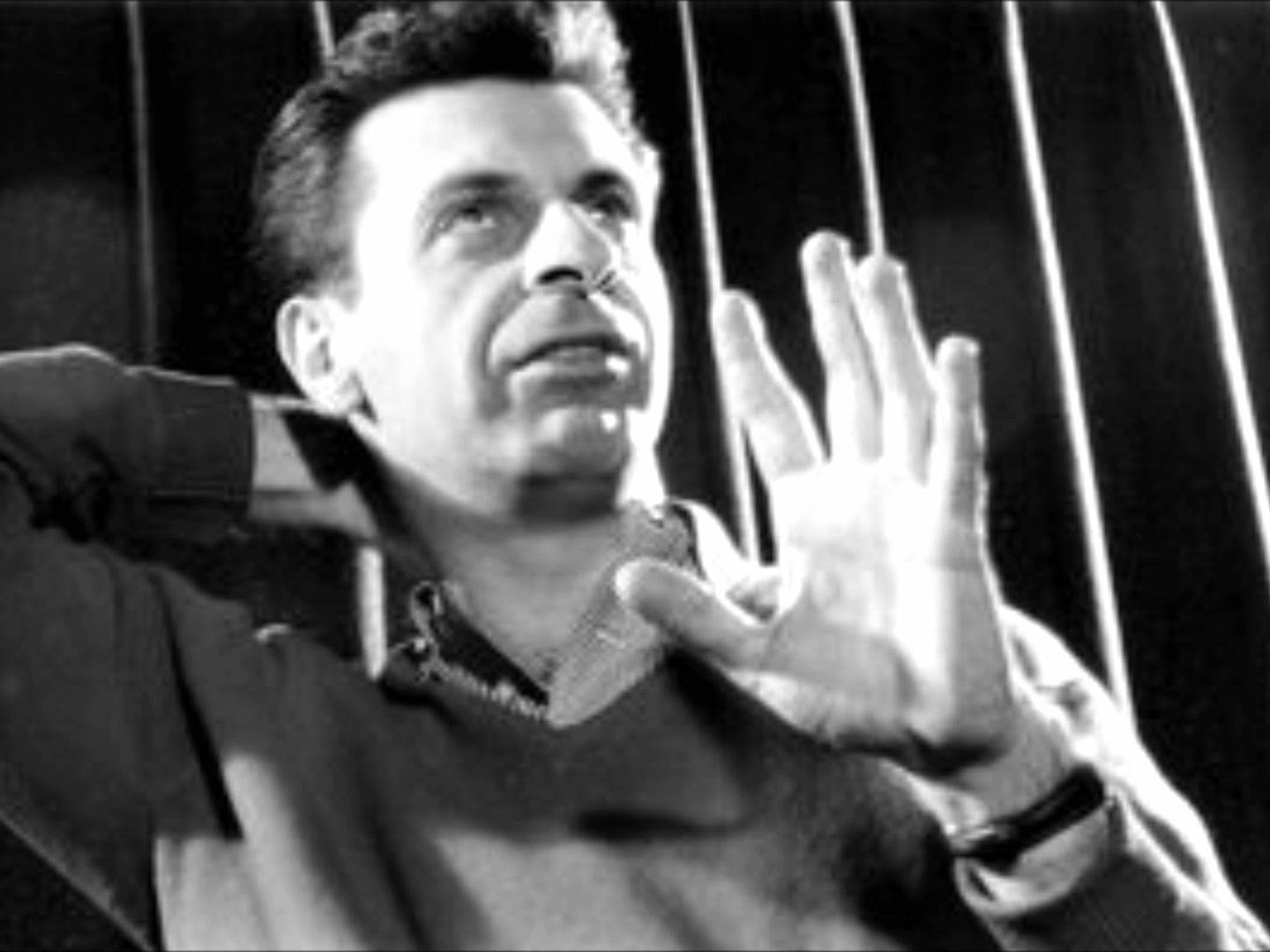
Mort Sahl Interview with Elliot Mintz
Click here for the audio
(This transcript has been edited for grammar and flow.)
Elliot Mintz:
KPFK listener-supported Pacifica Radio Los Angeles. My name is Elliot Mintz. This is Looking Out. Mort, this is just … I can’t tell you what a gas it is to have you here tonight.
Mort Sahl:
Well, we moved heaven and earth, Elliot, as you know and the listeners don’t know. There’s an abundance of riches, in addition to … First, I was doing nothing. I don’t know how many of the listeners know that. In addition to doing the show after you and I got together and we decided to do this, then of course, they called from New York and said they had a Johnny Carson show for me in that that way that they have of calling, it always sounds like Operation Headstart. They’re going to help me … Urban renewal. The fact is they have a lot of letters and they can’t hold the audience on a chain that much longer. They want to know if I’m dead or not, so they’re going to import for the show and they want to do it Monday. That would mean, of course, flying in Sunday because you have to report at noon in order to brief the producer.
So there’s no way to do it. They won’t let you fly in that day because they’re afraid of weather delays. Then they wouldn’t let me … I said, “Well, I have a show to do in Los Angeles on Sunday.”
And they said, “Cancel it.”
And I said, “I can’t do that.” And then I said, “I’ll have to cancel this.”
“Well, you’ve been canceling a lot of shows, you know, that wouldn’t look too good.”
And then, of course, the singular morality … Then I said, “What about Tuesday?”
They said, “Well, you couldn’t be on because Bob Hope is on Tuesday and he has a different position than you on Vietnam.” They told me that, so I couldn’t be on with him. And then I finally put it off until Thursday. I’ll be on the Carson show Thursday night for those of you who have a duality of purpose in listening to KPFK and watch NBC. Covering the full spectrum.
Elliot Mintz:
I think Jim Garrison once described NBC as the network who believes in the right of the people to know, right?
Mort Sahl:
He’s not afraid of them, which is enough in itself. And I spoke with Mark Lane this week who was in New Orleans and I’ll be down there later this week after the New York trip. And, as you know, he has a bribery, public bribery indictment against Walter Sheridan of NBC. Walter Sheridan has a strange history for a broadcaster. As a matter of fact, Bill Stout of CBS once put it this way to me, he said when it came to the Garrison case, NBC News had reported they hired a house detective. They hired one of Robert Kennedy’s lawyers on the Hoffa case to operate there.
Mort Sahl:
Yes. That’s who Walter Sheridan is. And he did the Frank McGee show, which was called The Case against Jim Garrison. And he went down there and Garrison has an indictment against him on the basis of trying to bribe Perry Russo; to defect to California where he would not be extradited and to discredit Garrison publicly. And Garrison also charges in that indictment that Sheridan used the phrase, “I will destroy Garrison. I’m here to destroy Garrison.” He used it many times around New Orleans. Now NBC turned that show over to Sheridan not to any of its other reporters. He felt, as he said in Playboy, Garrison that Sheridan had gone too far because they gave him equal time very quickly. They kind of backtracked.
On the other hand we find Newsweek’s continual bias against Garrison. And I want to tell all the good liberals out there that that’s your journal. Phil Graham, the Washington Post, good social Democrat. Not Time Magazine, not a fascistic magazine, but a good liberal magazine. Newsweek hired Hugh Aynesworth to cover Garrison. They said he’s an outstanding scholar having worked for the Dallas Times Herald, an outstanding scholar. For instance, in his last exchange with Mark Lane in Dallas, he told Mark Lane something to the effect that Warren was not objective about Oswald because both of them were left-wingers, extreme left-wingers.
Elliot Mintz:
Wow.
Mort Sahl:
So that’s the guy that Newsweek feels is an authority on the case.
Elliot Mintz:
I want to begin at the beginning.
Mort Sahl:
All right.
Elliot Mintz:
And follow this thing very, very closely so we can really understand not only what’s surrounding the suppression of what Jim Garrison was doing in New Orleans, but also what has been done against you personally.
Now, there was a time that you were appearing in nightclubs and making billions and billions of dollars and selling record albums and you were a comedian and the rest of it, and you didn’t talk about the assassination. Something then happened that obviously was to lead to the change of your entire life. When did it begin for you, Mort? When did you begin to begin to-
Mort Sahl:
Well, I began to ask questions about this case. I used to ask them socially and I couldn’t find anybody to answer me, but then I only mixed with liberals, you know. That’s like looking for an honest man and not having a lamp. Then, of course, I ran into … when I had the television show over at Channel 11. We had the … Mark Lane was coming to town. He was originally scheduled on the Joe Pyne Show and some benefactor steered him toward my program instead. And he did cancel the Pyne show and they were furious as well they might be, I suppose, about a commitment. And Mark Lane came on in October of 196-
Elliot Mintz:
6.
Mort Sahl:
6. Right. He came on with me and he made five appearances. Publisher’s Weekly and the New York Times agree that Rush to Judgment is a national best seller because of California and because of southern California and more specifically because of that program. And yeah, we sold a lot of books. I told people it was most important book in their lifetime. I told Lane when I met him that I thought he was the most important man in the country.
Elliot Mintz:
Rush to Judgment?
Mort Sahl:
Absolutely. And I think Garrison now has replaced him as the most important man in the country. Mark and I got along very well and the shows were good. We found we didn’t need the, you know, actors or fun and games or anything. We just have to talk and the people cared about it. We really got a storm going and because the people responded, I kept going with it. Then, of course, the KLAC show was in the works and I kept going with that. And when the KLAC show began to roll, of course, I got the first national interview with Garrison. I got 90 minutes on tape with Garrison and Lane, which I paid for my own trip to New Orleans because the station didn’t think it was worth it. After all, it was only a man investigating the murder of the President.
Elliot Mintz:
This is radio station KLAC?
Mort Sahl:
KLAC. And I went down there and I came back and I played that. Of course, there was great suppression. KTTV, the program director, Jim Gates kept saying to me, “Well, if theatrically …” So he would say he wasn’t suppressing me, it wasn’t a matter of censorship. It was a matter of showmanship and he said, “Theatrically, it’s boring. It just hearing you talk about Kennedy.” And even when I was finally fired at KTTV the first time, which was a year ago December, he came to my house and gave me my notice and said, “Your ratings are very bad and you’re going off.” And instead of leaving well enough alone, he then got nervous and said, “I think it’s because you just talked about the same thing all the time. Kennedy, Kennedy, Kennedy. We’re sick of hearing about Kennedy.” And I’m excising the profanity.
You know, as we always say, speak for yourself. I haven’t found too many people in the American electorate who are really sick of talking about Kennedy. I find people who were cowed and who are fearful. Anything that happens other than having your head blown off in Dealey Plaza is somewhat anticlimactic. Sane men have grown insane on this subject. For Robert Vaughn to be quizzed by Senator Robert Kennedy, to be pursued around Senator Kennedy’s mansion, “Why was Mort Sahl fired? Why does he claim he was fired?”
And for Robert Vaughn to say, “I was fearful of the interrogation, so I said I didn’t know.” And then for Robert Vaughn publicly to declaim , “As a matter of fact Senator Kennedy is a very busy man. He has the world on his shoulders and he doesn’t have time to even know who Mort Sahl is.” I know what makes people move this way, but I have found some continuity of integrity on the part of people in any issue but this issue.
Now I’m skipping here chronologically, which I don’t mean to do on you, but-
Elliot Mintz:
Let me raise a question.
Mort Sahl:
Yes.
Elliot Mintz:
At its peak, your KLAC telephone talk show and the KTTV television show. What were the ratings like? What was the audience response?
Mort Sahl:
The ratings on the television show were good and healthy and I think that it’s important for the audience to know that we presented 30 to 40 minutes of sketches every week and I wrote them and I produced the program myself and I was in the office seven days a week and I did all the monologues in between and I booked the guests and I was on there for two hours. I spent seven days in that office and I made $600 a week gross.
Now that’s a pretty cheap way to bring the show, which is sold out on sponsorship. No sponsors complained and you must be very guarded about that. When you hear remarks like KLAC made about our biggest goal is to have no sponsors. It has become a device in our society because there is an argument of the new left that capitalism will censure people it sponsors. It very seldom is the sponsors.
Elliot Mintz:
How were your sponsors on the program?
Mort Sahl:
I never had any trouble in television. We were sold out and they never complained. We even kidded them, especially the used car people. We were sold out. Gates himself said at the end of his show that when he finally discharged me for something he called insubordination, he said, “the ratings were healthy and the show was a good entertaining show, but this guy can’t follow direction”. That said many times, and of course that may be said with a gleam toward heading you off at the pass so that no one else will hire you because it is a limited industry to begin with. Limited in courage, limited in perspective, limited in goals.
When the radio program was on at the same time, of course, I had Harold Weisberg on, I had Lane on, and we rang up tremendous ratings. Jack Thayer, who was the potentate at KLAC, brought their ratings by in the evening shift at KLAC, had a 17.7 the last time he brought them by, which meant that we passed KHJ. People were really listening. Why were they listening? Because I was talking about their President, whom they love. I was talking about the draft, which is every young man’s stake, and I was talking about where I thought it was at because I was taking their pulse. Now, because, so they … Of course, in the superstate, to paraphrase Garrison, they must drop you for not communicating.
The fact is they dropped you because you do communicate. That’s the real grind. To reach other people. I was never such an extraordinary man until I became an ordinary man and joined the people. When I began to express really what was on their minds, but I took a different course of action. I took a course of action that satisfied me. Now when they dropped the radio program, they gave me no notice. The night they chose, I said to the audience, “Should I disappear it is not voluntary. I’ll stay here as long as you need me and you want to talk to me. And if I disappear, you must rise as an army. It is non-voluntary.” I played Kennedy’s inauguration, Roosevelt’s inauguration and a Garrison speech for 20 minutes. And the next day I was told not to report. The agency that represented me at that time did not contest this. We’re to gather they’re not interested in money in a capitalistic society?
Elliot Mintz:
Which agency was this?
Mort Sahl:
Creative Management Associates. They did not rise as an army. In fact, one of the executives up there quoted me a story by Jill Sharing in the [Los Angeles] Free Press. It’s good to know they read the Free Press, isn’t it? It’s amazing, huh? They don’t quote it when it’s not convenient though. It’s got to be the Free Press on their terms.
Elliot Mintz:
They’ve got to figure out some way, you know, of bringing it back home on a personal level.
Mort Sahl:
That’s right. Document it, bring it back home. Very well put. They dropped the show and somebody … I guess I shouldn’t betray the confidence. Somebody who’s influential here in town said to me, “You’re going to be dropped on television now. The only difference is the first time you were fired,” and a lot of you remember this. When I was fired on television, I talked about it on the radio.
Elliot Mintz:
Mm-hmm (affirmative).
Mort Sahl:
The station got 31,000 letters and reinstated me. This time-
Elliot Mintz:
31,000?
Mort Sahl:
31,000 in three days at one source, Jim Gates. I got a couple of thousand myself up in Las Vegas at Caesar’s Palace and other people at the station got letters. That was the core of them in three days. This time they cut the live show, the radio show.
Elliot Mintz:
Mm-hmm (affirmative).
Mort Sahl:
And then the television show was controlled by tape. So I immediately received a letter saying, “You’ve been fired on radio. That is regrettable. Do not discuss it on television. If you do, this will be insubordination.” And then I got a series of letters for record that would come every day, special delivery from Jim Gates at KTTV, and they would say, “Do not discuss this.” KLAC maintained that “Mort is gone but anybody’s free to … He has his platform at KTTV”.
So Mark Lane then directed one of the young men on the Citizens Committee of Inquiry, which I want to talk about later, to call the station and say that it is obvious I’m the only public platform for the district attorney in New Orleans and therefore it is his opinion that that contributed to my being fired. They wouldn’t let the young man on the air. So since they had said I had my own platform on television, I put him on television. So they erased him from the television tape. They sent me another letter and said, “You cannot bring this up. You’re not to discuss the radio station.”
So I checked with an attorney and the attorney said, “That means that in their interpretation for them to beat you with chains and for you to go on the air and if someone in the audience says, ‘What is that scar?’ And you said, ‘They hit me with a chain,’ that’s termed ‘disparaging’ by them. You have a right to express yourself under an FCC license granted to Channel 11 as long as you don’t disparage them.”
So I went on the next week and I said, “That tape was erased.” The young man was on there, so they erased that tape.
And they sent me another letter and they said, “If you mention anyone at this station by name or by title or refer to the fact that you have a radio program, you will be fired.”
That day I was in the office and Garrison called me from New Orleans and he said, “I have an exclusive for you to break on the air. I have eyewitnesses placing Ruby, Oswald, and Shaw together in Baton Rouge. Eyeball witnesses.”
So I went on the air and I told that on the air. And I mentioned for about three minutes, about the radio program that I isolated so that if it was cut out they could see the rest of the show, which was funny. It was a good show. Biff Rose was on. Phil Ochs was on. Hamilton Camp, Joyce Jamison. They erased the entire tape and sent me a letter the next morning firing me for insubordination in mid-contract at a time when they owed me $83,000. So that’s a capricious form of behavior you might think for a large organization.
But they saw fit to do that over this issue. They saw fit not even to call me in, and I want to make a point here that this is not capitalism. You know, “shape up or ship out. This is the way we do things.” This is a different form. No one came to me and said shape up. It was just over. No one spoke to me. Nobody. Just the vast silence.
Elliot Mintz:
My guest is Mort Sahl and we’ll continue with much more.
All right, so here you are at KTTV and KLAC with incredibly high ratings, 31,000 letters received in a period of three days, and having turned Los Angeles on to obviously the most important issue of the day. And you were fired you were through. What was it like after that, Mort. Did you start to go around and look for other jobs right away?
Mort Sahl:
See, KTTV, this pending legal action, I’m going to the union for arbitration through AFTRA, which I’m a member and have been for 15 years to settle this. So I’m not saying there’s a correlation between what I said about the assassination and what happened there, but the assassination is not my first experience at twisting the arm of the establishment and it’s not my first experience at being threatened or paying for it. I’m the same guy who was on the cover of Time Magazine August 8, 1960. I’m the same guy who emceed the Academy Awards with Laurence Olivier, Bob Hope, Jerry Lewis and Tony Randall in 1960. And I’m the same guy that had my own show on NBC a few years ago. I’m the same guy that’s been under contract to all three networks.
Now, what was the attitude? You know, we have to use a very broad canvas, not a broad brush here, to see what the attitude is here. I am submitted to network shows at the same time because I have a national reputation. When I was submitted to the Dean Martin Show, the agent said, “Oh no, not that guy. Never. Because he’s making speeches and he’s gone crazy on that subject.” I’ve gone crazy. It’s only a couple of years that they were selling Kennedy to me. They thought I was for Stevenson. That’s because I like to know who I’m voting for. And I confess, when I meet a stranger, I don’t condemn them, but I ask who he is before I vote for him. That happened to me repeatedly. And of course, you know, I saw the whole liberal syndrome.
I tried to call it the way I saw it in Los Angeles and there were many subjects on that program. And while I want to stay with the assassination tonight, I just briefly want to point out that everybody knows who they are and that since god put me into the role of holding the mirror up to Dracula, who knows very well what he looks like anyway. They didn’t stand up to be counted when they were needed. I made the appeal. I stood up there and I said, “You know who you are and you know the fight I’m in. What’s at stake is America.” That’s the reason that when Budd Schulberg went to Watts and sold the television show off it or two of the articles to Playboy, I pointed out that Bud Schulberg knows better. Before he knew the history of the Negro people, he knew the history of the Jewish people, and he knew the history of the Un-American Activities Committee and that we must all face ourselves.
Now that wasn’t pleasant for everybody, but we have to say it on the air. I talked about all the ex-left in Hollywood and what they have become since they joined the establishment. They haven’t become right, they haven’t become anything. They had become eunuchs and I wanted to remind them and ask them if it was worth the price. Because as Garrison says, in the Faust legend, the price is you. I pointed that out. I pointed out that the country is going down the tube because we’re not … We have no hope. We have no optimism as we had under Kennedy and we’re trying to rationalize the war. I pointed out, as unpopular as it may sound, that there’s a vast store of Jewish people in this city who have turned their back on their commitment, which is survival, who have gone the other way, and who will give Ronald Reagan, a standing ovation in the Hollywood Bowl because he says the right things about Israel.
Well, I suppose everybody will, including Omar Sharif and Danny Thomas, the only two Arabs in the show business community. But as hard as it is going down, again we have to point out that the Jewish people–and I know some here who even fled from Hitler–come full circle now and not only rationalize the war in Vietnam, but make the same error they made in Germany: that if they have enough money, they will buy out. Garrison is painting a picture of a neo-Nazi group and as Jack Ruby raved on toward the end in the jail: I helped them because it was a money deal, but I see I’m helping people who will burn my people.
There are Jewish elements, Jewish liberal elements, that turn their back on the President and they know better. And I know some people out here and they’re in this industry and their answer to me is a large blue pencil drawn through my name in case I can get a job. And imagine that all they think they can do to a man in America is take away his right to make a living. In between, of course you’ve got the all the liberals with their knees knocking, looking the other way. I’d tell you something about the issue if I knew anything about it, but I don’t know. Well, I’m sure that they do. In fact, those who are most fearful are those who come up with the worst conjecture. Yes, I found myself completely unemployable. Completely.
Elliot Mintz:
You couldn’t get a job anywhere.
Mort Sahl:
Yeah, nowhere. You know-
Elliot Mintz:
What would happen when your agents would call the nightclubs, TV stations, or-
Mort Sahl:
What would happen is – America’s not Germany and it’s not well enough organized. So sometimes guys fall in the trap and a guy would call you and offer you a job on Friday and by the time I get back to him on Tuesday, he would’ve changed in his mind.
Elliot Mintz:
What happened in the interim, Mort? Who would make the telephone calls to the booking agents?
Mort Sahl:
Well, I did. Then after a while, I didn’t.
Elliot Mintz:
No, I mean, who spoke with the booking agents and the people who could give you employment and say, “Don’t touch Sahl?”
Mort Sahl:
Oh, you mean from the other end?
Elliot Mintz:
Yeah.
Mort Sahl:
Well, several people. A vice president of a network here in this city, and there are only three, said to my agent, “If I try to use Mort,” he said, “whom I respect, I’ll lose my job.” That’s a man with seniority I might add at the network.
Vice president of a leading motion picture and television studio here said, “Don’t ever mention his name in this office.” That offended. That offended by it.
Elliot Mintz:
Were they functioning independently, Mort, because of their own hang-ups or with somebody … like who threatened the vice president of the network?
Mort Sahl:
Well, you don’t know… It’s hard to be both, as I told you the other night, a corpse and a detective too. 15% of this puzzle is missing because people won’t come out of the bushes and say … They will come out of the shadows and say, “We are conspirators.” I don’t believe that the government calls everybody. I think that people are sufficiently corrupt and enjoy a mutuality of interests that they will behave as they do.
One of the leading television commentators said to me when I said, “What are you going to do about the Garrison case?”
He said, “Oh, I’m going to stay away from him.” He told me that openly, but that would be his course. That would be his fearless course of informing the American people of who killed our President.
The best way, of course, was for everybody to call me paranoiac and to look the other way. And I’ve had some pretty important people tell me that, because what can they do? Can they admit, again, that this is not the best of all possible worlds? Because then they might have to do a patch and we’ll have to do a repair job. But they’re not prepared sufficiently to even sweep the room and take care of it, be custodians of the room hygienically, let alone re-paper the walls and make some improvements on the property. They are all by and large a gutless breed. There are several levels here in Hollywood. There’s the level of “I’m not talented. He’s having bad luck. It might rub off on me and I’ll really be in trouble. I better keep away.” The straight opportunism. But there are some remarks that are hard to answer. There’s Bill Cosby who said, “I have a wife and kids. I can’t be seen with him.”
Elliot Mintz:
Wow.
Mort Sahl:
How’s that? How’s that? A wife and kids and I addressed my remarks to him one week. I said, “I’d like to know what you’re going to leave your wife and kids. What are you going to leave your kids in America?” We have America. That’s all we have. And the signs are that we are losing her.
Elliot Mintz:
Mort, what about your friends? What happened with them?
Mort Sahl:
My friends?
Elliot Mintz:
Your close friends, people who-
Mort Sahl:
Well, they vanished. I know they’re around because I go to see them in pictures all the time. But I’m glad that they’re still available to me on film as my memories are treasured.
Elliot Mintz:
Really? Was it really like that? I mean, right now-
Mort Sahl:
There was a social ostracism. What friends do I have now?
Elliot Mintz:
Yeah. How many people could you call now and say, “Hey man, I’d like to get together with you and rap,” you know?
Mort Sahl:
Well, you’re the newest. I would say Mark Lane, Jim Garrison, Maggie Field and Enrico Banducci at the hungry i.
Elliot Mintz:
I’m in pretty good company.
Mort Sahl:
Man. I wouldn’t go back for anything. Last week I was here negotiating for something and I had to go out to dinner. It was very interesting. I walked into a restaurant in Beverly Hills and you only have to, you know, take a flight of fancy with me now. You got to remember the breed which I was, I came down the pike and I was a great threat in 1956, ’57 and they denied me and then, of course, I made it stick with the people. So then they tried to absorb you and I was everywhere, you know, and put his footprints in the cement at Grauman’s Chinese. I emceed for television. I’m that guy, I’m the guy, I made pictures and I did television shows and I addressed people at campuses. Okay.
So I went to the dinner and I walked into a Beverly Hills restaurant and my former manager was there, who still handles the affairs of Peter Lawford. He’s the guy who once threatened me with never working again in America.
Elliot Mintz:
Peter Lawford?
Mort Sahl:
Both of them. If I didn’t stop kidding President Kennedy. They loved him, you see. They also, these same people, then changed gloves from the left hand to the right hand and see that you continue not to work for asking who killed him. President Kennedy is very lucky that I can be objective, at least his memory is, that I can be objective about it. I didn’t love him so I can give full time to finding out who did him in. Fantastic.
Elliot Mintz:
You knew him, didn’t you?
Mort Sahl:
Yes, I did. And I wrote for him for 19 months. I said that on KLAC. Senator Kennedy, as I understand it asked Mr. Vaughn if I ever claimed that and Mr. Vaughn said, with the customary courage, “I don’t know what he said.” Well, I said it. In fact, Senator Kennedy’s had the opportunity to ask me. And for those of you who can’t get a framework on this, you must remember that I go into the White House at will. I repeat: at will. I ate with Senator Kennedy last May and I ate with Lyndon Johnson the May before that. I was in Washington for five days in July. I went to the White House. I walked through the gate. They know me, they know me and I refuse to go away. I’m like a very persistent epidemic.
Now back to the point. So I walked into … Well, it’s interesting in light of having that access and then doing a local television show and having people running for Congress using me in the most opportunistic vein. If nothing else, they should not think that I’m a fool and they should not think I’m ambitious on the level of the House of Representatives. I’ve rejected the best, you know, so if I’m a neurotic, I’m neurotic A1. Zero cool. But anyway, back to back to the … Yeah, and I forgot to mention I used to sit in with Senator Fulbright in the afternoon at will, who I really dig. Although I’m sure that a lot of liberals out there think he’s a racist. That’s their way. At any rate.
So I walked into Stefanino’s and I walked in with a good guy to talk some business and there sits a Mr. Evans, who doesn’t say anything to me. I’ve openly accused him on the air.
Elliot Mintz:
Who is Mr. Evans?
Mort Sahl:
Mr. Evans is Mr. Lawford’s manager, used to be my manager.
Elliot Mintz:
I see.
Mort Sahl:
Confidant to the President at a certain recreational level and who now thinks, “That guy’s killing himself by discussing the subject, the assassination. He’s doing himself in. He’s self-destructive. It’s a terrible thing to watch.” But they watched it every Friday night as long as it was on. He’s sitting in that restaurant. When people came through the door, actors who know me and know him and they refuse to speak to me during the evening. They averted their heads. There’s that much terror. And then a manager came over to me, he used to handle Georgia Harris and he said to me, “Hey, listen, I’m not with the hate group.”
And I said, “The hate group?”
She said, “I don’t care what anybody says, I’ll use you. I’m going to do a picture, there might be a part for you. I don’t care what anybody says.” That’s in reference to paranoia.
The next night I was in a restaurant called Dominic’s to further conduct business, which is great in restaurants. Jim Arness came in, very jovial, good guy, but then he’s a conservative. You have nothing to fear. He couldn’t get near you because he couldn’t find your body beneath the liberals pounding it. There was a George Axelrod, who used to be my friend, who two years ago asked me to direct a film for him. He now says, “You used to be America’s conscience and now you’re America’s insanity.” That’s his reply to my plea to clean up the Kennedy case. Because it started as a toothache. It is now an abscess and eventually the patient is going to die. You have no way to get away from Jack Kennedy. You chose him and you rise with him as the phoenix or you go down in flames with him. Sorry folks. But that’s the deal.
Now I watched all that last week. Those are all small examples, but they’re the microcosm of the whole thing. The people who are fearful to talk to you, who ask you questions and who run away from you. It goes all the way down to the actors who would run into me in Carl’s Market or the Mayfair on Santa Monica at two in the morning. It was open that late, and they’d say to me, “Hey, what’s with your friend Garrison? He better get his head examined.”
And I’d say, “In essence, this is what’s with my friend Garrison,” because the Playboy thing was in the works, the interview was coming. I’d say, “The president reached an agreement with the Soviet Union about Cuba among other things. And he’s sent the FBI in to bust the anti-Castro Cuban exile groups’ training. And the next day the CIA gave them a blank check to go ahead and countermand his order. And that conflict is what brought the government down.”
People say, “You’re preaching rebellion.”
I say, “We had rebellion. The government was overthrown in Dallas for all we know.”
And then they run off into the woods and I’ve got them coming and going, man. I got them boxed in both ways. If they accuse Johnson, which a lot of them want to do because they want to help Robert into the chair, then I say, “There’s no evidence connecting Johnson to the case and if there is, why are you nominating him and rationalizing the war in Vietnam?”
Or then they come up to me and they say, “Well, if all of this is true, aren’t you afraid?”
And then I say, “No, because a lone gunman did it in Dallas and he’s long gone.”
I’ve got them coming and going because they have no position. But I tell you that I knew everybody in this town or know just that I don’t see them. And there is no studio open, there is no television, there is just a vast uneasiness because they have to meet you. They have to meet you because the plan isn’t complete. Eventually you’re going to get an invitation to a screening or a premier and you’ve got to meet them in the lobby. And that’s when they got to begin tugging at their collars. When Garrison came out here the last time to set up this thing on Eugene Bradley, everybody thought all he was doing was sitting in the Daisy. That’s what he was doing. I took him into Daisy, and we sat in there and all the actors who said I was crazy, and all the comedians, three or four of them in rebellion could have turned the tide, ran up to me and asked to meet him. They’re all on his side because he’s here.
Can you imagine what’s going to happen if he wins? I’ll tell you all out there, and you all know who you are, what’s going to happen if he wins. First of all, we’re going to get the country back. I like that part.
Elliot Mintz:
Yeah.
Mort Sahl:
But there’s going to be a terrible retribution for those of you who denied him and think that your liberal credentials will let you change hats. You know, General Smedley Butler, the Marine Corps, talked about the revolution in Nicaragua. The vast majority of peasants had no political belief and they used to wear … the rebels had a red hatband and the fascists had a blue hatband. And most people who are smart had a hatband that was reversible.
Garrison has charged that all the attorneys defending all the people in this case are retained by the CIA. And he stands flatly on that charge.
Elliot Mintz:
Now the cat defending Edgar Eugene Bradley was a former FBI man wasn’t he?
Mort Sahl:
I noticed that. Yeah, yeah, as a matter of fact, I noticed that too. Also the New Orleans States-Item pointed out this week, which our papers missed here, that Dr. McIntyre, Bradley’s associate there, has been active in a draft “J. Edgar Hoover for the Presidency” movement. I haven’t heard anybody bring that up since Walter Winchell. I’d hate to see Hoover step down to the presidency. But you know if that’s the will of the people let it be heard. Anyway, as Garrison always says to Mark Lane, he says, “Your sarcastic remarks about the director have made my job insufferably difficult.” But at any rate-
Elliot Mintz:
Let me interrupt for a second.
Mort Sahl:
Yeah.
Elliot Mintz:
Tell us just about J. Edgar Hoover.
Mort Sahl:
Hoover. Well, Hoover’s now 73. The mandatory federal retirement age, I should say, is 70. Johnson waived it for him. Well, of course everybody says … I mean the folklore is that he has so much on everybody that nobody can throw them out. He’s been in office 44 years.
Elliot Mintz:
44 years?
Mort Sahl:
44 years, which means that he looks upon the President as transient, for one thing, and as Garrison has said “he’s the finest director the Bureau has ever had”, and also the only director that the Bureau has ever had. So that’s fantastic. Of course the Bureau, who Mark Lane says is run, and most people agree, as a Gestapo like organization; because it reflects the views of that one man who runs it and nobody messes with him. No one ever has. All the Attorney Generals walk down the hall to his office. He doesn’t report to them. The only one to tangle with him was Bob Kennedy. That was about the only one.
Elliot Mintz:
What is the relationship like between Bobby Kennedy and J. Edgar Hoover.
Mort Sahl:
It isn’t very good. As reported in Look Magazine, when the president was killed, Hoover informed Bobby Kennedy; called him at Hickory Hill and he said, “Your brother’s dead,. He then hung up. Bobby Kennedy wanted to make certain that he realized that he was the boss; which is certainly right along with being Attorney General. By the way, as Garrison’s pointed out. Robert Kennedy had the right to arrest the members of the Warren Commission as accessories after the fact, and ask that they be hanged, which I do not believe he did, although I haven’t gone into the record.
Elliot Mintz:
Why? Why is Bobby Kennedy walking around with his mouth shut?
Mort Sahl:
I don’t know. There are several answers. One is that, of course, the best source would be him. We would have to ask him. The second is that the elements are so terror ridden that they would kill him if he said anything. The third is that it was a fait accompli and all the people in the government were then told, “It’ll be anarchy. You must go along for the good of your country.” In other words, it’ll bring the country down if they know what happened. Although ironically enough, the way they brought the country up, they brought the country down. We now not only doubt the CIA, we doubt everybody. There are people who say he has a deal with the President to carry on in 1972.
But I will say that he has an amazing lack of inquiry about this case. When I was interviewed in Washington by Jeremy Campbell for the London Observer, funny how you’re heard in America. I was interviewed in Washington by the London Observer and the San Francisco Chronicle picked up the story and ran it on the front page on Sunday. The front page it says, “I know who killed Kennedy says Sahl,”; front page three columns with a photo headline.
I never heard from Robert Kennedy about that even to admonish me for being irresponsible. Mark Lane has never heard from him, and certainly Garrison has never heard from him. In fact, there’s evidence that he’s tried to bulldoze the Garrison investigation. It was reported to me last May when Robert Kennedy was out here, was a dinner at which were present, Pierre Salinger, Andy Williams, Milton Berle, Robert Vaughn, and Ed Guthman, who used to be an administrative assistant to Robert Kennedy. He is now the national editor of the LA Times. And you know their view on Garrison.
Elliot Mintz:
Mm-hmm (affirmative).
Mort Sahl:
The only time they give up that cartoon section, they let Johnson offer it, is to go after Garrison. Guthman got up and said, “Gee, Mort’s through in the business and it’s a shame. He committed suicide by hanging out with Garrison and Lane.” First of all, I appreciate their concern for the postmortem about me and I appreciate the judgment that I’m through. And I wonder what would make them say that. I wonder why Garrison and Lane would be the enemy. They’re only acting as patriots. They’re proving that they love their president. Not because he’s a dead president. He’s not a remembered president or a spirit in this country.
Elliot Mintz:
Mort, so you believe Bobby Kennedy right now has a pretty good idea who killed his brother?
Mort Sahl:
I don’t know. I don’t have any idea. Garrison has said that there is no way that the President would not know what’s going on here, which is not to say he’s a conspirator. No way. I don’t know how Robert Kennedy, I don’t know what he knows. I have no idea. He’s quite enigmatic about it all.
Elliot Mintz:
You believe right now that President Johnson has a pretty good idea who killed Kennedy?
Mort Sahl:
President Johnson, of course, he must know. Just from an overlap of information, he must have some information. He must know that Lee Oswald did not do it. He has to know that. In order for this immense cover up to go on. So does the Vice President.
Elliot Mintz:
You’re listening to KPFK, listener supported Pacifica Radio, Los Angeles.
Mort Sahl:
So we walk up to the house, there’s a tricycle in the driveway, and we knock on a door and Garrison comes to the door in his bathrobe because he had the flu. And I put my hand out, I said, “I just came down to shake your hand.”
And he said, “I hope you’re going to do more than that.”
That was the beginning. And we sat down and we talked to him until about 4:00 in the morning, and we talked to him about everything. He’s got a great oratorical style, you know, and he’s a true believer. He really is in the liberal tradition of this country, which some people would call a liberal-conservative tradition, but prizing the individual against federalism. We went there on successive nights and he brought the detectives over to meet us, the guys working, among whom was Bill Gurvich, who later defected. You recall, he made a statement to the press defecting after he left Robert Kennedy’s office.
Bill Gurvich who said, “Clay Shaw’s being railroaded and Garrison has no case,” was in the office and he told me with great relish how they got Clay Shaw. How Clay Shaw had come in. I asked him to come in and Garrison said, “I’m charging you with conspiracy to murder John F. Kennedy,” and Shaw said nothing. The perspiration broke out on his upper lip.
And he said, “I’d like to go home and consider this.”
And Garrison said, “I don’t think so.” After looking at Andy Sciambra, his assistant, because he knew that the guy wanted to clean out his apartment, they always know that. So they went to the apartment. Of course they got the whips and chains and the executioner’s gown and the shoes in the shape of coffins, which he said was a Mardi Gras costume. But of course the shoes had never touched the sidewalk. Nothing but a carpeted floor.
Elliot Mintz:
The shoes and the shapes of coffins?
Mort Sahl:
Of coffins. Then Gurvich told me that he was going to get Sergio Arcacha-Smith, another one of the Cubans who was in Dallas, but Governor Connally had not extradited. He was going to go down there. He said, “If we get the extradition, I want to go get him.” He said with great relish.
I said, “How much is involved in going into Dallas to bring a guy back?”
And he said, “There’s nothing involved.” He said, “I go down there and I knock on the door and he comes to the door and I say, “I got you Arcacha.’” And he said, “Then we come back.”
And I said, “What if he resists?
He said, “I hope so,” and we all laughed a lot.
The detectives would come in Garrison’s den, which has a bust of Bertrand Russell up there, which the press doesn’t tell you. The press says to you Garrison has a picture of Napoleon. Yes he does, but he also has a bust of Bertrand Russell. And he quotes from Hamlet a lot. We found out a lot of things about him. We found out that when the Doubleday stores in New Orleans had James Baldwin’s book, Another Country, they censored it on the basis of pornography and were going to close the stores. And they asked the district attorney to prosecute the case. Garrison called the guys that had the store and he said, “What are you going to do? You’re going to fight this?”
They said, “No, we’ll just pay the fine and reopen.”
He said, “You can’t do that.”
And they said, “Why?”
And he said, “Because next time they’ll burn your books.” And he helped them win, even though he’s a prosecuting attorney.
So we found out a good deal about him and his character. And the guys were walking in and out, a lot of the guys were voluntary because he only has a staff really of four.
Elliot Mintz:
Four people-
Mort Sahl:
Yeah, in the office. He’s got the greatest DAs office in the country before this case. I mean, he says he has no gray mice. They’re all lawyers who fight, who are very hard to come by, because if I wanted to name a profession that’s the lowest I would have to say the legal profession.
Elliot Mintz:
Why do you say that?
Mort Sahl:
Well, they really are the prostitutes of our time because their passion can be purchased. And because the ones I’ve met are all star struck. They talk about the scales of justice, but boy, it’s no accident that she’s blindfolded and that her dress is tattered. They are unbelievable. Anything goes.
I had a lawyer out here for 10 years when the President was killed. He used to give presents to his clients at the end of the year. I mean, he’d send you a picture or plastic glasses. And when the President was killed, he sent a card out. It said, “Because of our great loss this year, we’re going to send the money to a donation and some of the gift to a clinic for mental health because it was a deranged person that took the life of our President.” Perfect liberalism. All looking the other way.
There wasn’t one member of the American Bar Association who said anything about defending Lee Harvey Oswald. There wasn’t one member of the American Civil Liberties Union that went in to defend Lee Harvey Oswald. And because, as Garrison said to me in the den that night, we lost an adversary proceeding because the law wasn’t protected by lawmen. Then we not only lost our President, we lost our justice too.
Elliot Mintz:
Mort, we come to the point, I guess, in any discussion about this particular subject. The inevitable reality that we must confront ourselves with, however difficult that might be. Who killed John F. Kennedy?
Mort Sahl:
Well, as far as we can tell … I must tell you that Garrison has every confidence he’s going into court February 14th, which is a month away. I expect he will. But the scenario points toward a coalition of anti-Castro, Cuban exiles, oil rich psychotics, according to the district attorney in Texas, retired militarists, various voices of the right. That is at an operational level of the conspiracy and at the planning level. The Cubans were a good setup up because they were disenchanted with the Kennedy administration and also they were lawless. You’ve got to remember that these informants who worked for the CIA along the way, if you have government by hoodlum, what are you spawning? Every cop we know in LA has his contacts on Main Street or East 5th Street. He’s got junkies and pimps and peddlers, et cetera. But he knows what they are and he keeps them within perspective to work for the greater good as they say.
The CIA keeps them on staff for 20 years and gives them a watch at the end of their service and that’s the difference. This undercover thing of doing what you want to, and countermanding orders of the President, and writing blank checks, and not being checked by the Congress, spawns a government by hoodlums. That is not to say that the government subsidized the assassination. We don’t know that and Garrison denies it. I said, “Why do you say ex-CIA men?”
He says, “Because I can’t conceive of anybody in my government wanting to harm the President.”
But the point is somewhere along the line we gave up. We gave in when the government said, “We know better what’s good for you than you know for yourself.”
That’s why the liberalism of today, whether it’s Lawrence Sherman in the 28th District saying, “I’m going into the convention with a B-slate,” or Robert Vaughn saying, “The wars, the aberration of Lyndon Johnson and not Robert Kennedy is puny,” or Carl Reiner saying, “Dick Van Dyke and I are going to host a black tie party at the Daisy for Eugene McCarthy or dissenting Democrats.”
This is 20 years too late, man. They’ve been drafting people like you for 20 years. So that eventually 435 honorable men in the Congress don’t even object, and nobody votes against the Un-American Activities Committee, and nobody says anything about the war, and nobody says anything about anything, and nobody says anything about murder in the streets. I’ve been crying fascism, fascism. How much success, how heady was the sensation, and how intoxicated with the fascists in this country to get to a point where they thought they could go ahead with this boldest stroke as killing him in the street? Well, obviously what makes them think they can get away with it? The experience of getting away with it over the years! They tend to get power drunk because they’ve been successful. It gets crazier and crazier. They’ve extended fascism without challenge for so long in this country, a generation since 1945, the dark days, this long night started with Roosevelt’s death. You can chart the whole thing and it gets to a point where a whole generation doesn’t know any better.
Robert Kennedy talks about a massive retaliation and communism and capitalism and vehicular capability. You’re brought up on those terms, man. You can’t even tell when somebody is jiving you anymore because it’s 20 years of madness.
As much as my Jewish friends aren’t going to like it, the German people weren’t born crazy. They were made so by their government. They were made in the form which is most convenient to that government, which is fascistic, which broke the backs of the unions and used the anti-Semitism as a dodge. Same thing is happening here. They’re trying to drive the American people crazy. I’ll tell you something: I think they’re succeeding. There’s great evidence in the barbarism of day-to-day life and in the lack of direction and the degree of a lack of mental health in this country.
I’m not suggesting going to a psychiatrist because most of them are sellouts too. Sad to say because they know better, but all they want to do is to repair you and get you back on the line to keep punching out Mustang frames. That’s the trouble.
Look what you have here. FDR dies. What was the plan? To make Germany an occupied agricultural state. But what happens afterwards? Truman goes into office and he forms the Defense Department, the Marshall Plan, he aids the fascists in the hills of Greece to “stop communism”. He founds the CIA in 1947. He gives J. Edgar Hoover a blank check, and they go ahead with the Un-American Activities Committee and they start the witch-hunts. And McCarthy comes on and bombs and the Japanese people, civilian areas, atomic bombs. And the Korean War, the bold stroke, anti-communism. We will not tolerate it anywhere. The Truman Doctrine outside the Western hemisphere. And Russia and Korea and China and Vietnam and Santa Domingo. You can see it step for step. 22 years of fascism. So that the country becomes a colonial power.
Now, of course we’re not made for that because that’s not our tradition. So that’s the conflict. That’s why everybody’s hung up. And they say, “Well, why do the kids look so weird?” Because you’re driving their body in one direction, their head is going in another. They’re being pulled apart. We’re not made for it. We weren’t measured for an SS suit. Man, if I was going to form a fascist state, I would go to the Germans. They’re set up for it. It’s like Sinatra told me, “Buy a record company, don’t found one.” He bought one that was set up already.
You have to be efficient. He had a commitment too, by the way.
Elliot Mintz:
Sinatra?
Mort Sahl:
I don’t hear from him anymore. I don’t hear from anybody anymore. Where are all of you or don’t you care? Because I don’t know where you’re going live. You only go to make a movie in England for three months. That’s almost closed. Where are you going to go? You can’t hide in Switzerland. You know you are an American. You’re not going to feel that good. Everybody says, “Well, if you’ve got enough money, you’ll feel good anywhere.” It’s really not true. There isn’t anything quite like America, and especially if you’re an American, you’re really going to miss it. I know you take it for granted, but you’re going to miss it. You’re going to miss the sun coming up in the morning. You don’t think so until you’re in the Holocaust and of course it’s too late.
But to get back to your question, to stop theorizing for awhile, this group of neo-Nazis who have brought us fascism in the name of “National Security”. The facts on who shot the President are in the archives because of national security. Everything is national security. The CIA’s national security. The FBI is national security. And meanwhile you don’t recognize your own country. Look at what we have. Think of America as a body and think of the pressure points in a first aid class. Mark Lane is saying to you, “I’ve got his pulse in the left arm and it has an accelerated pulse.”
And Jim Garrison has got the right arm and he says it. Mario Savio is up there by his right temple and he says it, and Stokely Carmichael is down by his left ankle and he says it. Adam Powell says it in his own way. Everybody tells him, and [Bob] Dylan tells them and none of these guys know each other. They don’t hang out together, as the saying goes. They say the same thing. They have that in common. The patient has a high fever and an accelerated pulse, and I can’t find anybody who cares about this guy.
They talk about heart transplants. They don’t care what happened to America. That’s what it’s all about. You don’t have to love your parents. I’m not demanding that. Miss Liberty. What about it? What about the pursuit of the American dream? An awful lot of good men died so that a good many of you can sit out there and think about whether you want to sell out or not.
I’m worried that it’s too late for you to sell in. That’s what really terrifies me. I don’t know whether we’re over the hill or not. Naturally, I’m going to get up tomorrow and go after it the same way. The bell rings, you come out of your corner swinging because we’ve got to keep trying because this is all we have. But it is evident, you know, nobody has to be naïve about the elements in this country. Why did I indict liberals earlier, the so-called Social Democrats in my routines when I say the far right? Because there aren’t enough evil men in this country. Their army, they are the generals, but the privates in their army, the vast ranks of the unwashed, are the liberals. In other words, evil men can only do evil because of the indifference of good men, to paraphrase a philosopher.
And that’s what it is. The road to fascism was paved with those liberal bricks. Every young man who was headed for the left was castrated by a good liberal who wants him to fit in. And when you cock a gun and put it at the temple of a liberal, he signs the petition on the right, not on the left. There is no left in America. There is no dissension. A few university professors. How many people came up to you and said, “It’s a terrible thing what happened to Dr. Spock?” They’re just glad it didn’t happen to them. Right? The only reason I’m talking about Vietnam is because we’re talking about Kennedy. I know where they’re at. They have sold us out. That’s really what they’ve done. They’ve sold out a generation. Every time you meet a guy of 40, you have a right to spit in his face because he’s cast a shadow over your future.
-

David Giglio interviews Jim DiEugenio on the Death of Bob Parry, and the Problems with The Post
A study in contrasts concerning the journalism of Robert Parry, whose singular groundbreaking investigative work did more than any other to shed light on the interconnected scandals of the Reagan era, vs the Washington Post, unduly celebrated by the eponymous Hanks/Spielberg film for its supposed role in publishing the Pentagon Papers.
Listen to the audio and read the transcript at Our Hidden History.
-
The Vietnam War and the Destruction of JFK’s Foreign Policy (Part 2)
Part 2: 1963-1975
What happens next, of course, is that Johnson essentially passes NSAM 273 which had been drafted for JFK at his Honolulu conference at which Kennedy said, “When these guys get back, we’re going to have a long discussion about how the heck we ever got into Vietnam.” LBJ rewrites this and he orders three important revisions in the rough draft that McGeorge Bundy had written. One of them was that they would be able to use American naval equipment to raid the north coast of Vietnam and the other two were to make it easier to do special forces cross-border operations into Cambodia and Laos.
In other words, what you were going to have now was the beginning of the Gulf of Tonkin incident because South Vietnam didn’t have any navy. South Vietnam itself couldn’t do those raids coupled with the destroyer communications missions, what they called the DESOTO patrols, which is going to result in the Gulf of Tonkin incident.
Second of all, this now spreads the war across the borders into Laos and Cambodia which Kennedy really didn’t want to do. He wanted to keep [Cambodian Prince] Sihanouk in Cambodia and he wanted to try and keep Laos neutral.
If you can believe it, and by now you can, Burns and Novick don’t mention NSAM 273 and how it altered Kennedy’s policies. After the election, when Johnson then is elected president in a landslide in which he campaigned essentially on the idea that we’re not going to send American boys to fight a war that Asian boys should, he uses this incident in the Tonkin Gulf as a war declaration.
I’m going to go with that just briefly because I think everybody listening to this understands what the Tonkin Gulf incident was. These patrols that I mentioned, these raids by the South Vietnamese army aboard these American sponsored patrol ships, they were coupled with American destroyers decked out with high-tech communications equipment to find radar spots and communication spots along the North Coast of Vietnam off the Tonkin Gulf. They were clearly … even George Ball who worked for Johnson in the State Department, and even McGeorge Bundy, later said that they were designed as provocations.
When the North Vietnamese went ahead and counter attacked the raids, they actually put one machine gun bullet into one of the destroyer’s hulls then, of course, there was a so-called second attack, which never really happened. That was enough pretext for Johnson to use as a way to attack the North which is, by the way, what he wanted to do since March of 1964 when he signed NSAM 288, which more or less reversed NSAM 263 and which mapped out certain targets that we would use. He sends these airplane jet sorties over North Vietnam, bombing petroleum refineries and also navy shipyards. I think it was something like at least 65 sorties. Two guys were shot down, one was killed, one was taken prisoner. That signaled to Hanoi that Johnson planned to go to war in Vietnam.
Giap actually admitted towards the end of his life, through his son, that he understood Kennedy was withdrawing at the end of 1963. (https://kennedysandking.com/john-f-kennedy-articles/general-giap-knew) This new signal told the North to start planning for a war because Johnson’s attitude was completely different.
And that, of course, is what happened. Once Johnson won the landslide election, then very shortly after that he began to militarize this, by the way, I should say over Bobby Kennedy’s protests.
There’s a really nice book out by a guy named John Bohrer called The Revolution of Robert Kennedy, where for the first time that I know of, it’s revealed that Bobby Kennedy did not agree with what Johnson was doing, and he did not agree as early as 1964. Everybody says it’s 1967, but that was only when Bobby Kennedy, this is in public; privately, he was trying to discourage Johnson from militarizing the war. That’s what Johnson’s intent was.
In early 1965, he begins to send all kinds of bombing planes into South Vietnam. I think about 90 some bombers come over from Thailand. Of course, if you’re going to put all these bomber planes in there, the Viet Cong are going to raid them – which they did. That was the excuse for sending in the first American combat troops.
I think there was something like 5,000 who went ashore at Da Nang in March of 1965 and then that increased amazingly by the end of the year if you can believe it, by the end of 1965 there’s 175,000 combat troops in the country. Amazing escalation.
Operation Rolling Thunder which was, like I said, the biggest bombing campaign the world had ever seen. You got to wonder what the hell is there to bomb? The reason you bombed Germany or Japan was because there was an industrial base that supplied the war machines of both countries; but how the heck can you bomb rice fields and palm trees? There really wasn’t a heck of a lot of industrial base in North Vietnam to bomb, or in South Vietnam. Of course you ended up killing a heck of a lot of civilians.
By the way, I should add that when I did some research on this, the numbers I found go way beyond what the Defense Department admitted. I found a study that was made by a British medical group that actually went to Vietnam today and they went ahead and they interviewed, they went door to door, which is what you’re supposed to do with epidemiological work on this. You want to actually try and talk to people in the field. When they asked them, “How many members of your family did you lose when it was all over?” meaning to anything, not just bombing but also stepping on mines and things like that, they came to the rather astonishing figure – these revised figures – that between both the military casualties and the civilian casualties that the number is 4 million, which is amazing in a country of 35 million people. Which means that about one-tenth of the population was killed during this crazy, senseless, nutty war.
Let me add that this is one of the reasons Kennedy did not want to send combat troops in because he said, “How do you fight an enemy that is both everywhere and nowhere and at the same time has the support of the people? How do you send American combat troops in to fight that kind of a war?”
Johnson and Westmoreland, who was the guy who … Westmoreland was the general that Johnson chose to be the commanding officer in Vietnam; they didn’t seem to understand that. They never came to a kind of tactical and strategic decision about how to fight the war except to try and overpower the enemy with this terrific artillery fire and air power, and it didn’t work.
All it did was essentially kill a lot of civilians, not win over the population for us, in fact it did the opposite; and it bombed to smithereens the beautiful ecology of that country. This went on: ’65, ’66, and ’67. By this time, the United States had something like 525,000 combat troops in country. By the way, when I say that figure, once Johnson made his decision to escalate, he asked the Joint Chiefs of Staff: he said “Tell me how many men it’s going to take and how long to win this war?” And they actually told him they said 500,000 men, five to ten years to do it.
Johnson finally hit the 500,000 number in 1967, 1968, around that time; 500,000 combat troops in the country and it still didn’t work. The horrible thing of course is that as it didn’t work, the American army begin to collapse, began to fall apart internally, because they knew there really wasn’t any plan to win the war.
Colonel Robert Heinl wrote a wonderful article in which he described this, called Collapse of the Armed Forces in Indochina. (https://msuweb.montclair.edu/~furrg/Vietnam/heinl.html) He reported all the drug abuse, because in addition to not being able to win the war, the United States got involved through the CIA, Air America, in this Golden Triangle Opium Trade in which President Thieu knew about it and Vice-president Ky was a part of it. By the way, Burns and Novick don’t mention that involvement at all.
What happened is that many of these soldiers either begin to smoke pot or do heroin and then it got to be a business. It began to be refined because you refine opium into heroin and then it began to be shipped to Marseille a great French seaport on the Mediterranean, and then some of it got into the United States. There had been reports that some of it came in in the body bags of dead American soldiers. I’m not positive that happened, but I’ve seen reports that it happened. There was a report that Hoover talked about it in one of his memos but I’ve never actually seen the memo. That’s how bad this thing got as the American army began to collapse. And then of course began what the military termed “fragging”.
As the American soldiers begin to see that there was no way to win this war, they began to do two things. They began to take it out on the civilian population by slaughtering many unarmed civilians; and then also by taking it out on their commanding officers. If they got a mission message the night before that they knew was hopeless, instead of going through with the mission, they would just go ahead and toss a grenade in the commanding officer’s cabin.
There were numerous … Heinl in his article said that … I think it’s from 1969 to 1971. There were well over 200 instances of that happening in Vietnam. You can’t run an army, I don’t have to tell anybody – even people who want to defend this war to this day and there’s still some people who do – that you can’t run an army like that. You can’t run an army, if you got that many people mutinying.
The American army began to collapse, and then, of course, you have the Tet Offensive. The Tet Offensive took place at the beginning of 1968 and at the time when Johnson and Westmoreland were saying that there’s light at the end of the tunnel. Well, the massive size and scope of the Tet Offensive, in which the Viet Cong raided almost every major city in South Vietnam, in which they actually had Viet Cong inside the American Embassy in Saigon; and there was a famous picture, and Burns and Novick didn’t show this picture. There’s a famous picture of an American diplomat shooting a handgun at a Viet Cong rebel running through the courtyard. That picture got published in Life Magazine.
Then the American people said “We can’t even defend our own American Embassy in Saigon?” Like I said, these raids took place all throughout South Vietnam, from the northern part to the southern part. That showed the American public that we weren’t winning the war, and Johnson refused to admit this.
At a famous meeting after the Tet Offensive, he called in his advisors and he called in some elder statesmen like Bob Lovett and Dean Acheson. He brought in the Pentagon to try and explain how United States had not lost Tet; we actually won: because we killed so many more of the enemy than they killed of us. And Acheson walked out. When Johnson called him up later and said: Why did you walk out, Dean? Acheson said something like: I’m not going to listen to any of this crap anymore. I’m not going to listen to some commissioned officer coming over and giving me the message that Pentagon wants to deliver. I actually want to see the raw reports.
That began to turn Johnson around. A couple of weeks later he sent a new Secretary of Defense, because McNamara had quit by now. One by one all the Kennedy people quit; Pierre Salinger, John McCone, McGeorge Bundy, George Ball, and then McNamara. One by one they all left. He appointed his own Secretary of Defense, Clark Clifford. He went over to the Pentagon and he talked about this on more than one occasion. He said words to the effect: When I started these interviews I was a hawk; after two weeks of asking these guys questions based on the documents they gave me, I realized that I had made a terrible mistake. Today, I have no problem saying that I could not have been more wrong about Vietnam.
At the end of that two-week review, he went back to Johnson and he said, “There’s no way we’re going to win this war. My best advice to you is to get out of this thing.” That’s when Johnson went on TV, I think it was the end of March 1968, and he shocked the country and he said he was not going to run again, as he was going to devote the rest of his time to trying to get a peace treaty in Vietnam.
OHH:
’68 is such an important year. Can you just give us a little chronology of the assassinations, the riots in Chicago, and these other things you were talking about?
James DiEugenio:
1968 is one of the most … I mean to call it pivotal doesn’t do it justice. It’s really epochal because you had so many key events happening in that one year that there’s no way around it: Individually they changed the shape of history. Put it together, they completely shifted history around.
In the beginning of 1968, of course we had the Tet Offensive. That leads to Johnson going on the air and saying he’s not going to run again, which is a shock to everybody. Then a week later, you had the assassination of Martin Luther King in Memphis, just a week later. Then you had McCarthy and Bobby Kennedy both running for president and slowly but surely Bobby Kennedy takes a lead. It looks like he’s going to win the nomination because he won this great victory in California. Then that night, which I think is almost exactly one month after … no, no, excuse me, two months after King is assassinated, then Bobby Kennedy is assassinated.
In many ways, in many ways, anybody who studies history should be able to tell you this: With the death of Bobby Kennedy you really, I don’t think we’re exaggerating this at all, you really had the death of the 60s. That was it. With him went all the hopes and dreams and the aspirations, whether well-founded or not, of that whole generation of people who really wanted to see the promises of the New Frontier, the promises of the civil rights movement, the promises of a new approach to foreign policy, the promises of a more equitable country. That was over with his death and that’s what made it so shocking.
That led to the Chicago Convention. At that convention, you essentially had what was the RFK/King wing of the Democratic Party led by all those young people and people of color protesting against the Richard Daley/Lyndon Johnson wing of the Democratic Party. You had that split that was dramatized by the violence which I think most people who study that, that was really a planned attack by Daley who wanted to put down this uprising that he saw.
It was really kind of a street battle which the networks really didn’t do a heck of a good job broadcasting. But there had been a lot of private pictures taken of what those cops were doing to those kids. It was really brutal. It leaked over to the convention where you had Abraham Ribicoff, a Kennedy guy, looking right at Daley and saying, “If George McGovern won this thing” – because McGovern was the guy they put up at the last minute in place of Bobby Kennedy to represent the Robert Kennedy wing of the party—“We wouldn’t have this Gestapo tactics in the streets of Chicago.”
You can see Daley, you can read his lips when he says “F – – K. You”; and the Democratic Party splintered apart at that convention. Then of course, you had Nixon … and I’ve said this more than once, Nixon essentially hijacked Johnson’s peace plan. Because he began to perceive this as a way that Johnson was going to become the peace president and win the election for Hubert Humphrey, his vice president who, after Kennedy was killed, won the nomination in Chicago.
He sabotaged it, quite literally, there’s no other way around this. The evidence today is overwhelming that he sabotaged the peace talks that Johnson was trying to sponsor by having an emissary, Madame Chennault, the wife of Claire Chennault, and Bui Diem who was President Thieu’s Ambassador in Washington. They told President Thieu not to cooperate with Johnson’s peace plan. If they held out, they would get a better deal from Nixon.
What’s important to remember about that is you have to really understand how treacherous Nixon was. I don’t think that the Burns-Novick special got that close to it. At that time Nixon is having Chennault and Diem report to John Mitchell, who’s going to be his attorney general, and who was his campaign manager. Nixon knows about the meeting of Lovett and Acheson and Clark Clifford in Washington that took place in January and February. He tells people working on his speeches … literally he says, because he has heard about that meeting and he says: We know the war can’t be won, but we can’t let on to that. We have to make like it can be won to have more leverage in the campaign.
Here’s a guy who knows that the Vietnam War was lost, who sabotages Johnson’s attempt to end it for purely political purposes, and then once he becomes president due to this … because, see, on the eve of the election, I think four or five days before the election, President Thieu made a 27-minute speech – and by the way, Burns and Novick don’t tell you this either – he made a 27-minute speech in Saigon that was carried by all three networks. Back in those days you had ABC, NBC, and CBS, and if you had those three, everybody in the country is watching it because that’s all there was except for PBS which had a very small audience.
They all televised Thieu’s speech, in which he made it clear that he was not going to cooperate with Johnson’s plan because he perceived this as a sell-out to South Vietnam. Even people who worked for Nixon said that that speech won the election for him because Humphrey was coming on very strong in October and that speech put the stop to Humphrey’s rally.
That’s what happened in 1968 and that’s how Nixon became president.
It was an unbelievable, mind-boggling year and it all happened in the space of a matter of months. That’s what put Richard Nixon in the White House. It’s a bloody shame what happened as a result of that because Nixon and Kissinger passed a paper around the first weeks they were in the White House, it’s called NSSM1, which means National Security Study Memorandum. They wanted to know what people thought about in the foreign policy apparatus, what people thought about the Vietnam War.
Johnson had replaced Westmoreland with Creighton Abrams at this time. Even Creighton Abrams, in his response, said words to the effect that: in my opinion you cannot win a military victory. All you have is a stalemate there.
In other words, knowing that the best he could do was get a long stalemate and knowing the American people will never stand for that, Nixon begins to expand the air war into Laos and Cambodia. For political purposes, he then began to draw down the number of troops there.
In other words, you were doing a balancing act. You were getting out American combat troops, trying to turn the war over to South Vietnam; and at the same time you’re increasing and expanding the focus of the air war. What that did, of course, is it destabilized Cambodia and Laos.
I don’t have to tell about it, what happened in Cambodia, because once the air war began to rain down, it began to help the Chinese Marxist rebels led by Pol Pot. I shouldn’t say that because most people, if you try and classify who Pol Pot was, nobody really knows what the heck he was. He is seen to be like an agrarian revolutionary who wanted to empty whole cities out and bring them to the countryside in a crazy, restructuring of society.
As the bombing campaign picked up, Pol Pot’s forces strengthened. When Sihanouk brought in his Prime Minister Lon Nol, a military guy, when he went on vacation, Lon Nol staged a coup. Of course, Lon Nol encouraged Nixon because he was keeping what they were doing, and the country got destabilized even more and the bombing went inland. What happened, of course, was this built up Pol Pot’s forces until he was able to lay siege to Lon Nol’s new government, a horrible, horrible situation that resulted.
This went on, this expansion of the war, Nixon knowing that he really can’t win but trying to find a way to get the best agreement he can, and at the same time he’s polarizing and deceiving the public in America. He’s going to sell out President Thieu because once he realizes that he can’t win the war, he also knows he has to get out before the election or else people are going to ask him … rather, excuse me, he has to arrange to have the defeat come after the election or people are going to say, “You kept us here for four years for nothing.” He begins to create something called “the decent interval”.
The decent interval is something that both Nixon and Kissinger lied about in both their books; in Nixon’s book, No More Vietnams and Kissinger’s book, The White House Years. They denied that this thing existed, but it did exist. In fact, Kissinger even wrote about it in his notebooks he took over to China and he talked about it with Zhou Enlai. And Zhou Enlai communicated it to North Vietnam.
The decent interval was this concept: Saigon could fall but it had to fall after the American troops were gone, because then we could blame it on President Thieu and the South Vietnamese army, and it wouldn’t be blamed on us.
That’s how treacherous these guys were. That’s how bad these guys were. The countless tons of bombs … by the way, Nixon dropped more bombs in Indochina than Johnson did, and it was by of wide margin, just so he could ensure that he’d win the 1972 election and humiliate … these guys hated what they perceived as a liberal media and leftist intellectuals, and so that’s what they were doing. That’s what they were doing. That’s what they did it for. That’s what it went on for.
What happens, of course, is that there is the Easter Offensive in the spring of ’72 that undoubtedly would have taken the country over at that time. It was a massive tank attack from the north, but then Nixon and Kissinger called in the American Air Force from as far away as Thailand and that stopped the Easter Offensive.
Then, when Nixon thought he had a peace agreement in the fall of 1972 and Kissinger brought the agreement back to President Thieu, and President Theiu went into a rage because he looked at it and it only mentioned three countries in Indochina; Cambodia, Laos, and Vietnam. In other words, Nixon and Kissinger were essentially saying: We know that it’s all over and we know that the country is going to be united again with the north and you’re not going to be a part of it. Thieu flew into a rage and Kissinger couldn’t handle him. He let him write out a list of demands and he brought the demands back to Le Duc Tho, who was the negotiator in Paris, with Kissinger.
It was a list of 60 demands. Le Duc Tho says: Look, I can’t settle every one of these in one-on-one with you. I got to take them back to Hanoi and I have to discuss a few of them with the Politburo there. Kissinger didn’t want to admit that he wasn’t making any headway because Nixon had already relieved Kissinger of his duties with Thieu, and he appointed Alexander Haig to run that aspect. Kissinger said that the North Vietnamese were being deliberately belligerent, and so Nixon ordered the Christmas Bombing which went on for something like 13 days. The North was so outraged by this…
There is a mythology on what people, like the military, that says somehow that it was the Christmas Bombing that brought Le Duc Tho back to the negotiating table. First of all, Le Duc Tho was going to return to the negotiating table anyway. What Nixon did that for was to try and show President Thieu that he would use American military power if there were any violations of the agreement. That’s what that was for. Then, Hanoi got so angry because they didn’t want to return to the negotiating table. Nixon had to ask them to come back. They didn’t want to come back. The Chinese had to convince them to go back. China basically said: Look, Nixon has lost something like 12 points in his approval ratings because of that bombing. He is in deep trouble over this Watergate thing, which is not going to go away. All you have to do is wait them out and you can take the whole country because they’re going to have to leave.
Also, Congress has start cutting funding for the war.
After the shootings at Kent State and Jackson State, the Gulf of Tonkin Resolution was repealed, and now the liberals in Congress and even some Republicans were so sick of this thing that they started to cut off the funding for the war. The Peace Movement accomplished that, which of course Burns and Novick don’t tell you that in their documentary; but they did achieve that. A very significant achievement.
So Le Duc Tho went back to Paris and the agreements were signed in January of 1973. Nixon’s big thing was always peace with honor. Well, first of all, there was no peace and there was no honor. The fighting continued, each side trying to get an advantage. There was nothing honorable about it because polarizing the country and selling out your ally at the same time, there’s no honor in doing that.
Then, of course, in 1975 Nixon is finally out of office due to the Watergate Scandal like the Chinese predicted. Kissinger is running the evacuation of South Vietnam, and everybody remembers the famous image of the American helicopter at the top of … some people say it’s the American Embassy but actually I think it’s a CIA station building. That helicopter there with all the Vietnamese trying to get on the helicopter. Some of them didn’t get on. The United States left. President Jerry Ford and Kissinger left about 500 people there.
That’s the image that everybody remembers about America leaving Vietnam. That night, Kissinger got on the phone with an old friend of his from academic circles when he was at Harvard and said: Thank God it’s all over. We should have never been there. In other words, that’s what he really thought. That’s what Kennedy was saying – we should have never had American combat troops there, we should have never had this huge military mission there.
It always amazed me that Nixon and Kissinger were looked up to as these foreign policy mavens. When, in fact, they were nothing but dyed-in-the-wool Cold Warriors, who manipulated the Cold War for political purposes.
To show you how stupid Nixon and Kissinger were, in the ’80s when Gorbachev took over the Soviet Union, after he met with Reagan … Reagan really liked him. He thought this guy is a real reformer. Margaret Thatcher, the right-wing nut from England actually said we can work with Mr. Gorbachev. Reagan called in Nixon and he then called in Kissinger and he told them: I think I can really work with this guy. I don’t think he’s one of those old hard line communist apparatchiks. Nixon didn’t believe it. He told him, “Yes he is. That’s how he got the power.” And then he told, as he was leaving, he told Reagan’s assistants: “Whatever you do, don’t leave Reagan in the same room with Gorbachev alone.”
Kissinger said the same thing, How can you be that wrong about two important things, like the Vietnam War and that great moment in history which Reagan partly bungled because of the advice from those two guys? It has always puzzled me how Nixon and Kissinger, how the mainstream media made them out to be these foreign policy gurus when in fact they were nothing except a dressed up John Foster Dulles.
I’ll take Kennedy any day of the week.
OHH:
Right. Just from what happened in Vietnam, and just because you brought up Pol Pot. Eventually it was the Vietnamese themselves that had to go get rid of Pol Pot because of what he had done.
James DiEugenio:
Correct. See, that’s something that Burns and Novick don’t even touch on. The horrible genocide that took place in Cambodia because of the Nixon-Kissinger bombing campaign. When Pol Pot took over, God knows … I usually go by a million people but if you go ahead and find that … because there was this investigation I think a few years ago, this long series of trials and investigations that went on. They actually put the figure much higher than that. They actually put the figure at about two million that perished by Pol Pot in Cambodia.
And you’re exactly right. It got so horrible in Cambodia that the North Vietnamese had to go in, and it was they that overturned the Pol Pot tyranny, not us.
OHH:
Right. When you think about what you just said with … you have Cambodia, two million people; you have Vietnam, four million people I don’t think you can take out from this whole thing the Indonesian massacres of 1965 because it’s obvious at the whole domino theory, so you’re talking about seven million people in the course of 20 years, whatever it was.
James DiEugenio:
No, that all happened. The vast amount of casualties in Vietnam all happened from about 1966 onward and you had the overthrow of Sukarno in ’65, right? In the period of about a decade, you had the … going by the latest figures, the latest figures that I could find, when you add in Vietnam, Cambodia, and Indonesia. What did you say, seven million?
OHH:
Just roughly from what you had said earlier…
James DiEugenio:
Yeah, that’s what I would say. I would say a rough estimate would be about seven million. That might be wrong, that might be too high, it might be too low but it’s around, from the latest figures I could find, the most accurate figures I could find, it’s about seven million.
At the very least, it’s five and a half million. And all because of the reversals of Kennedy’s policies in both Indochina and Indonesia. Because Kennedy, as people who read my website and keep up on Greg Poulgrain’s work, the wonderful scholar on Indonesia from Australia, Kennedy was backing Sukarno all the way to the end. I’m talking 1963, and he planned on visiting Indonesia in 1964.
Kennedy went as far as to arrange nationalization deals for Sukarno, because he thought Sukarno was getting screwed by these big petroleum companies. He actually got on the phone and relayed his message: I want a much more generous split to go to Indonesia. They wanted 90/10 in favor of the company. Kennedy insisted 60/40 in the favor of the Indonesian government.
That was the whole difference because we know what happened in Indonesia after. Under Johnson, it just became a pig out in which tens of thousands of people, hundreds of thousands of people were slaughtered and Suharto gave the government over to the big corporations, most of them being Americans.
OHH:
Let’s end on this. I want to put Kennedy’s policies in perspective a little bit. Do you feel that there’s any resemblance between his idea of what America’s foreign policy should be and what FDR’s vision for the post-war world should have been?
James DiEugenio:
I think they’re pretty similar when I look at this. When I see what FDR’s foreign policy was and what he wanted to do with the Soviet Union and what he wanted to do in the third world. I think they’re pretty much similar.
Roosevelt wanted to keep that grand alliance together after the war: that is between United States, England, and the Soviet Union. He felt he could control Stalin at least in the international field and so he wanted to keep that together after the war. He tried to understand the Soviet Union’s insecurity about Eastern Europe. Now in the third world, Roosevelt did not want any more of the colonialism, this brutal colonialism that actually went in and made the native people even worse off than they were before the colonial state took over. He actually said that to one of his advisors: We can’t tolerate a situation in which the native people are in worse conditions after the Europeans come in than they were before.
Those two things I think are pretty similar to what Kennedy’s ideas were, certainly by 1963. In my opinion, what you had here is you had Kennedy trying to go ahead and turn back American foreign policy by rebelling against what the Dulles Brothers had done and restoring it back to Roosevelt. Then what you have when Johnson and then Nixon took over, you had essentially the overthrow of Kennedy’s reform policy and you went back to what the Dulles Brothers were.
By the way, let me add one I’m pretty sure about, I’m right about this. At one time before the Burns-Novick series came on, I was going to do a very long two-part essay for kennedysandking,com, and this was going to be my central idea. I was going to go ahead and demonstrate, because most authors all they do is compare Kennedy with Johnson: what did Johnson do to Kennedy’s foreign policy? I was going to take it all the way through Nixon and Kissinger. And I was going to do it in four central areas: Vietnam, Pakistan and India, Indonesia and the Middle East. I actually spent a lot of time on this. I spent about four months doing research on it.
Then, when the Burns-Novick thing came on I said, “Well, I can do it this way. I can do it with just focusing on this and this is going to be a big media event so more people will probably read this if I just focus it on Vietnam”, but I did do the preliminary research and so I’m pretty sure that I’m right about this. That was the historical contour: Kennedy was going back to Roosevelt and then after Kennedy was assassinated, Johnson and Nixon went back to Dulles. They repealed almost all the good things that Kennedy had done, and they went back to more or less a Dulles-Eisenhower paradigm.
To complete that thought – to show you how bad it got – once Nixon left office Jerry Ford, Mr. Warren Commission cover-up, took over. He brought in Don Rumsfeld and Dick Cheney. Those guys thought that Kissinger was too moderate, if you can believe it. They thought he was too moderate. That was the historical beginning of the Neocon movement, the Neoconservative movement that eventually swept through Washington. That was the complete elimination and destruction of whatever was left of Kennedy’s foreign policy once those guys took power. Because we saw what happened first with the Reagan administration and then with both the Bushes. They did so much damage to the American image abroad that … I don’t really honestly … I don’t think you can even salvage it anymore. In my opinion that’s what happened.
Kennedy’s Foreign Policy today is essentially in a museum.
OHH:
Right.
James DiEugenio:
It’s dead and buried and you can study it for historical purposes. But that series of events from Johnson to Nixon to Ford spelled the end of that kind of view of American foreign policy throughout the world. It’s like that book that Kennedy liked so much, The Ugly American. Did you know that? That he was a big fan of that book?
OHH:
No, no.
James DiEugenio:
It was a classic back then. It was trying to show how misguided American foreign policy was, and they made a movie out of it with Marlon Brando. It was how misguided American foreign policy was in the Third World. Kennedy liked it so much he bought a hundred copies and he gave it to everybody else in the Senate, so they could read it so they would understand, in a fictional form, what was happening.
That view that America could not be a controller, we had to let those people in the Third World have a degree of freedom and democracy for themselves; that we we’re going to lose them to either fascism or communism. That was all dead and buried then, and that’s what happened. I sincerely believe that that was the case from the work I did on this.
OHH:
Can you give a list of books if people want to dig more into this issue?
James DiEugenio:
To find out about Kennedy’s foreign policy?
OHH:
Yeah.
James DiEugenio:
Okay. A really good one I believe is [by] Robert Rakove and it’s called Kennedy Johnson, and the Nonaligned World;
[A second one is:] Betting on the Africans by Philip E. Muehlenbeck.
The third one is The Incubus of Intervention by Greg Poulgrain.
The last one is JFK: Ordeal in Africa by Richard Mahoney.
OHH:
Is there anything you want to add, tag on at the end here?
James DiEugenio:
No. I think we did a pretty good job covering it. There’s a lot of information in this interview that’s not in those essays, so I think we did a pretty good job on it and I got to actually be more explicit about what my original message was going to be.
OHH:
Great. You’re such a wealth of knowledge so it’s always great to hear you go over all these things. Let me … is that Colby interview, is that in the new JFK releases?
James DiEugenio:
Yes.
OHH:
Great. I’ll dig that up at some links on there. Thanks for talking once again, and I really appreciate you taking the time.
James DiEugenio:
Okay.
This interview was edited for grammar, flow and factual accuracy.
-
The Vietnam War and the Destruction of JFK’s Foreign Policy (Part 1)
Part 1: 1945-1963
OHH:
We’ve got James DiEugenio here. He’s the publisher and editor of kennedysandking.com. It’s a great website with tons of information on a lot of Cold War history, the assassinations of the ’60s and a lot of interesting book reviews and things like that. He’s here today and we’re going to talk about the United States’ involvement in Vietnam and a lot about Kennedy’s involvement in that war as well. Thank you, Jim, for speaking today.
James DiEugenio:
Sure and I guess I should add that one of the reasons that I’m doing this, and one of the reasons that I wrote the four-part essay is because I was so disappointed in the Ken Burns-Lynn Novick colossal 18-hour, 10-part documentary series that was on PBS. I felt like it was a squandered opportunity. Our site became one of the big critical focuses of that disappointing series. I’m going to take that further with you in this interview.
OHH:
Great. Let’s just start from the beginning. What’s the history of the United States’ involvement in Vietnam?
James DiEugenio:
To understand how the United States got bogged down in this horrible disaster that ended up in an epic tragedy for both the people of Vietnam and a large part of the American population? It goes back to what historians – and I always like to take a historical viewpoint of things because I think that’s the most accurate way to understand something like this – call the second age of imperialism. Historians say the first age of imperialism, or colonialism took place in the late 1400s, early 1500s, when some of the great powers of Europe, the Dutch, the French, the British, the Portuguese and the Spanish started to carve up the Western Hemisphere.
Now, what we call the second age of imperialism took place from about the 1800s, in the early 1800s to the later part of the 1800s when the French and the British, to a lesser part the Germans and the Belgians, began to occupy areas of Africa and Asia.
Now, the French involvement in Vietnam began as a kind of religious missionary movement to convert the people of Indochina to Catholicism. And as that picked up steam, it became a kind of commercial relationship. The French built a factory there and they began to have trade agreements. By about the late 1850s, the French had a military attaché there and they began to attack the province of Da Nang and they created a colonial region in the southern part of Vietnam called Cochinchina. That spread gradually over the next few years into the central region and then finally the northern region which they called Aman. And then they began to spread it out even further westward into Cambodia and Laos.
This is how the French empire, which we called Indochina, that’s how it started and it lasted there of course until the fall of the French government to the Germans in the early part of World War II.
When Paris fell, the Japanese went in, filled the vacuum, and then at the end of World War II, President Franklin Roosevelt had made it clear before he died that he did not want the French to go back into Indochina after the war. He even asked the Chinese nationalist government if they would rather go in instead to prevent the French from going back in, they said, “No.”
He made it clear that he didn’t want any more colonial powers going back in and taking up the places they had before the war. Unfortunately, Roosevelt passed away shortly after that and as the Japanese left, the British came in and they allowed the French to come in behind them and reestablish their government in Vietnam. Except now there was an organized rebellion against this led by this guy named Ho Chi Minh. Ho Chi Minh tried to negotiate with the French. When that didn’t work, he decided to organize opposition forces to the French as they began to try and reoccupy Cochinchina.
Now, there was a fellow – and by the way, this was extraordinary to me that the Burns-Novick series left the figure of Bao Dai completely out of the picture. I don’t even think they mentioned him once. But Bao Dai had been the French figurehead in Vietnam. What really escalated the conflict between Ho Chi Minh and the French was the fact that the French now wanted to bring back Bao Dai.
Ho Chi Minh got really furious at this because he figured, look, if that’s what they’re designing to do, then what they’re going to do is to create another colonial empire because he knew that Bao Dai was nothing but a figurehead. He was not going to give democracy or self-government to the Vietnamese people at all.
That began what’s usually referred to as the first Indochina war.
What happened here of course is that once the Chinese and the Russians decided to stand by Ho Chi Minh when he declared his opposition to Bao Dai, Dean Acheson, Truman’s secretary of state, saw that as a movement towards communism. And this really shows you how crazy the times were and this was a huge problem back then in those days, that this whole idea that the Dulles Brothers put out and advocated for and Acheson preceded the Dulles Brothers but he had a lot of their trademarks in diplomacy.
The idea was this: you had to be on our side, and if you weren’t on our side, you were against us. This simply meant that there was going to be no neutrality. We’re not going to go ahead and allow third world nations to pick their own path. And as we’ll see, this will be a serious point of contention when Kennedy comes to power because he disagreed with that policy. When the French now picked up these hints that the United States would support them, they begin to escalate the war and Acheson and Truman now began to finance a large part of the French military effort to retake Vietnam and Indochina.
This went on for a couple of years. But in the election of 1952, when Eisenhower takes over and the Dulles brothers come to power – Foster Dulles of the State Department and Allen Dulles as director of the CIA – the aid to the French gets astronomical. It goes up by a factor of about 10, until by the last year of the war in 1954, the United States is literally dumping hundreds of millions of dollars and military aid, supplies, et cetera, into the French effort to maintain control of Indochina.
Now, John Foster Dulles brought Acheson’s ideas in the Third World to a point that I don’t even think Acheson would agree with. John Foster Dulles was extremely ideological about this whole issue. He simply would not tolerate any kind of neutrality by any new leader in the Third World. And this is why he and his brother then began to back the French attempt to a really incredible degree. By the last year of the war late 1953, early 1954, the United States was more or less financing about 80% of the French war effort. On top of that, because they were footing the bill, they would not even allow the French to negotiate a way out, because the French actually wanted to do that in 1952 or 1953. The French were going to negotiate a way out of this dilemma but Dulles would not tolerate it.
And so the war went on until the French made a last desperate strategic gamble to win the war in 1954 and that of course was the Battle of Dien Bien Phu.
OHH:
Can I interrupt you before we go onto Dien Bien Phu?
James DiEugenio:
Go ahead.
OHH:
Why were the Dulles brothers, was this purely an ideological thing they were pushing or did the United States, did we already have business there? Was it an economic thing too? What was the push for getting so deeply involved with the French?
James DiEugenio:
That’s correct. It was not just ideological because the Dulles Brothers, prior to becoming parts of the government, had pretty high positions in one of the giant, probably the predominant corporate law firm in the United States called Sullivan & Cromwell. In fact, John Foster Dulles was actually the managing partner there and he brought his younger brother Allen in as a senior partner. It’s not completely correct to say that this was all ideological because it wasn’t.
A large part of this was for commercial reasons in the sense that a lot of the clients that the Sullivan & Cromwell law firm represented had these large business interests in all different parts of the globe and sometimes this included Third World countries.
That’s another reason of course the Dulles Brothers were so intent upon putting down this rebellion against the French attempt to recolonize the area. Because to them, it was an example of an industrial or already commercialized western power going ahead and exploiting cheap labor and cheap materials in the Third World. In large part, that’s what that law firm represented. So that’s absolutely correct. It was not just ideological. It was also a commercial view of the world and what the Dulles Brothers stood for in relation to the use of the natural resources in the Third World.
Now, what happened at Dien Bien Phu, and I don’t think the Burns-Novick film really explained this as well as it should have, is that the French under Henri Navarre decided that they were losing the guerrilla war. So they decided to try and pull out the North Vietnamese forces, led by General Giap, into a more open air kind of a battle ground. They took over this low-lying valley in the northern part of Vietnam, not very far from the western border. The strategic idea was to get involved in a large scale battle where they would be able to use their air power and overpowering artillery to smash Giap’s forces.
Well, it didn’t work out that way for a number of reasons. But one of them was that the Russians went ahead and transported these huge siege cannons to Giap, and Giap used literally tens of thousands of civilian supporters to transport these huge siege guns up this incline overlooking Dien Bien Phu. They began to bombard the airfield there, which negated a lot of the military advantage that the French thought they were going to be able to use. When that started happening, John Foster Dulles began to arrange direct American aid. And I’m talking about military aid.
He actually began to go ahead and give them fighter planes, which he had repainted and drawn with French insignia run by CIA pilots. I think there were about 24 of them that he let them use. Then when that didn’t work, then he went ahead and started giving them large imports of other weapons to try and see if they could hold off the siege that was going to come. Finally, when that didn’t work, he arranged for Operation Vulture. Operation Vulture was the arrangement of a giant air armada. It was originally planned as something like, if I recall correctly: 60 small bombers, 150 jet fighters in case the Chinese intervened and also, three, I think there were B-36 Convair planes to carry three atomic bombs.
Dulles could not get this through Eisenhower. Eisenhower refused to agree to it because the British had turned him down. He didn’t want to do this by himself. Even though Dulles tried to convince the British to help, they turned them down twice.
Then Dulles, in a very strange move, he actually offered the atomic bombs to the French Foreign Secretary Bidault, Georges Bidault, in a separate private exchange which is a really remarkable thing to do because I’ve never been able to find any evidence that Eisenhower knew about that.
That’s how desperate he was not to see Dien Bien Phu fall. But the French refused, the guy said straight to Foster Dulles, “If I use those, I’m going to kill as many of my troops as I will General Giap’s.” Dien Bien Phu fell, and at this point, two things happened that will more or less ensure American involvement in Vietnam.
At the subsequent peace conference in Geneva, Switzerland, it’s very clear that the United States is calling the shots. Secondly, when the Chinese and Russians see that, they advised Ho Chi Minh to go along with whatever the western powers leaned towards. If not, they feared that the Americans would intervene immediately. In fact, Richard Nixon in a private talk with American newspaper editors, actually floated the idea of using American ground troops to intervene at Dien Bien Phu.
What happens now is that, John Forster Dulles goes ahead and orally agrees that there will be general elections held in two years in 1956, and whoever wins, will then unify Vietnam. He didn’t sign it because the lawyer that he was understood that that would expose him later, but he did advise his representative at the conference to go ahead and say they will abide by that decision.
This begins, for all intents and purposes, the American intervention in Vietnam and it begins – and this is really incredible to me that the Burns-Novick series never mentioned – Ed Lansdale, and how you can make a series, an 18-hour series about Vietnam and American involvement there and not mention Lansdale is mind-boggling.
They did show his picture but they didn’t say his name. The reason it’s so mind-boggling is that Allan Dulles now made Lansdale more or less the action officer for the whole Vietnam enterprise. In other words, the objective was, number one to create an American state in South Vietnam, and number two, to prop up an American chosen leader to be the American president of this new state.
Lansdale did it and I’ll tell you, it’s an incredible achievement what he did. Because he set up this giant psychological propaganda campaign, that scared the heck out of all the Catholics because the French had occupied the country.
OHH:
The whole country, we’re talking. This is the French were fighting over North Vietnam, South Vietnam. This was not splitting the two countries until this point, right?
James DiEugenio:
Right. They had converted a lot of the people there to the Catholic religion. What happens is that now, Lansdale has this great psychological propaganda war saying that Ho Chi Minh is now going to slaughter all the Catholic residents in North Vietnam. And so literally, hundreds of thousands of these converted Vietnamese now begin to come to the South and the CIA helps them by both land and by sea. They begin to transport them to the South because of the agreement was that all the Vietnamese would have I think a 36-month window to move in either direction.
This was a great, great propaganda victory for the Dulles Brothers because they said, “Look, all these people are fleeing the North. Why? Because we represent democracy and the North represents communist slavery”. That wasn’t the reason at all of course, but that’s how they used it. Then, they found this Ngo Dinh Diem guy…
OHH:
Well, before we go ahead, can we talk a little bit about Lansdale? Whose auspices… was he running under the CIA, was he part of the military?
James DiEugenio:
The reason I don’t think Burns and Novick wanted to introduce Lansdale is because there isn’t any way in the world that you can talk about what Lansdale did in South Vietnam and not bring in the CIA. Because although Lansdale had a cover as a brigadier general in the Air Force, he really wasn’t an air force officer. He himself admitted this.
We found some letters, John Newman and myself, up at Hoover Institute near Stanford in which he essentially admitted that he was really working for the CIA the whole time. He had done a lot of covert operations, most famously in the Philippines before he was chosen by Allen Dulles to lead this giant – which I’m pretty sure at that time – was the biggest CIA operation in their history. What he was doing here with this pure psychological warfare to get all these people to come south.
And if you expose who Lansdale is, there isn’t any way that you can say that this was not a CIA-run operation. This whole idea is to thwart the whole Geneva agreement, and number two to thwart the will of the people of Vietnam. Because the reason this was done of course, and Eisenhower admitted this later, was that there was no way in the world that the CIA could find any kind of a candidate that was going to beat Ho Chi Minh in a national election.
The CIA did these polls and they found out that Ho Chi Minh would win with probably 75 to 80% of the vote if there was an honest, real election. That’s why the CIA under Lansdale decided first to get all these new people into the south and then prop up this new government in the south to separate it from what they then called Ho Chi Minh’s area in the north.
Now, understand: that didn’t exist before. France had colonized the whole country. So now you had the beginning of this entirely new country created by the CIA. There’s no other way around that statement and I really think that the Burns-Novick film to be mild, really underplayed that. There would have been no South Vietnam if it had not been for Lansdale.
He’s the guy who created the whole country. Now, they picked a leader, a guy named Ngo Dinh Diem who was going to be their opposition to Ho Chi Minh. Well, the problem with picking Ngo Dinh Diem was number one, he spoke perfect fluent English; number two, he dressed like a westerner that is, he wore sport coats and suits and white shirts and ties and number three, he even had his hair cut like an American. His family was the same thing: his brother Nhu and Nhu’s wife Madame Nhu.
How on earth anybody could think that somehow Diem and his family was going to win the allegiance of all the people in Vietnam and win elections… well, that wasn’t going to happen. What Lansdale did is and … You got to admire the way these guys think even if you don’t like the goals they achieve, the way they do it is very clever. Lansdale, number one, wanted to get rid of Bao Dai because he did not want to have anymore – him and John Foster Dulles had agreed – they had to get rid of the stigma of French colonialism.
They sponsored a phony plebiscite, an up or down plebiscite on bringing Bao Dai back in 1955. Now, anybody who analyzes that election in 1955 will be able to tell you very clearly that it was rigged. To give you one example, Bao Dai was not allowed to campaign. It was pretty easy to beat somebody if the other guy cannot campaign, and Lansdale, for all practical purposes, there’s no other way to say this, he was Diem’s campaign manager. It was CIA money going in and running his campaign and there’s a famous conversation where Lansdale, because he has all this money and because they’ve already built up a police force in South Vietnam, he essentially tells Diem that, “I don’t think that we should make this very blatant. I don’t think you should win with over 65% of the vote.”
Well, Lansdale decided he should be out of the country during the actual election so it wouldn’t look too obvious. So Diem then went ahead and decided he wanted to win with over 90% of the vote and that’s what it was rigged for. And as everybody who analyzed that election knows it was so bad that you actually had more people voting for Diem in certain provinces than actually lived there. That’s how bad the ballots were rigged. But it did what they wanted to do. It got rid of Bao Dai, so now in a famous quote by John Foster Dulles, he said words to the effect that: Good, we have a clean face there now. Without any kind of hint of colonialism.
Now, you can believe he said that, it’s actually true. And it shows you the disconnect between the Dulles Brothers and Eisenhower with the reality that’s on the ground there because Diem is going to be nothing but a losing cause. Now that Diem is in power, Lansdale then goes ahead and advises him to negate the 1956 election and that’s what happens. The agreements that were made in Geneva were now cancelled, and this is the beginning of two separate countries. You get the north part of Vietnam led by Ho Chi Minh and with its capital at Hanoi and you get South Vietnam which is a complete American creation with its capital at Saigon led by Diem.
By the end of 1957, and this is another problem I had with the Burns-Novick series – they try and say and imply that the war began under Kennedy. Simply not true.
And by the way, this is something that Richard Nixon liked to say. He liked to say that, “Well, when I became President I was given this problem by my two predecessors.” No no, not at all.
In the latter part of 1957, I think in either November or December, the leadership in the North, that is Ho Chi Minh and Le Duan and General Giap, they had decided they were now going to have to go to war with the United States. They began to make war plans at that early date and those war plans were then approved by the Russian Politburo. And both Russia and China, because in some ways it had been their fault that this happened by advising Ho Chi Minh to be meek and mild at the Geneva conference; they agreed to go ahead and supply Ho Chi Minh with weaponry, supplies and money.
The war now begins. In the first Indochina War, France against the Vietnamese, the rebels in the south were called the Viet Minh. While now the Viet Minh are converted into the Viet Cong. This rebel force in the south now begins to materialize again except their enemy is Diem. Now begins the construction of the Ho Chi Minh Trail which crosses down through Laos and Cambodia and this is going to be a supply route to supply these rebels in the south and actually infiltrate troops into the south.
The other way they’re going to do it is through a place called Sihanoukville in Southern Cambodia, there they’re going to bring in supplies by sea. Now, for all intents and purposes, the war now begins in around 1958.
There begins to be hit and run raids against the Diem regime in the south. The United States now begins to really build up, not just a police force, which they had done before, but they now begin to build up a military attaché in the south. By the end of the Eisenhower regime, there’s something like about, if I recall, about 650 military advisers there with the police force that is trained at Michigan State University under a secret program.
The battle in the countryside now begins in earnest: 1958, 1959, 1960. Diem, as he begins to be attacked, now gets more and more tyrannical. He begins to imprison tens of thousands of suspects in his famous tiger cages. These bamboo like 2′ by 4′ cages which people are rolled up like cinnamon rolls and kept prisoner, there were literally tens of thousand of those kinds of prisoners by 1960. He actually began to guillotine suspects in the countryside.
As more and more of this militarized situation takes place, it begins to show that the idea that the United States is supporting a democracy is a farcical idea: because it’s not a democracy in the South because the police force is run by his brother Nhu and Diem is very much pro-Catholic and anti-Buddhist and unfortunately, for the United States, about 70% of the population in South Vietnam was Buddhist, even with the hundreds of thousands of people who fled south.
The situation, and by the way, Lansdale was still there. He’s still supervising Diem, trying to hold on to this thing because he had so much invested there. As time goes on and the situation becomes more militarized, there actually comes to be a coup attempt against Diem in 1960, and the American ambassador in Saigon, I think his name was Elbridge Durbrow, he even lectures Diem that you’ve got to democratize this country, or else you’re going to be the symbol of this whole militaristic situation and you’re going to be under a state of siege, and this won’t work. That’s the situation that occurs during the election of 1960 with Kennedy versus Nixon. That’s the situation that whoever wins that election is going to be presented with.
OHH:
There’s an actual line here from Lansdale I guess, they acknowledge that this is a fascist state they set up.
James DiEugenio:
Lansdale actually said that. It’s a famous quote he said when things began to spin out of control when things began to be an overt militarized struggle by ’64, ’65 – where he said words of the effect: I don’t understand these people who complain about democratic rights and human rights, when I was never instructed to build that kind of state. I was instructed to build a fascist state and that’s what I did. Talk about from the horse’s mouth. That’s not an exact quote but it’s pretty much what he said.
What happened is that the CIA sent in completely trained police officers that were meant to monitor and surveil any kind of, what they perceived as being subversive opposition to Diem. The CIA plan was that: we probably can’t control the countryside because it’s too big and it’s too expensive. But we have to maintain control in the big cities. So they began to issue ID cards, which identified the great majority of the population so they could begin to keep track of it and then they began to train the police forces to go ahead and root out anybody they thought was subversive.
You’re never going to get an exact number of how many people Diem put in prison. But one of the most credible numbers I’ve seen is about 30,000. That’s how big the prison population was. Anybody who dissented against the Diem regime. What made it worse, what made it really almost fatal, was the fact that his brother Nhu did not want to tolerate religious freedom for the Buddhists. You had this crushing of political dissent and then you had this perceived persecution on religious grounds.
It began to be a kind of endless downward spiral where the Diem regime needed more and more American aid to stay in power because it could not win, in the famous Lyndon Johnson phrase, “the hearts and minds of the people”. More and more aid began to be funneled into South Vietnam.
It was like an inverse equation, the more the political system failed, the more the military system had to be escalated if we’re going to hang on to South Vietnam. That is the terrible situation that Kennedy is confronted with when he becomes president, when he’s inaugurated in January of 1961.
OHH:
Let’s talk about what Kennedy’s initial moves were? I mean, he had a lot facing him. Obviously, Cuba was probably more in the news as was things happening in Berlin, but how did Kennedy try to deal with Vietnam at the beginning of his administration?
James DiEugenio:
Well, that’s exactly right because Vietnam did not figure very strongly in the 1960 campaign. It was about the islands off the coast of China, Quemoy and Matsu, and about Cuba. Kennedy tried to get some things in there about Africa during the campaign but there really wasn’t a heck of a lot about Vietnam in the 1960 campaign. In fact, as we know now, the Eisenhower administration was actually secretly planning for the Bay of Pigs operation with Nixon and Howard Hunt.
When Kennedy becomes president, he’s immediately confronted with these conditions in South Vietnam. And Edward Lansdale, I think it was a few days after the inauguration, hands him a report about how dire the situation is in Saigon, and he predicts that if the United States does not assert itself – meaning sending in American ground troops – that the Diem regime is in danger of falling.
That was really the first time that Kennedy had ever heard such a thing. Because when he and Eisenhower had talked – they had a two-day conference to go ahead and facilitate the transition – Kennedy said that the country in Indochina that Eisenhower warned him about was not Vietnam, it was Laos. That’s why Kennedy first tried to solve the Laotian situation, in which he chose to put together a neutralist solution to the problem in 1961.
Confronted with Vietnam, after Lansdale’s report, this created a landslide. Person after person, Walt Rostow, Maxell Taylor… by November of 1961, there are about eight reports on his desk, all encouraging the United States to send ground troops into South Vietnam. Even McGeorge Bundy, his national security adviser, recommended 25,000 ground troops, American combat troops, to go ahead and enter into South Vietnam to save the country.
At this point, I think it’s necessary to correct another terrible mischaracterization in the Burns-Novick series. If you don’t understand who Kennedy was by 1961, then you cannot in any way present what Kennedy did in an honest way from 1961 to 1963. Kennedy was in Vietnam in 1951 as he was getting ready to run for senator. He took a trip into Asia. He landed at the Saigon airport and he deliberately avoided being briefed by the French emissaries or representatives of the French administration or the French press there. He had a list of people that he wanted to talk to. One of them was Edmund Gullion – who the film never mentions. They mentioned a New York Times reporter, I think his name was Seymour Topping.
It was the Gullion meeting that really impressed Kennedy because Gullion simply stated, when Kennedy asked him, “Does France have a chance of winning this war?” Gullion said, “No. France doesn’t have any chance of winning. There’s no way in the world we’ are going to win this thing.” JFK said, “Well, how come?” Gullion said, “Look, Ho Chi Minh has fired up the Vietnamese population, especially the younger generation, to a point that they would rather die than go back to French colonialism. With that kind of enthusiasm, that kind of zealotry, there’s no way in the world that the French are going to kill off a guerrilla movement because it’s going to devolve into a war of attrition. You will never get the French population in Paris to support that kind of a war.” That’s why Gullion predicted France and America would lose, way back in 1951.
That talk had a tremendous effect on Kennedy’s whole view of the Cold War. Up until that point, Kennedy was more or less a moderate in a Democratic Party on that issue. That meeting radicalized Kennedy on the whole issue of the Third World, because he now began to see it as being not really about democracy versus communism. It’s really about independence versus imperialism, and the United States had to stand for something more than anti-communism in the third world in a practical sense, or else, we were going to lose these colonial wars.
Kennedy now began to map out this whole new foreign policy that, I’m not exaggerating very much when I say that no other politician in Congress had at that time. I don’t know of any other politician, senator or congressman, that this early, 1951, 1952, began to pronounce these statements that Kennedy is going to go on with for six years. Namely that it’s not the Democrats that are wrong, it’s not the Republicans that are wrong: both parties are wrong on this. We have to understand that in the Third World, we have to be on the side of independence. Nationalism is a kind of emotion, a kind of psyche that’s not going to be defeated there. We have to understand that.
So when Dien Bien Phu fell in 1954, Kennedy was on the Senate floor saying that: it doesn’t matter how much men, how much material we put in, this is not going to work; direct American intervention is not going to work. Operation Vulture is not going to work. That continued until his great speech in 1957 on the floor of the Senate about the French colonial war in Algeria. And I advise anybody, if you want to see who JFK really was, read that speech. It’s in that book, The Strategy of Peace, the entire speech.
In that one, he essentially says: Look, we saw this happening three years ago in Indochina, and now it’s repeating itself on the north coast of Africa. How many times do we have to go through this to understand what the heck is happening here? If we were the real friends of France, we would not be sending them weapons to fight this colonial war with. What we’d be doing instead is we’d be convincing them to go to the negotiating table and exit, find a gentlemanly way to get out of this thing so that not only can they spare the bloodshed, but they can save a civil war in their own country over this.
That speech in the summer of 1957, that speech was so radical, it was so revolutionary that, if I remember correctly, there were 165 editorial comments about it throughout half the newspapers in the United States, half of the major newspapers in United Stated commented on it. Two thirds of them were negative. That’s how far ahead of the curve JFK was. We know two-thirds of them were negative because his office clipped all the newspapers; he had a clipping service.
Kennedy was really stunned by this, “Did I make a mistake here?” He wrote his father saying: You know dad I might have miscalculated on this thing. I’m getting hammered in the press. His father wrote back to him and said: You don’t know how lucky you are, because two years from now when this thing gets even worse and everything you predicted turns out to be true, you’re going to be the darling of the Democratic Party.
And that’s what happened. When Kennedy comes in to the White House – and this is where I have a disagreement with a lot of people in the critical community including people like John Newman, even Jim Douglass – my view of it is that in 1961 he already has the gestalt idea of what his foreign policy is going to be. And a big part of that is: I’m going to do everything I can not to intervene with American military power in the Third World, whether it be Cuba, whether it be Vietnam.
When the debates come in the fall of 1961, when everybody in the room is telling him: You’ve got to send ground troops into South Vietnam or the country is going to fall. McNamara, if you can believe it, Defense Secretary McNamara was even worse than McGeorge Bundy. He wanted 200,000 men to be sent in the South Vietnam. Kennedy, as he is described in many books – a good one is James Blight’s book Virtual JFK, he spends 40 pages discussing those debates – Kennedy is virtually the only guy in the room, who was resisting all of it. This was a difference between Kennedy and Johnson.
Kennedy was not a domineering kind of a personality. He would encourage his advisors to say what they thought, whereas Johnson would use every rhetorical trick in the book to steer everything to go his way. He’d use ridicule, sarcasm, et cetera.
Kennedy wasn’t like that, and so he let this debate go on. Finally, after about two weeks, he said: No, we’re not going to go ahead and commit ground troops in the Vietnam for a number of reasons. Number one, we are not going to be able to get anybody to ally ourselves with. We’re going to have to go to this alone. Secondly, it’s a very, very hard thing to understand. It’s not like the Korea situation where you have the North Korean invasion come across the border. This is much more of a civil war. The mass of congressmen, let alone the public, is not going to be able to understand it. Third, how do you send in infantry divisions and artillery divisions to fight a war in the jungles of Indochina? Of course, those all ended up being accurate. He did go ahead and increased the number of advisors; he sent in 15,000 advisors.
Right after this, and this is something that people like David Halberstam in his incredibly bad book, The Best and the Brightest, they shrug this off in a sentence. Right after this, JFK tells John Kenneth Galbraith, his ambassador to India: I want you to go ahead to Saigon and I want you to write me a report on what you think is going on there and if you think the United States should go in there with combat troops and the whole armada – knowing, of course, that Galbraith thinks it’s a stupid idea.
That was meant to counteract the report that Walt Rostow and Gen. Max Taylor had brought back to him in which he had gone over in the debate. He gets his Galbraith report, and sits on it for a while. When Galbraith comes to town in April 1962, he tells him: Take your report on Vietnam, bring it to McNamara, and tell him it’s from me.
That’s what Galbraith did, and he wrote back to Kennedy saying: All right, I did what you asked me to do, and McNamara’s on board. This is how, number one, Kennedy finally got an ally in his own cabinet to share his view of Vietnam, and McNamara now becomes the spearhead for what’s going to be Kennedy’s withdrawal plan. That’s the beginning of Kennedy’s plan to withdraw from South Vietnam.
OHH:
Now, just to go into some of it, Kennedy wasn’t doing nothing in Vietnam. Did he setup the things like the strategic hamlets? He carried on the war to some degree, right? But not with American troops.
James DiEugenio:
Correct. What I think Kennedy was trying to do, he was essentially running a kind of two-track program. He wanted to see if this more expansive advisory aid would do any good. Is the problem that we’re not giving Saigon enough aid to counter the Russian and Chinese aid being given to Hanoi? Is that the problem?
What he decided to do was, number one, to try and expand the aid to Saigon and, at the same time, if that doesn’t work he’s also planning a withdrawal from Saigon. Kennedy’s idea was this: We can go ahead and help the people we are allied with. We give them money, we can give them supplies, we can give them weapons, we can send in trainers but we can’t fight the war for them. We can’t do that.
He quite literally said that to Schlesinger. He said: If we fight the war for them, then we’re going to end up like the French; and I saw that. We can’t make it into a white man’s war. He quite literally said, “We can’t make it into a white man’s war” or it will be recognized as that by the native population.
On the one hand, he’s trying to give them extended help and on the other hand he’s planning withdrawal in case that doesn’t work.
There’s one other element here – there’s the 1964 election. See, as John Newman said in his groundbreaking book, JFK and Vietnam, the best way to explain the two men in relation to Vietnam was that Kennedy was planning his withdrawal plan around the 1964 election, Johnson was planning his escalation plan around the 1964 election.
Remember, John Newman wrote his book, I think it was published in 1992 which is 25 years ago, and everything that has come out of the archives since then has supported that he is absolutely right about that whole issue. Kennedy actually said such to Kenny O’Donnell and Dave Powers: I’m going to be damned as an appeaser when we leave by everybody on the right after the election, but we better win the election because that’s what I’m going to do.
It was those three things, it was the trying to help and train the people we’re allied with as much as we could. Number two, planning for withdrawing in case that doesn’t work, and then timing it around that 1964 election. I think those are three things we have to understand about the Kennedy administration, in his approach to the war.
OHH:
Can you walk us through the assassination of Diem? Why would Kennedy want to make such a drastic change at that point?
James DiEugenio:
I’m glad you asked me that question because there’s some new information on that which, of course, everybody has ignored. I haven’t seen any mention of this in any media outlet, whether it’d be the mainstream press or the so-called alternative press. [Editor’s Note: This interview was on 6/20/75 by the Church Committee and was declassified on July 24, 2017]
What I’m talking about is the top-secret Church Committee interview with Bill Colby, which was in 1975. Colby was, first of all, he was stationed in Vietnam up until I think the summer of 1962 and then he became the CIA’s Chief of the Far East, which made him the top officer in that area.
Let me go ahead and sketch in the background. There’s two things we should understand about what happened with the coup attempt against Diem and his brother, which culminated in early November of 1963.
First of all, as time goes on, Diem and especially his brother Nhu, began to be more and more tyrannical about any dissent in South Vietnam. As time goes on, and the success of the Viet Cong gets more and more strong, is that the dissent now begins to pour into the cities, and it comes in a way through the Buddhist demonstrations which began to be, by late 1962, early 1963, pretty massive. Nhu, who was in charge of the secret police in Saigon, now decides to crack down on these demonstrations. That’s one element.
The second element is that as the war begins to be more obviously a losing proposition by about late 1962, it becomes clear to a lot of people, I think including Kennedy and certain elements in the State Department, that is Averill Harriman, Mike Forrestal, and Roger Hilsman, that this new support that Kennedy is giving isn’t doing very much good. We’re not getting very much results compared to the amount of money and supplies and advisors we have there. What happens is, the press, and I’m talking about David Halberstam and Neil Sheehan, they got together with one of the advisors that’s stationed there, John Paul Vann, and they begin to write stories about how Kennedy is not doing enough, we’re not doing enough to win this war.
What happens, the key event, is the battle of Ap Bac. This began in early January, 1963. There a heavily supported force consisting of two South Vietnamese battalions, parts of a regiment, and three companies, supported by armed personnel carriers, artillery and at least ten helicopter gunships, lost to a force less than half that size, consisting of Viet Cong supplemented by North Vietnamese regulars.
Roger Hilsman was in country at that time and he read up on this thing. He begins, and the only term you can call this is a cabal within the State Department that begins to plot to get rid of Diem’s government. They’re convinced by now that Diem cannot win this war. They essentially said: We picked the wrong guy. So they hatched a plot that when everybody is out of Washington, there was a weekend, the third weekend of August, when Kennedy has decided to change ambassadors. He wanted to bring Gullion into Saigon. Secretary of State Dean Rusk rejected that, and Rusk picked Henry Cabot Lodge.
While that was going on, Hilsman and his circle run a con job on Kennedy on a weekend knowing that everybody’s out of town. They tell him that all of his advisors, including John McCone, the new CIA director, have agreed to send an ultimatum to Diem: You have to get rid of your brother, you have to grant more democratic rights or we’re going to side with the military against you. They read this to Kennedy who’s up in Hyannis Port, and Kennedy said, “McCone’s on board with this?”, and they say, “Yeah.” [See John Newman, JFK and Vietnam, Chapter 18]
Well, they didn’t show it to McCone. That’s why Kennedy had a hard time because he knew that McCone was a big Diem backer. They deceived him. That’s the first part. The second part was that Lodge did not go to Diem and counsel him first as to what the plan was. He went directly to the generals who wanted to overthrow Diem with the telex – this is called a cable.
When Kennedy comes back to Washington and he discovers what’s happened, he’s furious. He starts slamming the desk: “This shit has got to stop!” Forrestal, who had been part of the plot, offered his resignation and Kennedy says very coldly, “You’re not worth firing. You owe me something now.” Kennedy cancels the order. Cabot Lodge, on that 1983 PBS special, which is much better than the Burns-Novick one, he admits getting that cancellation order.
The new evidence we have now is that Bill Colby told the Senate in a private session, he said that the generals backed away from the overthrow attempt for a couple of months. He then added that it’s when the Commodity Import Program cancelled Diem’s credits, which was a month after that, that they decided to go ahead because to them that told them that Diem didn’t have any more support from the business community at all. (See aforementioned Colby deposition, po. 37, 74)
If you want to see how important that is, if you go to Jim Douglass’ book, he talks about that meeting in which the CIA representative at the meeting, they were having a meeting about Vietnam, and he suddenly … Kennedy is talking about the financial support we’re giving Diem and the CIA guy at the meeting says, words to the effect: “Sir that’s been cancelled.” And Kennedy says he didn’t cancel it. And the reply is: I know you didn’t cancel it. He says: It’s automatically cancelled at a certain dispute level. [Refer to Douglass, JFK and the Unspeakable, p. 192]
Kennedy gets angry and he says, “My God, do you know what you’ve done?” The guy doesn’t say anything because Kennedy knew what’s going to happen. That’s the event that Colby says that recharged the plot to overthrow Diem. When Kennedy found out about this, he tried to send a private emissary to Diem to relieve his brother Nhu and take refuge in the American Embassy. He didn’t listen to him. Instead, Diem made a terrible mistake. He decided to work with Lodge when they started laying siege at the Presidential Palace.
I can’t recommend … there’s no better chronicle of this than what’s in Jim Douglas’ book, JFK and the Unspeakable. I think between that, the chapter in Newman’s book and what Colby said in his private session with the Church Committee, I think it’s pretty clear. I don’t think you can prove this beyond a reasonable doubt, but I think you can prove it beyond what they call a preponderance of the evidence. I think it’s pretty clear that Lodge and the de facto head of the CIA station, Lucien Conein (because Lodge had gotten rid of the actual CIA station chief because he figured he favored Diem too much). Lodge and Conein, because Diem was calling Lodge thinking that he was going to help him get out of Saigon, really Lodge was relaying those messages to Conein who was in communication with the generals.
So when Diem comes out of that church thinking he is going to have a limousine to the airport, it is really the generals who greeted him and they assassinated him in the back of the truck. [See Douglass, pgs. 192-210]
Kennedy was furious about this when he heard about it. He walked out of the meeting with Taylor pounding his teeth. He told Forrestal that he was going to recall Lodge for the purposes of firing him and then they were going to have a huge meeting, and then we’re going to go ahead and educate everybody about how the hell we got into this mess because he was going to try and educate them to his point of view.
What happened, of course, is that Kennedy is assassinated in Dallas. Johnson becomes president and doesn’t fire Lodge. He keeps Lodge there. Instead of educating them to Kennedy’s point of view, at the very first meeting, it’s very clear that Johnson is going to, instead of getting out of the war, he is determined not to lose the war. Then of course, everything changes in a period of just a matter of months.
As many authors have noted, Johnson’s point of view about this whole thing was diametrically opposed to Kennedy and it went all the way back to 1961 where he was sent to Saigon on a goodwill tour and he actually told Diem to ask Kennedy for military troops at that time in 1961. Everything changes very quickly once Kennedy is assassinated and once Johnson takes over.
OHH:
Can you just give us some of the numbers? How many soldiers died in Vietnam by the time Kennedy was assassinated? How many advisors were there? The war didn’t really get started until pretty far into Johnson’s administration. Is that right?
James DiEugenio:
The war doesn’t begin in a real sense until Johnson wins the election in 1964. Once he does that, then about three months later there begins to be a big Air Force buildup, a bombing buildup; and then ground troops begin to arrive in 1965 at Da Nang to compliment the big air buildup that’s going to take place.
When Kennedy is killed, there’s something like 15,000 American advisors. No combat troops in Vietnam. I think, at that time, there had been, all the way through from Eisenhower to Kennedy, I think there are about 135 American fatalities in Vietnam. It’s minuscule; when it’s all over, of course you’re going to have 58,000 dead American troops, about 300,000 casualties, and on top of that you’re going to have the greatest air bombing campaign in the history of mankind. Rolling Thunder under Johnson, and then a continuance of that especially over Laos and Cambodia by Nixon. There’s going to be more bombs dropped over Indochina than the allies dropped during all of World War II.
OHH:
What do you think next? You could go into the NSAM itself, if you are interested in that, or we could go on to the Johnson’s part of the war?
James DiEugenio:
One of the things … the big problems I had with the Burns-Novick program was that the stretch of time between Kennedy’s assassination, which was of course in November of ’63 until the Gulf of Tonkin incident, was very much underplayed.
First of all, there was no mention of NSAM 263 which is unbelievable. Really kind of shocking because NSAM 263, of course, was Kennedy’s order that officially began his withdrawal program. That withdrawal program actually began in May of 1963. The implementation part began in May of 1963 when McNamara met was all of the CIA, State Department, Pentagon advisors from Vietnam at a meeting in Honolulu called the SecDef conference. At that meeting, he demanded that everybody bring with them their schedules for getting out of Vietnam.
When he was presented with those schedules he said, “This is too slow. We have to speed this up,” which is a very curious comment which no one has really been saying anything about. I think the reason that McNamara said that … One of the most important declassified documents that came out since the closure of the AARB, and Malcolm Blunt, a wonderful British researcher found this and he sent it to me, is that Kennedy ordered an evacuation plan for South Vietnam which had just been returned to him the first week of November.
John Newman, in my talks with him, has said that McNamara and Kennedy were worried that Saigon would fall before the withdrawal was completed. In other words, Kennedy had mapped out his withdrawal program from late 1963 to the middle of 1965. It would be completed by that time, approximately 1,000 troops a month but they worried that Saigon would not be able to hold out. I think that’s why Kennedy ordered that evacuation plan. Once that’s in place, once McNamara has made it clear to the people in Saigon that the United States is getting out, then Kennedy goes ahead and gathers his advisors in October of 1963 and he pre-writes the McNamara-Taylor report. That report was not written by McNamara-Taylor. It was written by Victor Krulak and Fletcher Prouty under the direction of Bobby Kennedy under the orders of Jack Kennedy. The Novick-Burns series didn’t mention any of this about NSAM 263 or about the writing by the Kennedy brothers of the Taylor-McNamara report.
Vietnam War and the USA
Generally, historians have determined a number of causes of the Vietnam War including European imperialism in Vietnam, American containment, and the expansion of communism during the Cold War.
The aftermath of the Vietnam War
Thousands of members of the US armed forces were either killed or went missing. While Vietnam emerged as a potent military power, its industry, business, and agriculture were disrupted, and its cities were severely damaged. In the US, the military was demoralized, and the country was divided.
This interview was edited for grammar, flow and factual accuracy.
-

William Turner speaks with Hal Verb and Elsa Knight Thompson
Listen to the audio on YouTube.
Moderator
I am in the studio with William Turner, staff writer of Ramparts Magazine, and author of a forthcoming book, Police USA, which will be published by Putnam, Invisible Witness, Bobbs Merrill, and The Garrison Case, Award Books. Mr. Turner is a former FBI agent. He wrote the essay “The Inquest” in June Ramparts, outlining Garrison’s case, and the “The Press Versus Garrison” in the September Ramparts. This is not Mr. Turner’s first appearance in our studio. Quite a number of years ago now, several years ago, Mr. Turner appeared over this station when he was originally in the process of leaving the FBI, and us no more popular with the authorities. And so, he’s been a lot of places, and done a lot of things since then.
The second person we have with us is Mr. Harold Verb, who is a reporter for The Berkeley Barb, and has also been doing some work at San Francisco State, conducting a seminar, I believe, on the assassination of President Kennedy, and the Warren Commission report.
Now, what we’ve asked these two to come and chat with us about is what’s going on in New Orleans, and what role Jim Garrison has played in this, where it is now, and how they estimate its significance, its relevance, is it more than simply a theory that Mr. Garrison is working with? Perhaps you could bring us up to date on some of the facts, Mr. Turner.
William Turner
I’d be glad to talk about Jim Garrison’s case. Actually, Garrison first got into the assassination investigation the day after the assassination. On that Saturday, he called what he termed a brainstorming session of his staff, and they went over any possible New Orleans angles, or persons who were erratic enough to have been involved in a conspiracy. At that time, they came up with the name of David William Ferrie, who you will recall died this year, on February 22nd, after he became involved in Garrison’s current investigation.
Now, at that time, Ferrie had a rather mysterious trip to the state of Texas, leaving the afternoon of the assassination. And on that trip, he went first to Houston by car, where he appeared at an ice skating rink, and according to the owner now, he stood by the telephone for several hours on that Saturday afternoon. He apparently received a call, and then went to Galveston.
Now, Garrison was waiting for him when he got back on Sunday to New Orleans, and picked him up, and turned him over to the FBI for interrogation, because of the very suspicious nature of this trip. In other words, Garrison thought it was a very curious trip, by a curious man, at a curious time.
The FBI released him, and apparently the reason was that, number one, Ferrie had not left on that trip until well after the assassination; say, five or six hours. And also, because they determined that his small airplane was not airworthy at the time, and therefore, he couldn’t have been in on an escape plan. Now, there the matter rested, and as Garrison puts it, he said, “I had confidence in the competency of the FBI.” He himself is a former agent of the FBI. He was in approximately a year. And interestingly enough, he was in the same office that I was in, Seattle.
So, it was not until last fall when he was riding a plane to New York with Senator Russell Long of Louisiana, that his interest was renewed. Apparently, they were discussing the various books that had come out, and Senator Long the statement that he really believed that there was more to it than Oswald. And they conversed on it. When Garrison got back to New Orleans, he went into virtual seclusion, pouring over The Warren Report and its volumes, and he quietly launched his inquiry. And on the basis of the initial returns in this inquiry, he became convinced that, indeed, there was an assassination plot, and that the assassination plot had at least one aspect in New Orleans.
So, that is how he got started on it, and as you know, it’s still going on.
Elsa Knight Thompson
Well in what form is it still going on? Would one of you … How is he proceeding at this point, and where does he intend to … Has it just simply become a private investigation now? There’s nobody up for trial at the moment, is there?
William Turner
Well, yes; there is. Clay Shaw is scheduled for trial. But, let me put it this way, that Shaw was arrested … I believed it was the latter part of February. And through all kinds of legal maneuvering … maneuvering is a word that the judge down there, not mine. It’s been postponed and held off, and a trial date has not yet been set. However, Garrison stresses that he does not believe that Shaw is at the center of any web of conspiracy, that he is a peripheral participant in this. And therefore, he has a motion in open court to speed up the trial of Shaw so that he can sort of clear the decks with his own investigation.
As it is, he was held up with all these legal motions in the Shaw case. He does not have a greatly enlarged staff, and they have their normal criminal case load to handle. And he also has been subjected to attacks from Life Magazine, which insinuates that he is somehow sympathetic to organized crime, which is laughable; because probably of all the district attorneys in the nation, he has done more to clean up organized crime than anyone. By NBC, CBS, the bulk of the national media, the mass media, and therefore, he would like to be able to devote more time to the investigation.
But, he does have an investigation. He’s got main files that are set up somewhat like the FBI’s. He has an archivist to handle the Garrison archives. He has men who are specializing in the Kennedy assassination investigation, and I’ve spent a total of two weeks inside his office down there, and every day, there’s a new angle.
Elsa Knight Thompson
Well, tell me, in as much as there must be quite a few people who wish he would dry up and blow away, can he as prosecuting attorney just sit there and utilize that much taxpayer’s money to follow up on something simply because he believes in it? Is there any chance or possibility of actual either legal or political pressure to make him stop this?
William Turner
There have been all kinds of pressures brought to bear. Now, Garrison was carrying on his inquiry in secret. This is the best way, of course, to carry on an inquiry; at least in its initial stages. Now, the States-Item newspaper in New Orleans checked the disbursements of his office and found that there were what they consider these exorbitant travel expenses. People were going to Miami, they were going to Chicago, San Francisco. And this is the way they got wind of what he was doing, and they broke it in the paper.
Well, Garrison, at that time … Number one, there was a loud hue and cry that he was expending public funds on a wild goose chase. Now, he didn’t want to come out and release all his evidence to substantiate that it was not a wild goose chase. Therefore, they formed a group, businessmen in New Orleans formed a group, called Truth or Consequences, Incorporated; which is privately financing the assassination investigation. They signed up and contributed so much a month, and this is what is really subsidizing his assassination investigation.
Elsa Knight Thompson
But, through the prosecuting attorney’s office, or separate from the prosecuting attorney’s office?
William Turner
Well, through the office. Through the office. Now, you’ve mentioned pressures brought to bear. You get in his office down there, and you almost feel like you’re in maybe a Russian embassy on US soil, the way he’s been treated. For one thing, there is an organization down there called the Metropolitan Crime Commission. An ex-FBI agent by the name of Aaron Kohn is the head of this.
Now, of course, this is again, a privately subsidized operation, and Mr. Kohn has to have organized crime around in order for himself to exist. And it seems that, since Garrison’s investigation has come up, Kohn has been inordinately active in trying to say that there’s organized crime in the parish of Orleans. He’s been called before the grand jury down there several times to try and specify what he means by this, and he’s been unable to do so.
Nevertheless, that is one pressure point. As I mentioned, the national press is another pressure point. Bobby Kennedy’s former investigator Walter Sheridan was down there from the inception of Garrison’s investigation, and he has attempted … There is a legal allegation that he has attempted public bribery in getting to Garrison’s witnesses. It is alleged that Perry Russo, who is a key witness in the Shaw case, was offered some money by Sheridan. Sheridan allegedly told him that, “We’ll get you to California, and they won’t be able to extradite you from there.” And various other types of either intimidation or lures. They’ve been using the carrot and stick down there.
Elsa Knight Thompson
Yes, Hal.
Hal Verb
Yes. One of the things that Bill has mentioned are these different pressure points, and he’s pointed out the press, nationally and locally, has not given the Garrison case a fair shake. We can speak about the local press here. I think the only fair shake that they have given Garrison is that there is no news that is covered in the local press here that gives space to anything he says to counter the charges that are against him. I’ll specifically mention one. For example, when Life Magazine said that Garrison had been connected with the mafia, and this was reported in the press, Garrison had an instant reply to that, and he said, “I don’t even know Carlos Marcello,” and that was the specific individual who Life Magazine had tied him in with. “I wouldn’t even know him if he were sitting right here next to me.”
Now, this thing has never even appeared locally; I doubt if there are a few people here in the Bay Area, or in the whole state for that matter, who even know about this remark. This is typical; NBC, CBS will present their program, giving their version of what they say are both sides of the story, when in fact, it is only one side.
Elsa Knight Thompson
Yes. I believe you had something about some TV coverage that you wanted to talk about. Would this be the time that you would like to go into that a little more fully?
Hal Verb
Yes. There seems to have been what I would regard as a massive attempt to, if not obstruct the investigation, to at least put obstacles in the way of it that would prevent Garrison’s case from really coming to court, or at least having his say, with respect to what he has presented. For example, CBS presented a four part series late in the summer, I think it was the end of June, in which they references specifically to Garrison’s case. And one of the things that they mentioned was the kind of attempts that were by Garrison’s office, allegedly, what they said to bribe and intimidate witnesses.
And, for example, they pointed to a writer for the … This is a quote from one of the transcripts that I have of the four part series. They said there was a writer for the Saturday Evening Post who said he had read transcripts of what went on at those sessions. Now, the fact is that there were never any such transcripts, and this writer had actually seen Sciambria’s notes. And what this writer was trying to show was that this particular person had written a document, or statements, in which he had said that a key witness, Perry Raymond Russo, had lied about what he had presented as evidence.
The fact is that this was never the case, because there were in fact memorandums that were prepared, and that this writer actually was aware of the existence of these memorandums. Now, this did not get into TV coverage.
Elsa Knight Thompson
Well. Where would you like to go from here on this? What is Garrison’s theory? You say that the man, Shaw … Ferrie, is dead. There seem to be an awful lot of dead people connected with the whole situation …
William Turner
The tabulation goes on and on.
Elsa Knight Thompson
Yes. So, Ferrie’s dead, whatever it was he was supposed to be doing. Now, what about Shaw, and what is Garrison’s overall …
William Turner
Well, all right. In broad terms, it is this … And I think that this will also explain the orchestrated attack on him. Garrison believes that Oswald, number one, was a CIA agent, and that he probably had been trained at the Atsugi base in Japan when he was in the Marine Corps. This would have been back around 1957, ’58. Atsugi, reportedly, is a U2 installation. And in the restricted documents … there’s still classified documents in the archives … There’s a very tantalizing one entitled “Oswald’s access to U2 information”.
Now, necessarily, this means that when Oswald went to the Soviet Union, he was a CIA operative. And, of course, there is liberal evidence to back this up; most of it suggestive, rather than direct. But, for one thing, when he came back, he told a fellow employee in Dallas, where he was working in a photographic lab, about the disbursement of Soviet military forces, how they did not intermingle, or armored divisions with infantry. And then, he said, “I didn’t notice any vapor trails over Minsk.” Minsk is where he was when he was in the Soviet Union, for most of his stay.
Now, Garrison believes that Oswald’s leftist activity in New Orleans and Dallas, his attempts to insinuate himself into the confidence of the Fair Play for Cuba Committee, the Socialist Workers Party, the Communist Party USA, was nothing more than an attempt to erect a facade. Such a façade would have given him, perhaps, easier access to communist countries. It would have given him, once in, a freer movement.
Now, when Oswald went to the Soviet Embassy … or, excuse me, the Cuban embassy in Mexico City, he very careful listed all these affiliations with these groups; which, of course, existed only in his own mind. He never was formally accepted into any of them.
Now, who was Oswald then, if he was not really a leftist; who was he? Well, Garrison’s evidence will show that Oswald was affiliated with a group in New Orleans, which was anti-Castro in nature, and was paramilitary in nature, that was composed … down in that area, there is a tremendous cross-pollination of people who are members of the Minutemen, who are Cuban exiles, violently opposed to Castro, who are even members of the KKK. And it was with one of these factions with whom Oswald was traveling.
Now, with that in mind, how does the CIA come into it? Because Garrison believes that CIA is the reason that there is this orchestrated attack on him. Well, very simply, it was the CIA which sponsored these anti-Castro groups, which were supposed to, even after the Bay of Pigs failure, never relinquish their dreams of re invading Cuba. And, as a matter of fact, these groups were very active, and training in the environs of New Orleans. Garrison found one of their bases where one of the founders of the Minutemen had been arrested by the FBI and secretly let go. His name never appeared in the newspapers.
These people became very disenchanted with President Kennedy after what they call all his promises about freeing Cuba, and not coming through. And then, his apparent rapproachment with Cuba, which was in the works at the time of the assassination, was being handled through the Cuban ambassador, Carlos Lechuga and the United Nations, and through an intermediary, an ABC newswoman, who was on very close personal terms … Lisa Howard; very close personal terms with Castro.
So, what Garrison believes is these anti-Castro groups, which had been nurtured by the CIA, one of the factions, a spin off from this group, got out of hand, set up Oswald as the patsy, and assassinated Kennedy in Dealey Plaza. And Dealey Plaza ––
Elsa Knight Thompson
In other words, he doesn’t think the CIA ordered Kennedy’s assassination, but simply that a group that had been involved and financed by the CIA, went its own way …
William Turner
Right. The CIA, by its very nature, is compartmentalized, or cellular … They used to talk about communist party cells, and how one didn’t know the other. And this is exactly the structure the CIA, and it’s very easy for one of these CIA cells to become so involved in deceit, duplicity, assassination, murder, to go off and do something like this. And the operation at Dealey Plaza had all the earmarks of a paramilitary type of ambush. No question about it.
Elsa Knight Thompson
And Ferrie and Shaw were involved in that group? Is that …
William Turner
Now the legal allegations against Shaw are that he conspired, it’s a conspiracy charge, in New Orleans with David Ferrie and Oswald to assassinate the president. Garrison’s legal bill in particular states that a session in which they discussed and planned an assassination … talk, or particulars, culminated in what happened at Dealey Plaza. And, as I said before however, Garrison has gone no farther in his charges on Shaw. However, he has independent evidence to back up Shaw’s identity as Clay Bertrand, as you may know that is a big bone of contention; Shaw says he is not Clary Bertrand. Garrison says he is.
Now, Clay Bertrand comes into this way; immediately after the assassination, a New Orleans attorney, Dean Andrews, who had handled what he calls the “gay swishers” in New Orleans, and also Oswald … Oswald apparently wanted his discharge changed; said that, immediately after the assassination, he received a phone call from this man whom he knew as Clay Bertrand. And Clay Bertrand was a man who had referred Oswald to his office. And he said that Bertrand asked him if he would defend Oswald against the assassination charges. Of course, before anything further could be done, Oswald himself was killed.
Now, as I say, it is part of Garrison’s allegations that Clay Shaw is in fact the man using the name Clay Bertrand; and this he intends to prove in court. Also, the facts of the conspiracy. One of the allegations, and to prove this, is that Clay Shaw met in Baton Rouge with Jack Ruby and with Oswald. And he has a witness that will testify to this. So, this is the case against Shaw, which as I say, is up for … It has not yet been set on the calendar, but will come off late this year, or early next.
Elsa Knight Thompson
Does he have any witnesses who claim to have been a member of this group themselves? Or, is this all inferential evidence? Do you know whether or not anyone within the little right wing CIA, whatever you want to call it, type group that this plot took place in according to him; is there anyone who was a part of that, that he has been able to get as a witness?
William Turner
Unfortunately, no. Because, obviously, these people would be accessories before the fact, at the very least, if not participants, accessories after the fact. And certainly, you talked about the mysterious deaths; these people would not be very prone to talk, knowing what the penalty might be.
Elsa Knight Thompson
Well, but he must have found it out some way. I wondered, if by any chance, it was a question of someone from the group informing even if, for reasons that would be very obvious, that this would be protected.
William Turner
Let me put it this way, then, that there have been people who have been within the group, or on the periphery of it, who have been able to give him at least part of a story. No one has come ––
Elsa Knight Thompson
Well, that’s what I was at. I wasn’t expecting that anyone who had helped to plan the assassination of the president would come along and say, “I was a member of a conspiracy.”
William Turner
Like former Minutemen, for example. Yes, there have been a couple of those.
Elsa Knight Thompson
Because, for example, as far as I know, it’s never been absolutely proven that such a group existed, and that Oswald was a member of it. Well, anybody who had ever been in that group would be a valuable witness to that much.
William Turner
This is true.
Elsa Knight Thompson
I was wondering what the depth was on the witness situation.
William Turner
Yeah. There has been no one, unfortunately, who has been able to tell them that, “Yes, I was in this group. Yes, I was part of the assassination team at Dealey Plaza. Yes, so and so and so and so shot from behind the grass …”
Elsa Knight Thompson
No, I understand that, Bill. But, the point is that sometimes you have a group that might be composed of, say, 10 or 15 people, and that doesn’t mean that there wouldn’t be a minority, even within so small a group, that was doing something. But, at least that any one of those 15 people could testify, the people who belong to this group, and who normally came to our meetings were so and so, so and so. And if Oswald, and Ferrie, and Shaw were three of them, then that much would be established. It was that kind of evidence, I was thinking.
William Turner
Right Elsa. There have been a couple of cracks in this little structure. There have been.
Elsa Knight Thompson
Well, that looks as if he’s gotten that far, anyway.
William Turner
Yes, he has.
Elsa Knight Thompson
And with this, does he think this is involved … Well, you mentioned the fact that there was Cuban participation in these groups.
William Turner
Cuban exile.
Elsa Knight Thompson
Yes.
William Turner
Yes, right.
Hal Verb
May I make a point about this?
Elsa Knight Thompson
Yes.
Hal Verb
Very early in the … when the whole case about Garrison’s investigation broke, there were charges that pro-Castro Cubans had somehow been involved. And some of the press had picked up the story that, at first, Garrison ––
Elsa Knight Thompson
This is pro-Castro Cubans?
Hal Verb
This is pro-Castro Cubans.
Elsa Knight Thompson
Yes. This is the, “Was he right? Was he left?”
Hal Verb
Riight. The pro-Castro elements were involved in the assassination, and the press allegedly stated, or stated that, allegedly, Garrison had actually conceived of this as possibly one of the elements in the conspiracy. I’m talking about certain sections of the press. The fact is that, at no time was this a possibility when Garrison launched his investigation. In fact, through all of the investigations that he has conducted, there’s one thing that does stand out, and that is that Oswald, who does play, of course, an important role in this whole case, all his associations during his entire trip, both through New Orleans and Dallas, were with elements that can be considered paramilitary, right wing groups, and that all his associations were primarily of a right wing, extremist nature.
There is no evidence to show that he was, as the press had identified him, as a leftist. This was merely a cover ––
Elsa Knight Thompson
Well, I guess it did come out that he had made approaches to certain left wing groups. But, I remember that, within days, or at least very shortly after the assassination, that there was also a news item about the fact that, at one time, he had volunteered to train people to go in on the Bay of Pigs invasion. In other words, a completely contrary story. Now, that hit the press sometime very quickly after the assassination, and then died. I never saw anything more about that, but I clearly remember this, because it made a great deal more sense in the context of what one knew about Oswald, than the other story. And so, I do remember it.
Hal Verb
Yes. I think what you’re referring to is an incident when Oswald had approached a anti-Castro refugee by the name of Carlos Bringuier, in New Orleans. And, apparently, it’s my belief that when Oswald had done this, he had blown his cover, so to speak, about his connections with the CIA, at this particular point. Because Bringuier had become immediately suspicious of Oswald, that he was a double agent.
Now, while he was in New Orleans, Oswald managed to get himself a lot of publicity. I think this was on the part of an expected cover that he was expected to assume. He got on a program, on radio, WDSU, in which he debated a person who was connected with a group called INCA, which was the Information Council of the Americas Now, this group was connected with right wing, anti-Castro refugees, and had extensive operations in connection with Latin American revolutions.
Now, the thing about this INCA group is that a number of individuals who connected with this particular group, one of them, for example, is a man by the name of Mario Bermudez, who is the man who helped arrange the trip for Clay Shaw when he was here in San Francisco. Now, if you’ll recall, one of the things that Perry Raymond Russo had said in his testimony before the grand jury, was that part of the ploy that was to be executed on the day of November 22nd, when President Kennedy was killed, part of this plot would have to have the principals of the case in other cities at the time, so that no suspicion would be drawn upon them.
It was just curious to see that this man, Bermudez, is arranging a trip for Clay Shaw, the man who has now been charged with conspiring to kill the president. And here is this group, INCA, which manages to arrange this particular debate with Oswald while he’s in New Orleans.
Elsa Knight Thompson
With Oswald taking a view contrary, at that point, to the right wing view. Is that ––
Hal Verb
On this program, he took a view that he was a leftist who identified with the Castro revolution.
Elsa Knight Thompson
Yes. That’s what I mean. Yes. Quite. But, there was … I do distinctly remember seeing the item that he had … In spite of the fact that he was supposed to be on this Friends of Cuba … What was the name of the committee? You know …
William Turner
Fair Play for Cuba.
Elsa Knight Thompson
Fair Play for Cuba, and so on; that he also had been in … had volunteered, at one time, to train people to go in on the Bay of Pigs invasion, Cuban exiles. Which, would be ––
William Turner
This is probably the Carlos Bringuier episode, because he appeared voluntarily at Bringuier office. Bringuier was probably one of the best known of the anti-Castro exiles down there. And, as a sign of good faith, he presented Bringuier with his Marine Corps drill manual, or field manual. And Bringuier felt that he couldn’t be trusted, and maybe was a plant, and had nothing more to do with him. Although, that little altercation, where Bringuier, when Oswald was out in front of the International Trade Mart with his Fair Play for Cuba hand bills, and Bringuier comes up, and his little altercation. And Oswald said, “Well, go ahead; hit me if you want, Carlos.” It almost sounds like it was staged; that Oswald really was trying to say, “Well, I’m on your side.” All the evidence points that way.
Elsa Knight Thompson
Well, everything that one has ever read would give one the impression, certainly, that Oswald, whether by design, and whether on behalf of just himself, or other people, was certainly playing both sides of the street.
William Turner
Oh, yeah.
Elsa Knight Thompson
And so, you therefore have your choice as to which side of the street he was really in the pay of.
William Turner
Well, why would Oswald be associating with a guy like Jack Ruby, and Garrison has abundant evidence to show that he was. Why would he be associating with a man like that, who really is apolitical, on the surface, at least. This isn’t somebody that Oswald would just pick up and associate with, because he didn’t really like nightlife all that much to go to the Carousel Club.
Elsa Knight Thompson
What role does Garrison figure Ruby did play in it?
William Turner
Garrison feels that Ruby was manipulated in this thing, probably by the Dallas police. Now, Dallas police is too general; probably by key people within the Dallas police. And, for example, Hal mentioned Jim Phelan’s article in the Saturday Evening Post, which made Garrison look a little ridiculous. And one of the means of ridicule that Phelan used in this was to quote Garrison as saying that you have to look at this through the looking glass, almost like Lewis Carroll. And this was a source of great hilarity. But, it’s really true; you do have to look at certain aspects of it in the looking glass. You have to look at Oswald in the looking glass. You have to look at Ruby.
His facade was that he would go around in the time between the assassination and his own killing of Oswald, and he’d go down to the postal box, where [Bernard] Weissman’s answers to his advertisement, the black bordered ad, “Wanted for Treason”, President Kennedy, was coming in, and said, “Oh, isn’t that awful?” And draw attention to himself there. He would go out in the middle of the night and call up one of his employees, Larry Crafard, at the club, and go out and photograph the billboard that says, “Impeach Earl Warren” … “Isn’t that awful?” And these tender remarks about Jacqueline Kennedy, about sparing her the ordeal; in other words, this was an attempt to draw attention to the fact that he was really very pro Kennedy, and very incensed that anybody would kill Kennedy, and therefore, it creates a certain illusion. And that’s what Garrison means by the looking glass.
Elsa Knight Thompson
Yes. I can see that. But, where does he think Ruby really was? Does he think that Ruby was a part of this conspiracy?
William Turner
Oh, certainly.
Elsa Knight Thompson
And it’s obvious that if there were a conspiracy, that Mr. Oswald was very definitely the patsy.
William Turner
Yeah. Well, for example ––
Elsa Knight Thompson
Whatever he expected to be, that’s what he was.
William Turner
Yeah. I’ll illustrate by the statement of one witness, sworn statement, in Garrison’s files. I can’t name the man, but it really doesn’t make any difference, he’s evaluated as probably a reliable witness. This man was an artist, sort of a transient artist. He’d go from town to town, and then he got a little bit on the shorts in Dallas, and he went into the Dallas … Or, no; he went into the H.L. Hunts son’s business office, and asked if he could give him a little dough, or something, and H.L. Hunt’s son said, “Well, I don’t give out any … You go down to the Dallas police department, give them your social security number, and they’ll take care of you.”
Now, this man said he went down there, he gave his social security number, the officer fixed him up with some kind of a chit that would get him a full tank of gas, and he was given a little pocket money. And he said, at that point, Jack Ruby came up, and said, “Well, maybe I can get you at least a temporary job.” And he said that Ruby gave him a certain amount of money, a nominal sum, and said, “You go down to Alexandria, Louisiana, and check in the Bentley Hotel there, and somebody’ll contact you further.”
Now, this man, and his wife corroborates this, they went, and the hotel records corroborate it; they went to the Bentley hotel … At least they corroborate that they checked in there fine. His story is that he was no sooner in there, than he was contacted by a man, his phone rang, “Come down to the lobby,” and it was Oswald. And Oswald conferred with him, and made a, what at the time, he considered a very cryptic statement, to the effect that very soon, some Catholic leaders will be killed. Which, he interpreted …
Elsa Knight Thompson
Well, what could Oswald say he was supposed to do, or anything? What did they confer about?
William Turner
He said he’d be contacted further. He was just confirming that he arrived, and then there was no further contact. And after a few days, this guy left. Now, the whole annals of this thing is filled with these kinds of fits and starts, they seemed. But, there was another incident; a man by the name of Donald Norton, who claims that he is a former CIA “unpeople” who worked for CIA on certain assignments, said, number one, that at one time, he was sent to Atlanta, and that he met a man at the Atlanta Airport, who gave him … He was a courier. Norton was a courier. He was to deliver this amount of money to Havana. And this was in ’58, before Castro got to power. And that the man who gave him the money was an Eastern Airlines pilot named Hugh Ferris.
Well, he later identifies Hugh Ferris as being Dave Ferrie, and Ferrie was indeed an Eastern Airlines pilot. He also said he was on another courier assignment to Monterrey, Mexico. And that, in the course of this assignment, he delivered money to Oswald, a man he now identifies as Lee Oswald. This was in September of ’62. And then took documents from Oswald, he doesn’t know what they were, and delivered them to Calgary, Alberta, Canada, where a man gave him the password, “It’s a fine day in Tulsa.” And it was an oil firm employee. And he delivered the documents to him. He got paid by the assignment. He said he got $5,000 for that assignment.
Now, again, this man has been subjected ––
Elsa Knight Thompson
You think it all happens on TV, but I guess it doesn’t.
William Turner
I can guarantee ––
Elsa Knight Thompson
I mean, it’s just beyond ––
William Turner
–– that this thing is almost surrealistic. At times, I feel it’s too James Bond-ish to be true. But, the facts are there, and it really is the way it’s turning out.
Elsa Knight Thompson
And he feels, then, that all of this, or at least a good deal of it, can be brought to light during the trial of this guy Shaw, if he can get ––
William Turner
No, he doesn’t. Garrison has made a statement; he says, “I just hope the American people don’t think that the Shaw trial is going to bring out everything. And actually, we can only introduce what is material and relevant.” And, as he said, Shaw is not at the center of this at all. Shaw was off to the side somewhere. Ergo, he won’t be able to tell the whole story at this trial. And I know that he has a couple of other arrests in mind. But, this, of course, as I say, he is so freighted now, with the Shaw trial, and with this attack against him, that he just has to clear the decks.
Elsa Knight Thompson
And he wants to get the Shaw trial over with before he starts on what he considers to be the next step in ––
William Turner
Yeah. He’s made a motion in open court. And again, the attempt to abort the Shaw trial is very evident. And again, Shaw himself seems to have CIA connections. Now, the foreign press has reported this. I have not read word one about it in the domestic press. But, in 1958, Shaw was on the board of directors of a Rome corporation called the World Trade Center. Now, Shaw, through his attorney, admits he was on this board of directors. He said, however, he was merely asked to be on it by his own broad of directors at the International Trade Mart.
Now, on this board of directors are some very strange people. One of them is a secretary of the Italian neo-fascist party. Another is the son-in-law of Nazi finance minister, Hjalmar Schacht. Another is a fellow who is now an executive of the Bank of Montreal, and he’s a former OSS major, by the name of LM Bloomfield. This group was kicked out of Italy, the World Trade Center, because although it seemed to have plenty of money, it never did any ostensible business, and they suspected, the Italian police, that it was a CIA front. It is now headquartered in Johannesburg, South Africa, under the same name; probably a more friendly climate.
It also had a subsidiary corporation in Switzerland, which likewise, was ousted by the Swiss police, because it was suspected of being a conduit for funds for the OAS Movement; the Algeri-Français movement in Algeria. So, I must say that if Mr. Shaw can explain this in terms of his innocently being asked to go on the board, I will have to say then that the entire board of directors of the International Trade Mart in New Orleans are either extremely naive, or involved with the CIA.
Elsa Knight Thompson
Yes, Hal.
Hal Verb
May I just make this point? Bill has brought up an interesting point, and that is the deeper you get involved in this, the more the connections you see, not only with respect to quasi legal, and also secret groups, such as the CIA, and other operations, but you can see this involves the connections of people who are more or less in a position where they can use people for certain ends.
Now, for example, Clay Shaw, we’ll say, is in a position as director of the International Trade Mart, to oversee operations of the second largest sea port in this country. Now, even Gordon Novel, who was one of the witnesses that Garrison is seeking to extradite from another state, and in fact has had very little success … which, Bill has mentioned that there have been obstructions. One of the things he’s had difficulty in is getting people extradited from different states. There are three states now that have refused to extradite material witnesses in this case.
Anyway, Gordon Novel, who was a very interesting character in this whole case, who also has admitted publicly that he has CIA connections, is reported to have said that Clay Shaw himself probably was connected with the CIA. So, what I’m trying to say here is that you can understand why, then, the Shaw trial would be blocked from coming to court, because the connections that are involved here go very deep within the government, as I see it. This is my belief why that trial is being obstructed. Not only in so far as Shaw’s involvement in the assassination, I think it has a lot to do with connections that the government has set up.
Elsa Knight Thompson
Now, I would think that Mr. Garrison’s life was not worth much on the open market if he proceeds with this. Does he travel with a bodyguard? Does he feel secure? And what motivates this man? Now, you’ve met him, you’ve talked to him; what’s he in this for? You hear the crack, “Well, it’s a lot of cheap publicity. He can’t prove anything. But, it’s putting him on the front pages of all the papers,” and all this kind of thing. I would suspect that it was also, “I want to put him in his coffin.”
William Turner
Well, I believe that this could be the case, Elsa. When I first went down to New Orleans, after his case broke, I really had some reservations about what a Southern prosecuting attorney was going to be like, and what his motives might be.
Elsa Knight Thompson
It did seem a little unlikely, the whole thing, when it first began to break.
William Turner
It did seem a little unlikely. I have now come to the conclusion that Jim Garrison is an unusual man, in an unusual place, at an unusual time. Now, the allegations have been bandied around that he got into this thing for political ends. And I can only say that, if this was his motivation, that he is extremely ignorant of how politicians get elected.
Elsa Knight Thompson
So, I should think it would indicate rather bad judgment.
William Turner
Extremely bad judgment. Now, as I say, I was prepared to meet a Southern prosecuting attorney. I had a stereotype in my mind, which is always bad, but I did. And I ran into a man who was unusual in any region of the country. Garrison was at Dachau, and I think this made an indelible impression on him. Now, before the … He’s also extremely well ––
Elsa Knight Thompson
What do you mean he was at Dachau?
William Turner
With the Allied Armies that came upon Dachau. Yeah, I’m sorry. I should have elucidated a bit on that. And I think that the residual sight there just indelibly impressed him. Because when he wrote an introduction to a very well accepted criminology book, before this whole investigation came up … Now, understand that the very fact that he was asked to write this introduction is somewhat an honor. Before this, he was well known in criminology circles. It is a very sensitive and historically based introduction, and he goes back to Dachau, and the apathy of the German people that permitted this to happen. And he draws a parallel with the Kitty Genovese case in New York, where 36 people watched in their windows as this girl was slowly killed.
And he talks about this lack of commitment, and lack of involvement. And maybe I just read the tail end of this allegory that he brings up at the end of his introduction, and he’s talking about some extraterrestrial being who happens upon our self-destroyed Earth at some future date, and happens upon this human skull, and here’s what Garrison writes in his allegory; he puts the words in the mouth of this being:
“Alas, poor man; a fellow of most infinite jest, of most excellent fancy. Where are your gibbets now? Your thumb screws, and your gallows? Your treasured hates and your cruelties? What happened to your disinterested millions? Your uncommitted and uninvolved; your preoccupied and bored? Where today are their private horizons and their mirrored worlds of self? Where is their splendid indifference now?”
Now, this is Garrison, really, when you talk to the man. We were both in the FBI, and he asks me about a particular weapon that’s in a photograph, and I said, “I don’t know what it is, Jim. Matter of fact, I don’t like guns.” And he said, “Isn’t that funny? I don’t either.” So, he’s a rather unusual prosecutor, and he’s an extremely sensitive man. He told me a year ago, before this whole thing started, he said, “I was, vis-à-vis Vietnam, I was what you might call a mild hawk. I’m really a dove now. This whole thing has changed my thinking.”
Now, if this is a fool, or a knave, or a political opportunist, so be it, but I just don’t believe it. And I think that the press has portrayed him in this light, and they have portrayed him in this light in a very calculated manner. And I think that we have a very definite problem here in New Orleans. As Garrison puts it, “I am probably the only prosecutor, not defendant, that has been convicted in the press prior to trial.” And if they can silence Garrison … And when I say “they”, I mean the orchestrated attack obviously from Washington, obviously involving the mass media; if they can silence Garrison, I’m afraid they’ll be able to silence anyone. If they can portray him in an unfair light, I think they can do it to anyone. And I think that there’s over and above, or maybe parallel to the issue of who killed Kennedy, there is this issue of the press in the United States. And it’s completely slanted coverage of what is going on down there.
Elsa Knight Thompson
Is there anything else you would like to say about what you envisage as the future progress of this, before we close the interview? Either of you? Or, both of you?
William Turner
Well, I think that, as I say, every day, there seems to be a new development in Garrison’s case; not that it makes the papers, but internally. I have seen his evidence, practically all of it, at any rate. Because having researched the Minutemen a year and a half ago, and the Minutemen being involved in this thing, I would suppose that much of the information I have is valuable to his investigation. I would say that he has a very excellent case. It gets better every day. And if … As we both stated, that if we were back in the FBI, and we had 6,000 agents around the country, and we could get on that teletype and mark it urgent, and send out these leads that this assassination conspiracy would be solved inside of three weeks, and the conspirators would be in jail.
But, as I’ve outlined to you, Garrison has very limited jurisdiction, only within the parish of Orleans. He has encountered all kinds of obstructionist tactics from the FBI, from the national press, from the governors of the various states, from people within his own bailiwick, even from an infiltrator in his own organization, who CBS gave national coverage to, and CBS has yet to report that Dean Andrews has been convicted of perjury.
Elsa Knight Thompson
Dean Andrews, I take it, was the man you referred to as having infiltrated the Garrison ––
William Turner
No. William Gurvich is the one who infiltrated down there, and then went on and made some very anti-Garrison statements, and saying that the man didn’t have a case. And CBS interrupted its four part series to put Gurvich on. But, they didn’t interrupt their series the next night to report that Gurvich had been allowed to testify as to what factual material he had before the grand jury in New Orleans, and the grand jury decided that he didn’t have any facts. They didn’t interrupt their program for that.
Elsa Knight Thompson
Well, what about the man who was convicted of perjury? Because I don’t know who he is.
William Turner
Dean Andrews is the attorney in New Orleans who … I originally told you that Clay Shaw is alleged to be Clay Bertrand. Dean Andrews is the attorney who Bertrand referred Oswald to, and he’s the one that got the phone call the day after the assassination, from Clay Bertrand, to defend Oswald. And, at the ––
Elsa Knight Thompson
And did he perjure himself about this?
William Turner
Yes. It was about this. He was very … With no qualifications at all, he told the Warren commission that he could positively identify this Clay Bertrand, and if he ever got his hands on him, he’d drag him right in. So, he’s hauled before some kind of a hearing down there to see whether he can identify Clay Shaw or not as Clay Bertrand, and he says, “I wouldn’t be able to identify anyone as whether it was Clay Bertrand or not.” He’s completely changed his story.
And when Mark Lane tried to interview him, well, this was two years ago; why, first he said, “Yes. Fine. Come on up.” And by the time Mark Lane got to his office, he said, “Gosh, I’m sorry; I can’t discuss anything about it. I called Washington, and they have, in effect, told me that if I say anything, I’ll get a hole in my head.” So, he said, “I’ll take you to dinner, though.”
So, this is the kind of thing that constantly comes up; this intimidation of witnesses, trying to either bribe them, or lure them to tell a different story.
Elsa Knight Thompson
Yes, Hal.
Hal Verb
Yes. Bill mentioned Bill Gurvich. I want to show the very subtle ways in which the press can distort the picture. CBS had presented Bill Gurvich. And, in fact, the press throughout the country had presented Bill Gurvich as Garrison’s chief investigator. Now, the fact is that Gurvich was never the chief investigator. As a matter of fact, if I’m not correct, Bill, isn’t the assistant ranking district attorney the chief investigator for ––
William Turner
Yeah. Garrison’s office doesn’t really have a pecking order there, but Charles Ward is the senior district … But, they have a man, a detective, posted from the New Orleans Police Department who really is the chief investigator. His name is Louis Ivon.
Hal Verb
That’s correct.
William Turner
And he succeeded a man by the name of Pershing Gervais when Gervais resigned a year or two ago.
Hal Verb
Right. Now, CBS, in presenting this, didn’t present Gurvich’s real relationship to this Garrison investigation. He wasn’t on the payroll. He had volunteered his information, or his services. And this, of course, did not come out in the CBS interview. Another curious and interesting thing about this is the timing of Gurvich’s resignation, or declining to associate himself any further with this investigation. When did this occur? This occurred at the end of June of this year, 1967, when at the very time, the Associated Press, and CBS, and NBC were all coming out with their programs. I don’t think that this timing is just accidental; in my own view, I think this was a deliberate timing, to create the impression that Garrison was a totally discredited figure, and that his investigation had no validity to it.
Elsa Knight Thompson
But, I gather from all the detailed information and statements that you have given, and also the overall complexion of what you both had to say, that you feel that Garrison has a case, and that this is a man of high ideals and integrity who is attempting to do something that he believes in. Would that be ––
William Turner
I definitely feel that Garrison is a very committed man, and that he feels that this is very definitely a conspiracy here, and that come hell or high water, it’s his duty to investigate that conspiracy, to bring to justice those who were involved in it, and at least as far as his own jurisdiction in Orleans parish is concerned. And it would have been far more in his own interest, as far as political aspirations, any future aspirations, to have merely said, when Ferrie died, “Well, there goes my chief witness. That’s my case,” and forget it. He would have had a much better chance at becoming Louisiana senator, or whatever these aspirations are supposed to be. And I certainly hope he does have political ambitions, because I’d like to see a man of his caliber in high office.
Elsa Knight Thompson
Well, as I understand it, he says that he’s going to go on with this if it takes him the next 30 years. But, I believe that now our time is up, and I want to thank you very much, William Turner and Hal Verb, for coming in to our studios.
This transcript has been edited for grammar and flow.