Category: General

Original essays treating the assassinations of 1960s, their historical and political context and aftermath, and the investigations conducted.

  • The 2016 Election, Historical Amnesia and Deep Politics


    By now, I think it is safe to say that everyone is kind of sick of discussing the 2016 election season. However nauseating it may have been, it proved to be unprecedented and monumental in various ways. Unprecedented, for example, in the fact that the two major party candidates were the most disliked in modern political history. The Republican candidate, now President-elect, who touts himself as a good businessman yet probably couldn’t tell you the difference between Keynes and Marx, has run perhaps the most hate-filled, deplorable campaign in recent memory. He often speaks of running the country like a business and harps on immigration as one of the major problems facing this country. Yet he never discusses substantive issues in detail (for example, the tens of millions of poverty- and hunger-stricken children living in the United States alone), and frequently demonstrates a poor grasp of them (such as the nuclear triad). In fact, he compulsively prevaricates and can’t seem to string two cohesive sentences together. Therefore it is hard in many cases to see where he actually stands. (For a revealing example of this, watch this clip.)

    The former Democratic candidate, on the other hand, bears a resemblance to an Eisenhower Republican. She is an intelligent and experienced politician full of contradictions. She was certainly preferable to Trump on domestic issues, e.g., women’s rights, race, and overall economic policy—not to mention global scientific matters like climate change. Nevertheless, there are serious problems with Hillary Clinton’s record. While Trump compulsively exaggerates and prevaricates, Hillary Clinton is not the epitome of honesty or integrity either. Up until 2013, she didn’t support same-sex marriage, yet got defensive and lied about the strength of her record on this issue. 1 Despite the fact that FBI Director James Comey publicly stated that classified material was indeed sent over Clinton’s unsecure server, she continued to dance around that subject as if she still didn’t know the public was privy to Comey’s statements.

    I could expand on the former Secretary of State’s flip-flopping and dishonesty over the years when it comes to problems like email security. And the disturbing fact that five people in her employ took the Fifth Amendment rather than testify before Congress in open session on the subject. However, in spite of their receiving a great deal of media attention, failings such as these are far from being her main flaw, and are, in this author’s opinion, a distraction from much deeper issues. As previously alluded to, Clinton’s foreign policy bears much more of a resemblance to the Eisenhower/Dulles brothers’ record than it does to what one might expect from someone who describes herself as taking a back seat to no-one when it comes to progressive values.

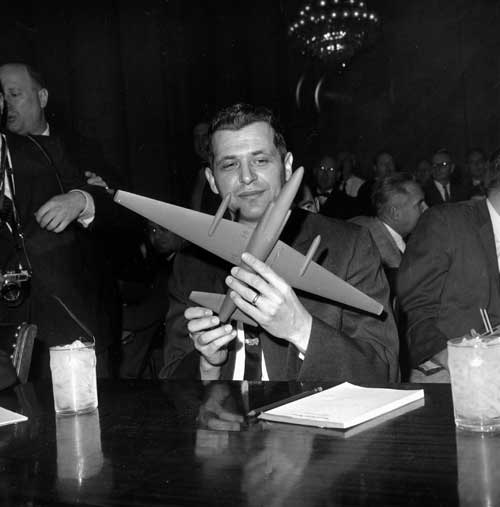
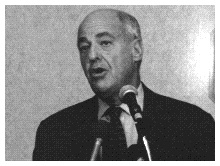
    Allen & John Foster Dulles
    Mossadegh & Shah Pahlavi

    For those who might not be aware, Allen Dulles (former Director of the CIA) and his brother John Foster Dulles (former Secretary of State) essentially orchestrated foreign policy under the Eisenhower administration. They were former partners at Sullivan and Cromwell, which was the preeminent law firm for Wall Street in the fifties. Allen and Foster married global corporate interests and covert military action into a well-oiled machine that promoted coups, assassinations and the blood-soaked destruction of democracies around the world. After Iran’s democratically elected leader Mohammed Mossadegh vowed to nationalize his country’s oil and petroleum resources, the Dulles brothers—who represented Rockefeller interests like Standard Oil— designed a phony indigenous overthrow that installed the corporately complicit Reza Shah Pahlavi into power in 1953. His brutal and repressive reign lasted until 1979, and his downfall provoked a fundamentalist Islamic revolution in Iran.

    Arbenz centennial (2013)
    Castillo Armas (with Nixon)

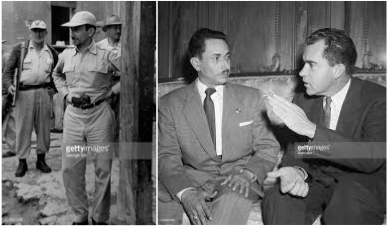
    In 1954, the Dulles brothers were at it again in Guatemala with operation PBSUCCESS. Jacobo Arbenz, the labor-friendly and democratically elected leader of the country, was going toe to toe with other corporate interests such as the Rockefeller/Sullivan & Cromwell associated company United Fruit. Arbenz was pushing for reform that sought to curtail the neo-colonial power of United Fruit by providing more in resources for the people of Guatemala. To the Dulles brothers and other Wall Street types with vested interests, this was unacceptable and was to be depicted as nothing short of communism. Arbenz was ousted from the country in what was largely a psychological warfare operation. He was replaced with a ruthless dictator by the name of Castillo Armas. The CIA provided the Armas regime with “death lists” of all Arbenz government members and sympathizers, and through the decades that followed, tens of thousands of people either were brutally killed or went missing at the hands of the dictatorship. 2 This constant state of upheaval, terror and violence did not subside until a United Nations resolution took hold in 1996.

    II

    Hillary Clinton, whether she knows it or not—and it’s a big stretch to say that she doesn’t—has advocated for the same interventionist foreign policy machine created by the likes of the Dulles brothers. There are at least three major areas of foreign affairs in which she resembles the Dulles brothers more than Trump does: 1.) The Iraq War 2.) American /Russian relations 3.) American actions against Syria. In fact, she actually made Trump look Kennedyesque in this regard, no mean feat.

    Clinton & Kissinger

    Nowadays, Clinton refers to her vote for the Iraq War as a “mistake”, but it certainly doesn’t seem like one considering the context of her other decisions as Secretary of State. Secretary Clinton’s friendships and consultations with Henry Kissinger and Madeleine Albright raised eyebrows in progressive circles. (Click here for the Clinton/Kissinger relationship.) Kissinger’s record as Secretary of State/National Security Adviser was most certainly one of the worst in U.S. history when it came to bloody, sociopathic, interventionist policy around the globe. During the disastrous and unnecessary crisis in Vietnam, Kissinger would nonchalantly give President Nixon death tallies in the thousands regarding Vietnamese citizens as if they were some Stalinesque statistic. Kissinger then agreed to expand that war in an unprecedented way into Cambodia and Laos—and then attempted to conceal these colossal air war actions. Of course, this was a further reversal and expansion of that war, which went even beyond what Lyndon Johnson had done in the wake of JFK’s death. President Kennedy’s stated policy was to withdraw from Indochina by 1965.
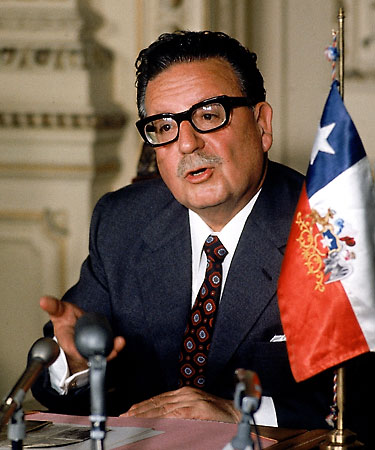
    Salvador Allende
    Augusto Pinochet

    Kissinger was also an instrumental force for the CIA coup in Chile, which ended in the death of Salvador Allende. About Allende, he allegedly stated he did not understand why the USA should stand by and let Chile go communist just because the citizenry were irresponsible enough to vote for it. (A Death in Washington, by Don Freed and Fred Landis, p. 8) The CIA overthrow of Allende led to years of brutal fascism under military dictator Augusto Pinochet.


    Clinton & Albright

    Madeleine Albright demonstrated similar hawkishness. (Click here for more on the Clinton/Albright relationship.) When asked about the refusal of the United States to lift UN Sanctions against Iraq and the resulting deaths of 500,000 Iraqi children, Albright stated that the deaths had been “worth it.”3 Predictably, Albright’s statement was met with stunned surprise. In May of 1998, Albright said something just as surprising. At that time, riots and demonstrations against the brutal Indonesian dictator Suharto were raging all over the archipelago; there were mock funerals being conducted, and his figure was being burned in effigy. Here was a prime opportunity for Albright and the Clinton administration to step forward and cut off relations with a despot who had looted his nation to the tune of billions of dollars. Or at the very least, join the chorus of newspapers and journals requesting he step down. What did Albright do? She asked for “more dialogue”. Even in the last two days of Suharto’s reign, when major cities were in flames, when Senators John Kerry and the late Paul Wellstone were asking the State Department to get on the right side of history, Albright chose to sit on the sidelines. (Probe Magazine, Vol. 5 No. 5, pp. 3-5)

    Hajji Muhammad Suharto with Nixon, Ford & Kissinger, Reagan, Bush Sr. & Bill Clinton

    In this regard, let us recall that Suharto came to power as a result of a reversal of President Kennedy’s foreign policy. Achmed Sukarno had been backed by President Kennedy throughout his first term, all the way up to his assassination. And JFK was scheduled to visit Jakarta in 1964, before the election. As opposed to the silence of Albright and Bill Clinton, after Suharto resigned, the Robert F. Kennedy Memorial Center wrote a letter to his successor asking for an investigation of the role of the military in suppressing the demonstrations that led to his fall. (ibid)

    During her time as Secretary of State, Hillary Clinton displayed an American imperiousness akin to the previous examples. Whether the former Secretary’s intentions in Libya truly aimed at ending what she called a “genocidal” regime under Gaddafi doesn’t really matter. She personally pushed for a NATO sanctioning of bombings in Libya. (This NATO assault in Africa followed the standard set by Albright in Kosovo in 1999, which was the first offensive attack NATO had ever performed.) The assault on Libya eventually led to the murder of Muammar Gaddafi. And that paved the way for a dangerous political power vacuum in which various elements, including Islamic extremists, are vying for power. It is safe to say that she left Libya in such a shambles that the USA had to reenter the civil war.

    Clinton’s decision to arm Syrian “rebels” against Bashar al Assad has also helped create bloody conflict with no end in sight. (Click here for why this may be a strategic mistake.) Bombings occur on a daily basis, especially in areas like Aleppo, leaving tens of thousands of innocents dead. As a candidate, she wanted to establish a “no-fly zone” over Syria—much as she did in Libya. This was a euphemism for controlling the air so that American proxies could control the ground. And as many suspect, and as alluded to in the above-linked story, that likely would have led to fundamentalist dominance in Syria, resembling the endgames in Iraq and Libya. But beyond that, this would probably have ended up provoking Russia, since Russia backs Assad. (Ibid, n. 3)

    “Pacific Rubiales:
    How to get rich in a
    country without regulations”

    Secretary Clinton’s policy regarding Latin America, another topic avoided by the media during the last election cycle, also demonstrates knowing or unknowing complicity with colonial/imperial interests. In Colombia, for instance, a petroleum company by the name of Pacific Rubiales, which has ties to the Clinton Foundation, has been at the center of a humanitarian controversy. The fact that Pacific Rubiales is connected with the Clinton Foundation isn’t the main issue, however. The real problem is the manner in which positions were changed on Clinton’s part in exchange for contributions. During the 2008 election season, then-Senator Clinton opposed the trade deal that allowed companies like Pacific Rubiales to violate labor laws in Colombia. After becoming Secretary of State, Clinton did an about-face. As summed up by David Sirota, Andrew Perez and Matthew Cunningham-Cook:

    At the same time that Clinton’s State Department was lauding Colombia’s human rights record (despite having evidence to the contrary), her family was forging a financial relationship with Pacific Rubiales, the sprawling Canadian petroleum company at the center of Colombia’s labor strife. The Clintons were also developing commercial ties with the oil giant’s founder, Canadian financier Frank Giustra, who now occupies a seat on the board of the Clinton Foundation, the family’s global philanthropic empire. The details of these financial dealings remain murky, but this much is clear: After millions of dollars were pledged by the oil company to the Clinton Foundation—supplemented by millions more from Giustra himself—Secretary Clinton abruptly changed her position on the controversial U.S.-Colombia trade pact.” 4
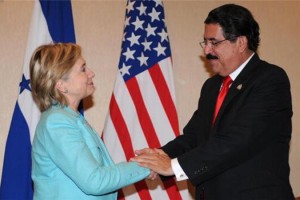
    Clinton & Zelaya (2009)

    Despite recent denials, the former Secretary also played a role in the 2009 coup that ousted the democratically elected and progressive human rights administration of Manuel Zelaya in Honduras. Recent editions of Clinton’s autobiography Hard Choices have been redacted to conceal the full extent of her role in the overthrow. Since the coup, and in opposition to the supposed goals of the overthrow itself, government-sponsored death squads have returned to the country, killing hundreds of citizens, including progressive activists like Berta Cáceres. Before her assassination, Cáceres berated Secretary Clinton for the role she played in overthrowing Zelaya, stating that it demonstrated the role of the United States in “meddling with our country,” and that “we warned it would be very dangerous and permit a barbarity.” 5

    In addition, the U.S.-backed coup in Honduras demonstrates the ongoing trend of outsourcing when it comes to intelligence work. A private group called Creative Associates International (CAI) was involved in “determining the social networks responsible for violence in the country’s largest city,” and subcontracted work to another private entity called Caerus. A man by the name of David Kilcullen, the head of Caerus, was previously involved in a $15 million US AID program that helped determine stability in Afghanistan. Kilcullen’s associate, William Upshur, also contributed to the Honduras plans. Upshur is now working for Booz Allen Hamilton, another private company involved in U.S. intelligence funding. (Ibid, n. 5)

    In his 2007 book, Tim Shorrock explained how substantial this kind of funding is. Shorrock stated that approximately 70 percent of the government’s 60-billion-dollar budget for intelligence is now subcontracted to private entities such as Booz Allen Hamilton or Science Applications International Corporation. 6

    Puerto Rico, a country in the midst of a serious debt crisis, is another key topic when it comes to Clinton’s questionable foreign policy decisions. Hedge funds own much of Puerto Rico’s massive debt, and a piece of legislation, which was put forward to deal with the issue, has rightly been labeled by Bernie Sanders as a form of colonialism. The bill in question would hand over control of financial dealings to a U.S. Government Board of Regulators, which would likely strip vital social spending in Puerto Rico. The bill already imposes a $4.25 minimum wage clause for citizens under 25. While Sanders opposed this bill, Clinton supported it. 7 This may serve as no surprise, being that the former Secretary of State receives hefty sums from Wall Street institutions like Goldman Sachs, who benefit from this form of vulture capitalism. I am not asserting that Hillary Clinton is solely responsible for these foreign policy decisions, but that she has been complicit with the American Deep State that commits or is heavily involved in these operations. (An explanation of the term “Deep State” will follow.) If the results of this 2016 election, and the success of both Trump and Sanders in the primaries, teach us something, it is that we have to move away as quickly as possible from policy compromised by corporate influence if we truly want to move forward. The American public has clearly had enough with establishment politics.

    III

    With the election of Donald Trump, the viability of establishment politics has been seriously breached, effectively ending the age of lesser-evil voting by the proletariat. Although Hillary Clinton was the preferred candidate regarding things like domestic social issues and scientific issues, it wasn’t enough to tame the massive insurgency of citizens who were so fed up with the status quo that they would rather see the country possibly go up in flames than vote for more of the same. Nor did it inspire an overlooked independent voter base to come out and make a substantial difference in the Democratic vote. In the aftermath of this potential disaster of an election, it is our duty, as a collective, to look deeply into some troubling fundamental issues. One of these has to do with the fact that racism, xenophobia and sexism are still very much alive in this country.

    I will not go so far as to label all Trump supporters as racist, homophobic or sexist. And throughout the primary/general election season, I have tried to remain receptive to their frustrations. However, I can most certainly tell you that, based on my experiences of this election season alone, these sentiments do indeed exist. During a delegate selection process for the Bernie Sanders campaign, I met and ended up having discussions with some Trump supporters. I asked them questions about why they thought Trump would make a good president, all the while disagreeing with them, but listening nonetheless. Two of the men I was speaking with were very civil, but one in particular seemed to be bursting at the seams with frustration over what he thought were the main problems with the country. While ignoring the facts I was presenting him regarding corporate welfare, this man went into relentless diatribes about why “Tacos”, his label for Hispanic people, were wreaking havoc. He exhibited no shame in expressing his distaste for other ethnicities either. During this dismaying exchange, I brought up the continued mistreatment of Native American peoples. In response, this man tried to question the severity of the atrocities committed against them and even went so far as to imply that my use of the term genocide in describing their plight was incorrect.

    Steve Mnuchin

    This may well serve to exemplify the hateful attitudes of mistrust and resentment that have been put under a black light during the course of this election. They’ve lingered dormant under the surface and have reached a boiling point thanks to Donald Trump. To paraphrase Bernie Sanders, Trump was able to channel the frustration of a destitute middle class and convert it into unconstructive anger. While Trump made references to how the “establishment” was a major problem, like many of his policy points, he didn’t ever describe in detail what was to be done to correct it. Instead, with his references to a wall with Mexico and to mass deportations, he encouraged the belief in his supporters that minorities were ruining the country. Yet in spite of his campaign promise to “drain the swamp”, many of the Trump cabinet appointees are among the most Establishment type figures one could imagine. For example, Steve Mnuchin, the former Goldman Sachs executive famous for foreclosures and hedge fund deals, has been appointed Secretary of Treasury.

    The election of a man like Donald Trump, who can’t seem to expound any of his policies in any sort of detail and is openly demeaning towards women, people of other races, and the disabled, makes clear that we have a cancerous political system which has metastasized in large part thanks to establishment politicians beholden to corporate interests. And these politicians are wildly out of touch with the needs of the average American. This created a very wide alley that the new Trump managed to rumble through. (I say “new” because in one of the many failings of the MSM, no one bothered to explain why Trump had reversed so many of the proposals he made back in 2000, when he was going to run on the Reform Party ticket.) Some commentators have claimed there can be little doubt that there was a liberal disillusionment following President Obama’s election. Hillary Clinton could not convince enough people that she was even the “change candidate” that Obama was. Therefore, in the search for answers for why their lives weren’t improving, many citizens had to find alternate sources of information outside of corporate influenced organizations (i.e. The Republican Party, Democratic Party and the Mainstream Media), given those groups won’t admit to the public that they are subservient to the same big money interests. This explains the rise of figures like Rush Limbaugh, Glenn Beck, and even rightwing populist/conspiracy demagogue Alex Jones. Their collective answer is to paint minorities and welfare recipients as the principal ills of American society, all the while failing to recognize the deep connection between government policy and corporate influence. In short, this election warns us that when the real reasons behind government dysfunction are ignored and go unchallenged, one risks the upsurge of fascist sentiments. 8

    In addition to reminding us of Hillary’s relationship with Kissinger, Bernie Sanders reminded a large portion of the U.S. populace about the other fundamental issue lying beneath the surface: corporate power. And Sanders could have neutralized Trump’s appeal among the shrinking working and middle classes, which the latter earned by invoking the need for tariffs and the threat of trade wars. This certainly was another reason for Trump’s popularity in the Mideast states like Wisconsin, Iowa, Michigan and Ohio, where he broke through the supposed Democratic firewall. (As to why, listen to this this segment by Michael Moore.) With Secretary of State Clinton’s and President Bill Clinton’s views on NAFTA and the Columbia Free Trade Agreement, and Hillary’s original stance on the Trans Pacific Partnership (TPP), she could not mount a genuine counter-offensive to Trump’s tactics in those states, for the simple reason that the Clintons were perceived as being free-traders rather than fair-traders. Thanks to their record, a Democratic presidential candidate appeared to favor a globalization policy that began decades ago with David Rockefeller—a policy that was resisted by President Kennedy. (See Donald Gibson, Battling Wall Street, p. 59)

    Awareness of any problem is the first step toward fixing it. But I think we must go beyond simple awareness when it comes to confronting our nation’s collective “shadow”, as Carl Jung would have called it — meaning all the darker, repressed aspects of the unconscious that, when ignored, can result in psychological backlash. How do we get beneath the surface appearances of corporate greed (for instance, the increasing wealth inequality amongst classes, or the amount of tax money allocated to corporate subsidies)? I suggest that an exploration of our past guided by a concept that Peter Dale Scott labels “Deep Politics” can help us come to terms, in a more profound way, with the problems facing us.

    This concept embraces all of the machinations occurring beneath the surface of government activity and which go unnoticed in common analysis, such as in news reports or textbooks. Or, as Scott states in his 2015 book The American Deep State, it “…involves all those political practices and arrangements, deliberate or not, which are usually repressed rather than acknowledged.”9 A “Deep Political” explanation of major world events goes beyond the ostensible or normally accepted models of cause and effect. One example of a “Deep Event” is the 1965 Gulf of Tonkin Incident, which provided a motive, or casus belli, to escalate the Vietnam War into a full-scale invasion by American ground forces. Given that President Johnson had already, in stark contrast to President Kennedy’s policy, approved the build-up of combat troops in Vietnam in 1964, all that was needed was some sort of impetus in order for United States involvement to move to the next stage. As the author describes, many of the intelligence reports received by the Johnson administration regarding this supposed incident did not signal any sort of instigation on North Vietnam’s behalf. However, those same reports were ignored in order to claim that North Vietnam had engaged in an act of war against the United States. 10

    Other examples of Deep Events include the previously mentioned instances of CIA, corporate and State Department interference in the economic and governmental affairs of foreign nations. It is evident that these coups did not occur for the sake of saving other countries from the grip of communism or the reign of dictators; such would only be at best a surface explanation. The deeper explanation is that a nexus of corporate, military, paramilitary, government and, on occasion, underworld elements (viz, the workings of the Deep State) had a vested interest in the outcome. The Bush administration’s lies regarding Saddam Hussein’s alleged arsenal of “weapons of mass destruction”, presented to the American people and Congress as a reason to invade Iraq, could most certainly be classified as a Deep Event. No entities benefitted more from America’s long-term occupation of Iraq than companies like Dick Cheney’s Halliburton. KBR Inc., a Halliburton subsidiary, “was given $39.5 billion (emphasis added) in Iraq-related contracts over the past decade, with many of the deals given without any bidding from competing firms, such as a $568-million contract renewal in 2010 to provide housing, meals, water and bathroom services to soldiers, a deal that led to a Justice Department lawsuit over alleged kickbacks, as reported by Bloomberg.” 11

    Included under the umbrella of Deep Politics are the major assassinations of the 1960s — those of John Kennedy, Robert Kennedy, Martin Luther King Jr. and Malcolm X. Poll after poll has indicated that most Americans believe there was a conspiracy to kill President Kennedy, but even today many apparently have not reasoned beyond the fact that there is something fishy about the “official” version in order to understand this murder in its fullest context. It behooves us to inquire more deeply into this historically critical event. Before I go any further, however, let me assert here—and I do so quite confidently—that anyone who still buys into the government version of events regarding, for example, the assassinations of John and Robert Kennedy, is either not looking carefully enough, or is not really familiar with the case.

    IV

    A suggestive point of departure for such an inquiry are the parallels between the 2016 election and that of 1968. In the wake of the assassination of Martin Luther King in April of 1968, racial tensions were high and a presidential primary season was in full swing. Opposition towards the Vietnam War was strong and one candidate in particular represented the last best hope for minorities, anti-war voters, and the middle, as well as lower classes. That candidate was Robert Kennedy, and by the early morning of June 5th, it was becoming clear that he would likely be the Democratic candidate to run against Richard Nixon in the general election. Within a matter of moments of making his victory speech for the California primary, Robert Kennedy was assassinated when he walked into the kitchen pantry of the Ambassador Hotel in Los Angeles. In those moments, the Sixties ended—and so did the populist hopes and dreams for a new era.

    Chicago DNC 1968
    Philedelphia DNC 2016

    The 1968 Democratic National Convention in Chicago was attended by the protests of disillusioned voters who felt cheated out of a more liberal, populist candidate. They ended up rioting in the streets. Hubert Humphrey, who was receiving flack for not taking a strong enough stance on the situation in Vietnam, was selected as the nominee. Similarly, there were many dissatisfied delegates and voters at the 2016 Philadelphia Democratic convention. But in a tightly controlled operation, their actions were kept hidden off screen. And the threat of stripping them of their credentials was often used to suppress any protest on the convention floor. In 2016, Hillary Clinton was nominated and her candidacy helped give us Donald Trump. In 1968, the immediate result was Richard Nixon as president. But the subsequent results included the massive increase in loss of life not just in Vietnam, but also in Cambodia, and the continuing trend away from the New Deal, anti-globalist policies of John Kennedy and Franklin Roosevelt.

    Alger Hiss, America’s Dreyfus
    Rep. Voorhis, defeated by
    Nixon’s smear campaign

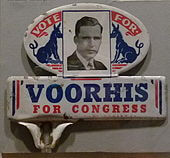
    In fact, Nixon had been a part of the effort to purge New Deal elements from the government during the McCarthy era. Whether it was conducting hearings on men like Alger Hiss and making accusations of Soviet spycraft, or using his California Senate campaign to falsely accuse incumbent Congressman Jerry Voorhis of being a communist, Nixon contributed to the growing, exaggerated fear of communism in the United States. This fear allowed men like Allen Dulles to be seen as pragmatists in the face of supposed communist danger. Dulles’ and the CIA’s dirty deeds on behalf of corporate power were carried out under the guise of protecting the world from communism. As described in the Allen Dulles biography by David Talbot, The Devil’s Chessboard, sociologist C. Wright Mills called this mentality “crackpot realism.”12 It is ironic that Nixon ended up distrusting the CIA, the institution so closely associated with Allen Dulles, a man who had championed Nixon’s rise to power as both a congressman and senator.

    Flash forward to 2016 and, once again, we witness the results of a Democratic Party choosing to ignore the populist outcry for reform, and of a government compromised by corporate coercion, one subject to the hidden workings of the Deep State. Bernie Sanders represented the New Deal aspirations of a working class tired of corporate-run politics. As revealed by Wikileaks, the upper echelons of the Democratic Party chose not to heed their voices, thereby indirectly aiding the election of Donald Trump, who offered a different and unconstructive form of populism.
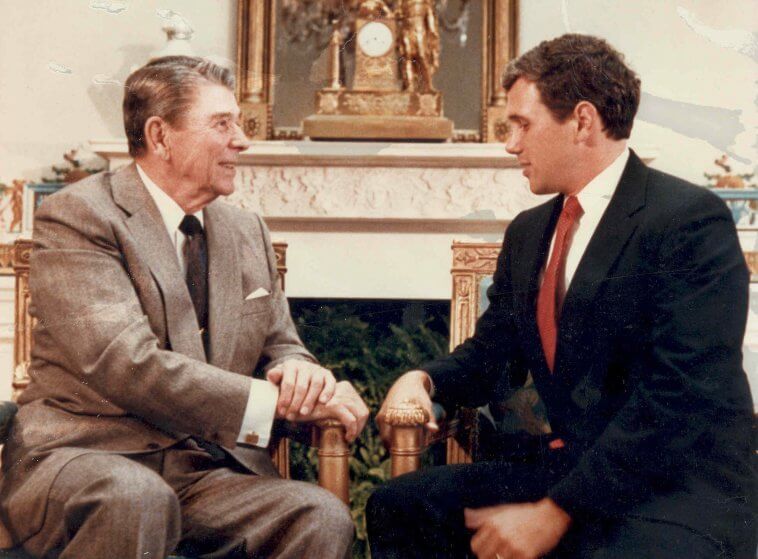
    Pence & Reagan
    Rex Tillerson

    Being that the political spectrum has shifted far to the right as compared to 1968, this year’s election results are more extreme. Donald Trump’s cabinet appointments reflect this extremist mentality; especially in his Vice Presidential pick Mike Pence — a man so out of touch with reality that he has tried to argue that women shouldn’t be working. In 1997, Pence stated that women should stay home because otherwise their kids would “get the short end of the emotional stick.” The soon to be Vice President Pence also sees LGBT rights as a sign of “societal collapse.”13 And as for Trump’s promise to “drain the swamp”, when it comes to establishment figures, it only gets worse, considering his appointment of Rex Tillerson, former CEO of ExxonMobil, as Secretary of State. Despite the fact that Trump appears to be “off the grid”, so to speak, when it comes to the political or Deep Political apparatus, his recent choices for cabinet positions are some of the worst imaginable for the populist of any ilk. In some cases he has actually leapt into the arms of the very establishment he warned his supporters against.

    In the face of all this, Sanders continues to inspire his followers to remain politically active. We all need to be involved more than ever, and the Democratic/socialist senator from Vermont has always urged that true change lies in us having the courage to do things ourselves when it comes to reforming government. The more we stay involved, the less likely it will be that the momentum created by political movements will be squandered in the wake of a setback. The major setbacks of the 1960s came in the form of assassinations of inspiring political leaders. Yet even in the wake of such tragedies it is possible, indeed imperative, to find a glimmer of hope. To do so, however, requires, as this essay has been arguing, the insight afforded by a critical analysis of the past, and its continuities with the present. The touchstone for this historical understanding, I believe, lies precisely in the way the policies of President Kennedy have been consistently overturned by subsequent administrations.

    V

    As mentioned above, John Kennedy was not in favor of the neo-colonialist policies of the Dulles/Eisenhower era. Instead of wanting to occupy foreign nations for the sake of corporate profit, Kennedy believed strongly that the resources of such nations rightly belonged to their people, and that the right to self-determination was critical, as evident in his 1957 speech on French colonialism in Algeria.
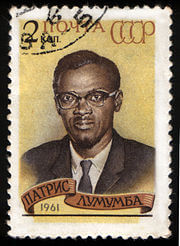
    Soviet stamp
    commemorating Lumumba
    MobutuNixon
    Nixon and Mobutu at the White House

    In the aftermath of a CIA-assisted coup to assassinate Patrice Lumumba, the nationalist leader of the Congo, President Kennedy fought alongside the U.N. to ensure that a nationwide coalition government was formed. Civil war was imminent as militant and corporately complicit leaders like Colonel Mobutu vied for power and promoted the secession of Katanga, the region of Congo that held vast amounts of mineral resources. JFK supported the more centrist elements of the potential coalition government and felt that the resources of Katanga didn’t belong to Belgian, U.S. or British mining interests. The President’s death ended hope for the pursuit of any stable government in Congo, along with the hope of halting widespread violence. 14 It should be noted that Nixon actually welcomed Mobutu to the White House after he took control of Congo.
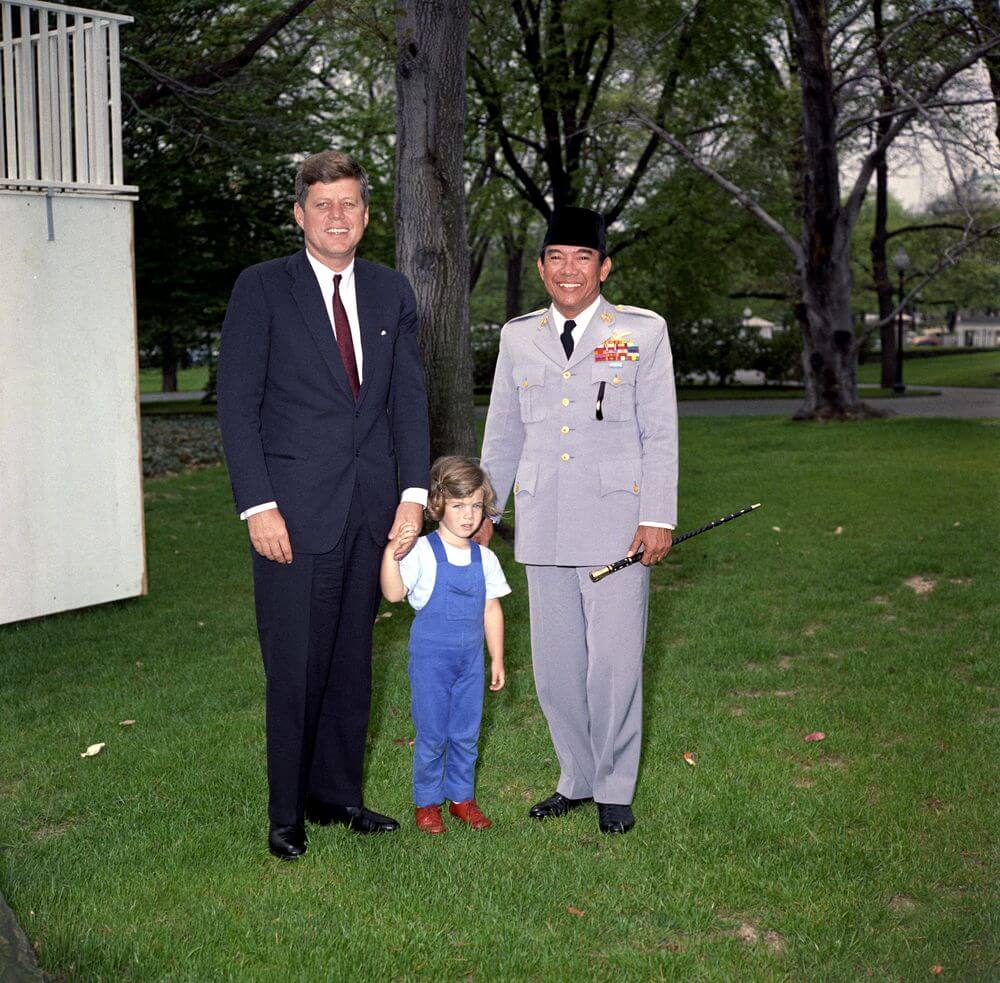
    Sukarno at the White House

    As noted previously, President Kennedy also worked towards re-establishing a relationship with Indonesia and its leader Achmed Sukarno. This was after the Dulles brothers had been involved in attempts to overthrow the Indonesian leader. Decades earlier, it had been discovered by corporate backed explorers that certain areas in Indonesia contained extremely dense concentrations of minerals such as gold and copper. After Kennedy was killed, Sukarno was overthrown with help of the CIA in one of the bloodiest coup d’états ever recorded. Hundreds of thousands of Indonesians perished during both the overthrow, and the subsequent reign of the new leader Suharto. (James DiEugenio, Destiny Betrayed, Second Edition pp. 374-75) Need we add that Nixon also met with Suharto in Washington. In December of 1975, President Ford and Secretary of State Kissinger journeyed to Jakarta and gave Suharto an implicit OK to invade East Timor. This is the tradition that Hillary Clinton and her husband were involved with. For when almost every democratically elected western nation was shunning Suharto in the late nineties, Bill Clinton was still meeting with him. (Op. cit. Probe Magazine.)

    President Kennedy’s policies regarding Central and South America were also a threat to corporate interests. David Rockefeller took it upon himself to publicly criticize Kennedy’s Alliance for Progress, which had been established to aid less developed nations, like those south of the United States, to become economically self-reliant. Men like Rockefeller, along with the Wall-Street-connected media (e.g.,Wall Street Journal and Time/Life) also berated the President for “undermining a strong and free economy,” and inhibiting “basic American liberties.” (14, p. 57) The Wall Street Journal flat out criticized Kennedy for being a “self-appointed enforcer of progress” (Ibid p. 66). JFK’s 1962 clash with U.S. Steel, a J.P. Morgan/Rockefeller company, provoked similar remarks.

    After President Kennedy had facilitated an agreement between steel workers and their corporate executives, the latter welshed on the deal. It was assumed that the workers would agree to not have their wages increased in exchange for the price of steel also remaining static. After the agreement was reached, U.S. Steel defied the President’s wishes and undermined the hard work to reach that compromise by announcing a price increase. The corporate elite wanted Kennedy to buckle, but instead, he threatened to investigate them for price-fixing and to have his brother Bobby examine their tax returns. Begrudgingly, U.S. Steel backed off and accepted the original terms. Kennedy’s policies, both domestic and foreign, were aimed at enhancing social and economic progress. Like Alexander Hamilton, and Albert Gallatin, JFK sought to use government powers to protect the masses from corporate domination. His tax policy was aimed at channeling investment into the expansion of productive means or capital. The investment tax credit, for instance, provided incentives for business entities that enhanced their productive abilities through investment in the upkeep or updating of equipment inside the United States. (Gibson pp. 21-22) While Kennedy’s policies were focused on strengthening production and labor power, his opponents in the Morgan/Rockefeller world were focused on sheer profit.

    David Rockefeller & Henry Luce  in 1962

    It should serve as no surprise that the media outlets responsible for condemning the president were tied into the very corporate and political establishment entities being threatened. As described by sociologist Donald Gibson in his fine book Battling Wall Street: The Kennedy Presidency, the elite of Wall Street, media executives and certain powerful political persons or groups were so interconnected as to be inbred. Allen Dulles himself was very much involved in these circles, and had close relationships with men like Henry Luce of the Time, Life and Fortune magazine empire, along with executives or journalists at the New York Times, and the Washington Post. Operation Mockingbird, a CIA project designed to use various media outlets for propaganda, was exposed during the Church Committee hearings, revealing the collaboration of hundreds of journalists and executives at various media organizations including CBS, NBC, The New York Times, the Associated Press, Newsweek and other institutions.15)

    John Kennedy wasn’t only trying to curtail corporate power with his Hamilton/Gallatin, New Deal-like economic policies. His decisions concerning military engagement abroad were greatly at odds with the hard-line Cold Warriors of his administration and the Central Intelligence Agency. Time after time, Kennedy refused to commit U.S. combat troops abroad despite the nagging insistence of his advisors. Although the President publicly accepted responsibility for the fiasco at the Bay of Pigs, privately he was livid at the CIA for deceiving him. Through materials such as inspector general Lyman Kirkpatrick’s report on the Bay of Pigs, and other declassified CIA documents, it is now evident that a major deception had occurred. The Agency had assured Kennedy that their group of anti-Castro Cuban invaders would be the spark that would set off a revolt against Fidel Castro just waiting to happen. This was not the case, and the CIA-backed Cubans were outnumbered by Castro’s forces 10 to 1. Even worse, as noted in the Kirkpatrick report, was the fact that the CIA had stocked the invading force with C-Level operatives. (2, p. 396) It was almost as if the surface level plan presented to the President was designed to fail in order to force his hand and commit the military into invading Cuba. A declassified CIA memo acknowledges the fact that securing the desired beach area in Cuba was not possible without military intervention. 16

    When Kennedy refused to commit U.S. troops as the operation crumbled, he became public enemy number one in the CIA’s eyes. This sentiment that Kennedy was soft on communism, or even a communist sympathizer, augmented as he continued to back away from military intervention in other situations. The President reached an agreement with the Soviet Union to keep Laos neutral, and despite his willingness to send advisors to Vietnam, he ultimately worked to enact a policy resulting in the withdrawal of all U.S. personnel from the country. Kennedy’s assassination ended this movement toward disengagement from Saigon.

    What was likely even worse to the Cold Warriors and CIA patriots during this time was the President’s attempts at détente with Nikita Khrushchev of the Soviet Union and Cuba’s Fidel Castro. During, and in the period following, the Cuban Missile Crisis, Kennedy and Khrushchev were involved in back channel dialogue with one another. Discussion moved toward talks about détente; despite the fact that the two men’s respective countries had differing views, they agreed it was imperative, for the sake of the planet, to come to an understanding. This, along with JFK’s unwillingness to bomb Cuba during the Missile Crisis, were nothing short of traitorous to the covert and overt military power structure of the United States. In the final months of his life, the President also extended a secret olive branch toward Fidel Castro in hopes of opening a dialogue. Excited by the prospect, Castro was painfully upset when he got word of Kennedy’s assassination. Kennedy most certainly had his enemies, and was making decisions that drove a stake into the very heart of corporate, military and intelligence collusion. If he had been elected President, Bobby Kennedy was most certainly going to continue, and most likely even expand, the policies of his late brother. (ibid, pp. 25-33) Like Jack and Bobby, Martin Luther King and Malcolm X expressed opposition toward the continuation of the Vietnam War.

    VI

    The concept of Deep Politics may provide a helpful alternative to the term “conspiracy theory”, which has become so stigmatized and so overused as to be meaningless. Abandoning the idea of conspiracy altogether, however, risks throwing the baby out with the bath water, for it raises legitimate questions about what lurks beneath the surface of the affairs of state. The enemies that John and Robert Kennedy were facing were not some fictional or hypothetical “illuminati” group or groups. They were very real, dangerous and powerful interests, and those forces are still with us in 2016. Deep Politics does not imply that there is some singular group or set of groups that meet in secret to plot colossal calamities that affect the entire world, but rather that the events themselves arise from the milieu(s) created by a congruence of unaccountable, supra-constitutional, covert, corporate and illegal interests, sometimes operating in a dialectical manner. A more recent example would be the networking of several of these interests to orchestrate the colossal Iran/Contra project.

    Other writers have also described these subterranean forces using other terms. The late Fletcher Prouty called it the Secret Team. Investigative journalist Jim Hougan calls it a Shadow Government. Florida State professor Lance DeHaven Smith, with respect to its activities, coined the term “State Crime Against Democracy”, or SCAD. (Click here for his definition.) Smith wrote one of the best books about how, with the help of the MSM, these forces stole the 2000 election in Florida from Al Gore. He then wrote a book explaining how the term “conspiracy theorist” became a commonly used smear to disarm the critics of the Warren Commission. It was, in fact, the CIA which started this trend with its famous 1967 dispatch entitled “Countering Criticism of the Warren Report”. (See this review for the sordid details.)

    Whether it be extralegal assassinations, unwarranted domestic surveillance, interventionist wars at the behest of corporate interests, torture or other activities of that stripe, these all in essence have their roots in the Dulles era in which covert, corporate power developed into a well-oiled and unaccountable machine running roughshod. These forces have continued to operate regardless of who is elected president, whether Democrat or Republican. (See Jim Hougan’s Secret Agenda for a trenchant analysis of the operation against Richard Nixon that came to be called Watergate.)

    It is my opinion that we must come to terms with these dark or, to use James W. Douglass’ term, “unspeakable” realities. And we must do so in a holistic way if we are to take more fundamental steps toward progress as a nation. George Orwell coined the term Crime Stop to describe the psychological mechanism by which humans ignore uncomfortable or dangerous thoughts. Through discussions with people young and old, it has become evident to me that this Crime Stop mechanism is at work in the subconscious of many Americans. We need to be willing to face the darker aspects of our recent past that have been at work below the surface and percolating up into view for many years.

    In a very tangible way, the refusal to face these dark forces has caused the Democratic Party to lose its way. And this diluted and uninspiring party has now given way to Donald Trump. As alluded to throughout this essay, this party has abandoned the aims and goals of the Kennedys, King and Malcolm X to the point that it now resembles the GOP more than it does the sum total of those four men. To understand what this means in stark political terms, consider the following. Today, among all fifty states, there are only 15 Democratic governors. In the last ten years, the Democrats have lost 900 state legislative seats. When Trump enters office, he will be in control of not just the White House, but also the Senate and the House of Representatives. Once he nominates his Supreme Court candidate to replace Antonin Scalia, he will also be in control of that institution.

    Bernie Sanders was the only candidate whose policies recalled the idea of the Democratic party of the Sixties. And according to a poll of 1,600 people run by Gravis Marketing, he would have soundly defeated Trump by 12 points. The Democrats have to get the message, or they run the risk of becoming a permanent minority party. They sorely need to look at themselves, and ask, What happened? As a starting point, they can take some of the advice contained in this essay.


    Notes

    1. “Hillary Clinton Snaps At NPR Host After Defensive Gay Marriage Interview.” YouTube. WFPL News, 12 June 2014 <https://www.youtube.com/watch?v=vgIe2GKudYY>.

    2. David Talbot, The Devil’s Chessboard: Allen Dulles, the CIA, and the Rise of America’s Secret Government. New York, NY: Harper, 2015.

    3. Gary Leupp, “Hillary Clinton’s Foreign Policy Resumé: What the Record Shows.” , 03 May 2016.

    4. Greg Grandin, “A Voter’s Guide to Hillary Clinton’s Policies in Latin America.” The Nation, 18 April 2016.

    5. Tim Shorrock, “How Hillary Clinton Militarized US Policy in Honduras.” The Nation, 06 April 2016.

    6. Peter Dale Scott, “The Deep State and the Bias of Official History.” Who What Why, 20 January 2015.

    7. Ben Norton, “Sanders Condemns Pro-austerity ‘Colonial Takeover’ of Puerto Rico; Clinton Supports It.” Salon, 27 May 2016.

    8. “Chomsky on Liberal Disillusionment with Obama.” YouTube, 03 April 2010 <https://www.youtube.com/watch?v=A6Jbnq5V_1s>.

    9. Peter Dale Scott, The American Deep State: Wall Street, Big Oil, and The Attack On U.S. Democracy. Lanham: Rowman & Littlefield, 2015: Chapter 2, p. 12.

    10. “Project Censored 3.1 – JFK 50 – Peter Dale Scott – Deep Politics.” YouTube, Project Sensored, 19 December 2013 <https://www.youtube.com/watch?v=L0CFpMej3mA>.

    11. Angelo Young, “And The Winner For The Most Iraq War Contracts Is . . . KBR, With $39.5 Billion In A Decade.” International Business Times, 19 March 2013.

    12. Zawn Villines, “The Four Worst Things Mike Pence Has Said About Women.” Daily Kos, 21 July 2016.

    13. Richard D. Mahoney, JFK: Ordeal in Africa. New York: Oxford UP, 1983.

    14. Donald Gibson, Battling Wall Street: The Kennedy Presidency. New York: Sheridan Square, 1994.

    15. Carl Bernstein, “The CIA and the Media.” Rolling Stone, 20 October 1977 <http://www.carlbernstein.com/magazine_cia_and_media.php>.

    16. David Talbot, Brothers, p. 47.

  • The 2016 Election, Historical Amnesia and Deep Politics


    By now, I think it is safe to say that everyone is kind of sick of discussing the 2016 election season. However nauseating it may have been, it proved to be unprecedented and monumental in various ways. Unprecedented, for example, in the fact that the two major party candidates were the most disliked in modern political history. The Republican candidate, now President-elect, who touts himself as a good businessman yet probably couldn’t tell you the difference between Keynes and Marx, has run perhaps the most hate-filled, deplorable campaign in recent memory. He often speaks of running the country like a business and harps on immigration as one of the major problems facing this country. Yet he never discusses substantive issues in detail (for example, the tens of millions of poverty- and hunger-stricken children living in the United States alone), and frequently demonstrates a poor grasp of them (such as the nuclear triad). In fact, he compulsively prevaricates and can’t seem to string two cohesive sentences together. Therefore it is hard in many cases to see where he actually stands. (For a revealing example of this, watch this clip.)

    The former Democratic candidate, on the other hand, bears a resemblance to an Eisenhower Republican. She is an intelligent and experienced politician full of contradictions. She was certainly preferable to Trump on domestic issues, e.g., women’s rights, race, and overall economic policy—not to mention global scientific matters like climate change. Nevertheless, there are serious problems with Hillary Clinton’s record. While Trump compulsively exaggerates and prevaricates, Hillary Clinton is not the epitome of honesty or integrity either. Up until 2013, she didn’t support same-sex marriage, yet got defensive and lied about the strength of her record on this issue. 1 Despite the fact that FBI Director James Comey publicly stated that classified material was indeed sent over Clinton’s unsecure server, she continued to dance around that subject as if she still didn’t know the public was privy to Comey’s statements.

    I could expand on the former Secretary of State’s flip-flopping and dishonesty over the years when it comes to problems like email security. And the disturbing fact that five people in her employ took the Fifth Amendment rather than testify before Congress in open session on the subject. However, in spite of their receiving a great deal of media attention, failings such as these are far from being her main flaw, and are, in this author’s opinion, a distraction from much deeper issues. As previously alluded to, Clinton’s foreign policy bears much more of a resemblance to the Eisenhower/Dulles brothers’ record than it does to what one might expect from someone who describes herself as taking a back seat to no-one when it comes to progressive values.

    Allen & John Foster Dulles
    Mossadegh & Shah Pahlavi

    For those who might not be aware, Allen Dulles (former Director of the CIA) and his brother John Foster Dulles (former Secretary of State) essentially orchestrated foreign policy under the Eisenhower administration. They were former partners at Sullivan and Cromwell, which was the preeminent law firm for Wall Street in the fifties. Allen and Foster married global corporate interests and covert military action into a well-oiled machine that promoted coups, assassinations and the blood-soaked destruction of democracies around the world. After Iran’s democratically elected leader Mohammed Mossadegh vowed to nationalize his country’s oil and petroleum resources, the Dulles brothers—who represented Rockefeller interests like Standard Oil— designed a phony indigenous overthrow that installed the corporately complicit Reza Shah Pahlavi into power in 1953. His brutal and repressive reign lasted until 1979, and his downfall provoked a fundamentalist Islamic revolution in Iran.

    Arbenz centennial (2013)
    Castillo Armas (with Nixon)

    In 1954, the Dulles brothers were at it again in Guatemala with operation PBSUCCESS. Jacobo Arbenz, the labor-friendly and democratically elected leader of the country, was going toe to toe with other corporate interests such as the Rockefeller/Sullivan & Cromwell associated company United Fruit. Arbenz was pushing for reform that sought to curtail the neo-colonial power of United Fruit by providing more in resources for the people of Guatemala. To the Dulles brothers and other Wall Street types with vested interests, this was unacceptable and was to be depicted as nothing short of communism. Arbenz was ousted from the country in what was largely a psychological warfare operation. He was replaced with a ruthless dictator by the name of Castillo Armas. The CIA provided the Armas regime with “death lists” of all Arbenz government members and sympathizers, and through the decades that followed, tens of thousands of people either were brutally killed or went missing at the hands of the dictatorship. 2 This constant state of upheaval, terror and violence did not subside until a United Nations resolution took hold in 1996.

    II

    Hillary Clinton, whether she knows it or not—and it’s a big stretch to say that she doesn’t—has advocated for the same interventionist foreign policy machine created by the likes of the Dulles brothers. There are at least three major areas of foreign affairs in which she resembles the Dulles brothers more than Trump does: 1.) The Iraq War 2.) American /Russian relations 3.) American actions against Syria. In fact, she actually made Trump look Kennedyesque in this regard, no mean feat.

    Clinton & Kissinger

    Nowadays, Clinton refers to her vote for the Iraq War as a “mistake”, but it certainly doesn’t seem like one considering the context of her other decisions as Secretary of State. Secretary Clinton’s friendships and consultations with Henry Kissinger and Madeleine Albright raised eyebrows in progressive circles. (Click here for the Clinton/Kissinger relationship.) Kissinger’s record as Secretary of State/National Security Adviser was most certainly one of the worst in U.S. history when it came to bloody, sociopathic, interventionist policy around the globe. During the disastrous and unnecessary crisis in Vietnam, Kissinger would nonchalantly give President Nixon death tallies in the thousands regarding Vietnamese citizens as if they were some Stalinesque statistic. Kissinger then agreed to expand that war in an unprecedented way into Cambodia and Laos—and then attempted to conceal these colossal air war actions. Of course, this was a further reversal and expansion of that war, which went even beyond what Lyndon Johnson had done in the wake of JFK’s death. President Kennedy’s stated policy was to withdraw from Indochina by 1965.

    Salvador Allende
    Augusto Pinochet

    Kissinger was also an instrumental force for the CIA coup in Chile, which ended in the death of Salvador Allende. About Allende, he allegedly stated he did not understand why the USA should stand by and let Chile go communist just because the citizenry were irresponsible enough to vote for it. (A Death in Washington, by Don Freed and Fred Landis, p. 8) The CIA overthrow of Allende led to years of brutal fascism under military dictator Augusto Pinochet.


    Clinton & Albright

    Madeleine Albright demonstrated similar hawkishness. (Click here for more on the Clinton/Albright relationship.) When asked about the refusal of the United States to lift UN Sanctions against Iraq and the resulting deaths of 500,000 Iraqi children, Albright stated that the deaths had been “worth it.”3 Predictably, Albright’s statement was met with stunned surprise. In May of 1998, Albright said something just as surprising. At that time, riots and demonstrations against the brutal Indonesian dictator Suharto were raging all over the archipelago; there were mock funerals being conducted, and his figure was being burned in effigy. Here was a prime opportunity for Albright and the Clinton administration to step forward and cut off relations with a despot who had looted his nation to the tune of billions of dollars. Or at the very least, join the chorus of newspapers and journals requesting he step down. What did Albright do? She asked for “more dialogue”. Even in the last two days of Suharto’s reign, when major cities were in flames, when Senators John Kerry and the late Paul Wellstone were asking the State Department to get on the right side of history, Albright chose to sit on the sidelines. (Probe Magazine, Vol. 5 No. 5, pp. 3-5)

    Hajji Muhammad Suharto with Nixon, Ford & Kissinger, Reagan, Bush Sr. & Bill Clinton

    In this regard, let us recall that Suharto came to power as a result of a reversal of President Kennedy’s foreign policy. Achmed Sukarno had been backed by President Kennedy throughout his first term, all the way up to his assassination. And JFK was scheduled to visit Jakarta in 1964, before the election. As opposed to the silence of Albright and Bill Clinton, after Suharto resigned, the Robert F. Kennedy Memorial Center wrote a letter to his successor asking for an investigation of the role of the military in suppressing the demonstrations that led to his fall. (ibid)

    During her time as Secretary of State, Hillary Clinton displayed an American imperiousness akin to the previous examples. Whether the former Secretary’s intentions in Libya truly aimed at ending what she called a “genocidal” regime under Gaddafi doesn’t really matter. She personally pushed for a NATO sanctioning of bombings in Libya. (This NATO assault in Africa followed the standard set by Albright in Kosovo in 1999, which was the first offensive attack NATO had ever performed.) The assault on Libya eventually led to the murder of Muammar Gaddafi. And that paved the way for a dangerous political power vacuum in which various elements, including Islamic extremists, are vying for power. It is safe to say that she left Libya in such a shambles that the USA had to reenter the civil war.

    Clinton’s decision to arm Syrian “rebels” against Bashar al Assad has also helped create bloody conflict with no end in sight. (Click here for why this may be a strategic mistake.) Bombings occur on a daily basis, especially in areas like Aleppo, leaving tens of thousands of innocents dead. As a candidate, she wanted to establish a “no-fly zone” over Syria—much as she did in Libya. This was a euphemism for controlling the air so that American proxies could control the ground. And as many suspect, and as alluded to in the above-linked story, that likely would have led to fundamentalist dominance in Syria, resembling the endgames in Iraq and Libya. But beyond that, this would probably have ended up provoking Russia, since Russia backs Assad. (Ibid, n. 3)

    “Pacific Rubiales:
    How to get rich in a
    country without regulations”

    Secretary Clinton’s policy regarding Latin America, another topic avoided by the media during the last election cycle, also demonstrates knowing or unknowing complicity with colonial/imperial interests. In Colombia, for instance, a petroleum company by the name of Pacific Rubiales, which has ties to the Clinton Foundation, has been at the center of a humanitarian controversy. The fact that Pacific Rubiales is connected with the Clinton Foundation isn’t the main issue, however. The real problem is the manner in which positions were changed on Clinton’s part in exchange for contributions. During the 2008 election season, then-Senator Clinton opposed the trade deal that allowed companies like Pacific Rubiales to violate labor laws in Colombia. After becoming Secretary of State, Clinton did an about-face. As summed up by David Sirota, Andrew Perez and Matthew Cunningham-Cook:

    At the same time that Clinton’s State Department was lauding Colombia’s human rights record (despite having evidence to the contrary), her family was forging a financial relationship with Pacific Rubiales, the sprawling Canadian petroleum company at the center of Colombia’s labor strife. The Clintons were also developing commercial ties with the oil giant’s founder, Canadian financier Frank Giustra, who now occupies a seat on the board of the Clinton Foundation, the family’s global philanthropic empire. The details of these financial dealings remain murky, but this much is clear: After millions of dollars were pledged by the oil company to the Clinton Foundation—supplemented by millions more from Giustra himself—Secretary Clinton abruptly changed her position on the controversial U.S.-Colombia trade pact.” 4

    Clinton & Zelaya (2009)

    Despite recent denials, the former Secretary also played a role in the 2009 coup that ousted the democratically elected and progressive human rights administration of Manuel Zelaya in Honduras. Recent editions of Clinton’s autobiography Hard Choices have been redacted to conceal the full extent of her role in the overthrow. Since the coup, and in opposition to the supposed goals of the overthrow itself, government-sponsored death squads have returned to the country, killing hundreds of citizens, including progressive activists like Berta Cáceres. Before her assassination, Cáceres berated Secretary Clinton for the role she played in overthrowing Zelaya, stating that it demonstrated the role of the United States in “meddling with our country,” and that “we warned it would be very dangerous and permit a barbarity.” 5

    In addition, the U.S.-backed coup in Honduras demonstrates the ongoing trend of outsourcing when it comes to intelligence work. A private group called Creative Associates International (CAI) was involved in “determining the social networks responsible for violence in the country’s largest city,” and subcontracted work to another private entity called Caerus. A man by the name of David Kilcullen, the head of Caerus, was previously involved in a $15 million US AID program that helped determine stability in Afghanistan. Kilcullen’s associate, William Upshur, also contributed to the Honduras plans. Upshur is now working for Booz Allen Hamilton, another private company involved in U.S. intelligence funding. (Ibid, n. 5)

    In his 2007 book, Tim Shorrock explained how substantial this kind of funding is. Shorrock stated that approximately 70 percent of the government’s 60-billion-dollar budget for intelligence is now subcontracted to private entities such as Booz Allen Hamilton or Science Applications International Corporation. 6

    Puerto Rico, a country in the midst of a serious debt crisis, is another key topic when it comes to Clinton’s questionable foreign policy decisions. Hedge funds own much of Puerto Rico’s massive debt, and a piece of legislation, which was put forward to deal with the issue, has rightly been labeled by Bernie Sanders as a form of colonialism. The bill in question would hand over control of financial dealings to a U.S. Government Board of Regulators, which would likely strip vital social spending in Puerto Rico. The bill already imposes a $4.25 minimum wage clause for citizens under 25. While Sanders opposed this bill, Clinton supported it. 7 This may serve as no surprise, being that the former Secretary of State receives hefty sums from Wall Street institutions like Goldman Sachs, who benefit from this form of vulture capitalism. I am not asserting that Hillary Clinton is solely responsible for these foreign policy decisions, but that she has been complicit with the American Deep State that commits or is heavily involved in these operations. (An explanation of the term “Deep State” will follow.) If the results of this 2016 election, and the success of both Trump and Sanders in the primaries, teach us something, it is that we have to move away as quickly as possible from policy compromised by corporate influence if we truly want to move forward. The American public has clearly had enough with establishment politics.

    III

    With the election of Donald Trump, the viability of establishment politics has been seriously breached, effectively ending the age of lesser-evil voting by the proletariat. Although Hillary Clinton was the preferred candidate regarding things like domestic social issues and scientific issues, it wasn’t enough to tame the massive insurgency of citizens who were so fed up with the status quo that they would rather see the country possibly go up in flames than vote for more of the same. Nor did it inspire an overlooked independent voter base to come out and make a substantial difference in the Democratic vote. In the aftermath of this potential disaster of an election, it is our duty, as a collective, to look deeply into some troubling fundamental issues. One of these has to do with the fact that racism, xenophobia and sexism are still very much alive in this country.

    I will not go so far as to label all Trump supporters as racist, homophobic or sexist. And throughout the primary/general election season, I have tried to remain receptive to their frustrations. However, I can most certainly tell you that, based on my experiences of this election season alone, these sentiments do indeed exist. During a delegate selection process for the Bernie Sanders campaign, I met and ended up having discussions with some Trump supporters. I asked them questions about why they thought Trump would make a good president, all the while disagreeing with them, but listening nonetheless. Two of the men I was speaking with were very civil, but one in particular seemed to be bursting at the seams with frustration over what he thought were the main problems with the country. While ignoring the facts I was presenting him regarding corporate welfare, this man went into relentless diatribes about why “Tacos”, his label for Hispanic people, were wreaking havoc. He exhibited no shame in expressing his distaste for other ethnicities either. During this dismaying exchange, I brought up the continued mistreatment of Native American peoples. In response, this man tried to question the severity of the atrocities committed against them and even went so far as to imply that my use of the term genocide in describing their plight was incorrect.

    Steve Mnuchin

    This may well serve to exemplify the hateful attitudes of mistrust and resentment that have been put under a black light during the course of this election. They’ve lingered dormant under the surface and have reached a boiling point thanks to Donald Trump. To paraphrase Bernie Sanders, Trump was able to channel the frustration of a destitute middle class and convert it into unconstructive anger. While Trump made references to how the “establishment” was a major problem, like many of his policy points, he didn’t ever describe in detail what was to be done to correct it. Instead, with his references to a wall with Mexico and to mass deportations, he encouraged the belief in his supporters that minorities were ruining the country. Yet in spite of his campaign promise to “drain the swamp”, many of the Trump cabinet appointees are among the most Establishment type figures one could imagine. For example, Steve Mnuchin, the former Goldman Sachs executive famous for foreclosures and hedge fund deals, has been appointed Secretary of Treasury.

    The election of a man like Donald Trump, who can’t seem to expound any of his policies in any sort of detail and is openly demeaning towards women, people of other races, and the disabled, makes clear that we have a cancerous political system which has metastasized in large part thanks to establishment politicians beholden to corporate interests. And these politicians are wildly out of touch with the needs of the average American. This created a very wide alley that the new Trump managed to rumble through. (I say “new” because in one of the many failings of the MSM, no one bothered to explain why Trump had reversed so many of the proposals he made back in 2000, when he was going to run on the Reform Party ticket.) Some commentators have claimed there can be little doubt that there was a liberal disillusionment following President Obama’s election. Hillary Clinton could not convince enough people that she was even the “change candidate” that Obama was. Therefore, in the search for answers for why their lives weren’t improving, many citizens had to find alternate sources of information outside of corporate influenced organizations (i.e. The Republican Party, Democratic Party and the Mainstream Media), given those groups won’t admit to the public that they are subservient to the same big money interests. This explains the rise of figures like Rush Limbaugh, Glenn Beck, and even rightwing populist/conspiracy demagogue Alex Jones. Their collective answer is to paint minorities and welfare recipients as the principal ills of American society, all the while failing to recognize the deep connection between government policy and corporate influence. In short, this election warns us that when the real reasons behind government dysfunction are ignored and go unchallenged, one risks the upsurge of fascist sentiments. 8

    In addition to reminding us of Hillary’s relationship with Kissinger, Bernie Sanders reminded a large portion of the U.S. populace about the other fundamental issue lying beneath the surface: corporate power. And Sanders could have neutralized Trump’s appeal among the shrinking working and middle classes, which the latter earned by invoking the need for tariffs and the threat of trade wars. This certainly was another reason for Trump’s popularity in the Mideast states like Wisconsin, Iowa, Michigan and Ohio, where he broke through the supposed Democratic firewall. (As to why, listen to this this segment by Michael Moore.) With Secretary of State Clinton’s and President Bill Clinton’s views on NAFTA and the Columbia Free Trade Agreement, and Hillary’s original stance on the Trans Pacific Partnership (TPP), she could not mount a genuine counter-offensive to Trump’s tactics in those states, for the simple reason that the Clintons were perceived as being free-traders rather than fair-traders. Thanks to their record, a Democratic presidential candidate appeared to favor a globalization policy that began decades ago with David Rockefeller—a policy that was resisted by President Kennedy. (See Donald Gibson, Battling Wall Street, p. 59)

    Awareness of any problem is the first step toward fixing it. But I think we must go beyond simple awareness when it comes to confronting our nation’s collective “shadow”, as Carl Jung would have called it — meaning all the darker, repressed aspects of the unconscious that, when ignored, can result in psychological backlash. How do we get beneath the surface appearances of corporate greed (for instance, the increasing wealth inequality amongst classes, or the amount of tax money allocated to corporate subsidies)? I suggest that an exploration of our past guided by a concept that Peter Dale Scott labels “Deep Politics” can help us come to terms, in a more profound way, with the problems facing us.

    This concept embraces all of the machinations occurring beneath the surface of government activity and which go unnoticed in common analysis, such as in news reports or textbooks. Or, as Scott states in his 2015 book The American Deep State, it “…involves all those political practices and arrangements, deliberate or not, which are usually repressed rather than acknowledged.”9 A “Deep Political” explanation of major world events goes beyond the ostensible or normally accepted models of cause and effect. One example of a “Deep Event” is the 1965 Gulf of Tonkin Incident, which provided a motive, or casus belli, to escalate the Vietnam War into a full-scale invasion by American ground forces. Given that President Johnson had already, in stark contrast to President Kennedy’s policy, approved the build-up of combat troops in Vietnam in 1964, all that was needed was some sort of impetus in order for United States involvement to move to the next stage. As the author describes, many of the intelligence reports received by the Johnson administration regarding this supposed incident did not signal any sort of instigation on North Vietnam’s behalf. However, those same reports were ignored in order to claim that North Vietnam had engaged in an act of war against the United States. 10

    Other examples of Deep Events include the previously mentioned instances of CIA, corporate and State Department interference in the economic and governmental affairs of foreign nations. It is evident that these coups did not occur for the sake of saving other countries from the grip of communism or the reign of dictators; such would only be at best a surface explanation. The deeper explanation is that a nexus of corporate, military, paramilitary, government and, on occasion, underworld elements (viz, the workings of the Deep State) had a vested interest in the outcome. The Bush administration’s lies regarding Saddam Hussein’s alleged arsenal of “weapons of mass destruction”, presented to the American people and Congress as a reason to invade Iraq, could most certainly be classified as a Deep Event. No entities benefitted more from America’s long-term occupation of Iraq than companies like Dick Cheney’s Halliburton. KBR Inc., a Halliburton subsidiary, “was given $39.5 billion (emphasis added) in Iraq-related contracts over the past decade, with many of the deals given without any bidding from competing firms, such as a $568-million contract renewal in 2010 to provide housing, meals, water and bathroom services to soldiers, a deal that led to a Justice Department lawsuit over alleged kickbacks, as reported by Bloomberg.” 11

    Included under the umbrella of Deep Politics are the major assassinations of the 1960s — those of John Kennedy, Robert Kennedy, Martin Luther King Jr. and Malcolm X. Poll after poll has indicated that most Americans believe there was a conspiracy to kill President Kennedy, but even today many apparently have not reasoned beyond the fact that there is something fishy about the “official” version in order to understand this murder in its fullest context. It behooves us to inquire more deeply into this historically critical event. Before I go any further, however, let me assert here—and I do so quite confidently—that anyone who still buys into the government version of events regarding, for example, the assassinations of John and Robert Kennedy, is either not looking carefully enough, or is not really familiar with the case.

    IV

    A suggestive point of departure for such an inquiry are the parallels between the 2016 election and that of 1968. In the wake of the assassination of Martin Luther King in April of 1968, racial tensions were high and a presidential primary season was in full swing. Opposition towards the Vietnam War was strong and one candidate in particular represented the last best hope for minorities, anti-war voters, and the middle, as well as lower classes. That candidate was Robert Kennedy, and by the early morning of June 5th, it was becoming clear that he would likely be the Democratic candidate to run against Richard Nixon in the general election. Within a matter of moments of making his victory speech for the California primary, Robert Kennedy was assassinated when he walked into the kitchen pantry of the Ambassador Hotel in Los Angeles. In those moments, the Sixties ended—and so did the populist hopes and dreams for a new era.

    Chicago DNC 1968
    Philedelphia DNC 2016

    The 1968 Democratic National Convention in Chicago was attended by the protests of disillusioned voters who felt cheated out of a more liberal, populist candidate. They ended up rioting in the streets. Hubert Humphrey, who was receiving flack for not taking a strong enough stance on the situation in Vietnam, was selected as the nominee. Similarly, there were many dissatisfied delegates and voters at the 2016 Philadelphia Democratic convention. But in a tightly controlled operation, their actions were kept hidden off screen. And the threat of stripping them of their credentials was often used to suppress any protest on the convention floor. In 2016, Hillary Clinton was nominated and her candidacy helped give us Donald Trump. In 1968, the immediate result was Richard Nixon as president. But the subsequent results included the massive increase in loss of life not just in Vietnam, but also in Cambodia, and the continuing trend away from the New Deal, anti-globalist policies of John Kennedy and Franklin Roosevelt.

    Alger Hiss, America’s Dreyfus
    Rep. Voorhis, defeated by
    Nixon’s smear campaign

    In fact, Nixon had been a part of the effort to purge New Deal elements from the government during the McCarthy era. Whether it was conducting hearings on men like Alger Hiss and making accusations of Soviet spycraft, or using his California Senate campaign to falsely accuse incumbent Congressman Jerry Voorhis of being a communist, Nixon contributed to the growing, exaggerated fear of communism in the United States. This fear allowed men like Allen Dulles to be seen as pragmatists in the face of supposed communist danger. Dulles’ and the CIA’s dirty deeds on behalf of corporate power were carried out under the guise of protecting the world from communism. As described in the Allen Dulles biography by David Talbot, The Devil’s Chessboard, sociologist C. Wright Mills called this mentality “crackpot realism.”12 It is ironic that Nixon ended up distrusting the CIA, the institution so closely associated with Allen Dulles, a man who had championed Nixon’s rise to power as both a congressman and senator.

    Flash forward to 2016 and, once again, we witness the results of a Democratic Party choosing to ignore the populist outcry for reform, and of a government compromised by corporate coercion, one subject to the hidden workings of the Deep State. Bernie Sanders represented the New Deal aspirations of a working class tired of corporate-run politics. As revealed by Wikileaks, the upper echelons of the Democratic Party chose not to heed their voices, thereby indirectly aiding the election of Donald Trump, who offered a different and unconstructive form of populism.

    Pence & Reagan
    Rex Tillerson

    Being that the political spectrum has shifted far to the right as compared to 1968, this year’s election results are more extreme. Donald Trump’s cabinet appointments reflect this extremist mentality; especially in his Vice Presidential pick Mike Pence — a man so out of touch with reality that he has tried to argue that women shouldn’t be working. In 1997, Pence stated that women should stay home because otherwise their kids would “get the short end of the emotional stick.” The soon to be Vice President Pence also sees LGBT rights as a sign of “societal collapse.”13 And as for Trump’s promise to “drain the swamp”, when it comes to establishment figures, it only gets worse, considering his appointment of Rex Tillerson, former CEO of ExxonMobil, as Secretary of State. Despite the fact that Trump appears to be “off the grid”, so to speak, when it comes to the political or Deep Political apparatus, his recent choices for cabinet positions are some of the worst imaginable for the populist of any ilk. In some cases he has actually leapt into the arms of the very establishment he warned his supporters against.

    In the face of all this, Sanders continues to inspire his followers to remain politically active. We all need to be involved more than ever, and the Democratic/socialist senator from Vermont has always urged that true change lies in us having the courage to do things ourselves when it comes to reforming government. The more we stay involved, the less likely it will be that the momentum created by political movements will be squandered in the wake of a setback. The major setbacks of the 1960s came in the form of assassinations of inspiring political leaders. Yet even in the wake of such tragedies it is possible, indeed imperative, to find a glimmer of hope. To do so, however, requires, as this essay has been arguing, the insight afforded by a critical analysis of the past, and its continuities with the present. The touchstone for this historical understanding, I believe, lies precisely in the way the policies of President Kennedy have been consistently overturned by subsequent administrations.

    V

    As mentioned above, John Kennedy was not in favor of the neo-colonialist policies of the Dulles/Eisenhower era. Instead of wanting to occupy foreign nations for the sake of corporate profit, Kennedy believed strongly that the resources of such nations rightly belonged to their people, and that the right to self-determination was critical, as evident in his 1957 speech on French colonialism in Algeria.

    Soviet stamp
    commemorating Lumumba
    MobutuNixon
    Nixon and Mobutu at the White House

    In the aftermath of a CIA-assisted coup to assassinate Patrice Lumumba, the nationalist leader of the Congo, President Kennedy fought alongside the U.N. to ensure that a nationwide coalition government was formed. Civil war was imminent as militant and corporately complicit leaders like Colonel Mobutu vied for power and promoted the secession of Katanga, the region of Congo that held vast amounts of mineral resources. JFK supported the more centrist elements of the potential coalition government and felt that the resources of Katanga didn’t belong to Belgian, U.S. or British mining interests. The President’s death ended hope for the pursuit of any stable government in Congo, along with the hope of halting widespread violence. 14 It should be noted that Nixon actually welcomed Mobutu to the White House after he took control of Congo.

    Sukarno at the White House

    As noted previously, President Kennedy also worked towards re-establishing a relationship with Indonesia and its leader Achmed Sukarno. This was after the Dulles brothers had been involved in attempts to overthrow the Indonesian leader. Decades earlier, it had been discovered by corporate backed explorers that certain areas in Indonesia contained extremely dense concentrations of minerals such as gold and copper. After Kennedy was killed, Sukarno was overthrown with help of the CIA in one of the bloodiest coup d’états ever recorded. Hundreds of thousands of Indonesians perished during both the overthrow, and the subsequent reign of the new leader Suharto. (James DiEugenio, Destiny Betrayed, Second Edition pp. 374-75) Need we add that Nixon also met with Suharto in Washington. In December of 1975, President Ford and Secretary of State Kissinger journeyed to Jakarta and gave Suharto an implicit OK to invade East Timor. This is the tradition that Hillary Clinton and her husband were involved with. For when almost every democratically elected western nation was shunning Suharto in the late nineties, Bill Clinton was still meeting with him. (Op. cit. Probe Magazine.)

    President Kennedy’s policies regarding Central and South America were also a threat to corporate interests. David Rockefeller took it upon himself to publicly criticize Kennedy’s Alliance for Progress, which had been established to aid less developed nations, like those south of the United States, to become economically self-reliant. Men like Rockefeller, along with the Wall-Street-connected media (e.g.,Wall Street Journal and Time/Life) also berated the President for “undermining a strong and free economy,” and inhibiting “basic American liberties.” (14, p. 57) The Wall Street Journal flat out criticized Kennedy for being a “self-appointed enforcer of progress” (Ibid p. 66). JFK’s 1962 clash with U.S. Steel, a J.P. Morgan/Rockefeller company, provoked similar remarks.

    After President Kennedy had facilitated an agreement between steel workers and their corporate executives, the latter welshed on the deal. It was assumed that the workers would agree to not have their wages increased in exchange for the price of steel also remaining static. After the agreement was reached, U.S. Steel defied the President’s wishes and undermined the hard work to reach that compromise by announcing a price increase. The corporate elite wanted Kennedy to buckle, but instead, he threatened to investigate them for price-fixing and to have his brother Bobby examine their tax returns. Begrudgingly, U.S. Steel backed off and accepted the original terms. Kennedy’s policies, both domestic and foreign, were aimed at enhancing social and economic progress. Like Alexander Hamilton, and Albert Gallatin, JFK sought to use government powers to protect the masses from corporate domination. His tax policy was aimed at channeling investment into the expansion of productive means or capital. The investment tax credit, for instance, provided incentives for business entities that enhanced their productive abilities through investment in the upkeep or updating of equipment inside the United States. (Gibson pp. 21-22) While Kennedy’s policies were focused on strengthening production and labor power, his opponents in the Morgan/Rockefeller world were focused on sheer profit.

    David Rockefeller & Henry Luce  in 1962

    It should serve as no surprise that the media outlets responsible for condemning the president were tied into the very corporate and political establishment entities being threatened. As described by sociologist Donald Gibson in his fine book Battling Wall Street: The Kennedy Presidency, the elite of Wall Street, media executives and certain powerful political persons or groups were so interconnected as to be inbred. Allen Dulles himself was very much involved in these circles, and had close relationships with men like Henry Luce of the Time, Life and Fortune magazine empire, along with executives or journalists at the New York Times, and the Washington Post. Operation Mockingbird, a CIA project designed to use various media outlets for propaganda, was exposed during the Church Committee hearings, revealing the collaboration of hundreds of journalists and executives at various media organizations including CBS, NBC, The New York Times, the Associated Press, Newsweek and other institutions.15)

    John Kennedy wasn’t only trying to curtail corporate power with his Hamilton/Gallatin, New Deal-like economic policies. His decisions concerning military engagement abroad were greatly at odds with the hard-line Cold Warriors of his administration and the Central Intelligence Agency. Time after time, Kennedy refused to commit U.S. combat troops abroad despite the nagging insistence of his advisors. Although the President publicly accepted responsibility for the fiasco at the Bay of Pigs, privately he was livid at the CIA for deceiving him. Through materials such as inspector general Lyman Kirkpatrick’s report on the Bay of Pigs, and other declassified CIA documents, it is now evident that a major deception had occurred. The Agency had assured Kennedy that their group of anti-Castro Cuban invaders would be the spark that would set off a revolt against Fidel Castro just waiting to happen. This was not the case, and the CIA-backed Cubans were outnumbered by Castro’s forces 10 to 1. Even worse, as noted in the Kirkpatrick report, was the fact that the CIA had stocked the invading force with C-Level operatives. (2, p. 396) It was almost as if the surface level plan presented to the President was designed to fail in order to force his hand and commit the military into invading Cuba. A declassified CIA memo acknowledges the fact that securing the desired beach area in Cuba was not possible without military intervention. 16

    When Kennedy refused to commit U.S. troops as the operation crumbled, he became public enemy number one in the CIA’s eyes. This sentiment that Kennedy was soft on communism, or even a communist sympathizer, augmented as he continued to back away from military intervention in other situations. The President reached an agreement with the Soviet Union to keep Laos neutral, and despite his willingness to send advisors to Vietnam, he ultimately worked to enact a policy resulting in the withdrawal of all U.S. personnel from the country. Kennedy’s assassination ended this movement toward disengagement from Saigon.

    What was likely even worse to the Cold Warriors and CIA patriots during this time was the President’s attempts at détente with Nikita Khrushchev of the Soviet Union and Cuba’s Fidel Castro. During, and in the period following, the Cuban Missile Crisis, Kennedy and Khrushchev were involved in back channel dialogue with one another. Discussion moved toward talks about détente; despite the fact that the two men’s respective countries had differing views, they agreed it was imperative, for the sake of the planet, to come to an understanding. This, along with JFK’s unwillingness to bomb Cuba during the Missile Crisis, were nothing short of traitorous to the covert and overt military power structure of the United States. In the final months of his life, the President also extended a secret olive branch toward Fidel Castro in hopes of opening a dialogue. Excited by the prospect, Castro was painfully upset when he got word of Kennedy’s assassination. Kennedy most certainly had his enemies, and was making decisions that drove a stake into the very heart of corporate, military and intelligence collusion. If he had been elected President, Bobby Kennedy was most certainly going to continue, and most likely even expand, the policies of his late brother. (ibid, pp. 25-33) Like Jack and Bobby, Martin Luther King and Malcolm X expressed opposition toward the continuation of the Vietnam War.

    VI

    The concept of Deep Politics may provide a helpful alternative to the term “conspiracy theory”, which has become so stigmatized and so overused as to be meaningless. Abandoning the idea of conspiracy altogether, however, risks throwing the baby out with the bath water, for it raises legitimate questions about what lurks beneath the surface of the affairs of state. The enemies that John and Robert Kennedy were facing were not some fictional or hypothetical “illuminati” group or groups. They were very real, dangerous and powerful interests, and those forces are still with us in 2016. Deep Politics does not imply that there is some singular group or set of groups that meet in secret to plot colossal calamities that affect the entire world, but rather that the events themselves arise from the milieu(s) created by a congruence of unaccountable, supra-constitutional, covert, corporate and illegal interests, sometimes operating in a dialectical manner. A more recent example would be the networking of several of these interests to orchestrate the colossal Iran/Contra project.

    Other writers have also described these subterranean forces using other terms. The late Fletcher Prouty called it the Secret Team. Investigative journalist Jim Hougan calls it a Shadow Government. Florida State professor Lance DeHaven Smith, with respect to its activities, coined the term “State Crime Against Democracy”, or SCAD. (Click here for his definition.) Smith wrote one of the best books about how, with the help of the MSM, these forces stole the 2000 election in Florida from Al Gore. He then wrote a book explaining how the term “conspiracy theorist” became a commonly used smear to disarm the critics of the Warren Commission. It was, in fact, the CIA which started this trend with its famous 1967 dispatch entitled “Countering Criticism of the Warren Report”. (See this review for the sordid details.)

    Whether it be extralegal assassinations, unwarranted domestic surveillance, interventionist wars at the behest of corporate interests, torture or other activities of that stripe, these all in essence have their roots in the Dulles era in which covert, corporate power developed into a well-oiled and unaccountable machine running roughshod. These forces have continued to operate regardless of who is elected president, whether Democrat or Republican. (See Jim Hougan’s Secret Agenda for a trenchant analysis of the operation against Richard Nixon that came to be called Watergate.)

    It is my opinion that we must come to terms with these dark or, to use James W. Douglass’ term, “unspeakable” realities. And we must do so in a holistic way if we are to take more fundamental steps toward progress as a nation. George Orwell coined the term Crime Stop to describe the psychological mechanism by which humans ignore uncomfortable or dangerous thoughts. Through discussions with people young and old, it has become evident to me that this Crime Stop mechanism is at work in the subconscious of many Americans. We need to be willing to face the darker aspects of our recent past that have been at work below the surface and percolating up into view for many years.

    In a very tangible way, the refusal to face these dark forces has caused the Democratic Party to lose its way. And this diluted and uninspiring party has now given way to Donald Trump. As alluded to throughout this essay, this party has abandoned the aims and goals of the Kennedys, King and Malcolm X to the point that it now resembles the GOP more than it does the sum total of those four men. To understand what this means in stark political terms, consider the following. Today, among all fifty states, there are only 15 Democratic governors. In the last ten years, the Democrats have lost 900 state legislative seats. When Trump enters office, he will be in control of not just the White House, but also the Senate and the House of Representatives. Once he nominates his Supreme Court candidate to replace Antonin Scalia, he will also be in control of that institution.

    Bernie Sanders was the only candidate whose policies recalled the idea of the Democratic party of the Sixties. And according to a poll of 1,600 people run by Gravis Marketing, he would have soundly defeated Trump by 12 points. The Democrats have to get the message, or they run the risk of becoming a permanent minority party. They sorely need to look at themselves, and ask, What happened? As a starting point, they can take some of the advice contained in this essay.


    Notes

    1. “Hillary Clinton Snaps At NPR Host After Defensive Gay Marriage Interview.” YouTube. WFPL News, 12 June 2014 <https://www.youtube.com/watch?v=vgIe2GKudYY>.

    2. David Talbot, The Devil’s Chessboard: Allen Dulles, the CIA, and the Rise of America’s Secret Government. New York, NY: Harper, 2015.

    3. Gary Leupp, “Hillary Clinton’s Foreign Policy Resumé: What the Record Shows.” , 03 May 2016.

    4. Greg Grandin, “A Voter’s Guide to Hillary Clinton’s Policies in Latin America.” The Nation, 18 April 2016.

    5. Tim Shorrock, “How Hillary Clinton Militarized US Policy in Honduras.” The Nation, 06 April 2016.

    6. Peter Dale Scott, “The Deep State and the Bias of Official History.” Who What Why, 20 January 2015.

    7. Ben Norton, “Sanders Condemns Pro-austerity ‘Colonial Takeover’ of Puerto Rico; Clinton Supports It.” Salon, 27 May 2016.

    8. “Chomsky on Liberal Disillusionment with Obama.” YouTube, 03 April 2010 <https://www.youtube.com/watch?v=A6Jbnq5V_1s>.

    9. Peter Dale Scott, The American Deep State: Wall Street, Big Oil, and The Attack On U.S. Democracy. Lanham: Rowman & Littlefield, 2015: Chapter 2, p. 12.

    10. “Project Censored 3.1 – JFK 50 – Peter Dale Scott – Deep Politics.” YouTube, Project Sensored, 19 December 2013 <https://www.youtube.com/watch?v=L0CFpMej3mA>.

    11. Angelo Young, “And The Winner For The Most Iraq War Contracts Is . . . KBR, With $39.5 Billion In A Decade.” International Business Times, 19 March 2013.

    12. Zawn Villines, “The Four Worst Things Mike Pence Has Said About Women.” Daily Kos, 21 July 2016.

    13. Richard D. Mahoney, JFK: Ordeal in Africa. New York: Oxford UP, 1983.

    14. Donald Gibson, Battling Wall Street: The Kennedy Presidency. New York: Sheridan Square, 1994.

    15. Carl Bernstein, “The CIA and the Media.” Rolling Stone, 20 October 1977 <http://www.carlbernstein.com/magazine_cia_and_media.php>.

    16. David Talbot, Brothers, p. 47.
  • John McAdams and Marquette Go to Court

    John McAdams and Marquette Go to Court


    John McAdams strikes a pose during his glory days at Marquette University

    Readers of this web site will recall that the last time we addressed the case of John McAdams vs. Cheryl Abbate and Marquette, it was early last year.  At that time, CTKA attached a link to the decision letter that the dean had made in that case.  That 17-page letter was written by Richard Holz, dean of the college of Arts and Sciences at Marquette University, McAdams’ former employer.  Dean Holz indicated two violations of the Faculty Statutes that the professor had violated as part of the explanation as to why he had made this decision.  (Click here for the letter http://d28htnjz2elwuj.cloudfront.net/wp-content/uploads/2015/02/2015-01-30-Holz-to-McAdams.pdf)

    That letter began with the statement that the university was commencing the process of revoking Professor McAdams’ tenure in order to dismiss him from the faculty.   At the end of the letter, Holz added that if the professor filed a timely objection, he would be provided with more due process, which included a faculty hearing of his peers. McAdams filed the timely objection, and he was given a faculty hearing.

    One year later, in January of 2016, that committee filed a long, over 100-page report to Michael Lovell, the president of the college. They decided to revise Dean Holz’s decision.  They felt that McAdams should not be terminated but rather suspended without pay for a period of nine months, from April to December of this year.  He would then be allowed to file for reinstatement.  Lovell called the report one of the most thorough and well written faculty committee reports he had ever read.  The main reason they gave for not moving for dismissal was that McAdams had not been formally reprimanded for his perceived offenses prior to this one.

    In a letter to McAdams dated March 24, 2016, Lovell alerted the former instructor that he was going to abide by the report’s recommendations.  Which included the judgment that McAdams be allowed to return after his suspension was served in January of 2017.  This was contingent upon three conditions.  First, that he accept the unanimous decision of the faulty committee.  That he pledges his future behavior will abide by the faculty handbook and mission statement.  And third, his expression of regret for the harm suffered by the former graduate instructor Cheryl Abbate.  Upon those conditions, and after serving out the suspension, McAdams would be allowed to resume his position. Lovell ended his letter with the clear warning that if anything like this happened again, he would move to dismiss the instructor. Because this was also the recommendation of the faculty report.

    Before getting to the reaction of McAdams and his legal representative, let us remind our readership of what happened that caused this, and who Cheryl Abbate was.  On November 9, 2014 McAdams posted on his blog Marquette Warrior information about a conversation that Abbate had with a student in her philosophy class.  According to McAdams, Abbate had limited the right to open debate in her class over the issue of homosexual marriage.  The student then left the class and said he was going to file a complaint.  Which he did. 

    There were three important issues that were distorted, ignored, or discounted by McAdams:  1.) the student lied to Abbate about taping their conversation 2.) McAdams himself was the student’s faculty advisor, and perhaps most importantly, 3.) the student was failing the class. 

    I must add one more key point that the faculty committee discovered, and to my knowledge has not been written about previously.  In their report, at the bottom of page 43, they reveal that the student “had a leadership role in the student chapter of a national organization that encourages…confronting professors in the classroom to expose liberal bias.”  The report states they did not discover this fact until after their four day hearing was concluded, and they decided not to reopen the proceedings, because there was no indication McAdams was aware of this.  The report gives no evidence as to how they made that conclusion. But I should add, the report does state that the student switched to McAdams as his advisor prior to the semester in question.  Which, to me, suggests the issue merited further inquiry. Because, in conjunction with this, McAdams told the committee that he was not aware that the student was failing the class.  Yet, he was the young man’s faculty advisor!  And further, the student told the committee that he never told McAdams that he was dropping the class for any other reason than his failing grade.  (See report p. 84)

    Marquette University dean Richard Holz

    There are two other points in this voluminous report which are made much more clear than they had been.  First, the record of McAdams’ prior attacks on students and teachers from his blog is detailed at length.  The report lists at least 12 prior incidents McAdams was involved in where he attempted to intimidate both students and teachers.  And he did so by naming names and reporting e-mail addresses.  He even went after administrators, like deans and provosts.  He actually told them that if he was reprimanded, he would do the same to them in his blog—that is name them and expose a contact email. (See report, p. 91)   And during Dean Holz’ inquiry, McAdams told Holz that he had a law firm lined up and ready to sue Marquette if they disciplined him.

    Note here, that no action had been taken against McAdams at this point in time. Yet he already had a legal firm set to defend him.  And, as the report shows, McAdams had used this tactic against others for a number of years, one that can only be described as intimidation by threat of retaliation.  This may explain why he had not been disciplined previously. If that is true, then this reveals a failing of the hierarchy at Marquette.  This author was involved in the education system for well over thirty years. After reading the record, I was surprised that McAdams had not been suspended or reprimanded previously.  This shows a real weakness on Marquette’s part.  The report mentions this, but does not fully explore the issue.  (See report, p. 100)

    A second issue that the report elucidates pertains to the defense utilized by McAdams in his appearances on television, and also by his media allies, most notably Conor Friedersdorf in the Atlantic Monthly.  That defense is most notably demonstrated by the title of Friedersdorf’s essay of February 9, 2015.  It was called “Stripping a Professor of Tenure Over a Blog Post.”

    First let us establish that, as the report shows, McAdams’ blog report of November 9, 2014 was unfair and one-sided.  But yet it included graduate student Abbate’s name, a link to her web site, and her contact information. Holding her up for ridicule and providing people direct access to her was not enough for McAdams.  For contrary to what McAdams and Friedersdorf said and wrote, McAdams then actively promoted his rendition of the story.  He distributed copies of the audio recording to bloggers and selected journalists; the recording  the student had lied about making—but had given to him.  (Which is another indication of collusion between student and advisor.) McAdams then posted several follow up stories to the original one on his blog.  He also arranged personal appearances on radio and television to promote the story to a national level.   (See p. 56 of the report.)

    What is even more fascinating about this part of the story is that two of the three journalists that McAdams provided copies of the recording to were from Fox News.  One was to Todd Starnes of the Fox national network, and the other was Krystle Kacner on the local Fox affiliate TV station. (ibid)  He also now began to e-mail out links to his original November 9th story to other bloggers and commentators.  He even relayed requests for interviews to the student!

    So, far from being a debate over academic freedom for the student, McAdams saw this as a way to make a name for himself on the national airwaves over the longstanding conservative flashpoint of “political correctness”. Like Dinesh D’Souza before him, McAdams was out to create a nationwide conflagration that went beyond the boundaries of Abbate’s classroom, or Marquette’s campus, or the readership of his blog.  And it was at this point that he began to put the mental and physical health of Abbate into jeopardy.  For now, because of the exposure of her identity and her contact information, Abbate began to get not just insulting messages, but also physical threats (click here to read them) to the point that Marquette had to provide her a security guard.   She eventually succumbed to the ordeal and transferred to the University of Colorado.  This carried a dual price.  For she now had to change her dissertation project, and she had to repeat three semesters of earned credits.

    Because of this, Dean Holz decided to suspend McAdams– with pay and benefits–as he investigated the matter. And he later offered McAdams an office on campus and library privileges. (See report, p. 64)  The authors criticized Holz for this since there was no faculty involvement with this decision.  Holz made it unilaterally.  Although the authors admit that, according to the Marquette by laws, Holz was within his rights to do so.

    As the report notes, at no time has McAdams ever expressed any remorse or regret over what happened to Abbate.  In fact, he actually explicitly told the local Fox affiliate in February just that.

    McAdams at a press conference announcing his lawsuit against Marquette University

    And it is this aspect of the whole sorry episode that the faculty committee deemed most heinous and culpable.  They found that McAdams had used  “improperly obtained information in a way that he should have known could lead to harm, harm that could easily have been avoided.” (See report, p. 74)  As the authors continue,  “his use of a surreptitious recording, along with Ms. Abbate’s name and contact information, to hold Ms. Abbate up for public contempt on his blog, recklessly exposed her to the foreseeable harm that she suffered …”  (ibid, p. 75) This behavior is governed by an instructor’s code of conduct which states that comments should be avoided that would cause “grave doubts concerning the teacher’s fitness for his or her position”. (ibid)  As a further part of that code, instructors are to “respect the dignity of others” and “to acknowledge their right to express differing opinions.”  (ibid, p. 76)  This means that colleagues should not expect others to “search for unguarded moments with which to humiliate them.” (ibid)  The committee also concluded that the damage done to Abbate “was substantial, foreseeable easily avoidable, and not justifiable.” (ibid, p. 82)

    And the report shows that the intensity and the frequency of the attacks escalated as McAdams spread his report to other outlets especially Fox. (See report, p. 88)  The amount of emails forced Abbate to close down her email account and she requested the Philosophy Department close down her email address from the Grad Student web page.  In addition, the attack caused her rating on the site RateMyProfessors to be sabotaged. (ibid)  This caused Abbate acute mental distress, which the report notes in detail.   And, fearful for her health, she left her position at Marquette.  The report notes that not only has McAdams not shown any regret, he has actually stated that Abbate benefited by becoming a martyr. (Ibid p. 58)  The results of McAdams’ jihad are that other professors on campus are fearful they may be next.

    The report concludes that McAdams must have known what the consequences of his campaign against Abbate were, since he had done this in the past so often. He had been quick to use his Marquette Warrior blog as a bludgeon.  For instance, a student complained about McAdams’s treatment of her for promoting a production of The Vagina Monologues on campus.  She went to an administrator to formally protest this.  McAdams actually told the administrator that if she continued in her action, he would blog about her even more.  She did, and he did.  (ibid. p. 92)

    The report also notes that McAdams has stated that it was necessary to name Abbate “because the norms of journalism require such identification.”  (ibid, p. 94)  The problem with this is that it would be a good argument if McAdams were employed by Marquette as a journalist. He is not.  He is an instructor. Therefore, between the two, it’s his responsibilities as an instructor that must take precedence. (ibid)  And further, even at that, the report notes his journalistic practices are highly selective.

    The report ends with what I believe to be the so-called “elephant in the room” factor.  It states that McAdams does not seem to be bound by norms of behavior at a university, or of academia, or any other applicable body of behavioral code.    It then states, “He has instead assembled his own moral code cobbled together from various sources, to be applied as he sees fit.”  (ibid, p. 104)  It is this basic conflict that seems to make McAdams’ case incorrigible.   McAdams and his allies try to say his case was about a single blog post. Not so.  It was about a nearly 20-year pattern of behavior and a seemingly politically motivated media campaign of calumny.  (The entire report can be read here http://marquette.edu/leadership/documents/20160118-MUFHC-Final-Report-Contested-Dismissal-Dr-John-C-McAdams.pdf)

    McAdams and his legal team have refused to cooperate with the faculty committee.  Or with President Lovell.  He will make no written expression of either respecting the committee report, pledge to respect the faculty rulebook in the future, or any regrets about his behavior toward Abbate.  Instead he has decided to file a lawsuit against Marquette.  This was announced on May 2 of this year.  In other words, McAdams would rather lose his job than make any kind of expression of regret over forcing Abbate to flee the campus or placing her well being in danger.

    McAdams is being represented by a law firm called the Wisconsin Institute for Law and Liberty.  General counsel Rick Eisenberg stated that McAdams is being suspended for blogging and standing up for an undergraduate student.  And that, like in a Moscow show trial he must repent to return to his position.  (Milwaukee Journal Sentinel, May 2, 2016) 

    No surprise, this firm is backed by a million dollar grant from the Bradley Foundation.  And it is part of the State Policy Network. An attempt by the New Right to create a large, serpentine network of state and local mini- Heritage Foundations. As of 2011, there was 83 million dollars behind the effort.  It has close ties to the Koch brothers. (http://www.sourcewatch.org/index.php/State_Policy_Network)

    This, of course fits in with McAdams wider profile which the authors of the report, quite naturally, did not go into.  But others, like myself have in the past.  (“John McAdams and the Siege of Chicago, Part 2”)  Hopefully, if there is a trial, this odd and peculiar background will emerge to place McAdams in a much more complete context which will more fully explain why he did what he did in this case.  And also why he favored Fox News, and why he has this Bradley Foundation/Koch Brothers law firm at his disposal.

    ~ Jim DiEugenio


  • Warren Hinckle and the Glory that was Ramparts

    Warren Hinckle and the Glory that was Ramparts


    Warren Hinckle passed away on August 25th,  at age 77. Hundreds at the Saints Peter and Paul Church in North Beach, San Francisco, attended his funeral service. He was buried on Tuesday the 30th. Some of the luminaries who attended his funeral were historian Kevin Starr, the founder of Salon David Talbot, and former San Francisco Mayor Willie Brown.

    CTKA carried a notice upon his passing, one from the online version of the Chronicle, the paper he used to write for. Among several others, there were notices in the New York Times, The Nation, and the online magazine Politico. This author read most of them. Not one even came close to recalling or measuring the journalistic brilliance of the man, or the eternal glory of his most significant creation, the last great American magazine, Ramparts.  Considering the standard set by that glossy monthly periodical, I understand the reluctance to remind us of Hinckle’s achievement.

    For those too young to recall it, Ramparts is hard to describe.  For the simple reason that there is nothing today that even resembles it. Which says a lot. Because today we live in the era of online publication; which means journals are much cheaper to produce and maintain, and therefore there is much more freedom  to create. The fact that, to this day, no one has equaled Hinckle’s 1964-69 editorial achievement at Ramparts is what makes what he did the stuff of legend.  After all, it was nearly half a century ago.

    Edward Keating

    Before trying to detail the pure excitement that Ramparts represented,  it is necessary to tell the reader a bit about Hinckle’s background. He was born in San Francisco in 1938.  His father was a shipyard worker.  He attended parochial schools before studying philosophy at the University of San Francisco. There he edited the student newspaper, The Foghorn. Under his editorship it became quite an unusual student newspaper. For instance, it was one of only 14 college newspapers classified as a daily. As editor of a daily, Hinckle went to Squaw Valley in Lake Tahoe for two weeks to cover the 1960 Winter Olympics.  From Tahoe, he ran The Foghorn via telephone and telegraph. As he later noted, its readers read little about their college in the college newspaper. For Hinckle featured Herblock cartoons, and headlines like “Dorothy Day Asks: Who Baptized Capitalism?”  (USF was a Jesuit college) He once stole the entire press run of the rival San Francisco State newspaper.  Needless to say, because of disputes with the college administration, he left USF without graduating.

    From there he took a job at the San Francisco Chronicle.  His first outpost was in Oakland, which Hinckle called the Siberia of the Chronicle stations.  Working the police beat, he discovered an unwritten rule about the paper’s Oakland coverage.  The coverage of a homicide  largely depended upon where the victim lived.  To quote from his memoir: “Ghetto murders, being regarded as natural black events, were rarely considered newsworthy.  White trash murders stood a poor to even chance of getting in the paper…..”   There was also a rule of thumb similar to this in the area of fatal car accidents: “No niggers after 11 PM on weekdays, 9 PM on Saturdays (as the Sunday paper went to press early).”  To this rule there was one exception, in the area of quantity: “If two black persons died in a late evening auto crash, that event had a fair chance of making the news columns.” (Hinckle,, If You Have a Lemon, Make Lemonade,  pgs. 31-. 32)

    Eventually, he made it back to San Francisco, where he was given a bit of leeway.  One of his favorite stories was about a former slave from Alabama who emigrated to California.  He got rich in the pinball machine business and  legally adopted the children of his former master.  Then, in the fall of 1961, Hinckle took a temporary leave of absence to help invigorate an ambitious and intellectual Catholic quarterly.

    Hinckle had been moonlighting in the public relations business.  A friend of his, Harry Stiehl, decided to introduce him to a man named Ed Keating.  Keating was a converted Catholic who wanted to start a quarterly periodical that was meant to begin a dialogue between laity and the clergy of the Catholic Church.  He also wanted to begin to spawn a new generation of Catholic intellectuals who had a gift for writing and communicating.  With his PR connections, Stiehl thought Hinckle could help promote Keating’s new journal. It was called Ramparts.

    Howard Gossage

    Keating had a wealthy wife and some famous contributors, like the Trappist monk Thomas Merton and John Griffin, who wrote the bestseller Black Like Me.  In 1964, Keating tried to raise his journal’s profile by defending the highly controversial play The Deputy which had just opened on Broadway. Hinckle arranged a huge press conference in Keating’s suite at the Waldorf Astoria hotel.  Keating and his magazine got exposure;  the play opened successfully and ran for a year.  As Hinckle wrote in his book, this episode became the model for what he later termed activist journalism.

    It also increased the circulation of the magazine.  Keating liked that and he appreciated what Hinckle had done.  So Hinckle did it again. But this time he channeled all the PR into an issue that very much interested him—the murders of three civil rights workers in  Neshoba County, Mississippi in June of 1964. Hinckle promoted a man named Louis Lomax as the Ramparts author of this sensational article.  Lomax did not come through. But like the British at Dunkirk,  Hinckle turned an expected disaster into a triumph by promising the details of the Lomax piece in a future issue.  (Although Hinckle does not deal with this episode in his book, Peter Richardson does in his chronicle of the magazine, A Bomb in Every Issue.)

    There were two factors that allowed Hinckle to gain control of the magazine from Keating.  First, because of the success Hinckle had in promoting Ramparts, Keating made him executive editor.  Second, Keating was becoming financially overextended.  Or as he told Hinckle, “I do have one shopping center left.”  (Hinckle, p. 95)  Therefore Hinckle now had to find alternative sources of funding himself.  Which he did.  Thus began Hinckle’s five year reign.  He was greatly aided by the PR skills and connections of one Howard Gossage.  Gossage was an advertising executive in the Bay Area who was generally described as an innovator and iconoclast in the field.  At age 36, he founded his own agency called Wiener and Gossage.   He would often have salons at his office headquarters, inviting many of the cutting edge thinkers in the San Francisco area, including Hinckle.  (Click here for more on Gossage http://www.howardluckgossage.com/)  

    To describe in detail the contents of what Hinckle produced in those five years would take a medium sized book. And I don’t mean the machinations that went on at the magazine headquarters, or just naming some of the big stories Ramparts produced.  But to detail the contents of what the magazine exposed about America, who Hinckle decided to take on, the methods he employed and the price he was willing to pay, all these—and more—were, to my knowledge, unprecedented before him, and unmatched afterwards. Ramparts was so effective and influential that it became a regular target of the MSM, especially Time magazine and the New York Times, which obviously did not like being exposed as the poseurs they were. Beyond that, the CIA launched operations against Ramparts.  These were commissioned by Desmond Fitzgerald, supervised by Richard Ober, and executed by Edgar Applewhite. As detailed in his book Secrets, the late Angus McKenzie showed how this program grew into MHCHAOS, the massive CIA spying on and infiltration of leftist protest groups in that decade.

    Madame Nhu as depicted on cover of Ramparts

    What got the CIA so angry?  For starters, Ramparts exposed a program the Agency was running out of Michigan State University. (Click here http://la.utexas.edu/users/hcleaver/357L/357LMSUinVietnam.pdf) It taught CIA interns how to train interrogators in South Vietnam to torture dissidents in Saigon. This created an uproar. Not just for the story, but also because of the hilariously outrageous Ramparts cover, which featured the immortal image of Madame Nhu in an MSU  cheerleaders’ outfit waving an MSU flag.  The image suggesting the Vietnam War was now controlling the agenda of American colleges. (Click here for a time capsule reaction http://msupaper.org/issues/The_Paper_1966-04-21.pdf)

    Then there was Donald Duncan.  Duncan was a Special Forces Sergeant who served in Vietnam and taught at Fort Bragg, North Carolina.  He resigned his commission and returned to Berkeley, California. There, in February of 1966, Duncan graced another memorable Ramparts cover. He was pictured in a long sleeved uniform, topped with a Green Beret cap. Above him were the words, “I quit”. Above that was the quote: “The whole thing was a lie.”  In this emblematic story, Duncan described his ten years in the military, capped by a nearly two year tour in Vietnam.  He said he went to Vietnam to fight communism.  But what he learned there about the American effort forced him to retire from the service forever.  Duncan first focused on the fact that there really was no government of South Vietnam—it was simply constructed and propped up by the USA.  And it was in no way a democracy. Secondly, he wrote that the Ho Chi Minh Trail was wildly overrated as a source of supplies for the Viet Cong. Most of the material came over the border or from the sea. Thirdly, he said that the US military was involved in atrocities that violated the rules of warfare, and this extended to the civilian population.  Duncan was really the first former GI to open up the path for Mark Lane’s book Conversations with Americans, the Winter Soldier Hearings, and the exposure of the My Lai Massacre.  (http://vietnamfulldisclosure.org/wp-content/uploads/2015/04/1966-02-Donald-W.-Duncan-The-Whole-Thing-Was-A-Lie-Ramparts.pdf)

    In the March 1967 issue Hinckle exposed another instance of the CIA operating domestically. Ramparts now revealed that the Agency was secretly funding the National Students Association.  (http://www.unz.org/Pub/Ramparts-1967mar-00029) In other words the largest college student association in America–featuring a large annual convention picturing a celebration of youthful democracy–was secretly funded, infiltrated and channeled by the Agency. Many of the top officers knew about it and were briefed on that association.  Further, several of them had case officers, code names, and reporting requirements.  Incredibly, some of their overseas representatives were actually career CIA agents from Langley.  The aim of the program was multi-leveled.  First, the Agency would moderate any radical or leftist tendencies in the largest student organization in the world. Second, they would use the overseas voyages of the students to collect information and try and moderate any radical leaders abroad. And third, the propaganda  goal was to portray  our young representatives as independent citizens, while many of the people they met abroad were communist stooges programmed from Moscow. (Hinckle, p. 185)

    Eldridge Cleaver

    NSA officer Michael Wood had a pang of conscience about it and was talking to Hinckle. Unlike other top officers, Wood had not signed a non-disclosure agreement.  Further, Wood had records, not just about the NSA, but other related fronts that the CIA had established.  For example, Stephen Spender’s Anglo-American journal Encounter. Wood also showed how the CIA very often used large legal firms in big cities to channel their clandestine funding.  Usually these firms had a former OSS officer as a founding member.  (One is reminded here of the firm Monroe and Leeman in New Orleans, which helped fund Walter Sheridan’s hit piece on Jim Garrison.  See Destiny Betrayed, Second Edition by James DiEugenio, p. 238)

    MHCHAOS operations officer Richard Ober heard about Wood’s talks with Hinckle.  He tried to find a way to stop publication.  But he couldn’t find a legal pretext.  So he then arranged a press conference in New York.  At this conference the officers would pretend that this was all a thing of the past, and they were now reformed. Therefore, the Ramparts story was old hat.  Hinkle got wind of this plan.  He memorably said, “ I was damned if I was going to let the CIA scoop me.”  (Hinckle, p.  190) Ramparts then bought two full page ads in the New York Times and Washington Post to expose the illegal association (the CIA is forbidden by its charter to operate domestically) and what the Agency had done to cover it up.  When word of the ads leaked, Ober’s press conference collapsed. 

    The New York Times now started a couple of weeks of reporting on other CIA fronts here and abroad that was influencing cultural affairs. This was one of the many triumphs of Ramparts. In many ways, at many times, it  actually led the news cycle.  By repeatedly scooping the MSM, it became a model of what they were not doing. At the same time that—out of pure humiliation—the magazine became an object of attack. Ramparts did what the MSM was supposed to be doing but did not—actual investigative reporting.  It was showing what the real world around the reader was composed of and what it was all about. But the fact that it was camouflaged made it hard for the average person to detect. So Ramparts did it for them.  Which is why as Jeff Cohen, a student at Michigan, told Peter Richardson, Ramparts was passed around the dorm there to the point it was wrinkled and dog eared by the time he got it. “It really was a radicalizing tool of its own.  It ripped your head off. “ He added that it had turned his cousin’s fraternity into an SDS chapter.

    Ramparts cover November 1966

    At its pinnacle, Ramparts had a circulation of about 250,000.  One can imagine how the CIA felt when Hinckle started featuring stories about the conspiracy to murder John F. Kennedy, and then putting such things on the cover. For this topic, there was another cover for the ages.  The November 1966 issue featured the face of JFK made up like a jigsaw puzzle, with several pieces missing.  That was followed  two months later by “The Case for Three Assassins” written by David Welsh and David Lifton. (Click here to view).

    The Welsh/Lifton article began with the following words: “No less than three gunmen fired on the Presidential motorcade in Dallas on November 22, 1963…” It was a long, illustrated, annotated examination of the ballistics, medical, and eyewitness testimony. It all indicated a triangulation of gunfire in Dealey Plaza.  To my knowledge, it was the first time such an intricate discussion reached a mass audience. That issue was then followed by two long pieces on the Jim Garrison investigation in New Orleans. (Click here for the first one).

    These were  both penned by former FBI agent William Turner, who was actually working with Garrison. Therefore, Turner had access to the DA and some of his files.  Ramparts  was one of the very few media outlets that actually treated Garrison and his evidence with respect. Until Jim Garrison published On the Trail of the Assassins, Turner’s articles were–along with Paris Flammonde’s book, The Kennedy Conspiracy—prime reference works for anyone interested in the non-MSM view of Garrison.

    Hinckle met resistance inside his office on this issue.  Reporters like Bob Scheer did not want to cover the assassinations of the sixties at all.  As he once told Turner, such writing amounted to “mental masturbation”.  Hinckle disagreed.  For the simple reason that he had read the official report and most of the accompanying volumes of evidence.  He concluded the Warren Report was impossible to believe:  “Anyone who has read those 26 volumes…knows that the function of the Warren Commission was not to ferret out the truth, but to put the citizens at ease that there was no conspiracy.” (Hinckle, p. 217)  About Jim Garrison, Hinckle wrote, “… no man I have known had more legitimate reasons to become paranoid than Garrison; there actually were people constantly plotting against him.”  (Hinckle, p, 209) With the declassified files of the Assassination Records Review Board, we know that to be, not just true, but an understatement.  (See Destiny Betrayed, Second Edition, Chapters 11 and 12)

    The Ramparts “I Quit” cover

    To chronicle the endless triumphs of Hinckle’s editorship could go on and on, taking scores of pages. But to mention just two other exceptional aspects of Hinckle’s stewardship: Ramparts was the first and only widely read publication to champion the Black Panthers.  And again, there was an iconic cover design by art director Durgald Stermer to signify it:  Huey Newton in a wicker chair with a spear in one hand and a loaded carbine in the other.  Eldridge Cleaver actually became a contributing editor, and Ramparts released his book Soul on Ice through its publishing imprint.

    There was also a photo essay “The Children of Vietnam” put together by William Pepper.  (http://www.unz.org/Pub/Ramparts-1967jan-00045) That 1967 visual article showed just how extensive, indiscriminate and destructive the massive  American firepower unleashed in Indochina was. It was laying waste to the civilian population, including tens of thousands of women and children. Martin Luther King picked that issue up off a newsstand before taking a working vacation in Jamaica.  When he returned he began making his first speeches against President Johnson and his conduct of the war.  Again, Ramparts was leading the news cycle.

    The power and the glory all came to an end in early 1969.  For three reasons.  First, if Ramparts had one failing it was Hinckle’s lack of interest in the arts and the so called counter culture in San Francisco. For instance, there was no Dwight MacDonald or Robert Christgau at Ramparts to review movies or music. And many people wanted to read both.  Therefore, young Jann Wenner left Ramparts to start up something called Rolling Stone.  Which then became a competitor.  There was also an internal coup against Hinckle by new staff members who were tired of his profligate spending.  For instance, he had sent a team of 15 correspondents to cover the Chicago Democratic Convention in 1968.  And he had put up ten of them at the four star Ambassador Hotel.  Finally, when Hinckle found someone who was interested in bailing him out, Scheer got into a stupid and senseless argument with the man and his entourage.  (Hinckle, pgs. 371-78)  Hinckle was now out. The magazine declared bankruptcy and reorganized around new leadership.

    The new principals were Robert Scheer and David Horowitz.  This, of course, meant that Hinckle’s daring, “nothing sacred” approach would be abandoned.  Because those two men represented a much more doctrinaire, New Left approach. Therefore instead of writers like William Turner and Bill Pepper, we now got people who really were not all that unusual  or new e.g. Alexander Cockburn, Noam Chomsky, Sy Hersh, Jonathan Kozol. The subjects now also became those of the doctrinaire left: Earth Day and the environment, food safety, oil spills in Santa Barbara, and the plight of Native Americans. Without Hinckle, Ramparts had lost its singular, contemporary jazz riff.

    Huey Newton as he appeared in Ramparts

    Later, Scheer was moved out by Horowitz and replaced by a new second in command: Peter Collier.  The irony being that it was Scheer who brought both men to Ramparts in the first place.  But, predictably, the magazine now began to lose its  large circulation.  Seeing the writing on the wall, Horowitz and Collier decided to transition their way out.  In 1973 they met with Abby and Marion Rockefeller, part of the Rockefeller clan who were outsiders because of their contrary political beliefs—which is why they backed Ramparts.  The two men now contracted to do a history of the clan.  They got a sizeable advance, and then signed on a new management team for Ramparts.  Their book, The Rockefellers: An American Dynasty,  sold quite well.  It was published in 1976, the year after Ramparts went under for good.

    Ramparts was so unusual, so blindingly meteoric, so politically potent, that, when it fell, it actually dropped the seeds of its own reaction.  By 1975, the Sixties were pretty much killed off.  And Ramparts, in its new form, did not do a lot to preserve it.  Richard Nixon was now president, with the likes of Spiro Agnew as his VP.

    Men like Pat Buchanan and William Safire were writing his speeches.  And from 1969-75, Henry Kissinger was doing the final reversals of whatever was left of John Kennedy’s reformist foreign policy, specifically in Africa, the Middle East and the continuation and expansion of the Indochina war.

    It was within this new political milieu that men like Horowitz, Collier, Sol Stern and Martin Peretz began their  migration to what would become the New Right, neoconservative movement.  Financial backer Peretz did not like the evenhanded approach Scheer wanted to take in the Middle East.  So he pulled out of Ramparts.  He now purchased the liberal New Republic from Gilbert Harrison.  In a remarkably short time period, Peretz pretty much reversed the trajectory of that journal’s foreign policy pages. By about the mid-eighties, many were calling the New Republic a neoconservative bastion.  Which, for all intents and purposes, it was; most notably on the Middle East and Central America.

    Sol Stern, who actually wrote the Ramparts article on the NSA scandal, eventually found a home at the Manhattan Institute.  This is a New Right think tank that was actually co-founded by the deceased CIA chief Bill Casey. Manhattan Institute has sponsored books by Charles Murray, who was actually a fellow there when he wrote his anti-welfare polemic  Losing Ground.  Stern’s specialty today is to promote voucher system education, which would almost surely undermine the public school system.

    Peter Collier

    After their tome on the Rockefellers, Horowitz and Collier then wrote books on other wealthy families:  the Kennedys, the Fords, and the Roosevelts.  Their book on the Kennedys is so bad that this author included it in his review of the anti-Kennedy literature in the essay “The Posthumous Assassination of JFK.” Predictably, that book provided the occasion for the pair to proclaim their conversion to Reagan Republicanism.  This was announced in the Washington Post under the banner “Lefties for Reagan”.  (The Assassinations, edited by James DiEugenio and Lisa Pease, p. 357).  They then went on and became beneficiaries of the largesse of the wealthy conservative class.  They founded organizations like Encounter Books, FrontPageMagazine.com, the David Horowitz Freedom center, and Discover the Networks. All of these are meant to undermine the things that Ramparts represented: the liberal ideals of an open and more egalitarian society.  And with the collapse of the Sixties, and the killing off of its leaders—JFK, Malcolm X, RFK and King, plus the FBI sponsored extermination of the Panthers—that was not really difficult to do.

    Hinckle never did anything of the kind.  He tried to start up another monthly magazine called Scanlan’s Monthly.  But I have it on two sources that the Nixon administration used the IRS and the USPS to obstruct its  distribution and circulation. Consequently it closed down in less than a year.  He next edited Francis Coppola’s City magazine, which lasted until 1976.  He then did something that no one thought possible: he revived The Argonaut, which had closed down in 1956.  He did this in 1991, and that publication is still around in both print and online versions.

    Besides that, he ran unsuccessfully for mayor of San Francisco in 1987.  He also wrote about ten non-fiction books.  There are two that are mandatory reading for anyone interested in the Sixties and the assassinations. In 1974, on the eve of the final dissolution of Ramparts, Hinckle wrote a memoir about his editorship of that magazine.  It was called If You Have a Lemon, Make Lemonade.  To me, there is nothing at all like it in the literature.  It is, at once, funny, pungent, candid, and nostalgic without being sentimental. A definite must read. Then, in 1981, he co-wrote, with Bill Turner, The Fish is Red.  That book was later reissued as Deadly Secrets in 1992.  Up until that time, and until this day, it is one of the best JFK assassination books written from the point of view of the Cuban exiles’ association with the CIA.

    In the late nineties, this author considered reviving Ramparts. I won’t go extensively into why I decided against it. But one of the reasons I didn’t was because I thought that, with the surge of online journalism, surely someone, maybe more than one, would now use the opportunity to emulate Ramparts, or Art Kunkin’s LA Free Press.  The latter was an extraordinary newsweekly that complemented Ramparts. Together, they formed the last pinnacle of American journalism.  To say the least, those online expectations were not fulfilled by the likes of Jane Hamsher, Markos Moulitsas, and Josh Marshall.  In fact, this so called internet revolution was so stillborn that it made Ramparts and the LA Free Press look like even greater achievements.  (See here for my particular disputes)  In fact, that online result recalls Hinckle’s answer as to why Ramparts was so exceptional, he replied, “Because the rest of the media was so shitty.”  I would add: But it took Ramparts to show us how shitty they were.

    Today, to do anything like what Ramparts did, a single publishing journal would have to been the first to:

    1. Shown in detail how George W. Bush stole the 2000 and 2004 elections in Florida and Ohio
    2. Demonstrated how the FBI and CIA left us unprotected on 9-11
    3. Revealed the secrets of NSA illegal spying
    4. Exposed Colin Powell’s phony UN speech justifying the war with Iraq
    5. Visited Iraq with a camera crew to show us the terrible civilian toll Bush’s phony war took on the populace.

    And they  would have to have achieved the above in just five years, from about 2001-2005 I think the reader will agree that any such comparison suggests science fiction today.  But Hinckle did it.

    Therefore, Ramparts stands alone in the history of contemporary American journalism; much as Citizen Kane towers in the history of  the American sound film.  It is often written that, in that picture, Orson Welles took the art of  film direction to a point that no other American has since matched or surpassed. With the death of Warren Hinckle we can say  that no other American has produced or edited a magazine, or online journal, that has matched or surpassed what he did at Ramparts.  And, from my point of view, it looks like no one else will do so for a long time.  For that, among other things, he deserves to be properly saluted upon his passing.  He set a standard for us all by reminding us what real journalism can and should be.

    ~ Jim DiEugenio

  • The Incubus of Intervention – Chapter 2


    Kennedy’s Planned Trip to Jakarta

    In the Foreword to my book on Malaysian Confrontation, Pramoedya Ananta Toer, one of Indonesia’s leading writers, commented on President Kennedy’s anticipated visit to Jakarta in early 1964:

    Kennedy’s plans to meet Sukarno in Indonesia never came to pass: that we all know, for he was murdered….

    Pramoedya drew attention to the planned visit without elaborating, apart from saying that Kennedy, and Indonesia’s President Sukarno, had to disappear from the stage of history. Half a century has elapsed since these two leaders ‘disappeared’ and with them the political positivity of the now forgotten plan to visit Jakarta. Instead, in the mid-1960s, a proliferation of violence and military mentality suffused the nation. Indonesia still bears the scars. This outcome was in stark contrast to the ‘Indonesia strategy’ Kennedy was planning in 1963. Working in conjunction with Sukarno whose perennial aim was to unify his nation, JFK’s intended visit was lost in the turgid history of that time.

    Kennedy’s proposed visit to Jakarta ‘in April or May of 1964’ according to the long serving US ambassador in Indonesia, Howard Jones, was a strategy to end Malaysian Confrontation. This period of hostility between Indonesia and Malaysia, involving armed skirmishes and provocative political posturing, fell short of war. It started in early 1963 as Indonesian ‘protest’ against the British format of decolonisation which was simply lumping together its disparate colonial possessions in Southeast Asia to ensure the numbers of Chinese overall were in the minority. The reaction in Washington to Confrontation resulted in US aid to Indonesia being reduced to a trickle. Reopening these aid channels was part of Kennedy’s rationale in making the trip because Indonesia was a vital component of his larger strategy in Southeast Asia. Planning the visit to Jakarta involved several months of negotiation before Kennedy and Sukarno reached an agreement; then on November 20th the visit was formally announced. Because of the tragedy in Dallas a few days later, the visit did not occur. ‘The assassin’s bullet put an end to our plans and disposed of the immediate prospects for settlement of the Malaysia dispute,’ wrote Jones.1 Confrontation continued up to 1965/6 when President Sukarno was ousted by General Suharto.

    As shown in my book The Genesis of Konfrontasi, from archival evidence and interviews, Sukarno was not the instigator of Malaysian Confrontation. Instead, the principal Indonesian player was the Foreign Minister, Subandrio, who ran the largest intelligence service in Indonesia and fully expected to be the next president. As well, Confrontation did not start without various covert actions by persons linked to both British intelligence (MI6) and American intelligence (CIA), centered in Singapore and operating outside the aegis of government.

    President Sukarno’s role in Confrontation underwent a change after Kennedy’s assassination. Initially, when Indonesia became embroiled in the conflict not of his doing, Sukarno’s public statements were designed to steer a course through dangerous political currents beyond his control, whereas after November 1963 he was attempting to regain leadership of this anti-British, anti-colonial campaign. This change in Sukarno was reflected in the expression ‘Ganjang Malaysia’, popularised in Western media as ‘Crush Malaysia’. Earlier, Sukarno had disagreed with this interpretation, and actually performed for the media to demonstrate his meaning. ‘Ganjang’, he explained, was like nibbling food in your mouth to check it for taste – as would a politician, checking for any disagreeable taste of colonialism – then spitting it out! Territorial acquisition was not on the menu in Malaysian Confrontation. Nevertheless critics of Indonesia2 readily depicted Confrontation as expansionism because it came hard on the heels of Sukarno’s sovereignty dispute over Netherlands New Guinea, a dispute in which President Kennedy’s role had proved crucial. Sukarno commanded great respect as the founding father of Indonesian independence, but he himself was unable to halt Confrontation because it was driven by domestic political rivalry.

    Having ousted the Dutch from New Guinea, Indonesia in 1963 was still seething with anti- colonial venom. There were three rival streams of Indonesian opposition to Malaysia – one linked with Subandrio, another with the Indonesian communist party (PKI) and another with the Indonesian army. These three disparate groups were involved in the initial border skirmishes with Sarawak in east ‘Malaysia’ being defended by British troops, in the throes of decolonisation. The intermittent conflict drew criticism from Washington through the US ambassador in Jakarta who explained that the US government agreed that ‘Malaysia’ was the best format for decolonisation. Then, in September 1963, after the burning of the British Embassy in Jakarta, bilateral relations with USA were strained to the point where aid for Indonesia was reduced to a minimum. Kennedy’s efforts to ensure his aid program would not falter now attracted criticism from British officials who ‘told the White House with increasing frequency that UK and US interests regarding Indonesia were beginning fundamentally to diverge.’3 Republican Congressman William S. Broomfield claimed that Indonesia was misusing US assistance. Support to cut US aid came from a clique of other Congressmen including Mathias, Gross and Findley.

    Senator Wayne Morse of Oregon then endorsed the ‘Broomfield amendment’, demanding that Indonesia be dropped from the list of recipients of US aid. ’I say we should wipe it off the aid program’, he declared.4

    Kennedy’s planned visit to Jakarta was a radical move to re-open all funding as this was a vital part of the ‘follow-up strategy’ he had set in place after intervening in 1962 in the anti-colonial dispute with the Dutch. In Indonesia, Kennedy’s intervention had stirred popular euphoria in his favour, and this continued into 1963, such was the young American president’s charisma. The Bay of Pigs, the Congo, Berlin, Laos, Vietnam, the Cuban missile crisis – the Cold War crises confronting him were making global headlines which for Indonesian readers kept ‘JFK news’ current, well past the highpoint of the New York Agreement in August 1962. In terms of implementing his ‘follow-up strategy’ to the sovereignty crisis, the ideal time to exploit pro-JFK sentiment was in 1963, yet the proposed date for the visit to Jakarta in early 1964 would still benefit from the kudos surrounding President John F. Kennedy. His ‘footprint of fame’ had been greatly enhanced by intervening in the New Guinea dispute: unresolved since independence in 1949, it had created its own anti-colonial niche in Indonesia’s collective psyche.

    Malaysian Confrontation in 1963 had caused the delay and then the Bloomfield Amendment, cutting the funding for his Indonesia strategy, left JFK no alternative. Only then did he resolve to make the Jakarta visit and employ his charisma as the last political weapon at his disposal. Success for Kennedy’s visit to Jakarta depended upon the response of the Indonesian populace; and this (in late 1963) was still very positive. So it seemed a forgone conclusion that he would have achieved his goal because of the degree of veneration for JFK in Indonesia, combined with the eloquence of Indonesia’s President Sukarno for whom there was still widespread adulation. The politics of personality was the only weapon at the disposal of both Kennedy and Sukarno to bring Confrontation to a stop, and it was their intention to employ it jointly, and to the full, once the US president was in Jakarta. During his three years in office, Kennedy’s image and reputation had acquired a very positive aura throughout Asia and Africa far surpassing his predecessor, President Eisenhower. The 43-year old president was seen as pro-Indonesian – his new political stance and willingness to act decisively, capped off by his intervention in the sovereignty dispute, was in stark contrast to the blatant political interference of his 70-year old predecessor.

    Indonesians and especially Sukarno, whose oratorical skill was well-honed over four decades, welcomed the new style, the new era, as heralded in the inaugural address.

    …Let the word go forth from this time and place, to friend and foe alike, that the torch has been passed to a new generation of Americans – born in this century, tempered by war, disciplined by a hard and bitter peace….

    JFK’s political opponents ensconced in Washington throughout the 1950s were unaccustomed to a president asserting such personal control. It was his forte, especially in foreign policy. ‘Kennedy’s instinctive style which was one of personal and intimate command’5 took on unprecedented importance and became a threat to the political strategy of his opponent because it meant he was highly likely to implement the aims of his Jakarta trip.

    Kennedy was aiming for a seismic shift of Cold War alignment in Southeast Asia – bringing Indonesia ‘on side’. As Bradley Simpson stated (in 2008):

    One would never know from reading the voluminous recent literature on the Kennedy and Johnson administrations and Southeast Asia, for example, that until the mid-1960s most officials [in the US] still considered Indonesia of far greater importance than Vietnam and Laos.6

    Kennedy wanted to ensure that Indonesia was secure before implementing any policy decision regarding the US presence in Vietnam. The two interrelated parts of his action plan after the New Guinea sovereignty dispute involved utilising the predominantly pro-US Indonesian army, and large-scale US aid for development projects in Indonesia. Both Kennedy and his opponents in Washington pursued a paradigm of modernisation which had emerged in the late 1950s using the military as the most cohesively organised group in undeveloped countries. Simpson has outlined how the ‘US government’s embrace of military modernization’ in the early 1960s followed on from the March 1959 Draper Committee Report which called for using the armed forces of underdeveloped countries ‘as a major transmission belt of socio-economic reform and development’.

    Admiral Arleigh Burke and CIA director Allen Dulles argued at a June 18 NSC meeting [1959] that the United States ought to expand military training programs in Asia to include a wide range of civilian responsibilities and to encourage Military Assistance Advisory Groups (MAAGs) to ‘develop useful and appropriate relationships with the rising military leaders and factions in the underdeveloped countries to which they were assigned’. A few months later the semi-governmental RAND Corporation held a conference at which Lucian Pye, Guy Pauker, Edward Shils, and other scholars expanded on these ideas.7

    Admiral Arleigh Burke, Dulles and Pauker were ‘promoting the Indonesian armed forces as a modernizing force’ (a strategy linked to Dulles’ role in the 1958 Outer Islands Rebellion – see Chapter 4) and, continues Simpson:

    the army simultaneously pursued a counterinsurgency strategy against internal opponents while greatly expanding its political and economic power following the 1957 declaration of martial law and the takeover of Dutch enterprises.

    By the time Kennedy came to office, much of Southeast Asia-related US policy was infused with military modernisation theory. Civic action programs figured highly in Kennedy’s strategy in Indonesia, utilising the army but also the police, designed to counterbalance the attraction the PKI had for impoverished farmers – like moths to a light in the hope of salvation. The infrastructure and poverty reduction programs were tied to US funding and framed around the assessment made by Tufts University Professor Donald Humphrey. He recommended that US aid to Indonesia starting in 1963 should be in the order of US$325–390 million. Europe and Japan were to have contributed almost half of this, but Kennedy’s aid program soon encountered difficulties in the Congress.

    While still acutely wary of policy interference as occurred with the Bay of Pigs like an inaugural ‘wake-up call’, Kennedy had no way of ascertaining how his Indonesia strategy actually threatened the Indonesia strategy of his opponents. Nevertheless, the fact that JFK insisted on denying the CIA any part in his own negotiations with Sukarno is an indication of the serious distrust he held by 1963. Earlier in 1961, when Dulles was at the height of his power and JFK had been in office only a few months, he had requested a Briefing Paper from the CIA, prior to President Sukarno’s visit in April 1961. The advice given President Kennedy was that ‘we should not now entertain any major increases in the scale of economic or military aid to Indonesia’. Mindful of Allen Dulles and Guy Pauker as the mouthpiece of military modernisation, Kennedy must have interpreted such advice as hypocritical. Similarly, the CIA advice on whether or not Kennedy should support Sukarno’s quest to oust the Dutch from New Guinea lacked not so much insight as vision; it offered only a bleak prospect, saying that whichever way the President moved it would not alter the inexorable rise to power of the PKI.

    It would be gratifying to be able to propose an alternative course of action by the United States which would stand a good chance of turning the course of events in Indonesia in a constructive direction. Unfortunately, this is a situation in which the influence that the United States can exert, at least in the short run, is extremely limited, if (as must be assumed) crude and violent intervention is excluded.8

    Kennedy chose to support Sukarno’s claim to the Dutch territory and follow through with precisely the opposite to what the CIA had advised – an economic aid program to counter the PKI by addressing poverty through civic aid and development projects. When the funding restrictions imposed by Congress brought JFK’s follow-up plan to a standstill and he resolved to make an historic visit to Jakarta to restart the US aid project, the threat to Dulles’ strategy left no option. In the same way that Dulles had offered Kennedy no option in the 1961 Briefing Paper, in 1963 Kennedy’s decision to visit Jakarta left no option for Dulles (whom JFK had already ushered to the political sidelines). We can surmise how the exit of Dulles in 1961 may have seemed a positive move for Kennedy and one that should have helped him in 1963 implement the Indonesia policy he wanted. While Dulles’ removal from office did little to diminish his influence, it could only have exacerbated the threat created by Kennedy’s plan to visit Jakarta. Dulles simply had no answer to counter Kennedy’s dramatic personal initiative to visit Jakarta: or to re-contextualise the same comment from the 1961 Briefing Paper given Kennedy, Dulles had no answer in 1963 ‘if (as must be assumed) crude and violent intervention is excluded’.

    In two crucial aspects, Kennedy’s plan clashed with the ongoing strategy of ‘regime change’ which DCI Dulles had set in motion six years earlier. Firstly, JFK intended to utilise the Indonesian army as ‘servants of the state’ of Indonesia, not for the army to assume power. And secondly, Kennedy’s intention was to maintain the presidency of Sukarno. Unbeknown to Kennedy, his plan to use the army was in effect commandeering the same asset intended by Dulles to implement regime change. Not only was JFK usurping the benefits of the transformation occurring as a result of US training of Indonesian army officers – a process which David Ransome labelled with the pithy description, a ‘creeping coup d’etat’9 – but ensuring Sukarno remained president would prevent the full military option. Kennedy would not simply have overruled his opponent but, in addition, keeping Sukarno as president would have prevented gaining untrammelled access to natural resources, a project which had been many years in the planning. We may surmise Kennedy was partially aware that his overall plan was making use of a military option still in its preparatory stage, simply from the large number of Indonesian army officers being trained in the US. Their common ground was ‘the ideological focus of US officials on the military as a modernizing force’, but where Kennedy was starkly at odds with his Washington opponents was his determination to retain Sukarno as President of Indonesia.

    The visit to Jakarta was premised on an understanding between Kennedy and Sukarno to bring Malaysian Confrontation to an end, while JFK was in Jakarta. Howard Jones, US Ambassador in Jakarta from 1958, was well acquainted with Sukarno and fully aware that the key to achieving this important political change was Kennedy’s charisma, combined with the adulation and respect he commanded. Together, Kennedy and Sukarno could bring about a cessation of Malaysian Confrontation but, as Jones observes in his book Indonesia: the Possible Dream, ‘Sukarno could not initiate a settlement of the dispute himself ’.10

    JFK’s Secretary of State, Dean Rusk, in personal correspondence with me (January 8, 1992)11 wrote: ‘President Kennedy made it clear that confrontation between Indonesia and Malaysia should be stopped….’ Only after several months of negotiation with the Indonesian President did Kennedy agree to the proposed visit, after three requests by Sukarno. The one precondition set by Kennedy was his insistence on achieving a ‘successful outcome’. Rusk confirmed in writing the arrangement with Sukarno: ‘President Kennedy made it clear that confrontation between Indonesia and Malaysia should be stopped, not merely for the duration of Kennedy’s visit but on a permanent basis’. However, it was not confrontation that was stopped but rather, the visit by Kennedy himself.

    For Sukarno, Kennedy’s precondition meant declaring a permanent cessation of hostilities during the actual visit of the American president; while for JFK himself, a ‘successful visit’ meant ending the hostilities which were jeopardising the Indonesia strategy he had initiated in 1962 and which Malaysian Confrontation in 1963 was threatening to turn into just another ‘Cold War fatality’.

    As part of a wider Southeast Asian tour, the visit was described by JFK as one that would provide a much needed boost to his chances for re- election. This tongue-in-cheek explanation understated the real political significance which the visit held for Kennedy himself. Now with a half- century of hindsight, the adverse repercussions of not making that trip to Jakarta are more clearly delineated in terms of the tragedy that befell Indonesia in 1965. In Cold War terms, Kennedy’s Indonesia strategy held every chance of success – indeed, the very likelihood of success compelled the decision to prevent the trip. For Dulles’ Indonesia strategy, Kennedy’s intention to support and prolong the Sukarno presidency was political anathema.

    Why Kennedy Retained Allen Dulles

    Between election and inauguration, John Kennedy had 72 days to survey the tumult of domestic and international issues soon to be encountered as the 35th President. Some of these, among other issues, included political unrest in the Congo, Laos, Vietnam and Berlin. Two such issues actually ballooned into potential crises during his time as President-elect. One of these involved Cuba, the other Indonesia and both involved Allen Dulles as Director of Central Intelligence (DCI). President Kennedy for various reasons had retained Dulles from the Eisenhower administration, a fateful inheritance from the ailing incumbent.

    When Kennedy began organising his administration as President- elect, the first press announcement he made was that Allen Dulles would remain as DCI. In finding ‘the best person for the job’ to meet the multifarious demands of staffing the new administration, staff which finally included fifteen Rhodes scholars, Kennedy often adopted a bipartisan approach. Surely, choosing Dulles indicated that Kennedy did not regard him as being among the ‘opponents in Washington’? Yet within the first three months of the Kennedy presidency, Dulles had inflicted so much political damage this question does not bear answering, but simply prompts another: why, then, did Kennedy retain Dulles as DCI? Dulles was an icon of US intelligence. Since 1916 – before John Fitzgerald Kennedy was even born – Dulles had served in that specialised field under every US president since Woodrow Wilson.

    Another reason for retaining Dulles was linked to the narrow victory over Republican presidential contender, Richard Nixon. The winning mar- gin of votes – only 120,000 out of a total of 69 million12 – was attributed to Kennedy’s success in the televised debates. Theodore Sorensen, Kennedy’s speechwriter and special counsel throughout most of his political career, from Congressman to Senator and then President, described the debates as ‘the primary factor in Kennedy’s ultimate victory’.13 The televised debates in October 1960 were the first time such an event was held although nowadays televised debates between presidential candidates are the norm. For Kennedy and Nixon, there were four debates, four unprecedented opportunities to reach millions of Americans, and the first (which was on domestic policy) had an audience of 70 million. The second and third debates were questions and answers, while the fourth debate was on foreign policy, and this was where Allen Dulles played his hand. Castro and Cuba ‘only 90 miles from our shore’ had been much in the news during the year of presidential campaigning and claimed an important part of the fourth debate. Nixon already knew that the CIA was planning an invasion of Cuba, but of course could not mention this during the debate; but Dulles had provided Kennedy a strategically timed briefing on Cuba shortly before the debate. Dulles did not divulge information about the invasion – that would come at Palm Beach when he was President-elect and during his first week of office – but at this stage Dulles gave Kennedy the edge with other intelligence which proved crucial during the debate. And crucial too, it seems, when the time came for Kennedy to decide whether or not to retain Dulles as DCI. Dulles’ briefing must have seemed like a godsend when Kennedy was analysing the votes that won him the presidency.

    There was still another reason for Dulles being included in the President-elect’s first announcement. After winning the Democratic nomination, Kennedy had requested two persons to prepare separate reports on the anticipated transition from Republican to Democratic administration. These two persons were Columbia professor Richard Neustadt and Clark Clifford whom Sorensen described as ‘a Washington attorney’. His former experience, however, included special counsel to President Truman during the 1948 presidential campaign against Thomas E. Dewey. Special counsel for Dewey was Allen Dulles who was also ‘the confidential link on foreign policy matters between the Truman administration and the Dewey campaign’.14 So in 1960, bipartisanship in relation to Allen Dulles was revisiting Clifford’s earlier contact with Dulles. In both reports, Kennedy was advised to retain Dulles as DCI (and J. Edgar Hoover as director of the FBI).15 Ironically, in May 1961 after the Bay of Pigs fiasco, Kennedy invited Clifford into the President’s Foreign Intelligence Advisory Board to ensure the accuracy and unbiased nature of the intelligence being supplied to the President. Neustadt had recommended the directors of five ‘sensitive positions’ remain unchanged, but of these only Dulles and Hoover were retained. Sorensen quipped that, of the five, ‘Kennedy kept only the first two, whom the dinner guests the previous evening had reportedly suggested be the first to be ousted’.16

    The intelligence on Cuba, which Dulles provided to Kennedy before the crucial debate with Nixon, gave the Democratic candidate a clear advantage over his Republican rival. More than just highlighting Dulles’ familiarity with Cuba, this showed Dulles was investing in the possibility of Kennedy winning the presidency. Perhaps even more than this, it showed Dulles (who through family and social connections knew ‘Jack’ Kennedy, his wife and the extended family) already had his measure of the man. Dulles knew that Kennedy would not leave this debt unpaid. As it turned out, the narrower the margin of winning votes, the greater seemed the debt, and if Dulles’ briefing before the historic debates could be described as a pre-election psychological strategy, it worked perfectly. Kennedy’s perceived familiarity with the issue of Cuba may have proved crucial in winning the debate, but Dulles’ duplicity soon became apparent. In Kennedy’s first week in office, it was his unfamiliarity with the issue of Cuba, or rather, the CIA’s half-baked invasion of Cuba, that proved to be an international embarrassment for the new president. Sorensen commented: ‘The Bay of Pigs had been – and would be – the worst defeat of his career’.17

    Fidel Castro’s Cuba, not Indonesian Papua, became the bête noir of US foreign policy after the CIA invasion force foundered in the Bay of Pigs on April 18, 1961. Castro’s declaration of a socialist state and the importing of Soviet missiles led to a nuclear standoff. While Kennedy negotiated with Khrushchev, the world, collectively, held its breath. Cuba, however, had not become the touchstone of Cold War tension without the initial input from Allen Dulles.

    Apart from the generational difference, JFK and Dulles both were in office alongside their siblings, JFK’s younger brother Robert as Attorney General and DCI Dulles’ elder brother John Foster Dulles was Eisenhower’s Secretary of State. The depth of experience in the two Dulles brothers was unprecedented, starting from the Versailles Treaty with John Foster drawing up the reparations agreement and Allen in the intelligence section. Between them was always a fierce sense of rivalry to achieve results in international affairs, continuing the sibling rivalry that had persisted throughout their childhood. John Foster was firstborn and favourite whereas Allen, born seven years later with a clubfoot, was always trying to prove he was as good as Foster, if not better. It was Allen, not Foster, who had always wanted to be Secretary of State. There had already been two family members in that office – an uncle in the Wilson presidency and their maternal grandfather, in the Harrison presidency – yet it was John Foster not Allen who achieved that goal when Eisenhower became president in 1953.

    If there was any similar in-family rivalry in the Kennedy clan, it disappeared after the deaths of the eldest son during the war and the eldest daughter soon after the war. In the case of John and Robert Kennedy when JFK was president, the two brothers were intensely reliant on each other’s abilities and tended to act as one unit, as in Robert’s negotiations with President Sukarno and Dutch Foreign Minister Luns in the New Guinea sovereignty dispute. In Kennedy’s various elections starting in 1952, culminating in the presidency, Robert was his trusted campaign manager. In the first Eisenhower administration, the link between John Foster as Secretary of State and Allen as Director of Central Intelligence, on both official and family levels, was seen by the media as beneficial to the national interest. The Dulles brothers were perceived as having created their own legend even before serving together under Eisenhower. While acting together, however, they were not one unit as the Kennedys were in the 1960s. The media reaction to this was often expressed in religious terms, JFK being the first Catholic to reach the office of president. John Foster followed his father in the Presbyterian faith, attending church every Sunday, whereas Allen had adulterous affairs for most of his working life without jeopardising his lifelong role in intelligence.

    Similar indiscretion by John Kennedy may have led to the political pressure referred to by Frederick Kempe18 for retaining Allen Dulles and J. Edgar Hoover. Allen revelled in intelligence whereas John Foster ‘often chose to adopt the State Department mentality of knowing as little as possible about sordid operational details of intelligence’. Grose expounds this point further, saying that Allen always claimed his duty was intelligence, and policymaking was John Foster’s responsibility but ‘Allen was ever imaginative in devising intelligence operations that by their very nature determined the shape of national policy’.19

    When John Foster Dulles passed away in April 1959, after two years of failing health because of colon cancer, Allen’s covert intelligence operations entered an even more radical stage. Allen began taking bigger risks. John Foster had not wanted Allen to succeed him as Secretary of State and bluntly told him so, closing the door on that lifelong ambition. He recommended that his successor be Christian Herter who was reliant on crutches because of osteoarthritis. Christian Herter and Allen Dulles were not close friends, despite being acquainted since the First World War. With a new Secretary of State for the remaining twenty-one months of the Eisenhower administration, the change in dynamic in the upper echelon of power influenced Allen’s mode of operations. As well, John Foster’s death no doubt served as a reminder to Allen of his own mortality. He was, after all, almost 67 years old when retained by Kennedy as Director of Central Intelligence. He was reaching the end of his career and the culmination of a major project centred on the Indonesian archipelago which had first caught his attention years earlier. The CIA- assisted ‘covert operation’ in Indonesia, the Outer Islands rebellion (otherwise known as the PRRI-Permesta rebellion which is examined in Chapter 4) was but one part of this major project. Allen Dulles has been openly linked with this rebellion which started in February 1958. It ended almost immediately, although for the next few years he maintained a supply of weapons for the rebels because continuing conflict ensured the officially declared ‘state of emergency’ also continued. This effectively delayed the holding of elections in Java and precluded the possibility of the Indonesian communist party attaining any increased representation or political power through the ballot box.

    As a result of his vast experience in diplomacy, oil, intelligence and state affairs, Allen Dulles had at his disposal a network of contacts which he used in his Indonesia project. Ultimately, he was aiming for regime change, the essential ingredient of which was a central army command. Aware of the immense potential of natural resources in Netherlands New Guinea since pre-war days, Dulles wanted the Dutch territory to become part of Indonesia. While this was achieved on Sukarno’s watch, it was done only because the central army command was already amassing in the corridors of power awaiting regime change.

    When Kennedy officially ended Dulles’ role as Director of Central Intelligence on November 29, 1961, Allen’s network of contacts was like an intelligence tsunami held in abeyance. The president described the departing DCI in prophetic terms:

    I know of no other American in the history of this country who has served in seven administrations of seven Presidents – varying from party to party, from point of view to point of view, from problem to problem, and yet at the end of each administration each President of the United States has paid tribute to his service – and also has counted Allen Dulles as their friend. This is an extraordinary record, and I know that all of you who have worked with him understand why this record has been made. I regard Allen Dulles as an almost unique figure in our country.

    Yet Dulles still commanded enormous influence. The newly appointed director, John McCone, with legions of staff moved into the new building at Langley. Ironically, in the design and construction of the new head- quarters, Dulles had played a prominent role, but he never occupied the new building. He still kept his former office and, as well, took up another with Sullivan and Cromwell, the legal firm in which he had worked with John Foster in the 1930s, representing Rockefeller oil interests and the myriad of subsidiaries. Allen had not actually married into the Rockefeller family as John Foster had done, but nevertheless his lifelong association with Standard Oil made him an essential member of the extended family. In the years between the First and Second World Wars, there was no legal restriction on someone like Allen Dulles sharing his expertise between private enterprise and the State Department as mentioned by John D. Rockefeller, at 98 years of age, openly expressing his thanks in his pre-Second World War publication, Random Reminiscences of Men and Events:20

    We did not ruthlessly go after the trade of our competitors and attempt to ruin it by cutting prices or instituting a spy system…. One of our greatest helpers has been the State Department in Washington…. I think I can speak thus frankly and enthusiastically because the working out of many of these great plans has developed largely since I retired from the business fourteen years ago.

    Rockefeller’s reputation as ‘the richest man in history’ was not achieved without the acumen of Dulles gaining entry into oil rich regions, from the ‘Near East’ to the ‘Far East’, when European colonial power was still dominant. The important mining and oil exploration conducted in Netherlands New Guinea shortly before the Second World War (as revealed by Jean Jacques Dozy in Chapter 1) was an important part of the ‘oil-intelligence project’ which focused on Indonesia in its entirety. Ensuring West New Guinea changed hands, from Dutch to Indonesian control, became an integral part of Allen Dulles’ political strategy which then proceeded with the already advanced plan for ‘regime change’ in Indonesia. The problem was: for Dulles’ strategy, JFK’s notion of visiting Jakarta to support Sukarno, ensuring he would remain president, was political anathema.

    Pre-war development in the New Guinea territory was meagre – with half a dozen small colonial settlements, scattered around the far-flung coastline. These had begun as a cluster of army encampments at the turn of the century in response to the US gaining control of the nearby Philippines. Within a few years, the giant US company, Standard Oil, which then was inseparable from the name Rockefeller, had initiated a takeover bid for Dutch oil interests in the Indies. The Dutch responded by joining forces with the British in 1907 to form Royal Dutch Shell. This started decades of pressure from Rockefeller oil interests to gain exploration rights in the vast, unmapped Dutch territory of New Guinea. Ultimately, in May 1935, with the formation of the Netherlands New Guinea Petroleum Company21 which had 60% controlling US interest, Standard Oil was successful, but only with the help of their top European- based lawyer, Allen Dulles. NNGPM, as the company was called, was formed with the approval of Sir Henri Deterding, general manager of the Royal Dutch Shell group of companies since 1900. Deterding and Rockefeller, in former days, had been fierce opponents in the global oil business. When Allen joined his brother John Foster Dulles in Sullivan and Cromwell, the top Wall Street legal firm, his first big case in 1928 brought him face to face with Deterding. Despite the silver hair and penetrating black eyes which helped to create a Napoleonic presence, Deterding backed down and Allen Dulles won. Yet by the mid-1930s, when NNGPM was formed, Dulles and Deterding shared a common interest in the new leader of Germany, Adolf Hitler. Dulles had wasted no time in arranging to speak with Hitler personally, soon after he came to power in 1933, and Deterding’s friendship with Hitler led to million dollar donations. However, the key element which swayed Dutch opinion in the formation of NNGPM was the evidence that Japanese units were secretly conducting oil exploration in New Guinea territory. Without American assistance the Dutch could do little to assert colonial control and Dulles used the political tension generated by the Japanese incursion of colonial sovereignty to push through the 60% US controlling interest in NNGPM.

    Leading up to the Second World War in the Pacific, the Japanese Navy formulated a grand theory of expansion, not merely as an answer to the problems the Japanese army was facing in its program of expansion in China, but as a grand theory of new development. It was called ‘the march to the South’ or Nanshin-ron. Here lay the wealth of the Netherlands East Indies; here there was oil, and in populous Java a market for the Japanese product. For natural resources, the eyes of the Japanese Navy turned to New Guinea. They envisaged this vast island (more than twice the total area of all the islands of Nippon) becoming the source of raw materials for a new imperial Japan. Nanshin-ron took shape with industrial speed in the upper echelons of Japanese Naval Intelligence which used a vanguard of fishing ships estimated by Dutch Intelligence to number as many as 500. Admiral Suetsugu, Commander of combined Japanese fleets and later Minister of Home Affairs, described these ‘fishermen’ as an integral part of the ‘March South’. Japanese anthropologists were dispatched to collect information on the tribespeople of New Guinea. The concern about Japanese intrusion as expressed by Jean Jacques Dozy (in the interview in Chapter 1) was part of this pre-war expansion utilised by Allen Dulles to gain the 60% US controlling interest in NNGPM.

    After the Pacific War, geologists attached to General Douglas Mac- Arthur’s forces remained in the Dutch territory for most of the next decade conducting exploration. Only some of their findings were released, such as nickel on Gag Island, which (as mentioned above) was 10% of world nickel reserves. There was no mention of Dozy’s gold discovery. During the 1950s, neither Dulles nor the Dutch political hierarchy was willing to admit that the real issue at the centre of the sovereignty dispute, which so loudly proclaimed the territory had no natural resources, was how to gain control over the gold, copper and oil that lay waiting to be discovered. During the 1950s, using the Cold War to his advantage, Allen Dulles’ strategy took shape.

    At the same time as the Bay of Pigs another crisis was occurring in Indonesia, lesser known but with the same potential for superpower conflict. This dispute between Indonesia and the Netherlands, over sovereignty of the western half of New Guinea, pitted the US-Dutch NATO alliance against Soviet support for Indonesia. Kennedy’s settlement of this crisis and his follow-up strategy to bring Indonesia ‘on side’ in the Cold War came under threat with Malaysian Confrontation – hence the planned visit to Jakarta.

    Introducing Indonesia

    Before looking at Kennedy’s role in the sovereignty crisis, let me re-introduce Indonesia which after China, India and USA now has the fourth largest population in the world. Indonesia had emerged from the ‘colonial era’ only a decade before Kennedy’s involvement. When he expressed criticism of colonial rule (as he did at the UN General Assembly, September 25, 1961, upon the death of UN Secretary-General Dag Hammarskjöld) he chose his words carefully to apply not only to the colonised peoples of Africa generally but also to Indonesia specifically.

    He spoke of the exploitation and subjugation of the weak by the powerful, of the many by the few, of the governed who have given no consent to be governed, whatever their continent, their class, or their color.22

    European dominance in navigation, military technology and trade ensured the peoples of the Indonesian archipelago for centuries remained at the beck and call of colonial powers. As described by George Kahin, one of America’s most prominent Indonesia specialists, it was ‘probably the world’s richest colony … (or) ranked just after India in the wealth it brought to a colonial power’.23

    It is our collective unfamiliarity with this vast country which has led to our failure to ascertain how closely intertwined it was with the fate of President Kennedy. He very early recognised the significance of Indonesia not only in the political destiny of Southeast Asia but also in the outcome of the Cold War.

    Indonesia is by far the largest country in Southeast Asia, both in population and in area. Forty-eight degrees of longitude on the equator, Indonesia covers almost one-seventh of the circumference of the globe and has long been prized for its abundant natural resources. Over a timeframe of three and a half centuries, the archipelago gradually came under Dutch colonial control, region by region. As a reflection of Dutch colonial wealth, the 17,000 islands were once described as a ‘belt of emeralds’ slung around the equator. Sulawesi, Kalimantan and Sumatra – three of the five main islands – are intersected by the equator but the other two, Java and Papua, are entirely in the southern hemisphere.

    Not until the 20th century did Bali become part of the Dutch Realm and, after thirty years of war in the western extremity of the archipelago, so too did Aceh. In the eastern extremity, the territory of Netherlands New Guinea was twenty-three percent of the total area of the Indies and virtually untouched – a wilderness with jungle and precipice (in one location 3000m of sheer cliff) rising to cloud-forest, snow-capped mountains and glaciers, just below the equator – yet on international maps ‘Dutch’ since Napoleonic times. Colonial administration in Netherlands New Guinea, according to the official Dutch historian on the eve of World War Two (WW2) when the Japanese Imperial Army occupied the Indies, covered only five percent of the territory. So on August 17, 1945 when Sukarno declared independence, and General Douglas MacArthur’s troops had already re-occupied Netherlands New Guinea, we can say approximately 95% of the territory was occupied by the indigenous Papuan people. It was still ‘the land of the Papuas’24 as named by the Portuguese when they had unsuccessfully attempted to colonise the territory in the early 16th century.

    During the four years after Sukarno proclaimed independence, Indonesians (mainly in Java and parts of Sumatra) desperately opposed all attempts to recolonise. On December 27, 1949, the Dutch relinquished sovereignty of the Netherlands East Indies but retained the territory of New Guinea, announcing a plan to develop it further and bring the indigenous people to independence. However, a campaign to oust the remnant colonial Dutch presence from New Guinea began in the early 1950s. Indonesia claimed the rightful extent of its territory was from Sabang Island, the western extremity of the Indonesian archipelago, to Merauke in the east, a distance of 5390 kilometres (3350 miles).

    Ironically the anti-colonial campaign was focused on the continuing Dutch presence in New Guinea rather than the continuing Dutch presence in Indonesia, as pointed out by Herbert Feith.25 In newly independent Indonesia, he explained, referring to Indonesia at the start of the 1950s, ‘the largest chunks of economic power’ were still mainly in Dutch hands – ‘estate agriculture, the oil industry, stevedoring, shipping, aviation, modern-type banking … internal distribution, trade, manufacturing and insurance’ as well as exporting and, to a lesser degree, importing. It was no wonder that Sukarno often declared that the struggle for indepen- dence was ongoing, his ‘revolution’ not yet finished. Nevertheless, former Foreign Minister Sunario26 pointed out that, in the late 1950s, ‘US sources’ were providing covert funding for the Indonesian army to promote the anti-colonial campaign against the Dutch in New Guinea. Even though Sunario did not confirm the identity of the ‘US sources’, it should be pointed out that the Indonesian army by 1959 had benefitted immensely from Sukarno’s seizure of Dutch assets in Indonesia, as part of the New Guinea campaign. (Consequently, the Dutch companies pressured the Dutch government to relinquish sovereignty in New Guinea, so they could resume business as before in Indonesia.) The money from ‘US sources’ was not simply to assist the army as an investment against the PKI, but was explicitly for the anti-Dutch campaign to ensure it was not unduly influenced by the effusive campaign mounted by the PKI, even though these two anti-colonial streams ran in parallel. Sunario’s information was in the same vein as the concern expressed at that same time in the late 1950s by a prominent Australian politician, Dr Evatt, Leader of the Opposition in the Australian parliament and former President of the UN General Assembly. Evatt pointed to the possible involvement of US oil interests in the Indonesian quest to oust the Dutch from New Guinea, when he declared on November 14, 195727: ‘Surely we are not going to have an argument as to who should have the sovereignty of Dutch New Guinea unless the exploitation of that territory by certain interests is involved’.

    After losing the Indies temporarily to Japan in 1942 and then losing the Indies permanently to Indonesia in 1949, it was not until the 1950s that the Dutch attempted to impose their stamp of colonial rule on the New Guinea territory. This brief period has been recalled in a positive light by many elderly Papuans in the coastal, urban areas because they enjoyed a vast improvement in health and education, but as the Dutch presence increased so did the anti-colonial cry of Indonesia. The claim that the territory should not have been excluded from being part of Indonesia in 1949 only grew louder. The dispute reached crisis level when Indonesia had acquired a centralised army command and arms from the Soviet Union, two of the three things that led to a settlement of the dispute. The third was US intervention.

    A centralised command was an historic step forward for the Indonesian army. Prior to the CIA-assisted 1958 rebellion, the Indonesian army command system across the archipelago was a fractured patchwork of regional commanders fending for their troops. Sukarno himself was in part responsible for creating this disjointed army command in response to an attempted coup in 1952. With little financial support from Jakarta, the head of the army General Nasution had less control over his far- flung battalions than the respective colonels in the Outer Islands, and the CIA exploited this ‘tyranny of distance’. The dramatic change in army command structure, which was brought about by the PRRI/Permesta or Outer Islands Rebellion was engineered on a grand scale by Allen Dulles during the second Eisenhower administration.

    Yet the end result of CIA interference in Indonesian internal affairs via the 1958 Rebellion was depicted as failure at the time, and has consistently been depicted as failure since that time. This holds true only if the stated goal of the CIA was the same as the actual goal. Even more than five decades later, media analysis of the goal of the Outer Island rebels is still portrayed as secession, as covert US support for ‘rebels in the Outer Islands that wished to secede from the central government in Jakarta’.28 The actual goal of Allen Dulles had more to do with achieving a centralised army command in such a way as to appear that the CIA backing for the rebels failed. Dulles was able to deceive, or was capable of deceiving, friend and foe alike, all those who were monitoring the ‘covert operation’ with secession in mind as the stated goal. In the opinion of Howard Jones written more than a decade after he was the US Ambassador in Jakarta in 1958: ‘To the outside world, the conflict was pictured as anti-Communist rebels against a pro-Communist government in Jakarta. In fact, it was a much more complex affair, involving anti-Communists on both sides’.29 In reality, Dulles’ aim was the formation of a central army command from the very start of the rebellion, while the perception of failure served as a lure to his Cold War opponents in Moscow. From the Cold War perspective, the perceived failure of the CIA operation offered Moscow an opportunity to increase its influence, which it did through an arms deal so large that it forced a conclusion to the Netherlands New Guinea sovereignty dispute.

    The chief intelligence officer for the rebels was Colonel Zulkifli Lubis and the army commander under Sukarno was General Nasution. My extended interviews with both Lubis and Nasution (which began in Jakarta in 1983) have led to this completely different explanation for the so-called ‘CIA defeat’ in 1958. (As mentioned above) when Lubis declared ‘the Americans tricked us’, he was referring to the executive branch of government, not those in Sumatra. Nearly all the Americans who were involved onsite in Indonesia, genuinely helping the rebels, did not realise the rebellion was only the first stage of a larger intelligence scenario and their perception that the rebellion failed became an integral part of Dulles stratagem. In short, this 1958 operation (which is more fully explained in a later chapter) was an example of Dulles’ genius in intelligence. Another example was when Soviet penetration was suspected in the intelligence service of the British in the 1950s. It was Allen Dulles who first doubted the allegiance of Kim Philby before he finally defected to Moscow in 1963, an insight that may have helped generate Dulles’ failsafe stratagem in the Indonesian Outer Islands.

    The combination of John Foster as Secretary of State and Allen as DCI during the Eisenhower presidency brought the surname ‘Dulles’ into the public limelight in the early post-war years, so much so that Allen Dulles became the face of US intelligence. This official appointment was acknowledgement of Allen’s known achievements and brought into play his vast underlying experience. There was implicit trust that his private networks and host of contacts (not only from the Second World War but also as far back as the First World War) would somehow be used in the service of the nation. This was not to be the case. Allen Dulles, the Cold War warrior par excellence, used these ‘unknown capabilities’ to achieve his own ends, which ultimately for the nation was a disservice. Many of his friends from the wartime Office of Strategic Services (OSS) utilised their skills when re-employed under DCI Dulles in the 1950s and 1960s. Earlier, with the Cold War looming when Dulles was OSS station chief in Berlin, working alongside him was a young Henry Kissinger.30 Allen had already acquired a legendary status as OSS station chief in Berne during the Second World War, and (as I mentioned in the Introduction) it was Allen Dulles whom the Japanese approached with the first indication of surrender. Perhaps the highest accolade, however, came from Sir Kenneth W.D. Strong who ‘dominated Britain’s spy services for twenty-five years’ and who was the top British representative in the surrender of German forces in Italy after initial negotiations conducted by Dulles. Strong declared Allen Dulles was the ‘greatest intelligence officer who ever lived’.31

    Allen Dulles – Accused

    From the First World War to the Warren Commission, Allen Dulles’ life was immersed in the world of intelligence, dealing with issues that ranged from empire to armaments, national security to regime change, oil, military and many other matters. In Berne during the Second World War, the assistance he provided the Allied war effort from contacts within Germany and his own expertise was nothing less than extraordinary; so much so that in the following decade, Dulles was regarded as an icon of US intelligence and any accusation to the contrary was readily dismissed. However, six years after his death in 1969, a US investigation chaired by Senator Frank Church produced a different profile of Allen Dulles. As part of fourteen reports on US intelligence activities, the Church Committee revealed that some of the activities former DCI Allen Dulles engaged in were nefarious in the extreme and these included the assassination of foreign leaders.

    The Church Committee found that the political assassination of Patrice Lu- mumba in the Congo, which occurred three days before Kennedy’s inauguration, was directly instigated by Dulles. In arranging for an agent to kill Lumumba, Dulles had left a paper trail revealing his role in the form of a telegram to Leopoldville, September 24, 1960:

    We wish [to] give every possible support in eliminating Lumumba from any possibility resuming governmental position….

    The Church investigation found that 
two days later the Congo CIA station
 officer (Hedgman) contacted a CIA go-between named Joseph Scheider (alias Joseph Braun) who did not himself kill Lumumba but was responsible for the group of persons who did. Answering a Church Committee question, Hedgman replied:

    It is my recollection that he (Dulles) advised me, or my instructions were, to eliminate Lumumba.

    By eliminate, do you mean assassinate?

    Hedgman: Yes.32

    The killing of Lumumba, before he had served three months as the first Prime Minister of the Congo, involved much brutality and torture. This was public knowledge at the time; later, when added to the heinous role of Dulles as outlined in the findings of the Church Committee, it shocked the nation, indeed, shocked the world.

    Political instability, created by the mineral rich province of Katanga wanting to break away from newly independent Congo, was fuelled by the killing of Lumumba. In September 1961, in the wake of the violence that erupted after Lumumba’s death, the UN Secretary-General, Dag Hammarskjöld, became involved in mediation between the Democratic Republic of the Congo and Katanga. A few minutes after midnight on Sunday, September 17, 1961, as the UN plane carrying the Secretary- General and 15 others was approaching the Ndola airstrip in Northern Rhodesia (today Zambia), it crashed, killing all.

    Two Rhodesian enquiries in early 1962 concluded ‘pilot error – a misreading of the altimeters’ – had brought down the DC6, known as the ‘Albertina’. However, in March 1962, an investigation by the United Nations did not rule out sabotage although it fell short of stating officially that assassination was suspected. The Church Committee in 1975 did not make any links between Dulles and Hammarskjöld, and a 1993 investigation by the Swedish Ministry of Foreign Affairs concluded the pilot had made an error in judging altitude. Persistent investigation by George Ivan Smith, who was the Secretary-General’s spokesman and close friend, unearthed a disturbingly vital clue that the plane was forced down as a result of interference by hostile aircraft. Whether this caused the crash remained inconclusive. In 1997, more documentary evidence on the death of Dag Hammarskjöld emerged – whether accidentally or deliberately, we may never know – attached to another document, but otherwise unrelated to the widespread investigation carried out by the South African Truth and Reconciliation Commission (TRC). This chance discovery provided the impetus for a new enquiry which was started in 2012 by the Hammarskjöld Commission. It acknowledged the TRC and examined the documents and letters in some detail to decide if any new evidence justified re-opening another investigation into the death of the Secretary-General. The report of the Hammarskjöld Commission was published in September 2013, fifteen years after the TRC documents had first emerged, and a Report tabled in the UN.33

    In August 1998, the TRC Chairman, Archbishop Desmond Tutu, had called a press conference and released eight documents.34 These papers and letters were additional material discovered in a folder from the National Intelligence Agency. A member of the TRC had requested the folder, seeking information on a 1993 assassination in South Africa, and the additional material happened to be in that same folder the TRC received. The additional sheets of paper referred to an ‘Operation Celeste’ – a plan to assassinate Dag Hammarskjöld – and the letters showed Allen Dulles was involved. Details were included about a small bomb to disable the outside steering mechanism on the underside of the plane carrying the UN Secretary-General in September 1961. The documents bore the letterhead of the South African Institute for Maritime Research (SAIMR) and the name of Allen Dulles was specifically mentioned.

    UNO [United Nations Organisation] is becoming troublesome and it is felt that Hammarskjöld should be removed. Allen Dulles agrees and has promised full cooperation from his people….35

    Information from Dulles included the type of plane the UN Secretary- General would use and the date he would arrive. More importantly, even though the letter was signed by a person at SAIMR, it was directly conveying the words of DCI Dulles. As mentioned above, when Dulles initiated the killing of Lumumba, the evidence brought before the Church Committee was written by Dulles: ‘We wish [to] give every possible support….’

    The wording here seems relatively innocuous but in the context of the Church Committee investigation, the sinister import in Dulles’ euphemism acquires a meaning far more significant. It is the order to kill – but not read as such without the explanation from the CIA station chief in the Congo that Dulles requested him to kill Patrice Lumumba. Otherwise the euphemistic expression ‘give every possible support’ might well have been interpreted as if Dulles had played a secondary role when, in fact, he initiated the action that led to the assassination of Patrice Lumumba. In the case of Hammarskjöld, the TRC document states that Dulles promised ‘full cooperation’ but this was written by a ‘commander’ of SAIMR, the intelligence organisation mentioned in the documents. The same commander then states:

    I want his [Hammarskjöld’s] removal to be handled more efficiently than was Patrice.

    This sentence also links SAIMR with Dulles, whom we know already initiated the killing of Patrice Lumumba. Up until the Church Committee proved otherwise, Lumumba’s death had been regarded as the tragic outcome of violence initiated by local tribespeople. But the order to kill Lumumba was given by Dulles, to be carried out by SAIMR, and local people were involved only in the final act. Using the similar euphemistic term of ‘promising full cooperation’, an equivalent scenario for Operation Celeste would have Dulles (from his office in Washington) initiating the killing of the UN Secretary-General, and for the operators, SAIMR (as revealed in the TRC documents) to carry out the assassination using lo- cally based European mercenaries including a pilot or two in the final act.

    The ‘Operation Celeste’ documents were examined in 2011 by Susan Williams in her book Who Killed Hammarskjöld with extensive research into SAIMR. She concluded that it was involved in covert action over many years, and that its structure was in ‘cells’ which operated independently. This raises the possibility that ‘Operation Celeste’ involved SAIMR cells for three separate actions against Hammarskjöld’s plane involving hostile aircraft, a 6kg bomb to disable the steering mechanism and the altimeters.

    There is a strong possibility that the altimeters were sabotaged as one way of bringing about a crash. The 2013 Commission presented reliable evidence that incorrect barometric readings (QNH) were given to the Albertina by Ndola air traffic control. Attention was drawn to the fact that the voice recordings of the air traffic controller at Ndola were turned off, possibly deliberately. As well, before the Albertina (Hammarskjöld’s plane) departed for Ndola, where it crashed, there was a four-hour period when the plane was left unattended. If altimeters in the cockpit of the Albertina were sabotaged, how was it possible sabotage was not detected in subsequent testing of the altimeters? In the ‘Comments from the United Nations’ (attached to the 1962 crash report) it was stated there could have been a ‘misreading of the altimeters’36 as the DC6, just after midnight descended to 5000ft and was doing a procedural turn in preparation to land when it clipped trees and crashed at 4357ft. The action of a small fighter plane, which began to harass the DC6 in the final few minutes of descent, made the advice coming from Ndola air traffic control vitally important because the pilot at that moment would have been relying entirely on air traffic control and his own reading of the altimeters.

    Immediately after the crash in September 1961, one of the first actions was removal of the altimeters. There were two CIA planes waiting at Ndola airport, ready to offer assistance. The altimeters were checked in the USA and the all clear was given by J. Edgar Hoover whose FBI intelligence network often overlapped with Dulles’ CIA. The 2013 Commission findings do not seem to have even considered the possibility that the ‘official check’ on the altimeters might have been fraudulent.

    Although it has been suggested that a false QNH was given to the Albertina on its approach to Ndola, all three altimeters were found after the crash to be correctly calibrated.37

    The Commission tended to dismiss reliable evidence that the Albertina was given a false QNH on its approach simply because they did not consider the possibility that J. Edgar Hoover’s check on the altimeters might have been fraudulent. J. Edgar Hoover’s affiliation with Dulles needs no explanation (other than to say Kennedy re-appointed them both together). Because the Celeste documents refer to Allen Dulles in the plot to assassinate the UN Secretary-General, the reliability of the check on the altimeters must be seriously questioned.

    In the United Kingdom in 1983, I interviewed two UN officers, Conor Cruise O’Brien who was in the Congo at the same time as Hammarskjöld, and George Ivan Smith who was there soon after the crash. Both UN officials expressed their belief that the Secretary-General was assassinated, despite the inconclusive evidence of the official investigations. Three times I visited George Ivan Smith38 who lived at Stroud in Gloucestershire.

    He had at first worked also alongside Hammarskjöld’s predecessor, Trygve Lie, a Norwegian. The first Secretary-General of the United Nations resigned in 1953, making way for Dag Hammarskjöld from Sweden. He and George Ivan Smith worked together over a period of eight years, becoming close friends. Ivan Smith was a trusted associate of Hammarskjöld, at times taking on a dual role as spokesman and confidant. It was in this role, Ivan Smith explained to me, discussing hopes and aspirations, the Secretary-General referred to an impending UN announcement which Hammarskjöld had been formulating in the preceding months of 1961. He fully intended to implement his plans upon his return from the Congo, but he never did and the announcement died with him! The Secretary-General arrived in Leopoldville on September 13, 1961, a few days before the fatal flight to Ndola where the plane crashed shortly after midnight on September 17/18th.

    Before Dag Hammarskjöld departed on the mission of mediation which claimed his life, George Ivan Smith noted that the Secretary- General was very much focused on the plan he intended to launch at the UN General Assembly after dealing with the unrest in the Congo. Hammarskjöld had been conducting private talks with President Kennedy about the long running dispute between Indonesia and the Netherlands over sovereignty of West New Guinea. Leading up to the General Assembly meeting in 1961, these talks had crystallised into new UN policy. At the same time, Kennedy had also engaged in confidential discussion on this and other issues with former president, Harry S. Truman (who one year earlier had doubted whether the youthful JFK had the foreign policy experience that was needed in the White House.) During his first year in office, Kennedy and his wife, Jacqueline, so much won the approval of Mr and Mrs Truman that they were known to stay overnight with the Kennedy family in the White House.

    In terms of wending one’s way through Cold War issues, Kennedy’s understanding with Hammarskjöld over the proposal to resolve the New Guinea sovereignty dispute, which now held the potential for conflict with Moscow, no doubt had Truman’s support. Hammarskjöld’s resolve to implement a policy of ‘Papua for the Papuans’ was in effect a countermeasure to rising Cold War tension, an example of his Swedish- style ‘third way’ proposing a form of ‘muscular pacifism’.39 His plan was to annul all claims to sovereignty other than the indigenous inhabitants and to announce this at the UN General Assembly in October/November 1961, but his death occurred in September.

    Surprisingly, Harry S. Truman, expressing his opinion on the tragic news to reporters of the New York Times on September 20, 1961, commented enigmatically:

    Dag Hammarskjöld was on the point of getting something done when they killed him. Notice that I said ‘When they killed him’.

    The report in the New York Times continued:


    Pressed to explain his statement, Mr Truman said, ‘That’s all I’ve got to say on the matter. Draw your own conclusions’.

    The Hammarskjöld Commission in 2013 commented on the statement to the press made by Harry S. Truman:

    There is no reason to doubt the accuracy of the New York Times’ report. What we consider important is to know what the ex-President, speaking (it should be noted) one day after the disaster, was basing himself on. He is known to have been a confidant of the incumbent President, John F. Kennedy, and it is unlikely in the extreme that he was simply expressing a subjective or idiosyncratic opinion. It seems likely that he had received some form of briefing.40

    The UN Secretary-General had Kennedy’s support in formulating a plan to make the UN a central player in the sovereignty dispute over Netherlands New Guinea. From Kennedy’s perspective, Hammarskjöld was proposing a welcome initiative because it would preclude the inevitable criticism of the alternative decision Kennedy himself would be forced to make: that is, if the UN did not assume full responsibility for the Papuan people in the disputed territory of West New Guinea, then Kennedy would be forced to choose between Indonesia and the Netherlands. Hammarskjöld no doubt was aware there would be opposition to his planned intervention in the Dutch-Indonesian sovereignty dispute, not only from the two principal disputants, the Netherlands and Indonesia, but also from both the Soviet Union and China, both of whom supported Indonesia’s quest to expel Dutch colonial power from New Guinea. While it cannot be said that the UN Secretary-General or President Kennedy were oblivious to the personal and political risk they were taking in pursuing this approach to the New Guinea sovereignty issue, neither of them seemed fully aware of how high the stakes were; or rather, how high the stakes were for others who were involved – such as Allen Dulles. The battle for sovereignty of Netherlands New Guinea, from Dulles’ perspective, involved far more than the plight of the indigenous inhabitants: it had become a key issue in the struggle to ‘win’ Indonesia and so (by virtue of Indonesia’s internal politics centred on the PKI, and the offer of Soviet arms to oust Dutch colonial power) also an issue in the Sino-Soviet dispute. Papua, the PKI and Indonesia itself was all part of the ‘wedge between Moscow and Beijing’. Hammarskjöld’s radical initiative to reclaim Papua from past and future colonial rule – upgrading in the process the status of the UN to protect indigenous peoples – would have totally disrupted the Indonesia strategy of Allen Dulles.

    In terms of the totality of the disruption, both the UN Secretary- General and the US President were mostly oblivious to Dulles’ geopolitical machinations. The effect of Hammarskjöld’s plan bears a striking similarity to the effect which JFK’s planned visit to Jakarta would have had on Dulles’ Indonesia strategy. Because of this similarity, Dulles’ alleged involvement in the death of Hammarskjöld (through ‘Operation Celeste’) can be seen as a precedent for Dulles’ involvement in the death of Kennedy.

    OPEX

    Hammarskjöld’s planned intervention to settle the New Guinea dispute peacefully was following ‘unchartered UN guidelines’ but generally came within the ambit of the 1960 UN Declaration. This was a call for ‘the speedy and unconditional granting to all colonial peoples of the right of self-determination’. There were still 88 territories under colonialist administration waiting to become independent national states. Had the UN Secretary-General succeeded in bringing even half of these countries to independence, he would have transformed the UN into a significant world power and created a body of nations so large as to be a counterweight to those embroiled in the Cold War. Cameroon, for example, with a land area the same as West New Guinea, had formerly been under French and English administrations. In March 1961, the people of Cameroon conducted voting under the auspices of the United Nations Plebiscite Commissioner for Cameroons. The people of the Northern Cameroons decided to achieve independence by joining the independent Federation of Nigeria, whereas the people of the Southern Cameroons similarly decided to achieve independence by joining the independent Republic of Cameroon.

    Hammarskjöld was especially concerned about indigenous tribes- people. In the case of West New Guinea, Hammarskjöld’s intention was to declare both the Dutch and the Indonesian claims to sovereignty of the territory as invalid. He proposed to assist the Papuan people by declaring a role for the United Nations alongside an independent Papuan state, using UN officers to advise the main government departments. A United Nations Special Fund had been established, as he explained in an address to the Economic Club of New York on March 8, 1960, where he outlined this revolutionary approach already being implemented in some former colonial territories in Africa:

    We have recently initiated a scheme under the title of OPEX – an abbreviation of ‘operational and executive’ – whereby the UN provides experienced officers to underdeveloped countries, at their request, not as advisers, and not reporting to the UN, but as officials of the governments to which they have been assigned and with the full duties of loyal and confidential service to those governments. OPEX officials have already been requested by, and assigned to, several newly-independent countries, and I hope that we may be able to use the scheme much more widely in the years to come.

    As Williams has noted: ‘The activities of the UN in New York were vigorously scrutinised by the CIA’.41 Applying OPEX in West New Guinea, Hammarskjöld was threatening to take the territory and its natural resources out of the hands of all aspiring colonial powers and out of the hands of Rockefeller Oil which had first staked its claim before the Second World War. This solution to the sovereignty dispute was the antithesis of what Dulles had planned, using the Cold War to his advantage, by encouraging Jakarta to purchase Soviet armaments for the Indonesian Navy and Air Force. Hammarskjöld was constructing a solution for the Papuan people capable of withstanding Cold War pressure because he had Kennedy’s support.

    Criticism of Hammarskjöld came from both Cold War blocs. In the ensuing turmoil, both East and West seemed to have their own motives to ‘remove Hammarskjöld’. The CIA was working conjointly with British intelligence, according to the Celeste documents, a precursor of the joint force used to spark Malaysian Confrontation. Given the political situation in mineral rich Katanga, there was no shortage of mercenaries but the overriding motive was that ultimate responsibility for the (Irish) UN troops who were pitted against Katanga lay with the UN Secretary- General (rather than Conor Cruise O’Brien). The killing of Lumumba had already displayed a willingness to resort to murder and mayhem, and no doubt the radicalised mercenary element was capable of taking the life of the UN Secretary-General. Two mercenaries (according to the 2013 Commission Report) were at the Ndola airport in the group awaiting the arrival of Hammarskjöld on the night of the crash.

    However, the primary motive for Dulles’ participation was not the same as other participants in this tragic episode. His involvement in the assassination seemed driven by Cold War issues whereas the Belgian and British interests were more directly tied to the Katanga dispute. In the eyes of some, this may have added credibility to the secondary position Dulles seemed to adopt in ‘Operation Celeste’ – offering ‘…every possible support…’ but in reality Dulles’ motive to eliminate Hammarskjöld for interfering in the New Guinea dispute was far greater than any apparent motive Dulles may have had in the Congo. He was so far ahead of his contemporaries they did not suspect him of pushing a button, or causing a death, on one side of the world to benefit a covert strategy of his on the other side of the world.

    When I spoke with George Ivan Smith, he raised two important points which (in the context of ‘Operation Celeste’) now link Dulles to Ndola. The first (as mentioned above) was that Hammarskjöld was going to announce at the General Assembly in New York his solution to the West New Guinea sovereignty dispute; and secondly, there was a CIA plane full of communication equipment, its engines operating but stationary on the Ndola airstrip, the same night that Hammarskjöld’s plane was due to land. Two such planes had just arrived at Ndola but only one of these was operating on the night, its engines running to provide power for the communications equipment that the CIA personnel were using inside the plane. The Commission Report drew attention to the CIA communication planes:

    Also on the tarmac at Ndola on the night of 17 September were two USAF aircraft. Sir Brian Unwin’s recollection, in his evidence to the Commission, was that one had come in from Pretoria and one from Leopoldville, where they were under the command of the respective US defence or air attachés. Of these aircraft he said: ‘Those planes we understood had high powered communication equipment and it did occur to us to wonder later, whether there had been any contact between one or other of the two United States planes with Hammarskjöld’s aircraft, as they had, we understood, the capability to communicate with Hammarskjöld’s plane. …I do recall that when we saw these two planes on the ground we were … saying ‘Wonder what they’re up to’.

    One of the conclusions of the Commission Report was to seek the voice transmissions from the cockpit of the Albertina in the minute or so before the fatal crash. The CIA communications plane on Ndola airstrip, as shown above, had the capacity to communicate with the Albertina and may well have made a record of the final words coming from the Albertina. But given the level of involvement of Allen Dulles, it is highly unlikely that self-incriminating evidence would ever be made available.

    The Commission Report has drawn attention to several possible causes of the fatal crash – the presence of another plane that fired at Hammarskjöld’s DC6, the altimeters and a small explosive device to render the Albertina’s steering mechanism inoperable. It is possible (as mentioned above) that SAIMR tried to utilise all three. The Commission alluded to the possibility of igniting the explosive device by radio control, but it remained unclear whether this could have been done from another plane flying near the Albertina or from the Ndola airstrip.

    Earlier in his eight-year span as UN Secretary-General, during the McCarthy era, Hammarskjöld had forcefully evicted Hoover’s FBI men from the UN building, but in September 1961 the tables had turned and Hammarskjöld was ousted – by assassination.

    As a senator, Kennedy had first met UN Secretary-General Dag Hammarskjöld several years earlier, and as President-elect they met again to discuss the more urgent problems of the world. During 1961, Hammarskjöld’s proposed intervention in the New Guinea sovereignty dispute was the solution JFK preferred to solve an unwanted dilemma. OPEX implemented for the Papuan people meant Kennedy would not be forced to decide between supporting the colonial administration of a NATO ally or supporting the Indonesian administration over the Papuan people against the wishes of a NATO ally. With Hammarskjöld’s death, the pro-Papua plan was abandoned.42 So the Papuan people in the western half of New Guinea, who were on the verge of becoming an independent state under the auspices of the United Nations, were left hanging in history. Hammarskjöld’s death left Kennedy one of two options, the Dutch or the Indonesian, but Dulles’ preparation ensured Kennedy chose the latter.

    Hammarskjöld positioned himself (and the role of the UN) between or above the Cold War blocs. He intended implementing OPEX to resolve the New Guinea sovereignty dispute but did not take into account the extent of covert involvement by Standard Oil and Allen Dulles. At the funeral of Dag Hammarskjöld, September 29, Kennedy described him as ‘the greatest statesman of the 20th century’.

    Notes

    1. Howard Palfrey Jones, Indonesia: The Possible Dream, Gunung Agung, Singapore, 1980, p. 298. (First ed. 1971, Hoover Institution Publications).
    2. Nor were critics simply along East-West lines in the Cold War conflict, as Beijing fully supported Confrontation but Moscow did not. Continued hostilities delayed Indonesian elections which Moscow wanted in order to open the door to government for the Indonesian Communist Party (PKI). Moscow’s disapproval of Confrontation was strong but subdued to avoid Sino-Soviet rivalry which – as the PKI were already involved in Confrontation – would advantage only Beijing.
    3. Bradley R. Simpson, Economists with Guns, p. 98.
    4. Baskara T. Wardaya, SJ, Cold War Shadow – United States Policy toward Indonesia, 1953–1963, Galang Press, Yogyakarta. 2007, p. 377.
    5. Thomas Preston, The President and His Inner Circle Leadership Style and the Advisory Process in Foreign Policy Making, Columbia University Press, 2001, pp. 113–114.
    6. Bradley R. Simpson, Economists with Guns, Stanford University Press, 2008, p. 5.
    7. Simpson (p. 69) has incorporated quotations from the Memorandum of Discussion at the 410th Meeting of the NSC, Washington. FRUS, 1958–59, Vol. XVI, pp. 97–103.
    8. FRUS, Vol. XXIII, Southeast Asia, Doc. 155. ‘Memorandum from the Deputy Director for Plans, Central Intelligence Agency (Bissell) to the President’s Special Assistant for National Security Affairs (Bundy)’. Attachment ‘Indonesia Perspectives’, see paragraphs 9 & 10. https://history.state.gov/historicaldocuments/ frus1961-63v23/d155
    9. David Ransome, ‘The Berkeley Mafia and the Indonesian Massacre’, Ramparts 9, 1970, pp. 26-49.
    10. Howard Palfrey Jones, Indonesia: The Possible Dream, Gunung Agung, Singapore, 1971, p. 296.
    11. Personal correspondence with Dean Rusk when he was retired, at the School of Law, University of Georgia. This letter was signed January 8, 1992, although Rusk and I corresponded over a decade starting October 25, 1982.
    12. The electoral margin was 303–219.
    13. Theodore C. Sorensen, Kennedy, Harper & Row, NY, 1965, p. 197.
    14. Peter Grose, Gentleman Spy – The Life of Allen Dulles, Andre Deutsch, London, 1994, p. 288.
    15. Frederick Kempe suggests another reason (for Kennedy’s ‘unconventional decision’ to retain Allen Dulles and J. Edgar Hoover) was ‘perhaps to prevent release of damaging intelligence about his past’. Without supporting evidence and as the nature of the intelligence is not specified, one must assume this is conjecture. Frederick Kempe, Berlin 1961: Kennedy, Khrushchev, and the Most Dangerous Place on Earth, G.P. Putnam’s Sons, New York, 2011, p. 52.
    16. Sorensen, p. 230.
    17. Sorensen, p. 308. Subsequent assessment of the Bay of Pigs fiasco by General Maxwell Taylor concluded it was ‘militarily marginal’. The Taylor Committee (which included Admiral Arleigh Burke, Allen Dulles and Robert Kennedy) found that ‘the invasion plan had become quite specific well before the Kennedy administration took command’. Using only 1400 Cubans on the beachhead meant that ‘victory was never a possibility’. Providing US air support was tantamount to US invasion which Kennedy refused. The net outcome was heightened Cold War tension. From this perspective the Bay of Pigs, win or lose, was not averse to Dulles’ wider strategic interests.
    18. See note 15, p. 58.
    19. Grose, p. 341.
    20. John D. Rockefeller, Random Reminiscences of Men and Events, Doubleday, Doran & Co. Inc., Garden City, New York, 1937, p. 57.
    21. Nederlandsche Nieuw Guinea Petroleum Maatschappij, NNGPM was comprised of Royal Dutch Shell (40%), Standard Vacuum Oil and Standard Oil of California (60%).
    22. President John F. Kennedy’s address in the United Nations General Assembly, September 25, 1961, following the death (now deemed assassination) of UN Secretary-General Dag Hammarskjöld. http://www.state.gov/p/io/potusunga/ 207241.htm
    23. Audrey R. Kahin and George McT. Kahin, Subversion as Foreign Policy: The Secret Eisenhower and Dulles Debacle in Indonesia, The New Press, New York, 1995, p. 20.
    24. The Portuguese, who came mainly for spice and gold, used to delineate the (Indonesian) archipelago with a rhyming expression, ‘from the Nicobars to the Papuas’. The Nicobar Islands (now part of India) and the Andaman Islands were north-west of Sumatra, and south of Myanmar (Burma) in the Bay of Bengal. The Spice Islands were west of the ‘land of the Papuas’.
    25. Herbert Feith, The Decline of Constitutional Democracy in Indonesia, Cornell University Press, Ithaca and London, 1962, p. 104.
    26. Personal interviews in the house of Sunario, January 1988. See footnote 14, Chapter 1, Roeslan Abdulgani also referred to this source of US funding.
    27. Hansard Reports, 1957, p. 882.
    28. Kyle C. de Bouter, ‘Curbing Communism: American motivations for intervening militarily in Indonesia and Dutch Newspaper Representations, 1953–1957’. Erasmus School of History, Culture and Communication, Erasmus University Rotterdam, November 2013, p. 3.
    29. Howard Palfrey Jones, Indonesia: The Possible Dream, p. 71.
    30. Kissinger was involved with Allen Dulles and the Rockefeller Brothers Panel in the late 1950s investigating the Sino-Soviet dispute, and he helped formulate the goal to ‘drive a wedge between Moscow and Beijing’. He was on the Freeport McMoRan board 1988–95.
    31. Srodes, James, Allen Dulles — Master of Spies, Regnery Publishing, Washington DC, 1999, p. 6.
    32. US Senate, An Interim Report of the Select Committee to Study Governmental Operations with Respect to Intelligence Activities, ‘Alleged Assassination Plots Involving Foreign Leaders’, W.W. Norton & Co. Inc., N.Y. 1976, p. 24.
    33. See: United Nations General Assembly, Sixty-eighth Session A/68/800, 21 March 2014, Agenda item 175, ‘Investigation into the conditions and circumstances resulting in the tragic death of Dag Hammarskjöld and of the members of the party accompanying him’.
    34. He handed the originals over to the South African Minister of Justice, Dullah Omar, who commented no further on this matter before dying of cancer in 2004.
    35. Susan Williams, Who Killed Hammarskjöld? The UN, the Cold War and White Supremacy in Africa, Hurst & Co., London, 2011, p. 200.
    36. See: 1962 UN Crash Report (Appendix 1).
    37. See paragraph 6.5, 1962 UN Crash Report.
    38. George Ivan Smith (the ‘Ivan was short for Sullivan) came from Brisbane, my own home town, so part of our meetings involved some reminiscing. His brother was in charge of the Boggo Road Prison, which no longer operates, but the memory in silhouette of guards patrolling along the high imposing walls on Annerley Road was one of the more enduring images of my childhood. George Ivan Smith died in 1995.
    39. See: Robert Skidelsky, ‘Dag Hammarskjöld’s Assumptions and the Future of the UN’, http://www.skidelskyr.com/site/artic…sumptions-and- the-future-of-the-un/
    40. UN General Assembly, March 21, 2014, Sixty-eighth session, Agenda item 175, ‘Investigation into the conditions and circumstances resulting in the tragic death of Dag Hammarskjöld and of the members of the party accompanying him’. Annex: Report of the Commission of Enquiry, Paragraph 11.5.
    41. Declassified CIA document, ‘Memorandum for the Record. Subject: Information concerning the Accidental Death of Dag Hammarskjöld’, January 17, 1975, C00023116, DDRS, cited in Williams, Who Killed Hammarskjöld?, p. 151.
    42. In its wake came the ‘Luns Plan’, in which the Dutch Foreign Minister proposed a similarly prominent role for the UN but without the Dutch administration exiting, as envisaged by Hammarskjöld. According to the son of Joseph Luns, Huub Luns (whom I interviewed in Amsterdam) explained that before his father announced the ‘Luns Plan’ to the General Assembly, he knew it would not be approved. We may well ask: why, then, did he proceed?
  • A Conspiracy Primer


    “I must frankly confess that the foreign policy of the United States since the termination of hostilities has reminded me, sometimes irresistibly, of the attitude of Germany under Kaiser Wilhelm II … It is characteristic of the military mentality that non-human factors (atom bombs, strategic bases, weapons of all sorts, the possession of raw materials, etc.) are held essential, while the human being, his desires and thought – in short, the psychological factors – are considered as unimportant and secondary … The general insecurity that goes hand in hand with this results in the sacrifice of the citizen’s civil rights to the supposed welfare of the state.”

    –Albert Einstein, The Military Mentality


    I am not a conspiracy theorist. Sometimes people label me that way. Many of my friends get labeled that way, and some of them might be – but some of them clearly aren’t. In order to know for sure, we would have to know what is meant by the term.

    Now the term ‘conspiracy theorist’ is meant to be dismissive, obviously. It’s a term used to put borders on thought, to reassure, to identify aberrant patterns in individuals and create distance between us and them. You call someone a ‘conspiracy theorist’ to put them down or accuse them of being an intellectual outcast without having to think hard about it. Talking heads on television often identify someone as a ‘conspiracy theorist’ when they want to indicate a clear separation: “Well, that sounds like conspiratorial thinking to me,” or “If I may sound like a conspiracy theorist for a moment …” or “I don’t want to get into conspiracy theory, so let’s take another topic …” The term is used, in essence, like profanity. It tends to connote ‘stupid,’ but also ‘outrageous,’ and – most importantly – not to be taken seriously. That idea you just had puts you on the outside. You are being stupid and outrageous. People aren’t going to like you if you keep thinking that way.

    CONNOTATION

    Let’s look at the term profanity. We all know what it means: bad words. Sometimes we say they are “curse” words, which gives them a slightly magical evocation. So: words that are intended to express strong disrespect or to invite the gods to visit heinous things upon someone. As the Woody Allen joke goes, “I told him to be fruitful and multiply, but not in those words.” Bad language. When we visit the origins of the word “profanity,” we find that it derives from the Latin “profanus,” which means “outside the temple.” There is a sense in which anything that is not sacred is profane – that is, not specifically holy – but the broader and more common definition is an insult to that which is sacred. That which cannot be done within the temple.

    Now I find that fascinating, and I say that the term ‘conspiracy theorist’ is a kind of profanity, because it fulfills the precise intent of its original meaning. When you call someone by that term, you are indicating that they are outside the temple. We are inside the temple and holy and sacred, and you are outside with the profane. The term is a psychological attack meant to marginalize the speaker of the improper thought.

    However, this is only one-half of the equation. The other half is that the term imbues the speaker with psychological reassurance and power. It is like saying, “By saying what you have said, you have proven yourself to be outside the norm, and I have hordes of people who will agree with me.” It is powerful bandwagon thinking. For human beings, whose social instincts are so strong that they carry over into the digital and beyond, this type of thinking is not only motivated but receives immediate reward. It is like being inside the Dallas Cowboys football stadium and making disparaging remarks about the Washington Redskins. The crowd will reassure and happily agree with you in solidarity.

    When this power is given over to television networks and beat reporters and those who provide opinions in voice and print, there is an incredible foundation laid to support the ‘sacred’ premises against the ‘profane’ ones. This is precisely why symbols are used – the flag itself, “old glory,” the “founding fathers,” and so on – to promote a dedication to certain ideas that shorts-circuits our reason. We hear certain concepts and are granted a pass from thinking about such unpleasantness. That guy is a conspiracy theorist.

    If the association becomes strong enough and the evocation powerful enough, the end result can be people dismissing anyone who disagrees with the position of the state. Which is precisely the point. And when this happens, otherwise intelligent individuals can make statements like “I support our troops in time of war,” when of course a war means that troops will die. That is the point of war – and indeed, the point of troops, but that is an argument for another day. For the moment, we only need to understand that the term ‘conspiracy theorist’ has force only in a context of the need for reassurance within the confines of the State.

    We also should understand that this state of affairs is in some sense necessary. All over the world, at any given moment, the United States is murdering or torturing people somewhere in the name of democratic ideals. Reading William Blum’s Killing Hope is one of the most distressing, but important, things one can do for oneself, even if it feels like losing part of one’s soul. In fact it is one of the bumps on the road to saving it.

    If the state did not provide a mythology and a process of identification of what is sacred and what is profane and a clear demarcation between party invitees and those to be excluded, the government – any government, for they tend to act in similar ways – would be untenable for most people. Psychologically, most human beings cannot simply tell themselves, “I value my comfort over the lives of millions of others, no matter how atrocious their conditions, because I can lose myself in electronic distraction and temporary entertainments.” I think – and this is pure speculation on my part – that most people are aware of this truth, in the back of their minds, but do not acknowledge it. Ursula K. LeGuin’s famous short story “The Ones Who Walk Away from Omelas” deals with this very topic. Those who see the horror that gives them their happiness either block it and remain happy, or are haunted by it and walk away.

    “The goal of modern propaganda,” writes Jacques Ellul, the author of the marvelous book Propaganda, “is no longer to transform opinion but to arouse an active and mythical belief.” Exactly – because belief does not require evidence. One cannot be allowed to question one’s own house, one’s own fathers. They know best.

    This type of thinking, for example, underlies the present Edward Snowden case. Snowden leaked documents showing, among other things, that the National Security Agency was not only spying on Americans but also on the European Union. This isn’t news to anyone who researches this sort of thing, but it has caused a sensation in the media. The reason Snowden leaked the documents was because of the disconnect between having faith in one’s country and seeing things that he thought were obviously wrong, by a different standard. That is, he used his intellectual judgment. Democrats John Kerry and Nancy Pelosi, among many others, lined up against Snowden, but some of the most telling remarks came from the Republican Lindsey Graham: “This government has been corrupted. They don’t have a real legislature. All institutions of democracies have been diminished in Russia, and when people do that inside their country they are not generally inclined to follow the rule of law outside their country … Putin’s handling of the Snowden issue is only the latest sign that Russia is backsliding when it comes to democracy and the rule of law.”

    Graham uses the evidence that Russia isn’t immediately doing what the United States wants it to do in order to denote a failure of democracy.

    In fact, the reason the media take the situation so seriously is that it breaks down one of the walls of government. To quote Mel Brooks’ character in Blazing Saddles, “We’ve got to protect our phony baloney jobs, gentlemen!” Prior to Snowden, anyone who argued that the NSA spied on every American in Orwellian fashion could be successfully labeled a paranoid conspiracy theorist. Not so anymore.

    CONTENT

    We’ve talked about how the term ‘conspiracy theorist’ is really just a kind of profanity, of insult and separation which protects and reassures the user of the term. And that is one reason I don’t like it. There is a secondary reason, however, that has to do with the words themselves: conspiracy and theorist.

    It can’t mean anyone who concludes, based on some evidence, that a conspiracy exists, because that would mean every District Attorney in the country is a conspiracy theorist. (They are, by the literal meaning.) So is Vincent Bugliosi, because the book that made him famous, Helter Skelter, posits an elaborate conspiracy theory in which Charles Manson was able to control other people to such an extent that they murdered in the name of creating a racial war. (Manson, the most notorious mass murderer in America, was never proven to have physically killed anyone himself.) Bugliosi may have been right, or not; that’s a subject for another essay. However, it is unquestionably a conspiracy theory.

    But that’s not what people mean, really. What people mean, beyond the psychological content discussed before, is an elaborate story: The use of evidence to posit an explanatory description. David Icke thinks that many people, including members of the Royal Family, are a kind of space lizard. He has written many books to that effect. There are many people who believe “the Jews” control everything – mostly Nazi types like Henry Ford, who received the highest award a non-German (the Grand Cross of the German Eagle) can receive from Hitler himself. The head of IBM, incidentally, got one too – see Edwin Black’s brilliant book IBM and the Holocaust.

    So I am definitely not a conspiracy theorist in this sense either. I don’t have a particular premise that I am attached to with regard to historical events. One has to look at whatever the evidence suggests and go from there. For example, in the Kennedy case, which is enormously complex, my emphasis has always been on proving the negative. That is, I cannot identify precisely who was the shooter who killed John F. Kennedy. However, I know – to a moral certainty, to coin a phrase – that it wasn’t Lee Harvey Oswald.

    The evidence is overwhelming. I’ve discussed some of it in previous writings, and many others have done brilliant work on the case. Of all the theories of what happened in Dealey Plaza on November 22, 1963, Oswald-as-the-shooter is the least likely. He was a mediocre shot, using a poorly designed low-velocity weapon, with a scope that was offline, shooting through Texas Live Oak trees at a tough angle, missing with the first shot but then deadly accurate the second and third times (just think about that for a second). He also used a bullet that created multiple wounds through skin and bone of two individuals but somehow emerged undamaged. He did all of this, by the way, while failing to leave any fingerprints on the weapon. Once arrested, he proceeded to vigorously protest his innocence before being shot to death by a local hood, Jack Ruby. Ruby, who had ties to the Dallas police and shot Oswald to spare Jackie Kennedy the indignity of a trial for her husband’s assassin.

    The story is idiotic. And this doesn’t even scratch the surface.

    Countless books have been written on the subject, some of them excellent, detailing the medical and photographic oddities and all the bizarre contextual information pointing in one singular direction: Oswald didn’t do it. The only reason you would believe this story – the absolutely only reason you might find it plausible on an intellectual level (that is, you weren’t being paid to promote a specific view) – is because of the psychological factors. Oswald-as-shooter is within the temple. Anyone-else-as-shooter is outside the temple.

    If this were a question of logic, we would conclude that of course conspiracies exist. High finance would be impossible without them, as would certain government operations. It’s a fact of modern life, and anyone who dismisses it is operating within the dichotomy illustrated here. That doesn’t mean that everything’s a conspiracy. That doesn’t mean we should believe everything. We go where the evidence takes us, parental controls be damned.

    There was a conspiracy in the Kennedy assassination, but I am no conspiracy theorist.

  • Oswald and the U2 Program: A Second Look and Yet Another Fascinating Coincidence

    Oswald and the U2 Program: A Second Look and Yet Another Fascinating Coincidence


    It was never my intention to write an article or research paper related to the assassination of President Kennedy. My interest in the subject matter arose like many in the younger generations-from Oliver Stone’s JFK. I had first seen the film in the late 1990s on cable TV and just a few years ago when a friend had it on DVD. Like most of us who become more actively interested in politics and our government when we get older, I found myself drawn into the case. I wanted to know more, and picked up what many thought to be one of the better books on the JFK assassination. I started my quest with James Douglass’ JFK and the Unspeakable and then followed up with John Newman’s Oswald And The CIA. Since then, I’ve read well over a dozen books on the assassination and biographies of people connected to it. I know, only a drop in the bucket compared to serious researchers. Now maybe I never got around to the right books, but it seemed to me that few authors actually went into Oswald’s real motives for traveling to the Soviet Union in 1959. Those who believe Lee was on a mission for the U.S. Government (I’m one of them) think that he was some kind of counter-intelligence “dangle.” But WHY? The motive for those who assigned him the mission was something of great interest to me. Why would a person or persons in our military/intelligence community risk even the slightest chance that Oswald, if at worst tortured, could give up what he really knew?

    121611 francis gary powers 500
    Gary Powers at trial with model U2

    According to his testimony before the Warren Commission, Oswald’s former commanding officer Lieutenant John Donovan stated that Lee at the very least knew radio call signs, logistics and strengths for all squadrons; authentication codes to enter protected airspace; and the range for all radar stations. Not much could be done about changing the range of radar or reallocating fighting capabilities, but according to Donovan all of the the radio call signs and authentication codes had to be changed after it was learned that Oswald defected. The man hours invested and money spent to make the appropriate security changes would have been extremely costly, and Oswald’s handlers would have had to have know this from the outset.

    Any reasonable person can acknowledge that a proper intelligence mission is mostly likely not a spur-of-the-moment decision run by a man who shows up at your Marine Corps barracks and says, “I’m from the CIA. Who wants to volunteer to go to Russia?” So again, knowing that you have some pretty meticulous planners at your disposal, I asked myself why would the CIA send anyone to the Soviet Union considering the costs? Now some think that Lee was part of a plan by hardcore cold warriors to undermine relations between the United States and the Soviet Union. That could very well be. But at the time of Oswald’s defection, there would only have been a chance that the info he possessed would be capable of helping the Russians down a U2. Most assuredly, only certain CIA personnel connected to the U2 would have had access to the U2’s specific transponder frequency and tracking equipment; not a Marine unit which would only need to know enough to prevent other planes from crashing into a U2 while it was taking off and landing.

    So the real question is: if you are a calculating SOB who wants to subvert the effort of America and Russia to make nice, would compromising your home defenses be really worth only a small chance that you might poo-poo the meeting between Eisenhower and Khrushchev? After all, there was always the slim but possible chance that even with a downed U2 that the two leaders could push ahead and make amends. So would that narrow, short-term goal be worth compromising your country’s defenses? I wasn’t convinced.

    I wanted to know more about the U2 program at the time of Oswald’s defection. I wanted to take the assassination out of the equation and really look at what was really happening with the spy plane people thought was “untouchable.”

    THE “UNTOUCHABLE” U2

    Interestingly enough, an extensive history of the U2 program comes from an unlikely source…the CIA itself. Available as a free download on the CIA’s website [see end notes] is the book, The CIA and the U-2 Program. The book is a fascinating read, partly because of the redactions. In 1992 it was originally published for Agency personnel only, and even held a security classification of SECRET. The 1998 version was made available to the public with redactions eliminating common sense things like the names of pilots, temporary U2 bases, and names of key personnel, among other things. Any researcher of the Kennedy assassination is used to this, but I suppose that’s the charm of the subject matter. Regardless, the book reveals a side of the U2 that most people never knew. Most people are aware that Gary Powers’ U2 was shot down over the Soviet Union on May 1, 1960, but I don’t think anyone ever gave it a thought how close the Russians had come to downing a U2 before then. Pretty darn close actually.

    On Wednesday, July 4, 1956, the U2 known as Article 347 began the first overflight over the Soviet Union [1]. Before the U2 even took to the skies, project director Richard Bissell had estimated that the U2 could fly over the Soviet Union undetected for at least two years [2]. Although the Russians didn’t understand what exactly was flying over them at 70,000 feet, their radar was still able to track the mystery object. The Soviets were so preoccupied with missiles, rockets and the “space race”, that they overlooked the ability to dominate the atmosphere we reside in, but they adapted quickly.

    The plane thought invisible to radar was repeatedly tracked, and the Russians threw everything they could at the high flying planes. Although the U2 could be tracked, it was relatively out of harms way…for a while. When the first U2 flights began, the Soviet technology just could not account for a plane flying at such a high altitude. Surface-to-air-missiles didn’t have a 70,000 foot range at the time, and the maximum altitude for their intercepting aircraft, the MIG-15 and MIG-17, topped out at only 55,000 feet [3]. However, the next generations of MIG raised the hair on the back of the necks of many U2 pilots beginning in 1957. MIG-19s and MIG-21s were capable of reaching a cruising altitude of 65,000 feet, and while 10,000 feet still sounds like a nice buffer it was most definitely not the case. The following is an excerpt from The CIA and the U-2 Program :

    The Soviet technique that most concerned U2 pilots was the “snap up” or the power dive and zoom climb. In this maneuver, ground-based radar operators would direct the intercepting aircraft along the same flight path as the U2. When the MIG pilot achieved the same compass heading as the U2 flying more than 10,000 feet above him, he would put his aircraft into a shallow dive to pick up speed, apply full throttle to the engine, then pull back on the stick and zoom as high as he could. In this manner the Soviet pilot hoped to come up directly beneath the U2 so he could use his guns and missiles against the shiny U2 etched in silver against the dark blue-black of space. Using this maneuver, some MIGs were able to climb as high as the U2 but seldom got very close….U2 pilots often spotted MIGs that reached the apex of their zoom climbs and then fell away toward the Earth. The U.S. pilots’ greatest fear was that one of the Migs would actually collide with a U2 during a zoom climb [4].

    Lockheed and the CIA tried everything they could to get the edge back for the U2 squadron. Project Rainbow (the navy’s effort to render ships invisible to radar) was even applied to no avail [5]. The added weight of the radar-absorbing material cost the nick-named “dirty birds” 1,500 feet of maximum altitude with no noticeable decrease in the Soviet ability to track the planes. In the end, the only improvement which had any positive impact in inhibiting the Russians from hitting the U2 was one of the cheapest fixes possible…a coat of paint. In late 1957 All U2s were coated with a blue-black paint that would camouflage them against the background of space [6]. But for the “untouchable” spy plane, the writing was printed very neatly on the wall.

    It is at this time that the destiny of the U2 program crosses paths with Lee Harvey Oswald. In 1957 the 17 year old Marine was just coming out of boot camp right about the time that the MIGs were getting close to the U2. Several authors and researchers have cited Marines who served in Oswald’s Marine Corps unit stationed at Atsugi, Japan and they recall describing the aircraft with its blue-black paint job. But before we can fully appreciate what potential role Oswald may have had in any intelligence operation, we must look at the mindset of the decision makers at the CIA. There would be a solid two years before Lee Harvey Oswald showed up at the U.S. embassy in Moscow, and a lot would happen in the interim.

    PROJECTS GUSTO & OXCART

    The CIA knew that the U2’s days were numbered from its first missions in 1956. Only a few months later, towards the end of summer, discussions began with several aviation companies about a successor aircraft to supersede the current spy plane; this endeavor was designated GUSTO [7]. In the fall of 1957, and after MIG pilots began to perpetually give U2 pilots close calls, the Agency realized that they had to move quickly and set up a committee to evaluate the proposals from several aircraft contractors. The bar was set pretty high by Clarence “Kelly” Johnson of Lockheed:

    It makes no sense to just take this one or two steps ahead, because we’d be buying only a couple of years before the Russians would be able to nail us again….I want us to come up with an airplane that can rule the skies for a decade or more. [8]

    The specifications proposed by Johnson were staggering: a top speed over Mach 3 with a cruising altitude of 90,000 feet. To put the speed in perspective, that’s as fast as a high-powered rifle bullet. Although Lockheed took the lead, other contractors presented proposals, and the “Skunkworks” faced stiff competition from the Convair aircraft company, which was already developing a supersonic bomber for the Air Force. Lockheed nicknamed their project “Archangel” which was a play on their working title for the U2, “Angel.” Conversely, the Convair project became know as “Kingfish.” For the next 19 months numerous proposals were presented to and rejected by the evaluation committee. Once Kelly Johnson stated that this plane should “rule the skies for a decade or more,” no one wanted to settle for anything less.

    The two firms submitted what would be their final designs to a selection panel with members from the Department of Defense, Air Force and CIA on August 20, 1959 [9]. The Convair Kingfish and the Lockheed A-12 (Archangel-12th version) were the two most advanced aircraft designs ever conceived. After little over a week, the committee chose the A-12 on August 29th [10]. Project GUSTO had come to an end. The new program to further develop and build the A-12 became project OXCART.

    An interesting curiosity arose from OXCART. Say the phrase “A-12” to anyone with even the mildest interest in aviation and you’ll probably get a blank look. But if you show them a technical drawing of the A-12 from 1959, those same people will recognize it instantly as the SR-71 Blackbird. The plane designed in the late 50s and built in the early 60s lived up to the vision of the man who created it. To this day, there is no aircraft (that we know of) that has even come close to achieving the marks which the SR-71 set in the 1960s.

    ANALYSIS

    Right about the time that Lee Harvey Oswald joined the Marines, the CIA was not only concerned about the vulnerability of the U2, they reached the conclusion that they needed a new plane that would far exceed it. I think it would be reasonable to believe that Bissell, Cabell and Dulles thought that it would be only a matter of time, as of 1957, when the Soviets would be able to down the U2 and then down it again. Follow that train of thought, and it makes sense that the CIA would want to milk the U2 program for everything it could. Take the knowledge that the U2 is most likely going to get hit at some point and build a counter-intelligence mission around it. There was plenty of time to develop assets for the operation while the numerous project GUSTO proposals were being evaluated, over a period of 18 months in fact. And there is circumstantial evidence to support that project GUSTO was the foundation for the possible counter-intelligence operation that Oswald may have been a part of.

    When you line up the dates of GUSTO with Oswald’s timeline, some incredible coincidences occur. Oswald filed for his dependency discharge from the Marine Corps on Monday, August 17, 1959. The final proposals by Convair and Lockheed were presented to the evaluation committee only three days later, on Thursday, August 20th. The committee made its choice for the new aircraft on Saturday, August 29th, and the order for the new plane was placed with Lockheed. Five days later on Thursday, September 5, Lee Oswald was detached from his unit and transferred to company headquarters until his discharge was finalized. The next day, Oswald applied for his passport which he received a week later on Thursday, September 10. Passport in hand, the Marine Corp dutifully discharged the CI operative to begin his clandestine mission.

    The prospect of Oswald offering limited information about the U2 (a plane which the CIA knew to be already compromised) to the Soviets in hopes that they would accept him as a genuine defector and possibly entrust him with state secrets, thisnow seems a more plausible objective. Some authors offer evidence that there was a leak in the U2 program from the beginning. If there was any mention of that in The CIA and the U-2 Program, it was hidden behind the redactions or contained within the pages which have been removed entirely. But this author is of the opinion that since the Soviets were able to track the U2 from its first missions, suspects for those leaks would not have included Lee, as he was only 15 when the first overflights began. However, that is not to say the peripheral part of his mission would have been to root out the U2 mole. Regardless of Oswald’s mission/objective/goals, the U2 was already on its way to being replaced as of August 29, 1959 when the order for the A-12 was placed with Lockheed – two months before Lee set foot in the U.S. Embassy in Moscow.

    Still, the potential for a continuous and long-term yield of information filtered through Oswald as an inserted asset would be worth the short-term sacrifice of changing call signs and code names which we discussed earlier. The value of the continuous intelligence he possibly could provide surpasses the value of possibly debunking relations between the U.S. and Russia. Which is something that the rightwing Cold Warriors like Allen Dulles, Bissell, and Jim Angleton would want to do anyway. That may be my opinion, and a value judgment which may reflect differently among different researchers. But to my knowledge, I have offered here new information about the quite finite lifespan of a spy plane which, in most of the literature, was considered invincible. It turns out, that this was far from the case. Therefore, having Oswald offer up any secrets to it as a counter-intelligence ploy would not have been as costly as first imagined. Since, as noted above, when Oswald was being discharged, the order for the A-12 was being first sent to Lockheed.

    I will be the first to admit that this is speculation on my part. And to quote one of my favorite authors, John Newman, “…I might be wrong, or a little wrong, or, perhaps right.” However, in the Kennedy case, coincidence is so commonplace that it is attributed to the M.O. of the CIA. Nevertheless, I encourage anyone reading this to do their own research and decide for themselves.


    NOTES

    1) “The CIA and the U-2 Program” by Gregory Pedlow and Donald Welzenbach, 1992 (declassified 1998) p.104 https://www.cia.gov/library/center-for-the-study-of-intelligence/csi-publications/books-and-monographs/index.html (note: if links do not work, copy the link and paste it into your browser for best results.)

    2) Ibid, p.148

    3) Ibid, p.148

    4) Ibid, p.148-149

    5) Ibid, p.129

    6) Ibid, p.149

    7a) “Archangel: CIA’s Supersonic A-12 Reconnaissance Aircraft” by David Robarge, 2007 https://www.cia.gov/library/center-for-the-study-of-intelligence/csi-publications/books-and-monographs/a-12/index.html (note: if links do not work, copy the link and paste it into your browser for best results.)

    7b) Robarge, From Drawing Board to Factory Floor https://www.cia.gov/library/center-for-the-study-of-intelligence/csi-publications/books-and-monographs/a-12/from-the-drawing-board-to-factory-floor.html (note: if links do not work, copy the link and paste it into your browser for best results)

    8) Ibid

    9) Ibid

    10) Ibid

  • The Necessary Embrace of Conspiracy


    First published on Friday, August 31, 2007 by CommonDreams.org


    Several years ago I gave a talk on Martha’s Vineyard about many of the people whose portraits I’ve painted in the Americans Who Tell the Truth series. I spent some time talking about the legacy of Martin Luther King, Jr. When I talk about King, I like to focus on his last year — the period when, defying the advice of many of his advisors in the civil rights movement, he spoke against the Vietnam War, equating racism with imperialism. King felt bound to make the point that the forces of capitalism, materialism, and militarism that were driving segregation were also driving the war, and until we confronted the source of the problem, the abuses would continue. It was April 4, 1967, in Riverside Church in New York, that he made that declaration. A year to the day before his assassination.

    It has always confounded me every year when we celebrate Dr. King’s life that no mention is made of that Riverside Church speech in the major media. We are always treated to sound bites of the 1963 I Have a Dream speech. That speech’s oratory is as powerful as it is non-confrontational. Which is why it is re-played for modern audiences. Dr. King was about confrontation. Non-violence and confrontation, each ennobling and making the other effective. In 1967 he said, “… my country is the greatest purveyor of violence in the world today.” And he explained how our economic system thrived on exploitation and violence, or, as Emma Goldman put it, “The greatest bulwark of capitalism is militarism.” This was probably the most important speech King ever gave and not playing it when we ostensibly honor him, is tantamount to castrating him morally and intellectually. Just as there is a long history of White America castrating black men, there is an equal legacy of Elite America cutting the most important truths of our social prophets out of the history books. We pay homage to King’s icon, the cardboard cutout, but not to his strongest beliefs and his most cogent analysis of our problems — to what vision called forth his courage. And, if we think that he spoke the truth, to censor that truth is to promote a curious kind of segregation. He is segregated, not for the color of his skin, but for the accuracy of his perception, how close to the bone his words cut. We can’t bear to hear the sound of truth’s knife scraping on hypocrisy’s bone. Only people who actually want to change the system dance to that music or want it to be heard.

    Equally important, and part of the same neglect, is the intentional ignoring of the facts of his death. In my talk on Martha’s Vineyard I spoke about William Pepper’s book, An Act of State: The Execution of Martin Luther King, Jr. Pepper had been James Earl Ray’s lawyer. Ray was the man convicted of killing King. But both Pepper and the King family were convinced that Ray was innocent. The King family hired Pepper to represent them in a suit; they asked only $100.00 in damages to clear Ray’s name. Before the trial came to court in 1999, Ray had died in prison. The jury determined that King had been assassinated by a conspiracy involving the Memphis police, the Mafia, the FBI, and the Special Forces of the U.S. Army. Ray, the patsy, had left town before the shot was fired. The verdict was barely mentioned in the U.S. media then and is not mentioned every year on the anniversary of his death. Why?

    After my talk on Martha’s Vineyard a man came up to me and said, “I enjoyed your speech and was with you until you started that conspiracy stuff about MLK, Jr.” I said, “That’s not conspiracy. What I told you are facts.” End of conversation.

    I think we’re confronted with two conspiracies here: one to commit the crime, the other to ignore it even when the facts are known. ( Two sides of the same coin.) The man who accused me of slipping into the neurotic, aliens-are-among-us land of conspiracy nuts was unable to hear the evidence, perhaps because he was so utterly convinced by our government and media that conspiracies don’t exist, people who espouse them are dangerous fruitcakes, and if you begin to think like that, your whole house of cards wobbles then topples. Who wants that? Better a standing tower of marked cards, than having to admit the game is rigged and the ground is shaking.

    America is steeped in conspiracy, and even more steeped in propaganda that discredits those who try to expose the conspiracies. Whether we’re talking about MLK, Jr., JFK, RFK, Iran-Contra, 9/11, or, most importantly, the status quo, anyone who works to uncover the truth is branded a “conspiracy nut” and discredited before any evidence has a fair hearing. The government/corporate/media version is THE VERSION. Anything else is illusory.

    In fact, the cultural success of labeling investigative reporters and forensic historians, and, simply, anyone who tries to name reality, “conspiracy nuts” is perhaps the most successful conspiracy of our time. Well, not the most successful. That prize goes to the conspiracy to give corporations all the rights of individual persons under our Constitution. That conspiracy has codified and consolidated corporate power so that it controls our lives in almost every meaningful way. It controls the election funds of our candidates, and them once they are in office. It controls our major media including public broadcasting. It controls the content of our television programming. It controls how are tax dollars are spent making sure that the richest get the most welfare. It controls the laws, the courts, the prison system and the mind numbing propaganda that we are the greatest democracy on earth. It controls the values with which we raise our children. It controls our ability to dispense justice. It controls how we treat nature, how we deface our land with strip malls, and blow the tops off our mountains — a form of corporate free speech. It dictates our modes of transportation. It controls our inability to respond to true crises like climate change. It attempts to create a spiritual deficiency in every person that can be filled and healed only with stuff — and no stuff is ever enough.

    As Richard Grossman puts it, “Isn’t it an old story? People create what looks to be a nifty machine, a robot, called the corporation. Over time, the robots get together and overpower the people. … For a century, the robots propagandize and indoctrinate each generation of people so they grow up believing that robots are people too, gifts from God and Mother Nature; that they are inevitable and the source of all that is good. How odd that we have been so gullible, so docile, obedient.”

    It is obvious to say that we have been engineered into a culture that values competitive consumption and consumers instead of community cooperation and citizenship. Capitalism with its obsessive and necessary appetite for consumption, expanding markets, resource depletion, and increasing profits has consumed democracy. Have you ever watched a small snake swallow a large frog? The snake’s hinged jaw stretches wider and wider, squeezing the frog millimeter by millimeter into its gullet until finally the snake looks like the Holland Tunnel might if it had devoured the Titanic. Then the acids and enzymes do their corrosive work. The frog becomes the snake. And the snake claims it is the frog. Capitalism has gulped down democracy and claimed it is democracy. When, immediately after 9/11, President Bush advised Americans to demonstrate their love of freedom and their resistance to terrorism by courageously, selflessly, hurrying to the mall to buy something, he was speaking as the snake that identifies itself as a frog. He was asking us to play a little game with our brains’ synapses, replace the snake icon with the frog’s. Sadly, he may also have been speaking about democracy in the only way that he can understand or recognize it. And, for him, Christianity has been another tidy meal for the snake.

    Perhaps this switcheroo is nowhere more obvious than in the military /industrial complex. We are told that the vulnerable frog needs protecting. The threats are grave. So we fork over our money and children’s lives for war and weapons. We are told that we are building security and peace. More lives. More weapons. What we aren’t told is that the largest US export to the world is weapons. What we aren’t told is that enormous fortunes are being made from the arms trade. What we aren’t told is that the more precarious and unstable the world is, the better the business for the arms dealers — that the real promotion is not for security and peace but insecurity and war, that the lives of our children are the necessary collateral damage for this monster. What we aren’t told is that the only real security is in cooperation, conservation, and fairness, not imperialism. The frog, who is a snake, wrapped in a flag, pleads for patriotism and counts the cash. The snake’s forked tongue is a barbeque fork on which we’ve all been roasted.

    I’d call that conspiracy.

    The neocons have claimed, with some accuracy, that they can create reality faster than we can react: the deed is done, now deal with it. The troops have invaded, Halliburton, Blackwater, and Lockheed signed their contracts, the prisoners are tortured, your email is bugged, the resources for social programs are gone, the laws are changed, the Wal-Mart is built, the sludge dump has already polluted the aquifer, truth is hollowed out —- catch me if you can!

    How is that not conspiracy?

    The cooks & the crooks create a new status quo, legalize it, propagandize it, mythologize it, fundamentalize it, slather it with fear and patriotism, and force feed it to the complacent, sedated cow we call America.

    How is that not conspiracy?

    Of course, ever since the Constitution was signed and didn’t free the slaves or give the vote to women, poor folks, Native Americans and freed blacks so that people with power and money could continue to profit, America has been a conspiracy against itself. It’s been cowboy grilling his own heart over a smoke & mirrors campfire, a CEO with inherited wealth and three hundred years of patrician, affirmative action crooning “Only in America.”

    The reason we can’t talk about conspiracy is because it is the modus operandi. It isn’t the elephant in the room, it is the room itself. We all live there. We can impeach a few elephants, and we should, but the architecture is in place. And they control it.

    When I was in school, I was reminded – repeatedly — to avoid using an indefinite pronoun without identifying whom it refers to, as in, “They are coming to get us,” … or, “They control everything.” Who are They? It’s bad practice to think and write like that. Without reference it just sounds like paranoia. But the hell of it is that it’s damned hard to say who the They are that are in conspiracy to destroy democracy and, by exploitation, nature. Did They do it on purpose or merely discover by serendipity, like cavemen seeing copper ooze out of a rock by a fire, the wondrous possibility and power of what they had found. For instance, the invention of the TV was not a conspiracy. But once the realization of how TV could be used to submerge the public in a lobotomizing swamp of advertising, sound bites, inactivity, community destruction, titillation, false history, empty myth, consumption, and complicity in making fortunes for the sponsors, the program was clear. Conspiracy was the silent partner in the euphemism good business practice. And, once they saw the implications of giving corporations First Amendment rights, they were home free.

    Time to re-think conspiracy.

    We need to embrace conspiracy in two ways. One, admit that it’s real, its quotidian, it’s the fabric of our lives, the mercury in the air, the dioxin in the water, it’s filling the airwaves and the marketplace and the courts and the halls of Congress before we even get out of bed every morning. Two, counter it with a conspiracy of our own. On our side we have the fundamental fact that although the corporate They can alter many of our realities, they can’t alter Reality. They can’t change the behavior of Nature. They can sell off the rain forest, but they can’t leverage the effect of cutting it. They can keep the mileage of cars poor so we’ll buy more gas, but they can’t alter the amount of oil in the ground or the damage to the atmosphere. They can privatize every human interaction and every natural resource, but they can’t privatize the laws of nature. They have conspired to change reality. We must conspire to live in harmony with Reality.

    In the same way, they can conspire to kill Martin Luther King, Jr., but they can’t totally eradicate the truth of who did it and why.

    Con + spirare, from the Latin. To breathe together. Those are the roots of conspiracy. Breathing together doesn’t sound like an activity of the ideologically deracinated whispering seditiously in a dank cellar or a board room, foul breaths denting a weak flame flickering over a candle nub, gunpowder or greed blackened fingers setting a timer, the whites of creased eyes glinting like knives with treason, murder, power, and deceit.

    Con + spirare sounds like healthy men and women standing in the sun figuring out how in the hell they are going to take care of each other and their aging mother Earth and love life while doing it. Breathing together, sharing the same air, plotting to make sure that what’s mine is yours, conspiring to save their self-respect, their ideals, the future for their children.

    I want to be part of a conspiracy. Pervasive, populist, revolutionary, and totally transparent. Grassroots. Idealistic. Simplistic. Life-affirming. Community building

    A conspiracy to make the common good and the love of nature the common denominator of every economic transaction.

    And the simple truth is either we start breathing together, conspiring big time, right out in the open, nakedly, unashamedly, or we will have conspired in secret, by default, in our own demise.

    We have let them breathe for us, and they have stolen our breath, our air, our spirit.

    Secret con + spirare is death. Open con + spirare is life.

    Conspiracy is dead. Long live conspiracy!


    Robert Shetterly lives in Brooksville, Maine
    www.americanswhotellthetruth.org

  • Reply to Cass Sunstein and Adrian Vermeule

    Reply to Cass Sunstein and Adrian Vermeule


    wecht
    Cyril Wecht, M.D., J.D.
    (CTKA file photo)


    Cyril Wecht is a nationally recognized forensic pathologist, and past president of the American Academy of Forensic Sciences and the American College of Legal Medicine.


    I recently learned of your jointly written article, “Conspiracy Theories”, in which you contend that “Conspiracy theorists” typically suffer from a “crippled epistemology”. Such individuals are considered by you to be “members of informationally and socially isolated groups (that) tend to display a kind of paranoid cognition”.

    In your litany of conspiracy theories, you have included those people who hold “the view that the Central Intelligence Agency was responsible for the assassination of President John F. Kennedy”. In an obvious attempt to portray such critics and disbelievers of the Warren Commission Report as paranoid nuts and fruitcakes, you cleverly list this extremely important, highly controversial, 46 year old, still ongoing controversy among several absurd conspiratorial allegations, e.g., “doctors deliberately manufactured the AIDS virus, the moon landing was staged and never actually occurred; the plane crash that killed Democrat Paul Wellstone was engineered by Republican politicians”, etc.

    While this kind of quasi-intellectual, semantical game playing may have legitimate application in a law school classroom in order to stimulate debate and enhance the development of legal reasoning among future attorneys, it is an insulting ploy that is far beneath the dignity of two distinguished professors when utilized in the manner set forth in your article.

    Is it conceivable that you are not aware of the fact that 70-80% of the U.S. public (and even higher percentages elsewhere in the world) has repeatedly and consistently expressed disbelief in the WCR in every national poll conducted on this subject from 1965 to the present time? Do you not know that the House Select Committee of the U.S. Congress (1977-79) concluded that the WCR was wrong in its official determination that Lee Harvey Oswald acted alone in plotting and executing the assassination of JFK?

    Are both of you so intellectually arrogant and strongly defensive of the federal government that you are willing to publicly state that more than two-thirds of the American public and a bi-partisan committee of Congressmen are cognitively dysfunctional? From whom have the two of you derived such power and right to ridicule and defame so many people?

    But this part of your cleverly orchestrated diatribe pales by comparison to the far more egregious and dangerously frightening proposition that you have advanced with incredible academic chutzpah, namely, your recommendations for “Governmental Responses”.

    Officially sanctioned government counterspeech “to discredit conspiracy theories’; the hiring of “credible private parties to engage in counterspeech”; the official banning of conspiracy theorizing; the imposition of “some kind of tax, financial or otherwise, on those who disseminate such theories;” etc.

    Unbelievable!

    Gentlemen, why are you being so hesitant and conservative in your proposed efforts to rid our society of conspiracy theorists, including all of us who reject the WCR and the scientifically preposterous “single bullet theory”? Why not simply have us arrested, placed in concentration camps, tried by special government tribunals (presided over by eminent sycophantic law professors like the two of you to ensure correct verdicts), and then executed? After all, if we need to make America safe, we had better get serious.

    In closing, I should like to be so bold and daring as to invite either, or both of you together, to engage in a public debate with me – anywhere, anytime – relating to the JFK assassination and the WCR. Even though I am only a lowly Adjunct Professor of Law at a school that admittedly does not rank among the elite institutions such as Harvard and the University of Chicago, I would endeavor to do my best to make such a public presentation interesting and intellectually stimulating.

    Please let me know where and when you would like to arrange for such a debate. What a formidable challenge I would be confronted with having to contend with the combined sagacity and erudition of two such prominent legal scholars.

    Very truly yours,

    Cyril H. Wecht, M.D., J.D.

    Past President, American Academy of Forensic Sciences
    Past President, American College of Legal Medicine
    Clinical Professor of Pathology, University of Pittsburgh School of Medicine and Graduate School of Public Health
    Adjunct Professor, Duquesne University Schools of Law, Pharmacology and Health Science
    Distinguished Professor of Pathology, Carlow University

  • Why the New York Times Deserves to Die


    On April 8, 2009, Alec Baldwin at Huffington Post, wrote a column decrying the financial problems the New York Times and saying that it would be a real loss if somehow the Times would have to curtail publication to an online edition. On Len Osanic’s Black Op Radio, I took issue with this and said the opposite: When the Times, Washington Post, and LA Times all finally fell, listeners should visit the empty buildings and spit on them. My reasoning being that on the serious issues of the day, the scandals, the murders, and wars that make up modern American history – the JFK assassination, Vietnam, the King murder, the killing of Robert Kennedy, the CIA and drugs, Iran-Contra, Watergate, the phony Clinton scandals (e.g. Whitewater), the elections heists of 2000 and 2004, and the phony run-up to the Iraq War – those papers have not just been wrong, but they have been misleading. And in many cases they have been deliberately so. And it is those issues that have helped form the current reality of American life. Which, in comparative terms, if you were around in the sixties, is pretty bad.

    This leaves the obvious question to Mr. Baldwin: Why then Alec, should we lament their current problems and their possible diminution and cessation? How have the served the American public well since 1963? I would argue the opposite. Since they have served us so poorly, we should actually look forward to the day we are free of them. The only problem being that, as I wrote about elsewhere, what is waiting in the wings isn’t a heck of a lot better. And this includes the outlet where Baldwin’s piece appeared. (Click here for why its not.)

    But that does not mean that we cannot try and build something better in the future. Especially since it is proven that these three newspapers are incorrigible in this regard. That is, no matter how often they are proved wrong, no matter how vociferously they are criticized, they never ever change. For instance, Jerry Policoff wrote his first essay critiquing the NY Times on the JFK case back in 1971. (James DiEugenio, Destiny Betrayed, p. 379) At the time, it had no effect. And in the following nearly four decades, the increasing barrage of criticism also went unheeded. And the worst aspect of this controversy is this: Those organizations do not seem to understand how their obstinacy led to 1.) The increasing public cynicism about both politics and the media, and 2.) The rise of alternative forms of media, especially on the Internet. That’s arrogance for you.

    The Times’ latest outburst of arrogance forms the basis for this column. On April 14th, the New York Times published an essay, properly labeled an opinion piece, co-authored by Mark Medish and Joel McLeary. The title of the essay was “Assassination Season is Open”. The authors begin the piece by saying that “state-sponsored assassinations are back in season”. They then marked this trend by referring to “targeted snuff jobs” from “Dubai to Dagestan, from Yemen to Wazirstan”. As if somehow this had been dominating the news and American consciousness lately. Well no one has approached me lately and said, “Jim, what did you think about that political hit in Dagestan last month?” If they did, my reply would have been, “Where is Dagestan?”

    The authors used this pretext to segue into the questions of whether or not the elimination of a foreign leader by assassination is morally justified, and whether it carries with it the law of unintended consequences: “Elimination of an enemy’s leadership may seem like a simple solution, but one must ask what will come in its place.”

    Then comes the real reason for the essay. It’s in the following sentence: “The last era of unrestrained use of assassination by the United States was during the Kennedy administration.” If one knows the history of the Times on the twin issues of the Kennedys and domestic assassinations, one could have predicted this was coming. I thoroughly discussed the issue in my essay, “The Posthumous Assassination of John F. Kennedy”. (The Assassinations, p. 324) In that long essay, I located where this whole debate about the uses of so-called executive action began, and the mad desire of the MSM to somehow place responsibility for it on the Kennedys. When, in fact, the historical record would simply not support that deduction.

    As I wrote in Part 8 of my review of Reclaiming History, the concept of “regime change” and the consequent murders that accompany it originated with the changes brought to the CIA by Allen Dulles. Which was seven years before John Kennedy even ran for president. But since the MSM had always been close with the CIA, and since Allen Dulles had actually started Operation Mockingbird-the attempt by the CIA to control the media-they were not going to readily admit this. Even if it was true. So during the 1974-75 investigations by the Church and Pike committees – when the crimes of the CIA and FBI were first given heavy exposure – these CIA murder plots were heavily publicized. And the CIA took a public flogging over it. Especially since, in their own Inspector General report, they admitted that they had no presidential approval for the plots to kill Fidel Castro, and that they deliberately kept them from the Kennedys. (The Assassinations, pgs 327-28) So when the NY Times says that Kennedy’s ‘executive action” policy targeted Fidel Castro in Cuba, this is ass backwards. And the CIA admitted it in their own report. And it is a primary document in this discussion. A primary document, which somehow, these two reporters failed to consult.

    In fact, the Church Committee clearly demarcated the beginnings of these assassination plots against foreign leaders as beginning with Allen Dulles and President Eisenhower. And they blamed the eventual plot that took the life of Patrice Lumumba as being OK’d for Dulles by Eisenhower. (ibid, p. 326) Which again shows how stupid the Times is. Because, incredibly, the Times article also blames the murder of Lumumba on the Kennedys! This is so wrong as to be Orwellian. (Or, even worse, Chomskyian, since Noam Chomsky blames this one on Kennedy also.) The truth is the opposite. As more than one author has insinuated, Allen Dulles speeded up the plot against Lumumba in the interim between Eisenhower’s departure and Kennedy’s inauguration because he knew that Kennedy would never approve it. (John M. Blum, Years of Discord, p. 23; Jonathan Kwitny, Endless Enemies, p. 69) Therefore, Lumumba died on January 17, 1961, three days before Kennedy took office. Dulles turned out to be right. Because right after entering office, but before learning of Lumumba’s death, Kennedy formulated a new policy for Lumumba’s Congo. One that pretty much was a reversal of Eisenhower’s. A part of this new policy was to free all political prisoners-including Lumumba. Lumumba was being held by an enemy tribe at the behest of the former mother country Belgium, which was in league with the CIA. If he had been freed, he would not have been killed. Dulles obviously knew Kennedy better than the New York Times does. Which, by the way, was opposed to Kennedy’s Congo policy at the time. For another part of his plan was to oppose the breaking away of the mineral rich Katanga province from Congo. The Times supported that breakaway. Which would have helped Belgium and American investors but hurt the Congo. (Kwitny, p. 55)

    The truth of this situation is this: Kennedy supported Lumumba and his struggle to make the Congo free of European influence. Dulles understood this. Which is why he made sure that Lumumba was killed before Kennedy took office. But after Lumumba’s death, Kennedy supported an independent, non-aligned Congo. He persisted in this even after Dag Hammarskjold died in a mysterious plane crash. And he did so not just against European economic interests. But since Congo was such a rich country, his policy also opposed against domestic ones. And he did so until his death. (See the fine chapter on this struggle in JFK: Ordeal in Africa by Richard Mahoney.)

    But the Times is still not through in exhibiting its disregard of the historical record. They also have Kennedy being responsible for the death of South Vietnamese leader Ngo Dinh Diem. Again, even JFK’s enemies knew this was false. That is why Howard Hunt tried to forge documents implicating Kennedy in Diem’s assassination. He had to since he learned from the horse’s mouth that President Kennedy was not so involved. Who is the horse’s mouth in this situation: CIA officer Lucien Conein. The Times might ask itself an obvious question: Why would Hunt have risked the forgery if it was unnecessary?

    The unfortunate death of Diem and his brother Nhu is a rather complex affair. And with the kind of scholarship exhibited by the Times here, they are simply not interested in consulting the record. The two best sources that I know of on the subject are John Newman’s JFK and Vietnam, and Jim Douglass’ JFK and the Unspeakable. What appears to have happened was a two-stage process. First, Kennedy’s anti-Diem advisers hatched a plot to send a cable to Saigon approving a coup attempt by dissident generals in the military. The deliberately did this while Kennedy and his Cabinet officers were away on the weekend. (See Newman pgs. 345-56) Then, Saigon CIA official Conein and the new ambassador Henry Cabot Lodge allied themselves with the generals to obstruct Kennedy’s policy toward Diem. Since Diem was unaware of the obstruction, he trusted Lodge and kept on calling him, even after the coup. He was unawares that Lodge and Conein were cooperating with the military to insure that Diem and his brother could not get out of Saigon before they were killed. (See Douglass, pgs. 207-10)

    When he learned of the brothers’ deaths, Kennedy was shocked and agonized. Arthur Schlesinger said he had not seen him so depressed since the Bay of Pigs disaster. (ibid, p. 211) In fact, as a result of this outcome he planned on doing two things. First, he was going to review the process by which the cable had been sent. (Gordon Goldstein, Lessons in Disaster, p. 90) Second, he was going to recall Lodge to Washington for the purpose of firing him. (Douglass, p. 375) His death interceded with those plans.

    Three strikes isn’t enough for the Times. They actually even try and blame the death of Rafael Trujillo of the Dominican Republic on Kennedy. This happened just four months after Kennedy was inaugurated. The truth is that Trujillo was probably the most unpopular man in South America at the time. Why? Because he tried to kill Venezuelan leader Romulo Betancourt with a car bomb in 1960. As a result the OAS severed relations with him. He then had the three Mirabel sisters-Patria, Maria, and Minerva-who protested his dictatorship, murdered. Because Trujillo was such a bloodthirsty dictator, the CIA had plotted with dissidents in country to kill him as far back as 1958. (William Blum The CIA: A Forgotten History, p. 196) But as Blum notes, although the CIA did supply arms for an assassination attempt, there is no proof these were used in the murder. Which appears to have been a spur of the moment affair carried out by the local dissidents. (ibid) Blum does note that American cooperation with them cooled after Kennedy took office. (ibid, p. 197)

    In fact, in 1963, Kennedy told his friend George Smathers that he had to get control of the CIA. Precisely because he was appalled by the idea of political assassination. Smathers said: “I remember him saying that the CIA frequently did things he didn’t know about, and he was unhappy about it. He complained that the CIA was almost autonomous. He told me he believed the CIA had arranged to have Diem and Trujillo bumped off. He was pretty shocked about that. He thought it was a stupid thing to do, and he wanted to get control of what the CIA was doing.” (The Assassinations, p. 329) As many people who have studied the Kennedy assassination believe, the CIA understood this was Kennedy’s intent in a second term. And they decided to get Kennedy before he got them. You will never ever hear this sentiment voiced in the Times, since they have almost always pimped for the CIA. Including covering up their drug running aspects when the late Gary Webb exposed some of them.

    The article then gets even more ridiculous. Somehow the authors include the murder of General Rene Schneider as part of Kennedy’s watch. The problem is Kennedy had been dead for seven years when Schneider was assassinated by allies of the CIA. His death was part of the CIA program ordered by President Nixon and Henry Kissinger to stop Salvador Allende from stepping up to the presidency. (William Blum, p. 237)

    If you can believe it, the Times actually sources the Church Committee report in this article. Even though that report discovered no evidence that the Kennedys were involved in any of these deaths. In fact, in my essay I argued that it was this verdict that caused the CIA and its rightwing allies to begin to circulate disinformation to reverse what Sen. Frank Church had uncovered. That campaign has been unrelenting ever since. The Times, with former Nixon speechwriter William Safire in their employ, has been a prime part of it. (The Assassinations, p. 329)

    Towards the end, the article cites the most ancient CIA disinformation tale of all: Oswald killed Kennedy for Castro because Castro found out about the plots against himself. Which, as Castro has noted, is utterly ridiculous on two grounds. First, as Jim Douglass has described in detail, Kennedy and Castro were hard at work on dÈtente at the time. (pgs. 248-50) And secondly, as Jesse Ventura relates in his book American Conspiracies, Castro told him he would have never risked a full-scale invasion of Cuba over such a thing. The article also mentions the meeting in Paris in November of 1963 between a CIA representative and recruited Castro assassin Rolando Cubela. What they do not say is that CIA official Richard Helms had deliberately kept this from the Kennedys. Even though the CIA representative meeting with Cubela told him that RFK knew about it. (Douglass, p. 251)

    The article concludes with “One need not believe in conspiracy theories about JFK to be seriously concerned about the wisdom of JFK’s assassination policy. The laws of war and self defense may permit political assassination in certain cases, but prudence dictates thinking carefully before pulling that fateful trigger.”

    The only assassination theories discussed in this article are the half-baked ones about Kennedy’s mythological executive action programs. Which, as shown above, he actually opposed. In opposition to the authors, the fact that Kennedy was actually killed by a political conspiracy is not a theory. The revelations of the ARRB have shown it to be a fact. But you will never learn that in the New York Times. Which in its nonsensical agenda on the issue, makes a strange alliance with the likes of John McAdams and Noam Chomsky.

    This is one more farcical piece of gutter journalism by the Times on the subjects of President Kennedy’s policies and his murder. It’s a smelly trail that goes back to 1963. And it shows no sign of abating. So Alec, as much as I liked you in Glengarry Glen Ross and others, I think you are dead wrong on the hole the Times would leave behind. If it went under, I wouldn’t miss it at all. One reason being that a pile of lies like this would not have its imprimatur assigned to it.

    But its publication shows why that imprimatur isn’t worth very much anymore.