By Robert Hennelly and Jerry Policoff
If the assassination of John Fitzgerald Kennedy was one of the darkest tragedies in the republic’s history, the reporting of it has remained one of the worst travesties of the American media. From the first reports out of Dallas in November of 1963 to the merciless flagellation of Oliver Stone’s JFK over the last several months, the mainstream media have disgraced themselves by hewing blindly to the single-assassin theory advanced by the FBI within hours of the murder. Original, enterprise reporting has been left almost entirely to alternative weeklies, monthly magazines, book publishers, and documentary makers. All such efforts over the last 29 years have met the same fate as Oliver Stone’s movie: derision from the mainstream media. At first, the public bought the party line. But gradually, as more and more information slipped through the margins of the media business, and finally through the efforts of Congress itself, the public began to change its mind.
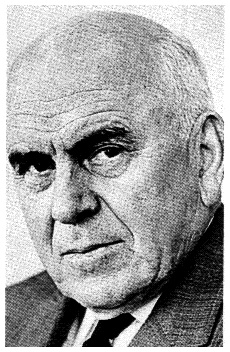
Today, according to a recent New York Times/CBS poll, an astonishing 77 percent of Americans reject the Warren Report’s conclusions. How did such a tremendous credibility gap come about? And, assuming that the majority of Americans are right, how did a free press so totally blow one of the biggest stories of the century? To find out, Village Voice has reviewed hundreds of documents bearing on the media’s coverage of the assassination, and has discovered a pattern of collusion and co-optation that is hardly less chilling than the prospect of a conspiracy to kill the president. In particular, The New York Times, Time-Life, CBS, and NBC have striven mightily to protect the single assassin hypothesis, even when that has involved the suppression of information, the coercion of testimony, and the misrepresentation of key evidence. The Voice has discovered that: Within days of the assassination, the Justice Department quashed an editorial in The Washington Post that called for an independent investigation; within two weeks the FBI was able to crow that NBC had pledged not to report anything beyond what the FBI itself was putting before the American people; only four hours after the murder, Life magazine grabbed up one of the main pieces of evidence—the Zapruder film—misrepresenting the content to millions of readers in its very first post-assassination issue and then continuing the lie with ever-changing captions and Zapruder frames in its special issue supporting the Warren Commission report; in 1967, a supposedly independent CBS documentary series on the assassination was in fact secretly reviewed and seemingly altered by former Warren Commission member John Jay McCloy (at right), through a “Dad says” memo written by his daughter Ellen McCloy, then administrative assistant of CBS News president Richard Salant; within that same CBS series, the testimony of Orville Nix—an amateur filmmaker who captured the “the grassy knoll” angle on tape—was tailored to fit the requirements of CBS’s Warren Commission slant. Much of this unethical and immoral practice was accomplished under the pretext of “sparing the Kennedy family.”
Indeed, the coverage of the assassination was complicated by the cross-identification between reporters and the president. The Kennedys were the first, and possibly the last, American political family to so thoroughly cultivate the fourth estate; in the aftermath of the assassination, the media completely relinquished its usual skepticism and opened the door for the government to do whatever it found most expedient. What possible motive could the national media have for failing to properly investigate the Kennedy murder? Perhaps they were genuinely seduced by this “Camelot” they themselves created. And if anyone was going to end Camelot, far better for the memories, far better for the family, that it be a lone psycho than a conspiracy. And if the media were solicitous to the Kennedys in this way, they were positively patronizing to the citizenry. It was Vietnam all over again: the war was good for the country, so don’t report how badly it was going; a conspiracy to kill the president would be demoralizing at home and humiliating abroad, so sweep under the rug any evidence pointing in that direction. And then of course there was the national security issue.
Many of the editors who were calling the shots on assassination coverage had come out of World War II. Their country took precedence over the truth; the CIA and FBI were entitled to the benefit of the doubt; the “free press” was sometimes confused with the Voice of America. J. Edgar Hoover, supreme patriarch of the FBI and all-powerful with a distraught Robert Kennedy out of the way, knew just how to exploit the opportunity. Deputy Attorney General Nicholas Katzenbach recalls that Robert Kennedy, attorney general at the time, was so despondent he didn’t even see the point of an investigation. “What the hell’s the difference? He’s gone,” Katzenbach remembers RFK saying before handing over the reins. Just three days after the assassination an internal Justice Department memo from Katzenbach to Bill Moyers, then a top aide to Lyndon Johnson, spelled out the Justice Department’s strategy, a strategy that would prevail to a shocking degree right through the end of the decade:
-
The public must be satisfied that Oswald was the assassin; that he did not have confederates who are still at large; and that the evidence was such that he would have been convicted at trial.
-
Speculation about Oswald’s motivation ought to be cut off, and we should have some basis for rebutting thought that this was a Communist conspiracy or (as the Iron Curtain press is saying) a right-wing conspiracy to blame it on the Communists. Unfortunately the facts on Oswald seem about too pat—too obvious (Marxist, Cuba, Russian wife, etc.). The Dallas police have put out statements on the Communist conspiracy theory, and it was they who were in charge when he was shot and thus silenced.
Katzenbach, whose memo sets out the Warren report results a year before the commission reached them, suggests that a “Presidential Commission of unimpeachable personnel” be appointed to examine evidence and reach conclusions. In closing he writes,
I think, however, that a statement that all the facts will be made public property in an orderly and responsible way should be made now. We need something to head off public speculation or Congressional hearings of the wrong sort.
Such a statement was indeed made, and of course the facts, the files, the evidence never were made public in their entirety. As it turned out, the speculation took years; new Congressional hearings, decades. Today, Katzenbach realizes that allowing Hoover’s agents to control the flow of information was a little like letting the fox guard the henhouse. The Senate Church committee report that came out in 1976 confirmed that while investigating the murder “top FBI officials were continually concerned with protecting the Bureau’s reputation.” Even Katzenbach concedes that Hoover would never “let the agency be embarrassed by any information on the bureau itself. He just would never show it. But how would you know it? What could you do?”
According to an FBI memo obtained by the Voice,” it didn’t take the FBI or the Justice Department long to get the the press under control. On November 25, 1963, the White House learned that The Washington Post planned an editorial calling for the convening of a presidential commission to investigate the assassination. Though Lyndon Johnson planned to do just that, the strategy was to get the FBI report out first. The memo states that Katzenbach called Washington Post editor Russell Wiggins and told him that “the Department of Justice seriously hoped that the Washington Post would not encourage any specific means” by which the facts should be made available to the public. The memo also describes a conversation an FBI agent had with Al Friendly, The Washington Post’s managing editor, discouraging publication of the editorial and suggesting that it would “merely `muddy the waters’ and would create further confusion and hysteria.” The editorial never appeared. Later that day Hoover triumphantly boasted in another FBI memo that “I called Mr. Walter Jenkins at the White House and advised him that we had killed the editorial in the Post.” The FBI had the electronic media wired as well. A December 11, 1963, teletype from the FBI office in New York to J. Edgar Hoover indicates that NBC had given the bureau assurances that it would “televise only those items which are in consonance with bureau report [on the assassination].” The eight-page FBI message details the substance of NBC’s research, including the development of leads. “NBC has movie film taken at some one hundred and fifty feet showing a Dallas Police Dept. officer rushing into book depository building while most of police and Secret Service were rushing up an incline towards railroad trestle [in front of the motorcade].”
The New York Times
The paper of record, The New York Times, led the newsprint pack with the official story. Months before the Warren Commission report was released, Times writer Anthony Lewis got a special exclusive preview and his June 1, 1964, page-one article presented its findings in positively glowing terms; over the years he has continued to attack Warren Commission critics as well as Oliver Stone’s film. Lewis has told the Voice that his close ties with the Kennedys, specifically Robert made “it very painful to me personally. Over the years I felt I did not want to get involved as a counterexpert or expert. Maybe with all that has happened, Vietnam and Watergate, today’s reporters would have come to it with more resistance. There was at the time a predisposition for the society as a whole to believe.” But can “lost innocence” account wholly for the mangling of history and management of information that the major media engaged in during that period?
For the Times, creating a supportive climate for the Warren report seemed an institutional imperative. The Times was going to run the report in the paper and then go commercial with it: collaborating with the Book of the Month Club and Bantam Books to publish it in September of 1964. On May 24, 1964, Clifton Daniel of the Times wrote Warren Commission Chief Counsel J. Lee Rankin expressing gratitude to Chief Justice Earl Warren for facilitating publication of the Warren report. Certainly any vigorous critical evaluation of the Commission’s findings at this juncture would have jeopardized this great relationship.
The Times did not quit with the Warren report. Two months after the Warren report was released, the Times collaborated with McGraw-Hill and Bantam on The Witnesses, a book of testimony from the Warren Commission hearings edited by the Times. The accounts of those witnesses whose testimony deviated the slightest from the official story were simply edited out. Not included, for instance, was one man’s testimony to the Warren Commission that on the day of JFK’s murder he had seen two men on the sixth floor of the Texas Book Depository, where the official line says there was just Oswald. The FBI told this witness to “forget it.” His references to shots coming from the railroad yards in front of the president were also deleted. In addition, the section of the transcript where three Secret Service agents’ autopsy observations contradict the official autopsy report was deleted. No wonder readers of this expurgated version of the commission’s report became true believers. With the issuance of the Warren report, Oswald became the assassin. (Although from the very beginning—with a November 1963 Life article on Oswald headlined, “The Assassin: A Cold Lonely Man Who Resented All Authority”—there was no presumption of innocence and little inclination to consider other explanations.)
As time went on and inconsistencies began to surface, it became harder to accept the Warren report findings. The Times did its best to downplay this revisionist thinking with one of the most blatant examples being John Leonard’s December 1970 New York Times review of two Kennedy assassination books—Jim Garrison’s A Heritage of Stone and James Kirkwood’s American Grotesque. In the early edition of the paper the headline read, “Who Killed John F. Kennedy?” and the review itself contained two long paragraphs challenging the Warren Commission, subtitled “Mysteries Persist.” “But until somebody explains … ” wrote Leonard, “why a `loner’ like Oswald always had friends and could always get a passport—who can blame the Garrison guerillas for fantasizing? Something stinks about the whole affair.” Within hours these hard-hitting paragraphs disappeared from the review and the headline was altered to read, “The Shaw-Garrison Affair.” Leonard told the Voice he was never able to track down the person responsible for the changes. “Not the bullpen, not the culture desk, not even Abe Rosenthal knew how it happened. We’ve every right to be paranoid,” Leonard says.
Time-Life
While the Times was busy selling the Warren Commission story, Life magazine went one step beyond that, actively intervening to spirit away crucial physical evidence in the case. Aside from swooping down on Oswald’s wife and mother and sequestering them in a hotel room to protect Life’s exclusive interviews, Life was in Dallas making arrangements to buy the original Zapruder film only four hours after the assassination. Of the four existing home movies taken that day in Dealey Plaza, the 8mm film, shot by a middle-aged dress manufacturer, was considered to be the best record of JFK’s murder. According to Richard Stolley, who is currently the editorial director of Time Inc. and who handled the Zapruder transaction for Life, the order to acquire the film and “withhold it from public viewing” came from Life’s publisher, C.D. Jackson.
And who was C.D. Jackson? A staunch anticommunist who played a crucial role in the direction of U.S. policy throughout the 1950s, both as “psychological war advisor” to Eisenhower and as a member of anticommunist front groups, Jackson’s publication had long been known for “always pulling chestnuts out of the fire for the CIA,” as the late Drew Pearson once put it. Having shelled out $150,000 for the film (the Zapruder family attorney claims the number was even higher), Stolley headed back to New York with the original print under his arm, leaving investigators with a copy that was next to worthless in terms of forensic analysis. By permitting the chain of custody to include Life magazine, and by accepting a mere copy of a crucial piece of evidence, the law-enforcement authorities were well on their way to compromising their investigation. The critical Zapruder film was kept exclusively in the hands of Time Inc. and out of the public’s reach for the next 12 years, allowing Life to take the American people on one of the longest rides ever in American journalism.
In its very first issue after the assassination, Life seriously misrepresented the content of the Zapruder film, a practice that would continue until the film finally gained general release in 1975. The doctors at Parkland Hospital, who had worked on the president, had reported that he had suffered an “apparent” entrance wound to the throat. Since the book depository, from which Oswald had allegedly fired, was to the presidential limousine’s rear, how, some were beginning to wonder, did the president suffer a frontal throat wound? Life’s December 6, 1963, edition gave a simple and conclusive explanation, based on the Zapruder film, an answer only Life could provide. Wrote Life: “The 8mm [Zapruder] film shows the President turning his body far around to the right as he waves to someone in the crowd. His throat is exposed to the sniper’s nest just before he clutches it.” This description of the Zapruder film went a long way toward allaying fears of conspiracy in those early days, for it explained away a troublesome inconsistency in the lone assassin scenario. There was only one problem: The description of the Zapruder film was a total fabrication. Although the film shows Kennedy turning to the right—toward the grassy knoll, that is—at no time does he turn 180 degrees toward the book depository. Indeed, by the time he is hit, he is once again turning toward the front.
Even this yeoman’s effort pales, though beside Life’s October 2, 1964 edition which was largely committed to the newly released Warren report. Rather than assign a staff writer the job of assessing the committee’s work, Life gave the assignment to Warren Commission member Gerald Ford. But it is not the articles in that edition of Life that are so extraordinary, but the pictures, and the pains that were taken to rework them so they fit the Warren report perfectly. The October 2, 1964, issue underwent two major revisions after it hit the stands, expensive changes that required breaking and resetting plates twice, a highly unusual occurrence. That issue of Life was illustrated with eight frames of the Zapruder film along with descriptive captions. One version of caption 6 read: “The assassin’s shot struck the right rear portion of the President’s skull, causing a massive wound and snapping his head to one side.” The photo accompanying this caption—frame 323—shows the president slumped back against the seat, and leaning to the left, an instant after the fatal bullet struck him. The photo makes it look as though shots came from the front—the railroad trestle—or the right—the grassy knoll. A second version of the issue replaces this frame with another, the graphic shot of the president’s head exploding (frame 313). Blood fills the air and all details are obscured. The caption, oddly enough, remained the same—describing his head snapping to one side. A third version carries this same 313 slide—frame 323 has been thrown on the dumpheap of history—but now with a new caption, one that jibes perfectly with the Warren Commission’s findings. “The direction from which shots came was established by this picture taken at the instant the bullet struck the rear of the President’s head and, passing through, caused the front part of his skull to explode forward.” Nice try. Of course, as all the world would learn years later, it was the back of the president’s skull that would explode, suggesting an exit wound, and sending Jackie Kennedy crawling reflexively across the trunk of the limousine to try to salvage the pieces. But this would not be fully understood until the Zapruder film itself had been seen in its entirety. For the moment, the only people in a position to spot Life’s error were the Secret Service, the FBI, and possibly the busy pressmen at R. R. Donnelly, who must have piled up a lot of overtime trying to keep up with the ever-changing facts. (Life wasn’t the only publication on the assassination to have bizarre layout problems. The Warren Commission Report itself never addressed the backward motion of the president’s head, thus sparing itself the burden of having to explain it. This omission was facilitated by the reversal of the two frames following the explosive frame 313 in the Warren Commission’s published volumes, which considerably confused the issue by making it seem as if the head jerked forward. J. Edgar Hoover later blamed the switch on a “printing error.”)
Life’s exclusive monopoly on the Zapruder film came in just as handy for Dan Rather, CBS’s New Orleans bureau chief, who was permitted by Zapruder to see the film before it was whisked off to the vault. Rather told the world he had seen the film and that the president “fell forward with considerable force.” (CBS spokesman Tom Goodman told the Voice that Rather only got to see the film briefly and viewed it on a “crude hand-cranked 8mm machine.”)
What was the effect of these misrepresentations of the Zapruder evidence? One can only guess, but they could well have been crucial to the public’s faith in the single-assassin theory. British journalist Anthony Summers, author of the book Conspiracy, speculates that “if they had shown the film on CBS the weekend of the assassination or at any time the following year there would not have been anyone in America who would not have believed that the shots came from the front of the President and that there was therefore a conspiracy.”
Meanwhile, Life’s sister publication, Time, did its best to swat away any and all conspiracy talk. Time countered the ground swell of conspiracy rumors in Europe with an article in its June 12, 1964, issue. Entitled “J.F.K.: The Murder and the Myths,” the article blamed the speculation on “leftist” writers and publications seeking a “rightist conspiracy.” Proponents of further investigation suffered fates similar to that of Thomas Buchanan, who in 1964 wrote the first book critical of the Warren Report, Who Killed Kennedy? Buchanan’s thesis was groundless, Time argued, because he had allegedly been “fired by the Washington Star in 1948 after he admitted membership in the Communist party.”
By late 1966, however, it was getting harder for the media to hold the line. Calls for a reexamination of the Warren Report now came from former Kennedy aides Arthur Schlesinger and Richard Goodwin, The Saturday Evening Post, the Vatican newspaper L’Osservatore, Walter Lippmann, Cardinal Cushing, William F. Buckley, and the American Academy of Forensic Sciences. It was in this climate that the New York Times initiated its first independent investigation of the assassination. By 1966 The Times seemed to be moving away from its stance of unquestioning support for the Warren report. In a November 1966 editorial, the paper acknowledged that there were “Unanswered Questions.”
Harrison Salisbury, then editor of the [Times] op-ed page, called for a new investigation in the pages of The Progressive. Salisbury, who had been a solid supporter of the Warren Commission initially, also told Newsweek that the Times would “go over all the areas of doubt and hope to eliminate them.” That investigation lasted for less than a month. The best look inside the brief investigation came in a Rolling Stone interview with New York Times reporter and assassination investigation team member Martin Waldron. Waldron told Rolling Stone that the team found “a lot of unanswered questions” that the Times did not choose to pursue.
Even Life was beginning to feel the pressure to address the critics and their substantive observations. In 1966 Ed Kearns, Dick Billings, and Josiah Thompson were given the green light to review the Kennedy murder, which would culminate in a magazine series taking a critical look at the Warren Report. Their efforts produced the November 25, 1966, Life cover story, “Did Oswald Act Alone? A Matter of Reasonable Doubt.” Accompanying the article was an editorial that called for a new investigation.
Paradoxically, Time in the same week editorially attacked the “phantasmagoria,” dismissing both the Warren Commission’s doubters and the calls for a new investigation. Questioned by The New York Times about the editorial schism at Time-Life, Headley Donovan, editor in chief of both magazines, said, “We would like to see our magazines arrive at consistent positions on major issues, and I am sure in due course we will on this one.” Indeed. Within months, Billings was told by a superior he won’t name, “It is not Life’s function to investigate the Kennedy assassination.” The investigative team was disbanded. The first article in the series was also the last.
But team member Thompson, a former philosophy professor turned private detective, had laboriously made 300 four-by-five transparencies of the suppressed film. After his work with Life he kept this cache and resumed work on his book Six Seconds in Dallas. Thompson and his publisher, Bernard Geis, sought unsuccessfully to get permission from Life to use the Zapruder shots. They offered to turn over all the proceeds from the book to the print giant. The answer was still no. Without the use of the images of the Zapruder film, or at least some facsimile of them, Thompson would have a hard time clinching his argument that Kennedy was hit from the front in the notorious head shot, Zapruder frame 313. After consultation with an attorney, Thompson and Geis decided to have an artist render drawings based on Thompson’s slide-by-slide copy of the contraband film. When the book was ready to be distributed by Random House, the Time-Life steamroller puffed into action and threatened Random House with legal action in the event they went ahead and distributed the book. According to Geis, Random House was ready to cave in to Time-Life, and Geis geared up to send trucks over to the Random House warehouse to pick up the books. In the eleventh hour Random House reconsidered and decided to publish Six Seconds in Dallas, thus giving the American public its first view, albeit as an artist’s rendering, of the most compelling piece of evidence from the assassination of Kennedy. Life was so furious that it took Thompson and his publisher to court on a copyright infringement; the magazine lost because it could not claim financial damage—after all, Thompson had offered all the proceeds to Life. Despite Thompson’s expensive victory (all the legal fees fighting Time Inc. consumed the income from his book), the company’s grip on the film remained every bit as strong as it had been.
Such efforts, large and small, mostly succeeded in keeping the Warren critics marginalized. But finally, the lid blew off in 1975 when activist Dick Gregory and optics expert Robert Groden approached Geraldo Rivera with a newly unearthed clear copy of the Zapruder film. Finally, the American public was to see the Zapruder film in its entirety, unmediated by any editors or censors. ABC’s Good Night America show was the first national television airing of the film to include the deadly frame 313. (Pirated copies had started to crop up in the mid ’60s but were of such poor quality they had no dramatic impact.) “It was one of those things where I said [to ABC], ‘It gets on or I walk,’” Rivera told the Voice. ABC relented, but only after Rivera agreed to sign a waiver accepting sole financial responsibility if Time or the Zapruder family sued. Rivera maintains that Time-Life did not sue because “they were blown away by the reaction to the program.” The airing of the Zapruder film on Rivera’s show was a catalyst for renewed interest in the murder and ultimately culminated in four congressional investigations into various aspects of the controversy. It is probably no accident that Time-Life sold the original film back to Zapruder’s estate for one dollar the following month. (Today, for $75—with costs waived for poor scholars—you can view a VHS copy of the film. The Zapruder estate recently turned down an offer to turn the frames into baseball cards.)
Oliver Stone’s movie JFK relies on the Zapruder film to support the film’s central contention that Kennedy’s fatal wound came from the front, and that therefore a conspiracy existed. Referring to the 8mm film, Stone told the Voice: “It was key. It is the best smoking gun we have to date.” Despite the compelling use of the Zapruder film in Stone’s movie, the man who helped acquire it for Time-Life remains convinced that the Warren Commission got it right and that Oswald did in fact shoot Kennedy from the book depository. “There is nothing in the Zapruder film which contradicts the Warren report,” says Dick Stolley. Oddly enough, the man who shot the film, Abraham Zapruder, according to an article authored by Stolley in the November 1973 Esquire, told the Life reporter, “My first impression was that the shots were coming from behind me”—that is, from the infamous grassy knoll. Stolley now maintains that the urge to control the Zapruder film had to do with beating out the competition. If the competition was a contest to suppress the most evidence possible, then Life certainly won hands down. But if the competition Stolley refers to is journalistic competition, one wonders why Life bothered. Take, for instance, the case of CBS’s documentary series on the assassination, which aired in June of 1967.
CBS
CBS decided to go ahead with a documentary series in the fall of 1966, as the cynicism about the assassination continued to mount. Books on the subject were starting to stimulate a national debate. Reports on the suppression of crucial evidence—including the fact the Warren Commission never even saw the actual autopsy photos and X-rays of JFK—had became parlor talk around the country. Buzz phrases like “magic bullet” were being used for the first time to express a growing cynicism. Public opinion polls indicated that a majority of the respondents had begun to doubt that Oswald was the whole story.
The CBS effort was nothing if not monumental. Whereas those who had come before had used fixed targets to test the magic bullet hypothesis, CBS went a giant step further, rigging up a moving target. But the money and manpower thrown at the project was undercut all along the way by errors in procedure and logic; if not motive. For instance, in trying to determine whether Oswald could possibly have fired all the rounds believed to have been squeezed off in Dealey Plaza, CBS used a rifle that was faster than Oswald’s: capable of three shots in 4.1 seconds as opposed to 4.6 seconds for Oswald’s. The 11 CBS marksmen fired 37 firing runs of three shots each; of those, an amazing 17 of the 37 runs were disqualified as Cronkite said “because of trouble with the rifle.” And, even with their faster guns and time to practice, the 11 marksmen averaged 5.6 seconds to get off their three shots, with an average of 1.2 hits. Oswald, a notoriously bad shot firing with a slower gun, is alleged to have done much better—three shots and two direct hits in 5.6 seconds, with no warm-up. CBS neglected to inform its viewers of the poor total average hit ratio. How did CBS interpret these rifle tests? “It seems reasonable to say that an expert could fire that rifle in five seconds,” intoned Walter Cronkite. “It seems equally reasonable to say that Oswald, under normal circumstances, would take longer. But these were not normal circumstances. Oswald was shooting at a president. So our answer is: probably fast enough.”
Such lapses may well be explained by a perusal of internal CBS documents, generated in preparation for the 1967 documentary, that have been obtained by the Voice. The documents show the highly unusual role played by one Ellen McCloy, who for years had served as the administrative assistant to Richard Salant, head of CBS News. During the production of the CBS series, McCloy was one of only a handful of people who was cc’d on all 10 memos obtained by the Voice concerning the work in progress. (McCloy and Salant contend there was nothing unusual in this arrangement as she routinely received copies of Salant’s correspondence.) But in this instance, she was more than a passive recipient, filing duplicates for her boss. She was passing along not her own opinions but those of “Dad.”
Ellen McCloy’s father, John J. McCloy, had not only served on the Warren Commission but had been Assistant Secretary of War, High Commissioner for West Germany, chair of the World Bank, chair of Chase Manhattan Bank, and head of the Ford Foundation. According to Kai Bird, author of the soon to be released biography The Chairman: John Jay McCloy—the Making of the American Establishment, McCloy was “the guy who greased the wheels between the world of Wall Street, big foundations, and Washington.” McCloy himself acknowledged his agenda: showing that America was not “a banana republic, where a government can be changed by conspiracy.”
Not only did McCloy appear in CBS’s documentary, he also lurked about in the shadows, helping to steer and shape. A handwritten note on CBS stationery from Ellen McCloy to Les Midgley, producer of the series, gives the reader a feel for the close relationships between the McCloys and the CBS bunch. The memo reads: “One comment that Dad [emphasis added] made after reading the `rough script’ Mr. Salant wanted me to pass on toyou. It concerned a sentence (—or two—) that appears on the top of page 5C. … Dad said: 1) he had no recollection of the President (LBJ) asking or urging the members of the Warren Commission to act `with speed.’ 2) The phrase `In less than a year’ again implies that the commission might have acted in haste. Dad suggests that you might say `after 8 1/2 months … ‘ —Ellen” Or again: “Dad asked me to give you the enclosed. He said it shouldn’t be considered a bribe … maybe it’s just a gift as the result of the birth of Luci’s baby. `The old man’ thanks you very much for the booklet!!! —Ellen”
On July 20, 1967, Midgley sent a letter to John McCloy thanking him for his “extremely kind and generous comments,” adding, “Another member of your family also sweated this all out with us and did a fine job.” Salant now contends that Ellen McCloy’s presence on the CBS payroll did not prejudice the documentaries. “Should who her father was have disqualified her from the job?” he asks. “She was a very able lady. She worked for me for six years.” Ellen McCloy concurs that she herself did nothing to influence the editorial content of the documentaries. “I would act as a conduit,” McCloy explained. “I would take things home and they would ask me to ask my dad this or that.” He and producer Midgley remain proud of the series, and believe it holds up. “It still is the major journalistic inquiry into this 25 years later … it was an independent inquiry.”
But the McCloy memos, and a few others, certainly raise a question about how open-minded and thoroughgoing CBS was. Take, for instance, this April 26, 1967, memo from Salant to Midgley: “Is the question of whether Oswald was a CIA or FBI informant really so substantial that we have to deal with it?” The answer was, maybe. In CBS’s June 28, 1967, program, Cronkite does indeed refer to Oswald’s FBI connection in the following fashion: “The question of whether Oswald had any relationship with the FBI or the CIA is not frivolous. The agencies, of course, are silent. Although the Warren Commission had full power to conduct its own independent investigation, it permitted the FBI and the CIA to investigate themselves—and so cast a permanent shadow on the answers.”
Although Salant asserts to this day that CBS was only after the truth, a recently released documentary indicates otherwise. Danny Schechter’s Beyond JFK: The Question of Conspiracy, features Walter Cronkite conceding that CBS News in 1970 censored Lyndon Johnson’s own doubts about the lone-assassin theory. Cronkite tells Schechter that Johnson invoked “national security” to get CBS to edit out his remarks long after they had been captured on film. Cronkite and CBS, of course, reflexively complied.
But perhaps nothing revealed CBS’s prejudice in the series more tellingly than the network’s treatment of Orville Nix, a man who was wielding a movie camera across from the grassy knoll on that fateful day. Nix, who had worked for the General Service Administration as an air conditioning repairman in the Dallas Secret Service building, sold his footage to UPI for $5000 in 1963. But, according to his granddaughter Gayle Nix Jackson, the film only brought him heartache.
“The FBI had issued a dictum to all of Dallas’s film labs that any assassination photos had to be turned over to the FBI immediately,” recalls Gayle Jackson. “The lab called my granddad first and, like the good American he was, he rushed it to the FBI.” Nix had to turn his camera over to the FBI as well. “They took the camera for five months. They said they needed to analyze it. They returned it in pieces,” recalls Jackson. In 1967 Nix dutifully turned out for the CBS re-creation. Recalls his granddaughter: “His turn came to reenact what he saw. They said, `Mr. Nix, where did the shots come from?’ He said, `From over there on that grassy knoll behind the picket fence.’ Then it would be, `Cut!’ We went through this six or seven times and each time it was, `Cut!’ And then a producer stepped forward and said, `Orville, where did the Warren Commission say the shots came from?’ My granddad said, `Well, the Texas Book Depository.’ The producer said, `That’s what you need to say.’” CBS producer Bernard Birnbaum, who worked on the documentary, denies the exchange. “We never tried to put any words in anybody’s mouth, absolutely not,” he told the Voice. Birnbaum says CBS did give Warren Commission critics air time and cites a segment of the documentary where another eyewitness contends shots came from the grassy knoll. “We were looking to disprove everything,” he insists.
According to Jackson, her grandfather also told CBS that there were four shots fired during the assassination, an observation subsequently endorsed by the House Select Committee on Assassinations in 1975, based on controversial acoustical evidence. But what did the CBS viewing audience hear from Nix? “Bang, bang, bang,” as if to suggest that Nix also subscribed to the three-bang theory.
After being browbeaten by CBS, Orville Nix, a normally mild-mannered man, became furious. “He was hitting the steering wheel on the ride back home saying, `Why are they trying to make me feel like I am insane?’” Jackson recalls. She remembers that a year or so later, when District Attorney Jim Garrison called for Nix to testify, her grandfather wouldn’t talk. He was afraid for his life.
How many other witnesses experienced the Orville Nix you-never-heard/saw-that phenomenon we will never know. But one other was Kenny O’Donnell, a confidant and adviser to JFK who was in the motorcade. In Tip O’Neill’s book Man of The House, O’Neill describes a conversation with O’Donnell, who told him he was sure that two shots had come from the fence behind the grassy knoll. O’Neill said to O’Donnell, “That’s not what you told the Warren Commission.” O’Donnell responded, “You’re right, I told the FBI what I had heard, but they said it couldn’t have happened that way and that I must have been imagining things. So I testified the way they wanted me to. I just didn’t want to stir up any more pain and trouble for the family.”
Since Orville Nix’s death in 1988, his granddaughter, a former loss-prevention executive, has been waging a one-woman war to get the original film back from UPI. She wants it analyzed to reveal the details that a copy does not provide. “You know my granddad believed in the Texas handshake, and that is how he made his deal with UPI.” According to Jackson, the rights to the film were to revert to Nix’s estate in 1988. After initially getting a green light from UPI for the return of the film, the then-media giant informed her that the attorney that granted her request was “no longer with the company.” She was told to wait until 1991. Then on June 4, 1991, came a note from UPI’s general counsel, Frank Kane. “UPI agrees that, in accordance with the oral agreement … UPI hereby releases all rights over the Nix Film to Mr. Nix’s heirs and assigns.” There was only one problem. UPI no longer had the film. Jackson received a letter saying the film had gone to the Warren Commission and was supposedly housed in the National Archives. With the Warren Commission out of business, she contacted the National Archives only to learn that the original was not there either.
The last official place the film was said to have been was in the House Select Committee on Assassinations files. That Committee was convened in 1975 to investigate the assassinations of John Kennedy, Robert Kennedy, and Martin Luther King. The chief counsel for the HSCA, G. Robert Blakey, who has a penchant for gagging his staff via mandatory secrecy oaths, came clean with Nix’s granddaughter about the fate of the family heirloom, says Jackson. “Blakey’s the only one who takes full responsibility for the loss of the film because it was his committee that was supposed to assure that all evidence was returned to the rightful owner,” Jackson says. So much for posterity’s view of the grassy knoll on November 22, 1963. A former HSCA staff member, Gaeton Fonzi, recalls that back at the time of the hearings the staff “heard rumors that Blakey planned to classify all of the committee files, but we didn’t believe them because that would be too reminiscent of what the Warren Commission had done.” In fact many of the files were classified and this same man, Blakey, is the one who has been recently assigned to help draft legislation about what will be released from the original Kennedy assassination files.
Fact Collides with Fiction
Today, there are hundreds of thousands of documents relating to the Kennedy assassination kept from public scrutiny in classified files. But it is growing harder for the American public to accept the government’s suppression of these files. The Cold War’s over, right? The New York Times runs photos of East Germans knee-deep in covert Stasi files. 60 Minutes takes us into the depths of the KGB labyrinth to find Lenin’s brain, yet the nation has to be content with Bob Gates offering up state secrets from World War I. What is the CIA hiding and what were they afraid to let Americans know about 1963? (With Allen Dulles, former director of the CIA, on the Warren Commission the intelligence community had a staunch protector.)
Had the government opened its files to assassination investigators tracking the complex globe-trotting of Lee Harvey Oswald between 1959 and 1963, the 1960-1962 attempts on Fidel Castro’s life—exploding cigars and poisoned milk-shakes— might have been exposed. Years before that information finally leaked out, the public might have learned that the U.S. itself was in the business of assassinating heads of state. Hadn’t the White House looked the other way while South Vietnam’s President Ngo Dinh Diem was being struck down, just two weeks before JFK’s murder? It could be argued that, had the media done their job in pursuing the Kennedy assassination story, they would have exposed the situational ethics of America’s security apparatus years before Vietnam became a domestic civil war, or Watergate and Iran-contra national disgraces. Motive in this crime of omission was no doubt a confluence of many elements: a blind patriotism, an institutional paternalism, and a determination to admit no mistakes. Once wedded to the Warren Commission, the editors and reporters who covered the assassination considered even a whisper of conspiracy a form of infidelity. All others, from Mark Lane to Oliver Stone and the hundreds of enterprising reporters in between, were traitors, hysterics.
Throughout the early 1960s, when Walter Cronkite said, “That’s the way it is …” we had no reason to doubt him. The bashing of Oliver Stone’s movie JFK by the bastions of the American media—CBS, The New York Times, Time, Newsweek, and The Washington Post—is said to spring from the sincere desire on the part of the keepers of America’s memory to see that our sacred history does not fall prey to revisionist charlatans. While Stone’s film does take serious liberty with history, the virulence with which the film has been attacked seems to say more about a defensive press that missed and continues to miss a major story than it does about any flaws in JFK. “When it came to this [reporting on the assassination], the working press was a lobster in a trap,” Bill Moyers told the Voice. “Back then, what government said was the news … In the 1950s and early ’60s, the official view of reality was the agenda for the Washington press corps … I think it is quite revealing that it’s Oliver Stone that’s forcing Congress to open up the files and not The Washington Post, The New York Times, or CBS.”
Originally published in The Village Voice, March 1992.