Category: John Fitzgerald Kennedy

Original essays treating the assassination of John F. Kennedy, its historical and political context and aftermath, and the investigations conducted.

  • The Mystery of Red Bird Airport


    Anyone who begins to delve into the Kennedy assassination in Dallas will eventually encounter various references to Red Bird Airport, a small private airfield in the south part of Dallas.

    On November 22, 1963, because of a 1:30PM notice from the FBI to report suspicious activities, a Red Bird tower operator became so suspicious of a certain aircraft that he made repeated calls to the FBI. The plane in question had remained ready for takeoff for some time and departed only after news of a suspect in the assassination capture was announced – it then reversed course from its stated departure path, flying south rather than north.  The FBI number remained busy and the tower operator finally gave up. The plane then returned some time later.

    Red Bird Airport Map South Dallas
    Red Bird Airport was redeveloped with name changed to Dallas Executive Airport

    While the flight itself may well have been innocent, the airport tower notice to the FBI required a response and no reports indicate any similar notice to the Dallas Police, no mention is made of any separate, proactive DPD or Bureau inquiry at airports or airfields. The incident certainly raises questions about any Dallas Police Department inquiries at Red Bird, as well as whether any real DPD effort was made to check private flights out of Dallas on November 22nd.

    On November 29, 1963 the FBI did interview an individual from Red Bird following the assassination, apparently due to a report from local sources.  The individual was Wayne January, operator of an aircraft sales and charter business located at the airfield.  January had remarked to friends about a couple who had inquired about renting a plane for a long distance flight. He recalled he had been suspicious of their intent and ability to pay. After the assassination he also thought there was a resemblance between a third person with them and Lee Oswald.[1] During the FBI interview, January also mentioned that he had been frequenting the Carousel Club, and so the FBI agents spent a great deal of the interview pressing him on a possible connection to Ruby.

    Vince Bugliosi felt it necessary to address the Red Bird Airport topic in his book Reclaiming History.  His treatment of the subject is relatively limited; his overall view seems to be that nothing significant could have happened in or around Red Bird since, according to him, the Dallas police investigated matters there. As his only source for that assumption Bugliosi cites anecdotal information from Dallas Assistant DA Bill Alexander to the effect that, “Will Fritz had sent people out there and turned up nothing suspicious.”[2] Regardless of Bugliosi’s claims, there seem to be no records of a DPD inquiry at Red Bird Airport.  In his own discussion in Reclaiming History, Bugliosi limits his discussion of the episode to Lee Oswald and just one witness.  Regarding the former, he only notes Red Bird as a possible escape route for Oswald.  Namely, that after the Tippit shooting, Oswald could have caught a bus from near that location in Oak Cliff with Red Bird Airport on its route.

    postcard
    Vintage Postcard showing Red Bird Airport and Downtown Dallas

    This incident has been extensively discussed in print by author Matthew Smith, beginning in his book. Bugliosi also delves into the story, taking January to task for apparent inconsistencies over time and an issue with the incident date in the FBI report (July,’63 per the FBI report vs. November 20, per Smith/January).[3]

    Bugliosi wrongly assumes that the DPD visit described by Alexander must have included January, where he failed to mention the incident to the DPD. Since there is nothing to confirm the DPD visit, this is weak criticism. Bugliosi goes on to state that January “invented” the whole incident, calling it a “fabrication”. Bugliosi fails to remark on the fact that January never attempted to promote his story for visibility or profit. He also accuses Matthew Smith of making up additional elements of the story because Smith did not write them about at first. There is no indication that Bugliosi contacted Smith (who is quite alive and still writing in 2013) in regard to this rather serious and slanderous assertion.  If he had, he would have found that there was a perfectly logical and reasonable reason for the delay.

    Setting aside the known effects of time on memory, which Bugliosi does not acknowledge, January is also slammed by Bugliosi for not remembering his own fabricated story. Of course, people who do fabricate stories often take great pains to repeat them consistently. But perhaps a more serious concern is January’s own objection to the initial FBI report, which Matthew Smith first showed him after researcher Harold Weisberg had obtained a copy via FOIA request.[4]

    After viewing the FBI report, January’s first remark was that he had given the FBI an accurate date for the visit – November 20. His second was that such a visit would never have come to be suspicious to him if it had been months and not days before the assassination.[5] The issue over the date inconsistency might also be more credible if we have not seen numerous instances in which witnesses have taken exception to material in FBI reports – reports which are never initially verified by the interviewee (as is often done in standard police statements).[6] This is an issue that Bugliosi does not mention in general, nor does he mention this specific instance in regards to January. Therefore, he is free to call January a fabricator.  And since the reader is supplied with no other frame of reference, he or she has no real alternative except to accept the verdict as handed down by the famous prosecutor.  This inability to frame both sides of the argument, which in his introduction Bugliosi says he will do, is a serious and grievous fault in his mammoth book.

    Beyond all this, there is a much more suggestive incident from Red Bird and Wayne January, parts of which are not mentioned at all by Bugliosi; but one in which certain elements can be totally verified. After numerous visits with Smith, January related an incident which he had previously determined not to share with anyone, based on his original experiences with the FBI and the context of the incident itself. The story involved a series of aircraft sales he had been involved with in 1963 and the last aircraft in the series, handed off at Red Bird on November 22, 1963. He provided Smith with certain information on the aircraft but demanded it be withheld until after his death. His behavior in no way resembles Bugliosi’s claims that he was making up stories for some sort of public attention. Indeed his action shows he was clearly aware of the security aspects of the sales of the particular aircraft in question.  Bugliosi’s failure to dig into this element of January’s information raises questions about how thoroughly he covered material – the aircraft story is mentioned in several of Smith’s books — and to what extent Bugliosi was really looking for balance, given that he makes no mention of discussing January’s various remarks with the individual who would know most about them at this point in time.

    January’s basic story was that Woburn Aircraft was selling the planes and that he was in charge of the work required to hand them off to the new owners. The final plane was being taken by an unnamed individual in civilian clothes (later identified to him as an Air Force officer) and a maintenance technician /pilot. The actual inspection and acceptance of the plane was delegated to the technician, who told January that he had been born in Cuba and was a former pilot with Cubana Airlines. The Cuban was extremely familiar with the aircraft and stated that he had extensive flying time in its DC-3 commercial version.

    While January and the Cuban technician spent long hours that week doing acceptance tests and minor maintenance, they became friendly and had a good deal of time for talk. By Thursday of that week they had discussed the pilot’s participation in support of the Bay of Pigs landings, and also his friends who had died there. The pilot described the Cuban exiles’ pain, embarrassment and anger at being abandoned by the Kennedy brothers.  As they continued to chat, the subject turned to the President’s imminent visit to Dallas. The pilot paused, and then he flatly stated to January, “They are going to kill your President.” He knew for a fact that Cuban exiles were going take their revenge and remove JFK as an obstacle. January challenged him but the Cuban would say nothing more, only remarking that January would see he was telling the truth.

    Matthew Smith describes their dialog in his books but keeping with Wayne January’s wishes, Smith kept his name as the source of the story confidential until after his death.[7]  Smith eventually named January only with his widow’s permission. (Again, Bugliosi leaves all this out so he can claim that Smith actually made up the story later. This way he gets to say, in his indiscriminate and inimitable style, that both Smith and January are fabricators.) Only in 2003 did Smith name January and provide specific information on the aircraft. With that information, the story has been explored in further detail.  With help from a volunteer FAA employee and confirmation from the Houston Air Center, the author obtained the complete paperwork on the aircraft transaction.[8] The aircraft in question was a C-53, the WWII era military transport version of the DC-3.[9]  This documentation proves the transfer of aircraft did happen.

    DC3
    DC-3/C-53 #50 In Flight. After the start of WWII, all former DC-3’s of CNAC had been designated C-53.
    (Photo and Caption Courtesy of Pete Billon)

    The plane had come to Red Bird in January 1963 and was owned by two different companies there during that year. Wayne January was a partner in both companies. At some point that year, the aircraft had been heavily modified, all the seats had been removed from the plane and it had been reclassified with the FAA as a research and development aircraft. We also know that it had been sold to individuals of the Houston Air Center, but paperwork was not actually completed until it was eventually resold outside the U.S. to a company named Aerovias del Sur. The records place that company’s headquarters in Mexico City, however, defunct companies of that name can be found in Cuba, Mexico and Columbia. Further tracing seems virtually impossible.

    Another tack in evaluating January’s overall story of the incident is to look at where such aircraft were indeed being used covertly during the timespan of 1964-1965. Records reveal that the Cuban exile autonomous group initiative supported by Robert Kennedy in 1963 was in the process of buying and leasing a broad variety of equipment, both boats and planes. That effort was led by Manual Artime and records demonstrate that extensive “cut outs” were used to shield its financial activities – and the fact that the U.S. was funding the project. Available records confirm that Artime did lease a similar Douglas transport aircraft until his project was closed down in 1965. Artime’s personnel were all Cuban exiles and his funding, purchasing and leasing were all carried out by CIA staff in a highly covert project designated as AMWORLD.

    Another covert operation involving aircraft and Cuban exile personnel would have been the highly secret dispatch of aircraft and Cuban exile pilots to the Congo, which began in 1963. A joint effort of the American military assistance mission and the CIA, the effort focused primarily on providing B-26 fighter-bombers and Cuban exile pilots. However a number of transport aircraft and technicians were also sent into the Congo in 1964.[10]

    A third option, and one especially interesting in regard to the modifications and R&D recertification of the Red Bird aircraft, is the fact that a variety of covert air assets were being prepared to go into Laos in this period.  In addition, the Air Force was developing the class of modified C-47 gunships eventually known as “Spooky”. The craft were totally stripped internally to allow the mounting of heavy machine guns and cannon.[11]  Development of these gunships was underway in 1964 and the first aircraft were deployed into Vietnam in 1964. Therefore, the aspect of January’s story about the pilot being familiar with certain veterans of the Bay of Pigs is supportable.

    January indicated to Smith that it was his understanding that the series of aircraft being purchased through companies at Red Bird and Houston Air Center were being processed through a series of cut out sales for eventual use in secret government projects. Investigation confirms that such projects and cut out sales were most definitely occurring at that time.  It also confirms that Cuban exiles were very much involved in some of them. Of course, if January had gone to the FBI with such an incident at the time, it obviously would have had security implications as well as a negative impact on his own business. Beyond that, it would have likely done little good, as we have a number of examples from both Texas and Miami that show the FBI was not at all interested in following up on Cuban exile assassination leads; even when they had specific names in hand.[12]

    After 50 years it is virtually impossible to carry Wayne January’s most significant lead to a final resolution. Still, with what has been learned about both January himself, as well as the aircraft sale, it seems rather foolish to write it all off as some sort of fiction. Especially since Wayne January never told anyone but Smith and then only with the promise of total anonymity. If true, it could offer a major insight into the President’s assassination. 


    [1] January gave the date of this incident as November 20; perhaps coincidentally November 20 is the one morning that Oswald was reported as being seen away from the TSBD, seen having breakfast at 10 AM. HSCA Vol, 12, p. 37
    [2] Vincent Bugliosi, Reclaiming History, p. 1037
    [3] Vincent Bugliosi, Reclaiming History, 1038

    [4] Matthew Smith, The Second Plot, 268-274. This incident was actually discovered in response to the Garrison investigation’s FBI inquiries in 1967.

    [5] Personal communications between Hancock and Matthew Smith
    [6] Larry Hancock, Someone Would Have Talked, third edition, 2010, 66
    [7] Matthew Smith, Vendetta, Chapter 7
    [8] Larry Hancock, Someone Would Have Talked, third edition, 2010, 206-207
    [10] Frank R. Villefana, Cold War in the Congo, 70-72
    [12] The Parrot Jungle incident in Miami is an exceptionally egregious example.  Larry Hancock, Someone Would Have Talked, 2010, 62-63
  • Open Letter to Rachel Maddow re Show on Gun Control


    March 29, 2013

    Dear Rachel:

    Many of us, including me, have admired much of your work on radio and television since 2004, when you were perhaps the very best show on Air America. We then followed you as you became a regular guest on MSNBC’s Keith Olbermann’s show and CNN’s Paula Zahn show. Therefore, we were glad when Keith pushed for you to have your own show on MSNBC. You deserved it. You were a great advocate for progressive causes and puncturing MSM shibboleths and sacred cows.

    Which makes it disturbing that you would do what you did on your March 13th program. A common joke among the vast majority who understand the truth about President Kennedy’s assassination is this:

    “You know 85% of the public doesn’t buy the Warren Commission hogwash about Lee Oswald being the lone assassin of President Kennedy. Unfortunately, the 15% who do all work at the New York Times, Washington Post, LA Times, NBC, CBS, ABC, and Fox.” Should we add now, MSNBC?

    Everyone knows that Chris Mathews made his career by attacking Oliver Stone’s films JFK and Nixon. And he spares no opportunity to say that he believes the Oswald myth and to knock anyone who does not. (But he wisely has no one on his show to present the other side as he does so.) We also know that Bill O’Reilly got his position at Fox by agreeing with Roger Ailes that he would drop his JFK investigatory reports he had done for Inside Edition. (Which were actually pretty good.) He now literally lies about the case in his book Killing Kennedy and on his show.

    Most of us thought that we would never see you do something like that. But yet you did use the whole Warren Commission lie about Oswald to promote gun control on March 13th. Many of us agree with the gun control cause especially after Sandy Hook and Aurora. But we would never promote something as bad as the Warren Commission to promote a common good. Especially when it’s not at all necessary.

    We all understand that there is an unwritten agreement when you make it big on TV that you cannot touch things like the JFK case. In other words you can have an open debate with anyone, no matter how far out about anything under the sun. But not the JFK assassination. Fine. Maybe you are uninformed about the facts. Maybe you like your newfound fame and fortune. That is all understandable. But is there an unwritten clause in your contract that you have to go out of your way to promote a lie as big as the Warren Commission? I doubt it.

    As you mentioned on your ill-advised show, this is the fiftieth anniversary of President Kennedy’s death. He was probably the last real Democrat to occupy that office. And he actually proclaimed he was a liberal. A word the right has successfully stamped out of the political lexicon, along with the word conspiracy. If you do visit this topic again later on, let it be in the spirit of free and open inquiry. Tell your bosses that is what you are really about—all the time, on any subject. There are many people who are articulate and convincing about how bad the Commission really was and what happened to this country afterwards. And the thing is, many people want to hear this side of the story: 85% of us.

    Sincerely,

    Jim DiEugenio, CTKA

    {aridoc engine=”iframe”}https://www.youtube.com/embed/prtUkzyO0I0?autoplay=0{/aridoc}

  • “I Don’t Think Lee Harvey Oswald Pulled the Trigger”: An Interview with Dale Myers


    Note: This transcript is from an interview with Dale Myers, conducted back in 1982. At that time I was working as a reporter at WEMU-FM in Ypsilanti, Michigan, a public radio station on the campus of Eastern Michigan University. Myers came to the campus to lecture on the assassination of JFK, and I covered it for the station. We spoke a day or two before the lecture, and an edited version of that interview was broadcast on November 18, 1982.

    Myers was, as the following makes plain, selling conspiracy.


    John Kelin: It’s been close to twenty years since the assassination. Why should people still be concerned about this, at this late date?

    Dale Myers: Oh, well, because the act of the assassination was simply – that’s the thing that opened the window, so to speak. The public got a glimpse of an intelligence covert operation. You know, prior to 1963 we were pretty much in a cocoon, so to speak, as far as how government operates. Since then, of course, we’ve had Watergate, and all the other atrocities of government.

    And so, I guess what people don’t realize is that the assassination has a direct bearing on what is happening today. And we’ve all heard the cliché that history repeats itself. And I guess it’s because people never read history. And so I think it’s important that we understand what happened simply for historical context – not that anybody is going to be prosecuted, or that anybody is ever going to prove, you know, that this guy did this – or whatever.

    John Kelin: What do you hope to accomplish with this lecture?

    Dale Myers: Okay. I was prepared for this question! [laughs]

    The point is not to prove that this person had his finger on the trigger, or that these people were involved – although certainly we’ll cover that area. The point, really, is seeing how certain agencies, or certain government agencies, reacted. This was an extremely tense situation. And there was a tremendous covert operation that was tied directly to the assassination. Not that they were involved, but there’s a direct link between a covert operation that was going on at this particular time. And there were a lot of agencies involved. Military intelligence, the FBI, the Central Intelligence Agency. And how they reacted – and of course the coverup came from that – but how they reacted during this particular situation, with all the pressures they were under, public and otherwise, is important today. If something similar – not to say a shooting or an assassination – but a similar situation, where there’s an immense amount of public pressure, a tense situation where, you know, whether it be covert or not – but where there’s pressure on the agencies – then we have an inkling, or we have an idea, of how they’re going to react.

    John Kelin: What do you think about Lee Harvey Oswald? Could he have done it by himself?

    Dale Myers: Oh, certainly: anybody could have done it by themselves. First off, I don’t think Lee Harvey Oswald pulled the trigger.

    John Kelin: The trigger, or a trigger?

    Dale Myers: Okay … a trigger.

    John Kelin: I mean – you know, if there were two gunmen, could he have been one of them?

    Dale Myers: Exactly. Okay. Well the gun that was fired from the Texas School Book Depository was the gun that fired all the shots that hit any victims. And including the fatal shot. But I don’t think he was the finger that was behind that trigger. Although there’s no doubt that it was his rifle. And to say that he did not pull the trigger does not mean that he was not involved in some way; he obviously was involved. But as far as saying that he was guilty … I find that extremely hard to believe. And I think I’ll show enough evidence to indicate, or that I think I could circumstantially beyond a reasonable doubt, so to speak, prove to anybody else, that he was not the man behind the trigger.

    You know, that’s one thing about this that’s good for myself as far as – it doesn’t get monotonous. In other words, it’s not a ritual where every year I get out and I go through the same tired old facts, and re-hash the same things the Warren Commission did back in 1964.

    John Kelin: What’s new in the investigation?

    Dale Myers: I think the primary thing is the National Academy of Sciences, which came out with the report that refutes, and I would say conclusively, along with them, the acoustics, or ballistics, report that the House Select Committee based their decision that there were two gunmen firing at President Kennedy in 1978 – the Report came out early this year.

    John Kelin: Mm-hmm.

    Dale Myers: And they did their investigation last year. It refutes conclusively, as I say, that there were two gunmen. In other words, the Dallas police tapes that supposedly show that there were four shots fired at the President at such and such a spacing – one from the grassy knoll – is inaccurate. There are no tapes that reveal the shots that we know of.

    So, that changes…

    John Kelin: Everything! That changes everything!

    Dale Myers: Well – yeah, pretty much. That changes your – that changes not only the acoustics, but the trajectories that the House Select Committee did were based on the acoustics. So that throws all that out the window.

    John Kelin: Right. They concluded that there was a conspiracy based on those tapes.

    Dale Myers: Uh … yeah. There was – well, see, there’s a lot of circumstantial evidence. But yeah, they were looking for some – most of their report was based on hard evidence. So when they had this hard evidence of a tape showing two gunmen, then they were pretty confidant that they could write in their Report that there was more than two men, therefore a conspiracy. That is not to say that there was not a conspiracy simply because there’s no tape. It simply means that there’s no hard evidence that we thought we had that shows a conspiracy.

    So, again, that changes the trajectory, and pretty much we’re back at square one, where we were back in 1964. Or at least prior to 78, where there’s really just no hard evidence that there was a man firing from the grassy knoll. Again, there’s a tremendous amount of circumstantial evidence, and I still believe there was someone firing from the grassy knoll. But again, there’s no hard evidence.

    So it changes a lot of things.

    John Kelin: I think, if only for convenience’s sake, a lot of people are inclined to accept the Warren Commission’s findings, in spite of the ’78 report.

    Dale Myers: Sure. That stands to reason. Because again, you know, most people have never read anything on this. The average guy doesn’t do what I do. And that’s not to say that I’m any better than anyone else. It’s just to say that I think I have a responsibility, if I’m going to do this, that I need to disseminate the information. And the more I find out, the more important I think it is to just disseminate the information.

    You know, some people will sit through this lecture, and they’ll still walk away convinced that Lee Harvey Oswald was, regardless of what they hear, that he was the gunman. And that’s fine. But at least I’ve done my job. I’ve said, “Now, okay, here are the facts. You can make up your mind.” And pretty much that’s how I approach the lecture.

    John Kelin: What do you think Oswald was doing at the time the shots were fired?

    Dale Myers: Well, I think that he —

    John Kelin: This is just your opinion, I know…

    Dale Myers: Exactly. Because there were no witnesses to what he was doing, which obviously makes it extremely suspicious. But just as there are no witnesses that give him an alibi, there are also no witnesses that can put him in the window with the gun in his hand. You know, in 1963, Police Chief Jesse Curry said, “This case is cinched. This is the man who killed the President.” Three years later, he told reporters, “We never had any evidence that Oswald was the man in the window.” He says, “We don’t have any witnesses that can put him in that window with the gun in his hands.”

    I think the evidence indicates – and there are a lot of eyewitnesses who saw him immediately before the shots – that he was probably on one of the lower floors [of the Texas School Book Depository building] having lunch.

    John Kelin: Wasn’t he seen on the lower floors just a minute or so after the shots were fired, by a cop and the building foreman?

    Dale Myers: Exactly. That’s an extremely – well, that really is pretty much the alibi. If you’re looking for an alibi that Oswald would have had, that would have been his alibi. And I will go into that in depth in the lecture.

    In fact, I’ve got photographic evidence – because I like to use hard evidence in my lectures as well – I’ve got photographic evidence that indicates that not only is – well, it’s extremely unlikely that Oswald could have been the gunman, based upon that. There are some photographs that were taken that indicate the gunman lingered in the window … it deals with the boxes in the window.

    John Kelin: They were moved?

    Dale Myers: Yeah. The boxes were – well there were always indications that the boxes would have to have been re-stacked … there are photographs that were taken from the outside of the building minutes after the shots, that show a before and after. Immediately after the shots, three seconds after the shots, you see the boxes arranged one way. And there’s a picture taken about a minute later which show the boxes in the window re-arranged. So that means the gunman lingered long enough in the window, and there’s photographic proof, to re-arrange the boxes. And any time delay raises an extreme question of reasonable doubt of whether or not Oswald would have had time to get down to the second floor lunchroom.

    And we’re not even talking about a lot of other factors, that we’ll go into [in the lecture].

    John Kelin: Your area of expertise is J.D. Tippit’s murder?

    Dale Myers: Exactly.

    John Kelin: How does that figure in?

    Dale Myers: Well that’s the amazing thing. Because, you know, that’s one of the most under-researched, the little-talked about – you know, Mark Lane, it was a chapter in his book. Most other writers – Summers, it was a half a page, you know – well, they’re trying to encompass the whole assassination, and it’s really all they could devote. But really, you could write a book on just the murder of J.D. Tippit. And it’s extremely important.

    And I think the best person to quote on that would be one of the Warren Commission staffers himself, David Belin, who of course was one of the prime motivators, a prosecutor so to speak, proponent, of the lone gunman theory, and the fact that Oswald was alone in this whole thing.

    And he said about the Tippit murder, that “The murder of Dallas patrolman J.D. Tippit is the Rosetta Stone of the assassination of President Kennedy.” It’s the Rosetta Stone of the case against Lee Harvey Oswald. In other words, if Lee Harvey Oswald killed J.D. Tippit, in other words if we can prove that, then it stands to reason, and extremely logical, and I would follow his logic, that he also killed President Kennedy. Because we show a capacity for violence. And not only violence in his lifetime, but forty-five minutes after President Kennedy is shot. Okay?

    But also, let’s look at it the other way. If we can prove, or show, that Oswald did not kill J.D. Tippit, then we raise the question of whether or not he murdered President Kennedy. Because we remove the capacity for violence that David Belin used to help the Warren Commission paint the picture of a lone gunman, you know, on Lee Harvey Oswald.

    I think I will be able to show, beyond a reasonable doubt, that Oswald was not the killer of J.D. Tippit. That Tippit’s murder was connected to the assassination of the President. And that the reason Oswald was arrested was because the FBI had advance knowledge of his activities.

  • Gary Mack Strikes Again

    Gary Mack Strikes Again


    Many people expected that Gary Mack (real name Larry Dunkel) would begin to raise his profile as the 50th anniversary of President John Kennedy’s assassination began to approach. Well, no surprise, he has. In two recent articles in the Dallas Morning News, Mack/Dunkel has again inserted himself both into the JFK assassination debate and the continuing struggle over who will be allowed in Dealey Plaza for the 50th anniversary this fall. Let us take up the latter issue first.

    On March 1st, the Dallas Morning News ran an article by staff writer David Flick. The article was headlined, “Blue Angels flyover at Dallas, JFK commemoration threatened by budget impasse”. The article began with the federal budget impasse and its possible impact on what Mayor Mike Rawlings and Ruth Altshuler have planned for their Dealey Plaza ceremony. The legendary Navy jet flying team the Blue Angels might not be able to perform because of the ongoing sequester process. Altshuler, appointed by Mayor Rawlings to head the committee running the event, presented this news to a local civic group at the Crescent Hotel.

    Gary Mack, photographer unknown

    Gary Mack of The Sixth Floor Museum was also at the Crescent. Mack, who continues to go by his radio name even though he is not in radio for well over a decade, admitted that he had once been a critic of the Warren Commission. He also said that he still has questions about the murder although the case against Oswald was quite convincing. He then added what has become a continuing refrain of his, namely that there is not any hard evidence that the assassin was anyone but Oswald. To which one should add, if CE 399, the infamous “Magic Bullet”, is not hard evidence Gary, then please tell us, what is?

    The article then closes with Mack trying to address the continuing controversy about the attempt by Rawlings and Altshuler to close off Dealey Plaza on the 22nd and only to allow certain VIP ticketed persons into the Plaza. This will be an important time since, obviously, the klieg lights of the international mass media will be employed in Dallas for the event. Mack, of course, now works for the “Power Elite” in Dallas, now being represented by Rawlings and Altshuler. In fact, the newspaper that this article appeared in, the Dallas Morning News, is owned by Belo Corporation, which in large part is financing the restoration of Dealey Plaza for the fiftieth. So Mack ended the piece by saying that although there were some legitimate questions about the assassination, “. . . there is a time and place to ask them. The November event is not that time and place.”

    The reporter, Mr. Flick, apparently did not think it appropriate to ask Mr. Mack, “Well, if on November 22nd in Dealey Plaza is not the time and place, where is? Maybe Times Square in New York City on New Year’s Eve?” Clearly, the three-headed hydra—the Sixth Floor Museum, Belo Corporation, Rawlings’ administration—that set up this whole cordoning off of the Plaza at the appointed hour is feeling the heat of both the local and national exposure of their ill-conceived scheme. For instance, the Wall Street Journal ran an article on the controversy (Wall Street Journal, December 25, 2012) where Rawlings said he would be glad to meet with members of the critical community. (He later did so, meeting with Jefferson Morley and John Judge). But according to our sources, there has not been any movement off the main issue: the failure to grant access to the Plaza for any other group for that day. Therefore, leaving the critical community no choice, legal remedies are being prepared for if they are necessary. So, in addition to the bad publicity already accumulated, more may be on the way as a result of court proceedings. (Dallas Morning News, December 7, 2012).

    Dallas Morning News, Photographer unknown

    If there is a lawsuit enacted, one of the most interesting things to be found out in the discovery process is this: Who’s idea was it to file for a week long permit in order to preempt anyone else from getting one? According to information we have, this petition was originally submitted by the Sixth Floor. Who, I should add, Robert Groden thinks is also behind his continual ticketing and arrests in Dealey Plaza for selling literature critical of the Warren Commission’s findings. As Dallas reporter Jim Schutze has noted, Groden’s civil suit against the city is ongoing for City Hall has not been able to make any trespassing charge against Groden stick. Groden has since filed a counterclaim for harassment charges. (Dallas Observer, February 25, 2013). Somehow Mack, Altshuler and the Morning News could not see fit to address any of these important issues at the panel meeting at the Crescent Hotel. Since they deal with the fundamental issues of freedom of speech and assembly, that is quite puzzling. What makes it moreso is that it now appears that the Rawlings/Altshuler strategy of preemption is not coming off as cleanly as expected.

    But, in one sense, this March 1st article was really just a warm up for Mack/Dunkel. Because the next day he was the exclusive focus of another article in the Morning News. Written by another staff writer, Michael Young, the banner on this piece was, “Gary Mack and the evolution of a JFK conspiracy Theorist”. In this story, Mack tried to address exactly what caused him to turn from being a strong critic of the Warren Commission’s verdict to actually supporting that verdict. To understand this paradox, one must be informed about Mack’s history in the critical community. For a long time, in fact, well over a decade, Mack/Dunkel was part of the Dallas based critical community. For example, he wrote articles for publication in journals like Penn Jones’ The Continuing Inquiry. He met at research meetings in the area that were instituted by Mary Ferrell. When the House Select Committee on Assassinations was convened he helped surface the Dallas Police radio dictabelt recorded on the Dealey Plaza route of the motorcade on November 22nd. This recording was the basis for the acoustical testing which led to the government’s House Select Committee on Assassinations finding of at least four shots fired in the plaza, and therefore, a crossfire and conspiracy. In the eighties, along with Bob Groden, he was a main commentator on British documentary director Nigel Turner’s first installment of The Men Who Killed Kennedy documentary series.

    Today, of course, he has pretty much reversed field. Not only does he work for a museum that completely enshrines the Warren Commission, he has, by far, the highest profile of any person at The Sixth Floor. No one, repeat: NO ONE at that venue appears on TV, quoted in the media, or hosts as many cable TV specials on the case as Mack/Dunkel. And when he so appears he almost always states that the Warren Commission somehow got it right.

    In fact, Mack has hosted two of the very worst specials in TV history dealing with the Kennedy case. (Which, considering that history, is really saying something.) Specifically those would be, Inside the Target Car, and The Ruby Connection. (For just how bad those shows were, click here and here) One only has to consider the following about both presentations: Although the first show dealt with the issue of blood spatter pattern in and on the limousine, neither Sherry Fiester, a legal expert and recent author on that forensic issue, nor Pamela M. Brown, an authority on the limousine itself, were on the program. In the show on Ruby, not one authority or biographer of Ruby appeared e.g. author David Scheim. This is how much of a Baryshnikov pirouette Mack/Dunkel has performed. Not only does he now advocate—through specious methods—the now unsupportable conclusions of the Commission; he goes beyond that. He will not allow any other viewpoint to oppose him on the air or at The Sixth Floor Museum. Since, as any visitor can see, there are no books critical of the government’s findings on the assassintion on sale there. One will not see, for example, recent works by authors like Warren Commission expert Gerald McKnight or Jim Douglass on the bookstore shelves.

    So now, after many years of public silence, Mack/Dunkel how comes forward in his medium of choice to explain how he went from A to Z. Few informed people will buy his pretext. He is actually quoted in the article as saying that it was the case of Ricky White that caused his about face. For those unaware of the White case: White stated at a press conference in Dallas in July of 1990 that his father, deceased Dallas policeman Roscoe White, was part of the conspiracy to kill Kennedy and also eliminate contrary witnesses. To make a long story short, this turned out to be, at best, a false story. At worst, it was a contrived hoax. (Click here for details as to how it fell apart.)

    To me there seems to be a couple of problems with Mack’s claim. First, the Roscoe White fairy tale does not—at all— impact on the evidence in the Kennedy case. That evidence is the same as when Mack/Dunkel appeared on The Men Who Killed Kennedy. In fact, there is even more evidence of conspiracy today since the JFK Act of 1992’s Assassination Records Review Board declassified 2 million pages of documents related to Kennedy’s assassination thereby doubling the previous page count. Much of that evidence vitiates the Warren Commission even further. What those 2 million pages have to do with Ricky White is rather elusive, but since the Sixth Floor avoids it all, perhaps it’s not all that elusive for the simple matter that they don’t want to deal with it. Therefore, they censor this newly declassified evidence from their shelves.

    The second problem with this rather superfluous Roscoe White excuse is the timing of it. After the horrendous Inside the Target Car special appeared, I did an article on Gary Mack to try and explain this very question: What motivated his reversal? (Click here for that article.) From the interviews and research that I did, Gary Mack began to migrate to the other side before the exposures of the Roscoe White affair were fully aired. In fact, according to my sources, Mack’s transformation began with a notable event: his growing friendship with Dave Perry. Perry moved to the Dallas/Fort Worth area in the eighties. Through his former friend, the infamous Gus Russo, he tried to ingratiate himself with the local Kennedy research community. The problem was that few bought into the all too slick Perry as a Warren Commission critic. But one of the few who did was Gary Mack. In fact, they became fast friends. Some would say they were bonded at the hip. This friendship predated the Roscoe White affair. And, in fact, the two reportedly worked on that case together. To some of the people I talked to, it was this friendship that was central to Mack’s transformation. In fact, to one source, Perry admitted that he was Mack’s “handler”, and helped get him his job at the Museum. What makes this association even more curious is that once Perry moved into town, he also became fast friends with the CIA and FBI associated media asset Hugh Aynesworth. When “lone-nut” author Gerald Posner visited Dallas to research his now discredited book Case Closed, he reportedly stayed with Perry.

    Mack, Aynesworth and Perry clearly did not like my article. Because, first, it concentrates on this issue of the friendship and influence of Perry on Mack. Secondly, because it shows the very important relationship between Perry and Aynesworth. Today, Aynesworth is so well documented as being a government asset on this case that it’s embarrassing. Well, to everyone except Perry, Mack and the Dallas Morning News. That Perry developed this close alliance and friendship with the exposed cover up artist Aynesworth says all we need to know about him.

    Predictably, the article ends with a real schoolboy howler which is par for the course with Mack. If one recalls, in Inside the Target Car, Mack attempted to argue that no shot came from the front of the limousine, since if that were so, Jackie Kennedy would have also been injured. In looking at stills from the Zapruder film, it’s obvious that Jackie was not in the line of fire. Robert Groden was in Dealey Plaza the day of the Target Car filming and told the producer that the actors playing President and Mrs. Kennedy were seated incorrectly. But yet, on the first telecasts of the show, Mack actually broadcast this canard, that Mrs. Kennedy would be shot, which he later retracted.

    Well, here we go again. Near the end of this article Mack claims that when Oswald woke up on November 22nd, he left behind on the dresser bureau, money, “his wedding ring and written instructions on what to do if he was arrested . . . . When a man does that, he’s made a major life changing decision. He’s decided to do something drastic and dramatic.” Except, Oswald didn’t leave any written instructions that morning for his wife to find. According to the Warren Commission, this alleged note was left behind back in April, 1963—seven months previously.  It was after the assassination when Ruth Paine, the owner of the house where Marina Oswald had been staying (and where the Oswald possessions were stored), told the police to give Marina Oswald two books left at the Paine home. Ruth claimed Marina needed them since she used them every day. Tucked in one of the books was this note— supposedly written by Oswald though his latent fingerprints were not on it. Even more curious, the FBI took “seven latent fingerprints off the note; yet none of them matched Lee or Marina.” (James DiEugenio, Destiny Betrayed, Second Edition, p. 201) This was just part of the near endless stream of dubious evidence that Ruth Paine produced in the wake of the assassination. Mack made his argument for Oswald’s “life changing decision” by including evidence that didn’t exist that day.

    One wonders: do they have fact checkers at the Morning News? If so, how could a whopper like that escape them? Or maybe its just part of their mutual attempt to rewrite history.

  • Notes on Lunch with Arlen Specter on January 4, 2012

    Notes on Lunch with Arlen Specter on January 4, 2012


    Truly, to tell lies is not honorable; but where truth entails tremendous ruin, to speak dishonorably is pardonable.

    Sophocles


    On January 4, 2012 at 11:25 a.m. I arrived at the Oyster House restaurant in Philadelphia for a meeting with former U.S. Senator Arlen Specter. He had called me a week or so earlier and suggested we have lunch.

    We met, shook hands, and seated ourselves at a table. I thanked him for suggesting having lunch with me.

    I told him that I viewed his work on the Kennedy assassination as very likely having saved my life. I also wanted him to know that if I had been given his Warren Commission assignment, and if I knew then what I know now about power and politics in our society, I would have done what he did. Of course, as a pacifist peace activist with socialist leanings, such as I was and am, I would never have been selected for Specter’s job with the Warren Commission. Arlen Specter was neither a pacifist nor a peace activist. He was a lawyer. I believe that Specter did not know that after the assassination of President Kennedy he was no longer a citizen of a republic but rather was a subject of the globally most powerful banana republic.

    But if I had been chosen for his assignment, i.e. to frame Lee Harvey Oswald as Kennedy’s killer, I would have done what Specter did. As a lawyer I would have been obligated to serve the best interests of my client, the U.S. government. My assignment would have been to cover up the state crime, the coup. I said that not to do that work and not to steer the society away from the ostensible plot to kill President Kennedy, which plot had as its central theme a pro-Castro and pro-Soviet origin, would have resulted in terrible political consequences.

     …if I had been chosen for his assignment, i.e. to frame Lee Harvey Oswald as Kennedy’s killer, I would have done what Specter did. As a lawyer I would have been obligated to serve the best interests of my client, the U.S. government. 

    ~ Vincent Salandria

    salandria
    Vincent Salandria

    I told Specter that the American people could never have accepted my view of the assassination as a covert military-intelligence activity supported by the U.S. establishment – not then, and not now. They would have readily accepted as truth the leftist-plot script that the assassins employed. Even now, most Kennedy assassination critics will not accept my view of a U.S. national security state military-industrial killing. I explained that my very bright and rational wife could and would not completely accept my version of the meaning of the Kennedy assassination.

    The U.S. national security state’s killing of Kennedy was cloaked in the Oswald myth. That myth included a supposed U.S. defector to the Soviet Union who headed up a Fair Play for Cuba Committee, and who before the assassination allegedly sought a Cuban passport. Therefore, the myth pointed an accusing finger at Fidel Castro and the Soviets.

    If the U.S. public had been convinced that Castro and the Soviets were behind the killing of Kennedy, then the military would have considered the killing an act of war, and a military dictatorship in the U.S. would have probably resulted.

    Oswald, a U.S. intelligence agent whose past had been molded by the C.I.A., could have been cast into whatever his intelligence masters chose. If the Oswald myth had completely unraveled and had exposed the joint chiefs to the U.S. public as the criminals behind the coup, they, the joint chiefs, would never have quietly surrendered their newly acquired power. I believe that instead, they would have sought to preserve and exploit their newly acquired status of possessing ultimate power over the U.S. arms budget and foreign policy. I believe that they would have proclaimed a national security emergency and imposed martial law. They would have declared a state of emergency, to a state of war, and would have designated the replacement for President Kennedy as a unitary president. We now have been made to understand that the unitary president is unhampered by constitutional separation of powers and the restraints of the bill of rights. In short, the unitary president is a euphemism for the correct political designation of a dictator.

    Specter asked me what I thought was the reason for the assassination. In reply I asked whether he had read the correspondence between President Kennedy and Nikita Khrushchev. He had not. I explained that my reading of the correspondence convinced me that Kennedy and Khrushchev had grown very fond of one another. I saw them as seeking to end the Cold War in the area of military confrontation. They were in my judgment seeking to change the Cold War into a peaceful competition on an economic rather than military basis, testing the relative merits of a free market and command economy. I saw the U.S. military intelligence and its civilian allies as being opposed to ending the Cold War.

    I told him that I concluded that there was also a conflict between Kennedy and our military on the issue of escalation in Vietnam. In order to deter the efforts of Kennedy and Khrushchev to accomplish a winding down of the Cold War, the C.I.A, with the approval of the U.S. military, killed Kennedy.

    I said that I believed the assassination was committed at the behest of the highest levels of U.S. power. I said that I did not use sophisticated thinking to arrive at my very early conclusion of a U.S. national-security state assassination. I told him that I think like the Italian peasant stock from which I came. We use intuition.

    … if Oswald was the killer, and if the U.S. government were innocent of any complicity in the assassination, Oswald would live through the weekend.  But if he was killed, then we would know that the assassination was a consequence of a high level U.S. government plot. 

    Vincent Salandria

    I explained that the day after the Kennedy assassination I met with my then brother-in-law, Harold Feldman. We decided that if Oswald was the killer, and if the U.S. government were innocent of any complicity in the assassination, Oswald would live through the weekend. But if he was killed, then we would know that the assassination was a consequence of a high level U.S. government plot.

    Harold Feldman and I also concluded that if Oswald was killed by a Jew, it would indicate a high level WASP plot. We further decided that the killing of Oswald would signal that no government investigation could upturn the truth. In that event we as private citizens would have to investigate the assassination to arrive at the historical truth.

    Specter uniformly maintained a courteous, serious and respectful demeanor, as did I. He asked me whether I had talked to Mark Lane frequently. I told him that I had spoken to him, and that I had spoken to essentially every assassination critic then active. I described meeting Mark Lane at a dinner in Philadelphia at a lawyer’s home. The dinner was in 1964. I could not recall the name of the lawyer host. I related that Spencer Coxe, the Executive leader of the Philadelphia branch of the American Civil Liberties Union, was also present.

    At that dinner I informed Lane that I was interested in Oswald as a likely U.S. intelligence agent provocateur. Lane was not interested in the concept of Oswald as a possible U.S. intelligence asset. Specter asked me what Lane believed regarding the assassination. I said that at that time he believed there was a plot, but he did not name who the plotters were and did not discuss what he thought the reason was for the killing. I did say that later, Lane got a jury to decide for Lane’s client who had said that E. Howard Hunt was in Dallas on the date of the Kennedy assassination. Lane’s client had been sued for libel. He described the case in his 1991 book Plausible Denial.

    In 1964, after his work with the Warren Commission was completed, Specter had been honored for this association at a meeting of the Philadelphia Bar Association. He asked me what I remembered about that event. I told him that I attended with my copy of the Warren Report and directed some questions at him regarding the shots, trajectories and wounds in the Kennedy assassination. After the meeting some of my colleagues at the bar asked me to write an article. That night I did so. I sent the article to Theodore Vorhees, the Chancellor of the Philadelphia Bar Association, and asked him to have it published. He sent it back and asked me to tone it down. I did so. He got it published in The Legal Intelligencer.

    Specter recalled that in our confrontation I had accused him of corruption. He said that he had asked me at that time whether I would change the charge to incompetency. I had refused. I told him that I could not change it to incompetency because I knew then from his public record, as I know now, that he was not incompetent. My charge was reiterated in the Legal Intelligencer article, which described the Warren Commission’s work as speculation conforming to none of the evidence. I said the Warren Report did not have the slightest credibility, committing errors of logic and being contrary to the laws of physics and geometry.

    Specter, during our 2012 lunch, asked me whether I thought that the Warren Commission was a set up. I answered that probably not all of the Commissioners knew it was a set up, but that Dulles and Warren knew. I also told him that I thought that McGeorge Bundy was privy to the plot. Specter did not respond to this.

    I explained that I did not discuss with friends my view of the assassination and my conception of how controlled our society is. I said that I did not discuss with my friends matters such as we were discussing because people are just not ready to accept my view of the assassination and the tight control over our society. I said that I had nothing to offer to people in terms of solutions to the mess we are in. I related how last year, when I had a blood condition and thought I was going to die, my big regret was the mess of a society we were bequeathing to our children.

    Specter commented: “Washington is in chaos.” I told him that I was deeply concerned about whether we are going to bomb Iran. Specter said, “We are not going to bomb Iran.”

    I offered an example of how out of control the society is. I pointed out that he had been against escalation in Afghanistan. While Obama was supposed to be meditating over whether or not to escalate the U.S. forces there, Generals McChrystal and Petraeus were speaking to the press telling the world that we were going to escalate. These statements by the generals were made while Vice President Biden was speaking publicly against escalation. I said that I thought McChrystal and Petraeus should have been court martialed for violating the chain of command. I then said that I don’t think Obama any longer has power over the military, despite the ostensible constitutional chain of command.

    I told Specter that I knew there was a conspiracy to kill Kennedy notwithstanding his single-bullet theory because the holes in the custom-made shirt and suit jacket of Kennedy could not have ridden up in such a fashion to explain how a shot from the southeast corner of the sixth floor of the Texas Book Depository Building, hitting Kennedy at a downward angle of roughly 17 degrees, and hitting no bone, could have exited from his necktie knot. I told him that Commission Exhibit 399 was a plant.


    sbt 1 sbt 2
    CE399

    CE 399

    Specter creating the “Single Bullet Theory” for the Warren Commission


    I admitted that I had coached Gaeton Fonzi before his interview with him on the questions that he should ask Specter. Specter asked me where Fonzi is. I told him that he lives in Florida, and that he is sick with Hodgkin’s disease. Specter said he was a good reporter. I told Specter that Fonzi was a great investigative reporter.

    I told Specter that my very smart wife does not accept my political thinking regarding the nature of the power in control of the country and the world. Specter asked me about my wife. I told him that she is Jewish. She is a graduate of Swarthmore College. She studied at the University of Chicago and accomplished all but the dissertation in Russian Literature there. She owns and manages 41 apartments around Rittenhouse Square. Her father was a fellow traveler. He was subpoenaed before the House Un-American Activities Committee. He retained Abe Fortas as his lawyer. The hearing was cancelled. He was a philanthropist who financed the Youth Ruth Wing of the Jerusalem Museum and a college and high school in Israel.

    I suggested to Specter that he was selected to perform the hardest assignment of the Warren Commission because he was a Jew. The government could have selected a right WASP lawyer for the job. I said that I had received less criticism for my work on the assassination than he had received for his work on the Commission and as senator. He related how in Bucks County in a speaking engagement a man had risen and shouted at him that he should resign because he was too Jewish. I told him that I thought that he was a good senator. He replied that being a senator was a good and interesting job.

    So how is it that Arlen Specter’s work on the Warren Commission saved my life? If I had been successful in arousing public opposition to the National Security State, whom I viewed at the President’s true killers, then the National Security State, possessing supreme power after its successful coup, would have liquidated any effective dissent. In 1966, after a public forum on the Warren Commission’s evidence, I was advised by Brandeis Professor Jacob Cohen that I would have to be killed. I viewed Professor Cohen as speaking for the assassins.

    The Warren Report quieted the public. And as it developed, I was completely ineffective. There was no need to dispose of me. So, I consider my life was saved by the effectiveness of Arlen Specter’s work and the ineffectiveness of my own.

    As we were leaving the Oyster House I gave Specter a copy of James W. Douglass’s book, JFK and the Unspeakable. I said it was the best book on the assassination, and that it was dedicated to a friend of mine and me.

    Specter was smiling broadly as we left. I told him that he had a great smile, but that he did not sport it often in public. I asked him whether he was in good health. He said he was, and seemed optimistic about his well-being. I don’t know whether he was then aware of his illness. In dealing with his protracted struggle against very serious afflictions he displayed remarkable fight and courage.

    Knowing what I know now, and being then, as now, committed to historical truth, I would have not changed my earliest statement that the Kennedy assassination was a crime of the U.S. warfare state. But I would not have endeavored to rally people to confront, as I did, the assassins. I know now that the U.S. public never did want to accept the U.S. warfare state as the criminal institutional structure that it is. I know now, that even if the U.S. public ever was ready to accept the true historical meaning of the Kennedy assassination, that there are and have been no institutional structures open to them with which they could hope to countervail successfully the Kennedy killers, the enormous power of the U.S. empire and its warfare state.

    I know that my efforts to convince people to oppose Kennedy’s assassins were feckless. But was that same effort of a small community of people to establish the historical truth of the Kennedy assassination valueless? I think not. I feel that historical truth is the polestar which guides humankind when we grope for an accurate diagnosis of a crisis. Without historical truth, an accurate diagnosis of the nature and cause of crisis, we would have no direction on how to move to solve societal disease.

    Knowing what I know now, would I change my harsh criticisms of Arlen Specter? Yes, I would. Specter was a superior lawyer who enlisted his services to the U.S. government. The Warren Commission Report, through its lies, served to calm the U.S. public in a period of great crisis. If any serious domestic or foreign effort had been made to counter the coup, the weaponry commanded by the state criminals would have resulted in catastrophic loss of life. Therefore, in my judgment of Arlen Specter I defer to the wisdom of Sophocles, who said: “Truly, to tell lies is not honorable; but where truth entails tremendous ruin, to speak dishonorably is pardonable.”


    1. JFK and the Unspeakable: Why He Died and Why It Matters

  • Dead Men Talking: An Update


    Pat Speer alerted me to the fact that I might have made an error in my review of Dead Men Talking. He said that I had misinterpreted the fingerprint evidence that was given to Nathan Darby for analysis. He further added that Vincent Bugliosi had not been accurate in how he represented this evidence and episode. So for me to use him to criticize Dean Hartwell was rather imprudent.

    Taking Speer’s advice, I went back and reconsidered the data about this issue of Bugliosi vs. Darby on the Warren Commission’s fingerprint evidence. It appears Speer was right. I came to two unrelated conclusions after my review of this evidence.

    First, Barr McClellan’s book Blood, Money and Power, where Darby’s work appears, is still a piece of pulp. McClellan has Oswald killing Tippit, shooting at Walker, and on the sixth floor with Mac Wallace firing two shots.(pgs. 211, 268, 205) Wallace casually approached Oswald in 1962 outside a print shop. (pgs. 264-65) Why Oswald would be frequenting such a place far before his New Orleans undercover assignment is not asked or explained. McClellan has Lyndon Johnson’s attorney Ed Clark in attendance at the ever evolving Murchison gathering the night before Kennedy’s murder. Clark announces to cheers and applause that there would be a change in government the next day. (p. 270)

    My opinion of McClellan as an empty confidence man is the same.

    But part of my mistake was I let my impression of McClellan color my judgment about Darby’s work in the appendix. The other thing that led to this error was this: because I had gone after Bugliosi for so long on so many different angles, I felt I had to give him credit for something. I shouldn’t have felt that way.

    Let me summarize the problem. On August 27, 1964 Wesley Liebeler alerted Warren Commission senior counsels Howard Willens and Norman Redlich that, although Oswald’s prints had been identified, there were still over 20 unidentified finger and palmprints from the sixth floor. (HSCA Vol. XI, p. 213) On September 18th, the FBI reported back that of those leftover markings, all but one palmprint had been identified as belonging to Dallas Policeman Robert L. Studebaker or FBI clerk Forest Lucy. And this was noted in the Warren Report. (p. 566) Yet the actual data used in the comparisons was not available. (McClellan,p. 324) Though the Bureau stated a palmprint was left unidentified, if you read this page closely, you will see the Bureau is equivocating. They are leaving out what seems to be one identified fingerprint. I should add that there are three other prints, which they disguise by labeling “not identifiable” or having “indistinct characteristics”. (See Richard Bartholomew’s monograph “Conflicts in Officials Accounts of the Cardboard Carton Prints”). As Bartholomew notes, another trick the Commission used in disguising the actual information about the prints was using reporting numbers that differed from those on official itemized lists.

    Some of these prints are in Warren Commission Volume XVII. (See especially CE 656) The late Jay Harrison, a former Dallas police officer, ordered copies of all of these from the National Archives. He also discovered that either the FBI or the Commission hid one print exhibit with another. In other words, two prints were under one exhibit number. (Print 22, Box B).

    What Bugliosi tried to say was that all Darby worked with is the one unidentified palmprint mentioned in the WR. (p. 566) This is clearly the impression given in his book as to his conversation with Darby. (Reclaiming History, pgs. 922-23) Bugliosi tries to state that Darby mistook a palmprint for a fingerprint. Or that he was only supplied with a palmprint and didn’t know the difference in that he was comparing it with a Mac Wallace fingerprint.

    It is clear now that 1.) Numerous unidentified prints were given to Darby. 2.) He did not mistake a palmprint for a fingerprint. 3.) No one tried to trick him that one was the other. Darby matched a fingerprint the FBI attributed to Studebaker to Wallace. (McClellan p. 327) After talking to both Richard Bartholomew and Dawn Meredith, who knew Darby and Harrison well, Darby was not duped, neither was he a dunce. And in fact, Harrison obtained exhibits on this matter that are not even in the Commission volumes. (Like Arthur Mandella’s original inventory of the prints.) All of this seems evident in rereading the long appendix and exhibit section in the McClellan book. So evident that it is hard to believe Bugliosi could not have understood it correctly.

    Whatever one thinks of the value of Darby’s work here in identifying both previously identified and unidentified prints to Wallace, the problems are not the ones that Bugliosi represents in his book.

    Bugliosi’s work on this aspect was so circumspect I wanted to call Darby to ask him about the call the author describes in his book. (op cit) Unfortunately, Darby has since passed away.

    My apologies to Darby, Dean Hartwell, and the late Jay Harrison.

  • Noam Chomsky’s Sickness unto Death

    Noam Chomsky’s Sickness unto Death


    ChomskyNoam Chomsky’s attempt to obfuscate President Kennedy’s policy to withdraw from Vietnam turned out to be rather unsuccessful. If one recalls, at the time that Oliver Stone’s JFK was released, Chomsky wrote an article for Z Magazine and then published a book called Rethinking Camelot. Beneath all the excess verbiage, Chomsky was saying the following:

    1. That NSAM 263, issued in October 1963, did not actually mean what it said. Namely that Kennedy was planning on removing all American advisors from Vietnam.
    2. NSAM 273, signed by LBJ after Kennedy’s death, did not actually impact or alter NSAM 263.
    3. All the witnesses that John Newman, Fletcher Prouty and Peter Scott adduced to bolster the fact that Kennedy was withdrawing from Vietnam, these men were all either biased or wrong.
    4. Vice-President Johnson was not really all that bad of a guy. And there was no real break in Vietnam policy when he took over. After all, he and Kennedy were essentially the same man in the sphere of foreign policy.

    To put it mildy, Chomsky’s attempt to promulgate this line was not effective. Especially when the Assassination Records and Review Board unearthed even more documents supporting Kennedy’s plan. These were enough to influence even the mainstream media into writing news articles about Kennedy’s plan to withdraw from Vietnam. (Probe Vol. 5 No. 3 pgs. 19-21) These new documents were released by the ARRB on December 22, 1997. Within days, the New York Times headlined a story with, “Kennedy Had a Plan for Early Exit in Vietnam.” The Associated Press story read, “New Documents Hint that JFK Wanted U.S. out of Vietnam.” The Philadelphia Inquirer story was bannered, “Papers support theory that Kennedy had plans for a Vietnam pullout.”

    The work of the ARRB on the Vietnam issue also influenced academia. Scholars like Howard Jones, David Kaiser and Gordon Goldstein wrote a number of new books. Each of them ignored Chomsky and endorsed the Newman/Prouty/Scott view as expressed in the Stone film. This culminated in a milestone event. In 2005 a group of nearly 20 authorities on the subject met at St. Simons Island off the coast of Georgia. After two days of reviewing documents and debating the subject, a vote was taken. Half the attendees said Kennedy would not have escalated in Vietnam as Johnson did. (Virtual JFK, edited by James Blight, p. 210) This conference resulted in both a book and film, Virtual JFK, which argued that President Kennedy and Vice-President Johnson had different views on the war. Wisely, and pointedly, Chomsky was not invited to this conference.

    Soundly defeated on this issue, Chomsky did not retreat with his tail between his legs. Instead, he has now navigated to a different aspect of Kennedy’s foreign policy: Cuba.

    JFK

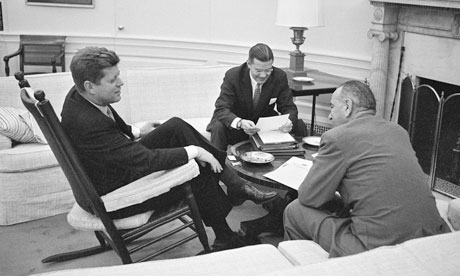
    President John F Kennedy in his office during a meeting with Secretary of Defense Robert McNamara and Vice-president Lyndon B Johnson, at the White House in Washington, DC, 1961.

    Photograph: Henry Burroughs/AP

    This year is the fiftieth anniversary of the Cuban Missile Crisis. Chomsky has chimed in with an article for The Guardian of London. (It can be read here). This article confirms what has been clear to many for a long time. Chomsky is not a historian. And when he gets anywhere near having to deal with the Kennedy assassination, or Kennedy’s presidency, his work is so bad as to be embarrassing. In that regard, he is really a polemicist. Polemicists, by definition, can’t write good or accurate history. And for anyone who did not understand that, this useless article proves it once more.

    Today, there have been at least three books published based upon the actual transcripts of the deliberations of the so-called ExComm. That is, the committee of Kennedy’s advisers assembled to discuss paths of action during the thirteen days that constituted the crisis. The first was The Kennedy Tapes by Ernest May and Philip Zelikow. The second, Averting ‘The Final Failure’ is by Kennedy archivist Sheldon Stern. The third is called The Presidential Recordings, edited by May, Zelikow and Tim Naftali.

    These books are absolutely essential to understanding who President Kennedy really was. Because in this instance, you actually do not have to rely upon memoirs, or memoranda written later. You actually have the words of the participants as spoken right in front of you. And for any objective person, these discussions show just how different Kennedy was from the vast majority of his advisors. This includes Vice-President Johnson, National Security Advisor McGeorge Bundy, and Secretary of State Dean Rusk. At one stage or another these three men all advocated armed intervention to resolve the crisis. And Johnson did not even like the ultimate resolution to the crisis: withdrawal of the American Jupiter missiles from Turkey in exchange for the Russian withdrawal of the missiles from Cuba. He talks about it as leaving the impression “that we’re having to retreat. We’re backing down.” (May and Zelikow, p. 586) Johnson said this even though the Polaris missiles–which were to later serve the same purpose as the Jupiters–were much more modern in both range and accuracy. And since they were submarine launched, they were more difficult to detect and preemptively target. Towards the end of the crisis, Johnson was actually using Kennedy’s nationally televised speech of October 22nd–in which he alerted the pubic to the danger of the Russian installed missiles–against him. The vice-president was saying that the public was going to be disappointed in Kennedy’s performance when compared to his words: “The president made a fine speech. What else have you done?” Even Johnson’s rather friendly biographer, Bob Caro, points out in The Passage of Power that, compared to JFK, during these discussions, Johnson was much more militant in tone and confrontational in approach.

    What does Chomsky say about this most important Kennedy/Johnson juxtaposition? Not a word. Which is about what he said in comparing the policies carried out by President Johnson in Vietnam after Kennedy was killed. In the game of poker, this is called a ‘tell’. Or as Peter Scott terms it, it’s a negative template. Chomsky won’t touch this evidence since it pretty much disintegrates his argument that there was no difference between Kennedy and Johnson in foreign policy.

    So Chomsky now devises another way to attempt to explain why Kennedy sounded so much more dovish during these debates than nearly anyone else in the room. He says that since Kennedy had ordered the installation of the taping system, he knew they were being recorded while the others did not. Again, Chomsky leaves out two important points here. The first is the reason Kennedy ordered the recording devices installed in the first place. As professor Ernest May has stated more than once–for example on ABC’s Nightline–he installed the system because he was upset about how many participants had misrepresented what they said during the discussions leading up to the Bay of Pigs invasion. With the taping system, there could be no argument about who said what and when. Secondly, these tapings were not made public for nearly four decades after Kennedy’s death. If there was some kind of plan to get them out sooner–and show how statesmanlike JFK was compared to everyone else–it was not very effective.

    But the point which Chomsky again avoids is this: Kennedy sounds dovish and level-headed here just as he did during the debates in November of 1961 over whether or not to send combat troops into Vietnam. (See the notes of military attaché Howard Burris dated 11/15/61 in the book Virtual JFK, pgs. 281-83) In other words, it is all of a piece, because it’s the same man. And the taping system is irrelevant to the issue. Why? Because it was not installed in 1961. In that instance, as he was during the Missile Crisis, Kennedy was virtually alone in holding out against the commitment of combat troops to Southeast Asia. And almost every commentator has noted this point, from David Kaiser to Gordon Goldstein. For his own personal, polemical reasons, Chomsky cannot.

    Another piece of flapdoodle that Chomsky tries to peddle here is the actual cause of the crisis. He says that the Russians moved the missiles onto the island in reaction to Operation Mongoose, the secret war against Cuba. To preserve this mythology, Chomsky ignores two pieces of evidence. First, the subterfuge Khrushchev practiced in transporting the weapons across the Atlantic, and second the size and scale of the deployment. Concerning the latter, the eventual arsenal was to consist of the following: 40 land based ballistic missile launchers and sixty missiles. The missiles were of both the medium (1,200 miles) and long–range variety (2,400 miles). These missiles were much more powerful than those used against Hiroshima and Nagasaki. The 9 missile sites were to be protected by 140 air-defense missile launchers. In addition there were to be 40 IL-28 bombers, each capable of carrying a nuclear weapon. This air arm would be supplemented by a submarine pen made up of 11 subs, 7 of them capable of launching nuclear missiles. In other words, the Russians could now threaten America with a nuclear missile arsenal capable of hitting the 100 largest American cities by land, sea and air.

    In addition to this, there was to be a Russian army of 45, 000 troops, with 250 tanks, supplemented by a wing of the latest Russian fighter aircraft, the MiG 21. There were also 80 nuclear-capable cruise missiles for coastal defense. Each of these had the explosive capability of the bombs dropped on Japan in 1945. (May and Zelikow, pgs. 676-77) And, as Kennedy later discovered through U2 photography, the Russians had even given the Cubans a number of Luna ground to ground rockets with a 30 mile range and 2 kiloton warheads. Because of their short range these were termed tactical nukes since they could be used in battlefield circumstances. (ibid, p. 475)

    With these facts on the table, here is my question to the former MIT professor: What use would these nuclear weapons be against a speedboat full of Cuban exiles with rifles, grenades and dynamite sent in to blow up a power plant? Would this not be equivalent to the antique analogy of using a cannon to kill a fly in your house? Why blow up your house trying to kill a fly? Could the Russians and Cubans be this stupid?

    Which relates to the subterfuge. What made Kennedy so suspicious about the deployment was the secrecy surrounding it. Multiplying that was the Russians lying about it. For instance, to choose just one instance, Russian Foreign Minister Andrei Gromyko lied to Kennedy on October 17th by saying that this was only a defensive deployment. If the aim was simply to try and neutralize Mongoose, then all that was needed was the conventional forces. And Khrushchev would have won a great international propaganda victory by announcing a Cuban-Russian military alliance in public, for instance at the United Nations. He could have claimed the diplomatic high ground by saying that this was purely a defensive alliance to defend Cuba from external aggression. If the idea was to fend off a possible invasion then the tactical nukes would have done the trick. And again, an alliance made in public would have been sympathetic to most of the world.

    But he did not. There is no evidence he even contemplated such a public announcement. Why? Because the real motive behind the massive deployment was much wider in scope. It was a way for the Russians to close the missile gap. At the time, only twenty of the Soviet long-range missiles could hit the USA from Russian territory. With what was going into Cuba, the Russians now had a formidable first-strike effort stationed 90 miles away from Miami. And anyone who understands the nuclear terminology of that day will understand how important a credible first strike force was. Secondly, once the secret installation was complete, Khrushchev could then announce it and ask for the thorn in his side to be removed: namely West Berlin. (See Slate, “What the Cuban Missile Crisis Should Teach Us”, by Fred Kaplan. See also May and Zelikow, pgs. 678-79, 691)

    This had been something that had seriously bothered the Russians since the days of the Berlin Airlift of 1948-49. And, more recently, Khrushchev had hectored Kennedy about it at their summit meeting in Vienna in 1961. This would be a significant change in the political calculus of Europe. What Chomsky does by covering up these key facts is to falsely blame President Kennedy while excusing some very irresponsible and reckless gambling by Nikita Khrushchev.

    Chomsky continues in this jingoistic mode when he then names what he thinks should be called the most dangerous moments of the crisis. One of them is on October 27th, when the U. S. Navy, trying to enforce Kennedy’s blockade, had orders to make the Russian submarines surface before they violated the quarantine line. Each Russian submarine carried a nuclear tipped torpedo. American destroyers were to drop depth charges to make the subs surface. Naturally, Chomsky does not reveal the actual instructions given to the American destroyers. They first were to drop “four or five harmless explosive sound signals”, after which the subs should emerge and proceed due east. And, in fact, the State Department told European governments about this technique, including the Russians, in advance. (National Security Archive, Briefing Book No. 399) The problem was that the Russian subs were not getting much information from Moscow and never got this message. They were monitoring Miami stations instead, which of course were carrying much more militant messages. (New York Times, 10/22/12)

    The other moment that Chomsky details is the round the clock B 52 bombers holding their fail safe points in the sky in case of an attack. He states that one pilot, Don Clawson, revealed that there was little control over these flights from Strategic Air Command, and that a rogue pilot could have easily started nuclear war. Chomsky does not say that his source for this is an almost do it yourself book published nine years ago by Clawson himself. The book is a rollicking memoir written 40 years after the fact. In other words, there was no formal input from SAC HQ about what measures really were in place in case this occurred. And Chomsky did not crosscheck his source to see if there was. (This last is a recurrent polemical practice of Chomsky’s.)

    If anyone were to list the most dangerous moments of the crisis, they would have to include three events that need no cross checking. For they have been in the record for decades. The first would be the episode that caused the only fatality by enemy fire during the entire 13-day crisis. That would be the death of Rudolf Anderson. Anderson was America’s top U-2 pilot in 1962. The plane he was flying was clearly marked with Air Force insignia. Khrushchev had assured Kennedy that the Russians would only fire if fired upon. (May and Zelikow, p. 571) The U-2 was a surveillance plane. It was not furnished with missiles or machine guns, only cameras under its wings. And everyone knew that. But, apparently, the Cubans decided to use their Russian furnished surface to air missile sites (SAM’s) near Banes, Cuba to knock the plane down and kill Anderson.

    The information about Anderson’s death was turned over to President Kennedy during an ExComm meeting at 4 PM on October 27th, the day before the crisis ended. (ibid) It gave needed ballast to the hawks in attendance, e.g. General Maxwell Taylor and Assistant Secretary of Defense, Paul Nitze. (ibid, pgs. 571-73) It also seems to have been one of the reasons why Defense Secretary Robert McNamara became more militant during the last two days of the crisis. (The other factor influencing McNamara seems to be Johnson’s not very subtle war mongering.) Following the news of Anderson’s death, there were pleas by Taylor, Bundy and Nitze to immediately take out the SAM sites. (ibid, pgs. 571-72) McNamara moved to take out the Banes SAM site and begin a much larger air attack against the island on the 31st. (ibid, pgs. 571, 575) Kennedy dutifully listened to these proposed courses of action due to this provocation. He then skillfully bent the discussion around to formulating a reply to Khrushchev’s letter requesting a deal for the Jupiters. (ibid, p. 576) There ended up being no retaliation to this reckless shoot down of an unprotected surveillance pilot. (Which, one could argue, was really tantamount to murder.) In fact, there was actually a contingency plan in place which necessitated an agreed upon retaliation. Kennedy overruled that plan and held back the air strike. (ibid, p. 695)

    Another dangerous moment came when Castro actually wanted to launch nuclear missiles against the USA. (ibid, p. 688) In other words to strike first, therefore surely starting a chain reaction leading to nuclear Armageddon. Or as Fidel Castro put it none too subtly to the Russian representative, he was ready to launch against the USA and risk incinerating Cuba in a counter attack. Alexander Alekseev was shocked. But he dutifully relayed the message to Moscow. (The Armageddon Letters, edited by James Blight and Janet Lang, p. 116) At the conclusion of the crisis, Khrushchev chastised Castro for even proposing such an act under these circumstances. He characterized such a proposal to carry out a nuclear first strike against enemy territory as “very alarming”. He continued with: “Naturally you understand where that would lead us. It would not be a simple strike, but the start of thermonuclear world war.” (May and Zelikow, op cit.)) Apparently, since Castro was and is a Marxist, in Chomsky’s book, these kind of inexcusable acts are to be ignored. To dramatize the polemicist’s double standard: Imagine what Chomsky would say if President Kennedy was on record uttering such a thing. But not only does Chomsky not comment on this nutty request by Castro, he does something even worse. He does not tell the reader about it. That act of censorship tells you all you need to know about Chomsky’s fairness and honesty in this article.

    There was another nominee for most dangerous moment. And again, you will not find it in Chomsky’s article. During the crisis, CIA officer William Harvey—a man who despised the Kennedys—secretly dispatched several teams of Cuban exile paratroopers onto the island. (Larry Hancock, Nexus, p. 80) Harvey never fully revealed what the mission of these men actually was. But since he constantly assailed the Kennedys for not having the guts to get rid of Castro once and for all, one can imagine what he had in mind. Furthering this thesis was the fact that these men were on a secret radio frequency, so that when Bobby Kennedy found out about it, he could not recall them directly. (ibid, p. 70) RFK was enraged when he found out what Harvey had done. And this was the beginning of the end for Harvey’s storied CIA career. The reason Chomsky will not touch this incident is that it violates another aspect of his special and peculiar ideology. Namely, his belief that the CIA only performs functions requested by the president. Yet, under Kennedy, the CIA often enacted autonomous actions.. (And there are many examples in both Hancock’s book and Jim Douglass’ JFK and the Unspeakable.) But Chomsky cannot admit this, no matter how foolish it makes him look. Because it would indicate that, 1.) The CIA and President Kennedy had different aims, and 2.) The Agency did not just enact policy. At times, it made its own.

    Let us continue with just how bad the Marxist leadership was leading up to and during the crisis. On September 4th, after getting preliminary intelligence reports about construction on Cuba, Kennedy had specifically warned the Russians about using the island as a forward base in the Americas. And he told Russian ambassador Anatoly Dobrynin that he would not tolerate purely offensive weapons in Cuba. He then said the same in public. (Blight and Yang, pgs. 58-59) In his reply to Kennedy’s warning, Khrushchev again lied. He said the only nuclear missiles he had trained on the USA were based in Russia. (ibid, p. 62) In July of 1962, Castro asked him: What would happen if the USA discovered the installation in progress before it was completed? Khrushchev responded with a reply so ridiculous that it must have disheartened Fidel. The Russian premier said he would send out the Baltic fleet as a show of support. (May and Zelikow, p. 677) This silly response, from a man who held the fate of the world in his hands, showed that Khrushchev had not thought through all the possibilities the dangerous installation entailed. To top it all off, the premier tried to end game the worst scenario. That is the Americans launching a counterforce attack on the Cuban missiles. The premier felt that even if this was 90% effective, “even if one or two big ones were left—we could still hit New York, and there wouldn’t be much of New York left.” When Khrushchev was ousted from office in 1964, his irresponsible actions before and during the crisis were named as prime reasons for his removal. (May and Zelikow, p. 690) Again, none of this is deemed worth mentioning by Chomsky. Probably because in his world no Marxist can do anything wrong.

    Chomsky also tries to imply that the resolution to the crisis was done by the Russians alone. He mentions the arrival of Khrushchev’s letter of October 26th at the State Department. This letter outlined a deal that would entail the removal of the Russian missiles in return for a pledge by Kennedy not to invade Cuba. The Russians later added that they also wanted the Jupiter missiles removed. Kennedy agreed to both parts of the deal. But what Chomsky leaves out is that Kennedy himself proposed the Jupiter swap more than a week before. At an ExComm morning meeting of October 18th he specifically proposed a direct trade of the Jupiters in Turkey for the Russian missiles in Cuba. (May and Zelikow, p. 137) On October 23rd he authorized his brother Robert to create a back channel to Russian Ambassador Dobrynin through Russian representative Georgi Bolshakov. (ibid, pgs. 343-46) This culminated in a formalization of the Jupiter deal as an adjunct to the no-invasion pledge. Chomsky criticizes Kennedy for not announcing this at the time. He leaves out the fact that JFK anticipated that Castro would create problems with verifying the removal of all arms of the nuclear triad from Cuba. And therefore it would take awhile for the Russians to complete their part of the deal. He was correct about this. It took over a month to complete the negotiations for verification. (May and Zelikow, pgs. 664-66)

    Chomsky’s failings as a historian are nowhere more obvious then in his discussion of Cuban-American relations in 1962-63. For instance, he writes that a plot to assassinate Castro was apparently initiated on the day of Kennedy’s murder. Chomsky is referring to the so-called AM/LASH plot. This maneuvering of the CIA with disenchanted Cuban national Rolando Cubela was not initiated in November of 1963. It had been going on for many months. And it had nothing to do with the Kennedys. (James DiEugenio, Destiny Betrayed, Second Edition, p. 73) The CIA deliberately kept it secret from JFK since they knew he would not approve it. Chomsky cannot admit this, even though it’s true, because it again shows the CIA and Kennedy at cross-purposes. He follows this by saying Mongoose was terminated in 1965. Wrong again. Mongoose was ended on November 29, 1962 at an NSC meeting of that day. (See Volume XI of Foreign Relations of the United States, Document 217) Chomsky mentions an attack on Cuba of November 8th. What he does not say is this was a response to a devastating Cuban attack in Venezuela that “had reportedly destroyed or disrupted one-sixth of the [oil] refining capacity of Venezuela….” (May and Zelikow, p. 639. Chomsky adds a reference to a contemplated invasion of Venezuela here. This appears to be fabricated since there is no such mention of any such event in the transcripts.)

    But the real point is that Kennedy began to dismantle Mongoose almost immediately after the Russian removal was verified. Cuban exile operations were severely curtailed, stipends were withdrawn, and groups were disbanded. By mid-1963, for all intents and purposes,Mongoose had been all but eliminated. As CIA official Desmond Fitzgerald wrote to President Johnson in 1964, in the second half of 1963 there were all of five raids against Cuba. The entire commando force consisted of fifty men. (Op, cit. DiEugenio, p. 70) Kennedy had clearly decided to pursue back channel negotiations with Castro with the goal of achieving normalization of relations with Cuba. The goal appeared to be in sight when Castro got the news of Kennedy’s death. He then turned to Kennedy’s representative Jean Daniel and said, “Everything is changed. Everything is going to change.” Castro was correct. Johnson showed no interest in continuing Kennedy’s goal of détente with Cuba. (ibid, pgs. 73-75) When Chomsky writes that the majority of Americans favor normalization of relations with Cuba, yet our leaders dismiss this opinion, one does not know whether to laugh or cry. Johnson cut off Kennedy’s eleven months of negotiations to achieve just that. And no American president since has ever come as close as JFK did to doing just that. And Castro himself admitted this at the time.

    The silliest part of this all too silly article is toward the end. Chomsky writes that war was avoided in 1962 “by Khrushchev’s willingness to accept Kennedy’s hegemonic demands.” When he writes something like that, one wonders if, unawares, Chomsky has Alzheimer’s disease. It was Khrushchev’s attempt to establish hegemony over West Berlin that originated the crisis. It was his insistent ignoring of Kennedy’s warnings over this first strike capability that brought the crisis to fruition. It was the premier’s lies about his intent that exacerbated it all. It was Castro’s orders to kill an American pilot that almost escalated the crisis beyond saving. And it was Castro who wanted to launch a first strike that would have led to Armageddon. The deal that Kennedy had contemplated all along was a good one for the Russians. Cuba stayed protected as a Marxist bastion, as it has to this day. After negotiations with NATO ally Turkey the Jupiters were removed. All that the USA got was the removal of a first strike threat—one which should have never been installed. And needless to say the Russians eventually caught up and actually surpassed America as a nuclear power. Gaining no real advantage at a great financial cost.

    Chomsky has now been proven both wrong and misleading on both Kennedy and Vietnam, and the Missile Crisis. But it’s worse than that. Chomsky simply has no regard for facts or evidence in the two cases. The mark of a good historian is that he provides balance and proper context first. He then produces the totality of the evidence, or close to it. His conclusion then follows inductively from the evidence. Chomsky violates each one of these strictures. Which is why his conclusion is so easily reduced to absurdity. In fact, his performance here is so bad, that when linked to his record in defending Pol Pot, his friendly ties to Holocaust deniers, and his flip-flop on the question of Kennedy’s assassination, the best thing his friends and colleagues can do is advise him to retire. The man is 84 years old. And his mental faculties seem to be failing him. Rather than embarrass himself further, it would be better if he spent the twilight of his life fishing off the Massachusetts coast. That would be better for him, the historical record, and us.

  • Evaluating the Case against Lyndon Johnson


    with Seamus Coogan and Phil Dragoo

    lbj color

    In light of the ongoing stream of LBJ-did-it books, beginning with the Glenn Sample/Mark Collom The Men on the Sixth Floor in 1996, and capped by Philp Nelson’s rather overstated LBJ: Mastermind of JFK’s Assassination in 2011, the authors’ decided to analyze some of the common evidence used in these tomes. From 1996 to 2011 there have been at least six books saying more or less the same thing: LBJ was in charge of the Kennedy plot. Besides the two named above, there are works by the bombastic Barr McClellan, the prolific Joseph Farrell (Click here to see that review), one by Mark North (click here to see that review ), and a revision of his first book The Texas Connection by Craig Zirbel called The Final Chapter. Almost all of these books use one or more of the following pieces of evidence of testimony in advancing their arguments. Johnson has occupied a curious position at CTKA. Barring two reviews of books, by Seamus Coogan and Joe Green, (Click here for Joseph Green’s review of Philip Nelson’s book), arguments mitigating this “Johnson did it alone theory” are scattered around CTKA in a number of articles and on linked websites. Perhaps the two most detailed looks are Coogan’s review of Alex Jones (Click here for that) and a reply by Coogan to George Bailey on Greg Parker’s site, which has now been removed. The authors have tangled with this myth in various threads related to Nelson’s book at the Lancer and DPF forums, with the assistance of people like Charles Drago, Gerald Ven, Tony Franks and Albert Doyle, to name just a few.

    No matter how often you tell people that the accumulated evidence clearly shows that Johnson had grave doubts about the assassination, and was unconvinced (as was Hoover) with the evidence concerning Oswald in the days after the assassination (Gerald McKnight, Breach of Trust, p. 283), and no matter how often you send people the link of LBJ asking Hoover, if any shots had been fired at him, there is still an “LBJ as mastermind” syndrome afoot. We are not saying that Johnson had no role in the assassination or cover up. The evidence for the latter is clear. But for some writers to say, as Barr McClellan and Phil Nelson do, that Johnson was the prime force behind the conspiracy, this simply has not been demonstrated to any convincing degree. Indeed a suspicious amount of LBJ did it obfuscation abounds. Let us detail some of it.

    1: LBJ created the Warren Commission

    This is perhaps the biggest fallacy (and it’s really the most ignored ‘truth’) in all the pro conspiracy LBJ-did-it phenomena. Thanks to the excellent work of Donald Gibson, in his star turn in Probe Magazine (reprinted in The Assassinations) we now know the true, documented story behind this potent but ultimately fanciful tale.

    The HSCA’s description of how the Warren Commission came into existence is neither complete nor accurate. The myth–or at least part of it–goes that Johnson, Fortas, Katzenbach and RFK decided to create a presidential committee to silence rumors of conspiracy. Katzenbach himself testified before the HSCA in 1978 and gave an extremely mixed account of how the commission was set up, not to mention who originated the idea. Indeed, it appears that he and the Committee were reluctant to discuss that rocky road.

    Donald Gibson found out that the idea for a commission was first suggested by Eugene Rostow, Dean of the Yale Law School during a telephone call to presidential aide Bill Moyers, on the 24th of November 1963. Moyers then informed LBJ about his discussion with Rostow on the morning of November 25th. That same day LBJ talked with Hoover at 10.30 am about the idea put forward to him about a commission, telling Hoover that it was a bad idea. Indeed, he stated unequivocally that he preferred an FBI report sanctioned by the attorney general that would support a Texas court of inquiry. A mere ten minutes later LBJ got a call from journalist Joe Alsop. Alsop, using all the charm and persuasion he could muster, tried to change LBJ’s mind regarding a presidential commission and he encouraged him to discuss the matter with former Secretary of State, Dean Acheson. Gibson believes that the idea originated from Rostow, Alsop, and Acheson, and it was supported by the Washington Post and the New York Times and Dean Rusk. LBJ called Senator Eastland on the 28th of November and persuaded him to abandon the idea to create an independent senate investigative committee. So LBJ was transformed in the space of four days from an opponent to the creator of the commission.

    One of the more sinister things that happened during this time was that, in talking to the White House, Rostow gave every indication that there were other people in the room with him awaiting the outcome of that very conversation. Alsop told Johnson he had just talked with Acheson. Who were Rostow’s “other people”? Well, that’s anyone’s guess. But when we consider that Rostow, Acheson and Alsop were all members of the Eastern Establishment it’s hardly surprising that Seamus Coogan and Jim DiEugenio suspect that one of the people listening in on Rostow’s phone call was Allen Dulles.

    Further Reading: The Creation of the ‘Warren Commission by Donald Gibson, pages 3-16, The Assassinations edited by James DiEugenio and Lisa Pease, 2003.

    2. E. Howard Hunt named LBJ as the Mastermind of the assassination

    In 2007, E. Howard Hunt, the infamous CIA officer and Watergate conspirator gave a deathbed confession to his son Saint John Hunt. He left behind a taped confession in which he claimed that LBJ ordered the murder of JFK. He claimed that LBJ asked CIA officer Cord Meyer to organize a plot to kill the man he considered an obstacle between himself and the Presidency. Then Meyer enlisted CIA officers, David Phillips, William Harvey, David Morales, Frank Sturgis and a French gunman to carry out the assassination. Hunt claimed that he did not take part in the plot, but was merely a benchwarmer. Should we really believe Hunt and his allegations that LBJ was the mastermind of the plot? Of course not.

    Hunt was a professional liar during his career at the CIA and he remained a liar to his death. Old habits die hard. Mark Lane proved in his book Plausible Denial that Hunt had lied about everything, like his denial that he was in Dallas the 22nd of November. And there is also his dirty effort to blame the deceased President Kennedy for the murder of Vietnamese President Ngo Dinh Diem by forging documents.

    It seems that his confession was a limited hangout to shift the blame for the deed from the real conspirators to a past president. So he gives us something to satisfy our curiosity, like some renegade CIA agents and LBJ in order to stop us from searching further, thus protecting the identity of the real conspirators to whom Hunt was intensely loyal.

    If Hunt was indeed part of the plot (and there are strong indications that he was no bench warmer but ‘well in on it’), he would have taken orders from people like Dulles, Dick Helms and James Angleton. For example he was exceptionally close with Dulles, helping author his memoirs once Kennedy had him kicked out of the agency after the Bay of Pigs debacle. Yet Hunt did not mention any of this and instead suggests for the organizing role, for the first time, another CIA officer, Cord Meyer. The problem with this attribution is simple: There is little or no corroborating evidence to show that Cord Meyer was a part of the conspiracy. On the other hand, there are plentiful indications that Hunt was involved.

    It is important to note here how this whole ‘Hunt confession” episode, which Jesse Ventura also used on his Kennedy conspiracy program, got started. Canadian journalist David Giammarco and actor Kevin Costner had an abiding interest in the JFK murder. They tried to get Howard Hunt to star in a documentary about the case. They wanted him to tell what he knew about it. It literally took years to coax him into doing so, and Costner had to make a special trip down to Florida and entice Hunt with a promise of a producer credit for the show. As with most TV specials, Hunt would be paid a certain amount upfront when the project sold, and then he would get a certain percentage of the profits later.

    As most people know, the thing eventually fell to pieces. And then, Hunt’s son, Saint John Hunt, became his father’s sole adviser on the project. From here on in, it was all downhill. The project never got made. What was left then was a one-sided story in the April 5, 2007 Rolling Stone, which is incomplete and not factually solid. This then was the genesis of the so-called Hunt confession(s). We use the plural because the one detailed in the Rolling Stone piece and in Hunt’s last book differ slightly. But the key points are, the CIA was ordered to do a job by Vice-President Johnson; and Hunt is not a participant. Which, to anyone really interested in the case, is a telling point. Because when it came time in court to prove where Hunt was on November 22, 1963, the CIA psy war operator who despised President Kennedy couldn’t do it. Even with hundreds of thousands of dollars and his reputation on the line.

    In summary, except for Cord Meyer, the rest of the CIA officers that Hunt named—David Phillips, Bill Harvey, Antonio Veciana, Frank Sturgis, Dave Morales, Lucien Sarti—are in reality nothing new. For they are have all been mentioned by other authors, and often in other scenarios not related to the Kennedy assassination. In fact Sarti, Hunt’s grassy knoll gunman, was first introduced in the original The Men Who Killed Kennedy series as part of the, now discredited, Christian David-Steve Rivele French assassination team story. Further, Hunt actually says that Sturgis invited him in on the plot, but he turned down the opportunity. To anyone who knows Hunt’s imperious and condescending approach to the Cubans he manipulated during the Bay of Pigs and Watergate, the idea that Sturgis would approach his boss Hunt for a project simply does not ring true. But by doing this, apart from spreading disinformation, Hunt gave his son a little gift to provide him with some extra income. His son cashed in on this in a big way: he now sells everything his father ever said. Further, there is no declassified evidence that Cord Meyer was close to the Kennedy case either in the months leading up to it, or in the months afterwards when the cover up ensued. And Hunt says that Meyer was the action officer in charge of the operation.

    On the other hand, there is evidence that people like Phillips, Jim Angleton, Richard Helms, and Howard Hunt were so involved. And there is plentiful evidence that Allen Dulles was a large part of the cover up on the Warren Commission. But yet, except for Phillips, none of these men were mentioned by Hunt. I wonder why.

    Indeed an indication of how far Saint John Hunt has slumped in credibility since his Rolling Stone stardom can be seen in the generally negative opinions of his appearance on Jesse Ventura’s show. Some months before his appearance, CTKA had run one of the first exposés of Hunt’s very public and explicit wheeling and dealing in a well known article on Alex Jones (Alex Jones on the Kennedy Murder: A Painful Case by Seamus Coogan). When Saint John Hunt stated along the lines that the more exposure he had the more dangerous it had become for him, Hunt’s lack of sincerity was all too obvious.

    3. Madeleine Brown’s allegations

    Out of respect to people who have passionately advocated for Madeleine Brown, her claims that she was LBJ’s mistress are likely true. But she gets a bit wobbly with her claims she gave birth to his illegitimate son Stephen, and she falls off the precipice with her murder plot party story. For instance, before her son passed away, he filed a lawsuit against Lady Bird Johnson for depriving him of his legal heirship. This action was dismissed since Stephen failed to appear in court. (“Dallas Morning News”, 10/3/90) As so often happens with people like Brown, the temptation to embellish upon the original tale is simply too great. In the cruel, imbalanced world of tall stories, serial liars like Judith Campbell Exner thrive, while those like Madeleine Brown are punished from all quarters and quite mercilessly so.

    In this regard Brown’s claims that Johnson was behind the assassination led her into the clutches of Dave Perry. During the nineties, and still today, Perry glories in picking up on the worst aspects of conspiracy research, pulling it apart and cleverly insinuating that the research community is advocating for people like Brown. When, in fact, only a small group of largely Dallas-based JFK researchers have ever endorsed her story. Brown left herself open to Perry, the bottom rung opportunity feeder.

    According to Brown’s story she was invited to a social party at the mansion of Clint Murchison, the Texas oil tycoon. She said that among the guests were J. Edgar Hoover, Clyde Tolson, Richard Nixon, H. L. Hunt, Fred Korth, Cliff Carter, etc. In her own words “Tension filled the room upon his arrival. The group immediately went behind closed doors. A short time later Lyndon, anxious and red-faced, re-appeared. I knew how secretly Lyndon operated. Therefore I said nothing… not even that I was happy to see him. Squeezing my hand so hard, it felt crushed from the pressure, he spoke with a grating whisper, a quiet growl, into my ear, not a love message, but one I’ll always remember: ‘After tomorrow those goddamn Kennedys will never embarrass me again – that’s no threat – that’s a promise.’” But did this meeting happen? And were LBJ and Hoover present? As explained in the Alex Jones article, probably not. There are a number of versions of this myth and each one gets wilder than the next.

    Johnson himself was seen by a few thousand people and filmed that night in the company of President Kennedy at the Houston Coliseum. Johnson didn’t arrive in Fort Worth until 11.05 pm on the night of the 21st of November, and it is roundly reported that he wound up his day in the same hotel at a very late hour with his advisors. (William Manchester, Death of a President, pgs 135, 138).

    The same goes for Dick Nixon, who was on the town late that night with Joan Crawford. (Nixon was a partner in a law firm that represented the Pepsi-Cola Company. Crawford was the wife of the CEO of Pepsi.) This was widely reported in the Dallas press and was still being reported until fairly late that evening. (The Dallas Morning News, Friday, November 22, 1963, Section 1-19) Kai Bird’s biography describes John McCloy hearing the news of the assassination while having breakfast with former President Eisenhower. (The Chairman, p. 544) As for Hoover, according to Anthony Summers, it is highly likely (to the point of absolute certainty) that J. Edgar Hoover, like McCloy, was nowhere near Texas at the time. For instance, the next day he was calling Bobby Kennedy from his Washington office at around 1:34 P.M EST with news of the shooting. (Summers, Official and Confidential, p. 394). In fact, none of the standard biographies of Hoover—Powers, Theoharis, Gentry, or Summers—notes him being in Texas that evening.

    A Dallas-to-Washington round trip is around 3.5 hours each way. Why would two very powerful and highly visible 68-year-olds, like Hoover and McCloy, fly to Dallas to meet with Johnson at some ungodly hour, well after 11:00 P.M CST, compromising themselves in the process, and then fly back from Dallas, arriving home anywhere between 3:00-5:00 AM the following morning?

    The chauffer that supposedly furnished the Hoover story was identified as Warren Tilley, but he was unable to talk due to throat cancer. His wife Eula who also worked for Murchison said that there wasn’t any such party, and further, that Clint Murchison Sr. had suffered a stroke in 1958 and he would have been unable to attend. But beyond that, Clint Murchison Sr. was not even living in that house those days, but in his ranch 75-85 miles southeast of Dallas. His son John Murchison was occupying the house in question with his wife. Another purported witness to the party was a seamstress named May Newman who did not work in the house that staged the alleged party but in the house of Virginia Murchison, Clint’s second wife. And, if so many famous people flew into Dallas that night, and so many of them drove to one house, would not at least one or two reporters have noticed it? Or been told about it?

    Assuming that Murchison, LBJ, Nixon, McCloy and Hoover among others were planning to assassinate JFK, would they have waited until the night before the assassination to finalize the plan? And, my God, why would they meet in front of so many attendees? Why would they plan the killing in Texas, Johnson’s and Murchison’s home state? And why wouldn’t the four lads based in Washington just get together there? These sorts of logical questions have to be discounted for one to believe this scenario in all its extremities.

    Another problem with Brown is that she appears to be contradictory—and contradicted—on certain points. For instance: When did she first announce her relationship with LBJ? In 1982, almost 20 years after Kennedy’s murder. At that point, there was no accompanying announcement that she had a child with Johnson. She says she first met LBJ at the Adolphus Hotel in Dallas in early October of 1948. But there is no evidence in any publications or newspapers that LBJ was in Dallas at that time. She first claimed that LBJ was behind the assassination, but then went on to say that LBJ told her that “It was the oil men and the CIA.” LBJ later told aide Marvin Watson that the “CIA had something to do with this plot.” Brown published a photograph in her book Texas in the Morning that shows an angry RFK hitting a post while LBJ looks really shocked. Madeleine claimed that the White House photographer that took the picture heard RFK screaming at LBJ: “Why did you have my brother killed?” How does she know that is what was said? Did the photographer tell her? Is it her interpretation? Nothing like this was verified in Talbot’s Brothers nor in Anthony Summers’ biography of J. Edgar Hoover. Or in any standard reference work on Bobby Kennedy. Then later in 1992, she told Harry Livingstone that LBJ did not die a natural death. His own Secret Service had him killed. Why? Because they hated his guts. She now had discovered even more evidence about the assassination. Namely that there were actually three plots to kill Kennedy, and the other two were backup plots. It was Johnson’s which succeeded with the KGB’s help. And Billy Sol Estes knew the names of all three assassins. Further, it was H. L. Hunt who called Jack Ruby to murder Oswald. (Killing the Truth, pgs 503-07)

    Brown’s motive for putting herself in the spotlight may have been her dire financial situation. This had led her to be convicted of fraud in 1988 by forging the will of a relative and thus forging her destiny as a dubious LBJ source. (The conviction was reversed on appeal in 1994 on a procedural error.)

    4. The Billie Sol Estes allegations

    Billie Sol Estes was a friend of Johnson’s who provided lots of money for his political campaigns. The Department of Agriculture subsidized farmers to prevent overproduction and oversupply, things which occurred during the Depression. Cotton production on new land was prohibited so each farmer could produce cotton according to allotments that were given to them according to a formula.

    Estes made millions of dollars from Federal subsidies for storing grain and cotton allotments by illegally purchasing allotments from other farmers for his farm. The Department of Agriculture suspected that Estes was involved in illegal activities and sent Henry Marshall, one of its officials, to investigate Estes. Marshall was killed in 1961 while investigating the scandal, but the case was (wrongly) ruled a suicide. Estes was convicted of fraud in 1962; he was sent to jail and was released in 1971. In 1984 Estes’ attorney sent a letter to the Justice Department and offered his client’s sworn testimony that LBJ had ordered the murders of eight people, including those of Henry Marshall, LBJ’s own sister Josefa and President Kennedy. Estes claimed that LBJ passed his orders through his aide Clifton Carter to Mac Wallace. (It is odd that Estes’ list included Josefa since she reportedly died of a cererbal hemorrhage in 1961 a the age of 49.)

    Now, if we examine the original charges and newspaper stories that put Estes away—all based upon defrauding the government—one will see very little credible evidence, if any, showing that Johnson was involved with Estes’ schemes. There were three articles published in the Pecos Independent and Enterprise which triggered a federal investigation. Those articles don’t show any evidence that LBJ was involved in the scam or brought any improper influence to bear to protect Estes. (J. Evetts Haley, A Texan Looks at Lyndon, pgs 112-13, 119-20, 123) In 1984, when the murder of Marshall was reopened, Estes took the stand for the grand jury. Here he made the charges mentioned above, and this is where the Mac Wallace as LBJ assassin angle began. Since everyone Estes named was dead, it was easy for him to make the charges. And impossible to indict anyone. And contrary to unsupported rumor, there was no return of uninidicted co-conspirator charges against LBJ, Carter, and Mac Wallace in the Marshall case. How can one indict dead people who never appear before a grand jury?

    Why did Estes turn on LBJ in 1984? In his book, Billy Sol Estes, he writes that he thought LBJ would help him when he was charged in the sixties. And Estes says Johnson could have done so. But this claim is bereft of logic. For if the sensational claims about Wallace killing Marshall are true, how much more can one help someone than ordering murder for hire? Which is what Estes says happened with Marshall. But if LBJ could have helped Estes in his legal plight, then why did he not just push some levers instead of resorting to murder?

    If we examine the benefits Estes asked in return for the above information we’ll discover that he requested in return immunity from prosecution, his parole restrictions lifted, favorable consideration being given to remove his long-standing tax liens, and an official pardon. From his own words, its obvious that, as stated above, a convicted felon and liar like Estes—who was actually conviced of fraud twice– had personal motives to implicate a dead President in the murder of JFK. Therefore we cannot take for granted the word of someone with a damaged reputation, little credibility, a criminal past and evident personal self-interest like Billie Sol Estes. In furtherance of this, if, as he said in his book (pgs 138, 143, 150, 152-3, 165) he had tapes of Carter talking about his carrying out LBJ’s orders in the Kennedy murder, he could make a million selling them. He never did so. And the reason he says he has tapes is probably to neutralize the fact that there is no other credible corroboration for his late arriving story.

    But beyond that, as noted in the Madeleine Brown section, Estes later became a conduit for unbeleivable stories about the assassination. In addition to knowing the identities of the three assassins in the murder, he later got into a mutated form of David Lifton’s body alteration theory. In his 2005 book he now said there was body alteration in the JFK case. But it was not to JFK, but to a lookalike. Before the assassination, a mortician named John Liggett was to find a body like Kennedy’s, and it was to later match certain wound descriptions. On the day of the murder, Liggett was picked up in a hearse that contained the lookalike’s body. At Love Field he got on a plane and instructions were relayed to him and he made it look like the double had been shot in the head from the rear. Then, photographs of both bodies were taken and were later mixed and matched for the offical story. (Estes, pgs 155-157)

    Who can beleive such a man? Or such a story? Well, maybe the always gullible Nigel Turner. He put Liggett’s wife on his extremely disappointing 2003 version of The Men Who Killed Kennedy. Turner and Arts and Entertainment Network were promptly sued by Liggett’s brother. A settlement was reached in 2005. That is what Turner gets for listening to a con man who said, at his second trial for fraud, words to the effect that his problem was he lived in a dream world. (Wall Street Journal, 8/7/79)

    5. LBJ and Ed Clark organized the assassination

    In 2003 Texas attorney Barr McClellan published his book Blood, Money & Power: How LBJ Killed JFK. Here he presented his theory that LBJ was the prime instigator who authorized the murder of JFK. McClellan was an attorney who in 1966 went to work in the law firm Clark, Thomas & Winters in Austin, Texas. This law firm represented LBJ’s interests, including advising on political strategy, campaign contributions, media issues and labor disputes. McClellan became a full partner in the firm in 1972 and left after a dispute with Ed Clark. McClellan claimed that Don Thomas, one of the partners, revealed to him in 1973 the truth about the president’s murder. Thomas allegedly said that LBJ confessed to him a month before his death that he had ordered attorney Ed Clark to organize the assassination of Kennedy. LBJ had also confessed this to his psychiatrist while being treated for depression. Thomas also claimed that LBJ asked him to reveal the truth to the world after he was dead to redeem himself from guilt. McClellan was astounded by these revelations but kept quiet until after Thomas’s death. In fact, at the 40th anniversary when the book was published, no one was around to contradict him. Not LBJ, not Thomas, not Clark, and of course, not the LBJ constant, Mac Wallace, who died in a car accident in 1971. That makes it kind of convenient to go on TV and say you knew Johnson killed John Kennedy.

    This book, like Billy Sol Estes, and like a similar Johnson did it product, The Men on the Sixth Floor, says that Johnson was in on the Henry Marshall murder. Except in the Estes version, Clifton Carter arranged the murder. In the McClellan version its Ed Clark who did the arranging. But again, McClellan never advances any credible evidence that Johnson had anything to do with Estes’ scams. Which makes it easy for him to avoid the question of why Johnson would do such a thing. But, with McClellan, no evidence is really needed. Estes had LBJ responsible for about eight murders. McClellan goes way beyond that. LBJ was a veritable Murder Incorporated, responsible for eleven confirmed killings and with nine more possible ones.

    Why would Thomas reveal all this to McClellan? Why would LBJ tell Thomas in the first place? This is how the author explains it. He sets forth a long conversation that he says Thomas told him about. Shortly before Johnson died in 1972, Thomas was at his ranch. Johnson now started to tell him about how he had Kennedy killed. Why did he say this? Because his presidency had collapsed, his reputation was nil, and he thought this confession would elevate his low image! Which is why he wanted Thomas to broadcast it after his death. Yep, that’s what he says. Maybe LBJ really was over the edge at the time? Or maybe it never happened. The psychiatrist himself did not reveal anything and neither he nor LBJ left anything written. McClellan’s whole book is like this. A series of sensational disclosures is made, and one goees looking for the annotation. Or even some corroboration. Its not there. Or if its there, it is so nebulous as to be meaningless. And when I say sensational, I mean it. Consider this string of accusations: Clark brokered a deal with Joe Kennedy to put LBJ on the 1960 ticket. LBJ learned about the art of assassination from the attempt on FDR and Thomas was involved in the famous heist of the senate seat from Coke Stevenson in 1948.

    And then there is the Kennedy murder. Again, unlike with Estes, it was Clark who set this up, not Carter. Somehow Leon Jaworski got involved with a search for a second assassin, the first–it goes without saying—was Mac Wallace. Again, there is no evidence for this Jaworski allegation. Or any reason why it was Jaworski who Clark called. And there is no evidence advanced that Clark knew Wallace. Further, McClellan says he has no idea how Wallace met Oswald or interested him in the plot. So he just says that Wallace met Oswald at a print shop in Dallas in 1962. But there is no evidence in the record that Oswald had anything printed in 1962. McClellan then has Oswald firing at the motorcade with Wallace from the sixth floor. Even though there is no credible evidence Oswald was there at that time. The assassination scenario for McClelan differs from The Men on the Sixth Floor. In the latter there are three assassins Oswald, Wallace, and a Chickasaw Indian named Loy Factor. In the McClellan version Oswald and Wallace are up there, but the third assassin is on the knoll. If you can believe it, in defiance of the ballistics evidence, McClellan has Oswald killing Tippit and shooting at Edwin Walker. In other words, Barr McClellan did not know anything about the evidence in the JFK case; and he didn’t care to learn. So he just wrote what he wanted in defiance of the facts.

    There is also the evidence of self-interest and personal motive since McClellan left the company after a heated dispute with Ed Clark. Not only would he have taken his revenge against Clark but he would have become famous as the man who solved the case. Or, alternatively, he distracted everyone at the 40th anniversary with his whimsical fantasy.

    6: LBJ and Mac Wallace

    Apart from the above, McClellan also enlisted in the Mac Wallace as JFK assassin ranks. He says Wallace fired shots from the 6th floor of the TSBD. If he could prove that Wallace was at the sniper’s nest, then by association he can cling to his theory that LBJ ordered the murder. An unidentified fingerprint was found on a box in the sniper’s nest. McClellan’s fingerprint expert, the late Nathan Darby, compared the fingerprint stored in the Archives against the fingerprints of Mac Wallace and found a match. But other experts have disputed the results, including those offered by author Glenn Sample, as did the FBI. So we cannot say with certainty that the fingerprint belonged to Wallace. And, further, if it was really LBJ who put Wallace up to this, then why would Wallace not wear gloves?

    The book by Glen Sample and Mark Collum, The Men on the Sixth Floor, also claimed that Wallace was one of the shooters in the TSBD and that Wallace had recruited Ruby and Oswald into the plot. The book based this information on a man named Loy Factor who served a long stretch in prison for murder. Just before he died, Factor confessed that he was one of the three gunmen in the TSBD, the other two being Oswald and the omnipresent Wallace. Factor was not a very credible witness. In 1948 he had been declared incompetent by the Veteran’s Administration, to the point they required a legal guardian for him. In 1969 he strangled his wife. He also had a severe case of diabetes. In this version of the story, Wallace recruited Factor after testing his marksmanship ability. He then offered him ten thousand dollars for the job. At a house in Dallas two days before the assassination, Factor was in on planning sessions with Wallace, two mysterious Latins, and two others: Ruby and Oswald. He was then driven to the TSBD the day of the murder and escorted to the sixth floor and handed a gun. When he arrived there, both Oswald and Wallace were already at their firing positions. An Hispanic woman named Ruth Ann had a walkie talkie and gave them a countdown. Afterwards, Wallace, Factor and the girl all managed to escape, presumably with weapons and walkie talkie intact. The getaway is even more questionable: Factor was left at a bus stop to get out of town. But then Ruth Ann and Wallace thought better of it and picked him up. But yet, it was not exactly a great commando team escape. The car broke down in Oklahoma due to a bad clutch. And Factor, get this, had to hitchhike home. God knows what happened to Wallace and the girl. Factor died in 1994, and we do not know what motivated him to make this wild claim.

    7: LBJ and the Connally – Yarborough incident

    According to this one there was a severe argument between LBJ and JFK regarding the seating arrangement in the Dallas motorcade. JFK wanted Senator Ralph Yarborough to sit in the same car with Johnson and Governor Connally in the Presidential limousine. On the contrary LBJ was furious with this arrangement since he hated Yarborough for his political views and he demanded that Connally sit next to him and Yarborough sit with Kennedy. Those who believe that LBJ planned the plot take this incident as proof that LBJ knew that an assassination attempt was to happen during the parade in Dallas and he wanted to protect his good friend Connally and have Yarborough shot along with JFK.

    The problem is that LBJ refused to sit next to the senator not because he knew about the assassination, but because he disliked the man and could not stand the sight of him. And it was mutual.

    When Kennedy arrived in Texas, Connally organized a dinner in his mansion to honor the President. Yarborough was furious when he learned that he was not placed at the head table with Kennedy and that his wife was not invited at all. He was fuming and he held LBJ responsible for the arrangement and refused to sit next to him. That was the cause of the heated argument between JFK and LBJ that many overheard.

    8: LBJ and the Mafia

    One of the proponents of this theory is Craig Zirbel. Zirbel is returning for another slice of the ‘Lyndon did it’ pie. In his first book broaching the LBJ angle, The Texas Connection, he unequivocally stated that LBJ had nothing to do with the Italian mob and that they had nothing to do with the assassination. Now on the eve of the 50th Mr. Zirbel has changed his tune completely. He now says he was incorrect—the Mob was in on it with LBJ all along! His book, pretentiously named The Final Chapter, ignores years of work by numerous researchers since the late 70’s that the assassination had been carried out by the Mob for their own benefit.

    Mark North is another individual who toes this line. In his latest book Betrayal in Dallas, North argues that JFK was killed in Dallas by Mafia contract killers hired by Louisiana Mob boss Carlos Marcello with the help of Dallas crony Joe Civello.. They picked Dallas because it was a Mafia-friendly city where LBJ, Henry Wade and other officials were bribed by gangsters. Robert Kennedy was determined to destroy the Civello mob in Dallas. To save himself and his political future LBJ went along with the Mafia plot and assassinated JFK. As Bill Davy noted in his review of this book, the name of the local Mob, the “Pearl Street Mafia”, was actually manufactured by North. In reality, there is no such named organization. And although the North book was hyped as being backed by dozens of declassififed documents, Davy showed that this was just that: hype. For North overwhleming relied upon old newspaper sources for his footnotes. And a myriad of them. For example, footnote 10 to Chapter 3, lists 200 Dallas Morning News articles. Davy concluded that about 90% of his footnotes were to newspaper articles. Geez, with that kind of advance publicity, how did the assassination ever take place? Everyone and their uncle must have known about it. But as Davy also notes, when it comes time to come up with real references for criminal acts, the book comes up empty. These are not footnoted. (Click here for this review .)

    It isn’t worth discussing this theory in any depth. It has been explained in the past that the Mafia could not manipulate CIA files, arrange the Mexico City incident, manipulate Richard Case Nagell, run the CIA’s anti-FPCC campaign of which Oswald was a part of, stage the Odio incident, manipulate the ballistics evidence, cover up the crime and then alter the medical evidence, or influence the Warren Commission cover up. If the Mafia was involved they were very junior partners. Most likely brought in to infuence Ruby to kill Oswald.

    A serious question that we can pose is: Why would LBJ choose Dallas as the city where the assassination would take place? It would not have been clever to commit the murder in his own backyard and face the risk of exposure if the plot backfired. If the Mafia figures involved in the plot were to be arrested and confess that LBJ was responsible, it would have been difficult for LBJ to defend himself with all the potential scandals swirling around him (Estes, TFX, Bobby Baker). Why would he stupidly incriminate himself when it would have been easier to organize it from outside Texas, maybe in Chicago, Tampa or Miami? This is seldom pondered by the few Johnson sponsors like Joseph Farrell, Craig Zirbel, and Phil Nelson.

    altgens

    9: LBJ photographs during and after the assassination

    Phil Nelson claimed that looking at the famous Altgens photograph he could not see LBJ, therefore he concludes that LBJ was hiding to avoid being hit because he had prior knowledge of the assassination. Unfortunately for Nelson, an object that is either LBJ or his Secret Service agent Rufus Youngblood can be made out in the photograph. This renders the notion of Altgen’s photo showing LBJ hiding to be utterly inconclusive at best.

    One of the more bizarre theories tied to this was explained by the ever unimpressive Alex Jones: that Johnson was in communication throughout the motorcade with death squads armed with grenades and bazookas along the route. The stupidest thing about this is that for Johnson to have been orchestrating this event he had to be doing so in front of his wife, and barely four feet away from his arch political enemy Ralph Yarborough. Yarborough, in fairness, made something of a stir when he claimed to Jim Marrs that Johnson asked Herschel Jacks (not an agent), to turn the radio on so he could hear reportage of the motorcade on a local radio station. (William Manchester, The Death of a President, p. 203) Occasionally, he would ask how much further they had to go. Then, Rufus Youngblood, Johnson’s assigned agent, would radio back to his follow up car “And ask them how many more miles and so forth.” (Youngblood Testimony, Warren Commission, Vol. II, p. 151) The closest Johnson ever got to a walkie-talkie was when Youngblood eventually managed to get over the seat and protect him from any possible shots. From there, Youngblood was barking orders to the other agents. (Manchester, pgs 244-245, Youngblood Testimony, p. 149). There’s nothing hidden here: Johnson admitted to being near Youngblood’s device when he got up off the floor. (Johnson Statement: Warren Commission; Vol V P. 562)

    If this evidence isn’t enough for you, how does logic sound? For Johnson to have coordinated the strike, it meant that he would have had to have undertaken a truly incredible sleight of hand. Because he was sitting next to his wife Lady Bird and a few feet away from his arch foe, Senator Ralph Yarbrough. Now, Yarbrough never said anything about Johnson talking into a radio in his Warren Commission affidavit. (Warren Commission, Vol. VII pgs 439-440) Nor did he say anything about Johnson being in continual radio contact with others to William Manchester in The Death of a President. (Manchester, pgs 244-245)
    H.B. McClain, the motorcycle policeman whose job it was to shadow Johnson’s car, like other patrolmen, didn’t much like Johnson’s attitude towards him and his fellow officers either. Yet he never saw Johnson do anything of the sort. (Larry Sneed, No More Silence, pgs 162-169). Let’s not forget the scores of witnesses who never saw anything of the sort either.

    All accounts of Johnson after the assassination are one of someone in deep confusion and fear. At Parkland Johnson was inconsolable and told Mac Kilduff that he wanted the announcement of JFK’s death to be delayed until he was safely on the plane, stating his belief in a potential ‘world wide conspiracy’. Now, Kilduff did not obey this command in any way. Johnson’s performance at Parkland Hospital and on Air Force One were certainly not mugging, as some like the abjectly awful Alex Jones researcher Paul Watson, has claimed. (Talbot, pgs 282-285). He also took off for Love Field quite literally with Secret Service Agents sitting on top of him according to Evelea Glanges who saw Johnson leave the hospital ducking down in his vehicle on the way to Love Field (Crenshaw, Conspiracy of Silence, p. 107). On Air Force One, recently released documents citing Godfrey McHugh’s observations of Johnson’s behavior indicate he was so terrified that prior to the aforementioned swearing in he had to be coaxed out of the Air Force One toilet.

    This leads us to another tangential myth that LBJ ordered Kennedy’s body to Bethesda Naval Hospital upon disembarkation in Washington. This is not true at all and the Secret Service’s actions, though illegal, were probably not as sinister as they have been made out to have been.

    The four main instigators behind the Secret Services seizure of the body and sending it off to Bethesda for one of the most bungled autopsies ever done were Admiral Burkley, Dave Powers, Godfrey McHugh, and Ken O’Donnell who, fearing the madhouse that Parkland was becoming, convinced Jackie to get out of there. (Manchester, pgs 415-434).

    Kennedy’s physician Admiral Burkley wanted the autopsy done in Bethesda. General Ted Clifton had wanted it done at Walter Reed. Johnson, had no say at all over where the autopsy was being held (Manchester, p 177 ). David Talbot then goes on to say that, at Bethesda, Bobby Kennedy became the most important figure. However, he did not run the autopsy as has been irresponsibly pushed by others (Brothers, pgs 14-17). And neither did Johnson from afar as much as some people would like him to. It was clearly the military in charge, and Harold Weisberg explains as much in his book (Never Again pgs 472-474).

    10. It was Dallas, Texas, Johnson’s backyard, therefore he had to have been the mastermind.

    This means because the murder took place in Texas, LBJ was at the controls. The problem with this is with what we know today, there were probably at least three plots afoot to kill President Kennedy in the fall of 1963. And the first two were in Florida and Chicago. The one in Chicago has been recently fairly well documented due to the book by Secret Service agent Abe Bolden, The Echo from Dealey Plaza, the rediscovered in-depth essay by Edwin Black, and the work by Jim Douglass in his book JFK and the Unspeakable. (If you have not read the Black essay, click here) One has to ask: If the Chicago plot had succeeded, would these books have been published?

    Was Johnson in on the assassination in some way? Perhaps. Did he know it was going to happen? Maybe. Was he in on the cover-up? Undoubtedly.

    But the problem is that the last answer is documented with credible evidence. For instance, there were phone calls made by President Johnson to make people serve on the Commission in which Johnson used knowingly questionable evidence to make them say yes. He then suspended the specter of nuclear holocaust over them, which intimidated Earl Warren into asking for an investigation without investigators. Johnson also understood that FBI Director J. Edgar Hoover was running a makeshift inquiry which was focused on Oswald from the first day. These, and other instances, are documented and provable.

    The answers to the first two questions are not. As we have tried to show here, some of the evidence adduced by those who advocate for Johnson’s culpability is not very trustworthy or convincing. There is little doubt that the Bobby Baker scandal and Don Reynolds’ scandals were threats to LBJ. Even Robert Caro acknowledges them in his disappointing book The Passage of Power. According to LBJ spokesman George Reedy, the former was not not a real threat to LBJ, the latter was more serious. Yet the latter, as Caro notes, was rather small in monetary value. Reynolds, Johnson’s insurance salesman, was asked to buy for Johnson’s wife a combination TV-stereo console set. Unless Reynolds had more up his sleeve, this seems a rather miniscule reason to murder the president, wound your friend the governor of Texas, and place yourelf in jeopardy of being tried and electrocuted for charges of murder and treason.

    Perhaps there is more to this. Edgar Tatro is working on a long book on the subject. Based on Tatro’s past work, it should be worth reading. But we also know that there is evidence upcoming in Jim DiEugenio’s revised version of Destiny Betrayed that there was work done by hidden intelligence assets to fool Jim Garrison into buying into a Texas based conspiracy. And even before that, in 1966, there was an FBI undercover agent sent to convince Vincent Salandria and Sylvia Meagher that Johnson was behind the plot. The woman said her name was Rita Rollins. She was a nurse from Texas who saw practice runs for the assassination on a large ranch there. She said she had witnesses in Canada who could prove that this happened and Johnson was involved in it. Well, when Meagher started asking her questions about her nursing job, she couldn’t answer them. Six months later, Salandria found out that the real name of Rita Rollins was Lulu Belle Holmes. She worked for the FBI as an agent provocatuer in the Peace Movement. So its not like questionable efforsts in this vein are new. We are not saying that the latest round of books are FBI inspired—not at all. These authors all seem sincere. We just wish they could come up with something better than the above. Or actually start with something better than the above and work from more original sources.

    Until then, works like McClellan’s, Nelson’s and The Men on the Sixth Floor, remain, for reasons stated above, not very convincing. And at worst, they lead to a cul de sac. With two million pages of declassified files, we have to do better.
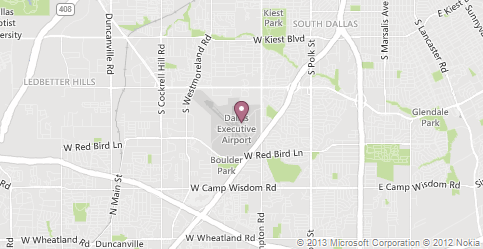
  • A Manifesto for the Fiftieth

    A Manifesto for the Fiftieth


    50thUnfortunately, we have become complacent. I do not mean to insult anyone, but it certainly appears that many who believe President John F. Kennedy was assassinated as a result of a conspiracy are currently engaged in bystander apathy. This condition is the classic example that occurs when everyone hears or sees someone being brutally assaulted, and nobody calls the police because everyone thought someone else would most certainly do so. We read books, and we post reviews of books on Amazon, and we comment on posted reviews. To what end?

    Is this it, folks? Is this as good as it’s going to get? Because I have to tell you, I have a sinking feeling in my gut that the 50th anniversary of the assassination will then come and go without much ado. Save for former Washington Post reporter Jefferson Morley, who has a FOIA case pending with regards to CIA files related to George Johannides, who else is actively pursuing any leads at this moment? Maybe Bill Kelly? And that is a shame because, in reality, we are the majority.

    In the one-sided 2003 ABC documentary, Beyond Conspiracy, ABC’s own poll revealed that 75% of Americans believe JFK was killed as a result of some form of conspiracy. But the truth of the matter is that the contingent within that 75%, who actively read books, articles and are otherwise well informed, in my estimation, is less than a fourth of that percentage. So what if Mr. Morley wins his case? His subject matter, although important, will only reveal another piece of the puzzle. Frustratingly, I’d say we’ve achieved nothing more than putting together all the border pieces with a giant hole in the middle.

    The 50th anniversary is 17 months away at the time of this writing. If anything, ANYTHING is to change in the status quo, we must become proactive. In order to do this, we must first face an honest assessment of where we stand. Some Hard Truths Disenfranchisement. We have assumed the attitude of “something will turn up eventually,” or “someone still has yet to come forward.” We are playing wait-and-see, and that’s killing our cause. Even the respected authors have become tired toiling over scraps of information to piece together books for our consumption. I have read too many articles and books in which even authors proverbially shrug their shoulders and state, “and we may never know.” If we do nothing, that will forever be the case.

    • We’re Getting Older. The advocates we rely on – Lane, Douglass, DiEugenio, Pease, Brown, Mantik, Marrs, Newman – will not be with us forever. Can anyone name a prominent researcher under the age of 35? …That’s scary. And it’s what J. Lee Rankin envisioned when he ordered specific Warren Commission documents to be classified for 75 years. Warning: anyone who wants the truth to come out, and was alive when John Kennedy was assassinated, the 50th anniversary will almost surely be your last shot to make something happen.
    • We’re Divided. And we will always be divided unless everything is declassified. In the mean time, the keepers of the secrets are laughing at us because, in essence, we’re doing their work for them. Each of us are entitled to their opinion, but there is a difference between educated opinions and popular fantasy. I watched something on YouTube about JFK being offed by a sock puppet held by Jackie. I can hear the laughter echoing from the basement at Langley.
    • We’re Inactive. Reading books about the assassination is not “doing something.” You’re informed; good for you, you’re not a sheep. Knowledge is power most assuredly. But empowerment is useless without action. The ARRB was not formed because a bunch of congressmen got together one day over lunch and said, “You know, maybe it’s time we should take another look at that JFK thing.” No, it was because they were under pressure from the public as a result of Oliver Stone’s film, JFK. Now it’s easy to say, “Well, I’m not famous like Oliver Stone.” That’s a cop out. Most people do not realize that the HSCA was formed in large part as a result of the letter-writing campaign led by Mark Lane’s non-profit organization in the mid 1970’s. Millions of Americans wrote letters to their representatives and senators to demand an inquiry into the Kennedy assassination.
    • We’re Without A Prominent Spokesperson. As a child, I watched Jesse “The Body” Ventura perform as a pro wrestler for the WWF and I thought it was great that an “outsider” and former U.S. Navy Seal became Governor of Minnesota because this is America, where everyone has a chance to make a difference. But Governor Ventura is not the man we truly need him to be. Yes, it’s great that there is a man with a microphone shouting “conspiracy” repeatedly. But with only him as our spokesperson while wearing a t-shirt, leather jacket and unkempt hair, is not putting our best foot forward. Probably the only thing that we may agree on with propaganda specialist David Phillips is the concept of “reality perceived is reality believed.” And I can imagine what many Americans see when they only look at Governor Ventura speaking about the JFK case. Also, I do not mean to discount the other conspiracies he offers, but it does muddy the waters in which we stand. Like it or not, Jesse Ventura is the most visible proponent of a conspiracy in the assassination of JFK. And we need more than that.
    • We’re Still Being Stonewalled. Most, if not all, of the conspirators are dead today. The CIA, FBI, or Office of Naval Intelligence now only seek to protect their institutions from the ghosts of their pasts. This is unnecessary and unacceptable. We are citizens of the United States of America, and we should determine what is relevant and what is not.

    action

    A Call To Action

    The easiest metaphor I can offer you for our current situation is that of the burly, high school bully who pushes around the weak kid then gloats in his face, “What’re ya gonna do about it?” The sad truth is, nine times out of ten, that kid takes it and walks away with the bully smiling at him…But that still leaves one time. Our one last time my well be the 50th anniversary of the assassination. The media will most likely conduct their token coverage, but we must be able to seize the momentum. To do this, we must work together and unify under certain parameters. Whether you believe the CIA, LBJ or Mafia was behind the conspiracy, and you have a desire to do something more, begin by reviewing an excellent proposal by Joseph Green. Green has written a ten point program on issues everyone in the assassination research community can agree upon and support.

    We need leadership and organization. We have some great websites which keep the information alive and available on the internet: CTKA, JFK Lancer, Mary Ferrell, and AARC to name a few. This is our foundation, and as a foundation, it gives us something on which to build. Right now, I propose that a non-profit organization be formed to represent the collective research communities: the Organization of Assassination Researchers (OAR). It should be open to researchers in all fields, MLK, RFK, Malcom X, and the different camps within the JFK community. It’s Chairman/President can be from any field, but must be willing to separate him/herself from their own research agenda for the good of all researchers together. Certainly individual websites should maintain their own identities, but they should also uniformly carry forward any messages from OAR. OAR should also seek out prominent citizens, business people, public figures, and politicians who are willing to take up the cause of speaking intelligently about assassinations per the 10-point program mentioned previously. Anyone from Jon Stewart to Alec Baldwin, to Wolf Blitzer to Donald Trump, to your U.S. Representative or Senator. Right now, we need people with voices bigger than our own to assist in spreading our message.

    We need to rebuild our base. The choirs are preaching to each other, and it’s doing us no good. Talk to your friends; break the ice by saying you just read an article about the upcoming 50th anniversary of the assassination. Ask them what they heard about the assassination and what they think. I keep a .jpg of CE 399 on my smart phone. When I explain that the official story that one bullet created seven wounds, broke a rib bone and wrist bone, I show them the picture and ask, “Does that bullet look like it did all that damage?” And when they say, “no,” you ask them if they willl accept a book (many used books are cheap at Amazon.com). Most importantly our children, grandchildren, nephews & nieces, and cousins are growing up. We need to take away the cell phones on which they are texting, turn off Jersey Shore, and start by saying “I just want less than an hour of your time to talk about something that is really important to me, and that should be really important to you.” Talk about how they are going to have to make their own choices as adults, including choosing what to believe their government or news media tells them.

    Use the 10-point program as a foundation for this discussion and don’t try to bombard them with all you already know. Let them come to their own conclusions. Whatever you discuss, make sure they understand WHY something that happened 50 years ago affects their lives today, and in turn the future of their children. Whether you are talking to a young adult or one of your oldest friends, end the conversation by giving them a book or DVD of your choosing. Ask them to do you a favor and just give the book a chance; but don’t force them. That is the tactic of those who covered up the crime and we are better people than that.

    We need to be using social media better. Facebook has somewhere in the neighborhood of over 700 million users. With our own network of friends, we need to start anew a campaign of awareness. Post a link to an assassination related article at JFK Lancer or CTKA. Post one of your favorite You Tube videos that explain how the magic bullet is just that. “Like” assassination related posts so that people in your network will see those posts as well.

    We need an event in Dallas. Apparently, the Sixth-Floor Museum has secured exclusive rights in Dealey Plaza for the whole week of November 22, 2013. That doesn’t mean that we can’t attend whatever event they are planning. However, if they are reserving the plaza and will NOT have an event on the November 22, they would do well to reconsider. Those of us planning to attend could do some unofficial event, flashmob or march but that is yet to be determined.

    A letter-writing campaign is a must. With all of our friends and family, 18 years or older, we should demand a new congressional investigation into the Kennedy assassination, and order a thorough review and declassification of remaining JFK related documents. The investigation cannot be another commission or review board like the Assassination Records Review Board, which only facilatated the release of documents and did no investigation. it must have the power to subpoena, and those testifying be subject to the laws of perjury.

    There are four people that you want to write to: your U.S. Congressional Representative, your two U.S. Senators, and the President. This is not as tedious as the initial letter-writing campaign which created the HSCA. With computers you can copy & paste and simply change addresses on the same letter. But feel free to include your own feelings on the matter. Pick some, if not all, of the issues within the 10-point program. Also explain how the ARRB was stonewalled by several government agencies. You may want to mention this article about how the Office of Naval Intelligence persecuted one of their own who merely did her assigned job in attempting to assist the ARRB. You may even want to write a letter to members of Senate Armed Services Committee or Senate Select Committee on Intelligence in addition to your four standard letters. AND THIS SHOULD BE A UNIFIED EFFORT. For the maximum impact we need to mail hardcopy letters, not emails. Emails cannot pile up in an office; they cannot occupy space. Nothing will have a greater effect than bags of mail arriving at a politician’s office. Also, we should wait to mail all letters within the same week so the arrival of tens of thousands of letters will be a media event. But we have plenty of time to do this, and we should most likely wait until after the Presidential election. We should not inform the media for the time being. We want things to be quiet…and then a violent ROAR! We don’t need to make any press releases announcing a new endeavor, and we don’t want to make an issue out of a politician or public figure who is not interested in joining our cause. Do not send playful emails to cia.gov stating, “We’re not going to take it anymore, and we’re coming for you.” Our collective actions will speak louder than our individual words ever could.

    We have time to make this happen and we need to make the best of our time because this opportunity will not come around for another 26 years. Your investment in your country for the next 17 months can yield a better future for your children and your children’s children. This is the essence of a grassroots campaign. It starts with you looking in the mirror and saying “I’m going to make an effort.” If you’ve been fighting this fight and toiling in research for the past 49 years and feeling tired, your brothers and sisters ask that you fight just another 17 months. Because the sobering truth is this…if we don’t press for the truth now, it most likely will be buried forever.

    It starts right here: http://www.facebook.com/jfkAssassination50th

  • Michael Shermer Strikes (Out) Again: Review of Michael Shermer’s CBC documentary, Conspiracy Rising


    “In every case, the chance for complete information is very small, and the hope that in time researchers, students, and historians will be able to ferret out truth from untruth, real from unreal, and story from cover story is at best a very slim one. Certainly, history teaches us that one truth will add to and enhance another; but let us not forget that one lie added to another lie will demolish everything. This is the important point…Consider the past half century. How many major events – really major events – have there been that simply do not ring true? How many times has the entire world been shaken by alarms of major significance, only to find that the events either did not happen at all, or if they did, that they had happened in a manner quite unlike the original story? The mystery behind all of this lies in the area we know as ‘clandestine activity’, ‘intelligence operations’, ‘secrecy’, and ‘cover stories’ used on a national and international scale. It is the object of this book to bring reality and understanding into this vast unknown area.”

    – Colonel L. Fletcher Prouty, Colonel, U.S. Air Force, The Secret Team


    It has been several decades since those words were written by the late-great Mr. Prouty. This goes way back when to before there existed cell phones, Twitter, Facebook, 24-hour news cycles, and most of all, the internet. What Prouty originally described as being a “vast unknown area” has become infinitely vaster, infinitely more secretive…yet infinitely more widely known about and exposed for all the masses to question in their minds. It’s a dichotomy of wooly mammoth proportions. It has become the 10,000 lb. elephant in the room; everybody knows it’s there, but nobody dares point it out. Especially not our media organizations.

    But wait how does that make sense? How can something become more widely known yet remain a secret at the same time? It’s largely a matter of being able to see the forest for the trees. (And what with so much clear-cutting going on in the world, the big picture has never been clearer.) In previous decades, we didn’t know that any such huge covert element even existed. At least now we know. That, in my opinion, is great progress. Not only is the Emperor not wearing any clothes, the fig leaf he uses appears to be embarrassingly tiny! But in this case, the Emperor is not any one single person. It’s a group effort; a movement.

    How do we know the elephant exists in the room? Well, that’s pretty simple: because never before have we experienced such a full-force onslaught of disinformation, propaganda, and censorship as we have is recent years. Yes, I said censorship. When media organizations and individuals alike are expressly ordered to not publish or report on certain stories, and they respond, instead, by carting out the typical smoke screen cover story…that is censorship.

    When other parties are called in to disseminate false or inaccurate information, distorted evidence, or unfactual information over top of it, this amounts to a clever game of mop-up. Censorship sets you up with the jab, and the disinformation campaigns knock you out with the big right hand uppercut. It’s that uppercut that keeps you down on the canvas and in la-la land. These mop up efforts come in the form of books, blogs, newspaper articles, TV documentaries, film documentaries, and of course, bogus museums.

    If you ever doubted for a second that the American rightwing was in complete charge, you can now put that question to rest. There are so many things that point to this all-out take-over that it’s downright chilling. The military and all of its various secret government agencies are bigger, stronger, richer, and more powerful than ever before. They are now the caboose that runs the locomotive.

    I don’t know of many left-wing military “hawks” or if such an animal even exists; the Kennedys have been vilified, while Reagan has been resurrected and glorified; corporations, CEOs, and billionaires have never had it better. Again, I don’t know of too many Wall Street executives who would be caught dead supporting a Democrat, or even an independent. Simply put, it goes against their own best interests. Why pay a tax rate of 35%, 25%, or even 1%…when you can get away with paying no taxes at all! Why be forced by pesky unions to pay your workers $20/hr, including job security, overtime, and pension provisions…when you can close down your plant, send those jobs to China, and pay someone $20 a week!

    I found the following statement in Michael Shermer’s CBC documentary Conspiracy Rising, quite telling. The statement was: “conspiracy theorists threaten democracy”. And, in fact, this is one of the strongest, most explicit themes in the show. In fact, I don’t think I have ever seen this message made so clearly. Namely that the rise of conspiracy thinking can and will lead inevitably to the rise of Nazi terrorism as with the Klan or as in Germany itself. Not kidding at all, this is what the show depicts. See, I’d say the rise of this kind of thinking and digging for facts threatens fascism – which explains the heavy handed efforts at disinformation and propaganda we’ve been witnessing of late. Of which this show, and Shermer himself, are prime examples.

    This is no accident; no mere blip. This is the way that power brokers and money men have restructured the system, and they like it this way. But they can’t do it on their own. They need help, in the way of relief pitchers. A mop-up crew.

    The Canadian Broadcasting Corporation (CBC) began in 1936 as CBC radio. One of its main objectives was to provide important news and information to people who lived on the outskirts of this massive country of Canada. People who lived out on the far coasts, or up north in the Yukon, were more-or-less cut off from the rest of society, unlike those who lived in the bigger cities to the south e.g. Toronto and Montréal. It was the CBC who would keep these people in touch, first with radio, and later in the early 1960’s, with television. It was a way of unifying the country by keeping all citizens in touch.

    As a Canadian, I continue to seek out the CBC when I’m after accurate, in-depth journalistic pieces. Or even the BBC. But I sure as hell don’t seek out any of the American outlets. What’s the difference? Well, on the CBC, you might hear the journalists asking: “Have Bush and Cheney started two phony wars for profit and power?” By contrast, on a typical American news channel, you would hear: “And President Bush was seen wearing a handsome grey suit today as he was exiting Air Force One. It was a beautiful suit. I think I’ll go out today and buy myself one just like it. And now…let’s have a weather update!”

    It can be argued that the American media only see things in black or white…but at least Bush’s suit contained some shades of gray. Better than nothing.

    Now, let us fast forward to a headline in the Huffington Post, dated December 14, 2010: “My Day in Dealey Plaza: Why JFK Was Killed by a Lone Assassin” by Michael Shermer.

    Now also on that day appeared in this blog in bold headlines: “Michael Shermer making documentary about ‘conspiracy theories’ for CBC”.

    Oh, and just for the hell of it, here’s yet another article of Shermer’s which appeared in the Huffington Post: “9/11 ‘Truthers’ a Pack of Liars”.

    Now, this is the same Huffington Post which told Jesse Ventura in no uncertain terms: “We don’t do 9/11.” Yet they let Michael Shemer get away with a title like that? The almost humorous irony here is that in his documentary under discussion, Shermer actually complains that the new media, the Internet, can lead to the fatal Fascist disease of conspiracy thinking. Well, that sure won’ t happen at Huffington Post, not with Michael Shermer and Arianna Huffington around.

    Well, gee willies, Shermer sure gets a lot of exposure on the Huffington Post, doesn’t he? I mean, it’s almost like they’re seeking him out! I wouldn’t be surprised to see the following notice on their website.

    “This is an open standing offer to Michael Shermer. We will print whatever you want, whenever you want! Our loyalty is not to our readers, or to journalism, or to our share holders our main concern is to make sure your message gets out to the world! We won’t edit your stuff…hell, we don’t even have to read it. We’ll just print it as is. Will you please call us, Michael? Pretty please? Pretty please with sugar on top?

    Sincerely,

    Your friends at the Huffington Post

    Now, in that spirit, here are some upcoming articles we might expect.

    “Michael Shermer eats an apple!”
    “Michael Shermer ties his shoelaces!”
    “Michael Shermer goes out grocery shopping!”
    “Michael Shermer gets a tan!”

    Let’s get back to the pitching analogy. The “team” needed a mop-up crew, and who could they get? Well, Dave Reitzes was away being McAdams’ New Orleans expert; Von Pein was being benched for using growth hormone. Not on himself but on his fried chickens; John McAdams? we can’t get him because he’s working on a book so who’s left? Gary Mack? Nope, we can’t get Mack – he’s just plain exhausted from trying to cut down that large tree on Elm Street which blocks the view from the 6th floor window. So who’s left? The coach now escorts Michael Shermer to the mound.

    “Steeee-riiiikkke!”

    Shermer knows how to throw strikes. Well, if truth be told, we’ll never know if any of these guys can or not. Because if they ever balked, or had their pitches belted out of the park, the New Media, that is the Daily Beast or Huffpo would not note it. They’d just turn around and let Michael write an article in the Huffington Post, or come out with a book, blog, or television documentary to tell you that the ball never actually exited the park for a home run, that it was all a misunderstanding; an optical illusion; that the sun was in peoples’ eyes; that they actually struck the guy out. “You see, everybody only thought they saw a home run.” Obviously, those 35,000 fans in attendance, not to mention all of the dozens of news cameras strategically located around the park, were mistaken. They misremembered. It was a “flashbulb” memory completely unreliable. You know just like the Zapruder film! And by the way, Shermer uses that analogy of Flashbulb Memories in this documentary, just like Posner did to criticize that good documentary The Lost JFK Tapes. And Posner did that where? In The Daily Beast. Before they canned him for being a plagiarist. When in fact, he was much worse. He was a liar.

    Lie goes to the runner. Oops, I mean tie.

    Shermer’s “Flashbulb Memories” theory got me wondering. My father died in 1983 of a brain aneurysm. I have many great memories of my father. Or at least I think I do. Because according to Michael Shermer, I can’t really be sure that my father ever existed. Michael tells me that my memories are unreliable. Was that my father…or some neighbour who just kind of sort of resembled my father? Michael, can you help me with this? Was that really my father I remember, or was my brain playing tricks on me? Have I misremembered? Can you help me to connect the dots?

    The CBC “documentary,” titled Conspiracy Rising is just another orchestrated disinformation campaign much like McAdams’ recent book. No difference. Well, there is one difference. The show was hosted, presented and narrated by Ann-Marie MacDonald. Unlike the vast majority of pieces put out by the CBC, where the reporting is done in a straight-up, well-researched and impartial manner, Ms. MacDonald does a surprising thing very unbecoming of a “serious journalist”. She puts inflections in her voice so as to impugn the object at hand that is to be ridiculed.

    And the ridicule is non-stop, in every direction. From the choice of talking heads—Jim Angleton’s pal Chip Berlet no less—to the swirling of topics in a blender—Marilyn Monroe meets Roswell meets 9-11 meets JFK meets faked moon landing meets death of Diana meets world trade agreements meets Obama’s birth certificate meets David Icke’s reptile people, etc. As if they are all equal in importance and standard of proof adduced.

    Now whom does Shermer trot out to be the representative of the conspiracy side? Well remember who Shermer is. Would he use say John Newman on the JFK case? Or Mike Ruppert on 9-11? Nope. That would be fair. He wants to be unfair and ridiculous. So he brings in the overbearing, non-discriminating demagogue Alex Jones. And then to top if off, Shermer inserts the “Oh it’s all psychological, people need conspiracies to support themselves from facts they cannot accept stuff.” Its all been said before by Shermer. And this is just a cheap rehash. Except the danger of fascism angle has never been more virulent as it is here.

    The show couldn’t resist but to levy the same old tried-and-true “tin foil hats” remark when referring to people who suspect a conspiracy. Shermer even says he’s challenged people who believe in UFO’s to produce evidence and how they can’t respond. Fricking UFO’s and aliens, Michael? Michael, why don’t you challenge people in the JFK community? Michael? Are you there? Where’d he go?

    But is this a wholesale sell-out by the CBC? I doubt it. More likely, it’s a reflection of how the CIA itself operates; where the left hand doesn’t know what the right hand is doing; where individual agents go about their assignments in a bubble, not knowing what other agents are doing or even if there are other agents.

    But clearly, somebody at the CBC was receptive to Shermer’s advances; someone at the CBC had either already been aware of, or had been made aware of Shermer’s ongoing mission; otherwise he wouldn’t have gotten the gig…and the CBC wouldn’t have forked out the necessary budget allotment. Right? Clearly, someone at the CBC decided that this was bigger than any one individual; that it was the continuation of a team effort.

    Now, if you ask me who first phoned who to get the process rolling, I can’t say. But it is striking how Shermer continues to get the red carpet treatment from various news organizations. Isn’t it?

    “Michael Shermer making documentary about ‘conspiracy theories’ for CBC”. Very interesting announcement from the Huffington Post, no less. This is the same Huffington Post who refused to carry Jesse Ventura’s articles about 9/11. Then there’s Mark Lane, who can’t find a publisher for his book. Jesse Ventura sees episodes of his “Conspiracy Theories” pulled. “The Men Who Killed Kennedy” gets banned for all time by A&E. L. Fletcher Prouty’s “The Secret Team” gets mysteriously “unpublished” overnight by the CIA. Oliver Stone gets personally maligned, and his film JFK gets mercilessly slammed by the media…before it’s even released!

    No problems here. Or as Leslie Nielson would say with the building burning behind him, “Nothing to see here.”

    (Ever smiling)Michael Shermer begins by saying that people just can’t accept the fact that a great man like the president of the United States could be killed by a nobody such as Oswald.

    Not so, Michael; your premise is incorrect. Oswald was a somebody. In fact…he was super-human! Because according to Shermer’s logic (but more importantly, according to the president’s wounds) Oswald shot at JFK from behind him on the 6th floor, then he ran out and shot him in the throat from the front, then he ran over and shot him from the grassy knoll, then he ran back into the TSBD and had a Coke all within a few short seconds! With that type of speed Oswald could have made mince meat out of unworthy pretenders like Usain Bolt or Jesse Owens. Or The Flash. Or The Roadrunner.

    (Ever Smiling) Michael Shermer is always fond of theorizing about how people are prone to “misremembering” events, and how they are incapable of “connecting the dots properly”. Well, this just exposes how Shermer must obviously have done precious little research into the assassination. Because if he had, he’d know that Oswald was a radar operator for the U2 spy flight missions. Radar operators often use Morse code which is made up of a series of dots and dashes. So in other words…it was Oswald’s job to literally connect the dots properly! Take that, Michael!

    For shame, Michael! At least Mack, McAdams, Reitzes, and Von Pein are up to speed on the facts of the case. Of course, the fact that their life’s mission appears to be to subvert, mangle, misrepresent, and conceal those facts is altogether a separate issue. Come on, Michael…get in the game! A team only wins if every player puts out 110%! No team wants a teammate out there that the rest of the team has to carry.

    Just take a look at who Shermer consults in any of his puppet show/slide presentations available on the internet, or even on this documentary. Does he speak with Jim DiEugenio? Mark Lane? the Dallas doctors? Jim Douglas? David Mantik? Abraham Bolden? No, no, no, no, no, and no. The list goes on. Instead, Shermer invariably seeks out the expertise of a freelance “tour guide” in Dealey Plaza and tourists! Is this where you go to get your facts, Michael? But of course, (Ever Smiling) Michael Shermer prefers it that way. It allows him to make a mockery out of the whole thing, without having to answer tough questions. Or any questions at all, for that matter.

    He slips in, makes a mockery, and slips out again but seldom without his trusty cameraman nearby filming the whole thing. If Shermer could ever dispel even one of the dozens of proven facts that blow the Warren Commission fairy tale out of the water it would be so refreshing. Perhaps then he might be taken seriously. But as you’ll notice…he never once does this. Not once. Not a single time. Never. It is not in his mission statement. Ka-ching! Your check is in the mail, Michael.

    In my original review of Michael Shermer, I suggested the title of his magazine should be changed from Skeptic to Denier But now I think it should be changed to “Septic”. That’s because every time one of these disinfo artists has a bowel movement (inevitably disguised as a book, article, blog, slide show, museum, or documentary)…the rest of us are reduced to having to review, well, a bowel movement! It’s not unlike sorting through your dog’s stool with a stick when you think he may have swallowed a foreign object. And I don’t mean a “pink poodle” either, Mr. McAdams: this excrement leaves a pile of Brontosaurus proportions.

    But back to the documentary for a second. If you’ve noticed, I’ve spent very little time talking about it. That’s because it’s not worth talking about! There’s one thing that did give me great laughs. And that is when Shermer tells us that what conspiracy theories do is give us a dopamine hit! Aw, come on, now, Michael! Like it’s not enough that our brains don’t work and we can’t remember things properly – are you now telling us that we’re dope addicts too! Sheesh! The show even ends with “quiz”. Just answer the questions to see if you, too, are well, a conspiracy theorist!

    You won’t be surprised to know that Gary Mack offers up his opinion in this show. Mack says: “I’ve long believed, personally, that there was more to it than Lee Harvey Oswald. I just can’t prove it. And I don’t know anyone who can.”

    WRONG!

    Gary, allow me to present a list of FACTS that ARE proveable.

    • JFK was shot in the throat from the front
    • The “stretcher bullet” arrived at FBI HQ before the FBI agent delivered it
    • The most botched autopsy in history was conducted by inexperienced pathologists and was directed and controlled, not by medical protocol, but by military personnel who were yelling out orders of what to do and what not to do
    • The president’s brain was and is missing
    • The man who took the photos of Kennedy’s brain says he did not take them
    • Oswald was seen on lower floors during the time of the shooting
    • The condition of CE 399
    • Most of the Dallas doctors could not recognize the head wounds that they were later shown as having been the same as they had originally witnessed and treated
    • Several people expressed foreknowledge of the assassination
    • There were fake “agents” in Dealey Plaza
    • The Zapruder film

    And that’s only a partial list. I’m sure Gary would have little difficulty fleshing it out…to about ten times it’s current size. Just one of the items on that list would be sufficient to prove that Oswald was set up. But to have literally dozens and dozens? That sort of stuff just doesn’t happen in the real world. But this ain’t the real world we’re talking about here. Remember what I said earlier? It’s a review of the latest in a series of bowel movements. Hey, somebody’s got to do it. And Jim DiEugenio asked me to. Maybe he’s anti-Canadian? Whoops, another conspiracy theory.

    By Mack saying, “I’ve long believed, personally, that there was more to it than Lee Harvey Oswald. I just can’t prove it. And I don’t know anyone who can.” is just Mack taking the chump’s way out. Mack assures us that the case can’t be proved. Even though he surely know better. So what does Mack do instead? He uses this as justification to go ahead to put out KNOWN FALSITIES about the case! That’s like an paleontologist saying: “Well, all we have here are dinosaur bones … but we have no actual living dinosaurs. So, therefore, dinosaurs don’t exist.”

    I must give full credit to Gary, however. In Jesse Ventura’s Conspiracy Theory television show, Jesse asked Mack if he could imagine himself prognosticating about the JFK assassination over a beer a proposition that Mack enthusiastically accepted. This surely must have been gut-wrenchingly difficult for Mack. He was probably thinking to himself: “Beer? What’s with the beer? Everybody knows I prefer three shots.”

    From 1964 until 1968 there was a television show called “The Man from U.N.C.L.E.” It was all about spies, counterspies, secret agencies, disinformation, mercenaries for hire, double-agents, people in high places mounting wide-spread propaganda campaigns, and intelligence gathering. Contrary to popular belief, the original working title was not “The Man from D.U.N.K.L.E.” And I got that straight from Wikipedia – John McAdams’ own personal fiefdom!

    As you all know, McAdams cites Mack as being his “voice of sanity,” so  I don’t think McAdams would have steered Mack wrong about this. However, Gary very nearly did figure in another popular show from the 60’s – “McAdams’ Family”. Who could ever forget that memorable theme song with the snapping fingers?

    “They have a 6th Floor muse-um

    But nobody does believe ‘em

    It’s Reitzes, Mack, and Von Pe-in

    McAdams’ Family!”

    To see this one, click below.

    http://www.disclose.tv/action/viewvideo/91169/Conspiracy_Rising___Full_Documentary_/

    The most uplifting part of this whole exercise was certainly not the documentary itself, but the comments log beneath the show as seen above, and the CBC trailer here:

    http://www.cbc.ca/doczone/episode/conspiracy-rising-1.html

    There are dozens of pretty fantastic and excellent posts down there. What it proves, beyond a reasonable doubt, is that nobody not Michael Shermer, not Gary Mack, and not even the CBC is fooling anybody with this type of shameless propaganda.