Category: John Fitzgerald Kennedy

Original essays treating the assassination of John F. Kennedy, its historical and political context and aftermath, and the investigations conducted.

  • Focus on the Media:  Edward J. Epstein

    Focus on the Media: Edward J. Epstein


    epstein leaderEdward Epstein began his career with a graduate thesis that he then sold as a book. It was called Inquest. He then wrote a book called Counterplot. The first was about the inner workings of the Warren Commission. The second was about the Jim Garrison investigation. These two books are discussed at length in the ProbeMagazine article we have excerpted.

    The important thing to remember about the books is that in the first one, Epstein takes the stance of an outsider trying to understand how a governmental body worked and came to some rather unusual conclusions. In the second book, which was originally a long magazine article, the outsider stance was abandoned. Epstein was no longer a graduate student. He became an insider, a working member of the club. And The New Yorker became a longtime haven for him.

    His career largely centered on two areas: the intelligence community, and the JFK case. He wrote three books on the latter. He wrote four books on the former. In addition to his books, he has published many articles in magazines like The Atlantic and The New Republic. Incredibly, he has managed to convince some people, like Ron Rosenbaum, that he actually knows something about the world of national security and intelligence. After all, he once tried to argue that James Angleton was not really duped by Kim Philby, but that Angleton was playing Philby. For these kinds of errands, he was well compensated by business entities like Reader’s Digest, which excerpted his useless book about Oswald entitled Legend.

    His latest book about Edward Snowden is equally pitiful. (Please click here for a good review) As the reader can see, Epstein is up to his old tricks. What is hard to believe is that anyone still believes him or pays for his work. In reading these two pieces one will see that the last thing Epstein is is an investigative journalist. Spending hours on the phone with the late James Angleton does not constitute investigation. Most people would call it visiting a victim of early senility. But that is what Epstein did for his books Legend and Deception. Finally, in 1991 and 1992, Tom Mangold in Cold Warrior and David Wise in Mole Hunt exposed Angleton for what he was: a truly imbalanced and actually a dangerous man. A man whose paranoia wrecked several lives and paralyzed the Agency. A man who should never had been the CIA’s counterintelligence chief in the first place.

    Epstein didn’t learn from his previous error. And maybe it really wasn’t an error. But if more people had understood who he was, then he would not be allowed to keep on his giant misinformation campaign. In its latest incarnation, Edward Snowden is really a Soviet spy. Just like Oswald. Oh, my aching back.


    The following is a letter written by Jim DiEugenio to the editors of The New Yorker. It was a reply to a nearly 8,500 word essay by Edward J. Epstein entitled “Shots in the Dark.” Epstein’s article was published in the November 30, 1992 issue. DiEugenio wrote this letter on December 10, 1992. The editors refused to print it. It was published in the January/February issue of Gary Rowell’s The Investigator. It appears here in a slightly edited and expanded form.


    Jim Garrison died on October 21, 1992. On November 30th, The New Yorker carried a nearly 8,500 word article about the New Orleans DA and his investigation into the death of President Kennedy. Allowing for editing, lead time, press run and distribution schedule, Edward Epstein’s piece must have been submitted at least 8 to 10 days in advance. Considering its length, the question inevitably arises: was the article being prepared before Garrison died? The fact of his long and serious illness had been popularly known in wide circles. If this is so, why did The New Yorker rush the hit piece onto its pages so quickly and rather tastelessly?

    Epstein states that his motive was to counteract the impact of Oliver Stone’s acclaimed and popular 1991 film JFK. The film starred Kevin Costner as Garrison in a recreation of the only conspiracy inquiry and trial into the murder of President Kennedy. Epstein calls the film a fiction event, even though it is based on two non-fiction books, Garrison’s On the Trail of the Assassins, and Jim Marrs’ Crossfire. Epstein, a former Warren Commission critic, has seemed to have had an astringent reaction to the film. He debated Stone, among others, in New York in a symposium arranged by The Nation magazine about the merits of the film. In the new compilation of his books on the subject, he added an Epilogue attacking the picture. He is now preparing another attack on the film and Stone to appear in the Atlantic Monthly, apparently timed for the video release of the longer version of JFK in January. It should be added that Epstein complained to Stone at that New York symposium that a scene depicted in his film was not depicted in Garrison’s book. If Garrison had written about everything in his files, his book would have been several volumes long. Which shows how familiar Epstein was with this raw data. (This author was shown these files by Lyon Garrison and can vouch for their volume.)

    To dispense with the specious argument over the historical accuracy of Stone’s film. Any historical film will, of necessity, rearrange events, settings, circumstances, and also often collapse characters to convey a dramatic whole. Stone’s film does this, but much less than other popular films dealing with historic subjects: e.g., Mississippi Burning, The Untouchables, Bugsy. Often, Stone prefaces speculative scenes by having Costner say, “Let’s speculate”, or shooting a sequence in sepia. But to anyone familiar with the actual facts, when all is said and done, Stone’s picture actually ranks with films like Lawrence of Arabia in its relative allegiance to the adduced record. As we shall see, it is Epstein’s unfamiliarity with that record that seems to be the basis for his specious article.

    It is strange that Epstein should be so flummoxed by this film which during its climax, tears to pieces the Warren Report, just as Garrison’s assistant DA’s did in New Orleans in February of 1969 at the trial of Clay Shaw. What makes it even more ironic is that Epstein’s article contains more “fiction” or distortion in relative terms than JFK. This begins with his portrayal of Garrison as a flamboyant, egomaniacal publicity hound who pursued the Kennedy case for his private purposes. This does not correspond to anyone who observed Garrison in his last years or watched his last two interviews when he was still healthy. The former DA was a reserved, intellectual, literary man who carried the painful scars of his two-year battle against the Washington-New York power center in his prosecution of Clay Shaw. He ended up with a tarnished reputation, a pile of bills, $5,000 in the bank—he financed some of the expenses himself—and many leftover death threats. The Kennedy case was the reason he was voted out of office. In fact, it ruined a promising political career where many said he could have been the governor of the state. Garrison later stated that if he had it all to do over, he probably would not have done it because of the personal and emotional toll.

    Epstein writes that Garrison, “artfully managed to stretch out the interval between the charge and the trial … while he engaged in a wide range of diversionary actions.” Precisely the opposite is true and documented. It takes author Paris Flammonde almost 13 pages to chronicle the delay tactics of Shaw’s lawyers, who were consorting with both media allies and friends in Washington in order to torpedo Garrison. Epstein actually scores Garrison for bringing charges against the likes of “media “ people like Walter Sheridan, even though affidavits reveal that Sheridan threatened and bribed important witness in the case. I guess this is OK with Epstein. After all, it’s only the murder of the president.

    The photos Epstein describes Garrison showing on The Tonight Show were furnished by researcher Richard Sprague. Epstein sometimes wears glasses. Perhaps this is the reason he feels the object being picked up in Dealey Plaza is a pebble. Most people I have talked to think it is a large caliber bullet. Epstein also has not kept up with research in the field, since he derides Garrison for saying the man retrieving the object was a federal agent. It turns out he was just that, an FBI agent to be exact. And if Epstein really thinks that both J. Edgar Hoover and Lyndon Johnson were dedicated to uncovering the facts in this case, he has not read the Church Committee report or interviewed any former FBI agents, like, for example, William Turner. This may be the single most ludicrous declaration in the entire article, which is saying something.

    Epstein relies on the House Select Committee X-rays and photos as his sine qua non that only three shots were fired, and all came from the rear. What he does not say is that the HSCA altered the Warren Commission findings on the autopsy. They moved up the entry wound in Kennedy’s skull from the bottom of the heard to the top, and they moved down the back wound. Further, the pathologists never dissected the track of either wound in Kennedy’s body. Therefore, the directionality and the trajectory of the wounds is not known. At any murder trial, these materials would be mercilessly attacked. And it is questionable if they would have been admitted into court, since some of the exhibits do not correspond to what the witnesses at the autopsy saw.

    Epstein implies that Jim Garrison failed to reveal any “hidden associates” of Oswald’s in New Orleans. This is simply balderdash. As depicted in the Warren Report, Oswald was supposed to be a Marxist oriented, pro-Castro sympathizer. Yet, as Garrison showed, here was a communist who had no communist friends. On the contrary, he associated almost exclusively with anti-communist extremists, intelligence operatives, and/or anti-Castro Cuban exiles in both New Orleans and Dallas: George DeMohresnchildt, Guy Banister, David Ferrie, Clay Shaw, Richard Case Nagell, Orest Pena. Which is an odd group for a communist to be hanging out with. You will not see most of their names in the Warren Report. But you will see them in Garrison’s files. In fact, if not for him, you likely would not have heard of them at all.

    Epstein tries to trivialize Garrison’s complaints about the extreme secrecy involved in the JFK case. He writes that this was essentially grandstanding and it was not really important to the facts of the case. Garrison disagreed and stated that it undermined public confidence in their government. The Warren Commission had the equivalent of one day of public hearings. (And that was because witness Mark Lane insisted on his hearing being open to fellow citizens.) The House Select Committee on Assassinations had about three weeks of open hearings. The combined lifespan of both investigative bodies was a bit over three years. The former locked up over 365 cubic feet of materials. The second inquiry left almost 800 boxes of files. Today, the federal government has over 2 million pages of material classified on this case. Even though the murder is three decades old and the official story is that Oswald alone killed Kennedy. Is Epstein correct in saying that most of it is unimportant? How can he possibly deduce such a conclusion before the files are declassified? We know from previous declassifications that such was not the case at all. For instance, the declassification of the FBI report on the JFK case revealed that Director J. Edgar Hoover did not agree with the Single Bullet Theory. He believed that a separate shot hit Governor John Connally. To use another example: the government is today holding a 300-page report about Oswald’s alleged activities in Mexico City. The problem, as the authors of that report have stated, is that the CIA could not produce a photo of Oswald being there, and the voice on the audiotapes the CIA made of Oswald is not his. You will not find any of that information in the Warren Report. Which never questions any of his activities in Mexico.

    Epstein writes that many documents that were originally classified have since been released. Yes, and many have been released only in response to public revulsion with the classification process. Many others have been released through the efforts of private citizens who have had to sue the government to get them. Further, many of these released documents have not been released in full. That is, they contain what is termed “redactions”, that is, much of the wording has been blacked out. Plus, the fact that the information was released later dilutes the impact and effect the information has on the case and the public. In fact, this contributes to the whole “too-late-to-solve-it” syndrome that afflicts the Kennedy case. One has to wonder: was this the intent from the start? If so, it succeeded.

    Epstein is familiar with these problems, since they impact on the mystery surrounding the man he wrote about extensively in his last book on the JFK case, Legend. This was George DeMohrenschildt, sometimes termed “The Baron” due to his upper class White Russian standing. Epstein was reportedly the last person to interview DeMohrenschildt in Florida before he died of a shotgun blast. Although the official verdict in the case was that The Baron took his own life, others who have investigated his death still have questions about it. Mr. Epstein, whose early attack on Garrison in The New Yorker was circulated by the CIA to worldwide station chiefs, was in Florida at the time to interview DeMohrenschildt for Legend. Epstein received a large half million dollar advance for the book, the highest ever in the JFK field. The book’s backers also furnished him with a research staff. Epstein offered DeMohrenschildt large sums of money for interview sessions. Epstein himself was quoted as saying he was involved in a “very big project, which involves a lot money.”

    Previously, Epstein had been involved in a campaign to clear the FBI of charges that it had used clandestine and conspiratorial methods to destroy the Black Panthers. In regards to my previous point, later declassified documents revealed that the FBI had done just that. Epstein’s book Legend had an odd—some would say perverse—spin to it. The thesis was that the KGB had recruited Oswald while he was in Russia and he was acting as their agent when he killed Kennedy. Epstein tried to fog this framework, but the book’s last section—dealing with Oswald’s return to America—is titled “The Mission”. And the last chapter is called “Day of the Assassin”. In an appendix entitled “The Status of the Evidence”, Epstein backs every dubious claim of the Warren Commission. He deals with complex issues, like the dubious capability of Oswald’s rifle, in a less than cursory manner: in this case, all of two sentences. Epstein’s interview subjects, like Jim Botelho, a service buddy of Oswald, insist that he distorted their responses on his way to his offbeat conclusion, namely that the Russians, through the KGB, killed Kennedy.

    DeMohrenschildt was important to this scheme. For the simple reason that he and his family came from the Soviet Union. So, in the upside down world of Legend, one could argue that somehow The Baron was acting as Oswald’s handler in the USA, as some kind of deep cover KGB agent.

    But Epstein’s most questionable decision was the liberal use of CIA counter-intelligence chief James Angleton as a major source. This is the same Angleton whose Cold War paranoia paralyzed the CIA to the point that Director Bill Colby backed a press leak campaign to force him to step down. The same Angleton who, once retired, started a defense fund for agents caught in “black bag” operations, or robberies. The same Angleton who actively encouraged destabilizing governments, not in Guatemala or Iran, but in allied countries like Australia and England.

    Understandably, many have read Legend as Angleton’s outlet for the defense of his—and the CIA’s—conduct in relation to both Oswald and the assassination. More cynical observers see it as a detour away from both Oswald’s and DeMohrenschildt’s secret status as American intelligence agents.

    Epstein’s activities with The Baron toward the end are notable. As stated, an inquest ruled that DeMohrenschildt took his own life. But Mark Lane talked to the state attorney who interviewed Epstein about the day of DeMohrenschildt’s passing. Epstein told David Bloodworth that he had paid his subject three thousand dollars and let him go after a rather short session. Lane’s report, published in Gallery of November 1977, went on to say that Epstein told Bloodworth that even though he spent all this money, he kept no notes and had no tape recordings. Bloodworth told Lane that he did not believe that statement, not after Epstein spent that much money. Bloodworth then added that Epstein showed The Baron a document that indicated he might be taken back to Parkland Hospital in Dallas for some electroshock treatments. (DeMohrenschildt had been suffering from depression.) Bloodworth then looked at Lane and said, “You know, DeMohrenschildt was deathly afraid of those treatments … DeMohrenschildt was terrified of being sent back there. One hour later he was dead.”

    This is the man who now writes in reflection of Jim Garrison and his investigation of Kennedy’s murder. Is it too much to suggest that Epstein is jumping into a “spin control” mode? People like Howard Hunt and J. Edgar Hoover also did this in relation to the life and death of John Kennedy. But they had the sense to wait a while so their efforts would not be seen as transparently self-serving. Epstein exercised no such self-control. Which makes his work not just inaccurate but offensive. And The New Yorker acted as his accomplice in this defamatory exercise.


    Part 2: “The Abstract Reality of Edward Epstein”

    Part 3: “Edward Epstein: Warren Commission Critic?” (Probe vol 7 no 1, 1999)

  • Max Holland and Donald Carpenter vs. Jim Garrison and the ARRB

    Max Holland and Donald Carpenter vs. Jim Garrison and the ARRB


    The first time I recall hearing of Max Holland on the JFK case was through the Wilson Quarterly. This was back in 1994, when he reviewed three books on the JFK case. It was quite clear from that article where Holland stood on the issue. But what was puzzling about Holland was this: What were his credentials on the Kennedy case? I could not figure out what his prior work on the case was. Or how long ago it originated.

    As time went on, it became clear that Holland had very few credentials on the JFK case. What he had was a position on the case. He would therefore pick and choose bits of information to back that position, ignoring other information that vitiated it. What was surprising about Holland’s dubious scholarship is that somehow it did not hinder him from expanding outward from Wilson Quarterly. For instance, for a time he actually was a reporter for The Nation. His ostensible beat was the progress of the Assassination Records Review Board and later developments in the JFK case. The predictable problem was that , to the best of my memory, Holland never reported on any of the bombshell information that the Board released. For example, the Lopez Report contained some fascinating information about whether or not Oswald was in Mexico City. The investigation by Chief Counsel Jeremy Gunn revealed some utterly bracing facts about what happened, or did not happen, at President Kennedy’s autopsy. Yet, I don’t recall Holland ever explaining the import of these discoveries to his readers. Just like I don’t recall other volumes he was supposed to be writing which never materialized, e.g., a biography of John McCloy.

    Holland also found a home for a while at the Miller Research Center in Virginia. At the time Holland subscribed to Probe Magazine. When I saw what he was up to, I wrote him a note and told him not to renew his subscription since I could not in good conscience keep him on our list. He wrote back saying that if I did that, he would have to subscribe under a false name. That is how desperate he was for us to do his research for him. (I later found out that Holland’s cohort, Patricia Lambert, subscribed under her husband’s name.)

    Holland spoke at the 2004 AARC conference in Washington entitled “The Warren Report and its Legacy”. At that conference Holland talked about a previously published paper of his concerning Jim Garrison and his knowledge about the mysterious Permindex operation in Italy and Clay Shaw’s connection to it. The implication of Holland’s presentation was that Garrison had been a dupe of KGB disinformation. At that conference, Gary Aguilar rebutted Holland’s talk and his paper. Through him and other sources it turned out that all the overtones of Holland’s thesis were wrong. Garrison’s ideas about the CIA role in the JFK plot did not come through a series of articles planted by the KGB in the Italian newspaper Paese Sera; the story about Clay Shaw and Permindex was not planted by the KGB; Shaw was arrested before the articles appeared, but the six part series was commissioned six months prior to that event; Shaw did serve on the board of that organization, as he himself admitted prior to the assassination; and there were indications in its financing that Permindex was CIA related. (James DiEugenio, Destiny Betrayed, pp. 385-86)

    Shortly after a coruscating letter to The Nation about Holland’s shortcomings by Zachary Sklar and Oliver Stone, Holland either left or was forced out of the journal’s pages. He then started up his own online magazine called Washington Decoded. In 2012 he wrote Leak, a book about Mark Felt’s role in Watergate. Of the three books written in that time period about Watergate—the other two being James Rosen’s The Strong Man, and Ed Gray’s In Nixon’s Web—Holland’s was the least distinguished. And it wasn’t really close. The major topic of Holland’s book was the motive that Felt/Deep Throat had for leaking damaging information to the Washington Post’s Bob Woodward about the nefarious activities of the Nixon White House. But with archival research, the Gray book showed that—contrary to what Bob Woodward was still saying—Deep Throat was a composite. And to this day, we don’t know who the other sources were. (To anyone interested in Watergate, this reviewer strongly recommends reading In Nixon’s Web.)

    Of course, Holland is still on the JFK case. In 2011, he produced a documentary for National Geographic Channel on the JFK case. This sorry pastiche was called The Lost Bullet, and Holland used some of the usual suspects to help him salvage the Single Bullet Fantasy. Among them were Larry Sturdivan and Robert Stone, who had previously done their best to shore up the fraud of the Warren Report (which Sturdivan actually worked on). This program was so poor that not only did this site pan it—as did fellow critic Pat Speer—but even Commission advocates like Dale Myers attacked it. (Read our review on this site)

    But Holland still persists. He was seen attending the Cyril Wecht Conference in 2013. And he still hosts his web site with articles from those who agree with him. Which brings us to the topic of this essay.


    II

    Jim Garrison was the first public official to denounce the Warren Report in no uncertain terms. Because of that the New Orleans District Attorney has always been a stone in the shoe of supporters of the official story. Today, over five decades after the fact, he remains the only DA in America to investigate the Kennedy assassination after Oswald was murdered. He made the first serious inquiry into who Oswald’s supporters and friends were, for the Warren Commission said he had none. In public, he called Oswald first a decoy, then a patsy, then a victim. (See his Playboy interview from 1967) He was the first and only DA to actually unearth evidence that convincingly contradicted the theses of the Warren Report about the actual role of the alleged assassin. For example, it was Jim Garrison who first investigated the strange life and death of Rose Cheramie. (James DiEugenio, Destiny Betrayed, Second Edition, pp. 181-82) It was Jim Garrison who first discovered that Oswald had been associated with David Ferrie in the Civil Air Patrol. And, after the assassination, Ferrie was calling CAP members to be sure that there was no evidence they had which would reveal that association. (ibid, p. 177) It was Jim Garrison who first investigated the Clinton/Jackson incident, the odd journey that Oswald, Clay Shaw and David Ferrie took to Feliciana Parish about 90 miles northwest of New Orleans in the late summer of 1963. (ibid, pp. 88-93) It was Jim Garrison who uncovered the mystery of the 544 Camp Street address, which was printed on some of the literature Oswald passed out on Canal Street in New Orleans during that summer—and which the FBI tried to eradicate from the record. (See John Newman, Oswald and the CIA, p. 310) Garrison was also the first person who interviewed the man who he would later call, “The most important witness there is.” This was CIA/KGB insider Richard Case Nagell, who was in prison at the time. (op. cit. DiEugenio, pp. 183-84) As revealed in his book, The Echo from Dealey Plaza, Garrison was the first person to send an investigator to interview Secret Service agent Abraham Bolden. I could go on and on, but in sum let us refer to an interview Joan Didion did with James Atlas for Vanity Fair: “It goes back to … the Garrison case. Remember, he had this elaborate conspiracy theory. The stones that were turned over! Fantastic characters kept emerging … this whole revealed world … .”

    My only dispute with Didion’s quote is that none of the items I refer to above is theoretical. It was all genuine evidence that clearly indicated that Oswald was being manipulated in New Orleans in the summer of 1963. It also showed who the people doing the manipulating were. And the Warren Commission—actually FBI Director J. Edgar Hoover—deliberately kept this information out of their 1964 official story. It is true that Garrison did formulate a theory from this, and the reams of other evidence he garnered. But I would argue that, as Didion implies, his evidence was much more credible, and his ideas much more logical, than the Warren Report. Which Garrison, on The Tonight Show, termed a fairy tale. (Listen to that show here)

    Garrison was challenging the Warren Commission, and by extension the FBI, and he ended up accusing certain aspects of the operational arm of the CIA for being closely involved in the Kennedy murder. For this, he was viciously attacked by certain power centers of the American establishment. The media, which had clearly sided with the Warren Commission, was glad to go along with it. Today, there can be no doubt about how this assault was organized, who was involved in it, and how it was executed. For the declassifications of the ARRB have been quite strong on this issue. So much so that I devoted no less than sixty pages to exposing several aspects of how it all worked in the second edition of Destiny Betrayed. (See especially pages 226-85) This belated exposure—which was lied about at the time—is all backed up with scores of footnotes. Therefore, actions that were previously assumed are now out in the open, names are mentioned, operations can now be described. Can we detail it all completely? No. But that is only because certain documents seem to have been elided from the record or, as yet, not declassified in full. But what we do have is copious enough. And it indicates that the reason for all of this obstruction—and the eventual destruction—of Jim Garrison was rather simple. In the fall of 1967, at the request of Director Richard Helms, the CIA convened the first meeting of what the Agency termed The Garrison Group. The meeting opened with counter intelligence chief James Angleton’s assistant Ray Rocca issuing a dire warning. After studying Garrison’s case for months, Rocca said that he felt “that Garrison would indeed obtain a conviction of Shaw for conspiring to assassinate President Kennedy.” (op. cit., DiEugenio, p. 270)

    Make no mistake: the creation of this Agency body is what Shaw’s lawyers, and Shaw himself, wanted. In fact, his lawyers went to Washington and pleaded their case for extralegal intervention. This is a point that Shaw’s lead lawyer, Irvin Dymond, lied about to this author and William Davy during a 1994 interview in his New Orleans office. Contrary to Dymond’s prevarications, there can be no question today that they got such aid. And in abundance. For example, in January of 1968, a CIA cable was sent out. It read in part, “[Garrison] case is of interest to several Agency components covering aspects which relate to Agency … office heavily committed to this endeavor.” A later memo states that certain offices will be “tasked”, as part of an ongoing review. (ibid, p. 277) One of these tasks was to provide any Garrison suspect or witness who switched sides with a lawyer. And since men like Walter Sheridan had bribed and intimidated several witnesses to defect from Garrison, these lawyers came in handy. In fact, after certain witnesses were talked into changing their stories, they were told to call Dymond. Dymond would then tell them that if Garrison should try and charge them with anything that he would get them an attorney and bond would be posted for them. (ibid, p. 241) When Gordon Novel, a CIA infiltrator in Garrison’s office, was called by Garrison before the grand jury, he fled from New Orleans before his appearance. He eventually employed four attorneys. Since he did not have a job at the time, he was asked how he paid for these four lawyers. During a legal deposition he stated that they were being “clandestinely remunerated”. (ibid, p. 263) As they should have been, since electronics expert Novel had been originally recruited to wire Garrison’s office by Allen Dulles. (ibid, pp. 232-33)

    The above is only a short précis of what we know today about what happened in New Orleans through both ARRB declassifications and by field investigation from people like William Davy and Joan Mellen. Suffice it to say, the literally tens of thousands of pages of new documents about the CIA, the FBI, the Justice Department and Jim Garrison, have led to three major reevaluations of Garrison’s inquiry by Davy, Mellen, and this author. Those three volumes amount to over a thousand pages of mostly new information. It is all quite fascinating in both its actions and overtones. Because, for example, Helms ordered the Garrison Group to consider what Garrison would do before, during, and even after the trial of Clay Shaw. As has been demonstrated in these volumes, the interference with Garrison went on both before and during Shaw’s trial. Robert Tanenbaum, House Select Committee on Assassinations (HSCA) Deputy Counsel, actually saw some of these documents. He said they came out of Richard Helms’ office which, of course, would be the highest level of the CIA. (ibid, p. 294) But, in addition to the CIA, the Justice Department was monitoring Shaw’s trial in real time. (ibid, pp. 299-306)


    III

    In light of the above, the question then becomes, how does one write a book today about Jim Garrison and/or Clay Shaw which sides with the official position of 1964? Namely that there was no conspiracy and Oswald was a lonely sociopath without friends and colleagues, let alone confederates. Well, leave it to Max Holland to try and do so. Currently up at his site is an article by one Donald Carpenter. Carpenter was a CPA for 25 years. He then turned to writing novels. In 2013 he wrote a biography of Clay Shaw entitled Man of a Million Fragments.

    I started reading the book at the time of its publication. I did not get very far. Because early on it became apparent to me that Carpenter’s writing was, shall we say, not very candid. For example, when I read what the author wrote about General Charles Thrasher, who Shaw served under as his aide de camp during World War II, I blanched. I deduced two things from this part of Carpenter’s work: 1.) He was determined to minimize or eliminate any ties Shaw had to intelligence work, especially covert actions, and 2.) He was going to color over the very real accusations against Thrasher of participating in war crimes against German POW’s. These charges had been covered up at the end of World War II. But through some extraordinary archival research, author James Bacque had uncovered them and assembled a startling expose of these crimes in his 1989 book Other Losses. From Carpenter’s maneuvering on this issue, I deduced that if the author was going to do something like that with Thrasher, then there would be no holds barred with Clay Shaw.

    After reading Carpenter’s current article at Holland’s web site, it appears I was correct. What Carpenter and Holland want to do is sort of like what H. G. Wells once wrote a novel about: place the reader in a time machine and transport us back to 1969. That way, the censorious duo can make believe that everything described above does not exist. Unfortunately for them, we live in the dimensions of time and space, therefore it does exist. One can make believe it does not exist, but then that means that what you are writing is make-believe history. This is something like attending the Paul Hoch College of Historical Studies. Let me explain what I mean by that.

    In Chicago in 1994, I sat in the audience at Doug Carlson’s fine Midwest Symposium on John F. Kennedy. Hoch spoke at this event. He assumed the role of grizzled veteran giving advice to the newbies who were about to go through the declassified ARRB files. One of his pieces of advice was to ignore anything in there on Clay Shaw. I never forgot that since it went against everything I had learned in graduate school. Namely that scholars are supposed to seek out as much new and relevant information as they can find. That is the way historians fill in gaps in the past. What Hoch was proposing was the historical version of prior restraint on free speech. To me, this was the opposite of what real scholarship was supposed to be about. All I can say is that Carpenter has written both a book and essay that satisfies Hoch’s See no Evil, Hear no Evil, and Say no Evil (Orwellian) dictum.


    IV

    Right at the beginning of the article, Carpenter shows just how much he is in disregard of the archival records of the ARRB. He pegs the beginning of Garrison’s inquiry to the famous conversation the DA had with Senator Russell Long on a plane ride to New York City. He then adds that the actual date of the November plane trip is not known, and that this marked the beginning of Garrison’s inquiry. Both assertions are wrong. William Davy tracked down the origins of the trip to NYC and the date. (Davy, Let Justice be Done, p. 57)

    But more importantly, this does not mark the beginning of Garrison’s inquiry. As almost everyone knows, except perhaps Mr. Carpenter, Garrison had inquired into the JFK case back in 1963. Then he did a brief investigation into the event because Oswald had lived in New Orleans for several months in 1963. He ended up by calling David Ferrie into his office for an informal interview. Garrison was curious about a seemingly inexplicable journey Ferrie made with two friends to Houston and Galveston on the day of the assassination. Ferrie said he took the car ride to go ice-skating and goose hunting. Except as Garrison had figured out: 1.) Ferrie did not go ice-skating once he got to Houston; 2.) He drove 400 miles through a pounding rainstorm not to skate; and 3.) His second excuse, to go goose hunting was vitiated by the fact that he did not take shotguns with him. (ibid, pp. 45-47) This ridiculous story seemed utterly strained and patently ersatz to the DA. So he turned over Ferrie to the FBI.

    The Bureau interviewed Ferrie. He lied to them as he had to the DA. For instance, he said he never knew Oswald, which was provably false. But even more ridiculous he said he had never used a telescopic rifle and would not even know how to use one. He also said he had associated with no Cuban exile group members since 1961. (DiEugenio, p. 177) Which was preposterous, since Ferrie had been involved in Operation Mongoose in 1962. (ibid, p. 115) As most people understand, lying to an FBI agent is a crime. Evidently, Ferrie understood that it did not matter. Someone in the FBI hierarchy would protect him. As they did. There is not even a hint of any of this FBI cooperation in Carpenter’s article.

    But returning to my main point about Carpenter’s inaccuracy about Garrison: it’s not really true that Garrison’s original inquiry was relaunched by the talk with Long. As Joan Mellen notes in her book A Farewell to Justice, Garrison was collecting various critiques of the Warren Report as they were published. And he urged his assistants to read them also. (Mellen, p. 4) But, beyond that, in the Garrison files donated to the ARRB by Lyon Garrison, one will see that there are some memos in the time period of 1965-66. When this author interviewed chief investigator Lou Ivon, he affirmed that Garrison would get interested in a certain assassination issue and send someone out to do an inquiry. (DiEugenio, 177-78) Therefore, right at the outset, Carpenter’s essay is marked by incompleteness and inaccuracy. And Max Holland had no interest in correcting any of it.

    Carpenter continues his march of folly by writing that, in 1966, Garrison picked up “three already spent leads.” One will understand how ridiculous that phrase is when Carpenter lists the first ‘spent lead” as Ferrie. Apparently, Carpenter is fine with Ferrie lying to both the DA and the FBI. Unlike our intrepid essayist, most curious and objective readers would have liked to know the following:

    1. Why did Ferrie lie about the purpose of his trip to Houston and Galveston?
    2. What purpose was served by denying he knew Oswald when it could so easily be shown that this was false?
    3. How on earth could he deny that he was not familiar with a telescopic rifle, or even known how to use one, when he participated in training for both the Bay of Pigs and Operation Mongoose?

    As any professional investigator comprehends, when a person of interest lies under penalty of perjury, it usually indicates that there are higher stakes involved. Today, there can be little doubt that this was the case with David Ferrie. Any real investigation of Ferrie would have uncovered a welter of incriminating evidence. Not just about him. But about Sergio Arcacha Smith, Clay Shaw, and Guy Banister. There are also links between Ferrie, Sergio Arcacha Smith and David Phillips.

    For instance, during a legal deposition for his lawsuit against Garrison, Gordon Novel described a meeting at Banister’s office. At the meeting were Novel, Banister, Arcacha Smith and a man who clearly fits the description of Phillips. (Davy, pp. 22-24) Secondly, in preparation for the Bay of Pigs, Ferrie trained Cuban exiles in underwater demolition at the abandoned Belle Chasse Naval Ammunition Depot, just south of New Orleans. Ferrie revealed that Sergio Arcacha Smith was the conduit for the arms coming into the camp. In an after action report, the CIA officer who summarized the types and dates of training, noted that the Belle Chasse base had now been sterilized; meaning no trace of CIA affiliation remained. That memo was written by David Phillips. (ibid, p. 31) Third, an INS agent named Wendell Roache told the Church Committee that they were tracking Ferrie because of his close associations with Cuban exiles illegally in the country. They had traced him to 544 Camp Street, and also found out he took films of a training camp. This may be the film that HSCA Deputy Counsel Bob Tanenbaum said he saw in the early days of the HSCA inquiry. If so, it featured Oswald, Banister and Phillips. (DiEugenio, p. 116)

    So much for Ferrie being a “spent lead”.

    Another so-called “spent lead” the author refers to is attorney Dean Andrews. As many authors have pointed out, someone put the fear of God into Andrews about revealing the true identity of the mysterious Clay Bertrand he referred to in his Warren Commission testimony. On at least three occasions—with Mark Lane, Anthony Summers and Garrison—he refused to reveal who Bertrand was. (ibid, p. 181) This was an important point because Andrews told his assistants that while he was in hospital, Bertrand had called him and asked him to go to Dallas to defend the accused assassin of JFK, Lee Oswald. Who Andrews knew previously, since Oswald had been in his office more than once that summer. (Davy, p. 49) Not only was Andrews threatened not to reveal Bertrand’s true identity, but his office was rifled after he got out of the hospital. (DiEugenio, p. 181)

    Further, the FBI visited him in the hospital and did all they could to intimidate him into retracting his statements about Clay Bertrand. (Davy, p. 50) Clearly, there were forces way above Andrews that did not want him to reveal the true identity of Bertrand. In fact, the FBI wanted him to say that he had dreamed the whole episode up while under hospital sedation. As William Davy has demonstrated with hospital records, on November 23rd, Andrews made a call to his secretary about going to Dallas to defend Oswald before he was medicated. And it was not even close. He made the call to his secretary at 4 PM. He was given a sedative four hours later. (Davy, p. 52)

    But further, there are multiple paths of corroboration for Andrews being called by the mysterious Bertrand. Andrews had talked about the call with his friend Monk Zelden, president of the New Orleans BAR association. He had called his secretary Eva Springer on the 23rd and reported it. He told his investigator, former Sgt. R. M. Davis, and he told his wife. (ibid, p. 51) In light of all this, it simply was not credible that Andrews could not recall the true identity of Bertrand. This selective amnesia was clearly caused by the threats of people Andrews said were from Washington and threatened to inflict serious bodily harm if he revealed who Bertrand was. (DiEugenio, p. 181)


    V

    Which leads to who Bertrand really was. In his obsolete article, Carpenter writes that Garrison figured that Shaw was Bertrand through a process of descriptive evaluation. In other words, through Andrews, he had information that Bertrand was close to some Hispanics, was a homosexual, and spoke some Spanish. All this was based on the fact that Andrews stated that Bertrand had sent him clients who were, as he termed it “gay Mexicanos”. Therefore, from this information, Garrison deduced that these traits fit the description of Clay Shaw. And, according to Carpenter, this is how Garrison fixed on Shaw as a suspect.

    There is a rather familiar problem with this statement by Carpenter. Namely, it is wrong. As anyone can see by going through Garrison’s extant files, the DA spent many hours sending his investigators out pounding the pavement trying to find out who Bertrand was. The process literally extended over a period of months. The reason being that many denizens of the French Quarter did not want to talk to Garrison or his agents. The reason for that being Garrison’s previous crackdown against B-girl drinking in the Quarter. That legal action closed several bars permanently, and many others temporarily, thereby putting many people out of work. But when Garrison stopped going on these inquiries himself, slowly, over time, his staff began to get results. Today, with the release of Garrison’s files, there is really no question that Shaw was Bertrand. The number of witnesses that attest to this is in the low double digits. (DiEugenio, pp. 387-88) And the information has nothing to do with “gay Mexicanos”. It was such common knowledge that the FBI knew it. The Bureau wrote three separate memos about this issue from 1963 to 1967. These memoranda say that Shaw was of interest to the FBI in December of 1963 in relation to the JFK case, and that they had at least three witnesses saying that Shaw was Bertrand. (ibid, p. 388)

    But the best source on this would be Dean Andrews. Who, unfortunately, was frightened out of his wits. Yet, thanks to the efforts of estimable researcher Martin Hay, we have now found out that Andrews did reveal the fact that Shaw was Bertrand to one source. That source was Harold Weisberg. While working with Garrison, Weisberg met with Andrews several times. Harold developed a rapport and trust with the lawyer. Andrews eventually told him that Shaw was Bertrand. But he told him so under the restriction that he tell no one else. Weisberg kept his word. It was not until many years later, in the manuscript for an unpublished book, that Weisberg wrote about this secret revelation. Hay found it by sifting through the late Weisberg’s investigative files at Hood College. (ibid)

    The obvious question that Garrison never got to ask Shaw was this: Why did you call Andrews and tell him to go to Dallas to defend Oswald? To put it mildly, the implications of that query are thunderous. By not consulting the declassified record, Carpenter avoids posing it.

    What Carpenter does with the trial of Clay Shaw is SOP for him. Carpenter admits that Shaw’s lawyers were the main cause of the long delay in getting the case to trial. What he does not say is that this was done in order for Shaw’s secret allies to infiltrate, clandestinely record, and intimidate and bribe Garrison’s witnesses. There are too many examples of this illicit behavior to even begin to describe them in this essay. I will describe just four.

    Bernardo DeTorres was a high level CIA agent who ended up working with weapons expert Mitch Werbell. He reportedly had photos of the Kennedy assassination stashed in a safe. He was one of the first infiltrators into Garrison’s office in late 1966. The unsuspecting DA sent him to investigate Cuban exile Eladio Del Valle, David Ferrie’s paymaster for flights into Cuba. Garrison never saw Bernardo after this assignment. But the report that Garrison got about the subsequent murder of Del Valle reads as follows: “He was shot in the chest, and it appears gangland style, and his body was left in the vicinity of BERNARDO TORRES apartment.” (DiEugenio, p. 227) Would you show up for work after your boss got such a report? Needless to say, Del Valle would have been a very important witness for Garrison.

    William Wood aka Bill Boxley, was a former CIA agent who volunteered for Garrison’s staff. Boxley wanted Garrison to do some very bizarre things. Like, on the fifth anniversary of JFK ‘s death, indict a man named Robert Perrin. Perrin had some visibility due to the fact that he had been the husband of Warren Commission witness Nancy Perrin Rich. The only problem with this idea was that Perrin had died a few years previously. Boxley then said, well, he wasn’t really dead, the authorities had mixed up his body with another. Boxley—along with the late William Turner—was also the main culprit in inducing the whole Eugene Bradley debacle. Where Garrison had to withdraw an arrest warrant when he discovered that Boxley had made some very dubious claims about Bradley that were not accurate. It later turned out that Boxley was, of course, a CIA agent who knew about the Garrison Group and how that desk operated. (ibid, pp. 278-81)

    I will briefly mention two other cases. From Garrison’s files, it appears that James Angleton had a whole book written simply to mislead Garrison. This, of course refers to the whole, elaborate Farewell America hoax. The uncovering of which, is also due to Harold Weisberg. From his extensive field inquiry he discovered that the book was actually supervised by a French double agent named Philippe De Vosjoli. De Vosjoli clandestinely worked for Angleton. (ibid, pp. 281-83) Finally, in his discussion of the Clay Shaw trial, Carpenter doesn’t mention the name of Clyde Johnson. Johnson was supposed to be Garrison’s lead witness. Since many of his witnesses were being terrorized—e.g., Richard Case Nagell had a grenade thrown at him, Aloysius Habighorst was almost run over by a truck—Garrison hid Johnson. This was at an out of town location. But to show just how infiltrated his office was, this location was discovered. Johnson was beaten to a bloody pulp, was hospitalized and could not testify. (ibid, p. 294)

    The point of all this is to show that the constant delays were strategic in intent. It gave the CIA, the FBI, and others a longer time frame in order to weaken Garrison’s case. Carpenter also brings up the old chestnut of Garrison not trying the case himself. Again, this shows his ignorance of Garrison’s files. Decades ago, Garrison explained to a correspondent that he was stricken by a painful back injury and also the Hong Kong flu during the trial. (ibid, pp. 292-93)

    As the reader can see, the entire prosecution of Clay Shaw was more or less sabotaged by several covert operations. But even at that, Shaw had to lie his head off on the stand to escape. In sum, Shaw deceived the jury on every material subject there was. He denied knowing Ferrie or Oswald, denied being in the Clinton/Jackson area with those two men, and he denied being associated with the CIA. He even denied using an alias. (ibid, p. 310) With what we know today, these denials under oath reduce his testimony to the level of grotesque black comedy.

    The deceit about his association with the CIA actually goes beyond his lies, because the CIA actually lied to itself on this issue. This is how ingrained the cover up was about Shaw at Langley. In many of their memos at the time, the Agency denied any connection to Clay Shaw. Which, of course, was false. Afterwards, they admitted he was only a business contact. Which was also false. It later turned out that Shaw had a covert security clearance for a project code named QK ENCHANT. As former CIA officer Victor Marchetti later said, this appears to have been a part of the Domestic Operations Division run by Tracy Barnes, and which also employed Howard Hunt. (ibid, p. 385)

    But actually it’s even worse than that. As Joan Mellen later discovered, the CIA had hidden away documents that proved that Shaw was a highly paid, valuable contract agent from early in the fifties. This document was not declassified until a historical review program did so in the nineties. (Joan Mellen, Our Man in Haiti, pp. 54-55) This information corresponds with what Gordon Novel revealed in a written communication made back in the seventies. There he wrote that, back in 1964, the CIA had sent out an order through Director of Security Howard Osborn to conceal Shaw’s true Agency status from inquiries into the JFK murder. To say this tactic was successful does not really do it justice. But it shows the price the public must pay for the almost maniacal secrecy the national security state demands.

    The most inadvertently humorous part of Carpenter’s pathetic essay comes at the end. There he praises Oliver Stone for helping create the declassification process of the ARRB. Why is that funny? It’s funny because this essay does not use any of those ARRB declassified documents it credits Stone for releasing.

  • Creating the Oswald Legend – Part 1

    Creating the Oswald Legend – Part 1


    vasilios leader

    I. An Unusual Defector

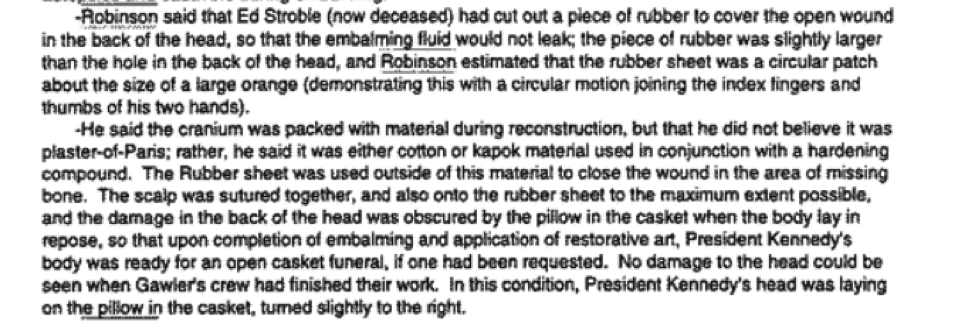
    Lee Harvey Oswald defected to the Soviet Union in the fall of 1959, on October 16. On the Saturday morning of 31 October 1959 he visited the U.S. Embassy in Moscow and threw his passport to the receptionist while announcing that he was willing to renounce his American citizenship. The surprised receptionist advised Oswald to discuss his matter with the American Consul, Richard Snyder. Oswald handed over to the consul a hand-written letter declaring his allegiance to the “Union of the Soviet Republics”. The second Consul, John McVickar, later testified to the Warren Commission that Oswald followed a pattern of behavior indicating that someone or some unknown parties had coached him.1

    The receptionist, Joan Hallet, later recalled that a security officer took Oswald to the secure area upstairs and that “a visitor would never ever get up there unless he was on official business. 2

    Oswald revealed to Snyder that on the 16th of October he had applied for Soviet citizenship. Snyder gave him a form and asked him to fill in his U.S. address plus the address of his closest relative. Oswald became upset because he did not want to involve his mother in this, but eventually he had to report her address in Fort Worth, Texas.

    When asked: Why did he wish to defect to the Soviet Union? he replied that he was a Marxist. Snyder then asked him if he was willing to serve the Soviet state, to which he replied that he was a radar operator in the Marines and he had willingly declared to the Soviets that if he was to become a Soviet citizen he would then reveal information regarding his time in the Marines, and his duties. He insinuated to them that he knew something of special interest.3

    Snyder assumed that his words “of special interest” were a reference to the ultra secretive project involving the spy plane known as U-2, which flew missions from U.S. military bases around the world. Oswald was familiar with the U-2 since the plane was also flying out of Atsugi Japan where he had been stationed as a Marine during 1957-1958. This revelation to Snyder was quite odd, because it could have led to his arrest. Snyder believed that Oswald did it on purpose since Oswald had probably assumed that the Soviets had bugged the U.S. Embassy, and he was speaking for Russian ears in his office. This is also another odd and peculiar thing to do in order to get the Soviets’ attention. If he really wanted to give up military secrets he could have gone straight to the Soviet authorities in secret so the American Intelligence services would have never learned of his treason. Bill Simpich4 believes that if Snyder’s assumption was right, Oswald may have been wittingly or unwittingly prepped by someone from CIA officer William Harvey’s Staff D, since they were responsible for signal intelligence. Bill Harvey was stationed in Berlin during Oswald’s visit to the U.S. Embassy in Moscow, so we cannot conclude with certainty that he had anything to do with Oswald and Staff D at that time.

    Snyder informed Oswald that there was no time left to fill in the necessary documents because it was Saturday noon and they had to close the consulate. He advised him to come back on Monday morning to complete the process of renouncing his citizenship. He also asked Oswald to hand him his passport. Oswald got very irritated and upset and he stormed out of the Embassy and never returned to pick up the documents he so desperately needed. However, he did oblige Snyder’s request and gave him his passport. By doing so he wittingly or unwittingly made sure that his passport would not be detained by the Soviets. He had therefore kept the door open for his return to the States.5

    Before Oswald, two American citizens had tried to renounce their citizenship during the same September month. They were Nicholas Petrulli, on the first week of September, and Robert Webster on Saturday, September 17. Strangely enough, both of these defectors, like Oswald, had visited the Embassy on a Saturday, which made it difficult to finalize the process for renouncing their citizenship. Petrulli did manage to achieve it, but he then changed his mind and asked to return to the U.S. Webster is a person of interest who we will examine further at a later stage. It was Petrulli’s change of heart that prompted Snyder to give Oswald a chance to think it over in case he also changed his mind during the weekend.6

    After Oswald’s departure, Snyder prepared his report regarding Oswald’s visit and he sent a cable to the State Department. Cable 1304 warned that Oswald offered information to the Soviets that he had acquired as a military radar operator. For whatever reason there was not any mention of the possibility that he might have revealed the U2 spying activities.

    On Tuesday morning, November 3, the FBI and CIA had begun to look for information about Oswald after hearing the news about Oswald from the press in Moscow. Snyder had not sent his cable yet to State, so nobody knew of its existence back in the America. Around noon, the Navy received a cable from the Navy attaché in the Moscow embassy that the following diplomatic pouches –– 224/26 October and 234/2 November –– were on their way from Moscow. The content of the two cables included information about two ex Navy persons, Lee Harvey Oswald and Robert Webster.7

    Pouch 234 with the Oswald information arrived at the State Department on Thursday, November 5, and the Navy attaché alerted the Navy to ask for it after its arrival. On the same afternoon the FBI and CIA received pouch 234, and also Snyder’s cable but, to this day, the CIA has not been able to confirm which officer was the recipient.8

    As former intelligence officer John Newman has noted, from the beginning, Oswald’s file had fallen into a black hole. The Navy sent its attaché cable to the CIA, which described how Oswald threatened to reveal top secrets about radar to the Soviets. This cable had also fallen inside a black hole, because no one ever saw it until after JFK’s murder. So when Sam Papich, FBI’s liaison to the CIA’s Counterintelligence division (CI), asked for information relating to Oswald’s defection, the CIA responded that they had none.9 The FBI still put Oswald’s name on their watch list to stop his entering the country under any name.

    At CIA, the Navy cable eventually landed in James Angleton’s Counterintelligence Special Investigation Group (CI/SIG) on December 6 –– but we have no knowledge of its whereabouts the previous 31 days. In addition it was not sent to the right department, which was the Soviet Russia Division (SR).10

    Meanwhile, while waiting on the Soviet decision to allow him to stay in the USSR, Oswald stayed in his hotel room in Moscow writing letters to his family explaining why he wanted to defect. He also gave interviews to two American journalists, one of them was Priscilla Johnson.8 Priscilla testified to the HSCA in 1978 that it was McVickar who pressed her to take an interview from Oswald with the excuse that, because she was a woman, it would have been easier for Oswald to talk to her. Snyder had asked McVickar to talk to Oswald and try to change his mind about defecting, but he had not told him to ask Priscilla to do it. As a result Snyder was very upset with McVickar.11

    McVickar said to Priscilla that there was a fine line between her duty as a journalist and as an American. She later testified that McVickar told her before leaving to remember that she was an American.12 On November 16, Priscilla interviewed Oswald for 5 hours. Oswald revealed to her that the Soviets would allow him to stay in the USSR and would examine the possibility for him to study at a Soviet institution.13 According to Priscilla, Oswald hoped to be useful to the Soviets since he was a radar operator and he could offer them something to harm his country. Oswald was staying in room 233 of the Metropole Hotel, where the KGB had secretly installed infrared cameras to spy on tourists, and the CIA knew that.14

    The next day, November 17, John McVickar invited Priscilla to dinner to discuss her interview with Oswald. After dinner McVickar wrote a memo where he stated that Priscilla had told him that Oswald would be trained in electronics but Priscilla later denied that she did.15

    Oswald was later sent by the Soviets to Minsk to work in an electronics factory, information that Snyder did not know, so one has to question how McVickar was privy to it at that time. McVickar also falsely wrote that it was Priscilla that asked him to meet with Oswald.16 It seems that McVickar had taken a personal interest in Oswald, and one has to wonder if he was privy to information about Oswald that Snyder never had a chance to get.

    Priscilla wrote an article based on her Oswald interview that was published in the Washington Evening Star, 26 November 1959, describing Oswald as a handsome and serious young man, six feet tall, from the South, with a slight accent and different ideas, but did not report any of his intentions to reveal military secrets to the Soviets.17 So who was Priscilla Johnson?

    Priscilla Johnson, as a college student majoring in the Russian language, was a member of “United World Federalists”, an organization that tried to spread the idea that a World Government was necessary and that the U.N. should be given more powers. One of the founders of this organization was Cord Meyer of the CIA’s International Organizations Division.18 After her graduation in 1952 she tried to enlist in the CIA but she was rejected. In 1953 she briefly worked for the office of Senator John F. Kennedy.

    In 1955 she moved to Moscow, where she worked in the U.S. Embassy as a translator. In 1958 the CIA’s office of Counterintelligence/OperationalApproval (CI/OA) asked for permission to utilize Priscilla in its operations. To this day, this operation that involved Priscilla is still classified.

    She returned to the States where she was hired as a reporter for the North American Newspaper Alliance (NANA). On November 13, 1959, she went back to Moscow and happened to interview Lee Harvey Oswald, the ex-Marine who wanted to defect to the USSR.19

    What kind of news organization was NANA? NANA was a news agency competing with the likes of Associated Press and United Press International. Sometime in the 50’s it was bought by Ivory Bryce, a former officer of British Intelligence, and his American partner Ernest Cuneo. Both men were good friends with Ian Fleming, the James Bond author and ex-intelligence officer of the British Navy.20

    Some of NANA’s members were novelist Ernest Hemingway, Inga Arvad, suspected of being a Nazi spy, and Virginia Prewet who worked for David Phillips. It would seem that NANA was an intelligence network closely connected to Operation Mockingbird.21 According to Deborah Davis, the author of Katharine the Great: Katharine Graham and her Washington Post Empire, Meyer was Mockingbird’s “principal operative”.

    When Josef Stalin died, his daughter Svetlana defected to the States and stayed with Priscilla’s father, Stewart Johnson. Priscilla helped Svetlana write her memoirs.21

    Following JFK’s assassination, Priscilla was privileged enough to spend time with Marina Oswald in the summer and fall of 1964. As an important witness to testify for the Warren Commission, Marina was not allowed to come in contact with anyone, living under Secret Service protection. How Priscilla managed to stay with her when nobody else could approach her is a question that has not been answered. Priscilla had one more privilege: to write Marina’s biography.

    Senator Richard Russell, a member of the Warren Commission, was not convinced that Oswald was guilty or that he had travelled to Mexico, but an unexpected incident helped change his mind. Marina testified that she found a ticket to Mexico inside a magazine while writing her biography with Priscilla. In other words, after numerous searches, the FBI and the Dallas Police could not find it, but Priscilla and Marina did.22

    In 1977 Priscilla published her book titled Marina and Lee. Marina revealed that she did not contribute much to the book; it was Priscilla who had to discover most of the facts and put them in order. Priscilla never stopped trying to convince the public that Oswald was guilty. On April 20, 1978 she appeared before the HSCA, along with her attorney and a written affidavit. The Committee found this odd, since she was not being accused of anything so the affidavit and the lawyer were not necessary.23

    Researcher Peter Whitmey revealed Priscilla Johnson’s relations with the CIA after a large number of CIA documents were made available to the National Archives. A document dated 11 December 1962, written by Donald Jameson of CIA, revealed that the CIA believed Miss Johnson could be encouraged to write articles that they wished.24 Other documents reveal that she met with CIA officers for seven hours in 1964, while in 1965 there was another meeting at her request. The CIA’s office of Security granted her clearance to secret information in 1956. It is difficult to give credence to Priscilla’s words when we now know that she was trying for years to conceal her relationship to the CIA, at the same time she was perpetuating a false mythology about Oswald as Kennedy’s killer. 25


    II. Minsk and the U-2 Incident

    The Soviets did not grant Oswald the Soviet passport and citizenship that he wanted. Eventually he was given a residence document, without citizenship, which allowed him to stay in the Soviet Union. In January 1960, he was sent to Minsk, the capital of Belorussia, a city that was a center of science and technology. Oswald was given a position in the experimental division of a radio factory of 5000 employees that had been producing electronic systems. The job proved to be a disappointment because he ended up manufacturing metal parts with a lathe machine. The Soviet state provided for him an apartment with a view of the river at a very cheap rent of only 60 rubles. His monthly salary was 700 rubles, and together with the economic aid given to him by the Russian Red Cross, he ended up earning 1400 rubles, which equaled the salary that the factory’s director was receiving.26

    According to KGB files, Oswald was under constant surveillance. His apartment was bugged, his mail was opened and some of his neighbors and coworkers were informing the authorities about his activities.

    His employment in an electronics factory fulfilled McVickar’s uncanny prediction that Oswald would be trained in electronics, but is also in line with a discovery announced in a 1991 Nightline broadcast that examined recently released KGB files. It was discovered that the KGB had issued this order: “Find employment using his electrical skills”.27 We know the Soviets were suspicious that Oswald might have been a U.S. intelligence dangle, since they knew that the Americans were trying hard to get any information about the Soviet electronics industry. So why would the Soviets send a possible fake defector and dangle, who could have been a CIA spy, to work in an electronics factory? It would have made more sense to send him to work in a milk plant or a vodka distillery that had no connection to defense or the military. This would make sense, however, if the Soviets wanted to pretend playing along and thereby feed back to U.S. intelligence false information about their electronics industry.

    Oswald’s “Historic Diary” offered a detailed description of the Minsk factory size and number of employees, manufacturing 87,000 large powerful radios and 60,000 television sets.28 Oswald’s supervisor and the chief engineer was Alexander Romanovich Ziger, a Polish Jew who had immigrated to Argentina in 1938 and then returned to Belorussia in 1956. He could speak English with an American accent and had worked with an American company in Argentina. Oswald and Ziger became friends: Oswald would spend recreational time at Ziger’s home socializing with Ziger’s daughters.29

    On May 1, 1960, the very day that the Soviets shot down the U-2 spy plane, Oswald was at Ziger’s house attending a party. That night Ziger advised Oswald to return to America and Oswald wrote in his diary: “Ziger advises me to go back to U.S.A., it’s the first voice of dissention [sic] I have heard. I respect Ziger, he has seen the world. He says many things and relates many things I do not know about the U.S.S.R. I begin to feel uneasy inside, it’s true!!”30

    That same day the Soviets were parading their military personnel and armor in front of the Kremlin. Gary Powers, the U-2’s pilot, survived the wreckage and was arrested by the Soviets. The U-2 was the pride of American intelligence and was a testament to America’s technological superiority.31 The New York Times labeled the U-2 flights as the most successful project in the history of intelligence. Allen Dulles, the CIA’s Director, stated that the U-2 could collect information with more speed and accuracy than any spy on the ground.32 For the first time they would have a view of all Soviet military bases, factories, train rails, radars, missiles, even submarines. Considering all the above, the downing of the U-2 would be disastrous for U.S. intelligence. Was it really such a disaster, or, in a disguised way, a surprising success?

    One thing we can say about it is this: it was disastrous for the peace summit in Paris that was soon to take place. Eisenhower and Khrushchev were scheduled to meet, along with other leaders from Western Europe. If successful, the two Presidents were supposed to talk further in Moscow. The U-2 shootdown made sure that the peace talks would be shot down just as the spy plane was. The Peace Summit was disbanded quite quickly, and it was replaced by a show trial that convicted Powers. He was sent to prison, and this humiliated Eisenhower and weakened his foreign policy. The U-2 incident proved to be a disaster for U.S. diplomacy.33 In fact, there are some who even believe that it was the cause of Eisenhower’s famous Farewell Address, in which he warned Americans to beware the rise of the Military-Industrial Complex.

    What exactly happened to the U-2 plane that fateful May day remains a mystery. President Eisenhower had forbidden the flights over the Soviet Union because he did not wish to provoke the Soviets just before the summit. The CIA had used the “missile gap” as leverage to continue the U-2 flights, since they believed the Soviets were far ahead in the matter of Intercontinental Ballistic Missiles (ICBMs) that could attack the U.S. at any time soon.34

    Eisenhower was willing to reconsider as long as the U-2 did not fly inside Soviet air space. So he authorized operation HOT SHOP on the 9th and 18th of June 1959 above the Iran-USSR border that managed to record for the first time an ICBM eighty seconds after launch.35 Eisenhower did not want to authorize any more flights, but the CIA and the Secretary of State convinced him to continue. They felt the information they could get about the Soviet ICBMs was more important than the danger of being caught.

    On July 9, 1959, a U-2 flew above the Ural mountains and photographed a whole range of ICBMs. Despite the mission’s success, Eisenhower did not authorize another flight because he was expecting Khrushchev to visit Washington on 15-27 September, 1959. On September 12, 1959, the Soviets sent Luna 2 orbiting the moon, and Khrushchev was bragging about their success when they met. He also bragged about the powerful range of their ICBMs, which he thought could wipe out whoever dared to threaten his country. The American Government listened carefully and took36 with great seriousness his allegations. Eisenhower was then persuaded to allow another flight on April 9, 1960. The flight was successful and the Soviets did not complain about it, so there was a chance that they did not detect that U-2 flight. Eisenhower was asked to allow one more flight and he reluctantly agreed only if the flight would not occur after May 1, 1960, since the summit talks were about to begin37. The CIA assured the President that, even in the unlikely event of the Soviets shooting down the U-2, the plane was equipped with self-destruction mechanisms and that the pilots had been ordered to commit suicide rather than be captured alive. After the shootdown, and believing the abovementioned claims, a confident U.S. government tried to cover it all up by saying that it was a meteorology airplane that had accidentally entered Soviet airspace.

    Moscow had waited 48 hours to announce to the world that their missiles had shot down the U-2 from its flight height of 70,000 feet; an altitude that the Americans believed made it impossible for the Soviets to track it and shoot it down. Data collected from the NSA showed that the automatic pilot malfunctioned and forced the plane to tumble to 30,000 feet. Allen Dulles was the official who announced the NSA information, but inexplicably the U.S. Government changed its story and went along with the Soviet claim that they had shot it down.38 Before, Khrushchev had called Eisenhower an honest person that he could sit down and talk with. He changed his rhetoric at the summit in order to humiliate and embarrass the U.S. President.

    On May 16, 1960, Khrushchev demanded to be the first to speak at the summit. He strongly complained about the U-2 spying over his country and asked Eisenhower to publicly apologize. Eisenhower replied that the flights had been cancelled but refused to apologize in public. Khrushchev became irritated and left the summit and simultaneously cancelled Eisenhower’s visit to Moscow.39

    The big question is: How did the Soviets manage to shoot down the U-2? The official version is that the aircraft was hit when it entered the engagement zone of a SAM battalion above the town of Sverdlovsk. The U-2 was flying at 70,500 feet when a SAM-2 surface-to-air missile detonated close behind the aircraft. A retired Soviet Colonel, Alexander Orlov, revealed in 1998 that a SAM 2 missile had missed but exploded behind the U-2 and its fragments pierced the tail and wings without touching the cockpit.40

    At first, no one on the ground in Sverdlovsk and Moscow realized that the intruding U-2 had been downed. A target blip reappeared on radar and was immediately hit by a missile from another SAM battalion. But this target turned out to be a Soviet fighter jet that had been scrambled to intercept the U-2. The monitor screens then cleared up, and it became clear that the U-2 had been shot down.41

    Others, like the late USAF Colonel and liaison with the CIA, Fletcher Prouty, disagreed and did not believe the official version. The aircraft was flying at a very high altitude where the air was thinner, so it needed the addition of pure oxygen, sprayed in small doses into the fuel to boost ignition. If the oxygen ran out or stopped spraying, then the engine could stop working and the plane would have to descend to a lower altitude to get the engine running again. Prouty claimed that an unknown inside party sabotaged the oxygen bottle –– which looked like a fire extinguisher –– and as a result the U-2 lost height and dropped to a lower altitude. At this height, the MIG fighters escorted the aircraft and forced Powers to land on its belly. To support his claim, he revealed that some time before, a U-2 had landed on its belly at Atsugi base in Japan where Oswald was based. That particular aircraft was sent to Lockheed for repair and then to the Peshawar airbase in Pakistan, the same base from which Gary Powers took off on May 1, 1960.42 Prouty believed that the above incident was a trial, to test-land a U-2 on its belly in the Soviet Union without completely destroying it.

    Gary Powers was certain that the Soviets knew about his mission long before he learned of it. The order was transmitted from Germany to Turkey and from there to Pakistan. The previous night the man responsible for communications at the airbase in Germany had left his post for a few hours to rest. During that time a black out in communications occurred. As a result, his assistant who was filling the post decided to call the airbase in Turkey by phone, which was forbidden because the line was not secure. Why had the black-out occurred? Was it just an innocent mistake or was it deliberate? 43

    Allowing either of these two explanations about the U-2 incident, we have to wonder as to who was responsible for its demise. If the official version is true, the Soviets were able track it down and hit it. This poses a problem, because the aircraft would have blown to pieces. If Prouty’s version is true, then we would have to look elsewhere to identify those that were responsible. In the former case we have to consider the following two possibilities. Either Oswald had offered the necessary information to the Soviets, or a mole inside the U.S. intelligence had compromised it. In the latter case, we have to consider it an inside job, as Prouty implies. We then need to ask why U.S. officials would have committed such an act. And further, one has to wonder what could have been Oswald’s role in this sinister scenario, if any.

    When Oswald showed up at the U.S. Embassy in Moscow, he threatened to offer information to the Soviets, “something of special interest”. Could this “special interest” refer to the U-2 program? Oswald’s Captain at El Toro base in California said after the JFK assassination that “he did not know whether Oswald actually turned over secrets to the Russians. But for security sake it had to be assumed that he did.”44

    Lt. John Donovan also testified to the Warren Commission that Oswald had access to the location of all bases on the West Coast, to all radio frequencies, squadron strength, number and type of aircrafts in a squadron, and the authentication code for entering and exiting the Air Force Defense Identification Zone (ADIZ). Oswald also knew the range of all U.S. radar and radios and was schooled in the MPS 16 height finder radar and TPX-1, a piece of machinery that would deflect the radio and radar signals several miles away from their actual source so the Soviet missiles would aim at a false target. To mislead the Soviet radar, the U-2 was equipped with TPX-1 that would cause the SAM-2 missiles to deviate from their target.45

    Gary Powers believed that Oswald betrayed to the Soviets the height at which the U-2 flew, a knowledge that he had acquired while working with the new MPS 16 height-finding radar.46 Kelly Johnson, Lockheed’s chief engineer, the man responsible for designing the U-2, believed that the Soviets were able to shoot down the aircraft because they had managed to isolate its scramble signals or to measure exactly its radar signals.47 Donovan told the Warren Commission that they wasted a lot of working hours changing all the tactical frequencies and destroying the old codes after Oswald defected to the USSR. Donovan could not believe that the Warren Commission never bothered to ask him about the U-2.48

    Oswald’s unit, MACS-1 in Japan, seemed to follow the movements of a U-2 operation called “Detachment C”, a CIA operation producing vital information of U.S. strategic importance. Operation “Detachment C” began on April 8, 1957, and it was moving all around the Far East.49 Oswald was at Atsugi Japan from September until November 1957, a period of time that coincided with the launch of the Sputnik satellite and the beginning of the Soviet ICBM program. From November 1957 until March 1958, Oswald’s unit MACS-1 was moving over to the Philippines as part of operation STRONGBACK; its purpose was an invasion of Indochina, which was aborted. While in Cubi Point, Philippines, Oswald was tracking the U-2 flights over China that would have collected useful information about China’s military strength and the alleged crisis between China and the Soviet Union. Oswald was in Taiwan at the same time that a crisis had emerged there. The knowledge of all the above mentioned information that Oswald possessed would have been very valuable to the Russian intelligence agencies, the KGB and GRU.50

    It is bizarre that the Warren Commission did not examine the possibility that Oswald had given information to the Soviets that helped them to shoot down the U-2. It is even more bizarre that the CIA did not arrest and charge Oswald with treason after he returned to the U.S. If Oswald had nothing to do with the U-2 shoot down then one should wonder why the CIA closed down all U-2 missions from Atsugi. Powers did not fly from Atsugi, but from Pakistan. The only connection between Atsugi and the U-2 incident was Oswald.51

    It is illuminating to hear Allen Dulles’ own thoughts regarding the U-2 shoot down as recorded by a statement he made to the “Senate Foreign Relations Committee” on 31 May 196052:

    “They [the Soviets] have gone through four years of frustrations in having the knowledge that since 1956 they could be over flown with impunity, that their vaunted fighters were useless against such flights, and that their ground-to-air capability was inadequate. It was only after he [Khrushchev] boasted, and we believed falsely, that he had been able to bring down the U-2 on May first by a ground-to-air missile, while the plane was flying at altitude, that he has allowed his people to have even an inkling of the capability which we have possessed.”

    Dulles went even further to state that “Our best judgment is that it did not happen as claimed by the Soviets; that is, we believe that it was not shot down at its operating altitude of around 70,000 feet by the Russians. We believe that it was initially forced down to a much lower altitude by some as yet undetermined mechanical malfunction.”

    If we were to believe Allen Dulles, the possibility that the U-2 was hit by Russian missiles becomes distant. Gary Powers maintained all his life that the U-2 had not drifted down to a lower altitude due to malfunction. However, shortly before the helicopter crash that cost his life, he said during a radio interview that his plane had been sabotaged on the ground before takeoff and since the security was extremely tight, it had to be an inside job, probably CIA’s Office of Security.53

    So if Oswald or a mole was not responsible for the U-2 shoot down, who was responsible and why?


    III. OXCART and CORONA

    When the U-2 began operating in the summer of 1956, it was expected to have a relatively short operational life in overflying the Soviet Union –– perhaps no more than a year or two. The estimates did not predict that the Soviets would be able to develop missiles capable of shooting down the U-2; rather that they could develop radar capable of tracking the U-2 aircraft.54 If they could achieve that then they would have undeniable proof to support diplomatic protests that would gain the world’s sympathy and support.

    The Soviets were able to track down the U-2 during its first over flight above the USSR. The need for a new, better and invincible aircraft had arisen, and this give birth to operation OXCART.

    In 1956, the CIA decided to build a more advanced aircraft that could fly at much higher speed and altitudes than the U-2, and with more powerful cameras, radar and deflection systems. Thus, in the fall of 1957, operation GUSTO was born and Richard Bissell established a committee to oversee the selection procedures. The committee’s chairman was Polaroid’s chief executive Edwin Land, along with officials from the Air Force, the Navy and defense manufacturers. Two companies were the most prominent: Lockheed, which had built the U-2, and Convair, which had built the B-58 Hustler supersonic bomber for the Air Force.55

    Lockheed’s Clarence “Kelly” Johnson, said that “It makes no sense to just take this one or two steps ahead, because we’d be buying only a couple of years before the Russians would be able to nail us again …. I want us to come up with an airplane that can rule the skies for a decade or more.”56

    Convair’s proposal was known as KINGFISH while Lockheed’s proposal was the A-12 that could reach MACH 3.2 and fly up to 97,000 feet, at a range of 4,600 miles.57

    The two competing firms presented their final designs to the selection committee on 20 August 1959. On 29 August the committee selected Lockheed’s A-12 to replace the U-2. On 3 September, Project GUSTO was concluded and Project OXCART, designed to build the A-12, was begun. However, the committee asked Lockheed to reduce the radar cross-section (which eventually resulted in a weight reduction of 1,000 pounds), to increase its fuel load by 2,000 pounds, and to lower maximum altitude to 91,000 feet instead of the original 97,000 feet.58

    On 11 February 1960, the CIA signed a contract to order 12 A-12s, three months before the fateful flight of the U-2.59 The A-12 was, however, never used for its intended purpose of overflying the USSR. Instead, it was used in conventional warfare. Even then, it was decided that the A-12 would be replaced by the Air Force’s variant, the SR-71. The most advanced plane was decommissioned a year after it began operating because of fiscal pressures and competition between the CIA and the Air Force. After Kennedy took over from Eisenhower, he stated publicly that he would not allow any overflights of the Soviet Union.60 The most decisive factor in this decision was the technological advancements in satellite technology that made it feasible to safely collect information about the Soviet military.61 The CIA, however, did not lose out on this situation since the Agency was part of the CORONA satellite project which was destined to rule the skies.

    The idea for this project was first conceptualized in late 1957 with the purpose of providing high quality images of missile launch sites and production facilities. President Eisenhower gave the go-ahead in February 1958. The project was a joint effort of the CIA, the private defense industry and the Air Force. The CIA once again had nominated Richard Bissell to be its representative. The most prominent defense companies involved were Lockheed, Itek Corporation and General Electric. The reconnaissance satellites were produced and operated by the CIA’s Directorate of Science and Technology. During its time, it collected valuable information about Soviet and Chinese military sites. On their first mission, the CORONA satellites were able to collect more information than all the U-2 flights over the USSR.62

    Maybe the A-12 did not fulfill the purpose that CIA had envisioned, but even then they knew that it would last for a brief period of time. In his project log in 1967, Johnson wrote63:

    “I think back to 1959, before we started this airplane, to discussions with Dick Bissell where we seriously considered the problem of whether there would be one more round of aircraft before the satellites took over. We jointly agreed there would be just one round, and not two. That seems to have been a very accurate evaluation.”


    IV. Cold War Business

    Therefore, in practical terms, one could conclude that the downing of the U-2 was not such a disaster after all, since better and more advanced alternatives were already on the sidelines waiting to usurp the skies instead. We cannot claim that the A-12 and the CORONA satellites were produced as a result of the U-2 incident, but surely it helped in accelerating the urgency of replacing the U-2 in intelligence reconnaissance. In other word, these two projects would have materialized regardless of the U-2 shoot down. As we saw earlier on, the U-2 incident achieved one major Cold War gambit, and that was to sabotage the Peace Summit in Paris, thus eliminating any hope for an Eisenhower attempt at detente. For the CIA, the Air Force and the defense industry contractors, this would be justification to vigorously pursue the development of more projects like A-12 and CORONA, which ensured more business with millions of dollars to be earned. As Dick Russell wrote in his The Man whoKnew too Much, “Interestingly, after the U-2 went down, the price of shares of arms manufacturing companies rose sharply on the New York Stock Exchange, and government military-contract awards increased substantially.”64 Cleverly enough, they hit two birds with a stone: successfully prolonging the Cold War and increasing their profits –– business as usual. The sacrifice of the U-2 was a small price to pay since they knew from its inception that operationally it would only last for a few years.

    We cannot only blame the U.S. side for unilaterally achieving this result. There were in the Soviet Union powerful people who were to benefit as much from the continuation of the Cold War. Khrushchev had concluded that the Cold War could bankrupt the Soviet Union, and he was looking forward to easing the economic burden by agreeing with Eisenhower to some sort of slowing of the relentless pursuit of the arms race.65 Some of the KGB members and some powerful politicians did not see it that way, as they believed that something like that would threaten their power and their benefits. So the sabotaging of the Paris Summit could have been a collaboration of American and Soviet hard liners, what George M. Evica described as “a treasonous cabal of hard line U.S. and Soviet Intelligence agents, who saw their mutual meal tickets in jeopardy.”66

    yfurtseva
    USSR Minister of Culture
    Yekaterina Furtseva

    The Soviet members of this cabal may have been Yekaterina Furtseva, Leonid Brezhnev, and Yuri Andropov, who wanted to wrestle power away from Nikita Khrushchev.67 Yekaterina Furtseva was an interesting character that some believe was the most powerful woman in the Soviet Union and Khrushchev’s lover. She even had authority over KGB’s head, Vladimir Y. Semichastny, threatening to replace him with his deputy whenever he displeased her. She loved everything American and she was primarily concerned about her family’s well being.68

    In 1993, it was revealed that Oswald had a champion in the Politburo, and it was none other than Furtseva. In The Man who Knew too Much Russell reported that “Furtseva urged that the young ex-Marine be allowed to stay on … and sought to keep KGB chief Semichastny from recruiting Oswald.” Later Semichastny concluded that Furtseva was running her own shop.69

    The big question that we considered earlier was if Oswald had any role in the U-2 incident and if the information that he might have provided helped the Soviets to bring down the aircraft. We have argued here that the Soviets may not have shot down the U-2, that it was probably an inside job and that Oswald had nothing to do with it. So why was he sent to the Soviet Union? Research by Peter Dale Scott70, Bill Simpich71 and John Newman72 tend to support the theory that Oswald was sent to the Soviet Union by Angleton’s counterintelligence division on a mole hunt. It all started in 1953, when the CIA succeeded in recruiting Pyotor Popov, a Soviet Military officer who in turn passed secrets to the CIA. In 1958, Popov informed his CIA handler, that a Soviet mole was planted in the CIA and had betrayed technical details about the U-2. All three researchers argue that Oswald was a dangle, designed by Angleton to surface this mole. Some researchers would argue that Popov himself was eventually betrayed by this mole. The latter assertion is erroneous, however, since Popov was not betrayed by any mole. As Angleton biographer Tom Mangold revealed, Popov was found out when an American Embassy officer left a letter for Popov in a mail box, unaware that he was followed by the Soviets, who then found the letter.

    If there was a mole inside the CIA, he might have betrayed information about the U-2, but not Popov’s double role. To analyze in detail this mole hunt is not the purpose of this essay. It is also alleged that Angleton used Oswald to catch a mole, this time in Mexico, in the fall of 1963. However, in both cases a mole was not found. But in the first case, the Paris Summit was sabotaged, and in the second case the mole hunt helped to accommodate the assassination of President Kennedy. If we apply Occam’s razor, then the simpler explanation is the right one. I tend to conclude that the mole hunt in both instances was not a benign one, but was used by Angleton as a cover, to conduct his own dark operations which provided him with a potential alibi in the subsequent investigations. If anyone would question how the U-2 was shot down, for instance, they could claim that a mole betrayed it and the CIA had tried to find out who he was (by using the Oswald dangle), but that unfortunately the mission had failed to reveal him.

    We have discussed the U-2 incident, operations OXCART and CORONA, and the sabotage of the Peace Summit. We noted that the final proposals for the aircraft that would have replaced the U-2 were presented to the evaluation committee on August 20, 1959, and the final choice was made on August 29. Is it a coincidence, as Mark Prior pointed out73, that three days earlier, on August 17, Oswald had filed for his discharge from the Marines? It is possible that the CIA, along with the Air Force and parts of the defense industry, had decided to throw Oswald into their Cold war games. Before travelling to the Soviet Union, Oswald had applied to attend the fall semester of an obscure European institution, the Albert Schweitzer College. Little did he know that by doing so, he would unwittingly cross paths with an influential Unitarian74 who was President of the American Friends of Albert Schweitzer College, had been a Director of the Bureau of Budget, and was involved in the U-2 and the CORONA project, through the Pentagon and the CIA.

    Go to Part 2

    Go to Part 3

    Go to Part 4

    Go to Part 5

    Go to Part 6

    Go to Conclusion

    Go to Appendix


    NOTES

    1 Dick Russell, The Man Who Knew too Much, Carroll & Graf 2003, p. 116.

    2 ibid, p. 116.

    3 John Newman, Oswald and the CIA, Skyhorse Publishing Inc. 2008 [1995], pp. 2-5.

    4 Bill Simpich, State Secret, ch. 1, “The Double Dangle.”

    5 Newman, op. cit., p. 6.

    6 Bill Simpich, The Twelve who built the Oswald legend, part 2.

    7 Newman, op. cit., p. 22.

    8 ibid, pp. 23-24.

    9 ibid, p. 25.

    10 ibid, p. 27.

    11 ibid, p. 77.

    12 ibid, p. 72.

    13 ibid, p. 73.

    14 CIA memo, document 861-374, 4 June, 1964.

    15 Newman, op. cit., p. 84.

    16 Newman, op. cit., p. 81.

    17 Simpich, The Twelve who built the Oswald legend, part 2.

    18 The Twelve who built the Oswald legend, part 1.

    19 http://spartacus-educational.com/JFKjohnsonPR.htm

    20 Bill Kelly & John Judge, “Was Oswald Bottle-fed by NANA?”

    21 ibid.

    22 James DiEugenio, “Priscilla Johnson McMillan: She can be encouraged to write what the CIA wants”.

    23 ibid.

    24 Peter Whitmey, “Priscilla Johnson McMillan and the CIA”.

    25 DiEugenio, “Priscilla Johnson McMillan”.

    26 J.A. Weberman, Coup d’etat in America, Nodule 7, p. 7.

    27 Russell, op. cit., p. 117.

    28 ibid, p. 124.

    29 Newman, op. cit., p. 147.

    30 Weberman, op. cit., p. 10.

    31 Gary Francis Powers, Operation Overflight, Holt, Reinhart & Winston 1970, p. 58.

    32 Allen W. Dulles, The Craft of Intelligence, The Lyon Press 2006, p. 61.

    33 Russell, op. cit., p. 119.

    34 Gregory W. Pedlow & Donald E. Welzenbach, The CIA and the U-2 program, 1992, https://www.cia.gov/library/center-for-the-study-of-intelligence/csi-publications/books-and-monographs/the-cia-and-the-u-2-program-1954-1974/u2.pdf, pp. 159-160.

    35 ibid, p. 162.

    36 ibid, pp. 163-164.

    37 ibid, p. 170-172.

    38 Russell, op. cit., pp. 119-120.

    39 Pedlow & Welzenbach, op. cit., pp. 180-181.

    40 https://www.cia.gov/library/center-for-the-study-of-intelligence/csi-publications/csi-studies/studies/winter98_99/art02.html

    41 Alexander Orlov, The U-2 program: A Russian Officer Remembers, https://www.cia.gov/library/center-for-the-study-of-intelligence/csi-publications/csi-studies/studies/winter98_99/art02.html, p. 11.

    42 http://www.prouty.org/sabotage.html

    43 Powers, op. cit., p. 356.

    44 Newman, op. cit., p. 39.

    45 ibid, p. 44.

    46 Russell, op. cit., p. 120.

    47 Powers, op. cit., p. 338.

    48 Newman, op. cit., p. 46.

    49 ibid, p. 30.

    50 ibid, pp. 42-43.

    51 ibid, p. 46.

    52 https://www.cia.gov/library/readingroom/collection/francis-gary-powers-u-2-spy-pilot-shot-down-soviets

    53 Russell, op. cit., p. 120.

    54 https://www.cia.gov/library/center-for-the-study-of-intelligence/csi-publications/books-and-monographs/a-12/from-the-drawing-board-to-factory-floor.html

    55 ibid.

    56 ibid.

    57 https://en.wikipedia.org/wiki/Lockheed_A-12

    58 https://www.cia.gov/library/center-for-the-study-of-intelligence/csi-publications/books-and-monographs/a-12/from-the-drawing-board-to-factory-floor.html

    59 ibid.

    60 https://www.cia.gov/library/center-for-the-study-of-intelligence/csi-publications/books-and-monographs/a-12/a-futile-fight-for-survival.html

    61 ibid.

    62 https://www.cia.gov/news-information/featured-story-archive/2010-featured-story-archive/corona-the-nation2019s-first-photoreconnaissance-satellite.html

    63 https://www.cia.gov/library/center-for-the-study-of-intelligence/csi-publications/books-and-monographs/a-12/a-futile-fight-for-survival.html

    64 Russell, op. cit., p. 119.

    65 Joseph Trento, The Secret History of the CIA, Basic Books 2001, p. 255.

    66 George Michael Evica, A Certain Arrogance, Trine Day 2011, pp. 193-194.

    67 Trento, op. cit., p. 256.

    68 ibid, p. 256.

    69 Russell, op. cit., p. 118.

    70 Peter Dale Scott, Dallas ‘63, The First Deep State Revolt against the White House, kindle version, ch. 3, “Hunt for Popov’s Mole.”

    71 Simpich, State Secret, ch. 1, “The Double Dangle.”

    72 John Newman, Countdown to Darkness, kindle version, ch. 1, “Oswald and the Angleton Mole Hunt.”

    73 Mark Prior, “Oswald and the U-2 program”, www.KennedysandKing.com

    74 Evica, op. cit.

  • Was Oswald a Serial Wife Batterer?

    Was Oswald a Serial Wife Batterer?


    dunne leaderOne of the main difficulties that the Warren Commission had in portraying Lee Harvey Oswald as the dual killer of President Kennedy and police officer J. D. Tippit was that, up until then, Oswald did not show any record of past violent acts. Therefore the Commission set to work to fill that lacuna. One obvious way they did so was by accusing him in the unsolved case of the April 10, 1963 shooting of General Edwin Walker. That was a case in which, during a time period of over seven months, Oswald had never even been considered a suspect. Author Gerald McKnight, in his fine book Breach of Trust, demonstrates that the indictment made against Oswald by the Warren Commission was genuinely dubious. (See pp. 48-59) Which explains why he was not a suspect in the shooting prior to November 22, 1963. The accusation rests largely on the questionable testimony of Marina Oswald.

    Another way in which this was done was through the accusation that Oswald was a chronic wife beater. This was achieved almost exclusively through the testimony of the members of the White Russian community in the Dallas-Fort Worth area. Upon their return from the Soviet Union, the Oswalds were introduced into this enclave by Russian translator Peter Gregory and the enigmatic George DeMohrenschildt. DeMohrenschildt and his family came from Russia and he was an active member of this community. He had also been in contact with the local Dallas CIA chief J. Walton Moore since at least 1957. The closeness of his relationship with DeMohrenschildt was a fact that Moore tried to cover up. (James DiEugenio, Destiny Betrayed, Second Edition, p. 153)   As the late Philip Melanson has written, many of the White Russians had been aided in their entry into the USA by the Tolstoy Foundation, an anti-communist lobby that received yearly stipends from the CIA. The Oswald biographer then added, “The Russian Orthodox Church, a centerpiece of the very conservative and religious White Russian community, also received Agency philanthropy.” (Spy Saga, p. 79)  One of the enduring contradictions about the allegedly communist Oswald is that upon his return from Russia in June of 1962 he associated so strongly with two distinctly anti-Communist groups: the anti-Castro Cubans in New Orleans and the White Russians in Dallas. The former wished to overthrow Fidel Castro and the latter wanted to overthrow the Communist dictatorship in the USSR.

    As noted, it was through the latter that the Warren Commission depicted the Oswald who showed violent tendencies toward his wife Marina. (Warren Report, p. 417) And many Warren Commission supporters have used this characterization to convict Oswald as a serial spouse abuser. And also to portray this White Russian community as a collection of avuncular guardians who tried to protect and shelter Marina from her brutal husband.

    Robert Charles-Dunne was a longtime poster at John Simkin’s Spartacus Educational web site, which has a JFK Assassination Debate forum. In May of 2013 he decided to go ahead and do a systematic analysis of this issue. He examined the testimony of 19 witnesses on the subject. With his usual acuteness, he managed to perform a tour de force of separating the wheat from the chaff on the issue. When the subject came up again recently, Tom Scully salvaged his post on the Wayback Machine. We present it here for the edification of our readers.

    ~ Jim DiEugenio


    First, let’s clear the decks of the obvious padding.

    Mahlon Tobias and his wife have already been dispatched to the remainder bin, as they both testified they personally neither saw nor heard anything except complaints from other tenants of their building. That leaves 18.


    Ilya Mamantov (IX: 107)


    Mr. Jenner.

    Have you ever seen Marina Oswald in your life prior to that moment (in the DPD HQ on November 22)? Knowingly?

    Mr. Mamantov.

    No; sir.

    Mr. Jenner.

    Had you ever met her prior to that time?

    Mr. Mamantov.

    No, sir; I met her after that, accidentally.

    Mr. Jenner.

    No; this is prior–up to that moment, you had had no contact, no acquaintance whatsoever with her?

    Mr. Mamantov.

    That’s correct.


    Needless to say, people who had never met either of the Oswalds are hardly in a position to testify to anything about them, no matter how many times Paul Trejo pads his list with their names. Now we’re down to 17.


    Igor Vladimir Voshinin (VIII: 466)


    Mr. Jenner.

    Did you ever meet either Lee or Marina Oswald?

    Mr. Voshinin.

    No, sir; thank God!


    Thank you, Igor. We are down to 16.


    John Ray Hall (VIII: 412)


    Mr. Liebeler.

    During that period of time that you knew Oswald, did you become aware of the fact that he and Marina were having difficulties with their marriage?

    Mr. Hall.

    We heard that she was living with someone else at one time, I don’t know who. My wife can probably tell you. And we also heard that he beat her up one time.

    Mr. Liebeler.

    Did you ever see any indication that be had beaten her up?

    Mr. Hall.

    I didn’t; no.

    Mr. Liebeler.

    Was it your impression that the Oswalds were having marital difficulties at the time Marina lived in your house or in Mrs. Hall’s house in Fort Worth?

    Mr. Hall.

    No.

    Mr. Liebeler.

    The only reason that Marina lived there at that time was because Oswald didn’t have an apartment in Dallas, is that correct?

    Mr. Hall.

    To give him a chance to get settled; yes.


    One notes Hall’s observation: “And we also heard that he beat her up one time.” We’ll stipulate that John Hall was a lesser witness, as he had less interaction with the Oswalds. Nonetheless, we are now down to 15.


    Mrs. Igor Vladimir Voshinin (VIII: 444)


    Mr. Jenner.

    Now, if you can remember any more, I wish you would tell us about De Mohrenschildt’s comments with respect to the Oswalds and the impressions that you gained of the Oswalds—as to how they got along whether he treated her well or poorly?

    Mrs. Voshinin.

    Oswalds—his wife?

    Mr. Jenner.

    Yes.

    Mrs. Voshinin.

    Treated very poorly. Because De Mohrenschildt told us that he was beating her. Then, she ran away from him and De Mohrenschildt tried to help her, you know, to settle down and to separate somehow, but then, they reconciliated (sic). And after the reconciliation, Jeanne mentioned twice that Marina had blue eyes–was beaten again, you know.

    Mr. Jenner.

    Black and blue eyes?

    Mrs. Voshinin.

    Yes.


    No doubt Mrs. Voshinin repeated accurately what she had been told. But she saw nothing with her own two eyes and could offer only hearsay testimony. Now we’re down to 14.


    Max E. Clark Vol. (VIII: 345-46)


    Mr. Liebeler.

    Did your wife have the impression that there had been marital difficulties between the Oswalds at that time?

    Mr. Clark.

    Yes.

    Mr. Liebeler.

    Can you tell us any specific reasons why your wife thought that?

    Mr. Clark.

    None other than the conversations and the fact that Marina, seemed quite happy with him gone, more than the fact that she did not seem to miss him and the fact that he wasn’t there.


    Mr. Clark saw nothing, nor could he cite his wife having seen anything, regarding battery of Marina Oswald. His testimony contained the fact that he had heard about such an incident, but knew nothing of it first-hand, or even second hand from his wife. Mr. Clark is now excused, and we’re down to 13.


    Gary E. Taylor (IX: 82-86)


    Mr. Jenner.

    It was, therefore, your impression, I take it, that your invitation was not tendered because of any difficulties between Marina and Lee, but rather to afford her a place to live temporarily until Lee became established elsewhere?

    Mr. Taylor.

    That’s right. In Dallas.

    Mr. Jenner.

    I mean, my statement is a fair statement of the then atmosphere?

    Mr. Taylor.

    Yes; I, at that time, was not aware that there was any marital disharmony.

    ……………………….

    Mr. Jenner.

    All right. Tell us about that.

    Mr. Taylor.

    As I remember it, shortly after they moved, Mrs. De Mohrenschildt—-

    Mr. Jenner.

    They moved where? Into your home or from your home?

    Mr. Taylor.

    Moved into their apartment here in Dallas–the first apartment they had, on Elsbeth.

    Mrs. De Mohrenschildt came by and told us that she had seen Marina and that she had a black eye, I believe, and was crying and said that she and Lee had had a fight over the lessons and they had been taken from her, and—-

    Mr. Jenner.

    Lee had struck her?

    Mr. Taylor.

    Yes; that Lee had struck her.

    Mr. Jenner.

    She said that to you?

    Mr. Taylor.

    Yes; this is Mrs. De Mohrenschildt now. This is not Marina that said that.


    Again, Mr. Taylor was unaware of “any marital disharmony” when Marina lived in his home, but later heard about Lee abusing Marina from his stepmother-in-law. Second-hand hearsay testimony is inadmissable. We’re now down to an even dozen.


    Mrs. Helen Leslie (IX: 163)


    Mr. Jenner.

    How did these people, Lee Oswald and Marina Oswald act toward each other on the occasion when you saw them?

    Mrs. Leslie.

    I will tell you something–I don’t know if Bouhe told you or others too. When she was out at a place–she had a black eye and she has her tooth out, one tooth was out, so a second, man it was raised a question how she had this black eye and so on, and she said, “Oh, I hit the kitchen door. The baby was crying and I didn’t want to make a light, the door was open and I hit it–the kitchen door.”

    And then, later, I heard from Mrs. Meller that he beat her, he was beating her, that he was always beating her and everybody was sympathetic with her. Frankly now, it is understandable. She was Russian, you know, it is some kind of a feeling of a Russian toward a Russian and they were mad at him and how he could beat his wife this is not proper–to beat his wife.

    Mr. Jenner.

    Well, now, we don’t approve of that in America.

    Mrs. Leslie.

    No. All I say now is what other people like Mellers and like Fords told me that once he beat her so hard and threw her out in the street, so she took her baby as a result in just a little blanket–she didn’t know where to go and she came to Mellers and she said, “I don’t know where to go,” that she wasn’t talking good English and he wanted to talk Russian at home, so she didn’t know what to do and the Mellers are very nice people, so they took her in their house and she stayed there a few days until they found a place for her. I don’t remember, but they said “Oh, the awful things,” and they took her–I think, you know, that she was staying with them.

    I didn’t know she was staying with Fords. I didn’t know when, because I lost trace of her and so that’s all I know about Oswalds. Actually, I didn’t see her until when she was on television.


    “…she had a black eye and she has her tooth out.” Marina seems to have given an explanation for her black eye—whether true or not—but it is troubling when a man beats a woman so hard she loses a tooth.

    Only, the missing tooth wasn’t the result of marital discord, but provides a sterling example of how groundless gossip gets amplified with each re-telling and morphs into something else entirely Here is what happened to that tooth, courtesy of the former Mrs. Gary Taylor, with whom Marina briefly stayed:


    Mrs. Donald Gibson (XI: 126-131)


    Mr. Jenner.

    You said that Marina was to receive some dental care?

    Mrs. Gibson.

    That is right.

    Mr. Jenner.

    Did she remain in the apartment all day after she arrived?

    Mrs. Gibson.

    After she came back from the dentist, she stayed there, I think she had a tooth, one or two pulled, and she stayed there that afternoon, after she came back from the dentist.


    Mrs. Leslie saw nothing with her own eyes and repeated gossip heard from the Fords and Mrs. Meller, part of which was demonstrably untrue. It will prove interesting when we get to their own testimony. In the meantime, Mrs. Leslie is excused and we’re down to eleven remaining witnesses. Let’s get right to Mr. Ford:


    Declan P. Ford (II: 325)


    Mr. Liebeler.

    Did Mrs. Oswald have any bruises on her at that time?

    Mr. Ford.

    Yes, she did. On her face.

    Mr. Liebeler.

    On her face. Was there any conversation about that?

    Mr. Ford.

    Not directly with me. My wife told me that Mrs. Oswald told her it was due to some accident of running into a door at nighttime while she was getting up to see what–the baby crying, something like that.


    Thank you, Declan. You’ve reduced the number of witnesses to 10. Let’s hear from your wife, Mrs. Ford:


    Katya Ford (II: 299-300)


    Mr. Liebeler.

    Tell us what Marina told you while she was staying there about her relations with Lee Oswald and particularly as to why she separated from him and what the difficulties were in their marriage?

    Mrs. Ford.

    I think mostly it was a mistreatment by him that she couldn’t stand any longer, she was saying.

    Mr. Liebeler.

    Mistreatment by him?

    Mrs. Ford.

    Mistreatment by him; yes. That is what she was saying.

    Mr. Liebeler.

    Did she tell you any more specifically than that what the problem was?

    Mrs. Ford.

    No; she didn’t really. She did not elaborate. She did not go into explanations of their living together.

    Mr. Liebeler.

    Did she mention that Lee Oswald was jealous of the Russian friends that Marina had?

    Mrs. Ford.

    Yes; she did. She told me that, that he was.

    Mr. Liebeler.

    Did they argue about that?

    Mrs. Ford.

    Well, I didn’t know if they were arguing about that. I know she said that he was very jealous of them helping Marina and jealous for the reason that he wasn’t able to provide her at the time with any of the things that they were giving Marina, clothes, and baby clothes, and I think that he was–it was making him rather mad because he said he was unable to buy the things for her at the time, and I know that he was not accepting things people were giving him. He was telling her not to take them but she was taking them because she needed them. I suppose they were arguing about that but I don’t remember the particulars.

    Mr. Liebeler.

    Did you form an impression at the time that Marina lived with you for that week as to what the cause of their difficulties might be?

    Mrs. Ford.

    She mentioned one time that soon after marriage he told her he didn’t love her any more in any way. So I don’t know what is the difficulty, I don’t know if that is what she mentioned. She did not explain and didn’t go into explanations of this.

    Mr. Libeler.

    Do you think, did you form an opinion as to whether this separation and the difficulties they were having was primarily the result of Oswald’s behavior or did you think Marina might have been partially responsible for it, what did you think?

    Mrs. Ford.

    My own opinion was that Marina was responsible for it. I think Marina was and I think now she is a rather immature girl.

    The Chairman.

    She is what?

    Mrs. Ford.

    I think she is rather immature in thinking.

    The Chairman.

    Oh, yes.

    Mrs. Ford.

    And a lot of times she agreed herself about provoking him in a way by arguing about his mother or things of some sort.


    Mrs. Ford could not elaborate on the problems in the Oswald’s marriage, despite Marina living with her, and despite the fact that others claimed Mrs. Ford had told them about Marina being beaten. Since that seems to have come from gossip, rather than her own first-hand experience, or even what she might have been told by Marina, we are once again dealing with hearsay. We have nine witnesses remaining, and Mrs. Meller should go next, given that she was also among those who told Mrs. Leslie and others about the beatings:


    Anna Meller (VIII: 390-91)


    Mr. Liebeler.

    Did you ever form an opinion as to who was responsible for these marital difficulties the Oswalds were having? Did you think it was mostly Lee Harvey’s fault or did you think it was partly her fault, or what?

    Mrs. Meller.

    It was not easy to judge but I think since we do not know them very close and very long, let’s say this way but it seems to me again that Lee Oswald was not normal because later I heard from somebody that he beat Marina and he did one time, I think even Marina told to me that when they moved in apartment the bulb is burned through and she has to put new lamp in it. He demanded when the master is home the bathtub supposed to be full with water so he can take bath before he sit down to eat and one time he come home and it was dark and she has to put lamp in the room, she did not have time to put water in the tub and he find tub was without water and he beat her.

    Mr. Liebeler.

    Marina told you that?

    Mrs. Meller.

    I think she told me that or somebody from our group; I do not recall who, but I remember that and I was shocked. I thought that something must be wrong with man if he is every time running to beat her.


    Yes, there is something wrong with a man who beats his wife all the time. There’s also something wrong with a witness who contends such a thing without having seen it, or even being able to remember who told her, second or third hand. Please re-read Mrs. Meller’s shocking testimony and see if you can definitively identify where she learned this. We’re down to eight witnesses. Hopefully, we’ll soon encounter somebody who actually saw something.


    Valentina Ray (VIII: 417)


    Mr. Liebeler.

    Did you talk to Mrs. Ford about the reasons for the Oswalds marital difficulties?

    Mrs. Ray.

    I asked her what was matter and she said he was mean to her; he beat her up and she left him because of that. I felt terrible sorry for her because Mrs. Ford described to me she could not speak English and didn’t know anybody there. That’s the only reason given to me that he struck her or beat her up.

    Mr. Liebeler.

    Mrs. Ford didn’t go into any greater detail as to what reason for beating her up?

    Mrs. Ray.

    No, no; when Marina came to my house I hated to butt in since she was only with me 1 day and 2 days and didn’t spend night. I don’t like to question somebody right away what is trouble, why did you leave–I am not that nosey.


    Interesting. In her own testimony, Mrs. Ford claimed that Marina hadn’t disclosed the nature of the difficulties between her and her husband, but here’s Mrs. Ray—among others listed and yet to come—who claim that Mrs. Ford was the source of gossip about her being beaten. Mrs. Ray chose not to make inquiries when Marina stayed with her, so didn’t even have second-hand information. Thank you, Valentina, you may now step down so we can hear from the remaining seven witnesses.


    Elena Hall (VIII: 395-396)


    Mr. Liebeler.

    About the time that Marina lived in your house, did you understand that the Oswalds were having any marital difficulties?

    Mrs. Hall.

    Well, I think she was stubborn, and he was just cruel to her, and they would argue for nothing, just nothing. And he would beat her all the time.

    Mr. Liebeler.

    Beat her?

    Mrs. Hall.

    Oh, yes. In fact, first time when she came to my house with George Bouhe, she had black and blue over half of her face and I didn’t ask at that time, but after she moved in my house, I said, Marina, what was on your face? And she told me that he beat her.

    Mr. Liebeler.

    The first time that Marina came to your house, can you remember exactly when that was?

    Mrs. Hall.

    In July. Sometime in July.

    Mr. Liebeler.

    And you noticed even in July that she had been bruised, is that correct?

    Mrs. Hall.

    Yes.

    Mr. Liebeler.

    But it wasn’t until October or November—-

    Mrs. Hall.

    October when she moved.

    Mr. Liebeler.

    That you learned that she had gotten those bruises as a result of her husband beating her, is that right?

    Mrs. Hall.

    Yes.

    Mr. Liebeler.

    At the time in October that Marina lived in your house, did she discuss with you her marital relations with Oswald?

    Mrs. Hall.

    Yes. Well, she is, I think she is very nice girl. And I told her, “Marina, you are in such a difficult financial situation, you’d better not have children for quite a while, and when you have a better financial situation, you can have them.” And she said, “Well, I don’t know.”

    And I told her, “If you want to, I have a lady doctor, Dr. Taylor. If you want me, I will take you there. She will give you some things.” And she said, “No; I don’t think so.”

    She said, “Our married life is so strange that I don’t think I ever will have any children any more,” because he was very cold to her.

    Mr. Liebeler.

    Did Marina indicate at that time that she and Oswald did not have normal sexual relations.

    Mrs. Hall.

    Very seldom. The thing that she told me, “Very seldom.”

    Mr. Liebeler.

    Tell me everything that you can remember about that subject that Marina told you.

    Mrs. Hall.

    That was the only thing that was worrying me, her to not have children, because they are in such bad shape, and that is the only thing she told me.

    And I said, “If you think you want any more.” So it is none of my business, you know.

    Mr. Liebeler.

    Is that all that Marina said about that subject?

    Mrs. Hall.

    We didn’t talk any more, because it was my suggestion to her to not have children, and she told me that, and that was all.

    Mr. Liebeler.

    Did she ever tell you that Oswald would–was not very much of a man in that sense?

    Mrs. Hall.

    Yes. That is what she told me.

    Mr. Liebeler.

    They very seldom had sexual relations?

    Mrs. Hall.

    Yes, sir.

    Mr. Liebeler.

    Did you ever discuss that question with her any other time?

    Mrs. Hall.

    No.

    Mr. Liebeler.

    Did you form an impression as to how Lee and Marina were getting along with each other at the time that Marina lived in your house, other than what we have already talked about?

    Mrs. Hall.

    No. Couple of times I told her, “Why do you argue with him about little things,” and she said, “Oh, because he is not a man.” That is what she told me. For instance, I like hot peppers and he didn’t like it. Well, is nothing wrong with a man who doesn’t like peppers. John doesn’t like it at all. And at the table they were eating, and I ate the peppers, and he wouldn’t touch, and she said, “He is afraid of everything, hot peppers.”

    And he said, he don’t like it, and they had argument about that. And after he left I said, Marina, you shouldn’t do that because, well, some people like them and some don’t.”

    Well, things like that, she would start with him and they had an argument. Probably if I wouldn’t be there, they would have a fight or something.

    Mr. Liebeler.

    Did you ever have the feeling that Marina was a good wife to Oswald, or did you have the feeling that she was not particularly a good wife?

    Mrs. Hall.

    Well, she is a little bit lazy one, and she can sleep 48 hours a day. That is the only thing. And maybe they had trouble because of this and little things, like I said about the peppers and so on.

    Mr. Liebeler.

    Did you ever see or hear of Marina making fun of Oswald in front of other people?

    Mrs. Hall.

    Who?

    Mr. Liebeler.

    Marina making fun of Lee?

    Mrs. Hall.

    Oh, yes; she would do it.

    Mr. Liebeler.

    Can you think of any specific examples?

    Mrs. Hall.

    She always was complaining about him. He was not a man. He is afraid. I don’t know, not complete, I guess, or something like that. Not complete man.

    Mr. Liebeler.

    This may not seem to be too important, but we are not just curious, it might have a bearing on the Commission’s determination of what kind of man Oswald was and what kind of person he was.

    Did Marina make fun of Oswald’s sexual inability in front of other people, or was it a more general thing?

    Mrs. Hall.

    Generally. I never heard sexual nothing; no. Only when I asked her about this, she told me. And that was, we don’t talk any more about this. I didn’t hear it. Maybe somebody else did. I didn’t.

    Mr. Liebeler.

    You had the feeling, I gather from what you said, that if there were difficulties in the Oswald marriage, they were not entirely Lee Oswald’s fault? It also would be some of the fault of Marina?

    Mrs. Hall.

    Yes.

    Mr. Liebeler.

    What is your opinion?

    Mrs. Hall.

    I think that she is stubborn, real stubborn, and she would pick up something little and go on and have an argument for nothing.


    So, Mrs. Hall noticed half of Marina’s face was bruised, but didn’t initially ask why, when Marina first visited with George Bouhe. Perhaps it’s because an explanation had already been proffered. George Bouhe, one of the remaining six witnesses, may provide us assistance:


    George A. Bouhe (VIII: 364-365)


    Mr. Liebeler.

    During the period in October and November of 1962, when, as I recall it, Marina and Lee Oswald were having a certain amount of marital trouble or difficulties, did you say that you gained Marina’s confidence about those matters?

    Mr. Bouhe.

    Not I.

    Mr. Liebeler.

    She didn’t tell you about her marital difficulties with Oswald?

    Mr. Bouhe.

    No; she talked to other people who told me.

    Mr. Liebeler.

    Who were these other women?

    Mr. Bouhe.

    Well, certainly to Anna Meller.

    Mr. Liebeler.

    Mrs. Ford?

    Mr. Bouhe.

    Mrs. Ford, undoubtedly.

    Mr. Liebeler.

    Do you think she confided in Anna Ray to any extent?

    Mr. Bouhe.

    Could have, although I was not present, but they had long sessions together, just girls.

    Mr. Liebeler.

    You spoke about these parties with Mrs. Ford and Anna Meller and Anna Ray.

    Mr. Bouhe.

    Well, the only time I have been bringing that up is when I saw or heard that she had a black eye.

    Mr. Liebeler.

    When did you see that?

    Mr. Bouhe.

    I would say within the first 2 weeks of September. One Saturday several of us arrived at their house.

    Mr. Liebeler.

    At Oswald’s house?

    Mr. Bouhe.

    Yes.

    Mr. Liebeler.

    Where was that house located at that time?

    Mr. Bouhe.

    On Mercedes Street.

    Mr. Liebeler.

    In Fort Worth?

    Mr. Bouhe.

    Yes; and she had a black eye. And not thinking about anything unfortunate, I said: “Well, did you run into a bathroom door?” Marina said, “Oh, no, he hit me.”

    Mr. Liebeler.

    Was Oswald there at that time?

    Mr. Bouhe.

    No.


    Perhaps sensing that he was peddling gossip, about which he only knew what he’d been told by “Mrs. Ford and Anna Meller and Anna Ray,” he stated “the only time I have been bringing that up is when I saw or heard that she had a black eye.”

    Which was it? Did he see it? Hear about it? Both? Neither? Same instance or different ones?

    The allusion to “running into the bathroom door” in Bouhe’s testimony closely parallels Marina’s own explanation “Oh, I hit the kitchen door,” given to Leslie and others. Are several instances being telescoped into a single one, or is a single instance being extrapolated into more?

    In any event, neither Hall nor Bouhe seemed overly disturbed in their testimony; Hall so little that she didn’t inquire what had happened to Marina, and in Bouhe’s account so little that he treated it as a joke and did not think it “anything unfortunate.” Certainly nobody called the police. Or suggested that Marina should do so.

    Neither having witnessed anything first-hand, we are down to our final five witnesses. Before we get to two of them, here is what Igor Vladimir Voshinin—previously cited, who had met neither Oswald—says about them:


    (Igor Vladimir Voshinin)


    Mr. Jenner.

    You had the impression, did you not–or did you–that the De Mohrenschildts saw the Oswalds frequently and were attempting to assist them?

    Mr. Voshinin.

    Yes; he was–only one time he was very bitter about Oswald when he beat up his wife.

    Mr. Jenner.

    Tell us about that.

    Mr. Voshinin.

    Well, once we saw De Mohrenschildt and his wife and he said, “Well, he doesn’t behave like he should. What does he think he is, beating his wife?” But Mrs. De Mohrenschildt said, “Well, don’t just judge people without knowing what’s behind them.” She said, “You always, George, you jump to conclusions. We don’t know what happened.”

    I understand that she liked Lee much more than he did.

    Mr. Jenner.

    That Mrs. De Mohrenschildt liked Lee much more than George did?

    Mr. Voshinin.

    Yes.


    Two counter-intuitive things shine through: Mrs. DeMohrenschildt told her husband he didn’t know what had actually happened, and that she was thought to favor Lee over Marina. Do either of these seem congruent with how a woman regards a known wife-beater? Hereafter, the relevant parts of the testimony:


    George S. De Mohrenschildt (IX: 231ff.)


    Mr. DE MOHRENSCHILDT.

    Well, George Bouhe, started telling me that “George, Lee is beating Marina. I saw her with a black eye and she was crying, and she tried to run away from the house. It is outrageous.”

    And he was really appalled by the fact that it actually happened. And Jeanne and I said, let’s go and see what is going on George Bouhe gave me their address, as far as I remember, there in Oak Cliff, because, I didn’t move them—it was my daughter who moved them, I think.

    So we drove up there to that apartment, which was on the ground floor, and indeed Marina had a black eye. And so either my wife or I told Lee, “Listen, you cannot do things like this.”

    Mr. Jenner.

    Was he home at this time?

    Mr. DE MOHRENSCHILDT.

    I think he was. Or maybe he wasn’t. I just am not so sure. Maybe he was, maybe he wasn’t. But anyway, he appeared a little later.

    Mr. Jenner.

    While you were still there, he appeared?

    Mr. DE MOHRENSCHILDT.

    Yes.

    Mr. Jenner.

    And when you entered that apartment on the first floor, you observed that she had a black eye?

    Mr. DE MOHRENSCHILDT.

    A black eye, and scratched face, and so on and so forth.

    Mr. Jenner.

    Did you inquire about it?

    Mr. DE MOHRENSCHILDT.

    Yes.

    Mr. Jenner.

    What did she say?

    Mr. DE MOHRENSCHILDT.

    She said, “He has been beating me.” As if it was normal–not particularly appalled by this fact, but “He has been beating me”, but she said “I fight him back also.”

    So I said, “You cannot stand for that. You shouldn’t let him beat you.”

    And she said, “Well, I guess I should get away from him.”

    Now, I do not recall what actually made me take her away from Lee.

    Mr. Jenner.

    Now, Mr. De Mohrenschildt. there has to be something.

    Mr. DE MOHRENSCHILDT.

    Yes, I know.

    I do not recall whether she called us in and asked us to take her away from him or George Bouhe suggested it. I just don’t recall how it happened. But it was because of his brutality to her. Possibly we had then in the house and discussed it, and I told him he should not do things like that, and he said, “It is my business”–that is one of the few times that he was a little bit uppity with me.

    And then again George Bouhe told me that he had beaten her again. This is a little bit vague in my memory, what exactly prompted me to do that. My wife probably maybe has a better recollection.


    Mr. DeMohrenschildt seems to recall very little with absolute certainty—down to conversations with Oswald that might not have happened because he might not have been there. He remembered taking Marina “away from Lee,” but not the reason why. Again, he had seen nothing with his own eyes, and knew only what he’d been told by George Bouhe, and even about that he was less than certain. He defers to his wife, one of four remaining names.


    Jeanne De Mohrenschildt (IX: 309)


    Mrs. DE MOHRENSCHILDT.

    Well, you see, he mistreated his wife physically. We saw her with a black eye once.

    Mr. Jenner.

    And did you talk to him and to her about it?

    Mrs. DE MOHRENSCHILDT.

    Yes; we did. I called him just like our own kids, and set them down, and I said, “Listen, you have to grow up, you cannot live like that. This is not a country that permits such things to happen. If you love each other, behave. If you cannot live with each other peacefully, without all this awful behavior, you should separate, and see, maybe you really don’t love each other.”

    Marina was, of course, afraid she will be left all alone, if she separate from Oswald–what is she going to do? She doesn’t know the language, she had nobody to turn to. I understand they didn’t get along with Oswald’s family.

    Mr. Jenner.

    Now, this is what you learned in talking with them?

    Mrs. DE MOHRENSCHILDT.

    Yes, yes; through them actually, by facing them.

    Mr. Jenner.

    I want you to identify your sources of information.

    Mrs. DE MOHRENSCHILDT.

    Yes, yes.

    Mr. Jenner.

    You learned through Marina and Oswald, also, that they didn’t get along well with their—-

    Mrs. DE MOHRENSCHILDT.

    I cannot say through them, because maybe people talked about it, you know. She couldn’t live in her sister-in-law’s home, they didn’t get along. And I understand that later on somebody mentioned that the reason was that she was just too lazy. She slept in the morning.


    Mrs. DeMohrenschildt speaks of what seems to be a single occasion, and it was the cause for her and her husband to separate Marina and Lee. An occasion on which Marina said either that it was a nighttime accident, or that she’d been beaten, depending on which version one credits as correct.

    The DeMohrenschildts each seemed eager to see Lee and Marina separate, first arranging for Marina to stay with a daughter, then various other friends in the White Russian community. It was through George DeMohrenschildt that the Oswalds met Ruth Paine, who would aid the continued separation of Oswald and wife.

    The DeMohrenschildts played upon the sympathies and generosity of the White Russian community in Dallas in Marina’s name and to her benefit. In the period that she guestroom-surfed in various homes, she was given small sums of money, two cribs, various household items and something approximating 100 dresses, according to sworn testimony. As the DeMohrenschildts played up Oswald’s purported abuse, the sympathy increased to Marina’s benefit. The testimony on this is clear, if one but bothers to read it. Visiting any of the pages of testimony I have cited above contributes to a keener sense of what was at play.

    It is also clear that several of the benefactors who took in Marina and her child, or provided money and material goods to her, later felt they’d had their generosity abused. Perhaps it was because she was just a lousy house-guest. Or perhaps they had come to realize their sympathies had been over-played upon by DeMohrenschildt for the specific purpose of keeping Marina and Oswald apart.

    Despite their hearsay testimony, neither DeMohrenscildt witnessed an actual instance of abuse of Marina by Lee. Now down to three witnesses, we come to the daughter with whom Marina initially stayed—also the former Mrs. Gary Taylor and by the time of her testimony she was Mrs. Donald Gibson. Perhaps she can offer some insight:


    Mrs. Donald Gibson (XI: 126-131)


    Mr. Jenner.

    Would you tell us about this lack of rapport between Marina and Lee Harvey Oswald?

    Mrs. Gibson.

    Well, they fought quite a bit. They fought in Russian, always verbally when I saw them, but when she was living with Mrs. Hall in Fort Worth, I was told that he beat her up on numerous occasions, physically assaulted her, and that Mrs. Hall and her, oh, I don’t know what you would call him, her fiancee, Alex–

    Mr. Jenner.

    Is that Alex, Alexander Kleinlerer?

    Mrs. Gibson.

    I guess so. I don’t know his name.

    Mr. Jenner.

    Describe him to us.

    Mrs. Gibson.

    Describe him?

    Mr. Jenner.

    Physically.

    Mrs. Gibson.

    He was short, very dark, moustache, black moustache, European dresser, an accent, very much the gangster type in his looks, very oily looking, very oily in personality, actually a rather creepy customer. He spoke Russian fluently. I think he spoke quite a few languages fluently. He, I believe, was born or originated in Paris. I have no idea what his occupation was. But he did not get along with Lee at all. He had numerous arguments with him over Marina and how he beat her.

    Mr. Jenner.

    Did any of this occur in your presence?

    Mrs. Gibson.

    One afternoon he was telling Lee off very, very–

    Mr. Jenner.

    Tell us where this occurred?

    Mrs. Gibson.

    This occurred in Mrs. Hall’s home in Fort Worth.

    Mr. Jenner.

    You were present?

    Mrs. Gibson.

    And my husband; we were both present.

    Mr. Jenner.

    And who else please?

    Mrs. Gibson.

    Mrs. Hall and Marina were in the other room. Lee and Alex, and he was telling Lee off in no uncertain terms about how he beat up Marina, and about his whole outlook on life. He was really giving him a tongue lashing.

    Mr. Jenner.

    And what response did he obtain from Lee?

    Mrs. Gibson.

    Very sullen, very sharp answers. In fact I thought there was going to be a fight there for a minute.

    Mr. Jenner.

    Did Lee deny at that time in your presence, these accusations being uttered by Alexander Kleinlerer?

    Mrs. Gibson.

    He said it was none of his business.

    Mr. Jenner.

    But he didn’t deny that he had done this?

    Mrs. Gibson.

    No.

    Mr. Jenner.

    He just said it was none of Kleinlerer’s business?

    Mrs. Gibson.

    That is right.

    Mr. Jenner.

    Had either you or your husband ever–did either you or your husband ever talk to Lee Oswald about his treatment of Marina?

    Mrs. Gibson.

    No; we never talked to him about beating his wife.


    And so it is that we finally come to the second last witness, the redoubtable Alexander Kleinlerer.

    It is to his credit that he forcefully came to Marina’s aid, thinking she’d been repeatedly beaten. And he is unique among all the witnesses, for he swore he had witnessed an instance wherein Oswald slapped his wife, the only one to do so. In the final affidavit used by the Warren Commission, the tale had expanded in key respects when compared to his original statement. But in both versions of his tale, he was the only one who witnessed an episode of violence by Lee toward Marina.

    He is also unique for another reason. The Commission deposed and took testimony—much of it hearsay—from each of the 19 “witnesses” with one exception: Kleinlerer. The Commission could not, for whatever reasons, manage to depose Kleinlerer in person. Perhaps there was a perfectly valid reason for their inability to obtain an audience with Kleinerer, but in the absence of such an explanation, one is left to assume that the single-most valuable witness to Oswald’s temper was not thought important enough to interview in person. This is doubly odd, for his affidavit was taken and sworn in Texas, while Commission counsel was in-state, thus making his inability to testify for said counsel more than a little mysterious.

    But there may be a reason for the Commission’s reticence. Kleinlerer’s affidavit contained something—a passing comment—that could have demolished the carefully constructed and nurtured depiction of the Oswalds’ tawdry relationship, had he inadvertently mentioned it during testimony as he did in his affidavit.

    It is in his affidavit—Vol. XI, p. 122—and clearly states a suspicion anathema to the Commission’s attempt to blacken Lee Oswald’s name, and certainly at polar extremes from Paul Trejo’s conjectures:

    “25. I expressed to Mrs. Hall and to my friend George Bouhe, and to others that I thought that they were only worsening things because the Oswalds did not appear appreciative of what was being done for them. He acted as though the world owed him a living. I had the impression from time to time that Marina was pretending and acting.”

    Consequently, even the one person who presumably—but not demonstrably—witnessed Oswald slap his wife “had the impression from time to time that Marina was pretending and acting.” And why shouldn’t she embellish her tale of woe? Every time she alleged she’d been abused, she was showered with more of the things she desired.

    Despite this fact, Kleinlerer thought both spouses were undeserving of the White Russians’ largesse due to a lack of appreciation for what had been provided to her: “because both Oswalds did not appear appreciative of what was being done for them.”


    We are now down to our final witness on the list of nineteen: Marina Oswald.

    I will be uncharacteristically brief and suggest only that one takes seriously what this witness has to say at one’s own peril. For in key respects, of all the Commission’s witnesses, nobody’s narrative has been more flexible, elastic, malleable, changeable, than Marina’s.

    Physical abuse of spouses is no laughing matter, irrespective of gender, class, religion, et al. It should be condemned at every turn.

    It is remarkable that so few of the above nineteen witnesses bothered themselves to do so.

    Equally remarkable is that not one of them, including the victim, thought to notify the police.

    It is conceivable that the entire group of them didn’t care enough, but that is belied by their generosity to and solicitude toward Marina.

    The alternative, needless to say, is that the issue was blown out of all proportion—for a specific purpose—when Oswald was alive, and magnified even further by the Commission for its own purpose after his death, in taking testimony of those who could only offer hearsay conjecture, while inexplicably giving the cold shoulder to the only puported witness to Oswald slapping his wife.

    That this fraud continues to be cited as probative today only illustrates the intellectual and moral bankruptcy of those who traffick in this fiction.


    Originally posted on the Education Forum, 12 May 2013, 07:13 PM

    [Reprinted here with slight corrections and reformatted for legibility.]

  • Fidel Castro’s First Speech on the JFK Assassination, 11/23/1963

    Fidel Castro’s First Speech on the JFK Assassination, 11/23/1963


    castroLast year, with the help of David Giglio’s Our Hidden History, our site featured Fidel Castro’s speech of November 27, 1963 on JFK’s assassination.  That was almost an impromptu talk Castro did to a group of students at the University of Havana.  (See: Castro Figured Out The JFK Case in Five Days: Speech of November 27th, 1963)  The following speech was made even sooner, about 24 hours after the assassination.  And this one was made to the Cuban people.  To say that Castro shows remarkable insight into the crime does not do the Cuban president justice.  It would take months, in some cases years, for even a minority of Americans to develop the insights Castro shows in this remarkable speech. 

    What made Kennedy’s assassination even harder for Fidel to swallow was the fact that, at the time of the murder, he and Kennedy were working on a relaxation of tensions between the two countries through a network of go-betweens.  These included TV newscaster Lisa Howard, American diplomat William Attwood, and French journalist Jean Daniel.  The last was with the Cuban leader when he got the news of Kennedy’s death.  Castro immediately realized that what the two leaders had been working on, a development of friendly relations, was now dead.  And in this speech, Castro discusses how regressive forces in America most likely killed Kennedy and then planned to blame it on Cuba.

    As most informed observers would say today, he was right about all these matters.  And also about who Lee Harvey Oswald really was. The speech is nothing less than a tour de force, even after the passage of more than fifty years.  Compared to the 888 page cinder block of disinformation that the Warren Report would turn out to be, this speech should have been printed on the front page of every newspaper in America.  It would have given the public a real heads-up as to what was happening to their country. 

    Our thanks once again to David Giglio, at Our Hidden History, for making the speech available in hypertext. (This text also appears as Appendix II in E. Martin Schotz, History Will Not Absolve Us [Brookline MA: Kurtz, Ulmer & DeLucia, 1996], pp. 51-86)


    CONCERNING THE FACTS AND CONSEQUENCES

    OF THE TRAGIC DEATH OF PRESIDENT JOHN F. KENNEDY


    November 23rd, 1963

    by Fidel Castro


    Always, when something very important has happened, national or international, we have thought it desirable to speak to the people, to express our opinions. And in every such case to express the orientation of the Government, the orientation of our Party, so that each one of us all know the attitude we should adopt in each one of these situations.

    It is true that we are somewhat accustomed to various types of unexpected events, important, serious events, because since the victory of the Revolution our country has had to face a series of problems, a series of situations that have prepared the people to carry forward their victorious revolution.

    Therefore, because of the events of yesterday in the United States in which the President was murdered, because of the repercussion these events can have, because of the role that the United States plays in the problems of international policy, because of this, we believe that we should make a specially objective and calm analysis of these events and of their possible consequences.

    The government of the United States, the former administration of Eisenhower and the Kennedy administration, did not practice precisely a policy of friendship toward us. The policy of both administrations was characterized by its aggressive, hostile, and implacable spirit toward our country.

    Our country was the victim of economic aggressions intended to cause the ruin of our economy and the starvation of our people; it was the victim of all kinds of attacks that caused bloodshed; hundreds of our compatriots have lost their lives, defending themselves from attacks of U.S. imperialism, and not only this. The hostility and the aggressiveness of U.S. imperialism toward our country took us to the brink of war which was fortunately avoided, took the world to the brink of thermonuclear war.

    And even when we were not facing a situation like the crisis of October, and the time of the invasion of Giron [Bay of Pigs], we were all perfectly aware that if the plots they were planning against our country had been carried through, that is to say, if imperialism had been able to establish a beachhead on our shores, that struggle would have cost our people tens of thousands, and perhaps even hundreds of thousands of lives.

    We have been victims of the constant hostility of the United States. And among the rulers and the leading men of the United States, there falls on Kennedy an important responsibility in these events.

    Nevertheless, the news of the murder of the President of the United States is serious news and bad news. We should analyze it thoroughly in order to understand it; above all, analyze it serenely and dispassionately, as revolutionaries should analyze these things.

    I say it is bad news, leaving aside the human question, in that the sensitivity of man, any man, is affected by an act of this nature, by a crime, by a murder. I say that leaving these questions aside, I always react and I am sure that this is the reaction of the immense majority of human beings – we always react with repulsion toward murder and toward crime.

    We cannot consider this to be a correct weapon of struggle – no, we cannot consider that. Above all under the conditions in which it happened, because – like all these things – it is always necessary to consider the atmosphere, the things, the circumstances.

    In other settings, under other circumstances, whatever they may be in a normal situation, in a peaceful situation, a deed of this nature is never justifiable. Especially in the middle of a crowd, in the presence of women, all these things, which above all – I say – are the circumstances that lead us to take a condemnatory attitude toward something, even though some deeds of a political nature, some crimes of a political nature, may or may not be justified.

    In the circumstances that surrounded the assassination of President Kennedy, we believe it has no justification.

    But analyzing the question from the political, objective point of view, I also said it was serious news, bad news.

    And some will ask why? Why precisely the Cubans, who have received so many aggressions on the part of the United States, from the Kennedy Administration itself, why can they say that it is bad news, why can they take an attitude of this kind in the face of this news? But in the first place we Cubans must react as revolutionaries. In the second place, we Cubans, as conscious revolutionaries, should not confuse men with systems. And we have to begin by considering that we do not hate men, we hate systems.

    We hate the imperialist system, we hate the capitalist system, but this does not mean that we hate men as such, as individuals, part of a machine, a more or less important part of a system.

    So we should not confuse hatred of a system with the sentiment we should harbor toward men, which is a different sentiment; it is not a sentiment of hatred, and much less a sentiment of hatred which in a case like this would be despicable.

    As Marxist-Leninists, we know that the role of man is a relative role in each historical epoch, in each society, at each given moment, and we should know the role that man plays in each society. And above all it is a question of elemental principle: we do not hate men, we hate systems.

    We would be happy at the death of a system; the disappearance of a system would always make us happy. The victory of a revolution always makes us happy.

    The death of a man, even though this man may be our enemy, does not make us happy. In the first place, this should be our attitude as a matter of principle.

    And further it is very characteristic of us Cubans, of Latins, of Spanish-Americans – who are a mixture of races with certain characteristics – that death always ends our animosity. We always bow with respect in the face of death, even though it may be the death of an enemy.

    But then, I said that the deed itself could have very negative repercussions on the interests of our country. But it is not the interests of our country in this case but the interests of the whole world that are involved. We must know how to place the interests of mankind above the interests of our country. I consider it a negative event for the interests of mankind. And I am going to explain why.

    Because in certain international political situations, at a given moment, there can be bad situations or worse situations. The death of President Kennedy has all the perspectives involved in going from a bad situation to a worse situation: the possibility exists that from a determined situation, another situation could unfold and develop that could be highly damaging to the interests of peace, to the interests of mankind.

    Why? Do we perhaps think that the United States holds a defensible political position in the international field? No, the international policy of the United States cannot be defended. Its policy of aggression, policy of violating the rights of other nations, of interference in the internal affairs of other countries, of domination, of repression, of bloodshed, of alliance with the most reactionary sectors of the world, of participation in bloody wars against the people who struggle for their liberation – as in the case of South Vietnam – its attitude towards the people of Latin America, its attitude towards us, and finally its international position, is in no way defensible from the moral point of view.

    However, within American society and within the policy of the United States, there are supporters of a much more reactionary policy, of a policy much more aggressive, much more warlike.

    And the whole condition of the internal policy of the United States, the internal struggle for power in the United States, the currents that struggle within the United States, the assassination of President Kennedy, tend to convert the present policy of the United States into a worse policy and to aggravate the evils of U.S. policy.

    That is to say that there are elements in the United States who defend a more reactionary policy in every field, in international and internal policy, and these are the sole elements who can benefit from the events that occurred yesterday in the United States.

    Why? Because in the United States a number of forces, a number of very powerful bodies within U.S. society, very much influenced by big interests in the United States, have been developing, and there is no doubt that a U.S. President possessing the highest authority implies a situation less serious than a President without the highest authority, in such a situation.

    A President is a political man, who should take into account many factors, advice, opinions, and influences, who is eminently political, who without doubt, behaves differently in general than those who we might say are not professional politicians, who have other professions, other interests, and those political reactions are always the worst reactions.

    In the United States there are a number of powerful forces: economic, political, military. Many of these forces have a fixed policy and more than once we have spoken of this problem. Take the clash, for instance, between the political currents of the State Department and the military currents of the Pentagon. We have often seen the manifestations of this struggle in Latin America, how there are currents in the United States, above all military currents that support the policy of military coups, and there are political currents that defend another type of policy – not that it is a good policy, but clothed in a civilian government, even pseudo-liberal.

    Unquestionably when [there] is a recognized, accepted, strong authority in the United States, the dangers that arise from the struggle of a whole series of reactionary currents within the powerful organizations of the United States are much less than when this authority does not exist. And without any shadow of doubt, Kennedy had this authority in the United States.

    Now, suddenly a new situation is created, where a President who, because of circumstances in which he holds power, that in being Vice President, and then because of an unexpected circumstance becoming President of the Republic, independent of what his character may be, because here it is not a question of the character of the person or his personality, but [because] of the circumstances, does not come to power with the same personal authority as President Kennedy had. And therefore a question begins to arise in respect to the influence within all those forces, of the new authority who assumes power, of the new President who takes over the reins of Government.

    In the United States there are very reactionary currents, racist currents, that is to say opposed to the demand for the civil and social rights of the Negro population, Klu Klux Klan people, who lynch, who kill and use dogs, who bitterly hate all Negro citizens in the United States, who nurture a brutal hatred. Those naturally are the ultra-reactionary.

    In the United States there are economic forces, powerful economic interests, just as ultra-reactionary, who have a completely reactionary position on all international problems. In the United States there are forces that support an increased intervention by the United States [in] international questions, a greater use of the U.S. military in international questions. There are, for example, currents in the United States that are intransigent supporters of the direct invasion of our country. In the United States there are partisans of the application of drastic measures against any government that adopts the smallest measure of a nationalist character, of an economic character that benefits its country.

    And finally, there are a number of groups that can all be included in one concept: the ultra-right in the United States, the ultra-reaction in the United States, and this ultra-reaction in each and every one of the internal and external problems of the United States is an advocate of the worst procedure, of the most aggressive and most dangerous and most reckless policy against peace.

    In the United States there are also liberal currents, some more liberal, some more advanced, other less advanced. There are some men on the right who are more radical, and other more moderate. There are certain intellectual sectors that are not constantly thinking in terms of force, but are thinking along lines of diplomacy, instead of force, who have a less aggressive policy – a more moderate policy.

    That is to say, in the United States there is a whole range of political thinking that runs from men of the extreme right to men of the extreme left, men who are more to the left in their political thinking.

    And in this situation there is a variety of opinion, of more or less moderate attitudes. There are liberals, intellectual sectors of the United States who understand the errors in the policy of the United States, who are not in agreement with many of the things that the United States has done in international policy.

    And what happened yesterday can only benefit those ultrarightist and ultra-reactionary sectors, among which President Kennedy or some of the men who worked with him cannot be included. They could not be placed in the extreme reaction – in the extreme right.

    And even within the situation in the United States, within the policy of the United States, which as a whole is indefensible, Kennedy was strongly attacked by the most reactionary, most aggressive, and most war-like circles.

    You will recall that on the eve of the October crisis of last year, there was a whole campaign, with great pressure, including laws and resolutions in Congress, pushing Kennedy [and] the Administration towards war, trying to create a situation of imperative action.

    Everybody will recall that on other occasions, we have stated that one of the political errors of Kennedy in respect to Cuba was to have played the game of his enemies. For example, to have continued the invasion plans against Cuba that the Republican administration had organized.

    And out of all this arose the possibility in the United States for a policy of blackmail on the part of the Republicans. That is, Kennedy presented the Republicans with the weapon of Cuba. How? He continued the aggressive policy of the Republicans, and they used it as a political weapon against him.

    But at times very strong campaigns, powerful movements within the United States Congress pressed the Administration for a more aggressive policy against us. All those factors and all these forces on the extreme right in the United States fought Kennedy very hard precisely on those points in which he did not agree with the extreme aggressive policy called for by these sectors.

    There are a number of issues that gave rise to constant criticism by these ultra-right sectors. For instance, the Cuban problem, the agreement reached at the time of the October Crisis not to invade Cuba, one of the points in Kennedy’s policy most consistently attacked by the ultra-reactionary sectors. The agreement on the ending of nuclear tests was another point very much debated within the United States, and it had the most resolute and fierce opposition of the most ultra-reactionary.

    Elements in the United States were against agreements of this type.

    Everyone knows what our position was on this problem. Everyone also knows the reason for our position, regardless of the fact that we consider that this was a step forward that could mark the beginning of a policy of lasting peace, in favor of true disarmament, but a policy that was never applied in our case. Because while the nuclear test ban treaty was being signed, the policy of aggression against Cuba was accentuated.

    But we are not now analyzing the problem in relation to what happened in our case, but in relation to what was happening in the world, and above all in relation to what some were doing and others thinking in the United States. That is to say, there were many sectors in the United States, many ultra-reactionary elements that carried out a fierce campaign against the nuclear test ban treaty. 

    There are other elements in the United States that violently opposed the legislation of civil rights proposed by Kennedy regarding the Negro problem in the United States.

    We are not dealing with the case of a revolutionary law or of a great effort, because this great effort in favor of equality and civil rights, especially in favor of the rights of the U.S. Negroes, has not been made in the United States. But be that as it may it was legislation that contained a series of measures that, from a legal point of view, tended to protect the rights of the Negro population. This legislation was blocked and held back by the strong opposition of the most reactionary sectors in the United States, of those sectors in favor of racial discrimination.

    And thus, on a whole series of issues of international policy, there are in the United States elements that support a preventive nuclear war, who are in favor of launching a surprise nuclear war, because they stubbornly think that this should be the policy of the United States. Reactionary and neo-fascist elements without any consideration whatsoever for the most elementary rights of nations or the interests of mankind.

    And it is a strictly objective fact that there are such types of capitalists, such types of reactionaries. And there is no doubt that the worst type of capitalism is nazism; the worst type of imperialism was nazism. And the most criminal mentality was the mentality of imperialism in its nazi form. And so there is a whole series of degrees in these questions.

    So analyzing the question objectively, whenever a strong accepted personal authority is lacking in the situation, ways and conditions in which U.S. policy is carried out, all these reactionary forces find a magnificent opportunity, and in fact are finding a magnificent opportunity, to unleash their unbridled and ultra-reactionary policy.

    And these are the sectors, the currents, the only ones that could benefit by an event such as the one that occurred yesterday in the United States.

    This is analyzing the automatic result of this event. Independent of another aspect of the question: What is behind the assassination of Kennedy? What were the real motives for the assassination of Kennedy? What forces, factors, circumstances were at work behind this sudden and unexpected event that occurred yesterday?

    News that took everyone by surprise, something that possibly no one had even imagined.

    Even up to this moment, the events that led to the murder of the President of the United States continue to be confused, obscure, and unclear.

    And there are some things which are clear symptoms of what I have been saying: that the most reactionary forces in the United States are at large.

    For instance, the worst symptom is the advantage they are taking of the event to unleash within the United States a state of anti-Soviet hysteria and of anti-Cuban hysteria; this, in the first place. It means that the new administration that is taking over may find itself facing a situation of hysteria, unleashed in the United States, precisely by the most reactionary sector of the country, by the most reactionary press, with the great resources that powerful political currents have within the United States.

    That is to say that already they are combining to create a frame of mind in the U.S. public opinion, and its worst characteristic is that they are waging a campaign in the worst McCarthyite spirit, in the worst anti-communist spirit.

    At the time of President Kennedy’s murder, it ran through the minds of most people . . . and surely it ran through the minds of the large majority of U.S. citizens, and this was only logical – that President Kennedy’s assassination was the work of some elements who disagreed with his international policy; that is to say, with his nuclear treaty, with his policy with respect to Cuba – which they did not consider aggressive enough, and which they considered weak – with his policy with respect to internal civil problems of the United States. Not many days ago, the U.S. Ambassador to the U.N. Adlai Stevenson was attacked in the same city of Dallas by ultra-conservative elements of the John Birch Society and counter-revolutionary elements in league with them. This event drew the attention of us all.

    I even thought, what degree of reaction will those people reach, when they consider that Stevenson deserves attack for his international policy?

    In spite of how reactionary U.S. international policy has been, there are elements who physically assault Stevenson, because they consider that U.S. policy is a weak policy, a bad policy, that it is not a sufficiently reactionary policy.

    This ran through everybody’s mind. Did it run through the mind of anyone that it might be a leftist? No, that did not occur to anyone. Why? Because the controversy within the United States today, the fierce controversy was taking place between the most ultra-reactionary elements, the ultra-right elements, and the more moderate elements of U.S. politics.

    The internal controversy was not characterized by a struggle of the communists of the United States with the Government of the United States; it was not characterized by a struggle of leftist elements or liberal elements. This does not mean that the leftist elements supported Kennedy’s policy; but the struggle, the battle waged without quarter was taking place within the United States between the extreme right, the extreme reaction, and the more moderate elements, in Congress, in the press, on the streets, everywhere.

    International tension had even diminished considerably in recent months. These months were not months like the October crisis, not like the months following the October crisis …. The United States was not living through one of those stages of McCarthyism characterized by unbridled persecution of the most progressive elements of the United States. No, there have been other stages in which the struggle is between reaction and the progressives. The main task of reaction was to persecute the progressive elements, and in such circumstances one might think that a progressive, persecuted by blood and fierce, a fanatic haunted by his ideas, might be capable of reacting in such a way. No, the United States was not living through such a period. It was not living through a period of unbridled McCarthyism. It was living through a period of fierce controversy between the more moderate sectors – among which can be found many of Kennedy’s collaborators – and the ultrareactionary sector of American society.

    Therefore, it was neither logical, nor reasonable, that anyone could think that it could be a leftist fanatic; in any case it would be a rightist fanatic, if it was a fanatic at all.

    But naturally it was very difficult in the face of an event of this nature for such unscrupulous people – like many U.S. politicians – such immoral people, such dishonest and shameless people as are many of those elements who represent the reactionary cynical sectors of the United States, warmongers, irreconcilable enemies of Cuba, supporters of an invasion of Cuba – although this might be at the cost of thermonuclear war – it was very difficult for them not to try to take advantage of this circumstance to turn all their hatred, all their propaganda and all their campaign against Cuba.

    This did not surprise us. I have already said that we were somewhat used to these things. The struggle, life, have made our people into a people with iron nerves, a serene people. We have just lived through the hurricane, and we faced the test with dignity and honor, we have faced many tests with dignity and honor. We foresaw that from these incidents there could be a new trap, an ambush, a Machiavellian plot against our country; that on the very blood of their assassinated President there might be unscrupulous people who would begin to work out immediately an aggressive policy against Cuba, if the aggressive policy had not been linked beforehand to the assassination, if it was not linked, because it might or might not have been. But there is no doubt that this policy is being built on the still warm blood and the unburied body of their own tragically assassinated President.

    They are people who do not have an iota of morality; they are people who do not have an iota of scruples; they are people who do not have an iota of shame; who perhaps may believe that in the shadow of the tragedy they can take us off guard, demoralized, weak, the kind of beliefs into which the imperialists always so mistakenly fall. And sure enough, yesterday at 2 P.M. the first cable: November 22, UPI … because we should note this; that of the news agencies, one has been more moderate, more objective – the AP – and there is another that has been excessively and unrestrainedly untruthful, a shameless promoter of a policy and a campaign of slander against Cuba, that is UPI. But that is not all, because there is a previous series of very interesting UPI reports, and even a series of UPI campaigns against President Kennedy himself, which links the news agency with the ultra-right groups, which are interested in taking advantage of the situation for their adventurous and warlike policy, or because these circles are connected with the assassination of President Kennedy.

    And we can see this clearly through the cables: “Dallas, November 22, UPI – today the police arrested Lee H. Oswald, identified as the chairman of the Fair Play for Cuba Committees, as the main suspect in the assassination of President John F. Kennedy.” Right away Cuba and right away the Soviet Union. And so they dedicated themselves to carrying out a fierce antiSoviet and anti-Cuban campaign.

    Cable: “The U.S. Embassy today confirmed that Lee H. Oswald was in the Soviet Union. An Embassy official stated that Oswald visited the Embassy in November of 1959 and according to available information he left the Soviet Union in 1962. He added that it was not known when the man suspected of killing President John F. Kennedy had traveled to the Soviet Union, what the purpose of his trip had been and how long he had stayed in the Soviet Union. There were unconfirmed reports that Oswald asked for Soviet citizenship and that he could not get it.”

    Thus, from the very first cables there is an attempt to suggest the responsibility of the Soviet Union and the responsibility of Cuba, as if anyone could believe – anyone who is not a half-wit – and has a little common sense – that any Government, the Soviet government or the Cuban Government .. . and if they don’t want to believe us, they don’t have to believe us; that is unimportant. Perhaps they will think that we are hot-headed; perhaps they feel that they have carried out too many aggressions against us, but to suggest that the Soviet Union could have any responsibility in this incident . . . can anyone believe that to suggest that we could have had any responsibility … can anyone believe that? Anyone who is not a half-wit, who has a little common sense, who knows when men are working for a cause and who know which roads lead a cause to victory?

    Yet, nevertheless, this was the first thing they tried to suggest. Listen to this cable “that they did not know the purpose of his trip and how long he stayed in the Soviet Union.” That was the first insinuation. And that was what made all this seem suspicious, because it so happened that the most unexpected thing – as unexpected as the assassination itself – was that immediately a suspect appeared who – by a coincidence – had been in Russia, and-what a coincidence – he is related to a Fair Play for Cuba Committee. That is what they began to say. And so, immediately a guilty person appeared: a suspect who had been in the Soviet Union and who sympathized with Cuba.

    Of course, although it is extraordinarily difficult to manufacture a frame-up of this nature, it is possible that at this moment they are not pursuing such an objective. They are pursuing another objective, because they cannot invent just any kind of responsibility.

    They are trying to organize a campaign of hysteria, to excite the minds of the people and unleash hysteria within the United States; an anti-communist, anti-progressive, anti-liberal, anti-Soviet, anti-Cuban warmongering hysteria within the United States. If they had the slightest sense of responsibility, of seriousness, or of good faith, they would not unleash a campaign of this nature, as they have done, as can be seen in all the cables.

    Let us read this one: “November 22, UPI – The assassin of President Kennedy is an admitted Marxist who spent three years in Russia trying to renounce his U.S. citizenship, but later changed his mind and got a return trip to the United States paid for by the United States Government.” That is already a suggestion of blame to the Soviet Union. He was identified as Lee H. Oswald, 24 years old, ex-U.S. marine and chairman of the Fair Play for Cuba Committee.

    So, right after that, the insinuation against Cuba. And this is how they have begun all cables, all UPI cables, all reports, Through the reports they have twenty times repeated the same idea and the same thing, using a well-known technique at which they are masters – to insinuate what they want to insinuate, to sow the suspicion that they want to sow over this affair, to slander the Cuban Revolution, to slander the Soviet Union, to create hysteria against our countries.

    It says: “Oswald was captured after a shooting fray when he hid in a movie house ” … Thousands of reports came in on this, many of them contradictory.

    ” . . . The police say that Oswald worked in a school textbook warehouse in Texas … after the crime the police found a Mauser rifle in the building,” etc . . .. It says where he was born, it says that on October the 30th he turned up at the U.S. Embassy in Moscow, on October 30th of 1959, and told the officials that he wanted to give up his American citizenship.

    “According to reports, he told the Embassy officials: ‘I am a Marxist.’ The Federal Bureau of Investigations confirmed that Oswald went to Russia and requested Soviet citizenship.

    “Oswald told the Embassy officials that he intended to disclose to the Soviet authorities everything he knew from the three years he had been in the Marine Corps.”

    Listen to that: “Oswald told the Embassy officials that he intended to disclose to the Soviet authorities everything he knew from three years he had been in the U.S. Marine Corps. The Embassy officials said that Russia never granted Oswald the citizenship he requested.”

    Already they have in their hands a guilty person – true or false? They have already produced someone who is guilty. They have him. And now look: you will see the whole course followed by this campaign.

    ” … He told the officials that he intended to disclose all the secrets he knew.” Well, later I will refer to that again.

    In February, 1962 Oswald apparently changed his mind and returned to the United States. He had in the meantime married a Russian, Marina, had a child. This man, who is charged with something more than desertion, with being a spy, with confessing that he is going to disclose military secrets, simply returned peacefully to the United States – according to them.

    It says: “The Embassy officials went over the case and since he had not been granted Soviet citizenship, they decided to give him a passport for the United States … “

    Can anyone who has said that he will disclose military secrets return to the United Sates without being arrested, tried, without being sent to jail?

    It says: “Government records show that he left Moscow with 485 dollars for expenses, which the United States Government gave to him.

    “This year Oswald requested another passport. He told the State Department that he wanted to visit England, France, ,Germany, the Netherlands, Finland, Italy, and the Soviet Union; he said he planned to make a trip in October or December 1963,o r in January of 1964. The passport was issued in New Orleans on June 25th; however, it is not known whether Oswald returned the money that was loaned to him for the first return trip to the United States.

    “If he did not pay, the new passport should not have been issued,” they say. We will use their own reports:

    “Dallas, November 22 – another cable – the President of the United States, John F. Kennedy, was shot to death today. The police arrested, as the main suspect of the murder, a proCastro American” . . .

    Now we find that the man who murdered Kennedy is proCastro. We know there are very few pro-Castros-what they call “pro-Castros” in the United States.

    They call them “pro-Castro.” They label as “pro-Castro” anyone it suits them to according to their propaganda and the business at issue.

    Now we find that the man who was yesterday in the Fair Play Committee-in the first cable-was then a “pro-Castro” American who had once tried to become a Soviet citizen. That is how all the cables go, you will see.

    Another cable, “Dallas, November 22, UPI-Police arrested Lee H. Oswald today, a Marxist supporter of the Cuban Prime Minister Fidel Castro.”

    There is not a single cable in which they do not connect the action, the name of the individual whom they assure is guilty, with the Cuban Revolution, with the Soviet Union, with Fidel Castro, pro-Castro, supporter of the Prime Minister, admirer of the Cuban Prime Minister.

    It says: “A supporter of the Cuban Prime Minister, Fidel Castro, who tried to obtain citizenship in the Soviet Union, where he lived for several years, denied any knowledge of the criminal action. Oswald killed a policeman. . ..” etc.

    And later on, in the same cable: ” … although Oswald, who heads the Fair Play for Cuba Committee, a pro-Castro entity in this city, admitted ownership of the gun with which the policeman …” They keep repeating this all the time.

    This one comes later. The most noticeable item here is the lie that this gentleman headed a Fair Play Committee. A lie. We started putting together all the information and statements that have appeared, to see whether there was a Fair Play for Cuba Committee in that area of Texas or in New Orleans. They said that this man … where did they get that? … They said that he presented himself as secretary of a sectional unit of the Fair Play for Cuba Committee in New Orleans or in Dallas. Some cables say that it was in the month of August, other cables say it was last week. That is what they say.

    That is the reason for calling this man “pro-Castro.” And that he had defended the Cuban Revolution in a broadcast there.

    All this is very queer. We had no news of any such statement. But we looked for reports: Cities where there were Fair Play for Cuba Committees of which we had knowledge – New York, Los Angeles, Cleveland, Baltimore, Chicago, Tamp a, Youngstown, Washington, San Francisco, Minneapolis, Philadelphia, Detroit – but nowhere is there a Fair Play for Cuba Committee in Dallas or in New Orleans.

    Strange because within their Organization they are superinfiltrated by U.S. citizens, and F.B.I. and CIA agents. Isn’t that so? Because everything that the CIA and the FBI do there has been proved. Later they said other things.

    Here it says also: “The Chairman of the National Committee declared that the Fair Play for Cuba Committee has never authorized the establishment of a chapter in any city of Texas or Louisiana. ‘I can say that Lee Harvey Oswald was never Secretary or Chairman of any Fair Play for Cuba Committee in any city of the United States.’ “

    But you see, throughout the world, they began to spread the poison from the first moments, that a Fair Play for Cuba Committee was involved. Other things appear later on. Later we will try to analyze who this true or false culprit could be. And we must stick to what they say, we must base ourselves on what they themselves say. All right. That was the 22nd …

    “November 23, Dallas UPI – Pro-communist Lee Harvey Oswald was charged today with the assassination of President Kennedy. Police said that the paraffin test on Oswald’s hands gave positive results that traces of gun-powder were found ” etc. . . .

    Dallas, November 23rd, UPI – The result of the tests made on Oswald’s face is still unknown. Such traces could only exist if the suspect had fired a gun.”

    So, in the first paragraph they start by saying, “procommunist,” in the second paragraph they speak of something else. Third paragraph – Oswald, a Marxist and sympathizer of the communist regime in Cuba had oatmeal for breakfast … In other words, in order to say what he had for breakfast, they repeat that he was a Marxist and sympathizer of the communist regime of Fidel Castro in Cuba. Get it? It is clear enough. We know these people quite well; we have become almost experts in knowing these shameless characters.

    They say: “He had oatmeal, apricots, bread, and coffee for breakfast, and sat down comfortably to wait for the authorities to continue questioning him.”

    “Dallas, November 23rd, UPI – The local police have proof that President John F. Kennedy was assassinated by CastroCommunist Lee Harvey Oswald, according to an official announcement today.” So he was murdered by a Castrocommunist? Now this man is no longer an American, he is no longer a Marine, this man whom they taught to shoot and kill in the Marine Corps, now this man whom they made an expert shot and sent to all U.S. imperialist bases throughout the world is no longer a Marine. No, he was no longer an American, he was a Castro-Communist, even though we never in our life heard of the existence of this person.

    You see how all this propaganda works. An American, a real American, born there, educated by American society and American schools, seeing American films, in the American armed forces, American in every way. All of a sudden he is no longer this; there is nothing of this in the cables. Now we read: ‘By the Castro-communist.”

    All right, Captain Will Fritz said they were certain of this, etc. This was yesterday; now this was today in the afternoon: “Jesse Curry, Dallas Chief of Police, said today that Lee Harvey Oswald admitted being a communist. And now he admitted it today; yesterday he admitted nothing. Today it appears that he admitted being a communist. “Curry added that Oswald admitted to police officers questioning him last night that he was a member of the Communist Party.” Now the man has turned out to be a member of the Communist Party. As time passes they discover more titles for this man. The true man or supposed man, this they do not know. Who can … ?

    All right. One thing is clear: among all the things connected with the assassination is the unleashing of a campaign of slander against the Soviet Union and against Cuba, and a series of perfidious insinuations that have no other object than to repeat a thousands times their intrigue and sheer infamy to create an anti-Soviet and anti-Cuban hysteria among the U.S. people and in public opinion.

    So these gentlemen are playing a very strange role in a very strange play, and no one knows what sinister plans may be behind all this.

    All right. On the other hand, there is an official statement by the State Department, issued today, which declares: “State Department authorities said today that they had no evidence to indicate that the Soviet Union or any other power is involved in the assassination of President Kennedy.

    “Lee Harvey Oswald, a former Marine who lived three years in Russia, has been charged with the crime. When 24 years old Oswald went to Russia; he announced his intention of giving up his U.S. citizenship. After changing his mind and returning to the United States last year, Oswald became a sympathizer of the Cuban prime Minister, Fidel Castro.” So they repeat themselves even in the cables where they say they deny they lie. . . . The cable goes on: “State Department officials say that they have no evidence that Cuba is involved in what Oswald did.”

    Naturally, there is no need for anyone to make excuses for Cuba. There is no need for anyone to apologize for Cuba. Cuba is not asking anyone to excuse her, or pardon her, because even the very idea that we should have to defend ourselves from such an infamy is repugnant in itself. Repugnant in itself.

    So we have no need for anyone to defend us or apologize on our behalf. Why does the State Department have to come out today with such a statement? What does this show? It shows that the U.S. authorities themselves, some people in the United States, have become aware of the danger of the anti-Soviet and antiCuban campaign unleashed by the most reactionary and warlike circles in the United States.

    In other words, the State Department itself understands the danger of such a policy, the very dangerous dead end into which such a campaign of slander and hysteria can lead the United States.

    So this shows that there are people in the United States who have understood the need to get out of this situation. This does not mean that the danger is over, because we do not know what is behind the assassination of Kennedy. What is behind the assassination of Kennedy is not known at the moment.

    The statement does not eliminate the danger of some frame-up that could be concocted there, but indicates that there are already people in the United States who have understood the danger and risk in such a campaign and indicates that, possibly, there are people in the United States who do not agree with such an adventure, with such madness, with such nonsense that is being carried out in such a criminal and irresponsible way.

    All right. The State Department has felt the need to counteract this policy, because who knows where this policy, this campaign, may lead.

    Later other things have appeared, because all this is very mysterious. Another cable, this time by Associated Press, says: “A 1961 letter …” Of course the United Press International has said nothing on this because its campaign has been one-sided, in one direction only, but not just the UPI. We were listening yesterday to broadcasts of U.S. stations and the very same campaign was being carried on the radio. The name of Castro was mentioned almost more often than the name of the man whom they charge with the murder, incessantly repeated over the radio in the United States.

    See how these people act and how much they hate the Revolution. Why should we not suspect that these people could be capable of anything, from the murder of Kennedy up to what they are doing now? People moved by such hatred, people who act with such absolute lack of scruples …

    The AP cable reads: “A letter dated 1961 found in Pentagon files raises doubts whether Texas governor, John Connally, and not President Kennedy, was the main target of the assassin who shot both yesterday in Dallas.

    “The letter, dated January 31st, 1961, was written by hand in Minsk, Soviet Union, by Lee Harvey Oswald, a former Marine, charged with murdering Kennedy and wounding Connally.

    “Oswald returned a year ago after spending three years in the Soviet Union.

    “The letter was addressed to Connally, then Secretary of the Navy, asking that the dishonorable discharge of Oswald be canceled. The request was denied, and if it is shown that he is the man who fired at Kennedy and Connally, the question might be raised of whom he had more motive to want to kill.

    “A copy of Oswald’s letter was sent to Connally, who had left his post as Secretary of the Navy on December 20th 1961. Connally briefly replied to Oswald on February 23, 1962, that he was no longer in the Navy and that he had referred his letter to the new Secretary of the Navy.

    “A copy of Connally’s letter was sent to the new official, Fred Korth, who referred it to the Marine Corps. The Marine Corps referred it to a court of appeals which confirmed Oswald’s dishonorable discharge. Oswald’s letter maintained that his discharge was a gross error or an injustice.”

    There are some other cables here in which they speak about a threat, cables that say that in the letter Oswald threatened the then-Secretary of the Navy, that he would take any means to avenge himself for that injustice. And that very same Secretary of the Navy was accompanying Kennedy.

    So they themselves have now brought up another possible version.

    We have here a report which reads: “District Attorney Henry Wade declared today that he expects to be able to secure a death sentence for Lee Harvey Oswald, former Marine, who has been formally accused of the murder of President John F. Kennedy, according to reports issued by U.S. new agencies.

    The report adds that Wade has been District Attorney in twenty-four murder cases and secured twenty-three death penalties. It seems that this District Attorney is a hangman – a life sentence in the other case.

    “Wade added that he is in possession of material evidence against Oswald, but refused to say what this evidence was. He said that it has not yet been established whether the Mauser that was found is the murder weapon.

    “In all the questioning Oswald has denied that he took any part in the murder.

    “Captain Will Fritz, Chief of the Homicide Squad of the Dallas Police, said that in his opinion, Oswald killed President Kennedy and that for him the case is closed.”

    Later we have to try to look at some of the facts on who this accused man can be, but we want to speak of the campaign carried on by United Press International.

    It just so happens that these events occurred precisely at a moment when Kennedy was being severely attacked by those who considered his Cuban policy too weak.

    It could not be us, but only the enemies of the Revolution and the enemies, in general, of a more moderate policy, a less warlike policy, the enemies of a policy like this who might be interested in the death of President Kennedy, the only ones who perhaps could have received the news of the death of Kennedy with satisfaction.

    A few days ago an incident drew my attention. This was while the Inter-American Press Association Conference was taking place. It was a scandal, because several governments were strongly attacked, crudely attacked like the government of Brazil, by a certain Mexquita, who said horrible things about the President of Brazil, who even talked about and called for a coup in Brazil; where statements were also made against other presidents, against other Latin American countries, there in the United States, and they made long tirades publishing a whole series of opinions against the speech delivered by Kennedy in Florida, because the speech delivered by Kennedy in Florida was disappointing for a number of persons who favor a more aggressive policy against Cuba. It was a disappointment for the counter-revolutionary elements and it was a disappointment for the warmongering elements in the United States.

    And so, a series of cables. Here “Miami, Florida – The Cuban exiles waited tonight in vain for a firm promise from President Kennedy to take energetic measures against the communist regime of Fidel Castro.”

    It says: “They waited tonight in vain for a firm promise” .. . Many met in the offices of the revolutionary organizations and in their homes, to listen to President Kennedy over the radio. The Spanish translation broadcast over the radio station of the exiles. They listened when the President said: “We in the hemisphere should use all the means at our disposal to prevent the establishment of another Cuba in the hemisphere.” That is, they did not accept the fact he said “to prevent the establishment of another Cuba in the hemisphere,” because they thought that it carried with it the idea of accepting one Cuba. Many exiles had hopes of more vigorous statements to liberate Cuba from communism, but nevertheless, some felt that the U.S. government was waging a secret war of infiltration against Castro that could not be disclosed. It says that thousands of exiles attended an open air rally in view of Kennedy’s arrival, and they heard criticism because of what they described as a weak U.S. policy toward Cuba.

    Jose Ignacio Rivero,Editor-in-exile of the Diario de La Marina, the oldest Havana newspaper (he will stay there all his life), and Emilio Nunez Portuondo, former President of the United Nations Security council, called for more positive action by the United States.

    Rivero, a member of the Inter-American Press Association, where Kennedy spoke, expressed his doubts over a sinister intrigue among international politicians. That is an “intrigue ” because they want to co-exist with us.

    It says: He also said in the meeting that “the weak U.S. policy towards Cuba and other American nations is an international shame.” This was said by Ignacio Rivero, this one from Diario de La Marina, who you know is an ultra-ultra and who has to be linked to the ultra-ultra elements in the United States.

    So these elements openly state there that “the weak U.S. policy toward Cuban and other American Nations is an international shame…

    “Miami Beach: Latin American newspaper publishers and editors in response to the speech delivered by President Kennedy tonight … said that he had not taken a strong enough position against the communist regime of Fidel Castro.” That is, that there, where the most reactionary representatives of the press within and without the United States met, according to UPI and AP cables, many of them said that he had not taken a strong enough position against the communist regime of Fidel Castro …

    Augustin Navarre of El Espejo of Mexico, felt that the speech was extremely weak and that his observations on Cuba were not sufficient …. He added that “it was necessary to rescue Cuba under Fidel Castro from Communism and not to maintain the status quo.” They are speaking against any coexistence. Other Cuban newspaper owners in exile made similar statements. A series of cables began to arrive. Here: “The president of the Cuban Medical Association in exile, Enrique Huerta, stated that the speech did not clarify any of the fundamental questions related to the Cuba problem … He wanted a unanimous attack, a unanimous attack of Kennedy.

    The newspaper added that the weak policy followed by the Kennedy Government in respect to Castro, as a result of the policy followed by his predecessor Eisenhower, made it possible for Castro and Khrushchev to cement Cuba into a police state, where the people have practically no hope of successfully rebelling without large-scale outside help.

    The newspaper continued: “Kennedy now refuses to allow Cuban exiles to launch attacks against Cuba from U.S.t erritory.”

    What is the difference between that way of thinking and taking advantage of the assassination of their President to carry out that policy? See what some of those reactionary circles thought about Kennedy. It says: “Kennedy now refuses to allow Cuban exiles to launch attacks against Cuba from U.S. territory, and in fact uses U.S. air and naval power to maintain Castro in power.” That is to say,t hey accuse Kennedy of using naval and air power to maintain Castro in power.

    “There is a considerable difference,” says the newspaper, “between this attitude and the daring words about Cuba said by Kennedy during the 1960 Presidential campaign. We doubt that many voters have been disoriented by the President’s remarks in relation to Cuba the day before yesterday.” It says “And many voters will not have been disoriented.”

    So there was observed a current of unanimous criticism against what the ultra-reactionary sectors considered a weak policy toward Cuba. And that is how these people think.

    And there are cables and more cables and more cables, because they never wrote so many cables. It is obvious, how the news agencies made a tremendous propaganda of all the criticisms made of Kennedy because of his Cuban policy. The UPI overflowed with information as it had never done before, picking up all the criticisms of Kennedy because of his Cuban policy ….

    Julio Mexquita Ciro, an utterly shameless reactionary who went there to speak against the President of Brazil to carry on a campaign against Brazil and to promote a reactionary, fascist coup against Brazil – see what he says: “Julio Mexquita Ciro, … who yesterday moved the editors of the IAPA meeting with his analysis of the economic and political situation in his country, said it was an error on the part of the United states not to have realized the danger that the presence of Cuba meant for the whole continent. Mexquita was in favor of collective action, armed collective action by the hemisphere against Cuba, because ‘I am a defender of free determination of nations,’ he said.”

    Mexquita, Mosquito, Mezquino, all means the same thing; just see how reactionary he is. The cable adds; “. . . the Brazilian editor described as primitive President Kennedy’s way of looking at the agrarian problem of the hemisphere, and he said that the agrarian problem cannot be measured with the same yardstick for all the nations of the hemisphere.” Why did he say this? Because he represents the oligarchy, the big landholders in Brazil, and as I was talking precisely about different shades of policy. Kennedy’s policy prompted a type of agrarian reform which is not revolutionary, of course, which is not revolutionary but which clashed with the interest of the oligarchs. And it is very strange that in these days, on the eve of the assassination of Kennedy, a coincidence as never before had been noted. In the opinion of the ultra-reactionary sectors within and without the United States ….

    And this individual talks here about Kennedy’s primitive way of looking at the agrarian problem. And then finally there is something very interesting – really very interesting …

    It says the third editor to express his opinion, Carbo, who is director of the Executive Council of the Inter-American Press Association – which is a very important job in the intellectual sectors of reaction and the oligarchy – emphasized that there were not strong statements in favor of the liberation of Cuba like the statements that had been made in previous speeches by President Kennedy, especially in the one he made after the heroic battle of Playa Giron – that “heroic battle” where every one of them ended defeated and imprisoned – forecasting the crisis of the communist regime of Cuba. He claims in “Cuba the situation of the government verges on the insoluble, economically, politically and internationally since Castro is no longer reliable, not even to Russia.”

    But most important of all is how the statement made by this gentleman who holds an important post in reactionary intellectual circles in the United States and abroad as Director of the Executive Council of the Inter-American Press Association, how his statement ends – and this is what drew my attention. The editor of the confiscated Havana newspaper ended by saying: “I believe a coming serious event will oblige Washington to change its policy of peaceful co-existence.” What does this mean? What did this gentleman mean when he said this three days before the assassination of Kennedy? What did this gentleman who holds an utmost post in the ultra-reactionary intellectual circles in and outside of the United States, the Director of the Executive Council of the Inter-American Press Association, mean in a cable that is not from Prensa Latina, but from Associated Press, dated November 19th – AP Num, 254, AP November 19th, Miami Beach – when he said: “I believe that a coming serious event will oblige Washington to change its policy of peaceful co-existence?”

    What does this mean, three days before the murder of President Kennedy? Because when I read this cable it caught my attention, it intrigued me, it seemed strange to me. Was there perhaps some sort of understanding? Was there perhaps some sort of thought about this? Was there perhaps some kind of plot? Was there perhaps in those reactionary circles where the so-called weak policy of Kennedy toward Cuba was under attack, where the policy of ending nuclear threat was under attack, where the policy of civil rights was under attack …. Was there perhaps in certain civilian and military ultra-reactionary circles in the United States, a plot against President Kennedy ‘s life?

    How strange it is really that the assassination of President Kennedy should take place at a time when there was unanimous agreement of opinion against certain aspects of his policy, a furious criticism of his policy. How strange all this is.

    And this man who appears as the guilty person, who was he? Who is he? Is he really guilty? Or is he only an instrument? Is he a psychopath, sick? He could be one or the other. Or is he by any means an instrument of the most reactionary circles in the United States. Who is this man?

    Here we have a report of the New York Times on Oswald that says, “Last July he tried to enter the Cuban Student Directory, to take part in the plans to overthrow the revolutionary regime of Fidel Castro.” It was no longer a Castroplot. According to the New York Times he was trying to enter a counterrevolutionary organization to overthrow the Cuban Revolution. The paper names Cuban refugee sources as the basis for this information.

    Oswald was able to return to the United States thanks to a loan of 435 dollars and 71 cents granted to him by the U.S. Government. He succeeded in getting money after an appeal to Senator John G. Tower, Republican, Texas, and he returns from the Soviet Union on U.S. Government money through the intervention of a Republican Senator from Texas.

    Oswald has at present a U.S. passport which he obtained as a photographer who wanted to travel abroad during the months of October, November, and December of this year and visit the Soviet Union, Great Britain, the Netherlands, France, and Italy. How strange it is. Since he was arrested yesterday in Dallas, as a suspect, the U.S. radio and television have been stressing that Oswald is the chairman of the Dallas chapter of the Fair Play for Cuba Committee.

    “Questioned in New York on this point the Executive Secretary of the Fair Play for Cuba Committee denied that Oswald held such a post, and added that there is no chapter of this organization in Texas.”

    The New York Times, in explaining the contact established between Oswald and the Cuban counter-revolutionaries, says that Jose Antonio Denuza, spokesman of the so-called Cuban Student Directory, had declared in Miami that Oswald met with the delegates of that anti-Castro group in New Orleans last July.

    Denuza – The New York Times added – said that Oswald said he wanted to aid the Cubans in the fight against communism, and offered 10 dollars contribution and his help in military training of an invasion.

    Carlos Bringuier, delegate of the counterrevolutionary organization referred to, said to the New York Times that “at first I suspected Oswald. I frankly thought that he might be an FBI or CIA agent trying to find out what we were doing.” So Cuban counter-revolutionaries are saying that when Oswald tried to enter their organization he was not accepted because they believed he was from the CIA or FBI, and that he was trying to find out what they were up to.

    How curious! And this is not what they publish but they say that he is a Castroite, a communist, an admirer of Fidel Castro. And now it appears that he tried to enter the organization and was not admitted because they thought he belonged to the FBI or CIA. They must know pretty well the kind of agents the FBI and CIA have since they deal with them a lot.

    But for the time being, without affirming anything, because we cannot affirm anything, since Oswald could be guilty or innocent, we can’t tell; or he could be a CIA or FBI agent, as those people suspected, or an instrument of the most reactionary sectors that may have been planning a sinister plot, who may have planned the assassination of Kennedy because of disagreement with his international policy; or he could be a sick man now being used by U.S. reactionary sectors.

    However, there is a series of strange things about this man who is presented to be guilty, who tried to enter counterrevolutionary organizations and yet later they say turned up distributing pro-Castro propaganda – that is what they say – who later appeared on TV. That is strange … because he was not a personality, and American television and radio stations do not call just anyone off the street and present him; much less do they go around calling the people of Fair Play for Cuba to carry out campaigns for Cuba. No! They close the newspaper doors to them, they close the radio and television doors to them. How strange that this Oswald – who was first trying to join a counterrevolutionary organization – should turn up now, resorting to television to defend us. How strange! How strange that this former marine should go to the Soviet Union and try to become a Soviet citizen, and that the Soviets should not accept him, that he should say at the American Embassy that he intended to disclose to the Soviet Union the secrets of everything he learned while he was in the U.S. service and that in spite of this statement, his passage is paid by the U.S. Government on the backing of a Texas Republican Senator who is considered to be, as it says here: Texas is considered by them to be . . . Well, I cannot find the paper, but there is a cable around here where they themselves say that Texas is the bulwark of reactionary spirit. And then we find that this man, who says in the Embassy … who makes a statement in the Embassy that he is going to disclose the secrets he knows to the Soviet Union, later returns with money given on recommendation of a Republican Senator from Texas. He goes back to Texas and finds a job. This is all so strange!

    He is not tried, he is not sentenced, he is given money to return, supported by a Senator from Texas and then, again they give him a passport to travel. This is all so strange! What is there behind all this? What sinister maneuver are they scheming behind all this? Who are those guilty for the murder of Kennedy? Who will benefit from this murder, who could be the only ones to benefit from this murder? The supporters of the invasion of Cuba, the supporters of brink of war policy, and the supporters of war; enemies of peace, the enemies of disarmament, the worst enemies of Negro rights in the United States, the worst enemies of progressive elements and of liberal thought in the United States.

    Who can benefit from this, from this action, from this murder, if not the worst reaction, the worst elements of U.S. society? Who could be the only ones interested in this murder? Could it be a real leftist, a leftist fanatic, at a moment when tensions had lessened, at a moment when McCarthyism was being left behind, or was at least more moderate, at a moment when a nuclear test ban treaty is signed, at a moment when speeches are described as weak with respect to Cuba were being made?

    It says here – now more things are beginning to come out: “Dallas, Texas, November 23rd, AP – All his life Lee Harvey Oswald has been a solitary, an introverted type with communist ideas, but he was not regarded as a troublemaker. Deep down, his introverted personality was imbued at an early age by an alien ideology enunciated a century ago by Karl Marx.”

    Dallas police chief Jesse Curry has said that Oswald readily admitted being a communist. How strange, what contradictions. He does not confess to committing the crime. It is supposed that if a fanatic commits a crime of this kind he says so or as someone said: fanatics fire their revolvers in front of everybody, they run out with a revolver as the car passes. The strange case of a fanatic who denies committing a murder, but on the other hand, readily confesses to being a communist – according to the cables.

    ” ‘Apparently he feels proud of being a communist,’ Curry added. ‘He does not try to conceal it.’ “

    All these are new stories which did not appear yesterday. They are of today. “Although accused of the assassination of the President, Lee Harvey Oswald has resisted all efforts by the authorities to make him confess; Oswald has told newsmen: ‘I did not kill President Kennedy. I did not kill anyone.’ “

    What sort of person was Oswald before his arrest? He was born in New Orleans on the 18th of October, 1939. “My father died before I was born,” Oswald said. “His widowed mother brought the family to Fort Worth. A Fort Worth police officer, who asked that his name not be revealed said he has known Oswald since both were in fifth grade, until he entered high school at Fort Worth. This police officer, Oswald’s former classmate, recalled the following: he always opposed any sort of discipline. He seemed to hold something against people there, against any authority; he was never like the rest of the kids. He rarely associated with them, but he never was a troublemaker.

    “At high school he talked a lot about how things should be. Oswald – he added – began to be interested in communism when he was 15 years old, when a Marxist pamphlet came to his hands. Later, he read Karl Marx’s Capital, the bible of communism. At 17, Oswald left school only 23 days after the high school term started, and soon joined the Marine Corps.

    “His military career was a failure. On two occasions he was court martialed for violating regulations. His specialty was as an operator of electronics equipment. He served in Japan but never got farther than private first class.

    “Oswald’s career in the Marines concluded on September 11th, 1959, when he was given leave to support his mother. He was transferred to inactive reserve but later on was dishonorably discharged.

    “One month later, Oswald arrived in Moscow. On October 26th, 1959, he visited the American Embassy and announced his intention of giving up his citizenship. He told Embassy officials: ‘I am a Marxist.’

    “In February 1962, after a study of his case, the conclusion was reached that Oswald had not acquired Soviet citizenship and therefore at his request they gave him a U.S. passport and granted him a loan in order to return to the country.

    “Back in the United States, Oswald went to his native New Orleans. Last June, he requested a new passport to return to the Soviet Union. In the meantime he was involved in a dispute with an anti-Castro Cuban, Carlos Bringuier, who said: ‘I suspected him from the beginning. Frankly I thought he could be an agent of the FBI or CIA who tried to infiltrate us and see what we were doing.’ “

    The rest is similar to what we already have read here. But there are new ingredients. In fact a whole series, a whole propaganda chain, distributed in doses.

    First that he is a member of the Fair Play for Cuba Committee which was false. Later a man who lived in the Soviet Union. Afterwards, a whole series of insinuations in several cables. Today, he is not only all that, he is also a communist and a very willing communist at that, he admits it. In fact all this is really very strange.

    Their description is not that of a fanatic. But that of an individual with a number of characteristics that really fit what U.S. reaction wants like a ring on a finger, that fit the worst policy of the United States; a person who seems to have been expressly made for this purpose, expressly made for specific ends: to create hysteria, to unleash an anti-Soviet, anti-Cuban, anti communist, anti-progressive, anti-liberal campaign in the United States; to eliminate a President whose policy collided head on with the policy promoted by the most reactionary circles in the country after the nuclear test ban treaty, after several speeches which were unanimously attacked for being weak toward Cuba.

    What can have been the motives for the assassination of President Kennedy? What can there be behind all this? We cannot affirm anything because we do not have other elements for judgment: both the personality of the individual and the propaganda being carried out are suspicious, everything is suspicious.

    We cannot categorically affirm what is behind all this, but we do affirm that it is suspicious; that we must be careful, that we must be vigilant, that we must be alert. Because this man may be innocent, a cat’s paw, in a plan very well prepared by people who knew how to prepare these plans; or he may be a sick man and if so, the only honest thing is to hand him over for a medical examination and not to be starting a campaign extremely dangerous to world peace; or he may be an instrument very well chosen and very well trained by the ultra-right, by ultraconservative reaction of the United States with the deliberate aim of eliminating a President who, according to them, did not carry out the policy he should have – more warlike, more aggressive, more adventuresome policy. And it is necessary for all people of the United States themselves to demand that what is behind the Kennedy assassination be clarified.

    It is in the interest of the U.S. people and of the people of the world, that this be made known, that they demand to know what is really behind the assassination of Kennedy, that the facts be made clear: whether the man involved is innocent, sick or an instrument of the reactionaries, an agent of a macabre plan to carry forward a policy of war and aggression, to place the Government of the United States at the mercy of the most aggressive circles of monopoly, of militarism and of the worst agencies of the United States. It is in our interest, in the interest of all people and of the U.S. people that we demand this.

    We believe that intellectuals, lovers of peace, should understand the seriousness of a policy of this nature, a campaign of this type. They should understand the trend of the events and the danger that maneuvers of this kind could mean to world peace, and what a conspiracy of this type, what a Machiavellian policy of this nature could lead to.

    This is the analysis we wanted to make and the things we wanted to take into consideration; to express our opinion, the opinion of our Party and of our Government; to make known the strong antagonisms between the governments of the United States and ourselves, to make known the more moderate side of their policy, that least warlike; the policy that is less aggressive than the policy advocated by the others, or by the other U.S. sectors. So that we, as revolutionaries, as conscious men and women, may know how to analyze problems of this nature, difficult problems, delicate problems, complex problems; because policy in a country like the United States is very complex. A countless number of factors are taken into consideration in the policy making of this country. Very often they are contradictory factors. But undoubtedly, these things that we have been pointing out about the campaign are some of the means – certainly the most immoral – by which policy is worked out.

    What are these right-wing circles trying to do? To impose on the new administration? What is the plan of these circles? To place the new administration in a de facto situation facing an inflamed public opinion, exacerbated by propaganda, by the campaign; a public opinion moved by profound hatred toward the Soviet Union, toward Cuba, toward progressive ideas, even towards liberal ideas. That is, this campaign tends to place the United States in the worst international position, in the most reactionary international position. And that surely is a serious threat to peace.

    We are not worried about ourselves. We are worried about the interests of mankind.

    We know that the fate of our country depends also on the fate of mankind; we do not fear for ourselves; we are and always will be calm. We are concerned about peace and about calling attention to all these events.

    We are concerned to give warning of the dangers of these events. We want the people to be informed and calm, as they have always been, as staunch and as willing as always, to defend the Revolution. That they be ready always to defend the fatherland, with a morale as high as ever, as high as the Turquino mountain – as Camilo used to say: that they be ready, alert, and vigilant as always, facing intrigues and dangers, whatever they may be!

    However contemptible, however infamous, however criminal these campaigns may be, let the enemies of our country know that they will always find us unwavering, that they will always find us alert, with our head held high, ready to fulfill our slogan, Homeland or Death! We will win!

    This English translation of the speech was released by the Cuban delegation to the United Nations in 1963. It is here reproduced with minor editing of grammar and punctuation.

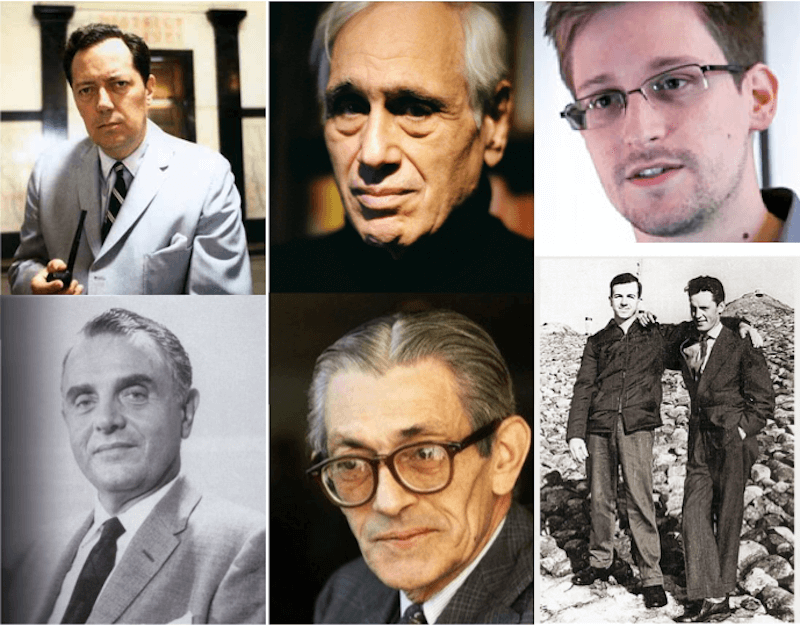
  • The Magic Scalp

    The Magic Scalp


    Witnesses who saw JFK’s head up close after he was shot, describe damage that is quite different from what shows in certain autopsy photographs and x-rays. And the contrast between the two – the damage they describe, and the evidence on films is so radically different, many researchers suspect evidence tampering.

    There are people who defend the authenticity of the evidence by “explaining” the problem with theories that may sound reasonable – but some of these people promote their work in the following ways: (a) they omit significant information that challenges their ideas; (b) they pad their work with irrelevant information – thus obscuring the paucity of proof of their main thesis; (c) they try to shape ambiguous language to mean only what they want it to mean; (d) they make amateurishly omniscient assertions… “This is irrefutable proof… There’s no other explanation… This has to mean…”; (e) they list people who presumably agree with them without showing the reader what exactly they had agreed with, and some of the people are in rest homes, or in graves, or otherwise are hard to reach.


    JOHN CANAL’S THEORY

    John Canal, retired USAF Senior Master Sergeant, has a theory designed to explain away two major issues with JFK’s head wound: (1) how the alleged entrance wound, described by the pathologists as low in the head, was four inches higher, as interpreted by medical panels who later studied the photos and x-rays (not the body); (2) why the back of the head pictures show no wound at all, not the big obvious opening described by Parkland doctors and others, and not the smaller entrance wound.

    Canal has promoted his explanation in three different articles, one in 2013 in Max Holland’s Washington Decoded, and two more in something called “Student Operated Press,” The SOP 2014, and The SOP 2015.

    Canal’s theory has multiple parts: (a) he insists the main photo in question (see below) was taken after the morticians reconstructed the head; (b) reconstruction involved moving the scalp from the back to the front of the head, to cover any gaps that might be seen, should there be an open casket funeral; (c) the entrance wound, low in the back of the head, got dragged to the top of the head; (d) the back of the head looks undamaged because the photo was taken after bone was put back in and the scalp was sewn shut.

    In the SOP in 2015, he asserts:

    “Again, because the BOH [back of head] photographs show the entry wound in the scalp high in the cowlick, the fact that the skull entry was low (approximately two inches above the hairline) is incontrovertible evidence the BOH photographs were taken after the autopsy when reconstruction of the BOH by the morticians was completed.”

    This reconstruction is supposed to hide damage from viewers of an open coffin funeral? Then why did they leave that bone flap in front of the ear still flapping away? Surely this photo was not taken when reconstruction was completed. We can be generous and say it was taken during the reconstruction, but Canal presents no proof of that either.


    JOHN CANAL’S “PROOF”

    Before we go any further, let’s take a good look at the photo in question:

    photo

    (People say this photo shows no damage, other than the small white image near the hairline, said to be adherent brain tissue. Yet just above it is an odd, light-colored, angular formation – but that is a side issue not relevant to this essay.)

    What is presumed to be the wound is a flat-looking area of light, watery, reddish brown – one of many in the photo – with hairs growing out of it, apparently. If you blow it up, you will see an “X” crisscrossing through it. Possibly these are hairs.

     blowup

    “X” marks the spot. Hairs?

    If you have ever seen an entrance wound in scalp created by a jacketed bullet traveling at medium high velocity, you will know that it looks nothing like this. The skin is crushed between bullet and bone, and appears quite dark. Lift up the scalp, and the edges of the hole are still apparent. The X’ed image in the photo does not look like a hole at all.

    But this is how the wound is described on page 104 of HSCA Volume VII: “The inferior margin of this wound, from 3 to 10 o’clock, is surrounded by a crescent-shaped reddish-black area of denudation, again presenting the appearance of an abrasion collar, resulting from the rubbing of the skin by the bullet at the time of penetration. From 12 to 3 o’clock, there is a suggesting of undermining, that is, tunneling of the tissue between the skin surface and the skull…” They put this description under a drawing of the photograph.

    The above description is a conflation of the drawing and photograph. I see no “reddish-black area of denudation” in the photograph – but the drawing certainly has a black and white equivalent.

    Now please look at what is supposed to be an accurate drawing of this photo:

    dox

    As you can see, the “wound” is much darker, has more dimension, and rolled edges. It looks like a hole at least. Not one of these characteristics appears in the photograph.

    In his beautifully written essay on the medical evidence, Gary Aguilar, MD also compared the two, and said of the drawing, “the small spot visible just to the right of the top of the ruler is exaggerated in this diagram. It is significantly smaller in the original photograph.” (And there are probably other researchers who have described the contrast between the photo and the drawing.)

    It is the drawing, not the photo, that John Canal presents in his articles. To the uninitiated, the drawing may appear to display a wound.

    Hair Surrounding “Wound” Too Long for EOP Area

    Kennedy’s hair was quite short in the back, including the area where a bullet allegedly entered. And it was even shorter below that area as it approached the neck. As you can see from the photo, the hair all around the “wound” in the cowlick is much too long.


    WITNESSES DO NOT SUPPORT CANAL’S THEORY

    No witnesses said pictures were taken during or after the reconstruction of the skull. None said scalp from the EOP area was dragged to the top of the head.


    JOHN STRINGER

    Canal’s star witness – John Stringer – who Canal insists took photographs of the reconstructed skull after the autopsy, said in 1996:

    “We took no photos during or after the embalming.”   (ARRB 4/8/96, p.5)

    And from his longer deposition, it seems clear that Stringer only took photos during the autopsy – including the ones John Canal claims were taken after reconstruction of the skull. (ARRB 7/16/96)

    But in his Washington Decoded article, Canal gives prominence to what he seems to have gotten Stringer to say in 2011, when Stringer, who was born in 1918, said at the age of 93:

    “In one statement, Stringer wrote, ‘I may have taken some pictures after midnight, but I just can’t remember, it’s been too long.’ [April 30, 2011] In view of Stringer’s 1996 testimony that he did not arrive at his home (not far from the morgue) until about 4 AM, however, and that cosmetic reconstruction of the head began shortly after 11 PM, the inference that he took pictures later as well as earlier is reasonable. It is also consistent with a statement in his book MEDPHOTO that he took photos at various times throughout the procedure and whenever he was directed to do so. [21]

    Buried in Reference 21 is Stringer’s earlier statement to the ARRB:

    “[21] John Stringer, MEDPHOTO: Snapshots of Life in Peace & War with the US Navy (Mooresville, NC: Wishbone Creative Product Services, 2008), 37. In an ARRB interview, Stringer also said that, ‘We took no photos during or after the embalming.’ In contrast, before that statement, he stated photos were taken “throughout the autopsy.”

    Notice Canal’s last remark – as if taking pictures “throughout the autopsy” is supposed to suggest he took them after the autopsy. He pads his article with quotes from a number of people using those words, “throughout the autopsy”, as if that meant afterwards. He also conflates “late photography” to mean after the autopsy:

    “Other witnesses at the postmortem whose observations support late photography [emphasis added] included Captain John Stover, an officer at the Bethesda Naval Medical Center; John Van Hoesen, one of the morticians; Joseph Hagan, supervisor of the team of morticians; Floyd Riebe, the assistant autopsy photographer; Jan Rudnicki, who assisted the autopsy doctors; General Godfrey McHugh, who observed the autopsy; Jerrol Custer, an X-ray technician; and James Sibert, one of the two FBI agents who observed the autopsy.”

    Notice that he leaves out Tom Robinson, the mortician who said many things that challenged the official story.  

    TOM ROBINSON (mortician, not mentioned by Canal):

    “When asked, Mr. Robinson said he had no recollection of photography the night of the autopsy, one way or the other – no recollection whatsoever.” (ARRB 6/21/96, p.3)

    JOSEPH E. HAGAN (mortician):

    “He does not recall, one way or another, whether any photographs were taken during Gawler’s work on the President’s body.” (ARRB 6/11/96 p.4)

    Before the morticians worked on the body,

    “Hagan said that when he arrived… the autopsy was almost over; he only had to wait in the gallery about 20 minutes before the autopsy was concluded. The body of the president was being ‘cleaned up.’ Hagen said photos were being taken, but could remember no details…” (ARRB 6/11/96, p.3)

    JOHN VAN HOESEN (mortician):

    Canal presents this passage from David Lifton’s book that he (Canal) says suggests photos were taken after head reconstruction. But he seems to be describing nothing more than having to wait on the autopsy and the picture-taking before they could begin their own work. And his comments seem to echo Hagen’s (see above):

    “Van Hoesen: When we got up there, nothing had been started; then we had to wait for the autopsy; and then periodically, more pictures were being taken, “you know, different angles and so forth; where the entry was, and so forth; this angle, and that angle …  Lifton, Best Evidence, 666.”

    Canal does not report what Van Hoesen told the ARRB, and it does not help his theory any.

    “He could not remember, one way or another, whether photographs were taken during the embalming and reconstruction process.” (ARRB 9/26/96, p.3)


    LOGIC DOES NOT SUPPORT CANAL’S THEORY

    Scalp Borrowed From an Area Missing Scalp?

    It is well-established that witnesses, including a prominent brain surgeon at Parkland Hospital, said both bone and scalp were missing from an area in the back of the head that included the occiput. The lead pathologist who wrote the autopsy report, James Humes, was vague about a lot of things, including how much of the great defect involved occipital bone, but he did admit the wound was “somewhat” in that area. In any case, the back of head photograph presented earlier in this essay shows no such defect in bone or scalp.

    According to Canal, scalp was borrowed from that area – even though it was already missing scalp – to cover the top right of the head.

    But Canal ignores the testimony about the large hole in the scalp – which he describes as merely “torn.”

    “Specifically, the cosmetic repair involved first suturing the tear in his rear scalp until it was closed, and then, after undermining, stretching the scalp until it covered the large deficit in the top/right/front of Kennedy’s head where the bullet had exited, bone was blown out, and scalp missing or badly damaged.

    “The stretching of the scalp occurred after the autopsy was completed, sometime around 11 PM, and once the embalming and cosmetic restoration of the body commenced. The morticians had only the best of intentions when they took advantage of the fact that the rear scalp had only been torn, and was both repairable and useful for another purpose. They were simply trying to cover that large deficit in the head in anticipation of an open-casket funeral.” (Washington Decoded)

    “The BOH opening, in all likelihood, was created after the bullet’s explosive impact exposed the president’s brain through a tear in the rear scalp and an opening between two or more dislodged (but not blown-out or missing) pieces of loose rear skull. This observation is supported by the fact that the lateral X-ray shows no missing rear bone whatsoever. Dr. J. Thornton Boswell, one of the prosectors, did say in 1996 that he repositioned some bone pieces before the X-rays and photos were taken; it seems logical that he pushed some loose pieces of skull (dislodged but still adhering to the scalp) roughly back into place. (Washington Decoded)


    SUMMARY

    1. Not one witness mentioned by Canal says that photos were taken after the autopsy.
    2. In the photograph, there is no proof of a small entrance wound. But Canal does not show the photograph. He shows the drawing of it, even though the drawing, and the HSCA description of the wound, do not match the photo.
    3. What Canal says is the wound imported from just above the EOP is surrounded by hair that is much too long for that area.
    4. How Canal avoids the problem that scalp would not likely be borrowed from an area that has a sizable hole in it: he claims falsely that in the back of the head, the scalp was merely torn.

    Despite the absence of proof in any of his articles, he said “The evidence for these BOH photographs being taken after the autopsy is irrefutable and so extensive it would not be practical to list here.” The SOP 2015.

    What is “extensive” is the list of problems in Canal’s essays, but I focused only on those that seem to be the worst.

    I wrote this essay in response to an email I received from a student at a college in Texas. She was having trouble making sense of these articles and someone referred her to me.


    ADDENDUM

    I have no opinion as to whether photographs were taken of a reconstructed skull, or when. I only know that witnesses do not support such a claim. While their testimony may be inaccurate or even false, it should be presented. When an author publishes a theory, the author should be the first to let the reader know whatever challenges that theory.

    The testimony of Tom Robinson (excerpted below) contradicts John Canal’s assertions. Canal said the wound in the back of the head consisted only of “torn” scalp and, rather than an area of missing bone, that bone was merely displaced. He also said the bone was put back during the autopsy. But all the pathologists did was to replace loose bone that had fallen out during their probing. But they could not replace bone that was missing in the first place.

    When the body was turned over to the morticians, the skull was missing a large area of bone in the back. Its appearance was not the problem; it would not have been visible during an open casket viewing. But it had to be closed to prevent embalming fluid from leaking through it.

    Robinson did not describe working on the top and side of the head, so we have no details about what was done in these areas – the only parts that would show in an open casket. He just said the top appeared to be “all broken” but not open like the wound in the back.

    When shown the back of head photo, he said the wound was just above the white spot in the hairline. If he was right, this would mean the wound was rather low.

    This is how he described the reconstruction of the area of missing bone in the back:

    “Robinson said that Ed Stroble… had cut out a piece of rubber to cover the open wound in the back of the head… the piece of rubber was slightly larger than the hole… the rubber sheet was a circular patch about the size of a large orange… He said the cranium was packed with material during reconstruction… The rubber sheet was used outside of this material to close the wound in the area of missing bone. The scalp was sutured together, and also onto the rubber sheet to the maximum extent possible and the damage in the back of the head was obscured by the pillow in the casket…”


    Location of Hole in Back; Condition of Top of Head

    robinsonA


    Size of Area of Missing Bone, Reconstruction

    robinsonB

  • The Magic Scalp

    The Magic Scalp


    Witnesses who saw JFK’s head up close after he was shot, describe damage that is quite different from what shows in certain autopsy photographs and x-rays. And the contrast between the two – the damage they describe, and the evidence on films is so radically different, many researchers suspect evidence tampering.

    There are people who defend the authenticity of the evidence by “explaining” the problem with theories that may sound reasonable – but some of these people promote their work in the following ways: (a) they omit significant information that challenges their ideas; (b) they pad their work with irrelevant information – thus obscuring the paucity of proof of their main thesis; (c) they try to shape ambiguous language to mean only what they want it to mean; (d) they make amateurishly omniscient assertions… “This is irrefutable proof… There’s no other explanation… This has to mean…”; (e) they list people who presumably agree with them without showing the reader what exactly they had agreed with, and some of the people are in rest homes, or in graves, or otherwise are hard to reach.


    JOHN CANAL’S THEORY

    John Canal, retired USAF Senior Master Sergeant, has a theory designed to explain away two major issues with JFK’s head wound: (1) how the alleged entrance wound, described by the pathologists as low in the head, was four inches higher, as interpreted by medical panels who later studied the photos and x-rays (not the body); (2) why the back of the head pictures show no wound at all, not the big obvious opening described by Parkland doctors and others, and not the smaller entrance wound.

    Canal has promoted his explanation in three different articles, one in 2013 in Max Holland’s Washington Decoded, and two more in something called “Student Operated Press,” The SOP 2014, and The SOP 2015.

    Canal’s theory has multiple parts: (a) he insists the main photo in question (see below) was taken after the morticians reconstructed the head; (b) reconstruction involved moving the scalp from the back to the front of the head, to cover any gaps that might be seen, should there be an open casket funeral; (c) the entrance wound, low in the back of the head, got dragged to the top of the head; (d) the back of the head looks undamaged because the photo was taken after bone was put back in and the scalp was sewn shut.

    In the SOP in 2015, he asserts:

    “Again, because the BOH [back of head] photographs show the entry wound in the scalp high in the cowlick, the fact that the skull entry was low (approximately two inches above the hairline) is incontrovertible evidence the BOH photographs were taken after the autopsy when reconstruction of the BOH by the morticians was completed.”

    This reconstruction is supposed to hide damage from viewers of an open coffin funeral? Then why did they leave that bone flap in front of the ear still flapping away? Surely this photo was not taken when reconstruction was completed. We can be generous and say it was taken during the reconstruction, but Canal presents no proof of that either.


    JOHN CANAL’S “PROOF”

    Before we go any further, let’s take a good look at the photo in question:

    photo

    (People say this photo shows no damage, other than the small white image near the hairline, said to be adherent brain tissue. Yet just above it is an odd, light-colored, angular formation – but that is a side issue not relevant to this essay.)

    What is presumed to be the wound is a flat-looking area of light, watery, reddish brown – one of many in the photo – with hairs growing out of it, apparently. If you blow it up, you will see an “X” crisscrossing through it. Possibly these are hairs.

     blowup

    “X” marks the spot. Hairs?

    If you have ever seen an entrance wound in scalp created by a jacketed bullet traveling at medium high velocity, you will know that it looks nothing like this. The skin is crushed between bullet and bone, and appears quite dark. Lift up the scalp, and the edges of the hole are still apparent. The X’ed image in the photo does not look like a hole at all.

    But this is how the wound is described on page 104 of HSCA Volume VII: “The inferior margin of this wound, from 3 to 10 o’clock, is surrounded by a crescent-shaped reddish-black area of denudation, again presenting the appearance of an abrasion collar, resulting from the rubbing of the skin by the bullet at the time of penetration. From 12 to 3 o’clock, there is a suggesting of undermining, that is, tunneling of the tissue between the skin surface and the skull…” They put this description under a drawing of the photograph.

    The above description is a conflation of the drawing and photograph. I see no “reddish-black area of denudation” in the photograph – but the drawing certainly has a black and white equivalent.

    Now please look at what is supposed to be an accurate drawing of this photo:

    dox

    As you can see, the “wound” is much darker, has more dimension, and rolled edges. It looks like a hole at least. Not one of these characteristics appears in the photograph.

    In his beautifully written essay on the medical evidence, Gary Aguilar, MD also compared the two, and said of the drawing, “the small spot visible just to the right of the top of the ruler is exaggerated in this diagram. It is significantly smaller in the original photograph.” (And there are probably other researchers who have described the contrast between the photo and the drawing.)

    It is the drawing, not the photo, that John Canal presents in his articles. To the uninitiated, the drawing may appear to display a wound.

    Hair Surrounding “Wound” Too Long for EOP Area

    Kennedy’s hair was quite short in the back, including the area where a bullet allegedly entered. And it was even shorter below that area as it approached the neck. As you can see from the photo, the hair all around the “wound” in the cowlick is much too long.


    WITNESSES DO NOT SUPPORT CANAL’S THEORY

    No witnesses said pictures were taken during or after the reconstruction of the skull. None said scalp from the EOP area was dragged to the top of the head.


    JOHN STRINGER

    Canal’s star witness – John Stringer – who Canal insists took photographs of the reconstructed skull after the autopsy, said in 1996:

    “We took no photos during or after the embalming.”   (ARRB 4/8/96, p.5)

    And from his longer deposition, it seems clear that Stringer only took photos during the autopsy – including the ones John Canal claims were taken after reconstruction of the skull. (ARRB 7/16/96)

    But in his Washington Decoded article, Canal gives prominence to what he seems to have gotten Stringer to say in 2011, when Stringer, who was born in 1918, said at the age of 93:

    “In one statement, Stringer wrote, ‘I may have taken some pictures after midnight, but I just can’t remember, it’s been too long.’ [April 30, 2011] In view of Stringer’s 1996 testimony that he did not arrive at his home (not far from the morgue) until about 4 AM, however, and that cosmetic reconstruction of the head began shortly after 11 PM, the inference that he took pictures later as well as earlier is reasonable. It is also consistent with a statement in his book MEDPHOTO that he took photos at various times throughout the procedure and whenever he was directed to do so. [21]

    Buried in Reference 21 is Stringer’s earlier statement to the ARRB:

    “[21] John Stringer, MEDPHOTO: Snapshots of Life in Peace & War with the US Navy (Mooresville, NC: Wishbone Creative Product Services, 2008), 37. In an ARRB interview, Stringer also said that, ‘We took no photos during or after the embalming.’ In contrast, before that statement, he stated photos were taken “throughout the autopsy.”

    Notice Canal’s last remark – as if taking pictures “throughout the autopsy” is supposed to suggest he took them after the autopsy. He pads his article with quotes from a number of people using those words, “throughout the autopsy”, as if that meant afterwards. He also conflates “late photography” to mean after the autopsy:

    “Other witnesses at the postmortem whose observations support late photography [emphasis added] included Captain John Stover, an officer at the Bethesda Naval Medical Center; John Van Hoesen, one of the morticians; Joseph Hagan, supervisor of the team of morticians; Floyd Riebe, the assistant autopsy photographer; Jan Rudnicki, who assisted the autopsy doctors; General Godfrey McHugh, who observed the autopsy; Jerrol Custer, an X-ray technician; and James Sibert, one of the two FBI agents who observed the autopsy.”

    Notice that he leaves out Tom Robinson, the mortician who said many things that challenged the official story.  

    TOM ROBINSON (mortician, not mentioned by Canal):

    “When asked, Mr. Robinson said he had no recollection of photography the night of the autopsy, one way or the other – no recollection whatsoever.” (ARRB 6/21/96, p.3)

    JOSEPH E. HAGAN (mortician):

    “He does not recall, one way or another, whether any photographs were taken during Gawler’s work on the President’s body.” (ARRB 6/11/96 p.4)

    Before the morticians worked on the body,

    “Hagan said that when he arrived… the autopsy was almost over; he only had to wait in the gallery about 20 minutes before the autopsy was concluded. The body of the president was being ‘cleaned up.’ Hagen said photos were being taken, but could remember no details…” (ARRB 6/11/96, p.3)

    JOHN VAN HOESEN (mortician):

    Canal presents this passage from David Lifton’s book that he (Canal) says suggests photos were taken after head reconstruction. But he seems to be describing nothing more than having to wait on the autopsy and the picture-taking before they could begin their own work. And his comments seem to echo Hagen’s (see above):

    “Van Hoesen: When we got up there, nothing had been started; then we had to wait for the autopsy; and then periodically, more pictures were being taken, “you know, different angles and so forth; where the entry was, and so forth; this angle, and that angle …  Lifton, Best Evidence, 666.”

    Canal does not report what Van Hoesen told the ARRB, and it does not help his theory any.

    “He could not remember, one way or another, whether photographs were taken during the embalming and reconstruction process.” (ARRB 9/26/96, p.3)


    LOGIC DOES NOT SUPPORT CANAL’S THEORY

    Scalp Borrowed From an Area Missing Scalp?

    It is well-established that witnesses, including a prominent brain surgeon at Parkland Hospital, said both bone and scalp were missing from an area in the back of the head that included the occiput. The lead pathologist who wrote the autopsy report, James Humes, was vague about a lot of things, including how much of the great defect involved occipital bone, but he did admit the wound was “somewhat” in that area. In any case, the back of head photograph presented earlier in this essay shows no such defect in bone or scalp.

    According to Canal, scalp was borrowed from that area – even though it was already missing scalp – to cover the top right of the head.

    But Canal ignores the testimony about the large hole in the scalp – which he describes as merely “torn.”

    “Specifically, the cosmetic repair involved first suturing the tear in his rear scalp until it was closed, and then, after undermining, stretching the scalp until it covered the large deficit in the top/right/front of Kennedy’s head where the bullet had exited, bone was blown out, and scalp missing or badly damaged.

    “The stretching of the scalp occurred after the autopsy was completed, sometime around 11 PM, and once the embalming and cosmetic restoration of the body commenced. The morticians had only the best of intentions when they took advantage of the fact that the rear scalp had only been torn, and was both repairable and useful for another purpose. They were simply trying to cover that large deficit in the head in anticipation of an open-casket funeral.” (Washington Decoded)

    “The BOH opening, in all likelihood, was created after the bullet’s explosive impact exposed the president’s brain through a tear in the rear scalp and an opening between two or more dislodged (but not blown-out or missing) pieces of loose rear skull. This observation is supported by the fact that the lateral X-ray shows no missing rear bone whatsoever. Dr. J. Thornton Boswell, one of the prosectors, did say in 1996 that he repositioned some bone pieces before the X-rays and photos were taken; it seems logical that he pushed some loose pieces of skull (dislodged but still adhering to the scalp) roughly back into place. (Washington Decoded)


    SUMMARY

    1. Not one witness mentioned by Canal says that photos were taken after the autopsy.
    2. In the photograph, there is no proof of a small entrance wound. But Canal does not show the photograph. He shows the drawing of it, even though the drawing, and the HSCA description of the wound, do not match the photo.
    3. What Canal says is the wound imported from just above the EOP is surrounded by hair that is much too long for that area.
    4. How Canal avoids the problem that scalp would not likely be borrowed from an area that has a sizable hole in it: he claims falsely that in the back of the head, the scalp was merely torn.

    Despite the absence of proof in any of his articles, he said “The evidence for these BOH photographs being taken after the autopsy is irrefutable and so extensive it would not be practical to list here.” The SOP 2015.

    What is “extensive” is the list of problems in Canal’s essays, but I focused only on those that seem to be the worst.

    I wrote this essay in response to an email I received from a student at a college in Texas. She was having trouble making sense of these articles and someone referred her to me.


    ADDENDUM

    I have no opinion as to whether photographs were taken of a reconstructed skull, or when. I only know that witnesses do not support such a claim. While their testimony may be inaccurate or even false, it should be presented. When an author publishes a theory, the author should be the first to let the reader know whatever challenges that theory.

    The testimony of Tom Robinson (excerpted below) contradicts John Canal’s assertions. Canal said the wound in the back of the head consisted only of “torn” scalp and, rather than an area of missing bone, that bone was merely displaced. He also said the bone was put back during the autopsy. But all the pathologists did was to replace loose bone that had fallen out during their probing. But they could not replace bone that was missing in the first place.

    When the body was turned over to the morticians, the skull was missing a large area of bone in the back. Its appearance was not the problem; it would not have been visible during an open casket viewing. But it had to be closed to prevent embalming fluid from leaking through it.

    Robinson did not describe working on the top and side of the head, so we have no details about what was done in these areas – the only parts that would show in an open casket. He just said the top appeared to be “all broken” but not open like the wound in the back.

    When shown the back of head photo, he said the wound was just above the white spot in the hairline. If he was right, this would mean the wound was rather low.

    This is how he described the reconstruction of the area of missing bone in the back:

    “Robinson said that Ed Stroble… had cut out a piece of rubber to cover the open wound in the back of the head… the piece of rubber was slightly larger than the hole… the rubber sheet was a circular patch about the size of a large orange… He said the cranium was packed with material during reconstruction… The rubber sheet was used outside of this material to close the wound in the area of missing bone. The scalp was sutured together, and also onto the rubber sheet to the maximum extent possible and the damage in the back of the head was obscured by the pillow in the casket…”


    Location of Hole in Back; Condition of Top of Head

    robinsonA


    Size of Area of Missing Bone, Reconstruction

    robinsonB

  • Castro’s death has revived a Castroite Oswald

    Castro’s death has revived a Castroite Oswald


    James Piereson is a conservative scholar who serves as Chairman of the Center for the American University at The Manhattan Institute for Policy Research. He is the author of Camelot and the Cultural Revolution: How the Assassination of John F. Kennedy Shattered American Liberalism (Encounter Books, 2007). Shortly after Castro passed away in Havana on November 25, 2016, Piereson deemed it worthy of recalling that “Castro played a large role in the 1963 assassination of President John F. Kennedy.” This arrant nonsense would have as a preliminary factual basis:

    • Dallas Police (DP) identified the rifle used in the assassination as belonging to Oswald;
    • Ballistic tests confirmed that the bullets that killed JFK were fired from this rifle.

    From such “hard evidence,” Piereson jumped “to Oswald as the assassin with his motives linked somehow to Castro, the Soviet Union, and the Cold War”. He further explains that “Oswald was a communist” who by 1963 had transferred his political allegiance to Castro’s regime in Cuba. “He was a creature of the far left … on the lookout for opportunities to act out his radical convictions”; for instance: taking “a shot at retired General Edwin Walker [with] a scoped rifle later used to shoot President Kennedy.”

    For arguing that Oswald’s motives “were almost certainly linked to his desire to block Kennedy’s campaign to assassinate Castro or to overthrow his government,” Piereson relies on Edward Jay Epstein’s Legend (McGraw-Hill, 1978), and concludes: “It was, after all, one of Castro’s supporters who killed President Kennedy—and there is the lingering possibility that Oswald may have been something more than just a supporter.”

    A bunch of malarkey

    First and foremost, Piereson’s hard evidence vanishes, since there is neither a rifle identified as Oswald’s nor a ballistic validation that the killer bullets were fired from the rifle in evidence.

    • The latter is a scoped 40.2″ Mannlicher-Carcano short rifle; the Warren Commission (WC) Report states that Oswald had ordered a 36″ Mannlicher-Carcano carbine via coupon to Klein’s Sporting Goods (Chicago). Moreover, HSCA testimony revealed that Klein’s placed scopes on the carbine, not on the short rifle. The WC Report also says that Oswald mailed his money order from Dallas on March 12, 1963, and it was deposited the next day in Klein’s account at the First National Bank of Chicago. Such expeditious service was highly improbable in 1963.
    • Let us leave alone that the Magic Bullet (CE 399) could not have remained virtually intact—as it appears in evidence—after hitting Kennedy’s neck and Governor Connally’s chest and wrist. The dented shell CE 543—allegedly found in the sniper nest—had marks on it indicating it had been loaded and extracted three times before; however, just one mark could be linked to the rifle in evidence. CE 543 came from the magazine follower, which marks only the last shell in the clip, but it wasn’t the last shell, since the clip seized by the police contained a live round.

    Piereson nonchalantly ignores the findings of sound research by the late Howard Donahue, Gary Aguilar, Josiah Thompson, John Hunt, Robert Harris, Chris Mills, David Josephs and many others who have revealed that the so-dubbed “hard evidence” is a bunch of malarkey. Similar fate has befallen the allegation of Oswald firing against General Walker.

    The WC used the Walker incident to set a behavioral precedent for Oswald’s determination “to carry out a carefully planned killing,” but the DPD had been investigating that case since April 4, 1963, and Oswald had never even been brought up as suspect before the JFK assassination.

    On top of that, the bullet recovered from Walker’s home was described by DPD officers Van Cleave and McElroy as a steel-jacketed 30.06 (7.65 x 63 mm) round, which is very different from the 6.5 x 52 mm ammunition for the Mannlicher-Carcano.

    Left-winger LHO working for Castro?

    Oswald’s critical portrait as a U.S. intelligence asset is clearer nowadays than when the late Philip Melanson published Spy Saga (Prager, 1990). The CIA was watching Oswald all the way from Moscow (1960) to Dallas (1963), accumulating a thick file with index cards for the Covert Operations Desk [since May 25, 1960], a Personality File (201-289248) [since December 9, 1960] and a file (100-300-011) on the Fair Play for Cuba Committee (FPCC) [since October 25, 1963]. Even so, Piereson remains stuck on the Oswald-Castro connection, an old and debunked conspiracy theory first spread by the CIA-backed anti-Castro belligerent group, the Cuban Student Directorate (known in Spanish as the DRE).

    Let there be no illusions. If Oswald was a real communist and Castro was somehow behind Oswald in killing JFK, Piereson must explain why a former Marine couldn’t be spotted as a security risk in Dallas if the CIA knew—before the assassination—that he had defected to the USSR and re-defected to the U.S., had subscribed to the red newspaper The Worker, and handed out FPCC flyers wearing a placard which read “Hands Off Cuba, Viva Fidel.” To make matters worse, Oswald had been detected by the CIA in Mexico City visiting both the Soviet and Cuban embassies and even trying to illegally travel to Cuba. Piereson seems to be gratuitously unaware of some key facts:

    • The CIA Station in Mexico City has never produced either a picture or a voice recording of Lee Harvey Oswald, despite having a) both the Cuban and Soviet embassies under heavy photo surveillance, which were visited by him three and two times, respectively, on September 27, 1963; and b) the transcripts of two tapped phone calls made to the Soviet Consulate on September 28 and October 1 by a man who, speaking in broken Russian, impersonated LHO, even saying—in the second call—he was Lee Oswald;
    • In their October 1963 cable traffic, the CIA Station in Mexico City and the Headquarters in Langley hid from each other their respective data on LHO’s relationships with any Cubans; on Christmas Eve 1963, CIA Counterintelligence Chief Jim Angleton prevented—with the approval of Deputy Director Dick Helms—John Whitten, Mexico Desk Chief, from investigating LHO’s contacts with both pro- and anti-Castro Cubans.
    • The Lopez Report (1978) on “Oswald, the CIA, and Mexico City” revealed that the CIA Inspector General lied by stating: “It was not until 22 November 1963 [the] Station learned [that] Oswald had also visited the Cuban Embassy.” CIA officers David Phillips and Anne Goodpasture also lied to the extent that HSCA was ready to indict them.
    epstein
    Edward J. Epstein

    Piereson’s lack of knowledge can’t be filled with Epstein’s legend about “the secret world” of LHO. In a 1993-review of counterintelligence literature, Cleveland Cram, a researcher at the CIA in-house think tank Center for the Study of Intelligence (CSI), discerned two books in Epstein’s Legend (McGraw-Hill, 1978): one about Soviet defector Yuri Nosenko and the other about the American re-defector Oswald. They were assembled to support the conspiracy theory that the Kremlin masterminded the JFK assassination, under the presumption that Nosenko would have been dispatched by Moscow in order to decouple Oswald from the KGB.epstein angleton

    Since Epstein reported so much intel about Nosenko, the leak was easily traced to CIA Counterintelligence Staff. Cram concluded that Epstein was taking part in a disinformation campaign orchestrated by Angleton. Piereson simply joins this ghost tour under Epstein’s guidance and comes to a halt at a Castroite Oswald strongly reacting against Kennedy.

    Nevertheless, raids and seizures against anti-Castro Cubans exiles were common in the JFK administration from the spring of 1963 on. Let’s review just an arbitrary sample:

    • April 10. Tad Szulc reported that the Florida refugee groups subsidized by the CIA exploded with bitterness, charging Kennedy with “coexistence” with Castro;
    • April 19. Under the headline “Cuban Exile Chief Quits With Attack on Kennedy,” The New York Times published the full statement by Dr. Miro Cardona on his resignation from the Cuban Exile Council. By the same token, Nixon criticized JFK before the American Society of Newspaper Editors in Washington;
    • July 27. St. Louis Globe Democrat informed that Washington had pressured London into stopping Cuban exiles from using bases in the Bahamas for raids against Castro;
    • August 1. The Times-Picayune reported an FBI raid in Lacombe (Lake Pontchartrain, New Orleans) that seized more than a ton of dynamite, 20 bomb casings, napalm material, and other devices at the home of anti-Castroite William Julius McLaney.

    Piereson would have us believe that Oswald threw all this press info away and got mad just by reading the AP Dan Harker’s piece, “Castro Blasts Raids on Cuba,” which The Times-Picayune conveyed on September 9, 1963. Harker quoted Castro at the Brazilian Embassy in Havana: “U.S. leaders should think that if they are aiding terrorist plans to eliminate Cuban leaders, they themselves will not be safe”. JFK had had the same idea around November 1961, while talking with aide Dick Goodwin about the pressure from other advisors to okay a Castro murder. The President commented: “If we get into that kind of thing, we’ll all be targets.” (Mahoney, Richard: Sons & Brothers, Arcade Publishing, 1999, p. 135). But Piereson likes to walk among ghosts.

    Inside the company

    He is not alone in this. Regnery Publishing—its compelling slogan is “the leader in conservative books”—has had the audacity to publish a muddy account by Robert Wilcox (Target JFK, Regnery History, 2016) based on “secret diaries” kept by the late O.S.S. [CIA forerunner] operative Douglas DeWitt Bazata. The most shocking revelation is that Bazata’s O.S.S. fellow Réné Dussaq told him: “We will kill your Kennedy [because he] had authorizing the killing of Castro”. Under Castro’s political influence, Dussaq would have masterfully conducted Operation Hydra K, which includes firing by himself the fatal shot against Kennedy and turning Oswald into a patsy.

    targetJFKWilcox’s proof for validating Bazata’s remarks on Dussaq is a 1976-diary entry that referred to an obscure Cuban exile in Mexico City, José Antonio Cabarca, who came to light after the 1995 ARRB declassification. It included a CIA report about a phone call made by Cabarca on November 24, 1963, to anti-Castro rabble-rouser Emilio Nuñez in Miami. The gist of the call was: “Plan of Castro carried forward. Bobby is next.”
    Certainly, knowing about Cabarca in 1976 does not prove Dussaq’s involvement in the JFK assassination. Bazata had many fellow CIA contacts from whom he could have learned about Cabarca before the ARRB releases. On the routing and record sheet of the mentioned report at the CIA Station in Miami (JM/WAVE), a marginal note reads thus: “This call was heard by lots of people.”

    There is also a signature of David Phillips dated November 25, 1963. By that time, David Atlee Phillips was wearing a three-cornered CIA hat: Covert Action, Cuban Desk, and Staff D (SIGNINT). HSCA staffer Eddie Lopez told James DiEugenio: “Jim, this conspiracy was like a giant spider web, and in the middle of it was Phillips.”

    david atlee phillips allen dulles 300x202
    David Atlee Phillips
    and Allen W. Dulles

    Likewise, Major General Fabian Escalante—former head of the Cuban intelligence services (CuIS)—told HSCA staffer Gaeton Fonzi: “Phillips was the key man. He was our major enemy [and] mastermind of many Castro assassination plots.”

    Let’s recall the passage in Gaeton Fonzi’s The Last Investigation (Thunder’s Mouth, 1993) on Phillips’ being interrogated by HSCA staffer Dan Hardway. Although Phillips already had a cigarette burning, he went ahead—hands shaking—and lit up a second. A lesser known anecdote is perhaps more illustrative. After retiring in 1991 with the rank of Lieutenant Colonel, CuIS dangle Nicolas Sirgado appeared in the Cuban TV documentary ZR Rifle (1993) and narrated that his CIA handler Harold Benson, aka David Phillips, had “told me [that during a visit to Arlington Cemetery] he had seized the opportunity to urinate on Kennedy’s grave, since he considered Kennedy a damned Communist.”

    Under the alias of Maurice Bishop, Phillips was also the CIA handler of true anti-Castro militant Antonio Veciana. Two major assassination plots against Castro arose from their bond: firing a bazooka at his speaker’s rostrum in Havana (1961) and shooting him with a gun hidden in a TV camera in Santiago de Chile (1971). Veciana has said that both attempts failed because—like almost all other cases—those willing to kill Castro wanted to see his funeral.

    Veciana went public about the conspiracy against JFK, too. He recounts that arriving at a meeting with Bishop in downtown Dallas in September 1963, the latter was with a young man who immediately left; after the assassination, Veciana realized this young man was Oswald. Veciana added that his cousin Hilda was married to Guillermo Ruiz, Cuban Commerce Attaché in Mexico City, and Bishop tried to take advantage of it to learn how to get a visa at the Cuban Consulate and to recruit Ruiz in order to present him as a defector who would reveal CuIS had given Oswald precise instructions to kill Kennedy. General Escalante thinks Veciana was part of the plot, since the CIA tried to recruit Ruiz before the assassination.

    The CIA retains four of Phillip’s operational files that comprise some 600 pages and should be declassified in October 2017, unless the CIA chooses to ask for—and President Trump grants—another delay in the release. Meanwhile, as if Phillips-Bishop-Benson had never existed, Piereson and other conservative species dip into the absurd hypothesis that “Castro did it” to whitewash what in reality was the planned gambit of a Castroite Oswald in New Orleans and Mexico City who became a lone gunman shooting a magic bullet in Dallas.

  • Castro’s death has revived a Castroite Oswald

    Castro’s death has revived a Castroite Oswald


    James Piereson is a conservative scholar who serves as Chairman of the Center for the American University at The Manhattan Institute for Policy Research. He is the author of Camelot and the Cultural Revolution: How the Assassination of John F. Kennedy Shattered American Liberalism (Encounter Books, 2007). Shortly after Castro passed away in Havana on November 25, 2016, Piereson deemed it worthy of recalling that “Castro played a large role in the 1963 assassination of President John F. Kennedy.” This arrant nonsense would have as a preliminary factual basis:

    • Dallas Police (DP) identified the rifle used in the assassination as belonging to Oswald;
    • Ballistic tests confirmed that the bullets that killed JFK were fired from this rifle.

    From such “hard evidence,” Piereson jumped “to Oswald as the assassin with his motives linked somehow to Castro, the Soviet Union, and the Cold War”. He further explains that “Oswald was a communist” who by 1963 had transferred his political allegiance to Castro’s regime in Cuba. “He was a creature of the far left … on the lookout for opportunities to act out his radical convictions”; for instance: taking “a shot at retired General Edwin Walker [with] a scoped rifle later used to shoot President Kennedy.”

    For arguing that Oswald’s motives “were almost certainly linked to his desire to block Kennedy’s campaign to assassinate Castro or to overthrow his government,” Piereson relies on Edward Jay Epstein’s Legend (McGraw-Hill, 1978), and concludes: “It was, after all, one of Castro’s supporters who killed President Kennedy—and there is the lingering possibility that Oswald may have been something more than just a supporter.”

    A bunch of malarkey

    First and foremost, Piereson’s hard evidence vanishes, since there is neither a rifle identified as Oswald’s nor a ballistic validation that the killer bullets were fired from the rifle in evidence.

    • The latter is a scoped 40.2″ Mannlicher-Carcano short rifle; the Warren Commission (WC) Report states that Oswald had ordered a 36″ Mannlicher-Carcano carbine via coupon to Klein’s Sporting Goods (Chicago). Moreover, HSCA testimony revealed that Klein’s placed scopes on the carbine, not on the short rifle. The WC Report also says that Oswald mailed his money order from Dallas on March 12, 1963, and it was deposited the next day in Klein’s account at the First National Bank of Chicago. Such expeditious service was highly improbable in 1963.
    • Let us leave alone that the Magic Bullet (CE 399) could not have remained virtually intact—as it appears in evidence—after hitting Kennedy’s neck and Governor Connally’s chest and wrist. The dented shell CE 543—allegedly found in the sniper nest—had marks on it indicating it had been loaded and extracted three times before; however, just one mark could be linked to the rifle in evidence. CE 543 came from the magazine follower, which marks only the last shell in the clip, but it wasn’t the last shell, since the clip seized by the police contained a live round.

    Piereson nonchalantly ignores the findings of sound research by the late Howard Donahue, Gary Aguilar, Josiah Thompson, John Hunt, Robert Harris, Chris Mills, David Josephs and many others who have revealed that the so-dubbed “hard evidence” is a bunch of malarkey. Similar fate has befallen the allegation of Oswald firing against General Walker.

    The WC used the Walker incident to set a behavioral precedent for Oswald’s determination “to carry out a carefully planned killing,” but the DPD had been investigating that case since April 4, 1963, and Oswald had never even been brought up as suspect before the JFK assassination.

    On top of that, the bullet recovered from Walker’s home was described by DPD officers Van Cleave and McElroy as a steel-jacketed 30.06 (7.65 x 63 mm) round, which is very different from the 6.5 x 52 mm ammunition for the Mannlicher-Carcano.

    Left-winger LHO working for Castro?

    Oswald’s critical portrait as a U.S. intelligence asset is clearer nowadays than when the late Philip Melanson published Spy Saga (Prager, 1990). The CIA was watching Oswald all the way from Moscow (1960) to Dallas (1963), accumulating a thick file with index cards for the Covert Operations Desk [since May 25, 1960], a Personality File (201-289248) [since December 9, 1960] and a file (100-300-011) on the Fair Play for Cuba Committee (FPCC) [since October 25, 1963]. Even so, Piereson remains stuck on the Oswald-Castro connection, an old and debunked conspiracy theory first spread by the CIA-backed anti-Castro belligerent group, the Cuban Student Directorate (known in Spanish as the DRE).

    Let there be no illusions. If Oswald was a real communist and Castro was somehow behind Oswald in killing JFK, Piereson must explain why a former Marine couldn’t be spotted as a security risk in Dallas if the CIA knew—before the assassination—that he had defected to the USSR and re-defected to the U.S., had subscribed to the red newspaper The Worker, and handed out FPCC flyers wearing a placard which read “Hands Off Cuba, Viva Fidel.” To make matters worse, Oswald had been detected by the CIA in Mexico City visiting both the Soviet and Cuban embassies and even trying to illegally travel to Cuba. Piereson seems to be gratuitously unaware of some key facts:

    • The CIA Station in Mexico City has never produced either a picture or a voice recording of Lee Harvey Oswald, despite having a) both the Cuban and Soviet embassies under heavy photo surveillance, which were visited by him three and two times, respectively, on September 27, 1963; and b) the transcripts of two tapped phone calls made to the Soviet Consulate on September 28 and October 1 by a man who, speaking in broken Russian, impersonated LHO, even saying—in the second call—he was Lee Oswald;
    • In their October 1963 cable traffic, the CIA Station in Mexico City and the Headquarters in Langley hid from each other their respective data on LHO’s relationships with any Cubans; on Christmas Eve 1963, CIA Counterintelligence Chief Jim Angleton prevented—with the approval of Deputy Director Dick Helms—John Whitten, Mexico Desk Chief, from investigating LHO’s contacts with both pro- and anti-Castro Cubans.
    • The Lopez Report (1978) on “Oswald, the CIA, and Mexico City” revealed that the CIA Inspector General lied by stating: “It was not until 22 November 1963 [the] Station learned [that] Oswald had also visited the Cuban Embassy.” CIA officers David Phillips and Anne Goodpasture also lied to the extent that HSCA was ready to indict them.
    epstein
    Edward J. Epstein

    Piereson’s lack of knowledge can’t be filled with Epstein’s legend about “the secret world” of LHO. In a 1993-review of counterintelligence literature, Cleveland Cram, a researcher at the CIA in-house think tank Center for the Study of Intelligence (CSI), discerned two books in Epstein’s Legend (McGraw-Hill, 1978): one about Soviet defector Yuri Nosenko and the other about the American re-defector Oswald. They were assembled to support the conspiracy theory that the Kremlin masterminded the JFK assassination, under the presumption that Nosenko would have been dispatched by Moscow in order to decouple Oswald from the KGB.epstein angleton

    Since Epstein reported so much intel about Nosenko, the leak was easily traced to CIA Counterintelligence Staff. Cram concluded that Epstein was taking part in a disinformation campaign orchestrated by Angleton. Piereson simply joins this ghost tour under Epstein’s guidance and comes to a halt at a Castroite Oswald strongly reacting against Kennedy.

    Nevertheless, raids and seizures against anti-Castro Cubans exiles were common in the JFK administration from the spring of 1963 on. Let’s review just an arbitrary sample:

    • April 10. Tad Szulc reported that the Florida refugee groups subsidized by the CIA exploded with bitterness, charging Kennedy with “coexistence” with Castro;
    • April 19. Under the headline “Cuban Exile Chief Quits With Attack on Kennedy,” The New York Times published the full statement by Dr. Miro Cardona on his resignation from the Cuban Exile Council. By the same token, Nixon criticized JFK before the American Society of Newspaper Editors in Washington;
    • July 27. St. Louis Globe Democrat informed that Washington had pressured London into stopping Cuban exiles from using bases in the Bahamas for raids against Castro;
    • August 1. The Times-Picayune reported an FBI raid in Lacombe (Lake Pontchartrain, New Orleans) that seized more than a ton of dynamite, 20 bomb casings, napalm material, and other devices at the home of anti-Castroite William Julius McLaney.

    Piereson would have us believe that Oswald threw all this press info away and got mad just by reading the AP Dan Harker’s piece, “Castro Blasts Raids on Cuba,” which The Times-Picayune conveyed on September 9, 1963. Harker quoted Castro at the Brazilian Embassy in Havana: “U.S. leaders should think that if they are aiding terrorist plans to eliminate Cuban leaders, they themselves will not be safe”. JFK had had the same idea around November 1961, while talking with aide Dick Goodwin about the pressure from other advisors to okay a Castro murder. The President commented: “If we get into that kind of thing, we’ll all be targets.” (Mahoney, Richard: Sons & Brothers, Arcade Publishing, 1999, p. 135). But Piereson likes to walk among ghosts.

    Inside the company

    He is not alone in this. Regnery Publishing—its compelling slogan is “the leader in conservative books”—has had the audacity to publish a muddy account by Robert Wilcox (Target JFK, Regnery History, 2016) based on “secret diaries” kept by the late O.S.S. [CIA forerunner] operative Douglas DeWitt Bazata. The most shocking revelation is that Bazata’s O.S.S. fellow Réné Dussaq told him: “We will kill your Kennedy [because he] had authorizing the killing of Castro”. Under Castro’s political influence, Dussaq would have masterfully conducted Operation Hydra K, which includes firing by himself the fatal shot against Kennedy and turning Oswald into a patsy.

    targetJFKWilcox’s proof for validating Bazata’s remarks on Dussaq is a 1976-diary entry that referred to an obscure Cuban exile in Mexico City, José Antonio Cabarca, who came to light after the 1995 ARRB declassification. It included a CIA report about a phone call made by Cabarca on November 24, 1963, to anti-Castro rabble-rouser Emilio Nuñez in Miami. The gist of the call was: “Plan of Castro carried forward. Bobby is next.”

    Certainly, knowing about Cabarca in 1976 does not prove Dussaq’s involvement in the JFK assassination. Bazata had many fellow CIA contacts from whom he could have learned about Cabarca before the ARRB releases. On the routing and record sheet of the mentioned report at the CIA Station in Miami (JM/WAVE), a marginal note reads thus: “This call was heard by lots of people.”

    There is also a signature of David Phillips dated November 25, 1963. By that time, David Atlee Phillips was wearing a three-cornered CIA hat: Covert Action, Cuban Desk, and Staff D (SIGNINT). HSCA staffer Eddie Lopez told James DiEugenio: “Jim, this conspiracy was like a giant spider web, and in the middle of it was Phillips.”

    david atlee phillips allen dulles 300x202
    David Atlee Phillips
    and Allen W. Dulles

    Likewise, Major General Fabian Escalante—former head of the Cuban intelligence services (CuIS)—told HSCA staffer Gaeton Fonzi: “Phillips was the key man. He was our major enemy [and] mastermind of many Castro assassination plots.”

    Let’s recall the passage in Gaeton Fonzi’s The Last Investigation (Thunder’s Mouth, 1993) on Phillips’ being interrogated by HSCA staffer Dan Hardway. Although Phillips already had a cigarette burning, he went ahead—hands shaking—and lit up a second. A lesser known anecdote is perhaps more illustrative. After retiring in 1991 with the rank of Lieutenant Colonel, CuIS dangle Nicolas Sirgado appeared in the Cuban TV documentary ZR Rifle (1993) and narrated that his CIA handler Harold Benson, aka David Phillips, had “told me [that during a visit to Arlington Cemetery] he had seized the opportunity to urinate on Kennedy’s grave, since he considered Kennedy a damned Communist.”

    Under the alias of Maurice Bishop, Phillips was also the CIA handler of true anti-Castro militant Antonio Veciana. Two major assassination plots against Castro arose from their bond: firing a bazooka at his speaker’s rostrum in Havana (1961) and shooting him with a gun hidden in a TV camera in Santiago de Chile (1971). Veciana has said that both attempts failed because—like almost all other cases—those willing to kill Castro wanted to see his funeral.

    Veciana went public about the conspiracy against JFK, too. He recounts that arriving at a meeting with Bishop in downtown Dallas in September 1963, the latter was with a young man who immediately left; after the assassination, Veciana realized this young man was Oswald. Veciana added that his cousin Hilda was married to Guillermo Ruiz, Cuban Commerce Attaché in Mexico City, and Bishop tried to take advantage of it to learn how to get a visa at the Cuban Consulate and to recruit Ruiz in order to present him as a defector who would reveal CuIS had given Oswald precise instructions to kill Kennedy. General Escalante thinks Veciana was part of the plot, since the CIA tried to recruit Ruiz before the assassination.

    The CIA retains four of Phillip’s operational files that comprise some 600 pages and should be declassified in October 2017, unless the CIA chooses to ask for—and President Trump grants—another delay in the release. Meanwhile, as if Phillips-Bishop-Benson had never existed, Piereson and other conservative species dip into the absurd hypothesis that “Castro did it” to whitewash what in reality was the planned gambit of a Castroite Oswald in New Orleans and Mexico City who became a lone gunman shooting a magic bullet in Dallas.

  • The Three Failed Plots to Kill JFK: The Historians’ Guide on how to Research his Assassination – with an addendum

    The Three Failed Plots to Kill JFK: The Historians’ Guide on how to Research his Assassination – with an addendum


    In an article JFK According to the History Textbooks, which we will call chapter one of the guide, written for CTKA in April 2016, this author showed how history books overwhelmingly portrayed the JFK assassination as one perpetrated by Oswald the Lone Nut. That article proved that the historians did very little research in the matter while basing their claims on the outdated and highly unreliable Warren Commission Report as well as a few books that backed that clearly discredited version of history. It was also argued that historians were not respecting their own code of conduct according to the American Historical Association (AHA) by, among other breaches, woefully ignoring the historical record.

    In a second article JFK and the Unforgivable, also written for CTKA, which we will call chapter two, historians were shown what they could easily learn from the six official governmental investigations that looked into the murder, and the Howard Hunt vs Liberty Lobby civil case. These contrary insights were forthcoming from the reports themselves bolstered by affirmations from a very important cross-section of investigation insiders who were closely involved and were not motivated by book sales nor fame-seeking. The results clearly underscore that the historical record indicates that the Warren Commission Report is discredited; the FBI, CIA, Secret Service and other investigative bodies did not do their jobs diligently in investigating the assassination; they hid crucial information from commissions and even helped obfuscate in some cases; the Magic Bullet explanation is not believed by many; Ruby and Oswald are not the loners depicted by the Warren Commission; there was a probable conspiracy; that there is a lot more to this story that is contrary to what captive audiences of high-school students are being asked to swallow.

    Question for some of the lawyer members of the investigative community out there: Is this even legal?

    The JFK assassination is a bit of a hobby for this author. After reading books like Crossfire and seeing the movie JFK over a number of years, it was only a few years ago, when I came upon Jim Douglass’ JFK and the Unspeakable, that I began a steady diet of reading, searching the web and listening to online programs about the whodunit of the century that mainstream media and historians won’t touch with a ten-foot pole. Most of the primary research I have done has been dedicated to learning how historians have been conducting themselves on this issue. The answer is: poorly.

    Chapters one and two of the guide will allow novices and historians or journalists who might someday be motivated by the self-actualization needs Maslow has theorized about to get to the point where they should no longer take the Warren Commission’s conclusions seriously and realize that the Lone Nut version of events is what is really on the fringe according to what the major investigations and their investigators have revealed. By reading these articles and following up on their sources and hyperlinks, in less than twenty hours they will be brought up to speed on where the government and their representatives stand.

    Chapter three will help readers go to the next steps: 1) Finding out who the credible independent researcher/authors are so that they can focus on the more reliable up to date work and begin to understand the more credible alternatives to the Crazy Kid Oswald version; 2) Defining persons and events of interest in this case that would be worth investigating further so as to actually solve this crime.

    We will give a concrete example of how this can be done by combining the work of researchers around a specific topic and show how this can synergize the analysis of the case. The topic of choice in this analysis is: what three previous assassination attempts on JFK within less than six months of the murder tell us about what really happened in Dallas.

    The independent authors: The Good, the Bad and the Ugly!

    With the thousands of books that have been written about the JFK assassination, interested parties have a daunting task of separating the 1) Useless (most of the books), from the 2) Mostly bad but with some nuggets of important information, from the 3) Mostly good, even though there are minor elements that are contestable (which are often used by obfuscators to try and destroy the whole body of work).

    Throughout the years, I like many others, spent too much time on unsound work, rumors, false flags and rabbit holes: The limo driver shot Kennedy, Madeleine Brown stories, the Torbitt Document and so on. The number of hours wasted was reduced dramatically after I found key sources that helped me scout the researchers before listening to them further. Unfortunately, most historians choose to do the intellectually lazy thing about this problem by throwing in the towel which suggests that learning more about this monumental history altering event is simply not worth their time. So let’s try and help make things a bit easier for them.

    What helped me most in source selection for my reading was that there are a fair number of excellent online shows where authors come on to discuss their work and there are also excellent, specialized websites. Mainstream media does not offer this sort of opportunity. Two of the shows that stand out for me are Black Op Radio and JFKConversations because of the diversity and quality of their guests, the talent and knowledge of their hosts and their degree of specialization in the political murders of the sixties. Especially interesting with Black Op Radio is the archive section of over 800 shows along with the very useful show notes that link up with interesting sources. Its Fifty Reasons for Fifty Years video production for the 2013 50-year anniversary of the JFK assassination is one of the landmark sources for those interested in the topic as it brings together many of the leading authorities on the assassination who present short segments of compelling evidence of a conspiracy all focused in one of their areas of specialty. CTKA is a go-to site (soon to be upgraded I understand) with up to date developments and an archive of very well researched Probe Magazine (and other) articles as well as insightful and balanced book, documentary and film reviews. Also the yearly conferences about JFK such as COPA and Lancer are often filmed and available on the web and well worth following.

    It is through these sources and others that one can get to really know serious researchers like Malcolm Blunt, Joan Mellen, David Talbot, Jim DiEugenio, Lisa Pease, Larry Hancock, John Armstrong, Jim Marrs, Gaeton Fonzi, John Newman, Fletcher Prouty, Russ Baker, Vince Palamara, Cyril Wecht, and many others and to find out about their areas of specialty before going on to reading some of their work.

    The Education Forum is an excellent discussion network that brings together high level researchers and thinkers and allows one to delve deeper into a topic. Caution: Many of these discussion forums are infiltrated by disturbers.

    Spartacus Educational, in my opinion, is a good, uncontaminated source for getting a snapshot about a particular character or event as well as insights into the sources. To look into primary data, Mary Ferrell Foundation has proven quite thorough and easy enough to navigate. There are many other excellent sources that one will naturally come to know if they start with these.

    I have not read enough books to make a top ten list, but I can confirm that by reading The Last Investigation, JFK and the Unspeakable, Destiny Betrayed, Nexus, Oswald and the CIA, The Devil’s Chessboard, Survivor’s Guilt, Reclaiming Parkland – to name some of the more recent work– one will get up to speed quickly even if one does not agree with the entirety of the works. The Oliver Stone movie JFK, even though there is some poetic license, The Killing of President Kennedy, The Last Word and Evidence of Revision are among the must-see films and documentaries on the topic that will bring one closer to the truth than what is written in the Warren Report.

    By studying these sources, novice researchers will understand why an overwhelming number of governmental reports and insiders have impeached the Warren Commission, mainstream media and most history books’ version of the assassination.

    Analyzing what has already been written and identifying chokeholds

    The amount of evidence that there is a conspiracy is devastating. The problem the research community faces is the amount of overkill that sometimes is debatable: examples include photo interpretation, some witness testimony, inside info from mistresses, supposed shooter confessions to name but a few. These abstract details tend to cloud the issue by deviating from what Malcolm Blunt calls chokeholds.

    Here are the ones I found most convincing:

    1. The debunking of the Magic Bullet theory
    2. What Dealey Plaza and Parkland Hospital witnesses saw (and Bethesda personnel as well) and what the Zapruder film showed
    3. The impersonation and attempted framing of Oswald in Mexico City a few weeks before the assassination
    4. The Silvia Odio incident
    5. Oswald’s relationship with David Ferrie, Clay Shaw, Guy Bannister, Cuban exiles and Intelligence
    6. Jack Ruby’s connections, comportment and later statements
    7. CIA’s handling of Oswald’s files
    8. David Atlee Phillips’ connections to Oswald, post assassination propaganda and sheep-dipping
    9. The timely lack of security in a hostile environment during a threatening period
    10. The equally terrible investigation effort and investigation sabotage that followed
    11. The strong consensus of post-Warren Commission investigations and investigators/insiders that the Warren Commission version of events is full of holes

    In the second part of this article, we will add one that this author feels has lacked attention.

    L.A., Chicago, Tampa, ZRRifle and Executive Action M.O.s: what they tell us about Dallas and how they could tell us a whole lot more

    While there is a lot of disagreement among independent researchers on who is behind the assassination there is a consensus among many that what happened in Dealey Plaza had nothing to do with a commie misfit getting lucky with three difficult shots fired under six seconds with a terrible bolt-action rifle by an out of practice and at best mediocre shooter with no known motive who was shooting at a moving target with an obstructed view… Which is what the Warren Commission asked us to believe and what the historians, propagandists and journalists (HistProJos for short) have continued to propagate despite being completely contradicted by the most recent government investigations as well as compelling work done by some of the independent researchers.

    Many experts have described the assassination as an ambush in a setting that was perfectly chosen for triangulation sniping.

    Oswald’s past as a marine who had defected to Russia for over two years, showed his communist leanings by becoming an exaggeratedly visible member of the Fair Play for Cuba Committee and then visited the Cuban embassy and a Russian assassination head in Mexico City a few weeks before the assassination, all this was displayed as proof that he was an unstable murderer according to HistProJos. The JFK research community interprets all of the above as Oswald being the perfect subject to be a patsy who was in fact sheep-dipped.

    Shameful sleuth work

    “The FBI was …in the position of standing on the corner with our pockets open, waiting for someone to drop information into it…”

    ~ Former FBI Assistant director Alex Rosen Church Committee testimony

    This sad statement merely underscored the Church Committee and HSCA conclusions about the weak performance of the intelligence agencies in investigating this brutal murder. And also the mindless transfer of information to the Warren Commission, whose conclusions were unceremoniously impeached.

    One of the very first questions asked by investigators of a crime is: “Can you think of any incident that may have occurred (before the crime) that you find out of the ordinary or suspicious in any way?”

    Normally, previous attempts to murder the victim should get a diligent sleuth’s attention. In this case it would have led to investigating the attempts in L.A., Chicago and Tampa that occurred within less than six months preceding November 22, 1963. You will not find a whiff of any of these incidents in the Warren Report or the accompanying 26 volumes of evidence.

    Los Angeles, June, 1963

    Dick Russell in The Man Who Knew Too Much is perhaps the one who went the farthest in studying this plot to assassinate JFK, which would have culminated during the showing of PT 109 in Beverley Hills.

    Russell had two key sources. One was Richard Case Nagell who provided Jim Garrison with information about Oswald and the Dallas plot. He talked to Russell about Vaughn Marlowe -his second source- who was the one plotters were “considering ” for recruitment as the shooter in L.A., or more likely a patsy who could be linked to Castro, according to Nagell. He also said he witnessed Cuban exiles, including one “Leopoldo”, who may have been present during the Sylvia Odio incident, scouting Marlowe’s store.

    In the days leading up to the L.A. attempt, Nagell checked himself into a psychiatric ward so as to be isolated from the murder.

    Nagell was a Korean war hero, who joined Army intelligence in 1954 and then, he said, became a double agent for CIA. He made claims that an anti-Castro Cuban exile group he was monitoring had set its sights on Kennedy and would make it look like Castro was behind it, and that David Ferrie, Clay Shaw, Guy Bannister and Oswald were part of the conspiracy. Oswald however would be set up to make it look like Castro was behind him -and him alone.

    Nagell, again fearing incrimination, faked a bank robbery in September of 1963 so as to be in jail when JFK’s assassination occurred.

    According to Larry Hancock: The items in Nagell’s possession that are available are amazingly similar to items also in the possession of Lee Oswald. They include:

    1. One miniature Minolta camera and developing kit.
    2. Fair Play for Cuba leaflets.
    3. The P.O. Box for the Fair Play for Cuba Committee in New Orleans, Louisiana. The committee which had only one member. Lee Oswald.
    4. Cuban and Communist literature including the Crime against Cuba by Corliss Lament, one of the documents also being used in New Orleans by Lee Oswald.
    5. A notebook containing the unlisted telephone number of the Cuban embassy, the same number as one found in Oswald’s notebook.
    6. The notebook also contained names of individuals who would much later be identified as CIA personnel from its Los Angeles office. (The names were submitted by the FBI to CIA in October ’63 and eventually verified by CIA as being names of actual employees).

    In addition, the trial files for Richard Nagell also contain an identification card, the card being a military ID with Nagell’s photo and the name and signature of Lee H. Oswald.

    Though Nagell’s mental competency has been put into question by detractors, Larry Hancock makes a strong case for his credibility in his Man in the Middle chronicle about him, where he shows that his written warnings of the assassination, knowledge of Cuban exiles and CIA persons of interest, and referencing of documents could not have simply been made up by a charlatan.

    Other researchers have speculated that Richard Case Nagell himself was also being manoeuvred to be a potential patsy- something even he seemed to suspect, which is why he checked himself into a psychological ward during JFK`s visit to L.A. and got himself jailed before November 22nd.

    Marlowe, he too a Korean war vet, also spoke with Russell. He acknowledged knowing Nagell, having the reputation of being a good shot and being part of the L.A. Chapter of the Fair Play for Cuba Committee (FPCC) and Congress of Racial Equality (CORE) while having relations with the American Civil Liberties Union (ACLU) and Socialist Workers Party (SWP). Marlowe also travelled to Mexico on behalf of the FPCC in 1962, visited the Mexico City Cuban embassy to try and get a visa to travel to Cuba and met with Mexican communists while there. Even though the plot never materialized the profile of the would-be patsy as well as the blame it on Castro part of the said plan is intriguingly similar to what was planned for Dallas.

    Chicago, November 2, 1963

    If the L.A. cabal left few traces, the contrary could be said of what happened in Chicago four months later despite attempts to keep it hidden. This incident was well covered by Edwin Black in his November 1975 article for the Chicago Independent, The Plot to kill JFK in Chicago November 2, 1963 and key information was added in James Douglass’ well received JFK and the Unspeakable. The Chicago assassination attempt is historical fact… So are the attempts to keep it out of sight!

    If the FBI had looked into it even half-heartedly they could have reported to the Warren Commission that they found all the hallmarks of what others eventually discovered about Dallas. First, there was an ex-marine in Thomas Arthur Vallee who, like Oswald, had also been posted in Japan and who could easily be portrayed as anti-Kennedy, fanatical, armed and dangerous, weird, disgruntled, experienced with a rifle i.e. the perfect patsy. Second, you had a motorcade route that would have permitted triangulation shooting right by the scapegoat’s place of work in a building resembling the Texas School Book Depository. Third, you had the involvement of suspects who, like the Three Tramps of Dallas fame, were picked up and let go without being identified despite the fact that they had been carrying semi-automatic weapons and were warned about by a landlady who found them suspicious. Finally, there were weak protection services and a concerted effort to cover everything up afterwards.

    According to Edwin Black:

    November 2, 1963, JFK was scheduled to attend the Army-Air Force game at Soldiers Field. Plans called for him to arrive at O’Hare around 11a.m., motorcade down what was then known as the Northwest Expressway to the Loop.

    At Jackson the caravan would lumber up the Jackson exit, make a slow difficult left-hand turn onto the street and shuttle over to the stadium. The Jackson exit would be crowded with no fewer than 45 local school and civic organizations anxious to see the President.

    As in Dallas, JFK’s limousine would pass through a warehouse district —which Secret Service advance men considered 10 times more deadly than any office building corridor.

    As in Dallas, JFK’s limousine would be forced to make a difficult 90-degree turn that would slow them to practically a standstill.

    As in Dallas, triangulation of fire would be simple because of the unobstructed view.

    As in Dallas, the crowd would panic, allowing the assassins to escape unnoticed.

    The article goes on to explain how the FBI received a tip from a person called “Lee” about an assassination attempt that would take place involving four assassins (at least one with a Latin name) with rifles and telescopic sights. Hoover ordered that the case be transferred to the Secret Service which was ill-equipped to do anything about the threat. Another came in on October 31st from a landlady who saw four rifles with telescopic sights and a sketch of the motorcade route in one of the rooms being used by out-of-towners. Because of a botched surveillance, Secret Service agents chose to take in only two of the suspects without evidence. Following a weak interrogation, the suspects, who stonewalled the agents, were let go without even having had their identities retrieved.

    Another suspect picked up for questioning was a would-be patsy. Black describes him as follows:

    The man’s name was Thomas Arthur Vallee, a 30-year-old ex-Marine classified extreme paranoid schizophrenic by military doctors. Vallee worked as an apprentice at IPP Litho-plate at 625 West Jackson. As the patsy, he was perfect—as perfect for the Chicago assassination plot as Lee Harvey Oswald was for the Dallas assassination plot.

    Vallee was born and raised in Chicago. Like Oswald, he joined the Marines in the mid-50s during the Korean War period. Like Oswald, Vallee was assigned to a U-2 base in Japan (where he also worked as a radar operator – according to Jim Douglass). Oswald at Atsugi, Vallee at Camp Otsu. The cover reference for the U-2 project at these bases was Joint Technical Advisory Group (JTAG). Since CIA exerted a strong presence at these two bases, they were prime recruitment stations.

    Both Vallee and Oswald appear to have been recruited by CIA for “black missions” or otherwise unsavory, personally discrediting assignments. In Oswald’s case, at the height of the Cold War, he was instructed and helped to defect to Russia. With him he carried top secret radar codes. Oswald’s mission, probably unbeknownst to him, may have been to reveal this disinformation for some complex CIA intelligence stratagem. Warren Commission testimony documents that all these radar codes had to be revised because of Oswald’s defection.

    Vallee was recruited about the same time to train members of a fiercely anti-Castro guerrilla group. Objective: the assassination of Fidel Castro. Training locale: in and around Levittown, Long Island.

    Neither Vallee nor Oswald received money for their clandestine duties. The surreptitious nature of the business was ego-building to their personalities… Inherently rewarding. Both Vallee and Oswald had recently taken jobs in warehouses at the planned assassination sites. Oswald at the fifth floor book depository on Elm Street in Dallas. Vallee on the third floor IPP printing company looking out over Jackson Street exit ramp where Kennedy’s limousine would have been hit.

    Both Vallee and Oswald could be shown to have extremist political views. Both owned rifles. Both were basically loners. Basically drifters. Basically lowlife. The dregs of society. Perfect for the work they were recruited for. Perfect for a frame-up.

    They even resembled one another physically.

    In the later part of the article Black describes the loss of evidence, the stonewalling he faced from investigators he interviewed and the embarrassment the FBI and Secret Service tried to avoid.

    James Douglass in his well-researched book adds strong evidence that the attempt in Chicago was intentionally kept off the radar which kept the door open for what did happen in Dallas. He did things no American history book writers ever considered doing when researching the assassination… He spoke to witnesses. He also visited the Dallas kill zone and compared it with what he found in Chicago. By interviewing, Abraham Bolden, who had been hand-picked by JFK as the first Black person to join the Secret Service, Douglass describes in detail the measures that were taken to strategically weaken the president’s protection, as was also done in Dallas, and to silence Bolden by framing him for a crime, getting him jailed and turning him into a pariah. Shades of what also happened to Dallas Police officer Roger Craig, men whose only crimes were wanting to say what they knew.

    Douglass further adds these key observations: In August 1963 while Oswald moved from New Orleans to Dallas, Vallee moved from New York City to Chicago where he got at Job at IPP Litho-Plate in an eight story building; When Douglass visited the building what he saw was a view that was a replica of what could be seen from the Texas School Book Depository and a motorcade route offering the same opportunities for the ambush that many witnesses described in Dallas.

    When Bolden heard the news of the assassination he brought up the parallels of what was attempted in Chicago to colleagues. From then on his professional career went downhill. He was railroaded into jail after he was overheard trying to contact the Warren Commission. In 1967 he finally told a Garrison investigator and Mark Lane about his story, which got him placed in solitary confinement.

    Douglass also described how Chicago Secret Service Chief Maurice Martineau took major steps to control the messaging by requiring that all agent reports about the incident not be in writing, but funnelled by dictation through his assistant thus eliminating all documentary trails. Only Martineau and Washington Secret Service chief James J. Rowley saw the top secret report. In 1995 when the Assassinations Records Review Board (ARRB) ordered the copy released, the Secret Service destroyed it instead. Martineau also told his staff on November 22 what to believe: Lee Harvey Oswald was a lone gunman. There was no connection with Chicago. Forget November 2 in Chicago. The only mention the Press made about the Chicago plot at the time was that Vallee like Oswald was another gun-toting malcontent… nothing about the other parallels described in this article.

    By keeping silent about Chicago, the doors were kept wide-open for what was to happen in Dallas, or could have happened in Tampa a few days before the deadly ambush.

    Jim DiEugenio highlighted the following point in his book review of the Douglass classic:

    Interestingly Dan Groth, the suspicious officer in on the arrest of Vallee, was later part of the SWAT team that assassinated Black Panthers Fred Hampton and Mark Clark in 1969. (p. 204) Groth took several lengthy leaves from Chicago to Washington for special training under the auspices of the FBI and CIA. Groth never had a regular police assignment, but always worked counter-intelligence, with an early focus on the Fair Play for Cuba Committee.

    The House Select Committee on Assassinations (HSCA) knew little about the plot but did underscore the Secret Service’s muteness around the Chicago incident and noted the significance of the similar backgrounds of Vallee and Oswald.

    If they could have juxtaposed it with what happened in L.A. and Tampa they would have had been able to add a large degree of perspective to their thin, yet important analysis.

    Tampa, November 18, 1963

    There were many threats made against President Kennedy, some had substance to them… the Tampa plot falls into this category and had the Secret Service on high alert. Lamar Waldron and Thom Hartmann wrote about it in some detail in Ultimate Sacrifice. William Kelly followed up on it in his 2012 article The Tampa Plot in Retrospect.

    Its place in history was first documented publicly in a small article that appeared in the Tampa Tribune on November 23… The day after the assassination!

    A number of researchers disagree with Ultimate Sacrifice‘s focus on the mob as the main force behind the assassination. Be that as it may, its excellent description of the Tampa plot adds yet another inexplicable oddity that will give historians food for thought.

    The chosen patsy for this attempt was a Cuban exile named Gilbert Policarpo Lopez who also had many similarities with Oswald: links with the FPCC, being a former defector, a tie to Russia, getting into a fight over seeming pro-Castro sympathies, and an unusual trip to Mexico City.

    According to the authors, the Secret Service destroyed the Tampa attempt documents in 1995 in violation of the ARRB Act. Just like Allen Dulles kept the CIA-Mob association secret from his Warren Commission colleagues, the Secret Service added the Tampa Plot to the Chicago Plot as one of their dirty little secrets. Not even the Dallas Police were let in on this important information which could have affected security on November 22nd.

    Existing Secret Service files in the 1970s made it clear that the Tampa threat was posed by a single mobile sniper who would fire from a tall building using a high power rifle fitted with a scope. Other accounts however describe the plot as multi-person.

    The motorcade route in Tampa was very long and presented Dealey Plaza quality opportunities. Other researchers chronicled how Lopez moved from the Keys to Tampa shortly before the motorcade, echoing Vallee and Oswald’s pawn-like pre-motorcade movements.

    The HSCA described parts of what it called the Lopez allegation:

    Lopez would have obtained a tourist card in Tampa on November 20, 1963, entered Mexico at Nuevo Laredo on November 23 and flew from Mexico City to Havana on November 27. Further, Lopez was alleged to have attended a meeting of the Tampa Chapter of the FPCC on November 17… CIA files on Lopez reflect that in early December, 1963 they received a classified message requesting urgent traces on Lopez… Later the CIA headquarters received another classified message stating that a source stated that “Lopes” had been involved in the Kennedy assassination … had entered Mexico by foot from Laredo on November 13…proceeded by bus to Mexico City where he entered the Cuban embassy…and left for Cuba as the only passenger on flight 465 for Cuba. A CIA file on Lopez was classified as a counterintelligence case…

    An FBI investigation on Lopez through an interview with his cousin and wife as well as document research revealed that… He was pro-Castro and he had once gotten involved in a fistfight over his Castro sympathies.

    The FBI had previously documented that Lopez has actually been in contact with the FPCC and had attended a meeting in Tampa on November 20, 1963. In a March 1964 report, it recounted that at a November 17 meeting… Lopez said he had not been granted permission to return to Cuba but was awaiting a phone call about his return to his homeland… A Tampa FPCC member was quoted as saying she called a friend in Cuba on December 8, 1963 and was told that he arrived safely. She also said that they (the FPCC) had given Lopez 190$ for his return. The FBI confirmed the Mexico trip (Lopez’ wife confirmed that in a letter he sent her from Cuba in November 1963, he had received financial assistance for his trip to Cuba from an organization in Tampa) … information sent to the Warren Commission by the FBI on the Tampa chapter of the FPCC did not contain information on Lopez’ activities… nor apparently on Lopez himself. The Committee concurred with the Senate Select Committee that this omission was egregious, since the circumstances surrounding Lopez’ travel seemed “suspicious”. Moreover, in March 1964 when the WC’s investigation was in its most active stage, there were reports circulating that Lopez had been involved in the assassination… Lopez’ association with the FPCC, however, coupled with the fact that the dates of his travel to Mexico via Texas coincide with the assassination, plus the reports that Lopez’ activities were “suspicious” all amount to troublesome circumstances that the committee was unable to resolve with confidence.

    One can only imagine how more concerned they would have been had the Secret Service been more forthcoming and had investigators pushed the investigation in the M.O. similarities of the four attempts to the extent one would expect for the murder of a president.

    Points of comparison of the five [seven] potential patsies


    [Revised table appears at the end of this article]


    While perhaps some of the observations are contestable, there are just too many similarities for the events to be classified as mutually exclusive.

    The HSCA and the Church Committees confirmed categorically that the crime of the century was poorly investigated. The HSCA furthermore highlighted Vallee and Lopez as examples of persons of interest that were not looked into. What has been uncovered since then adds even more arguments to just how bad the Warren Commission investigation was and how incompetently historians are doing their work in explaining this landmark piece of history. If these events were contemporary and we replaced the letters FPCC with ISIS, one can only imagine the outrage. It is because of behavior like this that clamors of a rigged system resonate.

    Executive action and ZRRIFLE

    Had they investigated further, what would it have led to?

    The above chart can be broken down into three components of strategy:

    1. The ambush logistics: Which includes an opportune motorcade route, in the right city, with weak protection, use of surrogates with the right weaponry
    2. The setting up of a patsy who could be tied to an opponent: A left leaning or fanatical misfit, who could plausibly be a good shot, whose actions leading up to the assassination could prove his guilt and links
    3. Controlling the message: Ensuring plausible deniability through compartmentalization and use of surrogates, investigating surgically, sending out the right incriminating messages and hiding hindering facts

    One of the best pieces of work that describes executive action M.O. is Nexus by Larry Hancock.

    Here are a few key excerpts:

    We have a certain number of William Harvey’s notes on his assassination project (ZRRIFLE) only because he took them with him upon leaving the Agency…  Harvey was tasked by William Richard Helms, Deputy Director of Operations, to set up a network of deniable operations, including political assassinations….

    According to a historical study of the Arbenz removal project: discussing themes and tactics that would become constants during the following decades… deniable assassination squads… while placing the blame on designated parties (patsy’s).

    In 1953, sabotage and propaganda efforts were discussed but beyond that a CIA officer proposed a plan for first, spreading rumors that the communists were dissatisfied with Arbenz, then killing him in a fashion that would be laid on the communists.

    Excerpts from William Harvey notes:

    “Should have phoney 201 in RI [Records Integration] to backstop this, all documents therein forged & backdated. Should look like a CE file …. Cover: planning should include provision for blaming Sovs or Czechs in case of blow.”

    CIA specialists Malcolm Blunt and John Newman have presented strong cases for showing that CIA files on Oswald were in fact manipulated.

    A number of writers and investigators from Garrison on have maintained that Oswald was being sheep-dipped so that the Soviets or Cubans could be blamed. The fact that four of the patsies, if we include Nagell, could be linked to the FPCC adds even more credence to this claim. It is also interesting to note that one of the mysterious investigators for the Chicago plot, Daniel Groth, had intelligence links and was likely tasked with monitoring the FPCC… Which makes one wonder what kind of tie to this organization would have popped up had Vallee been pinned with the murder.

    The bizarreness around the FPCC does not end there. On the night off JFK’s assassination and Oswald’s arrest, Dallas District Attorney Henry Wade erroneously stated during a press conference that Oswald was a member of the Free Cuba Committee. Out of all the scores of onlookers present, who stood out most in correcting the D.A. by identifying Oswald as being part of the Fair Play for Cuba Committee? Not the experts, the police officers, lawyers or the journalists who were the ones trained in active listening and note-taking; no, it was the uneducated, night club owner, gun runner and future patsy killer Jack Ruby.

    When one considers all these suspicious links to the FPCC, one can either believe in yet another coincidence in this case where improbability is omnipresent everywhere one looks around the Lone Nut scenario, or one could explore further to see how the FPCC dimension and the M.O. connect with some of the usual suspects… Which brings us right to William Harvey and David Morales (assassinations specialists) as well as David Phillips and E. Howard Hunt (top level propaganda operators) to name but a few of the JM/Wave Station related cast of disgruntled and possibly rogue CIA officers, who elite investigator Gaeton Fonzi referred to after his ground-breaking work for the Church and HSCA committees.

    Both David Talbot (The Devil’s Chessboard) and Larry Hancock (Nexus) cover how Harvey’s motives, associations and moves are suspect during the build-up towards the assassination.

    William Harvey’s work with David Morales and surrogates in the form of Mafiosi and Cuban exiles in his attempts to apply ZRRIFLE strategies to assassinate Castro is now fully accepted. Many of these links resurface as persons of interest in the Kennedy assassination.

    • Steps that researchers have referred to that were taken during the months leading up to November 22, 1963 to make Oswald fit the part as a potential Castro agent capable of killing the President are many:
    • Backyard photos are taken (or are cropped) of him holding communist literature and the two alleged murder weapons;
    • He opens an FPCC chapter in New Orleans and makes himself visible by distributing provocative Hands off Cuba flyers and getting into a fight with anti-Castro Cuban exile Carlos Bringuier of the Student Revolutionary Directorate (DRE). The arresting officer found it looked made up;
    • He gets interviewed by CIA friendly Ed Butler where he talks about his Marxist leanings;
    • He (or a double) gets himself noticed at shooting ranges, barber shops, car dealerships etc. acting erratically;
    • He (or a double) visits Sylvia Odio with two Cuban exiles who make him look anti-Kennedy and off balance;
    • He (or an impersonator) visits the Cuban and Russian embassies in Mexico City where he attempts to get a visa to travel to Cuba and meets with a leading Russian assassinations officer. A poor impersonator of Oswald is taped making incriminating statements intended to frame him;
    • Letters from Havana alluding to a sinister deal with Castro agents are sent to him, Robert Kennedy and elsewhere.

    The propaganda also continued for a short while after the assassination, until orders were given to go full Lone Nut mode:

    • The Oswald interview and backyard photos were distributed to the press;
    • Cuban exiles Carlos Bringuier and John Martino as well as Frank Sturgis (also a Watergate Burglar) pushed the Castro was behind it story;
    • Castro frame-up stories were leaked to Hal Hendrix, a JM/Wave friend, and other CIA media assets;
    • Anthony Veciana, leader of the Cuban exile group Alpha 66, confirmed that David Phillips (who he had seen talking to Oswald shortly before the assassination) had asked him to bribe a cousin of his in Mexico City to say that Oswald was being paid by Castro agents to assassinate JFK. He also described a CIA-backed attempt on Castro that was very similar to what happened in Dallas;
    • HSCA investigator Dan Hardway confirmed that much of the Mexico City stories that incriminated Oswald and framed Castro were Phillips’ fabrications;
    • Phillips is also closely linked to FPCC infiltration manoeuvres, DRE operations, Alpha 66, media offensives and was based in Mexico City during the Oswald charade and impersonation.

    It is not a case of paranoia to think that the four attempts on JFK between June and November 1963 are linked, nor is it crazy to see links between executive action M.O.s and what happened in Dallas. The questions we can ask ourselves are: if we studied the L.A., Chicago and Tampa plots with as much zeal as the Dallas assassination, where would their paths cross? Would they not lead to the same persons of interest? Have we thought of all the files around these cases that should be released?

    The same questions could be asked about the murders of key witnesses such as Mafiosi Johnny Roselli, Sam Giancana and Charles Nicoletti. Senator Gary Hart of the Church Committee urged the media to follow up on these crimes because it would tell us lot about the JFK assassination. That is where normal investigations would go, but not this one… Why?

    Conclusion

    I was not crazy about my math classes when I was in university, except for one: Probabilities. Out of all the evidence thrown at this case, it takes only one of the chokeholds to be true to prove there is a conspiracy. The Cartesian side of me is screaming out that the similarities of the previous attempts on JFK and their links to executive action M.O. represents just one more… one that could, if fully investigated, lead to a death grip around certain persons of interest and, one that mainstream media will, as usual, ignore.

    But that’s ok, if the last U.S. election proved one thing; it’s that the MSM is becoming irrelevant! Message to historians: Consider the history of the rise and fall of mainstream media and take a good look in the mirror.


    Addendum

    Since this article was first published, this author has come upon other potential patsies that are worth discussing and researching further. The initial intent was to perform comparative analysis of three prior plots to the JFK assassination: which is as basic as it gets for serious police investigations.

    In hindsight the argumentative that comes through in the comparison of the plots has led to a complementary line of study: the similarity of persons of interest who could easily be considered potential patsies. In the article we identified four such subjects who clearly stood out, in this addendum we will add two more.

    Out of all the points from the comparison chart that were presented there is one, in this author’s opinion, that stands out from all others in terms of improbability and Castro-framing implications: the direct association of four of the five persons of interest with the Fair Play for Cuba Committee. We are about to add a fifth.

    The FPCC is an organization that should have been turned inside out by the Warren Commission in the search for the truth. In this section we will take a look at this mysterious association that should pique the interest of historians. As we will see, the odds of five potential scapegoats being involved with the FPCC are infinitely weak and its links with some of the usual suspects is something that should clearly stimulate further investigation.

    San Antonio, November 21, 1963

    Because of the Omerta code around the JFK assassination, Harry Power’s story is perhaps the sketchiest of the potential scapegoat cases we will have discussed. But since no stone should be left unturned when investigating a murder, especially a president’s, it is worth identifying and earmarking for more analysis.

    Harry Power was yet another ex-marine who checked in to a Terre Haute House Hotel room in Indiana on November 25, 1963 with a long package. When he checked out he left behind a rifle… a Mannlicher-Carcanno according to a retired Chief of Police Frank Riddle… a Mauser according another unidentified source.

    A United States Government Memo in 1967 describes the allegation. Riddle claimed San Antonio authorities informed him that Power was a member of the Young Communist League and an expert rifle marksman. An ex co-worker described him as anti-Kennedy. He had held a job in San Antonio Texas in 1962.

    Riddle stated that all information had been turned over to the Warren Commission and that the rifle was taken by Secret Service agents. The Secret Service claimed to have only found about this incident in 1965. Their key source is no-other than the head of the Washington Secret Service, Chief Rowley himself, who you will recall played a key role in keeping the Chicago plot as secret as possible. The FBI did confirm however that the Terre Haute Police department had in fact followed up on this lead around when Riddle claimed it happened… which would indicate further Secret Service and Warren Commission complacency.

    According to Dick Russell, Richard Nagell told Jim Garrison that Power was a Trotskyite who had met Oswald.

    Given that JFK motorcaded in San Antonio on November 21 and that Power could easily be linked to that city, it is not a major leap to see similarities between Power, Oswald and the other scapegoat candidates that seem to have been lined up before the assassination.

    Miami, November 18, 1963

    As we have seen, the noose was getting very tight around JFK ‘s neck during his last weeks. His morning in Miami, when he gave a speech before heading of for a motorcade in Tampa, was from all accounts pretty risky. The Secret Service had to deal with reports of threats coming from the important Cuban exile community that thrived there. One person of particular interest was one of the top terrorists of his era: Orlando Bosch.

    Another person of interest, who has flown under the radar, is a seventh patsy candidate: Santiagio Garriga.

    The best source this author has found about this elusive character is Bill Simpich, author of State Secret.

    Like with many of the others discussed in this article, Garriga’s resumé was perfect for patsy recruiter/runners: Interaction with Cuban associates in Mexico City; seemingly pro-Castro behavior and his crowning achievement: Like Oswald in 1963, he opened a FPCC chapter in a market deemed very hostile for such an enterprise.

    Garriga is the potential fall-guy who is the most clearly linked with intelligence, like Oswald and Nagell, he could be portrayed as a double agent by those who packaged them. What makes Garriga so unique is that Simpich writes about his pseudonym and close links with William Harvey’s team. To cover this intriguing lead it is best to cite a few excerpts from State Secret:

    It’s pretty clear that one informant the HSCA did not know about was AMKNOB-1 aka Santiago Garriga. As we have seen, Garriga worked with both the CIA and with Cuban intelligence… During October 1963 Garriga worked with other pro-Castro Cubans to set up a new chapter of the Fair Play for Cuba Committee in Miami…  Although it appears that Garriga’s ultimate loyalty was with the Castro government, it’s likely that Garriga’s FPCC activity was designed by Anita Potocki (Harvey’s chief aide at the wiretap division known as Staff D) to set up a fly-trap for people like Oswald. Maybe even Garriga himself was considered as a possible fall guy.

    If JFK had been assassinated in Florida, if Garriga had been outed as the founder of the Miami FPCC, if Garriga died a mysterious death in short order – all that would make Cuba look all the more like a guilty party in any ensuing scandal.

    However, in the days before 11/22/63, the FBI ran an operation that investigated the Cuban espionage net that included Garriga and shared the take with the CIA. The CIA referred to this investigation as ZRKNICK. Bill Harvey had worked with ZRKNICK in the past… The memos that identify Garriga were written by Anita Potocki.[124]

    Was there something sinister in this effort to set up FPCC Miami? It certainly looks ominous, given that AMKNOB-1 is the main organizer and that Anita Potocki is one of his handlers. The FPCC leadership recognized that it was dangerous to set up such a chapter in Miami due to the possibility of reprisals by Cuban exiles. For just these reasons, the FPCC leadership had discouraged Oswald from publicly opening an FPCC chapter in the Southern port town of New Orleans.

    On November 4, a Mexico City case officer hand carried to the Miami station a picture of AMKNOB-1’s case officer in the Cuban embassy… it was cultural attaché Raul Aparicio. Does this mean that both Azcue and Aparicio were AMKNOB-1’s case officers? Aparicio can be found on a CIA list created years later as a Cuban intelligence officer. A memo of Garriga says he started trying to reach “Raul” on November 7.

    On November 21, CIA HQ warned the Miami station that Cuban intelligence was targeting someone in the State Dept. office in Miami. The follow-up memo on 11/22/63 indicated that the target was AMKNOB-1.

    On December 3, Garriga reported to Mexico City that on 11/22/63, after 15 days of alleged attempts to reach “Raul”, Garriga called the Cuban consulate directly and spoke to Silvia Duran. Garriga’s first version of the story was that Duran claimed she didn’t know who “Raul” was….

    Two weeks later, AMKNOB-1’s new version of the story specifically named Raul Aparicio. …one thing is clear – we are being led to believe that Aparicio is Garriga’s case officer! I believe that Aparicio rocked the CIA’s investigation of the assassination.

    As with all the other persons of interest identified in this essay, Garriga was not invented by a conspiracy theorist. Over and above his other patsy credentials, he represents the fifth potential scapegoat that is linked to the FPCC.

    It is now time to look into this mysterious misfit magnet of ex-marines and Cuban exiles. What was so enticing about this group that could motivate a jobless Oswald to leave his young daughter and pregnant wife for a career of leafletting and getting people to loathe him?

    The Fair Play for Cuba Committee

    In 1993, author Van Gosse wrote Where the Boys are: Cuba, Cold War America and the Making of the New Left.It gives one of the more complete accounts of this odd association.

    It was founded in the Spring of 1960 by Robert Taber and Richard Gibson (CBS newsmen who covered Castro’s ascent to power) as well Alan Sagner, a New Jersey contractor. Its original mission was to correct distortions about the Cuba revolution. It was first supported by writers, philosophers, artists and intellectuals such as Norman Mailer, Truman Capote and Jean Paul Sartre. It also touched a chord with university students. By the end of 1960 it had gained national attention.

    Around Christmas time 1960 it organized a huge tour to Cuba… which led to a travel ban to the country by early 1961. The nation-wide Bay of Pigs protests in 1961 was when the FPCC reached its high point according to Gosse. There was no official membership headcount, but organizers claimed the FPCC had between 5 and 7 thousand members and 27 adult chapters almost all in the North-East, a few on the West coast and only one in the South East in Tampa.

    When it became clear that the U.S. would not tolerate the revolution it began dissipating. After a short lived peace demonstration binge during the missile crisis in 1962, its spiral downwards was accelerated and died not long after one of its members allegedly killed JFK.

    Which leads to the following questions: Do our patsy candidates really fit the profile of a typical FPCC member? Why would someone want to even join such a passé group in 1963, much less open a chapter in very hostile territory? If we consider that probably fewer than 1 in every 30,000 Americans by this time is a member of the FPCC, what are the odds that 5 out of 7 of our potential patsies would be so closely linked to this dying entity?

    By the end of its existence the FPCC’s ex-leaders, new leader (Vincent Lee) and many of its members were suspected of offering their services to intelligence agencies. Perhaps this is where we can find our answers.

    AMSANTA

    Larry Hancock, in Someone Would Have Talked, describes the FBI program called AMSANTA:

    The program was initiated by the FBI as part of its effort targeting the FPCC as a subversive group and involved the CIA in briefing, debriefing and possibly monitoring travel of assets through Mexico City to and from Cuba. The program began in late 1962, had one major success in 1963 and appears to have been abruptly terminated in fall 63.

    This project used FBI informants to develop intelligence on Cuba and the Castro regime. We know little about the overall project but in July 1963, one such asset used his FPCC connections to obtain a visa from the Cuban government and to travel illegally to and from Cuba (apparently from Mexico City on Cubana airlines).

    According to John Newman (Oswald and the CIA), The CIA, led by David Phillips and James McCord (of Watergate fame), began monitoring the FPCC in 1961.

    In December 1962, the CIA jointed with the FBI in the AMSANTA project.

    A Sept 63 Memo divulged an FBI/CIA plan to use FPCC fake material to embarrass Cuba.

    It is also known that Guy Bannister, and possibly Michael Paine, had files on communist subjects that were eventually hidden away. Was Oswald given the mission to help ID these “anti-Americans” through fake recruitment activities? Was he being groomed to enter Cuba the way he entered Russia by playing a Marxist role he was given? Or was he being fattened up like a Turkey for November 22, 1963 as Garrison put it?

    If we combine these points with the Harvey team’s probable help in getting Garriga set up with a Miami FPCC chapter, a conduit that directly links the disgruntled and quite possibly rogue Bay of Pigs officers with the potential patsies emerges quite eloquently… a conduit that could be further exposed if the right documents are released, including one about the FPCC that should be very thick and make for lamentable reading.


    Potentential Patsies Points of Comparison JFK Assassination (December 2016)

    bleau chart


    Go to Part 2