Category: John Fitzgerald Kennedy

Original essays treating the assassination of John F. Kennedy, its historical and political context and aftermath, and the investigations conducted.

  • Max Holland Says Enough!

    Max Holland Says Enough!


    holland naraOn December 12th, Max Holland unleashed another volley in his gaseous but incontinent war against all those who remain doubtful about the official version of President Kennedy’s assassination. That is, those who do not buy the Warren Commission Report. What was the occasion for this sallying forward on his black horse? Holland didn’t like all the attention that the media had been paying to the JFK case. There had been a recent two-week debate on whether or not—in keeping with the congressionally passed law—all the documents left over from the Assassination Records Review Board (ARRB) should finally be released to the public in complete and unredacted form. What disturbed Holland is that this debate extended over into the MSM. Exaggerating only slightly, Holland’s complaint was that he was not allowed to dominate the press and air waves for that two-week period.

    It does not take long for the maestro of misinformation to get to his polemical point. In paragraph five he says the newly released documents tell us nothing we did not already know. Therefore, in the cozy comfort of the pages of the Weekly Standard, he can pronounce that this whole national cacophony has been, in Max’s terms—borrowing from a famous English playwright—Much Ado about Nothing.

    Which, right off the bat, tells us that Holland is up to his old tricks. The main one he uses is this: he does not reveal anything new or important to his readership, so he can then make ersatz pronouncements, like the above. In fact, his web site, Washington Decoded, specializes in this technique when dealing with the JFK case. Let us take some examples to show just how blindfolded Holland is.

    Most objective observers would say that the revelation that Mayor Earle Cabell of Dallas—brother of Deputy Director of the CIA Charles Cabell—was a CIA asset would be of some importance. Especially since President Kennedy was murdered in Dallas under rather suspicious circumstances. Another document released a few weeks ago says that an electronics store owner told the FBI that Jack Ruby had been in his shop a couple of weeks before the assassination. Ruby’s companion at the time was Lee Oswald. Ruby told Oswald to write down the proprietor’s name for a complementary pass to his club. Needless to add, the Warren Commission concluded that Ruby and Oswald did not know each other. A third revelation is one that corrodes the Warren Commission mythology of Oswald being in Mexico City. The CIA had two informants inside the Cuban Embassy there. That embassy was supposed to have been visited by Oswald more than once while the alleged assassin was in Mexico City. The two informants told the CIA that neither one of them had seen Oswald at all while he was supposed to have been in that domicile. Again, this raises the most serious doubts about the Commission and its inquiry into Oswald and Mexico City. And this was an important part of the Commission’s indictment of Oswald since they used this information to portray Oswald as a communist, trying to get to Russia through Cuba. But if Oswald was not there, and in fact was being impersonated, this would alter that portrait in a 180-degree manner.

    One last example: it turns out that Jim Garrison was correct about Clay Shaw. The latest documents, even before this last release by NARA, revealed that Shaw was a highly valued and compensated CIA contract agent, a fact that the Agency had done all it could to conceal from the public. (Joan Mellen, Our Man In Haiti, pp. 54-55) It now turns out that the internal deception by the CIA about Shaw appears to have gone even further. One of the ARRB releases from when it was active, 1994 to 1998, revealed that the Agency had destroyed something called Shaw’s ‘Y’ files. It now appears that the destruction of Shaw’s files extended even further, into his 201 file. (See this ARRB memo) As I have written about this matter previously, this trail of mangled files concerning Shaw affirms something that the late Gordon Novel wrote about back in the seventies. Namely that in 1964, while the Warren Commission was in session, the CIA began a cover-up about Shaw’s true Agency status that would continue through the days of the House Select Committee on Assassinations, 15 years later.

    But further, some of the new releases have been enlightening about the rôle of the media in going along with this cover up. There have been fascinating revelations about the New York Times, CBS, and NBC acceding to the demands of the official story, in some cases, even after concluding the official story was wrong! Does it get much worse than that? How does one maintain a democracy when the press decides it will not pursue the facts about the murder of a president? (See “The Newly Declassified JFK Assassination Files” )

    Therefore, right at the start, as he usually does, Holland fails the smell test for any responsible journalist: He is not being candid with the reader.

    From there, Holland goes into a mini history/summary of what the ARRB did in its four years of active existence. Holland broaches the comical when he writes that, in its dealings with intelligence agencies, the “Secret Service was probably the most difficult agency, in that it actually tried to classify documents in an effort to keep some information secret.” As more than one reporter has documented, the Secret Service actually destroyed documents from a crucial period of time—1963—while the ARRB bill was being enacted. (See ARRB Final Report, p. 149) According to Doug Horne, who worked for the ARRB, this caused a significant disturbance within the Board as to how public they should make what they considered a deliberate defiance of the law.

    Holland then concludes that many of the still classified CIA documents fall under the rubric of NBR, or “Not Believed Relevant”. The insinuation here seems to be that critics are confusing that category with those “Postponed in Full”, and thus are exaggerating the number of documents the ARRB deemed relevant but which have not yet seen the light of day in fully unredacted form. NBR was a curious designation that the ARRB accepted as a reason for maintaining secrecy. But Holland’s assertion is not correct. The NBR documents clearly constitute a separate group, a fact which anyone can figure out by just looking at how many exist. According to Freedom of Information attorney Jim Lesar, they run into the tens of thousands. And surprisingly, according to John Newman, the Cabell document mentioned above was originally classified as NBR. The latter has always been distinguished from those the ARRB “postponed”, and their counts understood to be separate.

    Another dubious point the author states is that if the ARRB had stumbled across any fact that challenged the official verdict, the release would have been instantly approved. The curious point about this statement is that it comes from David Marwell, the former ARRB Executive Director. As everyone who followed the ARRB knows—but Holland does not reveal—Marwell did not endure the entire four years of the ARRB. He left after something more than two years and was replaced by Chief Counsel Jeremy Gunn. But while Marwell was there, he struck up friendly relationships with the likes of Gerald Posner, Gus Russo and, of course, Max Holland. (Doug Horne, Inside the ARRB, p. 13) In fact, Holland quotes Marwell as having been disappointed in the splurge of coverage during the October 26th period, because according to Holland, Marwell thought the goal of the ARRB was “not just preservation and transparency but closure.” If Marwell really said that, it shows why he was meeting with those three authors.

    On the other hand, Gunn was less cordial with these types of authors, and he was more critical of the official story, especially the medical aspects of it. In fact, the work Gunn and Horne did on this part of the assassination is one of the most enduring legacies of the ARRB. And, in and of itself, in Marwell’s terms, it challenges the official verdict. But as Horne explains, Marwell is what the Board wanted:

    There is no doubt in my mind that had David expressed concern about even the possibility of any kind of conspiracy or cover-up in the Kennedy assassination during his job interview, he would not have been hired by the Board members as their staff Executive Director, no matter what kind of archival or administrative experience was in his resume. (Horne, p. 13)

    As Horne observed, the majority of the ARRB staff thought the Warren Commission had gotten the story correct. They therefore looked upon their function “as simply an exercise in restoring public trust in government by opening sealed records.” (Horne, p. 13) The most important evidence indicating that attitude was in relation to the above point. Most objective commentators would say that one of the most important achievements of the Board was its inquiry into the medical evidence. Just the new evidence Gunn surfaced concerning the mystery surrounding Kennedy’s brain was worth that effort. But as Horne tellingly wrote, “Not one Board member attended one medical witness deposition, and I was reliably informed by Jeremy Gunn that not one Board Member read the transcript of any medical deposition during he active lifespan of the ARRB.” (p. 17)

    As more and more shortcomings of the ARRB become evident over time, this essential problem that Horne first exposed becomes rather important: Did the Board perform a zealous inquiry into pursuing its mandate, and was it equipped by law to do so? When one considers the cases of Terri Pike and the Air Force One tapes, the verdict would appear to be in the negative. (See “The Railroading of LCDR Terri Pike” and “ARRB Search for AF1 Radio Tapes”) And, in fact, one achievement of the 2017 effort at declassification is that some commentators are now reconsidering their original verdict on the ARRB in light of the newly declassified record.

    One of the silliest parts of Holland’s silly essay is when the tries to use the Board’s work as proof that the Warren Commission verdict was left intact. Because the way he does this is, as is his technique, to ignore what the Board did. Or to assume that either Marwell or the Board would be cognizant of each and every document that the Board declassified. We know, however, that they did not read the vast majority of those 2 million pages. Take this example: he writes that the Board never found any evidence that anyone but Oswald fired the shots in Dealey Plaza. Yet during the ARRB session, Noel Twyman found a receipt for a 7.65 Mauser shell recovered from Dealey Plaza. This ties in with the first identification of a rifle found at the Texas School Book Depository being a 7.65 Mauser rifle. (James DiEugenio, Reclaiming Parkland, p. 92) Did Oswald have two rifles, and did he fire them both that day?

    Holland goes on to further embarrass himself by saying that nothing the ARRB discovered indicated more than two shots entered Kennedy, or that they entered in any direction except from behind. If anything shows that Holland, in addition to Marwell, did not read the records of the Gunn medical inquiry, that statement does. The results of Gunn’s inquiry have given birth to both books and critical essays that prove just those points. To offer one example, Dr. David Mantik entered the Kennedy case after Oliver Stone released his 1991 film JFK. Much of his work is based upon the newly declassified ARRB records and the Gunn inquiry. In 2015, he published a valuable e-book on Kennedy’s head wounds. I would recommend that book to anyone interested in the case. The evidence in it contradicts both of Holland’s silly shibboleths. In fact it reduces them to nonsense. (See David Mantik, John F. Kennedy’s Head Wounds: A Final Synthesis, available at amazon.com)

    But since no one edited this piece at Weekly Standard, Holland was allowed to continue in his nonsensical vein. He then goes on to say that there was never any evidence of involvement by Oswald in any conspiracy; that Oswald never worked for the FBI or CIA; and neither agency had any evidence that should have landed Oswald on the Secret Service’s Security Index prior to the assassination (which would have removed him from the Dealey Plaza area on the day Kennedy was killed).

    Now, one area that the ARRB did a decent job in was the collection of the records of the late New Orleans DA Jim Garrison. Those records go beyond anything that was in Garrison’s book On the Trail of the Assassins. They caused the writing of Bill Davy’s book Let Justice be Done, Joan Mellen’s book A Farewell to Justice and the revision of this author’s book, Destiny Betrayed. In the light of those documents, the associations of Oswald with Clay Shaw, Guy Banister, and David Ferrie—who all worked with the CIA—are simply undeniable today. That activity, teamed with the aborted plot to kill Kennedy in Chicago, and what Oswald allegedly did in Mexico City, all of these should have brought Oswald to the attention of the Secret Service. But there were certain odd things that prevented that from happening. Like, for instance, the FBI removing their FLASH warning on Oswald’s file on October 9, 1963, just after Oswald’s alleged return from Mexico City to Dallas. That warning had been in effect since 1959. The Warren Commission expressed no curiosity as to its removal. In fact, they did not report its removal at all. (James DiEugenio, Destiny Betrayed, second edition, p. 356)

    But, beyond that, consider this as to a relationship between Oswald and the CIA. Pete Bagley was an assistant to CIA counter-intelligence chief James Angleton for many years. British researcher Malcolm Blunt became friends with him a few years before Bagley died in 2014. In an email communication with this writer, Blunt conveyed something that seems of the utmost importance to this question. Bagley asked Blunt to map the routing of the first cables about Oswald as they went through the CIA. When Bagley asked Blunt if a pattern like that betrayed whether or not Oswald’s defection to Russia was witting or unwitting, Blunt said he was not sure; but he guessed unwitting. Bagley said he was wrong. A routing pattern like that, around all the places the files should have gone, betrayed that Oswald’s defection was witting—meaning the CIA expected it and was planning in advance. So much for there being no connection between Oswald and the CIA.

    Holland then writes that the excessive coverage on October 26th betrayed a logical inconsistency. He says that since there had been plenty of time to go over the paper trail, why would the federal government ever release documents on the Kennedy case; why not just destroy them? Again, Holland discloses no such inconsistency, he just ignores that this appears to be what the CIA did in regards to Clay Shaw. (For other destroyed records, see “What you won’t find in the final JFK assassination records”)

    To show the reader just how extreme Holland is, he acknowledges that he did not like many of the so-called experts the MSM used at the time in question. Many other people did not appreciate it because these talking heads showed that they knew very little about what was still being withheld, and what had already been declassified. A good example of this would be the large amount of material that the CIA was still leaving classified about assassination suspect David Phillips. (See “The Intelligence Community Flips Off America”) Dan Hardway, who worked for the HSCA, did a nice article on this issue. He should know, since while working for the House Select Committee on Assassinations, he drew up a bill of indictment for perjury in relation to Phillips’ patently false testimony. Yet this was not mentioned on any broadcast this viewer saw. (Hardway revealed the fact of this indictment at the Cyril Wecht Conference in Pittsburgh in 2013)

    But Holland does not object to the commentators on those grounds. He actually states that any criticism of the CIA, the FBI or the ARRB was unwarranted. In other words, the idea that Philip Shenon—a very popular guest at the time—tried to propagate, that the CIA somehow screwed up by not reporting Oswald to the Secret Service, not even that is merited by Holland. In Holland’s solipsistic universe, historian Michael Beschloss is irresponsible when he says there are still mysteries about the JFK case and documents in the files can explain them. Holland does not even think that anything Oswald said or did in Mexico City amounted to an intelligence failure by the CIA or FBI. As John Newman wrote in his book Oswald and the CIA, even former CIA employees—like Jane Roman— admitted such was the case. But this is the second CIA employee ignored by Holland, since they both defeat his argument.

    Consider what Holland is saying: Oswald was a former defector to Russia who returned to America with a Russian wife, whose uncle was in the Soviet NKVD. Oswald then goes to Mexico City seven weeks before the assassination. There, he reportedly talks to the alleged KGB head of assassinations in the Western Hemisphere, Valery Kostikov. While there, Oswald arranges for a visa that would take him from Cuba to Russia. He then returns to Dallas and gets a job on the President’s parade route about a month in advance of Kennedy arriving there. And somehow, none of that should have been reported by the CIA to the FBI or Secret Service. Even though the CIA had about seven weeks to process it before the assassination. With this, Holland resembles the late Leslie Nielson as Lt. Frank Drebin, telling the spectators, “Nothing to see here!” as the building behind him explodes in flames.

    But we would not be dealing with Max Holland if something written by him did not mention the late Mark Lane. Holland found space to actually repeat his ridiculous charge about Lane’s volunteer Kennedy research group being funded by the KGB. If anything shows just how irresponsible Holland is, this phony charge does, because it was effectively demolished by Lane himself. (See “How Max Holland Duped the Daily Beast”) But Holland then extends this to say that it was Earl Warren who decided to take the ideological charge out of Kennedy’s murder by saying Oswald was only a lonely communist and there was no Cuban or Russian control.

    Even for Holland, this is pretty bad. As anyone who has read the declassified record of the Warren Commission, it was President Johnson who told Warren that he had to remove Oswald from any sphere of influence by Cuba or Russia, or else nuclear holocaust was threatened. After that pronouncement, Warren was reported leaving the White House in tears. Warren was effectively neutralized after this. He did not want the Warren Commission to perform any kind of active investigation at all. He even ventured that maybe they should not even call any witnesses. (DiEugenio, Destiny Betrayed, p. 359) As recently revealed by Bill Davy at a talk at VMI, Warren told a judicial colleague at a conference in Florida that he bitterly resented what Johnson had done to intimidate him. He admitted that the Commission had been a cover-up, and he was ashamed of it. (See “Bill Davy at the VMI Seminar”) One should add that to Gerald Ford’s later conversation with French president Valéry Giscard d’Estaing in 1976, where Ford revealed that there was an organization that killed Kennedy. We already knew that Warren Commissioners John Sherman Cooper, Hale Boggs and Richard Russell publicly defected from that original verdict within just a few years. In fact, as Gerald McKnight revealed in his book, they had to be duped into going along with it in the first place. (James DiEugenio, Reclaiming Parkland, pp. 317-20) Which means that of the original seven members of the Warren Commission, five of them were either intimidated or conned into going along with the 1964 verdict. This leaves Holland siding with the likes of Allen Dulles and John McCloy, because they are the only two who are left today.

    Because of his rigorous use of censorship, Holland can close with both an unwarranted assumption and a large crevice in his argument. Concerning the latter, he does not detail the fact that even to this day, NARA is issuing documents that are heavily redacted, sometimes illegible, with many containing pages that are completely blank, as well as issuing cover pages that have no accompanying report attached. If Holland was not going to detail all of this, then what was the point of his article?

    Secondly, he now says that the two-week publicity binge given to the issue was so unwarranted that it reveals something has gone a bit mad with the country. This idea seems swiped from Kurt Anderson’s historically phony article that made the cover of Atlantic Monthly from September 2017. (See “How The Atlantic Monthly and Kurt Andersen Went Haywire”)

    To somehow blame the state of America today on the still classified state of the record in the JFK case tells us very little about the former. But it tells us a lot about Max Holland’s JFK mania.

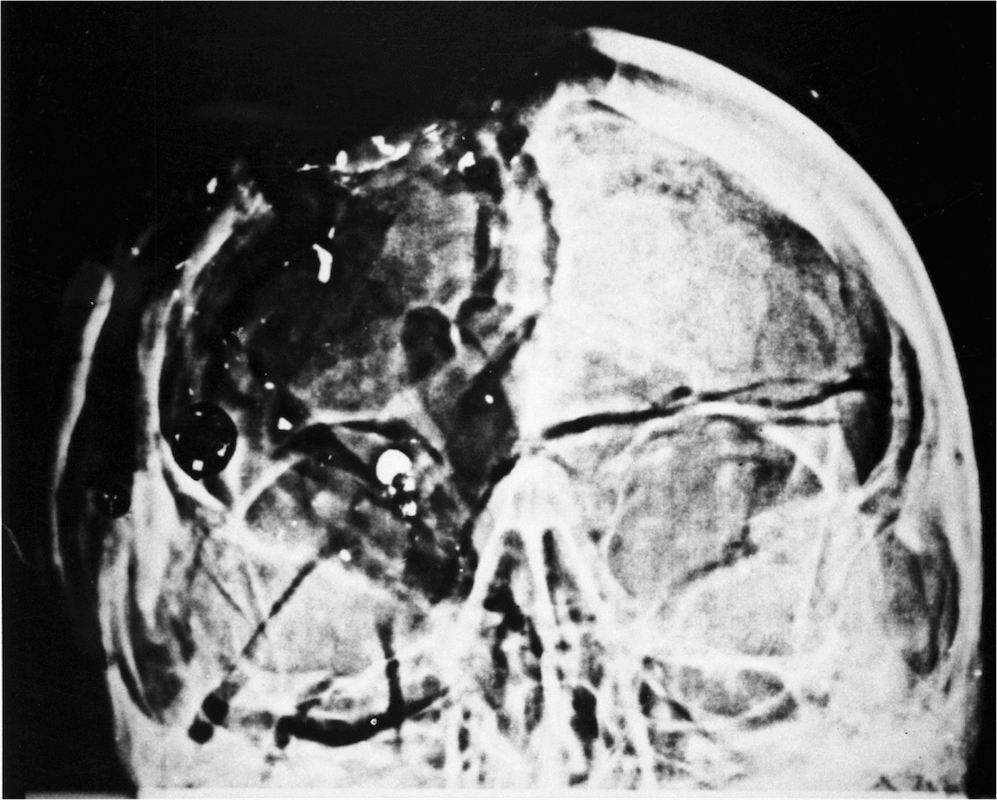
  • The Application of Forensic Principles for the Analysis of  the Autopsy Skull X-Rays of President Kennedy and a Review of the Brain Photographs

    The Application of Forensic Principles for the Analysis of the Autopsy Skull X-Rays of President Kennedy and a Review of the Brain Photographs


    We are pleased to be able to feature here in its entirety a PowerPoint presentation on the JFK X-rays and brain photographs which for reasons of time was not fully reviewed by the jury during the mock trial.

    Michael Chesser, M.D., is board certified in neurology and clinical neurophysiology. He has over 25 years of experience in clinical practice and is a former associate professor of neurology at the University of Arkansas for Medical Sciences. Chesser was granted permission by Sen. Paul Kirk, the Kennedy family representative for the Deed of Gift, to view the JFK autopsy cranial x-rays and autopsy photographs.

    Note:  this presentation is larger than usual so it may take a bit longer to load.


    SlideShow


    Version in .pdf


  • The State of Texas vs Lee Harvey Oswald: The JFK Autopsy Skull X-rays

    The State of Texas vs Lee Harvey Oswald: The JFK Autopsy Skull X-rays


    We are pleased to be able to feature here in its entirety a PowerPoint presentation on the JFK X-rays which for reasons of time was not fully reviewed by the jury during the mock trial.

    Dr. David W. Mantik has been studying these materials since the early 1990s.  He is a radiation oncologist and also holds a Ph.D. in physics.  He has visited NARA on nine separate occasions and is one of the few outside the government to have been granted access to the autopsy X-rays and photographs.  He also has published extensively on these issues, perhaps most notably in the peer-reviewed Medical Research Archives.


    SlideShow


    Version in .pdf


  • The Newly Declassified JFK Assassination Files

    The Newly Declassified JFK Assassination Files


    October 26, 2017 was supposed to be the last day for secrecy in the John F. Kennedy assassination. After 54 years, all the files on that case were finally supposed to be open to the public. In fact, President Trump actually tweeted about this occasion twice, saying how much he looked forward to it. This was a good indication that all the files would now be declassified, since only the president could halt that process.

    But on October 26th, President Trump gave in to last minute pleas from the CIA and FBI. He decided not to declassify everything. He now said that he would delay things until April of 2018 so that only very small bits of information like an agent’s real name or address would be concealed. The media then told us that only 300 documents would be deferred until that new release date of April, 2018. As we shall see, this often quoted 300 number is simply wrong and vastly understates what is still being withheld.

    Richard Helms

    The mainstream media (MSM) has been guilty of futher distortions. On a few occasions, they have reported old information as if it were new: for instance, regarding a memorandum written by FBI Director J. Edgar Hoover about convincing the public that Oswald was the lone assassin (see further below); or the transcript of then Ambassador to Iran Richard Helms’ testimony to the Rockefeller Commission which is supposedly cut off just as he is responding to the question of whether Oswald was a CIA asset. In both cases, this information has been known for some time; in the latter, the full document providing Helms’ response (in the negative) has been long available. As much as one might be inclined to excuse journalists for not being deeply familiar with the case, and thus unaware that they were inappropriately sensationalizing, it is hard to pardon the smugness with which the media asked us, for the most part, and without adequate knowledge, to accept their word that there was not anything really interesting in these releases. Like Lt. Frank Drebin in The Naked Gun, they were telling us, “Move on. Nothing to see here.”

    Having actually reviewed many of these documents, I would respectfully disagree. One might ask, for instance, why the following (old) information, which has resurfaced through the release of either previously unseen documents, or of documents which have had previous deletions removed, was not mentioned. Might it possibly be because some of it concerns the mainstream media—specifically, how they cooperated with the FBI, the Warren Commission, and perhaps the CIA, in order to uphold in the public eye the dubious tenets of the Warren Report?

    Consider the following previously withheld documents:

    • In an FBI document dated 2/1/67, it is noted that information received from the CIA reveals that The New York Times had lost faith in the Warren Report and was working on a full-scale exposé of its tenets, which it did not consider reliable anymore. That information was attained by talking to an informant of that Agency (the former head of the FPCC, Richard Thomas Gibson) who knew a reporter on the Times. We have actually had this information in nuce for a while: see the original memo from the Director of Plans to Hoover, in which the informant’s name is redacted, but in which the source at the Times, reporter Peter Khiss (misspelled ‘Kihss’ in the documents) is revealed.
    • An FBI teletype dated 12/11/63 reveals that NBC was preparing a program on the JFK case, but the producer’s policy would be to televise only “those items which are in consonance with” the FBI report.

    Then, there are the following documents which were re-released but with redactions now filled in:

    • A document which contains the minutes of a meeting on December 6, 1963, between LBJ and CIA Director John McCone; while the missing information which has now been filled in is of much interest (there were discussions at this point about the banning of underground tests, and the situations in Cambodia and Malaysia), one bit of “old” information contained here, and which again has gone largely unnoticed, is striking: a highly reliable CIA source reported that Russian intelligence was trying, through an Indian intermediary, to prod LBJ, RFK and Earl Warren into a thorough investigation of President Kennedy’s assassination.
    • A CIA memorandum which was actually classified as OPEN IN FULL and already figured in the 1995 ARRB releases, but which has oddly received little attention, reveals that on November 23, 1963, Deputy Director of Plans Richard Helms wrote the FBI that voice comparisons of calls made to the Soviet Embassy in Mexico City had indicated the caller on September 28 was the same one as the caller identifying himself as Oswald on the October 1 call. This clashes with the story coming out of Mexico City by then, which was that no voice comparisons had been done because the recording of the 9/28 call had been destroyed before the second call on 10/1. But what is even more curious about this memo is that by November 23rd, the FBI already knew that the voice on the tape claiming to be Lee Oswald was not the same as that of the man in custody in Dallas.
    • Making the above document even more interesting is a CIA Mexico City cable from just three days later. This information has also been available for some time. The Agency had two informants in the Cuban embassy in Mexico City. Neither recalled Oswald being there at any time. Yet the Warren Report said he was there on three occasions. Was he or wasn’t he? Again, if the MSM does not tell you about these reports, then that question cannot be raised. (In the re-released version, John Whitten’s name, formerly not visible, now appears, but the identities of the two assets, whose cryptonyms were LITAMIL-7 and LITAMIL-9, had already been deciphered.)
    Roger Feinman

    These five documents alone raise some troubling questions. One being, how can we uphold a democracy when broadcast agencies like NBC collude with intelligence agencies to spin the facts about the murder of the president? Or when the New York Times decides that it does not believe the Warren Report, but then goes on to say that it does? What happened to that full-blown exposé of the Warren Commission that the Times was planning? Well, perhaps the same as what happened to a CBS special critical of the Warren Report. We know through the late CBS employee Roger Feinman that CBS reporters wanted to do a special critical of the Commission. But due to pressures from above, the reporters were discouraged from that, and CBS decided to do a four-night segment supporting the Warren Report. (See “How CBS News Aided the JFK Cover-Up”)

    CBS correspondent
    Eddie Barker

    What happened at CBS is further elucidated in another declassified teletype from the FBI recovered by researcher Bill Davy (available prior to the current releases in Section 30 of the FBI Warren Commission HQ Liaison File 62-109090). This memo reveals that as early as January of 1967, CBS had decided to slant its upcoming late June multi-night documentary into, quite literally, a hatchet job. CBS was going to take books critical of the Warren Commission, like Mark Lane’s Rush to Judgment, and, as the memo, says, “tear them apart”. The informant providing this information to the Bureau was Eddie Barker, a local Dallas CBS correspondent who would appear on the CBS program. Barker, quite naturally, requested anonymity. But he added that the documentary would not be critical of the FBI and would support the Warren Report. Barker understood that the executives at CBS had already been in contact with members of the Warren Commission. He specifically mentioned Warren Commissioners John McCloy, Allen Dulles, and former Chief Counsel J. Lee Rankin. It was his opinion that they would cooperate with the production, which had not actually begun yet. One would think all this would be an interesting question for members of the so-called New Media like Rachel Maddow, or Josh Marshall, to address. But as we shall see, they did not.

    Media specials and articles in places like Politico have also recently recast the spotlight on Oswald’s alleged visit to Mexico City. Ever since 1964, there have been serious issues with the way the Warren Report treated this supposed trip. One problem is that the CIA, which had covert multi-camera photo surveillance on both the Cuban and Russian embassies Oswald visited, could not produce a single photo of alleged assassin Oswald entering or exiting either building—even though he made a total of five combined visits to both places. That would mean the Agency should have ten pictures of Oswald in Mexico City. But as early as November 23, 1963, the CIA reported that it could find no picture of Oswald entering either place.

    Noteworthy in this regard is the original rough draft of Warren Commission lawyer David Slawson’s report on the Warren Commission visit to Mexico City, which has also been re-released (it was previously released with restrictions in the 90s). Present in this version is a description of the meeting that Slawson, William Coleman and Howard Willens had with station chief Winston Scott. They inquired if Scott had a photo of Oswald at either the Russian or Cuban embassy. Scott replied in the negative. He said this was due to lack of manpower, funding and proper lighting supplements (see both the previous and current releases at pp. 25-26). There is no way to characterize that reply as less than a deception. From the declassified Lopez Report, however, we know that the CIA had full-time coverage of both embassies during operating hours, and that Oswald did not enter either embassy at night (see Oswald, The CIA and Mexico City: The Lopez-Hardway Report [Mary Ferrell Foundation, 2003], esp. pp. 12-46). This information tends to bring Scott into the web of the cover-up about Mexico City, the CIA and Oswald.

    David Phillips
    Anne Goodpasture

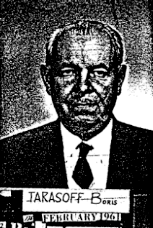
    The two documents referred to earlier deepen this mystery. On November 23, 1963, CIA officer Richard Helms forwarded the above-mentioned memo to the Director of the FBI, J. Edgar Hoover. In it Helms wrote that voice comparisons made of phone intercepts at the Russian Embassy in late September and early October indicated that these conversations are “probably the person who identified himself as Lee Oswald on 1 October 1963.” There are two serious problems with this statement by Helms. First, the CIA officer in Mexico City, David Phillips, would later tell the HSCA that no voice comparisons were made, since the tapes had routinely been destroyed within seven or eight days of their origination. (Destiny Betrayed, Second Edition, p. 354) This is, in fact, what the first cable [MEXI 7023, 11/23/63, para 2] from Anne Goodpasture suggested, at least for the 9/28 recording. Goodpasture then followed this with another cable [MEXI 7025, 11/23/63, para 4] suggesting that it was the translator (Boris Tarasoff) of the two calls who connected the two speakers, i.e., that he “recognized” the 10/1 caller to be the same as the 9/28 one. Tarasoff, however, testified to the HSCA that he did no voice comparisons per se (see further Oswald, The CIA and Mexico City, pp. 164-167).

    Boris Tarasoff

    But secondly, and perhaps more importantly, the FBI had already discovered on the day they got the Helms memo that the voice on the tape was not the same as that of the man held in custody in Dallas. In fact, Hoover had already memorialized that fact in a memorandum, and also in a phone call with President Lyndon Johnson. (Destiny Betrayed, p. 357) So where did Helms get his information from? And what was it based on? And why in heaven’s name is the MSM reporting that it was Oswald in communication with the Russian embassy, when the FBI determined that the voice on the tapes was not him? But further, the other document shows us that the CIA informants inside the Cuban embassy had told the Agency they had no knowledge of a visit by Oswald at any time. These kinds of evidentiary problems have led some to believe, with justifiable cause, that Oswald was impersonated, both at the consulates and on the phone, in Mexico City. But if the public is not informed of the facts in these documents then they cannot even begin to comprehend that thesis.

    Nikita Khrushchev with JFK
    Washington correspondent
    Drew Pearson

    Or the following fact: the CIA knew that Russian Premier Nikita Khrushchev did not believe the official story about Oswald and, in fact, was quite dismissive about it in discussions with Washington reporter Drew Pearson. Pearson and his wife had met Khrushchev and his wife in late May, 1964, while on vacation in Cairo. Pearson met with the CIA station chief there afterwards and told him about their conversations on the subject and how Khrushchev did not believe American security forces could be so inept. Pearson added that he could make no headway at all trying to change the Russian couple’s understanding. The Russian leader thought a right-wing coup had taken place. Apparently, Khrushchev felt this way from the start, since there is the previous report from December 6, 1963, that the KGB was trying to tell President Johnson, Chief Justice Earl Warren and Attorney General Robert Kennedy that no stone should be left unturned in their inquiry into Kennedy’s assassination. This report joins others on Charles DeGaulle, Fidel Castro, and Achmed Sukarno, adding to the list of world leaders who did not believe the lone gunman solution to the assassination.

    DeGaulle, Sukarno and Castro all questioned the lone gunman explanation

    Let us step back now a moment to review how we have arrived at our present state of knowledge. In 1998 the Assassination Records Review Board (ARRB) closed its doors after four years. It had been created due to the uproar over Oliver Stone’s film JFK. At the end of that film, it was revealed that the files of the 1979 House Select Committee on Assassinations (HSCA)—the last inquiry into Kennedy’s death—were classified until 2029. Few people knew about this massive classification, or that the HSCA had concluded that Kennedy was killed as a result of a probable conspiracy. Assaulted by thousands of phone calls and telegrams due to their exposure to these facts, Congress created the ARRB to begin to declassify two million pages of Kennedy assassination related documents.

    John Tunheim and members of the ARRB meet with President Clinton


    It is clear today that the Board had neither the lifespan nor funding to properly complete its assignment. That assignment was not only to declassify all federal files, but also to search other repositories and seek out hidden pieces of evidence that could elucidate the circumstances of Kennedy’s murder. For the last three weeks—actually longer—we have been watching the leftover residue of their work, which results from the fact that the enabling legislation for the Board said there should be nothing still withheld 25 years after the law was passed in 1992. This clause in the legislation is what this furious debate has been all about.

    The MSM did an unsatisfactory job in covering the four-year life of the Board. There were some rather sensational discoveries unearthed by that body. Some authorities would state that this new information altered the calculus of the Kennedy case. But the public never heard of it because the MSM either did not know about it, or they did know about it and failed to make it public. (See “The State of the JFK Case 50 Years Out”)

    That poor prior performance has been repeated for the last three weeks. It spiraled upward into a paroxysm of chattering nabobs on Thursday, October 26th. The congressional legislation that gave birth to the Board allowed them to, at their close, grant what they called “postponements” to certain documents: that is, a document’s release would be delayed for say two years or ten years. The most sensitive documents would be given the longest postponement, which would be 25 years past the signing of the legislation, i.e., October 26, 2017. The most commonly based exemptions were if a document endangered an agent’s identity, or if it could cause the exposure of an ongoing operation. The usual numbers given for such 20-year postponements are 3,571 documents withheld in full, and approximately 32,900 still redacted in part. This past July, Martha Murphy, who is running the release project at the National Archives, declassified 441 documents in full. On October 26, contrary to what was commonly passed off in the media, there were only 52 of those documents released to the public. In the two releases since, there have been very few added to that sum. As of today, there are still over 2,700 JFK classified documents that the public has never seen!

    Rex Bradford

    These numbers come from Rex Bradford at the Mary Ferrell Foundation, and Gary Majewski, who has been a consultant on this project at the kennedysandking.com website. They have been confirmed by Jim Lesar, a Washington Freedom of Information Act attorney. One reason that the public was so misinformed is that none of the TV hosts consulted with Lesar or Bradford, who know much more about the subject than anyone the MSM used as authorities. In other words, only 52 of the “withheld in full” documents were declassified on Thursday, October 26th; and only 2,800 of the over 28,600 documents “released with deletions” were re-released on that day. What this means is, that amid all of the media hoopla, about 2% of the former, and less than 10% of the latter were finally released. And here we are, 54 years after Kennedy was killed. Twenty years after the Board closed down. In retrospect, what President Trump did was probably about the worst thing he could have done. Because if he had followed the law, it is very likely that everything would have been declassified on that day.

    Jim Lesar

    What makes that failure even more important is another aspect of that Thursday release. Shockingly, several of the 52 withheld in full documents still contained redactions! For instance, a 1975 CIA document describes an Agency training camp set up outside of New Orleans in advance of the Bay of Pigs invasion. In scanning over the document, I have discovered there are easily 25 deletions still in it. The reason the document may be important is that Oswald’s New Orleans friend David Ferrie was one of the trainers at this base, and CIA officer David Phillips—a suspect in the JFK murder—was in charge of sterilizing it after the invasion. (William Davy, Let Justice be Done, pp. 30-31)

    But on top of that, many of the released documents are not just redacted; they contain many pages that are completely blank. And the CIA is getting very good at doing this. Now they do not even black out, or white out pages. It looks like they just photocopy a blank page over and over, or cover the entire document page with a blank sheet, so one cannot decipher anything. For example, one CIA document on Jim Garrison is supposed to be 11 pages long. Yet 8 of those pages are blanked out completely.

    In addition to that lengthy redaction, there is a fascinating memo from the internal email messages of the ARRB about even more extensive concealment. In a message dated November 14, 1996, the Board is describing its approach to the CIA about documents concerning Clay Shaw and the New Orleans CIA station. In its final paragraph, it is revealed that the Board intended to ask for information about the destruction of Shaw’s 201 file. If this is accurate, then it is something that no one has ever revealed before. The closest anyone has come to it is the discovery in Bill Davy’s book Let Justice be Done that a certain “Y file” of Shaw’s had also been destroyed (p. 200). If both statements are true, and both of these refer to separate files, then they lend credence to what Gordon Novel wrote to researcher Mary Ferrell in a letter during the House Select Committee proceedings in 1977. He stated that during the Warren Commission hearings, the CIA had deliberately concealed Shaw’s true status with the Agency. Novel would appear to be a good source since he was hired by Allen Dulles to infiltrate Garrison’s office (Destiny Betrayed, Second Edition, pp. 232-33).

    Beyond the outright concealment of pages or destruction of files, there are documents that the National Archives admits are simply illegible. But they declassify them anyway. Calling them illegible does not do justice to how bad they really are (see this example). Even if one scanned them using OCR software, that would not improve readability, since there is so little to recognize in them.

    Another way the law is being circumvented is that in some of these releases the cover sheet describes a report, giving the reader the originating agency, the author and the subject, and listing a page count. But it does not then include the report itself! This has been done several times (see, for example, this CIA file).

    Earle Cabell, CIA asset
    and mayor of Dallas on 11/22/63
    Soviet defector Yuri Nosenko

    There is still another category of documents that has not been discussed by the MSM. This category was labeled by the Board as “NBR”, Not Believed Relevant. It is fairly clear today that this rubric was abused. For instance, one of the most fascinating July releases was on Earle Cabell, the mayor of Dallas in 1963. It was revealed that he was a CIA asset at the time of the assassination. According to former intelligence analyst John Newman, that document was previously classified as NBR. How anyone could deem such information irrelevant is unfathomable. Lesar told this author that files on Yuri Nosenko were also deemed irrelevant. Nosenko was the Soviet defector who arrived in America in 1964 and said that the KGB had never recruited Oswald while he was in the USSR for approximately three years. CIA officer James Angleton then more or less had him imprisoned and tortured for nearly 36 months to try and make him admit he was sent over to mislead the CIA about Oswald. Author Edward Epstein, an Angleton idolater, wrote a book—Legend—endorsing Angleton over Nosenko and portraying Oswald as a communist spy. Again, it is extremely puzzling to think Nosenko documents would be labeled as irrelevant. Luckily, Murphy declassified many of the Nosenko documents and the Cabell document. But, according to Lesar, there are tens of thousands of these NBR documents that the Review Board allowed to be deferred. They must be located and declassified.

    In its vapid coverage of the JFK releases, the MSM largely ignored things that were new and important, and focused, as we have already mentioned, on papers which had been released before in whole or in part. Two of the worst examples of this kind of presentation were by representatives of the so-called New Media, i.e., cable television and online journalism.

    Rachel Maddow
    Tom Pettit

    Rachel Maddow reran a segment that had been filmed back in 1993 featuring deceased newsman Tom Pettit. Pettit visited the National Archives on the first day of the ARRB declassification. He apparently did not understand the difference between documents that were declassified and ones that were already among the exhibits of the Warren Commission, that flawed 1964 investigation into President Kennedy’s assassination, because he pointed to documents in the latter as if they had been newly declassified that day. (See this full report on that segment)

    Nicholas Katzenbach

    On October 27th, Josh Marshall at Talking Points Memo discussed an 11/24/63 memorandum written by FBI Director J. Edgar Hoover (alluded to above) in which he stated that he was concerned that something must be issued in order to convince the public that Oswald is the real assassin. That document is a forerunner to the famous and long ago declassified document which would be typed the next day by Assistant Attorney General Nicholas Katzenbach, who Hoover had talked to the night of the 24th, after Oswald had been shot. Marshall then said that this did not necessarily indicate that Hoover had any doubts about the case and that it was not incriminating of his investigation.

    Josh Marshall

    Apparently, Marshall was unaware of one of the keystones of the JFK case, namely the Single Bullet Theory, aka the Magic Bullet. Hoover never bought into that dictum. Which is why the original FBI report on the JFK case was not included in the Warren Commission volumes. The Warren Commission’s shooting scenario maintains that one shot, aimed at his skull, killed Kennedy; a second shot went through both Kennedy and Texas Governor John Connally, making seven wounds, and smashing two bones in the two men; and one shot missed the limousine by 200 feet, hitting the curb on a different street, and dislodging the concrete upwards, cutting the face of bystander James Tague. Hoover rejected this and said all three shots hit both men in the car. How did he manage to bypass the shot that ricocheted upward and hit Tague? He quite literally erased it. He had it carved out, pasted over and shipped back to Washington. (James DiEugenio, Reclaiming Parkland, p. 252) In other words, Hoover tried to make his verdict stick by altering the evidence. A rather important point which Marshall either is unaware of, or does not want his readers to know about.

    The two men who know the state of these documents best, Bradford and Lesar, were nowhere to be seen on the domestic MSM. (Although Bradford did get on abroad.) Instead, we had people like Gerald Posner, Larry Sabato, and Philip Shenon, who conveyed none of the important information that would have explained what was really happening, or what was in the new documents.

    Media darlings Gerald Posner, Larry Sabato & Philip Shenon

    But there is an even larger story here about the pernicious effects of secrecy and how it has worked in the JFK case. And it’s one that no one has written about. Ramon Herrera is a computer information technology expert with a strong interest in the JFK case. He decided to clone the entire records database of the online JFK collection at the National Archives. He used some revolutionary “scraping” software he developed together with a friend from abroad. The process lasted a week and he repeated it four times, then wrote programs to compare the results, record number by record number, to make sure they were identical. With this exact copy in hand, he then extended the capability which NARA provides by making the field “Current Status” searchable. That allowed him to count the number of records for each of the three categories: “Postponed in Full”, “Released with Deletions” and “Open”. Herrera came up with a remarkable discovery. His number of records classified “Postponed in Full” is over three times as large as the official number: 9,718. One reassuring aspect of his work is that his number of “Released with Deletions” documents is very close to NARA’s. This would seem to indicate that either the Archives records on the JFK case are wrong, or Martha Murphy has not updated her database to insure a proper count of what has been released and what is being withheld.

    What all of this reveals is that the ARRB process was, in large part, subverted. The Review Board did some good and valuable work. But as Lesar told this writer, Congress wanted to get rid of the public pressure, but they also wanted to do it fast and cheap. But when one is dealing with a subject that strikes at the heart of the national security state—as the JFK case does—there is no fast and cheap way to approach it. For the simple reason that the executive intelligence agencies understand the technique of waiting an opposing agency out; that is, the CIA knew it was going to be with us long after the Board left. In fact, British researcher Malcolm Blunt found an Agency internal document which contained words to that effect. Written in late 1995, the author wrote that the Agency considered the Board not so much a releasing agency—but as one setting dates for future review: in other words, as a review and postpone apparatus. In many ways, that seems to have been the case, so the Agency packed in as many postponed documents as they could. It also appears that with what President Trump did on October 26th, there will be a lot of court hearings for Jim Lesar to attend to clean up the mess that Trump and the media made of this momentous occasion.

    But as Lesar informed me, there might even be instances that he cannot salvage. While trying a case directly related to the ARRB process, the attorney was advised to visit a sitting general. The general told him that after the Board disbanded, there were a lot of burning parties going on in Washington. That is how deep the secrets of the JFK case go in the capital. Which is why the MSM has never been able to deal with the subject.


  • The Intelligence Community Flips Off America

    The Intelligence Community Flips Off America


    “The United States is a nation of laws: badly written and randomly enforced.”

    ~Frank Zappa


    © November 4, 2017


    James Angleton set the strategy in 1964. “Jim would prefer to wait out the Commission,” as one CIA memo about Warren Commission inquiries put it.[1] They are still doing that as well as running their propaganda campaign against anyone who questions the lone-nut theory, their “best truth” according to David Robarge.[2]

    I recently published an article about the delay in releasing records under the 1992 JFK Records Collections Act. In that article I explained the CIA’s play to discredit those who question their lone-nut theory best truth and suggested that their historian, David Robarge, has told us what to look for in the documents that are still being withheld.[3] In that article I suggested we should look for information regarding covert operations against Cuba that would “circumstantially implicate CIA in conspiracy theories” – Mr. Robarge’s words.[4] While I doubt the existence of a “smoking gun,” the circumstantial evidence we might look for in the delayed files could show a correlation between Lee Harvey Oswald’s activities in New Orleans and Mexico City in the late summer and fall of 1963 and CIA covert operations that were occurring at that time.[5] I specifically suggest that we look to files on operations involving George Joannides, the Directorio Revolucionario Estudiantil (“DRE”) and David Phillips. These are files, or at least some of them, that are in the JFK records that were scheduled for release.

    On October 26, 1992, the U.S. Congress passed S. 3006, with only one amendment and very little, if any, opposition. The Senate bill, introduced by Senator John Glenn of Ohio, was signed the same day by the President George H.W. Bush and became Public Law 102-526, (“JFK Records Act”). Among other things the JFK Records Act provided for the collection, preservation and eventual release of all records related to the 1963 assassination of President John F. Kennedy with minimal exceptions. It mandates, in clear and unambiguous language, “[e]ach assassination record shall be publicly disclosed in full, and available in the Collection no later than the date that is 25 years after the date of enactment of this Act.” The Act allows an exemption to this explicit mandatory requirement only if the President “certifies” that the release of each withheld document “is made necessary by an identifiable harm to” either 1) military defense; 2) intelligence operations; 3) law enforcement; or 4) the conduct of foreign relations and “the identifiable harm is of such gravity that it outweighs the public interest in disclosure.”[6]

    NARA released some of the files that I have been waiting for yesterday, November 3, 2017. The Excel spreadsheet listing the released files include four files referenced to David Atlee Phillips and one file referenced to the DRE.[7] Of the files referencing Phillips, three are of an unspecified nature and one is listed as his Office of Personnel (OP) file. The DRE file is listed as “CIA file on DRE AMSPELL operations.”

    AMSPELL is a CIA cryptonym for DRE, the anti-Castro Cuban group that was run by George Joannides in 1963, that had the encounter with Oswald in New Orleans in 1963, and published the first conspiracy theory blaming Castro in their CIA financed newspaper in Miami on November 25, 1963. The file released yesterday, for such an active group, is a very thin 87 pages of which 61 are expurgated in full. Of the remaining 26 pages, many are largely expurgated. The Phillips files are even worse. The three files of unspecified type may be some of his operational files. These files are even more highly expurgated than the AMSPELL file. Taking the 73 page long file RIF 104-10177-10135 as an example:

    • 3 pages are a confidential notice that the file has been processed and retired which notice is reprinted in full;
    • 3 pages are the file’s routing sheet that has been partially released with redaction of any significant information;
    • 2 pages are a 1975 FOIA request from The Bay City Times, a newspaper in Bay City, Michigan, reproduced in full;
    • 1 page is a “Document Transfer and Cross Reference” form indicating that records of a project apparently named “Furioso C” have been removed from this file and sent to another section of the CIA with a redaction that not only removes the substantive entry but also the name of the space on the form where the entry was made;
    • 2 pages are partially redacted memoranda;
    • 3 pages are Security information forms for Project Furioso C with all substantive information redacted; 2 pages are a Project Financial Data form from 1952 with no substantive information that is not redacted;
    • 6 pages are partially redacted routing sheets for documents, none of which have the routed document attached;
    • 1 page is a partially redacted cable from 1952;
    • 2 pages are copies, unredacted of logs of HSCA access to the file, showing that I saw the file in 1978.

    The remaining 48 pages are redacted in full.

    The file that is listed as David Atlee Phillips’s OP file is not as heavily redacted as the other three Phillips files although many of the documents, mainly personnel forms, it contains have been cleansed of any significant data. That, however, is not the end of the story on this file. The file starts with a few items of post-retirement correspondence between him and the CIA in 1975 and then proceeds chronologically backwards from his retirement in 1975. I have not yet been able to go through the 358 page file to carefully study all the documents, but I have gone through it well enough to note that all his fitness reports between 1956 and 1965 are missing – not redacted, just simply not there. Indeed, so far as I have been able to find, there is no record whatsoever of a document in the file dated between 1961 and 1965 – not redacted, just simply not there.

    There has been no explanation, let alone a presidential certification, that the massive redactions in these “released in full” documents meet any of the mandatory exemptions that allow withholding. No identifiable harm is specified. No rationale is given as to why the secrets protected outweigh the public interest in disclosure. These files are not in compliance with the law no matter what the main stream media says. They are an in-your-face flipped bird to the American public. They basically tell us that the CIA is saying that they don’t have to comply with the law of the land and that they will not tell us their secrets and that there is nothing we can do about it. I’ve been here before. It was in a small room in CIA Headquarters in late 1978. I had been fighting to see a file generated by the CIA debriefing of Johnny Roselli. Scott Breckinridge and George Joannides had just handed me a highly redacted file that violated the HSCA/CIA Memorandum of Understanding mandating unexpurgated access by HSCA to CIA files. They stood by, grinning, as they watched my reaction upon opening the file to find it largely expurgated. They were grinning so hard because they knew they had waited out the HSCA and there was nothing I could do about it. The Angleton strategy still worked. It is still working today.

    This release not only demonstrates that the Angleton strategy is still being applied. It also illustrates the point I have been making about what they are covering up. There may well be nothing we can do about it. It appears our lawmakers are spineless in the face of the intelligence community. Joseph Burkholder Smith, a retired CIA officer, told me and Gaeton Fonzi in 1978, “You represent Congress. What the f*** is that to the CIA? You’ll be gone in two years and the CIA will still be there.” To paraphrase that to fit the situation in which we now find ourselves: “You are the people that Congress supposedly represents. What’s that to the CIA? You’ll forget about it in a few weeks or so.”

    But I won’t. I wrote a letter to my Senator yesterday before I saw the travesty that was the day’s release of JFK documents by NARA. Probably a futile gesture, but one I had to take anyway. Here’s what I told him:


    Please allow me first to introduce myself a bit. While I am your constituent, I do not believe we have ever met. I was born and raised in Webster County, West Virginia, and still reside on the farm my grandfather purchased in the 1940’s outside of Cowen. I am a graduate of WVU – 1976 – and while there got to know some of the members of your family. I had the privilege of running your first cousin Tim Manchin’s campaign for a seat on the WVU student government Board in the mid-70’s. I am a 1980 graduate of Cornell Law School and a former law clerk for Justice Tom McHugh of the West Virginia Supreme Court. I took a year and a half leave of absence from law school to work as a researcher for the U.S. House of Representatives Select Committee on Assassinations in 1977-1978. My primary area of responsibility in the Committee’s work was to investigate the Central Intelligence Agency and Lee Harvey Oswald in Mexico City. Most of the work I produced for the Committee remains classified. I am presently registered to vote in Webster County with an Independent affiliation.

    I am aware that the Republicans in this state are trying to mount a serious challenge to you in the upcoming election and I am presently considering whether to become involved in the campaign and, if I do, who I am going to support. In that regard, and in view of your position on the Senate Select Committee on Intelligence, your position on an issue that is very important to me will influence whether I decide to actively support you in the upcoming election. That issue is the release – or I should say, the failure to release – the records currently held in the JFK Records Collection by the National Archives and Records Administration. While the records, and access to them, is of great interest to me, the real issues raised by the failure to release them are much more fundamental than just access to the assassination records. It is these fundamental issues that I want to explain and upon which I wish to hear your opinion.

    On October 26, 1992, the U.S. Congress passed S. 3006, with only one amendment and very little, if any, opposition. The Senate bill introduced by Senator John Glenn of Ohio was signed the same day by the President George H.W. Bush and became Public Law 102-526 which is codified at 44 U.S.C. § 2107 note (“JFK Records Act”). Among other things the JFK Records Act provided for the collection, preservation and eventual release of all records related to the 1963 assassination of President John F. Kennedy with minimal exceptions. Among its other provision, the JFK Records Act, at § 5(g)(2)(D), mandates in clear and unambiguous language “[e]ach assassination record shall be publicly disclosed in full, and available in the Collection no later than the date that is 25 years after the date of enactment of this Act.” The Act allows an exemption to this explicit mandatory requirement only if the President “certifies” that the release of each withheld document “is made necessary by an identifiable harm to” either 1) military defense; 2) intelligence operations; 3) law enforcement; or 4) the conduct of foreign relations and “the identifiable harm is of such gravity that it outweighs the public interest in disclosure.” [Emphasis added.]

    I note that this is a law duly enacted and adopted by the democratic processes of this country in 1992 – a country where we supposedly pride ourselves on being a nation of laws, a nation where the law applies to each and to all regardless of status or position. On October 26, 2017, as I am sure you are aware, President Donald Trump, at the request of the Central Intelligence Agency and other intelligence community members, disregarded the clear provisions of the law and postponed release of ninety percent of the remaining withheld documents in the JFK Records Collection for an additional six months. In doing this, the President made no findings, issued no orders and certified nothing, merely issuing a statement through the press office saying that all documents will be released “with redactions only in the rarest of circumstances” by April 26, 2018.

    The President’s action was not only without authority in law, it was also taken in patent violation of the clear, unambiguous and mandatory terms of a law that your institution passed. In this situation, I would be tempted to file a suit against the President if it were not for the facts that: 1) the Courts have already held that the JFK Records Act does not provide a basis for any private cause of action for U.S. citizens, Assassination Archives and Research Center v. Dep’t. of Justice, 43 F.3d 1542, 1544 (D.C. Cir. 1995); 2) Federal Court litigation is too expensive to allow access to a normal citizen trying to hold his government accountable; and 3) it would take more than six months to get a case through to a decision in Federal Court so the action would represent no type of check or correction to the problem.

    The real problem that this presents is that it is showing to the nation that the intelligence agencies of our nation are not subject to the laws of the nation. They are effectively above the law. At their request, or pressure, the President of the United States will violate the clear mandates of enacted legislation. And, to date, the reaction of our elected representatives in Congress seems to reinforce the fact that no one is willing to stand up to such blatant disregard of the clear provisions of the duly enacted laws of the nation. I understand that it is the executive branch that is charged with the enforcement of the laws your branch enacts and, in this case, it is the executive branch that is violating the law so there can be little realistic expectation of enforcement from them. But this is the heart of the problem and why it is incumbent upon the Congress to act. At a minimum there should be oversight hearings. At a minimum the Congress should not be seen to willingly acquiesce in executive contempt for the Legislative branch of government and the law of the land.

    This action on the part of the intelligence community, the National Archives, and the Executive is only the latest in a long string of actions that disregard the provisions of the JFK Records Act that also subvert and cover up the information related to the assassination of our 35th president. Those other actions are beyond the present scope of this letter, but are things about which I would be glad to speak with you if you have any interest, so I will not go into them here.

    To my knowledge there has been no coverage or explanation of why the intelligence community has requested this delay of the President. It was made in secret. What reason have they given for the delay? What kind of pressure have they brought to bear? How can they force a president to so blatantly disregard the law? If they can do this in regard to disclosure of fifty-year-old records, in what else can they exercise a like secret influence that corrupts the laws of the nation? What affect does the existence and use of such secret power have on our democracy? If these things – not just the documents but the method of influence – remain always secret, then how can a citizenry be sufficiently informed so as to exercise their franchise to any real purpose? How can we have faith in our democracy, let alone our government, if this kind of practice is allowed to continue unchallenged? These are the questions that I would like to have answered. But, to make it easier for you, I note you are in a unique position in regard to these issues due to your membership on the Senate Select Committee on Intelligence. Are you at least going to call and press for public hearings on any of these issues? Or are you going to join the vast majority of our representatives and once again cower before the intelligence agencies? Will you stand up for your constituents’ right to participate in their government on an informed basis? Will you stand for holding our government to a standard of open honesty before its citizens and against allowing the real affairs of state to be conducted in secret and in disregard of the laws enacted by the peoples’ representatives?

    I anxiously await your answer.


    The questions I asked Joe Manchin in that letter are even more pressing today. I don’t know if he’ll even answer, let alone do anything. Maybe like Chuck Grassley, he’ll send out an apparently frustrated tweet. Or maybe, like the main stream press, he’ll tout the release of the documents, hoping no one will look to see what a travesty the “release” is because of the massive redactions. At this point all I can do is try to tell the truth about this whole state of affairs. I also encourage you to not take this insult to your intelligence and ability to govern yourselves without reaction. Do something. If nothing else, circulate this article to everyone you know. Refuse to accept the cancer of secrecy that destroys our liberty and ability to govern ourselves. Get involved. Get informed. Stay informed. Read and follow http://2017jfk.org/home/ and http://jfkfacts.org/. Join the AARC at http://aarclibrary.org/aarc-membership/. Join CAPA at http://capa-us.org/membership/. If those who exercise the power in this country have such blatant contempt for the law, then the time for serious peaceful civil disobedience may be upon us. Get the word out. Don’t be silent any longer. This is not an issue of the left or the right. Do something. Say something. And don’t stop until you are heard.


    Notes

    [1]. Raymond Rocca to Richard Helms, Memo Re Response to Rankin, 5 Mar 1964, NARA Record No. 1993.06.24.14:59:13:840170, available at https://www.maryferrell.org/showDoc.html?docId=98075#relPageId=1&tab=page

    [2]. David Robarge, “DCI John McCone and the Assassination of President John F. Kennedy,” Studies in Intelligence, (Vol. 57, No. 3, 09/2013), Approved for Release and declassified, 09/29/2014, at page 20. Available at http://nsarchive.gwu.edu/NSAEBB/NSAEBB493/docs/intell_ebb_026.PDF. Robarge wrote: “The DCI was complicit in keeping incendiary and diversionary issues off the commission’s agenda and focusing it on what the Agency believed at the time was the ‘best truth’: that Lee Harvey Oswald, for as yet undetermined motives, had acted alone in killing John Kennedy.” For my commentary on the CIA’s “best truth”, see Thank You, Phil Shenon, available at https://realhillbillyviews.blogspot.com/2015/10/. Note that the “best truth” was conditioned by “at the time” leaving open the real possibility that alternative cover stories may have to be brought to play in the event that time undermined what the Agency considered to be the best truth for them.

    [3]. Dan Hardway, What Were They Hiding and What Should We Look For,” 30 Oct 2017, available at https://realhillbillyviews.blogspot.com/2017/10/what-were-they-hiding-and-what-should_30.html

    [4]. Robarge, n. 2 above, at p. 9.

    [5]. This is addressed in more detail at JFKFacts, Exclusive: JFK investigator on how CIA stonewalled Congress, http://jfkfacts.org/hardwaydeclarationciastonewalledjfkinvestigation/; Declaration of Dan L. Hardway, Morley v. CIA, CA # 03-02545-RJL, D.C.D.C. 11 May 2016, Docket No. 156.

    [6]. 44 U.S.C. § 2107 note § 5(g)(2)(D). Emphasis added.

    [7]. https://www.archives.gov/research/jfk/2017-release, RIF Nos. 104-10176-10121, 104-10177-10135, 104-10177-10134, 104-10194-10026, and 104-10170-10121.

  • Rachel Maddow, JFK and Easy Money

    Rachel Maddow, JFK and Easy Money


    In the lead up to the final declassification of the long awaited secret files on President Kennedy’s assassination, there were literally dozens of TV broadcast segments alerting the public to what President Trump had decided to do and what it all meant. Not one of these programs went beyond the surface of the event. And most of them relied on nothing but general information, questionable guests, and past clichés about the case to create their segments. Incredibly, the MSM even trotted out Mr. Plagiarism, Gerald Posner, for some appearances. No one noted that Posner has not done any work of the JFK case in twenty years. And his discredited book Case Closed was written and published before the creation of the Assassination Records Review Board (ARRB) in 1994. Therefore, not only was Posner not familiar with the current batch of declassified files, he was not aware of what was in the two million pages declassified from 1994-1998. But that did not stop Michael Smerconish from hosting him on his CNN show as an authority.

    But probably the worst of the segments happened to be one of the longest ones, timing in at almost ten minutes. This took place on October 25th, the day before the documents were supposed to be released. It was on MSNBC’s Rachel Maddow Show.

    MSNBC has a reputation, and a niche, in cable television as being a liberal haven. Compared to say Fox, that is true. But many would question just how liberal, and honest, the cable network is. For instance, Melissa Harris-Perry was an acute, well-informed host who really tried to book rarely heard voices onto her program. In fact, her show was the only Sunday talk show that did not utilize a majority of white males as guests. After four years, she was forced out in early 2016. She concluded that, since she was an African-American female, they did not want to hear her comments on election returns that year. Try and find anything online, or anywhere else, that Maddow said or wrote about Perry’s highly publicized dispute with management. My other point would be this: How liberal and honest can MSNBC be if Chris Matthews is the longstanding bellwether of the network? This is the man who actually wrote a book—Kennedy and Nixon—that tried to equate the political career of John Kennedy with that of Richard Nixon. He then wrote a completely inadequate biography of JFK. In all the years I listened to the Bay-area blowhard, I never heard anything but inside-the-beltway pabulum from the man. For this he makes five million a year. Nice work if you can get it.

    Maddow has followed the Matthews paradigm on the Kennedy case, and she has also steered away from Perry’s dangerous list of guests. Her show on October 25th is a prime exhibit for what is wrong with cable news. It also demonstrates why the so-called cable revolution—begun by Ted Turner back in 1979—has been such a disappointment. Maddow’s program started off with her spoken intro to the subject of the long delayed release of the JFK assassination files. She began by showing footage of Oswald being held in detention. (To her credit, she did say Oswald was the “alleged” assassin.) She then said that as Oswald was being transferred in the basement of the Dallas jail, he was shot and killed. She added that NBC had a reporter there covering that event. His name was Tom Pettit . She then ran the NBC footage of Jack Ruby shooting Oswald. Pettit said three times that “Oswald has been shot”, and he topped it off with, “There’s no question Oswald has been shot.”

    After this memorable footage was shown, Maddow said not one word about it. She just left it with Pettit ’s rather vapid and repetitive, “Oswald has been shot.” No comment on how Jack Ruby entered the building, or how the House Select Committee on Assassinations concluded that the Warren Commission was dead wrong when they wrote Ruby came down the Main Street ramp. No observations on how the Dallas Police covered up that Ruby had help entering the building, and that even the Warren Commission suspected such was the case. (Reclaiming Parkland, by James DiEugenio, pp. 229-30) Nor did she mention that the night before, Oswald had attempted to make a call to one John Hurt in North Carolina, a former military intelligence officer. But that call was aborted on orders of the Secret Service. Nor did she say that Ruby had called the police the night before and warned dispatcher Billy Grammer not to transport Oswald the next day or “We are going to kill him.” (ibid, p. 224, italics added) Maddow did not even state that this event meant there would be no trial for Oswald, and thus he would not have any defense against the Dallas Police charges. Nor did she say that when the Warren Commission was constructed, they failed to give Oswald any defense at all, while violating almost every protection constitutionally afforded to the accused.

    Instead of any of that, which seems pretty important in setting the table for the JFK case, what did Maddow talk about instead? Well, Maddow seems to think Tom Pettit is more important then the murder of Oswald by Jack Ruby. She now mentioned his presidential interviews and some of the broadcast awards he had garnered. She chose to do that because she wanted to set up something that was really kind of inexcusable. The Pettit synopsis was used to bridge the time gap from 1963 to the release of Oliver Stone’s film JFK in 1991. She described the film as positing a theory for a broader conspiracy in the Kennedy case. She then added that there had always been theories like that, without describing any of the evidence that Stone’s film advanced. Including how Ruby actually did get into the police basement.

    Our hostess then added that Stone’s film caused the enactment of the JFK Act in 1992. But she did not say that the last title card of the film noted that the files of the House Select Committee on Assassinations—which shuttered in 1978—were classified for over fifty years. The exposure of that fact embarrassed some of the people who were involved with that classification, like Committee Chairman Louis Stokes. And this caused hearings to be held on Capitol Hill to declassify the remaining files and let Americans see what was being kept secret. Besides missing much of that, she then added something completely unwarranted. She said the idea behind this law was to “tamp down some of the assassination conspiracy theories”. The idea behind the law was to eliminate the secrecy that enshrouded one of the most pivotal events of the second half of the twentieth century. To let the public in on what, until then, only certain people in the executive intelligence community were allowed to know. And thus let the public make up its own mind about the matter. The irony of her pronouncements here is that they were all done against the background of scenes from Stone’s film.

    From here, Maddow then segued to 1993. And we now saw why she built up Tom Pettit . Because she now cuts to Pettit ’s original segment from the first day that the JFK Act declassified any of the long secret files. This was before the Assassination Records Review Board was even constructed. Consequently, if one attempted on that day to see these files, more often than not, what you would get is a RIF notice. Which meant that the file had been tagged by its originating agency—be it the FBI, CIA, or State Department—and it would remain secret until the yet to be appointed Review Board ordered it declassified. And the vast majority of the 2 million pages that were to be declassified had to go through that process.

    Why did she choose to show this particular report? Because Pettit ’s segment is pretty much worthless. He shows us documents that he does not even know had already been declassified and are a part of the Warren Commission volumes. And he relates facts that anyone with any familiarity with the case would have already known. For example, that Oswald had defected to the Soviet Union and returned with a Russian wife. Pettit would then smugly and stupidly say, “We already knew that.” Which would be a little like saying that President Kennedy was killed in Dallas in 1963; but we already knew that.

    Pettit began his report by saying the documents released that day showed that the CIA was deeply involved in the JFK investigation. This is false on two counts. The two chief investigative arms of the Warren Commission were the FBI and the Secret Service. The CIA was mainly involved with Oswald in Russia and Mexico. (And also trying to get information on foreign authors the Commission wanted to discredit, like Thomas Buchanan and Joachim Joesten.) What is quite puzzling about the Warren Commission is that the CIA produced little about Oswald in either country. In fact, as was demonstrated in the documents released this past July by the National Archives, the Agency, in the immediate days after the assassination, could not find any evidence that Oswald had been in Mexico City. This failure was driving them to distraction. Because they were stuck with audiotapes, allegedly of Oswald’s voice, in the Cuban and Russian consulates in Mexico City. So the question now became: How did the CIA capture his voice, but have no evidence he was there? And the answer to this was that—as the FBI soon discovered—it was not Oswald’s voice on the tapes. So the Agency decided to turn over this evidentiary problem about Oswald being in Mexico City to their friends in the Mexican government, specifically the Interior Department.

    Yet, in another document released this past July—which Maddow or her staff could have easily attained—it is shown that the men involved in running that investigation were not at all cooperative with the Warren Commission representatives sent to investigate the crime. In fact, as the rough draft of Commission lawyer David Slawson’s report reveals, he, William Coleman and Howard Willens were given the run around by the officers running the Mexican arm of the investigation. (Slawson Report “Trip to Mexico City” 4/22/64) This is an important point that was smudged in the final draft of Slawson’s report, which was declassified twenty years ago by the ARRB. Again, Maddow’s staff could have easily gotten hold of that report, too. The reports would have shown that the three Warren Commission representatives had all of one meeting with the man running the inquiry in Mexico. That man, Luis Echeverria, would soon become the President of Mexico.

    In reading that rough draft, they also would have learned that CIA station chief Winston Scott lied to the Commission attorneys on a key point: Namely, why he could produce no pictures of Oswald in Mexico City. (Slawson report, p. 25) Scott told his visitors that the reasons there were no photos were that the CIA was limited to daylight hours, there was not enough manpower, lack of funds, and no artificial light. This was nonsense. To take just one example: the Soviet consulate was covered by (at least) two cameras. One operated from 2 PM until darkness each day except Sunday (when the consulate was not open). The other operated from dawn to 2 PM, except Sunday. Since today we know that Oswald was supposed to be at the Soviet consulate on Friday and Saturday before 2 PM, the CIA should have four photos of him. (See John Newman, Oswald and the CIA, p. 356; DiEugenio, p. 292) Scott was blowing smoke at the Commission—which is understandable on his part. What is not understandable is that the three investigators readily accepted it.

    But since neither Maddow nor her staff has looked at these July 2017 hidden files, she sticks with Tom Pettit back in 1993. What does Tom tell us? Well, I hate to inform Rachel of this, but Tom misinformed his audience. He told them that in these declassified files it is revealed that Oswald returned home by bus from Mexico City under the name of H. O. Lee. Tom is wrong here on two points. That information was not declassified in 1993. It is in the Commission volumes, labeled as Commission Exhibit 2530 Commission Exhibit 2530. So when Pettit then adds his refrain, “We already knew that.” Well duh? Tom, it’s in the 26 volumes, so why are you showing it to us? But there is something even worse about CE 2530, and Pettit was not going to tell us about it. And Maddow’s staff did not fact check his 24 year old report.

    As noted above, the CIA decided to solve its problem about Oswald being/or not being in Mexico City by turning over its inquiry to Echeverria, who was a friend and colleague of Scott. (Jefferson Morley, Our Man In Mexico, pp. 262, 275) The FBI did not join this inquiry until February. A point that surprised even the Commission lawyers in Mexico. (Slawson rough draft, p. 65) When the Bureau did finally arrive, they had problems with what Echeverria had done. For instance, there was no record of Oswald leaving Mexico through the border by bus, but there was a record he left by car. (FBI cable to Mexico City 3/12/64) The Bureau did not want that information to stand because Oswald had no car and probably could not drive, implying Oswald was with someone. After a while, the FBI finally thought they located the buses Oswald used to leave Mexico. But they could not locate his name on a bus manifest. (ibid) Through a confidential informant, they then discovered that his name was supposed to be on a reservation request made out by a travel agency. But when they found the travel agency and the reservation number, the woman said that particular form was blank. Then another confidential source showed up at the travel agency and discovered a carbon of this form with O. H. Lee’s name on it. But when the FBI checked on the exchange of this form for a ticket, the attendant said the man she recalled exchanging it was tall with a great deal of hair. This could not have been Oswald. (John Armstrong, Harvey and Lee, p. 685)

    This is what Tom Pettit did not tell us about “what we already knew” because he didn’t know it. And this is the quality of the fact-checking Maddow’s staff did. If you can believe it, based on Pettit ’s fraudulent first day report, Rhodes scholar Maddow labeled the entire ARRB process “a bust”. This about a four year long inquiry that declassified 2 million pages of documents, produced Chief Counsel Jeremy Gunn’s milestone inquiry into the medical evidence, and yielded a largely unredacted version of the finest study of Mexico City, the HSCA’s Lopez Report. That report makes Slawson’s two Mexico City reports look like kindergarten coloring books. But again, the viewer does not know this since Maddow and her staff likely never read the Lopez Report. Which, again, they could have easily secured if they called the National Archives.

    Maddow concluded by guesting another alleged authority, author and former New York Times reporter Philip Shenon; even though Shenon had been on MSNBC three days earlier. One thing she could have asked Shenon is: Why in your book A Cruel and Shocking Act, do you say that Earl Warren, in some kind of deal with the Kennedys, refused to have the Commission look at the autopsy X rays and photos? First of all, the Kennedys had no control over the autopsy evidence in 1964; it was the property of the Secret Service. Secondly, during an exchange in the Commission’s executive session hearings, it was revealed to John McCloy that the Commission did have a secured room that housed this evidence. (Gerald McKnight, Breach of Trust, p. 171)

    But there is no way she was going to ask Shenon about the problems with his book. She then began to characterize those interested in this subject as being “crazy” about the next day’s release. There was not one comment on why on earth it would be necessary to keep 3100 files and tens of thousands of documents secret 54 years after Kennedy was killed. In other words, it was the critics who were touched, not those who want secrecy ad infinitum. When she asked Shenon just what was going to be released, he escaped into some gas about how much the government knew about Oswald. When in fact, just by looking at the National Archives spreadsheet, one can see that there are documents on the CIA/Cuban exile base JM/WAVE, the alleged CIA assassination program ZR/Rifle, and files on suspects like Bill Harvey, David Phillips, Howard Hunt and James Angleton. Harvey, Phillips and Hunt were all in Dallas in November for no apparent reason.

    But Shenon was allowed to spew his usual pap about how the CIA and FBI somehow knew that Oswald was talking about killing the president in advance. As I showed near the end of my review of Shenon’s ersatz book, the evidence he uses for this was all created after the fact by the most dubious sources and in the most dubious places. And it has been decimated by experts like John Newman and Arnaldo Fernandez.

    The wrap up to all this was so condescending, it was almost a parody. Maddow asked Shenon something like: how much crazinesss do you expect about this tomorrow? (The second time she used the C-word in regard to those who are interested in the case.) And also, do you expect a lot of tumult tomorrow? To which Shenon said, sight unseen, that a lot of the documents should be difficult to decipher, but it would be like Christmas for the army of conspiracy theorists looking for material to support their concepts. When I used the word parody above, I meant that the back-and-forth was parodic of the two conversants. Because Maddow never asked Shenon about his bizarre theory that somehow Castro controlled Oswald through Silvia Duran in Mexico City at the Cuban consulate and she knew he was ready to strike for Fidel.

    But if Maddow and her staff had done their homework, and really wanted to educate and interest their audience, she would have confronted Shenon with a record declassified this past July. It was an FBI document, dated February 1, 1967. The Bureau’s William Brannigan had discovered through the CIA that Shenon’s employer, The New York Times, had now lost faith in the Oswald-did-it confection. They were now engaged in a “special project involving a full-scale exposé of the Warren Report.” The memo said that this Times project would conclude that the Commission’s conclusions were not reliable. That investigative project was never enacted. And one can only guess that when the Agency got that report, they forwarded it to former Warren Commissioner Allen Dulles, who got in contact with Arthur Sulzberger, publisher of the Times, because Dulles was a good friend of the family. Since Maddow is part of that mediaocracy, this would have been too far outside the confines for her to bring up. In fact it would have blown up the whole segment.

    Maddow’s show was pretty much symptomatic of the MSM’s attitude toward these releases. It was Leslie Nielson/Frank Drebin time from The Naked Gun. Well if you ignore what happened in Vietnam, Cambodia and Indonesia just two years after Kennedy was killed, then yep it’s just a board game for kids on Christmas. But personally, I think it’s pretty difficult to ignore the deaths of about 5.5 million people, most of them innocent, defenseless civilians. It’s like asking someone to forget about the Holocaust.

    What these shows do is all too easy. In this one Maddow’s staff fished out some archival footage from NBC, did some research on Pettit, got permission to show parts of JFK and called up Shenon. As shown above, it results in nothing but aimless and uninformed banter. Great for the highly paid participants, but a disservice to the causes of public information, history and democracy. On this issue, all of these recent programs, not just Maddow’s, are pretty much indistiguishable from the likes of Bill O’Reilly or Sean Hannity. In the cause of journalistic irresponsibility, on the subject of JFK, left meets right. The hosts and producers simply don’t know anything and really don’t care to learn. Which is bad since, as shown above, it is an epochal subject. But unfortunately, it strikes at the feet of the Power Elite, the one that Shenon and Maddow work for and prosper at.

    I don’t really mean to single out Maddow. As I said, I did not see one good program in this ongoing boring and ultimately stultifying circus. But I did want to show that even some of the most promising figures in the media have succumbed to the radioactivity of the JFK case. Maddow attended Stanford and Oxford. She has a Ph. D. in philosophy. But as director Martin Ritt once said of actor Richard Burton, “I don’t care how talented he is. It’s how he uses that talent that concerns me.” Whatever promise Maddow showed in her early days back at WRSI in Northampton Mass. or at Air America, she has now settled into a formulaic, smooth oiled-rail routine at MSNBC. I’d wish her well on that success, but it’s not the success I had imagined for her.

  • The Larry and Phil Show, Part 3

    The Larry and Phil Show, Part 3


    On July 25th of this year, in The Washington Post, Larry Sabato and Philip Shenon co-authored a column in which they both recommended that President Trump not grant any appeal that an agency of government could make to delay any final releases of JFK-related assassination documents. When the Assassination Records Review Board closed its doors in 1998, they allowed that any document that they had exempted from release would have to be declassified in 2017. Included in that legal exemption were documents endangering an agent in place, or an ongoing operation. It was hard to believe 35 years after Kennedy’s assassination such a risk could be run. But the ARRB did allow for a large number of documents to be so withheld. It is well-nigh impossible to think that excuse could exist 54 years later. And it is also hard to fathom that, even if it did, that danger would outweigh the benefits to the public of finally getting to look at what the government had kept hidden from them on the JFK case. After all, many intelligent commentators have held that the secrecy about Kennedy’s death in 1963 provoked a corrosive effect upon the public’s belief in the government’s credibility.

    Which is almost the exact argument that Sabato and Shenon used in their July article. They wrote:

    We know we speak for an army of historians, political scientists, journalists, and concerned citizens … when we say that it is time for the federal government to release everything …. This is the moment for full transparency about a seminal event that cost many Americans’ trust in their government.

    Although Sabato and Shenon got the number of documents released in July wrong, they were correct in saying that the July release was only a partial one. At that time, the National Archives had planned on doing more partial releases until the last day the law allowed for a final release, which was October 26, 2017. The authors advised that the president not listen to any possible appeal from the CIA, the FBI, the Secret Service or any other intelligence agency that wished to further delay declassification. They wrote that when it came to JFK’s murder, there were no secrets worth keeping at this late date. As for the necessity of keeping any spy’s identity secret, “logic suggests that almost all those people are now dead …”

    Sabato and Shenon closed with their usual two standard trademarks. First, that somehow 21st-century forensic science has demonstrated Oswald was the lone assassin, and that if there was a conspiracy, Oswald was still the trigger man. But they closed with a request to Trump that he must release these last documents, for if the message is that the USA cannot “tell the truth about the murder of the president, it could not be expected to be honest about anything else.”

    About ten days later, the duo printed another article, this time in the online journal Politico. Here they wrote that they had reviewed some of the documents released in July—although the evidence in the article suggested they had only read one. And that release revealed that somehow the CIA may have known that Oswald had killed Kennedy to avenge the CIA/Mafia plots to kill Castro. The idea that Oswald was inspired by Cuban propaganda to kill JFK is quite old. In fact, there was an entire book written about it in 1970 by Albert H. Newman, a former Newsweek correspondent. In 1984, that hoary idea was then repeated by Jean Davison in her equally bad and error-filled book Oswald’s Game. (See my review) Shenon then repeated the “Oswald was inspired by Castro” premise in his book A Cruel and Shocking Act. That volume was timed for release on the 50th anniversary of JFK’s death.

    In this new article, the authors again repeated their claim that somehow 21st century forensic science had proven that Oswald acted alone. More than one person—most notably forensic pathologist Cyril Wecht—has appealed to Sabato and Shenon to please make public their evidence backing up that forensic claim. For the only instance of any such “21st century” testing was done by the father and son team of Lucien and Michael Haag for the PBS series Nova; it was entitled Cold Case: JFK. That program was literally skewered by Gary Aguilar and Wecht in a twenty-page reply published in a professional forensic journal over two installments. (“NOVA’s Cold Case: JFK – the Junk Science Behind PBS’s Recent Foray into the Crime of the Century”) The Haags were so thoroughly thrashed that they have refused to debate either Aguilar or Wecht in public. Even though Aguilar has offered to pay their air fare and hotel bill. This author knows of no other such 21st century demonstration.

    But the idea behind the August 3rd story, that somehow the CIA only suspected a motive for what Oswald did and had no active role in the cover up, this was also quite questionable. And it was taken up by more than one commentator. (For an example, see “New Files Confirm the JFK Investigation Was Controlled by the CIA – Not ‘Botched’ as Some Pretended”) It is clear today that the CIA was deliberately obstructing more than one attempt to find out the truth about Oswald and the assassination. To name three examples, it has now been shown that they obstructed the Warren Commission, the Garrison investigation, and the House Select Committee on Assassinations. Nevertheless, Sabato and Shenon did not say anything in this column to revise or retract their previous plea for full disclosure of the ARRB documents.

    Just two days ago, however, on October 16th, they seemed to hit an off-key note. In another co-authored article for Politico, the headline reads, “The JFK Document Dump Could be a Fiasco”. The authors mentioned that the National Archives had altered their original schedule, which was to release the final JFK documents in a staggered schedule over three months. One obvious reason this was done was so the CIA, FBI, Secret Service and other executive intelligence agencies could buy time to convince the White House to grant their appeals for delay.

    But the authors criticize the decision on different grounds. They write that “with everything public at once, pandemonium is all but guaranteed, since major news organizations around the world will want to know, almost instantly, what is in the documents that is new and potentially important.” They warn that the result could be that many journalists will “reach overly hasty, cherry-picked conclusions from individual documents.” The other alternative would be for them to “throw up their hands, assuming that the confusion over the documents is simply more proof of why it is impossible to know the full truth about JFK’s death.” What makes that last statement seem a bit prejudicial is the article’s opening sentence. There Sabato and Shenon proclaim, “The federal government’s long campaign to try to choke off rampant conspiracy theories about the November, 1963 assassination of President John F. Kennedy is threatening to end this month in massive confusion, if not chaos.” They then prognosticate the worst nightmare possible for them, especially if Trump decides on further delay: it “will simply help fuel a new generation of conspiracy theories.”

    This author does not follow that logic. For the simple reason that with one lonely exception, Sabato and Shenon—over three installments—have never mentioned or reviewed a single document that was released from the July disbursement. So if you always ignore what was disbursed, how can the pattern of disbursement have an impact on the content of the disbursement?

    One reaction to their writing would be: Why aren’t Shenon and Sabato actually reviewing the files and describing what is in them? Another would be, why has no MSM outlet done something similar? In fact, the only lengthy discussion of any of the newly released July documents was by this author on Black Op Radio on September 14, 2017. (Click here and scroll down to that date) With the help of researcher Gary Majewski, host Len Osanic and I shared some of these delayed secrets with the audience. Which made for a most appreciative reaction.

    But there is also a conclusion about the remaining documents that Sabato and Shenon seem to want to avoid. That is this: contrary to their standard refrain, maybe there is material in those long hidden papers that contravenes their recurring thesis: namely, that there is nothing of real importance there that would alter the tenets of the Warren Commission. Is that not one logical conclusion for continued classification after 54 years? Why, after over a half century, and so much controversy and damage to their reputations, would the CIA, FBI, or Secret Service still want to conceal records on the JFK case? In light of the fact of how much suspicion such secrecy has already created, why not walk down the path described by Sabato and Shenon in their first article: full disclosure? Especially when some senators and congressman have already recommended that path as the only wise one to take.

    After the July release, many people complained about a long download time. There seems to be something more than just computer efficiency that made NARA alter their schedule. The evidence would suggest that there are people in high positions who want to maintain the cover-up about Kennedy’s assassination. If so, why? And if Trump agrees with that plea, the public will need to be fully informed as to why he went along with it.

    This author would like to say he trusts that Sabato and Shenon will report that possible outcome accurately. But by their past record in all this, he has some reservation about the matter.

  • Eugene Dinkin: The Saga of an Unsung Hero

    Eugene Dinkin: The Saga of an Unsung Hero


    Few people risk their job, their reputation and their life for an important mission. But that is what Eugene B. Dinkin did. For that reason, I believe Mr. Dinkin deserves the critical community’s respect and admiration. Maybe more than that. Yet how many people, even in the research community, know who he is? If one turns to a standard reference book on the JFK case, Michael Benson’s Who’s Who in the JFK Assassination, the man merits only three desultory lines that tell us nothing about him. In the first edition of the late Jim Marrs’ Crossfire, which is really a desk compendium on the JFK case, there is no mention of him.

    So who is Eugene B. Dinkin and what exactly did he do involving the assassination of President Kennedy? Dinkin was a young American soldier who was serving in the United States Army in 1963. If he is a hero, and this author thinks he is, why have we not heard about him?

    One reason is this: the Warren Commission hid his name and the information he had gathered in an attempt to warn the President about a plot prior to November 22, 1963. Fifteen years later, he tried to get his information to the House Select Committee on Assassination to help solve the crime, but they also hid this information.

    I first got a hint of Private First Class Dinkin when, in the early Nineties, I saw a file that referenced an Army man who had information about the murder of the President. The file was dated from the Seventies, but it did not include Dinkin’s name. I was left to wonder who the person was and what he knew. Then in the mid-Nineties Congress passed the JFK Records Act, mandating that the CIA, FBI, U. S. Secret Services and other agencies release their holdings on the assassination to the National Archives. That mandate also covered the material that the Warren Commission and the HSCA had collected. (The U.S. Army should also have released their files, but it was learned that they had destroyed their files sometime in the 1970’s, which is an important story for another time.)

    Once bundles of files came to the archives, I went there looking for all that I could find on the twenty-some witnesses who took film or photos in and around Dealey Plaza on November 22, 1963. (That is a topic for another interesting story.) In the back of my mind, the Army soldier file lurked. So with the kind assistance of the personnel at the Archives, we came up with Dinkin’s name and a trove of documents about his story.

    Regular Army Private First Class Dinkin was serving in Metz, France in the 599th Ordinance Group. He held a secret security clearance for his job in the crypto-section of his unit. Prior to enlisting he had attended the University of Chicago. He and his family had lived in Chicago. His studies at the university included psychology. His duties at Metz would have included deciphering cable traffic from the European Commands, NATO and so forth.

    In September, 1963, Dinkin noticed material in the Army newspaper, Stars and Stripes, and other print publications, that was negative toward the president and his policies and implied that he was a weak president in dealing with the Russians. The examples that he found became more negative, the suggestion being that if he were removed as president it would be a good thing. By mid-October Dinkin had found enough information—some of it subliminal—that he was convinced that a plot was in the works. One driven by some high ranking members of the military, some right-wing economic groups, and with support by some national media outlets.

    He did not tell his superior officers about this information—given that he believed that the military was involved. He did tell quite a few Army friends and some others that I will note shortly. This information probably got back to Army authorities because Dinkin was transferred to the Army Depot in Metz, France, where his duties did not require a secret clearance.

    Dinkin’s studies forced him to conclude that the plot would happen around November 28, 1963, and that the assassination would be blamed on “a Communist or a Negro”. He then sent a registered letter to Attorney General Robert Kennedy. When he got no reply, he decided on other options.

    In late October, 1963, Dinkin gathered up the material that he found that had psychological sets, which Dinkin would be sensitive to because of his college studies. Psychological sets are a batch of information that is used to induce a particular state of mind in an individual being exposed to the sets. The sets can be a series of pictures, events, written statements or combinations of the aforementioned examples that are used by advertisers and others to implant ideas into the mind of the people being exposed to them. In advertising, of course, the goal would be to get you, the target audience, to be interested enough in the product or service that you would buy it.

    In the case of the psychological sets being used against President Kennedy, the goal was to get American citizens to believe that President Kennedy was a weak, Communist-sympathizer, whose murder would not be a bad thing. Additionally, Dinkin concluded that sets were placed in print media to implant into citizens’ consciousness the recognition of Oswald, Ruby and various other assassination artifacts.

    On October 25, 1963, Dinkin left Metz and went to the United States Embassy in Luxembourg, where he tried to see Mr. Cunningham, Chargé d’Affaires at the embassy. He sent word to Mr. Cunningham that he had information concerning a plot to assassinate the president, and at one point he was able to speak to Mr. Cunningham by phone. Mr. Cunningham refused to see him or to review the newspapers and other data that he had collected that would advance his assertions. While he was at the Luxembourg Embassy, Dinkin spoke to an unnamed Marine Corps guard about his research. Not being successful in his attempt to get authorities to pass on his warning, he went back to his unit at the Army Depot.

    After he returned from Luxembourg, his superiors informed him that he was to undergo a psychological evaluation on November 5, 1963. Due to this impending development, Dinkin went absent without official leave from his unit and travelled to Geneva, Switzerland to try to present his information to some higher authority.

    In Switzerland, he went to the newspaper Geneva Diplomat and tried to speak to the editor. Dinkin also tried to talk to a Mr. DeWhirst, a Newsweek reporter, but he would not listen to the information. Dinkin then went to Time-Life publications and was able to speak to the secretary who was located in Zurich.

    On November 6, 1963, Dinkin went to the press room of the United Nations office in Geneva. There he told reporters about the plot. One reporter, Alex des Fontaines, a stringer for Time-Life and Radio Canada, later told authorities that he and a female reporter both recalled Dinkin talking about his assassination information, which prompted Des Fontaines to file the story on November 26, 1963.

    In 1977, when the House Select Committee on Assassinations was re-investigating the murders of President Kennedy and Dr. Martin Luther King, Dinkin related some of his ordeal in a letter to Jacqueline Hess, one of the chief investigators for the Committee. He wrote that on November 6, 1963, he had told the Tass News Agency representative about his forecast of the assassination. Dinkin said on November 7th and 8th that he was in Frankfurt and Bonn, Germany and had been a cryptographic operator at the 599th Ordinance Company, Metz, France. He wrote that his secret clearance had been revoked at the time messages were going across teletype lines. He noted to Hess that he had never decoded any illicit cryptographic message that appeared to relate to the JFK assassination. Six months after Dinkin wrote to Hess at the HSCA, he received a form letter, but not from Hess. It was from the HSCA Chief Counsel Robert Blakey.

    An FBI Airtel from the Paris Legation to FBI Director Hoover of February 27, 1964 gives additional information about the FBI’s knowledge of Dinkin’s activities in Geneva in

    early November 1963. The Airtel noted that on November 8, 1963—over two weeks before Kennedy’s assassination—a Bern Airtel contained references to Dinkin’s activities and stated that since his statements and actions apparently received considerable publicity, his case might have already come to the Bureau’s attention. If that had not already occurred, it certainly would now be that the FBI was onto it. From these intelligence documents, and his attempts to meet embassy personnel, we know that a significant number of people, some of them officials of the United States government, either met Dinkin and/or heard Dinkin’s information. They all failed to investigate it thoroughly, report it to the Secret Service, or report it to the White House.

    About a month after the assassination, with the Warren Commission in process, Eugene Dinkin’s mother wrote a letter to the Attorney General’s office. In her December 29, 1963, letter she noted that she was writing on behalf of her son. She stated that, through his semantic studies, her son knew how the assassination was planned. Mrs. Dinkin wondered if the Attorney General could arrange someone to talk with Eugene so that perhaps some important information could come of this. She ended the letter by hoping that the Attorney General would look into this matter. She gave her son’s location as Walter Reed Army Hospital, right there in Washington, D. C.

    Mrs. Dinkin’s letter was answered by Assistant Attorney General Herbert J. Miller Jr. Which was unfortunate, because, as writers like James DiEugenio have shown, Miller was an important part of the cover up. (See The Assassinations, edited by James DiEugenio and Lisa Pease, pp. 35-40) He replied in keeping with that pose.

    In his one paragraph answer, Miller lied to Mrs. Dinkin three times. He said the matter was entirely in the jurisdiction of the Department of the Army. This was not true; the FBI had been given authority on November 29, 1963 by an executive order of the White House to investigate all matters pertaining to the murder of the President. The FBI is the investigative arm of the Justice Department. Miller’s second false statement was that his

    (Miller’s) department had no authority to take action. Obviously wrong, since the Justice Department houses the FBI. His third lie was that the Attorney General had only asked him to acknowledge Mrs. Dinkin’s letter. Early after the assassination, Attorney General Robert Kennedy came to CIA Director John McCone and asked him if the Agency was involved in any way in his brother’s death. From that indication, Robert Kennedy would have been very interested in hearing what PFC Dinkin knew about the murder.

    Agency cables of November 12 and 18 to CIA Director McCone should have made him interested in getting more knowledge about Dinkin or, at the minimum, alerting the Secret Service about Dinkin’s information. Neither Director McCone nor anyone from the CIA passed this knowledge on to the President or the Secret Service in time to foil the plot. The CIA and the FBI had at least 2 weeks, from November 8 to 22, to warn the Secret Service and the President. They did not do so. On November 13, 1963, after he had returned to base in Metz, Dinkin was confined to the “Psych Ward” where, on the evening of November 22nd, he was questioned by a Secret Service agent and asked if the plot was from the left or right. Dinkin said that it was “from the right”.

    On December 5, 1963, Dinkin was sent to Walter Reed Hospital. There he underwent numerous psychiatric tests. He told the FBI that he was aware that the Army psychiatrist had declared him to be “psychotic” and “paranoiac”. Dinkin was at Walter Reed for 4 months. There he was given extensive therapy, including being asked to record lists of words. Dinkin had been recently discharged from the Army prior to an interview by the FBI on April 1, 1964.

    The FBI interviewed Dinkin in Chicago on April 1, 1964. He told them that he had been discharged from the Army. He then related the details about his pre-knowledge of the assassination. He told the agents that he first became aware of the plot to assassinate President Kennedy in September, 1963. At that point Dinkin felt that he did not have enough facts to support his view, but by October he believed he had enough information to substantiate his theory.

    So, on October 16, 1963, he wrote a letter to Attorney General Robert Kennedy setting forth his information, and signed the letter with his own name. He got a friend to send the registered letter because Eugene thought the letter might be intercepted if he showed his own name and address on the envelope. In the letter he requested that he be interviewed by a representative from the Justice Department. (He got no response, but since we know that Asst. Attorney General Herbert Miller answered Mrs. J. Dinkin’s letter to Attorney General Bobby Kennedy, it is likely that Miller intercepted this letter as well.) Dinkin informed the agents who interviewed him that he had told a number of people about his research. He listed the following individuals as having heard the plot details prior to November 22, 1963: PFC Dennis DeWitt, PFC Larry Pullen, Sergeant Walter Reynolds , a Dr. Afar, an Army psychology teacher at Metz, and R. Thomas, a student attending Friebourg University in Switzerland.

    After Dinkin returned from his leave to Switzerland and Germany on November 8, he was placed in detention until November 13. While there, Dinkin was contacted by a white male who identified himself verbally as a representative of the Defense Department. This individual asked Dinkin for the location of the material that he had compiled as proof of his prediction of the assassination of President Kennedy. He added that he desired to obtain these proofs and furnish Dinkin a receipt for the papers. Eugene told the FBI agents that he instructed the man where the papers were located at the base, at which time the man left. This was prior to the assassination.

    Dinkin stated that upon his release from custody, he discovered that all of his notes were missing. He presumed that the individual mentioned previously had taken them. Dinkin never received a receipt for his papers. Dinkin reasserted to the FBI agents that he believed that there had been a plot perpetrated by a “military group,” and abetted by newspaper personnel working with the group that plotted to assassinate President Kennedy.

    After November 13, 1963, Dinkin was taken to Landstuhl Hospital in Germany for a psychological evaluation, and was subsequently transferred to Walter Reed Naval Hospital, where he remained for four months until he was discharged. At this point in April, 1964, Dinkin had given the FBI agents enough information for them to verify his story. They could have interviewed the individuals with whom Eugene had consulted about his assassination information. Additionally, the FBI could have interviewed the white male from the Defense Department. The FBI could have easily identified him because the CID detention center at Metz would have kept a visitor log and no one would have been able to visit a prisoner without signing in and showing identification.

    So far in my ongoing research, I have found no indication that the FBI did anything that was called for to either corroborate Dinkin’s story or refute it. Hopefully when more materials are released in a few days to the National Archives at College Park, Maryland, we will get a complete picture of the Dinkin saga.

    Dinkin filed a civil suit in New York against the Army and others. Writer Dick Russell references that action in his book as Civil Action No. 75C 1015 U.S. District Court for Eastern District of New York. There is no information in the record of which I am aware that has indicated that Dinkin was contacted by the Warren Commission, despite their having been made aware of him by the FBI. Also, there is no record that the Secret Service or the Justice Department contacted him for detailed interviews, even though these agencies knew of Dinkin while the investigation of the assassination was ongoing.

    As noted above, on February 23, 1977, when the HSCA was reinvestigating the murder of the President, Dinkin wrote a letter to Jacqueline Hess, Deputy Chief Researcher. Dinkin noted to Hess that he felt that the enclosed material, which he called Media Demonstrations, could be used as evidence to discover the source of the crime. He noted that studies in perception, brain research, mass hysteria, and subliminal advertising should be used as a reference framework for understanding the exhibits that he enclosed. Dinkin mentioned that further examples of the demonstrations that he sent could be gotten from a civil action he had filed at the U.S. District Court, Eastern District, Brooklyn, N.Y.

    Dinkin followed up with another letter dated March 10, 1977. In this letter to Jacqueline Hess, he noted some errors in the material sent by Richard Helms, CIA Deputy Director of Plans, to the Warren Commission back in 1964, that related to his activities in Switzerland and Germany during the time he was attempting to warn authorities about the assassination. He again stated to Hess that he believed that the exhibits that he had sent could be pertinent to the HSCA investigation. With the 23 examples that Dinkin enclosed with his February letter, he provided written descriptions for how to interpret the demonstrations.

    Demonstration 2, for instance, is comprised of photos from the October 15, 1963 and October 18, 1963 editions of Stars and Stripes. The headline on the October 15th story is “Prospective Bosses Fire Jack With Enthusiasm”. The photo attached to the story is of Jack Pierce, an unemployed California man who has been fired 73 times. The man in the photo has a vague resemblance to Oswald. President Kennedy was often referred to as Jack, so the headline could be processed to mean getting rid of Jack Kennedy. The California man’s name reinforces this subliminal message: pierce Jack -with a bullet. The October 18th story includes a picture of an Army specialist named Clinton Pierce. This photo of Pierce has a vague resemblance to Oswald. Pierce’s job is operating heavy equipment, and the story is about his toy collecting hobby. The caption under his photo is, “so who needs a Jack?” This again could be taken to mean Jack is unnecessary and can be gotten rid of. The last name of the Army specialist is “Pierce”, again a reference to putting a hole in something.

    The other demonstrations include a number of different types of psychological sets that create a variety of assassination related images in the mind of the reader/viewer. In researching the murder of President Kennedy I have found a number of examples similar to those that Dinkin discovered.

    The July 2, 1963 edition of Look Magazine has a caption in the upper right-hand corner of the cover page that reads, “Why Kennedy’s in Trouble”. The caption is written in red, the color of blood. The main part of the Look cover is of Pope John kneeling in prayer. The caption and the Pope taken together could suggest the Pope praying at a funeral mass. The title of the story inside, “Why there is trouble on the New Frontier”, has the words “New Frontier” also in blood red. The story itself was critical of many of the President’s decisions on a variety of issues. JFK when first elected was likened to a new Adam, but the article focuses on the New Frontier’s lack of success in getting domestic programs passed, which suggests the fall of Adam. The article included phrases like “a dark breeze blowing through the Washington political community,” “the bloodstained frontier,” “woes descended on the head of the President,” and “White House unfurled the white flag,” suggesting the fall of the new Adam.

    I have found additional demonstrations in the February 2, 1963, June 8, 1963, and the November 16, 1963, November 23, 1963 issues of Saturday Evening Post, and the July 5, 1963 issue of Life. I have not located all copies of Hearst publications dated between March, 1963 and November, 1963, so there might be more examples of psychological sets out there that were intended to predispose citizens to accept aspects of the assassination of President Kennedy. Writer Dick Russell included quite a bit of Dinkin’s information in his book The Man Who Knew Too Much. Noel Twyman also covered some of Dinkin’s story in Bloody Treason. Neither of these writers used the psychological set examples that Dinkin sent to the HSCA, probably indicating that they had not seen them.

    Russell obliquely refers to material in publications as part of a cover story that Dinkin came up with to account for where he thought he had learned about the plot. This idea surfaced during the Jim Garrison investigation where, like many leads, Dinkin’s name first appeared. Russell writes that some of the military associates Garrison’s investigators talked to told the DA that while he was hospitalized, Dinkin was made to recite a cover story. This may be because when Garrison dug deeper into Dinkin he discovered that one of his functions as a code breaker was to decipher messages from the French OAS. (Dick Russell, The Man Who Knew too Much, Second Edition, p. 352) Which is interesting, since the OAS despised Kennedy for his alliance with Charles DeGaulle against their efforts to overthrow the French leader, and also Kennedy’s early advocacy for independence for the French colony of Algeria, which they violently resisted. As Henry Hurt later discovered, a member of the OAS (Secret Army Organization) was in Fort Worth the morning of the assassination, and in Dallas that afternoon. He was picked up within 48 hours and expelled back to France. (Hurt, Reasonable Doubt, pp. 414-19)

    This, of course, is only a theory. But it remains such because neither the FBI, nor the Warren Commission, ever investigated the Dinkin case. And there is no evidence that the HSCA, even though they knew he was alive, ever tried to interview him. Even though it was a fact that he predicted Kennedy’s assassination well in advance of his murder. If that was not an important lead, then what was? Such was the quality of the inquiries into the JFK assassination.


    Sources:


    1. Warren Commission Document 788
    2. HSCA CIA cable 11/12/63
    3. HSCA CIA cable 11/18/63
    4. CIA Text Document (Russ Holmes File) 11/29/63
    5. FBI File Paris Legation 02/27/64
    6. CIA Text Document (Russ Holmes File) 05/19/64
    7. DOJ Document 12/29/63, HSCA Letter 02/23/77
    8. HSCA Letter 08/10/77


    (Click here if your browser is having trouble loading the above.)


    Read now the follow-up obituary, The Death of Eugene B. Dinkin

  • Bill Davy at the VMI Seminar

    Bill Davy at the VMI Seminar

    Alan Dale:

    I have the honor of being your host, your emcee. I’d like to begin by introducing our first speaker. William Davy is a longtime researcher and writer, a respected contributor to Probe Magazine. He’s been published as an essayist and reviewer. He’s the author of a monograph on Clay Shaw, which he further developed into his illuminating and much admired work, Let Justice Be Done: New Light on the Jim Garrison Investigation. Please welcome Bill Davy.

    Bill Davy:

    Thank you. Thank you, thank you, Lee, and good evening everybody. Just give me a second to get settled here and get my eyes on. Okay. All right.

    The topic of my presentation tonight are the new documents and the Season of Inquiry. By the Season of Inquiry, I’m talking about essentially the 1970s. It really was a season of inquiry. We have Watergate, of course, the Pike Committee, the Rockefeller Commission, the Church Committee, and House Select Committee on Assassinations. It seemed like at the time the politicians in the country in general were more interested in uncovering the political state. Pardon the term. Present company excluded, of course.

    We’re going to go into some of the documentary evidence, but oftentimes when I’ve given talks to, say, a less sophisticated audience, just to start off, I’ve asked the question, “What do you feel is the government’s official position on the JFK assassination?” and people will say something like, “Well, Oswald did it,” or, “That Warren Commission thing.” I say, “No, that’s not the official position at all. The official position of the federal government is that JFK was killed by a conspiracy.”

    It’s right there. That is the copy … Or it’s right here. It’s the final report of the House Select Committee on Assassinations. God knows there’s all kinds of problems with the HSCA. You can do a whole symposium on some of the in-fighting and backstabbing and so forth.

    But that aside, they did some good work, and a lot of that good work found its way into the report itself. I just want to take a quick look at some of the findings of the report. I hate talking at people because everybody can read, but a few of these are worth noting.

    First, “The committee believes on the basis of the evidence available to it that President John F. Kennedy was probably assassinated as result of a conspiracy.” Further, “The committee found that, to be precise and loyal to the facts it established, it was compelled to find that President Kennedy was probably killed as a result of a conspiracy.” Compelled to find, pretty strong language, even though they keep slipping the ‘probably’ in there.

    We’re talking about the scientific evidence here. The evidence available to the committee indicated that it was “probable that more than one person was involved in the president’s murder. That fact compels acceptance.” Again, with the compelling. “And it demands a reexamination of all that was thought to be true in the past.”

    Further, they conclude, “Neither Oswald nor Ruby turned out to be loners, as they’d been painted in the 1964 investigation,” and indeed in the media, ongoing as a matter of fact.

    “The committee found that the CIA-Mafia-Cuban plots had all the elements necessary for a successful assassination conspiracy: people, motive, and means; and the evidence indicated that the participants might well have considered using the resources at their disposal to increase their power and alleviate their problems by assassinating the president.”

    Again, talking about the scientific evidence. “Scientific acoustical evidence establishes a high probability that two gunmen fired at President John F. Kennedy. Other scientific evidence does not preclude the possibility of two gunmen firing at the president.” They’re talking about the stuck open mic of the motorcycle policeman who essentially recorded the assassination as it happened.

    Further, in talking about the photographic evidence, “A fleshtone comparison performed by analyzing measurements of color values,” and this is on Willis photograph number five. “A fleshtone comparison performed by analyzing measurements of color values on an object located behind the west end of the retaining wall,” this is on the grassy knoll, “confirmed that the image perceived was actually a human being.” They found photographic evidence of a human being behind the retaining wall on the grassy knoll.

    “The panel did perceive ‘a very distinct straight-line feature’ near the region of this person’s hands, but it was unable to deblur the image sufficiently to reach any conclusion as to whether the feature was in fact a weapon,” but they found a person and they found what appeared to be a weapon behind the grassy knoll.

    “During the course of its investigation, the committee developed several areas of credible evidence and testimony indicating a possible association in New Orleans and elsewhere between Lee Harvey Oswald and David W. Ferrie.” I’ll assume most people know who David Ferrie is, so we don’t have to go down that road.

    “The committee found that the Clinton witnesses … ” This may require a little explanation. What they’re talking about here is the town of Clinton, Louisiana, which is just outside of Baton Rouge. It was uncovered during the Garrison Investigation and the subsequent Shaw trial that Lee Harvey Oswald was seen in Clinton, Louisiana at a voter registration incident with not only David Ferrie but Clay Shaw as well.

    “The committee found that the Clinton witnesses … ,” and there was a whole cross-section of people up there testifying to this. “The committee found that the Clinton witnesses were credible and significant. It was the judgment of the committee that they were telling the truth as they knew it.”

    “If the witnesses were not only truthful but accurate as well in their accounts,” they’re talking about the Clinton witnesses, “they established an association of an undetermined nature between Ferrie, Shaw, and Oswald less than three months before the assassination.” “The committee was, therefore, inclined to believe that Oswald was in Clinton, Louisiana in late August, early September ’63 and that he was in the company of David Ferrie, if not Clay Shaw.”

    “The committee also found that there was at least the possibility that Oswald and Guy Banister were acquainted.” Banister, Ferrie, and Shaw were a triumvirate of suspects and intelligence operatives that had come into the orbit of the Garrison investigation. Anybody who’s seen Oliver Stone’s film, JFK, certainly knows who these players are. The committee found that there was at least a possibility that Oswald and Banister were acquainted. We’ll show later that that was more than a possibility.

    “The committee obtained independent evidence that someone might have posed as Oswald in Mexico in late September and early 1963.” This was the imposter down in Mexico City. Dr. Newman will probably be covering some of that later.

    On the Warren Commission, the committee found that it “failed to investigate adequately the possibility of a conspiracy to assassinate the president”, that it “presented as conclusions in its report in a fashion that was too definitive”. It “overstated the thoroughness of its investigation”, and that “It is a reality to be regretted that the commission failed to live up to its promise.”

    A summary of the House Select Committee’s conclusions. President Kennedy’s assassination was the result of CIA-Mafia-anti-Castro conspiracy. A gunman fired from the grassy knoll. Oswald was associated with Ferrie, Shaw, and Banister. Oswald was impersonated in Mexico City. The Warren Commission was a failure. Does that remind you of anybody? The House Select Committee’s conclusions vindicated Jim Garrison.

    Further vindication of Garrison comes in the form of the Church Committee. This is a rather misleading title document of Oswald in New Orleans. It’s 155 pages and there’s very little in it on Oswald in New Orleans. Again, this comes from the files of the Church Committee. This is the cover sheet: Oswald in New Orleans. One that’s of importance for us here is this interview with Wendell Roach.

    Now Mr. Roach at that time was in charge of the INS in New Orleans. That was the Immigration and Naturalization Service. It’s since become part of DHS, known as ICE and Customs and Border Patrol. But back before 9/11, it was known as INS. Wendell Roache was in charge of the New Orleans office. They interviewed Roach and … According to Roache, the INS’ role was to determine who was an alien and prevent unauthorized border crossings, et cetera. As part of their duties, they had the responsibility of surveilling these various Cuban groups in New Orleans, and there were a ton of them at the time, mainly these anti-Castro groups.

    The INS had them under surveillance. Included in the surveillance was the group of nuts, as he calls them, headed by David Ferrie. Roache knew the details of Ferrie’s dismissal from Eastern Airlines, various sordid details of his private life, et cetera. As part of surveilling these Cuban groups, they picked up surveillance on David Ferrie because he was closely aligned with these anti-Castro groups.

    As they were surveilling Ferrie and the anti-Castro groups, they picked up surveillance of Lee Harvey Oswald. As we can see here, Roache revealed that during the course of their surveillance, they picked up Lee Harvey Oswald going into the offices of Ferrie’s group. The offices of Ferrie’s group was at 544 Camp Street, which was Guy Banister’s office. Oswald had used that address and stamped that address on the literature that he was handing out in New Orleans. He was seen going into the offices of Ferrie’s group, Banister’s office, and Oswald was known to be one of the men in the group.

    Here you have an investigative body of the United States government in the person of Wendell Roache admitting that in the course of their surveillance, routine surveillance, they picked up David Ferrie associating with Lee Harvey Oswald, and the two of them going into Guy Banister’s office. Let’s see if we can blow this up a little bit.

    He also said that the anti-Castro Cubans have been trained by a six-foot ex-marine out of Lake Pontchartrain. He could be referring to Gerry Patrick Hemming here. Just throw that out there because he mentions … He goes out of his way mentioning a six-foot ex-marine.

    His take on Garrison was that Garrison had something: I read his reports in the newspaper, and they were correct. He received good intelligence, whether he was using it for politics or not. Roache noted that Garrison was all eyes and ears in the French Quarter.

    Further, he adds a little something extra to the Oswald story. When Oswald was arrested for the street scuffle with Carlos Bringuier in the summer of 1963, he was taken into custody. As the official record shows, the first thing he did he asked for an FBI agent, which was suspicious in and of itself.

    But there was an extra part of this story that hadn’t been revealed, at least I’d never heard of it until I found this document, and that is when they took him into custody, Oswald would only speak in Russian. When the NOPD had him, they assumed he was a Russian. They called INS. Of course, they would have responsibility for foreign aliens and so forth.

    One of Roache’s associates, this guy, David Smith, went to the police station, and he recognized Oswald as being part of the Banister-Ferrie group and said, “Look, this guy’s an American.” Once Oswald had been outed, he stopped with the Russian. It was then at that point he asked to see an FBI agent, but it was not until the INS guy had come in and said, “We recognize him from our surveillance of David Ferrie and Guy Banister.”

    When the Church Committee investigators finally tracked down Roache and they finally got a hold of him, this is what he said: “I’ve been waiting 12 years for you guys. I’ve been waiting for 12 years to talk someone about this.” No one ever bothered to run him down, talk to him. Maybe he didn’t volunteer the information either, but it’s rather shameful that the FBI and the Warren Commission, who were assigned to investigate the New Orleans angle, didn’t even come across this, and this is a representative of the federal government.

    As they were interviewing him over the phone, the Church Committee investigator was letting him go on and Roache began talking about Oswald. He said, “I saw him around frequently. I recall that he had an office in … ” As you can see, the interviewer cut him off. I was thinking to myself, “What are you doing?” Oswald was just obviously getting ready to say … I’m sorry. Roache was getting ready to say that they had seen Oswald had an office in Guy Banister’s building. It was obviously where he was going with that, but the investigator cut him off.

    Unfortunately that is about it in the files for Roache. I could not find any more follow up from the Church Committee. There was no transition of this evidence over to the House Select Committee. It’s just a shameful lack of follow up on this committees and that we’ve got a body of the federal government, the INS, who had seen Oswald in the company of David Ferrie and Guy Banister. Again, vindicating what Jim Garrison had been saying all along.

    Now what I want to do here is shift gears a little bit in that I’ll talk about … Again, this is out of the files of the Church Committee, because I think that’s been an unmined area for a lot of the researchers.

    This is the testimony of Scott Breckenridge. Scott Breckenridge was a counsel for the CIA. He had written the inspector general’s report on the CIA assassination plots. It was written by Breckenridge and Greer and signed off by the IG Ehrman .

    It came out of a Drew Pearson column that had appeared in The Post at the time. It was in response to a newspaper column by Drew Pearson, which had talked about Castro plots and how they may have backfired on the president, and Bobby Kennedy may be haunted by this. At any rate, the IG began their investigation of the assassination plot against Castro. This is some of what they came up with in the testimony of Breckenridge.

    First of all, he states that the only person to have seen that report was Richard Helms. It was written for Helms. Ehrman was the inspector general who signed off on it and Greer was the other author of it. Helms returned the report to the inspector general.

    What actually happened was they had one original and one copy. Helms ordered the copy destroyed and the one original got put in Helm’s safe at CIA headquarters. It left one copy of the IG report. For obvious reasons, Helms did not want that getting out.

    First of all, Helms didn’t like the report. One of the IG’s conclusions was that they concluded that the elimination of a dominant figure in government will not necessarily cause the downfall of the government. In other words, they’re saying assassination will not necessarily cause the downfall of a government. Helms didn’t like that. He liked assassinations. He thought it could lead to the downfall of a government.

    Further on, they’re talking about Phase I and Phase II plots against Castro. Phase I were the CIA-Mafia plots pre-JFK and ended under Eisenhower. Phase II were also CIA-Mafia plots. They began around November ’61, some time between November ’61 and April ’62. This is the William Harvey ZR/RIFLE-type plots.

    Some of the earlier plots to assassinate Castro were concurrent with the Bay of Pigs invasion. In other words, at the Bay of Pigs operation, a major component of that was the assassination of Castro. This information was never shared with the president, as it goes on here. Was that ever authorized by the White House, the president, and the Department of Defense? Answer: We have no record for it. Castro assassination plots, with the Bay of Pigs: not authorized. This goes on. This speaks, again, about the Bay of Pigs and the assassination plots.

    Breckenridge says, “I don’t think we ever found a clear record of the original authorization.” Senator Baker then asks, “Is it fair to say that Phase I of this operation included a plan for assassination of the leader of a foreign state without any authority from any agency or branch of government outside of the CIA?” Answer: “It is fair to say that our records did not disclose such authority.”

    On the question of presidential authority for these plots, as I note in my marginalia here, the answer is unequivocal. There was none. The president did not authorize any of this activity, and this is coming right from the CIA’s own inspector general report. That’s why this is key, I believe.

    Further, they’re talking about Sheffield Edwards. This is the briefing of Phase II by Helms and Sheffield Edwards to Robert Kennedy. They told him at the time that phase I was obviously pre-JFK and had stopped and that phase II, they did not notify him about, even though it was an ongoing operation. They told him that there were no current assassination plots.

    Then they’re asking who within the CIA approved the making of these false statements to Attorney General Kennedy, making of the false statements to RFK? Sheffield Edwards and Helms knew and approved making false statements to RFK. This would indicate that Colonel Edwards knew and that Mr. Helms knew, and knew that they were making false statements to RFK when they told him that phase I had been switched off and there was no phase II going on. Let’s see who we have here.

    This is CIA Director McCone. He had not been advised of any of the CIA assassination plots. In other words, they were worried that he would have stopped the assassination plots had he known, McCone. .. .so they didn’t tell him. It was just the director of the CIA. Helms and Sheffield Edwards and Harvey withheld all this information from the CIA director.

    Outside of phase I and phase II, there were other Castro assassination plots. As you can see, Breckenridge says yes in response to that. There was one plot about blowing up an electric plant in Havana while trying to get into position to assassinate Castro. That was an adjunct to these Phase I and Phase II plots, a sort of off the books, off the shelf kind of thing.

    There was another CIA plot where there was an assassin who tried three times and didn’t get into Cuba. After the Bay of Pigs occurred, he went on to some other activity. That was all that Breckenridge had, but there were other CIA plots to kill Castro prior to the Bay of Pigs with this one assassin trying three times.

    Again, they’re talking about other plots here, dropping in Cuban rifles with silencers to be used to kill Castro, correct. Also talking about the syringe with poison. This was actually a poison pen that was given to a CIA assassin. He was told that he had the approval, the tacit approval, of RFK to proceed with the assassination of Castro. That was Desmond Fitzgerald who was telling this to AMLASH, Rolando Cubela, code name AMLASH.

    Here they’re talking about other miscellaneous schemes prior to August 1960. It was when Kennedy wasn’t even in office yet. Again, Castro assassination plots ongoing prior to JFK even taking office.

    “We find no evidence of any of these schemesap proved at any level higher than division, if that.” Breckenridge: “That is correct.” There was no approvals as we see. There was no approval by the executive for any of these operations.

    This was something I didn’t know about. “Our record is not too conclusive, but when Mr. Colby,” they’re talking about William Colby taking over as CIA director in August of ’63, “instructed that if it had not already been terminated, it should be terminated.” They’re talking about the ZR/RIFLE assassination plots within the CIA.

    Apparently, as late as 1973, this was still an ongoing operation. It was still on the books. They didn’t know if it had been switched off or not. We’ll touch a little bit more on ZR/RIFLE in just a second.

    One thing I want to mention here, this gets brought up a lot in the context of Garrison and Garrison being mobbed up under the thumb of various mafiosos. They like to cite thi:s that the CIA knew about Garrison talking with Johnny Roselli in Las Vegas, and it was disturbing to them.

    First of all, Garrison was investigating the assassination of the president. He should be talking to Johnny Roselli. Certainly, the House Select Committee wanted to talk to him, and they did. After that, his remains ended up in an oil barrel floating outside of Miami. At any rate, what they were disturbed about was not that Garrison was mobbed up, they were concerned that Roselli was probably spilling the beans on the Castro plots to Garrison.

    It says here, they’re quoting from another CIA document, “Unhappily, it now appears that Garrison may also know this.” They’re talking about the Castro plots. Garrison may also know it because Roselli was spilling the beans to him. That’s what they were worried about, not that he was mobbed up, which he was not. That’s what they were disturbed about.

    They’re talking about Desmond Fitzgerald and the AMLASH plot and the poison pen that was given to AMLASH, and told that he had the assurances of Robert Kennedy, this was approved by RFK. F.A.O. Schwarz Jr., who was a counsel, asks, “There was no approval sought from Robert Kennedy?” Breckenridge: “That is correct.” They didn’t even ask for approval from RFK. They just went ahead and did it.

    This goes on to mention that there was a contingency fund of about $100,000 that could be used for these type of operations, off the book-type operations, unvouchered funds that could be used for assassination plots, foreign or domestic, and no one would be the wiser.

    This is actually one of the pages from the IG report itself. In the report, they ask, “Can the CIA state or imply that it was merely an instrument of policy?” CIA: “Not in this case. While it was true that phase II was carried out in an atmosphere of intense Kennedy pressure, such is not true of the earlier phase. Phase I was initiated in ’60 under the Eisenhower administration.” Again, phase II was never revealed to RFK or JFK. That’s just the second page of that. I just want to move on quickly.

    I mentioned the ZR/RIFLE program. That was the assassination program run by William Harvey. This is a document from the CIA. In 1976, probably as the HSCA was ramping up, they did a review of the ZR/RIFLE file. In so doing, they found these various ZR/RIFLE files, and note the early date pre-JFK. There’s a ZR/RIFLE administrative financial folder dated October 13th, 1960, and they’re talking about using one of their assets QJ/WIN back in 1959. As you can see, the ZR/RIFLE program predates JFK by quite a significant period. That’s just a continuation of that.

    Hale Boggs was a member of the Warren Commission. He was a congressman from New Orleans. A lot of people like to cite him as one of the Warren Commissioners who didn’t believe the conclusions, didn’t believe the magic bullet theory.

    Well, the FBI released these documents. In 1967, Boggs asked for a meeting with Deke DeLoach, who was J. Edgar Hoover’s right hand, if you will. He met with the Boggs in Boggs’ office. Boggs stated Garrison was making New Orleans and Louisiana the laughing stock of the world. He, Boggs, next praised the FBI and indicated that he had always been completely satisfied regarding the FBI’s thoroughness. He said that he wouldn’t be certain that Garrison had nothing which might bring disgrace upon him, Boggs, and his home state, et cetera.

    Here Boggs has reread much of the Warren Commission report just to make absolutely certain there were no loopholes. He stated he had found none. Boggs was no advocate of the Warren Commission and he was certainly no advocate of Garrison as he was informing on him to the FBI.

    Further discreditation of Garrison in the critical community came in a 1967-1968 broadcast by CBS. It was hosted by Dan Rather, Walter Cronkite, and their Dallas CBS reporter, Eddie Barker. It turns out that Eddie Barker was an FBI informant. “On this date, Eddie Barker, special agent in charge of contact, and news director of KBLD Radio and TV Dallas, advised me confidentially that CBS was planning a five-hour documentary. He stated the primary purpose of this was to take the books which are critical of the Warren report, particularly Rush to Judgment, and tear them apart.”

    He indicated in this document that he was not going to be critical of the FBI and, in fact, would support the Warren Report. He requested that this information be kept confidential and that he would give more details at a later date. Very accommodating of CBS.

    Finally, I’ll just conclude here something that’s not out of the files, but was actually in Vanity Fair magazine a few years ago. Yeah, 2009 actually. In it, they’re talking about William Manchester who wrote the book The Death of a President. Earl Warren went to Manchester and gave him the first draft of the commission’s report, of the Warren Report, and said, “Here. We’d like you to read it and approve its findings on behalf of the Kennedys.” Now is that any way to run an investigation? You’re having the Warren Report, the report with your name on it, vetted by the family of the murdered president? That’s a disgrace, frankly.

    This I apologize for the illegibility of, but this was an article from a magazine called Marin Life in 1977. It was written by a reporter named Richard Raznikov. Jim DiEugenio, who’ll be on later, can vouch, as I can, that if Raznikov dug this up, it’s as good as gold.

    What he revealed … It’s a little hard to read; it’s a little hard to read here … Earl Warren had attended a judicial conference in the State of Florida. At that conference, he confided to Raznikov’s source, who was a federal judge and a friend of Warren’s, that he, Warren, was ashamed of himself and of what the Commission had done and that the whole thing had been a whitewash, and he had been coerced into it by President Lyndon Johnson, which we knew.

    Again, this is from an unnamed source, but I have every confidence in this report of Richard Raznikov. If he’s got a source that said it, you can be pretty damn sure that he said it. You even have Earl Warren, the man whose name is on the cover of the Warren report, revealing that the whole thing was a cover up, a whitewash, and that he was actually ashamed.

    I was reading the inscription on the way in today out there, and it says, “Your services as informed citizens will be necessary to the peace and prosperity of the world.” That really touched me, and I hope that my little presentation tonight has helped you be a more informed citizenry. Thank you for your time. Thank you.


    This transcript has been edited for grammar and flow.


  • Jim DiEugenio at the VMI Seminar

    Jim DiEugenio at the VMI Seminar


    Alan Dale:

    He’s one of the most knowledgeable and tenacious researchers and writers on the political assassinations of the 1960s. He’s the author of 1992’s Destiny Betrayed, which details the New Orleans district attorney, Jim Garrison’s, investigation in the trial of Clay Shaw, which was greatly expanded for a revised edition issued in 2012. Also, Reclaiming Parkland, published in 2013, but reissued and expanded in 2016. He’s also the co-author and editor of The Assassinations: Probe magazine on JFK, MLK, RFK, and Malcolm X. He co-edited the acclaimed Probe Magazine from 1993 until 2000, and was a guest commentator on the anniversary issue of the film JFK, re-released by Warner Brothers in 2013. His website, kennedysandking.com, is one of the best and most reliable online resources for students and scholars of American political assassinations of the 60s. Please welcome Jim DiEugenio.

    Jim DiEugenio:

    First of all, I’d like to thank Lee Shepherd for doing this. These things are never easy to put together. And I’d like to be gracious about sharing the program with two great guys like Bill Davy and John Newman, who I’ve both known for about 25 years. I’ve worked with them for about that long also, and their books, in my opinion, would rank in any top 15 listing of the best of the JFK Library. Considering there’s 1,000 books in that library, that’s saying something.

    I want to introduce what I’m going to talk about tonight by stating that my last book, Reclaiming Parkland, largely about the state of the evidence, as it was in 2013 in the JFK case, is what we call in the trade, something called a micro-study. As one reviewer said, it was really a kind of an updating of Sylvia Meagher’s classic book, Accessories After the Fact, which I thought was a very kind complement indeed.

    After publishing that book, I came to the conclusion, after months on end of study of all the detailed evidence, like the bullet shells, CE399, the medical evidence, etc., that there really was no case against Oswald today, that Oswald was not the victim of a miscarriage of justice. The simple problem was that there was no justice at all. You had a rogue prosecution, led by the FBI, and the Warren Commission acted essentially as a kangaroo court. But once that evidence presented was minutely examined, the case against Oswald simply did not exist. They were allowed to get away with this because, of course, Oswald had no legal defense and there were no legal restrictions to protect his rights. After going through all this, I have no problem today saying that, to say Oswald was guilty is the legal and moral equivalent of being a Holocaust denier.

    So after I disposed of that, I began to concentrate more on why was Kennedy assassinated. And I began to look more and more at Kennedy’s foreign policy. And the more I looked, the more I began to search outside of the JFK Library of books, simply because if you stay aligned with that particular lexicon, you’re probably going get like 90% Cuba/Vietnam, as if this was all Kennedy did for three years. And I found out that really was not the case, not by a long shot.

    And I also discovered something else. As much as I liked Jim Douglass’ book, JFK and the Unspeakable—and I would recommend that book to anybody who hasn’t read it—I disagree with the sales slogan that was used to sell the book. This was something like “A Cold Warrior Turns”, meaning that after 1962 and the missile crisis, that JFK stopped being a cold warrior and tried to work with Khrushchev and Castro for detente.

    The way I looked at this, and the discoveries I was making, is that Kennedy’s foreign policy was pretty much set once he entered the White House. There’s three key events that we have to question in order to understand who Kennedy was, once he entered the White House. These are number 1) Why did Kennedy not send in the Navy to bail out the Bay of Pigs invasion? That would’ve been easy enough. Arleigh Burke, the admiral, was there trying to get him to do that the first night of the invasion.

    2.) Why, in the fall of 1961, did Kennedy not send combat troops into South Vietnam? And, by the way, I have to say, in reading Gordon Goldstein’s book, Lessons in Disaster, which is a biography of McGeorge Bundy, that culminating debate in November of 1961 was preceded by eight previous requests for JFK to send troops into Vietnam. So this is nine times in that one year that Kennedy was determined to turn down sending the military into Vietnam.

    And the third question is: Why did Kennedy not bomb the missile silos during the Cuban missile crisis in 1962? Again, almost everybody in the room was asking him to take some kind of military action. And by the end of the 13 days, even McNamara, who had proposed the blockade in the first place, was leaning in that direction. But Kennedy didn’t do it. He stuck with his back channel between RFK and the Russian ambassador in Washington.

    So my question is, all these books mention them, but nobody tries to explain why he did not do those things. And if Kennedy was really a Cold Warrior, he would have done all three of those things, or at least two out of the three. For instance, we know that LBJ wanted to send troops into Vietnam in 1961. In fact, we have him on tape in 1964, telling McNamara how frustrated he was, watching McNamara and Kennedy arrange this withdrawal plan. We know that Nixon would have sent in the Navy at the Bay of Pigs, because that’s what he told Kennedy to do. When Kennedy called him, either the second or third night of the crisis, he asked him “What should I do?” Nixon said “declare a beachhead and send in the Navy”, but he didn’t do that. He was willing to accept defeat in April of 1961, at the Bay of Pigs, and he was willing to withdraw, leading to an inevitable defeat, in Vietnam. So the question is: Why?

    And so, I began to study this phenomenon and I began to consult books outside the Kennedy assassination lexicon and I discovered that the key to understanding this is a man who’s name was in no book up until Jim Douglass’ book. His name’s not mentioned anywhere that I could find, and his name is Edmund Gullion. Gullion worked in the State Department when Kennedy was a congressman and that’s when they first met. Kennedy needed some advice on a speech, so he went over to the State Department and Gullion gave him a consultation. In 1951, Gullion, because he spoke fluent French, had been transferred to South Vietnam.

    In that same year, Kennedy was preparing to run against Henry Cabot Lodge for the senatorial seat from his home state of Massachusetts. So he flies into Saigon, because he wants to become more well versed in foreign policy, which is what senators spent a lot of their time on. He decides to ditch the French emissaries that had been sent to meet him at the airport, and he starts knocking on doors of people who have good reputations in the media, there were a couple back then, and in the State Department. One of the guys he meets with is Edmund Gullion.

    So they have dinner at a roof top restaurant in Saigon, and Kennedy asks him flat out: We’re allied with the French in this thing, we’re actually bankrolling this effort, are the French going to win? Gullion says something like: There is no way in Hades that France is going win this war. Kennedy, of course, asks him: Well, how come? And he says: It’s rather simple. Ho Chi Minh has fired up the general population, to a point that you’ve got tens of thousands of these young Viet Minh who’d rather die than go back under the yoke of colonialism. France will never win a long, drawn out, prolonged, bloody war of attrition, because the home front simply will not accept it. And that’s how it’s going to end.

    To say that conversation had a rather deep impact on JFK is a large understatement. When he got back to Massachusetts, he began writing letters, making speeches and doing radio addresses; criticizing both the Republican foreign policy establishment and the Democratic foreign policy establishment and, most of all, the State Department for not understanding the real plight of colonized people in the Third World. In his new way of thinking, this was not a battle between Communism and Capitalism, but it was one between independence and colonialism. And colonialism, according to Kennedy, was going to lose.

    Allen & John Foster Dulles

    This manifests itself, on a national level, in 1954 during Operation Vulture. Vulture was John Foster Dulles—the Secretary of State at that time—it was his plan to bail out the doomed French effort in Vietnam. This was a huge air armada of about 210 planes, 3 of them were carrying atomic bombs, and this was going to bail out the French effort at the battle of Dien Bien Phu. Well, Nixon, who is the Vice President at that time, is the liaison between Congress and the White House on this whole issue. Kennedy gets wind of this, of what’s going to happen, and he begins to rail against Dulles and Eisenhower. He wants them to come down here and explain to us how nuclear weapons are going win a guerrilla war. And he then added, no amount of weaponry could defeat an enemy which was everywhere and nowhere, and had the support of the people.

    And by the way, that’s a very important passage there, because one of the things historians are supposed to do is to find origins and patterns in a man’s foreign policy. And that phrase that he said, about being everywhere and nowhere and having the people’s support, that’s the argument he’s going to use in 1961; when everybody wanted to commit troops to Vietnam. Nobody had an answer to it then. I call that Kennedy’s first defining moment; his first face off against the Dulles brothers, Nixon and Eisenhower.

    Three years later, there’s another one, except it’s much more public. The second one is in 1957, when Kennedy takes the floor of the Senate and he begins to attack, very specifically, Dulles, Nixon and Eisenhower again. This time it’s over their continued alliance with French colonialism, except this time it’s off the north coast of Africa, in Algeria, where France is now involved in another civil war to maintain the French colony of Algeria. Five hundred thousand troops devolved into a war of horrible atrocities. Kennedy attacked the White House again for allying itself with the hopeless struggle of a European country to maintain an overseas empire in the Third World. And he predicted that this would turn out just like what happened three years previous in Vietnam, with another French defeat. What we needed to do, he said, was to convince Paris to negotiate, in order not to destroy the country of France in a futile war against brother and sister over this horrible dispute in Algeria. But, as important, if not more important, we had to begin to free the colonized nations of Africa.

    That was his second defining moment. And what was surprising about this speech, and by the way, I would say that speech is very much worth reading, even today. It’s an incredible speech for a young man to be making on the floor of the Senate, considering the makeup of the Senate and the White House at that time.

    This time, Kennedy was attacked, not just by Nixon and John Foster Dulles. But by people in his own party, like Dean Acheson and Adlai Stevenson. It was a very controversial speech. It made headlines in a lot of newspapers. There were 163 editorial comments. Over two thirds of them were negative. Kennedy really thought that he made a mistake and he called up his father and asked him what he thought. His father said he hadn’t made a mistake: You watch what’s going to happen. This situation in Algeria is going to get even worse. In two years, everybody will realize that you were right. And by the way, that’s exactly what happened. Eric Sevareid made an editorial comment on CBS TV in 1959, saying: Well, John Kennedy looks like a prophet these days, doesn’t he?

    Dag Hammarskjöld

    But that Algeria speech actually did something else. It made him a hero to the colonized people of Africa. He now became a kind of unofficial ambassador to visiting African dignitaries. And that appeal began to spread to other Third World areas. So Kennedy now became a great admirer of the Chairman of the UN, Dag Hammarskjöld, who wanted the United Nations to be a kind of international forum that would give voice to the powerless nations coming out of colonialism and provide a lectern to express themselves. They began to make a secret alliance over the areas of Indonesia and Africa.

    By 1960, Kennedy is very conscious that he’s on the edge with his foreign policy. So, on the eve of the 1960 convention, he told one of his advisors, Harris Wofford: We have to win this thing. Because if Johnson wins or Symington wins, its just going to be more of John Foster Dulles all over again. And, by the way, I have to say that, with what LBJ did once Kennedy took over, from ’64 to ’68, I think Kennedy was actually right about that.

    Kennedy addresses
    the U.N. General Assembly

    Once Kennedy is in office, he immediately begins to alter the Dulles brothers’ policies. For example, in the Congo, where he supported Hammarskjöld’s policy to stop the country from being partitioned or recolonized by Belgium. And he began to work with Hammarskjöld, reversing American policy in Indonesia. The Dulles brothers had tried to overthrow Sukarno the Nationalist leader of Indonesia in 1958 and 59. Kennedy decided that that was going to be reversed. That he was going to support Sukarno, both politically and economically.

    Kennedy & Sukarno

    Now what’s really remarkable about just those two instances, those alterations of the Dulles brothers’ foreign policy is this: That Kennedy continued those two policies after Hammarskjöld was murdered in the fall of 1961. And, by the way, I have no problem using the word “murdered”. Because all you have to do is read Susan Williams’ book, “Who Killed Dag Hammarskjöld?” You will see that that was not an accident, that airplane crash was not an accident. In other words, with Hammarskjöld dead, Kennedy was carrying this burden by himself. And, in fact, he had to go to New York to convince the United Nations, after Hammarskjöld’s death, not to give up their mission in Congo. He actually did that twice. And then he planned a State visit to Indonesia in the summer of 1964, which Sukarno was very much looking forward to.

    Now I can mention other places where this occurs, that is when Kennedy comes in, he reverses the Dulles/Eisenhower foreign policy. For example, he wanted a negotiated settlement in Laos. Very important and, again, very overlooked, is that in the Middle East, the Dulles brothers had isolated Nasser and were beginning to favor Saudi Arabia.

    Lee Shepherd:

    Nasser, the head of Egypt.

    Jim DiEugenio:

    Gamal Abdel Nasser

    Yes, Nasser was the president of Egypt. And Kennedy reversed that, also. He began to favor Nasser and isolating Saudi Arabia. Now the reason he did that was because he thought, because Nasser was a Socialist and a secularist, that he could begin to mold the foreign policy in the Middle East away from the fundamentalism and the monarchy of places like Saudi Arabia and Iran.

    And, by the way, he even mentioned that issue in 1957. Because there was a big Moslem population in Algeria. He refused to meet with David Rockefeller because he did not want to initiate a coup in Brazil, which is what Rockefeller wanted to meet him about, and he moved to isolate the military regime that had deposed the Dominican Republic’s President Juan Bosch.

    Now every one of those policies, without exception, began to change at a slow rate and then at a rapid rate, under the pressure of Johnson and the CIA, in a period of about 18 months after Kennedy is assassinated. In each case, the end result was a calamity for the people living in those areas. A very good example being the CIA sponsored coup in Indonesia that took place in 1965 and which killed well over 500,000 citizens; and led to the looting of the nation by Suharto and his corporate cronies. What Kennedy wanted to do there, he was actually arranging deals for Sukarno to nationalize the industries on a very good split, the majority of the profits going to Indonesia. And Sukarno was going to use that money to start doing things like building hospitals and an infrastructure and schools, etc. He wanted those benefits of those natural resources to go to the people.

    Now let me conclude with, what I think, is a very important aspect of this whole Dulles vs. Kennedy foreign policy dispute. As most people understand today, Kennedy was never going to commit the military into Vietnam. In fact, he was withdrawing the advisory force from that area at the time of his assassination. The Assassinations Records Review Board released some really important documents on this in 1997 and that, in addition to several books, including John’s book, JFK and Vietnam, for me sealed the deal on that issue.

    Truman reacts to the assassination

    Within a month of Kennedy’s assassination, I think on December 20th, 1963, former president Harry Truman published a column in the Washington Post, in which he assailed how the CIA had strayed so far from the mission he had envisioned for them when he was putting that agency together. To the point where he really kind of didn’t recognize what it had become. From his notes, it’s clear that Truman began writing that column eight days after Kennedy’s death.

    “Harry Truman Writes”

    In the spring of 1964, while he was sitting on the Warren Commission, Allen Dulles visited Truman at his home in Missouri. This was not a social visit. He was there for one reason. He wanted Truman to retract the column. That attempt by Dulles failed. Truman never did retract what he wrote and, in fact, about a year later, in Look magazine, he repeated those same thoughts.

    But a very curious exchange occurred as Dulles was leaving. As he got to the door to join his waiting escorts, he turned to Truman and said words to the effect: You know, Kennedy denied those stories about how the CIA was clashing with him in Vietnam. Which is a really startling thing to say. Because Dulles’ visit was supposed to be about Truman’s article. And Truman never mentioned Kennedy or Vietnam in the article.

    Further, the two newspaper pieces Dulles referred to are likely one by Arthur Krock and one by Richard Starnes, both published in October of 1963. They both discussed the CIA’s growing influence over foreign policy and they both conclude that, if there was ever an overthrow of the US government, unlike Seven Days in May, the novel that had been made into a film around that time, it would be sponsored by the Agency and not the Pentagon. Again, Truman never went that far in his article. This whole angle was imputed to him and initiated by Allen Dulles. I think it’s pretty clear, from that conversation, that Dulles made the visit because he thought Truman wrote the column because the former president believed the CIA had a role in killing Kennedy over the Vietnam issue.

    What makes this even more remarkable are these two aspects. Number one, at that time, in the spring of 1964, nobody had connected those dots: That is, the CIA, Kennedy, Vietnam and Kennedy’s assassination. No one. The first time it’s going be done is four years later by Jim Garrison.

    Number two, Truman had already said to the press in 1961 that Hammarskjöld had been murdered over his Congo policy. And Dulles was aware of that. In my opinion, he saw what had happened with Hammarskjöld, and he did not want Truman to get more explicit in the Kennedy case. So in the language of prosecutors, specifically the late Vincent Bugliosi, he would have said something like this—if he had been on our side: What Dulles was doing here was showing something called consciousness of guilt, while he was sitting on the Warren Commission. Which is one more reason that the commission is really a joke.

    After four years of study, 2013 to 2017, I’ve concluded that the cover up about Kennedy’s foreign policy, and how reformist it was, has been more deliberate, more strenuous, more systematic, than the cover up about the circumstances of his death. The reason being that it gives a clear and understandable motive for the Power Elite to hatch a plot against him. There were literally tens of billions of dollars on the table in the Third World, especially Indonesia. And that’s the kind of money that these people commit very serious crimes about.

    This is why, at the time of his death, people like Nasser in Egypt fell into a month long depression. And he ordered Kennedy’s funeral to be shown four times on national television. It’s why Sukarno openly wept and asked “Why did they kill Kennedy?” It’s why Kwame Nkrumah of Ghana, when the American Ambassador gave him a copy of the Warren report, he returned it to him. He pointed out the name of Allen Dulles on the title page and said one word: “Whitewash.” The people about to be victimized understood what had happened. Because of our lousy media in the United States, it’s taken the American public quite a bit longer to understand.

    Okay, thank you, I’ll conclude with that.

    Lee Shepherd:

    James, can I ask you one question.

    Jim DiEugenio:

    Sure.

    Lee Shepherd:

    You’re mentioning Dulles quite a bit.

    Jim DiEugenio:

    Right.

    Lee Shepherd:

    Who do you think is behind this whole thing?

    Jim DiEugenio:

    Well, I gave David Talbot’s book a very good review: The Devil’s Chessboard. And I think he makes a pretty good case, that Dulles, if I had to categorize it, I think Dulles was the outside guy and I think James Angleton was the inside guy.

    Lee Shepherd:

    So the assignment was given to Angleton?

    Jim DiEugenio:

    I think Angleton was the inside guy.

    Lee Shepherd:

    Okay.

    Jim DiEugenio:

    He was the guy working in the, what we would call, the infrastructure. And I think Dulles was the outside guy, arranging it with the people he knew had to back him.

    Lee Shepherd:

    But Dulles was fired.

    Jim DiEugenio:

    Dulles was what?

    Lee Shepherd:

    Dulles was fired by that stage, by John Kennedy.

    Jim DiEugenio:

    Yeah, he was fired. But if you read Talbot’s book, he was only fired symbolically. Because he kept on having meetings over at his townhouse in Georgetown. And he actually wrote about those meetings in his diary and anybody could read who he was meeting with, people like Angleton, people like Des FitzGerald, etc. And then on the day of the assassination, he ends up at the Farm,—

    Lee Shepherd:

    Yes.

    Jim DiEugenio:

    —which is the CIA headquarters.

    Lee Shepherd:

    Is that Camp Parry? Camp Parry, Virginia?

    Jim DiEugenio:

    Yes.

    Lee Shepherd:

    Secondary command post of the CIA?

    Jim DiEugenio:

    Right.

    Lee Shepherd:

    Okay, good, thank you.

    Jim DiEugenio:

    So he was figuratively separated from the CIA. But as Talbot says in his book, he was really more like leading a kind of like in-country junta against Kennedy.

    Lee Shepherd:

    Okay, James. Thank you so much.


    This transcript was edited for grammar and flow.