Category: John Fitzgerald Kennedy

Original essays treating the assassination of John F. Kennedy, its historical and political context and aftermath, and the investigations conducted.

  • Clay Shaw in Italy – Part 1

    Clay Shaw in Italy – Part 1

    Clay Shaw in Italy: Amid Permindex and Gladio

    Back in 1992, when I initially went to New Orleans, I interviewed some of Clay Shaw’s remaining family and friends. One of the things that was repeated to me was that he liked to travel; it was not just part of his job as a businessman and as the face of the International Trade Mart. We know about some of these journeys through declassified records. For instance, Shaw filed reports with the CIA from various countries in Europe and Latin America: Peru, Argentina, Nicaragua, and Czechoslovakia. (William Davy, Let Justice Be Done, pp. 198-99)

    But further, Shaw was such a valued asset that the Agency gave him what was called a “Y” number. Shaw’s reports under that rubric include “Observations on International Fairs at Milan, Brussels, Basel, Paris and London/Comments on Western European Economics and Desire to Trade with the Soviet Bloc.” (Davy, p. 199). These journeys explain why Shaw frequented the VIP room of Eastern Air Lines and used his alias of Clay Bertrand to sign in there. (James DiEugenio, Destiny Betrayed, second edition, p. 278)

    But from these relatives, I understood that Shaw’s favorite countries in Europe were England, and even more so, Italy. Shaw was likely introduced to Britain during his service in World War II. (Paris Flammonde, The Kennedy Conspiracy, p. 76) But it is clear through Anthony Frewin–writing under the pen name Anthony Edward Weeks– that Shaw still held British contacts after the war. One of the pieces of evidence that DA Jim Garrison recovered from Shaw’s home was his address book. Since Frewin lives in England, he began to look up some of these persons and penned a 12-page article on the subject. He wrote that the first thing that struck him about the address book was that Shaw’s British contacts all lived in the best, most expensive areas, e.g., Belgravia, Mayfair, Kensington, etc. (see Lobster, No. 20) On a phone call I had with the author, he stated, this guy was not Joe Sixpack. As we shall see, that is an understatement.

    About Shaw’s visits to Italy, the FBI seems to have understood that they were not just social. As the Garrison investigation discovered through an acquaintance of Bureau official Regis Kennedy, “Shaw was a CIA agent who had done work, of an unspecified nature, over a five-year span in Italy.” (Davy, p. 100) As William Davy comments, this almost has to be in reference to Shaw’s service with Permindex/Centro Mondiale Commerciale in Rome. As Davy suggested, this is fascinating, and not just because of Permindex itself. But because one of the main organizers of that business group was Ferenc Nagy, the former prime minister of Hungary. Nagy fled Hungary due to a leftist overthrow in 1947. From the USA, he then became a backer of the Hungarian anti-communist émigré community.

    But Nagy was also a friend of Jacques Soustelle. Soustelle was a former Governor-General of Algeria under Charles de Gaulle. But he split with the French president over the issue of independence for Algeria. Soustelle became a backer of the OAS, the rebel military group that tried to both assassinate and overthrow de Gaulle over the independence movement in Algeria, which Soustelle opposed. There is very little doubt that Soustelle had implicit backing from the CIA on this issue. (Davy, p. 99; James DiEugenio, JFK Revisited, pp. 99-100) And, as we shall see, Soustelle figures into the whole Permindex black op backdrop.

    There is another connection with Permindex and Shaw, which is important to note in advance. It was not revealed until 2003, perhaps as one of the Assassination Record Review Board’s (ARRB) delayed declassifications. An Agency document dated from June 28, 1978 described Clay Shaw’s service to CIA as encompassing from 1949-72. That document made reference to a claim “that CIA used Shaw for service in Italy with U.S. agent Major Louis Mortimer Bloomfield.” Shaw’s part is described as making connections with political circles and the business world in Rome, and also with developing relationships with extreme rightwing groups. As we shall see, this was accomplished, and the Canadian high-powered lawyer Bloomfield was an integral part of it. (Joan Mellen, A Farewell to Justice, p. 389)

    II

    Since 1948, Italy had been a high priority for the then-nascent Central Intelligence Agency. In fact, it was the subject of the first National Security Council meeting in late 1947. (John Ranelagh, The Agency, p. 115) Secretary of Defense James Forrestal was concerned about a communist victory in the 1948 Italian elections. Therefore, a directive was issued initiating propaganda and psychological warfare activities to marginalize the leftist parties and promote the Christian Democrats as a bulwark against them. Both the CIA and the State Department participated in this campaign. It was implemented through both the Agency’s Office of Special Operations and, according to Christopher Simpson’s book Blowback, also through the law offices of Sullivan and Cromwell. The latter being the home of the Dulles brothers, John Foster and Allen. At that location, Allen Dulles, Frank Wisner, James Angleton, Bill Colby and others went to work supervising the rigging of the vote.

    There was a real possibility that the Italian communists and their allies would win the 1948 elections outright. Which meant they would have a foothold in Western Europe. (Simpson, pp. 89-90) For obvious reasons, this possibility was also a nightmare for the Vatican: to have Godless communism in your own backyard? As Bishop James Griffiths, an American emissary to the Vatican, wrote, they feared a “disastrous failure at the polls which will put Italy behind the Iron Curtain.” (Simpson, p. 90) According to Simpson, the CIA laundered ten million dollars to give directly to the Vatican for anti-communist agitation purposes. This was only one part of an enormous 350 million dollar overall total for the American crusade in Italy.

    This fear and this expenditure were justified to these Cold Warriors because in 1946, the Italian Communist party—at that time the largest in the world outside of Russia—and the Socialists had actually outpolled the Christian Democrats for the Constituent Assembly. (William Blum, The CIA: A Forgotten History, p. 23). But because they were separate parties, they had to settle for a coalition government under a Christian Democrat premier. In 1947, a party of American congressmen stopped off in Italy and announced the theme of the upcoming election:

    The country is under great pressure from within and without to veer to the left and adopt a totalitarian-collective national organization. (Blum, p. 24)

    The two leftist parties were going to unite in 1948 to form the Popular Democratic Front (FDP), and early in the year had won local elections in Pescara, defeating the Christian Democrats. As Bill Colby later wrote:

    It was primarily this fear that led to the formation of the Office of Policy Coordination which gave the CIA the capability to undertake covert political propaganda and paramilitary operations in the first place. (Blum, p 25)

    This is how important these elections seemed to Washington. Because there was a question in the CIA Director’s mind about legality, the forming of a new department was created to do such missions in the future. And this had both presidential and congressional permission. (Ranelagh, p. 115)

    James Angleton also had a special interest in Italy. His father, who had business in the National Cash Register company, moved his family there when Jim was fourteen. Hugh Angleton was a colonel in the OSS during the war. An operations officer, Max Corvo, said of Hugh’s politics, “He was ultra-conservative, a sympathizer with Fascist officials. He was certainly not unfriendly with the Fascists.” (Tom Mangold, Cold Warrior, p. 33) Hugh sent his son to England to get a boarding school education. During the war, young Angleton started out in the army and was then switched over to the OSS and stationed in London to handle the Italy desk. (ibid., p. 38) He was transferred to Rome in 1944 and made chief of counter-intelligence for the entire country. By all accounts, Angleton liked Italy and stayed there until the end of 1947. When he returned to the USA, he got a high position in the newly birthed CIA. (ibid., p. 44)

    III

    One of the things that Angleton did before he left Italy is important to note for our subject at hand. He and Junio Valerio Borghese organized what was called ‘Stay-behind’ units in Italy. (Paul L. Williams, Operation Gladio, p. 15) Borghese was a Navy commander during Mussolini’s reign and fought alongside the Nazis against the Allies. By most accounts, he should have been imprisoned for war crimes. But Angleton secured his release into US Army custody. He dressed The Black Prince in an American uniform and shipped him from Milan to Rome. As Paul Williams wrote:

    Angleton needed Borghese and the 10, 267 fascists who fought under his command to help establish the stay-behind units that would ward off any Soviet aggression. (Williams, p. 28)

    Angleton got Borghese off with about three years of preventive detention. He wanted The Black Prince to “lead a shadow government, along with a secret army that could manipulate Italian affairs throughout the coming decades.” (ibid) The State Department passed an edict which gave Angleton control over the police, military intelligence and the Italian secret services.

    With this power, Borghese was now running the newly formed Gladio forces in Italy, under sectors entitled sabotage, espionage, propaganda, escape tactics and guerrilla warfare. In addition, a training camp for the stay behind units was constructed on the island of Sardinia. This camp was not just for the Italian Gladio trainees but those from Germany, France and Austria. They were sent there by former Nazi intelligence chief Reinhard Gehlen. (ibid., p. 29) As Angleton had rescued Borghese from post-war justice, Allen Dulles had saved Gehlen. The two war criminals were now in business together. They had lost the war, but—through Angleton and Dulles—they had won the peace. Very soon, there were to be hundreds of these Gladio units infiltrated into Western Europe.

    They were not just a contingent military force, but as with Borghese, a potent political one. Borghese joined the MSI (Italian Social Movement), a neo-fascist party that was largely made up of former supporters of Mussolini. But that was not reactionary enough for him. He later formed the Fronte Nazionale (National Front), which wished to abolish parties and trade unions, and was much more devoted to a quasi-military state. (Philip Willan, Puppetmasters, pp. 93-94)

    He was hardly alone in this belief. There was also Stefano Delle Chiaie, founder of National Vanguard. That group also wished to work outside the political system to subvert democracy to the point that Italy would return to fascism. And it was not just in Italy; his group carried out bombings and killings in both Spain and Chile. (Williams, p. 112)

    These rightwing groups were so powerful and well-organized that they encouraged two coups in six years. The first, in 1964, was called Piano Solo. The previous year, the communists had arranged a large labor rally and, undercover as police, Gladio members smashed it, injuring 200. (Williams, p. 74) As a result, General Giovanni DeLorenzo, assisted by 20 other senior army officers—along with CIA station chief William Harvey, military attache Vernon Walthers, plus the director of Gladio–planned an overthrow which included National Vanguard and the Mafia. Piano Solo was to conclude with the murder of Prime Minister Aldo Moro and the installation of a handpicked Christian Democrat as president. It included extensive surveillance and the rounding up of leftwing activists and their imprisonment at a concentration camp in Sardinia. (Wilian, Puppetmasters, p.35) The coup did not proceed since Moro created a compromise between the socialists and Christian Democrats, plus President Segni—who was in on the planning—sustained a cerebral hemorrhage which forced his resignation. (Williams, pp. 74-75)

    IV

    The timing of all this, the huge communist demonstration and the crackdown, can probably be attributed to President Kennedy’s breaking of Dwight Eisenhower’s Italy policy. The idea for funding the Christian Democrats was to defeat the left; so obviously, that policy did not include making the socialists or communists part of the Christian Democratic government. At the urging of Arthur Schlesinger, Kennedy was advocating for a policy of apertura, that is, an opening to the left. Schlesinger thought that by including the socialists in the government, one could split them off from the communists. Kennedy thought this was a good idea. So, in his 1963 visit to Italy, he decided to advocate the policy change. (David Talbot, The Devil’s Chessboard, pp. 464-68)

    Both Angleton and former ambassador Clare Booth Luce strongly opposed it. Luce wrote JFK an over-the-top letter, and Angleton spread rumors that Schlesinger was a Soviet agent. CIA officer William Harvey also opposed it and recommended ways to defeat it. Richard Nixon also opposed it. (Michele Metta, CMC: The Undercover CIA and Mossad Station, pp. 40-41) Kennedy ignored this. On his trip to Italy, he talked to the Socialist leader, Pietro Nenni, directly. After which Nenni clasped his wife and started weeping with joy. By the end of the year, apertura was made policy. It was this violation of tradition which likely caused the attempted coup in 1964.

    The second coup attempt was in 1970. It was led by Angleton’s favorite son, Borghese. It was supported by Delle Chiaie’s group and over 200 forest guards who arrived in coaches near Rome. Borghese thought he had support from three army regiments, the police and the Air Force. (Willan, Puppetmasters, p. 91) Also, the plotters had met with the CIA and had financing from a Swiss company in advance.

    The Black Prince was so confident of success that he had his speech already planned and, of all things, he was going to back Italy’s intervention in Vietnam! Why? Because Borghese had established contact with President Nixon and with NATO units in Malta to implement the overthrow. One of the connecting points was a man named Pier Talenti, who had worked for Nixon since 1968 and had an estate and business in Italy. Angleton arrived in the country before the coup, and he left shortly after it was aborted. (Willan, Puppetmasters, pp 117-18) In fact, NATO ships were warmed up and ready to go. What went wrong was that the planned call to Nixon was not passed on from Malta. (ibid., p. 93) Another problem was that when the coup did not go as planned, Soviet ships entered the Mediterranean. (Ibid., p. 97)

    In addition to the attempted coups, Gladio’s so-called “strategy of tension” also included a series of bombings. The first one was in December of 1969 in Milan’s Piazza Fontana. Seventeen people were killed and eighty-eight were injured. (Willan, Puppetmasters, p. 123) That same afternoon, three other bombs exploded in Rome, killing fourteen. These bombings went on until the early eighties. The most famous one was the Bologna railway station bombing of 1980, where 73 people were killed and over 200 were injured. Collectively, these were known as the Years of Lead. As time went on, they were discovered to be false flag operations. That is, they were investigated originally as leftist plots but later discovered to be done by neo-fascist groups with support from the CIA. The idea was to destabilize the country out of Kennedy’s centrist/left coalition to a centrist/right one.

    V

    After Borghese’s failed coup, he fled to Spain. He passed away there in 1974. Many years ago, I noted an entry in Clay Shaw’s address book to a Princess Marcella Borghese, who had married into the Borghese family. In my very early investigation of Shaw, this was one of the first hints that he was not the Wilson-Roosevelt-Kennedy liberal that he proclaimed himself to be. (Paris Flammonde, The Kennedy Conspiracy, p. 211) Another was the fact that he scrubbed his Who’s Who in the Southwest entry after either 1963 or 1964. Up until that time, his name appeared regularly. In those prior entries, he was listed as a member of the Board of Directors of Permindex. The exposure of Permindex would also have undermined his self-proclaimed liberal pose. Because Permindex and its offspring, Centro Mondiale Commerciale, appear to be a part of Gladio and this stay behind network in Italy. Shaw seemed interested in concealing this association.

    And for good reason. At that time, this network was so hidden and such a taboo subject that people literally lost their lives over revealing its scope and power. For example, Mino Pecorelli was an offbeat but insightful journalist in Italy in the sixties and seventies. He had some valuable sources inside “the underground state and secret services.” (Richard Cottrell, Gladio, p. 75). His stories about Gladio and its relationship to the kidnapping and eventual murder of Prime Minister Aldo Moro clearly hinted at a connection between the two. Pecorelli was even in receipt of some letters Moro wrote his family while in captivity. Mino hinted that, behind the Moro kidnapping stood a “lucid superpower”, clearly hinting at the USA. He also noted that it was interesting that the State Department sent over a Deputy Secretary to advise the Italian government not to negotiate for Moro’s release. He also indicated a connection between Gladio and the Moro death. Shortly thereafter, he was gunned down in a drive-by shooting near his office in Rome. (Ibid) Prime Minister Giulio Andreotti was implicated in his murder. He was first found guilty, then acquitted on appeal. (Richard Cottrell, Gladio, p. 78)

    Aldo Moro was a natural target of the stay-behind operations. Why? Because it was he who forged Kennedy’s left/center coalition back in 1963. (Talbot, p. 468). But what made Moro even more dangerous to the Gladio network was that, in the seventies, he was going to widen the window even more. He was going to include the communists, or PCI, in his government. In fact, in a visit to the USA, Henry Kissinger harangued him for advocating this policy, plus the fact that he leaned toward the Arabs in the Middle East dispute. It got so bad that Moro foreshortened his visit. Kissinger then slipped a story about it to the New York Times, warning that Italy could go communist. Senator Henry Jackson warned that if Moro did this, Italy would be kicked out of NATO. (Willan, Puppetmasters, p. 220-21; see also Williams, p. 103)

    After he was kidnapped and held in captivity for 55 days, some of the things he said during his so-called trial at the hands of the Red Brigades leaked out. He reportedly said that the strategy of tension was foreign-inspired but implemented with the help of the secret services. He referred to Gladio guerrilla training in case of occupation. Understandably, since he appears to have had a hand in his demise, he had nothing but venom for Andreotti–who was now acting Prime Minister–and Moro accused him of having meetings with the Agency. Moro also admitted that the Christian Democrats were funded by the CIA. (Willan, Puppetmasters, p. 291). But, and it’s a big but, his captors insist that he said even more, and these transcripts have been either lost or stolen. (ibid., p. 281, 284)

    Moro was kidnapped in a precision-type, carefully planned operation in March of 1978, with the killers in airline pilot costumes. The ambush was brilliantly executed: all five bodyguards were eliminated immediately, but Moro was kept alive in the hail of bullets. This happened on the day the debate about his new communist policy was to begin. (Williams, p. 103) In fact, it was so perfectly done that some commentators felt it was beyond the ability of the Red Brigades.

    VI

    Was there a central force behind this strategy of tension and the Moro kidnap/murder? There actually does seem to have been, not just a central force but a central character. His name was Licio Gelli, Venerable Master of the infamous Propaganda Due (P2). On the day of the Moro kidnapping, his secretary stated that Gelli was visited by two men. She overheard the following words exchanged: “The major part is over. Now we’ll see the reactions.” (Willan, Puppetmasters, p. 228) This testimony was so explosive that the Tina Anselmi P2 Commission would not hear it in open session. In fact, when it was discovered that Gelli was the head of this secret group, the government collapsed. When his villa was raided, it was revealed that P2 had well over 900 members and from almost every power center in Italy: 43 members of Parliament, 4 cabinet members, heads of branches of the secret services, chiefs of the intelligence services (SIFAR and SISMI), leaders of the Treasury, finance ministers and chairmen of banks, among many others. It even included the clergy and the military. (Willan, The Last Supper, p. 115, p. 121; Metta, CMC p. 9). It was later discovered that during the Years of Lead, both prime ministers, Andreotti and Silvio Berlusconi, were members of P2. (Williams, p 265)

    In other words, the exposure of Gelli confirmed that there was nothing fanciful about the idea that there was a shadow government overseeing the visible government. And if Gelli’s secretary was correct, that shadow government did control the political system. (Willan, The Last Supper, pp. 113-15). About his P2 lodge, Gelli told one writer, “It was an invisible army, just as Gladio was an invisible army.” (ibid., p. 117). And that was no understatement as, in addition to Moro, there was also evidence that Gelli got his intelligence services to plant ersatz leads in the Bologna bombing. (Williams, pp. 218-19)

    And there was a direct American connection. Because Gelli attended the inaugurations of Gerald Ford, Jimmy Carter and Ronald Reagan. (Willan, Puppetmasters, p. 67) Gelli had connections to the Allies’ intelligence network during his service in World War II, and P2 was the main Masonic lodge that kept up relations with the CIA; reportedly, the Agency funded them to the tune of millions per month. (Willan, Puppetmasters, p. 70, p. 78)

    When he was exposed through the raid, and the vast power and reach of P2 was now in the open, he went on the run. About three months later, his daughter arrived at the Rome airport. She was searched, and a false bottom was found in her briefcase. It contained a trove of documents. One of them was entitled “Stability Operations, Intelligence—Special Fields.” It outlined how Army intelligence should respond to communist insurgencies in allied nations. Part of the manual suggested that insurgency movements should be targeted and then infiltrated “with a view to establishing clandestine control by US Army intelligence over the work of such agents.” And this specifically included the leadership level. (Willan, Puppetmasters, p. 209) This discovery fit into the notion that the Red Brigades had been penetrated, and this is how Gelli knew what was happening with Moro the day he was kidnapped. The question then became: Was he also knowledgeable about Moro’s murder 55 days later, and was this why he ran? We will likely never know since well over 40 members of P2 were involved in working on the Moro case. (Metta, CMC p. 156)

    How did Gelli ascend so rapidly in the hierarchy of masonry to become one of the most powerful men in all of Italy? The Anselmi Commission on P2 discovered that Gelli was pointed out by assistant Grand Master Roberto Ascarelli to Grand Master Giordano Gamberini, in terms of his ability to do great things and enlist qualified people to the lodge. Prior to joining P2, Ascarelli knew Gelli though a lodge called Hod. (Willan, Puppetmasters, p. 59; Metta, Accomplishing Jim Garrison’s Investigation, p. 73)

    And here is the capper: Permindex/CMC met in the same place as Gelli’s P2 group; in the offices of Ascarelli in the Spanish Steps area of Rome. Later on, in a book, Gelli admitted to this location. But further, Michele Metta discovered that Ascarelli was on the Board of Directors of Permindex/CMC. (Metta, Accomplishing Jim Garrison, pp. 72-73)

    There was a crossover between the two rightwing groups. In other words, the man who sponsored Licio Gelli–the most powerful fascist in Italy– served in the same group as Clay Shaw. So much for the myth of Shaw as the Wilson-Roosevelt-Kennedy liberal.
    Click here to read part 2.

  • Three Letters to Congresswoman Luna

    Three Letters to Congresswoman Luna

    Letter 1 – Doug Horne to Anna Luna – Subject: Final Determination Orders

    Dear Congresswoman Luna,

    This is Douglas Horne again, one of the witnesses who testified before your Task Force on May 20, 2025.

    As a former senior staff member who worked for the ARRB, I am vitally concerned about the issues related to the mishandling of the ARRB’s JFK assassination records by the National Archives from the time the ARRB shut down, in September 1998, until early this year.

    Attorney Andrew Iler, perhaps the foremost living expert on the JFK Records Act, has detailed this year, in two long articles published by Jim DiEugenio at his website Kennedys and King, the apparent malfeasance of the Archivist of the United States with regard to the handling (or rather, mishandling) of the Review Board’s FINAL DETERMINATION ORDERS regarding each assassination record we turned over to the Archives.

    Approximately 27,000 of these forms were created by the ARRB, containing disposition instructions pertaining to periodic review requirements, and also specific instructions on when each document should have been released.   It appears that in many, many cases the Archivist of the United States failed to perform the ministerial duties required of that incumbent with regard to mandatory periodic review and/or early release, prior to 2017. 

    Most of the 27,000 Final Determination Orders created by the ARRB cannot be located by NARA, or so they say.  Many documents that were ordered released in 2006 or 2007, for example, were not fully declassified and released by NARA, as the ARRB ordered.  Attorney Andrew Iler has documented these facts in his two long articles published this year.

    Whether this malfeasance was due to incompetence and an uncaring attitude, or whether it can be attributed to NARA being a tool of the intelligence community that was continuing to resist release of these records, we do not yet know.

    But the American people deserve to know why the Archivist of the United States failed to perform his ministerial duties over a period of approximately 16-17 years.

    I sincerely hope that the Task Force on the Declassification of Federal Secrets will hold a public hearing in which the Archives, as an institution, is “taken to task” for its failures in this regard—and in which detailed explanations are provided to the Task Force about how this came about, and why.

    Andrew Iler spent years looking into this matter, and his findings have been well-documented, in writing.  He is a man of impeccable integrity.  He has communicated his findings in detail to Jake Greenberg, the Chief Counsel for Investigations for the House Committee on Oversight and Government Reform.  As I mentioned earlier, his two long articles about these issues have been published at the Kennedys and King blogsite.

    I am sure Andrew Iler (who is “copy to” on this email above) will readily answer any questions you may have about these issues.

    Thank you for your attention to this matter, for it is well within the scope of what your Task Force has been empowered to look into, on behalf of the American people.

    Sincerely,

    Douglas Horne

    Former Chief Analyst for Military Records, ARRB

    Letter 2 – Doug Horne to Jake Greenberg – Subject: List of Missing Medical Evidence (for Task Force Report)

    Dear Jake,

    Jefferson Morley, who apparently is very close to Chairwoman Luna, asked me yesterday for a list of missing JFK medical evidence, and asked me if I had been in touch with her staff to “follow up.”  I responded to him by providing a summary of this information, but now, one day later, I have taken the hint he dropped on me, and have decided to provide such a list to you directlyunfiltered by anyone else.

    Since I am currently the pre-eminent living expert on JFK’s autopsy (no false modesty here), I thought you should receive such a list directly from me, without having any third party possibly filter it, misunderstand the facts here, or water it down.

    So here is my definitive list of missing JFK medical evidence:

    1.  Eight sets of autopsy photographs are known to be missing, based on credible eyewitness testimony and recollections, and were never placed into the official record; most “sets” of autopsy photos known today consist of two black and white negatives, and two-to-four color positive transparencies, 4 x 5 inches in size, of the same view.  Autopsy photographs that I am confident are missing include:

    a. an overhead, wide-shot of JFK’s body taken from a stepladder;
    b. large bruise atop the right lung, taken inside the interior of the chest, after the lungs were removed;
    c. entrance wound in the lower right of the skull, with scalp reflected, taken from the outside of the skull;
    d. entrance wound in the lower right of the skull, taken from inside the
    cranium, after the brain was removed;
    e. condition of the back of the head, after embalming and reconstruction was completed, still showing an exit defect that could not be closed; [witness Saundra Spencer recalled in sworn testimony to the ARRB that this, and similar images, were recorded on color negatives, not color positive transparencies and B&W negatives, as were the remainder of the autopsy photos in the National Archives]
    f. negatives from a B&W film pack showing metal probes in JFK’s body; [these images were developed and seen by White House photographer Robert Knudsen, but were never placed in the National Archives]
    g. B&W prints showing a large exit defect in the rear of JFK’s head; [shown to USIA White House photographer by White House photographer and Navy Chief, Robert Knudsen]
    h. B&W prints (and at least one color positive transparency) showing a small entry wound high in the forehead above the corner of JFK’s right eye. [there are five credible witnesses who have seen such images]

    2.  Two JFK skull x-rays known to have been taken—both oblique views of the exit wound in the right rear of his head—have never been placed into the official record.  [witness: Jerrol Custer, Navy x-ray technician, to the ARRB]

    3.  Furthermore, since all three extant JFK skull x-rays in the National Archives are known to be copy films, and are not originals, the three originals of those x-rays are missing as well.  [specifically, one left lateral skull film, one right lateral skull film, and one A-P, or “anterior-posterior” skull film] 

    4.  The “Harper Fragment” of cranial bone from the occipital region of JFK’s skull, found in Dealey Plaza on November 23, 1963, has been missing since December of 1963.  It was last signed for by the President’s Military Physician, Rear Admiral George Burkley.  Its dimensions were approximately 2.75 inches in width and 2.5 inches high.  Photographs exist in the public record: it was photographed by the 3 pathologists who examined it at Methodist Hospital in Dallas, and also by the FBI, after it was sent to Washington. D.C.

    5.  Missing bullet fragments retrieved from JFK’s body at Bethesda Naval Hospital prior to the commencement of the “autopsy of record” at approximately 8:15 PM on November 22, 1963 include: 

    a. one vial containing about the ten tiny fragments removed from JFK’s brain; [witness: mortician Tom Robinson of Gawler’s Funeral Home, to both the HSCA and the ARRB]

    b. one bullet fragment removed from JFK’s back (from the intercostal tissue, between his ribs); [witnesses: Tom Robinson of Gawler’s to the HSCA; Navy corpsman Paul O’Connor to the HSCA; and Navy x-ray technician Jerrol Custer to the ARRB] 

    c. and finally, the four “large” bullet fragments for which Navy corpsman Dennis David typed a receipt (for a Federal Agent) the night of the autopsy.  [Witness: Navy corpsman Dennis David to the ARRB; he not only typed the receipt, but he also saw the fragments, and was also allowed by the Federal Agent to handle the fragments] 

    All of those fragments, seen by credible witnesses, remain missing today, and were never introduced into the official record.

    END OF LIST

    Jake, I would greatly appreciate it if you would acknowledge receipt of this important summary of missing JFK medical evidence, and if you would also forward it to Chairwoman LUNA and her staff. 

    I am assuming that you may find such a list useful when the Task Force Report is written.

    Sincerely,

    Douglas P. Horne

    Former Chief Analyst for Military Records, ARRB

    Letter 3 – Doug Horne to Anna Luna – Subject: List of Missing Medical Evidence (for Task Force Report)

    Dear Congresswoman Luna,

    I am Douglas Horne, the ARRB medical evidence witness who testified before your Task Force on May 20, 2025.

    I wanted to take this opportunity to forward, directly to you, a comprehensive list of missing JFK autopsy medical evidence which we definitely know today once existed, but which is now missing.

    I sent this list to Jake Greenberg some time ago (back on July 18th), in the hopes that it would find its way into the report your task Force will issue on the JFK records issues, but I never received an acknowledgment from him.

    Therefore, I am forwarding it directly to you and your chief of staff, in the hopes that it will be useful to you in writing your report (and in explaining why we should have no confidence in the Warren Report’s conclusions about a lone assassin).

    If a lone nut had killed the president in 1963, and it was a “simple murder” as some have claimed, there would have been no need to destroy and/or alter so any medical records related to the autopsy, or to dispose of bullet fragments from JFK’s body and a crucial bone fragment from his skull.

    I know from the news stories I am aware of that you are very busy this year, but I hope that you will find this list of missing medical evidence useful when writing the Task Force Report.

    Sincerely,

    Douglas Horne

    Former Chief Analyst for Military Records, ARRB

  • Russ Tarby on Thomas Mallon’s book, “Mrs. Paine’s Garage”

    Russ Tarby on Thomas Mallon’s book, “Mrs. Paine’s Garage”

    Russ Tarby on Thomas Mallon’s book: Mrs. Paine’s Garage

    The book, Mrs. Paine’s Garage, fails not so much for what it is but for what it is not.

    Mallon’s subjects, Ruth and her ex-husband, Michael Paine, were the young couple who befriended Lee and Marina Oswald in early 1963. When President John F. Kennedy’s long-awaited visit to Dallas rolled around on Nov. 22, 1963, Marina was living at Ruth’s house in Irving, Texas. Lee Oswald, who would eventually be charged with the president’s gunshot slaying, spent the night before the assassination there at Ruth’s home. When Dallas police appeared at the Irving address on that fateful Friday afternoon, Marina told them Lee’s rifle was missing from the garage.

    Mallon’s book could have delved deeply into the Paines’ background, revealing their family’s relationship, for instance, to former CIA Director Allen Dulles, who was one of the seven Warren Commissioners appointed by Lyndon Johnson to inquire into the Kennedy assassination. This was odd on its face because President Kennedy had fired Dulles—along with Deputy Director Charles Cabell, and Director of Plans Richard Bissell—over the disastrous Bay of Pigs operation of April 1961. Kennedy suspected, correctly, that they knew it was going to fail and were relying on him to send in the Navy and Marines to bail out the project. Which was something he had pledged in public previously that he was not going to do. Could someone like Dulles, who had deceived Kennedy and then been terminated from his dream job, could someone like that be trusted to look for the facts about his assassination?

    To protect a Pandora’s Box of CIA secrets — including its plans to murder Cuban dictator Fidel Castro, which was also kept from the president — Dulles worked hard to conceal and obfuscate aspects of the JFK assassination probe rather than to reveal what really happened. No one attended more meetings or asked more questions than Allen Dulles. And no one answered more questions than the Paines. Ruth herself replied to over 5,000 questions over six days. Compare that to how many questions were posed by attorney Arlen Specter and replied to by one of the autopsy doctors, Thornton Boswell. Boswell was asked 14 questions, and his testimony consumes less than one full page of the Warren Commission hearings. This is about one of the most controversial and incomplete pieces of pathology in medical history.

    When the Paines each testified before the Warren Commission in 1964, Dulles oversaw their questioning. For many years, Michael’s New England-based mother and stepfather, Ruth and Arthur Young, had been close friends of Mary Bancroft. Bancroft was run as an OSS agent during World War II by Dulles. She was also his mistress dating back to the time as an officer in Switzerland during the war.

    If the public had known in 1964 about Dulles’ treachery and deceit, and the true reasons for his termination, would they have tolerated him on the Commission? Because it was not just over the Bay of Pigs that JFK could not live with Dulles. It was also over the CIA’s role in the murder of African leader Patrice Lumumba. Lumumba died about 72 hours before Kennedy was inaugurated. Kennedy’s predecessor, Dwight Eisenhower, had ordered Dulles to kill Lumumba. Kennedy supported Lumumba as an African nationalist. Therefore, some believe his murder was timed to take place before JFK took office.

    Kennedy also was upset over the Dulles opposition to France’s President Charles DeGaulle. Since 1957, when he gave a speech on Algeria in the Senate, John Kennedy had supported Algeria’s struggle to be free from French colonialism. DeGaulle was predisposed to that path. But a group of military and civilian French officials opposed Algerian independence. They were actively trying to kill DeGaulle and even tried to overthrow his government. The top level of the CIA agreed with them and offered them aid and encouragement. Kennedy told the French ambassador in the USA that he had no role in this. But he could not assure him about the CIA, because often he did not know what they were doing. So for these reasons, Kennedy decided Dulles had to go.

    If all this had been out in the open, and if the idea of making the Paines the star witnesses against Oswald, along with their family ties to Dulles, the Warren Commission may have had a much rockier ride with the press and public. And this does not even include the role of FBI Director J. Edgar Hoover. President Lyndon Johnson and Hoover both desperately wanted the JFK hit to dissolve swiftly into history, attributed to a “lone nut,” Oswald, who in turn was assassinated by another “lone nut,” Dallas nightclub operator Jack Ruby.

    Thomas Mallon is apparently among the shrinking number of Americans who swallow that unlikely scenario, the double-lone nut theory.

    Instead of exploring the Paines’ ties to Dulles in this book—a matter which Dulles himself joked about in private–Mallon wallows in Ruth’s Quakerism and her worries over her lost friendship with Marina. Yet, under oath before a New Orleans grand jury, Marina stated that the Secret Service had dissolved that relationship. Why? Because they felt that Ruth had “friends over there,” meaning the Agency, and they did not want it to appear that Marina was involved in all that.

    Instead of examining Michael’s classified work at Bell Helicopter or his father’s interest in the assassination of Leon Trotsky, he describes the husband’s fascination with cabinetry and contradancing. By doing these things, Mallon effectively trivializes the JFK murder and expressly taunts those who insist that the Paines deserve more serious probing. Mallon actually mocks longtime assassination researchers by comparing them to “Trekkies,” the cult-like followers of a long-ago canceled TV science fiction show.

    Yet those who have actually explored these cracks and crevices in the story of the Paines include independent researchers like Carol Hewett, Steve Jones and Barbara LaMonica. Those three explored the hidden record and came up with a series of in-depth and fascinating articles which ran in Probe Magazine over a number of years. Hewett, for one, is a graduate of the University of Texas Law School and has been a practicing attorney in Florida for decades.  Having endeared himself to Ruth–courting her carefully over three years via mail and telephone in order to secure her permission to interview her at length about the murder of the president–Mallon somehow was free to evade all of the implications of their discoveries.

    The Westport, Connecticut writer boasts a lengthy and impressive resume, having cranked out well-received novels such as Henry and Clara and Dewey Defeats Truman, as well as a collection of essays, In Fact. But yet, here he seems to rely on his literary talents to dance around issues he should have more fully embraced. Specifically, he simply labels such facts as the Dulles connection as mere “coincidence.”

    In making this point, Mallon quotes two people: Ruth’s mother, who blames “fate” for her daughter’s unusual notoriety, and Norman Mailer, author of Oswald’s Tale, a 1995 biography of the alleged assassin.

    Mallon neglects to inform his readers that in Mailer’s book, he actually suggested the possibility of a second assassin. He asserted that — given the unlikelihood of the Warren Report’s single-bullet theory — a second gunman may well have stood, completely by chance, firing at JFK from behind the stockade fence on the grassy knoll in front of the presidential limousine while Oswald fired from behind–totally oblivious to the other shooter! After reading such illogical deductions, you can see why writers such as Mailer and Mallon remain more highly admired for their fiction than for their non-fiction.

    To illustrate his insistence that coincidence ruled the Paines’ fate, Mallon concludes his book by relating a story about Mr. and Mrs. Raymond Entenmann, former Paine pals who happened to help stock JFK’s Fort Worth Hotel room with artwork on the night of Nov. 21-22, 1963.

    The Entenmanns have nothing to do with the killing of the president, of course. But Mallon seems to be saying that since the Paines knew the Entenmanns, it’s also logical that they may have known Dulles or Dallas FBI agent James Hosty. And that we shouldn’t be surprised that Ruth’s father worked for a CIA-related development agency in South America, or that Michael happened to have a Minox camera, which the FBI used to disguise the fact that Oswald had one, which the Bureau then disappeared.

    Inexplicably, although they both gave lengthy testimony before the Warren Commission in 1964, neither of the Paines were called before the House Select Committee on Assassinations (HSCA) from 1976-79. And neither were they called before the Assassination Records Review Board (ARRB) from 1994 to 98. And Thomas Mallon apparently agrees with all this since he does not ask them any difficult questions in his book.

    Is it just a coincidence that Ruth Paine was involved in finding Lee Oswald a job about five weeks before the JFK murder? And that site just happened to be on the revised pathway for Kennedy’s motorcade. Which, according to Commission testimony, Oswald was unaware of until that morning?

    Is it just a coincidence that the Paine household became a treasure trove of evidence against Oswald? Evidence that somehow the Dallas Police failed to find in their searches of the house? And it was not just one search, it was two over two days.

    Was it just a coincidence that the man who first escorted the Oswalds around Dallas upon their return from Russia was George DeMohrenschildt, a White Russian who did work for the CIA? And that he then introduced them to Ruth Paine in February of 1963, before he left for Haiti on an Agency-related assignment. Or that, after Ruth Paine and Marina’s relationship dissipated, that writer Priscilla Johnson entered the picture to become Marina’s new escort? And that ARRB declassified documents reveal her to be a “witting collaborator” for the Agency?

    Is it just a coincidence that Michael Paine’s family ties extend back to the wealthy first families of the USA, namely the Cabots and the Forbeses? Or that some of these relations were involved in the CIA/ United Fruit overthrow of the Arbenz regime in Guatemala in 1954?

    Is it just a coincidence that Ruth’s father, William Avery Hyde, worked for a CIA-front organization called the Agency for International Development in Latin America, both before and after the JFK hit?

    Is it just a coincidence that Michael’s stepfather was Arthur Young, who invented certain improvements to the Bell Helicopter, which made him a rich man and also helped Michael get a job at the Bell facility near Dallas, where he was working on the day of Kennedy’s murder? That Michael had a security clearance to work there, and yet he had two persons who just returned from Russia staying at his house? One being a self-proclaimed Marxist who had been arrested in New Orleans?

    Is it just a coincidence that Ruth took an automobile trip to the Northeast during the summer of 1963 after she had befriended the Oswalds? And that during that timely journey, she told friends and family in advance that she was going to pick up a Russian lady eventually on her return. Which she did, and Ruth placed her in her home, thus separating Marina from her husband at the time of the JFK murder.

    On the macroscopic level:

    Can it just be a coincidence that Jack Ruby’s idol was Lewis McWillie, who ran one of Santo Trafficante’s casinos in Havana, and that Trafficante was one of the Mafia dons whom the CIA hired to assassinate Castro?

    Is it just a coincidence that J. Edgar Hoover despised Attorney General Bobby Kennedy, and that when JFK was killed, he ripped out RFK’s private line into his office? That while doing all he could to conceal the true circumstances of the president’s death, like covering up the bullet strike to the curb that hit bystander James Tague?

    Is it just a coincidence that the Commission covered up the fact that three Commissioners—Sen. Richard Russell, Sen. John Sherman Cooper, and Congressman Hale Boggs did not want to sign the Warren Report since they had reservations about the Magic Bullet theory. And that when Russell called up President Johnson after the final meeting, Johnson said he did not believe it either?

    Would any objective person consider all the above, and much more, to be simply a coincidence. Probably not, which is why Lee Oswald never stood trial and why the Commission—made up almost entirely of lawyers– never gave him a defense counsel.

    (The above is a revised and expanded version of the original review, which appeared in The Citizen of Cayuga County, NY, where Russ was a copy editor and staff writer.)

    For more on the Paines, see Jim DiEugenio’s substack, which is still free.

    https://jamesanthonydieugenio.substack.com/p/the-passing-of-ruth-paine-pt-1

    https://jamesanthonydieugenio.substack.com/p/the-passing-of-ruth-paine-pt-2

     
  • Oliver Stone Does Not Give Up: He Wants Those Files!

    Oliver Stone Does Not Give Up: He Wants Those Files!

    Oliver Stone’s letter to Marco Rubio follows:

    Oliver Stone
    Ixtlan Productions
    Los Angeles, CA 90064

    Dear Secretary of State Rubio:

    I am writing you as the Acting Archivist at NARA. As you may recall, in 1991 I co-wrote and directed JFK. That film caused the passage of the JFK Records Collection Act, and the creation of the Assassination Records Review Board (ARRB). This legislation certified that all the records about President Kennedy’s assassination should be released by 10/26/17.

    I have testified about this twice before congress: once in 1992 and again in April of this year. I had to appear this second time because the JFK Records Act has been disobeyed. Almost eight years after the terminal date, and seven months after President Trump’s executive order, all of the JFK records have not been declassified. It is disturbing to see the intelligence agencies defying both congress and the president.

    I have since learned about four issues you and the president should be informed of, since they negatively impact this reluctance to obey the will of congress. The ARRB issued over 27,000 binding and enforceable declassification orders called Final Determinations. By law, these should have been the last word on JFK Records. Not so. In fact, for all intents and purposes, they have not even been made public or searchable by NARA–even though they have been subject to repeated FOIA requests. It is not clear that either you, or Presidents Trump or Biden were aware of these strictures. Legally, they should have impacted any and all decisions on the remaining JFK closed records.

    We now know that President Clinton signed onto a Memo of Understanding with the ARRB. And he did not override any of their Final Determinations. These are crucial precedents concerning the efficacy of those decisions. Yet, it troubles me that these binding orders have been ignored and buried for over 25 years. It is my information that only 2 percent of the tens of thousands have been released to the public; and that neither congress nor the White House appear to be cognizant of this crucial fact.

    Secondly, there is evidence that the CIA tried to subvert the JFK Records Collection Act by submitting a large amount of material to NARA before the Board was appointed and started working. This is contained in a 1992 secret Agency memo to the Archives. This information is complemented by ARRB chair John Tunheim’s testimony before the Luna Committee Task Force on declassification in May. There he stated that “many of the recently released records were never shown to the ARRB.” If records were transferred before or after the four-year term of the Board, then they likely escaped proper review.

    Third, according to all interested visitors to NARA, the state of the JFK Records Collection is simply and frankly a mess. There is no comprehensive, usable index or catalog. Even though the JFK Act specifies their function to maintain one for each record.

    Fourth, at the closing of my film, I displayed a card which stated that the records of the House Select Committee on Assassinations (HSCA)—the last formal inquiry into Kennedy’s murder– were largely classified, 13 years after the committee shut down. Yet, to this day, some of those HSCA files are still partly closed. That secrecy also applied to another congressional body of work, the Church Committee, which preceded the HSCA. This, in spite of the fact that the JFK Act declares presidential postponement should only apply to executive branch records.

    These conditions have been allowed to fester because there has been no proper supervision of the Board decisions since 1998. There should have been: by either congress or the archivist or both. Therefore I would hope that you would make a formal request to the full House Oversight Committee to fulfill the mandate of the JFK Records Act, which ordered full and complete release by October of 2017. There should be an explanation as to why these records are still closed and why the Final Determinations are not fully open to the public 62 years after President Kennedy’s death. Both representatives Anna Luna and Eric Burlison have called for accountability by the CIA in the wake of their release of George Joannides records. In my view we should not be limited to just that. The CIA and FBI should finally be called upon to release every last document in full.

    I would be glad to inform you and/or the president more fully on these matters if you so desire.

    Yours Sincerely,

  • Matt Crumpton and Jeff Crudele Discuss Estes/Carter Tape Authenticity

    Matt Crumpton and Jeff Crudele Discuss Estes/Carter Tape Authenticity

    The clip, which may be found here, is an excerpt from Matt Crumpton’s podcast’s 16th edition of Recap and Rebuttals.

    A complete discussion from the second part of this rebuttal episode, titled “JFK Assassination Podcasters Debate the Credibility of Mac Wallace and the Murchison Party”, featuring Jeff Crudele, may be found here.

    Matt Crumpton’s entire JFK podcast series may be found here.

    Jeff Crudele’s YouTube channel (“JFK The Enduring Secret”) may be found here. His website, which he admits is out of date, but will be refreshed shortly, may be found here.

    A Kennedys and King addendum, supporting the position that Mac Wallace was not directly involved in Dallas on 11/22/63, follows:

    In her book, Faustian Bargains,  Joan Mellen showed that Wallace was not in Texas the day of the assassination.  So how could he have been in on the assassination?

    Secondly, the late Jay Harrison produced what he thought was a Wallace fingerprint from a box on the Sixth Floor.  He said it was Wallace’s.   But he used two analysts, and both of their fingerprint certifications had expired. It turned out that one of the best fingerprint analysts in America, Robert Garrett, who ran the certification program, did an examination for Joan. And he used better originating materials and better technical tools. To him, there was no question that it was not Wallace’s fingerprint.

    Prior to Joan’s book, that had been the best evidence that Wallace had been a hit man.  And Barr McClellan used it in his book Blood, Money and Power.

  • Joe Rogan Podcast – Congresswoman Anna Luna

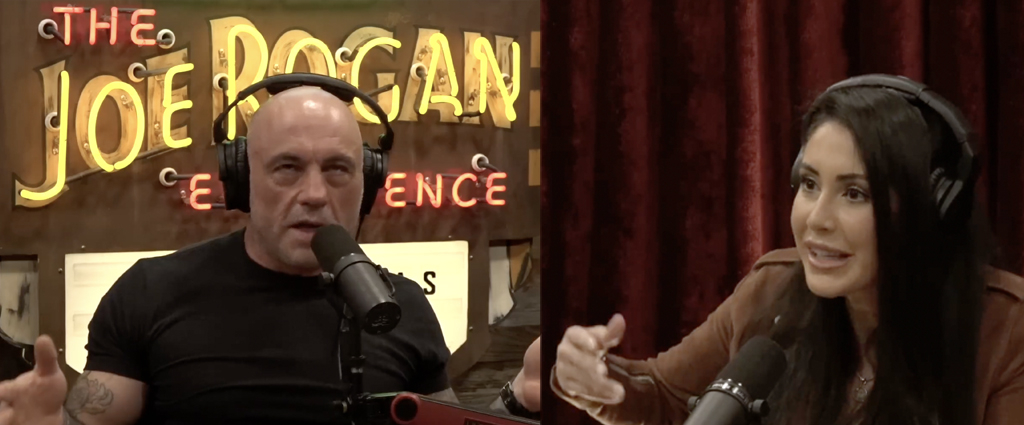
    Joe Rogan Podcast – Congresswoman Anna Luna

    Selected portions discussing the declassification task force may be found here.

    The full interview may be found here.

  • Mark Adamczyk’s Letter to Congresswoman Luna Regarding Declassification

    Mark Adamczyk’s Letter to Congresswoman Luna Regarding Declassification

    Via Federal Express Overnight Courier & Email

    U.S. House Representative Anna Paulina Luna
    Florida’s Thirteenth Congressional District
    9200 113th St. N., Office Suite 305
    Seminole, Florida 33772

    Re: Task Force on the Declassification of Federal Secrets (“Task Force”) –
           Official Record on the JFK Assassination

    Dear Congresswoman Luna:

    I am writing to congratulate you on the public hearings of April 1 and May 20, 2025. In those hearings, the Task Force created an important record on the secrecy surrounding the assassination of President John F. Kennedy.

    I am a Florida attorney and member of the Florida Bar since 2005. I am a co-author of The JFK Assassination Chokeholds, along with James DiEugenio who testified before the Task Force on April 1, 2025. I have studied the President John F. Kennedy Assassination Records Collection Act of 1992 (the “JFK Act”) extensively since 2017, the year when each assassination record was to be disclosed in full and available in the JFK Collection at the National Archives. While President Trump’s recent Executive Order and the focused efforts of the Task Force have certainly resulted in progress, the JFK Collection at the National Archives is still not complete as required by law. This letter will explain the serious continuing problems surrounding the JFK assassination records held by the National Archives and specifically what the Task Force can do to ensure that Congress’s mandate from 1992 is fully carried out and respected.

    At the May 20 hearing, you stated that the Task Force is not organized “to provide the definitive account of what happened to President Kennedy on November 22, 1963. Instead, the Task Force is meant to root out the hidden pockets of federal government that has for too long remained in the shadows and out of our reach…for even good faith investigators to reach.” I agree with that statement, and I believe the following information is critical to the stated mission of the Task Force.

    The hidden pocket that can and should be investigated going forward is the conduct of and obstruction by the National Archives with respect to JFK assassination records. On May 20, we heard Judge John Tunheim testify that the Assassination Records and Review Board (ARRB) never saw or had the opportunity to review many assassination records that were supposed to be at the National Archives for ARRB review and declassification decisions. Judge Tunheim also confirmed what he perceived to be the plan of agencies to “wait out” the ARRB, and then selectively turn over assassination records to the National Archives “at a later time.” As you are probably aware, these acts of obstruction of the ARRB mandate are and were a direct and flagrant violation of the JFK Act, and it is the chief reason why there is still not a complete and reliable collection of assassination records, despite President Trump’s recent Executive Order dated January 23, 2025.

    The following discussion will respectfully attempt to provide a guide-map on what the Task Force can do to ensure that there is a legitimate, comprehensive, organized and transparent collection of assassination records available to the public. This may not provide a definitive account of what happened to President Kennedy, but without strong action by the Task Force on the following issues, we can be sure that we will never have all assassination records generated by agencies that were always most concerned about maintaining their secrecy.

    Pre-ARRB Obstruction of the JFK Act

    As you know, the JFK Act was signed into law by Congress on October 26, 1992. The CIA knew that the ARRB would have unprecedented declassification authority and that the ARRB was mandated to review and make release decisions on each assassination record. Before the JFK Records Act even became law, the CIA was prepared with a plan to maintain maximum secrecy over its most sensitive assassination records. By February 1992 (eight months before the Act was passed), the CIA had already designed a written strategy to circumvent the JFK Act before the ARRB even took office.

    On February 10, 1992, the CIA’s Chief of History Staff authored a memorandum with the subject “Survey of CIA’s Records from House Select Committee on Assassinations Investigation”. This collection of files involved 64 boxes of CIA records sequestered by Congress for the HSCA investigation of 1977-1979. Specifically, this “Sequestered Collection” of CIA assassination records is described to contain:

    16 boxes of Lee Harvey Oswald’s 201 file and numerous loose folders (mainly from Mexico City Station records) collected for the Warren Commission

    34 boxes of material collected by the Directorate of Operations

    29 boxes of records from the CIA Office of Legislative Counsel, Inspector General, Office of General Counsel, Directorate of Science and Technology, Office of Security, and several boxes of HSCA staff notes and records

    72 microfilm reels (box no. 64), which include the Oswald 201 file and Mexico City Station records, as well as other 201 files and information about Cuban exile groups.

    Under the sub-heading titled “Sensitivity” (paragraph 5), the memorandum discusses a scattering of “Top Secret” and codeword documentation in this Sequestered Collection. Materials considered “especially sensitive” include “201 files, phone taps, mail intercepts, security files, photo surveillance, names of sources, watch lists and MHCHAOS documentation. Such material occurs throughout the collection, usually in response to HSCA requests for name traces. There are 22 microfilm reels of 201 files in addition to the Oswald file, while eight boxes contain security records, including for example, files on David Atlee Phillips, Martin Luther King, and Claw Shaw (sic).”

    In the section titled “CIA Complicity” in the JFK assassination, the memorandum states: “Our survey found nothing in these records indicating any CIA role in the Kennedy assassination or assassination conspiracy (if there was one), or any CIA involvement with Oswald.”

    [Note: We now know from recent testimony before the Task Force that the CIA without question had extensive operational involvement with Oswald.]

    After internal considerations of whether to fully close or open this Sequestered Collection, the memorandum states a final “Recommendation” (section 10):

    “I recommend that CIA transfer its entire HSCA collection (as defined and identified in this report) at its existing classification (emphasis added) to the National Archives and Records Administration (NARA), for continuing declassification review by Archives staff, in accordance with the relevant laws, regulations and CIA guidelines (emphasis added). This transfer should be earned out under the auspices of CIA’s Historical Review Program (emphasis added). To retire this HSCA collection to the National Archives offers some significant advantages…”

    The perceived advantage identified by the CIA was that a transfer of these HSCA records (Sequestered Collection) to the National Archives, before the establishment of the ARRB, would “protect their existing classification.”

    The memorandum concludes that “NARA must ensure the confidentiality of investigatory sources and the proper protection of personal privacy and national security information, including intelligence sources and methods. NARA would continue the court-ordered declassification review according to CIA guidelines (emphasis added). CIA can accelerate the declassification of this collection by funding review positions at NARA (emphasis added).

    The final Recommendation concludes: “If Congress should eventually undertake to open this entire Collection without regard to classification, the National Archives will be in a stronger position to protect its national security and privacy information than the CIA, whose motives would appear self-serving, if not sinister.”

    Why is this a serious problem? First, the CIA transferred sensitive HSCA records to the National Archives before enactment of the JFK Act, which subverted review by the ARRB. This may have only been proper if the Sequestered Collection was transferred to NARA and “made publicly available in their entirety without redaction” as provided in section 5(d)(3) of the JFK Act. Otherwise, only the ARRB had the authority to make final declassification decisions under specific standards in the JFK Act, with only the President having the authority to overrule the ARRB on its final decisions and orders. As Judge Tunheim confirmed in his May 20 testimony, the ARRB made those final decisions on over 27,000 records (where agencies sought postponement) that were provided to the ARRB for review under the JFK Act.

    A critical question for the Task Force is:    Was this sensitive Sequestered Collection of CIA assassination records provided to the ARRB with identification aids and RIF numbers for review by the ARRB under the JFK Act? Or was this Collection transferred separately to the National Archives under separate procedures, not authorized by the JFK Act, for review only by the Archivist and the CIA at a later point in time and under different standards that were favorable to the CIA? This CIA memorandum from February 1992 strongly suggests the latter.

    As the likely result of this CIA Memorandum of February 1992, a massive trove of CIA assassination records from its HSCA collection was shipped to the National Archives before the ARRB could start its work. Assuming that is true, these records were not assigned Record Identification Form (RIF) numbers and properly catalogued for mandatory ARRB review. This CIA strategy ended up giving the Archivist unauthorized and uncontrolled discretion over the CIA’s HSCA Sequestered Collection, controlled only by CIA guidelines, which is not permitted in any provision of the JFK Act. The Archivist and staff who controlled these records in the 1990s needs to be questioned about (a) exactly how the Archivist exercised his discretion pursuant to section 5(d)(3) of the JFK Records Act and (b) specifically about the extent of the HSCA/CIA records that did not receive a RIF number and were not disclosed to the ARRB for review and release final determinations.

    These are JFK assassination records of the CIA for the HSCA investigation, which are critical to the historical record. These are probably some of the most important CIA records out there because they were handled in a highly secretive manner before the JFK Act took effect. As discussed by James DiEugenio and Judge Tunheim before the Task Force, we know how hard the CIA fought the ARRB on postponement requests for records that were in the JFK Collection under the JFK Act. It is clear that this “Sequestered Collection” of HSCA records, apparently turned over in a clandestine manner to the National Archives before the appointment of the ARRB and without RIF numbers and proper cataloging, was even more sensitive to the CIA.

    Also note that this CIA Memo was not released by the Archives until November 1, 2021. The Identification Aid Form for this assassination record, as required by the JFK Act in 1992, was not generated until 2005. Not only is this delay and selective treatment of critical assassination records a direct violation of the JFK Act, but this CIA Memo is a prime example of the need for a full investigation of assassination records that were handled only the by the CIA and NARA before and after the ARRB and without any identification, cataloging, periodic review and mandated full releases on or before October 26, 2017 as required by the JFK Act.

    The link to this CIA memo is found here:

    https://www.archives.gov/files/research/jfk/releases/2021/docid-32404131.pdf

    I believe the February 10, 1992 Secret CIA Memo should be mandatory reading for the Task Force and a strong basis to take appropriate action to compel the Archivist to locate and determine the status of the entire HSCA Sequestered Collection. The CIA may still claim some equities in these records, but they are assassination records that must be reviewed for declassification under the standards of the JFK Act.

    ARRB Final Determinations and Periodic Review

    Judge Tunheim acknowledged on the record that the ARRB reviewed over 27,000 assassination records in response to postponement requests from agencies. As a result, each assassination record currently held in the “Protected Collection” at NARA is the result of an ARRB “Final Determination” under the JFK Act. When the ARRB made these final agency determinations on each record it reviewed between 1994 and 1998, it created an “ARRB Final Determination Notification” form (FDN). Each FDN included a specific standard under the JFK Act that formed the legal basis for postponement either in full or in part. The FDN also provided an unclassified reason for each postponement decision, along with the ARRB’s final determination for periodic review and/or release (e.g. a covert agent’s death, or a source or method no longer requiring protection).

    The mandate of Congress in the JFK Act was clear, as expressed in sections 5(g) and 9(c) of the JFK Act. After the ARRB made a final decision on a postponement request from agencies, that decision was published in an unclassified FDN. Agencies were notified of the decision to release or postpone until a specified date. If postponement was approved by the ARRB, originating agencies and the Archivist had a duty to periodically review those records until such time as a specified occurrence or other date (as identified by the ARRB) warranted a mandated release of the record. There is no record that any of this was undertaken by the Archivist of the United States. Only the location and status of the ARRB’s Final Determination Notifications can provide a basis to determine the status of the most important records reviewed by the ARRB. Once all of the Final Determination Notifications and associated assassination records are accounted for, the Task Force can confirm whether those critical assassination records have been disclosed and released in full in compliance with the law.

    Some may argue that the ARRB’s Final Determinations are merely recommendations and that all declassification authority ultimately lies with the President. That is only true to an extent. The ARRB’s Final Determinations are agency final orders. This is consistent with American administrative law principles. The ARRB was an independent government agency. The ARRB’s chief function was to make final declassification decisions on postponement requests. For each postponement request (in over 27,000 records), the ARRB held a meeting and heard the originating agency’s appeals. The ARRB made a final decision and notified the agency, thus ensuring due process to the agency. The ARRB also notified the President of its Final Determinations, and the President had 30 days under the JFK Act to override the ARRB’s decision. If the President did not exercise his authority to override the ARRB, the ARRB’s decision became a final agency order that the Archivist was required to follow.

    Why is this information so critical? Lawyer Andrew Iler recently uncovered a Memorandum of Understanding (MOU) prepared by ARRB chief counsel Jeremy Gunn with respect to the President’s 30-day window to override any ARRB final determinations. Mr. Iler is also a co­author of The JFK Assassination Chokeholds, and I consider him to be the world’s leading expert on the JFK Act and how it was intended by Congress and the ARRB to operate. The ARRB realized it was practically impossible for President Clinton to review over 27,000 ARRB final declassification orders in short order, so Dr. Gunn and the ARRB simplified the process for the President. If the President wished to override any ARRB final decisions under his authority in the JFK Act, he could do so within 30 days of notification from the ARRB. If the President did not respond with a written certification overriding the ARRB’s decision(s), it would be deemed Presidential Certification and consent to the ARRB’s Final Determination under the JFK Act. Mr. Iler discovered clear written confirmation that President Clinton approved this MOU with the ARRB. Please refer to: https://jfkchokeholds.com/wp-content/uploads/2025/05/Box09-Folder13- 9504452-Pages015-021.pdf

    The result of President Clinton’s approval is that the ARRB’s Final Determinations for assassination records in the Protected Collection are the final and binding authority for declassification. As such, the National Archivist was required to periodically review these FDN’s, without new appeals and interference from agencies on the same records, and abide by the declassification decisions of the ARRB (which were certified by President Clinton).

    Between September 1998 and October 26,2017, virtually no mandatory periodic review took place as required by sections 5 and 9 of the JFK Act. If this mandatory periodic review had occurred, by October 26, 2017 there should have been very few records left in the Protected Collection held at the National Archives.

    Instead, because of the Archivist’s failures to abide by the JFK Act for 25 years and the unwarranted interference from the intelligence community at the eleventh hour, President Trump was pressured to delay the declassification process for an undetermined number of unidentified assassination records, which we know he did not want to do in 2017. If the Archivist had followed its ministerial duties under the JFK Act and provided President Trump with the handful of remaining withheld records (if any) and the corresponding ARRB’s Final Determinations, President Trump could have simply followed precedence established by President Clinton and the job would have been done with respect to records actually made available to and reviewed by the ARRB. [1]

    To compound all of these problems, the ARRB Final Determinations have been unlawfully kept secret at the National Archives and the public has been denied access to these critical, binding and enforceable legal orders.

    To resolve the actual status of the ARRB’s Final Determinations and the associated assassination records, Andrew Iler recently made a FOIA request to NARA for copies of the FDN’s (there should be over 27,000 of them at NARA), and he personally visited the National Archives with other researchers in College Park, Maryland in November 2024 in search of the FDN’s.

    Mr. Iler has written about this experience at the National Archives. He has also thoroughly researched and written about the ARRB’s operations and the critical historical importance of the ARRB’s Final Determinations. When Mr. Iler and his colleagues finally obtained a box of FDN’s at the Archives, they were only provided with approximately 450 of them by complete coincidence. That is less than 2% of what NARA should have been able to produce on this visit in response to a very focused records request.

    In response to Mr. Iler’s FOIA request to NARA for digital copies of the ARRB’s Annual Reports and Final Determination Notifications, NARA sent an email to Mr. Iler dated June 13, 2025, which states:

    “Thank you for your follow-up message regarding your request (our tracking number RF 25-32296) for digital copies of the Assassination Records Review Board’s (ARRB) Annual Reports and Final Determination Notifications. We have not been able to identify any additional digital Annual Reports for Fiscal Years 1997 and 1998 or a set of Final Determination Notifications [emphasis added]. As my reference colleagues noted, a search of the ARRB finding aids and the Online Computer Library Center (OCLC) only identified Annual Reports for Fiscal Years 1995 and 1996. We have not located any evidence that the ARRB produced Annual Reports in 1997 or 1998.”

    This is a remarkable response from NARA considering that they produced approximately 450 FDN’s to Mr. Iler and his colleagues at their physical inspection at NARA in November 2024. As of June 13, 2025, NARA’s official position is that the National Archives has no record of the ARRB’s meticulous review and final postponement decisions. These are the very records that were required by law to serve as the basis for NARA’s duty under the JFK Act to periodically review and ensure an accountable, transparent and enforceable process to downgrade and declassify the Protection Collection.

    Mr. Iler’s published articles on these issues are also critical reading for the Task Force. They can be found at the following links on James DiEugenio’s website, “Kennedy’s and King”:

    https://www.kennedysandking.com/john-f-kennedy-articles/why-are-we-still-declassifying-jfk-records-critical-arrb-final-determinations-buried-and-ignored-part-1

    https://www.kennedysandking.com/john-f-kennedy-articles/critical-arrb-final-determinations-buried-and-ignored-part-2

    Post-ARRB Activity at NARA – Periodic Review Failures

    The issue of the ARRB’s Final Determinations covers the serious problem at NARA with respect to records that agencies did turn over to the ARRB for review of postponement decisions. What about records that were not made available to the ARRB as required by law? This also requires serious investigation in light of Judge Tunheim’s compelling statement to the Task Force on May 20, 2025 about the CIA “waiting out the ARRB” and his observation that records were sent to NARA “at a later time.”

    As discussed above, the winding down of the ARRB did not excuse NARA from continuing to collect, organize and downgrade declassification of assassination records. However, neither the Archivist nor originating agencies had the legal authority to make declassification decisions on their own after the ARRB. Only the ARRB had that authority with respect to each and every assassination record that existed as of October 26, 1992.

    For the records not made available to the ARRB, and for agencies and government offices that “waited out” the ARRB and haphazardly sent records to the National Archives after the ARRB’s tenure in violation of the JFK Act, that is a wholly separate investigation. The Archivist should be questioned on activities at NARA after the ARRB. Were the records received at a “later time” inventoried and assigned RIF numbers for cataloging and indexing as part of the JFK Collection? Exactly who reviewed them for downgrading and declassification, and when? The Archivist has a duty to collect and catalog records, however, neither the Archivist nor agencies had independent authority under the JFK Act to perform the actual declassification decisions mandated by Congress in 1992.

    A prime example was the FBI release of approximately 2,400 records in response to President Trump’s 2025 Executive Order. How did this happen, and how many other similar incidents of this occurred after 1998 when the ARRB left office? Until these records are accounted for and declassification decisions are made under the standards of the JFK Act, an accurate collection and accounting of JFK assassination records in the possession of agencies is not complete.

    A strong solution for ensuring the complete accounting for and declassification of assassination records is the appointment of a new ARRB, or similar independent agency. This is completely consistent with section 12(b) of the JFK Act, which states:

    “The remaining provisions of this Act shall continue in effect until such time as the Archivist certifies (emphasis added) to the President and the Congress that all assassination records have been made available to the public in accordance with this Act.”

    In summary, the ARRB could only review and make declassification decisions on records that were available to it under the JFK Act. As explained above, the ARRB did just that and issued Final Determinations on each record where agencies sought postponement. For the undetermined number of records that were not made available to the ARRB, the Archivist cannot possibly comply with section 12(b) and issue a certification of final disclosure until those records are located and reviewed by a new ARRB (or similar independent agency), or Congressional oversight committee under the JFK Act (specifically, section 6). Assuming that there is no legitimate reason to protect information in those records in 2025 under section 6 of the JFK Act, those records can also be accounted for in a complete and reliable collection of JFK assassination records at the National Archives.

    Conclusion and Recommendations

    It is clear that the CIA and other agencies subverted the entire JFK Act from even before its passage in October 1992. Another recent example of this is the release of certain CIA files on officer George Joannides. The Task Force should certainly be commended for compelling the CIA to release more files on George Joannides, which further demonstrate the CIA’s focused effort to obstruct the HSCA investigation and conceal the CIA’s intelligence connections to and operational use of Lee Harvey Oswald. However, there should be no tolerance for any kind of CIA policy to omit disclosure of its operational files that are related to the assassination. If the CIA can demonstrate a need in 2025 for continued postponement under section 6 of the JFK Act, that postponement decision should be made independently and with appropriate oversight as discussed above.

    For those who may claim that the CIA, the Archivist or other agency are permitted to employ separate policies or rules for declassification of certain assassination records, I believe the correct response is found in sections 2(a)(5) and 2(a)(6) of the JFK Act. Those provisions collectively state that the JFK Act was necessary because FOIA and Executive Order No. 12356 (entitled “National Security Information”) have prevented the timely disclosure of records relating to the assassination of President Kennedy. Further, section 11(a) of the JFK Act makes it clear that when the Act requires transmission of a record to the Archivist for public disclosure, that the JFK Act takes precedence over any other law, judicial decision or common law doctrine that would otherwise prohibit such transmission or disclosure. [2]

    The bottom line is that the JFK Act is the binding and ultimate legal authority with respect to any government record that is related to the assassination of President Kennedy. A thorough investigation of the CIA and the National Archives on the handling of assassination records before, during and after the tenure of the ARRB is critical to the stated goals of the Task Force. I believe that Congress has a duty under the JFK Records Act to conduct exactly this kind of oversight.

    Recommendations

    1. Conduct a hearing with past and present senior officials from the CIA and National Archives regarding the handling of the CIA’s Sequestered Collection of HSCA assassination records. These are legislative branch records, and while the CIA may still claim certain equities in these records, they are assassination records that must be reviewed by the Task Force or appropriate oversight committee(s) under the standards of the JFK Act for declassification. The executive branch (e.g. the CIA and the National Archives) should not have unfettered authority to seize control of and make its own classification decisions on these records.
    2. In the same hearing, seek answers on whether operational files of the CIA or other agencies were excluded from disclosure to the ARRB and on what basis.
    3. Conduct a hearing with senior officials from the National Archives regarding the ARRB Final Determinations, their location and status, and the disclosure status of each associated assassination record reviewed by the ARRB.
    4. Conduct a hearing with senior officials from the National Archives regarding each assassination record transferred to NARA after the ARRB’s termination, their location and disclosure status at NARA.
    5. Demand the National Archives to comply with the JFK Act and finally create and maintain a comprehensive and searchable catalog and index of all assassination records in the JFK Records Collection. It is critical for the public to know precisely what is actually held and maintained at NARA at this time.

    Finally, there may be some who believe that the Task Force does not have enough time to investigate the CIA and National Archives on these issues. I do not believe that is the case. Section 4(e) of the JFK Act provides express oversight authority and jurisdiction over the JFK Collection to the Committee on Government Operations of the House and the Committee on Governmental Affairs of the Senate. There is no time limit on that unlimited oversight authority in the JFK Act. Important work can still be done by Congress until the Archivist can legitimately make its required final certification required by section 12(b) of the JFK Act.

    Thank you for your attention to these details and to these important remaining issues. I remain available to meet with you and your colleagues to discuss the above matters and recommendations as may be of assistance to you.

    Respectfully Submitted,

    Mark E. Adamczyk, Esq.

    cc: Washington D.C. Office, 226 Cannon House Office Building, Washington, D.C. 20515

    [1] It is critical to note that the ARRB’s Final Determinations and the associated records were the most important historical work performed under the JFK Act. These are the records that agencies provided to NARA for ARRB review and fought fiercely with the ARRB to protect. Due to the Archivist’s failure to perform its ministerial duty of periodic review, there were still an undetermined number of assassination records being fully or partially withheld by NARA in October 2017, which put President Trump in a difficult position. An accurate number was impossible to calculate because of the broken down and functionally inoperable identification aid and cataloging program that NARA and agencies failed to adequately maintain pursuant to their legal mandate. ARRB staff provided NARA with a meticulous digital cataloging program for NARA to use for periodic review, downgrading and final declassification after ARRB termination and ultimately disclose every assassination record to the public in accordance with the ARRB’s Final Determination. There is simply no valid excuse for this failure of the Archivist to perform functions that were integral to the JFK Act.

    [2] The only exceptions under section 11(a) are section 6103 of the Internal Revenue Code and deeds of gift.

  • Larry Crafard – The Leads the Warren Commission Lost – Part 2

    Larry Crafard – The Leads the Warren Commission Lost – Part 2

    Larry Crafard – The Leads the Warren Commission Lost – Part 2

    By John Washburn

    LEAD V

    Crafard’s alibi for November 22

    Crafard, when interviewed by the FBI on November 29, 1963, claimed he was sleeping at the Carousel Club during Kennedy’s assassination on November 22. He stated he overslept and was awakened by a phone call from Armstrong at 11:30 am and then again in person between 12:30 and 12:45 pm.

    With Ruby detained for Oswald’s murder, Andrew Armstrong managed the Carousel Club. An African American who handled the bar and cash takings, Armstrong was interviewed by FBI Agents Lish and Wilson on November 25, 1963 (CE5310-A). His testimonies are consolidated as CE5310 A-G here.

    That first interview focused on Jack Ruby, his reactions to Kennedy’s assassination, and a list of club employees. Crafard was not mentioned.

    Agent Lish (CE5310-B) visited Armstrong again that day, and Crafard was of interest, likely after Patterson’s lead. The second interview revealed Crafard had left on Saturday, and his whereabouts were unknown. But Armstrong found and handed over Crafard’s notebook, entered into evidence as CE5230. A typewritten transcript of it was made on November 27, which is on file but not included in the Commission’s evidence.

    FBI Agents Peggs and Zimmerman then made a third visit on November 26 (p.288 WC files, no exhibit). Because Armstrong had found a letter from Crafard’s cousin, Gail Cascadden, which listed her address as Box 303, Harrison, Michigan. Page 288 includes the notebook transcription and a typed copy of Gail’s letter. It was that letter which enabled the FBI to trace Crafard to rural Michigan, where he was found on November 28.

    Only on January 23, 1964, to Agents Sayer and Clements (CE5310-G), did Armstrong provide an alibi for Crafard regarding November 22, 1963. But Armstrong did not then (nor ever) mention Crafard’s claim of being awakened at 11:30 am.

    Armstrong’s improbable journey

    Armstrong lived at Dixon Circle, Dallas, over 4 miles due east from Downtown.

    Armstrong testified on April 14, 1964, that his regular working hours were from 1:00 pm to 1:00 am, and he typically left home at noon to catch the bus from Dixon Circle to Downtown. That would have been the 12/50 bus route along Scyene Road (Dallas City bus map). Armstrong said that he usually unlocked the club just before 1:00 pm and stocked the refrigerator so that the beers would be cold later in the day.

    In his January 23, 1964, FBI statement, Armstrong said that on November 22, 1963, he boarded a bus near his home at 11:53 pm, arrived at Main and Akard at 12:25 pm, missed the motorcade, but saw it was west at Main and Lamar before walking to the Carousel, arriving at 12:30 pm. The Carousel Club was on Commerce near Field, one block south of Field and Main. It would be a 2–3-minute walk from Main and Field to the Carousel.

    He said he took his jacket off and went to the men’s room. When he left there, he said he was curious about hearing sirens and hence got a transistor radio and listened to KLIF Dallas. Then he heard the President had been shot and tried to wake Crafard, but Crafard did not wake. He listened for two minutes more, then heard the President had gone to Parkland. Then he woke Crafard.

    He said that 15 minutes later, Ruby called from the Dallas Morning News and asked, “Had he heard the news?” He then said if “anything happens to Kennedy, the club will close.” He carried on listening until the announcement that Kennedy was dead at 1:30. He said Ruby arrived at 1:45-2:00 pm. Ruby said “what a terrible thing,” and the club would close for 3 days. Ruby made calls. Then he heard the announcement of the death of Tippit. (CE5310-G p320.)

    If Armstrong was on a westbound bus on Main Street, missing the motorcade but still seeing part of it further down (by his description, three blocks down), then there is a very narrow time window in which his arrival can have occurred.

    The Motorcade – running 5 minutes late – entered Main Street at Harwood (at City Hall) at 12:25 pm and was at Field and Main at 12:27 pm, Main and Houston at 12:29, and Kennedy was assassinated on Elm at 12:30 pm.

    If Armstrong was on a bus ahead of the motorcade, he would have observed the entire event. So, to have just missed it, Armstrong would have had to have arrived on Main immediately after the motorcade had, approximately 12:26 pm. But when he testified to the Commission, he claimed to have arrived at the Carousel at 12:15-12:20 pm. That places him at least 5-10 minutes ahead of the motorcade, and he wouldn’t have missed any of it.

    Further, if Armstrong could get from Dixon Circle to Main Street on a noon bus that could get him to the Carousel that quickly, then, on a normal working day, he would be arriving over half an hour too early for his 1:00 pm arrival. Added to which a noon bus from Dixon Circle would be hard pushed to arrive on Main in 20 minutes, even in normal day traffic conditions.

    But Armstrong then undermined his account even further. He testified he got up at 9 am, took the noon bus to see the parade, and stopped at Moore’s Barbers on the way. Merely adding the haircut time would have made it impossible for him to reach Main Street until well after 12:30 pm.

    The Dallas City Directory shows there were two Moore’s Barber Shops, 1124 S Haskell and 1125 Stonewall. Both of those were several blocks north of the Scyene bus route, a ten-minute walk. That detour would add an extra 20 minutes.

    This is what Armstrong said to the Commission about the barbers.

    Mr. HUBERT. And you got to the club about what time?

    Mr. ARMSTRONG. It must time been about 12:15-12:20, or something like that, because when I got downtown I could see portions of the parade, you know, like I got off of the bus at Main and Field- at Main and Akard, I’m sorry, which is the usual stop, I always get off at Main and Akard, and further down you could see portions of the parade, but I felt that I had missed the parade I didn’t realize that I had missed the parade until I was in the barber shop and thought, well, maybe I’ll get downtown, I said to myself, and I will see some portion of it, but when I got downtown I was surprised to see that the parade had moved forward – further down.

    Anyone who’d left home at noon and intended to stop by the barbers shouldn’t have been the least bit surprised. With the motorcade scheduled for 12:20 pm on Main, he could not have made it.

    Crafard and the sleep story

    Hubert asked Armstrong if he had called Crafard to wake him up (Crafard’s 11:30 am call claim). Armstrong said no and added that he didn’t usually wake him even if he was asleep upon arrival.

    Armstrong’s account of the events at the Carousel Club was also inconsistent. On January 23, 1964, he told the FBI that he went to the restroom when he heard sirens and learned of the assassination via a transistor radio. He ran to wake Larry, found the door open, but despite his efforts, Larry fell back asleep. Armstrong then returned to the restroom without waking Larry.

    Gary DeLaune, a news anchor at KLIF radio in Dallas, Texas, was the first to break the news at 12:40 pm. CBS-TV, with sound only, started at 12:45 pm. WFAA Dallas started live TV at 12:45 pm with Bill and Gayle Newman, the closest civilian eyewitnesses to the fatal shot to Kennedy’s head.

    Armstrong then said he heard further reports, and 2 minutes later, he went to wake Larry up, and this time, Larry got up and dressed.

    That places Armstrong in the restroom from 12:15 pm to 12:40 pm on one account (for the Commission) and 12:30 pm-12:40 pm on the other (for the FBI).

    However, Armstrong’s inconsistent and impossible ‘alibis’ for Crafard were blown apart by Crafard himself when he testified in Washington on 8th, 9th and 10th April 1964. WC Vol XIV.

    Crafard was actually an early riser.

    Mr. HUBERT. Do you drink much?
    Mr. CRAFARD. Very seldom. I drank, I think, three or four different times while I was there that I drank a beer or two, that was all.
    Mr. HUBERT. So that your heavy sleep on the morning of the 22d couldn’t be attributed to the fact that you had a hangover?
    Mr. CRAFARD. No.
    Mr. HUBERT. Or that you were suffering from any overindulgence in alcohol?
    Mr. CRAFARD. No, sir.
    Mr. HUBERT. You don’t take any kind of sleeping pills or anything like that?
    Mr. CRAFARD. No, sir.
    Mr. HUBERT. So this was just normal sleep?
    Mr. CRAFARD. Yes.
    Mr. HUBERT. And his call failed to wake you?

    Mr. CRAFARD. I left the 23d of November, I believe it was.
    Mr. HUBERT. What were your hours there?
    Mr. CRAFARD. Any hours. I would just get up, I usually got up about 8 o’clock in the morning and I would be lucky if I would get to bed before 3:30, 4 o’clock.
    Mr. HUBERT. How come you would get up so early?
    Mr. CRAFARD. Get the club cleaned up.
    Mr. HUBERT. Wasn’t there a man to help?
    Mr. CRAFARD. I took care of that mostly myself

    Mr. CRAFARD. If I started cleaning up at 9 o’clock I would be finished by 11:30.

    Mr. HUBERT. In other words, you had 2 1/2 hours?

    Mr. CRAFARD. Yes.

    Mr. HUBERT. Were you then usually free?

    Mr. CRAFARD. No. Jack would come in about 11:30 and be there 2 or 3 hours. After he left I had to stay there and answer the phone.

    Mr. HUBERT. What was the purpose of keeping you around the club after your cleanup job was over?
    Mr. CRAFARD. So far as I understand just mostly answer the phone.
    Mr. HUBERT. Were there many phone calls to be answered?
    Mr. CRAFARD. There was quite a few that would come in–generally, usually, people calling in, would start calling in about 1 o’clock for reservations.

    The cold beer story

    Then, contrary to Armstrong’s account of leaving home at noon on November 22, 1963, Crafard’s testimony put Armstrong arriving at the club at 9:30 am.

    Mr. CRAFARD. Andy woke me that morning. He come in early. Andy always put the beer in and he come in early to do that so that he could have the rest of the day off.

    Mr. HUBERT. What time did Andy come in?

    Mr. CRAFARD. I think it was about 9:30 or something like that.

    Mr. HUBERT. Came in personally?

    Mr. CRAFARD. Yes. He was there when the President was shot.

    Mr. HUBERT. Were you asleep when he came in?

    Mr. CRAFARD. I was asleep when he came in.

    Mr. HUBERT. Did you waken up when he came in?

    Mr. CRAFARD. I didn’t wake up—Andy woke me up and told me that the President had been shot.

    There seems to be some confusion here. And Hubert should have clarified it. Because if Armstrong came in that early, he could not have told Crafard about the JFK murder. Jack Ruby did little to help.

    Ruby on June 7, 1964, told the Warren Commission party at the jail, regarding his actions when he was at the Dallas Morning News: “I could have called my colored boy, Andy, down at the club. I could have-I don’t know who else I would have called, but I could have. Because it is so long now since my mind is very much warped now.”

    If Crafard was at the club and Armstrong was having a half day, then Ruby would have expected to have called Crafard. Did Ruby think that Crafard was not going to be there?

    Crafard didn’t even sleep at the club towards the end

    Stripper Karen Carlin ‘Little Lynn’, who testified before Hubert on April 15, 1964 (WC Vol XIII), said Crafard did not sleep at the club. She said she worked at the Carousel for 2 months before the assassination, to the end of December 1963, and she worked 7 days a week.

    Mr. Hubert. Do you remember a man that stayed there and slept on the premises?

    Mrs. Carlin. No; I don’t know of anyone that did. Andrew was the only one I knew that ever spent the night there, and that was just because he would say so the next evening. He said, “I am tired.” He said, “I had to stay here all night.”

    Mr. Hubert. I might add that this man Larry’s full name was Curtis Laverne Crafard.

    Mrs. Carlin. Yes. That was a little young boy, the one that worked the lights.

    Mr. Hubert. He stayed on the premises?

    Mrs. Carlin. Yes. But he stayed next door most of the time. I know he was sleeping there for a while, but Jack put a stop to it.

    Mr. Hubert. You mean Jack wouldn’t let him sleep in the club?

    Mrs. Carlin. Jack didn’t like him sleeping there, because there was too many things gone.

    Mr. Hubert. Then he made him go next door?

    Mrs. Carlin. He went next door. I don’t know who was next door or what it was next door, but he went next door.

    Mr. Hubert. But what you heard was that this man had, Crafard, Curtis Laverne Crafard had been staying on the premises, but that Jack had put a stop to it and made him move to some place next door, but you don’t know which next door?

    Mrs. Carlin. Yes.

    Mr. Hubert. Who did you hear this from?

    Mrs. Carlin. It was from Larry. He was taking care of the dogs or something.

    Mr. Hubert. He told you he had to move out?

    Mrs. Carlin. Yes.

    Mr. Hubert. Out of the premises altogether?

    Mrs. Carlin. No. He just said, “I am going to have to move. I can’t stay here. I don’t know where I am going to get the money, but I am going to have to move.”

    Mr. Hubert. That must have happened just before the assassination of the President?

    Mrs. Carlin. Yes. After that I didn’t see Larry no more.

    Mr. Hubert. So to your knowledge he never did actually move, but just said he was going to have to move, and he informed you that Jack had told him he would have to move?

    Mrs. Carlin. Yes.

    Mr. Jackson. When you say move, you mean move out at night and not sleep there?

    Mrs. Carlin. Yes.

    Mr. Hubert. That is what I meant, to move next door, I think is what you meant?

    Mrs. Carlin. Yes.

    (The Jackson who interjected was her attorney.)

    In her FBI statement of November 26, 1963, taken at the Carousel Club to agents Peggs and Zimmerman (Tuesday) CE5318, Carlin said that she’d last seen Ruby at the club the night before the assassination.

    By all that, Carlin didn’t see Crafard at the club after he’d moved out of it, and that was before the assassination.

    “Next door”, may have been the Colony Club. Crafard’s not being at the Carousel Club would be due to his working at the Vegas Club near Lucas B&B, which is where he was seen by Mary Lawrence, as confirmed in Crafard’s November 28, 1963, FBI statement. But Crafard, when he testified, left out any mention of working at the Vegas Club before the assassination.

    Mr. CRAFARD. I have tried to think of what I was doing before, the night before [the assassination], a couple nights before, or something like that. I don’t recall anything out of the ordinary.
    Mr. HUBERT. If it was the ordinary, then I suppose it would have been that the club closed up at its usual hour.
    Mr. CRAFARD. As far as I recall, yes.
    Mr. HUBERT. And you were still sleeping there?
    Mr. CRAFARD. Yes; I was still sleeping there.
    Mr. HUBERT. So you would have gone to sleep?
    Mr. CRAFARD. Yes, sir.
    Mr. HUBERT. And then I suppose Ruby would have wakened you?
    Mr. CRAFARD. Andy woke me that morning. He come in early. Andy always put the beer in and he come in early to do that so that he could have the rest of the day off.

    Was Armstrong trying to give Crafard an alibi? But in doing so, Armstrong got tied in knots and created a highly improbable travel time scenario for himself, which Crafard himself seemed confused about.

    Armstrong testified at Ruby’s trial in March 1964 and told the Warren Commission he spoke with Crafard, who also testified for Ruby, in a courtroom corridor. That brief interaction likely did not give them time to align their stories.

    Crafard and the TV

    Crafard claimed to be watching TV after the assassination. Hubert tested him.

    Mr. HUBERT. It was a Dallas station or a Fort Worth station?
    Mr. CRAFARD. It is one there they call the Dallas-Fort Worth, WWTV12, I think it is.
    Mr. HUBERT. KLRD, is that what it is?
    Mr. CRAFARD. I don’t know what station it is. I am not sure whether it was WWTV.
    Mr. HUBERT. How long did you stay there watching?
    Mr. CRAFARD. We turned it up real loud where we could hear it and then listened to his radio, too, where we would hear both of them.
    Mr. HUBERT. Go ahead, what happened next?
    Mr. CRAFARD. I don’t recall exactly what was said except the fact that the President had been shot.
    Mr. HUBERT. How long did you continue to watch it?
    Mr. CRAFARD. We watched it right up until–most of the day, I think, we had the television on there, then, most of the day.

    A remarkably vacant memory for some very eventful testimony by, for example, Bill and Gayle Newman, taking up much of the coverage.

    In CE2430, a very late interview with the FBI on August 27, 1964. Crafard stressed that he was with Ruby when they both heard of the death of Tippit – by name – and the death of Kennedy.

    However, Kennedy’s death was announced at approximately 1:35 pm by TV and around 1:25 pm by radio. There was no announcement of the death of Tippit by name before Oswald’s arrest at the Texas Theatre at 1:50 pm. Indeed, by 2:00 pm, the DPD radio tapes show that Tippit’s wife had not been told.

    Whereas Armstrong in his FBI interview of January 23, 1964 CE5310-G says, correctly, that the name of Tippit didn’t appear until after the official announcement of the death of Kennedy. He said Ruby arrived 15-20 minutes after the official announcement of that, and then made one or two phone calls in about 5 minutes. It was after this, when KLIF mentioned the names of Tippit and Armstrong, he said that Ruby told him he knew Tippit. There is no mention of Crafard.

    LEAD VI

    Crafard and the police badge

    There is also this detail in Karen Carlin’s FBI statement,

    “She said that LARRY attempted to impress her by showing her a badge and telling her that he was a policeman.”

    In my “Death of Tippit article, I suggested that Tippit was waiting at Gloco, the end of the Houston Street Viaduct, to pick up whoever was on the Beckley bus, acting out the narrative that it was the way Oswald was making a getaway from Downtown. When Oswald most likely had actually been driven to the Theater in a Rambler.

    It is also important to remember why Karen Carlin was asked to testify. She was a key witness for the official line that it was her telephoning Ruby for her wages that caused him to be at Western Union opposite City Hall at 11:15 am on November 24 (Sunday), where he then happened on the transfer of Oswald.

    However, she actually said two things contrary to that line. She testified that Ruby said on Saturday, November 23, 1963, “I don’t know when I will open. I don’t know if I will ever open back up. And he was very hateful.”

    That seems to suggest premeditation by Ruby, perhaps having an inkling of the consequences of what he was going to do next, to Oswald.

    Also, when she testified to the Commission, she said that Ruby had said to her on the telephone on the morning of November 24 (she in Fort Worth, he at his apartment on South Ewing), “Well I have to go downtown anyway”.

    Ruby himself, when he testified after his trial, said. “So my purpose was to go to the Western Union–my double purpose but the thought of doing, committing the act wasn’t until I left my apartment.”

    Having a ‘double purpose’ in going to Western Union also indicates premeditation.

    LEAD VII

    The incredible journey. How did Crafard get to Michigan?

    Crafard said he took Routes 66 and 77, passing by Oklahoma City, St Louis, MO, then the outskirts of Chicago, IL. From there to Lansing, MI, Mount Pleasant and then Clare, MI, where he arrived at 9:00 pm on Monday, November 25, and stayed with his cousin, Clifford Roberts. A total distance of 1,282 miles.

    Crafard said that the 59-hour trek began when he decided to leave Downtown Dallas at 11-11:15 am on November 23 (Saturday). He had only $7 on him, he was carrying two bags, and he walked 15-18 blocks until he hitched a ride.

    Remarkably, he said the first ride was from a person he knew from the State Fair, but did not know his name.

    Mr. HUBERT. Did you walk there?
    Mr. CRAFARD. I walked out about 15 or 18 blocks, I think it is, and a guy I had met out at the fair picked me up. He saw me.
    Mr. HUBERT. Did you arrange for him to pick you up?
    Mr. CRAFARD. No; he was going by, he saw me, and he recognized me.
    Mr. HUBERT. What is his name?
    Mr. CRAFARD. How’s that?
    Mr. HUBERT. What is his name?

    Mr. CRAFARD. I don’t remember what his name is. He worked out there for a while. I never did know his name. I don’t think he knew my name. He recognized me as having worked out there.
    Mr. HUBERT. You were on the highway hitchhiking at that time?
    Mr. CRAFARD. That’s right.
    Mr. HUBERT. Did you have a bag?
    Mr. CRAFARD. Yes.
    Mr. HUBERT. How large was it?
    Mr. CRAFARD. It was a regular satchel and I had another bag

    Hubert elsewhere displayed incredulity about the tale of rides and the fact that Crafard said he had $7 on leaving Dallas. But he still had $3 left when he left Clare on Tuesday to go to Harrison. –This was to visit his aunt Esther Eaton and cousin Gale Cascadden – where he stayed the Tuesday night and then hitched to Kalkaska (another 85 miles) to stay with his sister Cora Ingersoll, Wednesday night. It was there that he was traced by the FBI, and he was interviewed on the 29th ( the day after Thanksgiving), in the morning at nearby Bellaire, MI.

    Assuming that the first ride from Dallas was around noon, with Crafard saying he arrived in St Louis around 6:00 am on Sunday, then that was 705 miles in 18 hours, averaging 39 mph. 

    Then he said he did St Louis to the Chicago outskirts. I measure that distance as Country Club Hills, where the road bears to Michigan, at about 284 miles. He told Hubert he arrived there at 2 pm on Sunday. That’s 8 hours, averaging 35.5 mph and the whole Dallas to Chicago journey averages 37.6 mph. After that, his description of getting from the Chicago outskirts to Clare breaks down as: to Lansing, 212 miles, then Mount Pleasant, 69 miles and then Clare, 16 miles, arriving 9 pm, Monday.

    That’s 31 hours, averaging 9 mph. Had he averaged 35 mph, he could have done it in 8 hours. But Crafard did not describe any long stops, sleepovers, or waits for lifts. He described near continuous travel. Hubert picked up that the final 16 miles from Mt Pleasant to Clare, according to Crafard, took 12 hours.

    Mr. HUBERT. Then there is some mistake in timing of about 12 hours.

    Mr. CRAFARD. That is what I was saying. I’ve lost some time there

    Mr. HUBERT. It may be that you are making a mistake, Larry. Let’s see if we can’t refresh your memory from the time you got that last long hitch that took you to Mount Pleasant because you remember getting to Mount Pleasant at night, about 8:30.

    Mr. CRAFARD. Yes.

    Mr. HUBERT. And that, you say, is a run of what–about 5 hours, 6 hours?

    Mr. CRAFARD. I don’t believe it would take that long.

    Mr. HUBERT. So if you got there at about 8:30 at night, then either you didn’t get any hitches for a long period of time, or else something else happened.

    Mr. CRAFARD. I’m just trying to—-

    Mr. HUBERT. Because you told us, and if it is not so, why we want you to correct it. Everybody can make mistakes.

    Mr. HUBERT. You said that you picked up this ride at a point 60 miles outside of Lansing and into Mount Pleasant prior to dawn on the 25th. Now, maybe that is wrong. Maybe you got that ride late in the day. Let’s put it this way. Was that a continuous ride straight on?

    Mr. CRAFARD. It carried me straight on through to Mount Pleasant.

    Mr. HUBERT. Did you stop at all?

    Mr. CRAFARD. Not that I can recall. It isn’t that long a run across there.

    Mr. HUBERT. Did you stop for lunch or anything of that sort?

    Putting all into context. Crafard got from Dallas to the Chicago end of Lake Michigan in 1 day 2 hours, 77% of the distance. But he took 1 day, 7 hours to travel 23% of the trip, within Michigan itself. Hubert spotted that the most egregious time discrepancies occur from when he said he missed Chicago by bypassing it.

    Mr. HUBERT. He didn’t take you through Chicago?

    Mr. CRAFARD. No; I bypassed most of Chicago.

    Mr. HUBERT. How did you do that?

    Mr. CRAFARD. On a couple alternate routes.

    Mr. HUBERT. With hitchhikers?

    Mr. CRAFARD. Different rides.

    Mr. HUBERT. Different rides?

    Mr. CRAFARD. Yes.

    Mr. HUBERT. How many?

    Mr. CRAFARD. I got three or four different rides in Chicago.

    Mr. HUBERT. With these several rides around Chicago, bypassing it, how long did it take you to get around Chicago?

    Mr. CRAFARD. Probably 2 or 3 hours.

    Mr. HUBERT. And these were all short ones?

    Mr. CRAFARD. Yes.

    We can almost see Hubert raising his eyebrows.

    When did Crafard hear Ruby had shot Oswald?

    Ruby shot Oswald on live TV at 11:21 am on Sunday. By Crafard’s described journey, Oswald was shot when Crafard would have been heading to Chicago; then he had 3-4 rides bypassing it, then he took the one to Lansing. That is 5-6 rides, with the opportunity to hear the radio news of the big story, or any of the drivers commenting on it if they’d already heard it.

    Earl Ruby testified (Vol XIV) that he heard at noon that day, whilst on a phone call, that Oswald had been shot. He turned on the radio and, within 10 or so minutes, learned that his brother Jack had done it.

    Therefore, anyone first hearing of the shooting after 12:30 pm on Sunday, November 24, 1963, would know that Oswald was shot, and Ruby had done it. To know the former but not the latter could only have occurred early, between 11:21 am and 12:30 pm.

    So, when did Crafard say he heard that Oswald was shot, and Jack Ruby was the person who did it?

    Mr. HUBERT. When did you first hear that Oswald had been shot?
    Mr. CRAFARD. I had heard that Oswald had been shot Sunday evening.
    Mr. HUBERT. Where?
    Mr. CRAFARD. It must have been while I was getting through Chicago.
    Mr. HUBERT. Where did you hear that?
    Mr. CRAFARD. Over the radio.
    Mr. HUBERT. What radio?
    Mr. CRAFARD. The car radio.
    Mr. HUBERT. Did you know that Ruby had done it?
    Mr. CRAFARD. No; I didn’t find out who had done it until the following Monday, the following morning, Monday.
    Mr. HUBERT. Where did you find that out?
    Mr. CRAFARD. I heard that over the radio.
    Mr. HUBERT. As a matter of fact, Larry, I suppose all of those cars you were in had radios, didn’t they?
    Mr. CRAFARD. A lot of people don’t listen to the radio when they are riding like that. That was the first I’d heard of it—was Sunday evening, the first I heard Oswald had been shot.
    Mr. HUBERT. Sunday afternoon, wasn’t it?
    Mr. CRAFARD. How is that?
    Mr. HUBERT. You said it was while you were working your way through Chicago.
    Mr. CRAFARD. Yes.
    Mr. HUBERT. Which took you two or three different cars; about 2 hours or so?
    Mr. CRAFARD. Yes.
    Mr. HUBERT. It was in one of those that you heard it?
    Mr. CRAFARD. Yes.
    Mr. HUBERT. There was no announcement that Ruby had done it?
    Mr. CRAFARD. I don’t believe so, because I didn’t know Ruby had done it until Monday morning.
    Mr. HUBERT. How did you find that out?
    Mr. CRAFARD. I heard that over the news.
    Mr. HUBERT. In a car?
    Mr. CRAFARD. Yes.
    Mr. HUBERT. During the night when you were driving from Chicago to Lansing, during the period from 5 in the afternoon to about midnight, didn’t you hear any radio announcements about any of this matter?
    Mr. CRAFARD. No.
    Mr. HUBERT. Did that car have a radio in it?
    Mr. CRAFARD. I believe so
    .

    Crafard tried to extract himself from that muddle by changing the time he said he was ‘passing’ Chicago to Sunday evening. But in doing so, he created another problem for himself by claiming he didn’t know it was Ruby who shot Oswald until Monday. Clearly, if Crafard had only found out Sunday evening that Oswald was shot, then that news would have also informed him that Ruby did it. After all, Ruby was very well known within the DPD.

    I suggest the reason for the inconsistencies and likely deceptions — which Hubert was having problems with — is because Crafard didn’t bypass Chicago in a hitched ride. He was taken to Chicago itself, and he stayed overnight on Sunday. This was more likely a camouflaged getaway. I would also suggest that Crafard was going to meet someone there clandestinely.

    Because his story did not add up, Crafard was questioned again in the morning of April 10, and put his time of his arrival in Chicago 20 hours later to late morning Monday 24th.

    Mr. GRIFFIN. On that basis, what time would you say that you arrived in Chicago?
    Mr. CRAFARD. It probably would put me in Chicago sometime Monday, about 10:30 or 11 o’clock in the morning.
    Mr. GRIFFIN. When you arrived in Chicago, then you knew that Ruby had killed Oswald?
    Mr. CRAFARD. Yes.
    Mr. GRIFFIN. And what time did you arrive in Lansing, Mich.?
    Mr. CRAFARD. I believe it was about 6:30 or 7 o’clock Monday evening.
    Mr. GRIFFIN. When you arrived in Chicago did you make any effort to call any of the Rubensteins?
    Mr. CRAFARD. No.
    Mr. GRIFFIN. Did that occur to you?
    Mr. CRAFARD. No; that arrival in Lansing would have been about 3:30 or 4 o’clock. It would have been a couple hours earlier
    .

    Despite the ‘correction’ of 20 hours, his times are still all over the place, and he created no reason to know Oswald was shot without knowing Ruby did it. Griffin was rightly suspicious that Crafard was meeting people in Chicago.

    The Man he recognised – with no description

    In that session, when Crafard was asked more about the man, he said he recognised him from the State Fair, and who drove him out of Dallas. But he couldn’t say whether he had hair, or was bald, or wore glasses or not.

    Mr. GRIFFIN. How old would you say this man was?
    Mr. CRAFARD. I would say he was probably in at least his middle forties, more likely in his late forties.
    Mr. GRIFFIN. Was he bald or did he have hair?
    Mr. CRAFARD. I don’t really remember.
    Mr. GRIFFIN. Was he a graying man or what color was his hair?
    Mr. CRAFARD. I don’t remember that either.
    Mr. GRIFFIN. Do you remember if he wore glasses?
    Mr. CRAFARD. No.
    Mr. GRIFFIN. Do you remember what kind of a car he owned?
    Mr. CRAFARD. I believe he had a Chevy. I am not sure.
    Mr. GRIFFIN. How would you describe his physical build, anything remarkable about it?
    Mr. CRAFARD. No; not that I could think of.
    Mr. GRIFFIN. Was he a thin man?
    Mr. CRAFARD. He was about medium build for a man his age and height.

    A question arises as to why Crafard held to the only $7 story, a point of detail that seems, again, improbable. I can only conclude that having little money was essential to the central story he’d hitchhiked, whilst also ruling out the possibility he’d used public transportation. Travel by public transport could invoke a search for witnesses, and would firm up the times.

    The lone fish journey does serve a purpose: it distances him from a team effort. From all that I outlined above, it is more likely that Crafard didn’t hitchhike at all. In my view, he was driven to Chicago and then told to lie low with relatives in remote Michigan, with the hitchhiking story as a cover.

    Having been asked how Crafard knew the route to Michigan from Dallas without a map, he said he’d done it previously, but then gave an irrelevant answer about a prior hitch to Sacramento and Bakersfield with his wife and two babies. That led to more questions about why Crafard’s wife wanted to take her 2 babies (one his, one by a prior marriage) hitchhiking.

    It’s impossible to stitch most things Crafard said to make something sensible out of it. But this was the man who was deceptive about getting to Dallas, the dates when that was, and clung to a dubious story about what he was doing on November 22.

    But the Warren Commission Final Report stated:-

    “An investigation of Crafard’s unusual behavior confirms that his departure from Dallas was innocent.”

    And,

    “Although Crafard’s peremptory decision to leave Dallas might be unusual for most persons, such behavior does not appear to have been uncommon for him. His family residence had shifted frequently among California, Michigan, and Oregon. During his 22 years, he had earned his livelihood picking crops, working in carnivals, and taking other odd jobs throughout the country.”

    That conclusion avoids the fact that Hubert and Griffin exposed Crafard’s account as being full of bizarre improbabilities that seem like cover stories. Working for the FAA in Nevada is excluded from that summary, as was his regular presence in Dallas.

    Whoever drafted those assertions wasn’t reflecting the underlying evidence.

    Click here to read part 1.