Category: Martin Luther King, Jr.

Reviews of books treating the assassination of Martin Luther King, Jr., its historical and political context and aftermath, and the investigations conducted.

  • Cotton Coated Conspiracy, by John Roberts?

    Cotton Coated Conspiracy, by John Roberts?


    What is one to make of authors who accuse men like Mark Lane and William Pepper of being cover up artists yet refuse to reveal their true identities? Which is why the question mark appears above, because that is what the book Cotton Coated Conspiracy does concerning the Martin Luther King case.

    This book may—or may not—have been written by three people. The name on the cover of the book, denoting the author, is John Roberts. Yet, the two characters who actually do the investigating of the King case in the text are named Randall Stephens and Marcus Holmes. But very early, in the Introduction, it is declared that these are all pseudonyms. Beyond that, they are composites, which means they are composed of a “conglomeration of several private researchers.” (p. xiii) And further “neither are those names the genuine titles of anyone who worked on this project.” When pictures appear depicting someone who is part of the research effort, their face is blocked out.

    In other words, we do not know who wrote the book, which is an important point since, as noted above, it is an accusatory and sensationalist volume. So much so that this is why the aliases may have been used: to prevent legal action.

    The ostensible subject of the book is the assassination of King in Memphis in April 1968, but the book is not really about the figure of Martin Luther King. In fact, one will learn very little, if anything, about the man from this book. And I will later attempt to explain why I believe that, whoever wrote the book, did that bit of foreshortening.

    This book is really about John McFerren and the small town he lived in called Somerville, Tennessee. As anyone can discover, McFerren was a noted civil rights leader in Fayette and Haywood counties. He was instrumental in organizing voting drives and in getting schools integrated. He also helped organize Tent City. This was needed because many of the whites in the area began to evict African Americans due to these integration efforts. (Click here and here)

    McFerren owned a business in Somerville. At the time of King’s murder, he had been married to his wife Viola since 1950. The business owner/activist, died in April 2020.

    I

    The book proper begins in 2015. Holmes is handing over research materials on the King case to Stephens. Holmes—or whatever his name is—does this since his parole is being revoked and he is going to prison. (p.6) His research refers to the role of Fayette county Tennessee in the death of King. I did not realize it at the time, but this is a key statement. Because, as we will see, the book really centers on the small town of Somerville, outside of Memphis, and its supposed role in King’s murder.

    Another revealing part of the book occurs just a few pages later, when Stephens says he will rely only on “hard documentation” and will remain objective. Since it did not matter to him if Ray was or was not guilty. (p. 9)

    The reason the above turns out to be puzzling is that, when the book is completed, its pretty clear that the main witness is McFerren. The authors begin with him and they end with him. It is his statements to Stephens and Holmes that rule all they do. The rather loose way they handle the question of whether or not Ray is guilty is but one indication of this. Because in any real inquiry, that particular question would seem to be paramount. Yet, in Cotton Coated Conspiracy, it isn’t.

    McFerren was born in Somerville in 1924. He dropped out of high school and worked as a quail hunter. (pp. 21–22) John served in World War II for the US Army. In 1950, he married his wife Viola Harris and they worked on a farm for eight years. As noted in this book, the immediate geographic area is deemed crucial. Therefore, the Burton Dodson case is dealt with, since it was a key event in McFerren’s life. Dodson was an African-American farmer who was accused of assaulting a white resident. The county sheriff organized the equivalent of a vigilante force to surround Dodson’s home, but the accused man was fired upon as he escaped. He fired back and one of his shots may have fatally wounded a deputy; or it may have been friendly fire. (p. 23)

    Dodson fled to East St. Louis and lived there under an assumed name for 18 years. In 1958, he was uncovered and returned to Fayette. He was defended by African-American lawyer James Estes. That trial was held in the county courthouse in Somerville. Since McFerren was a friend of Estes, he and his brother-in-law Harpman Jameson attended the trial. Since only registered voters could serve on juries, the verdict was predetermined. The all-white panel found Dodson guilty.

    Because of that result, Estes managed to get a verbal agreement and the Fayette County Civic and Welfare League (FCCWL) was formed. This created one of the first voter registration drives in the rural south. With help from Washington—both under the Eisenhower and Kennedy administrations—white resistance to the voter registration drive was overcome. The white power structure now used two other devices: economic embargo and eviction. The former—for example the cancelling of bank loans—led to the latter. McFerren, who had expanded his business into a combination gas station and grocery store, was deprived of his fuel supplies. The Justice Department filed charges against many local businesses.

    But the evictions were effective. Therefore, the FCCWL set up a tent city five miles south of Somerville. Finally, in 1962, the Justice Department—through illustrious civil rights specialist John Doar—got a consent decree that stopped landowners from using economic pressure to discourage African Americans from voting. (pp. 27–39; also click here)

    II

    In no book on the King case that I have read has any author gone into the Dodson case and never at this length. But since the book is so exclusively focused on McFerren, the authors feel justified in doing so. Starting off his business in 1960, McFerren expanded his gas station into a grocery store, café, maintenance garage, and laundromat. (p. 32) Befitting his starring stature, there are a few pictures of the construct in the book.

    McFerren later found out that certain African-Americans in prominent positions in the civil rights movement were working both sides of the street. This included famed civil rights photographer Ernest Withers and local NAACP president Allen Yancey Jr., a McFerren neighbor. Both were FBI informants. (pp. 42–43)

    The authors now turn to April 8, 1968, four days after King’s assassination. The scene is the Peabody Hotel in Memphis. Rev. Sydney Braxton had talked to McFerren about the King murder. Braxton then arranged a meeting with Memphis police officers and an FBI agent. This owed to the fact that McFerren dealt with a man named Frank Liberto for the produce in his store. Liberto was the chief owner of LL&L Produce Company in Memphis. About a week before the King assassination, Liberto had said something like, “They ought to shoot the son-of-a-bitch.” Liberto then asked McFerren what he thought of “King and his mess.” McFerren simply replied that, “I tend to my own business.” (pp. 45–46)

    The following Thursday—his regular day to drive in from outside Somerville to pick up his produce—was April 4th. McFerren said that he walked into the warehouse unnoticed. LIberto was on the phone. He said to the other party, “Kill the sonofabitch on the balcony and get the job done. You will get your $5,000.” The second owner, a thin white man with a scar, noticed he was there and asked him what he wanted. McFerren said he was just picking up his usual produce. A call came in that this second man picked up. He gave the phone to Liberto, and Liberto said, “Don’t come out here. Go to New Orleans and get your money. You know my brother.” (p. 47) McFerren then paid for his items and left.

    On April 6th, his wife showed McFerren a hand-drawn sketch of the suspected killer from The Commercial Appeal, the major newspaper in Memphis. John thought this man was a former employee of Liberto who he recalled from the summer of 1967. John described him as a cross between an Indian, Cuban, Mexican, or Puerto Rican. He had a very yellow complexion and had “jungle rot” on his neck. He was about 5’ 9”, slender, and was about 25 years old. (p. 48)

    The FBI interviewed McFerren again on April 18th. In this report, done by two agents named Fitzpatrick and Sloan, what McFerren said is pretty much the same as in the first interview. The only major difference was that, at the conclusion of this one, the agents showed the witness a set of six pictures and asked him to pick out the man he thought had the “jungle rot” on his neck. The report said that after being prompted by the agents about the name and photo of Eric Starvo Galt being the FBI’s chief suspect, John tentatively picked him out. (p. 53) McFerren disagreed. (p. 58) He said he picked the Galt photo out without being prompted. (Galt was one of the aliases for Ray; it’s the one he used most in the USA)

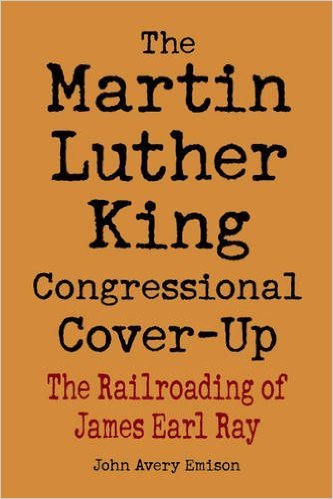
    From here, the book shifts to the capture of Ray in England, his extradition to Memphis, and the legal proceedings against him. At this point, the reviewer began to have some real trepidations about the path ahead. First, its apparent that the authors—whoever they are—want to go with the orthodoxy that Ray was a racist. Author John Avery Emison shows that such was not the case. There is no credible evidence for this and the evidence that has been produced has been made by rather suspect writers. (The Martin Luther King Congressional Cover Up, pp. 72, 73, 84, 88)

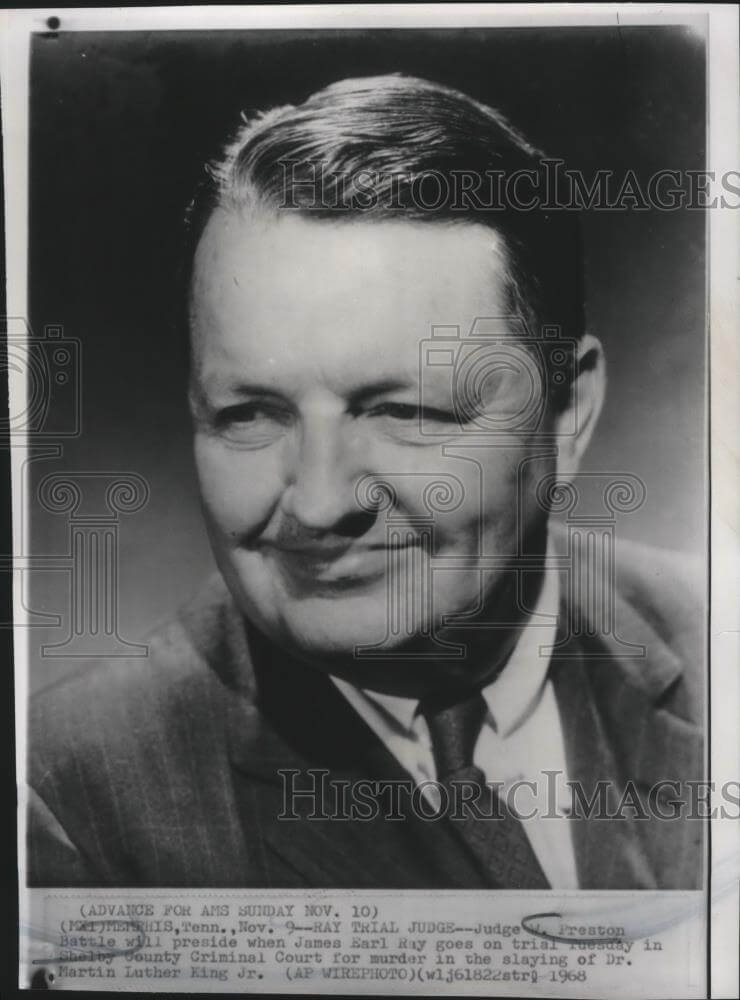
    Cotton Coated Conspiracy actually refers to Ray’s four-minute Q&A before Judge Preston Battle as a “confession.” The book leaves out two pertinent facts. First, during his Q&A with the judge, Ray made it clear to Battle that he did not agree with the theories of Ramsey Clark, J. Edgar Hoover, and the local attorney general, Phil Canale, about the conspiracy. (William Pepper, Orders to Kill, p. 46) Since they advocated no plot and Ray as the sole killer, it’s pretty obvious what Ray was implying. But secondly, a crucial part of the transcript was later forged. When Judge Battle asked the defendant if any pressure had been used to make him plead guilty, Ray actually replied with a question: “Now what did you say?” (Emison, p. 156) This is on the genuine transcript. An altered transcript states that Ray’s reply was “No. No one in any way.” Emison proves this fakery in a number of ways, including the fact that the typescript on the altered version does not match. These are two crucial points that undermine the contention about Ray’s “confession.”

    The authors note that, after his guilty plea and within 72 hours, Ray quickly switched and wished to plead innocent. They write that Ray was “claiming” he had been coerced into pleading guilty by his new lawyer Percy Foreman. (p. 56) The use of the word “claiming” is really inexcusable. These are not “claims.” Emison proves that Foreman used every trick in the book to get Ray to plead guilty. This included threatening to bring in his family as members of the conspiracy and also bribery. (Emison, pp. 151–53)

    III

    The reason I think the book lets Foreman off the hook is in order to somehow support McFerren’s alleged identification of Ray at Liberto’s. But anyone familiar with the KIng case would understand that the description by McFerren does not match Ray. Ray did not look Indian, Cuban, or Puerto Rican, was not yellow-complected, and did not exhibit “jungle rot” on his neck. Also, why on earth would Liberto—who the book sees as a very major figure in the plot—hire someone who had worked for him in public? Further, the Commercial Appeal sketch does not look like Ray. It actually resembles Richard Nixon. (See Appendix) That sketch does not resemble Ray, because it is based upon the memory of a man who, in all probability, never saw Ray on the day of the assassination.

    Charles Stephens’ identification was also used in England to extradite Ray back to the USA. (Harold Weisberg, Martin Luther King: The Assassination, pp. 24–25) Today, using Charles Stephens in the MLK case is the equivalent of using Howard Brennan in the JFK case. When you do this one forfeits credibility. Let me explain why.

    On the day of the assassination, Stephens was in the boarding house Ray stayed at. That night he told the police he could not give a description of the man coming out of the bathroom, since he did not get a good look at him. Further, he added that he could not see the man’s eyes. This statement was actually signed by Stephens the evening of the murder. (Emison, p. 43)

    The testimony of the manager of Bessie’s Boarding House was that Ray, under the name Willard, checked in at about 3:00–3:10 on the day of the assassination. (Mark Lane and Dick Gregory, Code Name Zorro, eBook edition, p. 164) The first stories circulating in the press were that Ray/Willard had left a fingerprint in his room and a palmprint in the communal bathroom; from where the authorities said, he fired a rifle and killed King. Neither of these items of evidence were mentioned in the stipulation of evidence that Foreman agreed to in court. (ibid, p. 163) When Mark Lane interviewed Mr. Stephens about a week after the murder, the witness described the man he saw in the hallway as small, quite short. Ray was not short, he was 5’ 10”.

    As the reader can see, Charles Stephens was an erratic witness. The more he talked in public the more dubious his story got. Therefore, the authorities placed him in detention with a $10,000 bond. The witness did not like being held. Stephens secured a lawyer in order to get released. Afterwards, police were around him most of the time. (Lane and Gregory, pp. 164–65)

    There was another problem with Mr. Stephens. He had a serious alcohol problem. In fact, his wife Grace said he could not have seen anyone go down the hallway, since he was dead drunk on his bed. Her statement was supported by cab driver James McCraw, who was supposed to pick Stephens up that day. But when McCraw got to his client’s room, Stephens was too drunk to walk. But further, the cab driver placed this encounter at about 2–5 minutes before King’s assassination. (Lane and Gregory, p. 166) Grace said the man she saw had an army jacket on and salt and pepper hair. That was not Ray either.

    Because her identification did not match Ray, the authorities placed Grace in a sanitarium. (ibid, p. 167) When you have to place one witness in detention and the other in an asylum due to their descriptions, how good is your case? But it gets worse. In 1974, Mr. Stephens filed an action to collect $185,000 in reward money that had been offered by three sources, since his testimony had been the chief evidence to place King’s killer behind bars. During this later hearing, as author Philip Melanson describes it, Charlie’s story was altered in at least three ways to make him seem more certain about the identification. (Melanson, The Martin Luther King Assassination, pp. 95–96)

    Try and find the above information about Charles Stephens in Cotton Coated Conspiracy.

    IV

    This is a serious problem with McFerren’s story. But the anonymous authors of this book don’t see it that way. In spite of all the above—and much more exculpatory evidence they do not mention—they maintain that McFerren is correct about Ray. For a large part of the book, they use this dispute over Ray between McFerren and authors Bill Pepper and Mark Lane, to create one of the most eyebrow arching conspiracy theories this reviewer has ever encountered.

    Because this is not all that McFerren was claiming. McFerren had a network of informants that he organized due to the civil rights strife in and around Somerville. He would secretly tape some of these informants. He kept the tapes and let certain people hear them, like Pepper. The authors of this book also heard them. The book summarizes some of these tapes. Evidently McFerren sometimes spoke about some of this information in declarative form on the tapes. From these recordings, McFerren stated in an affidavit that his informants gleaned information that the Mayor of Somerville collected money from local businessmen to pay for King’s assassination. That the mayor made two trips to London, one before and one after the murder. And that the mayor harbored Ray two days before the assassination. (pp. 80–81) If you are wondering who the mayor was, his name was Isaac Perkins Yancey. He served in that office from 1940–78. He has a park named after him with a plaque in it.

    The anonymous authors of the book are so intent to back up McFerren that they do not even note that this story clashes with what their witness said about Liberto. If one recalls, Liberto told the man on the phone he would get paid by his brother in New Orleans. Did the guy get paid twice? After all, only one shot killed King.

    Also, in looking up Somerville, it had a population of about 1,800 people in the sixties. So we are to believe that a town a bit bigger than Andy Griffith’s Mayberry pulled off the King assassination? With, as we shall see, the extraordinary military presence in Memphis at the time? Whether or not Yancey went to London, we know how Ray got there after the assassination. In one of the most intriguing chapters of Phil Melanson’s book, he describes the remarkable research he did on Ray after the alleged assassin fled America and ended up in Toronto.

    Ray was using the name of Ramon Sneyd in Toronto. Evading the FBI manhunt, he had fled there and was renting a room in late April and early May. (Melanson, p. 52–53) Early in his stay, he had ordered a passport and round trip ticket for London. He left his landlady’s phone number, and both items were ready for him on April 26th. But Ray, who was being searched for worldwide on the charge of murder, did not pick them up then. Both items stayed at the travel agency for almost a week, until May 2nd.

    On that day, at about noon, a tall, husky man arrived at his landlady’s door. (Melanson, p. 56) The man had an envelope in his hand with a typed name on it. He asked the landlady, “Is Mr. Sneyd in?” Ray, who usually wasn’t, was that day. When the woman went up to his room to tell him someone was there with a letter, Ray nodded and came downstairs. As Melanson notes, this is interesting. Under his circumstances, Ray should have jumped out the window and ran to his car. Instead he came downstairs and started talking to the man. This suggests that Ray knew he was coming. (ibid, p. 58) After this, he went to pick up his ticket and passport. Most would logically infer there was money in the envelope.

    Melanson tracked the man down in 1984. It was not Liberto or Yancey. This man told Phil that he refused to testify for fear of his life. As Melanson notes, it is shocking that the HSCA did not do what he did (i.e. locate the man). They should have done a full-court inquiry into the entire episode. (Melanson, p. 59)

    The point is: this is how Ray got to London. And there are no indications that Mayor Yancey was part of it. But again, as with the drunken Charles Stephens, there is no mention of Melanson’s fine and important work in Toronto in Cotton Coated Conspiracy.

    V

    Let us take two other points from McFerren’s oh so valuable recordings. First there is the idea that Yancey housed Ray two days prior to King’s assassination. (p. 113) Again, on its face, is this not ridiculous? The mayor of a small town would be seen in his house with the guy about to be accused of killing King in 48 hours? The other problem is that Ray was in Mississippi before he arrived in Memphis. And Harold Weisberg confirmed his stay at the DeSoto Motel on the night of April 2nd. (Pepper, Orders to Kill, p. 77) Other McFerren material states that Ray’s auto was seen on a car lot owned by Yancey. There is no information included in the book as to how this was known to be Ray’s white Mustang, of which there must have been thousands of at that time. (p. 145)

    In other words, there are many problems with McFerren’s evidence. And the authors seem to feign blindness about them. This allows them to launch the second part of their rather bizarre conspiracy theory. Which seems to suggest that everyone who heard this McFerren evidence was somehow in league to conceal what the authors think was the true plot to kill King: the one with Somerville and Yancey as the nexus. This wide ranging and, at times, interactive, ongoing, decades-long conspiracy, includes the following persons and agencies:

    1. Mark Lane (pp. 178–79)
    2. William Pepper (throughout)
    3. Donald Rumsfeld (p. 157)
    4. John Mitchell (p. 158)
    5. Journalist Ted Poston (p. 159)
    6. Author Robert Hamburger (pp. 159–62)
    7. The Department of Justice (pp. 162, 172–74)
    8. The HSCA (p. 167)

    What was the basis for this remarkable ongoing synergistic subversion? None of these people or parties wrote about McFerren’s tapes. It never seems to occur to the authors that maybe the individuals involved discerned some of the problems this reviewer noted above. Nosiree. The circumstances are cast in the darkest light. What the anonymous authors do with Lane and Pepper is kind of wild.

    Their idea is that, since Lane was already involved with Ray’s defense, he brought Pepper on board as his assistant in 1977. This is not in agreement with what Pepper writes in his book. The lawyer says that, after King’s funeral, he got away from the American political scene. The way he got back in was not through Lane, but Ralph Abernathy. Abernathy had been King’s second in command at the Southern Christian Leadership Conference. They knew each other from their mutual relationship with King. Abernathy called Pepper in late 1977 and said he had grown suspicious about the verdict in the case and thought they should both listen to Ray’s story in person. (Pepper, pp. 51–52) But before they talked to Ray, Pepper wanted to read up on everything in print up to that time. Unless he was allowed to prepare, he would not go through with the interview. Pepper made that demand clear to first Abernathy, and then Lane, who was Ray’s attorney at the time. In fact, Pepper did study everything he could, because the Ray interview did not take place until mid-October of 1978. (Pepper, p. 67) This was only about two months before the HSCA was disbanded.

    Which pretty much vitiates another premise of the book. This one proffers that Lane and Pepper worked together to prove Ray’s innocence and “infiltrate the federal government’s ‘76 through ‘78 King investigation.” (p. 178) According to Pepper, he had no real opinion about the case until after he interviewed Ray in late 1978, which, as noted, was just about near the end of the HSCA, pretty late to be infiltrating that body. But anyone familiar with what happened to that committee once Chief Counsel Robert Blakey took over would know that such an operation would be just about impossible for outside reserchers to do, because Blakey’s inquiry was done in secret. And every employee had to sign non-disclosure agreements about any information they were in receipt of from the executive intelligence agencies. As most people know, Blakey did not care for people like Lane or Harold Weisberg. In fact, it appears that the HSCA made an attempt to discredit Lane in public with the help of the New York Times. (James Earl Ray, Tennesse Waltz, pp. 193–97; Gallery, July 1979)

    But it’s too mild to say the authors have it out for Pepper. I have rarely seen such a personal attack rendered on someone involved in this kind of alternative research. He is characterized as a publicity seeker, and that is just the beginning. I don’t even want to mention what else they say, since I could find no back up for it in cyberspace, or elsewhere. As an example of his publicity seeking, they note that in 1989 Pepper served as a consultant and talking head on a documentary entitled Inside Story: Who Killed Martin Luther King. What the authors leave out is that Phil Melanson also consulted on this program. (Melanson, p. 161)

    But the book simply glosses over Pepper’s two stellar achievements in the King field. In an extraordinarily detailed and realistic mock trial for Thames and HBO television, Pepper won an acquittal for Ray. In Pepper’s book, Orders to Kill, the author describes all the work he went through to gather the evidence to win that case. (see Chapter 18) This and the 1995 release of Pepper’s book allowed an opportunity to reopen a criminal case for Ray. Pepper came close to doing just that with the help of Judge Joe Brown in Memphis. When they were on the eve of achieving a trial—and proving Ray innocent—the legal and political establishment crashed in on Brown. (see The Assassinations, edited by James DiEugenio and Lisa Pease, pp. 449–78)

    Even though it was aborted, this was an epochal event that received national attention. One of the accused assassins of the sixties was going to get a real trial. He was going to be represented by a skilled and knowledgeable attorney before a judge who would allow fair play and new evidence. But as with the examples of Jim Garrison and the HSCA’s first chief counsel, Richard Sprague, the Establishment was not going to let this occur. In the above reference, Probe Magazine took about 30 pages describing the extraordinary actions taken to snuff out a real trial. These consumed the better part of a year—from the summer of 1997 to the spring of 1998. Cotton Coated Conspiracy deals with all of this, which made national news, in less than two paragraphs. (p. 109)

    But that is not the worst part. The worst part is this, in the miniscule space alloted, the spin is toward the two men who did much to crush any criminal reopening: local Attorney General Bill Gibbons and assistant DA John Campbell. Incredibly, I could find no mention of Judge Joe Brown, which, considering the fact that Brown was featured on ABC NIghtline at that time, is a real magic act.

    Since the attempt at a criminal reopening was crushed, the last alternative left was a civil trial. This unfolded in Memphis in November and December of 1999. There was a conscious effort by the MSM not to deal with this trial at all. It was supposed to be broadcast, but those plans were cancelled. Court TV—today True TV—had sent a team there to prepare for the television coverage, but they were recalled. The only print journalist there for each day of the proceeding was Probe Magazine’s Jim Douglass. The local reporter for The Commercial Appeal, Marc Perrusquia, was not allowed to attend. He waited each day for Jim to emerge to get the details of what happened.

    VI

    There were two things that set off a light in my head about this book. The first was the failure to deal in any real way with the civil tiral. They belittle it as a “highly choreographed courtroom spectacle.” (pp. 120–21). In The Assassinations, Douglass took 17 pages to describe the two week long proceeding that resulted in a verdict in favor of the King family. In this reviewer’s opinion, The Assassinations is worth reading just for that essay.

    The other point that lit a fuse came near the end. Suddenly, when the authors say they are getting close to really solving the case, they give up. (p. 339) Whoever it is writing the book—this time under the alias of Randall Stephens—decides it would be too much dangerous work to do.

    Retroactively, these two parts of the book combined for a moment of recognition. I began to understand why the figure of King is always very distant in the background and only mentioned as a civil rights leader. King’s transformation in 1967–68 into a strong opponent of the Vietnam War—caused by Pepper’s pictorial essay in Ramparts—is barely mentioned. I also could find little about King’s growing criticism over the distribution of wealth. It was these stances that were the likely cause of a military intelligence program against King. In April of 1968, the 111th Military Intelligence Group was in Memphis. Some of them were in plain clothes. (Emison, p. 114)

    This aspect is gone into even more detail by Pepper. (Orders to Kill, pp. 439–41) Carthel Weeden was the captain at Fire Station 2, overlooking the Lorraine Motel. At noon that day, he allowed two officers to access the roof of the station in order to take photo surveillance of King. (ibid, p. 459) At the civil trial, former CIA agent Jack Terrell said that he knew of an Army sniper team that was practicing for an assassination. When they were ready, they were being transported to Memphis on April 4th. That mission was suddenly cancelled in transport. (DiEugenio and Pease, p. 503) One of the jurors at the civil trial said that the testimony of Terrell had a large impact on him.

    It apparently had no impact on the anonymous authors. As with this, and in MSM style, all the other things that Pepper brought out so saliently at both trials is apparently not worth mentioning. For example, the FBI’s propaganda effort to get King’s entourage moved to the Lorraine Motel and the mysterious personage who then changed his room there from an inside courtyard room to an external one facing the street. The fact that King had a special protective detail in Memphis and that unit was called off for this visit. Its chief testified at the trial that he would never have allowed King to stay at the Lorraine. Phil Melanson’s important discovery that four tactical units of police cars were pulled back from the Lorraine area that day is somehow bypassed. Yet, this allowed whoever the assassination team was to more easily escape.

    Although the book mentions the bundle that Ray allegedly dropped in front of a novelty store after the assassination, they leave out a key fact. Ray’s original attorney, Arthur Hanes Jr., interviewed the owner of the novelty story, one Guy Canipe. That package, which included a rifle, unfired bullets, and a radio with Ray’s prison identification number on it, was crucial evidence against Ray. Hanes testified at the civil trial that Canipe was going to testify that the bundle was dropped in the doorway,

    …by a man headed south down Main Street on foot and that his happened at about ten minutes before the shot was fired. (emphasis added)

    How could a book on the King case not have room for that kind of exculpatory evidence? But one could ask the same thing about why a King book would not mention the name of Raul, the mysterious gunrunner who had all the earmarks of being Ray’s CIA handler at the time of King’s murder. Many have questioned whether or not Raul existed. Turns out he did and there was tangible proof of it. Don Wilson was an FBI agent in 1968. He was sent to retrieve the car Ray had abandoned in Atlanta one week after the murder. When he opened the door, an envelope fell from the car. Several pieces of paper slipped out. On two of them, the name “Raul” was written, surrounded by other pieces of information. (DiEugenio and Pease, p. 479)

    Somehow, none of this matters to the authors of this book, whoever they may be. I leave it to the reader to decide which plot is more credible and cohesive and explains all the circumstances that occurred that day: Pepper’s or Somerville’s.

  • Martin Hay Replies to the Authors of Killing King

    Martin Hay Replies to the Authors of Killing King


    In 2012, Stuart Wexler and Larry Hancock published their first book about the murder of Martin Luther King, titled The Awful Grace of God. A few months after it appeared I wrote a review of that book for this web site that went into considerable detail about its numerous, significant deficiencies. As I pointed out in my review, The Awful Grace of God presented a solution to the assassination that was simply not supported by any credible evidence. The idea, as proposed by the authors, that alleged assassin James Earl Ray took up a bounty being offered on the life of Dr. Martin Luther King by right-wing extremists is based almost entirely on speculation and wishful thinking.

    I noted that Wexler and Hancock relied much too heavily on unreliable witnesses and irresponsible, untrustworthy authors like George McMillan, Gerald Posner and William Bradford Huie. I concluded that this fact caused them to accept and promote a dubious portrait of Ray, as well as to repeat long-discredited or disputed stories about his behaviour and activities before the assassination. I also showed how the authors had chosen to do little more than skim the surface of the crime scene evidence, omitting that which tends to exculpate Ray. By doing that they ignored the very real indications that King had been intentionally placed in a vulnerable position and stripped of any meaningful security.

    Whilst Hancock showed little interest in my review one way or the other, Wexler was seemingly incensed by what I wrote. In an email shortly after it appeared he told me that he viewed my review as “a hit piece that fundamentally misrepresented key aspects of our book, and the facts of the case.”1 It is not surprising, then, that the authors have elected to address my review in the endnotes of their second book on the subject, Killing King: Racial Terrorists, James Earl Ray, and the Plot to Assassinate Martin Luther King Jr. What is surprising, however, is the sloppy and less than candid manner in which they have done so.

    In source note 22, on page 265 of Killing King, the authors write:

    Hay’s critical review of our earlier work is riddled with egregious errors that will be discussed in various endnotes and in the epilogue. The pull quote, at the beginning of the review for instance, claims that we “put Ray” at the Grapevine when we, in fact, never say that. Instead, we argue that Ray could have maintained some form of contact with the plotters by way of his brothers, who ran the bar. In the earlier book we say that Ray did not immediately pursue the plot after escaping prison; in this update we do. Hay goes on to claim that we have no credible evidence that Ray ever heard of a bounty. But to make this claim Hay dismisses the accounts of prisoners like Britton. He makes a blanket statement that all the prisoners who directly heard of Ray discussing a plot were looking for more lenient prison sentences and/or bounty rewards. But he has no actual evidence of this for any prisoner―Hay is the one speculating, not us. As a point of fact, Thomas Britton, who heard Ray discuss a $100,000 offer from a businessman’s association, was not even in prison at the time he made his claim and expressly said he did not want a reward. Brown confirmed hearing Ray discuss a bounty years after the fact.

    There is so much wrong with the above passage that I almost don’t know where to begin. I should perhaps note the careless use of quotation marks around the words “put Ray” since I did not use those words in my review. I actually used the verb “placed,” not “put.” This is a rather trivial point to be sure, but there is nothing trivial about the manner in which the authors attempt to rebut points raised in my review.

    On the subject of Ray and the Grapevine Tavern, I noted that Wexler and Hancock had made a “sizeable blunder” in The Awful Grace of God by suggesting that Ray “very likely” heard gossip about a bounty on King’s life in his brother’s St. Louis bar. Why did I say this was a sizeable blunder? For the simple reason that the Grapevine did not open until around six months after Ray left the St. Louis area! To counter this, the authors have apparently chosen to imply that I misrepresented what they wrote. In fact, they flat-out state that they “never say that.” They suggest, instead, that it is their contention that whilst Ray may not have been in the Grapevine himself he “could have maintained some form of contact with the plotters by way of his brothers.” This, however, is nothing like what they said in their first book.

    There are two mentions of Ray and the Grapevine Tavern in The Awful Grace of God. The first appears on page 167 in a section titled “Backtracking To Saint Louis” which, as the title would suggest, deals with the time Ray spent in the St. Louis area in June of 1967. “All in all,” the book states, “it seems John Ray’s tavern, patronized by so many local Wallace supporters, would have been an ideal place for James Earl Ray to encounter gossip about a large cash offer for killing Dr. King. Of course, he may well have encountered nothing more than the same gossip he heard in prison and figured that pursuing it wasn’t his best option.” The second instance, appearing on page 249, reads thusly: “Ray heard about the offer in Missouri State Penitentiary after his escape in 1967 [sic], and he very likely heard more gossip about it at his brother’s Grapevine Tavern in Saint Louis.”

    What I have presented above represents the sum total of what the authors originally had to say about Ray and the Grapevine. I invite the reader to compare these two quotations to what Wexler and Hancock are now suggesting and I challenge him or her to infer the latter from the former. In The Awful Grace of God it is quite clear from the context (i.e. discussing Ray’s time in St. Louis) and the use of the terms “encounter” and “heard” that the authors did indeed mean to place him in the bar. Additionally, there is not even the merest hint of their new suggestion that Ray was using his brothers to maintain “some form of contact” with actual conspirators. Instead, Wexler and Hancock suggested that Ray may have simply heard gossip in the bar that he chose to ignore.

    It is clear that the authors made a mistake and are now altering their own words in order to not only avoid having to own up to it but also to take a needless swipe at my review. And what makes it worse as far as I’m concerned is that Wexler conceded the error to me in an email six years ago. “After reading your entire piece,” Wexler wrote, “I think the only change I’d make in our book is the part where we say a St. Louis bounty could have been reinforced in July of 1967 at the Grapevine. Factually, I think you make fair points …”2 Apparently Mr. Wexler feels it is one thing to admit an error in private and another thing to do so publicly.

    Equally erroneous is the claim by Wexler and Hancock that I dismissed the accounts of prisoners who “directly heard of Ray discussing a plot” by stating that they were all looking for more lenient sentences or rewards. I did indeed raise these considerations in regard to Ray’s fellow inmates, but I did so in sole relation to those inmates Wexler and Hancock presented as evidence that Ray “wanted no part of blacks.” My argument had nothing to do with the question of whether or not Ray was heard discussing a bounty on the life of Dr. King. The authors have conflated two entirely separate issues in an attempt to buttress their false accusation that my review is “riddled with egregious errors” and, presumably, to provide them an excuse to suggest that I did not pay due attention to the likes of Thomas Britton. Yet if I am to be accused of ignoring Britton then the precise same charge must be levelled at Wexler and Hancock because the name Thomas Britton does not appear anywhere in The Awful Grace of God. Which raises an obvious question: Why would I waste time and space in my review evaluating a witness upon whom the authors did not rely or even acknowledge?

    In their first book, Wexler and Hancock named one, and only one, inmate whom they said provided “independent corroboration” for Ray’s knowledge of a bounty: David Mitchell. As I pointed out in my review, Mitchell told the FBI that some “friends in St. Louis” had “fixed it with someone in Philadelphia” for Ray to kill King and he had offered to split the $50,000 he was to be paid with Mitchell if he would act as a decoy. If we disregard Ray’s soft-spoken nature and his record as a non-violent offender, the story appears somewhat plausible. That is, up until the point that Mitchell adds the far-fetched claim that after picking up the $50,000 for killing Dr. King they would be picking up another payment for killing “one of those stinking Kennedys.” I believed when I wrote my review, and I still firmly believe today, that Mitchell’s statement is self-discrediting. And it is for that very reason, I suggest, that the HSCA did not even mention his name in their report despite their own attempt to tie Ray to a bounty on the life of Dr. King.

    As for Thomas Britton and [James W.] Brown, I first came across their names when reading the factually, morally and intellectually corrupt book Killing The Dream by disgraced journalist, Gerald Posner. Posner’s penchant for misrepresenting documents, interviews and testimonies, and even creating quotations entirely, had already been well established by critics of his Kennedy assassination book, Case Closed. Therefore, I was very careful to check the accuracy of much of his reporting. What I discovered was that Brown had told FBI agents that, whilst in the Missouri State Penitentiary, he heard Ray say that a “Cooley or Cooley’s organization would pay $10,000 to have King dead.”3 When Britton was interviewed, however, he told a different story, stating that Ray had actually spoken of a $100,000 bounty being offered by an unnamed “businessmen’s association.” When asked if he knew anything about a “Cooley’s organization,” Britton suggested this was a “protector and enforcer organization that operated in the prison.”4

    The FBI followed up these claims by attempting to verify the existence of “Cooley’s organization” through interviews with numerous inmates and officials at Missouri State Penitentiary (MSP). They came up completely empty-handed. For example, Warden Harold Swenson, and Assistant Associate Warden of Custody, B.J. Poiry, advised the Bureau that they “have no knowledge of ‘Cooley’s Organization’ and have been unable to identify it with any segment of the population at the MSP or to verify its existence, past or present.”5 One particular inmate, John Kenneth Hurtt, stated that “he never heard of ‘Cooley’s Organization’, and he has been in the MSP for fifteen years.”6 Another, James Duane Wray, who claimed to have “lived in practically every hall in the MSP since he arrived in April of 1963”, told agents that he had “never heard of anyone by the name of Cooley or Cooley’s Organization or similar.”7

    It is possible that officials at the prison were trying to save themselves from any embarrassment and that every one of the inmates interviewed kept quiet because they feared reprisals. Yet it is equally if not more likely that the FBI was unable to verify the existence of “Cooley’s Organization” because it did not exist. This fact, coupled with the fact that their stories are mutually exclusive, clearly raises doubts about the credibility of both Brown and Britton. Perhaps more importantly, when Brown was located and reinterviewed by the House Select Committee on Assassinations in 1978, he “denied any knowledge of a ‘Cooley’ organization, or of an offer of $10,000 from any group to kill Dr. King.”8 All of which leaves me wondering how Wexler and Hancock can state so confidently that Britton “heard Ray discuss a $100,000 offer” as if there were no ifs, and or buts about it, and why they fail to mention Brown’s latter day repudiation of his FBI interview.

    It should also be noted that when the authors say that Britton “expressly said he did not want a reward” they are not telling the whole story. It is true that the report of his FBI interview relays the fact that Britton did not want to take a “posted reward” because he supposedly “feared Cooley Organization if it were claimed.” However, the same report also notes that he appeared “somewhat interested” in a “payment for services rendered.”9 In other words, he liked the idea of being paid for his story, he just didn’t want anyone to know about it.10

    Another misrepresentation of my review―and the facts of the case―appears in note 13, page 269, of Killing King:

    Martin Hay, a critic of our work, implies that Stein and his sister both lied about the nature of the Wallace visit. Hay places his stock in James Earl Ray, who refused to acknowledge the visit and had it stricken from a fifty-six-page stipulation of facts during his trial. The problem here is that unlike Ray, who had a motive to lie―to hide his associations with racists from investigators―neither Charles Stein nor his sister had an obvious motive to make the story up. What’s more, Ray made documented and repeated calls to the Wallace campaign while in Los Angeles.

    The above is so divorced from what really happened that, once again, I almost don’t know how to respond. For those unfamiliar with the details, it is often claimed by state apologists that Ray was a fanatical supporter of segregationist politician, George Wallace. This notion is generally propped up by the statements of Charles Stein and his sisters who said that before he would agree to drive Charles to New Orleans, Ray insisted they stop by Wallace’s California campaign headquarters so that the Steins could register to vote. Here is everything I had to say about this trip in my review:

    In their attempt to establish Ray’s racist tendencies and associations, Wexler and Hancock try to create the impression that he was politically active on behalf of Alabama governor George Wallace, a staunch segregationist. Writing that he “recruited associates to register to vote and support the Wallace campaign” in California. (Wexler and Hancock, p. 160) In truth, Ray made only a single known trip to Wallace’s campaign office, so that three associates could register. But Ray himself never did under any of his aliases.

    As I’m sure the reader can easily see for themselves, I made no implication whatsoever in the above passage that the Steins were lying about anything at all. I stated matter-of-factly and without argument or qualification that Ray paid a visit to the Wallace campaign office so that his associates could register to vote. I did not imply, nor have I ever suggested, that the Steins lied about anything because I do not believe they did. There is no reasonable way in which Wexler and Hancock can credibly claim to have inferred such a thing from what I wrote.

    Furthermore, their unsourced assertion that Ray “made documented and repeated calls to the Wallace campaign while in Los Angeles” is false. As the FBI discovered after the assassination when it acquired the relevant records from Pacific Telephone Company, Ray had used a phone he had had installed in his Los Angeles hotel room to make precisely 21 calls. One, and only one, of these calls was to Wallace’s office.11 Ray told the HSCA that he made this call because he, as an escaped convict, was looking to establish “some type of cover―some type of front for me to stay in Los Angeles … I had all Alabama identification. If I was stopped by the police, well, I would just say I was associated with this Wallace group out here in some manner …”12 It may be said that this explanation doesn’t entirely ring true when considered alongside Ray’s insistence on taking the Steins to Wallace’s office. I would suggest that the likelihood is that Ray, a lifetime crook, had some sort of criminal contact who worked at or around the office whose identity he wished to protect. I must stress, however, that this is nothing more than speculation and I certainly wouldn’t go so far as to suggest this was in any way connected with the assassination of Dr. King.

    This brings me to the manner in which Wexler and Hancock characterize me in the main text of their book as a “pro-Ray researcher.”13 Given that the authors maintain that Ray was directly, knowingly and willingly involved in the assassination―“probably” the actual gunman in Wexler’s insupportable opinion―this label is clearly intended to suggest that my work is biased and unreliable. However, regardless of how they wish to view or portray matters, my starting point for understanding the case is not Ray’s own account. It is and always has been the crime scene evidence. And as I pointed out in my review of The Awful Grace of God, for Ray, the crime scene evidence is largely exculpatory.

    Despite the state’s claims to the contrary, there is no ballistics or eyewitness evidence inculpating Ray. There is no fingerprint, hair, fiber or forensic evidence of any kind that Ray was ever in the rooming house bathroom from which the state alleged the shot was fired. And furthermore, there is not one solitary scrap of proof that the shot was even fired from the bathroom. There was, however, reason to suspect that the shot was fired from the shrubbery below the bathroom window. But, in a highly questionable move, Memphis authorities had the entire area cut down and cleaned up the following morning, thus compromising the scene. It must also be said it is beyond suspicious that, as little as two minutes after the shot was fired, police discovered a rifle Ray had purchased amongst a bundle of his possessions that had been dumped conveniently on the street outside the rooming house. No credible reason why Ray would have left all of this evidence behind to incriminate himself has ever been advanced or is ever likely to be. Additionally, Ray insisted for thirty years that he left the scene very shortly before the assassination and the statements of two witnesses corroborate this.

    It is for these reasons, and many more, that Ray’s status as the designated fall guy is, and always has been, obvious. And what this means for me is that Ray is entitled to have his say; that his version of events, his story of how he ended up holding the bag over Dr. King’s death, has at least as much validity, if not more, than the narrative offered by the state. Does this mean that I unquestioningly accept everything he said? Of course not. Ray’s own account is clearly self-serving and he always made it clear that he had little desire to help investigators solve the crime and find the real killers. Which is understandable given that, had Ray ever managed to have his conviction for murdering Dr. King overturned, he would still have had 13 years to serve on his previous sentence for robbery and he had no intention of doing so as the world’s most famous snitch.

    If the reader can believe it, despite the promise by Wexler and Hancock to discuss in “various endnotes and in the epilogue” the “egregious errors” with which my review is “riddled,” what I have provided above represents every reference to myself and my review in Killing King. It is tempting to suggest that the reason for this is that the authors simply could not find further errors in my review. But, in fact, as I have shown, that the two endnotes already discussed do not contain actual errors on my part. They are presented as such, but once examined and placed in context, they are not.

    I had originally intended to write an in-depth review of Killing King but after having had to respond to the above, it seemed obvious that I would not be able to do so with any real degree of objectivity. Consequently, I have elected not to write one. That being said, there are a couple of points made in the book that I simply cannot let pass by without comment.

    The first has to do with the reason why Ray pleaded guilty and accepted a 99-year sentence for the murder of Dr. King. Repeatedly, and until the day he died, Ray protested that the only reason he did so was because his lawyer, Percy Foreman, pressured him into it. Foreman himself denied it, of course, but any objective review of the surrounding facts and circumstances confirms the validity of Ray’s charge. Unsurprisingly, no such review appears anywhere in Killing King. Instead, the authors imply that the real reason Ray pleaded guilty is that he and Foreman both understood that “the evidence against him was damning, and a death penalty verdict was a distinct possibility.”14 Which, quite frankly, is baloney.

    Wexler and Hancock make no attempt to explain precisely how Foreman was supposed to know how “damning” the evidence was against Ray when he had conducted no investigation; when he did not even ask to see the state’s ballistics evidence or the affidavits of their one and only alleged eyewitness; when he refused the investigative files of Ray’s previous lawyers despite their being made freely available to him; and when he spent only 12 hours with Ray during what should have been the investigative phase of the case. It is crystal clear that Foreman had not even the slightest interest in the state’s case against his client because he always intended to have him plead guilty.

    Foreman first entered the case when he turned up at Ray’s Memphis jail cell on November 9, 1968, at the urging of Ray’s brother, Jerry. At that time, he exploited a source of friction between Ray and his then lawyer, Arthur Hanes, suggesting that the book contracts he had signed with author William Bradford Huie showed that Hanes was only interested in money. Foreman then boasted of his own accomplishments, stating that he had lost only one client in 1,500 capital cases to the electric chair, and told Ray that his was the easiest case he would ever have had to defend. Suitably impressed, Ray fired the Hanes team―who were ready and prepared to go to trial and confident in their chances of gaining an acquittal―hiring Foreman instead. This turned out to be the biggest mistake of Ray’s life.

    There is no doubt Foreman was a lawyer of extraordinary ability. He once defended a woman who had shot her husband five times and left him for dead on the front lawn. After fleeing the scene she returned moments later to fire a sixth shot right in front of witnesses who had gathered around the body. Unbelievably, Foreman won her an acquittal.15 Given Foreman’s track record, and the fact that the crime scene evidence was largely exculpatory, Ray’s case should have been an easy win for the Texan attorney. Unfortunately, according to legendary author and investigator Harold Weisberg, Foreman “had a history of doing the government favors and it repaid him by not having him spend his life in jail when he was caught in one of his crooked deals in which he had arranged to put that client away. Foreman did that for the government and for individuals and both rewarded him in return.”16

    As previously stated, and for obvious reasons, Foreman denied pressuring Ray to plead guilty. Yet Foreman told so many blatant lies about Ray’s case that taking his word for almost anything is completely unthinkable. For example, Foreman claimed in numerous interviews, and even in his HSCA testimony, that he had entered the case after Ray had personally sent a letter to his Houston office requesting that he do so. Of course he could never produce the letter when asked to because no such letter ever existed. As noted previously, it was actually Ray’s brother Jerry who asked Foreman to get involved and Foreman himself said so to a reporter for the Memphis Press Scimitar in November 1968. He said the same thing again the following year in a legal deposition.17

    Foreman claimed to have spent up to 75 hours discussing the case with Ray during the four months he represented him. But when the committee reviewed Ray’s prison logs it discovered that Foreman had actually spent only 20 hours with him; two of those were during their first meeting when he was convincing Ray to drop Hanes and hire him instead; and six came after he convinced Ray to plead guilty. Which, as previously noted, means that Foreman spent only 12 hours with Ray during the four months he was supposed to be investigating the case.18 Foreman told the HSCA that he had personally interviewed numerous witnesses yet could not name a single one of them or provide even one written or recorded statement when asked. He even had the gall to claim that he had never recommended Ray should plead guilty despite having written a letter to Ray that did just that.19 Foreman told lie after lie in an effort to cover up his own misconduct.

    As Ray explained, he had hired Foreman because he promised an acquittal. But once Foreman had pushed the Hanes team out of the way and secured his $165,000 fee through a new set of book contracts and ownership of Ray’s Ford Mustang, he abruptly changed his tune. Without having conducted any meaningful investigation whatsoever, he turned up at Ray’s cell on February 13, 1969, with a letter for him to sign, advising him to plead guilty, and stating that he now saw “a ninety-nine percent chance of your receiving a death penalty verdict if your case goes to trial. Furthermore, there is a hundred percent chance of a guilty verdict.” He told Ray that the media had already convicted him, pointing to specific articles in Life, Reader’s Digest, and the Memphis Commercial Appeal, and suggested that the court clerk would manipulate the juror pool so Ray would be up against a panel of angry blacks intent on revenge.

    When Ray still insisted on going to trial, Foreman travelled to St. Louis and attempted to recruit members of Ray’s family in his effort to persuade him otherwise. Jerry recalled that Foreman was “crying and putting on a show … He told us that if Jimmy demanded a trial and took the witness stand, he would surely fry in the hot seat.”20 The family wasn’t moved by Foreman’s performance so he went back to working directly on Ray. “Let me tell you, Jim, you go to trial and they’ll burn your ass! They’ll barbecue you!”21 Still Ray would not agree to plead. It was then that Foreman resorted to what Ray called “terror tactics.” The FBI, he said, had been looking into the criminal history of the family and were going to send Ray’s father back to Iowa prison for a 40-year-old parole violation. They were also going to arrest his brother Jerry as a co-conspirator in the King slaying. Finally, according to Ray, Foreman “got the message over to me that if I forced him to go to trial he would destroy―deliberately―the case in the courtroom.”22

    Ray came to believe that, rather than allowing Foreman to throw the case in front of a jury, he would be better off entering a guilty plea and then filing a “new trial” petition. Foreman encouraged this belief, offering to give Jerry Ray $500 to hire a new attorney after the plea went through. He even put this in writing in a March 9, 1969, letter that stipulated the $500 was “contingent upon the plea of guilty and sentence going through on March 10, 1969, without any unseemly conduct on your part in court.” Finally, feeling he had little choice, Ray relented, agreed to plead guilty, and accepted a 99-year sentence.

    It needs to be noted at this point that, by the time Ray agreed to plead guilty in March, 1969, he had spent approximately eight months in a specially constructed cell that appears to have been designed to break him down, emotionally, physically and mentally. This maximum-security cell had steel plates over the windows and Ray was never allowed outside for a breath of fresh air. Two guards were present with him at all times, even when he used the toilet, and blinding lights were on him 24-hours-a-day, making it extremely difficult to sleep. Ray also had cameras and microphones picking up his every move so that, in order to speak privately with his lawyers, they all had to lie on the floor of the cell with the shower running. The result of these conditions, according to Jerry Ray, was that “James was sort of out of his mind at the time.”23 When Michael Eugene―the British barrister who had represented Ray in London during his June, 1968, extradition hearing―visited Ray in early 1969, he was taken aback by the deterioration in Ray’s condition, saying that he looked sick, weak, and nervous.24

    Should the reader doubt that the relentless pressure from Foreman and the unsettling conditions of his incarceration are the factors which led Ray to plead guilty, they need understand only one thing: Shortly after his extradition, the state offered Ray, through the Haneses, a life-sentence in exchange for a guilty plea. A life sentence in Tennessee in 1968 was only 13 years. And, as Hanes Jr. testified in a 1999 civil case, the plea bargain they were offered at that point “allowed for parole in ten years.”25 Ray, who at that point in time was not yet feeling the full effects of his jail conditions or being subjected to “terror tactics” and threats of frying in the electric chair, turned the offer down.

    This brings us to Foreman’s claim that Ray faced a 99% chance of receiving the death penalty and the suggestion by Wexler and Hancock that this was “a distinct possibility.” In truth, this notion is more than questionable. At the time of Ray’s plea in March, 1969, there had not been an electrocution in Tennessee for more than eight years and no one in Shelby County―of which Memphis is the county seat―had been electrocuted since 1948. As Judge Preston Battle noted at Ray’s plea hearing, he had personally sentenced “at least seven men to the electric chair, maybe a few more” since taking the bench in 1959, yet none of them had been executed. He noted, “All of the trends in this country are in the direction of doing away with capital punishment altogether.” Further, there is, as far as I’m aware, no evidence that the State intended to seek the death penalty for Ray. In fact, Shelby County District Attorney General Phil Canale told reporters after Ray’s hearing that “he did not see how the state could have fared better than the guilty plea and sentence …”26 So it certainly appears as if a death sentence for Ray was, in reality and contrary to the claims of Wexler and Hancock, distinctly unlikely. (For a complete expose of Foreman’s lies about his entry into the case and his lack of any trial preparation, see John Avery Emison’s, The Martin Luther King Congressional Cover Up, pp. 131-64)

    But the idea that somehow Foreman was intimidated by the evidence in the case is also belied by two other sets of facts presented by John Emison. Number one, the first lawyers who were going to represent Ray, the father/son team of Arthur Hanes and Arthur Jr., were so confident in their defense, they refused a plea bargain and insisted on pleading Ray innocent and going to trial. Furthering this point, William Pepper later won a civil case in Memphis brought by the King family. There the jury agreed with his outline of a broad conspiracy, including governmental agencies. (Pepper also won an elaborate and expensive HBO-produced mock trial in which the rules of evidence did not strictly apply.) The second set of facts presented by Emison concerns Foreman’s talks with reporter Sidney Zion. Prior to the court proceedings in Memphis, Foreman told Zion that the King case was “the biggest story of our lives.” He then added that if Zion was patient he could give him a scoop that “would take the top off the country.” He then said that Ray was innocent and indeed there was a conspiracy to kill King. A few months later, while seeing Foreman in a bar in New York, Zion tried to talk to him to understand what had happened: Why did he plead his client guilty if he knew he was innocent? Foreman denied any such previous conversation. He then quickly laid down a twenty-dollar bill to pay for his drinks and left.

    The final issue with Killing King that I wish to address has to do with the authors’ feeble attempt to bolster their claim that the evidence against Ray was “damning” enough to warrant a guilty plea. They write:

    Ray’s movements closely track King’s from Los Angeles to Selma, to Atlanta to Memphis; he purchased a rifle in Birmingham found near the scene of the crime; only his fingerprints were found on that rifle; he purchased binoculars on the day of the crime; he registered at Bessie Brewer’s rooming house across from the Lorraine from whence witnesses heard the shot; he fled Memphis immediately after the shooting and eventually escaped in search of a country with no extradition orders.”27

    In all honesty, most of this is barely worth taking the time to respond to. The suggestion that Ray’s movements show he was stalking Dr. King was dealt with in my review of The Awful Grace of God and it is not worth doing again here; the fact that the rifle and binoculars Ray purchased were found conveniently dumped at the scene was, as previously stated, clearly consistent with his being set up; the claim that witnesses “heard the shot” come from the rooming house is made without reference to any such witnesses and ignores the simple truth that there is precisely zero evidence that the shot was fired from anywhere in that building; and the fact that Ray fled the city after the police began to gather near the rooming house is hardly a surprise given his status as an escaped convict.

    Finally we come to the matter of Ray’s fingerprints and their being the “only” ones on the rifle. This is not the cut-and-dried issue Wexler and Hancock make it out to be. The FBI laboratory reported finding two latent prints “of value” on the rifle that were said to match the prints of James Earl Ray. These consisted of one fingerprint “on side of rifle” and one fingerprint on the telescopic sight.28 The phrase “of value” means that these were the only prints on the rifle that were judged as complete enough for identification purposes. It does not necessarily mean that there were no other unidentifiable partial or fragmentary prints present on the weapon that may well have been left behind by someone else. Yes, the fingerprint evidence demonstrates that Ray handled the weapon—which is no revelation given that he admitted to doing so—but it does not in any way establish that no one else did. And the fact remains that the two prints in question were not where we might have expected them to be had Ray actually fired the rifle.

    But beyond that, the point is this: Did the bullet that killed King come from that rifle? That key issue has never been decided. In fact, when Judge Joe Brown was intent on resolving it during a criminal trial in Memphis in 1997, he was forcibly removed from the case. (Which is why Pepper and the King family had to resort to a civil case.) Afterwards, Jerry Ray, brother of James Earl Ray, tried to get possession of the rifle. As Mike Vinson noted in his article on this site, he was denied this request. Jerry was convinced he was denied because he was determined to do the tests that Brown was not allowed to do.

    I have no desire to comment further on Killing King. Having had to address the disingenuous manner in which the authors chose to respond to my review of The Awful Grace of God has left a very bad taste in my mouth. To recap: they claim that I dismissed the comments of prisoners who supposedly heard Ray discussing a bounty with a blanket statement about their motives when, in fact, I had offered that suggestion on an entirely different subject and had specifically addressed the one and only inmate Wexler and Hancock had offered as evidence that Ray had heard of a bounty in prison. They claim that I ignored two witnesses whom the authors themselves did not even refer to in their first book and then failed to note that one of those alleged witnesses, Thomas Britton, was indeed interested in receiving money for his story and that the other, James W. Brown, completely disavowed the story when confronted by the HSCA. They imply that I somehow misrepresented their argument about Ray hearing gossip of a bounty in the Grapevine Tavern when it is actually the authors themselves who failed to accurately represent their own words. And they say that I implied in my review that Charles Stein and his sisters were lying about being taken to the Wallace campaign office to register to vote when no such implication appears anywhere in my review.

    Stu Wexler was in part responsible for getting the FBI’s comparative bullet lead analysis testing thrown out of the court system. Today it is discredited enough that Robert Blakey, the Chief Counsel of the HSCA—who used it to convict Oswald—now calls it “junk science”. Hancock has written two respectable books on the JFK case, Someone Would Have Talked and Nexus. But something seems to have happened to them with their entry into the King case. Since their performance in this particular instance is so different from what they did previously. What can one say about taking a simple description of three people being driven to register to vote and somehow infer from that those three people are being accused of lying?

    If the reader still plans on checking out their new book then I would advise doing so with extreme caution. Double check everything.


    Notes

    1 Private email from Stuart Wexler, 3/10/2012.

    2 Private email from Stuart Wexler, 3/10/2012.

    3 See FBI Interview of James W. Brown, 5/8/68 and FBI MURK/Users/arossi/Desktop/hay-killing-king.pngIN Central Headquarters File, Section 28, p. 190.

    4 FBI MURKIN Central Headquarters File, Section 33, pp. 16-21.

    5 FBI MURKIN Central Headquarters File, Section 39, p. 56.

    6 FBI MURKIN, Section 39, p. 56.

    7 FBI MURKIN Central Headquarters File, Section 56, p. 6.

    8 House Select Committee on Assassinations MLK appendix volume 13, p. 247. Wexler and Hancock write that “an FBI investigation not only confirmed the existence of the group in MSP, but raised the possibility that the group existed across the federal prison system.” (p. 68) Their source note for this claim reads, “Memo from Rosen to Deloach (8/23/68) King Assassination FBI Central Headquarters File, section 69, 58.” But a quick check reveals that the cited memo makes absolutely no mention of “Cooley’s organization” whatsoever. There is a June 14, 1968 memo from Branigan to Sullivan found in Central Headquarters File 60, p. 47, that states, “We have confirmed the existence of Cooley’s Organization …. There are indications that this organization exists in other prisons.” Yet there is no additional information of any kind offered in support of this declaration and the same memo states, “Although we have conducted extensive interviews, we have been unable to ascertain information as to its principals or membership or the extent of its network.” How it is possible to verify the existence of an organization without identifying a single one of its leaders, members, places of operation, or any other details, is anyone’s guess. However, from the context of the memo, the fact that it begins by stating that “Ray was reported to have said Cooley or Cooley’s organization would pay $10,000 to have King killed”, it seems apparent that what the memo is saying is that James W. Brown’s talk of Cooley’s was “confirmed” by Thomas Britton. Yet, as we have seen, Brown himself repudiated the whole story years later.

    9 FBI MURKIN Central Headquarters File, Section 33, p. 25.

    10 Buried amongst all the selective reporting and misrepresentation aimed at discrediting my review, Wexler and Hancock do manage to touch upon one fair point regarding my speculation on the motivations of Ray’s fellow inmates. Whilst I believe the speculation was entirely reasonable, I did not adequately identify it as such and overstated the surety of my argument. Mea culpa. I shall endeavour to be more careful in the future.

    11 FBI Report of Special Agent Leroy Sheets; 4/18/68; Los Angeles, pp. 111-113.

    12 House Select Committee on Assassinations, MLK appendix volume 3, p. 206.

    13 Wexler & Hancock, Killing King, p. 197.

    14 Killing King, p. 184.

    15 Harold Weisberg, Frame-Up, p. 94.

    16 For further details, see Weisberg’s unpublished manuscript, Whoring With History, pp. 145-148, available online at JFK.hood.edu.

    17 John Avery Emison, The Martin Luther King Congressional Cover-Up, pp. 133-134.

    18 House Select Committee on Assassinations MLK appendix volume 5 p. 301 and HSCA report p. 320.

    19 House Select Committee on Assassinations MLK appendix volume 5, pp. 301-302.

    20 Jerry Ray & Tamara Carter, A Memoir of Injustice, pp. 78-79.

    21 Gerold Frank, An American Death, p. 376.

    22 Frank, p. 472.

    23 Mark Lane & Dick Gregory, Murder in Memphis, p. 190.

    24 Lane & Gregory, p. 190.

    25 The 13th Juror: The Official Transcript of the Martin Luther King Conspiracy Trial, p. 208.

    26 Weisberg, Frame-Up, p. 119.

    27 Wexler & Hancock, Killing King, p. 184.

    28FBI Laboratory Reports, p. 1856, available online at https://register.shelby.tn.us/media/mlk/.

  • William F. Pepper, The Plot to Kill King: The Truth Behind the Assassination of Martin Luther King Jr.


    The dust jacket for The Plot to Kill King quotes former United States Attorney General Ramsey Clark as stating that “No one has done more than Dr. William F. Pepper to keep alive the quest for truth concerning the violent death of Martin Luther King.” This is unassailably true. Dr. King’s murder has never received anything approaching the level of attention and scrutiny that has been afforded the assassination of President Kennedy but, for nearly three decades, Pepper has worked tirelessly to uncover the truth and bring it to the attention of the American public. As he chronicles in his latest book, Pepper was the last attorney for accused assassin James Earl Ray before his death, and tried every avenue available to him to gain his client the trial he had been denied in 1969 when the state of Tennessee and his own lawyer, Percy Foreman, broke Ray down and coerced him into entering a guilty plea.1 Pepper and his investigators spent many, many hours locating overlooked witnesses, uncovering leads, and assembling a case. Then in 1993 he took part in a televised mock trial that resulted in a “not guilty” verdict for Ray.2 After Ray died in 1998, and any and all possibility of a real criminal trial went with him, Pepper worked with the King family in filing a wrongful death lawsuit against Loyd Jowers and “other unknown co-conspirators” so that the information he had uncovered could still be put before a jury. After 14 days of testimony from over 70 witnesses, the jury found that Jowers and others, “including governmental agencies”, were responsible for the death of Martin Luther King.3

    William Pepper

    Yet Pepper is and always has been a controversial figure, even among those who share his disbelief in the official story. For example, Harold Weisberg – who worked as an investigator for Ray’s defense team in the early 1970s and wrote the classic MLK assassination book, Frame Up – referred derisively to Pepper as “a would-be Perry Mason” and described his work as “worse than worthless.”4 On the other hand, the late, great Philip Melanson once described Pepper’s research and investigation as “groundbreaking” when it came to “establishing the presence of Army Intelligence and Army Intelligence snipers” in Memphis on the day of the murder.5 Over the years, this reviewer has adopted something of an agnostic position when it comes to areas of Pepper’s work. Whilst there is undoubtedly great value in what he has uncovered and accomplished, it nonetheless remains true that there a number of legitimate reasons for doubting important elements of Pepper’s research.

    Loyd Jowers

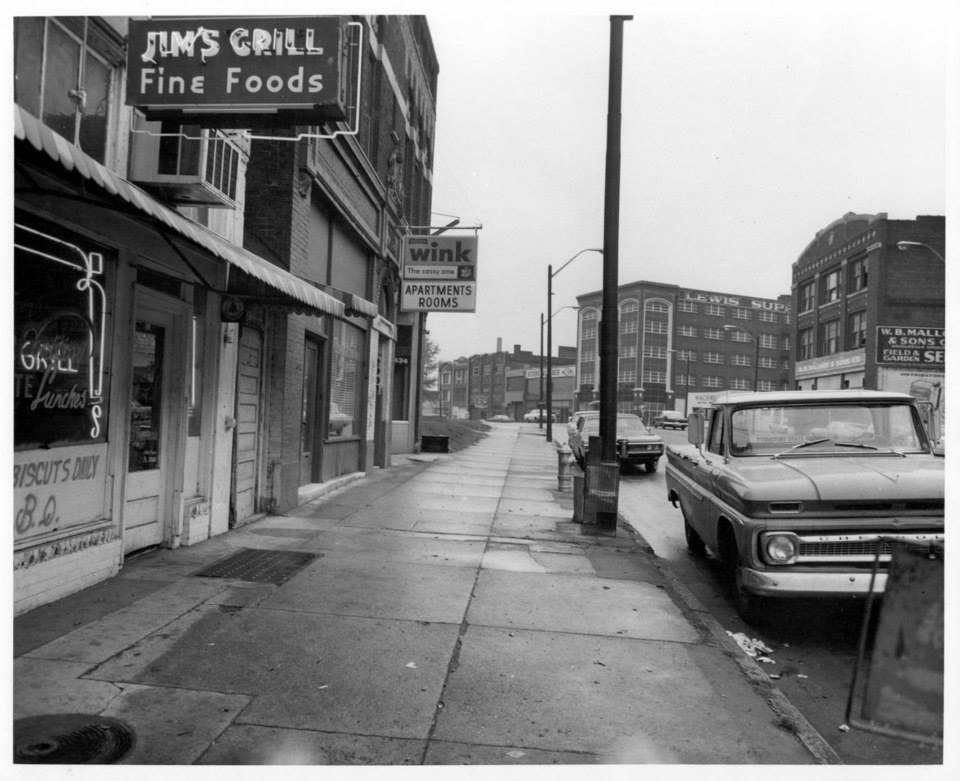
    Take for example the man at the very centre of Pepper’s conspiracy narrative, Loyd Jowers. In 1968, Jowers was the proprietor of Jim’s Grill, a restaurant located underneath the rooming house from which the state alleges Ray fired the fatal shot. For many years the only thing Jowers had to say that was of any interest to investigators was that a white Ford Mustang had been parked directly in front of the grill on the afternoon of the assassination; corroborating Ray’s claim of where he had parked his car and helping establish the presence of two white Mustangs on Main Street. But in 1993, Jowers appeared on ABC’s Prime Time Live claiming that Memphis-based produce dealer and alleged Mafia figure, Frank Liberto, had contacted him shortly before the assassination and paid him $100,000 to hire someone to assassinate Dr. King. He was then visited by a man named Raul who handed him a “rifle in a box” and asked him to hold onto it until “we made arrangements, one or the other of us, for the killing.”6

    On the face of it, Jowers’ story seems plausible enough. There is no doubt that he was at the scene of the crime and in a position to assist in carrying out the assassination. Additionally, parts of his account were corroborated by two other witnesses: former Jim’s Grill waitress, Betty Spates, and local Memphis cab driver, Jim McCraw. Also, Jowers’ claim that Frank Liberto brought him into the plot recalls the statement of civil rights leader John McFerren that, sometime in the afternoon shortly before Dr. King was shot, he overheard Liberto telling someone on the telephone to “Shoot the son of a bitch when he comes on the balcony.”7 And yet Jowers was, by any definition, a most unreliable witness. By Pepper’s own admission there were numerous different versions of his story. In fact, he contradicted himself on virtually every important detail.

    Jim’s Grill

    He initially named black produce-truck unloader Frank Holt as the gunman he had hired but changed his mind after Holt was found alive and well and passed a polygraph test, denying any involvement.8 Jowers then hinted that deceased Memphis Police Lieutenant Earl Clark was the real gunman only to tell Dr. King’s son, Dexter, that he “couldn’t swear” that he was because “All I got was a glance of him.”9 To Dexter, Jowers said that the gunman handed him the still smoking rifle, yet at an earlier time he had claimed to have picked it up after it had been placed on the ground.10 Around this time he also changed his mind about ever having been asked to hire the gunman, saying instead that he had simply been told to be out in the bushes behind Jim’s Grill at 6:00 PM and that he didn’t even know Dr. King was going to be killed.11 In this scenario, Jowers merely held onto the $100,000 until it was collected by a co-conspirator.

    Perhaps even more troubling than these inconsistencies – of which there are more – is the fact that Jowers and his friend Willie Akins are known to have contacted Betty Spates in January 1994 saying that they were interested in doing a book or a movie and they needed her to change her story. If she would say that she saw a black man handing the rifle to Jowers immediately after the shooting, they could all make $300,000.12 And if that wasn’t bad enough, in an April 1997 tape-recorded conversation with Shelby County district attorney general’s office investigator, Mark Glankler, Jowers basically disavowed his confession by stating that Ray’s rifle was the real murder weapon and that “there was no second rifle.”13

    It may also be seen as significant that Jowers never did repeat his conspiracy allegations under oath. He was not actually present for the King v. Jowers civil trial, apparently owing to ill health. The only time he gave a legal deposition after his appearance on Prime Time Live was during the 1994 Ray v. Jowers lawsuit, at which time he reverted to his 1968 story and insisted that he was in the bar serving drinks when the shot was fired. Jowers had agreed that the transcript of his Prime Time Live appearance could be entered into evidence but, through his attorney Lewis Garrison, stipulated “that the questions were asked and Mr. Jowers gave these answers”.14 Thus he did not swear to the accuracy of his alleged confession, he merely agreed that he had given it.

    In The Plot to Kill King, Pepper attributes Jowers’ many contradictory assertions to his fear of being prosecuted and an understandable desire to minimize his own role when talking to members of the King family. Pepper also argues, in spite of Jowers’ attempt to encourage Spates to lie for her share of $300,000, that it is “arrant nonsense” to suggest that he fabricated his story “in anticipation of a book or movie deal.” In fact, he says, “Jowers lost everything. Even his wife left him. There was no book or movie deal, and he was, for the most part, telling the truth.”15 Yet none of these arguments preclude the possibility that Jowers’ confession was invented as part of a money-making scheme that backfired.


    That being said, it should be borne in mind that Jowers’ initial Prime Time story did not come completely out of the blue. Suspicion had already been cast on him by statements that Spates and McCraw had given to Pepper, after which Jowers’, through Garrison, had contacted the Shelby County district attorney general offering to tell everything he knew in exchange for immunity from prosecution. Needless to say his proffer went completely ignored without anyone even attempting to speak with him. Assistant district attorney general, John Campbell, would later attempt to justify this total lack of interest by stating that the story looked “bogus” and that if they had given Jowers immunity “it would imply we thought there was some validity to his story, and that would increase the value of what he could sell it for.”16 Precisely how they were able to deduce immediately and without even talking to Jowers that his story was “bogus” is anyone’s guess.

    In the end, it will be up to each individual researcher to decide which, if any, of Jowers’ varying accounts to believe. Whilst it is true that the jury in King v. Jowers did find him partly responsible for the assassination, it is also true that his assertions were not thoroughly tested at the trial because neither Pepper nor Garrison were looking to undermine Jowers’ credibility. Legendary attorney, author, and activist, Mark Lane, was critical of the trial for that very reason, telling this reviewer that in his opinion, “It was not a real trial … both sides offered the same position and I have reason to doubt that the position they offered was sound. The jury, having seen no evidence to the contrary, had no choice. In my view, the court system should not be utilized in that fashion.”17

    Mark Lane with James Earl Ray

    Lane’s assessment is, in my view, somewhat off the mark in that it suggests a type of collusion between Pepper and Garrison that was likely not the case. In truth, Garrison was in an extremely awkward position. He could not simply deny the existence of a conspiracy without calling his own client a liar, so his strategy was to attempt to minimize Jowers’ role and convince the jury that, as he stated in his closing argument, “Mr. Jowers played a very, very insignificant and minor role in this if he played anything at all. It was much bigger than Mr. Jowers, who owned a little greasy-spoon restaurant there and happened to be at the location he was.”18 In that regard, it worked to Garrison’s advantage to allow Pepper to put on a case for a wide-ranging conspiracy without offering a rigorous challenge. Nevertheless, the result of this strategy, as Lane suggested, was that the jury essentially heard one story from both sides and for that reason the verdict was far from surprising.

    By noting these circumstances, it is not meant in any way to suggest that the civil trial or the jury’s verdict were entirely without merit. On the contrary, as Pepper details in The Plot to Kill King, numerous witnesses gave significant and often startling testimony under oath – many for the first time – and put important evidence on the record. For example, a succession of witnesses provided evidence establishing the manner in which Dr. King was, seemingly intentionally, stripped of all reasonable security, and left entirely vulnerable to a sniper’s bullet. Of particular note is the testimony of Memphis Police Department homicide detective Captain Jerry Williams who had been in charge of organizing a unit of black officers that had previously provided protection for Dr. King on his visits to Memphis. Williams said that he was not asked to form his unit on Dr. King’s final, fatal visit, and was later falsely informed that Dr. King’s organization, the SCLC, had said Dr. King did not want protection.19 Additionally, as University of Massachusetts Professor Philip Melanson testified, MPD Inspector Sam Evans had ordered the emergency services’ TACT 10 unit removed from the vicinity of the Lorraine Motel, claiming this too was done at the request of someone in the SCLC. As Pepper writes, “When pressed as to who actually made the request, he said that it was Reverend [Samuel] Kyles. The fact that Kyles had nothing to do with the SCLC, and no authority to request any such thing, seemed to have eluded Evans.”20

    Not only had Dr. King been stripped of protection but a last-minute switching of his motel room had made the assassin’s job all the easier. Former New York City police detective Leon Cohen testified that Lorraine Motel manager Walter Bailey told him on the morning after the assassination that Dr. King had originally been allocated a more secure courtyard room. But on the evening before his arrival, Bailey had received a call from someone claiming to be from the SCLC’s Atlanta office requesting Dr. King be given a balcony room instead. Bailey said he was “adamantly” opposed to the change “because he had provided security by the inner court” but his caller had insisted the rooms be switched anyway.21 Needless to say, no genuine member of the SCLC is known to have made any such request.

    King on the Lorraine balcony

    As well as being shown how Dr. King was maneuvered into a vulnerable position, the Memphis jury also heard much evidence helping to establish James Earl Ray’s probable innocence. The state has always maintained that Ray holed himself up in a shared bathroom in the rooming house opposite the Lorraine and waited until Dr. King appeared on the balcony at approximately 6:00 pm. After supposedly firing the fatal shot, he is said to have rushed back to his rented room, put the rifle in its box, placed it amongst a bundle of his belongings, then ran down the stairs to the ground floor. Once outside, he allegedly dumped his bundle in the doorway of Canipe’s Amusement Company, climbed into a white Mustang parked just south of Canipe’s, and quickly sped away.

    Pepper provided evidence that successfully countered every step of this most likely false narrative. The notion that Ray had been lying in wait in the bathroom was contradicted by the sworn deposition of James McCraw, who had been in the rooming house only a few minutes before Dr. King was shot. McCraw said that he saw the bathroom door wide open and there was no one inside.22 Raising the possibility that the shot was actually fired from the thick shrubbery below the bathroom window, Pepper read into the record the sworn statement of SCLC member Reverend James Orange who said that he saw what he thought was gun smoke rising from the bushes immediately after he heard the shot.23

    Ray’s alleged flight down the rooming house stairs had, according to the state, been witnessed by Charles Stephens, who occupied the room between the bathroom and the room Ray had rented. But his ability to witness anything was called into question by taxi driver McCraw, who had been called to the rooming house specifically to pick Stephens up. McCraw said that he found Stephens lying on his bed, too drunk to even get up.24 McCraw’s account was corroborated by the testimony of MPD homicide detective Tommy Smith who entered the building shortly after the assassination and found Stephens still so intoxicated that he could hardly stand.25 Not mentioned at the trial was the fact that two weeks after the murder, Stephens had been shown a picture of Ray by CBS news correspondent Bill Stout and failed to recognize him. In fact, he said Ray was “definitely not” the man he claimed to have seen fleeing the rooming house.26

    Judge Joe Brown with
    the supposed murder weapon

    Criminal Court Judge Joe Brown, who had presided over Ray’s final appeal, took the stand to testify about a series of ballstics tests that he had ordered be performed on the Remington Gamemaster rifle found in the doorway of Canipe’s. The FBI had never been able to establish that particular rifle as the murder weapon – supposedly because the bullet removed from Dr. King’s body was too mutilated. Judge Brown, himself a ballistics expert, explained that 12 of the 18 bullets fired during his tests had contained a similar flaw – a bump on the surface – that was not present on the death slug. He also said that the rifle had never been sighted in and, as a result, had failed the FBI’s accuracy test. “ … based on the entirety of the record”, Brown said, “and the further ballistics tests I had run, it is my opinion this is not the murder weapon.”27 Brown’s opinion was re-enforced by the testimony of Judge Arthur Hanes, Jr., who, alongside his father, had been Ray’s defense attorney before Ray made the fatal mistake of hiring Percy Foreman. Judge Hanes told the court that Guy Warren Canipe had said to him in 1968 that the bundle containing the rifle had been dumped in the doorway of his store approximately 10 minutes before the assassination and he was prepared to testify to that effect.28

    Finally, Pepper showed, through the FBI statements of Ray Hendrix and William Reed, that James Earl Ray had most likely left the scene in his white Mustang shortly before the assassination, not immediately after. Ray always maintained that he parked his car directly in front of Jim’s Grill, not south of Canipe’s, and that he left the area sometime between 5:30 and 6:00 pm to try to get his spare tire fixed. The April 25, 1968, statements of Hendrix and Reed corroborated Ray’s account. The pair told the Bureau that they had left Jim’s Grill at approximately 5:30 pm and noticed a white Mustang parked directly outside. When Hendrix realised he had forgotten his jacket, he went back into the grill to retrieve it whilst Reed stood staring at the car. When Hendrix reappeared the two walked a couple of blocks north on South Main Street until they reached the corner of Main and Vance, at which point what appeared to be the very same Mustang, driven by a lone, dark-haired man, rounded the corner in front of them. This independent confirmation of Ray’s movements, essentially constituting an alibi, was hidden from the defence and the FBI kept the crucial documents from the public for decades.29 Finding these statements and having them entered into evidence, as they should have been in 1969, is one of the many things for which Pepper is to be applauded.

    Another is his effort to locate and identify the mysterious figure previously known only as “Raoul” or “Raul”. For those unfamiliar with the King case, Raul was the name of the man whom Ray always claimed had set him up for the assassination. Shortly after his escape from the Missouri State Penitentiary on April 23, 1967, Ray made his way to Montreal, Canada, hoping to obtain the travel documents he needed to flee the country. It was there in a place called the Neptune Bar that he said he met Raul, a dark-skinned man with a Spanish accent, who promised to provide the documents Ray needed if he agreed to smuggle some items across the border. For the next several months, Ray said, he received large sums of money – including $1,900 to buy the Ford Mustang – and followed Raul’s instructions. According to Ray, these instructions ultimately included purchasing the Remington Gamemaster rifle and renting a room at the flophouse opposite the Lorraine Motel.

    Jerry Ray before the HSCA

    Needless to say, the state and its defenders have always maintained that Raul did not exist. Yet as Pepper points out, this leaves them with the problem of accounting for the large sums of money Ray was known to have spent whilst having no other known source of income. Desperate to explain this away, the HSCA theorized that Ray and his brothers had robbed a bank in Alton, Illinois. “The problem with this ‘theory’”, Pepper writes, “is that I called the local sheriff and the bank president in Alton. I was advised that they knew James had nothing to do with the robbery. The real culprits were known but there was not enough evidence to charge them.”30 On Pepper’s advice, Ray’s brother Jerry surrendered himself to the Alton police in 1978, offering to waive the statute of limitations so that he could be charged. He was promptly informed that neither he nor his brothers had ever been suspects.31

    Because Ray was a largely incompetent crook, and because he was never the violent racist that the media falsely made him out to be, those who spent any length of time with him rarely doubted his claim that he had been set-up by someone. Quite simply, the idea of Ray as a lone nut assassin has never made any sense. As Arthur Hanes Sr. is said to have remarked, “Unless Ray is a complete damn fool I don’t see how he could have made the decision to kill King. Before King was killed, Ray was doing all right. He was free, able to support himself with smuggling and stealing. He was driving a good car all over Canada, the United States and Mexico. He was comfortable, eating well, finding girls, and nobody was looking for him. Why then would he jeopardize his freedom by killing a famous man and setting all the police in the world after him?”32 Indeed, one might ask why Ray, being on the run from prison and desiring little more than to leave the United States for a country with whom the US had no extradition treaty, would have even re-entered the country in the first place after having made it as far as the Montreal docks? It might well be said that Ray’s actions following his prison break only make sense if we accept that someone was manipulating him.

    Pepper believed Ray’s story and, soon after agreeing to represent him, set out to find Raul. Eventually Pepper’s investigators came into contact with a rather eccentric witness named Glenda Grabow who told them that in the 1970s she had been involved in gunrunning, among other illegal activities, with a man whose nickname was “Dago” and that he had confessed to her his involvement in the murder of Dr. King. Meanwhile Pepper, who heard a rumour that Raul was living in the northeast, had zeroed in on an individual named Raul Coelho, living in Upstate New York. Investigators John Billings and Ken Herman obtained a picture of this Raul taken in 1961 when he emigrated to the US from Portugal, placed it amongst a spread of six photographs, and showed them to Grabow. According to Herman, “she pointed out Raul with no hesitation. She was sitting at the kitchen table in my house and zeroed right in on the guy.” The spread was then shown to Glenda’s younger brother, Royce Wilburn, who also knew “Dago” and he too identified the picture of the New York Raul.33

    Billings then took the obvious next step and showed the spread of photographs to Ray in his cell at Riverbend Prison in Nashville, Tennessee. As Billings later testified, “I told him we had a picture of Raul. And he seemed somewhat surprised. And I asked him if he would choose to attempt to pick out Raul in a photo spread … So we put this before him, and James put on his glasses and very – for a minute or two studied these pictures very carefully.” He then dropped his finger down on the picture of the New York Raul and said “that’s Raul.” Asked if he was positive Ray said, “Yes, I am.”34

    The pictures were also shown to British merchant seaman Sid Carthew who had come forward after watching a video tape of the televised mock trial saying that he too had met a man named Raul in the Neptune Bar, Montreal, in 1967. Over the course of two evenings, Raul had offered to sell him some Browning 9mm handguns. “He said to me, how many would you want, and I said four … and he said, four, what do you – four, what do you mean by four. I said four guns. He wanted to sell me four boxes of guns … once he knew that I would have only take – took four, he was very annoyed … it wouldn’t be worth his while to deal in such a small number, and that was the end of the conversation, and he went back to the bar.”35 Carthew selected the same photograph from the spread as Grabow, Royce, and Ray had before him. And according to Pepper, so too did Loyd Jowers.36


    In its response to the King v. Jowers trial and verdict, the Department of Justice insisted that the New York Raul had had nothing to do with the assassination and dismissed these photographic identifications as “suspect”. It said that the photo array was “deficient and unfairly suggestive” because the Raul photograph is the only one of the six to have “extremely high black and white contrast and no intermediate gray tones” and thus “stands out markedly from the others.”37 Essentially the DOJ suggested that the contrast of that particular photo causes it to draw the eye and that was why Pepper’s witnesses picked it out. This reviewer recently decided to put that notion to the test by sharing the photo array on a social media site, asking if anyone could pick out a man named “Raoul” (Ray’s original spelling) who “has allegedly been involved in drug smuggling, gun dealing, and murder.” I also hinted at a connection to the assassination of Dr. King. Of the 14 respondents, not a single one picked out the picture of the New York Raul. While this was hardly a perfect experiment, the result nonetheless stood in stark contrast to the DOJ’s suggestion that the picture of Raul Coelho was more likely to be picked over the others because of its high contrast.

    Ironically, one of the most frequently cited reasons for doubting the DOJ’s assurances and believing that the man Pepper found may well have been the real Raul is the manner in which he was assisted and protected by the US Government. As Pepper discovered after he made Raul a party defendant in the Ray v. Jowers lawsuit, despite supposedly being nothing more than a retired auto plant worker of modest means, Raul was being represented by two large, prestigious law firms. And when Portuguese journalist Barbara Reis tried to interview him, a member of Raul’s family told her that agents of the US government “are looking over us”, had visited them on at least three occasions and were monitoring their telephone calls.38 As Pepper observed, “Imagine that degree of care and consideration by the government for just a little old retired autoworker.”39

    Most of the above, actually most of what is in The Plot to Kill King, will be familiar ground for those who have read Pepper’s first two books, Orders to Kill and Act of State. In fact, the first two thirds of the new book are little more than a retread of the previous two with entire passages actually being lifted word-for-word from Act of State. The final third of the book, which details Pepper’s “continuing investigation”, unfortunately does not do much to elevate matters or add to our understanding. The new information presented therein is, in this reviewer’s estimation, of very dubious reliability.

    Pepper makes the absolutely startling claim that, although Dr. King’s gunshot wound would have been fatal anyway, he was intentionally finished off by the emergency room doctors who were supposed to be saving his life. He writes of a story that was related to him by a blind Memphis resident named Johnton Shelby, who claims that his mother, Lula Mae, was a surgical aide at St. Joseph’s Hospital and took part in Dr. King’s emergency treatment. According to Shelby, the morning after the assassination his mother gathered the family together to tell them that the emergency room doctors had been ordered by the head of surgery and a couple of “men in suits” to “Stop working on that nigger and let him die.” They were all then ordered to leave the room immediately. Shelby said that as his mother was leaving, she heard the men sucking saliva into their mouths and spitting so she glanced over her shoulder. She then saw that Dr. King’s breathing tube had been removed and a pillow was being placed over his face so as to suffocate him.40

    An extraordinary story like Shelby’s requires extraordinary proof. Yet Pepper seems to swallow the whole thing hook, line, and sinker despite the fact that, by his own admission, he spoke with numerous medical personnel who were known to have been in the emergency room and found absolutely no corroboration for it whatsoever. Shelby named a few people with whom his mother supposedly shared her experience but, needless to say, they were all conveniently dead in 2013 when he first came forward. More importantly, in accepting Shelby’s story, Pepper has to ignore the fact that it is directly contradicted by testimony that he himself put before the jury in King v. Jowers.

    At the civil trial Pepper put John Billings on the stand to testify not only about his time investigating Glenda Grabow and Raul Coelho but also about his activities on the day of the assassination. In April 1968, Billings was a junior at Memphis State University and was working as a surgical aide at St. Joseph’s. He walked into Emergency Room 1 just as Dr. King’s treatment was beginning and stood and watched as several doctors were “feverishly working … for 30, 45 minutes or so.” One of the doctors eventually walked up to Billings and told him to “go get someone in charge.” He walked out of the room and found “one or two gentleman wearing suits” who “seemed to be more or less telling everyone what to do.” He led them back into the emergency room “and the doctors informed them of something to the effect of Dr. King is – Dr. King is terminated. We have done everything that we can. We feel there’s nothing left that we can do.”41 Nowhere in Billings’ first hand account was there any reference to emergency room staff being ordered to stop working on Dr. King and leave the room. He specifically recalled that the doctors themselves made the decision to stop when they felt they had done everything they could.

    At one point Pepper hints at the idea that the “connections, associations, and personal success” linked to a career practising medicine in Memphis might explain why the numerous doctors who treated Dr. King did not recall the supposed intervention. But he cannot apply any such argument to Billings who did not follow a career in medicine and worked hard as one of Pepper’s investigators to uncover details of the conspiracy to kill Dr. King. It is readily apparent that Billings had absolutely no reason to withhold any details surrounding Dr. King’s emergency treatment. Which is probably why Pepper avoids mentioning his testimony on the issue altogether.

    Pepper also buys into a very elaborate yarn spun by one Ronnie Lee Adkins a.k.a. Ron Tyler. Ronnie’s father, Russell, worked for the city of Memphis for 20 years in the “Engineering Division”. Despite his modest means he was, according to Ronnie, both a 32nd Degree Mason and a Klansman who attended “meetings” that involved everyone from Mayor Henry Loeb and Memphis police and fire department director Frank Holloman to Frank Liberto, Carlos Marcello, and J. Edgar Hoover’s deputy in the FBI, Clyde Tolson. Russell was known as a “fixer” and, through Tolson, Hoover would give him money to perform various deeds including “local-area killings.” On one particular occasion in 1967, Tolson gave him money that was to be paid to the warden of Missouri State Prison to arrange for the escape of James Earl Ray. Of course, as any reasonable person would expect, Russell saw no need to shield his young son from his nefarious deeds, so little Ronnie not only got to see the money being handed to his father, he even got to go along to Missouri to see it passed on to the warden. Or so he says.

    According to Ronnie, in 1964 his father went on a trip to Southampton, England, with Tolson. When he returned he called a meeting with his eldest son Russell Junior and others to tell them that “The coon has got to go.” From then on “prayer meetings” were held at the Berclair Baptist Church, among other places, which eventually came to focus on how to get the garbage workers “pissed off” as a means of drawing Dr. King to Memphis. Allegedly “the word come down from Hoover” that the assassination was to occur in Memphis so that “daddy and them could handle it.” If the reader is dubious that planning for the assassination would have begun four years before it occurred, they will be even less impressed by the claim that way back in 1956 Tolson had handed Russell a “Personal Prayer List” of his and Hoover’s featuring the names JFK, RFK and MLK. That’s right, Ronnie claims that nearly five years before the Kennedys made it to the White House, and at a time when Dr. King’s activism was just beginning, Hoover had already put their names together on a list and handed it to his Memphis “fixer” for no apparent reason.

    When Russell died in 1967, Junior allegedly took over in planning the assassination alongside Holloman. Someone in their camp then supposedly engineered the deaths of Echol Cole and Robert Walker. For those who are unfamiliar with those names, Cole and Walker were two black sanitation workers who, on February 1, 1968, were tragically crushed to death in the back of a garbage truck where they were trying to hide from the rain. It was this tragic accident, and the paltry assistance the city gave to the families of the victims, that prompted Dr. King to travel to Memphis and join a city-wide march in support of the striking sanitation workers. But in Ronnie’s world, this was no accident, “Somebody pulled the hammer, pulled the lever on the truck and mashed them up in there.”

    After Dr. King booked into the Lorraine Motel, Ronnie says, Jesse Jackson – who had supposedly been paid by Russell to keep tabs on Dr King – was instructed to have his room changed to the balcony room 306. Jackson then “went down there and talked to the man and, or his wife Lurlee … and had him move Martin and Ralph up to 306.” The Reverend Billy Kyles, another alleged informant, was given the job of getting Dr. King to come out of his room and onto the balcony at precisely 6:00 pm.

    On the day of the assassination, Ronnie claims, he carried the murder weapon into town on the back of his motorbike wrapped in a bedspread and handed it to Junior and Loyd Jowers in the parking lot next to Jim’s Grill. When 6:00 pm came and Dr. King appeared on the balcony, Junior fired the shot then handed the rifle to Earl Clark who, in turn, handed it to Jowers. Junior then ran through the vacant lot between the rooming house and the fire station, climbed into the white Mustang parked outside the grill and drove away.42

    The above is but a brief synopsis of Ronnie Lee Adkins’ story. There are many more details for which there is not enough space in this short essay. Nonetheless, from what I have included I believe it is clear that calling Adkins’ story hard to believe would be a vast understatement. In fact it is, in this reviewer’s opinion, so utterly lacking in credibility that it hardly seems worth wasting time on a detailed deconstruction. Not only is there no corroboration for any of it, numerous details are in direct conflict with information Pepper has previously presented. For example, Adkins has Jesse Jackson visiting the Lorraine personally to have Dr. King’s room changed. Yet, as noted earlier, Walter Bailey told Leon Cohen that he received the instruction not in person but over the phone from someone who identified himself as a member of the SCLC’s Atlanta office. Adkins has Ray leaving the scene in the white Mustang parked south of Canipe’s and his brother fleeing in the one parked outside the grill when numerous statements establish that it would have had to have been the other way around. And he has Jowers attending some of the so-called “prayer meetings” and receiving the rifle in a parking lot despite nothing like this appearing in any of Jowers’ own accounts.

    In Adkins’ narrative there is no mention of or accounting for Raul and he names some extremely unlikely individuals as part of the plot. He even has MPD officer Tommy Smith – who, you might recall, testified on behalf of the King family that Charlie Stephens was too drunk to identify Ray – waiting in his car on Main Street and then dropping the bundle of evidence in the doorway of Canipe’s. Pepper himself is forced to admit how impossible this is given that “the bundle contained various bits and pieces, including the throw-down gun, which James had left on the bed in his rented room in the rooming house.”43


    There are also logical problems aplenty with Adkins’ story. Like why on Earth would Hoover have had the names JFK, RFK and MLK put on a list and handed to Russell Adkins in 1956? Was anyone even referring to them by their initials back then? Once Dr. King’s assassination was decided, why did it take four years for so many presumably intelligent people to formulate a plan? How did they come to decide that “pissing off” the sanitation workers was the best way of getting Dr. King into Memphis? Why was it necessary for 16-year-old Ronnie to carry the rifle to the scene on the back of his motorbike? Who thought that was a good idea? What if he had been stopped by police officers not in on the plot? Why did Junior not just take the rifle with him in the first place? And what exactly was Earl Clark doing in the bushes if he wasn’t the shooter? Would it have been so difficult for Junior to have handed the rifle to Jowers himself? It should be noted that there is no support anywhere in the record for the notion that there were three people hiding in the shrubbery.

    At the end of the day, even without these logical and factual inconsistencies, Adkins’ fantastical story is based on nothing more than the uncorroborated word of a man who, by his own account, had to quit school without graduating after he took a pistol into the lunchroom and fired off several shots.44 Accepting this man’s word without verification is, as far as this reviewer is concerned, completely unthinkable.

    It is not to Pepper’s credit that he endorses the likes of Shelby and Adkins and I believe that his critics will rightly have a field day with their stories. State apologists like Gerald Posner have delighted in quoting Pepper’s former investigator Ken Herman as stating that “Pepper is the most gullible person I have ever met in my life” and the new information he presents in The Plot to Kill King is doing very little to prove this remark wrong. Unfortunately, he compounds the problem by picking and choosing what he wishes to believe of these troublesome new tales. He rejects one of the central facets of Adkins’ account – that his brother Junior fired the shot – and asserts instead that the real gunman was a former MPD officer named Frank Strausser. Yet his strongest evidence in support of this belief is that Strausser is alleged to have accidentally admitted his involvement to Nathan Whitlock.45 This is the very same Nathan Whitlock who has long claimed that Frank Liberto admitted his own involvement in the assassination to him. Which just leaves this reviewer wondering what exactly it is about Mr. Whitlock that compels people to confess their part in this crime in his presence.

    Ultimately, I cannot say that The Plot to Kill King is a book I would recommend. As noted above, most of the book is a recapitulation of Pepper’s first two. Unfortunately, it is not as well written as either of his earlier works and is poorly edited to boot. There are numerous typographical errors – with Loyd Jowers and Marina Oswald being among those whose names are misspelled – as well as unnecessary repetition of information and witness statements being referred to before they’ve even been introduced. If the new information Pepper presented had been more reliable then it may have redeemed matters but unfortunately that was not to be. Pepper’s second book, Act of State, was a much more worthy addition to the literature. It was better written, better organized, and featured worthwhile rebuttals to both Posner and the Department of Justice. Readers are advised to track down a copy of that book instead.


    References

    1. See here for details: http://mlkmurder.blogspot.co.uk/2013/08/why-did-james-earl-ray-plead-guilty.html

    2. See Pepper, Orders to Kill, Chapters 24-25.

    3. The 13th Juror: The Official Transcript of the Martin Luther King Assassination Conspiracy Trial, p. 752.

    4. http://jfk.hood.edu/Collection/Weisberg%20Subject%20Index%20Files/P%20Disk/Pepper%20William%20F%20Dr/Item%2002.pdf

    5. Who Killed Martin Luther King?, History Channel documentary, 2004.

    6. The 13th Juror, p. 458.

    7. Pepper, The Plot to Kill King, p. 82

    8. Ibid, pgs. 90-93.

    9. The 13th Juror, pgs. 177-178.

    10. Pepper, Act of State, p. 41.

    11. The 13th Juror, p. 178.

    12. Orders to Kill, p. 336.

    13. United States Department of Justice Investigation of Recent Allegations Regarding the Assassination of Dr. Martin Luther King, Jr., June 2000, Part IV, Section C.1.b. https://www.justice.gov/crt/iv-jowers-allegations#analysis

    14. Orders to Kill, p. 383.

    15. The Plot to Kill King, p. 154.

    16. Gerald Posner, Killing the Dream, p. 291.

    17. http://educationforum.ipbhost.com/index.php?showtopic=15699&p=250020

    18. The 13th Juror, p. 739.

    19. The Plot to Kill King, p. 171.

    20. Ibid.

    21. Ibid.

    22. Ibid. p. 298.

    23. Ibid. p. 175.

    24. Ibid. p. 298.

    25. Ibid. p. 174.

    26. Orders to Kill, p. 97.

    27. The Plot to Kill King, p. 177.

    28. Ibid. p. 178.

    29. Ibid. p. 184.

    30. Ibid. p. 198.

    31. The 13th Juror, p. 343.

    32. William Bradford Huie, He Slew the Dreamer, p. 177. I say “said to have remarked” because Huie, who attributed those remarks to Hanes, is a self-admitted fabricator. Therefore nothing he wrote should be taken as absolute fact without independent corroboration.

    33. Posner, p. 296.

    34. The 13th Juror, p. 257.

    35. Ibid. pp. 270-277.

    36. Act of State, p. 222.

    37. Justice Dept. Report, Part VI, Section C.3.b.

    38. The 13th Juror, p. 295.

    39. Act of State, p. 204.

    40. The Plot to Kill King, p. 261.

    41. The 13th Juror, p. 249-250.

    42. The Plot to Kill King, p. 238-258.

    43. Ibid. p. 256.

    44. Ibid. p. 239.

    45. Ibid. p. 235.

  • John Avery Emison, The Martin Luther King Congressional Cover-Up

    John Avery Emison, The Martin Luther King Congressional Cover-Up


    John Avery Emison’s The Martin Luther King Congressional Cover-Up is an interesting effort. But it has a somewhat misleading title. From that title, the reader would think that Emison was going to primarily focus on the House Select Committee on Assassinations inquiry into the King assassination. That is not really the case. The author spends more time on the local forces in Memphis who railroaded Ray and also on Ray’s unfortunate choice of Percy Foreman as attorney. He does deal with the HSCA inquiry, but this is later in the book.

    James Earl Ray

    One of the first elements of the King case that the author deals with is the racist factor. The authors who have done so much to frame Ray, for example George McMillan, have used that aspect to try and supply a motive to Ray’s alleged crime. As Emison notes, Ray was not a southerner. He was born in Illinois. (p. 25) If one goes through his military records and prison records, there are no credible indications that Ray was a racist. As for his life in crime, all the indications are that he was an inept, small-time criminal, one who was rather easy to capture by the police. But, after the murder of King, this was drastically altered. As the author notes, “Yet, for two months following King’s murder, Ray—a man who had never before flown a commercial airline—eluded the biggest manhunt in the history of the United States…” (ibid) Hiding out in such locales as Canada, England, and Portugal. Once captured at Heathrow Airport in London, he was sent back to Memphis, the scene of King’s murder.

    I

    And this is where Emison’s book really begins. As he notes, the entire proceeding of Ray and his attorney Foreman pleading before Judge Preston Battle took less than four minutes. (p. 26) During which Battle never asked any of the following questions: Did Ray have confederates, what was the origination of his funds for all the traveling he did prior to and after the assassination, where did he sight in the rifle, why did he flee to Canada and how he did he get a passport—or even, the most fundamental question of all: Why did he shoot King? (p. 27)

    Judge Preston Battle

    But a week later, Battle began to express some doubts about the efficacy of what he had done. For instance, in an interview with a reporter, he asked rhetorically: how did Ray choose the spot from where he fired? Because there was no public knowledge that King had a room at the Lorraine Motel, across from Bessie’s Boarding House. Which was the place where the police said Ray shot King. (p. 27)

    Which leads to the question: Was there an inside man in King’s entourage? It turns out there was. Many years later, it was revealed that the FBI had a paid informant in King’s camp. His name was Ernest Withers. The sheer mass of Withers’ reports is stunning. They come to a total of 93 single spaced pages. And they are absolutely complete. Down to the plans for demonstrations, who was at certain meetings, and the names and room numbers of King’s hotels. (p. 126)

    But Battle then also asked the reporter: How was it possible for Ray to escape from Memphis to Atlanta even though there was an APB out for him and his car? Which was an easy to identify white Mustang? (p. 27) As the author notes, Battle died about three weeks after the interview. At his desk when he passed away were letters from Ray requesting a new trial, which Battle was about to grant.

    Only one other person in officialdom showed any doubts about the case. That was Harry S. Avery of the Tennessee Commission of Corrections. But when Avery spoke of the possibility of a conspiracy, the governor, Buford Ellington, removed him from office. (p. 29) And this rather untoward behavior continued up until Ray’s death, when Governor Sundquist refused to grant his cooperation in a private effort for a liver transplant to keep Ray alive. He therefore died in 1998, as his lawyer William Pepper was trying to get a new trial for his client. John Avery Emison was related to the late Harry Avery. Which inspired his interest in the case and his subsequent interviews with Ray.

    Ray told the author what he has told everyone else. He purchased the alleged murder rifle, a Remington Game Master 760, while he was under the control of a man named Raoul. He had met Raoul in Ontario, Canada in the summer of 1967. He then went to work for him as a well-paid courier. To do so, Raoul bought him his one-year-old Mustang. (p. 41) Raoul paid for the Game Master rifle and Ray gave it to him the night before King was shot.

    Ray had checked into the boarding house on the afternoon of April 4, 1968, the day of the assassination. He used an assumed name, that of John Willard. Although the local authorities say that there was a chip in the window sill where the assassin laid his rifle, the FBI said such was not the case. (p. 43) Two witnesses reportedly saw a man move from the vicinity of the entrance to the communal bathroom. But neither one, Willie Anschutz nor Charlie Stephens, could make a positive identification. And Stephens was, by all accounts, stone drunk at the time. (ibid) This is what Stephens said the evening of the murder. He later changed his story.

    Continuing with the official story, it has Ray going into his room and putting together a bundle of his items in a green blanket. This included the rifle, ammunition and a prison ID. He then went downstairs, turned onto South Main Street, took a few steps to his left, and dropped the bundle in the alcove outside a store called Canipe’s Amusement Company. (p. 44)

    These last two movements create serious problems for the official story. Because although neither Anschutz nor Stephens could make a positive ID, a woman with Stephens, Grace Walden, said the man was not Ray. (p. 45) Both Walden, and another witness that Arthur Hanes (Ray’s first lawyer) secured, said the man they saw was short and wearing an army jacket. Neither of which fit the description of James Earl Ray. But further, when Hanes got the inventory of what the FBI found in Ray’s abandoned Mustang in Atlanta, it contained a small army jacket. (ibid) Hanes called this an “electrifying” piece of evidence. He thought it indicated that Raoul took the shot, because Ray could not fit into the jacket.

    The other problem was that the owner of the amusement company, Guy Canipe, was ready to testify that the bundle with Ray’s things was dropped a few minutes before the shot rang out. Hanes told the author that with these two pieces of evidence, he was confident that the defense could stymie the prosecution’s case. Hanes was ready for a full trial, and expected an acquittal. (p. 46) He even advised Ray to refuse a plea bargain that would have sent him to prison for a maximum of 13 years. Which was a much better deal than the one Foreman got for Ray.

    II

    Confounding the prosecution even more was the ballistics evidence. This came as a result of tests performed by the FBI. The death slug could have come from the Game Master, but its deformation and absence of clear-cut markings precluded a positive identification. The death slug could not be metallurgically matched to the other Remington Peters rounds. (p. 47) Further, in the bundle, there were rifle rounds that Ray did not purchase at Aeromarine Supply Company in Birmingham, where he purchased the rifle. The HSCA concluded that the cartridge found in the weapon was the only cartridge in the magazine. Which indicates that whoever loaded the rifle was supremely confident in his marksmanship abilities. And no one has ever stated that Ray was a fine marksman.

    Making this even worse for the official story is that the HSCA could find no evidence that the other cartridges had been loaded into the rifle. Therefore, the idea held out by more than one author, that Ray practiced with the Game Master, is very hard to support. (p. 53)

    And beyond that, there is no evidence that the rifle was ever mechanically sighted in, since Aeromarine Supply did not have that kind of equipment., called a collimator. Neither did Ronald Wood, the rifle salesman, take the weapon out to a firing range to test the sighting. It is also hard to think that Ray manually sighted in the rifle, because he simply did not know very much about firearms. Wood made that comment about Ray. (p. 53) All Wood did was a simple bore sighting; hence the FBI found the rifle was off three inches to the right. (p. 54)

    But there is still something else about the ballistics that raises more serious questions. Among the nine rounds found in the bundle were 4 military type bullets. The HSCA found that the markings on these differed from the sporting rounds. These appeared to have been loaded into an M1 rifle or machine gun belt. Where did those weapons come from? Where did the rounds come from, since they were not sold to Ray at Aeromarine? (p. 55)

    Ray’s fingerprints were not found in the bathroom. And his room did not have a proper line of sight to King’s room at the Lorraine. (p. 66) Considering all the acrobatics that Ray would have had to perform to shoot at King from the rim of a bathtub, it’s hard to buy this as part of a genuine case.

    III

    None of the authors who have written books to convict James Earl Ray—William Bradford Huie, George McMillan, Gerald Posner, and Hampton Sides—ever met James Earl Ray. (p. 69) Which allows them to make some rather bizarre and unfounded assumptions. For instance, McMillan wrote that after Ray escaped from prison in 1967, he tried to recruit his two brothers—John and Jerry—into a plot to kill King. (p. 71) They refused and therefore Ray proceeded on his own. This makes the timeline about ten months before the assassination. McMillan makes no allowances for how Ray got the money to do his rather extensive traveling from Canada to Mexico to Los Angeles at this time.

    Hampton Sides promotes the HSCA theory that Ray heard about an offer from a racist group in St. Louis, which put a fifty thousand dollar bounty on King’s head. But again, Sides makes for no allowances about how Ray lived prior to this, how he could prove that he had killed King to the promoters, or how he could have either found out about the bounty, or collected from the proper people. (p. 72) But further, the FBI did interviews with several wardens and inmates and there were no indications that Ray was a racist, or knew about this offer. Or that Ray ever caused any disturbances in prison. (pp. 73, 84, 88) But McMillan tried to fabricate stories that showed he was. The author does a nice job showing these are false.

    Gerald Posner writes that Ray knew where King was staying in Memphis at the time of the assassination. Yet, as the author shows, this was not broadcast on either TV or radio until after the shooting. Only one newspaper said he was at the Lorraine, and that was published on the fourth at about 3 PM. This story mentioned only that King had lunch there on the 3rd. And there was no mention of a room number. By the time the story appeared, Ray had already checked into his boarding house room. (p. 73)

    Sides also used a story that somehow Ray was helping the George Wallace presidential campaign while he was in Los Angeles. There has never been any credible evidence to support this. The most anyone has come up with is that Ray once gave a ride to three people who wanted to vote. Ray himself had never been registered to vote. (p. 79)

    Foreshadowing his main focus in the rest of the book, Avery now writes that one of the main problems the HSCA had was that they tried to characterize Ray’s plea bargain as voluntary and not made under duress. (p. 89)

    IV

    In what Emison labels as Part 2 of his book, he tries to forge his own theory as to how the King assassination came off. There is a large problem with trying to do this. There has yet to be the equivalent of the JFK Act passed concerning the King case. Consequently, there has been no Assassination Records Review Board constructed to declassify all the documents that are still classified pertaining to that case. Just considering what the HSCA did, there must be tens of thousands of pages still locked up. So the picture we have of what happened is, by necessity, not yet complete. (Although Ray’s last attorney, William Pepper, has made an interesting stab at explicating the case. And paid a high price for that attempt.)

    Emison tries to locate a CIA-based conspiracy amid limited files released on CIA officer Richard Ober. Ober was the man James Angleton placed in charge of Operation Chaos. This was a rough equivalent to the FBI’s COINTELPRO domestic operations, except Ober worked more with media. It turns out that the CIA opened a file on the King case when Ray was attempting to move for a new trial. Ober opened the file. (pp. 96-98)

    Another connection concerns William Bradford Huie. Huie went to Arthur Hanes because he wanted the rights to Ray’s story. These were granted since Huie’s name guaranteed a sale of essays and a book, which would help finance Ray’s defense. And at first, Huie wrote a couple of fairly sympathetic essays in Look. But this changed later with both the third installment and his 1970 book, He Slew the Dreamer. In these Ray went from Ray as part of a plot, to Ray as lone gunman.

    The author tries to account for this in the following way. He says that Huie hired William F. Buckley once he got out of the CIA to his magazine, American Mercury. Emison says there were other CIA linked authors that came in at this time, like Sidney Hook. He then writes that a TV show Huie appeared on, NBC’s Longines Chronoscope, was a part of the CIA’s Operation Mockingbird program. (See pp. 102-103)

    This may or may not be true. But another way to explain Huie’s behavior is the fact that Ray changed attorneys. He went from Arthur Hanes, a man who was going to defend him as an innocent victim, to Percy Foreman, a man who did not defend him, and essentially sold him out. So as the defense attorneys changed, so did Huie’s agreement with them.

    The case with George McMillan seems qualitatively different to me. McMillan worked for the Office of War Information during World War II. Which means he was a propaganda officer. He then became a favorite of the FBI, specifically J. Edgar Hoover and Cartha DeLoach. (p. 103) In 1965, McMillan wed fellow journalist Priscilla Johnson. As many, many writers have noted, Johnson was clearly a CIA asset by this time. (See James DiEugenio, Reclaiming Parkland, pp. 286-88)

    McMillan denounced in public the formation of the HSCA. This was in an article published by The New York Times. (Emison, p. 105) He then wrote his book. He told a friend that it really was not an investigation of the crime, but actually a biography about James Earl Ray. In this, it resembled his spouse’s book Marina and Lee. Is it just a further coincidence that his book was published in 1976, and hers in 1977?—just as the HSCA was being formed and then in session? The book was immediately praised by longtime CIA asset Jeremiah O’Leary, who stated that McMillan had done the committee’s work for them already. (ibid)

    There is little or no doubt that these two books and authors did much to poison the public’s attitude toward Ray. But it’s another matter to base your theory of the crime on Huie and McMillan.

    The author seems to understand this. So he now shifts gears. He now begins to enumerate all the information that appeared back in the nineties about military intelligence spying on domestic disturbances in the USA. According to Emison, this began under General Creighton Abrams in May of 1963. It was never officially approved. And it stayed in effect until it was exposed by Captain Chris Pyle in 1970. (p. 115) The program tried to make the case that many of these disturbances were communist inspired. This included urban riots and civil rights demonstrations. One of the higher ups in the surveillance program thought that King and other black activists were being financed by the USSR and China. (p. 117) All told, the military had in excess of 1500 men in plainclothes garb spying on leftist groups, including King. Abrams employed a large conference room to run the program at Fort Holabird. That room divided up the country into seven sectors and had 300 officers running the program. (p. 117)

    The 113th Military Intelligence Group out of Evanston Illinois was so extreme it had a file on Adlai Stevenson III. Why? Simply because he had talked to Jessie Jackson. (p. 118) They spied on groups like the League of Women Voters and the ACLU. And they formed their own record keeping system called CRIS, which stood for Counterintelligence Records Intelligence System. When Pyle exposed this system, a full-blown cover up followed. (p. 119) But it was discovered that military intelligence did have files on King, reports on his activities, and had his office at Ebenezer Baptist Church wired. (p. 122)

    Poor People’s March on Washington, May-June 1968

    This surveillance activity ratcheted upwards when King announced his concept to hold a Poor People’s March on Washington. This was formally planned in November of 1967, and was to take place in May of 1968. As Gerald McKnight notes in his book, The Last Crusade, the Pentagon had readied 20,000 troops to be rotated into Washington in May. (McKnight, p. 93) McKnight also wrote that the FBI prepared a special COINTELPRO program to disrupt the march and its preparations called Operation POCAM (ibid, pp. 9-10) As others have done before him, Emison notes how the FBI maneuvered King out of the Rivermont Hotel in Memphis and into the Lorraine. They did this by using their media assets to harangue him for not staying at a black-owned motel. (Emison, pp. 126-27) On April 3rd, informant Withers told the FBI that King would be staying at the Lorraine and gave them his room number. Emison makes the case that this information was closely held. It is unlikely that James Earl Ray could have known about it. (pp. 128-29)

    V

    Of course, very little of this information was available at the time Ray was apprehended in London and returned to Memphis. Even at that, for reasons noted above, Arthur Hanes Sr. was ready to go to trial. He was so confident he would win that he turned down a plea bargain deal. Which leaves the question: How then was Ray convicted? The answer to that question can be expressed in two words: Percy Foreman.

    The issue of how Foreman entered the King case has always been clouded . The main reason being that Foreman told many lies about it. Even when he was under oath before the HSCA. And either the HSCA did not do its homework on the issue, or they were not going to call him on it for the record.

    Percy Foreman

    First of all, the idea that James Earl Ray ever wanted Foreman as his lawyer or ever mentioned his name to his brothers is false. Arthur Hanes came into the case through the efforts of the English barrister Michael Eugene, who was representing Ray in London. Eugene called Hanes since he knew that Ray was going to be shipped back to Memphis to stand trial. Ray’s brothers had no contact with James in England in June. So unlike what Foreman maintained: 1.)There is no letter that James Earl Ray sent to Foreman, either on his own, or through his brothers, and 2.) James Earl Ray did not want Foreman to represent him from the start. (pp. 131-34)

    The facts indicate that Foreman did not enter the case in any way until November of 1968, about five months after he said he did. Emison states that the reason that the Ray brothers—John and Jerry—even thought of switching lawyers was simple. James wanted to take the stand in his own defense. Arthur Hanes strongly disagreed. Because of this dispute, the brothers now believed that William Bradford Huie was calling the shots, since he did not want James to testify either. (p. 148) This turned out to be a terrible miscalculation.

    The brothers first went to a local lawyer. But this attorney told them that he needed a big name partner in the case. So Huie then floated Foreman’s name. Jerry Ray then got in contact with Foreman on or about November 9, 1968. (p. 134) When Foreman flew into Memphis, there was still no letter from James Earl Ray to allow him into the jail. But he proceeded there anyway. When he got there, James did not want to see him. The warden had to call Judge Preston Battle. And after about 90 minutes, Foreman was allowed to see the prisoner. (p. 139) In short order, Hanes exited the case. The contract Huie had with Hanes over a royalty split was replaced with one with Foreman. Which is another point Foreman lied about. Since he proclaimed in public that he was foregoing any fees in this case. (p. 131)

    Just how far was Foreman willing to go in order to conceal the true circumstances of his entry into the case—which was, at the least, unethical, if not illegal? He actually insisted on his “James Earl Ray sent me a letter” story to the HSCA. When asked to produce the letter, he said that it had been transferred to the offices of a lawyer friend in Nashville, from which Foreman said they were lost. Through a partner in that Nashville firm, Emison makes a good circumstantial case that this is another lie by Foreman. (p. 137)

    The point is simple. Because Hanes was still the lawyer of record and the defendant had not solicited a change, then Foreman’s entry could be challenged as unethical, or even illegal. If that would have been established, then everything that Foreman did after could have been challenged in an effort to reopen the case.

    After Foreman took over, he briefly talked about how he would win an acquittal for his client. (p. 146) But that did not last long. Foreman had his client declared indigent so he could get help from the public defender’s office. But there really was not much point in this aid since Foreman changed his mind and decided not to put on a defense. Foreman’s deal with the DA was essentially a plea of guilty in return for the promise not to request the death penalty. And there is no doubt that Foreman used every unethical trick in the book to get James Earl Ray to go along with the plea bargain. He told his client the FBI would pick up his father on a probation violation unless he copped a plea. He told Jerry and John that unless there was a plea, the state would implicate them in a conspiracy with James to kill King. (p. 151) Foreman told his client that the state had bribed witnesses who would place him at the scene; he therefore faced electrocution.

    But that was not the worst of it. The day before the court proceeding, Foreman had sent out two letters. One was to James and one to Jerry. The latter contained a check for five hundred dollars. (The equivalent of about three grand today.) The letter to James was an adjustment in the Huie/Foreman royalty rate, which would allow James a share of the profits. These rewards were both contingent upon there being no unexpected stunts pulled during the court proceeding. (p. 153) Is there any way not to construe this as bribery?

    This relates to an important discovery by Emison. Namely that there are two transcripts of the Ray/Foreman pleading in front of Judge Battle. And they differ in a most important way. In what the author proves is the genuine transcript, the following exchange occurs:

    Battle: Has any pressure of any kind by anyone in any way been used on you to get you to plead guilty?

    Ray: Now, what did you say?

    In other words, Ray was answering a question with a question. There was no answer. Amazingly, Battle did not repeat the question, as Ray requested. He went to another question. (p. 156) Now, someone in the DA’s office obviously saw that this was a problem for an appeals court to deal with, and would therefore open up all kinds of avenues for an attorney to bring in evidence that Foreman did pressure Ray into pleading guilty. So therefore, someone altered the original transcript. In this version, Ray’s reply to the question about pressure is as follows:

    Ray: No. No one in any way.

    Emison proves in a number of ways, including tape recordings of the hearing and the actual stenographer’s signed copy, that this second transcription is a forgery. In fact, he dedicates a large part of a chapter to proving this piece of fabrication. (See Chapter 7) And he blames Battle for accepting the plea without a full answer to his question about pressure. In fact, this may be the reason Battle had second thoughts about the case and was willing to give Ray a new trial.

    What makes it even worse is that the author states that, in the subsequent appeals by Ray’s lawyers, it is this false transcript that was used. (p. 176) Which is hard to believe since, once the page is blown up a bit, it strongly suggests the altered line was typed with a different typewriter. The HSCA also used this altered transcript.

    But it may be even worse than that. The author found the surviving audiotape of the hearing, He admits it is not a good recording. But he believes that what Ray actually says in reply to the question about pressure is, “I don’t know what to say.” (p. 181)

    VI

    Emison closes the book with two interesting topics. The first concerns the mechanics behind Ray’s pleading. Harry Smith Avery, as a top official in the Corrections Department, interviewed Ray three times while in prison. He ordered his mail recorded and a log made of all incoming and outgoing letters. When Governor Buford Ellington was told about this effort to investigate the King case, he was not pleased. In fact, he ordered Avery to halt the attempt. When he did not, he was eventually terminated in May of 1969. Later, when the HSCA began its inquiry, they paid Avery a visit. When he went to retrieve his files on the case, they had disappeared.

    Avery also told the author an anecdote about visiting the governor’s office prior to the Ray hearing in 1968. As he was waiting outside the doors, he managed to overhear one side of a phone conversation. It was one of the governor’s assistants talking to a higher up of the Justice Department in Washington. Avery could only hear the Nashville side of the call. He heard the following words: “Don’t worry. Ray is going to plead guilty; there won’t be any evidence put on by the prosecution, there won’t be any evidence that is tested in court—there won’t be a trial.” (p. 200)

    The author also touches on the issue of the Tennessee law in place at the time of Battle’s death. As others have noted, according to the statute, Battle passed away in receipt of Ray’s letters requesting a new trial, and was acting on them at the time of his death; when he died he had dropped his pen on the floor. Ray should have been granted a full trial automatically by the new judge. Not only did this not happen, this part of the law code—Tennessee Code Annotated 17-1-305— was simply ignored upon appeal. (p. 203)

    The last major topic the author deals with is the amazing coincidence of the aliases Ray used in the last year of his life. These were Eric S. Galt, Ramon George Sneyd, Paul Bridgeman, and John Willard. None of the names was fabricated. They were all real people who Ray did not know. All four of them lived within a five-mile radius of each other in Toronto. And they all shared ages and physical attributes that were similar to Ray’s. Ray had been to Montreal once. But there is no recorded information he had been to Toronto prior to the assassination. The two names he used the most were Galt and Sneyd. The former alias was used in America the year before the assassination. The latter was used after the shooting, when Ray fled to Canada and then Europe.

    Complicating this is the fact that when Ray fled to Canada, he had people in direct communication with him at both places he resided at in Toronto. In the first instance, beginning on April 8, 1968, he used the name Paul Bridgeman. About ten days later, he changed locales and used the name Ramon Sneyd. (p. 274) At the first location, Ray got a phone call asking for “Mr. Bridgeman”. At the second location, Ray got a phone call and a visitor. The visitor came calling for “Mr. Sneyd”. He then gave Ray an envelope. Within hours, Ray now paid for his passport, which had been waiting for him under the name of Sneyd, and ordered a commercial flight to Europe (p. 224)

    As the author notes, the excuses that writers like Gerald Posner and Huie use to explain away the above are ludicrous. How did these other people know 1.) Where Ray was staying, and 2.) The specific pseudonyms he was using. And to any objective person, it certainly appears that the second visitor was giving Ray money to get out of Canada and into Europe. Incredibly, neither the FBI nor the HSCA interviewed the landlords, or tracked down the person who brought the envelope. That was done by the deceased researcher and author Philip Melanson.

    Emison has written a credible and important volume on the King case. The author did a lot of valuable interviews and digging into the records of the case. It is a book worth having in one’s personal library.

  • Jerry Ray, with Tamara Carter, A Memoir of Injustice: By the Younger Brother of James Earl Ray, Alleged Assassin of Martin Luther King, Jr.


    Jerry Ray’s new book is much better than his brother’s book on the King case, which was entitled Truth at Last. One reason for that is because Jerry seems to have been closer to his brother James Earl Ray, the alleged assassin of Martin Luther King. Another reason seems to be that, unlike in John’s case, Jerry’s co-writer, Tamara Carter, does not have any far out theories about the case to express. Jerry and Tamara essentially hold to the view of the case that was shown in court to have convinced a jury that James Earl Ray was not liable for the murder of King. (That trial is contained in the book The 13th Juror, which I urge any interested reader to purchase.) Thirdly, although Carter is not a gifted stylist, she writes in clear and serviceable prose, which makes Jerry’s memoir quite easy to read.

    The book is valuable for the view of the Rays’ childhood, which helped mold them into small time crooks. And Jerry Ray is quite candid about this aspect. Jerry’s father was a convict, his uncle was a criminal, and his mother was an alcoholic who eventually died from the disease. The family moved several times between the states of Illinois and Missouri and the father changed his last name more than once. (p. 15) Two of Jerry’s siblings died rather young: Margie died due to fire at the age of six, and Frank died in a car accident at age 19. (Ibid) The family was quite poor and the father once held a job with the WPA under Franklin Roosevelt.

    At this point, Ray tries to counteract the portrait of the family as delivered by writers like Clay Blair and George McMillan. He says that although his family was poor, they were not of the southern cracker/redneck variety that Blair tried to portray in his very early book on the King case. Jerry says they hardly even knew any African Americans where they lived. He then makes the argument that they could not have been violent racists against people they barely even saw. (p. 17) But there is no doubt that Jerry, John, and James got in trouble with the law early and often. Jerry tries to explain this as coming through the influence of their Uncle Earl, who he describes as a habitual, hardcore criminal. (p. 18) He also blames it on the town of Quincy, Illinois. He describes Quincy s “wide open and rather lawless when I was growing up—gambling, whorehouses, and bootleg joints—every damn thing! It served as the perfect breeding ground for crime….” (p. 18)

    James Earl Ray joined the army in 1946. He returned in 1948 but found it hard to find a decent job. He moved to California, and it is there that he first got in trouble with the authorities. Unable to find a job, and finding it hard to buy food, he pulled off a robbery of office equipment. (p. 20) He was later arrested and convicted. He served about four months in prison, from December of 1949 to March of 1950. He also broke into a restaurant and stole some coins, but he was not arrested for that one.

    At the time that James Earl Ray was engaging in these small time thefts, Jerry was doing the same thing in Quincy: rolling drunks for small change. (p. 20) Jerry was arrested for one of these at age 15. He got probation, but then repeated the offense and was sent to a reformatory in St. Charles, Illinois. He was out in 1951, but committed another burglary and was sent back to St. Charles. While there, a huge riot took place and Jerry took part in it. For this he was sentenced to 18 months in a much tougher reformatory, from which he was released in January of 1953.

    A few months before Jerry was released, James had robbed a Chicago cab driver and was sentenced to a medium security prison in Pontiac, Illinois. Jerry makes a telling point here in the narrative. It is one that will continue throughout the book. Namely how biased authors will distort the facts in order to color the Ray brothers and the family. In Gerald Posner’s book, Killing the Dream, the author wrote that at the time of the cab driver hold up, Jerry was working at a riding stable. He read about it in a paper and sent a clipping of it to their mother. As Jerry points out, this could not have happened. Since he was detained at the time in a reformatory for his role in the St. Charles riots.

    When Posner was on tour for his book, Jerry confronted him with this impossibility in public. The audience started siding with Jerry. As Jerry writes: “Posner’s response was to shut down his book signing. He was smart to do it because had he kept it open, I would have exposed his book for what it was –literary Swiss cheese, more holes than substance….” (p. 24)

    In 1952, Ray’s father left his mother and later remarried. The family was now in even worse shape financially than before. So the state stepped in and removed four of the children and placed them in foster homes around Quincy. (p. 25) Jerry and John then pulled off another burglary, this time a liquor store heist in Adams, Illinois. They stole a car to do so. John was eventually arrested for this and got a seven-year sentence. (p. 26) Jerry later tried to help him escape, but an informant ratted him out and he was caught.

    James Earl Ray returned home in 1954 after being released from Pontiac. Unfortunately, he got mixed up with a con artist and fraudster named Walter Rife. Rife broke into a post office and stole a pack of money orders. He and Ray then began to pass these around. They were eventually caught and Ray now served three years and nine months in Leavenworth. (p. 30)

    As I said earlier, one of the highlights of the book is the fact that it details and exposes several myths that cheapjack writers like Posner has written about the Ray brothers. Well, McMillan is another favorite target of Jerry Ray. In his book, The Making of an Assassin, he wrote that he had interviewed an inmate who was allegedly a cellmate of Ray and this man had told him that indeed James Earl Ray was a racist. James told Jerry that this was not so, and he had never been housed with this man who had actually been on Death Row. (p. 36)

    McMillan also wrote that while he was housed in Missouri State Prison, Ray used to watch TV and become enraged at the images of King preaching equal rights for black Americans. Jerry Ray interviewed another man who had been there at the time, J. J. Maloney. Maloney said this was not possible since there were no TV’s there at that time. This did not happen until 1970. (Jerry tells us that Maloney is quite credible since he went on to rehabilitate himself and became an award-winning journalist. See p. 48)

    Finally, McMillan had tried to insinuate that James Earl Ray had financed his traveling through Canada and the southern part of the USA prior to the King shooting, not by his association with a man named as Raoul, but by his sale of drugs and amphetamines in prison. After talking to McMillan, there was an inquiry made into this accusation. McMillan was unable to divulge any specifics. He just said that this was common knowledge. The investigation concluded “that there is nothing whatsoever to substantiate any conclusion that James Earl Ray either financed his escape or activities after his escape through any means while he was an inmate of the Missouri State Penitentiary.” (p. 46)

    By about 1960, Jerry Ray had decided to go straight. He secured a job as an attendant at the Rolling Green Country Club in Arlington Heights, Illinois. (p. 50) As detailed in the book, except for one brief stretch afterwards, he did this kind of work for over 30 years, until 1992. And he managed to make a good living at it. In fact, between tips and wages, Jerry was making about four hundred dollars per week in the early sixties. Which, as he notes, is what some lawyers and doctors were making back then. In this entire time period, Jerry missed exactly one day of work due to the flu, a truly amazing record, as he proudly notes. So much for the lazy and shiftless Ray brothers. (p. 53)

    At about the time Jerry was going straight, James was released for the money order fraud sentence. But he then got mixed up with a robber named James Owens. They burglarized a Kroger’s in St. Louis. He was served with a 20-year sentence and he entered Missouri State Prison in March of 1960. So if one adds it all up, James Earl Ray was charged and sentence four times. The first was for the business office burglary. The second time was for holding up a taxi driver. The third time was for money order fraud. And the last time was for holding up a Kroger’s store. There was never anyone shot or wounded, let alone killed, in any of these rather small time crimes. And they were all done for monetary gain, not any kind of political agenda. Third, the stories used to paint James Earl Ray as some kind of extreme racist do not hold up under examination.

    II

    James Earl Ray escaped from Missouri State Prison in April of 1967. James met with his brothers at the Fairview Hotel in Chicago. James then got a job at the Indian Trails Restaurant in Winnetka. He met with Jerry again and told him he planned on going to Canada, acquiring a false name, and then joining the Merchant Marine and crossing the Atlantic. He eventually wanted to end up in some mercenary force in Africa. (p. 55) He told Jerry that this would guarantee he would not be caught for the escape and it would probably keep him safe from the authorities for life.

    Jerry decided to try and help his brother’s plan to get to Canada as a first step. Jerry knew of a fairly high stakes poker game held in Chicago almost every night. Usually it had 8-12 players involved. Some of the pots went up to a few thousand dollars. So the brothers took a train to Chicago. They had a gym bag and guns. They got into the room where the game was played and held up everyone at gunpoint. (p. 57) With this heist, James Earl Ray had enough cash to buy a car and had money left over to finance his room and board in Canada.

    As Jerry notes here, the House Select Committee on Assassinations (HSCA) has tried to explain how Ray got to Canada and bought a car by saying the Ray brothers robbed a bank in Alton, Illinois. As William Pepper and others have shown, there has never been any evidence to prove this. Further, Jerry Ray passed a polygraph when he denied this to F. Lee Bailey. Evidently Robert Blakey did not want to hear from Jerry Ray how he and his brother did something less audacious, and less lucrative, like holding up a poker game.

    In September of that year, James came back and met Jerry in Chicago. As a way of paying him back for the poker game idea, he showed Jerry a night on the town. Money was no object. Before he left, Jerry asked him what became of his Merchant Marine idea. James replied that in Canada he had met up with a smuggler named Raoul. When he left, he asked Jerry to mail him some things via general delivery in Birmingham under the care of Eric S. Galt. This was the first time Jerry had ever heard of that name.

    At this point, Jerry digresses into a discussion of the famous aliases that his brother used. He admits that James used aliases before and would in the future. But as he notes, “Four of his five aliases were names of Canadian citizens living near Toronto. My brother did not know these men and had never traveled to Toronto.” While in Canada, Ray stayed in and around Montreal, which is where he met Raoul. Jerry goes on to detail just how strange these aliases were. All the men had similar appearances: height, weight, build, hair color, and style, Three of the four lived within a two mile radius of Scarborough, a suburb of Toronto. Right before the assassination, the real Eric Galt had plastic surgery on the tip of his nose. Right about the same time Ray did the same thing.

    The HSCA acknowledged that this appeared to be more than coincidental. But they ultimately decided that that is what it was. Jerry does not agree. He believes that Raoul secured the names for his brother: “I think the use of these names was a way to get Jimmy involved in a conspiracy without him realizing what was going on.” (p. 60)

    After shipping him what his brother wanted to Birmingham, Jerry says he heard form James three more times before King was killed. Each time it was by pay phone, as Jerry could hear the coins dropping for extra time. And the calls were all short ones.

    On April 4, 1968 Jerry was at his place of work at the Sportsman’s Country Club in Chicago. He was watching TV when a news bulletin came on. The announcer said King had been shot in Memphis. Later that night, it was announced King was dead. As Jerry then describes, riots broke out in several cities. He was not really concerned one way for the other, as he did not really follow the civil rights movement. But finally, days later, the announcement was that he FBI was looking for a man named Eric S. Galt. Jerry froze in his tracks and he then moved closer to the TV. Needless to say, that announcement would alter Jerry’s life forever.

    III

    From here on in, the book mainly focuses on the legal travails of James Earl Ray and Jerry’s attempts to help him. Some of the material that Jerry writes about here is either new or interesting or both.

    As Jerry notes, Ray was apprehended in London at Heathrow Airport. The main evidence used to have him extradited was the very dubious testimony of on Charles Stephens. On the day of the assassination, James used the alias of John Willard to register at Bessie’s Boarding House, a very low rent affair across the street form the Lorraine, the place where King was staying. Bessie’s was right above Jim’s Grill, the diner that Loyd Jowers owned. (Jowers would later implicate himself by confessing to a role in the murder plot to Sam Donaldson on ABC television.)

    According to the official story, Ray shot King from a communal bathroom while standing on the edge of a bathtub. As Harold Weisberg has shown, the contortions Ray would have had to gone through to bend his body while standing on the edge of the tub to aim through the window are ludicrous. But further, no one put him in the bath at the time. No one except Charles Stephens. Stephens was in a room at Bessie’s with his common law wife Grace. The authorities in Tennessee were so desperate to get Ray back from England that they put up a large reward of $100,000 for identification. Grace said she saw someone running off the floor, but it was not Ray. Charles said it was Ray. And his testimony was used in the extradition hearing. The problem is, he was falling down drunk. As Grace explained, Charles was splayed across the bed at the time, passed out. This was also attested to by the cab driver who was there a few moments before the shooting to pick Charles up. But the man was too drunk to even walk. A local reporter named Wayne Chastain also talked to Stephens after the shooting. He too said Charles was completely drunk. The same thing was testified to by a local police officer named Tommy Smith who talked to Stephens after the shooting. (p. 72)

    Right at the start, the authorities were using false evidence to get Ray back to the USA. Now, what happened to Grace? The authorities played up to her like the false friends they were. They began to provide her an escort service around town. One day, they drove her to a local hospital to check on a leg injury. Once there, they informed her she really had a psychological problem. So she was then incarcerated in a mental ward for ten years before Mark Lane and James Lawson secured her release.

    The reason that Charles was an important—though false—witness was that the FBI could not conclusively match the fatal bullet to the weapon in evidence, a 30.06 Remington Game Master. As Jerry notes, there are two stories about how this weapon came into evidence. The Memphis authorities say that Ray ran down the stairs from the boarding house. When he saw the police approaching he panicked and dropped a bundle, which included the rifle, in front of Guy Canipe’s novelty store. The other story, as surfaced by Ray’s first lawyer, Arthur Hanes, is quite different. He interviewed Canipe and he said the bundle was dropped in front of his store before the shooting. So from these two pieces of evidence—the inability to match the bullet and Canipe’s testimony—the authorities needed Charles Stephens to extradite Ray. But further, with competent representation, the case against Ray would have been difficult.

    So what happened to secure a guilty plea? Jerry Ray explains here in more detail just how the Hanes team was jettisoned and how Percy Foreman then was called in, and essentially sold Ray out.

    Jerry explains that he got in contact with writer William Bradford Huie, or rather how Huie got in contact with him. Huie was a wealthy best selling author who wanted to make an even bigger name and more money for himself off the King case. He decided to sell a magazine series to Look based on his access to James. In fact, the very first installments did include the mention of Raoul and it appeared that Huie was thinking at this time that Ray was a patsy. Huie was going to divide the profits from the series and the book sale three ways: between himself, Ray, and the legal team. But then something happened that changed all this. On his visit to see Huie in Alabama, Huie made a demand on Jerry: James Earl Ray was not to testify at his trial. If he did it would dilute the value of his book. Further, he would pay Jerry thirteen thousand dollars cash on the barrel to convince James not to talk at his trial. (p. 78) Further, Jerry also learned that the money given to James would not be accrued until after Hanes secured the set amount of his legal fees. (p. 79) Huie now offered to change the contract, so that James would not have to wait until the contingency was filled.

    Based up this interview and this information, Jerry Ray concluded that Huie did not really care about him and his brother. That he was doing this for the money. Jerry and James Earl Ray now made a huge mistake. For as bad as this situation was, it at least allowed them to have a lawyer who was really bent on doing his best and securing an acquittal, or at least a good plea bargain. By nixing it, James Earl Ray went from the frying pan to the fire. After interviewing two lawyers, Jerry hit upon the idea of hiring the high profile and flamboyant Texas lawyer Percy Foreman. As James Earl Ray later said, this turned out to be the biggest mistake he made in the entire King case. But as Jerry admits here, it was not all of James’ doing. Jerry had a hand in it also. Foreman regaled Jerry with courtroom stories of his legal prowess. He even admitted to knowing a certain client was guilty but he managed to get her off anyway. He told Jerry he would do the same for James. (p. 83) After all, there was no really solid evidence against Ray except the drunken Stephens and fingerprints on a weapon to which the slug could not be matched to.

    But then, in a shocking shift, in January of 1969, right before the trial date, Foreman did an about face on the case. He now said that unless the alleged assassin copped a guilty plea he would fry in the electric chair. (Ibid) He then began to say that others in the family could be in trouble also: There was really no Raoul and this was a cover for Jerry’s role. Meanwhile, James Earl Ray was being worn down by the harsh lights of his cell that made it difficult for him to sleep. He now wanted to fire Foreman. But Judge Preston Battle said that if he did there would be no more continuances and he would go to trial with a public defender. (p. 84) Finally, Foreman then said that if the guilty plea was not arranged, he would throw the trial. To this day, no one knows what caused Foreman to do his reversal. Jerry speculates that someone in a high place in Washington gave him a warning that his career would be in danger if he did not throw the case.

    Quickly after Ray pleaded, in March of 1969, he wrote a letter to Judge Battle saying that due to the legal subterfuge, he wanted a new trial. Foreman had been terminated and Richard Ryan, a local lawyer, would now represent him. In one of the strangest aspects of this case, on March 31, 1969 the judge was found dead at his desk with Ray’s letter next to him. Jerry now goes into the inescapable fact that due to Battle’s death, James Earl Ray should have been automatically granted a new trial. There were two state laws on the books at the time which said that if a presiding judge gets such a request within 30 days of the previous proceeding, and he dies before he can act on it, the request is automatically granted. This did not happen. And it is the only time in the history of Tennessee that it did not. (p. 102)

    Ray now was transferred to state prison. And Jerry now needed a lawyer and a job, for he was going to dedicate time to getting his brother a new trial. One of the lawyers who had volunteered to help Ray while he was in England was J. B Stoner, who was the leader of an extreme rightwing party in the south, the NSRP. This party was both anti-black and anti-Semitic. But since Stoner would work for free, Jerry went and associated with him. The book makes clear that neither Jerry nor James ever knew Stoner prior to the King shooting. But yet, some writers have blown this up into making it an angle to incriminate them with. Also, after he was incarcerated, the prison authorities and the governor tried to get Ray to say that he was ordered to kill King by two St. Louis racists John Kaufman and John Sutherland. This is another after the fact story that the HSCA entertained.

    The book concludes with the mention of the only two trials James Earl Ray ever got. The televised mock trial made by British television in 1993, and the Jowers vs. King civil case. Ray’s lawyer Bill Pepper won both. Unfortunately, James was not around for the second proceeding in 1999, having died in 1998 after the Tennessee authorities refused to let him fly out of state to get a necessary medical operation. After the second proceeding, and even a bit before, Jerry tried to secure the rifle in question so he could conduct conclusive tests on it to prove once and for all if the bullet was fired from it. The state of Tennessee would not agree to this transaction, and they used a technicality in the law to keep it away from him. Today it sits in the museum that is now at the former Lorraine Motel, the site of the King shooting.

    All in all, this is a creditable and quite candid book. As memoirs go, Jerry Ray and Tamara Carter have acquitted themselves well. It’s a concise, well crafted, and interesting book. As one can see, Jerry Ray never left his brother’s side. Even after he died.

  • Stuart Wexler & Larry Hancock, The Awful Grace of God: Religious Terrorism, White Supremacy and the Unsolved Murder of Martin Luther King, Jr.

    Stuart Wexler & Larry Hancock, The Awful Grace of God: Religious Terrorism, White Supremacy and the Unsolved Murder of Martin Luther King, Jr.


    In 1979 the House Select Committee on Assassinations (HSCA) released its report stating that there was a “likelihood of conspiracy” in the murder of Dr. Martin Luther King Jr. Predictably, and in spite of the evidence, the HSCA found that James Earl Ray was the assassin and suggested that he was responding to an alleged “bounty” offered by a few right-wing southern extremists. For all intents and purposes, Stuart Wexler’s and Larry Hancock’s “The Awful Grace of God” is an updated and even more speculative version of this scenario. That there does not appear to be a shred of credible evidence to support any of it will hopefully be made apparent in the course of this review. The authors distinguish their work from that of the HSCA by not committing themselves 100% to Ray as the shooter. But this feels like little more than a token gesture intended to appease those of us who have actually studied the crime scene evidence. If the authors ever seriously considered anyone else in that role, or what other role Ray might have played, then I missed it.

    From the moment Hancock and Wexler introduce the reader to Ray, it is crystal where they are headed. When asked by “The Daily Beast” whether or not Ray fired the fatal shot, Wexler replied, “He probably did, but the physical evidence is a morass we didn’t really want to get into.” To most serious observers, this is a rather unusual viewpoint in the investigation of a murder case. The crime scene evidence is the most important evidence there is and should be the first port of call for anyone writing a book on this subject. This is especially so given that it all but proves Ray’s innocence.

    As I see it, one of the biggest flaws of “The Awful Grace of God” is its reliance on dubious, discredited, and biased sources. So before we get into the review proper, I believe it would be instructive to begin by briefly exploring a few of those sources the authors most frequently cite and most heavily rely upon.

    William Bradford Huie

    In 1960, author William Bradford Huie attempted to sue NBC over its program, “The American”. He claimed it was based on his story, “The Hero of Iwo-Jima”. Since Huie had claimed in his book that the story was true, the motion was denied, since historical facts not being subject to copyright laws. But Huie demonstrated for the court that elements he had claimed in his book as true were, in fact, “the product of my imagination.” (Mark Lane & Dick Gregory, “Murder In Memphis”, pgs. 282-283) Despite his self-proven status as a self-admitted fabricator, Huie is one of the most frequently cited sources in “The Awful Grace of God”. The authors write that Huie was “the first reporter to deal directly with Ray” (Wexler and Hancock, p. 151). But this is misleading. Simply because the two men never even met. The pair communicated through Ray’s first attorney, Arthur Hanes. Sometimes Hanes would pass Huie notes written by Ray; other times he would simply forward verbal messages (in court this is known as hearsay). But Ray quickly became upset with Huie. Because he thought that he revealed too much of Ray’s defense in an article for “Look” magazine, and suspected that he was passing information on to the FBI. From then on Ray began passing on obvious lies to Huie and their “relationship” deteriorated. Huie, who had begun writing about a conspiracy to kill King, now turned 180 degrees and proclaimed that Ray did it all by himself. And, as he had done with “The Hero of Iwo-Jima”, Huie began adding details from his own imagination.

    For example in his book about the King case, “He Slew the Dreamer”, Huie claimed that a Canadian woman Ray had spent time with in the summer of 1967 had told him of an occasion when Ray had expressed his true feelings for blacks. According to Huie, Ray had remarked over dinner that “You got to live near niggers to know ’em” and that all people who “know niggers” hate them. But, as the HSCA found out, when the woman was interviewed by the Royal Canadian Mounted Police she swore that Ray had never indicated any hatred of blacks at all. (HSCA Report, p. 328) Huie had simply invented the damaging quotations.

    Perhaps the most telling incident concerning Huie’s credibility occurred at the time the ill-fated congressional investigation was getting under way. As one of Ray’s former lawyers, Jack Kershaw, swore at the 1999 King V. Jowers civil trial (in which the jury found “governmental agencies” partly responsible for the assassination), Huie phoned him and offered Ray a large sum of money to confess and explain “how he killed by himself – he and he alone killed—shot and killed Martin Luther King…And I immediately asked him, what good is the money going to do this man? He’s in the penitentiary. And Mr. Huie said, well, we’ll get him a pardon immediately…he was very confident. I suggested he arrange the pardon before the story, but he didn’t agree to that.” (“The 13th Juror: The Official Transcript of the Martin Luther King Conspiracy Trial”, pgs. 393-394) Kershaw passed the offer on to Ray and Ray turned it down flat. As Ray noted in his book, when he mentioned the “offer” to his brother Jerry and attorney Mark Lane, Lane suggested Jerry should phone Huie “and ask him to be more specific—taping the conversation for safety’s sake.” In two recorded conversations, “Huie said if I would, in effect, confess to the murder of Martin Luther King Jr., he’d come up with $220,000 for me, plus parole, which Huie claimed he could ‘arrange’ with Tennessee Governor Ray Blanton…As for the source of the $220,000, Huie wouldn’t say. He knew better than to name his paymasters.” (James Earl Ray, “Who Killed Martin Luther King?”, p. 201)

    George McMillan

    The name George McMillan will no doubt be familiar to students of the Kennedy assassination as the husband of CIA “witting collaborator” Priscilla Johnson McMillan. Priscilla, who had applied to work for the Agency but apparently became one of its media assets instead, authored Marina Oswald’s “autobiography” “Marina & Lee”—a book Marina herself would characterize as “full of lies.” But it’s not George’s obvious ties to the intelligence community that discredit his book, “The Making of an Assassin”, so much as it is his self-admitted willingness to knowingly publish falsehoods.

    Jerry Ray, James’ brother, was a major source for McMillan and, as McMillan knew full well, he made up just about everything he told him for money. As Harold Weisberg wrote, “All the Rays to whom McMillan spoke and whom he quoted denounced the book as full of lies (no small quantity of which were made up by Jerry Ray to fleece McMillan).” (Weisberg, “Whoring with History”, unpublished manuscript, chapter 14) When he had gotten all the money he thought he was going to get from him, Jerry wrote to McMillan’s publisher Little, Brown, and warned them “There isn’t a word of truth in his whole book.”(ibid) On one occasion, when McMillan was desperately seeking a picture of the Ray family, Jerry procured some faded old photographs from an antique shop for a dollar and sold them to McMillan for $2,500. (Mark Lane & Dick Gregory, “Murder in Memphis”, p. 240) “Of course he lied to me,” McMillan admitted, ( p. 234). But he went ahead and included the false information in his book anyway. And, according to Jerry Ray, he made up a few quotations of his own.

    To typify McMillan, when Mark Lane phoned him and asked him if he had any recordings of his interviews with Jerry, or if he denied making up quotations, McMillan refused to answer (Lane and Gregory, pgs. 236-237)

    Gerold Frank

    On March 11, 1969, FBI deputy director Cartha DeLoach wrote the following in a memo to associate director Clyde Tolson: “Now that Ray has been convicted and is serving a 99-year sentence, I would like to suggest that the Director allow us to choose a friendly, capable author, or the “Reader’s Digest”, and proceed with a book based on this case.” The following day, as an addendum to this memo, DeLoach recommended “…author Gerold Frank…Frank is already working on a book on the Ray case and has asked the Bureau’s cooperation on a number of occasions. We have nothing derogatory on him in our files, and our relationship with him is excellent.” Needless to say, the book that resulted from this “excellent” relationship, “An American Death”, is cut from precisely the same cloth as Huie’s and McMillan’s, and Frank proves more than capable of spinning a tale or two.

    Frank writes of an alleged incident from James Earl Ray’s time in Puerto Vallarta, Mexico, when Ray was drinking at a brothel with a prostitute calling herself “Irma La Deuce.” A group of sailors were drinking at a nearby table and one of the four black members of the party was laughing so noisily that Ray became incensed, telling La Deuce—also known as Irma Morales—that he hated blacks. Ray went over to the table, insulted the man, and went outside to his car. When he came back in, he stopped to insult the black sailor some more before going back to his table. He called Morales’ attention to the fact that he now had a pistol in his pocket and that he wanted to kill the blacks. When the party left, Ray wanted to go after them but abandoned the idea after Morales mentioned it was almost time for the local police’s 10 pm visit. (Frank, pgs. 304-305) When the HSCA tracked down Morales they found that Frank’s version of events was a little out-of-line with the truth. What had actually occurred was that one of the black sailors had drunkenly stumbled as he walked past them and touched Morales in an effort to break his fall. The drunken Ray overreacted and become angry out of jealousy and had “never mentioned his feelings about blacks” to Morales. (HSCA report, p. 329) It might have been a pack of lies but I’m sure the FBI much preferred Frank’s distorted version of events.

    Wexler and Hancock must be aware of Frank’s credibility problems. I was disappointed to find that they do, in fact, admit that documents show he was the author chosen to write the book the FBI wanted written, but they frequently used him as a source anyway. But yet a genuine authority on the subject like Harold Weisberg is completely ignored by the authors. This preference for sources that support the official story, which also includes Gerald Posner and Jim Bishop, has a reflective effect on the credibility of their own book.

    I
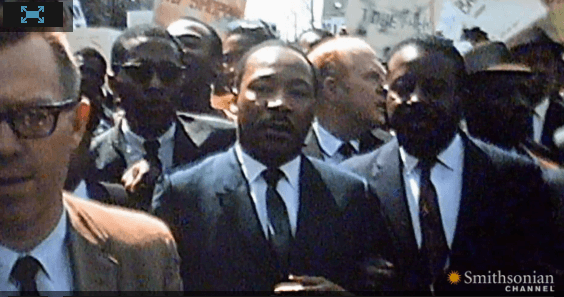
    MLK in Memphis

    The main thesis of “The Awful Grace of God” is that the forces behind the murder of Dr. King were members of a wide-ranging, white supremacist/terrorist network, hell-bent on sparking off a race war. This network included members or affiliates of groups like the White Knights of the Ku Klux Klan and the National State’s Rights Party. The first seven chapters of the book are dedicated to identifying the most violent, outspoken, and influential members of this alleged network and detailing the numerous attempts they allegedly made, or planned to make, on Dr. King’s life. Including attempted bombings and a planned sniper attack in Birmingham, Alabama, in 1963. The authors contend that these militant racists began reaching outside of their own groups and offering bounties of up to $100,000 to anyone who could get the job done. Much of the information provided is genuinely fascinating and many readers will likely agree that Wexler and Hancock have identified a number of possible suspects. But suspicion is not enough. For this to have relevance to the actual assassination, Wexler and Hancock need to prove that James Earl Ray had ties to one or more of these far-right organizations. Or that he heard about one of the alleged bounties and planned to collect it. Unfortunately, they cannot even come close to doing so.

    The HSCA rejected racism as Ray’s motivation for supposedly killing King and so too do Wexler and Hancock. But the authors understand full well that if he had held racist views and had racist contacts he would have been more likely to have been in the company of those discussing the alleged bounties on King. So they write that although Ray “was not fundamentally driven by racism” he nevertheless “wanted no part of blacks” and “opposed integration and the entire civil rights movement.” (Wexler and Hancock, p. 160) In support of this claim, the authors, like George McMillan and Gerald Posner before them, cite the word of Ray’s “fellow inmates” at Missouri State Penitentiary. As I see it, this represents an obvious double-standard on the part of the authors since they use Ray’s background as a petty crook to undermine his credibility and yet are happy to accept the self-serving word of his fellow convicts, many of whom were paid informants or were seeking relief from lengthy sentences. Can there be any less trustworthy sources? In truth, there is no credible evidence that Ray was a racist or “wanted no part of blacks”. And as far as this reviewer is aware no one has ever come forward claiming they were racially abused by Ray. As William Pepper reported, “He evinced no hostility towards blacks whatsoever and his employers at the Indian Trails restaurant in Illinois had said he got along very well with his fellow workers, most of whom were minorities. They were sorry to see him go.” (Pepper, “Orders to Kill”, p. 186)

    In their attempt to establish Ray’s racist tendencies and associations, Wexler and Hancock try to create the impression that he was politically active on behalf of Alabama governor George Wallace, a staunch segregationist. Writing that he “recruited associates to register to vote and support the Wallace campaign” in California. (Wexler and Hancock, p. 160) In truth, Ray made only a single known trip to Wallace’s campaign office, so that three associates could register. But Ray himself never did under any of his aliases. And as Harold Weisberg discovered, no one associated with Wallace’s California campaign knew or associated with Ray and “a thorough check of their files showed no sign of any of the names associated with” him. (Weisberg, “Frame Up”, p. 360) Ray himself commented on the absurdity of claims that he was a political activist for Wallace: “I was a fugitive, hiding out. I wasn’t crazy enough to become active in a political campaign.” (Lane & Gregory, p. 249) The fact is, despite an abundance of speculation, multiple “may haves”, “could haves” and “most likelys”, the authors never come any closer than this to placing Ray in the company of the type of extreme-right individuals they contend masterminded the assassination.

    Wexler and Hancock believe that the Missouri State Penitentiary is one place in which Ray could have learned of a bounty being offered on Dr. King. They write matter-of-factly that the HSCA “seriously investigated one lead regarding a bounty offer that did reach Ray while in prison” (Wexler and Hancock, p. 163). But in using the word “did” the authors are apparently much more certain than the committee ever was. In fact, the HSCA only claimed to have found a “likelihood that word of a standing offer on Dr. King’s life reached James Earl Ray prior to the assassination”. They then admitted that due to a “failure in the evidence” it “could not make a more definite statement.” (HSCA Report, p. 373) And even the HSCA’s words were more certain than they had any right to be. Not only did the committee uncover no evidence that the alleged bounty reached Ray, it heard compelling testimony that called its very existence into question.

    The HSCA’s story of a bounty offer began with a March 19, 1974, report from an FBI informant concerning a conversation he had with a St. Louis criminal named Russell Byers:

    “(Portion redacted) Beyers [sic] talked freely about himself and his business, and they later went to (portion redacted) where Beyers told a story about visiting a lawyer in St. Louis County, now deceased, not further identified, who had offered to give him a contract to kill Martin Luther King. He said that also present was a short, stocky man, who walked with a limp. (Later, with regard to the latter individual, Beyers commented that this man was actually the individual who made the payoff of James Earl Ray after the killing.) Beyers said he had declined to accept this contract, he did remark that this lawyer had confederate flags and other items about the house that might indicate that he was ‘a real rebel’. Beyers also commented that he had been offered either $10,000 or $20,000 to kill King.”

    For whatever reason, despite the reference to a fictitious “payoff” to Ray, the committee took this report seriously and contacted Byers only to find that Byers denied the offer ever took place. After talking to his lawyer, Byers decided he would “cooperate”, but only under subpoena and with a grant of immunity which the committee gladly delivered. Now, probably hoping he was safe from prosecution for perjury, Byers named the two men at the alleged meeting as former stockbroker John Kauffmann and lawyer John Sutherland—both conveniently deceased by the time he was questioned by the HSCA. Presumably realizing that $10,000 or $20,000 was a fairly paltry sum, Byers also upped the amount he said he had been offered to $50,000. (HSCA Report, p. 360)

    In order to establish whether or not the alleged Sutherland-Kauffman offer ever reached Ray, the HSCA examined “four possible connectives” none of which panned out. (pgs. 366-369) Thus the committee was forced to admit that “Direct evidence that would connect the conspiracy in St. Louis to assassination was not obtained.” (p. 370) Unperturbed, Wexler and Hancock claim there is “independent corroboration from another inmate named Donald Mitchell for Ray’s knowledge of the offer.” (Wexler and Hancock, p. 164) Indeed, on September 30, 1968, Mitchell did tell the FBI that some “friends in St. Louis” had “fixed it with someone in Philadelphia” for Ray to kill King and he offered to split the $50,000 he was to be paid with Mitchell if he would act as a decoy. But Mitchell was not done. He also claimed that after picking up the $50,000 for killing Dr. King, they would be picking up another payment for killing “one of those stinking Kennedy’s.” (13 HSCA 248) Not surprisingly, the HSCA took Mitchell’s claims with a grain of salt and his name does not appear in its report.

    
The HSCA was obviously unable to question Kauffman or Sutherland to confirm Byers’ story and was unable to identify the “secret southern organization” supposedly financing the job. In fact, it found no substantiation for the existence of the supposed bounty beyond Byers’ dubious word. On July 26, 1978, “The New York Times” reported of an interview with Kauffman’s widow in which she told them “it was ‘absolutely impossible’ that her husband could have been involved in such a matter…and she believed that Mr. Byers had fabricated the information about her husband to ‘help himself out of the art case.’” (Byers had been implicated as the buyer of stolen goods following the theft of a well-known bronze sculpture, but prosecutors later dropped the charges.) But the most damning information concerning Byers’ motivation for concocting the story came from a former lawyer, Judge Murray L. Randall, who had previously represented him in a civil case.

    
Byers told the HSCA that he had spoken of the alleged bounty with two lawyers, Randall and Lawrence Weenick. When contacted, Randall confirmed that Byers had indeed given him the story sometime “near the end of my law practice. I terminated my law practice November 4, 1974.” (7 HSCA 208) This, of course, would have been just after Randall gave the story to an FBI informant. As Randall explained, before the bounty conversation, sometime in 1973, Byers had spoken to Randall about a man named Richard O’Hara who was charged as an accessory to a jewel theft. Because the charge was “nolle prossed”, and because Byers was questioned by the FBI about something only O’Hara knew, Byers asked Randall “is Richard O’Hara the informant in this case”? Randall said he didn’t know. After Byers gave his executive session testimony to the committee, Randall was contacted by Carter Stith, author of the aforementioned “New York Times” piece. Stith asked him if he had been the informant who gave the bounty story to the Bureau. Disturbed by this, Randall met with Byers and asked him “if he could tell from the report who the informant was and he said yes…He told me it was Richard O’Hara, said he could tell from the context.” (Ibid, p. 217) And yet, when Byers was asked by the committee if anyone else knew about the alleged bounty, he did not name O’Hara. As Randall concluded, and is most likely the case, Byers had concocted the entire story to smoke O’Hara out. Although the HSCA downplayed the significance of Randall’s testimony, it uncovered nothing that invalidated his conclusion and, all things considered, it makes perfect sense. This would explain why the FBI did not act on the report in 1974 and why it made no move to question Byers: the Bureau knew what his game was and was therefore protecting its informant. It made no move to investigate the story because there was no need; Byers’ bounty was a fabrication. It should be obvious then that Wexler and Hancock’s assertion that the offer “did reach Ray while in prison” is simply not supportable.

    
The authors make a sizeable blunder when they write that after Ray’s escape from Missouri State Penitentiary, and before he left for Canada in July of 1967, Ray “very likely heard more gossip about” the King bounty “at his brother’s Grapevine Tavern in Saint Louis.” (Wexler and Hancock, p. 249) Despite their claim, this is not “very likely” at all. In fact, it is downright impossible for Ray to have heard any gossip of any kind in his brother’s tavern at that time. It is true that after he quit his job at the Indian Trails restaurant in Chicago on June 25, Ray did spend a few short weeks in the St. Louis area but he could not have spent any of that time at the Grapevine Tavern. Had Wexler and Hancock been a little more careful in their research, instead of clutching at straws to substantiate their theory, they might have discovered that Carol Pepper, Ray’s sister, did not even take out a lease on the property until October 1, 1967. And that the bar did not officially open until January 1, 1968! (See FBI MURKIN Central Headquarters File, Section 34, pgs. 290-293 and 8 HSCA 537)

    
Not only does the book fail to establish that Ray was ever in a position to hear about a genuine bounty being offered for the murder of Dr. King, it also struggles to convincingly explain why he would be interested in taking up such an offer if he had. After all, Ray had no history of violent crime—the only person ever hurt during Ray’s petty robberies was Ray himself—and he was certainly no gun-for-hire. What then would possess an escaped convict, whose only desire was to get out of the country and settle somewhere safe from extradition, to become involved in a crime of such magnitude? According to Wexler and Hancock, it was all about the cash. They write that if nothing else, “the individuals who knew him best were in agreement on what had driven James Earl Ray throughout his life: money.” (Wexler and Hancock, p. 147) But if this were the case, then why did Ray turn down the aforementioned offer from William Bradford Huie of $220,000 and a pardon, when he all he had to do was admit to committing a crime for which he had already been convicted? The authors don’t reveal that Huie’s offer took place. Therefore, they don’t have to answer that question.

    II

    
In his foreword to the volume, historian Gerald McKnight writes that Wexler and Hancock “do not pretend to fully resolve Ray’s actual role, while considering arguments both for and against his possible act as Dr. King’s killer.” (p. 7) Whilst this is technically true, there is nothing in the book that leads me to believe the authors ever considered his possible innocence or gave any serious thought to what role he might of played other than that of the gunman. They make passing reference to the idea that one particular alleged bounty offer (not the one they say Ray heard of in prison) “included two different options…one of which was money to simply track King and case his movements” (p. 216). But I’m sure the authors do not seriously expect readers to believe that Ray thought he was going to pick up $50,000 or $100,000 just for keeping tabs on Dr. King. (Recall, the large amount of money in the offer was supposed to be his motivation). Also, such a role would be at odds with his purchase of the 30.06 Remington Gamemaster rifle that the authors maintain he had in his possession on April 4, 1968.

    
Wexler and Hancock present “three possibilities”. Two of these involve Ray as the shooter. None of them consider the possibility that Ray played no knowing role in the assassination conspiracy and was merely an unwitting patsy as he always maintained. Under the heading “Narrowing the Possibilities”, the authors present their preferred scenario in which “something unplanned happened in Memphis” and Ray, who “may have only agreed to participate in surveillance and support”, probably shot King on the spur of the moment. (pgs. 243-248) But this is far-fetched and does not align with the record. For if Ray had taken up a “surveillance” role, with no plans to do the shooting, then why did he purchase the rifle? And further, as Wexler and Hancock contend, carry it into the bathroom of the boarding house? A high-powered rifle is not an essential tool for surveillance. The authors do not address this inconsistency. In any case, regardless of what Wexler and Hancock consider to be a “possibility”, there is not any credible evidence that the shot that killed Dr. King was fired from the bathroom window; let alone that Ray fired it.

    To be fair to the authors, they do note some of the problems with the evidence against Ray. But it has to be said that they omit—knowingly or unknowingly—that which tends to prove his innocence. For example, nowhere in book will the reader find mention of the fact that there were two white Mustangs outside the boarding house that day; that one of them was seen leaving the scene shortly before 6:00 pm, right around the time Ray said he left Brewer’s flophouse to get his spare tire fixed; and the other left within a minute or so of the assassination. If indeed the one departing before 6:00 pm was Ray’s Mustang, as the evidence suggests it was, then it is without question that he was not the assassin and was framed by an orchestrated conspiracy. Understanding its significance, establishment authors like Gerald Posner generally deny the existence of the second Mustang, dismissing it as myth-making by conspiracy theorists. But as author Harold Weisberg pointed out, the Associated Press reported its presence in April 1968. In fact, the “Memphis Commercial Appeal” published a diagram of the crime scene showing the two white Mustangs parked on Main Street. (Weisberg, p. 183) This would not have been an uncommon sight in Memphis in 1968. Frank Holloman, director of Memphis police and fire departments, stated that there were “a large number of white Mustangs” in the area and police estimated they had stopped 50 to 60 in the aftermath of the shooting. (Philip Melanson, “The Martin Luther King Assassination”, p. 114) According to the April 14, 1968, “Minneapolis Tribune”, “White 1966 Mustangs are plentiful in Memphis. In fact, a Ford dealer estimated 600 of them were sold and 400 are still on the street.” (Weisberg, p. 181) At the television trial of James Earl Ray, former FBI Special Agent Joe Hester conceded the presence of two white Mustangs at the crime scene and unsurprisingly dismissed it as a “coincidence.” (Pepper, p. 286)

    JER

    
Ray always maintained that he parked his car directly in front of Jim’s Grill. And a number of witnesses including David Wood, Loyd Jowers, and William Reed confirmed that a white Mustang was indeed parked in that location. At the same time, the other white Mustang was parked several car lengths south, near the doorway to Canipe’s Amusement Company. There it was seen by employees of the Seabrook Wallpaper Company located across the street. (Melanson, pgs. 114-116) Charles Hurley parked behind this Mustang at approximately 5:00 pm when he arrived to pick up his wife Peggy, who was working at Seabrooks. He noted that it had Arkansas plates. Ray’s were from Alabama. (Pepper, p. 156)

    
Perhaps the two most important witnesses were Ray Hendrix and William Reed. They exited Jim’s Grill somewhere around 5:30 pm. When Hendrix realized he had forgotten his jacket, he went back inside the grill to collect it while Reed stood outside checking out the white Mustang parked out front. When Hendrix reappeared, the two men walked north along Main Street until they came to the corner of Main and Vance. Just as they were about to step off the curb, a white Mustang rounded the corner in front of them. Reed could not say for certain this was the same car he saw in front of Jim’s Grill but said “it seemed to be the same” one. (13th Juror, p. 352) Because witness statements establish that the Mustang outside of Canipe’s left a minute or two after the assassination, it appears most likely that the one Hendrix and Reed saw pulling onto Vance was indeed the one previously parked outside Jim’s Grill—right where Ray said he had parked his white Mustang. And because Hendrix and Reed’s recollections dovetail with the 5:30 to 6:00 time frame in which Ray said he went to get his tire fixed, it appears that they corroborate Ray’s alibi and thus provide strong evidence of his innocence. And yet, as I mentioned above, none of this appears in “The Awful Grace of God” and instead the authors assert matter-of-factly that “Ray sped off in his white Mustang” after the assassination. (Wexler and Hancock, p. 223)

    
One of the biggest problems with the State’s case has always been the inability to match the bullet removed from Dr. King’s body to the rifle Ray purchased. Predictably, Wexler and Hancock appear to accept the FBI’s claim that the problem lay in the “distortion and mutilation” of the bullet. But the authors do not mention the fact that some of that mutilation happened while the slug was in Bureau hands. As pathologist Dr. Jerry Francisco testified at the 1999 civil trial, when he removed the bullet from the body at autopsy it was in one piece. (13th Juror, p. 245) But by the time the FBI was through with it, however, it is was in three separate fragments. (13 HSCA 77) But even then, according to world-renowned forensics expert and professor of criminalistics Herbert MacDonnell, identification should have been possible. In 1974, MacDonnell was contacted by Ray’s defense team and asked to examine the physical evidence in the case and testify at Ray’s evidentiary hearing. After viewing the bullet he remarked to Harold Weisberg—who was then the team’s sole investigator—“I wish I had that good a specimen in most of my cases.” (Weisberg, “Whoring with History”, Chapter 24) When he took the stand the following day, MacDonnell testified that he had found “sufficient detail” that “identification ought to be possible” (ibid) and McDonnell was not alone in his belief; ballistics experts Lowell Bradford and Chuck Morton agreed. (ibid , see also, Pepper, p. 267) Wexler and Hancock omit any mention of these expert opinions and instead write that the HSCA firearms panel “could not find conclusive matches” between test bullets and that therefore, “any further testing between the actual assassination bullet and a test slug was fruitless, as the very basis for any such test was eliminated.” (Wexler and Hancock, p. 289) But this ignores the fact that further tests were conducted years later and, although the results were again inconclusive, a possible explanation for the outcome was offered.

    
In 1994, Judge Joe B. Brown granted a request by William Pepper, Ray’s final attorney, for further testing of the rifle and bullets in evidence. Brown, himself a ballistics expert, testified as to the results at the 1999 civil trial. Judge Brown explained that 18 test bullets were fired and that 12 of those bullets showed a similar “unusual characteristic”—a bump on the surface—that appeared to be the result of “shattering in the tool” used to make the barrel. Upon inspection of the barrel, Brown discovered that it was “absolutely filthy” with jacket powder and concluded that it was this build up that was causing the inconclusive results. As he put it: “Now, because this weapon was not cleaned, what happened was that the filing material was being blown out of this flaw. So one of these bullets would have a gross reflection of this flaw. The next shot through it would be somewhat less impressed because of the filing that had filled up this defect. The third one would have even less of an impression. Then the filing would get blown out. The next bullets through would not show it to a gross extent. So you’ve got twelve bullets with the same common characteristic, that is, this raised area on the surface of the bullet…that was not found on the corresponding portion of the bullet removed from Dr. King.” (13th Juror, pgs. 235-236) In an attempt to solve the problem, Judge Brown ordered the rifle cleaned with an electrolysis process using a chemical solution. This would remove the filings without harming the barrel itself. At that precise point, a plot was hatched in Memphis to get Brown removed from the hearing. (For the details of how this plot was implemented, see “The Assassinations”, edited by James DiEugenio and Lisa Pease, pgs. 449-60) Ultimately, the Tennessee Court of Criminal Appeals had him removed from the case, claiming that he had lost his objectivity. Whilst this decision left the results far from definitive, it is clear that the outcome of this round of tests was consistent with the proposition that a different 30.06 rifle was used to fire the death slug.

    III

    
Not only do Wexler and Hancock fail to mention Ray’s possible alibi or relate that further ballistic tests were performed—and halted by a state determined to preserve the cover-up—but they also take for granted that the shot was fired from the bathroom. Ignoring the fact that there is at least as much evidence indicating that it actually came from the bushes below. The authors do note that the path of the bullet was not fully traced at autopsy, and that the HSCA trajectory analysis found that “the geometric data was consistent with either the second-floor rooming house windows or the ground-level shrubbery below” (Wexler and Hancock, p. 239). But this is their only reference to the area that has long been suspected as the actual source of the shot. Suspicions about the bushes began with the April 4, 1968, account of Dr. King’s chauffeur, Solomon Jones. He was standing below the balcony talking to King when the shot rang out. He told Memphis police that evening that after King fell, he “ran to the street to see if I could see somebody and…I could see a person leaving the thicket on the west side of Mulberry with his back to me. Looked to me like he had a hood over his head…something that was fitting close around his shoulders and was white in color…he appeared to be a small person and was moving real rapidly.” That this person running from the bushes may have been the actual assassin is indicated by the account of Southern Christian Leadership Conference (SCLC) member, Reverend James Orange. Moments after the shot, Orange noticed “smoke came up out of the brush area on the opposite side of the street from the Lorraine Motel. I saw it rise up from the bushes over there. From that day to this time I have never had any doubt that the fatal shot…was fired by a sniper concealed in the brush area…” (13th Juror, p. 288) The names of Solomon Jones and James Orange do not appear in The Awful Grace of God.

    
Of course, this is not definitive evidence that a shot came from the brush below. Not at all. But the reader should bear in mind that there is no credible evidence to support the contention that the shot came from the bathroom of the rooming house. There was not a single witness who claimed to have seen a gunman in the bathroom window, nor was there a witness to a rifle or smoke coming out of that window. And no one ever claimed to have seen a man with a rifle going into or coming out of the bathroom. Memphis police officers discovered a dent on the bathroom windowsill and it was claimed that this dent was made when the sniper rested his rifle there and took his shot. Wexler and Hancock label this contention as “more than questionable” (p. 240). But this is actually a vast understatement because this claim is unquestionably false. When the windowsill was cut out, the dent, which was on the inside half of the sill, was examined by the FBI. They found no “gunpowder or gunpowder residues” of any kind. Additionally, “No wood, paint, aluminum or other foreign materials” were found on the rifle; “nor were any significant marks found on the rifle barrel.” (Weisberg, Whoring With History, Chapter 23) In actual fact, not only was there no evidence that the rifle caused that mark, it would have been impossible for the rifle to have been rested in that dent and fired. According to Harold Weisberg, when Herbert MacDonnell examined the sill and then saw pictures “of how close that window was to the north wall of that bathroom he erupted with laughter because it was immediately apparent that it was impossible for the muzzle of that rifle to be in that dent and pointed at where King was, and for the entire rifle to be inside that bathroom! Part of the rifle stock and butt and of the rifleman would have had to have been inside the wall!” On top of this, as MacDonnell testified, with that dent being on the inside half, a shot from the rifle “would have torn up the windowsill.” (ibid, chapter 24)

    
When Paris-Match magazine attempted to simulate the assassin’s alleged position, it ended up demonstrating how unlikely, if not impossible the official story is. Because the old fashioned bathtub in which the sniper is said to have stood was positioned against the east wall and had a steeply slanting back, the only way he would be able to fire on the required downward trajectory would be to stand on the rim of the tub. Not only did this put the shooter so high that he would have to turn his head on its right side and thus struggle to aim the rifle but it also meant that the barrel of the rifle would be sticking out of the window. (Click here for the picture, http://i1205.photobucket.com/albums/bb421/mnhay27/Scan10002.jpg)

    The unlikelihood of this scenario is obvious. And it can be rightly said that the Paris-Match photo—in conjunction with the fact that Ray had an abysmal shooting record in the army, plus the fact that the Remingtom Gamemaster rifle was not properly sighted in—these all but destroy the State’s case.

    
Steering well clear of this crime scene “morass” enables Wexler and Hancock to claim that, although it was never tested in court, “a substantial amount of evidence was assembled to place Ray at the crime scene, to connect Ray to the rifle, and to create a plausible description of the fatal shot having been fired from the rooming house bathroom.” (Wexler and Hancock, p. 239) Which, in light of the above, is simply an untenable statement. Not only, as we have seen, is there no credible evidence that a shot was fired from the bathroom (and plenty of reason to doubt it was even possible); there is no credible evidence to place Ray at the scene of the crime, or put the rifle in his hands at the time of the assassination. Ray was adamant that he gave the rifle to the man he says set him up. This is a man he knew as “Raoul”. This was on the evening before the assassination and never saw the weapon again. Since no one saw Ray take a rifle into or out of the rooming house, there is no evidence to prove otherwise. There is also no evidence that he was ever in the bathroom; none of Ray’s fingerprints were found anywhere in the rooming house and no witnesses saw him going into or emerging from the bathroom at any time. The State was so bereft in this regard that it was forced to rely on the account of an alcoholic named Charles Stephens who occupied the room between the bathroom and the one Ray had rented that afternoon. Stephens told police that after he heard the shot, he opened his door and saw a man running down the hall, holding something wrapped in newspaper, and heading towards the front stairway. Although he told police on the evening of April 4, 1968, that he would not recognize the man if he saw him again because he “didn’t get that good a look at him”, Stephens would subsequently identify that man as James Earl Ray. Stephens would be instrumental in Ray’s extradition following his arrest in London. Because numerous witness statements establish the fact, Wexler and Hancock admit that Stephens “was almost certainly too drunk to be credible” (p. 240). But they withhold that which is most damaging: On April 18, 1968, Stephens was shown a picture of Ray by CBS news correspondent Bill Stout and was asked if it showed the man he saw in the rooming house. On camera, Stephens proclaimed, “…that definitely, I would say, is not the–the guy.” Definitely not the guy! And, whether Wexler and Hancock want to admit it or not, Stephens and Stephens alone represents the “substantial amount of evidence” they claim places Ray at the crime scene.

    
 IV

    
Until the day he died, James Earl Ray claimed that he had been set up in the assassination by a mysterious figure he knew only as “Raoul.” The pair had met at a place called the Neptune Bar in Montreal, Canada, in July of 1967. Having escaped from prison, Ray was seeking identification papers and funds that would allow him to flee to a country with whom the United states had no extradition treaty. According to Ray, Raoul promised he would get him the necessary documents if Ray would help him with a few low-risk smuggling operations. For the next nine months Ray followed Raoul’s orders. He delivered items into the United States and Mexico, and in return received substantial sums of money. Under Raoul’s directions, he acquired a new car—the white Mustang—purchased a rifle, and exchanged it the following day for the 30.06 Gamemaster. He then ultimately rented a room in Bessie Brewer’s rooming house opposite the Lorraine Motel where King was staying in Memphis. As Mark Lane noted, “Ray’s explanation…of his movements through the United States from Canada to Mexico, his purchase of a rifle in Birmingham, and ultimately his presence in Memphis on April 4th in the vicinity of the murder scene is either basically true, or the intricate and comprehensive work product of a brilliant mind. For the narrative explains in a cohesive fashion all of Ray’s otherwise inexplicable actions.” (Lane and Gregory, p. 173) Few people would claim that Ray was the owner of a “brilliant mind”. After all, this is the same bungling crook who once took his shoes off whilst attempting to rob a store, and had to take off in his stocking feet when he was panicked by the sight of policemen outside. Ray ran for miles before heading back to town wearing a pair of women’s shoes he had picked up along the way because he did not want to look conspicuous! (Pepper, p. 187) Nevertheless, the official position is that Raoul never existed and I’m sure by now the reader will not be surprised to learn that Wexler and Hancock subscribe to this view.

    
The authors suggest that Ray concocted the Raoul character for protection, writing that “Ray simply would not have directed attention to individuals or groups that might prove personally dangerous to him in prison.” (Wexler and Hancock, p. 161) Whilst this argument may make a little sense when considering Ray’s predicament in 1968 (although I seriously doubt he would have been refused special protection for telling all he knew and fingering the actual culprits), it is less convincing when we remember that he was still telling the same story three decades later when the power and influence of groups like the KKK and NSRP had long since diminished or evaporated entirely. In actual fact, the NSRP had ceased to exist entirely by the late 1980s. There can be little doubt that by sticking by his Raoul story Ray kept himself locked up for life by a disbelieving State. But stick to his story he did.

    
In support of their argument that Raoul did not exist, or was a “composite” of individuals Ray dealt with in the lead up to the assassination, Wexler and Hancock cite Ray’s “constant changes in Raoul’s physical description, which varied to include an auburn haired man, a thirty-five-year-old blonde Latino, and a reddish-haired French-Canadian, with complexions that ranged from ruddy to dark to lighter than Ray’s own pale skin.” (p. 170) It is difficult to respond fully to this because the authors do not provide a single citation for any of these descriptions. What is known is that at least one of them—that of a “blonde Latino”—came not from Ray, but from William Bradford Huie who’s credibility, as we’ve already established, is less than zero. (That description certainly does not appear in the “20,000” words written by Ray that Huie’s own writing was supposedly based on). Another one, the lighter than Ray’s own complexion description, comes from a misreading of one of Ray’s testimonies that was cleared up when he appeared before the HSCA. Committee chairman Louis Stokes asked Ray “Have you also at some time or other described Raoul as having a complexion lighter than my own?” to which Ray replied, “No, I never gave that description.” At that point, Stokes referred Ray to an extract from his lawsuit against Percy Foreman in which he described Raoul as “5 foot 10, a little bit lighter than me and dark haired.” As Ray explained, as the HSCA accepted, and as is perfectly obvious from his testimony, he was referring not to Raoul’s complexion but to his weight. (1 HSCA 359-366) As I wrote above, with no citations provided, it is simply not possible to respond in full to Wexler and Hancock’s claims. But what I can say is that although plenty of unreliable writers have made claims to the contrary, in every recorded interview with Ray, every sworn testimony, and in every writing from his own hand that this reviewer has come across, Ray has always been consistent in his descriptions of Raoul.

    
One problem facing those who maintain that there was no Raoul is explaining the large sums of money Ray clearly handled whilst having no official source of income. Ray said that he had only $300 dollars to his name when he escaped prison but Wexler and Hancock do not want to believe this, so they repeat the indefatigable George McMillan’s fable that Ray probably made as much as $7,000 in prison “selling magazines, black market items, and possibly small amounts of amphetamines.” (Wexler and Hancock, pgs. 156-157) As with most things McMillan, this claim has no basis in fact. It was just another story Jerry Ray fed him for cash. After McMillan’s book was published, Missouri Corrections Department chief George M. Camp challenged the author to provide proof of his “totally unsubstantiated” allegations and publicly demanded that he “either put up or shut up.” (Pepper, p. 62) Wexler and Hancock are apparently aware of this so they do some CYA by writing that the amount of money Ray had upon escaping prison is “in dispute”. (See p. 166) But they take another stab at explaining Ray’s finances by raising the “possibility” that Ray and his brothers were involved in the July 1967 robbery of the Bank of Alton in Illinois. Ibid, p. 168) This story was embraced by the HSCA. They tried to persuade the Justice Department to charge John Ray with perjury for supposedly giving false testimony concerning the robbery. Justice wrote back to the committee stating that “there is no evidence to link John Ray or James Earl Ray to that robbery” and declined to consider any prosecution. (Pepper, pgs. 108-109)

    
The Justice Department was correct: there was no evidence that the Ray brothers were involved. In July of 1968 the FBI had compared James Earl Ray’s fingerprints to those from all unsolved bank robberies, including the Alton one. They found no matches. In August 1978, when the HSCA was selling its bank robbery story to the press, Jerry Ray surrendered himself to the Alton police department. He offered to waive the statute of limitations and be charged with the crime. As he recalled in his testimony at the 1999 civil trial, the police asked him “are you here to confess to the crime? I said I can’t confess to a crime that I didn’t commit, but Congress accused me of committing a crime so I’m here to stand trial. He said you never was a suspect.” (13th Juror, p. 343) In a follow-up phone call three months later, attorney William Pepper was told by East Alton police lieutenant Walter Conrad that neither Jerry “nor his brothers were suspects, nor had they ever been suspects in that crime.” (Pepper, p. 108) Needless to say, none of this is mentioned in The Awful Grace of God.

    
Wexler and Hancock also omit any mention of the former British merchant seaman Sid Carthew. Carthew came forward after Ray’s televised mock trial in 1993. His testimony supported the existence of Raoul. For months after it aired, Carthew was watching a video tape of the TV trial “…and it came up on the court scene where the prosecutor was ridiculing James Earl Ray and saying that this Raul was a figment of his imagination, and I called my daughter in the room and said, look, no, this isn’t a figment or lie. I said, this poor man is telling the truth…” Carthew went to some lengths to contact Ray’s defense to tell what he knew. He eventually gave his story to William Pepper in a sworn deposition. According to Carthew, he too had met a man identifying himself simply as Raoul in the Neptune Bar, Montreal, in 1967. Over the course of two evenings, Raoul had offered to sell him some Browning 9mm handguns. “He said to me, how many would you want, and I said four…and he said, four, what do you–four, what do you mean by four. I said four guns. He wanted to sell me four boxes of guns…once he knew that I would have only take–took four, he was very annoyed…it wouldn’t be worth his while to deal in such a small number, and that was the end of the conversation, and he went back to the bar.” (13th Juror, pgs. 270-277) Carthew’s account received partial corroboration from a shipmate of his named Joe Sheehan. He said that, although he wasn’t present at the Neptune bar, Carthew had mentioned the incident to him in May 1968 at the annual general meeting of the National Union of Seamen. (Pepper, p. 344) If Wexler and Hancock are privy to any information which disproves Carthew’s sworn account, they do not share it with their readers.

    
 V

    
Dismissing Raoul as a “red herring” leaves Wexler and Hancock free to repeat the age-old myth that Ray was stalking Dr. King in the weeks before his assassination. They write that there is “no sign he was tied into a King conspiracy” until mid-February 1968. Then, they perceive a “change in behavior” showing that Ray “was responding to what he felt was finally a truly concrete bounty offer on Dr. King’s life.” Then, on March 17, “he completed a change-of-address form forwarding all his mail to general delivery, Atlanta, Georgia”, Dr. King’s home town. He then presumably set off from his current residence in Los Angeles to begin stalking his prey. (Wexler and Hancock, pgs. 200-203)

    What the authors are careful not to reveal is the uncontested fact that, if Ray wanted to surveil Dr. King, he was heading in completely the wrong direction because King was in Los Angeles! On March 16th, King had given a speech to the California Democratic Council at the Disneyland Hotel in Anaheim. On March 17th he delivered a sermon at a church in Los Angeles. This information would, I’m sure, have given most readers cause to seriously question the notion that Ray had King in his sights on March 17th. But you will not find it in this book.

    
The authors claim (incorrectly) that “Ray’s path first crossed Dr. King’s on the night of March 22, 1968, in Selma Alabama.” (Ibid, p. 217) I say this is incorrect because, as Wexler and Hancock themselves write, King and Ray were never in Selma at the same time. And, as noted above, their paths had actually crossed five days earlier in Los Angeles, where King followed Ray there, and Ray took off soon after he arrived. They also claim (incorrectly) that Ray initially “lied about his Selma stop, saying he had gotten lost between New Orleans and Birmingham”. But that “in his interview” with William Bradford Huie, “Ray finally admitted that he had gone there because of King.” (ibid) Firstly, as made clear before, Ray was never “interviewed” by Huie. Huie actually received his information either via Ray’s attorneys, or through written notes which contain no such admission. Secondly, Ray never changed his story. He stuck to the “lost” explanation in his HSCA testimony and in his own written works. Self-admitted fabricator Huie just followed his usual practice and wrote what he wanted to regardless of what the truth was.

    
Wexler and Hancock also attempt to resurrect another time-worn fable dreamed up by Huie. Namely, that a map of Atlanta found amongst Ray’s possessions after the assassination had marks on it “indicating King’s residence, King’s church, and the headquarters of the Southern Christian Leadership Conference”. The authors claim that the marks are “beyond coincidence”, quote Ray as admitting that he could never “explain that away to the jury”, and say that “the best he could come up with was that the marks represented restaurants he visited.” (Ibid, p. 222) As portrayed by Wexler and Hancock, this sounds like a damning admission and a lame excuse by Ray. But they achieve this by taking his remarks out of context. So that the reader can judge for himself, here are the relevant passages from Ray’s HSCA interview:

    Q. Well, why did you mark that particular map?

    A. I marked where I was staying at. Places I came in, the highway I came in off of. Peachtree Street, where I went to the bank one time to cash in some money. I marked a restaurant on there and I think I glanced at it a few times to get my bearings on it and that was it. (9HSCA215)

    Q. What other map do you recall marking?

    A. I don’t particularly recall marking, I don’t even, the Atlanta map. I don’t particularly recall marking that except that they made a big issue out of it and I started thinking about it. I would probably never recall all the details on that if I hadn’t have tried to–Let me try to explain why. I don’t know if you have read all these books or not. William Bradford Huie said he found the map in Atlanta somewhere in my suitcase. It had circles of Dr. King’s church, his house, his office, and his ministry, his church or something, and I knew that was all false. I mean, I knew–I started thinking and I knew I marked, but I knew that would have been a coincidence. If I had marked all these places that would have been too big a coincidence. I could never explain that away to the jury. So, I got to thinking about it, and I gave it a lot of thought and that’s the best I could come up with. Now, if you can look at that map get it from the FBI, I think that would settle that once and for all, if I marked anyone’s church. (9HSCA224)

    It should be pretty clear to the reader that Ray said the marks on the map represented more than just “restaurants he visited” and, despite the impression Wexler and Hancock attempt to convey, he never agreed that those marks showed what Huie claimed they did. In fact he explicitly stated that he “knew that was all false.” And false it was. As William Pepper explained to the jury at the 1999 civil trial, “Mr. Ray had a habit of marking maps. I have in my possession maps that he marked when he was in Texas, Montreal and Atlanta, and what he did was it helped him to locate what he did and where he was going. The Atlanta map is nowhere related to Dr. King’s residence. It is three oblong circles that covered general areas, one where he was living on Peachtree.” (13th Juror, p. 741) Had the markings on the map revealed what Huie claimed, there can be little doubt that the HSCA would have made a big song and dance about it. As it was, the committee dismissed the relevance of the Atlanta map and made no reference to it in its report.

    Wexler and Hancock claim to know for sure that Ray lied about his movements after he purchased the Remington Gamemaster rifle in Birmingham, Alabama, on March 30, 1968. Ray’s story was that he made his way slowly to Memphis, staying at a motel near Decatur, Alabama on March 30; near the twin cities of Florence and Tuscumbria on March 31; at a motel near Corinth, Mississippi on April 1; and at the DeSoto Motel on Highway 51 near the Tennessee border on April 2. (Ray, p. 92) Huie claimed that he could find no evidence that Ray stayed at any of these establishments under any of his aliases. But Harold Weisberg had no trouble establishing that Ray had stayed at the DeSoto on April 2. When Weisberg visited the motel, he was shown the registration card bearing the “Eric Galt” alias Ray was using and spoke to one of the two maids who had worked that night and she confirmed his stay. “She told me”, Weisberg wrote, “that when they saw Ray’s picture they recognized him as the man who had stayed there the night that had to have been of April 2.” (Whoring with History, Chapter 19) In any case, Wexler and Hancock follow the HSCA’s lead and claim that a receipt and a counterbook from the Piedmont Laundry in Atlanta prove that he lied and was, in fact, back in Atlanta on April 1 dropping off laundry that he would pick up on April 5. When confronted with this evidence during his HSCA testimony, Ray stuck to his story and, on the face of it, it does appear as if he was caught in a lie. But, unfortunately, it is not that black and white. Firstly, the receipt is stamped “April 2” which would appear to indicate that the laundry was picked up the day after it was dropped off. And secondly, Piedmont worker Annie Estelle Peters was unable to positively identify Ray as the man who dropped off the laundry. In fact, when shown a series of pictures of Ray by the FBI in May 1968 she remarked that “none appeared very similar.” (FBI MURKIN Central Headquarters File, section 43, p. 27) So whilst it appears possible that Ray may have lied to cover-up what many would say was too big a coincidence, the evidence does not allow us to say he “definitely” did as Wexler and Hancock contend. (Awful Grace of God, p. 217) What is interesting to ponder is the fact that if Ray had concocted Raoul to lay the blame for the assassination elsewhere, and if he really had gone back to Atlanta, the easiest thing for him to have done would have been to have admitted he had done so and claim that he was only following Raoul’s instructions. But he never did this.

    
 VI

    
The final aspect of The Awful Grace of God that requires comment has to do with the authors’ attempt to dismiss any notion of government complicity in the assassination. This they do in an appendix titled “Being Contrary”, which is likely to be one of the most controversial parts of the whole book. Hancock and Wexler find the idea of federal involvement “unconvincing” and claim that “many of the theories of government involvement are based on elements that appeared mysterious immediately following the assassination, but that have been explained through follow-up research in the ensuing years.” (pgs. 306-307) They list a number of points for which they present “counterarguments”, many of which are likely to spark debate—especially those involving the theories of William Pepper and the case put before the Memphis jury at the King V. Jowers civil trial. But the only part I wish to comment on has to do with Dr. King’s location and security at the time of his death.

    When President John F. Kennedy was assassinated in Dallas, Texas, in 1963, many critics wondered how he could have ended up in the position he was in. They argued that usual security protocols had been systematically violated and JFK had been driven slowly into a perfect ambush site without customary procedures such as having Secret Service agents on the running board of the limousine. And when these issues were raised, the victim was blamed. The Secret Service quickly spread the word that Kennedy himself had ordered agents and police motorcycles to stay away from the Presidential limo so that the public would have an unobstructed view. But the meticulous research of Vince Palamara has since proven this to be a tissue of lies constructed by JFK’s security detail simply to cover their own asses. This curious set of circumstances very closely parallels events surrounding Dr. King’s assassination: He was placed in room 306 of the Lorraine motel with access via an open and potentially dangerous balcony without his usual security. And his organization, the SCLC, was blamed for its removal.

    Wexler and Hancock imply that Dr. King always stayed at the Lorraine when he visited Memphis and state that King and his closest companion, Dr. Ralph Abernathy, “had stayed in room 306 so often that it was jokingly referred to as the ‘King-Abernathy Suite.’” (p. 17) Although they do not provide a citation, it appears they gathered this from Abernathy’s HSCA testimony. Which, on the face of it, would seem to be a reliable source. But yet there is much controversy on this issue and Abernathy’s recollection is contradicted by a number of people. For example, Reverend Jim Lawson, another close friend of Dr. King and a co-founder of the SCLC, testified that King “had stayed more often in the Admiral Benbow and in the Rivermont”. (13th Juror, p. 139) And Memphis reporter Kaye Pittman Black, who had “covered his every visit to this city”, believed that Dr. King “had never stayed at the Lorraine.” She recalled him staying “at the Claridge, the big hotel downtown, right across from City Hall.” (Lane & Gregory, p. 107) It is highly unlikely that Abernathy would have lied in his testimony so it would seem apparent that King must have stayed at the Lorraine on at least some of his visits to Memphis. But if at some point King had been in the habit of staying at the motel, it is clear that it was a habit he had broken. For on his March 18 visit to Memphis, King had stayed at the Rivermont Hotel (13th Juror, p. 292), and on his March 28 visit he and Abernathy had reservations at the Peabody Hotel. But they were taken to the Rivermont after the march they were leading had turned violent. (Pepper, Act of State, p. 188) Jim Lawson explained to attorney William Pepper that since the white-owned hotels were starting to be desegregated, “black leaders believed that they had an obligation to become guests and establish a presence in what had formerly been white lodging bastions.” (ibid) So, whether he had done so many times before or not, any conspirators planning to assassinate Dr. King on his return to Memphis had no guarantee that he would be staying at the Lorraine on April 4, 1968. But one very powerful and very hateful man seemingly had a plan to ensure that he would.

    On March 29, 1968, J. Edgar Hoover’s FBI headquarters issued a memorandum to be disseminated to “friendly” media sources:

    “Martin Luther King, during the sanitation workers’ strike in Memphis, Tennessee, has urged Negroes to boycott downtown white merchants to achieve Negro demands. On 3/29/68 King led a march for the sanitation workers. Like Judas leading lambs to slaughter, King led the marchers to violence, and when the violence broke out, King disappeared. The fine Hotel Lorraine in Memphis is owned and patronized exclusively by Negroes, but King didn’t go there for his hasty exit. Instead, King decided the plush Holiday Inn Motel, white owned, operated and almost exclusively patronized, was the place to “cool it.” There will be no boycott of white merchants for King, only his followers.”

    
Although they do not mention this memo, I’m sure Wexler and Hancock would argue that its purpose was simply to embarrass Dr. King. And maybe it was. But given that Hoover’s well documented hatred of King is known to have led him as far as trying to pressure him into committing suicide, many researchers believe his intent was much more sinister. And this possibility becomes more compelling in light of the fact that an unidentified individual, claiming to be with the SCLC, contacted the Lorraine to insist that Dr. King be moved from the more secluded room 202, in which he was originally meant to stay, to the balcony room 306.

    Former New York City police officer Leon Cohen testified in 1999 that Lorraine owner Walter Bailey had told him about the room change the day after the assassination. According to Cohen, Bailey explained that before Dr. King arrived on April 3, “he got a call from a member of Dr. King’s group in Atlanta who wanted him to change the location of the room where Dr. King would be staying. And he was adamant against that because he had provided security by the inner court for Dr. King”. (13th Juror, p. 85) Sometime later, Bailey told reporter Wayne Chastain that it was actually his wife who had dealt with the SCLC man. (Act of State, p. 190) In any case, in 1992 William Pepper spoke to an employee of the Lorraine named Oliva Hayes who “confirmed that Dr. King was to be in room 202 but was somehow moved up to room 306.” (ibid) Now perhaps there is an innocent explanation for this room change but it is curious in the extreme that none of King’s entourage owned up to ordering it and the “SCLC man” remains unidentified. Needless to say, this move allowed King to be exposed to a sniper from across the street.
    
Hoover’s memo and the unexplained room change seem to take on added significance when we consider the unusual change in Dr. King’s security arrangements. Another name not mentioned in “The Awful Grace of God” is that of Memphis Police Captain Jerry Williams who headed up a special security detail of black officers who were assigned to protect Dr. King on his visits to Memphis. Williams’ unit had a good relationship with King’s group and Reverend Lawson recalled being impressed when the officers introduced themselves and told him that “if Dr. King will cooperate with us…we can assure you that nothing will ever happen to Dr. King when Dr. King is in this city.” From then on, Lawson explained, “whenever he came to Memphis, that group of homicide detectives and other detectives were relieved of all their duty. They gave him 24-hour surveillance. They talked to his office and him about where you will be safest, where are the places he could be most secure.” (13th Juror, p. 133) But on King’s final visit to Memphis, as Captain Williams testified, he was instructed that his unit would not be formed, that “somebody else would handle the assignment”, and he was not given an explanation for the change. (p. 105) When King’s party arrived at the airport, instead of the usual group of black officers, they were confronted by a group of white detectives who it had to be obvious, given the tense atmosphere of the time, were simply not suitable. Within hours the detail was removed on the grounds that King’s party was not cooperating and it is impossible to resist the urge to speculate that this is exactly what police had intended all along. Why else would they not send the usual unit of trusted black officers? A clue to an additional reason comes from Williams’ testimony that his unit “would never advise him to stay at the Lorraine because we couldn’t furnish adequate security.” (ibid)

    As well as Dr. King’s personal security detail, six Memphis Police Tactical Units were removed from the vicinity of the Lorraine on the morning of the assassination. According to Professor Philip H. Melanson, these were essentially “riot control units” that had been formed to patrol the area “within a five-block radius of the Lorraine Motel”. But on the morning of April 4, Inspector Sam Evans gave the order “for the tactical units to be withdrawn outside of a five-block area, therefore, dispersing them at a much greater distance and removing their presence from the immediate what would become the assassination scene.” When Melanson asked Evans why he had given this order, “He told me that he had been requested by a member of Dr. King’s party to remove the units from proximity to the Lorraine Motel.” When Melanson asked for a name, Evans claimed that the request came from the Reverend Samuel Kyles. (p. 113) But Kyles was a local pastor who had no position in the SCLC, no authority to make such a request, and denied making it anyway. (Act of State, p. 234) As William Pepper concluded, “Kyles was a convenient name for Evans to use since he was known and apparently in regular contact with the” Memphis police. (p. 260)

    So what do Wexler and Hancock have to say about all of this? Essentially nothing. They do not mention Hoover’s infamous memo nor the unidentified individual who requested Dr. King’s room change or even the fact that such a change took place. They make no reference to the testimony of Captain Jerry Williams nor do they note that there was ever a special detail of black officers who were traded for unsuitable white detectives on King’s final, fatal visit. They do admit that a “tactical detail of three or four police cars was indeed removed from the motel” but put this down to the request of “an unidentified member of King’s party”. (Awful Grace of God, p. 231) When it comes time to answer their own question, “was security in Memphis intentionally compromised?”—aside from a discussion of the removal of black police officer Ed Redditt from the fire station across the street from the Lorraine—the authors have little else to say. However, they do offer the opinion that whatever happened to King’s security matters little because “Absolutely none of the standard police security procedures would have stopped a sniper attack from across the street”. (p. 309) Which is just silly. It does not take an expert sniper to understand that the fewer people around the target there are, the more likely the assassin is to have a clear shot. Additionally, having police removed from the immediate vicinity affords the shooter a better chance of escape. But Wexler and Hancock have a response ready for that too: “even Ray eluded capture by avoiding a police officer no more than a minute or two after the shooting”! (p. 309) Not only does this argument commit the blunder of begging the question (which the authors can get away with since they omit reference to the two Mustangs and the statements of Ray Hendrix and William Reed) but it also attempts to use the alleged killer’s unhindered escape as proof that the security stripping had no effect on the escape of an assassin! In other words, it was made possible since no security was around. And with that, the reader will agree this silliness requires no further comment.

    
 VII

    
This review has been very critical but it should not in any way be viewed as a personal attack on the authors. I would not seek to question the integrity of either Stuart Wexler or Larry Hancock. I do, however, seriously question their conclusions and the validity of their approach. It seems quite apparent that the authors were all too trusting of dishonest writers like William Bradford Huie and George McMillan. They therefore accepted a false portrait of Ray—a portrait that was apparently created in no small part by Ray’s brother Jerry in his quest for cash—and this in turn led them to begin with a presumption of Ray’s guilt. But Harold Weisberg has almost conclusively shown, and I have attempted to convey in this review, that there is no basis for such a presumption. As we have seen, there is no credible evidence to place Ray at the scene of the crime and good reason to believe he left the area a short time before the shooting. On top of this, the forensic evidence does not support a shot from the bathroom and, in fact, a review of the facts demonstrates that such a shot was highly improbable if not impossible.

    Hancock and Wexler’s belief that Ray took up a bounty being offered on Dr. King’s life is simply not supported by any credible evidence. They provide no proof that he at any point heard about such an offer and, in their endless speculation aimed at doing so, try to place him in a bar that did not open until six months after they claimed he was there. Even their most circumstantial peripheral evidence such as Ray’s alleged racism or his contact with George Wallace’s campaign office is either blown out of proportion or simply without solid foundation. This failure to accurately address James Earl Ray and to convincingly explain his role in the conspiracy is the fatal flaw of “The Awful Grace of God”. It is quite clear that, whether the likes of White Knights Imperial Wizard Sam Bowers or National States Rights Party founder J.B. Stoner were involved in the assassination or not, it simply could not have happened the way Wexler and Hancock believe it did.


  • Hampton Sides, Hellhound On His Trail: The Stalking of Martin Luther King, Jr. and the International Hunt for His Assassin


    Hellhound On His Trail: Hampton Sides Wishes with all his Might


    Imagine you are an author. You’ve written a few books with some journalistic or historical credibility behind them; at least, Newsweek and Reader’s Digest think so.

    One day you receive a phone call from your agent, who says he has a big offer from an established publisher. A big advance. Guaranteed publicity. A run on the talk shows. Larry King will approve. Just one catch: Your book has to disprove the theory of gravity.

    But, you remark, not unreasonably, gravity exists. Throw a rock and watch the parabola.

    Did you notice, replies your agent, the dollar amount?

    Yeah, you say, but how do I disprove the theory of gravity?

    Look, says the agent – just assume it doesn’t exist and everybody will play along. Promise.

    OK, you say…

    At some point, one assumes, the process has to be something like this, because otherwise it is impossible to justify the existence of something like Hellhound On His Trail:The Stalking of Martin Luther King, Jr. and the International Hunt for His Assassin. It isn’t a poorly written book; in the main, except for its utter lack of factual accuracy in relation to James Earl Ray, it is perfectly adequate. It flows like an airport novel and seems ripe for movie adaptation. However, it also perfectly exemplifies what Samuel Johnson meant when he remarked of a fellow’s work that “What is good in your work is not original, and what is original is not good.”


    JAMES EARL RAY, PSYCHO AT LARGE

    The structure of the book is to follow the last days of Dr. King’s life and contrast it with the movements of his assassin, a creepy racist named Eric Stavro Galt. Then, once King is killed, it focuses on the FBI’s manhunt for this dangerous international criminal. The reason Galt is an international criminal, by the way, is that he managed to go to England and Canada following the assassination, eluding everyone despite an I.Q. of 80.[i]

    Eric S. Galt is, of course, James Earl Ray, but one of the book’s conceits is that the author calls him Galt for the first three-fourths of the book. The reason for this is obscure, but one might uncharitably observe that it’s because his account of the man is so utterly fictional. William Pepper, who was Ray’s lawyer and thus interviewed him many times, has described him as a petty criminal who tended to knock over corner stores and was uncomfortable with guns. In Sides’s book, Ray is a psychopath; openly racist, using methamphetamine, he regularly carries a .38 with him and is shown threatening to kill a Mexican prostitute in Puerto Vallarta.[ii] He also, Sides mentions twice, was unable to master the Rumba.

    With this structure in place, everything plays out like a fictional scenario in a pulp thriller like The First Deadly Sin. We switch back and forth from the target, Dr. King, and the “hellhound” tracking him, who reveals himself to be a racist aligned with George Wallace. And as the author himself notes, the Eric Stavro Galt name is itself bundled from literary references – Ayn Rand’s Atlas Shrugged and its famous opening line, “Who is John Galt?” and Stavro the middle name of Ernst Blofeld, arch-nemesis of Ian Fleming’s creation James Bond.[iii]

    Not only does this structure help the author from a literary standpoint – he can theoretically engage the reader with cross-cutting – but it also helps him with the main thrust of the book, painting Ray as the killer. Since the book ends with the capture of Ray, and much of the real craziness surrounding this particular case took place after his arrest, Sides gets rid of a lot of contrary information in one fell swoop. He doesn’t have to deal with it at all.

    ACCIDENTAL SUPPORT

    That’s not to say that Sides doesn’t get anything interesting into the narrative. The facts are still the facts, and in a book-length treatment some of them are bound to squirrel their way into the story. He does point out that the FBI was a racist organization, led by J. Edgar Hoover, and does allow that under COINTELPRO the Bureau attempted to coerce Dr. King into committing suicide. Of course, these facts are so universally well known that Sides could hardly keep them out without flushing his credibility. And it wasn’t just the FBI; Abraham Bolden, for example, relates a story that Secret Service agents placed a crude caricature in his agent manual and commonly used racial slurs.[iv] Institutional racism was just as common then as it is today, but more openly expressed.

    Unfortunately, this reveals a basic problem with Sides’s narrative. On the one hand, he allows that the FBI was so afraid of MLK that they explicitly wanted him dead. On the other, all of his information relating to the investigation and Ray’s alleged racism and psychopathy comes from FBI reports. All of which has to be taken with a large grain of salt, because the FBI are the prime suspects in the case. Sides writes that when FBI agent James Rose heard of the assassination, he immediately exclaimed, “They got Zorro!”[v] (“Zorro” was the FBI’s code name for MLK.) He also notes they controlled the investigation at Hoover’s specific behest. Hoover tells Cartha DeLoach, “Don’t let [Ramsey] Clark turn this into a political circus. You make it clear this is the FBI’s case.”[vi]

    In his doublethink handling of the FBI, Sides follows Gerald Posner’s lead from Killing the Dream. However, in his handling of the actual shooting, he makes some truly inane statements.

    THE ASSASSINATION

    The hellhound arrives at Bessie’s Boarding House, which Sides correctly describes as “a half step up from homelessness.”[vii] Naturally, so as not to attract undue attention at this flophouse, he is dressed in a suit and tie. He also unnerves the woman at the front desk, Mrs. Brewer, who says that “[Ray] had a strange and silly smile that she found unsettling.”[viii] He refuses to take the best room in the place but instead chooses a different room so as to be across from the Lorraine Motel, where Dr. King is staying.

    However, the assassin has a problem. He does not have a clear shot from his room.

    “Galt [Ray] found a solution: first down the hall, the moldy communal bathroom afforded a more promising angle.

    There, all he’d have to do was crack the window, rest the rifle barrel on the sill, and take aim.”[ix]

    First things first: a communal bathroom? That’s right; Bessie’s was such a dump that there were no individual bathrooms. So Ray’s plan is to – what? To sit in the communal bathroom waiting for Dr. King to come out? And presumably the various drunks going in and out will have no problem relieving themselves in his presence? And what is he going to do, keep the gun with him in the bathroom? Or does he keep watch, ready to run back to his room and get it, hoping that no one sees him or needs to use the toilet in the interim? For his part, Sides writes that “…he could raise his rifle with little fear of detection and fire directly at, and slightly down upon, his target.”[x] The only way Ray could count on going undetected is if he suddenly learned to turn invisible.

    In any event, this is exactly what happens in the book. Ray sees King by a stroke of luck, runs back to his room, puts together his rifle, and returns to perform the deed. “Once inside [the bathroom], he slammed and locked the door.”[xi]

    Second problem: Sides says that Ray rested the gun on the windowsill, and in fact there was an indentation mark found on the sill. (In order to take this shot, Ray would also have had to climb onto the bathtub which was attached to the wall, but we’ll leave that aside.) However, Judge Joe Brown, who presided over Ray’s attempt to get a new trial with his attorney William Pepper, has advised this is impossible. Brown is a ballistics expert who has testified as such in open court. “There’s a peculiar thing about this weapon…if you’re attempting to use a rest when you shoot it – the weapon does not shoot where it is sighted in. Any hunter will tell you, that if you are attempting to use a rest to shoot game, you put your coat, your hat, your pack, something under the rifle barrel – and you do not allow the rifle barrel to touch hard wood, rock, or anything else because your weapon will not shoot where you have sighted it in to shoot.”[xii]

    Ray now has another problem. Having successfully shot MLK, he must escape. His plan involves bundling all of the incriminating items in his possession and carrying them out of the building to his getaway car. Unfortunately, this plan has the downside that everyone in the vicinity will see him. “[Ray] made an impulsive decision he would later rue: he would have to ditch the rifle.”[xiii] He therefore decides to drop the entire bundle of incriminating items in front of a store called Canipe’s. He does indeed live to rue that decision.

    There is one slight problem with this, however. Guy Canipe, the owner of the store, told James Earl Ray’s first lawyer that the bundle appeared 10 minutes prior to the shooting. Canipe had been prepared to testify on behalf of the defense.[xiv]

    SINS OF OMISSION

    Ray eluded the police for about two months, and in that time he traveled to England and to Canada. One of the peculiarities about his travels was where he got the money to fund his escape. Ray himself attributed this to ‘Raoul,’ a mysterious figure who bankrolled him and told him where to go and what to do over that period. The ‘Raoul’ aspect of the case is one of the most well-known with respect to the King assassination, but Sides has nothing to say about it in his book.

    Another peculiarity is the fact that when Ray reached Montreal, he was able to obtain four identities, all of whom lived near each other and who looked like him. Sides explains this by saying that Ray went to the library and searched through microfiche to find people of similar age.[xv]

    More omission is present in the characterization of Marrell McCullough. McCullough is not a well-known figure, although he is present in one of the most famous photographs in U.S. history; he is the man bent over a dying Dr. King at the final moment of his life. Sides declares that he was “an undercover policeman who was spying on the Invaders.”[xvi]

    McCullough was in fact an FBI informant as part of the Invaders, a gang that allegedly modeled itself after the Black Panthers. The Invaders had started a riot during King’s March 28, 1968 appearance at Memphis, an incident which embarrassed him into returning for what would be the site of his murder. McCullough later admitted to Sam Donaldson on the program Nightline that he worked for the CIA, although when Donaldson told him he was calling about the MLK assassination, McCullough hung up. It was then admitted McCullough had worked for the CIA since 1974. [xvii] For its part, the House Select Committee on Assassinations (HSCA) investigated McCullough, although they eventually cleared him and accepted his statements about not working for the CIA, later proven to be lies.[xviii]

    Sides is silent about all this.

    He also has nothing to say, since he does not deal with the aftermath of Ray’s arrest, with one of the most stunning moments in the civil trial against Lloyd Jowers. In 1997, Dexter King met with James Earl Ray and, when the latter said he did not kill his father, stated that he believed Ray. The King family then decided to assist Ray in getting a new trial.[xix] Unfortunately, Ray was stabbed in prison; although he survived the attack, he developed hepatitis. He petitioned to be relocated so that he could obtain a new kidney, but this was denied and he died in 1998. However, following this, the family and William Pepper pursued a civil case against Jowers, a man who had made public statements about his involvement in the assassination. During the civil trial, the Reverend Billy Kyles, who was with King at the moment of his death, made an astonishing revelation:

    Then, as he described how he and Dr. King stood together on the balcony at the railing, he seemed to get carried away as he said, ‘…only as I moved away so he could have a clear shot, the shot rang out…’ The jury and the judge looked stunned.

    Juliet played the tape three times, so it became very clear that that Kyles had, in fact, somehow admitted stepping aside so that a shooter could get a clear shot. When she asked him who he was thinking about getting a clear shot, he said he supposed it would have been James Earl Ray.[xx]

    The King family won their case. In the final ruling, Jowers was found 30% responsible by the judge with 70% belonging to other unknown parties.

    REVISIONIST HISTORY

    Sides says that Ray was a racist. Not even the HSCA concluded this; in fact, they explicitly denied it.[xxi]

    Sides says that Ray dropped the rifle outside Canipe’s. Canipe himself says the bundle was dropped 10 minutes before the shooting.

    Sides says that Marrell McCullough was an undercover policeman. McCullough admitted to working for the CIA on national television.

    Sides says the rifle made the indentation on the window. A ballistics expert, Joe Brown, says this is not possible, assuming the shooter wanted to hit the target.

    This is far from the only problem with the murder weapon; as Brown pointed out, the sight was haphazardly attached to the rifle when to be accurate it needed to be bore-sighted. The bore-sighting for this weapon requires a machine.[xxii]

    The facts are so clear that even Noam Chomsky has said, “That’s the one case where we can imagine pretty good reasons why somebody would want to kill him. I would not be in the least surprised if there was a real conspiracy behind that one, and probably a high-level one.”[xxiii]

    If we are to be serious about historical revisionism, we need to have explanations built on the best facts available. If we ignore basic facts and instead present the facts as we would prefer, we are creating a work of fiction – which, as noted, this book resembles to a great deal. The author can try to wish his hellhound into existence all he wants, but wishes, as Allan Bloom once said, do not give birth to horses. As a result, the book has nothing to recommend it; the parts about MLK can be found in other, better biographies, and the material about Ray is as trenchant as Peter Pan. The book is a product of exactly the machinations discussed at the beginning of this article – greed mixed with propaganda in equal measure. Hellhound On His Trail is slick, fast-paced, and false.


    ENDNOTES

    [i] Dick Russell, “A King Sized Conspiracy,” High Times (1999). http://dickrussell.org/articles/king.htm

    [ii] Hampton Sides, Hellhound On His Trail: The Stalking of Martin Luther King, Jr. and the International Hunt for His Assassin (Doubleday:New York 2010), 37-38.

    [iii] Sides, 317-318.

    [iv] Abraham Bolden, The Echo from Dealey Plaza (Harmony Books: New York 2008), 22-23.

    [v] Sides, 194.

    [vi] Ibid, 200.

    [vii] Ibid, 145.

    [viii] Ibid, 147.

    [ix] Ibid, 150.

    [x] Ibid, 150.

    [xi] Ibid, 160.

    [xii] Joe Brown, “Judge Brown Slams Memphis Over the King Case,” The Assassinations, ed. James DiEugenio and Lisa Pease (Feral House: Los Angeles 2003), 468.

    [xiii] Sides, 170.

    [xiv] William Pepper, An Act of State (Verso: London 2003), 120.

    [xv] Sides, 272.

    [xvi] Ibid, 171.

    [xvii] Lisa Pease, “James Earl Ray Did Not Kill MLK,” The Assassinations, 447-448.

    [xviii] Doug Valentine, “The DOJ’s Strange MLK Report,” The Assassinations, 518.

    [xx] Pepper, 142.

    [xxi] Ibid, 311.

    [xxii] Joe Brown, Statement at COPA Conference, 4 April 1998, The Assassinations, 473. Also, the rifle problems are well summarized in John Judge’s “The Alleged Murder Weapon in the Assassination of Dr. Martin Luther King, Jr.,” http://www.ratical.org/ratville/JFK/JohnJudge/MLKrifle.html.

  • The 13th Juror


    I

    The complete title of this book is The 13th Juror: The Official Transcript of the Martin Luther King Assassination Conspiracy Trial. And unless you were around at the time the trial took place, and/or subscribed to Probe, there is a prologue to this 1999 civil trial. It is necessary to summarize that prologue to fully understand how and why the trial took place.

    In December of 1993, a man named Loyd Jowers went on national television to confess a role in the 1968 conspiracy to murder Martin Luther King. At the time of King’s killing, Jowers was the owner of a small restaurant called Jim’s Grill, which was in very close proximity to the Lorraine Motel, the site where King was killed. To this day, no one knows exactly why Jowers appeared on television to make his public pronouncement. The best guess is that he felt that a team of investigators preparing a special for British television had begun to get close to what had actually happened.

    British documentary and docudrama producer Jack Saltman had done a previous one-hour special on the King case in 1978. He had also constructed a courtroom trial that had actually not taken place. This was a program on the Kurt Waldheim affair. Around the time of the Jowers appearance, Saltman was preparing another courtroom reconstruction. This was on the King case. It was called Guilt or Innocence: The Trial of James Earl Ray. It actually took place in a Tennessee courtroom. It was broadcast in April of 1993. Ray testified from a Nashville jail. Out of over 70 hours of testimony, a three-hour HBO special aired in America, England, and 34 other countries throughout the world. It was much closer to a real trial than the earlier Vincent Bugliosi/Gerry Spence fiasco. And the jury ended up siding with defense attorney William Pepper in acquitting James Earl Ray. But the real impact of the Saltman production was that, unlike the Bugliosi/Spence farrago, Saltman actually did some real research. New and important witnesses had surfaced. Consequently, the mock trial brought the King case to life after years of dormancy. Some people on the scene, like Wallace Milam, ventured to say that Jowers might have felt pressured by the attention that Saltman and Pepper had brought to the case. It was through new witnesses that Saltman had uncovered Jowers. Jowers may have felt that the local and state authorities were about to look into the case again. He was wrong about that, but by going on TV he was to provide an opportunity for Pepper to try to formally reopen the King case.

    He did try. And the amazing thing is the he almost got James Earl Ray a new criminal trial. As chronicled in Probe, Pepper was lucky enough to get Judge Joe Brown for his evidentiary hearing to test the alleged rifle the authorities say was used to kill King. The first round of rifle tests came back inconclusive. Brown then ordered a second round of tests. This time with the rifle barrel cleaned out so there would be no ambiguity about how the markings on the fatal bullet originated. At this point, and predictably, the city of Memphis, the state of Tennessee, the national and local media, and Washington DC began a relentless campaign to 1.) Remove Brown from the case, 2.) Stop any further criminal court proceedings, and 3.) Tar and feather Pepper in the press. Why do I say it was predictable? Because anyone familiar with what had previously happened to Jim Garrison and Richard Sprague in the JFK case, understood what was in the cards if Pepper and Brown got too close to the truth. These combined forces, and the death of Ray in early 1998, successfully stopped Pepper’s criminal proceedings.

    But with the help of the King family, especially Dexter King, Pepper decided to pursue the case in civil court. He represented the King family in a wrongful death case against Jowers. The proceedings began in mid-November of 1999. They ended at 3:10 PM on the afternoon of December 8th. The jury found for the plaintiffs, meaning that Jowers was found liable for his role in the conspiracy. They also found that “others, including governmental agencies, were parties to this conspiracy as alleged by the defendant(s)”. (The 13th Juror, p. 752) In other words, Pepper had proved his case. Of course, the standard in a civil case is not the same as in a criminal case. But the fact that the jury deliberated for 150 minutes shows that Pepper would have had a shot at winning in criminal court.

    But that is only half the story of what happened at the civil trial. The other half is how the media treated this epochal event dealing with a national tragedy. For the only representative of the press who was in court for each day of the proceedings was Jim Douglass, reporting for Probe. Let me repeat that fact: The only journalist in court every day for the civil case concerning who killed King was Probe‘s Jim Douglass. No one from the New York Times, Newsweek, or even The Nation was with Douglass. Which, of course, tells you all you need to know about why the MSM has gone into eclipse. And also why very few people are lamenting that decline. But it’s worse than that.

    There appears to have been a deliberate gag order from both the national and local media not to divulge any of the important testimony at the trial. For instance, not even the local media was allowed to stay in court with Douglass. Marc Perrusquia had been the Memphis Commercial Appeal’s reporter on the King case in the years leading up to the civil trial. But he stood outside the courtroom during the proceedings and asked questions of Douglass when he emerged each day. Court TV had announced they were going to tape the trial and carry it on a daily basis. For some reason, they pulled out at the last minute.

    According to Douglass, the story of Wendell Stacy epitomizes the orders sent down from the editors about covering the King civil case. Stacy was a well-respected local TV reporter who was interested in the case and really wanted to cover the trial. But his station, owned by Clear Channel, would not allow him to stay in court to do a complete and thorough job. According to Douglass, Stacy was there for perhaps half the proceedings. And his reports on TV were only summary in nature, not the kind of in-depth coverage he wanted to do. Later on, he became a consultant to French and German television productions about the King trial. He now began to get death threats over the phone. His house was ransacked more than once. One day, as he was going to work, his car blew up as he opened the door. Clear Channel eventually fired him. He sued and won in court, but Clear Channel refused to pay him. He had to file a separate action to recover. He was in the act of recovering when he died a couple of years ago. (Jim Douglass interview, 3/15/10)

    According to Douglass, there was another reporter in court for about five days. But she was not American. She was from Portugal. She was there for two reasons. First, when Ray fled the USA after the shooting, Lisbon was one of the places where he spent some time. But more importantly, Ray’s mysterious handler named Raul was originally from Portugal. Pepper’s detectives thought they had tracked down who Raul actually was. Their evidence also led to Lisbon. They determined he was in the arms trade there until 1961. (The 13th Juror, pgs. 255-56) Pepper’s detectives managed to secure a picture of this man. Pepper tried to get the man to appear in court. But he managed to get a Rockefeller Center law firm to fight the subpoena. So when Pepper heard that this woman had done some work on the Raul angle, he forced her to testify against her will. Her name was Barbara Reis and she had been on the King case for about two years. (ibid, p. 296) She had done two articles on the man suspected of being Raul. She also interviewed members of the family in the USA as this was where Raul was now living. The family members told her that it was all a case of mistaken identity. But they also told her that agents of the US government had visited them on three occasions and mentioned that “they are protecting us”. Reis felt that this was a way of telling her to “go away. You won’t get anything from me and, plus, we are protected.” (ibid, p. 297) Reis continued by saying that she discovered that not only was the government looking over the family, but that the government was also tapping their phone calls.

    As mentioned earlier, the Commercial Appeal stayed outside during the actual trial. Yet oddly, they wanted to be in court for the voir dire jury selection process. (ibid, Douglass interview.) In fact, they actually sent an attorney to court to argue their motion on the issue. (The 13th Juror, p. 2) They were not allowed to stay. So they then wanted the transcript to the voir dire hearings. This was also denied. (ibid) Douglass feels that this strange dichotomy, wanting full knowledge of the jury selection process, but not caring about he actual trial proceedings, indicates the paper wanted to try and apply some kind of pressure on the jurors.

    When it was all over, and the jury found for the plaintiffs, the Washington Post sent in Gerald Posner to smear the proceedings. (ibid, Douglass interview) Posner then went on a TV media tour to do the same. Predictably, no one asked him how he could critique the trial if he was never there. Or how he could have read the complete transcript that fast.

    II

    During the actual proceedings, Lewis Garrison represented Jowers. And contrary to what Posner later said, Garrison did cross-examine many of the witnesses Pepper presented. Garrison’s defense included a long deposition of Ray from prison. During which he was clearly looking to challenge elements of Ray’s story. And in his summation, Garrison clearly insinuated that although there was a plot, Ray was the triggerman.

    The problem for Garrison – which Posner tried to ignore – was that his client had confessed to a role in the conspiracy not once, but twice. In addition to the previously mentioned appearance on TV, Dexter King and Andrew Young interviewed Jowers on tape. It was a long, revealing, and interesting interview that was played for the jury. (pgs. 174-204) So Garrison’s defense was at a severe disadvantage from the start – but it then got worse when this tape was played.

    Jowers’ essential story is this: He had been given a hundred thousand dollars by a local mobster named Frank Liberto to play a role in King’s murder. James Earl Ray’s handler Raul, was maneuvering Ray throughout Canada and the southeastern quadrant of America, and he had dropped off a rifle to Jowers. (p. 186) On the day of the murder, Jowers retrieved the rifle from the bushy area across from and below the Lorraine Motel. The man who did the shooting was Earl Clark, a policeman who was a crack shot. (ibid) Jowers wrapped the weapon up and placed it in the storeroom. Raul came by and picked the rifle up the next day. Since Raul had been with Ray that day, he knew where he was staying. And it was directly adjacent to Jim’s Grill. Knowing that he had directed Ray to purchase a rifle previously, it was very likely Raul who dropped the incriminating bundle of evidence, with fingerprints – including the rifle he asked Ray to purchase – in front of Canipe’s amusement store. This is a part of the case that no one has ever been able to figure out to any logical degree. If Ray had shot King, why would he have dropped the package right near the scene of the crime, knowing it would incriminate him?

    Well, one of the bombshells of the trial went directly to this point. It was what the owner of Canipe’s had told Ray’s original lawyers, Arthur Hanes and son. Namely that this incriminating package had been dropped in front of his store ten minutes before the shooting! The guy who dropped it then hightailed it down Main Street. (p. 210) Hanes Jr. revealed that, on the strength of this testimony, the state offered Ray a plea bargain. Ray would be out on parole in ten years. His lawyers advised against it. They thought they could do better. (p. 208) As most people know, Ray then made a huge mistake. He replaced the Hanes team with the nationally known Percy Foreman. It was a move he regretted forever after. (ibid)

    This is crucial testimony. It not only shows how Ray was set up by Raul – who has all the earmarks of a CIA agent involved in the guns and drug trade, in which Ray was used as a courier – but how Ray then panicked and fled the country. As Ray testified in his deposition, Raul arranged to meet Ray at Jim’s Grill the day of the murder. When he met him there, he asked Ray if he brought his white Mustang, which Ray had done. Raul also asked Ray if he brought some other paraphernalia, like binoculars. He then made sure he had rented a room upstairs of Jim’s Grill at Bessie’s Boarding House. (p. 663) Before the shooting, Ray had gone to a gas station to fix a leaking tire on his Mustang. Significantly, Pepper produced a report that said two people saw a white Mustang leave the scene at around 5:25. (pgs. 725-26) He also produced a witness who saw a white Mustang in front of Jim’s Grill with Arkansas plates. Ray’s Mustang had Alabama plates. (pgs. 58-60) This backs up Ray’s story of being gone from the scene at the time of the shooting.

    Ray failed to repair his bad tire at his first stop. He was looking for another place to fix it when the first report came on the radio that King had been shot. A few minutes later, another report came across saying that the authorities were chasing a white man with a rifle in a white Mustang. Ray, a longtime petty thief, put two and two together: Raul had set him up. (pgs. 675-685) All the way down to the white Mustang. For it was the second Mustang that pulled out after the shooting with a white man in it. (pgs. 60, 678)

    Generally speaking, what I have described above is what Pepper outlined to the court as elements of the “local conspiracy”. But I should add, Pepper actually began the trial in that aspect in another regard. As everyone knows, the main reason that King had gone to Memphis in April was because he had been there previously in March. And it had not turned out very well. There was a sanitation workers strike going on, and he had been there for a previous demonstration. The demonstration had turned ugly, and rioting and looting had taken place. Many observers had attributed the violence to a local Black Nationalist group called the Invaders, modeled on the Black Panthers. Pepper had two former members of the Invaders take the stand early in the trial, Cobey Smith and Charles Cabbage. Some interesting information was elicited from these two men. First, in March, King had stayed at the Rivermont Hotel. But in the interval between King’s two trips, the FBI had ridiculed King for staying at this white middle class hotel. So his lodgings were changed to the Lorraine. And further, King’s actual room at the Lorraine was later changed by an unidentified person. It was this change that allowed King to be out on a balcony on the third floor, therefore exposed to a sniper from below. Whoever made the change claimed they were from King’s camp. (pgs. 85-86)

    Both Invaders’ witnesses testified that informants and agent provocateurs infiltrated their group. Smith said that someone sent King’s agency, the Southern Christian Leadership Conference (SCLC), a letter with bullets enclosed. Whoever sent it, said it was form them. He also said that the disruption of the first march was not by the Invaders, but by the police and by disruption agents sent in from the outside. In fact, Cabbage did not even want King back in Memphis at the time. (pgs. 22-30) But most interestingly, both men said that on the day of the murder, they had members of their group at the Lorraine, talking to members of the SCLC. The members were asked to leave right about 5:50 PM. Just a few moments before the murder.

    Which now brings us to Merrell McCullough. McCullough was one of the informants masquerading as an Invader. Secretly, he was a police informant who was also connected to the FBI. It turns out that, before the murder, Merrell was introduced to Jowers as a policeman. (p. 184) Right before the assassination, McCullough had been in Jim’s Grill meeting with four other men. (p. 188) One of whom was another member of the police force named Lt. Zachery. (p. 204) One of the extraordinary disclosures made at the trial concerned Sam Donaldson, the reporter who originally broadcast Jowers revelations in 1993. As we will see later, there was a backup hit team in town from military intelligence. We also know from a famous photograph that McCullough immediately ran up to the balcony after King was hit. In that picture, while others are pointing to where they think the shot came from, McCullough appears to be calmly checking King for vital signs while looking across the way. According to what Donaldson told Young, McCullough was on the balcony to check King’s pulse and make sure he was dead and signal the military sniper team that no second shot was needed. (p. 192)

    What made this moment possible? On each previous visit to Memphis, King has his own personal security detail. Which was made up of black detectives. Security expert Jerry Williams headed it up. On April 3rd, Williams was told not to form this regular unit. He was told that a group of white officers would protect King this time around. Williams testified that he would never had let King stay at the Lorraine overnight. They felt it was too dangerous. (p. 105) One reason was because of the thicket of bushes below, which provided good cover for a sniper. At least four witnesses saw a man or smoke in those bushes either during or right after the shooting. (pgs. 109, 110, 288) Including New York Times reporter Earl Caldwell. At 7 AM on the morning after the murder, those bushes, which provided such excellent cover, were ordered cut down. (p. 144)

    The late Professor Philip Melanson testified to another part of this security collapse. Melanson had interviewed a policeman named Sam Evans. Evans was in charge of what was called the police Tactical Units, these were automobile units designed to be used as riot control agents. There were four of them stationed at the firehouse near the Lorraine. The morning of the murder, they were told to disperse. In one of the more troubling pieces of testimony presented at the trial, Evans told Melanson that it was Memphis Reverend Billy Kyles who told him they were not needed. (p. 113)

    Kyles was a friend of King’s who had been a pastor at the Monumental Baptist Church since 1959. He was part of the local contingent who persuaded King’s advisors to help the sanitation workers. Kyles helped arrange the venue for King’s great “Been to the Mountaintop” speech on the evening of April 3rd. The next day, Kyles had arranged for King and his closest advisers to dine on a home-cooked meal at his home. Kyles’ story has been that he was in the room with King and Ralph Abernathy from 5 PM. The three preachers just talked for an hour. Abernathy then went into the bathroom to shave, and then Kyles left the room for his car, telling everyone to hurry up. (Time, 3/31/08)

    Kyles had a rough time of it at the trial. Willie B. Richmond was part of a police surveillance team on King, which was not his actual security detail. He was stationed across the street from the Lorraine at a firehouse. When King’s entourage arrived at the airport, Richmond recalled someone – he thought it was Kyles – telling his partner that King did not want any security protection this time. As Pepper commented, what made this so odd is that Kyles had no real position in King’s hierarchy at that time. (p. 357) Although Richmond’s partner, Ed Redditt, was called back to headquarters on a phony pretense, Richmond stayed behind and kept notes on what he observed at the Lorraine. Pepper produced the notes in court and went over them with Richmond.

    The notes recorded that at 5:50 PM several members of the Invaders opened the door of their room, gathered their belongings, walked downstairs, and placed them in the trunk of their car. His notes then read as follows: “Immediately after the Invaders left, the Reverend Kyles came out of room 312 and went to the room where Martin Luther King was living. He knocked on the door and Martin Luther King came to the door. They said a few words between each other and Reverend Martin Luther King went back into his room closing the door behind him, and the Reverend Kyles remained on the porch.” (p. 357)

    This contradicts the story that Kyles has told for decades. According to these contemporaneous surveillance notes, Kyles was not in King’s room for a continuous hour prior to the shooting. He was in a different room, emerged, went to King’s door and knocked for him at 5:50 PM. He did this right after the Invaders left. And after King answered, Kyles did not saunter downstairs to his car. He waited for him to return. (ibid)

    Pepper then had Richmond read the next entry in the notes: “At this time, Reverend Martin Luther King returned from his room to the gallery and walked up to the handrail. The Reverend Kyles was standing off to his right. This was approximately 6 PM. At this time I heard a loud sound as if it was a shot and saw Doctor Martin Luther King fall back on the handrail and put his hand up to his head.” (p. 358)

    According to these surveillance notes, Kyles was not in the room from 5 to 6 PM; and he did not go downstairs after he notified King they were leaving. He was on the balcony for the full ten minutes up to the time of the shooting.

    It got worse for Kyles. He did appear at the trial, but he had to be subpoenaed – even though he was sought by the defense. (p. 513) On the stand, Kyles slightly revised his “hour in the room” story. He said that King and he went out onto the balcony at around 5:45 and greeted some people. Someone said it was going to be cold that night. So King turned around, went to the motel door and told Ralph Abernathy to get him a coat. King then returned to the balcony and continued greeting some people. Kyles then said, “Let’s go.” Kyles turned and got about five steps when he heard the crack of a rifle. (p. 518)

    Although Kyles has revised this version, it still differs from Richmond’s surveillance notes. It eliminates Kyles emerging from 312, and going to the door and knocking for King at 5:50. And in this Kyles version, although he has not started down the stairs when the shot rang out, he has turned and walked a few steps. This differs from the Richmond notes, which depict him standing right next to King.

    Pepper did not cross-examine Kyles. His assistant, Julia Hill-Akins did. She told him that the Richmond surveillance notes did not have him approaching the King room – which was number 306 – until 5:50. But they did reveal that he had been in the adjacent room, number 307, at around 2:30 that afternoon. Kyles said he didn’t recall any of that. (p. 523) He also denied Richmond’s notes, which depicted him as leaving room 312 at 5:50 and then knocking on King’s door. (p. 526) Pepper’s assistant then asked Kyles if he had been one of the planners of the mass celebration in Memphis about King’s life the year before. Kyles said he was. So a video was played of him speaking in advance to promote it. Kyles described King’s last hour in his revised version, which he had testified to already. That is, with King coming outside at about 5:45 and talking to people in the courtyard. Kyles then said this: “He stood there, and I stood there. Only as I moved away so he could have a clear shot, the shot rang out.” This was quite a peculiar thing to say or admit. Its almost as if Kyles knew what was going to happen. When asked whom he was referring to when he said “he”, Kyles said it was James Earl Ray. He was not asked how he could have known that on April 4th.

    Andrew Young had asked the local DA to give Jowers immunity for his testimony. The DA refused to do so. Young said that the intent was to shut everything down. (p. 177) Which is what they did with the Judge Joe Brown proceedings. From just this description of one part of the trial, the local conspiracy part, the reader can see why Jowers was not granted immunity. Consider the credible evidence that Pepper has advanced so far through multiple witnesses. It shows the following:

    1. King’s security was compromised once he got to Memphis
    2. His room was changed to expose him to a sniper
    3. Ray was manipulated to be the fall guy by Raul
    4. The Invaders were made to look like King’s enemies
    5. Jowers was paid off to assist the real gunman
    6. Someone planted evidence in advance to incriminate Ray
    7. Knowingly or not, Kyles maneuvered King into perfect position

    This reveals a well-planned plot. If I were a DA, I wouldn’t want to open up that can of worms about my city either. And if I were the New York Times and the like, I wouldn’t want the public to know about it. Especially since I had been part of the cover up for decades.

    III

    The extension of the local conspiracy into a larger one can first be illustrated by a fact that investigative reporter Doug Valentine found out: McCullough’s intelligence reports were forwarded to the FBI. Secondly, as Dexter King found out in the course of his investigation, there was the instance of the fake broadcast of a second white Mustang headed the wrong way out of Memphis. The broadcast said the Mustang was headed north, while Ray was headed south. This phony bulletin broke into a police broadcast frequency. On tape, King commented to Jowers that something like that almost had to be done by a military type of broadcast overriding a local police band. (p. 200)

    There is another utterly fascinating tale of how powerful the forces behind the King cover-up were. A cab driver named Paul Butler was outside the Lorraine Motel the night of the murder. He was unloading someone when he heard a shot and saw King dead. Butler then called his dispatcher, who told him he would call for an ambulance. Butler also told the dispatcher he had seen someone running from the scene as he looked around. (p. 410) So a colleague, Louis Ward, told him to meet him at the airport. Two police officers were there, and Butler told him his story. He said that as he looked around, he saw someone running from the shrubbery area below, scale a wall, jump into a police car and hightail it out of the area. After he told his story to the cops, squad cars went to the dispatcher headquarters and told him to report to the police the next morning for a formal statement. (p. 412) He never got there. The next morning, at about 10:30, they found Butler’s dead body across a bridge in the state of Arkansas. (p. 413) The coroner said he had been thrown out of a car. (p. 201)

    What makes this tale even more fascinating is this: Ward looked through every local newspaper for days for an obituary about his friend. He never found one. (p. 414) Pepper’s investigators searched for documentation on the death in Arkansas and Tennessee. He sent an assistant to both Memphis and Little Rock looking for a death certificate. There was none to be found. (p. 418) When Pepper’s investigators tried to find Butler’s employment record, or traces of it at the cab company, nothing was there. (p. 201) Yet Butler had been a regular driver for Yellow Cab for several years. (p. 409) Years later, when Ward tried to tell his story to he DA, the DA hung up on him.(p. 414) When you can eliminate any trace of a death record from the papers and the records of two states, its not just a local conspiracy.

    Doug Valentine was one of the very few writers who penned a story on the King trial. It was for Robert Parry’s online journal, The Consortium. Valentine was also a witness at the proceedings. He had uncovered some interesting and relevant information about the King case while writing his book on the infamous Phoenix Program of systematic assassination in Vietnam. Some of the men who were involved in Phoenix were later transferred home and served in military intelligence groups in the USA. According to Valentine, they now “began to conduct surveillance and Phoenix type operations against anti-war demonstrators and people in the civil rights movement.” (p. 360) As in Vietnam, they were given lists of people, not just to follow, but also to act as agents provocateur against in their movements. Some of the more famous ones were Jerry Rubin and Abbie Hoffman. (p. 361) In this function, they cooperated with police so that when the disruptive acts occurred, their police allies and informants would be there to arrest the targeted people.

    Valentine said the domestic military intelligence activities covered the entire continental USA. But the 111th group governed the sector of the southeast. A man who Valentine interviewed said he had heard that the 111th had 24-hour surveillance on King and that their agents had been in Memphis on April 4, 1968. Further, that they had actually photographed King’s murder. (ibid) Another interesting revelation by Valentine was that a member of a different military intelligence group was also in Memphis the day previous to King’s murder. And they were involved in the removal of officer Ed Redditt from the firehouse across the street form the Lorraine Motel. As noted earlier, Redditt was Willie Richmond’s partner. We know this is true because of the corroborating testimony of police intelligence officer Eli Arkin. Arkin testified that in early April, three or four military intelligence agents moved into the Memphis Police Department. He observed them taking copious notes. On the day of the murder, Arkin was the man who was sent to remove Redditt personally from the firehouse. This was over a bogus threat phoned in from Washington about an assassination plot on a black police officer. When Arkin got Redditt home, the bulletin came on the radio about King being shot.

    One of the most fascinating witnesses of the entire proceeding was former CIA contract agent Jack Terrell. Terrell was involved in the whole illegal arms for drugs trade as part of the Contra resupply effort under the Reagan-Bush regime. When the Boland Amendment outlawed any supplies going to the Contras in Nicaragua, the CIA began to get around that law by sending down arms and coming back with drugs as illegal payment. According to Terrell, Vice-President George Bush was fully cognizant of the illicit trade. Part of Terrell’s function was as an extension of Phoenix, except it was called Pegasus. And this included a program of systematic assassination against the ruling and democratically elected Sandinista party command structure in Nicaragua. (p. 398) In fact, Terrell said that Bush was up to his neck in this operation. One of Bush’s assistants supervised his operations. After Terrell testified to the Senate Foreign Relations Committee about what he knew, there were two attempts on his life. (p. 399) When those failed, the smear campaign began. He was branded as an intelligence officer of Fidel Castro. He was also indicted on phony charges that were eventually thrown out of court.

    But earlier in life, Terrell had run a successful business in Mississippi. One of the people who worked for him was a man named J. D. Hill, who was a reserve member of the 20th Special Forces group. They did covert operations, except in civilian clothes. One of their operations was being trained as part of an assassination team. They were taken via aircraft to West Memphis, Arkansas. They were placed on standby and told they were going to do a job in Memphis. But right before they were to be flown in, the operation was cancelled. (p. 402) When he got back to Mississippi, Hill picked up the paper and was shocked. The headline was that King had been killed in Memphis. Pepper managed to get a roster of the 20th from that time period. Hill’s name was on it. But Terrell also recognized several other people who Hill had told him about.

    Terrell had developed a reputation in news media for being quite credible. One reason was that he never failed a polygraph. He was interviewed by ABC when they did a special on the King case. The interview lasted for three hours. (p. 405) Forrest Sawyer, ABC’s cover up man on the King case, conducted the interview. Not one minute of Terrell ended up on Sawyer’s Turning Point special in June of 1997.

    Pepper called Carthel Wedeen to the stand to certify the testimony of Arkin, Valentine, and Terrell. Wedeen had been with the local Fire Department for 31 years. He started as a private and ended up as a District Chief. (p. 364) In 1968, Wedeen was Captain of Fire Station No. 2, down the street a bit and across from the Lorraine Motel.

    On the day of King’s murder, Wedeen was running the station. He was approached by two army officers who identified themselves with military credentials. They wanted a lookout vantage for the Lorraine. So he suggested the roof of his fire station for that function. (p. 365) He actually went up with them at first. He said they were carrying heavy briefcases. When he asked them what they were going to do, they replied they were going to take some pictures. Where he placed them provided an unobstructed view of the motel. Incredibly, no researcher for the House Select Committee on Assassinations – or any other official body – ever talked to Wedeen. But from his testimony, the pictures Valentine was told about likely do exist.

    IV

    Who would have thought that anyone would have ever tracked down the mysterious but central figure of Raul? I never did. But it seems to have happened. And one of the first cracks in the wall was made possible by Jack Saltman. When the first United Kingdom broadcast of the mock trial of Ray occurred, a man named Sydney Carthew was watching. Carthew had been a seaman in the British Merchant Navy from 1956-73. One of the most frequent routes he sailed was the North Atlantic, from Liverpool to Montreal. (p. 270) The ship would stay in Montreal for one week when it docked. After the ship landed, there were two bars which the men usually frequented: the Seaman’s Mission, and the Neptune Bar. The latter, of course, was the name of the tavern where Ray said he first met Raul in 1967. Well, Carthew was also in Montreal in 1967. And he testified that one night at the Neptune, he also met a man who introduced himself as Raul. (p. 271) Raul asked him about jumping on board a ship to leave Canada for England. On another evening, he met Raul again. This time he was talking about shipping four boxes of guns out of the country via ship. When Carthew saw the tape of the mock trial, he saw Ray and the prosecutor jousting over whether or not Raul was a real person. Carthew jumped up and said, yep he sure was since he had also met him, and at the same place Ray met him. When Carthew finally met Pepper, the lawyer showed him six photographs and asked him to identify the man he met as Raul. As we shall see, Carthew’s identification was the same one that all the other witnesses identified, including Ray. (p. 275)

    John Billings was a private investigator who came into the MLK case through a fellow investigator named Ken Herman. Herman was hired to do research by Saltman. (p. 251) He recommended the hiring of Billings, and Billings did a lot of work on tracking down Raul. Until the time of the trial, Billings had little on the man except Ray’s meetings with him at the Neptune Bar and the fact he was Latin in appearance. After the airing of the mock trial, two people got in contact with Billings. They were a married couple, Glenda and Roy Grabow. (p. 252) As youths, Glenda’s family had moved to Houston. There, she and her brother Royce met a man who introduced her to someone she called Dago and to his uncle named Amaro. Dago dealt with many odd pieces of contraband, including pornographic films and also arms, which they would pick up at the docks. Glenda and her brother Royce – who later identified a photo of Raul – did some messenger work for the two. (p. 253) But the rumor inside the circle was that somehow Dago was involved in the King assassination. One day Glenda was looking through a little rotating toy viewfinder at pictures of King, RFK and JFK. Dago came in and took it from her and looked through it himself. He commented that he had had King killed once already. He then dragged her in a room and sexually molested her.

    The thing that impressed Billings about her story was the details she included. And every time she told it, the details stayed consistent. Billings said that this is one way he tested witnesses: Could they keep a detailed story straight? Because it is difficult to tell a complex lie the same way every time.

    When Billings told Saltman about this story he was initially skeptical. But he decided to send Billings to Houston to do a field investigation on the matter. Billings had some contacts in New York and Miami in the judicial system. They helped him open doors in Houston to people like retired judges, and later, theater owners. The more people he interviewed the more he became convinced the Grabows were telling the truth. Because most of them recalled Glenda. One even produced a photograph of her. (p. 254) The witness trail eventually allowed them to track down a pension plan held by the now deceased Amaro, through his previous work on the docks. Then, interestingly enough, through a tip from the Memphis police, they got a fact sheet on Raul. (This is fascinating because it reveals that the local police had done work on this part of Ray’s story, found out there was something to it, but went ahead and convicted Ray anyway. See p. 255)

    The trail on Raul began in Lisbon in 1961, where he was in the arms manufacture and sales business. (p. 256) He then came to America. And Billings attained a naturalization/immigration picture of the man. It was this photo that Billings used to show to witnesses amidst a spread of five other photos. Billings did this with Ray. (p. 257) And Ray picked out Raul’s photo as him. But surprisingly, Ray added that he had seen this picture before. Someone had been passing it around the House Select Committee on Assassinations (HSCA) in 1978, and he had seen it at that time. Further, Ray recalled a newspaper article which noted that he had made this photo ID back then. And Billings produced the article in court. This, of course, tells us that the HSCA inquiry had a photo of Raul. And that their probe into the King case was about as good as its JFK inquiry.

    Billings eventually located Dago/Raul. He was living in New York. Billings and Herman called him posing as businessmen. They wanted to use him as a supplier, since he was in the liquor trade. They flew up to meet him with Glenda in tow, so that she could get a good look at him. But Billings said, once they got up north, someone had clearly tipped off Raul. He failed to meet with them as planned. So they set up surveillance on his house from morning until midnight. Not one person came in or went out. Then on a Sunday morning, when a local paper carried a story about their possible discovery of Raul, a moving truck pulled up to the house and spent three hours loading up. Billings later found out the housekeeper had read the article and decided to leave. (p. 260)

    The invaluable Jack Saltman also took the stand on this issue. Saltman had developed a genuine interest in the King case from the two shows he had put together. So after the second one aired, he spent some of his own time and money doing his own inquiry into the matter. (p. 303) Through contacts he had developed in law enforcement in Texas, he had found a lawyer who was involved in gun running cases in the sixties. And this man recalled that the name of Raul had come up in the investigations of several of those cases. He specifically recalled that Raul had been involved in the shipping of arms to the Somoza regime in Nicaragua. (p. 305) This corroborated what Gloria had told him about the activities of Raul and Amaro. Saltman also secured a photo of Amaro, and he discovered the two men shared the same last name. (p. 307)

    Saltman ended up inadvertently corroborating Ray’s testimony about seeing the photo of Raul in 1978 during the HSCA proceedings. One night, while in Memphis, he had a former lawyer for Ray at his hotel room. He had accidentally left several pictures on the table. One of them was the naturalization photo of Raul. The lawyer leaned over and picked it up. She stared at it and said she had seen the picture in 1978, during the time of the HSCA when she was representing Ray. One of the HSCA investigators had shown it to her. (p. 308)

    Saltman was now persuaded they had the right man. He tried to talk to Raul at his home. He said the front door was one in which you could not clearly see inside, you could only make out silhouettes. But those inside could see out. A lady started yelling at him in Portugese through the door. Then someone else started taking his picture through a window. He yelled through the glass that he wanted her to identify the enlarged picture he had of Raul. And he held it up. She said words to the effect that anyone could get naturalization photos, and if he got that, he could get further information too. Saltman thought this was a curious reply. Because it tended to reveal that she could see the photo and she recognized it from before. (p. 310)

    Glenda could not testify. She had been in a serious auto accident previously. (p. 423) But her longtime husband did testify. Roy identified the same photo the others had – Carthew, Ray, Royce, Ray’s lawyer – as Raul. She recalled the man his wife called Dago from their time in Houston. He also produced a photo of his daughter with Amaro. He then produced a photo of Amaro, his daughter, himself and Glenda. (p. 425) The photos were taken in Houston in the early seventies. They were taken at a restaurant that the Grabows and Amaro and Raul used to frequent.

    The Grabows moved out of Houston per the advice of lawyer Percy Foreman. The Grabows had visited Foreman about a case concerning Roy’s brother. Foreman told him that Raul had later called him and said he would kill the Grabows since they had consulted with him. Evidently, Raul had associated the visit to Foreman with the King case since Foreman had once represented Ray. (p. 427)

    Roy testified to two other interesting things. First, in 1995, Glenda had called up Raul in New York and spoken to him for six minutes. (p. 428) Second, the Tennessee authorities investigating the King case had interviewed Glenda also. When they showed the couple the transcript, they had to do many corrections since her words had been altered. (p. 429)

    It looks like Billings found Raul in 1993. But, disturbingly, it appears that Robert Blakey and the HSCA knew who he was 15 years earlier in 1978. Even more disturbingly, the Memphis police probably knew who he was back in 1968. But neither body would admit it. Since it would tend to bolster Ray’s story of being set up.

    V

    If one is new to the King case, the question you may ask is: In the face of all this, why did Ray cop a plea the first time around? There are really two reasons for that. The first one, as alluded to above, is that Ray made a bad mistake by switching lawyers. As many authors have written, Percy Foreman essentially sold Ray down the river. What made it worse is that Foreman appears to have cooperated in this sell-out with author William Bradford Huie. (The Assassinations, edited by James DiEugenio and Lisa Pease, p. 465) It was a pincers movement to get Ray to plead so that Huie could write his book, He Slew the Dreamer, a straight “Ray did it” story. Foreman shared in the profits garnered by the rights, which he sold to Huie. It is estimated that Foreman eventually made about a hundred thousand dollars from this deal. (ibid) He then literally offered no defense for Ray.

    And make no mistake, Huie wanted to guarantee that Ray never got to tell his story in court and/or get a new trial. For in 1977, during the initial stages of the HSCA, a lawyer named Jack Kershaw represented Ray. On the stand, he told an interesting story about Huie. Huie had originally written a series of articles in Look which outlined a conspiracy featuring the then shadowy Raul. But in the last installment, Huie reversed field and made Ray the lone assassin. (The 13th Juror, p. 393) Huie contacted Kershaw and Kershaw agreed to meet with him at Thomas Nelson Publishing Company in Nashville. There, Huie offered Ray 25,000 dollars to say in public that he alone killed King and there was no conspiracy. When Kershaw told Huie that the money would do Ray no good since he was in prison, Huie said he would also get Ray a pardon. (ibid) Kershaw took the offer to Ray. He testified that his client “didn’t want any part of it.”

    Since Foreman offered no defense, Ray listened to a recital of the case against him and challenged nothing in it. But make no mistake, the official case against Ray was full of holes. Which is why the authorities offered the Hanes team a ten year deal. First there was the testimony of Charlie Stephens. He was the only person who said he saw Ray leaving the bathroom at Bessie’s Boarding House, the alleged site from where the shot was fired. By all accounts Stephens was dead drunk at the time. (ibid, p. 90) And Pepper got this from a credible eyewitness. James McGraw was the cab driver who was there to pick up Stephens from the boarding house that day. He was there shortly before 6:00 PM, right before the shooting. When he got there he found Stephens passed out on the bed. So he left him there. But the driver also said that he saw the bathroom door open at the time, with no one inside. In other words, no Ray.

    But the prosecution needed Charlie to put Ray in that communal bathroom at that time. Why? Because Stephens’ common law wife Grace, who was there at the time, would not identify Ray. She later ended up getting locked up in a mental institution for ten years. (See Mike Vinson’s article “Grace Stephens: A Sacrificial Lamb?” in Probe Vol. 6 No. 2)

    But besides having no credible witness to place him where Ray had to be, the other major problem with the case against Ray was in the ballistics evidence itself. For instance, Ray’s prints were found on the rifle which, as we saw, was deposited before the shooting in front of Canipe’s. Yet there was no clip in the rifle and Ray’s prints were not found on the shell casing, which housed the fatal bullet. (op cit, The Assassinations, p. 462) Further, if “Ray had shot King from the rooming house bathroom he would have had to be standing in a bathtub. When Paris-Match tried to simulate Ray’s position, they had to pose their model on the rim of the tub toward the back, and then contort him into a position to lift the rifle to the window. ” (ibid) Which would be almost comical to depict in court.

    Pepper produced two witnesses to show that the state had offered phony evidence in their railroading of Ray. At Ray’s hearing, the prosecutor had said that there were markings on the windowsill that matched Ray’s rifle. Yet when Ray’s appeals attorney, Jim Lesar, tried to get the FBI to vouch for this, they would not do so formally in writing. (p. 164) And Lesar’s expert witness said he did not think such a thing was possible. When Lesar finally got the FBI documents on this issue, they revealed there were no powder residues on the sill to do any kind of matching from. (ibid)

    But the most important witness on the ballistics evidence was Judge Joe Brown. Brown was in a unique position to do this since he was privy to all the evidence on the rifle from his evidentiary hearings on the case in 1997. But further, Brown was a lifetime hunter and outdoorsman who was very familiar with rifles. (p. 225) One of the reasons that Gerald Posner criticized the trial was that Brown was the ballistics expert for the defense. Let me offer this up: I have read many pages of so-called “expert” testimony on ballistics from the likes of LAPD official DeWayne Wolfer in the RFK case, and FBI agent Robert Frazier in the JFK case. Brown’s testimony, in its fine detail, acuteness, and knowledge of the history of rifle and bullet manufacture in America, was superior to them both.

    One of the most fascinating details Brown discovered was in the FBI documents he saw on the testing of the rifle and the ammunition. He said that the Bureau had discovered that metallurgically, the unfired cartridge cases and the fired case matched up. Also, the bullets in the bundle discarded in front of Canipe’s matched. But the bullet recovered from King’s body did not match the other bullets. (p. 227) And this suggested to him that the fatal bullet was not fired from the cartridge case in evidence.

    Another problem for Brown was the fact that the weapon in evidence, a Remington Game Master 30.06, was pump action rifle. So why would you hold it on a windowsill to aim it? (p. 237) But further, since the 30.06 was such a common caliber, the bullet could be fired from another weapon. (p. 228) And recall, there was never any match made between the fatal bullet and the Game Master. Further, he found out that someone had actually cut up the bullet into thirds after it was withdrawn form King. Brown could not understand how and why this had been done. (p. 231)

    Another very serious problem for the official story is that the Game Master is not manually sited in for accuracy. It has to be done by machine. The place where Ray bought that rifle for Raul did not have that machine. And Ray was nowhere near the marksman to come close to even trying to site the rifle in manually. (p. 234) This meant that, at the time of the shooting, the scope on the rifle was not aligned with the barrel. So when the rifle got to the FBI, it shot off to one side and low. (ibid) At the distance the bathroom was from King, Brown said that, without the rifle’s scope being properly calibrated, it would not have hit the target.

    One of the most effective parts of Pepper’s presentation came at the very end. The second half of his summation consisted of a minute-by-minute time line of the last hour of King’s life at the Lorraine Motel. A sort of countdown to assassination if you will. Pepper put all the elements he had shown occurred at trial – Jowers giving the rifle to Clark, the military intelligence team atop the firehouse, the dumping of the incriminating briefcase in front of Canipe’s, Ray’s Mustang pulling away from the scene, Paul Butler arriving at the motel in his cab etc etc. It was very compelling and it all smelled to high heaven of a complex, intricate plot that could only have been pulled off and planned at a high level. (pgs. 731-32)

    I have only two reservations about the book. I wish that there had been more introductory material about what had happened in Memphis prior to the civil trial. Which is what necessitated that trial. Second, a book like this should have an index.

    But this is a valuable book to have. Between its covers it proves by a preponderance of the evidence – and maybe more than that – how Ray was set up, and then how King was actually killed. It also shows why the media avoided the trial, and why Ray was not allowed to have his criminal case reopened. Because if that had happened, in all likelihood, Ray would have walked out of the courtroom a free man.

  • John Larry Ray & Lyndon Barsten, Truth at Last


    Rarely has a book in the field been less aptly titled than this one. John Ray has been talking about writing some kind of book on the King case ever since his brother James died back in 1998. (See Probe, Vol. 6 No. 1 p. 4) Lyndon Barsten has been researching the King case for about that long. In the small world of King researchers, it was inevitable that they would meet. They did. I can’t say that the meeting was beneficial for those interested in the real facts behind King’s assassination.

    In almost every way, this is an anecdotal, impressionistic type of book. It’s achievements in that regard are few. You can get a glimpse of James Earl Ray’s childhood, where he seems like a nice enough boy. And John Ray does a nice job of countering the idea – promulgated by authors like Gerald Posner – that James Earl Ray was a racist. On the contrary, among other things, he had black friends and frequented an African American dance club in Los Angeles. (See pgs.42-47, 83, 99-100, 103, 167) And you are alerted to the fact that the Memphis coroner who covered up the killing of King, also concealed the true circumstances of the death of Elvis Presley. (p. 135) In counting the virtues, that’s about it.

    It doesn’t take much to enumerate the book’s documentation: it is miniscule. The volume has a bibliography, but there are no footnotes to sources. And as far as I could see, there are sources in that bibliography that are not used. Two examples: a lecture by Judge Joe Brown on the ballistics in the MLK case, and the evidentiary brief presented by Jim Lesar and Bud Fensterwald in 1974. The authors mention this evidentiary hearing but spend all of about one paragraph on the specifics of that pleading. And they get a crucial detail wrong about the outcome. They imply that the judge ruling on the hearing was found dead in his chambers a month before he was prepared to rule. When I called Jim Lesar on this he said that was not the case. The original judge had already ruled against him. One of the judges on the three-man panel for the appeal died during the appeal. But it would not have impacted the outcome since the other two judges ruled against the appeal anyway. (Interview with Jim Lesar, 5/18/08) Much of the bibliography appears to be padding: things that Barsten read in his years of research on the case. And he included it whether it was relevant or not.

    In a book like this, a lot of the credibility must come from the reader’s trust in the author (s). Unfortunately, that is not forthcoming here. Ray and Barsten make too many outlandish claims that they do not really back up. What is worse, some of those claims are contradicted in other places. For instance, very early on (p. 17), the book claims that James Earl Ray worked at a company called International Shoe for two years in his youth. That is true. The authors go on to claim that he saved $7, 000 in that time period. But if you go to Ray’s own (much better book), you will see that he actually worked there for less than two years. It was more like twenty months. And he says he made sixty cents an hour. At that rate, even if he worked overtime, and saved every dime he made, he could not have saved that sum. (See Who Killed Martin Luther King? p. 22)

    After he was laid off from this job, Ray writes that he enlisted in the Army for a three-year term. In his book he writes that he went through basic training, served as a trucker, worked in the military police for a year, and then got shifted to a combat unit. One night he missed a guard shift due to illness and was confined to quarters. He jumped the confinement, was caught, and was court martialed for it. (Ibid, pages 22-23)

    To say that Ray and Barsten expand and revise this part of the alleged assassin’s life is an understatement of monumental proportions. Somehow, James Earl either forgot something, or was holding back on everyone. According to the authors of the present book, after he left the military police, Ray actually was recruited by the newly formed Central Intelligence Agency. Now, the CIA was created in July of 1947, mainly through the lobbying efforts of men like William Donovan and Allen Dulles. Why they would have someone like James Earl Ray on their short list of recruits is never explained.

    But, in the book’s own terms, there is a reason for this. It has to do with a black soldier named Washington. Barsten met John Ray after he saw a video of John talking about this black soldier that he says his brother shot. The man’s name was Washington. And that is about all that is known of him. Neither Barsten nor John Ray has ever been able to track him down. But John says that James told him about this shooting and the subsequent trial that followed. Trouble is, there are no existing records. (p. 22), and James Earl never wrote about it or mentioned it elsewhere.

    On the next page, we see why this issue has been surfaced. Barsten has a keen interest in MK/ULTRA, so he attempts to now make the case that Ray was a mind control victim and the alleged Washington shooting was done while Ray was under the influence of drugs and hypnosis. One of the many problems with this is that if one reads some of the better books on MK/ULTRA, the program was not nearly developed enough at that stage to do these kinds of things. It was still in the exploratory stages. Second, no other author in any book on the MLK case has ever even insinuated this charge about Ray. But, for John Ray, it happened. In fact, his brother told him and no one else: “When you join the OSS, it’s like joining the Mafia: you never leave.” (p. 20)

    Clearly Barsten – who calls himself a lay historian – has been doing a lot of background reading about the assassinations of the sixties. And he understands that one of the bombshell revelations of the Church Committee was the public exposure of the CIA/Mafia plots to kill Fidel Castro. So if you create out of whole cloth this CIA aspect of Ray’s life, then all you have to do is add some kind of Mafia association, and presto: the King assassination is a CIA/Mob hit. How? According to the authors, Ray is tricked into going to Memphis by the Mob. It is then his CIA associated paymaster Raul who kills King and sets up Ray as the patsy.

    What is the long term Mafia connection to Ray? Well, the authors say it was all over the place. Grandpa James Ray, his Aunt Mabel, an inmate pal of Ray’s named Walter Rife, another named John Spica etc etc. All of this paraphernalia reminded me of Robert Blakey at his worst. If, with very little evidence, you insinuate that someone is associated with the Mob, and then you put that person in some kind of proximity to the alleged assassin, then somehow the Mob had a role in the assassination. Barsten works this technique into overdrive. Yet, for me, it all came to naught.

    The book says John Ray was also in Memphis in April of 1968. He met his brother and James told him he was there because he “was going to do a job.” (p. 109) The job was being done to repay $25, 000 he owed the Mob. There are several problems with the scenario as presented. First, Ray has never said anywhere that his brother John was in Memphis at the time. If you read his book, he mentions John coming to see him in March of 1969 right before he agreed to plead guilty under attorney Percy Foreman’s coercion. This is almost a year after the assassination. According to his brother Jerry, prior to the assassination, the last time John met James was in 1967 at the Fairview Hotel in Chicago. (Probe, op. cit.) Further, when John heard the news that the FBI was hunting down a man named Eric Starvo Galt, according to Jerry, John didn’t even know Galt was the alias at the time for Ray. Jerry did. (Probe, op. cit. p. 36) How could John not know this if he was in phone contact and then met Ray in Memphis on the eve of the assassination?

    Another problem with this scenario is the repayment aspect. There has always been a serious question as to where Ray got his funds after his Missouri prison escape in early 1967. The present authors say that this transfer of funds occurred in East St. Louis through something called the Buster Wortman outfit. This was a gang that was prominent in south Illinois and St. Louis in the fifties and sixties. The problem is that Wortman’s influence was in serious decline by 1967 and he died in August of 1968. And again, James Ray has never made this claim anywhere. Further, no other author has ever brought it up. But yet Barsten then expands on this unfounded tale and says that Wortman got the money “from the Chicago Mob, who got it from a select group of clandestine operators within the Central Intelligence Agency.” (p. 87) What is the evidence for this money trail through the Mafia and to the CIA? Zilch.

    But the claim is similar in gravity to other extraordinary presumptions made in the book. Ray’s 1967 escape was allegedly “orchestrated by Richard Helms and the CIA and their agents”. (p. 73) How did Percy Foreman convince Ray to plead guilty to killing King? According to the authors, it was because the shooting of Washington would be exposed if he did not. That shooting for which no records exist. But it gets better. Originally, the deal was that Ray was supposed to pin the death of King on the Bronfman family of Montreal. And with that, Barsten tries to connect the King assassination to Mortimer Bloomfield and the infamous Permindex cabal, which surfaced during the Jim Garrison investigation. (Except Barsten has a new member of Permindex I never saw before: H. L. Hunt.) Barsten even weaves Edward Grady Partin into his pastiche. Yep. Partin is somehow associated with Ray and since he lived in New Orleans this brings Carols Marcello into the King plot. Again, what is the evidence presented that Ray knew Partin? None.

    To top it all off, when John Ray is later arrested for taking part in a 1970 bank robbery the reason for his arrest traces back to the King murder. He writes that he was framed “because of my knowledge of James’s CIA connections and the connection to the Washington shooting.” (p. 149) A shooting that Ray never spoke about, no other writer ever wrote about, no records exist of, and a “Washington” who was never found. Yet this is what John Ray was framed over. What can one say about such evidence and reasoning? Except: enough!

    When Tennessee free-lancer Mike Vinson was writing for Probe he interviewed Jerry Ray about his brother John. Mike had heard that John had let the word out that “for a monetary exchange, [he] was willing to give up information detailing his brother’s involvement in the King assassination.” (Probe, op. cit, p. 4) In the published interview that followed, Vinson asked Jerry what this information could be. Jerry replied that it was all a pile of malarkey. And at James Earl Ray’s memorial service John had told Jerry that “he would go whichever way would make him the most money: James guilty or not guilty in King’s death. John never liked James, anyway…” (Ibid)

    From the experience of reading this almost satirical book, it looks like Jerry Ray was right. The question remains though: What was Lyndon Barsten’s excuse for taking part in this wretched exercise?