Category: General

Reviews of books treating the assassinations of 1960s, their historical and political context and aftermath, and the investigations conducted.

  • The Kennedys and Civil Rights:  How the MSM Continues to Distort History, Part 4

    The Kennedys and Civil Rights: How the MSM Continues to Distort History, Part 4


    Part 4: Assaulting the Ghetto: LBJ vs. the Kennedys

    As I have tried to show in this series, the gestalt message contained in the books under discussion—that President Kennedy had no vision of what he wanted to do in regards to civil rights—is not supported by the record. (For an expression of that idea, see Bryant, pp. 471-73) John F. Kennedy did have a vision. It was articulated as far back as 1956, when he stated in a New York City speech that Harry Truman must be given credit for trying to pass a civil rights bill and added that Democrats must not waver on the issue. (NY Times, 2/8/56) It was reiterated when he voted for Title III of the Civil Rights Act of 1957. He advocated for that part of the bill because it would have given the attorney general expansive powers to file lawsuits on both voting rights and school integration issues. (Golden, pp. 94-95) In 1960, he told his civil rights advisory team that they could use information garnered by the Civil Rights Commission to break the back of voter discrimination in the South. (Golden, p. 139)

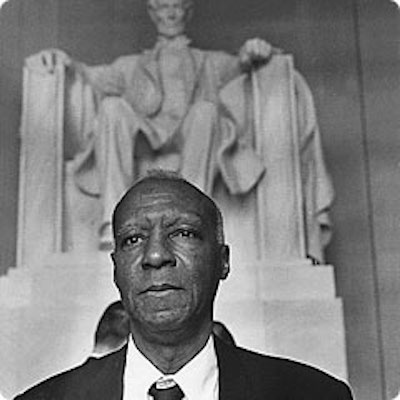
    That goal was also contained in Harris Wofford’s memo, which was delivered to JFK in late December of 1960. (Nick Bryant writes that this was a thousand word memo; Wofford says it was 30 pages long, a rather significant difference. Since Wofford wrote it, I think we can trust him. See Bryant, p. 225; Wofford, p. 130) That memo advised he do as much as possible with executive orders and the judiciary, with the idea that this pressure would eventually cause something to break in the legislature. As we have seen, that is what President Kennedy did. When he placed an omnibus civil rights bill before Congress in February of 1963, he stated he felt he had gone as far as he could with executive orders; it was now time for the legislature to do its part. (Risen, p. 36) Contrary to what Bryant implies, the president then conducted one of the longest and most comprehensive lobbying actions ever in order to get the bill passed. (Bryant, p. 410; Risen, pp. 62-63) Based upon the actions of Bull Connor in Birmingham, and the president’s conversation with Dick Gregory, the February 1963 bill was revised and fortified. Again, contrary to what Bryant writes, the president did not lose interest in the bill that fall. (Bryant, pp. 450-52) He directly intervened in the legislative process in October. (Thurston Clarke, JFK’s Last Hundred Days, p. 249) He also told Philip Randolph, “I know this whole thing could cost me the election but I have no intention of turning back, now or ever.” (Golden, p. 98)
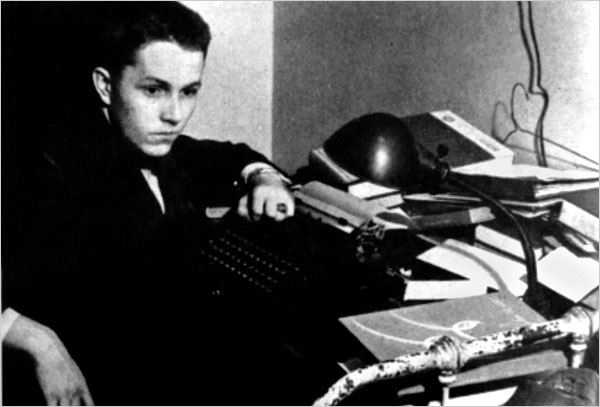
    Michael Harrington
    Michael Harrington

    The Other America

    At this point in the discussion, we should pay particular attention to the last part of that statement, as it is one more indication that Kennedy did have a vision. And he and his brother were ahead of almost everyone—as we shall see, most certainly James Baldwin and Jerome Smith. For as his bill was moving through Congress, he was already thinking beyond its parameters. In June of 1963, Kennedy told a group of labor leaders that something would have to be done for the Negro. He continued by saying that we all owed them a debt of gratitude for being “in the streets” and calling our attention to the American Dream. (Golden, p. 131) What did JFK mean by this?
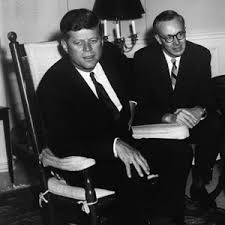
    Walter Heller and JFK
    Walter Heller & JFK

    As several authors have written, earlier in the year, the president had read Dwight MacDonald’s 13,000-word review of Michael Harrington’s book about the poor, The Other America. It left an indelible impression on him. In October of 1963, Homer Bigart had written a long article in The New York Times about pockets of poverty in Kentucky. The impact of those two articles caused a series of discussions between the president and his chief economic advisor, Walter Heller. (Clarke, pp. 242-43) Heller had written him a memo well before the Bigart article appeared. In it he stated that although the economy was expanding overall, there were pockets of poverty that were resistant to growth. Over months of discussion, the staunch Keynesian economist had to admit that in those pockets, people were “caught in a web of illiteracy, lack of skills, poor health and squalor.” After giving the president some statistics on the matter, Heller suggested what he called an “attack on poverty”. Kennedy told Heller that he was going to make this an election issue and he would visit some blighted areas in order to enter it onto the national stage.

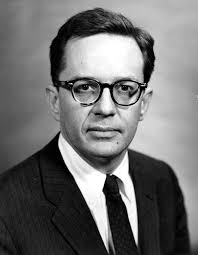
    In other words, the “War on Poverty”, or as some call it, the “Second Reconstruction”, was not President Johnson’s idea. But beyond that, there is something else lurking here as a back-story. Something that Thurston Clarke did not touch upon. And, in fact, few authors have ever discussed it. This back-story concerns the figure of David Hackett.


    II
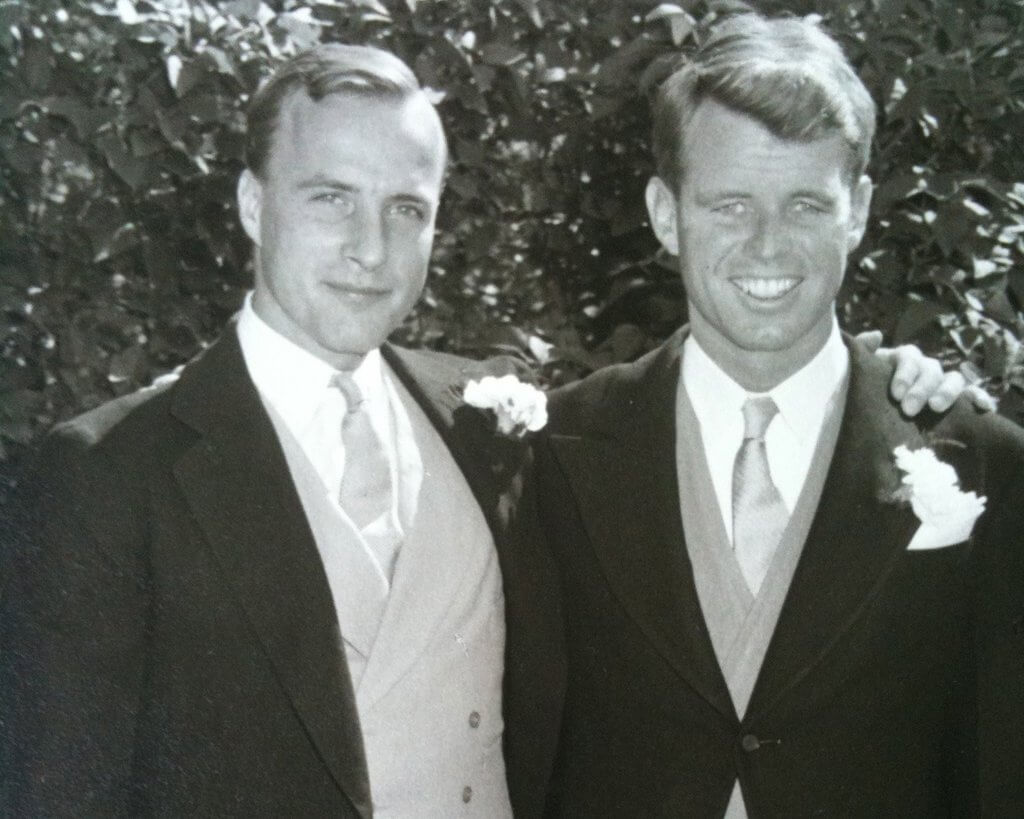
    David Hackett and RFK
    David Hackett & RFK

    Like William Vanden Heuvel with the Prince Edward Schools crisis, Hackett was a friend of the Kennedy family. Specifically, he attended prep school with Robert Kennedy. He was such a good athlete that novelist John Knowles modeled the charismatic figure of Phineas in A Separate Peace on him. (See this bio)

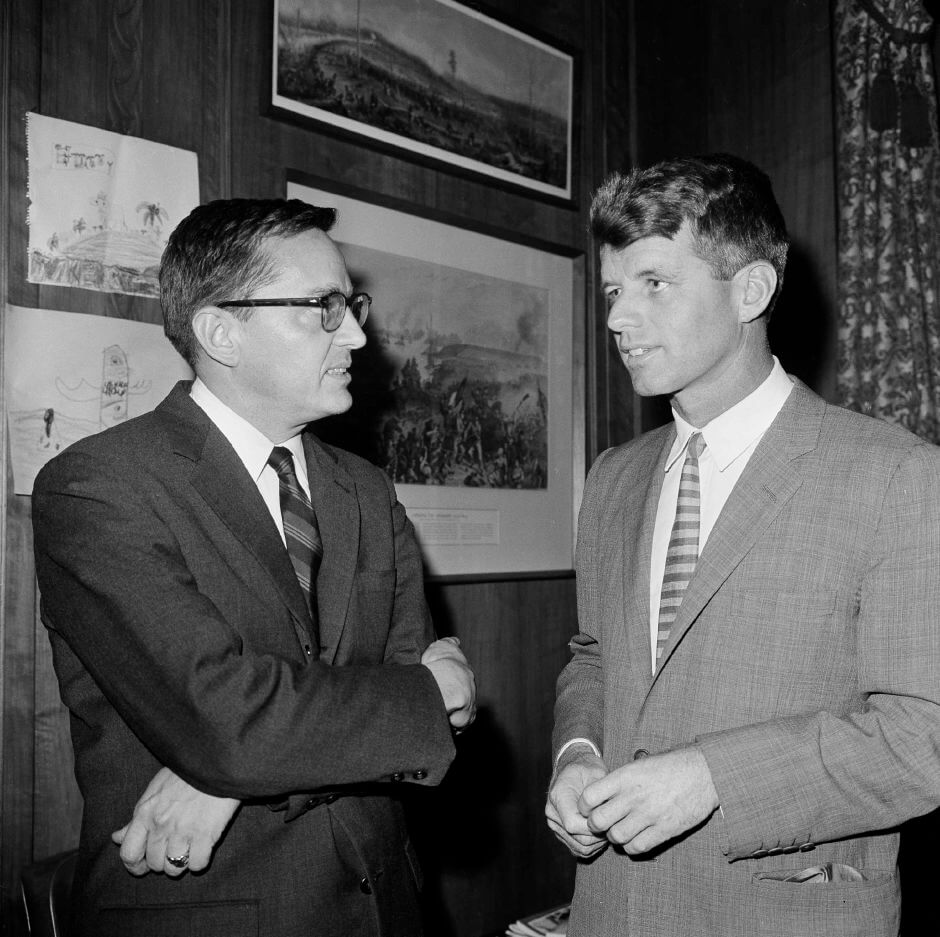
    Influenced by the work of his sister Eunice Shriver, one of the first things Robert Kennedy did as attorney general was to take a dual interest in the rights of the poor to have attorneys and also the problems and causes of juvenile delinquency. (Edward R. Schmitt, President of the Other America, p. 68) The siblings convinced President Kennedy to issue an executive order creating the President’s Committee on Juvenile Delinquency. The committee had a three-year life span and JFK made Hackett the executive director. Hackett had a wide mandate. The attorney general wanted his friend to explore the issue in all of its dimensions and manifestations. Which he did. Sometimes he and RFK would just take a stroll through Harlem or the slum areas of Washington DC. Hackett would then introduce Kennedy to someone he knew, preferably a gang member, and the three would talk. Other times, Hackett would show RFK the shabby conditions of schools or recreation areas. The attorney general was moved by these and so he invited celebrities—Cary Grant, Chuck Connors, Edward R. Murrow—to come into those blighted neighborhoods to give talks to the kids who lived there. (Schmitt, pp. 69-70) The attorney general would also attain appropriations to repair some of these facilities.

    The question that Hackett eventually began to hone in on was this: What caused the problem of delinquency? In doing so, he first reviewed the literature. He then interviewed some of the authorities in the field: for instance, sociologist Lloyd Ohlin and psychiatrist Lawrence Kumrie. He then traveled outside the east coast to the Watts ghetto and East LA barrio. (Schmitt, pp. 71-72)
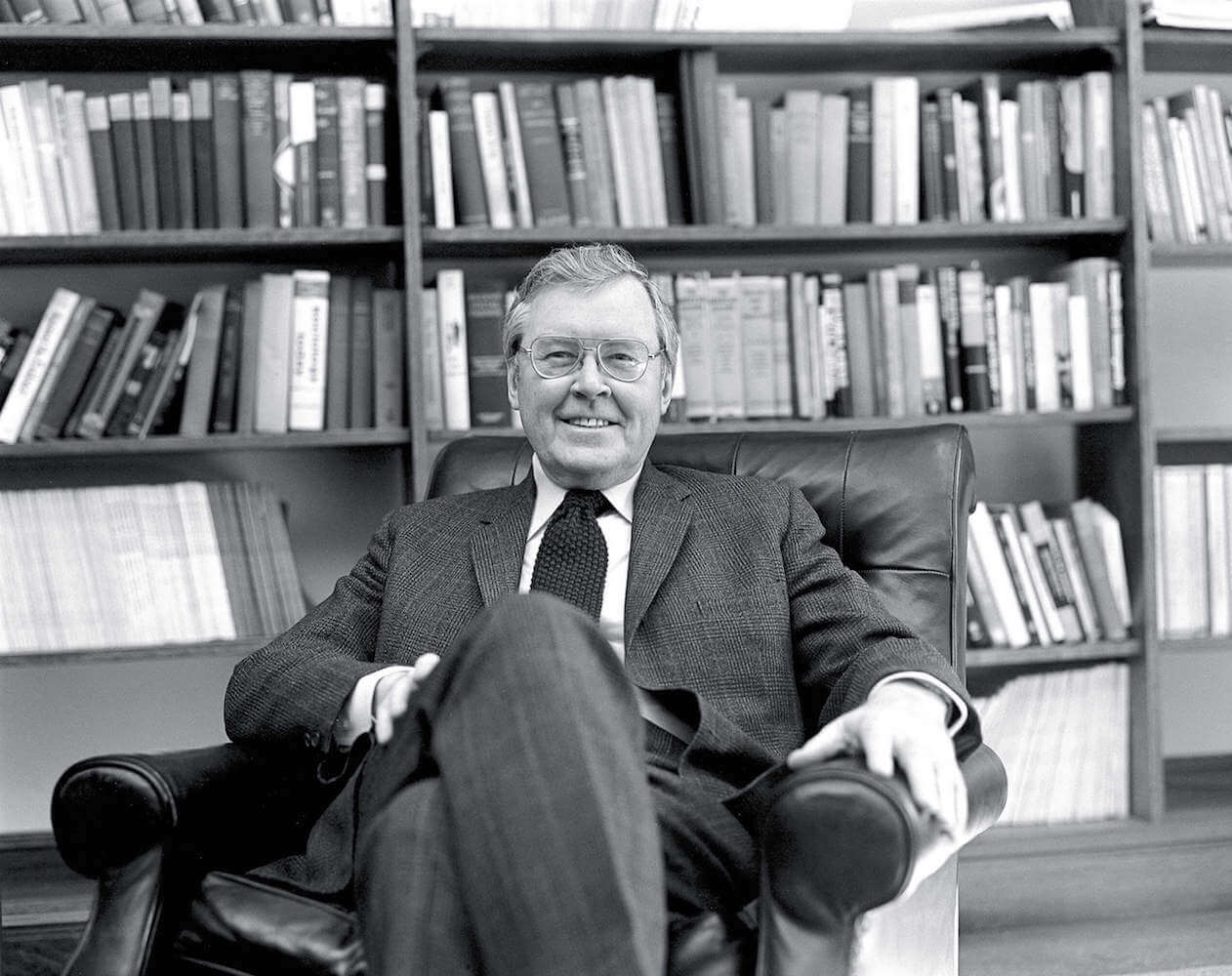
    Lloyd Ohlin
    Lloyd Ohlin

    After doing this research and field investigation, Hackett formulated two broad conclusions. First, he agreed with Ohlin and his approach to the subject. Ohlin co-wrote a book called Delinquency and Opportunity. That volume challenged the accepted paradigm that the problem was one of individual adjustment. It made the case that the real underlying problem was the poverty of the slum area and how that constricted opportunities for youth. To remedy the situation, one therefore had to supply more and better opportunities for youth in blighted areas. The second conclusion that Hackett came to was that this was not a simple phenomenon. What made it worse was the paucity of past efforts in the field, rendering it difficult to ensure that new programs would work. After all, Ohlin’s book had just been published in 1960. It was thus unlikely a solution could be found by the traditional remedy of starting up a series of FDR/New Deal-type programs. (Schmitt, p. 72)
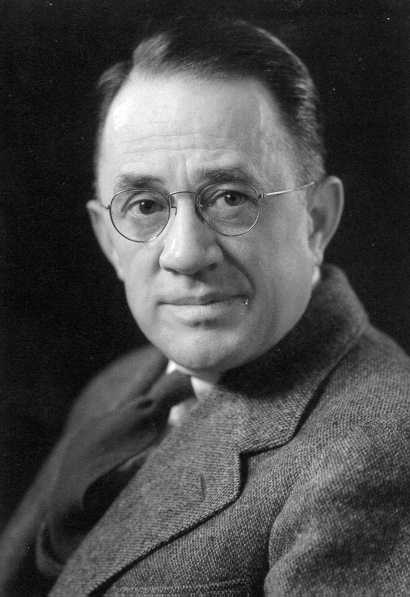
    Leonard Cottrell
    Leonard Cottrell

    In the latter part of 1961, President Kennedy proposed a bill that would create 16 demonstration projects funded at 30 million dollars and provide Hackett a staff of 12 full-time employees. (Allen Matusow, The Unraveling of America, pp. 111-112) A year later, when Harrington’s book came out, Eunice Shriver recommended forming a domestic version of the Peace Corps. (When Johnson enacted his War on Poverty this ended up being called VISTA.) But there was one point that Hackett disagreed with Ohlin about. The sociologist suggested a top-down schedule of opportunities that those in the community could choose to participate in, e.g., jobs for teenagers, legal services, day care centers, or local centers offering government services. Hackett brought in a new expert, Leonard Cottrell of the Sage Foundation. They decided that the choice of options should not originate from the top down, but from the bottom up. In other words, the poor should choose what they wanted to pick from. Hackett called this “the competent community”. (Matusow, p. 117)

    With respect to this proposal, there are two points the reader should keep in mind. First, after doing his study, Hackett understood that there was no established meme via which to frame the problem—let alone cure it. Until the day he died, he always insisted that there needed to be continual assessment as to what was working and what was not. (Schmitt, p. 92) Related to this, Hackett wanted to expand the number of demonstration projects. He reasoned that it was necessary to test what would work with differing ethnic groups; that is, what worked in East LA might not work in South Central. After he expanded his focus from delinquency to the circumstances of poverty, he knew there was more work to be done. (Matusow, p. 121) Second, he also insisted that a pure influx of funds would not solve the problem. There needed to be research and planning behind it. He convinced Bobby Kennedy on that point. (Schmitt, p. 84)

    Both men understood the urgency of the problem. From what they had read and seen, America was sitting on a ticking time-bomb. This is not after-the-fact revisionism. While everyone was concentrating on the South, Hackett and Bobby Kennedy were examining sociological predicaments elsewhere that could not be solved by an accommodations bill or a voting rights act. In these places, the problems were not simple and the remedy was not as direct. In fact, RFK predicted that riots would erupt soon if nothing was done. (Schmitt, p. 86) He told a Senate committee in February of 1963 that America was “racing the clock against disaster … We must give the members of this new lost generation some real hope in order to prevent a shattering explosion of social problems in the years to come.”

    Two and a half years later, when Martin Luther King visited Watts after the riots, that was the message he had for President Johnson. (See the film King in the Wilderness) As we saw in Part 2, this was the subject—northern race relations—that Bobby Kennedy wanted to discuss with James Baldwin and his friends at their meeting in New York in May of 1963. Through the work of Hackett, the attorney general understood that the problems of discrimination in the northern ghetto were not the same as segregation laws in the South. After the riot at Ole Miss, in the fall of 1962, he told Arthur Schlesinger words to the effect: if you think this is bad, wait till you see what we are headed for up north. (Ellen B. Meacham, Delta Epiphany, chapter 3) Because the circumstances were so different, he and Hackett knew that creative ideas were needed. That is what he wanted from people like Baldwin, Lorraine Hansberry and Lena Horne. He and Burke Marshall were lawyers; they did not need any advice on whether or not they could arrest the likes of Bull Connor. But they were now about to set sail on uncharted waters and they wanted some input. The fact that authors like Larry Tye and Michael Eric Dyson completely miss the hidden epic tragedy of that wasted opportunity demonstrates the kind of writers they really are. The real truth of Dyson’s pitiful book could be illustrated with an aerial picture of the Watts riots on the front cover with RFK’s words of warning on the back. That, Mr. Dyson, is what truth really sounds like.


    III

    Needless to say, no other administration had ever gone this far in this specific field. As author David Farber has noted, Harrington’s book—which eventually sold over a million copies—surprised America. This is one of Harrington’s most quoted passages:

    The other America … is populated by failures, by those driven from the land and bewildered by the city, by old people suddenly confronted with the torments of loneliness and poverty, and by minorities facing a wall of prejudice. (The Age of Great Dreams, p. 18)

    As Farber observed, the reason the book had such an impact was that during the forties, fifties and early sixties, the topic of poverty was pretty much non-existent. But in 1943, the mechanical cotton-picker displaced tens of thousands of workers, mostly African Americans, in the south. The problem was that since these laid-off workers had little skill and less education, there was no real future for them in the north. This may have been what Richard Russell had in mind when he told his colleague Senator Harry Byrd that what he feared if John Kennedy got elected was that he would go beyond even the Democratic platform. (Brauer, p. 53) The insight may have originated from Russell’s personal exposure to Kennedy while they were in the Senate. And indeed, as we have seen, that is what the president was doing at the time of his death, before his civil rights bill passed.

    To crystallize how the Kennedys conceived the dilemma they would eventually face, let me quote Robert Kennedy:

    You could pass a law to permit a Negro to eat at Howard Johnson’s restaurant or stay at the Hilton Hotel. But you can’t pass a law that gives him enough money to permit him to eat at that restaurant or stay at that hotel. I think that’s basically the problem of the Negro in the North. (Guthman & Shulman, p. 158)

    That was not the entire problem of course. But the basic idea was that the matter was more complex and insidious once you got out of the South. As the president told Heller at their last meeting on the topic, “Yes, Walter, I am definitely going to have something in the line of an attack on poverty … I don’t know what yet.” (Schmitt, p. 93) To show how interested he was, at his final meeting with his cabinet, President Kennedy mentioned the word “poverty” six times. After his death, Jackie Kennedy took the notes of that meeting to Bobby Kennedy. The attorney general had them framed and put up on his wall. (Schmitt, pp. 92, 96)

    As with many of President Kennedy’s policies, once it was assumed by Lyndon Johnson, it was changed. One of the underlying traps was what Hackett warned the Kennedys about. This problem could not be solved by constructing a New Deal program and blindly throwing money at it. As intimated above, the reason for this was that an unambiguous or certain remedy for it had not been identified. Hackett was still managing and evaluating his experimental projects, and JFK was not ready to commit to a specific program either. He wanted to do something, but he was not sure what it was.

    FDR and LBJ
    FDR & LBJ

    A significant difference in the backgrounds of Lyndon Johnson and John Kennedy is that Kennedy did not arrive in Congress until after Franklin Roosevelt’s death, while Johnson was there in the thirties. He prided himself on being a New Dealer. He ran the National Youth Administration in Texas, which meant he supervised 20,000 youths. One of his proudest moments occurred during FDR’s visit to Galveston, when Johnson had all of his boys lined up for the president’s visit. (Nancy Colbert, Great Society, pp. 36-38) Unlike what Ohlin and Harrington were writing about—and what Heller was describing to the president—Roosevelt was not facing peculiar pockets of poverty amid a generally thriving economy. FDR was confronted with a massive, nationwide economic blowout that covered almost the whole country. He was facing a macroeconomic problem: how can I revive the entire economy by using Keynesian solutions? In the meantime, he had to provide aid to literally millions of people who were unemployed. And those people crisscrossed all kinds of economic, ethnic and racial boundaries. FDR’s New Deal was like a combination giant fire engine, ambulance corps, and cafeteria truck dropping supplies and services throughout the country in an attempt to stimulate the economy, give people jobs, and provide relief programs so they would not starve.

    As Hackett told RFK, this was not the situation America faced in 1962. It was much more localized and much more complicated. As we have seen, Kennedy was going to run on it in 1964 in order to transform it into a national issue. He did not plan on starting his program until after the 1964 election. (Bruce J. Schulman, Lyndon B. Johnson and American Liberalism, p. 71) What happened after his death shows how important one man can be in determining the currents of history.

    Walter Heller met with Johnson the day after Kennedy’s murder. The economist told the new president about the ideas he and JFK had reviewed for relieving poverty. Johnson told him that it sounded like his kind of program and he wanted to go full tilt on it. He then added that John Kennedy was a bit too conservative for his taste. (Schmitt, p. 96) When Heller got back to him with the demonstration projects that were running under Hackett, Johnson almost eliminated the entire program. In his eyes, such a project had to be big and bold in order to win congressional approval and make a rhetorical impact with the public. (Schulman, p. 71; Matusow, p. 123)

    But there was another aspect to why LBJ trotted the program out before it was ready. The new president understood that the civil rights act making its slow way through Congress was really Kennedy’s. As I have noted, Clay Risen’s book, The Bill of the Century, proves that point. But Kennedy’s poverty program had not been formally announced or written up. Therefore, Johnson could present it as his own. (Evans and Novak, pp. 431-33) Also, like a star athlete in sports, LBJ wanted to set records in getting bills passed. (Farber, p. 106) He ended up doing both.

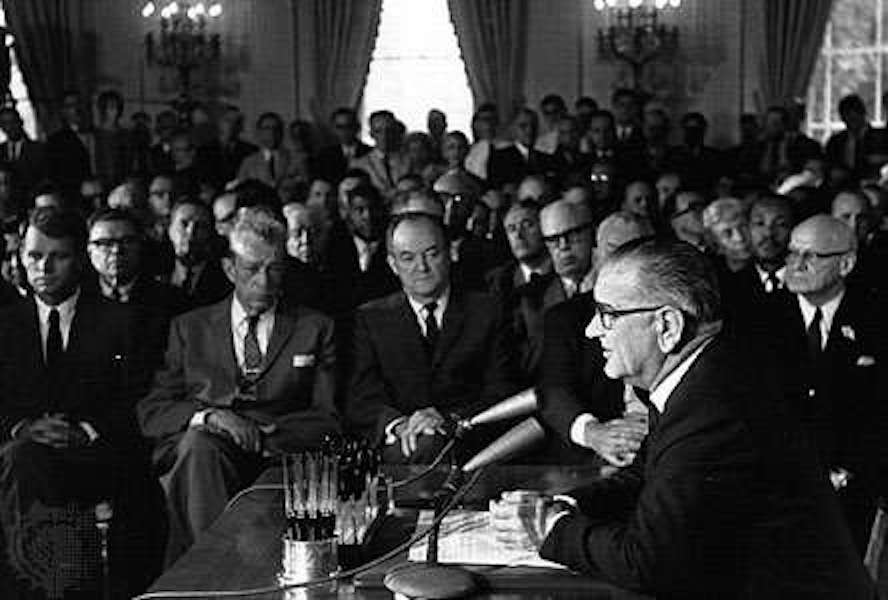
    Just six weeks after he met with Heller, Johnson now appeared before the nation in an evening version of the State of the Union address. He announced to that nationwide audience that:

    This administration, today, here and now, declares unconditional war on poverty in America … It will not be a short or easy struggle, no single weapon or strategy will suffice, but we shall not rest until that war is won. The richest nation on earth can afford to win it. We cannot afford to lose it.

    This kind of rhetoric about a program whose specific points had not even been worked out yet! A bit over four months later, Johnson would announce the Great Society. Most analysts have differentiated the Great Society from the War on Poverty. The main agency for the latter was called the Office of Economic Opportunity (OEO). In five years, from 1965-70, OEO was granted 1.5% of the budget for all of its programs. Had that money been instead sent to each person living in poverty in America, the total would have come to about seventy dollars a year. (Maurice Isserman & Michael Kazin, America Divided, p. 192) How can you lift someone out of poverty spending that small sum? As many have said, the latter got lost and distracted by the former.

    The greater expenditure on the Great Society was of particular consequence in this regard, because programs like Medicare, highway beautification, the National Endowment for the Arts, the creation of the Department of Transportation, and public broadcasting generally favored the middle class. Programs like air and water purification, and consumer protection, these favored almost all citizens. The problem with this panoply of programs was that when Johnson announced the Great Society at the University of Michigan on May 22, 1964, he did it with the same, if not more, extravagant language that he did his War on Poverty. In retrospect, what makes that even more shocking is this: Johnson had not run for president yet! For that matter, he had not even been formally nominated as the candidate of his party in the 1964 election. That would not occur for three more months, in August at Atlantic City.

    In Johnson’s almost manic attempt to differentiate himself from his predecessor, what Hackett warned against was now going to happen. Johnson was going to play the New Dealer. He was going to create and pass an anti-poverty program well before the 1964 election. Yet before that was even passed, he was going to announce something even bigger: the Great Society. Needless to say, all this hubbub necessitated that the cautious Hackett be retired to the sidelines. Which he was. While Johnson was putting together his package, David Hackett—the man who ran the program for three years, who knew more about it than anyone—was now working on Bobby Kennedy’s senatorial campaign in New York. RFK tried to intervene. In January of 1964, he wrote the president a memo: “In my opinion, the anti-poverty program could actually retard the solution of these problems” unless Hackett’s basic approach was used. (Matusow, p. 123) At the time he was shunted aside, Hackett was working on something he called “competence and knowledge”. Using Ohlin’s opportunity approach, he wanted the people in these affected areas to have a complete knowledge of the opportunities at their disposal. And he wanted them to be able to designate their own leaders who could then competently use those opportunities in order to improve the lives of those they represented. It is safe to say that this was a continuation of Hackett’s dispute with Ohlin and his siding with Cottrell. Hackett wanted what he called his “community action experiments” to resemble something like a socialist democratic laboratory.

    It didn’t end up that way.


    IV
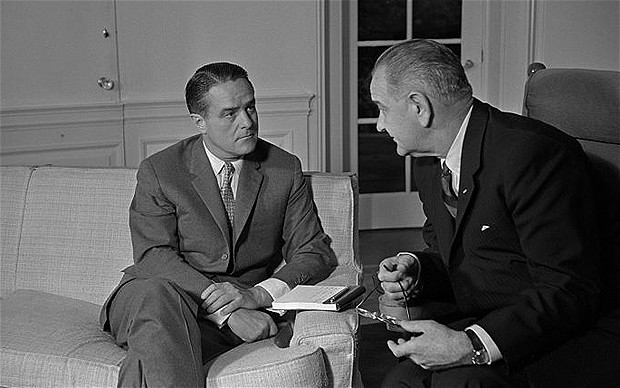
    Sargent Shriver and LBJ
    Sargent Shriver & LBJ

    With unwise alacrity, Johnson sent his program to Congress in March of 1964. (Matusow, p. 125) As Harris Wofford notes in his book, the choice Johnson made to replace Hackett with as supervisor of his War on Poverty surprised many people. On February 1, 1964, he appointed Sargent Shriver to lead it. (Wofford, p. 286) As Wofford further writes, what was so surprising about this was that Shriver already had a position in the administration. He was running what many saw as a great success: JFK’s Peace Corps. Why have him running two programs? Why not make directing the War on Poverty a full-time job? With someone like, say, Bill Moyers running it?

    Later in the year, Heller would also leave the White House. What made that decision worse was that Heller wanted to preserve much of what Hackett had done, whereas Shriver did not believe in the community action program, which was Hackett’s central idea. Shriver memorably said, “It will never fly.” (Wofford, p. 292) But he couldn’t kill it, since Robert Kennedy was still attorney general. Instead, he added other elements to it: a job training program, a summer jobs program, a work-study program, assistance to small farms and small business, and the aforementioned VISTA program. This brought in other parts of the administration, like the Department of Agriculture and the U. S. Office of Education. Bobby Kennedy had targeted help for pre-school children that would bypass the regular school system. This is how Head Start and Upward Bound entered into the overall program. (Schmitt, p. 114) These were probably the two best parts of the entire OEO schedule.

    But what quickly became one of the problems with the overall program was a lack of administrative oversight. When Johnson turned it over to Shriver, he said, “You just make this thing work. I don’t give a damn about the details.” (Isserman & Kazin, p. 109) As Bruce J. Schulman noted in his book about Johnson, the president did not speak very much or spend any amount on the oversight or administration of the Great Society or the War on Poverty. (Schulman, p. 95) He argues that Johnson understood that the sooner underlying problems were exposed, the sooner Congress would cut back on them. So, in essence, he tried to ignore them. The other problem was the visible and vocal disagreement about Hackett’s ideas for community action.

    As almost every commentator on the subject has observed, what came to be called the Community Action Program (CAP) fell prey to forces on the right and left. Hackett always said that he was not done fully defining what the program should be at the time he left. But he and Bobby Kennedy did agree on a stricture called “maximum feasible participation.” (MFP) This was their way of keeping the CAP democratic and also out of the hands of the local and state bureaucracies that had already failed their citizens in these areas. Another reason Kennedy tried to push MFP was that he knew that veteran local politicians would see the OEO money as simply a bounty they could get to and then spend on their own favorite programs, which did not benefit the people he and Hackett wanted to help.
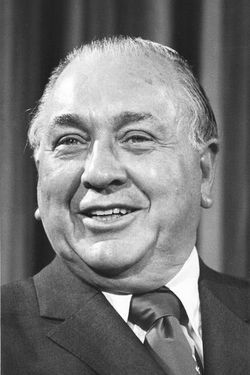
    Richard Daley
    Richard Daley

    He was correct. Mayor Richard Daley said, “We think the local officials should have control of this program.” (Matusow, p. 125) Another city official said, “You can’t go to a street corner with a pad and pencil and tell the poor to write you a program. They don’t know how.” (Farber, p. 107) That last comment was nonsense. Hackett did not envision the citizenry writing the programs. He wanted the local poor to be able to vote on what kind of opportunities they should have through their community action grant. But it showed why Hackett and Kennedy feared that CAP would be taken over by already standing local agencies.

    When RFK arrived in the Senate, he had the opportunity to debate one of Daley’s cronies on this issue. Like Daley, the Chicago schools superintendent argued that the education programs of OEO should be taken over by his school district. Senator Kennedy then asked, if that occurred, what would safeguard the targeted children’s rights to get the benefits of the grants? The superintendent’s answer was that it would be the school community in the form of local groups of parents. From his experience in walking the streets of Harlem with Dave Hackett, the senator replied thusly:

    Many of them do not have parents. They do not have two parents anyway. They might have one parent, and maybe they have a group in the community that is going to come down and make their protest known; but a lot of times that is very difficult. They are working for seven or eight dollars a day and making forty or fifty dollars a week. It is difficult to take off and go down and protest … I think we have a special responsibility to those people who are less fortunate then we are, to make sure that the money that is being expended is going to be used so that the next generation will not have to have these kinds of hearings. (Schmitt, pp. 115-16)

    Later, RFK continued in this vein by saying:

    The institutions which affect the poor—education, welfare, recreation, business, labor—are huge, complex structures, operating outside their control. They plan programs for the poor, not with them. Part of the sense of helplessness and futility comes from the feeling of powerlessness to affect the operation of these organizations. (Matusow, p. 126)

    What Kennedy and Hackett were saying was rather simple: How can we trust the same people who allowed these inequities in the first place with the millions meant to cure them? (Schulman, p. 94) Author Schulman then listed a few examples that proved the Hackett/Kennedy warning. To cite one: a Camden New Jersey physical education program was subsidized with OEO money, yet it was a class for middle class students. I can also state from my own experience that such was the state of affairs. At the high schools I worked at which were entitled to what is called Title 1 funds, the administration tries to get the faculty behind a program that will benefit the majority of the students. As I recall, there was never any consideration given to targeting the students that Hackett and Kennedy wanted to single out and help. Many commentators concluded that this problem stemmed from the lack of oversight Johnson built into the program. (Schulman, p. 95)
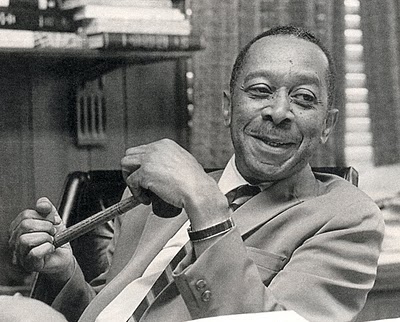
    Kenneth Clark
    Kenneth Clark

    The other problem was something that was not foreseen by Hackett and Kennedy. In some cities, the CAP was taken over by, let us say, some persons on the left who also did not understand its original aims. In Harlem, respected sociologist Kenneth Clark was forced out and Livingston Wingate spent a lot of money producing the street plays of Leroi Jones. When the board argued about these productions, Wingate brought in some thugs to intimidate them. (Matusow, pp. 257-59) Wingate paid himself 25 grand a year, close to two hundred thousand today. When Kenneth Marshall, a civil rights worker who worked with Clark, examined the program records, he said he simply did not think that many of the offerings were useful. And most of the 20 million disappeared without a trace left behind. (Matusow, p. 260)


    V

    This is not to say that the whole thing was a boondoggle, as, for reasons of agitprop, some on the right have claimed. As noted, there were some good programs designed for the poor and underprivileged: Head Start, Upward Bound, and Legal Services, for example. And in some places, the CAP concept did succeed as it was designed. For instance, in Ellen Meacham’s book Delta Epiphany, she describes a community action center she was familiar with. It was in Mississippi and it was called Coahoma Opportunities. It offered what Hackett had envisioned. It maintained an array of services that would aid those who needed them: tutors who could help young children learn to read, Legal Services as a way to claim Social Security benefits, help with emergency food aid, placing a child in Head Start, a guide to gaining a summer job, job training that paid while you were learning, and help in finding a credit union. The reason it worked was because it had fine leadership. Aaron Henry was the head of the state branch of the NAACP, and his partner was a local white businessman who saw the program benefiting the business community and contributing to racial harmony. (Meacham, chapter 8) That is what Hackett wanted the CAP to be. The problem, as I have tried to state, was not so much the concept as its execution.

    Eventually the administration gave in to the local and business leaders on CAP. By 1967, Johnson had folded his cards on community action. He allowed them to be taken over by the local entities Hackett feared. Shriver left to become ambassador to France. In the end, LBJ had lost all faith in it and said it was being run by “kooks and sociologists”. (Matusow, p. 270)

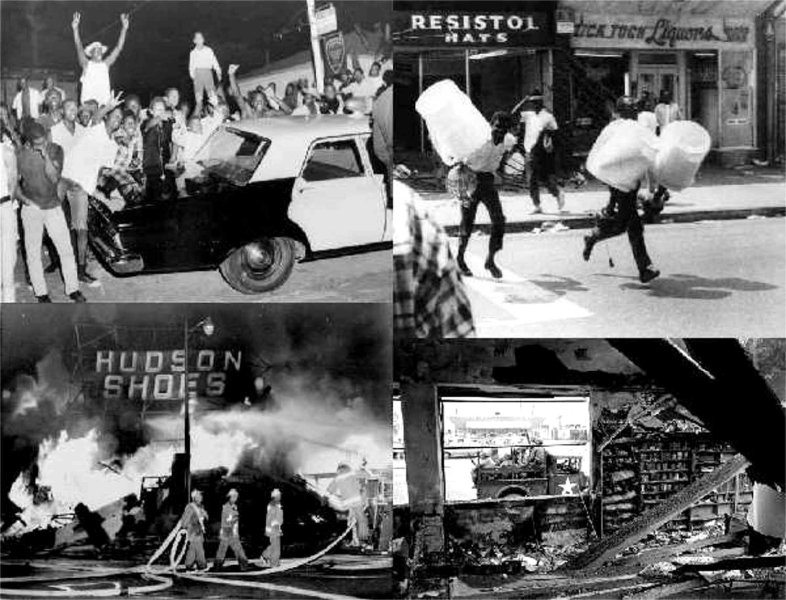
    The beginning of Johnson losing faith started in Watts in the late summer of 1965. To his credit, I have never read anything that states that Bobby Kennedy had his “I told you so” moment at this time, even though, as we have seen, he did predict it. On August 11, 1965, a slightly drunken motorist, Marquette Frye, who was on parole for robbery, was stopped and pulled over by a highway patrolman, Lee Minikus. Frye resisted arrest. As he did, a crowd began to gather at the intersection of Avalon and 116th Street. It quickly swelled to a thousand. The police had to call in reinforcements. The crowd began hurling rocks and bottles. They then began to shout the chant that became the chorus to the hundreds of riots that would soon follow: “Burn, baby, burn.” (Matusow, p. 360)
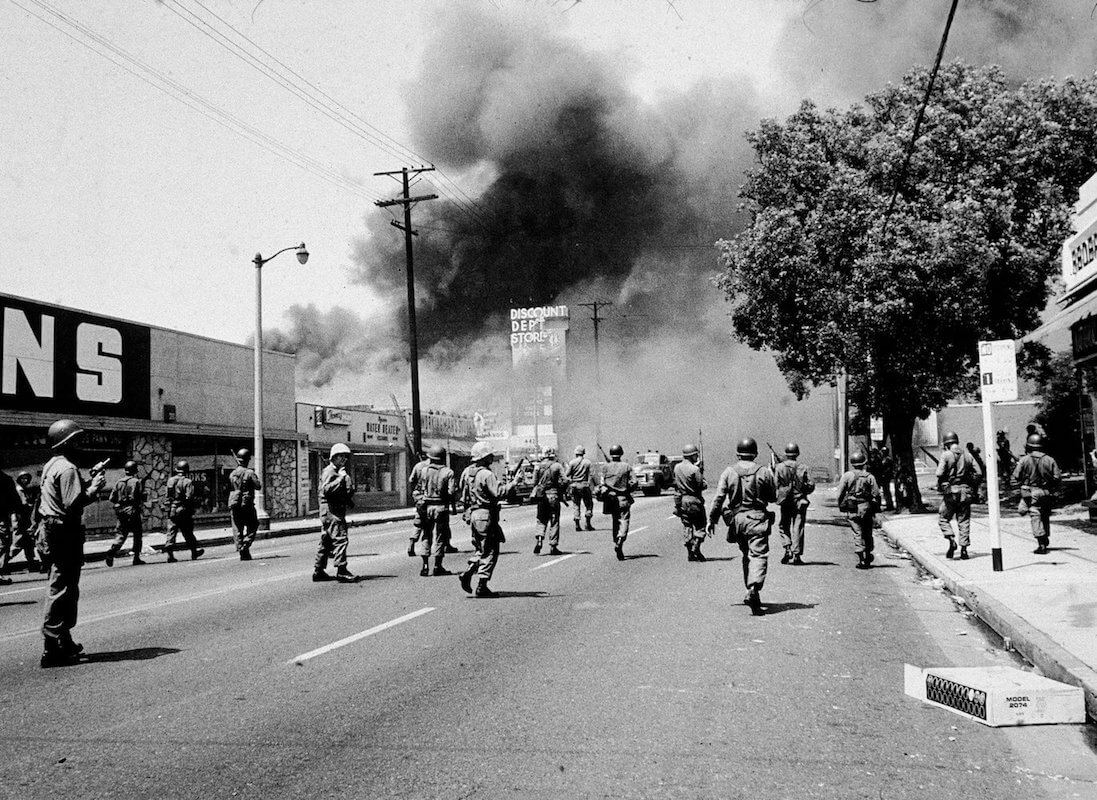
    Watts Riots
    Watts 1965

    During the next six days, a 46-square-mile section of Los Angeles turned into a battle zone. The conflagration raged for the better part of this period. At one time or other, nearly 30,000 residents participated in the looting, sniping and torching. A crowd estimated at 60,000 cheered them on. The local authorities called in 2,300 National Guardsmen. They were sent in on the fourth day and this started to bring things under control. (Matusow, p. 361) They joined a force of about 1,700 local and state police. When it was all over, there were 34 dead, 1,072 injured, 977 buildings damaged, and nearly 4,000 arrests.

    Johnson was stunned by Watts. It exploded just one week after he had signed into law the Voting Rights Act of 1965. It was King’s Selma demonstration that had made that act possible. But both men had cooperated in the process. According to his chief domestic aide, Joe Califano, after Watts, LBJ refused to take King’s calls for a period of 24 hours: “He just wouldn’t accept it. He refused to look at the cables from Los Angeles describing the situation.” (Schulman, p. 112) When he came out of it, Johnson asked, “How is it possible, after all we’ve accomplished? How could it be?” (Schmitt, p. 120) Politically, the riots handcuffed the president. He had to issue a statement condemning the looting and lawlessness, but he also understood that if he went too far, a backlash would now ensue against the War on Poverty.

    Why did Watts explode? To its residents, the arrest of Frye seemed to symbolize what the white community of Los Angeles thought of the neighborhood. Nearly 2/3 of Watts high school students had flunked at least one grade; almost that many had dropped out. Forty per cent of its residents had no cars, which in a commuter city made it tough to find a job. African American unemployment was three times that of whites. (Farber, p. 113) Bobby Kennedy commented on this police symbolism when he said the law did not protect those in the ghetto from paying too much for inferior goods; from having their furniture repossessed, or “from having to keep lights turned on the feet of children at night to keep them from being gnawed on by rats.” (Schmitt, p. 120)

    Detroit Riots
    Detroit 1967

    The volcanic eruption in Watts initiated an annual series of rolling explosions of summer riots, most of them in the north. In 1966, 43 urban ghettoes went up in flames, in 1967 there were 167 incinerations, in 1968, there were over 125. (Farber, p. 115; “The Legacy of the 1968 Riots,” The Guardian, April 4, 2008) In 1967, eight American cities were occupied by the National Guard. (Matusow, p. 362)
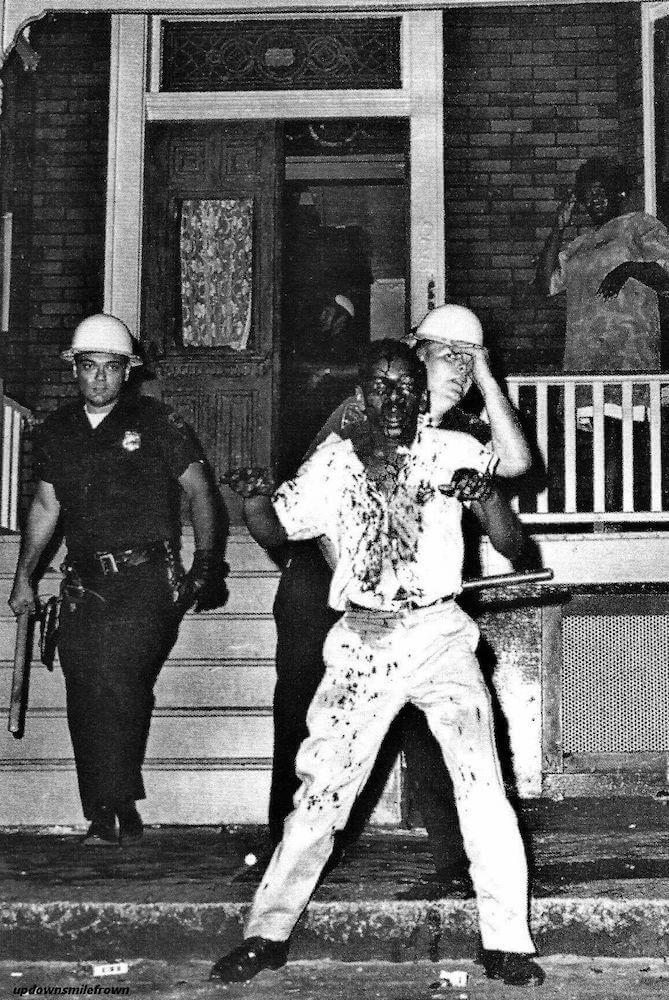
    Neward Riots
    Newark 1967

    The 1967 Newark and Detroit riots actually surpassed Watts in their ferocity. In Newark, the violence resulted in a maelstrom: the Guardsmen were firing on police and the police returned fire. The Guardsmen then fired into a housing project, killing three women. The governor called in SDS leader Tom Hayden, who had done a study of inner-city Newark. Hayden told him to withdraw the Guard. A few hours later, things calmed down. (Matusow, pp. 362-63) One week later, on July 23, 1967, the worst riot in a century broke out in Detroit. Governor George Romney had to request the White House send in the army to quell the insurrection. It ended with 43 dead, 7000 arrested, 1,300 buildings burned down and 2,700 businesses looted. (Matusow, p. 363)
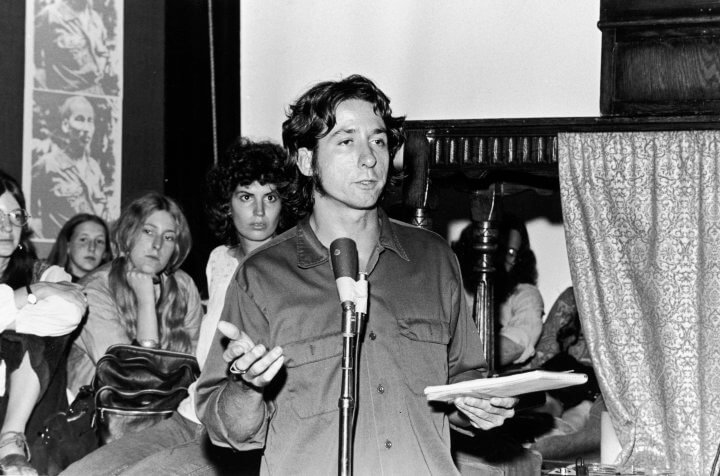
    Tom Hayden
    Tom Hayden

    By 1966, both King and longtime civil rights lawyer Joe Rauh had split with Johnson. (Randall Woods, LBJ: Architect of American Ambition, p. 699) One reason for this was that Johnson—with America going up in flames—continued to escalate in Vietnam, thereby contributing to student unrest and devoting a huge amount of money to a senseless war that neither Rauh nor King could understand. A war that, at that time, was killing or wounding an inordinate number of men of color. King later decided to memorialize the War on Poverty:

    A few years [ago] there was a shining moment, as if there was a real promise of hope for the poor. Then came the build-up in Vietnam, and I watched the program broken and eviscerated as if it were some idle political plaything of a society gone mad on war … So I was increasingly compelled to see the war as an enemy of the poor and to attack it as such. (Isserman & Kazin, p. 192)

    But Johnson insisted that he could still do all three; that is, wipe out poverty, build his Great Society and fight a large land war in Indochina—and win all of them. He said as much in his January 12, 1966 State of the Union address. This contributed to his growing credibility gap—for the simple reason that very few people saw it that way, especially with more and more cities being incinerated while more and more troops were coming home in body bags. All of this caused another sociological and historical milestone to manifest itself.
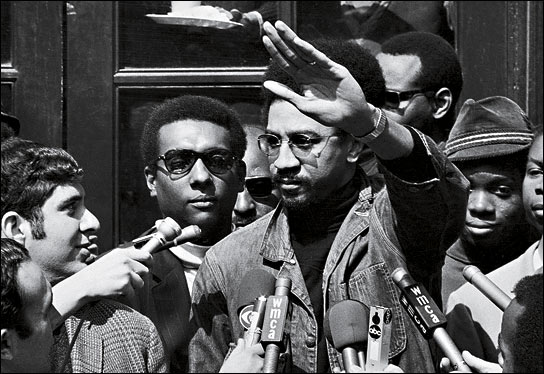
    Carmichael and Brown
    Stokely Carmichael & H. Rap Brown

    As the country seemed to be spinning out of control, not only did this contribute to the rise of rightwing backlash and demagoguery (e.g., Alabama Governor George Wallace entering the national scene); it also contributed to the rise of a leftwing militancy, both in the civil rights movement and the student protest movement. We thus witnessed the appearance on the scene of people like Stokely Carmichael and H. Rap Brown in the former and Bernardine Dohrn and the Weathermen group in the latter. In 1966, Carmichael directly confronted King on a march in Mississippi with his new slogan, “Black Power”. He later said that integration was a “subterfuge for the maintenance of white supremacy.” He then added that people of color would not be beaten up anymore: “Black people should and must fight back.” (Matusow, p. 355) Carmichael, and later Brown, meant this to be their version of the militancy and separatism of the late Malcolm X. First Carmichael and then Brown used this extremism to take over the Student Nonviolent Coordinating Committee. (Isserman & Kazin, pp. 174-75) Apparently, few members noticed that this approach contradicted what their acronym stood for. Carmichael—who wanted to start an “anti-imperialist guerilla war in the ghetto to free the Afro-American colony”—was directly responsible for inciting riots after speaking engagements. (Matusow, p. 365)

    Johnson responded to this by going first to the CIA and starting up Operation MH/CHAOS. When he did not like the results he got there, he went to the FBI, and reactivated COINTELPRO. These were illegal spying programs on these two groups, which also utilized subversive operations to destabilize them. (Schulman, p. 146) Coupled with this, in the fall of 1967, he also made an appearance in Kansas City for the International Association of Chiefs of Police. (Matusow, p. 215)

    Bobby Kennedy was not taking that path. In early 1967, he met with SDS founder Tom Hayden for an exchange of ideas. Hayden later said that Kennedy wanted to get the networks to run documentaries on what life was really like in the ghettoes. He also wanted them to broadcast what the real poverty statistics there were. (Schmitt, p. 175) Six months later, when Detroit erupted, Kennedy predicted this would be the death knell of the Great Society. When Senator Kennedy tried to propose a new package of bills, the White House refused to back it. (Schmitt, p. 190)

    The White House also failed to back its own proposals. In the wake of Newark and Detroit, Johnson had appointed what he called the National Advisory Commission on Civil Disorders. This was helmed by Illinois governor Otto Kerner and was therefore referred to as the Kerner Commission. It was composed of some visionary personages, for example Senator Edward Brooke of Massachusetts and Congressman Jim Corman of California. On February 29, 1968, they handed in their remarkable report. Its most quoted passage asserted that America was becoming “two societies, one black and one white—separate and unequal.” (Joseph A Palermo, In His Own Right, p. 161) One of its recommendations was to adopt ideas similar to RFK’s: a triangular union of private business, government grants and community leadership to rebuild impoverished communities. Both Robert Kennedy and Martin Luther King were disappointed that Johnson pretty much ignored the report and its guidelines. (Palermo, pp. 161-62)

    As many have commented, it was this splitting of the Democratic/liberal coalition over the issues of Vietnam and urban rioting which gave the GOP/conservative coalition their golden opportunity to break it asunder. Conservative strategists like Kevin Phillips and Pat Buchanan began to write up plans to do so. (Isserman & Kazin, pp. 216-17, 272-73) In 1967-68, the promise of 1963-64 became a distant memory. Politicians like Ronald Reagan and Richard Nixon now went to work on their “law and order” themes in the shadows and smoke of Watts, Detroit and Newark while the Living Room War raged each night on TV and the police clubbed SDS protestors in the streets. What caused it all to be even more made-to-order for the right wing is reflected in a comment by Johnson to Bill Moyers after he signed the Civil Rights Act of 1964. The president remarked, “I think we just delivered the South to the Republican Party for my lifetime and yours.” (Schulman, p. 76)

    Inspired by the example of George Wallace, Republicans like Nixon and Reagan strove to siphon off the racist vote in the South. This resulted in Nixon’s infamous Southern Strategy, and Reagan’s equally infamous appearance at the Neshoba County Fair in Mississippi in 1980 to kick-start his campaign. The location of that fair was just seven miles from the site where the bodies of three murdered civil rights workers had been found sixteen years prior (Read further about this here). This technique has been a standby for the GOP ever since, and has been amplified to new levels by Donald Trump.


    VI

    We will oppose … with every facility at our command, and with every ounce of our energy, the attempt being made to mix the white and Negro races in our classrooms. Let there be no misunderstanding, no weasel words, on this point: we dedicate our every capacity to preserve segregation in the schools.

     ~Virginia Governor James L. Almond Jr.

    I would like to close this series by discussing two fascinating and important projects that get little detailed attention, either by the MSM or even in academia. The first deals with a topic that we discussed in passing in Part 3: the Prince Edward County Schools crisis. The second is a subject not addressed yet: Robert Kennedy’s Bedford Stuyvesant restoration.

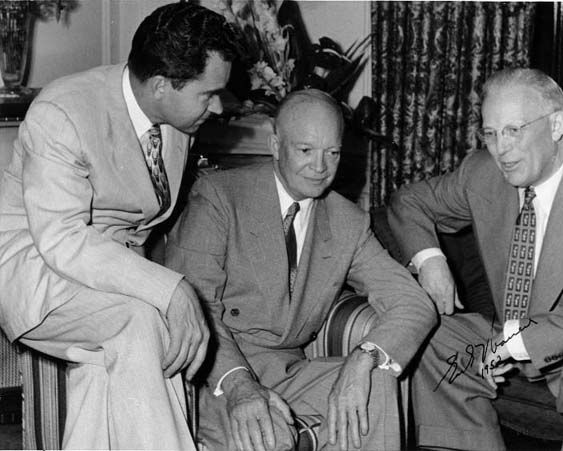
    As I, and many others, have shown, President Eisenhower and Vice-President Nixon did next to nothing to support or enforce the Brown decision. This holds true when it was first announced in 1954, and when it was restated in 1955. The decision made by the Republican administration was unfortunate, since without any enforcement, the Brown case now became a rallying cry for the rightwing establishment in the South. What is worse, as we have also shown: when Eisenhower and Nixon did mention it, it was with disdain.

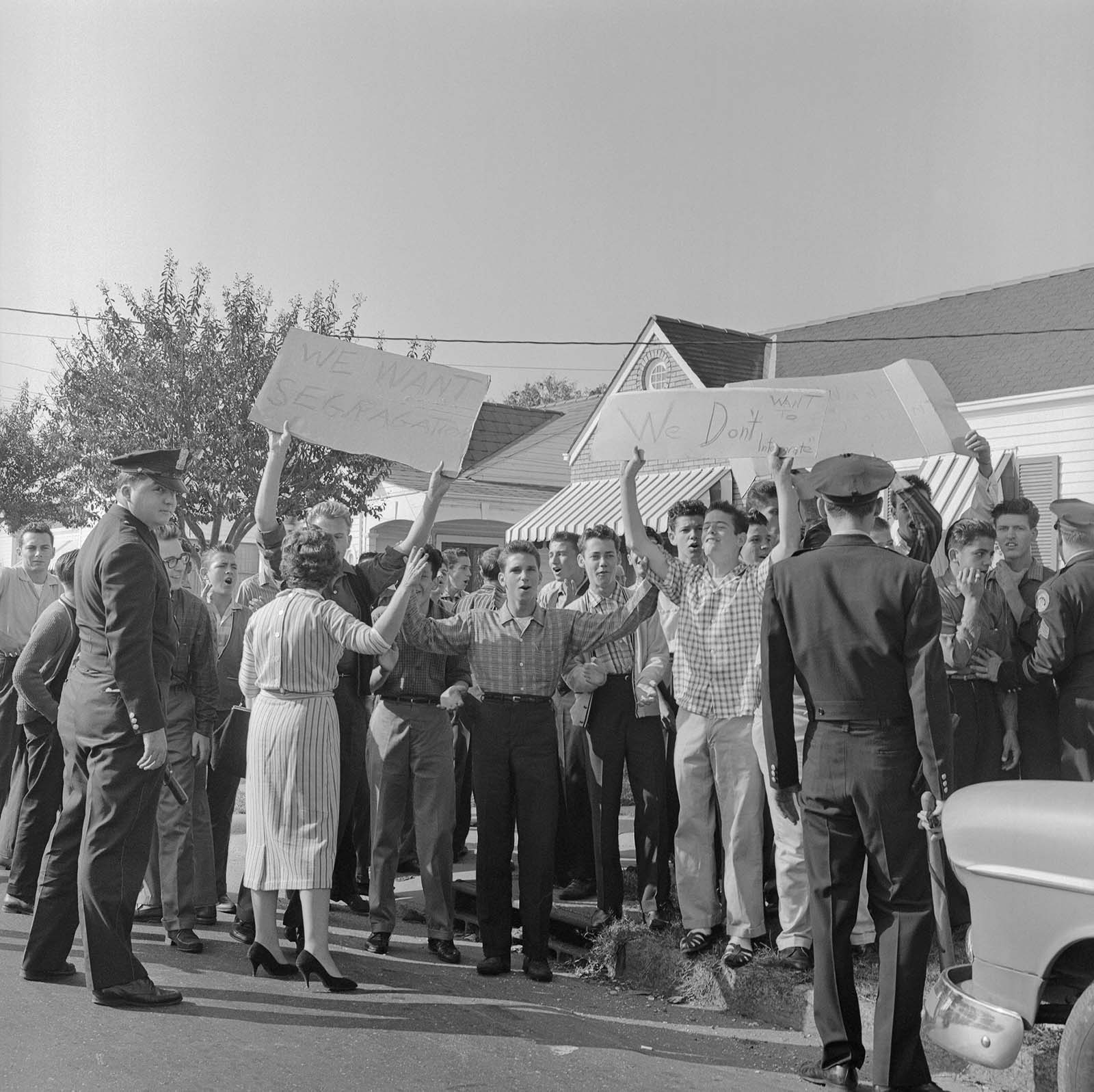
    In Virginia, the state legislature mounted a policy of “massive resistance”. In 1958, following the Orval Faubus example in Arkansas, schools were closed rather than allow African American students to register. When this policy was overturned by the courts, Prince Edward County officials defied the decision. The County Board of Supervisors decided to cut off funding to the Prince Edward Schools altogether. Private academies for white students now opened which excluded pupils of color. This policy was upheld by Richmond newspaper columnist James Kilpatrick and his good friend William F. Buckley.

    As a result, Prince Edward’s African American students had no schools to attend. In other words, rather than integrate and obey the law, the power brokers in Virginia, egged on by Kilpatrick, resurrected the claims of John C Calhoun: interposition can override the central government. What made this all the worse was that, as Nancy Mclean notes in her book Democracy in Chains, it was a 1951 walk-out protesting segregated schools that caused Prince Edward to be included in the Brown v Board filing. (Mclean, p. 6)
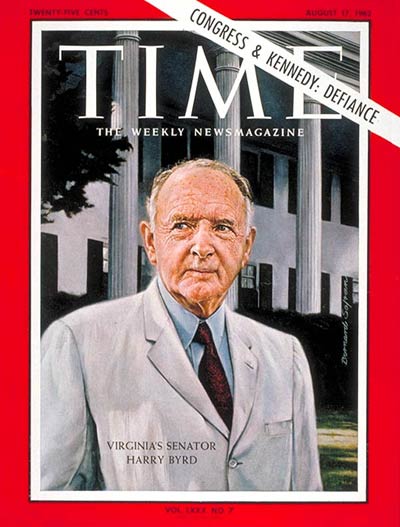
    Harry F. Byrd
    Harry F. Byrd

    Consequently, students of color decided to cross over into North Carolina, or find relatives elsewhere who would let them move in, to continue their education. (Lee, p. 2) At this time, Senator Harry Byrd was one of the dominant forces in Virginia and he vigorously opposed the Brown decision. Along with Governor Almond, this made Virginia—even though it was in the upper South—quite reactionary. As analyst V. O. Key wrote at the time, “Compared to Virginia, Mississippi is a hotbed of democracy”. (Lee, p. 14) Local liberal leaders appealed to the White House to enter the fray in some way. Eisenhower actually encouraged the creation of the white private schools. (Lee, pp. 49-50)

    The Byrd/Almond nexus was quite powerful. Religious ministers did not speak out for fear of being transferred. When an education administrator complained, he was forced to resign. When Almond tried to sell the former schools, which were now empty, half the school board resigned. (Lee, pp. 68-74) Professors who wrote against these decisions were spied upon, harassed and sometimes fired. (Lee, p. 78) But that still was not enough. With the likes of Kilpatrick leading the way, laws were now passed to outlaw the NAACP in the state. And the agency was now forced to turn over its membership rolls. (Lee, p. 79) In 1960, when a 13-year-old who had been out of school for a year wrote the White House, the reply was he should express his feelings to the local officials. (Lee, p. 90)

    Two months after President Kennedy’s inauguration, Robert Kennedy called the Virginia attorney general to Washington for a meeting. When that did not get very far, a month later RFK and Burke Marshall filed a suit to join the legal action. As one commentator has written, the filing of the Kennedy/Marshall lawsuit all but stopped the Byrd/Almond movement to close down all public schools. (Lee, p. 156) The problem was that the Fourth Circuit Court of Appeals was not as law-abiding as the Fifth Circuit in the Deep South, so the progress in gaining favorable decisions was much slower, at least until President Kennedy was allowed to appoint two of his choices to that court. (Lee, p. 100)
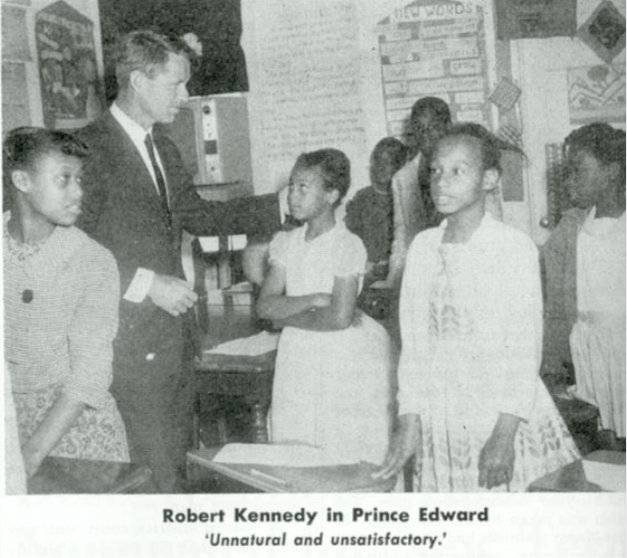
    RFK at Prince Edward

    While all this stalling was going on, the Kennedys decided to make a bold, unprecedented move. JFK had told Burke Marshall he wanted to make Prince Edward a high priority. (Lee, p. 258) In February of 1963, after President Kennedy mentioned the Prince Edward case in his civil rights speech, the Kennedys decided to erect a new school system in Prince Edward, from grade school through high school. (Lee, pp. 33-34) As he did with Dave Hackett, Bobby Kennedy recruited a friend, William Vanden Heuvel, and gave him the assignment of creating the Free Schools system out of nothing in Prince Edward. (Lee, p. 292) By this time, four years had gone by. Some students did not even know how to hold a pencil. (Lee, pp. 314-15)

    William Vanden Heuvel
    William Vanden Heuvel

    Vanden Heuvel, with Bobby Kennedy and the president backing him all the way, did the seemingly impossible. He secured 1.2 million in grants and hired an integrated school faculty and staff with Dr. Neil Sullivan as his superintendent. Sullivan got threatening phone calls, and his car was shot at. Some children were afraid to come to school since they had no shoes or proper attire. Vanden Heuvel got them the clothes. There was a remarkable class ratio of 12-1 in the high school. The system opened on September 16, 1963 with nearly 1,600 students, including four whites. The Free Schools were an oasis in the desert. It showed what could be done in the face of complete adversity.
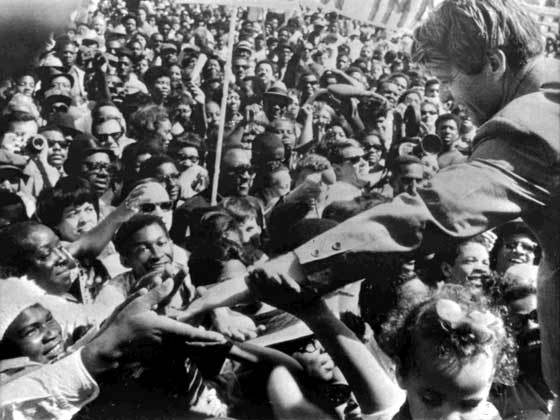
    RFK in Watts
    RFK in Watts

    RFK visited Watts in November of 1965. When he returned, he told a couple of his staffers, Ed Edelman and Adam Walinsky, to continue with Hackett’s research, but to take it a step further. He wanted ideas on how to address the entire phenomenon of the urban ghetto and how to structurally transform it. They did so, and in January of 1966, the senator gave three speeches on the subject of race and poverty. (John Bohrer, The Revolution of Robert Kennedy, pp. 255-61) Those speeches marked the birth of the Bedford Stuyvesant Restoration project. It was RFK’s answer to Lyndon Johnson and the New Deal.

    Bedford Stuyvesant was a ghetto in the Brooklyn area of New York. It had a population of 400,000. This made it the second largest ghetto in America outside the south side of Chicago. It covered 9 square miles. There was no hospital, college or local newspaper. After he gave his speeches, the senator asked Walinsky and Edelman to start fashioning a project for Bedford Stuyvesant that would put those ideas into action. Bobby Kennedy’s idea was to form a tripartite partnership between the federal government, businesses and foundations, and the residents, to transform the area and revive it.
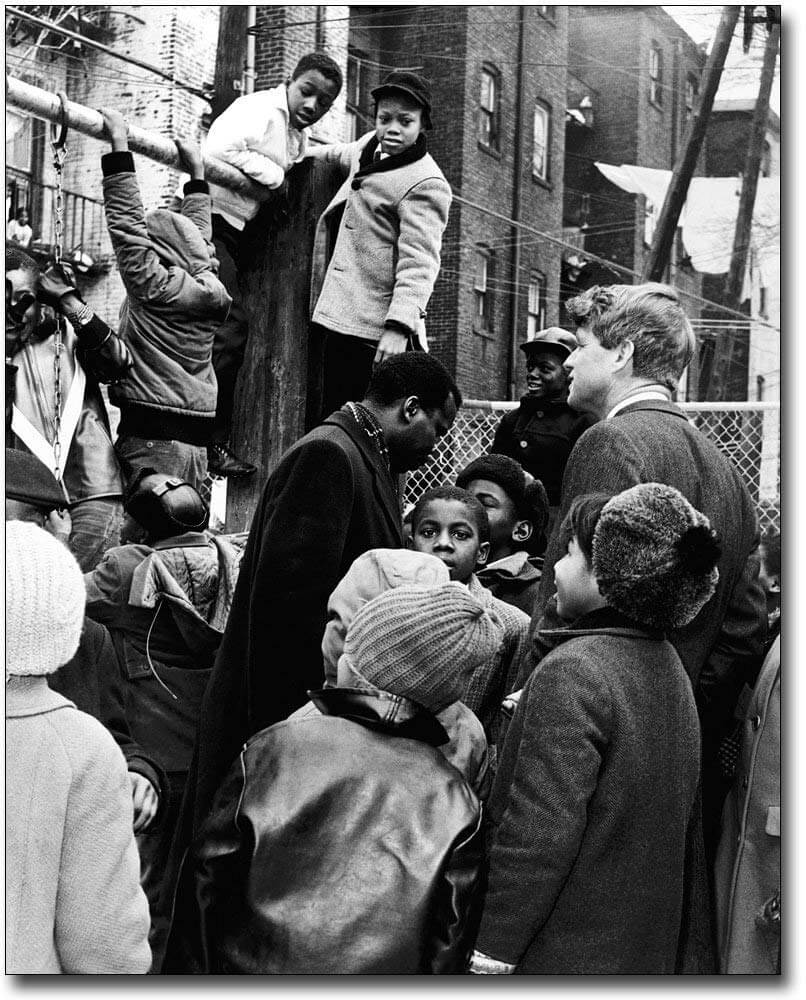
    RFK in Bed-Stuy
    RFK in Bedford Stuyvesant

    He first got the business community to chip in by going to people like financier Andre Meyer and IBM chairman Tom Watson. He also secured foundation grants. (Schmitt, p. 151) He used that money to hire the local unemployed to do restoration for the fronts of local homes, a program that ended up being exceedingly popular. (Schmitt, p. 162) The plan’s next step was to push for tax incentives in order to get businesses to move there. He also attained a mortgage pool of money that allowed residents to secure low down payment FHA loans to finance real estate deals. He brought in a Dodge car lot. He got Watson to locate a factory there. He even convinced the City University of New York to open a branch, which was later named Medgar Evers College. (Schmitt, p. 165) John Doar became the chief executive officer of the restoration.
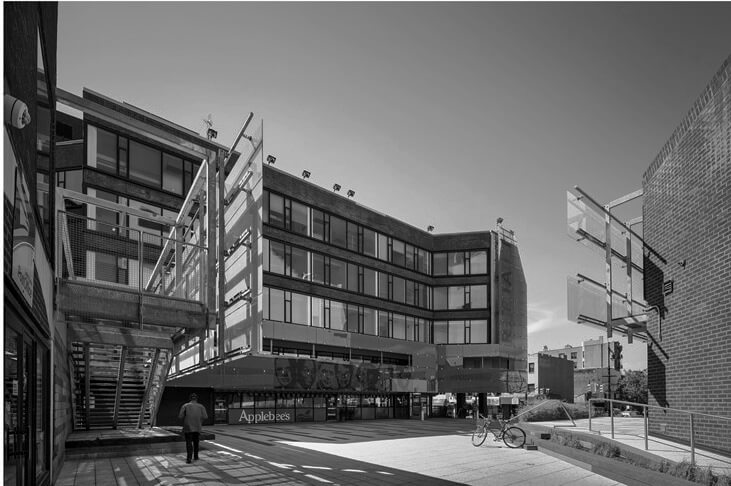
    Restoration Plaza
    Restoration Plaza
    The Bedford Stuyvesant Restoration Corporation
    was established in 1967 as one of the first community
    development corporations in the United States.

    He announced the formation of what he called the community development corporation on December 10, 1966 at Public School 305 in Bedford Stuyvesant. He said that he was now going beyond community action in order to gain the power to act with “the power to command resources of money, mind and skill.” (Schmitt, p. 155)

    The Bed-Stuy project was a qualified success, not a total success as the Prince Edward School District was. The reason it did not attain that instant stature was that Bobby Kennedy got involved in the 1968 race for the presidency. Yet, apart from whatever may currently be occurring there, no less than Michael Harrington once stated concerning this project, “It is extremely satisfying to witness a social idea that works.” (Schmitt, p. 166) The CDC idea was in fact widely imitated. Today there are over 4000 of them, and companies that specialize in that field. Bobby Kennedy and Dave Hackett made a formidable reply to Johnson’s New Deal. One that has echoed down through the decades.


    VII

    Whatever the ambitions of these four authors were, as the reader can see, their efforts to belittle what the Kennedys did for civil rights do not stand up to scrutiny. Instead, upon actual inspection, they simply reveal their own poverty. (Again, I would make a mild exception in this regard for David Margolick.)

    As Harrington said of RFK, “As I look back on the sixties, he was the man who actually could have changed the course of American history.” (Wofford, p. 420)

    Journalist Pete Hammill wrote RFK before the presidential race of 1968:

    I wanted to remind you that in Watts, I didn’t see pictures of Malcolm X or Ron Karenga on the walls. I saw pictures of JFK. That is your capital in the most cynical sense. It is your obligation in another, the obligation of staying true to whatever it was that put those pictures on those walls. (Schmitt, p. 221)

    As Brenda Luckett, one of the young African Americans Bobby Kennedy saw in the impoverished Mississippi delta in 1967, said after his death, “We felt like Kennedy was purged. He should have gotten out. It’s like we knew they were going to kill him for helping black people.” (Meacham, chapter 12)

    Charles Evers, brother of the murdered Medgar, said of him, “Mr. Kennedy did more to help us get our rights as first class citizens than all of the other US attorney generals put together.” (Arthur Schlesinger, A Thousand Days, p. 976)

    But this sentiment had been previewed several years earlier. During the Freedom Riders’ episode, when King arrived in Montgomery, the citizens rallied to him and realized that something new was afoot. One youth said, “President Kennedy is on our side.” A woman said, “Bless God! We now have a president who’s going to make sure we can go anywhere we want like the white folks in this country.” (Brauer, p. 103)

    Unfortunately, it did not last very long. One is left to imagine what America would be like today if President Kennedy had lived, and Bobby Kennedy and Dave Hackett had run the War on Poverty. Without Vietnam, and those men in charge, it is even possible that America would not have burned.
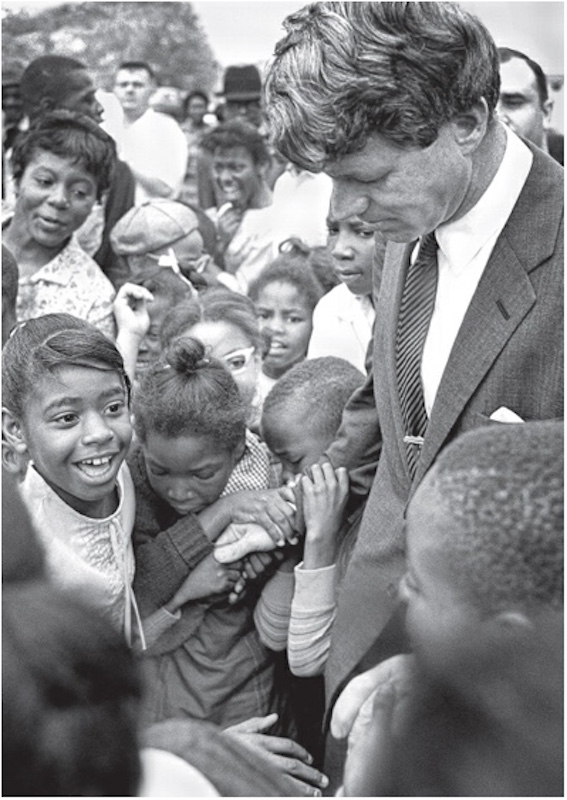
    rfk mississippi 1967


    A Summary of Major Points Made by this Essay

    1. Reconstruction ended up as a failure for the liberated slaves of the South. And due to several odd and adverse Supreme Court decisions afterwards, the Reconstruction laws and amendments were neutralized. (Part 1, section 1)
    2. From 1876 to 1932, no president did anything to alleviate what had occurred in the South thanks to the rise of the Redeemer movement. In fact, some of them clearly sided with that movement. (Part 1, section 2)
    3. Franklin Roosevelt and Harry Truman, respectively, passed the FEPC law and integrated the military under pressure from the prominent civil rights leader Philip Randolph. But they were constricted from doing much else by the southern bloc in Congress and the threat of a filibuster. (Part 1, section 3)
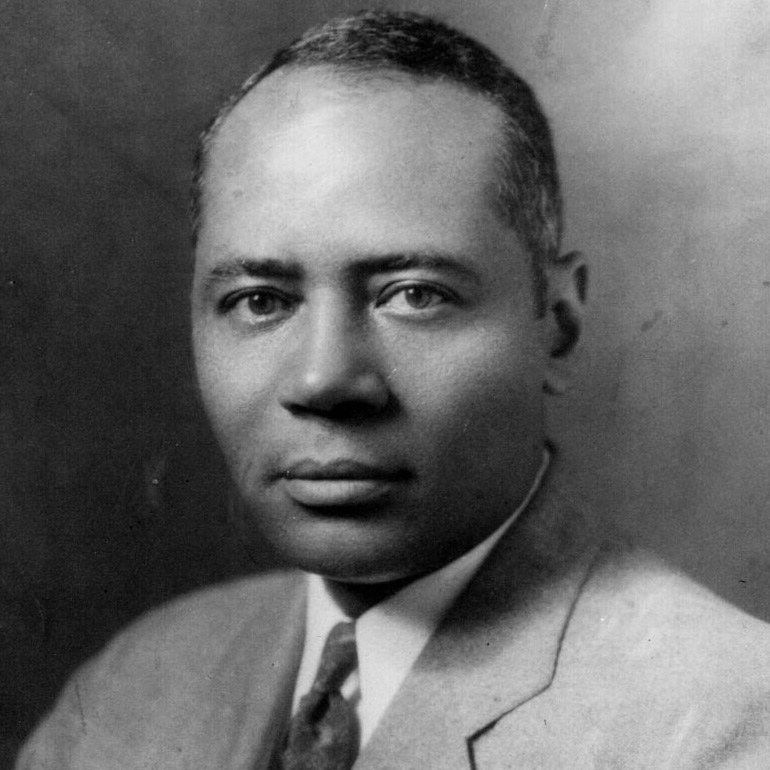
    4. Charles Hamilton Houston began the modern civil rights movement by initiating a systematic challenge to the Supreme Court decision in Plessy v Ferguson. This ended in the epochal Brown v Board decision. (Part 1, section 3)
    5. Because of the Brown decision, Dwight Eisenhower had an opportunity to move in a major way on the issue, since he won two resounding victories in 1952 and 1956. For political purposes, he and Richard Nixon largely avoided the issue. (Part 1, section 3)
    6. Senator John Kennedy was not enthralled by southern interests on the race issue. This is shown by his 1956 public statement of support for Truman’s civil rights bill; his speech declaring his support for the Brown decision in 1957; his vote for Title III of the civil rights bill, also in 1957, and his reference to the issue in several speeches in the 1960 campaign. (Part 2, section 1)
    7. Senator Kennedy addressed the issue during the 1960 campaign several times, accentuating its moral dimension. He spent several moments criticizing the Eisenhower administration on their performance during his second debate with Richard Nixon. (Go to the 13:45 mark here)
    8. President Kennedy did not delay in addressing the problem once he got into office. In fact, he got to work on it his first day, originating an affirmative action program that would eventually spread across the entire expanse of the federal government. (Part 2, section 3)
    9. It was not possible to pass an omnibus civil rights bill in 1961. The evidence in support of that conclusion is overwhelming. (Part 2, section 1)
    10. It was also not possible to alter the filibuster rules in 1961. The Democrats had tried to do this prior to Kennedy, and they tried to do it several times after Kennedy’s death. It was not achieved until 1975. (See pages 6 and 7 of this paper)
    11. Attorney General Robert Kennedy took on school desegregation within weeks of entering office and did things in that regard in New Orleans and Prince Edward County, Virginia that Eisenhower had never done. (Part 3, section 1)
    12. The Kennedys worked closely with the Fifth Circuit Court of Appeals in order to ensure voting rights, integrate colleges and enforce the Brown decision. Again, this had not been done prior to 1961. (Part 3, sections 2 & 5)
    13. JFK extended fair hiring practices to contracting companies who did work for the federal government and private colleges which got research grants from Washington. This helped integrate business and higher education in the South. (Part 3, section 3)
    14. The Kennedy administration did more to advance civil rights in three years than the prior 18 did in nearly a century. This is simply a matter of record. (See the chart at the end of Part 3.)
    15. Kennedy tried to get a civil rights bill on voting rights in 1962 but he could not defeat the filibuster. (Part 3, section 3)
    16. In February of 1963, Kennedy announced he had gone as far as he could through executive orders and the judiciary, and that he was submitting an omnibus civil rights bill to Congress. (Part 3, section 6)
    17. The implications of the encounter between RFK and James Baldwin in May of 1963 have been wildly distorted and pulled out of context. The discussion Kennedy wanted to have with those attending that meeting concerned what he had been working on with David Hackett: ways to approach racism and discrimination in the north. Baldwin and Jerome Smith hijacked the agenda and thereby wasted a golden opportunity. The danger of an eruption of inner-city violence, which Kennedy predicted and wished to talk about, was confirmed 27 months later with the Watts riots. (Part 2, section 3; Part 3, section 4; Part 4, section 2)
    18. Due to Fred Shuttlesworth’s highly publicized demonstrations in Birmingham, JFK’s confrontation with George Wallace in Tuscaloosa, and his televised speech on the subject, the February 1963 bill was redrawn and strengthened. It eventually passed in 1964 due to the efforts of RFK, Hubert Humphrey and Thomas Kuchel, not LBJ. This eliminated Jim Crow. (Part 3, sections 5 & 6)
    19. John Kennedy was working on an attack on poverty before his civil rights bill was sent to Congress. This effort had begun in 1961 with the research of David Hackett on the issues of poverty and delinquency. (Part 4, sections 1 & 2)
    20. LBJ appropriated that program as his own, and retired Hackett. He started it up before the research was completed. It ended up being taken over by interests who did not center it on the people it was designed for. The mishandling of this program, it could be argued, exacerbated the issue, and, as Bobby Kennedy predicted, America descended into a nightmare of riots and killings for four straight summers, 1965-68. (Part 4, section 5)
    21. Republican strategists Kevin Phillips and Pat Buchanan advised candidates on how to use this violence to manipulate white backlash and break up the Democratic Party coalition. Richard Nixon and Ronald Reagan did so, and this strategy, which has been used ever since, has risen to new heights under Donald Trump. (Part 4, section 5)


    A Selected Bibliography

    1. Jack Bass, Unlikely Heroes. New York: Simon & Schuster, 1981.
    2. Patrick Henry Bass, Like a Mighty Stream. Philadelphia: Running Press, 2002.
    3. Michael Berman, The Politics of Civil Rights in the Truman Administration. Columbus, OH: Ohio State University Press, 1970.
    4. Irving Bernstein, Promises Kept. New York: Oxford University Press, 1991.
    5. John Bohrer, The Revolution of Robert Kennedy: From Power to Protest after JFK.  New York: Bloomsbury Press, 2017.
    6. Herb Boyd, Baldwin’s Harlem. New York: Atria Books, 2008.
    7. Carl M. Brauer, John F. Kennedy and the Second Reconstruction. New York: Columbia University Press, 1977.
    8. Thurston Clarke, JFK’s Last Hundred Days. New York: Penguin Press, 2013.
    9. Andrew Cohen, Two Days in June. Toronto: Signal, 2014.
    10. Nancy A. Colbert, Great Society. Greensboro, NC: Morgan Reynolds, 2002.
    11. Charles Euchner, Nobody Turn Me Around. Boston: Beacon Press, 2011.
    12. Rowland Evans & Robert Novak, Lyndon B. Johnson: The Exercise of Power. New York: New American Library, 1966.
    13. David Farber, The Age of Great Dreams. New York: Hill & Wang, 1994.
    14. Eric Foner, with Joshua Brown, Forever Free. New York: Knopf, 2005.
    15. Harry Golden, Mr. Kennedy and the Negroes. Greenwich, CT: Fawcett, 1964.
    16. Lawrence Goldstone, Inherently Unequal. New York: Walker and Company, 2011.
    17. Edwin Guthman & Jeffrey Shulman, Robert Kennedy in His Own Words. Toronto: Bantam, 1988.
    18. Maurice Isserman & Michael Kazin, America Divided.  New York: Oxford University Press, 2000.
    19. William P. Jones, The March on Washington. New York: W. W. Norton, 2013.
    20. John F. Kennedy, Profiles in Courage. New York: Avon, 1956.
    21. Brian E. Lee, A Matter of National Concern.  Unpublished Ph. D. thesis.  Chapel Hill, NC: University of North Carolina, 2015.
    22. David Leeming, James Baldwin: A Biography. New York: Knopf, 1994.
    23. Nicolas Lemann, Redemption. New York: Farrar, Straus & Giroux, 2005.
    24. Nancy MacLean, Democracy in Chains. New York: Viking, 2017.
    25. Allen J. Matusow, The Unraveling of America. New York: Harper & Row, 1984.
    26. Ellen B. Meacham, Delta Epiphany. Jackson, MS: University Press of Mississippi, 2018.
    27. Diane McWhorter, Carry Me Home. New York: Simon and Schuster, 2001.
    28. Joseph Palermo, In His Own Right. New York: Columbia University, 2001.
    29. Clay Risen, The Bill of the Century. London: Bloomsbury Press, 2014.
    30. Arthur Schlesinger, Robert Kennedy and His Times. New York: Houghton Mifflin Company, 1978.
    31. Arthur Schlesinger, A Thousand Days. New York: Houghton Mifflin, 1965.
    32. Edward R. Schmitt, President of the Other America. Boston: University of Massachusetts Press, 2010.
    33. Bruce J. Schulman, Lyndon B. Johnson and American Liberalism. Boston: Bedford Books, 1995.
    34. Frank Sikora, The Judge. Montgomery, AL: River City Publishing, 1992.
    35. Theodore Sorenson, Kennedy. New York: Harper and Row, 1965.
    36. Harris Wofford, Of Kennedys and Kings. Pittsburgh: University of Pittsburgh Press, 1980.
    37. Randall Woods, LBJ: Architect of America Ambition. New York: Free Press, 2006.
    Go to Part 1

    Go to Part 2

    Go to Part 3

  • The Kennedys and Civil Rights:  How the MSM Continues to Distort History, Part 3

    The Kennedys and Civil Rights: How the MSM Continues to Distort History, Part 3


    Part 3: The Kennedys Tear Down Jim Crow


    John F. Kennedy “literally shook his head with incredulity” when he learned that Prince Edward County abandoned public education.

    ~ Brian E. Lee, A Matter of National Concern


    In speaking of the years 1961-64, there can be little doubt that the major impetus for the monumental Civil Rights Act of 1964—which eliminated Jim Crow laws in the South—was President Kennedy at the White House, and Robert Kennedy and his assistant Burke Marshall at Justice. In close support was a group of individuals who—like Philip Randolph and Charles Houston—almost never get the recognition they deserve. These were the judges of the Fifth Circuit Court of Appeals. That court encompassed six former states of the Confederacy: Alabama, Mississippi, Florida, Georgia, Louisiana and Texas. They worked in concert with RFK and Marshall to overturn lower court rulings that went against the attorney general, and to cite individuals—including governors—for contempt when they disobeyed court orders. The men on that circuit are so important that at least four books have been written about them. It is a measure of the historical value of the four volumes under review that I could find no reference to that court in any of them. Yet it was their cooperation with and support of the attorney general that kept the pressure on until 1963 when the tactics of Sheriff Bull Connor ignited the issue into national consciousness in Birmingham. By that time, May of 1963, JFK already had a civil rights bill in process.


    I

    Eisenhower and Earl Warren
    Eisenhower tried to persuade Earl Warren
    not to decide in favor of Brown

    Harris Wofford was an assistant to the Civil Rights Commission set up by the Johnson/Eisenhower bill of 1957. As he writes in his book, Of Kennedys and Kings, President Eisenhower resisted enacting every recommendation that the commission suggested. (p. 21) As we have also seen, both Eisenhower and Nixon failed to back the Brown v Board decision of 1954. In fact, Eisenhower actually tried to discourage Chief Justice Earl Warren from deciding in favor of the plaintiffs in the Brown case. As we have seen, the only time that Eisenhower acted to apply the decision was in Little Rock, Arkansas in 1957. In that case, Eisenhower had to be asked to join the case. And he waited three weeks to send in troops to protect the students after being badgered by the mayor to do so. (Brauer, p. 4) In the Autherine Lucy case at the University of Alabama in 1956, Eisenhower failed to back the NAACP court order that allowed Lucy to continue her education in graduate school. The college and the student body literally ran her off the campus. Eisenhower did not send in marshals to escort her to class, nor did he federalize the National Guard to maintain order on campus. (Bernstein, p. 97; Jack Bass, Unlikely Heroes, p. 64)

    This nod and wink by Eisenhower to the South encouraged their power brokers to find ways to dodge the court order or scheme around its objective. And this was something they were primed and ready to do. For example, in 1955, Senator James Eastland of Mississippi stated that the Brown decision wrecked the Constitution because it disregarded the law in deciding integration was right. He then closed with, “You are not required to obey any court which passes out such a ruling. In fact, you are obligated to defy it.” (Bass, p. 17) That kind of plea was made viable because Eisenhower had never stood up for the issue. For a Republican, Eisenhower had done well in the South in the 1952 election, and even better in 1956. As Charles Houston and Thurgood Marshall were closing in on Plessy v Ferguson, the Southern solution had been to build newer, nicer, separate schools for African American students. But when the Supreme Court restated the 1954 decision in 1955, it stressed that public schools should be integrated and there was no point in building new schools and arguing that these schools were equal.
    As we have seen, President Kennedy was already on record as supporting the Brown decision. After he was inaugurated, there were two specific cases that Eisenhower had dawdled on which fell to him. One was in New Orleans, the other in Prince Edward County, Virginia. As we shall see, the contrast with Eisenhower—who called these issues a local problem—could not have been more dramatic. Even in 1956—after the Brown restatement—when the governor of Texas called out Texas Rangers to stop African American children from registering at court-ordered integrated Mansfield High School, Eisenhower failed to act. (Bass, p. 122)

    Led by Senator Harry Byrd and columnist James Kilpatrick, Virginia was urged to abandon public education altogether. The state now passed laws decreeing any district that obeyed Brown would have funding ceased. (Nancy McLean, Democracy in Chains, p. 25) In January of 1959, higher courts overturned this action. (p. 65) The state schemed again, this time by using state vouchers for a segregated private system. This ultimately failed due to another court challenge. But in the meantime, 1,800 African American children in Prince Edward County had no schools to attend. What made this most notable was that Prince Edward was one of the five counties that Charles Houston had targeted to overturn Plessy v Ferguson. As Brian Lee wrote in his Ph. D. thesis, A Matter of National Concern, Eisenhower actually encouraged this scheme by saying that states were not required to maintain a system of public education, and therefore the president was “powerless to take any action.” (Lee, p. 50)

    The Kennedys disagreed. The attorney general called Prince Edward “a blight on Virginia” and “a disgrace to our educational system and to our country”. (Lee, p. 22) President Kennedy now began to remake the 4th Circuit Court of Appeals, governing Virginia and nearby states, altering Eisenhower’s composition in order to strike down these schemes. (Lee, p. 6) In the meantime the White House did something that is probably unprecedented. While the president altered the court, the attorney general asked William Vanden Heuvel to raise money to build a free school system to educate the Prince Edward African American students left behind. Further, Burke Marshall attempted to join the NAACP legal action in Virginia, not as a friend of the court, but as a plaintiff. This had never been done by Eisenhower in six years. (Lee, pp. 145-150)

    Ruby Bridges
    New Orleans: Ruby Bridges was the only
    student left at the school

    This unprecedented action in Virginia was paralleled by what the administration immediately did in New Orleans. That school district, after a successful lawsuit to integrate schools, at first stalled and then schemed. Finally, federal Judge J. Skelly Wright ordered integration to proceed in September of 1960. The state legislature now passed laws circumventing Wright’s order. The Eisenhower administration asked Wright to delay issuing his new order declaring the state laws unconstitutional until after the November elections. They did not want to deal with another Little Rock. (Bass, p. 132)

    New Orleans segregationists
    Across from the school:
    this is what she was being protected from

    The pathology sanctioned by the White House continued. The state legislature passed laws to oust school board members and to even fire teachers who agreed to work with black students. (New Orleans Magazine, “The Struggle for Education”, January 2016) Wright again struck them down. The judge then asked for federal marshals to escort the students of color to their new schools. Louisiana now took up a scheme inspired by Orval Faubus in Arkansas. The schools ended up being largely empty, since the white students boycotted them and their parents picketed them. (Bass, p. 129)

    As in Virginia, the legislature threatened to close down schools by withholding funds. Wright now called RFK’s assistant Burke Marshall. Marshall advised Bobby Kennedy of the situation. The attorney general replied, “We’ll have to do whatever is necessary.” (Bass, p. 131)

    Burke Marshall and RFK
    Burke Marshall & RFK

    The Kennedy administration again did something unprecedented. In February of 1961, Burke Marshall filed charges against the state secretary of education, Shelby Jackson. Marshall’s aim was to block the attempt by the governor to cut off funding for integrated schools. (Bass, p. 135) Wright set a trial date to begin proceedings against the secretary for contempt of court. Jackson backed off and said he would not interfere. He avoided a prison sentence by pleading he had a weak heart.

    Steven Levingston does not mention Shelby Jackson. Nor does he note the New Orleans schools case or Judge Wright. You will also not see the Prince Edward Free Schools listed in his index. But I should also note, these two cases were done without any consultation with King, though he would have endorsed them both, as other civil rights leaders did. Thus Levingston’s twin themes—that somehow King was the only focus of the race issue, and the Kennedys were denying his requests and did not understand his message—are simply not substantiated by the record. And this is in early 1961!

    The administration also began to finish up Charles Houston’s work that, again, Eisenhower had abandoned. Bobby Kennedy made it a point to speak at the University of Georgia Law Day on May 6, 1961. As historian Carl Brauer wrote, this was the first time in memory that an attorney general had directly addressed the civil rights issue in the South. (Brauer, p. 95) He did this partly in order to congratulate the university for its efforts in integrating the college with relatively little violence in January of that year; partly to aid the efforts of the Fifth Circuit, for they had completed the process of integration at that university. (Bass, p. 136) In that address, the attorney general said that he planned on abiding by and enforcing the Brown decision. He spent half the speech talking about civil rights. The Kennedys would also make good on the Charles Houston goal of completing integration of higher education—a goal Eisenhower abandoned with the Lucy case—and this address was part of achieving that goal.

    jfk and nixon
    Senator Kennedy compared his
    civil rights record to Nixon’s

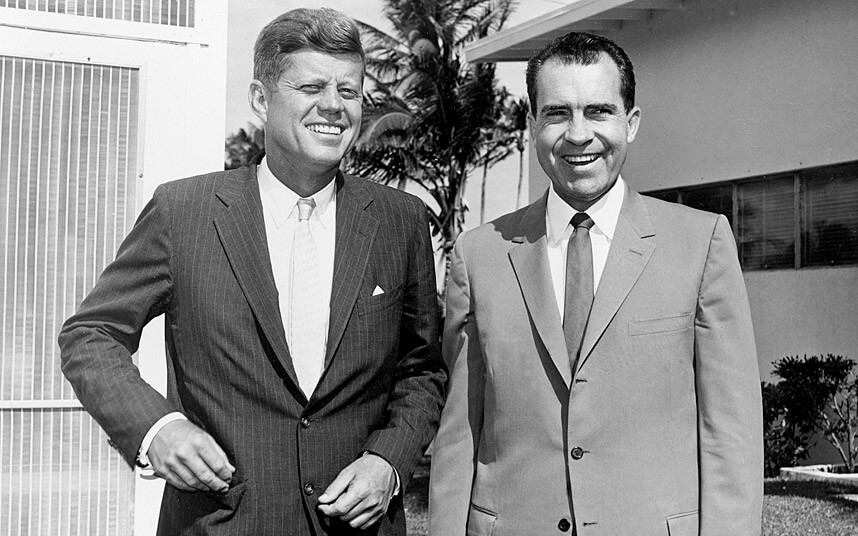
    In a larger sense, these were the first steps toward fulfilling a campaign promise that Senator Kennedy made on November 1, 1960 in Los Angeles. Neither Levingston nor Margolick deal with this speech, so we are left with the impression that civil rights were not an issue in that race. That is not accurate. In that speech, Senator Kennedy compared his congressional record with Richard Nixon’s on civil rights. He also compared his stand on the minimum wage, which when boosted would help many African Americans. He concluded by saying that although not everyone can have equal abilities, “everyone should have the same chance to develop their talent.” Which was something he was trying to do with education.


    II

    In Part 2, we discussed the Freedom Rides of May, 1961. The end result of all this was that two lawyers from the attorney general’s office filed a petition to the Interstate Commerce Commission. In the latter part of May, a request went up to issue regulations eliminating segregation at bus terminals. Under pressure from Burke Marshall, the ICC issued these in September. Marshall convinced Senator John Stennis to get the last three towns in Mississippi to remove their discriminatory signs. (Brauer, p. 109) By the end of 1962, Jim Crow was eliminated in interstate transportation. (Bernstein, p. 68)

    In Wofford’s memo of December 1960, he wrote, “Ending discrimination in voting is the point of which there would be the greatest areas of agreement and the greatest progress could be made.” (Bernstein, p. 68) This was a primary goal of candidate Kennedy as opposed to Richard Nixon. In October of 1960, JFK proposed to his civil rights advisory group that they use access to voting records that the Civil Rights Commission had gained to file lawsuits in court based on voting discrimination. On the day Bobby Kennedy was confirmed as attorney general, the judiciary chairman, James Eastland of Mississippi, commented that his predecessor had never filed a civil rights case in Mississippi. This was true. It was also an understatement. During Eisenhower’s two terms, his administration had filed a total of ten civil rights lawsuits. Two of those were posted on his last day. (Golden, pp. 100, 104) The day after RFK’s confirmation, his brother sent him a note saying, “Get the road maps—and go!” Which meant: start sending your men into the backwoods of the South to secure those records and file cases.

    In one year RFK doubled the amount of lawyers in the civil rights section. During that same year he doubled the amount of cases that Eisenhower had filed in two full terms. By 1963, the number of attorneys in that section had quintupled. (Golden, p. 105) RFK then hired 18 legal interns to search microfilm records in suspect districts. That opened 61 new investigations—in just a year. Prior to the Kennedy administration, it is clear that neither the Brown decision nor the strictures of the Civil Rights Commission were being obeyed. To increase the tempo, Bobby Kennedy went from suing districts to filing against a whole state, e.g., Mississippi. Although the president got regular reports on this tactic, he memorably scrawled across the bottom of the Justice Department report for 1962, “Keep pushing the cases.” (Golden, p. 111)

    John Doar
    John Doar

    The weight of the residue of the previous administrations was staggering. When attorney John Doar attempted to interview people in Tennessee, he found that in 13 counties, none had registered. (Bernstein, p. 68) To show just how intent southerners were to stop this effort, some of the people who talked to the Justice Department were then evicted from their lands as tenant farmers. The White House then organized an effort to send aid to those who were evicted. (Brauer, p. 72)

    Useful in the voter registration regard was another mission that the Eisenhower administration never attempted. This was the voter registration drive. This presented a huge challenge. For example, in 1960, in the parish of East Carroll in northeast Louisiana, there were more African Americans of voting age than whites. But there were 2,845 whites registered to vote, and no African Americans. In the northwest parish of Bienville, almost every white voter was registered. Of the over 4,000 African Americans, only 25 were registered. (Golden, 136) The emerging problem was that these kinds of field projects are expensive, since one must send workers out with canvassing lists to knock on doors and get both information and documentation. The government itself could not supply the funds. So Marshall and Wofford went to various foundations in the north to get the money. (Bernstein, p. 72) They then parceled it out to the various civil rights groups like the NAACP, SCLC and CORE. The overall title given to the drive was the Voter Education Project (VEP). It cost $870,000, or about 7 million today. The VEP lasted until 1964. As one commentator noted, it gained an increase in its short duration that would have taken ten years to achieve under normal conditions. But more important, “It moved Negro registration off dead center, where it had been for most of the previous decade, and reestablished momentum.” (Bernstein, p. 73)

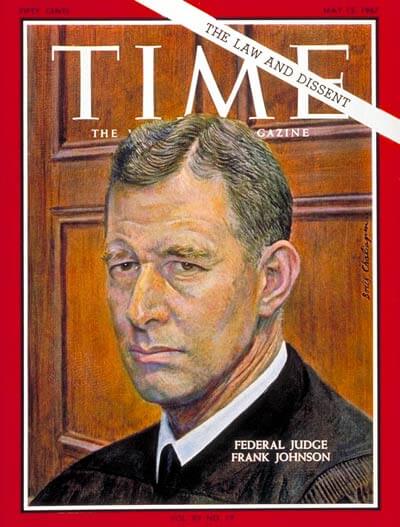
    Judge Frank Johnson
    Judge Frank Johnson

    In this regard, Kennedy and Marshall did something that most people would have found next to impossible. They actually got the FBI to help investigate cases of voting rights violations. This appears to be some kind of milestone for J. Edgar Hoover. (Brauer, p. 117) Extensive research in voting rights abuses were then presented to the judges of the Fifth Circuit Court. In Louisiana, with the help of Judge Minor Wisdom, the attorney general got the voting test requiring an interpretation of the Constitution thrown out in 21 parishes. That figure made up a third of the state. (Golden, p. 137) It was the Fifth Circuit’s Frank Johnson—who had worked with Robert Kennedy during the Freedom Riders crisis—who gave the attorney general his first win in a voting rights case. With Johnson’s help, the number of registered African American voters went from 13% to 42% in Macon County, Alabama. (Brauer, p. 118, 120) As Judge Johnson later said to his biographer:

    The Macon County case would be the one that began to erode Southern voting discrimination … The Middle District of Alabama federal court took the lead in voting rights and the Fifth Circuit and the Supreme Court consistently upheld those rulings. When the Selma demonstrations started in 1965, the black citizens in my section of the state of Alabama had already won the right to vote. (Frank Sikora, The Judge, e-book, chapter 12)

    Utilizing the Fifth Circuit, with judges like Johnson and Wisdom, plus the evolving Fourth Circuit in the upper South, and the Supreme Court sustaining their decisions, Bobby Kennedy thought he would be done securing voting rights in the South by 1968. (Golden, p. 131) The Selma demonstration, which caused the Voting Rights Act, hurried that up by three years. But as Johnson points out above, it was already happening. Clearly, this was a deliberate strategy by the attorney general. In his book on the Fifth Circuit, Jack Bass wrote that Bobby Kennedy urged civil rights groups to use the judicial process as a way to get them to their ultimate goal. (Bass, Unlikely Heroes, p. 25)

    That Levingston never mentions this crucial Fifth Circuit aspect shows the worthlessness of his book. As Judge Johnson later said, no one in Washington was doing anything substantial on civil rights in the fifties, including Eisenhower. He added that when Kennedy came in, “there was almost an immediate and dramatic change. He was like electricity compared to Eisenhower … [He] put the nation on notice that there were changes that were long overdue.” (Sikora, chapter 6)


    III

    Related to this, the administration tried to get a voting rights bill through Congress in 1962. Eisenhower called a press conference and labeled this modest proposal for voting rights “unconstitutional”. (Brauer, p. 135) As with Johnson in 1960, there were problems with the Southern bloc in the Senate. Due to their filibuster, the effort failed. (Edwin Guthman & Jeff Shulman, eds., Robert Kennedy in His Own Words, p. 149) But this did help inspire the 1962 congressional proposal to do away with the poll tax by amendment. The 24th amendment outlawing the poll tax was ratified in January of 1964. (Brauer, p. 132)

    In one of his lesser-known achievements, it was President Kennedy who began the idea of affirmative action. And it started on inauguration day. Kennedy noticed that, during the parade, there were no black faces in the Coast Guard detachment. That night he called Treasury Secretary Douglas Dillon and asked that something be done about it. (Bernstein, p. 52) Two days after Kennedy’s phone call, the academy began an all-out effort to recruit African Americans. One year later, the streak was broken and an African American student entered the academy. (Bernstein, p. 52) In 1963, the Coast Guard made it a point to visit 199 high schools, addressing 11,000 students and then interviewing 561 African American candidates. (Golden, p. 114)

    That was just the beginning. At his first cabinet meeting, Kennedy brought up the incident and told each member that he wanted the figures on the racial balance in his respective department. He did not like the results. For instance: at the Department of Justice, only 19 of nearly 1700 lawyers were African American. Kennedy also discovered that most of the people of color were at the lower rungs of the hierarchy. The president now told everyone that he wanted the situation remedied and he also wanted regular reports on their progress. (Bernstein, p. 53) Kennedy got so involved in the process that his administration became the first to appoint an African American ambassador, Clifton Wharton, to a European country. As Roy Wilkins later said, “Kennedy was so hot on the Department heads … that everyone was scrambling around trying to find himself a Negro in order to keep the president off his neck.” (Bernstein, p. 53) In fact, Kennedy assigned a civil rights officer to manage hiring and complaints for each department. He then advised the Civil Service Commission to begin a recruiting program to target historically black colleges and universities. (Brauer, p. 72, 84)

    The president then set up two interagency groups in order to monitor and push the issue forward. One was headed by Harris Wofford and it oversaw the entire federal government; Fred Dutton’s concentrated on the cabinet positions. On March 6, 1961—45 days after his inauguration—Kennedy issued an executive order outlawing discrimination in the workplace and making sure that affirmative action employment practices were followed.

    Galbraith and JFK
    Galbraith & JFK

    This concept of seeking out qualified people of color to serve in the government was complemented by another action. Together with his longtime friend, John Kenneth Galbraith, Kennedy decided to protest the color barrier at two posh clubs in the Washington, DC area, namely the Metropolitan and Cosmos clubs. (Richard Parker, John Kenneth Galbraith, p. 387) At the Metropolitan, Galbraith sponsored Kennedy as a member. But Kennedy refused to join when they declined service to a visiting African diplomat. At the Cosmos Club, Kennedy withdrew his application when the club refused to admit federal employee Carl Rowan. Kennedy got other government members and friends to follow suit and resign membership. Due to the bad publicity, both clubs later reversed policy. The notable thing about these episodes is that both were private clubs. (Washington Daily News, January 15, 1962, p, 21; Wofford, pp. 149-50) Kennedy then announced that neither he nor any member of his administration would attend functions at segregated facilities. (Bernstein, p. 53) To top it off, some of the members who resigned in protest then banded together to form a non-discriminatory club called the Federal City Club. (Brauer, p. 70)

    But Kennedy wanted to go beyond just the direct reach of government employment and the upper classes of Washington, DC. As noted previously, President Truman could not sustain the Fair Employment Practices Committee that Philip Randolph had pressed on Franklin Roosevelt. So first Truman, and then Eisenhower, set up advisory committees on the issue. The aim was to make the companies that won federal contracts adhere to non-discriminatory employment practices. In reality, if, say, the army contracted out to a textile company to manufacture rolls of cloth to make uniforms, that company would have to show that it hired some people of color. Kennedy established the Committee on Equal Employment Opportunity (CEEO) as part of his March 6, 1961 Executive Order on affirmative action. (Golden, p. 59)

    Under Eisenhower, Nixon had run their employment program, so President Kennedy put Lyndon Johnson in charge of the CEEO. Again, the contrast in activity is startling. In seven years, Nixon filed six suits. In a bit over two years, the CEEO heard almost four times as many complaints—1700—as Eisenhower and Nixon did in seven years, and acted favorably on over 70% of them. For example, there was a desegregation lawsuit filed against Socony in Texas. (Golden, p. 60; Bernstein, p. 59) Kennedy’s plans for retaliatory action went beyond Eisenhower and Truman. The CEEO allowed for the publication of the names of those who were violators, lawsuits by the attorney general, cancellation of the contract, and the foreclosure of future contracts. (Bernstein, p. 56) As a result, by 1963, you had people of color working alongside whites in the carding rooms of textile mills in the South. As a mill supervisor explained, “We work together for the simple reason we must if we want the government contracts. Without those contracts, we close down.” (Golden, p. 61) Its greatest achievement under Johnson was a settlement with Lockheed to integrate all of its facilities and begin a program of affirmative action in hiring. This was important since Lockheed was a large employer in Georgia. (Bernstein, p. 58)

    Kennedy’s stricter program also extended to funds given to institutions of higher learning. As Melissa Kean noted in her 2008 book:

    With the election of John F. Kennedy, the reach of federal nondiscrimination requirements in contracting finally extended into the admissions policies of private southern universities. Failure to comply meant ineligibility for the federal grants and contracts that were the life-blood of the advanced programs at these schools. (Kean, Desegregating Private Higher Education in the South, p. 237)

    As a result of Kennedy’s more rigorous policies, large private universities like Duke and Tulane chose to quietly and peacefully admit African Americans.

    The CEEO also developed a parallel program for non-discrimination in labor unions. This was called the Programs for Fair Practices. The AFL-CIO, covering about 11 million members, chartered it. (Bernstein, p. 60)

    Since Johnson ran the program, the sternest critic of the CEEO was Robert Kennedy. He thought Johnson was not aggressive enough. For instance, RFK filed a lawsuit in December of 1961 against hospitals who received federal funds but discriminated against doctors or patients. (Golden, p. 113) President Kennedy felt so strongly about this issue that in June of 1963 he issued another executive order that both strengthened and extended the mandate of the CEEO. This agency later became a permanent part of the government and was renamed the Equal Employment Opportunity Commission. Kennedy had achieved what Truman could not and what Eisenhower and Nixon simply were not interested in.


    IV

    At this point we should address an issue that some professional writers on the Left, like Paul Street, have brought up: the idea of federal protection for those struggling for rights. This was obviously an issue in the 1963 RFK/Marshall meeting with James Baldwin and Jerome Smith. In addition to the violence during the Freedom Riders demonstrations, there was also the riot at Ole Miss in 1962, which we shall discuss, and the nationally televised tactics used by Sheriff Bull Connor in 1963 at Birmingham which Baldwin mentioned in one of his telegrams to Robert Kennedy before the meeting. (Dyson, p. 25) As Robert Kennedy later said, in addition to Jerome Smith throwing the meeting off subject, the other problem was how little Baldwin and the others knew what the law was. (Guthman and Schulman, pp. 224-25)

    Burke Marshall had studied this entire field and examined the legislation that was on the books and how it fit into the system of federalism. In 1964, he wrote a brief book on the subject called Federalism and Civil Rights. To indicate his quality of scholarship, Michael Eric Dyson never mentions it anywhere in his book. Neither does Levingston. Professional historians Arthur Schlesinger and Carl Brauer do more than mention it: they spend several pages explaining Marshall’s book.

    No one can deny that the Birmingham images of youngsters being attacked by rabid dogs and bounced around by fire hoses were shocking to behold. Yet no one can deny that RFK and Marshall were on the protesters’ side. So the question then became: Why didn’t they do anything to preempt it?

    The answer that Marshall got sick and tired of giving was simple: America does not have a national police force. The police function is a local function. With very rare exceptions, the FBI is an investigative force, one that is supposed to help and support local and state police. Marshall then added, “There is no substitute under the federal system for the failure of the local law enforcement responsibility.” (Letter from Marshall to R. H .Barrett, 1/3/64) None other than Thurgood Marshall backed him in that judgment. The man who argued Brown v Board said that the police authority does not lie with the federal government, but within the states. That was a point that he, as a civil rights lawyer, could understand, “but the average layman cannot understand it.” (Schlesinger, Robert Kennedy and His Times, p. 318)

    What both men were saying amounts to this: Robert Kennedy could not go in and arrest Bull Connor and the entire Birmingham police force. There simply was no federal mechanism that allowed him to do so. But beyond that problem, there was also the matter that, before the Civil Rights Act of 1964 was passed, Connor was abiding by the state and local laws. In that regard, we must recall Part 1 of this series, where the author explained how the Supreme Court had neutered the Reconstruction laws and amendments. In addition to that, each locality has municipal laws guiding the administration of demonstrations. Fred Shuttlesworth, father of the Birmingham demonstrations, knew he was violating them. That was his point: to use civil disobedience and moral suasion to defeat misguided power.

    There was an exception in the law. And this allowed the White House ultimately to send in federal marshals and troops to Oxford, Mississippi and also to Alabama during the Freedom Rides. Sections 332-334 of Title 10 of the US Code allows the president to send in troops in instances of a large scale failure of law and order. Burke Marshall was hesitant to use Title 10. As the famous legal scholar Alexander Bickel once wrote, “As a regular and more or less permanent device, it is something from which we recoil, deeming it destructive of a free society.” John Doar also found that route to be a dangerous one: the federal government should not be a police state. (Schlesinger, p. 318-319)

    A good point of comparison would be the famous incident when Robert Kennedy heard that local police had arrested a Chicano demonstrator in Delano, California before he broke any laws. This was during the time that Cesar Chavez was trying to organize fruit pickers in the central valley area. Kennedy had flown there for a hearing on their organizational rights. When he heard that, RFK advised the police officer to read the Constitution during the lunch break. (Schlesinger, p. 826) As Attorney General Kennedy had said to Anthony Lewis, the investment of dictatorial powers in the executive branch might seem convenient or expedient during times of stress. But it should be resisted, since it would boomerang later. (Schlesinger, pp. 319-20)

    Today, living in the shadow of Dick Cheney, water boarding, drones, Edward Snowden and Guantanamo, I think we all understand what the attorney general meant. But the meeting with Baldwin and Smith was not the most appropriate time for Burke Marshall to take out a chalkboard and play law professor.


    V

    In addition to attempting to pass a voting rights act in 1962, the Kennedy administration was also working with the NAACP and the Fifth Circuit to complete the integration of colleges and universities in the South. As noted above, President Kennedy used restrictions on grants to private universities to shoehorn integration. With public universities, Burke Marshall decided to work with the NAACP to attain court orders from the Fifth Circuit. In 1963, Clemson and South Carolina integrated peacefully. Such was not the case with Ole Miss and Alabama.

    The day after JFK was inaugurated, James Meredith decided to become the first African American student at Oxford. Both the NAACP and Burke Marshall decided to take part in his attempt. (Brauer, pp. 180-81) Governor Ross Barnett now invoked a policy that southern universities had used many times before. He offered to pay for Meredith to go elsewhere. When that did not work, he started shouting “states rights” and John Calhoun’s specious claims about interposition.

    Robert Kennedy formally entered the Justice Department into the legal proceedings. President Kennedy began to lobby business leaders in the state. (Brauer, pp. 182-83) When the university tried to deny Meredith’s application, the Fifth Circuit, in an opinion written by Minor Wisdom, overruled the denial. (Bernstein, p. 77)

    But now, the trustees of the college transferred power over to Barnett. The Fifth Circuit first charged the trustees, then Barnett, with contempt. (Brauer, p. 184) At Millington air base in Memphis, the president now began to build up a force of federal marshals and draw up a military contingency plan which would eventually include 20,000 troops. (Bernstein, p. 81)

    James Mergedith and John Doar
    James Meredith & John Doar

    Ross Barnett ended up double-crossing the White House. And his stalling tactics had allowed General Edwin Walker to build up an angry crowd estimated at anywhere from two to three thousand rabid segregationists, including Klansmen. On the Sunday evening of September 30th, Deputy Attorney General Nicolas Katzenbach headed the escort to prepare for Meredith’s next day registration. Just before that was to occur, Barnett pulled the state troopers who were supposed to maintain order until Meredith was processed. (Bernstein, p. 83) A riot ensued and Walker’s crowd outnumbered the federal marshals. What made it worse was that Katzenbach’s communications network went down, and the troops that were supposed to arrive in a contingency failed to arrive when they were scheduled. Two bystanders were killed, scores of marshals were injured and 13 men were indicted. President Kennedy had marshals escort Meredith constantly until he graduated. (Brauer, pp. 195-97)

    The next year, at the University of Alabama, things went smoother. This was part of perhaps the most groundbreaking three days any president has had since FDR. On June 9th, President Kennedy had made a strong speech for civil rights at a mayor’s conference in Hawaii. (Andrew Cohen, Two Days in June, pp. 18-19) Coming back from Hawaii, on June 10th, the president announced his plans for détente with the Russians in his speech at American University.

    The next day, President Kennedy had his showdown with Governor George Wallace in Tuscaloosa. Robert Kennedy had tried to talk to Wallace in order to prevent anything like Ole Miss from happening. (Cohen, p. 235) Again, an associate of Frank Johnson, Judge Seybourn Lynne, had written the order for two African American students to enter the university. (Cohen, p. 236) Wallace had arranged for a combined force of 895 state troopers and police to back him. The White House brought in 3000 troops; this time they were only minutes away. (Cohen, pp. 243-47)

    Katzenbach and Wallace
    Wallace confronted by Katzenbach

    Contrary to what MSM hacks like Evan Thomas claim, no one knew what Wallace was going to do that day. The proof of this is that in the documentary film made of this event, Robert Drew’s Crisis, Bobby Kennedy is suggesting that they may have to shove the students through the furthest door at the main entry. That discussion went on as Katzenbach was preparing to confront Wallace. Andrew Cohen, who has written one of the longest and most detailed studies of the event, agrees with that view. According to Cohen, the plan was only finalized that morning. (Cohen, pp. 247-49) When Wallace refused to leave, President Kennedy nationalized the state guard. General Henry Graham threatened to arrest Wallace, so he stepped aside. The other point that had an impact on Wallace’s decision was that Lynne had promised to cite Wallace for contempt if he obstructed the students’ entry. (Bernstein, p. 97)

    That evening, President Kennedy gave what many believe was the finest speech given on the race issue since Abraham Lincoln. As Cohen writes, what makes that speech even more impressive is that it was written in two hours. (Cohen, p. 321) After King heard it, he told the person he was watching it with, Walter Fauntroy, “Walter, you believe that white man not only stepped up to the plate, he hit it over the fence.” (Cohen, p. 339)

    But Wallace was not finished. On July 22, 1963, Judge Johnson signed an order for 13 African American students to attend Tuskegee High School in Macon County, Alabama. In addition, the same would happen in Mobile and Birmingham. (Sikora, chapter 22) On the day those 13 students were supposed to be in attendance, there was a large force of state troopers awaiting them. Wallace also sent an order to the superintendent that the school would not open.

    Bobby Kennedy now convened a five-man panel of the Fifth Circuit to issue a restraining order enjoining Wallace from interfering with the integration of the three schools. Wallace tried to get around that by now sending the National Guard in to stop the students from entering. That afternoon President Kennedy ordered the guard to be nationalized, that is, placed under his control. (Sikora, chapter 23)


    VI

    At the end of 1962, President Kennedy issued his executive order to integrate housing. It inserted nondiscrimination clauses for all new public housing developments and urban renewal projects, and took action against housing contractors who practiced discrimination. Because it was an executive order, its scope was limited. (Brauer, p. 210) This relates to a criticism made by several writers, such as King biographer Taylor Branch, and which Levingston continues. (pp. 205-06, 213, 226) King wanted Kennedy to issue an executive order in 1963 as a new Emancipation Proclamation to strike down segregation in the South. Kennedy did not and writers like Branch and Levingston imply that this was some kind of missed opportunity that King offered the president.

    This author decided to get into contact with the Dean of the law school at Cal Berkeley, Professor Erwin Chemerinsky. I queried him, since he is one of America’s most illustrious constitutional scholars and has a liberal reputation. He replied that if Kennedy had done that, it would have only applied to the executive branch of government, not to private businesses and not even to state and local governments. (email communication, October 15, 2018) Since, as we have seen, Kennedy was already integrating the executive branch by other means, the Levingston/Branch implication is baseless.

    As noted previously, President Kennedy submitted a civil rights bill to Congress on February 28, 1963. (Risen, p. 36) He accompanied this with an address. That address, like other statements he had made on the subject—going all the way back to when he was a senator, and during the 1960 campaign—had a moral dimension to it. Which counters the idea of playwright Levingston: that JFK only understood the moral dimension in his June 1963 televised address. (Levingston, p. 405) The February bill was significantly revised as the year went on due to media pressures which finally made civil rights a continuing front page/TV news lead story.

    Birmingham
    Birmingham, May 1963

    As the conflict in Birmingham took hold and the media began to report on it, the opportunity presented itself to make the bill even stronger. The masterstroke at Birmingham was using schoolchildren in illegal demonstrations, knowing that Bull Connor would overreact. Which he did, using powerful fire hoses and attack dogs. It was those newspaper and TV images that altered the consciousness of this issue in the north. It also made John Kennedy understand the sick pathology of many of the power brokers in the South, and that he had been wrong in his characterization of Thaddeus Stevens in Profiles in Courage. (Brauer, p. 240)

    Bevel's kids
    It was James Bevel who organized
    Birmingham school children

    That maneuver was not proposed or executed by King. In fact, at this point, on his own, King could not get enough demonstrators in the streets. It was James Bevel who went on local radio and gathered scores of school kids in a church on April 24th, a move that King actually opposed at the time. (McWhorter, p. 361) Then, with King out of town, Bevel began to work with and organize the students. He told them to listen to a secret code word he would use on the radio. And on May 2nd, with King still mulling the idea over, Bevel launched his first student wave. Six hundred kids went to jail. But Bevel continued it a second day, with even more students involved. (McWhorter, pp. 368-71) The ugly media exposure was a body blow to the power structure in Birmingham. Vincent Townsend, CEO of the local newspaper, got someone in the sheriff’s office to call Burke Marshall. He flew down and that was the beginning of the city-wide settlement. (McWhorter, pp. 380-81)

    Both the president and Bobby Kennedy now realized that this was the time to stamp out Jim Crow in the South. In 2003, in an interview with Dick Gregory on the Joe Madison show, he said that President Kennedy had called him after he had visited Birmingham. After Gregory described just how bad it was, Kennedy replied: “We got those bastards now!” Consequently, the February bill was overhauled by the Justice Department to focus on public accommodations. (Risen, pp. 45-49) Once that was decided, the president now began an unprecedented, massive lobbying effort. He brought to Washington dozens of groups of people: lawyers, mayors, governors, business leaders and, most important of all, the clergy. This effort lasted from May 29 through June 22nd: in other words, right up until when the bill was presented to Congress. (Risen, p. 63) From those meetings, which were attended by 1,558 persons, spin-off groups back home were created. And those groups now traveled to Washington to lobby Congress during the long debate on the bill. Senator Richard Russell later noted it was this impact that won in the end. What JFK had done was something King could not do. He got a wide array of church leaders to back his bill. (Risen, pp. 96-97, 148-49) As Russell put it, “We had been able to hold the line until all the churches joined the civil rights lobby in 1964.” (Risen, p. 5) As Risen notes, King had little or nothing to do with the passage of the bill. (pp. 83-84)

    The even bigger myth is that it was LBJ who got the bill passed. This was a deception first advanced by Kay Graham and the Washington Post in order to aggrandize her friend and mentor President Johnson. It was then furthered by Robert Caro in The Passage of Power. Caro pretty much followed what his subject Johnson had written. (The New Republic, “The Shrinking of Lyndon Johnson”, February 9, 2014) The people who really got the bill passed were Hubert Humphrey, Bobby Kennedy and his Justice Department team, and Senator Thomas Kuchel. This is why RFK did not resign as attorney general until the bill was passed.

    Rustin and Randolph
    Bayard Rustin & Philip Randolph

    King made a charge at this time that was simply wrong. He said that President Kennedy wanted to call off the proposed March on Washington. (Risen, p. 83) Levingston’s lousy book takes a little lighter approach and tries to insinuate that JFK had nothing to do with the march. (Levingston, p. 423) First, as several books have pointed out, the March on Washington was not King’s idea or a product of the SCLC. It was the proposal of Philip Randolph and Bayard Rustin. (Charles Euchner, Nobody Turn Me Around, pp. 17-18; Patrick Henry Bass, Like a Might Stream, p. 107; Bernstein, pp. 112-13) It was meant as a fulfillment of what Randolph had negotiated away to FDR and Truman. Kennedy was not opposed to the idea. He was opposed to the first draft design. Rustin’s concept was to have a two-day mass demonstration aimed at Capitol Hill. Arthur Schlesinger was at the early meetings where it was presented to President Kennedy. (Schlesinger, A Thousand Days, pp. 969-972) Kennedy’s objection was that this was the wrong approach, it was too confrontational. Both Whitney Young and Roy Wilkins agreed with JFK. (Euchner, p. 77) So after the president got some of his own people on the organizing committee, like Walter Reuther, it was scaled back to a one-day event, and centered in front of the Lincoln Memorial. Rustin insisted he could live with these revisions since the important factors were the size of the live audience and the scope of the televised audience. (Euchner, pp. 77-78) Once that was done, President Kennedy became the first white politician in Washington to endorse the march. He then had his brother Robert assign men from the Justice Department to assist with the logistics and to arrange security. It is doubtful that the event could have come off as well as it did without that help. (Bernstein, pp. 114-16)

    March on Washington
    The March on Washington

    One last point on this event. Some have questioned why President Kennedy did not speak that day. The answer is simple: the principal organizer, Bayard Rustin, did not want him there. Not because he did not like Kennedy—he did. But because he thought it would detract from it being their moment, that is, the civil rights leaders’ time in the sun. So he and Wilkins made up an excuse that his life would be endangered, and they would see him afterwards instead. (Euchner, pp. 79-80)

    Kennedy realized his presidency was on the line with the civil rights bill. He had now become hated in the South. The joke after his showdown with Wallace was: Why does Alabama have so many Negroes and Massachusetts so many Kennedys? Because Alabama had first choice. (McWhorter, p. 380) By June of 1963, his approval rating there had plummeted from 60 to 33%. He was losing votes on his other programs because of his stand for civil rights. But as Kennedy told Luther Hodges, “There comes a time when a man has to take a stand and history will record that he has to meet these tough situations and ultimately make a decision.” (Brauer, pp. 247, 263-64)

    When the bill first went up, Humphrey had 42 votes, well short of the 67 he needed to force a cloture on the filibuster. (Brauer, p. 269) It was the full court press done by the president and then by the Department of Justice that finally turned it around through pressure on conservative Midwest Republicans. (Risen, p. 97) It is hard to exaggerate the impact of this bill. “It reached deep into the social fabric of the nation to refashion structures of racial order and domination that had held for almost a century—and it worked.” (Risen, p. 12)

    As the reader can see, no president before Kennedy ever confronted the civil rights issue as he did. No one was even close.  It was the preceding century of near inertia that created the immense problem that President Kennedy faced in 1961. But to his credit, Kennedy pressed the issue from the outset. Finally, the pressure from his administration, and the inspiration and support he gave the civil rights movement, provided the opportunity to pass what Clay Risen has called the “bill of the century”. What JFK achieved in three years is remarkable, especially when compared to his predecessors. As historian Carl Brauer wrote, what President Kennedy did was to pick up the narrow trail that Truman attempted and widen it into broad avenues. (Brauer, p. 315) And those avenues are still being traversed today. Yesterday (November 2, 2018), Kristen Clarke, the president of the Committee for Civil Rights Under Law, announced a victory for the Democrats in Georgia. Agreeing with Clarke, the court made a ruling weakening the state’s attempt to limit voting among the poor and minority groups. Clarke’s activist committee was founded in 1963 by President Kennedy for the express purpose of counteracting attempts at discrimination in the Deep South. (On the list of achievements following this essay, the reader can see it at number 20.)

    When the news of President Kennedy’s assassination reached Atlanta, King grew very quiet, thinking that a similar fate awaited him. During the funeral his six-year-old son asked him, “Daddy, President Kennedy was your best friend wasn’t he?” Coretta King replied, “In a way, he was.” (Wofford, p. 175)


    Four Presidents: A Comparison of Civil Rights Actions and Achievements


    FDR

    (13 years in office)

    TRUMAN

    (7 years in office)

    EISENHOWER

    (8 years in office)

    KENNEDY

    (3 years in office)

    1

    Fair Employment Practices in Defense Plants (FEPC)

    Integrated the Military

    Sent troops to Little Rock in 1957

    Orally committed to backing the Brown decision

    2

    Appointed African Americans as policy advisors

    Tried to pass a civil rights bill

    Established Civil Rights Commission

    Indicted school officials who defied court orders on Brown

    3

    Made speeches on civil rights in 1952

    Created a Free Schools district when Virginia decided to drop public education

    4

    First administration to join civil rights cases as a plaintiff, not a friend of the court

    5

    Petitioned the ICC to integrate interstate busing and terminals

    6

    Systematically began to file cases to break down denial of voting rights in the South

    7

    Financed voter registration drives in the South

    8

    Began the drive to ban poll taxes with the 24th amendment

    9

    Started a massive and rigorous affirmative action program in all branches of federal government

    10

    Announced that no member of his administration would join a segregated establishment or speak at a segregated event

    11

    Revived FDR’s FEPC with the CEEO

    12

    Established rigorous contract and grant requirements to integrate private colleges in the South

    13

    Established a program to make federal contractors follow non-discriminatory hiring practices

    14

    Carried out court orders to integrate the last public universities in the South

    15

    Exploiting an exception to the law, sent in federal marshals and troops to Oxford, Mississippi and to Alabama during the Freedom Rides

    16

    Signed the Housing Act of 1962

    17

    Negotiated a settlement to the Birmingham demonstration in 1963

    18

    Endorsed the March on Washington in 1963

    19

    In a nationally televised address of 6/11/63, made the most forceful presidential address on civil rights since Lincoln

    20

    Established the Lawyers’ Committee for Civil Rights in 1963 to represent victims of civil rights abuses in the South

    21

    Submitted the epochal Civil Rights Act of 1964 and began a massive lobbying program to pass it


    So much for the received wisdom that the Kennedy administration “moved cautiously on civil rights” until they were pushed into it.


    Go to Part 1

    Go to Part 2

    Go to Part 4

  • The Kennedys and Civil Rights:  How the MSM Continues to Distort History, Part 2

    The Kennedys and Civil Rights: How the MSM Continues to Distort History, Part 2


    Part 2: The Media Spin-Dries JFK on Civil Rights


    I. The MSM Vitiates the Record on JFK

    As I said in my introduction to Part 1, from the work of Larry Sabato in 2013, I suspected the MSM would attempt a preemptive strike against President Kennedy’s civil rights achievements at the 50th anniversary of the MLK/RFK assassinations, for the obvious reason that both of those men were strongly involved in that struggle. Steven Levingston, of the Wall Street Journal and Washington Post, led it off. I would like to give Levingston some career advice. He missed his calling. He should have been a playwright. His 2017 book Kennedy and King is such a carefully crafted confection it would have done Tennessee Williams or Edward Albee proud. As history, it is worthless; but that is not what Levingston is interested in. At the outset, he sets up an external dramatic agon between Martin Luther King and John F. Kennedy, declaring that “King had to overcome White House mistrust, disregard, and stonewalling before his message sank in.” (Levingston, p. xi)

    Steve Levingston:
    Missed his calling

    This is utterly false. As opposed to Eisenhower, the Kennedys began working on the racial issue quite quickly—without King. And they did not stop until they did something that neither Eisenhower nor Truman came close to doing—they got an omnibus civil rights bill into Congress and worked hard to see it through. (As we shall see, the idea that Lyndon Johnson got the milestone Civil Rights Bill of 1964 passed is a myth.)

    In Part 1, I described the terrible conditions that existed in the South due to the failure of Reconstruction. This created a huge obstacle in trying to correct the immense problem, since the power structure of the South was built upon it. How does Levingston assess this horrendous record that confronted the Kennedy administration? About all the horrible things done in the South from Reconstruction onward, Levingston is rather dismissive. He writes, “So far from being modernized, in many ways the Southern Mind has actually always marched away from the present toward the past.” (p. 16) Well, that is one way of dealing with the torture murder of Sam Hose, the massacre at Rosewood, and the destruction of a whole section of Tulsa. But as far as establishing a historical backdrop, it means zilch. On top of that, there is next to nothing about the paltry record of FDR, Truman and Eisenhower.

    Another part of the plan is to make Kennedy out to be rather timid on a number of issues, not just race. Like every other cheapjack writer on the scene, Levingston does what he can to make the worst of the Joe McCarthy episode for Senator Kennedy. He tries to say that somehow Kennedy’s failure to show up and vote during the censure roll call against Joe McCarthy in December of 1954 exhibits this character flaw. But he also acknowledges that Kennedy was in the hospital at the time, seriously ill, lapsing in and out of consciousness. (Levingston, pp. 22-23) As Harris Wofford relates in his book, Of Kennedys and Kings, Senator Kennedy had been through a near-death experience—he was given last rites—due to a back operation at this time. (Wofford, p. 35) Should he have been wheeled onto the Senate floor, with his doctor next to him? The vote was overwhelming for censure anyway; the final tally was 67-22. This makes the idea that somehow Kennedy should have called in and “paired” his vote with someone who was against censure silly. Why? In order to add one more vote to the landslide? But further, in his weakened state, his assistant Ted Sorenson had written a speech for him to give in favor of the censure vote. So there is no doubt where he stood on the issue.

    A key point Levingston completely leaves out is that it was the senator’s brother, Robert Kennedy, who had started the movement to censure McCarthy in the first place. Bobby Kennedy had been on McCarthy’s committee. He resigned since he did not like the direction in which Roy Cohn, McCarthy’s chief counsel, was taking that body. The Democratic minority later asked him back to be their chief counsel. In the summer of 1954, after both McCarthy and Cohn imploded during the Army-McCarthy hearings, Bobby Kennedy essentially took over that committee. He retired the cases against Irving Peress and Annie Lee Moss, dismissed the accusations of mass infiltration of defense plants, and then authored a report that was so critical of McCarthy and Cohn that some Democrats would not sign on to it. It recommended the Senate take action for their abuses. It was this report that led to the censure vote against McCarthy in December of 1954. (Arthur Schlesinger, Robert Kennedy and His Times, pp. 118-19)

    profiles in courage

    But that’s not enough for Levingston. He now does something worse. He says that Senator Kennedy wrote his book Profiles in Courage to somehow apologize for not showing up on a gurney to mark the 68th vote to censure McCarthy. (Levingston, p. 25) Even for a reporter who worked for the Wall Street Journal, this is really out there. Profiles in Courage is about men in politics who did things that had no political advantage for them; they did them anyway since they thought they were right. Now, since 1951, John Kennedy had been out there by himself—in both the House of Representatives and the Senate—harping away against the Truman/Eisenhower approaches to communism in the Third World. In other words, he was, in part, criticizing his own party. It may have been crowd-pleasing and popular to suggest that the communist threat was the monolithic monster that the domino theory suggested, but Kennedy said that was not true. The force of nationalism, the desire to be free from European colonialism, was really responsible for much tumult in the Third World. (See my Destiny Betrayed, pp. 17-25) Senator Kennedy made speeches on this subject, gave radio interviews, and wrote letters to his electorate about it. But he had no Capitol Hill or White House followers in this crusade at the time. Would it not therefore be logical to assume that this is what motivated him to write the book? I mean, was he not doing something that garnered him little if any political favor simply because he felt it was the right thing to do?

    But Levingston can’t go there. He can’t even mention it. First, it would illustrate the political and moral courage that Levingston wants to strip away from Kennedy. Second, it would also show that, from early in his political career, Kennedy had some understanding of the conditions of colonialism and imperialism that were imposed on people of color in places like Africa.

    In keeping with his preplanned construct, Levingston does not begin to address Kennedy’s actual involvement with the whole race issue until 1959 and his preparations to campaign for the Democratic presidential nomination. This eliminates a rather important fact: namely, that, unlike Eisenhower or Nixon, neither of whom endorsed the epochal Brown decision, Senator Kennedy did so in 1956:

    The Democratic Party must not weasel on the issue … President Truman was returned to the White House in 1948 despite a firm stand on civil rights that led to a third party in the South … We might alienate Southern support but the Supreme Court decision is the law of the land. (NY Times, 2/8/56, p. 1)

    That speech was made in New York, a liberal city and state. But in 1957, Kennedy went south to Jackson, Mississippi. He said the same thing: the Brown decision must be upheld. (Harry Golden, Mr. Kennedy and the Negroes, p. 95) The fact he did this in the Deep South would seem to denote the courage Levingston said Kennedy lacked. For, as author Harry Golden notes, it was at this point that Kennedy began to lose support in the South and even get angry letters about his advocacy of the Brown decision. But by not mentioning these incidents, Levingston can say that Kennedy exhibited little courage or morality on the issue. What makes it worse is that when one turns to his bibliography, Levingston lists Harry Golden’s book, which noted the incident way back in 1964. This is what I mean about being a playwright.

    In passing, the author mentions Senator Kennedy’s vote on the bill constructing the 1957 civil rights commission. Levingston writes that Kennedy sided with the segregationists on a complicated procedural matter that watered down that bill. (p. 58) Even for Levingston, this is sorry. What watered down the bill was the removal of something that Kennedy voted for. This was called Title III. It allowed the attorney general to sue cities in civil court over voting rights and school integration. Kennedy backed that part of the bill. So how does being for that aspect jibe with siding with the segregationists? That part of the bill was voted down. (Golden, p. 94) And as anyone who has read anything about that vote understands, the man who engineered its defeat was Majority Leader Lyndon Johnson.

    The bill originally sent up by Eisenhower’s attorney general was completely commandeered by Johnson, to the point that, when it was completed, it was really Johnson’s bill. He planned it that way because he observed the fate of his mentor, Senator Richard Russell of Georgia. Due to his segregationist stance, Russell could not advance his presidential ambitions on the national scene. Noting this, Johnson was intent on broadening his profile beyond the South; he did not want to be pigeonholed as a regional candidate. (Rowland Evans and Robert Novak, Lyndon B. Johnson: The Exercise of Power, pp 122-25) So he took over this bill, made it his own, and made sure it would pass the Senate. How did this occur?

    Strom Thurmond and Richard Russell

    Johnson made a deal with Russell and Senator Strom Thurmond: if he defanged the bill, they would not filibuster it. One way he did so was eliminating Title III. The other way was by adding a jury trial amendment. This meant that if there was an obstruction of voting rights, the accused would be tried by a jury. Which at that time in the South meant the defendant would very likely be acquitted. Johnson had specifically targeted Kennedy as a northern vote and he sent two people to convince him to vote for it. When Kennedy resisted, LBJ himself went to his office to lobby him. The issue was presented as follows: the amendment must be added or the bill would fail. Kennedy then consulted with some Ivy League lawyers and they told him that having some kind of a Civil Rights Commission—which was largely what was left of the bill—was at least a step in the right direction. (Evans and Novak, pp. 136-37)

    In contradistinction to what Levingston claims, what happened was not Kennedy siding with segregationists; it was a first term senator siding with the majority leader in order to get half a loaf instead of none. It should be added: even with Johnson’s severe alterations, Senator Strom Thurmond broke his agreement with him. He enacted a one-man record-setting filibuster. This was meant as a warning to LBJ: this was a one-time exception; don’t try it again.

    Abraham Ribicoff, JFK’s
    first choice for attorney general

    One of the silliest contentions in Levingston’s volume is that as president JFK appointed his brother Robert as attorney general because of his habit of turning to his older brother Joe in childhood tussles. In other words, he depended on his brothers to fight his battles for him. (p. 7, p. 168) Again, this fruitiness can only survive by not consulting the record. Bobby Kennedy was not JFK’s first choice for attorney general. Kennedy’s first choice was Senator Abraham Ribicoff. (Schlesinger, p. 237) So what would have become of Levingston’s argument if Ribicoff had accepted the position? And to show what a careful playwright the author is, Ribicoff is not mentioned in his book.

    Burke Marshall

    But even more damaging to Levingston’s attempt at pop-psychology is the following. President Kennedy’s first civil rights advisor, Harris Wofford, had written a long memo to him before the inauguration. That memo stated that since the upcoming civil rights battles would largely take place in court, the Department of Justice should be the focal point of the conflict. He therefore pointed out that the key spots in the administration on civil rights would be the attorney general, and his civil rights deputy. This prediction by Wofford ended up being correct. From this standpoint, Kennedy may be said to have been following Wofford’s memo, which turned out to be farsighted, especially when RFK made the fine choice of Burke Marshall as his deputy on civil rights. (Irving Bernstein, Promises Kept, pp. 40-41)

    The main body of Levingston’s confection relies on a thesis he borrows from one of the most bizarre, eccentric books on the Kennedy administration ever published. This is BBC reporter Nick Bryant’s 2006 volume entitled The Bystander. Both Levingston and Bryant argue that Kennedy should have moved for a civil rights bill faster then he did. Which would mean in 1961 or 1962. (Levingston, pp. 120-21)

    The problem with this idea is that there is simply no empirical evidence to sustain it. From the 1870’s to the late 1950’s, no civil rights bill had ever gotten through the southern bloc in Congress. (Evans and Novak, p. 121) And just from 1917 forward, there had been nine different attempts to do so. They all failed. (Bernstein, p. 39) As noted in Part 1, the Truman administration had tried in 1949. They were routed. As also noted, the only reason the 1957 bill got through was because Johnson had pretty much denuded it and told the southern Senate leadership—made up of Russell, Thurmond, and Sam Ervin of North Carolina—that he would do so in advance. But in 1960, when the administration tried to add to that bill to strengthen voting rights, Johnson could not defeat the filibuster. He did not even come close. (Evans and Novak, p. 221) If Johnson, the man who was the maestro, the Toscanini of the Senate, could not come close to breaking the filibuster in 1960, how could Kennedy in 1961?

    On top of that, Kennedy was assured this was indeed the unfortunate state of affairs by his advisors. In his long memo planning a civil rights strategy submitted in late December of 1960, Harris Wofford did not even mention passing a bill as a possibility. (Bernstein, p. 48) Joe Clark of Pennsylvania, one of the most liberal senators in the body and a strong advocate for the issue, also told Kennedy it was not possible. (Bernstein, p. 50) The president’s chief vote-counter in Congress, Larry O’Brien, also said the votes were not there, even in 1962. (Andrew Cohen, Two Days in June, p. 82) The new Senate majority leader, Mike Mansfield, did not think a civil rights bill would pass, and this was in 1963. At that time, Vice President Johnson felt the same way; further, he thought the very attempt would kill off other parts of President Kennedy’s program. (Carl Brauer, John F. Kennedy and the Second Reconstruction, p. 245) Yet we are supposed to think that a British BBC reporter today, like Bryant, knows better than the experts on the scene did at the time.

    But the ultimate proof that both Bryant and Levingston are wrong on this point emerges from the list of events that had to occur for the bill finally to pass in the summer of 1964.

    1. The Democrats gained four more seats in the Senate in 1963, all outside the South.
    2. The May 1963 televised violent demonstration in Birmingham, Alabama.
    3. The Kennedys’ televised showdown with Governor Wallace at the University of Alabama the following month.
    4. JFK’s televised watershed speech on civil rights in June of 1963.
    5. The murder of civil rights leader Medgar Evers on that same day.
    6. The televised Randolph/Rustin March on Washington in August of 1963.
    7. JFK’s massive, unprecedented White House lobbying effort for the bill.
    8. The president’s assassination in a southern city in November of 1963.
    Signing the 1964 Civil Rights Act

    Even with all of those momentous events, it took one year to pass Kennedy’s civil rights bill. It was the lengthiest debate in congressional history, featuring the longest filibuster in Senate history. This is how determined the South was to block it, since they knew it would mark the beginning of the end of the system this author outlined in Part 1. How do Levingston and Bryant surmount this overwhelming evidence that they are wrong? They don’t deal with it. Talk about profiles in courage. Levingston mentions the passage of the bill in one sentence (Levingston, p. 432), while Bryant does not even refer to it. In fact, in his usual manic, over-the-top manner, Bryant says that Kennedy was not really concerned with the bill’s passage at the time of his death. (Bryant, p. 452) This is completely contradicted by the record produced in Clay Risen’s book, The Bill of the Century, describing the passage of that act. (See pages 97-134) Need I add that playwright Levingston listed the Risen book in his bibliography?

    To characterize the value of the efforts of Levingston and Bryant: If the main thesis of your book—that Kennedy could have gotten a civil rights bill through earlier—is so weak and unfounded that you cannot even present the evidence that counters and neutralizes it, then, 1) How honest are you being with the reader? And 2) What is your book worth? I would add a third question: Why would you write such a book? Because to anyone familiar with the issue, the person who dawdled on civil rights was not Kennedy, it was Eisenhower.


    II. Taking Aim at RFK

    David Margolick

    David Margolick’s The Promise and the Dream and Michael Eric Dyson’s What Truth Sounds Like, deal much more with Bobby Kennedy than with President Kennedy’s role in civil rights. One of the strangest parts of Margolick’s book is where he actually seems to endorse Levingston’s flatulent volume as being accurate about JFK’s role in that cause. He calls President Kennedy’s position passive for the first two years. (Margolick, p. 112) As we shall see, this is not supported by the record.

    But in keeping with these questionable characterizations, Margolick, as with Levingston on JFK, wishes to shrink Bobby Kennedy in relation to King. So Bobby is represented as a committed Cold Warrior (similarly to the appraisal of his brother which has mistakenly prevailed), and that somehow, “like him and so many others, [RFK] had seen Vietnam as a place to take a stand against communism.” (Margolick, p. 235) His main source for this is a nearly fifty-year old book by David Halberstam. It is notable that he ignores the more recent research by Richard Parker which reveals that Bobby Kennedy was in the room during the November 1961 debates about committing combat troops to Vietnam. In newly discovered notes, Bobby kept insisting, “We are not sending combat troops.” This was clearly meant to back up his brother, who then said that if troops were ever sent it would only be as part of a multilateral force under the aegis of the United Nations. (The Nation, 2/24/2005, “Galbraith and Vietnam”)

    Bobby Kennedy’s role in 1961 is bookended by the fact that, in 1963, he served as the liaison between his brother and the writing team of General Victor Krulak and Colonel Fletcher Prouty, who actually composed the McNamara/Taylor trip report in Washington. When it was finished, it was then bound and sent to Hawaii so Secretary of Defense Robert McNamara and General Maxwell Taylor could read it on their return trip from Saigon, on the plane flight to Washington. RFK knew that this dictated report would serve as the backing for NSAM 263, Kennedy’s order for a military withdrawal from Vietnam. (John Newman, JFK and Vietnam, p. 401) Why Margolick would use the 1969 work of a man like Halberstam, whose writing on Vietnam is pretty much obsolete, and ignore Parker, is kind of odd.

    But there is some creditable work in Margolick’s book. He produces clear evidence that when Bobby Kennedy was killed in Los Angeles in June of 1968, both Jackie Kennedy and Coretta King journeyed to California to be on the plane that carried his body back to New York with Ethel Kennedy. It is as if they knew that with the murder of RFK, what their two husbands had done so much to build was now going to be dissipated. What makes this even more tragic is that Jackie Kennedy did not want RFK to run for president in 1968, because she felt he would also be killed. (Margolick, p. 312) On the plane back, Jackie said to RFK’s aide Frank Mankiewicz, “Well, now we know death, don’t we, you and I. As a matter of fact, if it weren’t for the children, we’d welcome it.” (Margolick, p. 380)

    The fact that Coretta King was there may partly be due to what her husband had said a few months before, namely that Bobby Kennedy would make a great president. (Margolick, p. 295) It may also owe to what RFK did in her time of need. After her husband had been killed two months previous in Memphis, Bobby called her and asked if she needed anything. She asked if he could arrange to have King’s body transported back to Atlanta. He said he would do so but he wanted no publicity about it. He then paid for more phone lines to be tied into her home, arranged for a jet to fly her to Memphis, and booked dozens of hotel rooms for celebrities and dignitaries flying in to attend the funeral. (Margolick, p. 347) When that was done, as he previously promised, he went and met with the youths who had organized his aborted rally in Indianapolis that evening. They called themselves the Radical Action Program. (Margolick, p. 348)

    I should add one more detail about RFK and the death of King. When Bobby first heard that King had been shot, he was in Muncie, Indiana. He heard about it as he was boarding a plane to fly to Indianapolis. He was not sure King was dead. But on the plane he already looked bereaved and ashen. He rejected the drafts for speeches offered by Mankiewicz and Adam Walinsky. Those were his own words he delivered. As many have said, it was probably the most memorable speech he ever gave. (Margolick, pp. 337-39) That night, as he spoke, he was wearing his brother’s overcoat.

    Kennedy & King Park, Indianapolis IN
    Plaques commemorating RFK’s speech
    delivered on this spot on April 4, 1968


    Kennedy & King Park, Indianapolis IN

    Landmark for Peace Memorial
    artist Daniel Edwards, design by Greg R. Perry

    Commenting on what RFK did that evening, the great decathlon athlete Rafer Johnson said, “Bob Kennedy knew better than anyone else, better than Martin Luther King, that if something wasn’t done … to somehow solve the racial strife, then we’re in deep trouble.” He continued by saying that no African American could have brought black militants and moderates together as Robert Kennedy could have, and no American could have spoken to both races as he did. He then concluded:

    Senator Kennedy proved that color doesn’t make any difference. He was—in terms of the Negro—as much a Negro as Adam Clayton Powell … As Ralph Bunche or Senator Brooke. He was as much a Negro as Jesse Owens or Joe Louis because he did right by people. (Margolick, p. 349)

    I should add that Margolick’s book is profusely illustrated with some powerful and rarely seen pictures. If one can discount the several specious passages, such as those quoted above, then the book is readable. If for some reason I had to recommend one of these four volumes, Margolick’s would be the one. But only with severe reservations—most importantly, concerning his statements that James Earl Ray killed King and Sirhan Sirhan shot Kennedy. But he worked for the NY Times for a number of years, so he has to say these things.


    III. Michael Eric Dyson Commits an Atrocity

    Michael Eric Dyson

    Michael Eric Dyson’s book might be the worst of the bunch, which is saying something. First of all, it is not even a book. Dyson slapped a series of disconnected essays together, put them into a small format book with large spacing between lines, and the publisher somehow had the temerity to call this a book.

    Dyson begins his confection with a description of Martin Luther King’s funeral in Atlanta. Right there, on pages 2 and 3, I sensed something was upside down. Why? Because he mentions some of the luminaries who were there, like Thurgood Marshall and Richard Nixon. But he does not mention Bobby Kennedy being in attendance. And he does not note RFK’s role in arranging the ceremony, as Margolick outlined above. Dyson then adds that President Johnson was not there since he did not “want to drape the service in the controversy of the Vietnam War …”

    These are hints of what Dyson is up to. Two of the goals driving his manufactured history are to do everything possible to smear RFK, and to be as soft as possible on Lyndon Johnson. For Dyson to write that Johnson was not in Atlanta because of some personal abnegation is simply not being honest about the relationship between King, Johnson and RFK, not only by 1968, but even before that. By this time, Johnson was involved in a bitter feud with both RFK and MLK. It was not just over what he had done with the Vietnam War. As we shall see, it was also over what Johnson had done with JFK’s plan to attack the problems of African Americans through a “war on poverty”, something which Bobby Kennedy had been at work on since 1961. In fact, according to Harris Wofford, the reason LBJ did not attend is because he thought he would be overshadowed by Robert Kennedy. Which is precisely what happened. According to Wofford, at the funeral, everyone understood that with King dead, RFK was their last best hope, since LBJ had blown it. (Wofford, pp. 221, 227)

    Peter Kunhardt’s film, King in the Wilderness, opens with King calling Johnson from the scene of the Watts riots in 1965. It is a tense, desperate call, with King telling the president that he has to do something about the economic aspects of the race problem in order to give youths in the ghetto some hope. As we shall see, by 1968, LBJ had all but abandoned the concept begun by JFK in 1963.

    But further, it is instructive to compare what King said about that riot with what Bobby Kennedy said. King saw it as a stirring of those in society who had been bypassed by the prosperity of the decade; he wished to minimize the racial aspect, since it was more the rumblings of the “have nots” inside of the affluent society. (LA Times, 8/12/15, “Viewing the Watts riots through different eyes”) Rhetorically, Bobby Kennedy went beyond King. When Eisenhower and Johnson used the word “lawbreakers” in regard to the riots, RFK replied with this: “There is no point in telling Negroes to obey the law. To many Negroes the law is the enemy. In Harlem, in Bedford Stuyvesant, it has almost always been used against them.” (Schlesinger, p. 815) Kennedy also said that too many civil rights leaders had ignored the problems in the north, so the larger population of the deprived in the north had no real leadership. He also stated that the tactics used in the south—marches and sit-ins—would not work in the northern cities. (LA Times, 8/12/15)

    Images of the Watts Riots

    The last observation by RFK is directly relevant to Dyson’s principal subject. So it makes perfect sense that he would ignore it. For besides RFK and Lyndon Johnson, the third main character Dyson deals with is author James Baldwin. And as we shall also see, because Dyson is intent on smearing RFK, he correspondingly inflates and elevates Baldwin.

    James Baldwin

    Dyson’s series of essays is superficially based on a meeting that was held in May of 1963 between Attorney General Bobby Kennedy and a group of African American intellectuals, writers and artists. It is a meeting that became famous when Baldwin revealed it afterwards to a reporter from the New York Times. (Dyson, p. 11) And it has been used by hack writers like Levingston and Larry Tye to disparage RFK. After reading further on the meeting and on Baldwin, I have come to a different point of view on this matter than the MSM, and certainly Mr. Dyson.

    Fred Shuttlesworth

    In setting the stage, Dyson shows what a poor historian he is. He says the Birmingham demonstrations were led by King. (Dyson, p. 12) Not so. Local leader Fred Shuttlesworth began the Birmingham demonstrations months before King’s group, the SCLC, ever got there. They were carried out by a group of students from nearby Miles College who were inspired by Shuttlesworth. (Diane McWhorter, Carry Me Home, pp. 265-72) It was Shuttlesworth who, in the summer of 1962, first suggested that the SCLC go to Birmingham to extend the protests. He suggested this because he thought (correctly) that Sheriff Bull Connor would play into their hands. Then, in June of 1963, Shuttlesworth pushed it on the SCLC again, but King was still noncommittal. Finally, the Birmingham leader made an impassioned plea: “We’ve been hammering away for 7 years with no impact. If segregation is going to fall, we’ve got to at least crack the wall in Birmingham!” That is what finally made the SCLC move. (McWhorter, p. 307)

    Dyson follows this up with another faux pas. He writes that it was Birmingham that forced JFK to submit a civil rights bill to Congress. On February 28, 1963, well in advance of the SCLC beginning its Birmingham action, President Kennedy made a speech on civil rights. He concluded by saying that action must be taken for the simple reason that it is the right thing to do. He also said that he had gone about as far as he could with executive orders. It was time for Congress to step in and fulfill its obligations. (Clay Risen, The Bill of the Century, p. 36) He then outlined a bill he was going to send to Congress. It was the draft of this bill, praised by leaders like Whitney Young and Roy Wilkins, which formed the basis of the Civil Rights Act that was passed in 1964. Again, Risen’s book was published four years before Dyson’s. If Dyson were serious about his subject, he would have consulted that book.

    But he didn’t. Dyson is only interested in polemical smears. From here, he writes one of the most preposterous passages I can recall in the literature. He says that:

    … the brothers claimed interest in race but let the moment pass, and they spoke out of both sides of their political mouths, to black leaders and conservatives alike, doing little to move the racial needle. (Dyson, p. 15)

    What a pile of bird dung. By the fall of 1962, with the calling in of 20,000 federal troops to quell the insurrection, partly organized by General Edwin Walker, at Ole Miss over the admittance of James Meredith, the Kennedys were now seen as the hated enemies of the South. During that battle, the rallying cry of the Klansmen was “2-4-1-3 we hate Kennedy”. Another one was “Go to Cuba, nigger lovers”. (Brauer, p. 192) The right-wingers in Alabama, knowing another showdown would occur there the next year, tried to vote out moderate Democrats who would side with the Kennedys; they had to “show the Kennedys we will not be kicked around any longer.” (Brauer, p. 201) This is why John Bohrer notes in the introduction to his book The Revolution of Robert Kennedy that the attorney general was writing a letter of resignation to his brother in November of 1963. He thought that by being too far out there on civil rights, he had lost the entire South for the 1964 election. How is this playing both sides?

    What on earth is Dyson saying when he asserts that JFK had “let the moment pass” on civil rights? President Kennedy was right about the filibuster issue, as proven with abundant evidence above. The spring of 1963 was the correct moment to submit a bill, since the issue was dominating the air-waves. As per the concluding remark, how any writer can say that the Kennedys “did little to move the racial needle” is absurd. What the Kennedys did with Brown v Board in 1961, at Ole Miss in 1962, at Tuscaloosa, Alabama in 1963, and with the Civil Rights Act of 1964—just those four achievements were enough to surpass any previous administration. But there is much more, and I will enumerate it in Part 3. What can be stated here is that with this kind of junk, Dyson already acquires little credibility for the informed reader, even before he gets to the main topic of his concoction.

    Baldwin had been sending telegrams and letters to RFK. (Dyson, p. 25) In May of 1963, Robert Kennedy met with Baldwin briefly at Kennedy’s home in Hickory Hill. Kennedy then asked him to bring some people he knew to his apartment in New York the next day. He would be there since he was lobbying some department store executives to give more positions in their southern stores to black applicants. (Schlesinger, p. 345) What RFK told Baldwin he wanted to discuss were ideas about attacking the racial problem in the north. (Robert Kennedy in his Own Words, Ed Guthman & Jeff Shulman, eds., p. 223)

    There is some confusion about who was at the meeting. But to be fair to Dyson, this is his roster of African Americans:

    • Clarence Jones—King’s attorney
    • Edwin Berry—member of the Chicago Urban League
    • Kenneth Clark—an illustrious social scientist studying urban poverty
    • Harry Belafonte—celebrity singer and actor
    • Lena Horne—celebrity dancer, actress and singer
    • Lorraine Hansberry—reporter and playwright, author of A Raisin in the Sun
    • Jerome Smith—activist for the civil rights group CORE, rode on the Freedom Rides

    There were four white persons there. Baldwin had invited the actor Rip Torn, and Kennedy was accompanied by two assistants, Burke Marshall and Ed Guthman.

    Since it was an informal meeting, there was no stenographic record. We are thus reliant upon people who were there to convey what happened. By most accounts, Kennedy started the meeting trying to state what the administration had done in the South up to that time. This was clearly meant as a segue to what he wanted to talk about now: addressing the urban cities in the north. Which, considering the series of devastating and deadly riots that occurred from about 1965-1967, seems rather prescient.

    By almost every account, the discussion never got that far. Smith shattered any kind of profitable discussion by saying that being in the room with Robert Kennedy made him want to vomit. (Risen, p. 51; Dyson, p. 43) Before we get to why Smith said something like that and why he was wrong in saying it, I wish to ask a pertinent question no one has ever posed before, namely: What was Smith doing there? If the discussion was to be about countering racism in the north, what did Smith know about that? Smith was born in the South and joined the CORE [Congress of Racial Equality] faction in New Orleans. The bill the Kennedys were revising for congressional passage was aimed at the eradication of Jim Crow in the South. As noted above, Bobby Kennedy stated, in his response to Eisenhower and Johnson about the Watts riots, that he knew it would take different leadership and tactics to address problems in the north. So what were Smith’s qualifications in this regard?

    Needless to say, Smith completely sidetracked the conversation. He seemed to be striking out at RFK personally because he had been attacked during the Freedom Rides in 1961. And this managed to turn the conversation into a kind of competition. Reportedly, Clark and Berry had come to discuss what Bobby Kennedy wanted to talk about. (Schlesinger, p. 345) But that all went out the window with Smith’s sideswipe and Baldwin’s encouragement of it. In fact, Hansberry actually said that the man RFK should be listening to was Smith, in spite of the fact that JFK’s bill was designed to eliminate discrimination in the South. (Schlesinger, p. 345)

    Dyson is such a cheerleader for Baldwin that he never even ponders the fact that Smith may have been wrong in his vindictiveness. For instance, one of the things that Smith reportedly said was that Bobby Kennedy’s men stood around taking notes while he was getting beaten up. This is not accurate. It was the FBI that stood around. And what makes it worse is that the informant the Bureau had inside the Klan cadre that performed the assault had actually told them a week in advance that the Freedom Riders attack was coming. That information never got to the attorney general. (Schlesinger, p. 307; Wofford, p. 152) When Bobby did learn about the attacks, he sent two of his men to the scene: John Siegenthaler and John Doar. Siegenthaler tried to help a fleeing victim who warned him he was going to get hurt. He was then clubbed unconscious and sent to the hospital. Doar was on the phone from Montgomery telling RFK what was happening. When Kennedy learned that the local authorities were not doing anything to keep order, the attorney general sent in five hundred marshals under the command of his assistant Byron White. (Schlesinger, p. 309)

    As Bobby Kennedy said more than once, he did not know the Freedom Riders were going to test the interstate buses when they did. (Schlesinger, p. 307) During an oral history interview for the JFK library, he once said that he first learned about it in the papers. And in fact, while the Riders had been in the upper South, there were no notable disturbances. But once they entered the Deep South, things got brutally violent. As the attorney general said, a mobile demonstration like this was pretty much unprecedented. He and Burke Marshall were working the phones willy-nilly trying to find ways to save the situation.

    But the attacks could have all been prevented. And it was not just J. Edgar Hoover’s fault. The organization Smith worked with, CORE, had chosen to make it a dramatic confrontation. As Harris Wofford wrote in his book, Bobby Kennedy had met with some civil rights leaders at his office in April. They had asked him about this very issue: when interstate transportation would be straightened out and the segregation signs pulled down at the terminals. A Supreme Court case had been decided in that regard two months prior. The attorney general said he was working on it at the time but the body involved with the details, the Interstate Commerce Commission, was slow in issuing its orders. CORE was one of the groups in attendance at that meeting. They did not tell Kennedy about their planned Freedom Rides scheduled for the next month. Why? As their leader James Farmer later explained, “Our philosophy was simple. We put on pressure and create a crisis and then they react.” (Wofford, p. 151) The first edition of Wofford’s book was released in 1980. Are we to believe that Dyson never read it? This is why his book is so mistitled. Smith’s outburst was not based on truth. Not even close. So the book’s proper title is: What Ignorance Sounds Like.

    Based on this false information, most everyone in the room either joined Smith’s side or stayed quiet, even when Bobby Kennedy said things that were clearly correct. For instance, that his department had helped King in Birmingham—which they had done by raising bail money and monitoring King’s treatment while he was arrested and imprisoned. They also sent Burke Marshall to arrange a settlement between the city and the civil rights demonstrators to begin integration. When RFK brought this up, they laughed and jeered. (Schlesinger, pp. 342-43, 47) After the meeting was over, Clarence Jones tried to make amends to RFK since he knew that this was the case. Belafonte also tried to explain his silence. His excuse was that if he sided with RFK he would forfeit his position with the others, whom he still had a chance to influence. (Schlesinger, p. 347)

    Some have tried to say, as Dyson does, that this meeting somehow helped the attorney general by sensitizing him. I disagree. By this point, Bobby Kennedy had been at this for going on three years. He understood the situation, and as Belafonte had told him, he had done more for civil rights than any prior attorney general. What this meeting did was convince RFK that he had to consult with men like King and Wilkins, and later Cesar Chavez, on minority rights, because those men had a degree of understanding, knowledge and vision about them. Baldwin was so misinformed on the racial issue that he once verbally attacked the perennial champion of that cause, Washington lawyer Joe Rauh, in his own house. (Michael Parrish, Citizen Rauh, p. 155) Even someone as moderate as Henry Louis Gates, who liked Baldwin and is featured in the writer’s last play, has said that as a civil rights leader Baldwin had neither a grasp on his role nor an unambiguous message. And when this was discovered later, “he was relieved of his duties and shunted aside as an elder and retired statesman.” (Herb Boyd, Baldwin’s Harlem, p. 156)

    After reading three books on Baldwin, I would have to agree. Baldwin simply did not possess the emotional or mental stability to be any kind of a political leader. Even his sympathetic biographer, David Leeming, understood this. He begins his volume by describing Baldwin as somewhat paranoid and not always psychologically or emotionally stable. (James Baldwin: A Biography, p. xii) He further notes that, by 1967-68, Baldwin thought that people like Stokely Carmichael, Huey Newton and H. Rap Brown were the new hope of the black movement. If the reader can comprehend it, Baldwin predicted that this new emerging black consciousness meant the beginning of the end of America. (Leeming, pp. 292, 311) This is why the celebrated African American journalist Ralph Matthews once called Baldwin the Genghis Khan of the civil rights movement. (Schmitt, p. 57) I could go on about Baldwin, but I really don’t think pointing out all of his personal and public failings is worth it, except to show that Dyson is intent on concealing them.

    Let me gladly conclude my discussion of Dyson’s sorry pastiche by addressing his points about Lyndon Johnson and civil rights. He gives Johnson credit for the Civil Rights Act of 1964, the Voting Rights Act of 1965 and the Fair Housing Act of 1968. (Dyson, p. 56) This makes Dyson one of the worst historians ever. As mentioned previously, Clay Risen’s book proves that Johnson did little to pass the 1964 act. The men who were most responsible for breaking the filibuster were Robert Kennedy, his Department of Justice team, Senator Thomas Kuchel, and Senator Hubert Humphrey. (Risen, pp. 222-23)

    As per the Voting Rights act of 1965, Johnson told King that he did not have enough capital left after the 1964 act to get that bill passed—unless King did something. So King did something in Selma. (Louis Menand, “The Color of Law”, The New Yorker, July 8, 2013) For this writer, that was King’s most significant achievement. For Dyson to give the credit to Johnson shows just how agenda-driven he is.

    As per the 1968 Fair Housing Act, this was an expansion and extension of what President Kennedy had signed into law in late 1962. Johnson sent this bill up in 1966. But it only passed in 1968, as a result of King’s assassination.

    Lorraine Hansberry
    reporter, playwright, author

    The rest of Dyson’s screed is just as useless as the first part. Since he has to fill out a couple of hundred pages, he now attempts to relate the African Americans at the meeting to modern day equivalents. Anybody who would parallel the work of someone like Hansberry with the films Black Panther and Get Out! is an even worse cultural critic than historian. He gets even sillier when he tries to say that Muhammad Ali—who was not there—was some kind of civil rights leader of the sixties. The man who really fits that bill is the great NFL running back Jim Brown. But Dyson does not want to go in that direction, since Brown has little but disdain for most of the black athletes of today.

    The worst thing about Dyson’s mess is that Amy Goodman of Democracy Now chose to feature it on the anniversary of Robert Kennedy’s assassination this year. In other words, the individual who did so much to get the 1964 Civil Rights Act passed, who came out strongly against Johnson’s mad pursuit of the Vietnam War, who faced off against Governor Wallace at the University of Alabama, who encouraged the peasants of Brazil to overthrow their government in 1965, who ran the incandescent progressive campaign of 1968—this figure was entirely ignored. On the fiftieth anniversary of Bobby Kennedy’s assassination, Amy Goodman wanted her listeners to remember RFK through Dyson’s completely lopsided view of his dispute with James Baldwin and Jerome Smith. And to also ignore the good that could have come out of that meeting if Smith and Baldwin had not been there.

    What a disgrace.


    Go to Part 1

    Go to Part 3

    Go to Part 4

  • The Kennedys and Civil Rights:  How the MSM Continues to Distort History, Part 1

    The Kennedys and Civil Rights: How the MSM Continues to Distort History, Part 1


    Part 1: The Rebel Yell Will Rise Again


    Books reviewed in this essay:

    1. The Bystander, by Nick Bryant, 2006
    2. Kennedy and King, by Steven Levingston, 2017
    3. The Promise and the Dream, by David Margolick, 2018
    4. What Truth Sounds Like, by Michael Eric Dyson, 2018

    Causes of the Civil Rights Movement

    Approximately five years ago, on the fiftieth anniversary of President Kennedy’s death, I reviewed Larry Sabato’s book, The Kennedy Half Century. In that review, I wrote about something that I had not really noted before in book form. One expects an MSM shill like Sabato not to recognize any of Kennedy’s clear alterations to President Eisenhower’s foreign policy: e.g., in the Congo, or with the Alliance for Progress. That would be par for the course. But Sabato did something that I had not really observed before. At length, the author tried to revise downward Kennedy’s record on civil rights. This was disturbing since Kennedy’s record on that issue was far superior to not just Eisenhower’s, but to all the presidents who had preceded him—both during and after Reconstruction. In my review of Sabato, I showed how silly this was by spending a few pages countering the obtuse arguments he had made (see section three of this review).

    Read more interesting civil rights movement facts here!

    At the end, I noted that this weird spin indicated once more that it was not enough for the MSM to deny the true facts of Kennedy’s murder. There was a concomitant effort to discount his achievements in the White House. In the back of my mind I was wondering: was Sabato’s goofiness on JFK and civil rights a preview of what was to come? After all, the next big milestone would be the dual anniversary of the murders of Martin Luther King and Bobby Kennedy. That would be made to order for the issue.

    Well, I was largely right, but a little wrong. That dual anniversary did produce at least three books on the matter. These are Steven Levingston’s Kennedy and King, David Margolick’s The Promise and the Dream, and Michael Eric Dyson’s What Truth Sounds Like. They all pretty much traversed the same path that Sabato did. And they all used the same tactics that Sabato employed: downplaying or completely eliminating the record, and/or not contrasting it with Kennedy’s predecessors. (But I should say from the outset: unlike the other two, Margolick’s book has some saving graces, since he actually did some research.)

    This last point, concerning contrast and presidential comparison, is crucial. Presidents should not be evaluated in isolation. In discussing their records, it is necessary to detail what came before and, at times, what came after. There can be no absolute value given to what a president says or does—as, say, there might be with anti-war leaders, or civil rights leaders—the reason being that the latter two groups are not running for office. A true presidential historian attempts to delineate and characterize words and actions in relation to other presidents, first by gathering as much of the pertinent data as necessary; then by sifting through it in order to find origins and patterns and to measure achievements; and finally by trying to make accurate comparisons with chief executives who came before and after. None of the authors mentioned even came close to doing this.

    Before comprehensively addressing this issue, it should be said that the struggle for civil rights is even larger and more complex than, say, the issue of the Vietnam War. This is simply because it extended back even farther in its origins, and therefore involved more major factors and participants. None of these books under review pays any respect to that backdrop either. One ought to deal with it nonetheless, for in my opinion, it provides one explanation as to why so many previous presidents did nothing about the serious problem the issue presented. (As we shall see, some of them in fact exacerbated the problem by symbolically allying themselves with the image of the Confederacy.) It also helps explain why, with the stirrings of the civil rights movement—which did not begin with Martin Luther King—presidents like Franklin Roosevelt, Harry Truman, and Eisenhower did so little. What that sorry record of inaction did was to create an abyss the size of the Grand Canyon that John Kennedy faced when he entered the White House.

    I would have more respect for these authors if they spent just a few paragraphs elucidating this crucial background. After all, that is the way the practice of history works. Recording accurate history is not, however, why these books were produced. But since this review will encompass all three of these volumes—plus a fourth that Levingston uses and relies on as a credible source—this author will first supply that missing background. This will help make clear both the failure of previous presidents in the face of this large and painful issue, as well as the reasons for it—presidents who, in other ways and on other fronts, have been praised by many authors (for instance, Teddy Roosevelt and Woodrow Wilson).


    I. A Hideous History of Shame and Horror

    Our exposition of this backdrop will not go all the way to the origins of the slave trade. What I will outline here is what happened during Reconstruction, since that created the historical foundation for the conditions of segregation, discrimination, and landless poverty that enveloped the existence of African Americans in the South after the Civil War. (I will not footnote this section, since it only pretends to offer a greatly abridged synopsis of what has been established in depth by an array of illustrious historians, such as John Hope Franklin, C. Vann Woodward, W. E. B. DuBois, Herbert Aptheker, Kenneth Stampp, and Eric Foner, among others.)

    It is an open question as to whether Reconstruction would have succeeded if Lincoln had lived. But there is little doubt that what did happen was a calamity for the newly freed slaves. President Andrew Johnson’s actions in pardoning so many of the former political and military leaders of the Confederacy outraged many of those who were against what the South stood for and was based upon. Johnson’s actions almost allowed the former vice president of the Confederacy, Alexander Stephens, to take a seat in Congress right after the war. Stephens was the man who, in 1861, declared that the cornerstone belief of the South was that the African American was not equal to whites and “that slavery—subordination to the superior race—is his natural and normal condition.”

    This was too much for the Radical Republicans in Washington. Men like Senator Charles Sumner of Massachusetts were simply not going to let Johnson do that. So they went to war with him. For a relatively brief period of time, these men passed several laws over Johnson’s veto in an attempt to aid the freedmen in the South and make it harder for former rebel states to return to the Union. The Civil Rights Act of 1866 and the fourteenth and fifteenth amendments were examples of laws they passed aimed at making the former slaves citizens who would be protected by the government. They also made it possible for teachers to go to the South, the creation of public schools there, the stationing of Union troops in the former Confederacy and the extension of the Freedmen’s Bureau—the only arm of government that gave direct aid to the newly freed slaves and their families.

    Thaddeus Stevens

    It is puzzling today as to why men like Senator Sumner, congressman James Hinds (who was murdered by the Klan in 1868), Senator Benjamin Wade and, of course, congressman Thaddeus Stevens, were called radicals. They were clearly correct in their ideas about what it would take to incorporate the Confederacy back into the Union. But they were opposed by formidable enemies in Washington and outside it, like the Ku Klux Klan. As DuBois first pointed out, the Union never had enough troops in the former insurrectionist states to occupy that wide expanse of territory. Consequently, former Confederate forces were allowed to roam free and organize militias to thwart the actions of those who wished to carry out a reconstruction of the South. The Klan was only one of these terrorist organizations. There were also groups like the White League, the Red Shirts, and the White Line in Mississippi. They constituted something called the Redeemer Movement, whose goal was to restore pre-war white supremacy to state power. As African Americans took office—a mere 17 in Washington during the period of 1870-76, but many more on the state and local level—these terrorist groups began to rise in reaction.

    Since they were well armed and organized, the only way to control them was by maintaining a much larger occupying force in the South for a longer period of time. That did not happen. The Reconstruction Act of 1867 allowed only 20,000 men to occupy ten former states. This included areas as large as Texas and Louisiana. President Ulysses S. Grant had to send additional military forces into the South for elections in 1870 and 1876.

    No high-school textbook, and very few American history college texts, detail the horrors perpetrated by the Redeemer Movement, so much of the brutality and ugliness in the following account will likely be new to the reader. But as shameful and hideous as that chronicle is, the historian must describe it in order for the reader to begin to approximate the extreme pathology—imbued by centuries of slavery—that possessed these men. It is the only way to explain the shocking outbreaks of violence that took place at this time: the Opelousas Massacre of 1868; 1871’s Meridian Race Riot; the Colfax Massacre of 1873; New Orleans’ Battle of Liberty Place in 1874; and the Hamburg Massacre of 1876. In the Meridian and New Orleans instances, the Redeemers’ aim was to overthrow, respectively, the local and state government. In Meridian Mississippi, the Redeemers shot and killed a judge during a trial, and massacred as many as thirty freed slaves, ultimately driving the mayor from office. A force of three hundred Redeemers then escorted the mayor to a train and literally packed him off to New York, thereby achieving their goal of overthrowing the municipal government.

    The Battle of Liberty Place

    The Battle of Liberty Place was enacted on Canal Street in New Orleans. It was a large-scale military insurrection. The Redeemers’ White League organized an army of five thousand men to force the Republican governor, William Pitt Kellogg, to resign. The governor was defended by a combined force of about 3,500, made up of state militia and local police. The White League defeated Kellogg’s forces, thereby overthrowing the governor. President Grant finally sent in federal troops, the White League dispersed and Kellogg was restored. But no one was arrested or tried. This paved the way for the White League to control the state once the Union army left.

    It is worth describing a smaller scale event in more detail in order to understand the murderous mania that possessed the Redeemers. In September of 1875, in Hinds County Mississippi, the Republican Party decided to hold a combination barbecue and rally for the upcoming elections. Freedmen had been voting for about eight years there, so this type of event was not uncommon. For purposes of policy debate, they invited the Democrats to attend. The Democrats sent a spokesman, accompanied by about 75 White Line men with concealed weapons. The Democrat spoke without interruption. The Republican speaker thanked and congratulated his opponent. But as he began to address the crowd, he was heckled. He was then accused of being a liar. The leading black politician in the area, Charles Caldwell, stood up and asked the former slaves not to let themselves be goaded into a confrontation. Then a Republican freedman, Lewis Hargraves, was shot in the head at point blank range. In what appeared to be a choreographed action, the White Line men let loose with a series of volleys. The Freedmen, some whom came armed, fired back. Mothers began gathering up their children and running for cover in the nearby woods. At the end of the first day, three White Liners and five freedmen were dead.

    The Redeemers called in reinforcements. In a move that had to be planned in advance, hundreds came in by rail. As one witness noted, they began to hunt down every black man they could see: “They were shooting at him just the same as birds.” Many freedmen were stalked to their homes, taken from their domiciles, shot to pieces, and their mangled corpses tossed into swamps. One of the victims was an old enfeebled grandfather. Some freedmen were forced to stand on tree stumps before they were killed. Caldwell escaped, but the posse told his wife that no matter how long it took, they would find him and he would perish like the rest:

    We have orders to kill him and we are going to do it, because he belongs to this Republican Party and sticks up for these negroes … We are going to have the South in our own charge … and any man that sticks by the Republican Party, and he is a leader, he has got to die.

    This anarchy and bloodlust eventually resulted in the infamous Mississippi Plan. What happened in Hinds County was repeated throughout the South by different terrorist groups. Once the violence had achieved its goal—which was to cower and intimidate the potential Republican voters—that result was often sealed by a bizarre, symbolic ritual. On the eve of an election, the Redeemers would mount up armed on horseback, usually in some sort of costume. At night, they would then parade through the main street of town with torches in hand. The idea was to remind any former slave or white sympathizer that there was no political order, no escape, and therefore that the Reconstruction amendments did not apply. The Redeemers held all power, and the opposition was not to be seen at the polls. The impact was overwhelming. During the peak years of Reconstruction, when the Republicans controlled parts of the South and freedmen were part of the state governments, African Americans had voted 90% of the time. Once the Redeemers took power, in some Mississippi townships, no Republican votes were tallied at all. In less controlled counties, the percentage declined by 75%.

    Due to the disputed presidential election returns from three states of the South in 1876, both parties agreed on a political compromise. This allowed the Republican, Rutherford B. Hayes, to become president. In this shameful bargain, neither political party had clean hands. In return for the White House, Hayes agreed to remove the last of the Union armies from the Confederacy. Hayes also agreed not to intervene in the future. The GOP now began to devote itself to the interests of big business in the north. As a result, the Democrats took over what would later be called the Solid South. As the Reconstruction governor of Mississippi, Adlebert Ames, wrote to his wife on November 4, 1874:

    What sorry times have befallen us! The old rebel spirit will not only revive, but it will make itself felt. It will roam the land, thirsty for revenge, and revenge it will have … the war is not over yet.


    II. The White House and Supreme Court Back the Redeemers

    Once Hayes agreed to remove the Union army, and the Mississippi Plan held, the Redeemers began to construct a social, political, and economic system that would approximate the ante-bellum South. To understand why, one must not just acknowledge the racial pathology prevailing there, but also slavery’s economic underpinnings. As one historian has noted, “the economic value of property in slaves amounted to more than the sum of the money invested in railroads, banks and factories in the United States.” (Eric Foner, Forever Free, p. 11) The former Confederacy did not want to develop a new economy to replace what they had. So local and state laws called Black Codes were inscribed. These stated, among other things, that the freedmen had to show evidence of employment while in the city. If not, this constituted proof of the crime of vagrancy. The codes were designed to force the former slaves out of the city and back into the rural areas. There, a new plantation plan was enacted: sharecropping. This system nearly guaranteed that the sharecroppers would never own their own land. The clear alternative to this new form of peonage was to have divided up the great plantations and given them to the newly liberated slaves. In one stroke of justice, this would have gravely weakened the fallen regime and given their former subjects a viable economic future, one which would have provided for the upward social mobility of future generations. This is what the freedmen thought would happen. As Eric Foner has shown, in very, very few instances did it occur. (Foner, p. 60) The Black Codes would later evolve into Jim Crow laws, and those laws would construct a new social system that would make the former slaves into third class citizens—if that. The sharecropping plan would provide much of the new economic system. It would keep the former slaves in the countryside, in debt, and unable to assert any claim to their rights.

    As DuBois wrote in his 1935 book, Black Reconstruction in America, the ultimate defeat of the Radical Republican version of Reconstruction was not just a national tragedy. It went further than that. It set an example for subjugation as far away as South Africa and Australia. For now, in a democracy, a standard was set to deprive nonwhite peoples of their political rights simply on racial grounds. (“Why Reconstruction Matters”, NY Times, 3/28/15)

    At this point, we come to an episode that resembles a dark fantasy. The Supreme Court of the United States now began to further the Redeemers’ goal in a political manner. Piece by piece, the high court undid what the Radical Republicans had achieved. That is, they neutralized the 14th and 15th amendments, and also the laws the Radicals passed making it illegal to obstruct the rights of the freedmen. The Supreme Court would, over a period of 20 years, in a methodical and systematic manner, negate it all. By doing so, it would reverse Alexander Hamilton’s dictum in the Federalist Papers. There, he wrote that the court would be the last bastion of protection for the weak against the strong. He then added that the lifetime appointment and lack of accountability would constitute a saving grace for liberty. To put it mildly, he was wrong. (Lawrence Goldstone, Inherently Unequal, pp. 10-13)

    Thaddeus Stevens had passed on in 1868, and Charles Sumner in 1874. As several authors have noted, partly due to that, the GOP began to drift away from any further interest in Reconstruction and more toward its ultimate business orientation. The Radicals had favored plantation confiscation and redistribution of land to the freedmen. But the moderate Republicans would not stand up for it. (Goldstone, pp. 28-36) Meanwhile, with their growing interest in big business, the Republicans became enchanted with the writings of Herbert Spencer and Yale professor William Graham Sumner (no relation to Charles). Both writers advanced the ideas of Social Darwinism, which, to put it in simplified terms, postulated that the rich were rich because they deserved to be. As author Lawrence Goldstone notes, it was this philosophy’s growing influence on the Republican Party that forged a spurious intellectual link between the northern industrialists and the planter class in the South. This was furthered by the fact that President Grant appointed two corporate lawyers to the Supreme Court who had both formerly represented railroads. Hence, over a period of 20 years, from 1876 to 1896, the Supreme Court certified and upheld the beliefs of the Redeemers. (Goldstone, p. 72)

    The Colfax Massacre

    The two cases that began this reversal were U.S. v Cruikshank and U.S. v Reese, both in 1876. The first case arose from the aftermath of the terrible Colfax Massacre, where an estimated 105 freedmen were killed. The Cruikshank decision set free the only three men who had been brought to justice for those killings. In a decision begun by one of the high court’s railroad lawyers riding circuit, the Supreme Court nullified the convictions. The basis for this, the court held, was that the 14th amendment, with its equal protection clauses, only applied to state actions, not to those taken by individual citizens. (Goldstone, pp. 91-96) In other words, if the Klan or any other terrorist group was going to harass, injure or kill anyone, the state would have to bring them to justice—something that, with the Union army gone, was not likely to occur. The Reese case had a parallel effect on voting rights. In that instance, a former slave tried to exercise his right to vote but was denied due to his alleged failure to pay a tax. The Supreme Court upheld the circuit decision against the plaintiff. This decision severely qualified the 15th amendment, which had granted the rights of citizenship to all, no matter of what race. It paved the way for states in the south to use all kinds of qualifying barriers like poll taxes, literacy tests and grandfather clauses to limit, or eliminate, freedmen from exercising the ballot. (Goldstone, p. 97)

    Justice Joseph P. Bradley

    Two more mortal blows followed. In 1883, the court gathered five cases that had been awaiting a hearing and combined them into one: The Civil Right Cases. These cases all concerned discrimination in public accommodations, which had been outlawed by the Civil Rights Act of 1875. Once more, the court ruled against the plaintiffs, even though the act was grounded in the 13th and 14th amendments. The opinion in this case was again written by former railroad lawyer, Joseph Bradley. His contention against the 13th amendment was that discrimination did not necessarily translate into a form of subjugation. With the 14th amendment, which provided equal protection to all citizens, Bradley wrote that Congress did not have the power to nullify private discrimination or overrule a state if it chose to ignore such a private or local law. Consider this statement: “Individual invasion of individual rights is not the subject matter of the amendment.” (Goldstone, p. 124)

    If the reader can believe it, the NY Times endorsed the decision (Goldstone, pp 127-28), even though the supposition would be that only when a state announces its intent to discriminate against a particular race, only then could the federal government step in. What was so bizarre about all this was the following: as the justices were diminishing the 14th amendment’s efficacy to maintain rights for the freedmen, which was its original intent, it was expanding the amendment for the purposes of corporations—which had nothing to do with its original purpose. (Goldstone, pp. 144-45)

    The coup de grâce in all this was the Plessy v Ferguson case of 1896. As everyone understands, this case concerned the rights of African Americans to travel on the same facilities as everyone else. The case arose out of state law that was inspired by the 1883 decision that segregated races in Louisiana on rail cars. The case went up to the Supreme Court where, once again, the high court decided against the plaintiff. This case established that separate facilities were not necessarily unequal. It was clearly a racist decision. One of the judges wrote, “If one race be inferior to the other socially, the Constitution of the United States cannot put them upon the same plane.” (Goldstone, p. 167)

    There were other cases, but these four politically nullified the post-Civil-War amendments and laws meant to correct the conditions in the South that caused that conflict. Goldstone writes that with these in place, the Redeemers’ aims were now achieved. Jim Crow, the separation of races in every respect, was now legal. For the freedmen, civil order in the South was neutralized. There was little fear of retribution or justice. Given these precedents, something like the torture execution of Sam Hose could take place—in public. In 1899, the African American Hose killed his boss in self-defense. The two had argued over money Hose felt he was owed, and the next day the employer came at Hose with a gun. The employee was chopping wood and threw his axe at him, killing the man. Quite naturally, Hose fled. The dead man’s wife now said that Hose had also raped her. A huge manhunt captured the accused and he was brought back to the jail in Newnan, Georgia.

    Lynching of Sam Hose (Wilkes)

    A large crowd estimated at almost 2000 people gathered around the jail and demanded the sheriff turn over his prisoner. Fearful of an assault on the building, he did. The wild, violent crowd marched Hose several blocks to the public square, yelling, “Burn him.” The governor, who lived there, and a judge pleaded with the crowd to return him to the sheriff. They refused. They then marched outside the town. He was roped to a pine tree and three or four men came at him with knives pulled. One man severed one ear and another the other. His body was stripped and mutilated further. He was dowsed with oil. He was then set afire, and as his body fell loose from the tree, he was kicked back into the flames. When the flames died out, his heart was carved into pieces and sold off as souvenirs. (Goldstone, pp. 5-8; also see this article)

    The Rosewood Massacre

    This was not the end of it. Not even close. The Supreme Court had unleashed a peculiar mass psychology that, for some, knew no bounds. What happened to Sam Hose was repeated on a much larger scale at places like Rosewood Florida, where an entire village was virtually incinerated; Tulsa Oklahoma, where a whole section of the city was charred in flames and perhaps 300 African Americans were killed; and in Ocoee, Florida, where approximately sixty African-American were killed, 330 acres were burned, and the survivors were forced to leave town. At Ocoee the crime was trying to vote. Whenever one hears a speaker droning on about American Exceptionalism, the reader should mention these incidents, and these Supreme Court decisions. In this author’s opinion, the pattern of these atrocities resembles the first outbreaks of violence against the Jews in Nazi Germany.

    The Tulsa Massacre

    (The following article from The Atlantic also reviews how a Republican dominated Supreme Court nullified, step by step, the achievements of Reconstruction, aiding the Redeemers. It then draws a parallel with the Roberts court and its approach to minority groups, including Muslims. See “The Supreme Court is Headed Back to the Nineteenth Century”.)

    But the myth of American Exceptionalism had to live on, at least with the masses. So a cover-up about Reconstruction was snapped on. It worked on two levels: one with the mass media, and one in academia. On the first level, best-selling authors, like Thomas Dixon and Claude Bowers, began to turn what had happened into an antiseptic fairy tale. The African Americans who briefly played political roles during the era were caricatured as aimless wastrels who bankrupted certain states. The Redeemers were glorified as the rescuers of southern sanctity. Thus the “Lost Cause” mythology was constructed. Dixon did this with a trilogy of novels called the The Leopard’s Spots, The Clansman and The Traitor. How bad were these books? Consider this: “The Negro is the human donkey. You can train him, but you can’t make of him a horse … What is called our race prejudice is simply God’s first law of nature—the instinct of self preservation.” (The Leopard’s Spots, p. 237)

    The Clansman was made into a popular play. In 1915, D. W. Griffith transformed it into a spectacularly successful film (Birth of a Nation). Former history professor and then President Woodrow Wilson screened the film at the White House. In the novels, play and film, the facts of Reconstruction are turned upside down. It is the white citizens who are preyed upon by the imperious blacks, and it is the Klan who rescues these poor people from the clutches of the primitives who—according to Dixon—had now descended into their natural state and ruined the South. The Klan saved them. (Foner, pp. 217-18)

    The other level of the cover-up was constructed through academics like John W. Burgess, James Ford Rhodes and, above all, William Dunning. The views of these authors were not as melodramatic as Dixon’s, but the picture was pretty much the same. For, as Burgess once wrote, “… a black skin means membership in a race of men which has never of itself succeeded in subjecting passion to reason, and has never therefore created any civilization of any kind.” (Foner, p. xxii) For Burgess, both the Mali and Songhai empires of Africa did not exist. From what was later termed the “Dunning school”, the dominant portrait of Reconstruction was a colorful tableau full of southern Scalawags, northern Carpetbaggers, and incompetent Negro legislators. They combined to run their state economies into the ground. The mad, homicidal mass murders of the Redeemer cause were nowhere to be seen. Because Dunning came from an Ivy League college, namely Columbia, and had his graduate students do advanced work on different aspects of Reconstruction, he was enormously influential. His work became the standard for adopted college and high school textbooks. In fact, author John F. Kennedy used Dunning’s foreshortened portrait of Stevens in his book Profiles in Courage. As we shall see, after a three-year ordeal with the modern Redeemers, Kennedy realized he had been taken.


    III. Houston Alters the Current

    This sorry record could not have continued unless one had a series of presidents who were willing to ignore it. Woodrow Wilson was not just willing to ignore it. He exulted in it. Birth of a Nation was not just screened at the White House; Griffith used quotes from Wilson’s history books as subtitles. (Foner, p. xxii) Another progressive president, Teddy Roosevelt, was not much better. Roosevelt once wrote (falsely) that, during the Spanish American War he had to fire a gun at his own African American troops to get them to join the battle in Cuba. There was also the Brownsville Affair where, after the shooting of a white bartender, Roosevelt dismissed all the African American troops stationed in three companies of the 25th Infantry Regiment. This amounted to discharging without honor 167 men who now lost their pensions and any opportunity for civil service jobs. Roosevelt’s idea of progress in race relations was to dine at the White House with Booker T. Washington. Washington was the man who urged African Americans to he happy with their lot and learn self-subsistence.

    Coolidge with Confederate veterans

    William Howard Taft, the third progressive president, also befriended Booker T. Washington. Taft once told a college graduate class at a historically black college, “Your race is meant to be a race of farmers, first, last and for all times.” Campaigning in the South, he said he would never enforce “social equality”. He then told a primarily African American audience that the white Southern man was their “best friend”. Later on, Republican presidents Harding and Coolidge failed to stop, or even criticize, parades of Klansmen before the White House. Herbert Hoover accepted covert backing from the Klan. So much for the party of Lincoln.

    The man who began to turn this sorry record around is someone who few people know about. But it was he, not Martin Luther King, who really started the modern civil rights movement. So important a figure does he seem to me that if I had the power, I would level every last Confederate monument and replace each with his image. His name was Charles Hamilton Houston. Because Houston worked in a much less spectacular manner than King, he does not get the attention he deserves. This is a failure of both our media and academia. Every person concerned with this issue should know who he was. He was that crucial.

    Charles H. Houston

    Houston graduated from Amherst and then served as an officer in World War I. He was greatly disappointed by discrimination in the military, so he decided upon returning to the USA that he would do something about it. As he noted, “My battleground is in America, not France.” He was accepted by Harvard Law School and wrote for the Harvard Law Review. Upon graduation, he decided to create his own version of Harvard at Howard School of Law. His objective was to train a generation of lawyers in order to—piece by piece—reverse the mockery of justice the Supreme Court had decreed in the cases described above. Houston visited the major cities of the southeast and decided his students should go there after graduation, since there were not nearly enough African American attorneys to defend all the cases that needed to be adjudicated.

    Houston’s reputation drew him to the attention of NAACP leader Walter White. He became, first, their unofficial lead attorney, and then their special counsel in civil rights proceedings. After participating in the famous Scottsboro Boys case, Houston set his goal as dismantling Plessy v Ferguson. He planned on doing this through challenging the underlying thesis of that decision: that facilities for his race were equal to those for whites. He decided to concentrate his efforts in the field of education. Houston felt that poor schools, especially in the South, were designed to make their students meekly accept an inferior lot in life.

    Houston knew he could not directly confront Plessy v Ferguson without creating his own precedents. He began his methodical campaign by attacking the wretched acceptance policies and study conditions for African Americans in graduate and professional schools. Houston observed that in 17 of 19 southern and border state universities there were no students of color in those graduate schools. Two of those states—Missouri and Maryland—paid to have African American students attend schools in the north instead. From 1936 to 1950, in a series of carefully chosen and cogently argued cases, Houston and his student Thurgood Marshall, among others, won a series of cases—e.g. Sweatt v Painter—that set the stage for the objective that Houston had planned for: a reversal of Plessy v Ferguson. Unfortunately, Houston would not live to see the ultimate justification of his life and career. In 1950, his heart failed him due to exhaustion and overwork. Thurgood Marshall paid Houston the ultimate compliment, “We’re just carrying his bags, that’s all.” (see this profile)

    There seems little doubt that, as circulated through the scores of African American newspapers—Chicago Defender, Pittsburgh Courier, Roanoke Tribune, among others—what Houston and the NAACP had begun was to awaken the conscience of many intelligent citizens, both black and white. And this national stirring—after 75 years of dormancy or worse—had an effect on the White House.

    A. Philip Randolph

    In 1941, union steward A. Philip Randolph and civil rights leader Bayard Rustin organized a large demonstration in Washington. The protest was about passing an anti-lynching law, integrating the military, and fair employment practices in the defense industry.   After meeting with President Roosevelt, the latter agreed to issue an executive order for the last demand. Randolph and Rustin reluctantly called off the demonstration.

    As a young man, President Harry Truman was quite prejudiced. But he managed to rise above it, at least in public, after FDR passed. He asked a panel of prominent authors and activists to present a series of reforms the government could take to break down the barriers of segregation. The report was called To Secure These Rights. Truman tried to get it passed as a civil rights bill. He was crushed by the southern bloc in both the House and Senate. (See William Berman, The Politics of Civil Rights in the Truman Administration, pp. 148-9; 162) The southern Democrats had decades of seniority in key committees of both the House and Senate. They had set up a system of barriers, especially in the Senate, to block any civil rights bill from making it through both houses. In the upper house, they had a very strong and disciplined corps that would filibuster any such bill to certain abandonment. This is what happened to Truman. But Philip Randolph managed to salvage one of the aims he lost with Roosevelt by doing the same thing to Truman as he did to FDR. He threatened the president and Congress with a massive display of civil disobedience in Washington unless the military was integrated. Truman signed the order. (Berman, p. 102)

    Dwight Eisenhower was never one to inspire the public with his belief in equal rights. Knowing this, Truman made some very strong speeches against Eisenhower in the 1952 presidential election. (Berman, pp. 226-28) Eisenhower even resisted Truman’s integration order by suggesting the army should just integrate intact African American platoons into white companies. (Berman p. 205) Eisenhower also did not like what FDR had done with the fair employment statute. (New York Times, 6/6/1952, p. 1) Commenting on it, he said, “I do not believe that we can cure all of the evil in men’s hearts by law … ” Which may be true, but at least a law could prevent that evil from killing someone.

    There was a civil rights section in the Justice Department when Eisenhower and Vice President Richard Nixon were in the White House. As Burke Marshall, Bobby Kennedy’s assistant on civil rights, later said, the section was small and seldom used. (Marshall interview with LBJ Library, 10/28/68) Eisenhower and Nixon only filed ten civil rights lawsuits in eight years, and two of those were filed on the last day of his administration. What makes that record so bad is that, for six of those years, the epochal 1954 Brown v Board case was in effect. (Harry Golden, Mr. Kennedy and the Negroes, p. 104) With Brown, Houston’s successors had succeeded in overturning Plessy v Ferguson. Separate facilities were not equal and the court ordered public schools to be integrated with deliberate speed.

    That decision sent a shock wave through the South. Segregated public schools and undergraduate education had been twin keystones of Jim Crow. But Eisenhower paid no real heed to the Brown case. In fact, he once told a reporter that the decision had set back progress in the South at least 15 years. (John Emmet Hughes, The Ordeal of Power, pp. 200-1) Nixon pretty much agreed. He said, “… if the law goes further than public opinion can be brought along to support at a particular time, it may prove to do more harm than good.” (Golden, p. 61) This was a self-fulfilling prophecy. The law was not going to go very far since the administration was not supporting it to any real degree. In the six years after the Brown case, neither man ever stated publicly that they were behind the decision.

    Elizabeth Eckford, one of the “Little Rock Nine”

    During Eisenhower’s two terms, two explosions ripped through the South: Brown v Board and the Rosa Parks/Martin Luther King Montgomery bus boycott. During those eight years, Eisenhower had two achievements in the civil rights field. In 1957, acting on the Brown decision, the Little Rock School Board voted to integrate Central High. Governor Orval Faubus decided to defy the board. On September 3rd, the first day of class, Faubus stationed the National Guard around the school to keep the designated African American students—called the Little Rock Nine—outside. While the court and the board were being defied, Eisenhower did not blame the governor and he did not consider the event Washington’s business. In fact, he went on vacation to Newport, Rhode Island. (LA Times, 3/24/1981, “Is Eisenhower to Blame for Civil Rights Explosion?”)

    Bill Clinton with Orval Faubus (1991)

    As the spectacle dragged on for days on end, Faubus visited Eisenhower in Newport. The president thought the governor understood he had to pull out the National Guard. He did not, and the nine students were left ostracized. Under threat of a court injunction, Faubus pulled out the Guard on Friday, September 20th. On the following Monday, with no authorities there, as the nine students tried to go inside, they were assailed, jeered and spat on by the angry crowd outside. It was not until the 25th that the White House finally decided, with the state authority gone, to send in federal troops to control the mob. The school was now integrated. (LA Times, “Is Eisenhower to Blame”)

    That 22-day standoff helped convince many people of color that the Republican Party did not have their interests at heart. As Robert Shogan wrote in the LA Times, Eisenhower was in a strong position to do something about the racial issue. He had won two landslide elections. He enjoyed strong popularity and trust in both the North and South. He could have assured everyone that this move towards reconciliation was in their interest. Ideas about the issue were in an emerging, moldable form. (LA Times, “Is Eisenhower to Blame”) What did he choose to do at this fateful crossroads?

    Not much. In 1957 his Attorney General, Herbert Brownell, sent a bill to Congress creating something called the US Civil Rights Commission. This was a six-person panel furnished with a chief counsel. It was supposed to submit a report on its racial findings to the White House. In its final form it was as much Senate Majority Leader Lyndon Johnson’s bill as it was Brownell’s or Eisenhower’s. Knowing that the bloc of southern Democratic senators would derail the bill in its original form, Johnson agreed to remove its most potent aspects. LBJ saw this as an opportunity to keep his own party united while making himself more palatable to northern and western liberals for a possible run at the White House in 1960. (Rowland Evans and Robert Novak, Lyndon B. Johnson: The Exercise of Power, pp. 122-25) Although it concentrated on voting rights, most informed commentators considered the bill largely symbolic, since it had little power to enforce its own recommendations. The bill also turned the Justice Department’s civil rights section Truman had established into a formal division. Later on, in 1960, the act was slightly modified by giving the Justice Department the power to inspect local voting rolls and introducing penalties for anyone who obstructed a citizen’s attempt to vote. Again, this was all Johnson could get through since he could not halt the filibuster. (For a chronicle of what the commission accomplished, see Harris Wofford, Of Kennedys and Kings, pp. 461-83) Many accused Eisenhower of leaving the whole civil rights imbroglio, now highlighted by bombing and assaults over the Brown decision, to his successor.

    To summarize: under pressure from Philip Randolph, Roosevelt issued a fair employment order for the defense industry and Truman integrated the military. (The former lapsed when Truman could not get it renewed.) After three weeks of state military resistance, Eisenhower sent troops to integrate Little Rock. He then, along with LBJ, created a civil rights commission with little enforcement power. This was the sum total of what had been done in 84 years for the sorry plight of African Americans in the South since the Redeemers’ bloody triumph in 1876.


    Go to Part 2

    Go to Part 3

    Go to Part 4

  • Robert F. Kennedy Jr., American Values: Lessons I Learned from My Family

    Robert F. Kennedy Jr., American Values: Lessons I Learned from My Family


    When a book as fascinating, truthful, beautifully written, and politically significant as American Values: Lessons I Learned from My Family, written by a very well-known author by the name of Robert F. Kennedy, Jr. and published by a prominent publisher (HarperCollins), is boycotted by mainstream book reviewers, you know it is an important book and has touched a nerve that the corporate mainstream media wish to anesthetize by eschewal.

    The Kennedy name attracts the mainstream media only when they can sensationalize something “scandalous”—preferably sexual or drug related—whether false or true, or something innocuous that can lend credence to the myth that the Kennedys are lightweight, wealthy celebrities descended from Irish mobsters. This has been going on since the 1960s with the lies and cover-ups about the assassinations of President Kennedy and his brother Robert, propaganda that continues to the present day, always under the aegis of the CIA-created phrase “conspiracy theory.” A thinking person might just get the idea that the media are in league with the CIA to bury the Kennedys.

    Such disinformation has been promulgated by many sources, prominent among them from the start in the 1960s was the CIA’s Sam Halpern, a former Havana bureau chief for the New York Times, who was CIA Director Richard Helms’s deputy (the key source for Seymour Hersh’s Kennedy hatchet job, The Dark Side of Camelot), who began spreading lies about the Kennedys that have become ingrained in the minds of leftists, liberals, centrists, and conservatives to this very day. Fifty years later, after decades of reiteration by the CIA’s Wurlitzer machine (the name given by the CIA’s Frank Wisner to the CIA’s penetration and control of the mass media, Operation Mockingbird), Halpern’s lies have taken on mythic proportions. Among them: that Joseph. P. Kennedy, the patriarch, was a bootlegger and Nazi lover; that he was Mafia-connected and fixed the 1960 election with Chicago mobster Sam Giancana; and that JFK and RFK knew of and approved the CIA plots to assassinate Fidel Castro.

    Of course, whenever a writer extolls the Kennedy name and legacy, he is expected to add the caveat that the Kennedys, especially JFK and RFK, were no saints. Lacking this special talent to determine sainthood or its lack, I will defer to those who feel compelled to temper their praise with a guilty commonplace. Let me say at the outset that I greatly admire President John Kennedy and his brother, Robert, very courageous men who died in a war to steer this country away from the nefarious path of war-making and deep-state control that it has followed with a vengeance since their murders.

    And I admire Robert F. Kennedy, Jr. for writing this compelling book that is a tour de force on many levels.

    Part memoir, part family history, part astute political analysis, and part-confessional, it is by turns delightful, sad, funny, fierce, and frightening in its implications. From its opening sentence—“From my youngest days I always had the feeling that we were all involved in some great crusade, that the world was a battleground for good and evil, and that our lives would be consumed in the conflict.”—to its last—“‘Kennedys never give up, ’ she [Ethel Kennedy] chided us. ‘We have to die with our boots on!’”—the book is imbued with the spirit of the eloquent, romantic Irish-Catholic rebels whose fighting spirit and jaunty demeanor the Kennedy family has exemplified. RFK, Jr. tells his tales in words that honor that literary and spiritual tradition.

    So what is it about this book that has caused the mainstream press to avoid reviewing it?

    Might it be the opening chapter devoted to his portrait of his grandfather, Joseph P. Kennedy, who comes across as a tender and doting grandpa, who created an idyllic world for his children and grandchildren at “The Big House” on Cape Cod? We see Grandpa Joe taking the whole brood of Kennedys, including his three famous political sons, for a ride on his cabin cruiser, the Marlin, and JFK (Uncle Jack) singing “The Wearing of the Green” and, together with his good friend, Dave Powers, teaching the kids to whistle “The Boys of Wexford” (Wexford being the Kennedy’s ancestral home), an Irish rebel tune all of whose words John Kennedy knew by heart:


    We are the boys of Wexford

    Who fought with heart and hand

    To burst in twain

    The galling chain

    And free our native land.


    We see Joseph P. Kennedy sitting on the great white porch, holding hands with his wife Rose Kennedy, as the kids played touch football on the grass beyond. We read that “Grandpa wanted his children’s minds unshackled by ideology” and that his “overarching purpose was to engender in his children a social conscience” and use their money and advantages to make America and the world a better place. We learn, according to Joe’s son, Senator Robert Kennedy, that he loved all of them deeply, “not love as it is described with such facility in popular magazines, but the kind of love that is affection and respect, order, encouragement and support.” We hear him staunchly defended from the political criticisms that he was a ruthless, uncaring, and political nut-case who would do anything to advance his political and business careers. In short, he is presented very differently from the popular understanding of him as a malign force and a ruthless bastard.

    Portraying his grandfather as a good and loving man may be one minor reason that Robert Jr.’s book is being ignored.

    No doubt it is not because of the picture he paints of his paternal grandmother, Rose Kennedy, who comes across similarly to her husband as a powerful presence and as a devoted mother and grandmother who expected much from her children and grandchildren but gave much in return. Robert Jr. writes that “Grandpa and Grandma were products of an alienated Irish generation that kept itself intact through rigid tribalism embodied in the rituals and mystical cosmologies of medieval Catholicism,” but that both believed the Church should be a champion of the poor as Christ taught. The glowing portrait of Grandmother Rose could not be the reason the book has not been reviewed.

    Nor can the chapter on Ethel Kennedy’s family, the Skakels, be the reason. It is a fascinating peek into certain aspects of Ethel’s character—the daring, outrageous, fun-loving, and wild side—from her upbringing in a wild and crazy family, together with the Kennedys one of the richest Catholic families in the U.S. in days past. But there their similarities end. The Skakels were conservative Republicans in the oil, coal, and extraction business, who “reveled in immodest consumption,” were hugely into guns and “more primitive weaponry like bows, knives, throwing spears and harpoons,” and “pretty much captured, shot, stabbed, hooked, or speared anything that moved, including each other.” The Skakel men worked as informers for the CIA wherever their businesses took them around the world and they worked very hard to sabotage JFK’s run for the presidency. Ethel’s brother George was a creepy and crazy wild man. Once Ethel met RFK, she switched political sides for good, embracing the Kennedy’s liberal Democratic ethos.

    A vignette of Lemoyne Billings, JFK’s dear friend, who after RFK’s assassination took Robert Jr. under his wing, can’t be the reason. It too is a loving portrait of the man RFK Jr. says was “perhaps the most important influence in my life” and also the most fun. In his turn Billings said that JFK was the most fun person he had ever met. They referred to each other as Johnny and Billy and both were expelled from Choate for hijinks. But stories about Lem, JFK, and RFK Jr. would attract, not repel, the mainstream press’s book reviewers.

    Clearly the chapter about Robert Jr.’s early bad behavior, his drug use, and his conflicted relationship with his mother would be fuel for the Kennedy haters. “I seem to have been at odds with my mother since birth,” he writes. “My mere presence seemed to agitate her.” Mother and son were at war for

    decades, and his father’s murder sent him on a long downward spiral into self-medicating that inflamed their relationship. Moving from school to school and keeping away from home as much as possible, his “homecomings were like the arrival of a squall. With me around to provoke her, my mother didn’t stay angry very long—she went straight to rage.” His victory over drugs through Twelve Step meetings and his reconciliation with his mother are also the stuff that the mainstream press revels in, yet they ignore the book.

    The parts about his relationship with his father, his father’s short but electrifying presidential campaign in 1968, his death, and funeral are deeply moving and evocative. Deep sadness and lost hope accompanies the reader as one revisits RFK’s funeral and the tear-filled eulogy given by his brother Ted, then the long slow train ride bearing the body from New York to Washington, D.C. as massive crowds lined the tracks, weeping and waving farewell. And the writer, now a 64-year-old-man, but then a 14- year-old-boy, named after his look-alike father, the father who supported and encouraged him despite his difficulties in school, the father who took the son on all kinds of outdoor adventures—sailing, white water canoeing, mountain climbing—always reminding him to “always do what you are afraid to do” and which the son understood to be “boot camp for the ultimate virtue—moral courage. Despite his high regard for physical bravery, my father told us that moral courage is the rarer and more valuable commodity.” Such compelling, heartfelt writing, with not a word about who might have killed his father, would be another reason why the mainstream press would review this book.

    It is the heart of this book that has the reviewers avoiding it like the plague, perhaps a plague introduced by a little mockingbird.

    American Values revolves around the long war between the Kennedys and the CIA that resulted in the deaths of JFK and RFK. All the other chapters, while very interesting personal and family history, pale in importance.

    No member of the Kennedy family since JFK or RFK has dared to say what RFK, Jr. does in this book. He indicts the CIA.

    While some news outlets have mentioned the book in passing because of its assertion of what has been known for a long time to historically aware people—that RFK immediately suspected that the CIA was involved in the assassination of JFK—Robert Jr.’s writing on the war between the CIA and his Uncle Jack and father is so true and so carefully based on the best scholarship and family records that the picture he paints fiercely indicts the CIA in multiple ways while also indicting the mass media that have been its mouthpieces. These sections of the book are masterful lessons in understanding the history and machinations of “The Agency” that the superb writer and researcher, Douglass Valentine, calls “organized crime”—the CIA. A careful reading of RFK Jr.’s critical history leads to the conclusion that the CIA and the Mafia are not two separate murderer’s rows, but one organization that has corrupted the country at the deepest levels and is, as Kennedy quotes his father Robert—“a dark force infiltrating American politics and business, unseen by the public, and out of reach of democracy and the justice system”—posing “a greater threat to our country than any foreign enemy.” The CIA’s covert operations branch has grown so powerful that it feels free to murder its opponents at home and abroad and make sure “splendid little wars” are continually waged around the globe for the interests of its patrons. Robert Jr. says, “A permanent state of war abroad and a national security surveillance state at home are in the institutional self-interest of the CIA’s clandestine services.”

    No Kennedy has dared speak like this since Senator Robert Kennedy last did so—but privately—and paid the price. His son tells us:

    Days before his murder, as my father pulled ahead in the California polls, he began considering how he would govern the country. According to his aide Fred Dutton, his concerns often revolved around the very question thathis brother asked at the outset of his presidency, ‘What are we going to do about the CIA?’ Days before the California primary, seated next to journalist Pete Hamill on his campaign plane, my father mused aloud about his options. ‘I have to decide whether to eliminate the operations arm of the Agency or what the hell to do with it,’ he told Hamill. ‘We can’t have those cowboys wandering around and shooting people and doing all those unauthorized things.’

    Then he was shot dead.

    For whatever their reasons, for fifty-plus years the Kennedy family has kept silent on these matters. Now Senator Robert Kennedy’s namesake has picked up his father’s mantle and dared to tell truths that take courage to utter. By excoriating the secret forces that seized power, first with the murder of his Uncle Jack when he was a child, and then his father, he has exhibited great moral courage and made great enemies who wish to ignore his words as if they were never uttered. But they have been. They sit between the covers of this outstanding and important book, a book written with wit and eloquence, a book that should be read by any American who wants to know what has happened to their country.

    There is a telling anecdote concerning something that took place in the years following JFK’s assassination when RFK was haunted by his death. It says so much about Senator Kennedy, and now his son, a son who in many ways for many wandering years became a prodigal son lost in grief and drugs only to return home to find his voice and tell the truth for his father and his family. He writes,

    One day he [RFK] came into my bedroom and handed me a hardcover copy of Camus’s The Plague. ‘I want you to read this,’ he said with particular urgency. It was the story of a doctor trapped in a quarantined North African city while a raging epidemic devastates its citizenry; the physician’s small acts of service, while ineffective against the larger tragedy, give meaning to his own life, and, somehow, to the larger universe. I spent a lot of time thinking about that book over the years, and why my father gave it to me. I believe it was the key to a door that he himself was then unlocking …. It is neither our position nor our circumstances that define us … but our response to those circumstances; when destiny crushes us, small heroic gestures of courage and service can bring peace and fulfillment. In applying our shoulder to the stone, we give order to a chaotic universe. Of the many wonderful things my father left me, this philosophical truth was perhaps the most useful. In many ways, it has defined my life.

    By writing American Values: Lessons I Learned from My Family, Robert F. Kennedy, Jr. has named the plague and entered the fight. His father would be very proud of him. He has defined himself.

  • John Allen Stern, C.D. Jackson: Cold War Propagandist for Democracy and Globalism

    John Allen Stern, C.D. Jackson: Cold War Propagandist for Democracy and Globalism


    I. “The American Century”

    In this concise and penetrating analysis of a largely forgotten Cold War propagandist and public relations figure, John Allen Stern paints a complex picture of the genesis of the Cold War, capturing not only the singular influence of C.D. Jackson on 1950s American foreign policy, but the broader contradictions of the ideological battle waged against the Soviet Union by the United States.

    As has been exhaustively portrayed in many a book on the Cold War, almost immediately following the cessation of hostilities after the Japanese surrender in August of 1945, the United States found itself alone among the world’s nations in terms of hegemonic potential, nuclear capabilities and industrial might. There exists much debate as to the actual established beginning of the Cold War, and the breaking with Franklin Roosevelt’s more friendly American/Soviet aims. Many have placed the milestone—at least thematically—shortly after Churchill’s famous March of 1946 speech in Fulton, Missouri. There Churchill decried an “Iron Curtain” descending over Europe, a phrase previously used by Nazi Foreign Minister Count Lutz Schwerin von Krosigk a year earlier. Others have pointed to George Kennan’s “Long Telegram,” sent in February, 1946 while he was the U.S. Chargé d’affaires in Moscow as the most tangible departure in U.S. Foreign policy vis-à-vis the Soviet Union for the coming decade.

    In his message to the Secretary of State, Kennan described the CCCP as, “a political force committed fanatically to the belief that with the U.S. there can be no permanent modus vivendi.” His prescription was for “a long-term, patient but firm and vigilant containment of Russian expansive tendencies.” (George Kennan, “Telegraphic Message from Moscow”, 2/22/1946)

    It may be accurate to judge the posture of U.S. policy planners towards the Soviet Union in the wake of World War II as provocative, belligerent, and essentially counter-productive to their purported goal of fostering global stability. But it is worth getting into the minds of those who had just witnessed the apocalyptic horror of an unprecedented total war, the death toll of which exceeded 60 million in only six years. The unlocking and eventual unleashing of the devastating power of atomic weaponry, coupled with the economic and ideological vacuum into which Western Europe descended after the defeat of the Nazis, presented a formidable challenge to even the most sophisticated foreign relations experts. To many, everything west of the Berlin Occupation Zone lay open to communist infiltration, particularly those nations like France with previously strong socialist factions. To others, like C.D. Jackson, the new mantle of global authority gained in the wake of the Second World War presented a unique opportunity for the United States to lead the world on a moral crusade for the hearts and minds of people in beleaguered communist territories. For those who stood at this great juncture in the 20th Century, the Soviet Union loomed like a dark shadow, poised, many felt, to marshal its forces and complete its unfinished conquest of the “free world.”

    Charles Douglas Jackson stepped into this tense scene of early Cold War uncertainty when he accepted his role as special assistant to President Eisenhower. Coming from Life—where he worked alongside Henry Luce, the publisher of this quintessentially American magazine—Jackson brought both his persuasive charm and astute political observations to the job; earning the admiration of many disparate personalities, from the president to the newly appointed director of the Central Intelligence Agency, Allen Dulles. One of the first global flash points on which Jackson cut his teeth was the coup the CIA sponsored against the democratically elected leader of Guatemala, Jacobo Árbenz, in which capacity Jackson quietly aided intelligence planners in the dissemination of disinformation preceding the overthrow. While ostensibly executed as a clandestine removal of a potential communist leader about to fall into Moscow’s waiting hands, an equally compelling financial motive from the board of directors at United Fruit was also responsible for the green-lighting of the caper. It was, after all, Sullivan and Cromwell, a top American law firm that covertly supported the Nazi war machine during WWII, who represented United Fruit. And it was also John Foster Dulles, made partner at the firm during the 1930s, who was Secretary of State under Eisenhower in the summer of 1954 when the plot was unfolding, and his brother Allen, who was Director of the CIA and also a leading board member of the firm.

    Why this familiar incident bears repeating is that throughout his monograph, Stern does an excellent job of exposing this revolving door of mid-century American politics. With a near-monopoly on credibility, magazines like Life were, along with other titans of journalism like the Washington Post and The New York Times, arbiters of truth, and promulgated to a large extent the narratives of what America stood for, what its enemies sought, and how hardworking officials in Washington were vigilantly keeping them safe in their peaceful suburban enclaves. As authors like Carl Bernstein have detailed, Luce was deeply supportive of the CIA. In a 1977 exposé entitled “The CIA and the Media,” he writes, “For many years, Luce’s personal emissary to the CIA was C.D. Jackson, a Time Inc. vice-president who was publisher of Life magazine from 1960 until his death in 1964.” (Rolling Stone, 10/22/1977) It was Life which later bought the rights, within a day of its shooting, to the infamous Zapruder film in November of 1963, and closely guarded it from the public until its eventual leak on Geraldo Rivera’s “Good Night America” show in 1975, deeming it unsuitable for the American psyche. The film—altered or original—shows President Kennedy’s head snapping dramatically back and to the left. Could that possibly have persuaded Luce and his associates in the intel community from releasing it? Honest folks that they were? But I digress.

    What’s also of note is a December 6, 1963 Life article written by Paul Mandel. This extremely telling piece of the cover-up includes statements like, “Oswald was an ex-marine sharpshooter,” and “Oswald had both the time and the ability to zero-in three times.” (Life, 12/6/1963) This is interesting, given that no one—without cheating—has been able to recreate the fantastic feat in the allotted six seconds of the Warren Commission’s official findings. This includes the legendary Carlos Hathcock, a USMC sniper during the Vietnam War who held a world record—later surpassed—for a confirmed kill at 1.4 miles. (James DiEugenio, “The Lost Bullet: Max Holland Gets Lost In Space,” 11/30/2011) When he left the service, Oswald was a poor shot according to his marksmanship performance reviews. Similarly, Mandel states unequivocally that a Clayton E. Wheat Jr., director of the NRA, actually reproduced this shot in a controlled setting for Life. He “fired an identical-make rifle with an identical sight against a moving target over similar ranges for Life last week. He got three hits in 6.2 seconds.” (“The Lost Bullet”) However, as researcher Pat Speer has observed,

    Someone at the (Warren) Commission recalled the claim in the December 6 issue of Life Magazine that Oswald’s purported shots had been duplicated by someone at the NRA, and asked the FBI to look into it. The FBI report forwarded by Hoover is quite damaging to Life’s credibility. While Life claimed the shooter was an official of the NRA, it turned out the shooter had merely been recommended by the NRA. The shooter, Clayton Wheat, moreover, admitted that he’d had 8 or 9 practice shots and had used a 7.35mm Carcano in his tests, not the 6.5 mm Carcano purportedly used by Oswald. He also acknowledged that he’d fired on a moving deer target traveling slowly, 3-5 mph, right to left over 33 feet, and not at a human head and shoulders-sized target traveling 12 mph away on an angle over a distance of 100 feet or so. He also mentioned that that he’d fired at the target from a distance of 150 feet, from approximately 10 degrees above horizontal, as opposed to firing from a distance of 160-265 feet from approximately 22-16 degrees above horizontal for the purported shots on Kennedy from the sniper’s nest. In short, he didn’t reproduce the shots at all.” (Patrick Speer, A New Perspective on the John F. Kennedy Assassination, Vol. 2, p. 22)

    Equally telling is the other blatant lie in Mandel’s piece for Life, which seeks to explain the testimony of a Parkland Hospital doctor who had told investigators that the president’s throat wound was an entrance wound. Mandel claims this was due to Kennedy’s turning and waving at the crowd: “His throat is exposed—to the sniper’s nest—just before he clutches it.” (Life, 12/6/1963) Mandel cites the then-unreleased Zapruder film as proof of this, having personally viewed it. Yet no extant version of the film actually portrays this, raising serious doubt over his conclusion.

    That C.D. Jackson, on behalf of Allen Dulles, also had a CIA asset, Isaac Don Levine, ghostwrite Marina Oswald’s story for Life is equally suspect. (Stern, p. 122) Though the piece was never published, Levine, a member of the Tolstoy Foundation, a CIA-backed anti-communist front organization with ties to C.D. Jackson’s Psychological Strategy Board going back to the 1950s, spent a full week with Marina Oswald immediately before her testimony to the Warren Commission. (George Michael Evica, A Certain Arrogance, p. 225)

    Life’s publisher Henry Luce, a dedicated and vocal anti-communist, was quick to realize the unprecedented historical opportunity afforded America in the wake of the Allied victory in Europe. No serious historian can deny that the Soviet Union, however repressive and internally corrupt it truly was, actually saved Europe from fascism. Yet this was almost never spoken of in the West, and to be honest, rarely is today. During Operation Barbarossa, the German codename for the June, 1941 invasion of the Soviet Union, Hitler sent 180 divisions (nearly 3.8 million men, 3,800 tanks, 5,400 aircraft and 18,000 artillery pieces) on a mission of conquest and racial extermination which ultimately left over 20 million Russians and Ukrainians dead, as opposed to the forty-five German divisions facing the combined British, Free French, Canadian, Australian, New Zealander, and American forces in late 1942.

    Luce and his pal Jackson, like many Americans in the wake of the Second World War, viewed the outcome as something akin to divine providence, and were quick to draft a persuasive narrative of good versus evil, of a benevolent emancipatory American intervention which paved the way for the liberation of Hitler’s Fortress Europe—a narrative which continues to persuade today. There is no denying the tremendous sacrifices of the American forces in their quest to free Europe from the dark bondage of the Nazi regime. My own grandfather, a French Resistance fighter who helped rescue downed Allied pilots, never forgot that striking image of Operation Overlord’s enormous flotilla anchored off his foggy coast. But it was not a singular effort. Hitler officially declared war on the United States on December 11, 1941, four days after the Japanese attacked Pearl Harbor. It was not until November, 1942 that the American expeditionary force touched down in North Africa to begin its actual combat operations against the Afrika Corps led by Erwin Rommel. After a slow and bloody slog across Tunisia, a 1943 invasion of Sicily and subsequent landings on the Italian mainland, a full three years had elapsed from when Soviet troops began fighting for their existence as a people until the D-Day landings in June, 1944. Stalin never forgot this. And, as history would have it, the famous image of American GIs and Soviet troops embracing on the sunny banks of the Elbe river before the Russians stormed Berlin quickly dissolved into the dreaded specter of the Red Menace in the wake of that tragic global conflagration.

    For figures like C.D. Jackson, the arc of the post-war era of the late 1940s and early 1950s represented the unfolding of Luce’s “American Century,” the title of a sensational feature Luce wrote in a February, 1941 issue of Life Magazine. This thematic portrayal and its subsequent economic, strategic and propagandistic initiatives are best summarized by Stern, who explains,

    It entailed economic liberation for the United States through the integration of American business with markets and resources worldwide, for which governmental institutions were to provide the necessary “atmosphere” for expansion. That amounted to the extension abroad of American business interests, long strapped by the backward thinking of many corporate leaders. The American Century would bring as well, political and economic unity between the United States and Western Europe, along with Japan. It promised to raise living standards around the world, especially in Africa, Southeast Asia, the Middle East and Latin America—areas soon to be collectively defined as the “Third World,”—where a wealth of natural resources made them vulnerable targets for communist incursion. Above all, the American Century was to instill among Americans a sense of destiny and mission, a conviction that our way of life was right for the world, and that it was our time to rule. (Stern, p. 25.)


    II. “It’s Not Propaganda if You Tell the Truth”

    Author Stern goes to great lengths to explain the various propaganda methods and delivery systems the United States employed in its quest to combat Soviet encroachment, both in continental Europe and the world over. Citing cases like Radio Free Europe, which C.D. Jackson actually designed and helped run, and lesser-known programs, like the comical anti-communist pamphlets shoved in balloons and floated over the Iron Curtain by the tens of thousands, he does a nice job of detailing the subtler methods of Cold War spy-craft and propaganda, and gives a compelling, if cursory exposition on the intellectual history of Western social manipulation. He states,

    C.D. Jackson and President Eisenhower would answer the bellicose cries of the saber-rattlers with a clarion call of their own. Jackson outlined his “Strategy for Survival” in a rapidly changing and dangerous world: What would win the day, he promised in sermon-like prose to a wide and diverse audience, was propaganda: ‘We had better get used to it, because goodness knows we need it, and just because Dr. Goebbels and the Kremlin have debased it, that is no reason why we cannot elevate it.’ He made palatable the idea of ‘an official propaganda organization’—which, he confessed, many citizens found dishonest and un-American—by comparing it to teaching ‘a word of wonderful meaning.’

    What is striking when one takes in the ramifications of these propaganda programs is the contempt with which many of their theorists viewed the American masses. Harold Lasswell, a longtime friend of political commentator Walter Lippmann, and himself an influential Yale law professor, is quoted in Stern’s book as arguing,We must recognize the ‘ignorance and stupidity (of) … the masses’ and not succumb to democratic dogmatisms about men being the best judges of their own interests.” (Stern, 43) This art of “manufacturing consent,” later critiqued by the likes of Noam Chomsky in an eponymous book, became a fundamental part of American society by the time the Second World War had begun to unfold.

    I should note that Edward Bernays, a cousin of Sigmund Freud, was a pioneer of American propaganda. Yet conspicuously absent from Stern’s book is a discussion of the Committee on Public Information, or “Creel Commission,” which arguably was the true genesis of full-blown American war propaganda. It employed Bernays, along with George Creel, Carl Byoir and others to sell the First World War to an isolationist general population. Though he touches on the earlier role Bernays played in Calvin Coolidge’s presidency during the mid 1920s, it’s odd that given his otherwise excellent monograph, this important propaganda think-tank, which lasted from 1917 to 1919, is not mentioned. Indeed, Josef Goebbels, the Nazi Propaganda Minister, often cited Bernays as the greatest influence in shaping his own policies in Germany, and Adolf Hitler was a great admirer of him as well, even citing the Committee on Public Information as a template for his own efforts. (Dan Nimmo and Chevelle Newsome, Political Commentators in the United States in the 20th Century: A Bio Critical Sourcebook, p. 66)

    It would also have been nice if Stern had mentioned how Hitler glossed the cover of Henry Luce’s Time Magazine in 1938 in full regalia as “Man of the Year,”; or how the Führer had actually hired New York advertising agency Carl Byoir & Associates in 1933—the same Carl Byoir of Creel Commission notoriety—to actively promote “positive images” of the Third Reich. (The Observer, 12/22/2014). These collusive links between the purported bastion of democracy in the free world, the United States of America, and one of the most violent and destructive regimes in human history, remains a curious gap in Stern’s story, and are a necessary window into comprehending the Soviet Union’s very real fear of a re-armed Germany in the wake of the Second World War.


    III. “The Hidden Hand”

    What Stern does an exceptional job of showcasing is the impasse at which more nuanced thinkers found themselves when confronted with die-hard cold warriors like the Dulles Brothers and certain members of the Joint Chiefs of Staff. An especially telling episode from 1953 is one in which a young Tom Braden, fresh out of the CIA academy, overhears Walter Bedell-Smith, now undersecretary of State, on a McCarthyist tirade regarding a new appointment to the U.S. Information Program, one of the departments of the wider public relations umbrella network described in Stern’s book. Braden recalled, “I remember walking into Allen Dulles’ office one day soon after I joined the CIA, and I could hear “Beetle” Smith, whose office door adjoined the Director’s, roaring out from beyond his front door: ‘They got that goddamned communist Nelson Rockefeller running psychological warfare.’ I went into Allen’s office and said I don’t want to work here anymore. I don’t want anything to do with this.” (Stern, p. 110).

    For figures like Jackson, who by no means sought neutralism or appeasement with the Eastern Bloc, there existed a kind of middle ground. Stern does a fine job of showing the small ways in which people like him served as a necessary buffer to the brinkmanship of the war-hawks. As he notes,

    Whereas Jackson wanted to quietly capture the loyalties of the non-aligned nations and make inroads into the Eastern Bloc, as well as strengthen our position with England and France—both of whom recognized the inherent emptiness of communist dialectics and the military threat posed by Russia, but accepted coexistence and especially trade with the Soviet States—(John Foster) Dulles opted for outright coercion and applied bullying tactics.” (Stern, p. 101)


    Time and time again this story has been repeated, and Stern’s book is a necessary primer for the arm-twisting the intelligence apparatus would employ on JFK during his brief tenure as president. What is both interesting and arguably under-reported in the scholarship, is how even a former Supreme Commander of Allied Forces in Europe like Dwight Eisenhower was feeling the pressure of his newly-formed intelligence and propaganda machine.

    As Stern notes, in 1956 the CIA had urged the president to parachute weapons and supplies to the disillusioned Hungarian protesters who had taken to the streets in open rebellion against the Soviet Union. This rebellion was largely due to Western propaganda imperatives broadcast over Radio Free Europe. When he refused, many members of the intelligence community saw only weakness, not Eisenhower’s real concerns over provoking a potential nuclear exchange between the superpowers. (Stern, pp. 3-4) Also interesting to note—and the author does—is how the figures the United States had selected to lead the failed Hungarian uprising were largely former members of the fascist Arrow Cross Party. Arrow Cross had been instrumental in WWII in aiding the Nazis’ Jewish extermination program in Hungary after the Germans captured and deposed the Hungarian Regent, Miklós Horthy, through a daring commando operation led by SS Major Otto Skorzeny. Stern argues, “In contrast, Jewish refugees from the uprising told the French Press that, ‘Soviet soldiers had saved their lives.’” (p. 4) And thus in the first chapter of the book, we see the contradictions and moral hazards inherent in the intelligence and propaganda communities’ Realpolitik approach to communism, a theme that would continue to generate blowback and further tarnish the image of the United States in the decades to come.

    While Eisenhower fully supported the CIA’s overthrows of both Mossadeq in Iran and Árbenz in Guatemala, he seemed fearful enough of a final apocalyptic showdown with the Soviet Union to pursue a watered down form of détente. And it was C.D. Jackson himself who wrote the president’s iconic “Atoms for Peace” address to the UN General Assembly in 1953. This rhetorically moving—if somewhat disingenuous—speech deserves reading, as the language is quite revealing in terms of Jackson’s power to persuade:

    … for me to say that the defense capabilities of the United States are such that they could inflict terrible losses upon an aggressor—for me to say that the retaliation capabilities of the United States are so great that such an aggressor’s land would be laid waste—all this, while fact, is not the true expression of the purpose and the hope of the United States. To pause there would be to confirm the hopeless finality of a belief that two atomic colossi are doomed malevolently to eye each other indefinitely across a trembling world. To stop there would be to accept helplessly the probability of civilization destroyed—the annihilation of the irreplaceable heritage of mankind handed down to us generation from generation—and the condemnation of mankind to begin all over again the age-old struggle upward from savagery toward decency, and right, and justice. Surely no sane member of the human race could discover victory in such desolation. Could anyone wish his name to be coupled by history with such human degradation and destruction?

    Eisenhower continues:

    We never have, and never will, propose or suggest that the Soviet Union surrender what rightly belongs to it. We will never say that the peoples of the USSR are an enemy with whom we have no desire ever to deal or mingle in friendly and fruitful relationship. On the contrary, we hope that this coming conference may initiate a relationship with the Soviet Union which will eventually bring about a freer mingling of the peoples of the East and of the West—the one sure, human way of developing the understanding required for confident and peaceful relations. Instead of the discontent which is now settling upon Eastern Germany, occupied Austria and the countries of Eastern Europe, we seek a harmonious family of free European nations, with none a threat to the other, and least of all a threat to the peoples of the USSR. (Dwight D. Eisenhower, “Atoms for Peace,” 12/8/1953)


    How much of this was purely stagecraft is debatable, and as Stern notes, many within the CIA, like Tom Braden, felt it was likely a ploy to ensure the United States remained dominant in terms of nuclear first-strike capability, and served to alleviate growing tensions with Western allies in Europe who feared a Third World War extinction event. This constant shadow play, both within the U.S. foreign policy circles and in the diplomatic tensions between the United States and the Soviet Union, are a highlight of the book. As Stern reveals, it is never really clear just where even moderates like Jackson ultimately stand within this dynamic. To be clear, this is fine contribution to scholarship, for too often a monolithic Eastern Bloc is juxtaposed against a Red-baiting West in conventional narratives of the Cold War, with figures like Jackson either relegated to tertiary roles in the grand scheme of things or altogether excluded. Even sinister figures like Allen Dulles are shown in their rare finer moments, including Stern’s vignette where Senator Joe McCarthy, the towering figure of anti-communism, responsible for the nationwide purges of purported Soviet sympathizers, is attempting to fire none other than the CIA’s own Deputy Director of Intelligence, William Bundy. His crime: contributing $400 to the Alger Hiss Defense Fund.

    Braden was in Dulles’ office one day with William Bundy, and the Director told Bundy, ‘get out of here and I’ll deal with it.’ Dulles then went directly to Eisenhower and said, in Braden’s words, he wasn’t going to ‘fuck about with this mess from Wisconsin.’ Dulles bluntly told the president ‘he would resign unless McCarthy’s attacks were stopped.’ (Stern, 99)


    IV. Ignorance is Strength

    The late American political theorist Sheldon Wolin once described the United States as an “inverted totalitarian” society. By this he contrasts its more subtle and sophisticated methods of coercion and control with the more overt and brute-force tactics seen in places like the former Soviet Union. In his prescient book Democracy Incorporated, Wolin argues,

    Antidemocracy (sic), executive predominance, and elite rule are basic elements of inverted totalitarianism. Antidemocracy does not take the form of overt attacks upon the idea of government by the people. Instead, politically it means encouraging what I have earlier dubbed ‘civil demobilization,’ conditioning an electorate to being aroused for a brief spell, controlling its attention span, and then encouraging distraction or apathy.” (Sheldon Wolin, Democracy Incorporated: Managed Democracy and the Specter of Inverted Totalitarianism, 2008, p. 239å)

    Figures like C.D. Jackson, Bernays, and Luce all served this function of the state. Stern presents a fine account of precisely how this was accomplished in mid-century America, one largely unbeknownst to the general public. With dramatically fewer outlets—no internet, for one—from which to gather a comprehensive and serious view of current events, the average American in the 1950s and early 1960s was largely dependent on what these back-channel propaganda handlers were manufacturing. Though a few independent investigative outfits like Ramparts managed to get some of the less-than-savory episodes in American foreign and domestic policies out into the world, their circulation was dwarfed by the essentially monolithic mainstream print and television media.

    What truly struck me about Stern’s book was the timeliness of its publication. As we gear up for another year of the media’s predictable fear mongering— e.g., “Russia hacked the election,” “Putin murders journalists,” “Russia has weaponized Pokemon Go” (an actual CNN headline)—it’s good to have a source like this book to connect the dots. What’s fascinating is how in the epilogue, written in 2012, he notes that, with the Soviet Union gone and Russia now no longer a threat to the West, our bogeyman has become Islamic fundamentalism. Which, of course, is true; even with the alleged murder and burial at sea of Osama Bin Laden the United States is still mired in a never-ending multiple-theater “war on terror.” But how curious that even six years ago no one in America, at least not seriously, was talking about a renewed Cold War with Russia. Certainly not your average person or generally circulated periodical. And yet just last year, in an October 2017 issue, The Economist ran a sensational cover story entitled, “A Tsar is Born: As the world marks the centenary of the October Revolution, Russia is once again under the rule of the tsar.” Vladimir Putin is featured in an artistic rendering in full 19th– Century Imperial Russian military dress: in place of his bar of ribbons we find a rectangular image of a prisoner’s hands gripping a prison cell’s iron bars, under which hangs a red sickle and hammer medal. That this iconic image symbolizes the ideological opposite of their “tsar” portrait is never explained. But that’s not the point. The point is he’s a tsar, okay? Tsar = bad. Now go watch football and check your Facebook feeds folks. It would make Edward Bernays proud.

    Silly headlines like this serve as reminders of the entrenched philosophical notion of what the 19th-century Prussian philosopher G.W. Hegel once called “negative identity,” or defining yourself by that to which you stand opposed. And CD Jackson: Cold War Propagandist for Democracy and Globalism is a painful reminder of this pernicious attitude that continues to saturate both our government and media. The insights gleaned from this short text are a truly valuable addition for U.S. historians and those interested in the creation and dissemination of propaganda in a professedly free and democratic society. To these ends, Stern succeeds in showing how one forgotten figure of the past played his hand at shaping the landscape of U.S.-Soviet relations behind the scenes.

    While it would have been nice to know more about Jackson the human being—he serves more as a cryptic cipher around which is spun an investigative exposition on the Cold War propaganda apparatus—perhaps that was exactly the author’s intent, despite the fact that the title of the book would suggest a more biographical approach to the reader. Similarly, the subject would seem to lend itself better to a more chronological narration of how the psychological warfare departments and shell companies rolled out during the Cold War evolved, with planners learning from past successes and mistakes and adapting to the exigencies of the time. The book is, in fact, strangely disjointed in its organization, and Jackson himself is curiously quoted only a few times in the body of primary source evidence the author cites. Perhaps, as Stern mentions in his introduction, this owes itself to the relative scarcity of information on him. But the omission does weaken what ostensibly is a case study of this person’s life and times.

    In conclusion, however, I must say that C.D. Jackson: Cold War Propagandist for Democracy and Globalism was a pleasure to read, and I highly recommend it to anyone wishing to fill in the gaps in Cold War historiography.

  • Nicholas Schou, Spooked: How the CIA Manipulates the Media and Hoodwinks Hollywood

    Nicholas Schou, Spooked: How the CIA Manipulates the Media and Hoodwinks Hollywood


    Sometime during production of the film All the President’s Men, the director Alan J. Pakula fired the screenwriter, William Goldman. This isn’t especially notable—writers are always the first people to get fired off any production—although this wasn’t just any screenwriter. In his book Adventures in the Screen Trade, Goldman writes that it seemed like everybody on the planet knew he’d been having issues with that script. He says he happened to meet Walter Cronkite during this period, and the only thing Cronkite said to him was “I hear you’re having script trouble.”

    In 1976, Goldman won the Oscar for writing All the President’s Men, despite having been fired off the picture.

    Other writers had done passes on the script, most notably Nora Ephron. Ephron was dating Carl Bernstein at the time, the reporter portrayed by Dustin Hoffman in the picture, who in turn was the partner to Bob Woodward, played by Robert Redford. Goldman later observed that Bernstein sure seemed to be “catnip to the ladies” in Ephron’s scenes.

    Did Goldman deserve the Oscar? He definitely built the structure to carry the story, which is not easy to do. All the President’s Men isaesthetically—a terrific movie, and it starts with the writing. Jason Robards got an Oscar for stealing every scene he’s in, but honestly the part is gift-wrapped for him. There is snappy dialogue, some terrific reversals, and a gripping story. It’s become a model for this sort of film—the recent Oscar-winning Spotlight showed its influence, for example.

    There’s only one problem. All the President’s Men is a lie. It’s the setting in stone of the public face of the Richard Nixon scandal, told with the help of Woodward and his ex-ONI buddies and Al Haig. It glorifies the myth of “Woodstein,” intrepid reporters taking down a criminal president. It also did for Bob Woodward what the JFK assassination did for Dan Rather—provide a platform to kick off a career serving the state through the media.

    Hollywood has had a complicated relationship with the government for a long time, partly for reasons of actual patriotism and partly because of money. (It’s always at least partly the money.) Right now on Netflix there is a wonderful documentary series Five Came Back, about how great directors like John Ford, Frank Capra, and John Huston, among others, helped make films supporting the U.S. against the Nazis. They took their job seriously in this regard. Joseph McBride details the background, for example, of the making of the film Mr. Smith Goes to Washington in his wonderful book Frank Capra: The Catastrophe of Success. Capra, a complex figure if ever there was one, felt conflicted by the thought he might have made a picture casting his adopted country in a negative light. “When a prominent man like the ambassador of England says this is going to hurt the war effort, that was serious. Would it do that? I wanted to do what was right.” (McBride, 423).

    However, it’s one thing to make pro-American films when the cause is just. When Indiana Jones says, “Nazis. I hate these guys,” we agree.

    Unfortunately, there are some Hollywood directors who are eager to cooperate with the U.S. in favor of more dubious causes, as with Kathryn Bigelow in The Hurt Locker and Zero Dark Thirty, or Michael Bay making the military look terribly exciting for young men in the Transformers series. Clint Eastwood took up the ridiculous cause of invading Grenada in Heartbreak Ridge and the Pentagon backed Top Gun: essentially a long commercial for fighter pilots. Ben Affleck celebrated the CIA in Argo and was rewarded for it by both the public and the Academy. Tom Hanks infamously backed Vincent Bugliosi—a project that united the typically fractious JFK research community.

    On the other side, films opposing the American military-intelligence-complex tend to face stiff opposition and little funding. Oliver Stone has been the exception rather than the rule in this arena, as the best political films tend to be either foreign or small-budget enterprises, such as Costa-Gavras’s Z. While controversy can help sell a picture, criticizing established structures of power isn’t the kind of controversy producers like. This even extends to actors. When Jean Seberg, the beautiful ingénue from Jean-Luc Godard’s famous film Breathless, began to donate money to leftist causes, the FBI opened a COINTELPRO operation against her. Among the things they did was falsely accusing her of fathering a boy with a Black Panther.


    II

    In the last few years, a slate of books about the unhealthy relationship between domestic intelligence agencies and media centers have emerged. Nicholas Schou’s Spooked is one of the newest, and it comes with heavy praise: a foreword by David Talbot, as well as endorsements from the likes of Oliver Stone and Peter Dale Scott. Schou’s own bona fides are formidable, having worked as an investigative journalist and written the Gary Webb biography Kill the Messenger, which was made into a film of the same title starring Jeremy Renner.

    The subtitle of the book is How the CIA Manipulates the Media and Hoodwinks Hollywood. Unfortunately, this subtitle is itself something of a hoodwink. A short book (less than 150 pages), the content really consists of a survey of some of the major news stories of the last half-century or so. The chapters deal with various aspects, for example, of WikiLeaks and its relation to the media, Julian Assange, Edward Snowden, the Iraqi war scandals, the Church committee, Seymour Hersh on the Osama bin Laden raid, Robert Parry and his work, and a short summation of the Gary Webb crack-cocaine CIA scandal. These are all worthy topics, and deserve longer treatments than they get here (and in fact did, since as noted Schou also wrote the Webb biography.)

    The short length of the book means that each topic is dealt with in a superficial manner. For example, he mentions that when CIA agent Valerie Plame was “outed,” it was by Richard Armitage (Schou, p. 67). However, he gives no further information on Armitage, who was Assistant Secretary of Defense for International Security Affairs under Ronald Reagan, and a key player in the Iran-Contra scandal. In addition to that, Armitage also met with General Mahmoud Ahmed, the leader of the Pakistani ISI, the week of 9/11. General Ahmed is important because he ordered a wire transfer of $100,000 to the alleged leader of the Saudi-Arabian hijackers, Mohammed Atta. There is a wealth of information lurking behind the stories that appear in Spooked, and while it’s understandable that he can’t get to everything, Schou misses some key aspects of the particular events he is trying to summarize. He also fails to cite much information in the way of demonstrating that CIA “manipulates the media” or “hoodwinks Hollywood.”

    First of all, the idea that the CIA “hoodwinks” or “manipulates” the media is a questionable premise to being with. In many cases, the CIA more or less is the media. We know because of Carl Bernstein’s famous article in Rolling Stone that the CIA quite often pays journalists directly to work for the agency. And Schou does mention this in his book, as well as citing examples like William Paley at CBS and other stories that are already pretty well known.

    Also, Hollywood isn’t hoodwinked. Like any other business, there are people who are willing to play ball and others who aren’t. For example, when it was announced that Antoine Fuqua was going to make a picture about heroin being smuggled into the United States in the caskets of American soldiers during the Vietnam War, I got excited. Fuqua tried to push the boundaries while he was hot off his film Training Day. Not hot enough, alas. Universal fired him, replacing him with Ridley Scott. Scott made American Gangster into a fairly standard cop and criminal picture, soft-pedaling the elements that might make the state nervous.

    This kind of thing happens all the time.

    So let’s get back to Schou. He should have a deep insight into at least one project in particular, right? Which would be Kill the Messenger. I remember when the film was announced, because of Peter Landesman, who had written and directed the disastrous JFK assassination film Parkland. That had the smell of cover-up all over it. Landesman, who had never helmed anything remotely the size of Parkland before, made a bad film that tanked at the box office.

    When Parkland was still in pre-production, I had been hired to work as a research and script consultant to a film called Dallas in Wonderland, directed by Ryan Page. Over the course of three years or more, we did location scouting, casting, and—while we were waiting to get Dallas off the ground—ended up making a documentary with Oliver Stone called King Kill 63. Anyway, I was in L.A. a lot during that time, and in a lot of meetings, and that Parkland script was everywhere. Everybody had seen it. And everybody said, “Hey, listen, don’t tell anybody, but I saw this script … ” It was well-known in the industry that the Parkland script was a pile of crap.

    At the time, the idea was that Dallas in Wonderland would be the anti-Parkland. And the script was good. It would have been a thriller in the tradition of 70’s thrillers like The Parallax View and, especially, Brian de Palma’s Blow Out (itself a quasi-remake of Antonioni’s Blowup, a film that alluded to the JFK assassination directly). Anyway, during this period I learned a lot about how films are made—in terms of the production aspect—and all the things that go into how decisions get made in Hollywood.

    Mostly, it’s accountants. You’d think that with a modestly budgeted picture (say $12-15 million) you could more or less cast who you want. You can’t. There were actors that I thought would be great to play the lead, for example, but we couldn’t do it because they had no juice in China. Or they’re considered TV actors (see the James Toback documentary Seduced and Abandoned for more on this). If we were going to get the picture made, we needed a male lead and that male lead needed to be a big star.

    But that’s another story. The point is, Parkland had NOTHING going for it. Not a thing. The director, Peter Landesman, was not only not a name director, he had never directed a film before. The script was bad—even Hollywood people who liked the message, thought it was bad. There’s really no foreign market. (JFK assassination pictures which mimic the Warren Commission don’t travel.) There were no big stars to build a campaign around; some fine actors, but no A-listers who can get a film made and then open it. But in spite of all that:

    The thing got made anyway.

    That’s what I would have loved to hear about from Schou. Why? Parkland disobeyed the natural laws of how Hollywood pictures get made. But it got made anyway. How did that happen?

    This is what Schou says about Landesman:

    Landesman, who worked as a foreign correspondent in Pakistan after 9/11 and wrote national security stories for the New York Times magazine, was equipped with a better bullshit detector than most filmmakers by the time he got to Hollywood. “I have had a number of dealings with the CIA, both as a journalist and a screenwriter,” he said. “I quickly learned that I could never, ever, take what any [CIA] officer says at face value. They are hardwired to deflect, even off the record.” (108)

    I felt like Jim Garrison (Kevin Costner) in JFK reading this part: Ask the question! Ask the question!

    What’s the question Schou needed to ask Landesman?

    If you learned you can’t trust anything the CIA tells you, why the hell did you make Parkland?

    That question doesn’t get asked.

    The punchline is that this director who laid an egg with Parkland wrote Kill the Messenger, and that ended up being a solid film. (see the review of the latter at Consortium News)

    Because Hollywood is weird. And complicated. And who knows what back-room deals got engineered—maybe it was “do this one for us, and we’ll let you do one for you.” There’s a story there somewhere. In the end, both films got buried. For Schou to write this book, on this topic, without even getting to the details of how his own book got made into a movie is inexplicable and inexcusable.

    The movie I worked on, Dallas in Wonderland, might never get made. The documentary I co-wrote and co-produced, King Kill 63, closed the Dallas International Film Festival at the Texas Theatre and played great. I answered audience questions afterward until they literally kicked us out of the theatre. The reason nobody can see it is that it’s long and complicated and I’ll write that book someday. Meanwhile, I cross my fingers that it gets released.

    One last anecdote.

    When Ryan and I arrived in Dallas for the DIFF showing in 2015, we had an email waiting for us from the Sixth Floor Museum. They were very disturbed about our movie being shown. We were using footage that belonged to them—by which they meant, essentially, all extant footage even vaguely involving the Kennedy assassination. They suggested we not show the film that night unless we were prepared to pay them, for example, for using the Zapruder film. These were not nominal fees, and this already was an expensive film—we had shot with a full film crew all over the country.

    We discussed our options, legal and otherwise. I talked to another documentary filmmaker friend who had recently gone through this with the Sixth Floor. At the end of the day, we decided to show it.

    The morning after our showing at the Texas Theatre, we got another email. The representative they sent from the Sixth Floor had liked the film, they said, and hoped we could work something out in the future. The person they’d sent had stayed for the Q&A session afterward but declined to identify himself.

    A little creepy, that.

    One more aside: when we were location scouting for Dallas in Wonderland, it was decided that I would not go with the producers that day because they were concerned Gary Mack or somebody on the Sixth Floor staff would recognize me. (I don’t think that would have happened, but they didn’t want to take chances.) So I went out with the second unit crew to shoot some stuff in Lee Harvey Oswald’s jail cell. Anyway, when we all met again that night, the producers said the Sixth Floor had a large board set up in the Sixth Floor offices that showed every single film or television project on the topic of JFK that was ongoing. Even if it was just in the option stage.

    We were on that list, and we hadn’t even been announced in Variety yet at that point.

    There’s a lot more to this story, much of which I can’t tell for various reasons, but the main point is that my expectation would be that Mr. Schou would have some insight into similar aspects in the making of Kill the Messenger.

    He doesn’t. He says he wasn’t at all involved. Okay. Contrast that with Jim DiEugenio’s recent interview with John Barbour, whose newest film is an extension and expansion of a long interview he did with Jim Garrison.


    III

    Having said all that, this is not a bad book. It just doesn’t really live up to the title and subtitle. However, if you’re looking for a short overview of important aspects of journalism and the government, there is good information here. It would make a good gift for someone who is getting introduced to this material and, as a quick read, does efficiently get across, for example, some of the key aspects of the Gary Webb story.

    Schou also directs attention to one of the real classics in this genre, Frances Stonor Saunders’s The CIA and the Cultural Cold War. That’s a fine book every researcher should have. There are many other good ones, like Hugh Wilford’s The Mighty Wurlitzer. Another classic, which is similar to this book but superior, is the anthology Into the Buzzsaw edited by Kristina Borjesson. (That book, among other things, tells the story of how William Casey bought ABC. For a while.) The books that deal best with the media in relation to the JFK assassination were written by Jim DiEugenio: The Assassinations, Reclaiming Parkland, and Destiny Betrayed. Very few other writers ever talk about people like James Phelan, for example, where you really get to see how the sausage gets made in the media.

    And that might be a good place to point out what I think the key issue is with this book versus more useful books. There are different kinds of thinkers on the left of the political spectrum. There are those who are so because they believe that people shouldn’t be denied basic human rights for their sexuality or religious preference, or that Social Security is a good thing and that having a post office and health care is desirable for everyone, rather than just those who can afford them (people with these views usually refer to themselves as “progressives”). This is all well and good.

    They stop, however, at the Kennedy assassination or anything tainted by “conspiracy.” Noam Chomsky-type “structuralists” can be like this; and corporate democrats run away from the word.

    The trouble is, if you don’t understand that the state killed JFK, and MLK, and RFK, and Malcolm X, and a whole lot of others besides, you’re never really going to fundamentally understand how the world works. Spooked is written for the first type of progressive, and that’s OK. But for people who are serious political researchers, it’s not good enough. Spooked is limited in scope, and therefore limited in impact.

  • Vincent Palamara, The Not-So-Secret Service

    Vincent Palamara, The Not-So-Secret Service


    leader not so secret

    The Kennedy researcher and film historian Joseph McBride often cites Penn Jones’s suggestion that one should “find a single aspect of the case, and research the hell out of it.” The living embodiment of that suggestion is Vincent Michael Palamara. Vince has specialized in the Secret Service protection for decades, producing the books Survivor’s Guilt, JFK: from Parkland to Bethesda and now The Not-So-Secret-Service: Agency Tales from FDR to the Kennedy Assassination to the Reagan Era. As a result of his frequent contacts with members of the Secret Service, he has information in his books that cannot be accessed elsewhere.

    The first thing to know about this new collection is that it does not solely focus on John F. Kennedy, although much of it reflects on or fills in the historical background of the Secret Service. Palamara, via his correspondence, for example, is able to supply significant first-hand reports about the quality of Presidential protection from an historical perspective prior to 11/22/1963, and the quality of the protection on that day. As is well-known, Fletcher Prouty had referred to the poor quality of the protection supplied on the day of the assassination, pointing out, for example, that there were strict procedural measures that had been ignored. He criticized the route itself, the open windows in the buildings, the slow speed of the parade route, and a few other things (cf. Dave Ratcliffe, Understanding Special Operations, 205-210).

    Palamara contrasts the Secret Service performance in Dallas and compares it to a trip taken just four days earlier in Tampa. Why, he asks, did the motorcade not proceed in a wedge formation, with agents physically on the president’s limousine, as was customary? He also points to an interesting article from December of 1963, from U.E. Baughman, a former Secret Service Chief, who also indicates a violation of what he calls “basic, fundamental” rules. (Palamara, 87). Fascinating.

    For researchers, perhaps the most important chapter in the book is called “Debunking Agent Gerald Blaine’s The Kennedy Detail.” It’s the longest chapter in the book, and goes into detail to counter Blaine’s book, which—as Palamara points out—has no footnotes and uses the sheen of authority to put forward questionable history. To use just one example, he asserts that Admiral Burkley, Kennedy’s physician, ran late and therefore had to catch the bus rather than riding in a staff car; while Burkley himself stated for the record that it was the Secret Service who put him on the bus. (122) The Kennedy Detail (co-written by Lisa McCubbin, who served the same function for Clint Hill’s series of books), focuses entirely away from “conspiracy theories,” as Palamara observes, largely on the grounds they are disrespectful to the family.

    A few words should be said about Lisa McCubbin, both Blaine’s and Hill’s co-author. McCubbin, a journalist by trade, found in Clint Hill both a boyfriend and a new business. Hill had promised he would never write a memoir, but having met McCubbin, he then decided to write three of them: Five Presidents, Five Days in November, and Mrs. Kennedy and Me. “He credits Lisa McCubbin for bringing him out of his ‘dungeon, where he languished for years in [his] emotional prison’ and for helping him ‘find a reason to live, not just exist,’” says the bio on Lisa McCubbin’s webpage: Quite interesting. The major media likes to criticize the “cottage industry” of JFK books; but as usual, it seems like the best supported and promoted works are those with the least interesting content. In addition, Hill’s exit from the “dungeon” and hooking up with McCubbin has also mysteriously coincided with Hill no longer saying anything to upset the defenders of the Warren Commission. In fact, if you want to hear him speak on the subject in your town, all you need is cash.

    There is also some interesting background on McCubbin at this AEI site:

    In July of 2001, just two months before September 11, Lisa gave up her news anchor chair and moved with her family to Riyadh, Saudi Arabia, where her husband was being transferred by his company. After September 11, KGET-TV asked Lisa to report as a foreign correspondent with an insider’s view of Saudi Arabia. Her reports from inside the Middle East captivated the southern California audience by providing a personal connection to the Arab world.

    In Riyadh, Lisa met Prince Abdullah bin Faisal bin Turki Al-Saud, a great-grandson of the founder of Saudi Arabia. After learning that Lisa was an experienced journalist, Prince Abdullah convinced her to work for the Saudis as a media consultant and trainer. In a country where women are not allowed to work with men, it was extraordinary that Lisa had direct meetings with the prince and his male staff—often held secretly at Prince Abdullah’s private villa. Her rare experiences in Saudi Arabia are the subject of her first book, Undercover in Islam: Spinning the News from Saudi Arabia.

    McCubbin is the daughter of Gay and Wyman Harris. Wyman Harris graduated from the USAF, class of ’63. His background can be seen here:

    Mr. Wyman C. Harris is a Principal at Harris, Hoimes, Sutton & Allen, LLC. He was the Chief Operating Officer and Chief Executive Officer at Wyndham Foods, Inc. Mr. Harris is a Director of Sagus International, Inc. He served six years in the United States Air Force in Germany and the Pentagon. Mr. Harris completed the Program for Management Development at Harvard Business School and received an M.S. in Industrial Engineering at Purdue University and a B.S. from the United States Air Force Academy.  (See this link; a little more can be found here)

    Anyway, it’s all a bit interesting.

    To return to the main topic, Blaine contends that conspiracy theorists are just nasty people who want to think ill of our government. The trouble is, the behavior of the Secret Service tends to belie that. Palamara gives a full list of the contents of the two boxes that the Secret Service had deliberately destroyed in January of 1995, just a few months after the Assassination Records and Review Board had been established. Those records concerned the Protection of President John F. Kennedy and the Protective Survey Reports from presidential trips ranging from September 1963 right up until November 8, 1963—two weeks before the assassination. As Palamara writes, this cannot be an accident. How did the Secret Service respond to this?

    … the Secret Service attempted to wriggle out of its predicament by simultaneously suggesting that perhaps the destruction was really the Review Board’s fault because it was not in receipt of the ARRB’s expanded definition of what constituted an “assassination record” until February 1995, after the records were destroyed …. [Ralph] Basham [the Administrative Director of Administration] also tried to downplay the significance of the missing Chicago protective survey reports for the cancelled November 2, 1963 trip (during which conspirators had planned to assassinate President Kennedy) … (137)

    Needless to say, all of these trip reports would be of tremendous significance to any investigative body reviewing the protection of the president during a completed assassination. But the Chicago report is critical because it resulted in the cancellation of a trip and the possible saving of Kennedy’s life. Because there were strong indications that a plot was afoot in Chicago, as first reported by Edwin Black in his landmark essay “The Chicago Plot,” and also supplemented by Abraham Bolden, who later wrote about the incident in The Echo from Dealey Plaza. For the Secret Service to “accidentally” destroy these most important records, just before the ARRB was about to request them, is ever so slightly suspicious.

    There is more to be found in the book: for example, I had not heard the story of Thomas Shipman, who was one of three people to drive President Kennedy while he was in office and who died shortly before the assassination. Although not much is known about him, it is certainly of interest.

    Overall, there are two great strengths of the book. One is that it is relatively short yet fairly dense with information. Palamara is not selling any particular theory throughout the text (except the general thesis that the Warren Commission was wrong) and this is an excellent feature. The second great strength of the book is the obsession with obtaining direct reports and interviews, and when using secondary sources he reprints many of them right in the book so we can look at them. I was very appreciative of this aspect. The book’s subtitle is “Agency Tales from FDR to the Kennedy Assassination to the Reagan Era,” and that is what it delivers; so there is some information in the book that JFK researchers might regard as trivial. However, much of the material, especially the historical background work that the author has done with the agents themselves, is invaluable. And his persistence in attacking the work of Blaine/McCubbin/Hill is thoroughly admirable, if for no other reason than to continue our collective insurgency against the falsified historical record that the establishment wants to carve into stone.

  • Carmine Savastano, Two Princes and a King

    Carmine Savastano, Two Princes and a King


    savastano leaderWay back in 2003, Lisa Pease and myself co-authored and co-edited an anthology volume entitled The Assassinations: Probe Magazine on JFK, MLK, RFK and Malcolm X. The title is a bit misleading, because not all the essays in the book came from Probe. Four essays and the Afterword were new and were written for that volume. I was quite pleased with the book, for two reasons. First, it was unique in the sense that it covered all four assassinations. Second, the work was distinguished in both its quality, and its originality, since much of the book was based on new information.

    But third, as I wrote in the Afterword, we hoped that the book provided a new prism to look at those cases. Because Lisa and I thought it was wrong to survey them only as individual incidents. They were related to each other. Especially in their cumulative impact. First, the fact that the perpetrators got away with the JFK case made it easier to contemplate the other murders. Secondly, when the slaughter was complete, what constituted the liberal left in this country was pretty much politically finished. In fact, I would argue that it has not recovered since, even though Bernie Sanders managed to stir some of the embers in 2016.

    As I hoped, the book seemed to influence some in the research community. Larry Hancock began writing on both the Robert Kennedy and the Martin Luther King cases. In 2008, Cyril Wecht’s 45th symposium at Duquesne was about JFK, MLK and Bobby Kennedy. The late John Judge began to sponsor conferences in both LA and Memphis under the COPA banner for, respectively, the Bobby Kennedy case and the King case. He even sponsored one for Malcolm X. (Click here to view it) I am gratified this happened. And I hope that ripple grows and prospers. Because I believe that is one way this polarized, and psychologically crippled nation can understand why it has ended up as it has.

    Carmine Savastano is the latest person who has tried to ramp up that ripple into a wave. His memorably titled book, Two Princes and a King, surveys the JFK, MLK and RFK assassinations. Quite naturally, he takes the murders up in chronological order. He tries to deal with them in a systematic way, fitting them into a formalistic analysis of which forces were involved in each. The broad outlines of these forces he groups under four rubrics. These are, an Underworld Arm, i.e., organized crime elements; an Officials Arm, that is, elected officials who suppressed evidence; a military intelligence arm, which is self-explanatory; and finally, The Conspirators, that is, the actual operatives involved in the murders. As we shall see, this framework does not work out that well for him.


    II

    Quite naturally, he begins the book with a discussion of the JFK case. He first examines what he terms the underworld aspects of the crime. Like others before him, he notes the increase in prosecutions against organized crime during the Kennedy administration. In certain categories the percentage increase was simply spectacular. Attorney General Robert Kennedy had gathered all the resources in his office to battle the Mob as no one had previously.

    But he then makes a curious statement. He says that the Warren Commission failed to discover plausible connections between Oswald and Mafia Don Carlos Marcello. (See p. 26: all references are to the E-book edition.) To my knowledge, the Warren Commission never even investigated this aspect, so of course they would not discover them. He then makes another curious statement. He says that both the Eisenhower and Kennedy administrations used the Mob to attempt to kill Castro. (ibid) As I, and many others, have stated, this is simply not backed up by any credible evidence. In fact, the two most lengthy and authoritative examinations of the matter both concluded that the CIA started the actions and continued them. The two examinations I refer to are the Senate’s Church Committee inquiry, and the CIA’s Inspector General report. (See The Assassinations, pp. 327-30)

    The author continues in this vein by noting that two of the three Mob leaders the CIA cooperated with on the plots to kill Castro—Sam Giancana and John Roselli—ended up murdered on the eve of the formation of the House Select Committee on Assassinations. He then spends some time on the figure of Richard Cain, Giancana’s undercover agent in the Chicago Police Department. Cain was eventually fired from the department and moved to Mexico. He turned informant for the FBI and CIA, but neither thought his information was high quality, especially the latter. For example, according to Larry Hancock, Cain tried to say Oswald was in Chicago plotting to kill Kennedy in April of 1963, and that the alleged assassin actually bought a rifle there at the time. (Hancock, Someone Would Have Talked, 2006 edition, p. 13) Rumors about Cain’s involvement in the JFK assassination are undermined by his son’s research in his 2008 book entitled The Tangled Web. That book uses a credible eyewitness to place Cain at the Cook County Court House on the day of Kennedy’s murder. (Click here for a brief biography of Cain)

    From here, the author goes into a concise version of how Meyer Lansky, Lucky Luciano and Santo Trafficante originally schemed to open up casinos and brothels in Cuba under the dictator Fulgencio Batista. He also notes how Lansky, Luciano and Bugsy Siegel first originated an assassination enforcement arm, which later turned into Murder, Incorporated. (Savastano, pp. 29-30)

    This background becomes the author’s way to introduce the character of Jack Ruby. Like Cain, Ruby was a virtual insider with the Dallas Police (although Savastano understates how many cops Ruby actually knew.) Like Cain, he was also an FBI informant. Ruby idolized the gambler and Trafficante colleague Lewis McWillie. And there was also the relationship between Ruby and the local Campisi brothers in Dallas. The Campisis reportedly took command of Mob operations in Dallas after Joe Civello died in 1970. Civello attended the famous Apalachin national Mafia meeting in New York in 1957. Ruby had dinner at the Campisi restaurant the night before the assassination. And Joe Campisi was one of the first to visit Ruby in jail after he killed Oswald. (ibid, p. 33)

    From his overview of the Mob, the author segues to some of the failures of the Secret service in the JFK case. He briefly mentions the Chicago plot and Secret Service agent Abraham Bolden, and he couples this with the destruction of the 1963 Secret Service files before the Assassination Records Review Board could see them. (ibid, pp. 36-37) He also specifically mentions the incident of several Secret Service agents drinking and partying until 3 AM at The Cellar nightclub in Dallas the evening before Kennedy was killed. These and other failures he notes made it easier for the plotters to succeed.

    Jumping to the performance of the FBI, Savastano states that the Warren Commission relied upon the honesty and efficacy of the FBI for its inquiry. That trust was misplaced, and this seriously compromised the Commission’s work. (p. 41) He elaborates on this by adding that the reason for this may have been due to a relationship between the Bureau and Oswald. And here he does a brief summary of that relationship and the paper record that exists concerning Oswald and the FBI. This extends at least as far back as Oswald’s defection to the USSR. He also notes that there were no reports filed with the Warren Commission on Oswald from FBI agents Regis Kennedy or Warren DeBrueys. Which, if accurate, is odd since those two men were on the anti-Castro beat in New Orleans in 1963. (ibid, p. 45)

    In his discussion of the LBJ angle, his most interesting comment is a quote from Johnson assistant Marvin Watson. He quotes Watson as saying, “…the President had told him in an off moment that he was convinced that there was a plot in connection with the assassination. The president felt the CIA had had something to do with that plot.” (ibid, p. 50) He then discusses the Billy Sol Estes/Mac Wallace angle and concludes that both men were too close to Johnson for him to contemplate employing them to kill Kennedy.

    In his discussion of the Warren Commission, Savastano makes a couple of dubious statements. He first says that CIA Director Allen Dulles was not actually fired by Kennedy. He resigned. This many be a matter of semantics on the author’s part. In every discussion I have read about this issue, including Howard Hunt’s in his book Give Us this Day, after two reports on the Bay of Pigs were submitted to the White House, Kennedy requested that Dulles resign. In other words Dulles was forced out. (See Hunt, p. 215) In James Srodes’ rather sympathetic biography of Dulles, he quotes the spymaster himself as saying he learned he had been fired through national security assistant Walt Rostow. (p. 547)

    The other dubious statement Savastano makes here is that somehow Robert Kennedy was responsible for appointing Dulles to the Warren Commission. This is something that Philip Shenon was pushing over a year ago. And that Robert Caro also advocated in his disappointing book about Johnson and Kennedy, The Passage of Power. As I wrote in my review of that book, it was Bobby Kennedy who was most responsible for getting Dulles removed in the first place. Because he was his brother’s personal representative in the White House review of the Bay of Pigs debacle. And, in fact, RFK was so upset with what he learned about Dulles’ duplicity during the Bay of Pigs that he then requested of Secretary of State Dean Rusk that he also fire his sister Eleanor who worked at State. The reason being that RFK did not want any of the Dulles family around anymore. (Leonard Mosley, Dulles, p. 473) Further, as David Talbot writes in his book The Devil’s Chessboard, it was Dulles who lobbied the White House to get on the Commission. (Talbot, pp. 573-74)

    To argue the contrary, Shenon had used a memo from November 29, 1963 written by LBJ crony Walter Jenkins. The memo said that Abe Fortas had talked to Nicolas Katzenbach at Justice and he had talked to RFK about Dulles. The problem with this memo is that it bears a time stamp saying it was entered into the system in April of 1965! Which is 18 months past the date it should have been entered. Way past the issuance of the Warren Report and past LBJ’s discussions with Warren Commissioner Richard Russell explaining how neither man believed the Single Bullet Theory. As lawyers like Dan Hardway have stated, this document could never be entered into a legal hearing. (Click here for a full review of the issue )

    By saying Dulles resigned of his own volition and that Bobby Kennedy actually proffered the idea of putting him on the Warren Commission, Savastano minimizes the facts that Dulles wanted to be on the Commission, he then became the single most active member of the investigative body, that he was very much involved in its many blunders that led to its mistaken conclusions. And then after its errors were exposed, he, along with Gerald Ford, became its two most stalwart defenders. (Talbot, op. cit., pp. 588-92) One cannot say all these things about any other member of that ill-fated body.


    III

    The author sidelights briefly into Nixon and Watergate in an effort to show how the JFK case managed to spill over into other presidencies. He states that Nixon wanted all files on the JFK case from the CIA. (Savastano, p. 64) This may be based on the famous anecdote by H. R. Haldeman in his book The Ends of Power. There, Haldeman was trying to get Director Dick Helms to aid the White House by taking  part in the  Watergate cover-up.  When Helms hesitated, Haldeman was instructed to allude that this may trace back to the Bay of Pigs invasion.  When Helms came unglued, Haldeman took his reaction to mean that Nixon was using the Bay of Pigs as code for the Kennedy assassination.

    Yet, because of further, and belated, declassification of the Nixon tapes, it appears that it was Inspector General Lyman Kirkpatrick’s report on the Bay of Pigs operation that Nixon wanted. In Stanley Kutler’s book, Abuse of Power, he features a transcription of a tape of July 1, 1971. There, Nixon states that he wanted papers on the Missile Crisis and the Bay of Pigs. But he then adds, “these are the things that will embarrass the creeps.” Charles Colson then chimes in by saying that maybe Nixon should hire Howard Hunt, his fellow alumnus from Brown University. Because Hunt told Colson that if the truth about the Bay of Pigs were ever known it would destroy Kennedy. So the implication of the conversation is that this is an extension of Nixon’s ever enduring obsession for, and envy of, Kennedy. President Nixon was trying to dig up faults in JFK’s stewardship of Operation Zapata.

    But what actually appears to be the case here is that Helms knew something that neither Hunt nor Nixon knew. Namely that Kirkpatrick’s report does not make Kennedy look bad. It makes the CIA look bad—in several different ways. Even on the issue of the so-called cancellation of the D-Day air strikes. In fact, Kirkpatrick’s report was so coruscating toward the Agency that the CIA resisted declassification for decades. And they did not release it until the nineties. (Today it is available in book form, edited by Peter Kornbluh under the title of Bay of Pigs, Declassified.)

    Savastano’s other comments about Helms seem cogent and accurate. Nixon did ask Helms to pay hush money to Hunt, which the Director refused to do. Therefore, the White House did so through Nixon lawyer Herbert Kalmbach. And Nixon did request that Helms provide a false cover for illegal money going through Nixon’s campaign and to the Watergate burglars. Helms agreed to do this, but about ten days later changed his mind on it. From this, the author then postulates that maybe Hunt was actually a CIA asset who guaranteed the Watergate burglary would fail and then blow up in Nixon’s face. (Savastano, p. 64) Which is a view that more than one noted author has advocated for, e.g., Jim Hougan in his classic book Secret Agenda. In fact, the minority counsel for the Senate Watergate committee, Fred Thompson, also believed this to be the case. (See Thompson’s 1975 book entitled At That Point in Time.)

    Savastano mentions the famous memo where the CIA admitted they had pulled 37 documents from Oswald’s file before the HSCA reviewed it. (p. 88) And from this and other points, he concludes that he CIA has lied repeatedly about what was in the Oswald file and what is missing from it. Which relates to Oswald, the CIA and Mexico City. The author mentions the fact that the Mystery Man photos sent to CIA HQ and given to the Warren Commission are clearly not of Oswald. And that the voice sent up by the CIA Mexico City station, allegedly of Oswald’s phone calls, are not of Oswald. He also properly scores the deception that the tapes disappeared within days of the assassination. Simply not true. He even notes that there is evidence in the Lopez Report that CIA station chief Winston Scott did not think the voice on the tapes was Oswald’s. (Savastano, p. 94) He then concludes that ultimately there is no credible evidence that Oswald was at either the Cuban or Russian consulate. (ibid, p. 95) And further, Scott likely knew who the Mystery Man really was, one Yuri Moskalev, a KGB agent under diplomatic cover. (ibid, p. 97) The author concludes that the reason there is so much confusion and misunderstanding about Mexico City is not due the researchers, but because of the CIA.

    The next major section of the book deals with the more obvious indications of a conspiracy. Here, the author leads off with the impersonations of Oswald in the fall of 1963, a prominent example being the Homer and Sterling Wood alleged sighting at the Sports Drome Gun Range in Fort Worth. On November 17th, a man began firing at the target next to the Woods in a very accurate manner. When Oswald’s picture showed up on TV on the 22nd, both men thought he was the man shooting at the rifle range. (p. 101) The author then notes the HSCA report stating that the box arrangement changed in the sixth floor window within minutes after the assassination. This could not have been done by Oswald, of course, since, according to the Warren Commission, he was tearing down the stairs after the shooting. Then there are the problems with the fingerprints, which even the Warren Commission had problems with. There was no indication of prints found on the rifle before it was sent to the FBI on the night of the assassination. And Sebastian Latona found none of value at FBI headquarters. A palm print turned up after the rifle was returned to Dallas. (p. 108)

    From here the author goes to the autopsy evidence. He quotes photographer John Stringer as telling Jeremy Gunn of the ARRB that photos were missing from the inventory. The author then adds that Stringer said the photos of the brain are not accurate. (p. 122) Which actually understates what the witness said. Stringer actually denied he took those photos. He based this on the fact that he never used the film they were shot with, nor the technique that was used to take them. (James DiEugenio, Reclaiming Parkland, p. 164) This, and a myriad of other evidence—some of which the author mentions—strongly indicates that the brain photographs at the National Archives are not a representation of Kennedy’s brain.

    There are a couple of faults in this section that I should mention. The author writes that the covered-up scandal during the HSCA about a CIA liaison tinkering with the autopsy photos was done independently of the Agency. The liaison’s name was Regis Blahut. It was discovered that the safe holding the photo was open, some of the pictures were removed, and one was actually taken out of its sleeve. A guard discovered the missing notebook on a windowsill. Blahut was interviewed three times and it was evident to even HSCA chief counsel Robert Blakey that he was lying. The CIA refused to give the HSCA Blahut’s Office of Security file, which may have revealed if he was part of an operation. Blakey, when given four options, then picked the CIA to do its own investigation of the affair. Blahut still flunked three polygraph examinations. But this aspect was kept hushed up by Blakey. Even members of the HSCA, like Richardson Preyer, were not aware of it. Predictably, even amid all of Blahut’s deceptions, the CIA acquitted itself of any broad design against the committee. (The Assassinations, edited by James DiEugenio and Lisa Pease, pp.85-87)

    That secret verdict survived for about a year, until it was leaked to George Lardner of the Washington Post. His story created such a furor that the House intelligence committee decided to open a reinvestigation. They found out, among other things, that the Inspector General did not do the CIA inquiry, the Office of Security did. They also found out that Blahut left the room with the photos. And that when Blahut was called in for his first questioning, he was waiting for a call from the CIA. That committee found that Blahut was part of an undercover program codenamed MH/Child. (Washington Post, June 28, 1979, p. A6)

    In referencing people who he considers as unreliable sources, the author groups James Files and Judy Baker with Gordon Novel. I agree that the first two are not reliable. But such is not the case with the late Gordon Novel.

    There are major differences between him and the other two. First, as Paris Flammonde showed in his book The Kennedy Conspiracy, Novel really did work for the CIA during the preparations for the Bay of Pigs. As Lisa Pease then demonstrated in a three part series for Probe Magazine, his knowledge about that ill-fated project was informed by his experiences through the offices of Guy Banister. The infamous Houma heist, where Novel raided an arms bunker on a Schlumberger lot north of New Orleans and transported the Interarmco munitions back to, among other places, Banister’s office, is corroborated by the other participants in the raid. (James DiEugenio, Destiny Betrayed, Second Edition, p. 106) When Novel attempted to infiltrate Garrison’s office and was later found out, his odyssey afterwards was sanctioned by the CIA. There are several indications of this. One is the fact that his four attorneys were being, as he said, “clandestinely remunerated”. They had to be since Novel was not working at the time. To take another aspect, this reviewer has it from an on-the-scene witness that Novel was ultimately safe-housed in Columbus, Ohio. And that house was being electronically surveilled. (ibid, pp. 262-63) Finally, Novel was handsomely reimbursed for his efforts against Garrison. (ibid, p. 311) The startling aspect of Novel’s information is that the things he was writing about in 1977 were still being borne out by declassified documents well into the nineties. For example, about the CIA concealing Clay Shaw’s true Agency status from the public and JFK investigative bodies. (See Joan Mellen, Our Man in Haiti, pp. 54-55)

    I should add that in this section, the author makes another questionable statement. He writes that there is no proof of Oswald being an FBI informant. In the purest sense, this might be accurate, since evidence does not equal proof. But consider the following. In early August of 1963, Oswald was temporarily jailed after his altercation with Cuban exile Carlos Bringuier in New Orleans. While he was imprisoned, he asked to be interviewed by an FBI agent. When the call from the police station came into the local FBI office, the employee who answered the phone was young William Walter. At the responding agent’s request, when Walter checked the index for any corresponding files he found that Oswald had a file as an informant. And that file had agent Warren DeBrueys’ name on it, one of the two agents on the Cuban exile beat. (William Davy, Let Justice be Done, p. 287) Secondly, former FBI agent Carver Gayton told the Church Committee that FBI Dallas agent Jim Hosty told him that Oswald was an FBI informant. (Interview of 1/17/76) Finally, one has to ask: what was Oswald doing requesting an FBI interview after his arrest for disorderly conduct? And why did it last for over an hour?

    Before going to the MLK section of the book, I have to ask why the author designated a military intelligence arm when what he mentions there is very minimal. But most of the information he provided in this category is actually related to the CIA.


    IV

    In his discussion of the King case, the author again maps out categories of involvement. The first he calls the criminal aspect; the second is what he calls the Officials Hand, the third is Military Intelligence and finally the last is the actual conspirators. But he begins his review of the case by saying that the Mob—which fits into his first grouping—likely did not participate in the MLK hit. Their involvement is mostly speculation. (Savastano, pp. 160, 163) William Pepper would probably disagree with him since he presented evidence in court that suggested they did have some involvement. To the point that a local Mob agent, one Frank Liberto, supplied money to Memphis tavern owner Loyd Jowers to go along with the plot. Pepper produced three witnesses who said they heard Liberto state words to the effect that he was involved. (Op. cit. The Assassinations, p. 493) But the author dismisses Liberto by saying he had no motive. Which might be true about Liberto, but would not apply if the orders to him came from above.

    The author does a nice job describing how Ray used three different aliases, all of them real people who dwelled within a five-mile radius of each other in Toronto. It is hard to think that such was a coincidence. But this seemed to help him escape the FBI manhunt for at least an extra month. As the late Philip Melanson concluded, the access to these names suggests that either Ray, or his handler Raoul, was in contact with an identity specialist. Savastano properly notes that there is no adduced evidence that Ray ever practiced with either the rifle in question, a Remington Gamemaster, or a similar rifle, in the month leading up the King’s assassination in Memphis on April 4, 1968. (Savastano, pp. 161-62)

    Savastano briefly mentions that the identity of Raoul was not known. (p. 161) But at the 1999 civil trial of Loyd Jowers in Memphis, William Pepper presented six witnesses on this issue. They all identified a passport photo that private investigator John Billings had procured as being Raoul. Both Pepper and British TV producer Jack Saltman—who was filming a mock trial presentation of the King case—both arrived at the same home in the northeastern United States to try and talk to the person in the photo. A reporter from Lisbon who spoke Portuguese also arrived at the home—since the ID passport photo depicted a man entering America from Portugal. She talked in Portuguese to the lady of the house. The woman told her that government agents had communicated with them three times in three years, and agents were monitoring their phone lines. Needless to say, the man suspected of being Raoul would not submit to a deposition or appear in court. (Op. cit. The Assassinations, p. 502) Again, I wish Savastano had made the distinction between “evidence for” and “proof of”.

    The author does a creditable job in setting the background for and run up to King’s murder. He lists the major achievements that King was a major part of, e.g., the Civil Rights Act of 1964 and the Voting Rights Act of 1965. He then notes how King spread out from civil rights and into broader issues like poverty and the Vietnam War. (Savastano, p. 170) He gets more specific as to time and place when he mentions the sanitation workers strike in Memphis and how King made an appearance for this cause that ended quite badly with looting and rioting. Which may have been provoked by Marrell McCullough, an undercover agent in one of the youth gangs called the Invaders. And that gang was a part of the provocations that resulted in looting. Therefore, King was intent on returning to Memphis to redeem that earlier incident. Further, a newspaper article criticized King for not staying at a black-owned hotel while he was in Memphis. This played a part in directing him toward the Lorraine. (ibid, p. 181) But upon his return, his usual black security escort was not guarding him; that detail was withdrawn. And to this day, no one knows for sure how and why this was done. (ibid, p. 172) In any case, it is clear that this made it much easier to kill King on the balcony at the Lorraine Motel.

    An odd thing about his section on King is that his murder really does entail a military intelligence aspect. Yet I could find scant mention of it by the author. Savastano gives much more play to the FBI’s COINTELPRO operation against King. This largely stemmed from J. Edgar Hoover’s personal animus toward King and his innate racism. As most of us know, it included planting informants in his camp, like Ernest Withers, who was a photographer. The FBI also sent a letter and tape to Coretta Scott King in November of 1964. The tape was allegedly of King cheating on his wife, although, to people who heard it, there was no way to know if it was King. The letter branded him a hypocrite and a hoaxer. The threat was that unless he took his own life, these secrets about his sex life would be exposed.

    The military intelligence aspect in the King case seems to me to be significant. In May of 1963, the Pentagon started a program that used military spies in plainclothes to monitor domestic disturbances. (John Avery Emison, The Martin Luther King Congressional Cover Up, p. 115) This program ended up with 1500 men in the field and 300 mangers at Fort Holabrid in Baltimore. The program had many leftist targets. One of them was King. They had files on King, surveillance reports on his activities, and they had wired his office at Ebenezer Baptist Church in Atlanta. (Emison, p. 122) This is quite interesting since, at the Jowers trial, Pepper introduced evidence that the Army’s 111th Military Intelligence Group kept 24-hour surveillance on King. This included his last days in Memphis. On the day King was killed, two US Army officers approached firehouse captain Carthel Weeden. They asked to be allowed to go to the top of the station. The reason being they needed a lookout point for the Lorraine Motel. (Op. Cit. The Assassinations, p. 502)

    One thing I thought was lacking from this part of the presentation was a thorough exposure of how Percy Foreman essentially abandoned his client James Earl Ray by not giving him a defense and copping a plea. Something Ray’s first lawyer, Arthur Hanes, never even thought of doing. Hanes was determined to go to trial and strongly advised Ray against accepting any plea offer. This is a central part of the King case.


    V

    One of the most interesting parts of this section of the book is what Savastano writes about Jessie Jackson and Reverend Billy Kyles. According to one source it was Kyles who relayed a message to the police that King would not need his regular security in Memphis. Also, although Kyles claimed to have been in King’s room along with Ralph Abernathy prior to the assassination, the police surveillance logs—there is a difference between surveillance and security—place him outside. (Savastano, p. 190)

    But to explain why Kyles aroused suspicion, I can do no better than to link to this video clip and urge the reader to watch it.

    Recall, Jessie Jackson at that time was not a national figure in the civil rights movement. He was King’s administrator for the Chicago office of the SCLC and headed that branch’s Operation Breadbasket, which was designed to find jobs for unemployed black Americans. Jackson was in Memphis when King was killed. At the time of the shooting he was in the parking lot below. Yet Jackson later said that he was the last person to speak to King, and that King had died in his arms. To say the least, other witnesses hotly dispute those claims. But further, Jackson urged the rest of the entourage to accompany King to the hospital. This gave him the opportunity to address the media, which he did. (ibid, p. 191) In fact, he became the main TV talking head speaking about King’s death as an insider. To the point that he had the SCLC public relations director booking his appearances.

    He also added that he had placed his hands in Dr. King’s blood and then smeared it on his sweater. He then appeared on TV in Chicago wearing the bloody sweater. And he used that mark to convince Mayor Richard Daley that he should speak at a King Memorial. Because of this newly acquired visibility, during a talk he had with SCLC member Don Rose at the time, he clearly implied he would now take King’s place, when in fact King had never ever said anything like that to anyone. (p. 193) Ralph Abernathy became the new leader of the SCLC. Jackson later resigned and formed his own group in Chicago, Operation Push. Finally, Jackson has never been in the front ranks promoting a reopening of the King case. During the entire nearly three year ordeal in Memphis where the King family backed the attempts by Bill Pepper and Judge Joe Brown to give Ray the criminal trial he never had, Jackson was notable by his absence.

    As the author concludes, one can make the case that Jackson actually took advantage of King’s death to launch his own career. If that was his aim, he succeeded.


    VI

    Savastano concludes with the Robert Kennedy assassination. He begins with the familiar critique of Sirhan’s original trial lawyer Grant Cooper. Today there can be little doubt that Cooper was simply either incompetent, or he sold out his client. Because not only did Cooper not mount any kind of defense for the charges against his client, he actually stipulated to the evidence, even though the prosecution admitted to him that the bullets and ballistics evidence had a weak foundation. (The Assassinations, p. 577) Thus the trial became about Sirhan’s mental state at the time of the shooting. (Savastano, p. 205) The author properly notes that Cooper was under investigation at the time for paying a court bailiff to steal grand jury transcripts in the famous Friar’s Club case. One of the defendants in that card-cheating scandal was John Roselli, a mobster who the CIA reached out to in their plots to kill Castro. Cooper could have been disbarred for this bribery. He ended up with essentially a slap on the wrist: a thousand dollar fine. There are many, including Lisa Pease who believe that his pitiful performance on Sirhan’s behalf enabled the leniency he was shown in his own case. (p. 206)

    The author reminds us that Sirhan was not a Moslem. He was a Greek Orthodox Christian. Christian missionaries brought him to America from Jordan. He did not attend a mosque and there was no library of pro-Palestinian literature at his home. Therefore, the assumed motive for the crime is dubious.

    But further, there are real evidentiary problems with this case. Most of which the public has no knowledge of. The author begins his exposition of those problems with a discussion of the Stanislaw Pruszynski audio tape recording made as he followed Bobby Kennedy from the podium in the ballroom to the pantry of the Ambassador Hotel. (This link provides a tutorial on this tape) The sum total of this new evidence proves that there were more shots fired than Sirhan’s gun could carry; that the shot sounds came too rapidly to be fired by one gunman; and the sound frequency betrays two different guns being fired. When one adds in the fact that Thomas Noguchi’s autopsy showed that all the shots that hit Bobby Kennedy came from behind, and Sirhan was always in front of the senator, then clearly if Cooper had mounted a real defense, Sirhan would have been acquitted.

    But it’s actually worse than that. Because all of the shots that entered RFK came from an upward angle, and the fatal shot to the head was fired at point blank range, which Noguchi specified was a distance of 1-3 inches. Sirhan was six inches shorter than Kennedy and the witnesses said that his arm was stretched straight outward. And not one witness could say that they saw the gun jammed into the back of Kennedy’s head. (The Assassinations, pp. 617-18)

    The author briefly mentions the famous Girl in the Polka Dot Dress. This was the girl who was seen with Sirhan by over a dozen witnesses in the pantry. She seemed to signal him before he started shooting. Sirhan’s last memory is of her pouring a cup of coffee for him before she led him back to the pantry. She later ran down the stairs of the hotel shouting, “We shot him! We shot him!” (Savastano, p. 211) In this reviewer’s opinion, the author did not make enough of this angle to the RFK case. Because when this is coupled with Sirhan being under post hypnotic suggestion, the case for Sirhan being manipulated becomes quite strong. (Please click to this video for a demonstration)

    Very appropriately, Savastano spends page after page dealing with the almost mind-boggling shortcomings of the LAPD. This includes their seemingly willful destruction of evidence before all of Sirhan’s appeals were exhausted. He also scores the manifold failures of criminalist DeWayne Wolfer who shockingly linked the recovered bullets to a different handgun! (Savastano, p. 226) Suitably, he quotes the official Krantz Report done by Deputy District Attorney Thomas Krantz to bring home Wolfer’s incredible sloppiness and, there is no other word to apply here, his negligence. As Krantz wrote, “The apparent lack of reports, both written and photographic, either made by Wolfer or destroyed, or never in existence, raised serious doubts as to the substance and credibility of the ballistic evidence presented in the Sirhan trial.” (ibid, p. 227)

    The subtitle of the book is “A Concise Review of Three Political Assassinations.” In other words, the author has designed the book as something of a primer on the three cases. A way of getting the lay person interested in all three of these momentous murders rather than just the headlining JFK case. They were all clearly and demonstrably conspiracies and they all shared certain traits, which the author tries to point out. Most importantly, they resulted in a tremendous shift in power. Therefore let me end this review with the memorable quote of Congressman Allard Lowenstein:

    Robert Kennedy’s death, like the President’s, was mourned as an extension of the evils of senseless violence; events moved on, and the profound alterations that these deaths … brought in the equation of power in America was perceived as random …. What is odd is not that some people thought it was all random, but that so many intelligent people refused to believe that it might be anything else. Nothing can measure more graphically how limited was the general understanding of what is possible in America.

  • Robert Kennedy, Jr., Framed: Why Michael Skakel Spent over a Decade in Prison for a Murder He didn’t Commit

    Robert Kennedy, Jr., Framed: Why Michael Skakel Spent over a Decade in Prison for a Murder He didn’t Commit


    framed leader

    Was Michael Skakel Framed?

    When the trial of Michael Skakel for the murder of Martha Moxley took place in the summer of 2002, I deliberately tuned out. I noticed a few of the rather unusual circumstances going on around the proceedings, and I decided that something really weird was going on. For instance, the prosecutor used a one-man grand jury, he pushed to try Skakel as an adult when he said that the defendant had committed the crime as a juvenile, the state rewrote its statute of limitations rules since Skakel had been indicted 23 years after the crime. I concluded that there were sinister subterranean forces at work that I, back then, did not have the time or energy to explore.

    Then, about a year or so after Skakel was convicted, I picked up a magazine at a local convenience store and read a reply by Dominick Dunne to a long essay on the case that Robert Kennedy Jr. had written for The Atlantic. I found Dunne’s reply rather weak and strained. Especially since Dunne was supposed to be the media’s authority on that case, and had been given free reign at Vanity Fair to write about it. After reading Dunne’s tepid reply, I thought, “If this is all he can come up with, maybe I should read that essay by Kennedy.”

    Entitled, “A Miscarriage of Justice”, the Atlantic piece was a long, compelling critique of both the events and the legal techniques used to convict Michael Skakel. Kennedy was angry with not just Dunne, who had a prime role in the affair, but also the MSM. He felt that they had sat on the sidelines through the whole decade-long effort by Dunne and Mark Fuhrman to indict and convict his cousin Mike Skakel. Kennedy brought out many things that had been blurred and/or buried by the rather uninspired, lackadaisical, lemming-like reporting on the subject. Dunne was outraged by that essay, thus began a feud between the two men.

    Kennedy has now decided to expand his essay into a book. It is titled Framed: Why Michael Skakel Spent over a Decade in Prison for a Murder He didn’t Commit. The book seems to me as good or better than his award-winning essay. And the volume shows just how much of the story about the Skakel case went unreported. And consequently, how misinformed the public was about it.

    Some readers of kennedysandking.com may ask: How is the Skakel case related to what this web site is supposed to be about? Which is the assassinations of four great leaders of the Sixties. That is a fair question. Let me explain. Way back in late 1997, this reviewer wrote a two-part essay entitled, “The Posthumous Assassination of John F. Kennedy.” It appeared in the September/October and November/December issues of Probe Magazine. It is available in that format on the Probe CD, but it was also included in the anthology of Probe, entitled The Assassinations; it is also available on this site. It became one of the most famous articles Probe ever published—which is saying something. In it I attempted to lay bare the mythology that had arisen from the posthumous character assassination of President Kennedy. The essay was occasioned by the release of Sy Hersh’s hatchet job of a book The Dark Side of Camelot. In leading up to that book’s release, it was revealed that Hersh had fallen for some of the legerdemain that had been created to fulfill that circus sideshow business. In his case it was the Lex Cusack hoax about Kennedy and Marilyn Monroe. In my article I went through literally thousands of pages of this material. It was a major ordeal. But I came to two conclusions. First, most of it was pernicious junk, politically motivated. Second, I also concluded that there was no end in sight to the phenomenon, since it now appeared to be a (well-paying) part of our culture. The tabloids had led the way, and then the MSM, due to pressures from cable TV and the web, jumped into the mud-wrestling pit that has become modern media.

    At the end of my article I warned that this tabloidization of the media about the Kennedys posed a real threat to our history, because it reflected a genuine danger to journalistic standards. This danger was typified by the late David Heymann, who has now been exposed as a serial confabulator on the Kennedys.

    Yet even in my darkest hour writing that essay, I never thought that what I was describing could lead to putting an innocent man in jail. But it did.

    II

    Martha Moxley was a 15-year-old high school student who was killed in 1975 in the small, exclusive town of Greenwich, Connecticut. Due to some serious mishandling of key evidence —some of which was actually lost—and a small police force that was not equipped to handle a homicide case, no charges were filed as a result of the initial investigation. Moxley was killed at around 10:00 PM on Halloween eve, which is sometimes called Mischief Night or Hell Night in Greenwich. (Kennedy, p. 7) Many children and adolescents go out on the streets to party and drink and, at times, smoke pot. Therefore, there is an influx of young men and women roaming around the streets and alleyways and backyards. Martha’s body was not discovered until late the next morning. It was under a pine tree in the wooded area of the Moxley estate. She had been clubbed with a six iron golf club with such force that the club head broke off. She was then stabbed with the handle, which was protruding from her neck. (p. 12) Her body had then been dragged about 80 feet in a zigzag manner. Forensic pathologist Henry Lee said the torque of the blows projected the club head over 70 feet in the air. The zigzag pattern seemed to indicate that the person(s) who committed the crime did not know their way around the property.

    Right here, there is a serious problem in the case against Skakel. At the time, Michael was about 5’ 5” and 120 lbs. And the author enters pictures into his book that certify this. He had not entered puberty at the time, and actually looks effeminate. The idea that a boy of that size could drag the body that far by himself is hard to believe. But the idea that he could strike such terrific blows that he could break the shaft of the club, sending it flying over 70 feet in the air—that is even harder to buy into. As criminal attorney Linda Kenney Baden noted, this phenomenon is just about unheard of, even with professional killers. The Mob advises its hit men to use golf clubs rather than baseball bats because golf clubs don’t break, while baseball bats do. In one case, the victim’s head was literally broken open with the club, and the cement underneath the body was cracked—but the club stayed intact. (Kennedy, pp. 216-17) She advised the defense to do stress tests on a duplicate club. These were not done. Yet, as we shall see, Baden quickly left the defense team. This ended up being a grave error. And the prosecution got around the strength problem by presenting to the jury a photo of Michael that was taken four years later, into puberty, and after hard physical training at a boot-camp type boarding school. (ibid, p. 217) As we shall see, this is one of the many instances of professional misbehavior that the defense attorney, Mickey Sherman, allowed the prosecutor to get away with.

    What makes this even worse, the handle disappeared. This allowed the prosecutor to say that Skakel took it with him as a trophy. But, as Kennedy writes, three witnesses saw it: two policemen and a doctor. (p. 12)

    At the time of the Moxley killing, 15-year-old Michael Skakel was at a cousin’s house watching TV. This was certified by more than one witness, and also by a police report summary. In other words, he had an alibi. (ibid, pp. 25, 122) How did the prosecutor get around this? He said that Michael’s family conveniently supplied the alibi, and then he kept the police report conclusion from the defense. Further, there was still another witness who was at the cousin’s home watching TV with Michael at the time. He was not a member of the Skakel family. His name was Dennis Osorio and he even talked to Skakel while watching TV. Unfortunately, he was not produced at the Moxley murder trial. (pp. 230-31)

    In sum, there was no hard evidence in the case to convict Skakel, or anyone else. There were no matching blood samples, no DNA, no fingerprints, no eyewitnesses, no shoeprints. This, plus the mishandling of the evidence, and the failure of the local police to turn the case over to higher authorities, made it a case that was eventually going to go cold. The previous prosecutor, Donald Browne, never filed any charges. But he did allow his investigators to build investigatory cases. Their two main suspects were Ken Littleton (the Skakel family tutor), and Michael’s older brother Tom Skakel. The latter was the last person to see Martha alive and was having a sexual affair with her. (ibid, p. 19) But in Browne’s eyes, there simply was not enough of a factual case against either of them with which to file a murder charge. In other words, as Kennedy describes it, Browne was exercising prosecutorial discretion. The job of the prosecutor is not to go after someone in a high profile case because it is expedient. This typifies the win-at-any-cost standard that was exposed, for example, in Tarrant County under the supervision of DA Henry Wade and homicide chief Will Fritz.

    As Kennedy described it, the win-at-all-costs mentality eventually became so dominant that the new prosecutor, Jonathan Benedict, did a cut-and-paste job on audiotapes that Michael had made when he was thinking of writing a book about his ordeal. The Benedict tape mixed words from those writing efforts and cut them out of context to make it appear Skakel was confessing to the murder. Benedict then paid a computer company $67,000 to prepare a skillful PowerPoint presentation built around the cut-and-paste. In court, he played the tapes, and put words on the screen, enlarging the most potent phrases and coloring them in red. If you can believe it, even though Michael implored his attorney to object by saying, “This is bullshit!”, he did not. (ibid, p. 33)

    How did such a curious event happen? What could have caused such a failure of the legal system? How did all the checks and balances go awry? It was largely due to actors involving themselves from outside the system. How and why this occurred tells us a lot about the tabloidization of our present culture, and how that tabloidization has become weaponized.

    III

    Dominick Dunne began his career as a stage manager for television. He then became a TV producer. He later moved to Hollywood and became a movie producer. The films he produced are considered today to be fairly nondescript: Ash Wednesday with Liz Taylor, Play It as it Lays with Tuesday Weld, The Panic In Needle Park with Al Pacino, and William Friedkin’s The Boys in the Band. His marriage failed and he became a narcotics abuser. He moved to Oregon to live a quiet life and rehabilitate. Two things happened that made him a nationally known celebrity reporter. First, in 1983, Tina Brown was asked to take over the editorship of Vanity Fair magazine. One of the first things she did was to get in contact with Dominick Dunne. She was going to change the tone and attitude of the magazine. To do that, she wanted him to write about the upcoming trial of the murder of his actress daughter, Dominique.

    Dominique’s estranged boyfriend, John Sweeney, had strangled the young actress. She went into a coma, and five days later was taken off life support. At the trial, due to a couple of controversial rulings by judge Burton Katz, Sweeney was not convicted of murder, but of manslaughter. He ended up serving only three and a half years in prison. Quite understandably, Dunne was outraged. This all made suitable material for what Brown was doing with Vanity Fair: she was going Hollywood celebrity. This story featured a former Hollywood producer, the father of a murdered young Hollywood actress, and a verdict that was simply unjust. Brown hired Dunne as a regular contributor for her magazine. And he now specialized in crimes among the rich and famous.

    The problem with Dunne’s writing on the subject was that he was much better in describing the hauteur and accoutrements of the milieu than he was as a crime detective. In his book, Kennedy describes a couple of the more notable faux pas Dunne committed: in the Edmond Safra case, and in the Chandra Levy case. In the latter, Dunne reduced himself to a court jester in public. He said that congressman Gary Condit had killed Levy. And he had done it in one of two ways: either via assassins from Dubai, or a redneck motorcycle gang. (ibid, p. 157) He actually said this on Laura Ingraham’s radio show. Condit promptly filed an eleven million dollar libel action. During the proceedings it was discovered that Dunne had based his charges on the words of a proven con artist. He was forced to settle with Condit in 2005, and this more or less ruined his reputation. But, as the author notes, this all came too late for Michael Skakel.

    As his appearance on the Ingraham show demonstrates, Dunne became an insider with the conservative broadcast network. After he met Dorthy Moxley he decided to take a look at her daughter’s case. He was then allowed to write more than one article in Vanity Fair about it. In 1991, when Dunne covered the William Kennedy Smith rape trial in Florida, he dropped a note that Smith had been in Greenwich the night Martha was killed and prosecutor Browne wanted some forensic tests done on him. (ibid, p. 159) This was utterly and completely false. And it is hard to believe that Dunne did not understand that when he wrote it. But it indicated three things: 1.) Dunne had designs to enter the Moxley case; 2.) once he did, fitting with his rich and famous bailiwick, he was going to after a Kennedy relative; and 3.) he was catering in this endeavor to his newfound friends on the right.

    Dunne decided to center his appeal on this point: if the Moxley case was not solved, it was because either the police were incompetent or they were knuckling under to power and influence. Either way, it made the Greenwich authorities look pretty bad. In 1993, Dunne published a thinly disguised novel called A Season In Purgatory. Based on the Moxley case, it depicted a cover-up by the police due to a powerful family’s influence. In that book, if one can believe it, the murderer is a camouflaged John F. Kennedy, Jr. This is how much Dunne was catering to the Ingraham crowd. But because he was a high-profile reporter, he actually got a book tour to push the novel. In the TV and radio interviews he did at this time, he said he really thought the perpetrator was Tommy Skakel. (ibid) The novel was then made into a 1996 mini-series for TV. This got Dunne and the Moxley case even more exposure. But the mini-series had a catapulting effect, because it was that show, plus an unseen event by Dunne, that brought him into contact with a young man named Jamie Bryan. And there lies a huge turning point in the Moxley case. It was a calamity for Michael Skakel. One brought on by his father’s attorney.

    IV

    Michael’s father, Rushton “Rucky” Skakel, was an odd person. He was a very conservative Republican who did not at all care for the Kennedys or their philosophy. He supported Richard Nixon in 1960. (ibid, p. 43) In 1964, he gave money to Republican Kenneth Keating, Bobby Kennedy’s Senate opponent in New York. (ibid) In fact, as the author shows pictorially, Rucky received a crude portrait caricature of Bobby Kennedy from Ronald Reagan at a meeting held at the Bohemian Grove. Both men were smiling during the transaction. (ibid, p. 44) At one point, he forbade the name Kennedy to be uttered in his home. Ethel Skakel, Bobby’s wife, was made the black sheep of the family.

    A constant theme of Dunne’s was to depict the Skakel family as enormously wealthy, even more wealthy than the Kennedys. This was not really true at the time of Martha’s murder and beyond. George Skakel, the founder of the family business Great Lakes Carbon, had died in a plane crash in 1955. His son George Jr. then ran the business. But he died in another plane crash in 1966. Rushton then guided the company, but he did not have the talent or aptitude to keep it at its previous stature. In 1972, when his wife passed away at age 42, Rushton turned to alcohol and drugs to ease the pain. The company suffered progressively and was sold in the early nineties for pennies on the dollar. (Stamford Advocate, 1/4/2003) By this time, the family fortune had declined so much that Rucky had to sell his house and ski lodge to pay for Michael’s defense. (Kennedy, p. 149)

    After Moxley’s body was discovered across the street from his home, he did something that, again, contradicts the Dunne meme of influencing the police investigation. He gave them the run of his house for about two months. Quite literally. He gave them the keys. To attain a search warrant the police usually have to go before a judge and plead their case for the search. Rushton saved the police that trouble. He signed a document giving them entry to his house. He then went beyond that and signed another document giving them access to his ski lodge. He gave them the keys for that place also. (Kennedy, p. 87) When the police interrogated Tommy Skakel at the station for hours, not only was there no lawyer there; there was no adult there. (ibid)

    In 1991, Rushton’s corporate attorney Tom Sheridan offered up a truly horrendous idea to his client. (ibid, p. 96) He proposed that Rushton pay for a private detective company to run deep and lengthy inquiries on his family to see if any of them had anything to do with the Moxley murder. (As we shall see, Sheridan turned out to be a wolf in sheep’s clothing.) Sheridan hired a couple of friends of his, and from the start in 1993, he personally ran the investigation out of his Manhattan office. He rented the third floor of his brownstone to the investigating company, Sutton Associates. This made no sense, since Sutton was located in Long Island, and most of the investigative work was done in Connecticut or Massachusetts. Sheridan was making money off of doing no legwork, but he was also the keeper of the files. (p. 144) Michael Skakel had never been a suspect before this time. But, through Sheridan, he now became one. As Kennedy demonstrates, it is clear that Sheridan’s editing put spin on the Sutton reports to impute suspicion onto Michael. (ibid pp. 145-46) And again, contrary to what Dunne wrote, Rucky had agreed in advance that if anyone turned out to be undeniably guilty, the information would be forwarded to Dorthy Moxley. (p. 97)

    To understand why Sheridan made this bizarre proposal, we must go back to another horrendous decision by Sheridan. In 1978, Michael was arrested for a DUI and driving without a license. He ended up crashing his car into a telephone pole. Sheridan used this incident to recommend to Rushton and the authorities that Michael be admitted to a kind of private reform school in Maine called Élan. As it turned out, Élan was really an unregulated boot camp in which the worst of the worst students ran amok and terrorized others. Michael was beaten up many times and psychologically terrorized. (For a shocking chronicle of what went on at Élan, see pp. 138-143) Michael tried to escape from that house of horrors three times. He was caught and returned each time. And each time he was physically bludgeoned. A psychologist stated that he suffers from PTSD because of this experience. On top of this, Sheridan charged Rushton $60,000 as his fee for getting Michael into this place. As Kennedy points out, it would have only cost two thousand dollars to pay the ticket. (ibid, p. 137) Élan was such an atrocity that finally, in 2011, students who had survived the ordeal got together and closed it down. (ibid, p. 138)

    If the reader can believe it, the prosecution tried to say that Michael was sent there to keep him away from Connecticut authorities for suspicion in the Moxley case. In point of fact, Michael was never under suspicion at that time, or even years later. Second, the local police knew where he was and wrote reports on what was happening to him there. (ibid, p. 137)

    But as far as the Moxley case goes, the important thing was that Élan was now in the Sutton investigative files. And Sheridan had instructed the company to outline worst-case scenarios—he called them “purposefully prejudicial”— for both Tommy and Michael, and two other suspects, one of them being Littleton. If those files were somehow to land in the hands of someone like Dunne, or an ambitious state investigator, it could prove a huge liability for the Skakel family.

    That is what happened.

    V

    In early 1995, on the advice of Tommy’s attorney Manny Margolis, Rushton aborted Sheridan’s Sutton investigation. No one knows what the Sutton inquiry cost for sure, but Kennedy quotes a price of a million dollars. This, at a time when the Skakel fortune was declining precipitously. A few months later, local author Len Levitt got the Sutton Associates reports on Tommy and Michael Skakel from an unnamed source. The author makes a good circumstantial case that the source was Sheridan. (See Chapter 11.) What made this even worse was that Tom and Michael added things in this new inquiry that were not in police files. Since they were very young back then and their father was puritanical, the information in both cases had to do with sex. Tom said that, after he said goodnight to Martha, the couple retreated to a quiet spot and then made out. (ibid, p. 98) This brought him to being with Martha very close to the time when the forensic pathologists pegged Martha’s time of death.

    In Michael’s case, he told the Sutton team about a conversation he had in 1991 with an old friend of his named Andrew Pugh. He said that after he returned that night from watching TV at his cousin’s house, he could not sleep. He then went outside and walked over to a home where he had previously seen a woman undressing through a window. She was fully clothed this night, consequently there was no opportunity to be a Peeping Tom. So he went over to the Moxley home, threw some pebbles up to a window, then climbed a tree and started calling for Martha—not realizing she was dead. Or that he had the wrong window. He then started, in his words, “spanking the monkey” or masturbating. He stopped before ejaculating, went home and crawled into bed at about 12:30. (Kennedy, p. 10)

    This tree is nowhere near the tree where Martha’s body ended up. In fact, it is almost 300 feet away. And unlike what Nancy Grace insinuated, there was no DNA trace from Skakel found at the crime scene. Skakel filed suit for this false claim and won a monetary settlement and an apology from the TV hostess. (Kennedy, p. 11)

    This new information surfaced when the Sutton investigative files got out. As noted above, Levitt most likely got them from Sheridan. Dominick Dunne got them from a young man named Jamie Bryan. Bryan was brought in as a final editor in the process and paid $75.00 per hour. Once the project was aborted on orders of Margolis, Bryan was gravely disappointed. In a staggering misjudgment, Bryan was never asked to sign a non-disclosure agreement before he took the job. Apparently thinking he was going to get a gig writing an article for Vanity Fair, he gave them to Dunne. Dunne then wrote the article himself . He then gave them to investigator Frank Garr. When Dunne felt he was not utilizing them enough, he turned the Sutton files over to Mark Fuhrman. (ibid, pp. 148-49)

    We now enter a stage of the story where the irony warps into a dimension that is worthy of Henry James. Dunne had covered the O. J. Simpson trial in 1995. Like most observers, he was very disappointed in the result. In 1997, he wrote a novel about that case. For some reason, he became almost obsessed with the plight of Fuhrman. He decided to help the former LA detective rehabilitate himself. He and rightwing literary agent Lucianne Goldberg decided to have Fuhrman write another book on the Moxley case. Except this one would not be a novel, but allegedly a non-fiction detective story. Thus the man perceived as helping blow the Simpson case would now revive himself by solving the Moxley case. And armed with the contraband of the Sutton files, he would now go after Michael Skakel. In sum, Michael’s father paid for the investigative files Fuhrman would use in his book. How much more Jamesian can one get?

    Fuhrman visited Élan and talked to several people there. This was the beginning of the so-called Skakel “confessions”. During the preliminary hearing and at the trial, two of the very worst denizens of the Élan horror show testified that Michael had told them he had killed Martha and he would get away with it since he was a Kennedy. The two who actually testified at the trial were Greg Coleman and John Higgins. To explain why neither man should have ever been called to testify in the first place, and then to explain why they had no credibility, would take about ten pages of text. Kennedy does a nice job destroying them in about 13. (pp. 188-200) The cofounder of the place, Frank Ricci, said this about the matter: “The notion of Michael’s confession is just preposterous. I was there and I would know.” He continued by saying that everyone on the faculty would have talked about it. He then would have called the lawyers and asked them for advice on how to proceed. Neither of those things happened. (ibid, p. 193) Coleman named a student, Cliff Grubin, as a corroborating witness. He was not interviewed by the defense until 2005, after the conviction. When he heard Coleman’s testimony, he said the whole thing was invented. Grubin was never in the position Coleman put him in to hear that “confession”. He labeled both Coleman and Higgins as liars. (Ibid, pp. 199-200)

    As bad as these two were, there was another so-called “confession” witness who was probably even worse. But the prosecution didn’t care since their agenda with her was diabolical. Geranne Ridge was a gossipy sometime-model who told a friend that Michael Skakel had been at her home once. She claimed that he supposedly said, “Ask me why I killed my neighbor.” (ibid, p. 181) The idea that he would say this to a perfect stranger at their one and only meeting defies logic and reason. But Geranne told a friend, who told the authorities. Garr now hounded her to testify, which she did not want to do. She tried to back out of it by saying that it was likely all in jest, or that she was in and out of the conversation. She then said she was not in the room when the exchange occurred. And then she told Garr she really didn’t hear anything about the murder. (ibid, p. 183) The woman alternatively subtracted and added to her story. On the stand, she said, “I did make stuff up, trying to appear to be knowledgeable, from things I heard from [her friend] Marissa and from magazines.” (p. 185)

    In reality, Skakel was never at her home. At the time she says he was, Michael was actually out of the country. (ibid) Neither the prosecutor nor Ridge could produce one corroborating witness, even though she claimed eight people were there. It became clear that the story was simply not credible. But as the examination went on, it turned out that was not the point.

    I had to read what I am about to summarize twice. And even now I have a hard time comprehending how it happened in an American court of law. I also do not fully understand it in all of its bizarre nuances. But I will try and convey it as succinctly as I can. In court, the prosecutor Benedict had played a tape in which Ridge had talked about the fictional confession. On the tape, she said she revealed that she picked up a lot of her info from magazines, some of them supermarket tabloids—scandal sheets like Star, Globe and National Enquirer. These had printed every piece of wild theorizing that Dunne, Fuhrman and the prosecutor’s office had peddled. When Michael’s attorney mentioned these by name in his cross-examination, he walked into a trap set by Benedict. Because his staff had brought a copy of each to the court that day. He then asked that they be admitted into evidence, since his witness said she had read them! (ibid, p. 186) But it was even worse than that. Because the stories that Benedict wanted to enter were not directly related to what was being discussed. They were simply compendia of other Kennedy family travails, e.g., Chappaquiddick.

    Surprisingly, the judge did not immediately overrule the motion. As the author writes, the Simpson case has intimidated judges in high profile cases from unilaterally ruling on admissible evidence. Instead, he asked the defense lawyer if he objected. Mickey Sherman did not jump to his feet with a specific objection and shout out, “Hearsay!” or “Potential for prejudice outweighs probative value!” He just said he objected but could not think of any grounds. It simply bothered him that such stuff would go into evidence. He sat down and the judge overruled him.

    When I read this episode I realized that all the things I wrote about 20 years ago had come to fruition: namely, the tabloidization of our culture, the maniacal drive to fill the public’s collective consciousness with the worst anti-Kennedy drivel possible, and the deliberate lowering of any kind of standard of judgment in order to do so. Except now, the hidden agenda was not political. Courtesy of Dunne and Fuhrman, these forces had now been assembled into a judicial setting to enact a kind of black magic ritual for the purposes of sending a man to prison. It sent a shudder through my spine.

    VI

    As I have clearly denoted throughout this review, the prosecution—both Garr and Benedict—were allowed to get away with several highly unethical and dubious practices because of the failures of Skakel’s attorney. For example, one of the ways the prosecution attacked Michael’s alibi was through Andrea Shakespeare. She was a family friend who said she was unsure whether Michael actually went to his cousin’s house the night of the murders to watch television. When she was first interviewed back in 1991, she just said she was not sure about this and Michael may not have been in the car that drove up there. (Kennedy, p. 207) Over time, after the work of Dunne began to circulate, Garr began to drill Shakespeare on this point, until her impression became a certainty: Michael Skakel had not left to watch TV. This, of course, was ridiculous, since there were several witnesses who all recalled he had. And Dennis Osorio actually watched TV with him, eleven miles from the scene of the crime.

    Kennedy uses this episode for two purposes. First, to show how the prosecution seemed intent on planting the seeds of a false memory, which, as Kennedy describes, was done by Garr and by the witness reading Fuhrman’s book. Because by the time of the trial, her impression back in 1991 that Michael might not have gone to his cousin’s had now turned into a certainty. She said there was no doubt in her mind that Michael had not gone and that she had been certain about this since the night of the murder back in 1991. This, as the author shows, is simply not accurate. (Kennedy, p. 209)

    The second reason is to show the procedural failures of the defense.  The testimony was allowed to stand because the defense did not call Osorio to contradict it, or Elizabeth Loftus, the resident authority on the imputation of false memories. Michael’s lawyer Mickey Sherman later said he had reached out to Loftus about this issue, but eventually decided against it. This contradicts records kept by Loftus. She told Kennedy that her callbook does include a communication by Sherman, but it was way past the Skakel trial and about another case. (Kennedy, p. 210) As we have seen, Sherman did not find Osorio. He was found much later during the appeals process under a different lawyer.

    Which brings us to one of the most withering chapters in the book: the author’s critique of Sherman’s defense. To understand how bad it was, we must first note that it ended up costing well over 2.5 million dollars. (ibid, p. 215) This was necessary because the combined efforts of Dunne and Fuhrman ended up infesting the prosecutor’s office. As we have noted, the previous prosecutor Donald Browne refused to file any charges in the Moxley case. In other words, he withstood Dunne’s multi-platform assault for seven years. But two months after Fuhrman published his book, Browne resigned his post. Benedict and Garr then took over the case. A month later, Benedict called for the rarely used one-man grand jury to begin hearing evidence against Fuhrman’s target, Michael Skakel. Skakel was therefore fighting a powerful array of both public and private forces.

    To say the least, Sherman was not up to the job. Manny Margolis had recommended Sherman to the Skakels. He later wrote to Michael in prison, sadly admitting that the Sherman recommendation was the biggest mistake of his life. (p. 222) When Sherman was first appointed, he held a press conference at his office that announced a veritable all-star roster of distinguished east-coast defense attorneys, including Linda Kenny Baden. In just a few weeks, that roster had been depleted of all except the lower level ingénus just out of law school. According to Kennedy, Sherman saw this case as his ticket to stardom. He wanted to run the show and he wanted the primetime exposure. For those media appearances, he charged Rushton Skakel $200,000. (ibid)

    Sherman did not even hire a jury selection expert. This has become of late a very important part of the process, and a good advisor in this phase is worth the cost. As a result, Sherman allowed, of all people, a local policeman to sit on the jury. But further, the policeman had been assaulted by a Sherman client! Beyond that, he was a friend of one of the original investigators of the Moxley case. (ibid, p. 218)

    The litany of incompetence and sloth that Kennedy catalogues against Sherman goes on for over 20 pages. It is simply devastating. In the interest of length, I will describe just two instances.

    First, Sherman did not prepare his witnesses. In a case like this, the defense calls in all witnesses and shows them the previous statements they have made to authorities. You don’t want any witness to be blindsided. And, in a case that extends over decades, you want to refresh their memories, since testimony given closer to the time of the incident is usually more reliable. If there are any discrepancies, you hash them out in the office, before the witness takes the stand. That fundamental process did not happen here. (Ibid, p. 229) Several witnesses for the defense said that Sherman never called them in to review the past record. This is startling, because it is one of the easiest things there is to do. And, as Kennedy points out, the prosecution took advantage of this failing.

    Let me close with what I perceive as probably the worst failure of the defense. In doing so, I relate another episode that I can hardly believe happened in an American court of law. Again, I had to read this twice in order to fully comprehend it. Prosecutor Benedict knew that he had a problem with the time of death in this case. If Martha was dead by 10:00 PM, and Michael was watching television eleven miles away, then how could a jury convict him? Furthermore, the authorities had brought in an outside consultant, one of the most illustrious forensic pathologists in America, Joseph Jachimczyk of Houston, to certify that time. And he said this was the far end of the time frame, which began at 9:30. (ibid, p. 27) In addition, there were other pieces of evidence that corroborated this time frame. (ibid, p. 28)

    To counteract all this, Benedict did something that I have never heard of before. He called the autopsist in this case, Elliot Gross; but he did not put him on the stand. The fact that he did not take the stand indicates that he would not give Benedict the information he wanted to hear. Instead, he put Wayne Carver on the stand, the current medical examiner. Carver said that, looking over the notes, the time of death could be as late as 1:30 AM. The problem was that Carver had never worked on the case. This juggling would seem to present a made-to-order opportunity for a real takedown of Benedict. One could imagine a pointed, detailed, rigorous cross-examination that would expose this as nothing but a ploy. Sherman asked one question in rebuttal: “Could the murder have occurred at 9:30 PM?” Carver replied yes. Sherman sat down. Which should have been the last thing he did. As Kennedy then writes, the obvious next question should have been: “How can you say that the time of death could happen at both 9:30 PM and 1:30 AM?” And that should have been just the beginning. (ibid, p. 28)

    Michael Skakel’s lawyers appealed his case on just this basis— that Sherman had robbed his client of a proper defense. And the failings of that defense caused the resultant verdict. A very courageous judge agreed with that appeal. And he set aside the verdict. But the authorities decided to contest that decision; they did not want to give Michael a new trial, probably because with proper lawyers and the previous shenanigans out in the open, they knew they had no chance of winning. In late December, the Connecticut Supreme Court voted 4-3 to reinstate the conviction. In these post-Simpson days, it is amazing that the vote was that close. Michael’s lawyers intend to submit a motion to reconsider. But since the judge who wrote the decision has since resigned, they will only do so with a full bench intact.

    In my opinion, this book had something to do with the closeness of that vote. Robert Kennedy, Jr. tried to get more than one journalist to either write an article or a book on this case. In the end, he ended up having to do both. That tells us a lot about the state of the media in this country. But this book tells us more. The vast majority of readers who read this review will likely be surprised at the facts and events described herein. That is because the MSM, led lemming like by Dunne and Fuhrman and their multitude of cable TV appearances, dominated the airwaves and polluted the information pool. This book does much to correct that imbalance. Near the end, Kennedy even offers up his view of what really did happen. And it had nothing to do with Michael Skakel. Both Sherman and Benedict ignored it. But he explored this avenue and puts it together as well as a private citizen can.

    In the end, this is a troubling, disturbing, but enlightening book. It tells us much about the shallow tinsel of the culture we live in today, and how destructive to the individual that tinsel can be.