Author: Martin Hay

  • A Coup in Camelot

    A Coup in Camelot


    Considering the large number of films and TV specials about the assassination of President Kennedy that have appeared over the last ten or fifteen years, genuinely worthwhile documentaries on the subject are sadly few and far between. The likes of Mark Lane’s Rush to Judgement and Chip Selby’s Reasonable Doubt were fine for their day but given the wealth of information and technological tools that have become available in the time since those films were produced they appear more than a little outdated now. Sadly, the majority of well budgeted, slickly produced documentaries of the 21st century have been created solely to push the delusory mythology of the Warren Commission. Aside from Shane O’Sullivan’s mostly worthwhile Killing Oswald there has been very little of note that has even attempted to counter the MSM’s seemingly endless deluge of propaganda with reliable evidence and solid reasoning. A Coup in Camelot clearly aims to fill that void. Unfortunately, however, it falls considerably short of the mark because it consistently confuses theory with fact.

    The film begins strongly enough with a ten minute introduction that briefly discusses Kennedy’s intention to withdraw American troops from Vietnam then outlines the reasons for his trip to Dallas and explains how, within hours of the assassination, Lee Harvey Oswald was fingered as the lone nut assassin. From there A Coup in Camelot moves swiftly into one of its strongest segments, featuring respected author and researcher Vince Palamara as its main talking head. Over the years, through his diligent hard work in locating and interviewing members of the Secret Service, Palamara has made himself the go-to expert on the subject of President Kennedy’s protection―or lack thereof―in Dallas. I must admit that I have never been convinced the Secret Service was actively involved in the assassination. Yet Palamara’s work most certainly gives reason to at least consider the idea that JFK’s protection on November 22, 1963, was intentionally compromised.

    Secret Service authority
    Vince Palamara

    Palamara details just how many of the Secret Service’s usual practices were not followed that day. For example, it was standard procedure during an open motorcade for agents to be walking or jogging alongside the Presidential limousine. In fact there were two hand rails in place for agents to hold onto as they stood on the rear running boards of the car. As Palamara points out, “Secret Service agents are powerless to really do much of anything if they’re not close to the President.” And yet there were no agents on or near the limousine in Dallas. Defenders of the official mythology have long claimed that Kennedy himself had ordered the agents off the back of the car because he wanted the public to get a good look at him. But when Palamara spoke with Gerald Behn, the Special Agent in charge of the White House detail, Behn told him in no uncertain terms that he had never heard any such request from the President. Palamara then contacted numerous other Secret Service agents and White House aides and each one of them told him the same thing: Kennedy had not ordered the agents off of the car.

    Lone nut mythologists also tend to blame Kennedy for the fact that the limousine’s plexiglass bubble top was not used that day. Although the bubble top was not bullet proof or resistant it was, as Palamara notes, “a psychological deterrent because most people assumed it was bullet proof…The bottom line what the bubble top would have done is it would have obscured an assassin’s view via the sun’s glare.” To discover whether or not Kennedy really had ordered its removal, Palamara spoke with Special Agent Sam Kinney who was the driver of the Secret Service follow-up car. “Sam Kinney adamantly on three different occasions told me that President Kennedy had nothing to do with it; it was solely his responsibility.”

    Houston, 11/21/63

    Another procedure not followed in Dallas involved the additional protection customarily provided by local law enforcement. Whenever and wherever there was to be a motorcade, the Secret Service would usually work hand in hand with local police who would provide a motorcycle escort of six to nine officers that would ride in a wedge formation in front of and beside the Presidential limousine. This formation had been in place on all of the previous stops along Kennedy’s Texas trip. Yet in Dallas the escort was reduced to just four motorcycle officers who ended up riding behind the limo instead of beside it. As Palamara notes, “The formation was meaningless. It offered no protection at all…They left Kennedy a sitting duck.”

    II

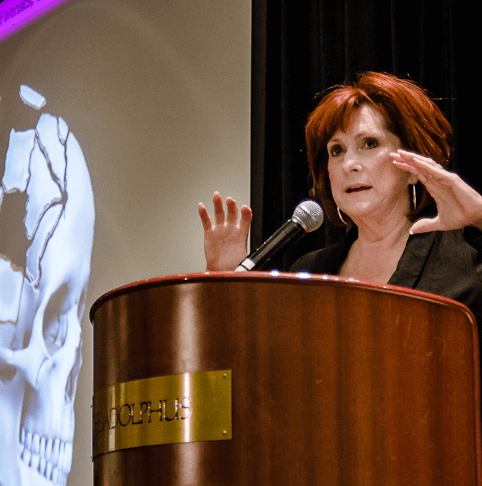
    Having detailed these and many other irregularities in JFK’s protection, A Coup in Camelot moves on to a discussion of the “Blood, Bullets & Ballistics”, focusing largely on the conclusions of retired crime scene investigator, Sherry Fiester. It is Fiester’s contention that the massive spray of blood seen in frame 313 of the Zapruder film represents “back spatter” from a frontal shot. She further asserts that, despite numerous witnesses believing they heard shots or saw smoke coming from behind the fence on top of the “grassy knoll”, her own trajectory analysis excludes it as the source of the head shot. The actual source of the shot, she claims, was on the other side of Elm Street at the southern end of the triple overpass. But despite her impressive credentials and her 30 years experience with the Dallas police, Fiester’s conclusions fail to convince.

    Medical, scientific and ballistics experts such as Dr. Cyril Wecht, Dr. Gary Aguilar, Dr. Donald Thomas, and Larry Sturdivan agree that, by itself, the explosion of blood, bone and brain matter seen in the Zapruder film actually tells us very little about the direction in which the projectile was travelling. That is because it does not occur at the point of entrance or exit but near the mid-point of the bullet’s trajectory. Rifle wounds of the skull can be a very different matter than gunshot wounds to other parts of the body. The skull is a closed vessel containing fluid contents that cannot be compressed. The energy and momentum imparted to the skull by the passage of the bullet creates a temporary cavity. The result of cavitation in an enclosed skull containing blood and brain is a hydraulic pressure applied to the cranium causing it to burst open. As Aguilar and Wecht explain, the resultant “spew” of blood and tissue is “radial to the bullet’s path and is separate from the inshoot and outshoot splatter.” (Aguilar & Wecht, Letter to the Editor, AFTE Journal, Volume 48 Number 2, p. 76) This is what is known as the “Krönleinschuss” effect―named for the German ballistics expert who first demonstrated it using skulls filled with clay.

    This type of effect was demonstrated during filmed simulations performed in the Biophysics laboratory at Edgewood Arsenal in 1964 when rifle bullets were fired into numerous skulls filled with ballistic gelatin. Describing a typical example Sturdivan writes, “The bullet entered the back of the skull and exited in a small spray at the front in the space of one frame of the high-speed movie. Only after the bullet was far down-range did the internal pressure generated by its passage split open the skull and relieve the pressure inside by spewing the contents through the cracks. A similar type explosion would have taken place if the bullet had gone through in the opposite direction. The only way to distinguish the direction of travel of the bullet is to examine the cratering effect on the inside of the skull on entrance and on the outside of the skull at exit.” (Sturdivan, The JFK Myths, p. 171)

    The empirical evidence, therefore, demonstrates that Fiester is mistaken in believing the explosive spray of matter we see in the Zapruder film is back spatter. In fact, forward spatter and back spatter are not seen in the film; probably because of the limitations of Zapruder’s camera. The film of the Edgewood simulation shows little to no back spatter and only a very small amount of forward matter which, as Sturdivan explains, was only visible “because of the strong lighting, a close-up view, and (especially) a very high framing rate…over 200 times the framing speed of the Zapruder movie…” (ibid. p. 174)

    Sherry Fiester

    Fiester’s trajectory analysis is also deeply flawed because it assumes something there is no reason to assume. Namely, that the bullet followed a straight path through the skull. In 1978, when the House Select Committee on Assassinations (HSCA) hired a NASA scientist to perform the same type of backward projection analysis, the committee’s forensic pathology panel cautioned against placing too much faith in it. The panel noted that, in their experience, “if a missile strikes an object capable of creating a shearing force, such as the skull, the bullet’s pathway in the body might be significantly different from the line of its trajectory prior to impact.” (7HSCA168) In other words, a bullet striking a dense, resistant skull bone is likely to become deformed and be deflected. Sturdivan writes that “The path of a deformed bullet through a body is never straight…Of the thousands of examples of yawed, deformed, and broken rifle bullets fired into gelatin tissue simulant at the Biophysics Division lab and other similar facilities, none had a perfectly straight trajectory. Few were even close.” (ibid. p. 208) So drawing a line between the presumed entrance and exit points in JFK’s skull will not tell us where the gunman was located no matter how far that line is extended into Dealey Plaza.

    Far from being excluded as Fiester asserts, the grassy knoll remains the most likely location for a frontal shooter. Not only because it was the location to which numerous witnesses pointed, but also because two teams of America’s top acoustical scientists agreed that the Dallas Police dictabelt recording they analyzed on behalf of the HSCA contained the acoustic fingerprint of a gunshot fired from the knoll. And the dictabelt recording synchronizes perfectly with the Zapruder film when―and only when―the knoll shot is aligned with frame 313.

    Featured alongside Fiester’s theories in this segment of A Coup in Camelot is the claim that President Kennedy was shot in the throat from the front. Yet aside from a brief reference to the way the wound was “described by doctors at Parkland Hospital”, no detail is provided to substantiate this assertion. As most readers will no doubt be aware, the Parkland physicians were indeed under the initial impression that the wound might have been an entrance; describing it as small, round, clean cut, and measuring little more than 5 mm in diameter. But those who hold these descriptions up as proof that a bullet entered the throat need to deal with the fact that studies have shown emergency room doctors to be frequently wrong in their assessment of bullet wounds. This is precisely why the premiere textbook for trauma room physicians, Rosen’s Emergency Medicine, cautions that “Clinicians should not describe wounds as ‘entrance’ or ‘exit’ but should document, using appropriate forensic terminology, a detailed description of the wound, including its appearance, characteristics, and location without attempting to interpret the wound type or bullet caliber. Exit wounds are not always larger than entrance wounds, and wound size does not consistently correspond to bullet caliber.” (Rosen’s Emergency Medicine: Concepts and Clinical Practice, p. 828)

    Those who propose that a bullet entered the throat must also deal with the fact that said bullet would have had to have disappeared entirely almost immediately after piercing the skin. Because not only was there no exit in the rear and no bullet found anywhere in the body, there was also no damage to the spine as there would almost certainly have had to have been had a missile entered Kennedy’s throat near the midline. It is for these reasons that, despite its appearance, the wound is extremely unlikely to have been one of entrance.

    III

    A Coup in Camelot moves from Dallas to Bethesda for a lengthy discussion of JFK’s autopsy, centred largely around the highly controversial theories of Douglas Horne. In a nutshell, Horne believes that Kennedy’s gunshot wounds were altered to hide evidence of a frontal shooter. This, of course, is not a new idea. It was first popularized by author David Lifton in his 36-year-old book, Best Evidence. But whereas Lifton postulated that unknown conspirators had hijacked the President’s body en route to Bethesda and altered his wounds to fool the autopsy surgeons, Horne suggests that the prosectors themselves altered the head wound during a secret “pre-autopsy” at the Navy morgue. For what purpose and to fool whom is never really made clear.

    Doug Horne

    At the very heart of Horne’s hypothesis is a comment made by Tom Robinson―an embalmer who was present for most of the autopsy―during a 1996 interview for the Assassination Records Review Board. When shown a photo displaying a large defect in the top of Kennedy’s head Robinson recalled that this was “what the doctors did”. He then explained that the autopsy surgeons had cut the scalp open and “reflected it back in order to remove bullet fragments.” (ARRB MD180) He also recalled seeing that “some sawing was done to remove some bone before the brain could be removed.” (ibid) What Robinson described is, of course, a perfectly normal part of an autopsy and he himself called what he saw a “normal craniotomy procedure.” (ibid) Yet somehow Horne construes Robinson’s remarks as evidence of some clandestine pre-autopsy activity. Why?

    The reason, according to Horne, is that “Dr. Humes always denied having to saw the skull open, he always maintained that the wound was so big that he just removed the brain with a minimum of cutting of the scalp; he never had to cut any bone.” However, as this passage from Hume’s sworn deposition for the ARRB demonstrates, Horne is entirely mistaken :

    GUNN: But just let me start out first: Where was the first incision made?

    HUMES: I believe, of course, the top of the skull to remove the skull plate of the brain. To remove what remained of the calvarium and to approach the removal of the brain.

    GUNN: And was that incision simply of the scalp, or did you need to cut –

    HUMES: No, we had to cut some bone as well. [my emphasis]

    * * *

    GUNN: Where did you cut the bone?

    HUMES: I find that–it’s hard to recall. Once we got the scalp laid back, some of those pieces could just be removed, you know, by picking them up, picking them up because they were just not held together very well, other than by the dura, I suppose. So other than that, we probably made it like we normally do, in a circumferential fashion from books, like right above the ear around. But it was a real problem because it was all falling apart, the skull. And I can’t recall the details of exactly how we managed to maneuver that, because it was a problem. (ARRB Deposition of James J. Humes, pgs. 101-102)

    As the reader can see, not only did Humes not deny having to saw the skull, he specifically testified to doing so. But Horne does not quote Humes himself and instead refers to a report written in 1965 by autopsy surgeon Dr. Pierre Finck―who did not arrive at Bethesda until after the brain had already been removed―in which Finck recalled being told that “no sawing of the skull was necessary”. What this means, therefore, is that the basis of Horne’s claim that “Humes always denied having to saw the skull open” is not any direct quotation from Humes himself, but the hearsay claim of a man who wasn’t even present when the brain was removed. This type of methodology is extremely difficult to defend. And what makes it all the more confounding is that Horne himself was actually present for the deposition during which Humes specifically swore to cutting the skull bone.

    Sadly, this is not the only instance in A Coup in Camelot in which Humes’ words are misconstrued in support of pre-autopsy surgery. The film’s co-writer, Art Van Kampen, suggests that “Something had to have happened to that body before the photos were taken”, and in the case of some photos that is indeed true. But Van Kampen claims that “Dr. Humes is very clear that no autopsy work had been done on the President’s skull before either photos or X-rays were taken.” This, again, is a clear misinterpretation of what Humes actually said. When asked during his ARRB deposition whether or not any incisions were made before the photographs were taken, Humes responded, “Well, depending on which photographs you’re talking about. We didn’t photograph the wound in the occiput until the brain was removed, you know. Sure, we had to make an incision to remove the brain and so forth, but no, generally speaking, no, we didn’t make any incisions at all [my emphasis].” (ibid. p. 95) Humes was then shown the photographs of the top of the head and asked whether or not, before the photo was taken, he had pulled the scalp back “in order to be able to have a better look at the injury” to which he responded “Yes, I probably did.” (ibid. p. 162) So, as should be perfectly clear, Humes confirmed that “generally speaking” most of the photographs were taken before any incisions took place but that some were indeed taken during the course of the autopsy. He also said essentially the same thing as Tom Robinson, which is that the photographs of the top of the head were taken after the scalp had been manipulated. There is, then, no meaningful discrepancy between what the autopsy pictures show and what Humes testified to.

    There has been confusion over Kennedy’s head wounds ever since the Warren Commission issued its findings. In large part this is due to there being two entirely different descriptions of the wounds on record. By and large the doctors at Parkland Hospital recalled seeing one fairly large hole that was located near the right rear of the head. Yet the autopsy report describes a massive defect involving almost the entire right side of the cranium. It was to explain this discrepancy that the body alteration hypothesis was first offered. However, as Dr. Aguilar has noted, “that the wound was described as larger at autopsy than noted by emergency personnel is not proof that it was surgically enlarged. Wounds picked apart during an autopsy are often found to be larger than they first appeared to emergency personnel.” (Murder in Dealey Plaza, p. 187)

    There is a simpler, far more reasonable explanation than clandestine alteration. One that, ironically enough, is touched upon in A Coup in Camelot. Shortly before discussion of the autopsy begins, the film’s narrator correctly informs viewers that “In the Zapruder film, a flap of skull can be seen opening up after the head strike. During the frantic ride to Parkland Hospital the flap had been folded back into place where the blood acted like glue and sealed the wound.” Indeed, Jackie Kennedy later testified to trying to hold her husband’s skull together on the way to the hospital. As Dr. Aguilar writes, “It is not hard to imagine the possibility that during the time it took the Presidential limousine to get to Parkland Hospital, clot had formed gluing a portion of disrupted scalp down making JFK’s skull defect appear smaller to treating surgeons than it later would to autopsy surgeons.” (ibid) In other words, because the flap had been closed up, the emergency room staff only saw the rearmost portion of the wound.

    IV

    The idea that something out of the ordinary occurred at Bethesda is buttressed by stories of multiple coffins being brought into the morgue on the night of the autopsy. At Parkland Hospital, Kennedy’s body had been placed into an ornamental bronze casket. However, in A Coup in Camelot it is alleged that the body actually arrived at Bethesda in an aluminium shipping casket at around 6:35 pm. This means that when the bronze casket was brought into the morgue at 7:17 pm it was, unbeknownst to the FBI agents who accompanied it, completely empty. Or so we are told. Horne further alleges that for some reason the Dallas casket then “made a second entry that night…at 20:00 hours military time.”

    Once again the evidence does not support the theory. As presented in the film, the idea that Kennedy’s body arrived in an aluminium shipping casket is based on the recollection of Naval petty officer, Dennis David, who recalled helping carry one into morgue. Yet, as the summary of his ARRB interview states, David “emphasized that he had no direct knowledge, by observation, that President Kennedy was in the gray shipping casket…” (ARRB MD177) The reality is that, being as Bethesda was a morgue, there is no reason to believe that Kennedy’s body was the only one to be brought there that night. In fact, FBI agent Francis O’Neill specifically recalled being told that one of the four drawers in the anteroom adjacent to the autopsy room contained the body of a child “that had died that day.” (O’Neill ARRB deposition, p. 57)

    Perhaps more importantly, the claim that the bronze casket was empty when brought into the mortuary is belied by the testimony of both O’Neill and his FBI colleague, James Sibert. These two agents who helped unload the casket from the ambulance swore that they stayed with it until it was opened and saw with their own eyes the President’s body taken out. O’Neill stated without hesitation during his ARRB deposition that there was “no time” from the time he first saw the casket “until the time it was opened and the body taken out that the casket was not in my view…” (ibid. p. 59) Similarly, when asked whether or not there had been any time between being unloaded from the ambulance and being opened that the casket had been out of his sight, Sibert responded, “I was there until it was opened.” (Sibert ARRB deposition, p. 45) There is, therefore, no basis for claiming that the casket was “certainly empty” as Horne does.

    Finally, the supposed 20:00 re-entry of the casket is based on a time notation which appears in an unsigned, undated document titled “The Joint Casket Bearer Team.” This document describes the activities of a group containing one officer and seven enlisted men “from each branch of the Armed Forces” who were “trained to carry the casket to and from the ceremony sites and to fold the flag which draped the casket following the internment service.” (ARRB MD163) This team, as A Coup in Camelot correctly informs, was also known as the “honor guard”. It appears quite apparent that, far from being proof of a second entry for the bronze casket, the 20:00 hours time notation on this document is nothing more than a mistake. Why? Because despite the film’s claim that Sibert and O’Neill had carried the casket into the morgue at 7:17 pm alongside Secret Service agents Roy Kellerman and William Greer, O’Neill explained in his ARRB deposition that, in actual fact, it was the honor guard who had physically lifted the coffin at that time. (O’Neill deposition, p. 57) So unless anyone wants to believe that the honor guard carried it in twice, they are going to have to accept that the unknown writer of the document was in error and there was only one entry for the bronze casket.

    A coup in Camelot intermingles these stories of casket-swapping and wound tampering with claims that the autopsy X-rays and photographs have also been altered. This, once again, is not a new theory. In fact it has been a commonly held belief amongst students of the assassination for decades. And yet nothing approaching proof of alteration has ever emerged. The most commonly cited reason for believing the photos have been tampered with, the one repeated in A Coup in Camelot, is that the pictures appear to show the back of the head completely intact. This is, of course, at odds with the testimony of the Parkland physicians who recalled seeing a large wound in the right rear. But as autopsy surgeon J. Thornton Boswell explained to both the HSCA and the ARRB, the reason the rear skull damage is not seen in the photographs is because the scalp is being held up and “pulled forward up over the forehead, toward the forehead.” (Boswell ARRB deposition, p. 150) This has the effect of hiding the wound underneath.

    Those who choose to ignore Boswell’s words are still stuck with the reality that the autopsy photographer, John Stringer, authenticated the photographs during his own ARRB deposition, repeatedly stating that he had no reason to believe the existing photographs were anything other than the ones that he himself took on the night of the autopsy. The same is true of the X-rays. The technician responsible for taking them, Jerrol Custer, repeatedly swore to the accuracy and authenticity of the existing X-rays for the ARRB. For example, when shown the anterior/posterior view:

    GUNN: Is there any question in your mind whether the X-ray that’s in front of you right now is the original X-ray taken at the autopsy?

    CUSTER: No question.

    GUNN: And the answer is––

    CUSTER: It is the original film. (p. 122-123)

    And when shown the right lateral skull X-ray:

    GUNN: … Mr. Custer, can you identify the film that is in front of you right now as having been taken by you on the night of the autopsy of President Kennedy?

    CUSTER: Correct. Yes, I do, sir.

    GUNN: And how are you able to identify that as being––

    CUSTER: My marker in the lower mandibular joint. (p. 124)

    With the men who took them―and all three autopsy doctors―swearing to their authenticity, there seems little doubt that the autopsy photographs and X-rays would have been admitted into evidence were there to be a trial in the Kennedy case. And with questions of validity settled, a more important question would be asked: What do the skull X-rays actually show? The answer to that, as a number of experts including neuroscientist Dr. Joseph Riley and radiologist Dr. Randy Robertson have attested, is that the official theory of a single shot from the rear simply cannot be true.

    As Dr. Humes explained in his Warren Commission testimony, the pathologists found an entrance wound that was 2.5 cm to the right, and “slightly above” the external occipital protuberance―a small bump located very low down in the rear of the skull―and “a huge defect over the right side” involving “both the scalp and the underlying skull…” After a “careful examination of the margins of the large bone defect” on the right side, the doctors were unable to find a point of exit, which Humes put down to the fact that they “did not have the bone.” However, the pathologists concluded that a single bullet was responsible for all the damage, having entered the rear and exited the right side. In support of this contention, Humes implied that the path of the bullet was laid out by a trail of metallic fragments that could be seen on the X-rays “traversing a line from the wound in the occiput to just above the right eye…” (Warren Commission Hearings, Vol. II, p. 351-353)

    Annotated X ray

    Unfortunately for Dr. Humes, the X-rays do not show what he claimed. The entrance wound in the lower rear of the skull is indeed visible. So too is the trail of bullet fragments. But the two are in no way related. In fact, the trail lies along the very top of the skull, several inches above the entrance site. Therefore, those fragments could not have been left behind by a bullet which entered near the external occipital protuberance. As Aguilar and Wecht have noted, “…the fragment trail alone almost completely eliminates the official theory JFK was struck from above and behind by a single bullet that entered his skull low…” (Aguilar & Wecht, Op. cit. p. 78) Dr. Joseph Riley, who has a Ph.D in neuroscience and specializes in neuroanatomy and experimental neuropathology, noted decades ago that the medical evidence as it stands is only compatible with two separate bullet strikes. It is for that very reason that I see little logic in suggesting that the X-rays have been altered to support the official story.

    V

    These largely specious claims about the medical evidence form the centrepiece of A Coup in Camelot and, clocking in at nearly 40 minutes, comprise well over a third of the film’s running time. For those who are familiar with the facts that are being misinterpreted and/or overlooked, this time will not pass quickly. Things do pick up, however, for the final 20 minutes of the film which deals partially with the enigmatic Lee Harvey Oswald. Whether or not Oswald was on the sixth floor of the Texas School Book Depository with a rifle in his hands at the time of the assassination has never been conclusively established. But A Coup in Camelot demonstrates, through the pioneering research of former investigative reporter Barry Ernest, that in all likelihood Oswald was where he claimed to be when the shots were fired; on the first floor of the building eating lunch.

    Barry Ernest

    Ernest centred his research on an often overlooked witness named Victoria Adams who had viewed the assassination from a fourth floor window of the depository building. As most students of the case know, Oswald was seen by his boss Roy Truly and police officer Marion Baker in the second floor lunch room approximately 90 seconds after the shots were fired. Baker was on his way to the roof where he believed the gunman might be located but, upon spotting Oswald alone in the lunch room, he halted his ascent and demanded Oswald identify himself. Truly quickly informed Baker that Oswald was an employee and the pair then continued their dash up the stairs. Oswald later told police that he had gone from the first floor to the second in order to purchase a Coke. But, of course, the Warren Commission claimed that he had actually rushed down from the sixth floor immediately after shooting the President.

    In that regard, Victoria Adams was a problematic witness for the Commission. After watching the motorcade pass by with three co-workers, she had stayed at the fourth floor window for what she said was around 15 to 30 seconds and then quickly made her way down to the first floor. What this means, as Ernest explains, is that “she would have been on the stairs at the same time Oswald was descending from the sixth floor.” The problem is “…she did not see or hear anyone on the stairs during that period.” The Commission’s handling of her story typified its approach to the investigation. It did not bother to question any of those who had stood at the window with her to watch the motorcade―not even Sandra Styles who had accompanied Adams down the stairs―and instead suggested that she was simply mistaken about the time she left the fourth floor window.

    Victoria Adams

    In support of this contention, the Commission alleged that Adams had testified to seeing two other employees of the building, William Shelley and Billy Lovelady, when she arrived on the first floor. And because Shelley and Lovelady had testified to being outside on the depository steps during the shooting and not re-entering the building until several minutes later, the Commission claimed that Adams’ “…estimate of the time when she descended from the fourth floor is incorrect, and she actually came down the stairs several minutes after Oswald and after Truly and Baker as well.” (Warren Report, p. 154) The problem with the Commission’s argument is that when Ernest tracked Adams down she “flat-out denied” ever saying she had seen Shelley and Lovelady on the first floor. In order to confirm or refute her assertions, Ernest searched the National Archives for the stenographic tape of Adams’ testimony. Not surprisingly, however, he soon discovered that there is no record of her April 7, 1964, testimony and the stenographic tape has gone mysteriously “missing.”

    But in 1999 Ernest discovered a bombshell document in the Archives in the form of a June 2, 1964, letter written by Assistant United States Attorney, Martha Joe Stroud, to Warren Commission Chief counsel, J. Lee Rankin. This letter contains the only known reference in the Commission’s files to an interview with Dorothy Garner, who was Adams’ supervisor and one of those with whom she had stood at the fourth floor window. The letter notes matter-of-factly that “Miss Garner…stated this morning that after Miss Adams went downstairs she (Miss Garner) saw Mr. Truly and the policeman come up.” Thus Garner provided complete corroboration for Adams’ testimony. Just as she swore, Adams had indeed descended those old wooden steps at the same time Oswald was supposed to have been on them. And the corroboration of this fact was completely ignored by the Commission who made no mention of Garner’s interview whatsoever.

    As Ernest details in his indispensable book, The Girl on the Stairs, he went on to locate and interview Garner for himself. He asked her about her own activities following the assassination and Garner explained to him that as Adams and Styles made their way downstairs, she herself went to a storage area by the stairway. It was from there that she was able to see Baker and Truly ascend the stairs. Garner said that she was “right behind” Adams and Styles in leaving the window and although she didn’t actually see them enter the stairway, she heard them “after they started down” because “the stairs were very noisy.” (The Girl on the Stairs, p. 268) Garner, it appears, had arrived on the fourth floor landing area only seconds after Adams and was there long enough to see Baker and Truly. Quite obviously, then, if Oswald had descended from the sixth floor during that time as he would have had to have done in order to make it to his second floor encounter with Baker, then Garner was in a position to see him. Yet, as she told Ernest, “I don’t remember seeing him at all that day…except on TV.” (ibid)

    It is impossible to overstate how damaging all of this is to the case against Oswald. It is clear that he could not have made it down to the second floor ahead of Adams because he did not have the time. This means he would have had to have descended long enough after Adams for her not to have heard his footsteps. Yet if he was 10 or 15 seconds behind her on the stairwell, it seems highly unlikely that he would not have been spotted by Garner who did not see or hear him on the noisy old stairs, even though she stayed on the fourth floor landing area long enough to see Truly and Baker. The most logical conclusion to be drawn is that when Oswald arrived at his second floor meeting with Baker, he had not come from the sixth floor but from the first, just as he said he had. And that would mean that, whatever else he did that day, Oswald did not shoot President Kennedy.

    VI

    A Coup in Camelot finishes with a brief discussion of how Kennedy’s plans to pull American military personnel out of Vietnam were reversed after his death and how private US contractors profited from the all-out war that followed. However none of this is explored in any detail and no attempt is made to show how it can be directly connected to the assassination. Had the writers and producers chosen to focus more heavily on these areas they may well have created a more valuable and compelling film than this one.

    It is clear that the filmmakers wanted to offer forensic proof of a conspiracy and, in fact, at the end of the film it is claimed they have done just that. “We have proven through modern forensics”, narrator Peter Coyote says, “that a shot or shots were fired from the front.” Yet, as I have demonstrated above, proof of such is not offered in A Coup in Camelot. What is provided instead is a bloodspatter theory that, whilst plausible on the surface, is entirely contradicted by empirical evidence. Instead of relying on the opinions of one individual, the filmmakers should have consulted with other, perhaps better qualified experts to ensure that what was being proposed had really been put to the test. How else can one claim to have proven something? There are numerous medical and scientific professionals who are well-versed in the facts of the assassination―such as Doctors Wecht, Aguilar, Robertson, and Thomas―who, I am sure, would have been more than happy to share their expertise.

    As I see it, this is the fatal flaw of A Coup in Camelot. Theory is all too readily accepted and promoted by the filmmakers without any independent verification or even basic fact-checking. How difficult would it have been to have had somebody actually read Dr. Humes’ various testimonies to see if he really had “always denied having to saw the skull open”? Or to have studied the deposition of Francis O’Neill to discover who had physically carried the casket into the morgue at 7:17 pm? A clearer understanding of these two points alone would have been enough to call into serious question the highly dubious claims of multiple casket entries and wound tampering at Bethesda.

    Theories about the Kennedy assassination―many of them nutty―have been promulgated for far too long and they are not convincing anyone outside of the so-called “research community”. When you attempt to counter the ballistics experiments and slickly-produced computer simulations featured in mainstream lone gunman documentaries with something as bizarre-sounding and ill-founded as the body alteration hypothesis you are not likely to win many converts amongst the general population. What is needed is real expert opinion and cold, hard evidence presented in a compelling manner. A Coup in Camelot is skilfully produced on what appears to have been a reasonable budget and if the filmmakers had consulted the right individuals and doubled down on their facts they could well have produced something of real value. For that reason the film strikes me as a wasted opportunity.

  • William F. Pepper, The Plot to Kill King: The Truth Behind the Assassination of Martin Luther King Jr.


    The dust jacket for The Plot to Kill King quotes former United States Attorney General Ramsey Clark as stating that “No one has done more than Dr. William F. Pepper to keep alive the quest for truth concerning the violent death of Martin Luther King.” This is unassailably true. Dr. King’s murder has never received anything approaching the level of attention and scrutiny that has been afforded the assassination of President Kennedy but, for nearly three decades, Pepper has worked tirelessly to uncover the truth and bring it to the attention of the American public. As he chronicles in his latest book, Pepper was the last attorney for accused assassin James Earl Ray before his death, and tried every avenue available to him to gain his client the trial he had been denied in 1969 when the state of Tennessee and his own lawyer, Percy Foreman, broke Ray down and coerced him into entering a guilty plea.1 Pepper and his investigators spent many, many hours locating overlooked witnesses, uncovering leads, and assembling a case. Then in 1993 he took part in a televised mock trial that resulted in a “not guilty” verdict for Ray.2 After Ray died in 1998, and any and all possibility of a real criminal trial went with him, Pepper worked with the King family in filing a wrongful death lawsuit against Loyd Jowers and “other unknown co-conspirators” so that the information he had uncovered could still be put before a jury. After 14 days of testimony from over 70 witnesses, the jury found that Jowers and others, “including governmental agencies”, were responsible for the death of Martin Luther King.3

    William Pepper

    Yet Pepper is and always has been a controversial figure, even among those who share his disbelief in the official story. For example, Harold Weisberg – who worked as an investigator for Ray’s defense team in the early 1970s and wrote the classic MLK assassination book, Frame Up – referred derisively to Pepper as “a would-be Perry Mason” and described his work as “worse than worthless.”4 On the other hand, the late, great Philip Melanson once described Pepper’s research and investigation as “groundbreaking” when it came to “establishing the presence of Army Intelligence and Army Intelligence snipers” in Memphis on the day of the murder.5 Over the years, this reviewer has adopted something of an agnostic position when it comes to areas of Pepper’s work. Whilst there is undoubtedly great value in what he has uncovered and accomplished, it nonetheless remains true that there a number of legitimate reasons for doubting important elements of Pepper’s research.

    Loyd Jowers

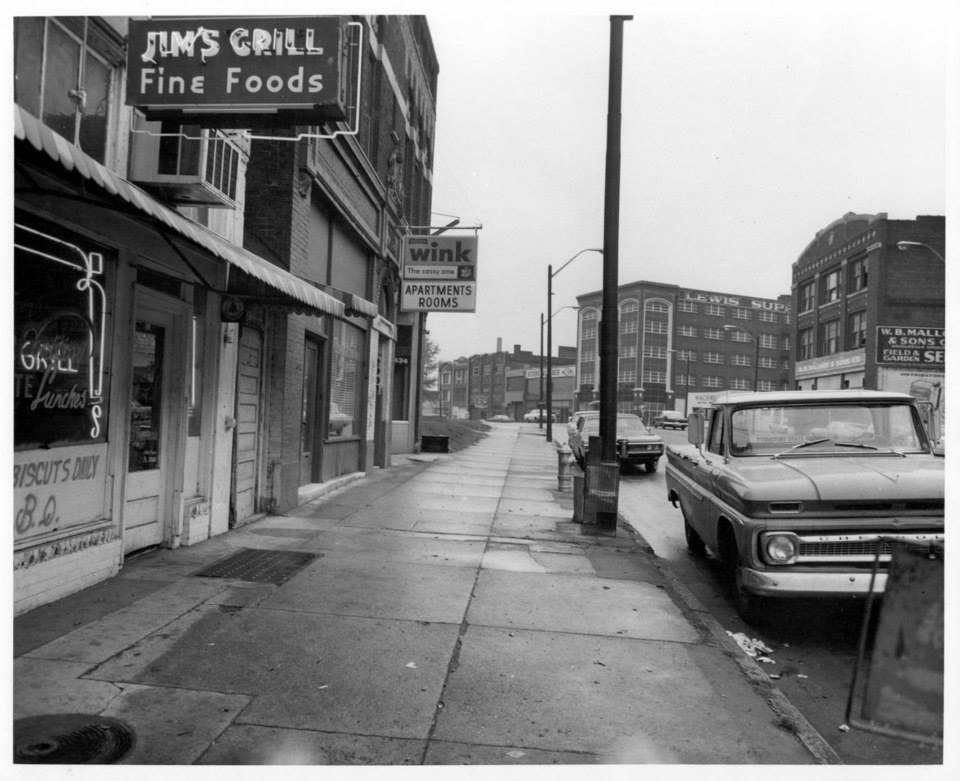
    Take for example the man at the very centre of Pepper’s conspiracy narrative, Loyd Jowers. In 1968, Jowers was the proprietor of Jim’s Grill, a restaurant located underneath the rooming house from which the state alleges Ray fired the fatal shot. For many years the only thing Jowers had to say that was of any interest to investigators was that a white Ford Mustang had been parked directly in front of the grill on the afternoon of the assassination; corroborating Ray’s claim of where he had parked his car and helping establish the presence of two white Mustangs on Main Street. But in 1993, Jowers appeared on ABC’s Prime Time Live claiming that Memphis-based produce dealer and alleged Mafia figure, Frank Liberto, had contacted him shortly before the assassination and paid him $100,000 to hire someone to assassinate Dr. King. He was then visited by a man named Raul who handed him a “rifle in a box” and asked him to hold onto it until “we made arrangements, one or the other of us, for the killing.”6

    On the face of it, Jowers’ story seems plausible enough. There is no doubt that he was at the scene of the crime and in a position to assist in carrying out the assassination. Additionally, parts of his account were corroborated by two other witnesses: former Jim’s Grill waitress, Betty Spates, and local Memphis cab driver, Jim McCraw. Also, Jowers’ claim that Frank Liberto brought him into the plot recalls the statement of civil rights leader John McFerren that, sometime in the afternoon shortly before Dr. King was shot, he overheard Liberto telling someone on the telephone to “Shoot the son of a bitch when he comes on the balcony.”7 And yet Jowers was, by any definition, a most unreliable witness. By Pepper’s own admission there were numerous different versions of his story. In fact, he contradicted himself on virtually every important detail.

    Jim’s Grill

    He initially named black produce-truck unloader Frank Holt as the gunman he had hired but changed his mind after Holt was found alive and well and passed a polygraph test, denying any involvement.8 Jowers then hinted that deceased Memphis Police Lieutenant Earl Clark was the real gunman only to tell Dr. King’s son, Dexter, that he “couldn’t swear” that he was because “All I got was a glance of him.”9 To Dexter, Jowers said that the gunman handed him the still smoking rifle, yet at an earlier time he had claimed to have picked it up after it had been placed on the ground.10 Around this time he also changed his mind about ever having been asked to hire the gunman, saying instead that he had simply been told to be out in the bushes behind Jim’s Grill at 6:00 PM and that he didn’t even know Dr. King was going to be killed.11 In this scenario, Jowers merely held onto the $100,000 until it was collected by a co-conspirator.

    Perhaps even more troubling than these inconsistencies – of which there are more – is the fact that Jowers and his friend Willie Akins are known to have contacted Betty Spates in January 1994 saying that they were interested in doing a book or a movie and they needed her to change her story. If she would say that she saw a black man handing the rifle to Jowers immediately after the shooting, they could all make $300,000.12 And if that wasn’t bad enough, in an April 1997 tape-recorded conversation with Shelby County district attorney general’s office investigator, Mark Glankler, Jowers basically disavowed his confession by stating that Ray’s rifle was the real murder weapon and that “there was no second rifle.”13

    It may also be seen as significant that Jowers never did repeat his conspiracy allegations under oath. He was not actually present for the King v. Jowers civil trial, apparently owing to ill health. The only time he gave a legal deposition after his appearance on Prime Time Live was during the 1994 Ray v. Jowers lawsuit, at which time he reverted to his 1968 story and insisted that he was in the bar serving drinks when the shot was fired. Jowers had agreed that the transcript of his Prime Time Live appearance could be entered into evidence but, through his attorney Lewis Garrison, stipulated “that the questions were asked and Mr. Jowers gave these answers”.14 Thus he did not swear to the accuracy of his alleged confession, he merely agreed that he had given it.

    In The Plot to Kill King, Pepper attributes Jowers’ many contradictory assertions to his fear of being prosecuted and an understandable desire to minimize his own role when talking to members of the King family. Pepper also argues, in spite of Jowers’ attempt to encourage Spates to lie for her share of $300,000, that it is “arrant nonsense” to suggest that he fabricated his story “in anticipation of a book or movie deal.” In fact, he says, “Jowers lost everything. Even his wife left him. There was no book or movie deal, and he was, for the most part, telling the truth.”15 Yet none of these arguments preclude the possibility that Jowers’ confession was invented as part of a money-making scheme that backfired.


    That being said, it should be borne in mind that Jowers’ initial Prime Time story did not come completely out of the blue. Suspicion had already been cast on him by statements that Spates and McCraw had given to Pepper, after which Jowers’, through Garrison, had contacted the Shelby County district attorney general offering to tell everything he knew in exchange for immunity from prosecution. Needless to say his proffer went completely ignored without anyone even attempting to speak with him. Assistant district attorney general, John Campbell, would later attempt to justify this total lack of interest by stating that the story looked “bogus” and that if they had given Jowers immunity “it would imply we thought there was some validity to his story, and that would increase the value of what he could sell it for.”16 Precisely how they were able to deduce immediately and without even talking to Jowers that his story was “bogus” is anyone’s guess.

    In the end, it will be up to each individual researcher to decide which, if any, of Jowers’ varying accounts to believe. Whilst it is true that the jury in King v. Jowers did find him partly responsible for the assassination, it is also true that his assertions were not thoroughly tested at the trial because neither Pepper nor Garrison were looking to undermine Jowers’ credibility. Legendary attorney, author, and activist, Mark Lane, was critical of the trial for that very reason, telling this reviewer that in his opinion, “It was not a real trial … both sides offered the same position and I have reason to doubt that the position they offered was sound. The jury, having seen no evidence to the contrary, had no choice. In my view, the court system should not be utilized in that fashion.”17

    Mark Lane with James Earl Ray

    Lane’s assessment is, in my view, somewhat off the mark in that it suggests a type of collusion between Pepper and Garrison that was likely not the case. In truth, Garrison was in an extremely awkward position. He could not simply deny the existence of a conspiracy without calling his own client a liar, so his strategy was to attempt to minimize Jowers’ role and convince the jury that, as he stated in his closing argument, “Mr. Jowers played a very, very insignificant and minor role in this if he played anything at all. It was much bigger than Mr. Jowers, who owned a little greasy-spoon restaurant there and happened to be at the location he was.”18 In that regard, it worked to Garrison’s advantage to allow Pepper to put on a case for a wide-ranging conspiracy without offering a rigorous challenge. Nevertheless, the result of this strategy, as Lane suggested, was that the jury essentially heard one story from both sides and for that reason the verdict was far from surprising.

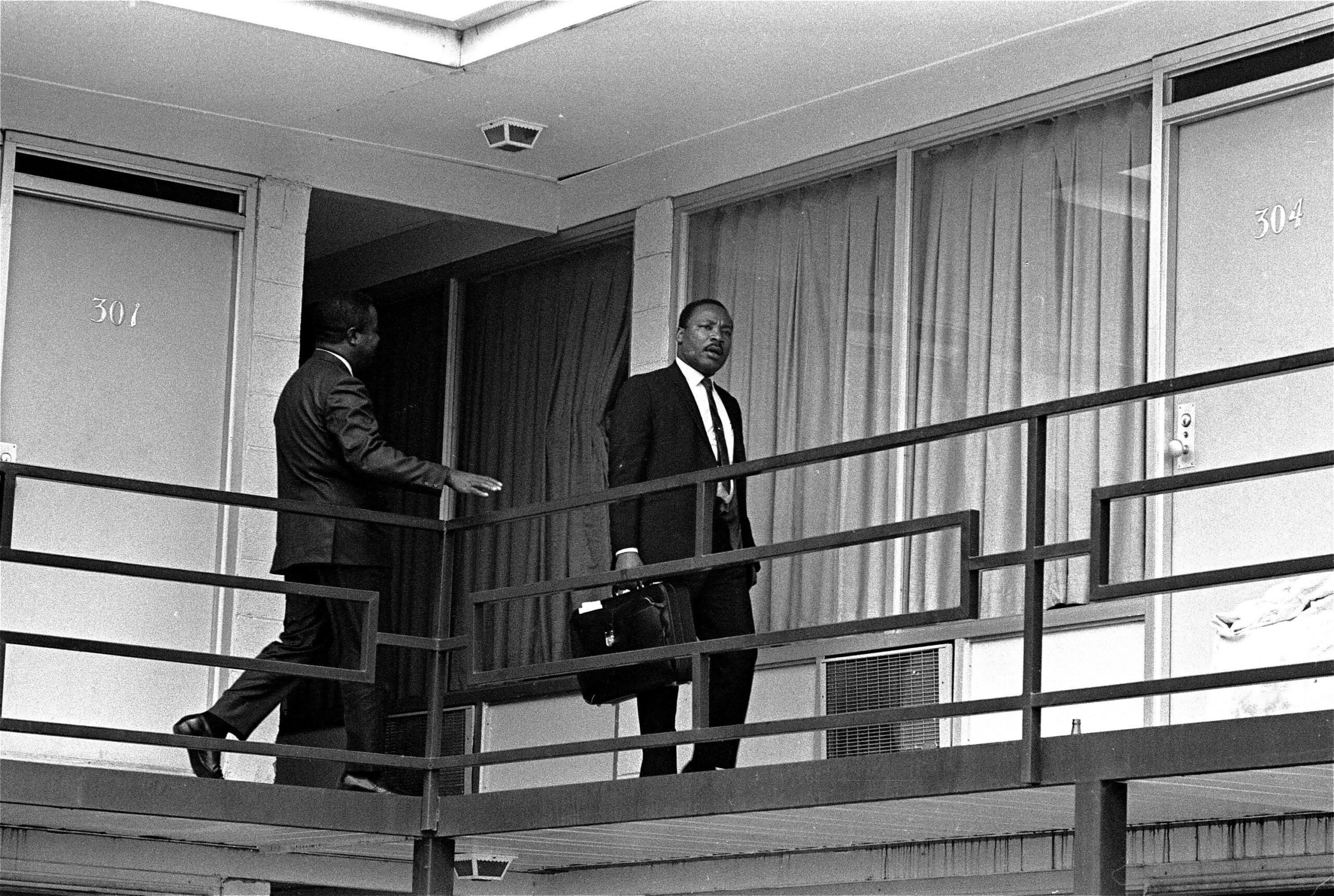
    By noting these circumstances, it is not meant in any way to suggest that the civil trial or the jury’s verdict were entirely without merit. On the contrary, as Pepper details in The Plot to Kill King, numerous witnesses gave significant and often startling testimony under oath – many for the first time – and put important evidence on the record. For example, a succession of witnesses provided evidence establishing the manner in which Dr. King was, seemingly intentionally, stripped of all reasonable security, and left entirely vulnerable to a sniper’s bullet. Of particular note is the testimony of Memphis Police Department homicide detective Captain Jerry Williams who had been in charge of organizing a unit of black officers that had previously provided protection for Dr. King on his visits to Memphis. Williams said that he was not asked to form his unit on Dr. King’s final, fatal visit, and was later falsely informed that Dr. King’s organization, the SCLC, had said Dr. King did not want protection.19 Additionally, as University of Massachusetts Professor Philip Melanson testified, MPD Inspector Sam Evans had ordered the emergency services’ TACT 10 unit removed from the vicinity of the Lorraine Motel, claiming this too was done at the request of someone in the SCLC. As Pepper writes, “When pressed as to who actually made the request, he said that it was Reverend [Samuel] Kyles. The fact that Kyles had nothing to do with the SCLC, and no authority to request any such thing, seemed to have eluded Evans.”20

    Not only had Dr. King been stripped of protection but a last-minute switching of his motel room had made the assassin’s job all the easier. Former New York City police detective Leon Cohen testified that Lorraine Motel manager Walter Bailey told him on the morning after the assassination that Dr. King had originally been allocated a more secure courtyard room. But on the evening before his arrival, Bailey had received a call from someone claiming to be from the SCLC’s Atlanta office requesting Dr. King be given a balcony room instead. Bailey said he was “adamantly” opposed to the change “because he had provided security by the inner court” but his caller had insisted the rooms be switched anyway.21 Needless to say, no genuine member of the SCLC is known to have made any such request.

    King on the Lorraine balcony

    As well as being shown how Dr. King was maneuvered into a vulnerable position, the Memphis jury also heard much evidence helping to establish James Earl Ray’s probable innocence. The state has always maintained that Ray holed himself up in a shared bathroom in the rooming house opposite the Lorraine and waited until Dr. King appeared on the balcony at approximately 6:00 pm. After supposedly firing the fatal shot, he is said to have rushed back to his rented room, put the rifle in its box, placed it amongst a bundle of his belongings, then ran down the stairs to the ground floor. Once outside, he allegedly dumped his bundle in the doorway of Canipe’s Amusement Company, climbed into a white Mustang parked just south of Canipe’s, and quickly sped away.

    Pepper provided evidence that successfully countered every step of this most likely false narrative. The notion that Ray had been lying in wait in the bathroom was contradicted by the sworn deposition of James McCraw, who had been in the rooming house only a few minutes before Dr. King was shot. McCraw said that he saw the bathroom door wide open and there was no one inside.22 Raising the possibility that the shot was actually fired from the thick shrubbery below the bathroom window, Pepper read into the record the sworn statement of SCLC member Reverend James Orange who said that he saw what he thought was gun smoke rising from the bushes immediately after he heard the shot.23

    Ray’s alleged flight down the rooming house stairs had, according to the state, been witnessed by Charles Stephens, who occupied the room between the bathroom and the room Ray had rented. But his ability to witness anything was called into question by taxi driver McCraw, who had been called to the rooming house specifically to pick Stephens up. McCraw said that he found Stephens lying on his bed, too drunk to even get up.24 McCraw’s account was corroborated by the testimony of MPD homicide detective Tommy Smith who entered the building shortly after the assassination and found Stephens still so intoxicated that he could hardly stand.25 Not mentioned at the trial was the fact that two weeks after the murder, Stephens had been shown a picture of Ray by CBS news correspondent Bill Stout and failed to recognize him. In fact, he said Ray was “definitely not” the man he claimed to have seen fleeing the rooming house.26

    Judge Joe Brown with
    the supposed murder weapon

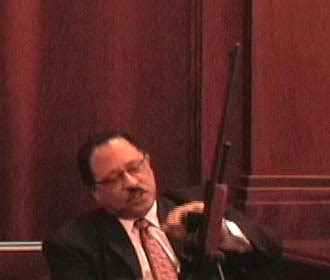
    Criminal Court Judge Joe Brown, who had presided over Ray’s final appeal, took the stand to testify about a series of ballstics tests that he had ordered be performed on the Remington Gamemaster rifle found in the doorway of Canipe’s. The FBI had never been able to establish that particular rifle as the murder weapon – supposedly because the bullet removed from Dr. King’s body was too mutilated. Judge Brown, himself a ballistics expert, explained that 12 of the 18 bullets fired during his tests had contained a similar flaw – a bump on the surface – that was not present on the death slug. He also said that the rifle had never been sighted in and, as a result, had failed the FBI’s accuracy test. “ … based on the entirety of the record”, Brown said, “and the further ballistics tests I had run, it is my opinion this is not the murder weapon.”27 Brown’s opinion was re-enforced by the testimony of Judge Arthur Hanes, Jr., who, alongside his father, had been Ray’s defense attorney before Ray made the fatal mistake of hiring Percy Foreman. Judge Hanes told the court that Guy Warren Canipe had said to him in 1968 that the bundle containing the rifle had been dumped in the doorway of his store approximately 10 minutes before the assassination and he was prepared to testify to that effect.28

    Finally, Pepper showed, through the FBI statements of Ray Hendrix and William Reed, that James Earl Ray had most likely left the scene in his white Mustang shortly before the assassination, not immediately after. Ray always maintained that he parked his car directly in front of Jim’s Grill, not south of Canipe’s, and that he left the area sometime between 5:30 and 6:00 pm to try to get his spare tire fixed. The April 25, 1968, statements of Hendrix and Reed corroborated Ray’s account. The pair told the Bureau that they had left Jim’s Grill at approximately 5:30 pm and noticed a white Mustang parked directly outside. When Hendrix realised he had forgotten his jacket, he went back into the grill to retrieve it whilst Reed stood staring at the car. When Hendrix reappeared the two walked a couple of blocks north on South Main Street until they reached the corner of Main and Vance, at which point what appeared to be the very same Mustang, driven by a lone, dark-haired man, rounded the corner in front of them. This independent confirmation of Ray’s movements, essentially constituting an alibi, was hidden from the defence and the FBI kept the crucial documents from the public for decades.29 Finding these statements and having them entered into evidence, as they should have been in 1969, is one of the many things for which Pepper is to be applauded.

    Another is his effort to locate and identify the mysterious figure previously known only as “Raoul” or “Raul”. For those unfamiliar with the King case, Raul was the name of the man whom Ray always claimed had set him up for the assassination. Shortly after his escape from the Missouri State Penitentiary on April 23, 1967, Ray made his way to Montreal, Canada, hoping to obtain the travel documents he needed to flee the country. It was there in a place called the Neptune Bar that he said he met Raul, a dark-skinned man with a Spanish accent, who promised to provide the documents Ray needed if he agreed to smuggle some items across the border. For the next several months, Ray said, he received large sums of money – including $1,900 to buy the Ford Mustang – and followed Raul’s instructions. According to Ray, these instructions ultimately included purchasing the Remington Gamemaster rifle and renting a room at the flophouse opposite the Lorraine Motel.

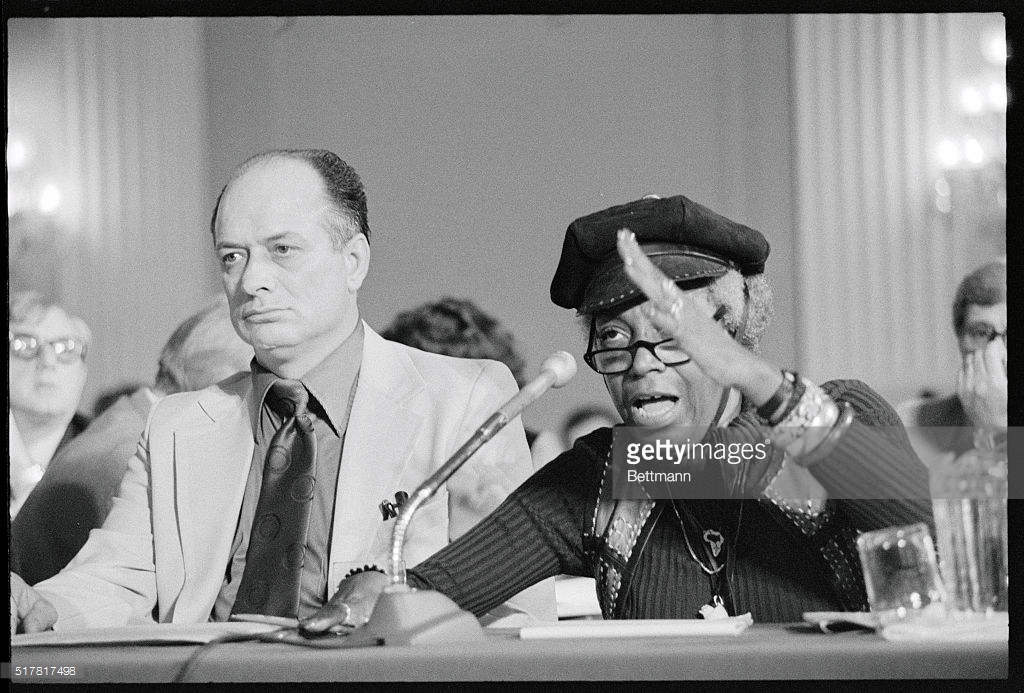
    Jerry Ray before the HSCA

    Needless to say, the state and its defenders have always maintained that Raul did not exist. Yet as Pepper points out, this leaves them with the problem of accounting for the large sums of money Ray was known to have spent whilst having no other known source of income. Desperate to explain this away, the HSCA theorized that Ray and his brothers had robbed a bank in Alton, Illinois. “The problem with this ‘theory’”, Pepper writes, “is that I called the local sheriff and the bank president in Alton. I was advised that they knew James had nothing to do with the robbery. The real culprits were known but there was not enough evidence to charge them.”30 On Pepper’s advice, Ray’s brother Jerry surrendered himself to the Alton police in 1978, offering to waive the statute of limitations so that he could be charged. He was promptly informed that neither he nor his brothers had ever been suspects.31

    Because Ray was a largely incompetent crook, and because he was never the violent racist that the media falsely made him out to be, those who spent any length of time with him rarely doubted his claim that he had been set-up by someone. Quite simply, the idea of Ray as a lone nut assassin has never made any sense. As Arthur Hanes Sr. is said to have remarked, “Unless Ray is a complete damn fool I don’t see how he could have made the decision to kill King. Before King was killed, Ray was doing all right. He was free, able to support himself with smuggling and stealing. He was driving a good car all over Canada, the United States and Mexico. He was comfortable, eating well, finding girls, and nobody was looking for him. Why then would he jeopardize his freedom by killing a famous man and setting all the police in the world after him?”32 Indeed, one might ask why Ray, being on the run from prison and desiring little more than to leave the United States for a country with whom the US had no extradition treaty, would have even re-entered the country in the first place after having made it as far as the Montreal docks? It might well be said that Ray’s actions following his prison break only make sense if we accept that someone was manipulating him.

    Pepper believed Ray’s story and, soon after agreeing to represent him, set out to find Raul. Eventually Pepper’s investigators came into contact with a rather eccentric witness named Glenda Grabow who told them that in the 1970s she had been involved in gunrunning, among other illegal activities, with a man whose nickname was “Dago” and that he had confessed to her his involvement in the murder of Dr. King. Meanwhile Pepper, who heard a rumour that Raul was living in the northeast, had zeroed in on an individual named Raul Coelho, living in Upstate New York. Investigators John Billings and Ken Herman obtained a picture of this Raul taken in 1961 when he emigrated to the US from Portugal, placed it amongst a spread of six photographs, and showed them to Grabow. According to Herman, “she pointed out Raul with no hesitation. She was sitting at the kitchen table in my house and zeroed right in on the guy.” The spread was then shown to Glenda’s younger brother, Royce Wilburn, who also knew “Dago” and he too identified the picture of the New York Raul.33

    Billings then took the obvious next step and showed the spread of photographs to Ray in his cell at Riverbend Prison in Nashville, Tennessee. As Billings later testified, “I told him we had a picture of Raul. And he seemed somewhat surprised. And I asked him if he would choose to attempt to pick out Raul in a photo spread … So we put this before him, and James put on his glasses and very – for a minute or two studied these pictures very carefully.” He then dropped his finger down on the picture of the New York Raul and said “that’s Raul.” Asked if he was positive Ray said, “Yes, I am.”34

    The pictures were also shown to British merchant seaman Sid Carthew who had come forward after watching a video tape of the televised mock trial saying that he too had met a man named Raul in the Neptune Bar, Montreal, in 1967. Over the course of two evenings, Raul had offered to sell him some Browning 9mm handguns. “He said to me, how many would you want, and I said four … and he said, four, what do you – four, what do you mean by four. I said four guns. He wanted to sell me four boxes of guns … once he knew that I would have only take – took four, he was very annoyed … it wouldn’t be worth his while to deal in such a small number, and that was the end of the conversation, and he went back to the bar.”35 Carthew selected the same photograph from the spread as Grabow, Royce, and Ray had before him. And according to Pepper, so too did Loyd Jowers.36


    In its response to the King v. Jowers trial and verdict, the Department of Justice insisted that the New York Raul had had nothing to do with the assassination and dismissed these photographic identifications as “suspect”. It said that the photo array was “deficient and unfairly suggestive” because the Raul photograph is the only one of the six to have “extremely high black and white contrast and no intermediate gray tones” and thus “stands out markedly from the others.”37 Essentially the DOJ suggested that the contrast of that particular photo causes it to draw the eye and that was why Pepper’s witnesses picked it out. This reviewer recently decided to put that notion to the test by sharing the photo array on a social media site, asking if anyone could pick out a man named “Raoul” (Ray’s original spelling) who “has allegedly been involved in drug smuggling, gun dealing, and murder.” I also hinted at a connection to the assassination of Dr. King. Of the 14 respondents, not a single one picked out the picture of the New York Raul. While this was hardly a perfect experiment, the result nonetheless stood in stark contrast to the DOJ’s suggestion that the picture of Raul Coelho was more likely to be picked over the others because of its high contrast.

    Ironically, one of the most frequently cited reasons for doubting the DOJ’s assurances and believing that the man Pepper found may well have been the real Raul is the manner in which he was assisted and protected by the US Government. As Pepper discovered after he made Raul a party defendant in the Ray v. Jowers lawsuit, despite supposedly being nothing more than a retired auto plant worker of modest means, Raul was being represented by two large, prestigious law firms. And when Portuguese journalist Barbara Reis tried to interview him, a member of Raul’s family told her that agents of the US government “are looking over us”, had visited them on at least three occasions and were monitoring their telephone calls.38 As Pepper observed, “Imagine that degree of care and consideration by the government for just a little old retired autoworker.”39

    Most of the above, actually most of what is in The Plot to Kill King, will be familiar ground for those who have read Pepper’s first two books, Orders to Kill and Act of State. In fact, the first two thirds of the new book are little more than a retread of the previous two with entire passages actually being lifted word-for-word from Act of State. The final third of the book, which details Pepper’s “continuing investigation”, unfortunately does not do much to elevate matters or add to our understanding. The new information presented therein is, in this reviewer’s estimation, of very dubious reliability.

    Pepper makes the absolutely startling claim that, although Dr. King’s gunshot wound would have been fatal anyway, he was intentionally finished off by the emergency room doctors who were supposed to be saving his life. He writes of a story that was related to him by a blind Memphis resident named Johnton Shelby, who claims that his mother, Lula Mae, was a surgical aide at St. Joseph’s Hospital and took part in Dr. King’s emergency treatment. According to Shelby, the morning after the assassination his mother gathered the family together to tell them that the emergency room doctors had been ordered by the head of surgery and a couple of “men in suits” to “Stop working on that nigger and let him die.” They were all then ordered to leave the room immediately. Shelby said that as his mother was leaving, she heard the men sucking saliva into their mouths and spitting so she glanced over her shoulder. She then saw that Dr. King’s breathing tube had been removed and a pillow was being placed over his face so as to suffocate him.40

    An extraordinary story like Shelby’s requires extraordinary proof. Yet Pepper seems to swallow the whole thing hook, line, and sinker despite the fact that, by his own admission, he spoke with numerous medical personnel who were known to have been in the emergency room and found absolutely no corroboration for it whatsoever. Shelby named a few people with whom his mother supposedly shared her experience but, needless to say, they were all conveniently dead in 2013 when he first came forward. More importantly, in accepting Shelby’s story, Pepper has to ignore the fact that it is directly contradicted by testimony that he himself put before the jury in King v. Jowers.

    At the civil trial Pepper put John Billings on the stand to testify not only about his time investigating Glenda Grabow and Raul Coelho but also about his activities on the day of the assassination. In April 1968, Billings was a junior at Memphis State University and was working as a surgical aide at St. Joseph’s. He walked into Emergency Room 1 just as Dr. King’s treatment was beginning and stood and watched as several doctors were “feverishly working … for 30, 45 minutes or so.” One of the doctors eventually walked up to Billings and told him to “go get someone in charge.” He walked out of the room and found “one or two gentleman wearing suits” who “seemed to be more or less telling everyone what to do.” He led them back into the emergency room “and the doctors informed them of something to the effect of Dr. King is – Dr. King is terminated. We have done everything that we can. We feel there’s nothing left that we can do.”41 Nowhere in Billings’ first hand account was there any reference to emergency room staff being ordered to stop working on Dr. King and leave the room. He specifically recalled that the doctors themselves made the decision to stop when they felt they had done everything they could.

    At one point Pepper hints at the idea that the “connections, associations, and personal success” linked to a career practising medicine in Memphis might explain why the numerous doctors who treated Dr. King did not recall the supposed intervention. But he cannot apply any such argument to Billings who did not follow a career in medicine and worked hard as one of Pepper’s investigators to uncover details of the conspiracy to kill Dr. King. It is readily apparent that Billings had absolutely no reason to withhold any details surrounding Dr. King’s emergency treatment. Which is probably why Pepper avoids mentioning his testimony on the issue altogether.

    Pepper also buys into a very elaborate yarn spun by one Ronnie Lee Adkins a.k.a. Ron Tyler. Ronnie’s father, Russell, worked for the city of Memphis for 20 years in the “Engineering Division”. Despite his modest means he was, according to Ronnie, both a 32nd Degree Mason and a Klansman who attended “meetings” that involved everyone from Mayor Henry Loeb and Memphis police and fire department director Frank Holloman to Frank Liberto, Carlos Marcello, and J. Edgar Hoover’s deputy in the FBI, Clyde Tolson. Russell was known as a “fixer” and, through Tolson, Hoover would give him money to perform various deeds including “local-area killings.” On one particular occasion in 1967, Tolson gave him money that was to be paid to the warden of Missouri State Prison to arrange for the escape of James Earl Ray. Of course, as any reasonable person would expect, Russell saw no need to shield his young son from his nefarious deeds, so little Ronnie not only got to see the money being handed to his father, he even got to go along to Missouri to see it passed on to the warden. Or so he says.

    According to Ronnie, in 1964 his father went on a trip to Southampton, England, with Tolson. When he returned he called a meeting with his eldest son Russell Junior and others to tell them that “The coon has got to go.” From then on “prayer meetings” were held at the Berclair Baptist Church, among other places, which eventually came to focus on how to get the garbage workers “pissed off” as a means of drawing Dr. King to Memphis. Allegedly “the word come down from Hoover” that the assassination was to occur in Memphis so that “daddy and them could handle it.” If the reader is dubious that planning for the assassination would have begun four years before it occurred, they will be even less impressed by the claim that way back in 1956 Tolson had handed Russell a “Personal Prayer List” of his and Hoover’s featuring the names JFK, RFK and MLK. That’s right, Ronnie claims that nearly five years before the Kennedys made it to the White House, and at a time when Dr. King’s activism was just beginning, Hoover had already put their names together on a list and handed it to his Memphis “fixer” for no apparent reason.

    When Russell died in 1967, Junior allegedly took over in planning the assassination alongside Holloman. Someone in their camp then supposedly engineered the deaths of Echol Cole and Robert Walker. For those who are unfamiliar with those names, Cole and Walker were two black sanitation workers who, on February 1, 1968, were tragically crushed to death in the back of a garbage truck where they were trying to hide from the rain. It was this tragic accident, and the paltry assistance the city gave to the families of the victims, that prompted Dr. King to travel to Memphis and join a city-wide march in support of the striking sanitation workers. But in Ronnie’s world, this was no accident, “Somebody pulled the hammer, pulled the lever on the truck and mashed them up in there.”

    After Dr. King booked into the Lorraine Motel, Ronnie says, Jesse Jackson – who had supposedly been paid by Russell to keep tabs on Dr King – was instructed to have his room changed to the balcony room 306. Jackson then “went down there and talked to the man and, or his wife Lurlee … and had him move Martin and Ralph up to 306.” The Reverend Billy Kyles, another alleged informant, was given the job of getting Dr. King to come out of his room and onto the balcony at precisely 6:00 pm.

    On the day of the assassination, Ronnie claims, he carried the murder weapon into town on the back of his motorbike wrapped in a bedspread and handed it to Junior and Loyd Jowers in the parking lot next to Jim’s Grill. When 6:00 pm came and Dr. King appeared on the balcony, Junior fired the shot then handed the rifle to Earl Clark who, in turn, handed it to Jowers. Junior then ran through the vacant lot between the rooming house and the fire station, climbed into the white Mustang parked outside the grill and drove away.42

    The above is but a brief synopsis of Ronnie Lee Adkins’ story. There are many more details for which there is not enough space in this short essay. Nonetheless, from what I have included I believe it is clear that calling Adkins’ story hard to believe would be a vast understatement. In fact it is, in this reviewer’s opinion, so utterly lacking in credibility that it hardly seems worth wasting time on a detailed deconstruction. Not only is there no corroboration for any of it, numerous details are in direct conflict with information Pepper has previously presented. For example, Adkins has Jesse Jackson visiting the Lorraine personally to have Dr. King’s room changed. Yet, as noted earlier, Walter Bailey told Leon Cohen that he received the instruction not in person but over the phone from someone who identified himself as a member of the SCLC’s Atlanta office. Adkins has Ray leaving the scene in the white Mustang parked south of Canipe’s and his brother fleeing in the one parked outside the grill when numerous statements establish that it would have had to have been the other way around. And he has Jowers attending some of the so-called “prayer meetings” and receiving the rifle in a parking lot despite nothing like this appearing in any of Jowers’ own accounts.

    In Adkins’ narrative there is no mention of or accounting for Raul and he names some extremely unlikely individuals as part of the plot. He even has MPD officer Tommy Smith – who, you might recall, testified on behalf of the King family that Charlie Stephens was too drunk to identify Ray – waiting in his car on Main Street and then dropping the bundle of evidence in the doorway of Canipe’s. Pepper himself is forced to admit how impossible this is given that “the bundle contained various bits and pieces, including the throw-down gun, which James had left on the bed in his rented room in the rooming house.”43


    There are also logical problems aplenty with Adkins’ story. Like why on Earth would Hoover have had the names JFK, RFK and MLK put on a list and handed to Russell Adkins in 1956? Was anyone even referring to them by their initials back then? Once Dr. King’s assassination was decided, why did it take four years for so many presumably intelligent people to formulate a plan? How did they come to decide that “pissing off” the sanitation workers was the best way of getting Dr. King into Memphis? Why was it necessary for 16-year-old Ronnie to carry the rifle to the scene on the back of his motorbike? Who thought that was a good idea? What if he had been stopped by police officers not in on the plot? Why did Junior not just take the rifle with him in the first place? And what exactly was Earl Clark doing in the bushes if he wasn’t the shooter? Would it have been so difficult for Junior to have handed the rifle to Jowers himself? It should be noted that there is no support anywhere in the record for the notion that there were three people hiding in the shrubbery.

    At the end of the day, even without these logical and factual inconsistencies, Adkins’ fantastical story is based on nothing more than the uncorroborated word of a man who, by his own account, had to quit school without graduating after he took a pistol into the lunchroom and fired off several shots.44 Accepting this man’s word without verification is, as far as this reviewer is concerned, completely unthinkable.

    It is not to Pepper’s credit that he endorses the likes of Shelby and Adkins and I believe that his critics will rightly have a field day with their stories. State apologists like Gerald Posner have delighted in quoting Pepper’s former investigator Ken Herman as stating that “Pepper is the most gullible person I have ever met in my life” and the new information he presents in The Plot to Kill King is doing very little to prove this remark wrong. Unfortunately, he compounds the problem by picking and choosing what he wishes to believe of these troublesome new tales. He rejects one of the central facets of Adkins’ account – that his brother Junior fired the shot – and asserts instead that the real gunman was a former MPD officer named Frank Strausser. Yet his strongest evidence in support of this belief is that Strausser is alleged to have accidentally admitted his involvement to Nathan Whitlock.45 This is the very same Nathan Whitlock who has long claimed that Frank Liberto admitted his own involvement in the assassination to him. Which just leaves this reviewer wondering what exactly it is about Mr. Whitlock that compels people to confess their part in this crime in his presence.

    Ultimately, I cannot say that The Plot to Kill King is a book I would recommend. As noted above, most of the book is a recapitulation of Pepper’s first two. Unfortunately, it is not as well written as either of his earlier works and is poorly edited to boot. There are numerous typographical errors – with Loyd Jowers and Marina Oswald being among those whose names are misspelled – as well as unnecessary repetition of information and witness statements being referred to before they’ve even been introduced. If the new information Pepper presented had been more reliable then it may have redeemed matters but unfortunately that was not to be. Pepper’s second book, Act of State, was a much more worthy addition to the literature. It was better written, better organized, and featured worthwhile rebuttals to both Posner and the Department of Justice. Readers are advised to track down a copy of that book instead.


    References

    1. See here for details: http://mlkmurder.blogspot.co.uk/2013/08/why-did-james-earl-ray-plead-guilty.html

    2. See Pepper, Orders to Kill, Chapters 24-25.

    3. The 13th Juror: The Official Transcript of the Martin Luther King Assassination Conspiracy Trial, p. 752.

    4. http://jfk.hood.edu/Collection/Weisberg%20Subject%20Index%20Files/P%20Disk/Pepper%20William%20F%20Dr/Item%2002.pdf

    5. Who Killed Martin Luther King?, History Channel documentary, 2004.

    6. The 13th Juror, p. 458.

    7. Pepper, The Plot to Kill King, p. 82

    8. Ibid, pgs. 90-93.

    9. The 13th Juror, pgs. 177-178.

    10. Pepper, Act of State, p. 41.

    11. The 13th Juror, p. 178.

    12. Orders to Kill, p. 336.

    13. United States Department of Justice Investigation of Recent Allegations Regarding the Assassination of Dr. Martin Luther King, Jr., June 2000, Part IV, Section C.1.b. https://www.justice.gov/crt/iv-jowers-allegations#analysis

    14. Orders to Kill, p. 383.

    15. The Plot to Kill King, p. 154.

    16. Gerald Posner, Killing the Dream, p. 291.

    17. http://educationforum.ipbhost.com/index.php?showtopic=15699&p=250020

    18. The 13th Juror, p. 739.

    19. The Plot to Kill King, p. 171.

    20. Ibid.

    21. Ibid.

    22. Ibid. p. 298.

    23. Ibid. p. 175.

    24. Ibid. p. 298.

    25. Ibid. p. 174.

    26. Orders to Kill, p. 97.

    27. The Plot to Kill King, p. 177.

    28. Ibid. p. 178.

    29. Ibid. p. 184.

    30. Ibid. p. 198.

    31. The 13th Juror, p. 343.

    32. William Bradford Huie, He Slew the Dreamer, p. 177. I say “said to have remarked” because Huie, who attributed those remarks to Hanes, is a self-admitted fabricator. Therefore nothing he wrote should be taken as absolute fact without independent corroboration.

    33. Posner, p. 296.

    34. The 13th Juror, p. 257.

    35. Ibid. pp. 270-277.

    36. Act of State, p. 222.

    37. Justice Dept. Report, Part VI, Section C.3.b.

    38. The 13th Juror, p. 295.

    39. Act of State, p. 204.

    40. The Plot to Kill King, p. 261.

    41. The 13th Juror, p. 249-250.

    42. The Plot to Kill King, p. 238-258.

    43. Ibid. p. 256.

    44. Ibid. p. 239.

    45. Ibid. p. 235.

  • Ballistics and Baloney: Lucien Haag and the JFK Assassination


    (Click here if your browser is having trouble loading the above.)

  • Ayton, Mel and David Von Pein, Beyond Reasonable Doubt


    I can honestly say that Beyond Reasonable Doubt fully lived up to my expectations. I expected that authors Mel Ayton and David Von Pein would add nothing to our understanding of the assassination of President Kennedy, and that is precisely what they did. I expected they would regurgitate the same tired old arguments and trot out the usual roster of long-discredited witnesses, and they did just that. And I expected that they would pontificate on the evils of “conspiracy theorists” at every available opportunity and, lo and behold!, they did.

    Beyond Reasonable Doubt is a standard format lone nut book, cut from the same cloth as Reclaiming History, Case Closed, and Conspiracy of One. It spends half its time trying desperately to convince readers that the Warren Commission was right all along and the other half-blaming conspiracy theorists for the confusion. Von Pein suggests in the book’s preface that for the last fifty years JFK’s murder has been “falsely shrouded in mystery” and those pesky conspiracy theorists are to blame. Which is ridiculous. Conspiracy theorists are not to blame for the Dallas Police Department’s mishandling of both its suspect and the physical evidence against him. Nor are they responsible for J. Edgar Hoover’s rush to judgement and his decision to limit the FBI’s investigation to Lee Harvey Oswald. It was not the conspiracy theorists who illegally removed Kennedy’s body from Dallas so that it could be flown to a military hospital where under-qualified and inexperienced pathologists bungled the autopsy. And no mere conspiracy theorist is accountable for crucial autopsy photos, X-rays and even the President’s brain being surreptitiously removed from the archive never to be seen again. The sad truth is that every confusion at the core of this case was created by those in officialdom who failed or refused to conduct a proper investigation and chose instead to cover their own butts whilst papering over the holes in the case against Oswald.

    To be fair to the authors, it is true that a good number of conspiracy theorists have, as Von Pein puts it, “twisted and misrepresented the evidence” in the Kennedy case. But the exact same thing is true of Warren Commission apologists. For example, in 1993, Case Closed author Gerald Posner appeared before a congressional subcommittee claiming that he had interviewed Kennedy’s autopsy doctors, Dr. James J. Humes and Dr. J. Thornton Boswell, who told him they had changed their minds about the location of the entrance wound in the back of JFK’s skull. They now agreed, Posner claimed, that the bullet wound was 10 centimeters higher than stated in their autopsy report and he promised to provide congress with a tape recording of these interviews. But the tape never materialized. Consequently, researcher Dr. Gary Aguilar telephoned Humes and Boswell and was surprised to discover that not only did both doctors deny telling Posner any such thing, but Boswell was adamant that he had never been interviewed by Posner at all. And he was not the only individual to make this complaint. In his book, Posner cited personal interviews with others; including James Tague and Marina Oswald; who said that they too had never even spoken to him. Of course, none of this stops Ayton and Von Pein frequently citing Posner’s book, calling it a “well-written account of the assassination.”

    Beginning with the Warren Commission who, as historian Gerald McKnight put it, “went through the motions of an investigation that was little more than an improvised exercise in public relations,” (Breach of Trust, p. 361) the twisting and misrepresenting of evidence in the Kennedy assassination has been carried out by those with an agenda. And Ayton and Von Pein have such a massive agenda that they manage to one-up the Commission by making not even a pretense of objectivity. The authors shamelessly omit important facts contradicting their position whilst promoting any scrap of information that appears to support it without giving consideration to the reliability of its source. As such, they happily rely not only upon disgraced authors like the aforementioned perjurer Gerald Posner, but also on the likes of Priscilla Johnson McMillan, whom the CIA describes as a “witting collaborator,” and Max Holland; recipient of the Agency’s “Studies in Intelligence” award. In light of the fact that internal documents have shown that as far back as 1967 the CIA has committed itself to employing “propaganda assets to answer and refute” critics of the Warren Report, no objective scholar would overlook these relationships.

    Of course, Ayton and Von Pein have little choice but to rely on dubious sources because if they were to employ a more rigorous standard they would not be able to write a book like Beyond Reasonable Doubt. For as we shall see, the lone gunman theory is simply not in accord with the evidence and, no matter how “damning” they may want you to believe it is, the case against Oswald cannot survive scrutiny.

    I

    As is obvious from the title of their book, Ayton and Von Pein want you to believe that there is no “reasonable doubt” about Lee Harvey Oswald’s sole guilt in the assassination. The authors even treat us to their (very unusual) definition of the term, writing that “If the preponderance of evidence points to the guilt of the accused, it is not reasonable to say a particular anomalous piece of evidence shows innocence. Even when more than one anomaly arises, as it certainly does with respect to the JFK assassination, it is still not ‘reasonable’ to assume innocence if the preponderance of evidence shows guilt.” (p. 118)

    Why is this so unusual? Because the above is not the legal definition of the term as used in American criminal courts. The legal definition of beyond reasonable doubt in that venue is that 12 reasonable jurors have no doubt as to the defendant’s guilt; they are convinced to a moral certainty that the accused committed the crime. If they do have doubt, they are not reasonable doubts. Which means that, during the deliberations, the one or two people who were reserving judgment had their doubts washed away by the other 10 or 11 jurors’ arguments. Another way of explaining it is this: the prosecutor has judiciously, methodically and conclusively closed off all other avenues of possible explication to the defense. The crime could have happened no other way. It is the most stringent standard in American jurisprudence. That is because a man’s life or liberty is at stake. The second most stringent standard is, “by clear and convincing evidence.” That standard is used in many administrative hearings, such as those by the ABA to disbar an attorney. The standard the authors quote above is actually the lowest standard and is used in most civil courts. It is very hard to believe the writers do not understand the difference. Ayton is from the UK, but Von Pein is an American. Yet, at least the book editor should have pointed out this serious discrepancy which, in and of itself, mitigates the portentousness of the title. This reversal reduces the book to a utilitarian, not a fact finding or judicial inquiry. In other words, because of the Ayton/Von Pein switcheroo, the many serious evidentiary issues repeatedly highlighted by critics over the last fifty years do not amount to reasonable doubt. Needless to say, actual legal experts; lawyers who understand the different standards and why they are used; would feel differently.

    For example, General Counsel for the Assassination Records Review Board (ARRB), Jeremy Gunn, said recently, “If we actually ask the question was Oswald guilty beyond a reasonable doubt…I am convinced that Oswald would have been found not guilty beyond a reasonable doubt. To me there is just no question he is not guilty beyond a reasonable doubt.” Former prosecutor, and Deputy Chief Counsel for the House Select Committee on Assassinations (HSCA), Robert Tanenbaum, agrees. As he stated during a lecture in 2013, “I can tell you from my experiences having tried several hundred cases to verdict, and being responsible for thousands of cases as head of the criminal courts, and running the homicide bureau, that I don’t believe there’s any courtroom in America where Oswald would have been convicted on the evidence that was presented before the Warren Commission.” Numerous lawyers and professional investigators have come to the same conclusion as Gunn and Tanenbaum after studying the case against Oswald, simply because it falls so far short of the genuine standard of proof.

    Let us begin with the Warren Commission’s claim, repeated by Ayton and Von Pein, that on the morning of November 22, 1963, Oswald smuggled his cheap, mail-ordered rifle into the Texas School Book Depository building inside a paper bag. As first generation critics of the Warren Report like Harold Weisberg, Mark Lane and Silvia Meagher quickly discovered, reasonable doubt is cast on this allegation by the very testimony on which it is based.

    Broken down, the sixth floor rifle was 34.8 inches long. (WR, p. 133) But witnesses Buell Wesley Frazier and Linnie Mae Randle repeatedly swore that the package they saw Oswald carry that morning was, at most, 27-28 inches long. For Ayton and Von Pein this poses no problem at all and they blithely state that Frazier and Randle both “made mistakes in describing the parcel’s length…” (ibid, p. 69) As to how they deduced that Frazier and Randle were mistaken when there is literally no evidence overturning their consistent and corroborative estimates is difficult to fathom. Nobody else saw the package Oswald carried that morning, and the fact is that the two different ways in which Frazier and Randle saw Oswald holding the bag corroborate their estimates and prove that it had to be considerably shorter than the rifle it was alleged to contain.

    Frazier saw Oswald carrying the bag with one end cupped in his hand and the other tucked under his arm. However, as he discovered during his Commission testimony, it was impossible to carry the rifle in that manner. Commission lawyer, Joseph Ball, handed Frazier the disassembled rifle inside a paper bag and asked him to demonstrate how Oswald had held the package. But when Frazier cupped the bottom end in his hand, the top end extended several inches above his shoulder, almost up to the level of his eye. As Frazier made clear, none of the bag he saw Oswald carrying had been sticking up above his shoulder and he was certain the bottom end was cupped in Oswald’s hand. “From what I seen, walking behind,” Frazier testified, “he had it under his arm and you couldn’t tell he had a package from the back.” (WC Vol. 2, p. 243, hereafter expressed as 2H243)

    Ayton and Von Pein try to get around this by writing that “…in 1986, Frazier confirmed via Vincent Bugliosi’s questions…that the package could have extended beyond Oswald’s body and he might not have noticed it.” (Ayton and Von Pein, p. 69) This is a gross distortion of what Frazier agreed to, which is that the package could have been “protruding out in front of [Oswald’s] body” without him seeing it. He never said that it could have been sticking up above the shoulder or below the hand. To this day Frazier is adamant that the package he saw was around two feet long and that Oswald carried it with one end cupped in his hand and the other tucked under his arm. In other words, it was smaller than the rifle.

    Often overlooked is the manner in which Oswald was carrying the package when Randle saw him. She was looking out of her kitchen window as she watched Oswald cross the street toward her house holding a “heavy brown bag.” At this time, he held the package by the top and the bottom did not quite reach the ground. (2H248) The only way the 5 foot 9 inch Oswald could have carried a 34.8-inch long rifle down by his side without it dragging along the ground behind him is if he had arms like a T-Rex. Given that Oswald was a normally proportioned human male we can safely conclude from Randle’s testimony that the package she saw him carry was considerably shorter than the rifle. It is readily apparent, then, that despite Ayton and Von Pein’s assurance that Frazier and Randle “made mistakes in describing the parcel’s length,” their estimates actually make little difference. Because the two different ways in which Oswald carried it are entirely corroborative and clearly establish that it could not have contained the rifle.

    Ayton and Von Pein would no doubt argue that the testimony of Frazier and Randle on this point is negated by the long paper bag; apparently made from wrapping paper and tape from the book depository’s shipping department; allegedly found by Dallas police in the so-called “sniper’s nest,” on the sixth floor of the depository building. But that bag is, to say the least, of dubious origin. As retired British police detective Ian Griggs pointed out in his seminal essay, “The Paper Bag That Never Was,” it does not appear in any of the official crime scene photographs, and the first officers on the scene did not see it there. For example, Police Sergeant Gerald Hill told the Commission that the only paper bag he had seen was a “small lunch sack” and remarked of the larger bag, “…if it was found up there on the sixth floor, if it was there, I didn’t see it.” (7H65) As Griggs points out in his essay, Deputy Sheriffs Luke Mooney and Roger Craig and Police Detective Elmer Boyd all said much the same thing. (See, Griggs, No Case to Answer, pgs. 173-214)

    One fact overlooked by Griggs was that on the evening of November 22, 1963, Buell Frazier was given a polygraph examination by Dallas Police Detective R.D. Lewis and, while it was in progress, Lewis showed Frazier the long paper bag supposedly found in the “sniper’s nest.” Frazier told him that “he did not think that it resembled…the crinkly brown paper sack that Oswald had when he rode to work with him that morning…” (FBI 105-82555 Oswald HQ File, Section 17, p. 100) If Frazier, who got the best look at the package Oswald carried that morning, could not identify the bag produced by Dallas Police, it is difficult to imagine that it could ever have been introduced as evidence in court.

    Nevertheless, the bag is seemingly linked to Oswald by a partial right palmprint and a partial left index fingerprint. Yet the obvious question this raises is how these could be the only two prints Oswald left on the bag when he supposedly made it himself using paper and tape from the depository, carried it with him to the Paine home in Irving, used it to wrap his rifle, carried it at least two different ways on his journey back into the depository, and unwrapped his rifle again on the sixth floor. In light of everything outlined above; Frazier and Randle’s testimony, the fact that the bag does not appear in crime scene photographs, was not seen by the first officers on the scene, and was not identified by Frazier during his polygraph; the prints cannot be said to in any way prove that Oswald used the bag to carry the rifle. Realistically, all the prints tell us is that he handled the bag briefly at some point. This reviewer would not be the least bit surprised if that occurred whilst Oswald was in police custody.

    Though they are careful to omit it all from their book, Ayton and Von Pein are no doubt aware of the serious issues outlined above, so they try to give themselves an out by writing that, “The question of whether or not Oswald took his rifle into work that morning, however, is a moot point. Oswald had plenty of opportunities to hide his rifle in the Book Depository on other occasions.” (p. 69) Informed readers will recognize this for the smokescreen that it is. According to the official story, for the two months leading up the assassination, Oswald’s alleged rifle was wrapped in a blanket in Ruth Paine’s garage. If he did not retrieve it on the morning of the assassination then he never did so because at no other time was he seen taking a package from the Paine home, at no time was any rifle seen at his rooming house, and at no other time did he take a package into the Book Depository. November 22 was his one and only opportunity. Which means that if the package he carried that morning did not contain the rifle–and the preponderance of evidence tells us it did not–then someone else placed it on the sixth floor of the depository building, and Oswald was exactly what he said he was: A patsy.

    Just from this instance, one can see why the authors lowered the legal standard. But even at that, an informed reader can see that they do not meet even that lower standard.

    Before moving on, let us take note of another example of Ayton and Von Pein misrepresenting Frazier’s words to suit their needs. The authors allege that when Frazier and Oswald “arrived at the Book Depository parking lot, Oswald hurried to the building 50 feet ahead of his co-worker…Oswald had never previously walked ahead of Frazier to the building. But Friday, November 22nd was different.” (Ibid) The implication here is that Oswald immediately got out of the car and rushed ahead of his workmate because he was in a hurry to get his rifle into the building. The reality is quite different. As Frazier testified, upon arriving at the depository, he sat in his car, “letting my engine run and getting to charge up my battery.” (2H227) Oswald had gotten out of the vehicle but, upon realizing Frazier was not with him, stopped and stood “at the end of the cyclone fence waiting for me to get out of the car.” (Ibid, 228) Once Frazier shut off the engine and exited the car, Oswald carried on walking but Frazier said he “didn’t try to catch up to him because I knew I had plenty of time so I just took my time walking up there.” As Frazier told the Commission, he was less interested in catching up with Oswald and more interested in taking a minute to watch the nearby railroad tracks because “I just like to watch them switch the cars…” (Ibid) So quite contrary to the impression Ayton and Von Pein attempt to convey, Oswald did not end up 50 feet ahead of his co-worker because he “hurried,” he did so because Frazier purposely lagged behind. Clearly the truth is less supportive of Ayton and Von Pein’s agenda than their own version of events.

    [NOTE: Over recent years, a number of very knowledgeable researchers have begun to question whether or not Oswald carried any kind of package with him that morning at all. They suggest that Frazier was pressured into telling this story after he was arrested by police on the evening of the assassination. Whilst, on balance, the reviewer believes that Frazier and his sister were telling the truth, the inconsistencies these critics have highlighted should not be summarily dismissed. Readers are referred to chapter 8 of Jim DiEugenio’s excellent book, Reclaiming Parkland, for details.]

    II

    Ownership and possession of the Mannlicher-Carcano rifle found on the sixth floor of the Texas School Book Depository has, of course, always been a key issue. It goes without saying that Ayton and Von Pein regard it as an “incontrovertible fact that Oswald owned the assassination weapon.” (p. 66) But this bold declaration overlooks many inconsistencies, not the least of which being that the rifle was ordered under the name “A. Hidell,” yet when Oswald opened PO Box 2915 in October, 1963, he listed “Lee H. Oswald” as the only person authorized to receive mail. (17H679) U.S. Postal regulation no. 355.111 clearly states that “Mail addressed to a person at a PO Box who is not authorized to receive mail shall be endorsed ‘addressee unknown’ and returned to sender.” How then could Oswald have received a rifle ordered in the name of A. Hidell? Incidentally, it will come as no surprise to many to learn that, although the Post Office should have retained the signature of the person picking up the rifle for four years, it was “missingî by the time the FBI began it’s work.

    For the sake of argument, this reviewer will overlook numerous issues and accept the notion that, for some unknown reason, Oswald chose to break the law by ordering a rifle through the mail using a false name; despite the fact that he was living in Texas where it was easy to obtain a firearm over the counter without leaving an extensive paper trail. It is nonetheless indicative of Ayton and Von Pein’s intellectually dishonest methods to state without qualification, as they do, that “Lee Harvey Oswald’s wife, Marina, identified the rifle in testimony to the Warren Commission during its 1964 hearings.” (p. 80) Anyone who is familiar with Marina’s ever-changing stories will no doubt be rolling their eyes at that particular pronouncement. During her Commission testimony, Marina rather melodramatically described the sixth floor weapon as “the fateful rifle of Lee Oswald.” When asked, “Is that the scope that it had on it, as far as you know?” she said “Yes.” (1H119) However, when she was interviewed months earlier by the Secret Service, Marina swore that the only rifle her husband ever owned did not have a telescopic sight. In fact, she said that before she saw the sixth floor rifle on television, “she did not know that rifles with scopes existed”! (CD344, p. 24) How does one reconcile these two statements? And what does it say about the integrity of an author who informs readers of one but not the other?

    Regardless, the central question is not “did Oswald order the rifle?” but “did he have it in his hands at the time of the assassination?” We have already seen that he did not have it in his possession for at least the two months leading up to the assassination and he most likely did not carry it into the depository building that morning. So it will come as no great shock to learn that there is no compelling evidence he handled the rifle at all that day, and Ayton and Von Pein have to resort to misrepresenting testimony and omitting relevant facts in order to make it seem as if there is.

    The authors state that the FBI found a “tuft of cotton fibers…clinging to the butt of the rifle” that under microscopic examination “matched those in the shirt worn by Oswald the day of the assassination.” (p. 67) What they do not tell readers is that the shirt to which the fibers were “matched” is the one Oswald was wearing when he was arrested, but this was apparently not the one he was wearing at the time of the assassination. During his interrogations, Oswald told police; without any reason to lie as he knew nothing of any fibers being found on the rifle; that between the time of the assassination and the time of his arrest, he had returned to his rooming house and changed his shirt and trousers. (R622) Oswald’s word was corroborated by Dallas Policeman Marion Baker who saw him on the second floor of the Book Depository less than two minutes after the shots were fired, and then again at the police station later in the day. As Baker told the Commission, when he saw Oswald the second time, “He looked as though he did not have the same thing on.” (3H262)

    Additionally, FBI hair and fiber expert, Paul Stombaugh, testified that although the fibers he found on the rifle butt “appeared fresh,” there was no way of knowing for sure how long they had been on the weapon. As he explained it, “They could conceivably have been put on 10 years ago and then the gun put aside and remain the same. Dust would have settled on them, would have changed their color a bit, but as far as when they got on the gun. I wouldn’t be able to say. This would be speculation on my part.” (4H84) And that’s not all Stombaugh had to say. Despite Ayton and Von Pein’s unqualified assertion that the fibers “matched” the shirt, Stombaugh explained that “there is just no way at this time to be able to positively state that a particular group of small fibers came from a particular source, because there just aren’t enough microscopic characteristics present in these fibers. We cannot say, ‘Yes, these fibers came from this shirt to the exclusion of all other shirts.’” (Ibid, 88) So, to summarize, fibers that had been on the rifle for an indeterminate amount of time were inconclusively matched to a shirt Oswald may not have been wearing at the time of the assassination. Yet all Ayton and Von Pein saw fit to tell readers was that the fibers “matched.”

    The authors go on to claim that “Dallas Police Lieutenant J.C. Day…found and lifted a palm print from under the rifle barrel which he sent to the FBI laboratories in Washington. It was later identified as ‘the palm print of Lee Harvey Oswald.’” (p. 72) There is so much relevant information left out of the above passage that it is difficult to know where to begin to critique it. Day claimed to have found the print on the disassembled Carcano when he inspected it on the evening of November 22. But when the FBI’s fingerprint expert, Sebastian Latona, carefully inspected the entire rifle just a few hours later, he found “no latent prints of value” anywhere on it. (4H23) It was not until after Jack Ruby had gunned Oswald down in the basement of Dallas Police headquarters that it was suddenly announced his print had been found on the rifle. Lt. Day claimed that he had “lifted” the print before sending the rifle to the FBI lab but could never adequately explain why he had failed to inform the Bureau; or anyone else; when he handed the rifle over. Nor could he explain why he failed to follow proper procedure by photographing the print before it was “lifted.”

    Day said that the lifting had been accomplished by applying a strip of cellophane tape to the print, which had been dusted with powder. But Latona found no evidence whatsoever of a print, the tape, or the dusting powder. And let us not minimize the difference between Latona and Day. According to professional prosecutor Tanenbaum; a man who never lost a murder case; Latona’s word was gold on the stand. He had written a pamphlet on the subject of fingerprinting which was used by almost all police departments at the time. He was so much in demand as a witness that it was not easy to secure him on your witness list. If you could, you felt lucky.

    An FBI memo that was suppressed until 1978 reveals that even the Warren commission was troubled by all of this. The memo dated August 28, 1964 states: [Warren commission general counsel J. Lee] Rankin advised because of the circumstances that now exist there was a serious concern in the minds of the commission as to whether or not the palm impression that has been obtained from the Dallas Police Department is a legitimate latent palm impression removed from the rifle barrel or whether it was obtained from some other source, and that for this reason this matter needs to be resolved.” Recall, this is August, eight months after the Commission’s first meeting. The Bureau reported to the commission that they had investigated the matter and said that the “[FBI] laboratory examiners were able to positively identify the lift as having come from the assassination rifle in the area of the wooden fore grip.” (26H829) However, the same report notes that Day “preferred” not to make a signed written statement about his finding of the print. This is probably because not only would he have been impeached by Latona, but also by FBI agent Vincent Drain. Drain was the agent who was tasked by FBI Director J. Edgar Hoover with picking up the evidence the night of the assassination and spiriting it to Washington. What he told author Henry Hurt about that transfer is devastating. Drain told Hurt that when Day gave him the rifle he never pointed out a print, or evidence of a print. (Hurt, Reasonable Doubt, p. 109)

    As if failing to make any mention of the above was not bad enough, Ayton and Von Pein are also careful to omit what is perhaps the most crucial detail: Even Lt. Day did not claim that the print; which was only visible in its entirety when the rifle was disassembled; placed the Carcano in Oswald’s hands at the crucial time. In fact, he described it as an “old dry print” that “had been on the gun several weeks or months.” (26H831; Anthony Summers, Conspiracy, p. 54) So even if we accept the palmprint as genuine, it only places the disassembled rifle in Oswald’s hands “weeks or months” before the assassination. That the authors of Beyond Reasonable Doubt were comfortable hiding this fact from their readers is truly mind-boggling. And, if you can believe it, it gets worse.

    Without a trace of caution, Ayton and Von Pein trumpet the claim made in 1993 by Vincent J. Scalice that he had positively identified fragmentary fingerprints found on the trigger guard of the rifle as being those of Lee Harvey Oswald. Once again, the authors leave out that which they find inconvenient. The prints in question were first observed by Lt. Day who told the Commission “…from what I had I could not make a positive identification…” (4H262) They were next examined by Sebastian Latona, who judged them to be “of no value,” (4H21) and a second FBI expert, Ronald Wittmus, who agreed. (7H590) That makes three witnesses within 24 hours.

    A decade and a half later; and this is crucial– Scalice examined the prints on behalf of the HSCA and, at that time, he too agreed that they were “of no value for identification purposes.” (8HSCA248) In 1993, both Scalice and the head of the FBI’s latent print section, George Bonebrake, reviewed the prints for the PBS documentary, Who Was Lee Harvey Oswald?, and Bonebrake reached the same conclusion as every expert who came before him; including Scalice. He stated that the prints were “simply not clear enough to make an identification.” Finally, in 2003, researcher James K. Olmstead reported that a new analysis had been conducted using the FBI laboratory computer software and the computer had failed to find a match. (Donald Thomas, Hear No Evil, p. 85) So how was it that Scalice was able see what no other expert; or, indeed, computer; was able to see?

    Scalice claimed to have found no less than 18 “points of identity” by using a composite of four enhanced Dallas Police photographs. But back in 1963, the FBI did not just have a few 30-year-old photographs to work with, they had the rifle itself with the actual latent prints on it. And as Latona explained to the Commission, the Bureau experts spent considerable time “setting up the camera, looking at prints, highlighting, sidelighting, every type of lighting that we could conceivably think of, checking back and forth in the darkroom; we could not improve the condition of these prints. So, accordingly, the final conclusion was simply that the latent print on this gun was of no value, the fragments that were there.” (4H21) Simply put, whatever enhancements Scalice carried out on the photographs he used could not bring out detail that did not exist in the actual latent prints. Even as a minority opinion, Scalice’s claim is just not worthy of serious consideration. And this is especially so given that neither he nor anyone else has ever made a chart of his alleged 18+ points of identity available for verification by an independent expert.

    By promoting Scalice’s assertion, Ayton and Von Pein demonstrate an extreme confirmation bias and a willingness to repeat anything that supports their theory, no matter how questionable it may be. This, and their handling of the palm print and fibers on the rifle, are perfect examples of what makes Beyond Reasonable Doubt such an Orwellian read. The authors spend much time up on a high horse denouncing conspiracy theorists for their “wrongful use of the physical evidence,” and for misrepresenting the facts “through selective use of witnesses,” yet these are the very methods they repeatedly and unashamedly employ throughout their book. Unfortunately, this type of hypocrisy is par for the course when dealing with many of those who defend the official lone nut legend.

    III

    Only one witness was ever claimed to have been able to identify Oswald as the man who fired a rifle from the sixth floor window: Howard L. Brennan. He is described by Ayton and Von Pein as “The most important witness to the shooting.” (p. 59-60) A better and more accurate description was provided by Warren Commission critic Howard Roffman who wrote that “The best that can be said of Howard Brennan is that he provided a dishonest account that warrants not the slightest credence.” (Presumed Guilty, p. 197) The numerous problems with Brennan’s supposed identification of Oswald were noted in detail by first generation critics and his claims were completely discredited during the 1960s. Using Brennan as a witness in 2015 is a true sign of desperation.

    Brennan told the Commission that shortly before the assassination, from his position sitting atop a wall opposite the Book Depository, he saw a man in the sixth floor window who he watched leave and return “a couple of times.” (3H143) Once the shooting started, Brennan said, he glanced back up to the man in the window and saw that he was “standing up and resting against the left window sill, with gun shouldered to his right shoulder, holding the gun with his left hand and taking positive aim and fired his last shot.” (Ibid, 144) Brennan’s description of the gunman’s position at the time he fired his final shot is the first of many problems with his account. The gunman could not have been “standing” as Brennan claimed because the window was only half-open and the ledge was just one foot high. As Roffman pointed out, “Had the gunman been standing, he would have been aiming through a double thickness of glass, only his legs visible to witness Brennan.” (Presumed Guilty, p. 193) Yet Brennan claimed that he could see the assassin “from his belt up.” (3H144)

    In his Commission testimony, Brennan also contradicted his own claim to have seen the gunman fire his last shot. As many rifles do, the Carcano emits a small amount of smoke (26H811), and manifests a recoil (3H451), but Brennan testified to seeing neither of these things. (Ibid, 154) Years later, he wrote in his memoir, Eyewitness to History, “Simultaneous with the third shot, I swung my eyes back to the Presidential car which had moved on down to my left on Elm, and I saw a sight that made my whole being sink in despair. A spray of red came from around the President’s head.” (Eyewitness to History, p. 13) If Brennan saw the President’s head explode, then unless he could move faster than a speeding bullet, it is without question that he could not have seen the sixth floor sniper fire the shot.

    On the evening of November 22, Brennan was taken to view a Dallas police line-up where he failed to identify Oswald as the man he saw in the sixth floor window. Four months later when he appeared before the Commission, however, he was willing to positively identify Oswald as the gunman. (3H148) His justification for failing to pick Oswald out of the line-up was that he believed at that time, and still believed at the time of his testimony, that the assassination had been the work of a communist conspiracy and that if word got out that he was the only eyewitness he and his family “might not be safe.” (Ibid) But this excuse is invalidated by the fact that he had to know of at least one other eyewitness, Amos Euins, because Brennan himself had pointed him out to Secret Service Agent Forrest Sorrels. (7H349) Additionally, as Mark Lane noted, “Brennan’s anxiety about himself and his family did not prevent him from speaking to reporters on November 22, when he gave not only his impressions as an eyewitness but also his name.” (Lane, Rush to Judgment, p. 92)

    As he admitted to the FBI on January 10, 1964, Brennan’s real reason for failing to identify Oswald on the evening of the assassination had nothing to do with fear of a communist conspiracy. He explained to agents of the Bureau that “after his first interview at the Sheriff’s Office…he left and went home at about 2 P.M. While he was at home, and before he returned to view a lineup, which included the possible assassin of President Kennedy, he observed Lee Harvey Oswald’s picture on television. Mr. Brennan stated that this, of course, did not help him retain the original impression of the man in the window with the rifle…” (24H406) Based on this admission alone, any subsequent identification Brennan gave was completely and utterly worthless.

    It has been suggested that Brennan’s own eyesight would have prevented him from witnessing what he said he did anyway. As Commission lawyer Joseph Ball told author Edward Epstein, during a “reconstruction” on March 29, 1964, Brennan had such difficulty even seeing a figure in the window that “it seemed doubtful that Brennan could have positively identified a man in the partially opened sixth-floor window 120 feet away.” (Epstein, Inquest, p. 110) Ayton and Von Pein counter this by saying that “It was only AFTER the assassination, in January 1964, that Brennan suffered an accident that impaired his vision.” (p. 60) But their only source for this claim is Brennan’s own self-serving testimony which the Commission did not take any steps to verify.

    It has also been suggested that Brennan, like a number of other witnesses, was pressured into changing his story. His job foreman, Sandy Speaker, told author Jim Marrs, “They took [Brennan] off for about three weeks. I don’t know if they were Secret Service or FBI, but they were federal people. He came back a nervous wreck and within a year his hair had turned snow white. He wouldn’t talk about [the assassination] after that. He was scared to death. They made him say what they wanted him to say.” (Marrs, Crossfire, p. 26) Whether Speaker’s story is true or not, it is interesting to note that years later Brennan refused to cooperate with the HSCA.

    When House Select Committee staff first contacted him, it was with the idea of talking quietly with him at his home in Texas. But, according to an outside contact report dated March 13, 1978, Brennan “stated that the only way he will talk to anyone from this Committee, is if he is subpoenaed.” A month later the Committee asked him to reconsider and, when he refused, informed him that he would be subpoenaed to testify before the committee on May 2. Brennan wasted no time in informing the Committee staff that he “would not come to Washington and that he would fight any subpoena. And, in fact, Brennan was belligerent about not testifying. He stated that he would avoid any subpoena by getting his doctor to state that it would be bad for his health to testify about the assassination. He further told me that even if he was forced to come to Washington he would simply not testify if he didn’t want to.” (HSCA contact report, 4/20/78, Record No. 180-10068-10381) Between May 15 and May 19, 1978, 11 attempts were made to present Brennan with previous statements he had made which were finally left with him on May 19. But when Committee staff returned a few days later to collect the form asserting that his previous statements were correct, a very odd lacuna appeared in the record. It was discovered that Brennan had refused to sign the form. The HSCA went as far as granting Brennan immunity from prosecution, but he would not budge.

    The above would suggest to most reasonable-minded people that Brennan had something to hide. And understanding that the HSCA might actually subject him to a real cross examination, he did not want anything like that to surface. Whether this was the fact that he was pressured into identifying Oswald, or that he pretended to have knowledge he never really possessed to begin with in order to gain attention, we will likely never know. In the end, what matters is that he failed to identify Oswald on November 22, 1963, and he admitted that seeing Oswald’s picture on television shortly after the assassination had clouded and influenced his own recollections. Needless to say, none of this appears in Beyond Reasonable Doubt because it does not matter a lick to Ayton and Von Pein. When he appeared before the Commission, Brennan was willing to state that Oswald was the gunman. On that day he said what Ayton and Von Pein want to hear and, truthful or not, that is all that matters to them. That is the kind of book this is.

    IV

    In Beyond Reasonable Doubt we are told that, for conspiracy believers, it is an “inconvenient truth” that several months before the assassination, Oswald demonstrated his “potential for violence” by executing “a bold plan to eliminate former Army General Edwin A. Walker, a leader of ultra-conservative groups.” (p. 149) For Ayton and Von Pein, the Walker attempt “is the most compelling pre-assassination evidence for Oswald’s propensity to meticulously plan and carry out an act of political assassination, alone and unaided.” (Ibid) Furthermore, they claim that the evidence Oswald took a shot at Walker is “overwhelming.” Which, as overloaded with hyperbole and empty rhetoric their book is, still manages to stand out as a particularly egregious exaggeration. In truth, the evidence is virtually non-existent.

    In the several months the Dallas Police investigated the attempt on Walker’s life, Oswald was never considered a suspect. But the day after the assassination, Michael Paine; a man whom Robert Oswald immediately suspected was involved in the assassination (1H346); unexpectedly told the Houston Post that “Oswald may have been involved in the Walker affair.” (DiEugenio, Reclaiming Parkland, p. 83) Then on December 5, 1963, Marina Oswald, who up until that point had insisted that she knew of no acts of violence perpetrated by her deceased husband, suddenly claimed to the FBI that Lee had told her he took a shot at the right-wing General. This, of course, was during the two month period that she was held at the Inn of Six Flags in Arlington, Texas, being repeatedly interrogated by the Secret Service and FBI and threatened with deportation. (see 1H79 & 410) Just as she did when she “identified” the rifle for the Commission, Marina was telling her interrogators what they wanted to hear. Which is something she became very adept at doing.

    Over time, Marina’s description of Lee changed from that of a good husband who loved to help with the kids to a selfish, vicious wife-beater. Mark Lane noted in his classic book, Rush to Judgment, that “In the course of her variegated testimony, she became richer. She admitted at an early date she had received public donations amounting to $57,000.” She even acquired a business manager, James H. Martin, who “testified that advances for her stories alone totalled $132,500.” (Lane, p. 307) As the money rolled in, she painted herself more and more as a victim which was something even members of the Warren Commission and its staff found difficult to swallow. Commission lawyer, Norman Redlich, once noted in a secret memo to J. Lee Rankin that although Marina and her business manager had “attempted to paint a public image of Marina Oswald as a simple, devoted housewife who suffered at the hands of her husband…there is a strong probability that Marina Oswald is in fact a very different person; cold, calculating, avaricious, scornful of generosity, and capable of an extreme lack of sympathy in personal relationships.” (11HSCA126) Although Marina was clearly under pressure, when she saw what she had to gain by selling her dead husband down the river, she took to her role with relish. Unfortunately she could never quite keep her stories straight and ended up being such a terrible witness that investigators for the HSCA were compelled to prepare a 30-page report titled Marina Oswald Porter’s Statements of a Contradictory Nature. Clearly, to any objective observer, anything Marina said is to be taken with a rather large grain of salt. Perhaps a tablespoon would be more adequate.

    Once we dispose of Marina’s worthless testimony, any case against Oswald in the Walker shooting flies out the window. In its quest to tie Oswald to the Walker attempt, the Warren Commission produced a mangled bullet, dubbed CE 573, that had all the appearances of being a 6.5 mm copper-jacketed round like the ones fired from “Oswald’s” rifle. The trouble is that, despite the Commission’s claim, this bullet does not appear to be the one recovered from Walker’s home on April 10, 1963. The actual Walker bullet was described by police at the time as being a 30.06 that was steel-jacketed. (Dallas Morning News, April 11, 1963 & 24H40) General Walker himself, who had held the real bullet in his hand on the night of the shooting, vehemently protested when he saw CE 573 that there had been a “substitution” and demanded that it be withdrawn from all files pertaining to the Kennedy assassination. (see McKnight, p. 51) “The bullet before your select committee called the Walker bullet is not the Walker bullet” he told the HSCA. “It is not the bullet that was fired at me and taken out of my house by the Dallas City Police on April 10, 1963. The bullet you have was not gotten from me or taken out of my house by anyone at anytime.” Not surprisingly, there is no reference to Walker’s protests anywhere in Beyond Reasonable Doubt.

    Ayton and Von Pein make much of a note that Oswald apparently wrote for Marina, telling her what to do should he get arrested. The authors state that anyone who rejects the “proof that Oswald tried to shoot General Walker” will have to accept the “preposterous” idea that “Somebody faked the note that Oswald left for his wife.” (p. 164) In reality, we need accept no such thing because the note is undated and makes absolutely no reference to General Walker or any other attempted shooting. Additionally, as researcher, Gil Jesus pointed out, the note instructs Marina that the “money from work” will be “sent to our post office box. Go to the bank and cash the check.” But the last job Oswald had before April 10, 1963, was at Jaggars-Chiles-Stovall and they did not mail his paychecks. Which strongly suggests the note was not written around the time of the Walker attempt.

    The only remaining “evidence” consists of photographs of Walker’s home that were found amongst Oswald’s possessions in the garage of Ruth and Michael Paine (yes, that’s the same Michael Paine who was the very first person to suggest Oswald had taken a shot at Walker). But the very existence of these photographs in November, 1963, is baffling. According to Marina’s story, these photos were in a notebook that Oswald had kept, detailing his Walker plans. Yet she also claimed that she watched him burn the notebook a few days after he failed to kill the General. She did not say she saw him pull out a few pictures to keep. And why on Earth would he do such a thing anyway? What was he planning to do, put the photos in the family album so that one day they could all look back and chuckle about the time Papa lost it and tried to murder a fascist? There is just no logical, believable reason for Oswald to have kept those photographs around and that fact leads to the possibility that they were planted among his possessions. Perhaps by someone who had access to the Paine garage and seemed to want to implicate Oswald in the Walker episode long before the thought of his involvement had occurred to anyone else. Now, who might that have been?

    V

    One thing you will not find in Beyond Reasonable Doubt is an in-depth, meaningful discussion of the medical evidence in the assassination. There is, in fact, virtually no discussion of the subject at all. The obvious reason being that Ayton and Von Pein understand full well that, if they tell readers too much about that subject, the cut-and-dried case for a lone gunman they are trying to sell would look decidedly less cut-and-dried. So the authors leave out troubling details like the fact that the autopsy doctors failed to notice one wound, and failed to dissect one that they did, leaving us with an ambiguous record; that they incorrectly described the location of bullet fragments in the brain; that they failed to locate wounds according to fixed anatomical landmarks; and that the pathologists burned the first draft of their autopsy report. Clearly, this sort of information is inconvenient when you want people to believe there is no room for doubting a lone gunman was involved. In any case, even the few details Ayton and Von Pein do bother to include they manage to get wrong.

    It goes without saying that the authors believe the only bullet to strike JFK’s skull came from the rear. In support of this contention they write that the Zapruder film “clearly shows the President’s head bursting open in the front and the right…a large flap of scalp hangs down from the large exit wound…And, as HSCA pathologists testified, the particulate matter (brain tissue) from the President’s head, after the head shot, is spraying forwards, as can be seen from a high-contrast photo of frame 313 of the Zapruder film.” (pgs. 98-99) From this it appears that Ayton and Von Pein are under the impression that the massive wound on the right side of JFK’s head was an exit wound and the cloud of matter seen in Z-313 is exit spray. Neither of these things is true.

    As ballistics expert, and Warren Commission apologist, Larry Sturdivan, stated in his 2005 book, The JFK Myths; a book Ayton and Von Pein cite but either did not read or failed to comprehend; “the explosive rupture of the side of the president’s head over his ear was not caused by an exiting bullet fragment.” (Sturdivan, p. 186) In actual fact, the explosion, which occurred after the bullet had already exited the skull, was a typical “Kronlein Schuss,” named for the German ballistics expert who first demonstrated the effect with clay-filled skulls. The energy deposited as the bullet passed through the brain imparted a momentum so great that a temporary cavity was formed. Consequently, a violent wave of hydraulic pressure was applied to the cranium at which point fractures radiating from the point of entrance gave way to the brain fluid and tissue which burst upwards through the cracks. As Sturdivan explained, “the center of the blown-out area of the president’s skull was at the midpoint of the trajectory; not at the exit point.” (Ibid, p. 171) Sturdivan noted that the blood and matter seen in Z-313 “appears to be directed upward and only slightly forward…Since the tears [in the scalp] were so extensive, the spray went in all directions, just like the skull fragments did.” (Ibid, p. 175) A “similar explosion would have taken place” whichever direction the bullet was travelling. (Ibid, p. 171) As Dr. Donald Thomas put it in his book on the Kennedy assassination forensic evidence, Hear No Evil, “While the Kronlein Schuss effect explains why the brain matter and bony fragments flew upward, it does not reveal the direction of the bullet.” (Thomas, p. 351) As medical expert Milicent Cranor, based upon her reading of authority Dr. Vincent DiMaio, has written, another term for this is cavitation.

    The cloud of matter in Z-313 was not exit spray, and the hole which encompassed most of the right side of Kennedy’s head was not an exit wound. In actual fact, JFK’s lead pathologist, Dr. James J. Humes, testified to the Commission that after a “careful examination of the margins of the large bone defect” the doctors were unable to find a point of exit on the skull. He attributed this failure to the fact that there was a large amount of missing bone. (2H353)

    The two most obvious features of JFK’s post mortem skull X-rays are the aforementioned large absence of bone on the right side, and the trail of bullet fragments that runs along the top of the skull. Ayton and Von Pein make one quick reference to this second feature, stating without elaboration that “The dispersal of bullet fragments comes from the back to the front.” (p. 99) They provide no citation for this claim which is not at all surprising since it is completely wrong. To begin with, let us take stock of what the very presence of these numerous metallic particles in the brain tells us. The bullets fired from “Oswald’s” rifle were full metal jacket, military ammunition. As wound ballistics expert Vincent Di Maio wrote in his classic textbook, Gunshot Wounds, “Military bullets, by virtue of their full metal jackets, tend to pass through the body intact…[they] usually do not fragment in the body or shed fragments of lead in their paths.” (Di Maio, p. 192) He goes on to say that “the presence of small fragments of metal along the wound track virtually rules out full metal-jacketed ammunition.” (Ibid, p. 334) However, he does allow that “in rare instances” a few small fragments may be seen on X-ray “if the bullet perforates bone.” (Ibid) In Kennedy’s case we are, of course, talking about the skull so obviously the bullet did indeed pass through bone.

    Tests performed for the Warren Commission at Edgewood Arsenal demonstrated clearly that Di Maio is correct. At Edgewood, “Oswald’s” rifle and ammunition was used to fire at rehydrated skulls filled with ballistic gelatin. These bullets did indeed deposit a few small fragments in the skull. However, this did not occur until after the jacket ruptured which, as Sturdivan explained, occurred when the bullet was “well inside the skull…the scattering of small lead fragments began about midway through the skull.” (Sturdivan, p. 204) Howard Roffman included two X-rays from these tests in his book and they showed around 5 or 6 small fragments deposited near the exit. (Roffman, photo section) Being a Warren Commission supporter, Sturdivan apparently picked the best of the bunch for his book, but even his carefully chosen X-ray showed only around 10 fragments; all located in the front half of the skull. (Sturdivan, p. 173) This is absolutely nothing like the lead snowstorm seen in President Kennedy’s autopsy X-rays where we see dozens of metallic particles running from one end of the skull to the other.

    It seems quite clear that the bullet which left the trail of fragments in the brain was not a full metal jacket round of the type Oswald is alleged to have used. And not only do the fragments tell us that a different type of ammunition was used, the pattern of their distribution gives us an idea as to the direction of travel. When a bullet disintegrates into fragments upon striking bone, the smaller, dust-like fragments are found closer to the entry point and the larger particles are found closer to the exit. This is because, as Sturdivan noted in his HSCA testimony, “A very small fragment has very high drag in tissue” (1HSCA401) whereas fragments with greater mass have greater momentum which enables them to travel further. What we see in JFK’s autopsy X-ray is that the smaller particles are located near the right temple and the larger ones are found near the upper, right rear of the skull. Therefore, the bullet appears to have been heading front to back.

    It should be noted at this point that Dr. Humes and his colleagues at the autopsy did find an entry wound in the back of the skull, “2.5 centimeters to the right, and slightly above the external occiptal protuberance [EOP].” However, this hole; which is readily visible on the X-rays; is around 4 inches below the rear end of the fragment trail. As neuropathologist, Dr. Joseph N. Riley, has stated, “The fragments distributed in and the damage to the cerebral cortex cannot be due to the shot described by Humes et al.” because “the wounds are discontinuous.” Dr. Riley, who holds a Ph.D. in Neuroscience and specializes in neuroanatomy and experimental neuropathology, describes two seperate areas of damage to the cortical and subcortical areas of the brain that he says are “anatomically distinct and could not have been produced by a single bullet.” (See The Third Decade, Vol. 9, Issue 3, p. 1) The best possible explantion for JFK’s head wounds according Dr. Riley and others; including radilogist, Dr. Randy Robertson, and former President of the American Academy of Forensic Science, Dr. Cyril Wecht; is two seperate bullet strikes; one from the rear and one from the right front.

    VI

    When the Zapruder film was first shown on American television in 1975, it created a public outcry so great that Congress had little choice but to reopen the Kenendy case. The sight of President Kennedy’s head snapping violently backwards by several inches in just a few 18ths of a second appeared to most as obvious evidence of a frontal shot. As Congressman Thomas N. Downing noted after a private viewing of the film on April 15, 1975, “It convinced me that there was more than one assassin.” (David Wrone, The Zapruder Film, p. 69) Over the years, Warren Commission defenders have offered a variety of theories intended to explain why a shot from the rear would cause Kennedy’s head to snap backwards. Predictably, Ayton and Von Pein invoke the two most popular of these hypotheses: the “neuromuscular reaction” and the “jet effect”. (p. 96-97)

    As Larry Sturdivan explains it, the neuromuscular reaction theory suggests that, “The tissue inside [Kennedy’s] skull was being moved around. It caused a massive amount of nerve stimulation to go down his spine. Every nerve in his body was stimulated…since the back muscles are stronger than the abdominal muscles, that meant that Kennedy arched dramatically backwards.” (NOVA Cold Case: JFK, 2013) However, as Donald Thomas explains, “Sturdivan’s postulate suffers from a patently anomalous notion of the anatomy. In any normal person the antagonistic muscles of the limbs are balanced, and regardless of the relative size of the muscles, the musculature is arranged to move the limbs upward, outward, and forward. Backward extension of the limbs is unnatural and awkward; certainly not reflexive. Likewise, the largest muscle in the back, the ‘erector spinae,’ functions exactly as its name implies, keeping the spinal column straight and upright. Neither the erector spinae, or any other muscles in the back are capable of causing a backward lunge of the body by their contraction.” (Thomas, p. 341) Not only is the reaction that Sturdivan describes highly implausible, it is also in conflict with the Zapruder film. It is quite clear from watching the film that Kennedy’s movement did not begin with an arching of the back. As the ITEK corporation noted following extensive slow motion study, his head snapped backwards first, “then his whole body followed the backward movement.” (ITEK report, p. 64)

    If Sturdivan’s theory seems plausible before closer analysis, that is more than can be said for Luis Alvarez’s jet effect hypothesis. Alvarez, a Nobel Prize-winning physicist, suggested that in a similar fashion to the thrust developed in a jet engine in response to its exhaust, the explosive exiting of blood and brain matter from the right side of Kennedy’s head created a corresponding propulsive momentum in the opposite direction, pushing it backwards. He claimed to have proven his theory by firing a rifle at melons wrapped in tape which, as Ayton and Von Pein write, were “propelled backward in the direction of the rifle.” (p. 97) But, as should be immediately obvious, a melon is nothing like a human head. It weighs around half as much and so requires far less energy to set in motion. It also lacks a bone and, therefore, offers little resistance to a bullet. This means that there is little deposition of momentum and, consequently, very little force to overcome.

    Alvarez first presented his theory and the results of his melon tests in the September 1976 issue of the American Journal of Physics. As author Josiah Thompson discovered a few years ago when he acquired the raw notes and photos from all of Alvarez’s tests, the physicist had kept some important information to himself. Alvarez had reported on tests performed on May 31, 1970, during which 6 out of 7 melons had recoiled “in a retrograde manner.” What he did not divulge was that there had been two earlier rounds of testing which painted a very different picture. During those earlier firings, Alvarez had used larger, heavier melons which apparently did not behave the way he wanted them to. In later tests he reduced their size by half and jacked up the velocity of his bullets to 3000 fps. Alvarez also fired at a variety of other objects besides melons. There were coconuts filled with jello which were blown 39 feet forward; a plastic jug of water which went 6 feet downrange; and 5 rubber balls filled with gelatin; all of which were blown away from the rifle. In fact, as Thompson noted during his presentation at the Wecht Institutes’ Passing the Torch symposium in 2013, “in these tests, every time they shot anything but a melon it went with the bullet. But Alvarez didn’t tell anybody that.” Nor did he disclose the fact that his JFK experiments had been funded by the U.S. Government. (Wrone, p. 103)

    According to Ayton and Von Pein, “a key point that is often overlooked or downplayed by conspiracy theorists is the fact that when JFK is struck in the head with a bullet…the President’s head initially moves forward, not backward…which is consistent with the head shot coming from behind…” (p. 98) Can they be serious? Far from being “overlooked or downplayed” this alleged forward motion was actually first discovered by a “conspiracy theorist,” Josiah Thompson, who wrote about it in detail in his classic book, Six Seconds in Dallas. Thompson measured the forward movement between Zapruder frames 312 and 313 as approximately two inches and, together with the much larger backward motion, took it as evidence of two shots striking the skull almost simultaneously. However, Thompson has since realised that he made a crucial mistake.

    In his online essay, Bedrock Evidence in the Kennedy Assassination, Thompson writes, “In the years since those measurements were made, I’ve learned I was wrong. Z312 is a clear frame while Z313 is smeared along a horizontal axis by the movement of Zapruder’s camera. The white streak of curb against which Kennedy’s head was measured is also smeared horizontally and this gives rise to an illusory movement of the head. Art Snyder of the Stanford Linear Accelerator staff persuaded me several years ago that I had measured not the movement of Kennedy’s head but the smear in frame 313. The two-inch forward movement was just not there.” Thompson further explained in his 2013 Wecht symposium presentation, “Since highly exposed areas; that is bright areas of the film; have a whole lot of energy to them, if the shutter is open and the camera moved, then those highly energized areas will intrude into low energized areas. It’s a basic photographic principle.” Indeed, during his presentation Thompson demonstrated how this principle affected other objects in the Zapruder film besides Kennedy’s head.

    What all this means according to Thompson is that “there is no longer any solid evidence whatsoever; whatsoever; that John Kennedy was hit in the head from the rear between 312 and 313.” As Thompson’s co-presenter, Keith Fitzgerald, demonstrated, JFK’s head actually exhibits its fastest forward movement between frames 328 and 330, which just so happens to be precisely when the final shot from the Book Depository appears on the Dallas Police dictabelt recording if we align the Grassy Knoll shot with frame 313. This synchronization of audio and visual evidence fully supports the belief of Drs. Riley, Wecht, and Robertson that Kennedy’s head was struck by two bullets; one from the front and one from the rear.

    VII

    No Krazy Kid Oswald book would be complete without the obligatory gratuitous attack on Jim Garrison, so it comes as no surprise to find one in Beyond Reasonable Doubt. Although there is literally nothing new or original anywhere in the book, the chapter entitled “The New Orleans Debacle” still manages to stand out as the most outdated and ultimately worthless chapter in the entire volume. Which, as the reader can see, is quite a negative achievement. The authors make no reference to any of the numerous files from Garrison’s investigation which were made public in the 1990s by the ARRB. Or any of the official government documents detailing just how his probe was obstructed at a federal level. Instead they dust off the same tired old fabrications, half-truths and innuendoes that were long ago debunked and discredited by real researchers like Jim DiEugenio, Lisa Pease and Bill Davy.

    Ayton and Von Pein launch their assault by claiming, without a shred of evidence, that the former District Attorney of New Orleans “came to prominence through corruption and a dangerous lust for publicity,” (p. 262); and by shamelessly repeating a ridiculous charge that Garrison was a “psychopath” of the “charming con artist” variety. (p. 263) With nothing of substance to support any of this garbage the authors quickly move on to the overly used Mafia smear, implying that Garrison was lenient on organized crime because of some unspecified relationship with Mob boss, Carlos Marcello. In support of this they offer a September, 1967, article from Life magazine. What they don’t tell readers is that the author of the piece, Sandy Smith, was an FBI collaborator whom the Bureau itself described as “a great admirer of the Director” who had been “utilized on many different occasions.” (Davy, Let Justice Be Done, p. 162) Additionally, one of the researchers for the article was one David Chandler; a close friend of Clay Shaw; the man whom Garrison had indicted for conspiracy to kill the President. Pointedly, the Life article offered nothing of substance beyond the “revelation” that Garrison’s tab had been picked up by management when he stayed at the Sands Hotel in Las Vegas. Garrison himself laughed off the insinuation, pointing reporters to a hefty valet and telephone bill. “Apparently I am not very highly regarded by the Mafia”, he quipped, “if they won’t even pick up my phone bill.” (Ibid, p. 153)

    Ayton and Von Pein claim that Garrison’s initial investigation of the assassination “stalled when he found no evidence to support his suspicions” and that after a 1966 conversation with Senator Russell Long he “reopened his investigation immediately and found an alleged getaway pilot…David William Ferrie.” (p. 265) This is not even close to what happened.

    On the weekend of the assassination, private detective and police informant, Jack Martin, had telephoned assistant DA, Herman Kohlman, to inform him of a seemingly mysterious trip to Texas that Ferrie had taken with two friends, Alvin Beauboeuf and Melvin Coffee, on the day of the President’s murder. Martin told Kohlman that Ferrie had known Oswald for some time and may have been his superior officer in the Civil Air Patrol. (HSCA Report, p. 143) When Ferrie arrived back in New Orleans on November 24, waiting police officers took him to the DA’s office for questioning. Garrison found “indigestible his explanation that he had driven through a thunderstorm to go ice-skating in Texas” and turned Ferrie over to the FBI for further questioning. (Garrison, A Heritage of Stone, p. 102) But the Bureau was not looking to find a conspiracy. So they quickly let Ferrie go without charge. Even though Ferrie committed perjury numerous times in his FBI interview. (DiEugenio, Destiny Betrayed, Second Edition, pgs. 176-77)

    Three years later, his conversation with Long now made him question the efficacy of the Warren Report. Garrison again wondered about the drive through a violent thunderstorm Ferrie and his companions had taken on the evening of the assassination to go ice-skating in Texas. Of course, Ayton and Von Pein maintain that there was nothing suspicious about this trip, and they quote Beauboeuf as saying that it was not even Ferrie’s idea, it was his. (p. 269) Indeed this is precisely what Beauboeuf told the DA’s office, adding that he had planned it a week in advance and they had left around 4:00 PM. The trouble is, Coffee gave a different story. He claimed that the trip was Ferrie’s idea, that he had made arrangements a couple of days in advance, and that the trio had departed after dark, around 7:00 PM. Ferrie gave a third version of events, claiming that the trip was an entirely spontaneous affair. They had left after supper time to go ice-skating and duck hunting, each taking a shotgun along. Yet Beauboeuf and Coffee both insisted that there were no weapons in the car. (Davy, pgs. 45-46) The conflicts in their accounts understandably heightened Garrison’s suspicions. The only point that Ferris and his friends agreed on was that at some point that evening they arrived at an ice-skating rink in Houston. Intriguingly, the owner of the rink, Chuck Rowland, told Garrison’s office that Ferrie did no skating. Instead, he spent his time making and receiving calls on the public telephone. (Ibid)

    Before he left for Houston, however, Ferrie had an important errand to run. As Oswald’s former landlady, Jesse Garner, told the HSCA, Ferrie turned up at her house that evening asking about Oswald’s library card. Apparently, Jack Martin had circulated the story that Ferrie’s card had been found amongst Oswald’s possessions after his arrest and Ferrie was worried that it might be true. When Garner refused to talk to him, Ferrie visited her neighbour, Doris Eames, asking if she “had any information regarding Oswald’s library card.” (10HSCA113-114) Ayton and Von Pein want this connection between Ferrie and Oswald to disappear so they withhold Ferrie’s actions from their readers and point out that the story of his card being among Oswald’s possessions was simply made up by Martin. (p. 271) But the truth of the story is irrelevant. What matters is that Ferrie himself clearly believed it was possible that Oswald had his library card, which demonstrates that he had been in contact with Oswald in the summer of 1963. And right then and there, any objective person would wonder what the rightwing, CIA affiliated Ferrie would be doing associating with the former Marxist defector.

    Ayton and Von Pein admit that Ferrie and Oswald were photographed together at a Civil Air Patrol picnic when Oswald was 15 but they downplay the significance. They can get away with this because they do not reveal Ferrie’s search for his library card after the assassination. Or the fact, that Ferrie was trying to track down that photo in the wake of the assassiantion. (DiEugenio, Reclaiming Parkland, p. 152) And they do not inform readers of yet another connection between the two men. During his summer in New Orleans, Oswald had launched a one-man chapter of the Fair Play for Cuba Committee and stamped the address “544 Camp Street” on some of his FPCC leaflets. That famous address was one entrance to the Newman building, which also housed the offices of former FBI agent turned private investigator, Guy Banister. And guess who was doing investigative work for Banister in 1963? None other than David Ferrie. Not only did Oswald stamp the address of a building Ferrie was working out of on his pamphlets, numerous witnesses placed Oswald himself in Banister’s office. (see DiEugenio, Destiny Betrayed, second edition, pgs. 110-113) The fact that Oswald was associating with CIA-connected, violently anti-communist activists like Banister and Ferrie obviously suggests that his FPCC activities were a ploy; part of a plan to discredit the organization. And it is now known that both the CIA and FBI were running projects aimed at doing just that. The idea that Oswald was involved in this effort is re-enforced by the fact that his activities only resulted in embarrassing the FPCC when Oswald was eventually “exposed” as a communist during a radio debate.

    Regardless, Ferrie did have an association with Oswald and, since Banister had died before Garrison began his investigation, Ferrie became the DA’s principle suspect. That is, until the investigation went public and Ferrie suddenly turned up dead. At that point, Garrison concentrated on finding the mysterious “Clay Bertrand;” a name that appears in the Warren Commission volumes thanks to the colorful testimony of French Quarter lawyer, Dean Andrews. Andrews told the Commission that he had recieved a call from Bertrand on the day of the assassination asking him to fly to Dallas to represent Oswald. According to Ayton and Von Pein, this was just “one version of Andrews’s story. In another, he told the FBI the whole thing had been a hoax.” (p. 266) In actual fact, as Andrews testified for the Commission, he had been pressured by the FBI to the point that he told them to “Write what you want, that I am nuts. I don’t care.” Which is precisely what the Bureau did. Despite the fact that Andrews’s secretary, Eva Springer, and his employee. R.M. Davis, both confirmed that Andrews had told them about the Bertrand call on the weekend of the assassination. (Davy, pgs. 51-52)

    Ayton and Von Pein do not care about such facts, though, they just want to pretend that Bertrand either did not exist or had nothing to do with Oswald and the assassination. Needless to say, they choose not to tell readers that FBI agent Regis Kennedy confirmed under oath at the trial of Clay Shaw that he been seeking a Clay Bertrand in connection with the assassination before the FBI had even spoken with Andrews. (Ibid, p. 194) The truth is that Clay Bertrand most defintely existed and his real name was Clay Shaw. As declassified documents have revealed, the FBI knew this to be true at least as far back as February, 1967. One particular memorandum, dated March 2, states, “On February 24, 1967, we recieved information from two sources that Clay Shaw reportedly is identical with an individual by the name of Clay Bertrand…” Another, dated March 22, reports that “three homosexual sources in New Orleans and two homosexual sources in San Francisco have indicated that Clay Shaw was known by other names including Clay Bertrand.” (Ibid, p. 193)

    Like just about everyone else who appeared on Garrison’s radar, Shaw was heavily connected to the CIA. Ayton and Von Pein recite the apologists mantra that Shaw was just one of many normal businessmen who supplied information to the Agency’s Domestic Contacts Service. Unfortunately for the authors, at the 2013 Wecht Symposium, author Joan Mellen presented a newly discovered internal CIA document which states in black and white that “Clay Shaw was a highly paid CIA contract source until 1956.” His relationship with the Agency clearly extended for quite some time past 1956, however, as other documents show that he retained a covert security clearance until at least March 16, 1967. (Ibid, p. 195) Unfortunately for Garrison, he could not prove this at the time and it hurt his case because it left him unable to provide a motive for Shaw to participate in a conspiracy.

    One thing Garrison could and did prove is that Shaw was seen in the company of Ferrie and Oswald when the trio made visits to the small towns of Clinton and Jackson, Louisiana in the summer of 1963. The witnesses to these appearances remain as credible and convincing as ever despite numerous attempts to make them appear otherwise. Ayton and Von Pein have little choice but to suggest that they were all liars and; relying on a far-fetched conspiracy concocted by Garrison-basher, Patrica Lambert; write that the Clinton witnesses “embellished the truth” and “conspired to invent stories…” (p. 277) This is laughable idiocy. The Clinton-Jackson folk whom Lambert suggests were plotting together included both right-wing whites; some of whom were actually Klansmen; and oppressed blacks! It also included the two children of State Representative, Reeves Morgan. How on Earth did these folks all come together? And to what end? It boggles the mind. As Jim DiEugenio recently noted, “…to propose that dozens of witnesses, young and old, white and black…all lied for Jim Garrison is simply a non starter.”

    Although Garrison had a number of witnesses who could place Shaw with Ferrie and Oswald, he only had one whose testimony directly implicated Shaw in the assassination. A young insurance salesman named Perry Russo said that he attended a gathering at Ferrie’s apartment in September, 1963, where Shaw, Ferrie, “Leon” Oswald and some Cubans discussed the assassination. Ayton and Von Pein give us the usual spiel that Russo did not begin talking about the so-called “assassination party” until after he was administered Sodium Pentathol (commonly known as “truth serum”) and hypnotized. But this claim was flatly disputed under oath by both Russo and the assisstant DA who first interviewed him, Andrew Sciambra. (DiEugenio, Destiny Betrayed, second edition, pgs. 218, 246)

    The authors also allege that “At the time of the Shaw trial, Russo had second thoughts about his testimony…refused to repeat the fabrication about the Ferrie party” and “recanted” to Shaw’s lawyers. (p. 280) This is unmitigated nonsense. At Shaw’s trial, Russo spent two and a half days on the stand repeating and defending the testimony he gave at the preliminary hearing. It was almost two years after the trial was over, whilst Garrison was rightly attempting to prosecute Shaw for perjury, that Russo approached Shaw’s lawyers. From the time of Shaw’s arrest, Russo’s integrity had been under attack and he came to feel that his involvement in the case had ruined his life. Consequently, he told Shaw’s lawyers that he no longer wished to testify for either side. But he never said that the assassination discussion at Ferrie’s had not happened. His “recanting” really only amounted to saying “Not really” when asked if he was positive that Shaw was Bertrand. And this was after Shaw’s lawyers threatened to make an issue of Russo’s sexual proclivities. (Joe Biles, In History’s Shadow, p. 123)

    The veracity of Russo’s account, and Shaw’s participation in the assassination, will likely be debated forever. At the end of the day, the jury at Shaw’s trial did not believe that Russo’s testimony alone was enough to prove Shaw’s guilt beyond a reasonable doubt. But this in no way, shape, or form indicates any wrongdoing by Garrison and his staff. Garrison had every reason to believe Russo, especially after he attempted to verify Russo’s account using Sodium Pentathol and hypnosis. Lone nut authors like Ayton and Von Pein like to repeat claims made by Walter Sheridan and NBC that Garrison’s staff bribed and intimidated witnesses and used “other questionable tactics.” (p. 267) Yet all of these ridiculous allegations were long ago proven to be completely false. In fact, the unehtical witness intimidation and bribery was done by Sheridan, NBC, Hugh Aynseworth and James Phelan: all allies of Clay Shaw. (See the second edition of Destiny Betrayed, pgs. 237-55, for a long and detailed expose of these matters.) Garrison noted in his famous 1967 interview for Playboy magazine that the entire purpose of such charges was “to place our office on the defensive and make us waste valuable time answering allegations that have no basis in fact.” This still holds true today as false allegations of improprieties by Garrison’s office provide Warren Commission apologists with a useful tool to distract others from the valuable facts the DA uncovered.

    Ayton and Von Pein seem to be implying that Garrison violated Shaw’s rights when they say that he “leaked details of the case” and “presented his findings on ‘The Tonight Show Starring Johnny Carson’”. (Ibid) Yet one of the very first things Garrison said to Carson during his appearance on the show was “I wish you’d also ask me any questions, of any kind that occur to you, as long as they don’t touch on Mr. Shaw. I haven’t made a comment about Mr. Shaw since the day we arrested him, and I don’t intend to talk about him.” The authors also recite the age-old smear that Garrison “had not brought the case of Shaw to trial to solve the assassination, but to further his own ambitions.” (p. 283) Which makes very little sense. Garrison provided an eloquent response to this in his Playboy interview: “…I’m inclined to challenge the whole premise that launching an investigation like this holds any political advantages for me. A politically ambitious man would hardly be likely to challenge the massed power of the federal government and criticize so many honorable figures and distinguished agencies…why would I climb out on such a limb and then saw it off?…I was perfectly aware that I might have signed my political death warrant the moment I launched this case; but I couldn’t care less as long as I can shed some light on John Kennedy’s assassination.” In reality, Garrison threw away a very promising political career in pursuit of the real facts about Kennedy’s death. One that very likely would have led to the governor’s office. (DiEugenio, Destiny Betrayed, seocnd edition, pgs. 169-74)

    The truth is that the too-trusting, sometimes gullible Jim Garrison did make some serious mistakes, and there are a number of legitimate criticisms than can reasonably be made of his investigation. But you will not learn of any of them from reading Beyond Reasonable Doubt.

    VIII

    This review could go on and on. But pointing out everything that is wrong with, or missing from, Beyond Reasonable Doubt would require an encyclopedia-size book of its own. And there is no need because it has already been amply demonstrated above that Ayton and Von Pein care little about the truth. They have an agenda, a theory to push, and like all theorists they deal only in what is convenient to them. In the process, they repeatedly make blatant hypocrites of themselves. The authors stand on their soapbox, yelling about how “conspiracy advocates…have continually abused the evidence in the case” and “mispresented the facts through selective use of witnesses”. (p. 348) But, as I have shown time and again above, these are the very tactics they themselves employ throughout their tedious, unoriginal, and uninformative volume.

    As I have tried to make clear in this review, Ayton and Von Pein prove themselves to be masters of cherry-picking and misrepresenting evidence. Further examples could be gleaned from just about any page of their book. For instance, in their treatment of the Single Bullet Theory, they allege that “All wounds to both men [JFK and Governor Connally] are perfectly consistent with the Single-Bullet Theory” (p. 90). But they are witholding the fact that the throat wound was missed at autopsy and the emeregncy room doctors who did see it said that it appeared to be consistent with an entrance wound. The authors further state that “All three…wounds on JFK and Connally line themselves up in such a fashion on the bodies to give the general appearance that they could have all been caused by just a single missile…” (Ibid) What they do not admit is that, although the precise location of the back wound was not recorded by Kennedy’s pathologists, experts agree that it was anatomically lower than the hole in the throat. Or that the diameter of the back wound was larger than the throat wound. And nowhere in Ayton’s and Von Pein’s defense of the indefensible SBT is there any mention of the fact that the only physical inspection of the back wound ever conducted indicated that it was shallow and with no point of exit.

    As well as all the selectivity and misrepresentation, the authors show themselves to be more than willing to stoop to the construction of straw man arguments. For example, they write that multiple gunmen in Dealey Plaza is “very unlikely from the popular ‘Oswald was framed as the patsy’ perspective. Would any conspirators have deliberately been so foolhardy and utterly reckless as to fire several bullets into JFK’s body…and yet still expect every last scrap of ballistics evidence to get traced back to only Lee Harvey Oswald’s rifle..?” (pgs. 91-92) The reason this qualifies as a straw man argument is because it conflates the conspiracy to kill Kennedy with the conspiracy to cover it up. We have no reason to believe that the two were orchestrated by the same people and no reason to believe that Kennedy’s killers wished to hide the existence of a plot. In fact, there is a general consensus among sensible researchers that those responsible for the assassination may have wanted it to appear as if Oswald was part of a hit team organized by Fidel Castro. And the fear of what might happen if word should get out that Castro killed Kennedy is what led to the cover-up and the creation of the lone nut legend.

    Perhaps the most troubling thing about Beyond Reasonable Doubt is that it tries to push the notion that Lee Harvey Oswald should be treated as guilty until proven innocent. In the final chapter, Ayton and Von Pein try to outdo the prince of hyperbole, Vincent Bugliosi. The authors actually state their absurd belief that “not a ‘scintilla’ of evidence has been found which would call into question Lee Harvey Oswald’s guilt, beyond all reasonable doubt.” (p. 346) Not only is this statement laughably wrong on a factual level, the attitude behind it is one that attempts to turn the American judicial system on its head. Had Oswald lived to face trial, he would have been legally entitled to a presumption of innocence until proven guilty. In death, the Warren Commission and its acolytes have attempted to strip him of that right. Yet the cold, hard fact remains that no one has ever come remotely close to proving Oswald’s guilt beyond a reasonable doubt; least of all Ayton and Von Pein.

    What do the authors offer? They give us the testimony of Howard Brennan; a man who failed to pick Oswald out of a line-up and admitted that his own recollection had been clouded by outside influences. They give us an old, dry palm print and some fibers on the rifle that may or may not have come from a shirt Oswald was probably not wearing at the time of the assassination. And they offer a highly contradicted, uncorroborated, and probably false claim that fragmentary fingerprints on the rifle could be matched to Oswald’s prints. In the end, their entire case rests on the dubious claim that the rifle found on the sixth floor belonged to Oswald. Yet assuming that to be true; which is a big assmumption–what does it actually prove? Would it not make sense for someone wishing to set Oswald up to use a rifle traceable to him? The inarguable fact is that Oswald did not have the rifle in his posession for at least two months leading up to November 22, 1963, and nobody can vouch for its whereabouts during that time.

    As former Dallas Police Chief, Jesse Curry, candidly admitted to the Dallas Morning News in 1969, “We don’t have any proof that Oswald fired the rifle, and never did. Nobody’s yet been able to put him in that building with a gun in his hand.” This statement remains as true today as it did in 1969, whether Ayton and Von Pein like it or not. In the words of attorney Jeremy Gunn “…there is just no question that [Lee Harvey Oswald] is not guilty beyond a reasonable doubt.”


    (Editor’s Note: Ayton and Von Pein rely on the work of Michael O’Dell to discredit the HSCA’s acoustics evidence of a second gunman. Don Thomas had at one point indicated he would publish an appendix to this review showing the “faults” in that work; in the meantime, one may refer to Thomas’s 2001 article, “Echo correlation analysis and the acoustic evidence in the Kennedy assassination revisited”, published in the peer-reviewed Science & Justice.).

  • Howard P. Willens, History Will Prove Us Right


    Nobody likes to admit they were wrong, even on small, trivial issues. So imagine you screwed up – whether by accident or design – something as monumental as the investigation into the murder of the President? How much time do you think would have to pass before you were ready to hold up your hand?

    Apparently, for former Warren Commission lawyer Howard Willens, even 50 years is not long enough. Because, despite close to five decades of criticism, Willens remains defiant and unapologetic in his defense of the Commission and its now-defunct conclusion that Lee Harvey Oswald acted alone. And it is not as if that criticism has come entirely from conspiracy “buffs.” Far from it. The Commission’s findings and methods have been questioned by historians, pathologists, lawyers, district attorneys, state governors, US senators, presidents, and even members of the Commission itself.

    For example, in 1979 the House Select Committee on Assassinations concluded that “The Warren Commission failed to investigate adequately the possibility of a conspiracy to assassinate the President.” (HSCA report, p. 256) It went on to say that “the committee found fault with the manner in which the conclusions of the Warren Commission were stated…There were instances, the committee found, in which the conclusions did not accurately reflect the efforts undertaken by the Commission and the evidence before it…the Commission overstated the thoroughness of its investigation and the weight of its evidence in a number of areas, in particular that of the conspiracy investigation…It is a reality to be lamented that the Commission failed to live up to its promise” (Ibid, 259-261). Indeed this failure to do as promised and fully explore the possibility of a conspiracy is the reason why one of the Commission’s own members, Senator Richard Russell, later admitted to not being satisfied that Lee Harvey Oswald really had planned and executed the assassination all by himself.

    Professor emeritus of history, Gerald McKnight, goes much further in his landmark book, Breach of Trust: How the Warren Commission Failed the Nation and Why. McKnight describes the Warren Report as “a shoddily improvised political exercise in public relations and not a good-faith investigation into the Kennedy assassination.” (McKnight, p. 7) He explains that the Commission “favoured witnesses who strengthened the case for Oswald’s guilt and discounted or even suppressed testimony (and evidence) of those who jeopardized the prosecution case the government was building against a dead man.” (Ibid, p. 3) McKnight does not just say these things, he proves them over and over again, using the government’s own records almost exclusively.

    Willens is having none of it. He dedicates his book “To my colleagues on the staff of the Warren Commission who knew that Truth was their only client”. And he insists, presumably with a straight face, that “In the nearly fifty years since the report was published in 1964, not one fact has emerged that undercuts the main conclusions of the commission that Oswald was the assassin and that there is no credible evidence that either he or Ruby was part of a larger conspiracy.” (Willens, p. 11)

    This is patently absurd. After careful study of the Warren report and its 26 volumes of hearing and evidence, first generation critics like Harold Weisberg, Mark Lane, and Sylvia Meagher proved beyond any shadow of a doubt that the evidence before the Commission undermined, contradicted, and flat-out disproved its central conclusions. That was over 40 years ago and the Commission’s conclusions do not look any better today.

    There is a word for Willens’s stance: denial. Quite frankly, Willens needs to step up and admit that the world is round.

    At the time of the assassination, Howard Willens was a lawyer in the Justice Department’s criminal division. After President Lyndon Johnson announced that he was putting a Commission together, Deputy Attorney General Nicholas Katzenbach hand-picked Willens to “help the commission get up and running.” (Ibid) This is significant because Katzenbach made his own objectives abundantly clear within hours of Oswald’s murder on November 25, 1963. “The public must be satisfied”, he wrote in his now infamous memo to Bill Moyers, “that Oswald was the assassin; that he did not have confederates who are still at large, and that the evidence was such that he would have been convicted at trial.” He also suggested that “speculation about Oswald’s motivation ought to be cut off” and that the government should rebut “thought that this was a Communist conspiracy or…a right-wing conspiracy to blame it on the Communists.”

    In other words, the buck stops with Oswald. This was long before the facts of the case had been established. On November 25th the authorities did not have a single credible eyewitness against Oswald, had not yet “found” his print on the rifle, and had performed a nitrate test that indicated he had not fired the weapon. It had not even been established that Oswald was the gunman let alone that there was no conspiracy. Clearly, the real solution to the crime mattered very little to Katzenbach.

    When Katzenbach picked Willens for the job, one can assume he trusted Willens would not rock the boat. And his own actions suggest that Willens did not want to disappoint. As he writes, “Beginning on December 20, 1963, I devoted the next three weeks to assisting [J. Lee] Rankin in getting the commission staffed and organized.” (p. 37) But Willens did not look for brilliant, independent-minded, professional investigators as would be expected in a genuine pursuit of the truth. He brought in a bunch of Ivy League lawyers; men whose skills lay not in investigating, but in assembling a case. Which, of course, suited the desires of Katzenbach and the Commission perfectly, since they intended to rely on the FBI and other federal agencies to supply the evidence while they put the correct spin on it for their report.

    What’s more, the men Willens picked were mostly business or corporate lawyers. One staff member, Burt Griffin, admitted later on that when he arrived in Washington he “was struck by how few of his new colleagues had been prosecutors or had any other experience in law enforcement.” (Philip Shenon, A Cruel and Shocking Act, p. 124) This only got worse when several members of the staff left before the work was done. With a report yet to be finished, Willens brought in men with virtually no legal experience at all. One of these, Murray Lauchlit, began working for the Commission the day after he received his diploma! (Ibid, p. 404) Did Willens really think this staff was up to the task of solving the assassination? Or were they picked because they would most likely fulfill Katzenbach’s objectives?

    II

    History Will Prove Us Right is a whitewash of a whitewash that seeks to undermine long-established truths about the Commission’s aims and methodology. Willens writes, “The repeated claim by critics that the White House, a federal agency, or unspecified powerful forces influenced the extent of the commission’s investigation or the content of its report is simply false.” (Willens, p. 266) In order to make this seem plausible, he has to distort or omit reams of relevant information – including the aforementioned memo written by his boss, Nicholas Katzenbach, from which he avoids quoting at all costs.

    To me, the way in which Willens deals with Earl Warren’s acquiescence to chair the Commission is a perfect example of his desire to hide, and unwillingness to confront, the evidence that casts serious doubt on his claims. It is well known that Warren did not want to take the job, but gave in after President Johnson called him to the White House. In Willens’s account of their meeting, there is no mention of the way in which the Chief Justice was reportedly brought to tears by LBJ’s dire warning that millions of lives were in jeopardy. Johnson later reported telling Warren, “Now these wild people are chargin’ Khrushchev killed Kennedy, and Castro killed Kennedy.” He then raised the possibility that if the American public came to believe this story, they might call for a retaliation that could lead to a nuclear exchange with the Soviets. “If Khrushchev moved on us”, he said, “he could kill 39 million in an hour, and we could kill 100 million in his country in an hour. You could be speaking for 39 million people.” (Shenon, p. 60-61) Understandably, these words had a profound effect on Warren who, according to historian David Wrone, “From the day he assumed chairmanship of the Commission until the day of his death…firmly believed that a Soviet conspiracy had assassinated President John F. Kennedy.” (Wrone, The Zapruder Film, p. 245) So, understanding his duty was to take a Soviet conspiracy out of the equation, Warren agreed to take the chair.

    On January 20, 1964, Warren held his first meeting with the Commission staff. There, he impressed upon them the seriousness of the situation, restating LBJ’s concerns. The contents of the meeting were recorded in a revealing memo written by staff member Melvin Eisenberg:

    “After brief introductions, the Chief Justice discussed the circumstances under which he had accepted the chairmanship of the Commission…The President stated that rumors of the most exaggerated kind were circulating in this country and overseas. Some rumors went so far as attributing the assassination to a faction within the Government wishing to see the Presidency assumed by President Johnson. Others, if not quenched, could conceivably lead the country into a war which could cost 40 million lives. No one would refuse to do something which might help prevent such a possibility. The President convinced him that this was an occasion on which actual conditions had to override general principles.”

    Perhaps the key sentence in this memo is the one about it being “an occasion on which actual conditions had to override general principles.” As historian Jim DiEugenio asked, “How could the message be made any clearer to a bunch of Yale, Stanford, and Harvard law school graduates? The threat of 40 million dead was going to take precedence over the general legal principles he had espoused.” (DiEugenio, Reclaiming Parkland, p. 254-253). Willens hides all of this from his readers. And because he does not disclose Warren’s reasons for accepting the chairmanship, Willens does not have to explain just who it was that got LBJ worried about a conspiracy involving Krushchev and Castro. It was the CIA.

    The echoes of gunfire in Dealey Plaza had barely stopped ringing when the CIA began a campaign to lay the blame for the assassination at Castro’s feet through the Directorio Revolucionario Estudiantil (DRE) – an anti-Castro Cuban exile group the Agency funded. According to journalist Jefferson Morley, “the DRE was perhaps the single biggest and most active organization opposing Fidel Castro’s regime.” CIA veteran George Joannides “was giving the leaders of the group up to $25,000 a month in cash for what he described as ‘intelligence collection’ and ‘propaganda.’” (Morley, The Man Who Didn’t Talk and Other Tales from the New Kennedy Assassination Files.) The DRE was known to have had contact with Oswald during the summer of 1963. Within hours of his arrest on November 22, a representative of the group telephoned Clair Booth Luce (wife of TIME magazine publisher, Henry Luce), to tell her that Oswald was part of a hit team organized by Castro. The DRE then assembled a package for the media which included photographs of Oswald and Castro under the heading “Presumed Assassins.” Thus, as Mark Lane noted, “it was the CIA and Joannides that paid for, organized and published the very first conspiracy theory about the assassination” (Lane, Last Word, p. 234).

    Having planted a seed in the press, the CIA turned its attention to the White House. On Saturday, November 23, LBJ met twice with CIA director John McCone who briefed him about Oswald’s alleged visit to Mexico City two months earlier. Based on information sent to headquarters by the CIA’s Mexico City station, McCone reported that Oswald had been in contact with Soviet consular Valery Kostikov, whom, it was alleged, was an expert in assassinations. Shaking Johnson up some more, the CIA followed this up on Monday, November 25, with a cablegram from Mexico City Station Chief Winston Scott, who claimed to have uncovered evidence that Castro, with Soviet support, had paid Oswald to kill Kennedy. (McKnight, p. 24 & 66-67) The effect these stories from the CIA had on Johnson cannot be overstated since he was already of a paranoid disposition. According to Kennedy military aide, General Godfrey McHugh, LBJ was already crying about a plot to “get us all” before Air Force One had even left Dallas on the afternoon of the assassination. And there seems little doubt that Johnson was convinced by the CIA reports, because years later, he said to ABC News anchorman Thomas K. Smith, “I’ll tell you something that will rock you. Kennedy was trying to get to Castro, but Castro got to him first.” (Shenon, p. 526)

    When we take all of the information above and put it together, it paints a fairly clear picture. The CIA fed false information to the press and the White House, blaming Castro for the assassination. A terrified Johnson balked at the idea of retaliation that might lead to a nuclear confrontation with the Soviets and so appointed Earl Warren to chair a Commission that would ensure the blame rested squarely on Oswald’s shoulders. Warren, in turn, tacitly explained to the Commission’s staff at its very first meeting the perceived severity of the situation and just what was expected of them. Consequently, as McKnight puts it, “the Warren Commission went through the motions of an investigation that was little more than an improvised exercise in public relations.” (McKnight, p. 361) Little wonder, then, that Willens leaves all of these details out of his book.

    III

    If there is a “Rosetta Stone” to the Kennedy Assassination, it is Oswald’s alleged sojourn in Mexico City. Because the evidence suggests that the whole episode was staged in advance of the assassination so that it could be exploited afterwards to precipitate an attack on Cuba (as detailed above).

    The tamer version of the story as eventually reported by the Commission, and obviously not questioned by Willens, is that Oswald arrived in Mexico City on September 27, 1963, and soon after visited the Cuban embassy to apply for a visa to visit Cuba on his way to Russia. There he was informed by Cuban consul Silvia Duran that he could not get a Cuban visa until he obtained one from the Soviets, and that could take several months. An angry Oswald kicked up a stink, made futile attempts to obtain a visa from the Soviet embassy, and finally returned home angry and disillusioned. The trouble with this story is that Oswald denied making the trip and, before his wife Marina was threatened with deportation, she too said she knew nothing about any such visit. As we shall see, and as the FBI discovered, the evidence indicates that someone was impersonating Oswald in Mexico City.

    The CIA, which was the initial source of all information placing Oswald in Mexico City, claimed it had photographs of Oswald visiting, and a tape recording of a phone call he made to, the Soviet Embassy. But when the photographs appeared, they showed a middle-aged, heavy-set man who looked nothing like the slight, 24-year-old Oswald. The Agency later changed its tune, saying that the cameras were inoperable on the day of Oswald’s visit, which turned out to be another lie. The tape recording of the phone call made its way to the FBI the day after the assassination. Bureau Director J. Edgar Hoover then wrote a memo to Secret Service Chief James Rowley stating that the FBI agents who had participated in Oswald’s interrogations in Dallas had listened to the tape and concluded that it was not the voice of Lee Harvey Oswald. (Lopez Report, Addendum to footnote #614) Hoover telephoned President Johnson and informed him that “it appears that there is a second person who was at the Soviet Embassy down there.” (McKnight, p. 67) This, of course, was all kept from the American public who were instead told that the tapes had been routinely destroyed beforethe assassination. But not only did the tapes of this Oswald imposter survive until November 22, 1963, they were still in existence in the spring of 1964.

    In History Will Prove Us Right, Willens reveals that on April 8, 1968, he accompanied Commission lawyers William Coleman and David Slawson on their trip to Mexico City to “investigate” the whole affair. What he doesn’t reveal is what Coleman and Slawson told author Anthony Summers which is that while they were there, they too listened to the tapes “mainly to check that they corresponded with the CIA transcripts.” (Summers, Not in Your Lifetime, p. 277) Slawson would later characterize the CIA’s claim that the tapes had been destroyed before the assassination as “a goddamned lie”. (Shenon, p. 296) Needless to say, these tapes never made it back to Washington and were not entered into evidence by the Commission. The obvious reason being that the tapes would have proven that somebody was impersonating Oswald, which would cast the assassination in an entirely different light.

    Also not making it back to Washington was crucial eyewitness Silvia Duran. Duran was a Mexican national who worked at the Cuban embassy and, as noted above, supposedly dealt with Oswald’s visa request. Without the tapes and photographs, the entire story of Oswald’s visit rested on her shoulders and yet she was never called to testify before the Commission. Willens tries to explain this away by saying that “…bringing Duran and her husband to Washington involved certain risks – including antagonizing Mexican law enforcement authorities – and we understood Warren’s position. We already had a clear and documented report of her encounters with Oswald based on Mexican authorities’ interview of Duran, corroborated by the wiretaps, and the additional information she might have provided about Oswald was unlikely to be important enough to justify assuming these risks.” (Willens, p. 133) Not only did they choose not to take her back to Washington to testify, none of the staff members even bothered to contact her while they were in Mexico City.

    Whatever Willens says, the real reason the Commission and its staff avoided Duran like the plague is because they no doubt understood that when she was first questioned, she refused to identify Oswald as the man she dealt with in the Cuban consulate. The CIA then directed its assets in the Mexican police to arrest Duran and place her in solitary confinement. A fearful Duran soon agreed to sign a statement identifying Oswald (Lane, p. 204).

    Once released, she began to complain about her treatment at the hands of Mexican police, unaware that the CIA was calling the shots. The Agency then sent a priority cable ordering her rearrest and requesting that “to be certain that there is no misunderstanding between us, we want to ensure that Silvia Duran gets no impression that Americans are behind her rearrest. In other words, “we want Mexican authorities to take responsibility for the whole affair.” [emphasis in original] (Ibid) Years later, Duran told the HSCA that the man identifying himself as Oswald was “Short…about my size” (3HSCA103) Duran was only 5’3″ whereas the real Oswald was 5’9″. She also said that he had “blonde hair” and “blue or green eyes” (Ibid, p. 69) neither of which is true of the real Oswald.

    This was not just a latter day recollection. Even in her original November 27, 1963, statement she insisted that the man was “blonde, short, dressed unelegantly” but this information was edited out before it was published by the Warren Commission. (Lopez Report, p. 186-190) Based on the above, for Willens to claim that there was little point in the Commission taking testimony from Duran because she would have had little to add is ridiculous. He might argue that the staff was unaware of some of this in 1964, which I doubt. But the fact remains that we are all aware of it today. And to leave these facts out of a book published in 2013 is extremely disingenuous.

    Today we know that there were no photographs of Oswald in Mexico City as there should have been since the CIA had both the Cuban and Soviet embassies under constant surveillance. And we know that the tape recordings and eyewitness testimony indicate that he was impersonated. According to Mark Lane, David Atlee Phillips, who was working at the CIA’s Mexico City station in 1963, admitted in a live debate in 1977 that “there is no evidence to show that Lee Harvey Oswald ever visited the Soviet embassy.” (Lane, p. 229) So it seems that Philips in 1977 was more forthcoming than Willens is in 2013. Which tells you an awful lot about this book.

    IV

    In 1961, following the Bay of Pigs debacle, President Kennedy fired Allen Dulles from his position as director of the CIA; a position he had held for longer than anyone else. Two years later, Dulles was made a member of the Commission charged with investigating Kennedy’s brutal murder. Ever since, critics and researchers have been scratching their heads over how such a thing came to be. Even the least sceptical of minds would have to admit that this is a curious set of circumstances. Dulles had every reason to feel at the very least resentful towards the deceased President and little obvious reason to care about finding those responsible for his death. In fact he was once heard to remark, “That little Kennedy…He thought he was a god.” (James W. Douglass, JFK and the Unspeakable, p. 16.) So what on earth was he doing on that Commission?

    Willens has an answer to this question that he presumably hopes will dispel any sinister implications. He claims that President Johnson asked JFK’s brother Robert Kennedy for suggestions on Commission members, and that it was he who recommended Dulles. (Willens, p. 26) This Willens sources to Robert Caro’s flawed biography of Johnson, The Passage of Power. Obviously I have no way of knowing whether or not Willens really believes this tale, but I do know that it is nonsense and I believe anyone else with an ounce of sense would realise that too. The original source of this lie is Johnson himself. But he did not say it until after Robert Kennedy was dead and, therefore, unable to contradict him. And the fact of the matter is that there is not a shred of evidence to support it.

    It is believed that Johnson settled on the idea of appointing a Commission on November 28, 1963. The following day he telephoned Dulles and asked him to serve on the Commission. There is no known record of any meeting or phone call between Johnson and RFK on the 28th or the 29th, so it does not appear that Kennedy even had the opportunity to offer suggestions at that time.

    Further, when LBJ floated the names of prospective Commission members past Hoover in a phone call on the afternoon of November 29, he asked him, “What do you think about Allen Dulles?” without mentioning RFK. And when LBJ called Dulles, he said to him “you’ve got to go on that for me”, [my emphasis] making no reference to any recommendations by Robert Kennedy. But the capper comes from the call Johnson made to Senator Russell that same day. Russell asked Johnson point blank if he was going to let RFK “nominate someone” and he responded with a simple and direct “No.” So the contemporaneous record completely contradicts Johnson’s latter day claim.

    It is also worth noting at this point that the very notion that Robert Kennedy would have recommended Dulles, of all people, to investigate his brother’s death is ludicrous. RFK had served on the board of inquiry into the failure at the Bay of Pigs and, as a result, was heavily involved in the firing of Dulles. Once he was gone, Kennedy asked Secretary of State Dean Rusk if there were any other Dulles family members serving in the administration. When Rusk told him that Dulles’s sister Elanor worked under him at the State Department, RFK told him to fire her too because “he didn’t want anymore of the Dulles family around.” (DiEugenio, Destiny Betrayed, p. 395) So the idea that he would then recommend Dulles for the Commission is simply not worthy of serious consideration.

    It is well documented that there was great animosity between RFK and Johnson. Kennedy described LBJ as “mean, bitter, vicious; an animal in many ways…incapable of telling the truth.” Johnson in turn referred to Kennedy as a “snot-nosed little son-of-a-bitch”. By 1969, LBJ was facing a ruined Presidency. His reputation was in tatters and he believed this was partly due to Robert Kennedy, whom he thought was behind the criticism of the Warren Report. Johnson told aides that he was sure that RFK was trying to keep the conspiracy theories alive. (Shenon, p. 509) This is most likely why he tried to cover his own ass by turning the tables and blaming RFK for Dulles’s presence on the Commission.

    The issue of who got Dulles the job is significant, because he came to play a dominant role on the Commission. At one of the its earliest executive sessions, Dulles handed out copies of a book on Presidential assassination attempts in America. He pointed out that they were all the work of lone nuts, saying, “you’ll find a pattern running through here that I think we’ll find in this present case.” When John McCloy pointed out that the Lincoln assassination was a conspiracy, Dulles countered, “Yes, but one man was so dominant that it almost wasn’t a plot.” (WC Executive Session, December 16, 1963, p. 52.)

    Dulles went on to become the most active member of the Commission. As author Walt Brown pointed out, Dulles attended more full hearings than any other member and also asked the biggest number of questions. This seriously undermines Willens’s claim that Warren “probably spent more time on the commission’s work than the other six members combined”. (Willens, p. 222) In fact, in the number of questions asked, Dulles outdistanced Warren by a considerable margin; asking 2,154 questions to Warren’s 608. (Brown, The Warren Omission, p. 83-85)

    That Dulles had the best interests of the CIA at the forefront of his mind during his tenure on the Commission is proven by the fact that he withheld any and all information about the Agency’s repeated attempts to assassinate Fidel Castro. After these plots were made public by the Church Committee in 1975, several members of the Commission’s staff expressed their dismay that this obviously relevant information had not been shared with them. As staff lawyer Burt Griffin told the HSCA, “If we had known that the CIA had wanted to assassinate Castro, then all of the Cuban motivations that we were exploring about this made much, much more sense. If we had further known that the CIA was involved with organized criminal figures in an assassination attempt in the Caribbean, then we would have had a completely different perspective on this thing.” (11HSCA300) That Dulles kept these details to himself clearly demonstrates that he had an agenda that was of far more importance to him than the truth about Kennedy’s murder.

    V

    Because Willens refuses to acknowledge that there was any more to the assassination story than Lee Harvey Oswald, he has no choice but to defend the Single Bullet Theory. And because the two are so heavily intertwined, he must also attempt to defend the Commission’s handling of the medical evidence. Which is a very difficult thing to do today. The Commission told verifiable lies about the President’s wounds and Willens has to tell more lies to explain away problems with the medical record.

    The FBI handed the Commission what appeared to be a very simple case. The Bureau said that three shots were fired, two striking Kennedy, one Governor Connally, and all were fired by Oswald. But it soon became apparent that this scenario was untenable. When the staff gathered to watch the Zapruder film, they were confronted with the fact that Kennedy and Connally clearly reacted to gunshots at different times but too close together for Oswald to have squeezed off two shots from his antique bolt-action rifle, which required 2.3 seconds between shots. (3H407) On top of this, they had evidence that a shot had missed the Presidential limousine altogether, struck a curb and wounded bystander James Tague. Because of the time constraints imposed by the Zapruder film, the Commission could not admit to a fourth shot without admitting to a second rifle. But ambitious staffer Arlen Specter offered them a way out of the box, suggesting that JFK and Connally had been hit by the same bullet and Connally had simply suffered a “delayed reaction.”

    Before the Commission could endorse Specter’s hypothesis, it had a big problem to overcome: the location of Kennedy’s two non fatal wounds. For the SBT to work, the bullet had to pass through Kennedy on a downward trajectory of approximately 20 degrees. The problem is, the bullet hole in JFK’s back was lower down his body than the wound in his throat. Which meant that any bullet travelling back-to-front would have followed an upward trajectory. Rather than admit to a faulty hypothesis, which would also mean admitting to a second gunman, the Commission got around this by ignoring the autopsy photographs and publishing a deceptive diagram that showed a bullet entering the back of Kennedy’s neck. (see CE388, 16H977) Commissioner Gerald Ford then had the language changed in the Warren report so that it described a wound at the “base of the neck” rather than in the back. As unbelievable as it seems, the Commission actually moved the wound to suit its purposes.

    Commission apologists like Vincent Bugliosi – for whom Willens has nothing but the highest praise – have claimed that the moving of the back wound was all an honest mistake, made because the Commission did not have access to the autopsy photographs. This assertion is utterly false and is disproven by the Commissions own records. The transcript of the January 27, 1964, executive session contains the following exchange:

    RANKIN: Then there is a great range of material in regard to the wounds, and the autopsy and this point of exit or entrance of the bullet in the front of the neck…We have an explanation there in the autopsy that probably a fragment came out the front of the neck, but with the elevation the shot must have come from, the angle, it seems quite apparent now, since we have the picture of where the bullet entered in the back, that the bullet entered below the shoulder blade, to the right of the backbone, which is below the place where the picture shows the bullet came out in the neckband of the shirt in front, and the bullet, according to the autopsy didn’t strike any bone at all, that particular bullet, and go through. So how it could turn—

    BOGGS: I thought I read that bullet just went in a finger’s length.

    RANKIN: That is what they first said. [my emphasis]

    There it is. No ifs, ands, or buts. The Commission knew all along that the wound in the back was below the wound in the throat and it had the pictures to prove it. Willens himself admits that Earl Warren did look at the photographs (p. 193-194), so no honest researcher can claim that Warren did not know the truth about the President’s wounds. And yet he and the other members of the Commission signed off on the SBT knowing that the trajectory through Kennedy was actually an upward one. Of course, this assumes that the bullet which entered the back also exited the throat; which something that has never been proven.

    The official autopsy report describes the back wound as one “presumably of entry” and the throat wound as one “presumably of exit.” (ARRB MD3) Chief pathologist Dr. James J. Humes used such cautious language because his conclusion that the two wounds were connected was based on an inference and not on observation. During efforts to save Kennedy’s life at Parkland Hospital, doctors had made a tracheotomy incision over the bullet hole in the throat. This apparently obscured the wound so that it was no longer visible when the body arrived at Bethesda Naval Institute for autopsy. Humes told the Warren Commission that he did not know the throat wound existed until the following morning, when he spoke Dr. Malcolm Perry of Parkland Hospital. (2H362) By that time Humes no longer had access to the body. Realising that he had made a major blunder by missing one of Kennedy’s wounds, Humes burned the original draft of his autopsy report (3H373) and rewrote it to include a presumed exit in the throat. Which is all well and good except that a contemporaneous FBI report and the testimony of the two agents who wrote it tells us that, at the close of the autopsy, Humes and his colleagues were absolutely certain that the back wound was shallow with no point of exit.

    The report of FBI agents James Sibert and Francis O’Neill, who were present for the entirety of the autopsy, notes that the back wound “was probed by Dr. Humes with the finger, at which time it was determined that the trajectory of the missile entering at this point had entered at a downward position of 45 to 60 degrees. Further probing determined that the distance traveled by this missile was a short distance inasmuch as the end of the opening could be felt with the finger.” (ARRB MD44) O’Neill explained in his testimony for the Assassination Records Review Board that, using a metal probe, the autopsy doctors probed the back wound “to a point where they could not probe any further. In other words, it did not go any further. There – it only went in, I guess, the length of a half of a finger or something like that. And they could not push the probe any further.” (O’Neil ARRB Testimony, p. 131-132) He also explained that Humes was certain that the bullet which caused the wound had “worked its way out through external cardiac massage” at Parkland. “There was not the slightest scintilla of doubt whatsoever that this is what had occurred…And viewing them with the surgical probe and their fingers, there was absolutely no point of exit…this was the exact thought when the entire autopsy was completed.” (Ibid, p. 30-31)

    As if the seemingly shallow back wound was not problematic enough for the SBT, there is also the uncertain nature of the throat wound. Dr. Perry described the wound as being 3 to 5 mm in diameter and looking very much like an entrance wound. He told the Commission that “”It’s edges were neither ragged nor were they punched out, but rather clean cut.” (3H372) Dr. Ronald Jones said it was a “very small, smooth wound.” (6H54) And Dr. Charles Carrico described the wound as “4-7 mm…It was, as I recall, rather round and there were no jagged edges or stellate lacerations.” (6H3) These descriptions are not what would be expected of an exit wound made by a 6.5 mm Mannlicher Carcano bullet. In tests performed for the Commission at Edgewood Arsenal, Dr. Alfred Olivier discovered that typical exit wounds created by Oswald’s rifle at a distance of 180 feet (approximately the distance from the Texas School Book Depository to the Presidential limousine at Zapruder frame 224) were 10 to 15 mm; at least twice the size of the wound described by the Parkland physicians. (5H77, 17H846)

    The Commission dealt with these issues mostly by pretending that they did not exist. The Sibert/O’Neil report was excluded from the Commission’s published volumes and neither man was called to give testimony. The Parkland staff could not be so easily ignored, so instead they were pressured into testifying that the throat wound could have been either an entrance or an exit. In his attempt explain all this away, Willens takes a different tack. He writes that the FBI was mistaken about JFK’s back wound because it “relied in part on the initial, but inaccurate, information from Parkland Hospital that the first bullet that hit Kennedy had not exited from his body.” (Willens, p. 32) That’s right, he conflates two separate events so that he can effectively make the controversy about the throat wound vanish whilst simultaneously making it appear as if the shallow probing of the back wound at autopsy was nothing more than a mistaken observation made by emergency room staff! This is one of the most disgustingly dishonest things I have ever read in any book dealing with the assassination of President Kennedy. It says a lot about Willens’s integrity – and the desperation of the lone nut crowd in general – that he has to stoop so low.

    VI

    In this review I have concentrated on how Willens deals with the most crucial aspects of the assassination and the cover-up. It is widely understood that the medical evidence is the heart of any murder investigation. Any honest investigation would have made full use of the autopsy photographs and X-rays to deduce the precise cause of death. But to fit its pre-conceived “solution,” the Commission ignored, misrepresented and lied about the forensic record. To his eternal shame, Willens attempts to uphold the Commission’s deceptions and, even worse, tries to muddy the waters even further to hide that which destroys the Commission’s fallacious and utterly absurd Single Bullet Theory. He knows he must, because as Commission lawyer Norman Redlich candidly admitted to author Edward Epstein, “To say that [President Kennedy and Governor Connally] were hit by separate bullets, is synonymous with saying that there were two assassins.” (Epstein, Inquest, p. 38) Two assassins equals conspiracy; a conspiracy Willens, 50 years later, is still not ready to admit existed.

    Most serious researchers agree that the Mexico City story is not only the key to unlocking the conspiracy but also the key to understanding how and why the cover-up was perpetrated. As we saw, in History Will Prove Us Right, Willens leaves out all of the crucial details that would shed light on the whole sorry Mexico City charade. He also keeps secret the panic that gripped Washington when the CIA began peddling its manufactured story and how this led to Earl Warren’s decision to put “actual conditions” before “general principles”. Or, in other words, politics before truth. Of course, Willens had to leave all of this out because, if he did not, he would have had no book. Or he would have had a very different book with a very different title. Perhaps something like “History Has Proven Us Wrong”. That book might have actually been worth reading. Unfortunately, the one Willens wrote is not.

  • Patrick Nolan, CIA Rogues and the Killing of the Kennedys


    The assassination of John F. Kennedy is probably one of the most written about events in 20th century American history. So given that this year marked the 50th anniversary of that tragic day, it was perhaps inevitable that we would see a deluge of books on the subject. There are some good new ones, like Jim DiEugenio’s Reclaiming Parkland, and some worthy reissues such as Gaeton Fonzi’s The Last Investigation and Harold Weisberg’s Whitewash. But, as many feared would be the case, these volumes appear to be outnumbered by books that add little or nothing to our understanding and, by and large, are being published simply to capitalize on the hoped-for resurgence of interest that such anniversaries typically bring. Dale Myers seems particularly interested in squeezing as many more pennies as possible out of the anniversary, reissuing his Tippit book, With Malice, at a whopping $65 dollars a pop – $75 if you want the honour of his Emmy award-winning autograph.

    With a personal JFK assassination library of around 100 books, I long ago stopped buying every new one to hit the shelves. Instead I save my time, money and shelf space for those books that look as if they might actually offer some genuinely new information or insight. Consequently, when I first saw CIA Rogues advertised on Amazon, I added it to the mental list of books I wouldn’t be purchasing. After all, the conclusion that rogue elements of the CIA had conspired to kill the Kennedy brothers is hardly a new one. The late, great Jim Garrison had first publicly suggested that JFK was murdered by “men who were once connected with the Central Intelligence Agency” in his NBC address on June 15, 1967. And he predicted soon after that JFK’s brother would be a victim of the same sinister forces who killed the president. Since then, a good number of writers have followed in Garrison’s footsteps and reached the same conclusion. So I expected to learn very little from CIA Rogues. However, I did note that the foreword was provided by renowned forensic scientist Dr. Henry Lee, so I checked out author Patrick Nolan’s web page. There I found the claim that CIA Rogues “is based on interviews and/or correspondence with world-renowned forensic scientist Dr. Henry C. Lee, and other notables including Kennedy aide Arthur M. Schlesinger, Jr., former FBI agent William W. Turner, Sirhan attorney Larry Teeter, RFK assassination expert Judge Robert J. Joling, and University of Massachusetts Professor Philip H. Melanson, among others.” Well, I think most would be impressed by that list. So I ordered the book.

    As it turned out, I should have trusted my initial instincts. CIA Rogues is not in any real sense based on “interviews and/or correspondence” with those named above; it is based on their published books. Checking his source notes, I came across only two references to original interviews conducted by Nolan. Almost all of his remaining 1,654 citations are to secondary sources. Talk about misleading! I had expected his treatment of the forensics would be based on new work by Dr. Lee but was disappointed to discover that it is largely derived from Josiah Thompson’s book, rather old Six Seconds In Dallas. Not that there is anything wrong with Six Seconds, but it was published in 1967 and even Thompson himself has since abandoned one of the primary tenets of its reconstruction of the assassination. So I believe it’s fair to say that there is little if anything new in CIA Rogues and, therefore, I see little point in offering a lengthy summation or critique of most of its content here. What does need addressing is Nolan’s central thesis, which is that both Sirhan Sirhan and Lee Harvey Oswald were victims of the CIA’s MKULTRA project.

    For those who don’t know, MKULTRA began in 1953 at the suggestion of Richard Helms as a project aimed at finding ways to control human behaviour. Under the direction of Helms and Technical Services Division Chief, Dr. Sidney Gottlieb, the Agency experimented with everything from sensory deprivation and electroshock therapy to LSD and hypnosis. Perhaps the most shocking aspect of MKULTRA is that many of these experiments were conducted without the knowledge or consent of the test subjects. As Nolan writes, the CIA chose “prisoners, foreigners, prostitutes, mental patients, and drug addicts…because, due to their social and economic circumstances, they typically would have little recourse if they discovered the true nature of their predicament.” (p. 19) Much documentation was lost in 1973 when Helms ordered the destruction of all MKULTRA files – approximately 20,000 records survived because they had been stored in the wrong building – so a full understanding of the scope of MKULTRA is probably not possible. However, it is widely believed that one goal of the program was the creation of a “Manchurian Candidate”. That is, a “hypno-programmed” assassin. One surviving CIA document from 1954 does mention finding ways to get a subject “to perform an act, involuntarily, of attempted assassination against a prominent [redacted] politician or if necessary, against an American official.” (Lisa Pease, The Assassinations, p. 533)

    When he was interviewed by author Dick Russell, Gottlieb denied that creating brainwashed or hypnotized assassins had been an aim of MKULTRA and suggested that such a thing wasn’t actually possible (On The Trail of the JFK Assassins, p. 242). But there’s every reason to believe it is. In 2011, British mentalist/hypnotist Derren Brown produced a series of TV shows called The Experiments, the first of which was titled The Assassin. In it, Brown took a volunteer through a series of hypnosis sessions which the volunteer believed were intended to make him a superior marksman. In reality, Brown was programming him to commit an assassination against his will of which he would have no memory. The show culminated with the unwitting gunman firing blanks at British comedian and TV personality, Stephen Fry, in front of a packed and unsuspecting auditorium. After watching The Assassin, the viewer is compelled to conclude that a mind-controlled assassin is a shockingly real possibility.

    It has long been believed that Sirhan’s behaviour before, during, and after the shooting of Robert Kennedy is highly suggestive of hypno-programming. Witnesses recalled that during the assassination Sirhan looked detached and tranquil. One of those who helped wrestle him to the ground, George Plimpton, said that Sirhan’s eyes appeared “enormously peaceful.” (Nolan, p. 253) Others reported a “sickly” smile on his face. (Pease, p. 579) More importantly, to this day, Sirhan claims and indeed appears to have no memory of shooting his pistol at senator Kennedy, or even of being in the kitchen of the Ambassador Hotel. Even under hypnosis, Sirhan has been unable to recall the assassination. When Sirhan’s defense team hired psychiatrist Dr. Bernard Diamond to put him under, he discovered signs that Sirhan had been hypnotized numerous times before. As Nolan writes, Diamond “was also struck by how reliably Sirhan would perform in a waking state what had been suggested to him under hypnosis, without recalling having been told to perform and without recalling having been hypnotized.” (Nolan, p. 269) After Sirhan was convicted and sent to San Quentin Prison, the chief psychologist there, Dr. Eduard Simson-Kallas, undertook to discover whether or not Sirhan’s amnesia was real. He ended up convinced that Sirhan had no memory of the assassination and that he was “prepared by someone. He was hypnotized by someone.” (p. 274) So it’s fair to say that there are good reasons for believing that Sirhan was indeed hypno-programmed.

    However, because Nolan wants to put MKULTRA at the centre of both assassinations, he wants to postulate that Lee Harvey Oswald was also a “hypno-programmed patsy”. Unfortunately for him, there is simply no credible evidence to support this belief and, try as he might, Nolan is unable to cobble together a convincing case. He writes of Oswald’s alleged “mood swings and irritability” which he says are “symptoms of hypno-programming”. (p. 92) He sources these “mood swings” to page 269 of Sylvia Meagher’s Accessories After the Fact, in which she includes a story of Oswald complaining about overcooked eggs at the Dobbs House Restaurant. This is hardly convincing stuff. Of course, there are allegations that Oswald beat his wife, Marina, but many of these were made by Marina herself after she was put under intense pressure to tell the authorities what they wanted to hear. As Nolan himself notes, in her earlier interviews, Marina described Lee as “a good family man” (p. 110). It wasn’t until after she was threatened with deportation that the Russian-born widow’s stories began to evolve. So these are open to question. And how would this prove Nolan’s thesis anyway?

    Further “symptoms” of Oswald’s supposed programming according to Nolan are “his rapid speech while lecturing as if by rote, and automatic writing”. (p. 110) In support of the first “symptom” he cites “a three-hour lecture on American policies regarding Cuba” that he says Oswald gave at a dinner party with “Dallas’s White Russian community.” (pgs. 110-111) When we check his source, Edward Epstein’s Legend, we discover that he is referring to an alleged three-hour “conversation” that Oswald had with Volkmar Schmidt and that there is no mention of “rapid speech”. (Epstein, p. 204) In support of the second, Nolan apparently has in mind the letters that Lee wrote home shortly after his arrival in Russia, and his so-called “Historic Diary”. Nolan writes that one of these letters contains an “uncharacteristically violent passage” in which Oswald said he was prepared to “kill any American who put on a uniform in defense of the American Government”. (p. 101) As Nolan himself admits, Oswald no doubt understood his letters were being intercepted by Russian authorities and was writing them in an attempt to prove his loyalty and gain a resident permit. And yet he somehow concludes that Oswald “no doubt had no knowledge of writing them.” (p. 102) Confused? Me too. I simply cannot follow his logic. With regard to the diary, Nolan basically repeats what others have been saying for years which is that it is full of inaccuracies and appears to have been written in one or two sittings. It hardly needs pointing out that all this proves is that the “Historic Diary” is not an authentic, contemporaneous account. In no way does that suggest “automatic writing”. Sadly, this is pretty much the extent of what Nolan could come up with as far as finding signs of hypno-programming in Oswald goes.

    In the case of Sirhan, it’s possible to identify the individual most likely responsible for hypnotizing him; CIA asset, and renowned hypnotist Dr. William J. Bryan. In fact, Dr. Bryan who, in his own words, was “chief of all medical survival training for the United States Air Force, which meant the brainwashing section”, apparently himself boasted to two Beverly Hills call girls that he had hypnotized Sirhan. (William Turner & Jonn Christian, The Assassination of Robert F. Kennedy, p. 225-228) For the role of Oswald’s hypno-programmer, Nolan offers us David Ferrie whom he claims “is known to have been a master hypnotist”. (p. 126) Now admittedly Ferrie was a strange guy who apparently dabbled in all sorts of odd areas, and I have read unconfirmed reports that he was interested in hypnosis. But I have never seen him referred to as a “master hypnotist” before. In any case, even if one accepts the notion that Ferrie practiced hypnosis on Oswald (which I don’t), this still leaves a big hole in Nolan’s theory since he has Oswald being programmed nearly four years before he moved back to New Orleans and began playing intelligence fun and games with Ferrie. Just who was supposedly hypno-programming Oswald before his fake defection, Nolan doesn’t say.

    In support of his Ferrie contention, Nolan brings up the mysterious trip Oswald made to Clinton, Louisiana but, crucially, he leaves out the visits he made to the neighbouring village of Jackson. To Nolan, Oswald’s standing in line for hours to register to vote in rural Louisiana is best explained as a test of the “MKULTRA conditioning process”. (p. 126) But the fact is that by leaving out Oswald’s appearance in Jackson, Nolan has stripped the Clinton incident of its context. Before he turned up to register in Clinton, Oswald had stopped to get a haircut in the Jackson barbershop of Ed McGehee. There he asked about job opportunities in Jackson and was told about the East Louisiana State Hospital, which was a mental institution. McGeehe suggested Oswald talk to State Representative, Reeves Morgan, who he was sure would help him get a job. When Oswald dropped in on Morgan, Morgan suggested it would help if he registered to vote. So, the next day Oswald, in the company of David Ferrie and Clay Shaw, was in Clinton attempting to register. Once he reached the front of the line, Oswald was informed that it wasn’t necessary to register in order to get a job at the hospital so off he went back to Jackson where he apparently filled out an application. (for more details see the second edition of Jim DiEugenio’s Destiny Betrayed, pgs. 88-93). It seems fairly clear that the purpose of the Clinton trip was to help get Oswald a job at the State Hospital, and had nothing to do with Ferrie testing his control over Oswald. What purpose would be served in securing Oswald such employment remains a matter of debate and speculation.

    While we’re on the subject, I cannot let Nolan’s treatment of the Clinton/Jackson incident pass without noting one other serious misconception. He writes that “Ferrie drove” Oswald in a black Cadillac that day, and that the other passenger “is believed to have been Guy Banister, based on witness descriptions, although some researchers have said the third member on the excursion was Clay Shaw”, which, Nolan says, “is unlikely”. (p. 125) This is a serious misrepresentation of the facts. Firstly, according to witnesses, Ferrie was the second passenger and not the driver. Secondly, it is not just “some researchers” who have claimed the driver was Shaw. It was Clinton witnesses John Manchester, Henry Palmer, Corrie Collins, and William Dunn. And,what’s more, they positively identified Shaw in court. There is little real doubt that Shaw accompanied Oswald to Clinton, however unlikely Nolan finds that fact. And there is also little doubt that Guy Banister was nowhere around. Because, as he told both Jim Garrison’s office and the HSCA, eyewitness Henry Palmer knew Banister from before 1963 and he was sure Banister was not in the car. (DiEugenio, p. 93)

    Returning to Nolan’s MKULTRA theory, hopefully the reader can see that there is really no credible reason to believe that Oswald was a victim of this program. But Nolan seems so enamoured with the notion of hypno-programming in the JFK case that at one point he goes completely off the deep end. This occurs when he’s discussing the Warren Commission’s star witness to the Tippit slaying, Helen Markham. Now, most serious researchers agree that Markham was somewhat eccentric and that much of her obviously coerced testimony is not to be taken at face value. And most researchers are happy to leave it there. But not Nolan. Nolan decides that Markham was “connected to Jack Ruby” because she worked at the Eatwell Restaurant where Ruby was known to eat. (Nolan, p. 161) A more tenuous connection is hard to imagine. But worse than that, Nolan decides that because she was “hysterical” when she was taken to Dallas police headquarters, and because her testimony was “odd”, Markham “may well have been conditioned or hypno-programmed”! (p. 156) This is ridiculous, nonsensical and, ultimately, fodder for the Warren Commission apologists. Making unsupported and frankly wacky claims of this nature tarnishes the author’s credibility and makes it all too easy for lone nutters to dismiss his work entirely – and that of conspiracy writers in general. And to be clear, this is far from being the only unsupported or blatantly incorrect claim in his book. For example, Nolan writes that a “201 file is a CIA personnel term that applies to individuals who are either CIA or have a contract with the Agency.” (p. 98) Wrong. A 201 file is opened on anyone in whom the CIA takes an interest. Nolan also writes that David Ferrie was found dead “shortly before he was to appear at Garrison’s JFK assassination conspiracy trial.” (p. 94) Again, this is wrong. Ferrie died almost two years before the trial began without ever being arrested, let alone charged. And finally, Nolan boldly proclaims that “Ferrie’s name was listed in Ruby’s address book.” (Ibid) It wasn’t.

    I could point out more errors and problems in CIA Rogues but there’s no need. As I wrote above, there is really nothing new in the book and its central thesis is simply not supported by the evidence. That CIA rogues were a part of the plot to kill Kennedy has been written before and in a far more persuasive manner than Nolan manages. As much as I was hoping it would be otherwise, I simply cannot recommend this book.

  • Mark Lane, Last Word: My Indictment Of The CIA In The Murder of JFK

    Mark Lane, Last Word: My Indictment Of The CIA In The Murder of JFK


    I want to begin this review by stating that I have a huge a mount of respect for Mark Lane. As a lawyer of over fifty years Lane has an undeniable history of looking out for the little guy. He represented numerous African Americans in civil rights cases in the south and was arrested for opposing segregation as a “Freedom rider”. He has been a dedicated antiwar protester and during his term as a New York State Legislator he worked to abolish capital punishment. Lane represented the American Indian Movement at the Wounded Knee Trial and helped establish the rights of women to bring actions for sexual harassment. Even Vincent Bugliosi admitted that Lane’s “bona fides as a skilled and dedicated soldier in the fight for civil liberties” are “unquestioned”. (Reclaiming History, p. 1011)

    Perhaps more relevant to this review, Lane was one of very few prominent citizens speaking out on Lee Harvey Oswald’s behalf in 1963, and within weeks of Oswald’s murder at Dallas Police HQ he had the courage to pen a defense brief for the alleged assassin. At Marguerite Oswald’s request he attempted to represent her son’s interests before the Warren Commission and after the request was denied he testified before the commission and shared details he had uncovered during his own investigation of the assassination. His first book on the subject, Rush to Judgement, was a devastating critique of the Warren report that undermined all of the commission’s central conclusions. Lane gave numerous lectures on the assassination, and assisted New Orleans District Attorney Jim Garrison during his much maligned investigation and prosecution of Clay Shaw. He played a key role in establishing the House Select Committee on Assassinations and faced E. Howard Hunt in court where he presented evidence of CIA complicity in the assassination before the jury.

    By any standards, Lane’s resume is impressive, and as I stated above, I have a great deal of respect for the man. So it is with heavy heart that I must say his latest and most likely his last book on the murder of JFK, Last Word, is—for me at least—a little disappointing. In nearly 300 pages he presents little that is really new. And he gives the impression of being largely unaware of some of the more interesting research published in the years since the Assassination Records Review Board (ARRB) pried open thousands of crucial documents from the hands of US intelligence agencies. Somewhat surprisingly the book is, at times, awkwardly written and poorly edited; there are numerous typographical errors, there is no index, and worst of all, the book is poorly sourced. In fact, there are times when the author makes controversial statements for which he offers no citation at all. In no way do I mean to suggest the book is without merit; Lane offers many interesting facts, insights and anecdotes; and his ultra sharp wit is very much in evidence throughout the text. But if this is truly to be his “Last word” on the subject, I can’t help wishing it had been a little more substantial.

    I

    Last Word is divided into five books; the most interesting of which is, for my money, book two: “The Media Response”. Part of what makes it interesting is that Lane takes the opportunity to hit back at some of his critics and exposes some of the lies that have been spread about him and his work on the assassination. Mark lane is, after all, the man Warren Commission apologists love to hate and with the exception of the late great Jim Garrison, no commission critic has suffered as many baseless personal attacks as Lane. For example, in his mammoth waste of paper, Reclaiming History, Vincent Bugliosi spends an entire chapter attempting to undermine and discredit Lane and his brilliant book, Rush To Judgement. But despite spending twelve fun-filled pages employing every smear tactic available, Bugliosi never actually gets around to pointing out any of the “distortions or outright fabrications” he claims are in the book. The closest he comes is this:

    Lane was so bold and blatant in distorting the truth that he even gives citations to the Warren Commission volumes that he knows directly contradict his own arguments. For instance, he states that the Warren Commission’s firearms experts were unable to duplicate on the range what Oswald had done. “none of them,” he says, “struck the enlarged head or neck on the target even once.” But an examination of the citations given by Lane himself (Commission Exhibit Nos. 582 to 584, Warren Commission volume 17, pages 261 to 262) shows two hits were scored on the head. (Reclaiming History, p. 1005)

    But the distortion of truth is Bugliosi’s not Lane’s.

    Knowing that Oswald was a poor shot, the Warren Commission made it clear that it believed he had been able to pull off the assassination by utilizing the telescopic sight on his cheap mail-ordered rifle. In that regard and under the heading “The Nature of the Shots”, the commission’s report quotes FBI firearms expert Robert Frazier as stating that “when you shoot at 175 feet or 260 feet, which is less than 100 yards, with a telescopic sight, you should not have any difficulty in hitting your target…I mean it requires no training at all to shoot a weapon with a telescopic sight once you know that you must put the crosshairs on the target and that is all that is necessary” [my emphasis](Warren Report p. 190) The above passage and subsequent ones make it clear that the commission attributed to Oswald the use of the scope. In fact, the report even goes as far as to suggest that a defect in the scope “was one which would have assisted the assassin aiming at a target which was moving away”! (p. 194) With this in mind, the reader is invited to check Commission Exhibits 582 and 584 for themselves. They will see that the two head shots were scored by using the iron sights and not the defective scope, which means that Lane was correct; none of the expert riflemen had duplicated Oswald’s alleged feat.

    Lane turns the tables on Bugliosi, writing that his “book, page after page, swarms with hundreds of demonstrably inaccurate assurances”, (Last Word, p. 143) and unlike Bugliosi he actually provides instances that support his contention. For example, Bugliosi claims that in a taped telephone conversation with Helen Markham, the Warren Commission’s star witness to the murder of J.D. Tippit, Lane had identified himself “as Captain Fritz of the Dallas Police Department” before making a “blatant attempt to improperly influence, almost force an uneducated and unsophisticated witness to say what he wanted her to say.” (Reclaiming History, pgs. 1006 & 1009) As Lane makes clear, this is simply not true, and Bugliosi had to know it. Firstly, the transcript of the telephone conversation to which Bugliosi makes reference begins, “My name is Mr. Lane. I’m an attorney investigating the Oswald case.” And secondly, “The statement that I tried to put words into Markham’s mouth, an original Bugliosi fabrication, is belied by a review of the facts. Since Markham had told reporters, long before I had spoken with her, that the man she had seen shoot Tippit was ‘short’ (Oswald was not short) that he was “stocky” (Oswald was thin) and that he had “bushy hair” (Oswald had thinning hair and a receding hairline), I called her to discuss her original description. She in part conceded the accuracy of her original assessment of the shooter and in part rejected it. The original words were hers, not mine, as Bugliosi knew but declined to reveal.” (Lane p. 148) Bugliosi also omitted the fact that this description of Tippit’s killer is similar to the initial description given to Dallas police officer Gerald Hill: “5’8”, 160 pounds, wearing a jacket, a light shirt, dark trousers, and sort of bushy brown hair [my emphasis]. (7H47)

    Lane also defends himself against the unscrupulous attacks made by another high profile defender of the official fairy tale, Max Holland. Back in 2006, Holland took us all back in time when he attempted to undermine Lane’s research in the pages of The Nation by dragging out the tried and true (and slightly outdated) “commie smear” tactic. Holland as we all know, and as Lane points out, is little more than a mouthpiece for the CIA who regularly writes articles for the official CIA website “supporting and defending the CIA and attacking those who dare to disagree”. (Lane p. 112) For his 2006 piece titled “The JFK Lawyers’ Conspiracy”, Holland stated that the KGB was secretly funding Lane when he researched and lectured on the assassination and wrote his best-selling book, Rush to Judgment. As Lane wrote in a letter to The Nation, “It was secret all right. It never happened…No one ever made a sizeable contribution with the exception of Corliss Lamont who contributed enough for me to fly one time from New York to Dallas to interview an eyewitness. The second largest contribution was $50.00 given to me by Woody Allen.” (p. 111) When Lane made it clear that he had kept records of all contributions, Holland suggested, somewhat desperately, that the money could have been given in very small amounts. “Perhaps”, Lane sardonically replies, “when I was discussing the case each night for months from the stage of a small theater in New York, a couple of hundred Russian agents, wearing long leather coats, slipped in unnoticed and each paid a dollar for admission.” (p. 94)

    Holland comes under additional fire in a chapter contributed by Oliver Stone in which the film maker responds to Holland’s claim that the KGB was behind the 1967 Paese Sera story naming Clay Shaw as a board member of Centro Mondiale Comerciale—an organization that had been booted out of Italy amid charges that it was front for the CIA. Holland argues laughably in his article, The Lie that Linked the CIA to the Kennedy Assassination, that it was the Paese Sera articles that led Jim Garrison to believe the CIA was behind the assassination and that the whole thing was the result of a KGB disinformation scheme. But Holland’s silly story falls flat on both counts. Firstly, the entire claim that the KGB was behind it all rests on one handwritten note by KGB defector Vasili Mitrokhin referring to a disinformation scheme that resulted in the publication of a false story in New York. “The note”, Stone writes, “supposedly summarizing a KGB document that Holland has never seen, does not mention Clay Shaw, Centro Mondiale Comerciale, Jim Garrison, or any specific New York publication.” And secondly, “Garrison’s book On the Trail of the Assassins describes in detail how his uncovering of various pieces of evidence actually led him to the conclusion that the CIA was involved.” His suspicions of Agency involvement began when he investigated—among other things—Oswald’s background, his associations with CIA-connected people like David Ferrie and George De Mohrenschildt, and discovered “the fact that Oswald was working out of an office that was running the CIA’s local training camp for Operation Mongoose…No doubt the Paese Sera series was another piece of the puzzle for Garrison, but it was not the centerpiece of his thinking that Holland makes it out to be.”(pgs. 73-75)

    On the subject of Jim Garrison, Lane relates an intriguing story that seriously undermines the conventional view that Bobby Kennedy saw no value in Garrison’s investigation. It is usually said that once Garrison’s probe became public, RFK had dispatched Walter Sheridan to New Orleans to see if there was any substance to his charges and that Sheridan had quickly reported back that Garrison was a “fraud.” We are usually told that Kennedy accepted Sheridan’s assessment and author Joan Mellen even goes so far as to charge that “Bobby Kennedy did everything he could to stop Jim Garrison” and that “Destroying Garrison’s investigation became Bobby’s obsession.” (A Farewell to Justice, pgs. 259, 382) However, Lane writes that one evening in 1968 over drinks in New Orleans’ famous French quarter Garrison confided that Kennedy had sent him a message through a mutual friend. “He said ‘Keep up the good work. I support you and when I’m president I am going to blow the whole thing wide open.’” (Lane, p. 42) Garrison had expressed concern that by telling people in private what he planned to do, RFK was putting his life in danger and reasoned that he would be safer if he announced his intentions publicly. Two days later the mutual friend relayed that Bobby had thought it over and decided that if he won the California primary he would go public with his doubts about the official verdict. Kennedy did, of course, win the primary, but he did not live long enough to call for a new investigation.

    II

    As someone who has long found the official investigations of the Kennedy assassination almost as interesting as the assassination itself, I very much enjoyed reading Lane’s somewhat egocentric recollection of the formation and early days of the House Select Committee on Assassinations (HSCA). In contrast to the Warren Commission, which we all know by now began with its lone assassin/no conspiracy conclusion already firmly in place, the HSCA had the potential to conduct a genuine investigation that might well have uncovered the true facts of the case. But powerful forces in Washington stood in its way.

    In 1975, Lane writes, he moved to Washington, D.C., to organize 180 chapters of the “Citizen’s Commission of Inquiry” whose purpose was to urge congress to conduct a new investigation of the assassination and its subsequent cover-up. Whilst continuing to lecture on the subject he prepared a resolution calling for the establishment of a Select Committee and began calling upon members of the House of Representatives for their support. A year later, with over one hundred congressional sponsors and over a million letters, telegrams and signatures on petitions sent to members of congress, the resolution was set for a vote. According to Lane, when the bill passed, Representative Don Edwards looked at him and remarked, “This should be called the Mark lane resolution.” (Last Word, p. 215) Once the HSCA was authorized and given a down payment for its budget, members of the committee suggested he take the job of Chief Counsel. “I said that even I would object”, Lane writes, “since my objectivity had long since evaporated in view of the undeniable evidence.” (p. 216)

    Eventually, a brilliant and respected Philadelphia prosecutor named Richard Sprague was chosen for the job. As committee investigator Gaeton Fonzi writes, “Sprague had run up a record of 69 homicide convictions out of 70 prosecutions, and he was known as tough, tenacious and independent. There was absolutely no doubt in my mind when I heard of Sprague’s appointment that the Kennedy assassination would finally get what it needed: a no-holds barred, honest investigation. Which just goes to show how ignorant of the ways of Washington both Sprague and I were.” (The Last Investigation, p. 176) Sprague chose as his Deputy Chief Counsel a veteran homicide attorney from the New York District Attorney’s Office named Robert K. Tanenbaum who was, according to Fonzi, “the epitome of the quick-thinking, fast-talking prosecutor.” (p. 179) As Lane puts it, “he had a fine reputation…Both Sprague and Tanenbaum were honest, intelligent and skillful lawyers committed to learning the truth.” (Last Word, pgs. 220-221) Indeed it was the skill, integrity and dedication of both men that would put them off the committee before its work had truly begun.

    Sprague had made it obvious that he wanted to conduct an honest and independent investigation that would uncover the truth—whatever that may be. He knew that he could not rely on the same agencies that the Warren Commission had (i.e. the FBI and the CIA) as his investigators, since those very agencies might themselves be under suspicion. So he insisted on hiring his own investigators. Pretty quickly the CIA began stonewalling the Committee’s requests for information—especially those relating to Lee Harvey Oswald’s alleged Mexico City sojourn—and insisting that Sprague sign a secrecy agreement which he refused to do, asking how he could “possibly sign an agreement with an agency I’m supposed to be investigating.” (p. 217) Instead, Sprague responded that he would subpoena the CIA for all relevant materials. What followed, predictably enough, was a media smear-campaign led by Agency assets that essentially resulted in congress refusing to reauthorize the committee until Sprague was removed. As Fonzi writes, “Sprague had early on offered to resign if it meant the difference in keeping the Committee alive” and near midnight of the evening before the House vote, “Sprague realized that…the ground was being shoveled out from beneath him.” Thinking it was the only way to save the committee, he called his secretary and dictated a two-sentence letter of resignation. (Fonzi, p. 194) Tanenbaum followed shortly after.

    Sprague’s replacement as Committee Chief Counsel, G. Robert Blakey, was fairly contrary to him. A 41-year-old law professor who, as he admitted to Tanenbaum, had never tried a case, Blakey knew exactly what was expected of him in Washington, since he had worked on previous Congressional committees. In his first address to the Committee staff, Blakey made it clear that their top priority was not to conduct a criminal investigation, it was to produce a report on time and within budget. Blakey had promised that the Committee would produce a report by December 31, 1978, and he informed the staff that there was no chance the committee would be extended beyond that deadline. As Fonzi recalled, “with that pronouncement, I got a revealing insight into Bob Blakey’s character…He saw nothing incongruous in accepting a basic and crucial limitation to conducting ‘a full and complete investigation’ of one of the most important events in this country’s history.” (Ibid, p. 210) Blakey also had no problem with signing (and insisting that staff members sign) a secrecy agreement before being given access to CIA documents. Nor with sealing the Committee’s voluminous files so that they would be kept from public scrutiny for 50 years. As Lane puts it, “Blakey relied upon the judgment of the CIA and the FBI, who placed their operatives on his staff and who provided only those documents that they wanted the Congress to see. The congressional committee had been captured.” (Lane, p. 232)

    In composing his report, Blakey placed a great deal of importance on the scientific evidence—trajectory analysis, ballistics comparison, medical studies etc.— and insisted that it proved Oswald’s guilt. But the linchpin of his case, the Neutron Activation Analysis of the ballistics evidence, has since been proven to be so unreliable that the FBI has abandoned its usage in court. In fact, even Blakey now refers to the HSCA’s NAA analysis as “junk science”. But perhaps his biggest folly was trusting the CIA and allowing it to appoint career Agency man George Joannides as its liaison to the Committee. In 1978, when he was assigned to the HSCA, Joannides was allegedly retired. But in November of 1963 he was serving as chief of psychological warfare operations in the CIA’s Miami station and his main job was to provide funds and support for to the anti-Castro group “Directorio Revolucionario Estudiantil” (DRE). As journalist Jefferson Morley explains, by 1962, “the DRE was perhaps the single biggest and most active organization opposing Fidel Castro’s regime. In Miami, Joannides was giving the leaders of the group up to $25,000 a month in cash for what he described as ‘intelligence collection’ and ‘propaganda.’” (Morley, The Man Who Didn’t Talk and Other Tales from the New Kennedy Assassination Files) In August 1963, the New Orleans chapter of the DRE had a number of very public run-ins with Lee Harvey Oswald. After Oswald offered to help train DRE commandos, “the DRE boys saw him on a street corner passing out pamphlets for the Fair Play for Cuba Committee (FPCC), a notoriously pro-Castro group”. (ibid.) DRE spokesman Carlos Bringuier rushed to the scene to confront him in what a police officer would later describe as a “staged event”, and later visited Oswald’s home before debating him on a local radio program.

    As Lane explains, “Almost immediately after the shots were fired in Dallas, the Joannides-guided group launched a media campaign to connect Fidel Castro to the murder…One DRE leader called Clair Booth Luce and assured her that the directorate knew Oswald was part of a Cuban hit team organized by Castro…Thus it was the CIA and Joannides that paid for, organized and published the very first conspiracy theory about the assassination”. (Lane, p. 234) When documents released by the ARRB in 1998 revealed Joannides’ secret activities with the DRE, Blakey claimed to be outraged stating that had he known of Joannides’ role he would have been “interrogated under oath by the staff or the committee”. But, in light of his past actions, Lane finds this more than a little hard to swallow. He also poses the question of whether or not Blakey is merely playing dumb. Did he know all along who he was dealing with? Or was Blakey “so inept an investigator that he could not even discover who was his own main source?” The HSCA reported that it had not have been able to identify the second gunman or “the extent of the conspiracy” but as Lane points out Blakey was somehow “able to state with absolute authority that he knew who” was not involved when he “declared that the CIA and the FBI were innocent.” As Lane concludes, it appears that Blakey “met his commitment to those who hired him”. (p. 235)

    III

    When it comes time to address Oswald’s alleged visit to Mexico City in September, 1963, I believe Lane ultimately drops the ball. He correctly points to many crucial holes in the official story and casts understandable doubt on the notion that Oswald ever made the trip. But he seems to misunderstand the motivations of those who engineered the whole episode and mischaracterizes the effect it had in Washington and how it ultimately led to a cover-up.

    The official version of events, as laid out in the Warren Report, has Oswald leaving New Orleans for Mexico City on September 25, 1963, and arriving on September 27, 1963. Soon after his arrival, the Commission said, he visited the Cuban Embassy to apply for a visa to visit Cuba on his way to Russia. But he was told that the he could not get a Cuban visa until he had received one from the Soviets and this would take several months. At that point, “Oswald became greatly agitated, and although he later unsuccessfully attempted to obtain a Soviet visa at the Soviet Embassy in Mexico City, he insisted that he was entitled to the Cuban visa because of his background, partisanship, and personal activities on behalf of the Cuban movement.” Oswald got into a loud and memorable argument with the consul who continued to refuse him a visa and remarked that far from helping the Cuban Revolution, Oswald “was doing it harm.” “Disillusioned”, Oswald left Mexico City and made his way back to Texas. At least, that was the version Earl Warren put in his report. Behind closed doors, a different story was being told.

    On the very weekend of assassination, the White House was receiving reports from the CIA’s Mexico City station about Oswald’s activities in Mexico City. In this version of events, when Oswald had called the Russian embassy, he had asked to speak to “comrade Kostin,” a codename for Valery V. Kostikov who, according to the CIA, was a KGB officer responsible for carrying out assassinations in the Western Hemisphere. This was quickly followed on Monday, November 25, by a cablegram asserting that CIA station chief Winston Scott had uncovered evidence that Castro, with possible Soviet support, had paid Oswald to assassinate President Kennedy. (Gerald McKnight, Breach of Trust, p. 24) At the same time, as noted above, George Joannides’ DRE group was informing the press that Oswald was part of a hit team organized by Castro. The CIA was trying to place the blame for the assassination at Castro’s feet, and President Johnson’s later remarks would reveal that he fell for it.

    The CIA was the initial source of all information placing Oswald in Mexico City, and Lane contends that “The entire story about Oswald being in the Cuban embassy was a fiction created by the CIA. Oswald had never been to Mexico City.” (Lane, p. 205) The legend was dependent on Sylvia Duran, the Cuban consul with whom Oswald allegedly spoke, but the Commission never saw fit to call her as a witness. Why? Because when she was first questioned Duran denied ever seeing him there. The CIA wasted no time in directing its assets in the Mexico City police department to place her under arrest, put her in isolation, and keep the arrest a secret. “After a period of solitary confinement, Duran agreed to sign a statement prepared by the CIA that identified Oswald as the person in the Cuban embassy” (p. 204) When she was released from prison, Duran was understandably outraged and began speaking out against the Mexican police, unaware that the Agency was behind it all. The CIA then ordered her rearrested, and in a cable marked “priority”ordered the Mexican authorities “to take responsibility for the whole affair.” (ibid.) By not calling her to give testimony, the Commission avoided having these inconvenient facts cluttering up their report.

    The CIA also claimed to have photographs of Oswald entering the Soviet embassy and a tape recording of a phone call but neither turned out to be true. When the photo materialized, it showed a middle-aged man who did not resemble Oswald in the slightest. The tape recording of the man identifying himself as “Lee Oswald” was listened to by the seven different FBI agents who interviewed Oswald on November 22 and 23, and all agreed, according to a memo written by J.Edgar Hoover himself, that the voice on the tape “Was NOT Lee Harvey Oswald.” (p. 206) When David Phillips, who ran the CIA’s Mexico City Cuban desk in 1963—and was largely responsible for the Mexico city legend—was called to testify in the early days of the HSCA, he swore that he was unable to provide the tape recordings because they had been destroyed before the assassination as a matter of routine. Upon hearing this, Lane went to the committee offices to see Bob Tanenbaum. He handed him an envelope containing a copy of the Hoover memo, and told him that, once he read it, he would know what to do. And he did. Phillips was called back for further questioning and asked again to explain why he could no longer provide the tapes, to which he restated his previous testimony: that they were routinely destroyed before November 22. At that point, Tanenbaum pulled out the Hoover memo proving this to be a lie and handed it to Phillips. Phillips read the document, folded it up, put it in his pocket, then silently stood and walked out of the room. “At that moment”, Lane notes, Phillips was “guilty of obstructing Congress and numerous counts of perjury and uttering false statements.” (p. 228)

    Phillips had clearly lied to the HSCA. But, according to Lane, he was ready to tell the truth some years later during a debate at the University of Southern California. At one point, when Phillips was claiming to regret the CIA attempts to destroy Lane and opining on the difficulties of being an employee of the Agency, a student in the audience yelled out, “Mexico City, Mr. Phillips. What is the truth about Mexico City?” Phillips replied, “…I will tell you this, that when the record comes out, we will find that there was never a photograph taken of Lee Harvey Oswald in Mexico City…let me put it, that is a categorical statement, there, there, we will find out there is no evidence, first of all no proof of that. Second there is no evidence to show that Lee Harvey Oswald ever visited the Soviet embassy.” (p. 229) Curiously, although Lane first reported this exchange in his 1991 book Plausible Denial, this seeming confession has gone largely ignored by both defenders of the official story and those critical of it.

    Unfortunately, although Lane does a good job of showing that the CIA fabricated the Mexico City legend, he doesn’t seem to know what to do with that revelation. In fact, he admits to being “puzzled” about why the CIA seemingly told two different stories; one in which Oswald was the lone assassin and one in which he acted at the behest of Castro. But the confusion stems from Lane’s misunderstanding of the original intent of the Mexico City escapade, his belief that they were giving the two differing accounts simultaneously, and his desire to place the blame for the Warren Commission cover-up squarely on the CIA.

    Lane writes incorrectly that a memo of a January 20, 1964, Warren Commission staff meeting, authored by assistant counsel Melvin Eisenberg, is the “most relevant report about a meeting at which the CIA presented its carefully constructed legend to Warren”. (p. 200) In fact, despite the impression Lane attempts to convey, the Eisenberg memo does not even mention the CIA at all. What it actually reveals is that Earl Warren initially declined chairmanship of the Commission but gave in under pressure from President Johnson:

    The President stated that rumors of the most exagerrated [sic] kind were circulating in this country and overseas. Some rumors went as far as attributing the assassination to a faction within the government wishing to see the Presidency assumed by President Johnson. Others, if not quenched, could conceivably lead the country into a war which could cost 40 million lives. The President convinced him that this was an occasion on which actual conditions had to override general principles.”

    It is well documented that Johnson went to his grave believing JFK’s assassination was the result of a conspiracy and although he seemingly went back and forth on who he felt was behind it, immediately after the assassination he was convinced that Castro had masterminded the plot. He apparently still gave credence to this notion in 1970 when he told CBS newsman Walter Cronkite that Kennedy had died in retaliation for the numerous American efforts to assassinate the Cuban leader. The source of Johnson’s belief was undoubtedly the aforementioned false reports the CIA was feeding the White House in the days following the assassination. As the “40 million lives” remark reveals, Johnson believed that if the American people knew what the CIA was telling him, there would be a public outcry demanding a confrontation with Cuba. But following the events of the Cuban Missile Crisis, and the secret assurances Kennedy had given Soviet Premier Nikita Kruschev, any action taken against Cuba could well lead to nuclear war with the USSR, and LBJ was unwilling to take that risk. When Johnson and FBI director Hoover made it clear that, as far as they were concerned, the buck was going to stop with Oswald, the CIA backed off. It stuck to its story that Oswald had been in Mexico City but it stopped relating false allegations about Oswald’s Soviet and Cuban contacts.

    Johnson’s fear of a nuclear exchange had put a halter to the ultimate goal of those responsible for orchestrating the Mexico City charade—the very reason it was staged in the first place—an invasion of Cuba and the downfall of Castro’s government. It is well documented that many of the militant Cuban exile groups and their sponsors in the CIA felt betrayed by President Kennedy after the Bay of Pigs and blamed him for the failed invasion. After the Cuban Missile Crisis their violent hatred of Kennedy grew as they began to believe he had no intention, despite his assurances, of unseating Castro and liberating the island. And when word got around that Kennedy had taken part in back channel communications with Castro, seeking to make peace with the Cuban leader, their worst fears were realized. Mexico City was the perfect way to precipitate the invasion that the CIA and the Cuban exiles so desperately craved. Which is precisely why David Phillips and the CIA’s Mexico City station engineered the whole thing two months before the assassination. If Lane had accepted the record as it stood, and not let his eagerness to find the CIA entirely responsible for the cover-up cloud his judgment, he may have been a little less “puzzled” over the CIA’s actions after November 22.

    IV

    I was somewhat disheartened to find that 18 years after the publication of his second JFK book, Plausible Denial, Lane is still touting the saga of Marita Lorenz. When Lane defended Liberty Lobby against a defamation suit brought by CIA officer E. Howard Hunt, he attempted to prove that Hunt was involved in the assassination. Lorenz, a former girlfriend of Fidel Castro who was involved in a CIA-led attempt to assassinate him, was Lane’s star-witness. Under oath, Lorenz claimed that in November 1963 she traveled to Dallas in a two-car caravan that included Frank Sturgis, Gerry Patrick Hemming and two brothers named Novo and Pedro Diaz Lanz. Unbeknownst to Lorenz, of course, the purpose of the trip was to kill Kennedy, and Hunt was the paymaster. They arrived in Dallas on November 21 but, having a bad feeling about the whole thing, Lorenz left the others at a motel and flew back to Miami. Sometime later, Sturgis told her that if she hadn’t gotten cold feet she could have been “part of history.” They had, after all, “killed the president that day.” (Lane, p. 62)

    It’s a fancy little story, but Lorenz has serious credibility issues and it is not to his credit that Lane chose not to divulge them here, or in his book written largely about the trial, Plausible Denial. Respected HSCA investigator Edwin Lopez told author Gerald Posner that “Mark Lane was taken in by Marita Lorenz. Oh God, we spent a lot of time on Marita…It was hard to ignore her because she gave us so much crap, and we tried to verify it, but let me tell you—she is full of shit. Between her and Frank Sturgis, we must have wasted over one hundred hours. They were dead ends…Marita is not credible.” (Case Closed, p. 467) In The Last Investigation Gaeton Fonzi chronicles his time investigating the assassination for both the Schweiker Subcommittee and the HSCA. He goes into some detail about many of the leads he was fed that ultimately appeared as if they were designed simply to waste the time and resources of both committees. In the end, Fonzi placed Lorenz’s various stories in that category.

    In 1977, before she claimed knowledge of the assassination, Lorenz was giving Fonzi details about her anti-Castro activities in Miami with Frank Sturgis. She related a story about heading down to the Florida keys in a two-car caravan that included Sturgis, Gerry Patrick Hemming, Alex Rorke, and “Rafael Del Pino or Orlando Bosch” to launch a gun-running mission to Cuba. When Sturgis realized he had forgotten something, “We turned all the way around and went back” to Miami. (Fonzi, p. 90) A year and a half later, she was telling the HSCA the same story about two cars, full of the same people, this time heading to Dallas to kill Kennedy. By the time of the Liberty Lobby trial, she had bumped Del Pino and Bosch in favour of Novo and Pedro Diaz Lanz.

    Whether Lane was “taken in” by Lorenz or simply used her testimony as a means to an end, he nonetheless withheld important details about her account from his readers. When the gun running trip morphed into an assassination story, she added Lee Harvey Oswald into the mix. According to her testimony at the Liberty Lobby trial Oswald—whom she knew as “Ozzie”—traveled in “the other car, back-up car” during their two-day trip from Miami to Dallas. Of course, as any first year student of the assassination knows, this simply cannot be because Oswald’s actual whereabouts during this time are fully accounted for. He was working his job filling book orders at the depository during both days and he spent the entire evening and night of November 21 by his wife’s side at the Paine residence in Irving.

    The capper is Lorenz’s claim that she first met Oswald in a safehouse in Miami in late 1960 and again in the Everglades in early 1961 when they were both training for the Bay of Pigs. The failed Bay of Pigs invasion, of course, occurred in April 1961—over one year before Oswald returned from nearly 18 months living in the Soviet Union. Not only was Oswald not in Miami in late 1960 or the Everglades in early 1961, he wasn’t even in the United States! When she tried to feed this garbage to the HSCA they confronted her with the facts and forced her to recant her fraudulent testimony. Yet she again told the same stories under oath at the Liberty Lobby trial. Knowing full well, as Lane must, that these details discredit her story, he hides them from his readers by carefully excising all references to Oswald when he quotes from her testimony. As I noted above, this is not to his credit.

    V

    The fifth and final book of Last Word is titled “The Indictment” and, although I make no claim to be expert in legal matters, I remain unconvinced that Lane has presented evidence of CIA complicity that would lead to an indictment. He details prior acts of assassination by the Agency which I’m sure are perfectly relevant and presents a motive via JFK’s stated intention of “dismantling” the CIA, as well as his intention to pull out of Vietnam, and his efforts at rapprochement with Castro. But he also wastes 16 pages discussing the CIA’s MKULTRA program, without explaining how it could be directly relevant to the assassination.

    One of the more interesting facts that Lane relies upon was first revealed by Jim Douglass in his excellent book JFK and the Unspeakable. It is widely accepted that moments after a bullet tore through President Kennedy’s head, Dallas policeman Joe Marshall Smith confronted a fake Secret Service agent behind the picket fence atop the grassy knoll. As Smith stated in his Warren Commission testimony, after he heard the shots, “…this woman came up to me and she was just in hysterics. She told me, ‘They are shooting the President from the bushes.’ So I immediately proceeded up there…I looked in all the cars and checked around the bushes.Of course, I wasn’t alone. There was some deputy sheriff with me, and I believe one Secret Service man when I got there. I got to make this statement, too. I felt awfully silly, but after the shot and this woman, I pulled my pistol from my holster, and I thought, this is silly, I don’t know who I am looking for, and I put it back. Just as I did, he showed me that he was a Secret Service agent…he saw me coming with my pistol and right away he showed me who he was.” (7H535) Commission lawyer Wesley Liebeler, who took Smith’s deposition, did not ask for a description of the man with the Secret Service credentials because, as Liebeler well knew, there were no genuine Secret Service personnel on foot in Dealey Plaza. Although Commission apologists like Vincent Bugliosi have attempted to blunt Smith’s testimony by asserting that he “doesn’t say how the person showed him who he was” and therefore he could have been mistaken because he probably just saw a badge and “assumed it was a Secret Service badge” (Bugliosi, p. 865), this ignores what Smith told author Anthony Summers: “The man, this character, produces credentials from his hip pocket which showed him to be Secret Service. I have seen those credentials before, and they satisfied me and the deputy sheriff.” (Summers, italics added, Conspiracy, p. 37)

    There is no doubt that the man on the grassy knoll seconds after the shooting was brandishing fake Secret Service credentials. The question is, who in 1963 had the know-how to create them? The answer, as Douglass reveals, is the CIA. Douglass quotes from a document written by Stanley Gottlieb, chief of the CIA’s Technical Services Division, that was finally declassified in 2007 in response to a 15-year-old Freedom of Information Act lawsuit: “…over the years” the TSD “furnished this [Secret] Service” with “gate passes, security passes, passes for presidential campaign, emblems for presidential vehicles; a secure ID photo system.” (JFK and the Unspeakable, p. 266) This is a remarkable revelation, and could be said to show that the CIA and its Cuban exile guerrillas not only had the motive, but had the means to pull off the assassination in broad daylight, and then to escape unhindered. But for me, the Mexico City legend aside, this as good as Lane gets when it comes to filling in the details and connecting the CIA to the assassination.

    In his indictment, Lane makes no mention of Oswald’s associations with Guy Banister, David Ferrie and Clay Shaw—three men who were up to their eyeballs in CIA connections, or Oswald’s campaign to discredit the FPCC, or his trips to Clinton and Jackson—all of which put Oswald at the very center of intelligence intrigue. He does not note that Oswald “defected” to the Soviet Union at the very time the CIA was running a fake defector program, nor the unbelievable ease with which Oswald returned home accompanied by a Russian wife. And although she was responsible for securing Oswald the job at the Texas School Book Depository, which put him in place to take the fall for Kennedy’s murder, he does not make even a passing reference to Ruth Paine, let alone to the fact that Marina Oswald was advised by the Secret Service to sever contact with Ruth because she was “sympathizing with the CIA.” (Douglass, p. 173)

    It may be that Lane felt much of this was too circumstantial. Or it may be that he simply does not feel it is relevant to his case, but it is because of the wealth of information that Lane leaves out that I feel he ultimately fails to provide a convincing indictment against the CIA in the murder of Jack Kennedy.

    So, all things considered, Lane’s new book is a decidedly mixed bag.

  • Stuart Wexler & Larry Hancock, The Awful Grace of God: Religious Terrorism, White Supremacy and the Unsolved Murder of Martin Luther King, Jr.

    Stuart Wexler & Larry Hancock, The Awful Grace of God: Religious Terrorism, White Supremacy and the Unsolved Murder of Martin Luther King, Jr.


    In 1979 the House Select Committee on Assassinations (HSCA) released its report stating that there was a “likelihood of conspiracy” in the murder of Dr. Martin Luther King Jr. Predictably, and in spite of the evidence, the HSCA found that James Earl Ray was the assassin and suggested that he was responding to an alleged “bounty” offered by a few right-wing southern extremists. For all intents and purposes, Stuart Wexler’s and Larry Hancock’s “The Awful Grace of God” is an updated and even more speculative version of this scenario. That there does not appear to be a shred of credible evidence to support any of it will hopefully be made apparent in the course of this review. The authors distinguish their work from that of the HSCA by not committing themselves 100% to Ray as the shooter. But this feels like little more than a token gesture intended to appease those of us who have actually studied the crime scene evidence. If the authors ever seriously considered anyone else in that role, or what other role Ray might have played, then I missed it.

    From the moment Hancock and Wexler introduce the reader to Ray, it is crystal where they are headed. When asked by “The Daily Beast” whether or not Ray fired the fatal shot, Wexler replied, “He probably did, but the physical evidence is a morass we didn’t really want to get into.” To most serious observers, this is a rather unusual viewpoint in the investigation of a murder case. The crime scene evidence is the most important evidence there is and should be the first port of call for anyone writing a book on this subject. This is especially so given that it all but proves Ray’s innocence.

    As I see it, one of the biggest flaws of “The Awful Grace of God” is its reliance on dubious, discredited, and biased sources. So before we get into the review proper, I believe it would be instructive to begin by briefly exploring a few of those sources the authors most frequently cite and most heavily rely upon.

    William Bradford Huie

    In 1960, author William Bradford Huie attempted to sue NBC over its program, “The American”. He claimed it was based on his story, “The Hero of Iwo-Jima”. Since Huie had claimed in his book that the story was true, the motion was denied, since historical facts not being subject to copyright laws. But Huie demonstrated for the court that elements he had claimed in his book as true were, in fact, “the product of my imagination.” (Mark Lane & Dick Gregory, “Murder In Memphis”, pgs. 282-283) Despite his self-proven status as a self-admitted fabricator, Huie is one of the most frequently cited sources in “The Awful Grace of God”. The authors write that Huie was “the first reporter to deal directly with Ray” (Wexler and Hancock, p. 151). But this is misleading. Simply because the two men never even met. The pair communicated through Ray’s first attorney, Arthur Hanes. Sometimes Hanes would pass Huie notes written by Ray; other times he would simply forward verbal messages (in court this is known as hearsay). But Ray quickly became upset with Huie. Because he thought that he revealed too much of Ray’s defense in an article for “Look” magazine, and suspected that he was passing information on to the FBI. From then on Ray began passing on obvious lies to Huie and their “relationship” deteriorated. Huie, who had begun writing about a conspiracy to kill King, now turned 180 degrees and proclaimed that Ray did it all by himself. And, as he had done with “The Hero of Iwo-Jima”, Huie began adding details from his own imagination.

    For example in his book about the King case, “He Slew the Dreamer”, Huie claimed that a Canadian woman Ray had spent time with in the summer of 1967 had told him of an occasion when Ray had expressed his true feelings for blacks. According to Huie, Ray had remarked over dinner that “You got to live near niggers to know ’em” and that all people who “know niggers” hate them. But, as the HSCA found out, when the woman was interviewed by the Royal Canadian Mounted Police she swore that Ray had never indicated any hatred of blacks at all. (HSCA Report, p. 328) Huie had simply invented the damaging quotations.

    Perhaps the most telling incident concerning Huie’s credibility occurred at the time the ill-fated congressional investigation was getting under way. As one of Ray’s former lawyers, Jack Kershaw, swore at the 1999 King V. Jowers civil trial (in which the jury found “governmental agencies” partly responsible for the assassination), Huie phoned him and offered Ray a large sum of money to confess and explain “how he killed by himself – he and he alone killed—shot and killed Martin Luther King…And I immediately asked him, what good is the money going to do this man? He’s in the penitentiary. And Mr. Huie said, well, we’ll get him a pardon immediately…he was very confident. I suggested he arrange the pardon before the story, but he didn’t agree to that.” (“The 13th Juror: The Official Transcript of the Martin Luther King Conspiracy Trial”, pgs. 393-394) Kershaw passed the offer on to Ray and Ray turned it down flat. As Ray noted in his book, when he mentioned the “offer” to his brother Jerry and attorney Mark Lane, Lane suggested Jerry should phone Huie “and ask him to be more specific—taping the conversation for safety’s sake.” In two recorded conversations, “Huie said if I would, in effect, confess to the murder of Martin Luther King Jr., he’d come up with $220,000 for me, plus parole, which Huie claimed he could ‘arrange’ with Tennessee Governor Ray Blanton…As for the source of the $220,000, Huie wouldn’t say. He knew better than to name his paymasters.” (James Earl Ray, “Who Killed Martin Luther King?”, p. 201)

    George McMillan

    The name George McMillan will no doubt be familiar to students of the Kennedy assassination as the husband of CIA “witting collaborator” Priscilla Johnson McMillan. Priscilla, who had applied to work for the Agency but apparently became one of its media assets instead, authored Marina Oswald’s “autobiography” “Marina & Lee”—a book Marina herself would characterize as “full of lies.” But it’s not George’s obvious ties to the intelligence community that discredit his book, “The Making of an Assassin”, so much as it is his self-admitted willingness to knowingly publish falsehoods.

    Jerry Ray, James’ brother, was a major source for McMillan and, as McMillan knew full well, he made up just about everything he told him for money. As Harold Weisberg wrote, “All the Rays to whom McMillan spoke and whom he quoted denounced the book as full of lies (no small quantity of which were made up by Jerry Ray to fleece McMillan).” (Weisberg, “Whoring with History”, unpublished manuscript, chapter 14) When he had gotten all the money he thought he was going to get from him, Jerry wrote to McMillan’s publisher Little, Brown, and warned them “There isn’t a word of truth in his whole book.”(ibid) On one occasion, when McMillan was desperately seeking a picture of the Ray family, Jerry procured some faded old photographs from an antique shop for a dollar and sold them to McMillan for $2,500. (Mark Lane & Dick Gregory, “Murder in Memphis”, p. 240) “Of course he lied to me,” McMillan admitted, ( p. 234). But he went ahead and included the false information in his book anyway. And, according to Jerry Ray, he made up a few quotations of his own.

    To typify McMillan, when Mark Lane phoned him and asked him if he had any recordings of his interviews with Jerry, or if he denied making up quotations, McMillan refused to answer (Lane and Gregory, pgs. 236-237)

    Gerold Frank

    On March 11, 1969, FBI deputy director Cartha DeLoach wrote the following in a memo to associate director Clyde Tolson: “Now that Ray has been convicted and is serving a 99-year sentence, I would like to suggest that the Director allow us to choose a friendly, capable author, or the “Reader’s Digest”, and proceed with a book based on this case.” The following day, as an addendum to this memo, DeLoach recommended “…author Gerold Frank…Frank is already working on a book on the Ray case and has asked the Bureau’s cooperation on a number of occasions. We have nothing derogatory on him in our files, and our relationship with him is excellent.” Needless to say, the book that resulted from this “excellent” relationship, “An American Death”, is cut from precisely the same cloth as Huie’s and McMillan’s, and Frank proves more than capable of spinning a tale or two.

    Frank writes of an alleged incident from James Earl Ray’s time in Puerto Vallarta, Mexico, when Ray was drinking at a brothel with a prostitute calling herself “Irma La Deuce.” A group of sailors were drinking at a nearby table and one of the four black members of the party was laughing so noisily that Ray became incensed, telling La Deuce—also known as Irma Morales—that he hated blacks. Ray went over to the table, insulted the man, and went outside to his car. When he came back in, he stopped to insult the black sailor some more before going back to his table. He called Morales’ attention to the fact that he now had a pistol in his pocket and that he wanted to kill the blacks. When the party left, Ray wanted to go after them but abandoned the idea after Morales mentioned it was almost time for the local police’s 10 pm visit. (Frank, pgs. 304-305) When the HSCA tracked down Morales they found that Frank’s version of events was a little out-of-line with the truth. What had actually occurred was that one of the black sailors had drunkenly stumbled as he walked past them and touched Morales in an effort to break his fall. The drunken Ray overreacted and become angry out of jealousy and had “never mentioned his feelings about blacks” to Morales. (HSCA report, p. 329) It might have been a pack of lies but I’m sure the FBI much preferred Frank’s distorted version of events.

    Wexler and Hancock must be aware of Frank’s credibility problems. I was disappointed to find that they do, in fact, admit that documents show he was the author chosen to write the book the FBI wanted written, but they frequently used him as a source anyway. But yet a genuine authority on the subject like Harold Weisberg is completely ignored by the authors. This preference for sources that support the official story, which also includes Gerald Posner and Jim Bishop, has a reflective effect on the credibility of their own book.

    I

    MLK in Memphis

    The main thesis of “The Awful Grace of God” is that the forces behind the murder of Dr. King were members of a wide-ranging, white supremacist/terrorist network, hell-bent on sparking off a race war. This network included members or affiliates of groups like the White Knights of the Ku Klux Klan and the National State’s Rights Party. The first seven chapters of the book are dedicated to identifying the most violent, outspoken, and influential members of this alleged network and detailing the numerous attempts they allegedly made, or planned to make, on Dr. King’s life. Including attempted bombings and a planned sniper attack in Birmingham, Alabama, in 1963. The authors contend that these militant racists began reaching outside of their own groups and offering bounties of up to $100,000 to anyone who could get the job done. Much of the information provided is genuinely fascinating and many readers will likely agree that Wexler and Hancock have identified a number of possible suspects. But suspicion is not enough. For this to have relevance to the actual assassination, Wexler and Hancock need to prove that James Earl Ray had ties to one or more of these far-right organizations. Or that he heard about one of the alleged bounties and planned to collect it. Unfortunately, they cannot even come close to doing so.

    The HSCA rejected racism as Ray’s motivation for supposedly killing King and so too do Wexler and Hancock. But the authors understand full well that if he had held racist views and had racist contacts he would have been more likely to have been in the company of those discussing the alleged bounties on King. So they write that although Ray “was not fundamentally driven by racism” he nevertheless “wanted no part of blacks” and “opposed integration and the entire civil rights movement.” (Wexler and Hancock, p. 160) In support of this claim, the authors, like George McMillan and Gerald Posner before them, cite the word of Ray’s “fellow inmates” at Missouri State Penitentiary. As I see it, this represents an obvious double-standard on the part of the authors since they use Ray’s background as a petty crook to undermine his credibility and yet are happy to accept the self-serving word of his fellow convicts, many of whom were paid informants or were seeking relief from lengthy sentences. Can there be any less trustworthy sources? In truth, there is no credible evidence that Ray was a racist or “wanted no part of blacks”. And as far as this reviewer is aware no one has ever come forward claiming they were racially abused by Ray. As William Pepper reported, “He evinced no hostility towards blacks whatsoever and his employers at the Indian Trails restaurant in Illinois had said he got along very well with his fellow workers, most of whom were minorities. They were sorry to see him go.” (Pepper, “Orders to Kill”, p. 186)

    In their attempt to establish Ray’s racist tendencies and associations, Wexler and Hancock try to create the impression that he was politically active on behalf of Alabama governor George Wallace, a staunch segregationist. Writing that he “recruited associates to register to vote and support the Wallace campaign” in California. (Wexler and Hancock, p. 160) In truth, Ray made only a single known trip to Wallace’s campaign office, so that three associates could register. But Ray himself never did under any of his aliases. And as Harold Weisberg discovered, no one associated with Wallace’s California campaign knew or associated with Ray and “a thorough check of their files showed no sign of any of the names associated with” him. (Weisberg, “Frame Up”, p. 360) Ray himself commented on the absurdity of claims that he was a political activist for Wallace: “I was a fugitive, hiding out. I wasn’t crazy enough to become active in a political campaign.” (Lane & Gregory, p. 249) The fact is, despite an abundance of speculation, multiple “may haves”, “could haves” and “most likelys”, the authors never come any closer than this to placing Ray in the company of the type of extreme-right individuals they contend masterminded the assassination.

    Wexler and Hancock believe that the Missouri State Penitentiary is one place in which Ray could have learned of a bounty being offered on Dr. King. They write matter-of-factly that the HSCA “seriously investigated one lead regarding a bounty offer that did reach Ray while in prison” (Wexler and Hancock, p. 163). But in using the word “did” the authors are apparently much more certain than the committee ever was. In fact, the HSCA only claimed to have found a “likelihood that word of a standing offer on Dr. King’s life reached James Earl Ray prior to the assassination”. They then admitted that due to a “failure in the evidence” it “could not make a more definite statement.” (HSCA Report, p. 373) And even the HSCA’s words were more certain than they had any right to be. Not only did the committee uncover no evidence that the alleged bounty reached Ray, it heard compelling testimony that called its very existence into question.

    The HSCA’s story of a bounty offer began with a March 19, 1974, report from an FBI informant concerning a conversation he had with a St. Louis criminal named Russell Byers:

    “(Portion redacted) Beyers [sic] talked freely about himself and his business, and they later went to (portion redacted) where Beyers told a story about visiting a lawyer in St. Louis County, now deceased, not further identified, who had offered to give him a contract to kill Martin Luther King. He said that also present was a short, stocky man, who walked with a limp. (Later, with regard to the latter individual, Beyers commented that this man was actually the individual who made the payoff of James Earl Ray after the killing.) Beyers said he had declined to accept this contract, he did remark that this lawyer had confederate flags and other items about the house that might indicate that he was ‘a real rebel’. Beyers also commented that he had been offered either $10,000 or $20,000 to kill King.”

    For whatever reason, despite the reference to a fictitious “payoff” to Ray, the committee took this report seriously and contacted Byers only to find that Byers denied the offer ever took place. After talking to his lawyer, Byers decided he would “cooperate”, but only under subpoena and with a grant of immunity which the committee gladly delivered. Now, probably hoping he was safe from prosecution for perjury, Byers named the two men at the alleged meeting as former stockbroker John Kauffmann and lawyer John Sutherland—both conveniently deceased by the time he was questioned by the HSCA. Presumably realizing that $10,000 or $20,000 was a fairly paltry sum, Byers also upped the amount he said he had been offered to $50,000. (HSCA Report, p. 360)

    In order to establish whether or not the alleged Sutherland-Kauffman offer ever reached Ray, the HSCA examined “four possible connectives” none of which panned out. (pgs. 366-369) Thus the committee was forced to admit that “Direct evidence that would connect the conspiracy in St. Louis to assassination was not obtained.” (p. 370) Unperturbed, Wexler and Hancock claim there is “independent corroboration from another inmate named Donald Mitchell for Ray’s knowledge of the offer.” (Wexler and Hancock, p. 164) Indeed, on September 30, 1968, Mitchell did tell the FBI that some “friends in St. Louis” had “fixed it with someone in Philadelphia” for Ray to kill King and he offered to split the $50,000 he was to be paid with Mitchell if he would act as a decoy. But Mitchell was not done. He also claimed that after picking up the $50,000 for killing Dr. King, they would be picking up another payment for killing “one of those stinking Kennedy’s.” (13 HSCA 248) Not surprisingly, the HSCA took Mitchell’s claims with a grain of salt and his name does not appear in its report.

    
The HSCA was obviously unable to question Kauffman or Sutherland to confirm Byers’ story and was unable to identify the “secret southern organization” supposedly financing the job. In fact, it found no substantiation for the existence of the supposed bounty beyond Byers’ dubious word. On July 26, 1978, “The New York Times” reported of an interview with Kauffman’s widow in which she told them “it was ‘absolutely impossible’ that her husband could have been involved in such a matter…and she believed that Mr. Byers had fabricated the information about her husband to ‘help himself out of the art case.’” (Byers had been implicated as the buyer of stolen goods following the theft of a well-known bronze sculpture, but prosecutors later dropped the charges.) But the most damning information concerning Byers’ motivation for concocting the story came from a former lawyer, Judge Murray L. Randall, who had previously represented him in a civil case.

    
Byers told the HSCA that he had spoken of the alleged bounty with two lawyers, Randall and Lawrence Weenick. When contacted, Randall confirmed that Byers had indeed given him the story sometime “near the end of my law practice. I terminated my law practice November 4, 1974.” (7 HSCA 208) This, of course, would have been just after Randall gave the story to an FBI informant. As Randall explained, before the bounty conversation, sometime in 1973, Byers had spoken to Randall about a man named Richard O’Hara who was charged as an accessory to a jewel theft. Because the charge was “nolle prossed”, and because Byers was questioned by the FBI about something only O’Hara knew, Byers asked Randall “is Richard O’Hara the informant in this case”? Randall said he didn’t know. After Byers gave his executive session testimony to the committee, Randall was contacted by Carter Stith, author of the aforementioned “New York Times” piece. Stith asked him if he had been the informant who gave the bounty story to the Bureau. Disturbed by this, Randall met with Byers and asked him “if he could tell from the report who the informant was and he said yes…He told me it was Richard O’Hara, said he could tell from the context.” (Ibid, p. 217) And yet, when Byers was asked by the committee if anyone else knew about the alleged bounty, he did not name O’Hara. As Randall concluded, and is most likely the case, Byers had concocted the entire story to smoke O’Hara out. Although the HSCA downplayed the significance of Randall’s testimony, it uncovered nothing that invalidated his conclusion and, all things considered, it makes perfect sense. This would explain why the FBI did not act on the report in 1974 and why it made no move to question Byers: the Bureau knew what his game was and was therefore protecting its informant. It made no move to investigate the story because there was no need; Byers’ bounty was a fabrication. It should be obvious then that Wexler and Hancock’s assertion that the offer “did reach Ray while in prison” is simply not supportable.

    
The authors make a sizeable blunder when they write that after Ray’s escape from Missouri State Penitentiary, and before he left for Canada in July of 1967, Ray “very likely heard more gossip about” the King bounty “at his brother’s Grapevine Tavern in Saint Louis.” (Wexler and Hancock, p. 249) Despite their claim, this is not “very likely” at all. In fact, it is downright impossible for Ray to have heard any gossip of any kind in his brother’s tavern at that time. It is true that after he quit his job at the Indian Trails restaurant in Chicago on June 25, Ray did spend a few short weeks in the St. Louis area but he could not have spent any of that time at the Grapevine Tavern. Had Wexler and Hancock been a little more careful in their research, instead of clutching at straws to substantiate their theory, they might have discovered that Carol Pepper, Ray’s sister, did not even take out a lease on the property until October 1, 1967. And that the bar did not officially open until January 1, 1968! (See FBI MURKIN Central Headquarters File, Section 34, pgs. 290-293 and 8 HSCA 537)

    
Not only does the book fail to establish that Ray was ever in a position to hear about a genuine bounty being offered for the murder of Dr. King, it also struggles to convincingly explain why he would be interested in taking up such an offer if he had. After all, Ray had no history of violent crime—the only person ever hurt during Ray’s petty robberies was Ray himself—and he was certainly no gun-for-hire. What then would possess an escaped convict, whose only desire was to get out of the country and settle somewhere safe from extradition, to become involved in a crime of such magnitude? According to Wexler and Hancock, it was all about the cash. They write that if nothing else, “the individuals who knew him best were in agreement on what had driven James Earl Ray throughout his life: money.” (Wexler and Hancock, p. 147) But if this were the case, then why did Ray turn down the aforementioned offer from William Bradford Huie of $220,000 and a pardon, when he all he had to do was admit to committing a crime for which he had already been convicted? The authors don’t reveal that Huie’s offer took place. Therefore, they don’t have to answer that question.

    II

    
In his foreword to the volume, historian Gerald McKnight writes that Wexler and Hancock “do not pretend to fully resolve Ray’s actual role, while considering arguments both for and against his possible act as Dr. King’s killer.” (p. 7) Whilst this is technically true, there is nothing in the book that leads me to believe the authors ever considered his possible innocence or gave any serious thought to what role he might of played other than that of the gunman. They make passing reference to the idea that one particular alleged bounty offer (not the one they say Ray heard of in prison) “included two different options…one of which was money to simply track King and case his movements” (p. 216). But I’m sure the authors do not seriously expect readers to believe that Ray thought he was going to pick up $50,000 or $100,000 just for keeping tabs on Dr. King. (Recall, the large amount of money in the offer was supposed to be his motivation). Also, such a role would be at odds with his purchase of the 30.06 Remington Gamemaster rifle that the authors maintain he had in his possession on April 4, 1968.

    
Wexler and Hancock present “three possibilities”. Two of these involve Ray as the shooter. None of them consider the possibility that Ray played no knowing role in the assassination conspiracy and was merely an unwitting patsy as he always maintained. Under the heading “Narrowing the Possibilities”, the authors present their preferred scenario in which “something unplanned happened in Memphis” and Ray, who “may have only agreed to participate in surveillance and support”, probably shot King on the spur of the moment. (pgs. 243-248) But this is far-fetched and does not align with the record. For if Ray had taken up a “surveillance” role, with no plans to do the shooting, then why did he purchase the rifle? And further, as Wexler and Hancock contend, carry it into the bathroom of the boarding house? A high-powered rifle is not an essential tool for surveillance. The authors do not address this inconsistency. In any case, regardless of what Wexler and Hancock consider to be a “possibility”, there is not any credible evidence that the shot that killed Dr. King was fired from the bathroom window; let alone that Ray fired it.

    To be fair to the authors, they do note some of the problems with the evidence against Ray. But it has to be said that they omit—knowingly or unknowingly—that which tends to prove his innocence. For example, nowhere in book will the reader find mention of the fact that there were two white Mustangs outside the boarding house that day; that one of them was seen leaving the scene shortly before 6:00 pm, right around the time Ray said he left Brewer’s flophouse to get his spare tire fixed; and the other left within a minute or so of the assassination. If indeed the one departing before 6:00 pm was Ray’s Mustang, as the evidence suggests it was, then it is without question that he was not the assassin and was framed by an orchestrated conspiracy. Understanding its significance, establishment authors like Gerald Posner generally deny the existence of the second Mustang, dismissing it as myth-making by conspiracy theorists. But as author Harold Weisberg pointed out, the Associated Press reported its presence in April 1968. In fact, the “Memphis Commercial Appeal” published a diagram of the crime scene showing the two white Mustangs parked on Main Street. (Weisberg, p. 183) This would not have been an uncommon sight in Memphis in 1968. Frank Holloman, director of Memphis police and fire departments, stated that there were “a large number of white Mustangs” in the area and police estimated they had stopped 50 to 60 in the aftermath of the shooting. (Philip Melanson, “The Martin Luther King Assassination”, p. 114) According to the April 14, 1968, “Minneapolis Tribune”, “White 1966 Mustangs are plentiful in Memphis. In fact, a Ford dealer estimated 600 of them were sold and 400 are still on the street.” (Weisberg, p. 181) At the television trial of James Earl Ray, former FBI Special Agent Joe Hester conceded the presence of two white Mustangs at the crime scene and unsurprisingly dismissed it as a “coincidence.” (Pepper, p. 286)

    JER

    
Ray always maintained that he parked his car directly in front of Jim’s Grill. And a number of witnesses including David Wood, Loyd Jowers, and William Reed confirmed that a white Mustang was indeed parked in that location. At the same time, the other white Mustang was parked several car lengths south, near the doorway to Canipe’s Amusement Company. There it was seen by employees of the Seabrook Wallpaper Company located across the street. (Melanson, pgs. 114-116) Charles Hurley parked behind this Mustang at approximately 5:00 pm when he arrived to pick up his wife Peggy, who was working at Seabrooks. He noted that it had Arkansas plates. Ray’s were from Alabama. (Pepper, p. 156)

    
Perhaps the two most important witnesses were Ray Hendrix and William Reed. They exited Jim’s Grill somewhere around 5:30 pm. When Hendrix realized he had forgotten his jacket, he went back inside the grill to collect it while Reed stood outside checking out the white Mustang parked out front. When Hendrix reappeared, the two men walked north along Main Street until they came to the corner of Main and Vance. Just as they were about to step off the curb, a white Mustang rounded the corner in front of them. Reed could not say for certain this was the same car he saw in front of Jim’s Grill but said “it seemed to be the same” one. (13th Juror, p. 352) Because witness statements establish that the Mustang outside of Canipe’s left a minute or two after the assassination, it appears most likely that the one Hendrix and Reed saw pulling onto Vance was indeed the one previously parked outside Jim’s Grill—right where Ray said he had parked his white Mustang. And because Hendrix and Reed’s recollections dovetail with the 5:30 to 6:00 time frame in which Ray said he went to get his tire fixed, it appears that they corroborate Ray’s alibi and thus provide strong evidence of his innocence. And yet, as I mentioned above, none of this appears in “The Awful Grace of God” and instead the authors assert matter-of-factly that “Ray sped off in his white Mustang” after the assassination. (Wexler and Hancock, p. 223)

    
One of the biggest problems with the State’s case has always been the inability to match the bullet removed from Dr. King’s body to the rifle Ray purchased. Predictably, Wexler and Hancock appear to accept the FBI’s claim that the problem lay in the “distortion and mutilation” of the bullet. But the authors do not mention the fact that some of that mutilation happened while the slug was in Bureau hands. As pathologist Dr. Jerry Francisco testified at the 1999 civil trial, when he removed the bullet from the body at autopsy it was in one piece. (13th Juror, p. 245) But by the time the FBI was through with it, however, it is was in three separate fragments. (13 HSCA 77) But even then, according to world-renowned forensics expert and professor of criminalistics Herbert MacDonnell, identification should have been possible. In 1974, MacDonnell was contacted by Ray’s defense team and asked to examine the physical evidence in the case and testify at Ray’s evidentiary hearing. After viewing the bullet he remarked to Harold Weisberg—who was then the team’s sole investigator—“I wish I had that good a specimen in most of my cases.” (Weisberg, “Whoring with History”, Chapter 24) When he took the stand the following day, MacDonnell testified that he had found “sufficient detail” that “identification ought to be possible” (ibid) and McDonnell was not alone in his belief; ballistics experts Lowell Bradford and Chuck Morton agreed. (ibid , see also, Pepper, p. 267) Wexler and Hancock omit any mention of these expert opinions and instead write that the HSCA firearms panel “could not find conclusive matches” between test bullets and that therefore, “any further testing between the actual assassination bullet and a test slug was fruitless, as the very basis for any such test was eliminated.” (Wexler and Hancock, p. 289) But this ignores the fact that further tests were conducted years later and, although the results were again inconclusive, a possible explanation for the outcome was offered.

    
In 1994, Judge Joe B. Brown granted a request by William Pepper, Ray’s final attorney, for further testing of the rifle and bullets in evidence. Brown, himself a ballistics expert, testified as to the results at the 1999 civil trial. Judge Brown explained that 18 test bullets were fired and that 12 of those bullets showed a similar “unusual characteristic”—a bump on the surface—that appeared to be the result of “shattering in the tool” used to make the barrel. Upon inspection of the barrel, Brown discovered that it was “absolutely filthy” with jacket powder and concluded that it was this build up that was causing the inconclusive results. As he put it: “Now, because this weapon was not cleaned, what happened was that the filing material was being blown out of this flaw. So one of these bullets would have a gross reflection of this flaw. The next shot through it would be somewhat less impressed because of the filing that had filled up this defect. The third one would have even less of an impression. Then the filing would get blown out. The next bullets through would not show it to a gross extent. So you’ve got twelve bullets with the same common characteristic, that is, this raised area on the surface of the bullet…that was not found on the corresponding portion of the bullet removed from Dr. King.” (13th Juror, pgs. 235-236) In an attempt to solve the problem, Judge Brown ordered the rifle cleaned with an electrolysis process using a chemical solution. This would remove the filings without harming the barrel itself. At that precise point, a plot was hatched in Memphis to get Brown removed from the hearing. (For the details of how this plot was implemented, see “The Assassinations”, edited by James DiEugenio and Lisa Pease, pgs. 449-60) Ultimately, the Tennessee Court of Criminal Appeals had him removed from the case, claiming that he had lost his objectivity. Whilst this decision left the results far from definitive, it is clear that the outcome of this round of tests was consistent with the proposition that a different 30.06 rifle was used to fire the death slug.

    III

    
Not only do Wexler and Hancock fail to mention Ray’s possible alibi or relate that further ballistic tests were performed—and halted by a state determined to preserve the cover-up—but they also take for granted that the shot was fired from the bathroom. Ignoring the fact that there is at least as much evidence indicating that it actually came from the bushes below. The authors do note that the path of the bullet was not fully traced at autopsy, and that the HSCA trajectory analysis found that “the geometric data was consistent with either the second-floor rooming house windows or the ground-level shrubbery below” (Wexler and Hancock, p. 239). But this is their only reference to the area that has long been suspected as the actual source of the shot. Suspicions about the bushes began with the April 4, 1968, account of Dr. King’s chauffeur, Solomon Jones. He was standing below the balcony talking to King when the shot rang out. He told Memphis police that evening that after King fell, he “ran to the street to see if I could see somebody and…I could see a person leaving the thicket on the west side of Mulberry with his back to me. Looked to me like he had a hood over his head…something that was fitting close around his shoulders and was white in color…he appeared to be a small person and was moving real rapidly.” That this person running from the bushes may have been the actual assassin is indicated by the account of Southern Christian Leadership Conference (SCLC) member, Reverend James Orange. Moments after the shot, Orange noticed “smoke came up out of the brush area on the opposite side of the street from the Lorraine Motel. I saw it rise up from the bushes over there. From that day to this time I have never had any doubt that the fatal shot…was fired by a sniper concealed in the brush area…” (13th Juror, p. 288) The names of Solomon Jones and James Orange do not appear in The Awful Grace of God.

    
Of course, this is not definitive evidence that a shot came from the brush below. Not at all. But the reader should bear in mind that there is no credible evidence to support the contention that the shot came from the bathroom of the rooming house. There was not a single witness who claimed to have seen a gunman in the bathroom window, nor was there a witness to a rifle or smoke coming out of that window. And no one ever claimed to have seen a man with a rifle going into or coming out of the bathroom. Memphis police officers discovered a dent on the bathroom windowsill and it was claimed that this dent was made when the sniper rested his rifle there and took his shot. Wexler and Hancock label this contention as “more than questionable” (p. 240). But this is actually a vast understatement because this claim is unquestionably false. When the windowsill was cut out, the dent, which was on the inside half of the sill, was examined by the FBI. They found no “gunpowder or gunpowder residues” of any kind. Additionally, “No wood, paint, aluminum or other foreign materials” were found on the rifle; “nor were any significant marks found on the rifle barrel.” (Weisberg, Whoring With History, Chapter 23) In actual fact, not only was there no evidence that the rifle caused that mark, it would have been impossible for the rifle to have been rested in that dent and fired. According to Harold Weisberg, when Herbert MacDonnell examined the sill and then saw pictures “of how close that window was to the north wall of that bathroom he erupted with laughter because it was immediately apparent that it was impossible for the muzzle of that rifle to be in that dent and pointed at where King was, and for the entire rifle to be inside that bathroom! Part of the rifle stock and butt and of the rifleman would have had to have been inside the wall!” On top of this, as MacDonnell testified, with that dent being on the inside half, a shot from the rifle “would have torn up the windowsill.” (ibid, chapter 24)

    
When Paris-Match magazine attempted to simulate the assassin’s alleged position, it ended up demonstrating how unlikely, if not impossible the official story is. Because the old fashioned bathtub in which the sniper is said to have stood was positioned against the east wall and had a steeply slanting back, the only way he would be able to fire on the required downward trajectory would be to stand on the rim of the tub. Not only did this put the shooter so high that he would have to turn his head on its right side and thus struggle to aim the rifle but it also meant that the barrel of the rifle would be sticking out of the window. (Click here for the picture, http://i1205.photobucket.com/albums/bb421/mnhay27/Scan10002.jpg)

    The unlikelihood of this scenario is obvious. And it can be rightly said that the Paris-Match photo—in conjunction with the fact that Ray had an abysmal shooting record in the army, plus the fact that the Remingtom Gamemaster rifle was not properly sighted in—these all but destroy the State’s case.

    
Steering well clear of this crime scene “morass” enables Wexler and Hancock to claim that, although it was never tested in court, “a substantial amount of evidence was assembled to place Ray at the crime scene, to connect Ray to the rifle, and to create a plausible description of the fatal shot having been fired from the rooming house bathroom.” (Wexler and Hancock, p. 239) Which, in light of the above, is simply an untenable statement. Not only, as we have seen, is there no credible evidence that a shot was fired from the bathroom (and plenty of reason to doubt it was even possible); there is no credible evidence to place Ray at the scene of the crime, or put the rifle in his hands at the time of the assassination. Ray was adamant that he gave the rifle to the man he says set him up. This is a man he knew as “Raoul”. This was on the evening before the assassination and never saw the weapon again. Since no one saw Ray take a rifle into or out of the rooming house, there is no evidence to prove otherwise. There is also no evidence that he was ever in the bathroom; none of Ray’s fingerprints were found anywhere in the rooming house and no witnesses saw him going into or emerging from the bathroom at any time. The State was so bereft in this regard that it was forced to rely on the account of an alcoholic named Charles Stephens who occupied the room between the bathroom and the one Ray had rented that afternoon. Stephens told police that after he heard the shot, he opened his door and saw a man running down the hall, holding something wrapped in newspaper, and heading towards the front stairway. Although he told police on the evening of April 4, 1968, that he would not recognize the man if he saw him again because he “didn’t get that good a look at him”, Stephens would subsequently identify that man as James Earl Ray. Stephens would be instrumental in Ray’s extradition following his arrest in London. Because numerous witness statements establish the fact, Wexler and Hancock admit that Stephens “was almost certainly too drunk to be credible” (p. 240). But they withhold that which is most damaging: On April 18, 1968, Stephens was shown a picture of Ray by CBS news correspondent Bill Stout and was asked if it showed the man he saw in the rooming house. On camera, Stephens proclaimed, “…that definitely, I would say, is not the–the guy.” Definitely not the guy! And, whether Wexler and Hancock want to admit it or not, Stephens and Stephens alone represents the “substantial amount of evidence” they claim places Ray at the crime scene.

    
 IV

    
Until the day he died, James Earl Ray claimed that he had been set up in the assassination by a mysterious figure he knew only as “Raoul.” The pair had met at a place called the Neptune Bar in Montreal, Canada, in July of 1967. Having escaped from prison, Ray was seeking identification papers and funds that would allow him to flee to a country with whom the United states had no extradition treaty. According to Ray, Raoul promised he would get him the necessary documents if Ray would help him with a few low-risk smuggling operations. For the next nine months Ray followed Raoul’s orders. He delivered items into the United States and Mexico, and in return received substantial sums of money. Under Raoul’s directions, he acquired a new car—the white Mustang—purchased a rifle, and exchanged it the following day for the 30.06 Gamemaster. He then ultimately rented a room in Bessie Brewer’s rooming house opposite the Lorraine Motel where King was staying in Memphis. As Mark Lane noted, “Ray’s explanation…of his movements through the United States from Canada to Mexico, his purchase of a rifle in Birmingham, and ultimately his presence in Memphis on April 4th in the vicinity of the murder scene is either basically true, or the intricate and comprehensive work product of a brilliant mind. For the narrative explains in a cohesive fashion all of Ray’s otherwise inexplicable actions.” (Lane and Gregory, p. 173) Few people would claim that Ray was the owner of a “brilliant mind”. After all, this is the same bungling crook who once took his shoes off whilst attempting to rob a store, and had to take off in his stocking feet when he was panicked by the sight of policemen outside. Ray ran for miles before heading back to town wearing a pair of women’s shoes he had picked up along the way because he did not want to look conspicuous! (Pepper, p. 187) Nevertheless, the official position is that Raoul never existed and I’m sure by now the reader will not be surprised to learn that Wexler and Hancock subscribe to this view.

    
The authors suggest that Ray concocted the Raoul character for protection, writing that “Ray simply would not have directed attention to individuals or groups that might prove personally dangerous to him in prison.” (Wexler and Hancock, p. 161) Whilst this argument may make a little sense when considering Ray’s predicament in 1968 (although I seriously doubt he would have been refused special protection for telling all he knew and fingering the actual culprits), it is less convincing when we remember that he was still telling the same story three decades later when the power and influence of groups like the KKK and NSRP had long since diminished or evaporated entirely. In actual fact, the NSRP had ceased to exist entirely by the late 1980s. There can be little doubt that by sticking by his Raoul story Ray kept himself locked up for life by a disbelieving State. But stick to his story he did.

    
In support of their argument that Raoul did not exist, or was a “composite” of individuals Ray dealt with in the lead up to the assassination, Wexler and Hancock cite Ray’s “constant changes in Raoul’s physical description, which varied to include an auburn haired man, a thirty-five-year-old blonde Latino, and a reddish-haired French-Canadian, with complexions that ranged from ruddy to dark to lighter than Ray’s own pale skin.” (p. 170) It is difficult to respond fully to this because the authors do not provide a single citation for any of these descriptions. What is known is that at least one of them—that of a “blonde Latino”—came not from Ray, but from William Bradford Huie who’s credibility, as we’ve already established, is less than zero. (That description certainly does not appear in the “20,000” words written by Ray that Huie’s own writing was supposedly based on). Another one, the lighter than Ray’s own complexion description, comes from a misreading of one of Ray’s testimonies that was cleared up when he appeared before the HSCA. Committee chairman Louis Stokes asked Ray “Have you also at some time or other described Raoul as having a complexion lighter than my own?” to which Ray replied, “No, I never gave that description.” At that point, Stokes referred Ray to an extract from his lawsuit against Percy Foreman in which he described Raoul as “5 foot 10, a little bit lighter than me and dark haired.” As Ray explained, as the HSCA accepted, and as is perfectly obvious from his testimony, he was referring not to Raoul’s complexion but to his weight. (1 HSCA 359-366) As I wrote above, with no citations provided, it is simply not possible to respond in full to Wexler and Hancock’s claims. But what I can say is that although plenty of unreliable writers have made claims to the contrary, in every recorded interview with Ray, every sworn testimony, and in every writing from his own hand that this reviewer has come across, Ray has always been consistent in his descriptions of Raoul.

    
One problem facing those who maintain that there was no Raoul is explaining the large sums of money Ray clearly handled whilst having no official source of income. Ray said that he had only $300 dollars to his name when he escaped prison but Wexler and Hancock do not want to believe this, so they repeat the indefatigable George McMillan’s fable that Ray probably made as much as $7,000 in prison “selling magazines, black market items, and possibly small amounts of amphetamines.” (Wexler and Hancock, pgs. 156-157) As with most things McMillan, this claim has no basis in fact. It was just another story Jerry Ray fed him for cash. After McMillan’s book was published, Missouri Corrections Department chief George M. Camp challenged the author to provide proof of his “totally unsubstantiated” allegations and publicly demanded that he “either put up or shut up.” (Pepper, p. 62) Wexler and Hancock are apparently aware of this so they do some CYA by writing that the amount of money Ray had upon escaping prison is “in dispute”. (See p. 166) But they take another stab at explaining Ray’s finances by raising the “possibility” that Ray and his brothers were involved in the July 1967 robbery of the Bank of Alton in Illinois. Ibid, p. 168) This story was embraced by the HSCA. They tried to persuade the Justice Department to charge John Ray with perjury for supposedly giving false testimony concerning the robbery. Justice wrote back to the committee stating that “there is no evidence to link John Ray or James Earl Ray to that robbery” and declined to consider any prosecution. (Pepper, pgs. 108-109)

    
The Justice Department was correct: there was no evidence that the Ray brothers were involved. In July of 1968 the FBI had compared James Earl Ray’s fingerprints to those from all unsolved bank robberies, including the Alton one. They found no matches. In August 1978, when the HSCA was selling its bank robbery story to the press, Jerry Ray surrendered himself to the Alton police department. He offered to waive the statute of limitations and be charged with the crime. As he recalled in his testimony at the 1999 civil trial, the police asked him “are you here to confess to the crime? I said I can’t confess to a crime that I didn’t commit, but Congress accused me of committing a crime so I’m here to stand trial. He said you never was a suspect.” (13th Juror, p. 343) In a follow-up phone call three months later, attorney William Pepper was told by East Alton police lieutenant Walter Conrad that neither Jerry “nor his brothers were suspects, nor had they ever been suspects in that crime.” (Pepper, p. 108) Needless to say, none of this is mentioned in The Awful Grace of God.

    
Wexler and Hancock also omit any mention of the former British merchant seaman Sid Carthew. Carthew came forward after Ray’s televised mock trial in 1993. His testimony supported the existence of Raoul. For months after it aired, Carthew was watching a video tape of the TV trial “…and it came up on the court scene where the prosecutor was ridiculing James Earl Ray and saying that this Raul was a figment of his imagination, and I called my daughter in the room and said, look, no, this isn’t a figment or lie. I said, this poor man is telling the truth…” Carthew went to some lengths to contact Ray’s defense to tell what he knew. He eventually gave his story to William Pepper in a sworn deposition. According to Carthew, he too had met a man identifying himself simply as Raoul in the Neptune Bar, Montreal, in 1967. Over the course of two evenings, Raoul had offered to sell him some Browning 9mm handguns. “He said to me, how many would you want, and I said four…and he said, four, what do you–four, what do you mean by four. I said four guns. He wanted to sell me four boxes of guns…once he knew that I would have only take–took four, he was very annoyed…it wouldn’t be worth his while to deal in such a small number, and that was the end of the conversation, and he went back to the bar.” (13th Juror, pgs. 270-277) Carthew’s account received partial corroboration from a shipmate of his named Joe Sheehan. He said that, although he wasn’t present at the Neptune bar, Carthew had mentioned the incident to him in May 1968 at the annual general meeting of the National Union of Seamen. (Pepper, p. 344) If Wexler and Hancock are privy to any information which disproves Carthew’s sworn account, they do not share it with their readers.

    
 V

    
Dismissing Raoul as a “red herring” leaves Wexler and Hancock free to repeat the age-old myth that Ray was stalking Dr. King in the weeks before his assassination. They write that there is “no sign he was tied into a King conspiracy” until mid-February 1968. Then, they perceive a “change in behavior” showing that Ray “was responding to what he felt was finally a truly concrete bounty offer on Dr. King’s life.” Then, on March 17, “he completed a change-of-address form forwarding all his mail to general delivery, Atlanta, Georgia”, Dr. King’s home town. He then presumably set off from his current residence in Los Angeles to begin stalking his prey. (Wexler and Hancock, pgs. 200-203)

    What the authors are careful not to reveal is the uncontested fact that, if Ray wanted to surveil Dr. King, he was heading in completely the wrong direction because King was in Los Angeles! On March 16th, King had given a speech to the California Democratic Council at the Disneyland Hotel in Anaheim. On March 17th he delivered a sermon at a church in Los Angeles. This information would, I’m sure, have given most readers cause to seriously question the notion that Ray had King in his sights on March 17th. But you will not find it in this book.

    
The authors claim (incorrectly) that “Ray’s path first crossed Dr. King’s on the night of March 22, 1968, in Selma Alabama.” (Ibid, p. 217) I say this is incorrect because, as Wexler and Hancock themselves write, King and Ray were never in Selma at the same time. And, as noted above, their paths had actually crossed five days earlier in Los Angeles, where King followed Ray there, and Ray took off soon after he arrived. They also claim (incorrectly) that Ray initially “lied about his Selma stop, saying he had gotten lost between New Orleans and Birmingham”. But that “in his interview” with William Bradford Huie, “Ray finally admitted that he had gone there because of King.” (ibid) Firstly, as made clear before, Ray was never “interviewed” by Huie. Huie actually received his information either via Ray’s attorneys, or through written notes which contain no such admission. Secondly, Ray never changed his story. He stuck to the “lost” explanation in his HSCA testimony and in his own written works. Self-admitted fabricator Huie just followed his usual practice and wrote what he wanted to regardless of what the truth was.

    
Wexler and Hancock also attempt to resurrect another time-worn fable dreamed up by Huie. Namely, that a map of Atlanta found amongst Ray’s possessions after the assassination had marks on it “indicating King’s residence, King’s church, and the headquarters of the Southern Christian Leadership Conference”. The authors claim that the marks are “beyond coincidence”, quote Ray as admitting that he could never “explain that away to the jury”, and say that “the best he could come up with was that the marks represented restaurants he visited.” (Ibid, p. 222) As portrayed by Wexler and Hancock, this sounds like a damning admission and a lame excuse by Ray. But they achieve this by taking his remarks out of context. So that the reader can judge for himself, here are the relevant passages from Ray’s HSCA interview:

    Q. Well, why did you mark that particular map?

    A. I marked where I was staying at. Places I came in, the highway I came in off of. Peachtree Street, where I went to the bank one time to cash in some money. I marked a restaurant on there and I think I glanced at it a few times to get my bearings on it and that was it. (9HSCA215)

    Q. What other map do you recall marking?

    A. I don’t particularly recall marking, I don’t even, the Atlanta map. I don’t particularly recall marking that except that they made a big issue out of it and I started thinking about it. I would probably never recall all the details on that if I hadn’t have tried to–Let me try to explain why. I don’t know if you have read all these books or not. William Bradford Huie said he found the map in Atlanta somewhere in my suitcase. It had circles of Dr. King’s church, his house, his office, and his ministry, his church or something, and I knew that was all false. I mean, I knew–I started thinking and I knew I marked, but I knew that would have been a coincidence. If I had marked all these places that would have been too big a coincidence. I could never explain that away to the jury. So, I got to thinking about it, and I gave it a lot of thought and that’s the best I could come up with. Now, if you can look at that map get it from the FBI, I think that would settle that once and for all, if I marked anyone’s church. (9HSCA224)

    It should be pretty clear to the reader that Ray said the marks on the map represented more than just “restaurants he visited” and, despite the impression Wexler and Hancock attempt to convey, he never agreed that those marks showed what Huie claimed they did. In fact he explicitly stated that he “knew that was all false.” And false it was. As William Pepper explained to the jury at the 1999 civil trial, “Mr. Ray had a habit of marking maps. I have in my possession maps that he marked when he was in Texas, Montreal and Atlanta, and what he did was it helped him to locate what he did and where he was going. The Atlanta map is nowhere related to Dr. King’s residence. It is three oblong circles that covered general areas, one where he was living on Peachtree.” (13th Juror, p. 741) Had the markings on the map revealed what Huie claimed, there can be little doubt that the HSCA would have made a big song and dance about it. As it was, the committee dismissed the relevance of the Atlanta map and made no reference to it in its report.

    Wexler and Hancock claim to know for sure that Ray lied about his movements after he purchased the Remington Gamemaster rifle in Birmingham, Alabama, on March 30, 1968. Ray’s story was that he made his way slowly to Memphis, staying at a motel near Decatur, Alabama on March 30; near the twin cities of Florence and Tuscumbria on March 31; at a motel near Corinth, Mississippi on April 1; and at the DeSoto Motel on Highway 51 near the Tennessee border on April 2. (Ray, p. 92) Huie claimed that he could find no evidence that Ray stayed at any of these establishments under any of his aliases. But Harold Weisberg had no trouble establishing that Ray had stayed at the DeSoto on April 2. When Weisberg visited the motel, he was shown the registration card bearing the “Eric Galt” alias Ray was using and spoke to one of the two maids who had worked that night and she confirmed his stay. “She told me”, Weisberg wrote, “that when they saw Ray’s picture they recognized him as the man who had stayed there the night that had to have been of April 2.” (Whoring with History, Chapter 19) In any case, Wexler and Hancock follow the HSCA’s lead and claim that a receipt and a counterbook from the Piedmont Laundry in Atlanta prove that he lied and was, in fact, back in Atlanta on April 1 dropping off laundry that he would pick up on April 5. When confronted with this evidence during his HSCA testimony, Ray stuck to his story and, on the face of it, it does appear as if he was caught in a lie. But, unfortunately, it is not that black and white. Firstly, the receipt is stamped “April 2” which would appear to indicate that the laundry was picked up the day after it was dropped off. And secondly, Piedmont worker Annie Estelle Peters was unable to positively identify Ray as the man who dropped off the laundry. In fact, when shown a series of pictures of Ray by the FBI in May 1968 she remarked that “none appeared very similar.” (FBI MURKIN Central Headquarters File, section 43, p. 27) So whilst it appears possible that Ray may have lied to cover-up what many would say was too big a coincidence, the evidence does not allow us to say he “definitely” did as Wexler and Hancock contend. (Awful Grace of God, p. 217) What is interesting to ponder is the fact that if Ray had concocted Raoul to lay the blame for the assassination elsewhere, and if he really had gone back to Atlanta, the easiest thing for him to have done would have been to have admitted he had done so and claim that he was only following Raoul’s instructions. But he never did this.

    
 VI

    
The final aspect of The Awful Grace of God that requires comment has to do with the authors’ attempt to dismiss any notion of government complicity in the assassination. This they do in an appendix titled “Being Contrary”, which is likely to be one of the most controversial parts of the whole book. Hancock and Wexler find the idea of federal involvement “unconvincing” and claim that “many of the theories of government involvement are based on elements that appeared mysterious immediately following the assassination, but that have been explained through follow-up research in the ensuing years.” (pgs. 306-307) They list a number of points for which they present “counterarguments”, many of which are likely to spark debate—especially those involving the theories of William Pepper and the case put before the Memphis jury at the King V. Jowers civil trial. But the only part I wish to comment on has to do with Dr. King’s location and security at the time of his death.

    When President John F. Kennedy was assassinated in Dallas, Texas, in 1963, many critics wondered how he could have ended up in the position he was in. They argued that usual security protocols had been systematically violated and JFK had been driven slowly into a perfect ambush site without customary procedures such as having Secret Service agents on the running board of the limousine. And when these issues were raised, the victim was blamed. The Secret Service quickly spread the word that Kennedy himself had ordered agents and police motorcycles to stay away from the Presidential limo so that the public would have an unobstructed view. But the meticulous research of Vince Palamara has since proven this to be a tissue of lies constructed by JFK’s security detail simply to cover their own asses. This curious set of circumstances very closely parallels events surrounding Dr. King’s assassination: He was placed in room 306 of the Lorraine motel with access via an open and potentially dangerous balcony without his usual security. And his organization, the SCLC, was blamed for its removal.

    Wexler and Hancock imply that Dr. King always stayed at the Lorraine when he visited Memphis and state that King and his closest companion, Dr. Ralph Abernathy, “had stayed in room 306 so often that it was jokingly referred to as the ‘King-Abernathy Suite.’” (p. 17) Although they do not provide a citation, it appears they gathered this from Abernathy’s HSCA testimony. Which, on the face of it, would seem to be a reliable source. But yet there is much controversy on this issue and Abernathy’s recollection is contradicted by a number of people. For example, Reverend Jim Lawson, another close friend of Dr. King and a co-founder of the SCLC, testified that King “had stayed more often in the Admiral Benbow and in the Rivermont”. (13th Juror, p. 139) And Memphis reporter Kaye Pittman Black, who had “covered his every visit to this city”, believed that Dr. King “had never stayed at the Lorraine.” She recalled him staying “at the Claridge, the big hotel downtown, right across from City Hall.” (Lane & Gregory, p. 107) It is highly unlikely that Abernathy would have lied in his testimony so it would seem apparent that King must have stayed at the Lorraine on at least some of his visits to Memphis. But if at some point King had been in the habit of staying at the motel, it is clear that it was a habit he had broken. For on his March 18 visit to Memphis, King had stayed at the Rivermont Hotel (13th Juror, p. 292), and on his March 28 visit he and Abernathy had reservations at the Peabody Hotel. But they were taken to the Rivermont after the march they were leading had turned violent. (Pepper, Act of State, p. 188) Jim Lawson explained to attorney William Pepper that since the white-owned hotels were starting to be desegregated, “black leaders believed that they had an obligation to become guests and establish a presence in what had formerly been white lodging bastions.” (ibid) So, whether he had done so many times before or not, any conspirators planning to assassinate Dr. King on his return to Memphis had no guarantee that he would be staying at the Lorraine on April 4, 1968. But one very powerful and very hateful man seemingly had a plan to ensure that he would.

    On March 29, 1968, J. Edgar Hoover’s FBI headquarters issued a memorandum to be disseminated to “friendly” media sources:

    “Martin Luther King, during the sanitation workers’ strike in Memphis, Tennessee, has urged Negroes to boycott downtown white merchants to achieve Negro demands. On 3/29/68 King led a march for the sanitation workers. Like Judas leading lambs to slaughter, King led the marchers to violence, and when the violence broke out, King disappeared. The fine Hotel Lorraine in Memphis is owned and patronized exclusively by Negroes, but King didn’t go there for his hasty exit. Instead, King decided the plush Holiday Inn Motel, white owned, operated and almost exclusively patronized, was the place to “cool it.” There will be no boycott of white merchants for King, only his followers.”

    
Although they do not mention this memo, I’m sure Wexler and Hancock would argue that its purpose was simply to embarrass Dr. King. And maybe it was. But given that Hoover’s well documented hatred of King is known to have led him as far as trying to pressure him into committing suicide, many researchers believe his intent was much more sinister. And this possibility becomes more compelling in light of the fact that an unidentified individual, claiming to be with the SCLC, contacted the Lorraine to insist that Dr. King be moved from the more secluded room 202, in which he was originally meant to stay, to the balcony room 306.

    Former New York City police officer Leon Cohen testified in 1999 that Lorraine owner Walter Bailey had told him about the room change the day after the assassination. According to Cohen, Bailey explained that before Dr. King arrived on April 3, “he got a call from a member of Dr. King’s group in Atlanta who wanted him to change the location of the room where Dr. King would be staying. And he was adamant against that because he had provided security by the inner court for Dr. King”. (13th Juror, p. 85) Sometime later, Bailey told reporter Wayne Chastain that it was actually his wife who had dealt with the SCLC man. (Act of State, p. 190) In any case, in 1992 William Pepper spoke to an employee of the Lorraine named Oliva Hayes who “confirmed that Dr. King was to be in room 202 but was somehow moved up to room 306.” (ibid) Now perhaps there is an innocent explanation for this room change but it is curious in the extreme that none of King’s entourage owned up to ordering it and the “SCLC man” remains unidentified. Needless to say, this move allowed King to be exposed to a sniper from across the street.
    
Hoover’s memo and the unexplained room change seem to take on added significance when we consider the unusual change in Dr. King’s security arrangements. Another name not mentioned in “The Awful Grace of God” is that of Memphis Police Captain Jerry Williams who headed up a special security detail of black officers who were assigned to protect Dr. King on his visits to Memphis. Williams’ unit had a good relationship with King’s group and Reverend Lawson recalled being impressed when the officers introduced themselves and told him that “if Dr. King will cooperate with us…we can assure you that nothing will ever happen to Dr. King when Dr. King is in this city.” From then on, Lawson explained, “whenever he came to Memphis, that group of homicide detectives and other detectives were relieved of all their duty. They gave him 24-hour surveillance. They talked to his office and him about where you will be safest, where are the places he could be most secure.” (13th Juror, p. 133) But on King’s final visit to Memphis, as Captain Williams testified, he was instructed that his unit would not be formed, that “somebody else would handle the assignment”, and he was not given an explanation for the change. (p. 105) When King’s party arrived at the airport, instead of the usual group of black officers, they were confronted by a group of white detectives who it had to be obvious, given the tense atmosphere of the time, were simply not suitable. Within hours the detail was removed on the grounds that King’s party was not cooperating and it is impossible to resist the urge to speculate that this is exactly what police had intended all along. Why else would they not send the usual unit of trusted black officers? A clue to an additional reason comes from Williams’ testimony that his unit “would never advise him to stay at the Lorraine because we couldn’t furnish adequate security.” (ibid)

    As well as Dr. King’s personal security detail, six Memphis Police Tactical Units were removed from the vicinity of the Lorraine on the morning of the assassination. According to Professor Philip H. Melanson, these were essentially “riot control units” that had been formed to patrol the area “within a five-block radius of the Lorraine Motel”. But on the morning of April 4, Inspector Sam Evans gave the order “for the tactical units to be withdrawn outside of a five-block area, therefore, dispersing them at a much greater distance and removing their presence from the immediate what would become the assassination scene.” When Melanson asked Evans why he had given this order, “He told me that he had been requested by a member of Dr. King’s party to remove the units from proximity to the Lorraine Motel.” When Melanson asked for a name, Evans claimed that the request came from the Reverend Samuel Kyles. (p. 113) But Kyles was a local pastor who had no position in the SCLC, no authority to make such a request, and denied making it anyway. (Act of State, p. 234) As William Pepper concluded, “Kyles was a convenient name for Evans to use since he was known and apparently in regular contact with the” Memphis police. (p. 260)

    So what do Wexler and Hancock have to say about all of this? Essentially nothing. They do not mention Hoover’s infamous memo nor the unidentified individual who requested Dr. King’s room change or even the fact that such a change took place. They make no reference to the testimony of Captain Jerry Williams nor do they note that there was ever a special detail of black officers who were traded for unsuitable white detectives on King’s final, fatal visit. They do admit that a “tactical detail of three or four police cars was indeed removed from the motel” but put this down to the request of “an unidentified member of King’s party”. (Awful Grace of God, p. 231) When it comes time to answer their own question, “was security in Memphis intentionally compromised?”—aside from a discussion of the removal of black police officer Ed Redditt from the fire station across the street from the Lorraine—the authors have little else to say. However, they do offer the opinion that whatever happened to King’s security matters little because “Absolutely none of the standard police security procedures would have stopped a sniper attack from across the street”. (p. 309) Which is just silly. It does not take an expert sniper to understand that the fewer people around the target there are, the more likely the assassin is to have a clear shot. Additionally, having police removed from the immediate vicinity affords the shooter a better chance of escape. But Wexler and Hancock have a response ready for that too: “even Ray eluded capture by avoiding a police officer no more than a minute or two after the shooting”! (p. 309) Not only does this argument commit the blunder of begging the question (which the authors can get away with since they omit reference to the two Mustangs and the statements of Ray Hendrix and William Reed) but it also attempts to use the alleged killer’s unhindered escape as proof that the security stripping had no effect on the escape of an assassin! In other words, it was made possible since no security was around. And with that, the reader will agree this silliness requires no further comment.

    
 VII

    
This review has been very critical but it should not in any way be viewed as a personal attack on the authors. I would not seek to question the integrity of either Stuart Wexler or Larry Hancock. I do, however, seriously question their conclusions and the validity of their approach. It seems quite apparent that the authors were all too trusting of dishonest writers like William Bradford Huie and George McMillan. They therefore accepted a false portrait of Ray—a portrait that was apparently created in no small part by Ray’s brother Jerry in his quest for cash—and this in turn led them to begin with a presumption of Ray’s guilt. But Harold Weisberg has almost conclusively shown, and I have attempted to convey in this review, that there is no basis for such a presumption. As we have seen, there is no credible evidence to place Ray at the scene of the crime and good reason to believe he left the area a short time before the shooting. On top of this, the forensic evidence does not support a shot from the bathroom and, in fact, a review of the facts demonstrates that such a shot was highly improbable if not impossible.

    Hancock and Wexler’s belief that Ray took up a bounty being offered on Dr. King’s life is simply not supported by any credible evidence. They provide no proof that he at any point heard about such an offer and, in their endless speculation aimed at doing so, try to place him in a bar that did not open until six months after they claimed he was there. Even their most circumstantial peripheral evidence such as Ray’s alleged racism or his contact with George Wallace’s campaign office is either blown out of proportion or simply without solid foundation. This failure to accurately address James Earl Ray and to convincingly explain his role in the conspiracy is the fatal flaw of “The Awful Grace of God”. It is quite clear that, whether the likes of White Knights Imperial Wizard Sam Bowers or National States Rights Party founder J.B. Stoner were involved in the assassination or not, it simply could not have happened the way Wexler and Hancock believe it did.


  • G. Paul Chambers, Head Shot: The Science Behind The JFK Assassination


    G. Paul Chambers’ Head Shot: The Science Behind The JFK Assassination is another one of those books that I probably should have expected would be disappointing. The pre-publicity made some fairly bold promises (such as identifying the second rifle and proving the locations of the other assassins) that, on reflection, were destined to go unfulfilled. But Chambers scientific credentials are pretty impressive—according to his publishers’ website Chambers has fifteen years experience as an experimental physicist for the US Navy and is a contractor with the NASA Goddard Optics Branch—and this fact coupled with the praise being heaped on the book by the likes of Cyril Wecht, David Wrone and Michael Kurtz got me pretty excited.

    Head Shot was preceded earlier this year by the publication of another scientists’ treatise of the JFK forensic evidence, Hear No Evil by Donald Thomas. As I made clear in my review of that book, I am in full agreement with Six Seconds In Dallas author Josiah Thompson when he writes that “Don Thomas has produced the best book on the Kennedy Assassination published within the last thirty years…His book sets the table for all future discussions of what happened in Dealey Plaza” With this in mind, it was difficult not to make comparisons between the two works and it would be fair to say that, to my mind, Chambers’ book did not come off favourably. I had hoped that with Thomas’ book running to nearly 800 pages, Chambers’ relatively slim 250 page volume would be the one I would be happy to recommend to newcomers to the case. But this was not to be. As I hope to show, although there are some good points scattered throughout Head Shot, they are unfortunately out-weighed by a number of factual errors, flawed analysis and glaring contradictions that would be sure sure to mislead the less informed reader.

    I

    It is only fair that I begin by highlighting some of the better parts of the book. One of the areas that Chambers does a respectable job on is the acoustics evidence first brought to light by the House Select Committee on Assassinations. Like Don Thomas, Chambers places great emphasis on the remarkable concordance between the dictabelt recording and the other known evidence because, as Chambers writes, “Consistency with other evidence is very important to scientists.” (p. 73) In their desperate attempts to shoot down the acoustics, anti-conspiracy buffs and Warren Commission adherents like Dale Myers, Gerald Posner and—despite his pledge not to withhold anything from the reader—Vincent Bugliosi, never see fit to report what it was that convinced the HSCA acoustic experts that they had found a genuine audio recording of the shots in Dealey Plaza. Namely, the “order in the data.” The fact is, everything about the Dallas Police dictabelt recording fit together all too well with what was already known about the circumstances of the assassination’ and synchronized perfectly with the other crucial record of the crime; the Zapruder film.

    When the HSCA experts analyzed the suspect impulses on the dictabelt alongside the sounds of test shots recorded by an array of microphones placed along the Presidential parade route in Dealey Plaza, “they found something extraordinary…they found a number of significant matches.” (p. 123) Firstly, rather than falling in some random order, the matches fell in the correct 1-2-3-4-5 topographic order. Secondly, as Chambers explains, “When the locations of the microphones that recorded matches in the 1978 reconstruction were plotted on a graph of time versus distance, it was found that the location of the microphones that recorded matches were clustered around a line on the graph that was consistent with the known speed of the motorcade (11 mph), as estimated from the Zapruder film.” (ibid) Thirdly, the fourth impulse in the sequence was matched with “a confidence level of 95 percent” to a shot fired from the grassy knoll. (p. 126) And finally, when the fourth impulse is aligned with the explosion of JFK’s head at Zapruder frame 313, the third impulse falls at the only other visible reaction to a shot on the film; the flipping of Governor Connally’s lapel at frame 225. This means that the exact same 4.8 second gap between shots is found on both the audio and visual evidence. These correlations between the acoustics and all other known data provide the most convincing reasons to believe that the dictabelt is a genuine recording of the assassination gunfire.

    Predictably, the conclusions of the HSCA scientists received almost instantaneous criticism from the FBI and a National Research Council panel commissioned by the Justice Department. The NRC panel received a great deal of attention because it was chaired by a distinguished Harvard physicist, Professor Norman Ramsey, and had as its most active member a Nobel Prize winner, Luis Alvarez. But despite the credentials of its members, none of whom were actually experts in acoustics, the only remotely significant challenge the panel was able to present in its report was an instance of “cross-talk”. They used this to claim that it placed the suspected shots a full minute after the assassination. However, as Dr. Thomas explained, “there are multiple—five—instances of cross-talk” on the dictabelt that “do not even synchronize with one another…Hence, the cross-talk does not prove that the putative gunshots are not synchronous with the shooting.” (Hear No Evil, p. 662) Discussing the NRC panel, Chambers writes, “A great reputation is no proof against being wrong. In general, criticizing a successful experimental scientist, like [HSCA acoustic expert] Dr. Barger, in his area of expertise is a dicey proposition. Someone who does acoustical analysis for a living is not likely to make major mistakes in his field of investigation.” But, “leaving reputations aside and focusing only on the data, who is more likely to be right?” (pp. 141-142)

    As mentioned above, the order in the data is by itself hugely compelling. The last in the sequence of test shot matches occurred at a microphone 143 feet from the first, and the time between the first and last suspected shots on the dictabelt was 8.3 seconds. In order for the Police motorcycle officer whose stuck microphone was suspected of recording the gunfire to travel 143 feet in 8.3 seconds he would need to be traveling at approximately 11 mph—almost the exact speed at which the FBI estimated the Presidential limousine was moving on Elm street. (Thomas, p. 583) As Chambers asks, “What are the odds of that happening randomly?…One could certainly insert a big number for the total number of possibilities, leaving a very small probability that this would happen randomly. But it isn’t necessary.” (p. 142) On top of this, we have the fact that the timing of the shots fits so perfectly with the reactions seen on the Zapruder film.

    • “Syncing the final head shot from the grassy knoll to frame 312…” Chambers explains, “the probability of finding the shot that hit Connally to within five frames…is about one in a hundred…Matching up the first shot to the frames before Kennedy reaches the Stemmons Freeway sign and the second shot to a strike of Kennedy behind the sign is another one chance in a hundred times one chance in a hundred for a one-in-ten-thousand chance for an accidental match.”
    • Multiplying all this by the probability of all shot origins falling in the correct order is another one chance in sixteen, “yielding a one-in-sixteen-million chance that the acoustic analysis could match up the timing and shot sequence in the Zapruder film by chance.” Multiplying the probability of both the order in the data and the synchronization of the audio film being random together, “it is readily established that there is only one chance in eleven billion that both correlations could occur as the result of random noise.” (pp. 142-143) [As if all that wasn’t enough, Dr. Thomas, who is an expert statistician, calculated the odds of a random impulse having the acoustic fingerprint of a shot from the grassy knoll as “100,000 to one, against.” (Thomas, p. 632)]

    So, to return to Chambers’ earlier question, “Who is more likely to be right?” The likes of Dale Myers who, despite there being no film or photograph showing the acoustically required position, insists his analysis “proves” the police motorcycle was not where it needed to be? Or “the acoustic and sonar specialists who believe that the sounds of gunshots are apparent on the tapes from Dealey Plaza”? If Chambers’ math is correct, and there really is only a one in 11 billion chance that the near-perfect correlations between the dictabelt and the other evidence could occur accidentally, I know where I’m putting my money down.

    II

    In another highly enjoyable chapter titled “Reclaiming History?”, the author takes Vincent Bugliosi to task for the flawed reasoning that permeated his bloated and tedious tome. To be honest, in his comprehensive multi-part review, Jim DiEugenio has proven six ways to Sunday that picking instances of abysmal logic from Reclaiming History is a bit like shooting fish in a barrel. But the examples Chambers presents are nonetheless entertaining.

    In his introduction, Bugliosi recounts a tale of attending a trial lawyers convention at which he sought to “prove in one minute or less that close to six hundred lawyers were not thinking intelligently.” The former prosecutor asked his audience for a show of hands as to how many of them rejected the findings of the Warren Commission and a “forest of hands went up, easily 85 to 90 percent” of those in attendance. He then asked for a “show of hands as to those who had seen the recent movie JFK or at any time in the past had ever read any book or magazine article propounding the conspiracy theory or otherwise rejecting the findings of the Warren Commission.” Again a large number of hands were raised at which point Bugliosi opined, “I’m sure you will all agree…that before you form an intelligent opinion on a matter in dispute you should hear both sides of the issue…With that in mind, how many of you have read the Warren Report?” This time, a much smaller number of hands were raised. “In one minute…” Bugliosi claims, “I had proved my point. The overwhelming majority in the audience had formed an opinion rejecting the findings of the Warren Commission without bothering to read the Commission’s report” (Reclaiming History, pp. xxiv-xxv)

    Whilst to some—most likely the lazy-minded—Bugliosi’s reasoning on this point might appear sound at first blush, like so many of his arguments it is entirely lacking in substance. As Chambers writes, if one were to ask a room full of scientists how many had read the discourses on physics by ancient Greek philosopher, Aristotle (who believed that the Earth could not rotate because everyone would fly off) very few hands would go up. Why? “Because they already know his conclusions are wrong. If his conclusions are wrong, his reasoning must be flawed as well.” (Chambers, p. 148) The same applies to the Warren Report. If you have read the works of first generation critics like Sylvia Meagher, Harold Weisberg and Mark Lane, who all compared the evidence in the Commission’s volumes against the conclusions in its report, then there is no need to read the report for yourself because you already know its conclusions are wrong. Perhaps Bugliosi also believes that before we make up our minds what the evidence tells us about the shape of our planet we need to listen to what the Flat Earth Society has to say.

    Chambers goes on to show the reader how Bugliosi’s “logic” can be contradictory and ultimately self-defeating. As every assassination student knows, seconds after the shots were fired, dozens of Dealey Plaza witnesses, including Dallas police officers and deputy sheriffs, rushed to the area from which they thought shots were coming: the aptly titled “grassy knoll.” But Bugliosi, who maintains that it “would make absolutely no sense at all” for an assassin to choose the knoll as his firing position, claims that while some of the witnesses might have thought they heard shots coming from that location, “most” were running there to pursue the assassin. He goes on to tell us that the only “possible area where a Dealey Plaza spectator might think, at least on the spur of the moment, an assassin would conceivably fire from” is the knoll and concrete pergola area. Why? Because of its “walls and heavy foliage..he would know that the parking lot area behind the knoll and pergola would be the only area an escaping assassin could run through.” (Bugliosi, p. 850) In response to this silliness, Chambers points out that, “First, none of the witnesses said they based their belief that a shot came from the grassy knoll because they deduced that it was the best location for an assassin to be…” In fact, they all based their conclusion on the sound of the shot or the sight of gunsmoke coming from behind the fence. “Second, if the Dealey Plaza witnesses could figure out on the spur of the moment that the grassy knoll was the perfect location for an assassin because of its proximity to Elm Street, its masking cover of fence and foliage, and its unobstructed escape route back through the railroad yard, couldn’t the assassin figure that out as well?” (Chambers, p. 169) Thus, Bugliosi finds himself in the unenviable position of having been hoist with his own petard.

    Despite the fact that more than fifty witnesses believed shots were fired from the knoll, Bugliosi has no problem dismissing the relevance of their testimonies. Unbelievably, he is not the least bit impressed by the credibility of this vast number of people. Even though it included Secret Service agents, Presidential aides, Dallas law enforcement and newspaper reporters. As Chambers observes, during his time as a Deputy District Attorney for Los Angeles County, Bugliosi put five men on death row for the murder of Sharon Tate and six others and he did so based on the testimony of a single witness. “How is it then” Chambers asks, “that Mr. Bugliosi can dismiss out of hand the fifty witnesses who reported seeing smoke, hearing gunshots, or seeing assassins behind the fence on the grassy knoll? Given that one witness is enough to close a capital murder case, how is it then that Mr. Bugliosi believes that the testimony of fifty eyewitnesses isn’t sufficient to warrant an investigation?” (pp. 169-170) It is a valid question indeed. Apparently one witness is enough when lives hang in the balance; but fifty just won’t cut it when you’re writing a book.

    Before moving on, I’d like to add an example of my own that I think demonstrates how easily toppled Bugliosi’s arguments are by the evidence he omits. Having claimed, somewhat amusingly, to have proven that Oswald was the lone gunman in Dealey Plaza, Bugliosi tells us that “no group of top-level conspirators would ever employ someone as unstable and unreliable as Oswald to commit the biggest murder in history…” (Bugliosi, p. 977) In fact, he tells us, “To believe a group of conspirators like the CIA or mob would entrust the biggest murder in American history to Oswald, of all people, is too preposterous a notion for any rational person to harbor in his or her mind for more than a millisecond.” (p. 1446) Even if we accept his claim that Oswald was the lone assassin, Bugliosi’s claim that this rules out a conspiracy with the CIA is contradicted by the words of the Agency itself!

    As Bugliosi was no doubt aware, 1997 saw the declassification of a very interesting document; the CIA’s 1953 instructional manual, A Study of Assassination. The would-be killers manual describes a number of assassination scenarios including one code-named “lost.” “In lost assassination” it states, “the assassin must be a fanatic of some sort. Politics, religion, and revenge are about the only feasible motives. Since a fanatic is unstable psychologically, he must be handled with extreme care. He must not know the identities of the other members of the organization, for although it is intended that he die in the act, something may go wrong.” So if we are to believe Bugliosi’s portrait of Oswald as an unstable, fanatical leftist with delusions of grandeur, it appears that by the CIA’s own admission he would be exactly the type of man it would use as an assassin.

    III

    It may seem like a trivial point to some but Chambers’ treatment of the Warren Commission and its report is just simply inadequate. To be frank, it is shallow and apologetic. The reason being that for information concerning the inner workings and motivations of the Commission the author chose to rely heavily on the book Inquest by CIA-friendly author Edward Epstein. It is more than a little baffling why Chambers would use Epstein’s flawed and outdated 1965 book as his main source rather than Gerald McKnight’s authoritative work published in 2003, Breach of Trust: How the Warren Commission Failed the Nation and Why. But not only do nearly half of the footnotes for his Commission critique refer to Inquest, Chambers actually titles his second chapter “Edward Epstein” and incorrectly refers to him as “the first person to criticize the conclusions of the Warren Commission in print.” (p. 31)

    As most genuine researchers today understand, Inquest was not a true investigation of the Commission and Epstein was never a true critic. And although it seemed to escape the attention of many at the time, this is actually made clear in the introduction to his book written by journalist and political columnist Richard H. Rovere. “Mr. Epstein does not challenge or even question the fundamental integrity of the Commission or its staff” Rovere writes. “He discards as shabby ‘demonology’ the view that the Commissioners collusively suppressed evidence…His concern when he undertook this study was not with the conclusions the Commission reached; it was with the processes of fact finding employed by an agency having a complex and in some ways ambiguous relationship to the bureaucracy that brought it into being.” (Epstein, pp.. x-xi) Of course, it is not “shabby demonology” to accuse the Commission of suppressing evidence. It is a fact, pure and simple. A single example will be sufficient to prove this point.

    As the transcript of the Commission’s January 27, 1964, executive session shows, it was fully aware that President Kennedy’s back wound was lower than the hole in his throat:

    RANKIN: Then there is a great range of material in regard to the wounds, and the autopsy and this point of exit or entrance of the bullet in the front of the neck…We have an explanation there in the autopsy that probably a fragment came out the front of the neck, but with the elevation the shot must have come from, the angle, it seems quite apparent now, since we have the picture of where the bullet entered in the back, that the bullet entered below the shoulder blade, to the right of the backbone, which is below the place where the picture shows the bullet came out in the neckband of the shirt in front, and the bullet, according to the autopsy didn’t strike any bone at all, that particular bullet, and go through. So how it could turn—

    BOGGS: I thought I read that bullet just went in a finger’s length.

    RANKIN: That is what they first said. [Author‘s emphasis]

    As the Commission collected the facts of the shooting it quickly became obvious that the only way it would be able to pin the blame solely on Oswald would be to endorse Arlen Specter’s Single Bullet Theory. But this meant that the back wound had to be higher than the throat wound. The answer to this apparently insurmountable problem was simple: Commission member and future president Gerald Ford simply moved the wound up the body to the back of President Kennedy’s neck. (McKnight, p. 193) And to insure that they got away with it, the Commission kept the autopsy photos out of its report and the accompanying 26 volumes of hearings and exhibits. No matter what the Commission’s apologists want you to believe, this one decision is solid proof that the Warren Commission was engaged in a deliberate cover-up and suppression of evidence. Period.

    Quoting Epstein, Chambers writes that the Commission operated with dual purposes. “If the explicit purpose of the Commission was to ascertain and expose the facts, the implicit purpose was to protect the national interest by dispelling rumors.” (Chambers, p. 32) Hogwash! The Commission had one purpose and one purpose only: To insure that the buck stopped with Oswald. Ascertaining and exposing the facts was only its official charge. In practice it was never part of the equation.

    In the days following the assassination, President Johnson had received a number of false reports from the CIA’s Mexico City station claiming that two months previously, Lee Harvey Oswald had been in Mexico City meeting with communist agents. CIA station chief, Winston Scott, claimed to have uncovered evidence that Cuban Premiere Fidel Castro, with possible Soviet support, had paid Oswald to assassinate President Kennedy. Johnson, already shaken up by information he received from FBI director J. Edgar Hoover that someone impersonating Oswald had been in contact with the Soviet embassy in Mexico, began to see the specter of nuclear war looming large over Washington. (McKnight, p. 24) As we now know, LBJ had been at the receiving end of an elaborate ruse orchestrated by the CIA, aimed at laying the blame for the assassination at Castro’s door. Its ultimate goal appears to have been provoking a U.S. invasion of Cuba.

    After leaving office, Johnson told Walter Cronkite of CBS news that on becoming president he had discovered that Kennedy “had been operating a damned Murder Inc. in the Caribbean.” JFK, he had been led to believe, had tried to kill Castro, but Castro had got to him first. Johnson, it appears, had fallen for the CIA’s deception, hook, line and sinker. But rather than risk nuclear war with the USSR by retaliating against the Cubans, he chose instead to pin the blame squarely on Oswald’s shoulders. At the suggestion of columnist Joe Alsop and Yale Law School’s Gene Rostow, LBJ selected a Presidential Commission as the best way to achieve this end. When he chose Earl Warren to chair the Commission, Johnson explained to the reluctant Chief Justice that 40 million lives were hanging in the balance. As historian David Wrone explains, “Clearly, LBJ was implying that if the public perceived Oswald to be part of a much larger plot—that is, a communist conspiracy—there would be calls for retaliation, which would quickly escalate into nuclear war. For that reason…the crime had to be shown to be the work of Oswald alone…With that realization…Warren accepted the chairmanship of the commission, seeking to shut down the communist conspiracy rumor mill and confirm Oswald as the lone assassin.” (The Zapruder Film: Reframing JFK’s Assassination, pp. 144-145) This was the one and only purpose of the Warren Commission and it is clearly evident in any honest study of its investigation.

    IV

    In my view, Chambers’ handling of the medical evidence is by far the most disappointing aspect of this book. I found myself shaking my head in several places, and I think my jaw actually dropped at one point. He makes a number of bold statements without backing them up or even mentioning the evidence to the contrary. He pushes an outdated and incredible theory involving the handling of Kennedy’s body. And he makes one particular claim that many may find beyond belief.

    Taking what some readers may feel is too long a digression in what is a fairly slim book ostensibly about the Kennedy assassination, Chambers attempts to explain “How Science Arrives At the Truth.” In so doing, he relates the story of “Piltdown Man”, a famous anthropological hoax concerning the finding of a skull and jawbone from a previously unknown early human that “hindered progress in the field of anthropology for decades.” It took more than forty years for the fossils to be exposed as a 600-year-old human skull and an 800-year-old lower jawbone from an orangutan that had been chemically stained to make them appear ancient. (Chambers, pp. 65-71) Chambers proceeds to tell us that “In the final analysis, Kennedy’s corpse is America’s Piltdown Man.” (p. 113) Why does he say that? Because he subscribes to David Lifton’s body alteration hypothesis.

    In a nutshell, Lifton believes that because the original statements of the Parkland Hospital physicians who treated the moribund President indicated that he was shot from the front, but the autopsy surgeons in Bethesda concluded he was struck only from behind, his body must have been stolen whilst aboard the Presidential aircraft, Air Force One, and the wounds altered to conform to the official story. Of all the many, many problems with Lifton’s wild and outlandish theory perhaps the most destructive is the fact there was never any opportunity for the body to be stolen. As David Wrone explains, “Lifton omits from his account that the body was wet, dripping in blood and other fluids that, when lifted from the coffin, would have left telltale signs and alerted aides, crew, and guards…Further, when the pallbearers placed the coffin on board, steel wrapping cables were placed around it and its lid to prevent shifting during takeoff and landing and in case of air disturbances in flight, as must be done to cargo on airplanes for safety. Removing and replacing such cables would have required time and opportunity that were unavailable to any would-be conspirators. In addition, the casket was under ample armed guard at all times during the flight, a fact that Lifton neglects to mention.” (Wrone, p. 133)

    In an interview with author Harrison Livingstone in 1987, long-time aide and friend to President Kennedy Dave Powers swore that “the coffin was never unattended.” He called Lifton’s book “The biggest pack of malarkey I ever heard in my life. I never had my hands or eyes off it [the coffin] during the period he says it was unattended…we stayed right there with the coffin and never let go of it. In fact several of us were there with it through the whole trip, all the way to Bethesda Naval Hospital. It couldn’t have happened the way that fellow said. Not even thirty seconds. I never left it. There was a general watch. We organized it.” (Livingstone, High Treason, p. 40)

    Chambers is well aware of this problem, but he tries to talk his way round it. Bear with me: he first he makes mention of the street magic of illusionist David Blaine and the famous disappearing Jumbo Jet illusion performed by David Copperfield. Based on this he reasons that “if one asks if it were possible to pull sleight-of-hand or use misdirection to make Kennedy’s body disappear, sneak it off the plane, alter it, and return it, the answer would have to be in the affirmative.” (Chambers, p. 112) I actually couldn’t believe what I was reading at this point. Does it really deserve a response? Just who does Chambers think was involved in this conspiracy? Siegfried and Roy? What makes it even worse is that Chambers is employing a classic double-standard. In a separate chapter he argues for the authenticity of the Zapruder film precisely because “No opportunity existed in the film’s chain of custody to enable conspirators to filch and alter the film.” (p. 188) Of course, he is right about the Zapruder film but he should have applied the same reasoning to Lifton’s flawed allegation.

    But Lifton is not the only source whom Chambers allows to lead him up the garden path. He also buys into the disinformation spouted by Gary Mack and the Discovery Channel in their absolutely appalling documentary, Inside the Target Car. Chambers writes that “if a 6.5 mm frangible round struck Kennedy in the back of the head, it likely would have blown his head off. This was proven by a live-fire test into the head of an anthropomorphic dummy representing Kennedy conducted by the Discovery Channel in 2008.” (p. 162) For those who missed the show, Mack had world class marksman Michael Yardley fire a soft nosed hunting bullet from a .30 caliber Winchester rifle at a dummy head. Shockingly, the “replica” head was completely obliterated; there was quite literally nothing left above the “neck.” Whilst it’s easy to understand how the average viewer might have taken this display at face value it is harder to believe that someone with a Ph. D. in physics could be suckered by the Discovery Channel. But suckered Chambers was.

    As author Don Thomas reported, “human heads do not disintegrate when struck by rifle bullets, even high-powered hunting rounds. They do burst open and are considerably deformed, as can be seen in photographs of such victims in [Vincent] DiMiao’s (1993) textbook Gunshot Wounds, but they do not disintegrate.” Like Jim DiEugenio and Millicent Cranor, Dr. Thomas immediately recognized the problem with Mack’s live-fire test; “whatever materials went into the construction of the model heads…they were far more fragile than the real thing.” (Thomas, p. 366) In other words, the test was rigged. And what makes Chambers’ acceptance of this farce all the more puzzling is that he himself postulates that Kennedy’s head was struck by a frangible round!

    Chambers makes his biggest blunders when discussing the autopsy X-rays. He attempts to cast doubt on their authenticity by writing matter-of-factly that “Kennedy’s face was described as undamaged by witnesses” but “the official x-rays of Kennedy’s head appeared to show a large portion of his front right skull missing.” (pp. 103-104) As he admits, he bases this on the work of researcher Robert Groden who has been making this claim for a couple of decades now. The problem is, as far as I’m aware, not a single medical professional has ever supported Groden’s obviously erroneous interpretation of missing frontal bone. So the question is: Why would a scientist like Chambers defer to the unqualified opinion of Bob Groden, who has absolutely no medical qualifications and no training in reading X-rays rather than, say, Dr. David Mantik or Dr. Joseph N. Riley, two men who actually do have such qualifications? I found this extremely disturbing and perplexing to say the least. But based largely on this incorrect interpretation Chambers concludes that “The official autopsy x-ray photo released to the public is clearly not that of Kennedy’s head.” (p. 109)

    But Chambers is withholding from his readers the steps the HSCA took to authenticate the X-rays over thirty years ago. The committee asked two forensic anthropologists, Dr. Ellis R. Kerley and Dr. Clyde C. Snow, to study the autopsy X-rays alongside pre-mortem X-rays of President Kennedy. As their report states, “It is a well established fact that human bone structure varies uniquely from one individual to another…so that the total pattern of skeletal architecture of a given person is as unique as his or her fingerprints. Forensic anthropologists have long made use of this fact in establishing the positive identifications of persons killed in combat…” (Vol. 7 HSCA p. 43) After performing their analysis, the experts concluded that “the skull and torso radiographs taken at autopsy match the available ante mortem films of the late President in such a wealth of intricate morphological detail that there can be no reasonable doubt that they are indeed X-rays of John F. Kennedy and no other person.” (ibid. p. 45) On top this, a forensic dentist, Dr. Lowell J. Levine, compared the X-rays with JFK’s previously existing dental records and reported that the “autopsy films…are unquestionably of the skull of President Kennedy” and that “the unique and individual dental and hard tissue characteristics which may be interpreted from the autopsy films…could not be simulated.” (ibid. p. 61)

    The findings of these experts have never been questioned or challenged by any medical or forensic professionals and can rightly be said to establish that the X-rays are indeed of President Kennedy. It is one thing to claim, as Dr. Mantik does, that they have been altered in order to hide evidence of a blow-out to the back of the skull. But for Chambers to insist that the “official autopsy x-ray photo released to the public is clearly not that of Kennedy’s head” is not just misleading; it is downright wrong. For me, this was far and away Chambers’ worst moment.

    But the statement that is sure to antagonize and confuse the largest majority of conspiracy believers is the following: “The doctors at Parkland Hospital noted no wounds of any kind on Kennedy’s face, the rear of his head, or the left side of his head.” [my emphasis] (Chambers, p. 205) Once again, I was flabbergasted. It has been so well documented in so many places that it is barely worth repeating here, but the vast majority of Parkland staff reported a wound that had all the appearances of an exit in the “right occipitoparietal” region of the skull—the right rear. In fact, this is superbly recorded in books by the two authors Chambers relied upon so heavily for his medical analysis; Robert Groden and David Lifton. In chapter 13 of his bestselling book, Best Evidence, Lifton quotes extensively from the sworn testimonies of the Dallas physicians and their descriptions of the President’s head wound. For example he quotes Dr. Ronald Jones as having seen “a large defect in the back side of the head.” Dr. Charles Carrico as recalling “a large gaping wound, located in the right occipitoparietal area.” And Dr. Malcolm Perry as locating the wound in the “right posterior cranium.” (Best Evidence, paperback edition, p. 367) For his photographic record of the assassination, Groden went one better. He published pictures of well over a dozen Dallas witnesses—including seven doctors and a nurse—placing a hand to their own heads to demonstrate the location of the wound. All put a hand near the back of the head. (The Killing of a President, pp. 86-88)

    How all of this could have escaped Chambers’ attention is completely beyond me.

    V

    The final point that needs to be addressed is what for some may be the selling point of Head Shot—the author’s professed identification of the rifle used by the grassy knoll gunman. Chambers writes that “Because Kennedy’s head recoils backward at the moment of impact, it is reasonable to conclude, based on the law of conservation of momentum, that the bullet that struck him arrived from the front side of the head, remained trapped inside, and never exited.” (p. 205) He notes that the Zapruder film shows multiple jets of blood, bone, and brain matter discharging from the right side of JFK’s head and declares that this is consistent with the use of a small caliber, high-velocity frangible round traveling at approximately 4,000 feet per second. “A prime candidate” he tells us, “for the high-speed rifle with high accuracy and a small-caliber round is the [Winchester] .220 Swift, a favorite assassination weapon of the 1960s.” (pp. 207-208) Then with the help of some fancy mathematics he affirms, at least to his own satisfaction, that .220 Swift was indeed the murder weapon.

    The most immediately obvious problem with this conclusion is the authors’ previously mentioned belief that there was no exit wound anywhere in the head. If the wound seen in the right rear of the skull by the Dallas physicians was, as their descriptions indicate, a point of exit, then it goes without saying that Chambers’ theory is off to a false start. But there is another piece of scientific evidence—evidence that Chambers accepts and promotes—that directly contradicts his identification of the murder weapon: The Dallas Police dictabelt.

    As Don Thomas has written, the muzzle velocity of the grassy knoll rifle can be determined from its acoustic fingerprint:

    The distance from the assassin’s position behind the stockade fence to the motorcycle’s microphone was an estimated 220 feet. At an ambient temperature of 65ºF the velocity of sound is 1123 feet per second…the arrival time of the muzzle blast [was calculated] at 195.6 milliseconds after the gun was fired. The precedence of the shock wave was…25 milliseconds…Therefore, the arrival time of the latter was 170.9 milliseconds after firing. Again, the shockwave emanated from a point on its trajectory just before striking the President, which was a distance of 141 feet in front of the motorcycle. The time for the shock wave to travel that distance was 125.5 milliseconds. The difference, 45.4 milliseconds is the bullet’s flight time. This calculates to a mean velocity of 2202 feet per second. Adding 11.5 percent for air resistance gives a calculated muzzle velocity of 2455 feet per second.” (Thomas, p. 600)

    Because the HSCA scientists’ analysis allowed ±5 feet for the location of the shooter there is a degree of error built in to this figure—approximately ±104 feet per second. This means that the grassy knoll rifle had a muzzle velocity of approximately 2,350 to 2,550 feet per second which is considerably less than the 4,000 feet per second muzzle velocity of the .220 Winchester Swift. Therefore the reader must make a choice between Chambers’ reconstruction of the head shot—which is based on a dismissal of both the hard evidence of the X-rays and the soft evidence of the Dallas doctors’ testimonies—and his acceptance of the dictabelt which the author previously told us has only a 1 in 11 billion chance of not being an authentic recording of the shots. The two are not compatible.

    In the end I believe this contradiction sums up Chambers’ work. Despite telling us that “Consistency with other evidence is very important to scientists” he appears to have studied each point in isolation and then cherry-picked the details that fit his own thesis. The one point it can really be said that Dr. G. Paul Chambers Ph. D. both makes and proves in his book is that credentials and a good reputation are no proof against being wrong.