Author: James DiEugenio

  • Suppressing The Truth in Dallas, by Charles Brandt

    Suppressing The Truth in Dallas, by Charles Brandt


    In the fall of 1977, former New Orleans District Attorney Jim Garrison wrote a letter to Jonathan Blackmer of the House Select Committee on Assassinations. They had just met in New Orleans and were developing an informational relationship, one in which Garrison would offer any files he could dig up on a subject and often advise on its value. Blackmer had been originally appointed by Robert Tanenbaum.  Tanenbaum was the New York City Chief of Homicide who had been the original Deputy Counsel for the Kennedy side of the HSCA. In this letter Garrison warned Blackmer about the perils of investigating the Kennedy case by using the usual tools of a police investigation.  Garrison wrote that these methods would not be adequate in the JFK case. The main reason being that, in reality, Kennedy’s assassination was a covert operation. Which had layers of disguise around it.

    That letter is still worth reading today.  And I wish Charles Brandt had read it. Because his new book on the JFK case is a prime example of how a former criminal investigator can go off the rails by relying on the lessons he learned in prosecuting felonies back—in Brandt’s case—the state of Delaware. Brandt is the author of several books, both fiction and non-fiction, in the crime genre.  He was a homicide investigator, prosecutor and finally Deputy Attorney General for Delaware.  In his book on the JFK case, Suppressing the Truth in Dallas, he lets us know about his past career quite frequently. And this is a serious problem with the work.

    For instance, fairly early in the book, Brandt states that Lee Oswald killed President Kennedy, wounded Governor John Connally and killed Officer J. D. Tippit. (Brandt, pp. 21-22) Brandt actually embarrasses himself with the following, “… the evidence is overwhelming that Lee Harvey Oswald fired the shots that killed President Kennedy and wounded Governor Connally.” (p. 21) Which would mean that he buys the efficacy of CE 399. Very wisely, he does not actually say that. Because in explaining the Magic Bullet, the evidence would be shown to be rather underwhelming.

    I will give the reader one example of what Brandt does say to justify all this. He says that Oswald fired only three shots, and these were heard by the workers on the fifth floor, below the sixth floor crime scene. (Brandt, p. 22)

    I was quite disappointed when I read this. First, it ignores the evidence of Tom Alyea.  Alyea was the Dallas photographer who was the first civilian on the sixth floor on November 22, 1963. He told Alan Eaglesham that when the police first found the shells, they were within a hand towel of each other. Which means they could not have been ejected by the rifle found on that floor.  But Tom also said that they were then lifted up and dropped on the floor and this was the arrangement that was then photographed by the police. (James DiEugenio, The JFK Assassination: The Evidence Today, p. 94)

    As per the noise of the dropping of the shells above the workers on the fifth floor, again, this is dubious. One of those witnesses, Harold Norman, presents a problem for prosecutor Brandt. Because it appears Mr. Norman changed his story. On November 26th, in his first statement to the FBI, there is no mention at all about those three sounds he heard from above. And there is nothing in the record about Norman saying anything like that prior to that report. What makes this even more suspicious is that Norman’s new story did not appear until his Secret Service interview of December 2nd.  (ibid, p. 55)

    Why? Because one of the Secret Service agents who Norman changed his story for was the infamous Elmer Moore. The man who worked on Dr. Malcolm Perry to change his story and the man who pulled a gun on Church Committee witness James Gochenaur. Moore also confessed that Secret Service Chief James Rowley and Inspector General James Kelly helped to frame agent Abe Bolden for his attempt to expose the plot to kill Kennedy in Chicago. (See Oliver Stone’s film, JFK: Destiny Betrayed)

    Right here, Brandt’s case would be in a world of trouble in any kind of legitimate legal proceeding. Two of his underlying evidentiary theses for Oswald’s guilt are quite questionable. But that is just the beginning of the problematic side of this book.  Brandt accepts the Warren Commission tenet of Lee Oswald being a communist.  He can do this since he proffers none of the new evidence from people like author John Newman, HSCA investigator Betsy Wolf, British researcher Malcolm Blunt, or journalist Jeff Morley. That sum total would indicate that Oswald was not a communist.  He was, in all probability, a CIA agent provocateur and FBI informant. The evidence adduced by Morley and Newman in Stone’s film JFK Revisited would be enough to show the problems with Brandt’s ideas about Oswald.

    Needless to say, Brandt also thinks that Oswald himself went to Mexico City in late September and early October of 1963.  Again, there are serious problems with that belief.  Many of them are put forth in the quite important, 410-page Lopez Report declassified by the Assassination Records Review Board in 1995. For instance, the lack of a picture of Oswald entering either the Cuban or Russian consulate, and the fact that Oswald himself spoke fluent Russian and the voice on the CIA tapes portray someone who spoke poor Russian. (DiEugenio, op. cit. pp. 287-300). In fact, it was the Commission treatment of Oswald in Mexico City which Jim Garrison once referred to as being perhaps the key to the plot. Since he was one of the first to suspect Oswald had been impersonated there. (Memo from Garrison to Lou Ivon, 1/19/68)

    II

    As part of his case against Oswald, Brandt states that Oswald fled the scene of the crime, namely the Texas School Book Depository. He accepts the Warren Report story about Oswald descending the sixth-floor stairs, and later being found in the second-floor lunch room by supervisor Roy Truly and policeman Marrion Baker; then leaving the building and going back to his rooming house. This is what he says: “…flight is powerful evidence of guilt…” (Brandt, p.22)

    We have already shown that the idea that the sixth floor was a crime scene has some questions around it.  But something that shocked me about the book is that I could find no mention of the three secretaries on the fourth floor: Sandy Styles, Victoria Adams, and Dorothy Garner.  This is really strange in the face of the success of Barry Ernest’s book, The Girl on the Stairs and Rich Negrete’s follow up film, The Killing Floor. Those two works help express strong reservations that Oswald was on the sixth floor at the time of the shooting. And if he was not there, then how can this be powerful evidence of guilt? Also, we should not forget that people like Bart Kamp have presented evidence that the second-floor lunch encounter was an event created after the fact. It may not have happened as depicted in the Warren Report. (For more detail, click here.)

    But to go further than that, if Oswald was fleeing the scene of the crime, why did he then take a bus back toward the scene of the crime? (Mark Lane, Rush to Judgment, p. 159) Because, if one accepts the Warren Report, that is what he did.  But then he got off that bus, walked several blocks, and hitched a ride in a taxi. But before he did that, he was about to get out of the cab and offer it to an elderly lady who asked that same driver to hail a taxi for her. (Lane, p. 165) The question is: Does a man who killed the president and wounded the governor of that state use public transportation to escape the scene of the crime? Does he then get off a bus, and then offer to give up his cab to someone he does not even know?  Where is the urgency in this?  How does it portray consciousness of guilt? I won’t even bring in the questions some writers have had about whether Oswald was really on that bus—the driver did not think it was him—or whether or not he was in that cab. Some believe that Oswald—or a double– was actually taken out of Dealey Plaza by a dark complected Cuban in a Rambler station wagon, as testified to by Deputy Sherriff Roger Craig. (Lane, pp. 173-74)

    But one of the most arresting characteristics about Brandt is his single-mindedness.  He portrays little if any doubt about what he is writing. But yet, that attitude is undermined by several mistakes he makes about the factual record.  For instance, in discussing the murder of J. D. Tippit, he says “A few brave eyewitnesses followed Oswald to a movie theater and watched him sneak in.” (Brandt, p. 23) I am not aware of any witnesses who followed Oswald from 10th and Patton, the scene of the Tippit shooting, to the Texas Theater, let alone “a few”. Most people who write books about the case should know that the two witnesses who complained about Oswald sneaking into the Texas Theater were Johnny Brewer and Julia Postal. The former worked at a shoe store down the street from the theater, and Postal was the ticket taker.

    To show the reader how determined Brandt is to turn Oswald into the assassin, he actually writes that Oswald tried to kill Officer McDonald inside the theater as he was being apprehended. (Brandt, p. 23) This has been pretty much demolished by Hasan Yusuf. As per the Tippit shooting, Brandt follows the Warren Report on that one also: Oswald shot Tippit.  Except in this instance, he uses the testimony of the HSCA’s Jack Tatum as his signal witness. Apparently, he missed Jack Myer’s essay exposing Tatum as rather problematic.

    As the reader can guess by now, Brandt also fingers Oswald in the attempted murder of General Edwin Walker. He does not explain how the projectile in that case went from a 30.06 to a 6.5 mm bullet–and also changed color, during the transfer from the Dallas Police to the FBI. Or how Oswald was never a suspect in the seven months that the police handled the case; but he quickly became the perpetrator shortly after the Commission and Bureau took over the Walker shooting. (DiEugenio, The JFK Assassination: The Evidence Today, pp. 100-01)

    Robert Tanenbaum once said about his experience as a homicide attorney, he always ended up with more questions than answers in handling a murder case. Well, Brandt seems to have nothing but answers in the JFK case. But as we have seen so far, he has not asked himself the right questions.

    III

    Having shown some of Brandt’s liabilities, what is his actual take on the crime?  Well, in addition to saying that Oswald did what the Commission said he did, he then chalks it all up to the Mob. (Brandt references Robert Blakey several times in his book.) As I noted above, by ignoring all the latest work on Oswald, he can simply make minimal observations about the man, and then label him a tool of organized crime.  Even though one of the pieces of evidence he uses–the whole connection with his uncle Dutz Murret as part of the New Orleans criminal element–was shown by the declassified record to be incorrect. Dutz Murret’s wife Lillian was examined by the House Select Committee on this point. She said that Dutz was not working for any mob connected bookie outfit in 1963.  His son Eugene said the same thing to the HSCA.  In fact Eugene said his father had disconnected with the Mob prior to 1959. (Interviews by HSCA with Lillian and Eugene, 11/6 and 11/7/78) So if there is any other significant evidence that Oswald was Mob associated, Brandt does not adduce it. (He does bring up an association much later, but we will deal with the problems with it in due time.)

    The structural framework for Brandt’s book is one of the oddest I have ever read.  In fact, in that regard it is up there with the likes of Mark Shaw and Lamar Waldron.  He begins by making Earl Warren out to be a villain–not just in the JFK case, but in what he did with criminal law in general. Which is kind of odd, since many prosecutors think that what Warren did in this area was a long time coming and had prior precedents to back it e.g. the exclusionary rule was introduced in the Weeks vs United States case in 1914. Other aspects of what Warren did, ordering defendants to have attorneys in the Gideon case, and reading a suspect his rights in the Miranda case, have usually been praised as ameliorating abuses by police and prosecutors.

    But incredibly, Brandt wants to put forth the idea that Warren was covering up for the Mob.  (Brandt, pp. 10-11). The way Brandt does this is rather odd.  Throughout the book, the author uses a phone call from Lyndon Johnson in which the president alluded to international complications in the JFK case. (Brandt, p. 41) Brandt treats this as a kind of nebulous pretext that LBJ was using.  Yet, to anyone who has read say, James Douglass’ JFK and the Unspeakable, it’s clear what Johnson was referring to.  It was to the alleged appearance of Oswald at the Cuban and Russian embassy in Mexico City. (Douglass, p. 83, p. 335). Johnson attempted to intimidate Warren with the threat of atomic warfare due to Oswald’s activities at the two embassies, with the implication that Oswald killed Kennedy for the communists. And by all accounts, LBJ succeeded.  For instance, after LBJ put the fear of God in him, Warren did not want the Commission to call any witnesses or have subpoena power. (DiEugenio, The JFK Assassination: The Evidence Today, pp. 311-12) How Brandt did not know about this, or failed to understand it, is really incomprehensible. But it was this nuclear intimidation that made Warren into a paper tiger on the Commission.

    From this faulty premise, Brandt goes on to postulate another faulty premise. Namely that Warren dominated the Commission members and the legal staff. (Brandt, p. 50) This is undermined by another event the author fails to mention. Warren could not even push through the chief counsel he wanted—namely Warren Olney. By all accounts Olney was too much of a maverick for FBI chief J. Edgar Hoover, and commissioners Gerald Ford, John McCloy and Allen Dulles. (DiEugenio pp. 314-15) So, quite early, Warren had been cowed twice. Unlike what Brandt writes, the real power within the Commission was what I refer to as The Troika: Gerald Ford, John McCloy and Allen Dulles. With their handpicked chief counsel, J. Lee Rankin, they essentially ran the show. (DiEugenio, pp. 315-17)

    IV

    Brandt’s attempts at creating historical context for his structure is so unfounded and illogical that it becomes kind of an exercise in the theater of the absurd. For instance, his discussion of the Bay of Pigs invasion is one of the worst I have seen. Consider this for starters: he writes that Robert Maheu testified to the Church Committee about his actions in the Bay of Pigs. (Brandt, p. 73). I asked: What actions?  As far as I can see, Maheu had nothing to do with the Bay of Pigs.  The best volume I know of on the subject, Bay of Pigs Declassified, by Peter Kornbluh, never mentions Maheu.

    Brandt follows this with something just as inexplicable. He writes that the Bay of Pigs led directly to Kennedy’s death. The problem with writing this is that he never comes close to proving it.  If that is not bad enough, his characterization of the operation is a bit ridiculous. Consider how he regards Allen Dulles telling JFK he would have a disposal problem with the Cubans.  Brandt interprets this as the Cubans badmouthing Kennedy if the operation failed. (p. 81). This is not what Dulles meant. What the CIA Director was indicating was that if Kennedy did not go through with the operation, there would be a problem in resettling the thousands of Cuban exiles the CIA had assembled. 

    One of the most bizarre statements the author makes is that the Bay of Pigs constituted felony murder; an invasion of Cuba by the USA. I guess Brandt never heard of the Truman Doctrine, which dates from 1947. Or how it was used—to name just one instance– in the CIA’s prior disaster in Indonesia in 1958, when Eisenhower tried to overthrow Sukarno.

    Then we get to Brandt and Director of Plans Dick Bissell, the CIA’s chief architect and manger of the invasion.  Brandt quotes Bissell as saying there would be an “air umbrella” accompanying the invasion. (Brandt, pp. 83-84) As many writers on this subject, like Larry Hancock and David Talbot have concluded, Bissell was a rather unreliable source about the operation. Kennedy had insisted that any further air operations after the preliminary raids—which Brandt all but ignores—were to be conducted from an air strip on the island. (Kornbluh, pp. 125-27). Since no beachhead was ever established, these launches could not be made. Two reasons that the beachheads were not secured are due to lies the CIA had told Kennedy: 1.) There was no element of surprise, and 2.) There were no defections.

    Another fact that Brandt never mentions is crucial. Bissell and Director Allen Dulles both later confessed that they knew the invasion would fail.  But they were banking on Kennedy intervening with direct American forces to bail out the operation rather than have it collapse. (Peter Grose, Gentleman Spy, pp. 521-22) When Kennedy learned about this duplicity, he decided to fire the top level of the Agency: Dulles, Bissell, and Deputy Director Charles Cabell. I could find no trace of any of this in Brandt.

    Brandt continues in his vein as a very poor historian.  He says that the Bay of Pigs invasion included a top-secret plan to murder Castro. (Brandt, p. 85) This is false. There was no such plot included in the designs of the plan.  That whole affair was a completely separate operation secretly initiated and managed by the CIA.  Brandt makes this all the worse by writing that this plot was hatched by President Eisenhower, CIA director Dulles and Director of Plans Bissell and was then executed by President Kennedy and Attorney General Robert Kennedy.

    To say this is horse manure is an insult to horses. Any real historian would know that the CIA Inspector General Report on the plots to kill Castro was declassified back in the nineties. In two places in that report it specifically states that the CIA had no presidential approval for these plots. (For instance, see pp. 132-33) But Brandt then doubles down on this and says Operation Mongoose also included assassination plots. Again, this is not true.

    But we later see why Brandt does this.  He wants to argue that these plots gave the Mob blackmail power over John Kennedy.  If Kennedy never knew of them and never authorized them, then such is not the case. And it creates another large fault line in his narrative. He adds to this later by saying that Bobby Kennedy concluded that the Mob killed President Kennedy. The best book on Robert Kennedy’s inquiry into his brother’s death is probably David Talbot’s Brothers. In that book, RFK considered three main culprits: the CIA, the Mob and the Cuban exiles.  He never came to a definite conclusion. According to Talbot that was going to happen when he won the presidency.

    V

    Brandt continues his cartoon history by saying that Joseph Kennedy was a bootlegger, and he used criminal influence to win the West Virginia primary for his son in 1960. (See Chapter 14, especially p. 59)

    Both of these premises are false. And I have expounded on this before at length. The book that this rubbish is owed to is Double Cross, by Sam and Chuck Giancana–which is a wild fantasy. As Daniel Okrent proved in his book Last Call, there is no evidence at all in any FBI files of anyone accusing Joe Kennedy of being involved with the Mob in these kinds of ventures. And since the man was investigated six times for high offices, that includes well over 800 pages of documents spanning over two decades. (Click here for more.) Biographer David Nasaw showed how Joe Kennedy was making literally tens of millions at that time through real estate, stock trading, and most of all, distributing movies and managing film companies. Why would the multi-millionaire—with a Rolls Royce and chauffeur–want to get into something illegal when, for instance, at that time insider trading was legal?

    Keeping to the fantasies of Double Cross, Brandt says that the Mob helped Joe Kennedy win the 1960 general election i.e. in Chicago.  Again, this is more rubbish.  John Binder did a careful study of the election results in Chicago in that year.  To put it mildly, they disprove this fiction.  The tallies were actually below average for that kind of election. And in talking to one of the ward bosses it was discovered that the actual instructions were to oppose the Kennedy candidacy. (See Binder’s essay, “Organized Crime and the 1960 Presidential Election. This would be a good place to add that the book is very sparsely annotated and has no index.)

    Toward the end, Brandt brings in David Ferrie through two witnesses in New Orleans. (See Chapter 39) He writes about Ferrie being questioned by the Secret Service and let go.  To my knowledge Ferrie was questioned by Jim Garrison and then the FBI. He then says that at the Camp Street building Ferrie frequented, he was prepping for the trial of Carlos Marcello. Reportedly, Ferrie was doing that at Marcello’s lawyer’s offices.  Brandt concludes that Dallas Police Captain Will Fritz would have found out about Ferrie, and had both of them in his office, Oswald and Ferrie, one in one room and one in another. (Brandt, p. 221). I wish I was kidding when I wrote that. Apparently, Brandt is unaware that Will Fritz was the man who turned down an interview with Rose Cheramie. (The Assassinations, edited by James DiEugenio and Lisa Pease, p. 228)

    To give Brandt some credit, his discussion of the testimony of Jack Ruby is acute as to its lack of credibility, and the author proves a few of Jack’s outright lies. (See Chapters 33-36). And he latches on to how important the testimony of Oswald’s landlady, Earlene Roberts, was and how important it should have been to find out who the two policemen were in that car beeping outside Oswald’s boarding house. The problem is that this is a rather slim portion of the book, and most of what he writes one can find elsewhere.

    I was not expecting much from Brandt since I did not find his previous work on the Hoffa case, I Heard You Paint Houses, very distinguished. But in all honesty, I have to conclude that his current book is even worse than I thought it would be.

  • America’s Last President, by Monika Wiesak

    America’s Last President, by Monika Wiesak


    The complete title of this new book is America’ Last President: What the World Lost When It Lost John F. Kennedy. Monika Wiesak begins her book by saying about John F. Kennedy that, after some study, “I realized that the public image of him as a careless, thoughtless, self -involved playboy obscured the depth of what he was trying to achieve and intensity of opposition he faced.” (p. iii) She then quotes Bob Dylan’s lyrics on the subject: “They killed him once, and they killed him twice.” She adds that it was not enough that Kennedy be murdered, his ideas had to perish with him.

    In an unprecedented manner, she then traces Kennedy’s anti-imperialist concepts all the way back to 1939, in an unlikely place: Palestine. Even at this early date, young Kennedy writes that the press was not giving the public the whole story. He wrote that it seemed to him that, even at this time, the Zionists wanted to take over Jerusalem, make it the capital of their new country, and to also colonize Trans-Jordan. Kennedy even described what would today be termed as false flag operations: where bombs were being set off in the Jewish quarter, by the Jews, and the British would be called in to fix the damage. (p. 6)

    In 1951, Kennedy visited Asia and the Middle East. He wrote that he felt it was wrong for America to support England’s oil interests in Iran, and her military interest in Suez. He also commented on the plight of the 700,000 Palestinians who were now refugees after the Nakba, and how this would not align itself with the promises of the Voice of America. (p. 8). About Indochina, he wrote that we must not sacrifice nationalism for anti-communism, since he thought the latter cause would fail.

    From here, Wiesak goes to Kennedy’s famous Algeria speech of 1957. She correctly comments on it as: “…to this day, it remains one of the most potent speeches opposing imperialism ever given by a U.S. senator.” (p. 11). She then acutely adds, not only was Kennedy an anti-colonialist, he was keenly aware of the substitute for colonialism, which was imperialism:

    Suspicion is aroused that when colonialism is ousted anywhere and the inevitable vacuum results, dollar control is prepared to move in, so that freedom would amount to little more than a change of masters. (p. 14)

    Some of the other ideas that Senator Kennedy advocated were: no nuclear proliferation, anti-censorship and loyalty oaths, and the government should intervene in the economy actively for the public good. This opening is astutely done since she adds that these concepts would carry over into his presidency. Therefore, “The following chapters detail what happened to a world leader whose priority was the people.” (p. 21)

    II

    The book proper opens with chapters on the CIA and then the Congo. Wiesak focuses on the Bay of Pigs and the deceptions hoisted by the Agency to get Kennedy to go along with that fey excursion. She also points out his deep regrets afterward about allowing himself to be gulled: “How could I have been so stupid, to let them go ahead.” (p. 28) Kennedy literally cried alone with his wife. In fact, she uses the book posthumously published by Caroline Kennedy, Jacqueline Kennedy: Historic Conversations on Life with John F. Kennedy, as a major and revealing source. Which is something that this reviewer thinks is rather original. I have never seen that book used as extensively, or as pointedly, as Wiesak does here. Kennedy’s widow provided some insightful perceptions into her husband’s thinking. Wiesak deserves credit for mining these hidden and concealed jewels.

    In a separate chapter, she writes that presidential candidate Kennedy had sent Averill Harriman to Congo. He reported back to the senator that Patrice Lumumba, newly elected president of Congo, was a nationalist and not a communist and JFK should favor him. (p. 35). In return, Lumumba sent Kennedy a telegram on the day he was elected requesting that he oppose the secession of the state of Katanga and hoping he would cooperate with the United Nations.

    As we know, Lumumba did not live to see his request fulfilled. CIA station chief Larry Devlin recommended drastic steps to eliminate Lumumba before Kennedy took office. After all, Ted Kennedy had visited Africa and urged Lumumba be released from house arrest. (p. 37)

    After the Secretary General of the United Nations, Dag Hammarskjold, was done away with in September of 1961, Kennedy essentially took control of UN policy in Congo. JFK ended up approving the UN military mission, code named Operation Grand Slam, which stopped the secession of Katanga in late 1962. In short order, after JFK’s assassination, Kennedy’s non-imperialist policy there was reversed by President Johnson. Instead of a democratically elected, constitutional republic, Josef Mobutu and Moise Tshombe ended up being despotic co-rulers. Mobutu lasted for about three decades. After he left, about 5.4 million Congolese perished between 1998-2007, partly as a result of two civil wars in the nineties.. (p. 42) Congo should have been a wealthy and independent republic, an example for the rest of sub -Sahara Africa. It ended up as a poverty racked failed state.

    Her chapter on Congo leads up to an overview of Kennedy’s entire Africa policy in Chapter 4. In 34 months, Kennedy greeted 28 heads of state from that continent. This contrasts with President Eisenhower, who met with less than a third as many in eight years. Kennedy’s point man on Africa, G. Mennen Williams, visited every country there except the Union of South Africa; because they would not grant him a visa. (p. 47) Kennedy’s aid package was also different: he sent a larger sum, and less of it was for the military. It is interesting to note, as she does, that Kennedy was criticized for spending too much time and effort on this Third World continent, both by fellow Democrats Dean Acheson and Henry Jackson, as well as the National Review and New York Times.(p. 54). But as Jackie Kennedy said, after she wrote a note to Kwame Nkrumah of Africa, “Jack made you feel how important it was to be polite…how awfully everyone had always treated the Africans, how Eisenhower had kept an African leader waiting for 45 minutes.” (p. 47)

    This policy was seriously altered by Lyndon Johnson. By 1969, Africa was getting 29% of the aid it received in 1962. (p. 56) When Kennedy was assassinated, Tommy Mboya of Kenya said the emotional impact was like a death in the family. The leaders of Africa repaid Kennedy by refusing to grant refueling rights to the Soviets during the Missile Crisis.

    In Latin America Kennedy created the Alliance for Progress, which broke with tradition. Since it was going to lend money at very low, or sometimes, zero interest rates. So there would not be a constant debt expansion problem. Which could only be cured by purchasing American products. Big business did not like the program. They deemed it one step away from socialism. (p. 61) But Kennedy liked the approach, and he visited Latin America three times, and had another visit scheduled in 1964. His wife had gone with him on two of these journeys south. A Wiesak quote from the First Lady crystallizes the Alliance for Progress, and what JFK was about:

    In Venezuela I went to an orphanage, and there was a picture in the paper, all the children were kissing me goodbye, and the headline was…we love Mrs. Kennedy, look, she permits herself to be kissed by these children. And that just hurt Jack so much….And he said you just don’t know the inferiority complex they have that the United States has given them. Jack believed all those things he was saying about our revolution is like yours; at last they had someone they could trust who felt about them. (pp. 63-64)

    Another example of how Kennedy felt about the Alliance for Progress, from Teodoro Moscoso:

    When he went around and saw the farmers, poor undernourished people who never in their life had ever had anything to their name except the clothing on their back, and assisted in handing them over the title to a piece of property, to a piece of land with a fence around it and with a house on it, he got a fantastic lift out of this. (p. 64)

    Jackie Kennedy also wrote that her husband would never have recognized the military juntas in Dominican Republic in 1963 and Brazil in 1964. (p. 64). Juan Bosch, the displaced democratic leader in the Dominican Republic later said of Kennedy’s murder: “The fatal bullet did much harm to you, but greater harm to us.” (p. 66)

    III

    One of the finest aspects of America’s Last President, is Wiesak’s discussion of Kennedy’s economic program. She starts off by noting that celebrated financial journalist/author Seymour Harris wrote that, Kennedy knew more about economics than any president he covered. Since he wrote columns on the subject from 1943, and published over 30 books dating from 1930, that takes in a lot of territory.

    Wiesak notes that, when Kennedy took office, the unemployment rate was 7.7 %. By 1964, it was under 5%. Under Kennedy, the Gross National Product increased by 20%, Industrial Production went up by 22 % and Personal Income increased by 15%. (p. 68) Kennedy greatly wished to stimulate growth and increase productivity. He thought this would contribute to a greater share of wealth for all, but would allow for more to be given to those suffering who were the neediest.

    JFK tried to stimulate economic production by granting a tax credit for new plant and equipment; and also providing for a general tax cut. Kennedy’s tax cut would give the largest percentage of relief to the poorest third of the population and to small business. (p. 71) Kennedy also wanted to keep interest rates low and to increase defense contracts for small business. Things like the Area Redevelopment Act, the Appalachian Regional Commission, and Manpower Development and Training Act, these all poured money into distressed areas that needed it the most. In this regard, Kennedy made much more surplus food available to the poor. In fact, in just two months, he doubled the number of recipients. (p. 75). What else did he do to ease the problems of the poor and not well off?

    1. Extended span of unemployment benefits
    2. Increased the minimum wage
    3. Increased by almost 30% the amount of Social Security benefits
    4. Pushed for a Medicare bill
    5. Sanctioned the VISTA program in poverty stricken areas

    At his last Cabinet meeting, Kennedy uttered the word poverty seven times. The amazing thing about Kennedy’s robust economic program is this: during his administration inflation averaged just 1.7 %.

    Who would be against such a successful program? Well, the denizens of Wall Street of course. Fortune magazine described Kennedy’s policies as a “master government plan.” (p. 80). One of the reasons why people like the owner of that magazine, Henry Luce, bitterly attacked Kennedy was this: he wanted to close off foreign tax havens and loopholes, “which permit and encourage industry to invest overseas.” He even advocated for a withholding tax on dividend payments, since he thought this would be more fair to wage earners and small business. (p. 82-83). Unlike what we had under the likes of Reagan, Bush and Bill Clinton, Kennedy knew where the money was located and wanted to entertain ways to make tax collection more graduated i.e. by eliminating provisions that would allow special tax preferences for wealthy individuals transferring property as gifts. . (p. 83)

    In her examination of Kennedy’s economic program she does not ignore the goals of Kennedy against the Federal Reserve. Which he tried to neutralize through the appointment of James Saxon as Comptroller of Currency. (Click here for more detail.)

    She also examines the now legendary Steel Crisis, where the magnates of Big Business decided to launch a frontal assault on Kennedy’s policies. One of the strategies Kennedy used to defeat his opponents was to begin giving large defense contracts to smaller steel companies, who were not part of the cartel. (p. 90) Kennedy did not think that rigging prices was the way the free market worked. Even after the price fixing case was broken, Bobby Kennedy launched a law suit which made the culprit companies pay maximum fines in 1965 for price fixing from 1955-61. (p. 91). Kennedy made more than one pithy comment on the crisis after it was over. Consider how he characterized the conflict:

    …a small group of men turning against the government and the economy because the government would not surrender to them. That is the real issue. (pp. 94-95)

    Later he added the following:

    If to stop them saying we are anti-business, we are supposed to cease enforcing the antitrust laws, then I suppose the cause is lost. (p. 96)

    Wiesak closes off this section with what is probably the best precis of Kennedy’s environmental program I have seen. Kennedy’s Secretary of the Interior, Stewart Udall, requested that the White House help publicize Rachel Carson’s upcoming book, Silent Spring. The book had been excerpted in The New Yorker in June of 1962. Kennedy then announced he would be investigating pesticides. Kennedy did not back down when the chemical companies started attacking the book. (pp. 98-99)

    As the writer specifies, this is related to Kennedy’s prior address on what he called Consumer Rights. He made this speech on March 15, 1962. Kennedy advocated for more truth in packaging laws, among other consumer rights. Today March 15th is celebrated as World Consumer Rights Day. This was all in keeping with what Kennedy saw as his primary duty, which was protecting the interests of the public. (p. 113)

    IV

    Wiesak, of course, addresses Kennedy’s epochal confrontations with the Pentagon and CIA over Laos, Vietnam and Indonesia.

    About the first, before taking action, Kennedy asked to speak to the American ambassador to Laos, Winthrop Brown. After this talk, where Kennedy said he wanted to hear his observations, not the State Department’s, Brown later said, “I mean, I just thought I’d been in the presence of a great man.” (p. 129)

    The Pentagon wanted to send in troops to stop the Pathet Lao. Specifically, about 140,000 of them. As Max Taylor later wrote, it was President Kennedy who resisted sending in troops. (p. 131) Kennedy insisted on a neutralist solution in 1962.

    In Vietnam, Kennedy sent John Kenneth Galbraith to give him a dissenting opinion from his advisors, who again, wanted to insert combat troops. Kennedy knew Galbraith would give him a radically different opinion, which he did. Kennedy then passed on that opinion to Defense Secretary Robert McNamara, and this was the beginning of the president’s withdrawal of all advisors, which would be begun in late 1963 and be completed in 1965. (p. 133)

    Kennedy was determined to enact this plan without Pentagon interference. So he forbade any higher ups in the military to visit Saigon without being cleared by the State Department. That paved the way for NSAM 263 which began the withdrawal program with one thousand advisors to be taken out by the end of 1963. Again, LBJ did a reversal and it was not long before the OPLAN 34A program was underway. These patrols, really provocations—featuring attack speedboats accompanied by communications destroyers–paved the way for the Gulf of Tonkin incident. Which was then used as a casus belli for the USA to declare war on Hanoi. With Americans fighting the brunt of the war.

    Sukarno of Indonesia liked some of the speeches Kennedy had made in the 1960 election against Richard Nixon. Sukarno had convened the first non-aligned meeting of Third World countries in Indonesia about five years previous. For this and other reasons, covert operations chief Dick Bissell and the CIA did not care for Sukarno. Bissell once said that “Lumumba and Sukarno were two of the worst people in public life I’ve ever heard of…I believed they were dangerous to the United States.” (p. 141). This is how he justified planning to eliminate such “mad dogs”.

    Contrary to the CIA and Secretary of State John Foster Dulles, Kennedy approved of the non-aligned movement. (p. 140) And when Sukarno met with JFK in Washington in 1961, he told the president that 90% of the communist party in Indonesia, the PKI, were really nationalists. The two leaders discussed this issue of non-alignment and neutrality in the Cold War. This is something that both JFK and Dag Hammarskjold agreed upon, specifically in relation to both Congo and Indonesia. (p. 142) Wiesak now reviews the important natural resource information about West New Guinea, today called Papua. How, unknown to either Sukarno or Kennedy, that region was even richer than Katanga in precious metals and oil. In a dispute with the Dutch, who likely did know, Kennedy worked to transfer that land over to Sukarno in 1962. This is something the CIA actually had declared off limits, since they felt it would aggrandize Sukarno’s stature. (p. 144). As Wiesak notes, through the work of Greg Poulgrain, we also know that CIA Director Allen Dulles very likely did know about the enormous amount of resources in Papua.

    Kennedy had planned on visiting Jakarta in 1964. He also planned on a large foreign aid package to be sent to Sukarno at the end of 1963. Both of these were eliminated by LBJ. The relations between the two countries now became much more strained and difficult. And it culminated in eventual overthrow of Sukarno, which began in late 1965. No one knows for sure how many were slaughtered in 1965 and continued into 1966; estimates range from a half million to a million killed. As Wiesak observes, there is plentiful evidence to indicate the CIA was involved in this bloody affair. (p. 148) As scholar Bradley Simpson told Oliver Stone in his interview for JFK: Destiny Betrayed, in all probability, this would not have happened if Kennedy had lived.

    V

    From here, the writer discusses two instances where Kennedy worked with Khrushchev in order to stop what could have ended up in serious conflicts, perhaps escalating into atomic warfare. The two episodes are, of course, Berlin in 1961 and the Cuban Missile Crisis in October of 1962. In the former, she notes how both Berlin commander Lucius Clay and General Bruce Clarke of US Army Europe, were trying to provoke a showdown over the Berlin Wall. (p. 150) The Kennedy brothers negotiated a way out of the stand off which included removing tanks at the Brandenburg gate. Kennedy told William Walton: “I am almost a peace-at-any-price president.”

    This was further illustrated in October of 1962 during the Missile Crisis. Wiesak notes that Kennedy felt the Russians had installed the medium and long range missiles behind his back over the issue of Berlin. (pp. 153-54) That is, they would demand the giving up of West Berlin over negotiations for removal of the missiles from Cuba. Which is something that Kennedy would not deal over since he thought this would be the beginning of the rolling up of the Atlantic alliance. She also notes that Kennedy was taken aback when Russian foreign minister Andrei Gromyko lied to him about offensive weapons in Cuba.

    At the beginning of the crisis, there were two alternatives presented to Kennedy: 1.) A surgical strike against the missile silos, and 2.) An even larger air strike followed by an invasion. But against the majority, Kennedy decided on a blockade. Kennedy stole a quip form Lincoln, saying that his one vote outnumbered all those in opposition. (p. 161) To JFK it was the alternative that had the least amount of casualties attached, and it also minimized the prospect of war, since it allowed for negotiation.

    Wiesak dutifully comments on Kennedy’s discussion of the issue with the Joint Chiefs. He first said to advisor Ted Sorenson, “They all want war.” He then commented “…if we listen to them, and do what they want us to do, none of us will be alive later to tell them they were wrong.” (p. 159). His brother Bobby Kennedy, of course sided with the president and managed to convince Doug Dillon of Treasury to accept the blockade.

    From here, the boundary lines for a negotiated solution were constructed. UN representative Adlai Stevenson suggested using the American missiles in Turkey as a bargaining chip. To which Bobby Kennedy said, this must only come at the end of negotiations. (pp. 162-63). At first, the Russians wanted a pledge that the USA would not invade Cuba. They later added they would also like the Turkish missiles removed. (Which Kennedy thought were already gone.) Under these parameters, Bobby Kennedy met with Russian ambassador Anatoly Dobrynin. RFK told him that the Turkish missiles would be removed six months later. He also added this: the Joint Chiefs are spoiling for a fight. According to Dobrynin Bobby said, “If the situation continues much longer, the president is not sure that the military will not overthrow him and seize power.” (p. 165). Make no mistake, Kennedy was losing support among his advisors, especially when Lyndon Johnson chimed in and said the USA was giving up way too much in the negotiations. (The Kennedy Tapes, by Ernest May and Philip Zelikow, p. 587). The visit to Dobrynin, with RFK’s warning, probably turned things. The next day, Nikita Khrushchev announced he was going to begin removal of the missiles. But as Wiesak writes, Kennedy was so determined to get a deal that, if Khrushchev had not sent the telex, the president was going to negotiate through U Thant at the United Nations–and this would have included the Jupiter missiles in Turkey. When it was all over, JFK told John Kenneth Galbraith that, in relation to bombing the missile silos, “I never had the slightest intention of doing so.” (p. 161)

    Which was fortunate for us all. Because at a much later seminar on the subject, held in Havana in 1992, some important information was revealed. First that, contrary to conventional wisdom, the medium and long range missiles were already installed at the time of the blockade. Therefore, the maneuver had little if any strategic impact. Secondly, that there were short range tactical nuclear missiles on the island and the Soviet commanders had permission to use them if the Americans invaded. Kennedy’s Secretary of Defense Robert McNamara was on hand for this event. When he learned of this information he was so stunned he tore off his headphones and then waved his arms in disbelief. ( p. 167; see also The Armageddon Letters, by James Blight and Janet Lang, p. 279)

    This directly relates to Wiesak’s section on nuclear disarmament. As author Roger Mattson wrote in his book Stealing the Bomb, no president since has been so single-minded and determined about cutting the number of atomic weapons and limiting proliferation than JFK was. Kennedy actually started a new agency for that purpose, the U. S. Arms Control and Disarmament Agency. In 1961, he said before the UN: “Mankind must put an end to war or war will put an end to mankind.” (Wiesak, p. 173)

    Kennedy then outlined a six step process to begin a world-wide disarmament program. Marcus Raskin, who worked on nuclear studies for Kennedy, recommended a 30% cut in arms and JFK liked that idea. (p. 178) Kennedy envisioned a general and complete disarmament that would take place in stages, with no atmospheric testing. This was the background to the famous Peace Speech at American University in June of 1963. That speech was more admired in Russia and Cuba than in the USA. But it did kick start the Partial Test Ban Treaty of September, 1963. Castro liked this move so much that he said he was willing to declare Barry Goldwater his friend if it would help elect Kennedy. And JFK started planning for a visit to Moscow in his second term. (pp. 185-86)

    VI

    As rich as the book is, I think its crowning jewel is Wiesak’s discussion of Kennedy’s approach to Arab-Israeli relations. In synoptic form, it is the best I have seen anywhere. Since no president since has come close to duplicating Kennedy’s policy in vision and fairness, it is important to describe it. And to also show how it was dismantled by his successors. To a point where it became unrecognizable.

    One of the mainstays of Kennedy’s policy was UN Resolution 194, sometimes called the Johnson Plan. Middle East specialist Joseph Johnson had devised a plan which would settle the refugees of the Nakba. They would have the option of returning to where they lived, staying where they were at, or going elsewhere– and the UN, meaning largely the USA, would cover the costs.

    To put it mildly, Israel’s President David Ben Gurion did not like the plan. To be blunt about it, he said, “Israel will fight against this implementation down to the last man.” (Wiesak, p.189) In order to keep the Johnson Plan alive, when the Russians sent equipment to Egypt in 1962, Kennedy had to agree to sell defensive missiles to Israel. Something he was uncomfortable doing. (p. 191). In fact Johnson quit his position in the fall of 1962.

    In the face of much resistance, Kennedy continued to push the plan in bilateral talks. In fact, as Wiesak notes, Kennedy supported the plan through November of 1963. Something the Arabs appreciated, but which Israeli leaders, like Golda Meir and Levi Eshkol, were disturbed by. (p. 193)

    The second mainstay of Kennedy’s Middle East policy was his insistence on keeping up a relationship with the man he saw as the potential leader of a Pan Arab movement, Gamal Abdel Nasser of Egypt. This was done through a series of letters, of which no one knows the exact number exchanged. Kennedy thoroughly understood Nasser’s impressive stature in the Arab world through episodes like the Lavon Affair and the Suez Crisis. In fact, JFK spent much time and effort in the writing of his correspondence, at times redrafting it 5-6 times. Another hallmark of Kennedy’s was he really studied the history of the Middle East. Diplomats would visit with him and emerge saying, “He knows more about our problems than I do.” (p. 197) In fact, by 1963, some senators were criticizing Kennedy for being pro-Nasser. (p. 201) Coupled with this was the Kennedy brothers opposition to the American Zionist Council, RFK wanted them to register as a foreign lobby. (p. 205) As Wiesak notes, this was the beginning of the formation of AIPAC.

    The third rail of Kennedy’s policy in the Middle East was his opposition to the acquisition of atomic weapons by any nation. In March of 1963, Kennedy even drafted a National Security Action Memorandum on the subject. (pp. 210-11) Kennedy was so determined to halt any such program that in April of 1963, when he happened to run into Shimon Peres, Israel’s deputy of defense at the White House, he conducted an impromptu interrogation of him on the subject. After which Kennedy commented to Charles Bartlett, “Sons of bitches lie to me constantly about their nuclear capability.”

    This led to a showdown between Kennedy and David Ben Gurion. Kennedy insisted on biannual inspections of what he suspected was a nuclear weapons reactor at Dimona. Ben Gurion denied this and instead insisted on a bilateral security agreement. To Kennedy, this would have put his relationship with Nasser on the line. It was simply a non-starter. In June of 1963, after Kennedy sent him two letters saying aid to Israel would be placed in limbo if there were no inspections, Ben Gurion stepped down. After which CIA counter-intelligence chief James Angleton visited him at least once in Israel. (p. 217)

    Needless to say, LBJ completely reversed Kennedy’s very careful policy. He ended up cutting aid to Egypt and boosting aid to Israel—supplying them with tanks and aircraft. In other words, offensive weapons. In fact, the sum of military aid Johnson gave to Israel in 1966 surpassed the cumulative sum given to the state since its establishment in 1948! (p. 204) Needless to say, this caused a breakage in US/Egypt relations. The imbalance was epitomized with the attack on the USS Liberty in 1967. George Ball of the State Department cogently commented on this episode. He said that by allowing Israel to cover up what really happened there, LBJ was telling the Israelis that nothing they did would cause America to refuse their bidding. (p. 204)

    Monika Wiesak has written a remarkable and valuable book. It is the kind of volume you can send to friends and relatives for the holidays. It is the best book in its category in fourteen years, since Jim Douglass’ JFK and the Unspeakable.

  • Sirhan’s attorney to Appeal Newsom Parole Veto

    Sirhan’s attorney to Appeal Newsom Parole Veto


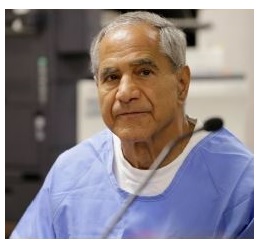
    The attorney representing Sirhan Sirhan has announced an appeal of California Goveror Gavin Newsom’s decision to deny a parole to the convicted killer of Robert F. Kennedy.

    Sirhan was granted the parole in August 2021, having served fifty-four years in prison.

    At a virtual press conference on September 28 2022, attorney Angela Berry stated that in granting the parole last year, the parole board had followed the law, but in denying it, Newsom had not. Considering Sirhan’s age – 78 – and his model prisoner record, his release should have been the normal decision. According to those in contact with him, he poses no danger to society.

    This was one of the most impressive parts of the Sept. 28 conference. Both Berry and Jen Abreu, the director of an agency called Redemption California, presented statements that they secured from those who had contact with Sirhan at Richard J. Donovan Correction Facility in San Diego. Each one of the witnesses stated that Sirhan had both an exemplary record, and was quite cooperative and easy to work with.

    In some instances, they said, he had gone beyond what was required of him. He had attended self-help classes that were offered at Donovan on his own initiative. Abreu was very familiar with this evidence since her group had worked with Sirhan for upwards of 13 months to prepare him for his last parole board hearing. She said that in 54 years of incarceration, the record showed one rule violation. And that over fifty years ago. She said, that in her experience, this was an utterly exceptional record. Consequently, according to the prison rating system for release, Sirhan was in the lowest category as per offering a danger to society.

    Berry said that at the actual hearing, two of the highest ranking commissioners were in attendance. They voted for release. They then passed on their recommendation to the entire board, which agreed with it. Sirhan joined the conference with a video taped talk. There he stated that what makes his case unusual is that even victims of the crime, like Paul Schrade, have advocated for his release. Its rare that something like that occurs.

    There were questions from reporters after the press conference. One was if Berry thought this was going to be a futile effort, due to the notoriety of her client. She replied that she did not think so, since Newsom had previously lost a case like this. In fact, she could have added that the ACLU has filed a lawsuit trying to overturn the governor’s power to do such a thing. (https://www.aclu.org/news/criminal-law-reform/politicians-have-no-place-making-parole-decisions-for-young-people)

    Berry said she will be filing her case in Los Angeles Superior Court Department 66, adding that the process could take several months. She does not think the local DA will oppose her, but the state Attorney General, due to Newsom’s position, probably will. When asked, she said she would appeal if she lost the initial hearing.

    Berry closed with two interesting points. Sirhan’s next parole hearing is scheduled for March 1st of next year. She said she plans on going through with the process at that time. Finally, in a rather forgotten episode, she added that Sirhan had actually been granted parole back in the seventies. But what happened is that the legislature passed a law giving the governor the power to intercede. The parole board then reversed itself and denied Sirhan the parole they had just handed him.

    Sirhan’s family chose Angela Berry to represent him because this kind of law – parole and prisoner release – is her specialty.

    UPDATE: Kennedys and King has received the following request from Angela Berry, the attorney representing Sirhan Sirhan.


    For Sirhan’s upcoming March 1 parole hearing, we need new, updated letters from people.

    As before, the support can be supplemented with the idea that

      1. He’s an old man and no longer dangerous, even [California Department of Corrections] experts have been saying that for many years
      2. It’s a waste of tax payer funds to house an aging man who poses no risk
      3. He shouldn’t be treated differently because of his victim
      4. The Board must find him again suitable for release and refrain from inappropriate persuasion from the Governor
      5. The governor got it wrong and he has no proper place in the decision

    Also as before, the letters should be addressed to:

    State of California, Dept. of Corrections and Rehabilitation

    Board of Parole Hearings

    P.O. Box 4036

    Sacramento, CA 95812-4036

    It would be extremely helpful if the letter authors also sent me a copy of their letter. That way, I can send them also to CDCR to ensure they make it to the “packet” that will be considered by the Board.

    Angela Berry


    Letters in support of Sirhan Sirhan may be sent to:

    Angela Berry

    A Professional Law Corporation

    75-5660 Kopiko Street, Suite C-7, #399

    Kailua-Kona, HI 96740

  • The Media Buries the Conspiracy Verdict in the King Case


    From the January-February 2000 issue (Vol. 7 No. 2) of Probe


    (Click here if your browser is having trouble loading the above.)

  • Fletcher Prouty vs Edward Epstein

    Fletcher Prouty vs Edward Epstein


    As most of you know, Edward Epstein rather quickly did a 180-degree somersault on the JFK case. After writing his valuable book Inquest in 1966, he then turned around and turned Warren Commission defender in quite a hurry. According to Vince Salandria, it was about a year or so later. And he never let up. He wrote one of the first anti-Jim Garrison books called Counterplot, that was first excerpted in The New Yorker.

    Because of that book, Epstein was in the front ranks of Oliver Stone’s attackers when his film JFK came out in 1991. For instance, at a public debate in New York, sponsored by The Nation, he was Victor Navasky’s lead attack dog against Stone. This was pretty much a witless farrago, since Navasky had never had very much interest in or sympathy for critics of the Warren Commission. Between Epstein and the late Chris Hitchens, the event was really an intellectual disgrace.

    When Jim Garrison passed on a year later, Epstein wrote an article smearing him in The New Yorker. About a year after that, he wrote another hit piece for The Atlantic. The excuse for this one was that Stone was coming out with a double tape VHS box of JFK. Because of this widened focus for the second article, Epstein could now use the occasion to broaden his focus to the celebrated director and one of his chief consultants, namely Fletcher Prouty. (For my reply click here)

    After trying to attack Prouty, and—as I proved in my reply pretty much falling on his face—Epstein tried to say that Fletcher thought that Leonard Lewin’s 1967 book Report from Iron Mountain was a work of non-fiction. According to Len Osanic, the expert on Prouty, this is simply not the case. (Click here here for Len’s website on Prouty) And in fact, when Len was setting up his fine Fletcher Prouty site, Fletcher insisted that he include a link to a 1972 New York Times story with Lewin saying the book was a satiric novel. Len also has a show in his Archives—Program 825—in which Prouty says four times that the book is a novel.

    But Fletcher appreciated the satiric edge of Lewin’s book, which was the idea that if a lasting peace could be achieved, it would not be in the best interests of society to achieve it. War was a basic part of the American economy. Lewin’s book was a New York Times bestseller and has been translated into 15 languages. US News and World Report (11/20/67) stated they had confirmation that the report was real and that President Johnson hit the roof when he read it. John Kenneth Galbraith was one of the advisors to the book and he tried to further the deception about it in an article in The Washington Post. ( 11/26/67)

    Fletcher Prouty appreciated the point of the satire. Since he knew officials at the Pentagon who acted and spoke like the people in Lewin’s book: We cannot abandon the warfare state. And, in JFK, he used some of these dictums voiced through Donald Sutherland as Mr. X in the famous scene in Washington where X tries to explain why John Kennedy was killed. Mr. X of course was based on Prouty.

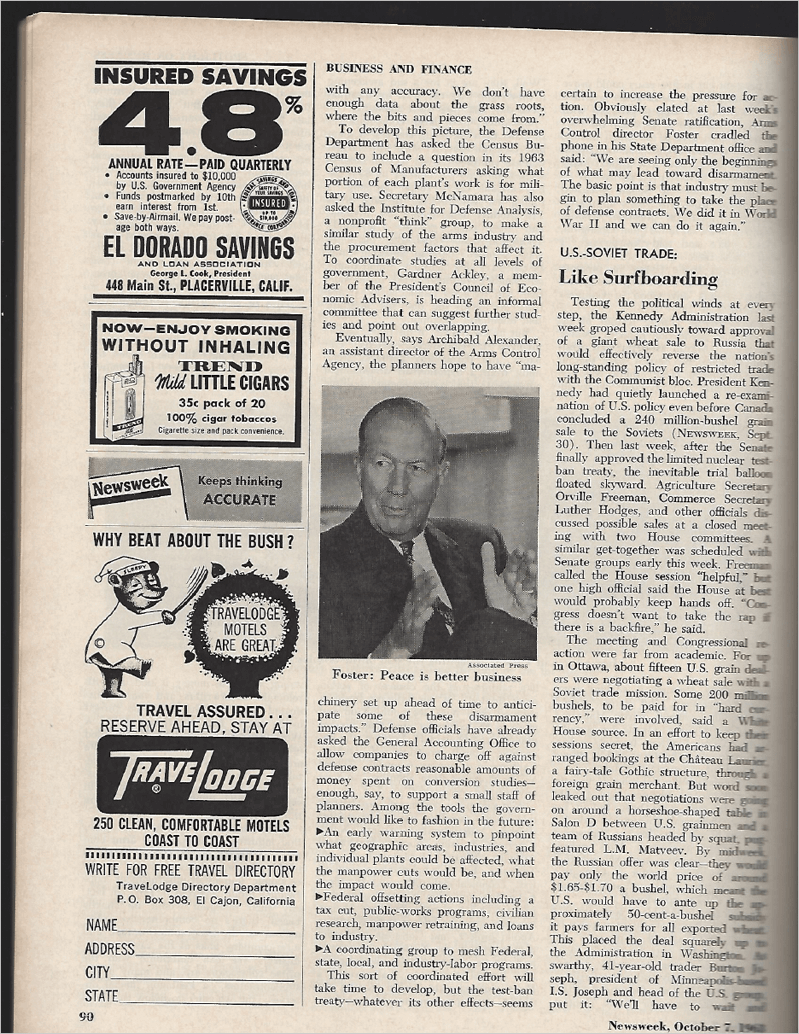
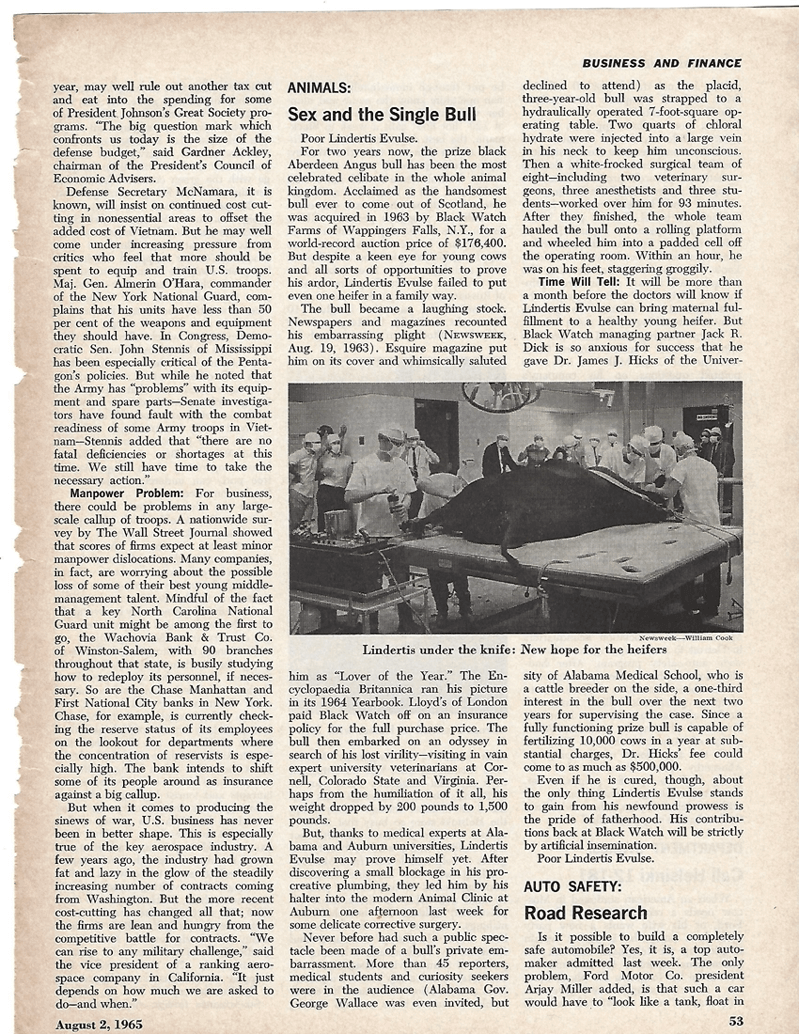
    Fletcher Prouty also wrote about the transformation that took place after Kennedy’s death. For instance, concerning the war in Indochina and how that fed the war machine. And conversely how that would not have happened if JFK had lived. Reader James Finn has clipped two valuable stories from the MSM that illustrate the point Fletcher was making, namely that Kennedy’s withdrawal plan was already impacting the war economy. And the second story shows how his death turned that deceleration around in a hurry. Predictably, it appears that Epstein was wrong about that and Colonel Prouty was correct. One more posthumous feather in Fletcher’s cap. And thanks to Mr. Finn.


    “What Can Industry Do As Pentagon Cuts Back?”

    Newsweek  October 7, 1963


    “War’s Widening Ripples”

    Newsweek  August 2, 1965


  • The Assassination and Mrs. Paine (Part 2)

    The Assassination and Mrs. Paine (Part 2)


    see Part 1

    [Allen Dulles] joked in private that the JFK conspiracy buffs would have had a field day if they had known…he had actually been in Dallas three weeks before the murder…and that one of Mary Bancroft’s childhood friends had turned out to be a landlady for Marina Oswald, the assassin’s Russian born wife.

    James Srodes, Allen Dulles, pp. 554–55

    In Part One of this review, I noted how director Max Good draws parallels in the escorting of Marina Oswald by a trio of persons who seemed to arrive out of the blue in 1963. One of the circumstances that is notable is that all three—George DeMohrenschildt, Ruth Paine, and Priscilla Johnson—spoke Russian. Again, could this be a strange accident? I, for one, have never met anyone in my life who spoke Russian. Yet, in the space of about ten months, three people entered into the lives of the Oswalds who all happened to speak Russian. And as each one left, another replaced the former, almost as if each was being managed by an off-stage supervisor as to when to take over.

    Part of The Assassination and Mrs. Paine centers on the mystery of Naushon Island. Naushon Island is the largest of the Elizabeth Islands in southeastern Massachusetts. It is very much an exclusive area, having been owned by the Forbes—Michael’s family—for a century and a half. Some of the wealthiest and most powerful members of the Eastern Establishment have vacationed there, for example former Secretary of State John Kerry, as did Michael and Ruth Paine. As Barbara LaMonica wrote in Probe magazine, the FBI found out that Michael’s grandmother, Elise Cabot Forbes, took out a $300,000 trust fund for her grandson Michael. (Probe, Vol. 5 No. 5, p. 6) That would translate to about 3 million dollars today. The logical question is: what was someone with that kind of money doing living in a suburb of Dallas/Fort Worth chumming around with an alleged Marxist agitator? And, as noted in Part One, engaging with local college students on the merits of Castroism—and taking Castro’s side while doing so.

    As we know, George DeMohrenschildt—aka the Baron—was the route through which Ruth and Michael first met the Oswalds in early 1963. (James Douglass, JFK and the Unspeakable, p. 168) The Baron was intimately involved with the White Russian community in the Dallas/ Fort Worth area. The late Philip Melanson established that this group:

    …received financial assistance from the CIA. Most of the White Russians had fled Communist persecution and had been brought to the United States by the Tolstoy Foundation, an anti-communist lobby that received yearly subsidies from the Agency. The Russian Orthodox Church, a centerpiece of the very conservative and religious White Russian Community, also received Agency philanthropy. (Spy Saga, p. 79)

    George Bouhe was a prominent member of this expatriate community. Bouhe was Marina’s English tutor. (Probe, Volume 7, No. 3, p. 3) When Jim Garrison told Marina that Bouhe was also a neighbor of Jack Ruby, the man who killed her husband, Marina said she was aware of that. How? Because Bouhe visited her to tell her about it. He said it was just a coincidence that he happened to live next door to her husband’s killer. As researcher Steve Jones noted, was this not a possible connection between Oswald and Ruby? Did the Warren Commission ever explore it? This reviewer has never seen any evidence they did.

    II

    In Max Good’s film, Ruth Paine tries to imply that she only met George DeMohrenschildt once, in early 1963.

    As Steve Jones mentioned in 1998 in Probe magazine, this is not accurate. In her appearance before the New Orleans grand jury, Ruth admitted to Jim Garrison that she and Michael met up with the Baron in 1967. It turns out they were dinner guests of his and they discussed, among other things, a copy of the infamous backyard photo which was recently found amongst the Baron’s belongings after the assassination, upon his return from Haiti. (Probe, Vol. 5 No. 3, p. 9)

    As Carol Hewett noted, in May of 1963, Michel Paine returned a record player and some records to Everett Glover, which Marina had borrowed from the Baron. (Probe, Vol. 5 No. 1 pp. 16–17) Glover took the items to George’s storage unit. When the Baron returned from Haiti, they discovered another version of the infamous backyard photographs in that storage unit.

    As the late Jim Marrs wrote, there are some notable aspects about this version of the backyard photo; but we will focus on the discovery of the picture. First, as described, it was not unearthed until George returned to Texas from Haiti. (Jim Marrs, Crossfire, p. 287) The Baron’s widow told Marrs that they had never seen the picture before then. She was also convinced the photo was planted, while in storage. Although Everett Glover later had placed the Baron’s things in storage, Ruth Paine also had access to the storage space. (ibid) George later wrote that he only discussed the photo with his closest friends, which apparently included the Paines. (Op. Cit. Probe, p. 17)

    But, with the Paines, there is always a capper. Here it is:  Michael Paine told Dan Rather in 1993 that he saw one of the infamous backyard photographs in April of 1963! He told CBS that Oswald proudly showed him a photo as he picked him up for a dinner engagement. As Ms. Hewett asked: if this is true, why did Michael never say anything about this to the FBI or the Warren Commission? (Probe, Vol. 5 No. 1, p. 16)

    As mentioned in the first part of this review, Sylvia Hyde—Ruth’s sister— refused to talk to Max for his film. Jim Garrison was curious about Sylvia, since he could not find out who she worked for. Garrison questioned Ruth before the New Orleans grand jury about this. To be mild, Ruth is rather unhelpful. Even though she spent over a week with her back in 1963, she cannot figure who she worked for. But what makes it even more puzzling, she cannot even say where she lived! Recall, she had driven down to the central Atlantic coast to visit her and she does not recall where she drove to? (Transcript, 4-18-68, pp 58–62). She ended up insinuating to the DA that Sylvia lived in Virginia, most likely Falls Church. But a listener to Len Osanic’s Black Op Radio program later found out that she lived in Maryland.

    An aspect that Sylvia Meagher insinuated about Ruth Paine was her predisposition against Oswald. On more than one occasion, Ruth has said she was taken aback that Oswald would call her about contacting attorney John Abt. If one can comprehend it, she was surprised he was also presuming of his own innocence. As Joseph McBride later pointed out, in an article written by Jessamyn West for Redbook in July, 1964, Ruth went further. She told West she was glad that Ruby killed Oswald. This surprised the author. She gave Ruth a chance to repair the damage and this is what Ruth said: “I thought Lee’s death this way would be so much easier for Marina.” (Warren Commission Vol. 22, p. 856) Recall, Oswald never had an attorney while in custody, the Warren Commission never allowed any legal counsel for him, and their hearings were closed to the public. Ruth Paine, the kindly Quaker lady, somehow thinks that due process and right to counsel can go to Hades in regard to Oswald. And let us not forget, John Kennedy.

    III

    Max Good has structured his film as a kind of point/counterpoint dialogue between the critics of the Warren Commission and its stalwarts. From the latter side we hear from, in addition to Ruth, Max Holland, and Gerald Posner. I cannot see how anyone can complain about their treatment and/or the balance of the film. To give just one example, Posner says that Oswald’s last two calls were to Ruth about an attorney and about Marina, but that is not really the whole story. Oswald tried to make one other call on Saturday night and the Secret Service would not let it through. It was to a former military intelligence officer named John Hurt in North Carolina. How Oswald ever knew this man, or his phone number, is a mystery worthy of Sherlock Holmes. (Click here for details) It furthers Senator Richard Schweiker’s concept that Oswald had the fingerprints of intelligence all over him.

    Ruth gets plenty of speaking time. And the film shows that she is a standard bearer for many Establishment-backed TV specials which support the official story, for example the London trial which featured prosecutor Vincent Bugliosi and defense attorney Gerry Spence. About that one, she says that it was like a regular trial. This reviewer spent a large part of a book showing that such was simply not the case. (See, The JFK Assassination: The Evidence Today, pp. 3–70) She then mentions the Peter Jennings special on ABC in 2003, which she calls one of the best.

    Recall, this was the program in which Dale Myers prepared a computer simulation which proclaimed that the Magic Bullet—about which so much controversy has swirled for so long—should not be titled the Single Bullet Theory. That title denotes the facts that one bullet went through two men, causing seven wounds, smashing two bones, and emerging pretty much intact. Dale said this should not be called a theory. With his trusty computer, he renamed it: the Single Bullet Fact. That very questionable computer graphic has been effectively attacked at least five times: by Bob Harris, by Pat Speer, by Milicent Cranor, by Dave Mantik and by John Orr. (For the Harris demonstration, click here and for the Speer version, click here)

    Around the same time in the film, Holland tells the audience, well the Warren Commission was not perfect and we should be skeptical. But saying the murder of Kennedy was a coup d’etat, that is just going too far. This from a man who was responsible for one of the very worst documentaries ever assembled on the JFK case. One which was not even supported by some of the backers of the Commission. And according to Speer, Holland likely knew the main thesis was faulty before the show aired. (Click here for details)

    Oliver Stone gets mentioned, for instance by former Motion Picture Association of America president Jack Valenti, who violently objected to the film, calling it a “monstrous charade.” Michael Beschloss says that Stone created myths. Since everything Stone presented about the Vietnam War in 1991 turned out to be accurate, those two statements are understandable, for Valenti was in the White House working for LBJ as he implemented the first escalations after Kennedy’s death. In 1997, Beschloss tried to dispute Stone on the Vietnam War in his first book on LBJ called Taking Charge. Unfortunately for him, at the end of that year, the Assassination Records Review Board declassified 800 pages of documents which proved Stone was correct on this issue. (New York Times, 12/23/97, “Kennedy Had a Plan for Early Exit in Vietnam”) And as Stone shows in the film JFK Revisited: Through the Looking Glass, LBJ was fully aware of Kennedy’s exit plan, disagreed with it, and consciously worked to reverse it.

    Ruth mentions Stone again and says that celebrated film director never tried to talk to her during the making of the film JFK.

    Stone seems to contradict her in the film. And when I asked him about this, he stated he did try and talk to her and later added, “You can take that to the bank.” (Email and phone conversations, 6/6 and 6/8/22)

    IV

    The film closes with three tantalizing areas of controversy. The first is the so-called “Walker note.” This was allegedly a set of directions left by Oswald for his wife in the wake of his attempted shooting of General Edwin Walker. There is a big problem with this: the shooting happened in April. Oswald was never even considered a suspect until after the Kennedy assassination, over 7 months later. At that point, as if by magic, two things happened.

    First, the FBI turned the original bullet, a steel colored 30.06, into a copper coated 6.5 mm projectile. (Gerald McKnight, Breach of Trust, p. 49; DPD General Offense report of 4/10/63) Needless to say, that 30.06 projectile would not be fired with the Oswald Mannlicher-Carcano 6.5 rifle. Secondly, Ruth Paine transported the Walker note to Marina through a book she sent via the Secret Service. This is the note the Secret Service was so suspicious of that they thought she wrote it. (DiEugenio, Destiny Betrayed, second edition, p. 203)

    But it’s even worse than that. The best witness in the Walker case that summer was Kirk Coleman. Coleman said he ran out when he heard the shot. He saw two men escaping the scene in their cars. Neither of the men looked like Oswald and, according to the Warren Commission, Oswald could not drive. (McKnight, p. 57) Coleman was never called as a witness by the Commission. That is how important the Walker note was.

    As mentioned above, both Ruth Paine and Priscilla Johnson produced evidence that Oswald had been in Mexico City. This was after the official searches of the Paine household. In fact, with Johnson, this went on until September—10 months after the first searches. (Mark Lane, Plausible Denial, pp. 66–67) Even members of the Commission—like Richard Russell—felt this was over the top and it raised more questions than it answered. In fact, there is an internal problem with the “Oswald letter” that Ruth took from her desk secretary. Namely, Oswald likely would not have known that a certain person in the Cuban embassy had been rotated out and replaced by someone else, which is what he wrote about in his alleged letter. (Click here for details) In fact, due to some very good work by David Josephs, among others, many critics do not think Oswald went to Mexico City. (Click here for details)

    One last point about the Mexico City letter. Carol Hewett wrote that it was when Ruth Paine decided to move her furniture that Ruth actually took the letter. (Probe, Vol. 4 No. 3, p. 27) Ruth appears to say that in the film also. Chris Newton, due to some insightful observations, raises the most fundamental questions about this story, namely, that the furniture was not really moved. That, in reality, it stayed where it originally was. If Chris is correct about this, at a minimum, what it seems to mean is that Ruth wanted a pretext and landmark to pick up that letter. I cannot begin to describe Newton’s work in a synoptic form. I can only advise the interested reader to please go through this attached thread. (Click here for details)

    Finally, the impression left by Ruth about her picking up Marina from New Orleans and taking her to Irving, was that it was more or less made by serendipity. Yet, during her cross country trip, the FBI discovered that she had talked about it well in advance to others she had visited, presenting it like a fait accompli. (Probe, Vol. 3 No. 4, p. 15)

    And related to this, in some very interesting work by Tom Gram, it appears that Oswald was getting mail at Ruth’s Irving address in late July of 1963. (Email communication of June 22, 2022) And, in fact, Marina had also signed a transfer document to Ruth’s home in May. Gram writes that Ruth likely encouraged this on the grounds that it would ensure she would not miss anything. (Click here for details)

    Max Good has done a creditable job in making this film. He has raised the correct questions and raised them in a fair and adroit way, giving both sides time to mount their arguments. He has done it all in a skillful manner, considering the budget constraints he worked under. He deserves kudos for his difficult travail and the public should extend him the courtesy of watching his film. It is overdue, but still it is the first of its kind. If you were unaware of the questions, you will be surprised. If you were aware, you will be pleased that someone finally placed them in the pictorial public domain.

  • The Assassination and Mrs. Paine (Part 1)

    The Assassination and Mrs. Paine (Part 1)


    Film-maker Max Good has spent several years working on a film about Ruth and Michael Paine and what their precise relationship was to the assassination of President John Kennedy. Although I have some reservations about it, it is worth watching and I encourage our readers to do so.

    One of the most puzzling aspects about it is this: Why did it take almost 60 years for anyone to make a film on such a rich, relevant, and interesting topic? Perhaps because there are no references to either Paine in the indexes of Harold Weisberg’s book Whitewash, Edward Epstein’s Inquest, or Josiah Thompson’s Six Seconds in Dallas.

    Of the first generation of critics, Sylvia Meagher’s book devotes by far the most pages to the Paines. Perhaps, we should quote her overall impression of Ruth Paine in order to place Max’s film in perspective:

    Ruth Paine…is a complex personality, despite her rather passive façade…Some examples from her testimony show a predisposition against Oswald and a real or pretended friendliness toward the FBI and other Establishment institutions, which should not be overlooked in evaluating her role in the case…Mrs. Paine is sometimes a devious person, and her testimony must be evaluated in that light. (Meagher, Accessories After the Fact, p. 217)

    But it was really Jim Garrison who first tried to place the Paines under the microscope. For example, he was interested in the family ties of Ruth, specifically who her sister Sylvia worked for. In fact, he questioned Ruth about this point during Ruth’s appearance before the New Orleans grand jury. To put it mildly, Ruth replied in a rather non-responsive manner, a point we shall examine later.

    Ruth and Michael Paine spent, by far, the most time on the witness stand for the Warren Commission. According to Walt Brown, the combined total questions they answered was over six thousand. In fact, Ruth was so eager to answer questions, she even volunteered areas of examination that she thought the Commission had bypassed. For instance, as Albert Jenner was about to close his questioning of her on March 21, 1964, Ruth interjected with:

    Ruth: You have not asked me yet if I had seen anything of a note purported to be written by Lee at the time of the attempt on Walker. And I might just recount for you that, if it is of any importance…

    Jenner: Yes, I wish you would…Tell me all you know about it. (WC Vol. 9, pp. 393­–94)

    As we shall see, a major problem with the Paines is this: they surfaced evidence of things Oswald did which were in fact, dubious acts. One would be the supposed Walker shooting, another would be Oswald’s alleged journey to Mexico City. Looked at with the perspective, we have today—after the work of the Assassination Records Review Board (ARRB)—the implicative nature of these events is rendered suspect. Therefore, the fact that the Paines were part of finding evidence that incriminated Oswald—in events that perhaps did not occur—this should merit some notice. In fact, 5 days after she delivered the Walker Note to the Secret Service—in Marina Oswald’s book—Ruth was visited by two Secret Service agents. They were actually returning her the note, since they thought it was from her. (James DiEugenio, Destiny Betrayed, second edition, p. 203)

    It is surprising to juxtapose the star billing the Commission gave the Paines with the fact that neither the House Select Committee on Assassinations (HSCA) nor the ARRB called them in for questioning. It is, perhaps, a bit disturbing. For during and after the days of the ARRB, a whole wave of information created a new data plateau on the Paines. The parties who were largely responsible for this new information were author George Michael Evica and researchers Carol Hewett, Barbara La Monica, and Steve Jones. Evica wrote a book, A Certain Arrogance, which dealt with the Paines and their religious background. Before that, Hewett, LaMonica, and Jones wrote a series of essays on the couple for Probe magazine. We will be referring to both in this review.

    II

    The way this reviewer got involved with the matter was that I was the publisher of Probe magazine when Hewett, LaMonica, and Jones wrote their essays. I thought their work was new and interesting. Author Thomas Mallon was so dismayed by their work that he wrote a book contesting it. (Mrs. Paine’s Garage, 2002) The writing trio began their series with a truism: “Ruth and Michael Paine…are among the most significant, yet least studied, of the figures surrounding the Kennedy assassination.” (Probe, Vol. 3 No. 4 p. 14) After reading their work, this was an understatement. The three were responsible for a set of eight essays which one can reference on this site.

    A provocative point Carol conveyed dealt with Ruth’s so-called discovery of Lee Oswald’s letter to the Russian embassy, which he wrote at her home over Memorial Day weekend, 1963. In her testimony before the Commission, Ruth tried to explain why she took the rather remarkable step of picking the letter up, hand copying it, and eventually giving it to the FBI. She said that as she glanced at the letter, the first sentence contained a lie and she was insulted by Oswald using her typewriter to do such a thing. But if one buys the official story, which Ruth does, the first line of the letter, about Oswald visiting a Russian diplomat in Mexico City, was not a lie. Commission lawyer Albert Jenner understood that this made for a serious problem. He (wisely) decided to go off the record. Jenner knew they had to patch over Ruth’s story. (Probe, Vol. 4 No. 3, p. 17)

    Throughout that series, the authors exposed things like this to the light of day. One more example will suffice. There had always been a question as to why the relationship between Ruth and Marina Oswald ended after the assassination. When Marina testified before the New Orleans Grand Jury, she addressed this. As we know, Marina was detained by the Secret Service for weeks afterwards. She told the jury, “I was advised by the Secret Service not to be connected with her (Ruth Paine)…She was sympathizing with the CIA.” When assistant Andrew Sciambra pursued that line, he asked her, “In other words, you were left with the distinct impression that she was in some way connected to the CIA?” The one word reply was, “Yes.” (Probe Vol. 7 No. 3, p. 3) Was this the reason the Secret Service returned the so-called Walker Note to Ruth? (James DiEugenio, Destiny Betrayed, second edition, p. 203)

    The separation of Ruth from Marina after Kennedy’s murder is a good way to introduce one of the most intriguing and compelling aspects of Max Good’s film. Because as we know, prior to Ruth Paine becoming so inseparable from Marina, the person who escorted the Oswalds around Dallas/Fort Worth was George DeMohrenschildt. As Max asks Ruth in the film: Why would a White Russian be so interested in a Communist? Ruth replies that this is a good question.

    We actually know why. Near the end of his life, DeMohrenschildt stated that, on his own, he would have never come near the Oswalds. J. Walton Moore, chief of the CIA station in Dallas, asked him to do so. (DiEugenio, p. 194) George, sometimes called the Baron, arranged a gathering of the White Russian community with the Oswalds in late February of 1963. From that gathering, Ruth arranged a one-on-one meeting with Marina. Approximately three weeks after that meeting, April 7th, Ruth composed a letter asking Marina to move in with her. Kind of fast? (Probe, Vol. 5 No. 1, p. 14)

    As described in the film by myself and Peter Scott, around this time, George left for Haiti, had a briefing in the DC area with the CIA and military intelligence, and then had about $300,000 deposited into his account. (James Douglass, JFK and the Unspeakable, p. 168) As I ask in the film: Was this for services rendered? We will never know, since after he was subpoenaed by the HSCA, the Baron was either killed or took his own life by shotgun blast.

    One of the strongest parts of the film is the segue from DeMohrenschildt to Priscilla Johnson. Because after the (likely) forced cut off between Ruth and Marina, Johnson entered the picture—and she stayed there for a long time, like 13 years. Priscilla always denied she was with the CIA. She even threatened to sue Jerry Policoff over this. It’s a good thing she did not, because as Max shows in the film, the ARRB pretty much sealed the deal on her. He shows the documents which categorize her as a “witting collaborator,” meaning that she did not need to be employed by them; they could rely on her to write sympathetic stories anyway. (See also, John Armstrong, Harvey and Lee, pp. 279–82)

    As the film shows, you have one CIA asset—the Baron—escorting the Oswalds around Dallas/Fort Worth upon their return from the USSR. You had another—Johnson—picking up Marina after the assassination and becoming her personal escort. And when Priscilla finally wrote her book about the Oswalds, Marina and Lee, it completely backed the Warren Report.

    In the interim, you had Ruth and Michael Paine. Further, both Ruth and Priscilla were producing evidence Oswald was in Mexico City, when, in fact, Marina initially insisted to the Secret Service he was not. (DiEugenio, p. 203; Armstrong, p. 696, Secret Service report of Charles Kunkel, 12/3/63) And many researchers today—including the authors of the HSCA’s Mexico City Report—agree he wasn’t.

    The film makes this point about parallels rather subtly; I have made it more bluntly.

    III

    Although it is not part of his ostensible subject, Good does a nice job in penciling in the background to his story: namely the presidency of John Kennedy. As many have, he notes that some of JFK’s policies fostered opposition from people in high places, for example the Bay of Pigs and the Missile Crisis. But people like the Paines and Priscilla Johnson have always used the old standby that, for those examining the case, it is hard to accept that a little man like Oswald could single handedly erase a great figure like Kennedy. The subtext being that this is what fulfilled Oswald as a large figure in history, for example Michael voices this mantra early in the narrative. But if that was so, then why did Oswald never claim credit for the assassination? On the contrary, as the film shows, he loudly stated he was a patsy.

    At this point, Ruth says that the Warren Report always made sense to her. Priscilla tops this with an astonishing comment: she says that conspiracy theories have done more damage to the country than the death of JFK did. In the film, it is made clear that when the police arrived at the Paine household, looked for a weapon, and did not find one in the rolled up blanket Marina thought it was in, this shocked Mrs. Paine. It started her down the road to incriminating Oswald in the press.

    But it was Ruth who picked up Marina from New Orleans, packed the car, and drove her to Irving to stay with her, thus now accomplishing what she was trying to do since April. If there was a rifle amid the belongings, why did neither she nor her husband notice it while packing and then unpacking the station wagon? They missed it twice?

    One of the valuable contributions the film makes is the outlining of the curious family ties that the Paines had. (For a good summary see Evica, pp. 364–65) As noted, Ruth’s father, William Avery Hyde, and her brother-in-law, John Hoke, worked for US AID, which was closely tied to the CIA. As Greg Parker discovered, her sister, Sylvia Hyde Hoke, worked on a joint CIA/Air Force project. (Lee Harvey Oswald’s Cold War, pp. 266–68) One of the most pungent moments in the film is when Max calls Sylvia and asks for an interview. She instantly hangs up on him. Michael Paine’s mother, Ruth Forbes Young, was best of friends with Mary Bancroft. Bancroft was both an agent and girlfriend of CIA Director Allen Dulles. As author Bill Simpich notes in the film: could Mary have noted to Allen the utility of the Quaker/ Unitarian couple in performing surveillance duties on the left?

    In fact, this is the theme of Evica’s book: how Allen Dulles used these religious groups—Quakers and Unitarians—for espionage work, for example Noel Field. And Bancroft knew about this. (Evica, p. 116) Evica ended his book by suggesting that Allen Dulles may have helped secure for the Paines a sterling character recommendation from a wealthy couple at the beginning of the FBI’s inquiry into the JFK murder. This was from Frederick Osborne Jr. and his wife Nancy. (A Certain Arrogance, pp. 250–58) Allen had worked with Frederick’s father in the National Committee for a Free Europe and also in the CIA’s Crusade for Freedom. And there are examples of surveillance activities by the couple.

    Sue Wheaton appears in the film. She met Ruth in Nicaragua in 1990, after the election of Violetta Chamorro. Ruth was with Pro-Nica, a project out of St. Petersburg. This was a more conservative strain of the Quaker movement. Wheaton said that Ruth told her that their Quaker group was funded primarily by “6 wealthy, conservative individuals from the Southeast.”(Probe, Vol. 3 No. 5, p. 9) Wheaton also noted that Ruth’s group ran a sawmill project on the east coast of Nicaragua, a Contra holdout and nexus of CIA based activities. Ruth showed up at Wheaton’s council meetings of the anti-Contra group, of which Pro-Nica was not a member. Wheaton got the distinct impression Ruth was taking down information about individuals and groups in attendance. Ruth “studied the bulletin board there, copying everything on it…Also she made reference to people she knew in the U. S . Embassy.” (ibid) Wheaton later added that Ruth would show up with two cohorts and these two men would make tape recordings and take pictures. Ruth’s plea was they were authorized by the Nicaragua Network to take photos, but when this was checked, the claim turned out to be ersatz.

    In the spring of 1963, Michael Paine was engaging students from Southern Methodist University in debate and discussion “about communism in general and Cuba in particular.” During these debates, it was Michael who took the role of a Castro advocate. He even bragged about being familiar with an actual communist, “an ex-Marine who had recently returned to the States with a Russian wife,” an obvious reference to Lee Harvey Oswald. Michael also encouraged these students to go to local commie cell gatherings. (Probe, Vol. 5 No. 1, p. 14)

    This last point leads us to one of the most provocative pieces of evidence concerning the Paines. Did Detective Buddy Walthers find the notes Michael kept of these meetings? These would be the file folders found at their home with information on communist, Castro sympathizers. They were picked up by Walthers on the weekend of the assassination and he made a contemporaneous report about them. (Armstrong, pp. 879–80) Over time, they were made to disappear, until they ended up in the Warren Commission “Speculations and Rumors” section. One of the most interesting parts of the film is that it appears that Ruth has employed, or is good friends with, a veteran of the Defense Investigative Service. Max talked to this gentleman and he tracked down one of the (now) empty file folder boxes. He informs Max that Ruth does a lot of studying on the Kennedy case.

    There is one other example of this possible activity that could have been used. Cliff Shasteen was a barber who cut Oswald’s hair a few times in the fall of 1963. Cliff said that Oswald was accompanied twice by a 14 year old boy who did not get his hair cut or say anything. But strangely, this boy appeared by himself a few days before the assassination. Once there, he began to rant about the benefits of one world government and the plight of “have nots” in society. Shasteen was taken aback, because he knew he was not a local kid. The youth never returned. (Click here for details)

    Greg Parker did a fine job of inquiring into this odd, but notable occurrence. Greg deduced that the description fit future actor Bill Hootkins perfectly. Who had access to both Hootkins and Oswald? Ruth Paine tutored Hootkins in Russian that fall. Bill’s mother told the Bureau that Ruth would pick her son up and take him to St. Mark’s—an upper class, private school where Ruth worked at—for lessons. Hootkins’ contact information was in Ruth’s address book. Did Ruth take young Bill to Irving instead?

    see Part 2


    Purchase here on iTunes.

    Purchase here on Amazon.

  • American Exception Episode 34: JFK Assassination Debate

    American Exception Episode 34: JFK Assassination Debate


    Click here to listen to the debate on the podcast site.


  • Fletcher Prouty vs. the ARRB

    Fletcher Prouty vs. the ARRB


    As we know, prior to the opening of Oliver Stone’s film JFK, there was a deliberate attempt to sandbag the picture. This included efforts both inside and outside the critical community. On May 14, 1991—a full seven months before the premiere—Jon Margolis wrote a hatchet job on a film he had not seen for the Dallas Morning News. On May 19th, George Lardner in the Washington Post—supplied with a bootleg copy of a script by the late Harold Weisberg—did the same. Lardner included a blast at the film’s Vietnam withdrawal thesis. He wrote, “That there was no abrupt change in Vietnam policy after JFK’s death.” When Stone was allowed to reply to this, he and Lardner continued to argue over that withdrawal thesis. (Washington Post, June 2, 1991) The man who brought the Vietnam withdrawal concept to Stone was retired Air Force Colonel Fletcher Prouty. Prior to the film’s mid-December 1991 opening, the November issue of Esquire magazine published a long cover story on the film. It was written by the late journalist Robert Sam Anson.

    In 1975, Anson had written a book on the assassination entitled, “They’ve Killed the President!” If any editor at Esquire had read it, they should have thought twice about giving Anson the assignment, because Anson’s book contains one of the worst smears in the literature on New Orleans DA Jim Garrison. And since Stone based his film on Garrison’s book, he was the protagonist of the picture.

    Clearly, Anson had a dog in this fight. His article, “The Shooting of JFK,” accused Garrison of being “closely associated with organized crime” and also of leaving out of his book, On the Trail of the Assassins, his trial for bribery and income tax evasion. As Bill Davy pointed out, Garrison had no such mob association. (Let Justice Be Done, pp. 149–67) And Garrison had written about that trial, which resulted in his acquittal. (Garrison, pp. 254–72) But Anson had an agenda: Kennedy was likely killed by a conspiracy, but Stone and Garrison were not the people to tell us what really happened.

    Anson described Prouty as a writer for “one of the raunchier porno magazines.” He then wrote that Prouty’s by-line and association with the Joint Chiefs of Staff changed often over time. Neither of these were accurate. And Prouty’s singular achievements—his penning of the classic book The Secret Team, the fact that his many essays contained a remarkable amount of new and valuable information—this was all cast aside by Esquire. Fulfilling his agenda, Anson dutifully played off historian John Newman against Prouty, with Newman as the white hatter in Stone’s consulting crew and Prouty as the black hat.

    Anson’s article had some notoriety in the MSM. So when the film opened, Prouty had a bleeding 3 inch gash over his right eye. And since he was responsible for originating the film’s overarching thesis—namely that President Kennedy was leaving Vietnam when he was killed—he became a target. The fact that the MSM had completely missed the idea that the Vietnam War would not have happened if Kennedy had lived—that was something they did not want to face up to.

    II

    To fully understand the second stage of the issue at hand, one has to look back at Douglas Horne’s 5 volume series, Inside the Assassination Records Review Board. Horne included an important 15-page section in the first volume entitled “The Culture of the ARRB.” (Horne, pp. 9–24) This was an eye-opening, sometimes startling, section of that series.

    Horne is at pains to describe a kind of ‘future shock’ upon his arriving in Washington to work for the ARRB. With the exception of Jack Tunheim, none of the five Board members were really familiar with the case. (Horne, p. 10) When Doug suggested a series of briefings to bring them up to speed, Chief Counsel Jeremy Gunn advised against it:

    He said they had little interest in the evidentiary conflicts that characterized the JFK assassination and had demonstrated great impatience with him on more than one occasion when he had attempted to discuss the ambiguity in the medical evidence arena. Furthermore, Jeremy told me that none of the Board members believed there had been a conspiracy to kill President John F. Kennedy. (Horne, p. 10, italics in original)

    And this is where Horne’s disclosures become even more interesting and they dovetail with the subject of this essay. Horne estimates that as much as 2/3 of the staff believed the Warren Commission was correct. This is remarkable, especially since the Board was operating in the wake of the national uproar created by Stone’s film. Most polls from that time period would have shown that upwards of 75% of the public believed Kennedy had been killed as a result of a conspiracy. In sum, concerning this question, the Board was not a representative cross section of the populace.

    Horne writes there was strong prejudice, a kind of arrogance, toward any colleagues or independent researchers who questioned the Warren Commission’s verdict. (Horne, p. 11) He then extended this attitude to David Marwell, the staff director, which suggests that one reason the Board appointed Marwell may have been because he agreed with them. (Horne, p. 12) And the decisions on hiring—which Marwell had some control over—were also an echo of this thinking. (Horne, p. 13)

    There can be little doubt about Marwell’s mindset. In a newspaper interview he did in 1994, he said he found Gerald Posner’s Case Closed a valuable book on Kennedy’s murder. But beyond that, Marwell was on cordial terms with Posner and with Commission advocates Max Holland and Gus Russo. (ibid) Horne writes that the majority of the staff felt the problem with the JFK case was Cold War secrecy, “not the evidence itself.” He characterizes this split between him and most of his colleagues like this:

    The ongoing battle in our society over how to understand the Kennedy assassination, between the critical research community on the one hand, and the establishment’s historians and media organs on the other, was being played out in microcosm within the ARRB—and the deck was stacked in favor of the conservative views of the Board members and the Executive Director. (Horne, p. 14)

    If the reader needed more evidence on this score, consider what Board member William Joyce told the LA Times on August 20, 1997: he said he thought the Commission did a “very good job.” Recall, this is after the Board secured the evidence that Gerald Ford, with a stroke of a pen, altered the Warren Report and moved up JFK’s back wound into his neck. The late Kermit Hall made similar statements around this time: namely that Oswald fired all the shots, there was no conspiracy. (Maryland Law Review, Vol. 56 No. 1) Board member Henry Graff told Penthouse Magazine, “I have found nothing to suggest there was anything but a single gunman. What put him up to it…I don’t think we’ll ever know.” (January, 1997)

    To summarize this general attitude, on page one of the ARRB’s Final Report, these words appear in reference to Stone’s feature film: “While the movie was largely fictional…” No one who was objective, or in command of the facts of the JFK case, could write such a phrase. This is quite close to the type of boilerplate that the likes of Hugh Aynseworth or the late Vincent Bugliosi would bandy about. In my book The JFK Assassination: The Evidence Today, I do a scene-by-scene analysis of the first third of the film. In light of the documents the Review Board opened, in many instances Stone looks rather conservative in his composition of the picture. (DiEugenio, pp. 189–94) Therefore, whoever wrote that part of the report was either uninformed or rather biased. We can consider that comment a kind of parting shot by the Board at the screenwriters, Stone, and Zach Sklar.

    III

    As mentioned above, Horne observes that Marwell and the Board chose a staff that was largely neutral or sided with the Krazy Kid Oswald crowd. Upon going to work, Horne’s first direct supervisor was Tim Wray. Wray was the chief of the Military Records Team. He was a recently retired Army infantry colonel and was a veteran of the Pentagon. Horne said about Wray, “Tim was an open Warren Commission supporter.” (Horne E-mail, 4/23/22) Wray bragged to Horne about knowing “Goldberg over in the Pentagon,” the guy who actually wrote the Warren Report. (Arthur Goldberg is named on page v of the Warren Report as a staff member.)

    According to Horne, “Tim used to needle me a lot about the psychology of JFK researchers and what he called their slipshod methodology, etc. I simply endured it (had to!) and ended up taking his job.” This last refers to Wray’s departure in 1997, which was not explained. Horne also includes the following revelation about Wray, “I tried to get him to read JFK and Vietnam, but he said he ‘couldn’t finish it’ and returned it to me with coffee stains all over the pages.”

    The last disclosure is relevant to the main point of this essay. For this reason: it was initially Fletcher Prouty who had informed Oliver Stone about President Kennedy’s intent to withdraw from Vietnam. Prouty worked with and under General Victor Krulak. Krulak had been to Vietnam in September of 1963 and, as opposed to his trip partner, diplomat Joseph Mendenhall, he had given Kennedy a rather benign report about the progress of the war.

    The next month, Kennedy was ready to enact his withdrawal plan. It had been prepared by Secretary of Defense Robert McNamara as far back as 1962. McNamara had given instructions to the overall commander in Vietnam, General Paul Harkins, to tell each department in Saigon to prepare withdrawal schedules. These schedules had been given to the Secretary at the May Sec/Def conference of 1963 in Hawaii. Krulak was supposed to be on the journey to Saigon with McNamara and Joint Chiefs Chairman Max Taylor that fall, but he was not. The McNamara/Taylor Report was prepared with electronic exchanges between Saigon and Washington. In Washington, Krulak prepared the final report under Bobby Kennedy’s supervision. (John Newman, JFK and Vietnam, 2017 edition, p. 408) That report was designed to serve as President Kennedy’s exit plan from Saigon. The pretext was that since the war was going alright, Americans could now depart.

    Working under Krulak gave Colonel Prouty an unusual window into Kennedy’s plan to leave Vietnam and the Colonel wrote and spoke about this more than once after he left his position in the Pentagon. His writings and utterances on Indochina are both comprehensive and incisive to anyone who has read them. And thanks to Len Osanic, who runs the best Prouty web site there is, we have access to them. (See Len’s site at prouty.org) In fact, years before Newman published JFK and Vietnam, Prouty was aware of most of the salient points that John would address in that milestone book, for example: falsification of intelligence reports by the CIA, the importance of the McNamara/Taylor report, its relation to NSAM 263, etc.

    IV

    As we have seen, Tim Wray had no time or use for any of this rather bracing information about Kennedy’s intent to leave Indochina. Somehow, the fact that Vietnam would not have happened if Kennedy had lived apparently did not interest him. What he really wanted to hone in on was the Prouty information about the 112th Unit at San Antonio being unable to provide further security for President Kennedy’s upcoming trip to Dallas. Looking at the ARRB documents collected on this subject by Malcolm Blunt, it appears that Wray recruited his colleague Chris Barger and chief counsel Jeremy Gunn to accompany him on this mission. (Horne assured this writer that Barger was not the instigator on this.)

    In an ARRB memo secured by Blunt of February 28, 1997, the reader can see that the Board entitled this mission “The 112th Military Intelligence Project.” What is odd about this whole effort is that, although it was apparently designed to discredit Prouty, that was not actually the end result of the Board’s efforts. For example, investigator Dave Montague got in contact with former Lt. Stephen Weiss, who was with that detachment in 1963 but was now retired. He told Montague that Colonel Robert Jones had requested they get in contact with the Secret Service and offer them supplementary protection for President Kennedy in Dallas. Weiss was surprised that the Secret Service declined. He said the word was that a man, who’s name phonetically sounded like [Forrest] Sorrels, declined the offer. (ARRB memo, p. 1) Another person with that detachment, Ed Coyle, had been in on regular interagency group conferences, for example with the FBI and local police groups. He also thought that the 112th would be asked to supplement the Secret Service for Dallas. He was also surprised when the offer was declined. (ARRB memo, p. 2, this was written in handwritten notes of 7-19-96)

    In other words, there were two independent sources who confirmed that the information conveyed by Prouty was accurate in its outlines, in other words, the 112th offered help in protecting the president and it was declined. The Board then tried to discredit Jones. Wray insisted he was not an Operations Officer but an Intelligence Officer and, therefore, somehow that put him out of the loop. He compared that position to someone who just figured out the Japanese attack on Pearl Harbor—in 1945, after their surrender.

    I don’t think most people would agree with that characterization, because, for example, the HSCA termed Jones as an Operations Officer. In certain FBI documents, he was described as an Operations Officer on 11/22/63. (E-mail, Blunt to the late Ed Sherry, 1/19/07) The Secret Service also labeled him as such on 11/30/63. (Blunt to Sherry, 1/18/07) In an article that Larry Hancock and Anna Marie Kuhns Walko wrote for the Dealey Plaza Echo, they referred to him as that. (Vol. 5 No. 2, July 2001) Further, according to a handwritten note on the ARRB memo, Jones said he could prove this himself.

    Another way in which Wray and the ARRB tried to impeach Prouty’s information was by writing that, except in very rare situations, military intelligence did not supplement the Secret Service. In the memo noted above, Wray gives credit to Dennis Quinn for that information, which brings us to another notable choice by the Board.

    Quinn, a former lawyer for the Navy, also was of Wray’s persuasion. He opposed any Board inquiry into the medical evidence, saying it would muddy the record, not clarify it. Quinn supported the Warren Commission’s conclusions very strongly. Like Wray, he was dismissive and belittling of the critical community. He went as far as trying to get David Marwell to stop the ARRB investigation of the medical evidence. After Quinn attended the James Humes deposition, he left the medical review team, thereby leaving just Gunn and Horne on that inquiry. Quinn then left the ARRB in about a year. (E-mail from Horne of May 4, 2022)

    The Hancock/Walko article tended to contradict the Wray/Quinn information about the Secret Service using the supplementary aid of military protection. Hancock and Walko wrote that prior to Dallas, there were such supplements in Miami, Tampa, and San Antonio. This writer cross checked that information with Secret Service expert Vince Palamara. He affirmed it was accurate. (E-mail communication with Vince, May 3, 2022) He sent me photos and other evidence from his site, which back up his case. But, in addition, Vince went further. He also sent evidence that there were military supplements to Secret Service protection for Kennedy in Pueblo, Colorado and San Diego, California that year. (Palamara e-mail of May 4, 2022.) Therefore, in its haste to nab Prouty, it appears that the ARRB was wrong in one of its initial assumptions. They simply did not do the proper study of the past motorcades and they did not consult the proper sources of information.

    V

    Fletcher Prouty was accustomed to alleged inquiries into the JFK case that were, let us say, not as rigorous or straightforward as they seemed. He had been through this with the Rockefeller Commission. That body had been appointed by President Gerald Ford. As revealed in Oliver Stone’s documentary JFK: Destiny Betrayed, when asked why he appointed such conservative mainstays to the commission— such as Lyman Lemnitzer and Ronald Reagan—Ford said it was to conceal some sensitive operations. When asked “Like what?”, he said “Like assassinations!” In keeping with that dictum, Ford appointed Commission lawyer David Belin as executive director for that inquiry. Prouty was called in as a witness by them. He was asked to go off the record at an interesting point in his interview by Commission lawyer Marvin Gray. They were discussing the issues of deniability and compartmentalization. (Interview of 5/15/75, p. 4) Toward the end, Prouty got into some utterly fascinating material about the Nhu brothers, Trujillo, and the U2,bits of which are still redacted to this day. But, to put it mildly, there was very little follow up. As he later revealed to Len Osanic, when Prouty then went into his pre-interview for the House Select Committee on Assassinations (HSCA), he felt the same disappointment. He was probably the only man in the building who would recognize who former CIA officer George Joannides was and why he was really there. He only did the pre-interview and that was it for him. He recognized what was going on under the surface.

    Therefore, when he was called in for an ARRB interview, from the first couple of questions asked, he understood what they were up to. When he got home, he called Len Osanic, who was running a forerunner of his web site. He told Len about the experience. Fletcher said he could not believe the spin, so he decided to play along and participate in their game. (Osanic interview, May 5, 2022) For example, when asked if he had any notes of his information about the 112th, Prouty said no.

    The fact is he did make notes and he kept them. Len Osanic has them on his site today. They are from one Bill McKinney who served with the 112th right after the JFK assassination. Bill said the controversy about the non-reinforcement in Dallas was still going on at that time and, again, this witness contravenes another ARRB assumption. (ARRB memo, p. 6) McKinney said that he did get training in protective services. He said this was attained at Fort Holabird in Maryland. McKinney said that the 112th’s offer of protection was refused point blank, even though people there knew that Dallas was dangerous.

    Mr. McKinney now makes three witnesses that buttress Prouty’s statement about the denial of supplementary services, but there was actually a fourth. After Oliver Stone’s film was in circulation, a young woman called up Len Osanic. She said she was the daughter of one of the commanding officers of the 112th. She said that on the night of the assassination, she was at home. In the kitchen of their house, a heated discussion was going on. She recalled the term “stand down,” because it seemed odd to her. She had only heard the term “stand up.” Watching the film JFK and the mention of that term made her retroactively realize what the heated discussion was all about. (E-mail communication with Osanic of May 5, 2022. This woman was in a high position in the government, so she will remain anonymous.)

    To put it mildly, the weight of the evidence contravenes what the ARRB Special Project about the 112th was about. In fact, with this new evidence, it is difficult to find anything that the ARRB Special Project was right about in this particular dispute over JFK and Fletcher Prouty. Their research seems to have been less than thorough. And those who have tossed about the Prouty/ARRB interview as a way of smearing both the Colonel and Stone’s film have been shown to have fallen for some rather incomplete and unfounded information. Let me add: this includes Jeremy Gunn who, the last time I talked to him in 2019, seemed to still be taking that whole misguided exercise seriously.

    Fletcher Prouty was one of the few people inside the rings of power in Washington who dared to speak out about what he knew. He wrote a quite valuable book, The Secret Team. He and Dave Ratcliffe cooperated on a book of interviews, Understanding Special Operations, which is also quite valuable. (Click here for details) Finally, his series of essays that were published in the seventies and eighties are a formidable achievement in understanding how the shadow government operates. (Click here for details)

    Such a figure did not deserve to have his reputation sullied by those who were allegedly pursuing the factual record about the murder of President Kennedy.

    (The author would like to extend his thanks to Len Osanic, Malcolm Blunt, Doug Horne, and Vince Palamara for their help in the composition of this article. It would not exist in this form without them.)