Author: James DiEugenio

  • The Mystery of Kennedy’s Brain Deepens

    The Mystery of Kennedy’s Brain Deepens


    The treasure trove of documents that Malcolm Blunt refers this writer to is almost never ending.

    A few months ago, Malcolm asked me if I knew about something called the Mastrovito interview by the Assassination Records Review Board (ARRB). I said no I did not. He said it was really interesting in relation to the Secret Service cover up. So he linked me to it. After I read it, I thought Oliver Stone should talk about it in his upcoming interview with Tucker Carlson. Carlson was fired by Fox before Stone could appear. But since the interview is so interesting, our readers should be informed about it.

    Let me preface this by saying that once I read it, I called up Dave Montague. He was the principal field investigator for the ARRB after Anne Buttimer left. I asked him how he found out about James M. Mastrovito. I had only seen him mentioned in the work of Vince Palamara, and there only briefly. (Honest Answers p. 129) Montague said that Joan Zimmerman originally told him he should try and find him. Zimmerman was the ARRB employee in charge of the Secret Service inquiry. She gave Dave some background on the man and he began looking for him. With the help of David Marwell, then executive director, the ARRB located him. Once they did, he was sent some materials and asked if he wished to talk. He consented to a phone interview with Joan and Dave. The date of the interview is April 1, 1997.

    Mastrovito was a 20-year veteran of the Secret Service: 1959 to 1979. He was on the White House detail from 1960 to 1962. After the murder of Kennedy, he was relocated from a field office to headquarters. Once the PRS—Protective Research Section — was reorganized into the Intelligence Division, he became a deputy there. He held this spot for about a decade. Then, for a few years before he retired, he became the Director of that division.

    We now come to the part of the interview that interested Joan Zimmerman into first digging up Mastrovito. According to him, Robert Bouck was moved out of the PRS after 1963. So at this time, he became in charge of the Kennedy file. Which was about 5-6 file cabinets worth of material. He was in charge of cutting down the volume of the file. After he was done cutting, miraculously, the collection was pared down to just one 5 drawer file cabinet. He said he thought this occurred in about 1970.

    He added that while the House Select Committee on Assassinations was in session, he was questioned on this issue by then Chief Counsel Robert Blakey. Blakey was quite curious about it and even threatened legal action. On the grounds that some Secret Service files he requested were not around at this time. Mastrovito replied by saying that Director James Rowley’s 1965 memo instructed him to remove “irrelevant materials”. But Zimmerman wrote in her memo that it was Mastrovito who decided what to keep and what to discard.

    Zimmerman then asked an important, probing, type of question: Did he view or obtain any artifacts while he was in charge of the JFK file? In an answer that none could have predicted, he replied that “…he had received a piece of President Kennedy’s brain.” He continued by saying it was contained in a vial with the identifying label on it. And here he offered a very intriguing further detail. The vial, about the size of a prescription bottle, was from the Armed Forces Institute of Pathology (AFIP). When Zimmerman asked him who handed him the vial he said that it was Walter Young, who was the first chief of the Intelligence Division. This was when Young retired and Mastrovito took over; he assumed it was given to Young from someone at AFIP. Unfortunately, Young had died a year before the interview. Incredibly, Mastrovito said he eliminated the content of the vial in a machine that destroys food.

    afipArmed Forces Institute of Pathology (AFIP)

    The reason I wanted Stone to talk about Mastrovito with Tucker Carlson is because his interview complemented, and complicated, the material Stone has in his films, JFK Revisited and JFK: Destiny Betrayed. One of the most compelling aspects of those films from a forensic view was the material dealing with the baffling evidentiary problems presented by Kennedy’s brain. Stone made this argument from differing planes of evidence. First, that the alleged weight of Kennedy’s brain as 1500 grams cannot be accurate. Since that is about 150 grams more than the average weight of a brain according to an extensive Dutch study. As Gary Aguilar notes in the film, how can this be so when we see all the blood, tissue and even bone dislodged by a shot to Kennedy’s head at frame 313 in the Zapruder film. When we also see photos of the back seat of the car covered with loads of blood and tissue? When we look at Jackie Kennedy’s dress? When we know that she handed a doctor at Parkland Hospital a piece of bone from Kennedy’s skull? When we know that two motorcycle policemen to Kennedy’s left recall being splattered with blood and brain tissue–so hard that one thought he was hit by a bullet. (James DiEugenio, The JFK Assassination: The Evidence Today, p. 161)

    Then there is the condition of the brain as witnessed by medical personnel at both Parkland and Bethesda. Multiple witnesses, over ten actually, said they saw a brain that was severely damaged. For instance, Dr. McClelland of Parkland said about a third of the brain was blasted out. Dr. Thornton Boswell at Bethesda, where the autopsy was conducted, said the same. Medical assistant James Jenkins said the brain was so damaged on the underside that it was hard to introduce needles for it to be formalin profused. (Ibid.)

    Yet this is not what the illustrations and pictures show. Not even close. They show a pretty much complete brain, one that is only disrupted on one side but with no real loss of volume. This paradox was brought to a boil when, as Stone shows in his film, the official autopsy photographer, John Stringer, denied he took these brain photos. He did so under oath during a deposition for the ARRB. There were two main reasons he could not accept the photos the Board showed him. First, he said he did not use the type of film these photos were taken with, which was the Ansco brand. Second, he did not utilize the photographic technique involved, called a press pack. This was betrayed by a series number for each photo. Stringer was pretty much stunned when he noticed these numbers. (Ibid, p. 164)

    Obviously, the autopsy itself was done the night of November 22nd at Bethesda Medical Center. There was an alleged supplementary autopsy report done. It was signed only by lead pathologist Jim Humes. There is a date at the top of the first page, December 6, but it is handwritten. Since the rest of the report is typed, this indicates it was added later.

    bethesdaBethesda Naval Hospital

    Now, if the autopsy was done at Bethesda and the official story has pathologist Jim Humes giving the medical exhibits, including the brain, to Admiral George Burkley—Kennedy’s private doctor– for the internment, then how did at least a part of Kennedy’s brain end up at the AFIP? And how and why was this kept hidden for literally decades? The inevitable question suggests itself: was this the destination of Kennedy’s real brain, the one that was blasted beyond recognition? According to Montague this information very much interested and troubled Chief Counsel Jeremy Gunn and Military Records analyst Doug Horne, the two leaders of the ARRB medical inquiry. One reason it did so was that it seemed to corroborate a previous interview the ARRB had done. This was one with a man named Ken Vrtacnik who also worked at AFIP. That interview was done on November 12, 1996, as his name had been provided by an outside, unnamed source.

    Vrtacnik had been stationed at AFIP during the years 1964-65. He was interviewed by Montague and Horne. In a remarkable piece of testimony, he corroborated Mastrovito. He said that he had seen Kennedy’s brain during the 1964-65 period, and he stated it had been kept in a locked room as part of the AFIP complex. Like Mastrovito, he said he knew it was Kennedy’s brain since it was labeled as such. He also added that it was under very tight control. But he said an AFIP employee, Joyce Manus, who ran the Pathology Data Division, could produce a data sheet which would show when the specimen was received, from whom, and its current status there. This writer has not been able to find any ARRB interview with Manus.

    The intrigue over what happened to Kennedy’s brain is now multiplied by these two pieces of testimony. Who would have thought that this aspect could get any worse? But it has. And again, it shows just how utterly incompetent and amateurish the Warren Commission was. They did not even touch this matter. Yet it now seems that the mystery of President Kennedy’s brain is something like a signal light from a watch tower cutting through the foggy night. Kennedy’s brain is now the key to the crime, providing guidance through the storm.

  • Allen Dulles’ Weekend at The Farm

    Allen Dulles’ Weekend at The Farm


    Robert Morrow, a dedicated JFK researcher, has just relocated an important find at the Princeton Library in the Dulles Archives. It was first written about at length in book form by David Talbot in his biography of Alen Dulles, The Devil’s Chessboard. (See pp. 546-47) Lisa Pease first located it many years ago in their online collection. But it was then lost due to a reorganization of the Dulles files. That reorganization threw off the reference pages for location purposes. But Morrow requested the archivists find it, and they did in what was, according to Robert, ‘a big, complicated digital file.’

    Since it had been lost, it weakened the claim that this invaluable day-by-day calendar datebook clearly makes. According to Talbot, Dulles was in Washington that day but he did not spend the late afternoon or evening at his home in Georgetown. He was at the top secret CIA facility known officially as Camp Peary. It was unofficially known as The Farm. And according to the date book, Dulles was there from at least late Friday afternoon, through Saturday and Sunday of that dramatic weekend. In other words during the Kennedy autopsy, while Lee Oswald was in detention and after Jack Ruby shot the alleged assassin.

    This is odd since, at the time of the assassination of President Kennedy, Allen Dulles had no formal role in the government of the United States. He was what was called a “gray eminence” a figure from a storied past collecting his civil service pension and giving speeches promoting the Cold War. But The Farm, located in southeast Virginia’s, York County, was not a club for Agency veterans to swig bourbon and talk about the overthrow of Mossadegh. It was a busy, coordinated center for testing and experimenting clandestine activities. This huge, sprawling base—over 9000 acres—is partly used to train CIA employees in the Directorate of Operations, as well as their equivalent in the, at that time, new Defense Intelligence Agency (DIA). (An example would be the opening scene in David Mamet’s spy thriller Spartan.) Interestingly, according to Wikipedia, it is also available for off-site conferences and working groups. According to a CIA officer who visited there for three weeks, one thing they did was to stage mock executions. It was heavily guarded, but with a living legend like Dulles that stricture probably did not apply.

    As Talbot writes, prior to Dulles renovating it, Camp Peary was used by the Navy Seabees and then as a prisoner of war camp for captured German sailors. According to former CIA officers Phil Agee and Victor Marchetti, “among the well-trained professionals turned out by The Farm were skilled assassins.” (Talbot, p. 546). Dulles had built for himself a sort of second home at Camp Peary, one with a well-stocked library, including current CIA reports and intel estimates. Quoting Dan Hardway, former House Select Committee on Assassinations investigator, “The Farm was basically an alternative CIA headquarters, from where Dulles could direct ops.”

    And let us not forget another important point that Talbot elucidates in his book. Not only did Dulles continually meet with high CIA officials after he was fired by President Kennedy over the Bay of Pigs. He was also meeting with a mysterious but prominent Cuban exile leader named Paulino Sierra Martinez. (Talbot, p. 458). In fact, in the spring of 1963, Sierra met with both Dulles and General Lucius D. Clay. Both men had made a name by crosssing Kennedy. Dulles over, to name just one example, Cuba and the Bay of Pigs; Clay during the Berlin Crisis. Clay later said that Kennedy has lost his nerve during the Berlin confrontation; Dulles later exclaimed about JFK that: “He thought he was a God.” Sierra was largely based out of Chicago, the location of the famous Chicago Plot to kill JFK in early November, and the place where Homer Echeverria said his group would come into a lot of money as soon as they took care of Kennedy. Secret Service sources said that Echeverria’s weapon purchases were being financed by Sierra with mob money. (Talbot, p. 461)

    Thanks much to Morrow for retrieving this very revealing piece of evidence. One more strike against the travesty that was the Warren Commission.

    * * *

    Update: Attorney Dan Alcorn sent me what he feels to be contradictory evidence to the calendar notations about Dulles at the Farm. Lisa Pease replied to this evidence on the linked podcast below.

  • Chris Hedges and Aaron Mate: Please Sit Down

    Chris Hedges and Aaron Mate: Please Sit Down


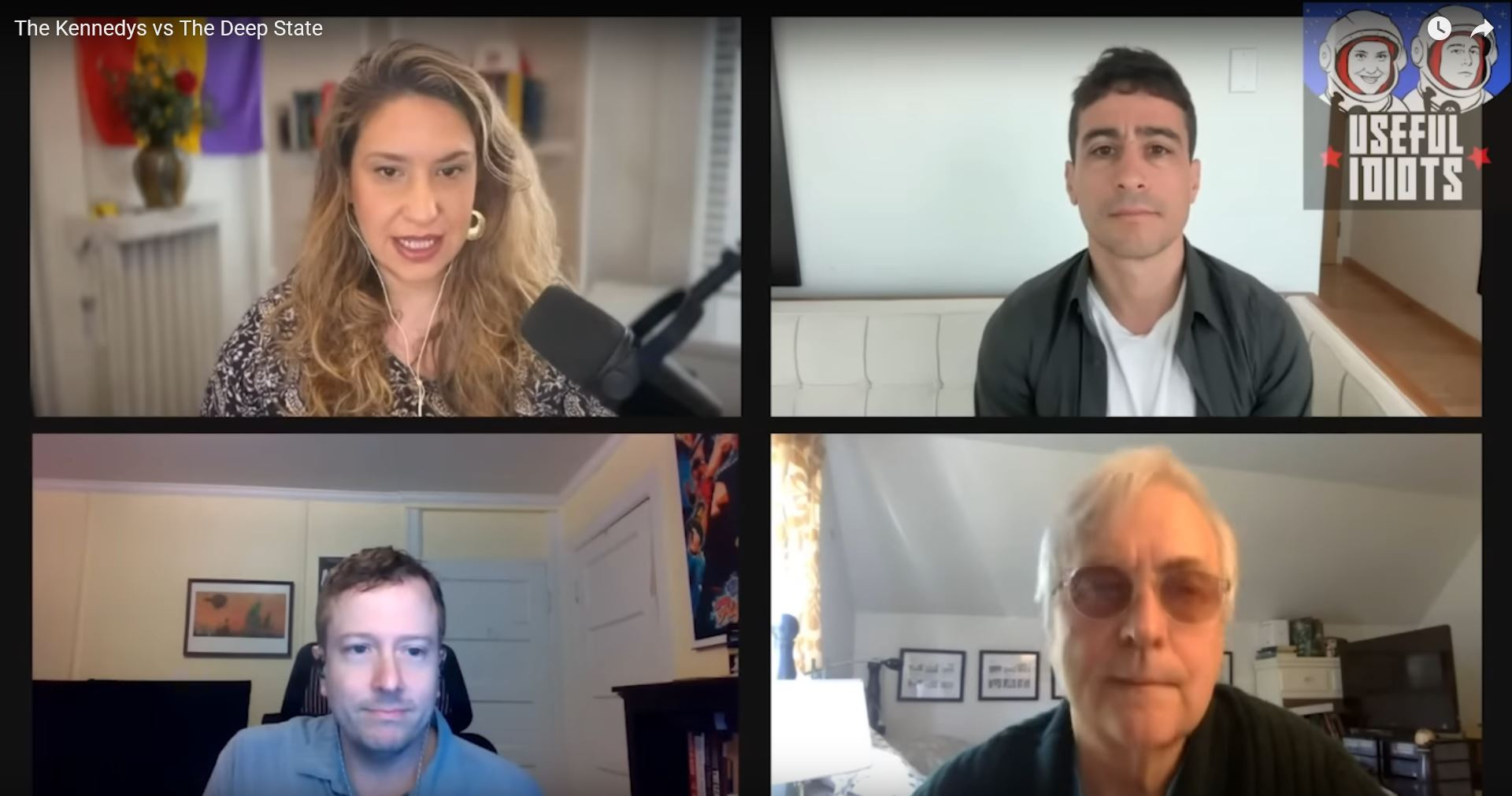
    On the podcast of Useful Idiots for June 23rd, Katie Helper and Aaron Mate guested founder of Salon and bestselling author David Talbot. A second guest was Aaron Good, who hosts the podcast American Exception and is author of the book of the same name. Because of the interest of those two authors in the JFK assassination, plus the presidential candidacy of Robert Kennedy Jr. the subject of the assassination of President John F. Kennedy arose. Helper asked a general question about his assassination: as to why he thought it occurred. Talbot replied that it was likely because of Kennedy’s attempts to end the Cold War. He then named a few examples, like the Partial Nuclear Test Ban, his attempts at détente with Cuba and Russia, and his withdrawal of advisors from Vietnam.

    Aaron Mate then joined in. Mate is a journalist I would like to like. He has done some good work in battling the MSM, for example on the issue of Russia Gate. I was just about bowled over when he said that he had only read the works of Seymour Hersh and Noam Chomsky on the subject of the John F. Kennedy presidency. Which would be the equivalent of him saying that he has only read Gerald Posner and Vincent Bugliosi on his assassination. A respectable reporter could hardly choose two worse sources than those two men. (Click here for Hersh and here for Chomsky)

    Mate started in with, well yes, John Kennedy did make the famous American University Peace Speech. But he also then made his “Ich bin ein Berliner” speech later that same June month in 1963. As this linked article shows Kennedy made the Berlin speech since he wanted to fortify the Atlantic Alliance over the doubts sown about its solidarity by French leader Charles DeGaulle.

    As anyone who studies the Kennedy presidency understands, the city of Berlin, because it was located inside East Germany, was of prime importance to Kennedy, as was the Atlantic Alliance. Unlike Vietnam, he felt this was an area and an alliance that impacted America’s national security. For example, during the Cuban Missile Crisis, Kennedy thought that Nikita Khrushchev was going to use his newly installed missiles in Cuba as a way to either barter or to move on Berlin. (The Kennedy Tapes by Ernest May and Philip Zelikow, pp. 176-77). But this did not affect his continued efforts at rapprochement with Moscow and Havana. Those were ongoing up until his assassination.

    Mate then went on to say that raids against Cuba persisted after Operation Mongoose was discontinued. (He actually said after the Bay of Pigs invasion, but this was a clear chronological error on his part.) Talbot replied that this was merely boom and bang that did not result in anything of substance. Which is correct. In fact, upon Kennedy’s death Des Fitzgerald, CIA’s chief of Cuban operations at the time, suggested they be stopped. There were only five in the second half of 1963 and they were of little consequence, individually or as a whole. In two letters Fitzgerald wrote to the White House he clearly implied this effort was so meager that it was counterproductive. (James DiEugenio, Destiny Betrayed, second edition, p. 70) But the important aspect to note is that, as author Peter Kornbluh has observed, the back channel efforts with Fidel Castro ended upon JFK’s assassination. Much to the chagrin of Castro. (Click here)

    But the worst comments that Mate made were on Vietnam. In reference to National Security Action Memorandum 263, he used the old Chomsky mythology that this thousand man withdrawal was conditional on the war being favorable to Saigon. The implication being that somehow Kennedy would reverse policy if it weren’t. Anyone can read NSAM 263, for example, in John Newman’s revised version of his book JFK and Vietnam. (p. 417). There is nothing conditional about it. The first thousand advisors were being withdrawn by the end of 1963.

    But further, Kennedy told his aides Ken O’Donnell and Dave Powers that he had been convinced by Senator Mike Mansfield. Mansfield had told JFK twice that the American effort in Vietnam was not effective. That the proper policy was to send no more reinforcements and to begin a withdrawal from the area. After the second discussion of Mansfield’s plan Kennedy said that in 1965 he would become an unpopular president. He would be branded a communist appeaser and another McCarthy Red Scare would ensue. But he was satisfied with that. As long as it happened after he was reelected, and everyone was out: “So we had better make damned sure that I am reelected.” (Johnny, We Hardly Knew Ye , by O’Donnell and Powers, pp. 16-17).

    Would Kennedy say he was going to be branded a commie appeaser if he thought the withdrawal would result in victory?

    Secondly, Mate is quoting Chomsky from a book the latter published before the declassification process of the Assassination Records Review Board (ARRB) began. In December of 1997, the ARRB declassified hundreds of pages of records on Vietnam. This included the Sec/Def meeting from May of 1963, where all US representatives—Pentagon, CIA, State Department—would meet to review the situation in Indochina. At this particular meeting Secretary of Defense Robert McNamara collected the withdrawal plans from the Pentagon that he had requested earlier. Everyone in the room understood that the withdrawal would be completed by 1965. There is no mention by anyone of escalation if the war turned south. In fact, General Earle Wheeler noted that proposals for any such action would elicit “a negative Presidential decision.” (Probe Magazine, Vol. 5 No. 3, p. 19)

    Third, as Newman discussed in Oliver Stone’s film JFK: Destiny Betrayed, he was given permission by McNamara to listen to and read the transcripts of his Pentagon debriefs. In that record, McNamara said that he and Kennedy had concluded that they could give equipment, training and advisors to Saigon. But they could not fight the war for them. Once the training mission was completed America was leaving, and it did not matter what the military situation was on the ground.

    Former New York Times journalist Chris Hedges might be even worse on the subject of Kennedy history. I had the misfortune of watching his interview on the Bad Faith podcast with Briahna Joy Gray. Just what we need, another professional Chomskyite leftist who relies on Sy Hersh’s hatchet job of a book on JFK. Anyone who admits that in public—as these two men did—should be pilloried and castigated for being an unreliable sucker.

    First, unlike what Hedges conveys, according to Jules Witcover’s authoritative book 85 Days, prior to the 1968 New Hampshire primary, Bobby Kennedy had decided to enter the Democratic race for president. He stayed out of that primary in deference to Gene McCarthy’s candidacy. Bobby entered the race because he did not think that McCarthy was strong enough on domestic issues.

    Second, I just about fell out of my chair when Hedges said that RFK was somehow obsessed with the death of Fidel Castro. This is simply false. The CIA/Mafia plots to assassinate Castro went back to 1960. And anyone who reads the Inspector General report on them would know that Bobby Kennedy did not know about them until May of 1962. And he found out about them through an accident. Sam Giancana wanted a hotel room in Vegas wiretapped since he thought his girlfriend, Phyllis McGuire, was carrying on with comedian Dan Rowan. This illegal surveillance, commissioned by the CIA Castro plotter Robert Maheu, was discovered by the local authorities. It was kicked up to the FBI. When RFK learned of it he requested a briefing as to why Maheu was trying to comply with Giancana’s request. That is how he found out about the plots. When the CIA briefed him, they told him that the plots had been discontinued. This was a lie and the CIA knew it was false when they told him. (CIA IG Report, pp. 57-66)

    But further, the CIA’s internal report proved that at no time did any president give any approval or authorization to the plots to kill Castro. (IG Report, pp. 132-33). Yet the CIA authorized, through Director of Plans Richard Helms, the use of RFK’s name in a further extension of the plots through a Cuban national named Rolando Cubela. (IG Report, pp. 89-93).

    This is how wrong Hedges is about this whole sorry episode. I mean a function of a journalist—especially an alternative reporter—is to consult the primary sources on a subject like this. If not, you run the risk of misinforming the public. The CIA Inspector General report is online. There is no excuse for not reading it. (Here it is)

    Neither, as Hedges maintains, did JFK buy into the whole Cold War ethos, especially in the Third World. Did Hedges miss Kennedy’s famous speech in 1957, where he bucked the entire media/political establishment on this issue in the French colonial conflict in Algeria? All one has to do is read Richard Mahoney’s JFK: Ordeal in Africa about President Kennedy and the Congo to understand that. Kennedy was backing Congo’s Patrice Lumumba against the European power Belgium in that epic struggle. The CIA helped to get rid of Lumumba about three days before Kennedy was inaugurated.(Mahoney, pp. 69-74)

    Question to Hedges: Was that just a coincidence? Or did they not like the fact that they knew JFK was going to back Lumumba? In fact, Kennedy directly caused the UN to back Lumumba’s successor, labor leader Cyrille Adoula, against the secession of the rich European backed Katanga province. And Kennedy gave the go ahead to use the United Nation’s military force, Operation Grand Slam, to do so. (Mahoney, pp. 154-56).

    I almost threw up when Hedges said that the Kennedys were late to support civil rights. This is just utter nonsense. I proved in a 60 page documented essay that no president since Lincoln did more for civil rights than JFK. And no Attorney General did more on the issue than Bobby Kennedy. And it started within about two months after Kennedy was inaugurated. To name just one achievement: JFK signed the first executive order about affirmative action. To name another: RFK prosecuted the Secretary of Education in Louisiana for not obeying a judicial decree on school integration. (Click here)

    This almost MSM goofiness is topped when Hedges says that RFK hated Martin Luther King. On that one I went from puking to cardiac arrest. Bobby Kennedy supervised the famous March on Washington in 1963. He was determined that this event would come off like clockwork so the civil rights movement would be hailed as a non-violent triumph. It did and it was. (Irving Bernstein, Promises Kept, p. 114). As most people in the know understand—except maybe Hedges—it was Bobby Kennedy who gave King the idea for a Poor People’s March. (Arthur Schlesinger, Robert Kennedy and His Times, pp. 911-12) It was Robert Kennedy who rescued the Freedom Riders and King in Montgomery by sending in 500 federal marshals under the direction of Byron White. (Bernstein, p. 66) It was JFK who called Coretta Scott King when her husband was imprisoned during the presidential race in 1960. It was Bobby who then intervened and had King released.(Bernstein, pp. 35-36) It was Bobby Kennedy who gave the address in Indianapolis the night King was killed to a predominantly Afro-American crowd. That was the only major city that did not go up in flames over King’s murder. Anyone who can listen to this speech and say RFK hated King is not to be trusted on the subject.

    The excuse Hedges gives for cancelling all of this out and saying that Bobby hated King was the approval the Attorney General gave to a wiretap on King’s phone. What he leaves out is that Bobby was under relentless pressure by J. Edgar Hoover to do so. As FBI official William Sullivan wrote, RFK resisted, resisted and resisted any such action. But Hoover’s clearly implied threat was that the FBI would release evidence that King was secretly a communist sympathizer who had people who were pink in his employ. Finally, the AG agreed to a 30 day trial on the grounds that if nothing was found, that would be it for the accusations and the surveillance. The problem was that President Kennedy was killed around the time it lapsed and that was it for RFK’s control over Hoover. To put it mildly, Hoover’s good friend Lyndon Johnson had no such qualms about the FBI’s battles against King. And beyond that, the evidence indicates that Hoover already had King wired, and was trying to cover himself with his threats about exposure. (Harris Wofford, Of Kennedys and Kings, pp. 211-17)

    It is crucial to note that King did not endorse Eugene McCarthy in 1968. He was waiting for RFK to make up his mind. When Bobby announced he said, “We’ve got to get behind Bobby now that he’s in.”(Schlesinger, p. 912) Let me also add, back in 2015, the late Paul Schrade told me that it was Cesar Chavez’ idea to get RFK to Delano, California for the hearings on suppression against the farm workers. To put it mildly, Bobby came through for them. (Click here to see)

    If King and Chavez are not enough, we know that after JFK passed, Gamal Abdel Nasser of Egypt, Achmed Sukarno of Indonesia, and Juan Bosch of the Dominican Republic were all mired in pain, to the point of tears. They all knew the road ahead. They were correct. We know what happened after—except for maybe Chris Hedges and Aaron Mate.

    All of this is not a matter of politics. It is a matter of defiled history.

  • Ellsberg, McNamara and JFK: The Pentagon Papers

    Ellsberg, McNamara and JFK: The Pentagon Papers


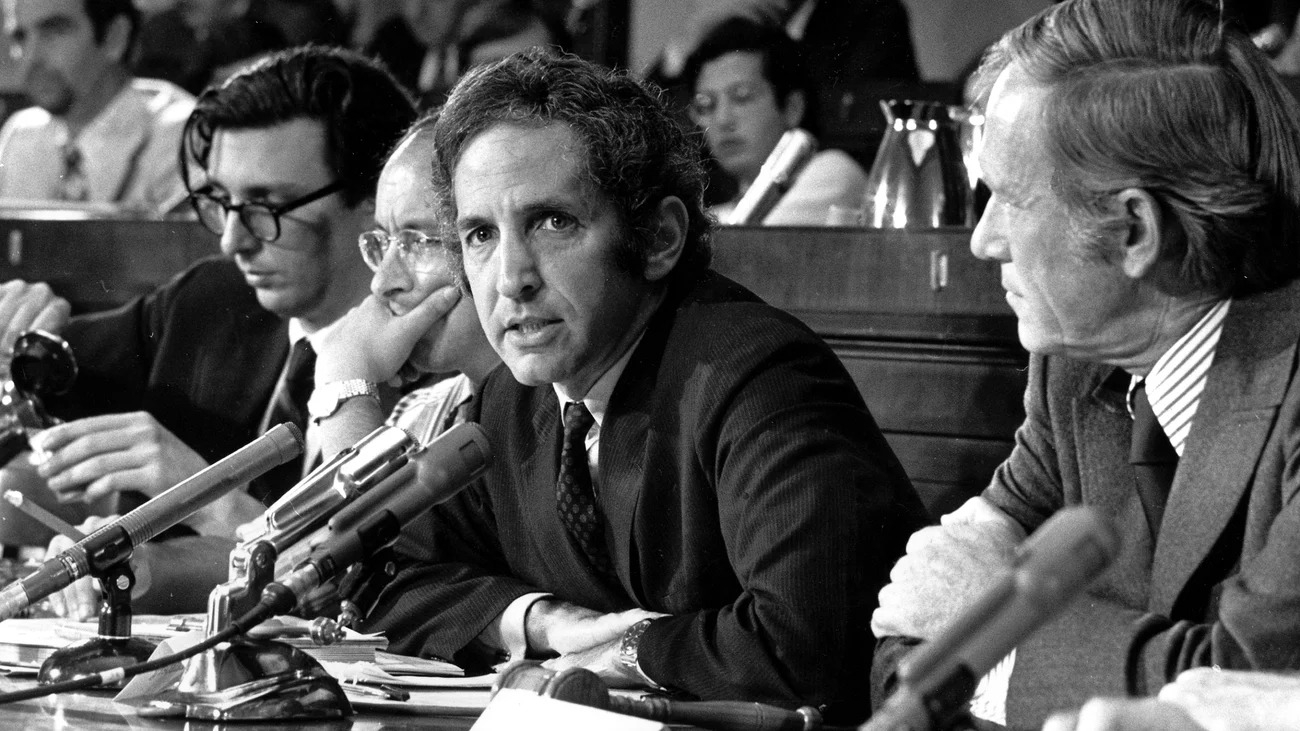
    Daniel Ellsberg passed away on June 16. He had been diagnosed with inoperable pancreatic cancer in February and died at his home in Kensington, California.

    Ellsberg was a distinguished academic, but he will always be remembered first and foremost for his purloining of the Pentagon Papers from Rand Corporation, with help from his friend and colleague Anthony Russo. The Pentagon Papers are a multi-volume, in-depth and invaluable historical study of the Vietnam war: from the very beginning to late 1968. It was commissioned by Secretary of Defense Robert McNamara. The initial supervisor was his assistant John McNaughton. (McNamara, In Retrospect, p. 280) About a month into the project, McNaughton passed away. His assistant Morton Halperin and Defense Department official Leslie Gelb took the helm. (ibid)

    One must note a couple of preliminary matters about this famous project. First, McNamara sidestepped official channels to keep it secret. He did not use Defense Department historians. McNaughton and Gelb ultimately picked 36 researchers on a more or less ad hoc basis. (ibid) McNamara also instructed that the research not be confined to the Defense Department but also include the State Department, CIA and the White House. But when it all started in 1967, he took the precaution of not telling President Johnson or Secretary of Defense Dean Rusk.

    About the motive for the project, McNamara wrote:

    By now it was clear to me that our policies and programs in Indochina had evolved in ways we had neither anticipated nor intended, and that the costs—human, political, social and economic—had grown far greater than anyone had imagined. We had failed. Why this failure? Could it have been prevented? What lessons could be drawn from our experiences that would enable others to avoid similar failures. (McNamara, p. 280)

    This is a fascinating quote and we will return to examine it later. But it should be noted that McNamara took a hands off approach in this endeavor; he was not personally involved. He let the researchers and Gelb hold sway over what made it into the volumes. It all began on June 17, 1967. The research extended back in time for over 20 years and used a wide variety of materials. Whenever Gelb had trouble attaining a document, he would invoke McNamara’s name. That would solve the problem. (Sanford Ungar, The Papers and the Papers, pp. 20-21)

    Daniel Ellsberg was a summa cum laude Harvard graduate. In 1946 he endured a family tragedy when his mother and younger sister were killed when his father fell asleep at the wheel. Daniel survived and recovered. (See, The Guardian, 6/17/23, story by Michael Carlson). In his book, Secrets, Ellsberg describes himself in his youth as part of the Harry Truman Democratic Cold Warrior ethos: liberal on domestic issues but hardnosed and realistic on foreign policy. (Ellsberg, pp. 24-25)

    In 1954 he applied and was accepted for officer training school in the Marines. When he got out he went back to Harvard on a fellowship. Ellsberg was trained in economics, but he also wrote about decision theory. Or as he explained it, “The way people make choices when they are uncertain of the consequences of their actions.” (Ellsberg, p. 30) This had an obvious connection to military situations and this is one reason Ellsberg ended up at the Rand Corporation think tank in Santa Monica. Rand did a lot of work for the Defense Department. One of the things he worked on was the whole concept of nuclear deterrence. (He later wrote a book about the topic called The Doomsday Machine.)

    Because of this close professional association, Ellsberg was granted permission to do research at the Pentagon. This is how he met John McNaughton. And in 1964, realizing a huge escalation was on the horizon, McNaughton introduced Ellsberg to the subject of Vietnam—to the point that he convinced Ellsberg to work under him on the subject. (Most Dangerous, by Steve Sheinkin, pp. 10,11). On Ellsberg’s first day working for McNaughton the Tonkin Gulf incident erupted. President Lyndon Johnson used what he called this “unprovoked” attack to pass a war resolution that had been composed at least two months before. In fact, prior to the incident, the administration had set up a whole schedule of events for the USA to directly enter the war. (Edwin Moise, Tonkin Gulf and the Escalation of the Vietnam War, pp. 26-27).

    But through his position in the Pentagon, Ellsberg understood that the congressional hearings to pass the Tonkin Gulf Resolution had been rigged. Unlike what the administration maintained, the Navy missions along the coast of North Vietnam had been provocations, not routine patrols; they had sometimes violated territorial waters; and the evidence for North Vietnamese attacks on the missions had not been “unequivocal”. (Sheinkin, p. 31; Ellsberg, p. 12) But in spite of his reservations, in 1964 Ellsberg looked at himself both as a keeper of secrets, and a participant in the Cold War. What Ellsberg could not have known at the time was that the Tonkin Gulf casus belli—or dramatic event—had been mentioned as part of the plans for the war resolution against Vietnam and subsequent escalation. (Moise, p. 30).

    The Johnson plan for direct American intervention in the war was keyed around his election in November of 1964 and his inauguration in January of 1965. (Moise, p. 245). The first phase of massive Vietnam escalation was called Rolling Thunder, a colossal aerial bombardment of the country. This plan was approved in late February of 1965, within weeks of Johnson’s inauguration. But to protect the air bases for this giant air war, combat troops were necessary. The first ones arrived at DaNang in March of 1965. Rolling Thunder eventually surpassed the bombing tonnage the Allies dropped during World War II. The initial deployment of two battalions of Marines at DaNang morphed into a 540,000 man army by 1968.

    But it is important to note that, unlike what David Halberstam insinuated in his (very bad) book The Best and the Brightest, it was not really McNamara’s war. As Frederick Logevall has written, McNamara’s militaristic approach in 1964 and into 1965 owed to his “almost slavish loyalty to his president. Lyndon Johnson made clear he would not countenance defeat in Vietnam….” (Choosing War, p. 127)

    As the war escalated even further it began to polarize America to an extent not seen since the Civil War. McNamara’s own son turned against him, going as far as putting up a Hanoi flag in his bedroom. (LA Times, July 17, 2022, article by Jessica Garrison; see also Craig McNamara’s book, Because our Fathers Lied) In November of 1966 McNamara caused a near riot by visiting, of all places, Harvard. He had to be rescued from a mob and escaped through an underground tunnel system. (McNamara, pp.254-56). After dinner at Jackie Kennedy’s Manhattan apartment, she started pounding on his chest telling him he had to stop the slaughter. (McNamara, p. 258)

    There can be little doubt that this all took an emotional and psychological toll on Robert McNamara. In Richard Parker’s biography of John Kenneth Galbraith, Galbraith spoke about a meeting he and other colleagues from the Kennedy administration had with McNamara in 1966. McNamara seemed to be in deep distress because he had told Johnson that Rolling Thunder was not working, but the president insisted on continuing the bombing. McNamara’s office secretary later said that, on certain days, he would come to work and just rage against Rolling Thunder’s futility. The rage would subside and he would then stare out the window of his office, start weeping and wipe his tears with the curtains. (Tom Wells, The War Within, p. 198)

    In my view, this emotional turmoil was what caused McNamara to commission the Pentagon Papers. But there was something else at work. As we note from McNamara’s quote above, he states that “our policies and programs in Indochina had evolved in ways we had neither anticipated nor intended, and that the costs—human, political, social and economic—had grown far greater than anyone had imagined.” John Newman got to know McNamara before the former Defense Secretary decided to write his book. Newman got permission to listen to McNamara’s exit briefs from the Pentagon. As he states in the film JFK: Destiny Betrayed, in those tapes and transcripts, McNamara stated that he and President Kennedy both agreed that they could train Saigon’s army, give them equipment and send advisors. But they could not fight the war for them. When the training period was over, they would leave. And it did not matter if South Vietnam was winning or losing. (James DiEugenio, JFK Revisited, p. 187). In other words, by 1967, the war had become unimaginable compared to what he and Kennedy had decided upon.

    So how did the young Cold Warrior Ellsberg figure in all this originally? He decided to go to Vietnam under special status as more or less an observer for the State Department. (Ellsberg, pp. 109-125) Not only did he see a failing war effort, but he now saw the whole thing as a fraud i.e. what the media and the government were reporting was false. It was a terribly bloody war with tremendous civilian casualties and no effective tactics for victory.

    When he returned stateside in 1967 he was asked to work on McNamara’s secret project. And now he learned that in addition to the war being presented falsely in 1967, it had been presented falsely just about from the very start, including the Tonkin Gulf incident. As the escalation continued, the Pentagon Papers revealed that the war’s major goals were not to gain freedom and democracy for South Vietnam. The goals had become to avoid an embarrassing defeat and to keep Chinese influence out of South Vietnam. (Click here) McNamara himself said about the collection, “You know, they could hang people for what’s in there.” (Sheinkin, p. 125). Startled by the scale of the fraud within, Ellsberg decided to copy the papers. He had his friend Anthony Russo and Russo’s girlfriend aid him in that process. He then tried to expose the documents in public, first going to politicians like Senator George McGovern and Congressman Pete McCloskey, who both declined to read them on Capitol Hill.

    Finally, reporter Neil Sheehan got a copy to the New York Times. After a debate at the highest levels of the newspaper, they decided to start publishing the Pentagon Papers on June 13, 1971. They were stopped by Nixon’s Attorney General John Mitchell who went to court for a Temporary Restraining Order. Ellsberg then passed them to the Washington Post and other papers. In all, Nixon and Mitchell sued four papers, in addition to the Times and Post, there was the St. Louis Post Dispatch and Boston Globe. The attempt at prior restraint by the White House failed, as the Supreme Court backed the newspapers right to publish. The issue was rendered moot when, almost simultaneously with the court decision, Senator Mike Gravel read the classified papers on the floor of the senate and then moved to enter the whole collection into the record.

    But Nixon, Mitchell and National Security Advisor Henry Kissinger decided they would still punish Ellsberg and Russo. They first tried to stop publication of the Gravel version of the papers—which was longer and more detailed than the Times set. This was being done by a small house in Massachusetts called Beacon Press. But since Gravel had been covered by the congressional debate privilege in speaking from the floor, this did not work. They then moved against Ellsberg and Russo in California, where the copying originally took place. The two men stood trial in 1973 on counts of espionage and theft—Ellsberg was charged 11 times, Russo 3 times—and that would have placed them in prison for a combined 150 years. Ultimately, the trial was stopped and the charges thrown out due to federal interference: illegal electronic surveillance on Ellsberg, the burglary of his psychiatrist’s office, and Nixon’s attempt to influence the judge by offering him the directorship of the FBI. (Ellsberg, pp, 444-49)

    But before the trial was suspended, Kennedy’s White House assistant Arthur Schlesinger was allowed to testify that if President Kennedy had lived, the war would not have been escalated. (Washington Post, 3/14/73, story by Sanford Ungar). In the Gravel Edition of the collection, there is an over 40 page chapter entitled “Phased Withdrawal of US Forces 1962-64”. (Volume 2, Chapter 3) Curiously, that section does not exist in the New York Times version of the documents. Whether the version Sheehan took from Ellsberg did not include it or the Times chose not to publish it is not known. But that section is important since it was the first time the subject had been approached in a formal, sustained way by a government source.

    Partly because of that section, and the entire four volume series, Peter Scott formulated one of the earliest essays—it may be the earliest—positing that if Kennedy had lived, the evidence indicated he would not have escalated in Vietnam. And that this policy was reversed under President Johnson. Or as Scott wrote:

    McNamara had predicted that the…United States military task in Vietnam would be completed by the end of 1965, and that as a first step 1,000 United States troops…would be withdrawn by the end of 1963. It seems likely, furthermore, that the sudden reversal of subsequent plans to withdraw the 1,000 troops was only the outward symbol of a much more far-reaching policy change, of a new or renewed commitment ultimately leading America from an “advisory” to an unambiguously direct combat role. (Government by Gunplay, edited by Sid Blumenthal and Harvey Yazijian,p. 153)

    This essay, which was in the Gravel edition, was later adapted by Scott when it appeared in at least three other venues, including in Ramparts magazine. But according to Aaron Good, its inclusion was mightily resisted at first by the editors of the Gravel edition, namely Howard Zinn and Noam Chomsky. In an interview with this writer, Aaron said that they didn’t want to include it since it would look like a president could make a difference. But Chomsky eventually relented on freedom of speech grounds.

    “It would look like a president can make a difference” and therefore not include it? Thanks to Ellsberg we had the actual section in the Pentagon Papers, and other traces of Kennedy’s reversed policy which Scott excavated. In 1968, Ellsberg developed a friendship with Bobby Kennedy, who wanted him to be his advisor on Vietnam when and if he was elected president. (Ellsberg, pp. 193-97) Bobby told him that John Kennedy never intended to send in combat troops and would have tried for a neutralist solution.

    Among several aspects in a distinguished career, this is one of the things Ellsberg should be remembered for: Risking a long jail sentence to get out the whole truth about Vietnam. That they resisted this truth so mightily is one more albatross around the reputations of Nixon and Kissinger.

  • Robert Kennedy Jr. has the Establishment Worried

    Robert Kennedy Jr. has the Establishment Worried


    On April 19th, Robert Kennedy Jr. announced his candidacy for the presidency. At that time, not very many people took him to be a serious threat. In fact, some reporters claimed this was really a stunt set up by, of all people, Steve Bannon. (Mediaite story by Jennifer Bahney, 4/5/23) Or perhaps by another notorious GOP operative Roger Stone. Kennedy had to go on Twitter to deny these spurious accusations.

    The MSM, as noted above, did everything to try and snuff out Kennedy’s candidacy out of the gate, before it could get started. There was no round of interviews on the MSM. According to the Democratic National Committee, there will be no debates between President Biden, Kennedy and Marianne Williamson.

    As an example of the MSM coverage, on the day he announced, CNN printed a story that said how members of his family had forcefully denounced his vaccine views in an online magazine. (Story by Jeff Zeleny and Eric Bradner) It also mentioned that he had been banned from Instagram “for repeatedly sharing debunked claims about the coronavirus or vaccines.”

    Yet—even though it was in dispute and resisted mightily by the MSM—a claim Kennedy made about the origins of the virus has now turned out to be true. If one recalls, Anthony Fauci and the like have always insisted that CV 19 did not originate at the infamous Wuhan Lab in China or as a result of ‘gain of function’ research. It supposedly started as a species jumping virus that went from a bat to a human at the Huanan Seafood Wholesale Market in Wuhan. In sworn testimony before congress, Fauci mightily resisted the lab leak story under questioning by Rand Paul. And the entire MSM backed him, ridiculing the Wuhan leak as a conspiracy theory.

    Today, we can say that Paul was pretty much correct and Fauci was either mistaken or part of a deception. It turns out that patient zero in the pandemic was scientist Ben Hu, who was in charge of ‘gain of function’ research at Wuhan Institute of Virology. This story was posted by Matt Taibbi at Scheer Post on June 16th. As Taibbi notes: why was the American investigation so incredibly slow? As the reporter says “numerous federal agencies appear to have designed their probes of Covid-19’s origins to discount the possibility of lab origin in advance.” Robert Kennedy’s upcoming book, entitled The Wuhan Cover-up, will explore this discovery—which he suspected a long time ago—and its implications. (For more about Fauci’s monumental errors, click here)

    Robert Kennedy has another serious ingrained problem—he is a sworn enemy of what he calls Big Pharma. That is corporate giants like Merck and Pfizer. As he has noted on many programs, he is strongly against what he calls ‘agency capture”. That is the process by which there is a revolving door between those companies and government agencies which are supposed to guard our health e.g. the Center for Disease Control and World Health Organization. This is, to say the least, incestuous, since those companies approve of and then distribute Merck’s products. He has promised to clean that operation up from top to bottom.

    Well, this entails a big problem for the candidate. Because as many have noted, Big Pharma is a major player in TV advertising. From 2018 to 2022, they spent a combined 6.5 billion buying television ads. As part of the corporate ad structure, they cranked in at number four, after retail, finance and real estate, and tech. This may help explain why Jake Tapper of CNN wanted no part of a debate with Kennedy on the subject of CV-19. Tapper is also the guy who once said on Twitter that Al Gore was never ahead in the Florida recount in 2000. What he left out was that Gore was gaining votes by the hour when Justice Antonin Scalia issued a stay for irreparable damages on George W. Bush’s behalf. That Tapper said this is even more shocking since, while at Salon, he wrote a book about the whole Florida heist: Down and Dirty in 2001.

    It is telling that Bobby Kennedy has appointed Dennis Kucinich as his campaign manager. As Howard Dean once said about himself, “I am from the Democratic wing of the Democratic party.” So is Dennis. Kucinich began his career in Ohio as a member of the city’s council and then mayor. He rose to national prominence as a congressman from 1997-2013. On Capitol Hill, he was a strong opponent of the Iraq War—in fact he moved to have George W. Bush impeached over the invasion. He was a strong proponent of single payer health care, and he was also for the impeachment of Vice President Dick Cheney, and against the NATO bombing of Libya. He ran for president in 2004 and 2008. He was voted out of office when his district was redrawn after the 2010 census. You don’t get much more populist or progressive than Kucinich. The Mafia actually plotted to kill him. If you go to Robert Kennedy’s website and click through the topics—the environment, ending perpetual wars, freedom of speech—you will see why someone like Kucinich would be in step with Kennedy.

    Either due to his campaign, his name background or the weakness of the incumbent. Bobby Kennedy is doing pretty well in this early stage. For example, 68% of the public feels that President Biden is too old for another term as president. (ABC News, May 6, 2023 story by Gary Langer) In a more recent poll, it is revealed that Kennedy, at 49 percent, ranks higher in favorability ratings than Biden and Marianne Williamson; and unfavorably by only 30 per cent. His net favorability rating of 19 was the highest among all candidates. (The Hill, story by Jared Gans, 6/14/23)

    Because the MSM would rather belittle him than talk to him in an open setting, Bobby Kennedy has decided to go around the MSM. Some of his recent appearances have been at a town hall setting with Michael Scermonish on June 5th. (Click here) But the two recent appearances that have really driven the MSM daffy were with Elon Musk and Joe Rogan. Let us speculate as to why.

    On June 5th, Kennedy gave a 2.5 hour long interview to Elon Musk on Twitter Spaces. Yet, stories about the interview were written on the same day it was broadcast.(For example, see the New York Times article) Reminds this writer of CBS reading the 888 page Warren Report and broadcasting about it the next day. That interview got close to 3 million views in about 72 hours. More than the candidate could get on any cable TV outlet or any major newspaper. One of the reasons that the candidate wanted to do this with Musk was because, as the new owner of Twitter, he had exposed their cooperation with the FBI and CIA in censoring certain views and opinions. And the candidate, also a victim of censorship, complemented him for that. This got turned into Kennedy taking up rightwing positions.

    On June 15th, Joe Rogan posted his Kennedy interview on Spotify’s The Joe Rogan Experience. Oliver Stone’s appearance for JFK Revisited on that program now has about 4 million views. Rogan has been known to get as many as 11 million. So by successfully going around the MSM, this has in turn enraged the MSM. A really good example of this was in Rolling Stone.

    On the same day the 3 hour Rogan interview was posted, a reporter for that publication named Nikki McCann Ramirez wrote an essay about it. The headline was “RFK Jr. Tells Joe Rogan He’s Aware of possibility CIA Could Assassinate him.” Since Rogan has a strong interest in the assassinations of the sixties, that subject would inevitably have come up. Ramirez wrote that the candidate believed that his uncle John Kennedy was assassinated by the CIA. This is not news of course. And it is a belief that is held by many other people in the limelight like Tucker Carlson and Ron Paul. According to testimony before the Church Committee, Marvin Watson told the FBI that Lyndon Johnson thought pretty much the same thing. (Washington Post, 12/13/77)

    Its amazing what is left out of the article. Namely that Bobby Kennedy used to write for Rolling Stone! In the June 15, 2006 issue, he wrote about the possibility that the 2004 presidential election may have been stolen by George W Bush. For another example, in 2013 he wrote about JFK’s peace speech. (Click here for that) That 2013 article was aided by the estimable Jim Douglass. Douglass’ book JFK and The Unspeakable was the volume that convinced Kennedy of a CIA plot. (August 2021 interview with the author)

    But then, the universe was altered. From 2017-19, Rolling Stone was the subject of a takeover by Penske Media Corporation. From upholding the idea of a JFK conspiracy as far back as the seventies and the House Select Committee on Assassinations, they suddenly did a turnaround. Here comes Tim Weiner from the NY Times, and any intimation of such a plot was now considered KGB disinfo. (Click here)

    What is clearly disinformation is that:

    1. Kennedy was not killed by a conspiracy, and
    2. Somehow the CIA was not involved

    The turning of the screw at Rolling Stone was the appointment of Noah Shactman. Shactman was executive editor at Daily Beast when they printed Max Holland’s utterly spurious story about how Jim Garrison was fooled by the KGB into arresting Clay Shaw on CIA grounds. As I pointed out, since Garrison had arrested Shaw before the story appeared, this created a serious problem for Holland and Daily Beast. That did not matter to Noah. Who had begun his career by founding Defensetech.org which was bought by Military.com in 2004. In 2013, he left Wired and went to Foreign Policy. He joined Daily Beast in 2014. In July 2021 he was named editor in chief of the Rolling Stone.

    Gone were the days of Jann Wenner and Carl Bernstein’s “The CIA and the Media”. Hello to Tim Weiner and Max Holland. (Click here for Bernstein’s milestone article)

    But Bobby Kennedy has learned, like Oliver Stone, to circle around the MSM and hit them from behind. It seems to be working. And we should also add in something else that is at work. There is a Jungian collective remembrance of what his uncle and father meant to this country. The candidate talked about this in his book American Values. That book remains the only volume ever published by a son or daughter of the two slain Kennedys to address their assassinations. The candidate also did a series of interviews for the Washington Post with Tom Jackman as to why he did not think Sirhan Sirhan killed his father. (Washington Post, June 5, 2018) Disgracefully, he is the only candidate who has said he will release the last of the still classified JFK assassination files. Which should have been released in 2017. But both President Trump and President Biden have refused to obey the law on this. In fact they were in defiance of both the spirit of the law and the letter of the law on this issue. (See this essay) All of these are further reasons for the MSM to take up the cudgel against the candidate. As these issues will open up a Pandora’s Box of past evils that have remained closed for far too long and plague the social fabric of this country. And if and when that happens the question will be: Where was the MSM in the midst of all this? Were they in on the cover-up? (Click here)

    Make no mistake, Bobby Kennedy understands this. During his interview with Oliver Stone for the film JFK Revisited, he addressed it. Stone asked him, do you think there is any connection between the assassinations of your uncle and father. He said that there were many holes in the story about his father’s death since there had never been a real formal inquiry into that case. And that there might be leads that do form a crossover to some of the people involved in the JFK case.

    What other presidential candidate could address that enormous issue that draws such a psychic chasm over this country?

    Addendum

    Highlights from the Joe Rogan/RFK Jr. interview of June 14th. Rely on the actual broadcast and not the spin.

  • Al Pacino and John Travolta Meet the Giancana Myth – Part 2

    Al Pacino and John Travolta Meet the Giancana Myth – Part 2


    Nicholas Celozzi is an important part of the upcoming film because he will be a producer and he wrote a first draft of the script. Therefore its important to examine his 2011 documentary about Sam Giancana, Momo: The Sam Giancana Story. As I wrote in the first part of this essay, that film is rather prosaically produced, and it is only adequate as a sophomore’s version of Giancana’s life. Yet what makes it worse is that in its second half, it takes off into what I call the Giancana mythology.

    As I have tried to show, Sam Giancana had a higher profile than either Tony Accardo or Paul Ricca. At times, its almost as if he tried to raise his profile. Doing things like getting in a shouting match with an FBI agent at O’Hare Airport, and informing the agent, Bill Roemer to tell RFK to contact Frank Sinatra about any problems with The Outfit; these were off limits to someone like Accardo. Accardo’s belief was it was much easier to work in the dark than in the light. But because of incidents like these, because of his public romance with Phyllis Maguire and also due to his role in the CIA/Mafia plots to kill Castro, Giancana became probably the most publicly identified big city Don since Al Capone.

    About halfway through Celozzi’s documentary, he begins to indulge in the mythology. Much of this owes itself to the 1992 best-selling book Double Cross. I have written about that volume more than once and exposed it as a bad novel. As we shall see, it is not to be taken seriously. Anyone who does either has an agenda or has not done their homework.

    For instance, in William Brashler’s solid book on Giancana, one will not see any mention of Marilyn Monroe in the index. Which is as it should be. But in Celozzi’s film, her picture comes up right after the opening credits. And if we buy this film, Sam knew Monroe from way back. He was introduced to her by John Rosselli. Sam had invested in her career. But that is just for starters. Now Celozzi dives into National Tattler territory. Sam found out from Bob Maheu that the CIA had tapes of President Kennedy in bed with Monroe. Maheu then said that JFK dumped Monroe and Bobby Kennedy then began an affair with her.

    Even that isn’t enough. Sam learned that Monroe had love letters from Bobby Kennedy at her house. Giancana now schemed to have two killers terminate Monroe with a suppository thus making it appear a suicide. But scattering the letters through the house, thus exposing RFK and driving him from office. But, according to the film, somehow the Secret Service got there and stole the letters.

    Everything in those above two paragraphs is unadulterated horse crap. Brashler never mentioned Monroe, because she never had any attachment to the mobster, either financial or emotional. Monroe authority Don McGovern closely examined the rise of Monroe’s career. He concluded that The Outfit had nothing to do with it. The two men most responsible for her ascent were Joe Schenck and Johnny Hyde, particularly the latter. (Murder Orthodoxies, pp. 409-11) Much of this Monroe malarkey originates with Double Cross. McGovern took the section of that book dealing with Monroe and sliced and diced it. For instance, if we believe the novel then Chicago owned Marilyn’s contract when she was seventeen, named Norma Jeane, and married to Jimmy Dougherty in the San Fernando Valley. Which is a non-starter.

    McGovern also blows up the whole suppository story—at length. To raise just one point: if that would have been employed there would have been more of the drug found in her blood stream than her liver, the opposite of what happened. (McGovern, p. 514) Further, Double Cross maintains that Bobby Kennedy was in Los Angeles the day Monroe passed. (Chuck Giancana, p. 314). This was conclusively disproven by Sue Bernard’s book Marilyn: Intimate Exposures.(pp. 186-87) Finally, why would the Secret Service have been at Monroe’s house for any purpose? President Kennedy was back east at the time.

    But beyond that, as McGovern has explained, there is simply no credible evidence that Bobby Kennedy ever had any kind of affair with Monroe. And the two people most responsible for that false claim, David Heymann and Jeanne Carmen, have been shown to be serial fabulists. Carmen actually ended up stating, please sit down: that Rosselli murdered Giancana over Marilyn! In light of what we have established about Giancana’s death, this is pure fantasy. (See “Classic Blondes, Jeanne Carmen”, by April VeVea, 4/9/18)

    II

    In the Giancana documentary, Celozzi also uses the ever evolving tall tales of the late Judith Exner. Specifically that she was somehow a courier between the White House and Giancana for various nefarious functions like the plots to kill Castro. Exner’s fictions began in earnest back in 1988 for People magazine. After writing a near 300 page book in 1977 for a combined rights sale of what would be well over a million dollars today, it seems that Exner left out some rather important matters about her relations with both President Kennedy and Sam Giancana. What makes this lacuna even more strange is that her co-writer was Ovid Demaris, Demaris specialized in the Mafia, was an idolator of J. Edgar Hoover, and did what he could to prop up the Warren Commission cover up of President Kennedy’s assassination.

    In spite of that, Exner evidently had temporary amnesia back in 1977. For today’s equivalent of another 130,000 dollars from People magazine, she managed to enter into recovered memories syndrome and now recalled what she could not in 1977 or in her testimony before the Church Committee. To anyone actually versed in the CIA/Mafia plots to kill Castro, what she dumped out in 1988 is not just false. It is so bad that one wonders how it got printed.

    This time out, Exner’s writing partner was allegedly none other than Kitty Kelley. (I say allegedly, because as we shall see, Kelley was not active in the writing.) In this edition of Exner’s story, unbeknownst to her, she was actually carrying messages between Washington and Chicago, for, among other things, the liquidation of Fidel Castro. (The Assassinations, edited by James DiEugenio and Lisa Pease, p. 333). But it went beyond that. Kennedy was actually meeting with both Giancana and Rosselli! And get this: At the White House! After arranging these meetings, Exner realized retroactively that it was about terminating Castro.

    In the real world of course, this is pure malarkey. The idea that somehow two well-known mobsters like Rosselli and Giancana would be anywhere near the White House is science fiction. And as the 145 page CIA Inspector General Report proves, the Kennedys were never involved in the CIA/Mafia plots. (DiEugenio and Pease, pp. 328-29)

    It was later revealed that this whole pile of Exnerian rubbish was fabricated. Why? Because Exner and Kelley, to put it mildly, did not get along. As author George Carpozi discovered, the pair spent most of their time fighting because Kelley wanted to milk Exner for material on Frank Sinatra for an upcoming book. But the problem was the magazine had too much money invested in the project—six figures. To salvage that investment, the article ended up being prepared by the editors. (ibid, p. 334)

    As I have written in my recent two-part expose about Sy Hersh, Exner told so many lies that: 1.) Proposed corroborating witnesses couldn’t stomach her, and 2.) She could not keep track of her own prevarications.

    Concerning the first, Hersh got a man named Martin Underwood to say he was a witness to Giancana getting the messages from Exner. (Hersh, The Dark Side of Camelot, pp. 304-05) Unfortunately for Hersh, Exner and ABC, Underwood refused to appear for Peter Jennings on their TV special based on Hersh’s book. When Underwood was questioned under oath by the Assassination Records Review Board, (ARRB) we found out why he was a no show. He now denied the whole episode; saying that “he had no knowledge about her alleged role as a courier”. (ARRB Final Report, pp. 112, 135-36)

    Concerning point 2, Hersh wrote in his book that Bobby Kennedy was in on this messaging between the White House and Giancana. Exner told Hersh that RFK would tap her on the shoulder and ask, “Are you still comfortable doing this? We want you to let us know if you don’t want to.” (Hersh, pp. 307-08) Well, if such was the case, then how does one explain an exchange Exner had with the late Larry King on his program of February 4, 1992. King asked her about any relationship with RFK and she replied with a single world : None.

    The whole contention of this “Washington-Chicago messaging” is fundamentally preposterous. For the simple matter that, as revealed in part 1, the FBI and the Justice Department had a massive surveillance program on Giancana. This began shortly after the infamous 1957 Apalachin meeting in New York, which exposed in public a national network of organized crime. After that embarrassment, J Edgar Hoover began his Top Hoodlum Program in major cities, but with special attention to Chicago. That team of top agents began a program that created wall to wall monitoring—including pervasive electronic surveillance—of the Chicago mob. And especially on Giancana, since by 1957 he was the titular leader. The idea that this “Exner messaging” would not turn up on all those reels and reels of tape is more than just ridiculous. Its risible. Its even more risible when one realizes that RFK knew all about it and pushed it even further. Thus placing himself right in Hoover’s crosshairs. Please. (Man Against the Mob, by William Roemer, pp. 74-78, 167)

    III

    But because Momo: The Sam Giancana Story buys into Exner’s fantasies, it has to go all the way with them. So inevitably we get the whole elections heist of 1960. Which is Exner as transformed by the novel Double Cross. What that means is this. For People Exner said that it was not just the Castro plots she was “messaging” about. It was also the West Virginia primary which was held on May 10, 1960. (Since she meet JFK on February 7 of that year, we are supposed to believe the relationship progressed to a national political level at warp speed.) And, of course, the general election in November of 1960. In Double Cross this got amplified into Joseph Kennedy asking for Giancana’s help to get his son elected, with his word that the new president would lay off the pressure on him once elected. Oh, and I almost forgot, Joe knew The Outfit since he had been a bootlegger.

    Two authors blew up the last part of this mythology. Daniel Okrent wrote one of the best books on Prohibition. Towards the end of his volume he examined this charge of Joe Kennedy being part of the bootlegging industry. He cogently observes that since Kennedy had to be congressionally approved for the six appointments that presidents gave him, there were extensive investigations of his background. In over 800 pages of inquiry, there was not one piece of evidence revealing this alleged black market business. What makes this even more compelling is that the first three appointments occurred right after Prohibition had been repealed. Therefore, why was no one willing to rat out Papa Kennedy? (Last Call, p. 369)

    As Okrent adds, Joe Kennedy did get into the liquor business, but it was after Prohibition had been repealed. In light of that, he was not a bootlegger. It was legal. (ibid, p. 367)

    The other book that helped expose this mythology was David Nasaw’s biography, The Patriarch. That work contained the widest and most detailed accounting of Joe Kennedy’s wealth ever published. Joe Kennedy began by investing in the stock market and distressed properties. In fact he joined Hayden/Stone, the largest stock broker in New England, in 1919 when Prohibition passed. (Are we to believe he was putting up stills at those distressed properties?)

    But this was only the beginning for the multimillionaire. He made so much off a booming stock market that he took those holdings and chose to get into the movie business. One reason he got so wealthy was that insider trading was legal at that time. (Nasaw, p. 78) With that stock market and real estate wealth he put together a film distribution and exhibition company, and then bought his own theaters in the northeast. (Ibid, pp. 59-67). In just three years, Kennedy resigned Hayden/Stone and opened up his own bank.

    Joe Kennedy made so much money in the film business, he first moved to New York, and then bought a second home in Beverly Hills. Both estates had servants and chauffeurs. He bought a Rolls Royce. (Nasaw, pp. 87-89) Joe Kennedy distributed 51 pictures in one year! At a time when there were 20,000 theaters in America. But Joe also purchased stocks in film companies and was in demand as a chief executive. He wound up running three companies. And he demanded and got stock options, which he could trade at any time. (Nasaw, pp. 119-27). But he never got out of real estate. In 1947 he purchased the Merchandise Mart in Chicago for 12 million. In 2007 it was valued at nearly a billion.

    So the idea that Joe would jeopardize this legitimate financial empire he had to get into something criminal is just not credible. Especially since his overall ambition was to get his children into politics. In other words, according to Celozzi, Joe would sacrifice both his financial fortune and his children’s careers to do something illegally that he did eventually do legally.

    IV

    John Binder pulled out the rug on the other part of the Double Cross fantasy. Namely the idea that Giancana helped put Kennedy over the top in Illinois. Author Binder has shown that there is not any evidence that Giancana delivered an advantage to Kennedy in the wards The Outfit controlled. In fact, they actually performed under par that year. (Public Choice, February 2007, “Organized Crime and the 1960 Presidential Election.)

    The other election that the Mob devotees mention is the West Virginia primary. Again, that contention is rendered dubious under analysis. There are two good books on the subject. One by Dan Fleming—Kennedy vs Humphrey, West Virginia, 1960—and one by Ray Chafin—Just Good Politics. The former is an after the fact academic study. The latter is written by a prominent union member who saw it all from the inside as it was happening. Neither author detected any kind of mob influence or any trace of Skinny D’Amato, the man Double Cross says Giancana sent to West Virginia to work with local sheriffs and officials. (Chuck Giancana, p. 284). For example, Fleming did 80 interviews, and visited some shady underworld venues and characters. No word of D’Amato. (Fleming, pp. 170-71) And as the author notes, no subsequent investigation by either the FBI or the state authorities ever uncovered any illegality. Not even one performed by Barry Goldwater who hired a former FBI official, Walter Holloway, to investigate. (Fleming, pp. 107-12)

    The authors who prop up this whole Double Cross Illinois idea are so agenda-driven, and the people who listen to it are so thoughtless that they ignore something quite important and obvious. Kennedy would have won in 1960 even if he had lost Illinois due to the structure of the Electoral College. (For those who desire a more in depth examination of these fatuous electoral issues, please see the second half of my review of Mark Shaw’s Denial of Justice)

    I won’t examine the other nutty Mob claims in this documentary, that is about Joe Kennedy and the Purple Gang (?) and Frank Costello. In light of the above factual record, they see to me to have the credibility and gravitas of a Three Stooges comedy. (in fact, as Okrent notes, Al Capone’s 93 year old piano tuner once claimed that Joe Kennedy came to Capone’s house to trade a shipment of Irish whiskey for a load of Capone’s Canadian variety.) But I will add this, Celozzi cuts out almost everything about Bobby Kennedy and his blistering public attacks on the Cosa Nostra in the fifties. Which is quite an omission since it was from his position on the McLellan Committee that RFK was launched into national prominence. Maybe Celozzi does not want to show this since it would render questionable any idea that somehow Bobby would barter away his almost messianic mission once he became Attorney General.

    Let us be plain. This whole fractured framework was and is a way for a gang of criminals to carry out revenge on the Kennedy clan for exposing them, ridiculing them, demeaning them in public and placing them in jail. At one point, almost bringing them to their knees. (HSCA Vol. V, p. 455) Its their way of saying: “Well, who do those Kennedys think they were anyway? The father was no better than us.” The fact that its not true and the idea that RFK would be part of it, that does not matter. Its sensational, raw meat, tabloid stuff. And that is what, in large part, the MSM has catered to—especially with the rise of cable TV in the late eighties and early nineties. Far from being true history, what all this does is reveal the shallowness of the culture we live in today.

    V

    Momo: The Sam Giancana Story ends with two murders. The first is the killing of President Kennedy in Dallas. The second is the slaying of Giancana in Chicago after his return from Mexico. For the latter, the film generally follows the outline I sketched in part one i.e. about Blasi and Accardo. The one exception being that it maintains that Phyllis McGuire got Sam’s money. It does not explain how or why this occurred. For according to The Don the couple had split and Giancana had a new west coast paramour. (Brashler, pp. 296-97)

    In the documentary, Celozzi says that Oswald was suggested by Carlos Marcello. Giancana arranged the hit team of Richard Cain, Chuck Nicoletti and Phil Alderisio. He then got J. D. Tippit and Roscoe White who, according to Celozzi, were on his payroll to shoot Oswald. But Oswald killed Tippit and therefore Jack Ruby was brought in to murder Oswald.

    As the reader can see, Giancana brother Pepe’s story differs from brother Chuck’s Double Cross. According to Chuck’s novel, there was a group of assassins. The three above plus Charles Harrelson and Jack Lawrence and two nameless men brought in by Santo Trafficante. (Chuck Giancana, p. 334). Another contradiction: in Double Cross, TIppit and White were not on Giancana’s dole, they were CIA men. (ibid, p. 335)

    There are two different versions of what Sam was doing that day. According to the documentary, one of his daughters says he was at home. In news stories, Celozzi says Pepe was driving Sam around for a couple of days. (Deadline, June 27, 2022). Also, according to Daily Mail, Celozzi’s assassination team has now changed for the feature film. John Rosselli is a part of it. (July 15, 2022.). The problem with that is simple: Johnny was first in Las Vegas, and then in Los Angeles during that assassination weekend. (Lee Server, Handsome Johnny, pp. 418-19). As Larry Hancock has written, Johnny may have been in Vegas to escape the FBI surveillance on him.

    In Double Cross, Roscoe White killed Tippit when the patrolman showed signs of cold feet. (Giancana, p. 335). In the documentary, Oswald killed Tippit. But in the Daily Mail interview Celozzi now has Chuck Nicoletti, not White, in the car with Tippit.

    I should add one last caveat from a most credible source. As stated in part one, FBI agent William Roemer had at least four electronic devices planted in Giancana’s meeting places by 1963. He listened to all of this coverage and he wrote that he never heard of any discussion of an attempt on JFK, or RFK for that matter. And, post facto, there was no indication of any such thing either. He found it hard to understand how it could have escaped his team. (Roemer, Man Against the Mob, p 188).

    So do I.

    How many brothers of Sam Giancana are going to rise and tell their version of how Momo did away with John Kennedy. Recall, Chuck was at least alive when he wrote his novel. Pepe died 27 years ago.


    Go to Part 1 of 2

  • Al Pacino and John Travolta Meet the Giancana Myth – Part 1

    Al Pacino and John Travolta Meet the Giancana Myth – Part 1


    The first announcement I saw was on last June 27, 2022. It was in the Hollywood trade paper Deadline. It said that David Mamet was going to direct a film version of a Nicholas Celozzi script about Celozzi’s great uncle Sam Giancana. In describing the script, the key statement in that story was the following:

    …that purports to tell how his great uncle, the notorious Chicago mobster Sam Giancana, arranged the assassination of President John F. Kennedy as revenge for trying to bring down organized crime after the mob helped put JFK in the White House.

    The story also stated that Bonnie Giancana, Sam’s daughter, will be a consultant and executive producer.

    David Mamet has a strong interest in the JFK case. Oliver Stone and I met with him about two years ago for lunch at a restaurant in Brentwood. He was kind enough to bring along copies of his script called Blackbird. That was an interesting entertainment about the possible alteration of the Zapruder film. As noted in the article, someone pulled the plug on that production the day before they were to start filming, even though Cate Blanchett was signed as the star.

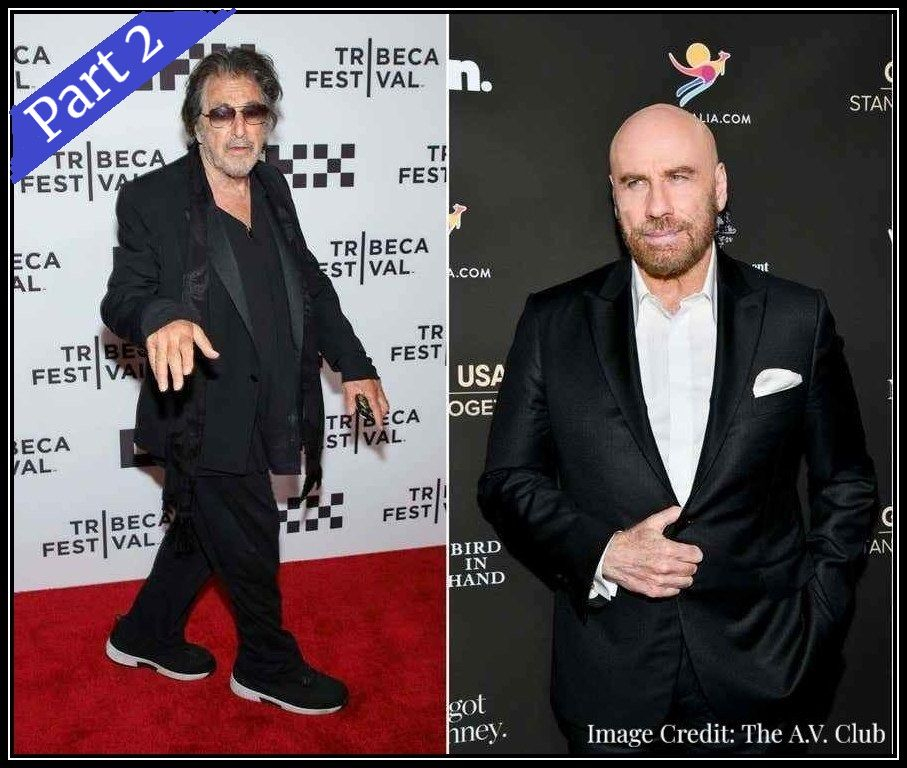
    Let us now leap forward to another story in Deadline, dated May 15, 2023. In 11 months, Celozzi put together a cast consisting of Al Pacino, John Travolta, Viggo Mortenson, Shia La Beouf, Rebecca Pidgeon and Courtney Love. In this installment, the story line is still the same: “a hit ordered by Chicago mob kingpin Sam Giancana as payback for JFK’s attempt to undermine the mob after they helped get him elected.” The story then parenthetically adds that this theme was a big part of Oliver Stone’s JFK. Which it was not. In fact, I don’t even recall it being any part of the 1991 feature film.

    In the first article Celozzi states that much of his material is based on stories he recalled hearing from a guy named Pepe Giancana, real name Joseph. He was a brother of Sam who died in 1996.

    The longest story I have seen about this project was in the Daily Mail last July 15th. It turns out that in two days in November of 1963 (the original title of the script), Pepe—a lowly bookmaker—drove Sam around. He had to since Giancana had sent men to Dallas for 11/22/63. Their job was to help Lee Oswald murder JFK, but to also make sure Oswald did not talk afterwards. Celozzi told reporter Tom Leonard that the three men in Dallas were Charles Nicoletti, John Rosselli and Jack Ruby. But they did not have a clear idea of how the murder would be done. It turned out Rosselli was to take out Kennedy if Oswald missed and Nicoletti was to kill Oswald before he was apprehended.

    Pepe told Celozzi that Oswald misfired from the upper floors of the Texas School Book Depository. So Rosselli fired and hit JFK. This caused Oswald to flee the building. Nicoletti was in a car with patrolman J. D. Tippit and was screaming at Oswald to get in, but he did not. So they followed and TIppit caught up with him but Oswald shot the policeman. Nicoletti followed Oswald but lost him. Sam then contacted Jack Ruby. According to Celozzi, Jack knew he only had six months to live since he had cancer. So he polished off Oswald.

    After reading these stories, I decided to go back and look at a documentary film made by Celozzi about ten years ago. It was called Momo: The Sam Giancana Story. Because two of the main talking heads were Sam’s daughters—Francine and Antoinette—the documentary was rather a warm and fuzzy look at the Chicago Don who, according to the FBI, was responsible for about 13 murders as he was working his way up the ladder in Chicago. The first half of that film was passable as a biography. But left some important details out. Since Giancana is the major character in the upcoming feature, let us fill in some factors that help spell out the man’s life. Including the probability that a pall bearer at his funeral, Butch Blasi, was his likely murderer.

    II

    Giancana was not the real name of the family. It was Giangana and they stemmed from Sicily. (William Brashler, The Don, p. 12) Leaving Italy, Sam’s father Antonio moved into a section of Chicago called The Patch, which was the equivalent of New York’s Little Italy. Sam (original name Salvatore), was born in 1908 and his mother died when he was two. (Sam the Cigar, by Fergus Mason, p. 19) Antonio remarried—actually twice—and eventually the family had 8 children. His father was not very kind to Salvatore and physically abused him. Sam was thrown out of school and escorted to St Charles Reformatory.

    When he left the reformatory in 1921, Sam joined a gang of juvenile delinquents in The Patch called The 42’s. That title was based on the Ali Baba legend of the 40 thieves. (Brashler, p. 32) For Sam, this was a kind of apprenticeship for his future career in La Cosa Nostra. The 42’s pulled off burglaries and stole cars, graduating to bombings and murders. But they also learned how to manipulate the system by paying off cops and judges. This was done by collecting dues from members. (Susan McNicoll, Mafia Boss: Sam Giancana, p. 10) But still, shortly after marrying his only wife Angeline DeTolve, Sam went to Joliet prison on charges of attempted burglary.

    Sam made his reputation as what was called a “wheel man” or getaway driver. (Brashler, p. 33) That ability, combined with an ill-fated amendment, is what caused Sam to come to the attention of La Cosa Nostra in Chicago. Due to the 18th amendment and the accompanying Volstead Act, in January of 1920 America went dry. Sam became a transporter of illicit liquor between men like Joe Esposito and the Genna brothers who set up a series of stills.(McNicoll, pp. 10-12) Esposito was killed in a murder in which Giancana was the getaway driver.

    The first leader of this profitable Chicago network was Big Jim Colosimo, who brought in Johnny Torrio from New York. Torrio ended up killing Colosimo over control of liquor distribution. Torrio had stills set up in Canada and he expanded the business scope by opening up speakeasies all over the city. But Torrio was then shot in 1925, returned to Italy and Al Capone, Torrio’s partner, took over. (Mason, p. 27) Sam became a driver for Capone’s gang and was inducted as a member in 1926. (ibid, p. 30) He was also arrested for murder around this time, but got off when the chief witness was killed.

    Capone was convicted of income tax evasion in 1931. He was paroled in 1939 but did not return to live in Chicago. He died in Florida in 1947. When Capone was jailed, control of the Chicago mob was given to Frank Nitti and Paul Ricca. And it was around that time that Lucky Luciano set up the national commission of organized crime. (Brashler, p. 68)

    Ricca liked Giancana but Sam was busted again in 1939. He got a four year term for manufacturing alcohol without a license. This ended up being a blessing in disguise. Because while in prison he met up with a man named Bill Skidmore. It was Skidmore who introduced him to Eddie Jones. Jones was the leading member of a family who ran the lottery rackets in the African American community. To say this was profitable does not begin to describe the money it brought in: the low estimates being $15,000 per day. (Brashler, p. 91; Mason p. 39) Skidmore knew about this and he knew who Jones was, since he was in the same cell block. Eddie Jones did something that most of his henchmen did not do: he talked to Caucasian members of the Chicago mob, now called The Outfit. Jones and Skidmore took Sam to school on the numbers game. Giancana did the computations and figured no other racket The Outfit was in had this kind of profit margin.

    III

    Jones had made a mistake. For when Sam got out of prison in late 1942 he understood what could bring him both wealth and stature in The Outfit. In May of 1946 he kidnapped Eddie and threatened him with death unless he gave up his lottery racket to Sam. In return Sam would give him a cut and a lump sum of 250,000 dollars. Jones took the offer he could not refuse and left for his villa in Mexico. (Brashler, pp. 101-05)

    This greatly expanded Giancana’s wealth, since the Jones lottery was not just in Illinois but in at least three other states: Iowa, Maine and Idaho. This prize greatly curried favor with Tony Accardo, Ricca and Jake Guzik, the triumvirate over The Outfit. Giancana now became the equivalent of Accardo’s chief of staff. (Brashler, p. 112). But there was still one holdout for the African American lottery in Chicago, a man named Ted Roe. This feud between Roe and Giancana went on for years, with several casualties. Finally, Sam had Roe killed in late summer of 1952.

    Sam now had so much money he could set up genuine small businesses and list himself as a salesman for his brother-in-law’s Central Envelope Company. He used his new wealth to set up gambling centers through wire services. All the while Accardo was teaching Sam the ways of The Outfit. When his student was fully tutored, Accardo decided to step down since he was under intense pressure from the IRS. Giancana assumed power in 1955, a year after his wife died. (Mason, p. 54). The understanding was that Accardo would serve as first consigliere.

    But once Sam took power in Chicago, it was almost deemed that his would be a rocky reign. First, back in 1950-51 Senator Estes Kefauver held hearings throughout the country on organized crime and many of these were broadcast to a wide audience. (McNicoll, p. 41) That was the first national exposure of La Cosa Nostra. And people like Accardo, Ricca, and Frank Costello testified. The single division of the Chicago Police Department investigating organized crime gave Kefauver some materials they had on The Outfit. One of the outcomes of this attention is that it made it difficult for the FBI to now deny that La Cosa Nostra existed in America.

    IV

    In 1957 two events occurred which further exposed organized crime in America to a point that there was no turning back. One was caused simply by accident i.e. the discovery of the Apalachin meeting in New York. Scores of Cosa Nostra leaders were gathered there to discuss, among other things, the aftermath of the attempted murder and the actual murder of, respectively, Frank Costello and Albert Anastasia. The local authorities thought it was odd to have so many expensive cars gathering in such a rural location. When they discovered many of them were registered to known criminals, they called in state policemen, set up roadblocks and raided the home of Joseph Barbara. Giancana never wanted the meeting to be there and pushed to have it in Chicago. (Brashler, p. 172) But he did attend, and was one of the capos to escape into the woods while over sixty were apprehended. But their convictions were overturned on appeal the following year. This event provoked J. Edgar Hoover to form the FBI’s Top Hoodlum Program. (ibid, p. 135) As part of it a special team was assigned to Chicago. Men who were college graduates, some with law degrees e.g. Ralph Hill, Vincent Inserra, Jack Roberts and, as we will see, Bill Roemer.

    The other event that made things troublesome for the Cosa Nostra in 1957 was the formation of the McClellan Committee, sometimes billed as the Rackets Committee. That committee was led by Senator John L. McClellan, a Democrat from Arkansas. But both Senator John Kennedy and his brother Robert served on it. The former as a committee member and the latter as Chief Counsel and investigator. This is where RFK’s legendary pursuit of Teamster leaders Dave Beck and Jimmy Hoffa began. Bobby soon discovered that Hoffa had set up several ‘paper locals” for members of Cosa Nostra to run, these were local unions in name only which Hoffa used to prop up vote counts. Therefore, Kennedy’s inquiry spread over into organized crime. When Apalachin occurred, he immediately went to FBI headquarters and was shocked when he found out how little information Hoover had on these big city Mafiosi. (McNicoll, p.49)

    Like its predecessor, the Kefauver Committee, the McClellan hearings attracted much media attention, some of it on live television. In front of cameras, the public saw Beck take the fifth amendment 117 times. He was indicted for tax evasion in May of 1957. Later that year, the AFL-CIO expelled the Teamsters from membership. In one of his most memorable confrontations, Bobby Kennedy finally got Giancana in front of the committee. This was after Sam had criticized the committee at length to reporter Sandy Smith. (Brashler, pp. 156-57) RFK did not take this mildly and he referred to Giancana as ‘Chief gunman for the group that succeeded the Capone mob.” Which was more or less accurate. (Arthur Schlesinger, Robert Kennedy and His Times, p. 172) In June of 1959 Giancana took the Fifth Amendment 33 times as Pierre Salinger set forth his past record. Then the following much quoted exchange took place:

    RFK: Would you tell us if you have opposition from anybody you dispose of …by having them stuffed in a trunk? Is that what you do Mr. Giancana?
    SG: I decline to answer because I honestly believe my answer might tend to incriminate me.
    RFK: Would you tell us about any of your operations or will you just giggle every time I ask you a question?
    SG: I decline to answer because I honestly believe my answer might tend to incriminate me.
    RFK: I thought only little girls giggled Mr. Giancana. (ibid)

    Around this time, the FBI was beginning to get some traction against The Outfit. Hoover allowed them to use electronic surveillance, to recruit informants, and to follow Giancana wherever he went. By following Giancana, Gus Alex, Murray Humphreys, Jake Guzik and Frank Ferraro, they began to locate their meeting places. They applied for permission to bug their conference rooms and this was approved. But once this was in place, something really bizarre upset the proverbial apple cart.

    The CIA recruited Giancana to kill Fidel Castro.

    V

    There have been many renditions of how this recruitment happened, how it progressed and its ultimate failure. Many of which the reader should avoid. Perhaps the very worst is in Seymour Hersh’s hatchet job of a book, The Dark Side of Camelot. But one of the first things the Assassination Records Review Board (ARRB) did in the mid-nineties was to declassify the CIA’s Inspector General’s Report on these plots. That report was written at the request of Lyndon Johnson. The reason being that John Rosselli was talking to certain people in Washington and distorted versions of the plots were getting out into the media e.g. Drew Pearson. (Handsome Johnny, by Lee Server, pp. 460-61, also All American Mafioso, by Charles Rappleye and Ed Becker, p. 270). Unfortunately, the Church Committee chose not to include the 145 page IG Report in its four volumes. But when the ARRB did declassify it, the mythology about what had happened was dispelled.

    In 1960, President Eisenhower had approved a plan to get rid of Fidel Castro. This included a possible invasion. The Director of Plans, Richard Bissell, began to think up a fallback position—namely assassination—to help with Castro’s removal. He broached the idea of contacting underworld figures with Sheffield Edwards, chief of the Office of Security. (IG Report, p. 14) Edwards thought about using Robert Maheu since he had been on retainer for CIA and also had contacts in Las Vegas, where the Cosa Nostra had some very profitable gambling casinos. John Rosselli was The Outfit’s man in Vegas and Maheu contacted him. Rosselli decided that the two men who could help the most in this effort were Giancana and Santo Trafficante of Tampa and he introduced the CIA, in the form of Edward’s go-between, Jim O’Connell, to the two men. (IG Report, pp. 16-19)

    Giancana, the seasoned killer, rejected a gangland shooting since he said no one would volunteer for an assignment like that since it would be almost impossible to escape. He preferred administering certain poisons to Castro. (IG Report, p. 25). The long and the short of it was that none of the attempts worked. And therefore, when the Bay of Pigs failed spectacularly, the man who started the plots—Dick Bissell- and the men who approved them—Director Allen Dulles and Deputy. Director Charles Cabell—were fired. (IG Report, pp. 17-18). But the reasons for their firings were for misleading President Kennedy over the Bay of Pigs invasion. The IG Report makes it clear that neither JFK nor RFK knew anything about the plots to kill Castro. (IG Report, pp. 132-33)

    So how did Attorney General Robert Kennedy find out about the plots? Giancana asked a favor of Maheu. Sam suspected his girlfriend, professional singer Phyllis McGuire, was cheating on him with comedian Dan Rowan in Las Vegas. (Brashler, p. 206) So he asked Maheu to bug Rowan’s hotel room. But the authorities discovered the bugging equipment. (IG Report, pp. 58, 59,68) This was then reported to the FBI. The FBI reported the episode to RFK and he requested a briefing on the incident. He could not understand why Maheu was so interested in aiding Giancana with his personal life. He got the answer to that question in May of 1962. (David Talbot, Brothers, pp. 85-86). But as the IG Report makes clear, the CIA deceived Kennedy by saying the plots had been discontinued when in fact they had not. (IG Report, p. 64) In what the Agency termed Phase Two of the plots, one gangster from the first phase, John Rosselli, had teamed up with CIA officer William Harvey in attempts to send teams into Cuba to terminate Castro. (Talbot, p. 86).

    The plots went on until 1966. With first Harvey and Rosselli, and then with a Cuban national named Rolando Cubela. But we will end our discussion of them here since this ended Giancana’s role in them. If the reader has not read the CIA’s IG Report, I recommend he does to avoid being misled by writers with an agenda, like Hersh. (Click here)

    VI

    To say that Giancana’s decade long reign as the leader of The Outfit was rocky does not convey how contrary to the rules of La Cosa Nostra it was. Accardo was very determined to never draw any undue attention to his activities, since that allowed them to work in the dark so to speak. But for whatever reason Giancana could not or would not conduct himself in that manner. Relying on Maheu to do him a personal favor which backfired is one example. His open wooing of Phyllis McGuire is another. Mafia Dons are not supposed to let themselves be photographed in public, especially with a celebrity. Since those kinds of pictures go around the world in newspapers and magazines. But this is what happened with Giancana. Unlike Accardo, he also had a volatile temper. Once after FBI agent Bill Roemer walked into one of his meeting places as a deliberate provocation, Giancana had one of his men, Chuck English, stop the G man as he was leaving. English told Roemer that if Bobby Kennedy wanted to talk to him, he knew who to go to. Roemer took this to be Frank Sinatra, and the reply confirmed it. (Man Against the Mob by William Roemer, p. 263) When The Outfit’s foremost fixer, Murray Humphreys, heard this he shouted, “You don’t give up a legit guy! For Christ sakes that’s a cardinal rule!” (ibid)

    And then of course, there was the famous shouting match at O’Hare Airport in July of 1961. The FBI had decided to really turn up the heat on Giancana, knowing that AG Bobby Kennedy had made him a prime target. In fact, in a short time, RFK would assign 70 agents to Chicago, which was a 1400 % increase in manpower. (Roemer, p. 167). The Bureau decided to intercept Giancana as he was traveling with McGuire. They met her as she was getting off a plane and escorted the singer to a private room to discuss Giancana, knowing this would enrage the Don. Did it ever. Roemer and Giancana got into a screaming match with literally hundreds of people walking to and fro. Roemer and Ralph Hill asked Giancana if he knew anything about the listening device in Dan Rowan’s room in Vegas, knowing this would provoke him. Sam responded with some rather harsh language sprinkled with profanity, even threatening Roemer at least twice, but then backing off. Finally Roemer let loose with the following:

    All you folks. Come over here! I want you to see something. Take a look at this piece of slime! This is Sam Giancana. He is the boss of the underworld here in Chicago. Take a good look at this garbage! The big boss, Giancana. You people are lucky, you’re just passing through Chicago. We have to live with this jerk! (Roemer, p. 150)

    It was these kinds of open confrontations that the outside leaders of The Outfit, like Accardo and Paul Ricca, looked at with disdain.

    Bobby Kennedy’s focus on Giancana eventually led to the Lock Step tactic in 1963. This was a degree of surveillance that came pretty much close to being total and 24/7. Nine FBI agents were on each 12 hour shift.

    1. When Sam arrived at the airport they trailed him off the plane and drove home behind him.
    2. At night there were three cars around his house.
    3. He was followed while taking walks in the park.
    4. When Sam went to dinner they took the next table.
    5. If Sam got up from the table to go to the men’s room, Roemer went to the men’s room and was in the next urinal.
    6. When Sam went golfing, they were behind him in the next foursome.

    I could go on, but this does not even include the electronic surveillance they had blanketed Giancana with. (We will get to that later.). Giancana couldn’t take it and he filed a lawsuit. In Celozzi’s documentary he says that Giancana won the suit. This is not really true. Bobby Kennedy decided not to mount a defense on constitutional grounds. He did not think a lower court could intervene in a DOJ inquiry. So even though Giancana prevailed at trial, this was overruled on appeal.(Brashler p. 243) And there was no let up in the interim between the two court rulings, since Roemer got the sheriff’s office to make up the parameters which the local court had limited the FBI to. (Roemer, p. 270)

    This was really the beginning of the end for Giancana. For now, with all of this surveillance on the man, the local US attorney’s office, led by David Schippers, decided to place him in a legal vise. They would subpoena Giancana and grant him immunity. This way, if he refused to reply to questions, he could be prosecuted for contempt. That is what happened and Giancana was convicted of contempt. All of his appeals failed.(Brashler, p. 272) When Giancana was released after a year—the life left on the grand jury,—he knew that he could not regain power since Ricca and Accardo would veto it. He also knew the DOJ could use the same tactic to place him in prison again. So in 1966 he made a smart decision and fled to Cuernavaca in Mexico with Richard Cain.

    Cain was a complex character about which one could write a separate essay. He started as a Chicago cop who was fired for supporting Mayor Richard Daley’s GOP opponent. He went to Miami and trained Cuban exiles for the Bay of Pigs. He then went to work for Richard Oglivie, the Chicago sheriff. But it was found out he was—with the help of the Cosa Nostra—making phony drug raids in order to build his own reputation; so he was fired again. He was also convicted for perjury, obstruction and conspiracy, but that was overturned on appeal. (Brashler, pp. 288-89)

    Cain set up Sam in Cuernavaca and furnished him with a lawyer named Jorge Castillo. There he served as a roving ambassador for The Outfit. He set up gambling casinos on cruise ships in the Caribbean and even one as far away as Tehran. It is likely that Sam would have stayed there for the rest of his days. But Castillo made a rather large mistake: he failed to gain Giancana permanent resident status. So in July of 1974 his new home in San Cristobal was raided and he was sent back to Chicago where Roemer was waiting for his plane. But the man who got off was not the same Giancana. In fact, he told the burly G man he wanted no trouble and did not want to get personal like it had been. (Roemer, p. 352)

    Upon his return Giancana made four grand jury appearances and was reputed to have said he was not going to rot in jail. He also told Accardo he was reluctant to share his new enterprises in the Caribbean and Tehran with The Outfit. (McNicoll, pp.96, 98) Along with his notoriety—he was slated to appear before the Church Committee—these may have been the reasons for his murder.

    The circumstantial evidence seems to indicate that Blasi was the hit man. He had been at the home that July night, left, and was seen coming back later, around 10 :30 PM by Francine Giancana. (ibid, p. 98; see also Brashler, p. 321) Giancana knew his killer since he let him into his house and then turned his back on him as he was cooking peppers and sausages. The weapon was a .22 Duromatic target pistol with a silencer. The first bullet came in at the back of the head landing in the front left portion of his brain. Giancana fell to the floor and the killer shot him through his mouth. Finally the silencer was placed under the victim’s chin, aimed upward, and five more bullets shattered his jaw. Giancana had lived by the gun and now he had died by the gum.

    The above is a summary of Giancana’s life. And the Celozzi documentary deals with most of the matters in an adequate way. It is not at all distinguished as film making. But the offensive part of the film is in certain matters that, to this viewer, should not be in a serious documentary. Since it is part of what has come to be known as the Giancana myth.

    We will deal with these in Part 2.

    Go to Part 2 of 2

  • Does Tim Weiner Believe his own BS?

    Does Tim Weiner Believe his own BS?


    Robert Kennedy Jr. probably never expected the assassination of his uncle to take a prominent position in his campaign for the presidency. But it was almost predestined that he would be asked about the matter by some people in the media. He was, and to his credit, he did not dodge the question. On more than one occasion, including WABC Radio in New York, the query popped up. He answered honestly and courageously: He thought the CIA was complicit in the John F. Kennedy murder.

    That is all that Tim Weiner needed to hear. He replied with the following tweet:

    I cannot emphasize enough that this is a lie first promulgated by the KGB in 1967, and that RFK Jr is acting as a useful idiot for the Kremlin.

    Hmm. Does this mean that both Ron Paul, a former candidate for the presidency , and Tucker Carlson, the former highest rated cable TV host, are also both “useful idiots” for the Kremlin? Why does Tim not say that if he thinks it’s the gospel truth?

    One reason is simple: It is not true. This is a phony story put out by Warren Commission apologist Max Holland. When the ersatz Russia Gate winds were blowing, Max Holland decided to transfer the focus from Hillary Clinton and her accusations to the JFK case. And the horrid online ‘zine Daily Beast actually ran with it. I blasted Holland’s article to bits back in 2017. (Click here) I actually showed that this story itself, part of the Mitrohkin archives, was manufactured for the defecting Russian agent to curry favor with the British and American intelligence agencies he was seeking monetary rewards and solace from. Because the Mitrokhin ‘archives”, as Russian scholar Amy Knight noted, was a mildly ludicrous creation. In fact, in more than one instance, it was proven to be utterly false. But for someone like Holland, that did not matter one iota.

    Tim Weiner used to write for the New York Times. He now writes for Rolling Stone. How that once proud and honest journal has fallen with his arrival. Rolling Stone was the place where Carl Bernstein published his epochal exposure of the CIA’s Operation Mockingbird. (Click here) During the early days of the House Select Committee on Assassinations (HSCA), Rolling Stone printed intelligent and penetrating stories about the JFK case. With the arrival of the NY Times vet, all that appears to be gone.

    For this is the second time in less than 17 months that Weiner has trotted out this mildewed and utterly false story to detract attention from any real examination of the true circumstances surrounding the JFK case. Tim, why not answer these questions for us?

    1. Would the Magic Bullet, CE 399, ever be admitted into any court in America after a pre-trial evidentiary hearing?
    2. What happened to the baseball sized hole that disappeared from the back of JFK’s head, the one that 41 people saw and some drew pictures of for the HSCA?
    3. If Oswald killed Kennedy, as you seem to imply, why did none of the four secretaries on the 4th floor of the Texas School Book Depository see or hear him on the only stairs leading down from the 6th floor to the first after the shooting?
    4. If the evidence in the case is solid against Oswald why did autopsy photographer John Stringer, under oath, deny he took the extant pictures of Kennedy’s brain in the National Archives?
    5. If the Warren Commission was correct, why did Admiral George Burkley tell the interviewer at the Kennedy Library in 1964 that he did not wish to comment on their verdict? Geez Tim, maybe because Burkley signed a document which placed the back wound at the level of T -3 which would make it all but impossible to exit through the throat?

    So Tim, why not ask your guru Mr. Holland about these? The man who made one of the worst documentaries ever on the JFK case, The Lost Bullet. See what excuses he tosses you and how he hems and haws as he tosses them. I could go on with about 40 statements just like this one and would love to have you reply to them in open debate. But I know you would never show up. The point is this: the Warren Commission was dead wrong. And you were dead wrong when you said that well, Lee Oswald probably got off a lucky shot. How can that be Tim if the ballistics and x-ray evidence portrays Kennedy’s head shot going from front to back? Geez did Oswald run around Dealey Plaza and shoot Kennedy from front and back? Love to hear you say that with a straight face.

    For the record, there were at least four people who thought the CIA was involved in the JFK murder before Tim says the KGB put out a story about it. The first one was Bobby Kennedy. Within momnets of hearing his brother had been killed, he called John McCone, the CIA Director, and asked him if his agency was involved in this horror. One can read all about that in David Talbot’s book, Brothers. It is shocking to me that Weiner shows no knowledge of this at all.

    After RFK, there was Los Angeles attorney Stanley Marks, German expatriate writer Joachim Joesten, and New Orleans DA Jim Garrison. But beyond that, Garrison arrested CIA contract agent Clay Shaw before the alleged KGB story ever ran in the Italian leftist newspaper Paesa Sera. And let us not forget what President Johnson told his chief of staff Marvin Watson after reading the Inspector General Report on the CIA/Mafia plots to kill Castro, a report he commissioned from Director Richard Helms. He said that the CIA was in on the JFK murder. That deduction was based on the CIA’s own report in the spring of 1967, not an Italian newspaper. (City Watch, article by Jefferson Morley, January 3, 2022)

    Let me repeat that again so Tim can maybe understand it: Garrison arrested CIA contract agent Clay Shaw before the alleged KGB story ever ran in the Italian leftist newspaper Paesa Sera.

    So how can Holland’s accusation be true? But beyond that, Garrison called the CIA covert security cleared Shaw in for questioning in December of 1966! (William Davy, Let Justice be Done, p. 63). This was almost three months before the alleged KGB story ran.

    In other words, there is no evidence at all that Garrison was ever influenced by the Italian article: to either suspect Shaw or to arrest the CIA agent. And if I use the terms CIA agent or covert security cleared, its because the declassified records of the Assassination Records Review Board (ARRB) prove that Shaw was just that. (Davy, p. 95; Joan Mellen, Our Man in Haiti, p. 54). It would be nice if Rolling Stone would allow someone like myself, Oliver Stone, Jefferson Morley or John Newman to write about some of these new discoveries made by the ARRB relevant to the JFK case. But as I said, those glory days appear to be long gone for Rolling Stone.

    Robert Kennedy Jr. is not the first person on the presidential campaign trail to say the Warren Commission was a pile of sludge. Al Gore did it when he was running for vice-president way back in 1992. And its an interesting story how that came about. When Gore first came to Washington as a congressman from Tennessee, he was asked a favor by a fellow Tennessean, Bud Fensterwald. Fensterwald was an attorney and founder of the Assassination Archives and Research Center in Washington. He asked Gore for just a stretch of time—about 45 minutes every Friday—before he flew back to Tennessee. Bud asked Gore to drop by his office at that time and he would have some documents arrayed on a desk for him to read. He would not consult with him about them, he just wanted him to read them.

    Congressman Gore agreed to the arrangement. After about a year Gore told Fensterwald: “You are correct. It was a conspiracy.’ And Gore never went back on this. In fact he said as much during that 1992 campaign. So by that accounting—Gore, Paul, and RFK Jr.—that makes three candidates for office who agreed the Warren Report is and was bunk.

    One last point about RFK Jr. If Tim Weiner was a real reporter—which he is not on this case—he would have done something elementary to any journalism 101 class. He would have called Bobby up and asked him how he came to such a conclusion. Bobby would have told him what he told me. He was giving a speech in the New York area and was waiting in the green room to be called on stage. He noticed that Jim Douglass’s book, JFK and the Unspeakable was in the bookshelf. He read a few pages and later on he ordered the book. Like many people who have read that book he was duly impressed. So much so that he ended up calling Jim Douglass. Bobby was struck by Jim’s emphasis on Kennedy’s Peace Speech at American University in the summer of 1963. So much so that the two ended up working on a very interesting article. It was called “John F. Kennedy’s Vision of Peace”.

    I saved the punchline for last. It was published in Rolling Stone on November 20. 2013. Would that happen today? I doubt it.

  • Sy Hersh Falls on his Face Again, Pt. 2

    Sy Hersh Falls on his Face Again, Pt. 2


    On March 29th, Sy Hersh was at it again. He wrote about a split between the CIA and the Kennedy White House over the plans to do away with Fidel Castro. In a reversal of the factual record, he makes the Agency out to be reluctant to do such a thing, while the Kennedys were urging the plots forward.

    As I wrote in Part 1, this is utterly false. And both the Church Committee and the CIA’s own Inspector General Report proved it so. John Kennedy was so opposed to these kinds of plots that when Senator George Smathers proposed it to him, he literally broke a plate over a table and said he did not want to hear any of this anymore. (Alleged Assassination Plots, p. 124) Smathers also told the Church Committee that the Agency frequently did things Kennedy was not aware of and this troubled the president. He said that JFK thought that assassination was a stupid thing to do, and he wanted to get control of what the CIA was doing. (The Assassinations, edited by James DiEugenio and Lisa Pease, p. 329). When one combines this with the fact that the CIA’s own Inspector General Report—which is the most extensive study of the Castro plots—concluded that the Agency never had any presidential approval for the plots, that is the ultimate word. (See IG Report pgs. 132-33) Hersh can rattle on as much as he wants but it’s the equivalent of urinating into the wind.

    That IG report was filed for Director Richard Helms at the request of President Johnson. (Click here for it) The Church Committee heard testimony from FBI official Cartha Deloach that, after Johnson read the IG report he concluded that the CIA was involved in the JFK assassination. (Washington Post 12/13/77) Until the Church Committee inquiry, Helms reportedly kept only one copy of this report stashed safely at CIA headquarters. Presumably because he did not want the word to get out that the Agency, under Dick Bissell and Allen Dulles, had sanctioned the plots and kept them secret from Presidents Eisenhower, Kennedy and Johnson. In an interview Helms did with Vincent Bugliosi for his book Reclaiming History, the former CIA director said that the Kennedys were not privy to the plots.

    All of which vitiates Hersh’s latest piece of nonsense concerning the plots themselves. He says that Richard Helms understood there was no turning down the mission. Since there was no request from the White House to do so, that statement is malarkey. But further, Helms had the plots ongoing on the very day JFK was killed. In preparation for a meeting with a proposed assassin in Paris, Helms cleared a CIA officer to invoke Bobby Kennedy’s name in conduct of the plots, knowing that RFK never granted such permission to do so! (IG Report, pp. 89-93) This would indicate to any objective person that Helms knew Bobby would never allow it and he would have stopped the plots, since he knew how his brother felt about such things. And also, as we shall see, after the CIA told Bobby they had been stopped.

    Further showing how wrong Hersh is, the plots did not stop with JFK’s death as he says they did. Helms full well knew they were continuing into 1966. That phase was called Project AM/LASH. And it is listed right in the Inspector General’s table of contents, dates and all. (See pp. 78-111) Therefore, the plots began in 1960, before JFK was president, and continued until 1966, encompassing three presidents who the CIA decided not to reveal them to. So everything that Hersh says in his first two paragraphs of his latest is wrong.

    Hersh then goes from just being wrong, to being ridiculous. He actually says he did not really understand this CIA/Kennedy dispute until he talked to—please sit down—CIA officer Sam Halpern. Hersh undermines himself by explaining about Halpern: “…the only reason he ever talked to a reporter was to spread a lie.” Hersh, never noted for his humor, misses the self-parodic overtones here. As Lisa Pease notes in her book, A Lie too Big to Fail, Halpern made sure that his version of the plots reached the media: “In fact, nearly every author that has claimed Robert Kennedy was in on the Castro assassination plots sources Halpern.” (p. 479) As Lisa points out, Halpern once gave his game away. Sam worked for CIA Officer Bill Harvey. Harvey and Halpern complained that the White House only used pinpricks against Castro. Sam, I hate to tell you, assassinating Castro is not a pinprick. (ibid) Needless to add, if you read the IG report, Halpern was in on the AM/LASH plots. As was Nestor Sanchez, assistant to Helms. (IG Report, p. 92)

    For any author today to use Sam Halpern in a discussion of this subject betrays a solipsistic bent. Because not only has Lisa Pease shown Halpern to be a liar, but so did David Talbot. (Brothers, pp. 105, 122-23). But beyond that, Halpern was demolished by John Newman with a completeness that was pretty much total. Let us review that demolition in order to understand just how bad Hersh is on this subject.

    II

    Newman published Into the Storm back in 2019, four years before Hersh penned his latest columns. I find it hard to comprehend that Hersh never heard of this book and never read it. For the simple reason that Newman, using declassified records, spent four chapters knocking the stuffings out of Hersh’s two sources on the Castro plots, namely Dick Bissell and Halpern.

    Sam Halpern was the executive assistant to Harvey, who was a major Agency player in the Cuba operations. It is not news to anyone that—for reasons stated above—Bobby Kennedy and Harvey shared a mutual animus. It also needs to be stated that when Bobby Kennedy was told about these Castro assassination plots, the CIA lied to him about their being discontinued. They were ongoing at the time of his May 1962 briefing and the Agency briefers knew they were lying to the Attorney General. (Newman, pp. 231, 242; Pease pp.481-83) This new phase of the plots was being run by Harvey and gangster John Roselli.

    Perhaps as early as 1967, but certainly by the time of the Church Committee, Halpern had created a cover story for the CIA. What is so odd about it is that Halpern’s phony story existed in a mythological netherworld, outside of what had really happened. Which the Church Committee revealed a good deal about.

    Sam’s fairy tale was arranged around a deceased CIA officer who Halpern knew and knew well. His name was Charles Ford. To understand what Halpern and Hersh did to him, one must review how and why Ford met Robert Kennedy. This was over two calls that the Attorney General received in the spring of 1962 about goings on in and around Cuba. One dealt with an attorney interested in the legal proceedings against the Bay of Pigs prisoners. The other concerned a group that was encouraging an uprising on the island. RFK called CIA Deputy Director Marshall Carter for assistance and advice on both issues. (Newman, pp. 260-64)

    Ford was chosen to consult with RFK on both assignments. On the former, Ford used the alias Charles Fiscalini, assigned by CIA; for the latter it was Don Barton, which was more or less chosen by him. Ford did a satisfactory job in investigating the two assignments. He concluded by telling the Attorney General that neither he, nor the CIA, should be involved in either endeavor. And here is where Newman exposed the Halpern mythology under stadium spotlights.

    In his book, The Dark Side of Camelot, Hersh quotes Halpern as saying that Ford went to places like Chicago, San Francisco , Miami and one trip to Canada. But Hersh then adds that Ford never delivered any paperwork as to what he was doing to Harvey’s office. Hersh then quotes Halpern to hammer this point home: “We never got a single solitary piece of written information.” Hersh then concludes by saying these must be in classified files on the RFK papers at the John F. Kennedy Library. (Hersh, p. 287) Under the hocus pocus of Hersh and Halpern, ipso facto, Ford was working with mobsters under Bobby’s orders in order to murder Fidel Castro. And that dirty rat Ford kept it all hidden from the CIA.

    Let us be plain: Everything in that above paragraph is false. As Newman discovered, for this assignment, Ford filed at least ten reports with CIA from March 30, 1962 to October 4, 1962. (Newman, pp. 258-260) Many of them went directly to Harvey’s office and Halpern signed off on at least one of them. Therefore, as Newman wrote, Halpern had to be aware of what Ford was actually doing. (Newman, p. 264) But further, Harvey wrote to the Attorney General twice about Ford’s negative conclusions. (ibid, p. 268). There was no secret since there was nothing to conceal.

    To any normal thinking person, the above would be enough to show that Halpern was an immoral con artist. But it’s even worse than that. Charles Ford did two interviews with the Church Committee. The first one is lost. (Newman, p. 270). Which is unfortunate since Ford refers to the first interview in the second surviving transcript five times. But in the second interview, Ford says he often got assignments from Halpern. Which is something Halpern never revealed. But further, Ford says that he worked for RFK on just the two assignments as outlined above. And he specifically said he was never directed to make contacts with the underworld. Further, that he never talked to anyone about plans to assassinate Castro. Finally, he reported to Bill Harvey at this time and his title was special assistant. (Newman, pp. 274-75)

    As Newman concluded, the idea that Hersh and Halpern were trying to convey—that Ford never told anyone about his work for RFK—is now exposed as simply wrong. Ford told everyone about his work for the Attorney General. As his reports were circulated to many inside the Agency. But because they did not say what Hersh and Halpern wanted them to say, they were useless to the con artist and his (rather easy) mark. Specifically, they would portray what was really happening and expose a fairy tale. And further and fatally: that Halpern knew the true facts all along.

    Let us recite a recurring refrain with Hersh: How bad is bad?

    III

    What necessitated Bobby Kennedy’s briefing on the CIA/Mafia plots in May 1962? This occurred because Sam Giancana asked a favor from the man the CIA used to recruit the Mob into the plot. That was Robert Maheu. Maheu decided to help Giancana. He found a wiretapper for a hotel room since Sam thought his girlfriend, Phyllis McGuire, was sleeping with comedian Dan Rowan in Vegas. This scheme was foiled by local authorities and the FBI found out about it. When Kennedy was briefed, he asked why Maheu was so interested in pleasing Giancana. This is when he learned about the CIA’s plots for the first time. (Talbot, Brothers, pp 85-86) The rather logical deduction is that the CIA would never have had to brief him if he or his brother had been in on the plots already.

    Since Giancana was a number one target for RFK as Attorney General, this made him even more angry at what the CIA had done. But unlike what Hersh suggegsts, Bobby did not stop pursuing Giancana. And Giancana eventually did go to jail for contempt in 1965. When he got out a year later, to avoid more prison time, he fled to Mexico.

    This takes us to the next—and most bizarre—part of Hersh’s 3/29 pile of sludge. I had to read this section over twice to really understand it since it was like reading science fiction. As most of us who follow the career of Robert Kennedy know, the AG took a goodwill tour in February of 1962. Hersh distorts this journey also. He tries to convey that it was only to Italy. Not even close. This was a world wide goodwill tour that began in the Far East, went through the Middle East and ended up in Europe. The main point of this long tour was not Italy. Two of the stops were in Indonesia and the Netherlands. RFK was in Jakarta to negotiate the release of CIA pilot Alan Pope, shot down during the failed Agency coup of 1958. He was in Netherlands to talk the Dutch into surrendering West Irian to their former colony Indonesia, since JFK was backing their nationalist leader Sukarno. That mission, which you will not read a word of from Hersh, was successful. The other main spot for Europe was West Germany, where Bobby actually said “Ich bin ein Berliner” before JFK did.

    From that mischaracterization, Hersh descends further into his own morass. He now says that RFK went to Italy in January—before the goodwill tour. This writer, and others, tried to find any notice of this January journey. I searched the following sources:

    • New York Times index
    • The Washington Post microfilm
    • Newspapers.com
    • RFK’s appointment book

    The last was done for me by Abigail Malangone, the archivist at the JFK Library. (E mail message of 4/10/23) It eludes me as to how the Attorney General could go to Italy without a trace left behind. And, recall, back then the major newspapers and syndicates had reporters assigned to the Justice Department, as some of them do today. Bobby lived in Virginia at the time. But no reporter or anyone else saw him leave for Italy? And I could find no story about anyone who saw him in Italy either.

    But Hersh now goes a step beyond. He says that Charley Ford was doing the same. John Newman got the records for what Ford was doing. There were none depicting any trip to Sicily. (Newman, pp. 258-60) Ford’s only trip out of the country was to Canada and that was not for RFK, but the CIA. If Hersh has evidence to counter this, I would like to see it. Because John was working with declassified files, the ones Hersh says are still hidden.

    Now, why does Hersh say this stuff in the first place? Please allow me to indulge in some informed speculation. But it is based on Hersh’s past record in the field—which goes way back to his Marilyn Monroe baloney. Hersh wants to somehow depict RFK and Ford as fomenting the first Mafia War that broke out in Sicily in January and February of 1962. He actually says as much. But according to the NY Times, Bobby did not get to Rome until late in February. (NY Times, 2/21/1962) Which was after the war began in earnest. (See John Dickie’s book, Cosa Nostra: A History of the Sicilian Mafia, pp. 241-57) Hersh pulls another one when he writes that RFK had two days of private meetings in Rome. RFK was only there for two days total. And the second day he met with Pope John XXIII. According to extant CIA records, Ford did not get there at all. Did Hersh take a page out of Sam Halpern’s book of fairy tales? But in this case, going even further than his mentor?

    On, lest I forget. Hersh always has sources on the inside. (David Talbot, Brothers, p. 123) We have seen how worthless those sources are in Bissell and Halpern. And we are also supposed to think that Hersh does not know how much the CIA did not like the Kennedys.

    IV

    To wrap up, on 3/29 Hersh again brings up the false info from the novel Double Cross about Joe Kennedy making a deal with Sam Giancana for the 1960 election. Again, this has been proven to be ersatz. (Click here)

    But let me conclude with some questions readers relayed me about the Nord Stream explosions, Hersh’s latest ‘scoop’. Apparently, people did not click through to the links I posted. These were by Rene Tebel, Russ Baker and Oliver Alexander. As Tebel notes, Hersh is again relying on his “sources inside the system” who he takes at face value to write his story, without doing any apparent hard questioning or cross checking. (Geopolitical Monitor, story by Rene Tebel, 3/2/2023) Tebel notes that Hersh insists that the explosives were dropped during a BALTOPS exercise, more than three months before the explosions detonated. Thus ignoring more than one opportunity to do so later without such a long wait time.

    For instance, during the Polish exercise Rekin-22 on September 16-18. But Tebel also notes that there were 25 ships passing in the direct or adjunct area of the explosions in the days preceding the detonations. Of those ships only two did not have transponders. These two ships were between 95 and 130 feet long and were within miles of the Nord Stream leak sites.

    Russ Baker noted how thinly sourced Hersh’s story was, a recurrent theme in a lot of Hersh’s later work. He later added that news organizations rarely publish such stories. The error rate risk is too high. But yet Hersh wrote as if the story was completely sound. The questions then abound: 1.) How did the source come into all this info?, and 2.) If it is so sound why tell Hersh for Substack, why not reveal it to a writer with a major news organization? When Baker emailed Hersh about this, the reply by Hersh was “Russ…I wrote what I wrote..not much I can add…sy”. Well, same thing applies to much of the above Substack stuff, which I already exposed as dubious.

    Baker went on to ask, the kind of high level source that actually knows about such things would likely not reveal it to anyone because of the huge penalties involved in being discovered. Finally, Russ pointed to how vapid the story really was. He quotes the following lines: “Nevertheless, in early 2022, the CIA working group reported back to [Jake] Sullivan’s interagency group: “We have a way to blow up the piplelines.” Russ writes that this sounds like inside info, but anyone could write such a thing not having any real knowledge. There was really very little detail, the kind of technical details that turn speculation into fact. (Russ Baker, “Nord Stream Explosion, Plenty of Gas, Not much Light” Who What Why, March 4, 2023)

    Oliver Alexander showed that even those details are simply not very sound. As I previously noted, there was no need to add mine searching to BALTOPS, as it had been a part of the programs since 2019. Hersh could have easily checked that one.

    Hersh said on a broadcast that the USA needed Norway in order to reveal the shallow part of the sea. So, the Pentagon had no such charts? Secondly, the Nord Stream 1 explosion was detonated in one of the deepest parts of the area.

    Hersh now says that the divers deployed off a Norwegian Alta class mine hunter. Yet no Alta class mine sweepers took part in that particular BALTOPs exercise. Also, Hersh wrote that the charges would be detonated by a Norwegian Navy P8 surveillance plane with a sonar bouy. These planes were not active at that time. They were only in training usage in the northern part of Norway, many hundreds of kilometers away.

    When Hersh was confronted with the information about the Alta, he reacted the same way he did when confronted with the forged signature of Janet DeRosiers on the phony Marilyn Monroe trust documents. He lashed out at the source and called it a stupid lie. The problem is that the last time that ship moved under its own power was about ten years ago. It was towed for scrap iron on June of 2022.

    Even if Hersh made an error, not uncommon with him, ships close to that class were not in the area at the time or in a position to have planted the charges. (See Oliver Alexander’s “Blowing Holes in Seymour Hersh’s Pipe Dream”.)

    Does all this mean that the USA had nothing to do with Nord Stream? No it does not. As I noted, Hersh would be a fine messenger for a faulty story. Since he has no pesky editor. Great way to distract from the real story. But I would also not rule out Ukraine or the Poles.

    V

    What I think Hersh is up to with his writings on Substack about the Kennedys is redemption. When The Dark Side of Camelot came out in 1997 it was roundly blasted by just about everyone. And this includes the LA Times, Newsweek, New York Review of Books etc. Most of the stories said that the book revealed more about the Dark Side of Hersh than Kennedy. Which is about the worst thing a critic can say about a book. What I think Hersh is trying to do is to appeal to the ignorance of a new generation of readers born in the Internet age. Whether it will work is up to those readers. And if they are willing to investigate beyond Substack, to see just how bad Sy Hersh is in that case, and some others.

    In my view, Hersh was never the ace reporter he was alleged to be. And I wrote at length about the reasons why many years ago. (The Assassinations, edited by James DiEugenio and Lisa Pease, pp. 367-70) In my view, the stellar reporter of that time period was Robert Parry. Parry ended up leaving MSM journalism and started his own publication, Consortium News.

    The problem with Substack is this: it’s too easy. There is no editor above you to check on the facts of your story. This is one reason that both Glenn Greenwald and Hersh are on it. Greenwald did not like being edited at The Intercept. Hersh could not get some of his stories through David Remnick at The New Yorker. As the reader can see, this article which you are reading—and which you do not pay for—is plentifully referenced with credible sources. I serve as my own editor, since I know from my graduate studies what the rules of scholarship are. This kind of work takes days, at times weeks, sometimes even months, to complete. It’s not something you can turn out every other day. This kind of writing means visiting certain libraries, placing books on Inter Library Loan, driving to distant research repositories—in this case the Young Library at UCLA. Which is about a 40 mile round trip. And I did it twice. I would like to send Hersh my invoice for all this, but I know he would never repay me. He would call me something like a Kennedy apologist, as he did Janet DeRosiers.

    The problem with that is simple: DeRosiers was correct. The Marilyn Monroe trust was a fraud. Do those people on Substack know that? I hope so. But I doubt it.

    ADDENDUM

    When I emailed Hersh about his source for Bobby Kennedy’s Italy trip in January of 1962, he asked who I was. He then said he was doing so because it was obvious from the article. I asked him if it was so obvious why could I find no source for it anywhere? That was the last communication we had. I guess this is one of those Russ Baker, “I wrote what I wrote” matters.


    Go to Part 1

  • Assume Nothing about Edward Epstein

    Assume Nothing about Edward Epstein


    To those who were curious about the career of Edward Epstein and how such a person ever advanced in the literary world, his memoir is revealing. It’s called Assume Nothing and although its kind of an uphill grind to read, I am glad I read it since I now understand a lot more about Epstein. And how he got to where he was and is.

    Epstein’s father died at the age of 28. He left him some money he was entitled to at age 21. The author dropped out, or flunked out—its not clear which—from Cornell and decided to become a film producer. For his first film he was nothing if not ambitious. He was going to make a picture out of Homer’s Iliad. But there was a bit of a problem, actually more than one.

    He did not have a completed script.
    He did not have a director signed.
    He did not have an actor to play Achilles.

    I think Epstein tries to play all of this off as a comedy of errors: youthful indiscretions. I did not take it that way. All I could think of is this: What kind of a moron goes to Europe and tries to make an epic movie under those conditions? And even puts up some of his own money to do so.

    As anyone with any experience, or just common sense could have advised him, the whole effort turned out be a disaster.

    Epstein wandered back to Cornell and he happened to be with Professor Andrew Hacker on the day Kennedy was assassinated. (p. 38. All footnotes to the E book version.) They were continually watching the news and Epstein writes about Oswald calling himself a patsy, except he puts that word in quotes. Hacker said that establishing the truth about the murder “would be a test of American democracy.”

    Hacker helped get Epstein back into Cornell and Epstein suggested that he could write about the JFK case for his master’s thesis. (p. 40). Hacker agreed and said once Epstein read the Warren Report and the 26 volumes, he would write him letters of introduction for the seven commissioners. Epstein does not say if he read the 26 volumes. He just says he satisfied Hacker the he had done so. (p. 40) Hacker now writes the letters and all the commissioners agree to see him except Earl Warren. And its this part of the book that was for me the most interesting.

    II

    Instead of seeing Warren Epstein got to visit J. Lee Rankin, the chief counsel. Rankin tells him he was surprised that Warren chose him for the job. And that was that. I decided to go back and look at Epstein’s book about this issue, since it has become a seminal part of the literature about the Warren Commission. In Inquest, which became the book Epstein fashioned out of his thesis, this is how the episode is treated:

    The next order of business was the selection of a general counsel. The first person suggested for this position was rejected because he was “too controversial.” Warren then proposed J. Lee Rankin, a former Solicitor General of the Unites States, and the Commission, “immediately and unanimously” agreed upon him. (Epstein, The Assassination Chronicles, p. 31)

    And that was that? No it was not. Not by a long shot. Epstein deals with this key chapter in three sentences. Gerald McKnight spent three pages on it in his fine book Breach of Trust, and Warren did not propose Rankin. (pp. 41-44). J. Edgar Hoover was adamantly opposed to Warren Olney since he had been an FBI critic. Two days before this session where Warren tried to nominate Olney, Hoover learned through Nicolas Katzenbach of the Justice Department that Olney was in the cards. The FBI now went to work through Gerald Ford to detonate Olney. It was Ford and John McCloy who objected to Olney and it was McCloy, not Warren, who nominated Rankin. Rankin eventually got the job with the help of Allen Dulles.

    This is an important episode and Epstein missed its significance, then and now. It showed that, first, Warren was pretty much a figurehead. Secondly, that the nexus of power inside the Commission was with Ford, McCloy and Dulles. Third, that the three southern commissioners—Richard Russell, John Sherman Cooper and Hale Boggs—were outside that nexus.

    Later on, after visiting with Ford and Howard Willens—Katzenbach’s man on the Commission—Epstein writes that Ford had been absent from most hearings. (p. 50). That deduction completely collides with Walt Brown’s tabulation of which commissioners were at how many hearings. Ford’s attendance record was remarkable for a sitting congressman. By any method of accounting, Ford was in the top three for attendance and he was second in the number of questions asked. (Walt Brown, The Warren Omission, pp. 83-85) If he was going to be a spy for the FBI, he had to be there a lot.

    But that is not all that is notable about how Epstein describes Ford. He says that Ford had a reputation for candor. This is almost ludicrous. But if he did, then why did Ford not tell Epstein that he changed the draft of the Warren Report. Namely that he moved Kennedy’s wound in the back up to his neck to make the Single Bullet Theory more tenable. (LA Times, July 3, 1997) In the face of that it is just plain goofy that Epstein kept that judgment in this book. Because in the light of that alteration, Epstein’s quote about Ford makes perfect sense, he says that he had a keen grasp of the Warren Report’s ramifications on the stability of America’s system and how he saw each issue in that context. He concludes with Ford by saying, “Indeed, it was from him that I first heard the term ‘political truth’, a concept in which facts may be tempered to fit political realities.” (Epstein, p. 52)

    If Epstein had been a little bit more eager, penetrating, and curious researcher he might have found out something about just how political the Warren Commission really was. As Oliver Stone showed in his documentary JFK Revisited, Senator Richard Russell had serious doubts about the Commission from the start. He did not like how Katzenbach attended the first executive session meeting, how the FBI was largely going to be in charge, and how the conclusions seemed to be decided on well in advance of the inquiry.

    Russell had two allies in his severe doubts: Senator John Cooper and congressman Hale Boggs. They cooperated together in the last days of the Commission to form a united front against the other four. This is how Epstein treated this subject in his book:

    The Final Hearing. On September 7 Commissioners Russell, Cooper and Boggs went to Dallas to re-examine Marina Oswald. Under Senator Russell’s rigorous questioning, she changed major aspects of her story and altered her previous testimony. More rewriting was thus necessitated. Finally on September 24, the Report was submitted to President Johnson. (Epstein, p. 49)

    To be fair to Epstein, he does describe a debate, which was at the last executive meeting—although he does not describe it as being there. That debate was over how much certainty would be placed on the Single Bullet Theory (SBT). (Epstein, pp. 156-57). But incredibly, Epstein missed the most important aspect of this whole debate. Namely that the commissioners who backed the SBT snookered those who did not. Russell had come to that final meeting prepped and loaded. At the prior hearing with Marina, Warren, Ford, Dulles and McCloy were not there. Rankin was. It is pretty obvious that Rankin was there to see what the three dissidents were up to. And this helped lay the trap.

    That Epstein missed this—and that he does not even mention it in his memoir—this is kind of stunning. Because to many, it holds the key to the whole story behind the Warren Commission. That last executive session meeting, the one where Russell laid bare all his objections to the Magic Bullet, that meeting was not transcribed. Therefore we have no way to read about how this debate was enacted and who said what about which points. McKnight devoted the better part of an entire chapter of his book to this matter. (Breach of Trust, Chapter 11). He calls this betrayal, “one of the most disgraceful episodes in the history of the Kennedy assassination investigation.” (p. 284). It indicates that Rankin reported back to the Commission, and they then arranged a charade, complete with a woman there who Russell assumed was the stenographer. This is how desperate the Commission was to conceal the fact that they themselves did not think this was an open and shut case.

    That Epstein did not discover this back in 1965-66, and he does not include it in his memoir today, that tells us a lot about the man. As does the fact that he says that Allen Dulles retired as CIA Director in 1961. (Epstein, p. 59). This characterization is as bad as how Sy Hersh described it in his putrid book The Dark Side of Camelot. Dulles was fired by President Kennedy. JFK allowed him leniency as to when he was leaving. Therefore Dulles departed when the new building for the CIA was ready in the late fall of 1961. Kennedy terminated him over his lies about the Bay of Pigs invasion. Again, this tells us something about Epstein. Because in the index to Inquest, as contained in his The Assassination Chronicles, you will not see a reference to the Bay of Pigs.

    III

    Perhaps the most interesting interviews that Epstein describes in his memoir are the ones he did with Arlen Specter and Francis Adams.

    Adams did not last long on the Commission. He had been a former NYC Police Commissioner. Along with Specter, he was going to inquire into the facts of the case against Oswald as the sole assassin. In his memoir, Epstein now says that Adams left because he disagreed with running a compartmentalized investigation. He also disagreed with the delay in going to Dallas to investigate. Which Warren said could only occur later in March of 1964, after the Jack Ruby trial. (p. 67). In his book Inquest, Epstein did mention an investigative disagreement, but the main reason was his law firm needed Adams. (The Assassination Chronicles, p. 90)

    Interestingly, Epstein wrote back then that Rankin kept Adams’ name on the report because if he did not, it would be a sign of dissension amid the Commission. Which, if we believe Epstein’s memoir, it was. So—including his role in the Richard Russell deception—this is how much of a cover up artist Rankin was. Which helps explain why Hoover and McCloy wanted him and not Olney.

    But the really fascinating revelations are from the man Adams was going to be partners with, namely Arlen Specter. These are nothing less than bracing. First of all, Specter said that Warren briefed him about the problem with Dr. Malcolm Perry’s 11/22/63 press conference and his mention of the neck wound being one of entrance. Specter tells Epstein that he cleared up that problem. In his memoir, Epstein leaves it at that. Which again, is kind of inexplicable. Except that if you look back at his book, he swallowed this Specter story back then also. (The Assassination Chronicles, p. 92). I could find no indication that Epstein interviewed Perry.

    With all we know about this today, we can pretty much say this is utter baloney. With the testimony of Dr. Donald Miller in Stone’s documentary, Perry always thought the throat wound was one of entrance. And with the work done on this issue by reporter Martin Steadman, we know that the pressure began on Perry to alter his story the might of the assassination, and it was from Washington. So again, Epstein missed the real story.

    But then, Epstein reveals a couple of quotes which I never recalled from Specter. First, he asks Specter: When the Secret Service did a reconstruction on December 7, 1963, why did they not arrive at the magic bullet concept? Specter replies like this:

    They had no idea at the time that unless one bullet had hit Kennedy and Connally, there had to be a second assassin. (p. 69)

    In other words, Specter just confessed that the SBT was a matter of necessity not evidence. But then, Specter tops that one. Epstein asks him how he convinced the Commission about this concept. This is Specter’s reply:

    I showed them the Zapruder film, frame by frame, and explained that they could either accept the single bullet theory or begin looking for a second assassin. (p. 70)

    I don’t recall either of these being in Inquest. To me they are more or less confessions to the very worst thoughts the critics had about how the Commission decided on their conclusions. Why Epstein waited until now to reveal all this is rather puzzling.

    IV

    I figured that this was all too candid and that Epstein could not continue with it. I was correct. Right after this Specter tells Epstein he never saw the autopsy photos. This is not true and Epstein did not do his homework. In 2003, at a conference in Pittsburgh, Specter revealed that Secret Service agent Elmer Moore showed him an autopsy photograph.

    What this does is blow up a story that Epstein is trying to propagate. That somehow the Commission did not have the autopsy materials, and that the reason no one saw them is that Robert Kennedy controlled them. (Epstein, p. 70). Obviously, if Elmer Moore had them, then the Secret Service had access to them. And if Moore was the assistant to Warren, which he was, then the Commission had them. The truth is that the Secret Service had control of these materials until 1965. And the Commission had them in a safe in their offices. (McKnight, p. 171)

    One of the things the memoir shows is that in addition to Hacker, Epstein’s other initial career benefactor was Clay Felker. Felker was a prolific magazine editor of the sixties and seventies who, among other periodicals, founded New York magazine, was publisher of The Village Voice, bought Esquire and edited Manhattan Inc where Epstein had a column. Once the manuscript for Inquest was ready to be published, Felker was instrumental in getting it to Viking Press. (pp. 71-76). Felker held a book signing party in New York in which everyone who was anyone was invited: Tom Wolfe, Gloria Steinem, Saul Bellow, Norman Mailer, Peter Maas, David Frost, and Paul Newman among others. Epstein is an incontinent name dropper and we see that this was really the beginning of his entry into the New York/Washington power nexus. From here he would migrate to Harvard along with another mentor, Daniel Patrick Moynihan. And he would get a position at The New Yorker through William Shawn.

    I think all this is apropos of relating a story that is not in the book. Before Felker’s big book signing for Inquest and before its sale to Viking, Epstein attended a gathering in New York City. Except this was not among the gliterati. It was a meeting of the JFK critical community at the time: Sylvia Meagher, Vince Salandria, Thomas Stamm and several more. At that gathering at Meagher’s New York apartment, Epstein revealed another story which I could not find in his book Inquest. He said that in the late summer, early fall of 1964, the Commission was in danger of collapse. That many of the counsel were about to give up since there was no case or real evidence against Oswald. These letters went to Howard Willens who had the job of sewing it together, which he did. (John Kelin, Praise from a Future Generation, p. 255).

    There is more. Sylvia Meagher called him up later and asked him if he thought Lee Oswald was guilty. Epstein said he might be, he might not be. But he thought the murder was carried out by a group of conspirators. (Kelin, p. 259)

    After his book came out, Epstein appeared on some TV shows. Meagher watched one of these and was shocked by how poorly Epstein did. He was taken over the coals by Commission counsel Wesley Liebeler. She called him and told him to not do these debates anymore, he was hurting both his book and the critical community. (Kelin, p. 319)

    I think its safe to say that something happened to Epstein between when he finished his book and a bit after Felker’s party. I base that on two things. First, there was a debate in Boston in late fall of 1966. Vince Salandria was there to present the critical side, Jacob Cohen was among those to defend the Warren Report. Epstein was supposed to be there but declined the invite.

    Once the debate began, Salandria was surprised to see Epstein was there, but not part of the debate. The following is reconstructed from notes Vince made that evening:

    E: What are you doing in Boston?
    V: I’m telling the truth to the American people. What are you doing Ed?
    E: I’ve changed Vince.
    V: You made a deal, that’s alright. That’s OK, Ed…But if you get up before a television camera again and pretend you’re a critic, I’ll tell all about you, Ed Epstein.
    E: (Smiles, and says) You know what happened. (Kelin, pp. 334-35)

    The other thing that clearly denotes a sea change in Epstein was this. In January of 1967, Richard Warren Lewis and Larry Schiller wrote a book called The Scavengers and Critics of the Warren Report. It was an all-out smear of the Commission critics, and declassified files later revealed Schiller was a prolific informant for the FBI on the subject. Well, there was also an LP record album to accompany the book. Epstein is on the album ridiculing the critics. In the space of a few months, Epstein had apparently done a back flip.

    V

    I am not going to go into Epstein’s utterly horrendous article for The New Yorker on Jim Garrison.(You can read about that in the links below.) It was turned into a book called Counterplot. I will say this: that with all that was declassified about Garrison by the Assassination Records Review Board, Epstein’s book is pretty much an obsolete relic from ancient times. His last book on the JFK case was called Legend. That book was sponsored by the management of Readers’ Digest and James Angleton was an informal consultant on it.

    Epstein devotes certain chapters, or parts of them, to other books he has written, like News from Nowhere, Deception and his book about Edward Snowden, How America Lost its Secrets. He tries to insinuate that somehow the first book is still a valuable look at the mass media, especially television. I have read several books on the subject and I do not recall it figuring prominently in any of those studies. He admits that Deception, dealing with how intel agencies try and deceive each other, was released around the same time the Berlin Wall fell. Which would mean that if the KGB deceived the USA, it was not very effective in the overall scheme. Finally, his book on Snowden is one he apparently is running away from. Since it was pretty much blasted in the formerly friendly confines of The Nation (2/14/17) and The New York Review of Books (4/6/2017).

    I would like to close this critique with Epstein’s meetings with Richard Nixon and Henry Kissinger. Because I thought these episodes were revealing of who the man is, and what he is about. Epstein met Nixon through his friendship with the late James Goldsmith, who some would call a financier, others would call a corporate raider. After Goldsmith failed to take over Goodyear, he created a huge estate in Mexico called Cuixmala. Epstein would spend ten Christmases there. And Goldsmith allowed him to take a worldwide tour with him on his 737. (Epstein, pp. 257-60)

    Since Goldsmith was so wealthy and Nixon did not want the government to run his library, RMN and his entourage visited him for a donation. (p. 263) Nixon arrived with Bill Simon, Bebe Rebozo and Robert Abplanap. To put it mildly, Epstein writes rather kindly about RMN. From his description one would never know that Nixon would have been imprisoned over Watergate if not for his VP Gerald Ford pardoning him.

    For example, he praises Nixon’s comeback in 1968, without saying that it was Nixon’s undermining Lyndon Johnson’s Vietnam peace plan that allowed him to win the election. (Click here) And that does not even include the chaos of the Chicago Democratic convention due to the assassination of Senator Robert Kennedy.

    He also praises Nixon for his effort to open up relations with China, saying that no other president thought of that. Not accurate. Kennedy was going to do it and he told his Far East diplomat Roger Hilsman about it.

    Epstein then says that Nixon’s move toward China changed the politics and economics of the world. (p. 285). What is really surprising is how little was done with that opening back then, forget later. As scholar Jeff Kimball notes in his research at the Nixon Library, Nixon seems to have made the visits to the USSR and China to get them to cooperate with him on Vietnam. Which they did not do. We know what happened as of today: China and Russia and India are now a putting together a new world order. And it was not because of Nixon.

    How did Epstein meet Kissinger? He was invited to a gathering at the home of former CIA Director Richard Helms and his wife. The other two guests were columnist Joe Alsop, and Arnaud de Borchgrave, the latter was a founding member of Newsmax Media. That guest list says a lot. And Epstein is even more fawning over Kissinger, who he says has ”spellbinding insights into past and present events.” (p. 291)

    I wish I was kidding about the above but I am not. Some of the questions I would have had for these two men:

    1. For Nixon: Why did you steal the 1968 election in order to make the Vietnam War last five more years? Especially in light of the fact that, according to Jeff Kimball, as early as 1968, you knew it could not be won? (Kimball, Nixon’s Vietnam War, p. 52)
    2. For both of you: Do you think that the secret bombing and invasion of Cambodia was justified for whatever military advantage there was? According to William Shawcross’s book, Sideshow, this destabilization led to the deaths of about 2 million innocent civilians.
    3. For both of you: Was it worth the assassinations of both General Schneider and President Salvador Allende to install a brutal dictator in Chile like Pinochet? After all, at his death, Pinochet had been arrested twice and had 300 charges outstanding against him. Do you know how many people he killed after he rounded them up in that stadium?
    4. For Henry: How does it feel to be the world champion of genocides? I mean, 3 in the space of about 5 years. That’s no mean feat: East Pakistan, Cambodia, and East Timor.

    But alas, Ed did not ask or say anything like this in his adulation of Nixon and Kissinger. Which is one reason why the documentary about him, Hall of Mirrors, did not go anywhere. In fact, the first time I heard of it was in this book. I think the fact that he felt so cozy with those two men tells us a lot about whatever success he has had.

    ADDENDUM

    For more on Epstein and his JFK writings, click here.