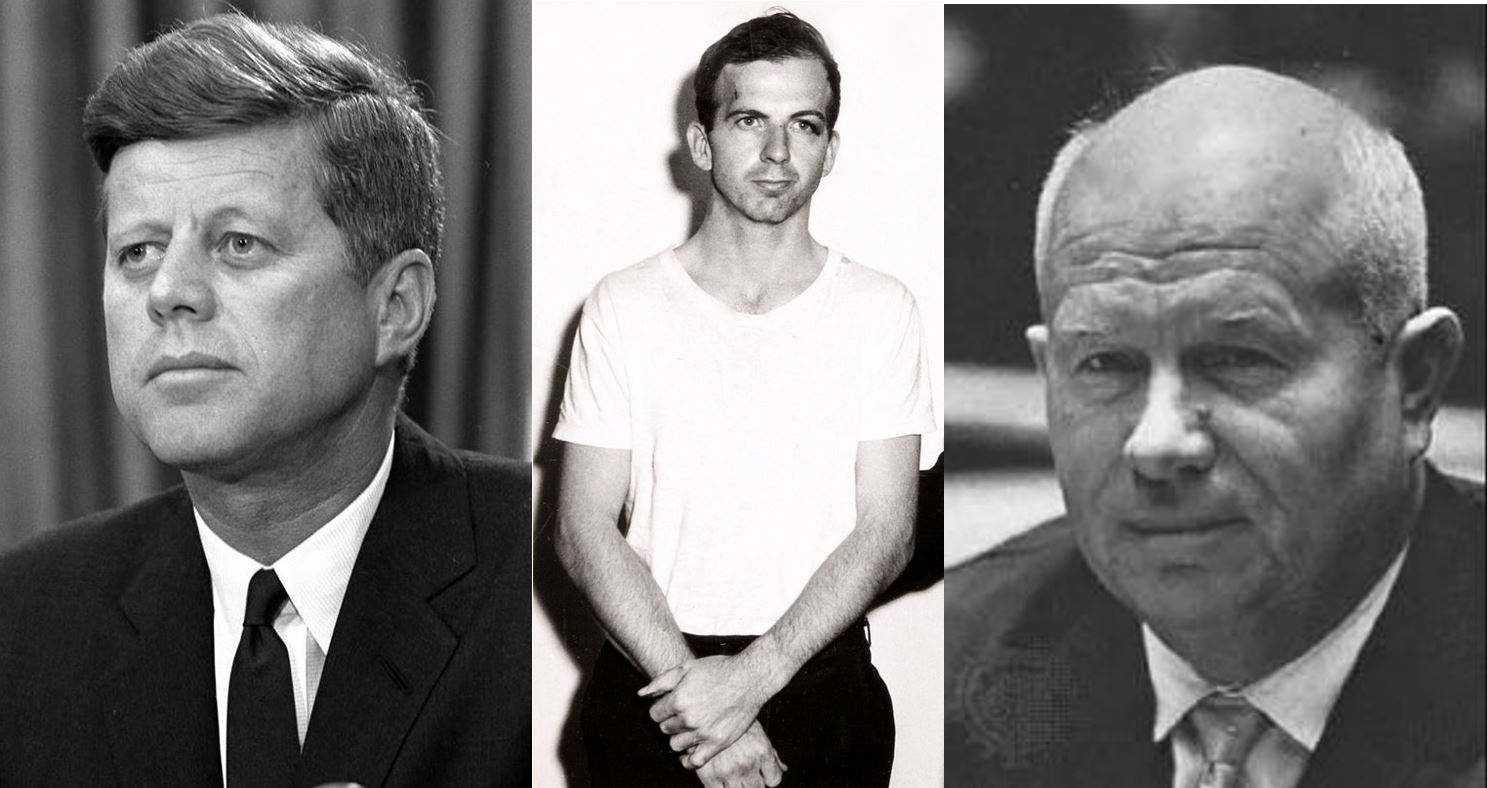
Author: James DiEugenio

  • Edward Epstein:  The Critic who Flipped

    Edward Epstein: The Critic who Flipped


    The 88-year-old Edward Epstein was found dead in his apartment on Tuesday January 9th. His nephew, Richard Nessel , said the cause of death was complications from CV 19. (NY Times obituary by Sam Harris of January 11, 2024)

    The obituary notes the first of Epstein’s many books was entitled Inquest, published in 1966. As Epstein wrote in his memoir, Assume Nothing, he wrote this book after he flunked out of Cornell and was trying to get back into the college. The man trying to help him, Professor Andrew Hacker, was with him on campus when the news came in that President Kennedy had been killed. Hacker said that finding the truth about the assassination would be a test for American democracy. This gave Epstein the idea of writing a Master’s thesis on the subject. Hacker wrote letters for him in order to talk to the Commissioners, and all agreed except for Earl Warren.

    Inquest was published in 1966, and it helped form something of a wave effect, since it just preceded Mark Lane’s Rush to Judgment, Sylvia Meagher’s Accessories After the Fact and Josiah Thompson’s Six Seconds in Dallas. But, as Joseph McBride notes in his book on the media Political Truth, there was a difference between Epstein’s book and the others. McBride quotes from the ending of Inquest:

    If the Commission had made it clear that very substantial evidence indicated the presence of a second assassin, it would have opened a Pandora’s box of doubts and suspicions. In establishing its version of the truth, the Warren Commission acted to reassure the nation and protect the national interest. (McBride, pp. 192-93)

    In fact, the first part of the book is titled “Political Truth”. McBride comments on this by saying its pretty obvious that the author knew “full well that the assassination was covered up.” But it would seem that he was at least partly trying “to justify the reason for the cover-up.” Further, Warren Commissioner John McCloy told Epstein that the function of that body was to “show the world that America was not a banana republic, where a government can be changed by a conspiracy.” (McBride, p. 137)

    Epstein went even further in this regard in first his E-book, The JFK Assassination Diary, and then again in his printed memoir Assume Nothing. In those two places, both published in the 21st century, he revealed that when he asked Arlen Specter how he convinced the Commission about the Single Bullet Theory, he said he told them that it was either that or start looking for a second assassin. (Epstein E book, p. 24) Norman Redlich, one of the most powerful members of the Commission staff agreed with Specter. (Epstein, The Assassination Chronicles, p. 155). As anyone should know, even without being a lawyer, that path is not 1.) Following the evidence, or 2.) A viable standard of proof.

    There was also something else that Epstein knew, namely that the Commission was basing their case on unreliable witnesses. For instance, he knew that attorney Burt Griffin had told Dallas police officer Patrick Dean that he was a liar. Dean was in charge of security the day Jack Ruby entered city hall and gunned down Oswald on national TV. (The Assassination Chronicles, p. 110) The Commission also thought that Marina had fabricated a story about Oswald attempting to kill Richard Nixon. And Redlich had written this about her: “Marina Oswald has lied to the Secret Service, the FBI and this Commission on matters of vital concern.” Commission lawyer Joe Ball did not trust Helen Markham or Howard Brennan either. (ibid, pp. 142-44) In an interview Epstein did with Commission lawyer Wesley Liebeler, he referred to the Commission as Snow White and the Seven Dwarfs with Marina as Snow White and Earl Warren as Dopey. (E book, p. 17)

    In reviewing Epstein’s work on the Commission in his book and diary –the latter may have been created after the fact—what is puzzling is how many important things escaped him. To point out just two: he did not find out about Commissioner Jerry Ford changing the entering location of the Magic Bullet from the back to the neck in the final draft of the Warren Report. Even though he interviewed Chief Counsel J. Lee Rankin. Rankin had this evidence in his files, and his son turned it over to the Assassination Records Review Board in the nineties. Epstein interviewed J. Lee Rankin.

    Another important fact that escaped him is that there was no transcript made of the final executive session meeting of the Commission. Although he describes the debate that took place on this issue at that meeting, he relies on interviews he did for his information. (The Assassination Chronicles, pp. 154-56; p. 604) He could have gone to the National Archives and found out that no transcript of this meeting was made. That is what Harold Weisberg did. (Gerald McKnight, Breach of Trust, pp. 295-97)

    If Epstein would have done that, he could have informed people like Senator Richard Russell and Senator John Cooper that they had been hoodwinked about their objections being recorded. And that could have opened up just how deeply they were opposed to not just the Magic Bullet, but the way in which the Commission was being conducted. Author Gerald McKnight later revealed Russell’s disharmony in his book on the Commission, and Cooper assistant Morris Wolff did the same about Cooper. (Wolff, Lucky Conversations, pp.103-15)

    Something appears to have happened to Epstein shortly after he wrote Inquest. For instance, he appeared on the record album for the book Scavengers and Critics of the Warren Report. That book was published in January of 1967 and was clearly a cheap smear of the Commission critics, co-written by FBI informant Larry Schiller. There is further evidence for Epstein’s sudden switch in John Kelin’s fine book Praise from a Future Generation.

    On November 30, 1966 there was a debate on the Warren Report in Boston. Epstein had been invited to participate, but he declined. Vince Salandria was a participant. After the debate, Salandria was surprised to see Epstein in the audience walking toward him. They had a brief discussion during which Epstein said, “I’ve changed Vince.” Salandria replied with, “You mean you made a deal.” Epstein smiled and said, “You know what happened” and walked away. (Kelin, p. 335, E book version). In fact, years later, when he made an appearance on the Larry King Show he actually said he thought “the men who served on the Warren Commission served in good faith.” (Probe Vol. 7 No. 1, p. 14). Today we have two sources telling us that Jerry Ford knew the Commission was a sham: Morris Wolff and Valery d’Estaing. (See Interview with Wolff, Black Op Radio, 1/11/2024; the film JFK Revisited)

    To say that Epstein changed is an understatement. In his next two books, he now became an unrepentant defender of the official story. Because he wrote a book on the Warren Commission, he was invited by The New Yorker to go to New Orleans and write a long article on the JFK investigation being done by DA Jim Garrison. It’s pretty clear from the beginning of his “diary” entries that Epstein had a bias against any new inquiry into the Kennedy case that would lead elsewhere than where the Commission had. For instance, he distorts Garrison’s dispute with the local judges and also on how David Ferrie was initially released by the FBI in 1963. (Epstein, pp. 39-41). In fact, Epstein was accepting advice from the likes of Tom Bethell and Jones Harris on Garrison. Some people who encountered Harris, like the late Jerry Policoff, thought he was rather erratic in his beliefs on the JFK case. Tom Bethell had all the earmarks of being a plant in Garrison’s office. (Click here for that)

    But that was just the beginning of Epstein’s lack of fairness. Epstein also had many contacts with Shaw’s lawyers. Beyond that he was also in contact with a lawyer who represented both Gordon Novel and Jack Ruby, Elmer Gertz. Within one week of The New Yorker publishing Epstein’s article, the CIA was circulating it as an example of how they could counter critics of the Warren Report. (Op. cit. Probe, p. 15)

    To give just one example of Epstein’s objectivity: he believed Dean Andrews when Andrews said Clay Shaw was not Clay Bertrand. (Epstein’s diary, p. 46). Even though Epstein’s JFK diary was published in the new millennium, he avoids the fact that Dean Andrews was indicted and convicted for perjury on this point. But beyond that, Andrews secretly admitted to Harold Weisberg that Shaw was Bertrand. Weisberg kept that promise until after Andrews passed. And today, there are about a dozen witnesses to this fact. (See the book JFK Revisited, p. 65)

    Then there was Legend. With the Church Committee exposing the crimes of the CIA, and issuing a report showing how poorly the FBI had investigated the case, there was movement to reopen the Kennedy case. Clearly an establishment lion like the Reader’s Digest would want to get a jump on such a reopening. Knowing what they wanted, they called in Epstein to do a full scale biography of Lee Oswald. Ken Gilmore, a managing editor there, contacted the FBI and told them the book would put to rest recurring myths surrounding the Kennedy assassination. Gilmore requested that the Bureau allow Epstein to access their files on the case. Epstein did visit the FBI offices at their invitation. (Op. cit. Probe, pp. 15-16)

    John Barron, a senior editor, was also friendly with the CIA. Therefore, the Agency did something remarkable, they gave Epstein access to Soviet defector Yuri Nosenko. They also told him he would have access to the tapes made at the Mexico City station of Oswald at the Soviet and Cuban embassies. (ibid) The only other writer I know who had CIA assisted access to Nosenko was Gerald Posner. Before the ARRB I know of no writer who had access to those tapes. Finally, Epstein was in contact with James Angleton both by phone and in person. Epstein freely admits to this in his diary. And here is the capper in that regard. Jim Marrs interviewed a Legend researcher. He asked her why the book did not explore Oswald’s ties to the CIA, which were at least as obvious as those to the KGB, which the book accented. She replied that they were advised to avoid that area. (ibid, p. 24)

    According to Don Freed, the book was budgeted by Reader’s Digest for 2 million. Epstein got a $500,000 advance, over 2.5 million today. As noted above, they also furnished him with a fleet of researchers, including Pam Butler and Henry Hurt of Reader’s Digest. All this for a book that tries to convey the almost indefensible tenet that Oswald was first recruited by the Russians, and then upon his return was now pledged allegiance to Castro and this was why Oswald shot Kennedy. The Russians then sent Nosenko over to discourage any thought the KGB was involved, since he said Oswald was never recruited by Moscow.

    With all we know today, for Epstein to maintain these types of theses well into the 20th century is simply inexcusable. Because for example, today it appears that Oswald’s file at CIA was being rigged before he went to Russia. And we know that from the declassified work of HSCA researcher Betsy Wolf. And it appears that it was only Angleton who had access to all the files on Oswald at the Agency. (See this) Secondly, Clay Shaw had two CIA clearances and was employed by them as a highly paid contract agent. (JFK Revisited, p. 65). Finally, in a declassified file attained by Malcolm Blunt, it appears that Angleton was in charge of commandeering operations against Garrison. For that file, we only have the cover sheet, with several folders missing.

    Let me conclude with two interesting anecdotes about Epstein. Epstein was the last person to see George DeMohrenschildt alive. He was paying him about a thousand dollars a day for interviews down in Florida. On the second day, after the Baron left, he went to a friend’s house where he was staying and allegedly took his own life by shotgun blast. Dennis Bludworth was the DA investigating the case. He wanted to see the notes of the interviews. Epstein said he had no notes or tape recordings. Bludworth did not believe that, not with Epstein paying him that kind of money. Under further questioning Epstein told Bludworth that he was also paying for the Baron’s rented car and he added that:

    …he showed DeMohrenschildt a document which indicated he might be taken back to Parkland Hospital in Dallas and given more electroshock treatment. You know, DeMohrenschildt was deathly afraid of those treatments. They can wreck your mind… (Mark Lane, November 1977, Gallery)

    Finally, let us make one other note as to how plugged in Epstein was to the power elite on Legend. Billy Joe Lord was on the same ship that Oswald took to Europe in 1959 on his voyage to Russia. In fact, Lord was Oswald’s cabin mate. The pair spent about two weeks together crossing the Atlantic. For this reason Epstein wanted to interview him for the book. Lord did not want to talk to Epstein since he knew he was a critic of anyone who contested the Warren Report. Lord then related that he did meet with two of Epstein’s researchers. (FBI Report of March 15, 1977) One of them said that they may have to apply pressure to Lord. And they knew two people who could do so. One was James Allison, a local newspaper chain owner and a friend of the Bush family. The other was no less than future governor and president, George W. Bush.

    These are the perks you get with the equivalent of a $2.5 million advance—on a JFK assassination book.

    For more on the career of Epstein on the JFK case, please click here.

  • Hugh Aynesworth is Dead: The Grinch is Gone

    Hugh Aynesworth is Dead: The Grinch is Gone


    Hugh Aynesworth died on December 23rd at age 92 after being in both the hospital and hospice care.

    Aynesworth was born in West Virginia and started his newspaper career at the Clarksburg Exponent-Telegram. In the fifties he was employed in Fort Smith, Arkansas as a sports editor and then a managing editor. He then moved to Dallas as a business writer for the Times Herald, and later worked for UPI in Denver. He returned to Dallas in 1960 to write for the Morning News and it was while there that the JFK murder took place. In 1967 he shifted over to Newsweek, from where he began to cover the Jim Garrison inquiry into the JFK case.

    To anyone who was really interested in the assassination of President John Kennedy, his death will be unlamented. Because perhaps no other reporter in America—excepting maybe Dan Rather– did more to cover up the facts in that case, over a longer period of time, than did Hugh Aynesworth.

    He maintained that he was at three crucial venues on the day of Kennedy’s murder. First, he was a witness to the actual assassination in Dealey Plaza. Yet, does any photograph reveal this to be the case? He was also allegedly on the scene when Patrolman J. D. Tippit was killed, though it is hard to pin down a time when he was there. (More on this later.) He then pulled off a trifecta. He also said he was at the Texas Theater when the police apprehended Lee Oswald–and he added that he saw Oswald try and shoot Officer Nick McDonald. (“The Man Who Saw Too Much”, by William Broyles, Texas Monthly, March 1976). Since the evidence indicates that Oswald did not do any such thing, this is also tough to buy into. (Sylvia Meagher, Accessories After the Fact, p. 259)

    But, for Hugh, that was not enough. Aynesworth also said that he was in the Dallas Police Department basement when Jack Ruby lunged forward to shoot Oswald. Again, if anyone can pinpoint a film or photo of the man being there, please do. After all, this event was captured live on television. The thesis that he was on the scene for all of these events allowed him to maintain the concept that he had “broken almost every major assassination story.” (Broyles, op. cit.) He now became the Morning News’ lead reporter on the Kennedy case.

    As William Broyles wrote, Aynesworth liked to throw bouquets at himself. For instance, that he became the first reporter to break the story of Oswald’s escape route. Since Oswald was not trying to escape, this is also a dubious story. After all, how does one “escape” by using public transportation, like a bus and taxi. And in the latter case, Oswald offered the cab to an elderly lady first. (Meagher, pp. 75-83)

    As anyone can see, it was not enough for Aynesworth to cover the story. He had a definite viewpoint about the JFK assassination. And he had it before the Warren Report was even published. On July 21, 1964, through his columnist colleague Holmes Alexander, it became clear that the omnipresent reporter did not trust Chief Justice Earl Warren on the JFK case. So the pair fired a shot across the bow of the Commission. The Commission had to show that Oswald was a homicidal maniac. If not, then Aynesworth would reveal that the FBI knew Oswald was a potential assassin and that the Bureau blew their assignment.

    But even that was not enough for Hugh. He was now going to show that Oswald was “a hard driven political radical Leftist”. How so? The column revealed that Aynesworth had interviewed Marina Oswald. Marina had told him that Oswald had threatened to kill Richard Nixon. This one shows just how nutty Aynesworth had become on the Kennedy case. Because not even the Warren Commission bought into it. (Warren Report, pp. 187-89) This rubbish has been exposed by more than one writer. For instance: Nixon was not near Dallas at the time Marina said the incident happened. (Meagher, p. 241) But further, as Peter Scott has observed, to buy into this, Marina had to have locked Oswald in the bathroom to stop him from this heinous act–yet the bathroom locked from the inside. Finally, there was no local newspaper announcement that Nixon was going to be in Dallas at this time, April of 1963. Yet Marina clearly implied that this is what caused Oswald to plan on shooting him. (See also WC Vol., 5, p. 389, and Scott, Deep Politics and the Death of JFK, pp. 286-91) According to Michael Granberry’s obituary for Aynesworth, the Nixon nuttiness originated with a conversation between Marina and Aynesworth.

    Was there more to the Marina/Hugh relationship? In May of 1967, researcher Shirley Martin wrote a letter to Jim Garrison about her 1964 meeting with the man. Hugh started off with some “disgusting anti-Kennedy stories.” He then began to praise the city of Dallas, especially his newspaper the Morning News. Hugh then personally smeared some of the Commission critics like Thomas Buchanan and Mark Lane; the former was a “fairy” and the latter was a communist. He added that the JFK case was really a communist plot that Earl Warren would cover up. He also said that he had an affair with Marina. He then commented that Marina and Ruth Paine were involved in a lesbian relationship prior to the assassination. Martin also wrote that Aynesworth was bitter about Merriman Smith winning the Pulitzer for his JFK coverage.

    But then there was this. The reporter told Shirley that he was at the scene of the Tippit shooting at 1:05, no later than 1:10. In other words, before the Commission said the murder occurred. (Warren Report, pp. 165-66). In fact, it would be impossible for Oswald to have walked from his rooming house to the scene of the crime—10th and Patton—during that time interim. (Meagher, p. 255)

    According to researcher Rachel Rendish, Aynesworth once offered to show her some sex photos of Marina. Rendish slammed the door shut like this:

    Oh yes, I know all about that film and how you boys set her up. She said that was the item you always used for blackmail. I have absolutely no interest in seeing it… He was stunned. (Email to Robert Morrow, 12/27/23)

    Then there was the Oswald diary heist. When the FBI did an investigation of how the alleged “Oswald diary” got into Aynesworth’s newspaper they concluded that it was likely stolen from the Dallas Police archives by assistant DA Bill Alexander and then given to Aynesworth. After running it locally, he then put it on the market to other publications. The sale garnered well into the five figures, a ducal sum in those days. The proceeds were split between Aynesworth, his then wife, and Alexander. Marina, who had a legal claim, was originally cut out of the deal.

    In late 1966, Aynesworth became an FBI informant on the JFK case. There was a December 12th report from Hugh on the progress of the Life magazine re-inquiry into the murder of Kennedy. Its odd that this would occur at all since Aynesworth was not a part of that investigative team, which included Josiah Thompson, Ed Kern and Patsy Swank. It likely happened due to the titular Life leader Holland McCombs, a friend of Clay Shaw’s, wanting to cover all the bases, and knowing he could rely on Hugh to do so. Aynesworth told the Bureau that Life had found a witness who connected Oswald with Ruby. In his report he also added that Mark Lane was a homosexual and had to drop his political career because of the allegations. If one recalls, earlier it was Buchanan who was homosexual and Lane was a communist. So now Lane was a gay commie? Like the CYA coward he was, Aynesworth specifically requested his identity not be disclosed by the FBI.

    But it was during the Jim Garrison inquiry that Aynesworth really came into his own as an agent/informant for the FBI and CIA. The reporter learned about Garrison’s inquiry through Life magazine stringer David Chandler. The DA granted Hugh an interview at his home after which Aynesworth wrote to McCombs that they should not let Garrison knew they were playing “both sides”. This was after the first meeting! But recall the man’s credo: “I’m not saying there wasn’t a conspiracy….I know most people in this country believe there was a conspiracy. I just refuse to accept it and that’s my life’s work.” (July of 1979 on Dallas PBS affiliate KERA). How could he do so if he was so invested in the Krazy Kid Oswald story from the start? But there is a corollary to this: the Machiavellian rule that the one’s own ends justify the means. And, as with Marina and Nixon fabrication, he was about to prove it once more.

    In May of 1967, Aynesworth wrote an article for Newsweek on the Clay Shaw case. The article was simply a cheap smear. It said that whatever plot there was out of New Orleans, it was made up by Garrison; that the DA’s staff had threatened to murder a witness; and the DA was running the equivalent of a reign of terror over the city which had the citizenry in fear. But, before the libelous story ran, the reporter sent a copy to both the White House and the FBI. In an accompanying telegram, he wrote that Garrison’s plan was to make it seem that the FBI and CIA are involved in the JFK “plot”. He again requested his name be withheld. This secrecy is what he relied upon to make it seem he was independent and not in bed with the feds. In fact, when Aynesworth helped organize a Kennedy conference in Dallas to compete with the ASK seminars in the early nineties, someone asked him that question: Have you ever cleared a story in advance with the White House or the FBI. Like any common fink, he denied it. The questioner then confronted him with this telegram.

    But it was not just the FBI and the White House from whom he sought protection. British researcher Malcolm Blunt has discovered a CIA document in which the Agency revealed that Aynesworth was interested in Agency employment from back in the early sixties. (Memo of January 25, 1968). And in fact, he appears to have gone to Cuba, not once, but twice, in 1962 and 1963. Robert Morrow confronted him with this and the reporter’s answer was a clever piece of evasion. (Click here for the exchange)

    James Feldman commented on this meeting, saying that Hugh never directly replied to the question of was he a CIA media asset. He only said that he did not take money from a government agency. But as Feldman added, agencies often distribute funds through business intermediaries or other types of fronts. Feldman concluded that “his failure to answer the question in a forthright, honest manner merely supports those who assert that Aynesworth has been a CIA media asset.”

    About the last there can be little, if any, doubt. For in his attempt to directly obstruct Garrison’s legal proceedings against Clay Shaw, the reporter actually did what he (falsely) accused Garrison of doing: he attempted to bribe a witness. As many know, Shaw, Oswald and David Ferrie had gone to the Clinton/Jackson area–about 120 miles northeast of New Orleans– in the early autumn of 1963. Many witnesses saw the trio, with Oswald in a voter registration line and Shaw and Ferrie sitting in a Cadillac (Garrison actually had a picture of the car, see Joan Mellen, A Farewell to Justice, p. 223).

    Sheriff John Manchester was one of the most important witnesses to this strange but fascinating episode. And Aynesworth understood how important he was. Hugh had essentially moved to New Orleans by 1967 and was working with Shaw’s lawyers. He had plants inside of Garrison’s office, e.g. William Gurvich. And they had supplied him with memoranda on which Garrison was working. (See Destiny Betrayed, by James DiEugenio, Second Edition, pp.252-54) One of these concerned Manchester’s testimony, in which he identified Shaw as the driver of the car. Aynesworth drove to the Clinton area with it and told Manchester something quite interesting and revelatory about himself and who he was working with in tandem. Hugh told the sheriff that if he failed to show up at Shaw’s trial he could get him a job as a CIA handler in Mexico for 38,000 dollars per year, over $300,000 today. Obviously, if he was not working with the Agency, how could Aynesworth extend such an offer?

    I rather liked Manchester’s incorruptible reply: “I advise you to leave the area. Otherwise I’ll cut you a new asshole.” (ibid, p. 255)

    From threatening the Warren Commission and FBI, to helping create a phony Nixon murder attempt, to allegedly sleeping with Marina Oswald and taking photos of it, to smearing Commission critics as being both gay and commies, to informing for J. Edgar Hoover and lying about it, to interfering with a DA’s investigation and bribing prospective witnesses, Hugh Aynesworth was a piece of human flotsam masquerading as a reporter on the JFK case. That Dallas holds him up as an exemplary journalist shows how deeply in denial that city is about President Kennedy’s assassination and the cover up that followed…

  • Counterpunch is at it Again

    Counterpunch is at it Again


    Every once in a long while, Counterpunch will run a decent enough story on the JFK case by someone like Jeff Morley. More often the material they run is pretty much useless, and at times, worse than that. This is probably due to the legacy of the late Alexander Cockburn who teamed with Jeffrey St. Clair to edit the ‘zine. Back in 1991, Cockburn took up arms to attack Oliver Stone’s feature film JFK.

    For the 60th anniversary, Counterpunch was at it again. On two consecutive days, they ran very questionable articles that can only be called smears of President Kennedy. The first was by Howard Lisnoff on December 6th and the second was by Binoy Kampmark on December 7th.

    The first article began with a brief discussion of the Paramount Plus channel documentary entitled, JFK: What the Doctors Saw. Lisnoff acknowledges that the film produces evidence that Kennedy’s neck wound was one of entrance, and the rear head wound was an exit. He even admits that “there is no reason to doubt their clinical assessments.” But then he writes that there are few chances of “someone speaking out, or documents giving some clarity to these events…” Well Howard if you do not keep up with the declassifications of the Assassination Records Review Board or read sites like Kennedys and King, then you can say that. But if you did, you would know something about say Betsy Wolf and her inquiry into the Lee Oswald file at CIA for the House Select Committee on Assassinations. Which showed that someone was rigging that file when Oswald was on his way to defect to Russia in 1959. Does that not provide some clarity?

    From here Lisnoff jumps to the famous Walter Cronkite interview with President Kennedy on September 2, 1963. Lisnoff starts in with the Alabama school case that had just begun at Tuskegee High School. Lisnoff does this without any mention of Kennedy facing down Governor George Wallace less than three months earlier at the University of Alabama on national television. Or saying a word about Kennedy’s civil rights speech of that evening, also broadcast on TV, which is probably the greatest speech on that topic by a president since Abraham Lincoln. That is quite a neat piece of censorship is it not?

    Wallace was clearly stung by these acts and chose to retaliate by preventing the court ordered integration of Tuskegee High in Macon County. During the Cronkite interview, Kennedy refers to federal court orders—which Lisnoff also ignores. The reason Kennedy does this is because he is relying upon the relationship between his brother, Attorney General Robert Kennedy, and the great southern judge Frank Johnson from Alabama, to handle both Wallace and the case. Bobby Kennedy filed a lawsuit to prevent Wallace from interfering in the local issue. Johnson then issued an order to that effect. Wallace called up the Alabama National Guard to block entry into the school. The next morning JFK asserted federal authority over the National Guard. (Click here for the whole story)

    Lisnoff also says that Kennedy made strikingly few appointments of minorities. In March of 1961, Kennedy signed the first affirmative action law in American history. He later extended that order to deal with, not just hiring practices by the federal government, but to all federal contracting to private companies. So, for the first time, companies and businesses in the south had to follow affirmative action guidelines in their hiring practices. For example, textile plants in North Carolina had to hire African American employees or they would lose federal contracts. (Promises Kept by Irving Bernstein, pp. 55-56). Lisnoff might not think this was important. But the conservative enemies of JFK sure did, since they began a 60-year campaign to neutralize it. Which finally succeeded this year.

    LIsnoff then turns to the Vietnam conflict to address what Cronkite brings up about it and how Kennedy replied. He mentions NSAM 263, the order that Kennedy approved of on October 11, 1963 that would begin the withdrawal of American forces at the end of 1963, to be completed in 1965. Lisnoff replies that this was based on rosy predictions about the war made by Secretary of Defense Robert McNamara and JCS Chair Max Taylor. He then tries to throw this all out by saying that Kennedy was a Cold Warrior in light of the Bay of Pigs debacle and the Cuban Missile Crisis.

    In the first instance, Kennedy refused the requests of the military to save the Cuban exile invasion with American forces, even though it was obvious it was about to fail. In other words, he did not escalate even though he was in a losing situation. During the Missile Crisis, Kennedy was in a defensive position. It was the USSR that had provoked that situation by secretly importing a huge atomic armada 90 miles from Florida, and then lying about it. That Russian arsenal included all three branches of the triad: missiles, bombers and submarines. Kennedy rejected an invasion, and he also rejected bombing the missile sites. He settled on the most peaceful alternative which allowed for a negotiated settlement to the crisis, namely the blockade. Far from branding JFK a Cold Warrior, this showed Kennedy at odds with the hawks in his administration.

    This parallels what Kennedy was doing in Vietnam. The USA could help Saigon, with advisors and equipment, but no combat troops. Kennedy had drawn that line in 1961. He never crossed it. And he was planning on getting out at the time of his death. This is proven by other ARRB declassified documents that Lisnoff seems unaware of: the records of the May 1963 SecDef meeting in Hawaii. (Probe Magazine Vol. 5 No. 3, pp. 18-21) These documents showed that McNamara was collecting withdrawal schedules from all American departments in Vietnam. When he saw them he said the plans were too slow. These papers were so convincing that even the New York Times ran a story saying that Kennedy had a plan to exit Vietnam in 1963.

    Lisnoff gets utterly embarrassing in his desperation on the Vietnam topic. He actually uses David Halberstam’s obsolete book The Best and the Brightest to somehow show what Kennedy’s intent was in Indochina. That book was published over a half century ago. It was put out to pasture long ago by scholarship based on new documents that Halberstam either did not see, did not use, or discounted. If that was not enough, Lisnoff then trots out another journalist who initially promoted the Vietnam conflict, Neil Sheehan. I mean please Howard. (Click here for Sheehan)

    Authors like John Newman, Gordon Goldstein and David Kaiser, among others, have shown why Halberstam and Sheehan’s works are museum pieces. Kennedy was withdrawing and Lyndon Johnson purposefully reversed that policy within 48 hours of JFK’s death. It was Johnson who first sent in combat troops at Da Nang on March 8 1965, after carefully and secretly planning for war in 1964. (See Truth is the First Casualty by Joseph Goulden and Frederick Logevall’s Choosing War for long treatments of this planning.)

    Kennedy had no such plans. He did not even want American generals visiting Vietnam. (Monika Wiesak, America’s Last President, p. 133) And, in fact, McNamara declared in his Pentagon debriefs that he and the president had decided that America had only an advisory role in Vietnam. Once that was done we were leaving and it did not matter if Saigon was losing or winning at the time. (Vietnam: The Early Decisions, edited by Lloyd C. Gardner and Ted GIitinger, p. 166)

    Lisnoff closes with comments on what Cronkite asks JFK about the economy and the unemployment rate. At the time, the unemployment rate was about 5%. Kennedy talks about this and faces it head on, specifying where the pockets of unemployment are and what he is doing to counter it. But what Lisnoff leaves out is what Kennedy did with the economy in a short three years. The entering unemployment rate for Kennedy was about 8% inherited from Eisenhower. (John F. Kennedy: The Promise Revisited, edited by Paul Harper and Joann Krieg, p. 184) Once Kennedy’s economic program was enacted in 1964, that rate went down to 3.8 %. (ibid, p. 188). When one adds in that Kennedy increased GNP by 20%, and inflation was quite low, at about 1 % throughout, and with relatively small deficits, Kennedy’s performance on the economy is pretty impressive.

    The following article by Kampmark is probably even worse. It essentially dismisses all the hoopla over the 60th as sentimental hagiography, at times terming it as hysteria. Kampmark dismsses books by Arthur Schlesinger and Ted Sorenson with the usual charge of being done by “court historians”. My reply to this is: then what does one term the works of later writers like Richard Mahoney, James Blight, David Kaiser, Philip Muehlenbeck, Robert Rakove, Monica Wiesak and Irving Bernstein? These books were all done after careful research by men and women who were not working for or associated with the Kennedy administration. (The one exception being that Richard Mahoney’s father worked in the Kennedy state department.)

    The books by these latter-day authors, exploring both foreign and domestic policy, more or less agree with the verdicts of Sorenson and Schlesinger. Should we then add in the debacles that followed? For example, the disastrous escalation of the Vietnam War by Lyndon Johnson which led to the largest air war operation since World War II, Rolling Thunder, over a backwards economy? How about the invasions of Cambodia and Laos by Richard Nixon—the former of which led to the genocide in Cambodia by the Khmer Rouge? Or the Gerald Ford approval of the Indonesia invasion of East Timor, which led to another genocide there.

    Sorry if Kennedy looks pretty good in comparison. But facts sometimes get in the way of propaganda.

  • Lemann and The Atlantic Monthly vs JFK on Civil Rights

    Lemann and The Atlantic Monthly vs JFK on Civil Rights


    Coming into the 60th anniversary of the JFK murder I suspected familiar faces would try to distort the circumstances of Kennedy’s death—which they did, e.g., Max Holland on PBS. But I also thought there would be certain individuals involved with what I have called elsewhere, The Posthumous Assassination of Kennedy. That title owes to an article I wrote many years ago, back in the nineties, for Probe Magazine. It referred to the attempts to smear Kennedy’s image and legacy in a variety of ways. (Click here for that long essay)

    That happened also. One was through a familiar figure in this field, namely Jeff Greenfield. His article appeared at the online ‘zine Politico. And, I must say, for Greenfield it was not as bad as I thought it would be. The former Robert Kennedy speech writer seems to have finally admitted, both comprehensively and completely, that the Vietnam War would not have happened if JFK had lived. Which is something that both Chris Matthews and Joe Scarborough will not admit. (Click here)

    Greenfield’s article appeared on precisely the 60th anniversary. It had a pretty silly title, “Would JFK Have Lost Had He Lived?”. Well Jeff, I kind of doubt it. I think he would have crushed Goldwater pretty much the way Johnson did. I think the media would have portrayed Barry as a war monger and JFK as a man of peace. It’s true that Kennedy’s civil rights program—a matter we will get to later—would have cost him in the south, but Lyndon Johnson would have helped there. (Unlike others I do not think that JFK would have dumped Johnson, no matter what Bobby Kennedy tried to do.)

    Greenfield is trying to disguise the fact that Goldwater only took six states in 1964, five in the Deep South, plus his home state of Arizona. And he lost to Johnson by over 20 percentage points. There were two reasons for this. First, unlike Ronald Reagan in 1980, America was simply not ready for someone as extreme as Goldwater in 1964. There was no year-long Iran hostage crisis to pave the way for the senator, as it did for Governor Reagan. Secondly, the people running Goldwater’s campaign could not hold down his tendency to make wild statements, especially concerning national defense and the conflict in Vietnam. For instance, he seemed to suggest America should use tactical atomic weapons in Indochina. This led to the infamous “Daisy Girl” ad which really hurt Goldwater.

    I think Greenfield knows he is on thin ice here so at the end he escapes into the sordid. Somehow Kennedy’s philandering would have posed a danger to his candidacy. Back then? In 1964? Watergate was ten years away. The Gary Hart/Donna Rice episode was over 20 years later. So Greenfield ended up meandering about in the muck of maybe, could be, what ifness. Did he read my earlier column where I lambasted him for this kind of thing?

    The other attempt at a smear was in the December 2023 Atlantic Monthly. On the stands and mailed out the last week of November, it was clearly timed for the 60th. The subject matter was decades old; but the author, Jordan Virtue, only made one reference to where it originated. This was in a 2006 book called Redemption by Nicholas Lemann. I had read the book years earlier and I was struck by the way it ended. About the first 80% of the slim volume is a valid contribution to how the brutal methods of the Redeemer Movement in the south succeeded in fighting Reconstruction and then taking over, thus negating Reconstruction, after the final Union troops were removed.

    At the end of the book, Lemann did a brief summing up of how the terrible tactics of the Redeemer Movement had been both reversed, and then disguised—in both popular culture and the halls of academia. The most obvious and sensationally successful example of the former was the film Birth of a Nation. That 1915 D. W Griffith picture was based on Thomas Dixon’s novel and play The Klansman. The success of that movie became legendary in the film world. The old Hollywood adage about it was: it made so much money the distributor stopped counting it. Dixon was a white supremacist and his book and play were suffused with that philosophy. Dixon knew President Woodrow Wilson from their college days. Wilson showed the film in the White House, a first. And Griffith and Dixon used quotes from a book Wilson wrote as subtitles. The film was so melodramatically racist, and wildly successful, that it led to the rebirth of the Klan.

    The other strain of apologia for the failure of Reconstruction was expressed in the next box office champion, Gone With the Wind. This view of Reconstruction was softer in tone. Unlike Griffith, It did not picture young white women killing themselves over pursuit by an African American, or the Klan triumphantly riding into a town to stop former slaves from voting. William Archibald Dunning was a professor at Columbia. He wrote a book on the subject, but more importantly, he schooled several of his students, who then wrote more books. These books dominated the historical literature and greatly influenced the writers of textbooks for decades on end. The general message was that African Americans were fairly content prior to the Civil War and after. And that Reconstruction caused the upsetting of the rather noble southern way of life: by Union soldiers, scalawags and carpetbaggers. It was a wildly romantic, false and pernicious image. But it had immense influence.

    The Dunning school was not effectively attacked until the late fifties and early sixties. The two principal revisionists were Kenneth Stampp (The Peculiar Institution, 1956) and John Hope Franklin (Reconstruction: After the Civil War, 1961). Stampp, who consciously opposed the Dunning School, produced two more books directly confronting its tenets: The Era of Reconstruction (1965) and Reconstruction: An Anthology of Revisionist Writings (co-editor, 1969). But it was not until the arrival and later popular success of Eric Foner in the late seventies and early eighties that the Dunning School was, for all intents and purposes, overturned. The failure of Reconstruction was now perceived as not in intervening, but in not going nearly far enough in that intervention. It was not easy to overcome Dunning, Margaret Mitchell (who wrote the novel Gone With the Wind), Clark Gable and Vivien Leigh.

    In looking at this brief summary, most people would think that the most grievous offense was giving the imprimatur of the White House to something as rancidly racist as Birth of A Nation. Lemann did not think so. He devoted all of two sentences to that incident. (p. 190) He devoted over four pages to a book written by President John F. Kennedy in 1956, Profiles in Courage. And those are the closing pages of Lemann’s book. (pp. 205-09) There he said that in a chapter of that book, Kennedy had mischaracterized two personages: Union General, and later appointed Governor of Mississippi, Adelbert Ames, and Lucius Lamar, a confederate soldier who later became a senator from Mississippi and a Supreme Court Justice. Kennedy wrote exactly one paragraph on Ames. (p. 147) Concerning Lamar, Kennedy is straightforward about his advocacy of secession. (pp. 145-46) But the Atlantic Monthly article leaves out the two main reasons Kennedy included him in the book: (i) His long and powerful eulogy for Radical Republican Charles Sumner (ii) His opposition to what Kennedy called, the Bland Allison Act, knowing that it was going to pass and congress would override a presidential veto—which it did. Since it was popular in Mississippi, Lamar had risked his political career voting against it; especially since the state legislature had demanded he support it. The entire last part of the chapter is about this issue. (pp. 152-62). To ignore it is selective and unfair.

    As I indicated above, Profiles in Courage was written when the Dunning School still held tremendous influence. And Kennedy unwisely chose a book by a Dunning follower, Claude Bowers, as one of his sources. This was an understandable mistake from someone who was not a professional historian. And I agree that the brief Ames characterization in the book was wrong. But what Lemann did with this was completely unwarranted. In portraying the era that the book was published in as one of change, Lemann praises President Eisenhower for sending troops to Little Rock during the crisis at Central High and he prefaces that with the 1954 Supreme Court’s Brown vs Board decision. (pp. 205-06)

    What he leaves out is that Eisenhower let the students trying to integrate Central High be terrorized by the redneck governor of the state, Orval Faubus, for 21 days. He was being publicly humiliated so he more or less had to act. Why? Because he had let Faubus trick him at their face-to-face meeting. Lemann also leaves out the fact, noted by historian Michael Beschloss, that Eisenhower advised Earl Warren not to vote for the Brown vs Board decision. And Eisenhower did not support that decision, for example, in the Autherine Lucy case at the University of Alabama in 1956. He literally let her be run off campus amid riots and rocks being thrown—even though she was there under a court order. (Jack Bass, Unlikely Heroes, p. 64)

    Lemann then adds that it must not have been clear to Kennedy “that a systematic change was on the way.” Can the man be serious? In two terms Eisenhower filed ten civil rights lawsuits, two on his last day in office. In just one year, Attorney General Robert Kennedy doubled that amount. And by 1963, the number of lawyers in the Civil Rights Division had quintupled. (Harry Golden, Mr. Kennedy and the Negroes, pp. 100, 104, 105) As the great southern jurist Frank Johnson said, no one in Washington was doing anything of substance on civil rights in the fifties. But when JFK came in:

    …there was almost an immediate and dramatic change. He was like electricity compared to Eisenhower….He put the nation on notice that there were changes that were long overdue. (Frank Sikora, The Judge, Chapter 6)

    What Lemann does with the Civil Rights Act of 1957 is startling, even for him. He says that Senator Kennedy voted for a watered down bill. (p. 206) What he does not say is this: Kennedy did not want to vote for the bill, precisely because it had been watered down. Senate Majority Leader Lyndon Johnson had never voted for a civil rights bill in nearly 20 years. But he commandeered this one by pleasing his fellow southerners, segregationists Strom Thurmond and Richard Russell. Kennedy was so reluctant to vote for it that Johnson had to send two emissaries to his office to persuade him to do so. When that did not work, LBJ had to lobby Kennedy in person. Senator Kennedy reluctantly voted for it since it did provide for a (toothless) Civil Rights Commission. (Rowland Evans and Robert Novak, Lyndon B. Johnson: The Exercise of Power, pp. 136-37)

    As the reader can see, what Lemann appears to be doing is a kind of reverse history. He is trying to somehow color Kennedy’s actual civil rights record with the 1956 error he made in his book. Atlantic Monthly goes a bit further and says that he may have been misled by the Dunning School, “but he also aspired to higher office and needed to appeal to white southern voters.”

    Again, this is hogwash. In 1956, the same year Profiles in Courage was published, Kennedy made a speech in New York endorsing Brown vs Board. He specifically said, “We might alienate Southern support but the Supreme Court decision is the law of the land.” This speech was covered in the New York Times on February 8, 1956, on page 1. Therefore much of the country, including the south, knew about it. But to show just how bad the Atlantic Monthly article is, the next year Kennedy went to Jackson Mississippi. He said the same thing: the Brown decision must be upheld. (Golden, p. 95) As author Harry Golden noted, it was at this point that Kennedy began to lose support in the south and to get angry letters about his support for the Brown decision. Golden’s book was published in 1964. Could both authors have missed it, or not consulted it? It seems almost superfluous to add that near the end, the Atlantic Monthly article says that on November 22, 1963 Oswald “shot and killed Kennedy in Dallas.” So, in one article on the 60th anniversary of Kennedy’s death, The Atlantic Monthly scores a twofer: a smear of Kennedy, coupled with an endorsement of the cover up around his assassination.

    What is even more surprising is that Jeff Morley, a writer I like and admire, actually referenced the Atlantic Monthly article on twitter on November 27th. He added the following comment: “A JFK story I did not know…JFK’s racist streak…it does not surprise me…he was an aristocrat to whom supremacy came easy.” If anyone can show me any kind of incident that showed Kennedy was a racist, please do. Authors Nick Bryant and Steven Levingston spent about 800 pages in two books trying to show this. They came up empty.

    But further, why would a racist pick Abraham Bolden to guard him on his Secret Service White House detail? Why would a racist sign the first affirmative action order in American history? Which JFK did in March of 1961, just 45 days after his inauguration. He then assigned a civil rights officer to manage hiring and complaints in each department of government. (Carl Brauer, John F. Kennedy and the Second Reconstruction, p. 72, p. 84) In fact, Kennedy got his friend and Ambassador to India John K. Galbraith to sponsor him a membership at the Metropolitan Club. The president refused to join, because they declined service to a visiting African diplomat. (Richard Parker, John Kenneth Galbraith, p. 387) Kennedy then announced that neither he nor any member of his administration would attend functions at segregated facilities. (Irving Bernstein, Promises Kept, p. 53)

    I am not going to go through the record of achievement Kennedy had on civil rights. I already spent about 3-4 months researching it and writing about it. Kennedy did more for civil rights in three years than FDR, Truman and Eisenhower did in three decades, and it is provable. (Read this)

    I will conclude by saying that I agree with historian Carl Brauer. What Kennedy began was the real Reconstruction, which is why Brauer titled his book, John F. Kennedy and the Second Reconstruction. As most historians would agree, it was Eisenhower’s Vice-President, Richard Nixon, who stopped this movement cold by employing the Southern Strategy. That is the real story of what happened to the civil rights movement in America. Which you will not find in the Atlantic Monthly. But that is a much more important and accurate rendition of the struggle and Kennedy’s role in it.

    Addendum

    For a real description and analysis of what Kennedy was confronted with on the civil rights front and what he achieved, please read this 4-part series by James DiEugenio which took almost four months to write and research. It is the best pamphlet length exposition of Kennedy’s remarkable achievement in that field, against almost monumental odds. The best book on the subject is still Carl Brauer’s John F. Kennedy and the Second Reconstruction.

  • Former People by James Norwood

    Former People by James Norwood


    James Norwood was a professor at the University of Minnesota for 26 years. Among the classes he taught was a semester course in the John F. Kennedy assassination. He has written for this web site previously. (Click here for one example) He has now published a book which is entitled Former People.

    As Norwood immediately explains, that rubric was used in conjunction with former members of the Russian aristocracy. Many of whom were displaced after the Bolshevik Revolution of 1917. He then uses other examples from Russian history like the Mensheviks who were also retired to what Trotsky called the “dustbin of history.”

    In relation to his current book, Norwood is going to use that term to describe what happened to Nikita Khrushchev, President Kennedy and Lee Harvey Oswald. It’s a unique concept, at least I cannot think of a predecessor in the field. But to point out one useful strophe: the cemetery where Khrushchev was buried was close for renovation because it had too many people visiting after his burial. (pp. 2-3).

    In his discussion of Khrushchev Norwood makes the case that he ended up opposing what Josef Stalin had done since he had a role in some of those crimes, for example, he was complicit in the Great Purges of the thirties. (p. 7) But as most know Khrushchev fought well in World War II, particularly during the epochal battle at Stalingrad. (Norwood points out that, although he took credit for it, Khrushchev was not part of the planning for the Russian offensive there.)

    Having learned the Machiavellian tactics of Stalin’s court, Khrushchev emerged triumphant during the struggle for succession after the tyrant’s death. Yet, he was quite inexperienced in the art of diplomacy and statecraft on the world stage. As the British prime minister Harold Macmillan wrote in his diary:

    How can this fat, vulgar man, with this pig eyes and his ceaseless flow of talk, really be the head—the aspirant Tsar—of all these millions of people in this cast country? (p. 10)

    Yet he was. Norwood hallmarks the strikingly important secret speech of 1956. This was Khrushchev’s repudiation of the terror and purges of Stalin. (p. 40) This speech was entitled, “On the Cult of Personality and its Consequences.” Khrushchev said, “Stalin had committed criminal violations of the law that would have been punished in any country—except for countries not governed by law at all.” (ibid) He then added that Stalin’s rule was much closer to that of the Russian tsars than the Bolshevik revolutionaries. He also pointed out Stalin’s disastrous leadership at the beginning of the German invasion in World War II. As Khrushchev later wrote, the delegates at the Communist Party Congress were thunderstruck especially since Stalin had taken these actions against both Old Bolsheviks and Young Communists.

    Yet, in that same year, Khrushchev ordered the crushing of Hungarian Spring. Which resulted in tens of thousands of casualties on both sides, and hundreds of thousands of refugees who fled the country. (p. 43) The author makes the case that Khrushchev was probably influenced by the Soviet ambassador to Hungary Yuri Andropov, who would later run the KGB for 15 years and briefly reign as General Secretary. For whatever reason Khrushchev also banned the book Doctor Zhivago, although he later admitted this had been a mistake. It resulted in a great propaganda triumph for the CIA.

    In dealing with Kennedy, Norwood describes his many childhood ailments, his heroism in the Navy during the famous PT-109 incident, and the death of his older brother Joe in an air explosion during World War II. (pp. 10-13) He briefly deals with both his political career–elected three times to the House, and twice to the senate—and his literary vocation, the penning of Why England Slept and Profiles in Courage. He points out for praise Senator Kennedy’s 1954 speech warning about further American support of the French war in Vietnam. But, curiously, he does not mention the famous 1957 Algeria speech which literally rocked the political and journalistic establishment. Alistair Cooke, the British journalist, noted that this anti-colonial speech–and the attention the Republicans had given it–had made Kennedy the frontrunner for the 1960 Democratic presidential nomination. (Richard Mahoney, JFK: Ordeal in Africa, p. 29)

    Norwood builds his early narrative structure around two events: the Missile Crisis and Kennedy’s American University Peace Speech. Norwood considers the Russian leader’s decision to place missiles, bombers and 45,000 men in Cuba a result of his aforementioned lack of diplomatic sophistication and serious misjudgment of Kennedy. Norwood also thinks it was part of Russian vozhdism or one person rule. Khrushchev had put the question to the Kremlin leaders. There were no serious objections at this time, but there were would be many later recriminations. (Norwood, p. 23) As the author notes, it should have been clear to Khrushchev that the U 2 overflights would eventually pick up the installations, especially since the troops on the island had not practiced consistent camouflage and disguise techniques. A fact that enraged the Russian leader when he found out about it. The overflights did discover the installations on October 14th. Kennedy had learned from the Bay of Pigs and now changed the command style. It was not just the Pentagon, CIA and NSC. Kennedy felt that had failed him. So this was expanded into something called the Ex Comm which now included Bobby Kennedy and Ted Sorenson.

    Kennedy had been a great admirer of Tuchman classic The Guns of August. Kennedys was determined that no such book could be written about the Missile Crisis, one depicting a march to folly and destruction out of stupidity and impulsiveness. (p. 32) In fact, journalist Jordan Michael Smith wrote that “quite possibly Kennedy’s careful reading of the book helped prevent a nuclear war.” (p. 32)

    If this is so Kennedy had to pretty much bypass his Joint Chiefs of Staff. Who considered the blockade route much too soft and giving way to much lenience to a provocation like this. To them, it was a time for aggression and attack. Although Norwood has Marine General Shoup tell Kennedy that he was in a pretty bad fix, it was actually Curtis Lemay who said it. (Ernest May and Philip Zelikow, The Kennedy Tapes, p. 182)

    Once the deployment was discovered, and the blockade option was approved by Kennedy, Khrushchev was in a precarious situation. One which invited a terrible escalation by either side which could result in atomic war. The only realistic option the Russians had was to negotiate out a settlement. But the Russian ships stopping at the blockade line was not a victory as Dean Rusk exclaimed it was. Because it was later discovered that all the ICBM’s and tactical weapons—162 missiles in all– had been landed on the island before the blockade was secure. (The Armageddon Letters, by James Blight and Janet Lang, p. 257) So the Russians knew that their tactical weapons would incinerate any invading armada crossing the Caribbean. They also knew that with the armada burning at sea, the combination of ICBMS, bombers and submarines could deliver a formidable first strike. The Russian has achieved his goal of placing a hedgehog on Kennedy’s breakfast plate. (Norwood, p. 27) But General Thomas Power, commander of SAC, took it upon himself to raise the DEFCON alert from level 3 to 2. Which was one step short of war. (Norwood, p. 29). And there were three events which almost caused a shooting war to break out: the downing of a U2 over Cuba by Castro, another U 2 that flew off course and over Soviet air space where MIGS scrambled to intercept, but other planes came to the rescue in time. The last was when American surface ships were hurling grenades and depth charges at a nuclear tipped submarine off the coast of Cuba. With all the explosions, the Russians did not know if a war was going on but luckily the commander directed the sub to surface and find out before firing. (Norwood p. 30)

    Having achieved what was for all intents and purposes a (lucky) standoff, the two sides now began to formulate negotiation positions. Adlai Stevenson reputedly brought up the idea of trading the UN Turkish and Italian missiles for the Russian missiles inside of Cuba. Robert Kennedy was determined to go around the Ex Comm through Soviet contacts with diplomat Georgi Bolskakov, and later with the Russian ambassador Anatoli Dobyrnin. And this is where the promise not to invade Cuba came into play.

    The so-called peaceful outcome was not welcome to the hawks on both sides. The Pentagon concluded that Kennedy had blown a perfect chance to get rid of Castro. The Kremlin felt that Khrushchev had luckily dodged a bullet by enacting a hare-brained scheme. Norwood insinuates that the result of that crisis echoed through the next two years, eventually deposing them both.

    Making this even more unfortunate was the mutual attempt at détente by both men e.g., the limited test ban treaty, the direct hot line. This was capped by Kennedy’s Peace Speech, which—like Columbia professor Jeff Sachs– the author spends some time explicating. (pp. 46-52). As a result, Norwood writes, “For a brief moment in history, between June and November of 1963, there was a genuine opening for rapprochement.” (p. 52)

    Khrushchev wept when he heard the news of Kennedy’s death. He suspected American right-wingers had murdered the president in order to sink their attempt at a US-Soviet détente. (pp. 66-67). In some ways, Kennedy’s murder set the stage for Khrushchev’ own removal, since none of the tangible things the two men were working on were now going to be enacted. Therefore, the conservatives in the Politburo set up a plot to get rid of a leader who was actually contemplating with Kennedy a complete demobilization. (p. 75). Norwood argues, with some justification, that the USSR changed for the worse after this removal. A period of reform had now come to the end, economic stagnation ensued plus the formal imposition of the Brezhnev Doctrine. (p. 64). The true circumstances of Kennedy’s murder were covered up, and his achievements went largely unnoted in history textbooks. As far as Khrushchev went, the new Russian hierarchy began to write him out of history. (p. 66)

    The last part of the book deals with the formal methods used to conceal the true circumstances of Kennedy’s death and a probing of the mystery of Oswald. First, he deals with how the MSM, and people like Walter Cronkite, placed a stamp on the three-bullet scenario right out of the gate. Like many before him, including the recently discussed Bart Kamp, Norwood squarely places the official blame for the JFK cover up on J. Edgar Hoover and the FBI. He spends more than a few pages on how eager Hoover was to close the case with Oswald as the lone gunman. (p. 92ff). But he also exposes how people inside the FBI, like William Sullivan and Laurence Keenan, and Hoover himself, understood just how flawed the FBI inquiry really was. For instance, Hoover once said about the Oswald case, “If I told you what I really know, it would be very dangerous to this country. Our whole political system could be disrupted.” (Norwood, p. 101) But since the Warren Commission was so overwhelmingly reliant on the Bureau it more or less had to go along with Hoover’s very quickly drawn official conclusions.

    Norwood ends with Oswald. He spends several pages on a real enigma about the man: How and where did Oswald learn to speak good Russian. He lists several witnesses who came to this conclusion about his fluency: Natalie Ray, Peter Gregory, George Bouhe, Elena Hall Rosaleen Quinn. The last is quite interesting since she conversed with Oswald in Russian before he left for the Soviet Union. (pp. 121-23). But then in Russia, many people have said that Oswald feigned not being able to speak the language. Norwood concludes this was part of his ruse as a fake defector since if he advertised that he could speak Russian the authorities would realize he was sent there by the Navy or CIA to be a spy. I would beg to disagree with Norwood’s portrayal of Ernst TItovets’ take on Oswald. (pp. 138-39) First, Ernst really was not a Johnny Come Lately to the case, as he was in the 1993 PBS special Who was Lee Harvey Oswald? And when I encountered the man in 2014 at the AARC Conference in Maryland, TItovets told me that when he met Oswald, he spoke good Russian.

    Norwood is an advocate of the John Armstrong theorem of there being two Oswalds from an early age. He chalks up the long incubating experiment in doubles to CIA official Frank Wisner who used many people on the displaced persons list from World War !! as part of covert operations across Europe. And he notes that Robert Kennedy assistant William Vanden Heuvel on December 4, 1963 noted that “files of the IRC (International Rescue Commission) contain information pertaining to Oswald.” (p. 155) In an appendix, the author depicts Oswald’s Certificate of Enlistment for the Marines. He notes that the original name on the card was Harvey Lee Oswald, corrected to Lee Harvey Oswald. (p. 197). Another appendix lists a useful timeline in milestones on the JFK case beginning with Oswald’s defection and concluding with Oliver Stone’s two recent documentaries on the case, JFK Revisited and JFK: Destiny Betrayed.

    In sum, Norwood’s book is unique in concept, mercifully concise, and adroitly argued. All the more impressive since it is his first book on the case.

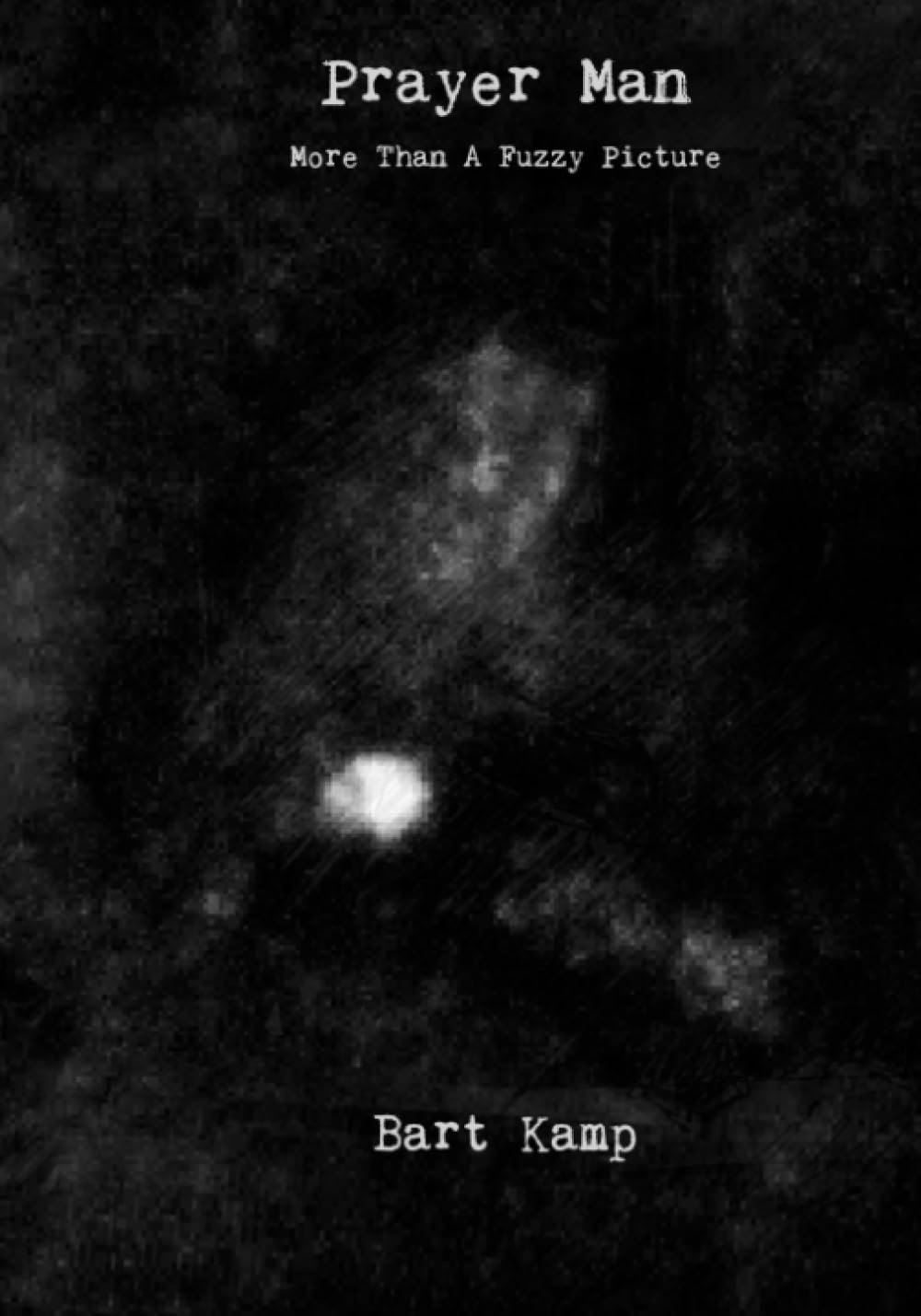
  • Prayer Man: More Than A Fuzzy Picture by Bart Kamp

    Prayer Man: More Than A Fuzzy Picture by Bart Kamp


    Bart Kamp’s book is the second to be dedicated to the phenomenon of the Prayer Man figure. The first was by Stan Dane in 2015. Dane’s book was called Prayer Man: Out of the Shadows and Into the Light. It had an introduction by Greg Parker. The three personages thus named are not involved by happenstance. They are all members of the Reopen Kennedy Case forum (ROKC). That group has been one of the strongest associations for advocating that Prayer Man is Oswald.

    Bart Kamp is not just a member in good standing of that forum. He is also a good friend of the man who many consider the foremost archival researcher of this era, Malcolm Blunt of England. Bart has also done fine work in recovering and archiving the materials held by the late Harrison Livingstone, a significant contribution which I do not think anyone else would have done. (Click here for that)

    One of the things that Kamp does in his book is to chronicle the history of the Prayer Man (PM) figure. To summarize, PM is not the same as figure that many thought to be Oswald staring out in the Altgens 6 photograph with his right shoulder partly hidden by the frame of the Texas School Book Depository doorway. That turned out to be Billy Lovelady. The PM person is standing back in that foyer area with his hands close together, which is why he was dubbed Prayer Man.

    As Kamp chronicles, the suspicion about Prayer Man being Oswald was not first noted by researcher Sean Murphy, who is usually given credit for the discovery. As the book points out, there was a circle of Kennedy researchers who were looking into the Altgens 6 figure. This included photographic analyst Richard E. Sprague, writer Harold Weisberg and the young prodigy Howard Roffman. (Kamp, p 24).

    The fourth member of this correspondence circle ended up being most important in this aspect. And yet today he is just about unknown in the literature. His name was Richard Bernabei, a professor at Queen’s University in Ontario. The four needed more angles on the people in the doorway and so Sprague got hold of a copy of the film originally made by Dave Wiegman, an NBC photographer who was in one of the camera cars in the motorcade. Bernabei, a skilled sketch artist, was the first to really discern the PM figure and be able to illustrate his observations with distinction. He called the figure “Man in the Shadow”. Kamp is to be congratulated for giving Bernabei—who died in 1979– the recognition he belatedly deserved.

    For decades Bernabei’s writings and sketches lay like lost gems in a treasure chest at the bottom of the sea. In reality they were at Queen’s University archive. But they were bereft because the subject did not really resurface until the new millennium and the online revolution. Kamp centers this first revival in the years 2005-07 with online commentators and acquaintances Charles Wallace, Sean Murphy and Chris Davidson, the last is an authority on the films and photos. (Kamp, p. 26). The rubric Prayer Man did not get applied until 2010 by Murphy on the JFK Lancer Forum. But most of those postings have been lost since that forum was hacked. But now the Wiegman film was supplemented by film from James Darnell who rode in camera car 3.

    It was at the Education Forum that a long and fascinating debate was sprung open, initially by Bill Kelly. But Murphy then entered it and this began a fascinating public debate over whether or not PM was Oswald. Murphy resigned from the field at the 50th anniversary of the JFK assassination. But the debate he spawned continued with other followers. ROKC has taken the lead in this debate. But as the author notes, WEBS forum and the Forum Notion also have featured many postings on the subject. As Kamp writes, the Dane book was then the first to appear on the subject in 2015.

    No one has been able to analyze the original films taken by Wiegman and Darnell. They are the property of NBC. And for whatever reason, NBC is not cooperating by letting anyone get access to them. (Kamp. P. 29)

    Kamp begins the analysis by questioning whether or not motorcycle policeman Marrion Baker did directly go up the front stairs to the depository as many have postulated. Under analysis, Baker appears to walk past the steps and past supervisor Roy Truly.( p. 36). I will not go into that entire discussion at this point. I will just say it leads to a questioning of whether or not the second floor lunchroom episode actually happened. That, of course is the scene where Baker stuck a gun in Oswald’s stomach as he was (or was not) holding a Coke. Truly then advised Baker that Oswald was an employee, and they let him walk away.

    For those who are not familiar with that controversy, please read about it here. Suffice it to say that Bart Kamp brought up many interesting details that do bring this alleged incident into doubt. Because after reading that link, one has to wonder: Did Baker actually stop another man on the third or fourth floor, as he mentioned in his first day affidavit? And if they did not sight Oswald in the second-floor encounter, then where was Oswald really?

    The last issue leads to two pieces of evidence that Kamp was much responsible for both surfacing and popularizing. These are notes by both FBI agent Jim Hosty and DPD Captain Will Fritz. Hosty, and especially Fritz, were involved in the questioning of Oswald while he was in detention being held by the police. The first notes by Hosty say that Oswald went to lunch at noon. He then went to the second floor to get a Coke. He then returned to the first floor to eat. He then went outside to watch the motorcade. (p. 84) These are quite important, and we owe it to Blunt and Kamp for actually finding these notes. This set of notes had been gifted to the Assassination Records Review Board (ARRB) by Hosty in 1997. The set was not discovered by Kamp until over two decades later.

    A few months after Hosty had donated his revealing notes, another set of notes–this time by Fritz–were anonymously donated to the ARRB. It said about Oswald that he was “Out with Bill Shelley, in front.” As the author adroitly asks: How did Oswald know Shelley was there in the first place?

    If these two pieces of evidence had been in the record at the start, they would have given Oswald an even stronger alibi then he already had. That alibi was originally supplied of course by Victoria Adams, Sandy Styles and Dorothy Garner. Although Adams was the only one who made it into the Warren Report. These were the three secretaries on the fourth floor at the time of the shooting. As the book notes, using the material in Barry Ernest’s book, when combined, they produced powerful evidence that Oswald was not on the 6th floor at the time of the shooting. (See Barry’s book The Girl on the Stairs, and Oliver Stone’s documentary, JFK Revisited)

    On the back of this evidence the author first makes his case for Prayer Man being Oswald. He does this largely by a process of elimination. He goes through the entire building floor by floor naming all the people in the edifice that we know about, and using much of their testimony. He then states that from the best renditions we have of the Darnell and Wiegman films, PM was a white Caucasian. If one throws out all the people who we know were not on that exterior foyer, plus females, African Americans, and males of color, this reduces the possibilities about the Bernabei figure quite drastically. For Kamp, its Oswald. (p. 86)

    There is a second major theorem in the book. As mentioned earlier, this deals with the second floor soda machine encounter. Which cyclist Marrion Baker did not mention in his first day affidavit. This reviewer dealt with this paradox in the book, The JFK Assassination: The Evidence Today. It is stunning to behold since what Baker mentioned was not anything like the incident described by the Commission. (DiEugenio, pp. 217-18) At that time Baker mentioned going up the stairs with Truly and upon reaching the third or fourth floor he saw someone walking away from the stairway. Truly said he worked there, so Baker let him go. There is nothing about seeing Oswald through a window of the lunch room. There is nothing about his holding a Coke. They were not even in a room.

    I won’t go into all the details, but the author fingers people like policeman Marvin Johnson for changing Baker’s first day affidavit and saying that Baker saw Oswald in a line up, which Baker denied. (Kamp pp. 107-08) He also uses Geneva Hine to impeach the testimony of Mrs. Robert Reid about Oswald being on the second floor right after the assassination with a Coke in his hands. Hine did not leave the building and was stationed in close proximity to where Reid said she saw Oswald right after the assassination. Hine never saw Oswald or Reid from 12: 25- 12: 35. In fact, she saw Reid return after the shooting in a group. The fact that Reid was Truly’s secretary may have had an influence on all this. (Kamp, pp. 111-14)

    What the writer is saying is rather radical, but he has evidence to support it. It is this: the second-floor lunch meeting between Baker, Truly and Oswald was invented–probably between FBI agent Nat Pinkston and Truly—in order to deprive Oswald of a sure-fire alibi.

    A large part of the second part of the book deals with a micro analysis of the interrogation sessions of Oswald by the DPD, along with the Secret Service and FBI in attendance. This is probably the most complete, extensive and detailed examination of that process in the literature. In fact, Kamp actually finds mini-interrogations by other persons that are not usually included in usual listings of the sessions.

    But this whole second part of the book is also integrated with evidentiary examination of points, for example the DPD fingerprint and palm print exam and the paraffin test. About the latter Kamp says it was the first time DPD ever did one on the suspect’s cheek, and it was on the orders of Fritz. (p. 295). The results were not what the DPD wanted. When the FBI got the weapon, they found no prints of value on it. And since Sebastian LaTona was the foremost expert in the country, his testing carried much more weight than Lt. Day at the DPD. (Kamp, pp. 289-91) The problem was by sending the weapon back to Dallas and Day miraculously finding a palm print that somehow LaTona, with all his new and better technology and decades of skill, could not find.

    I don’t even want to go into the so-called trigger guard prints which involved PBS, producer Mike Sullivan’s Who Was Lee Harvey Oswald? program and the allegedly long-lost Rusty Livingstone fingerprints. That has turned out to be a first class imbroglio that was deciphered first by Pat Speer and followed up on by Johnny Cairns. For Speer’s long detailed destruction of Sullivan, which may make you a little sick, click here.

    As for the paraffin tests they were advertised as being positive on the hands and cheek, (p. 296) But, as we know, this was not accurate. At least for the cheek. In other words, due to Oswald’s denials, the unreliability of alleged eyewitness Howard Brennan (pgs. 298-303), and the failure of the two chemical tests, what was the DPD case on the night of the assassination?

    What Kamp says turned the case around, and which J. Edgar Hoover took credit for, was the discovery of the Klein’s order for the alleged rifle used in the assassination from Chicago, with a coupon from a man named Hidell in Dallas/ Fort Worth. (p. 405). In fact, up to that time Hoover wrote, if John Abt—Oswald’s requested lawyer from New York had arrived–the case the DPD had would have been rocked back on its heels.

    But here is what I will close the review with to show how layered in irony the book is. Because a fourth theorem of the book is this: The Dallas Police really did not have the Selective Service card with the Hidell alias on it the first day. (See the testimony on pp. 334-339) Obviously this leads to the question: was the Hidell card created after the fact? That is an answer that cannot be firmly replied to yet. But at least Bart Kamp brings up the question.

    All in all, this is a credible effort which forges some new ground and replows some old ground in a new way. The matters Kamp examines go literally to the heart of the basics of the JFK case. If his theorems are true, there is no case to answer.

    NBC could decide that.

  • The JFK Files: Pieces of the Assassination Puzzle

    The JFK Files: Pieces of the Assassination Puzzle


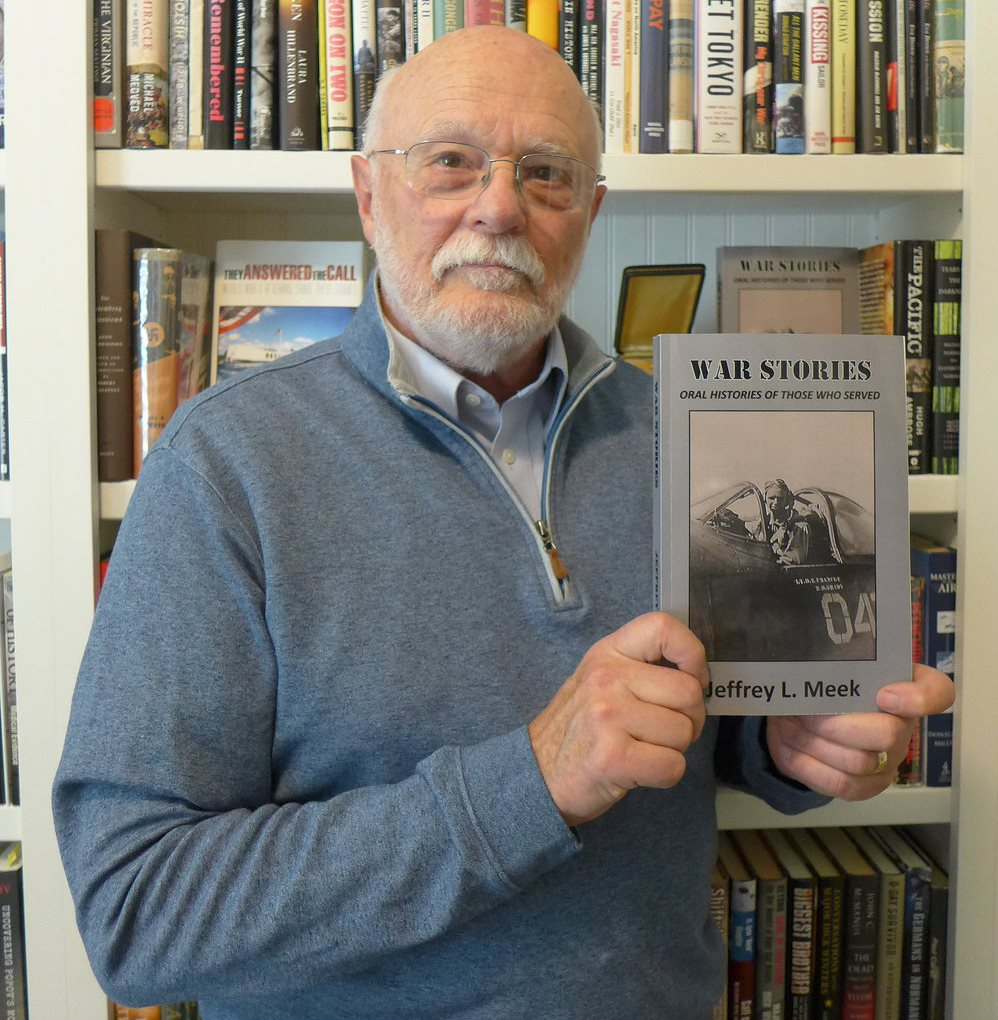
    Jeff Meek is an anomaly of the first order. He is the only reporter in the country who is allowed to devote a monthly column to the JFK case. It is for the Hot Springs Village Voice and it apparently gets a lot of good feedback since it has been appearing there for three years, since September 15, 2020 to be exact.

    At the beginning of the book, the author relates how he got interested in the JFK assassination. Like many, it was from viewing the famous Geraldo Rivera, Goodnight America program in 1975. The was the evening that electrified the country about the assassination like it had not been since the day Kennedy was killed. Rivera had Robert Groden and Dick Gregory on the program and he screened the Zapruder film, for the first time, on national TV.

    This inspired Jeff to talk to Dallas Chief of Police Jesse Curry. (p. 5) Curry told him that only 35 policemen knew Jack Ruby. Which, as Sylvia Meagher had already pointed out, is a flat out deception. Ruby’s friend, Reagan Turman, told the FBI that “Ruby was acquainted with at least 75 percent, and probably 80 percent, of the police officers on the Dallas Police Department.” Which means he knew several hundred of them. (Accessories After the Fact, p. 423). But Curry did tell Meek that they probably should have investigated Lee Oswald’s friend George DeMohrenschildt more. (p.9).

    This makes a good segue to the House Select Committee on Assassinations (HSCA) and the reporter’s scintillating interview with Dan Hardway. (pp. 13-19) Hardway was recruited from Cornell Law School by Professor Robert Blakey, who became the second, and final, chief counsel to that committee. Dan was teamed with another Cornell law student Eddie Lopez. A couple of their areas of inquiry were the CIA and Lee Harvey Oswald, and Oswald in Mexico City. Dan says that they often requested the identity of the case officer who the CIA appointed for the Cuban exile group, the Directorio Revolucionario Estudiantil, or DRE, in 1963. The CIA would not say who that officer was. We know today that it was George Joannides. And this is the man the CIA sent to perform liaison duties between the HSCA and the Agency. To put it mildly, he was not very forthcoming in that function.

    Dan told Jeff, “I don’t think there is any doubt that they [the Agency] had operational interest in Oswald.” (p. 16) Hardway also said that he was very interested in CIA officer William Harvey. Because Harvey and mobster John Rosselli were running Cuban exile hit teams onto the island. But he and Eddie were not allowed the security file on Harvey.

    Something that I have never heard Dan admit to before, he does say here. That he was actually pitched for recruitment into the Agency by another CIA liaison to the HSCA, Regis Blahut. He reported this in an outside contact report which he thinks has now been lost. (p. 19). But one of the most historically important things that Dan says is that today he does not think the HSCA conclusions stand up. And, in fact, he adds that even Blakey no longer has a lot of faith in them. One major reason being that the HSCA was misled by Agency disinformation.

    This interview is followed up by one with another HSCA staffer. Except this person has not talked nearly as much as Dan. Her names is Leslie Wizelman. (p. 21) She was the third law student Blakey recruited to work on the HSCA. She did not buy the Warren Commission’s official story. But this is what she told Jeff: “Wizelman felt she had given up law school time only to discover that Blakey, initially, had a preconception that Lee Harvey Oswald killed JFK.”

    In fact, she felt the committee was simply got going anywhere. To the point that she wanted to resign and return to her education. But she was discouraged from doing so by Blakey, who told her she was acting immaturely. Once this happened, she was assigned to listen to FBI tapes of the Mafia. She did not think there was much of value there. She also had doubts about Ruby being sent into Dallas at the request of the Chicago Outfit. In fact, the more she looked into this, she though it was wrong. In her opinion, the Mob connection to Jack Ruby was that they knew who he was and knew he was easily influenced. (p. 23)

    Summing up, she feels that congress is not the place to do a homicide inquiry. One reason being the CIA and Defense Intelligence Agency are very obstinate, since they know they can wait you out. When Jeff asked her if they got close to anything, she replied in the negative. She says they were not given enough information and they were constrained by the politics of the committee. She also adds a fascinating observation. She lived with Dan and Ed and thought they were under surveillance. The man next door worked for the phone company.

    Another interesting interview and chapter is the one on Dallas County Detective Buddy Walthers. Walthers found out that Oswald had been at the Alpha 66 meeting house at Harlandale through his mother-in-law. She also said the Cubans had moved out of this house about a week before the assassination. (p. 165) She knew since she lived on the same street, just a couple of doors down. Jeff suspected the woman’s name was Lillian Robinson, which Walthers’ biographer Eric Tagg confirmed was the case. Robinson recognized Oswald’s face on TV the night of the assassination. Look magazine editor T. George Harris had also discovered complementary information about Oswald at the address.

    The man who allegedly rented out the house was Manuel Rodriguez Orcaberro, an official of Alpha 66. As Jeff mentions, although some have said Orcaberro resembled Oswald, after looking at photos of the two, such is not the case. Interestingly, the reporter notes that Walthers learned that members of the DRE also attended some of the meetings. The Secret Service knew about Orcabero, but never connected him to the house. The FBI noted that he was violently anti-Kennedy and was probably the highest official in Dallas for Alpha 66. And the FBI did connect him to the Harlandale home through his own words. (p. 167) The reporter wraps this altogether by locating an interviewing Walther’s daughter, Cheryl Cleavenger.

    There are also interviews with people who were on the White House staff for Kennedy, like Sue Vogelsinger and Nancy Dutton; also columns about incidents during the Kennedy presidency like the Missiles of October and the Berlin Crisis. Meek also interviewed some of the personages Oliver Stone talked to for his film, JFK Revisited, like Jeff Morley, Barry Ernest and Jim Gochenaur. In the last, Jeff got something out of the Church Committee witness that he did not reveal to Stone. That was this: in Secret Service agent Elmer Moore’s portfolio of pictures, there was one of the infamous backyard photos. Jim said, “he could clearly see a line across the photo through Oswald’s chin area.” (p. 139) It would have been nice if Jim could have stolen that photo.

    There some interviews I have reservations about. For example, with Ruth Paine and Secret Service agent Mike Howard. I wish Jeff had talked to Greg Parker and Carol Hewett before doing the first, and Vince Palamara before doing the second. But overall, Meek’s batting average is pretty high. He scores many more hits than pop flies. Especially considering the fact that there are over 40 chapters in the book.

    We should all feel appreciative that there is someone doing this kind of work on a regular basis in journalism today.

  • Mark Shaw Insults Allen, Texas: Part 1

    Mark Shaw Insults Allen, Texas: Part 1


    In 2021, author Mark Shaw visited the library at Allen, Texas. Allen is a town of about 100,000 located 20 miles north of the Dallas/Fort Worth metroplex. This was an opportunity to publicize his book Collateral Damage. Some might say: but that was two years ago. Which is true. But for whatever reason, this talk has garnered millions of views on YouTube. Marilyn Monroe authority Don McGovern went ahead and transcribed it. It might be hard to believe, but in some ways this speech is even worse than the book.

    It is very important—actually it is integral—to understand that Shaw is a lawyer. And, as he has described in his prior books, he was a criminal defense attorney. In other words, Shaw is familiar with the rules of evidence and testimony in court. He therefore has to understand the concept of raising objections to such and how a judge can then rule on whether that evidence and testimony can be admitted to a jury. In fact, very often there are pre-trial evidentiary hearings so a judge can rule on these matters.

    What is shocking about Shaw’s presentation is this: there is barely anything in it that would not be challenged in court. And, as we shall see, most of those objections would likely be sustained. It’s quite a spectacle to see an attorney somehow forget the strictures he was taught in law school in order to present a case so diaphanous that it would likely never get out of the starter’s gate. This at a time when most of the JFK critical community is doing the contrary. That is, trying to present a case that would meet standards of proof.

    Mark Shaw is one of the very few in the critical field that still holds that somehow it was the Mafia that killed President Kennedy. What is so bizarre about this—actually it is almost shocking—is that he does not even seem aware of how the new evidence vitiates that conclusion. For instance, the Assassination Records Review Board (ARRB,) declassified many documents from the House Select Committee on Assassinations. The pertinent HSCA records were from November, 1978 interviews with the family of Dutz Murrett, Oswald’s uncle in New Orleans. These showed that, contrary to what the likes of author John Davis had stated, Mr. Murrett was not working for Carlos Marcello in 1963. (Michael Benson, Who’s Who in the JFK Assassination, p. 305) He had resigned his bookmaking position at least two years earlier. This poked a serious lacunae into that theory—one that tangentially connected Oswald to the Mafia Don in New Orleans.

    Further, the famous Ed Becker anecdote about Marcello, which so many have used—including Shaw in this speech—has now also come into dispute. According to Becker, Marcello allegedly stated that soon “the stone” would be removed from his shoe. This meant Attorney General Bobby Kennedy. But he was going to do it by disposing of President Kennedy. (Benson, p. 34) Len Osanic of Black Op Radio has made contact with a witness who renders that whole conversation questionable. There is now a book in preparation on the subject. Yet, as author Michael Benson notes, the HSCA used both of these aspects to bolster their Mob oriented case. As explicated by the late Carol Oglesby in the Afterword to Jim Garrison’s On the Trail of the Assassins, that case was never very strong to begin with. It has now been severely weakened.

    Mark Shaw’s third overall rail of Mafia involvement on the JFK case was that Joe Kennedy had double crossed his backers in Chicago about how he could get RFK to go easy on the Outfit. In return for that, the 1960 mob—controlled wards in Chicago would throw their support to JFK. This point was also rendered moot when it was broken down by statistician John Binder. Binder did a complete study of the voting ratios in those wards. It was not what it should have been if the basis of the book Double Cross was true. Binder’s work pretty much blows up this old wives tale. (Click here)

    Since the Mob did not go along with Kennedy’s alleged wishes, this would indicate he did not have much pull in Chicago. Which indicates that the myth of Joe Kennedy the bootlegger was just that. A myth that emerged, not when Joe was under six federal investigations for positions in government; but arose after, when the underworld, and Jack Kennedy’s enemies—like Richard Nixon—wanted to spread rumors, thereby tarring JFK’s presidential nomination, and later, his reputation. This is the sensible and evidence backed thesis that author Dan Okrent came to in his fine volume on the subject of Prohibition, Last Call (p. 369)

    But in his 2022 book Fighting for Justice—a misnomer if there ever was one—Shaw stated that the Joe Kennedy bootleg charges were all over the HSCA volumes on organized crime (Shaw, p. 66). I read the HSCA volumes on crime, which were in Books 5 and 9. Shaw was passing gas; it’s not there. It is hard to imagine he did not even look at the volumes in advance. If he did, he would have found out that, contrary to any deal, the Kennedys’ strong pressure was collapsing the Mafia. (Vol. 5, p 455)

    In the talk under discussion, Shaw also brings in the 1960 West Virginia primary as another example of the Mob influencing an election at Joe Kennedy’s request. This one was promoted not just by that fatuous book Double Cross, but also by the late Judith Exner, a woman who told so many tall tales she could not keep them straight. (Michael O’Brien, Washington Monthly, December, 1999). As Dan Fleming wrote in his book on that primary, no subsequent study—by the FBI, by the state Attorney General, by Senator Barry Goldwater—ever produced any evidence that there was skullduggery that influenced that election outcome. (Fleming, Kennedy vs Humphrey, West Virginia 1960, pp. 107-12)

    One might point to another aspect of Shaw’s reliance on rather disreputable sources like Double Cross and Frank Ragano’s book Mob Lawyer. In the former book, the authors stated that the Outfit owned the contract of Marilyn Monroe. Since Monroe is a late arriving subject of Shaw’s one would think he would be aware that this is utterly false. And it would therefore touch on the credibility of his source. Either that or it indicates the fact that he has done very little work on Monroe. For as has been shown in the book Murder Orthodoxies, the two men who had control of Monroe’s early career were producer Joe Schenck and Hollywood agent Johnny Hyde. The Chicago Outfit influence on Monroe was simply more malarkey from a book that was full of it. (McGovern, pp. 394-427)

    What is one to think of a lawyer/author who uses these kinds of sources? And still insists on using them long after they have been discredited.

    In this speech Shaw states that he first discovered the subject of Dorothy Kilgallen while he was writing his book about attorney Melvin Belli. Which is kind of odd. Why? Because that book was published back in 2007. Which is ten years before he published his first book on Kilgallen. But further, in Shaw’s first two books dealing with the JFK case there is next to nothing about the reporter, a bit over two pages. His excuse for bringing in Marilyn Monroe is that he somehow discovered that Kilgallen was friends with Monroe. As Monroe biographer Gary Vitacco Robles has noted, there is no such evidence this was the case.

    In addition to these questionable origins, in Shaw’s speech there is his tendency to aggrandize himself. Early on he calls himself a historian. It’s pretty clear from his book that he has no such credentials in that field. And if there is a worse historian of the Kennedy years, I would like to know who it is. One thing a good historian does is sift through how reliable his sources are. As we have seen, Mark Shaw did not do that. Not even close.

    Right before this there is another instance of self-praise. Shaw says the relevance of Collateral Damage is that it shows that nobody asked questions at the time of these murders. To use just one example: Mark Lane was asking questions about the JFK case within hours of the president’s death. (Mark Lane, Plausible Denial, p. 14) When Jack Ruby shot Oswald, those questions exploded into a tidal wave. Because many assumed that the reason someone would shoot the defendant in public was to silence him. This caused Lane to assemble his legal brief for Oswald, which contained plenty of questions amid its ten thousand words. (Lane, pp. 18-19). The edition of The National Guardian where it first appeared sold 100,000 copies. (Author’s interview with Lane, November of 2013). As per Monroe, the first questions were asked very soon after her death also. By, for instance, the photography/reporter team—Bill Woodfield and Joe Hyams—that took the last nude photos of her, and this is in the Fred Guilles biography of Monroe. As per Kilgallen, at her funeral, her mother accused her husband Dick Kollmar of killing her. Experts inside the medical examiner’s office, like Charles Umbarger and John Broich also suspected foul play. Lee Israel, who wrote a biography of Kilgallen, was also onto this trail. All of these sources are in Sara Jordan’s fine online article “Who Killed Dorothy Kilgallen” at Midwest Today. And when one reads that article, the introduction states that this is how Shaw actually began his book.

    Shaw is an inveterate self—aggrandizer. For instance he likes to say, as he does here, that his work is not speculative. That it is based on solid sources like documents. How is the book Double Cross a document? It was not published until three decades after President Kennedy’s murder. As lawyer Shaw has to know, it is hearsay at best. And it is compromised by the fact that the authors clearly wrote it to take advantage of a timely commercial event: the unprecedented controversy over Oliver Stone’s JFK. As I have shown, factually, every major tenet in the book is dubious.

    But it’s even worse than that. Because, concerning the subject of that book, namely Chicago Don Sam Giancana, there are much more factually based sources. One would be FBI agent William Roemer and his book Man Against the Mob. In that book, Roemer describes the almost total surveillance that Bobby Kennedy and the FBI had on Giancana. As he was a major part of it. Roemer listened to all the surveillance tapes they had on Giancana. There was never any mention of any attempt on JFK or RFK. And after the fact, there was no such indication either. (Roemer, p. 188). In court, that would make Shaw’s case pretty vulnerable.

    But again, it’s really worse than that. Because there are now three different versions of the Giancana mythology. There is the version in the novel Double Cross. There is a newer version by another Giancana relative named Pepe as revealed by producer Ron Celozzi in the documentary film Momo: The Sam Giancana Story. The assassination teams differ significantly in the two works. But there is a third version, one which Celozzi is preparing for a projected upcoming feature film on the subject. Again, the hit team is now different than Celozzi’s earlier version. (Click here for the transformations)

    Again, can one imagine presenting all these alterations in court? Showing first how Double Cross is a fraud to begin with. Then following that up with the revisions to the original story? Then finalizing it all with Roemer? Shaw’s case would be decimated. So much for the “historian” not relying on speculation.

    This is the problem when an author depends on a source about which there is no adduced record. Since for all of Shaw’s boasting about his zealotry for Kilgallen, with Kilgallen as your pillar what do you have?. As Shaw has admitted in his works, no one knows what was in Kilgallen’s JFK file. It was allegedly lost after her death. Shaw assumes that since Kilgallen went to New Orleans before her death, that somehow she was on to Carlos Marcello. How does he know this? Again, there is no evidence for it. It is his opinion based on speculation. And this ignores the fact that Oswald was in New Orleans in the summer of 1963, and this might be the reason she went there—to check out what he was doing. In this speech Shaw even says that since Kilgallen had a book coming out based on some of the homicide cases she had investigated, that this is why Marcello had her killed! As a lawyer, how could Shaw back this up?


    Go to Part 2

  • ACTION ALERT: Secret Service Protection for RFK Jr.

    ACTION ALERT: Secret Service Protection for RFK Jr.


    To Our Readers:

    There was a very strange event in Los Angeles on late Friday afternoon. Robert Kennedy Jr. was delivering a speech at a theater just two miles from the old Ambassador Hotel, where his father was assassinated. A man approached him brandishing two loaded guns with one in his backpack. The man had previously posted on Tik Tok, closing his message by saying Donald Trump was the president. The man was stopped and then arrested by the LAPD. 

    There was next to no coverage of this strange event in the MSM. But in the face of this, why has the DHS not granted Kennedy Secret Service protection? After the murder of Robert Kennedy in Los Angeles in 1968 candidates for president were provided Secret Service protection. The turnaround time after the request was usually 14 days. But when Kennedy requested it, after 88 days it was denied. Secretary Alejandro Mayorkas wrote, “I have determined that Secret Service protection for Robert F. Kennedy Jr. is not warranted at this time.” The Kennedy submission included a 67 page report describing security and safety requests including death threats. The reply was that this was only granted 120 days prior to a general election. Which would mean it would be denied to Kennedy almost throughout the primary season. Yet, to mention just one example, when Barack Obama requested it in 2007, prior to the primary season, it was accorded to him. Donald Trump was also in that category.

    This combination of the DNC and the corporate media has done everything it can to try and marginalize Robert Kennedy Jr. and his candidacy. Is this the ultimate marginalization? Whether or not the incident on Friday was real or the man was deluded, it certainly does seem to point out a need for protection. (See this segment of Strange Bedfellows for a discussion of the affair)

    Please notify Secretary Mayorkas for a reversal of this decision.

    Phone Comment Line: 202-282-8495

    US Mail: The Honorable Alejandro Mayorkas,
    Secretary of Homeland Security,
    Washington DC 20258

    Thanks and please do ASAP.

    Jim DiEugenio

  • Hoover vs. King: The ARRB Documents

    Hoover vs. King: The ARRB Documents


    Most of us know just how bizarre and extensive J. Edgar Hoover’s obsession with the civil rights movement–and Martin Luther King Jr in particular–was. For example, in 1958, after King was stabbed during a New York City book signing, a man named Benjamin Davis donated blood for him. The FBI noted that Davis was a member of the Communist Party. (Martin Luther King Jr.: The FBI File, edited by Michael Friedly and David Gallen, p. 21) The Bureau also took note that King’s name appeared on a petition for clemency for a man who was imprisoned because of his refusal to testify before the House Un-American Activities Committee (HUAC). (ibid)

    As both Hoover and the upper level of the Bureau knew, King was not a communist in his ideology, and was never a member of that party. But Hoover was determined to use the tried-and-true tactic of guilt by association to smear King:

    Though nothing has come to the Bureau’s attention to indicate the Reverend Martin Luther King is a Communist Party member, he has been linked with numerous leftist and communist front organizations and is currently active in racial and segregation matters. (Friedly and Gallen, p. 22)

    As many observers have commented, the specter of the pitifully weak Communist Party was being used to attack liberal causes, like integration. And if this information had to be gained by breaking and entering, the FBI would do it with the Southern Christian Leadership Conference (SCLC) offices. (Curt Gentry, J. Edgar Hoover: The Man and his Secrets, p. 501) The first noted occurrence of this was in 1959. And, in a much later Justice Department review, it was revealed that the purpose was to gain information on King. It was also later uncovered that the FBI had been tapping King’s phone in Atlanta since the late fifties. (ibid)

    The conflict between King and Hoover became more direct when King wrote an article for the February 4, 1961 issue of The Nation. King argued that the FBI should be used more to combat violations of civil rights in the south. He further added that one reason it might not be was that there were so few agents of color. At the bottom of a memo on King dated May 22, 1961, this sentence appears, “King has not been investigated by the FBI.” The Director underlined that sentence and added in his usual scrawl, “Why not?” King later criticized the FBI in public for employing too many agents who were native southerners. In factual terms, that statement was not accurate. Most of the agents–seventy per cent in the south– came from above the Mason-Dixon line. (Gentry, p. 499)

    On January 8, 1962 the SCLC issued a report continuing this attack on the FBI. Most writers believe that it was this report that began Hoover’s continual assailing of King to Attorney General Robert Kennedy. Hoover’s main charge was that two of King’s supporters in the SCLC were either former or present communist agents. These were Stanley Levison and Jack O’Dell. In fact, Hoover had already spread these rumors—which turned out to be pretty much baseless—to certain politicians on Capitol Hill. (Gentry, p 503)

    When first informed of this information about Levison in 1962, through Kennedy aides John Siegenthaler and Harris Wofford, King “refused to act against the man who had been his friend and advisor for the past six years.” (Friedly and Gallen, p. 24). Levison was a wealthy attorney who gave King free legal advice and was a strong fund raiser. O’Dell worked directly for the SCLC in their New York City, and later their Atlanta, and Albany, Georgia offices. Whatever associations either man had with the CP had ended back in the fifties. (Friedly and Gallen, p. 25, 27). In fact, Levison later declared that, unlike what Hoover said about him, he was never any kind of Russian agent. He was not even a CP member. But he said he understood the worries of both Bobby and Jack Kennedy.

    They were so committed to our movement, they couldn’t possibly risk what could have been a terrible political scandal. When I realized how hard Hoover was pressing them and how simultaneously they were giving Martin such essential support, I didn’t feel any enmity about their attitude toward me. (Arthur Schlesinger, Robert Kennedy and His Times, p. 376)

    And this was a real threat. By the fall of 1962 the FBI was penning internal memos about exposing O’Dell and his CP background to various newspapers. In fact, the Long Island Star-Journal, and a few other papers, did print the story about a high-level CP member who infiltrated the SCLC New York office. (Friedly and Gallen, p. 29)

    II

    Apparently, King was sensitive to the charges. In November of 1962, with O’Dell’s consent, King announced his resignation while the SCLC did an inquiry. But King said he knew nothing about his background. King also—not altogether honestly– denied the role O’Dell had reportedly played in the SCLC up to that time. He then added that “it is also a firm policy that no person of known Communist affiliation can serve on SCLC’s staff, executive board or its membership at large.” (Friedly and Gallen, pp. 29-30) This temporary resignation later become permanent. (David Garrow, Bearing the Cross, p. 275)

    King was much more reluctant about Levison. But Levison later said that he induced King to make a direct contact break: “The movement needed the Kennedys too much.” But King managed to stay in contact with Levison through New York attorney Clarence Jones. (Ibid, Garrow.)

    Hoover now assigned Cartha DeLoach to contact King for the purpose of correcting some of his critical statements about the Bureau. Which DeLoach did try and do. But it is clear that King made up excuses to avoid talking to him. (Friedly and Gallen, p. 32)

    On January 15, 1963 DeLoach distributed a memo within the Bureau. It essentially said that King was avoiding him since he does not wish to be alerted to the facts. He then said that King had used “deceit, lies and treachery as propaganda to further his own causes….” He made reference to Levison who he called “a hidden member of the Communist Party in New York”. As some have commented, thus King may have triggered a whole new level of conflict between himself and Hoover.

    The FBI had already broken into Levison’s home in the spring of 1962. But now, in 1963, the FBI portrayed Levison as a top level functionary who was actually part of the Russian intelligence network. (Schlesinger, p. 372) This was at a time when the White House was backing King and the civil rights movement like no prior administration. In June of 1963, after a White House meeting with King and other civil rights leaders, President Kennedy took a stroll in the Rose Garden with King. (About which King observed that Hoover must be bugging JFK also.)

    During this private talk, Kennedy told King he was under strong surveillance. He asked him to remove O’Dell and Levison. He said their mutual enemies were already denouncing the March on Washington as a communist stunt. Because this administration had now tied its fate to a civil rights bill and also the upcoming demonstration, if King’s enemies shot him down, then his administration would fall with it. When King asked to see the evidence about Levison, Kennedy told him Burke Marshall—the administration specialist on civil rights– would show it to King’s assistant Andrew Young. (Schlesinger, pp. 372-73)

    Marshall met with Young at a courthouse in New Orleans. But Young remained unconvinced since all Marshall did was repeat what Deloach and Hoover were saying. (Schlesinger, p. 373) Consequently, King remained skeptical. He and Young thought this was just FBI intimidation. But as mentioned above, Levison gallantly solved the problem, and Jones provided a nexus point to avoid halting communications.

    President Kennedy was evidently satisfied with the conclusion. Feeling he had parried Hoover effectively he made a rather startling announcement on July 17, 1963. He became the first white politician in Washington to back the August 28th demonstration. He then pointedly added that there was no evidence to show that any civil rights leaders were communists, “or that the demonstrations were communist inspired.” (Schlesinger, p. 373). Robert Kennedy then wrote a letter to 2 senators saying the same thing:

    It is natural and inevitable that Communists have made efforts to infiltrate the civil rights groups and to exploit the current racial situation. In view of the real injustices that exist and the resentment against them, these efforts have been remarkably unsuccessful. (Church Committee Report, Book 3, p. 100)

    This was a direct affront to Hoover. And so the FBI said there was no way RFK could back such a definite claim. The only way to be sure was to place a tap on King’s phone. Robert Kennedy had repeatedly rejected this. But Hoover then reported that he had information that King was still communicating with alleged KGB agent Levison by telephone. (Schlesinger, p. 375) In October, the Attorney General gave in and authorized a trial tap for 30 days. If nothing came up, that would be the end of it.

    We all know what happened in November. (Harris Wofford, Of Kennedys and King, p. 217) As Kennedy’s first civil rights advisor Harris Wofford adds, all the evidence indicates—as mentioned above– the FBI had already been tapping King’s phone anyway. They just wanted a cover for it.

    III

    After JFK’s death, Hoover ripped out Bobby Kennedy’s private line into his office. Even though there was never any evidence of communist affiliation, Hoover kept the tap on King’s home phone until the middle of 1965. The FBI then added taps on 21 microphone settings in various King hotel and motel rooms. (Schlesinger, p. 375). One can write with justification that, once Hoover knew he did not have to deal with Robert Kennedy, the dam broke. As author Kenneth O’Reilly wrote, by the summer of 1964 the Bureau was not just focused on King, but had expanded its operations and surveillance to all civil rights leaders, indeed to all civil rights related events. (Racial Matters, p. 140)

    Whereas Robert Kennedy had demanded that Hoover recall a memo that the FBI had prepared attacking King, this defiance of the Director did not succeed under successors Nicholas Katzenbach or Ramsey Clark. (Schlesinger, pp. 376-77) One probable reason being that President Lyndon Johnson had a long and warm friendship with the Director.

    Hoover now set up a special desk at the Internal Security section with two supervisors to coordinate what he termed Communist Influence Racial Matters inquiries (CIRM). And he instructed them to use the rubric “communist” in the broadest view. (O’Reilly, p. 140). But the problem was the FBI struck a dry well with Levison and his alleged communist angle. Even though they burglarized Levison’s home at least 29 times between 1954 and 1964. (O’Reilly, p. 141)

    In fact, King took his issue with this to the public in 1964. During a press conference on May 10, 1964 he began to echo what the Kennedys had said in public, but without their private fears: “It is time for this question of communist infiltration t be buried all over the nation.” Fellow activist James Farmer then added, “Communism is based on a denial of human freedom. It’s tough enough being black without being black and red at the same time.” On July 23rd in Jackson, Mississippi King said he was:

    …sick and tired of people saying this movement has been infiltrated by communists and communist sympathizers…There are as many communists in this freedom movement as there are eskimos in Florida.

    Therefore, Hoover now switched to character assassination. During a November 1964 meeting with a group of women reporters, Hoover called King “the most notorious liar in the country”. (O’Reilly, p. 142) Even though DeLoach was there and tried to get Hoover to take that comment off the record, Hoover would not.

    In March of 1964, the FBI became cognizant that Marquette University was going to honor King with an honorary degree. The Bureau sent agents to tell them about all the derogatory information they had on him. The same thing happened at Springfield College. (Friedly and Gallen, p. 42) Around the end of the year, the FBI recruited its first informant in the SCLC, an accountant named James Harrison. (Garrow, p. 468)

    When Time magazine named King its Man of the Year at the end of 1963, Hoover wrote on a 12/29/63 UPI press release, “they had to dig deep in the garbage to come up with this one.” (O’Reilly. P. 136) But Hoover really went bonkers when it was announced that King, at age 35, would be awarded the Nobel Peace Prize for 1964 in Oslo—along with a cash award of almost $55,000. The honor was “for his non-violent struggle for civil rights for the Afro-American population.”

    IV

    That award would be formally bestowed at the end of 1964. Between the Time magazine honor and the Nobel announcement in the fall King made a speech in San Francisco. It was quite frank and indicated King had had it with the communist infiltration ploy:

    It would be encouraging to us if Mr. Hoover and the FBI would be as diligent in apprehending those responsible for bombing churches and killing little children as they are in seeing our alleged communist infiltration in the civil rights moment. (FBI memo of 4/23/64)

    In a memo from Alan Belmont to William Sullivan, it was revealed that Division Five was working on material which was being pushed and will be given to Hoover for his consideration (Belmont to Sullivan 4/23/64, with 2 pages denied in full) Hoover had Division Five Chief William Sullivan and DeLoach distribute tapes and transcripts of what they alleged to be King’s philandering in various hotel rooms. (O’Reilly, pp. 137-38). Division Five had the FBI lab make a composite tape of alleged highlights of various hotel bugs and taps. DeLoach offered a copy of a transcript to Ben Bradlee, who was then the Washington bureau supervisor for Newsweek. Bradlee turned down the offer. When Burke Marshall heard of this through Bradlee, he warned President Johnson about it. But Johnson did something rather weird. He reacted “by warning the FBI about Bradlee. He was unreliable, the president said, and was telling the story all over Washington.” (Ibid, p. 144) The same offer was made to the Atlanta Constitution editor, Eugene Patterson. Who also refused to listen. (Friedly and Gallen, p. 51)

    Marshall then warned White House advisor Bill Moyers that Hoover was trying to smear King through the media. Moyers informed the FBI White House liaison about it. Hoover now did something really bizarre. He accused Marshall of being a liar. In fact, Hoover ordered one of his aides to call Marshall and tell him just that. (Wofford, p. 220). What is notable about this is that it is before Johnson’s escalations of the Vietnam War in early 1965. Meaning the King/Johnson relationship was going to get even worse.

    This all culminated with the notorious letter that Hoover had Sullivan compose in November of 1964. Some have written that the implicit threat was that King had no way out except to take his own life. But FBI defenders, and Sullivan himself, replied that it was really meant to get King to step aside as leader of the SCLC. It partly reads as follows:

    King, look into your heart. You know you are a complete fraud and a great liability to all of us Negroes…King, like all frauds, your end is approaching. You could have been our greatest leader…But you are done…No person can overcome facts. The American public, the church organizations that have been helping—Protestant, Catholic and Jews, will know you for what you are…So will others who have backed you. You are done…there is only one thing left for you to do. You know what this is. (O’Reilly, p. 144)

    The FBI enclosed the compilation tape with the letter. The package was mailed from Miami to the Atlanta office of the SCLC. This was shortly before King was to fly to Oslo to accept the Nobel. Around the same time, November 24th, Hoover made a strong speech against King. This time indirectly accusing the SCLC of being run by “communists and moral degenerates.” (ibid)

    King later noted, after reading the letter and hearing the tape, it was clearly from the FBI. And this was a war in which, “They are out to break me.” (Friedly and Gallen, p. 49)

    V

    But it was not just in America that the FBI declared war on King. The ARRB declassified papers dealing with this overseas battle. Researcher Gary Majewski has sent me many of them. The FBI was determined for King’s Nobel journey to Scandinavia to have little or no impact on the leaders of Europe. These documents deal with cables and airtels from the FBI to intelligence centers in Europe, especially England. They were designed to poison any planned meetings between King and European public officials. What is so startling about these documents is that, as bad as they are, they are still heavily redacted: whole pages have been denied. But from what was left unredacted, some of the tale can be revealed.

    It appears that somehow, some way, the FBI found out just how King would journey to Oslo. Bayard Rustin, one of the organizers of the March on Washington, was acting as an ad hoc advance man. The Bureau seemed to have had a spy in Rustin’s camp. The FBI knew when Rustin would be departing and they knew who he would be contacting to arrange meetings with luminaries in Europe. (FBI Cablegram of 11/10/64) One of these people appears to be Labor Party member Peggy Duff. Rustin apparently wanted Duff to arrange for a meeting with a higher up—his identity is redacted. The Bureau’s objective was to try and get to these higher ups in advance in order to smear King as

    …surrounded by numerous advisors having present or former communist connections. He has maintained an association with and received guidance and counsel from secret Communist Party USA members, notwithstanding advice to King about their communist backgrounds. (ibid)

    This information, plus a smear of Rustin, was to be forwarded to MI 5– roughly the equivalent of the FBI in England. The Bureau actually wanted this info to be sent to Prime Minister Harold Wilson. The excisions are clearly noted as being in connection “with efforts being made by King to see British Prime Minister Harold Wilson when King passes through London enroute to Oslo…”

    Amazingly, the information did get to Wilson though MI 5 official Roger Hollis. Hollis then furnished the FBI with data about Rustin’s arrival, where he would be staying, and that MI 5 would cover Rustin’s activities and report to FBI. (Airtel of 11/13/64) The Bureau also made plans to brief the American ambassadors in London, Copenhagen, Stockholm and Oslo about the same matters. This was being done to discourage any attempt to make King a guest of honor. (FBI Memo of 11/13/64 and memo of 12/10/64). This effort ended up being at least partly effective. The American ambassador in Stockholm had planned on meeting King at the airport. He now decided to send a representative.

    In another FBI memo of 11/24/64 the State Department is enlisted to briefing the USIA on the smears of King, including information about King’s alleged immoral conduct. When Belmont heard the USIA was in agreement, he went ahead and approved the FBI reports and sent memos to that body.

    How an FBI Director was allowed to interfere or even become involved with foreign affairs is, to say the least, a very problematic question. How he was allowed to send salacious material to representatives of intelligence agencies, and to ambassadors, is a little disgusting. And that this whole story has yet to be fully revealed in 2023 is appalling. There is an inter-agency meeting of 12/8/75 between the FBI and the Justice Department on King that is nine pages long. There is no ARRB cover sheet on it. And it is almost completely whited out.

    We all know how this ended. King was shot in Memphis in April of 1968. When that news was broadcast, the agents in the FBI office shouted, “They got Zorro! They finally got the SOB!” When further word came that King was dead, “One agent literally jumped up and down with joy.” (Gentry, p. 606)

    What Hoover was trying to do with his war against King was to make him so radioactive as to split him off from other civil rights leaders. (FBI Memo from DeLoach to Mohr, 11/27/64) Prior to that, as Harris Wofford has pointed out, what Hoover was also trying to do was drive a wedge between King and Bobby Kennedy.

    Bobby Kennedy was killed in June of 1968. Early in the year, Hoover’s close friend Clyde Tolson had wished for this to happen. (Gentry, p. 606) But that was not enough. During Kennedy’s televised funeral, Ramsey Clark was drawn aside by an FBI agent. The FBI knew that Scotland Yard had captured alleged King assassin James Earl Ray the night before, but they had refused to hold the story. In fact, DeLoach had told an FBI asset the night before about it. Therefore, the media was distracted by the apprehension of Ray during the RFK funeral. (Ibid, p. 607) How could anyone trust any FBI inquiry into either man’s death?

    Hoover’s mania later spread to all black nationalist movements. Urged on and abetted by Richard Nixon’s manipulation of white backlash, he approved COINTELPRO operations against the Black Panthers. By 1969 Hoover was investigating every chapter of the Black Panther Party and over a thousand members, and also those Hoover considered sympathizers. (O’Reilly, p. 298) Many commentators hold Hoover responsible for the decimation of that group e.g., the framing of Panther Geronimo Pratt and the death of Chicago leader Fred Hampton. (See, O’Reilly, Chapter 9)

    It is a sorry story, this tale of FBI perfidy and its war on a civil rights leader. Hopefully, one day, it will be able to be seen in its entirety, without being expurgated.

    Do we need an ARRB on the King case?