
{aridoc engine=”google” width=”700″ height=”400″}images/ppt/FBI-JFK-Garrison-2019.ppsx{/aridoc}
Author: James DiEugenio
-

Dennis Breo, the New York Times, and JFK
On November 8, 2019, the New York Times printed a letter from an author named Dennis Breo. This was in reply to a review of Jack Goldsmith’s book In Hoffa’s Shadow. In the review of that book, Chris Nashaway wrote that the disappearance of Hoffa ranks with mysteries like the disappearance of Amelia Earhart and the identity of the so-called second shooter on the grassy knoll. Please note the term “so-called” in front of the second shooter.
Well, even that large qualifier was not enough for one Dennis Breo. Breo promptly wrote a letter to the Times who, quite willingly, accommodated him.

Dennis Breo
Stepping up to his soap box, Breo wrote that what the Times had done by printing that sentence was a “serious disservice to history.” He then said that he had been a journalist for the Journal of American Medicine Association (JAMA) when they did interviews with the three autopsy doctors on the JFK case in May of 1992. He wrote that, because of that, he could assure the Times that “there was no second shooter from the grassy knoll or anywhere else.” He then said that the autopsy doctors proved that both wounds in Kennedy went from back to front, that is, his back of the neck wound and his head wound. Therefore, the only possible shooter was Lee Harvey Oswald. He then ended his letter with the fact that the Times endorsed that article saying that “it offers proof against paranoia.”
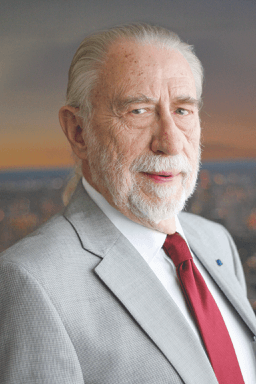
Dr, George Lundberg
This was the first letter on the correspondence page. Above it, the Times bannered the letter with the rubric “There was no Second Shooter on the Grassy Knoll,” all seeming a bit much for printing the phrase “the so called second shooter.”
Naturally, the Times did not reply to Breo’s letter to defend what they originally printed. They did not even let Mr. Nashaway respond. They were wise in doing so, because Breo is a huge target for anyone disputing the Warren Report’s version of events.
First, Dennis Breo is not a doctor and has never been a doctor. He is now a retired journalist, living in Florida. At the time that the film JFK came out, he was working with Dr. George Lundberg, the editor of JAMA. Lundberg did not like the portrayal of his friend Dr. James Humes in that picture. Evidently, he did not care to find out that it was not really a portrayal. It was all based upon facts that were adduced at the trial of Clay Shaw in 1969 in New Orleans. Those facts, recited under oath by Dr. Pierre Finck, were accurately scripted for the film. There was nothing defamatory about these scenes. The film reflected Finck’s testimony on the stand, according to the trial record, which director/writer Oliver Stone had secured.
Finck’s testimony, in and of itself, is quite a story. He was called by the defense. The reason being that Dr. John Nichols, a pathologist, had been an effective witness for the prosecution. He testified that, in his opinion, the Zapruder film proved a shot from the front and, therefore, showed a conspiracy. (James DiEugenio, Destiny Betrayed, second edition, p. 299) The defense was worried about the impact of both the Zapruder film and Nichols. So they called Kennedy autopsy physician Pierre Finck as a witness. The Justice Department was coordinating its coverage of the Clay Shaw trial through attorney Carl Eardley in Washington. (ibid, p. 299) Eardley was the point man on the cover up of the medical evidence in the JFK case. For example, he had coordinated a meeting in 1966 so that four of those present in the Bethesda morgue room—where Kennedy’s autopsy was performed—would testify that all the photos of that procedure were accounted for. Even though everyone knew they were not, including Eardley. (ibid, p. 305). Eardley wisely kept his name off the final draft of the false document.
Finck’s testimony in New Orleans was coordinated with Eardley in advance. (DiEugenio, p. 299) Finck was fine under direct examination. He was reduced to mumbling and bumbling by Jim Garrison’s assistant DA Alvin Oser under cross examination. The Shaw trial was the first direct exposure of the corrupt practices and hierarchical control of what went on in the Bethesda morgue on the evening of November 22, 1963. The examination got so bad that Finck began dodging questions and refusing to answer. The judge had to order him to answer. When he did, he admitted that Kennedy’s back wound was not dissected because the doctors—Humes, Finck, and Thornton Boswell—were ordered not to do so. He also admitted that Humes had to stop the examination once, because of all the interference. Once halted, Humes then asked aloud: “Who is in charge here?” Finck testified that an army general replied, “I am.” Finck then added: “You must understand that in those circumstances, there were law enforcement officials, military people, with various ranks and you have to coordinate the operations according to directions.” (DiEugenio, p. 300, italics added)
Finck had given away the game. Kennedy’s back wound was not dissected, because the military presence there would not allow it. The doctors were not in charge; the Pentagon officers were. Because of this, no one would ever know for certain the precise circumstances by which President Kennedy was killed. Did the back wound transit the body? Did it meet the anterior neck wound as part of its trajectory? Those questions can never be answered, because of the military control of the Bethesda autopsy.
Finck’s testimony was devastating to the official story, so much so, that when local US attorney Harry Connick informed Eardley what the doctor was saying, the maestro of the medical cover up panicked. When Dr. Boswell testified to the Assassination Records Review Board, he said that Eardley was really upset about what Finck said under oath at the Shaw trial. (DiEugenio, p. 304) Eardley told Boswell that he had to get someone to New Orleans quickly, because Finck was “really lousing everything up.” In other words, telling the truth was screwing up Eardley’s cover up efforts. Eardley flew Boswell to New Orleans, where he was met by Connick. But Eardley changed his mind and Boswell did not testify. Eardley’s intent was to have Boswell smear Finck as a “strange man.” Eardley probably changed his mind, because he realized that Finck was more experienced as a forensic pathologist than Humes or Boswell was. That was why they called him in a bit late in the procedure. It would have been difficult to discredit someone with better credentials than yourself. (DiEugenio, p. 304)
This was what writers Oliver Stone and co-writer Zachary Sklar had based this part of the film upon, although they had not yet seen the declassified machinations behind the scenes from Washington with Eardley. But this was all sworn testimony at the Shaw trial. JAMA could have availed themselves of it rather easily by calling Mr. Stone or the court stenographer of the Shaw trial—Helen Dietrich—who was still alive at the time. There is no evidence that Lunderg or Breo did either. Lundberg’s reaction to the film was not at all scientific or medically sound. After he saw the picture, he wrote a letter to his friend Jim Humes. It said:
Have you seen the movie JFK? Three hours and fifteen minutes of truth mixed with non-truth mixed with alleged truth. For the younger person, not knowledgeable about 1963—very difficult to tell the difference. Please either write the truth now for JAMA or let Dennis Breo (and me?) interview you…to set the record straight—at least about the autopsy. (Brad Kizzia in Assassination Science, edited by James Fetzer, p.73)
In other words, Breo and Lundberg went to work to counter the facts that JFK had set forth. Which were based upon Finck’s sworn testimony. It was later revealed in a deposition that Lundberg likely did not know that these autopsy scenes were based upon Finck’s testimony, when he wrote that letter to Humes. (Brad Kizzia in Trauma Room One, p. 165, by Dr. Charles Crenshaw.)

Dr, Charles Crenshaw
Something else had happened while Lundberg and Breo were setting about their task to rehabilitate one of the worst autopsies ever performed. Dr. Charles Crenshaw had published his book, Conspiracy of Silence. In that volume, Crenshaw revealed that upon being shown the autopsy photographs by researcher Gary Shaw, he was taken aback, because they did not conform with what he recalled. (Crenshaw, p. 18) Crenshaw said the back of the head photo did not reveal the blowout wound he saw and the anterior neck wound seemed widened and enlarged. Crenshaw’s book was published in April of 1992. It became a best seller.
Breo and Lundberg prepared the May 1992 issue of JAMA for the original autopsy doctors to tell their story. They even called a press conference, in advance, in New York City. The article and the press conference also brought into question the efficacy of Crenshaw’s book. In fact, Lundberg and Breo even questioned if Crenshaw was in the emergency room. (Crenshaw, pgs. 153, 161, 165)
Somehow, in his recent letter to the New York Times, Breo forgot to mention some rather embarrassing reporting in the Times about that press conference. Dr. Lawrence Altman was at that 1992 event in New York. His two reports for the Times showed that all one had to do was peruse the Warren Commission volumes to discover that Crenshaw was in the emergency room at Parkland Hospital when Kennedy was there. (Crenshaw, p. 166). Even though the Altman articles were published before the issue of JAMA was distributed, there was no correction added to the issue.
Crenshaw requested a right to reply and Lundberg refused. Crenshaw then launched a lawsuit for defamation. Brad Kizzia represented the surgeon. The depositions in that case were rather interesting. It is quite obvious that Lundberg and Breo had an agenda. And they did not care about the long factual record of the Kennedy case. For instance, in his letter to the Times claiming he knows there were only two shots from the rear and they were by Oswald, Breo writes that the lower rear wound came in at the neck. This proves that not only did Breo not study the case before he wrote the JAMA articles—he has not studied it since. The House Select Committee on Assassinations (HSCA) had the autopsy photographs. They published artists’ renditions of the wounds. That wound, which Breo says is in the neck, is clearly in Kennedy’s back. (Crenshaw, p. 269) This is a fact that not even Dr. Michael Baden of the HSCA could deny. If a writer will not even admit that, then how can anyone trust him with the rest of the facts of the JFK autopsy.
For in addition to the autopsy doctors being stopped from dissecting the back wound, there is no existing record of them sectioning Kennedy’s brain. This should have been done, in order to track the bullet path through the skull. No examining doctor since—from the HSCA or the ARRB—has been able to find any records from a sectioning process. (Although Doug Horne has made the case it was done and then covered up. Click here to read that essay.) To say that this was a failing is a monumental understatement. For if the brain was not sectioned, then:
- How can one chart the bullet path through the skull?
- Say with confidence that JFK was hit by only one bullet in the head?
- Tell us that only one bullet came in from behind?
Adding to this problem, the angle from the sixth floor of the Texas School Book Depository to the limousine below is slightly right to left. But if one believes the autopsy, the bullet exited going left to right. There is also the problem that the 1968 Ramsey Clark Panel moved the rear skull wound up four inches to the cowlick area. But yet, for JAMA, Lundberg and Breo moved it back down again. These serious issues in the Kennedy case were all either discounted or ignored by JAMA. (Crenshaw, p. 203) As was the riddle of the weight of Kennedy’s brain. The supplementary autopsy report, filed on December 6, 1963, says that the weight was 1500 grams. (ibid, p. 238) This is virtually impossible to believe. Too many witnesses saw a brain that was missing a significant amount of mass. Secondly, from films and pictures of the assassination, one can see the blood and tissue that was ejected from Kennedy’s skull. This has led many to believe that there was some real subterfuge going on, with not just the autopsy, but the supplemental autopsy days later. It is why so many observers, e.g. forensic scientist Henry Lee, believe that the autopsy in the JFK case was such a mess that no observer can come to real conclusions about precisely how Kennedy was killed. (Lee said this in an interview with Oliver Stone for the upcoming documentary JFK: Destiny Betrayed)
As both Gary Aguilar and Cyril Wecht noted in their review of JAMA’s articles (there was more than one), the fundamental factual errors that Breo and Lundberg made would not pass muster in a high school class on the JFK case. In the first sentence of the first article, Breo wrote that only Humes and Boswell knew what really happened during the autopsy of JFK. Thus ignoring Pierre Finck, who actually was the only experienced forensic pathologist of the three. (Aguilar and Wecht in Crenshaw, p. 202) Breo then added that the JAMA interview was the only time that Humes and Boswell had publicly discussed the JFK case. This was wrong in more than one sense. In 1967, Boswell had granted an interview to Josiah Thompson for attribution in his book Six Seconds in Dallas. In that same year, Humes gave an interview to Dan Rather for a CBS special broadcast in the summer of 1967. All three doctors had appeared in public before the HSCA; Humes was even on television for a second interview done alone. Boswell had given interviews to both the Baltimore Sun and the New York Times. Humes had given an interview for attribution to David Lifton. All of this betrays the fact that JAMA wanted to trumpet their articles as being somehow unprecedented in the literature, when, in fact, that was not an accurate assessment.
In the second article, JAMA stated, through one of the Parkland doctors, that none of what the Dallas doctors saw contradicted that the bullets were fired from behind Kennedy and above. Now, at this time, the Assassination Records Review Board had not declassified the drawings and affidavits given to the HSCA. These clearly denoted a large, avulsive wound in the rear of Kennedy’s skull, which would suggest a shot from the front. But even in 1992, there was testimony and evidence that such was the case. To cite just two examples: the Warren Commission testimony of Secret Service agent Clint Hill and the drawing on page 107 of Thompson’s book Six Seconds in Dallas directed by Dr. Robert McClelland. (Click here for Hill)
One of the worst things about the JAMA articles and Breo’s performance was that, as attorney Brad Kizzia discovered, neither Lundberg nor Breo ever talked to Crenshaw himself. (Crenshaw, p. 164) But, beyond that, Kizzia also discovered that there was no peer review of Breo’s writing about the JFK case. (ibid, p. 165) The excuse given was that Breo’s work was only considered journalism. Considering that this “journalism” discussed and reviewed a quite complex and controversial subject and that Breo was not a physician, this is a truly remarkable decision by the editors at JAMA. And it’s why many doctors suspended their subscriptions to the magazine afterwards. Making all this even more troubling was the fact that Lundberg was a pathologist. Yet he admitted he had not read any books about the JFK case. (Crenshaw, p. 165) JAMA ended up settling with Crenshaw for about a quarter of a million dollars.
The AMA board terminated George Lundberg seven years later. At that time, during the Bill Clinton impeachment proceedings, he was running an article about what college students considered oral sex to be. The executives at the AMA declared that he had compromised “the integrity of the journal” and they had been inserted “into a debate that had nothing to do with science or medicine.” (BBC News, 1/18/99)
That judgment could have been asserted back in 1992.
-

Part 2: Martin Scorsese and Robert DeNiro’s The Irishman
After reading the first part of this review, which focused on the book about Frank Sheeran by Charles Brandt, it’s hard to understand why director Martin Scorsese and actor/producer Robert DeNiro were intent on making a film from his book, I Heard you Paint Houses. And, further, why they would spend 160 million to do so. That point is important to discuss, but I will delay speculation on that issue for later in this review. The fact is, they did make the film. So, let us review and analyze the product before us.
The first thing that struck me about the picture is its length. It three and a half hours long with no intermission. To put it frankly: Lawrence of Arabia justifies its length; The Irishman does not. There are many scenes that are simply extended or not necessary at all. When Sheeran goes to Detroit to meet Hoffa for the last time, we see him getting on the plane. Then after he kills him, the film shows him returning through the airport. Why? When the hit team goes to pick up Hoffa for that meeting from the restaurant, the picture depicts the drive and the actors in the front seat get into a stupid discussion about the fish that the driver previously had in the car. That is not a mistype. They discuss a fish as they go to pick up Hoffa, in order to kill him. If this was supposed to be a kind of Pinteresque/David Mamet touch, it did not work for this viewer. These are not the only scenes that could have been either cut or shortened. Not by a long shot.
Then, there is the protracted, over-extended ending section. The dramatic and intellectual ending of the film is the murder of Hoffa and the cremation of his body. But the picture goes on and on from there. We see Sheeran being tried in court for other crimes, we see him in prison with Bufalino, and then there is a long section after he gets out with scenes with his monsignor—two of these. We then see him trying to reconcile with his estranged daughter, falling down at home, and being placed in a retirement center. We then watch as he picks out a casket and chooses a cemetery lot etc. After the film was finished and I was driving home, I tried to figure out what that long extended ending was about. When I got home, I realized why. The film makers were trying to make Sheeran into some kind of sympathetic character; they were trying to wring pathos from the audience.
Think about that. If we view Sheeran through the eyes of Charles Brandt, why on earth should he be any kind of sympathetic character? Here is a man who killed his friend and employer. And who put up no protest about it. And, according to Brandt, he then killed many other people in what were clear cut cases of murder. There was nothing fair or just about them, since they were allegedly mob hits. Why on earth should anyone feel any kind of sympathy for this guy?
But in a deeper sense, as I have already made the argument for, if Sheeran is a liar, and if he conned Brandt, and if the book then conned the film makers, in my eyes, that makes it even worse. Why would we feel for a man who simply was a flimflam artist? But, further, his flimflammery was over a variety of serious subjects (e.g. the Bay of Pigs invasion, the assassination of President Kennedy, and the murder of Jimmy Hoffa).
In comparison with Brandt, the film stays pretty much faithful to the story line of the book. Since the book is about 280 pages long, the distended length is chalked up to director Martin Scorsese’s dilated approach. Another example of that approach is—if you know Scorsese—pretty predictable. To give one example: In the book, Sheeran notes a brief anecdote about an organizing battle between the Teamsters and the AFL-CIO over a taxi company. He says that a method they would use was to steal an idle cab every once in a while and drive it into the river. Well, with Scorsese, this becomes a whole fleet of taxis parked conveniently near the river and all of them are thrown into the water at once. If that was not enough, other taxis are then blown up with explosives.
The problem with this false, over-the-top treatment is that one wonders: How did Sheeran and Hoffa lose the organizing battle? Because they did. (Brandt, p. 137) I guess the rationale for these scenes are, if you have 160 million to spend, you spend it. Forget what actually happened. Because in the book, the author states that they paid the cops to look the other way for each taxi driven into the river. In reality, with the wholesale destruction depicted here, there would have been front page stories, a police investigation, and court hearings.
The script also follows the aspect adapted by Sheeran and Brandt from the fairy tale Giancana concoction Double Cross. That is, Giancana made a deal with the Kennedys over the 1960 election, but Bobby would not let up on them once they got to the White House. The script has Sheeran saying years later something like, go figure that out. For anyone with any brains or knowledge, there isn’t anything to figure. Because it never happened.
But there is a deeper fault here. The battle between Hoffa and Bobby Kennedy was the stuff of real epic drama. There was a lot at stake. And there were moral problems on both sides of the war. Unlike others, I do not think this was RFK’s finest hour. There were many things that chief investigator Walter Sheridan did that I believe were unethical. Rigging a lie detector test being only one of them. I do not know if RFK was aware of all these shenanigans. But, beyond that, what RFK thought about the problem turned out to be at least partly wrong. Because once Hoffa left the scene, the Teamsters union was not cleaned up. That effort went on for decades. So here is an actual political conflict—not the phony Giancana one—that one could really get involved in on a number of levels: the historic, the personal, the dramatic, and the epic. What do Scorsese, DeNiro, and writer Steve Zaillian do with this huge, violent confrontation?
I hate to say it, but all the picture does is pay lip service to that titanic struggle. Bobby Kennedy is in the film for about five minutes. And those scenes are not at all gripping. You can see newsreels on You Tube that are much more interesting and intense than what is depicted in this film. I don’t see how one can make a less complementary comment on the picture than that. But it happens to be true. Apparently, no one involved in the film in any creative way thought this actual battle was worth spending much time or effort on. Making up scenes about dozens of taxis being thrown into the river somehow was.
The film depicts the paper mâché scene about David Ferrie meeting Sheeran and giving him a weapons delivery to take to Florida. It cleverly introduces that episode by having actor Joe Pesci as Russell Bufalino tell Sheeran, words to the effect: in Baltimore you will meet a fairy named Ferrie. For those who saw Pesci play Ferrie in the film JFK, the irony and humor are neatly understated. The film then depicts the almost impossible to digest hand off to Howard Hunt. The movie does not include the delivery by Sheeran of the rifles to Ferrie in the weeks leading up the Kennedy assassination. The JFK murder is depicted in the film as Sheeran, Hoffa and others in some kind of ice cream parlor as the bulletin comes on about President Kennedy’s murder. As this occurs, the characters move closer to the TV set to hear the news. Everyone except Hoffa, that is, who stays seated at his table eating his ice cream. But there is little doubt about who killed Kennedy according to this picture. Because later in the film in a discussion between Bufalino and Sherran, the latter says that Hoffa is a pretty high up guy. Bufalino replies that if they can kill the president, they can kill the president of a union. We are supposed to buy the idea that the Mafia killed the president. On the word of Joe Pesci playing Bufalino. Hmm
What is also a little more than baffling is the fact that the script largely discounts the interactions between Hoffa, Fitzsimmons, and the Nixon White House and all their ramifications. Again, the reason for this escapes me. Because, unlike the baloney about the JFK assassination and the Giancana deal, these are all true and pretty much proven. Because of his bitter hatred of the Kennedys, Hoffa did try and develop a relationship with Richard Nixon. And after he was imprisoned, he did work through channels to get Nixon to grant him a pardon. There are even tapes on this now. (Chicago Tribune, 4/8/2001, article by James Warren) But the White House tricked Hoffa by putting restrictions on his pardon. Hoffa was challenging these in court at the time of his murder. Clearly, Frank Fitzsimmons, who Hoffa picked as his replacement, was working with the White House to trade a Teamsters Nixon endorsement in return for Nixon making sure Hoffa could not run against him in 1976. This is important, some would call it crucial information to understand, but the script really underplays it.
Which brings us to two interrelated points about this 210-minute saga. If one is not really interested in history, why make a film out of a book that tries to seriously impact on historical matters of the utmost importance? For all its failings, the book by Brandt does a much better job of supplying details and context to the Fitzsimmons/Nixon interchange and how it impacted the plot to kill Hoffa. If there had been no restrictions on the Nixon pardon, Hoffa would have easily defeated his replacement without undertaking a bitter crusade, one which touched on Fitzsimmons’ record with the Mafia loans from the Teamster pension fund. But in watching this film, one cannot really understand that rather key issue. The script and Scorsese’s interests are elsewhere.
Which leads me to an interview that the director gave before the picture’s release. Scorsese told Entertainment Weekly that he was not actually concerned about what really happened to Hoffa. He then added, “What would happen if we knew exactly how the JFK assassination worked out? What does it do? It gives us a couple of good articles, a couple of movies and people taking about it at dinner parties.” He then added that his film is really about Sheeran and what he had to do and how he made a mistake.
In my opinion, this tells us a lot about Scorsese; both his mentality and his career. Concerning the first, can the man be serious? When Oliver Stone made a film about a measured hypothesis of what happened to Kennedy, it unleashed a tidal wave of controversy which enveloped the nation for over a year. This was unprecedented in cinema history. If that movement had not been diverted by the MSM, who knows where it would have gone? But it gave us not a few articles, but a whole flood of books, TV shows, newspaper articles, front page magazine covers plus an act of congress to declassify all the documents on the JFK case. And that act has still not been fulfilled 21 years after the legislation’s authorizing agency expired. So, what on earth is the guy talking about?
But what makes it worse is that what he endorses, namely Sheeran’s story, simply does not survive real examination. In reality, it’s the stuff of John Ford’s films, which the fine film critic Vernon Young memorably described as mythomania masquerading as myth. Which is odd, because it was those kinds of films that, early in his career, Scorsese dismissed as the kinds of pictures he did not want to make. (And make no mistake about this, because the recent film about Nicola Tesla, The Current War, involved both Scorsese and Zaillian. And in its own way, it is as crushingly disappointing as this picture.)
Does The Irishman redeem itself in its making? Not really. Al Pacino can be a good actor (e.g. Dick Tracy, Dog Day Afternoon). He can also be a guy walking his way to a huge paycheck. Scorsese let him walk. Pacino is not Hoffa. He is Pacino. If you want to see the difference between creative method acting and what was called at the Actor’s Studio indicative acting, compare what Pacino does here with Jack Nicholson’s portrayal in the 1992 film Hoffa. DeNiro as Sheeran tries to find the center of a character who, because he’s a confection, doesn’t really have one. Therefore, the fine actor delivers a studied, surface performance. When DeNiro strikes the center of a role—as he did in The Last Tycoon, or The Untouchables—he inhabits his character and the exterior simply becomes a surface to reflect that transformation. That doesn’t happen here. Joe Pesci does a decent enough job as Bufalino, but, again, the director didn’t push him hard enough to fill in points of character geography that are missing from the script. None of the other performances are worth noting. For example, Jessie Plemmons plays Chuck O’Brien. This is the fourth time I have seen him. Any difference between this performance and the prior three are due to hair style and costume.
In his early films, Scorsese seemed to think that the aim of film art was to show us men with guns shooting each other and then supplying the audience with lots of gore and blood. For example, in the final shoot out in Taxi Driver, the director made sure that Travis Bickle blew off one of his assailant’s hands and the next one’s eye. Then the guy with the blown off hand arose and started hitting Bickle with this severed stump. This was Scorsese’s idea of realism. With a few exceptions, as in The Departed, he doesn’t do that anymore. But there is something else that has impacted Scorsese’s directorial approach and his oeuvre.
That something else was Vince Gilligan’s Breaking Bad. That TV crime series based itself around an original and fascinating idea. Let’s take a perfectly average middle-class male, a high school science teacher. Let us equip him with a middle-class family and house. Growing frustrated with his economic problems and introduced to a drug/crime element through his drug enforcing brother in law, Walter White evolved into an amoral, drug dealing killer, as did his high school partner Jesse Pinkman. That concept was original and daring. And it was treated with intelligence, a sense of irony, and a realism which did not include people getting their hands and eyes blown off. It was so interesting and well done that it created a mini-sensation with both the public and in the film industry. For me, Gilligan’s approach has made Scorsese’s both uninteresting and a bit obsolete. Gilligan showed there was a way to make crime sagas without having to deal with what are, in the end, pathological, dedicated and two-dimensional criminals. Therefore, you didn’t have to look for excuses to throw corpses out of tall buildings and have them land on car hoods.
That approach was, I thought, limited enough. But with the Scorsese interview quoted above, we can see why it was such. And why The Irishman is a crushing disappointment.
-

Part 1: Charles Brandt’s I Heard You Paint Houses
Charles Brandt published I Hear You Paint Houses, about the murder of Jimmy Hoffa, back in 2004. This was about a year after the protagonist of the book, Frank Sheeran, passed away. Because of its sensational nature, it became a best-seller, because Sheeran did not just say he assassinated former Teamsters leader Jimmy Hoffa. He was also involved with the murder of President John F. Kennedy. He also killed Joey Gallo in 1972. And he also killed another mobster, Salvatore Briguglio in 1978. And that was not all. The hit list went on for about 10-12 more people. Sheeran was a veritable Murder Incorporated unto himself.
Brandt had been a criminal lawyer who eventually began to focus on medical malpractice. He and a partner were responsible for getting Sheeran out of prison due to a medical hardship. He had been put away for two felonies for approximately 30 years. Brandt struck up a friendship with his client and did a long series of interviews with him spreading out over several years. The longer they talked, the more Sheeran managed to dredge up. And the more he dredged up, the more Brandt wrote down and found credible and included in his book.
The book proper begins with a dispute between some Mafia leaders who do not want Hoffa to run for president of the union in 1976. One of those mob leaders, Russell Bufalino, is trying to arrange a meeting between Hoffa and some of his cohorts in Detroit. This is a frame that Brandt will return to later in the volume as it’s the reason for the book.
As many other types of these works do, the book then uses a long flashback to explain how the protagonist got to this point in his life. Sheeran’s life is kind of nomadic in its early years. He got expelled from school and joined the carnival. He then got into logging and later become a competition dancer, while working days for a glass company. In 1941, he joined the army infantry in Europe. According to Brandt, Sheeran saw a remarkable 411 days of combat. He participated in the Italian campaign, most notably in the battles of Monte Cassino and Anzio. He was also involved in the invasion of Southern France in August of 1944. He took part in the liberation of Dachau and also the assault on Munich. He was discharged in October of 1945.
He returns to West Philadelphia and his glass works job. He then got a union job as a truck driver for a meat delivery company. He is caught stealing from that company and falls in with some Pennsylvania mobsters, namely Angelo Bruno and Bufalino. He cases out a linen company that a friend wants him to blow up, since its serious competition for his own business. But he is spied on as he cases it out and unbeknownst to him, Bruno has a piece of the business. He is now told to do away with the man who put him up to this. He does, and this is what makes him a soldier and hit man for Bufalino.
Very early in the book, that is before page 100, I began to suspect that Brandt was aggrandizing his cast of characters, in order to swell his volume into something like an epic. The author compares Bufalino to Al Capone. (p. 75) Bufalino was the boss of my hometown, Erie Pennsylvania. At its peak, Erie had about 180,000 people. He had some other areas, but he was never the capo of a major or, even, mid-major city. He then adds that Hoffa was as famous as the Beatles or Elvis Presley. (p. 86) There is no doubt that Hoffa was a colorful and outspoken character, but to compare him to those two musical legends is really stretching it beyond any kind of normal judgment. And it was here than I began to question the author’s credibility and frankness.
Brandt quickly lays in Hoffa’s rise in the union movement and he then gets to the reason that Hoffa was famous, which was his duel with a young Robert Kennedy before the McClellan Committee. After Teamsters president Dave Beck was suspected of embezzling hundreds of thousands of dollars from his own union, Hoffa became its president. (p. 91) Shortly after this, Bufalino got Sheeran a job with Hoffa. According to the author, the first time Hoffa talked to Sheeran on the phone, he asked him, “I heard you paint houses.” This meant that Sheeran was a liquidator. (p. 101) Hoffa hires him and Bufalino buys him a plane ticket to Detroit.
As almost any author in the field of Teamster studies knows, Hoffa was on friendly terms with organized crime. He even allowed some of the mob chieftains, like Tony Provenzano, to lead certain local unions. He also allowed the Mafia to borrow large sums of cash from the Teamster pension fund, in order to construct gambling casinos in Las Vegas. Hoffa set up Allen Dorfman to manage this aspect of union business and the president got a cut of the loan as a finder’s fee. These kinds of activities set up the confrontation between Hoffa and RFK on Capitol Hill.
Bobby Kennedy was the chief counsel to the McClellan Committee, sometimes called the Rackets Committee. His brother, Senator John Kennedy, also served on that committee. It was at this time that Bobby Kennedy began to raise his political profile as a dreaded enemy of organized crime and, because of his association with gangsters, Jimmy Hoffa. Bobby Kennedy did everything he could, and then some, to try and remove Hoffa from power and place him in prison. But since Hoffa was allowed to use the Teamsters treasury to finance his legal defense, he remained an elusive target. In fact, as Brandt notes, Hoffa eluded three court cases against RFK. But once Bobby became Attorney General under President Kennedy, he assembled a Get Hoffa Squad at the Justice Department. The tactics used by its leader, Walter Sheridan, were extremely controversial. Author Fred Cook of The Nation was a vociferous critic of Sheridan’s tactics. Victor Navasky, in his book Kennedy Justice, also criticized RFK for the enormous amount of Justice Department resources that the Attorney General spent on the Hoffa case.
Brandt does not criticize Sheridan at all and he presents Edward Partin as pretty much a straight shooter. Partin was a mole set up by Sheridan in Hoffa’s camp and was the principal witness at his jury tampering trial. Partin had a record a mile long prior to his employment by Sheridan. So, Sheridan tried to clean him up by giving him a polygraph test, which, quite predictably, he passed. Sheridan then trumpeted this to the press and Partin was now considered credible by the media. Years later, a society of professional polygraphers got hold of the Sheridan arranged test and unveiled their analysis at a trade convention. I was furnished this discussion by researcher Peter Vea and I reviewed it during a speech I made at the 1995 COPA Conference in Washington.
It turned out that the polygraph experts concluded that Partin had been deceptive throughout the test. But they concluded the most egregious lie was told when Partin said Hoffa had threatened RFK’s life. The analysis concluded that the administrator had to have turned down or misrepresented some of the indexes to the test to pass Partin. And, in fact, one of the original technicians was later indicted for fraud in his practice. In other words, Sheridan had rigged the test. The fact that Brandt does not know this is indicative of the lack of scope and depth to the book. For although it is largely told through Sheeran’s eyes, the author interjects frequently to give background to the protagonist’s story.
It is through this part of the story that Sheeran begins to insert the JFK case into the narrative. Sheeran begins to work for Hoffa in Detroit and, since Chicago is in proximity to Detroit, Sheeran now says that he saw Sam Giancana with Jack Ruby a few times. (p. 119) And once Giancana is in the story, Sheeran now begins to recite the whole phony tale about how Joe Kennedy was a bootlegger with the Mafia and he made a deal with them to get his son elected to the presidency in 1960. And, somehow, the Mafia felt double crossed when Bobby Kennedy continued to prosecute them after the election. (p. 1200)
I noted in my review of Mark Shaw’s book Denial of Justice that this concept is simply spurious. It was clearly manufactured as a way to smear JFK during the latter stages of his race against Richard Nixon in 1960. (See Daniel Okrent, Last Call, pp 367-69) Prior to that, in all the reviews that Joseph Kennedy had to undergo through his six appointed positions in the federal government, there was never a word mentioned by anyone about it. Author Daniel Okrent reviewed the voluminous files in the reviews. Once this phony accusation made it into the press, gangsters like Frank Costello and Joe Bonanno then sued it in their cheapjack books as a way of getting back at Bobby Kennedy for bringing the Mafia out of the shadows and making life much more difficult for that enterprise.
In 1992, Sam and Chuck Giancana decided to capitalize on the success of Oliver Stone’s film JFK.
They wrote a book based on this false thesis called Double Cross. This book was almost entirely a ludicrous confection. (For the salacious details as to why, see my review of Mark Shaw’s book noted above.) Yet, it became a best seller and the nutty thesis has been popularized. Even John Newman repeated it in his series on John F. Kennedy. How he could do so when the House Select Committee collected just about every file available on organized crime and the JFK case, and this was not in them, escapes me. But again, Brandt accepts this with no investigation, probably so that Sheeran can say that his boss Jimmy Hoffa warned Giancana against this because Bobby Kennedy could not be trusted in any negotiation. (p. 125)
Brandt then has Sheeran go even beyond this. He has Giancana tell Hoffa that John F. Kennedy was going to help get Castro out of Cuba. And this would aid the Mob in getting their casinos back. (p. 121) This is obviously a reference to the Bay of Pigs operation. So we are also supposed to think that somehow President Kennedy told Giancana about this operation prior to the election. Somehow, the Erie Pennsylvania Don, Bufalino also knew about this. Somehow, Joe Kennedy told Russ this.
But Brandt and Sheeran are not done with this concept. Sheeran now says that at a meeting at the Gold Coast Lounge in Hollywood, Florida he was sitting in the midst of Santo Trafficante, Bufalino, and Carlos Marcello. This was in the 1960-61 time period. He tells Brandt that David Ferrie was also there. Why Ferrie would be there is not explained in any way.
Brandt then writes something that is even more far-fetched. On the orders of Hoffa, Sheeran is to go to a cement plant in Baltimore with a borrowed truck. He is to go to a tiny landing strip and there he meets Ferrie in a small plane. Ferrie tells him to reposition his truck nearby some other trucks. Soldiers carrying arms emerge from these trucks and place their weapons in the back of Sheeran’s vehicle. Ferrie tells him that the weapons are from the Maryland National Guard and that he is to drive these to Jacksonville. (p. 129) There he will be met by a man named Hunt. We later find out that this is Howard Hunt of Watergate fame.
Again, apparently Brandt asked no questions about any of this. I will. Having read all of the reports on the Bay of Pigs, I have yet to see anything anywhere that says the CIA needed help from Hoffa to drive arms from Maryland to Florida. The ships carrying arms to Cuba in that aborted invasion had thousands of rifles, but they were furnished by the Pentagon. (James DiEugenio, Destiny Betrayed, second edition, p. 42.) Ferrie did do training for the Bay of Pigs, but it was all done in and around New Orleans. I have never seen any evidence he was part of the logistics side of the operation. Howard Hunt worked on that operation, but not on the military side, on the political and propaganda side. That is, organizing an exile government group. (ibid, p. 40) Finally, why would Hunt use his real name with a total stranger? And why would Ferrie blow his cover?
In 1963 Bobby Kennedy again indicted Jimmy Hoffa on two charges, one for fraud and one for jury tampering. (The liar Partin was important in the latter.) Bobby was now really on the warpath against the Cosa Nostra. He had a defecting Mafia soldier giving him the secrets of the organization. His name of course was Joe Valachi. RFK did all he could to promote him and place him in the public eye. In November of that year, Hoffa calls Sheeran and asks him to go to Brooklyn to a Genovese hangout called Monte’s. (Brandt, p. 163) While there, Tony Provenzano hands him a duffel bag and tells him to drive down to the same cement company as he had before. There he meets David Ferrie again and hands him the bag with three rifles in it. (ibid) This is later explained with the following: Hoffa actually supplied the rifles for the murder of John Kennedy. The original hit team somehow lost their weapons in a car crash. They needed Ferrie to supply them with replacements. (pp. 241-242) Brandt apparently did not bother to ask: Why did they have to get them from New York? And with four intermediaries? (The author tells us that Ferrie had an accomplice with him.). This is all hammered home when Hoffa begins to get out of line and Bufalino tells him that there are people higher in the Mob than him who are complaining Hoffa has not shown any appreciation for Dallas. (p. 240)
As everyone knows, the Justice Department eventually convicted Hoffa on two felonies and sent him to jail for 13 years. Hoffa’s handpicked replacement was Frank Fitzsimmons. Hoffa did all he could to get out of prison early. According to Sheeran, money was being sent to Nixon’s White House for Hoffa. (p. 197). Fitzsimmons did get Nixon to pardon Hoffa at Christmas of 1971. But it’s pretty clear that Nixon and Fitzsimmons duped him. They first made Hoffa resign as president, a title he still had in prison. He was then turned down on a parole bid, one he thought was going to be granted. Then Nixon pardoned him on condition that he not run for president of the union again until 1980. In return, Fitzsimmons had the Teamsters endorse Nixon in 1972.
But, as the reader may suspect by now, Sheeran had driven down to Washington from Philly with a suitcase full of money. He met Attorney General John Mitchell at the Hilton and turned over a half million in cash to him. (p. 204)
When Hoffa got out, he assembled a legal team to go ahead and challenge the restrictions on his pardon. When his parole period ended, Hoffa began to now began to intimate he would challenge Fitzsimmons for the presidency in 1976. Hoffa made it known that he felt Fitzsimmons was not getting good deals from the Mob for the pension loans. He also implied he could prove it. (p. 240) Bufalino now tells Sheeran to talk to Hoffa and convince him to wait until 1980 to run. Bufalino tells Sheeran that if the Mob could take out the president they could remove the president of a union.
Hoffa did not heed the advice. Bufalino and Sheeran drive to an airport at Port Clinton near Toledo, Ohio. Sheeran then flew on to Pontiac, Michigan. From there, Sheeran drove to a house near the Machus Red Fox Restaurant outside Detroit. At the house were Sal Briguglio and the Andretta brothers, Steve, and Tom. (Sheeran does not actually name Tom, but he implies it.) There they waited for Chuck O’Brien, a virtual step son to Hoffa to pick up Sheeran and Briguglio. When he arrived, the three went to the restaurant, picked up Hoffa, and convinced him that a meeting to straighten out his political problems with local Don Tony Giacalone and Provenzano was to occur at a nearby house. Hoffa fell for this, and once in the house, Sheeran killed him with two shots to the head. (p. 257). He left his gun there and departed, while the Andretta brothers did the clean-up job and disposed of the body.
The rest of the book deals with the aftermath of the murder. Although the FBI never did indict anyone, they focused on several people who they thought were involved. And they ended up making their lives quite difficult. Sheeran continued a life of crime and he was busted on two felonies. He ended up in Springfield with Bufalino and Tony Salerno, who some think approved the Hoffa murder. (pp. 276-77) Sheeran’s health failed him and one of the attorneys who got him out on a medical hardship was Brandt. And that was the genesis for the book.
I have pointed out what I think are some serious problems with the book. And I will be quite frank about these: I don’t believe any of them happened. As far as these stories about rifles sent by Hoffa through New York to Dallas, and Ferrie instructing arms to be sent to Florida, and Joe Kennedy’s deal with Giancana etc. I give these tales about as much credence as I do to the stories of people like Chauncey Holt, Judy Baker, and James Files. But I have to add, other critics of Brandt also do not find the specifics about Sheeran’s many stories about Mob hits to be credible. For instance, Brandt has Sheeran killing Joey Gallo at Umberto’s Clam House in 1972. The suspected killer was Carmine DiBiase and Gallo was set up by one Joseph Luparelli. The original descriptions describe DiBiase not Sheeran. And Luparelli later turned state witness and implicated DiBiase. Gallo’s widow, who was there that night, also said the men she saw did not match Sheeran’s physical profile. Shereen was 6’ 4”, pale complexion, and sandy haired. Gallo’s bodyguard, who was also shot that night said DiBiase was the shooter. Nicholas Gage, who covered the Mob for two newspapers and wrote a book about the organization, said that Brandt’s book “is the most fabricated mafia tale since the fake autobiography of Lucky Luciano forty years ago.” (“The Lies of the Irishman”, Slate, by Bill Tonelli, 8/7/19)
In fact, in Tonelli’s article, he talked to several people who knew Sheeran back there in Philadelphia. One source, the reputed head of the Irish Mob, told Tonelli that Sheeran was full of it. That the man never killed a fly, but he did crush many bottles of red wine. Tonelli wrote that no policeman, no prosecutor, no known criminal ever harbored any suspicion that Sheeran was a hit man. A former FBI agent named John Tamm told Tonelli that Sheeran’s story was baloney and he never heard that Sheeran killed anyone. Further, no one except Ed Partin has ever said that Hoffa ordered anyone dead.
And then there are the problems in the text. On page 340, Brandt writes that Tom Andretta was dead in 2004. This was not accurate as one can see by clicking the linked Wikipedia entry. Vince Wade was a reporter for a local TV station in Detroit when Hoffa disappeared. Wade discovered the air strip in Pontiac that Sheeran thought was gone is still there. It is now called Pontiac International Airport. When Sheeran got to the location, he drove right past the restaurant, because he said the location was back quite a ways from the parking lot. This is also not accurate. It is only separated by a sidewalk and a row of parking spaces. (The Daily Beast, 11/1/19)
Then there are the problems with Sheeran’s evolution of his story. In 1995, these began with a story about contract killers being hired by the Nixon White House to kill Hoffa. He then modified that story to Vietnamese contract killers who killed Hoffa for John Mitchell and that he had diagrams showing where the body could be found. He was apparently looking for a book deal with these disclosures. In 2001, as he was about to enter a nursing home, Sheeran now said he was involved in the killing. NBC was going to run with the story, but decided not to because of Sheeran’s past history of storytelling.
When Sheeran passed away in 2003, differing “confessions” were found. John Zeitts, who was working on a book about the man, produced a confession saying Sheeran only disposed of the body, but did not kill Hoffa. But Sheeran’s daughter said this was a forgery, since the signature did not belong to her father. Then Zeitts produced tapes of conversations in which Sheeran now said he was innocent and not involved with the Hoffa case. Then, weeks before he died, Brandt got Sheeran to go on camera to say that what was in the book was accurate. Right after this, Brandt said his camera battery died.
Brandt did not publish the entire video. But he did give a copy to Andrew Sluss in 2008. Sluss was lead investigator on the Hoffa for the FBI for 15 years. Sluss said the Sheeran video was ludicrous. (Jack Goldsmith, New York Review of Books, 9/26/2019)
The oddest thing about this book is that Brandt plays himself up as a very able and efficient prosecuting attorney. But in his zeal to acclaim Sheeran as a hitman and killer of Hoffa, he shows about as much discrimination as Arlen Specter did for the Warren Commission. And I have some bad news for those interested. Brandt has now decided to focus on the murder of John Kennedy. Oh no, I can just see him tracing those rifles from Brooklyn to Baltimore and Ferrie picking them up. Robert Blakey’s fantasy is now going to be furthered. Pity us all.
see Part 2: Martin Scorsese and Robert DeNiro’s The Irishman
-

Mark Zaid, JFK, and Trump
A few weeks ago, after the Robert Mueller attempt to impeach President Donald Trump more or less fizzled, the Democrats in Congress stumbled upon a gift horse. After escaping Mueller’s two-year inquiry and the fabrications of British intelligence agent Christopher Steele and his so-called dossier, President Trump was poised to take a victory lap. He could have now shown that Steele had been first paid by his Republican rivals, who wanted to stop his insurgent candidacy for president. When that effort bore little or no fruit, it was then taken over by agents of the Democratic Party acting as stand-ins for the Hillary Clinton campaign. It was further beginning to look like the FBI was out to ensnare President Trump in a net of manufactured “Russian collusion” charges. (Click here for an example)
In fact, Trump had now begun an effort to expose what he thought was a “Deep State plot”. One that was designed to terrorize and smear his presidency from the start—perhaps from before its start. He had entrusted Attorney General William Barr and personal lawyer Rudy Giuliani to now begin to round up the culprits, whoever they were and wherever the information on them could be attained. If they needed to consult with governments as far away as Australia, so be it.
But in reaction, it appears that Trump overreached himself. Like Richard Nixon, it appears that he played into the hands of those who wished him ill. By his own actions he now gave the likes of Democrat Adam Schiff—who had been reduced to blowhard status by Mueller’s stumbling congressional performance—the means to actually impeach the president. Even that perpetual fence sitter, Speaker of the House Nancy Pelosi, now decided to back Schiff’s latest effort. Perhaps the establishment did not want to see the exposure of their ersatz Russia Gate scandal?
Trump has now endangered his very presidency by giving the Democrats a much more real reason to remove him. By doing so, Pelosi has now given the keys to the kingdom to an attorney who others have thought for years was a part of that rather murky and ill-defined Deep State. His name is Mark Zaid.
But before we get to Mr. Zaid, let us fill in some necessary background to this impending crisis.
What appears to have happened is that Trump made a call—perhaps more than one—to the president of the war-torn country of Ukraine. This happened on July 25, 2019. The call was made to the victorious new president Volodymyr Zelensky to congratulate him on his election in April. But an anonymous official, suspected of being a CIA employee, filed a whistleblower complaint about the call on August 12. Allegedly, the complaint says that although this person was not actually in the room when the call was made, several others were, including Secretary of State Mike Pompeo. The call occurred days after President Trump had delayed hundreds of millions in military aid to Ukraine. Democrats like Schiff argue that this is one of the most compromising aspects of the incident.
The complaint alleges that Trump used the power of his office to try and get Zelensky, the head of a foreign country, to influence the 2020 election. Further, the complaint allegedly says that the officials who heard the call were disturbed by what Trump had said and attempted to “lock down” the actual call and conceal its details. As of today, the actual call and/or verbatim transcript has yet to be released.
What allegedly happened is that Trump urged Zelensky to investigate corruption allegations against former vice-president Joe Biden and his son Hunter. The idea that Trump had was this: Joe Biden had urged the firing of Ukraine’s top prosecutor, because he was investigating a company which had Hunter on its board of directors. The fact that Joe Biden was, at that time, the front runner in the polls on the Democratic side is not insignificant. The current prosecutor in Ukraine says there was no reason to investigate Hunter, since the real corruption had taken place before he was appointed to the board. It was not being dealt with, which is why Joe Biden wanted the previous prosecutor removed. To most legal experts, soliciting influence from a foreign government to help impact an American election would be an impeachable offense.
There is a back story to all this of course. And it should be sketched in to give the present episode some depth and texture and, also, to add in the usual American brand of hypocrisy. The main reason that Ukraine needs so much military aid is that the USA backed to the hilt the overthrow of the elected president of that country. This was the violent and forceful overthrow of Ukrainian president Viktor Yanukovych in 2014. Although made to look like a homegrown revolution, it was done with much aid by certain elements of the European Union and the USA. That uprising unleashed some ugly and frightening fascist forces that had been dormant on the Ukraine scene since after World War II. Under threat of death, Yanukovych had to flee the country with the aid of President Vladimir Putin of Russia. The overthrow and its aftermath caused the murders of literally scores of innocent people by the neo-Nazi perpetrators, who the American diplomats on the scene were backing completely. The reason for this was that Yanukovych was portrayed as being too close to Russia and American personages, like the infamous Victoria Nuland, favored anyone—and I mean anyone—who was not. The all too accommodating American media decided to play this tune with no questions asked. And for me and others, like the late Robert Parry, this was the real beginning of the anti-Putin mania that would soon engulf our country. There were very few outlets who thought the anti-Putin spin was a slanted view of what was happening. (For an alternative perspective, click here)
During the 2016 election, candidate Donald Trump voiced a different attitude about Russia and Putin. Since Hillary Clinton had been for the Yanukovych coup, she began to attack Trump as being too sympathetic to Putin. Then came the discredited Steele Dossier, which it appears that many in the FBI actually bought into. After Trump was elected, he decided to fire FBI Director James Comey and this gave others who were likeminded in the Bureau and the Justice Department the excuse to appoint a special prosecutor. After two years, Robert Mueller’s probe came up embarrassingly empty. And he made a very weak witness before the (now) Schiff-controlled House committee. The irony in all of this baseless anti-Russia bombast was this: there were many legitimate policy issues the Democrats could have used to go after Donald Trump. For example, his disgraceful tax cut for the rich and his concurrent attempt to give even more money—which we do not have—to the Pentagon. But yet, it is this issue, plus Trump’s attempt to stay out of a war with Syria, which has seemingly enraged people in both parties against him and which tells the reader a lot about the present state of our political system. An almost too perfect example of this is a 2017 tweet by neocon flack Bill Kristol: “Obviously strongly prefer normal democratic and constitutional politics. But if it comes to it, prefer the deep state to the Trump state.” That makes it kind of clear.
When the original Mueller missile misfired, Trump made a mistake. As Richard Nixon characterized his missteps during Watergate, “I gave them a sword.”
As people like former CIA officer John Kiriakou and former congressman Norman Solomon have written, if there is a Deep State plot against Trump, it could not have picked a more fascinating antagonist than Mark Zaid. He is the Washington lawyer who is representing two of the anonymous whistle blowers in the case against Trump. Former CIA officer Kiriakou has written that he is surprised that Zaid is still practicing law. John was the former CIA operations officer who alerted the country to the torture process known as waterboarding. For that, and confirming information about who was involved in that torture, he was indicted on five counts. In a ridiculous kangaroo court legal proceeding—described at length in the film Silenced—Kiriakou was forced to plead guilty to one count and he spent over two years in prison, while the actual torturers stayed free. (For a brief summary of his case, click here)
In an interview I did with John, he repeated the information he wrote about in an article at Consortium News. He told me that once he was indicted in 2007, one of the lawyers who briefly represented him was Mark Zaid. He found him to be impetuous and confrontational, so he let him go. Yet, during the grand jury hearings, it was Zaid and the reporter he talked to, a man named Matt Cole, who testified against him. He filed a complaint for the apparently unethical practice of a lawyer testifying against his former client. But since it was filed in the Eastern District Court of Virginia, it was ignored. (Author’s Interview with Kiriakou, October 6, 2019) The Federalist Society should look to its laurels in stacking certain courts.
In that interview, the former CIA officer told me about another case that Zaid was involved in. That one concerned Jeffrey Sterling. Sterling ended up being convicted for allegedly giving away secrets the CIA had concerning their secret operation to sabotage Iran’s nuclear program, codenamed Merlin. As with Kiriakou, the Sterling case could have been brought under the George W. Bush administration. It was not. It proceeded under the Obama administration, which tried more whistleblower cases than all prior administrations combined. In my interview with John, he told me that Zaid was also instrumental in the Sterling case. He referred me to the reporting of Marcy Wheeler who blogs under the title of “emptywheel”. In reading her writings about the Sterling case, it is difficult to escape the conclusion that Zaid helped the prosecution center on and ultimately convict Sterling. I can do no better than refer the reader to her essay. You can decide for yourself about who Zaid was representing. (Click here)
The above cases, plus Zaid’s status as the representative of the two whistle blowers against Trump, almost force me to bring up my personal experience with him. Zaid graduated from law school in 1992. Almost instantly he seemed to appear out of nowhere on the JFK scene. He began to attend conferences, occasionally hosting panels. He also began to speak at these affairs. And he became a frequent contributor to what, at that time, was the leading publication in the JFK field, Jerry Rose’s Third Decade.
But almost immediately, I had a problem with Zaid. The reason was simple. I could not find anything he did which in any way advanced the cause. In fact, what I did find was instance after instance where, like Gus Russo, he seemed to advocate positions the other side would take. This seemed bizarre to me. For the simple reason that by 1993, when I had encountered him at least three times, it seemed to me that the case against Oswald had all but evaporated. And with the releases of the Assassination Records Review Board, it would be rendered ridiculous. Yet, here was Mark Zaid screaming at the top of his lungs in Dallas that no one had the credentials to challenge Luis Alvarez on the JFK case. When in fact, everyone had the credentials, since, when he entered that arena, Alvarez simply discarded his ethics. (Click here for proof)
On another panel in Dallas, Zaid argued against the idea that Lee Harvey Oswald was any kind of intelligence agent. Again, I found this quite odd. Anyone who had read Philip Melanson’s milestone book about Oswald, Spy Saga, would have to at least consider that idea, as would anyone who had studied the inquiry of Jim Garrison. After all, what kind of communist would Guy Banister give a room to for printing pro-Castro flyers? What kind of Marxist would drive two hours north of New Orleans to the Clinton/Jackson area with David Ferrie and Clay Shaw to stand in line at a voter registration event? Yet, in 1993, there was no doubt to me that Oswald had done those things. (The Assassinations Records Review Board has made the evidence for these events pretty much foolproof.)
And then there was Zaid trying to argue against the eyewitness testimony in Dealey Plaza. The late Larry Harris, a fine man and researcher, had assembled numerous witnesses on the 30th anniversary to stand in the places they were in the Plaza on 11/22/63. This was really a good thing to do, so spectators could question them in person. Zaid went down to the Plaza and, according to more than one witness, he began distributing literature arguing against their testimony.
And finally, there was something Zaid had done to me personally. I had communicated with Zaid, attorney Jim Lesar, and writer Dick Russell on how we should approach the 30th anniversary. He had sent me a letter arguing against any kind of reopening of the JFK case since our side did not have strong enough evidence to do so. I felt he had deliberately misrepresented the strength of our case impeaching the Warren Commission. But even worse, he had informed me by letter that he had shared my ideas with, of all people, Gerald Posner. By this time, everyone—except maybe Zaid and Gus Russo—knew who Posner was and what he was up to. (Click here as to why)
Therefore, in describing all the above—his actions in the Sterling and Kiriakou proceedings and his bizarre behavior on the JFK case—many have wondered about what Zaid actually thinks about the moral act of whistleblowing. (See here for another example)
I do not subscribe to the school that says there is an equivalency between Donald Trump and John F. Kennedy. Although, I should note that in his withdrawal from Syria, Trump did mention Dwight Eisenhower and his Military Industrial Complex speech. (Click here)
But, as an author and commentator, I would be remiss not to note the odd parallel of Mark Zaid’s presence on both scenes. If only for the reason that it is a parallel that you can wager the MSM will never bring up. Just like the MSM will never bring up the possibility that the Biden story is really a cover for real corruption or that the whole Russia Gate episode was a charade. If either of those alternatives are accurate, then one can look at this whole whistleblower episode as a double duty deus ex machina produced to escape the exposure of that pseudo scandal and also to conceal serious problems with the Democratic front runner and his son. For as Jim Hougan has written, Hunter Biden’s life reads like a novel by Robert Stone.
Let me close with this. The notion that Trump is a danger to the status quo is, I think, ludicrous. But if the Trump vs. Deep State advocates are correct, that tells us how much worse—and restrictive—our political scene has become since 1963. The presence of Mark Zaid in the middle of all this is, to say the least, highly suggestive.
-

Thomas D. Herman Smooches Halberstam and Sheehan
Thomas D. Herman was a former producer for CNN. The editorial he published in the Boston Globe on September 19, 2019 shows it. If the reader can believe it, Herman writes there that the reporting of Neil Sheehan and David Halberstam from Saigon in the period of 1962-63 upset President John Kennedy, because they were exposing America’s growing involvement in the Indochina conflict. To say such a thing in 2019 is simply stunning. With all the documents that have been declassified on this subject, with all the contemporary research that has been written by authors like Gordon Goldstein, James Blight, David Kaiser, Howard Jones, Jim Douglass, and John Newman, this concept is so obsolete that its almost ludicrous. It is so opposed to the current factual record that one almost suspects that Sheehan and the heirs of Halberstam were behind it.
As the six authors noted above have proven with declassified documents, by 1963, Kennedy had decided that there would be no escalation of the war. In that year, he had issued a directive, NSAM 263, to begin removing all American advisors from the conflict. In fact, one could persuasively argue that Kennedy had made the decision to withdraw in the spring of 1962. This is when he had his ambassador to India, John Kenneth Galbraith, hand over a memo to Defense Secretary Robert McNamara recommending drawing down American forces there. (John Newman, JFK and Vietnam, pp. 236-37). One month later, McNamara forwarded that directive to General Harkins, the commander of forces in Vietnam. (James Douglass, JFK and the Unspeakable, pp. 120-21). This was the actual beginning of Kennedy’s withdrawal plan.
The basis of Herman’s nonsensical column is a documentary film called Dateline Saigon. This is a film that Herman produced and wrote in 2016, which has yet to find a distributor. But in his article, Herman tries to say that somehow Kennedy was angry with Halberstam for writing about the air operation Farmgate. These were combat operations which McNamara had approved as long as they were dual missions, that is, they consisted of both American pilots and Vietnamese trainees. The military had done what they could to cover up their individual missions prior to McNamara taking supervisorial command in December of 1961. (Newman, pp. 160-61). After this, they had to be dual missions. As John Newman makes clear, the Pentagon was not happy with this directive, most notably Curtis LeMay. He thought these dual missions were nothing but “diplomatic fiddling around.” (Newman, p. 162). LeMay said that the threat in Vietnam was being played down and it was a good place for a showdown with the communists. He pressed for the use of American might all the way up to atomic weapons. LeMay also advocated for an insertion of an Army brigade task force, a Marine division accompanied by an air wing, and three tactical Air Force units. These were needed to stop the loss of South Vietnam and ultimately all of Southeast Asia. One month later, in January of 1962, the Joint Chiefs passed on a recommendation to insert combat troops. (Newman, p. 163). If one adds in all the previous recommendations from the previous year, as enumerated by Gordon Goldstein in his book Lessons in Disaster, this would make 11 requests for combat troops that were all turned aside by Kennedy.
There is a secret that Herman keeps out of his column, namely, that Halberstam and Sheehan agreed with this escalation. How anyone can write a column about those two men and leave out the name of John Paul Vann is startling. For as anyone who understands the Vietnam story knows, Sheehan and Halberstam were acolytes of Vann. And Colonel Vann wanted more American involvement in the war, not less. Vann understood that the ARVN could not win the war on their own, but he did not want America to leave. He wanted direct US involvement to save the day. And he made no secret of this fact. (Newman, pp. 316-19). Much of the information that Sheehan and Halberstam wrote came from Vann and almost all their stories criticized the conduct of the war and said the USA and Saigon were losing. (David Kaiser, American Tragedy, p. 194) As John Newman notes in JFK and Vietnam, Kennedy was trying to conceal his withdrawal program under the mask of false intelligence reports saying Saigon was winning. Vann knew this was false. And he was using Sheehan and Halberstam to expose it. (Kaiser, p. 225) In fact, one could argue that Halberstam and Sheehan became conduits for Americans in Saigon who were opposed to Kennedy’s policies. In addition to Vann, that would have included Henry Cabot lodge. (Kaiser, p. 233, p. 255) The disapproval of what Vann, Halberstam, and Sheehan were doing went all the way up to the top levels of the administration, i.e. Kennedy, McNamara, and National Security Advisor McGeorge Bundy. (Kaiser, p. 261)
If the evidence advanced above is not enough for Mr. Herman, I would then offer up Halberstam’s first book on Vietnam, which he would have much preferred that everyone forget. It was called The Making of a Quagmire and was published in 1965. As I have stated previously, that book is probably the single harshest blast issued against American policy in Vietnam written up to that time. It was quite comprehensive, attacking just about every single element of the American mission. It attacked American backing of the Diem regime, the ineptness of the ARVN, and especially Colonel Hunyh Van Cao, since Vann really disliked Cao. Halberstam praised Vann and recommended him since he knew how to win the war. (See Chapter 11). If one needed to make it clearer, Halberstam does. Towards the end, he writes that “Bombers and helicopters and napalm are a help but they are not enough.” (p. 321) In other words, combat troops were needed. A page later, he concluded with the following: “The lesson to be learned from Vietnam is that we must get in earlier, be shrewder, and for the other side to practice self-deception.” In other words, Kennedy had blown it by not escalating the war. When, in fact, the real problem was that Eisenhower, Nixon, and the Dulles brothers—Secretary of State John Foster and CIA Director Allen—should have never broken the Geneva Accords back in 1956.
The problem for these three hawks was this: they got their wish. Johnson expanded the war in the air and inserted tens of thousands of combat troops in the very year Halberstam published his book. It ended up being a horrifying debacle. All in pursuit of a goal that could not be achieved. Kennedy was correct on this. Vann, Sheehan, and Halberstam were wrong. But the two enthralled reporters could never admit that. It took them years to even understand that military escalation was not going to work. In fact, it was not until 1971, when Sheehan was confronted with the Pentagon Papers, that he began to understand what he had done. Just the year before, he had been sent out by his New York Times editors to attack Mark Lane for exposing Vietnam atrocities in his book Conversations with Americans. He dutifully did so and called the My Lai Massacre only a rumor. (Mark Lane, Citizen Lane, pp. 220-21)
In 1972, Halberstam published his fallacious and pernicious book, The Best and the Brightest. I have examined that book at length and in depth. That volume broke a basic rule of scholarship, in that not one statement was footnoted. Beyond that, the author did not even list his interview subjects. This allowed him to make some of the most fraudulent statements ever in a book about the Vietnam conflict. For instance, on page 214, he writes that McNamara “became the principal desk officer on Vietnam in 1962 because he felt that the President needed his help.”
Everyone makes mistakes in a journalistic career. They are acceptable in dealing with complex subjects. As long as not too many are made. But this reviewer has a problem when someone gets an important episode precisely wrong. When someone does that, it indicates 1.) The writer was gulled by an unreliable source, or 2.) The writer had an agenda. Today, I think both factors applied for Halberstam’s inflated phantasm of a book. In the second paragraph of this article, it is revealed that McNamara did not go to Kennedy. Kennedy went to McNamara and it was not about conducting the war. It was about implementing a withdrawal plan. It is hard to believe that Halberstam could have missed this key point in all those interviews he did. But it was this piece of hokum that began the myth that Vietnam was McNamara’s War. (For my original review of this pathetic book, click here)
Can Mr. Herman have really not been aware of any of this material? The idea that Halberstam and Sheehan were journalistic heroes on Vietnam is a sick joke. And the idea that Kennedy planned on escalating the war is also ersatz.
The conclusion of the piece is also seriously compromised. The Pentagon later learned a lesson from the coverage of Vietnam. But the lesson was not learned under Kennedy. When Johnson escalated the war to almost unimaginable heights and reporters were allowed to roam free and expose the utter futility of General William Westmoreland’s plan to win the conflict, that is when the true horror of the conflict reached into the homes of the American public. Which is why it ended up being called The Living Room War. This was especially accentuated during the Tet offensive, with films of Viet Cong guerillas running through the American State Department compound with rifles, while American diplomats fired at them with pistols. Those kinds of reports went on for four years, night after night, week after week, month after month. This is how Vietnam really became a quagmire—after Vann, Halberstam, and Sheehan got what they hoped for. There was nothing like it under Kennedy. And it was those later images which ruined LBJ’s presidency and poisoned the support for the war effort domestically. It also caused the incoming president after him, Richard Nixon, to understand that the war was a losing effort and it could not be escalated on the ground any further.
The Pentagon learned its lesson from this ordeal. Therefore, beginning with Ronald Reagan, the idea of guided press caravans began. The alternative was to only allow certain press representatives to report back to a larger group of reporters as to what was happening. Sometimes, as in Fallujah, Iraq, there was virtually no American press allowed at all. And that was the real significance of the press coverage in Vietnam. The only way Halberstam and Sheehan caused this was in encouraging escalation in service of John Paul Vann.
Tom Herman is making sure that no one learns the real lessons of Vietnam.
-
Vincent Bugliosi, Tom O’Neill, Quentin Tarantino, and Tate/LaBianca, Part 2
Part 2
A Review of Once Upon a Time in Hollywood
Once Upon a Time in Hollywood is the wrong film at the right time. As noted in Part 1 of this discussion, the highly questionable thesis of the Vincent Bugliosi/Curt Gentry massive bestseller Helter Skelter is finally being seriously questioned. Therefore, it would have been a good time to review the subject matter for a more truthful rendition of those infamous events. Quentin Tarantino is not the guy to do it. The man who turned the Third Reich into a comic book and American slavery into a Spaghetti Western was not going to make any real attempt to confront the Tate/LaBianca case.
In fact, the current film spends considerably more time on its two major characters’ travails in Hollywood. Those two characters are Rick Dalton, played by Leonardo DiCaprio, and Cliff Booth, played by Brad Pitt. Dalton is a TV actor trying to transition to films. Booth is his stunt man/friend. They are loosely modeled on Burt Reynolds and his pal, stunt-man-turned-director Hal Needham. Why a director/writer would want to configure Tate/LaBianca around two men who, when they finally made it big in movies, decided to give us stuff like The Cannonball Run, Smokey and the Bandit and Stroker Ace, eludes this reviewer. But since Tarantino handed Needham a Governor’s Ball Oscar in 2012, he apparently thinks that somehow Needham’s oeuvre should be given further homage.
The film begins in February of 1969 with a TV preview of Dalton’s Western series, Bounty Law. That fictional series is modeled on Steve McQueen’s Wanted Dead or Alive. We then watch an interview with Dalton and Booth to promote the series. The following credit sequence cuts between the two main characters and Sharon Tate arriving at LAX. Although Dalton lives next door to Tate and her husband Roman Polanski, and Booth spends a lot of time at Dalton’s, there is no direct relationship between them until the very last scene.
Al Pacino plays Dalton’s producer/manager. At the beginning of the film he tells Dalton that his career has plateaued with television. Between the series he does and guest shots on other televisions series he will never break through. He advises him to go to Italy to make features. (The film uses the name of the Italian director who hired Reynolds to do Navajo Joe, which closely resembles the film title used here, Nebraska Jim.)
The locations are meant to recall Burbank, the home of a few studios. And this is how the Manson Clan is introduced. Pitt/Booth sees some of the them standing on corners trying to hitch rides. After dropping off Dalton from work, Booth jumps in his VW Karmann Ghia and drives home. Tarantino has always been obsessed with people driving in cars with the top down—just ask Uma Thurman. He somehow thinks it is emblematic of film art to show the driver’s hair being blown by the wind as he or she drives fast through traffic. Booth/Pitt lives in a cheap trailer with his pit bull dog right next to the Van Nuys drive-in. As we shall see, the dog will be important to the resolution of the film.
This drive across town by Booth is then echoed by Polanski and his wife Sharon Tate as they go to a party at the Playboy Club. As they walk in, they are greeted by celebrities like Michelle Phillips, Cass Elliot, Steve McQueen and McQueen’s hair stylist Jay Sebring. This shows that the director understands some of the true underpinnings of the real story, for in addition to Sebring being a victim in the Tate murder, McQueen and Elliot were involved in the drug dealings around the Polanski home. (See Part 1)
The story is filled with what former film critic John Barbour has characterized as aimless and pointless scenes, like Pitt/Booth fixing his friend’s TV antenna and this being crosscut with Polanski and Tate waking up the morning after the Playboy party. There is another scene between Pitt and Bruce Lee from his Green Hornet days getting in a sparring contest. (I will deal more with this incident later.) There is then a very long sequence with Dalton guest-starring in a segment from a real western series, Lancer. During this part of the film, there is also a hint that Booth murdered his wife on board a boat. (Is this supposed to remind us of the death of Natalie Wood?)
The only time we see Charles Manson is in a scene where he goes up to the Polanski home and finds out his acquaintance, music producer Terry Melcher, does not live there anymore. Jay Sebring tells him that. Manson then walks off never to be seen again. It was apparently more important to show us Tate driving to a bookstore to pick up a copy of Thomas Hardy’s Tess of the D’Urbervilles and then walking into a nearby theater to watch herself in the (bad) movie The Wrecking Crew. We know the character enjoyed this since Tarantino has actress Margot Robbie take off her shoes and put her bare feet on the seat in front of her. (Her feet looked kind of dirty to me. The sign of a true auteur.)
Before the ending of the film, the closest association between any of the main characters and the Manson Clan comes when Pitt picks up one of the girls on a street corner and drives her to Spahn ranch in Chatsworth. This was where Manson was living with the permission of the owner George Spahn. Spahn sometimes rented out his property for filming Western movies. Pitt insists on seeing Spahn against the approval of just about all of the Manson followers, who do not want him there. Tarantino directs him going into Spahn’s room with the weighted threat of some kind of slasher film. But before that, he has about 14 of the Clan watch him as he enters the cabin Spahn is in. This included three males. After doing nothing but talking to Spahn, Pitt leaves and walks to his car. The one remaining male has stuck a knife into the left front tire. Pitt then beats him up and makes him fix the tire. Like many scenes in the film, this made little sense to me. Besides all the pretention of the music and dark lighting before the Spahn meeting, why would the Clan have given the guy a flat tire if they wanted him gone ASAP? From the very cold greeting he received, he would have already gotten the message.
The film then flashes forward to August of 1969 and Dalton’s return from Italian film making. For no real reason, Kurt Russell, who plays a stunt supervisor in the film, now narrates it a bit. (Why him? Shouldn’t it be Pacino, who sent him to Italy?) The actor and stunt man have made four films abroad and Dalton is now married to an Italian wife. After dropping off the spouse, the two friends go out drinking and Dalton tells Booth that they will probably now have to split up. (Again, I found this inexplicable. Which was about par for the course with this film.) There are other pointless scenes in this part of the story: for instance, Tate being visited by her actress friend, Joanna Pettet, and Lee teaching Sebring martial arts. The (overdue) ending comes with Sharon Tate going out with her friends: Sebring, Abigail Folger and her boyfriend Voytek Frykowksi. This is crosscut with Booth and Dalton getting bombed at a bar. Both parties go home, and as the reader may recall, they are neighbors.
The climax comes with Tex Watson driving a junky car up Cielo Drive since Manson has told him and his three cohorts to kill the residents at Terry Melcher’s former house. But Dalton hears the car idling on the street and comes out to yell at the driver and passengers since they are making too much noise. They drive back down the road and one of the girls—who is inexplicably Asian—delivers an unbelievable monologue from the back seat of the car. I had to see the film twice to understand this scene, since it is the nexus for what follows. She has recognized Dalton as a TV star who usually plays law enforcement figures. And he usually ends up shooting someone. She says something like, “forget what we were told to do and instead give back some of the violence our culture has taught us on those who presented it.”
The idea that anyone in such a motley crew as Manson’s would ever utter such a thing in this situation is so stupid as to be beneath any comment. It’s clearly a cheap plot device. The Manson attackers now directly meet up with the protagonists inside Dalton’s house. Dalton has gone out on his patio pool as they enter the home. Pitt is inside and recognizes them from his visit to Spahn ranch. Tex Watson pulls a gun while the girls have knives. Dalton’s Italian wife is woken up and dragged into the living room. How do the unarmed good guys win? It’s out of an R-rated Lassie movie. Pitt’s dog attacks Watson’s arm and gets the gun loose. The dog then attacks Watson’s crotch and begins biting on it. (I saw the movie twice and took copious notes, so I am not making this up.) When Pitt gets stabbed in the hip, he goes bonkers and starts slamming the Caucasian woman’s head into anything on the wall that Tarantino can think of, such as the phone and the top of the fireplace, just for starters. The Asian girl has also been smacked and she starts screaming hysterically and waving her arms and the knife. She actually smashes through the glass doors onto the pool deck and into the water. She is till screaming and waving as the pool gets bloody. Dalton goes to his tool shed and—again I am not making this up—he brings back a flame thrower and incinerates her. (This had been planted earlier as a prop Dalton used in a war film to incinerate some Nazis. Tarantino evidently was doing an homage to himself—Inglourious Basterds.) We are then treated to some nice medium close ups of her charred body in the water as this scene—mercifully—comes to an end.
At the very end, after the cops have left and Booth/Pitt is taken to the hospital, Jay Sebring comes over and asks what happened. (We are supposed to believe that somehow a drunken Dalton heard the car idling outside his house, but no one heard the utter and complete mayhem going on during this murder and destruction scene.) Dalton talks to Tate through the intercom and she invites him in for a drink. The end.
As I have tried to point out, in the form of a story, the differing strands do not connect, let alone comment on each other. They really don’t even support each other in a structural way. There are examples of film narrative structure where writers do handle disparate strands of a story with skill and adroitness, and as a result, the ending packs a punch. For instance, in the film Network, Paddy Chayefsky kept the nine pins of his plot spinning throughout the entire two hours. And what came before in the film was at least some justification for a rather wild ending. That does not happen here. As I said, this film has an added-on ending in which one can see the writer working through his characters, almost using them as puppets for his preordained finale. This is why there is no emotional payoff at the end.
I would have liked to say that somehow this pointless story is redeemed by some skillful filmmaking. Nope. Tarantino is simply not a gifted director. He has no eye for striking compositions, little sense of how to stage violence with any kind of sensibility or poetry, and there is not one performance in the film that merits any real comment. But one cannot really blame the actors for that, since there is so little characterization for them to work with. That even includes a proven performer like Pacino. Brad Pitt gets by on his personal charm. As Sharon Tate, Margot Robbie strikes a series of poses. She might as well have been on a modeling shoot. DiCaprio has a couple of scenes where he has to register some pathos and self-disgust. He does it adequately. And that is it for the acting.
The violence in the film is pretty much of the Kill Bill variety—a previous Tarantino pastiche. I couldn’t sit through Part One, let alone Part Two. This is kind of ironic, considering Polanski is a character in the film. Because Polanski is famous for memorable and telling treatment of violence in his films. Who can forget the scene in his film Chinatown where, in an acting role, he slit Jack Nicholson’s nose? Or the gripping final fight scene in Macbeth? —to name just two instances. Scenes like those—not to mention what men like Kurosawa and Peckinpah have done—justify the use of violence in films. With Tarantino it’s pretty much just a bunch of bloody junk being thrown at us. In that regard, he makes Martin Scorsese look imaginative and artistic.
There is something else I have to mention about this film which others have pretty much ignored. I don’t see how anyone cannot detect its anti-Asian bias. Many have pointed out the scene in which Bruce Lee (played by Mike Moh) boasts of his being able to defeat Cassius Clay. The very fact that Tarantino has Lee call the heavyweight champion Clay in 1969—four years after he changed his name to Ali—shows that he wants to demean him. But further, the justification for the scene is false. There is also a scene from the Tate movie The Wrecking Crew where we see her defeat Nancy Kwan in a fight. And then there is the incineration of the Asian girl by flame thrower at the end. Evidently, the director thinks that Asians have gotten too much praise and respect in our society. He wanted to take them down a peg.
To me, Once Upon A Time In Hollywood is simply an unrewarding mess. In every way. It surprises me that more people are not calling it out as such. In the end this reminds me of Dwight Macdonald’s review of the 1966 British film, Morgan! Karel Reisz’ film was popularly praised in certain quarters at the time of its release. Macdonald didn’t see it that way. He asked some pertinent questions. If the film was a comedy, he did not find it funny. If it was supposed to be a drama, or to wring pathos, he was unmoved. If the film was a satire, where was the edge to it? But he was asked, you aren’t taking it seriously are you? It was really a fantasy. Not really. Because fantasies that are really well done do take themselves seriously. They follow their own set of rules. And by showing that kind of discipline, there is a payoff at the end. For example: who can forget the memorably done ending of Warren Beatty’s Heaven Can Wait?
As Macdonald said in his review, an “in” thing to do back in the 18th century was to visit a mental asylum; in 1966, one goes instead to Reisz’ film. Well, in 2019, we go to this film. And somehow, through an industry-wide PR plot, no one is supposed to say that they got snookered. The idea that Quentin Tarantino is some kind of genuine talent is due to the utter collapse of American film criticism. The truth is the man simply has nothing to say, in both the narrowest and widest sense of that phrase.
In a real sense, we are all still paying for Jane Hamsher taking out that option from Tarantino while he was a clerk in a Manhattan Beach video store back in the nineties. The intellectual bankruptcy of the man is he did not even understand how Oliver Stone, in Natural Born Killers, had turned his sow’s ear of a script into a silk purse. Hollywood is a bereft place today. It consists of Marvel and DC comics and the likes of Tarantino and Jordan Peele. To see Peele’s Us and then this film is to be really disheartened about the state of the American movie business. The only good thing about this picture may be that Tarantino has said he is only going to make one more.
Let us all try and hold him to that promise.
Go to Part 1
-

Vincent Bugliosi, Tom O’Neill, Quentin Tarantino, and Tate/LaBianca, Part 1
Part 1
A Review of Chaos: Charles Manson, the CIA, and the Secret History of the Sixties
In August of 1969, one of the most sensational murder cases in recent history exploded onto TV screens and the front pages of newspapers. On two successive evenings in Los Angeles, seven people were brutally attacked and killed with both guns and knives. What made the homicides even more gripping was that, on the first night, one of the victims was Sharon Tate. Tate was a popular actress who was ascending in the star ranks at the time. She had done several film and TV roles, including the 1967 movie adaptation of the novel Valley of the Dolls. She was married to film director Roman Polanski. Among his films, Polanski had directed two hits that dealt with macabre subjects: Repulsion and Rosemary’s Baby. This gave the murders an even higher profile, with a darker undertone. Those undertones were broadened by the fact that the killers had left certain words behind etched in blood: “rise”, “pig” and “helter skelter”.
For weeks on end, the police and District Attorney’s office could find no productive leads. But in November, they got a call from an inmate at Sybil Brand Institute, a detention center for women. The caller said that one of the fellow prisoners had told her about her participation in the murders. It was that tip which broke open the Tate/LaBianca case.
His successful prosecution of Tate/LaBianca vaulted assistant DA Vincent Bugliosi into the stratosphere of celebrity attorneys. He now joined the likes of F. Lee Bailey, Melvin Belli and Percy Foreman. It also made him a wealthy man and gave him an almost automatic TV/radio platform nearly until the end of his days: one from which he could pontificate on a variety of legal issues. That wealth and position was largely due to the book he co-wrote on Tate/ LaBianca with established author Curt Gentry. Published in 1974, it was titled Helter Skelter and it eventually became the number one best-selling true crime book. (James DiEugenio, The JFK Assassination: The Evidence Today, p. 70). Those sales were greatly augmented by a two-part TV film that aired in April of 1976. That dual airing set records as far as ratings for a TV film at the time.
I did not read the Bugliosi/Gentry book until many years after publication. There was something about the sensationalism and assumed collective psychosis that made me leery about the way the story was presented. But, in 2007, Bugliosi published Reclaiming History on the assassination of President Kennedy. That giant tome was so poor that I took Mark Lane’s advice. He said that after what Bugliosi had done with JFK, we should go back and examine Tate/LaBianca. Between my examination of Helter Skelter, and my critique of Reclaiming History, my opinion of Bugliosi as an author and attorney diminished.
My critique of both the Bugliosi books is contained in my current volume entitled The JFK Assassination: The Evidence Today. The first chapter of that book contains a biography of Bugliosi along with my analysis of the problems with Helter Skelter. At about the time I began to express my doubts about the earlier book, a writer named Tom O’Neill got in contact with me. We later met and then talked on the phone a few times. Those discussions confirmed for me the serious underlying problems with the Bugliosi/Gentry scaffolding of their bestselling book.
At the time I met Tom, he was struggling to finish a book he had been contracted out to write on the Tate/LaBianca case. He had been caught up in a dizzying labyrinth for a number of years and was having problems finding his way out. He had piled up a veritable mountain of research on both Bugliosi and the Tate/LaBianca murders and, like myself, he had found the Helter Skelter scenario unconvincing. To remind the reader, what this entails is Charles Manson ordering the Tate/LaBianca murders to begin some kind of race war. After the war, only the Black Muslims would be left standing. Manson and his followers would now emerge from a deep black pit underground. And after having multiplied, they would retire the Muslims and now rule the world. (see DiEugenio, pp. 12-14 for the long version) I hope the reader can understand how, even in this abridged form, some people could find this concept wanting.
Tom found a co-writer—Dan Piepenbring—to help him sort out his research and interviews. The book has now been published under the title Chaos: Charles Manson, the CIA, and the Secret History of the Sixties. It is really two books. One is a powerful critique of Bugliosi’s methodology in convicting Manson and the cohorts involved in the murders at the Tate/Polanski home and then the house of Leno and Rosemary LaBianca. There were a total of seven people killed over the nights of August 8 and 9, 1969. At the Benedict Canyon address, in addition to Sharon Tate, there was men’s hair stylist Jay Sebring, coffee heiress Abigail Folger, her boyfriend Victor Frykowski, and recent high school graduate, Steve Parent. The next night, in the Los Feliz area, the LaBianca couple were killed. Bugliosi ended up being the lead prosecutor in the case after Aaron Stovitz was removed for violating a gag order. (O’Neill, p. 5) With Bugliosi now in the driver’s seat, he was the one who garnered the media attention for the many months of the trial.
II
O’Neill had been a celebrity/movie writer for magazines like Us and Premiere. At the 30th anniversary of Tate/LaBianca he was asked by the latter publication to do an update article on the principals involved who were still alive. It was in doing his preliminary research for that article that he began to understand that not all was as it seemed in what had become the received wisdom on the case. He also found out that Bugliosi was very protective about Tate/LaBianca and his role in it. (O’Neill, p. 7) In one of the most memorable exchanges in the book, the author reveals a conversation he had with newspaper reporter Mary Neiswander. She was one of the very few writers on Tate/LaBianca who actually talked to alleged mastermind Charles Manson and developed a rapport with him. She did her own set of interviews and discovered evidence that contradicted what Bugliosi was eliciting from witnesses on the stand. She also did not buy Bugliosi’s Helter Skelter theory of the crime.
Neiswander was one of the first local journalists to note that the work of the two investigators on the prior Gary Hinman murder case was crucial to understanding what happened on August 8 and 9. But the LAPD ignored the work of Charles Guenther and Paul Whiteley and they allowed the population of Los Angeles to descend into a state of, as she wrote, “terror stricken, gun toting, guard dog buying crazies.” (Assassins … Serial Killer … Corrupt Cops, e-book version, p. 147) She also noted that, if Manson had not consented to be tried with his cohorts, it would have been very difficult to prove his guilt in a stand-alone case. (Neiswander, p. 161; for this point also see George Stimson’s Goodbye Helter Skelter, p. 405) She then wrote that since the judge would not let him defend himself, Manson insisted on having the worst lawyer in the city defend him. According to Bugliosi, he got him in the person of Irving Kanarek. (Neiswander, p. 175).
Because of her unusual, outside-the-envelope reporting, Bugliosi decided to attack the woman in public. He said about her that she was “pro-defense, anti-prosecution and she hates police.” (Neiswander, p. 183) She also noted that Bugliosi had actually taken a swing at Susan Atkins in court after she messed up the notes for his summation. She also knew from a secret source that Bugliosi’s prime witness, Linda Kasabian, had been less than truthful on the stand. And this deception tended to undermine his Helter Skelter thesis. (Neiswander, p. 188)
But there was something between Bugliosi and Neiswander that the reporter did not relate in her book. She told it, however, to O’Neill. As she was prepping a long exposé of the Manson prosecutor back in the eighties, he made her understand that he knew where her children attended school, “and it would be very easy to plant narcotics in their lockers.” (O’Neill, p. 80) This anecdote is quite telling in two respects. First, it shows a dark side to the prosecutor, one which I talked about in my book and which O’Neill also writes about here. But further, it reveals that Bugliosi was hyper-defensive about anyone questioning his tactics in the Tate/LaBianca case. What was the famous prosecutor so worried about? What secrets was he so desperately trying to protect?
The author begins his book with a review of the killings at the Tate and then the LaBianca homes. Tate and Polanksi lived at 10050 Cielo Drive, north of Beverly Hills. That home was rented out by talent manager Rudy Altobelli, who was not in the country at the time. He had hired a groundskeeper named William Garretson to take care of the place in his absence. Garretson lived in a cottage behind the main house and Parent was visiting him that night. The LaBianca home was at 3301 Waverly Drive, which was right next door to a home where Manson had actually stayed more than once. The author notes that the LaBiancas were worried since people had been breaking in and moving their furniture around. (O’Neill, p. 23)
Before getting into the actual centerpieces of the book, I would like to pose some questions about the two murder scenes and the victims. When I met with the author, he told me that there was more to the killing of Steve Parent than met the eye. If there was, O’Neill does not address it in his book. He also said that the ideas about the extravagant wealth of Rosemary LaBianca was a point that Bugliosi had gotten wrong in his book. (DiEugenio, p. 19) Again, if that was an error by Bugliosi, it is not addressed by the author. He said that Altobelli had lost his money and was living in a small apartment paid for by Jack Nicholson. Again, this decline is not addressed, let alone explained by the author. Finally, the daughter of the LaBiancas actually discovered her parents’ bodies that night. She was accompanied by a man named Joe Dorgan. Dorgan was a member of the Straight Satans. This was a cycle gang modeled on Hell’s Angels that was close to the Manson Clan up at Spahn Ranch in Chatsworth. Danny DeCarlo, an important witness for Bugliosi, was a member of that gang. But further, that daughter, Suzan Rae, began to write letters to the main killer, Tex Watson, in 1986. She then argued for his parole at a hearing: the man who had the major role in killing her parents! It was later discovered that Rae lived in an apartment about 200 feet from Watson before the murders. (DiEugenio, p. 20) The author told me that all this was coincidental. I wish he had shown why he was so sure in his text.
But the main fulcrum of the book is O’Neill’s exposure of what Bugliosi and the DA’s office—led by Evelle Younger—did in its conduct of the Tate/LaBianca case. There were five perpetrators who were on trial for the crimes: Leslie Van Houten, Patricia Krenwinkel, Susan Atkins, Manson and Tex Watson. (Watson resisted extradition and was later tried separately.) In what is probably the most significant achievement of the book, the author proves what some have long suspected about the unethical methodology the DA ‘s office used to get a death verdict at the trial, and ensure that Bugliosi’s grandiloquent concept would gain currency.
III
The first method involved Susan Atkins. Atkins was talking to almost anyone in earshot at Sybil Brand about the Gary Hinman case. Therefore she thought she could trade her knowledge of Tate/LaBianca for a deal. As Nikolas Schreck notes in his book, The Manson File, Atkins talked about what happened at the Polanski home to at least four people in detention, double the two the DA’s office admitted: Virginia Graham and Roni Howard. And she said things that made the crime scene out to be devilishly psychic in its nature: for instance, that she drank Sharon Tate’s blood and liked the way it tasted. It is interesting to note that she took back almost all of these sensationalist claims in her later book, The Myth of Helter Skelter. (See especially p. 222 of the e-book version.) She also noted that at the Hinman scene, the term “political piggy” was left on the wall in blood, and Bobby Beausoleil (also imprisoned since he was found driving the deceased’s car) made a bloody palm print on the wall to suggest a panther paw. This was a half-baked attempt to blame the murder on the Black Panthers. (Atkins, p. 80, e-book version) Although Manson had cut Hinman’s ear, it was Beausoleil who had actually killed Hinman. There are two motives given for the killing. Bugliosi says it was over an inheritance Hinman had come into. Ed Sanders, in his book The Family, writes that it was over a bad batch of mescaline Hinman had sold Beausoleil. (Sanders, p. 180-184) Either way, since Atkins was there, she was implicated as an accessory to the crime.
When the word got back that Atkins was talking, she was interviewed by the DA’s office. And this is where one of the most important revelations in Chaos occurs. It powerfully illustrates the links between a corrupt prosecution and a corrupt MSM. Bugliosi did not want to use Atkins as a trial witness since she was implicated in the crimes, including the Hinman case. (O’Neill, p. 244) So a two-stage secret operation was enacted. Atkins’ original court-appointed attorney was replaced—without either her or the lawyer’s consent. Why was this done? Because the DA needed “strong client control”. (O’Neill, p. 246) Yet Atkins was not the DA’s client. She was their defendant. But her original counsel was being removed because they wanted someone who would cooperate with them by controlling Atkins. They went to the judge, and inexplicably, he approved the switch to a man named Richard Caballero who, according to Sanders, later became very friendly with Bugliosi.
On November 26, 1969, Caballero became the attorney of record for Atkins at her first hearing. The record of that hearing is now gone. (O’Neill, p. 247) Caballero had previously worked in the DA’s office for 8 years. Caballero did something rather odd. He got Atkins to agree to a deal with the DA that was neither signed nor written. Although police chief Ed Davis was sparse with the details of the announcement of Atkins’ cooperation and what she had revealed to the authorities, Caballero became a veritable fountain of information. For the first time, Charles Manson’s name now entered the case as Caballero talked it up for four straight days, saturating the local media. (O’Neill, pp. 248-49) On December 5th, Atkins testified to the grand jury and on that basis Manson, Atkins, Linda Kasabian, Patricia Krenwinkel, Leslie Van Houten and Tex Watson were indicted on seven counts of murder.
Bugliosi allowed Atkins to record her story at Caballero’s office. After listening to the tape, he noted that what she said there apparently differed from what she told Graham and Howard. Now she said she did not actually kill Tate; she held her as Watson killed her. The DA’s office allowed her to be visited by former members of her Clan, knowing full well that this would probably give her second thoughts about testifying against them. It did. But as O’Neill notes, although he did not admit it in his book, Bugliosi was already in negotiations with Linda Kasabian, a more sympathetic witness, since she did not kill anyone and did not enter either home. Her lawyer insisted on a written grant of immunity—which he got. (Bugliosi and Gentry, Helter Skelter, p. 252). Since Caballero was really representing the DA’s office and not his client, there was no problem in switching witnesses and leaving Atkins with nothing. Kasabian’s attorney, Gary Fleischman told the author that the DA used Atkins for a grand jury indictment and then dumped her; Caballero got away with this crime as he sold his client down the river. (O’Neill, p. 253)
IV
But that wasn’t the worst part of the Atkins operation. It was not enough for her lawyer to pollute the jury pool in Los Angeles. Caballero would now blast out his client’s words around the world. He made a deal with “journalist” Larry Schiller. Schiller should be familiar to readers of this site. He was an informant for the FBI on the JFK case. (The Assassinations, edited by James DiEugenio and Lisa Pease, p. 361) In 1967, he co-wrote a book attacking the critics of the Warren Commission: The Scavengers and Critics of the Warren Report. As the author notes, Schiller also arranged to have a deathbed confession from Jack Ruby saying he acted alone in killing Oswald.
Caballero allowed Schiller to listen to and transcribe the tape he had made of his witness. That manuscript was then sold to the LA Times. At 6,500 words it ran to nearly three pages. (O’Neill, p. 254) It essentially cooked Manson’s goose. As the Schiller/Atkins story depicted, he was “a criminal mastermind, a cult leader, a conspiring lunatic.” (O’Neill, p. 254) The ACLU declared it was now impossible for Manson to get a fair trial anywhere in Los Angeles. But Schiller went further and published a quickie paperback book. This was titled The Killing of Sharon Tate and in its various versions featured either Manson or the actress on the cover. He then sold overseas rights in Germany and England.
As the author points out, the idea that Bugliosi conveys in Helter Skelter—that he was somehow blindsided by the Times story and the book—is quite dubious, because Caballero and his partner Paul Caruso were not only allowed to interview Atkins at his Beverly Hills office, but Caballero went to her cell at Sybil Brand. The sign-in sheet said that the visit by Caballero and a second party was for “future psychiatric evaluation”. Since the second party was LA Times reporter Jerry Cohen, that pretext was bogus. It turns out that Schiller needed more material for the book and Cohen was his ghost writer. Cohen was also a less than heroic figure on the JFK case. He worked with Schiller to talk Loran Hall out of going to New Orleans to be interviewed by DA Jim Garrison. He was essentially the LA Times man on the Clay Shaw trial and was reportedly in the room when Attorney General Ed Meese refused to formally extradite Hall to New Orleans at the request of Garrison. As the author notes, Cohen tried to talk reporter Peter Noyes out of writing a book on the JFK case. (O’Neill, p. 262) In fact, he offered him a job at the LA Times if he did so. Noyes declined. He was soon terminated from his position at CBS News. (See this YouTube video for a summary of Schiller.)
When the jailhouse interview was over, Caballero asked for the hour-long tape. He then obliterated part of it. On the stand, Caballero admitted that he did so because what Atkins said there contradicted her grand jury testimony. The destroyed tape “contained comments from Atkins suggesting that she’d lied to the grand jury at his direction.” According to the author, the witness said words to the effect, “Okay, I played your game. I testified. I said what you wanted me to say. I don’t want to do it anymore.” (O’Neill, p. 256) Although Schiller took credit for the interview, he was never inside Sybil Brand with Atkins. He later lied about this fact. (O’Neill, p. 258) He waited in the car outside and then Cohen wrote the story at Schiller’s home. In his book, Bugliosi maintains he only found out about this arrangement near the tail end of the nearly ten-month trial. As O’Neill reveals, this is hard to buy, because Bugliosi knew Cohen from before the Tate/LaBianca murders. He was actually working with Cohen on a book about another murder case he had tried. The court could not prove that Bugliosi put Cohen up to the scheme because Cohen dodged subpoena servers and failed to testify about the issue. (O’Neill, p. 258) Some of these legal abuses with Atkins had been exposed by a local TV reporter named Pete Miller. But his reports stopped when Bugliosi visited the station and had a meeting with station management. The prosecutor clearly did not like Miller’s exposure of his designs to pollute the jury pool. Caballero was well compensated for selling out his client to Schiller and Cohen. For example, just the UK rights sold for $40,000, about 200 grand today. According to author Ed Sanders, even though Caballero was being compensated by the public defender’s office, he got the highest percentage of the incoming fees from the escrow account he set up. (see this forum entry from 08/24/2014)
Because of all this chicanery—which the LA Bar later termed improper and unethical—the author poses a question: What did Atkins actually say before she came under the control of the DA’s office through their proxy Caballero? O’Neill found an official memorandum dated November 18th in the LAPD files. This was the day that Roni Howard first called the police to inform them of what Atkins was saying at Sybil Brand. The author notes some key differences between the memo and what would later become the Atkins official story. He also notes that Howard’s story changed within a week of the original interview. (O’Neill, p. 263)
First, Atkins originally said the killers were on LSD the night of the murders. When Kasabian testified, she said they were not on drugs. This subtraction took away the defense of diminished capacity. But as the author notes, in a 2009 documentary interview, Kasabian now said everyone had taken speed that night. (O’Neill, p. 263) As I noted in my book, Bugliosi was intent on eliminating the drug angle to the crime in any way. In this early version, Atkins was inside the LaBianca house and participated in the attacks. In the Bugliosi version she stayed outside in the car. And as the author notes, in the first Howard interview there was no mention of any of the Helter Skelter elements of Manson’s race war, except that those words were left in blood on the refrigerator. Atkins did not even mention Manson ordering them to go anywhere or kill anyone. Also, Atkins did not admit to stabbing Tate according to Howard. After Caballero’s arrival, Howard said such was the case and Atkins had talked about the Tate stabbing in detail. (O’Neill, p. 264)
O’Neill caps this section with a telling point. He writes, “eventually all the killers settled on a story similar to the one that Atkins told after her attorney swap.” Their parole release bids have been based on that concept: namely that they were all under Manson’s control. In one of his last interviews, Bugliosi—who passed on in 2015—said he did not think Manson believed the Helter Skelter concept. The interviewing reporter did not follow up with: Well what was the motive for Mr. Manson then?
V
What the DA’s office did with Atkins was unethical and improper. What Bugliosi did to wipe the record clean of any drug influence was deceptive and deprived the accused of a defense. In my opinion, what Bugliosi did with Terry Melcher was probably even worse.
The son of actress Doris Day, Melcher was a prominent music producer at the time. Through his talent scout Gregg Jakobson, and Beach Boys drummer Dennis Wilson, he had heard of Manson and was seriously thinking of producing him and/or making a documentary film about their commune life style.
One of the most estimable achievements of this book is that it makes clear what others, including myself, had suspected. Bugliosi did a deal with Melcher to conceal the extent of his relationship with Manson. When Rudy Altobelli began to talk to O’Neill, the author pressed him on this issue: Was Manson or anyone from his Clan at the Cielo Drive house prior to the murders? Altobelli got back to Melcher about this line of questioning. Melcher responded with: “Vince was supposed to take care of all that. And now it’s all resurfacing.” (O’Neill, p. 119) The author pursued this angle steadily. He eventually met up with Sandi Gibbons, a reporter turned lawyer. She said that since Bugliosi stole official files for his book, she would copy files for O’Neill. One of the files contained information from a key Bugliosi witness, Danny DeCarlo, which exposed this hidden agreement with Melcher. DeCarlo said that he saw Melcher at Spahn Ranch twice, and once at Barker Ranch, in Inyo County—where Manson later moved his Clan—after the murders. On one visit, DeCarlo said that Melcher drove up alone in a Metro truck and stayed for 3-4 hours. (O’Neill, pp. 121-22) DeCarlo placed these visits in August and September. Yet, on the witness stand, Melcher said he did not see Manson after mid-May of 1969. DeCarlo, a witness who Bugliosi relied upon to a great extent for his case, was never asked about this matter at trial. In fact, in his notes, Bugliosi actually drew lines through this information.
According to the 1963 Supreme Court case, Brady v. Maryland, the defense should have received a copy of this interview. When the author showed these notes to Patricia Krenwinkel’s attorney, the late Paul Fitzgerald, he was startled. He had never seen them before, and he recognized Bugliosi’s handwriting. He then added that Bugliosi was quite deceitful during the trial, writing a script that he got his witnesses to follow. (O’Neill, p. 124)
Melcher also denied ever recording Manson, and Bugliosi repeated this in his summation to the jury. This was also false. The author found the technician who did the recording for Melcher. (O’Neill, p. 125) Melcher also lied on the stand about Manson and Tex Watson not being at his Cielo Drive home, the scene of the first night murders. Steve Kay, who assisted Bugliosi at the trial, told the author such was the case. And actress Candice Bergen was also there at this time. But Kay told O’Neill Bergen would not talk about it. (O’Neill, p. 108) I hinted at this in The JFK Assassination: The Evidence Today. I based that declaration on Deana Martin’s book. She was another friend of Melcher’s who was at his home many times. O’Neill tried to say she was not a good source. But at her trial testimony, Martin was not directly asked whether or not she ever saw Manson at Melcher’s. But she did ID Watson, albeit tentatively, since his appearance had changed so much in the interim.
The point of all this is that when one adds it all up, Manson was probably at Melcher’s as many as three times. Watson was probably there twice. (James DiEugenio, The JFK Assassination: The Evidence Today, pp. 18-19) This is likely how Watson knew where to cut the phone lines the night of the murders. And also how to enter the grounds bypassing the front gate. But there is one last point made by O’Neill on this issue. Bugliosi realized he needed at least one connection between Manson and the Cielo Drive location. That came mainly through a man named Shakrokh Hatami. (O’Neill, p. 185) He was Sharon Tate’s photographer. He said that Manson had been at the Cielo Drive house, looking for Melcher. Bugliosi plays this scene up for great effect in his book. Manson does not know Melcher had since moved out to Malibu, and he is chagrined about Melcher not signing him to a music deal or following through on the documentary film. (Bugliosi and Gentry, pp. 229-30) Hatami sends him to the rear house where Altobelli was residing, and Rudy tells him Melcher does not live there anymore. Bugliosi admits to a problem. Hatami says this visit occurred in the afternoon, Altobelli says it happened at night. Bugliosi papers this over and then states that he had now connected Cielo Drive to Manson.
As presented above, this scenario is specious. In my book, I explained how it was designed to keep Manson away from both Melcher and the Hollywood music and drugs scene. But O’Neill adds something that makes it even worse. In interviewing Hatami, he said he was never sure the man was Manson. He told the author his testimony had been coerced. He added that he really did not like what Bugliosi put him through. In fact, like Marina Oswald in the JFK case, Hatami—who was an Iranian citizen—was threatened with deportation unless he told the story that the prosecution wanted him to tell. Afterwards, it turns out that Bugliosi guaranteed the witness coercion would not be discovered. When he interviewed Hatami—as Captain Will Fritz did with Lee Harvey Oswald—there was no stenographer present, and the session was not recorded on tape. This indicates the perpetrator was covering his tracks. (O’Neill, pp. 186-187)
This brings up two related issues both of which the author acknowledges. First, Melcher’s perjury was not just condoned by Bugliosi; it appears to be a cooperated-upon enterprise. (O’Neill, p. 88) This is an important point to keep in mind, since, as we shall see, it impacts on the whole Helter Skelter motive issue. Second, in his book, Bugliosi says the reason Manson was there was to find Melcher. (Bugliosi and Gentry, pp. 228-231) But as O’Neill and other writers point out, Manson knew Melcher was not living there at the time. (O’Neill, p. 87) This makes one wonder if Altobelli was lying also. According to Bugliosi, Altobelli said he only met Manson once prior to this incident and it was at Beach Boy Dennis Wilson’s house. (O’Neill, p. 87) But this does not ring true, since author Ed Sanders wrote that Manson knew Altobelli was gay. With Bugliosi, Manson knew that from meeting him just once? And consider: this was back in 1969, when most homosexuals were closeted. This makes Manson’s knowledge even more curious.
There is one other matter that should be noted about Bugliosi’s unethical conduct of this case. O’Neill discusses an interview he did with Irving Kanarek, Manson’s lawyer. During this interview, Kanarek called Bugliosi an indicted perjurer. This was in regard to the so-called “celebrity hit list”. (O’Neill, p. 111) One of the lawyers in the case had slipped information about a “hit list” that the Manson Clan allegedly had. It included major stars like Tom Jones, Frank Sinatra, Liz Taylor and Richard Burton, who they were allegedly going to polish off. This information originated with either Virginia Graham or Atkins. According to Graham, it came from Atkins. It was not credible on its face. For instance, Graham later revealed that Atkins told her they were going to kill Sinatra, skin him, and sell purses made of his skin on Hollywood Boulevard. They were also going to pluck Taylor’s eyes out. (USA Today, May 29, 2015) Bugliosi knew he would never be able to admit this material at trial. As many writers, such as Nicolas Schreck, have noted, if Atkins said it, it was part of her attempt to get someone to call the authorities to arrange a deal for her. I know of no evidence adduced in the later record that such a “hit list” really existed. In fact, the attackers did not even know celebrity actress Sharon Tate would be at the Cielo Drive home that night. (DiEugenio, p. 25)
But Bugliosi was desperate to publicize the information. He knew it would make the case even more sensational and attract more publicity to both the case and himself. He sent his assistant Steve Kay to interview Graham about it. That tape was then transcribed and, under the law of discovery, Bugliosi gave a copy to each opposing attorney. But that was not enough. Bugliosi was later indicted for sending the transcript to local reporter Bill Farr, who got it in the newspapers. At a preliminary hearing, Kay’s testimony made it fairly obvious it was Bugliosi who sent the transcript to Farr. (DiEugenio, p. 26) That testimony warranted a trial for Bugliosi. But according to Kanarek, the DA’s office realized that if Bugliosi was convicted, it would endanger the prior verdicts in Tate/LaBianca. So they got the judge to grant a motion to dismiss the case due to an arcane technicality. The last thing they wanted to do was discredit Bugliosi and retry a ridiculously expensive and exceedingly long case. In his book, Bugliosi said he did not give the transcript to Farr. This is cow dung. (Bugliosi and Gentry, p. 632)
As Steve Kay told the author, Bugliosi saw Tate/LaBianca as his meal ticket. (O’Neill, p. 109) It was his way to escape the drudgery and anonymity of being one of 450 assistant DA’s in the Los Angeles office. As noted above, he was already at work with Cohen writing a book on a previous case he had won. That book was later completed and made into a 1992 TV film entitled Till Death Us Do Part. But Tate/LaBianca was a much bigger and more sensational case. So the previous writing attempt was put off. Although he once said he co-wrote the book because no one else would, he had his writing partner, Curt Gentry, supplied with a seat in the court room each day. In other words, they were working on the book before anyone was convicted. (O’Neill, p. 109).
Not only did Bugliosi see this case as a way to garner fame and riches; he also thought he could gain political position. For instance, at about the time his book was published, he ran for state Attorney General. He also ran twice for Los Angeles District Attorney. He lost all three races. Influential in those losses were two scandals. Both cases made it into the papers during his races for public office and were influential in his losses. (O’Neill, pp. 396-99) As I noted in my book, this is why Bugliosi did not like talking about his failed political career.
VI
As outlined above, Bugliosi did not like being questioned on his actions in regard to Tate/LaBianca. According to O’Neill, the prosecutor kept tabs on what the author was digging up. (O’Neill, p. 129) Melcher was also unhappy with his efforts and threatened him with a lawsuit. (p. 135) Bugliosi then sent a 34-page threatening letter to O’Neill’s publisher. (p. 406) This all indicates there was something to hide. O’Neill does an excellent job in exposing the unethical tactics that Bugliosi and the DA’s office indulged itself in to make sure they would ram the perpetrators into the gas chamber. Bugliosi took away the diminished capacity defense by getting Kasabian to conceal the use of drugs that night. The prosecutors completely used and wasted Susan Atkins by taking away her attorney and replacing him with a ringer. They used her without a written agreement to get a grand jury indictment. They then assigned two compromised journalists to sensationalize and market what she had said in order to contaminate the jury pool, not just in Los Angeles, but nationally and internationally. Bugliosi then covered up the real relationship between Manson and his Clan with the recording (Melcher) and film (Bergen) scene in LA. He resorted to the threat of deportation in order to suborn perjury from Hatami. In violation of the Brady rule, Bugliosi hid the important DeCarlo evidence from the defense. It is not an exaggeration to state that, taken in aggregate, Bugliosi should have faced a disbarment hearing for his conduct of this trial. The ends do not justify the means.
As I said, all of the above work in Chaos seems to me to be quite good. Where I think O’Neill and Piepenbring falter is in the explication of what the actual motive was. When I briefly talked to O’Neill before the book was published, he told me words to the effect that he could not find any drug connection to the crime. After reading the book, this is a puzzling statement. Because he does note some of the drug aspects surrounding the case. For instance, he names the three Canadian drug dealers who Tate and Polanski knew and whom Bugliosi refused to name in Helter Skelter. He notes the dealing association between one of the victims, Voytek Frykowski, and this threesome. He also states that one of the Canadians—Pic Dawson—gained entry to the Polanski circle through a friendship with singer Cass Elliot. He writes that Sharon Tate was beginning to tire of Frykowski and his girlfriend Abigail Folger because of that drug angle. (O’Neill, pp. 59-67) And he brings in a new angle to this. He says that Charles Tacot, an infamous drug dealer with ties to military intelligence, was seen bringing Manson and two girls to a party in Santa Monica at Corinne Calvet’s home. The actress Calvet herself told the author this. If true, it is important since Tacot was close to the three Canadian drug suppliers. (O’Neill, p. 73. Tacot’s name is not in the index to Helter Skelter.)
But there are some things that O’Neill and Piepenbring leave out. For instance, I could not find any enumeration of the drugs found at the scene of the Tate murders. Even Bugliosi listed that information. (DiEugenio, p. 15) He also does not describe the angle some have used to explain the death of Gary Hinman, which was the bad batch of mescaline capsules that he was supposed to have sold to Bobby Beausoleil. (O’Neill, p. 22; Stimson, pp. 136-7) Bugliosi and O’Neill say the motive was to rob Hinman of a $20,000 inheritance he came into; and that Manson ordered both the heist and the killing. (O’Neill, p. 143) Beausoleil has denied Manson did so many times. What gives his denial weight is that it is a denial against interest, since it would help him with the parole board if he did blame Manson for it. (Stimson, pp. 139-42)
Another drug issue that O’Neill leaves out is the Joel Rostau angle, which both Schreck and Sanders have written about at length. Rostau was a mob connected Los Angeles drug supplier who had allegedly dropped off some product at the Polanski home that day and was supposed to return that evening. (DiEugenio, p. 16) Some have questioned this information since it comes from Rostau’s girlfriend, and Rostau later denied it. Why Rostau would admit such a thing to the authorities—potentially involving himself deeply in the case— escapes me. They also say well, see, Rostau passed a polygraph test given by the LAPD. This, as we shall see, is ludicrous. Another reason I tend to believe this information is that Rostau was found dead, his body stuffed in the trunk of his car at JFK, on the eve of the trial. Jay Sebring, one of the victims at Cielo Drive, was a client of Rostau’s and one of his clients—both for hair styling and drugs—was Steve McQueen. (DiEugenio, p. 16) Rostau’s girlfriend, the source of the info, worked for Sebring. Why does this have some import? Because after Melcher moved out, Nancy Sinatra complained about the hippie types and open dope smoking at the Polanski housewarming in March of 1969. At another party at Cass Elliot’s, Michael Caine said he was introduced to Manson. (DiEugenio, pp. 17-19) Finally, Ed Sanders wrote that there was evidence entered into the record that one of Manson’s followers had been burned on the purchase of a thousand dollars’ worth of the drug MDA from people at the Polanski home. MDA is the drug Frykowski was importing through the Canadians. Today a thousand dollars is valued at close to seven grand.
As I noted in my prior discussion of this whole issue, Bugliosi clearly tried to divorce Manson and his Clan from the music/Hollywood/drug scene—to the point that, as O’Neill writes, the prosecutor never subpoenaed Beach Boys drummer Dennis Wilson. (O’Neill, p. 114) Yet it was Wilson who convinced the Beach Boys to record Manson’s songs. It was Wilson who introduced Neil Young to Manson. It was Wilson who was the connecting point between Manson and Melcher. (O’Neill, p. 90) In fact, this Wilson link was so important that the FBI was monitoring Wilson and the Beach Boys after the murders. (O’Neill, p. 126)
O’Neill and Piepenbring write that, as with Hinman, Manson ordered his Clan to kill those at the Cielo Drive and Waverly residences, i.e., Tate/LaBianca. (pp. 17-23) In his book, Goodbye Helter Skelter, George Stimson vigorously disputes this issue. (Stimson, pp. 210-25) Since, at the trial, there was no defense offered, there was no way to contest Bugliosi’s concept of Helter Skelter, and this is how Manson was convicted. Manson did not actually kill anyone in the Tate/LaBianca case. He was not even there when the murders took place. But in order to make his theory work, Bugliosi had to reel in Manson as the evil ringleader, and Helter Skelter is how he did it. But Stimson shows that, for example, Patricia Krenwinkel was not aware of what they were doing until they scaled the fence at Cielo, and then she thought it was a robbery. The idea was to secure funds to move out of LA and to Inyo County. Linda Kasabian also thought it was a robbery. Bobby Beausoleil never heard of Helter Skelter until the media started parroting it after the killings. In 1993, at a parole hearing for Clan member Bruce Davis, one of the assistant DA’s said that Bugliosi did a fine job selling a theory that almost no one else in the DA’s office bought into. O’Neill writes that Bugliosi consciously forged this bizarre idea by having Clan members testify to this thesis in exchange for lighter sentences and dropped charges. (O’Neill, p. 327)
Stimson postulates the other major alternative to the crimes, namely that they were copycat killings. The idea was to weaken the case against Bobby Beausoleil, and perhaps get him out of jail. Because Beausoleil had tried to blame the killing of Hinman on the Black Panthers by imprinting a paw on the wall, if the others did the same at Cielo Drive and Waverly, the police would think they had the wrong man and the killers were still at large. This is why similar bloody imprints were left at both the Tate and LaBianca residences. After Atkins was used up and wasted by the prosecution, she stated that this was the real reason for the killings. Krenwinkel realized this was the motive also. Cathy Gilles and Sandra Good, both members of the Clan, also thought this was the reason. Oddly, Stimson concludes it was Kasabian who originally floated the idea. (Stimson, pp. 233-43)
O’Neill and Piepenbring do not really declare a reason for the murders. But the book strongly suggests that Manson was a cut-out for a combination of the CIA and military intelligence, the idea being he was to incite terror and discredit the left. (See Chapter 14) The book bases this on two concepts. First, the authorities who were supposed to be monitoring Manson after he got out of Terminal Island never busted him for this parole violation; therefore, this must have been cleared from above with some special dispensation. But as Stimson notes in his book, before Manson was released from Terminal Island, he made it clear he did not want to be on a strict parole release. He would rather stay in prison. He did not want to be on a rigid reporting routine. (Stimson, p. 74)
The book also makes a stab that somehow the infamous CIA mind control agent Jolly West was involved with Manson. But there is no direct connection ever made, and O’Neill admits this. (O’Neill, p. 368) Further, the argument that somehow Manson had absolute control over those at Spahn Ranch is undermined by the many comings and goings of the membership. How could that have happened if Manson had control of them? The book then steers into the JFK assassination, which West was associated with through Jack Ruby’s last prison days. The authors make some pretty amateurish mistakes in this part of the book. For example, Hale Boggs could not have testified before the House Select Committee on Assassinations, since he was dead before that committee was formed. (O’Neill, p. 384) If the writers were going to go down this path, the assassination they should have studied was not John Kennedy’s, but the Bobby Kennedy case. That was also very poorly investigated and prosecuted by the LAPD and the LA District Attorney’s office, and by some of the very men involved in the Tate/La Bianca case, like David Fitts. The police famously falsified polygraph exams in order to intimidate witnesses through CIA cut-outs like Hank Hernandez. People who they needed to make their lone gunman case, they passed. Those they needed to discredit, they flunked. And there most definitely was an element of mind control to that case. (see A Lie too Big to Fail, by Lisa Pease.) It really surprised me that O’Neill went down this path. It is even more surprising that he never asked me about it since I could have advised him to use the Bobby Kennedy case.
In sum, this is two books. One is quite good: the part exposing a now discredited Vincent Bugliosi. The second part is not so good: where the authors try to salvage a new case from the rubble of Helter Skelter. But I would still say the book is worth reading. In fact, if one reads it in tandem with Stimson’s book, Goodbye Helter Skelter, those two readings would serve as a healthy antidote to the hoary and pernicious deceptions of Bugliosi and Curt Gentry.
Go to Part 2
-

Kamala Harris: Part 2
Our mainstream media never fails to amaze this author. The day after Kamala Harris attacked Joe Biden at the Miami debate over the issue of busing, she was asked if she supported busing and said that she did. (Talking Points Memo, June 30th, story by Josh Marshall)
In that story, nobody asked her what kind of program she would support or propose in her busing plan.
No one asked her if she ever came up with such a plan as Attorney General of California. After all, she had six years to do so. Where was it?
No one asked her if she proposed such a plan while she was District Attorney in San Francisco. She had over six years to do so in that position. Could she show when and where she did put forth such a plan?
I believe the reason there is no evidence of her proposing these plans is fairly simple to figure out. If she had gone to any court, as either DA or AG, and done so, it would have been highly improbable the plan would have passed. But if it had, and if it had been comprehensive, Harris would have not been long for the political world. Court-ordered busing is not the equivalent of Harris’ policy of arresting the parents of students with chronic truancy problems. Those parents did not have strong constituencies behind them. So making those arrests was the moral and political equivalent of President Bill Clinton taking the advice of advisor Dick Morris and passing on welfare to the states in the form of block grants. Without Bobby Kennedy or Martin Luther King around, no one of any real stature was going to scream bloody murder. In fact, as I noted in the first part of this essay, since both men were dead and buried, Clinton could even invoke RFK’s name while he signed the bill.
The fact that no one asked these questions—and the likes of Josh Marshall actually praised her for her honesty on the issue—illustrates what is wrong not just with the MSM, but also with the so-called liberal blogosphere. Because what the questioners were seemingly unaware of was the fact that court-ordered busing is pretty much dead. Two decisions by the Supreme Court, both under George W. Bush, killed it. These were the Belk decision in 2002, and the Seattle School District case of 2007. Anyone can look those up and see for themselves. I would have liked to have asked Harris if she ever made any comments on those two cases as they were handed down. If so, could she produce them? If busing meant so much to her, then why didn’t she?
For anyone to report on this issue today, or comment on it, without recalling the history of court-ordered busing, is simply not leveling with the reader. This issue pretty much tore apart at least two cities: Boston and Los Angeles. In Los Angeles it led to the rise of politicians who attacked the issue like Roberta Weintraub and Bobbi Fielder. As Kevin Drum indicated in Mother Jones, court-ordered busing provoked one of the largest political backlashes in modern American history. When it was over, Ronald Reagan was president, and Reagonomics dominated the nation for the next forty years. Who did this benefit? The rich and powerful. Who did it hurt? Ethnic minorities. (Blog post of July 1st) Drum points out that the program Harris participated in had her transported all of three miles. Plus it was voluntary, not court-ordered. (LA Times, June 30, 2019) But even at that, the city of Berkeley deep-sixed it more than 20 years ago. And just about every major city dumped it in the eighties because of the enormous resistance to it.
One reason that there has been no real progress in integrating public schools is simple. It is a matter of geography, which itself was a reaction to busing. When court-ordered busing began to be enacted in a comprehensive way in the seventies, many white members of the community resisted it by moving to the suburbs and/or unincorporated areas. To cite one example: in Boston when the program began, over half the students in public schools were white. Today, it is less than 15 percent. In Pasadena, the results were similar. As a result of seventies court-ordered busing, over 82 percent of the students today are non-white So what is the point in bringing up the issue today? You simply cannot enact it because of the geographic facts, the brutal memories it evokes, and the potential of more backlash. And that is what makes it a perfect issue for a showboat like Harris.
There is no doubt that we need comprehensive reform to improve public schools. Students who are unfortunate enough to be born in a rundown neighborhood should not have to go to inferior schools because of that fact. But court-ordered busing is not the answer. And everyone, including Harris, knows it. One solution is something called open enrollment. This means that in a large school district, like say Los Angeles, one could divide up the district into three large sections. Students in each section could be allowed to go to any school in that area, and the district has to provide the transportation. If too many students desert a neighborhood school, then the district should have to go in and reform it until its reputation improved enough for students to want to go there. This is a serious, and feasible solution; yet Harris, to my knowledge, has never suggested it. Her plan, as I noted previously, is to arrest the parents of truant kids. Even if the kid had sickle cell anemia.
The fact that there is no evidence of her ever proposing anything comprehensive, that she never objected to the Supreme Court decisions, that there is no evidence that she proposed any kind of busing plan when she was in a position to do so—these all indicate that she brought the issue up for one reason: political expediency. As I showed in part one, this is a hallmark of her career. And it was the same reason the Clintons proposed their welfare program in the election year of 1996. As I said, if you want more of Clintonism and Barack Obama, Harris is your candidate. I don’t agree with that. In fact, a political opportunist is just what we don’t need right now.
Read the first part of this essay here.
-

Kamala Harris: A Study in Showboating
I was going to delay writing this article for a couple of months since I wanted to see how the Democratic primaries played out. But after watching the performance by Kamala Harris during the first Democratic debates, I decided to move up the schedule. I am no big fan of Joe Biden, but the race-baiting stunt that Harris performed struck me as symbolizing everything that is wrong about not just her, but also certain aspects of the Democratic party and the “progressive” blogosphere. But before we get to that, let us sketch in some of the background on Harris.
Harris was born in 1964. After her parents divorced, her mother moved the children to Canada. She graduated from high school there and went to Howard University for her BA degree. She moved to California to attend law school at the University of California, Hastings. She graduated in 1989. She served as an assistant DA in Alameda County, before joining the City Attorney’s office in San Francisco. In 2003 she won the election to be the DA of the City and County of San Francisco. In 2010 she defeated Steve Cooley for the office of California Attorney General. She was reelected in 2014. In 2016, she ran for the Senate when Democrat Barbra Boxer declined to run again. After only two years in Washington, she has now decided to run for president.
Since she has held elected office for over 15 years, many of them in law enforcement, Harris has a record that people can review and discuss. And it is worth reviewing. There are many indications that, after the disappointment of Barack Obama, the uninspiring campaign of Hillary Clinton, and the extraordinarily regressive presidency of Donald Trump, the American electorate is more “liberal” now than at any time since the inauguration of John Kennedy. Perhaps even more so than in 1961. In my view, this has helped elect people like Alexandria Ocasio Cortez, Ilhan Omar, Rashida Tlaib, and Ayanna Pressley. It almost allowed Beto O’Rourke to defeat Ted Cruz in Texas.
Most remarkable is that it has produced a wave of upsets in District Attorney’s offices throughout the land. These new DA’s have almost all pledged to reassess traditional patterns of resource management in criminal trials. This is a long overdue approach which many legal scholars have recommended. The idea is rather simple: candidates have pledged to go softer on victimless crimes so they can spend more resources on violent crime. Some of the attorneys who won using this platform are Rachael Rollins in Boston, Parisa Dehghani-Tafti in Arlington, Virginia, and perhaps most stunningly—if her lead holds up—Tiffany Caban in Queens. Many of these candidates have been supported by the Democratic Socialists of America (DSA). That new and powerful lobbying group counts as its members people like Alexandria Oscasio Cortez, George Soros and film director Adam McKay.
The DSA was founded in its present form by Michael Harrington and Barbara Ehrenreich. Today it has over 50,000 members. Most observers consider that growing membership to be a reaction to the Trump presidency. Cortez and Tlaib were members of the DSA. The DSA began to rise due to its backing of Bernie Sanders in 2016 and its refusal to back Hillary Clinton after she became the Democratic nominee. In 2017, the DSA won 15 offices nationwide. In 2018, for the first time, they began to run several candidates for national and gubernatorial office. The DSA is probably the most progressive lobbying/political group to emerge since the decimation of the Henry Wallace Left in the fifties due to the second Red Scare. To me this is an important, perhaps a key political development of recent times.
In that regard it should be noted that, in February of this year, in New Hampshire, Harris specifically stated, “I am not a Democratic Socialist.” (See The Hill, February 19, 2019, story by Rachel Frazin). If one goes over to the site called Open Secrets, which lists political contributions to major political candidates, one can see why she would go out of her way to say something like that, thereby differentiating herself from people like Cortez. Since she lives in California, some of her big contributors are 21st Century Fox, WarnerMedia Group and Creative Artists Agency. She is also backed by the giants of high tech: Google (through their subsidiary of Alphabet), Cisco, and Apple. The gravy train would not keep humming if she declared sisterhood with Cortez and company. And from that declaration one can also see that Harris is not really an advocate for any real structural change. With her, these mega monopolies do not have any real dread of being broken up, no matter how massive their domination of markets are or will be. Which is, in my view, a revealing trait for a former Attorney General who bills herself as a champion of the people. In fact, when she declared her candidacy for president in Oakland, she said she went into the DA’s office because she knew that there were predators out there who often targeted the voiceless and vulnerable. (Yahoo News, 3/18/19, story by Alexander Nazaryan)
In that regard, it is interesting to note how Harris approached a major nutritional company called Herbalife while she was AG in California. In 2015, she was sent a long memorandum from prosecutors in San Diego who requested that she begin an inquiry into this company based upon evidence developed elsewhere. After that letter had been sent to her office, Harris began getting donations to run for the Senate from the Podesta family. As many know, that family has been a mainstay of the Democratic party and Hillary Clinton for years. Both Tony Podesta and his former wife Heather worked for that company as lobbyists. (See Nazaryan story)
Herbalife was actually being investigated by the FTC for several months before Harris got the memo from San Diego. There was also an activist group opposed to Herbalife in Chicago that sharply attacked the company for preying on the Latino community. Their nickname for Harris is a play on her first name, Que Maia, which translates into “How bad.” (Nazaryan). Many critics have gone after Herbalife since they see it as a disguised pyramid scheme in the form of multi-level marketing. The marketers quickly find out that the pills sold by the company are worthless, so to salvage their investment they have to recruit others into the scheme. In addition to the Podestas, another reason Harris may have passed on a lawsuit against the company is their employment of Michael Johnson as CEO. Johnson worked for Disney, another big contributor to Harris’ campaigns.
Herbalife was so bad in its business practices that it was being investigated in Illinois and in the state of New York. The FBI began an investigation in 2014. There may have been another facet to the problem. The law firm representing Herbalife employed Harris’ husband. (Nazaryan)
In another example of seeming favoritism, Harris likes to talk about the cases she filed and reached settlements with on mortgage fraud. But in the case of OneWest bank, her investigators found over a thousand cases which they thought were worthy of prosecution. And they thought they could come up with many more. But Harris declined the case. Harris received a donation from the wife of the CEO. In 2016, she was in receipt of the only donation the CEO made to a Democrat. That CEO was Steve Mnuchin who went on to become Trump’s Secretary of Treasury. (See Huffington Post, August 3, 2017, article by Jesse Mechanic)
As everyone knows the whole concept of immigration and sanctuary cities has been made a huge issue by the draconian policies of the present administration. Representatives from DSA like Cortez have gone as far as to propose abolishing ICE. Under President Obama the level of deportations had risen to levels not seen in a half century. (Huffington Post, 6/18/2019, story by Roque Planas). Since California has so many people crossing the border illegally, there were many Hispanic activist groups who disagreed with Obama’s policy. They decided to pass a bill called the Trust Act over Obama’s objections. This bill was a way to limit cooperation with ICE at the state level. In fact, before she became California AG, as DA, she supported a city policy in San Francisco that required police to turn over undocumented juvenile immigrants to federal authorities if they were arrested, “regardless of whether or not they were actually convicted of a crime.” (CNN story of February 11, 2019 by Nathan McDermott and Andrew Kaczynski) This reversed the city’s status as a sanctuary city.
According to its backers, although they tried to get Harris to back their bill, in the three-year travail they undertook, Harris sat it out. In fact, her office deemed the act too expensive to enforce. (See Planas). Backers of the bill, which eventually passed, designed it as limiting local authorities’ cooperation with ICE. They viewed Harris’ neutrality as her way to avoid conflict with Obama. David Campos, one of the strongest promoters of the bill, said, “Kamala was always seen as a very law and order type who was not very supportive of pro-immigrant legislation. At the best, she was not involved and at the worst, she opposed.” As Professor Kevin Johnson has said about her, “I think she was seeing where the state was going to go, instead of being a trailblazer on the issue.” Another backer of the bill, Tom Ammiano, has been even stronger on Harris and this issue. He has said that, with Trump as president, it is now easier for the Democrats to support sanctuary cities, “because he’s so extreme that you can confront him. But in those days, it was lack of political will. She was cautious. And sometimes in politics, you have to be inspirational.” (See Planas)
In fact, as another law professor, Lara Bazelon, has written, although “progressives urged her to embrace criminal justice reforms as a district attorney and then the state’s attorney general, Ms. Harris opposed them or stayed silent.” (New York Times, January 17, 2019). According to Bazelon, Harris even fought to uphold wrongful convictions. Even when these had been attained through false testimony and/or tampering with evidence. This included having a technician in her police laboratory who sabotaged cases. Harris stood by the employee and criticized the judge who condemned Harris’ refusal to reopen those cases. Harris lost the appeal. As Attorney General, she appealed a judge’s ruling that the death penalty was unconstitutional. She actually made a statement saying that this decision “undermines important protections that our courts provide to defendants.” (NYT, 01/17/19). In 2014, Harris refused to take a position on Proposition 47, an initiative approved by the electorate that reduced low level felonies to misdemeanors—which is partly what DSA candidates are running on. She was against the recreational use of marijuana. But when public opinion shifted so hard against her in 2018, she changed course on the issue. (NYT, 01/17/19)
Harris opposed a bill in 2015 requiring her office to investigate police officer shootings. She did not support statewide standards regulating use of body-worn cameras by officers. But as Bazelon writes, the worst thing about Harris is her refusal to reopen cases where it has been demonstrated that the defendant suffered a miscarriage of justice. In the Kevin Cooper case, the defendant sought advanced DNA testing to demonstrate his innocence. Harris opposed the motion. It was only when the case became a cause célèbre that she relented. (NYT 01/17/19). She even defended a Kern county prosecutor who falsified a confession of a defendant that was later used to threaten a life sentence. (The Guardian, January 27, 2019, story by Shanita Hubbard)
To this author, and to many others, the record of Kamala Harris seems to exemplify not a DSA candidate like Rollins or Caban, but a tough-on-crime Democrat who will do just about anything to protect her right flank. In other words, in the age of AOC and Bernie Sanders, she reminds many of the unlamented politics of Bill and Hillary Clinton. This brings us to three key subjects: her “war on truancy”, her attacks on Joe Biden at the first Democratic debate, and her refusal to reopen the Robert Kennedy murder case.
As AG, Harris decided to champion a bill that could lead to the arrest of the parents of students who missed more than 10% of a school year without a valid excuse. Not only did she champion and enforce this law, she did what she could to get wide coverage of her employees making arrests of the parents of the truant kids. As one parent said upon her arrest, there were so many cameras and reporters there that she felt like she had committed homicide. (Huffington Post, story of 3/27/19, by Molly Redden). The problem was that her office did not do the proper legwork to determine the causes of the truancy before they made the arrests. For instance, in one instance, the child had a severe case of sickle cell anemia which necessitated unpredictable absences from school and also special education aids. At the time of the mother’s arrest, she was arguing with the school over the provision of those aids while her child was being hospitalized. (Redden, Huffington Post). Again, when these kinds of harsh and insensitive measures were exposed, Harris now began to back away from them so she could call herself a “progressive prosecutor.” Which, from the evidence adduced above, does not seem to be the case.
With what I know about Harris, if I had been advising Joe Biden at the June 27th debate, I would have rehearsed him in advance and done it more than once. Studying her showboating career, it would have been obvious to me that she would attack the frontrunner over his comments in a 2007 book he wrote about being able to work with conservative segregationists from the south in his early says in the Senate, e.g., James Eastland of Mississippi and Herman Talmadge of Georgia. In a speech he gave recently, he talked about how he needed Eastland’s blessing to get on the Judiciary Committee, a spot he very much coveted. He also added that Talmadge was a mean man, but he managed to be civil with him. (Washington Examiner, June 28, 2019, article by Alana Goodman)
Recall, this was over forty years ago when Biden was one of the youngest senators ever elected. In fact, Biden was very collegial with almost everyone in the Senate. He understood that one had to be that way in order to get things done. When Biden was first elected to that body, she was about 9 and would soon move to Canada. I would have told Biden to remind her of that fact and also this one: Kamala, would you also condemn Robert Kennedy for working with Eastland when he was Attorney General? Because RFK called Eastland during the Freedom Riders crisis in 1961. He needed his help with local law enforcement to protect the lives of the demonstrators. RFK made a deal with the senator which both sides kept. (Arthur Schlesinger, Robert Kennedy and His Times, p. 312). As this author has shown, Bobby Kennedy was the most vigilant Attorney General to enforce civil rights in the history of this country. And that is not just my judgment, but it’s the judgment of people like Martin Luther King, and Harry Belafonte. That is not an opinion, but a proven fact. Both RFK and Biden were victims of history and the refusal of either political party to stand up to the forces of white supremacy in the south that allowed senators like Eastland and Talmadge to stay in power as long as they did. To try and score cheap political points by feigning ignorance of that reality seems to me to be typical of Harris’ career.
As to her second complaint about Biden’s objections to forced busing to integrate public schools, again I am surprised he was not better prepared. The obvious way to have replied was through her relationship with Willie Brown. Everyone knows how close that was. Willie Brown was one of the smartest politicians in the history of California. He went on Sixty Minutes one evening in the eighties and said he told everyone running in the state not to come near the busing issue. He said that stance came from a simple fact: the issue was too polarizing. Brown said that no matter how good a candidate the Democrats would put up, they would be in serious trouble—and would often lose—to a GOP candidate who would use demagoguery on the busing issue (for instance, the defeat of Jim Corman by Bobbi Fiedler in 1980). Corman was an excellent liberal congressman who had a part in the groundbreaking Kerner Commission report. That report was so honest and far reaching on the racial issue that President Johnson ignored it. Biden should have told her to call Willie Brown after the debate and ask him about that interview and about the fate of Jim Corman. In fact, I would have advised him to have Brown’s number on speed dial and just press it after Harris attacked him. That is how predictable this was.
He should also have asked her if she ever advocated for busing in California. There are many problems with public schools, but if arresting the parents of truant children is the only policy you have, then you are part of the problem, not the solution. I would suggest something like open enrollment throughout the large districts with the requirement that the district has to get the student to his school of choice. Hold your breath for Harris to propose that one.
Now, if Harris would have gone after Biden for what he did during the Anita Hill hearings, that would be different. I would not be writing this column at this time if she had done that. And I really wish someone would have asked her why she did not do that. But this is someone who is responsible for arresting African American mothers with kids who have sickle cell anemia. And then keeps them tied up in court for two years.
It’s no surprise to me that people like Van Jones praised what Harris did. This is the guy who once said that the Kennedys had to be educated about civil rights. That is utterly false. But this shows that when it comes to history, Jones is as bad as Harris.
There is one last thing that Biden could have replied with, but it would have been too much of an outlier for someone like him. He should have also lectured Harris about Bobby Kennedy and his actions at places like the University of Alabama, protecting incoming students like Vivian Malone from George Wallace with a force of 3500 soldiers and marshals under the supervision of General Creighton Abrams. Some southern politicians you could work with and some you could not. Biden then should have said something like: “Remember Bobby Kennedy Kamala? Maybe you don’t. He is the guy who’s murder you refused to reopen when you had the opportunity to do so as Attorney General. In fact, you actually worked with people who had done their best to cover up the facts of that case. It’s part of your legacy of refusing to free people who had been framed by the state.”
This is all utterly true. And it is written about by Lisa Pease in her fine new book on the RFK case, A Lie Too Big to Fail (see pp. 501-02). This is how much a part of the Establishment Harris really is. This is how protective she is of her image with the MSM. At the time of the William Pepper/Laurie Dusek appeal, she actually said that the evidence against Sirhan Sirhan was overwhelming. To anyone who reads the book by Pease, that statement is ludicrous.
Because of her Clintonesque politics and record, it is easy to explain why she is the darling of the MSM. They want more of Barack Obama. And that is who Harris really is: she is a combination of Obama and Hillary Clinton. She is about as far away from Bobby Kennedy in 1968 as one can imagine and still be a Democrat. Which may explain why she had no interest or sympathy in freeing an innocent man for his murder. A crime he did not—actually could not have—committed.
Read Part 2 of the essay here.