Author: Johnny Cairns

  • Part 4 of 6: Medical Witnesses and a Questionable Rifle

    Part 4 of 6: Medical Witnesses and a Questionable Rifle


    31. Entry or Exit? Autopsy ‘Picture’ V. Witness Testimony.

    In a court of law, the admission of photographs follows a specific standard. Generally, photographs are admitted as evidence if they are relevant, authenticated, and have probative value. The standard, McCormick on Evidence, states that “The principle upon which photographs are most commonly admitted into evidence is the same as that underlying the admission of illustrative drawings, maps and diagrams. A photograph is viewed merely as graphic portrayal of oral testimony and becomes admissible only when a witness has testified that it is a correct and accurate representation of the relevant facts personally observed by the witness.”

    With the standard clear, how would Henry Wade have admitted these exhibits into evidence? And is there testimony in the record which would refute the geniality of the autopsy photographs? (Reclaiming Parkland, p.135.)

    Commission Conclusion. “The President was struck a second time by a bullet which entered the right rear portion of his head, causing a massive and fatal wound.” (WCR; p. 19.)

    Eye Witness Testimony That Refutes ‘Autopsy’ Photograph & The Commission Conclusion.

    Dr Paul Peters. “I could see that he [Kennedy] had a large, about 7cm opening in the right occipital parietal area. A considerable portion of the brain was missing there and uh the occipital cortex the back portion of the brain was lying down near the opening of the wound and blood was trickling out”. See supporting video at 25:40.

    Dr Robert McClelland. As I took position at the head of the table that I have already described, to help out with the tracheotomy, I was in such a position that I could very closely examine the head wound, and I noted that the right posterior portion of the skull had been extremely blasted. It had been shattered, apparently, by the force of the shot so that the parietal bone was protruded up through the scalp and it seemed to be fractured almost along its right posterior half, as well as some of the occipital bone being fractured in its lateral half, and this sprung open the bones that I had mentioned in such a way that you could actually look down into the skull cavity itself and see possibly a third or so, at least, of the brain tissue, posterior cerebral tissue and some of the cerebellar tissue had been blasted out. There was a large amount of bleeding which was occurring mainly from the large venous channels in the skull which had been blasted open.” (Volume VI; p. 33.)

    Dr Charles Crenshaw. “I walked to the President’s head to get a closer look. His entire right cerebral hemisphere appeared to be gone. It looked like a crater-an empty cavity. All I could see there was mangled, bloody tissue. From the damage I saw, there was no doubt in my mind that the bullet had entered his head through the front, and as it surgically passed through his cranium, the missile obliterated part of the temporal and all the parietal and occipital lobes before it lacerated the cerebellum. The wound resembled a deep furrow in a freshly ploughed field.” (Crenshaw, Conspiracy of Silence; p. 86.)

    Dr Kemp Clark. “I then examined the wound in the back of the President’s head. This was a large gaping wound in the right posterior part, with cerebral and cerebellar tissue being damaged and exposed. There was considerable blood loss evident on the carriage, the floor, and the clothing of some of the people present.” (Volume IV; p. 20.)

    Dr Malcolm Perry. “…It informed us that the President had been shot and was being brought to the emergency room. We went there immediately, and he had just been brought in. It was obvious initially that he had a severe lethal wound. Arriving at the emergency room Dr Carrico had placed a tube in the President’s trachea to assist his breathing. There was a neck wound internally and a large wound of his head in the right posterior area.” See video

    Dr Ronald Jones. “There was a large defect in the back side of the head as the President lay on the cart with what appeared to be some brain hanging out of this wound with multiple pieces of skull noted next with the brain and with a tremendous amount of clot and blood. * (Volume VI; p. 53/54.)

    Dr Marion Jenkins. “There was a great laceration on the right side of the head (temporal and occipital), causing a great defect in the skull plate so that there was herniation and laceration of great areas of the brain, even to the extent that the cerebellum had protruded from the wound. There were also fragmented sections of brain on the drapes of the emergency room cart. With the institution of adequate cardiac compression, there was a great flow of blood from the cranial cavity, indicating that there was much vascular damage as well as brain tissue damage.” Report of DR. M. T Jenkins, 11/22/63 16:30. (Volume XVII; p. 14/15.)

    Dr Gene Coleman Akin. “The back of the right occipital parietal portion of his head was shattered, with brain substance extruding.” (Volume VI; p. 65.)

    Dr Charles Baxter. “We had an opportunity to look at his head wound then and saw that the damage was beyond hope, that is, in a word-literally the right side of his head had been blown off. With this and the observation that the cerebellum was present-a large quantity of brain was present on the cart.” (Volume VI; p. 41.)

    Dr Adolph Giesecke Jr. “It seemed that from the vortex to the left ear, and from the browline to the occiput on the left-hand side of the head the cranium was entirely missing.”

    Arlen Specter. Was that the left-hand side of the head, or the right-hand side of the head?

    Dr Adolph Giesecke Jr. “I would say the left, but this is just my memory of it.” (Volume VI; p. 74.)

    Nurse Doris May Nelson.

    Ben Bradlee Jr. “On page 104 of the House Assassination Committee Report, this rear view of the head. This is a photograph taken of the President’s head, during the autopsy. I should say it’s not a photograph, it’s a tracing, a drawing, which claims to be an exact replica of the rear-“

    Nurse Nelson. “After he was shot?”

    Bradlee. “After he was shot.”

    Nurse Nelson. “It’s not true”

    Bradlee. “It’s not true?”

    Nelson. ….” Not unless they pulled all that skin back down, but some of his head was blown away, and his brains were fallin’ out on a stretcher.”

    Bradlee. “Oh, can you be more specific? Are you saying that this photo- this photograph does not show the wounds that you saw?”

    Nelson. “No.”

    Bradlee. “And how doesn’t it exactly?”

    Nelson. “Cause there was no hair, there wasn’t even hair back there, it was blown away”. See supporting video at 6:00.

    Nurse Audrey Bell. “I recall the injury being right along in this area (pointing to occipital parietal area in autopsy photograph). I know they lifted it up for me to see the injury at the back of the head.

    Robert Groden. “Ok but you remember there being a large hole there that is not apparent in this photograph?”

    Bell. “Oh yes there was a big hole there. There was a large hole back in this area (pointing to occipital parietal area in autopsy photograph)” See video at 1.03.25

    Nurse Pat Hutton. “Mr Kennedy was bleeding profusely from a wound on the back of his head. A doctor asked me to place a pressure dressing on the head wound, this was of no use, however, because of the massive opening on the back of his head.” (Volume XXI; p. 216.)

    Nurse Diana Bowron. “He was moribund-he was lying across Mrs. Kennedy’s knee and there seemed to be blood everywhere. When I went around to the other side of the car, I saw the condition of his head.”

    Mr Spector. “You saw the condition of his what?”

    Nurse Diana Bowron. “The back of his head”

    Mr Spector. “And what was that condition?”

    Nurse Diana Bowron. “Well, it was very bad-you know.”

    Mr Spector. “How many holes did you see?”

    Nurse Diana Bowron. “I just saw one large hole.” (Volume VI; p. 136.)

    Aubrey Rike. “The first time we began to pick up the President, I put my right hand underneath his head; I could feel the back of the skull had been blown out-it was literally blasted away. I felt the serrated edge of the hole in the skull on my hand. It was not painful, but I could feel the jagged edges of the bones through the sheet on the palm of my hand. I could also feel the President’s brain shifting in my hand within the hole located just to the right of the centre of the head.” (At The Door Of Memory; p. 58.)

    ARRB Testimony

    Jeremy Gunn. “Okay. If we could now look at the sixth view, which is described as the ‘wound of entrance ln right posterior occipital region”. Photograph No.42. Mr. Slbert, does that photograph correspond to your recollection of the back of President Kennedy’s head?”

    James Sibert. “Well, I don’t have a recollection of it being that intact, as compared with these other pictures. I don’t remember seeing anything that was like this photo.”

    Gunn. “But do you see anything that corresponds in Photograph No. 42 to what you observed during the night of the autopsy?”

    Sibert. “No. I don’t recall anything like this at all during the autopsy. There was much- the wound was more pronounced. And it looks like it could have been reconstructed or something, as compared with what my recollection was and those other photographs.” (Sibert, ARRB Testimony; p. 126.)

    Jeremy Gunn. “Okay. Can we take a look at view number six, which is described as wound of entrance in right posterior occipital region, Colour Photograph No. 42…I’d like to ask you whether that photograph resembles what you saw from the back of the head at the time of the autopsy”?

    Francis X. O’Neill. “This looks like it’s been doctored in some way. Let me rephrase that, when I say “doctored” Like the stuff has been pushed back in, and it looks like more towards the end than at the beginning. All you have to do was put the flap back over here, and the rest of the stuff is all covered on up”. (O’Neill, ARRB Testimony; p. 158.)

    Mrs Jackie Kennedy. Declassified excerpt from her testimony to the Warren Commission which was suppressed “I was trying to hold his hair on. But from the front there was nothing. I suppose there must have been. But from the back you could see, you know, you were trying to hold his hair on, and his skull on.” (Weisberg, Post Mortem; pp. 380/381.)

    Secret Service Agent Clint Hill. “The right rear portion of his head was missing. It was lying in the rear seat of the car. His brain was exposed. There was blood and bits of brain all over the entire rear portion of the car. Mrs. Kennedy was completely covered with blood. There was so much blood you could not tell if there had been any other wound or not, except for the one large gaping wound in the right rear portion of the head.” (Volume II; p. 141.)

    Secret Service Agent Roy Kellerman.

    Arlen Specter. “I would like to develop your understanding and your observations of the four wounds on President Kennedy.”

    Roy Kellerman. “OK. This all transpired in the morgue of the Naval Hospital in Bethesda, sir. He had a large wound this size”

    Arlen Specter. “Indicating a circle with your finger of the diameter of 5 inches; would that be approximately correct”?

    Roy Kellerman. “Yes, circular; yes, on this part of the head.”

    Arlen Specter. Indicating the rear portion of the head.

    Roy Kellerman. Yes.

    Arlen Specter. “More to the right side of the head”?

    Roy Kellerman. “Right. This was removed.” (Volume II; p. 80/81.)

    Secret Service Agent William Greer.

    Arlen Specter. “What did you observe about the President with respect to his wounds”?

    William Greer “His head was all shot; this whole part was all a matter of blood like he had been hit”

    Arlen Specter. “Indicating the top and right rear side of the head”?

    William Greer “Yes sir; it looked like that was all blown off.” (Volume II; p. 124.)

    Thomas Robinson, mortician

    Reporter. “What do you remember about the wounds you witnessed”?

    Tom Robinson. “Well, the one at the back of the head course is the major one, that’s the one that took him. The one that killed him… it’s like that [Pointing to diagram on sheet] but its right here [pointing to right back of his head] right at the medulla.

    Reporter. “Yeah… what happened to the brains of the President?

    Tom Robinson. It was removed… course the back [points to back of head] portion of the brain was badly torn up. Then put into a jar and taken away. See supporting video.

    Edward Reed, Bethesda assistant: “The head wound was very large and located in the right hemisphere in the occipital region.” (Stewart Galanor, Cover-Up; p. 33.)

    Dr John Ebersole. “The back of the head was missing.” (Cover-Up; p. 33.)

    Phil Willis. “I am very dead certain that at least one shot including the one that took the President’s skull off had to come from the right front…and I will stand to that to my death. Over my mother’s grave.” See all three Willis statements at 24:00.

    Marilyn Wills. “The head shot seemed to come from the right front. It seemed to strike him here [pointing to right temple] and his head went back, and all of the brain matter went out the back of the head it was like a red halo, a red circle with bright matter in the middle of it it just went like that. It was a terrible time you cannot imagine seeing this. You knew it happened, but you didn’t want to believe it.”

    Linda Kay Wills. “The particular headshot must have come from another direction besides behind him because the back of his head blew off and it doesn’t make sense to be hit from the rear and still have your face intact. So, he must have been hit from another position you know possibly in the front or over to the side I really don’t know where, but the back of his head blew off”.

    Dr John Ebersole. “The back of the head was missing and the regular messy wound.” p. 3 of PDF

    Jan Rudnicki. ” The back right quadrant of the head was missing” p. 2 of PDF.

    James Metzler Bethesda witness “Right side of the head behind the right ear extending down to the centre back of the skull.” (Cover-Up; p. 33.)

    Floyd Riebe

    ARRB. “I would like you to describe as best you recall what or provide a description of the injuries to President Kennedy’s head so we will say from above the throat. Not to the throat but above the throat. What did you observe on the body?”

    Riebe. “The right side in the back was gone (indicating). Just a big gaping hole with fragments of scalp and bone hanging in it.”

    ARRB. “When you said that, you put your hand on the back of your head.”

    Riebe. “The occipital.”

    ARRB. “The occipital area? “

    Riebe. “Yes.” See Riebe deposition

    32. A Violation of Texas Law.

    “Gentlemen, Texas law requires an autopsy, performed by the medical examiner in the jurisdiction where the homicide occurred, in order to have a homicide complaint issued or subsequent indictment occur.” (Walt Brown, The People V Lee Harvey Oswald; pp. 45-46)

    According to Texas law, an autopsy must be conducted by the medical examiner in the jurisdiction where the homicide occurred. In the case of President Kennedy, Doctor Earl Rose, the medical examiner of Dallas County, should have been responsible for performing his autopsy. However, the Secret Service, without legal authority, took possession of the President’s body from Parkland Hospital, disregarding Dr. Rose’s jurisdiction and his rightful role in the investigation.

    Dr. Rose, aware of the legal requirements, informed the Secret Service that he was the appropriate authority to conduct the autopsy. He reminded them that Texas law mandated the autopsy to be performed in the county where the homicide occurred. Dr. Rose’s objection was met with an alarming response from the Secret Service, as they callously threatened him, stating that “he should move out of the way or risk being run over by the casket.” This blatant disregard for the law and the medical examiner’s jurisdiction is a troubling violation of proper legal procedures. The Secret Service’s illegal removal of President Kennedy’s body has significant implications for the case against Oswald. By taking the body out of Dallas and transporting it to Washington, the chain of custody was compromised, potentially allowing for tampering of crucial evidence. This irregularity added to the serious doubts about the integrity of the subsequent autopsy conducted by military pathologists in Bethesda, Maryland. See supporting video at 10:00.

    33. A Package For Hidell?

    Commission Conclusion. “The Mannlicher-Carcano 6.5-millimeter Italian rifle from which the shots were fired was owned by and in the possession of Oswald.” (WCR, p.19.)

    Where Was Oswald On March 12th, 1963?

    Richard Stovall. “The fellow had a good record of being on the job, I mean, he didn’t have any absenteeism.” Albert Jenner. “He was prompt and worked every day and had little in the way of absenteeism?”

    Richard Stovall. “Yes.” (Volume X; p. 173)

    Commission Exhibit 773 provides a crucial piece of evidence in the form of a time-stamped money order envelope for the Hidell rifle. The stamp indicates the purchase location, time and date as “Dallas Tex. 12.1963. Mar12.10:30am.” This raises an important question: Where was Lee Oswald on March 12th, 1963, when the money order for the Hidell rifle was purchased? Is there any evidence in the record which would constitute as proof of Oswald’s whereabouts?

    For this I present, Commission Exhibit 1855. This exhibit is a picture of Oswald’s timecard for Jaggers-Chiles-Stovall. The document shows that Oswald was accounted for at work between 8:00am and 17:15pm, with a lunch break from 12:15pm to 12:45pm. Considering the time stamp on the money order at 10:30am, Oswald’s presence at work during that period establishes a solid alibi. These exhibits collectively indicate that Oswald was accounted for at the relevant time the money order was purchased. This evidence challenges the concept that Oswald initiated the purchase of the Mannlicher, casting doubt on his direct involvement in this aspect of the case. (Volume XVII, p. 635 & Volume XXIII, p 605.)

    34. Postal Regulations.

    Commission Conclusion. “In accordance with postal regulations, the portion of the application which lists names of persons, other than the applicant, entitled to receive mail was thrown away after the box was closed on May 1963. Postal Regulations which were in effect in March 1963.” (WCR; p. 121).

    Actual Postal Regulations In Effect In 1963 Which Refute The Commission Conclusion.

    Contrary to the Commission’s conclusion, the actual postal regulations in effect in March 1963 provide evidence that contradicts the disposal of the portion of the application identifying authorised recipients of mail. These regulations include:

    • “Section 846.53h of the postal manual provides that the third portion of box rental applications, identifying persons other than the applicant authorised to receive mail, must be retained for two years after the box is closed.

    And…

    • Section 355.111b(4) prescribes that the mail addressed to a person at a post office box, who is not authorised to receive mail, shall be endorsed “addressee unknown” and returned to sender where possible.” (Document 37; Cover Up) 35. No Hidell At PO-Box, 2915.

    Commission Conclusion. “It is not known whether the application for post office box 2915 listed “A Hidell” as a person entitled to receive mail at this box” (WCR; p.121)

    Commission Exhibit 2585, is a document from the FBI, dated June 3, 1963. Bullet point 12 states:

    Claim. “The post office box in Dallas to which Oswald had the rifle mailed was kept under both his name and that of “A.Hidell”

    Investigation. “Our investigation has revealed that Oswald did not indicate on his application that others, including an “A.Hidell” would receive mail through the box in question, which was Post Office Box 2915 in Dallas. This box was obtained by Oswald on October 9, 1962, and relinquished by him on May 14, 1963.” (Volume XXV; p. 857-862)

    The evidence from the FBI investigation directly refutes the Commission’s conclusion, demonstrating that Oswald did not list “A. Hidell” as an authorised recipient of mail on his application for post box 2915. The discrepancy between the Commission’s conclusion and the FBI’s documented findings raises questions about the accuracy and completeness of the Commission’s investigation into the matter.

    36. Monitored Mail?

    There is compelling evidence within the report of FBI SA James P. Hosty (CE 829), dated 9/10/63, indicating that the FBI were indeed monitoring Oswald’s post office box.The report reveals connections between Oswald and communist organizations, suggesting surveillance of his activities: “On September 28th, 1962, Dallas confidential informant T-1 advised that LEE H. OSWALD, who at the time resided at 2703 Mercedes Street, Fort Worth, Texas, was a subscriber to The Worker, an East Coast communist newspaper.”

    Furthermore, “On April 21, 1963, Dallas confidential informant T-2 advised that Lee H. Oswald of Dallas, Texas was in contact with the Fair Play For Cuba Committee in New York City at which he advised that he had passed out pamphlets for the Fair Play For Cuba Committee. According to T-2, Oswald had a placard around his neck reading “Hands off Cuba, Viva Fidel.” (Volume XVII; p. 722-775. Volume IV; p 443-444.)

    The FBI also reported “Information from our informant, furnished to us on April 21, 1963, was based upon Oswald’s own statement contained in an undated letter to the Fair Play for Cuba Committee (FPCC) headquarters in New York City. A copy of this letter is included as Exhibit 61 in our Supplemental Report dated January 13, 1964. Our informant did not know Oswald personally and could furnish no further information. Our Investigation had not disclosed such activity on Oswald’s part prior to this type of activity in New Orleans.” (Volume XXVI; p. 92-99)

    The FBI had established links between Oswald and various communist organizations, as evidenced by the Hosty report. It is also evident that the FBI maintained a significant degree of awareness and oversight on PO BOX 2915. Given their professed intensive scrutiny of his activities, it strikes me as highly unlikely that the arrival of the ‘Hidell Carcano’ at the Dallas post office would go unnoticed by the Bureau. This seemingly contradictory situation casts serious doubt upon the FBI’s claim of ignorance about the rifle’s delivery.

    37. An FBI Informant.

    Harry D. Holmes, a Postal Inspector whose testimony significantly contributed to the Commission’s conclusion that Oswald could have received the ‘Hidell Carcano’, has been discovered to be an informant for the FBI. This revelation surfaced when “members of Holmes family, who have stated that their father should be understood within the context of the times when being an FBI informant was considered commendable. They believe he fulfilled his duties responsibly in all aspects related to the investigation of President John F. Kennedy’s murder.” See Holmes document

    38. The ‘Oswald’ Note.

    On November 12, 1963, ten days prior to the assassination of President John F. Kennedy, FBI Special Agent James P. Hosty received an unsigned note, reportedly from ‘Lee Oswald’. Intriguingly, this note, which could have been a key piece of incriminating evidence against Oswald, was destroyed by the FBI in the hours following Oswald’s tragic death on November 24, 1963.

    Jerry Spence. “You received a note, in November 1963 from Mr Oswald, didn’t you?”

    James Hosty. “Indirectly yes”

    Jerry Spence. “After the Presidents assassination but before the Warren Commission met, you were told by the FBI to destroy that note, weren’t you?

    James Hosty. “After Oswald was killed and 10 days to 2 weeks before the Warren Commission was even announced, I was ordered to destroy it yes.”

    Jerry Spence. “And who told you to destroy that note?” James Hosty. I was told by the agent in charge, Gordon Shanklin. He handed it to me: here I don’t ever want to see this again.

    Jerry Spence. And as a result of that what did you do?

    James Hosty. “I got rid of it, I destroyed it.” See video

    The controversy surrounding the note itself revolves around its contents. Nannie Lee Fenner, a receptionist from the FBI’s Dallas office, claimed that Oswald’s note contained a threatening ultimatum to Hosty that Oswald was to “blow up the FBI and the Dallas Police Department if you don’t stop bothering my wife.” Yet, Hosty’s recollection of the note’s contents diverges significantly from Fenner’s. Hosty recalls the note as saying “If you want to talk to me, you should talk to me to my face. Stop harassing my wife and stop trying to ask her about me. You have no right to harass her.” This significantly differing narrative raises a pertinent question? If Oswald had indeed made a severe threat against the Dallas FBI and Police Departments, wouldn’t it have warranted his immediate arrest? (Hosty, Assigment: Oswald; p. 21, p. 195)

    If, as Fenner testified, the note did contain such a serious threat, it would have provided crucial evidence in support of the government’s emerging narrative about Oswald and his purported violent tendencies toward authoritative figures. The government likely would have relied heavily on this note, presenting it as proof of Oswald’s capability to assassinate President Kennedy.

    Despite the potential significance of this evidence, the FBI made the puzzling decision to eliminate the so-called ‘Oswald’ note. The rationale behind the FBI’s decision to eradicate this potentially incriminating document remains, at the very least, puzzling. A genuinely threatening note would have undoubtedly strengthened the case against Oswald, rendering any government justification for its hasty elimination unnecessary.

    39. The Humanitarian Rifle.

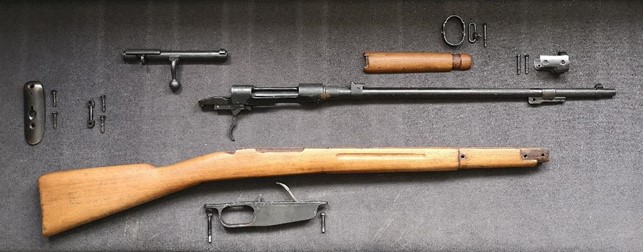
    The Mannlicher Carcano (C2766) was a product of surplus weaponry from World War II, and it’s quite possible that it was cannibalized from the parts of several malfunctioning rifles. As William Sucher, who had purchased hundreds of thousands of these rifles from the surplus of the Italian government, testified to the Commission,: “Many of these rifles were collected from battlefields or places of improper storage and were in very poor condition. These rifles were bought by the pound rather than units. Upon arrival in Canada, defective parts were removed, and saleable rifles were sometimes composed of parts of three or more weapons.” To underscore this point even further, it’s worth noting that at the time of the assassination, the lot of rifles that included C2766 was embroiled in a legal dispute. As stated in CE1977: “Concerning the shipment of those rifles to Adam Consolidated Industries, Inc., there is presently a legal proceeding by the Carlo Riva Machine Shop to collect payment for the shipment of the rifles which Adam Consolidated Industries Inc., claims were defective.”

    (Volume XXV; p. 808, CE 2562. Volume XXIV; p. 2)

    40. The Disintegrating Carcano.

    The Mannlicher (C2766) was found to be in a very poor mechanical condition. This weapon had a rusted and disintegrating firing pin as per an FBI report dated August 20, 1964, from J. Edgar Hoover to chief counsel J. Lee Rankin of the Warren Commission stated that: “In connection it should be noted that the firing pin of this rifle has been used extensively as shown by wear on the nose or striking portion of the firing pin, and further, the presence of rust on the firing pin and its spring may be an indication that the firing pin had not been recently changed prior to November 22,1963.” (CE 2974, Volume. XXIV; p. 455)

    “The experts who test fired the rifle deemed that this rifle in evidence was so unreliable that they did not practice with it for fear that pulling the trigger would break the firing pin”. (Reclaiming Parkland; p. 27)


    Go to Part 1 of 6

    Go to Part 2 of 6

    Go to Part 3 of 6

    Go to Part 5 of 6

    Go to Part 6 of 6

  • Part 2 of 6: Jack Ruby, the Dallas Police and Oswald’s Rights

    Part 2 of 6: Jack Ruby, the Dallas Police and Oswald’s Rights


    11. The Secret Service and The Picket Fence.

    “The Secret Service agents assigned to the motorcade remained at their posts during the race to the hospital. None stayed at the scene of the shooting, and none entered the Texas School Book Depository Building at or immediately after the shooting. Secret Service procedure requires that each agent stay with the person being protected and not be diverted unless it is necessary to accomplish the protective assignment. Forrest V. Sorrels, special agent in charge of the Dallas office, was the first Secret Service agent to return to the scene of the assassination, approximately 20 or 25 minutes after the shots were fired.” (WCR; p. 52.)

    When Sorrels testified before the Commission, he agreed with that time interval. (Volume VII; p. 347/348.)

    With the facts established regarding the movements of the Secret Service after the assassination, it is important to consider the following testimonies of Dallas Police Officers Smith, Weitzman, and Harkness along with a witness, Mrs Jack Frazen. These individuals testified or gave depositions, that in the immediate aftermath of the President’s murder, they each encountered individuals who claimed to be agents of the Secret Service and, in some instances, even produced Secret Service credentials.

    Joe Marshall Smith testified under oath that he encountered men claiming to be Secret Service behind the picket fence in the immediate aftermath of the assassination.

    Joe Marshall Smith. “Yes, sir: and this woman came up to me and she was just in hysterics. She told me, “They are shooting the President from the bushes.” So, I immediately proceeded up here [Grassy Knoll]”
    Wesley Liebeler. “You proceeded up to an area immediately behind the concrete structure here that is described by Elm Street and the street that runs immediately in front of the Texas School Book Depository, is that right?”
    Joe Marshall Smith. “I was checking all the bushes and I checked all the cars in the parking lot.”
    Wesley Liebeler. “There is a parking lot in behind this grassy area back from Elm Street toward the railroad tracks, and you went down to the parking lot and looked around?”
    Joe Marshall Smith. “Yes, sir; I checked all the cars. I looked into all the cars and checked around the bushes. Of course, I wasn’t alone. There was some deputy sheriff with me, and I believe one Secret Service man when I got there. I got to make this statement, too. I felt awfully silly, but after the shot and this woman, I pulled my pistol from my holster, and I thought, this is silly, I don’t know who I am looking for, and I put it back. Just as I did, he showed me that he was a Secret Service agent.”
    Wesley Liebeler. “Did you accost this man?”
    Joe Marshall Smith. “Well, he saw me coming with my pistol and right away he showed me who he was.”
    Wesley Liebeler. “Do you remember who it was?”
    Joe Marshall Smith. “No, sir; I don’t-because then we started checking the cars. In fact, I was checking the bushes, and I went through the cars. and I started over here in this particular section.” (Volume VII; p. 535.)

    Officer Smith said to the Texas Observer that after the assassination “A woman came up to me in hysterics. She said they’re shooting at the President from the bushes, and I just took off. A cement arch stands between the depository building and the underpass. On the underpass side of the arch, there is a fence that lets through almost no light and is neck-high; an oak tree behind the fence makes a little arbor there. A man standing behind the fence, further shielded by cars in the parking lot behind him, might have had a clear shot at the President as his car began the run downhill on Elm Street toward the underpass. Patrol-man Smith ran into this area. I found a lot of Secret Service men I suppose they were Secret Service men and deputy sheriffs and plain-clothes men, he said. He was so put off by what the woman had said—he didn’t get her name—that he spent some time checking cars on the lot, he said. He caught the smell of gunpowder there. he said: “a faint smell of it—I could tell it was in the air…a faint odour of it.” (Texas Observer; 13th December 1963, p. 9.)

    Smith characterized the Secret Service imposter in this way:“He looked like an auto mechanic. He had on a sports shirt and sports pants. But he had dirty fingernails, it looked like, and hands that looked like an auto mechanic’s hands. And afterwards it didn’t ring true for the Secret Service. At the time we were so pressed for time, and we were searching. And he had produced correct identification, and we just overlooked the thing. I should have checked that man closer, but at the time I didn’t snap on it.” (Anthony Summers, Not In Your Lifetime; p. 57)

    Seymour Weitzman testified that he encountered men claiming to be Secret Service behind the picket fence.

    Joseph Ball. “Did you go into the railroad yards”
    Seymour Weitzman. “Yes sir”
    Joseph Ball. “What did you notice in the railroad yards?”
    Seymour Weitzman. “We noticed numerous kinds of footprints that did not make sense because they were going different directions”
    Joseph Ball. “Were there other people besides you?”
    Seymour Weitzman. “Yes sir; other officers, Secret Service as well, and somebody started, there was something red in the street and I went back over the wall and somebody brought me a piece of what he thought to be a firecracker and it turned out to be, I believe, I wouldn’t quote this, but I turned it over to one of the Secret Service men and I told them it should go to the lab because it looked like human bone.” (Volume VII; p. 107)

    Mrs Jack Frazen. According to an FBI report dated 11/22/63 Mrs Franzen had: “observed police officers and plain-clothes men, who she assumed were Secret Service Agents, searching an area adjacent to the TSBD Building, from which area she assumed the shots which she heard had come.” (Volume XXIV; p. 525.)

    D. V. Harkness testified that 6 minutes after the assassination he had encountered men at the back of the Texas School Book Depository who claimed to be Secret Service.

    David Belin. “Was anyone around in the back when you got there?”
    D. V. Harkness. “There were some Secret Service agents there. I didn’t get them identified. They told me they were Secret Service”. (Volume VI; p. 312.)

    Jesse Curry. “I think he must have been bogus. Certainly, the suspicion would point to the man as being involved, some way or other, in the shooting since he was in an area immediately adjacent to where the shots were and the fact that he had a badge that purported him to be Secret Service would make it seem all the more suspicious.” (Not In Your Lifetime; p. 58)

    According to the Warren Commission’s own findings, the individuals encountered by these witnesses could not have been genuine Secret Service agents. These encounters occurred prior to the return of Forrest V. Sorrels to Dealey Plaza. The presence of these impersonators raises important questions for the case. Who were these individuals claiming to be Secret Service agents? What was their motive or purpose in impersonating members of the Presidents security detail in the immediate aftermath of the President’s murder?

    12. The Testimony Which Negates the Single Bullet Theory.

    Commission Conclusion: “Although it is not necessary to any essential findings of the Commission to determine just which shot hit Governor Connally, there is very persuasive evidence from the experts to indicate that the same bullet which pierced the President’s throat also caused Governor Connally’s wounds.” (WCR; p. 19.)

    The Testimonies of John & Nellie Connally Which Refute the Commission Conclusion.

    Mrs Connally. “When we got past this area I did turn to the President and said Mr President, you can’t say Dallas doesn’t love you. Then I don’t know how soon, it seems to me it was very soon, that I heard a noise, and not being an expert rifleman, I was not aware that it was a rifle. It was just a frightening noise, and it came from the right. I turned over my right shoulder and looked back and saw the President as he had both hands at his neck.”
    Arlen Specter. And you are indicating with your own hands, two hands crossing over gripping your own neck?
    Mrs. Connally. Yes, and it seemed to me there was—he made no utterance, no cry. I saw no blood, no anything. It was just sort of nothing, the expression on his face, and he just sort of slumped down. Then very soon there was the second shot that hit John. As the first shot was hit, and I turned to look at the same time, I recall John saying “Oh, no, no, no.” Then there was a second shot, and it hit John, and as he recoiled to the right, just crumbled like a wounded animal to the right he said, “My God, they are going to kill us all. (Volume IV, p. 147.)Picture1

    Governor Connally.

    ArlenSpecter. “As the automobile turned left onto Elm from Houston, what did occur there, Governor”?
    Governor Connally. “We had, we had gone, I guess, 150 feet, maybe 200 feet, I don’t recall how far it was, heading down to get on the freeway, the Stemmons Freeway, to go out to the hall where we were going to have lunch and, as I say, the crowds had begun to thin, and we could, I was anticipating that we were going to be at the hall in approximately 5 minutes from the time we turned on to Elm Street. We had just made the turn, well, when I heard what I thought to be a rifle shot. I instinctively turned to my right because the sound appeared to come from over my right shoulder, so I turned to look back over my right shoulder, and I saw nothing unusual except just people in the crowd, but I did not catch the President in the corner of my eye, and I was interested, because I immediately, the only thought that crossed my mind was that this is an assassination attempt. So, I looked, failing to see him, I was turning to look back over my left shoulder into the back seat, but I never got that far in my turn. I got about in the position I am in now facing you, looking a little bit to the left of centre, and then I felt like someone had hit me in the back.”
    Arlen Specter. What is the best estimate that you have as to the time span between the sound of the first shot and the feeling of someone hitting you in the back which you just described?
    Governor Connally. “A very, very brief span of time. Again, my trend of thought just happened to be, I suppose along this line, I immediately thought that this—that I had been shot. I knew it when I just looked down and I was covered with blood, and the thought immediately passed through my mind that there was either two or three people involved or more in this or someone was shooting with an automatic rifle. These were just thoughts that went through my mind because of the rapidity of these two of the first shot plus the blow that I took, and I knew I had been hit, and I immediately assumed, because of the amount of blood, and, in fact, that it had obviously passed through my chest, that I had probably been fatally hit.”

    To say that they were hit by separate bullets is synonymous with saying that there were two assassins.” Norman Redlich, Commission Counsel. (Inquest; p. 43 Volume IV, P132-133, watch this)

    13.Truth Is Our Only Client Here?

    “If this is truth, then black is white. Night is day. And war is peace. This is not truth. This is a false document.” Sylvia Meagher.

    Although Robert Kennedy openly endorsed the Warren Commission Report, he held a privately disdainful perspective towards it. RFK had derisively dubbed the extensive 888-page prosecutorial brief a: “shoddy piece of craftsmanship.” Moreover, the southern wing of the Commission, namely Senators Richard Russell, John Sherman Cooper, and Representative Hale Boggs, openly challenged the cornerstone of the Commission’s case: the Single Bullet Theory, expressing their significant dissent.

    John Sherman Cooper. “I could not convince myself that the same bullet struck both of them. No, I wasn’t convinced by [the SBT]. Neither was Senator Russell.” (James DiEugenio, JFK Revisited, pp. 30-31)
    John Sherman Cooper. “I, too, objected to such a conclusion; there was no evidence to show both men were hit by the same bullet.” (Edward Epstein, Inquest; p.149-150)
    Hale Boggs. “I had strong doubts about it [the single bullet theory], the question was never resolved.” (Inquest; pp.149-150)

    In a declassified telephone conversation with President Johnson, Russell expressed his frustration with the Commission’s proceedings.

    Richard Russell. “Now that damned Warren Commission business whupped me down so, we got through today and I just, you know what I did? I went over, got on the plane and came home and didn’t even have a toothbrush, I didn’t bring a shirt, I got a few little things here, I didn’t even have my pills, my anti histamine pills.”
    Lyndon Johnson. “Why did you get in such a rush?”
    Richard Russell. “Well, I was just worn out fighting over that damned report”.
    Lyndon Johnson. “Well, you got to take an hour out…to get your clothes.”
    Richard Russell. “Well, they were trying to prove that the same bullet that hit Kennedy first was the one that hit Connolly…went through him, through his hand, his bone, into his leg, everything else…just a lot of stuff that… I couldn’t hear all of the evidence and cross examine all of them but I did read the record and so I just I don’t know… but I was the only fellow there that practically requested any changes and what the staff got out of it…this staff business always scares me, I like to put my own views down…But we got you a pretty good report”
    Lyndon Johnson. “Well what difference does it make which bullet got Connally?”
    Richard Russell.“Well, it don’t make much difference but they said that they believed…that the Commission believed that the same bullet which hit Kennedy hit Connolly… well I don’t believe it.”
    Lyndon Johnson. I don’t either.”
    Richard Russell. “And so, I couldn’t sign it…. And I said that Governor Connolly testified direct to the contrary and I am not going to approve of that. So, I finally made them said that there was a difference in the Commission in that. Part of them believed that was not so. Course if a fellow was as accurate enough to hit Kennedy right in the neck on one shot and knock his head off with the next one…. Well, he didn’t miss completely with that third shot. But according to their theory he not only missed the whole automobile, but he missed the street. Well, if a man is a good enough shot to put two bullets right in Kennedy, he didn’t miss that whole automobile, nor the street.”

    These insights from the conversation between Russell and Johnson highlight the dissenting opinions and doubts surrounding the Single Bullet Theory within the Commission. It becomes apparent that the Warren Commission Report faced internal criticism and concerns regarding its findings. (read this, watch this and this)

    14. Jack Ruby and The Dallas Police Department.

    Picture2Dallas Police Chief Jesse Curry. “A great deal has been written about the relationship of the Dallas Police Department with Jack Ruby. We have twelve hundred men in our department, and we had each man submit a report regarding his knowledge or acquaintance with Jack Ruby. Less than fifty men even knew Jack Ruby. And less than a dozen had ever been in his place of business. Most of these that had been in his place of business had been in there because they were sent there on investigations or had answered a call for police service. I believe there was four men in our department that we were able to determine had been there socially. That is off duty. That were present in his nightclub.”


    Numerous witnesses have attested to the fact that Jack Ruby was a well-known associate of the Dallas Police Department. Many officers, detectives, and personnel were familiar with Ruby due to his frequent visits to police headquarters and his connections within the city’s nightclub and entertainment industry. Below I have reproduced just some of the testimony on the record, relating to Ruby’s acquaintance with the Dallas Police Department.

    Nancy Hamilton Former Employee of Ruby.

    Mark Lane. “Were you employed by Jack Ruby”?
    Nancy Hamilton. “Yes, I was. This was in 1961 in Dallas at his club The Carousel and I was bartender, waitress and rather the manager there”.
    Mark Lane. “How did you get that job”?
    Nancy Hamilton. “Well, I had gone into Dallas not knowing anyone and of course the first place I went was the Police Department and uh they were very kind and got me the job there”.
    Mark Lane. “They got you the job at Jack Ruby’s”?
    Nancy Hamilton. “Yes, they did”.
    Mark Lane. “Did they know Ruby”?
    Nancy Hamilton. “Personally, oh yes very well, vouched for him…wonderful person…great man…well known by the Dallas Police Department.”
    Mark Lane. “Other than Dallas Police officers what officials did frequent Ruby’s establishment”?
    Nancy Hamilton. “Oh…such as your District Attorney which would be Mr Wade”.
    Mark Lane. “How many police officers do you estimate Jack Ruby knew on a personal level”?
    Nancy Hamilton. At least half and probably two thirds”.
    Mark Lane. “There were almost twelve hundred police officers in Dallas in 1963. Would you say Ruby knew six hundred of them”?
    Nancy Hamilton. “Oh easily.”

    Nancy Hamilton/Rich also reiterated to the Warren Commission the extent of Ruby’s popularity with the Dallas Police.

    Nancy Rich. “There is no possible way that Jack Ruby could walk in Dallas and be mistaken for a newspaper reporter, especially in the police department. Not by any stretch of the imagination.”
    Leon Hubert. “Is that your opinion?”
    Nancy Rich. “That is not my personal opinion. That is fact.”
    Leon Hubert. “Well, on what do you base it?”
    Nancy Rich. “Ye gods, I don’t think there is a cop in Dallas that doesn’t know Jack Ruby. He practically lived at that station. They lived in his place. Even the lowest patrolman on the beat…knew him personally” (Volume XIV; p. 359.)

    Mr Johnson Former Employee of Ruby.

    Mark Lane.“Did Ruby know many Dallas Police officers”?
    Mr Johnson. “Well yes, he did. I’d say he knew ah probably half of the people on the force”.
    Mark Lane.
    “There were about Twelve hundred police officers on the force”.
    Mr Johnson. “Yes, well I am sure he knew about half of them, and he was very nice to them.”

    Barney Weinstein Manager of The Theatre Lounge.
    “He [Ruby] did know a lot of police. He knew ’em all. He curried their favour all the time.” (Texas Observer, December 13 1963, p. 8.)

    Let us use some specifics, Sgt. Patrick Dean said he knew Ruby for approximately three years. (Vol. II, p. 407) Det. Jim Leavelle testified he knew him for approximately 12 years. (Vol. III, p. 16) Det. L. C. Graves, said he knew him for 10 years. (Vol. XIII p. 9) Officer Blackie Harrison, who Ruby concealed himself behind before shooting Oswald, said he knew him for 12 years. (Vol. XII, p. 237). Lt. Jack Revill also knew him for 12 years. (Vol. XII p. 82)

    If one goes through the volumes of Commission testimony, one will see that Lt. Rio Pierce knew Ruby for a dozen years, Captain O. C. Jones knew Ruby for over ten years, Detective Buford Lee Beaty knew him for a dozen years, Det. Combest knew him for about five years, Det. R. L. Lowery knew him for several years, Sgt. Steele knew him for about 8 years, Lt. W. Wiggins knew him for a number of years, and Detective Clardy knew him for about 8 years. And again, this does not begin to exhaust the number of police who admitted to knowing Ruby.

    Now consider the following exchange between the Commission and Ruby’s friend and roommate George Senator.

    Leon Hubert.“What was Jack Ruby’s attitude toward the police as a group?”
    George Senator. “Well, all I know is apparently he must like them. They always used to come to see him.”
    Leon Hubert. “Tell us about those who came to see him. Do you know who they were?”
    George Senator. “I knew a lot of them by face. I didn’t know them all by name.”
    Leon Hubert. “Did they come frequently?”
    George Senator. “Various ones, yes, every day.” (Volume XIV; p. 213)

    Now consider this statement by Detective Will Fritz.

    Leon Hubert. “Do you know Jack Ruby at all, or did you know?”
    Will Fritz. “Did I know him before; no, sir, I did not… That is the first time I ever saw him, when he was arrested.”(Volume XV; p. 148)

    Travis Kirk, Dallas Attorney, 23 Years.“It is inconceivable that Fritz did not know Ruby. Kirk described Fritz as a domineering, dictatorial officer possessing a photographic memory and a thorough knowledge of the Dallas underworld. In light of Ruby’s reputation and notoriety in Dallas prior to the murder of Oswald… Mr Kirk considers it utterly ridiculous that Captain Fritz might pretend that he did not know Ruby, including physical recognition. Mr Kirk states that he would have to question the veracity of Captain Fritz if Fritz were to disclaim knowledge or recognition of Jack Ruby.”

    Upon his arrest for the murder of Lee Oswald, Ruby exclaimed to the arresting officers: “You all know me, I’m Jack Ruby.” (Volume XII-XIII; p 399, 308, 30.)

    15. ‘The Abortive Transfer’? The Tragic Murder of Lee Oswald.

    “The ACLU hold the Dallas police responsible for the shooting of Oswald, saying that minimum security considerations were flouted by their capitulation to publicity…which exposed Oswald to the very danger that took his life”.

    We Are Going To Kill Him.

    Billy Grammer, a Dallas Police Communications Officer, received an urgent anonymous phone call around 9 pm on November 23, 1963. In an interview for the documentary The Men Who Killed Kennedy, Grammer recalled this incident, saying: “I thought I recognised the voice but at the same time I couldn’t put a face or name with the voice. We talked and he began telling me that we needed to change the plans on moving Oswald from the basement that, uh he knew of the plans to make the move and if we did not make a change the statement, he made precisely was we are going to kill him.” Grammer reported the threat made against Oswald’s life to his superiors. Grammer first learned that Ruby had in fact killed Oswald when he saw it on television the next morning: “No sooner than I had turned it on [TV] and they were telling that Jack Ruby had killed Oswald. Then I suddenly realized, knowing Jack Ruby the way I did, that this was the man I was talking to on the phone last night. At that time, I put the voice with the face, and I knew myself that Jack Ruby was the one that made that call to me the night before. I think it was obvious because he knew me, and I knew him, and he called me by name over the telephone and seeing this and knowing what I knew and what he had said to me it had to be Jack Ruby… He made the statement that we are going to kill him. Which leads me to believe that this was not a spontaneous thing that happened on the spur of the moment he was watching Oswald coming out of the door and all of a sudden, he decided to shoot him. I do not believe that. I think this was a planned event with him being the man to do the shooting.” (watch this)

    Will Fritz. “During the night on Saturday night, I had a call at my home from uniformed captain, Captain Frazier, I believe is his name, he called me out at home and told me they had, had some threats and he had to transfer Oswald… I have always felt that that was Ruby who made that call.” (Volume IV; p. 233)

    Officer Perry McCoy testified he got a call a few hours before Oswald was moved and this was from a member of a committee of one hundred, and they had voted to kill Oswald while he was being transferred to the county jail. (Volume XIX; p. 537/538) This same threat was given to the FBI and was sent to the DPD’s William Frazier at about 3:30 in the morning of the 24th. (Volume VII, pp. 53-54)Picture3

    J. Edgar Hoover

    In a declassified document authored by J. Edgar Hoover and written mere hours after Oswald’s murder, Hoover voiced his frustration towards the Dallas Police Department, blaming them for Oswald’s death despite explicit warnings from the FBI.

    “There is nothing further on the Oswald case except that he is dead. Last night we received a call in our Dallas office from a man talking in a calm voice and saying he was a member of a committee organised to kill Oswald. We at once notified the Chief of Police and he assured us that Oswald would be given sufficient protection. However, this was not done”.

    He continued, “Oswald having been killed today after our warnings to the Dallas Police Department, was inexcusable.” (check this)

    Sheriff Decker and Secret Service agent Forrest Sorrels disagreed with the timing of the transfer and the method. Both men thought a transfer in the middle of the night with no one around would be the proper way to do such an assignment. And Decker though he should be placed him on the floorboard of the car. (Volume XIX, pp. 537-38; Volume XIII, p. 63) Jim Leavelle thought that Oswald should have been led out to Main Street while the crowd had gathered thereby avoiding all the reporters and cameras. (Volume III, p. 17)

    L. C. Graves.“We knew better than to transfer him under those conditions, but we didn’t have any choice.” (watch this)

    The procedure used to transfer Lee Oswald, to the county jail, was fundamentally flawed and, without question, should never have been conducted in the manner that it was. A thorough assessment of the circumstances lays bare distinct irregularities and contradictions employed by the Dallas Police. There is indisputable evidence to show that the strategy employed during Oswald’s transfer was egregiously mishandled, serving as the immediate trigger for his untimely demise.

    Burt Griffin. “Were you given any instructions as to how you should guard him?”
    L. C. Graves. “As I said, I was–told to hold to the arm and walk close to him and Montgomery was to walk behind us and Captain Fritz, and Lieutenant Swain in front of us and that is the way we started out to the elevator, and out of the elevator door over to the jail office”.
    Burt Griffin. “Was there any discussion about staying close to Oswald?”
    L. C. Graves. “We were instructed to stay close to him, yes.” (Volume XIII; p. 5)Picture4

    Failure to Follow Established Security Protocols.
    Lee Oswald’s transfer to the county jail, was supposed to be safeguarded by a four-man protection team. The arrangement included Will Fritz at the forefront, Jim Leavelle handcuffed to Oswald’s right, L.C. Graves handcuffed to Oswald’s left, and L.D. Montgomery covering the rear. As the plan dictated, this team was to escort Oswald from the basement elevator to the ‘awaiting’ squad car. However, almost immediately after entering the basement, Captain Fritz strayed from the established protocol. Instead of maintaining close proximity to Oswald for protection, Fritz positioned himself several feet ahead, effectively abandoning his assigned post. This aberration in formation created an open space, a gap that Jack Ruby exploited to access Oswald.

    Throughout the entire process, Fritz did not check back on Oswald once, which raises concerns about the attentiveness and effectiveness of the protection measures afforded Oswald. Travis Kirk stated to the FBI that: “Anyone not having status in law enforcement or the legal profession who had access to the Dallas Police Department facilities would have to be known to Captain Fritz. Reports from Dallas specify that Ruby did have this access.” Kirk speculated that: “It was to captain Fritz’s advantage that Oswald was killed for it enabled him to close, in Fritz’s words, a murder case based on circumstantial evidence. And that the Oswald case was bound to involve the Dallas Police Department, including Captain Fritz, in controversy for years to come.” Kirk explained that “the Jack Ruby matter, insofar as Captain Fritz is concerned, can be more easily handled by the Dallas authorities.” (read this document and watch this video)

    Permitting Unsecured Crowd Proximity.
    One major issue in question is why any individuals especially newsmen, were permitted to be in such close proximity to Lee Oswald during his transfer. The police, cognizant of the substantial threats to Oswald’s life, should have enforced a secure perimeter around him. This hypothetical exclusion zone would have been monitored by police personnel, ensuring that anyone attempting to breach the boundary and approach Oswald would be immediately intercepted. The lack of such a safety measure raises serious questions about the adequacy of the security protocols during Oswald’s transfer.

    L. C. Graves. “I was under the impression there wouldn’t be any news media inside that rampway, that they would be behind that area over there, but they were in the way. Chief Curry told Captain Fritz that the security was taken care of, that there wouldn’t be nobody in that ramp. Anyway, that cameras would be over behind that rail of that ramp. So, what we expected to find was our officers along the side there, but we found newsmen inside that ramp, in fact, in the way of that car.”
    Burt Griffin. “You say you were quite surprised when you saw these news people?”L. C. Graves. “I was surprised that they were rubbing my elbow. You know,if you saw that film, you saw one of them with a mike in his hand. He actually rubbed my elbow. We were in a slight turn when this thing happened, and my attention had been called to that car door, and this joker was standing there with a microphone in his hand, and others that—I don’t know if they were newsmen—they weren’t officers—had cameras around their necks and everything.” (Volume XIII; p. 7/8)

    Absence of Personal Protective Equipment.
    While the unique circumstances surrounding Oswald’s transfer in 1963 were nothing short of extraordinary, it is nonetheless evident that critical safety measures were conspicuously absent. Oswald, a prisoner under intense scrutiny and heightened danger, was denied essential protective resources, such as body armour, even in the face of palpable threats to his life. While it’s understood that such equipment might not have aligned with the standard protocol at the time, the gravity of the situation undeniably called for extraordinary precautions. The omission of available protective gear, in this case, registers as a considerable oversight. The provision of body armour to Oswald, may have been instrumental in preserving his life.

    Lack of Armed Guard Presence.
    Despite the high-profile nature of Oswald’s case and the known threats against him, he was not escorted by an armed guard during the transfer. The presence of an armed guard could have potentially deterred an assassination attempt, like the one carried out by Ruby.

    Poorly Planned Vehicle Positioning.
    The vehicle intended to transport Oswald to the county jail, was not in the correct position at the time of transfer. This meant that Oswald was exposed to potential threats for a longer period.

    Jim Leavelle.“All right, when we left the jail cell, we proceeded down to the booking desk there, up to the door leading out into the basement, and I purposely told Mr. Graves to hold it a minute while Captain Fritz checked the area outside. I don’t know why I did that, because we had not made any plans to do so, but I said, Let’s hold it a minute and let him see if everything is in order. Because we had been given to understand that the car would be across the passageway.”
    Leon Hubert.
    “Of the jail corridor?”
    Jim Leavelle. “And that, and we would have nothing to do but walk straight from the door, approximately 13 or 14 feet to the car and then Captain Fritz, when we asked him to give us the high sign on it, he said, everything is all set.”
    Leon Hubert.“Did you notice what time it was?”
    Jim Leavelle.“No; I did not. That is the only error that I can see. The captain should have known that the car was not in the position it should be, and I was surprised when I walked to the door and the car was not in the spot it should have been, but I could see it was in back, and backing into position, but had it been in position where we were told it would be, that would have eliminated a lot of the area in which anyone would have access to him, because it would have been blocked by the car. In fact, if the car had been sitting where we were told it was going to be, see, it would have been sitting directly upon the spot where Ruby was standing when he fired the shot.”(Volume XIII; p. 17)

    L. C. Graves.“Well, we got down to the basement. We hesitated on the elevator until Captain Fritz and Lieutenant Swain stepped out. Then we followed them around the outside exit door into the hallway which leads to the ramp and then hesitated there a little bit with Oswald so they could check out there and see that everything was all right, and when we got the go-ahead sign, [from Fritz] that everything was all right we walked out with him… Now, we, Captain Fritz sent Dhority and Brown and Beck on down to the basement in plenty of time to get that car up there for us.” (Volume XIII; p. 7/8)

    L.D. Montgomery. “Captain Fritz stepped out into this door leading out to the ramp… and told us, [to] Come on… Like I say, we came out there. They crammed those mikes over there, and we had to slow up for just a second, because they was backing this car into position. It was supposed to have been in position when we got there, but it wasn’t there, so, we had to pause, or slow down for the car to come on back.” (Volume XIII; p. 28/29)

    Given the high-profile and volatile nature of Oswald’s case, it’s puzzling why Captain Fritz authorized the transfer process knowing full well that the vehicle was not yet in position to receive Lee? An optimally orchestrated transfer would have ensured that the car was situated correctly before initiating the process. Additionally, had the vehicle been correctly positioned, an additional precaution should have entailed stationing an armed police officer at the open door that Oswald was meant to enter. This would have facilitated a seamless and safer transfer from the basement to the vehicle, providing an extra layer of security to Oswald during this crucial process. This measure would have significantly minimized the potential for any unplanned incidents, such as what tragically transpired.

    The Car Horns.
    In an unusual occurrence, a car horn sounds as Oswald is led out into the basement, and again just before Ruby stepped out to shoot Oswald.Jim Di Eugenio points out in Reclaiming Parkland, “Once you’re aware of it, it is almost eerie to watch.” Whilst gravely ill in prison Ruby commented about the horns saying: “If you hear a lot of horn-blowing, it will be for me, they will want my blood.” (Reclaiming Parkland; p. 204)

    The Dallas Police Department, entrusted with Oswald’s safety, displayed an egregious level of negligence. Their missteps weren’t just minor oversights or simple mistakes. They bore the weighty implications of life and death, resulting in the irreversible consequence of a human life lost prematurely.

    Imagine an alternative scenario: Oswald, represented by legal counsel, could have experienced an entirely different outcome. A competent legal representative would likely have challenged the plan to transfer Oswald under such precarious conditions, thus potentially changing the course of history. Yet this was not the case.

    To this day, no one from the higher echelons of the Dallas Police Department has been called to account for their role in the circumstances leading to Oswald’s death. This grave oversight is not just a failure of an individual or a department, but a failure of the justice system itself, a sobering reminder of the devastating consequences when those sworn to protect and serve are negligent of their duties.

    “Who else could have timed it so perfectly by seconds? If it were timed that way, then someone in the police department is guilty of giving the information as to when Lee Harvey Oswald was coming down.” Jack Ruby. (Volume V; p. 206)

    16. Did Ruby’s Life Hinge on Killing Oswald?

    Picture5“Everything pertaining to what’s happening has never come to the surface. The world will never know the true facts of what occurred—my motives. The people have had so much to gain and had such an ulterior motive for putting me in the position I’m in. Will never let the true facts, come above board to the world.” Jack Ruby.

    Following the murder, Ruby was promptly detained and transported to a cell in the city jail. Police Officer Don Archer, who had direct contact with Ruby during this time, reported intriguing observations about Ruby’s behaviour in the aftermath of his arrest.

    Don Archer. “His behaviour to begin with, he was very hyper. He was sweating profusely. I could see his heart. Course we had stripped him down for security purposes and he asked me for one of my cigarettes, so I gave him a cigarette. Finally, uh after about two hours had elapsed, which put it around 1pm the head of the secret service came up and I conferred with him, and he told me that Oswald had in effect died and it should shock him [Ruby] cause it would mean the death penalty. So, I returned and said Jack it looks like its gon be the electric chair for you. Instead of being shocked he became calm, he quit sweating, his heart slowed down, I asked him if he wanted a cigarette, and he advised me that he didn’t smoke. I was just astonished that this was a complete difference in behaviour of what I had expected. I would say that his life had depended on him getting Oswald.” (watch this and this)

    17. The People V. Lee Harvey Oswald.

    “Justice denied anywhere diminishes justice everywhere.” Martin Luther King Jr.

    Commission Conclusion. “The numerous statements…made to the press by various law enforcement officials, during this period of confusion and disorder in the police station, would have presented serious obstacles to the obtaining of a fair trial for Oswald. To the extent that the information was erroneous and misleading, it helped create doubts, speculations, and fears in the mind of the public which might otherwise not have arisen”. (WCR; p 20.)

    The Presumption of Innocence.
    “It is a cardinal principle of our system of justice that every person accused of a crime is presumed to be innocent unless and until his or her guilt is established beyond a reasonable doubt. The presumption is not a mere formality. It is a matter of the most important substance.” (read this)Picture6

    The following statements made by Dallas Law Enforcement Officials expressing their firm belief in Oswald’s guilt, seriously undermined Oswald’s presumption of innocence and confirmed a prejudgement of Oswald’s culpability.

    DA Henry Wade. “I would say that without any doubt he’s the killer, the law says beyond a reasonable doubt and to a moral certainty which I…there’s no question that he was the killer of President Kennedy.”

    Reporter. “How do you sum him up, as a man based on your experience with criminal types?”
    Wade. “Oh I think he’s…uh… the man that planned this murder, weeks or months ago… and has laid his plans carefully and carried them out and has planned at that time what he’s gonna tell the police that are questioning him at present”

    Gerald Hill. 11/22/63.
    Reporter. “Do you believe he is the same man that killed the police officer?”

    Gerald Hill. “Having been in it from the very beginning, as far as the officer’s death is concerned, I am convinced that he is the man that killed the officer.” (watch this)

    “Any prosecutor can convict a guilty man. It takes a great prosecutor to convict an innocent man.” Hidden motto of Wade’s office. (Reclaiming Parkland; p.74)

    The notion of a “great prosecutor” convicting an innocent man, as indicated above, raises serious concerns about the practices of the Dallas prosecutor’s office. This implies a mindset that prioritizes securing convictions over ensuring the integrity of the legal process. This approach contradicts the fundamental principles of justice, which demand fairness, objectivity, and a commitment to the pursuit of truth rather than the mere tallying of convictions.

    In a divergent assessment from District Attorney Henry Wade’s public statements, FBI Director J. Edgar Hoover communicated a differing evaluation of the evidence in the case against Oswald to President Johnson on November 23, 1963. Hoover revealed his disappointment with the Dallas Police Department’s inability to build a convincing case proving Oswald’s guilt, a view that stood in stark contrast to Wade’s publicized optimistic portrayal of the investigation’s progress.

    Hoover conveyed: “This man in Dallas. We, of course, charged him with the murder of the President. The evidence that they have at the present time is not very, very strong…The case as it stands now isn’t strong enough to be able to get a conviction.” (read this)

    On November 24th, Hoover detailed his attempts to manage the media narrative surrounding the investigation, frustrated with the local police’s public discourse. He recounted,“I dispatched to Dallas one of my top assistants in the hope that he might stop the Chief of Police and his staff from doing so damned much talking on television. They did not really have a case against Oswald until we gave them our information… all the Dallas police had was three witnesses who tentatively identified him as the man who shot the policeman and boarded a bus to go home shortly after the President was killed.”

    Hoover expressed his concern over Oswald’s potential defense, remarking, “Oswald had been saying he wanted John Abt as his lawyer and Abt, with only that kind of evidence, could have turned the case around, I’m afraid. All the talking down there might have required a change of venue on the basis that Oswald could not have gotten a fair trial in Dallas.”

    He expressed his exasperation with the police department’s uncontrolled dissemination of information to the press, emphasizing:“Chief of Police Curry I understand cannot control Capt. Fritz of the Homicide Squad, who is giving much information to the press… we want them to shut up.”

    Regarding the way in which Oswald’s murder transpired Hoover continued, “It will allow, I’m afraid, a lot of civil rights people to raise a lot of hell because he was handcuffed and had no weapon. There are bound to be some elements of our society who will holler their heads off that his civil rights were violated—which they were.” (read this)

    Nick Katzenbach also echoed Hoovers frustrations with the Dallas officials.“The matter has been handled thus far with neither dignity or conviction. Facts have been mixed with rumour and speculation. We can scarcely let the world see us totally in the image of the Dallas police when our President is murdered.” (read this)

    The following remarks by Mark Lane and the American Civil Liberties Union (ACLU) highlight the profound concerns about Lee Oswald’s presumption of innocence status and his prospects of receiving a fair trial anywhere in the United States.

    “In all likelihood there does not exist a single American community where reside 12 men or women, good and true, who presume that Lee Harvey Oswald did not assassinate President Kennedy.” A Lawyers Brief, Mark Lane. (read here)

    “The American Civil Liberties Union charged yesterday that the police and prosecuting officials; of Dallas committed gross violations of civil liberties in their handling of Lee H. Oswald, the accused assassin of President Kennedy. The group said that it would have been “simply impossible” for Oswald, had he lived, to obtain a fair trial because he had already been “tried and convicted” by the public statements of Dallas law enforcement officials. The organization proposed that the special panel created by President Johnson to investigate the assassination of President Kennedy should also examine the treatment accorded Oswald. The Dallas police and District Attorney Henry Wade have contended that Oswald’s rights were not infringed. The liberties union raised these questions:

    Q. How much time elapsed before Oswald was advised of his rights to counsel?
    Q. How much time elapsed before Oswald was permitted access to a telephone to call his family and an attorney?
    Q. During what periods and for how long was Oswald interrogated?
    Q. What methods of interrogation were used?
    Q. Was Oswald advised of his right to remain silent?

    The ACLU described the transfer of Oswald as “a theatrical production for the benefit of the television cameras…. It is our opinion that Lee Harvey Oswald, had he lived, would have been deprived of all opportunity to receive a fair trial by the conduct of the police and prosecuting officials in Dallas, under pressure from the public and the news media. From the moment of his arrest until his murder two days later, Oswald was tried and convicted many times over in the newspapers, on the radio, and over television by the public statements of the Dallas law enforcement officials. Time and again high–ranking police and prosecution officials state[d] their complete satisfaction that Oswald was the assassin…As their investigation uncovered one piece of evidence after another, the results were broadcast to the public. All this evidence was described by the Dallas officials as authentic and incontestable proof that Oswald was the Presidents assassin. The cumulative effect of these public pronouncements was to impress indelibly on the public’s mind that Oswald was indeed the slayer. With such publicity, it would have been impossible for Oswald to get a fair trial in Dallas or anywhere else in the country. Oswald’s trial would have been nothing but a hollow formality. The American Civil Liberties Union (see this)

    Oswald declines the right to counsel?
    “The ACLU recalled that Greg Olds, president of the Dallas Civil Liberties Union and three volunteer lawyers went to the city jail late in the evening Nov. 22, the day the President was assassinated. They were told by police officials, including Capt. Will Fritz, head of the homicide bureau, and Justice of the Peace David Johnston before whom Oswald was first arraigned that Oswald had been advised of his right to counsel but that he had declined to request counsel. Since the ACLU attorneys had not been retained by either Oswald or his family, they had no right to see the prisoner nor give him legal advice”. (The American Civil Liberties Union) (see this)

    11/22/63, Oswald Requests A Lawyer.
    Lee Oswald consistently expressed his desire for legal representation during his detention. He repeatedly requested legal assistance and expressed confusion about the charges against him. These statements, captured by reporters illustrate Oswald’s awareness of his rights and his desire to have legal counsel present during his questioning.

    Lee Oswald. “These people have given me a hearing without legal representation or anything”
    Reporter. “Did you shoot the President?”
    Lee Oswald. “I didn’t shoot anybody, no sir.”

    Reporter. “Oswald did you shoot the President?”
    Lee Oswald. “I didn’t shoot anybody sir I haven’t been told what I am here for.”
    Reporter. “Do you have a lawyer?”
    Lee Oswald. “No sir I don’t.”

    Lee Oswald. “I would like some legal representation, but these police officers have not allowed me to, to have any. I don’t know what this is all about.”
    Reporter. “Kill the President?”
    Lee Oswald. “No sir I didn’t. People keep asking me that.”

    Friday Night Press Conference.

    Lee Oswald. “I positively know nothing about this situation here. I would like to have legal representation. Well, I was uh questioned by a judge however I uh protested at that time that I was not allowed legal representation during that very short and sweet hearing. I really don’t know what this situation is about, no one has told me anything except I am accused of murdering a policeman. I know nothing more than that and I do request someone to come forward to give me a legal assistance.”
    Reporter. “Did you kill the President?”
    Lee Oswald. “No, I have not been charged with that in fact no one has said that to me yet. The first thing I heard about it was when the newspaper reporters in the hall asked me that question.”
    Reporter. “You have been charged.”
    Lee Oswald. “Sir?”
    Reporter. “You have been charged.” (watch this)

    William Whaley. “He showed no respect for the policemen, he told them what he thought about them. They knew what they were doing, and they were trying to railroad him, and he wanted his lawyer.” (Volume II p. 261)

    Gerald Hill. “He had previously in the theatre said he wanted his attorney.”
    David Belin. “He had said this in the theatre?”
    Gerald Hill. “Yes; when we arrested him, he wanted his lawyer. He knew his rights.” (Volume VII; p. 61)

    Lawyers such as Percy Foreman and Joe Tonahill expressed doubts about the strength of the evidence against Oswald and believed that a fair trial would likely result in a verdict of not guilty due to insufficient evidence. Their opinions further support the contention that Oswald’s trial would have been an exercise in futility and lacked the substance necessary for a fair determination of his guilt or innocence.

    Lawyer Percy Foreman. “Authorities are running a serious risk of jeopardizing their case against Oswald by failing to observe his constitutional rights.” He went on to state: “Officials may have already committed reversible error in the case by permitting the accused to undergo more than 24 hours of detention without benefit of legal counsel.” Citing grounds for reversal, Foreman further asserted: “Under recent decision of the United States Supreme Court, federal procedural guarantees must be observed in state prosecutions. Their abridgement can be grounds for a reversal or even a conviction. This is a new law. They could get a conviction in Texas and get it thrown out on appeal, but it takes a long time for these dim-witted law enforcement officers to realize it.” (St Louis Post Dispatch, 11/24/63)

    Joe Tonahill, Counsel for Jack Ruby.

    Interviewer. “Mr. Tonahill, what, in your opinion, would have been the outcome of a trial, had Oswald gone to trial?”
    Joe Tonahill. “In my opinion…. Under Texas Law…a trial judge, trying him… the judge would have had a weak circumstantial evidence charge to go to the jury. In my opinion he wouldn’t have had that. He would have been forced to instruct the jury to return a verdict of Not Guilty, on the grounds of insufficient evidence.” (watch this)
    “At about 5:30 p.m. [Oswald] was visited by the president of the Dallas Bar Association with whom he spoke for about 5 minutes.” (WCR; p199.)

    President of the Dallas Bar Association Louis Nichols:
    “I asked him if he had a lawyer, and he said, well, he really didn’t know what it was all about, that he was, had been incarcerated, and kept incommunicado.” When asked who Oswald wanted to represent him, Oswald confirmed, “Either Mr. Abt or someone who is a member of the American Civil Liberties Union. I am a member of that organisation, and I would like to have somebody who is a member of that organisation represent me.” Nichols replied, “I’m sorry, I don’t know anybody who is a member of that organization. Although, as it turned out later, a number of lawyers I know are members.” Oswald stated that, “if I can find a lawyer here who believes in anything I believe in, and believes as I believe, and believes in my innocence, then paused a little bit, and went on a little bit and said, as much as he can, I might let him represent me.” Nichols testified to the likelihood that he personally could have represented Oswald, “I wanted to know whether he needed a lawyer, and I didn’t anticipate that I would be his lawyer, because I don’t practice criminal law.” (Volume VII; p. 325-332)

    Oswald’s distress should have been alarming to Nichols. However, it remains unclear why, following their meeting, Nichols didn’t reach out to Mr. Olds to inform him about Oswald’s plea for ACLU representation? Press conference conducted by Nichols in which he confirms Oswald’s request to be represented by John Abt or a lawyer from the ACLU: watch here.

    Oswald had explicitly expressed his concerns, not only to the Nichols but also directly to the press, about his maltreatment at the hands of the Dallas Police. He protested that he wanted his, “basic fundamental hygienic rights, I mean like a shower… and… uh… clothes.” (watch here)

    President of the Dallas ACLU Gregory Lee Olds.

    Gregory Lee Olds. “I called the police department to inquire about this [counsel for Oswald], and finally talked to Captain Fritz, Capt. Will Fritz, and was-raised the question, and he said, “No” that Oswald had been given the opportunity and declined.”
    Sam Stern. “Excuse me. Did Captain Fritz say that Oswald did not want counsel at that time, or that he was trying to obtain his own counsel?”
    Gregory Lee Olds. “What I was told that he had been given the opportunity and had not made any requests… Captain King [also had] assured us that Oswald had not made any requests for counsel.” (Volume VII p.323)

    Denied legal representation, Oswald’s opportunity to mount a defense in the face of hours of questioning was drastically compromised. Compounded by severe media bias and prejudiced public statements from Dallas police and prosecution officials, his chances of receiving a fair trial rapidly dwindled. Here is an object lesson in the presumption of innocence, the right to legal counsel, and providing an impartial platform for every accused person to defend themselves.

    Louis Nichols, despite publicly stating and testifying that he did not practice criminal law, was paradoxically allowed to meet with Oswald. In contrast, Gregory Lee Olds, the President of the Dallas ACLU whom Oswald had sought for representation, was unequivocally denied access on the grounds that Oswald did not want legal counsel. This puzzling discrepancy further underscores the gravity of Oswald’s situation and the troubling injustice perpetuated in his case.

    The disturbing parallels between Oswald and the other suspects prosecuted by Wade become apparent when examining public statements made by Craig Watkins, who took over as DA from Wade in 2006. Watkins asserted “There was a cowboy kind of mentality, and the reality is that kind of approach is archaic, racist, elitist and arrogant.”

    Detractors of Wade, including Watkins, have pointed out numerous problems with cases prosecuted under Wade’s tenure. Allegations of shoddy investigations ignored evidence, and lack of transparency with defense lawyers paint a grim picture of the justice system under Wade. His promotion system, which allegedly favoured prosecutors with high conviction rates, has come under intense scrutiny. As Michelle Moore, a Dallas County public defender and president of the Innocence Project of Texas, observed, “in hindsight, we’re finding lots of places where detectives in those cases, they kind of trimmed the corners to just get the case done.”

    John Stickels, a criminology professor at the University of Texas at Arlington and a director of the Innocence Project of Texas, identifies a culture of “win at all costs” as a key problem. In his view, once a suspect was arrested under Wade’s tenure, their guilt was often presumed.”When someone was arrested, it was assumed they were guilty. I think prosecutors and investigators basically ignored all evidence to the contrary and decided they were going to convict these guys.”

    The parallels between Wade’s regime and the miscarriage of justice in Oswald’s case is compelling.

    As a result: “No other county in America — and almost no state, for that matter — has freed more innocent people from prison in recent years than Dallas County, where Wade was DA from 1951 through 1986.”

    18. Rush to Judgement.

    “Had I known at the outset, when I wrote that article for the National Guardian, that I was going to be so involved that I would close my law practice, abandon my work, abandon my political career, be attacked by the very newspapers in New York City which used to hail my election to the state legislature; had I known that – had I known that I was going to be placed in the lookout books, so that when I come back into the country, I’m stopped by the immigration authorities – only in America, but no other country in the world – that my phones would be tapped, that not only would the FBI follow me around at lecture engagements, but present to the Warren Commission extracts of what I said at various lectures – I am not sure, if I knew all that, that I ever would have written that article in the first place.” Mark Lane. (watch here)

    J. Edgar Hoover and Nicholas Katzenbach, the Deputy Attorney General, revealed their pressing concern about convincing the public of Lee Oswald’s sole guilt in the immediate aftermath of his murder.

    J Edgar Hoover, 11/24/63. “The thing I am concerned about and so is Mr. Katzenbach is having something issued so we can convince the public that Oswald is the real assassin.”

    Nicholas Katzenbach, 11/25/63. “The public must be satisfied that Oswald was the assassin; that he did not have confederates who are still at large; and that the evidence was such that he would have been convicted at trial.”

    This haste in determining Oswald’s guilt following his preventable death exemplified an alarming compromise between public reassurance and the respect for essential legal principles. The urgent need to alleviate public anxiety overshadowed the necessity for a thorough investigation and due process. This swift conviction of Oswald exposed a troubling discrepancy between societal demands during a crisis and the principles of justice, casting a pall over the entire case.

    Unquestionably, every US citizen, is constitutionally granted the presumption of innocence and a fair trial. However, these inherent rights were hastily disregarded in Oswald’s case, representing not only an individual miscarriage of justice but also inhibiting a broader, more comprehensive investigation.

    The hasty conclusions drawn by officials such as Hoover, Katzenbach, and Dallas law enforcement egregiously compromised the fundamental legal maxim of ‘presumed innocent until proven guilty.’ This resulted in a severe infringement of Oswald’s civil and constitutional rights. The abrupt demise of Oswald exacerbated this problem, forever eliminating the possibility of a trial and thus amplifying the precipitous rush to judgment. As a result, this premature rush towards a verdict prompted the untimely abandonment of several potential investigative pathways. These could have included exploring the potential involvement of accomplices, delving into various avenues of conspiracy, and thoroughly assessing Oswald’s claimed innocence.

    19. Are You Lee Oswald? Or Alek Hidell?

    Commission Conclusion. “The arresting officers found a forged selective service card with a picture of Oswald and the name “Alek J. Hidell” in Oswald’s billfold.”(WCR; p. 181)Picture7

    Picture8What is the chain of custody of the Selective Service Card?

    Immediately following his arrest at the Texas Theatre, Oswald was placed in a squad car heading to city hall. Officers Gerald Hill, Bob Carrol, Paul Bentley, C.T. Walker, K.E. Lyons, and the suspect Lee H. Oswald were all present in the squad car.

    The statements and reports of the witnesses.

    Gerald Hill. 11/22/63, NBC News.
    Gerald Hill.“The only way we found out what his name was, was to remove his billfold and check it ourselves; he wouldn’t even tell us what his name was.”
    Reporter.“What was his name on the billfold?”
    Gerald Hill. “Lee H. Oswald, O-S-W-A-L-D.” (Volume XXIV; p. 804/805)

    4/8/64. In his testimony to the Warren Commission. Hill said he first heard the name Hidell in the car transporting Oswald to the station from Paul Bentley.: “I can’t specifically say that is what it was…but that sounds like the name I heard.” Hill said they had two different identifications and two different names. (Volume VII, p. 58)

    Paul Bentley. 12/2/63. Report To Chief Curry.
    “On the way to city hall I removed the suspect’s wallet and obtained his name…I turned his identification over to Lt. Baker. (Volume XXIV; p. 234)

    Paul Bentley was not called to testify.

    Bob Carrol provided testimony to the Commission on two separate occasions. The first testimony took place on April 3, 1964, while the second testimony occurred on April 9, 1964. During his second appearance, Carrol specifically mentioned the ‘Hidell’ card. It is reasonable to infer that he was called back to testify because of this particular detail.

    David Belin. “Was he ever asked his name?”
    Bob Carroll. “Yes, sir; he was asked his name.”
    David Belin. “Did he give his name?”
    Bob Carroll. “He gave, the best I recall, I wasn’t able to look closely, but the best I recall, he gave two names, I think. I don’t recall what the other one was.”
    David Belin. “Did he give two names? Or did someone in the car read from the identification?”
    Bob Carroll. “Someone in the car may have read from the identification. I know two names, the best I recall, were mentioned.” (Volume VII; p.25)

    Officer C. T. Walker. 4/8/64.

    David Belin.“You recall any other conversation that you had with him, or not?”
    Officer Walker. “No; he was just denying it.” “About the time I got through with the radio transmission, I asked Paul Bentley, why don’t you see if he has any identification. Paul was sitting sort of sideways in the seat, and with his right hand he reached down and felt of the suspect’s left hip pocket and said, “Yes, he has a billfold,” and took it out. I never did have the billfold in my possession, but the name Lee Oswald was called out by Bentley from the back seat, and said this identification, I believe, was on the library card. And he also made the statement that there was some more identification in this other name which I don’t remember, but it was the same name that later came in the paper that he bought the gun under.”
    David Belin. “Anything else about him on your way to the police station?”
    Officer Walker. “He was real calm. He was extra calm. He wasn’t a bit excited or nervous or anything. That was all the conversation I can recall going down.”
    David Belin. “After you got down there, what did you do with him?”
    Officer Walker. “We took him up the homicide and robbery bureau, and we went back there, and one of the detectives said put him in this room. I put him in the room, and he said, “Let the uniform officers stay with him.” And I went inside, and Oswald sat down, and he was handcuffed with his hands behind him. I sat down there, and I had his pistol, and he had a card in there with a picture of him and the name A. J. Hidell on it.”
    David Belin. “Do you remember what kind of card it was?”
    Officer Walker. “Just an identification card. I don’t recall what it was.”
    David Belin. “All right.”
    Officer Walker. “And I told him, “That is your real name, isn’t it?”
    David Belin. “He, had he earlier told you his name was Lee Harvey Oswald?”
    Officer Walker. “I believe he had.”

    K. E. Lyons was not called to testify.

    12/2/63. Reports To Chief Curry.
    The arresting officers present in the squad car – K.E. Lyons, Bob Carroll, and C.T. Walker – provided reports to Chief Curry that intriguingly made no mention of the Selective Service card baring the name Hidell. (Sylvia Meagher, Accessories After The Fact, p.186)

    According to the testimony of Dallas Police officer W. M. Potts, he along with two other officers, E. L. Cunningham, Bill Senkel and Justice of The Peace David Johnston, went out to 1026 North Beckley shortly after 2pm on 11/22/63. Potts testified that:

    Joesph Ball. “And you went out to where?”
    Walter Potts. “1026 North Beckley”.
    Joesph Ball. “What happened when you got there?””
    Walter Potts. “We got there, and we talked to this Mrs.–I believe her name was Johnson.”
    Joesph Ball. “Mrs. A. C. Johnson?”
    Walter Potts. “Mrs. Johnson and Mrs. Roberts.”
    Joesph Ball. “Earlene Roberts?”
    Walter Potts. “Yes; and they didn’t know a Lee Harvey Oswald or an Alex Hidell either one” (Volume VII; p. 197)

    However, the mention of the name Hidell by the attending officers is disputed by witnesses who were present in the rooming house on November 22, 1963. When the police arrived at the Beckley rooming house, both the owner Mrs. Johnson and the manager Mrs Robert said they were only asked about Oswald, not Hidell. And they said that Oswald registered as O. H. Lee. (Volume X, pp. 303-04; Volume X p. 295; Volume Vi p. 438)

    In a report by Justice Johnston on 11/22/63, listing all of Lee Oswald’s particulars, Justice Johnston writes: Alias, O. H. Lee- 1026 N Beckley. No mention of A. J. Hidell. (Volume XX; p. 313)

    Detective Richard Sims testified that he had taken off Oswald’s identification bracelet before administering his paraffin test on November 22, 1963.

    Joseph Ball.“Did you see any identification bracelet on Oswald?”
    Richard Sims. “Yes, sir; he had an identification bracelet.”
    Joseph Ball. “Did he have that on at the time of the showup?”
    Richard Sims. “Yes.”
    Joseph Ball. “Did you ever remove that?”
    Richard Sims “Yes, sir; when they were getting his paraffin cast on his hands.”
    Joseph Ball. “And what did you do with that identification bracelet?”
    Richard Sims. “I placed it in the property room cardsheet.”
    Joseph Ball. “Did you examine that identification bracelet?”
    Richard Sims. “Yes, sir”.
    Joseph Ball. “What did it have on it, if you remember?”
    Richard Sims. “It had his name on it.”  (Volume VII; p. 174)Picture9

    Picture10Challenging the Existence of the Hidell Card on November 22, 1963.

    1. Upon his arrest and subsequent detention, Lee Oswald had on a identification bracelet inscribed with the name ‘Lee’. Given this fact, it seems perplexing how the Dallas Police could have possibly thought his name was Alek?
    2. The alias- ‘Hidell’ does not appear in any of the records or statements from the Police, FBI, or Secret Service dated November 22, 1963. On the other hand, the alias ‘O. H. Lee’ was prominently circulated among the media on the day of the assassination.
    3. Upon the Dallas Police’s arrival at 1026 North Beckley, around 2pm on November 22, 1963, three separate witnesses confirm that the Dallas officers, inquired solely about a Lee Harvey Oswald. There was no mention of ‘Alek J. Hidell’.
    4. Oswald’s possession of the Service card, featuring his picture and a name directly linked to the Carcano stashed on the sixth floor, raises some perplexing questions. If Oswald were solely culpable, why would he take the gamble of retaining this potentially condemning evidence?
    5. What proof is there that Oswald made use of the Select Service card prior to the assassination?
    6. Has there been any testimony of anyone having seen this ID in Oswald’s possession prior to November 22, 1963?
    7. When and where was this ID card manufactured?
    8. Did any fingerprints found on the card match those of Oswald’s?
    9. Were any photographs taken of this card on November 22, 1963?
    10. Was this card itemized on an inventory of Oswald’s personal effects at the time of his booking on November 22, 1963?
    11. Selective Service Cards did not typically include the holder’s picture. The presence of a photograph would inevitably raise suspicion to anyone who saw the ID.
    12. The card appears to be a complex forgery, necessitating the forger’s access to high-quality equipment like a professional-grade camera, often found in photo labs or printing facilities, and a typewriter. (Volume IV; p. 388)
    13. Commission Conclusion: “Two typewriters were used in this typing, as shown by differences in the design of the typed figure 4.” The Commission however made no attempt to trace the typewriters, alleged to have been used in the creation of the forged Hidell card. Establishing Oswald’s access to these machines would have been instrumental in validating that he could have created the forged Hidell card. As noted in forensic examination principles, “To determine whether a particular typewriter produced a questioned document, examiners search for individual characteristics that can include misaligned or damaged letters, abnormal spacing before or after certain letters, and variations in the pressure applied to the page by some letters. For example, certain letters can have telltale nicks or spurs that are imprinted on the page, or they can lean to one side or print slightly higher or lower than the others. These defects can be compared to a sample from a suspect typewriter and thus offer powerful individualizing characteristics.” (WCR;p. 572) (see this)
    14. The Commission relates to the creator of the card as the “counterfeiter” not specifically to Oswald. (WCR; p. 571)
    15. The Selective Service Card, along with the introduction of the alias ‘Hidell’, only emerges in the case on November 23, 1963. Interestingly, this is the same day the FBI linked the alias to a mail-order purchase for the Mannlicher Carcano C2766. Yet this correlation appears a full day after the alleged finding of the card. The timing inconsistency not only impacts the chain of custody but also coincides with the sudden connection of the alias to the mail order purchase. This raises substantial questions about the evidence handling process, the chronology of the case, and the overall integrity of the chain of custody. (Meagher, pp. 181-200)

    20. Could Marina have testified against Lee?

    The question of whether Marina Oswald could have legally testified against her husband, Lee Oswald, raises interesting forensic considerations for the case. Under Texas law, spouses are generally permitted to serve as witnesses for each other in criminal cases. However, a crucial exception exists they cannot testify against each other unless one spouse is being prosecuted for an offence committed against the other. In the context of Oswald’s hypothetical trial, Marina’s testimony would have been excluded based on this spousal privilege. This means that the controversial backyard photographs, which were allegedly linked to Lee, could not have been admitted into evidence to be used against him. This is because Marina’s testimony, which was the sole source of corroboration for the photographs, would have been inadmissible due to the spousal privilege. (see this)

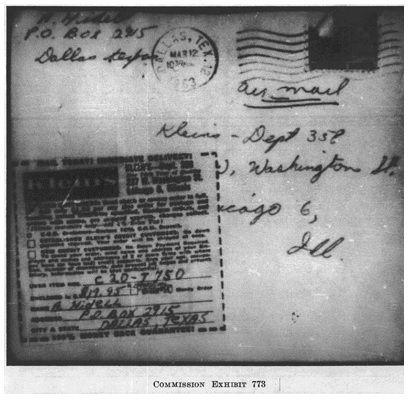
    Go to Part 1 of 6

    Go to Part 3 of 6

    Go to Part 4 of 6

    Go to Part 5 of 6

    Go to Part 6 of 6

  • Part 1 of 6: No Motive, plus the Silenced Witnesses

    Part 1 of 6: No Motive, plus the Silenced Witnesses


    “For, in the final analysis, our most basic common link is that we all inhabit this small planet. We all breathe the same air. We all cherish our children’s future. And we are all mortal.” John Fitzgerald Kennedy

    Picture1For as long as I can remember, I have held a profound admiration for President John F. Kennedy. I find Kennedy’s firm leadership during the Cuban Missile Crisis particularly admirable. Kennedy chose peaceful negotiation with the Soviet Union to the dismay of the aggressive, first-strike demands of his hawkish Joint Chiefs of Staff. One of their plans for a pre-emptive first strike on the Soviets “involved the use of 170 atomic and hydrogen bombs in Moscow alone, intending to annihilate every major city in the Soviet Union, China, and Eastern Europe, resulting in hundreds of millions of deaths. Sickened by this plan, Kennedy walked out of the briefing mid-presentation. As Secretary of State Dean Rusk recalled, Kennedy had a strange look on his face as he muttered: And we call ourselves the human race.”

    This moment encapsulates the essence of what I admire in John Kennedy: his ability to look beyond immediate power struggles, to consider the profound human consequences, and to act with both wisdom and compassion. His leadership not only averted a catastrophe but also established an enduring example that continues to inspire those, like myself, who believe in compassionate leadership. His actions provide a profound lesson that vibrates at the very core of our collective human values.

    However, the radiant legacy of President Kennedy, is tinged with an unsettling undertone of disquiet. His unresolved and tragic assassination on November 22, 1963, marked a pivotal moment in American history, signalling for many, the onset of a profound disenchantment with the government. This disquiet was not an isolated sentiment, but rather the beginning of a troubling pattern.

    The subsequent assassinations of Martin Luther King Jr., on April 4, 1968, and Robert F. Kennedy, on June 5, 1968, reinforced this disillusionment. These men were not just political leaders; they were emblematic of the very ideals of social justice, equality, and moral integrity that defined the ethos of the 1960s. Their deaths were more than personal tragedies; they symbolized the loss of hope itself.

    The spectre of Lee Harvey Oswald looms large in the American psyche. Despite his emphatic proclamation of innocence, he was denied the opportunity to establish it in a court of law. Murdered while in the hands of the Dallas Police, his voice became another eerie echo in the symphony of uncertainties surrounding The President’s murder.

    A mere two weeks following the killings of Kennedy, Oswald and patrolman J. D. Tippit, the Warren Commission was convened with the mandate to bring clarity and resolution to the tumultuous circumstances surrounding Kennedy’s death. However, this so-called ‘investigation’ did little to assuage public mistrust. Critics argue that the Commission’s conclusions relied too heavily on fragile circumstantial evidence against the conveniently deceased Oswald, who had no opportunity to defend himself. The narrative was tied up in a bow, packaged neatly for a nation eager for answers. But many Americans remained unconvinced, seeing instead the enforcement of a preordained conclusion rather than the revelation of truth.

    In this multi-part essay, I’ve assembled 60 critical points—both facts and queries—that not only challenge the Commission’s primary conclusions but also strongly argue for Oswald’s complete innocence. The widely accepted narrative that portrays Oswald as the assassin begins to crumble under rigorous scrutiny, especially when faced with a torrent of evidence teeming with inconsistencies and contamination. As we mark the 60th anniversary of President Kennedy’s assassination, the need for a fresh, unbiased investigation becomes increasingly urgent. It’s a striking paradox that the most intensely debated case in human history seems to have sidestepped a comprehensive investigation. As Robert Groden aptly put it, “Lee Harvey Oswald is a question mark to history. The debate is often raised, was Lee Harvey Oswald alone as the assassin or was he part of a conspiracy? The question is never raised, is it possible that he didn’t do it at all?”

    This exploration does not intend to pinpoint the true perpetrators of President Kennedy’s assassination, uncover the exact hideouts of the killers, unmask the orchestrators, or reveal those who facilitated the crime. As the late Mark Lane once succinctly put it, “That really calls for some speculation on my part, I think that area has been pre-empted by the Warren Commission, I prefer to stay in the area of fact.” Honouring his words, this work strives not to speculate, but to illuminate the facts. It aims to cast light on the glaring inconsistencies within the Warren Commission’s narrative and to build a compelling case for Lee Oswald’s total innocence, grounded in factual analysis and empirical evidence.

    “Each time a man stands up for an ideal, or acts to improve the lot of others, or strikes out against injustice, he sends forth a tiny ripple of hope, and crossing each other from a million different centers of energy and daring those ripples build a current which can sweep down the mightiest walls of oppression and resistance.” Robert Francis Kennedy. Full speech (Thirteen Days; p. 106, JFK And the Unspeakable; p. 236/237); check this article, this video, this speech and this video.

    1. What Was Lee’s Motive?

    Commission Conclusion. “The Commission could not make any definitive determination of Oswald’s motives.” (WCR; p. 22)

    Throughout the past 60 years, no substantial motive has been ascertained to elucidate why Lee Oswald is purported to have assassinated President John F. Kennedy. The Commission lent credibility to theories such as, “Oswald had a deep-rooted resentment of authority”, questioning “Oswald’s ability to enter into meaningful relationships” and, the most fanciful of all, speculated on Oswald’s “urge to try and find a place in history.”

    However, these suppositions fall significantly short of establishing a solid motive, given their lack of concrete evidence in support. Nicholas Katzenbach, the acting attorney general, cognizant of the challenges a motiveless Oswald presented to the official narrative, emphasized in his renowned Katzenbach memo, “Speculation about Oswald’s motivation ought to be cut off”. If Oswald truly possessed an “urge to try and find a place in history”, why would he subsequently deny the accusations levelled against him? Oswald fervently professed his innocence, by proclaiming: “I don’t know what dispatches you people have been given but I emphatically deny these charges…I have not committed any acts of violence.” (WCR; p.23) (watch this video and read this document)

    There is an abundance of testimony on the record which strongly indicates that Lee Oswald fostered profound admiration and unambiguous support for President Kennedy:

    Francis Martello. “He gave me the impression that he seemed to favor President Kennedy more than he did Khrushchev in his statement…he showed in his manner of speaking that he liked the President.” (Volume X; p. 60)

    Sam Ballen. “I just can’t see his having any venom towards President Kennedy.” (Volume IX; p. 48)

    Jeanne De Mohrenschildt. “I don’t think he ever said anything against, and whatever the President was doing, Kennedy was doing, Lee was completely exactly with the same ideas, exactly.” (Volume IV; p. 325)

    George De Mohrenschildt. “As far as I am concerned, he was an admirer of President Kennedy. I thought that Kennedy was doing a very good job with regard to the racial problem, you know…And he [Oswald] also agreed with me, [Oswald stated] Yes, yes, yes; I think he is an excellent President, young, full of energy, full of good ideas.” (Volume IX; p. 255)

    Albert Jenner. “Did Lee ever speak of President John Fitzgerald Kennedy or Mrs. Jacqueline Kennedy?”
    Lillian Murret. “He said one time that he thought Mrs. Jacqueline Kennedy was a very fine person, and that he admired her for going around with her husband, and so forth, but he never spoke about that again, or never said anything about it. In fact, I think he said he liked him.”
    Albert Jenner. “Liked President Kennedy?”
    Lillian Murret. “Yes.”(Volume VIII; p. 153)

    Marilyn Murret. “I can’t remember whether it was, if that was before or if it was on that program, where he said something complimentary about Kennedy.” (Volume VIII; p. 173)

    Paul Gregory. “Whenever he would speak about Khrushchev, Kennedy would naturally come into mind, and he expressed admiration of Kennedy. Both he and Marina would say, Nice young man. I never heard him say anything derogatory about Kennedy. He seemed to admire the man, because I remember they had a copy of Life magazine which was always in their living room, and it had Kennedy’s picture on it, or I believe Kennedy or someone else, and he always expressed what I would interpret as admiration for Kennedy.”

    Wesley Liebeler. “Can you recall any specific details concerning his remarks about Kennedy or the conversation that you had with him concerning Kennedy?”

    Paul Gregory. “No, just that one time, as I can remember in their apartment that we did look at this picture of Kennedy, and Marina said, He looks like a nice young man. And Lee said something, yes, he is a good leader, or something, as I remember, was a positive remark about Kennedy.”

    Lee Oswald. “My wife and I like the Presidential family. They are interesting people. I am not a malcontent. Nothing irritated me about the President.” (JFK Assassination File; p. 123)

    2. Houston vs Elm?

    Why would Oswald choose to shoot the President on Elm Street, where the view was more difficult and obstructed, instead of maximising his chances of success by targeting President Kennedy as he was approaching the Texas School Book Depository from Houston Street, which offered an unobstructed view? From a logical standpoint, the shot from Houston Street would seem to be the most advantageous for a lone assassin to take.Picture2

    Picture3

    3. Four Is the Magic Number?

    Why would Oswald choose to attempt the assassination with only four bullets, considering that the ammunition clip of the Carcano could hold a maximum of six, with one in the chamber totalling seven? How did Oswald determine that such a limited amount of ammunition would be sufficient for successful assassination and subsequent ‘escape’ from the Texas School Book Depository?Picture4

    4. The Carcano’s Assembly Tool.

    What tool did Oswald use to assemble the disassembled Carcano prior to the assassination? Is there any physical or pictorial evidence in the record which supports the assertion that Oswald utilised a specific tool, such as a screwdriver or dime coin, for assembly purposes? FBI Agent Cortland Cunningham testified to the Commission, that he could assemble the Mannlicher with a dime coin within 6 minutes:

    Joseph Ball. “Let’s take it out of the sack and put it before the Commission. Do you need any special tools to assemble this rifle?”
    Cortland Cunningham. “No, sir.”
    Joseph Ball. “I notice you have a screwdriver there. Can you assemble it without the use of a screwdriver?”
    Cortland Cunningham. “Yes, sir.”
    Joseph Ball. “What can you use?”
    Cortland Cunningham. “Any object that would fit the slots on the five screws that retain the stock to the action.”
    Joseph Ball. “Could you do it with a 10-cent piece?”
    Cortland Cunningham. “Yes, sir.”
    Joseph Ball. “Will you do that – about how long will it take you?”
    Cortland Cunningham. “I know I can do it, but I have never been timed as far as using a dime. I have been timed using a screwdriver, which required a little over 2 minutes.”
    Joseph Ball. “2 minutes with a screwdriver. Try it with the dime and let’s see how long it takes. Okay. Start now. Six minutes.”
    Cortland Cunningham. “I think I can improve on that.”
    Joseph Ball. “And the only tool you used was a 10-cent piece?”
    Cortland Cunningham. “That is correct.” (Volume II; p.252)

    There’s no doubt that the late, esteemed English researcher Ian Griggs had delved extensively into this area of research. He conducted numerous experiments, focusing on the assembly and disassembly of the Mannlicher-Carcano. Here’s what Ian had to offer on this crucial aspect of the case:

    “Well, firstly, it is no simple task to reassemble this rifle. Certainly not as simple as those glib words in the Warren Report or that deliberately misleading CE 1304 photograph would suggest. Secondly, whilst it was reasonably easy to tighten the screws with a screwdriver, it was certainly no simple task using a dime coin. The coin is thin enough to fit the recessed head of the screws but due to its tiny diameter, about two thirds of an inch, there is hardly any leverage, and itmakes it very difficult to exert sufficient pressure to tighten the screws sufficiently.”

    Ian also goes on to conclude that:

    “Finally, I had practiced many times before undertaking my ‘real attempt’ at putting the gun together. I knew precisely where each part was and in what order it should be fitted. I knew exactly when I had to change position of the rifle from horizontal (across my lap) to vertical (between my knees)”.

    “There is no evidence that Oswald had either the time or the opportunity to carry out ‘dry runs’ or rehearsals. How long did it take me to reassemble the Mannlicher-Carcano? Well, my best time was two minutes and four seconds.”

    “I have to confess that I admitted defeat using a dime coin. Having begun several times and fallen hopelessly behind the clock, I have to look on SA Cunningham’s time of six minutes with a certain degree of skepticism. Trying to put that rifle together using just a dime resulted in me sustaining two blood-blisters on my fingers and a small cut on the joint of my right thumb.” (No Case To Answer; pp. 165-172)Picture5

    Given the gravity of the situation and Ian’s account, which stands as a rebuttal to Cunningham’s testimony, it would seem highly improbable that an aspiring assassin would rely on something as basic as a dime coin for rifle assembly. If Oswald was permitted to stand trial, what tool would DA Henry Wade have presented to the jury as evidence to support the charge that Oswald assembled the weapon?

    Ian Griggs demonstrates the process of assembling a Mannlicher Carcano in this video.

    5. How Did Oswald Wipe Down the Carcano?

    Commission Conclusion. “An FBI fingerprint expert testified that the poor quality of the metal and wooden parts would cause them to absorb moisture from the skin, thereby making a clear print unlikely.” (WCR; p. 647)

    Drawing on the logical assumption that an individual would instinctively seek to erase incriminating evidence, like fingerprints from a weapon used in an assassination, the theory that Oswald thoroughly cleaned the heavily oiled Carcano post-assassination warrants careful exploration. Crucial points of inquiry include the existence of solid evidence supporting this claim, Oswald’s potential methods for fingerprint removal, particularly considering the weapon’s oily surface, and the likelihood of oil residue on any cloth or piece of clothing he may have employed for the task. Is there any tangible or photographic evidence which would substantiate this assertion? However, it is crucial to note that even if the testimony regarding the poor quality of the metal and wooden parts of the Carcano causing them to absorb moisture and make clear prints unlikely is true, Oswald would have had no way of knowing this. This further reinforces the likelihood that he would have sought to eliminate any potential fingerprints from the weapon.

    6. Lee Oswald, Assassin or Fall Guy?

    “They will pick up somebody within hours afterwards, if anything like that would happen, just to throw the public off.” Extremist Joseph Milteer.

    Commission Conclusion. “Shortly after the Assassination, the Mannlicher-Carcano rifle belonging to Oswald was found partially hidden between some cartons on the sixth floor.” (WCR; p. 19)

    Firstly, was Lee Oswald capable of independently devising and executing the assassination of President Kennedy? Popular narratives often depict Oswald as an irrational, volatile individual consumed by political fanaticism, eager to commit political assassination, indifferent to the costs he might incur personally or for his family. Contrary to these characterizations, the evidence strongly indicates that Oswald was an intelligent, articulate, 24-year-old introvert. A man who was more passive than aggressive, a devoted father, an admirer of John Kennedy, who possessed ties to intelligence agencies, and bolstered by a carefully constructed legend, was unknowingly turned into the perfect patsy.Picture6

    The following testimonies offer insightful perspectives that may shed some light on these questions.

    Wesley Liebeler. “When you subsequently heard that Oswald had been arrested in connection with the assassination, were you surprised?”
    Francis Martello. “Yes, sir; I was, I was very much surprised…he did not give me the impression of being a violent individual. He was a very passive type of an individual. He did not impress me at the time I interviewed him as a violent person by any of the responses to questions, by observing his physical make-up. Not in any way, shape, or form did he appear to me as being violent in any way…as far as ever dreaming or thinking that Oswald would do what it is alleged that he has done, I would bet my head on a chopping block that he wouldn’t do it.” (Volume X; p. 60/61)

    Sam Stern. “Did you get any indication that he was a dangerous individual or that he was, potentially, a violent individual?”
    John Quigley. “Absolutely none at all.”(Volume IV; p. 437)

    Wesley Liebeler. “Were you surprised when you learned that Oswald had been arrested in connection with the assassination of President Kennedy?”
    Sam Ballen. “I told my wife that evening that there must have been some mistake, that I didn’t believe this chap was capable of this kind of thing, and she said what do you mean? she said they picked him up and got the gun. I said Oswald wasn’t that sort of guy. I told my wife that if you lined up 50 individuals. the one person who would stand out as being suspicious or strange would-be Lee Harvey Oswald, but I was very surprised when Oswald was arrested.” (Volume IX; p. 54/55)

    Buell Wesley Frazier. “He [Lee] liked children very much. That is one of the things that I could get Lee to talk about…the children of the neighbourhood, all of them at one time or another seemed to find their way up to the Paine house, where Lee lived, to play with him and his daughter.”. (watch this video)

    Ruth Paine. “The idea of his having shot the President, skews what everyone thinks, it seems to me, we forget how ordinary he was. He would play with his children and with mine at the house on weekends…he seemed concerned about his little girls—very much so.”. (watch this video)

    Will Fritz. “I think he was above average for intelligence. I know a lot of people call him a nut all the time but he didn’t talk like a nut.” (Volume IV; p. 240)

    Robert Oswald. “The Lee Harvey Oswald I knew would not have killed anybody.” (Volume I; p. 314)

    The same meme is expressed by the following witnesses, Lillian Murret, (Vol. 8, p. 154; John Murret, Vol. 7 pp. 193-94; Marilyn Murret, Vol. 8, pp. 176-77; Adrian Alba, Vol. 10, pp. 227-28; George Bouhe, Vol. 8, pp. 376-77, Elena Hall, Vol. 8, p. 405)

    Now that we have established that extreme violence was not a hallmark of Lee Oswald’s nature, we’re led into the speculative territory for our ensuing discourse. If we consider the possibility that Oswald was the mastermind and executor of the assassination, we are immediately faced with pressing questions about his plan for the weapon purportedly used in the crime. Why, for instance, would Oswald opt for a traceable rifle for such a high-profile assassination, only to partially conceal it behind boxes at the crime scene? Oswald surely would have understood that if the rifle weren’t discovered by the Dallas Police, there would be little to tangibly link him to the President’s murder. Officer Seymour Weitzman’s testimony provides a glimpse:“When we got up to the fifth or sixth floor, I forget, I believe it was the sixth floor, the chief deputy or whoever was in charge of the floor, I forget the officer’s name, from the sheriff’s office, said he wanted that floor torn apart. He wanted that gun, and it was there somewhere”Given that the rifle was ultimately located on the sixth floor, where it was always going to be discovered, it raises serious doubts about the wisdom of using and discarding the Carcano in such a manner.Picture7

    Moreover, it seems that Oswald devoted significant time and resources to concealing the weapon. As stated in Seymour Weitzman’s testimony, the Carcano was well hidden, shielded by an array of boxes, which rendered its detection challenging. In Weitzman’s words, “I would venture to say eight or nine of us stumbled over that gun a couple of times before we thoroughly searched the building.” Nevertheless, the question arises – where is the substantiating evidence that Oswald indeed performed this act of concealment? (Weitzman Testimony; Volume VII; p.107).

    One might ponder, why didn’t Oswald choose to use an untraceable rifle for the attempted assassination? Also why did he choose to stage the assassination attempt from his workplace, the Texas School Book Depository, which significantly eroded any possibility of retaining anonymity as the assassin? More perplexing is his alleged decision to overlook the Dal-Tex building, which, located conveniently across Elm Street, offered a superior view compared to the southeast corner window of the Depository. Even more interesting, the discovery of an untraceable weapon in that building would not have directly implicated any specific individual, thereby preserving the identity of any suspected assassin.Picture8

    Indeed, it is compelling to consider what would have transpired had ‘Oswald’s’ purported assassination attempt failed? What would he have done with the damning Carcano in such a scenario? With the odds of failure being monumental, considering the defective surplus World War II rifle, Oswald’s atrocious marksmanship, and the near two-decade-old ammunition in play in 1963, the prospect for successful assassination appears minuscule.

    Considering all these factors, the endeavour could be seen as the actions of a madman. This characterization starkly contrasts with the facts that Oswald was a rational, intelligent human being. In the final analysis, the use and subsequent discarding of the ‘Hidell’ Carcano appears nonsensical. Its only logical purpose in being on the sixth floor seems to be for its inevitable discovery in the aftermath of the assassination, thereby serving as the crucial link tying Oswald to the murder.

    7. The Credibility of Howard Brennan.

    “Attention all squads, the suspect in the shooting at Elm and Houston is supposed to be an unknown white male, approximately 30, 165 pounds, slender build, armed with what is thought to be a 30-30 rifle.” (Volume XXIII, p. 916.)

    Commission Conclusion. “The information for the initial broadcast most probably came from Howard Brennan, who saw Oswald in the window when he was firing the rifle” (WCR; p. 649)

    However, there is evidence in the record that challenges the Commission conclusion. One important question raised is whether DA Henry Wade would have relied on Howard Brennan’s testimony as far as being able to clearly identify him as the source for the initial broadcast?

    Inspector Sawyer, who broadcast the description at 12:45 pm, 15 minutes after the President’s murder, stated that “It’s unknown whether he [the suspect] is still in the building or not known if he was there in the first place”. This raises doubts about it being Brennan’s description. Also, if Brennan told the police that the man he saw was firing from the sixth floor then why didn’t the police immediately converge upon the window? Sheriff’s Deputy Luke Mooney put his discovery of the area “at around 1 o’clock.” (Volume XXIII; p. 917; Volume III; p. 285; Volume XIX; p. 528/529)

    Sawyer testified, “That [the] description came to me mainly from one witness who claimed to have seen the rifle barrel in the fifth or sixth floor of the building and claimed to have been able to see the man up there”. However, Sawyer did not know the witness’s name or any details about him, except that he was white and neither young nor old. (Volume IV; p. 322) Mooney stated that he was the only person on the 6th floor when he discovered the expended shells. At that point he yelled out the window to Captain Fritz and Sheriff Decker. And that is when the crime lab officers and Fritz came up the stairs. Mooney said this was around 1 PM. (Vol. XXIII, p. 917; Vol.III, p. 285, Vol. XiX, pp. 528-29)

    It is important to note that Brennan testified that he gave his description to Secret Service Agent Forrest V. Sorrels, not to Herbert Sawyer. (Volume III; p. 145) Agent Sorrels, on the other hand, testified that he did not arrive back in Dealey Plaza until 12:55 pm, 10 minutes after the initial broadcast went out. (Volume VII; p. 347/348)

    It was much later when the Commission asked for help from J. Edgar Hoover in ascertaining whether or not Brennan was the source of the broadcast. However, Hoover replied on November 12, 1964, “With regard to your suggestion that we determine the precise sources of the description of the suspected assassin broadcast by the Dallas Police Department…the Dallas Police Department advised the broadcast was initiated on the basis of a description furnished by an unidentified citizen who had observed an individual approximating Oswald’s description running from the Texas School Book Depository immediately after the assassination. It is not felt that recontact with the Dallas Police Department on the same matter would be justified at this late date.” The FBI did not pursue the matter further, as they could not produce any evidence regarding the identity of the individual. (Mary Ferrell Foundation)

    Commission Conclusion. “Brennan also testified that Lee Harvey Oswald, whom he viewed in a police line-up on the night of the assassination, was the man he saw fire the shots from the sixth-floor window of the Depository Building.” (WCR; p.143.)

    In addition to the above problems, persistent question marks remain regarding the circumstances behind Brennan’s description and his credibility as a witness. Brennan testified seeing the gunman come to the window before President Kennedy arrived, and he could see most of his body, from his hips up, but during the shooting he could only see him from the belt up. Brennan testified that “Well, as it appeared to me, he was standing up and resting against the left windowsill, with gun shouldered to his right shoulder, holding the gun with his left hand and taking positive aim and fired his last shot. As I calculate a couple of seconds. He drew the gun back from the window as though he was drawing it back to his side and maybe paused for another second as though to assure himself that he hit his mark, and then he disappeared.” (Volume III; p. 144)

    However, a significant problem arises when we consider his testimony in relation to the height of the window. At the time of the assassination, the window described by Brennan was only open to about waist height. So how could the man Brennan allegedly saw be standing up while firing at the President? Unless, of course, the Commission is suggesting an even more incredible scenario, than the Magic Bullet, where the gunman fires three bullets through unscathed glass?

    The Commission backed Brennan. However, evidence in the record contradicts his claim. Hours after the President’s murder, Brennan participated in a police lineup to identify the suspect he had witnessed. Brennan testified that that prior to viewing the suspect he had seen Lee Harvey Oswald “on television…I saw his picture twice on television before I went down to the police station for a line-up.” In his affidavit to the Dallas Sheriff’s Office prior to the line-up, Brennan expressed his belief that “he could identify the man if he ever saw him again”.

    However, even under these ideal circumstances, Brennan “was unable to make a positive identification of Lee Harvey Oswald.” [This raises a significant question, did Brennan actually attend a line-up at all? This concern is further explored in point 24]. Subsequently, Brennan changed his story regarding his identification. In an interview with the FBI on December 17th, 1963, he stated “that he now can say that he is sure that Lee Harvey Oswald was the person he saw in the window at the time of the President’s assassination. He pointed out that he felt that a positive identification was not necessary when he observed Oswald in the police line-up at the Dallas Police Department at about 7 P.M., November 22, 63, since it was his understanding Oswald had already been charged with the slaying of Dallas Police Officer J. D. Tippit.”

    Yet in an interview with the Bureau, on January 7, 1964, Brennan reverted to his original identification, stating that he had observed Oswald’s picture on television prior to the line-up but “it did not help him retain the original impression of the man in the window with the rifle.” In his testimony before the Commission, Brennan once again proclaims that Oswald was the man, he saw firing at the President.

    In my opinion the intense public scrutiny and the desire to solve the crime quickly, from the Dallas Police, may have influenced Brennan’s perception and recollection of events. The possibility of confirmation bias cannot be ruled out, as Brennan may have felt compelled to identify Oswald as the gunman to support the emerging narrative. The pressure to conform to the prevailing theories can distort an eyewitness’s memory and testimony, further diminishing Brennan’s credibility. (WCR; p. 145. Volume III, p.147/148 p.155; Volume XXIV, p.203 p. 406.)

    Another significant aspect of the Brennan saga relates to the suspect’s clothing. According to Captain Will Fritz’s notes, Oswald wore “a reddish-colored, long-sleeved shirt with a button-down collar and gray-colored trousers” to work on November 22, 1963. Brennan’s description, on the other hand, was of “a man wearing light-colored clothing but definitely not a suit”. When Brennan was shown the shirt Oswald wore that day, he rejected it, stating that he expected it to be a shade lighter. He also noted that the man he observed did not have the same clothes on as Oswald. (see this document)

    David Belin. “Do you remember the specific color of any shirt that the man with the rifle was wearing?”
    Howard Brennan. “No, other than light, and a khaki color—maybe in khaki. I mean other than light color, not a real white shirt, in other words. If it was a white shirt, it was on the dingy side.”
    David Belin. “I am handing you what the court reporter has marked as Commission Exhibit 150. [Oswald’s shirt] Does this look like it might or might not be the shirt, or can you make at this time any positive identification of any kind?”
    Howard Brennan. “I would have expected it to be a little lighter—a shade or so lighter.”
    David Belin. “Than Exhibit 150?”
    Howard Brennan. “That is the best of my recollection.”
    David Belin. “All right. Could you see the man’s trousers at all? Do you remember any color?”
    Howard Brennan. “I remembered them at that time as being similar to the same color of the shirt or a little lighter. And that was another thing that I called their attention to at the lineup.”
    David Belin. “What do you mean by that?“
    Howard Brennan. “That he [Oswald] was not dressed in the same clothes that I saw the man in the window.”
    David Belin “You mean with reference to the trousers or the shirt?”
    Howard Brennan. “Well, not particularly either. In other words, he just didn’t have the same clothes on.” (Volume III, p. 161)

    Given the contradictions in Brennan’s testimony and his inability to positively identify Oswald in the lineup, he was not a reliable witness. In contrast, there were other witnesses who observed a gunman on the sixth floor, such as Arnold Rowland, Caroline Walther, and Amos Euins. However, none of them could definitively identify that man as Lee Harvey Oswald.

    Rowland described the man as having “had on a light shirt, a very light–colored shirt, white or a light blue or a color such as that. This was open at the collar. I think it was unbuttoned about halfway, and then he had a regular T–shirt, a polo shirt under this, at least this is what it appeared to be. He had on dark slacks or blue jeans; I couldn’t tell from that. I didn’t see but a small portion.” (Volume II; p. 171).

    Caroline Walther described “the man [as] wearing a white shirt and had blond or light brown hair.” (Volume XXIV; p. 522.)

    Amos Euins described the man he seen as having “a bald spot on his head. I was looking at the bald spot. I could see his hand; you know the rifle laying across in his hand. And I could see his hand sticking on the trigger part. And after he got through, he just pulled it back in the window.” (Volume II; p. 204)

    Despite the chaotic nature of the assassination, no other witness has come forward to confirm Brennan’s observations or provide an independent account of the events he described. In a case of such historical significance, the absence of corroborating testimony weakens Brennan’s credibility and raises doubts about the accuracy of his recollection. This further raises an important question: why would the figure in the sixth-floor window draw so much attention to himself prior to the killing? One would assume that as a lone assassin, anonymity is crucial. The logical approach would be to stay well back, hidden from view, and emerge only at the precise moment the President came into sight. None of the actions attributed to this man seem to make sense unless, of course, the purpose was to be seen all along.

    In an interview with author Jim Marrs, Sandy Speaker, who was Howard Brennan’s foreman, stated that after the assassination, Brennan disappeared for about three weeks. Speaker was unsure whether it was the Secret Service or the FBI, but federal authorities were involved. When Brennan returned, “he was a nervous wreck, and within a year, his hair had turned snow white.” Brennan refused to discuss the assassination thereafter, seemingly terrified. Speaker claimed that Brennan was coerced into saying what the federal authorities wanted him to say. (Crossfire; p. 25)

    8. The Sequence of The Shots.

    For a Lone Gunman to have accomplished the murder by utilizing the Carcano [C2766], there had to be an absolute minimum of 2.3 seconds necessary to operate the rifle between the shots in Dealey Plaza. The problem is that there are about 60 witnesses who heard a different pattern. These testimonies indicate that there were multiple assassins targeting President Kennedy in Dealey Plaza. I will describe some in detail and then list the others. Let this testimony stand as an indictment of the Commission’s, preconceived, Lone Gunman theory. (WCR; p.117)

    Lee Bowers.
    MarkLane. “Mr. Bowers, how many shots did you hear?”
    Lee Bowers. “There were three shots, and these were spaced with one shot a pause and two shots in very close order such as perhaps Knock, Knock Knock (Bowers taps table to simulate shots) almost on top of each other while there was some pause between the first and the second shots.”

    Seymour Weitzman.
    Joesph Ball. “How many shots did you hear”?
    Weitzman. “Three distinct shots.”
    Joseph Ball. “How were they spaced?”
    Weitzman. “First one, then the second two seemed to be simultaneously.” (Volume VII; p. 106)

    Roy Kellerman.
    Arlen Specter. “Now, in your prior testimony you described a flurry of shells into the car. How many shots did you hear after the first noise which you describe as sounding like a firecracker”
    Roy Kellerman. “Mr. Specter, these shells came in all together.”
    Arlen Specter. “Are you able to say how many you heard?”
    Roy Kellerman. “I am going to say two, and it was like a double bang-bang, bang” (Volume II; p. 76.)

    William Greer.
    Arlen Specter. “How much time elapsed, to the best of your ability to estimate and recollect, between the time of the second noise and the time of the third noise?
    William Greer. “The last two just seemed to be simultaneously, one behind the other.(Volume II; p. 118.)

    William Greer. “The last two were closer together than the first one. It seemed like the first one, then there was, you know, bang, bang, just right behind it almost.” (Volume II; p.130)

    Linda Kay Willis.Mr. Leibeler. “Did you hear any shots, or what you later learned to be shots, as the motorcade came past you there”?
    Linda Kay Willis.Yes, I heard one. Then there was a little bit of time, and then there were two real fast bullets together. (Volume VII; p. 498.)

    S.M. Holland.
    Mr. Stern.“What number would that have been in the—”
    Mr. Holland.“Well, that would—they were so close together“
    Mr. Stern. “The second and third or the third and the fourth”?
    Mr. Holland. “The third and the fourth. The third and the fourth.” (Volume VI; p. 244)

    Governor Connally. “…It was extremely rapid, so much so that again I thought that whoever was firing must be firing with an automatic rifle because of the rapidity of the shots; a very short period of time.” (Volume IV; p. 134.)

    Mary Ann Moorman.
    Johnny Cairns. “Can you remember what the sequence of the shots were?
    Mary Ann Moorman. “Noise, brief second then noise, noise”
    Johnny Cairns. “So how long would you say between the second and the third shots?”
    Mary Ann Moorman. “Immediate” (Personal Correspondence)

    Senator Ralph Yarborough. “I have handled firearms for fifty year(s) and thought immediately that it was a rifle shot. When the noise of the shot was heard, the motorcade slowed to what seemed to me a complete stop (though it could be a near stop). After what I took to be about three seconds , another shot boomed out, and after what I took to be one-half the time between the first and second shots (calculated now, this would have put the third shot about one and one-half seconds after the second shot—by my estimate—to me there seemed to be a long time between the first and second shots, a much shorter time between the second and third shots—these were my impressions that day) a third shot was fired.” (Volume VII; p.440)

    Forrest V. Sorrels.
    Mr. Stern. “Now, did you recognise it at the time as a shot?”
    Forrest V. Sorrels. “I felt it was because it was too sharp for a backfire of an automobile. And to me, it appeared a little bit too loud for a firecracker. Within about 3 seconds, there were two more similar reports”
    Mr. Stern. “Can you tell us anything about the spacing of these reports?”
    Forrest V. Sorrels. “Yes. There was to me about twice as much time between the first and the second shots as there was between the second and the third shots.
    Mr. Stern. “Can you estimate the overall time from the first shot to the third shot?”
    Forrest V. Sorrels. “Yes. I have called it out to myself, I have timed it, and I would say it was very, very close to 6 seconds.” (Volume VII; p. 345.)

    Mary Mitchell. “She and her companion heard a loud report or explosion, then, after a short pause of four or five seconds, there were two more rapid explosions.” (FBI Report, 1/18/64)

    Edward Shields. “I heard one shot then a pause and then this repetition—two shots right behind the other.” (Volume VII; p. 394)

    Carolyn Walther. “At about the time they reached the curb at Elm Street, she heard a loud report and thought it was fireworks. There was a pause after this first report, then a second and third report almost at the same time, and then a pause followed by at least one and possibly more reports.” (Volume XXIV; p. 522)

    Steven Wilson. “It is my opinion that there was a greater space of time between the second and third shots than between the first and second. The three shots were fired within a matter of less than five seconds.” (Volume XXII; p. 685)

    James Worrell Jr.
    Arlen Specter. “Well, did these four shots come close together or how would you describe the timing in general on those.”
    James Worrell Jr. “Succession”
    Arlen Specter. “Were they very fast?”
    James Worrell Jr. “They were right in succession.” (Volume II; p. 194)

    Winston Lawson. “Then I heard two more sharp reports, the second two were closer together than the first. There was one report, and a pause, then two more reports closer together, two and three were closer together than one and two.” (Volume IV; p. 353.)

    With the above, the point is made. But there are many more. In the interests of brevity let us list them with the proper sourcing so the interested reader can survey the field so to speak.

    Jesse E. Curry. (Volume IV; p. 161, p. 172)
    Luke Mooney. (Volume III; p. 282)
    William Shelley. (Volume VI; p. 329.)
    James Crawford. (Volume VI; p. 172)
    Joe Molina. (Volume VI; p. 371)
    Garland Slack.(Volume XXVI; p. 364)
    Victoria Adams. (Volume VI, p388)
    Danny Arce. (FBI Report, 11/22/63)
    Cecil Ault. (Volume XXIV; p. 534)
    Glen Bennett. (Volume XXIV; p. 541/542)
    Jane Berry. (FBI Report 11/24/63)
    Earle Cabell (Volume VII; p. 478)
    Mrs Cabell. (Volume VII; p. 486.)
    Rose Clark. (Volume XXIV; p. 533)
    George Davis. (Volume XXII; p. 837)
    Harold Elkins. (Volume XIX; p. 540)
    Clyde Haygood. (Volume VI; p. 287)
    Ruby Henderson. (Volume XXIV; p. 524)
    Pearl Springer. (Volume XXIV; p. 523)
    Robert Jackson. (FBI Report, 11/22/63)
    Ladybird Johnson. (Volume V; p. 565)
    C.M. Jones. (Volume XIX, p. 512)
    Sam Kinney. (Volume XVIII; p. 731)
    Billy Lovelady. (Volume XXIV; p. 214)
    John Martin Jr. (FBI Interview 3/31/64)
    A.D. McCurly. (Volume XIX; p. 514)
    William McIntyre. (Volume XVIII; p. 747)
    Austin Miller. (Volume XIX; p. 485)
    Lillian Mooneyham. (Volume XXIV; p. 531)
    F. Lee. Mudd. (Volume XXIV; p. 538)
    Barbara Rowland.(Volume VI; p. 184)
    Ruth Smith. (FBI Interview; 12/21/63)
    Allan Sweatt. (Volume XIX; p. 531)
    James Tague. (FBI Report; 12/14/63)
    Warren Taylor. (Volume XVIII; p. 783)
    Ruth Thornton. (Volume XXIV; p. 537)
    Roy Truly. (Volume III; p. 221)
    James Underwood. (Volume VI; p. 169)
    Mary Woodward. (Dallas Morning News; 11/23/63)
    Rufus Youngblood. (Volume II; p. 150)
    Roger D. Craig. (Volume VI; p. 263)

    “To say that they were hit by separate bullets is synonymous with saying that there were two assassins.” Norman Redlich, Commission Counsel. (Inquest; p. 43)

    9. The Cartons of The South East Corner.

    During the London Weekend Television (LWT) mock trial of Lee Harvey Oswald in 1986, a significant exchange took place involving Vincent Bugliosi and Eugene Boone regarding the stacks of cartons near the south-east corner window on the sixth floor of the Texas School Book Depository (TSBD). Bugliosi, a proponent of the lone nut theory, attempted to imply that Oswald had constructed the carton shield to hide his rifle assembly, possession, and eventual use of it. Boone seemed to agree with Bugliosi’s inference, suggesting that the cartons were deliberately arranged for concealment.

    Vincent Bugliosi. “Exhibit number 11 [CE723, Shield of cartons around sixth floor south-east corner window] Now on the screen is a photograph, Mr. Boone of stacks of cartons or boxes near a window. Do you recognise what is depicted in this photograph?”
    Eugene Boone. “The boxes on the inside of the southeast building uh southeast uh floor of the-sixth floor of the School Book Depositary, southeast corner.”
    Vincent Bugliosi. “When you arrived on the sixth floor is this the way the cartons were stacked around that window?”
    Eugene Boone. “Yes sir”
    Vincent Bugliosi. “So, you could almost say that there was a ‘Snipers Nest’ around that window?”
    Eugene Boone. “Yes sir.”

    Jerry Spence objects to Bugliosi’s leading question.

    Vincent Bugliosi. “What does those cartons and boxes look like to you?”
    Eugene Boone. “They look like an attempt to hide something on the other side”
    Vincent Bugliosi. “If someone had been walking on that sixth floor and someone was behind those boxes uh could the person behind those boxes had been seen?”
    Eugene Boone. “They would be concealed from either the elevator or the stairwell across the building”

    However, Bugliosi’s line of questioning overlooks the testimony of Bonnie Ray Williams, which sheds light on the true origin of the carton arrangement.

    Williams testified, “We had to move these books to the east side of the building, over here, and those books – I would say this would be the window Oswald shot the President from. We moved these books kind of like in a row like that, kind of winding them around.”

    Therefore, based on Williams’ testimony, it can be concluded that the evidence contradicts Bugliosi’s claim that Oswald constructed the shield of cartons. (Volume VIII; p. 167)Picture9

    10. The Men Behind the Picket Fence.

    Significant testimony from Lee E. Bowers, who worked for the Union Terminal, places two individuals behind the picket fence during the crucial moments of the assassination. Bowers testified that he witnessed a flash of light or some other significant occurrence that drew his attention to the immediate area on the embankment where the two men were located. This detail is vital because it suggests a possible link between these individuals and the shots that were allegedly fired from the picket fence. Bower’s observation aligns with the claims made by multiple witnesses who insisted that the fatal shots originated from this area.Picture10

    Joseph Ball. “Now, were there any people standing on the high side—high ground between your tower and where Elm Street goes down under the underpass towards the mouth of the underpass”?
    Lee Bowers. “Directly in line, towards the mouth of the underpass, there were two men. One man, middle-aged or slightly older, fairly heavy-set, in a white shirt, fairly dark trousers. Another younger man, about mid-twenties, in either a plaid shirt or a plaid coat or jacket.”
    Joseph Ball. “In what direction were they facing”?
    Lee Bowers. “They were facing and looking up towards Main and Houston, and following the caravan as it came down.” (Volume IV; p. 287)

    Bowers informed Mark Lane that he witnessed a peculiar incident near the unknown individuals in the vicinity during the assassination.

    Lee Bowers. “At the time of the shooting, in the vicinity of where the two men I have described were, there was a flash of light or…there was something which occurred which caught my eye in this immediate area on the embankment. Now, what this was, I could not state at that time and at this time I could not identify it, other than there was some unusual occurrence – a flash of light or smoke or something which caused me to feel like something out of the ordinary had occurred there.”

    Julia Ann Mercer

    On November 22, 1963, Julia Ann Mercer had a significant encounter while driving on Elm Street towards the triple underpass. As she approached, she noticed a truck parked near the right entrance road to the underpass. The truck prominently displayed the words “Air Conditioning” on its side and had toolboxes in the back. Notably, the truck appeared to have one or two wheels up on the curb. While waiting for the left-hand lane to clear so she could pass, Mercer’s attention was drawn to the driver of the truck. She observed that he was slouched over the wheel and wore a green jacket. Based on her estimation, he “was a white male and about his 40’s and was heavy set.” In a remarkable turn of events, Mercer also witnessed another individual at the back of the truck. “[he] reached over the tailgate and took out from the truck what appeared to be a gun case…it was brown in color. The man who took this out of the truck then proceeded to walk across the grass and up the grassy hill which forms part of the overpass…The man who took what appeared to be the gun case out of the truck was a white male, who appeared to be in his late 20’s or early 30’s and he was wearing a grey jacket, brown pants and plaid shirt as best as I can remember.” (Volume XIX; p. 483/484.)

    When comparing the descriptions provided by Mrs. Mercer and Mr. Bowers, it is evident that there are striking similarities between the individuals they observed.
    Mrs. Mercer described the driver of the truck as a white male in his 40s, wearing a green jacket and appearing heavy-set. The man who took the apparent gun case out of the truck was described as a white male in his late 20s or early 30s, wearing a grey jacket, brown pants, and a plaid shirt.

    On the other hand, Mr. Bowers witnessed two individuals behind the picket fence during the assassination. He described one man as middle-aged or slightly older, fairly heavy-set, wearing white shirt and dark trousers. The other man he observed was younger, in his mid-twenties, and was either wearing a plaid shirt or a plaid coat/jacket.

    Considering the similarities in the descriptions, it is reasonable to deduce that Mrs. Mercer and Mr. Bowers were likely referring to the same individuals. The age ranges, physical appearances, and clothing descriptions align closely between the two accounts. This correlation strengthens the possibility that these men were indeed connected and involved in the events surrounding President Kennedy’s murder.

    Several witnesses in Dealey Plaza also testified or stated that they observed smoke emanating from the trees near the picket fence after the President’s assassination. These famously include S. M . Holland who said he had no doubt about seeing a puff of smoke and hearing a gunshot from under those trees. (Volume VI, pp. 243-44)Picture11

    R.C. Dodd.
    Mark Lane. “Did you see anything which might indicate to you where the shots came from?”R.C. Dodd. “Well…ah…we all three/four seen about the same thing as the shots. The smoke came from the hedge on the north side of the plaza.” Mr. Dodd was not called to testify before the Warren Commission.

    James Simmons.
    Mark Lane. “What did you see and what did you hear?”
    James Simmons. “As the Presidential limousine was rounding the curve on Elm Street, there was a loud explosion. At the time I didn’t know what it was, but it sounded like a loud firecracker or a gunshot. And it sounded like it came from the left and in front of us. Towards the wooden fence. And there was a puff of smoke that came underneath the trees on the embankment.”
    Mark Lane. “Where was the puff of smoke Mr. Simmons in relation to the wooden fence?”
    James Simmons. “It was right directly in front of the wooden fence.”
    Mr. Simmons was not called to testify to the Warren Commission.
    Ed Johnson. “Some of us saw little puffs of white smoke that seemed to hit the grassy area in the esplanade that divides Dallas main downtown streets.” (Fort Worth Star Telegram 11/23/63)
    Clemon Johnson. “Mr. Johnson stated that white smoke was observed near the pavilion, but he felt that this smoke came from a motorcycle abandoned near the spot by a Dallas policeman.” (Volume XXII; p. 836)
    A.D. McCurley. “I ran over and jumped a fence and a railroad worker stated to me that he believed the smoke from the bullets came from the vicinity of the stockade fence which surrounds the park area.” (Volume XIX; p. 514.)
    Austin Miller. “I saw something which I thought was smoke or steam coming from a group of trees north of Elm off the Railroad tracks.” (Volume XIX; p. 485.)

    Thomas Murphy.
    Stewart Galanor. “Could you tell me where you thought the shots came from?”
    Thomas Murphy. “Yeah, they come from a tree to the left, of my left which is to the immediate right of the sight of the assassination.”
    Stewart Galanor. “That would be on that grassy hill up there.”
    Thomas Murphy. “Yeah, on the hill up there. There are two or three hackberry and Elm trees. And I say it come from there.”
    Stewart Galanor. “Was there anything that actually led you to believe that the shots came from there?”
    Thomas Murphy. “Yeah, smoke.”
    Stewart Galanor. “You saw smoke?”
    Thomas Murphy. “Sure did”.
    Stewart Galanor. “Could you tell me exactly where you saw the smoke?”
    Thomas Murphy. “Yeah, in that tree.” (Cover-Up; p. 59.)Picture12

    Nolan Potter. “Recalls seeing smoke in front of the Texas School Book Depository Building rising above the trees.” (Volume XXII; p. 834.)
    Royce Skelton. “No, sir; definitely not. It sounded like they were right there-more or less like motorcycle backfire, but I thought that they were theses dumbballs that they throw at the cement because I could see the smoke coming up off the cement.”
    Joesph Ball. “You saw some smoke come off of the cement?”
    Royce Skelton. “Yes.” (Volume VI; p.237)

    Walter Wiborn.
    Stewart Galanor. “Did you see anything else that might be of interest?”
    Walter Wiborn. “I just saw some smoke coming out in a—a motorcycle patrolman leaped off his machine and go up towards that smoke that come out from under the trees on the right-hand side of the motorcade. Now that was—”
    Stewart Galanor. “That’s up that grassy hill.”
    Walter Wiborn. “Yes.”
    Stewart Galanor. “Grassy knoll. There’s a wooden fence there.”
    Walter Wiborn. “Yes.”
    Stewart Galanor. “And you saw smoke.”
    Walter Wiborn. “Yes.”
    Stewart Galanor. “How many? Was it puffs of smoke?”
    Walter Wiborn. “It looked like a little haze, like somebody had shot firecrackers or something like that. Or somebody had taken a puff off of a cigarette and maybe probably nervous and blowing out smoke, you know. Oh, it looked like it was more than one person that might possibly have exhaled smoke. But it was a haze there. From my general impression it looked like it was at least ten feet long and about, oh, two or three feet wide.”
    Stewart Galanor. “And this was where now exactly?”
    Walter Wiborn. “That was back over the sidewalk underneath those trees, that—of that fence that you were talking about…”
    Stewart Galanor. “The FBI spoke with you March 17th, 1964, I believe.”
    Walter Wiborn. “That’s right.”
    Stewart Galanor. “And they make no mention about the smoke that you saw. Did you tell them about that, that you saw smoke on the grassy knoll?”
    Walter Wiborn. “Oh yes. Oh yes”
    Stewart Galanor. “They didn’t include it in their report.”
    Walter Wiborn. “Well.”
    Stewart Galanor. “Do you have any idea why they didn’t?”
    Walter Wiborn. “I don’t have any idea. They are specialists in their field, and I’m just an amateur.” (Stewart Galanor, May 5th, 1966)

    J.L.Oxford. “We jumped the picket fence which runs along Elm Street and on over into the railroad yards. When we got over there, there was a man that told us that he had seen smoke up at the corner of the fence.” (Volume XIX; p. 530)

    Who were the men observed by Julia Ann Mercer shortly before the assassination? Who were the men witnessed by Lee Bowers near the picket fence during the assassination? Was the peculiar incident that caught Bowers’ attention the smoke from a rifle, as described by multiple witnesses? Is it possible to provide an innocent explanation as to why these two men have neglected to come forward in 60 years?


    Go to Part 2 of 6

    Go to Part 3 of 6

    Go to Part 4 of 6

    Go to Part 5 of 6

    Go to Part 6 of 6

  • A Presumption of Innocence: Lee Harvey Oswald, Part 3

    A Presumption of Innocence: Lee Harvey Oswald, Part 3


    Part 1

    Part 2

    I. The Disposition and Discovery of the Shells

    The discovery of the rifle shells on the sixth floor that go by the labels Commission Exhibits 543, 544, and 545 add more controversy into the investigation of the murder of President John F. Kennedy.

    The shells, which the Commission concluded had been used in the assassination, were discovered, according to the Warren Report, by Deputy Sheriff Luke Mooney. According to the report:

    Around 1pm, Deputy Sheriff Luke Mooney noticed a pile of cartons in front of the window in the south-east corner of the sixth floor. Searching that area, he found at approximately 1:12 p.m. three empty cartridge cases on the floor near the window. (WR, p. 79)

    A few obvious questions arise with regard to the subsequent discovery of the alleged “Snipers Nest” and the shells allegedly contained therein.

    1. With various witnesses reporting to the police in the immediate aftermath of the Presidents murder that they had indeed witnessed a rifle in the possession of a man or men on the upper floors, then why did the Dallas police not immediately converge upon the book depository’s sixth floor? Instead, the police decided to commence a floor by floor canvass of the building in search of a gunman or evidence linked to the crime. This was in spite of the various witness testimonies to a man (men) with a rifle on the upper floors.
    2. Why did it take Mooney 12 minutes between his discovery of the alleged “sniper’s nest” to his apparent discovery of the three spent cartridges? According to Mooney’s testimony once he had ventured down from the seventh floor:

    LM – So I went back down. I went straight across to the south-east corner of the building, and I saw all these high boxes. Of course, they were stacked all the way around over there. And I squeezed between two. And the minute I squeezed between these two stacks of boxes, I had to turn myself sideways to get in there—that is when I saw the expended shells and the boxes that were stacked up looked to be a rest for a weapon. (WCH, Vol. III, pp. 283284)

    Mooney’s testimony refutes the information contained in the Warren Report regarding the 12-minute discovery between the “Shield of Cartons” and the expended shells. And in reference to the earlier quoted testimony, “the minute I squeezed between these two stacks of boxes…that is when I saw the expended shells.” (ibid) It would seem that the authors of the report were too busy to re-acquaint themselves with the testimony which was deposed before them, choosing instead to print in error that 12 minutes had elapsed between the discovery of the shield of cartons and the discovery of the shells.

    In reference to Fritz and his conduct in handling the evidence, we find the following printed within the Report:

    When he was notified of Mooney’s discovery, Capt. J W. Fritz, chief of the homicide bureau of the Dallas Police Department, issued instructions that nothing be moved or touched until technicians from the police crime laboratory could take photographs and check for fingerprints. (WR, p. 79)

    This account is disputed by cameraman for WFFA TV Tom Alyea, who was present on the sixth floor after the assassination. Alyea stated that:

    After filming the casings with my wide-angle lens, from a height of 4 and half ft., I asked Captain Fritz, who was standing at my side, if I could go behind the barricade and get a close-up shot of the casings.

    He told me that it would be better if I got my shots from outside the barricade. He then rounded the pile of boxes and entered the enclosure. This was the first time anybody walked between the barricade and the windows.

    Fritz then walked to the casings, picked them up and held them in his hand over the top of the barricade for me to get a close-up shot of the evidence. I filmed between 3–4 seconds of a close-up shot of the shell casings in Captain Fritz’s hand.

    Fritz did not return them to the floor and he did not have them in his hand when he was examining the shooting support boxes. I stopped filming and thanked him. I have been asked many times if I thought it was peculiar that the Captain of Homicide picked up evidence with his hands.

    Actually, that was the first thought that came to me when he did it, but I rationalized that he was the homicide expert and no prints could be taken from spent shell casings. Over thirty minutes later, after the rifle was discovered and the crime lab arrived, Capt. Fritz reached into his pocket and handed the casings to Det. Studebaker to include in the photographs he would take of the sniper’s nest crime scene.

    We stayed at the rifle site to watch Lt. Day dust the rifle. You have seen my footage of this. Studebaker never saw the original placement of the casings so he tossed them on the floor and photographed them. Therefore, any photograph of shell casings taken after this is staged and not correct. (https://www.jfk-online.com/alyea.html)

    It should be noted that Alyea also said that the shells were in close proximity to each other at first appearance. There are two other witnesses who back him on this: Roger Craig and Mooney. (Cover-Up, J. Gary Shaw with Larry Harris, p. 70) That is not the way they appear in the Commission volumes. (Commission Exhibit 512) Once the “official crime scene” photographs were taken, Lt. Day and Detective Sims proceeded to collect the shells from the sixth floor.

    II. Chain of Custody of the Shells

    During his testimony before the Commission, Day stated what course of action he took in relation to preserving the shells as evidence.

    Mr. Belin – All right. Let me first hand you what has been marked as “Commission Exhibit,” part of “Commission Exhibit 543, 544,” and ask you to state if you know what that is.

    Mr. Day – This is the envelope the shells were placed in.

    Mr. Belin – How many shells were placed in that envelope?

    Mr. Day – Three.

    Mr. Belin – It says here that, it is written on here, “Two of the three spent hulls under window on sixth floor.

    Mr. Day – Yes, sir.

    Mr. Belin – Did you put all three there?

    Mr. Day – Three were in there when they were turned over to Detective Sims at that time. The only writing on it was “Lieut. J. C. Day.” Down here at the bottom.

    Mr. Belin – I see.

    Mr. Day – Dallas Police Department and the date.

    Mr. Belin – In other words, you didn’t put the writing in that says two of the three spent hulls.

    Mr. Day – Not then. About 10 o’clock in the evening this envelope came back to me with two hulls in it. I say it came to me, it was in a group of stuff, a group of evidence, we were getting ready to release to the FBI. I don’t know who brought them back. Vince Drain, FBI, was present with the stuff, the first I noticed it. At that time there were two hulls inside. I was advised the homicide division was retaining the third for their use. At that time, I marked the two hulls inside of this, still inside this envelope.

    Mr. Belin – That envelope, which is a part of Commission Exhibits 543 and 544?

    Mr. Day – Yes, sir; I put the additional marking on at that time.

    Mr. Belin – I see.

    Mr. Day – You will notice there is a little difference in the ink writing.

    Mr. Belin – But all of the writing there is yours?

    Mr. Day – Yes, sir.

    Mr. Belin – Now, at what time did you put any initials, if you did put any such initials, on the hull itself?

    Mr. Day – At about 10 o’clock when I noticed it back in the identification bureau in this envelope.

    Mr. Belin – Had the envelope been opened yet or not?

    Mr. Day – Yes, sir; it had been opened.

    Mr. Belin – Had the shells been out of your possession then?

    Mr. Day – Mr. Sims had the shells from the time they were moved from the building or he took them from me at that time, and the shells I did not see again until around 10 o’clock.

    Mr. Belin – Who gave them to you at 10 o’clock?

    Mr. Day – They were in this group of evidence being collected to turn over to the FBI. I don’t know who brought them back.

    Mr. Belin – Was the envelope sealed?

    Mr. Day – No, sir.

    Mr. Belin – Had it been sealed when you gave it to Mr. Sims?

    Mr. Day – No, sir; no. (WCH, Vol. IV, pp. 25354)

    Belin also elicits the following:

    Mr. Belin – Your testimony now is that you did not mark any of the hulls at the scene?

    Mr. Day – Those three; no, sir. (WCH, Vol. IV, p. 255)

    Further, in his testimony, Day states he recognizes CE 543, because it has the initials GD on it. Surprisingly, Day failed to acknowledge the other defining characteristic on 543. Contained on the lip of the shell is a dent, which has led many experts to conclude that this shell could not have held a bullet which was fired during the assassination. But he did admit that this very peculiarly dented shell was not sent to the FBI the night of the assassination. It is surprising that after Day admits this, Belin does not ask the obvious question: Why was it not sent up?

    Mr. Belin – Now, I am going to ask you to state if you know what Commission Exhibit 543 is?

    Mr. Day – That is a hull that does not have my marking on it.

    Mr. Belin – Do you know whether or not this was one of the hulls that was found at the School Book Depository Building?

    Mr. Day – I think it is.

    Mr. Belin – What makes you think it is?

    Mr. Day – It has the initials “G.D.” on it, which is George Doughty, the captain that I worked under.

    Mr. Belin – Was he there at the scene?

    Mr. Day – No, sir; this hull came up, this hull that is not marked came up, later. I didn’t send that. (WCH, Vol. IV, p. 255)

    Note what Day seems to be saying. He says it was marked by someone who was not at the crime scene. Again, Belin asks for no clarification as to when Doughty marked the shell. What makes this questioning even more off key is that Belin admits that he pre-interviewed Day in Dallas. And now Day has changed his story. At that prior interview, he admits that he told Belin that he did initial the shells. He now tells Belin that after he thought it over, no he did not mark any of them at the scene. (Ibid, p. 255). At this point, Belin actually said he should strike everything and start all over again.

    It later got even worse. In a letter to the Commission dated April 23, 1964, Day then throws his identification of CE 543 and their subsequent chain of custody into serious doubt:

    Sir:

    In regard to the third hull which I stated has GD for George Doughty scratched on it, Captain Doughty does not remember handling this.

    Please check again to see if possibly it can be VD or VED for Vince Drain.

    Very truly yours,

    J. C. Day

    Through Day’s testimony, we elicit that he did not mark the shells at the scene of the crime even though they were in his possession. Furthermore, he placed these unmarked shells into an unsealed envelope.

    This is a weird situation. And Belin does not seem to bat an eyelash while he is discovering it or the fact that the witness changed his story. Under these circumstances, how could Day swear under oath that the shells being presented in evidence against Oswald were the same ones allegedly found in the aftermath of the president’s murder? When he neglected to mark them at the scene and then proceeded to place them in an unsealed, unmarked envelope?

    III. Tom Alyea writes to the ARRB

    Lt. Day’s testimony is also disputed by press photographer Tom Alyea. He was the first such cameraman allowed entry into the crime scene. In a letter to the ARRB’s Tom Samoluk dated 8-15-97, Alyea states that:

    Regarding the perjured testimony given to the Warren Commission Investigators by members of the Dallas Police Department. I understand there were several cases, but the one I checked for myself by reading the printed testimony in the Warren Report, involves Lt. Day and Det. Studebaker. These are the two crime lab men who dusted the evidence on the 6th floor. Their testimony is false from beginning to end.

    This is what should have happened. According to Tom Alyea, Fritz was the first detective on the scene to come into contact with the shells. Fritz should have marked these shells at the scene in accordance with the chain of custody. Fritz then gave the shells to Det. Studebaker.

    Studebaker should have then proceeded to mark these shells at the scene. But what the evidence seems to indicate is that Studebaker then threw the shells down on the floor of the south east corner window and captured the “crime scene” photos.

    Lt. Day then retrieved the shells from the floor with help from Det. Sims. Day should have marked these shells at the scene and then put them into a sealed envelope, clearly stating what lay therein. Instead, Day gave up possession of the shells without adding his markings, which in turn lay in an unmarked, unsealed envelope.

    The envelope remained unsealed when Day took back possession of these hulls at 10 p.m. on 11/22/63. Sims should have marked the shells at the crime scene while in his possession. But yet, Sims did not even recall picking up the shells. In a remarkable exchange with David Belin, he admitted that in his first Commission interview with Joe Ball, he did not mention doing this. In fact, at that time, he attributed the carrying of the envelope with the shells to Lt. Day. When Ball asked him if he took possession, he denied it. (WCH, Vol. VII, p. 163)

    There had to have been a conference between Belin and Ball about this and Sims must have been made aware of their worries. Because two days after the April 6th Ball interview, Sims was recalled. This is what worried them: Belin knew that Day was going to testify that he turned over the unsealed envelope with shells to Sims. Therefore, they needed Sims on the record for this transfer. (WCH, Vol. IV, p. 256) Therefore, when he was returned to the stand, this time his questioner was Belin. And in almost no time flat, Belin is asking Sims about this specific point: the chain of custody of the shells. Sims now says that two days ago, he did not recall who brought the shells to the police station. But now, mirabile dictu, he says it was him! (WCH, Vol. VII, p. 183) So he has done a virtual 180 degree turn on this. After this pirouette, Belin asks Sims: Well, how did you remember that it was you who brought the cartridges to the station? Sims replies that, in the interval, he talked to Captain Will Fritz and his partner E. L. Boyd; they helped refresh his memory as to what happened.

    So, in handling the most important pieces of evidence in the biggest case he ever worked on, Sims forgot he brought the cartridge cases to the station. But then, thanks to Will Fritz, he now recalled he did. But even then, this was included in his testimony:

    Mr. Belin – Do you remember whether or not you ever initialled the hulls?

    Mr. Sims – I don’t know if I initialled the hulls or not. (WCH, Vol. VII, p. 186)

    There are established rules in the judicial system that every police department must follow with regards to the preservation of evidence. By no stretch of the imagination did the Dallas Police comply with any of them. It is a fact that had Oswald been permitted to stand trial Commission Exhibits 543/544/545 would have been a focus of serious questioning by defense counsel.

    For example, in addition to all the above, there is the dent problem that CE 543 presents. Ballistics expert Howard Donahue has said this cartridge could not have been used to fire a bullet that day since the weapon would not have discharged properly. (Bonar Menninger, Mortal Error, p. 114) People like Gerald Posner, Vince Bugliosi, and Robert Blakey have said, well it could have been dented in the firing. Donahue replied to this by saying, “There were no shells dented in that manner by the HSCA…I have never seen a case dented like this.” (Letter dated September 11, 1996, emphasis in original.) Both Josiah Thompson and British researcher Chris Mills tried in every way to dent a 6.5 mm Western Cartridge case like this one was. They failed. Mills concluded that the only way it could be done was through loading empty shells, and only on rare occasion. (James DiEugenio, The JFK Assassination: The Evidence Today, p. 95)

    If only that were the end of it. Thompson wrote in Six Seconds in Dallas that CE 543 contained three identifying marks revealing it had been loaded and extracted at least thrice before. (Thompson, p. 144) These were not found on the other cartridge cases. But it’s even more puzzling than that. As Thompson wrote:

    Of all the various marks discovered on this case, only one set links it to the follower. Yet the magazine follower marks only the last cartridge in the clip… (Thompson, p. 145)

    The last cartridge in the clip was not this one. It was the live round.

    IV. Lt. Day versus Sebastian Latona

    With the alleged discovery of the Mannlicher Carcano on the sixth floor in the aftermath of the president’s murder, the rifle was bound to be subjected to fingerprint analysis by the Dallas police. Lt. Day, who had applied fingerprint powder to the rifle on the sixth floor, had apparently discovered partial prints near the trigger guard of the weapon. Day testified to that effect.

    John McCloy – When was the rifle as such dusted with fingerprint powder?

    Lt. Day – After ejecting the live round, then I gave my attention to the rifle. I put fingerprint powder on the side of the rifle over the magazine housing. I noticed it was rather rough. I also noticed there were traces of two prints visible. I told Captain Fritz it was too rough to do there, it should go to the office where I would have better facilities for trying to work with the fingerprints.

    JM – But you could note with your naked eye or with a magnifying glass the remnants of fingerprints on the stock?

    JCD – Yes, sir; I could see traces of ridges, fingerprint ridges, on the side of the housing. (WCH, Vol. IV, p. 259)

    Upon the discovery of such incriminating evidence it would be logical to assume that Day would leave the depository, post haste, to process the latent prints found upon the suspected murder weapon. These prints could have been paramount for the Dallas police in their case in unmasking the President’s murderer. But while Day indeed had left the depository with the rifle, he opted to return to the Depository without processing the prints in order to conduct a press tour of the sixth floor. Thus, meaning that valuable evidence lay unprocessed whilst Day played tour guide to the media!

    Later that night Day eventually proceeded to take photographs of the latent prints found on the rifle. These were taken around 8pm on 11/22/63. (Sylvia Meagher, Accessories after the Fact, p. 122) Day was alleged to have been ordered by Chief of Police Jesse Curry to “go no further in the processing of the rifle,” because the evidence pertaining to the murder was to be sent to the FBI crime lab in Washington DC. (Meagher, p. 122) The assassination of President Kennedy would not fall under federal jurisdiction until after the public killing of Lee Oswald. So why was the bulk of the core evidence being transferred to the FBI on 11/23/63? Amongst the evidence sent to the FBI were negatives of the partial prints, along with the Mannlicher itself. Here is what FBI fingerprint expert Sebastian Latona said with regards to the partial prints found on the trigger guard:

    SL – There had, in addition to this rifle and that paper bag, which I received on the 23rd—there had also been submitted to me some photographs which had been taken by the Dallas Police Department, at least alleged to have been taken by them, of these prints on this trigger guard which they developed. I examined the photographs very closely and I still could not determine any latent value in the photograph. (WCH, Vol. IV, p. 21)

    He then goes on to describe that:

    SL – I made arrangements to immediately have a photographer come in and see if he could improve on the photographs that were taken by the Dallas Police Department. Well, we spent, between the two of us, setting up the camera, looking at prints, highlighting, sidelighting, every type of lighting that we could conceivably think of, checking back and forth in the darkroom—we could not improve the condition of these latent prints. So, accordingly, the final conclusion was simply that the latent print on this gun was of no value. (WCH, Vol. IV, p. 21)

    Latona then concluded the following about his overall attempt to garner any such print evidence from the rifle.

    SL – I was not successful in developing any prints at all on the weapon. (WCH, Vol. IV, p. 23, we shall return to this testimony later)

    The latent prints were, therefore, deemed to be valueless by the FBI. And valueless they remained until 1993 when author Gary Savage co-published a book with former Dallas police officer Rusty Livingston titled First Day Evidence. Savage was the nephew of Livingston. This publication would claim that not only did the Dallas Police have evidence of Oswald’s “palm-print” on C2766, but they also had a partial print, identified as Oswald’s, near the trigger guard of the weapon. According to researcher Pat Speer, Savage came to this conclusion by

    …working with a fingerprint examiner named Jerry Powdrill, [of the West Monroe, Louisiana, Police Department, who] claimed that the most prominent print apparent on the DPD’s photos of the trigger guard matched Oswald’s right middle finger on three points, and shared “very similar characteristics” on three more. Powdrill said, moreover, that this gave him a “gut feeling” the prints were a match. (Pat Speer, Chapter 4e: Un-smoking the Gun)

    “Gut feelings” do not always produce forensically sound and reliable evidence.

    In 1993 PBS aired the Frontline series program, “Who Was Lee Harvey Oswald?” Up for evaluation was the partial print found near the trigger guard which First Day Evidence claimed belonged to Oswald. PBS decided to run Rusty’s pictures through various fingerprint experts. Their first two experts, Powdrill and George Bonebrake, would not go on the record as saying such prints were Oswald’s. There simply were not enough points of identification. For example, in the British system, fifteen points are necessary. In the USA, depending on which state you are in, it’s between eight and twelve. Powdrill, for example, could only find three. (Gary Savage, First Day Evidence, p. 109)

    What makes this notable is the following, Bonebrake was a longtime veteran in the fingerprint field. In fact, according to the book Forensic Evidence, Science and Criminal Law by Terrence Kiely, Bonebrake worked for the FBI as a fingerprint examiner from 1941–78. In his last three years with the Bureau, he was in charge of its latent print section. He supervised 100 examiners and 65 support people. He then went into private practice. (Click here for another source)

    Come hell or high water, Frontline was determined to use this alleged Oswald fingerprint. We shall see how determined they were. But first let us pose some queries that the late producer of the show, Mike Sullivan, should have asked Rusty. Recall, the Dallas Police were getting all kinds of challenges about any prints of value from the media back in 1963–64. Since the illustrious Latona had declared there were none he could find, very few people accepted the Lt. Day palm print on the stock of the rifle. For one, the palm print on the barrel “was under the wooden stock of the rifle and could not be disturbed unless the weapon was disassembled.” (Meagher, p. 121) So would this not protect it from any kind of disturbance? How could the FBI have missed it?

    Secondly, unlike the rest of the rifle, there was no trace of powder on the area the palmprint was supposed to be. Although Latona did get pictures from the Dallas Police of their examination of the rifle, there were none for where this palm print was alleged to be located. Further, there was “no verbal or written notification by Lt. Day calling attention to it.” (Meagher, p. 122) Day tried to excuse this by saying he took no pictures of the palm print since he had been directed to give the evidence over to the FBI. As Meagher notes there is a serious problem with this statement. Day was working on the rifle at 8 PM. He did not get the order about the FBI from Curry until “shortly before midnight.” (Meagher, p. 122) Four hours is a long time to remove the wooden stock and take a photo. Also, why did the police not photograph the palm print before lifting it? Latona testified this was common practice.

    As Henry Hurt later wrote, even J. Lee Rankin, the Commission’s chief counsel doubted the authenticity of the palm print. He even suggested that it may have come from “some other source.” (Hurt, p. 108) Vincent Drain, the courier to the FBI from Dallas, told Hurt in 1984, that Day never indicated to him anything about such a print. He said “I just don’t believe there was ever a print.” Drain said there was lot of pressure on the DPD. This pressure got to the police which is why DA Henry Wade took until Sunday night, after Oswald was killed, to say someone had found a palm print on the rifle. So, it took nearly two days and the murder of Oswald for Wade to be informed of the palm print? And then it took another two days for it to be sent to the FBI. Finally—and this is telling—when the Warren Commission asked Day to sign an affidavit that he had identified the print before the rifle was turned over to the FBI, Day refused to do so. (Jim Marrs, Crossfire, p. 445)

    Because of all the above, and more, no credible researcher took the palm print as being legitimate.

    V. The Sullivan/Scalice Dog and Pony Show

    As written above, in the midst of all the dubious points about the palmprint, in 1993 PBS and Frontline were determined to use Rusty’s other print, the one on the trigger guard. How did producer Mike Sullivan get around the morass presented above? Right off the bat, Sullivan should have called Rusty into his office and asked the following questions:

    Sullivan – You knew all the problems that the Commission was having with the FBI about the palm print. If you had this other alleged fingerprint laying around, why did you not send that one to the Commission?

    Rusty – Well…

    Sullivan – Alright, but then why not send it to either Jim Garrison or Clay Shaw’s lawyers for use at the Shaw trial in 1969? I mean that went on for two years and was all over the media.

    Rusty – Well…

    Sullivan – Alright, but then why not send it to the Church Committee? They had a sub-committee that was inquiring into the JFK case. My God that was the lead story on the nightly news for months on end, it was in all the papers and news magazines. Jack Anderson wrote about it. You couldn’t have missed that.

    Rusty – Well…

    Sullivan – Alright, but then why not send it to the House Select Committee on Assassinations? They were around for three years!

    Rusty – Well Mike…

    Does anyone think that an experienced TV producer like the late Mike Sullivan was not aware of the value of asking such questions? Especially after Powdrill and Bonebrake refused to go on camera. The latter told Frontline that the prints were not clear enough to make an identification of anyone. “They lack enough characteristic ridge detail to be of value for identification purposes,” (Speer, Chapter 4e: Un-smoking the Gun)

    As we shall see, it is utterly bizarre that it was Vince Scalice who finally did decide to go on camera. And this shows just how desperate Mike Sullivan and Frontline were. Why? Because Scalice posed serious liabilities as an authority, because he had previously studied these prints in 1978 for the HSCA. At that time, he came to the same opinion that the other two Frontline experts had. It was this earlier opinion which he and Sullivan tried to obfuscate out of the record. (See HSCA, Vol. 8, p. 248)

    As Speer has noted, Scalice, after viewing Livingston’s copies of the prints, now proclaimed to PBS FRONTLINE:

    I took the photographs. There were a total of four photographs in all. I began to examine them. I saw two faint prints, and as I examined them, I realized that the prints had been taken at different exposures, and it was necessary for me to utilize all of the photographs to compare against the inked prints. As I examined them, I found that by maneuvring the photographs in different positions, I was able to pick up some details on one photograph and some details on another photograph. Using all the photographs at different contrasts…I was able to find in the neighbourhood of about eighteen points of identity in the two prints.

    Further from the PBS transcript:

    When Vincent Scalice examined photographs of the trigger guard prints in 1978 for the House Select Committee on Assassinations, he apparently only had the one or two Dallas police photographs that were part of the Warren Commission files. “I have to assume,” says Scalice, “that my original examination and comparison was carried out in all probability on one photograph. And that photograph was apparently a poor quality photograph, and the latent prints did not contain a sufficient amount of detail in order to effect an identification. I know for a fact that I did not see all these four photographs in 1978, because if I had, I would have been able to make an identification at that point in time.” (Speer, Chapter 4e: Un-smoking the Gun)

    Note the use of words like “apparently,” phrases like “I have to assume” and “in all probability.” Amid all this Scalice is claiming that, back in the day, the HSCA only furnished him with one photograph and this exhibit was substantially lacking in pictorial quality in order for him to make a positive identification as to the origin of the print.

    There is a serious problem with Scalice’s statement. The records of the HSCA don’t support it. Consider the following:

    Captioned: Red’d FBI 11/22/63

    6-5 mm Mannlicher-Carcano Rifle

    Photos of Latents on rifle

    Contents 8 small negs w/10 small prints.

    (HSCA Admin Folder M-3, p. 6)

    So how could Scalice claim to work from only one “poor quality photograph” when the HSCA, who had employed him to ID the partial prints, had 8 small negatives with 10 small prints of the partials on the trigger guard? That number and date suggests that the HSCA had both the FBI and DPD prints of this area.

    The other problem is this new technique Scalice was trying to sell. As Gil Jesus, a former investigator with experience in fingerprinting, has said: that is not the way it’s done. One does not piece partials together. One analyzes each individual partial and you compare it to the whole print. As Gil concluded, what Scalice claimed he did was like using a door of a Dodge, the hood of a Chevy and fender of a Ford, and then you claim it’s a Cadillac. (Gil Jesus posting on the Education Forum, July 15, 2021)

    But further, in some quarters, the Livingston pictures were hailed as being a new “set.” Note that Scalice said he had four different pictures. When one separates the blow ups from the originals, this is not the case. It is very likely that the actual photos Livingston produced were just two. (Click here for details) PBS also tried to say the trigger guard prints had been ignored prior to 1993. This was also false. They had been examined by both the FBI and the HSCA. And it is with that statement that Mike Sullivan and Frontline probably committed their most grievous journalistic sin. For at the 40th anniversary of Kennedy’s murder in 2003, they wrote the following piece of narration: “The FBI says it never looked at the Dallas police photographs of the fingerprints…”

    In his Warren Commission testimony, Latona said the opposite. He stated that he did examine photos of the trigger guard area sent by the DPD. (WCH, Vol. IV, p. 21) In fact, the FBI’s Gemberling Report states that at least three of these were sent to FBI headquarters. But Latona went beyond that. He said he examined the area with a magnifying glass. (WCH, Vol. IV, p. 20) He then called in a photographer and took his own pictures. He tried everything, “highlighting, side-lighting, every type of lighting that we could conceivably think of…” He then broke down the weapon into its assembly parts. It was at this point that he concluded there were no prints of value on the rifle. (WCH, Vol. IV, p. 23)

    It is one thing to be in error. Everyone makes mistakes. But when a program states as fact the contrary of what happened, then the public has the right to suspect that Mr. Sullivan and Frontline had an agenda. Does anyone really think that everyone involved in the program failed to read Latona’s sworn testimony?

    In a court of law, Vincent Scalice would have been required to produce evidence which would support his new and revised conclusions and explain why he had reversed himself. He would have to show a chart with photos of the (new) 18 points of identification between the prints on the rife, C2766, and those of the accused Lee Harvey Oswald. He would have had to explain why he could do it now, but not before. And also, why Powdrill, Bonebrake, and Latona could not do what he did.

    Yet Scalice never offered up any evidence to support his conclusions. No charts were produced by Scalice, or by PBS. These are necessary in order to show, irrefutably, the points of comparison between a print of Lee Oswald and that of the latent print on C2766. Supplementary material such as an evidence chart is a basic fundamental requirement in order to evaluate an “expert” opinion. And like many of the other pronouncements of “evidence” against the accused, these proclamations almost never hold up under any sort of scrutiny. At a trial, with a knowledgeable attorney and an opposing authority, Scalice would have been in a very sorry position.

    But, at the foot of Mike Sullivan, Scalice had learned how to sell himself in the world of partisan politics. Two years down the line he joined the board of Newsmax. Now, as a document examiner, he said that the note Vince Foster had written and placed in his briefcase before shooting himself was really a forgery.

    This is what the JFK case does to the fields of legal identification and examination. The late Mike Sullivan has a lot to answer for in this regard, because PBS was duplicating the same evidentiary hijinks on the 50th anniversary. And these were also exposed as empty subterfuges of the actual facts. (Click here for details)

    By his work in 1993, Mike Sullivan helped transform PBS into the equivalent of a forensic circus on the JFK case.

  • A Presumption of Innocence: Lee Harvey Oswald, Part 2

    A Presumption of Innocence: Lee Harvey Oswald, Part 2


    Part 1

    CE 399

    How does one go about verifying the authenticity of Commission Exhibit 399? That is a very important question. Had Lee Harvey Oswald survived long enough to see a public trial, no doubt one of the most important pieces of evidence against him would have been the nearly pristine bullet found on a stretcher at Dallas’s Parkland Hospital in the wake of the president’s murder. One of the most important aspects of any criminal case is verification of physical evidence which is being presented in a court of law. This high-profile murder case is no exception; therefore the provenance of CE 399 must be explored if we are to make a determination as to its authenticity. This exploration begins through the study of the variety of documentation and witness statements relating to this core evidence. This legal doctrine behind this exploration is termed ‘chain of possession.’ In relation to CE 399, we want to determine:

    1. Who found the bullet?
    2. Who took possession of the bullet?
    3. What documentation and markings exist in relation to the bullet?
    4. What do the witnesses say about the bullet?

    The discovery of the bullet is credited to Parkland maintenance employee Darrell C Tomlinson. Mr Tomlinson was in the process of moving a stretcher which was blocking an area in front of an elevator in the hospital’s emergency department. Tomlinson stated before the Commission that:

    Mr. TOMLINSON.  I pushed it back up against the wall.

    Mr. SPECTER.      What, if anything, happened then?

    Mr. TOMLINSON.  I bumped the wall and a spent cartridge or bullet rolled out that apparently had been lodged under the edge of the mat.

    (Testimony of Darrell C Tomlinson)

    Upon the retrieval and inspection of this bullet, Tomlinson handed it over to Mr. O. P. Wright, who was Parkland’s personnel director. Mr Wright was a retired Dallas deputy chief of police, in charge of patrol division in the 1950’s. Upon close inspection of this bullet, Wright sought out a Secret Service agent. That agent was Richard E Johnson. Agent Johnson kept in his possession the Parkland bullet until he had flown back to Washington D.C. with the slain president’s body. Once in Washington, Johnson handed over possession of the bullet to chief of the Secret Service, James Rowley. In turn, Rowley handed the bullet over to FBI agent Elmer Lee Todd. Todd, who is alleged to have placed his markings upon the bullet, handed the bullet over to Robert Frazier of the FBI crime lab. That is the official explanation as to how the bullet found in Dallas ended up in Washington D.C. on 11/22/63.   Let us examine some of the participants in this chain:

    Tomlinson => Wright => Johnson => Rowley => Todd => Frazier

    Darrell C Tomlinson

    Tomlinson appeared before the Warren Commission on March 20th, 1964. Amazingly, Mr. Tomlinson was not shown CE 399 during his hearing and consequently was not asked to ID it as the bullet that he found on the stretcher at Parkland Hospital on 11/22/63. This is strange behaviour from the Commission as Mr. Tomlinson was an important witness to the identification of this key piece of evidence.

    According to one memo (Commission Exhibit 2011, p.2), on June 12, 1964, Darrell C. Tomlinson, maintenance employee, Parkland Hospital, Dallas, Texas, was shown Exhibit C1 (CE 399), a rifle slug, by Special Agent Bardwell D. Odum of the Federal Bureau of Investigation. To quote from that report, “Tomlinson stated it appears to have been the same one he found on a hospital carriage at Parkland Hospital on November 22, 1963, but he cannot positively identify the bullet as the same one he found and showed to Mr. O. P. Wright.” Did Tomlinson at least concede that CE 399 resembled the bullet he held in his possession that day?

    O P Wright

    As incredible as it sounds, Mr. Wright was not called to testify before the Commission. According to an FBI Memo which was printed in the Warren Commission hearings (Commission Exhibit 2011, p.2), on June 12, 1964: “O. P. Wright, Personnel Officer, Parkland Hospital, Dallas, Texas, advised Special Agent Bardwell D. Odum that Exhibit C1 (CE 399), a rifle slug, shown to him at the time of the interview, looks like the slug found at Parkland Hospital on November 22, 1963. He advised he could not positively identify C1 (CE 399) as being the same bullet which was found on November 22, 1963.” But does the evidentiary record support the notion that Wright conceded that the Parkland bullet looked like CE 399?

    In November of 1966, Josiah Thompson visited Tomlinson and Wright at Parkland Hospital in Dallas. Thompson later asked Wright to describe the bullet he got from Tomlinson on 11/22/63. Wright described the bullet he obtained as having a “pointed tip.” (Six Seconds in Dallas, p. 175)

    In reference to an earlier re-enactment done with Tomlinson, Wright stated to Thompson that the stretcher bullet looked “like the one you got there in your hand,” referencing the .30 calibre projectile used for the re-enactment. (Thompson, Last Second in Dallas, p. 24)

    This description from Wright must bring into question Wright’s alleged concession to Odum that CE 399 looked like the bullet he had in his possession that day. When Thompson showed Wright a picture of CE 399, similar bullets from Oswald’s alleged rifle and CE 606, similar bullets from Oswald’s alleged revolver, Wright denied that any of these resembled the bullet Tomlinson found on 11/22/63. 

    Thompson stated that later, while getting ready to leave Parkland, Wright approached him and said, “Say, that single bullet photo you kept showing me … was that the one that was supposed to have been found here?” Thompson replied “Yes.”  Thompson states that Wright “looked right at me, his face expressionless, and said, ‘Uh…huh.’ Then Wright turned and went back to his office.” (Last Second in Dallas, p. 26)

    To Thompson, Wright had rejected CE 399 as the bullet Tomlinson handed over to him that day. Tomlinson also could not identify CE 399 as the bullet he found on the stretcher on 11/22/63.

    In a declassified document dated 6/20/64 from Gordon Shanklin, SAC Dallas, to FBI Director J Edgar Hoover, Shanklin states: “Neither Parkland’s DARRELL C. TOMLINSON, nor O. P. WRIGHT, can identify this bullet.”

    So as of June 20th 1964, the FBI knew that neither Tomlinson nor Wright could identify CE 399 as being the bullet which came from a stretcher at Parkland Hospital on 11/22/63. 

    Richard E Johnson

    Richard E Johnson was another important witness whose testimony the commission neglected to hear. Maybe it is because, contained within the document CE 2011, we find the following information with regard to his identification of CE 399:

    On June 24, 1964, Special Agent Richard E. Johnson, United States Secret Service, Washington, D.C., was shown Exhibit C1 (CE 399), a rifle bullet, by Special Agent Elmer Lee Todd, Federal Bureau of Investigation. Johnson advised he could not identify this bullet as the one he obtained from O. P. Wright, Parkland Hospital, Dallas Texas, and gave to James Rowley, Chief, United States Secret Service, Washington D.C., on November 22, 1963. (Commission Exhibit 2011, Volume XXIV, p. 412)

    James Rowley SS Chief

    On June 24, 1964,  James Rowley, Chief, United States Secret Service, Washington, D.C., was shown exhibit C1(CE 399), a rifle bullet, by Special Agent Elmer Lee Todd. Rowley advised he could not identify this bullet as the one he had received from Special Agent Richard E. Johnson and gave to Special Agent Todd on November 22, 1963. (Commission Exhibit 2011, Volume XXIV, p.  412)

    Elmer Lee Todd

    On June 24th, 1964, Special Agent Elmer Lee Todd, Washington D.C. … identified C1 (CE 399), a rifle bullet, as being the same one he had received from James Rowley, Chief, United States Secret Service, Washington D.C. … on November 22, 1963. This identification was made from initials marked thereon by Special Agent Todd at the Federal Bureau of Investigation Laboratory upon receipt, November 22, 1963. (Commission Exhibit No. 2011, Volume XXIV, p.  413)

    So according to CE 2011, SA Elmer Todd was able to identify CE 399 because of the initials Todd had placed upon the bullet to establish chain of custody.  

    Well respected Kennedy researcher John Hunt wanted to establish if the bullet which sits in the National Archives today in fact bears the marking of Special Agent Elmer Lee Todd. Hunt managed to put together an illustration using photographs of CE -399.” He was thenable to track the entire surface of the bullet using four of NARA’s preservation photos.”

    As Hunt states in his fine essay on this subject:

    There is no question but that only three sets of initials appear on CE -399. There is likewise no question that they have all been positively identified:  RF was Robert Frazier, CK was Charles Killion, and JH was Cortland Cunningham … It can be stated as a fact that SA Elmer Lee Todd’s mark is not on the historical CE -399 bullet.” (Phantom Identification of the Magic Bullet: E. L. Todd and CE-399)

    We also find further collaboration for Hunt’s work from Dr David Mantik. At NARA in June 1994, Mantik and astronomer Steve Majewski confirmed that Todd’s initials are not on the historical CE 399.  In an email communication with me, Mantik stated, “The other initials are precisely as described by John Hunt.”

    Robert Frazier FBI

    Another of John Hunt’s masterclasses comes in the form of the essay, “The Mystery of the 7:30 Bullet.” Hunt discovered through his examination of Robert Frazier’s detailed notes that the Parkland bullet was recorded as “Reed Elmer Todd, 11/22/63 – 7:30 p.m.” According to Frazier himself, he took custodianship of the bullet from Todd as of 7:30 p.m. on 11/22/63.

    However, upon further analysis of the documentation, Hunt came across an envelope which was filled out by SA Elmer Lee Todd upon receipt of the bullet from Chief Rowley. This documentation states:

    Received from Chief Rowley, USSS, 8:50 p.m. 11/22/63 E. L. Todd. (The Mystery of the 7:30 Bullet)

    Question: How could Todd have given Frazier the stretcher bullet at 7:30 p.m. when Todd had not yet received that bullet from Chief Rowley until 8:50 p.m.? This discrepancy further casts the authenticity of the prosecution’s evidence into the most serious doubt.


    Gary Aguilar and Josiah Thompson Track Down Odum

    Dr Gary Aguilar and Josiah Thompson tracked down former FBI agent Bardwell Odum. The following encounter is well documented in their fine essay, “The Magic Bullet: Even More Magical Than We Knew?” (The Assassinations, edited by James DiEugenio and Lisa Pease, pp. 282-84)

    On September 12th 2002, Aguilar phoned Odum and the two conversed about various things, but naturally the discussion turned to the assassination of John Kennedy. Odum agreed to look over various documents for Aguilar. Mr. Odum was sent three separate documents. The three were CE 2011, which states that Odum had shown CE 399 to Tomlinson and Wright at Parkland, the FBI airtel dated June 12, 1964, and the three-page FBI memo dated July 7, 1964. After a few weeks, Aguilar phoned Odum back. During that second phone call, Bardwell Odum then made the following statements: “Oh I never went to Parkland Hospital at all. I don’t know where you got that?” When Gary Aguilar asked Odum about CE 399, Odum replied, “I didn’t show it to anybody at Parkland. I didn’t even have any bullet. I don’t know where you got that from, but it is wrong.” (The Magic Bullet: Even More Magical Than We Knew?)

    Mr. Odum then went on to state that he never even saw CE 399, let alone had it in his possession. What makes it all worse is that Mr. Odum was a personal friend of O. P. Wright. Surely if Odum had at any time taken possession of this important piece of evidence relating to the murder of President Kennedy and presented it to his friend for identification purposes, then Odum would have remembered, would he not have?

    Summary 

    It is pretty clear that CE 399 would have been an evidentiary debacle for a prosecuting attorney trying Lee Oswald. In order for evidence to be ruled as admissible in a court of law, the item must have an intact chain of possession. If a certain piece of evidence does not meet that standard, then this evidence is wide open to serious questioning by a defense attorney. Why would any prosecutor want Tomlinson, Wright, Johnson, and Rowley to testify that CE 399 was not the bullet each of them took possession of that day? Why would the prosecution want Todd testifying that he had indeed marked the Parkland bullet, when the historical CE 399 which sits in evidence today does not bear his marked initials? Why would the prosecution want Frazier to take the stand and testify under oath that he had received the bullet from Todd at 7:30 pm, when the bullet from Dallas wouldn’t be received by Todd until 8:50 pm?

    Mark Lane, quoting Mark Twain, summed it up best:  “Who so clinging from a rope by his hands severeth it above his hands must fall. It being no defense to claim that the rest of the rope is sound.”


    C 2766 Palm Print

    Leaving behind CE 399, I now would like to turn our attention to another piece of evidence which is cited against Lee Oswald: the alleged presence of his palm print upon the rifle claimed as the murder weapon of John Kennedy. This alleged discovery of the print was made by J. C. Day of the Dallas police on 11/22/63. Even at that early stage it is alleged that Day had tentatively identified the palm print as coming from the main suspect, Lee Oswald. (Sylvia Meagher, Accessories After the Fact, p. 123) Is there any photographic evidence in existence of the print on C2766? The shocking but unsurprising answer to that question is there is no contemporaneous photographic evidence. Standard practice is to photograph a lift before an attempt at its removal is made. This step is taken to safeguard against the possibility of losing the print. Take, for example, the statements of FBI Fingerprint Expert Sebastian Latona: “Primarily, our recommendation in the FBI is simply in every procedure to photograph and then lift.” (Meagher, p. 123)  The absence of any contemporaneous photograph of the print on the rifle is even more dumbfounding when we learn that Lieutenant Day attended an advanced latent print school conducted in Dallas by the Federal Bureau of Investigation. (Meagher, p. 123)

    There are photographs of other partial prints taken by Day which were found on the exterior of the rifle. These prints were found to be valueless by the FBI.  Day claimed that he had taken these photographs around 8 p.m. on 11/22/63.

    Day claimed that he did not take a photograph of the most important latent palm print because he was given orders by Dallas Police Chief Jesse Curry to “go no further with the processing.” However, prior to his Commission testimony, Day related to the FBI that he received these orders from Curry shortly before midnight. So by his own admission, Day had almost 4 hours to photograph the print he identified as Oswald’s before receiving the orders from Chief Curry. (Commission Exhibit 3145)

    Why, then, did he not photograph the latent print? He must have known that this would be important evidence in any trial of Oswald. Not only is there no evidence that the palm print was ever present on the rifle, but when the FBI received the weapon and tested it for prints, they found no evidence of any fingerprint traces and no evidence of a lift ever being performed. (Henry Hurt, Reasonable Doubt, p. 107) Day testified that “the print on the gun … still remained on there … there was traces of ridges still on the gun barrel.” (WC Vol. 4, pp. 261-62) Which is in stark contrast to the findings by the FBI.

    There is also no independent collaboration to Day’s alleged lifting of the print, as Day claimed to be alone when he attempted the lift. (CE 3145)

    Day also apparently neglected to inform FBI agent Vincent T. Drain. Drain transferred the rifle to Washington D.C. on 11/23/63.  Day said he informed Drain he had indeed found a palm print on the rifle which he believed was Oswald’s. As Henry Hurt wrote, Drain clearly disputes this:  he says Day never showed him any such print or left any indication on the rifle where to look for it. (Hurt, p. 109)

    Once the rifle arrived in Washington D.C., FBI hair and fibre expert Paul Stombaugh examined it, stating, “I noticed immediately upon receiving the gun that this gun had been dusted for latent fingerprints prior to my receiving it. Latent fingerprints powder was all over the gun.” (Meagher, p. 121)

    In Accessories After the Fact, Sylvia Meagher states, “How could powder survive on the gun from Dallas to Washington, but every single trace of powder and the dry ridges which were present around the palm print on the gun barrel under the stock vanish?” (Meagher, p. 122)

    Now when Capt. Will Fritz was asked on Saturday, November 23, if Oswald’s prints were found on the rifle, he stated “No sir.”  Chief Curry also made no mention of this important discovery to the media. (Meagher, p. 124) In fact, the first mention of a palm print discovered on the rifle was announced on 11/24/63 by Dallas DA Henry Wade. (Hurt, p. 108) This was after the rifle was back in Dallas and after Oswald was murdered. The following is very hard to swallow:  Day allegedly informed Fritz and Curry on 11/22/63 that he had found a palm print on the rifle which allegedly was used in the killing of President Kennedy and that he had tentatively identified the palm print as coming from the main suspect, Lee Oswald. (Meagher, p. 124)

    With this powerful information in their arsenal, neither Fritz, Curry nor Wade, who were guilty of making many fraudulent and prejudicial statements of “fact” against the accused, offered not once to the assembled media on 11/22 or 11/23 that the existence of Oswald’s palm print had indeed been found on the suspected murder weapon.

    The statements emanating from law enforcement officials were so prejudicial against Oswald that they warranted comment from various sources, one of these being Attorney Percy Foreman. According to the St Louis Post Dispatch, Foreman suggested that “authorities are running a serious risk of jeopardizing their case against Oswald by failing to observe his constitutional rights.” He went on to state: “Officials may have already committed reversible error in the case by permitting the accused to undergo more than 24 hours of detention without benefit of legal counsel.” Citing grounds for reversal, Foreman further asserted: “Under recent decision of the United States Supreme Court, Federal procedural guarantees must be observed in state prosecutions. Their abridgment can be grounds for a reversal or even a conviction. This is a new law. They could get a conviction in Texas and get it thrown out on appeal, but it takes a long time for these dim-witted law enforcement officers to realize it.”  (St Louis Post Dispatch, 11/24/63)

    After Oswald’s murder, all the evidence pertaining to the murder of President Kennedy was transferred from Dallas to Washington for good on November 26th. Day’s alleged lift of the palm print on the rifle did not reach Washington until November 29th. Why did this important piece of evidence not arrive with the others? (Meagher, p. 123)

    In his book Reasonable Doubt, Henry Hurt interviewed retired FBI agent Vincent T Drain. Remember, Drain was the man who transferred the rifle from Dallas to Washington in the early hours of 11/23/63. When Drain was asked about the authenticity of the palm print, he replied: “I just don’t believe there was ever a print.” He noted that there was increasing pressure on the Dallas police to build evidence in the case. Asked to explain what might have happened, Agent Drain said, “All I can figure is that it (Oswald’s print) was some sort of cushion because they were getting a lot of heat by Sunday night. You could take the print off Oswald’s card and put it on the rifle. Something like this happened.” (Hurt, p. 109)

    From Latona’s testimony it appears that the FBI never did find any of Oswald’s prints on C 2766. Latona confirmed Oswald’s prints from pictures supplied to him by the Dallas Police on November 29th. (WC Vol. 4, pp. 24-25). To put it mildly, any accomplished defense attorney would have moved for what is called an evidentiary hearing prior to any trial of Oswald on both these pieces of evidence. He would likely have had both declared inadmissible. If not, he would have demonstrated to any jury that they were worthless as evidence since no chain of custody existed with either one. Beyond that, people were lying in order to create the illusion of a chain.


    Part 3

  • A Presumption of Innocence: Lee Harvey Oswald, Part 1

    A Presumption of Innocence: Lee Harvey Oswald, Part 1


    In criminal cases, such as the murder of President John Fitzgerald Kennedy, the burden of proof is on those who proclaim that Lee Harvey Oswald shot and killed President Kennedy. The standard required of them is that they prove the case against the defendant “beyond a reasonable doubt.” The murder of President John Fitzgerald Kennedy, whilst being a haven for countless unsubstantiated theories, is first and foremost a homicide case. With Oswald’s tragic murder by Jack Ruby, he and the American people were deprived of the right to evaluate his innocence or guilt in a court of law. Oswald was therefore also denied the constitutional rights which should be afforded every American: the right to counsel, the right to a fair trial, and the right to be held as innocent until proven guilty. The Warren Commission, whose report was really a prosecutorial brief, served as judge, jury, and executioner for the defenseless Oswald. Mark Lane petitioned the Commission to serve as Oswald’s legal representation, but was denied his request. (See Commission Exhibit 2033) Nowhere will you read in the Commission’s 26 volumes anyone representing Oswald’s legal interests. That includes during the hearings—the choosing or calling of witnesses or the examination of witnesses.

    Nor was counsel on hand to object to leading questions, the authenticity of the prosecution’s evidence, or admit evidence into the proceedings which was exculpatory. As Sylvia Meagher noted, the participation of the head of the ABA, Walter Craig, ended up being utterly meaningless. (Accessories After the Fact, p. xxix)
    In these articles, we will try and correct that wild imbalance. We shall examine some of the Commission’s main conclusions side-by-side with an appraisal of the known facts with regards to the evidence pertaining to Kennedy’s assassination. And by doing so, we can begin to see what a real defense of the late Lee Harvey Oswald would consist of.

    I. Ownership of the Rifle

    Commission Conclusion:

    The Mannlicher Carcano 6.5-millimeter Italian rifle from which the shots were fired was owned by and in the possession of Oswald. (Warren Commission Report, p. 19)

    The ownership of the Mannlicher being attributed to Lee Harvey Oswald can be seriously challenged at every stage of the mail transaction. Not only is there no credible evidence to substantiate the claim that Oswald owned the rifle in question, there is no credible evidence which would suggest he ever mailed a money order or picked up the rifle in evidence from his post office box in Dallas.

    Let us begin to address this issue by asking this key question:
    Can Oswald’s ownership of the rifle prior to 11/22/63 be proven beyond a reasonable doubt?

    Lee Harvey Oswald had taken up the custodianship of PO Box 2915 in Dallas, on October 9, 1962. Upon such undertaking, Oswald would have been required to complete an application form to rent that box. Oswald’s application form for PO Box 2915 is available to view today, except it is not the complete form. The most important part of the application form, pertaining to the ownership question, is unquestionably Part 3 which asks for:

    “Names of persons entitled to receive mail through box.” (Holmes Exhibit No–1A)

    This part of the form is missing, presumed destroyed as testified to by Harry Holmes, Postal Inspector and FBI informant.

    Mr. HOLMES: Until he relinquishes the box. They pull this out and endorse it so the box has been closed, and the date and they tear off 3 and throw it away. It has no more purpose. That is what happened on box 2915.

    Mr. LIEBELER: They have thrown part 3 away?

    Mr. HOLMES: Yes; as it so happens, even though they closed the box in New Orleans, they still had part 3 and it showed that the mail for Marina Oswald and A. J. Hidell was good in the box. They hadn’t complied with regulations. They still had it there.

    Mr. Liebeler: Now is this regulation that says section three should be torn off and thrown away, is that a general regulation of the Post Office Department?

    Mr. Holmes: It is in the Post Office Manual instructions to employees, yes sir. (Testimony of Harry Holmes, VII p. 527)

    It is clear that the Commission took the testimony of Holmes as fact with regards to the aforementioned postal regulations which allegedly existed in this case. This flawed approach led the commission to print in its own report:

    In accordance with postal regulations, the portion of the application which lists names of persons, other than the applicant, entitled to receive mail was thrown away after the box was closed on May 14, 1963. (WCR, p. 121)

    To put it mildly, the Commission was in error on this point. The following postal regulations pertaining to the Hidell/Carcano question were in force in March 1963:

    Section 846.53h of the postal manual provides that the third portion of box rental applications, identifying persons other than the applicant authorized to receive mail, must be retained for two years after the box is closed.

    Section 355.111b(4) prescribes that the mail addressed to a person at a post office box, who is not authorized to receive mail, shall be endorsed “addressee unknown” and returned to sender where possible. (Stewart Galanor, Cover-Up, Document 37)

    So, if a package addressed to an “A Hidell” arrived at the postal box rented in the sole name of Lee Oswald, the package should have been stamped “addressee unknown”; and returned back to Klein’s, of Chicago, the shipper of the firearm.

    The Commission asserted that “it is not known whether the application for post office box 2915 listed ‘A Hidell’ as a person entitled to receive mail at this box” (WCR, p. 121) However, information printed in the Commission’s own volumes indicate that the FBI knew that Oswald had not indicated that an “A Hidell” be permitted to receive mail through his box.

    Commission Exhibit 2585 is a document from the FBI, dated June 3, 1963. Bullet point 12 states:

    Claim:

    The post office box in Dallas to which Oswald had the rifle mailed was kept under both his name and that of “A.Hidell.”

    Investigation:

    Our investigation has revealed that Oswald did not indicate on his application that others, including an “A.Hidell” would receive mail through the box in question, which was Post Office Box 2915 in Dallas. This box was obtained by Oswald on October 9, 1962, and relinquished by him on May 14, 1963” (Commission Exhibit 2585, Volume XXV, pp. 857–862)

    In other words, Holmes and Liebeler were prevaricating about two crucial evidentiary points.

    Yet even more inconsistencies arise in the form of the length of the rifle allegedly ordered by “A Hidell.” The Carcano allegedly placed into PO Box 2915 was supposedly ordered from the February 1963 issue of American Rifleman. (WCR, p. 119) It was listed as catalogue number C20–T750 and comes in at 36 inches long. The Carcano allegedly linked to Oswald and retrieved after the assassination is 40.2 inches long. There was no explanation offered as to this significant discrepancy of the ordered rifle to the rifle which sits in the National Archives today. The Warren Report does not recognize the difference, let alone explain it. (See WCR, pp. 119–22) The rifle in evidence is of a different length, different weight, and different classification: a short rifle as opposed to a carbine. (James DiEugenio, Reclaiming Parkland, p. 59)

    The money order for the Carcano was placed in the mail on March 12, 1963. Through Holmes, we find that this transaction took place early in the morning of March 12, no later than 10:30 am. (John Armstrong, Harvey and Lee, p. 473; CE 773) Where was Lee Oswald at 10:30 a.m. on March 12, 1963? According to evidence in the Commission’s volumes, Lee Harvey Oswald’s time-card shows he was working at the graphic arts company Jaggars–Chiles–Stovall between the hours of 8:00 a.m. and 5:15 p.m. (CE1855)

    The question becomes: if Lee Oswald was present at the post office at 10:30 am or earlier on March 12, 1963, to purchase a money order for the rifle, then who completed his assigned tasks during the time he was accounted for at work? Without any credible evidence to the contrary, these time cards are strong exculpatory evidence that gives Lee Oswald an alibi for when the rifle was ordered.

    Defenders of the report like to cite the conclusions of the Commission that the writing on the Hidell money order, envelope, and order form matched the handwriting of Lee Harvey Oswald (WCR, p. 569) In reality, the handwriting analysis is the only evidence offered that Oswald ordered the rifle as Hidell. On the surface, this may seem to be compelling evidence against the accused. However, in conjugation with the exculpatory evidence listed in document CE1855, how could Oswald be present at the post office to place the money order, but at the same time be accounted for completing various duties at Jaggers?

    When taken into consideration, all the known facts and regulation violations pertaining to the mail transaction itself, a credible explanation for this conundrum is this: Oswald’s handwriting on the money order is a forgery. There are professional forgers who can replicate someone’s handwriting so well that it would prove extremely difficult to differentiate between the subject’s actual handwriting and a replication of it through an external source. In his excellent article on this case entitled “Problems with the Case Against Lee Harvey Oswald,” Mike Griffith touches upon this point quite well with the following:

    The famous “Oswald” note to “Mr. Hunt,” signed by Lee Harvey Oswald, is a case in point, according to lone-gunman theorists themselves. WC defenders now claim the note was faked by the KGB. Yet, three renowned handwriting experts examined the note and concluded it was written by Oswald. The HSCA’s handwriting experts could not decide if the handwriting on the note was Oswald’s, but their doubts centered on the signature. They said the text of the note was in handwriting that appeared to be Oswald’s. So, if the “Mr. Hunt” note could have been faked, then the money order, order form, and envelope certainly could have been faked as well.

    What makes this explanation even more plausible is the fact that the Warren Report says that Oswald mailed the money order on March 12th and it was received, processed, and deposited by Klein’s in Chicago in about one day. Chicago is nearly a thousand miles from Dallas/Fort Worth. Once Klein’s Sporting Goods was in receipt of daily deposits, they went through a sorting process to separate in-state checks and money orders from cash deposits and out-of-state checks and money orders. The particular deposit that Commission lawyer David Belin centered on as being Oswald’s with a Klein’s employee on the stand indicated a state check for $21.45. (Armstrong, pp. 474–75) Like the miraculous speed with which this money order arrived in Klein’s bank account, Belin never asked why it was in the wrong category.

    Was Oswald’s box being monitored? This is an important question and, whilst there is no absolute proof that box 2915 was under surveillance, when you take into consideration that Oswald was officially recognized as a communist defector, that the FBI knew that he was receiving subversive mail through a subscription to The Worker, as well as the fact that the FBI knew that Oswald had indeed written to Vincent T. Lee of the Fair Play for Cuba Committee, it is a valid deduction that his mail and box were being monitored. (Hosty Report CE 829)

    We also find, contained in the report of FBI Special Agent James P. Hosty, quoted information which would only be known to any such recipient of Oswald’s letters.

    Are we to believe that the FBI knew all about Oswald’s subscription to The Worker and the details of his dealings with the “FPCC,” but knew nothing of a rifle ordered to Oswald’s PO box under the name A. Hidell?

    After the assassination, Postal Inspector Harry Holmes could find no one in the postal service who recalled handing a long package over to Oswald or anyone else. Warren Commission defenders would say this was because it was 8 months earlier in the year and mail clerks would handle a lot of mail and customers in that time-period. But the fact is, if one reads the pertinent section in the Warren Report, there is no date given as to when the rifle was given to Oswald. But if we accept the Commission’s scenario, then would not Oswald have had to prove he was Hidell? Could such an exception to the rule have been forgotten?

    But further, if the FBI monitored things like Oswald’s subscriptions to leftist magazines, those who were tasked with such surveillance would surely have noticed such a large oblong box and, from experience, related it to a rifle. Yet, no one seems to have blinked an eye when a rifle arrived addressed to Oswald’s PO Box, albeit in someone else’s name.

    II. Condition of the Murder Weapon

    The operational condition of the Mannlicher Carcano also poses serious problems to the conclusions of the Commission. For, as told to me by weapons enthusiast Peter Antill of Dealey Plaza UK:

    As far as the M38 Carcano found on the sixth floor of the TSBD goes, the question is not whether a Carcano could do the shooting, it’s whether that particular Carcano could do the shooting, given the state it was in.

    The Carcano in question had a myriad of problems, both operational and mechanical, starting with its defective sight, as testified to by Mr. Simmons of the US Army: “We did adjust the telescopic sight by the addition of two shims, one which tended to adjust the azimuth and one which adjusted an elevation.”

    With respect to the operation of the bolt, Simmons testified: “Yes, there were several comments made particularly with respect to the amount of effort required to open the bolt. As a matter of fact, Mr. Staley had difficulty in opening the bolt in his first firing exercise.”

    Regarding the trigger pull:

    There was also comment made about the trigger pull, which is different as far as these firers are concerned. It is in effect a two-stage operation where the first—in the first stage the trigger is relatively free and it suddenly required a greater pull to actually fire the weapon…In our experiments, the pressure to open the bolt was so great that we tended to move the rifle off the target. (WC, Vol.3, pp. 441–451)

    It should also be noted that the Master riflemen, to whom the Commission relied so heavily upon in trying to establish if Oswald held the capacity to work the weapon, did not want to pull the trigger for fear of breaking the firing pin. (DiEugenio, p. 27) An FBI report dated August 20, 1964, from J. Edgar Hoover to chief counsel J. Lee Rankin of the Warren Commission stated that:

    In connection, it should be noted that the firing pin of this rifle has been used extensively as shown by wear on the nose or striking portion of the firing pin and, further, the presence of rust on the firing pin and its spring may be an indication that the firing pin had not been recently changed prior to November 22,1963. (CE 2974, WC, Vol. 26, p. 455)

    How could the alleged murder weapon be in such poor operational condition? Well, at the time of the assassination, the shipment of rifles which contained C2766 was the subject of a lawsuit. The rifles were claimed to be defective from the receivers Adam Consolidated Industries. CE1977 reads:

    Concerning the shipment of those rifles to Adam Consolidated Industries Inc., there is presently a legal proceeding by the Carlo Riva Machine Shop to collect payment for the shipment of the rifles which Adam Consolidated Industries Inc., claims were defective. (CE 1977, WC, Vol. 24, p. 2)

    Those rifles may have been defective, as Adam Consolidated Industries Inc claimed, because they were, in fact, cannibalized from other unusable rifles in poor condition. According to William Sucher, who had bought hundreds of thousands of rifles overseas from the Italian government surplus, “many of these rifles were collected from battlefields or places of improper storage.” Mr. Sucher further stated that “these weapons were in very poor condition.” According to his statements contained in Commission Exhibit 2562, “these rifles were bought by the pound rather than units. Upon arrival in Canada, defective parts were removed and salable rifles were sometimes composed of parts of three or more weapons.” (CE 2562, WC, Vol. 25, p. 808)

    III. The Ammunition

    It would be necessary for any prosecutor to try and establish Oswald’s procurement of the alleged assassination ammunition. Proving Oswald indeed possessed such ammunition would go a long way in proving his ownership of a Mannlicher Carcano prior to 11/22/63. The FBI made an extensive canvass of all the places of business which may have stocked the 6.5mm Mannlicher Carcano Western Cartridge Company ammunition. (See CE 2694) This search uncovered two stores in the Dallas/Irving area which stocked this specific ammunition. One was owned by John Thomas Masen, owner of Masen’s Gun Shop. The other was John H. Brinegarn, owner of The Gun Shop. The FBI furnished to Mr. Masen a photograph of Lee Harvey Oswald.

    Mr Masen advised he was “unable to identify this individual as being a person to whom he had previously sold 6.5 ammunition.” Mr. Masen also stated that he bought some ten boxes of the 6.5mm Mannlicher Carcano Western Cartridge Company ammunition. He advised that if he had “sold more than a box or two to anyone person he would have remembered the sale” (CE2694, WC, Vol. 26, p. 63)

    Masen gave a pretty definitive statement, saying he had never seen Oswald.  Further, he had no recollection of ever having him enter into his shop or sold ammunition to him. (CE2694, WC, Vol. 26, p. 62)

    The FBI also furnished a photograph of Lee Harvey Oswald to John H. Brinegarn. According to the Commission volumes, “A Photograph of Lee Harvey Oswald was exhibited to Mr. Brinegarn and he advised he was unable to identify this individual as being a person to whom he had previously sold 6.5 ammunition…Mr. Brinegarn stated he did not know Lee Harvey Oswald, had no recollection of ever seeing him, and did not believe he had sold him any of this type ammunition.” (CE2694, p. 63)

    If Oswald had become proficient with this weapon, which was a must according to the testimony of Simmons, then without question he would have exhausted a steady supply of ammunition to achieve such expertise. He would have frequented the premises of Masen and Brinegarn out of necessity to replenish his ammunition stock. This point becomes even more of a puzzler when we take into consideration what transpired after the assassination. Searches were carried out on two properties with alleged links to Oswald. One was located at 1026 North Beckley, Dallas, Oswald’s rooming house. The other was located at 2515 W. 5th Street, Irving, where his belongings were held in Ruth and Michael Paine’s garage. The Dallas/Irving Police recovered not one single piece of ammunition for either the Mannlicher or the revolver. There was not a single filled or discarded box of ammunition, either Remington Peters or Winchester that was discovered. Another surprising absentee was that there was no oil to service the weapons or cleaning solution to keep the weapons clean and free from dirt, which can impact performance. As Sylvia Meagher postulates in her illustrious book Accessories After the Fact: “The alternative is that this singular assassin squandered more than $20 of his meager earnings for a rifle but—unable or unwilling to spend a small additional sum for ammunition—stole, borrowed, or found on the street five cartridges that just happened to fit the weapon; and that those five cartridges sufficed, from March through November 1963, for dry runs, attempted murder, and successful assassination.” (Meagher, p. 115).

    The question of Oswald’s alleged procurement of any ammunition used in the crimes attributed to him, is one of these enduring mysteries that not one single person has ever offered a credible explanation for.

    There is also a question of the reliability of the 6.5 Western Cartridge Company ammunition in circulation prior to 11/22/63.

    This point was addressed in the Warren Commission’s Report. Under the heading of “Speculations and Rumors” on page 646 of the Warren Report we find the following:

    Speculation—Ammunition for the rifle found on the sixth floor of the Texas School Book Depository had not been manufactured since the end of World War II. The ammunition used by Oswald must, therefore, have been at least 20 years old, making it extremely unreliable.

    Commission Finding’s—The ammunition used in the rifle was American ammunition recently made by Western Cartridge Co., which manufactures such ammunition recently. In tests with the same kind of ammunition, experts fired Oswald’s Mannlicher Carcano rifle more than 100 times without any misfires.

    This finding by the Commission was in stark contrast to the objections of the critics that the ammunition for the surplus WWII rifle was old and unreliable. In April of 1965, Sylvia Meagher wrote to Western Cartridge Company, the manufacturer of the Carcano ammunition. An official replied back to her query regarding the 6.5mm Mannlicher Carcano ammunition. The official confirmed to Mrs. Meagher that: “the ammunition had once been produced under a government contract, but was no longer available.” Meagher then sent further correspondence to Western regarding the ammunition. In a letter from Western dated April 20, 1965, “the manufacturer stated quite frankly that the reliability of the ammunition still in circulation today is questionable.” (Meagher, p. 113)

    In reply to an independent inquiry regarding the ammunition, dated July 14, 1965, the Assistant Sales Manager for the Winchester-Western Division of Olin Mathieson wrote that concerning your inquiry on the 6.5mm Mannlicher Carcano cartridge, this is not being produced commercially by our company at this time. Any previous production on this cartridge was made against government contracts which were completed back in 1944.” (Mark Lane, Rush to Judgement, 50th Anniversary edition, p. 107) In light of this, what did the Commission mean by the phrase “recently made.”

    The Commission’s conclusion regarding the reliability of the 6.5mm Mannlicher Carcano Western Cartridge Company ammunition is not substantiated. The ammunition was not recently made by Western Cartridge Company. The ammunition was in fact last made by Western in 1944, meaning the ammunition allegedly used by Oswald would have been 19 years old on 11/22/63. And as pointed out to Mrs. Meagher, “the reliability of the ammunition still in circulation today is questionable.”

    IV. The Paper Bag

    Commission Conclusion: “Oswald carried this rifle into the Depository Building on the morning of November 22, 1963.” (WCR, p. 19)

    Let us first take a look at the physical and scientific evidence pertaining to CE142. That exhibit is alleged to be a homemade paper sack comprised of the same material used in the Texas School Book Depository. The commission charged that Lee Oswald made the paper sack on 11/21/63 to conceal CE139 on his person on the morning of 11/22/63.

    Some serious problems arise when talking about the validity of this charge. The most damning, of course, comes in the testimony of FBI Special Agent James Cadigan:

    Eisenberg: Mr. Cadigan, did you notice when you looked at the bag whether there were—that is the bag found on the sixth floor, Exhibit 142—whether it had any bulges or unusual creases?

    Cadigan: I was also requested at that time to examine the bag to determine if there were any significant markings or scratches or abrasions or anything by which it could be associated with the rifle, Commission Exhibit 139, that is, could I find any markings that I could tie to that rifle?

    Eisenberg: Yes.

    Cadigan: And I couldn’t find any such markings. (WC Vol. 4, p. 97)

    CE142 cannot be scientifically or physically linked to CE139. Of course, this is not the only serious problem with regards to the conclusions about the sack outlined by the commission.

    There is no pictorial evidence which depicts CE142 in situ around the south east corner window of the TSBD on 11/22/63. Warren Commission advocates desperately try to salvage the lack of pictorial evidence by asserting that a police officer must have prematurely removed the paper sack before the crime scene photographs were taken.

    Question to the apologists: Doesn’t the removal of important key evidence from the scene of a crime—before any such scene is photographed for preservation purposes—constitute evidence tampering?

    It gets worse when we find out that no evidence was removed until after “Lieutenant Day and Detective Studebaker came up and took pictures and everything.” (WC Vol. 7, pp. 97–98)

    The Commission knew they had a serious problem with regards to the lack of any pictorial evidence depicting the bag in situ on the sixth floor, so out of necessity came CE1302. CE1302 is a manufactured depiction of where the paper sack was allegedly found on 11/22/63. Under the tag line “Approximate location of wrapping paper bag,” Studebaker of the DPD was instructed to draw a dotted line to simulate where the sack allegedly lay on the sixth floor as of 11/22/63.

    Warren Commission Exhibit 1302

    Mr. BALL: Do you recognize the diagram?

    Mr. STUDEBAKER: Yes, sir.

    Mr. BALL: Did you draw the diagram?

    Mr. STUDEBAKER: I drew a diagram in there for the FBI, somebody from the FBI called me down—I can’t think of his name and he wanted an approximate location of where the paper was found. (WC Vol. 7, p. 144)

    Not only does CE1302 hold little or no value as evidence, but the use of such an exhibit is legally and ethically questionable, especially in regard to the citation from Volume 7 quoted above. Namely, that no evidence was moved until after the pictures were taken. It’s inclusion within the exhibits of the report highlights the lengths the Commission went in order to place a “gun sack” on the sixth floor after the assassination.
    Various officers who were present on the sixth floor testified to the presence of the paper sack. Below I have highlighted just some of the testimony pertaining to the subject.

    Mr. BALL: Did you ever see a paper sack in the items that were taken from the Texas School Book Depository building?

    Mr. HICKS: Paper bag?

    Mr. BALL: Paper bag.

    Mr. HICKS: No, sir; I did not. It seems like there was some chicken bones or maybe a lunch; no, I believe that someone had gathered it up.

    Mr. BALL: Well, this was another type of bag made out of brown paper; did you ever see it?

    Mr. HICKS: No, sir; I don’t believe I did. I don’t recall it. (Testimony of J.B. Hicks, WC, Vol. 7, pp. 286–289)

    Testimony of Roger Craig:

    Mr. BELIN: Was there any long sack laying in the floor there that you remember seeing, or not?

    Mr. CRAIG: No; I don’t remember seeing any. (WC Vol. 6, p. 268)

    Testimony of Gerald Hill:

    Mr. HILL: The only specifics we discussed were this. You were asking Officer Hicks if either one recalled seeing a sack, supposedly one that had been made by the suspect, in which he could have possibly carried the weapon into the Depository and I, at that time, told you about the small sack that appeared to be a lunch sack, and that that was the only sack that I saw, and that I left the Book Depository prior to the finding of the gun. (WC, Vol. 7, p. 65)

    As for the composition of the bag itself no eye witness ever testified that they saw the accused engage in the construction of the bag. In this regard, Troy West was a very important witness. He was the employee who dispensed paper and under who’s watchful gaze the materials for packing resided: paper, tape, and string. He told the Commission his station was on the first floor and he stayed there all day. (WC, Vol. 6, p. 362) He did not even leave to watch the motorcade on 11/22/63. He said that he knew who Oswald was. He testified that he had never witnessed Oswald attempt to make such a bag. (Ibid, p. 360)

    Belin: Did you ever see him around these wrapper rolls or wrapper roll machines or not?

    West: No, sir; I never noticed him being around.” (WC. Vol. 6, pp. 356–363)

    As a British police investigator, the late Ian Griggs, noted, what makes this testimony rather bothersome are two other factors. First, West noted that it was not possible to take the tape out of the dispenser, since it was linked into a mechanical apparatus that applied water to it as it passed through. Secondly, as we shall see, the FBI claimed that the tape on the sack had the markings of this machine. (Griggs, No Case to Answer, p. 204)

    I spoke to witness Buell Frazier regarding Oswald and the ride home to Irving on 11/21/63.

    JC: On 11/21/63, prior to, during, or after you gave Lee Oswald a ride back to Irving, did you observe at any time Lee with a brown paper bag? Or materials to construct a brown paper bag?

    BWF: No, I did not.

    The materials for the paper sack were an exact match for paper materials which was used to construct a replica bag by the Dallas police on 11/22/63. This replica was designated by the tag CE677.

    Exchange between staff lawyer Melvin Eisenberg and Commissioner Allen Dulles:

    Dulles (to Eisenberg): Could we get—just before you continue there, would you identify what 142 is and 677 is?

    Eisenberg: 142 is an apparently homemade paper bag which was found in the southeast corner of the sixth floor of the TSBD following the assassination, and which, for the record, is a bag which may have been used to carry this rifle,139, which was used to commit the assassination. 677 is a sample of paper and tape—and parenthetically, tape was used in the construction of 142. 677 is a sample of paper and tape obtained from the Texas School Book Depository on November 22, 1963, that is, the very day of the assassination.

    Please note the fact that CE 677 was taken on 11/22/63. Furthermore, when comparing the paper samples from CE142 and CE677, the FBI’s James Cadigan testified as follows:

    Eisenberg: In all these cases, did you make the examination both of the tape and the paper in each of the bag and the sample?

    Cadigan: Oh, yes.

    Eisenberg: And they were all identical?

    Cadigan: Yes. (WC, Vol. 4, p. 93)

    Two of Oswald’s prints were found on the paper bag. A partial print of his right palm and a partial print of his left index finger. Now Oswald was supposed to have constructed this bag from scratch. He had been deemed to have placed the Mannlicher inside of it, carried the bag to work, hid the bag, retrieved the bag, and emptied the bag of its contents in order to carry out the assassination. All that alleged handling of CE142 and Oswald only somehow managed to get “part of a right palm print” and “part of a left index print” on it?

    If Oswald made and handled CE 142 in the way outlined by the Commission, then undoubtedly his prints would have been all over it. The fact that only “part of a right palm print” and “part of a left index print” are alleged to have been found on the bag, is just not credible to me and is in itself indicative of a frame up.

    But don’t take my word for it. Ian Griggs probably has the longest and most thorough analysis of this issue in the literature. It is 35 pages long and he examines the testimony of 17 witnesses. At the end of that essay, the former police inspector makes a series of conclusions about this evidence. Among them are that there is no photograph of the sack in situ since it did not exist at the time. The Commission actually used three exhibit numbers for it in order to confuse the matter: 142, 364, 626. The middle exhibit number was a replica bag to show to witnesses, since the original was damaged too much during testing. As Griggs writes, that excuse “is just too ridiculous to consider seriously.” (Griggs, p. 208)

    That comment could be applied to everything discussed so far.


    Go to Part 2