Author: Chad Nagle

  • A Spy on our Side: Amaryllis Fox Kennedy and JFK Assassination Transparency

    A Spy on our Side: Amaryllis Fox Kennedy and JFK Assassination Transparency

    A Spy on Our Side: Amaryllis Fox Kennedy and JFK Assassination Transparency

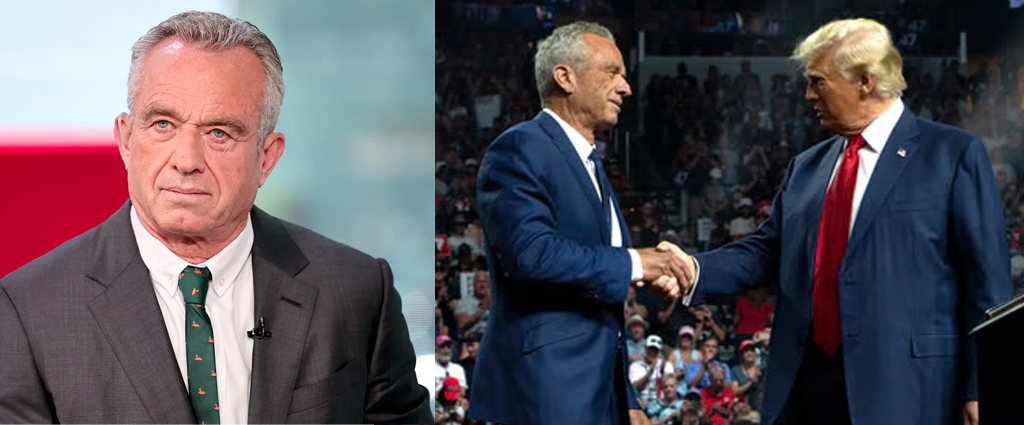
    The Axios  news outlet ran a story a few days ago about Robert F. Kennedy Jr.’s endorsement of his daughter-in-law, Amaryllis Fox Kennedy, for deputy director of the CIA (“Exclusive: RFK Jr.’s secret push to prove CIA killed uncle,” Stef W. Kight, Mike Allen, Dec. 11, 2024). Fox Kennedy is a former CIA officer who worked undercover in a counterterrorism capacity and wrote a book about her experiences, Life Undercover: Coming of Age in the CIA (2019). The CIA reacted by suing her for violating non-disclosure agreements and lost. 

    The Axios piece highlights RFK Jr.’s continued prioritization of transparency in the death of his uncle, President John F. Kennedy, since a close and supportive family member in such a senior slot at the agency would further that goal. It surely couldn’t hurt. Nominees for the number-two position at the CIA don’t have to undergo Senate confirmation either, meaning President-elect Donald Trump could appoint Amaryllis directly once he takes office in five weeks’ time.

    It’s always welcome when Bobby Kennedy brings the JFK assassination back into the current news cycle, even if only briefly. Whenever a sixty-plus-year-old event, however momentous, raises its head in today’s headlines, mainstream media naturally sidelines it quickly, before the reading public even has time to focus on it, in favor of the flavor of the week. But the Amaryllis Fox Kennedy story has gained traction for more than a day. It was soon picked up by the neoconservative New RepublicThe Telegraph of the U.K., and other outlets within 24 hours. As of this writing, the (RFK Jr.-hostile) New York Times has run an update to its Dec. 11 article on Friday, Dec. 13. 

    The backlash has already started, Bobby Kennedy’s foppish nephew, Jack Schlossberg, accuses him of being a “Russian spy” for daring to suggest that the CIA had a hand in the murder of America’s 35th president. Schlossberg posted the Axios article to X with the note: “@RobertKennedyJr you are so obviously a Russian spy … You all think I’m joking. Hahahaha”. I’m guessing Jack Schlossberg justifies his failure to offer any evidence that his uncle is an agent of Moscow on the basis that, if he did, he might compromise “national security.” That’s the usual excuse for making such claims. Who can disprove them, after all? Schlossberg’s implication is, if you question the official narrative on JFK’s death, you’re an agent of a foreign power, in this case Russia. In fact, by the reasoning of more than one person I’ve encountered, anyone criticizing the CIA is one of those. 

    But what does today’s Russia have to do with the JFK assassination, a matter of U.S. national history? Schlossberg might be suggesting that JFK’s murder was the result of a Soviet conspiracy at the height of the Cold War, as one or two authors have argued.  It is thus better to keep such evidence hidden under the “need to know” principle. But why? Assuming for the sake of argument that the Soviet KGB murdered Kennedy, the U.S.S.R. collapsed nearly 33 years ago, and the Cold War ended years before that. Schlossberg’s adolescent “in the know” posturing appears baseless. He always looks like he slept on the beach the night before after partying hard, at the expense of late-night research into the assassination of his grandfather. As Trump would say: Sad!

    If the past is anything to go by, we can expect the Amaryllis Fox Kennedy story to die down in the news until Trump makes a decision on her. But again, importantly, the JFK assassination is still a live issue at the top of U.S. politics. A mutual acquaintance told me he asked RFK Jr. directly several months ago when he was running for the highest office, whether his first act as president would be to order the release of the JFK files. Bobby’s answer was that it would be second, after freeing the journalist Julian Assange of the U.S. Department of Justice’s prosecution. Now that Assange is back in Australia and not behind bars, JFK has presumably moved up a notch on the list of open government priorities. In the midst of pursuing his enduring passion to improve public health, Kennedy has found time to remind everyone that the murder of his uncle, who likely saved humanity from extinction during the Cuban Missile Crisis, is still a source of widespread public mistrust. That is a good thing.

    It also needs to be mentioned that President Trump’s nominee for FBI director, Kash Patel, has argued for some time in favor of transparency over JFK (along with 9/11 and other issues). He has vowed to take a “wrecking ball” to the Bureau and even told one interviewer he would shut down the J. Edgar Hoover building on Pennsylvania Avenue and reopen it as a “Museum of the Deep State.” While he’s at it, he could remove Hoover’s name from that monstrosity (considered, in all seriousness, to be a piece of “brutalist” architecture) as part of a national truth and reconciliation process. Alternatively, he could leave Hoover’s name on it when he converts it to a place that features halls of exhibits of the darkest chapters in 20th-century U.S. history. With members of the American public and the countless tourists descending on Washington every year from all over the world, leaving Hoover’s name on a museum like that might be apropos.

    With all that said, including assassination transparency advocates in the Trump II cabinet (Tulsi Gabbard as DNI deserves a mention) is only half the task. Trump himself has said repeatedly that release of the JFK files would be his first act on reentering the Oval Office, aptly describing it to Joe Rogan as a “cleansing” process for the country. But even with the best of intentions, Trump has to handle this carefully, or the federal agencies in control of relevant records will evade even his executive orders, just as they’ve evaded the law until now. The problem, as veteran assassination researchers know, is that the redacted files in the JFK Collection at the National Archives are only part of what’s still hidden. Trump will need a permanent mechanism to “cleanse” the government, and that means a new bureaucratic entity. With his push to “trim fat” from the federal government with the aid of Elon Musk, Vivek Ramaswamy, and a new Department of Government Efficiency, he might feel a new declassification unit would be at cross purposes. Let’s hope not.

    As many here know, I’ve written frequently for the JFK Facts publication of investigative author and historian Jefferson Morley. As vice president of the Mary Ferrell Foundation (MFF), he qualifies as an “activist” in the issue of official disclosure in the JFK assassination. So do the other principals of MFF, such as Rex Bradford and Bill Simpich. MFF is in federal court in California now, still suing the government in the civil action of Mary Ferrell Foundation v President Biden and the National Archives (MFF v Biden). Simpich is the lead attorney for the plaintiffs, who include Josiah Thompson and Dr. Gary Aguilar, and Larry Schnapf is co-counsel. In writing occasional articles about that case, I’ve acquired a greater-than-average familiarity with what’s actually at stake in advocating for government transparency in the matter of JFK. It’s as disturbing as it is fascinating.

    At the core of the litigation isn’t just the JFK Collection. That does, admittedly, include thousands of still-redacted documents that should all be released. However, in many ways the JFK Collection feels like a distraction from the main issue. Government officials and other public figures have occasionally propagated the “nothing to see here” argument about those files. In other words, they say, they’ve seen them, and there’s nothing left there that’s really relevant to the assassination of President Kennedy, so move on. Mike Pompeo said as much in an interview with John Stossel last year. Kash Patel told Glenn Beck several months ago that he had already seen “the entire JFK file,” and that what’s withheld isn’t what JFK assassination researchers are looking for. 

    With all due respect, this is very doubtful indeed. Both Patel and Pompeo basically argue that continued redactions only conceal the identities of people who are still alive and still in need of protection today. That isn’t true. It’s also not true that the still-redacted files left in the JFK Collection don’t relate to the assassination. All you have to do is select a bunch of redacted files at random, read around the redactions, and see that a ton of documents are directly relevant as defined under the controlling federal law, the JFK Records Act of 1992. No one believes that the June 1961 memorandum to President Kennedy by Arthur Schlesinger Jr. on reorganizing the CIA, for example, is unrelated. A page-and-a-half block of its text is redacted, and it’s not all names of individual CIA agents still alive. In short, there are still thousands of files in the JFK Collection kept at NARA II that need to be released in full. They are vital to the ongoing process of completing the historical record. At the same time, however, releasing those files in full won’t get to the heart of the matter.

    Recently I wrote a piece for JFK Facts on Kash Patel’s nomination, entitled, “One Key JFK File That Kash Patel Could Release If He’s Confirmed as FBI Director.” It’s a 30-page FBI file on the prolific Cuban hit man Sandalio Herminio Diaz Garcia, usually known simply as Herminio Diaz, who settled in the U.S. four months before the assassination after requesting political asylum and being debriefed by the CIA. At that time he was working for two people: Florida crime boss Santos Trafficante (as a bodyguard), and ex-Cuban premier Tony Varona (as an agent). Varona himself was a CIA agent with two cryptonyms, AMHAWK and AMDIP-1 who headed the CIA-backed Cuban Revolutionary Council (CRC), which lost its direct government funding some time in 1963, as the Kennedy administration moved toward peaceful coexistence with Castro. But anti-Castro Cuban exile groups such as the CRC had already been cooperating with Trafficante and other organized crime leaders for years, and without financial support from the U.S. government, the Mafia became more important. In the middle of all this was Herminio Diaz, perhaps the most conspicuous human nexus between the CIA and the Mob in the entire JFK assassination saga.

    Whether or not you believe Herminio Diaz took part in the assassination of JFK (as Rob Reiner and Soledad O’Brien concluded in their popular podcast of last year, “Who Killed JFK?”) and whether or not Diaz really was in Dealey Plaza at the time of the assassination, either as a gunman or some kind of facilitator, documents about him are clearly “assassination related” under the federal statute. Has Kash Patel seen the heavily redacted FBI report on Diaz? I wouldn’t bet on it. Furthermore, I’d bet that that report – despite having been created by the FBI – is in Herminio Diaz’s “personality” (201) file, and is thus in the possession of the CIA. If Herminio Diaz’s 201 file is in the JFK Collection at the National Archives, I’m not aware that anyone has located it. There’s the rub.

    The purpose of MFF v Biden isn’t just to compel the government to disclose in full all the files in the JFK Collection. It’s to make sure the process of declassification continues beyond that. As many experts on the subject (some on this site) will confirm, the CIA never honored the “memorandum of understanding” it signed with the National Archives and the Assassination Records Review Board (ARRB) in 1998 to follow up on search requests that remained outstanding when the ARRB wrapped up. Instead, the CIA just dragged its heels and directed researchers to the Freedom of Information Act (FOIA) for their requests all these years. The very purpose of the JFK Records Act and ARRB were to remedy the deficiencies of FOIA. It’s just as in 1964, when CIA counterintelligence chief James Angleton advised his agency colleagues to “wait out the commission.” It’s like from 1976-1979, when the Agency stonewalled investigators of the House Select Committee on Assassinations (HSCA) through illegal appointment of ex-CIA “liaison” George Joannides, as the former chief counsel of the HSCA, Robert Blakey, now publicly admits. And it’s just like when the CIA “waited out” the ARRB from 1994-1998, so that when records were coming in very fast in the final days of the Review Board’s life, the Agency was able to bury important files in the mass and withhold them from the declassification process, as the board’s former chairman, Judge John Tunheim, now publicly admits. As a result, not everything relevant is in the JFK Collection in the Archives today.

    With all the good will in the world, therefore, Amaryllis Fox Kennedy, Kash Patel, RFK Jr., and even President Donald J. Trump himself are going to have to do more to “cleanse” the body politic where the JFK assassination is concerned. Patel has suggested setting up a “24/7 declassification office” in the White House to “take incoming” from the American public on everything from JFK to 9/11 and beyond. Great idea, and we should all hope to see it. But Patel will have to focus on what the “Deep State” he wants to upend is really hiding with regard to JFK, and it isn’t just the names of still-living informants. It’s the 201 file of Herminio Diaz, who died in 1966 in a raid on Cuba, led by Cuban CIA agent Tony Cuesta. It’s more than 40 files on the long-dead Joannides, which the CIA – through sleight of hand – never turned over to the Review Board. It’s a CIA Inspector General’s report spotted by a CIA officer in a Secure Compartmentalized Information Facility (SCIF) in Herndon, VA, relating to CIA strategy to deceive and divert the HSCA, along with a videocassette in a case labeled “Oswald in Mexico.” People with much greater, more detailed knowledge than I have could provide a much longer list, and I would urge anyone wanting more to visit MFF’s lawsuit page (and to donate to the plaintiffs’ case if you can).

    In conclusion, I’d like to make a plug for bipartisanship in these toxically polarized times. To increase our chances of achieving full JFK disclosure, the Trump administration should reach across the aisle to Congressman Steve Cohen (D-Tenn.), perhaps the only member of our national legislature who still qualifies as a genuine “activist” on the subject of JFK. He has sought out other members of Congress over the years to oppose repeated presidential postponements and even secured the signature of a Republican on one his many letters to the White House and (murky) Public Interest Declassification Board (PIDB), urging prompt release of the records. The scheme Biden imposed by executive order in December 2022 – the CIA-devised “Transparency Plan” – is supposed to replace the process established under the JFK Records Act, essentially burying a living law passed unanimously by Congress. Biden has been deaf to all criticism of what he had done on the issue.

    Cohen is currently crafting a bill to recreate the ARRB in some form, to finish the work it was established to do before its premature termination in 1998. The Trump administration should support such an effort. I noted in my article on Kash Patel that his White House declassification office should be compatible with Cohen’s new Review Board. It’s not one or the other. We should have both, and they should work together, one housed in the White House, the other at the Archives. With advocates like Kash Patel and Amaryllis Fox Kennedy occupying high offices in the executive branch, a new statutory panel can help ensure the job is done thoroughly. Of all the issues polarizing Washington today, the JFK assassination spans the toxic divide and has the potential to bridge it. That’s what genuine “truth and reconciliation” means, and that’s what we need. 

  • RFK Jr. and the Unspeakable: Why This Historic Moment Matters

    RFK Jr. and the Unspeakable: Why This Historic Moment Matters


    When Bernie Sanders ran for president in 2016, he raised nearly a quarter of a billion dollars in grassroots donations to challenge Hillary Clinton for the Democratic nomination. After he dutifully backed out and endorsed the candidate chosen by the party’s super delegates, a lot of his supporters reportedly ended up voting for Donald Trump in November. When a reporter asked him how he felt about ex-members of his camp voting against Clinton, Sanders answered: “Wrong question.” If so many of his followers had decided to turn to someone whose policies were anathema to his own, he asked, then they must have been pretty angry about something, right? The media, he suggested, should figure out what ordinary voters are so mad about instead of blaming him and his populist movement for Hillary Clinton’s defeat.

    While it’s true that the campaign of Robert F. Kennedy Jr. and Nicole Shanahan has not raised Bernie-levels of grassroots cash, it’s also true that ordinary voters have less disposable income than they did eight years ago. What RFK Jr. did do, however, was gather over a million signatures nationwide through the mobilization of some 100,000 volunteers for access to the ballot in all 50 states and the District of Columbia. Sanders never had to worry about ballot access in the Democratic primaries. For some reason, RFK Jr. was not only shut out of the party’s nominating process; he also had to qualify the “hard way,” as an independent, when he finally gave up on the once-upon-a-time party of his father and uncle. 

    Thus began one of the ugliest and most vicious assaults on a presidential candidate in recent memory. Even though he decided to run as an independent, the Democratic National Committee (DNC)  launched a well-financed “lawfare” campaign through the courts to block him from the ballot in the general election. This was when he was taking more voters away from Trump than Biden! DNC-friendly mainstream media lent this discrimination campaign a helping hand by censoring him from their airwaves as much as possible. Joe Biden disgraced his presidency by denying him Secret Service protection until two days after the assassination attempt on Trump, and nearly 15 months after Bobby announced his own candidacy. Now that he’s formed a coalition with Trump, it’s fair to echo Sanders and say his supporters might have been a bit angry also.

    As someone who has volunteered for Kennedy’s campaign since shortly after he declared his candidacy, I confess to brief shock at the announcement that he was suspending his run, endorsing Trump, and calling on his supporters to refrain from voting for him in about ten “battleground states.” Those ten might include my own, Virginia, where “RFK2”– as he’s sometimes known–polls relatively high. But I’m over it. 

    In 1968, many supporters of his liberal father’s presidential campaign transferred their vote to George Wallace, very possibly in sheer protest at RFK’s untimely and highly suspicious demise. For all his faults, New York real estate mogul Donald Trump is neither the racist Alabama governor nor his running mate, warmongering Gen. Curtis LeMay, who may have been smoking a cigar in the autopsy room during the postmortem exam of President John F. Kennedy, a man he hated. Trump has never smoked, and Wallace would have thoroughly disdained Trump’s Oval Office photo ops with African-American admirers.

    With his stance on tariffs and no taxes on tips or on Social Security, Trump claims the mantle of a populist;  and whether he is or not, elites do not like populists. They did not like Sanders either. But the neocons among the “Never Trump” crowd – e.g. Bill Kristol and John Podhoretz – despise Trump mostly for what they perceive as his “nativism,” which embarrasses them as members of the urban-liberal intelligentsia. Trump’s potential isolationism (he started no new wars) is the worst of it and frightens them to this day. Yet even a populist-nativist isn’t necessarily a “threat to democracy.” I think many people sincerely believe Trump is a threat, and I respect that, but I don’t see it myself. January 6th was a tragedy, and Bobby Kennedy Jr. has described Trump’s actions during that violent, vandalistic riot as “reprehensible.” Personally, I’ve never believed Trump intended or foresaw what happened, even if he bore blame through his recklessness or negligence. 

    Moreover, three and a half years later, we have to ask who poses the greater threat to basic freedoms?  Was it those involved in the insurrection or the authorities cracking down in its aftermath? 

    A recent article by Margot Williams at Jefferson Morley’s JFK Facts (a Substack I write for), explains the excesses of federal law enforcement, which even now is rounding up and arresting people who did no more than enter the Capitol and walk around after a (small) advance mob broke in a door with a battering ram under the eyes of the immobile police. 

    RFK Jr. and the JFK Assassination

    At a fundamental level, ending the toxic polarization of American society over the last decade and figuring out how to end it has always been the main theme of the RFK Jr. campaign. But the causes of our current social crisis are deep-seated, rooted in history, and I think they find their origin in the assassination of President Kennedy in 1963, before I was even born. After much study, I now hold the sincere conviction that this isn’t just a historical issue but an extremely important current one too. Every historic episode is both a cause and an effect, but many of our problems lead through November 22, 1963, when the fundamental nature of our government changed. Jeff Morley, who has done invaluable pioneering research into the JFK assassination, opines that it isn’t the most important issue facing America today: people have bills to pay, jobs to hold down, kids to put through school. When ordinary folks are thinking day-to-day about making ends meet this week, they aren’t thinking about a violent event from generations ago. I understand that.

    But whatever John Q. Citizen is thinking as he goes about his day, I respectfully disagree with the JFK Facts editor-in-chief. It doesn’t necessarily follow that an issue is less important because most Americans think so. The “Great Crime” must stay alive as an issue in current U.S. politics and society until it’s resolved to the satisfaction of serious historians and researchers at large. Only one campaign now pledges to address that: Donald J. Trump and his new ally, Robert F. Kennedy Jr. 

    The murder isn’t just a fetish for conspiracy freaks and assassination hobbyists. It is a seminal event that still affects us. Thanks mostly to the political and media influence of RFK Jr. this election cycle, it is a live issue now as well. It may be a long shot to expect Trump and the GOP to seriously do any justice to it, but a long shot is better than no shot at all. Maybe a re-elected President Trump will have no power to force disclosure on the 61-year-old atrocity;  because maybe, as some believe, all presidents are only cyphers of the national-security state. But while cynicism makes some people feel superior, it doesn’t do it for me.

    Regarding transparency over the still-withheld files related to the assassination of JFK, Trump has already disappointed “bigly.” His postponement of full disclosure in 2017 only aroused more public discomfort and mistrust. Yet if Trump was bad on the JFK files, President Joe Biden has proven to be worse.  He is not only postponing release of the remaining withheld assassination records but also announcing the “final certification” under the JFK Records Act. Congress’s unanimous passage of that law in 1992 prevented President George H. W. Bush from vetoing it, and Biden himself voted for the law as a senator. Worse, instead of honoring the spirit and letter of the law to serve the public interest–as attorney Andrew Iler showed–Biden devised a new scheme to conceal the records and replace the JFK Act. 

    This scheme, known as the “Transparency Plan,” was devised by the CIA-led national security apparatus and essentially guts the 1992 federal statute by burying its timeframes and requirement of periodic review. By executive order, Biden handed all declassification decisions over to the CIA and other unelected agencies in control of relevant records, washing his hands of the process forever. In doing so, Biden not only grievously abused the public trust. He probably didn’t even see any records before making his fateful decision. Already in cognitive decline, he very likely just signed where he was told to sign and forgot about it. At least Trump claimed he saw something, at least according to Judge Andrew Napolitano. It’s just that what he saw was so bad, he felt he had to bow to the will of the national security state and keep it under wraps. 

    But Biden? Nothing. Now his vice president, the Democratic nominee for his job, is eventually going to have to make her own position known on JFK. Does Kamala Harris even have an opinion? Born after the assassination, she has – to the best of my knowledge – never expressed any view at all. With any luck, the subject will come up in the upcoming Trump-Harris debate, but how will Harris “get out in front” on the issue when her boss has already tried to bury it? Trump will be able to comment first-hand, but I see no cause for optimism from Harris. I therefore have little compunction over favoring Trump right now.

    The issue of transparency in the JFK assassination isn’t the exclusive reason I decided to support RFK Jr. for president, but it’s at least tied for first place. I already knew his position on his uncle’s assassination – as well as his father’s – and that made him a qualitatively different and unprecedented kind of candidate. But on Friday, August 23rd, confronted with the image of him on stage with Donald Trump in Arizona, I admit I trembled a bit. The former president graciously introduced RFK Jr.  as having “lost his father and uncle in service to our country.” He vowed to establish an “independent presidential commission” to revisit the JFK assassination and release all the withheld records. I imagined RFK Jr. standing there, waiting to speak, exhilarated at coming as close as anyone in the last 60 years to doing what Dorothy Kilgallen said she was going to do right before her mysterious death. 

    Maybe Bobby wasn’t thinking that at all, and when he took the podium, he never even mentioned the JFK assassination. He talked, as usual, about public health, endless war, and censorship. But I wanted to believe he was consciously hoping President Trump would speak to that morbid tragedy in Bobby’s own family for him, and that Bobby – like all of us outside the inner circle of the national security state – still put a top priority on finding out what happened to his uncle. This was probably the best chance he had ever had in his lifetime. Whether Trump was only prompted by the recent attempt on his own life seemed immaterial at that moment. The point was: millions of people were watching and listening. It was live.

    Again, full disclosure over JFK’s murder continues to be a matter of vital public interest. Without at least an official rejection of the official history as currently disseminated by government and mainstream media, Americans won’t even have a version of events that is closer to the truth than what their government now peddles to them. We will continue to languish in a social sickness complementary to the physical degradation Kennedy so passionately wants to reverse, and about which he continually warns us. We need the topic of the JFK assassination in the news cycle now more than ever, so that it resonates into the next administration and stays in the public memory, no matter who wins. In Oliver Stone’s JFK, Jim Garrison paraphrases Tennyson: “Do not forget your dying king.” To find out what happened, we have to resist forgetting.

    Kennedy, Trump, and Harris

    Whatever the political fallout from the Trump-Kennedy coalition (liberal MSM commentators quickly united in their attacks), I have no regrets about supporting RFK Jr.’s campaign. The dominant experience of working with other RFK Jr. volunteers was, primarily, an absence of hate. Plenty of fellow campaign workers had voted for Biden in 2020, and plenty of others for Trump. But when handing out campaign literature or soliciting signatures for ballot access, the only hate we ever encountered came from obvious Biden supporters. They would hiss at us, sometimes spitting inadvertently in the process, their faces red as tomatoes, telling us we were a “disgrace” or “dangerous” or should be “ashamed.” Trump supporters would sometimes refuse to sign our petition forms, but they were never mean or unhinged. The “Bidenista” passers-by were manifestly contemptuous, sometimes calling us “nuts” or “crazy” even as they boiled over right in front of us.

    How different from that experience could Bobby Kennedy’s have been at the level of the DNC high grandees? He and running mate Nicole Shanahan both said that the Biden-Harris people had refused even to speak to them, whereas the Trump campaign was at least willing to meet. Under these circumstances, why would anyone blame RFK Jr. for giving up on cooperation with the arrogant Biden-Harris cabal? Would anyone passionate about issues of vital public interest, who meets a brick wall from one side and an ajar door from the other, go on bashing his head repeatedly against the bricks and mortar? 

    Maybe a significant percentage of RFK Jr. supporters now refuse to back him for endorsing Trump as a means of advancing his own agenda of peace, public health, and free speech. I haven’t met any yet. But at the end of the day, faced with the Democratic Party’s well-financed litigation drive to keep him off the ballot, plus censorship by overwhelmingly DNC-friendly mainstream media, Bobby evidently felt he had to choose between doing something or doing nothing. He decided to do something, to take a chance on Donald Trump honoring an agreement to prioritize the issues closest to him. Even if Trump reneges on his pledge of full disclosure in the JFK assassination, I think Bobby did the right thing. 

    The drab, uninspiring Democratic Party long ceased to be the party of RFK Jr.’s uncle and father. It is not the party of FDR, JFK and RFK. It is the party of LBJ, a corrupt, brutal scoundrel desperate to use the White House for the public adulation he craved. The long-term symptom of LBJ is the Democratic Party of today. And the DNC hit squads are part of this LBJ apparatus. (NY Times, May 2, 2024 online edition or May 4, 2024 print edition, article by Michelle Cottle: “The Drive to Tell Voters What They Don’t Know About R.F.K. Jr.”)

    It is largely a party made up of elites.  Nancy Pelosi ushered out Biden, and after, there was no competition from anyone to take the spot.  Not even a token of a debate took place. And, if one recalls, there was no debate during the Democratic primaries, or what passed for primaries. Harris was anointed, she was not in any way elected.  How interesting that process becomes when compared with how Robert Kennedy Jr. was treated in the media. This is democracy?

    The censorship Kennedy speaks about is not conspiracy theory. It’s real and palpable, and Facebook CEO Mark Zuckerberg now confirms publicly that “deep state” goons pressured him to censor content related to COVID-19 and other subjects. Moreover, the “censorship-industrial complex” (as RFK Jr. calls it) traces its roots to November 22, 1963. In interviews, Bobby has repeatedly recommended James Douglass’s influential book, JFK and the Unspeakable (2008), which refers to a systemic evil, a “void” permeating official policy and discourse, making it soulless and hollow. The assassination put a kind of “final seal” on what had built up over the previous decade and a half, as an unaccountable “deep state” acquired more and more power at the expense of elected authorities. That power manifests itself everywhere, particularly through censorship. Scholarly writers, researchers, and historians of the JFK assassination are marginalized and deprived of the big, lucrative book deals and promotions, as well as prestige. There is no meaningful difference between “muzzling” these writers and state censorship.

    Ironically in the so-called “information age,” the idea that certain things are “unspeakable” is still strong. Six decades after the assassination of JFK, and 56 years after the murder of RFK, Bobby Kennedy Jr. has exhumed a range of issues buried under a mass of mainstream media talking points developed over generations. Possessed of a collective blindness residual of the Cold War, most Americans have ignored the “forever wars,” dietary and environmental toxicity, the waste of our economic resources, and the decline of our civic consciousness. A drug-addled, unhealthy nation, we’ve received a big wake-up call from RFK Jr., who has brought issues of vital public interest back into popular discourse. For instance, the revolving door between big pharma and public health agencies.

    The issues that Kennedy leads with – (1) the war in Ukraine, (2) chronic illness and disease, and (3) the mainstream-media censorship regime – are all the product of the rise in power of the unelected national-security apparatus, which secured its dominance over the political system after passage of the National Security Act of 1947. President Truman signed it into law, giving official birth to the Central Intelligence Agency. As soon as President Kennedy was assassinated, Truman sat about writing an op-ed for the Washington Post, essentially lamenting the effects of a law he was responsible for enacting. He suspected the CIA was involved in the murder of his young successor, and that suspicion permeates his op-ed. 

    The CIA had gradually accumulated more and more power under President Eisenhower, who would warn the public about the dangers of the “military-industrial complex” in his farewell speech in January 1961. By the time JFK attempted to resist its power, it was too little, too late. The title of David Talbot’s book, The Devil’s Chessboard: Allen Dulles, the CIA, and the Rise of America’s Secret Government  (2015) is no cliché. Our unaccountable “secret government” is the biggest open secret in America today. Only one candidate talked about any of this in any detail, and that is RFK Jr. It was probably that, plus his opinion of Anthony Fauci that sealed his fate at the starting gate.

    The Biosecurity Agenda and the ‘Anti-Vaxxer’ Pejorative

    One issue remains largely “unspeakable,” as mainstream media and government barriers to talking about it are still mostly intact. It is what RFK Jr. calls the “Biosecurity State.” The most recent manifestation is the attempt by governments worldwide to restrict freedom in societies over which they preside. The method is known as “PPR” – pandemic preparedness response. The World Health Organization declares a “pandemic,” and national governments stand ready to impose a series of measures, including lockdowns, school closings and other mandates, thus curtailing basic liberties. Behind PPR and restrictions on human freedom stands the obscenely profitable pharmaceutical industry – “Big Pharma” – which rolls out “cures” as soon as it can scare everyone enough. The gravy train is then off and running again. Anyone who dismisses as “conspiracy theory” the idea that Big Pharma is irretrievably corrupt should read a book by a bête noire of Warren Report dissenters everywhere, Gerald Posner’s Pharma: Greed, Lies, and the Poisoning of America (2020). When Kennedy calls Big Pharma a “criminal cartel,” he’s being gentle.

    Many educated people seem to shrug all this off, but many of us are sincerely alarmed. RFK Jr.’s recent book,  The Wuhan Cover-Up and the Terrifying Bioweapons Arms Race (2023), traces the historical continuity between Pentagon and CIA experimentation and abuses at Fort Detrick, Maryland.  This began around the late 1940s,and it spread to the Wuhan Institute of Virology in China in 2020. Which is where former National Institute of Allergy and Infectious Diseases (NIAID) director Anthony Fauci took his “gain of function” research after the Obama administration imposed a temporary moratorium on that dangerous activity within the United States. Kennedy’s previous book, The Real Anthony Fauci: Bill Gates, Big Pharma, and the Global War on Democracy and Public Health (2021), gives scholarly content to a now-widespread perception that the longtime, powerful, and highly-paid NIAID chief is corrupt, self-serving, and responsible for serious public health policy abuses in service to the bottom line of both himself and Big Pharma e.g. the whole disastrous AZT as a cure for AIDS debacle. Fauci has never even hinted at suing Kennedy despite the book becoming an instant bestseller. And it is not just RFK Jr. who has made these charges against Fauci.  Senator Rand Paul has done the same against both Fauci and Gates. Senator Paul wanted to charge Fauci for lying to congress about gain of function research and how this caused the breakout of CV 19 in Wuhan.

    Although RFK Jr. has never led with the issue specifically, he is not shy about explaining his vaccine safety advocacy in the face of accusations that he is a “nut” or (per the first sentence of his Wikipedia page) a “conspiracy theorist.” Most citizens of the industrialized West have been vaccinated for different things at various points in their lives, and I make no exception of myself. Neither does RFK Jr. But the COVID-19 pandemic ushered in tyrannical new rules about the subject.

    RFK Jr.’s Children’s Health Defense (CHD) advocacy group and its online periodical, The Defender, offered scholarly analysis for anyone entranced by the three-letter public health agencies’ scare-mongering for Big Pharma. But they had to be aware of CHD in the first place. CHD should have acquainted everyone with the “Biosecurity State” before censorship of mass media and internet in the democratic West really ramped up, since Kennedy had been warning of it for years. But social media – to say nothing of the MSM – suppressed it. Those of us who had never felt blunt censorship in America could see social media “moderating” or deleting posts for even questioning public health policy by the end of 2020. The words “false” and “falsely” became mantric in MSM, intensifying after President Trump publicly charged that the 2020 election result reflected fraud. 

    The censorship situation in the West became extreme after the “warp speed” rollout of the COVID-19 vaccines, when even wire services openly branded anyone daring to question their safety or efficacy “conspiracy theorists” promoting dangerous views. RFK Jr. became super-prominent among the targets of coordinated attacks by legacy outlets of America’s ostensibly “free press.” The pharmaceutical industry’s power over supposedly neutral organizations like Reuters and AP had been more subtle, but by the end of 2020, the “corrupt merger of state and corporate power” was brazenly and frighteningly visible every day. Another target was author Naomi Wolf, who had written more than one bestseller and was an advisor to both Bill Clinton and Al Gore.

    Friends’ acceptance of my choice to rely on my innate immune system in confronting COVID-19 has, at least, reassured me. Others have been less fortunate. The family of an unvaccinated American friend overseas told him if he wanted to come home for Christmas, he had to be COVID-jabbed. He spent Christmas of 2021 alone in a country that doesn’t even celebrate it. 

    As time has passed, and more and more vaccinated friends have contracted COVID: Jim DiEugenio contracted it twice. The realization that people like me aren’t as loony as they first imagined has become more ingrained. The full symptoms of my own bout with COVID-19 lasted four or five days. After no longer testing positive, I felt even more confident of the benefits of strengthening natural immunity. 

    Even vaccine enthusiasts have to admit to a level of adverse side effects never seen before, since this is a matter of official record, not theory. It isn’t necessary to indulge in conspiracy theory to conclude that the COVID-19 vaccines have never been proven totally safe. The CDC’s own Vaccine Adverse Events Reporting System (VAERS) has received more reports from the COVID-vaccinated than for all previous vaccines combined, yet in the late 1970s, the “swine flu” vaccine was withdrawn after a tiny number of recorded Guillain-Barré Syndrome (GBS) cases. Many more GBS cases have been recorded for the COVID-19 jabs. Again, the best explanation for why the COVID-19 vaccines survived is record levels of state and corporate stipulation. No matter how much others claim to “believe in” the COVID-19 vaccines, there is no basis for “trusting” the companies producing them. They trade in year-end profits, not long-term public health. Whatever COVID vax advocates argue, skeptics have the right to remain skeptical, especially since we cause no increased harm to anyone by remaining “jab free.”

    Warp Speed and Political Orthodoxies

    One does not have to conceive of a “plandemic” designed and implemented by a “high cabal” to reduce the world’s population through vaccine mandates. Corruption and greed can explain what happened, and why it should not happen again. After all, Operation Warp Speed broke several rules in its haste to come up with a vaccine. But there is still an important point to be made, and I felt it most intensely when I attended RFK Jr.’s “Defeat the Mandates” protest in front of the Lincoln Memorial in Washington in early 2022, with SWAT teams on the roof and police helicopters circling loudly overhead. That point is, no matter how much our friends, family, or anyone else may show tolerance toward our refusal to be vaccinated for COVID-19, if universal mandates were ever imposed, the overwhelming majority of these “friends” wouldn’t lift a finger to defend our right to refuse them. One can easily picture them, instead, shrugging, wishing us “good luck,” and sauntering off to comply with the latest Biosecurity-State rule. In short, we have to defend our own civil rights, and RFK Jr. is the most powerful tribune for our cause. 

    Among those of us who have never availed ourselves of the COVID-19 vaccines, the sense of freedom to speak more loudly about our personal choice is much stronger today, in no small part thanks to RFK Jr. His supporters – vaccinated and unvaccinated – overwhelmingly oppose mandates, and the diversity of his base reflects a healthy political realignment, resurrection of wholesome social values, and reintroduction of vital interests to public discourse. 

    As people like Jimmy Dore have shown, the  MSM relies on Big Pharma accounting for a disproportionately large share of its ad revenue. Consequently, it  has already trotted out more pharmaceutical execs posing as “independent experts,” telling us we need to mask up and get the next shot. But yet, neither Peter Hotez nor Jake Tapper for two, would debate Robert Kennedy Jr. Robert Kennedy’s response to Hotez was that he was not talking about a conspiracy, he was talking about an orthodoxy which had taken hold, one that stated silence was the best course; so many smart and moral people decided that the best road was to keep your head down and move forward.

    Reportedly Trump has offered Kennedy a role in his transition team, one in his health program, and one on a commission to declassify all the records on the JFK assassination. These negotiations began right after the attempted assassination of Mr. Trump in Butler, Pennsylvania. At the start the Vice Presidency was on the table, which Kennedy refused outright. Two of the go betweens in the talks were Calley Means, a preventivve health care advocate, and Tucker Carlson who had Kennedy on his much watched program. (NY Times, 9/2/24, story by Maggie Haberman).

    It is interesting of course that these negotiations began after Butler, since RFK was the only candidate talking about the subject of assassinations for months on end. And reportedly it was Carlson—who has famously defied the MSM orthodoxy in the JFK murder– who first connected the two candidates via text message. (ibid). As former RFK manager Dennis Kucinich has noted, the DNC had shown no such outreach to the candidate.  In fact, they had done all they could to sabotage him, similar—and perhaps worse–than what they did to Sanders. (Ibid, NY Timesarticle by Michelle Cottle) The DNC started 9 nuisance lawsuits to keep Kennedy/Shanahan off state ballots; they sandbagged particular events; and according to a talk show interview by VP candidate Nicole Shanahan, they even sent in double agents to certain offices. (Click here for this revealing interview https://www.youtube.com/watch?v=lAqVn5lRdes). And the whole time, Kennedy was denied Secret Service protection, thus forcing his campaign to spend hundreds of thousands per month on private security. This was startling,  considering the history of that family.

    If the alliance with Trump does not, in the end, produce meaningfully greater transparency in the assassination of JFK, RFK Jr. can’t be blamed. The struggle will continue. The “Justice for Kennedy Act” introduced in the House by a Republican congressmen in early 2023 is apparently dead, but the lawsuit of Mary Ferrell Foundation v President Biden and the National Archives has now reached the U.S. Court of Appeals for the Ninth Circuit, already well known for unpredictable decisions. Hopefully, the Democrats will feel forced to confront the assassination issue, perhaps with another legislative initiative, since Biden’s presidency was such a failure on the topic. So even if Trump’s executive-branch “commission” disappoints us, activism elsewhere could compensate for another letdown. There is, in sum, ample cause for hope, attributable in no small part to the influence of Robert F. Kennedy Jr. We now have Trump on tape in front in front of multiple cameras saying so.

  • Oswald in Japan: How the CIA Deceived Congress

    Oswald in Japan: How the CIA Deceived Congress


    Fig.1[Fig. 1]
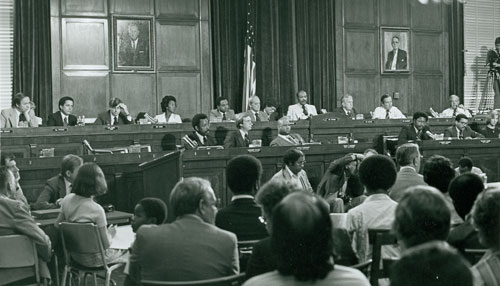
    The House Select Committee on Assassinations (HSCA) reinvestigated the murders of President John F. Kennedy and Dr. Martin Luther King (Credit: U.S. Congress)

    The excellent Solving JFK podcast, hosted by Matt Crumpton, reminds us of a thought-provoking anomaly. The 1964 final report of the President’s Commission on the Assassination of President Kennedy (the “Warren Commission”) says that during his service as a Marine in the Far East, Lee Harvey Oswald, accused assassin of President John F. Kennedy, was in Taiwan from Sept. 30, 1958, but returned to Atsugi, Japan, by Oct. 5. The Warren Report does not say what Oswald was doing in Taiwan, but the House Select Committee on Assassinations (HSCA), which reinvestigated the JFK and Martin Luther King murders in 1976-79, concluded that Oswald never visited Taiwan at all.

    The Solving JFK episode can be heard here.

    This astonishing discrepancy in the official record is another arrow in the quiver of those entertaining the irrepressible theory of the “Two Oswalds.” That thesis essentially holds that there were two men who not only bore an uncanny resemblance to each other but also went by the same identity as a matter of official record in furtherance of an intelligence operation that desperately needed to be suppressed after the assassination.

    The incongruity also, incidentally, strengthens the widespread and more general conviction that agencies controlling information on Oswald, whether the CIA, FBI, military intelligence services or others, repeatedly deceived official investigators. Although the HSCA at least concluded that JFK was “probably” murdered “as a result of a conspiracy,” its inquiry proved to be a “damp squib” overall. It is no longer controversial to assert that the CIA deliberately diverted and stonewalled the HSCA. One area in which CIA deception appears especially vigorous is Oswald’s time in Japan, a chapter that remains an information “black hole,” to paraphrase John Newman, author of JFK and Vietnam (2017) and Oswald and the CIA (2008). The Taiwan episode is just one example.

    This “black hole” has exacerbated suspicions of Oswald’s ties to U.S. intelligence in Japan, as alleged by a former CIA employee based in the Tokyo Station at the time of the assassination. Such connections have never been proven, but in light of the CIA’s obvious deception of the HSCA about Oswald in other areas, especially New Orleans and Mexico City, Agency trickery on Oswald in Japan is also worth studying. JFK researchers of integrity are convinced that the CIA is still concealing the extent of its ties to Oswald, and these links may very well go back to his time in Japan — or even earlier.

    The House of Representatives Inquiry

    On June 12, 1978, a document handwritten by HSCA investigator Harold Leap was forwarded within the CIA. Fully declassified on Aug. 24, 2023, it summarizes Leap’s interviews of 12 employees of the CIA’s Tokyo Station pursuant to “critic publications and specific allegations by former CIA employee James Wilcott that LHO was a CIA agent.” Wilcott had stated in a closed-door HSCA session that “a CIA case officer stationed in Tokyo, Japan, told him that LHO was a CIA agent and also mentioned LHO’s cryptonym.”

    The 71-page document that includes Wilcott’s HSCA testimony and related material refers to an unspecified “Oswald project” requiring disbursements of funds, and to Atsugi as “a plush super-secret cover base for Tokyo Station [i.e., CIA] special operations.” Wilcott, a CIA finance officer, testified that the conversation occurred “in the Tokyo Station shortly after the word of the JFK assassination was received on 23 Nov 1963.” Although Wilcott “could not recall the name of the case officer or the cryptonym,” he said that “considerable conversation took place among CIA employees at the time concerning the Oswald-CIA agent issue.” All 12 interviewees were asked whether they had come across any indication that Oswald was an intelligence agent. All said no.

    The interview notes appear in summarized form for all officers but one, William Crawford, the CIA’s deputy chief of station in Tokyo from March 1959 to October 1960. In fact, all interview subjects are identified as having worked in the station in the period from 1959 through 1964, presumably to account for any CIA employees who were working in the Tokyo Station when Wilcott was, and whom Wilcott might thus have overhead. Yet Oswald was based in Japan from September 1957 to November 1958, and it is striking that no one but Crawford is identified as having served there during that period too.

    Crawford is listed in another CIA document as “acting executive officer” of “Detachment C” when Oswald was serving at the Atsugi Naval Air Station. Detachment C was the CIA unit deployed to Atsugi to operate the U-2 spy plane program, which conducted surveillance missions over Communist China and the Soviet Union. But Crawford was not among the 18 CIA personnel that Wilcott recommended for interview by the HSCA. Even Detachment C’s actual executive officer for the relevant period, Werner Weiss, was not interviewed, despite the fact that he was alive and well in 1978.

    Fig.2[Fig. 2]

    In all, Leap only interviewed four out of Wilcott’s 18 recommendations. Wilcott obviously provided the names of these 18 people because he knew they were working in the Tokyo Station when he (Wilcott) was, but, again, of the four employees that the CIA made available to the HSCA for interviews, nothing indicates that any of them were even in Japan when Oswald was. No explanation is given for this, even though, of the 14 people on Wilcott’s list who were never interviewed by Leap, most were actually serving in Japan during the time Oswald was at Atsugi. Why were they left out of the interviews?

    Leap’s notes from his interview of Crawford say that the subject “didn’t know [Lee Harvey Oswald] and never heard the name until after the assassination.” The only reason Oswald was connected to the U-2 program (and thus the CIA) at all, Crawford said, was that “the CIA at Atsugi did not have their own radio-radar facilities,” so the U-2 planes “utilized the naval base communications only for take-off and landing clearance.”

    Crawford did note that the “CIA recruited personnel for the program from the military service,” however, and “[a]ll program employees were paid by CIA.” He also outlined the system for U-2 personnel resigning from and returning to regular military service. [Note: As Oswald’s tax returns are still withheld in full from the public, we can’t know whether an intelligence agency paid JFK’s accused assassin during his time at Atsugi.]

    Fig.3[Fig. 3]
    Aerial view of Atsugi Naval Air Station as it appeared in 1988 (Credit: Ministry of Land, Infrastructure, Transport and Tourism of Japan/Public Domain)

    CIA Sleight of Hand

    The CIA apparently composed an undated document entitled, simply, “LIST OF AGENCY EMPLOYEES,” in preparation for the HSCA’s 1978 investigation. A table featuring several operatives includes operations officers, and four names — Jerome Fox, William V. Broe, Frederick C. Randall, Robert P. Wheeler — are recognizable from the Leap write-up.

    However, others — notably Japanese-American CIA officers — are included in the still-redacted file and were in the Tokyo Station in the years 1957 and 1958. The most recent declassified version (June 27, 2023) retains redactions in the “Security Posture” column for Chester H. Ito, a CIA operations officer in the Tokyo Station for more than 20 years. Since Ito died in 1999, the Agency is concealing the profile of an employee who died a quarter-century ago but likely worked at Atsugi when Oswald was based there.

    A conspicuous redaction in the CIA’s “LIST OF AGENCY EMPLOYEES” is the name of Number 6, whose security posture suggests a possible Soviet connection:

    Former Department of Army employee in Japan picked up as contract employee. Poly revealed unresolved issues regarding Communist contacts and/or associations.

    Fig.4[Fig. 4]

    Although the name is redacted, it is in the same position in the table as “Robert S. Hashima” in Wilcott’s list of 18 recommendations, and Hashima appears in other documents composed in preparation for the HSCA’s investigation. In his “executive session” testimony to the HSCA, Wilcott describes Hashima as a “deep commercial cover agent,” and elsewhere as a representative of “Fuji Shoji Co. Ltd.” Under or alongside Hashima’s name in CIA documents, regarding whether he should be made available to HSCA investigators, there is simply an unexplained (yet familiar) notation: “Disregard.”

    Yet the most remarkable aspect of the case is this: the HSCA understood the importance of investigating the years 1957-1958 in connection with Oswald. HSCA Chief Counsel G. Robert Blakey, in a letter dated April 26, 1978, requested that the CIA make available for interview the “chief officers and deputy chief officers of the CIA base at Atsugi, Japan from 1956 to 1960.” These years encompassed Oswald’s time in Japan.

    Fig.5[Fig. 5]

    This line of inquiry mysteriously fizzled. On the next day’s routing and records sheet, a handwritten note by Norbert Shepanek of the CIA’s Directorate of Operations says:

    I do not know if there were any DDO officers at Atsugi 56-60. [Deputy Directorate of Science & Technology] is answering separately. Negative reply requested. Shep

    Following this, in a handwritten note on an official routing slip dated (apparently) May 2, 1978, S&T officer Carroll Hauver (later CIA Inspector General) disseminates the falsehood that Atsugi was just a “support base staffed by support personnel” during 1956-60. That seems to have shut the inquiry down, yet as anyone who has looked into this subject in any depth knows very well, Atsugi was far more than just a “support base.”

    The Biggest CIA Base in the Far East

    While Oswald was based at Atsugi, the CIA’s “Joint Technical Advisory Group” (JTAG), whose activities remain obscure to this day, was located at the naval air station. Oswald was a radar operator and performed sentry duty at the U-2 hangar, but he also lived and worked in close proximity to JTAG, which encompassed more than the U-2 facility. As early as 1964, the CIA’s deputy director of plans, Richard Helms, had described the CIA’s Atsugi facilities — in particular JTAG — to the Warren Commission more extensively as

    consisting of 20 to 25 individual residences, two dormitories, an office area, a power plant, several Butler-type warehouses, and a club building used for recreation and a bachelor officers’ mess.

    The Warren Report avoided mention of either JTAG or Detachment C, never interviewing anyone about either. Helms, the No. 3 man at CIA, admitted 60 years ago that a specific CIA program (the U-2) operated from Atsugi while Oswald was there, but that was all.

    Still, even this was more than the CIA told the HSCA.

    In his book, The Missing Chapter: Lee Harvey Oswald in the Far East, Jack Swike — a former Marine Corps security officer at Atsugi — explains that JTAG was set up in 1950, employed “[a]bout 1,000 people” and occupied “50 acres of the Atsugi base.” Originally devoted to training clandestine agents infiltrating enemy areas during the Korean War, it served — according to Swike’s Marine Corps intelligence source — as a base where “weapons were flown in from hostile areas and were tested.”

    Researcher Dick Russell, in The Man Who Knew Too Much, refers to JTAG as “the CIA’s main operational base in the Far East” and quotes L. Fletcher Prouty, former chief of special operations for the Joint Chiefs of Staff in the Kennedy administration:

    “I went into Atsugi just as World War II ended, taking some of MacArthur’s bodyguard in there. A monstrous stairway went down into caverns, you could drive a truck into it. A huge underground base. The agency used it for a lot of things.”

    Fig.6[Fig. 6]
    Left: Tunnel under the Atsugi base (1950s), reproduced by Jack Swike in The Missing Chapter: Lee Harvey Oswald in the Far East (Credit: USMC); Right: Photo of Oswald (doctored around head and shoulders), possibly in Atsugi, 1958 (Credit: Unknown)

    In 1983, Jack Swike sued the CIA for information about JTAG but lost the case.

    “I believe that the U.S. Department of Defense did not want any investigations conducted into military matters in Atsugi in the late 1950s because the Marine Corps Nuclear Weapons Assembly team was located in MAG-11. Thus, the U-2 Spy Plane was not the top-secret program on the base.” ~ Maj. Jack R. Swike, USMC

    In other words, according to Swike, in 1957-58 Oswald’s unit (MAG-11) had a more sensitive purpose than the U-2, a program the Soviets already knew about anyway. Moreover, the CIA itself consistently downplayed the significance of the U-2 in Japan. An internal report titled “EIDER CHESS” (codename for the U-2 program), “Subject: DDS&T Interim Reply to HSCA Request, 8 May 78,” gives “General Background” on Detachment C, noting that Atsugi was not the usual departure point for U-2 missions over Russia:

    The first overflight of the USSR from Atsugi occurred on 1 March 1958 and this flight was the only and last flight. This flight, as other previous flights by other Detachments, was tracked by Russian radar…

    This seems to have ended the U-2 matter for the HSCA, though it shouldn’t have. Even if the U-2 made only one surveillance flight over the USSR directly from Atsugi, Oswald was serving there at that time. If Oswald’s defection to the USSR was part of a U.S. espionage operation to deceive the Soviet enemy, this detail would have served the scheme.

    As early as Apr. 13, 1978, a routing and record sheet from the CIA’s Office of Legislative Counsel (OLC), released in full on Dec. 15, 2022, reflects that the HSCA had inquired about at least one CIA resident of the Tokyo station during Oswald’s time in Japan. The request from the OLC’s Rodger Gabrielson to the Directorate of Operations (DO) reads:

    Harold Leap, HSCA staff, wants the name of COS [Chief of Station] Tokyo Station for the years 1957 and 1958 to close the loop on his inquiry as to whether Tokyo Station had any relationship with Oswald when he was in Japan.

    Shepanek of the DO gives a handwritten answer: “The COS Tokyo for the years 1957-58 was: Mr. John Baker. Mr. Baker died in 1964.”

    Leap’s handwritten document also contains anonymous entries in different handwriting. At the end of Leap’s notes from the Crawford interview, someone has written:

    “Harold: Can you add the following statement?”

    Crawford said that had LHO been associated with the Atsugi CIA Station, he, as exec officer, would’ve known about it.” (A crossed-out note after this is still legible: “However he would not been aware of his exsistence.”)

    Doubts as to how forthright the CIA was about Oswald’s exposure to U.S. intelligence operations in Japan are compounded by these facts:

    1. None of Leap’s interviewees began working at the CIA’s Tokyo Station until after Oswald had returned to the U.S., even according to the CIA’s own records; and
    2. None of them discuss or are asked about the substantial JTAG complex.

    The episode looks like another instance of CIA diversion of investigators, similar to the CIA’s assignment of former clandestine operations officer George Joannides as its liaison to the HSCA, in violation of the Agency’s agreement with Congress.

    Soviet Connections

    Fig.7[Fig. 7]
    U.S. Army Counterintelligence Corps chart for Soviet recruitment of Japanese prisoners of war as agents in the early 1950s (Credit: 441st CIC Detachment). The 441st CIC Detachment was the unit of Richard Case Nagell, discussed below.

    Some of Leap’s interviewees said they thought Soviet intelligence might have recruited Oswald because “the CIA station in Tokyo had identified a KGB program specifically designed to recruit U.S. military personnel in Tokyo.” Japan was a venue for active recruitment of U.S. servicemen by Soviet intelligence, and Soviet engagement of American base personnel likely had in mind operations far more sensitive than the U-2 when Oswald was at Atsugi. The still-mysterious JTAG closed in December 1960 (more than six months after the U-2 program folded in Japan), but a highly secret, heavily guarded nuclear weapons assembly center known as “METO” was also on the base.

    Swike writes that, “Lee Harvey Oswald saw some activities in the METO area,” and when Oswald told U.S. consul Richard Snyder in Moscow on Oct. 31, 1959, that he knew “something of special interest,” he was “probably referring to the METO Site.”

    [T]he belief was that he had information about the U-2 Spy Plane, which was not the most important item in Atsugi at the time. The Russians were well aware of the U-2s in Atsugi, and were seeking other information. Oswald probably gave them some clues about U.S. nuclear intelligence.

    Knowing that Soviet intelligence in Japan was interested in cultivating agents among U.S. military and intelligence personnel, the CIA would, it is reasonable to conclude, have employed double agents to trick its Soviet counterpart there. In the CIA’s LIST OF AGENCY EMPLOYEES document, the notation in the “Security Posture” column for the CIA employee with the redacted name (presumably Robert S. Hashima) of “unresolved issues regarding Communist contacts and/or associations” is reminiscent of the story of a better known, self-described U.S.-Soviet double agent in Japan, Richard Case Nagell.

    As is now well known, ex-U.S. Army Counterintelligence Corps (CIC) officer Richard Nagell was arrested in El Paso, Texas, on Sept. 20, 1963, and later claimed to have orchestrated his own arrest to ensure he was in U.S. custody when JFK was assassinated. In fact, while it is not known whether Nagell ever submitted to a polygraph, and the years for the redacted employee (1953-1954) do not coincide with Nagell’s time in Japan, the rest of the description coincides almost exactly with Nagell’s account of himself.

    In the above-mentioned The Man Who Knew Too Much by Dick Russell, whose research forms the backbone of the recent Who Killed JFK? podcast series, Nagell described himself as a former Department of the Army employee when explaining the nature of the Foreign Operations Intelligence (FOI) agency for which he worked:

    “On paper, FOI was subordinate and operationally responsible to the Office of the Assistant Chief of Staff for Intelligence, Department of the Army. In function, however, FOI was merely an augmentation to CIA special (military) operations, in effect a covert extension of CIA policy and activity designed to conceal the true nature of CIA objectives.” (p. 50)

    This would have qualified Nagell, like Hashima, as a “contract employee” of the CIA, and the “unresolved issues regarding Communist contacts and/or associations” square with Nagell’s description of himself as a U.S.-Soviet double agent working for the CIA. “Robert S. Hashima,” or whoever is redacted in the CIA document, was very likely one of the double agents the CIA used to interact with and infiltrate Soviet intelligence in Japan in the 1950s and 1960s. He may very well have interacted with Oswald in that capacity as well, and may thus have talked about Oswald in front of Wilcott in the Tokyo Station.

    Nagell was never called before the HSCA in spite of his claim to have alerted the FBI from jail about Oswald and an assassination plot against JFK. Nagell claimed to have known Oswald in Japan and to have attempted to persuade the Soviet military attaché in Tokyo to defect in place. Nagell said he had met Oswald in New Orleans and Mexico City, and that he had warned the ex-defector about associating with Cuban exiles.

    Suspicion of Oswald’s double-agent status endures. His “double agent” activity in New Orleans consisted of first posing as a sympathizer with anti-Castro Cubans of the CIA-funded Student Revolutionary Directorate (DRE), offering to train them for attacks against their Communist homeland, then posing as a Castro sympathizer and Fair Play for Cuba Committee (FPCC) supporter, getting in the faces of the DRE members on camera as he passed out FPCC leaflets to passers-by on the street.

    Nagell, when he was arrested, had a mimeographed FPCC newsletter addressed to him in his possession and FPCC contact data in his notebook. He refused to explain to Russell the extent of his own FPCC ties, but parallels with Oswald are unmistakable. One of three versions Nagell gave for orchestrating his own arrest in El Paso was to avoid becoming a patsy for the JFK assassination. In 1995, Nagell was found dead in his home at age 65, a day after the Assassination Records Review Board (ARRB) had summoned him to testify.

    Fig.8[Fig. 8]
    Left: Richard Case Nagell, Bronze Star and 3-time Purple Heart recipient (Credit: U.S. Army); Center: Nagell under arrest in El Paso (Credit: El Paso Herald-Post); Right: Oswald under arrest in Dallas (Credit: The Sixth Floor Museum at Dealey Plaza)

    Special Treatment for a Lowly Private

    According to the Harold Leap interview document,

    All the subjects worked within the SR [Soviet Russia] Branch of the Tokyo Station and theoretically one of them would have handled or had knowledge of the recruitment. All thought if Oswald [had] been recruited without their knowledge it would have been a rare exception to the working policy and guidelines of the station.

    Unfortunately, all of these “subjects” appear irrelevant as far as Oswald’s time in Japan is concerned. The CIA was no doubt very happy to keep it that way. But one thing is unquestionably correct about the above statement. From the circumstances of his defection to the USSR, to the inexplicably late opening of his 201 file under an erroneous name in the CIA’s Office of Security, to the lack of any proper debriefing of him after his arrival back in the US in June 1962 (unlike contemporary US defector Robert Webster, debriefed for over two weeks on his return), and the CIA’s close surveillance of him right up until the assassination itself, Lee Harvey Oswald remains a “rare exception” indeed.

    Omission from the HSCA’s investigation of CIA personnel active in Japan during Oswald’s time there — as the CIA’s own files show — is inexplicable for a serious investigation. The witnesses that the CIA made available to the HSCA were mostly irrelevant to James Wilcott’s allegations, yet the HSCA mysteriously never followed up. The author of the LIST OF AGENCY EMPLOYEES document is unknown, but the style resembles that used by George Joannides, the CIA officer assigned to stonewall HSCA investigators, as evidenced by another tabular document known to have been his work.

    Fig.9[Fig. 9]
    Excerpt from a 248-page document prepared by George Joannides in preparation for the HSCA investigation, dated July 24, 1978

    Whether the HSCA was complicit in its own hoodwinking, the CIA successfully protected its information “black hole” around Oswald in Japan before congressional truth-seekers in 1978. Today, with its “Transparency Plan” for JFK files approved by President Biden in December 2022, the CIA is making sure the void in the historical record is never filled.

    [This article first appeared on January 25that the substack site: The Larger Evils.]

  • A Personal Encounter with the Warren Commission

    A Personal Encounter with the Warren Commission


    The first time I saw the Zapruder Film in its entirety was late 2010. Surfing the net in my flat in Istanbul, site of the 8-mile “Kennedy Avenue” running out to Atatürk Airport, I came across the video on YouTube. Immediately I felt I must have seen excerpts or stills before but never the whole thing, not even the 1975 Geraldo Rivera broadcast. There I was in a foreign land, watching a momentous event as a “newbie” in my mid-forties, gripped with shock-horror at the vision of a dashing US head of state publicly executed on a downtown American street. I stayed up long into the night hunting for assassination material, arriving weary at the law office in the morning.

    Yet the primary emotion I felt on watching the Zapruder Film back then, much greater than shock or horror, was sadness. The vision of the President slammed backward and to his left like flotsam as his distraught wife attempts to retrieve debris from his shattered head is still among the saddest things I’ve ever seen. Of all the dehumanizing visions from history captured on film, somehow the moment of this man’s fatal wounding stands out even among tragedies encompassing many more victims at once. It resonates like a warning to all humanity never to get our hopes up too much.

    *********

    It was in the summer of 1999 that I made the acquaintance of Howard P. Willens, long before I knew who he was. Having recently received the news that I’d passed the bar exam, I needed a job for a couple of months, and as many have long done in Washington, I turned to a legal staffing agency, the name of which I now forget. One of the principals in this small, boutique firm said it would require me to work at the home of a senior, distinguished attorney and his wife, also a lawyer, helping them to finish research on a book they were jointly authoring.

    The interviewer cautioned me diplomatically that, while this client was highly accomplished and respected, he could be “difficult at times,” or words to that effect. The substance of it was that Mr. Willens tended to be overly exacting in his demands, exhibiting impatience that might disconcert some. No problem, I said. I was confident any of this gentleman’s idiosyncrasies would roll off my cocky shoulders with ease. Besides, I reasoned, it was only for a few weeks.

    That the next two months were among the most unpleasant of my professional life was not something I would normally have linked at the time to anything more than over-the-top fussiness on the part of the person I was trying – haplessly – to please. It was not a dull assignment overall, but Mr. Willens’ peculiar habit of becoming red-faced instantaneously, adopting a contemptuous tone of voice without ever raising it, was so effective in sending me into spirals of depression and disconsolation that eventually I couldn’t help but take it personally. No one, I thought, could be this disagreeable unless he had taken a serious, specific dislike to the person he was addressing.

    Since I almost never sensed any satisfaction on his part, I became desperate for days spent alone at the Library of Congress, locating precise content for footnotes and citations. Howard Willens struck me as unambiguously unhappy, and once I discovered who he was, fourteen years later, I would link his unhappiness inextricably to the sadness wrought in my mind by the Zapruder Film.

    I

    The two books that Howard Willens and Deanne Siemer (his wife) produced, and on which I worked in their final stages, are serious-looking academic histories. National Security and Self-Determination: United States Policy in Micronesia (1961-72) (Westport, CT: Praeger Publishers, 2000) and An Honorable Accord: The Covenant Between the Northern Mariana Islands and the United States (Honolulu: University of Hawai’i Press, 2002) tell an intricate story of law and diplomacy, how Washington handled Pacific territories that wound up under American control after World War Two.

    Even within the confines of “authorized history,” the authors are not unsuccessful in recounting a tale of twentieth-century American manifest destiny with a “happy ending.” Years of negotiations and interim agreements are related in impressive detail, and, it could be argued, as authoritatively as anyone could. Willens and Siemer were personally instrumental in many of the processes they describe. Mindful that some observers might perceive the formal attachment of the islands to the US as just another form of imperialism – or annexation – their main purpose, as perhaps expected with any authorized history, is to demonstrate that this was never the case.

    The authors cite National Security Action Memorandum 145, issued by President Kennedy in 1962, as encapsulating the guiding American principles for the political future of the Micronesian islands that ended up as a “Trust Territory” of the United Nations, with the US as “trustee.” JFK, sensitive to any colonialism on the part of the United States (or any other country for that matter), reflected that sensitivity in NSAM 145. As the authors note:

    [President Kennedy] identified education as the first priority and directed his cabinet secretaries to create a task force chaired by [the Department of the] Interior, that would develop and implement programs to improve education in the Trust Territory and to address the serious shortcomings in public services and economic development. [An Honorable Accord, p. 10]

    With NSAM 145, JFK transferred responsibility for the Northern Marianas to the Department of the Interior. Prior to 1962, all of the Trust Territory except Rota had been administered by the Department of the Navy, which wanted to maintain strict security controls, limiting outside access to the islands in a typically furtive military atmosphere. Kennedy opened the islands up to outside travel and trade, in his words, to “foster responsible political development, stimulate new economic activity, and enable the people of the Islands to participate fully in the world of today.” [Ibid.]

    Disillusioned with the task force’s slow pace in implementing NSAM 145, JFK appointed an outside expert, Anthony Solomon, to lead a mission investigating prospects for accelerated economic and social development. The mission predictably advised greater US investment but also reported on a lack of political consciousness among the native inhabitants. In the Northern Marianas, they “found no serious opposition to permanent affiliation with the United States” and recommended a plebiscite for 1967 or 1968, offering voters two choices: independence or US sovereignty. [Ibid, p. 11] JFK knew that the islanders had already experienced three colonial regimes – Spanish, German, and Japanese – and he wanted US administration to represent genuine emancipation.

    Balancing the goals of self-determination and non-fragmentation became a serious initial challenge for Washington in determining Micronesia’s destiny. The governments of Guam and the Caroline Islands, for example, initially rejected any arrangement that would make their people US citizens, while the Northern Marianas favored association with the US. The US government thus negotiated separately with the de facto indigenous authorities of the Northern Marianas to achieve a separate status for them. Guam would eventually become a US territory as well, and Guamanians US citizens.

    The authors touch on how, in the aftermath of JFK’s assassination, the culture of official secrecy and the national-security state took over the process of establishing the island chain’s political status:

    [T]here no longer was the level of presidential interest that demanded the attention of the National Security Council staff and the secretaries of interior, defense, and state. In December 1963 the National Security Council, at the request of State (without any consultation with Solomon), classified as Secret the first volume of the report dealing with its political findings and recommendations; it remained undisclosed officially for many years. [Ibid. p. 12-13]

    II

    In 1972, the Marianas Political Status Commission (MPSC) retained Willens as counsel, by which point the Pentagon had become more assertive about how much of the islands would be retained for basing and other military purposes. The Nixon administration began planning a vast increase in defense sector involvement, including acquisition of 27,000 acres and the entire island of Tinian. Washington became alarmed when a popular referendum was organized in the Northern Marianas on the issue of relocating a whole village to accommodate a new US military base. The US government informed the Northern Marianas authorities that it would not be bound by the results of such a poll, and it was reassured that the referendum’s results would not be dispositive.

    It took until the mid-1970s, with former Warren Commission member Gerald Ford as US president, for the Northern Marianas to finally formalize the status its representatives said they wanted. This was the “Covenant.” One can argue over how rosy and bucolic the US-administered Northern Marianas became as a result of a process involving the national-security state, but I never had too much trouble believing association with the United States was a more genuinely popular alternative at the time than independence, a scenario that may well have seemed highly daunting. Protection from “Big Brother” America may have been too enticing for a tiny island population to pass up.

    The history of the political status of Micronesia is a unique tale, intriguing for anyone interested in international law. While subject to sanitization in the volumes of Willens and Siemer, there are occasional human touches (in one anecdote, an American lawyer and economist for the MPSC drunkenly assaults a US Air Force colonel who has insulted him in a hotel bar). That said, An Honorable Accord and National Security and Self-Determination are conservative histories.

    A “progressive” analysis of the legacy of covenants between the US and Micronesia might focus on factors such as economic exploitation, corruption, clan-based patrimonialism, and a poor defense of workers’ rights, in addition to the adverse role and influence of the US national-security state in engineering political outcomes desired by Washington (the publisher of the first volume, Praeger, has a long history of CIA-commissioned works). Also, while the Northern Marianas and Guam are part of the United States, their residents have no voting representation in the US Congress, a dubious status shared with compatriots in American Samoa, Puerto Rico, the US Virgin Islands, and the District of Columbia. No official US history is likely to highlight such concerns at great length.

    As recently as 2019, Ms. Magazine published an update to Rebecca Clarren’s 2006 article entitled “Paradise Lost,” highlighting social degradation in the Commonwealth of the Northern Mariana Islands (CNMI) since the accord with the United States. The purpose of republication was, apparently, to double down on her central points in the face of a Saipan Tribune piece, “Article ignores the great strides we’ve made,” attacking Clarren’s analysis. As Clarren noted:

    [In 1975] the islands’ indigenous population of subsistence farmers and fishermen voted to become a commonwealth of the United States – a legal designation that made them U.S. citizens and subject to most U.S. laws. There were two critical exceptions, however: The U.S. agreed to exempt the islands from the minimum-wage requirements of the Fair Labor Standards Act (allowing the islands to set their own lower minimum wage, currently $3.05, compared to $5.15 in the U.S.) and from most provisions of the Immigration and Nationality Act. This has allowed garment manufacturers to import thousands of foreign contract guest workers who, ironically, stitch onto the garments they make the labels “Made in Saipan (USA),” “Made in Northern Marianas (USA)” or simply “Made in USA.”

    Former heavyweight DC lobbyist Jack Abramoff, prior to his conviction and imprisonment for fraud, bribery, and tax evasion, served as a lobbyist for the CNMI and blocked bipartisan reforms advanced by Congress to improve labor conditions and immigration abuses. As Clarren pointed out:

    In January 2005, the GATT treaty, which had regulated all global trade in textiles and apparel since 1974, expired, eliminating quotas on textile exports to the U.S. The Northern Marianas had been attractive to garment makers because of its exemption from such quotas and from tariffs on goods shipped to the U.S. marketplace. Without those advantages, manufacturers are increasingly moving to such places as China, Vietnam and Cambodia, where they can pay even lower wages. Since the treaty’s expiration, seven factories have closed in Saipan, reducing the value of garment exports to half its 1999 peak and putting thousands of guest workers out of jobs. Some observers expect almost all factories to close by 2008, when a temporary restriction on Chinese apparel exports to the U.S. ends.

    Given their alternatives, the people of the Northern Marianas could very well have legitimately voted decades ago to become a part of the US, a choice President Kennedy’s NSAM 145 extended to them and – as the authors tell it – the option favored by JFK. One might argue that such grim social developments are ever-present in any process of this kind, that the plunge into social tragedy was inevitable. It’s just that one can’t help but suspect that the Kennedy administration, had it lived, might have put the vulnerable people of Micronesia on a superior social and economic footing.

    III

    Though I never had any contact with Howard Willens or Deanne Siemer again, I hoped they felt I had made a reputable contribution to their authoritative history, that their acknowledgment was more than just politeness. On my last day, I remember sitting next to Willens outside – near the pool behind his attractive, fully detached home in a leafy neighborhood off the Rock Creek Parkway. I seem to recall his small grandchildren were visiting, playing in the background, and it was the first time I felt any sense of relaxation around him. Maybe he was looking forward to me leaving, or maybe he was simply “exhaling” after the laborious, nerve-wracking process of dotting all the i’s and crossing all the t’s in his upcoming tomes. But he was a significantly (if slightly) changed man, and at that point, finally, I no longer took his unfriendliness personally. (As I am duly mentioned in the acknowledgments among seven other research assistants, it occurred to me that others may have quit). He was around family, congenial, talking to me about what I wanted to do.

    As it happened, I was due to travel to the Caucasus region of the ex-USSR in a matter of days. Earlier in the year, my British colleagues and I had monitored an election in Armenia in which the US-sponsored political party – “Unity” – won big. We had found the “Unity” victory deeply flawed, and when the leaders of this new ruling faction were massacred in the parliament chamber in late October by nationalist gunmen claiming they only wanted the “people” to “live well,” US Deputy Secretary of State Strobe Talbott squirmed in public while expressing outrage at the slaughter of the Armenian politicians whom he and his Washington superiors had so enthusiastically backed. “Unity” had been amenable to compromise on the disputed, Armenian-controlled territory of Nagorno-Karabakh, something Washington desperately wanted settled to allow oil to flow more smoothly to the west from Azerbaijan, which claimed Nagorno-Karabakh as its own.

    In neighboring Georgia, President Eduard Shevardnadze – long a favorite of the US foreign policy establishment and winner of the “Enron Prize” in 1999 – was facing a stiff challenge from a regional leader in parliamentary elections at the end of October. In the pre-election period, Shevardnadze would bring out US-supplied helicopters to fly low over the capital, Tbilisi, in a deafening alert to his subjects that a “coup attempt” was under way. The putsch, declared Shevardnadze, was being orchestrated by the Russia-friendly head of the Autonomous Republic of Adjara, Aslan Abashidze, whom Western media consistently labeled a “warlord.” The US staunchly backed Shevardnadze in his electoral showdown with Abashidze, whose bloc was polling high.

    Within three years, Washington would turn against Shevardnadze after a poor evaluation of local elections in 2002, and by November 2003 the US would call for his ouster in the “Rose Revolution.” Abashidze would flee to Moscow within six months of the “revolution,” and top US officials like Dick Cheney and Donald Rumsfeld would celebrate a new generation of Georgian leaders as the US-led war in Iraq ramped up. By 2008, around the time of the five-day war with Russia over the separatist enclave of South Ossetia, Sen. John McCain would dance a “Georgian jig” on camera with US-backed strongman President Mikheil Saakashvili, a Shevardnadze protégé now transformed into the great hope for change in place of the stagnant old ways of the ex-Soviet Politburo member.

    All of this seemed far more exciting to me at the time than the history of Micronesia. Anticipating my impending mission on behalf of democracy and human rights, as I understood them then, I might have been distracted from my assignment. If so, I apologize herewith to the authors. I did try to be precise in my source-checking. In any case, in September 1999, Howard Willens and Deanne Siemer bid me semi-cheerful farewell and good luck as I drove out of their company forever.

    IV

    It was not until the year of the fiftieth anniversary of the assassination that I became aware I had once worked for a former member of the Warren Commission’s legal staff. Howard Willens had just published a book, History Will Prove Us Right (New York: The Overlook Press, 2013), to uphold and defend the Warren Report’s conclusions, and he and other surviving legal counsel appeared in panels to promote and celebrate the Warren Commission’s achievement in securing truth and justice for the people of the United States. By then convinced that the Commission had done nothing of the sort, I found it a dreadful spectacle to watch.

    What I felt most when watching Willens in 2013 was the old, familiar sense of his discontent. In a speech at Southern Methodist University in Dallas, he was animated, occasionally agitated in his broad-shouldered suit, clutching the lectern like a commissar laying down the law. But the stuttering “uhs” and “ahs” sounded symptomatic of over-rehearsal. Explaining the Single Bullet Theory as if it were fact, he looked to me not only despondent but also somewhat worried or under duress.

    At the 27:43 mark in the C-SPAN video, Willens can be seen and heard reciting the following:

    “So Single Bullet Theory of course has gone through the ages as a much, uh, uh, maligned, uh… uh, uh, uh, uh, lil’ shorthand for, uh, the Commission’s, uh, conclusion, which of course, it became a conclusion of fact, uh, uh, not… a theory, uh, because after a, a reenactment in-in Dallas in May of 1964, it seemed very evident that the bodies of the President and the Governor were, uh, positioned in the car in such a way… uh, that, that the bullet after it exited from the President… would, would hit the [sic] Connally and cause… the nature of the wounds… in-in his back, his-his-his wrist, and his thigh… that was uh, uh, uh, what he suffered. So it was… and furthermore, what people tend to forget is that the… uh… the… uh, uh, pathologists… and the Commission were not the only people that reached, uh, this view, that this particular conclusion was reviewed in 1968, experts in 1975, experts in 1976, and again in 1978. And out of twenty expertstwenty… let’s be precise… twenty-one… pathologistsexperts… in such matters examined the autopsy, uh… photographs and x-rays… they all, they all, all concluded, uh, the course of the bullet… and, uh, twenty out of twenty-one… concluded as did the Commission… that a single bullet… created the back, throat wounds of the President and the wounds suffered by Governor Connally. The dissenting pathologist, who will be in town two weeks from now featured at a conference, when asked what happened to the bullet, when it exited the President’s… throat, he said: ‘I don’t know.’ [Pause, feint audience titters] ‘I didn’t conduct the investigation.’ And unless one has a rational explanation… that, that can rival in terms consistent with the law of physics, and with the physical evidence available… I think there’s not a rational discussion that can be had… on the question of the Single Bullet uck-uck-uck conclusion.”

    The “dissenting pathologist” was, of course, Dr. Cyril H. Wecht, M.D., a member of the House Select Committee on Assassinations forensic panel and a distinguished university professor, who also had a law degree. Having listened to both men speak, I had little doubt which of the two I would prefer to represent me in a jury trial or testify as a witness. Of course, since there was never any genuine trial of Lee Harvey Oswald, the point was moot, but how dispiriting to see a fellow attorney such as Howard Willens – even as he referred to overwhelming majorities of “experts” in the 1960s and 1970s – nonchalantly cast aside the fact that the only “majority” that mattered when determining truth under US criminal law was a majority of jurors.

    In History Will Prove Us Right, Willens fleshes out Dr. Wecht’s “I don’t know” quotation by noting its setting: the mock trial of Lee Harvey Oswald in London in 1984, with Vincent Bugliosi as mock prosecutor. (Unsurprisingly, Bugliosi’s is the top review on the back of the book’s dustjacket.) But what makes the entire issue of the fate of the “Magic Bullet” so remarkable as a subject of Willens’ ridicule of Wecht is that both Willens and Bugliosi ignored the broken evidentiary chain. The same was true for President Kennedy’s body and limousine. Both were removed from Texas illegally, since the crime scene investigation and autopsy should have taken place in Dallas in accordance with prevailing law, and in a bit of forensic negligence best described as outrageous, Kennedy’s wounds were never even dissected. The presidential car was taken from Andrews Air Force Base to the White House garage, where even FBI investigators were denied access to it until after midnight.

    In short, whisking both corpse and vehicle out of sight of the duly constituted law enforcement authorities destroyed due process. Yet it is Dr. Wecht who is mocked? It is Willens and Bugliosi who should be derided as attorneys. Not only was Wecht speaking the truth, but it was precisely that truth – the “I don’t know” – that made bunk out of all Willens’ and Bugliosi’s so-called “evidence.” It is inconceivable that an attorney of Willens’ stature could accept this state of affairs as evidentiarily sound. It is insulting that he could expect the rest of us to do so.

    Again, Willens’ swagger in 2013 could not negate the deep-seated sense of dissatisfaction I had perceived in him in 1999, and it wasn’t just the stutter. Something still wasn’t right with the world, and as I watched I became aware of a strange “camaraderie” among the ex-Warren Commission lawyers, a “brotherhood” – not so much of joy as “circumstance.” It was as if someone (or something) had dragged these octogenarians out of retirement to go on a tiresome “national tour.” It was like a tedious exercise in going through the motions, but, hey, at least they had each other.

    At the 29:42 mark, Willens can be seen and heard reciting the following:

    Uh, we, we did have the problem, as you know, of dealing with, uh, conspiracy, uh… and the problem that sure you’ll hear about more from my colleagues, but the over… uh… whelming problem from the outset was that it is always impossible, analytically, to prove a negative. And here the task was to prove there was no conspiracy.

    The “task” was to prove there was no conspiracy? Since when did that become the duty of a diligent lawyer or investigator serious about his job? What happened to the truth?

    He continues:

    Now, the Commission was aware then… of all the possible, uh, interests, here in Texas, and nationally and internationally, who might have an interest in assassinating the President. But in order to prove a conspiracy, you have to prove there’s some rel… some relationship between the alleged conspirators and the people who actually… did the deed, whether it’s Lee Harvey Oswald or Jack Ruby. And the Commission staff and the members of the Commission conducted… a widespread investigation looking at the associations of both these individuals, intensely and comprehensively, and could not find any evidence that either of them had been aided in any way by one of the alleged, uh, suspects… [unintelligible]. And so, ah, ah, that, of course is a conclusion that one can never be… absolutely certain about, and what the Commission did in its findings was say, was to say, ‘We have found no credible evidence… of a conspiracy.’ They did not say there was no conspiracy. And they fully understood that with the decades to come, there might be additional evidence that would, uh, uh, persuade, uh, uh, impartial, knowledgeable people that there was a conspiracy. It’s been forty-nine years, and that evidence still has not materialized. And if I had had the courage of my convictions, the book would be entitled, ‘History Has Proved Us Right’ rather than ‘History Will… uh, uh, uh… Prove Us Right.’”

    Howard Willens has seen the inside of a courtroom many more times than I, and he no doubt received a much higher grade in evidence to boot. But to point out to your audience that, on the one hand, the Commission used the term “no credible evidence” as a way of qualifying the veracity of its findings, and then, on the other, say that no evidence had materialized in the previous half-century to undermine the Commission’s conclusion beggars belief. It’s akin to arguing with non-lawyer Warrenites online and being bombarded with: “You have no evidence!” You’re left with the option of either cutting the discussion off abruptly or trying to calmly reason with them that, indeed, there is a ton of “evidence.” It’s just a matter of whether one interprets it as “credible” or not.

    At the risk of digression, for example, Helen Markham stated in a sworn affidavit that she arrived at the intersection of East 10th Street and North Patton Avenue in Dallas at 1:06 PM on November 22, 1963, and immediately caught sight of Officer J. D. Tippit’s killer. A sworn affidavit is evidence, as any lawyer worth his or her salt will tell you. In a court of law, you can be certain any diligent defense attorney would not only have entered it into evidence but also held onto it like a pit bull with a fresh bone. Markham’s route to the bus stop was part of her daily routine, making her affidavit more credible than anything else she said. It rendered the accused killer’s arrival at the scene of Tippit’s slaying impossible, and a court of law would have taken due note of that. But the Warren Commission was not a court of law, so it ignored the evidentiary weight of the affidavit. It never proved anything because it didn’t have to. In 2013, Willens blurred the definition of “evidence” as a way of bolstering the hackneyed Warrenite stance.

    The phrase “courage of my convictions” also stands out as curious. If Willens had been brave enough to do the right thing, he would have called his book something else? One has to wonder whether such a statement betrays a sinister truth. Suppose, for instance, that Willens believed the Commission was “right,” as in the book’s title, but not “true.” What if leading Commissioners knew they were perpetrating a massive falsehood for the “right” reasons, because the American public didn’t need to know the truth, or worse (to paraphrase Jack Nicholson’s caricatured Marine colonel in A Few Good Men), couldn’t “handle the truth”? Personally, I suspect certain Commission insiders beyond Allen Dulles (including a few legal staffers) knew some terrible – even unspeakable – secret but set about constructing a fairy-tale narrative to “tranquilize the people.” This is how Senator Richard Schweiker of the Church Committee referred to the Commission. Could Willens have been one of them? Surely not, I hoped as I watched him in 2013.

    History Will Prove Us Right has been ably reviewed on this website, and I don’t feel a need to elaborate on that analysis. But I do think Willens’ Micronesia works qualify as “serious” (if formalistic) academic history, whatever one’s personal perspective on the fate of the Trust Territories. History Will Prove Us Right does not, and no serious scholar would say otherwise. One might speculate Willens was happier writing the Micronesian volumes than he was writing History Will Prove Us Right, but with the benefit of hindsight, I sadly cannot shake the impression that Willens, as he wrote his Micronesia works, was still carrying something abominable around with him decades after serving as a Warren Commission attorney. That is, the unhappiness endured then, as it may still.

    The manner of Howard P. Willens, Esq., struck me as severely unnatural not only in 1999, but forever thereafter in my mind’s eye. Something, I believe now, was desperately bothering him thirty-five years after the publication of the Warren Report, and the unpleasantness of that late summer in Washington was, I still feel, a consequence of that something. The enduring sadness of the assassination was described by John Newman in his seminal work, Oswald and the CIA, as an “unhealed wound.” That was the first place I saw it thus described, and that is still the most eloquent phrase I’ve heard as metaphor for that horrific event. But if the wound remains unhealed for a nation, how must it feel for any single individual still harboring some terrible truth about it?

    Again, as the title of his book indicates, Howard Willens may have convinced himself that posterity would honor the men of the Warren Commission and its staff. He may have rationalized somehow that, in the event this truth became public in their lifetime, the public would understand that he and his colleagues were only trying to be upstanding, to prevent a widespread loss of faith in our institutions of government, with potential resultant chaos and collapse. While this makes some sense, it is at the same time unthinkable to me that anyone could carry something as profoundly awful as that around with them to the end of his life. Yet countless others surely already have.

    The single sentence in History Will Prove Us Right about a phone call that Willens’ former Warren Commission colleague David Slawson received from James Jesus Angleton, ex-chief of the CIA’s Counterintelligence Staff, in 1975 (Angleton was no longer even a CIA employee) reads as follows:

    When CIA Counterintelligence chief James Angleton called David Slawson to check his reactions to the Church Committee’s disclosures, Slawson frankly told Angleton how disappointed he was with his agency’s failure to disclose this vital information, but assured him that Slawson would honor his commitment to preserve the confidentiality of other CIA secrets. [p. 317]

    This is a level of sanitization unequaled even in the Micronesian works. One wonders what Slawson himself thought of it. As the incident is recounted by David Talbot in The Devil’s Chessboard,

    In a frank interview with The New York Times in February 1975, Slawson suggested that the CIA had withheld important information from the Warren Commission, and he endorsed the growing campaign to reopen the Kennedy investigation. Slawson was the first Warren Commission attorney to publicly question whether the panel had been misled by the CIA and FBI (he would later be joined by Rankin himself) – and the new story caused a stir in Washington. Several days after the article ran, Slawson – who by then was teaching law at the University of Southern California – got a disturbing phone call from James Angleton. After some initial pleasantries, the spook got around to business. He wanted Slawson to know that he was friendly with the president of USC, and he wanted to make sure that Slawson was going to “remain a friend” of the CIA. [Talbot, 580-81]

    In the 1990s, Slawson infamously refused to answer an Assassination Records Review Board member who asked him whether he had listened to a tape recording supposedly made of Lee Harvey Oswald in Mexico City (Willens incidentally accompanied him on the trip to Mexico in 1964), remarking defiantly that he was “not at liberty to discuss that.” A federal statute passed unanimously by Congress in 1992 was supposed to afford Slawson just such a “liberty,” of course, but maybe the Ghost of Jim Angleton was still staring at him from somewhere in the room as he spoke.

    President Trump reportedly told Judge Andrew Napolitano over the phone that he had seen something in the remaining JFK files that Napolitano, had he also viewed them, would have understood required continued concealment. If Trump was speaking the truth (not a given), then perhaps there is a small community of Americans prepared to walk around harboring some unspeakably atrocious fact about our government and history, and they are fine with just continuing to carry on that way until the end of their days. I don’t get it, but then I’m not one of them.

    Recent breakthroughs in JFK research, including the watershed work of Jefferson Morley and the Mary Ferrell Foundation in pursuing still-concealed government files related to the assassination, offer hope that an era of great sadness and anguish in American history and life might finally come to an end. Looking back at the period of the Warren Commission and the ensuing several decades, one gains an unmistakable impression of widespread blackmail and intimidation holding sway over public officials, including those staffing official investigative panels. We know for instance, through Hale Boggs’ son Tommy, that J. Edgar Hoover maintained files on the Warren Commissioners. Well-meaning investigators operating in that milieu nearly sixty years ago no doubt experienced acute discomfort.

    The political culture of Angleton and J. Edgar Hoover endured long after their deaths, so that honorable men such as Cyril Wecht found themselves alone in opposing something as grotesquely insulting to human intelligence as the Single Bullet Theory. Unseen pressure and intimidation on those seeking the truth must have been very real, and a recent two-volume set, One Nation Under Blackmail: The sordid union between Intelligence and Organized Crime that gave rise to Jeffrey Epstein by Whitney Webb (Walterville, OR: Trine Day, 2022), while lamentably neglecting to touch on the potential for blackmail in steering the course of investigations into JFK’s murder, has made waves for publicizing what many have long felt but were no doubt afraid to say. The truth is slowly coming into view, whatever those protecting an old secret may still hope to hide. The nation is progressing into light.

    I cannot assume Howard Willens is among those hiding ghastly secrets about the nature of the assassination. It is of course possible that he genuinely believes in the Warren Report’s conclusions. After all, the notion that something was “possible” – however implausible – remains the primary debating stance of Warrenites in defending their bible today. But in the event Willens or any other living American encountered the sort of gangster-like tactics employed by Angleton against Slawson (or by Hoover against innumerable others), they would honor history and nation by unburdening themselves of that cloud of sorrow now. They should let America know of any torment experienced or learned of at the hands of the long dead “wise men” of America’s Cold War intelligence and security agencies. Real US “national security” demands freedom from that miserable past.