Author: Kennedys&King

  • Jock Penn to Michael Beschloss


    Mr. Michael R. Beschloss
    c/o Simon & Schuster
    Rockefeller Center
    1230 Avenue of the Americas
    New York, NY 10020

    Dear Mr. Beschloss:

    I’ve just finished reading Taking Charge: The Johnson White House Tapes, 1963-1964 , your compelling and invaluable first volume of the LBJ tapes. I thought I should read it before commenting on a statement you made while being interviewed on National Public Radio by Terry Gross on October 8, 1997.

    Shortly after playing Johnson’s May 27, 1964 conversation with McGeorge Bundy, where Johnson is heard agonizing over the dilemma of Vietnam, you comment: “And [this private view of LBJ] is so different from. . .for instance, the Oliver Stone view of Johnson when you remember in JFK , Johnson comes to office, comes to power, is just desperate to get involved in Vietnam, to help the military/industrial complex. This is a very different portrait.”

    There is a widespread misconception that Oliver Stone went beyond the historical evidence when he portrayed President Johnson as immediately willing to get the United States deeply involved militarily in Vietnam. In JFK, Stone has Johnson say: “Gentleman, I want you to know I’m not going to let Vietnam go the way China did. I’m personally committed. I’m not going to take one soldier out of there ëtil they know we mean business in Asia. . .(he pauses) You just get me elected and I’ll give you your damned war.” (JFK, The Documented Screenplay, Oliver Stone and Zachary Sklar, Applause Books, 1992, pages 183-184).

    Stone and Sklar cite Stanley Karnow’s Vietnam: A History, Viking, 1983, as authority for their Johnson dialogue:

    Johnson subscribed to the adage that “wars are too serious to be entrusted to generals.” He knew, as he once put it, that armed forces “need battles and bombs and bullets in order to be heroic,” and that they would drag him into a military conflict if they could. But he also knew that Pentagon lobbyists, among the best in the business, could persuade conservatives in Congress to sabotage his social legislationunless he satisfied their demands. As he girded himself for the 1964 presidential campaign, he was especially sensitive to the jingoists who might brand him “soft on communism” were he to back away from the challenge in Vietnam. So, politician that he was, he assuaged the brass and braid with promises he may have never intended to keep. At a White House reception on Christmas Eve 1963, for example, he told the joint chiefs of staff: “Just let me get elected, and then you can have your war.” (p. 326)

    As John M. Newman points out, Karnow’s book is loosely sourced. But Vietnam: A History, was, and still is, extraordinarily popular and widely read, and it was the basis for a multi-episode documentary on PBS. A revised and updated edition was published in 1991, eight years after its first publication. We can assume that between 1983 and 1991 the book was read critically by journalists, historians, and government and military officials. Still, in the fact of all this scrutiny, the passage relied upon by Stone remains unchanged in the new edition. (Penguin Books, 1991 p. 342).

    Apparently, the reinterpretations began only after Oliver Stone took the Johnson quotation (“Just let me get elected, and them you can have your war.”) at face value. Indeed, after Johnson’s reelection, they did get their war. So how can Stone’s portrayal of Johnson be faulted?

    That said, I found your commentary in Taking Charge very balanced and insightful. And I eagerly await future volumes.

    Sincerely yours,

    Jock Penn
  • Jock Penn to Bruce Anderson on Alexander Cockburn


    Bruce Anderson, Editor
    Anderson Valley Advertiser
    P. O. Box 459
    Boonville, CA 95415

    Dear Mr. Anderson:

    Alexander Cockburn, ever obstinate, is of the opinion that JFK’s “. . .assassin, Lee Harvey Oswald, shot the president because he believed, not without reason, that this deed would help save the Cuban Revolution.” Oswald disagreed.

    From his arrest until his summary execution, Oswald spent almost 48 hours in police custody. Reportedly, twelve of those hours were spent in interrogation by state and federal police. There is no stenographic or taped record of these interrogations, and Oswald was denied legal representation. However, memoranda by some of the investigating officials were published in the Warren Commission Report. These officials report that Oswald vehemently denied shooting either the President or officer J. D. Tippit, and two of these officials also report that Oswald expected Cuban policy to remain unchanged with the death of JFK.

    According to Inspector Thomas J. Kelly of the Secret Service: “[Oswald] said there would be no change in the attitude of the American people toward Cuba with President Johnson becoming President because they both belonged to the same political party and the one would follow pretty generally the policies of the other.” (WR page 629).

    Also present, Capt. J. W. Fritz, of the Dallas Police Department writes: “Someone of the Federal officers asked Oswald if he thought Cuba would be better off since the President was assassinated. To this he replied that he felt that since the President was killed that someone else would take his place, perhaps Vice-President Johnson, and that his views would probably be largely the same as those of President Kennedy” (WR page 609).

    Sincerely yours,

    Jock Penn

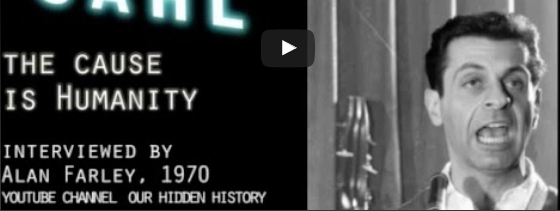
  • Mort Sahl 1970 Interview

    Mort Sahl 1970 Interview

    David Giglio is a contributor to CTKA. He publishes regularly at Our Hidden History.


    From the period of about 1960-66,  Mort Sahl was one of the highest profile, in demand, and highest compensated comedians in America. In fact, in its issue of August 15, 1960, Time Magazine placed him on its cover.  He was a regular on such programs as the “Ed Sullivan Show” and “The Tonight Show”.  Sahl, more or less, redefined what stand up comedy would be from then on.  And men like George Carlin essentially followed in his footsteps.  Sahl’s brand of humor was both socially and politically conscious.  Although he would come on stage with a college sweater and the daily newspaper, he was far from the average man.  He was quite well informed and acute, and his satire came from a deep affection for America and what it was supposed to be about.

    Sahl was one of the very few Americans who actually knew and communicated with John and Robert Kennedy.  Kennedy appreciated Sahl’s humorous deprecations of him as a spoiled rich kid.  Although JFK once had the following conversation with Sahl on the subject: “OK, so how much do you think my father is worth Mort?”  Sahl replied, “I don’t know, maybe 300 million?”  Kennedy replied, “Alright.  Now how much do you think the Rockefellers are worth?” Sahl said he had no idea.  Kennedy responded with, “Try four billion Mort.” Kennedy paused to let the number sink in. He then jabbed his finger at the comedian and added: “Now, that’s money Mort.”

    Sahl was quite interested in Kennedy’s assassination.  Something did not sit right with him about the Warren Report.  He actually read long parts of it and the volumes of evidence that accompanied it.  He thought much of it was ludicrous. He actually used to quote from it in his stand up performances.  He would read parts of its most pointless and stupid depositions in a dead pan comic style, letting the ridiculousness hit home. He would then say, “And that’s how they found out who killed John Kennedy.”

    When the Jim Garrison investigation broke into the newspapers in 1967, Sahl had a talk show on the radio in Los Angeles.  Naturally, he was quite interested in what the New Orleans DA was discovering.  He actually journeyed to the Crescent City to talk to Garrison.  He was impressed with the man and wanted to have him on his show.  But station management insisted that if he did that, he would have to perform an attack journalism/hatchet job on the DA.  Sahl said he could not do that since he thought Garrison was pretty much right on about Kennedy’s murder.  He was then taken off  the air. He went back down to New Orleans and Garrison swore him in as a deputy.  Sahl wrote about some of his experiences working for Garrison in his book Heartland.  Especially bracing is a scene he describes with Clay Shaw’s lawyers trying to introduce the Warren Commission volumes into evidence at a hearing.  The judge was absolutely beside himself with indignation that any self respecting lawyer could take such a document seriously as evidence.

    With his connections in the entertainment world, Sahl did what he could to get some positive exposure for the DA.  The high point of this effort was the interview conducted for Playboy by Eric Norden in October of 1967.  (Click here to read http://www.jfklancer.com/Garrison2.html) The low point was when Mort Sahl appeared on The Tonight Show and suggested that Johnny Carson interview Garrison on his show.  The audience response was so positive that Carson had to agree to do so on the air.  But clearly, Carson’s bosses at NBC did not want to have any kind of fair and serious debate about the issues.  What Carson did was what Sahl would not do on his show: a premeditated attack to prevent any elucidation and education of the public on the issues surrounding Kennedy’s death.  Carson had been thoroughly briefed, and NBC lawyers had interviewed Garrison in advance. The lawyers furnished Carson with cue cards as to how to question Garrison.  But still, Garrison did fairly well and Carson came off like the hatchet man he was prepped to be.  The host was very angry with Sahl for getting him into this sticky situation. Afterwards, he yelled at him: “You will never be on my show again.” (Click here for that appearance https://www.youtube.com/watch?v=EZN2FGHKzQI)

    Carson kept his word. Sahl paid a stiff price for backing Jim Garrison.  His career went into a steep decline.  He was quite literally blackballed for several years.  It was not until the Watergate scandal, which was made to order for Sahl, that he came back.  And after Carson retired, Jay Leno had Mort Sahl on his version of The Tonight Show.  So, in the long run, Sahl had come full circle.

    We present here a rare interview with Sahl about his experiences in New Orleans and his present thoughts on the JFK case.

    ~Jim DiEugenio


    Transcript

    (Click here if your browser is having trouble loading the above.)

    [iframe width=”560″ height=”315″ src=”https://www.youtube.com/embed/bimrN5NCdJk” frameborder=”0″ allowfullscreen ]
  • RFK’s Former Speechwriter Damns the Democrats for Abandoning Kennedy Legacy

    RFK’s Former Speechwriter Damns the Democrats for Abandoning Kennedy Legacy

    Photograph: AP

    The Democratic Party has become something both JFK and RFK would deplore—the party of war.

    By Adam Walinsky, At: Politico

  • Dallas continues harassment of Robert Groden

    Dallas Has Now Lost 82 Cases Against Robert Groden. Someone Call Guinness.

    By Jim Schutze, At: Dallas Observer

  • Caroline Kennedy: JFK wouldn’t have escalated US in Vietnam

    , At: CNN Politics

  • UK and USA obstruct United Nations’ Hammarskjold Inquiry

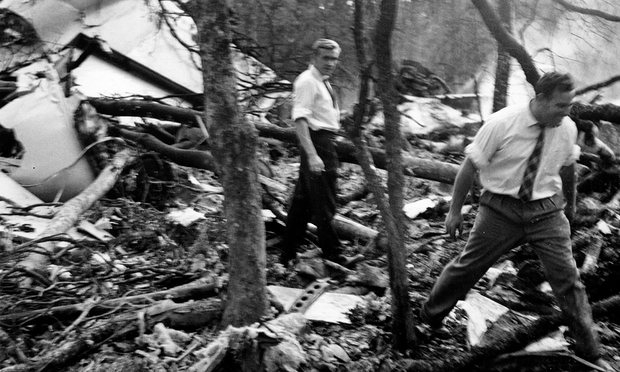
    UK’s lack of transparency over plane crash that killed Dag Hammarskjöld

    Letters to the editor, At: The Guardian